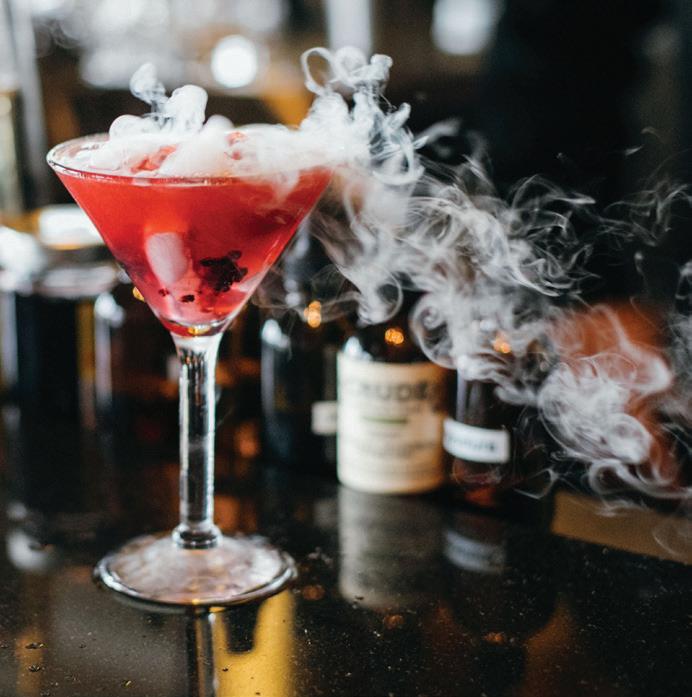
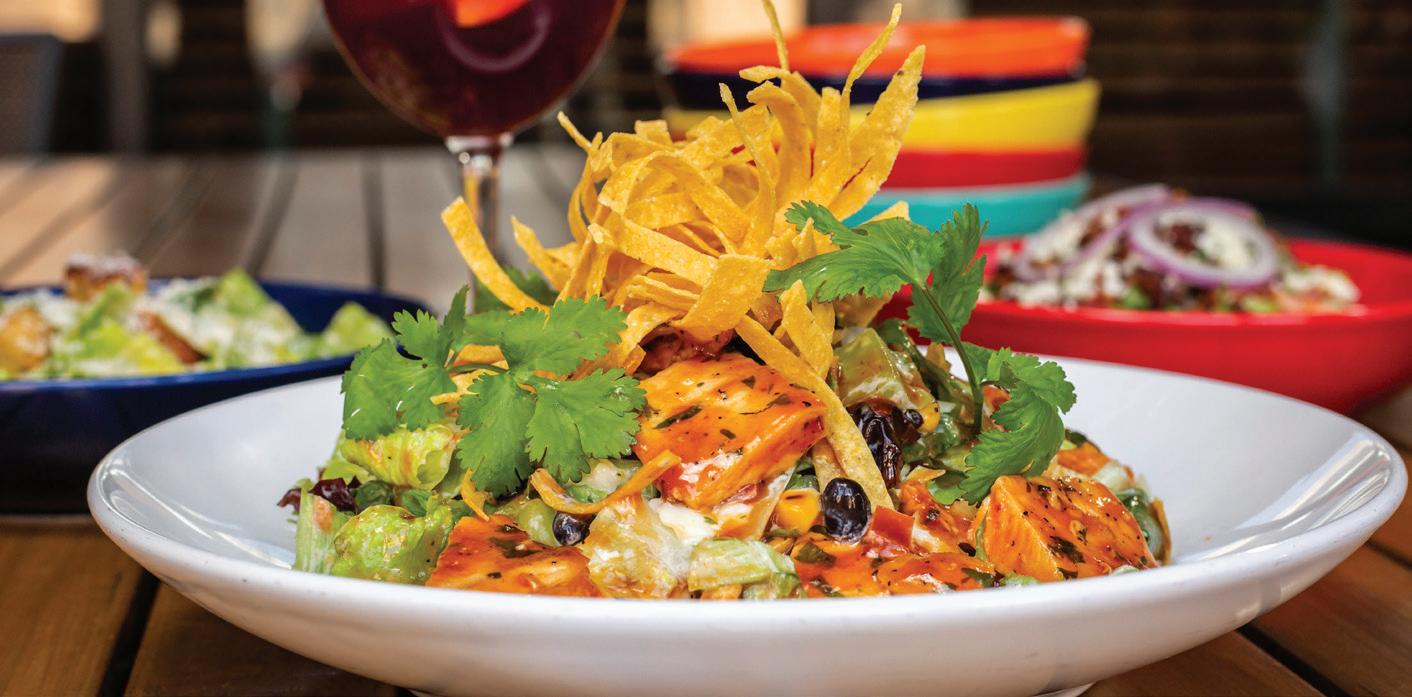
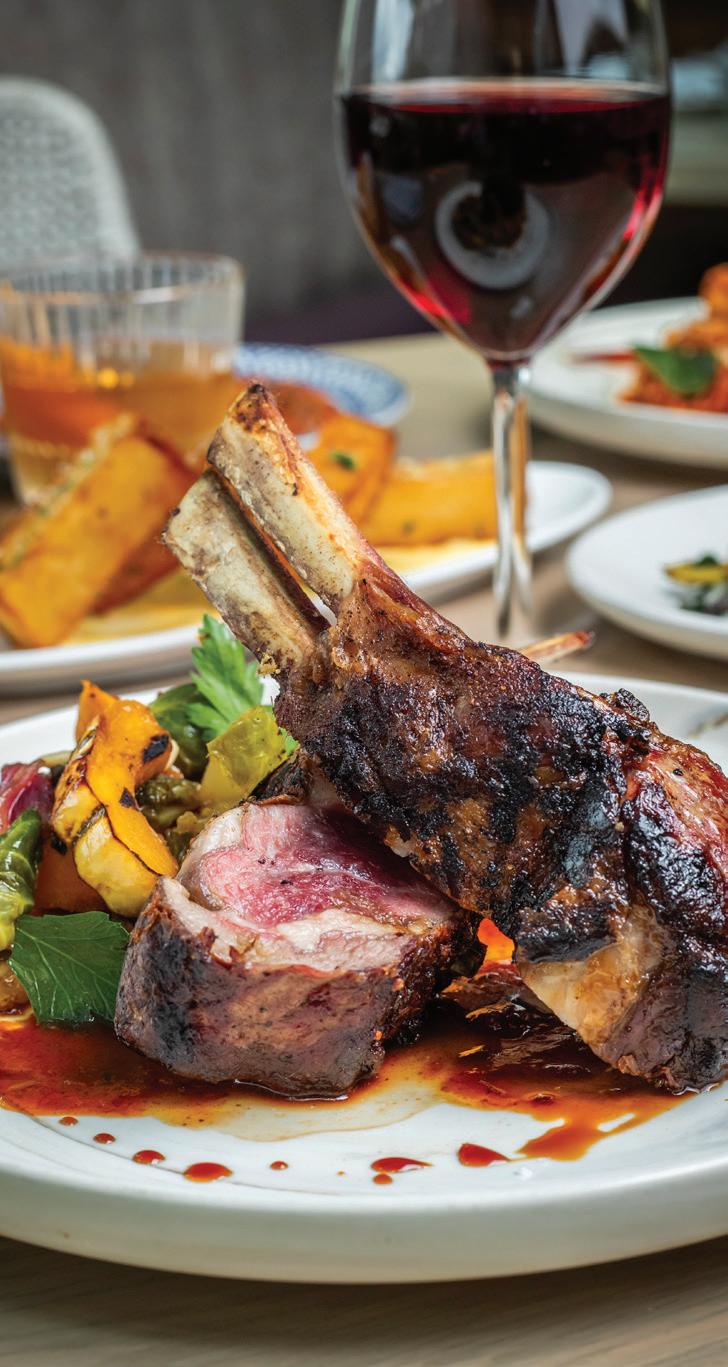
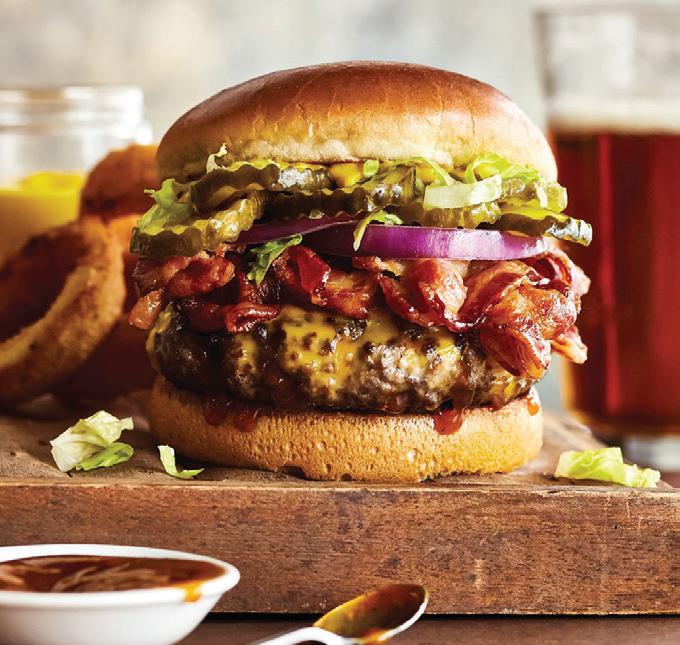
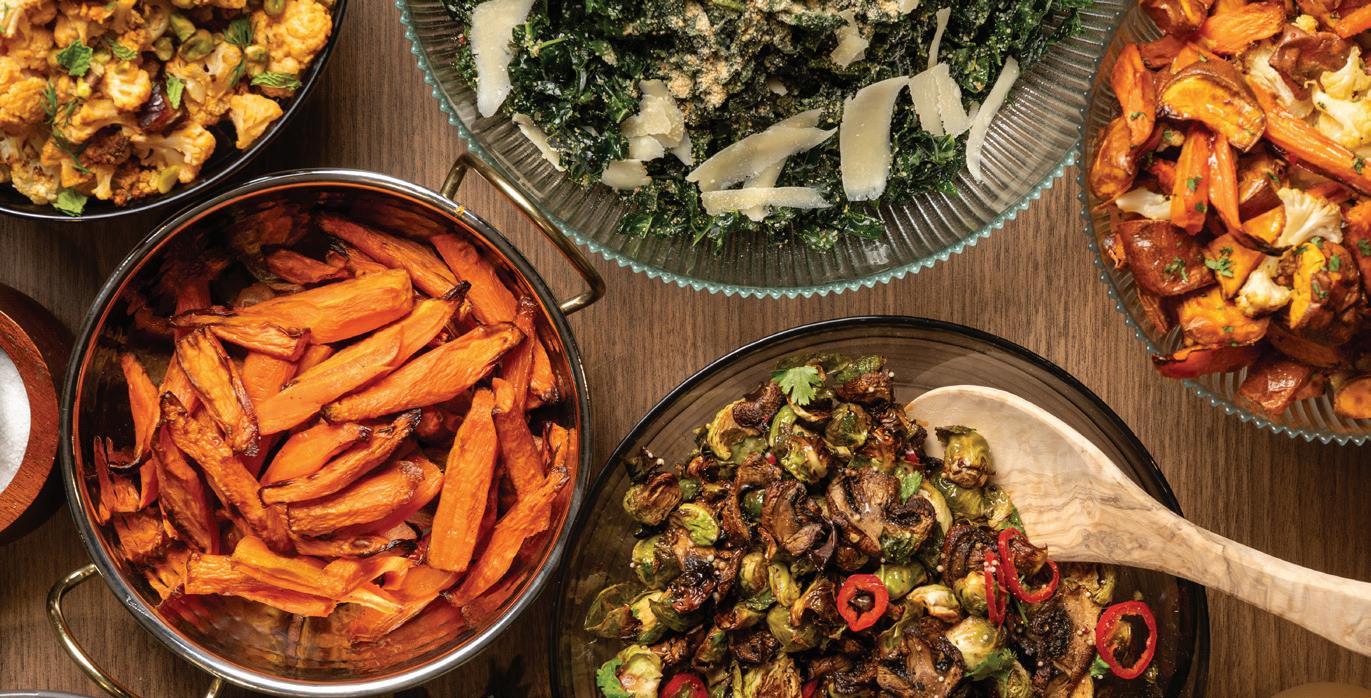
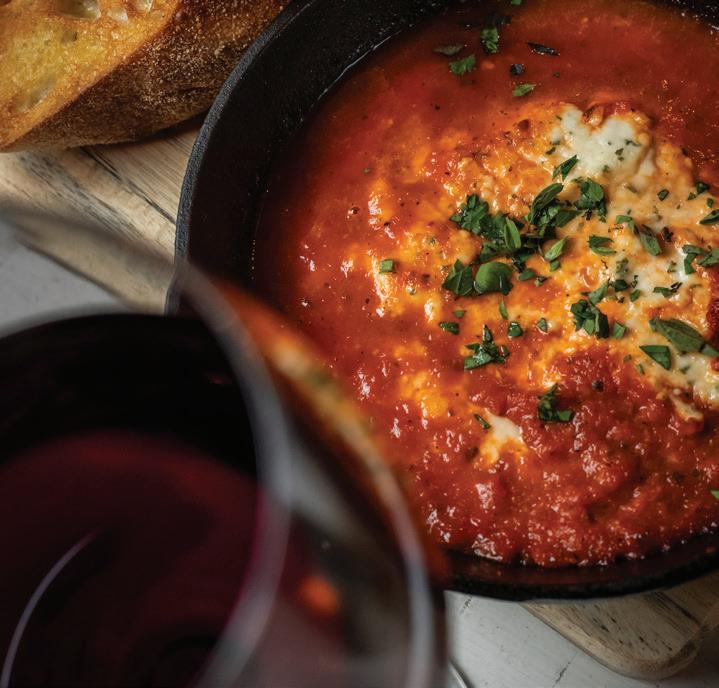
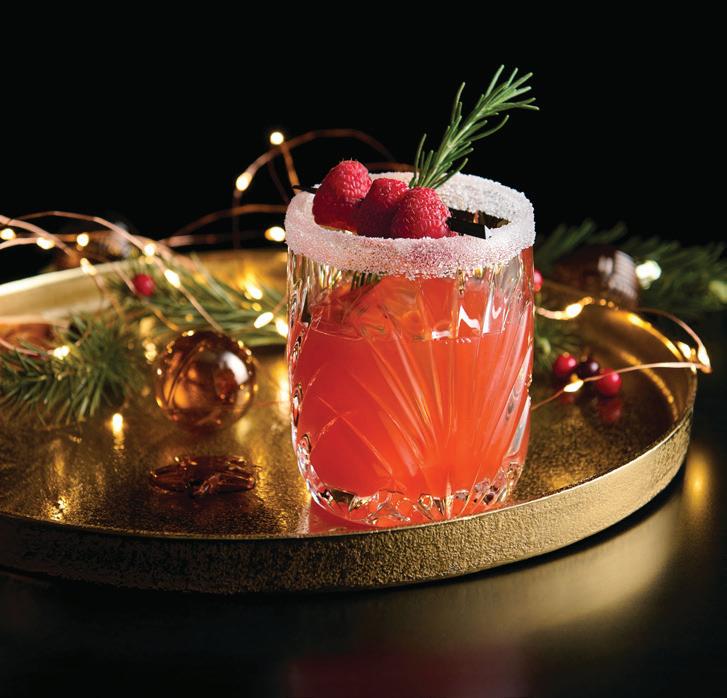
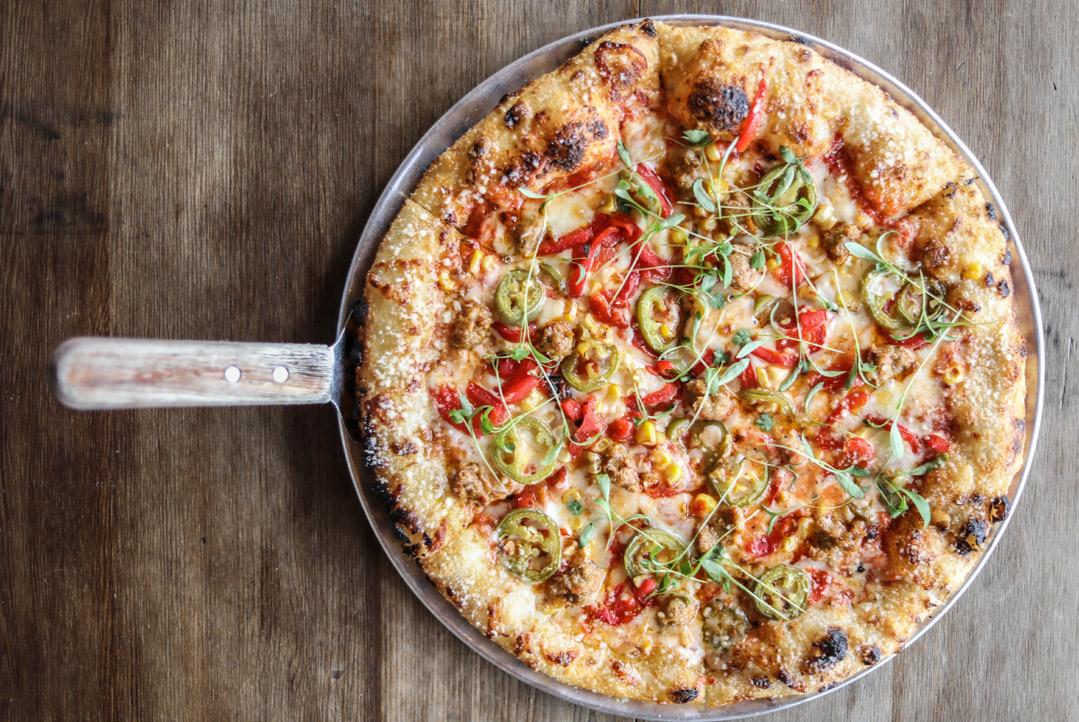
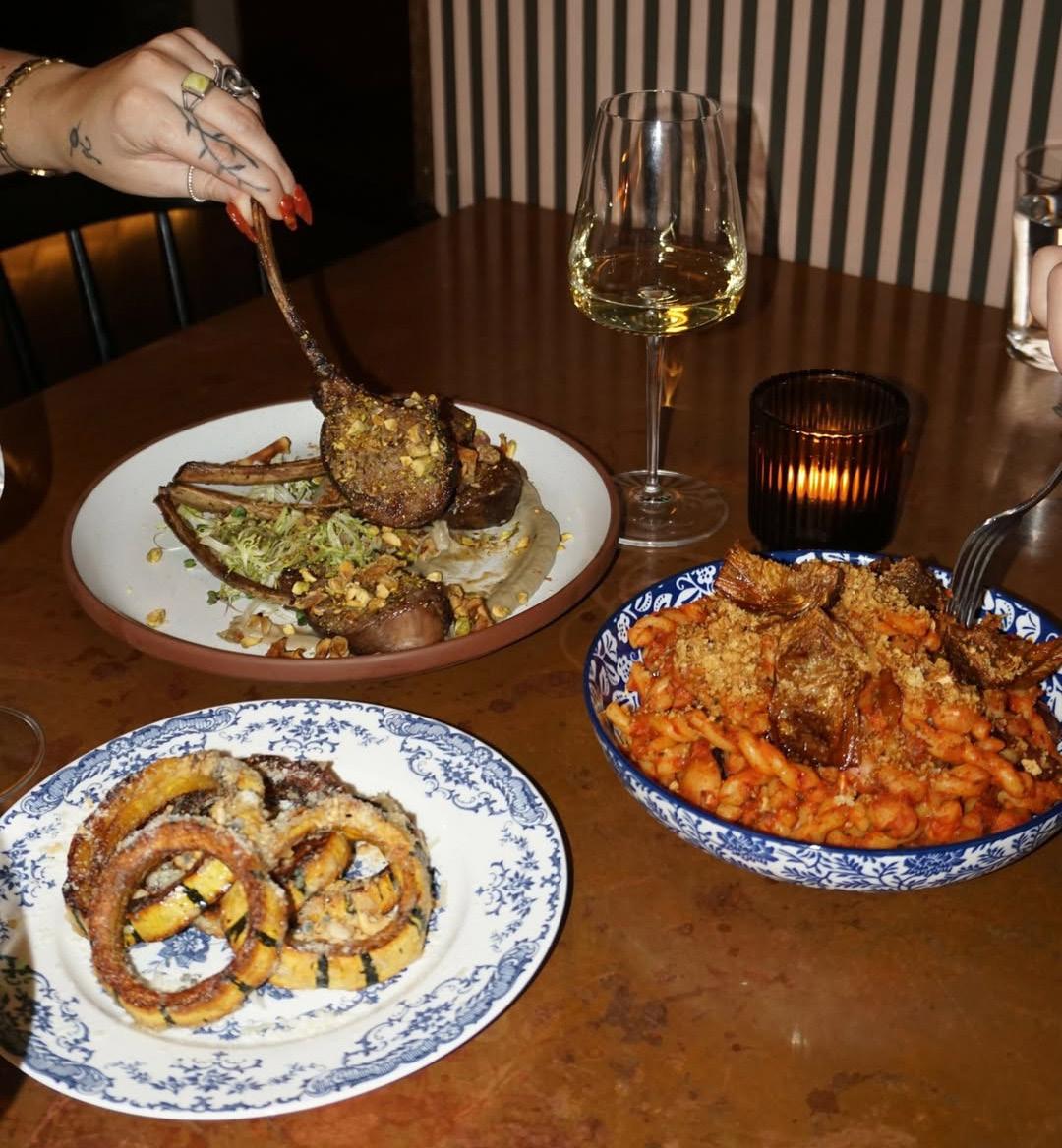
This season, gather where dining feels as special as the celebration itself. From rooftop cocktails to fireside dinners, Easton brings together Columbus’ most distinctive restaurants — each offering its own way to savor the season.
Whether it’s a festive night out, a lingering lunch, or a toast to what’s next, Easton is where every table becomes a moment worth remembering. Because the holidays taste better when they start here.
eastontowncenter.com
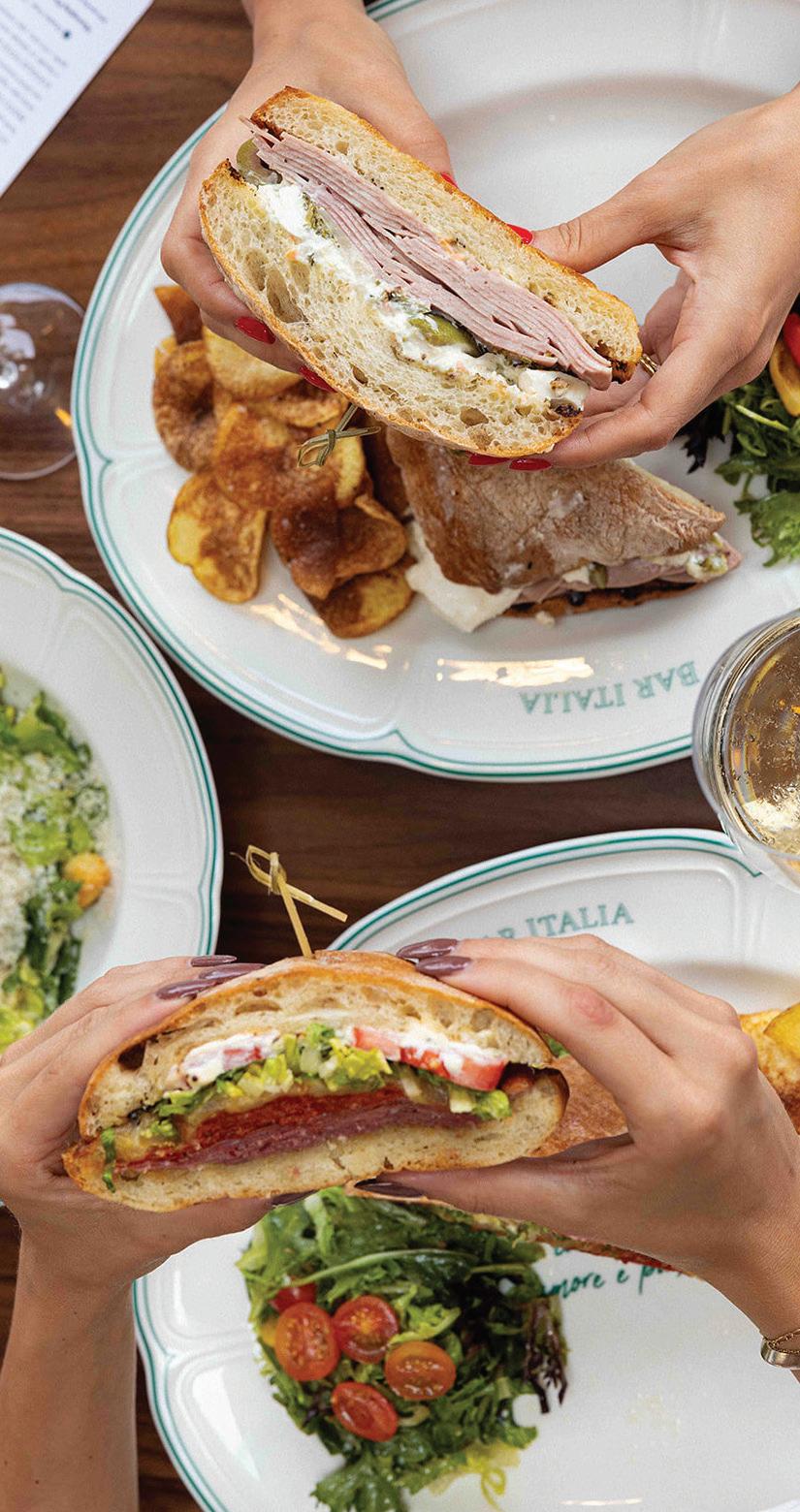
Bar Italia
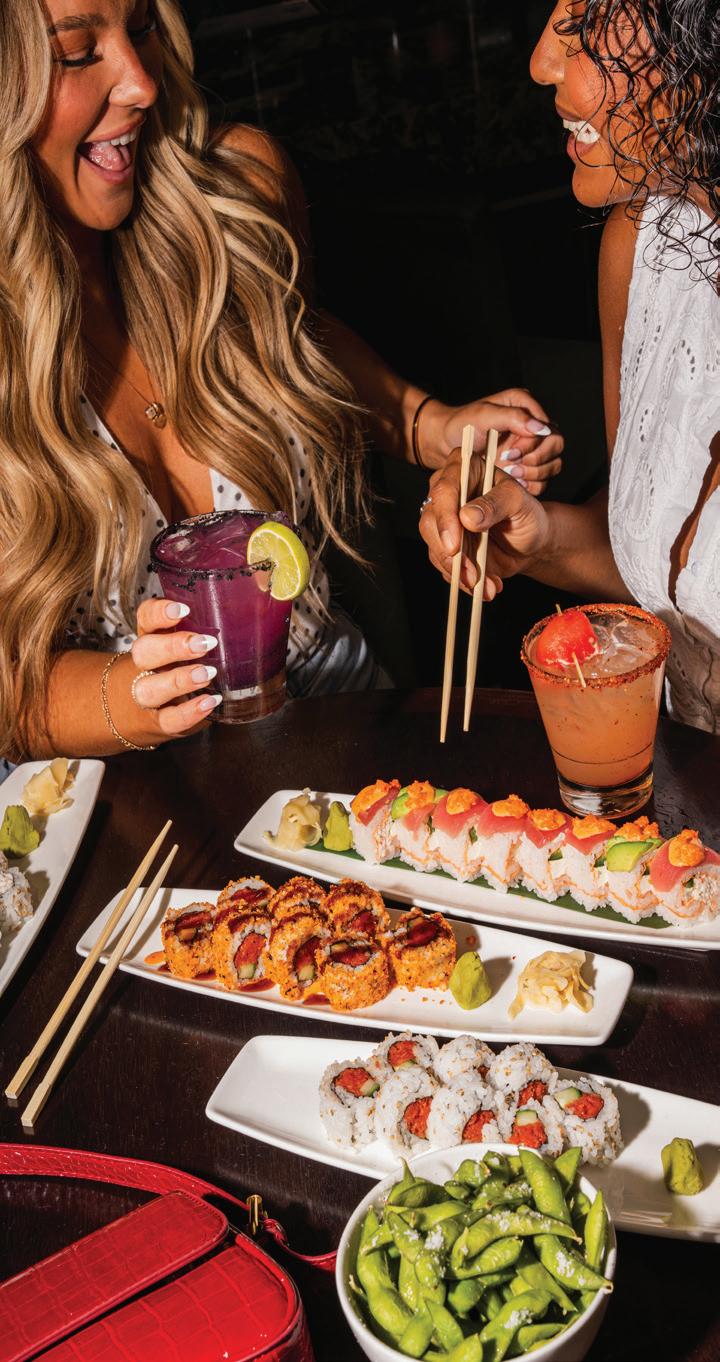
Kona Grill
Ted’s Montana Grill
True Food Kitchen
Mastro’s Steakhouse
NAPA Kitchen & Bar
Del Mar
Rusty Bucket
Mitchell’s Ocean Club
COVER SECTION
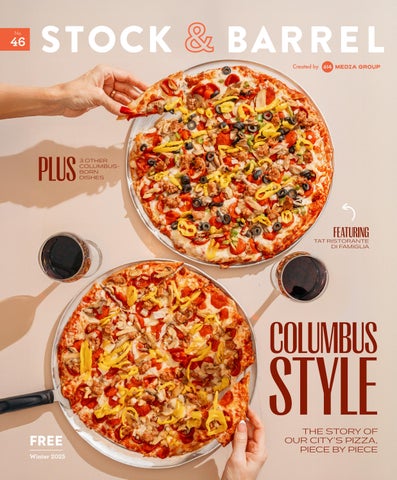
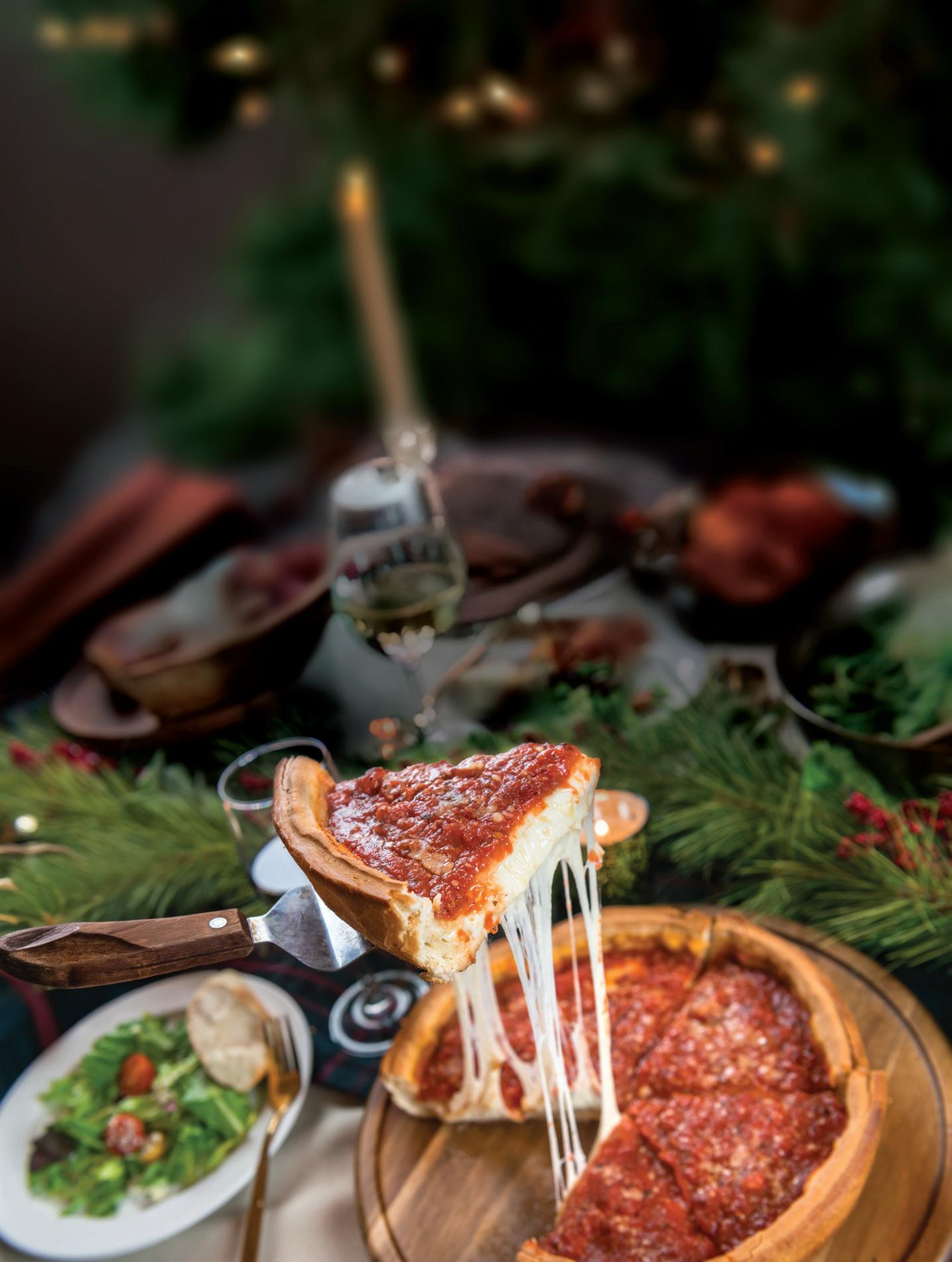
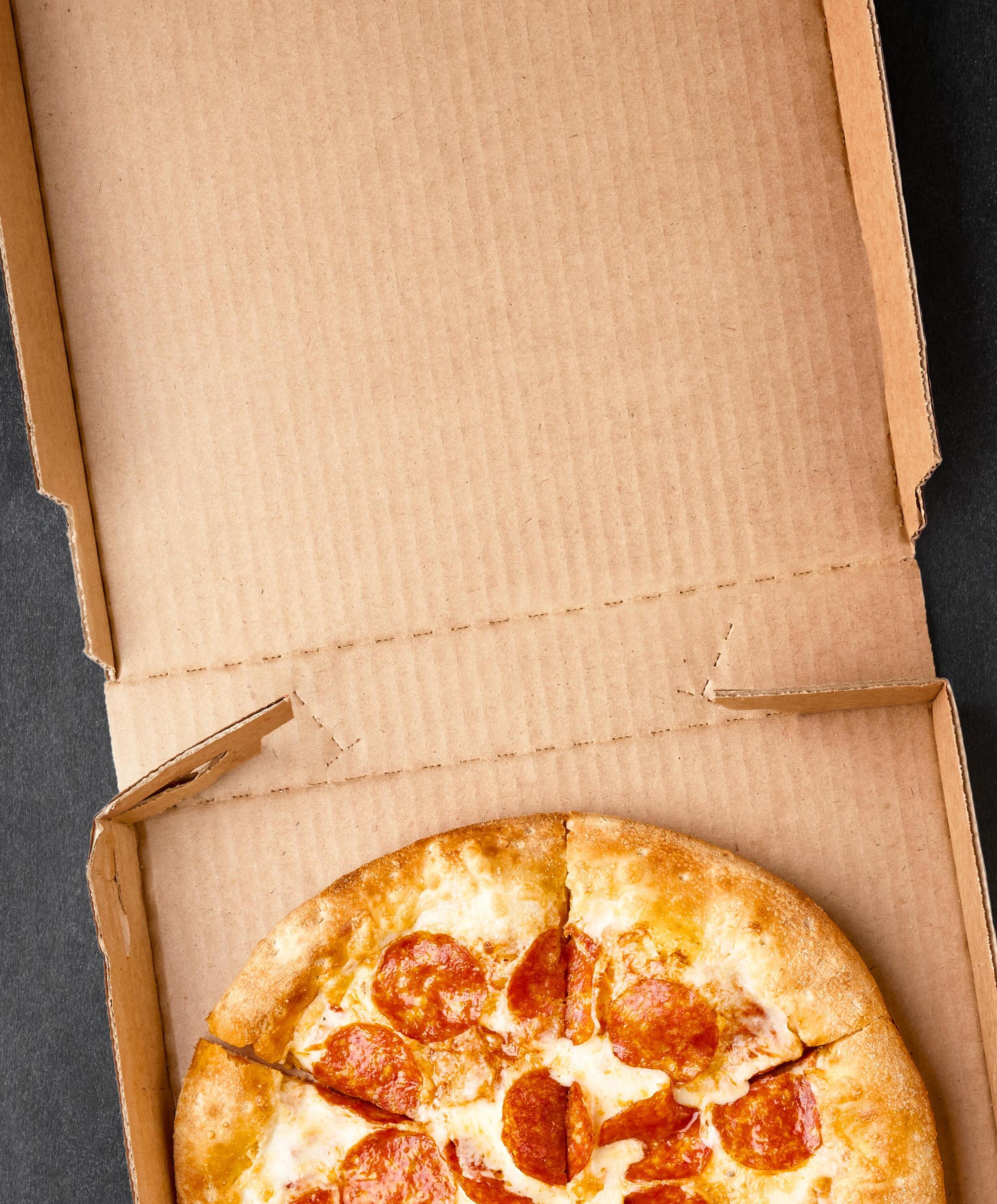
A history of pizza in Columbus, plus three other unique dishes created in Ohio’s Capital City
COVER PHOTO BY SAVANNAH BOCKUS
COVER DESIGN BY MEG RHOADS FOOD COURTESY
CHEF’S PICKS
Some of Columbus’ most prominent restaurateurs and food content creators give us the dish on their favorite local pizza
HONEY HOLE
Brothers Drake has dominated the Columbus mead scene for more than a decade, and now the popular spot has landed in Grandview
FOOD FOR THOUGHT
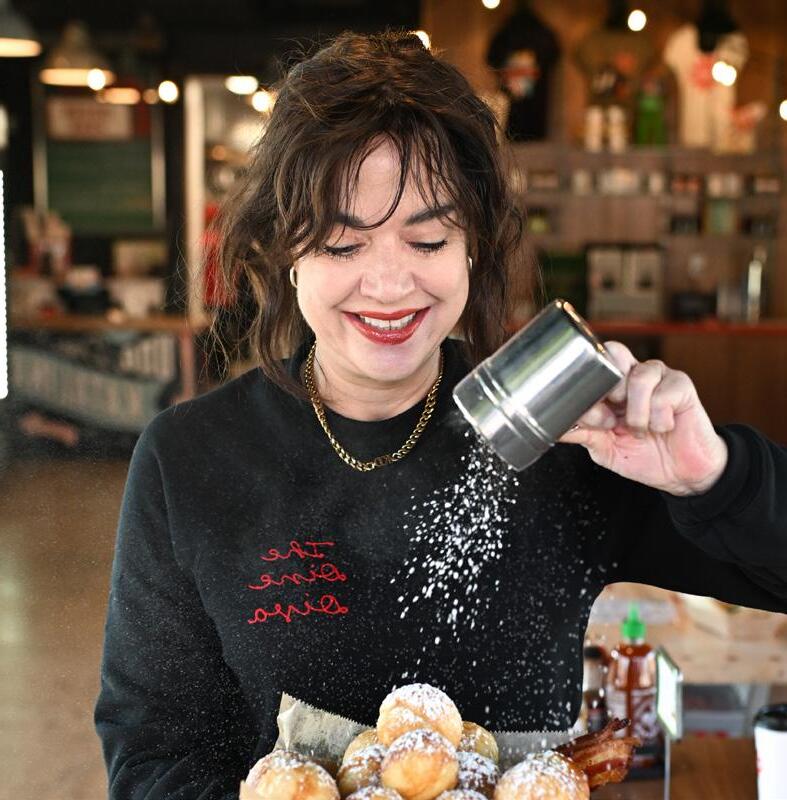
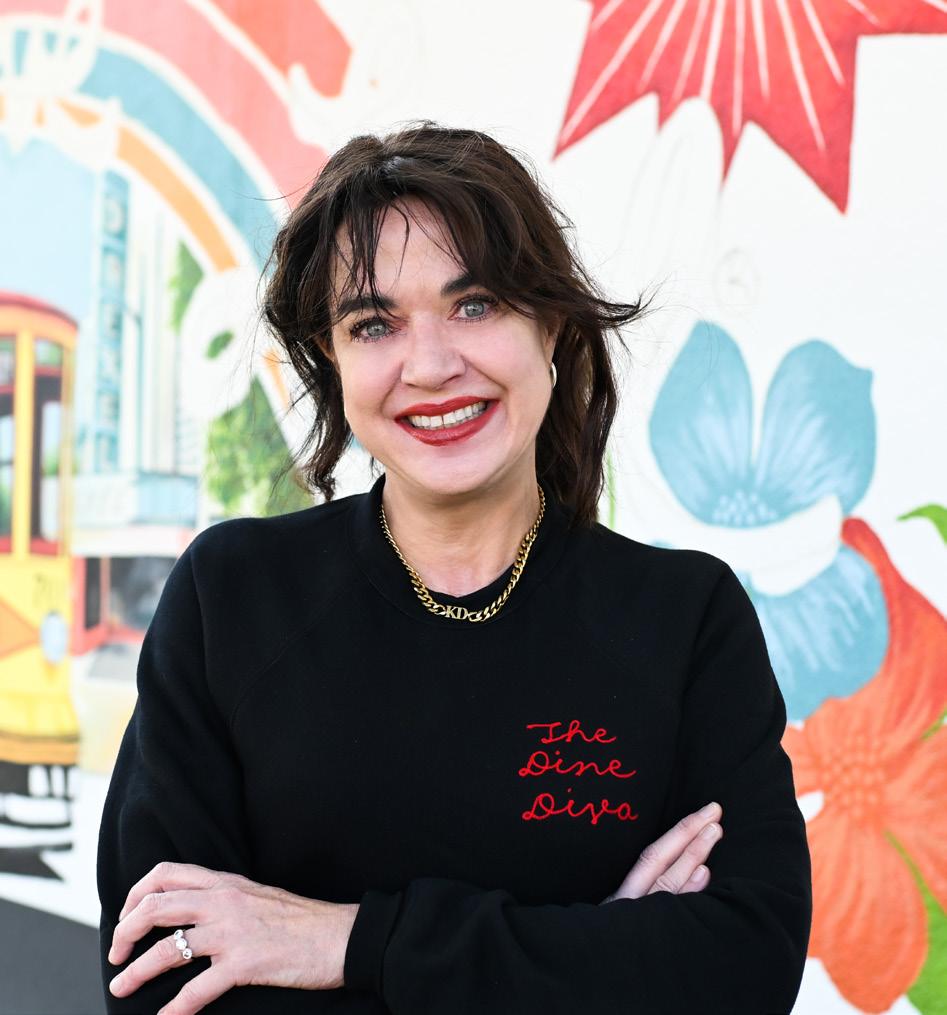
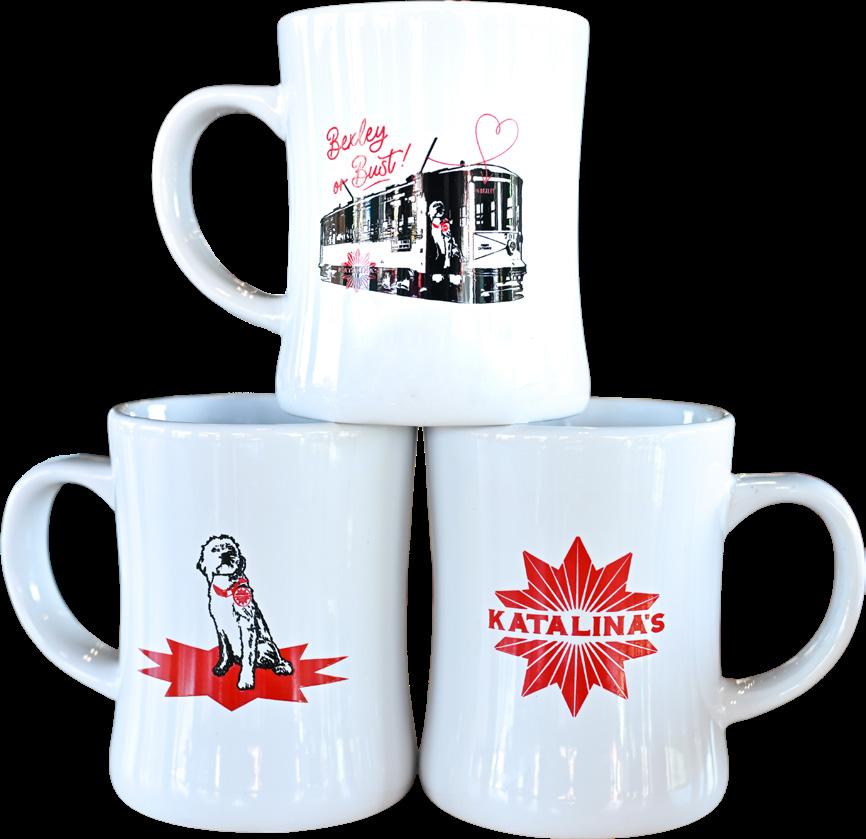
Katalina’s owner Katalina Day chimes in with her thoughts about tipping and the restaurant industry
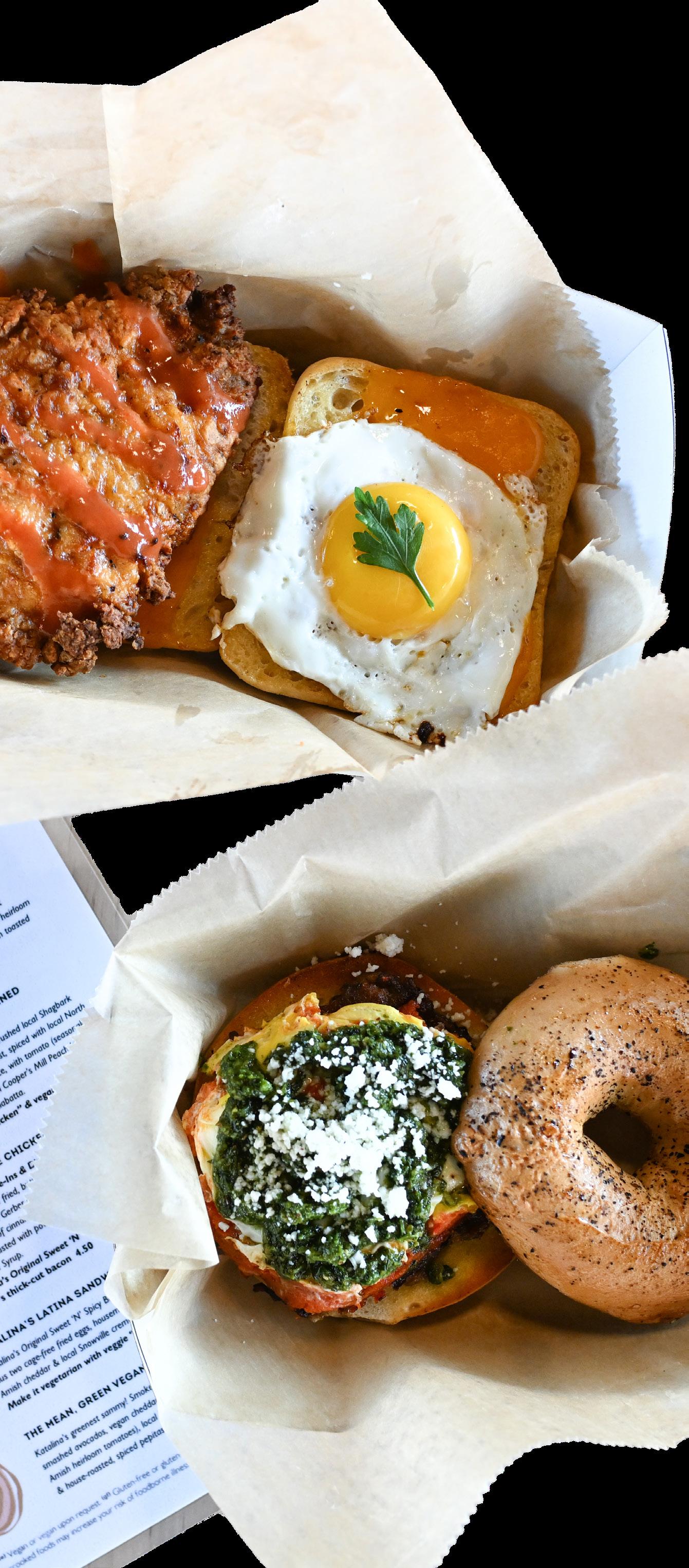
REUBEN REVIVAL
After closing the doors of its longtime Franklinton home in 2014, Milo’s Deli has returned to its West Side stomping grounds in style
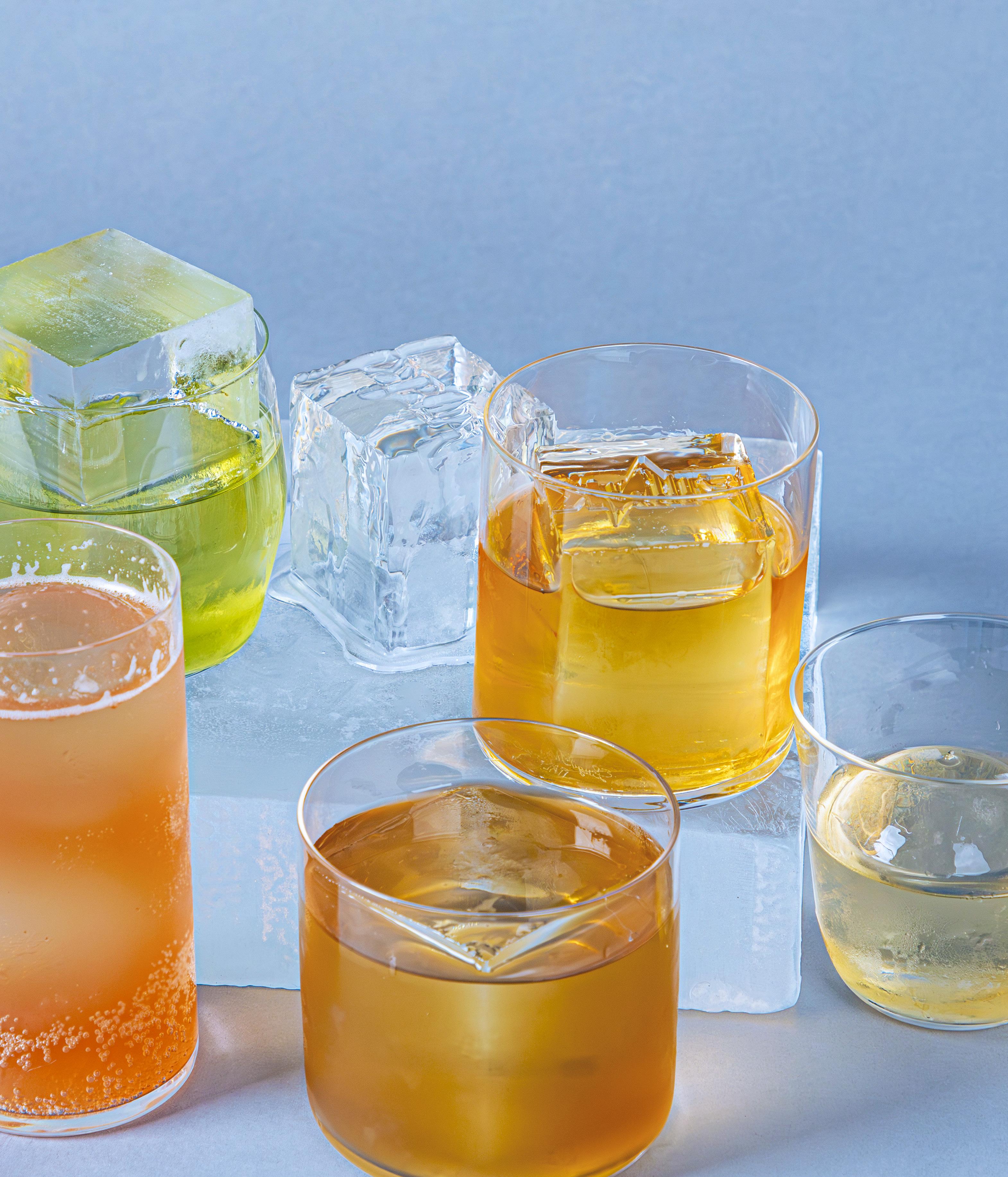
A pair of prominent Columbus bartenders have created a hand-polished artisan ice business to elevate cocktails across the city
THE SECRETS OF BETHEL RD.
From chicken feet to fish cheeks, Stock & Barrel’s Matt Mahoney tests his culinary courage at a pair of Bethel Road’s corridor of authentic pan-Asian eateries
COOL BY DESIGN
JACK MCLAUGHLIN Editor-In-Chief
Pizza Power
Every year, maybe once or twice a year, my parents would pack us into the car and leave our suburban home behind for the city of Chicago.
We were just going out for pizza, but it always felt more like a pilgrimage.
Alongside my sisters, I grew up comfortably in a well-to-do Chicago suburb a few miles outside of city limits. Both of my parents, however, grew up poor on Chicago’s South Side, the same area we’d make our way for pizza, when we were lucky enough.
These trips were to one place and one place only: Vito & Nick’s Pizzeria.
Located on South Pulaski Street, on the city’s far South Side, the neighborhood spot hasn’t changed much since the 1960s. It hasn’t changed, even, since a Diners, Drive-Ins and Dives feature. There’s still carpet on the walls (you read that right), there’s still multicolored light fixtures and throwback checkerboard tiling. The house where my mom grew up is still just blocks away, also.
What also hasn’t changed is the pizza. While you may believe deep dish pizza is a Chicago staple, if you ask most people who live in the Windy City, they’ll say that stuff’s for tourists. Thin, square-cut, tavern-style pies are what most Chicagoans actually reach for.
And that’s what Vito & Nick’s serves, which is the same exact recipe my parents would eat as kids in the city’s Back of the Yards neighborhood.
What I’d come to learn as I got older was the power that pizza has to span both generations and cultural or socioeconomic rifts. There’s so much about the way my parents grew up that was different from my own upbringing, and pizza doesn’t help me understand that better, but it does mean something to know we’re sharing the same slices that they did with their parents, with their families.
I’m not saying pizza is going to change the world, but I am saying it can—and does— have the power to make the world a better place, if just by a little bit. Our new issue of Stock & Barrel dives into the roots of pizza in Columbus, and there’s a whole lot to share, because pizza can tell you a whole lot about the people and place who created it, if you’re listening.
And it can even bring together a whole lot of people, if they’re hungry.
DID YOU KNOW?
Often used synonymously, Chicago-style and Columbus-style pizza are technically their own entities Both employ thin, square pieces (the tavern-style cut, or party cut), but what separates the two is, according to consensus (although there’s always some variation), the use of primarily provolone cheese and a sweet sauce in Columbus-style pies.
M. Clark, Abigail Jump,
Paige, Jackson Ludin, Katalina
CALENDAR
Eating and
NYE Bar Crawl
December 31, starts at 5 p.m.
Location: Pint House | 780 N. High St.
$12.50+
Valentine’s Day Dinner Party
February 14, 5-9 p.m.
Location: The Kitchen | 231 E. Livingston Ave.
$155
Uncorked Wine Festival
February 21, 7-11 p.m.
Location: COSI | 333. W. Broad St
$78+
Columbus Brew Festival
March 7, 7-11 p.m.
Location: COSI | 333 W. Broad St.
$36+
Photo by Anna Trankina courtesy of COSI.
Photo courtesy of Franklin Park Conservatory.
# EAT 614
It’s difficult for us here at Stock & Barrel to catch it all. That’s where you come in: while you’re out there capturing the city, you might as well slide some of your best shots our way. Use the hashtag #Eat614 on Instagram to put your photos on our radar.
PRODUCTS WE'RE LOVING
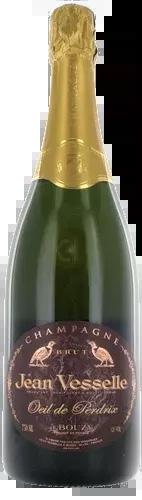
Oeil de Perdrix Brut Hausfrau Haven
Stock up for your NYE party at a local wine shop, like German Village’s iconic Hausfrau Haven. Here, you’ll find delicious champagnes at all price points, plus cocktail accessories, global beers, and a fun selection of snacks like gourmet olives and more.
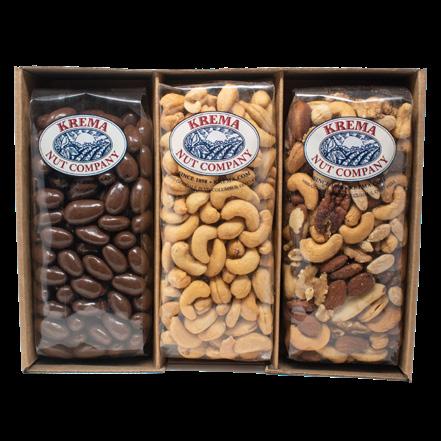
Nuts & Chocolate Set
Krema Nut Company
16 ounces of giant cashews, gourmet mixed nuts, and milk chocolate almonds, all toasted locally at a nut roastery that’s been an institution in Central Ohio for over a century?
Sign us up. These make the perfect holiday gift or Valentine’s gift, or even just a decadent winter snack.
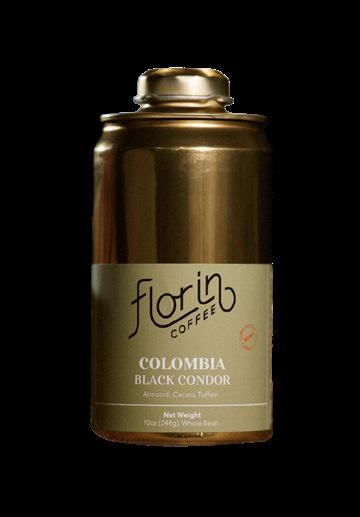
Colombia Black Condor Coffee Beans Florin Coffee
With notes of almond, cacao, and toffee, this is the type of coffee that gets you through the frigid Midwest mornings. Hans and Joelle Hochstedler started roasting coffee ten years ago, and opened their shop Florin in 2020, located near North Linden. You can grab a variety of beans there, or online at florincoffee.com.
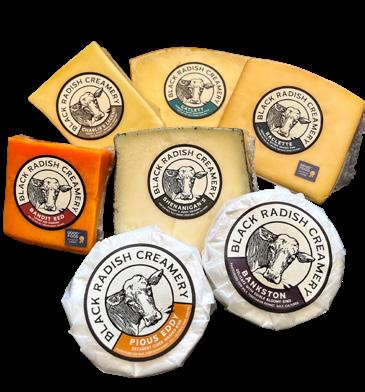
Cheese Assortments Black Radish Creamery
We’re obviously a huge fan of Columbus and everything made here, and Black Radish’s cheeses are of course part of that love. The Central Ohio-based creamery is churning out delicious cheese varieties, ranging from mild cheddars to gooey raclettes. Plus, their local shops, like at North Market Downtown, offer a selection of other rare cheeses from around the world, too.
MADE with PRI
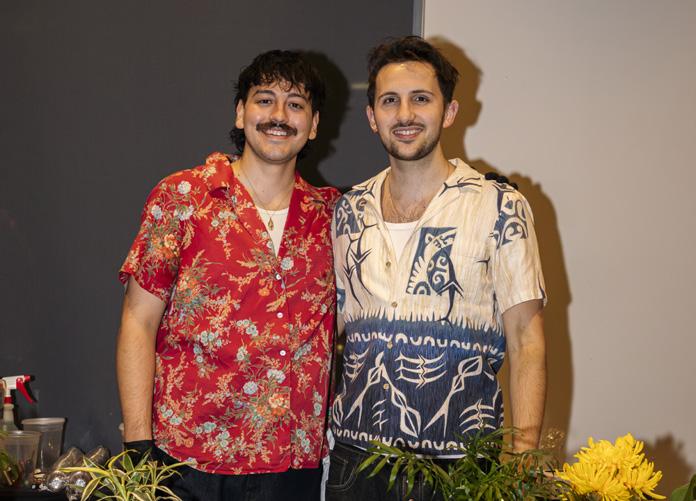
The Lion is on a hot streak. After taking the top spot at the Spring Cocktail Contest, the 2025 Holiday Cocktail Contest was no different, as the Bexley bar took home the top spot for its seasonal cocktail, titled Christmas Cookies in July, in November. While the name might be a mouthful, this one packs a mouthful of flavors (in a good way) as well. The winning drink featured Pandan-infused Maker’s Mark, Chai spice mango cordial, coconut water, and Noyaux (an almond-flavored liqueur made from fruit pits), and is clarified with cream cheese. It was created by Charles Schlabach and Oscar Leyva of the Lion, which you can visit yourself at 2551 E. Main St. in Bexley.
↑ Oscar Leyva and Charles Schlabach of The Lion
The Lion in Bexley continues its hot streak, taking home first place in the 2025 Holiday Cocktail Contest
IIDE
Holiday
COCKTAIL COMPETITION 2025
RESULTS
FIRST PLACE THE LION
SECOND PLACE
HIGH BANK DISTILLERY
HONORABLE MENTION
MATT THE MILLER & DISTRICT WEST
FAN FAVORITE NO SOLICITING
BEST TABLE
SOUL AT THE JOSEPH
CHEF'S PICKS
Some of Columbus’ most restaurateursprominent and food content creators give us the dish on their favorite local pizza
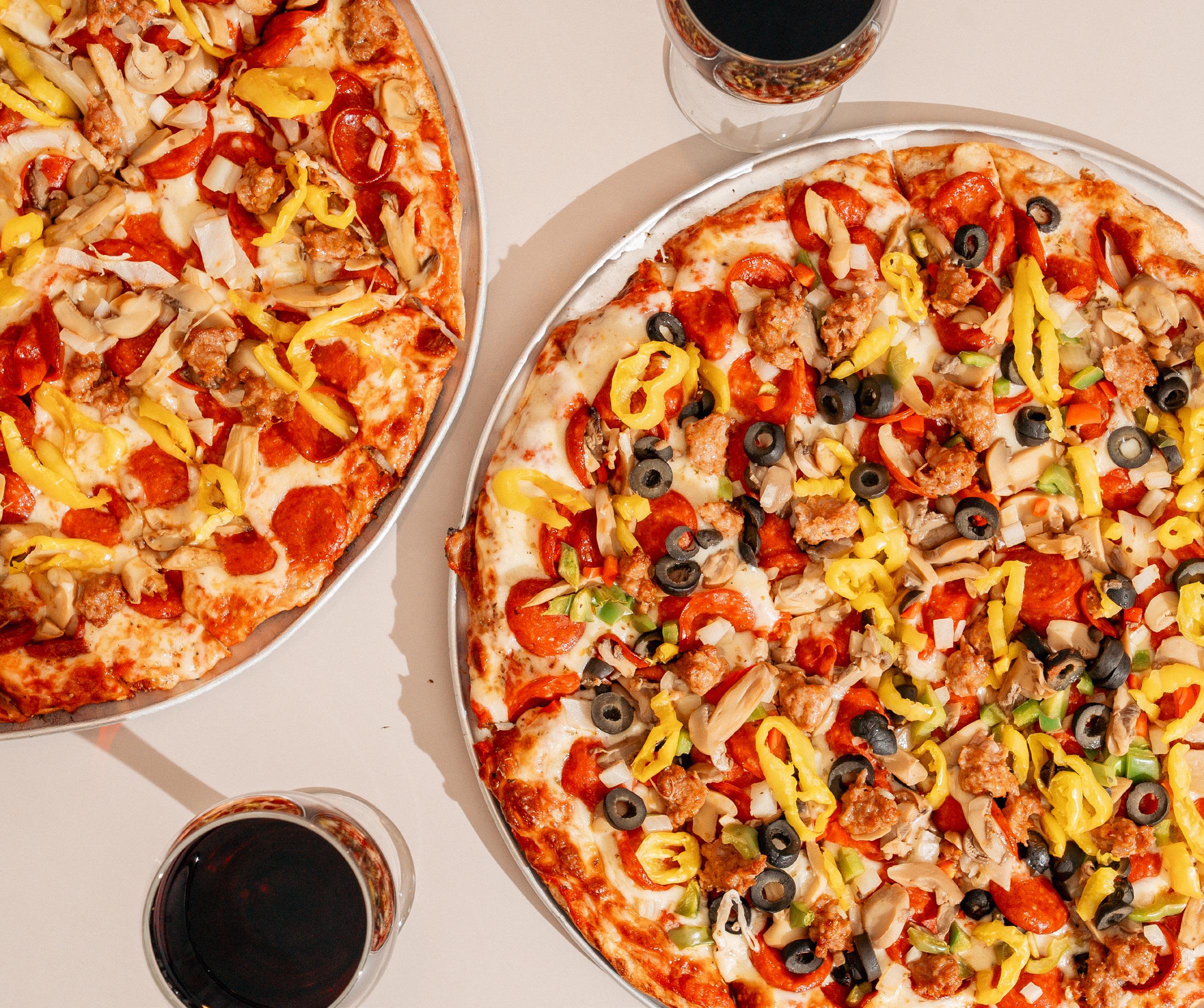
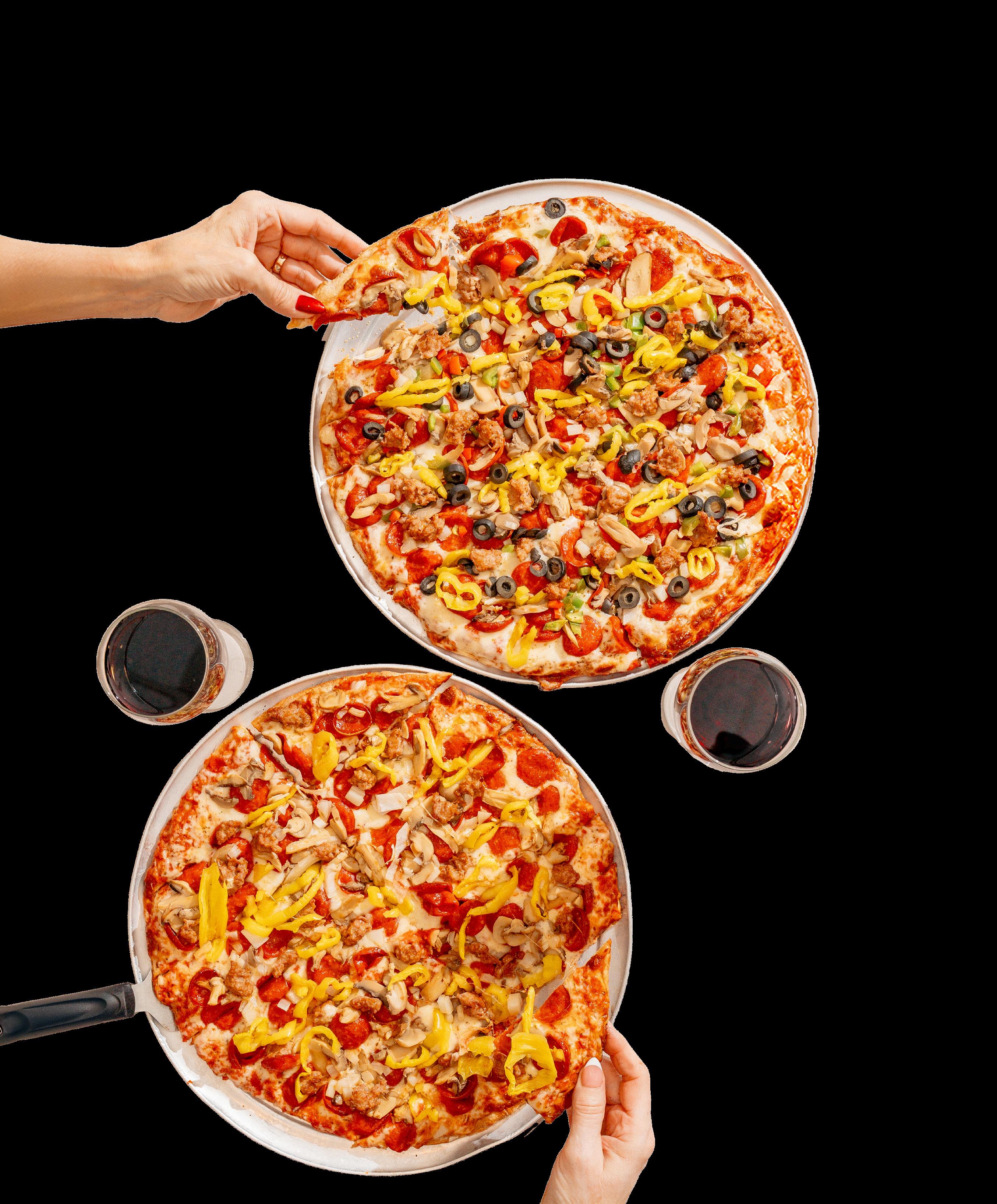
In Columbus, pizza is as profound as it is prolific. That is to say it’s really good, and there’s a whole lot of it. So much of it, in fact, that making a choice about which pie to buy can be overwhelming. Do you go Columbus-style or Detroit? Pepperoni or banana peppers? While we can’t make the choices for you, we can streamline the process by having some of the prominent names in the Columbus restaurant scene chime in on their favorite slices.
KATALINA DAY
Owner, Katalina's
Goremade Pizza! Great patio and always creative, fresh local pizza and salad specials. Not pretentious at all— just great pizza in a wood-fired oven.
JEREMY QUAM
Content creator, @thatsandwhichdude
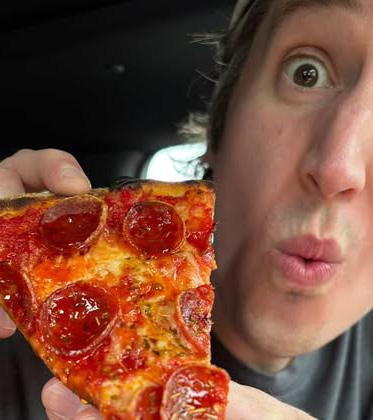
We’ve got soooo many awesome pizza places in Columbus but my current favorite is Bobby Jo’s. Get the Cap N’ Crunch—they top it with their special Black Cap Hot Honey and the crust is killer!
CHRIS CATER
Co-owner and head brewer at Honest Friend Brewing
I moved to Columbus for college in 2008 and Adriatico’s was right across the street from my freshman dorm. It got me through school and it’s been my (and my wife’s!) favorite for 17 years.
NAKIMBA MULLINS
Founder, Columbus Pizza Connoisseurs
My absolute favorite is Benny’s in Marysville. I love Benny’s because the dinein atmosphere is always welcoming, and their sauce and toppings are straight A-1 every single time.
KYLIE FADLEY
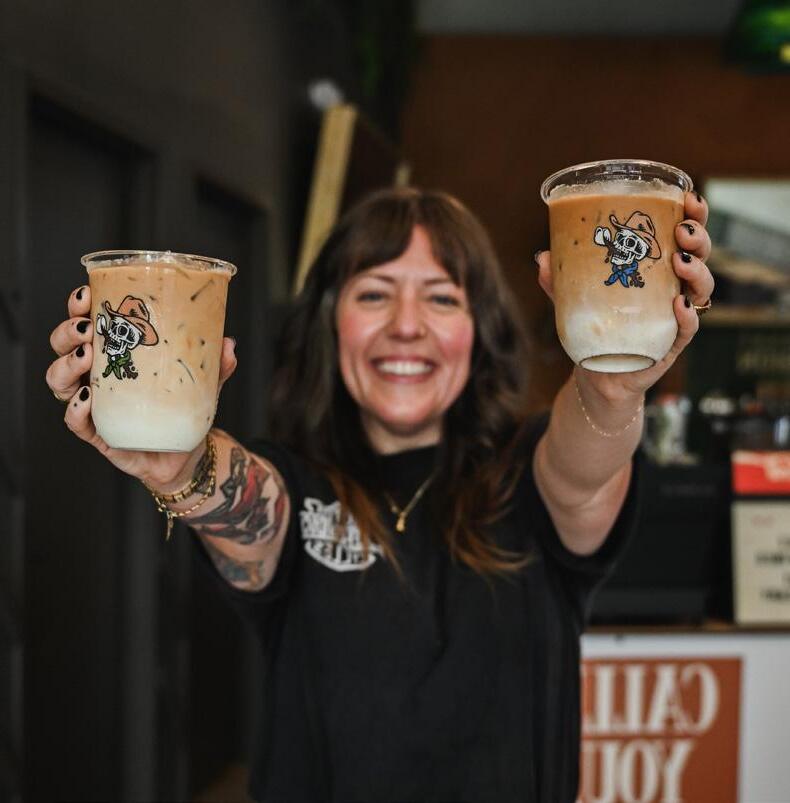
Owner, Callin’ Your Bluff Coffee
Hands down I would say Bobby Jo’s pizza. The simplicity behind his pizza and the creativity of his specials really shows the passion Danny brings to his food. You taste it in every bite!
Owner, Rooh and Flour YASH KISHINCHAND
I love JT’s in Grandview for Columbus-style pizza, although Marion’s in Dayton has my true heart, but a little less Columbus-local.
Ohio’s Wineries
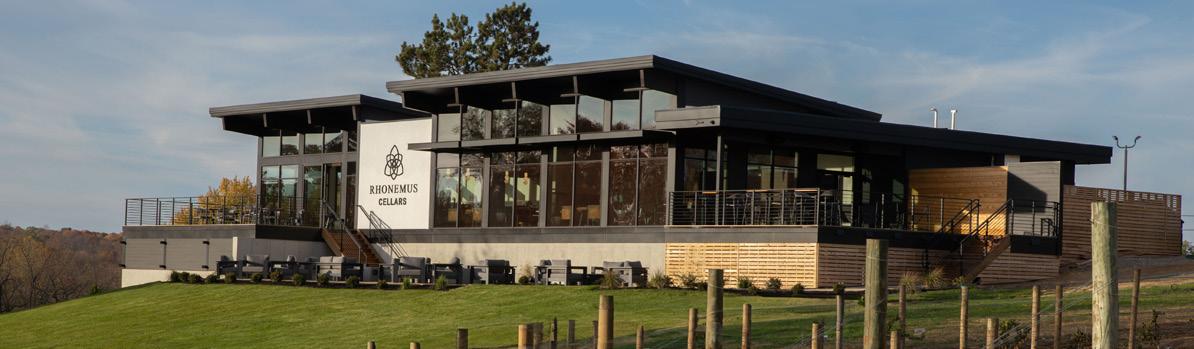
Less than 40 Minutes From Columbus, Rhonemus Cellars offers world-class wine and locally-focused cuisine in a destination that’s as inviting as it is breathtaking.
FOOD FOR
Katalina’s owner Katalina Day chimes in with her thoughts about tipping and the restaurant industry
Food for Thought is a regular segment that features some of Columbus’ best and brightest culinary minds offering their thoughts on the hottest topics in the restaurant industry. In this installment, Katalina Day of Katalina’s shares her stance on the perennially hot topic of tipping.
As a long-time restaurant owner, I see all the misinformation surrounding tips and cash, as I’m sure you do, so I’m here to give you a few, er, tips—for free!
By Katalina Day
THOUGHT
Misconception #1
Tipped employees are not making a living wage
I’ve read this, but the numbers don’t add up. The law requires owners to supplement a tipped wage to meet minimum wage, but I have never had to do this in almost 16 years, even during slow times like Covid. In fact, like most restaurants, my servers are part of a tipped pool, and consistently make more than my back of house staff—and sometimes even salaried managers. Most restaurants have a bigger problem than retaining servers because of low tips; it’s often difficult to find good cooks or even managers when tipped employees can make substantially more.
Misconception #2
Businesses encourage bigger tips so they do not have to pay the employees a living wage
We have all heard about customers furious for being encouraged to tip almost everywhere, on everything, and at a higher percentage. Any owner who has set up the pointof-sale system for their business can tell you, as with any technology platform, it is very difficult to change settings when the companies setting up these systems get a percentage of every sale. I have seen the “auto settings” for tip options increase over the years. I am thrilled for my servers as their tip percentage increases, but know that I will ultimately be paying processing fees on those tips.
Misconception #3
We should abolish tips
This is great in theory, but if you crunch the numbers for labor as a percentage of sales, if server wages were raised enough to cover tips, very few restaurants would survive. As a restaurant with a healthy sales per square foot—the industry standard for sales—labor is still my biggest expense. Of course I pay my employees competitively, but, if I had to increase the server wages even slightly, my very small margins would disappear, and I would be forced to close or raise menu prices, losing customers as a result.
Misconception #4
You should tip in cash
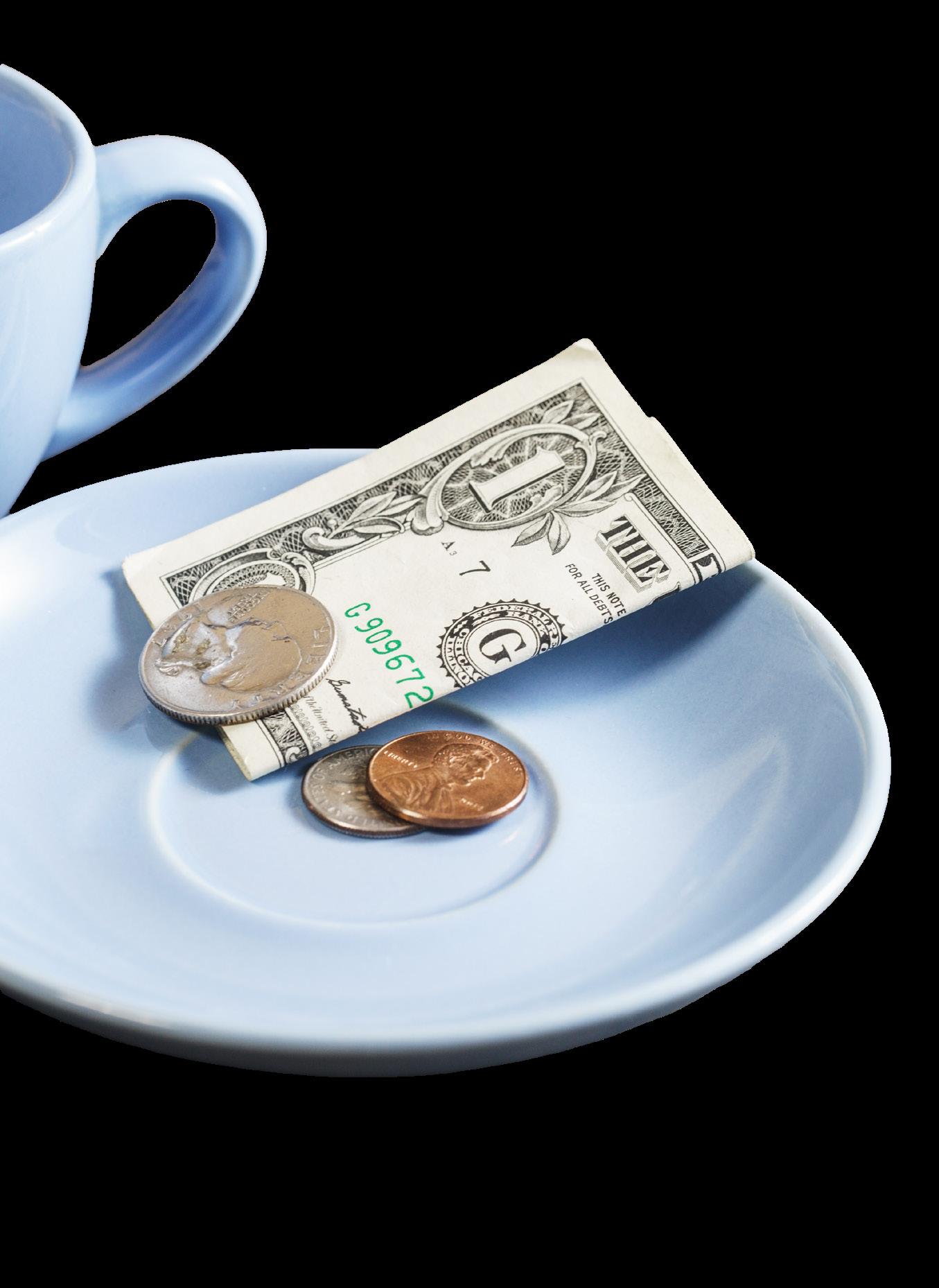
Sure, servers might like having cash ready to spend, but in fast casual restaurants like my own, servers pool tips since they are not waiting on individual tables, so all cash is ultimately divided anyway. In addition, as restaurants take less and less cash (or go cashless like my own), dealing with cash tips can slow restaurants down. More importantly, cash is not only germ-ridden but encourages theft and even break-ins. When I took cash, I had to deal with actual break-ins and the occasional theft of tip jars. Today’s sophisticated technology enables owners to tip out servers daily even with credit card tips if they so choose.
Katalina’s serves delicious brunch and lunch options, but owner Katalina Day says if tips were abolished, she would possibly have to close her restaurants or raise menu prices ↓
SHOP NOW
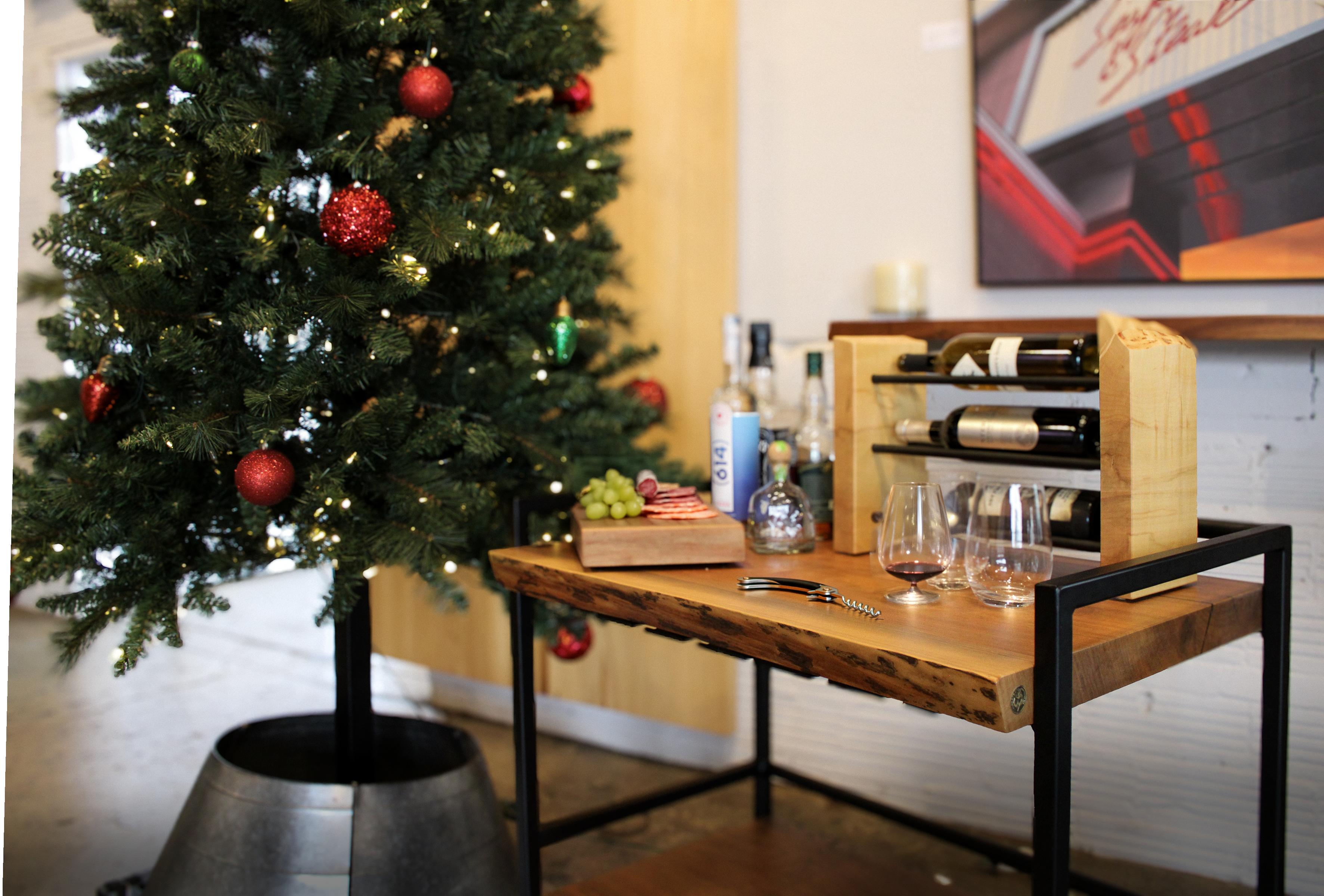
Where Moments Take Root
Created Hardwood’s American-made solid wood furniture, crafted from domestically sourced materials, transform homes with unique grains and lasting charm. Perfect for cozy dining or lively gatherings, these durable pieces blend into any décor, fostering connection and cherished memories.
Shown Above: Walnut Bar cart, Walnut Charcuterie Board, & Maple Wine Rack
By David Shaw
Brothers Drake has dominated the Columbus mead scene for more than a decade, and now the popular spot has landed in a new home in Grandview
Photos by Polly Sellers
Story Design by Liann Trahey
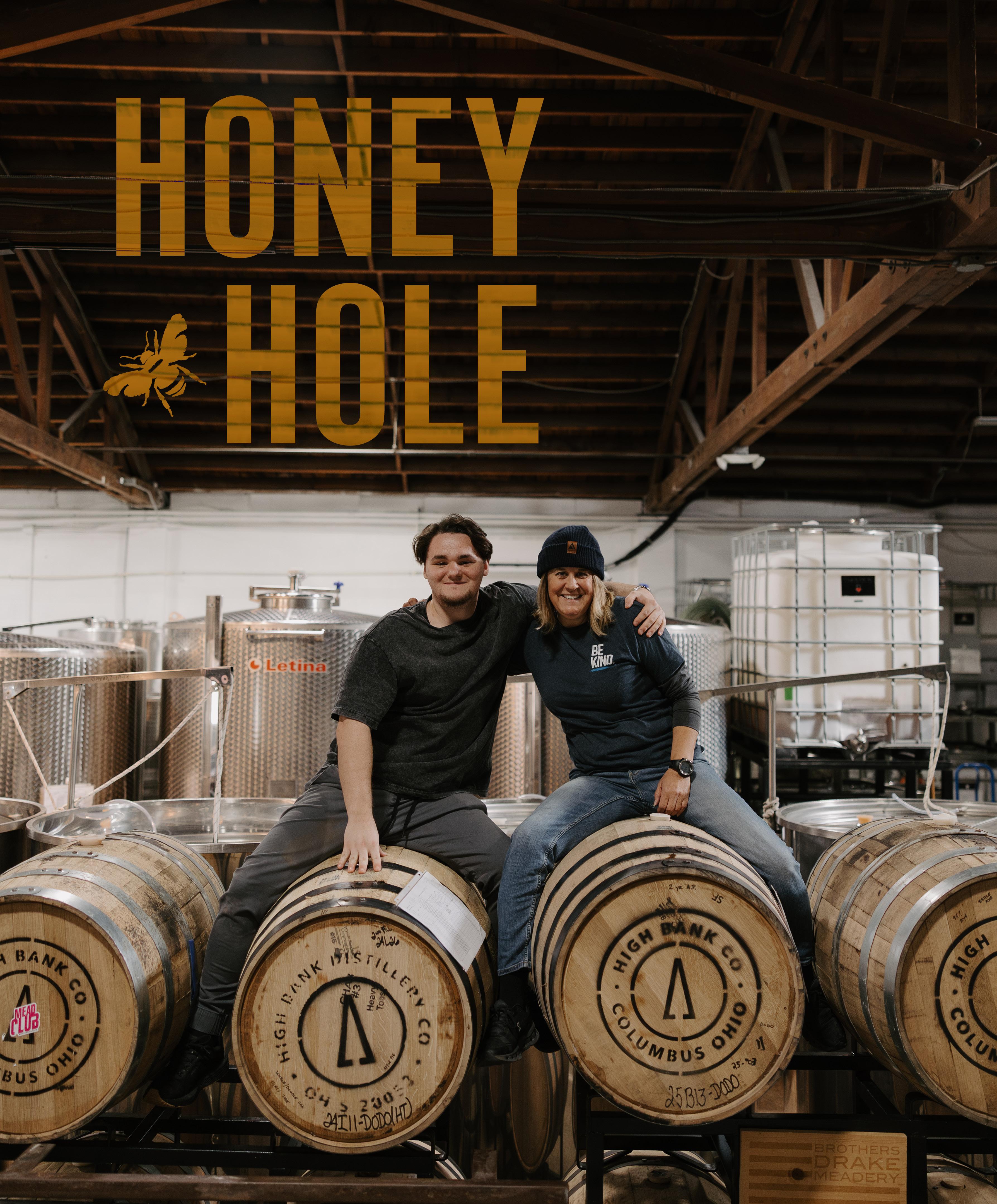
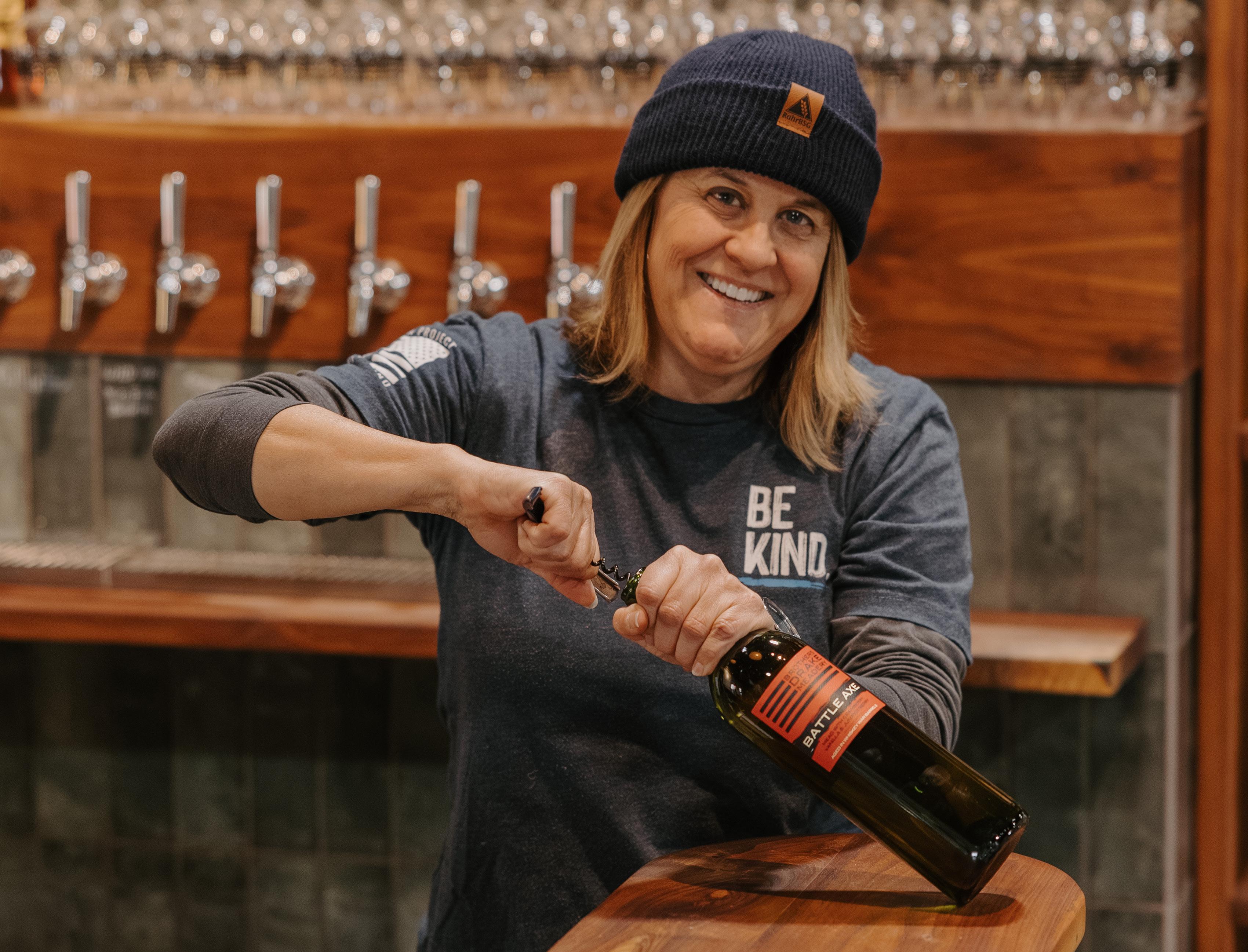
From left, Brother’s Drake assistant mead maker Andrew Ogilbee and mead maker/general manager Lisa Ferguson →
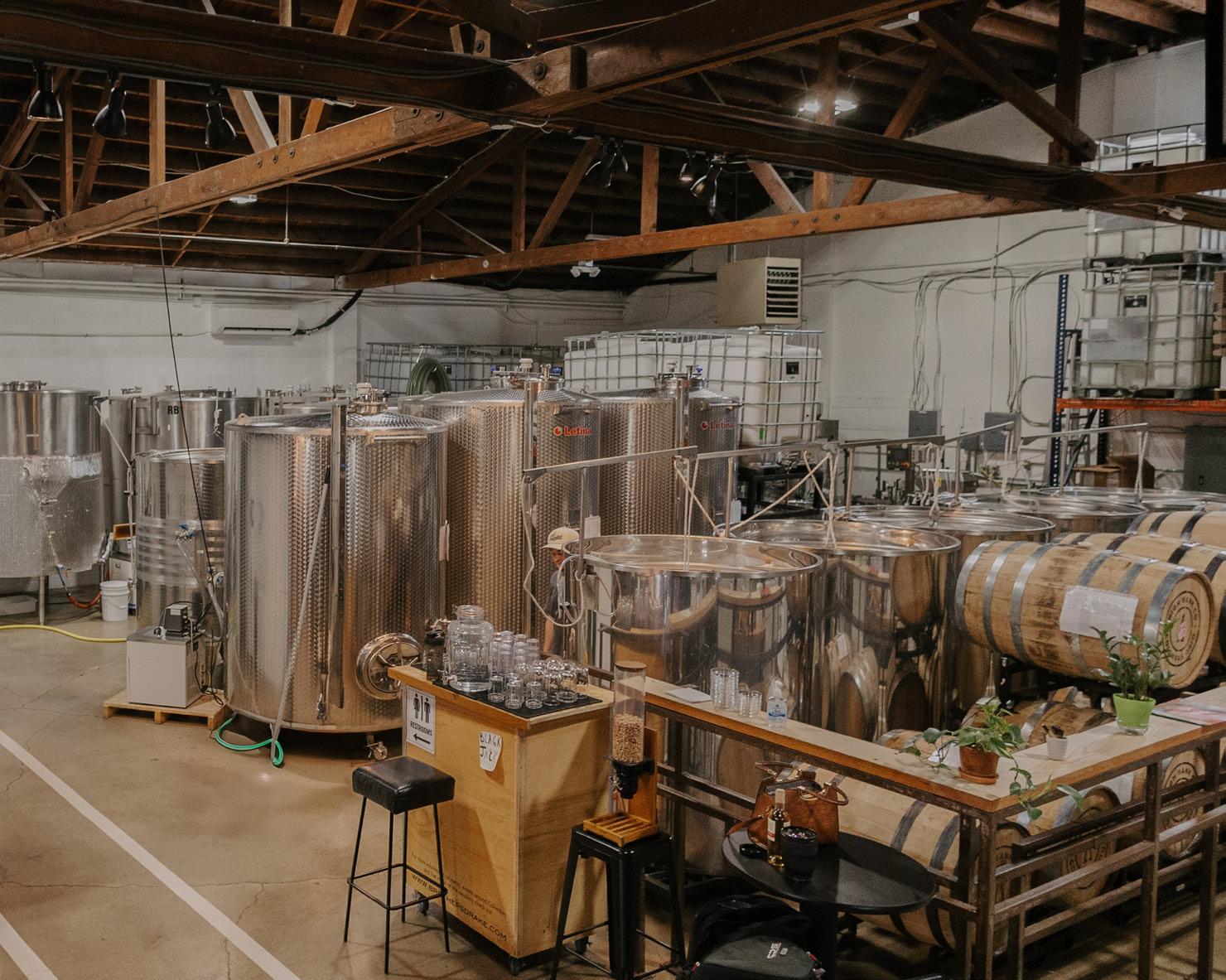
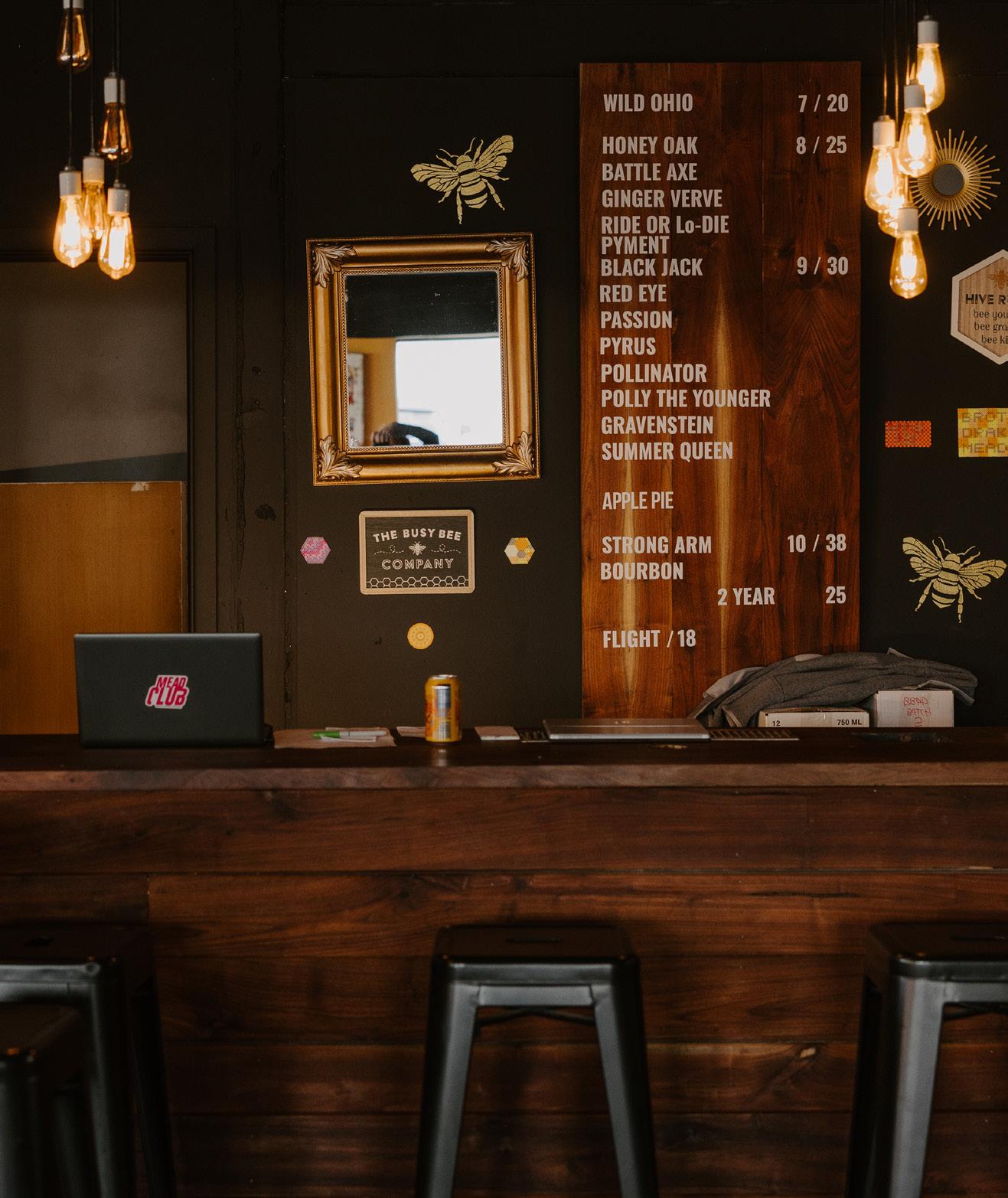
After over a decade in the Short North, Brothers Drake Meadery pulled up the company’s mead-soaked stakes and relocated to Grandview Heights in late 2023. Following years of operating a bar, event space and performance venue, co-owner Sarah Benary described the move as an opportunity to refocus explicitly on the craft of meadmaking. The result is a fresh space along Grandview’s busy 3rd Avenue corridor populated by mead, mead and also mead.
“It looks like a bar, but it's not,” said Brothers Drake mead maker and general manager Lisa Ferguson. “(The move) is more about selling and focusing on our product, not the other alcoholic beverages, spirits, beers—just becoming a real meadery, not a bar.”
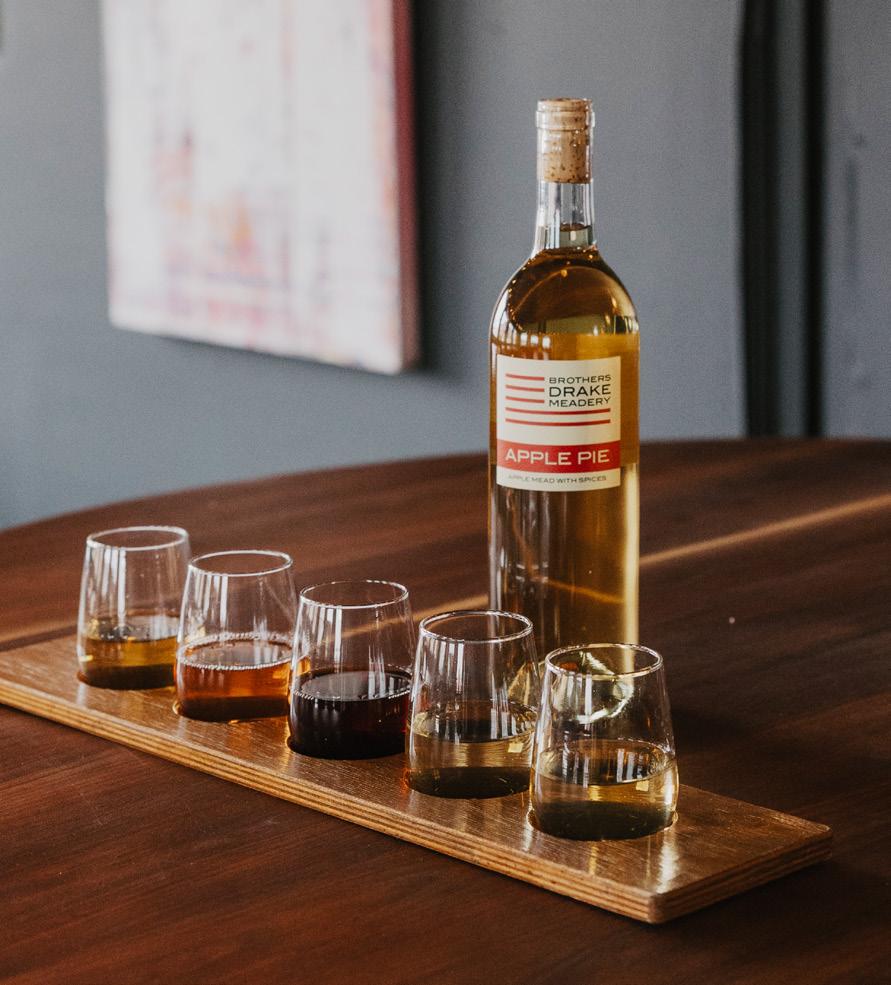
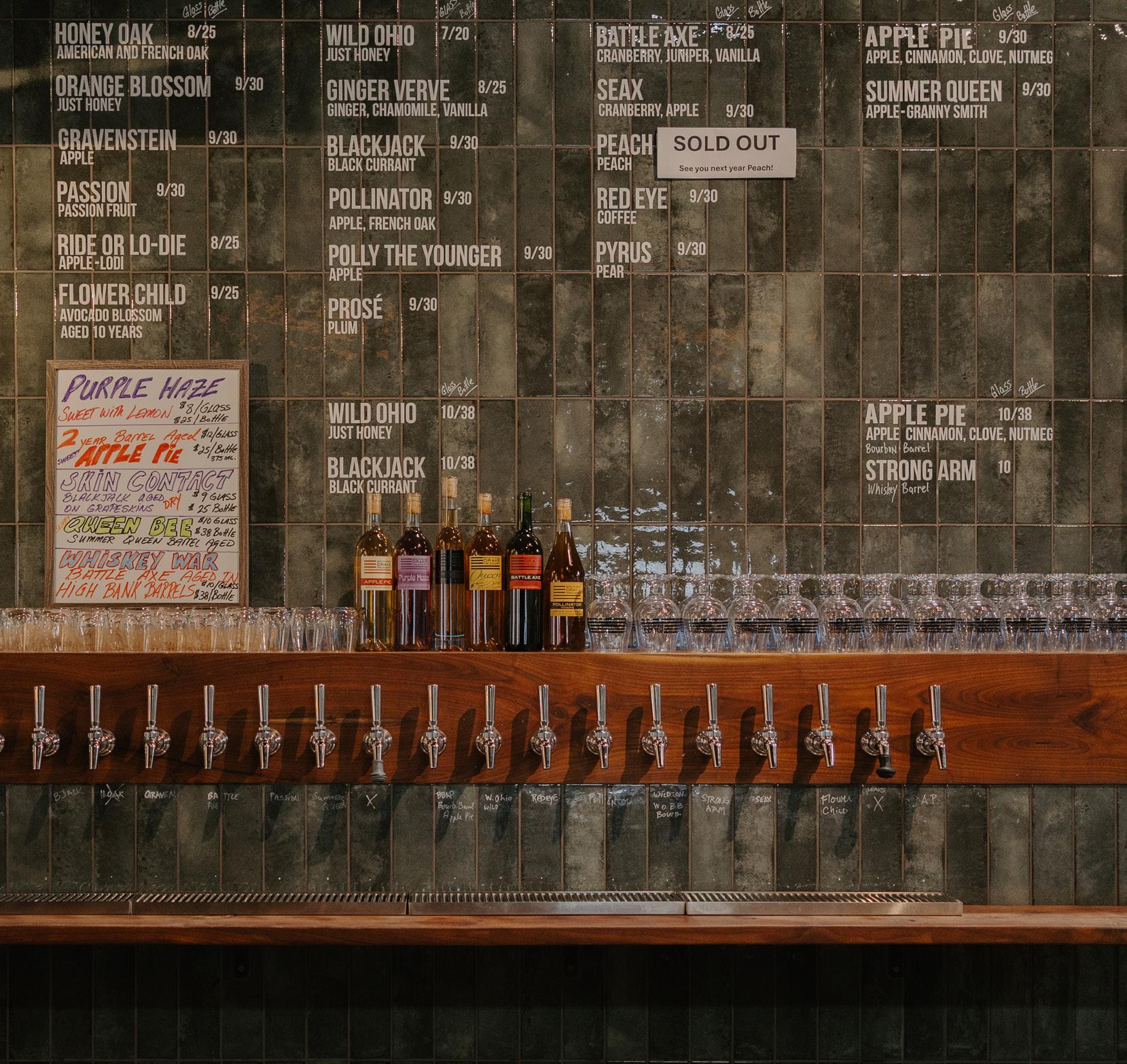
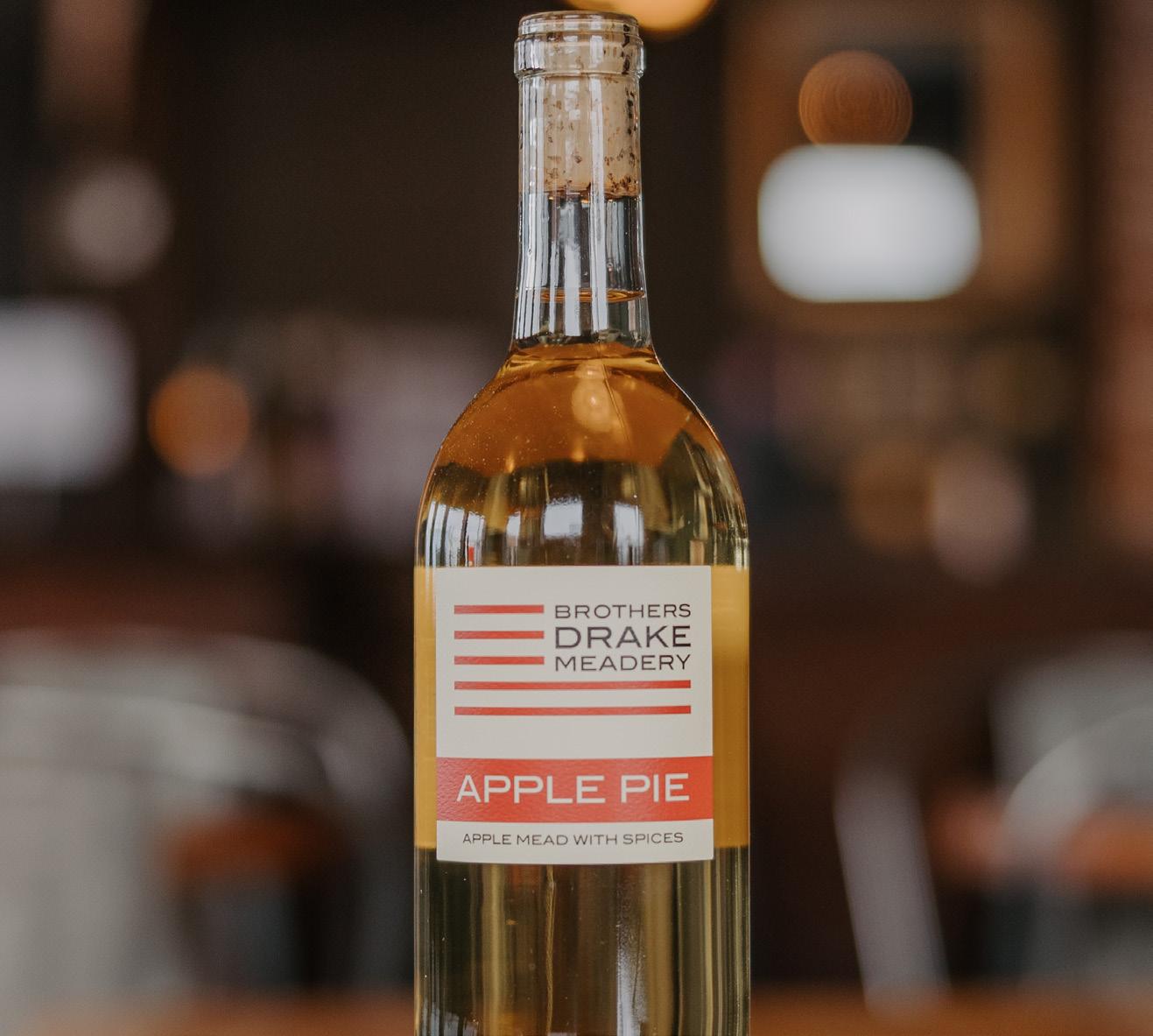
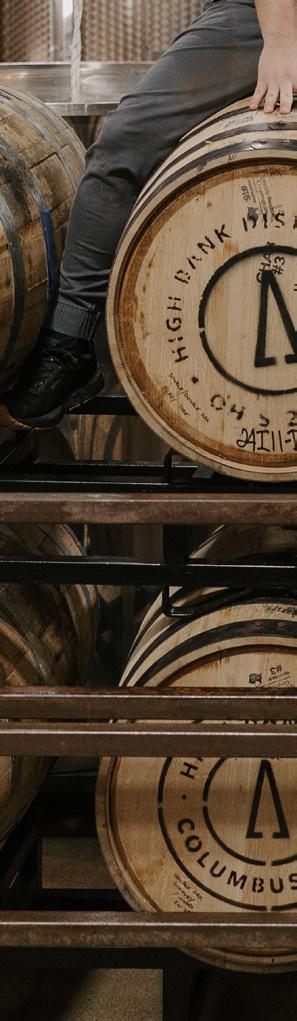
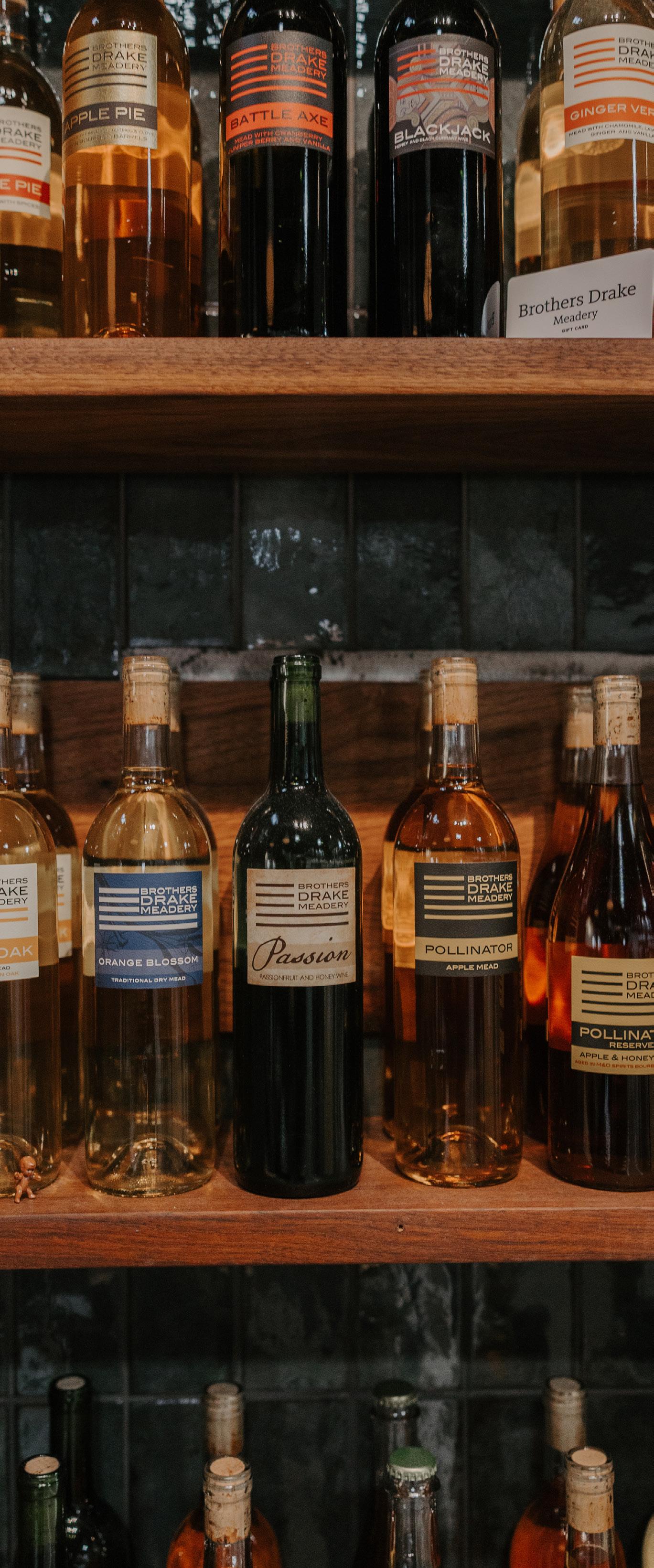
To that end, the taps inside Brothers Drake are today filled exclusively with mead produced on-site, all of it originating from Ohio-harvested honey sourced from a third generation beekeeping family in the village of Custer, Ohio. The meadery’s best seller, Apple Pie, is similarly fueled by a fourth generation apple orchard near Bowling Green, and a partnership with nearby High Bank Distillery means even the barrels for the meadery’s barrel-aged varieties are locally sourced.
“I get people who come in and they're like, ‘Mead, is it beer?’” said Ferguson. “They just don't know what it is. It's more of a niche market, but we're trying to bring it out to the masses.”
As demand for traditional alcoholic beverages among younger generations has waned, the mead industry is on the rise, reporting growth rates far exceeding similar rates for beer and wine, albeit on top of a much smaller existing customer base. Brothers Drake is feeling the effects of that upswing. The meadery cites increased demand as the primary motivator behind opening the Grandview facility, which was purchased in 2020 as a production site before its full conversion in 2023 to house taproom operations. →
“Alcohol consumption is definitely on the downturn,” said Ferguson. “People are drinking less. The younger generation is drinking a lot less. We really haven't seen it hit us that much right now. Talking to other breweries and wine shops, they're really taking a hit but we just keep growing and growing.”
When Brothers Drake was founded by brothers Woody and Eric Drake in 2007, it was the first such business in Ohio and among only a few dozen meaderies in the United States at that time. Today, the number of meaderies in this country tops 500 according to the American Mead Makers Association, and with that growth comes a growing appreciation for mead itself. A broader and more savvy customer base means Brothers Drake can focus on a mead-first taproom and business model rather than
a little-something-for-everyone entertainment venue.
“My demographics here are so across the board. I'm getting the college kid that comes here after the Ohio State football game. I'm getting the retired couple. I get Renaissance Festival folks,” said Ferguson. “I don't know why that is, because it's alcohol, (but) probably because we're making a good product, selling it at a great price, and we're local.”
Going forward, the meadery’s strategy includes a renewed emphasis on distribution throughout Ohio both to retailers and restaurants. Over 200 different off-site locations carry Brothers Drake varieties today and future plans include both expanding outside of Ohio and exploring intriguingly-under-wraps meadadjacent products. →
Brothers Drake’s meads originates from Ohio-harvested honey sourced from a third generation beekeeping family in the village of Custer, Ohio →
“IT'S MORE OF A NICHE MARKET, BUT WE'RE TRYING TO BRING IT OUT TO THE MASSES.”
For Ferguson, a career in meadmaking was difficult to envision during a corporate career at the Wine and Spirit Education Trust, one of the world’s largest organizations offering alcoholic beverage-related education. After a short stint making wine in her basement, Ferguson ultimately pursued a winemaking certification through Kent State that required on-site experience. Aided by the production similarities in winemaking and meadmaking, Ferguson caught on for a short stint at Brothers Drake, one that ultimately resulted in her leaving the corporate world and being hired on as mead maker in 2024.
“I really didn't have aspirations to do this as a career, but it happened and it's amazing this is what I do for a living,” said Ferguson.
For those interested in learning more about mead, its production and its history as the world’s oldest alcoholic
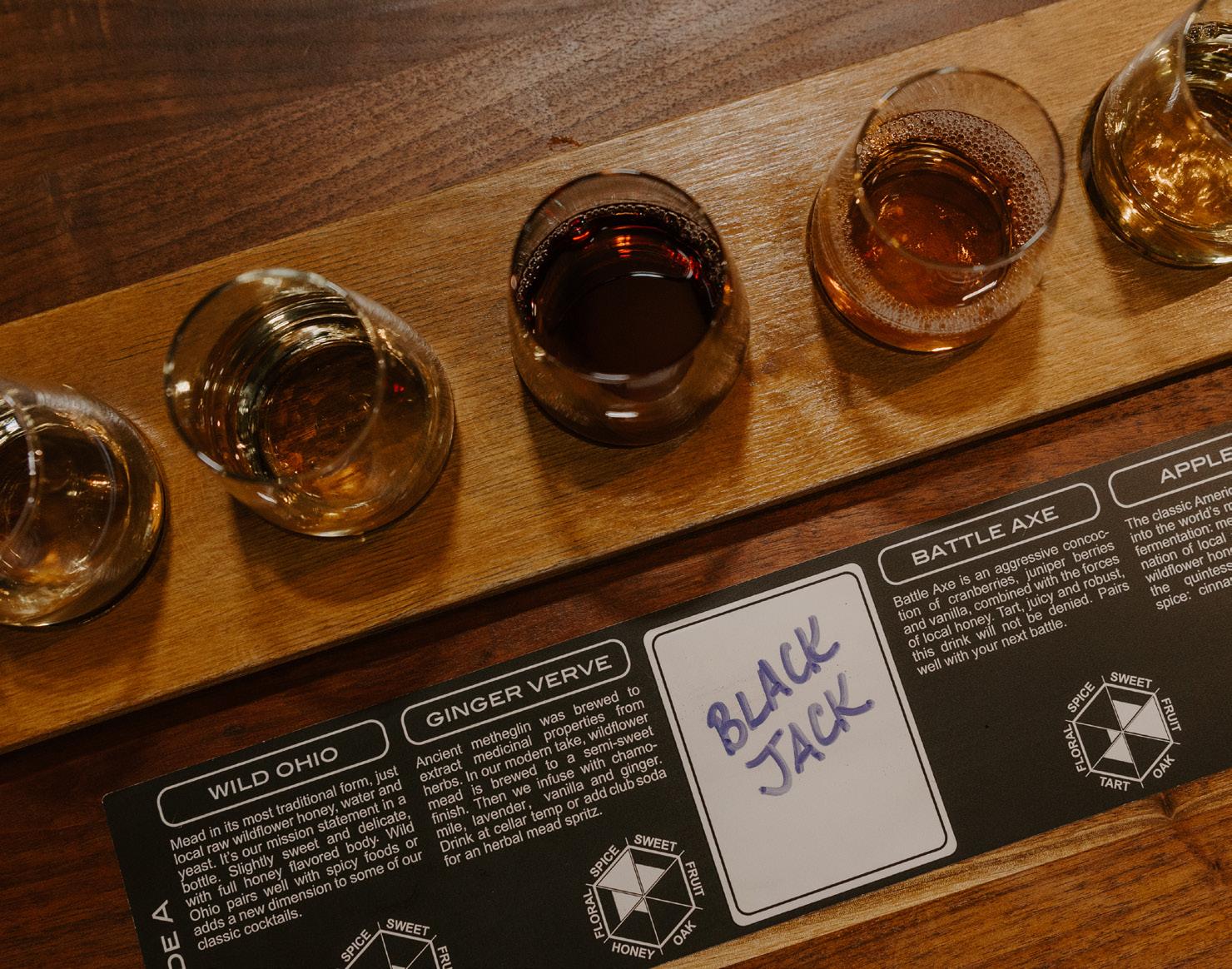
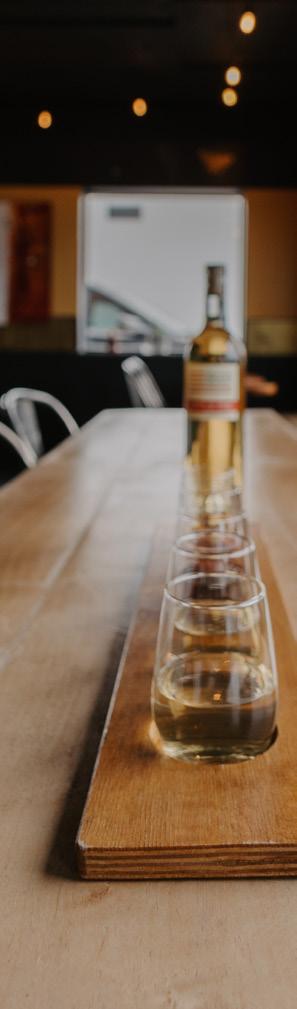
drink, Brothers Drake offers tours each Saturday and Sunday operated by Ferguson and assistant mead maker Andrew Ogilbee. Each tour includes a branded glass and ample samples while discussing the production process. Brothers Drake also offers Mead Club, a quarterly membership program that includes a customizable pack of three meads including year-round, seasonal and experimental options.
“It's kind of like you come in as, I don't want to say a stranger, but you come in and then you leave as a friend,” said Ferguson. “We know a lot of people's names and they keep coming back to bring their friends and bring their family. Our customers are family to us.” ♦
Visit Brothers Drake at 1025 W. 3rd Ave., and visit brothersdrake.com for more information.
← Ferguson opens a bottle of Brothers Drake’s Battle Axe, a mead with cranberry, juniper and vanilla
On any given day, Brothers Drake offers more than a dozen house-created meads for patrons to choose from ↓
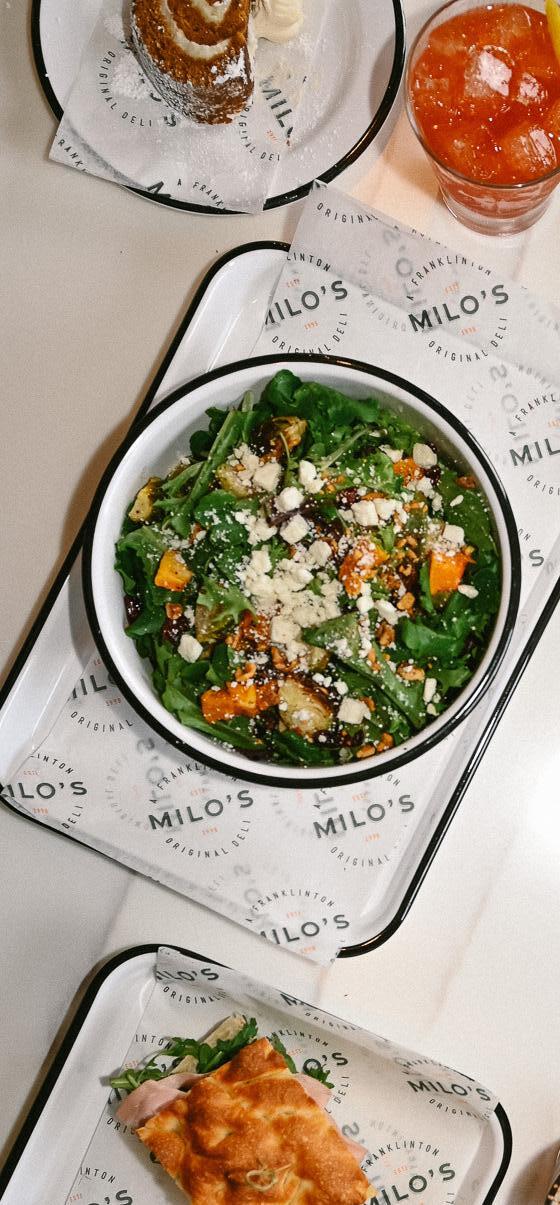
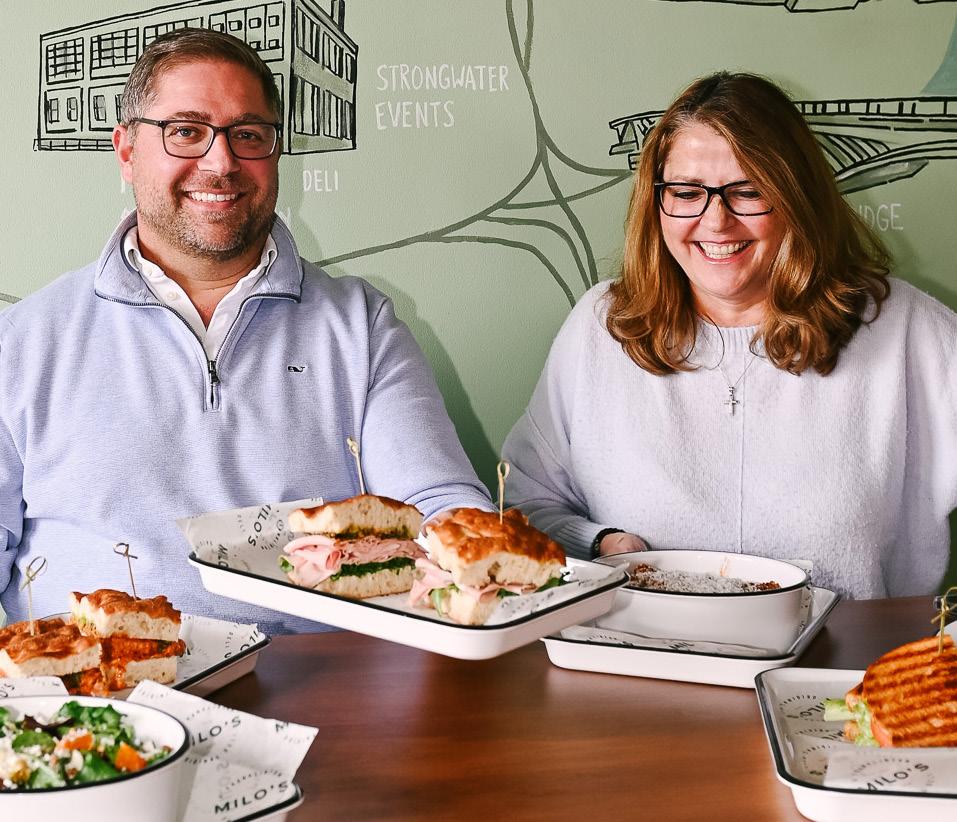
After closing the doors of its longtime Franklinton home in 2014, Milo’s Deli has returned to its West Side stomping grounds in style
By Abigail Jump
Photos by Steph Sheldon
Story Design by Liann Trahey
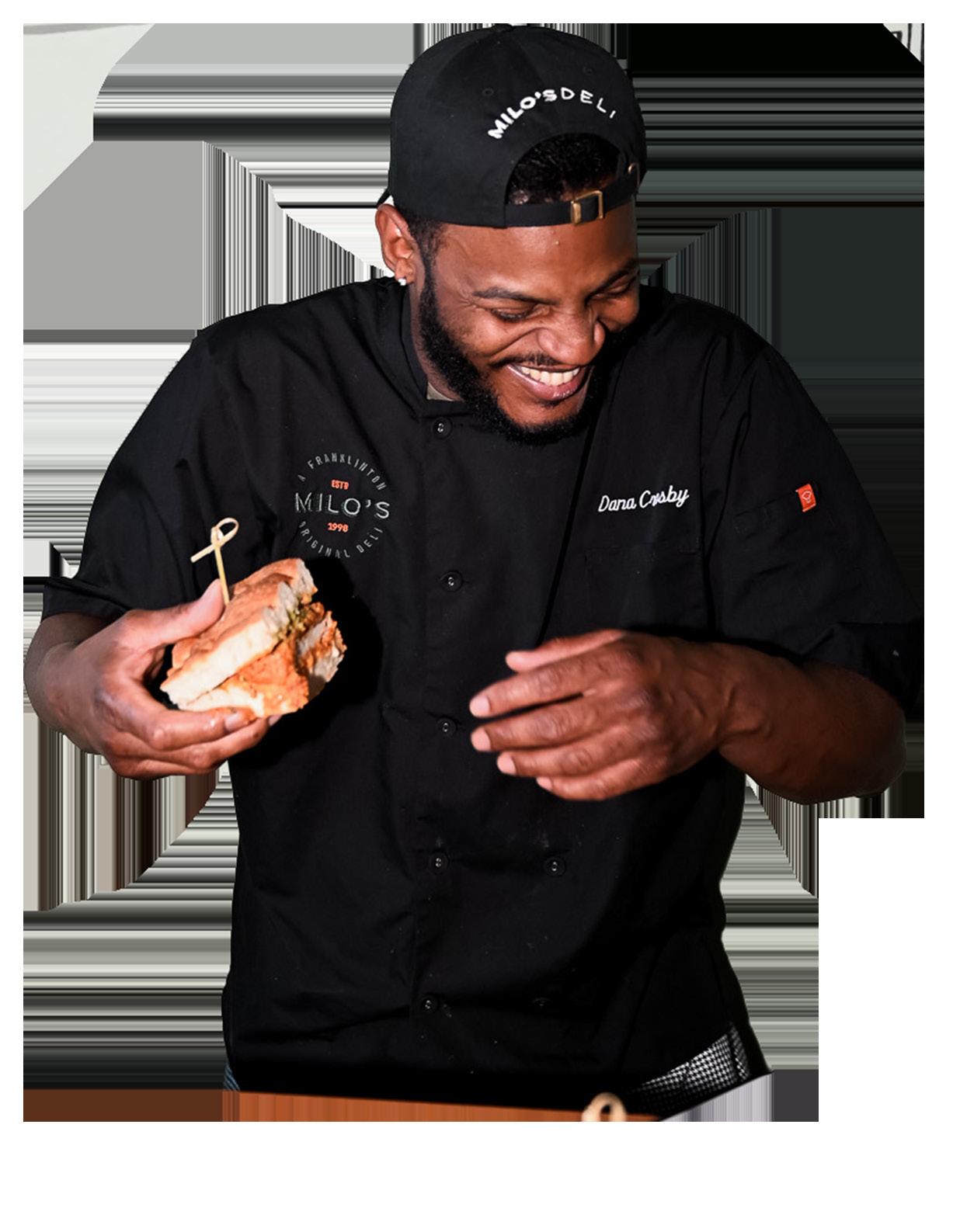
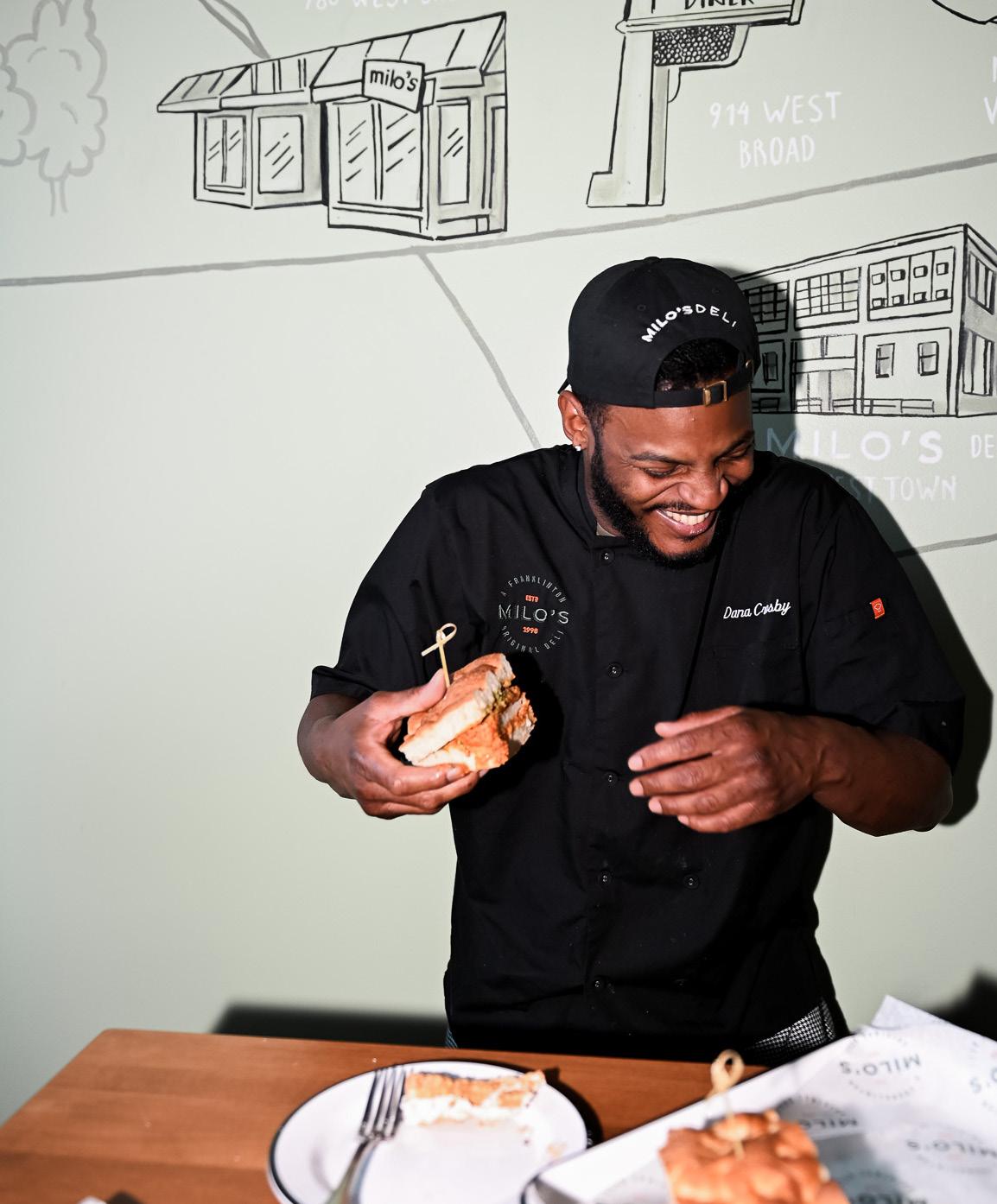
Dana Crosby, Sous Chef of Milo’s Deli →
Who doesn’t love a comeback?
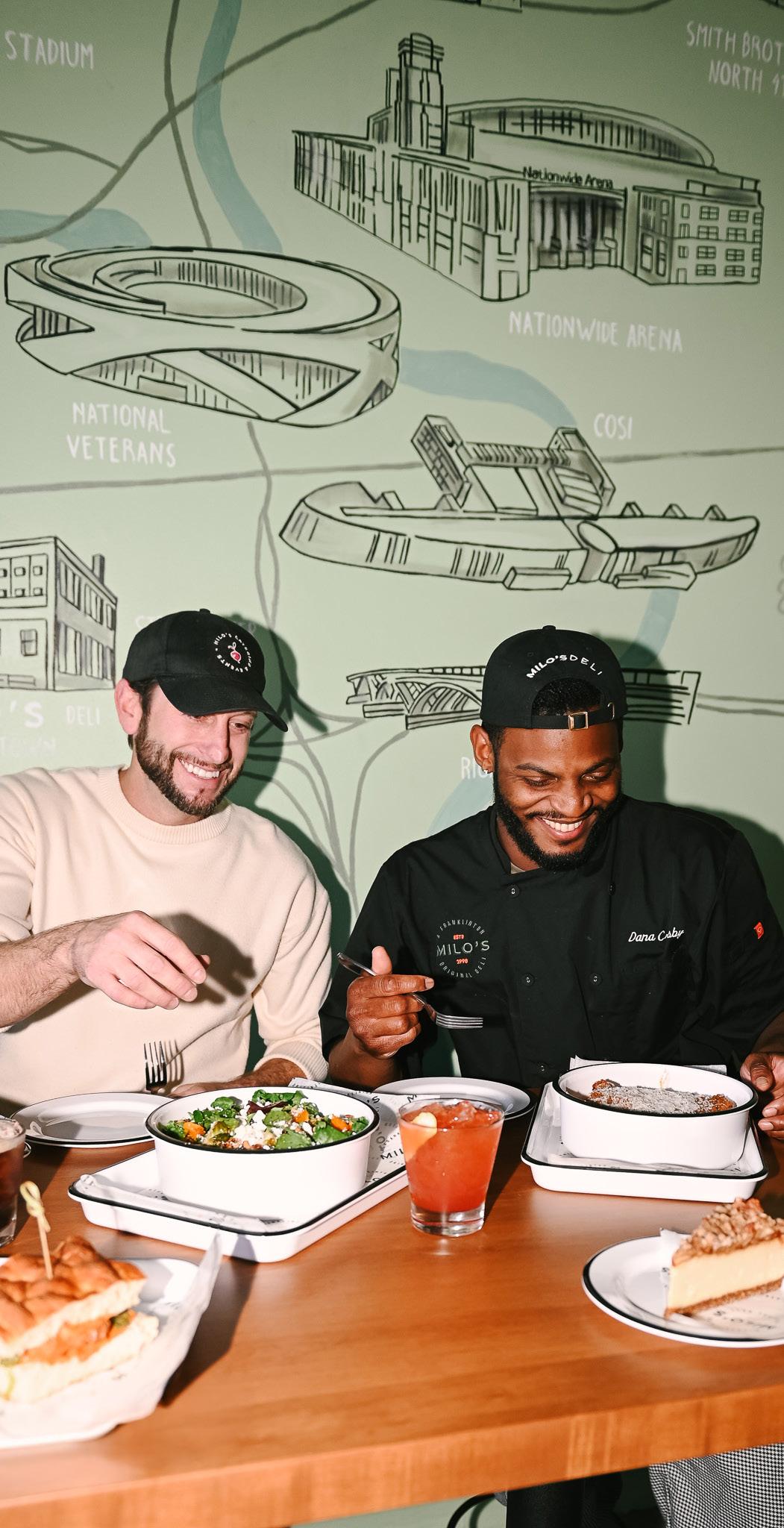
Eleven years after the closure of their W. Broad St. Street location in Franklinton, Milo’s Deli has officially reopened for business at 401 W. Town St., just down the road from their previous space.
“It’s just nice to be able to reopen in Franklinton,” said co-founder and co-owner Demetra Stefanidis, “because that’s what has given us all our starts.”
The original Milo’s was created in 1998 by Stefanidis and her sister, Kathy Pappas, wife of Athanasios ‘Tommy’ Pappas, Columbus restaurant legend and founder of fellow Franklinton restaurant Tommy’s Diner. An homage to their Greek heritage, the restaurant boasted a menu of classic deli fare with a Mediterranean flair. Even the Milo’s Deli title comes from the family; it’s a name mash-up from Tommy and Kathy’s sons, Michael and Louie Pappas, the latter of whom now coowns the restaurant with his aunt.
“He says it’s his mom’s idea, but it was actually my idea. I’m the one who just started throwing words together; ‘Milo’s’ just stuck. Because, you know, it’s an island in Greece, and it means apple in Greek,” Stefanidis shared.
Shortly after opening their original location, Milo’s Catering began operations, providing weddings and private events with delicious cuisine. The catering business was so popular, in fact, that in 2014, Milo’s Deli closed down the restaurant, and the location became headquarters for Milo’s Catering. Over the next decade, Milo’s Deli had brief café locations inside the State House and the ODOT building, but neither site felt just right. At the same time, the Milo’s Catering operation continued to expand: the business acquired the Smith Bros. Hardware North 4th Corridor event space in 2020 and the Strongwater Events venue in 2024, which would eventually becomethe newly reopened Milo’s Deli. →
“So now, seeing them come back and supporting us is really, really great to see.”
“When this space came about, our initial thought was that it was going to be an event space to complement the event space we have in the back. But the more time we spent in here, it just started to feel like it would be better suited as a community gathering spot and restaurant versus a private events space,” said Louie Pappas.
Upon stepping through the entrance, customers are greeted by a spacious foyer and gleaming ceramic steps leading directly to the pastry display case. With its elevated ceilings, nostalgic subway tiles, and walls of natural light-pouring windows, the eatery blends a modern elegance with classic Art Deco charm: an ode to new beginnings and quintessential delicatessen design.
Along with a new setting, patrons can expect a new variety of beverage options, as the new Milo’s location features a full-service bar. The desserts are made fresh, too; pastry chefs come in each morning and stock the cases to ensure every bite is at its best.
“It’s felt like a bit of a reunion because every week– almost once a day– you’re seeing somebody who you haven’t seen in five plus years,” Pappas said. →
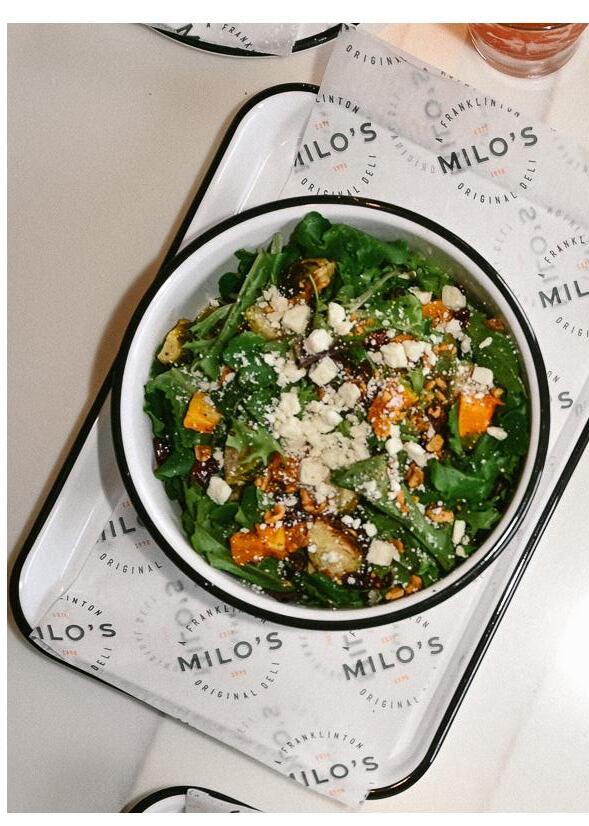
Fall Harvest Salad →
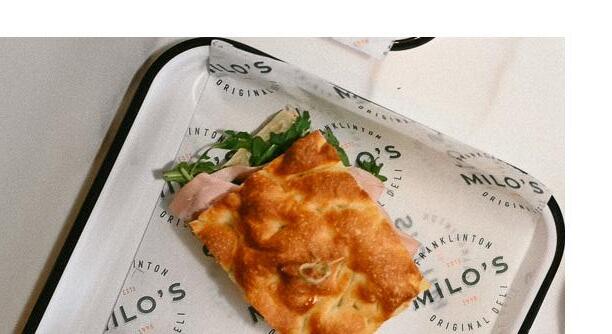
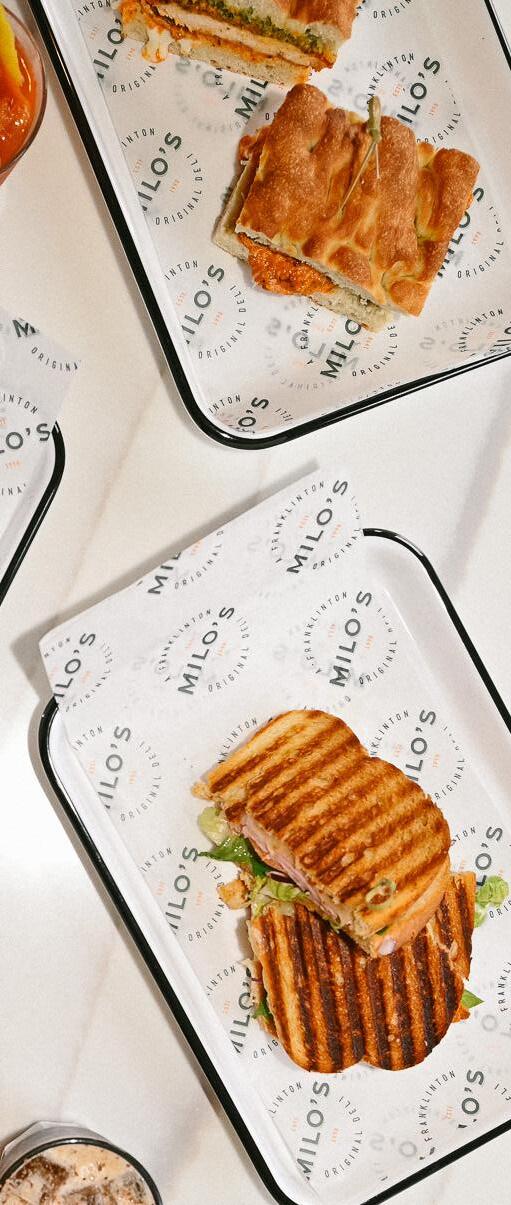
↓ Roasted Turkey Sandwich
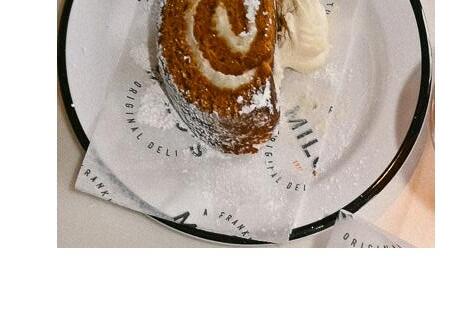
Pumpkin Roll ↑
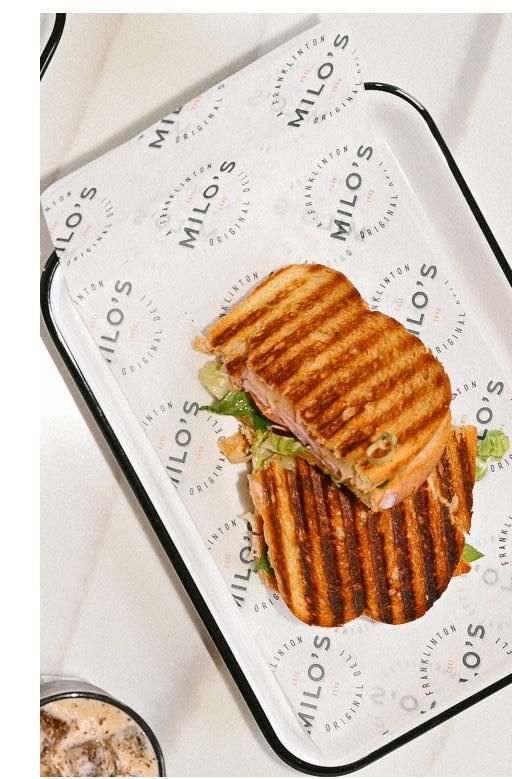
The Italian Gangster Panini ↓
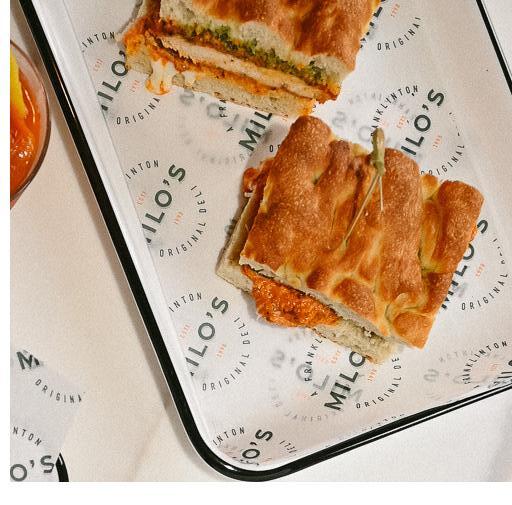
Vodka Chicken Parm →
you see people all the time, you establish relationships, and it was all cut off. So now, seeing them come back and supporting us is really, really great to see.”
Menu best sellers include the Vodka Chicken Parm, Cajun Chicken Panini, Reuben, and Italian Gangste—Stefanidis’s personal favorite. For those who like a kick of spice, Pappas recommends his favorite, the Mortadella.
Nonetheless, the Oct. 2 opening day was bittersweet for the owners of Milo’s, as they celebrated without patriarch Tommy Pappas, who passed away in early December 2024. There’s a mural on the west-facing interior wall of the restaurant featuring a handful of the city’s most important monuments: the Statehouse, the Shoe, and Tommy’s Diner.
“We were excited to open, but it felt like his presence was missing because he was such a huge personality,” shared Pappas. “He knew that we were planning to do this and was very excited about it,
so it sucks that he’s not able to be here to see what it became. He meant a lot to a lot of people, and us being able to provide another establishment to the community, I think, was important for Franklinton.”
One thing is for certain: no matter what you order, you won’t regret stopping by and celebrating the return of a staple Columbus eatery. ♦
Milo’s Deli is open to customers Tuesday through Saturday from 11 AM to 8 PM and Sunday from 11 AM to 4 PM.
Louie Pappas and Demetra Stefanidis, the nephew/aunt owners of Milo's Deli
160° F
145° F with 3 min rest
145° F with 3 min rest
145° F with 3 min rest
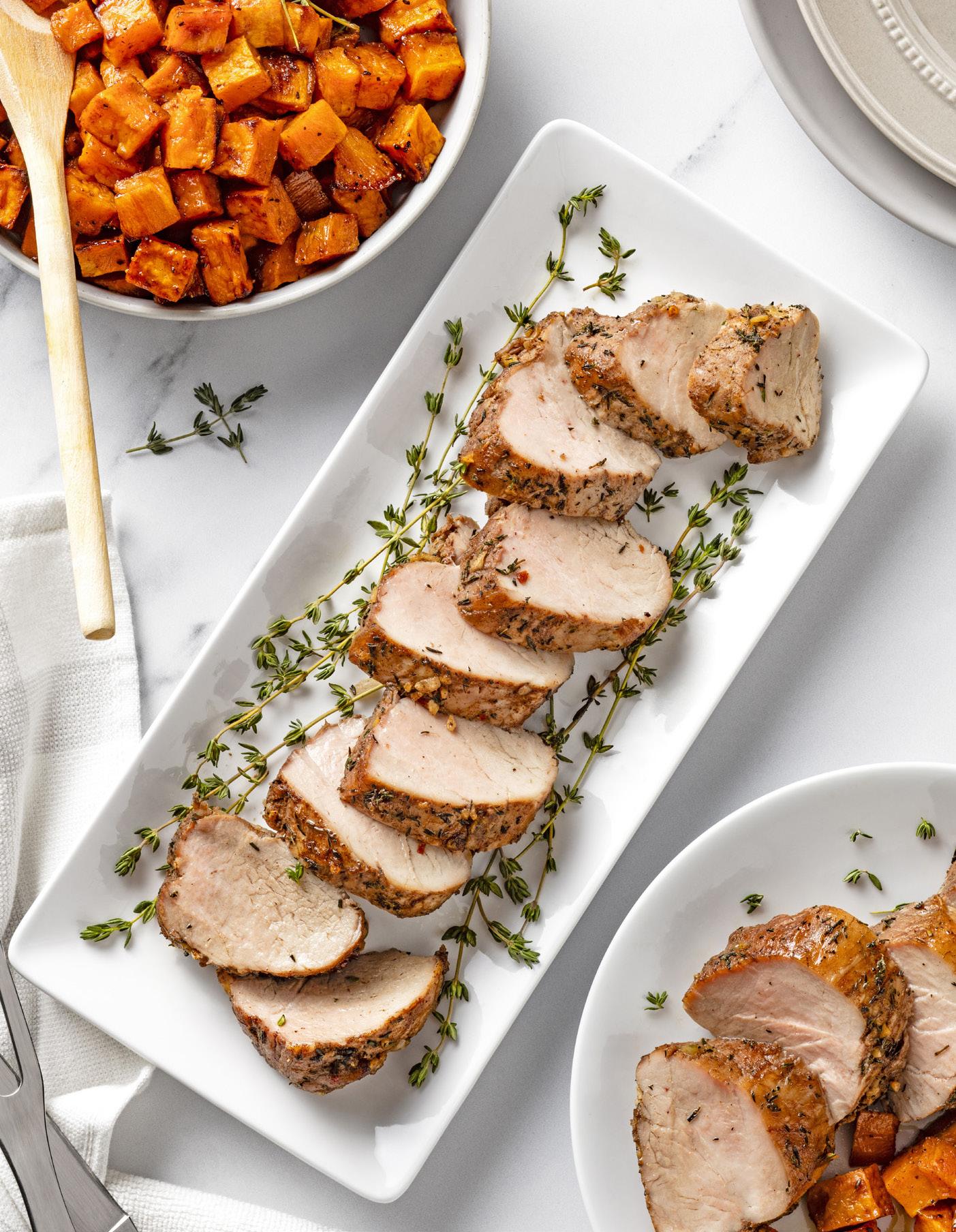
AUTUMN HARVEST PORK
TENDERLOIN
5. To fill eggrolls, wet edges of an eggroll wrapper by dipping finger into a warm bowl of water and running it along the edges. Add roughly 1/8 cup of filling to the center. Pull corners of wrapper up over mix and pinch to close
6. Store in a sealed container with corn starch dusting on the bottom
7. Fry in a high temp oil like vegetable or peanut oil
8. Make sure rangoons are fully submerged and fryer oil is at 350 degrees
9. Cook for 6 minutes until rangoons are golden brown
10. Serve with sauce of your choice (we opt for our house-made Spicy Ranch)
CHORIZO RANGOONS
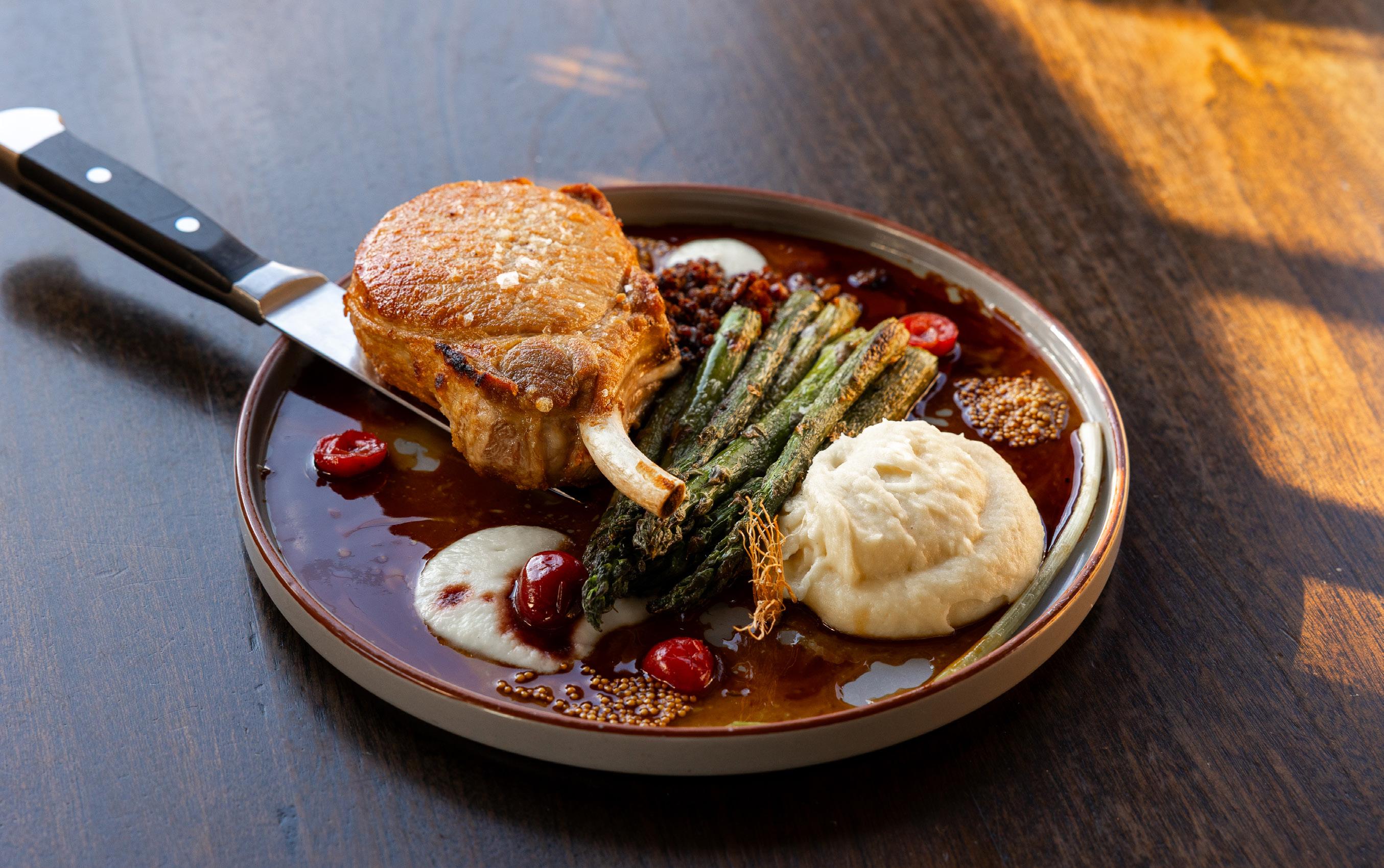
WORTHINGTON TAVERN
ALEX BUECHEL
Pork
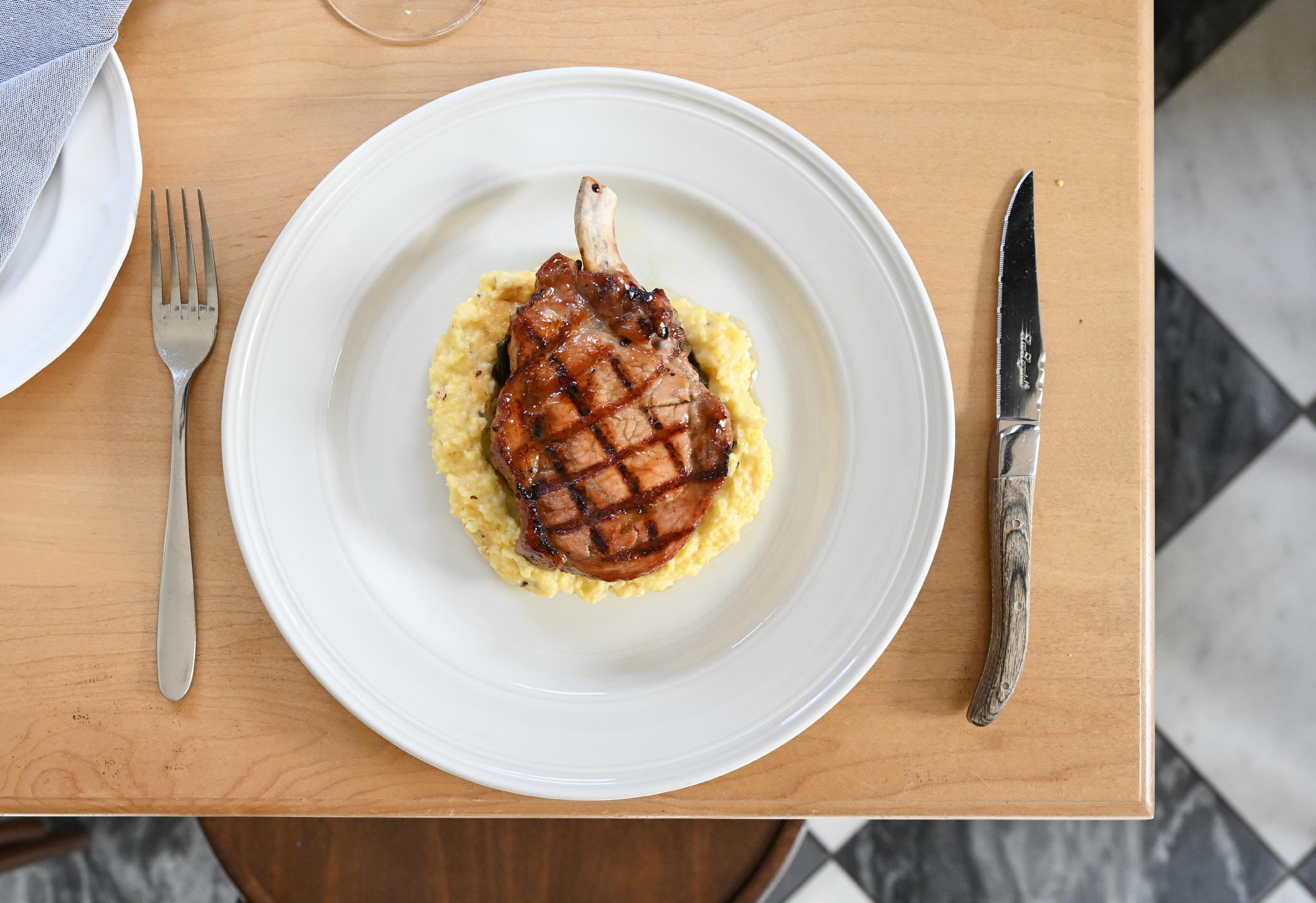
8 oz bone-in pork chop
1 tsp salt
2 tbsp canola oil
1 lb butter
3 garlic cloves
7 sprigs of thyme
Cherry Glaze
1/2 cup balsamic vinegar
1 cup red wine vinegar
1 cup sugar
1 qt of frozen cherries
5 star anise pods
Guanciale Cherry Jus
3 cups reduced stock
2 oz cherry glaze
1 tbsp canola oil
1/2 cup guanciale, diced brunoise
1. Season pork chops with salt
2. Heat oil in skillet over medium heat
3. Once oil is hot and shimmering, add pork, cooking for 2-3 minutes until golden brown
4. In large sauté pan, melt butter over medium heat for 30 minutes until pork is golden brown
5. Add thyme sprigs and garlic cloves to the pan
6. Strain the garlic and thyme sprigs from the browned butter
7. Place the seared pork chop on a pan and brush with a generous amount of brown butter
8. Place the pan in the oven and bake for 5-6 minutes, turning the pork chop every few minutes
9. Remove pork out of the oven and allow it to rest for 2 minutes
10. In a saucepan over medium heat, cook the sugar until it begins to caramelize around the edges
11. Deglaze the pan with red wine and balsamic vinegar, stirring to dissolve the sugar
12. Reduce the mixture until it thickens into a glaze
13. Place frozen cherries in a metal bowl and pour the warm glaze over them
14. Place the pork chop on the plate and serve with the glazed cherries
INGREDIENTS
3 oz cooking oil
7 oz pork cutlet
1 egg
1 tbsp
1 cup flour
1/2 cup panko breadcrumbs
1/4 cup
Pinch salt & pepper
SPECK
ITALIAN EATERY
JAY KLEVEN
INGREDIENTS
1 large piece pork loin (boneless)
3½ oz achiote
8 oz orange juice
4 oz lime juice
4 oz apple cider vinegar
1 tsp pepper
8 laurel leaves
1 tsp salt
1 tsp chicken base
3 oz cooking oil
INSTRUCTIONS
1. Combine all ingredients, except pork loin, in a blender
2. Cut pork loin into 3 oz pieces
3. Marinate the pork with the blended ingredients for 1 day
4. Put the marinated pork in the oven at 350 degrees for 2-3 hours
5. Remove from oven and serve
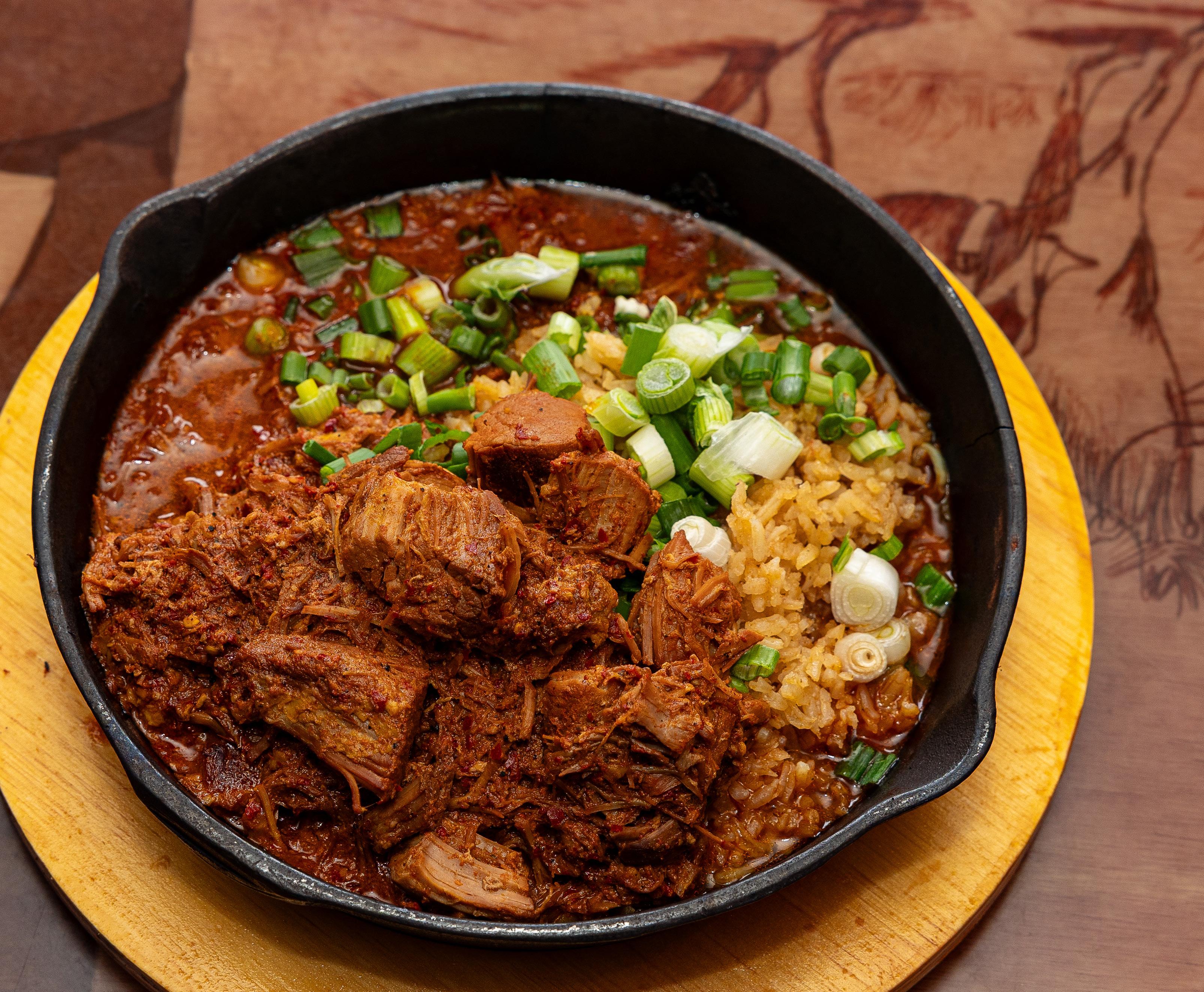
COCHINITA
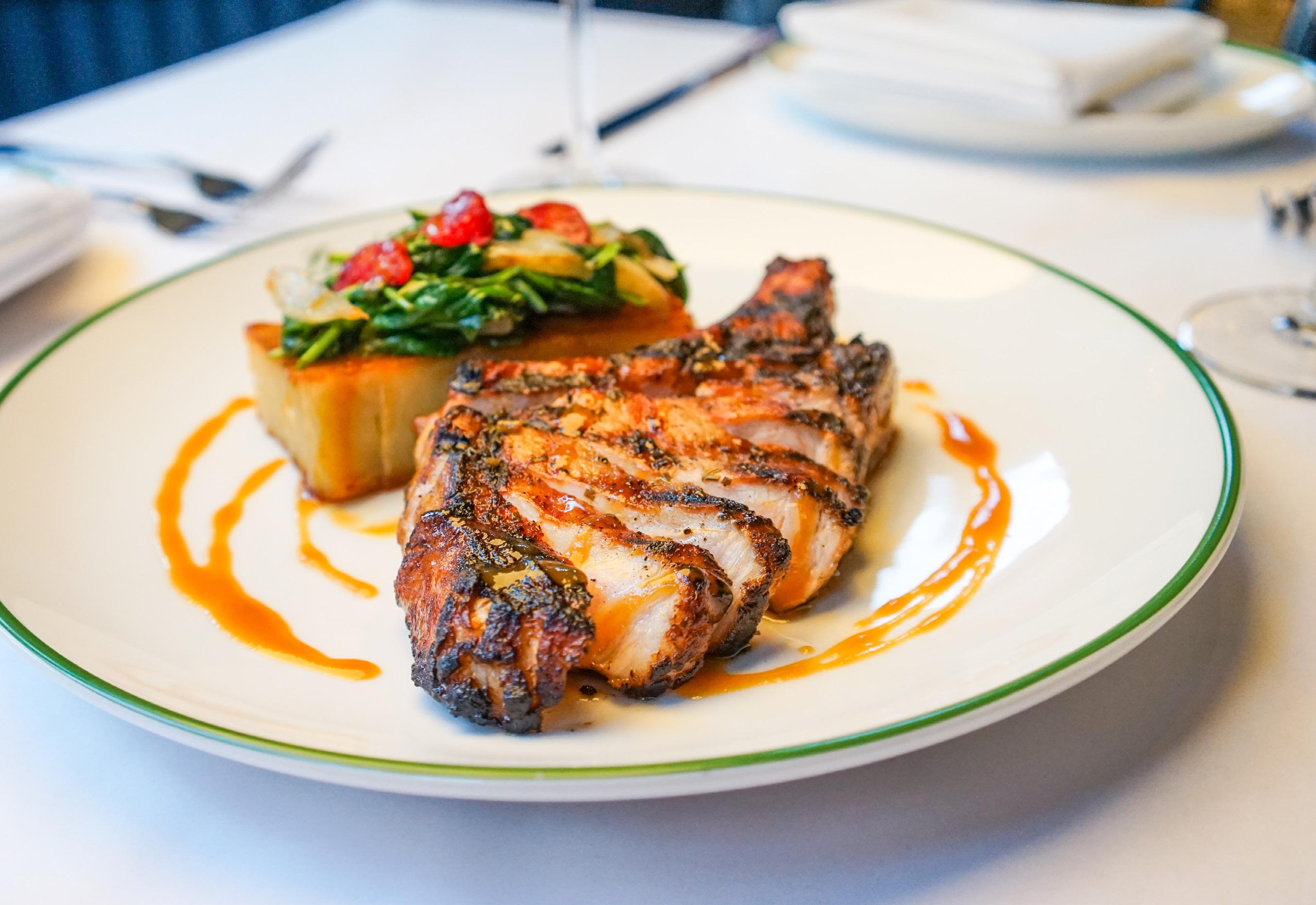
PORK CHOP WITH CRANBERRY RAISIN CHUTNEY
PULLED PORK JOHNNY CAKE
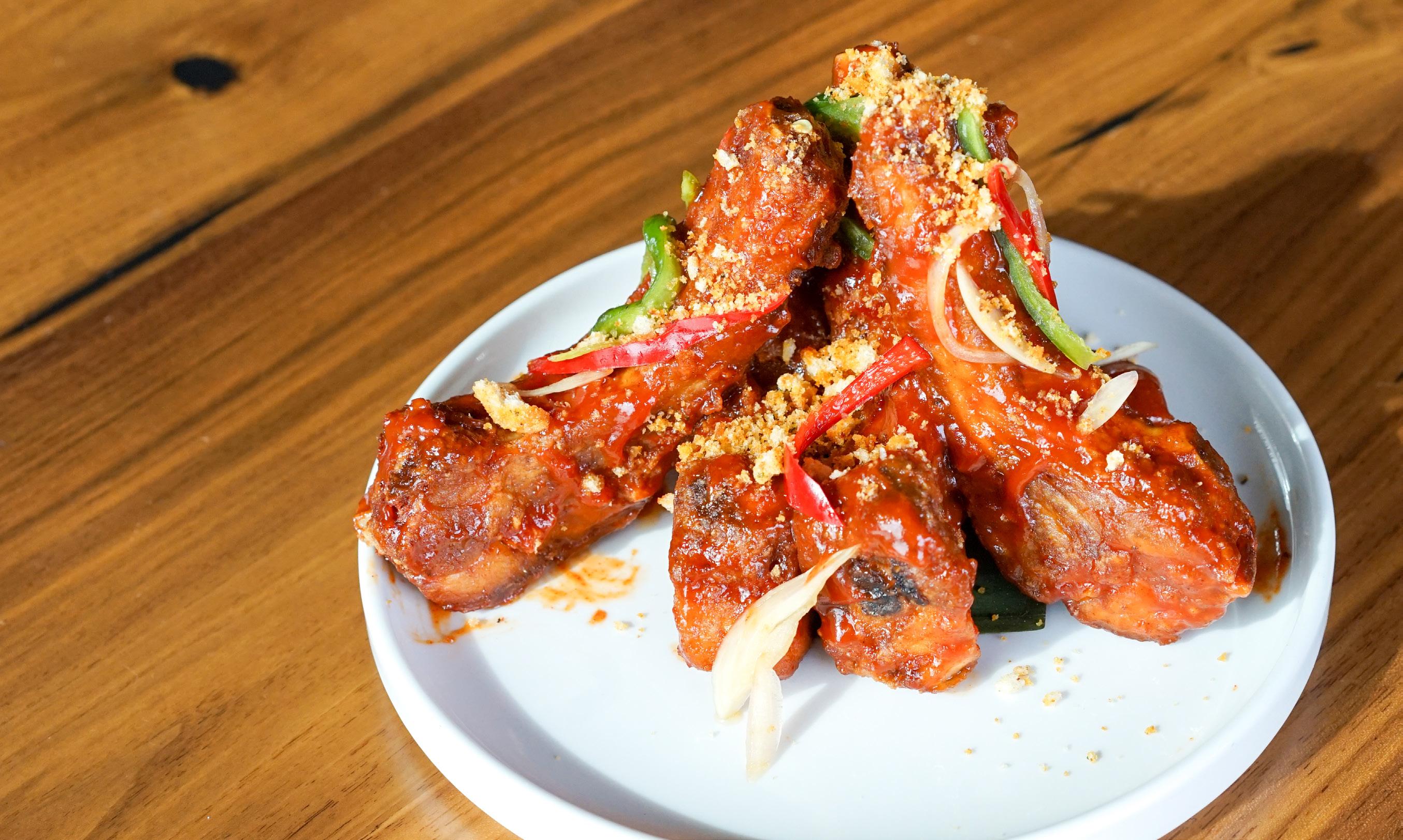
SMOKED CRISPY RIBS
SCAN HERE for cooking instructions on Potato Pave, Citronette and Finishing Butter
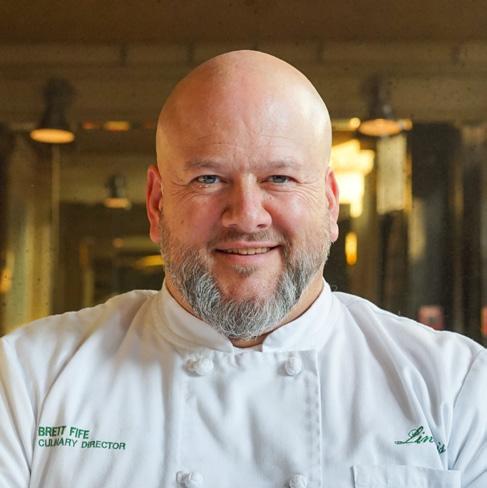
LINDEY'S BRETT FIFE
PORK CHASHU STEAMED
BUN
MAPLE GLAZED PORK LOIN
T O B O U J E E . FROM BASIC
D I S C O V E R M O R E
The Godfather and TAT Special from TAT Ristorante Di Famiglia. Photo by Savannah Bockus →
The long, delicious, and surprisingly contentious, history of pizza in Columbus
SQUARE ROOTS
By John Clark
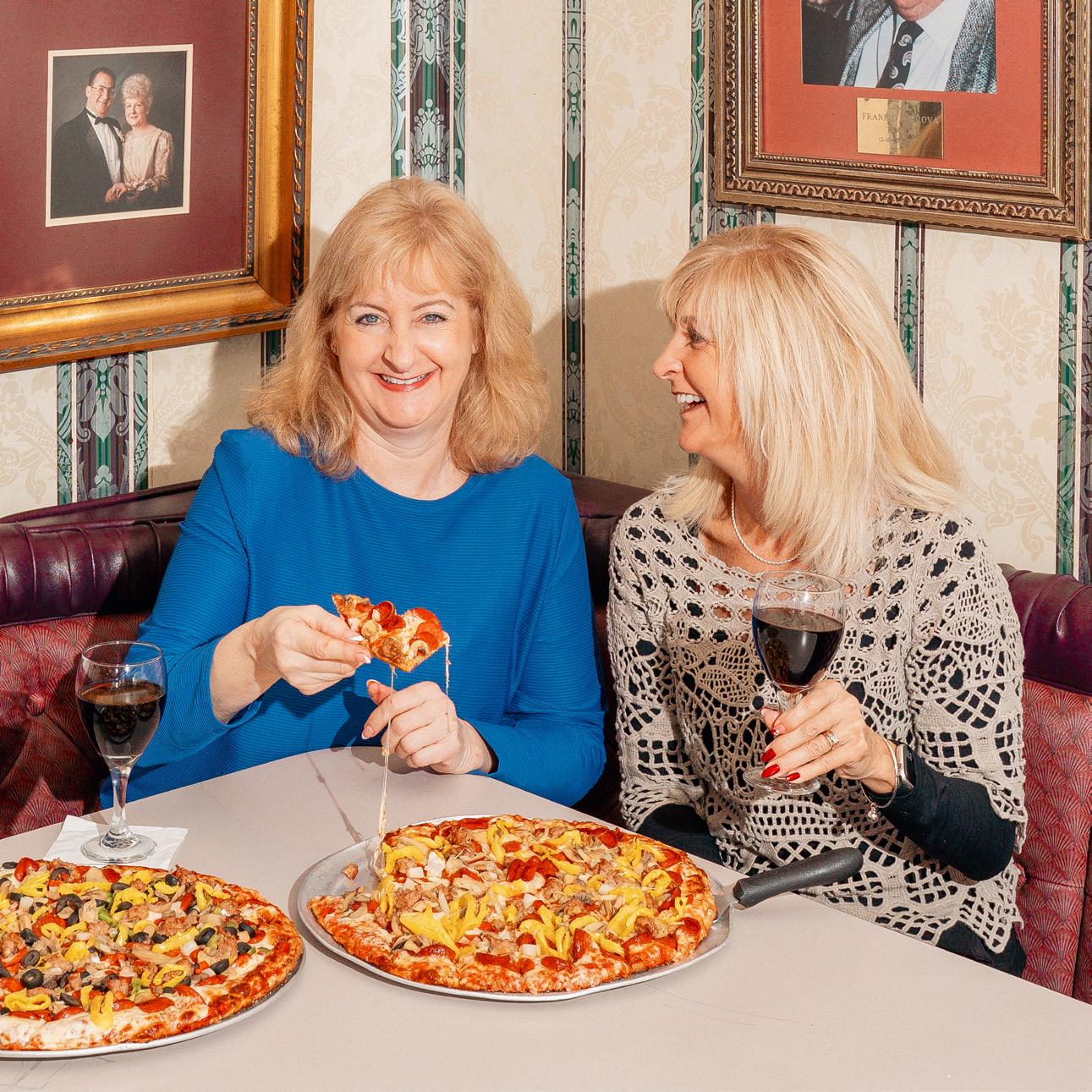
← Michelle Corrova (left) and Marianne Corrova Kirkbride (right), now own their family business TAT
Ristorante Di Famiglia
Photo by Savannah Bockus
TAT Ristorante Di Famiglia’s pizza has been around since 1934 →
An out-of-state visitor and her husband recently asked a German Village tour guide, “What would you say is the one food that best defines Columbus?”
With barely a pause the guide replied, “Pizza.” The couple laughed. It was the same answer they had been hearing all weekend.
Over the past two decades, Ohio’s capital city has made waves on the food front, becoming a destination city for epicures. A San Francisco magazine recently listed Columbus among “America’s most thrilling food cities.” Today, there’s no shortage of upscale restaurants offering everything from eggplant togatsu over sumac yogurt to sweet potato chaat with fried kale to a fivecourse “tour” featuring torched sea bream with ponzu jelly.
But this is the Midwest. Even those who hunger for the occasional $188 Wagyu steak with
truffle fries and a $299 bottle of Right Bank Bordeaux will eventually come down to earth and crave a simple pepperoni pizza. And Columbus, once crowned the Pizza Capital of the U.S.A. by Pizza Today Magazine, is home to some of the best to have ever originated in the New World.
Our favorite game-day meal has its origins in West Asia and Europe. Varieties of baked bread with toppings have been traced back thousands of years. Persian soldiers in the 6th century BCE carried into battle flatbreads with cheese and dates perched atop their shields. Ancient Greeks ate a flatbread called plakous, often
topped with cheese, garlic, herbs and onion.
Archaeologists at Pompeii were excited a few years ago to find a fresco depicting what looked like a modern-day pizza. On closer inspection, though, experts determined it probably was a simple focaccia, seasoned with herbs. Most of today’s pizza fanciers would certainly demand more from their favorite dish than air-filled bread and olive oil.
Ingredients of the modern pizza began coming together in Naples and Sicily about 400 years ago, after Spaniards from the Americas introduced tomatoes to that region. But it wasn’t until 1830 that the first pizzeria opened, in Naples. Further recipe refinements were still to come.
And by the early 1890s, Italians were going crazy for their oven-baked flatbread topped with mozzarella cheese, tomatoes and other savory ingredients. →
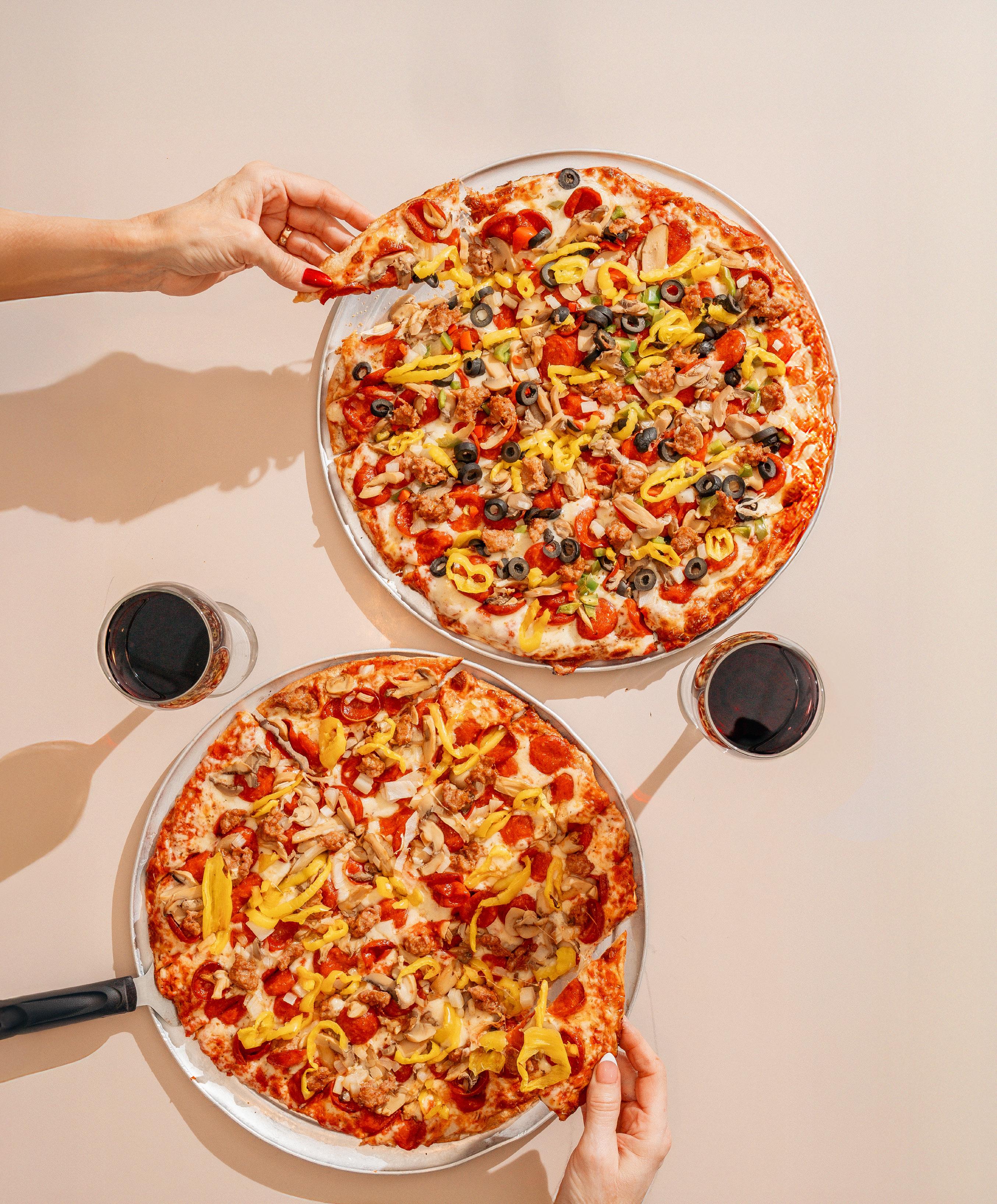
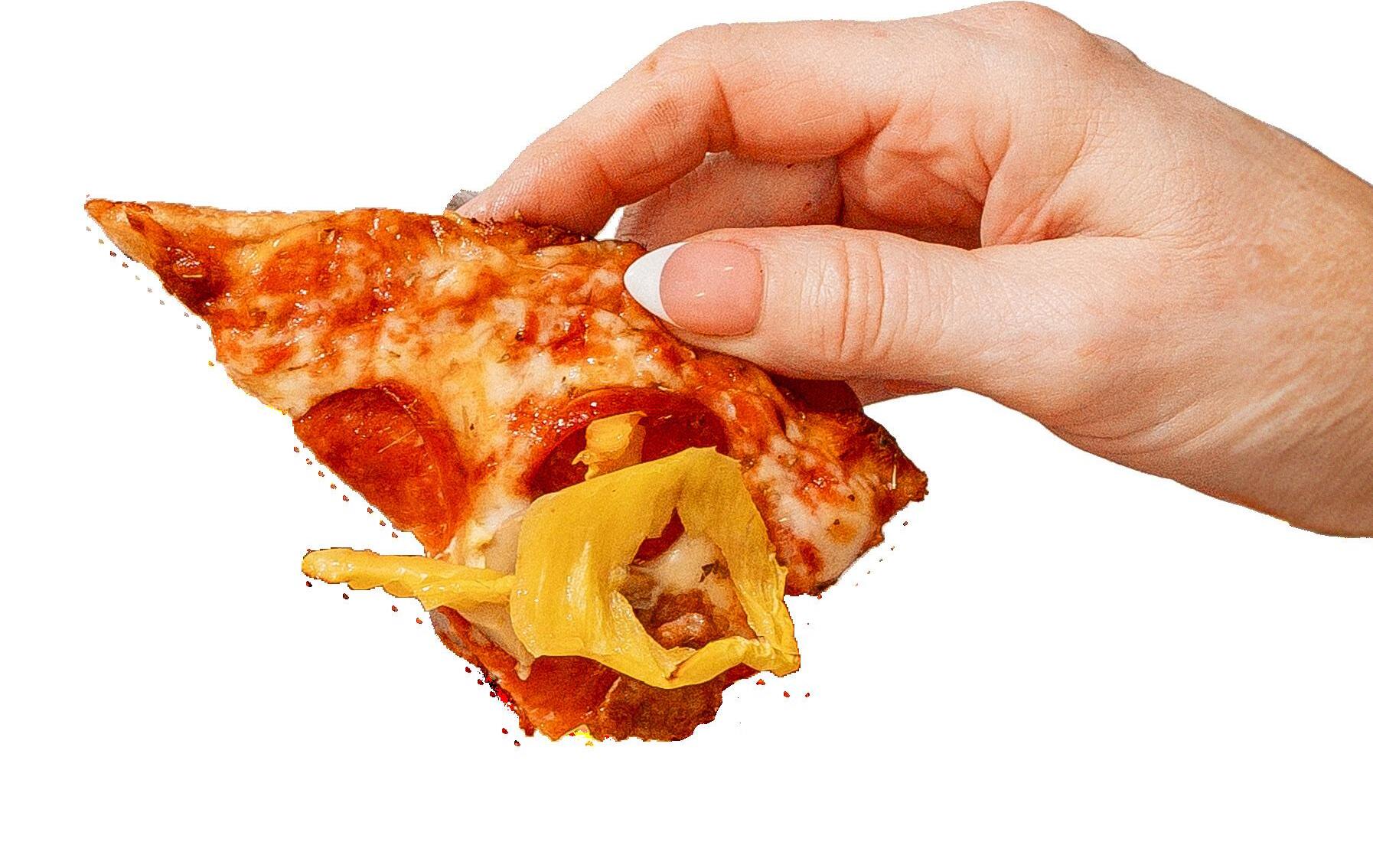
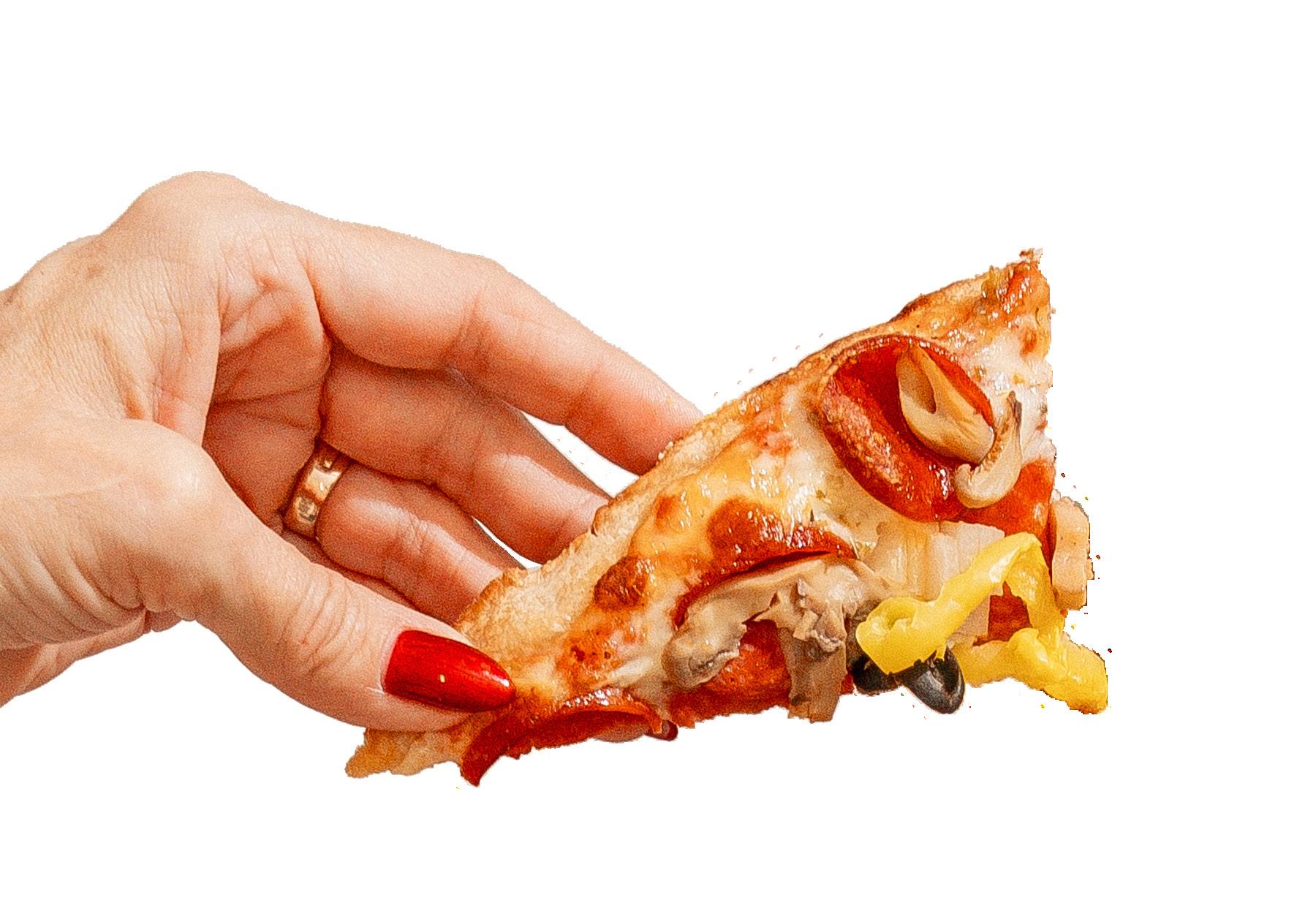
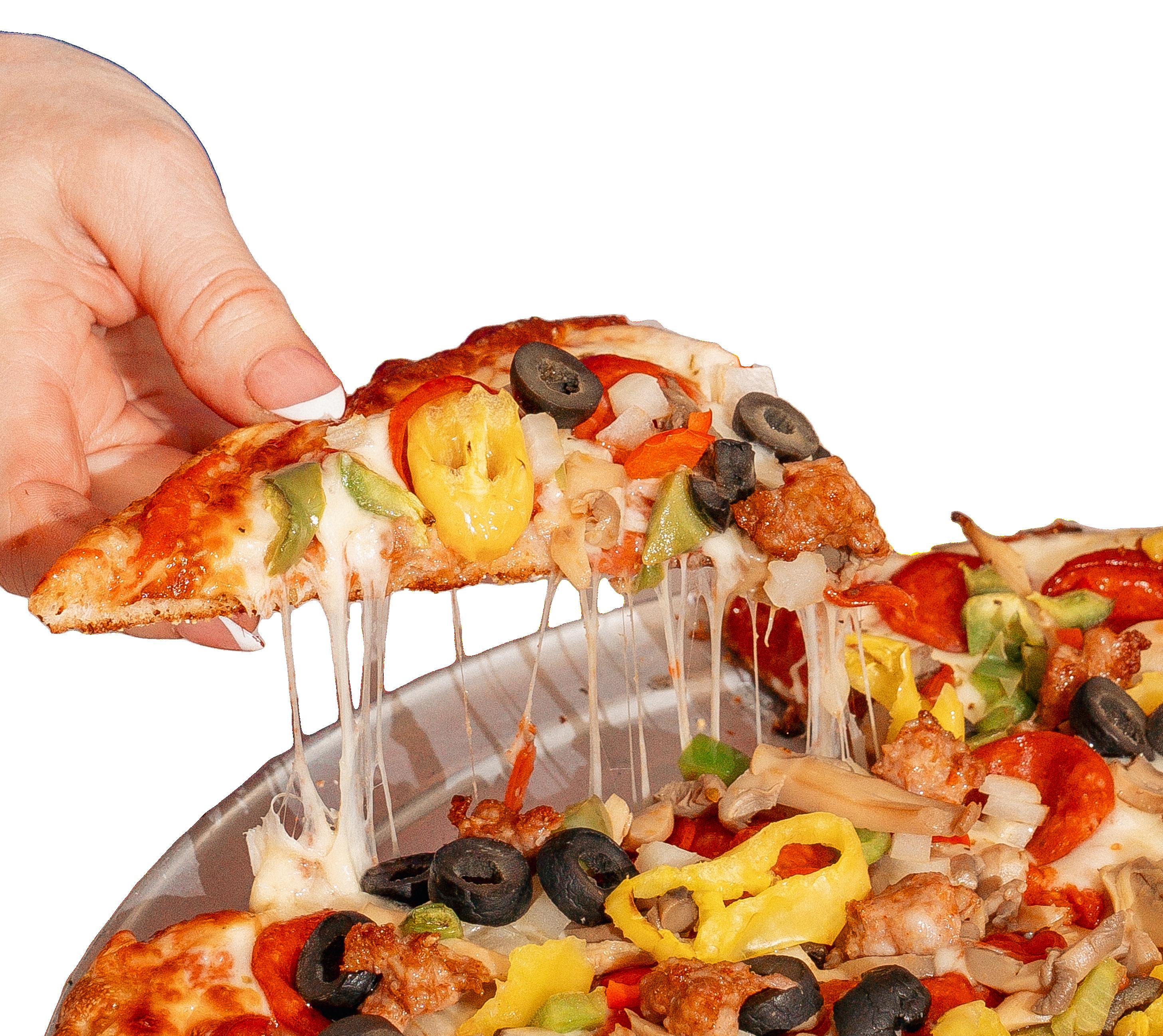
← Thin, homemade dough dusted in cornmeal, provolone cheese, and a garlic-based tomato sauce are the main components of TAT Ristorante’s pizza.
Photo by Savannah Bockus
It took no time at all for pizza to “jump the pond,” arriving in New York with Italian immigrants as early as 1894. But it would be another 40 years before it found its way to Columbus
In 1929, a young Pete Carrova, who had emigrated from Sicily with his parents, and his wife Philomena, originally from Naples, opened a little cafe on West Goodale Street. The area, known then as Flytown, was already home to many Italians who had recently come to Columbus looking for work.
Pete named his eatery TAT Ristorante Di Famiglia (TAT pronounced as three initials) after
the brand-new coast-to-coast air-train passenger service, Transcontinental Air Transport. Columbus was TAT’s main hub, and Pete was fascinated by it. He loved watching the Ford Tri-Motor passenger planes flying overhead on their way to or from the new Columbus airport.
At first, TAT (the restaurant) served spaghetti, other pasta dishes and fried chicken. Then, five years after opening his little restaurant, Pete added pizza to the menu, having learned from his mother how to make it. Thus, TAT became the first restaurant in Columbus to offer pizza.
Pete’s son Jimmy described that first TAT pizza in 2015 as a product of the Great Depression. He said it had a thicker crust and was baked in large pans. Tomatoes, herbs—and often
anchovies—were spread on top. Cheese wasn’t always available in those days, so it was sometimes simply left off.
Pete was successful, but the construction of I-670 soon forced him to move his business to the East Side, where seven-year-old Jimmy often worked the cash register while standing on a wooden crate. Jimmy eventually joined the business fulltime, overseeing various moves and expansions until he and his family settled on one location in 1981—a former Patriot Steakhouse at James Road and Livingston. Jimmy died in 2021, leaving TAT to his widow, Dolores, and daughters Marianne Corrova Kirkbride and Michelle Corrova.
Under Jimmy’s watchful eye, TAT’s pizza evolved over the decades. Today, it largely fits the description of “Columbus-style.” “We make our own dough, which we spread thin,” Marianne said. “We then slice provolone for the top, mix fresh garlic
The Godfather pizza from TAT Ristorante. Photo by Savannah Bockus →
into our tomato sauce and bake it all in a top-ofthe-line Blodgett stone oven.” A dusting of corn meal keeps the dough from sticking to oven shelves. When it comes out, the “pie” is then cut into strips for serving.
It all adds up to a taste that had the Corrovas overseeing the production and delivery of up to 600 pizzas on some Friday nights. And today, TAT is as busy as ever. “Our pizza business has actually increased since COVID,” Michelle added. “Even if our dining room isn’t full, we’re doing plenty of carryout and DoorDash.”
The folks at Massey’s Pizza concede that TAT served the first pizza in town. But in the spirit of friendly competition, they enjoy boasting that they opened the first pizzeria. Their slogan: “Columbus Discovered Pizza in 1950.” Like TAT, Massey’s has a long pizza pedigree. It was started by James Massey, who had learned how to flip pies at a restaurant called Romeo’s (no connection to today’s Romeo’s Pizza restaurants).
In 1962, Massey sold his business to Guido Casa, who kept the Massey’s name. It went through other ownership changes until being bought by brothers Dave and Jim (or “Jed”) Pallone in 1999. Today, Massey’s has a cult following among pizza lovers, with 13 locations in Central Ohio and one in Pauley’s Island, South Carolina. →
“By cutting it into [SQUARE] PIECES, there’s more OPPORTUNITY for SHARING PIZZA.”
Chief Marketing Officer Rich Folk has been with the company for 25 years. And he’s quite proud of the following Massey’s has attracted. He also insists that Massey’s is one of the few places where you can get authentic, Columbusstyle pizza.
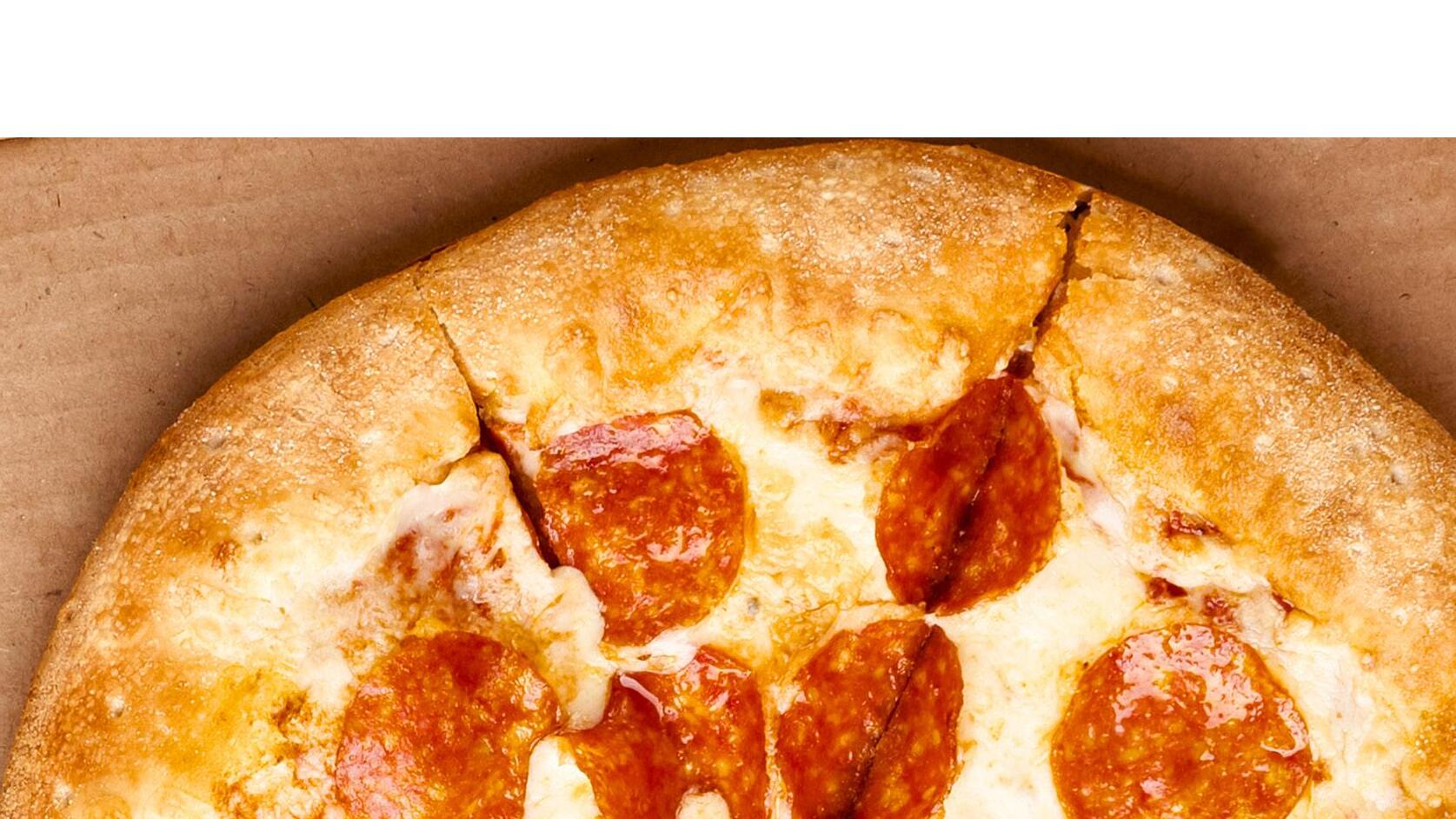
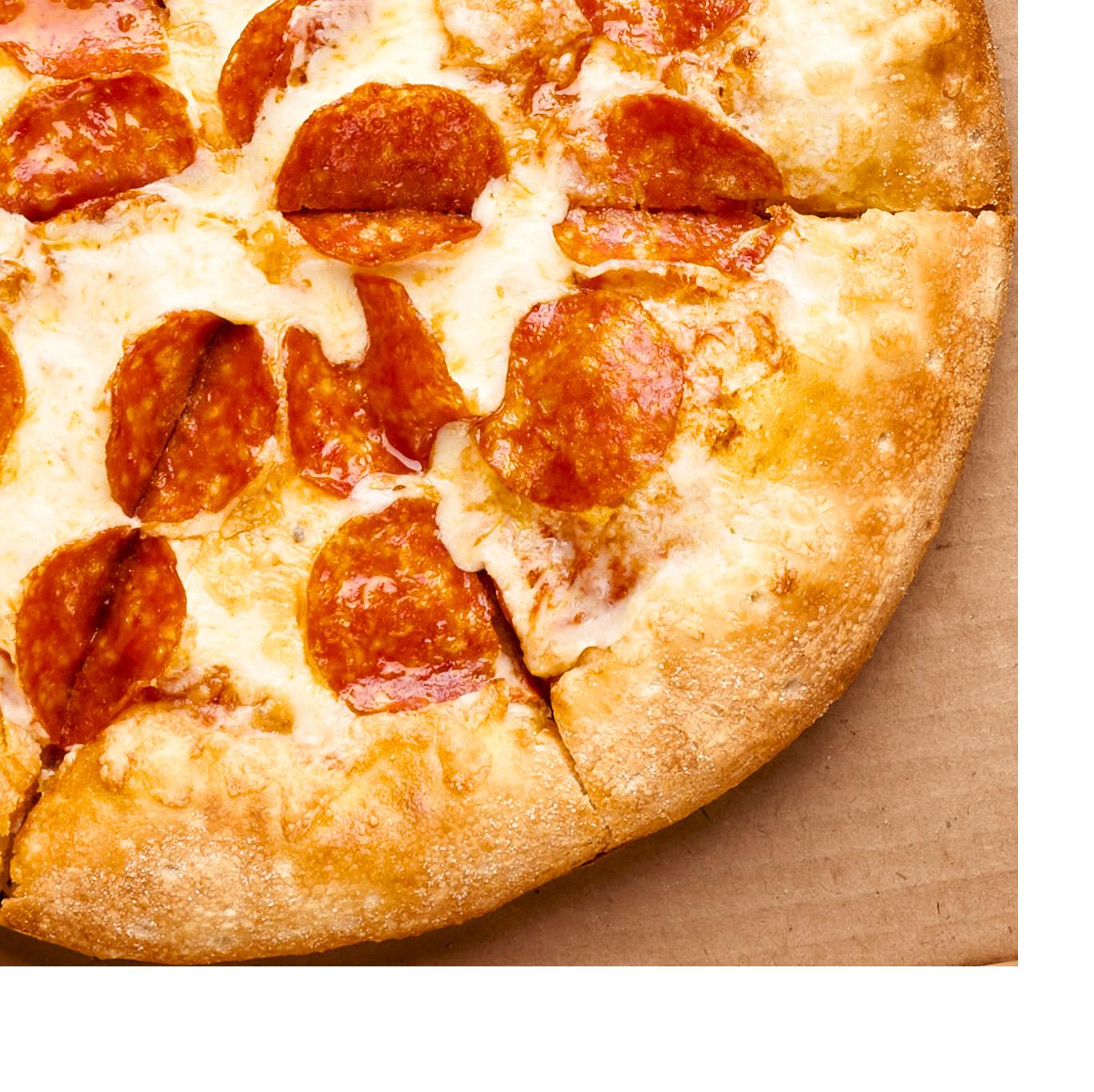
So, what does that mean? “Columbusstyle pizza starts with a very thin crust— almost cracker thin,” Folk said. ”You then add mozzarella or provolone cheese, a slightly sweet, tomato-based sauce and toppings (usually pepperoni) that cover the entire crust. Then you dust the bottom with corn meal and slip it into a deck, or ‘shelf-style’ oven.” When the pizza has baked, it is cut into small squares or rectangles. Many call it “tavern cut.” Others call it “square cut” or “party cut.”
And Folk has a theory about that. “Pizza has been popular for years in bars and taverns, where it’s common to share your food with friends,” he explained. “By cutting it into more pieces, there’s more opportunity for sharing pizza than with the usual ‘pie’ slices.”
No one really knows how Columbusstyle pizza got started. But Folk says it wasn’t unusual for a lot of the older pizzeria owners to play golf together and swap ideas about their favorite food. Eventually, the local pizza community had these unwritten Columbus-style “rules.”
Columbus really has no shortage of old-style pizzerias. Rubino’s, on East Main Street in Bexley, dates back to 1954. And while “Rubino’s” sounds like a thoroughly authentic Italian name, it was actually a Jewish boxer from New York, Ruben Cohen, who started the popular carryout with a friend. Cohen hired two young men, Frank Marchese and Tommy Cully, to make the pizzas. Using Cohen’s own recipe for pies with a cracker-thin crust, Rubino’s found success early on. →
“It’s a great EQUALIZER . Food snobs LOVE it; the
working guy LOVES
it. EVERYBODY LOVES to talk about PIZZA .”
Cohen sold “Rube’s” to Marchese and Cully in 1988; Frank’s son, Jim, then had a successful run with it; today, Jim’s daughter Julie is in charge. “My father is the man,” she proudly said. “But he’s 76 now, so I’ve been running the show in his absence.” And she insists that employees follow the original recipe to a “t.” “With aged provolone,” she added, “and aged Romano sprinkled on top of that when it comes out of the oven.”
Like most Columbus-style pizzas, the ones from Rubino’s are cooked on a bed of corn meal and then cut into strips or squares. The one small difference with Rubino’s is the sauce.
As Julie says, “Not at all sweet. Kinda tangy. You can taste the herbs in it.” Julie expects to continue running Rubino’s just as it has been for three generations.
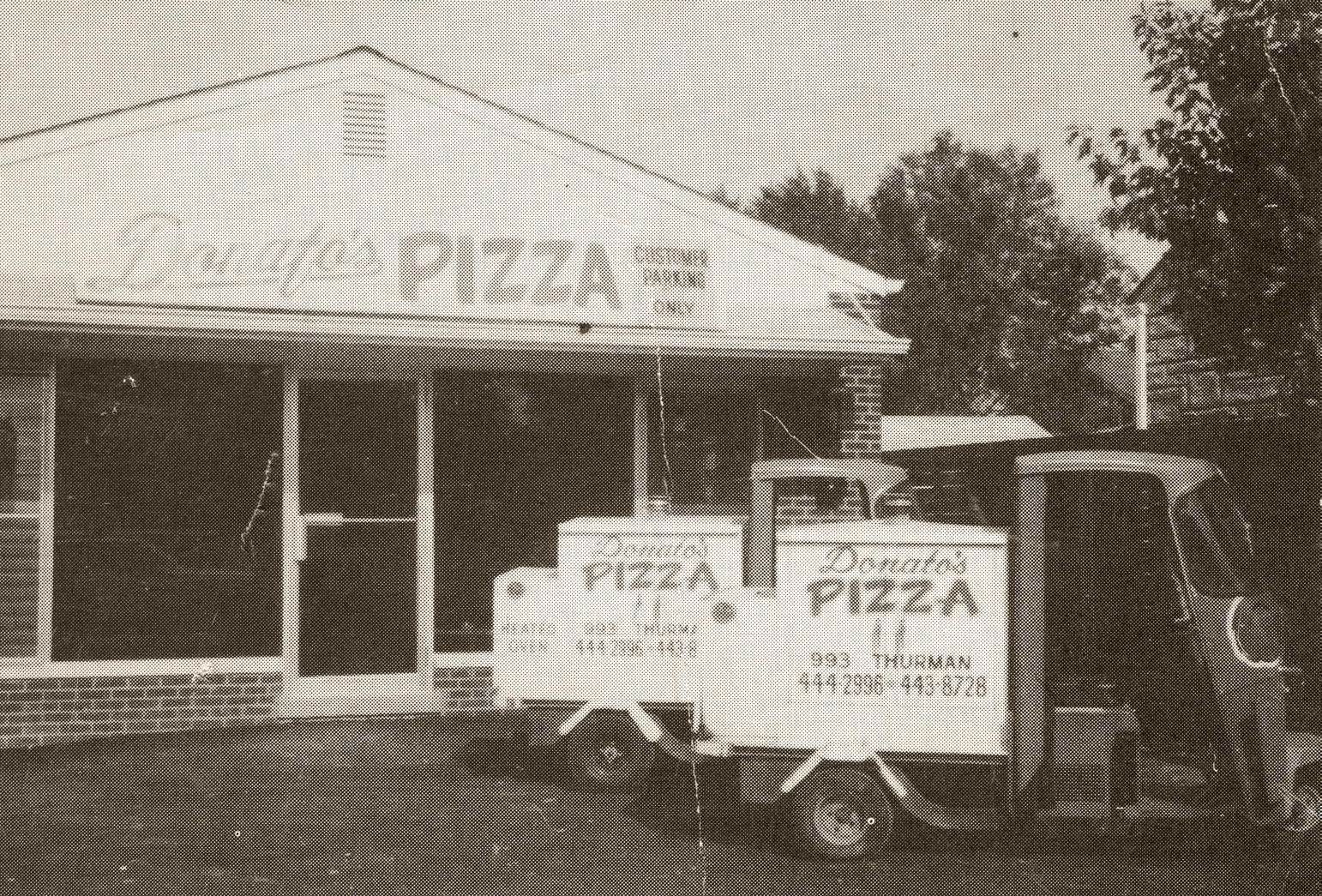
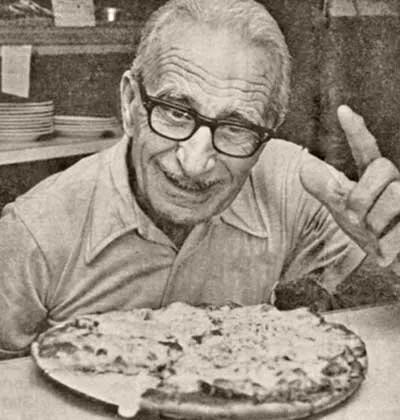
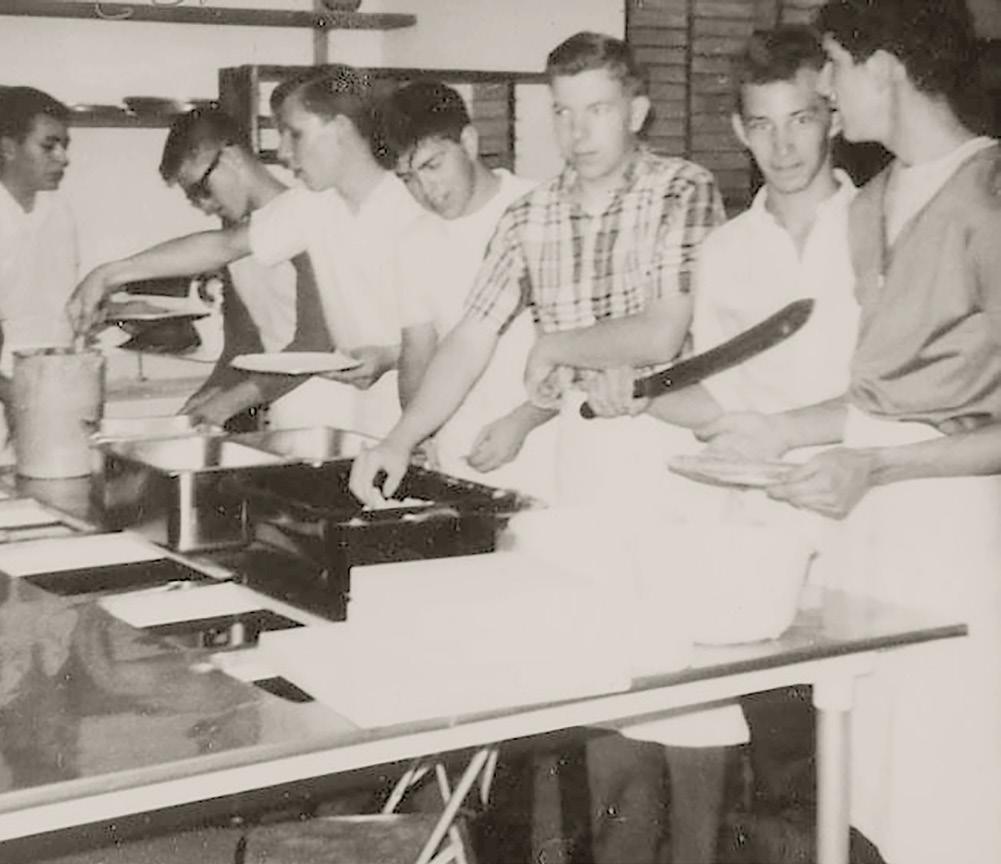
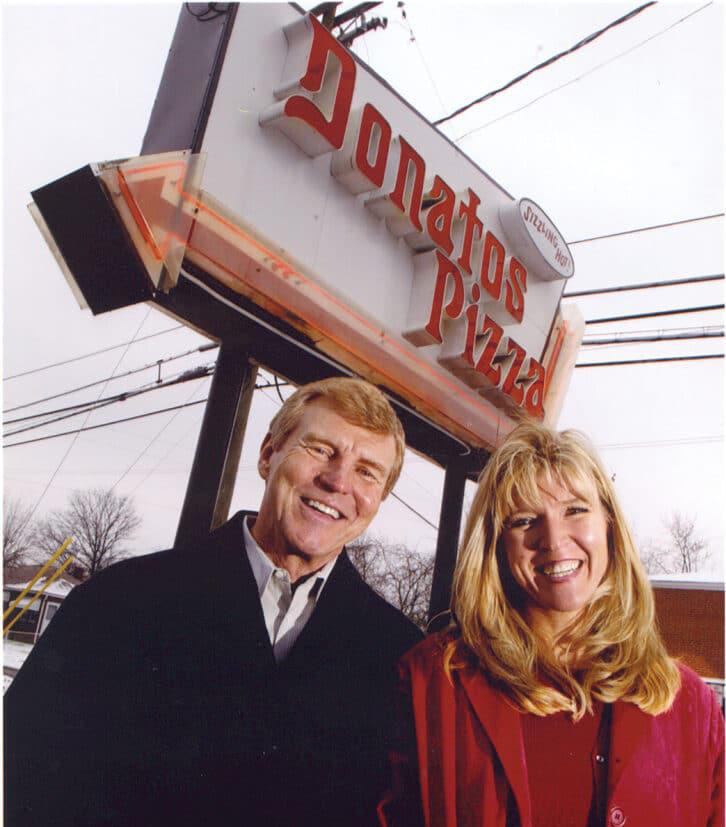
And then there’s the biggest name in Columbus pizza, Donatos. From one pizzeria on Thurman Avenue in the early 1960s, Ohio State sophomore Jim Grote started a chain that today numbers about 180 locations spread over a dozen states. Some may quibble over the Donatos method of oven baking—on a conveyor belt instead of on shelves— but everything else about their version has “Columbus” written all over it.
From left to right: Jimmy Massey, cofounder of Massey’s Pizza. Photo courtesy of Massey’s;
Rubino’s Pizza’s iconic sign in Bexley; TAT Ristorante’s owners Michelle Corrova (left) and Marianne Corrova Kirkbride (right). Photo by Savannah Bockus →
← From left to right:
location;
Photos courtesy of Donatos Pizza
Today, you’ll find hundreds of pizzerias across Central Ohio, including 50 or so with the name “Donatos.” And though today’s pizza lovers are more accepting of other varieties, it appears Columbus-style is here to stay.
Not long before his death in 2023, Massey’s co-owner James Pallone gave his thoughts on why pizza remains so popular.
“It’s a great equalizer,” he said. “Food snobs love it; the working guy loves it. Everybody loves to talk about pizza.”
And some even enjoy writing about it. ♦
Donatos’ first
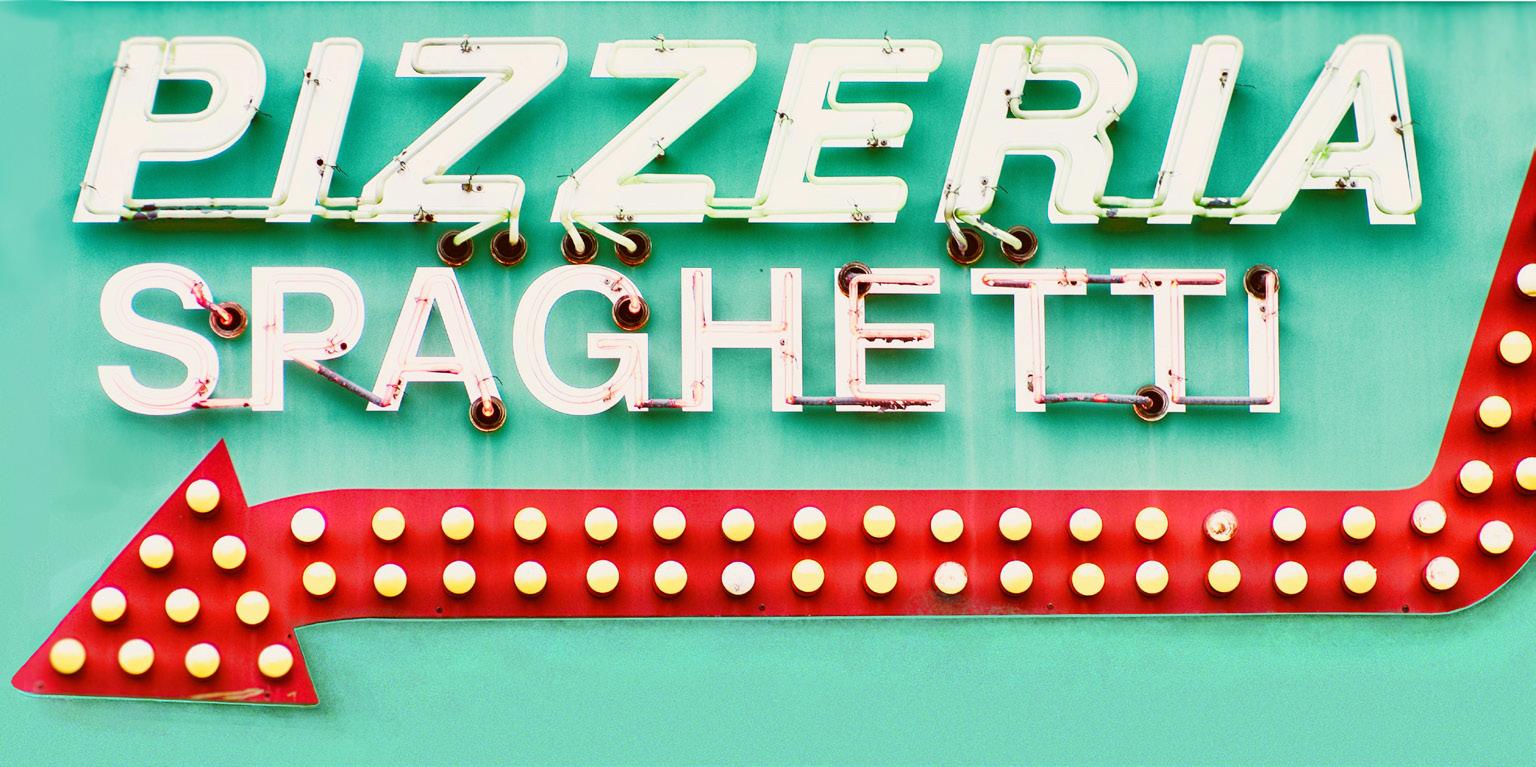
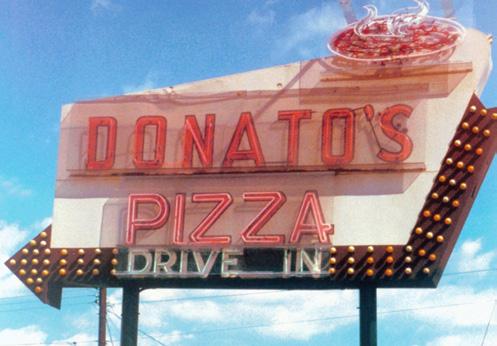
Pizza crews at the first Donatos; Jim and Jane, Donatos owners, in 2003; Vintage Donatos sign.
CAPITAL CREATIONS
Awas known for, they might have called it a flyover city or just a convenient testing ground for fast-food chains.
And sure, while there’s some truth to that, it barely scratches the surface. There’s so much more to our city, especially when it comes to food. What’s most fascinating is that many of the “Columbus-style” dishes we’re featuring in this section have existed quietly for decades, but only in the age of social media are people beginning to realize that some of their favorite comfort foods were born right here in this so-called Cow Town.
← Wor Sue Gai from Ding Ho. Photo by Aaron Massey
Take, for instance, Wor Sue Gai, a decadesold Asian-American dish invented on the East Side of Columbus. It’s been a long-standing staple at Ding Ho and Wing’s for years, but only recently, thanks to a viral TikTok video, did its Columbus roots gain widespread attention. And that baked beef-and-noodle casserole making the rounds on Instagram Reels recipes? Columbus has known it for over a century as Johnny Marzetti, still served today at institutions like Tommy’s Diner. While we may be no New York or Paris, Columbus is rich with culinary traditions of its own, and our hope is that this section honors the flavors, stories, and people behind the dishes that have been shaping this city’s tables for generations. →
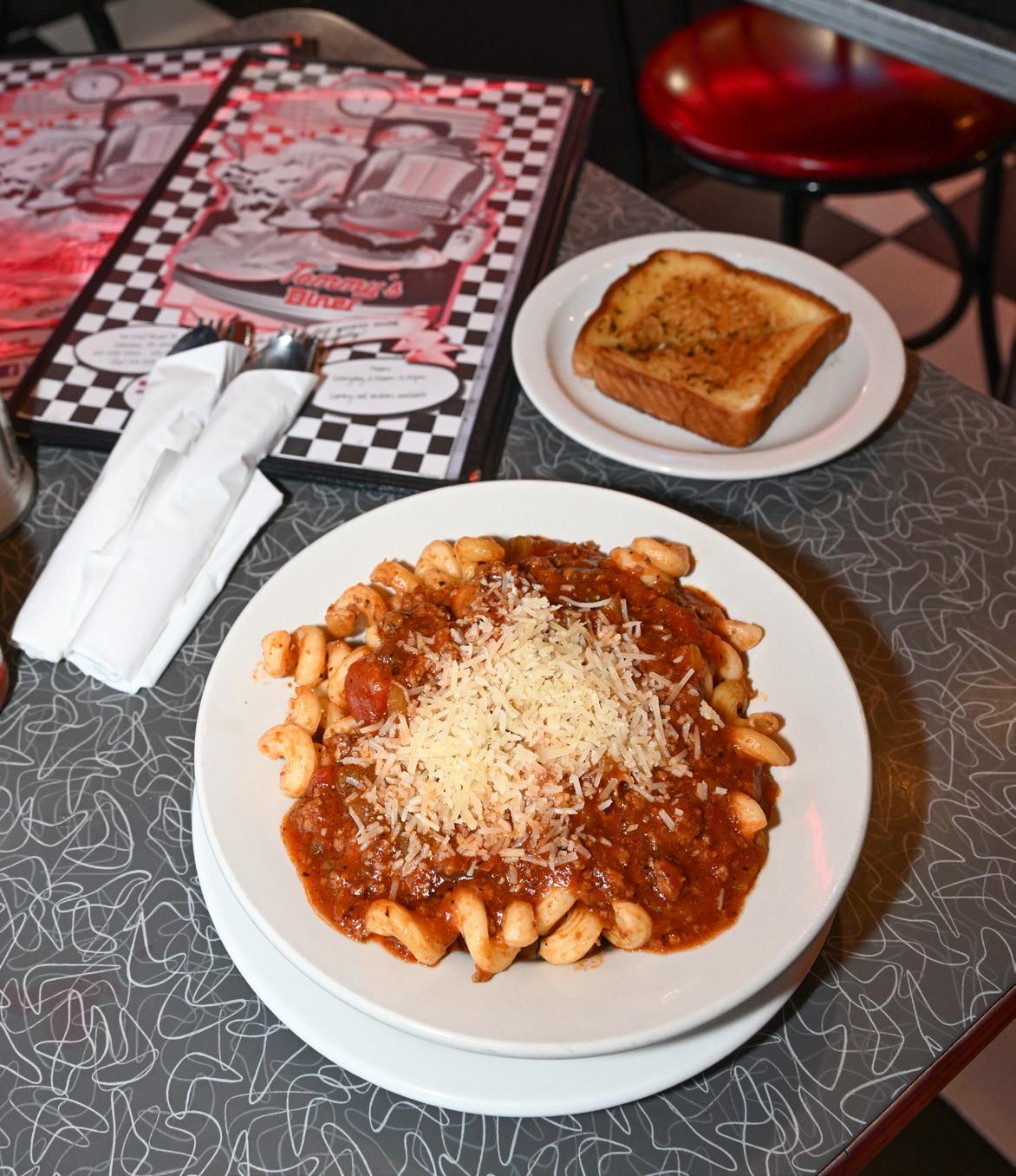
↑ Johnny Marzetti from Tommy’s Diner.
Photo by Jen Brown
The creator of this Asian chicken dish has long been debated, but one thing’s for sure: it was first made right here in Columbus
THE WAR OF WOR SUE GAI
By Kristen Paige
Photos by Aaron Massey
There’s much back and forth on who was the true creator of Wor Sue Gai, a legendary Asian dish consisting of boneless fried chicken, gravy, and nuts. Some claim it was created in the kitchen of Wing’s on Columbus’ East Side. Others say it was invented at Ding Ho, another one of Columbus’ decades-old Chinese restaurants.
There seems to be one agreement though: it originated right here in Columbus.
Far East Restaurant closed in 1964, but the recipes were carried on by the cooks there, like Clifford Yee, the grandfather of Stephen Yee, current owner of the West Side Chinese restaurant, Ding Ho. It’s this restaurant and Wing’s on the East Side where you can find the original recipe for Wor Sue Gai.
As opposed to its origins, there is little debate on the inspiration behind the Chinese dish. In fact, there’s not much debate at all.
“They probably created it for the American taste—fried chicken and gravy, basically—flavored with Asian spices,” said Ken Yee, general manager of Wing’s.
Though Ken and Stephen have no familial relation, they still share the experience of holding Wor Sue Gai in its original form. Their restaurants are among the few, if not the only two that preserve the same recipe as it was when it originated in the early-mid century.
“I remember as a little kid watching the preparation of it and watching it as we transitioned to another head cook. Everything’s the same,” said Stephen.
Somehow, this dish has lasted close to a century, through various cooks and restaurants, and in the process has garnered regional attention, almost to a cult-like following. There’s something satisfying and exclusive about food that the city can call its own. The filling yet simple dish carries with it a robust history, a little mystery, and generations of cooks preserving the same Wor Sue Gai recipe. →
“People LIKE IT because you really CAN’T get it OUTSIDE OF OHIO.”
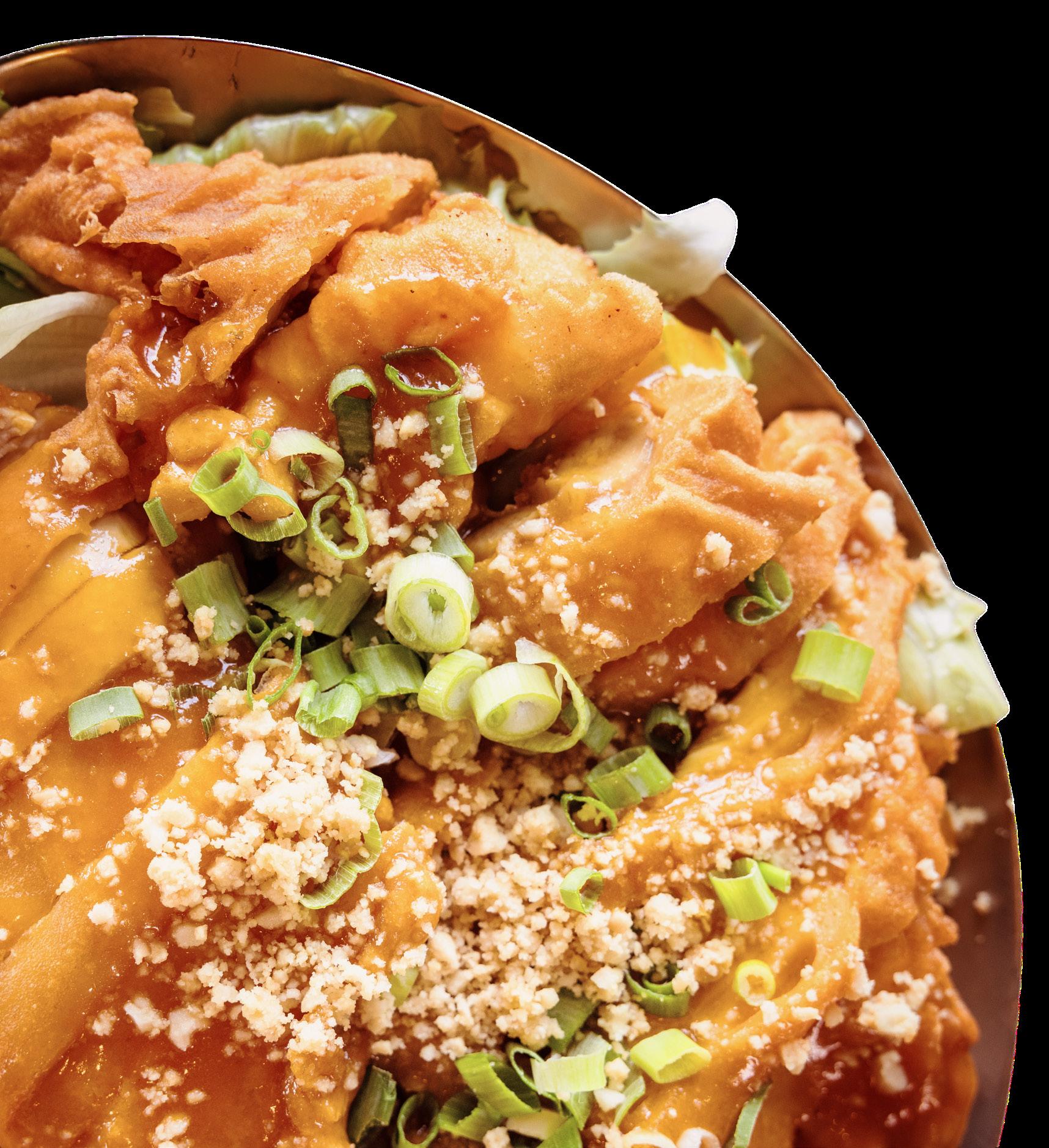
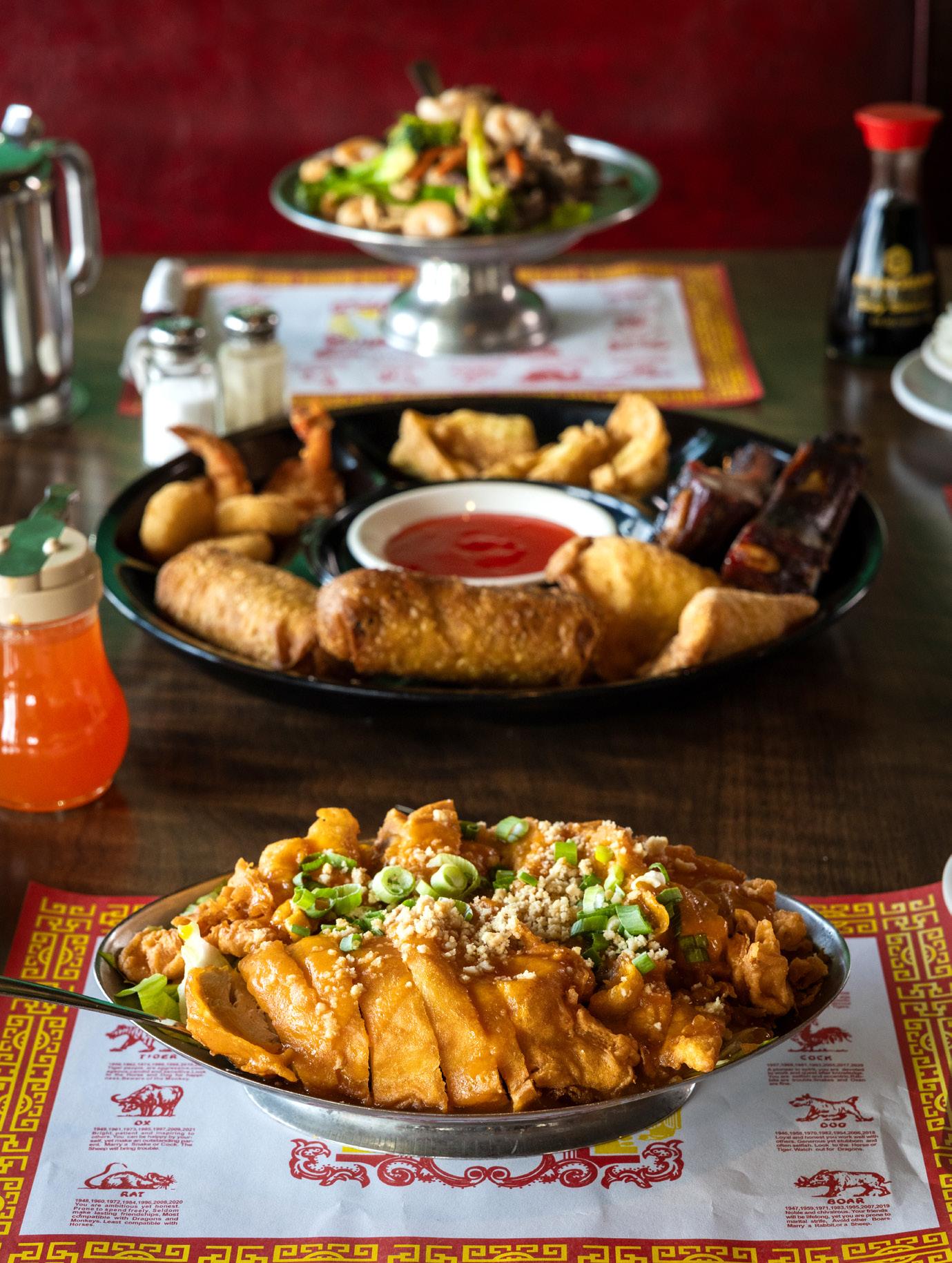
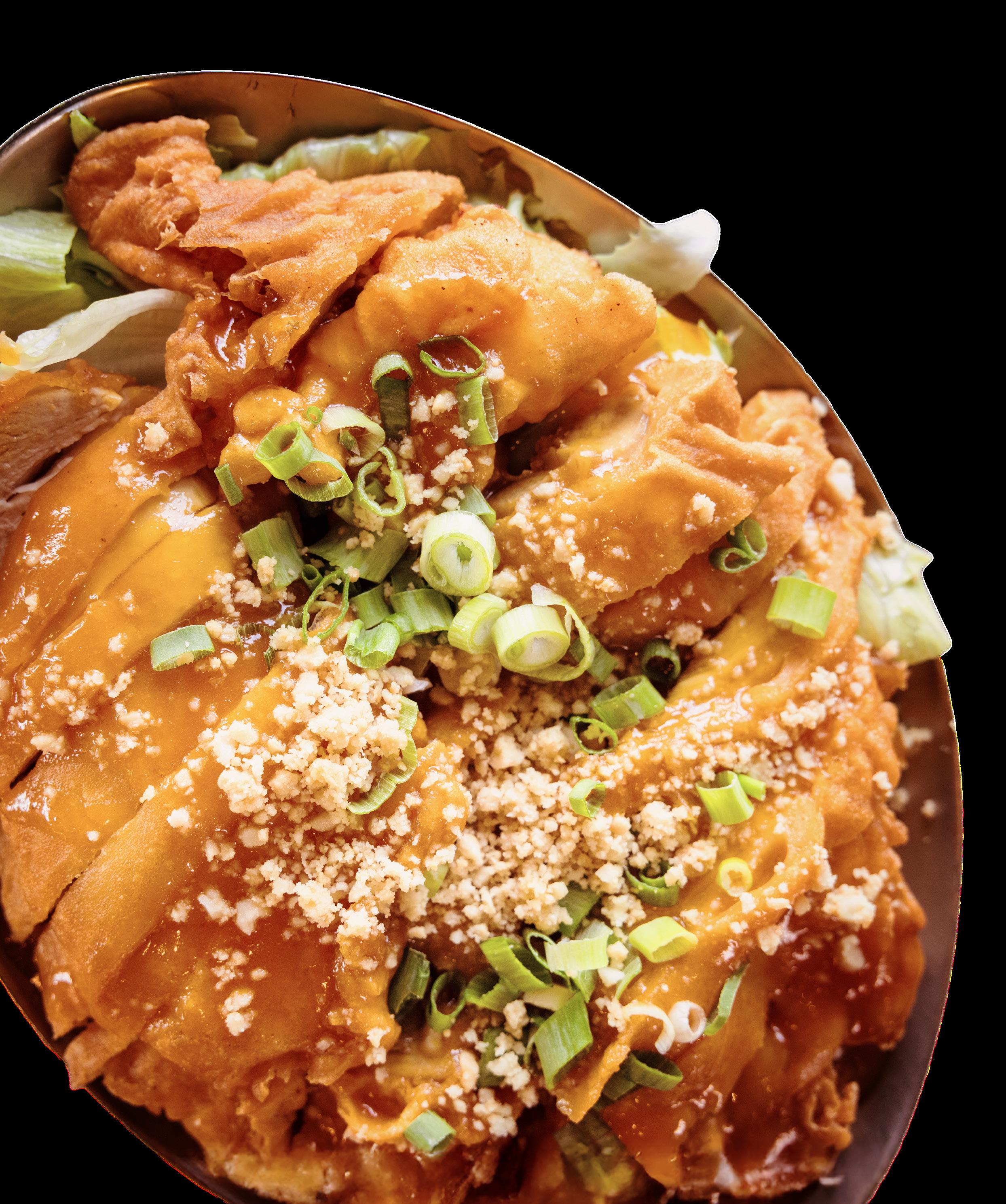
← Wor Sue Gai features fried boneless chicken smothered in gravy on a bed of lettuce and topped with chopped almonds and green onions
It’s so uniquely American, you won’t find this dish in China. Heck, it would be hard to find outside Columbus, though you could find a similar variation in Detroit by the name of “almond chicken.” Its regional specificity is what makes the dish so popular.
“I think people like it because you really can’t get it outside of Ohio,” Ken remarked.
Wor Sue Gai could perhaps be compared to General Tso’s chicken, or sweet and sour chicken, and yet it completely stands on its own. Wor Sue Gai, roughly means “wok-fired chicken.” It’s a simple dish of fried chicken and gravy on a bed of lettuce, topped with chopped almonds and green onions, served with rice. The gravy is thick and bright yellow-orange, giving the dish its unmistakable look. It’s made from the broth that cooked the chicken before it’s deboned and breaded for frying.
“I call it Chinese comfort food, like, you know, country fried steak. This is with chicken and a bunch of gravy on top. Who doesn’t like a bunch of gravy on top?” Stephen said with a laugh.
Like most comfort foods, those recipes seem to hold dear to the families that created them. That especially remains true for Stephen and his 91-year-old father, who still cooks four days a week at Ding Ho, preparing the gravy and chicken for the dish.
“He still remembers exactly how to fix it,” Stephen explained. “He even told me, you know, something that sells well, something that does well—’Do not try to create your own recipe. You’ll lose all your customers.’”
To Stephen and his family at Ding Ho, Wor Sue Gai has become one of the most important dishes, outselling other menu items four to one. Even after 69 years of cooking it, he hopes to continue carrying on the family tradition of making it.
“This is the family recipe of many, many years. Hopefully we will continue doing it for the next, you know, 30, 40 years,” Stephen concluded.
Where the east meets the west you’ll find Wor Sue Gai, and so far, there’s no sign of it going anywhere anytime soon. ♦
Try this dish for yourself at Wing’s, located at 2801 E. Main St., or Ding Ho, at 120 Phillipi Rd.
The story of Columbus’ original comfort food—and how one West Side diner keeps the tradition alive
HERE’S JOHNNY
By Jackson Hall
Photos by Jen Brown
If you sit at the U-shaped counter at Tommy’s Diner on a Monday, sooner or later you’ll see it: someone digging into a deep bowl of noodles, beef and slow-cooked sauce.
First timers might ask, “What’s that?”
Turns out, it’s a piece of Columbus history.
At Tommy’s Diner, it’s been on the menu for more than three decades, a quiet nod to the diner’s roots and the city that shaped it.
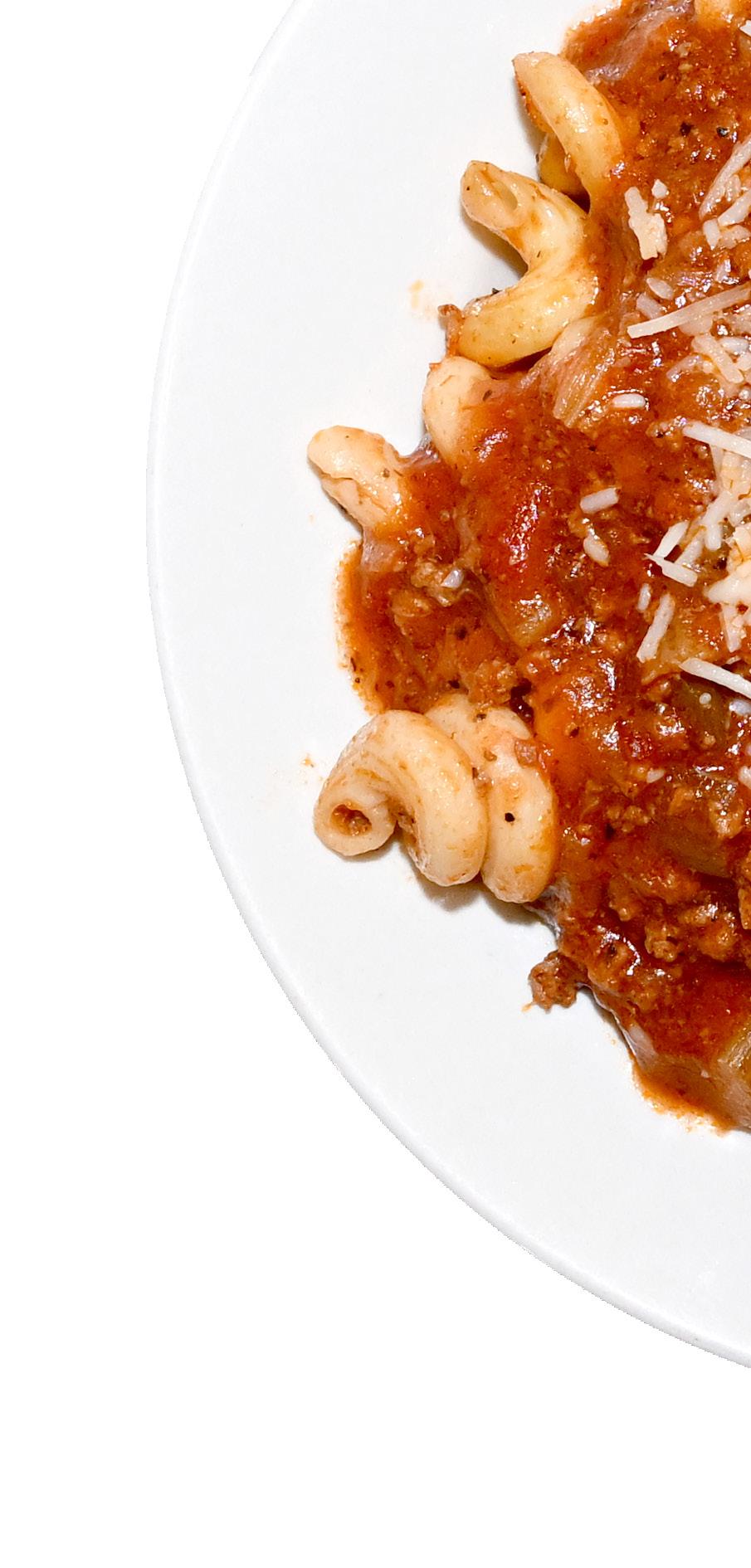
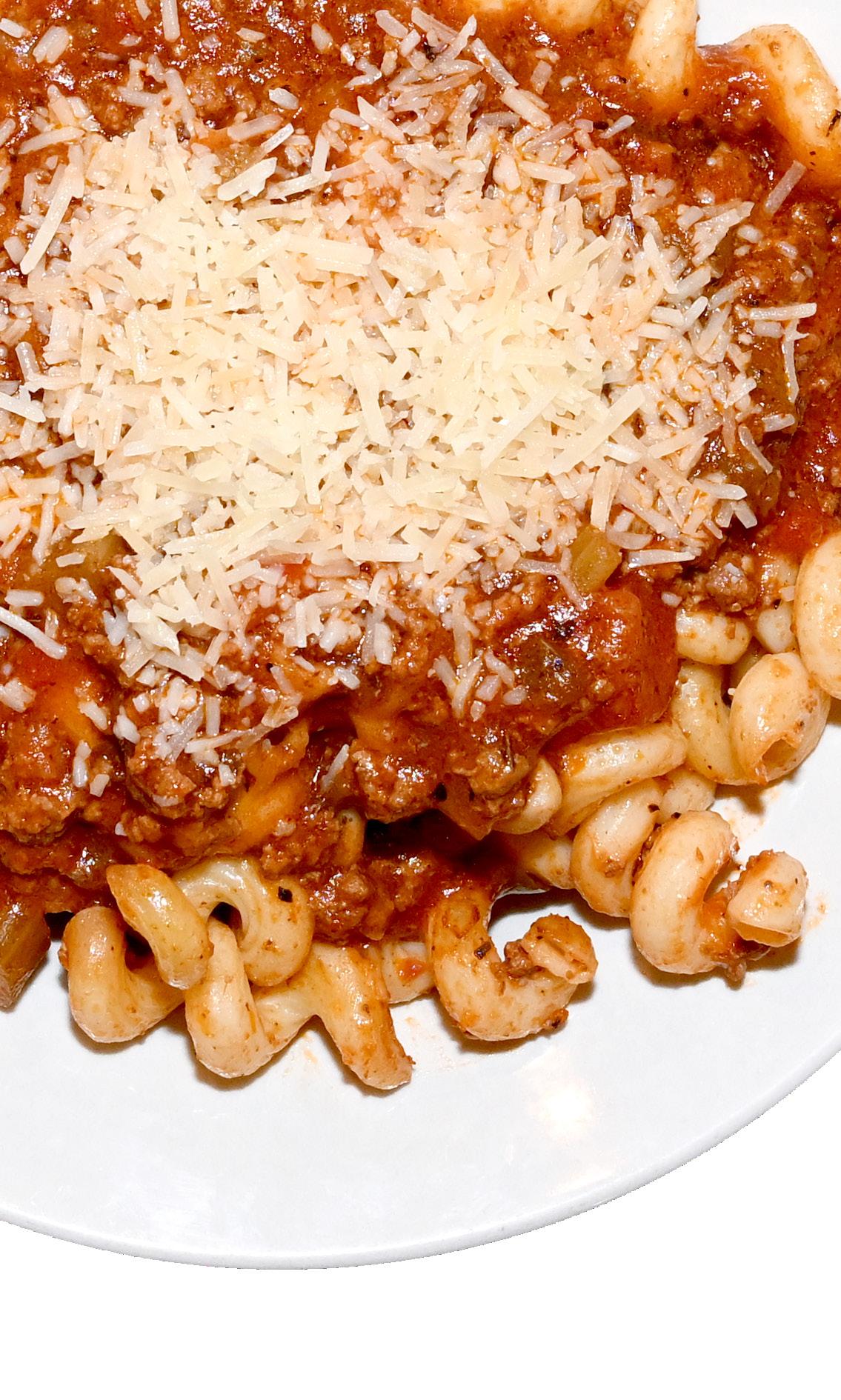
“Johnny Marzetti is pasta,” said Michael Pappas, who now owns Tommy’s Diner after his father, George, passed away. “You cook a sauce with sautéed celery, peppers, ground beef and a bunch of spices, let it simmer, then mix it with the pasta and throw it in the oven. It bakes for about 30 minutes, and to serve it, you scoop it into a bowl, add more sauce on top and finish it with Parmesan cheese.”
Pappas said they’ve been serving Johnny Marzetti for 36 years, always as a Monday special, and he remembers scooping it out for customers as a kid working in the restaurant.
“We sell out of it every Monday. People come specifically for that dish,” he remarked.
Pappas also understands the dish’s roots, even if most diners don’t realize they’re eating a homegrown classic. He said the recipe traces back to the Marzetti family, who served it Downtown in the early 1900s to college students. The baked pasta quickly became a cheap, filling staple across the Midwest.
“One of those family members created this dish,” he said. “They used to make it at a restaurant they had here in town for the college kids, because it was an affordable meal.”
That practicality is part of why it’s lasted. Pappas called Johnny Marzetti “flavorful, filling and approachable.”
To Pappas, serving a dish with Columbus DNA just makes sense. “A lot of people say we’re a staple of the Columbus community,” he said. “So to serve a dish that’s tied to Columbus is a nobrainer for us, and it’s kind of cool.” ♦
Try a Johnny Marzetti at Tommy’s Diner, only on Mondays, located at 914 W. Broad St.
...MARZETTI, THAT IS
ITALIAN FARE.
The story of a deep-fried pasta dish that hails from Ohio’s Capital City
THE RETURN OF PASTA SALVI
By Amy Campbell
Photos by Steven Rankins
If you were eating solid food in Columbus during the 1990s or early 2000s, you may have tried Pasta Salvi: a crunchy-creamy pasta dish created by Chef Angelo “Ronn” Salvi. As Salvi’s reputation grew in the Columbus food scene, the Italianborn chef partnered with restaurateur Bernie Gros to create the B.G. Salvi’s Restaurant Group, and the unique “Pasta Salvi” became a staple of the menu.
While the original iteration of this dish has been lost to time, today, thanks to Delaney’s Diner, Columbus has its Pasta Salvi back. Owners Lisa and Jeff Miller met while working for B.G. Salvi’s, and had the original recipe for the dish decades before they opened the diner. It was never a secret, Lisa Miller said.
“The recipe was something Chef Salvi would give to people and say, ‘This is how you make it. Good luck,’ because it’s challenging to make,” she explained. “People have tried to recreate it, but if you don’t have the recipe, you probably aren’t doing it right.”
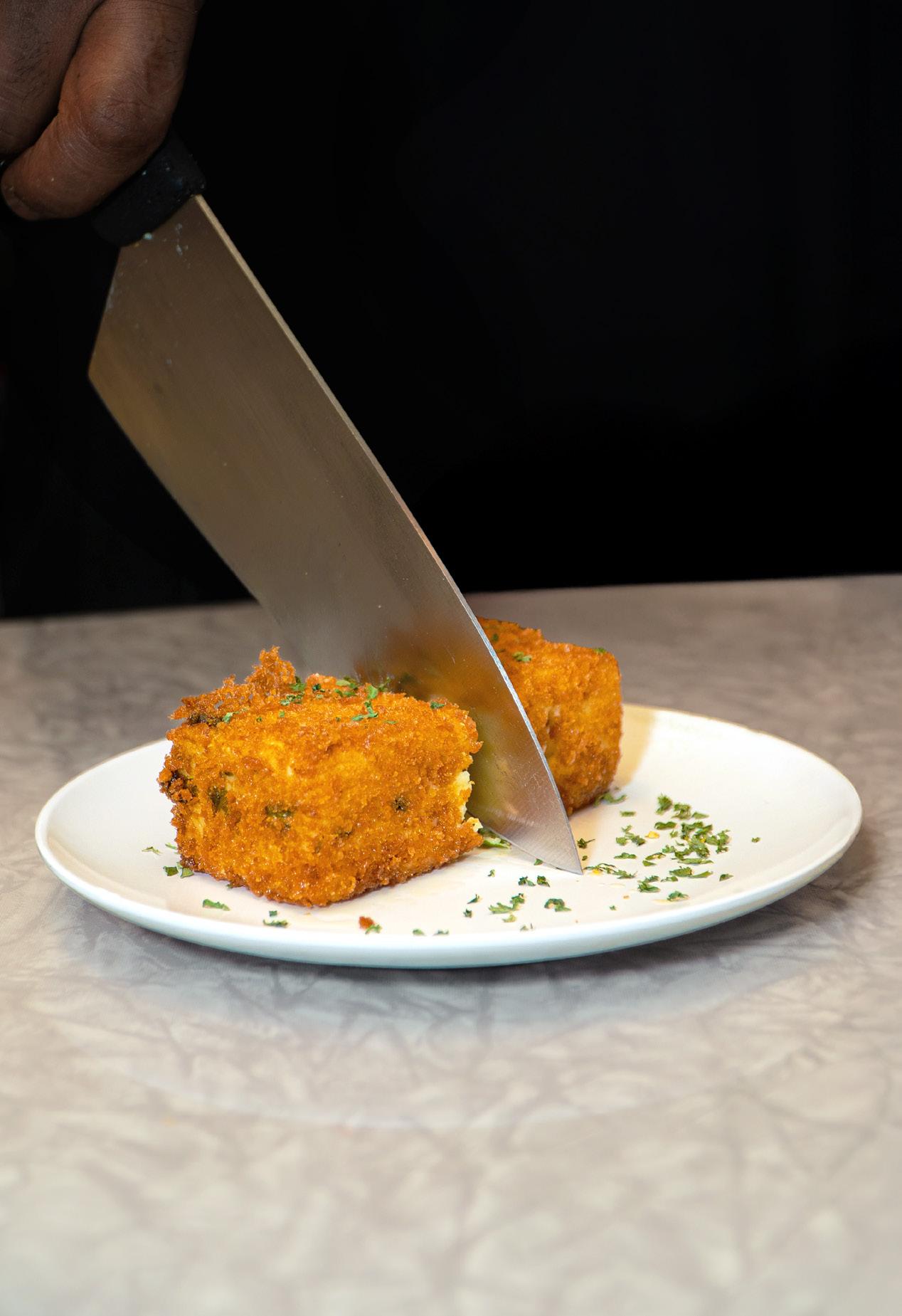
Doing it right means combining noodles and scallions with a mixture of milk, cream and chicken base thickened with a roux. Once it’s reached the right consistency, the creamy pasta is laid out on sheet trays and refrigerated overnight to set, then cut into blocky servings and coated with panko breadcrumbs to await their deep-fried destiny.
“So it’s crunchy on the outside, a little bit creamy on the inside, and some people like it topped with marinara and provolone. We call that Pasta Salvi Speciale,” she explained, adding, “I personally am a plain Pasta Salvi girl.” →
While one fan described the dish on Reddit as “essentially deep-fried Fettuccine Alfredo,” those who want their Pasta Salvi with cheese will need to order the speciale version to get it.
“People sometimes explain it as being like a fried block of cheese,” Miller said, “but there’s actually no cheese in it at all.”
Today Pasta Salvi may sound like quintessential diner food, but the B.G. Salvi restaurants were white-tablecloth, night-onthe-town places that featured traditional Italian fare along with specialties like prime rib, a sprawling buffet every Sunday and an even more lavish version on holidays. But Pasta Salvi was always a signature item, popular paired with a salad at lunch, and available as an appetizer or the main event at dinner.
A lot of time, energy and thought went into all the restaurants’ décor, and all were lovely, Miller said. Locations included Salvi’s Italian Eatery in the Brewery District, and another in Grandview, but Miller, who worked at Salvi’s at The Continent Ristorante, remembers it in particular.
“He was very excited about it,” Miller said, and it’s been on the menu since day one.
Chef Salvi died in 2022 at the age of 93, but his unique culinary creation lives on in all four Delaney’s Diner locations. The Millers have trademarked the name so it’s protected from Pasta Salvi pretenders, and are very conscientious about maintaining the integrity of the dish, including providing reheating instructions for takeout orders.
“People have TRIED to RECREATE it, but if you DON’T HAVE
THE RECIPE, you probably AREN’T DOING IT RIGHT.”
“There were several B.G. Salvi locations throughout Columbus, but The Continent was a really, really pretty restaurant,” Miller explained.
The Millers opened their first Delaney’s Diner nearly nine years ago, and had talked to Chef Salvi about putting Pasta Salvi on their menu.
“It’s not unusual for people to call and order trays of them for family gatherings, this time of year especially,” Miller said.
“So we help people make sure when they get it home and reheat it, it still tastes good.”
The dish tends to be a conversation starter year-round, sparking memories for some diners and curiosity in others. There are also the skeptics who, in their search for the dish they loved, have been disappointed before.
“They come in and say, ‘We heard you have the Pasta Salvi…’” Miller said, the sound of narrowed eyes and incredulity clear in her voice. “Is it the real Pasta Salvi..?”
She grinned. “Yeah, it’s the real Pasta Salvi.” ♦
Visit delaneysdiner.com for Delaney’s Diner locations and hours to try some Pasta Salvi.
BY COOL DESIGN
A
pair of prominent Columbus bartenders
have
created a hand-polished artisan ice business to elevate cocktails across the city
By Melinda Green
Gazing deep into your next cocktail, you might marvel at the clarity of the ice— clarity that might only come from careful cutting, hand-polishing, and passion fueled by decades of experience.
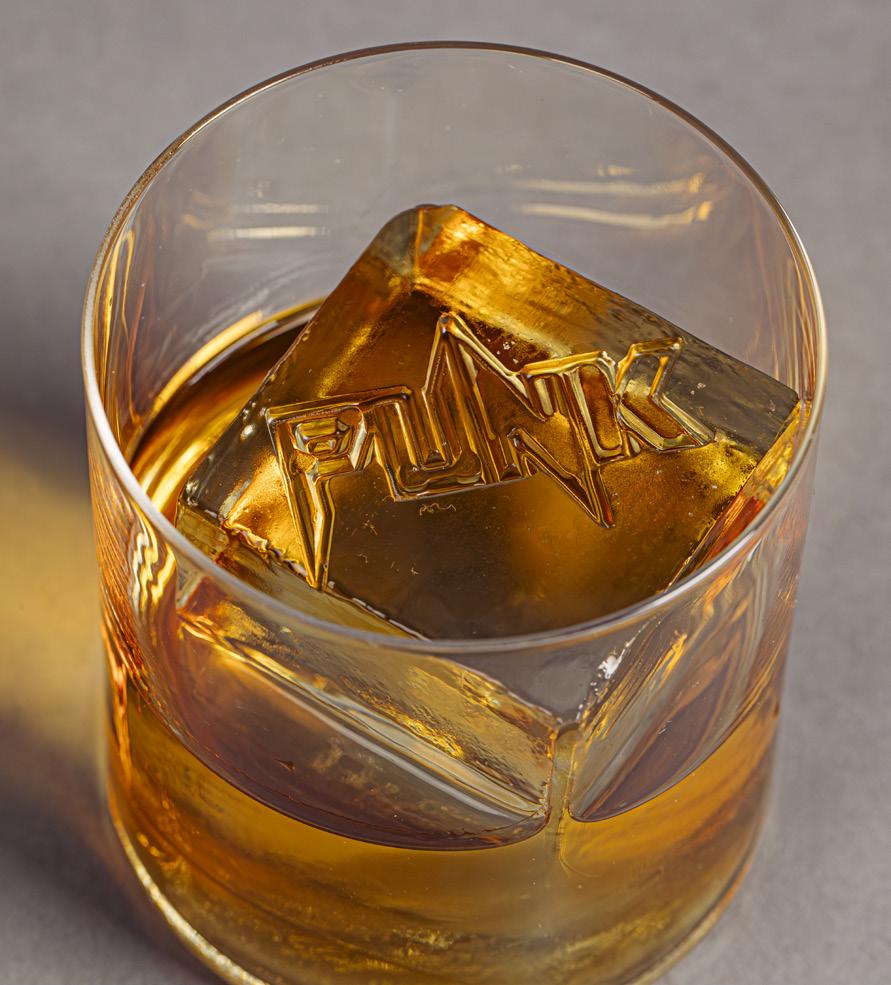
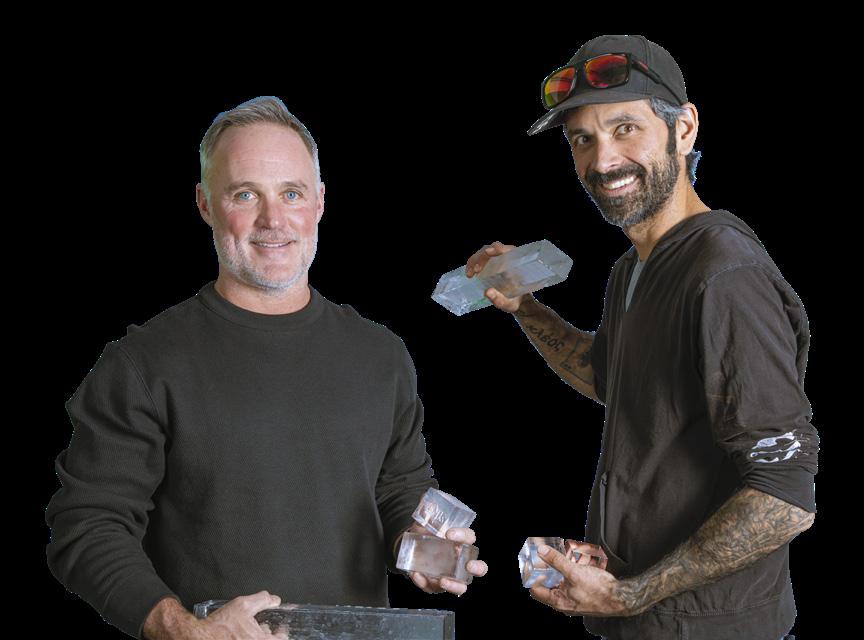
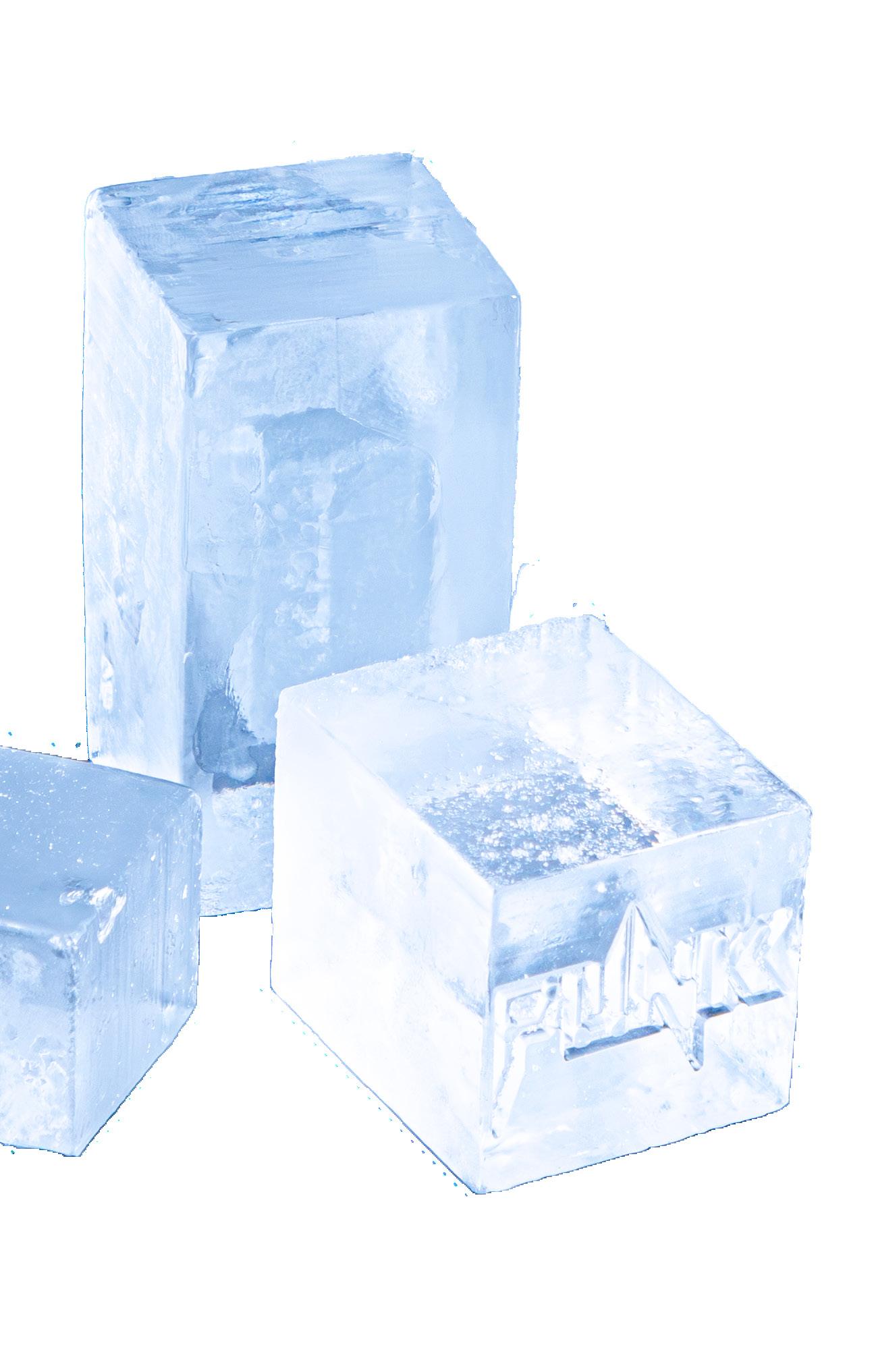
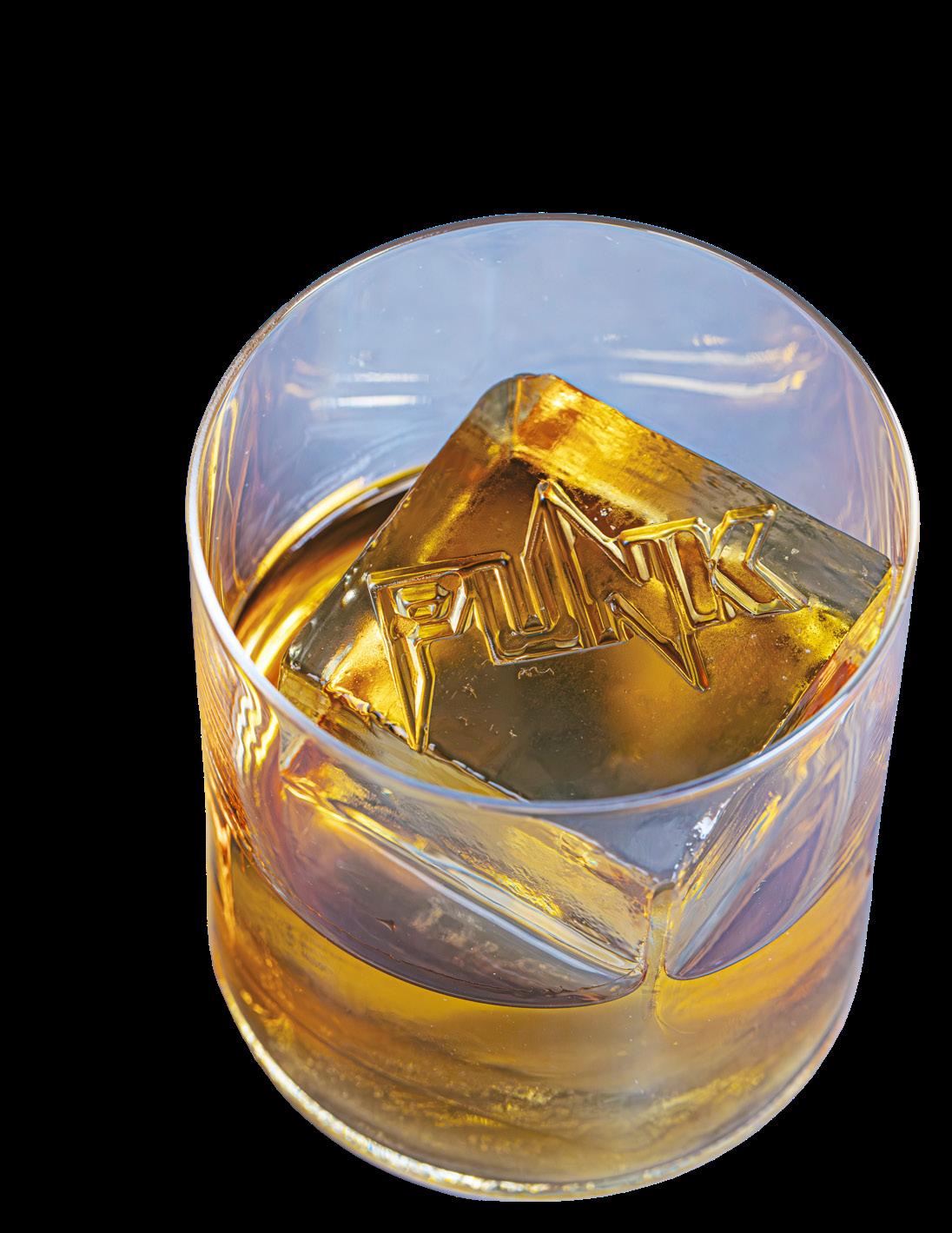
For Travis Owens and Ben Griest, what started as a side hustle has grown into a business that provides that hypnotically clear, often logo-branded, ice to dozens of cocktail bars and hotels around the city, including hotspots like Astra, Palm Valley, and The Lion. Why premium ice? “It’s the simplicity and the texture. Aesthetically, it’s pleasing. There’s a lot of subconscious involved in it because of the weight,” Owens explained.
“You’re also affecting flavor and temperature,” he continued. “There’s less dilution in your cocktail over the course of time. There are certain cocktails that require that style of chilling.”
Griest chimed in, “It just makes everything look clean. That’s really what sold me on it a long time ago. It’s like having a beautiful crystal glass, enjoying a nice glass of wine. Everything’s elevated by the right tools.”
Owens and Griest started working together years ago, when Owens started freezing super-clear ice for his cocktails at Curio. “Between [Griest] and I, we did the best we could to keep up ice with that particular venue,” Owens said. “We taught ourselves how to freeze ice so it doesn’t have bubbles, it’s not cloudy.” →
Photos by Emma Mortellaro Story Design by Meg Rhoads
“[Artisan ice] just makes everything look clean. That’s really what sold me on it a long time ago… Everything’s elevated by the right tools.”
Fast forward to years later. Griest was providing ice for other cocktail bars around the city, while Owens had moved on to consulting and also some ice making of his own. “It was just happenstance,” Griest recalled. “A co-worker of ours opened up a bar, and then she asked [for ice], and then somebody else asked, and before I knew it, I had maxed out operating under cottage law.”
Owens continued, “After Covid, we put our heads together and were like, ‘We should do this. There’s enough people reaching out. We have enough accounts.’ So, a year and a half ago, the two combined forces to become Ice Punk. The name is a nod to Daft Punk, artistry that’s a little obscure, a little different, definitely edgy.
With their combined 50-plus years of experience in the service industry, the Ice Punk guys know exactly what upscale bars need for premium cocktails. Griest and Owens produce six 300-plus-pound blocks of crystal-clear ice every three days, using huge tanks that freeze water from the bottom. Constant circulation
← Ice Punk offers hand-carved ice in addition to custom ice design
prevents bubbles and floats any remaining particulates to the top of the tank, where they’re vacuumed off before the block is removed with a hoist. “That hoist is our lifeline,” Owens said, laughing. →
After the block is harvested, it’s cut crosswise into slabs with a horizontal saw, and the slabs are eventually cut into individual cubes on butcher stones with a band saw. After that, they might be pressed into spheres or embossed with warm metal stamps. And, finally, each cube is hand-polished to a luminous shine with a microfiber cloth—over two thousand
That’s a barometer for when it’s time,” Owens said.
Not that cracks don’t happen; they do. And Ice Punk not only saves scraps; they also sell them. After all, the ice may be broken, but it’s still crystal clear.
And then there’s storage and delivery. Their production facility in Reynoldsburg is filled with freezers (they’ve lost count of how many), and they provide freezers for clients who don’t have proper storage. Griest and Owens deliver all of the ice themselves, using their own vehicles packed with coolers.
Just like eggs and chocolate, ice is very temperature-sensitive, and requires tempering. Cutting it at too low a temperature produces high friction and causes cracking. Too high a temperature, and melting becomes a
“I think you can pretty much cut [blocks] when they start to sweat. Kind of like melting a little bit on the outside.
“Right now we’re bootstrapping everything,” Owens admitted. “As we grow, [delivery]’s going to have to grow with it.” They’re at the point where they’re discussing future staffing needs, although nothing’s underway yet. →
↑ Travis Owens (left) and Ben Griest (right), Ice Punk owners
For now, they just love making ice. Owens summed up their passion for their craft: “You see these people creating elaborate menus. Whether it’s the artwork that goes into the menu or the ingredients that go into the menu, or sourcing certain materials or the pretty glassware, you go to all those lengths and then you end up getting a crappy ice machine. So all the hard work that goes in, all of those things start to not make as much difference because you just didn’t put the finishing touch on it.” ♦
Visit icepunks614.com or find them on Instagram, @icepunk614, to learn more.
The SecretS of
From chicken feet to fish cheeks, Stock & Barrel’s Matt Mahoney tests his culinary courage at a pair of Bethel Road’s corridor of authentic pan-Asian eateries
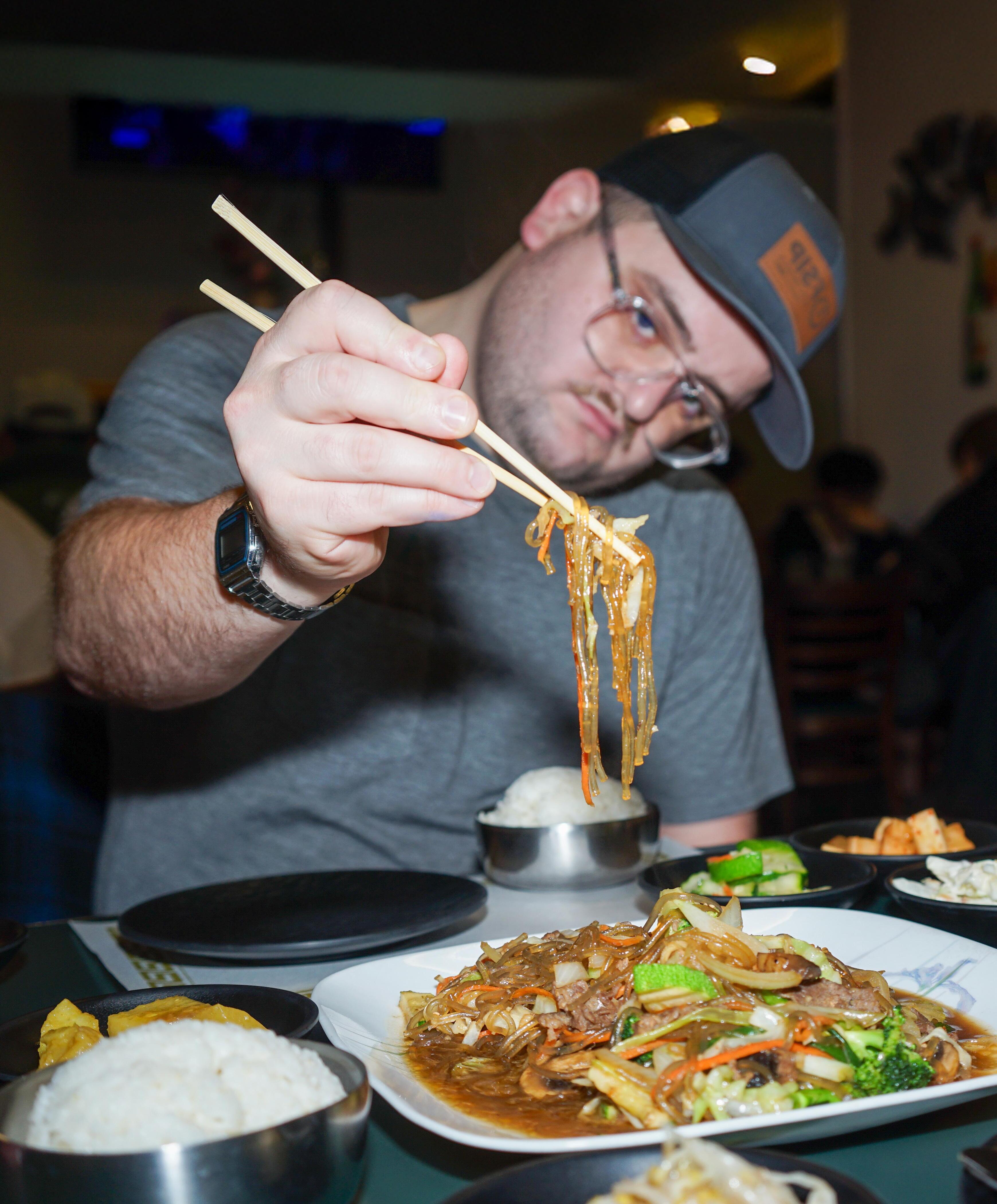
← Matt Mahoney and japchae, a Korean noodle dish, and an assortment of banchan from MinGa Korean Restaurant
BeTheL road UNDERCOVER
CULINARY
By Matt Mahoney
Like a pair of cargo pants purchased from a street vendor at a Mumbai bazaar, Columbus has ethnic pockets. There are of course the historical ethnic neighborhoods in the forms of German, Italian and even Hungarian Villages; as well as newer enclaves containing Bhutanese-Nepali (aka Lhotshampa) and Somali immigrants.
Turn your attention to Bethel Road, west of 315, and you’ll find a tapestry of under the radar, and very authentic, Asian eateries serving up some of the city’s–and dare we say, the entire state’s–best Asian cuisine. I took a trip to the Northwest Side to try a pair of these eateries for myself, and here’s what I found. →
Photos by Benjamin Willis Story Design by Andrew Thomas
"I AM SooN MeT WITh A BoWL coNtAINING doZeNS oF coLD chICKeN feet, ANd AS I BrING The MoRSeL To MY MoUtH, I BeGIN To feeL MY coNFIDeNce WaVeR."
← Fiery Sky Asian Kitchen has a secret “authentic” menu, and cold chicken feet are on it
fIerY SKY ASIaN KITCHeN
1450 BETHEL RD.
I pull up to Fiery Sky to find my photographer and editor already seated at the table with a bottle of Korean peach soju waiting for me. This bodes well for the evening. Given that this restaurant offers Chinese cuisine, you would think that perhaps a Chinese beverage would be appropriate; but I’ve found that baijiu (the most popular distilled spirit among native Chinese) should really only be consumed in case of emergency, and never around colleagues.
As is the case with many of Bethel Road’s ethnic restaurants, Fiery Sky has two menus: one featuring classic Americanized favorites and another featuring items that could be categorized simply as “real Chinese food.” Northwestern Chinese food to be specific, as a quick conversation with the gentleman in charge of the restaurant that evening reveals. I like to pride myself on my explorations of the strange and unfamiliar, so I ask for one of the authentic menus and order the chicken feet.
“Are you sure?” the manager asks me in a tone that suggests he has seen many overconfident white men make the same mistake. I respond to the affirmative enthusiastically, unknowingly sowing the seeds of my own doom.
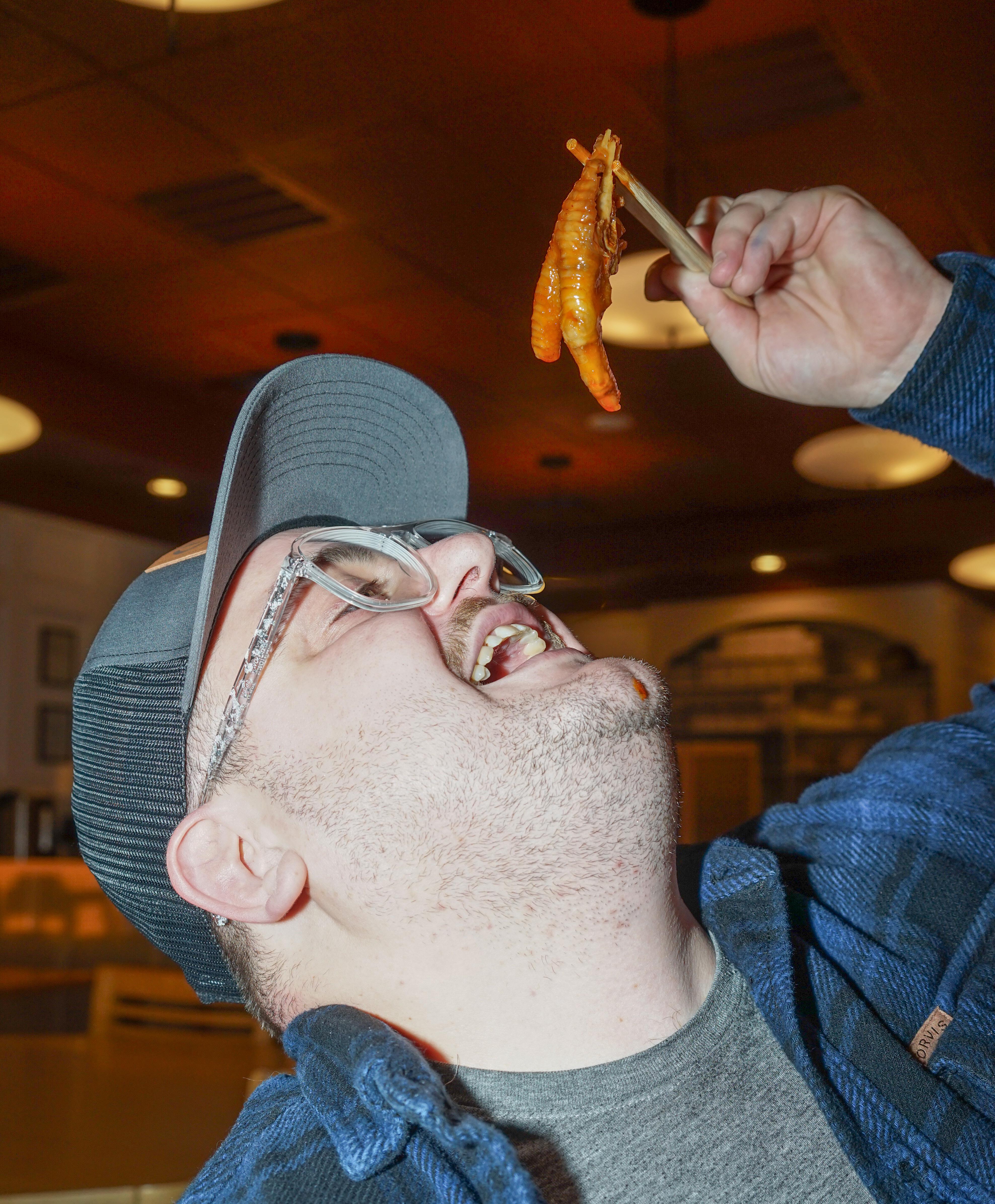
I am soon met with a bowl containing dozens of cold chicken feet, and as I bring the morsel to my mouth, I begin to feel my confidence waver. I take the smallest possible bite, and immediately start to gag. It’s actually somewhat reminiscent of an American chicken wing in its texture and sauce, but I am unable to get past the visual of munching on a foot. Dejected, I throw in the towel. I turned instead to an order of whole tilapia (served in a spicy tomato broth) and a set of perfectly-executed dumplings. All in all, the only thing that wasn’t outstanding in this meal was my own performance. Down, but not out, I gather my things and follow my companions to our next spot for the evening.
MIN-Ga
800 BETHEL RD.
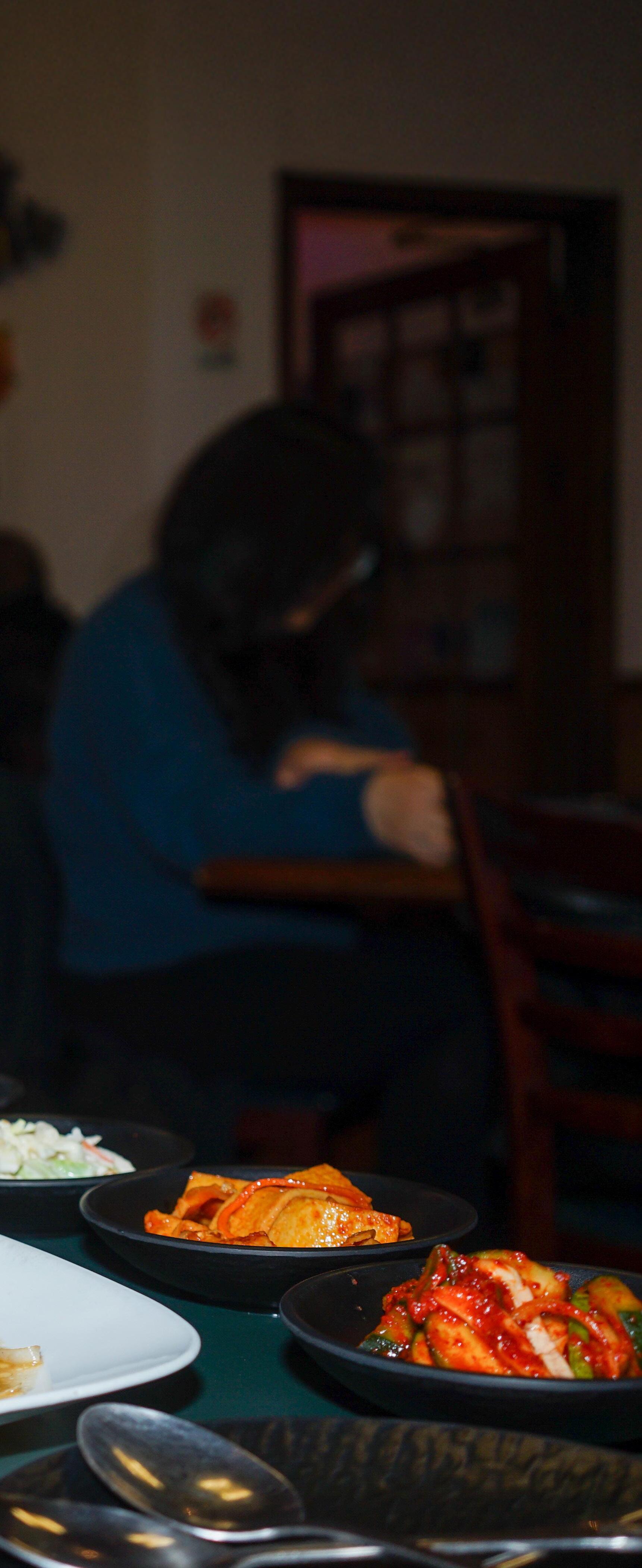
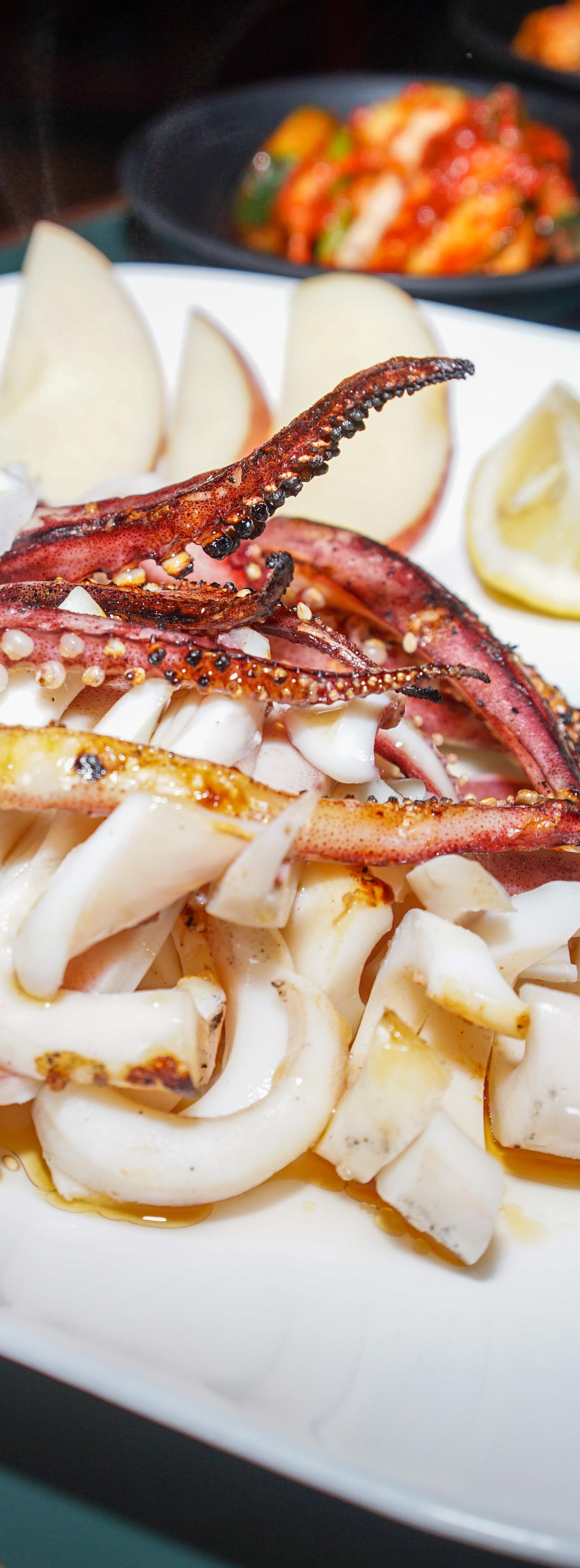
Located inside of a strip mall alongside other ethnic institutions offering Greek souvlaki, Japanese ramen and Brazilian juijitsu, Min-Ga looks rather unassuming from the exterior. Inside however, hungry diners can find Korean favorites like bulgogi and bibimbap served with a variety of banchan, or side dishes. The banchan are really the star of the show here, as each entree is served with a complementary selection of fermented dishes ranging from the classic kimchi to seasoned seaweed and even fish cheeks. Our selection here consists of a plate of charred squid and an order of japchae, essentially a stir-fry made with sweet potato glass noodles. I figure if I found defeat at the hands of a terrestrial opponent, I should look to the sea for victory.
Unlike say, calamari, which may come breaded and fried, when my squid does come to the table, it is exceedingly clear that I am eating a creature that was once alive. It looks to my Midwestern eyes like they simply chopped the tentacles off and tossed them right on the grill, but I find the flavor to be wonderful, especially with a bit of lemon.
Seeing an error in my eating patterns, our server approaches our table and politely but firmly informs me as to the Korean method of consuming this squid. Pointing to a red bottle in the corner of the table, she instructs me to apply some of the sauce to the squid. This really takes the dish to another level. The condiment tastes similar to a gochujang, although she indicates a few other additives make it unique. I toss the remainder of my cephalopod into a to-go box and make my way back to my car.
coNCLUSIoN
When you go to your favorite neighborhood dining spot, you know what you are going to get. You probably won’t have any major mishaps along the way, but I also doubt that anything especially remarkable will transpire. You will leave satisfied, but on a deeper level, still unfulfilled. When dining at any one of the plethora of ethnic spots in Columbus—both on Bethel and elsewhere—you open yourself up for adventure. You might end up ordering something you don’t like, you may even make a fool out of yourself, but at the end of the day, isn’t that what life is all about? If my time was any indication, joy, despair, laughter, surprise, comfort, stress, and a whole lot more await the brave and the bold on Bethel. You just have to go find it.
↑ The grilled squid from Min-Ga is a popular menu option