






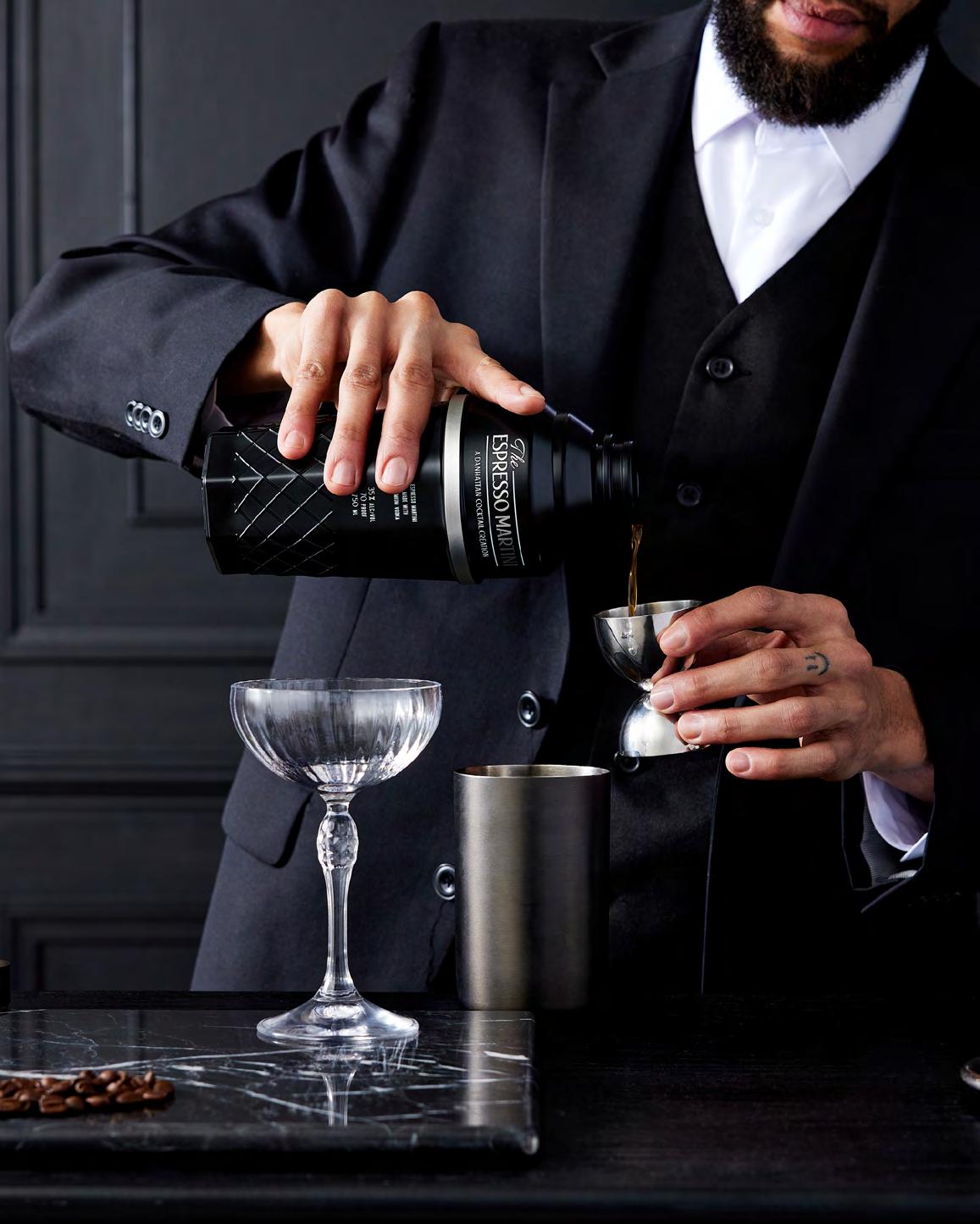
The ready to pour Espresso Martini by Danhattan Cocktail Creations.










JACK MCLAUGHLIN Editor-In-Chief
Some might say that wanting the best, or the biggest and most extravagant, is greedy. I would say it’s human.
More often than not, I think that we’re motivated by what we don’t have: love, money, a great career, or expensive things.
Many of the things that motivate us are attainable, which is great. Some—like my dream to make an Oscar Meyer Weiner Mobile my daily driver—are not. But that’s also great.
In fact, I think sometimes having a few of these dreams in our back pocket—that carrot on a stick you probably know you’ll never catch— might be healthier in the long run.
The idea of the hedonistic treadmill states that, regardless of material wealth or possessions, humans will always return to a baseline of happiness. For example, if I’m saving money for a new car, whether it’s a Ferrari or a Subaru, I’ll be over the moon when I first make the purchase. Slowly, once the novelty wears off, it will become normal to me. It will still bring me happiness, don’t get me wrong, but on a diminishing scale.
Just like Hamlet and his quest for revenge, once we have what we want, we usually end up wanting something else. Hence the “treadmill.”
In some ways, you could make an argument that it’s better to set your sights for the unattainable.
Maybe it’s a fatalistic perspective to submit to, but I don’t see it that way. I think it’s a fountain of motivation, something to look forward to on a daily basis.
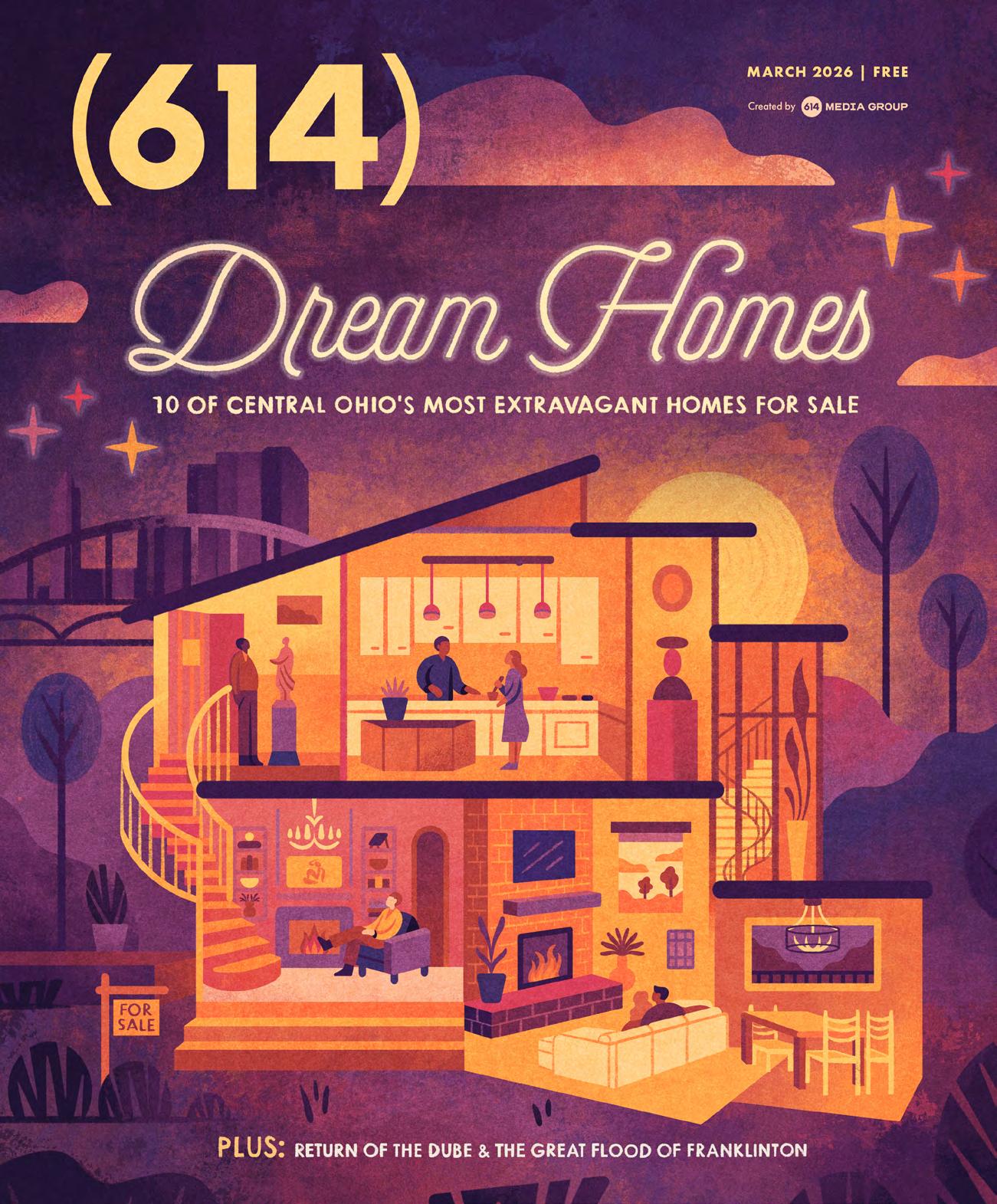
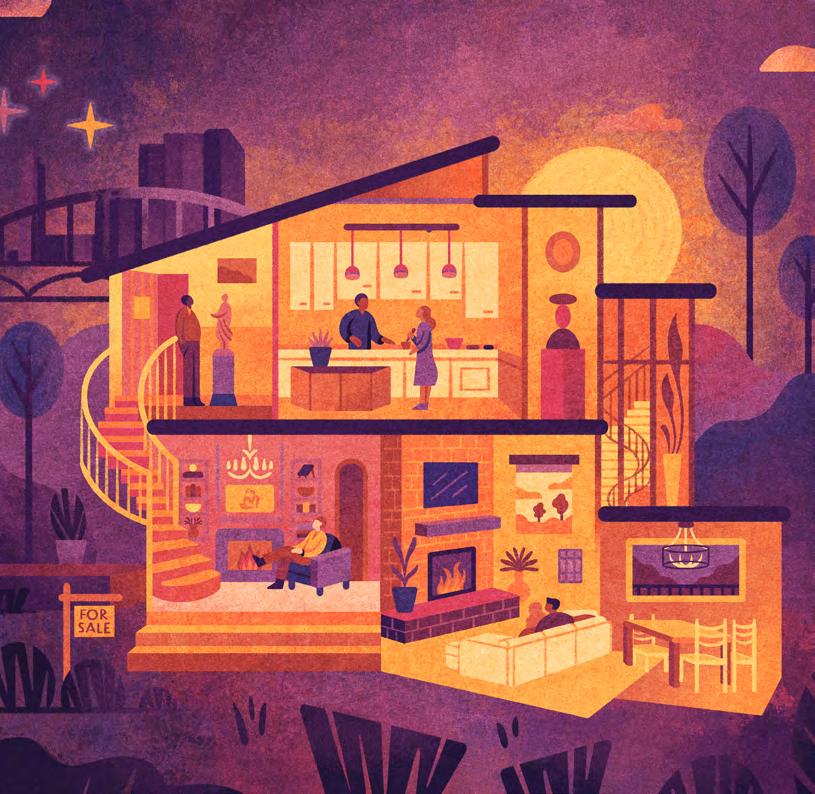
Our March 2025 issue is dedicated to dreams like this. Dream homes, to be specific. And hey, if you have the budget for a $3 million dollar Blacklick estate, more power to you (I guess I mean this literally). If you’re like the rest of us, who make a habit of browsing the craziest and most extravagant homes, without anywhere near that kind of spending power, you’re in luck.
Because I know for a fact I’m not the only one regularly scrolling through Zillow—imagining myself in a pristine ranch getaway, or a sprawling Frank Loyd Wright original—banking these images in the back of my mind as a goal to strive toward, even if, deep down, I know I probably won’t ever get there. And I shouldn’t be the only one feeling fine about that, either.


We here at (614) Magazine obviously love living in Columbus, but some of us think about living in mansions in Europe. Other staff members would just prefer staying put in our city but in a larger or cozier home! Either way, you’ll find us daydreaming about what our living arrangements would look like if we had unlimited funds:
My dream home has a giant kitchen, a garden big enough to replace the grocery store, and many copies of the key for friends to let themselves in.
Something very cozy and filled with cats, and within walking distance to restaurants and stores.
My dream home has as many rooms as possible—I get stir crazy in my house sometimes, and I’d like to think having more rooms to hang out in would solve that issue!
Some days I dream of living in a Parisian apartment on a bustling street; others, I dream of wandering off to an Italian villa close to the sea.
A cozy cottage with a large garden full of fresh fruits, vegetables, herbs, flowers, birds and butterflies. Inside, a home filled with natural light, lots of books, board games, new hobbies to try, and chocolate chip cookies.
Every day we’re posting Columbus’ top news, entertainment, and sports stories throughout Central Ohio. Check out all the Columbus news online, including the new ones below, at 614now.com and subscribe to our daily email!

‘Boutique’ Italian steakhouse opens first Columbus location
A popular Cincinnati-based boutique Italian steakhouse known for handmade pasta and in-house butchered steaks is opening its first Columbus location at The Gravity Development.

Shopping Center, Town Square Planned for Columbus Suburb
Conceptualized by Wood Companies, this little village will be highly pedestrian and community focused, with plenty of plants, green space, and paved walkways, plus almost 600 parking spaces.
Here in Columbus, we have it all—a beautiful theatre with nationally recognized performances, venues featuring world-class sports…no wonder one of Netflix’s most-streamed shows chose to film in our city. Check out these March events that celebrate all of what makes Columbus unique:




Love is Blind Finale Watch Party
Land Grant Brewing Company
The Arnold Match Point Pickleball Open
Point
Chelsea Handler: The High & Mighty Tour
Theatre
Vary
For the Love of Dance! Ballet



How a pair of Ohio State grads found success in the Hocking Hills through rental homes made from shipping containers
By Jack McLaughlin
In the crowded arena of Hocking Hills rental cabins, the competition is fierce and everpresent. So, how does one stand out when trying to break into the scene?
Building magazine-quality homes from repurposed shipping containers is a pretty good place to start.
If you can’t already tell—or if you don’t already know about them—this is exactly the route Seth and Emily Britt took in 2018 when they created The Box Hop, a collection of Hocking Hills rentals that have become as in-demand as they have internet-famous, boasting nearly a million total followers between Instagram and TikTok. “Around 2010, I worked at FedEx loading shipping containers. I remember thinking ‘Man, these things are big, they’re tall and they’re waterproof.’ That’s when the seed was first planted,” Seth said with a laugh.
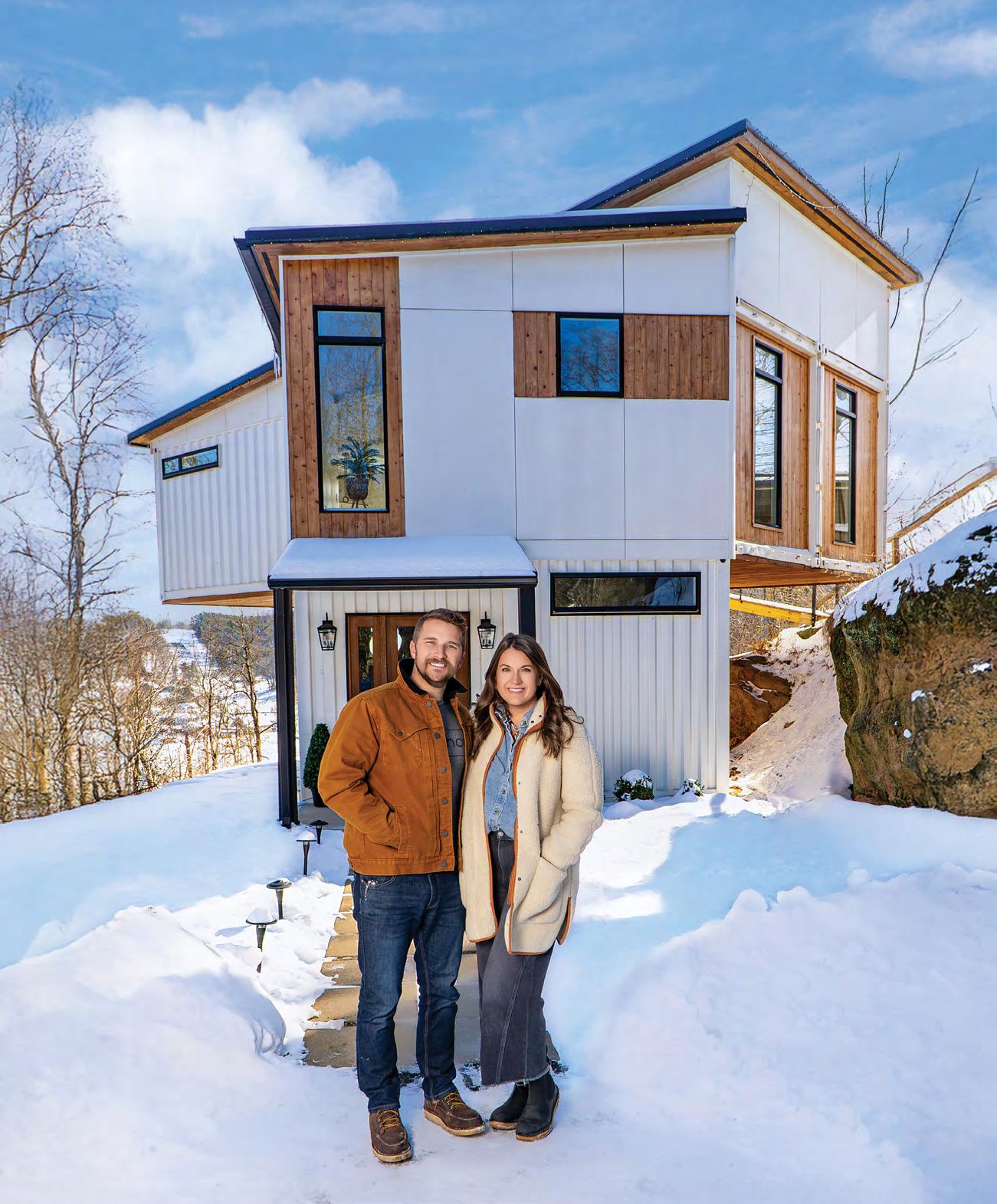
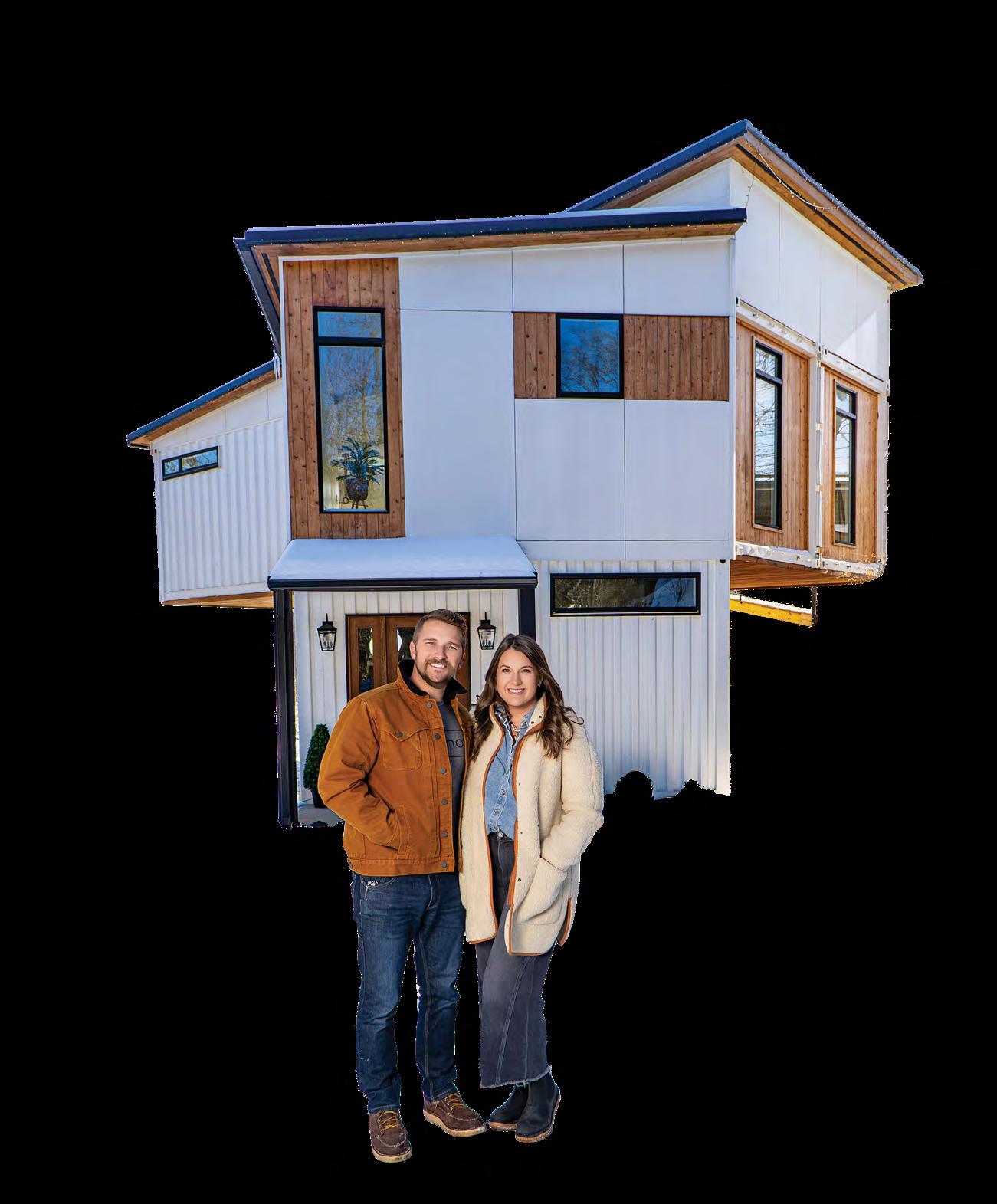

The two began investing in Columbus real estate shortly after their first date in 2012, before their “fun little dream” of owning a container home came back into their lives.
“It was either 2017 or 2018. We had tried to buy another home in Columbus and that fell through,” Emily recalled. “So I said, ‘Why don’t we try container houses?’”
In March of 2018, the Britts purchased 18 acres of land in the Hocking Hills. Ambitions for the container home at this point were modest: create a rental property that would allow them to get out of the city with their kids, and—best case—maybe even break even on it.
The first hurdle they encountered was financial. Despite having excellent credit, the Britts were turned down for eight different loans, as banks were skittish about the prospect of investing in container houses.
The second hurdle was practical. They had never built a house from scratch—let alone from a container—but Seth had experience as a builder, and Emily’s father, who owns a professional excavating company, was able to lend the two indispensable knowledge and the heavy equipment needed to build the foundations, clear roads, and stack the “boxes.”
“There’s a misconception people have that container homes must be cheaper than traditional ones,” Emily said. “There’s a whole lot to consider, logistics and metal fabrication, getting all the extra reinforcement you need, cutting out windows and more.”
By December of 2018, the first container home (today referred to as The OG) was completed and The Box Hop was born. The name, Emily said, was a nod to both the European concept of the “hop” as a short stay, and the unique architecture of the homes.
Almost as soon as The OG was completed, The Box Hop exploded in popularity. After a popular blogger stayed in the space in late December of 2018, reservations started rolling in.
“After the OG took off, we were the most visited Airbnb in the U.S. in terms of clicks and had a 100 percent occupancy for three years straight. That’s unheard of,” Seth said. “But there was still a ton we didn’t know. We were just a couple with kids throwing boxes into the middle of the woods.” →
They learned quickly, however, and The Box Hop grew just as fast.
In 2019, the Britts doubled down. That year, they built The BoHo, a one bedroom “cabin” that catered to couples looking to get away, and The Hygge, a spacious, wood-heavy hop that sleeps 12, followed in 2021.
Next, they purchased an additional 75-acre plot of land just minutes down the road from the original hops, and Seth quit his job to do The Box Hop full time. Three new hops came with the new acreage: the clean, light-filled Overlook, which boasts incredible views and a patio looking over a steep, forested hill; The Roca, situated between two sandstone rock faces with eclectic interior vibes, which went viral after being featured in a Ryan Trahan Youtube video last year; and The Ellwood, a single container straddling a natural waterfall, with a portion of glass floor for viewing. The Ellwood was the most complex construction-wise; it took 18 months, a slew of structural engineering
consultations, and a trio of support beams that alone cost $36,000.
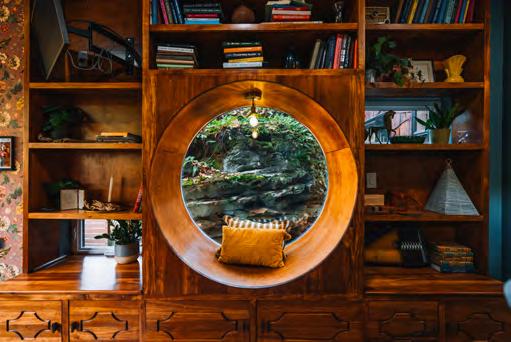
While Seth spearheads the construction of each hop—which includes bringing in structural engineers, contractors, heavy equipment and more—Emily handles the interior design, aiming to make each space feel immersive and totally unique. The Hygge boasts natural wood finishes and Scandinavian vibes, while the Ellwood opts for mid-century modern decor.
Today, The Box Hop has six short term rentals to its name, and the Britts aren’t slowing down anytime soon.
They’ve also created a chic wedding venue on the new 75-acre plot, aptly referred to as The Seventy Five, and have tentative plans to add a craft brewery and taproom, and potentially even pickleball courts, to the space.
The “next phase” of The Box Hop plans to use their remaining acreage to create a space
“WE WERE JUST A COUPLE WITH KIDS THROWING BOXES INTO THE MIDDLE OF THE WOODS.”
with the character of the brand and a unique communal twist.
“There are 22 acres on a beautiful hill opposite the wedding venue. My dream is to have a lodge with full-service food, spa and single bedroom containers that offer more of a community and a communal vibe,” Emily said.
And that’s not even mentioning the Britts’ custom building services, for which they created a million-dollar Buckeye Lake escape out of shipping containers in late 2023.
Whatever Emily and Seth take on moving forward—whether it’s waterfall-spanning homes or home breweries—they plan to learn from each and every effort like they have been doing, and maybe even find some spots to teach as well.
“It’s all been very humbling. We knew it was a big risk, but I’m glad someone is looking out for us,” Seth said. “Now our kids can see the houses we built over a waterfall or on an island, and we can show them that anything is possible.” ♦
Visit theboxhop.com to book an unforgettable experience.
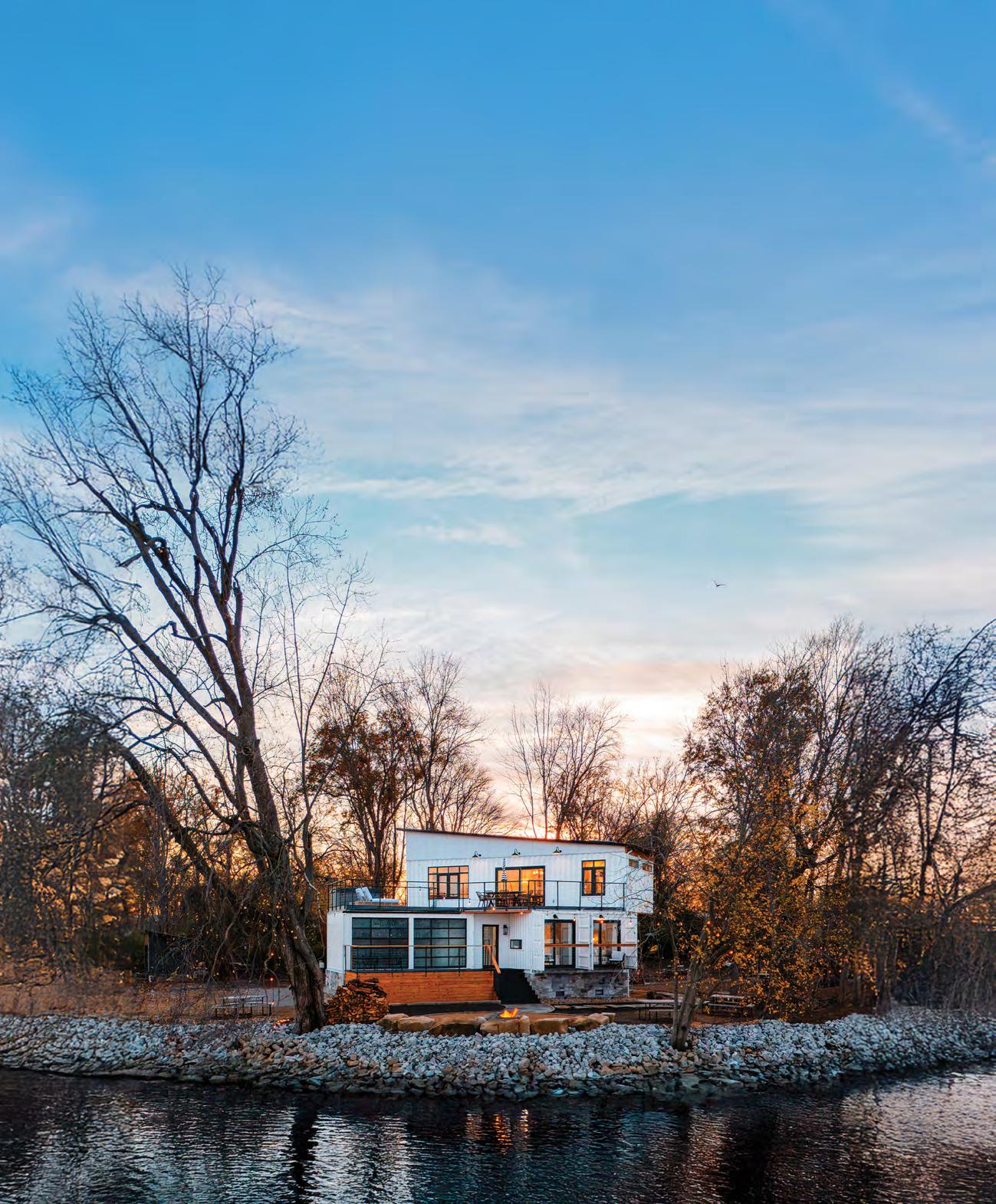
The Box Hop was the most visited Airbnb in the U.S. in terms of clicks, and had a 100 percent occupancy for three years straight. Photo courtesy of The Box Hop →




I’m sure you’ve heard of microneedling or laser facials at some point—maybe you’ve seen the posttreatment "glow-up" on your feed or heard your bestie raving about her latest appointment. We’re here to talk about why these treatments are so popular and, more importantly, what they actually do to keep your skin healthy and resilient as you age.
With International Women’s Day falling on March 8th, it’s the perfect time to celebrate the skin you’re in. As we move through life, our skin goes through a lot. Starting in our mid-20s, collagen production begins to slow down, and the structural foundations that keep our skin bouncy and firm start to weaken. Toss in years of fun in the sun and city pollutants, and we begin to notice fine lines, uneven texture, and stubborn pigment.
Investing in your skin means you’re investing in your health. That’s where our two favorite powerhouses, RF Microneedling and Moxi, come into play to help keep your skin functioning at its best.
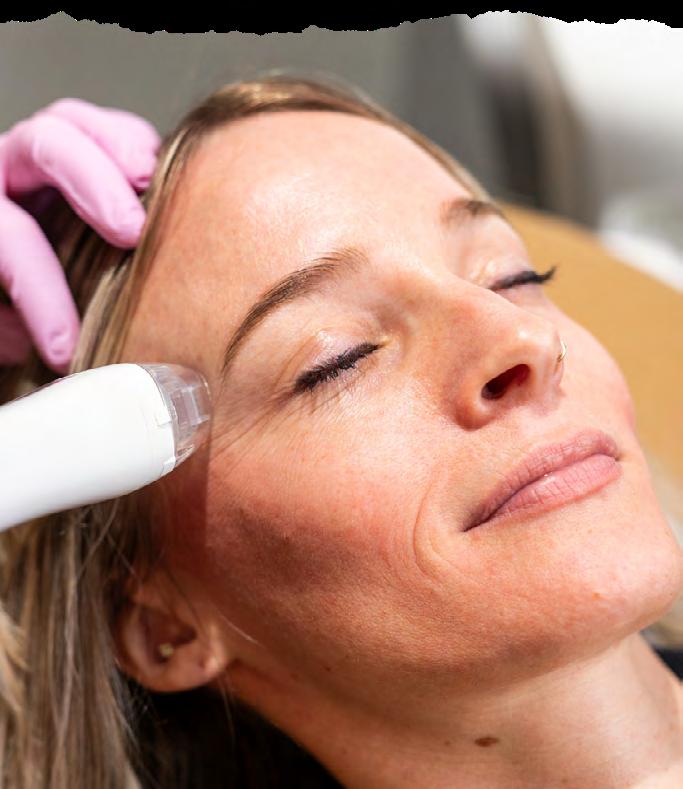
Think of Radiofrequency (RF) Microneedling as the ultimate workout for your dermis. Traditional microneedling creates tiny channels to stimulate healing, but the RF version levels up by delivering heat energy deep into the skin for more tightening benefits. This "controlled injury" tells your body to produce a massive surge of collagen and elastin. It’s a gamechanger for tightening the skin, smoothing out acne scars, and softening those fine lines that start to peek through as the years go by.
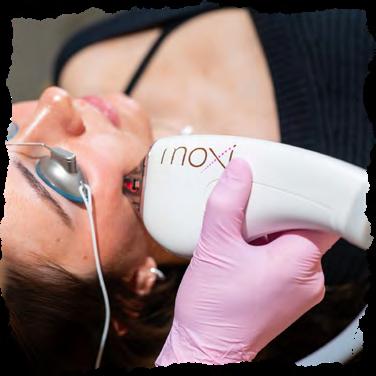

Moxi is a gentle, non-ablative laser designed to “prejuvenate” the skin. It’s famous for being safe on all skin tones and is even a hero for those struggling with melasma. By creating tiny channels in the skin, it delivers light energy without damaging the surface. This stimulates collagen production, lifts away pigment, smooths texture, and corrects sun damage, making it ideal for preventative care and maintaining healthy skin.
Don’t let the word “laser” or “needle” scare you! Both treatments are designed for the modern woman who doesn’t have time to go into hiding.
Immediately After:
You’ll likely feel like you have a moderate sunburn after both treatments. After RF, we offer a cooling mask loaded with exosomes and peptides to jumpstart your healing.
You might notice tiny MENDs (micro-epidermal necrotic debris) that look like coffee grounds with a slightly “sandpapery” texture. This is just your old skin making way for the fresh, healthy cells underneath!
We keep it simple with ZO Balancing Cleansing Emulsion, ZO Soothing Hydro Mist, SkinCeuticals Epidermal Repair, and SkinMedica’s Broad Spectrum SPF.
This March celebrate International Women’s Day and enjoy $100 off RF Microneedling or Moxi all month long. Visit us in Clintonville, Grandview, Easton, or Powell and let our Nurse Bosses help you achieve a glow that lasts beyond the season.


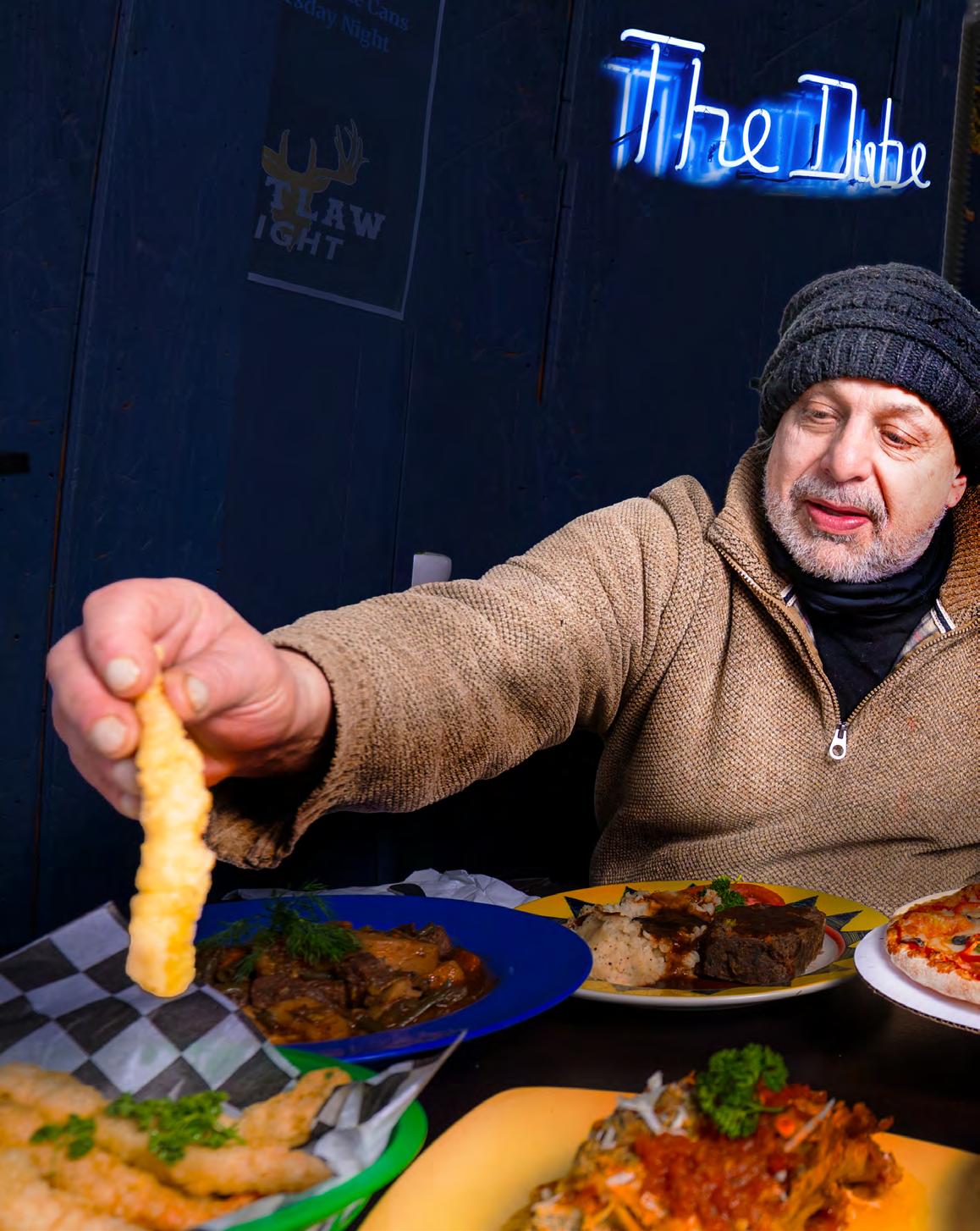
Following a nearly 8 year closure after 78 years of operation, one of Columbus’ favorite dives is now back in action
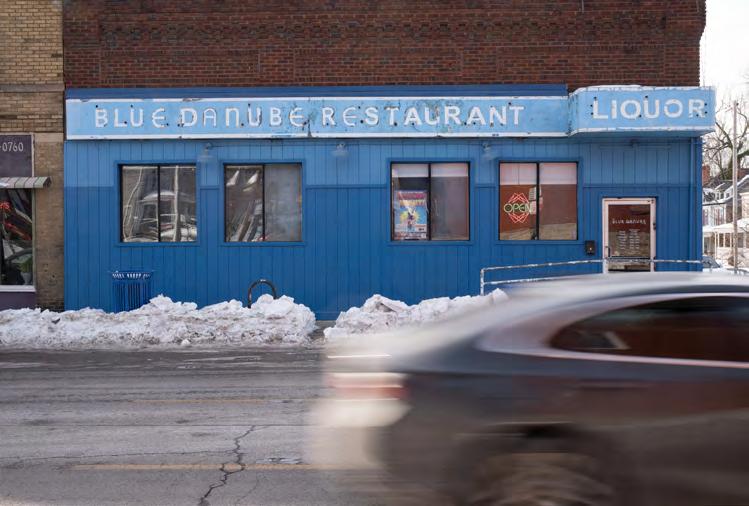
When The Blue Danube closed in 2018 after 78 years of continuous operation, Columbus lost one of its enduring institutions, a painful blow for a campus-area community casting a wary eye toward the steady stream of redevelopment marching north on High Street.
Behind the scenes, a disconnect between George Margetis, owner of the building, and Bob Swaim, operator of the restaurant, prompted the closure. Though Swaim introduced ‘Dube’ traditions like patron-painted ceiling tiles (originally to cover cigarette smoke stains) and the Dube Dinner Deluxe (a pair of elevated grilled cheese sandwiches served with a bottle of Dom Perignon), legal haggling and accusations of poor upkeep drove Margetis to decide not to renew Swaim’s lease.
Initial plans to quickly reopen The Blue Danube were stymied by the considerable investment forecasted to update the space, and so it sat untouched, subjecting the restaurant to rumors ranging from imminent city-driven seizure to outside interest in converting the space into an Applebee’s (perish the thought). Teri and Louis Cataland, whose father, Max, partnered with Margetis to open the Aegean Supper Club on Parsons Avenue in the 1970s, ultimately approached George in 2022 to purchase both building and restaurant to restore them to their rightful glory.
The ensuing project required gutting the entire building, leaving only its signature phone booth and original bar intact. The roof required complete replacement, the
old drop ceiling and its painted tiles were a casualty of the update. After initially selling off many of the tiles during renovations, Teri has purchased some of them back, decorating the walls with a nod to The Blue Danube’s recent past.
Because all of this work took place behind locked doors, an announcement in April of last year that The Blue Danube neared reopening came as a shock to the campus community. The doors swung open on April 29, 2025 the same night as Ohio State’s Senior Bar Crawl. “There was nobody up here,” said Teri. “I thought all these people would be flooding in and I noticed that everybody stopped down by The Library. So I took one of the boys and threw them in the back of my pickup truck, put ‘Blue Danube Is Now Open’ on a sign and he held it. I went to High Street, honked and went by every bar down there. The whole street’s going, ‘Dube, Dube, Dube, Dube.’ Within about two and a half hours, we were packed out the door.”
The celebration of that night carried over to lines of cars waiting for the restaurant to open each day, long-time Blue Danube patrons drawn from Dayton, Youngstown and beyond by the allure of the Dube’s resurrection. That warm reception has grown over time, supported by fresh additions like karaoke nights and even the occasional roving violin player.
“More and more people are coming in,” said Teri. “I’m touched. I want somebody who’s having a bad day out there to say, ‘You know what, I’m going to Blue Danube to get some good food and have a good day.’”






A cancer diagnosis and round of chemotherapy treatments set Teri on a path to return to his native Ikaria, a Greek island in the Aegean Sea. The challenge of restoring The Blue Danube halted those plans, prompting Teri to instead bring Ikaria to Columbus, complementing a handful of favorites from the old ‘Dube’ food menu with Mediterranean dishes amplified by authentic olive oil sourced from a family friend, imported in waves from Greece a handful of times a year.
“The food is always going to be good because of the way my family is. If it’s not good, we’re not going to serve it,” said Teri. “I’d rather just have a bar with no food in it than to put junk out.”
“I want somebody who’s having a bad day out there to say, ‘You know what, I’m going to Blue Danube to get some good food and have a good day.’”
Much of the menu is dominated by scratch-made, family recipes. Salad dressings are mixed to order, pizzas are hand rolled, gyros are 100-percent lamb sliced in-house and a rotating list of specials is populated by whatever ingredients are fresh and affordable that day. As old fans return, the hope is that fresh food, attractive prices, and an inviting atmosphere create new regulars among those unfamiliar with The Blue Danube.
“The kids that are at OSU now maybe never came here because of the eight years of being closed,” said General Manager Kaitlyn McClune.
“There’s a whole new class that is like, ‘What the hell is The Blue Danube?’
The kids that do come in here say, ‘My parents met here in the 50s or the 40s and that’s really cool.” ♦
Visit The Blue Danube (again!) at 2439 N. High St.
Meg Pando acing an audition landed her and her Columbus craft bar a space on the hit show Shark Tank— and a and a shot at serious expansion
By Melinda Green

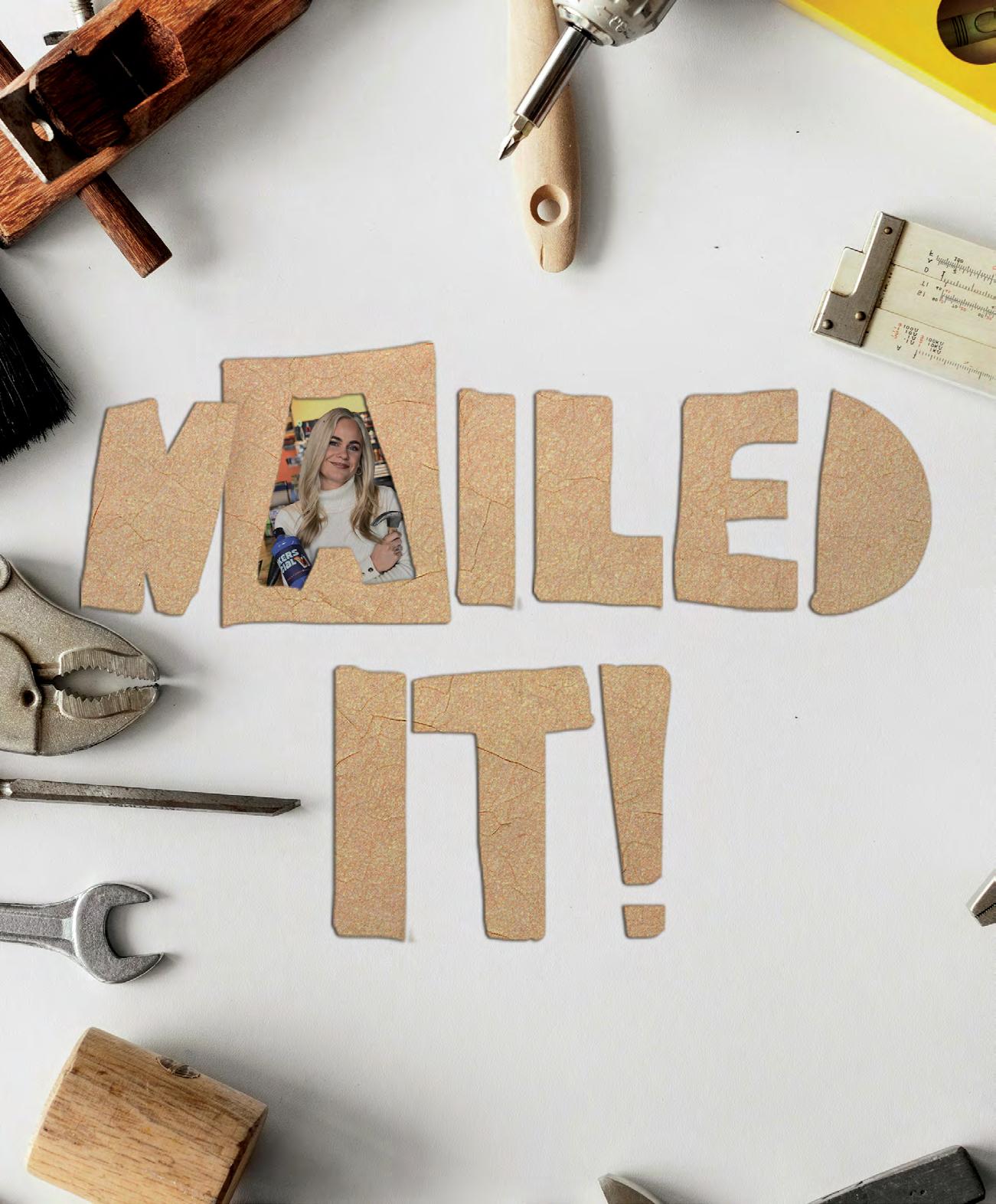
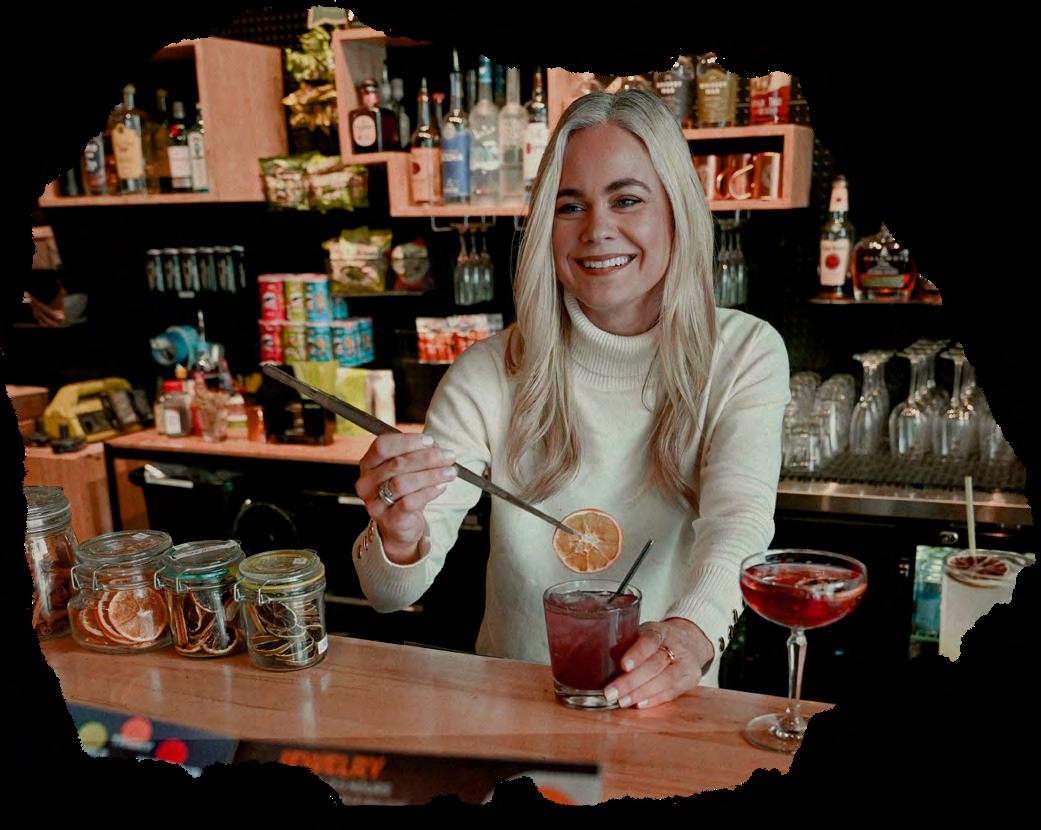
Meg Pando has been a huge fan of Shark Tank since it first aired 17 years ago, when she was a college student at the University of Cincinnati. Now, Pando, the owner of Makers Social, has seen an unexpected callback turn into a Shark Tank success of her own.
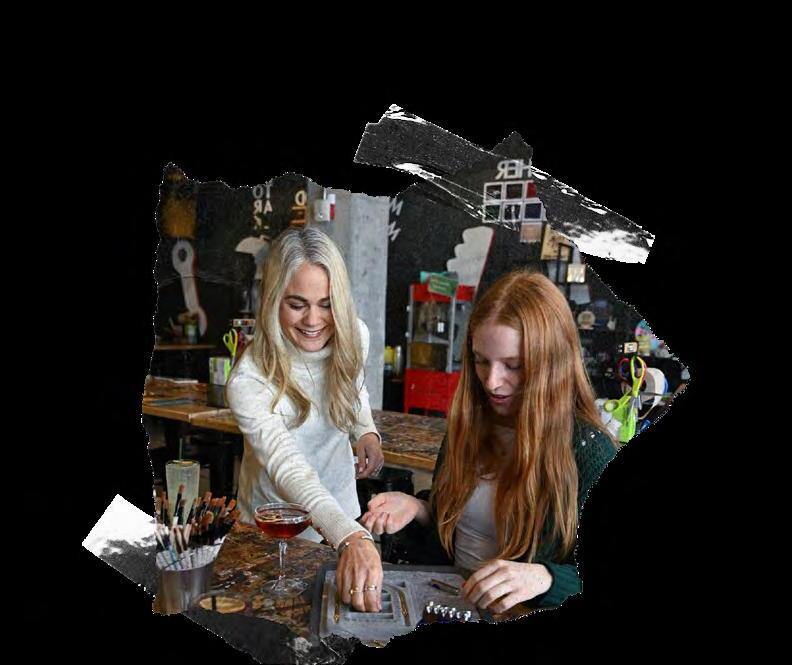
Pando’s got a unique concept with Makers Social: It’s a combination bar and craft space. Think pinot and paint on a grand scale. Want to sew and stamp your own leather wallet, put together a beer caddy, or make some cute concrete planters? Buy your project, grab a beverage, and get to making.
The business is successful, and Pando has been working on finding the right space and funding for its second location. But even successful entrepreneurs question themselves sometimes, and last year, Pando was no exception.
“In April of last year, I was really in a rut. I felt like everything was falling through for the past, like, three years. Every investor that I potentially had or commercial space that I was looking at were just falling through one after the other. Just random reasons—and maybe good reasons.”
She continued, “And I kept seeing these Shark Tank auditions and I’m thinking, ‘Well, I’m going to do something for my confidence at least,’ because I was in such a bad mental space. I had convinced myself my business wasn’t worthy and I had done everything to fail in growing it. I was being really hard on myself.”
So she signed up to audition—along with around fifty thousand other people. She sent in her audition



Pando had about seven days to prepare and memorize her pitch, organize and ship the materials she’d need on set, and practice, practice, practice. She made flashcards to help with all the numbers she’d have to answer on the spot, like profit percentage, cost of goods sold, and labor costs. “I probably did [the pitch] over 200 times to practice,” she admitted.
Then her big moment came.
“When you first walk into the tank, the producers tell you ahead of time, you have 60 seconds where it’s going to be complete silence,” Pando said. “They’re adjusting the cameras, and you can’t say a word or start yet because they use that 60 seconds to get every camera ready. So they tell you to just smile for 60 seconds. I was smiling and looking at all the Sharks and making eye contact, and that was the moment when they just became human to me instead of these big scary people.”
A moment later, a smiling Pando walked onto the stage for her 45-minute interview and casually flipped and caught a hammer, never hinting at the nerves beneath.

To her surprise, the Sharks were familiar with Columbus and its neighborhoods, and they already had ideas on great spots to open a second location.
Slowly, though, the Sharks started dropping out for different reasons. “I think I was really nervous, but I also knew that most of them were not the right investors for me anyways because they invest in tech or products or things that were not related to me or my business,” Pando admitted. Her hope was to win over “Mr. Wonderful,” Kevin O’Leary.
“I already knew a lot about these investors and the businesses they’ve invested in,” she explained. “From a business standpoint, he knows the most about my industry, because he had invested in similar businesses to mine. So just strictly from what he could do from my business standpoint, I knew what numbers he wanted.”
It was challenging to pay attention to five different people’s body language and responses, but Pando noticed O’Leary liking her answers. So, even though the other four Sharks had passed on her pitch, she wasn’t surprised when O’Leary made an offer.
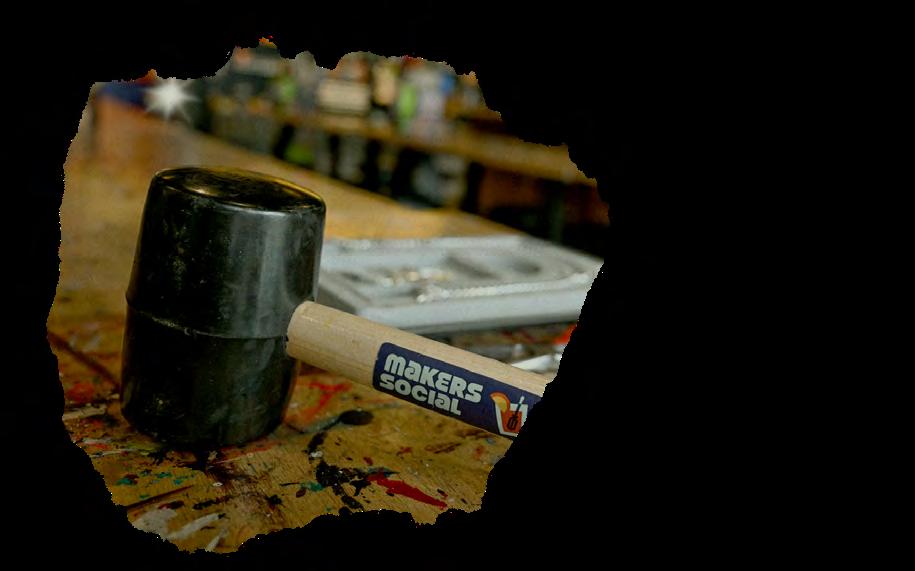
Makers Social allows guests to craft with hammers, paints and art supplies of all sorts
So now she’s entering the planning stages. There’s a lot of paperwork to be done, of course, and new ground to cover. The goal is to open that second location, somewhere more suburban, where Makers Social can focus more on a family vibe. She’s looking at either north of Columbus or maybe even the Cincinnati area.
Ultimately, Pando would love to have two Makers Socials in every major Midwest city, with maybe a few in the South as well. “It’s not like a fast food restaurant where you can have like five to ten in every city,” she admitted. “I think two locations in each city would be ideal. I’m okay with scaling conservatively. I want to have fun and be a mom at the same time.”
So, with the help of Mr. Wonderful, Makers Social is going to see that second location come to fruition. Pando credits Columbus with bringing the brand to maturity in the first place.
“And really, that’s what I love so much about our city. We know how to shop small and eat at local restaurants. I adore Columbus for that reason.” And it’s that support that set her up for success with the




The Aladdin Shrine Circus is back this spring with action-packed acts, piles of cotton candy, and fun for the whole family
By Jordan Abbruzzese
“Eat popcorn, grab a snowcone, turn off your phone, and just have a good time.”
Ladies and gentlemen, boys and girls of all ages. Step right up to an event that is sure to delight and thrill. The 74th annual Aladdin Shrine Circus is coming to town!
Each year, the Shriners bring a brand new show. This spring’s spectacular will feature performers from around the globe. Audience members will gasp and cheer at Blake Wallenda’s Thrilling Sky Walk, holding their breath as Wallenda walks end-to-end at the Celeste Center with just a pole and wire. The performance will also spotlight the traveling Zuzu African Acrobats, soaring trapeze artists, backflipping motorcyclists from the 406FMX Riders, a world-famous clown and his pals, and more thrilling performances under Ringmaster Joseph Bauer.
Behind the entertainment is your local Aladdin Shrine Center, a fraternal communityfocused organization that has been around Columbus for over 140 years, representing members from over 30 Ohio counties.
“It’s something I believe in,” said Doug Moshier, the circus director and Aladdin Shrine member for the past 23 years. “There are so many things that have gone away for kids, and this is one thing where families can disconnect and enjoy themselves with each other. I have always loved bringing smiles to kids.”
The Aladdin Shrine Circus will take place March 26th-29th at The Celeste Center, located within the Ohio Expo Center & State Fairgrounds. The venue holds over 10,000 seats, transforming into a colorful, musical extravaganza for two and a half hours (with an intermission).
The family-friendly attraction ramps up to showtime fun with pony rides, plenty of
clowning around, face painting, and traditional snacks to enjoy under the big top. On Friday, the Shriners sponsor a special, exclusive show for disabled children, free of charge—paid for by the fraternal organization’s members. With this initiative, the Aladdin Shrine is able to welcome up to 1,900 children from around Central Ohio for these free shows.
Providing a fun, entertaining experience to children and families is what made Moshier originally fall in love with the organization’s annual circus, and remain the Aladdin Shrine circus director for the past eight years. As a former teacher, creating inviting spaces for kids to laugh and enjoy themselves is an essential part of his mission.
“We are constantly in the community and looking for other ways to do outreach, so we are bringing smiles and entertainment to people outside the circus. The circus is part of our fraternity fundraising so we can do that,” he explained.
As the event evolves each year to bring in new acts and attractions from all over the world, the Aladdin Shrine Circus works hard to bring the best show possible to Columbus, listening to community feedback and evolving over the decades.
“We want people to know we take pride in removing the exotic animals from our circus, and the animals we do bring in are taken very good care of. We take that seriously and are trying to respect that,” said Moshier.
The circus features Colleen’s Camels— camels domesticated and born in the United States, along with Klose’s Canines troop of performing dogs. The Aladdin Shrine carefully vets their animal partners, ensuring that the animals receive the best care possible.
Tickets can be found at the Aladdin Circus website, with an opening night discount for Thursday’s show. The tickets are first come, first served, so get them early to select the best seats possible.
“Eat popcorn, grab a snowcone, turn off your phone, and just have a good time,” added Moshier. ♦
The Aladdin Shrine Circus will perform at Ohio Expo Center Celeste Center at 717 E. 17th Avenue. Get your tickets and find more information on this


From popular spots to underground culinary surprises, here’s your guide to African food in the Arch City
By Jordan Abbruzzese
No matter the country or language, African cuisine is based on sharing comforting and savory food in a welcoming atmosphere. Throughout Columbus, we’re fortunate to have African restaurants serving a variety of culinary delicacies, from full platters to street food snacks. Whether you grab a seat or place a to-go order, get ready to gather and indulge in traditional foods cooked with care and intention. →









Lalibela Restaurant and Bar
1111 S. Hamilton Rd.

Lalibela offers a sit-down lively atmosphere, complete with a full bar that serves Ethiopian beer and homemade honey wine, a billiard’s room, and a coffee sanctuary. Their large menu of filling entrees features tender beef, lamb, chicken, and multiple vegetarian dishes focused on lentils and chickpeas, all served on a huge platter. Make sure you come in with clean hands, because utensils aren’t utilized here. Instead, you roll up your meat and vegetables in the spongy, signature bread called injera.



ERITREA
Hidmona Cafe 1731 Brice Rd.

Riziki Swahili Grill
1872 Tamarack Cir. S.

Riziki Swahili Grill focuses on spice first, serving authentic cuisine from the “Spice Island” of Zanzibar, right off the coast of Tanzania. Their menu is inspired by a mother’s passion for creating meals from fresh ingredients, and bringing loved ones together to enjoy. Guests can order sumbusa, donge la yai (a hard boiled egg surrounded by beef), goat curry, or from a variety of hearty Kilimanjaro platters that include basmati rice served with many meat options in a combination of warm, nourishing dishes.

GHANA
Drelyse African Restaurant 1911 Tamarack Cir. N.
Foodateria Kenyan & Nigerian Kitchen
2492 Home Acre Dr.


Intercontinental Nigerian Restaurant
5777 Cleveland Ave.

Some call it Intercontinental Nigerian Restaurant, but locals know it as “Lagos Peppersoup Corner.” The locally owned eatery may look unassuming, but its Western African fare has garnered it over 1,000 5-star Google Reviews. Loyal customers love the simmered okra, stewed beans, jollof rice, fufu, and freshly grilled, organic meats. Oh, and of course, oxtail pepper soup.





Hoyo’s Kitchen
59 Spruce St., Columbus in North Market Downtown 6750 Longshore St., Dublin in North Market Bridge Park


In Somali, the word “Hoyo” means “Mother.” As such, it only makes sense that Hoyo’s Kitchen serves food inspired by the mother of co-owners and brothers Abdilahi and Mohamed Hassan. Located inside both North Market locations, this fast casual family-owned eatery serves savory dishes like chicken or beef suqaar, sambusa, or mango chicken, paired with Somali rice and flavorful vegetables. Order some injera (East African bread) or sabayad (Somali flat bread), and a housemade drink for a comforting takeaway meal.

MOROCCO
Saba House
East Market
212 Kelton Ave.

SENEGAL
Chez Rama Restaurant
Senegalese Cuisine
3669 E. Livingston Ave.
AUTHENTIC AFRICAN COFFEE
East African Coffee House
4359 Morse Rd.


By Jack McLaughlin
Photos
by
Erika G. Clark

Professional home renovators Randy Pauley and Ali Nelson offer practical tips for first-time house flippers
for some of us, the idea of buying a home—let alone buying property to flip and then resell—is an overwhelming topic. But help has arrived. Dirt Poor Industries owner, Randy Pauley and Ali Nelson, a Central Ohio realtor, make a living by flipping practical, everyday properties. They’re answering the questions you need to know if you’re at all curious about getting into flipping.
What tips do you have for people who want to get into flipping, but don’t know where to start?
Do your research, and build up a reliable team of experts. I am a contractor and don’t claim to know all the intricacies of the real estate world, so Ali leads that aspect of all my projects. She helps me evaluate the properties, connect with creative lenders, negotiate the deals, advise on design choices for maximum ROI, and lists them for me when I finish them. Flipping homes for a living can be an extremely rewarding profession, but the margins for profit are becoming tighter and tighter as the city grows, leaving less room for delay or error. Having folks you can trust is crucial.
Is there a certain amount of money people need to get started you would say? Or does it just depend on the property?
This is a loaded question. The amount of cash you need is heavily dependent on the caliber of home, the type of funding you are looking to secure, and who is doing the work. We are unique in that unlike a lot of investors, I am doing 90% of the
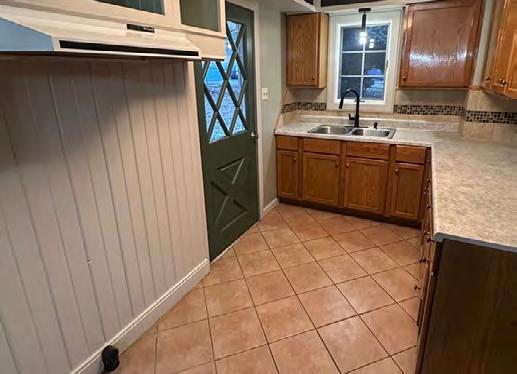


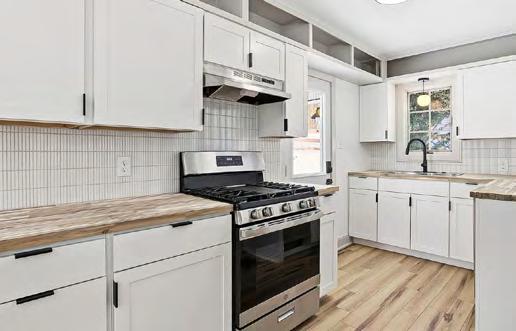

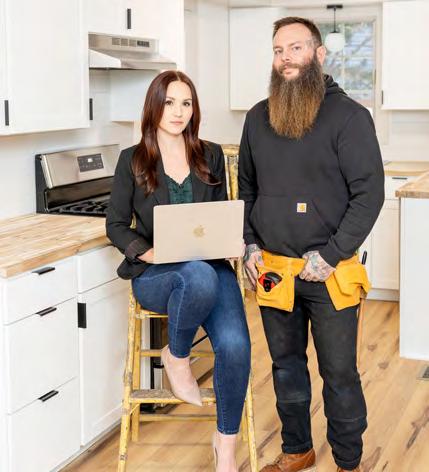

labor. This has allowed me to operate a little differently. I don’t have to rely on hard money or private lending. However, a good rule of thumb I stick to regardless of the property is making sure I have enough cash on hand for both the material costs, as well as 4-6 months worth of mortgage and utility payments for after the renovation is done. There is always a chance that it may sit on the market, or that you run into issues during the project that cost you time and money.
How physically demanding is flipping?
It varies. Obviously, I am very hands-on in my remodels. I put in 8-12 hour days on my jobsites where I’m everything from the parts runner, to the installer, to the cleaning crew. However, I choose not to flip homes on the large scale that some investors do. I am a one-man operation doing a few properties a year while also handling client projects. Quality over quantity is our entire business model, so it’s different for us. Some people never swing a hammer, but I do believe you should get your hands dirty, at least a little bit, so you appreciate the process. Could this be a barrier that stops some people from getting into it? In my opinion, yes. I can’t speak for everyone, because there are a number of different ways to find success in real estate investing. However, if you are not willing or able to do the work yourself, the experience is going to get expensive, quickly. This is not a business where you can simply sit back and collect checks. It’s demanding both physically and mentally. ♦
To learn more about Dirt Poor Industries, follow @dirtpoorindustries and @findinghome_with_ali on Instagram.

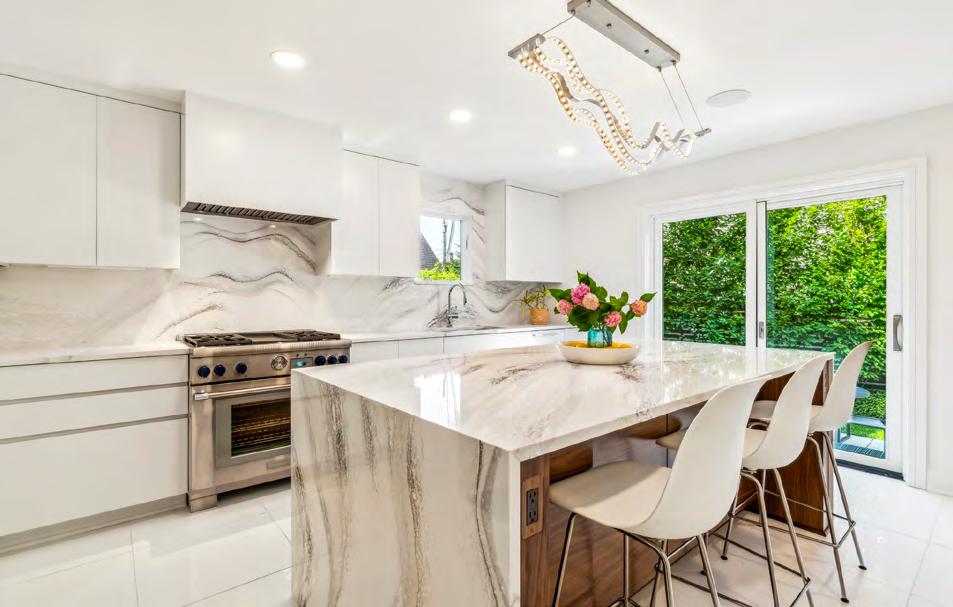
Sunlight spills across sweeping Cambria quartz surfaces, where soft gray veining moves against crisp white and warm walnut cabinetry. Just beyond the glass doors, spring greenery becomes part of the view, softening the line between indoors and out. The island invites slow mornings and easy gatherings, turning daily routines at the coffee bar into something that feels like a retreat. With a carefully mapped plan and steady execution, every detail comes together so your kitchen does not just look like a vacation destination, it lives like one.

JSBROWNCOMPANY.COM | 614.324.0405
Since 1978, J.S. Brown & Co. has been delivering excellence in remodeling, improving both homes & the lives of our clients. Let us do the same for you.


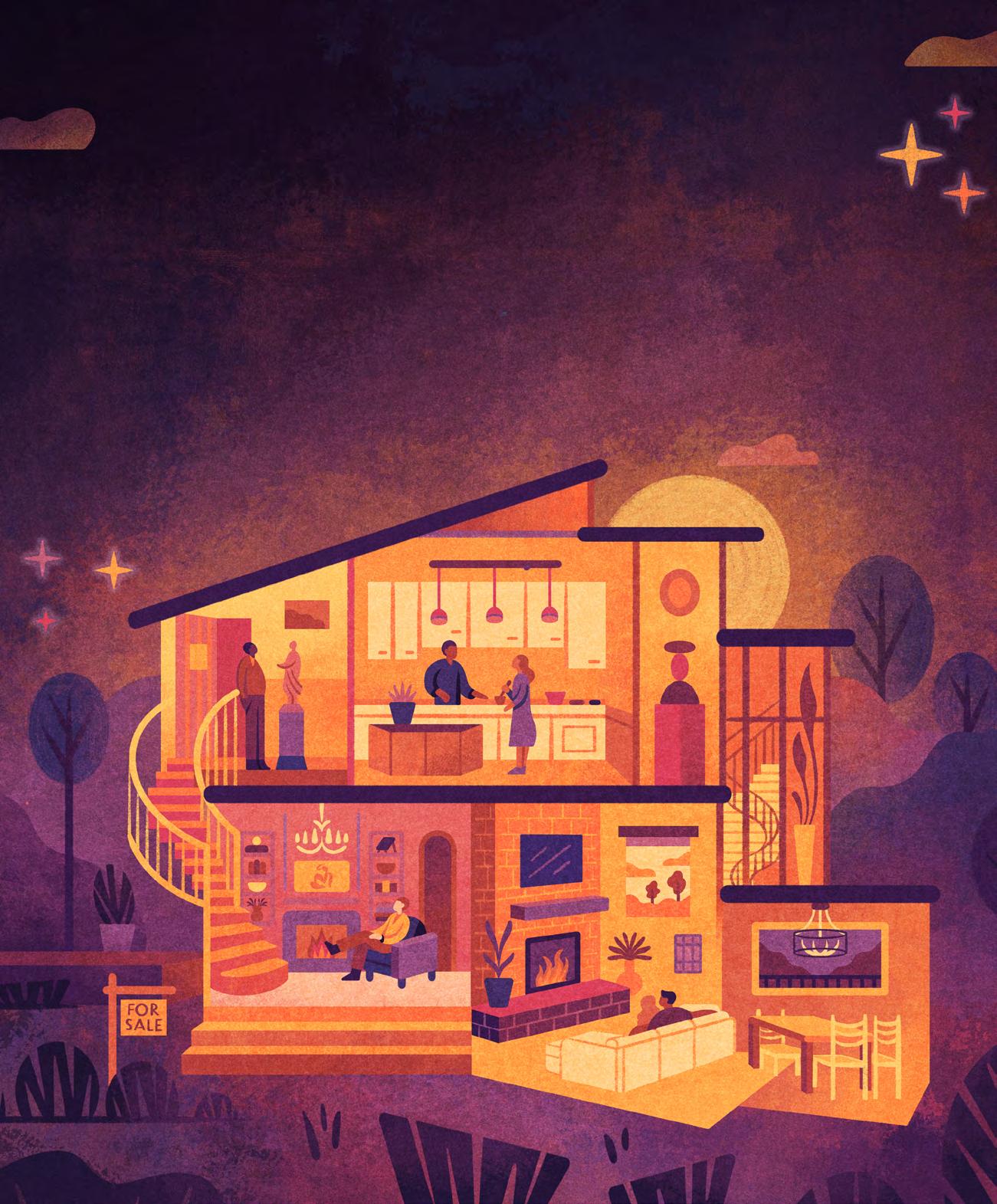
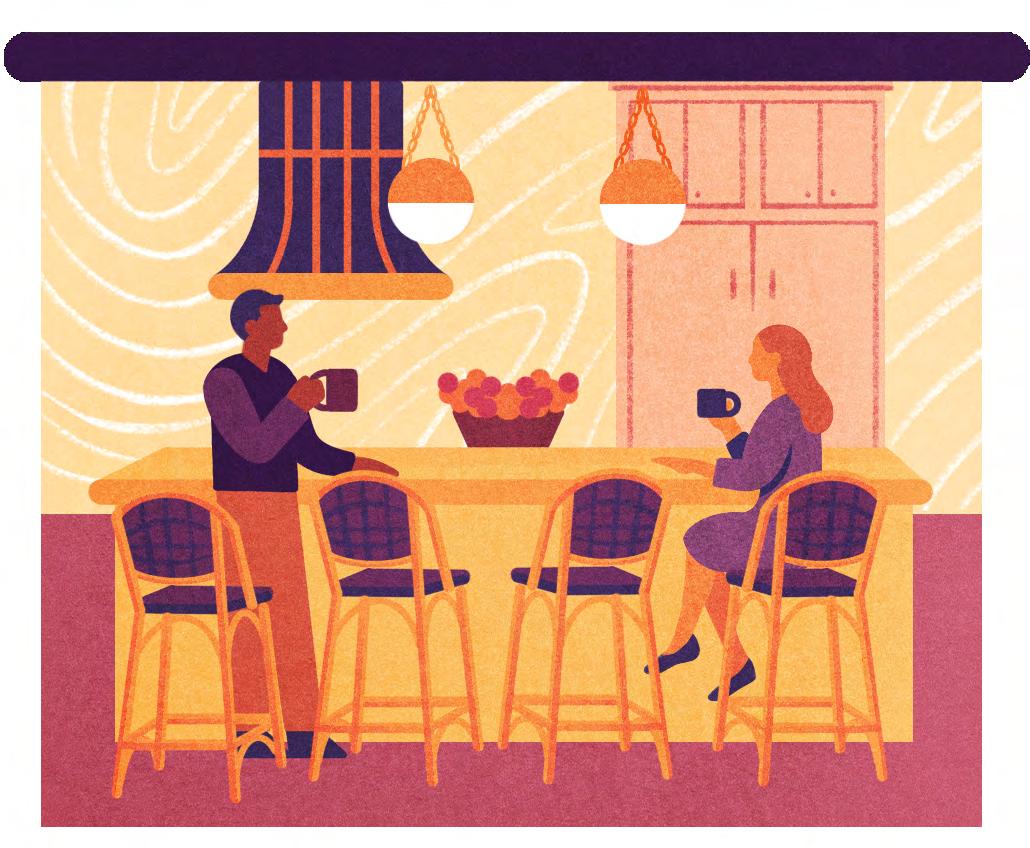
ou’ll never hear (or in this case, read) the phrase “get your head out of the clouds” coming from us. On the contrary— we insist on it! We believe in wandering and wondering, in romanticizing floor plans, and in casually scrolling through Zillow listings that exist several tax brackets beyond your current reality.
Maybe your imagination drifts upward, to hosting friends in a window-wrapped Downtown penthouse, where the Columbus skyline is reflected in your champagne glasses. Perhaps you picture a driveway that winds through acres of a quiet suburb before revealing a modern estate tucked among the trees, where you spend your whole summer
gardening. Or maybe your heart belongs to the storied streets of German Village, where you’d be walking down the brick-lined sidewalks to your local coffee shop on a Saturday morning.
Dream homes, when you really think about it, are less about square footage and more about possibility—they challenge you to picture a new version of yourself. And did we mention all 10 of the homes featured in the following section are, at the time of publication, wwfor sale?
This March cover section gives you full permission to indulge, to imagine freely, and to show the listings to your partner or friends over & over again…until the house sells. →

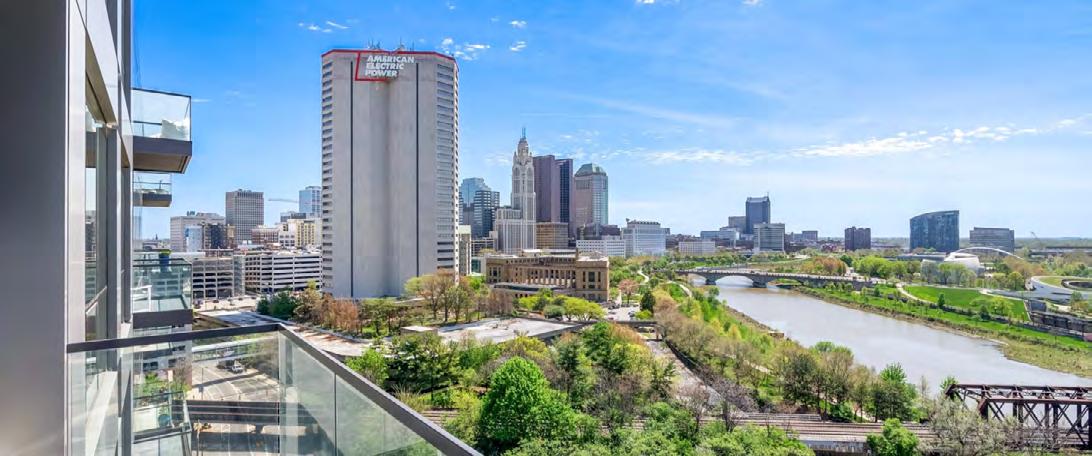
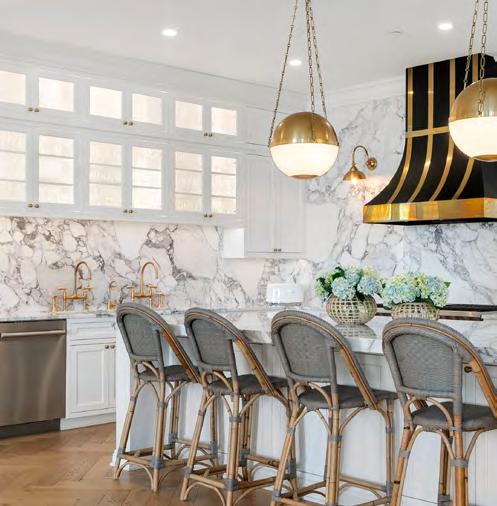
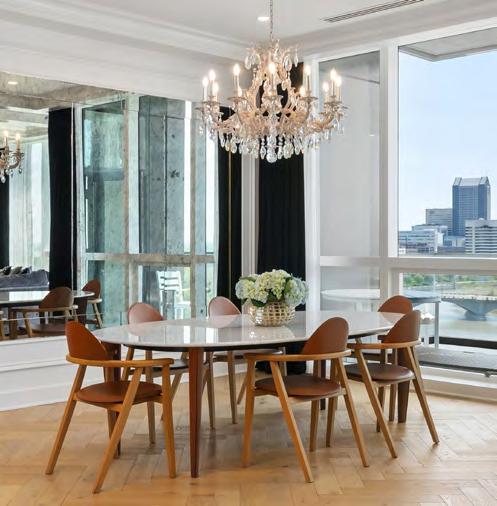
There are a plethora of reasons to live in this penthouse apartment in the Arena District, but here’s three: it’s the only 100% tax abated luxury building in Columbus, the Calacatta marble slabs you see in the kitchen were so large that they were crane lifted in through the front living room windows, and it was purchased as a raw shell and designed and built from scratch.
Actually, why stop there? Living at Parks Edge means panoramic views of the Columbus skyline, a rooftop pool with an outdoor kitchen, a social room with a kitchen and bar, a full 24/7 fitness center, and an exclusive guest suite. 1114 Parks Edge in particular features Thermador & SubZero appliances and herringbone white oak floors throughout, and boasts plenty of natural light that highlights the open floor plan. It’s as luxurious as you can get in the Downtown area of Columbus.
$3,795,000
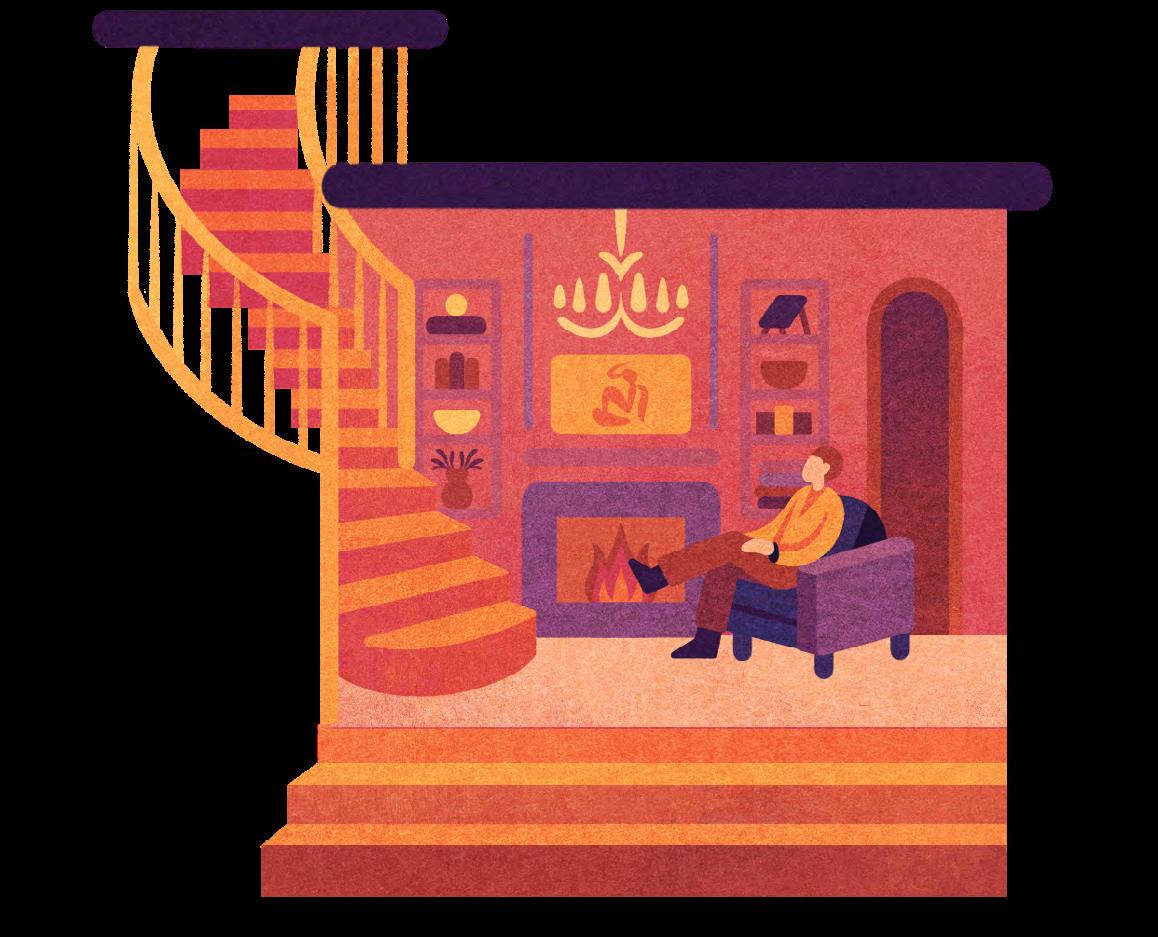
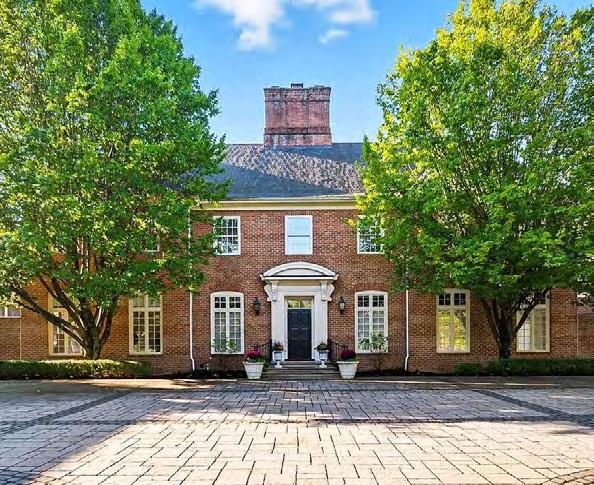
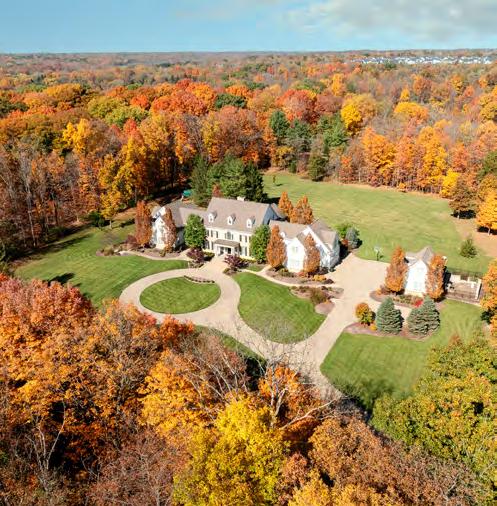
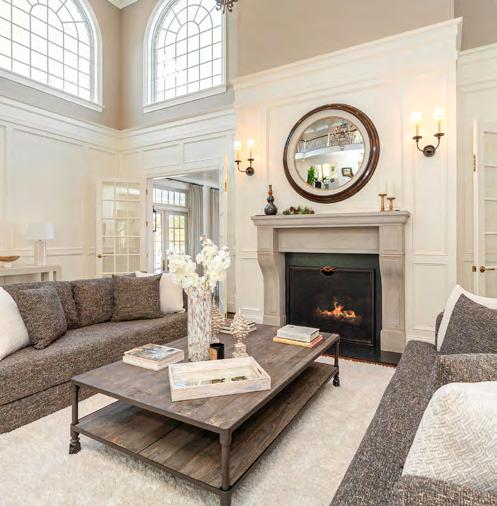
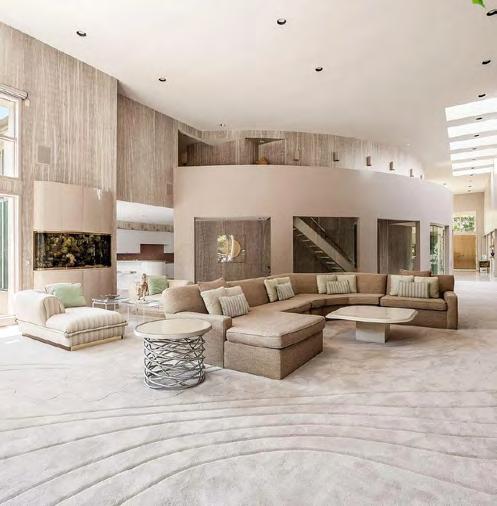
This manorial Blacklick home was built for a king. Which makes sense, since it was built by a Knight. Created in 1998 by esteemed Columbusarea builder Kevin Knight & Co. the home sits on nearly 4.5 acres of pristine land in Blacklick’s Colts Neck neighborhood, a gated community that retains a secluded feel.
Multiple garages on the property allow the storage of up to 10 vehicles, making it ideal for car collectors and enthusiasts. The home’s outdoor space also features a fenced-in backyard complete with hot tub, pool, and acres full of mature trees. The interior boasts a luxurious front room with floor-toceiling hardwood and a massive chandelier.
$2,995,000
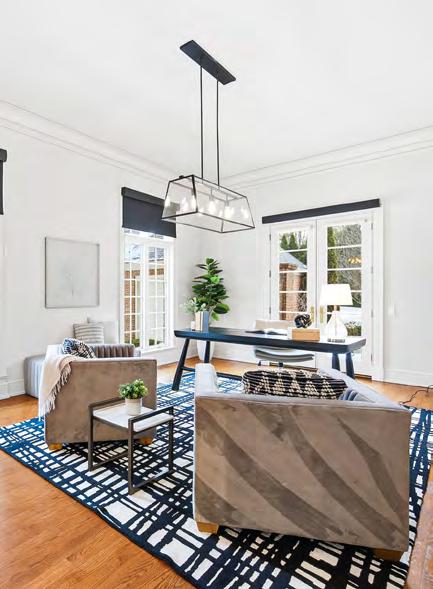
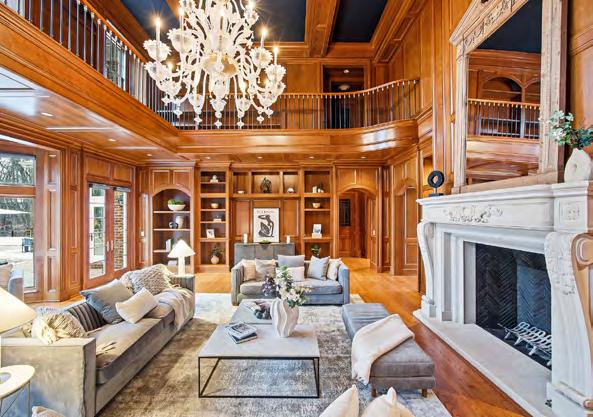


↑ One of the many light-filled rooms inside 57 Preston Road
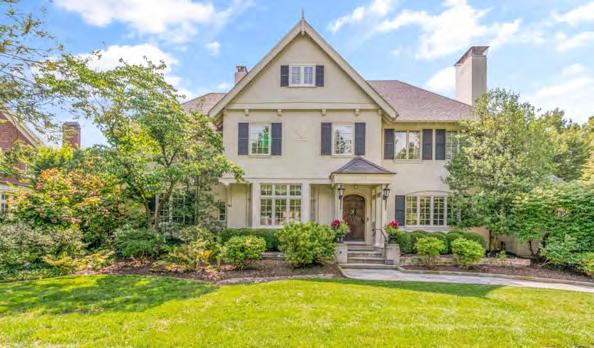
While it might be located just a block off the busy back and forth traffic of East Broad Street, the Preston Road neighborhood boasts abundant greenery and heavily tree-lined streets, making it feel more like a wooded enclave than a central, urban spot.
And while the area—a one-block walk from Wolfe Park and Alum Creek—has its own allure, the historic, 2.5 story home at 57 Preston Road has plenty of attractions to match.
Built in 1920, the Bexley home blends traditional, Colonial-style charm (like the property’s beautiful oak-paneled library and multiple fireplaces) with plenty of modern perks, including top-end appliances, multiple wine refrigerators, sprinkler system, whole-house generator and a private exercise room.
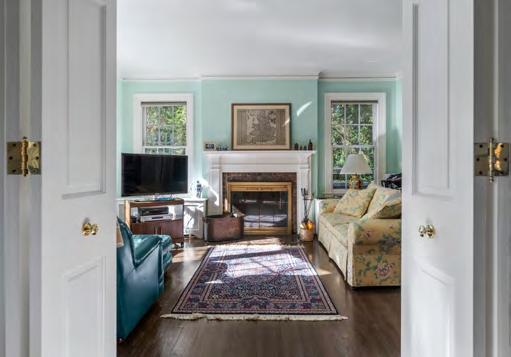
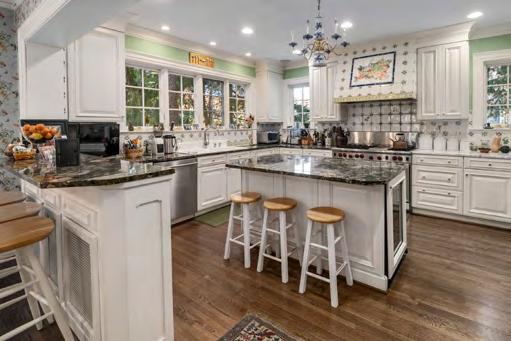
PRICE: $1,975,000
BEDS: 4
BATHS: 5 SQUARE FEET: 6,563
Contact Coldwell Banker realtor Sheila Straub at sheila.straub@kingthompson.com to set up a showing.

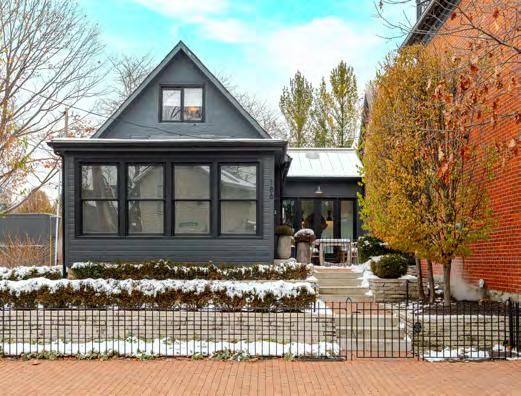
We know most people dream of German Village living, with the brick-lined streets, small coffee shops, world-class restaurants, and a sense of community. 186 E. Sycamore, located right in the heart of this little village, offers all of that and more.
The 1800-era home is on the smaller side of many of the other featured homes in this issue, but that doesn’t mean it has any less charm. With 7.5” wood floors throughout, Ann Sacks
honed marble tile in the on-suite bathroom, and plenty of windows in every room, this historic home boasts heart and soul. Did we mention it has not one, but two enchanting courtyards? One is overlooking the picturesque streetscape German Village is so known for, and the other a private retreat. We can’t see why you’d ever want to leave, but if you do— famous restaurants like Katzinger’s and Lindey’s are only a short walk away.
PRICE: $725,000
BEDS: 2
BATHS: 2
SQUARE FEET: 1,781
Contact Jeffery Ruff, 614-325-0022, or Marilyn L Vutech, 614-296-6866, of Cutler Real Estate to set up a showing.
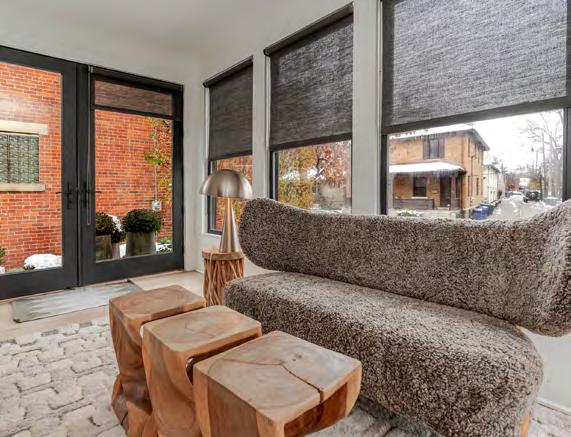


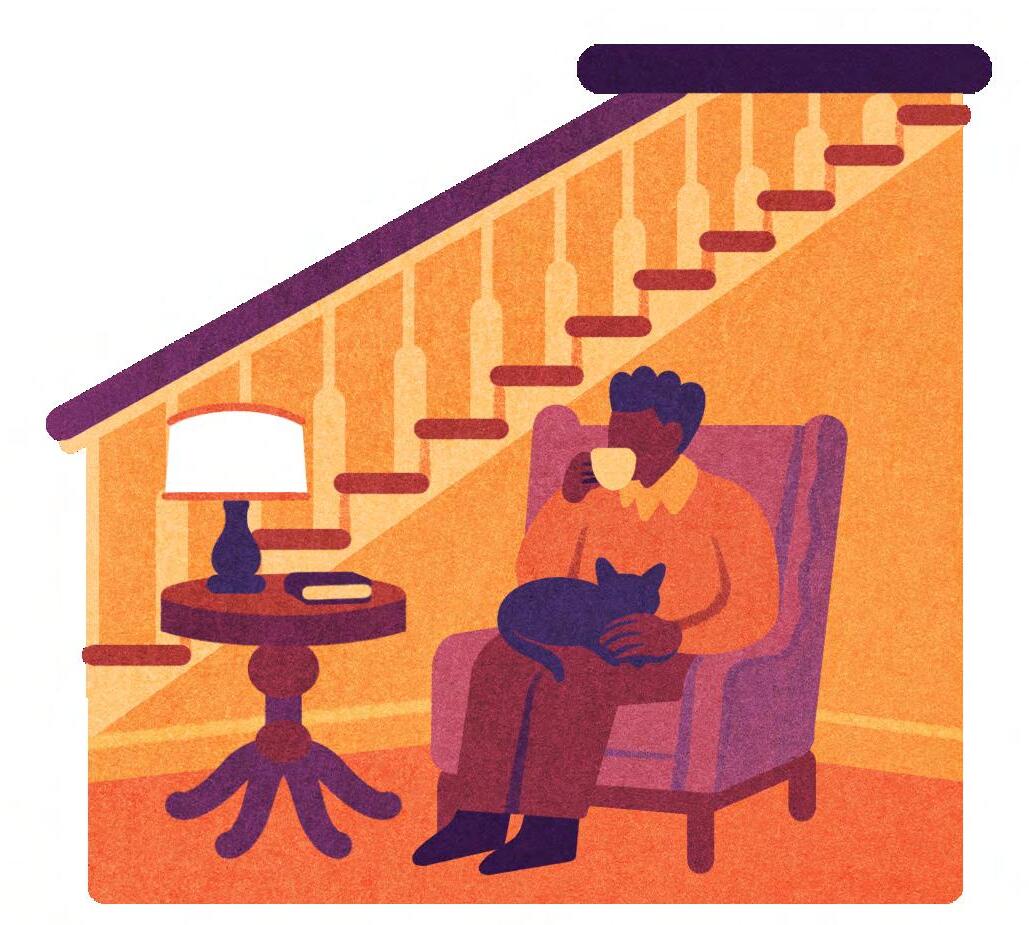
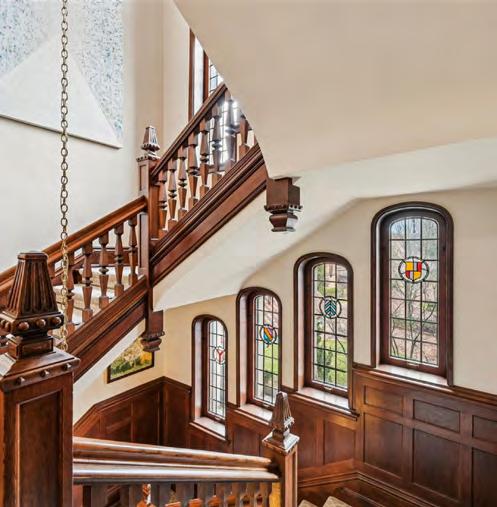
IThe sprawling, angled staircase of this Delaware home, which is spacious both inside and out ↓
f you’re looking for an extraordinary home—that comes with an extraordinary opportunity—look no further. 780 Home Rd. is it, all 16,000 square feet of it.
The home, custom built by esteemed Chicago designer Paul Craver, sits on 14 gorgeous, tree-lined
acres, but there’s a rare opportunity to add up to seven more adjoining parcels to the property, amounting to almost 40 more acres.
That’s only if the eight bedrooms, 10.5 bathrooms, and fully finished basement with a bar and wine cellar aren’t enough, of course!

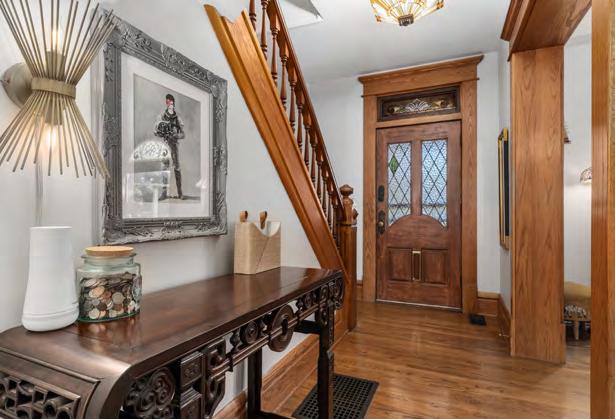
TRestored Art Deco vibes are on display throughout this Dennison Place home, including its cozy kitchen ↓
here are very few gated communities in Columbus proper, especially so close to Downtown, The Short North, and campus. But there’s a house for sale in an intimate, six-home community in Dennison Place, all facing a gorgeous, peaceful courtyard separated from the bustling street by a grand gate built by Fortin Ironworks.
424 W. 5th was originally built before 1900, but the home was moved in the early 80s to make room for a Battelle expansion. In 1984, it became the site of a designer’s showcase, where individual designers put their own touch
on a different room in the house. This resulted in much of the historical charm of the home being stripped away, with some aspects covered up or damaged beyond repair.
The current owners were dedicated to bringing this home back to its Art Deco roots, uncovering its gorgeous hardwood floors and adding bay windows and doors designed by Franklin Art Glass, and a master bathroom featuring Bardiglio marble. If one is seeking more modern comfort, the refinished basement is the only contemporary room, offering a space for casual entertaining.
$649,900
3
2.5 SQUARE FEET: 2,370
Contact Realtor Christopher Hannan, 614-2186007, of Rise Realty Co. to set up a showing.

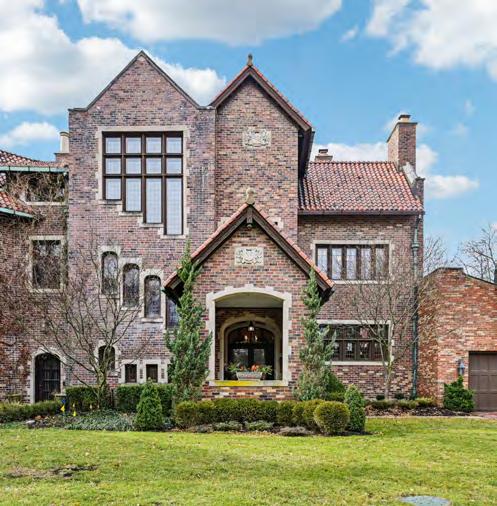
It’s not often that a part of history comes onto the market. 1427 Roxbury Rd. Manor House North is a rare exception. Rumored to be haunted, and affectionately referred to by locals as “Casparis Castle,” this 5-bedroom home has an unbelievable history. Designed by renowned architect Frank L. Packard and built in 1908, this Scottish castle-inspired home was originally commissioned and owned by Sylvio Casparis—an Italian immigrant turned entrepreneur. The 27-room castle was split into two private residences in the 1970s, Manor House North
and South. Manor House North is on the market.
Located only 10 minutes from Downtown Columbus, history and modern comfort blend themselves beautifully in this heavily-wooded estate. With five bedrooms, and 3.5 bathrooms, this private condo is steeped in history and charm. It was even rumored that Mr. Casparis’ wine cellar operated as a speakeasy during prohibition. If “Scottish castle” wasn’t enough to pique your interest, check out the oak paneled walls, ornate hand-caved woodwork, walk-in closet, original fireplaces, hand-leaded glass windows, Spanish tile roof, and courtyard.
$1,750,000
3.5
FEET: 5,353
Contact realtor Jane Jones, 614-579-2152, of The Jane Jones Team, Howard Hanna Real Estate Services to set up a showing.
courtesy of Scott Stamps



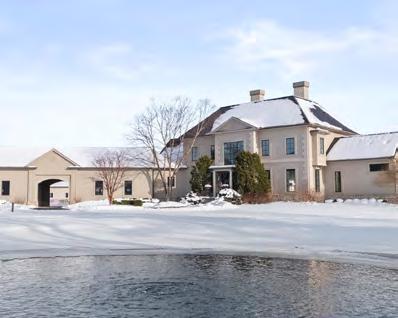
acres of land outside the city? A stocked private pond? A Control4 smart-home automation system? Check, check and check. This Blacklick property, located approximately 10 miles east of Downtown, offers a slice of countryside living with modern conveniences and a sleek, contemporary appeal, including soaring ceilings and a private theater room. This five bedroom, seven bathroom property
Floor-to-ceiling windows and unique contemporary fixtures abound inside this roomy Blacklick mansion ↓
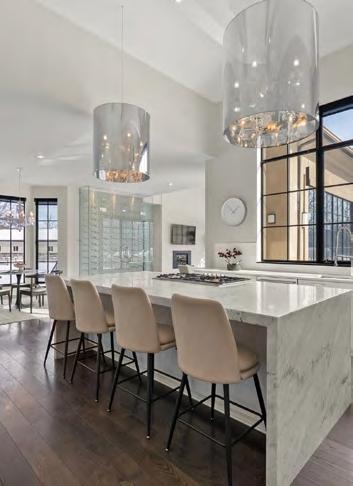
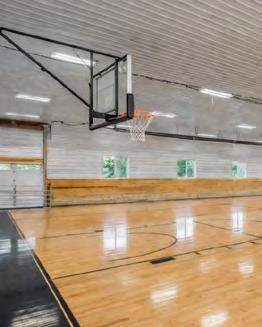
features plenty of indoor space at nearly 8,000 square feet, but it also shines outdoors, offering its own four-stall barn, perfect for the equine enthusiast. What’s more, the Mann Road home also boasts its own 80 x 100 radiant-heated arena, complete with footing, to take your horse hobby to the next level. Not a hippophile? Not to worry. The arena space is a perfect candidate to be converted into a pool or indoor hockey rink.
PRICE: $2,699,900 BEDS: 5
BATHS: 6
SQUARE FEET: 7,830
Contact Karla Ballenger with The Rainers Group at karla@therainesgroup.com to set up a showing. 61
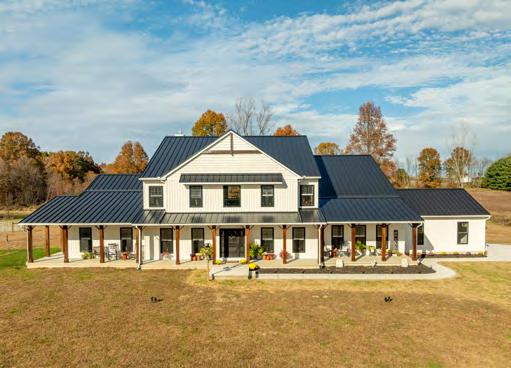
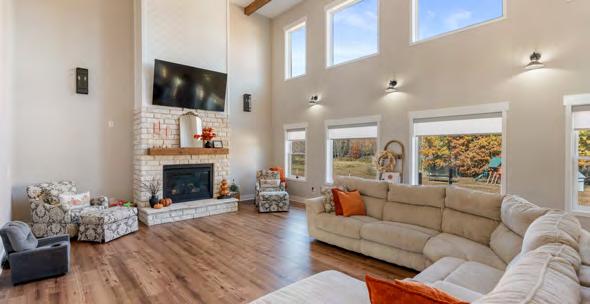
acreage with contemporary charm, this Newark home could be the one for you. Built in 2024, the farmhousestyle home with exposed wooden beams is situated on 24 acres of land north of Downtown Newark. The home's first-floor suite offers rolling views of the Ohio countryside, and the property even features an 80x44 pole barn and poultry coup. If this sounds too ambitious, the land is also ideally suited for gardening.
Described as a “modern homestead retreat,” the home boasts 24-foot ceilings and custom windows that fill the space with natural light during the day, and an indoor fireplace to complete its rustic appeal in the evening.

PRICE: $1,499,999
BEDS: 5 BATHS: 7

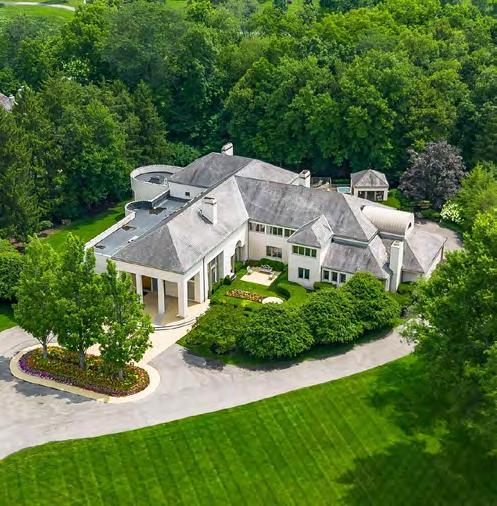
-foot ceilings and floor-to-ceiling windows, a fully operational bar, and a conversation pit—yes please! Built in 1989 and currently on the market by the original owner, this unique estate overlooks the 5th hole of the Muirfield Village Golf Course. For just $3,450,000 you could be the proud owner of the billiards room, indoor basketball/pickleball court, private six hole private putting area, sauna,
Spacious hallways offer the perfect place for some unique on-site art at this Dublin estate ↓
gazebo, four-car garage, pool, cabana, hottub, and garden.
If that wasn’t enough, the location is also highly sought after—this home is nestled in the heart of the Estates at Muirfield Village. Located only 30 minutes from Downtown, this 80s dream home also features a built in saltwater aquarium, curved marble staircase, and plenty of space for entertaining.


By Amy Campbell
Growing up, Delia Gold was immersed in the family business. “I used to tell people I came from a long line of mechanics,” she said, “but the mechanics were all doctors.”
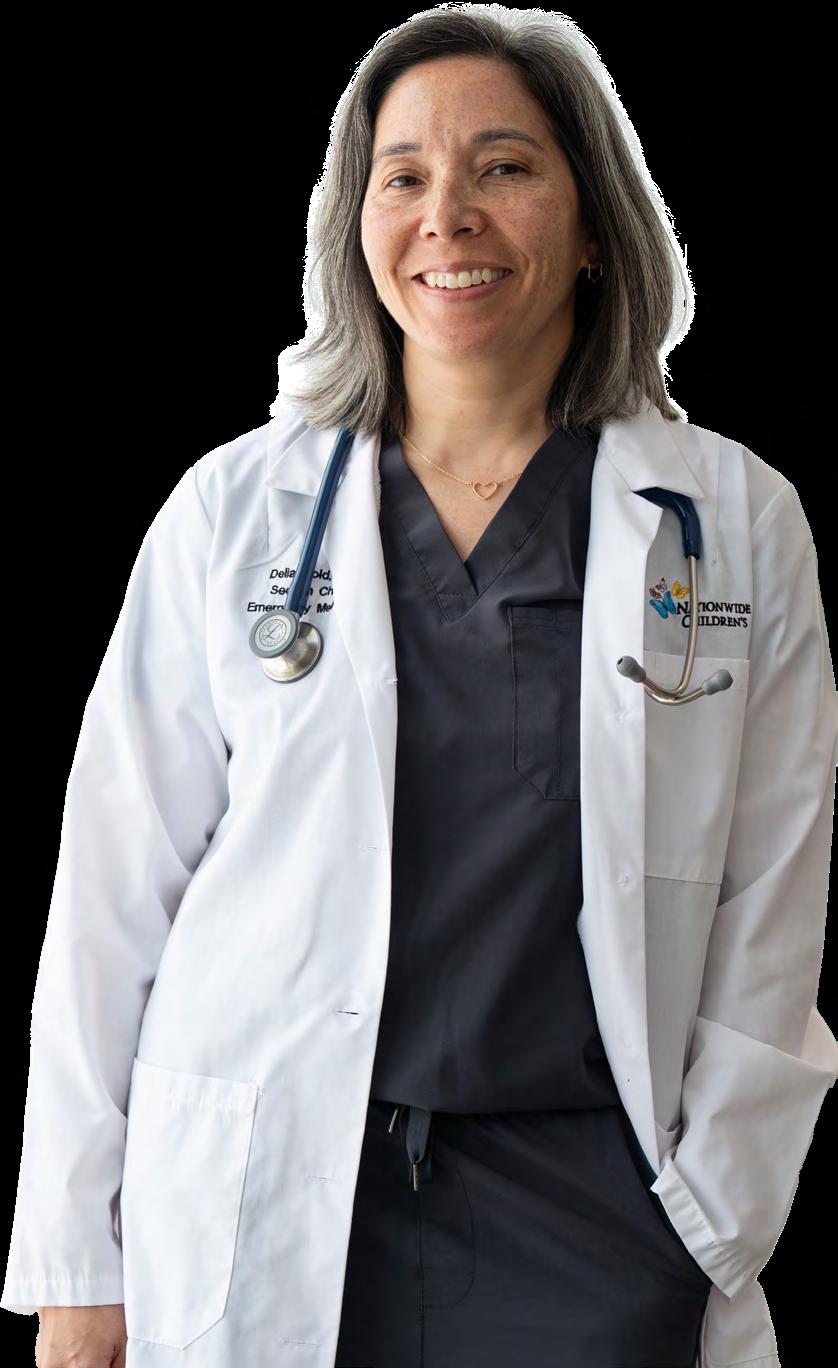
Today, Dr. Delia Gold, MD, the fourth generation of the family business, is an Associate Clinical Professor of Pediatrics at The Ohio State University College of Medicine and a Pediatric Emergency Medicine specialist at Nationwide Children’s Hospital. She follows in the footsteps of her paternal greatgrandfather, a pediatrician when it was still an uncommon specialty; her father and grandfather, both surgeons; and her mother, a then-pediatric resident at Children’s Hospital of Michigan, where she met her future husband.
When she was a kid, “a doctor,” was Gold’s easy answer to what she wanted to be when she grew up, and she got plenty of exposure to doctor life, going on rounds with her father and to the hospital with her mom, also a pediatric ER doc, when no sitter was available. Gold said there was no “aha moment” that propelled her into pediatric emergency medicine, but she did hear a lot about it at the dinner table. →

“I WOULD SAY THE POETIC SIDE OF MEDICINE IS BETTER DESCRIBED IN THE ARTS... IN SHAKESPEARE, YOU READ ABOUT THE PAIN AND STRIFE AND TENSION, AND THAT’S MORE HUMAN.”
“I would hear my mom’s stories, and she never sounded bored,” Gold remembered. “She would always have such an interesting day at work, and she wasn’t really talking to me, but I was listening.”
Listening, and charting her own course. Becoming a physician typically begins with an undergraduate degree in the hard sciences, but Gold had other plans.
“I remember my dad asking me what I was going to study in college, and I said, ‘I’m going to study English,’” she recalled. “When he asked what I was going to do with that, I said, ‘I’m going to be a doctor.’ I just didn’t approach becoming a doctor the way some people do.”
Gold said both her unconventional path and the perseverance that got her into medical school made her the physician she is today: one who appreciates both the art and science of medicine.
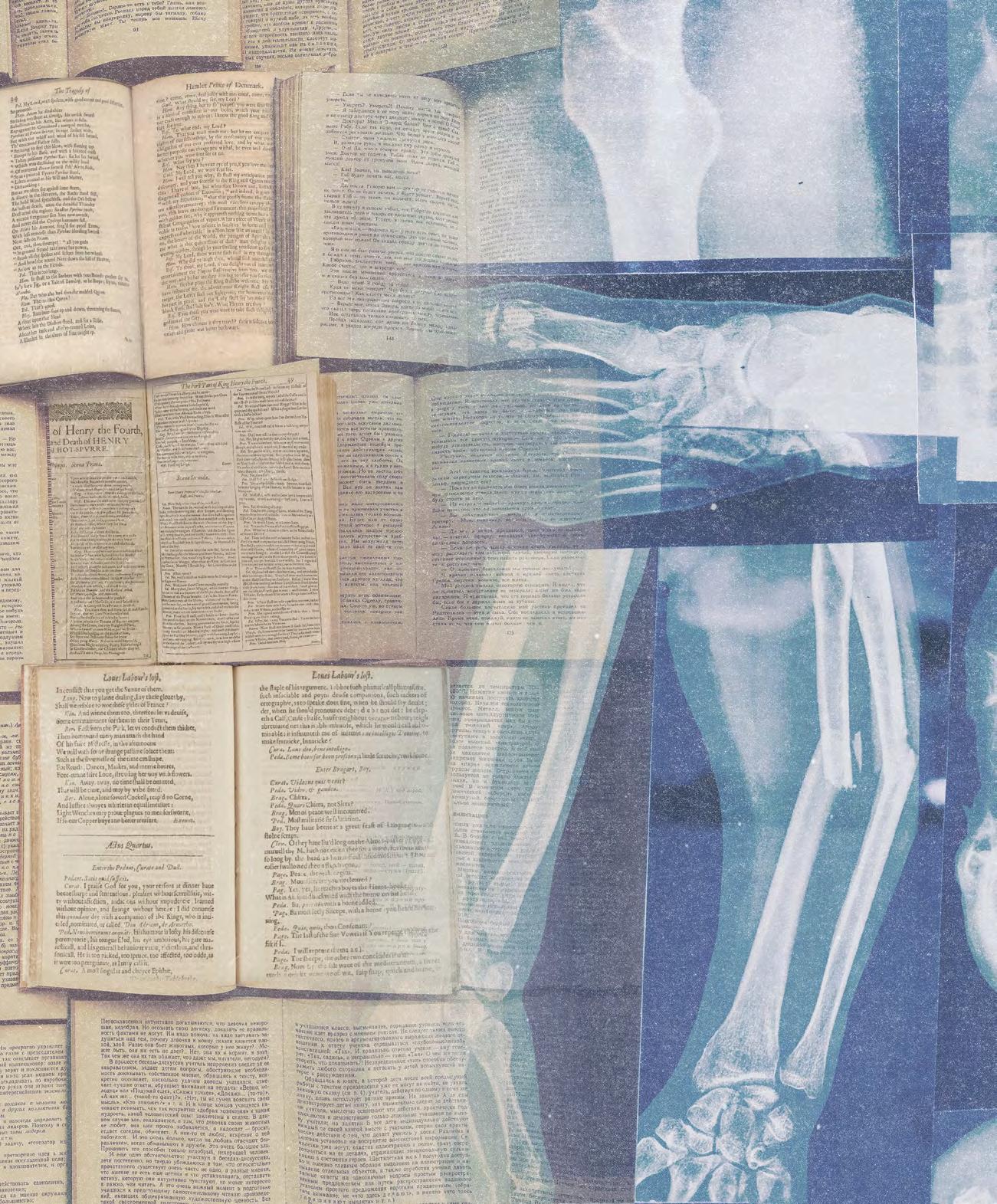
“I would say the poetic side of medicine is better described in the arts,” she said, noting that the emotion around suffering and death are aspects not typically covered in biology books. “You read about cells dying, but in Shakespeare, you read about the pain and strife and tension, and that’s more human.”

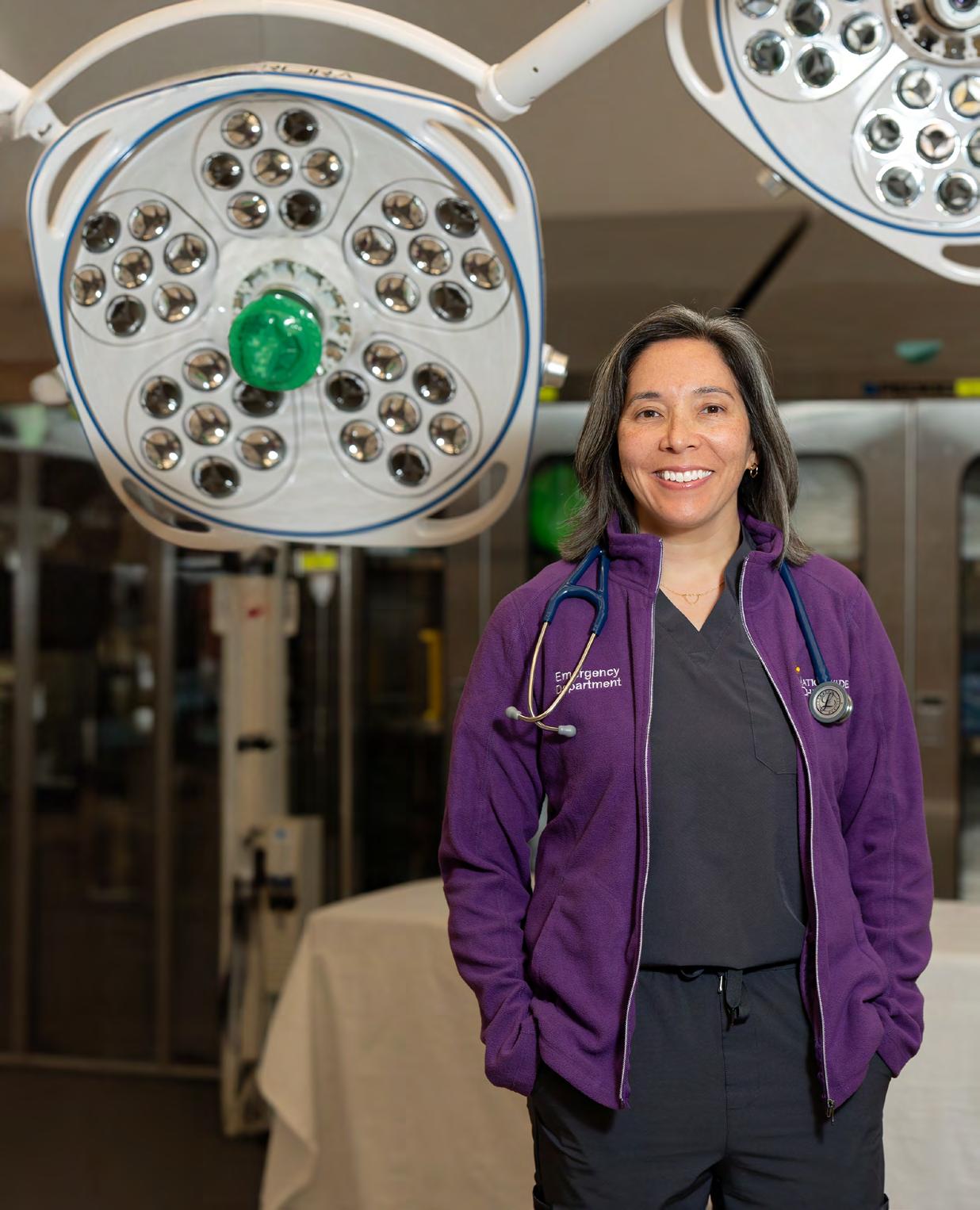


Medical dramas help bridge that gap, Gold said, and have had a big impact on people’s understanding of emergency medicine.
“It’s hard to imagine what an ER or an ICU is like without those kinds of artistic depictions, and there’s a lot of accuracy in them,” she emphasized.
True to her word, Gold majored in English as an undergrad at the University of Michigan, moved on to the University of Minnesota for med school, then came to Columbus for residency at Nationwide Children’s. By then she’d become interested in both emergency medicine and intensive care, and worked in both, back-to-back, to help her make a decision.
“I realized that the broadness and the open possibility of emergency medicine seemed more in line with what I would probably be happy doing,” she said.
Practically speaking, a pediatric hospital is in the position to provide the best care for children because it sees a higher volume of complex pediatric cases, Gold said.
“We have the most sub-specialists,” she explained, “so a cardiologist is one thing, but we have a pediatric cardiologist. We have pediatric radiologists, we have pediatric emergency medicine doctors, and I just see it a little differently than an adult emergency medicine doctor does.”
The style of medicine and approach to problems are different, too.
“If we’re going to draw labs on a kid, we’re much more thoughtful, and I’d say we’re more conservative about some of that stuff,” she said. “We don’t want to hold a child down and stick a needle in them if we don’t have to, because the parent’s going to be stressed that their child is crying me, and their hearts are breaking for their child. We do our absolute best to approach the medical issue while taking the family into account.”
Gold said what people are going through when they’re in an ER creates an atmosphere she was drawn to.
“It just feels different to me, so that’s why I chose it,” she said. “And kids. I’m a better human taking care of kids.” ♦
To learn more about Dr. Gold and the rest of the Nationwide Children’s Emergency Services team, visit www.nationwidechildrens.org.





By Kristen Paige
Brooke Sheridan and her organization Columbus Gives Back lean into the fun and social side of volunteering as they help groups across the city
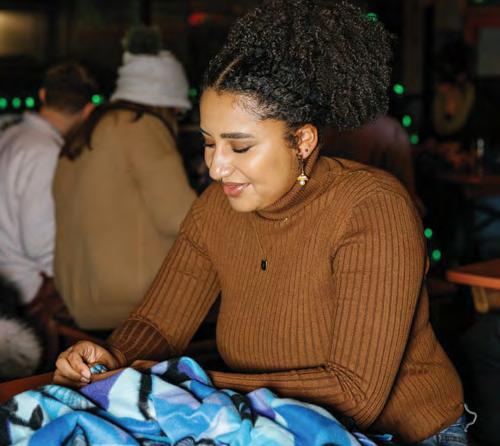
Back in 2009, Juliana Hardymon posted on Craigslist. In the post, she asked fellow community members to join her in volunteering and invited them to hang out afterward. As a new resident of Columbus, she was looking for ways to give back to her community and meet some of her neighbors. It was a quick success, and thus began Columbus Gives Back almost 20 years ago.
“‘Social volunteerism’ is what we call it,” said Brooke Sheridan, the president and marketing chair of Columbus Gives Back. “Our emphasis is on giving back to Columbus. We’re building community while giving back to the community.”
For Sheridan, it was exactly what she was looking for. She got involved in the spring of 2024 when she decided she wanted to make better use of her time and volunteer more. She joined an event that was helping package safe-sex kits, led by Alfred Yates. At the event, Yates explained some of the history of Columbus Gives Back, and that he met his wife through the organization and that they now have a child together
However, that sense of fun and excitement didn’t last long, because soon after, Yates explained that the Board of Directors had decided to disband the organization and they were going to sunset it at the end of the next month.
“‘This can’t happen,’” Sheridan recalled thinking. “‘This is going to be my new hobby.’”
In a desperate attempt, Yates made a pitch to anyone who was interested in helping him keep the organization going. Sheridan couldn’t resist answering the call, and by July of 2024, she took over and became the next President and marketing chair of the non-profit. With Sheridan’s leadership, the organization grew quickly to four people, and by the end of 2024, they had 12 event leaders. It was a true community effort—exactly the experience Columbus Gives Back encourages and values.
“It’s a lot like mutual support. Having people and building a community is one of those things you have to keep giving and feeding into to have it at all,” Sheridan explained. →
“Having people and building a community is one of those things you have to keep giving and feeding into to have it at all.”
“I really am trying...to make volunteering the cool thing to do. I just think it’s really cool to care.”

Brooke
, President and Marketing Chair of Columbus Gives Back
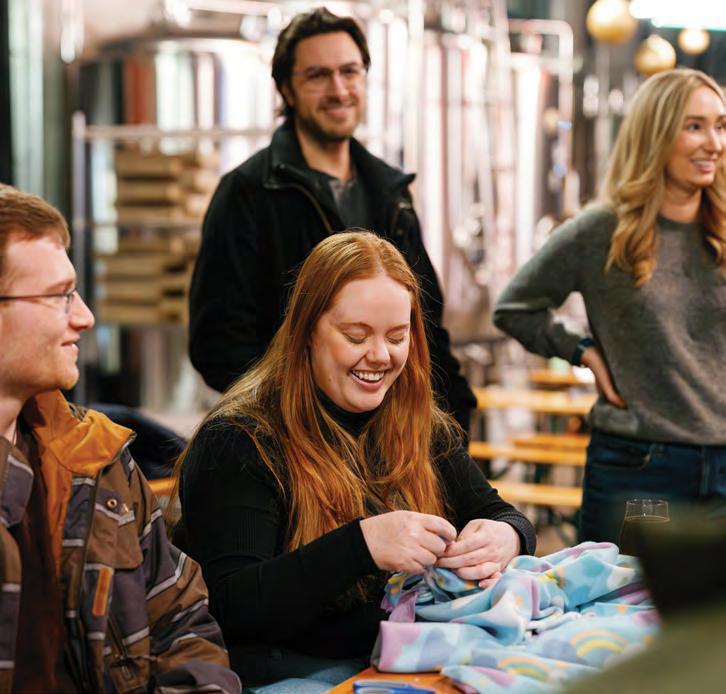
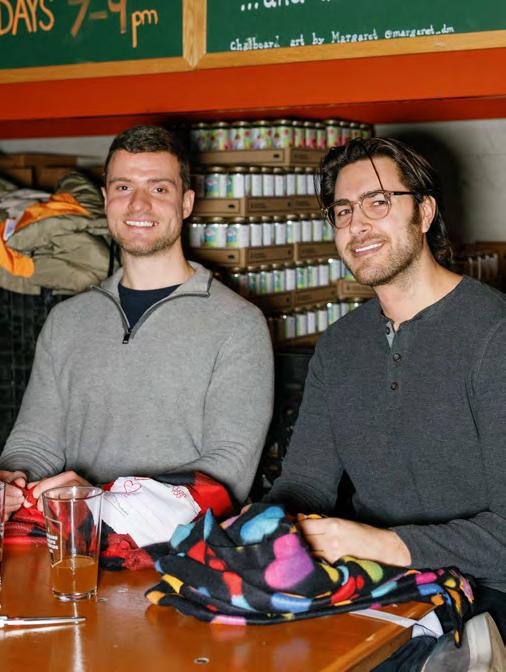
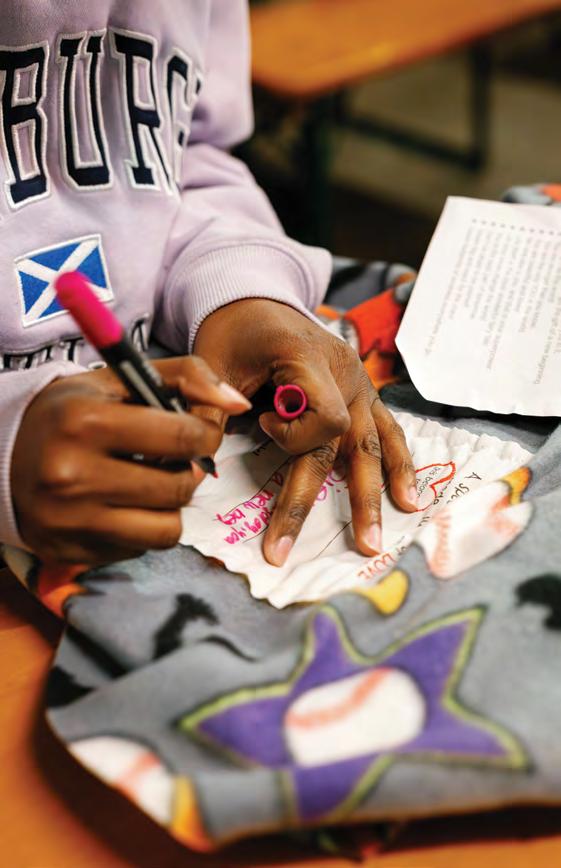
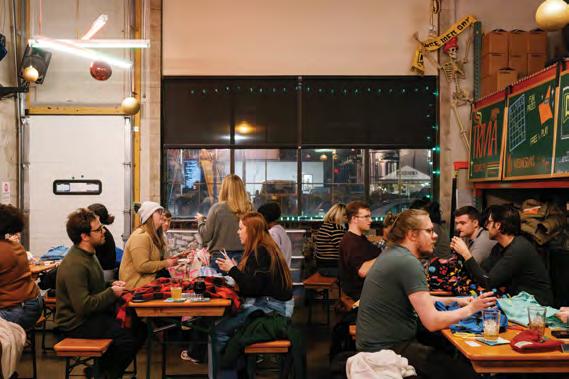
Volunteering events always come with a social twist, like going out to brunch, a coffee shop, or brewery
Columbus Gives Back offers a wide variety of opportunities serving different Columbus neighborhoods. Each event reflects the different needs of the community—from serving dinner to sorting sports equipment. Other opportunities support organizations like Habitat for Humanity and Ohio Wildlife Center.
“Community doesn’t necessarily have to mean that everyone is the same, doing the same thing, looking the same,” Sheridan continued. “We really do try to encapsulate and work with the greater Columbus community and make sure that we’re diverse in impact areas that we are doing events with.”
As different as the volunteer opportunities may be, they still have one thing in common. After supporting a local food kitchen, or helping package healthcare items comes the “social twist,” and the community building continues at a brunch, a coffee shop, a park, or a brewery.
“It’s going to be difficult for people who do want to show up and maybe not talk so much. They can try,” Sheridan joked. “I make it really hard for people to be silent the whole time. There’s a lot of fun and connection going on.”
While there may be some social expectations, there’s no longterm commitment required. Volunteers can work events as much or as little as they’d like. It’s this strategy that keeps it accessible to those with busy schedules, like many young professionals Columbus Gives Back seeks to get involved. But hopefully, as Sheridan explained, people will get excited to volunteer just as they are excited to try a new restaurant or meet up with friends.
“I really am trying with Columbus Gives Back—to make volunteering the cool thing to do,” Sheridan concluded. “I just think it's really cool to care.” ♦



Interested in volunteering with Brooke and a caring group of others? Visit columbusgivesback.org!
3/4 | 5:00 P.M.
Sorting sports equipment at Leveling the Playing Field
3/14 | 9:00 A.M.
Goodale Park Work Day with Friends of Goodale Park
3/16 | 5:30 P.M.
Cookie decorating at Ronald McDonald House
3/19 | 6:00 P.M.
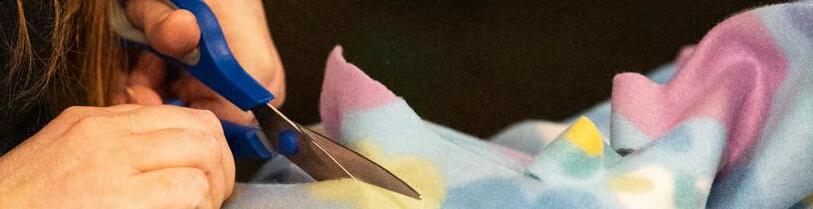
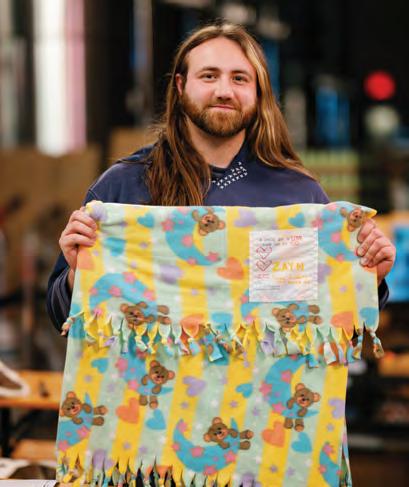
My Very Own Blanket at Thunderwing Brewing
3/21 | 10:00 A.M.
Habitat for Humanity Free Store Volunteering
3/27 | 4:30 P.M.
March Dadness Basketball Tournament at FACCES
3/28 | 10:00 A.M.
Playhouse priming at Habitat for Humanity &







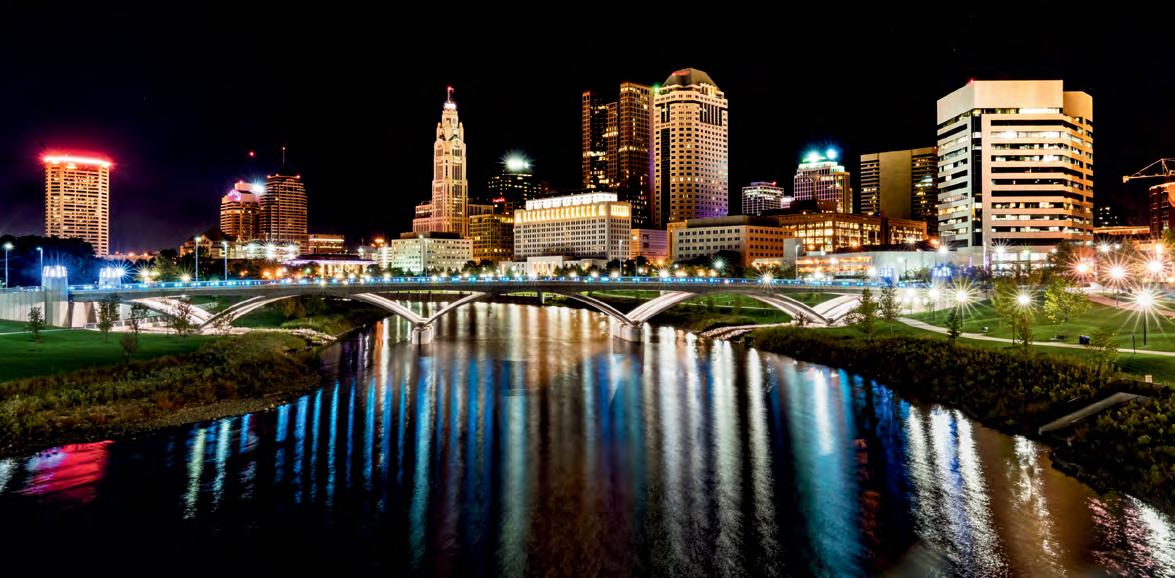


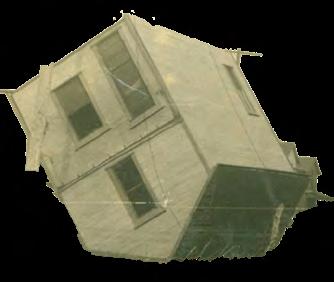






How a 15-year-old with a radio became the lifesaving hero of Columbus’ deadliest flood
By
“S.O.S. Supplies will last until about tomorrow. Men are hanging on trees. Send this to Mayor Karb at once.”
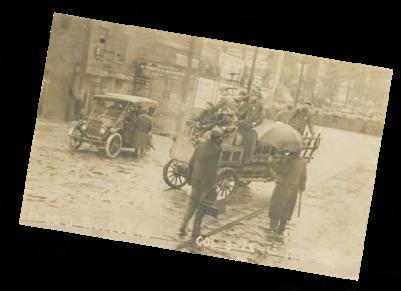
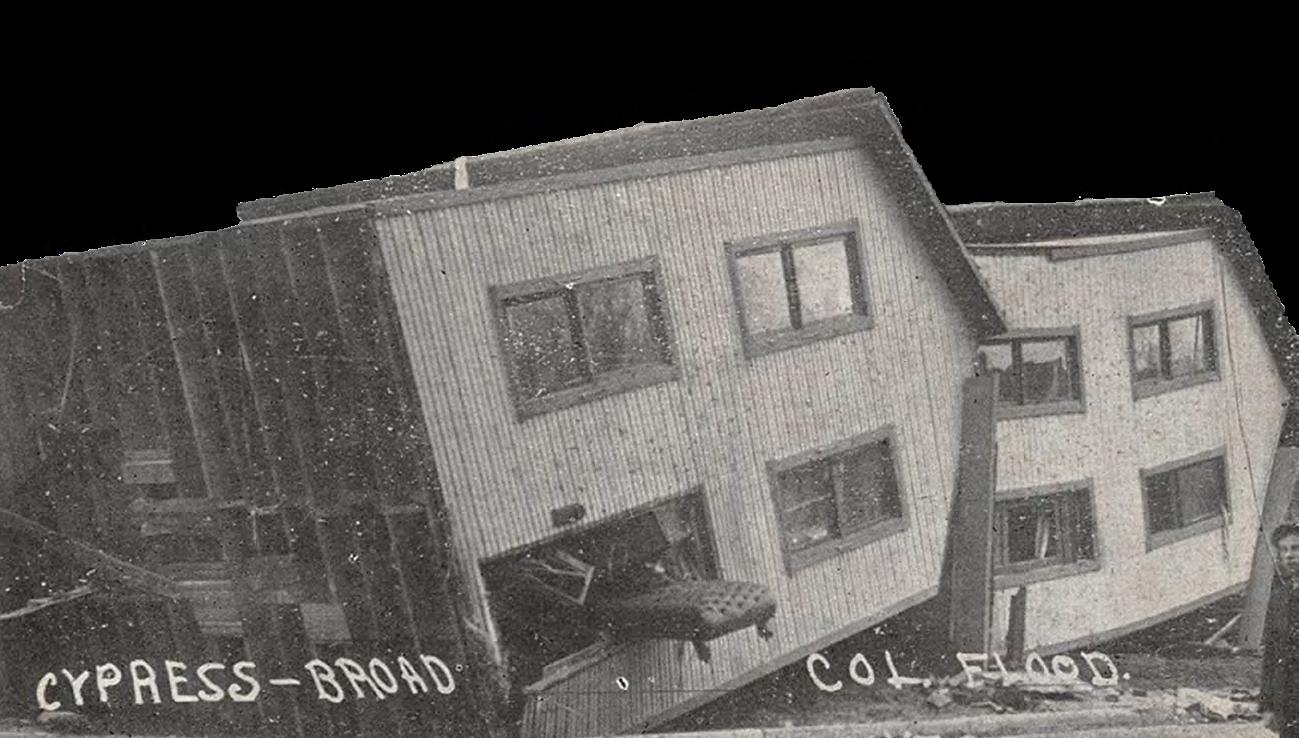
With those words, tapped out in Morse code on a new invention called “radio,” a Columbus boy helped save an unknown number of lives during the city’s worst-ever natural disaster. 1913 is remembered in Columbus for the “Great Flood.” An unexpected, late-March storm dumped seven inches or more of rain, breaking levees along the Scioto River, wiping out bridges, toppling houses and killing up to a hundred people in low-lying Franklinton, also known as “The Bottoms.”
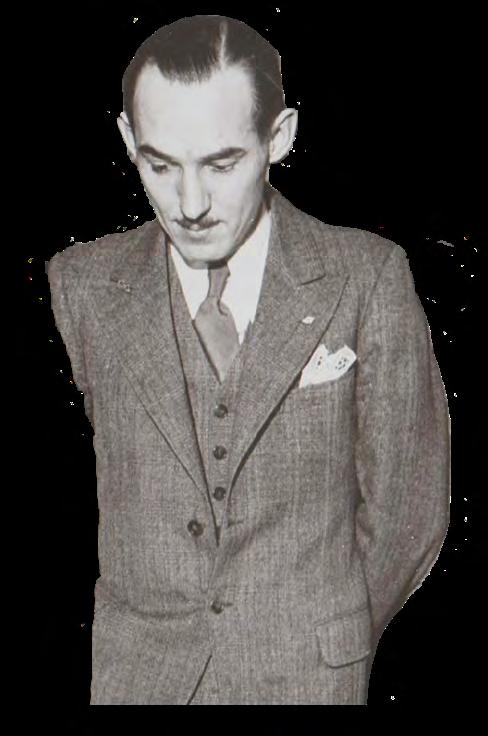
West High School student Herbert Akerberg, the son of a Swedish immigrant, watched the disaster unfold from his bedroom in the nearby Hilltop neighborhood. It was the same home in which the 15-year-old boy had begun experimenting with amateur radio sets five years earlier.
There were believed to be only two amateur transmitters in Columbus at the time of the Great Flood. The other was operated by Ohio State University atop what is now the Huntington Bank building on High Street, across from the Statehouse. Commercial radio stations featuring live announcers, singers, and musicians were still several years away.
Akerberg spent three days and nights sending SOS messages, coded in dots and dashes, to operators at the OSU station, who then relayed the news to city and state officials. He took short breaks only for naps and meals and to trudge through knee-deep water, collecting first-hand information from his neighbors. In effect, he assumed the roles of reporter, broadcast engineer and rescue operations director.
A later message: “S.O.S. Hilltop Business Men’s Association
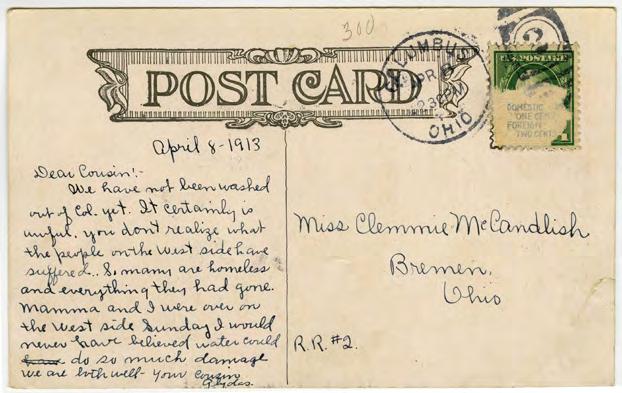
wants city to send boats.” And still later: “S.O.S. Water is receding. Try and get us water and gas. People are suffering.” The young Akerberg also kept flood victims’ relatives and friends informed by sending and receiving personal messages across the rain-swollen Scioto river.
Some volunteers brought rescue boats up the Feeder Canal from winter storage at Buckeye Lake. Others built new ones by hand, turning out as many as two or three an hour as water rose to a depth of 17 feet above street level and many residents were forced to the roofs of their homes. It was almost a week before the river retreated and flood-weary survivors could gauge the full extent of the damage. In addition to the deaths, hundreds more were injured. It’s estimated that 500 homes and businesses were destroyed. →


“He took short breaks only for naps and meals and to trudge through knee-deep water...”

In the aftermath, a streetcar was found at Greenlawn Avenue, about a mile from its track. An entire house was found four miles from what was left of its foundation. The only highway bridge left standing was the one on Rich Street, which, ironically, had recently been condemned. Both railroad bridges survived, but their tracks had been washed away. Franklinton was essentially “closed” for six weeks.
The young Akerberg was commended by Columbus city officials for his heroic efforts, and he was recognized nationally for his contribution to the development of radio. Following the flood, the city and state initiated decades of improvements along the Scioto, including the construction of the Franklinton floodwall.
Akerberg’s interest in the airwaves continued for the rest of his life. He served with the U.S. Signal Corps during World War I,
built and operated WPAL, an early radio station in Columbus, and then managed WAIU, the forerunner of today’s WTVN. He also conducted experimental work with Bell Telephone Laboratories and eventually landed in New York, where he served a long and distinguished career at CBS.
The former hobbyist from Columbus is credited with helping build the fledgling broadcasting company’s extensive radio and TV network before rising to the position of vice president in charge of station relations. Poor health forced him to leave CBS in 1958 and retire to Arizona with his wife.
Akerberg died in 1964, but is still remembered as the boy who worked around the clock 113 years ago this month, saving lives and keeping locals informed during the largest and deadliest flood Columbus has ever experienced. ♦


Dogs. Cats. Horses. Farm animals. Around here, we provide every animal we treat with the best, most advanced care possible. Backed by cutting-edge research, state-of-the-art diagnostics, and dozens of board-certified specialists, we deliver complete, compassionate care for animals of every kind. Yes, even cats.
“They




6 CONVENIENT LOCATIONS ACROSS CENTRAL OHIO. SCAN THE QR CODE TO LEARN MORE. CARING. DOWN TO A SCIENCE. vmc.vet.osu.edu