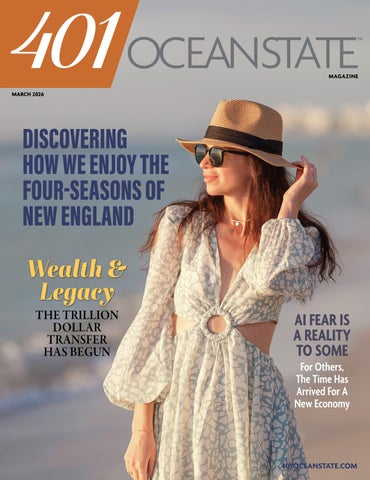
DISCOVERING HOW WE ENJOY THE FOUR-SEASONS OF NEW ENGLAND
Wealth & Legacy
THE TRILLION DOLLAR TRANSFER HAS BEGUN
AI FEAR IS A REALITY TO SOME For Others, The Time Has Arrived For A New Economy
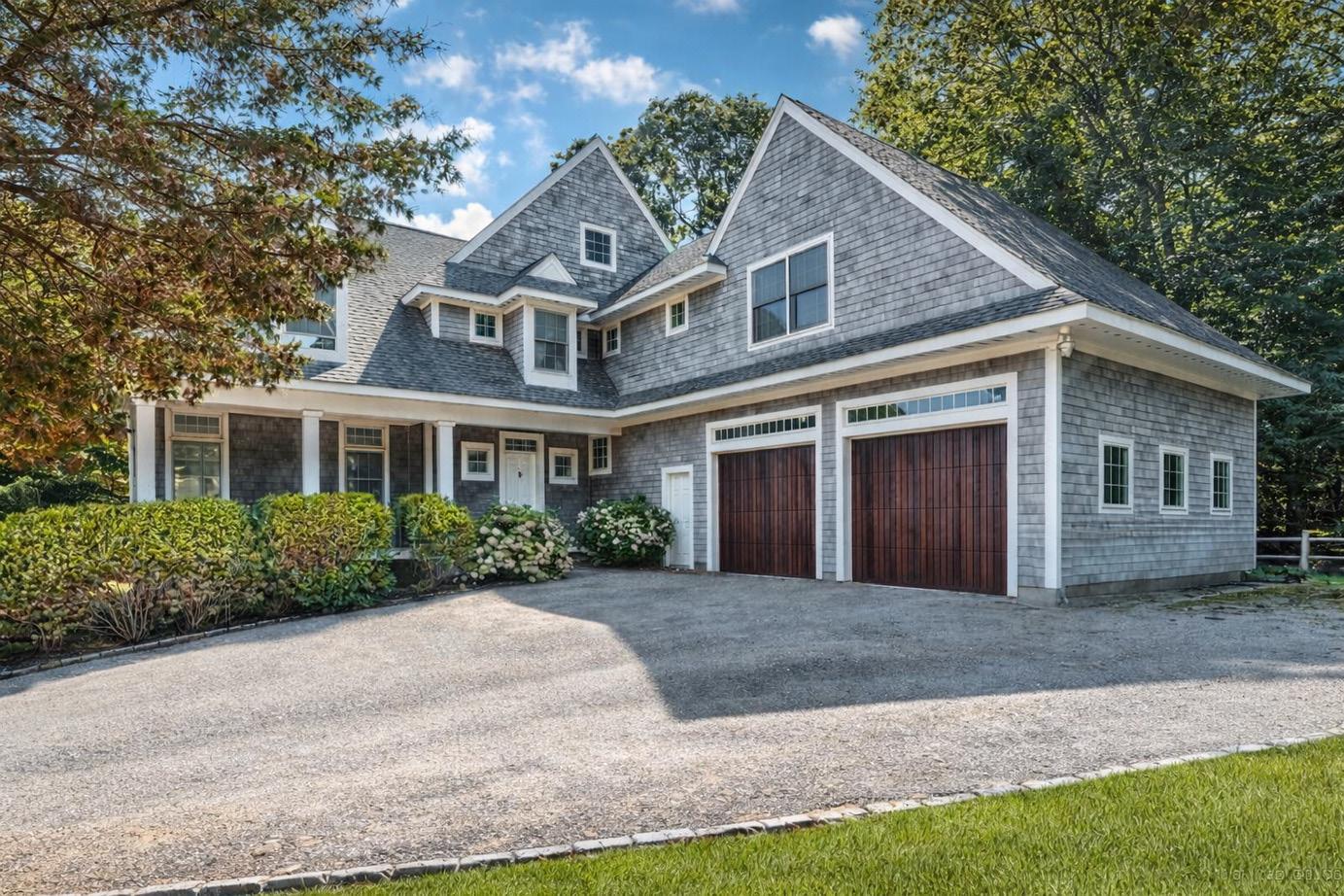
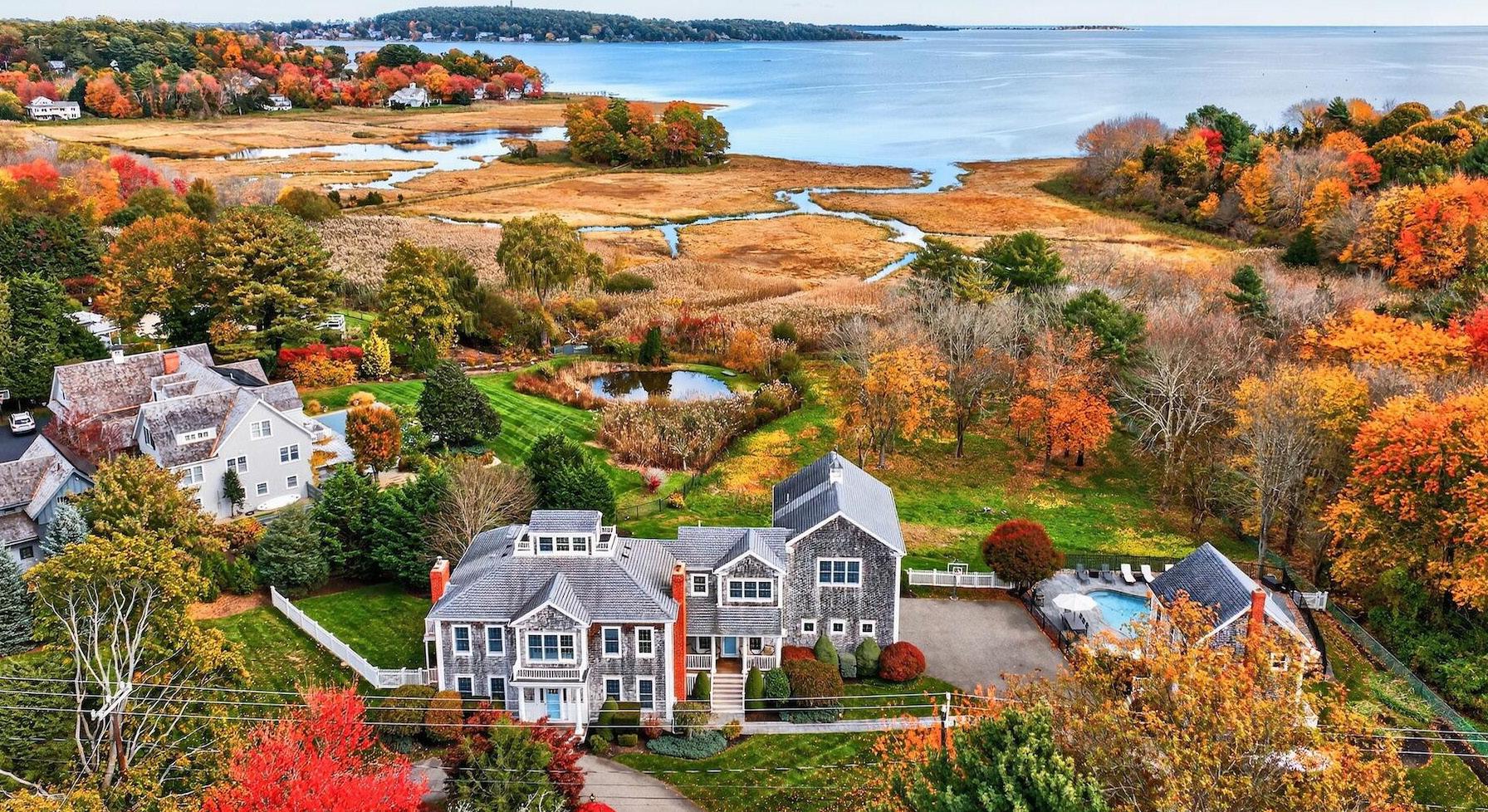
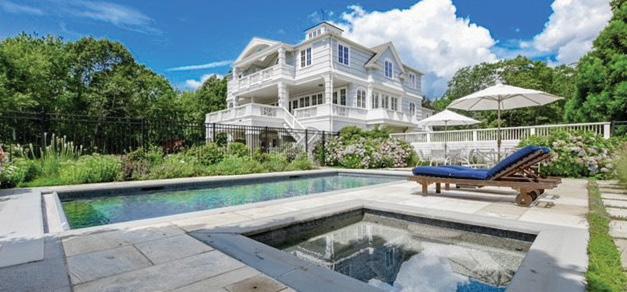
WESTPORT $2,295,000
Acoaxet!!! This spectacular shingled home offers four bedrooms and custom details throughout! Fabulous chef's kitchen, open floor plan, finished basement
Contact Will Milbury at 508 525 5200
e l c o m e S
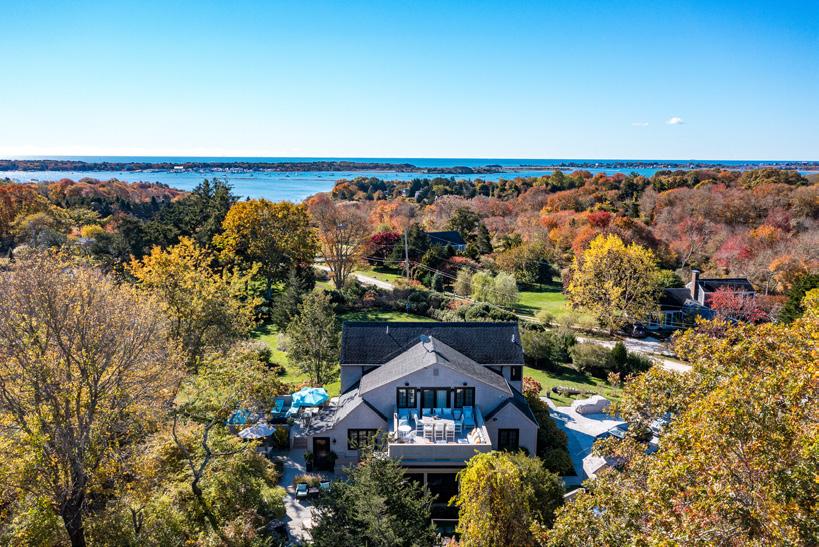
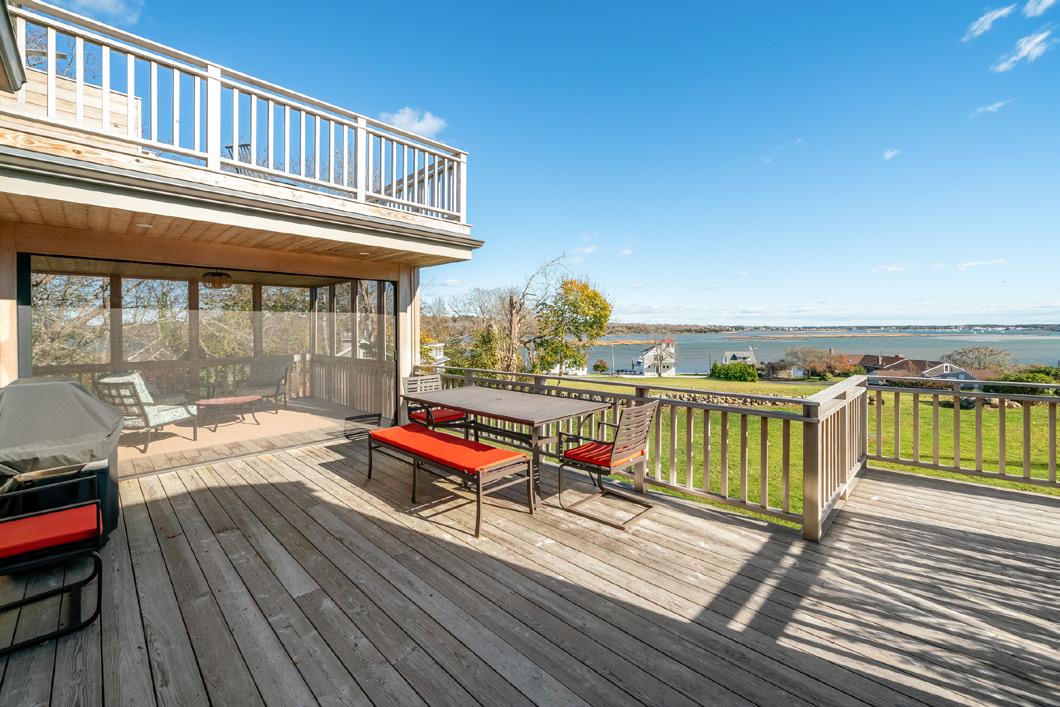
WESTPORT $2,595,000
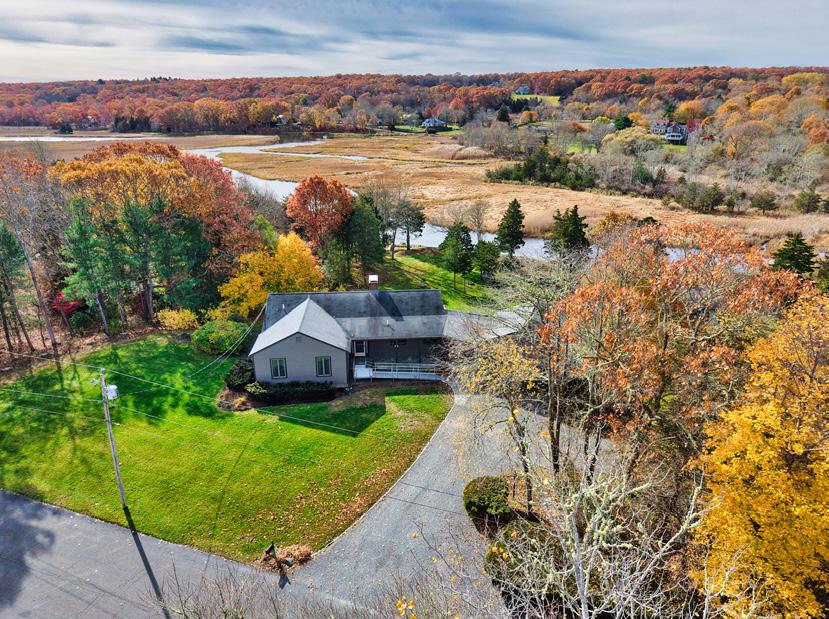
Enjoy Westport perfection with water views from nearly every room of this spacious home with expansive waterside decks, set on 1 5 acres in the Acoaxet area
Contact Sarah Meehan 508.685.8926
WESTPORT $1,995,000
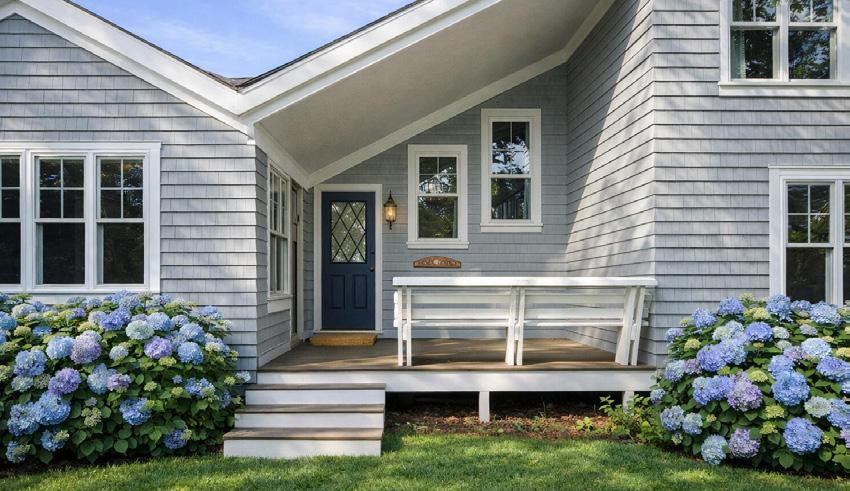
Spectacular Westport Point Coastal Colonial offers four bedrooms, five baths with fabulous guest cottage and deeded water access!
$2,295,000
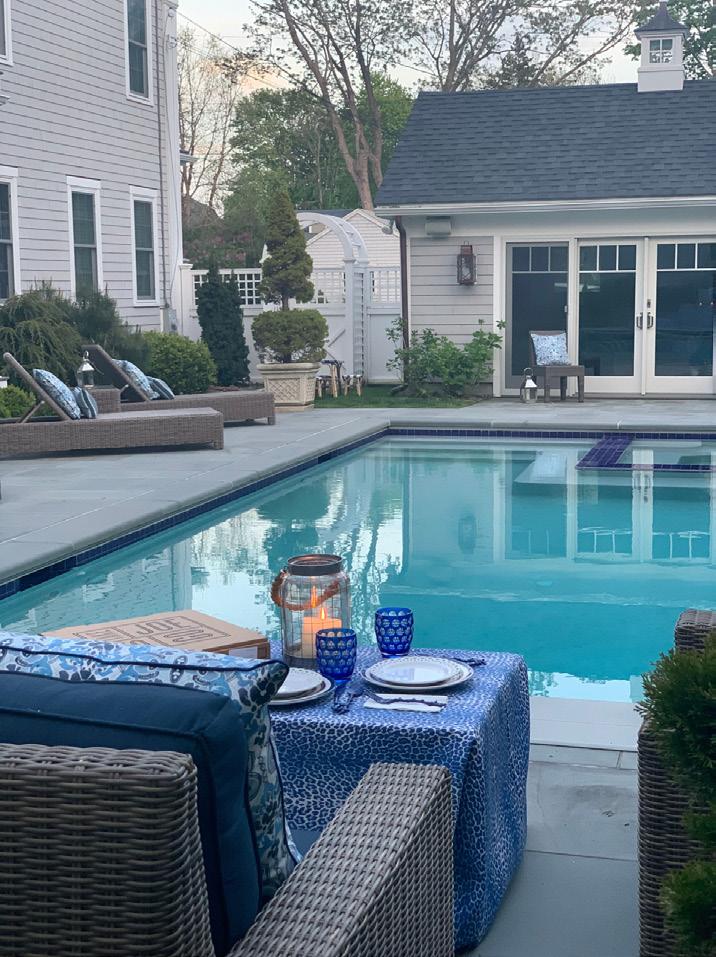
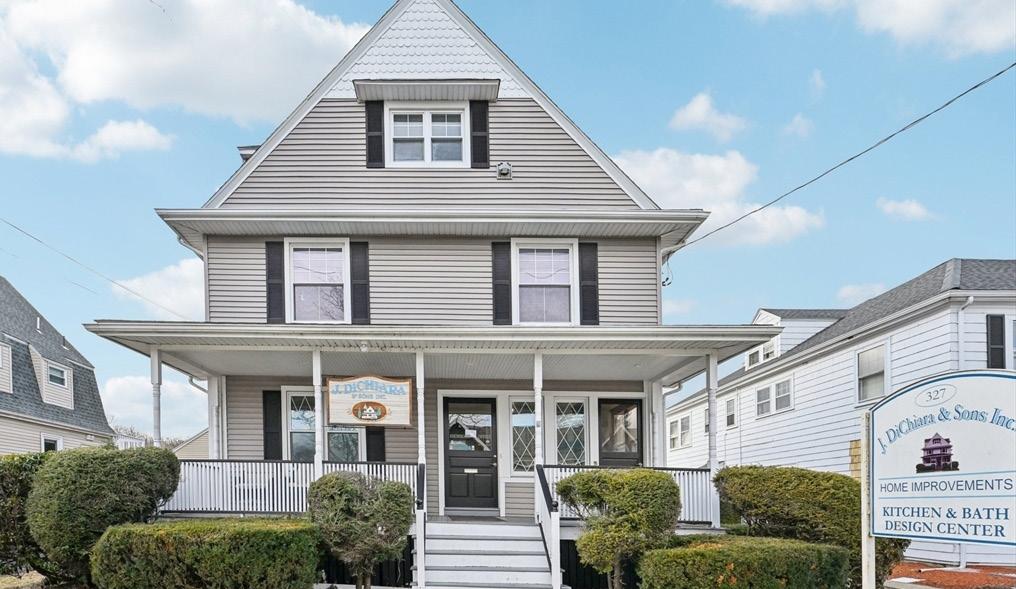
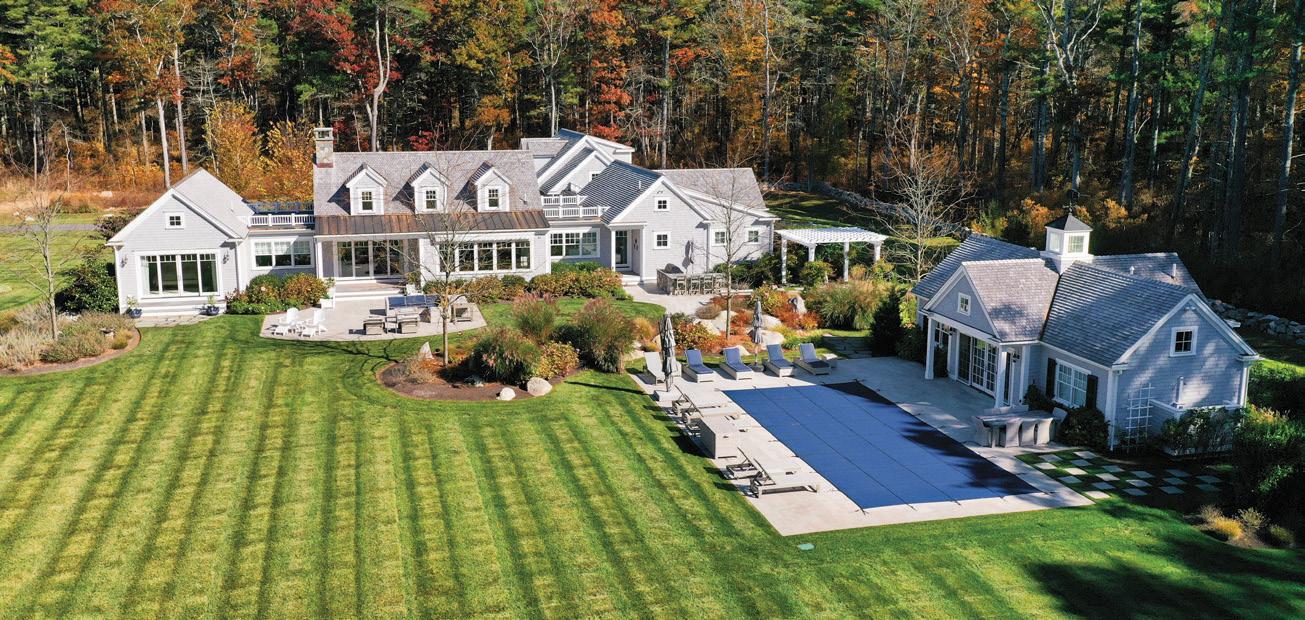
Charming five-bedroom home in the very heart of Padanaram Village with pool, pool house and two-car garage. Just a short stroll to the Village shops, restaurants and NBYC.
Contact Nina Weeks 617 957 8769
WESTPORT $1,795,000
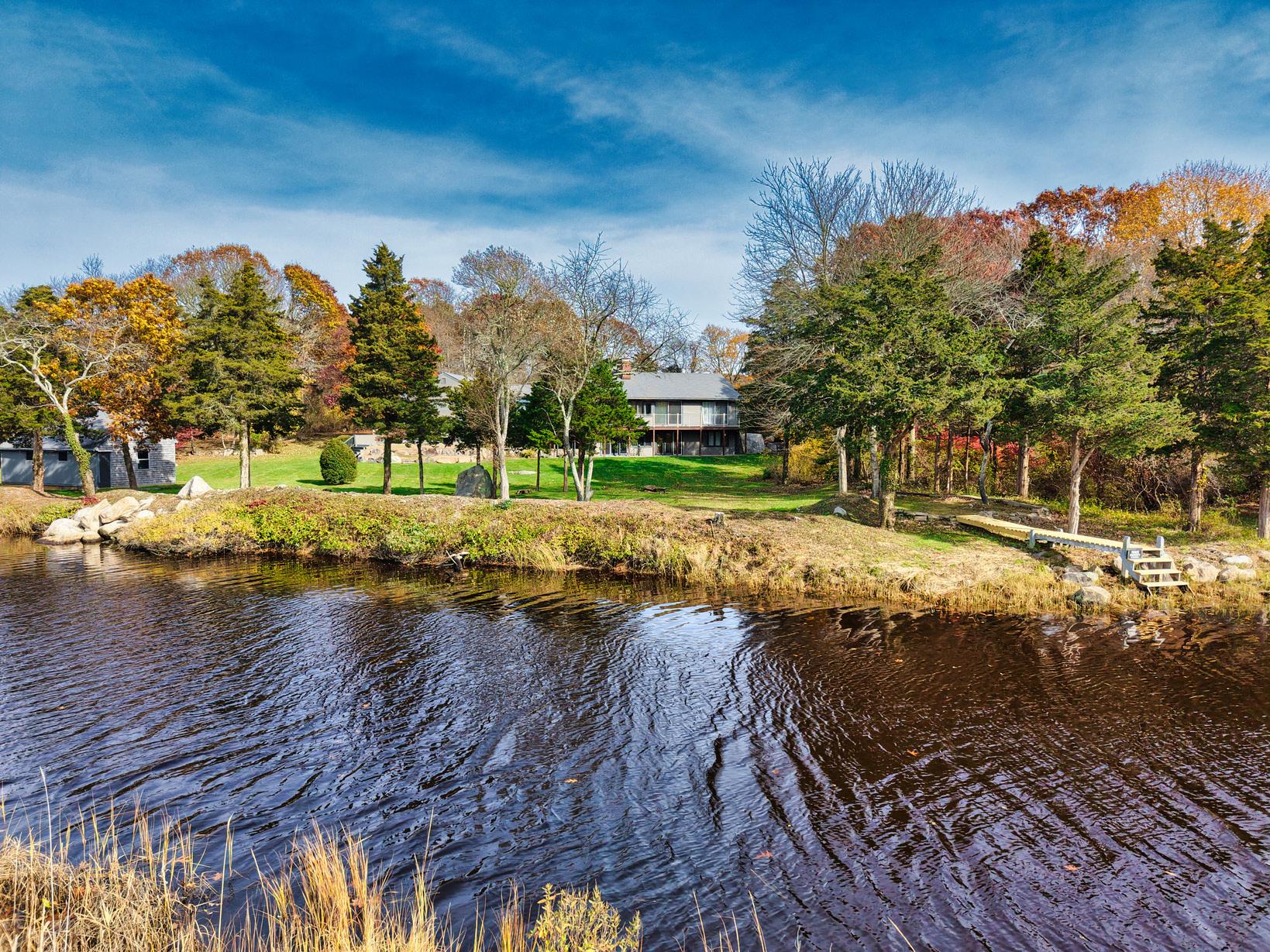
Experience country coastal living in this four-bedroom gem set on 1.5 acres along the east branch of the Westport River
Contact Tom Chace 401 965 3259 or Sarah Meehan 508.685.8926
SOUTH
UNDERCONTRACT
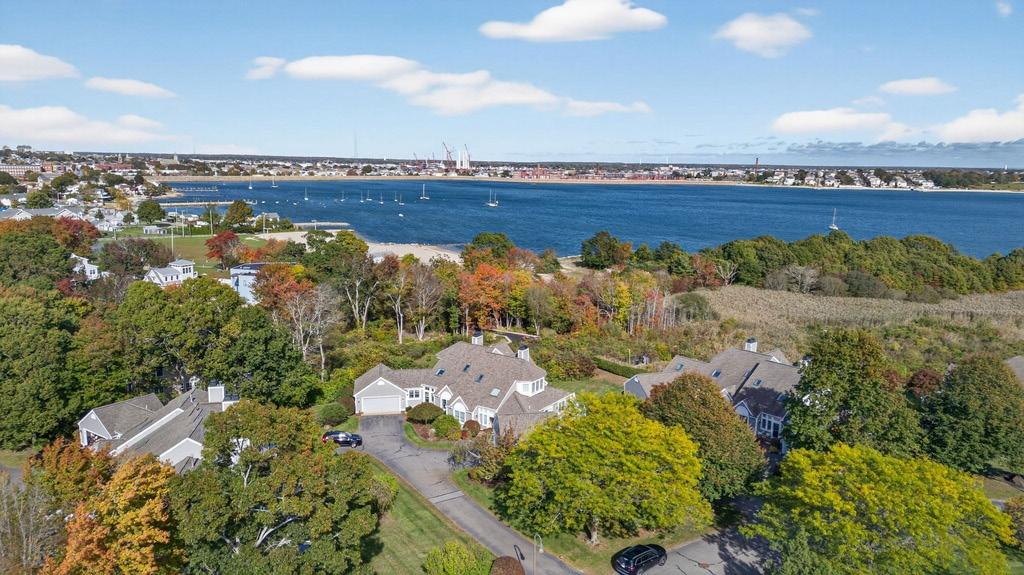
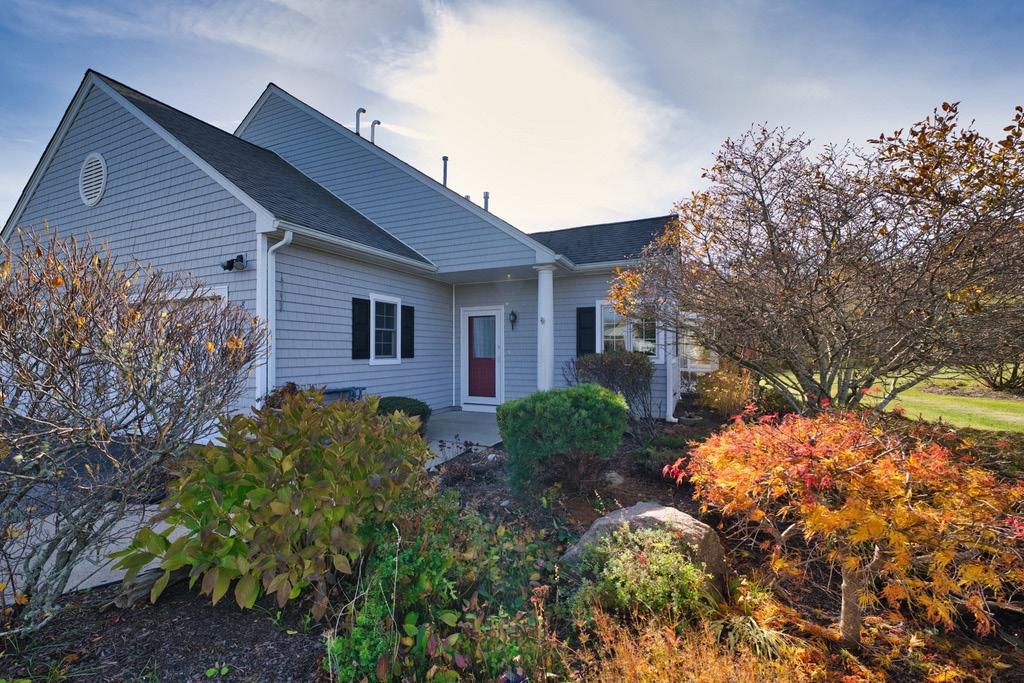
FAIRHAVEN $849,000 Set along the shores of Buzzard's Bay, this charming coastal cottage offers dramatic water views from ‘most every room. Minutes from Fort Phoenix, bike path, beaches and shopping. Contact Will Milbury at 508.525.5200.
WESTPORT $649,000
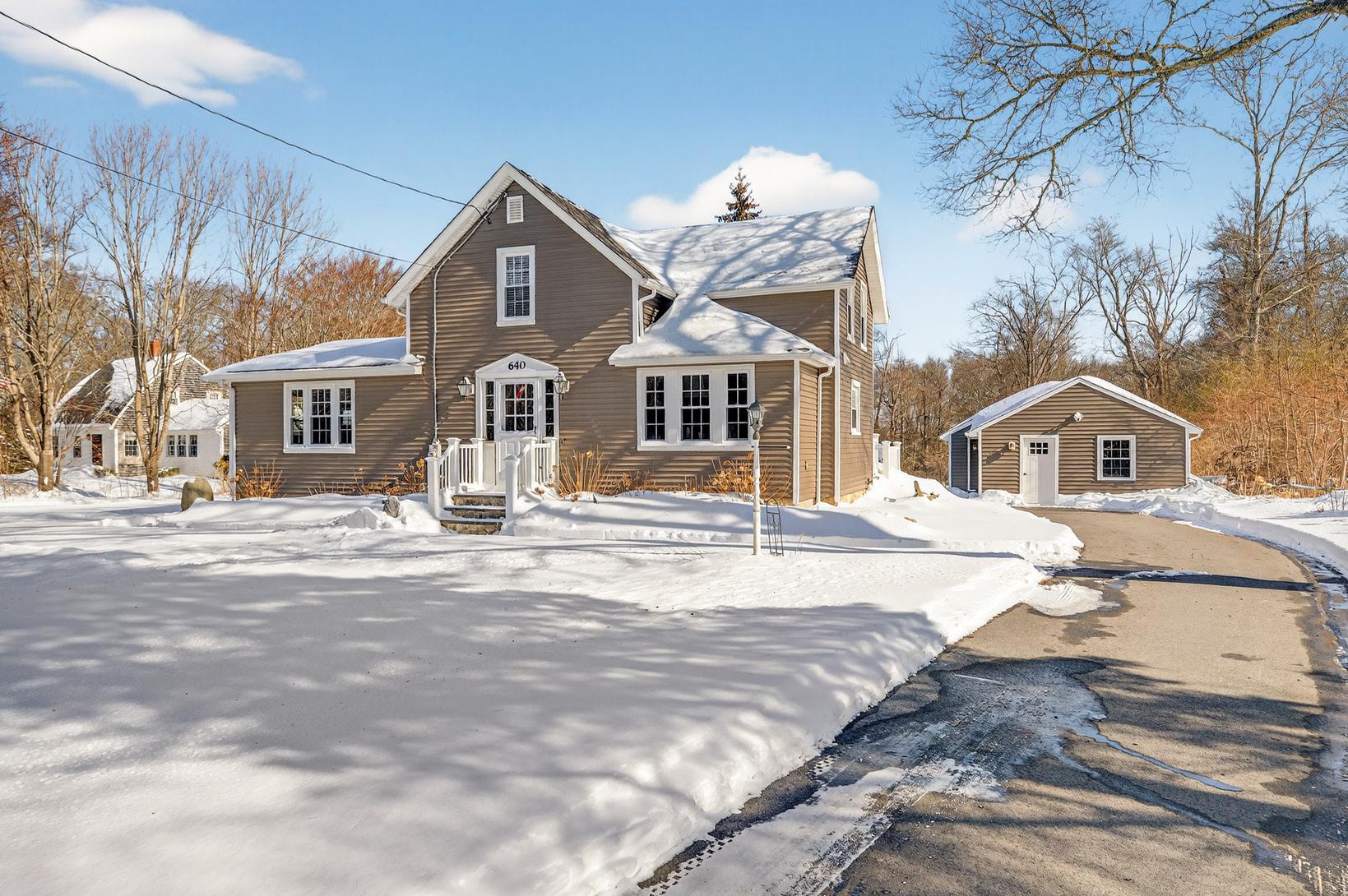
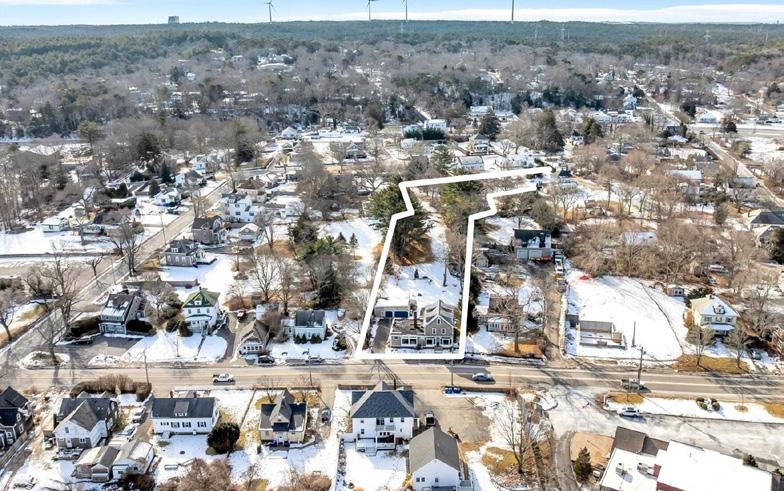
Set on nearly three acres, this charming farm house has been lovingly restored with a chef’s kitchen and center island. A detached, two-bay garage with studio completes this offering! Endless opportunities! Contact Will Milbury 508.525.5200
SOUTH DARTMOUTH $2,295,000
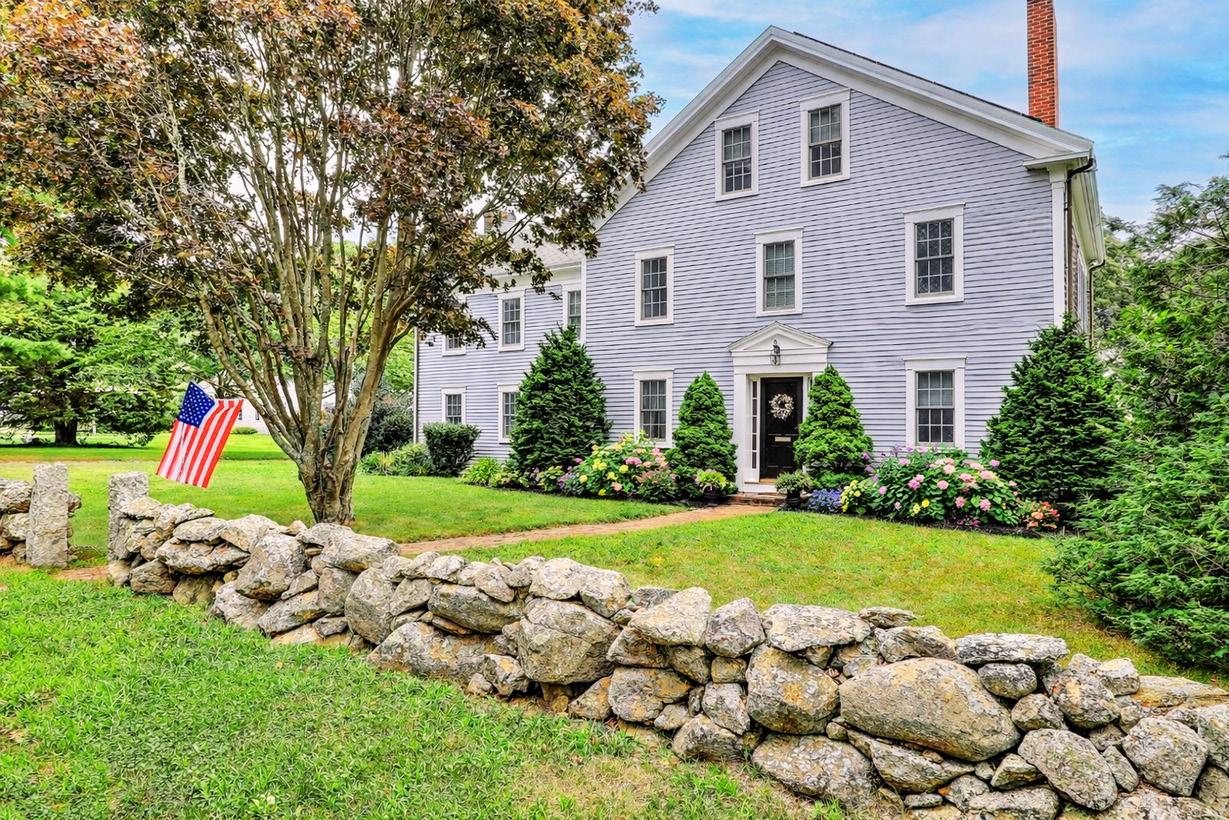
This stately Colonial in the heart of Padanaram Village presides over an acre of land with deeded beach rights! Set just a short stroll from all the Village has to offer! Contact Will Milbury 508.525.5200 or Sarah Meehan 508.685.8926
FEAR VERSUS OPTIMISM
AN ERA OF FISCAL & CULTURAL EVOLUTION
There is a particular sound that accompanies every great leap forward in civilization. For us, it’s not the clang of machinery, a high-pitched hum of circuitry, nor the ringing of opening bells on Wall Street; in place of familiar sounds is the low, steady murmur of anxiety bubbling throughout every industry. You can almost hear discourse if you listen closely—whispering through executive offices, factory floors, faculty lounges, and restaurant dining rooms. It sounds like this: What if this time, it’s different? What if we don’t recover?
Human beings are wired for homeostasis; we crave regularity. We like knowing where the walls are, how the system functions, and what tomorrow will resemble. Predictability is not merely comforting—it is stabilizing. Entire corporate structures are built around preserving this reality. Job descriptions codify the concept, compensation models reinforce it, and organizational charts sanctify and comfort those with questions about hierarchy and responsibility. A
And just as everything seems to fit so well and self-imposed guardrails are lowered, inevitably, something disrupts the calm.
When steam engines began to puncture the quiet rhythms of agrarian life, the Industrial Age was not greeted with applause, but with suspicion. Artisans who had honed their crafts over lifetimes saw machines threatening to replace them. Rural families watched as labor migrated toward smoke-filled cities. Subsequently, the air changed, as did the skyline and economy.
Was the public wrong to worry? No. Entire professions disappeared, and ways of life were altered. What followed was not societal collapse, but rather, expansion. Productivity surged. Transportation accelerated. Goods became affordable, and a middle class emerged. Paradoxically, comfort and security were increased because it had to first be disturbed.
A century later, during the Gilded Age, society once again confronted transformation disguised as chaos—electricity rewired cities. Steel reshaped skylines, indoor plumbing—something so
For leaders willing to adapt, it’s leverage; those who ignore AI’s usefulness will be exposed to the harsh realities of developing culture.
mundane today it escapes notice—was once considered radical. In Victorian households, some critics argued that frequent bathing could weaken the body or disrupt natural health balances. Washing too often, they warned, might be harmful.
The idea sounds absurd now, but fear rarely announces itself in the moment. It often arrives cloaked in caution, dressed as prudence, and masquerading as common sense.
Every era believes its disruption is unprecedented; automobiles are destined to destroy urban life, telephones would erode human connection, and computers—well, they’ll wipe out clerical work. We must note that claims about the internet would end privacy and professionalism have come true, but at the same time, the world is a smaller and more functional conglomerate. With each invention came predictions of doom, accompanied by solemn assurances that this time, truly, the social fabric would unravel.
It never quite does; instead, it stretches and leads to prosperity. AI has stepped onto the stage, and once again, the noise grows louder. Headlines oscillate between breathless celebration and apocalyptic warnings. White-collar workers—once presumed insulated from automation—now see their roles analyzed by algorithms capable of drafting memos, synthesizing research, and reviewing contracts in seconds. The stock market reacts in spasms. Commentators predict massive unemployment. Consultants host emergency panels.
“This time,” we are told, “it’s existential.” And yes, it always is packaged this way.
At the same time, many with far-reaching insight or the power of ‘predictability’ view this transition as evolutionary.
AI represents not merely a new tool, but a compression of time and access. For decades, entire sectors thrived on the scarcity of information—that was their treasure. Knowledge was restricted, and expertise was monetized through exclusivity, turning ‘proprietary’ information into an economic moat. If a CEO wanted comparative industry analysis or structured legal research, the process could take weeks, sometimes months, and come with invoices to match. Now, details, charts, graphs, and even financials are effortless to obtain because a gate has been unlocked.
This exciting technology does not eliminate the need for doctors, lawyers, accountants, teachers, or advisers. The early results of AI justifiably recalibrate their value; a leveling of sorts, which might be the very reason we’re witnessing the ‘hair-on-fire’ response, not from the middle or lower classes, but from the people who had discovered a stream of wealth by guarding data that should be available to all. Such a premium shift from access to insight, from possession to its interpretation, and finally from gatekeeper to open analysis.
In offices everywhere, the immediate benefits of AI are both thrilling and unsettling. The new tech searches act as a tireless research or executive assistant, a compliance checker, and a brainstorming partner available 24 hours a day. Moreover, it can detect patterns invisible to the naked eye, reduce errors, flag inconsistencies, and compress tasks that once consumed entire departments, placing personal time during the business day over all other priorities. Think of it as productivity on steroids.
For leaders willing to adapt, it’s leverage; those who ignore AI’s usefulness will be exposed to the harsh realities of developing culture. Every organization harbors inefficiencies, while companies tolerate a percentage of inertia. We have all experienced below-average service—the disengaged employee, the paperwork bottleneck, or the avoidable mistake that spirals into cost. AI does not tolerate stagnation kindly. It highlights it. It measures it. It unemotionally suggests alternatives.
Naturally, the employment question looms largest. Predictions of sweeping job loss dominate headlines. Yet history complicates the narrative. When ATMs arrived, bank tellers were expected to vanish. Instead, banks expanded, and tellers evolved into advisory roles. However, there is a shift back toward reducing personal contact for low-level services. When spreadsheets replaced ledger books, accountants did not disappear; they shifted toward strategic analysis and saw more clients.
AI will eliminate tasks, while simultaneously pulling back the curtain on ambition; AI leaves no place to hide.
Advanced technology reduces the protective cushion comforting mediocrity. Performance becomes more transparent because it becomes measurable. The seat-warmer—long protected by bureaucracy or opacity—faces a different landscape in the future. Forms, directions, and maps of ‘how-to’ are the next steps in eliminating ‘paper-pushers.’ The costs associated with government functions and funding should be dramatically reduced at the local, state, and federal levels. But it will take oversight and aggressive lobbying by taxpayers for implementation.
In the very near future, the premium will not be tenure, but adaptability, curiosity, and drive.
Younger generations, raised in a digital ecosystem, regard AI less as a threat and more as infrastructure. To them, it is electricity with better branding. The friction older cohorts feel may soften not because the technology slows, but because familiarity grows. What is alarming today becomes ordinary tomorrow.
Even the stock market’s tremors reflect perception more than destiny. Markets abhor uncertainty. They recoil before they recalibrate. Volatility is not necessarily prophecy. It is often an adjustment in real time. As productivity gains become measurable— fewer injuries, fewer lawsuits, more efficient workflows—the macroeconomic case clarifies.
Optimism, in this context, is not naïveté. It is discipline. It is the recognition that technological evolution has consistently expanded aggregate capability, even as it disrupts individual trajectories.
To remain static is not neutral. It is to drift backward while others move forward.
The executive dilemma, then, is not whether change is coming, but how to greet it with reflexive resistance or informed optimism. Fear has its place; it sharpens caution, prompts regulation, and tempers excess. But fear alone rarely builds enduring enterprises.
History suggests something subtler: each era’s anxiety is real, but its permanence is exaggerated. Once the smoke clears, systems adapt, roles evolve, and what once seemed destabilizing, becomes foundational. Civilization advances not because fear disappears, but because optimism—tempered, strategic, and forward-looking—ultimately proves more durable.
The question facing all of us is not whether artificial intelligence will change the fiscal and cultural landscape; that’s certain, but whether we allow anxiety to define the narrative—or we write a more ambitious one ourselves. H
5 THOUGHTS FROM THE C-SUITE
An epic adventure awaits. Time and opportunity don’t wait for reactions or idle debate. The evolution of humanity has begun, and everyone is invited to come along for the ride.
14 IMPRESSIONS
AI. If it’s so wonderful, why hasn’t it fixed our most basic problems? We bet it could.
18
SEASONS
Sea & Ski. For those who don’t like choices, we’ve determined you need not settle; do both in March. Don’t you deserve it?
22 INTIMACY
Money makes the world go around. That is, until it doesn’t. We examine the issue from two perspectives and find that both are valid. What are your thoughts about money and relationships?
28 CULTURE
An event not to be missed: The one and only Boston Food & Wine Festival; you’re going to love it!
30
LIVING WELL
Looking Good. Always fashionable when handled with care, a nip & tuck, or one of many other beauty services, is just what the doctor ordered and can be accomplished while you wait.
34 CAPITAL Optimist or Pessimist? Your thinking will significantly influence your life and earnings. Discover how your perceptions and projections will determine your financial health in the future.
41 WEALTH
Leaving a legacy? Learn the constructs of building a ‘Family Office.’
45 TRAFFIC
The politics of automobiles. In Massachusetts, they want you to limit drive times, while in New Hampshire, it’s cutting drivers loose and saving them money. This is an issue you cannot ignore.
49 ATTITUDE
Coping with dissatisfaction. It can be frustrating and seem unending. But you may have more control than you once believed.
We’re Not Trying To Replace The Wheel, But Have Improved It.
The metaphor of this magnificent invention parallels our efforts to improve communications for modern society. The days of boring, outdated information and its delivery have been retired, leaving the most socially conscious to survive.
With your help, we’re planning to launch into the next era of technology while maintaining our commitment to staying connected with the ageless production of print.
Regardless of the ease modern communication offers, we’re grounded by the people who have touched us and us them. For nearly 21 years, uninterrupted 12 times annually, our publication brings information and entertainment to a loyal audience.
Staying current with advancements in communication, culture, and lifestyles, we continue to reach a sophisticated and discerning public. Reliable and resourceful, our readers call ahead to distribution sites to reserve copies of our top-quality complimentary magazines.
We are the most sought-after publications in the specialized luxury lifestyle market.
Join new and established businesses and organizations that understand that working together is not just rewarding but an effective advertising tool.
Contact us to learn what the future holds for those ready to roll.
History continues to be made
The stock market recently created a milestone when the Dow hit 50,000! A feat few could have predicted, certainly not the founders of ‘The Buttonwood Agreement, which was signed and dated on May 17, 1792, under a Buttonwood tree in New York City. It was one of the financial industry’s most relevant acts, signaling the birth of the New York Stock Exchange, at 68 Wall Street.
We are honored to present this significant and well-preserved object
for your consideration. A remarkable supplement to your favorite investor’s office décor, its historical significance will add considerable decorative value to any space while sparking intriguing conversations.
The large safe deposit box has undergone refinishing; still, it’s exterior alludes to the initial use of securing space in a fortified location for “the rich and famous to hide their valuables” while traveling during the early days of the ‘Industrial Revolution.’
Documents have determined that in 1861, Francis Jenks created the first building with a steel vault in Lower
Manhattan, offering access to 500 safe deposit boxes for new clients.
The beautiful old paint has preserved the metal exterior, leaving it in a remarkable condition. The original locking mechanism is intact, but the key is absent, leaving the box locked with a mystery.
Magnificently detailed, an embellishment, ‘The Buttonwood Club.’ shows significant age due to the handcrafted lettering technique. The preserved item was found in Westport, Connecticut, a tony suburb of NYC.
Price upon request.
A MORE PERFECT UNION
BY PEET NOURJIAN
ARTIFICIAL INTELLIGENCE FOR BREAKTHROUGH RESEARCH IT MAKES GREAT SENSE SPEED AND GENIUS CAN SAVE THE SICK BUT COULD IT SAVE OUR POLITICS…?
HUMANS DO WELL AT EVERYTHING WE WORK, WE PLAY, WE DANCE, WE SING WE CARE, WE PRAY, WE RAISE OUR KIDS WHY IS GOVERNMENT ON THE SKIDS…?
‘CAUSE HUMANS HAVE A FATAL FLAW ELECTED THEY IGNORE THE LAW
I BLAME EGO FOR WHAT’S BEEN DONE FAME AND FORTUNE PLAGUE WASHINGTON
THAT’S WHAT IT WAS BUT THIS IS NOW WE NEED TO ASK THE AI HOW CYBER CONGRESS CAN SET US FREE FROM POLITICIANS IN DC
ONCE ‘INTELLIGENCE’ TAKES CONTROL AND WE DIGITIZE HEART AND SOUL THE HOUSE AND SENATE DISAPPEAR NO MUD SLUNG EACH ELECTION YEAR
THE MONUMENTS TO THOSE WHO LED STILL DRAW TOURISTS FOR TRIBUTES READ LINCOLN ONCE SET THE SOLEMN TONE NOW A LAPTOP CHISELED IN STONE. H
EXCLUSIVELY LISTED AT $4,950,000
Custom-designed and built estate set on a 10+ acre estate in the secluded Hammett’s Cove neighborhood in East Marion. This property offers an unparalleled blend of elegance, privacy, and coastal charm. Complete with a 4,000 +/- sq. ft. main home, 3-car garage, gunite pool, pool house, putting green, and access to the association beach and dock, offering easy access to Sippican Harbor!
Custom-designed and built estate set on a 10+ acre estate in the secluded Hammett’s Cove neighborhood in East Marion. This property offers an unparalleled blend of elegance, privacy, and coastal charm. Complete with a 4,000 +/- sq. ft. main home, 3-car garage, gunite pool, pool house, putting green, and access to the association beach and dock, offering easy access to Sippican Harbor!
SOLD FOR $ 200,000
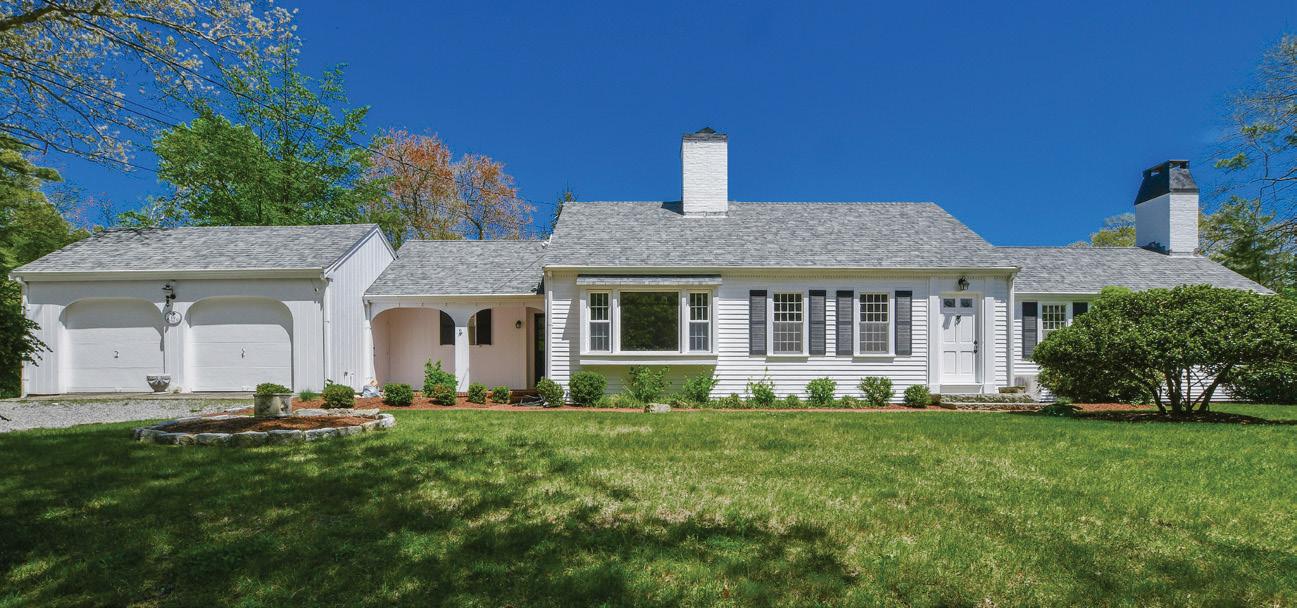
Step inside this classic 1961 Royal Barry Wills-designed Cape Cod-style home located in the heart of Marion Village! Set on a private .52 acre lot, this 2,400 +/- sq. ft. home offers 3 bedrooms, 3 full baths, a formal living room with Rumford fireplace and built-ins, dining area, cozy den, and a kitchen with updated appliances. Walk to the town center, Silvershell Beach, and schools in just minutes from this central location.
Welcome to Marion’s Converse Point, an exclusive waterfront enclave on Buzzards Bay. Set on 2.76 acres, this 5,030 sq. ft. residence offers breathtaking views of Buzzards Bay and effortless coastal living. Built in 2012, this home features 5 bedrooms, 4.5 baths, an elevator, and multiple decks showcasing the sweeping views. The chef’s kitchen features premium appliances and custom cabinetry, flowing to sunlit living spaces ideal for entertaining. Enjoy a heated swimming pool, hot tub, and pool cabana.
SOLD FOR $4,200,000
MARION, MASSACHUSETTS
Welcome to Marion, the hidden gem of the Southcoast! This large and incredibly private East Marion property could be the site of your dream home(s)! With 17+ acres, the opportunities are endless. This property is located outside of the flood zone and has access to town water and sewer at the buyer’s expense. Don’t miss this incredible opportunity!
SOLD FOR $1,275,000
Caregiver Payments
Caring for someone at home? You may qualify for a monthly payment.
• Not be the legal guardian or legally married to the person being cared for
• Provide necessary medical care and assistance that meets the needs of the person they care for
For your family member or loved one to qualify for Mass Care Link services, they must meet these eligibility points:
• Be 16 years of age or older
• Be approved for MassHealth insurance
• Live with the primary caregiver in the same home
• Require supervision and cueing, or physical assistance daily with at least one of the following needs: bathing, toileting, ambulation, transferring, eating, and/or dressing.
If this sounds attractive and meets your level of interest, contact us today for additional information or to schedule an appointment.
Mass Care Link, Inc.
99 South Main Street, Fall River, Massachusetts 02721 Hablamos Español | Falamos Português call for more information or visit us online at:
Heading North
- or-
Going South?
BY SUSAN FLETCHER
March Is The Perfect Month To Do Both, Just Don’t Mix Up Your Luggage
March is the month when winter loosens its collar. The light lingers longer across the slopes, afternoons soften, and the mountain air carries a whisper of spring without surrendering its snow. It’s a sweet spot for skiers and riders—when corduroy mornings give way to sunlit cruisers, and every run feels both exhilarating and indulgent.
Yet as the days warm, so does the imagination. The same sunlight that glints off groomers tempts us to chase it elsewhere. March presents a delicious dilemma: stay north and carve beneath sapphire skies, or pivot south and stretch out by the sea. The wise know there’s no need to choose—this is the month designed for both.
////// MOUNTAIN VIBE //////
n New England, March skiing is less about bracing against the elements and more about reveling in them. At Loon Mountain in New Hampshire’s White Mountains, the season shifts into high gear. South-facing slopes bask in generous sunshine, and the snowpack—patiently built over months—often reaches its most forgiving form. Morning runs glide with precision, edges biting confidently into freshly groomed trails. By midday, jackets unzip, après decks fill, and laughter echoes from summit to base.
Loon has always possessed a certain polished ease. It’s a mountain that invites both spirited carving and unhurried cruising. March brings out its most charismatic side. The terrain parks hum with energy, glades hold onto winter’s secrets in shaded corners, and wide boulevards encourage long, sweeping arcs. Off the hill, refined dining and slope-side accommodations elevate the experience beyond sport. A fireside cocktail after a sun-drenched day feels less like a ritual and more like a reward.
A few hours west, Vermont’s Green Mountains rise with quiet confidence. Stratton Mountain Resort has long been a sanctuary for those who appreciate seamless service paired with serious terrain. March here is luminous. The summit views stretch across rolling peaks, and the village pulses
with understated sophistication. Snow conditions often reach their prime—firm and fast in the morning, supple by afternoon.
Stratton’s meticulously maintained trails cater to riders who crave both variety and velocity. Long cruisers invite high-speed descents, while tree-lined paths offer intimacy and rhythm. At this point in the season, the mountain seems to exhale. Families linger over lunch on sunlit patios, friends gather for live music as shadows grow long, and the atmosphere feels patient, not hurried.
There’s an elegance to March at Stratton, an understanding that winter is nearing its crescendo and every turn deserves to be savored.
For the devoted rider, this is the month to double down.
Book the long weekend. Chase the forecast.
Wake early for first tracks and linger late for the final chair. The snow is deep, the days are generous, and the ambiance borders on celebratory.
Further north, the legendary Stowe Mountain Resort stands beneath the watchful profile of Mount Mansfield. Stowe in March is cinematic. Crisp mornings sparkle beneath cloudless skies, and the iconic Front Four trails challenge even seasoned experts with thrilling vertical. Yet it’s not only about bravado; it’s about balance. Gentle slopes wind gracefully for those who prefer flow over ferocity, and the surrounding village radiates classic alpine charm.
Spring skiing at Stowe offers that rare alchemy of performance and pleasure. The snow, enriched by weeks of careful grooming, holds its structure while welcoming a touch of warmth. Après unfolds with European flair—think craft
cocktails, curated wine lists, and farm-to-table cuisine. The scene feels worldly without losing its New England soul. A late afternoon descent as golden light washes over the mountains is a memory in the making.
What unites these destinations is not merely geography, but timing. March delivers reliability without severity. Gone are the biting winds of midwinter; in their place arrives a playful mood that transforms the slopes into open-air playgrounds. Goggles lift to sunglasses, heavy layers give way to lighter shells, and the mountains invite a kind of exuberance that’s uniquely seasonal.
For the devoted rider, this is the month to double down. Book the long weekend. Chase the forecast. Wake early for first tracks and linger late for the final chair. The snow is deep, the days are generous, and the ambiance is second to none. Whether it’s Loon’s approachable polish, Stratton’s refined rhythm, or Stowe’s storied vertical, New England stands in full stride.
And if the urge to wander south begins to stir, indulge it. March is a bridge between seasons, not a boundary. Carve in the morning, dream of the ocean by evening. For those who understand the art of living well, the choice is not either, or—it’s both.
Winter is still in high gear. The sun makes it shine brighter.
////// ISLAND TIME //////
arch arrives with a subtle shift. Up north, snow softens under longer daylight, inviting one last triumphant run. At the same time, that very warmth sparks a longing for salt air and open horizons. It’s the month when winter sports feel electric, and beach escapes irresistible. Why resist either impulse? March was made for contrast— fresh tracks followed by sun-warmed sand.
As the season transitions, the southern call becomes impossible to ignore. The Caribbean and Atlantic coasts gleam beneath steady sunshine, offering calm waters and impeccable hospitality. For those who favor exclusivity over excess, there are sanctuaries where refinement defines every detail.
In Turks and Caicos, Grace Bay unfolds like a silk ribbon along impossibly clear water. Here, low-rise elegance prevails, and the rhythm is relaxed. Resorts lining this stretch of Providenciales blend contemporary design with barefoot luxury. Private terraces overlook a sea that shifts from aquamarine to cobalt, while attentive service anticipates every whim without intrusion.
Mornings begin with espresso on a balcony kissed by trade winds. Afternoons drift between shaded loungers and gentle swims in water so transparent it feels surreal. Snorkeling excursions reveal coral gardens alive with color, and sunset sails paint the sky in molten hues. Evenings are an exercise in culinary artistry, with chefs drawing inspiration from the sea and pairing it with curated wine selections. Grace Bay doesn’t clamor for attention; it commands admiration through quiet perfection.
Further east in the Bahamas, lies Harbour Island, home to the fabled Pink Sands Beach. The shoreline blushes delicately beneath the sun, creating a scene both romantic and rare. Boutique properties and private villas ensure privacy, attracting
travelers who appreciate discretion as much as beauty. Golf carts replace cars, and pastel cottages line tranquil streets.
Days unfold at an intentional pace. A morning stroll along three miles of rose-tinted shoreline feels almost meditative. The surf rolls in gently, inviting long swims and lazy floats. By afternoon, shaded verandas become havens for reading or conversation, rum punch in hand. Dining here carries a sense of intimacy—lantern-lit tables, fresh lobster, and the sound of waves as accompaniment. Harbour Island offers escape in its purest form: understated, serene, and undeniably chic.
To the south, Barbados provides a slightly more cosmopolitan flavor while retaining island grace. Along its Platinum Coast, the iconic Sandy Lane stands, synonymous with timeless glamour. Manicured grounds cascade toward a crescent of pristine beach, and service unfolds with impeccable precision.
Mornings might begin with a round of golf overlooking the Caribbean or a rejuvenating spa ritual that draws from local botanicals. The sea remains calm and inviting, perfect for paddleboarding or a leisurely swim. As the afternoon transitions to evening, the social scene gathers momentum. Champagne flows, fine dining dazzles, and live music drifts across terraces scented with tropical blooms. Barbados balances sophistication with warmth, ensuring guests feel both indulged and genuinely welcomed.
What distinguishes these southern retreats
is not merely climate but craftsmanship. Each experience is curated, each vista carefully preserved. March provides ideal conditions— balmy temperatures, minimal rainfall, and breezes that temper the sun’s intensity. It’s the moment before summer crowds arrive, when beaches feel expansive, and attention remains personal.
For those who thrive on movement, days can be filled with sailing, diving, or exploring vibrant marine life. For others, the greatest luxury lies in stillness: reclining beneath a wide-brimmed hat, toes buried in sand, listening to the tide’s steady cadence. In either case, the result is renewal.
And here lies the beauty of March. One week, you might be navigating Vermont’s storied slopes beneath a crystalline sky. Next, you’re tracing patterns in powdery sand as turquoise waters stretch to the horizon. The juxtaposition heightens both experiences— the crisp vitality of mountain air amplifies the languid warmth of the tropics.
For those who thrive on movement, days can be filled with sailing, diving, or exploring vibrant marine life. For others, the greatest luxury lies in stillness: reclining beneath a widebrimmed hat, toes buried in sand, listening to the tide’s steady cadence.
So pack strategically. Let ski boots rest beside sandals in the same month. Embrace the exhilaration of altitude and the serenity of sea level. March is generous enough to accommodate both passions.
As winter bows gracefully and spring steps forward, there’s no need to rush the transition. Carve through softening snow, then trade it for sunlit shores. In this singular month, the world feels expansive, balanced between peak and palm. The only real decision is how soon you can depart. H
It’s The Money, Honey
BY STEVEN CHAN
A GENTLEMAN’S DEFENSE: “IT’S ALL TRANSACTIONAL”
No one declares it openly, particularly not in rooms where the lighting is flattering, and the wine list suggests discernment. Yet beneath the choreography of modern courtship lies a calculation both sexes recognize and few articulate without hesitation.
Romantic connection has not evaporated from contemporary life, nor has attraction surrendered to arithmetic. The spark that draws two people together remains unpredictable and deeply human. What has changed is the economic landscape surrounding that spark. In advanced urban societies, dating unfolds within a framework shaped by delayed earnings, visible affluence, and heightened expectations.
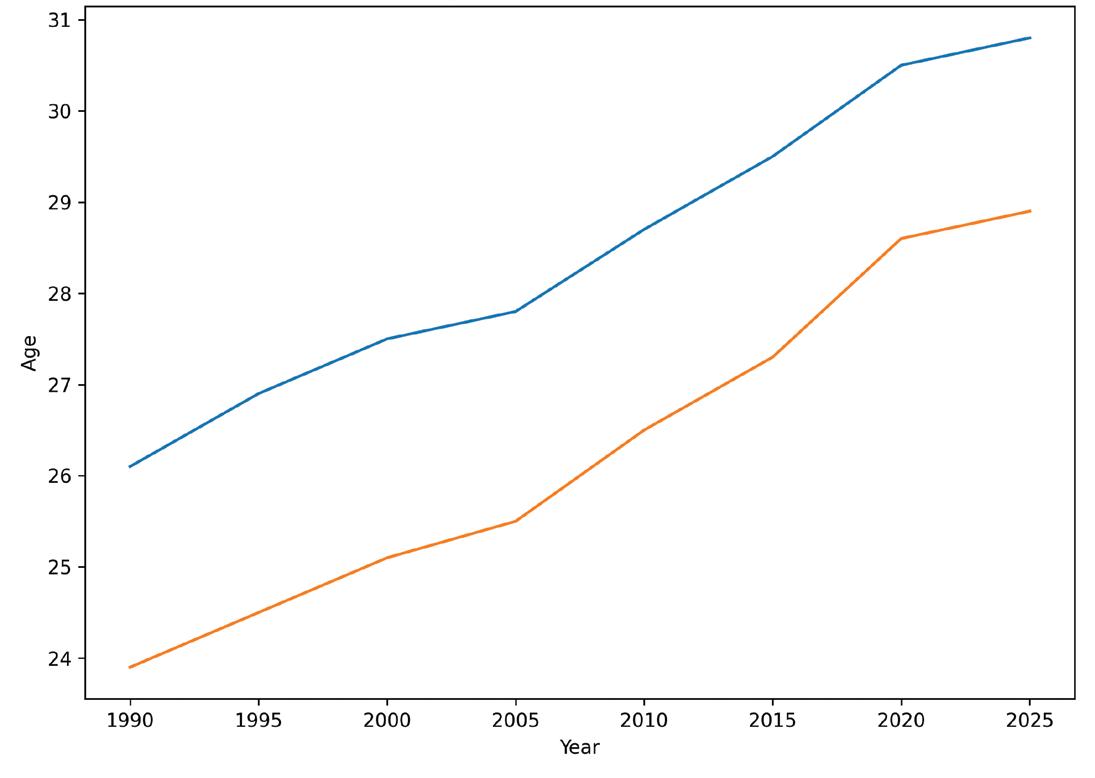
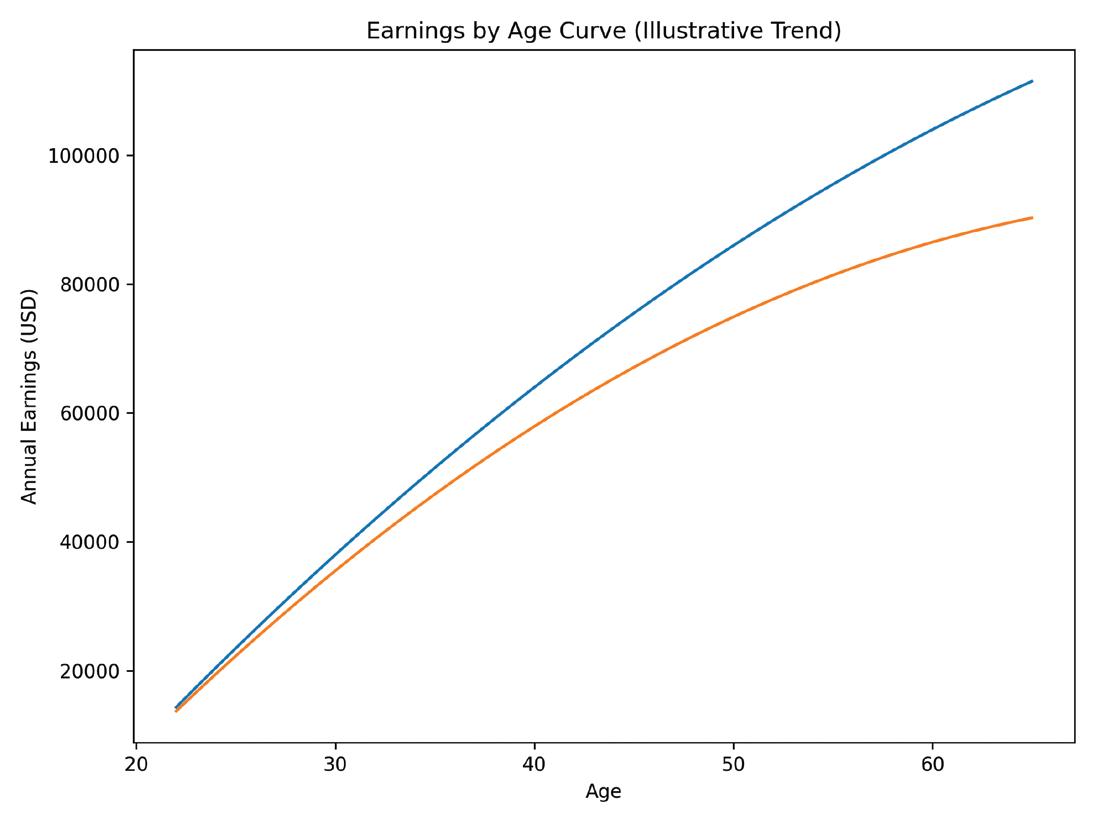
For many men in their twenties and early thirties, the numbers do not align comfortably with cultural timing. The median age at first marriage in the United States has risen to approximately 30 for men, according to the U.S. Census Bureau.¹ Earnings, however, typically reach their peak much later, often in the late forties or early fifties, as reported by the Bureau of Labor Statistics.² The years when partnership is socially encouraged do not coincide with the years when financial leverage is strongest.
This misalignment rarely appears in polite conversation. It surfaces privately, in unguarded moments, when men speak candidly about pressure. The cost of housing in major metropolitan areas has escalated. Student debt lingers. Career progression demands mobility and prolonged focus. Asset accumulation requires discipline. Against this backdrop, courtship can feel less like mutual discovery and more like early-stage capital allocation.
Few men object to generosity. Many object to the imbalance. The expectation—real or perceived—that a man must fund both lifestyle elevation and long-term wealth accumulation during his least stable earning years, strains him. A dinner here, a trip there, experiences curated for social display; none of these gestures are new. What has shifted is the scale at which they are normalized. Social media has subtly redefined baseline affluence. A weekend abroad no longer signals extravagance. It suggests competence.
When the pace of spending appears to serve as proof of desirability, some men strategically withdraw. They reduce exposure to environments where financial demonstration becomes part of the audition. They redirect focus toward home ownership, investment portfolios, and entrepreneurial ventures. They describe this as prudence.
CRITICS LABEL IT AVOIDANCE
The language of transactionality emerges from this tension. Men who describe dating as an economic exchange are not necessarily cynical. They are acknowledging that partnership has always contained elements of reciprocity. Historically, alliances were forged around land, protection, lineage, and stability. Contemporary romance prefers softer vocabulary, but the structural incentives remain.
Hypergamy—often misused in digital discourse—describes the tendency to seek partners of equal or higher status. In the academic literature, it refers to assortative mating patterns are associated with income, education, and occupational prestige.³ In less disciplined circles, it implies opportunistic ambition. The distinction matters. Preferring upward mobility is not inherently malicious; it is, in many respects, rational.
The friction arises because social capital matures at different intervals.
A woman in her mid-twenties may command substantial attention in appearance-driven environments. A man of the same age is frequently in the early stages of professional ascent. By midlife, the economic balance may reverse. The incongruity between these timelines produces confusion in markets that encourage early pairing.
MEDIAN AGE AT FIRST MARRIAGE (1990-2025)
EARNINGS BY AGE CURVE (ILLUSTRATIVE TREND)
CONSIDER THE DYNAMIC WITHOUT ACCUSATION:
n Female social leverage often peaks earlier in youth-centric cultures
n Male earning power typically strengthens later in life
n Cultural narratives continue to idealize coupling in early adulthood
n Financial stability and social desirability, therefore, evolve on separate clocks
In this context, some men conclude that delaying commitment until leverage improves represents strategic patience rather than emotional detachment. They prefer to enter into a partnership when the provision feels secure rather than aspirational.
This defense, however, is incomplete without acknowledging its own blind spots. Financial caution can become a shield against vulnerability. Economic focus may serve as an elegant justification for reluctance to commit. Moreover, the assumption that all women demand extravagance oversimplifies reality. Many prioritize trajectory over display.
Nevertheless, the economic argument persists because it reflects lived experience. When a man believes that slowing expenditure to build assets will reduce his romantic appeal, he adjusts his behavior accordingly; whether the perception is universally accurate matters less than the fact that it influences decision-making.
Modern dating does not resemble a Victorian parlor. It resembles a fluid marketplace shaped by mobility, visibility, and optionality. Applications present alternatives with astonishing speed. Comparison operates continuously. Loyalty, therefore, requires intention rather than inertia.
The gentleman’s defense rests on a simple premise: if partnership entails financial expectation, prudence demands preparation. In his view, it is not greedy to build first and share later. It is a responsibility.
A LADY’S POSITION: “A GIRL HAS TO PLAN FOR HER FUTURE”
If men frame the discussion in terms of capital preservation, women frame it in terms of risk management.
Biology imposes constraints that ambition cannot erase. Fertility declines with age. Career interruptions during childbearing years continue to affect lifetime earnings. Although progress has narrowed disparities, income differentials persist across many sectors.⁴ The median age at first marriage for women has risen to approximately 28, and the share of women in their early forties who have never married has increased markedly over recent decades, according to Pew Research Center.⁵
These trends reflect opportunity, but they also heighten stakes.
Selecting a partner involves more than chemistry. It involves probability assessment. If a woman reduces her professional momentum to raise children, she incurs an opportunity cost. Should the relationship dissolve, reentry into competitive industries can prove challenging. Financial stability in a partner, therefore, represents insulation against volatility.
From this vantage point, prioritizing ambition and competence is neither opportunistic nor superficial. It is strategic foresight.
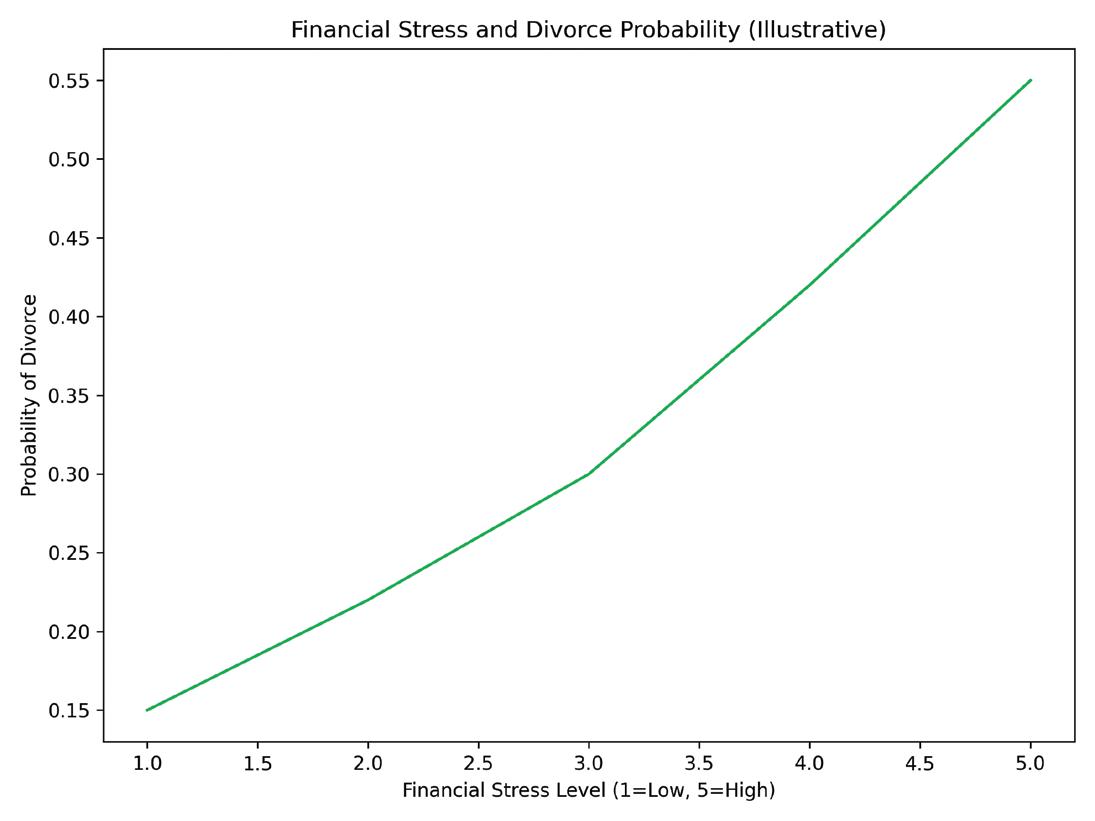
Research published in the Journal of Marriage and Family demonstrates a correlation between economic stability and marital satisfaction, particularly in early years.⁶ Financial strain remains one of the leading predictors of dissolution.⁷ Stability, then, is not aesthetic; it is foundational.
When women in their late twenties or early thirties evaluate potential partners, they often look beyond a partner’s current income to their trajectory. Is he disciplined? Does he exhibit foresight? Has he demonstrated resilience? Can he navigate economic cycles without unraveling? These inquiries are more akin to due diligence than to luxury shopping.
FERTILITY RATE BY AGE COHORT (ILLUSTRATIVE)
n WOMEN
FINANCIAL
The accusation of hypergamy frequently surfaces here. Yet preference for upward mobility has historical precedent. In agrarian societies, land signified security. During industrialization, steady wages provided a sense of assurance. In contemporary economies, diversified income and professional credibility fulfill similar roles. The instruments evolve; the underlying instinct endures.
However, the female strategy carries its own vulnerabilities. Visibility distorts perception. Constant exposure to curated lifestyles inflates benchmarks. Even women uninterested in extravagance may internalize aspirational norms. A partner who offers stability without spectacle can appear modest by comparison to digital illusion.
There is also a quieter reality seldom acknowledged publicly: early social leverage does not remain static. Youth-centered markets reward appearance intensely and temporarily. Women who assume that optionality persists indefinitely may find recalibration unsettling. Awareness of this timeline influences urgency.
A CANDID ASSESSMENT REVEALS THAT BOTH SEXES OPERATE WITHIN STRUCTURAL CONSTRAINTS:
n Women face biological timing constraints and the potential for career interruption
n Men experience delayed earnings maturity and early financial fragility
n Visibility amplifies comparison for both
n Each side interprets preference as principle rather than strategy
When a woman says she is unconcerned with money, she often means she rejects ostentation. Security, however, remains essential. When a man claims he is concentrating on his future, he frequently implies that present resources cannot comfortably support dual objectives.
NEITHER POSITION IS INHERENTLY IGNOBLE
The contemporary mating economy functions within conditions shaped by urbanization, rising education levels, global mobility, and escalating costs. Neither gender designed these forces. They are inherited realities.
In private conversations, many women concede that affection alone does not pay mortgages or finance childcare. In equally candid moments, men acknowledge that competence and trajectory matter more than display. Public defensiveness obscures private pragmatism.
Romantic partnership in 2026 requires confronting fiscal truth without allowing it to eclipse human connection. Couples who address expectations openly—discussing goals, timelines, and responsibilities—reduce the likelihood that resentment will fester beneath a polite surface. Transparency transforms negotiation into collaboration.
THE MONEY, HONEY, MATTERS
Denying that reality does not elevate love. It merely disguises the terms under which it operates.
Ultimately, both sides respond to incentives embedded within the modern economy. Men seek to solidify their position before committing capital. Women seek assurance that the partnership will not compromise long-term security. Each strategy reflects rational adaptation.
Maturity lies not in pretending these calculations do not exist, but in integrating them without cynicism. Romance and responsibility need not compete. They require alignment.
The marketplace analogy has limits; intimacy cannot be indexed like equities. Yet financial misalignment can erode affection just as surely as emotional neglect.
In the end, the question is not whether money influences mating decisions. It always has. The question is whether individuals possess the self-awareness to acknowledge their own incentives while respecting the other party’s.
The discussion, conducted honestly, reveals more about timing than about greed. H
References
1. U.S. Census Bureau, Current Population Survey, 2023.
2. U.S. Bureau of Labor Statistics, Earnings by Age Data, 2022.
3. Schwartz, C., & Mare, R. “Trends in Educational Assortative Marriage,” Demography, 2005.
4. U.S. Department of Labor, Gender Wage Gap Data, 2023.
5. Pew Research Center, Marriage Trends Report, 2022.
6. Dew, J. “The Association Between Consumer Debt and the Likelihood of Divorce,” Journal of Marriage and Family, 2009.
7. American Psychological Association, Stress in America Survey, 2021.
We are an established print publication with over 21 years of history, credibility, and readership. Our brand has deep roots, a loyal base, and a rich archive of content. We are now ready to expand globally through a structured, data-driven digital growth strategy.
The ideal candidate will be a capable Digital Growth Strategist to lead the transformation of our publication into a scalable digital media platform with an initial goal of reaching one million monthly views, subscribers, and engaged readers.
The position is not a basic social media role but a leadership opportunity to build and execute a comprehensive audience development system, with substantial financial rewards.
RESPONSIBILITIES:
n Develop and implement a full digital growth strategy
n Convert existing print and archive content into SEO-optimized web assets
n Build and scale an email newsletter system
n Design and execute multi-platform social distribution
n Create a content repurposing engine (article → video → short-form → email)
n Establish analytics dashboards and growth benchmarks
n Develop partnerships and sponsorship opportunities
n Implement paid promotion strategies when appropriate
IDEAL CANDIDATE:
n Proven experience growing online audiences (newsletter, YouTube, social media, or publication)
n Strong understanding of SEO and content marketing
n Experience with email marketing platforms and automation
n Comfortable using analytics to guide decisions
n Familiar with short-form video and digital trends
n Entrepreneurial mindset and long-term vision
This position is partnership-based, with performance incentives tied to audience growth and revenue milestones.
We are not looking for vanity metrics, but rather, a sustained, engaged readership and meaningful reach.
If you have successfully grown digital audiences and can demonstrate measurable results, we want to hear from you.
PLEASE SUBMIT TO NEMEDIA@EARTHLINK.NET
n Resume
n Portfolio or examples of growth results
n A short strategic outline explaining how you would approach scaling a legacy publication
Boston Wine Festival Impresses
BY LINDA BERTRUM
Now in its 37th season, the Boston Wine & Food Festival has become one of New England’s most enduring winter luxuries. A reason, year after year, to dress up, head to the harbor, and trade gray sidewalks for candlelight and crystal, your evening choice will be the best one.
Established in 1989 at the waterfront splendor of the Boston Harbor Hotel, the festival has grown from a handful of intimate wine dinners into the longest-running wine festival in the United States, with more than 40 events unfolding between January 23 and March 28, 2026.
For nearly four decades, its formula has been deceptively simple: world-class wines, thoughtfully curated menus, and a setting that feels more like a private club perched above the harbor than a hotel. Guests arrive under the hotel’s iconic arch, step into a marble lobby warmed by soft light and fresh flowers, and almost immediately forget that winter still lingers outside. Inside, the festival becomes a season within a season—one defined not by cold fronts and storms, but by vintages and varietals.
In 2026, the Boston Wine & Food Festival is especially compelling as the calendar tilts toward spring. Under Executive Chef, David Daniels and Festival Director, Nick Daddona, the 37th edition leans into its wine-driven heritage with a program that reads like a journey through the great regions of the world: Rioja, Burgundy, the Loire, Napa Valley, the West Sonoma Coast, Barolo, and beyond. What began as “let’s gather a few winemakers and see what happens” has become a polished, highly anticipated ritual— one that locals plan their winters around and visitors now treat as a destination in its own right.
There is a particular charm to experiencing wine at the water’s edge. From the picture windows of the dining rooms, the harbor is steel-blue and cinematic; inside, glasses catch the light as the low hum of conversation builds, and each course arrives. The dinners are not hurried affairs. Menus are crafted to echo the personality of the wines in the glass: perhaps a slow-braised dish to mirror the depth of a Brunello or Amarone, or a delicately structured seafood course designed to let a Loire Chenin or a coastal Pinot Noir sing. The mood is unhurried, indulgent, and quietly celebratory, as if everyone at the table has collectively agreed that winter is best conquered with a corkscrew.
As March begins and the days stretch a little later each evening, the festival shifts from pure winter refuge to joyful anticipation of spring. The month opens on March 5, 2026, with a duo of events that capture the festival’s global spirit. At 6 p.m., the “Rioja Spanish Pop-Up with Bodegas Martínez Lacuesta” invites guests to wander, glass in hand, through the bold, Tempranillo-driven reds and lively whites of northern Spain. This relaxed, standing-style tasting feels like a night in Haro transplanted to Boston, priced at $75. An hour later, the atmosphere turns more formal with the “Beringer” dinner, a $325 wine dinner celebrating one of Napa’s most storied estates, where heritage and precision are poured into every glass.
On March 6, the spotlight moves to Italy with “Brunello Meets Amarone,” a $355 dinner that unites the sun-warmed intensity of Valpolicella with the poised, age-worthy structure of Montalcino. It is the kind of evening that showcases why Italian wine continues to capture collectors’ imaginations: the interplay of texture, acidity, and tannin mirrored in each carefully plated course. The following night, March 7, the “Napa to Boston: Chef’s Pairing” dinner places women at the heart of the story—female winemakers and culinary talents collaborating on a $295 experience that feels both forward-looking and deeply rooted in tradition.
Mid-month, the festival’s rhythm intensifies. March 12 brings the “Long Meadow Ranch Winemaker” dinner, a $295 ode to sustainable Napa winemaking and farm-to-table cooking, where brightness and balance in the glass find their match on the plate. The next evening, March 13, Burgundy steps into the limelight with the “Tour Côte d’Or” dinner at $325, a guided journey through some of the most storied villages on earth for Chardonnay and Pinot Noir. Here, the pleasure lies not only in the wines themselves, but in the stories behind them—the nuances of slope and soil, the way a vintage expresses itself differently from one parcel to the next.
By March 14, the narrative becomes a full-blown Italian love story. “Mastering Italy,” an afternoon master class priced at $115, offers an odyssey through the country’s most expressive regions, from alpine freshness to Mediterranean warmth. That evening, the “President’s Reserve” dinner, an opulent $590 reserve event, pays homage to six U.S. presidents and their relationships with wine, staged in honor of the 250th anniversary of the signing of the Declaration of Independence. It is equal parts history and hedonism, weaving statesmanship into the pleasure of the glass.
As the month continues, France returns to the fore.
On March 19, “Wines of Loire with CoulyDutheil of Chinon” offers a $75 deep dive into the Loire Valley, celebrating the river that has quietly given the world some of its most versatile reds and whites. Later that evening, the “Opus One Reserve” dinner
raises the stakes with a $695 exploration of one of Napa’s most iconic collaborations, a label that marries Old World finesse with New World power.
The West Coast steps back in on March 20 with the “West Sonoma Coast Pinot” dinner, a $325 showcase of wines that have become synonymous with elegance and restraint, shaped by cold Pacific breezes and dramatic coastal slopes. The following day, March 21, the “Springtime Rosé Master Class” at $95 feels like a seasonal turning point: pale, shimmering rosés and more structured, gastronomic pinks alike, all framed as essential companions to the warmer months ahead. That evening, the “Rioja” dinner with “Bodega Lanzaga,” at $295, revisits Spain with a deeper focus—a seated dinner where classic Rioja is reframed through a contemporary, expressive lens.
In the final week of the festival, the programming becomes a crescendo. March 26 begins with a “Barolo Pop-Up featuring Scarzello Giorgio e Figli” at $75, where winemaker Federico Scarzello guides guests through Nebbiolo’s haunting aromatics and firm, age-worthy structure. A few steps and a quick wardrobe adjustment later, guests can sit for the “Frog’s Leap Winery” dinner at $295, an evening devoted to one of Napa’s most soulful and sustainability-driven producers. On March 27, the $295 “Revana Winemaker” dinner continues the theme of expressive, carefully crafted reds, emphasizing power and poise rather than sheer weight.
The finale on March 28 feels appropriately grand. In the afternoon, the “Champagne & Sake Master Class,” priced at $115, offers a sparkling conversation between two traditions defined by precision: the chalk-soiled vineyards of Champagne and the meticulous craftsmanship of Japanese sake producers. That evening, the “Diamond Creek Reserve” dinner closes the 2026 season with a $675, once-in-a-lifetime experience that includes, among other treasures, a six-liter Methuselah of Volcanic Hill. It is the kind of bottle rarely seen outside of elite cellars—and even more rarely opened. To enjoy it in the company of fellow enthusiasts, with the harbor lights just beyond the glass, is to understand exactly why this festival continues to enchant after 37 years.
For anyone who loves wine, food, and the subtle theater of a well-orchestrated evening, the Boston Wine & Food Festival belongs firmly on the late-winter to-do list. It offers not just access to extraordinary bottles, but the luxury of context: meeting the people behind the labels, tasting thoughtfully composed pairings, and doing it all in a setting that feels at once glamorous and warmly hospitable. As the weather begins to soften and the seasons start their slow shift, there are few better ways to mark the transition than an evening—or several—spent at Rowes Wharf, raising a glass to a festival that has turned Boston’s coldest months into its most delicious. H
TRENDS IN MEDICAL BEAUTY:
Becoming the Best Version of YOU
BY ROB SAINT LAURENT, M.ED.
It’s been said that beauty is the illumination of one’s soul. In a society that places a premium on outward appearance, many are turning to medical aesthetics to help them look and feel their best and shine their brightest.
Sandi Marx is a vivacious 66-year-old New Yorker who lived with insecurity that her maturing facial features weren’t reflective of her youthful inner self. Feeling self-conscious, the stand-up comedian would make light of her sagging face in her performances, but it didn’t come from a place of confidence.
In an interview with The Aesthetic Society, Marx shared that she chose facial rejuvenation surgery to reverse about 10-15 years of aging. Its positive impact was no laughing matter.
“I would open up every set with a joke about my face. I don’t have to do any of that now,” says Marx. “I got my old self back. I’m really proud of myself for having the courage to do it. Sometimes a small fix, or a big fix, can make an exponential change in your life.”
MOTIVATIONS, MARKET SHIFT
As the medical aesthetics market continues to surge, people’s motivations for pursuing medical beauty vary. For most, medical beauty is about fixing
perceived flaws and maintaining a youthful image for as long as possible. It’s about boosting self-confidence and overall wellbeing. It’s also about conforming to cultural norms and perceived beauty standards. And some align medical aesthetics within a broader health and wellness lifestyle.
Experts say aligning patient expectations with treatment is not only standard practice but critical to maintaining safe and ethical industry standards. Transparency about procedures and what to expect, respect for patient autonomy, and assessment of patients and tailoring treatment, all promote quality of care, patient satisfaction, and safety.
When assessing Marx, her surgeon noted that what stood out about her was her perception that her physical appearance didn’t match her true identity on the inside, and that she believed facial rejuvenation surgery could correct this misalignment.
The World Academy of Cosmetic Surgery (WAOCS) says 2026 marks a paradigm shift in the industry, as most patients now prefer subtle, more natural-looking enhancements over dramatic alterations. Fueled by social media, patients are now more concerned about excessive work that can make them look frozen or overfilled, which was common in earlier aesthetic trends.2
The results mean smaller breast implants,
more reductions and lifts, and more emphasis on mental health, patient assessment, and what to expect.2 It will involve more detailed patient assessments, with skin analysis and even genetic and hormonal testing, for more personalized treatment.2 To meet a changing market, practitioners will need to provide precision care, natural results, and integrate wellness. They’ll [also] need to account for a person’s biological compatibility, genetics, long-term health, skin type, aging patterns, metabolism, and unique lifestyle and preferences.2
POPULAR SURGICAL PROCEDURES
Research by the International Society of Aesthetic Plastic Surgery (ISAPS) revealed that liposuction, breast augmentation, abdominoplasty (tummy tuck), rhinoplasty (nose job), and eyelid surgery (blepharoplasty) were the most widely performed aesthetic surgical procedures between 2010 and 2023.3
These conventional procedures also have the strongest evidence for safety and effectiveness.
Liposuction, for example, removes excess fat from specific areas to contour the body, where small incisions are made, and a suction tube (cannula) is inserted. Anesthetics vary depending on the breadth of the procedure, and recovery usually takes
weeks to months, depending on swelling.
A comprehensive research review in 2024, covering 39 studies and nearly 30,000 patients, showed that complications from “lipo” were rare, at just 2.62 percent, and mostly minor with contour deformities and skin pigment changes. Related deaths, usually from venous thromboembolism (blood clot formation in a deep vein), were even fewer, at around 0.02 percent.4
Overall, research shows high patient satisfaction with liposuction’s reliability in spot-reducing fat, long-lasting results when bodyweight remains stable, and its effectiveness in removing large volumes of fat compared with non-surgical methods. Non-invasive, more precise laser-, ultrasound-, and radiofrequency-assisted methods are also available to facilitate fat removal and speed recovery.
The ISAPS says face and head procedures continue to dominate in popularity among surgical procedures: eyelid surgery, eyebrow lift, facelift surgery, rhinoplasty, ear surgery, facial bone contouring, facial fat grafting, lip augmentation, and neck lifts.3
And many aren’t waiting as long as Sandi Marx did.
According to the American Society of Plastic Surgeons (ASPS), more women in their 40s and 50s are opting for facelift surgery as part of their anti-aging routine.5
More men are also undergoing aesthetic surgery, especially minimally invasive procedures; the top five are liposuction, gynecomastia surgery, eyelid surgery, rhinoplasty, and facial fat grafting.3
Meanwhile, technological advances are continuing to shape the industry.
Today, plastic surgeons may employ subtler regenerative techniques, such as transferring a person’s own body fat into their lips to restore facial volume or augment their breasts. They may use 3D imaging to visualize results beforehand and make informed decisions. And they may use AI in the preoperative process, mapping a person’s body to help prepare for challenges and reduce risk.5, 6
THE WORLD OF NON-SURGICAL PROCEDURES
Global data show Americans undergo more cosmetic procedures than any other nation, driven largely by non-surgical treatments.
THE
BASED
RANKING
MOST POPULAR NON-SURGICAL BEAUTY
TREATMENTS
ON COMBINED GLOBAL AND U.S. DATA BY ISAPS AND ASPS.
Minute injections relax facial muscles to smooth wrinkles
Gel injection adds volume to lips, cheeks, etc., or smooths folds
Stimulate collagen for longer-lasting results
Applying acids to exfoliate and improve skin quality
Removes or heats skin layers for reduced scarring, wrinkles, and sun damage
Targets redness, uneven skin tone, and sun damage
Tiny needles stimulate collagen with micro-injury
Microneedling plus radiofrequency heat for skin tightening, texture
Freezes fat cells that the body removes naturally
Injections dissolve fat beneath the chin
Heats deep skin layers to stimulate collagen, tighten skin
Targets hair follicles over multiple sessions to reduce growth
Exfoliation, hydration, extraction, or light skin resurfacing
None
Minimal; 1-7 days minor swelling
Mild; results appear over weeks
Light 0-2 days; Medium ~ 1 week; Deep longer, medically supervised
Ablative at least 1 month full recovery; nonablative several hours swelling
None
Minimal; 1-2 days redness
Minimal; 1-3 days redness/swelling
None
Mild; several days of swelling, 1-2 weeks of tenderness
None
None
None
It’s been said that beauty is the illumination of one’s soul.
The ISAPS study showed the most popular non-surgical beauty treatments between 2010 and 2023 were Botox (botulinum toxin), hyaluronic acid, chemical peels, hair removal, and non-surgical fat removal. Along with these, non-surgical skin tightening was most popular with men.3
Referencing the chart on page31, data consistently shows injectables reigning in popularity, followed by peels/lasers, microneedling, body contouring, and then other skin treatments.
Injectables are widely accepted because they’re fast, accessible, and have a very
quick recovery. When used appropriately and performed correctly, filler injections show high patient satisfaction, with predictable results and strong safety.
As in surgical aesthetics, regenerative techniques are rapidly emerging in nonsurgical treatment, with more emphasis on improving and restoring tissue rather than just lifting, filling, or removing. The results are more natural and often longer-lasting. Today, skin boosters can optimize skin quality and promote collagen production, while traditional fillers replace lost volume.2
Experts say the trend now is for practices
to bundle services rather than provide them separately à la carte. Evidence shows combined approaches lead to more comprehensive results while saving time and money with one recovery period and, if needed, one anesthesia and one operating room fee.2, 5
MORE THAN SKIN DEEP
Sandi Marx can attest to the relationship between aesthetic treatment and psychological well-being.
When motivations are healthy and expectations realistic, research suggests altering features can boost self-confidence and body image and reduce appearancerelated social anxiety. It can help a person to look at how they feel.
However, treatment can be destabilizing for people chasing perfection, trying to save a relationship, looking like someone else, or solving bigger life issues, etc.
Body dysmorphic disorder is a major consideration for clinicians when assessing candidates. Researchers are working on a psychological screening tool to help practitioners identify people with BDD, which looks at psychological distress, selfcriticism, perfectionism, and other metrics.7
But for people who may be suitable for treatment and want to age more gracefully, Marx has words of encouragement.
“I think that anybody, particularly women of my age, should feel empowered not having to apologize for making changes. You own your own body; you have autonomy to do what you want. You should be able to do it and not feel like anyone’s going to judge you for doing anything.”1 H
1. The Aesthetics Society. (n.d.). Episode 5: Facing Life With Humor [Video].
2. World Academy of Cosmetic Surgery. (2026, January 18). Aesthetic Practice Standards 2026: What Cosmetic Surgeons Must Know Now.
3. Triana, L., Palacios Huatuco, R. M., Campilgio, G., & Liscano, E. (2024, Oct.). Trends in Surgical and Non-surgical Aesthetic Procedures: A 14-Year Analysis of the International Society of Aesthetic Plastic Surgery. Aesthetic Plastic Surgery, 48(20), 4217-27.
4. Comerci, A. J., Arellano, J. A., Alessandri-Bonetti, M., et al. (2024, July). Risks and Complications Rate in Liposuction: A Systematic Review and Meta-Analysis. Aesthetic Surgery Journal, 44(7), NP454-63.
5. Brumby, D. (2025, February 10). The top seven plastic surgery trends for 2025. American Society of Plastic Surgeons.
6. Thompson, D. (2025, November 18). The New Era of Plastic Surgery: Technology, Risks, and the Surgeons Redefining the Field in 2025. The Science Times.
7. Pikoos, T. D., Buchanan, B., Hegarty, D., & Rossell, S. L. (2025, January 16). Development of a Preoperative Psychological Screening Tool: Piloting the Cosmetic Readiness Questionnaire (Pilot-CRQ). Aesthetic Surgery Journal, 45(2), 202-7.
Models Wanted For Our Upcoming Issue ‘Spring Skiing’
We are planning to shoot a cover and story about the best party and the end-of-season conditions, which are just around the corner. No experience necessary, just a smile and a great personality.
Whether you’re a winter sports fanatic or are coming up for a girls’ weekend, this is your invitation to grace next month’s covers.
Join us for ‘Model-Day’ on the mountain.
To learn more about this opportunity, send an email or text and introduce yourself and your friends.
50,000 YET, NOT EVERYONE IS PLEASED
BY ROBERT WRIGHT
Why a Minority of Optimistic Americans Still Believe Effort Pays Dividends
The Wall Street Journal, the largest newspaper in the U.S with a total circulation of approximately 4.54 million subscribers and the go-to source for financial and economic perspectives, released an article—more of a study— in February 2026 that the prevailing economic mood in America today is unmistakably pessimistic. Scroll the headlines, flip through social media, spend a few hours with CNBC, or better yet, sit through a dinner party or talk to the person next to you. In almost every case, you’ll either hear a tirade of discontent or the conversation eventually turns to housing costs, inflation, student loans, or the sense that the ladder has grown taller. At the same time, the rungs have been spaced farther apart.
And yet, according to the Journal –NORC polling, of 1,527 adults, nearly one-quarter of Americans—23 percent—do not share the prevailing gloom.¹ Seventy-seven percent describe themselves as pessimistic about the economy. But 23 percent remain optimistic; how could this be?
That minority is not immune to grocery bills or mortgage rates. What distinguishes them is not insulation from economic pressure, but something deeper and more personal.
They believe they can navigate the investment storm.
The Journal ’s February report, titled “We Asked What Makes You an Economic Optimist. Here’s What You Said,” gleaned a compatible list of profiles of the members making up this minority. The writers discover a striking pattern. Optimism did not correlate primarily with citing favorable macroeconomic indicators; in fact, few respondents mentioned GDP or unemployment rates. Instead, they spoke of personal agency, discipline, self-reliance, and sacrifice.
Chart 1 (Economic Outlook: Optimists vs. Pessimists) makes the divide visual. In editorial terms, the chart reads like a headline without adjectives: America is not mildly worried. America is overwhelmingly doubtful. The optimists are the minority at the table, and, as minorities often do, they reveal something about the majority.
One might assume optimists are simply the affluent, calmly protected by high incomes and diversified portfolios. The poll data complicate that story. Income matters, but not as much as cynics would like to believe. Optimists are more likely than pessimists to report household income of $100,000 or more—40 percent versus 30 percent. Still, optimism does not segregate cleanly by education. Thirty-eight percent of optimists have a bachelor’s or advanced degree, nearly
indistinguishable from pessimists at 36 percent (Chart 6 ).
Labor union membership in the household also fails to create a meaningful split: 17 percent among optimists, 18 percent among pessimists (Chart 7 ). In other words, the “privilege” explanation does not carry weight or do the heavy lifting it’s used to vilify this minority of citizens. So what does?
Ownership, participation, and life-stage explain more than slogans.
Chart 2 (Stock Market Participation by Economic Outlook) shows a sharp difference that reads like a behavioral fingerprint. Seventy-five percent of optimists are invested in the stock market, compared with 52 percent of pessimists. Participation changes psychology. When you own a small piece of the productive economy—through equities, index funds, retirement accounts— you do not experience “the economy” as an abstract force acting upon you. You experience it as a system you are, at least partly, inside of. That does not eliminate hardship, but it alters the framing: turbulence becomes something to navigate rather than proof that the ship is sinking.
Chart 3 (Homeownership by Economic Outlook) tells a similar story. Eighty percent of optimists report homeownership in the household, compared with 65
percent of pessimists. From this data, it can be assumed that homeownership is not merely a financial asset; it is a psychological anchor. The homeowner has a stronger reason to believe in long horizons because wealth-building is structured around years rather than weeks. Even the frustrations of taxes, repairs, and insurance pull the mind toward durability. Renters often live closer to immediate cost shocks and, understandably, closer to immediate anxiety.
Marriage, too, correlates with optimism in the poll: 64 percent of optimists are married, compared with 45 percent of pessimists. One can read this in several ways. Marriage may provide a stabilizing partnership that buffers uncertainty. It may also reflect self-selection: individuals inclined toward long-term planning may be more likely to form long-term commitments. Either way, the statistic signals that optimism tends to travel with structures that reward patience.
Age reinforces the pattern. Optimists are more likely to be 60 or older: 40 percent versus 29 percent among pessimists. Experience can be a kind of inoculation. People who have watched recessions come and go, who have seen markets fall and recover, who have lived through multiple business cycles, often acquire a sturdier sense of proportion. They may still complain about prices, but they do not assume difficulty is permanent.
Source: Wall Street Journal-NORC Poll of 1,527 adults (July 10-23, 2025).
Reported in The Wall Street Journal, Feb. 16, 2026. Charts prepared for publication use.
CHART 2: Education and Union Affiliation
Source: Wall Street Journal-NORC Poll of 1,527 adults (July 10-23, 2025).
Reported in The Wall Street Journal, Feb. 16, 2026. Charts prepared for publication use.
CHART 3: Education and Union Affiliation
The poll also identifies a political gradient that must be handled with care. Chart 4 (Political Affiliation by Economic Outlook) shows that optimists are disproportionately Republican: 79 percent Republican, 12 percent Democratic, 9 percent Independent. Pessimists skew in the opposite direction: 49 percent Democratic, 29 percent Republican, 22 percent Independent. The Journal notes a familiar phenomenon: optimism often concentrates in the party that holds the White House. That is not an argument; it is an observation about human perception. People tend to believe the future is brighter when they think their preferred hands are steering the country. Yet the political data do not erase the behavioral story. Stock-market participation, homeownership, and marriage are not partisan talking points; they are lifestructure variables.
If demographic traits do not fully explain optimism, the reader narratives do.
The Journal’s profiles read like case studies in what economists rarely measure, but every successful person recognizes: the habit of agency.
‘Rossana Ivanova , who emigrated from communist Bulgaria, described the contrast between systems in which initiative is constrained and a free market where effort can
Age reinforces the pattern. Optimists are more likely to be 60 or older: 40 percent versus 29 percent among pessimists. Experience can be a kind of inoculation. People who have watched recessions come and go, who have seen markets fall and recover, who have lived through multiple business cycles, often acquire a sturdier sense of proportion. They may still complain about prices, but they do not assume difficulty is permanent.
compound. She told the Journal, in a line worth repeating sparingly. In America you can be ‘OK’ if you work hard and live within your means. Her optimism was not a denial of hardship; it was gratitude for possibility. The details matter. She arrived without familiarity with stocks, bonds, or tax returns, then learned, worked, saved, borrowed for education, and built a middle-class life that feels, to her, rich in the only way that counts—security and pride.’¹
‘Mark Myshatyn, a systems engineer, offered a different kind of optimism—modern, technical, entrepreneurial. He uses tools once reserved for industrial labs: 3D printing, rapid prototyping, and on-demand manufacturing. He described a world in which “private individuals” can solve significant problems with little start-up capital. The statement is not motivational fluff. It is a practical description of the democratization of tooling. A person with a laptop, some skill, and the will to learn can now design, test, and manufacture products that previously required a factory relationship and a legal department. His enthusiasm for consumer AI fits the same pattern: a tool that amplifies competence, not a machine that replaces it.’¹
‘ Zhengbang Liu , a financial adviser, put a finer point on the economic mechanics. He evangelizes compounding—
Source: Wall Street Journal-NORC Poll of 1,527 adults (July 10-23, 2025). Reported in The Wall Street Journal, Feb. 16, 2026. Charts prepared for publication use.
A person who believes effort is futile invests less in skill, saves less consistently, and treats delayed gratification as pointless. The pessimistic stance becomes self-fulfilling and, again, is reinforced by social rewards through flawed peer validation.
The optimists, by contrast, behave as if compounding is real—because it is. They behave as if habits matter— because they do. They behave as if markets reward patience—because, over long horizons, they often have shown remarkable success.
the unglamorous arithmetic behind nearly every long-term fortune. He built a spreadsheet showing what a steady investment can become over the course of decades. His worldview is both conservative and radical: conservative in its insistence on discipline, radical in its belief that ordinary people can still build extraordinary outcomes through consistent behavior. His additional note—an aversion to social media because it sets unrealistic expectations—captures a quiet truth of modern life. Comparison is a tax on optimism, and the bill arrives daily.’¹
‘Branden Alsbach, age 26, represents the younger optimist: burdened by debt, aware that pensions are rarer, aware that housing is expensive, yet unwilling to conclude that his generation is doomed. He told the Journal he cannot personally lower the price of housing or ground beef. The point is not resignation; it is focus. He emphasizes budgeting, investing, and career decisions—the controllable variables. That is agency in its purest form: directing effort toward levers that can actually move.’¹
‘Gary Durst , a military veteran now in consulting, framed optimism as a discipline learned through service. He credited an “internal locus of control,” a phrase that might sound academic until one remembers what it means
of the day. He also offered a pointed comment about education, observing that while art history has value, he would not expect it to “put a roof” over a house. The underlying argument is not anti-intellectual. It is prostrategy. Education should be aligned with opportunity, and opportunity rewards clarity.’¹
Taken together, the stories explain why education does not separate optimists from pessimists in the data. The difference is not schooling; it is posture. Two people can hold the same degree, earn similar wages, and live in the same zip code, yet interpret their circumstances differently based on whether they see themselves as actors or as victims of forces.
It’s here, the herd behavior runs to the pasture of discomfort.
When 77 percent of the population expresses pessimism, pessimism becomes socially validated. It is easy to bond through complaints, social pressure, and compliance. It is easy to feel intelligent by diagnosing decline. It is even easier to perform sophistication by treating hope as ‘out of style.’
Yet herd behavior has consequences. A person who believes effort is futile invests less in skill, saves less consistently, and treats delayed gratification as pointless. The pessimistic stance
CHART 5
becomes self-fulfilling and, again, is reinforced by social rewards through flawed peer validation.
The optimists, by contrast, behave as if compounding is real—because it is. They behave as if habits matter— because they do. They behave as if markets reward patience— because, over long horizons, they often have shown remarkable success.
Returning to Charts 2 and 3, we straightforwardly see support in these premises. Higher rates of investing and homeownership are not mere “traits”; they are pathways. They are the kinds of choices that create optionality later, positions that allow a person to absorb inflation without panic, because they have built a buffer when it was boring.
The additional charts matter precisely because they prevent lazy conclusions. Chart 6 and Chart 7 show that neither higher education nor union membership meaningfully predicts optimism. That is a useful corrective. It suggests optimism is not simply a function of being “in the right group.” It is more behavioral than tribal.
Chart 5 —the mid-income bracket ($60K to under $100K) —adds another nuance. That band does not decisively separate the groups, which further weakens the argument that optimism belongs only to those at the top. Many optimists live
in the same economic temperature as many pessimists. The difference is not weather; it is the clothing.
What, then, is the underlying theme a reader can carry home without turning the piece into a sermon?
The optimists in the Journal ’s article do not deny problems; they deny the claim that problems eliminate agency. They accept that some variables are beyond their control, so, as a hedge, they build their lives around the variables to exert a positive influence on their future. They treat capitalism as an opportunity structure that imperfectly rewards competence, though it does so nonetheless. They do not wait for institutions or the ‘State’ to rescue them from uncertainty; they build resilience so uncertainty does not cripple them.
That is not a political message. It is a personal one; not from us, we are only a messenger.
It also explains why the poll’s optimists skew older and are more likely to own assets. Asset-building is slow. Skill-building is slow. Character formation is slow. A culture obsessed with immediate rewards and outcomes trains people to judge their progress too early. The optimists appear to be the people willing to endure the unglamorous phase—the saving, the learning, the refusal of lifestyle inflation—long enough for compounding to become visible.
Source: Wall Street Journal-NORC Poll of 1,527 adults (July 10-23, 2025).
Reported in The Wall Street Journal, Feb. 16, 2026. Charts prepared for publication use.
CHART 6
CHART 7
Source: Wall Street Journal-NORC Poll of 1,527 adults (July 10-23, 2025).
Reported in The Wall Street Journal, Feb. 16, 2026. Charts prepared for publication use.
The Journal’s reporting makes one point difficult to ignore: optimism is not merely a feeling, it is a practice, reinforced by ownership, discipline, and a stubborn refusal to let pessimism become fashionable fatalism.
If the glass is more than half full, it is not because someone insisted it was. It is because someone carried water.
Such a philosophy doesn’t guarantee a smooth ride. Bear Markets correct, employers reorganize, health interrupts, and life circumstances and decisions throw wrenches into the bestlaid plans. Luck still matters at the margins, and sometimes at the center. Optimism, as the Journal’s respondents describe it, is not the promise of a painless life; it is the decision to remain competent under pressure. It is also, quietly, a refusal to confuse comfort with entitlement. The optimists are not asking the world to be easier; they are preparing themselves to be stronger.
It is for these reasons and hard data that the Wall Street Journal piece resonates. It describes a set of habits that many successful people share across industries and backgrounds: show up, learn, save, invest, improve, and keep a longer view than the news cycle permits. In a culture that monetizes anxiety and where using rebellion is an acceptable posture to demonstrate discontent, there is an obvious road map for those questioning the usefulness of following the majority heading into the wrong direction.
The WSJ did not publish a motivational pamphlet; rather, it provided a portrait of a minority mindset that, for better or worse, powers much of American mobility: the belief that the future is not merely something that happens to you, but something you can shape into a positive outcome.
Readers can debate whether that belief is always justified. They can argue about structural barriers and unfair advantages. Those debates matter. Yet the Journal’s reporting makes one point difficult to ignore: optimism is not merely a feeling, it is a practice, reinforced by ownership, discipline, and a stubborn refusal to let pessimism become fashionable fatalism.
If the glass is more than half full, it is not because someone insisted it was. It is because someone carried water. H
References and Source Notes
Primary source: Aaron Zitner, “We Asked What Makes You an Economic Optimist. Here’s What You Said,” The Wall Street Journal, Feb. 16, 2026. Poll source cited in the article: WSJ–NORC poll of 1,527 adults conducted July 10–23, 2025; margins of error ±5.2 percentage points (optimists) and ±2.9 (pessimists).
1. Quotes: Short quotations in this piece are taken from the WSJ article above and are used sparingly for commentary and attribution.
BY CATHERINE HILDERBRAND
The accumulation of significant fortunes—whether built through disciplined investing, inherited from the “Greatest Generation,” or generated through windfalls from technology, equity participation, or executive compensation—has created a quiet but profound shift in how families think about stewardship.
Over the next two decades, an estimated $53 trillion will transfer from one generation to the next. That is not merely a statistic; it is a structural event. And for the recipients, it presents both opportunity and obligation.
For some, newfound wealth resembles a lottery ticket— unexpected and disorienting. For others, it feels like a burden: an asset class that demands management rather than celebration. And for a fortunate few, this moment has long been anticipated. They have studied how the ultra-wealthy protect and grow capital, and they are now adopting a model once reserved for billionaires: the Family Office.
The term has entered mainstream financial vocabulary, though it remains misunderstood. A Family Office is not merely an investment advisory service with elegant stationery. At its best, it is a governance structure—an operating system for wealth.
Historically, Single-Family Offices (SFOs) were the domain of dynasties controlling hundreds of millions, if not billions, of dollars. Today, the thresholds have clarified into three distinct tiers based on economic practicality.
SINGLE-FAMILY OFFICE (SFO):
Typically requires $100 to $250 million or more in investable assets. While some families attempt the structure at $50 million, professionals increasingly warn of a “dead zone” at that level. Operating costs—often $1 to $3 million annually—can quietly erode returns. Salaries for experienced investment professionals regularly exceed $300,000, and proprietary technology platforms can cost $50,000 to $200,000 per year. Scale is not a luxury; it is a necessity.
MULTI-FAMILY OFFICE (MFO):
Viable for families with $25 to $100 million in assets. In 2026, roughly $47 million has emerged as what many advisers describe as the “Goldilocks zone”—large enough to justify institutional-grade oversight, yet efficient when operational costs are shared across families.
OUTSOURCED OR VIRTUAL FAMILY OFFICE:
Designed for families with $10 to $30 million in net worth. These models leverage external professionals and AI-driven platforms to deliver portfolio aggregation, tax optimization, estate coordination, and reporting at a fraction of the cost of traditional solutions.
2026 FAMILY OFFICE ASSET THRESHOLDS
Single-Family Office: $100M–$250M+
Multi-Family Office: $25M–$100M
Outsourced/Virtual: $10M–$30M
These categories are not rigid prescriptions. A disciplined family at the lower end of the spectrum may choose to build a modified structure using fee-for-service professionals rather than commit to a bundled platform that charges ongoing asset-based fees.
And this is where sophistication begins. A well-constructed family governance model does not rely solely on a financial adviser. It requires a constellation of specialized professionals working in coordination.
Private Wealth Attorneys —sometimes referred to as Private Client Attorneys —act as strategic architects. In 2026, their role increasingly resembles that of private general counsel. They integrate asset protection strategies such as trusts and LLCs, coordinate domestic and international tax planning, and manage succession for family-owned enterprises.
Tax Structuring Attorneys specialize in the transactional dimension of wealth. They determine whether an asset should be housed in an LLC, S-Corp, C-Corp, or REIT. They design pass-through entities that prevent double taxation and protect intergenerational transfers from avoidable erosion.
Corporate and Transactional Lawyers focus on the mechanics of governance. They draft operating agreements and shareholder documents that dictate how capital is deployed and how disputes are resolved. For families investing in private equity or venture capital, these professionals structure placements that align control with risk tolerance.
Commercial Real Estate Attorneys manage acquisitions, development, leasing, refinancing, and 1031 exchanges. In real estate-heavy portfolios, they often collaborate closely with tax specialists to prevent small oversights from becoming expensive mistakes.
A Fee-Only Insurance Adviser provides independent analysis without commission-based incentives. In a sophisticated family structure, insurance is not a product— it is a risk management instrument used to create liquidity, equalize inheritance, or shield estate tax exposure.
At first glance, this web of professionals may appear daunting. Yet complexity is often less costly than complacency. Many investment management firms market a ‘family office experience,’ bundling services neatly under one umbrella. The packaging is polished; the reporting is organized. What is less frequently emphasized is that many deeper services are billed separately, and asset-based management fees—often 1 percent annually—compound over time, potentially exceeding the cost of building a lean internal governance system.
There is another, increasingly viable alternative: the selfmanaged family Office Administrator/Chief Investment Officer.
In this model, a knowledgeable spouse—husband or wife— serves as the internal coordinator and investment counsel. This individual does not replace professionals. Rather, they ensure that the entire team communicates to ensure the direction of the family organization.
That distinction is critical.
In traditional advisory environments, each professional may operate within their own silo. The CPA handles taxes. The attorney drafts documents. The investment adviser manages portfolios. Rarely do they proactively synchronize strategies unless directed to do so.
A self-managed family office administrator facilitates integration.
This role requires financial literacy, curiosity, and discipline. It involves understanding portfolio composition, cash flow projections, tax exposure, estate design, and risk allocation. It demands that someone inside the family ask the connecting questions:
n Has the investment structure been coordinated with the estate plan?
n Are insurance vehicles aligned with liquidity needs at the time of transfer?
n Is the entity structure tax-efficient across state lines?
n Are real estate refinancing decisions evaluated against longterm generational goals?
The administrator becomes the steward of coherence.
In an era where digital platforms and AI tools allow realtime portfolio aggregation, performance analysis, and scenario modeling, the technological barriers to coordination have diminished dramatically. Families in the $10 to $50 million range now have access to consolidated reporting systems once reserved for sovereign wealth funds. This democratization of technology has changed the calculus.
Investment management firms are bound by fiduciary guidelines and regulatory frameworks designed to limit excessive risk. These guardrails are appropriate. However, it also means portfolios are often managed conservatively— ‘on an even keel.’
For families seeking above-market growth through private placements, direct real estate ventures, or concentrated equity positions, fee-for-service structures may provide greater flexibility.
The argument is not that risk should be pursued recklessly. It is that risk should be understood and chosen, not defaulted away.
A truly balanced portfolio extends beyond equities, mutual funds, ETFs, and retirement accounts. Sophisticated investors hold direct real estate—residential and commercial— alongside private businesses, venture capital stakes, precious metals, collectibles, and art. These asset classes require coordination, valuation, and tax awareness that exceeds standard brokerage oversight.
Moreover, a family office is not solely about growth. It is about continuity.
As wealth transitions from one generation to the next, governance becomes as important as return. Family meetings become teachable moments. Discussions about philanthropic intent clarify values. Policies regarding principal preservation versus income distribution establish discipline. Extending the family through marriage must include built-in protections.
Insurance structures may be used to preserve capital while creating generational liquidity. Rather than eroding principal, some families use policy design to create tax-efficient legacy transfers. This process instills transparency.
Where once wills and revocable trusts were considered sufficient, the coming wave of intergenerational wealth may render such tools incomplete. Not obsolete—but incomplete.
Without governance, documentation alone cannot prevent erosion through fragmentation, taxation, or internal disagreement.
The shift from passive inheritance to active management defines the next chapter of wealth management.
There is also a psychological dimension. Families that understand their balance sheets are less likely to fear volatility— those who outsource entirely often become dependent on quarterly summaries without grasping the underlying mechanics.
When a capable spouse serves as administrator, the family gains internal fluency. Conversations shift from reaction to strategy. Decisions become intentional.
These many benefits do not mean everyone should build a family office; rather, families with the aptitude and scale to justify coordination should examine whether perpetual asset-based fees are serving their long-term interests.
Up-front organization requires effort and expense. Yet decades of compounded advisory fees—particularly when layered across legal, investment, and administrative silos—can exceed the cost of building a lean governance structure.
The choice is not between wealth and complexity. It is between passive delegation and informed stewardship.
Some of the most successful family offices in 2026 resemble small institutions. They are data-driven, technology-enabled, and legally coordinated, pursuing direct opportunities when appropriate and relying on fee-only professionals for objective advice.
Most importantly, they are unified.
A family that understands its capital protects and coordinates its professionals to prevent leakage. And a family that views wealth not as consumption but as continuity builds a durable financial network that survives markets and generations alike.
In the end, Keeping it in The Family is not a slogan. It is a strategy. H
A TALE OF TWO NEIGHBORS AND THEIR VISIONS FOR FREEDOM
BY CATHERINE HILDERBRAND
On a map, Massachusetts and New Hampshire appear inseparable—neighbors sharing coastline, climate, and commerce. In temperament, however, they diverge in ways that reveal two fundamentally different views of government’s proper reach.
On a map, Massachusetts and New Hampshire appear inseparable— neighbors sharing coastline, climate, and commerce. In temperament, however, they diverge in ways that reveal two fundamentally different views of government’s proper reach.
This contrast is not theatrical. It is procedural. It manifests in taxation, legislative design, regulatory philosophy, and even the routine act of starting a car in one’s own driveway.
Massachusetts governs as a modern administrative state. It maintains a full-time legislature, professionalized and continuously operating. Lawmaking is a permanent occupation. Committees meet year-round. Regulatory agencies refine, expand, and enforce policy with technical precision. The underlying assumption is that complex societies require constant oversight and refinement.
New Hampshire operates differently. Its legislature is part-time. Lawmakers are citizen representatives who serve briefly and return to private occupations. Compensation is nominal. The structure is intentional: governance is meant to be limited in duration and scope. Lawmaking is episodic rather than continuous.
That difference in institutional architecture shapes outcomes.
A legislature in permanent session produces more statutory activity. A part-time body must prioritize. One accumulates policy incrementally; the other filters it through scarcity of time.
The result is visible in fiscal design. Massachusetts imposes a state income tax and a statewide sales tax. It regulates professional licensing, environmental standards, labor classification, housing development, transportation, and energy consumption with extensive statutory backing. Proponents argue this framework ensures stability, environmental stewardship, and consumer protection in a densely populated state.
New Hampshire levies neither a broad income tax on wages nor a general sales tax. Revenue is drawn primarily from property taxes and businessrelated assessments. The model does not eliminate taxation; it reallocates it. Yet for wage earners and consumers,
the immediate experience is clear: more income remains in private hands. These structural differences influence behavior.
According to U.S. Census Bureau data, Massachusetts has experienced sustained net domestic outmigration in recent years, with tens of thousands of residents relocating to other states. New Hampshire has recorded consistent net in-migration, including from Massachusetts. Population movement rarely stems from a single cause, but tax burden, housing costs, and the regulatory climate are persistent factors in relocation decisions.
Housing illustrates the economic pressure. Massachusetts ranks among the most expensive housing markets in the United States. Median home prices routinely exceed those in New Hampshire by substantial margins: high demand, zoning constraints, and dense development patterns compound affordability challenges. For families seeking ownership or lower overhead, proximity to Boston, combined with New Hampshire’s tax structure, presents an alternative. Yet fiscal differences alone do not capture the philosophical divide. Transportation policy offers a more vivid example.
New Hampshire’s legislature voted to eliminate mandatory annual vehicle inspections—a long-standing requirement that drivers submit cars for yearly compliance checks. Supporters of repeal argued that modern vehicle engineering, federal safety standards, and individual responsibility made the recurring mandate unnecessary. The governor signed the repeal into law, emphasizing regulatory restraint.
Federal authorities raised objections under Clean Air Act provisions, contending that elimination of inspections could conflict with environmental obligations. Litigation followed.
Implementation has been delayed pending resolution. The dispute now rests in the interplay between state autonomy and federal regulatory authority.
Regardless of outcome, the intent is clear: the state attempted to remove a recurring compliance requirement and return discretion to vehicle owners.
Massachusetts has signaled movement in the opposite direction. Legislative proposals have surfaced seeking to track and potentially limit vehicle miles traveled by residents in pursuit of climate targets and expanded mass transit use. While framed as environmental policy, such proposals would require monitoring individual driving patterns, introducing a new dimension of data collection into daily life.
The difference is not subtle. One state sought to eliminate a mandate. The other contemplates quantifying personal mobility. Environmental concerns are legitimate. Urban congestion and emissions carry measurable consequences. Yet the method chosen to address them reveals governing philosophy. Should policy rely on incentives and infrastructure improvements, or on measurement and restriction of individual behavior?
In Massachusetts, governance frequently proceeds through structured intervention. In New Hampshire, governance tends to withdraw unless harm is demonstrable.
Neither model exists in a vacuum. Massachusetts hosts world-class hospitals, universities, and research institutions. Its regulatory environment reflects an ambition to coordinate complex systems across health care, education, and transportation. Advocates believe proactive governance prevents disorder.
New Hampshire’s model reflects a different confidence—that order can emerge from individual responsibility, supported by limited statutory authority.
Business climate offers another lens. Entrepreneurs in Massachusetts navigate a layered licensing and compliance system. Professional
credentials, environmental reviews, labor classifications, and zoning approvals require procedural navigation. The system is not arbitrary; it is detailed. Yet time is costly, and compliance consumes both.
New Hampshire’s regulatory structure is comparatively streamlined. Business formation often proceeds more quickly, and wage earners retain a greater share of income. For small enterprises operating on narrow margins, such differences affect viability.
It would be misleading to suggest that Massachusetts is hostile to business. Its innovation economy remains robust. Venture capital flows through Boston’s technology and biotech sectors. However, growth coexists with administrative density.
The question becomes one of preference. Is prosperity better secured through comprehensive oversight or through structural restraint?
Legislative composition reinforces the distinction.
Massachusetts’ full-time legislature reflects the belief that governance is a specialized profession that requires constant attention. New Hampshire’s part-time body suggests that citizens, rather than career lawmakers, should retain primacy.
A legislature convening year-round naturally considers more proposals. The volume of law expands. Administrative bodies grow to implement it. Over decades, incremental additions accumulate into a dense regulatory framework.
In a part-time system, scarcity of legislative hours forces prioritization. Not every idea reaches statutory form. Restraint becomes structural rather than rhetorical.
This difference shapes daily experience. In one state, new compliance measures appear regularly. In the other, legal change moves more slowly.
Migration data supports the consequences of these philosophies. Census estimates show Massachusetts losing tens of thousands of residents annually to domestic relocation, while New Hampshire posts gains. Although population shifts involve multifaceted motivations—remote work trends, family ties, housing availability—the fiscal and regulatory environment influences the calculus.
Freedom is rarely debated in abstraction when relocation is involved. It is measured in retained income, administrative friction, and perceived autonomy.
Critics of New Hampshire’s model argue that limited taxation constrains public investment and may shift the burden toward property owners.
Supporters counter that efficiency and personal discretion often yield stronger outcomes than centralized management.
Critics of Massachusetts’ model argue that perpetual legislative activity invites overreach. Supporters respond that complex economies require vigilant coordination.
The automobile inspection dispute illustrates a deeper question about presumption. Should the state begin with the assumption that periodic verification is necessary for all citizens, or that compliance should be enforced selectively when evidence of neglect appears?
Mileage-monitoring proposals raise a related issue: at what point does measuring behavior become an intrusion? Data collection, even when
anonymized, alters the relationship between individual and state.
In dense urban environments, collective action problems are real.
Transportation networks, environmental impact, and housing supply intersect in complicated ways. Massachusetts’ policy initiatives aim to manage these complexities.
New Hampshire’s approach accepts greater variability in exchange for fewer mandates.
The divergence is not accidental; it reflects civic culture. Massachusetts, steeped in academic and institutional tradition, often views governance as an instrument of refinement.
New Hampshire, shaped by rural independence and town-meeting heritage, places greater value on local judgment.
Both states function within federal parameters. Neither is immune to national regulation. Yet within those boundaries, they chart distinct courses.
For individuals evaluating where to live, invest, or build an enterprise, the comparison becomes practical rather than ideological. One state offers structured coordination and expansive public programming. The other offers reduced taxation and fewer recurring mandates.
Freedom, in this context, is not theatrical defiance. It is operational latitude.
It appears in how often the state demands compliance, as indicated by mobility—either assumed or monitored —and whether lawmakers convene perpetually or briefly.
Massachusetts continues to refine and regulate. New Hampshire continues to restrain and simplify.
The citizens of both states will ultimately decide which model aligns with their priorities. Migration patterns suggest that, for a growing number, the promise of autonomy carries weight and that they are backing up trucks.
Freedom is too often assumed, and its absence only becomes apparent when it’s being taken away. H
WHO IS UNHAPPY?—RAISE YOUR HAND
BY MARGOT ROBERTS
Over the past five years, dissatisfaction has shifted from private moments to public posturing. It’s no longer impolite to say you are unhappy with your neighborhood, your state, or the country at large. In fact, it’s become a kind of civic currency. Since the last national election, opinions have not only sharpened—they have calcified. The middle ground, once crowded and noisy, now feels eerily sparse. We are either all in or all out, and nuance is treated like weakness.
Nightly broadcasts and endless social media loops showcase a familiar choreography: finger-pointing, righteous monologues, threats of exposure. The Jeffrey Epstein files—once a symbol of scandal—have been repurposed as political ammunition, brandished by both sides as proof of the other’s corruption.
Committee hearings promise revelation but deliver little resolution. Impeachment whispers, Supreme Court maneuverings, vows of retribution—these have become recurring episodes in a series that seems to reset every four years, with new faces and recycled scripts.
The right to protest remains one of America’s defining privileges. It distinguishes the nation from regimes where dissent is dangerous. Yet in recent years, that cherished freedom has often felt combustible. Streets once animated by parades and farmers markets have transformed into arenas of confrontation. What begins as expression sometimes dissolves into vitriol, even violence. The emotional temperature rises, and the damage—physical and psychological— lingers long after the chants fade.
Immigration has become a reliable accelerant. Deportations and border policies ignite fierce debate, not only
between citizens, but between states and the federal government. Polls suggest that a majority of voters favor stricter border controls and the removal of non-citizens who entered illegally. Yet the loudest voices—on both sides—command the spotlight. It is not moderation that trends; it is outrage. And outrage, amplified, shapes perception.
On other fronts, there has been measurable progress. Many Americans believe strides have been made in protecting equal rights for LGBTQ communities. Legal recognition and social acceptance have expanded in ways unimaginable a generation ago. But progress does not erase tension. Cultural change, even when embraced, can leave communities negotiating new norms, new language, and new lines of understanding. The adjustment is ongoing.
Markets, meanwhile, crave what citizens do: steadiness. Investors and
families alike prefer predictability over drama. Yet in recent years, we have seen tariffs, geopolitical conflicts, aggressive rhetoric, and a stock market that seems to oscillate as much on sentiment as on fundamentals. Financial turbulence seeps into daily life. Retirement plans feel less secure. Business owners delay hiring. Households reconsider major purchases. Anxiety, once reserved for election seasons, now hums year-round.
There is another, quieter shift underway—one less visible than a protest but equally telling. A society that once thrived on socialization appears to be retreating. Data suggests that since COVID, Americans have avoided shared public spaces and commercial gathering spots at higher rates. Restaurants remain open, airports bustle, yet behavior has changed. According to Deloitte’s Consumer Industry Center in February 2026, more than half of Americans planned to travel—the highest level since the onset of the pandemic. But many opted for shorter trips, closer destinations, modest accommodations, and fewer excursions. The appetite for experience remains; the appetite for risk does not.
One cannot entirely blame this recalibration. Travel, once synonymous with escape, now requires strategic calculation—health considerations, political climate, airline disruptions, and global conflicts. The romance of spontaneity has been replaced by contingency planning.
If public life feels strained, private life is not immune. Personal relationships are experiencing fractures that would have seemed improbable a decade ago. There is a palpable tension between genders, identities, and expectations. Dating apps streamline introductions but encourage swift dismissal. Conversations become auditions; disagreements become dealbreakers. The rhetoric of empowerment sometimes edges into antagonism. The result is a cycle of connection and retreat, repeated with mechanical efficiency. Research into national satisfaction reveals a sobering picture. When asked
THE MIDDLE GROUND, ONCE CROWDED AND NOISY, NOW FEELS EERILY SPARSE.
WE ARE EITHER ALL IN
OR ALL OUT, AND NUANCE IS TREATED LIKE WEAKNESS.
whether subjects are satisfied with the direction of American culture, responses split nearly down the middle—but tilt negative. Fifty-three percent report dissatisfaction. Dig deeper, and the contours sharpen. Among collegeeducated women, between 63 and 64 percent express pessimism about the future. College-educated men report lower—but still significant—levels of disenchantment, around 53 percent.
Why this disparity? Analysts offer theories: heightened expectations unmet, economic pressures paired with professional ambition, and social responsibility layered atop personal goals. College-educated women often navigate demanding careers while managing disproportionate domestic labor. They are digitally fluent, politically engaged, and acutely aware of global instability. Awareness, while powerful, can also be exhausting.
So who is most unhappy? Statistically, it appears to be educated women—those who have been told they can have it all, and who now find that ‘all’ comes with relentless complexity. But unhappiness is not exclusive. It threads through demographics, incomes, and ideologies. It is bipartisan, cross-generational, and deeply human.
There is, of course, no magic wand capable of repairing what ails the country. No sweeping reform that will quiet every grievance. Yet not all remedies require legislation. Some reside in personal practices. Showing
kindness—especially when it feels undeserved. De-escalating instead of amplifying and avoiding predictable flashpoints rather than walking willingly into them; these are not grand gestures; they are disciplined choices.
Technology complicates the picture further. There was a time when weekends signaled disappearance. Offices closed. Phones were tethered to walls. Privacy was not curated; it was assumed. Today, life is lived ‘live.’
We are reachable across time zones, across platforms, across moods. Artificial intelligence anticipates our needs; algorithms anticipate our outrage. The boundary between public and private has thinned to invasive transparency.
It is tempting to romanticize the predigital era, to imagine it calmer, kinder; but that would be naive. Every era carries its tensions. Yet there was a rhythm then—a cadence of availability and retreat—that offered psychological rest. Now, even leisure is content. Even silence is suspect.
Perhaps the question is not simply who is unhappy. Perhaps it is who is willing to adjust posture. Attitude does not negate circumstance, but it shapes response. We cannot control global markets, federal policy, or the pace of technological innovation. However, we can control the tone of our voice, the generosity of our assumptions, and the spaces we choose to share and inhabit.
Discontent may be widespread; even justified in some respects. But so too is the capacity for recalibration. Hands may rise when asked who is unhappy. Yet hands also build, comfort, vote, teach, invest, and forgive.
The future will not be engineered by outrage alone. It will be influenced by the quiet and steady resolve of those who decide that dissatisfaction is a starting point, not a destination. H
DAY TRIPPING!
• Depart from New Bedford’s historic waterfront; a short walk to downtown New Bedford’s many restaurants, boutique shops, museums & galleries.
• Enjoy the gorgeous views of Buzzards Bay as you make your way to the laid back island of Cuttyhunk.
• Friday Night Sunset Cruises! Breathtaking scenery, comfortable accommodations, not to be missed excursion.
*WINTER: OCTOBER 14, 2025-APRIL 27, 2026
FOR
To get a ticket you must have a reservation through our online reservation system. No charge for children 2 years and younger. The office must be notified at the time of ticket purchase about each child 2 years and under that will be traveling with you, in order to accurately count all persons on board the vessel. Dogs, on leash, are welcome at no charge. For non-web or special group payments and for check, cash or different form of payment, please email reservations@cuttyhunkferryco.com or call 508.992.0200 You can leave a message and your reservation will be held.