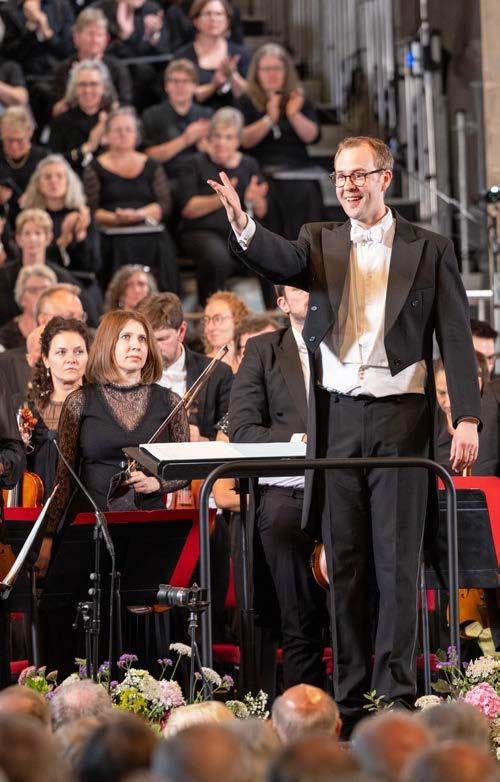
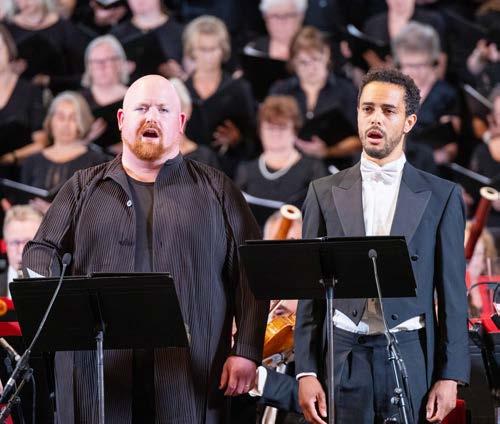
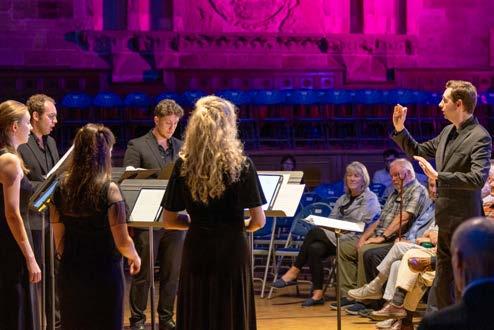
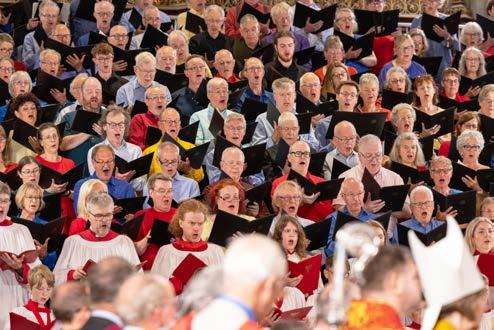
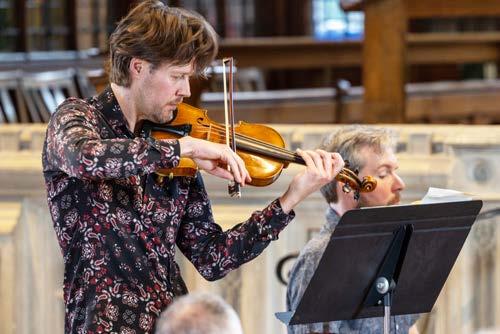
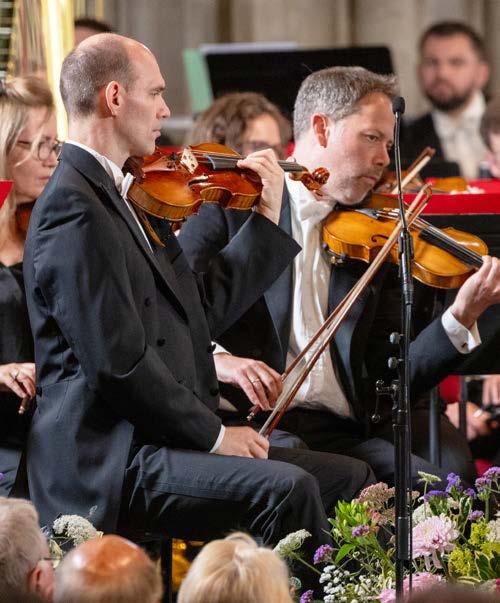
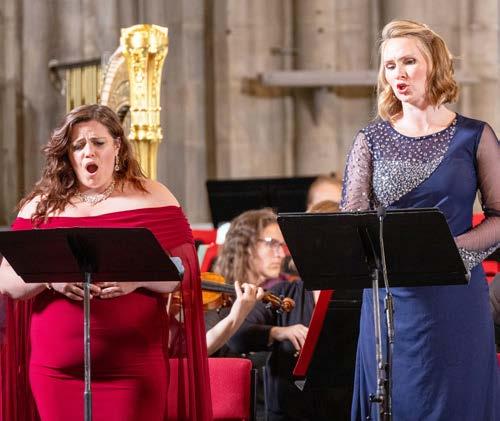
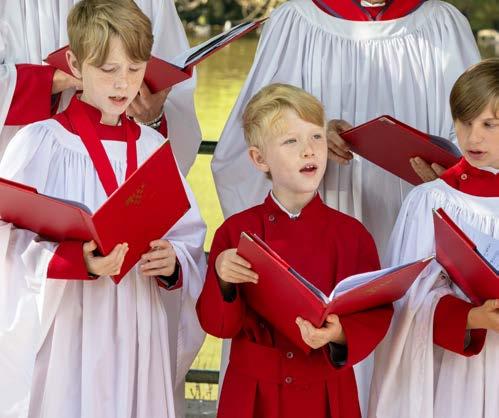
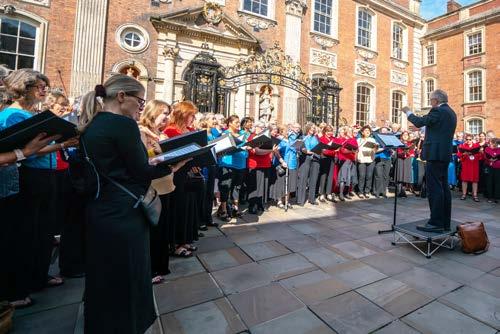
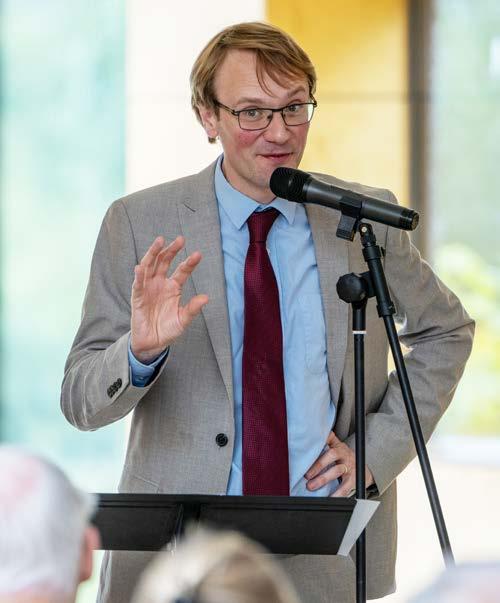
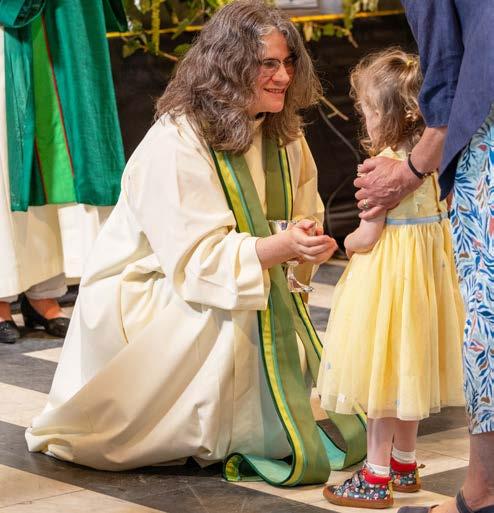
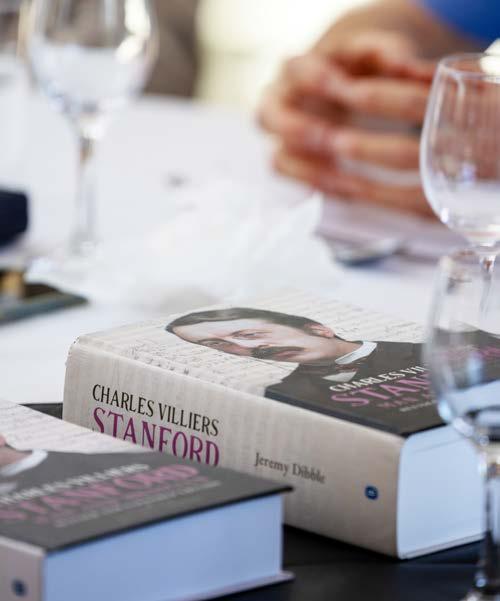
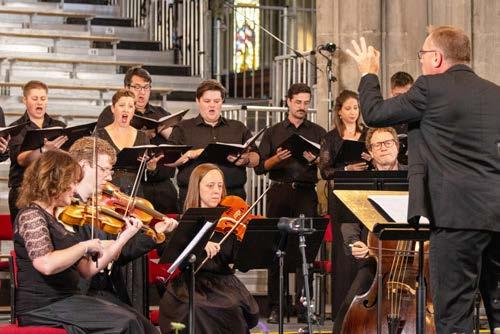
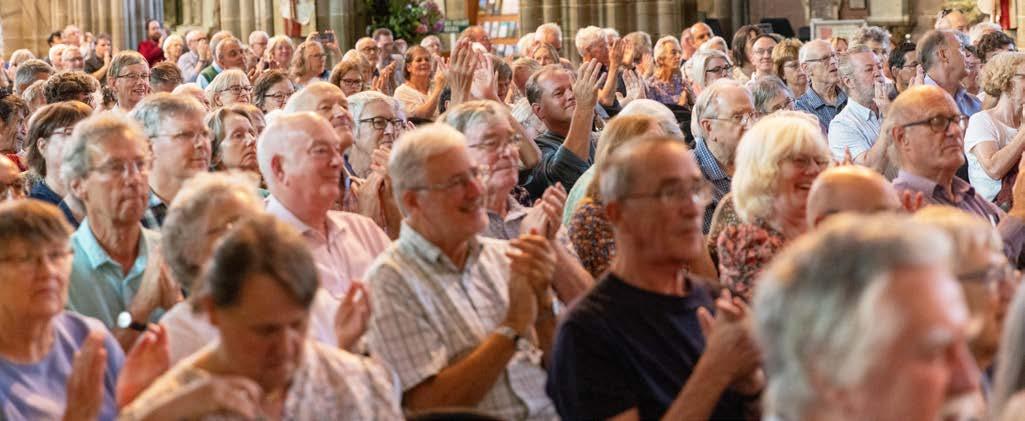
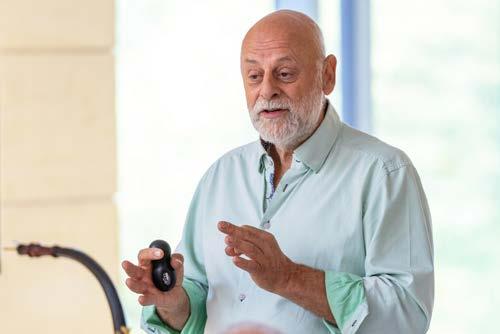
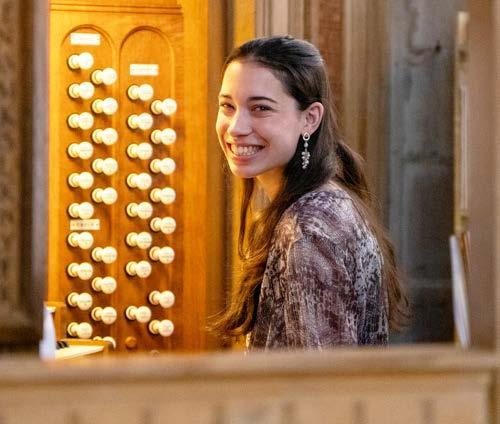
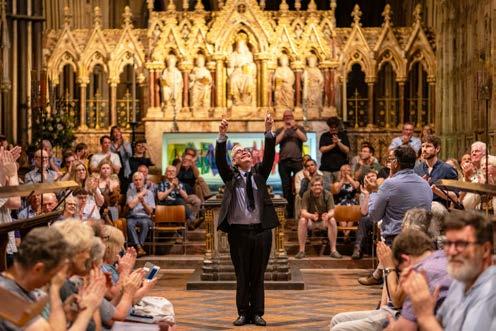
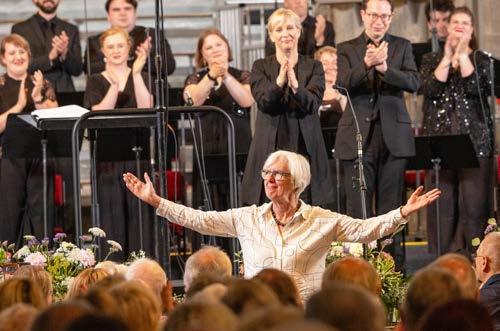
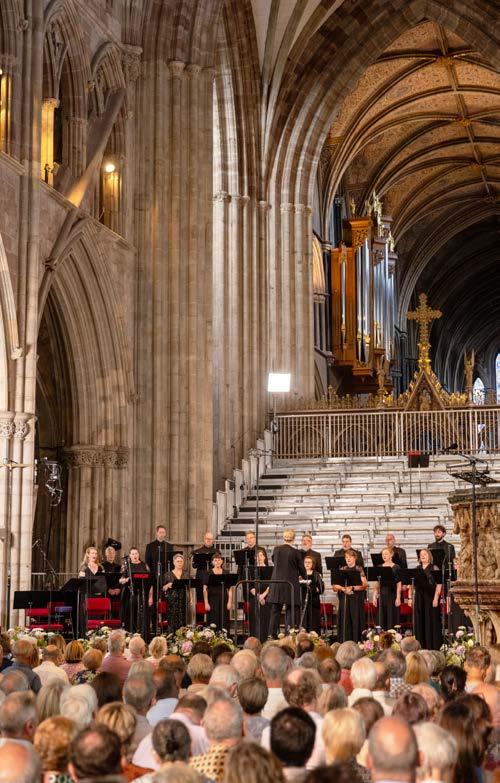
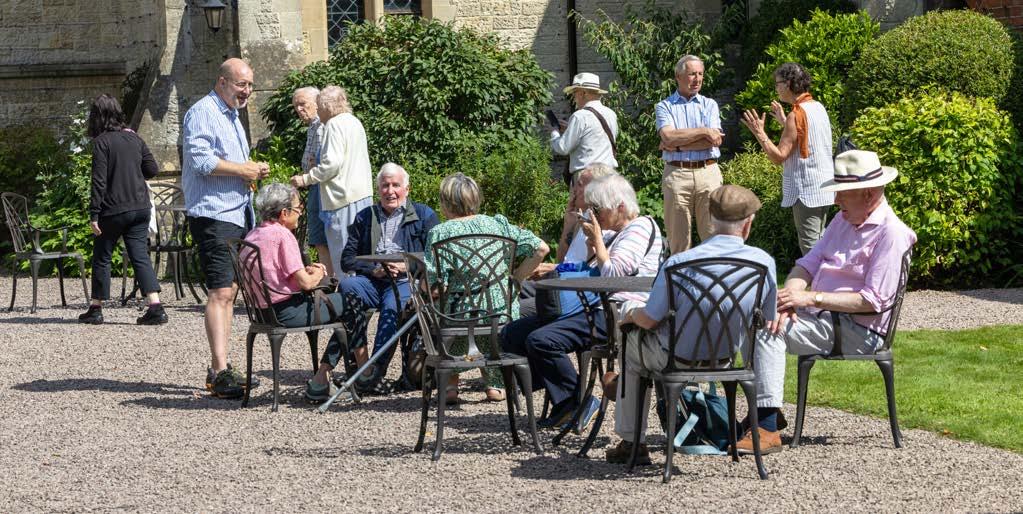
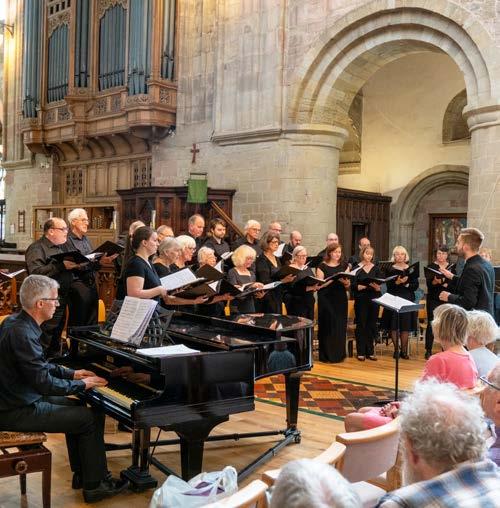
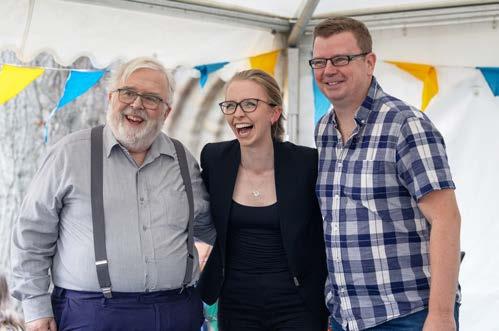
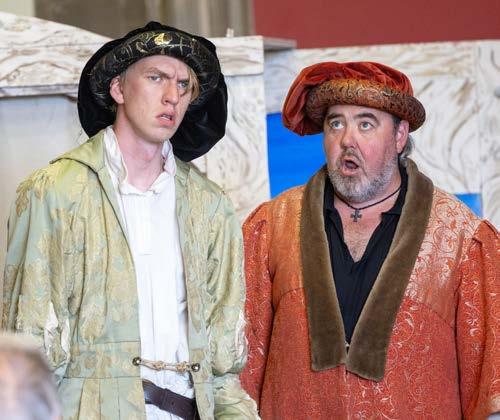
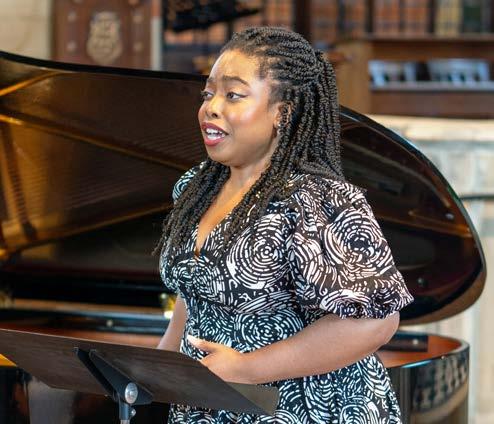
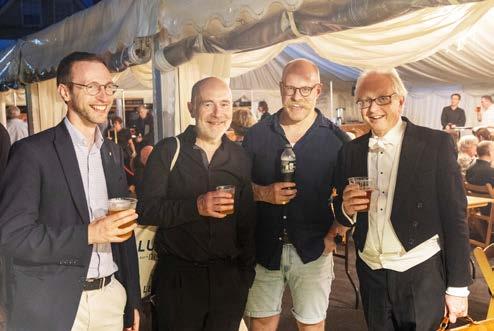
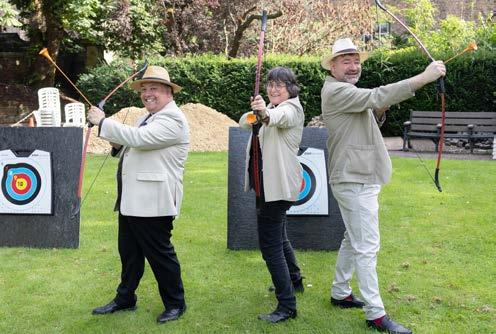
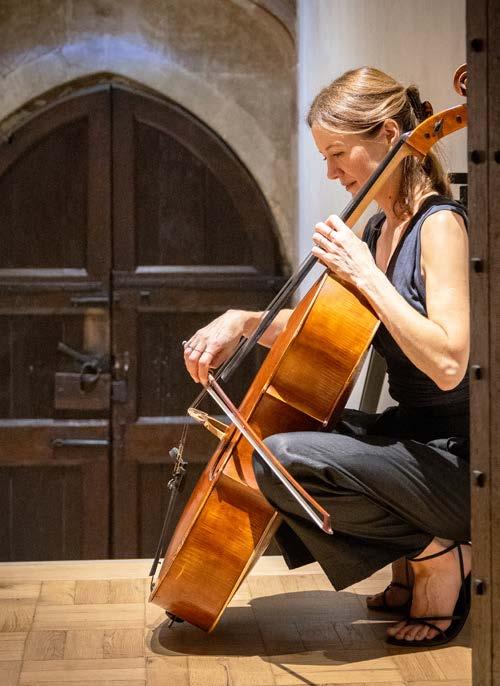
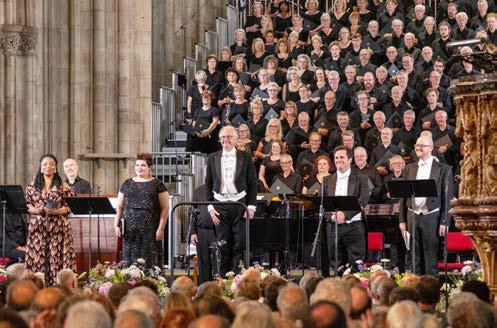
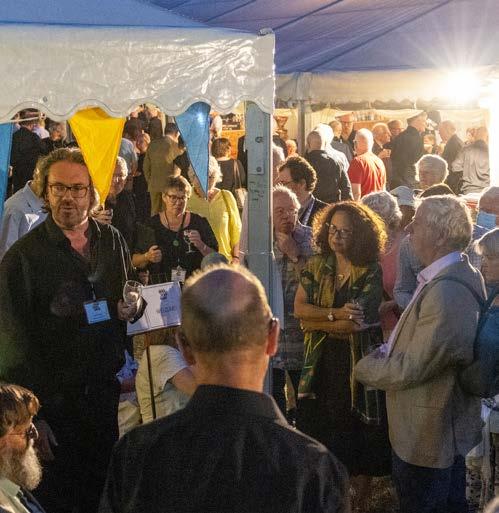
t is my pleasure to be writing the introduction to this edition of Spotlight following this year’s wonderful Three Choirs Festival in Worcester. As Festival Chair, I was particularly thrilled by the community spirit brought to life in the Festival Village and the opportunity to witness so many composers and professionals in classical music rubbing shoulders with our regular audiences throughout the eight days of world-class music-making – and we were blessed with glorious weather too! I think the Spectator summed the festival up wonderfully in their review – ‘Forget the Proms and Edinburgh –the Three Choirs Festival is where it’s at’.
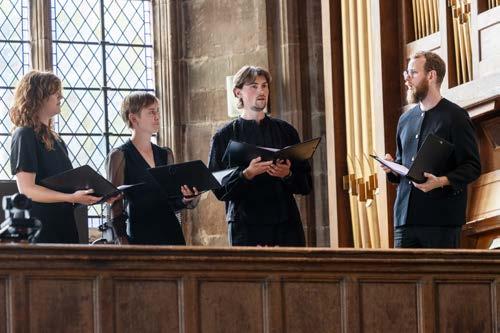
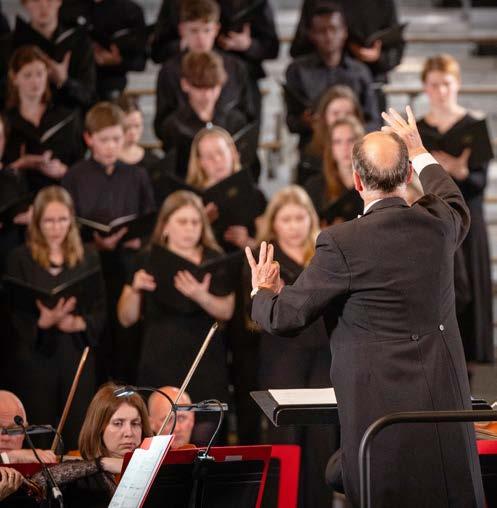
For me, some of the standout moments included Ian Venables’ Requiem beautifully performed by the Three Choirs Festival Youth Choir, In the Land of Uz by Master of
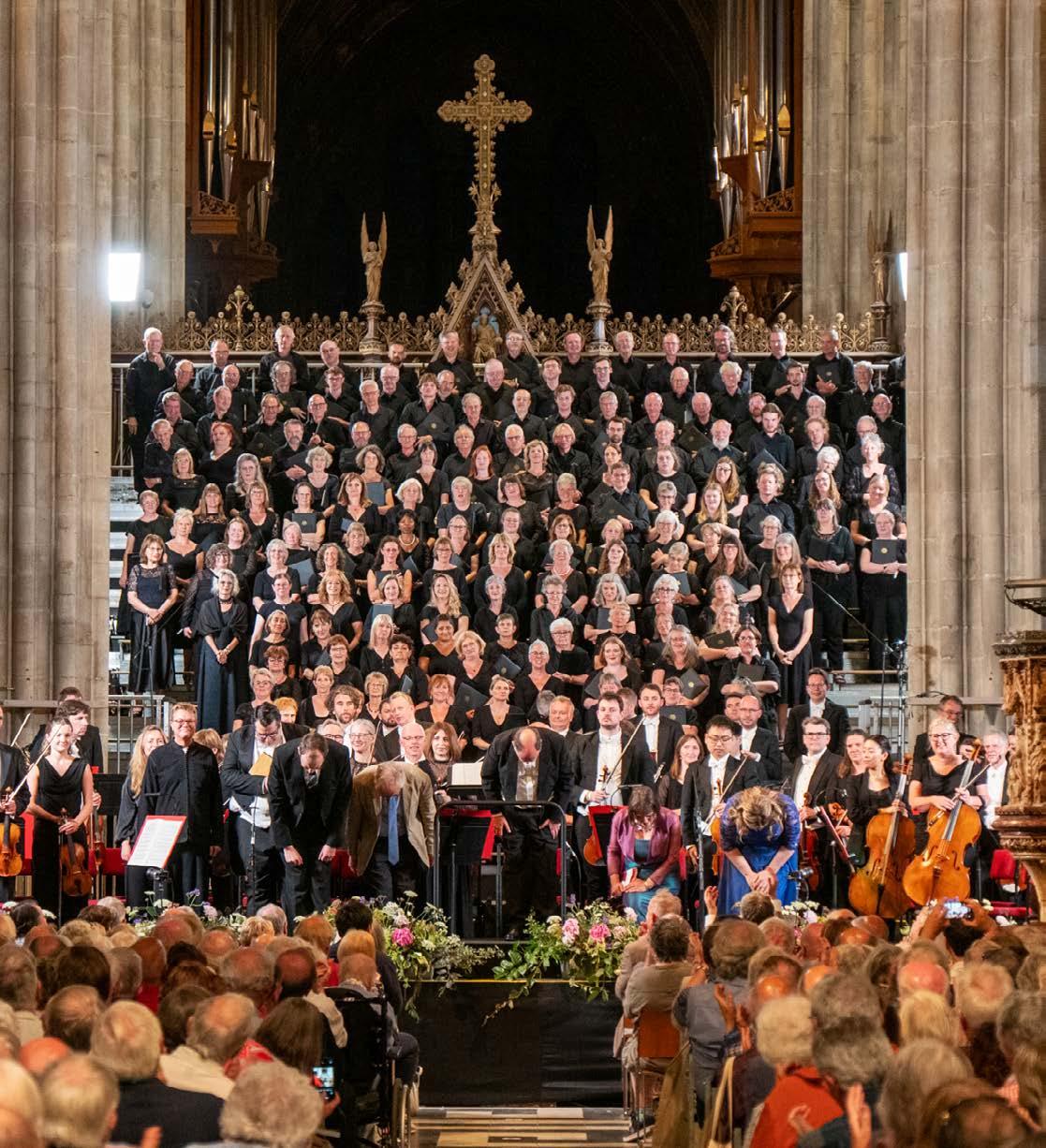
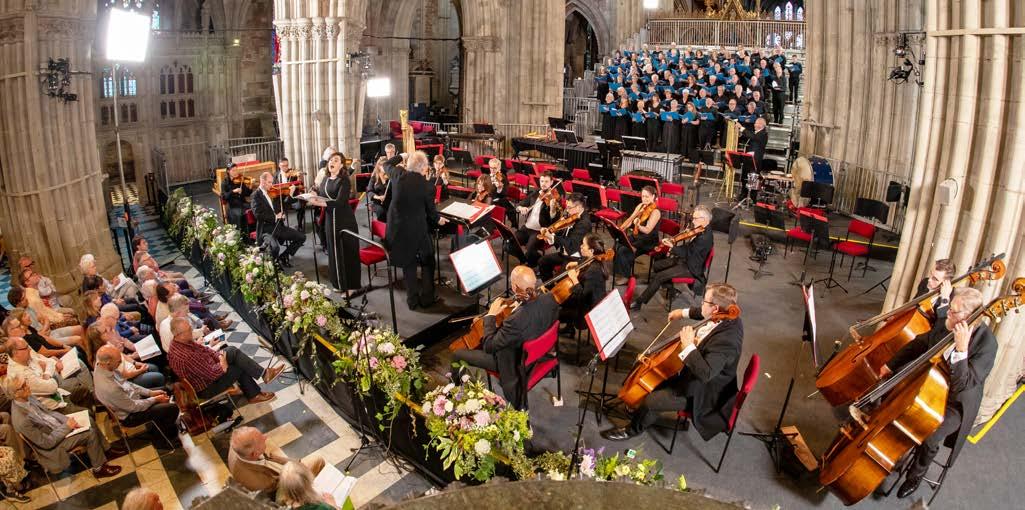
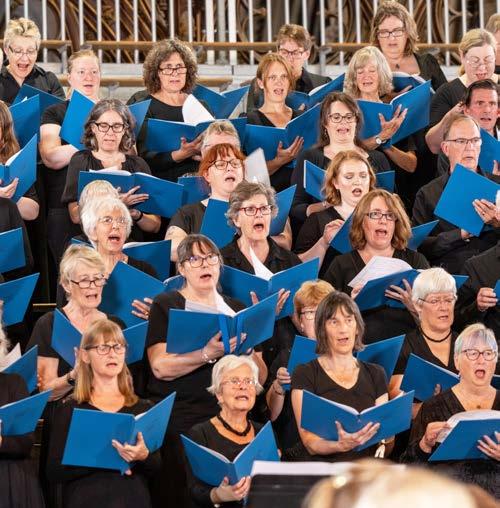
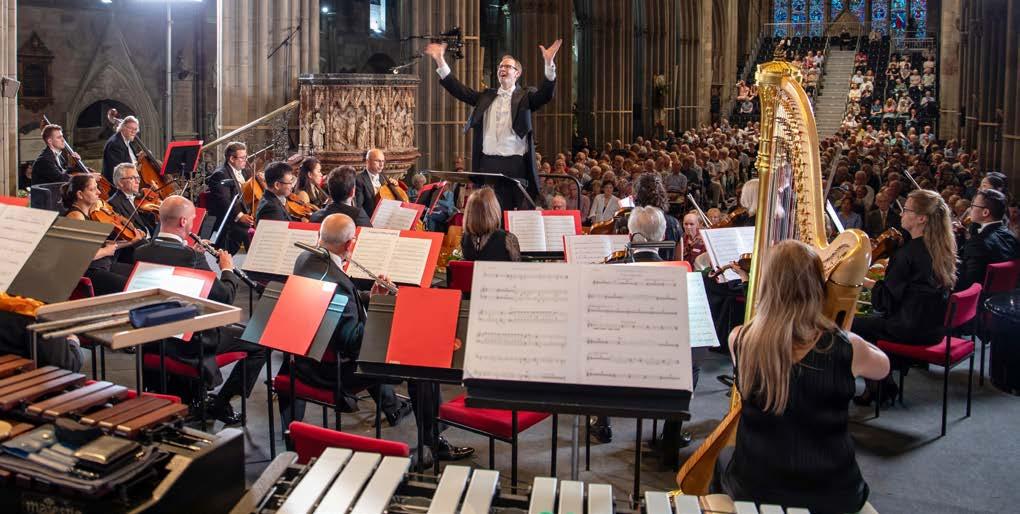
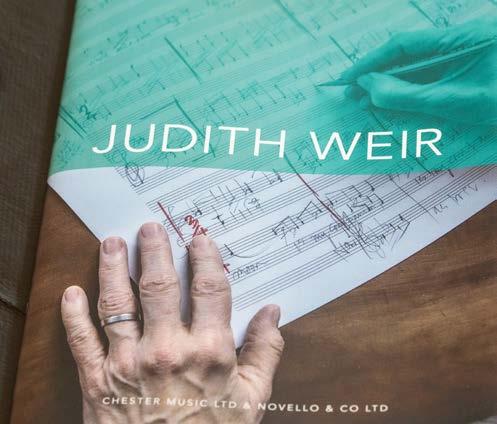
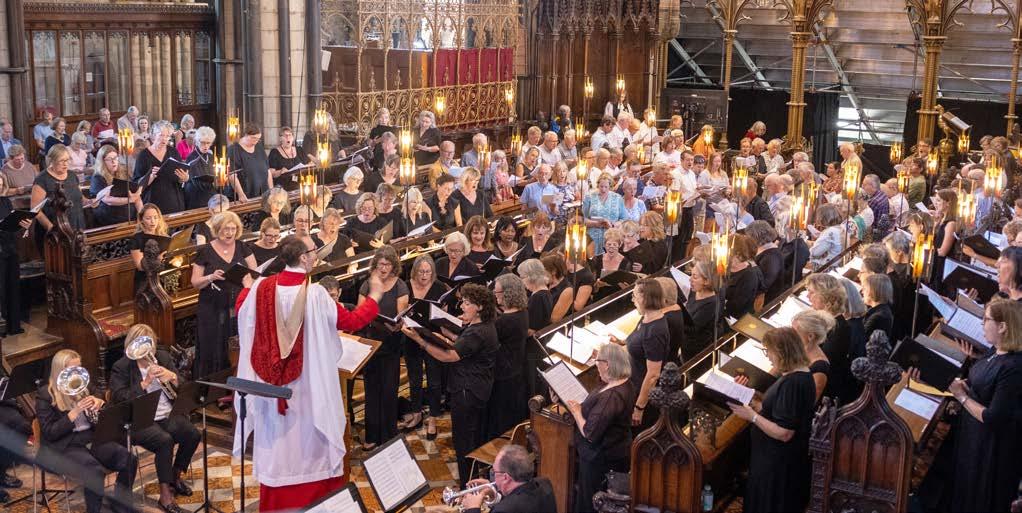
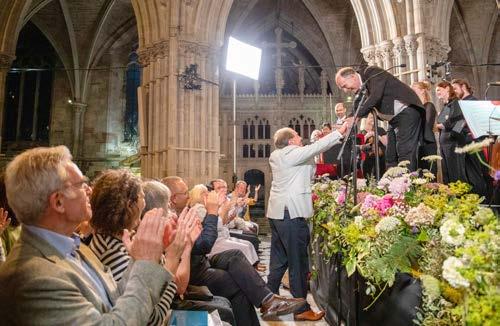
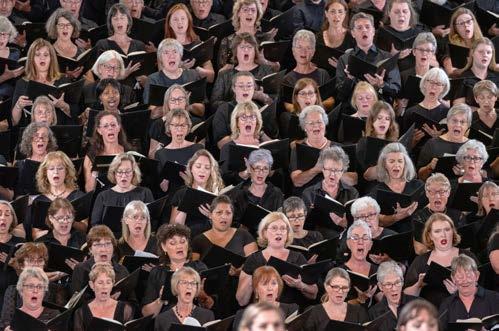
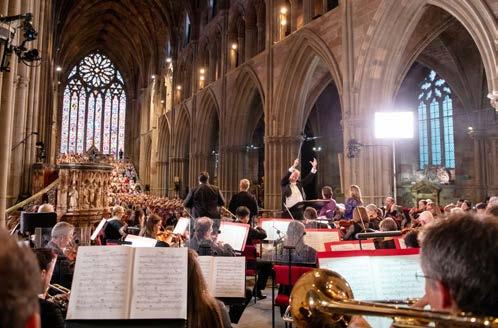
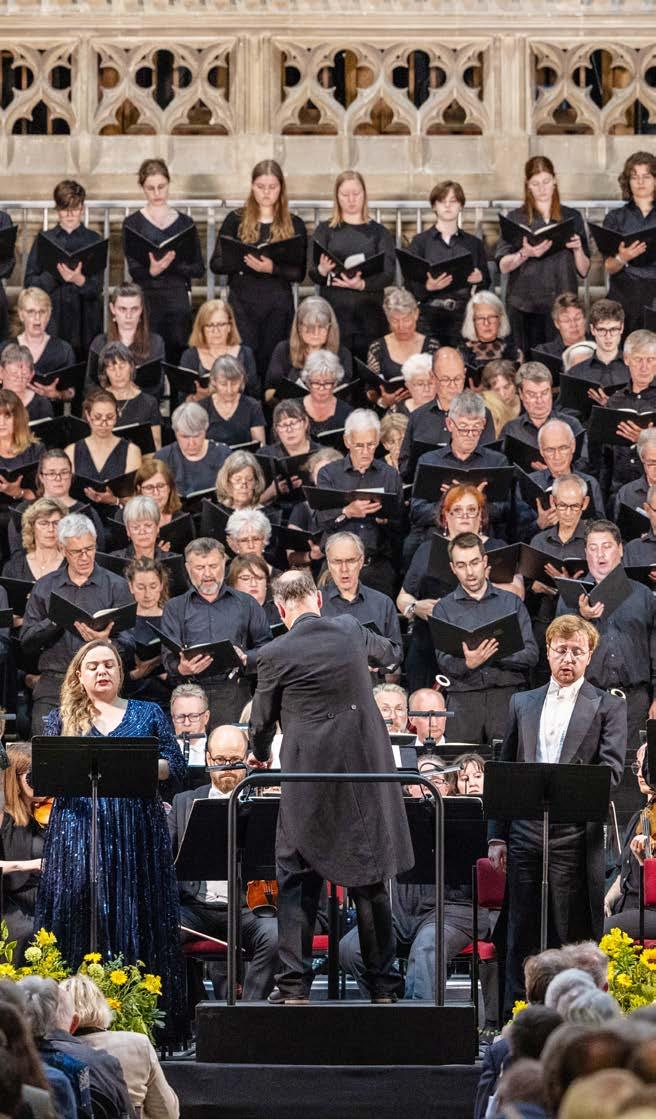
the King’s Music Judith Weir exceptionally executed by the BBC Singers and Worcester Cathedral’s Assistant Organist Nicholas Freestone, and the festival’s grand opening night featuring Holst’s The Hymn of Jesus and Stanford’s rarely performed Stabat Mater. This concert in particular created an unforgettable atmosphere showcasing the wonderful Festival Chorus and Philharmonia Orchestra, and was also enjoyed by our patron his Royal Highness The Duke of Gloucester, who attended two concerts at the festival this year.
Other highlights included Roger Sayer’s late-night concert at Worcester Cathedral featuring sounds from Interstellar, our Nature Sings participation project involving so many young people from across Worcestershire, and the Festival Chorus’s powerful rendition of Elgar’s
WELCOME
The Kingdom . The American Friends Evensong was simply a joy to be a part of, and highlights from the chamber series included The Forgotten Scarlatti and Byrd Takes Flight.
Composers Judith Weir and Bob Chilcott were present at the festival, adding a personal touch as they experienced their works performed live. The festival also launched Simon Carpenter’s new book The Three Choirs Festival in Ten Concerts, the first new book on the festival in over thirty years and a wonderful insight into some of the most iconic pieces linked to Three Choirs across its history. I want to congratulate Artistic Director Samuel Hudson and City Chair Ben Cooper, alongside the Three Choirs Festival staff and cathedral team, for putting together such a memorable, inspiring and enjoyable week of music.
The Three Choirs Festival moves to Hereford in 2025, where Artistic Director Geraint Bowen has put together a sumptuous programme including Mendelssohn’s fiery Elijah and new festival commissions from Richard Blackford and Bob Chilcott, alongside a celebration of the 150th birthday of Samuel ColeridgeTaylor, reviving his oratorio The Atonement.
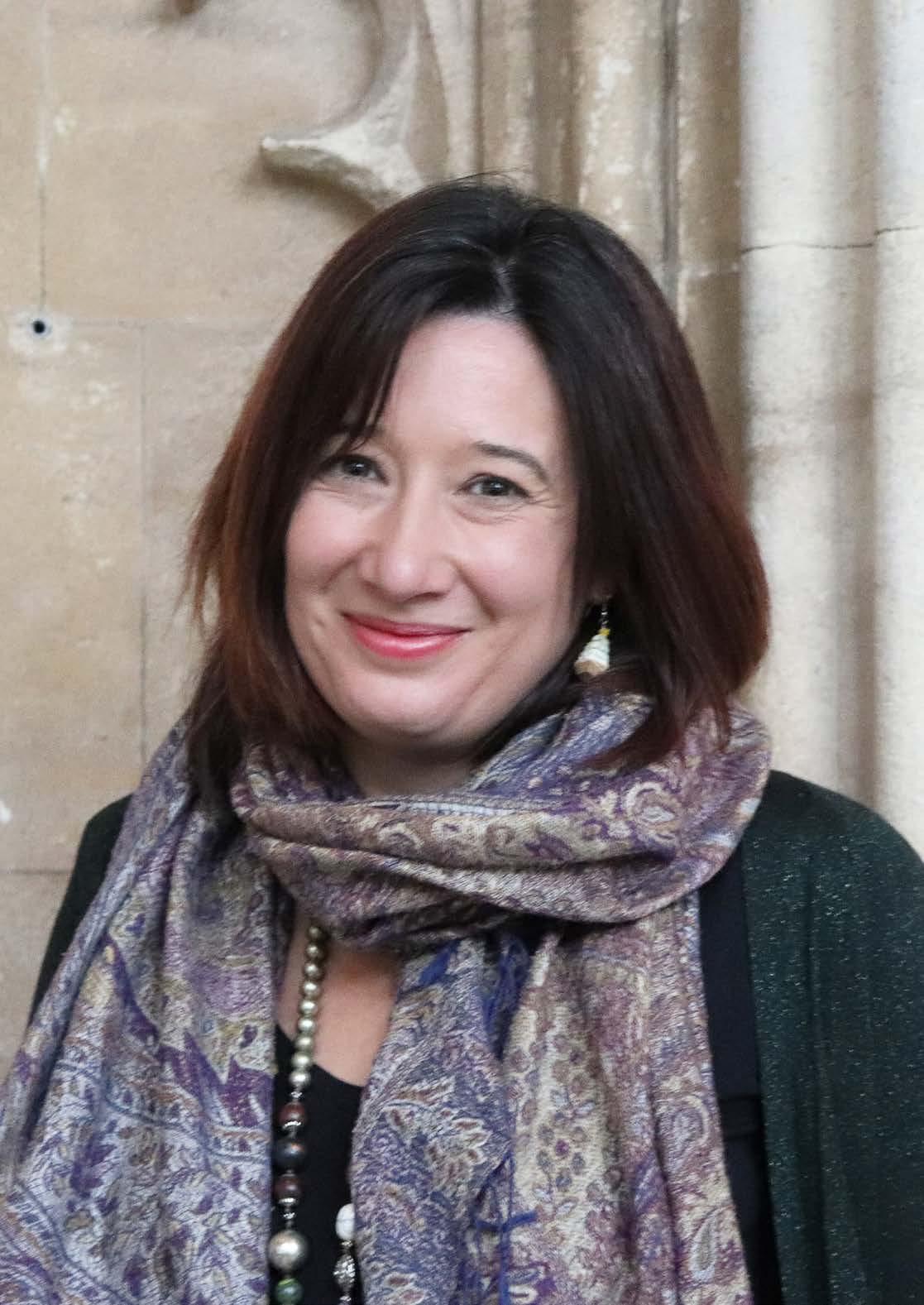
As well as our exciting new programme, the festival welcomes new Chief Executive David Francis, who joins the staff team this autumn and who you can read more about in the next edition of Spotlight. I also want to thank Dr Alexis Paterson for her passionate and dedicated work as Chief Executive of the festival for the last eight years, who has been pivotal in modernising and professionalising the festival.
Well, it first of all comes down to what makes any festival special; that is, that you take a particular place and you turn its everyday-ness into something extraordinary. And that can be through the scale of what you do, the artists you bring in, the way you connect with local communities or the people who come to it – often all of the above! A festival should
be a moment in the calendar that feels, well, festive – celebratory, enlivened, more than business-as-usual. I suppose the very particular thing about Three Choirs – aside from its longevity and some of the aweinspiring settings that you can hear this music in – is the way the whole enterprise is rooted in fraternity. The marriage of local and international performers, the collaboration between three counties, the musicians and composers who tease out and reimagine echoes of the past.
What have you had to do as part of the job of Chief Executive that you think people would be most surprised at?
Gosh, I think I could write a book about some of the rocks I’ve turned over in my time here and the various unexpected hurdles that cropped up! But a lot of that’s confidential and – inevitably in this cast of thousands that brings the festival to life – involves people. My job, and the job of the whole team at one level, is to try and give the impression that everything is going exactly according to plan during a festival. Swans paddling below the surface spring to mind! Obviously Covid and the ensuing lockdowns threw up a lot of unexpected challenges and demanded some quick learning. While the rest of the team was furloughed there probably wasn’t any area of planning and delivery I didn’t get involved with at some point, although I was fortunate that my career prior to TCF had given me at least some experience of all of those areas. Often when I talk to people, the thing that surprises them the most is how emphatically year-round and full-time planning a festival is. And that, again, is true for the whole team. Planning a festival is like a complex set of cogs all turning at different paces, so in any given week you’ll be tackling things that relate to the next day, the next month, and almost
three years into the future! On a lighter note, I suppose some people might be surprised to learn that I quite enjoy those mid-festival moments where I’m the person best able to step in and ‘get hands-on’. I rather enjoyed, for example, a last minute shift on bollard-duty after a volunteer didn’t arrive in Hereford, and I’ve always loved hopping behind the bar at the afterparty – it’s a great way to say thank you to everyone who’s worked so hard to deliver the festival individually.
What has been your favourite or most memorable moment at the festival?
It’s hard to point to a single one, but it’s always the moments where you feel something has really landed with people – you see a big smile on someone’s face and you know it’s meant something to them. One of the most memorable moments in that respect will be those bars where the chorus entered at our 2021 opening night performance of The Music Makers, and, later in the week, that beautiful solo cello reprise from [the Philharmonia’s] Tim Walden in the Enigma Variations. I don’t think there was a dry eye in the house! But the future of music making also really matters to me, and so those extraordinary opportunities for young people and those who have more limited access to the arts I also
really value: our first extended, integrated and intergenerational project in What the Lark Saw, and the incredibly moving performance of Last Train to Tomorrow; the buzz in the festival village this year as I watched performers and audiences mingle with composers aged 1770+ thanks to our relationship with the ORA Singers and the launch of the New Voices Academy, and – possibly my stand out of all of them – the huge critical and audience success of the rarity which is Vaughan Williams’ A Pilgrim’s Progress. It took over three years of planning to bring that to fruition, after I had a chance conversation in Leeds with the then CEO of British Youth Opera. We both had to tackle a certain amount of reluctance in our respective organisations about giving over all of the principal roles to young people, but I think it was a triumph, especially with Charlotte Corderoy’s deft conducting. Anna [Patalong, who’d by then taken over the running of BYO] and I had to argue really hard for the inclusion of a then relatively unknown conductor – an alumna of both organisations – into such a prestigious performance, but I’m so glad we persisted. I think her subsequent success is proof of how important it is to give our next generations the opportunity to shine.
What have been your challenges working at the festival?
I’m sure it won’t surprise anyone to learn that finance has been the biggest headache from start to finish. I – along with our Head of Finance, Roger, and various Board members – have put hours and hours into building a robust financial reporting system for the organisation, and we have a much clearer picture these days about how the organisation’s money is spent and where it’s likely to come from. But that in itself isn’t an antidote to an incredibly challenging funding picture across the Arts. You’ll all have seen the news of festivals and Arts organisations
closing or finding themselves in dire straits. TCF is in the same boat, but thankfully a lot more robust, thanks to a cushion of legacies and reserves. Recovery has been slow –audiences were much slower to return than anyone expected, and fundraising was cut from all traditional sources. Coupled with this, since I began in 2016 some of the key costs for our flagship activity (choral music in cathedrals) have doubled (in once case nearly tripled), and we can’t increase ticket prices to keep pace with that. I know that it’s hard to look out over a packed cathedral and believe that that particular event is losing money, but it’s true. The costs of rehearsing a chorus, bolstering with lay clerks, bringing in a top-flight orchestra and soloists and then hiring a cathedral that we effectively convert into concert-hall-range staging, seating and lighting, is huge. There are fluctuations of course – each cathedral has a different capacity, the calibre of soloists or choice of repertoire can make a huge difference – but each evening concert with chorus and orchestra requires thousands of pounds of donated income to break even. Think back, for example, to that absolutely packed Dream of Gerontius in 2017. That was before a lot of prices were hiked, and it’s the largest capacity/highest yield space. Yet to be just cost-neutral to stage, it would have needed around £40,000 of sponsorship behind it. Seven years on, the infrastructure costs alone (cathedral hire, staging, lighting, seating) will have added a couple of thousand to that on every single festival night. That’s one of the reasons we’ve been experimenting with formats and smaller scale works – they tend to need less support to break even – and why I’ve put a lot of effort into building up the daytime and non-cathedral programmes. They attract a much better audience now, and help to contribute to some of the core costs of running the organisation. These brilliantbut-expensive events must, of course, always be at the heart of the festival, but fundraising
and some adaptability when it comes to the shape and delivery of the festival are going to be persistent challenges for all Arts organisations working at this scale.
What do you think will be your legacy at the festival?
That’s for others to decide. But I hope there are things I’ve started that will continue – a programme of family events, the New Voices Academy, pipeline development for both the Chorus and Youth Choir (although it’s imperfect at the moment, I hope Festival Voices and its junior equivalent might achieve this in time). Most of all, I hope that the festival will maintain the increased industry profile it has held in recent years. I got asked often when I joined why I wanted to work for such a provincial, dated, cliquey organisation. It wasn’t any of those things, of course, but I like to think that we’ve shown more of the world that that’s the case in these recent years. This year’s Spectator headline was testament to the fact that the festival’s reputation has a buzz about it that has maybe been lost at times, and long may that continue!
What are you most excited about in the future?
For myself or for the festival? Well, for me, I’m excited about my new role. And I hope I might see a familiar face or two in Oxford when the building comes to life in 2026. There’s some really exciting work in the pipeline. But for the festival, I suppose a lot of what I dream for the future of TCF is encapsulated in the answers above. Looking forward, working to make being a part of this incredible enterprise something that feels possible for as many people as possible. For someone’s grandchild to be able to look back at TCF in the 22nd century, pull out a programme, and point to the premiere they heard a tale about while they settle in to listen to it on Classic FM’s Hall of Fame or somesuch, because we’ve supported the Vaughan Williamses and Elgars of the future. I hope that classical music will always be something people turn to for comfort, joy, catharsis, hope, wonder. After all, why else are we doing it?
Alexis is now the Senior Music Programme Producer with Oxford University’s Cultural Programme, ahead of the opening of the new Schwarzman Centre in 2025.
Look out for an interview with incoming Three Choirs Festival CEO David Francis in the December issue of Spotlight.
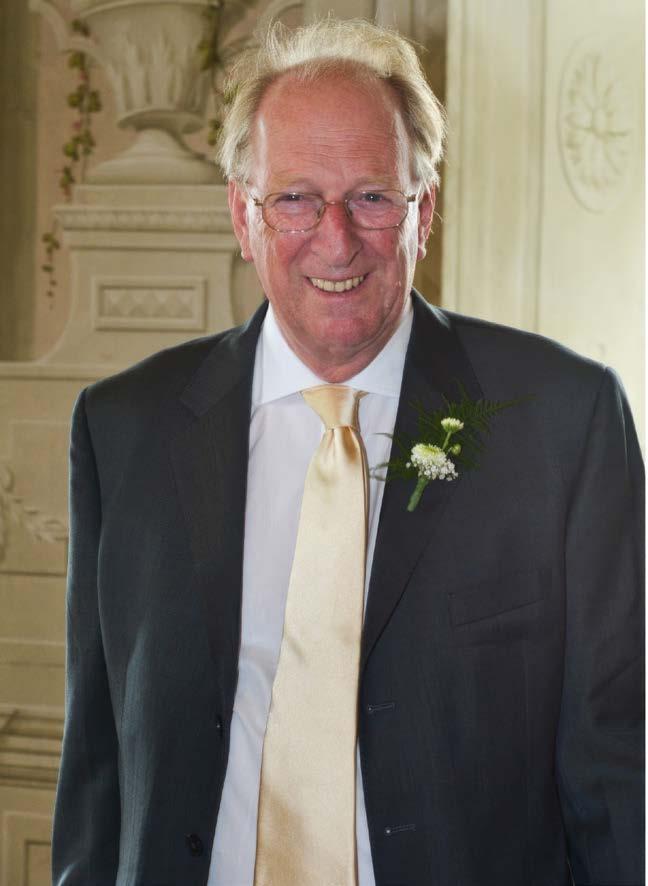
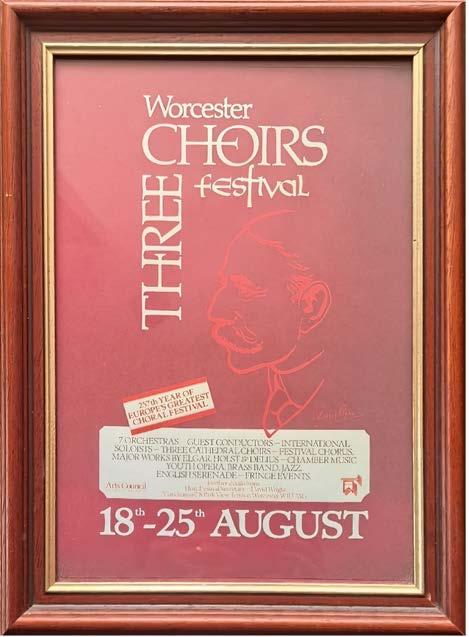
Dad used to say that the greatest achievement of his life was seating two thousand people in Worcester Cathedral ready for the Opening Ceremony and performance of The Dream of Gerontius, filmed by the BBC, on Saturday 18 August 1984. It seems unbelievable in these days of health and safety legislation that an audience of that size was allowed in the cathedral – I can remember Dad squeezing seats into every possible space – to say nothing of a chorus nearly twice the size of today’s. Yet those of us who were there (15-year-old me was in the audience with Dad, while Mum and my chorister brother Chris were singing) lived to the tell the tale. If you were one of them you probably remember that night, and indeed the whole festival, which commemorated the 50th anniversary of the deaths of Elgar, Delius and Holst, as a very special one.
Dad was the only member of the family who couldn’t sing, but he was a brilliant administrator who instead made it possible for other people to sing, play, and enjoy music. He had been closely involved in the concert world of the cathedral as Chairman of Worcester Cathedral Arts in the late 1970s, and Three Choirs was probably a natural next step. Mum had been singing in the Festival Chorus for some years, and the festival was a major feature of the Wright family calendar.
Before there was a professional office, each festival was run entirely by volunteers in the host city. Dad used to laugh that when he was Festival Secretary there was him, the Chairman Sam Driver-White, and Treasurer Peter Seward running the show, while working full-time in business; Dad even made time to serve on the City Council as well. I don’t know where he found the energy. He would come home for tea and then head straight back to the office to spend the evening working on Three Choirs. We hardly saw him.
Poster advertising Worcester 1984
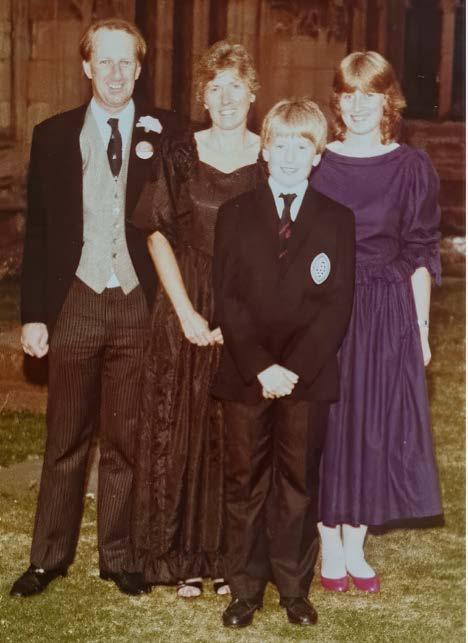
The Wright family prior to the performance of The Kingdom on 25 August 1984 David, Gill, Chris and Alison
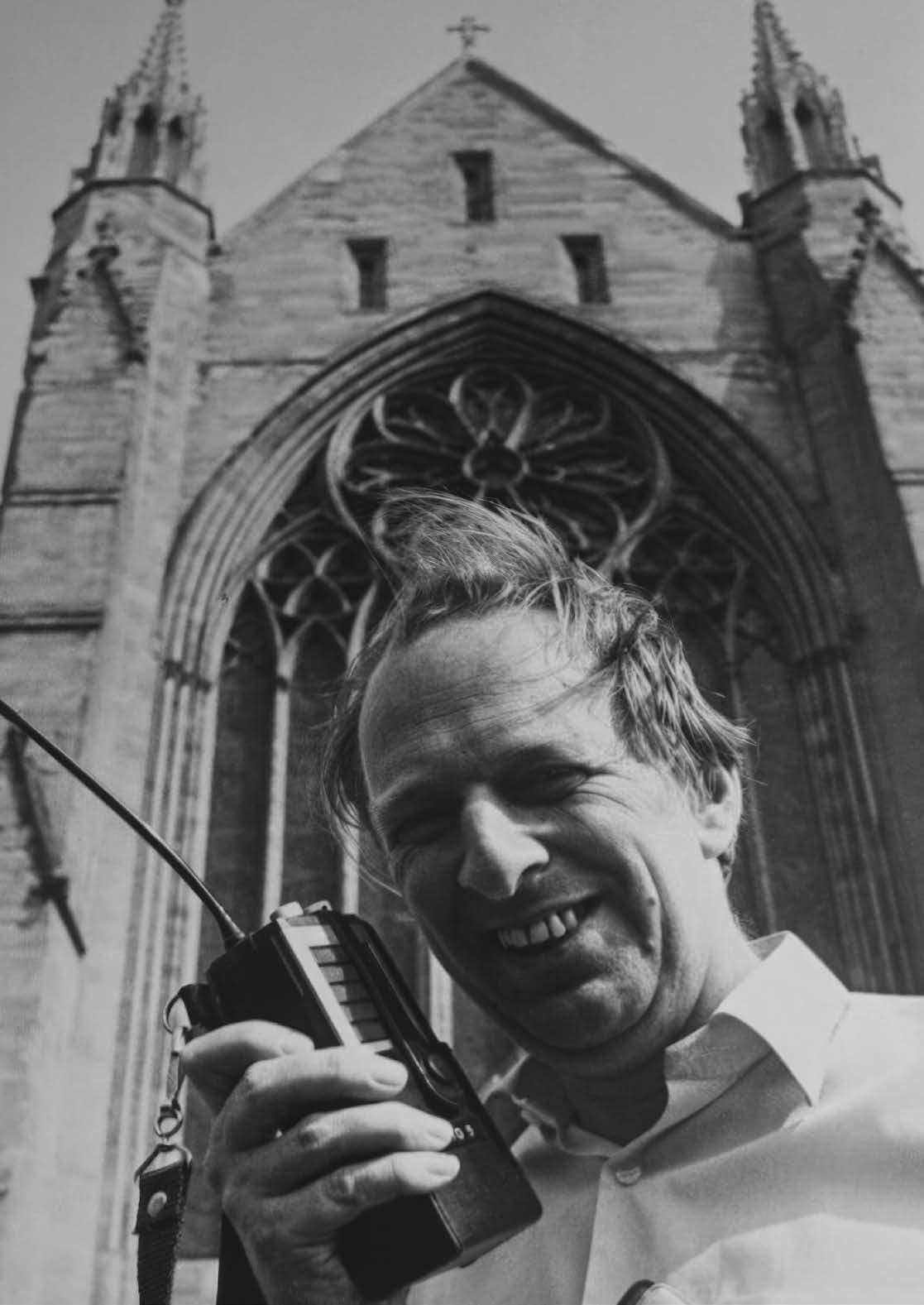
Dad loved all the rushing about, chaos and problem solving of festival week. I remember having a go with his walkie talkie – incredibly exciting in the days before mobile phones – and it worked all the way to All Saints’ Church! He was less keen on having to do the rushing about in what he called his ‘penguin suit’ –compulsory dress for festival staff back then. He looked very distinguished though.
I don’t remember Dad resenting all the time Three Choirs demanded, although I do recall him suggesting, prophetically, that the Secretary role would become a paid
post. Three Choirs did stray into the day job – it’s no coincidence that Dad was succeeded as Festival Secretary by one of his office secretaries, Jean Armstrong! –and I expect he decided that this couldn’t continue after 1987.
Dad remained devoted to the festival to the very end of his life. He insisted on buying tickets for Worcester 2024 despite his illness, but sadly didn’t live to use them. We invited donations towards the festival at Dad’s funeral, and over £1100 was donated towards the performance of his favourite Elgar oratorio The Kingdom, which was given in his memory.