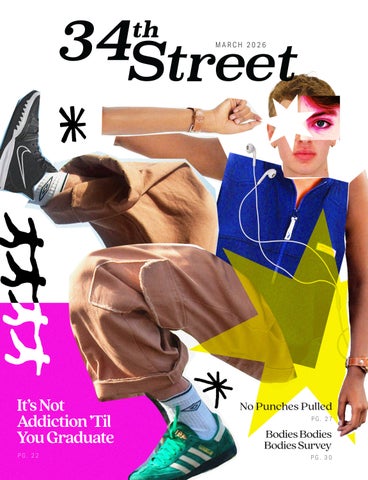
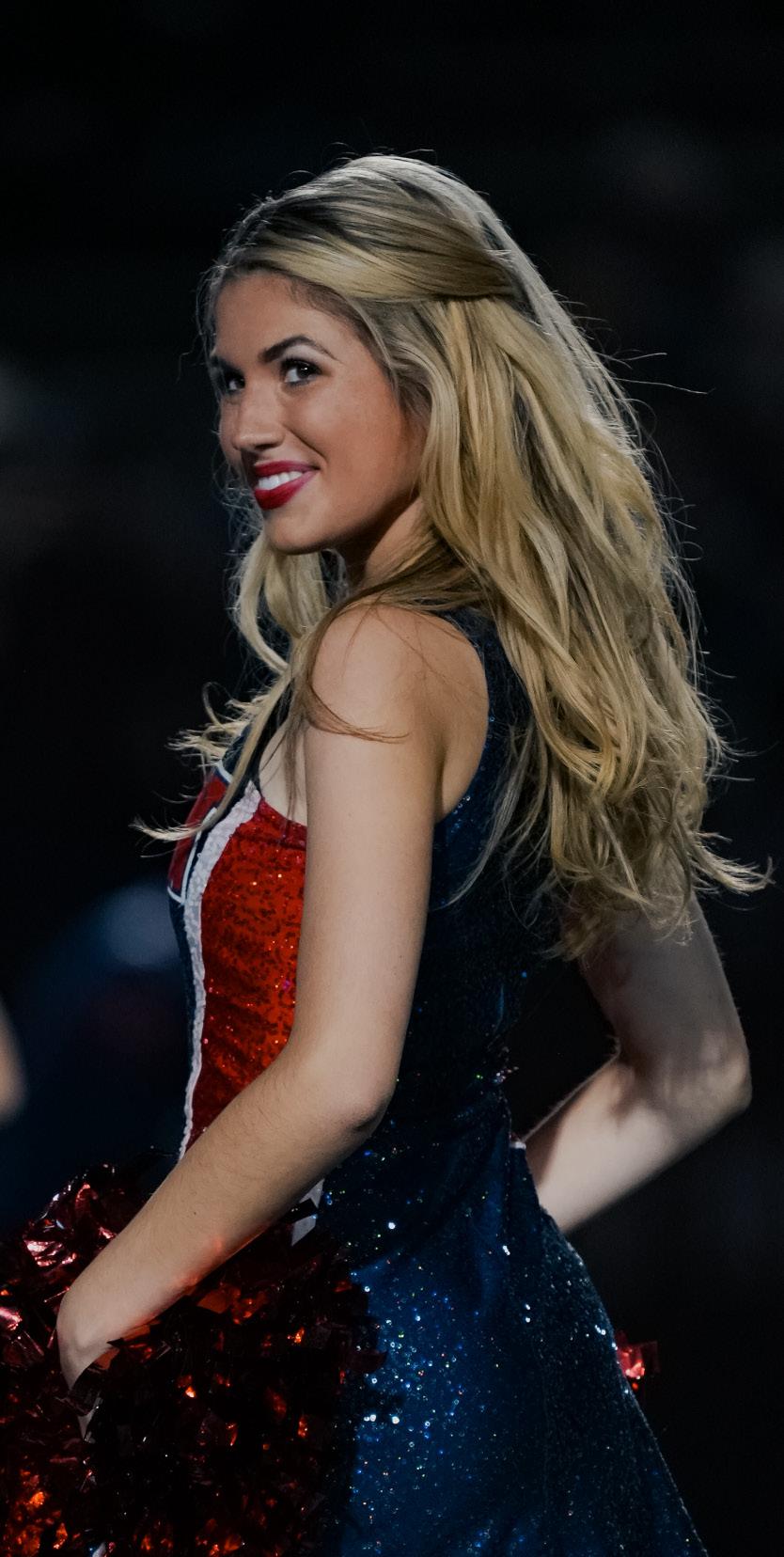
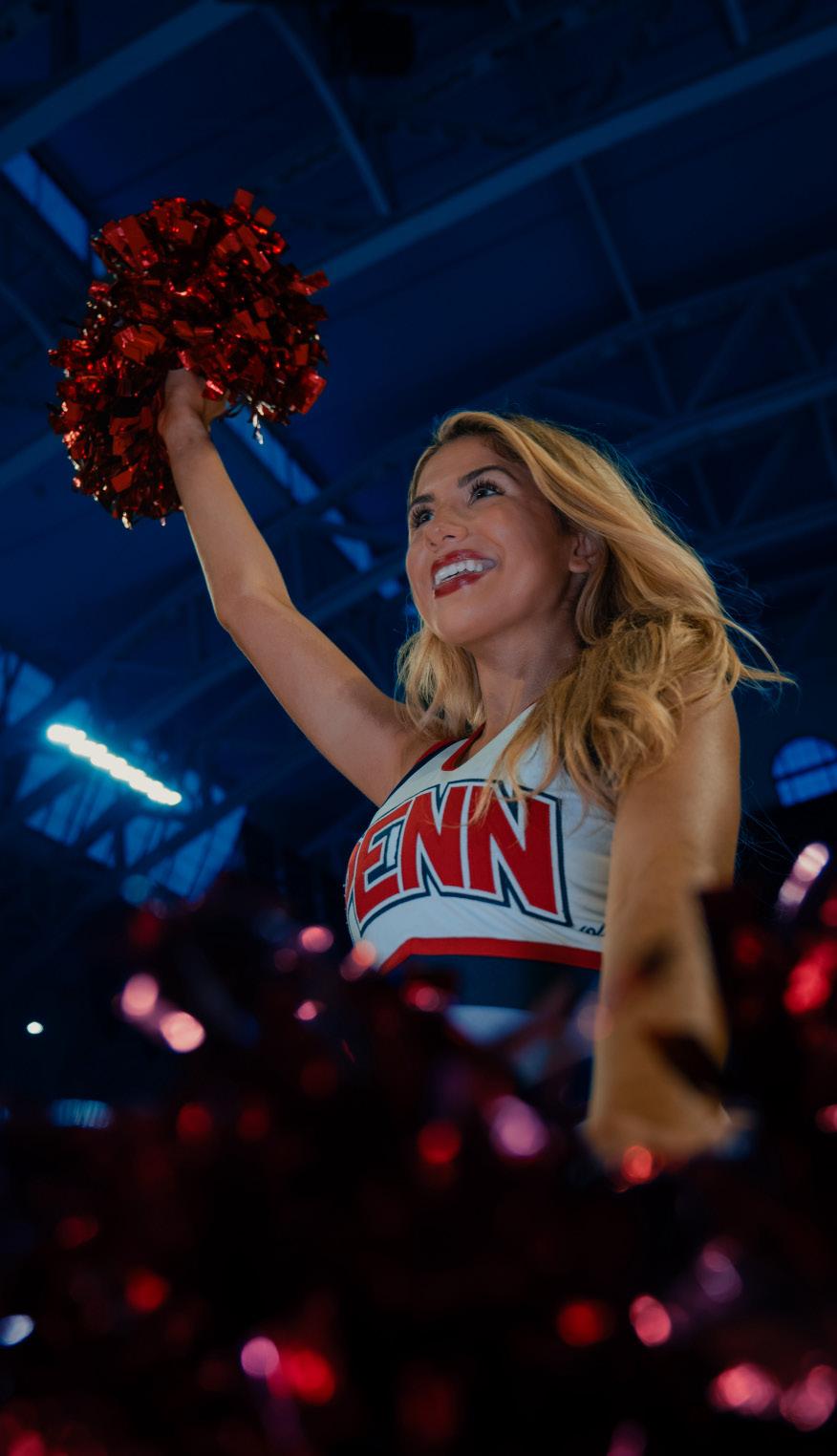
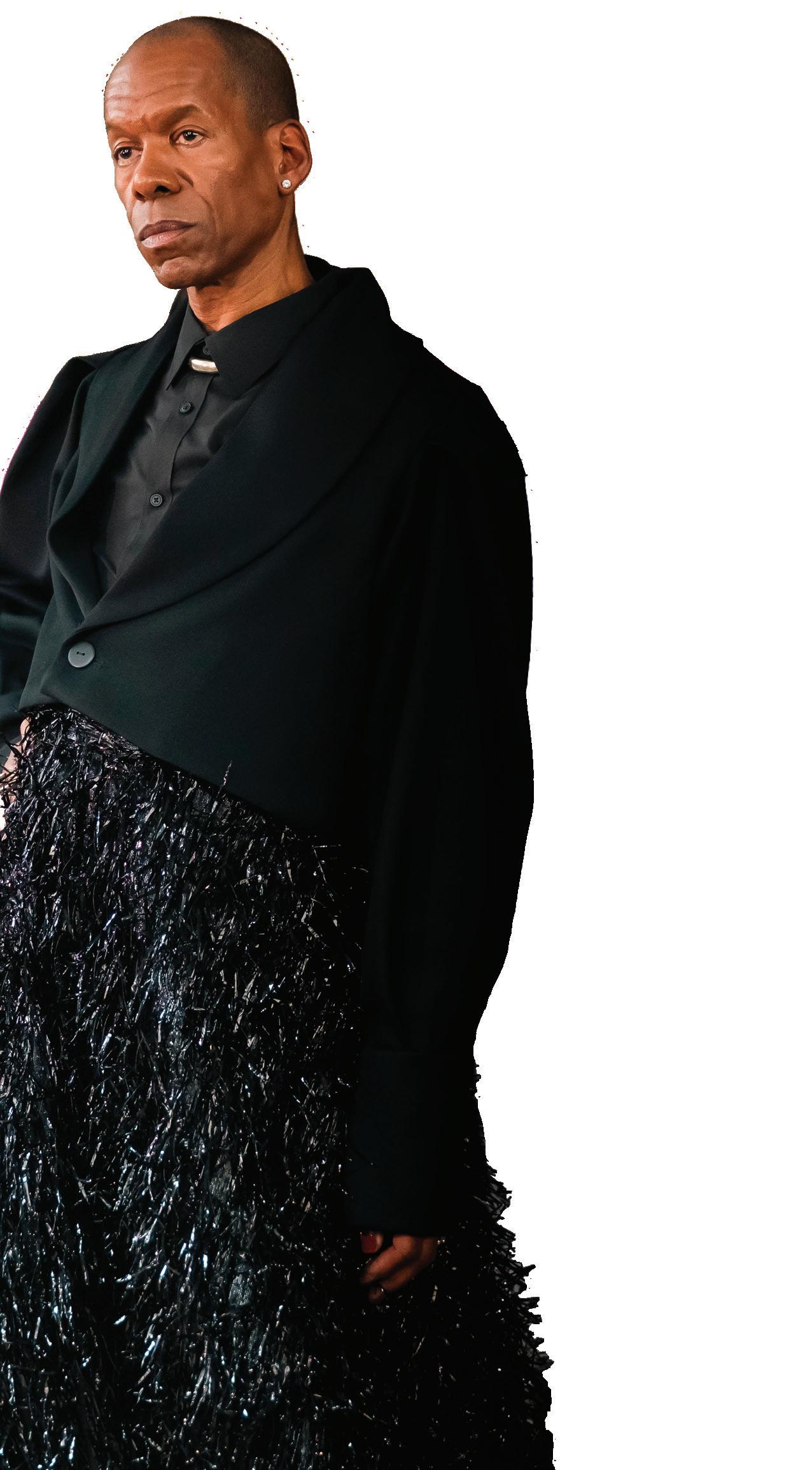
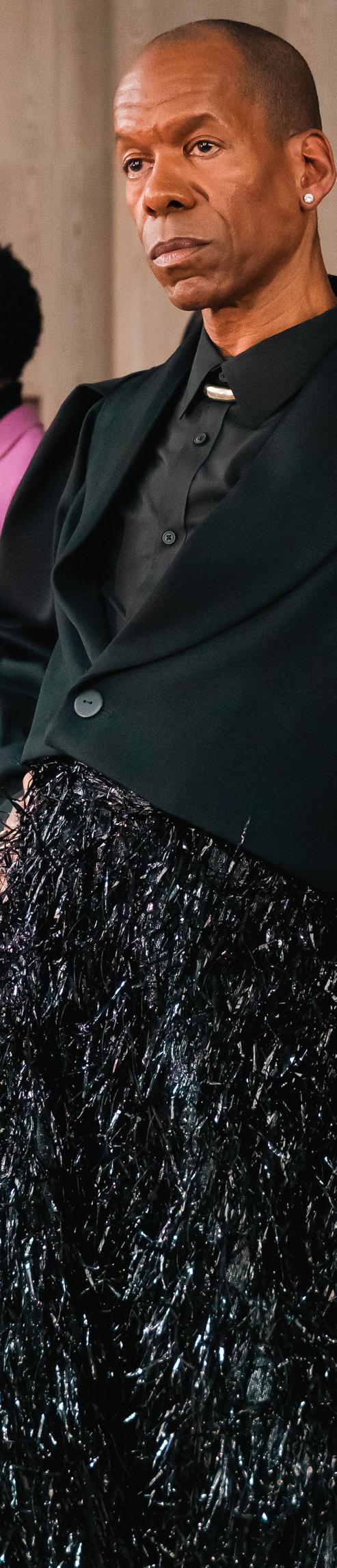
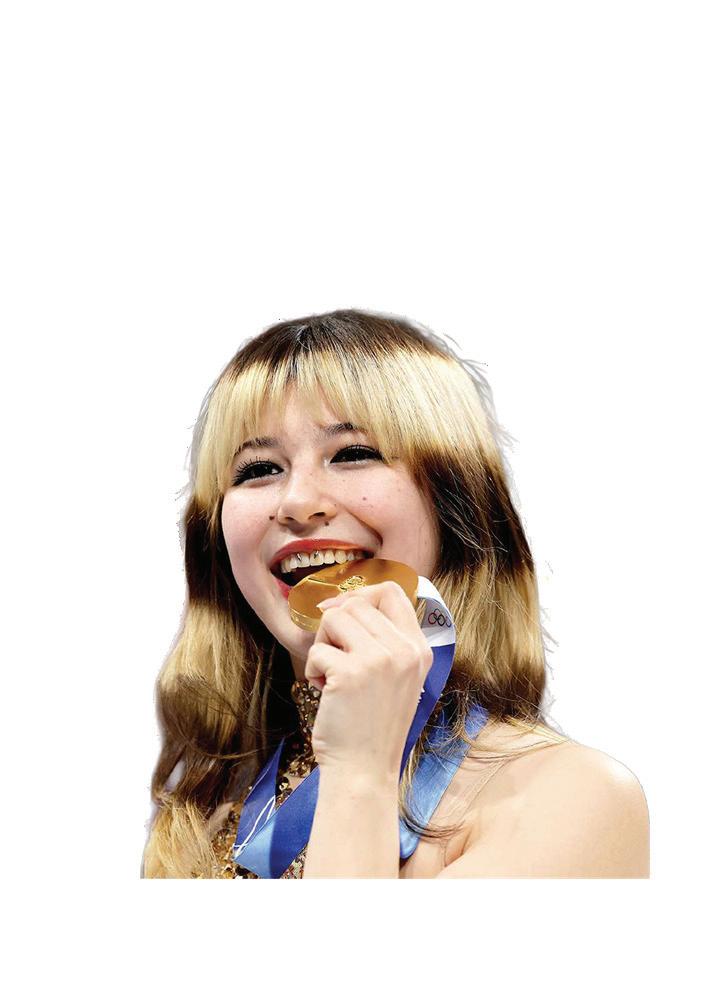
Stephanie Skinner is no stranger to the weight of the crown.
12
Gazing Into a Very Chinese Mirror
What happens when The Beautiful Country shows its pores?
18
The Body Never Lies
From “final girls” to forced birth, horror films track America’s shifting anxieties about women, reproduction, and control.
27
No Punches Pulled
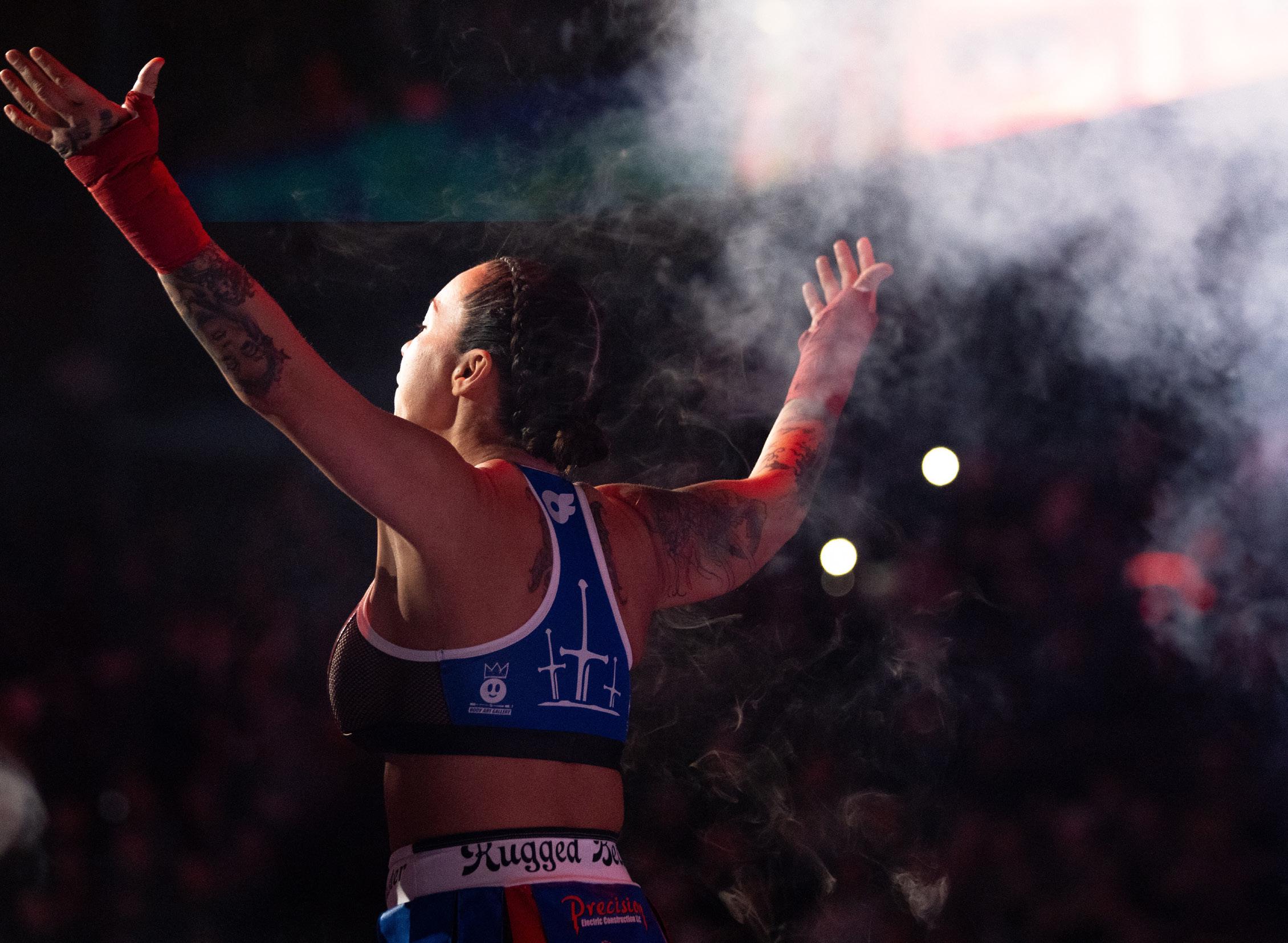
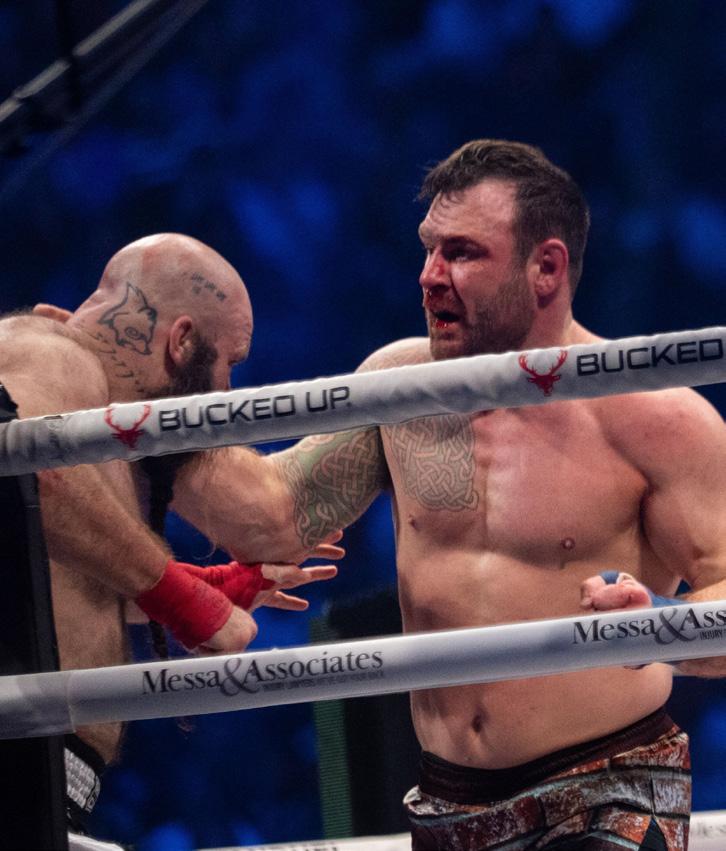
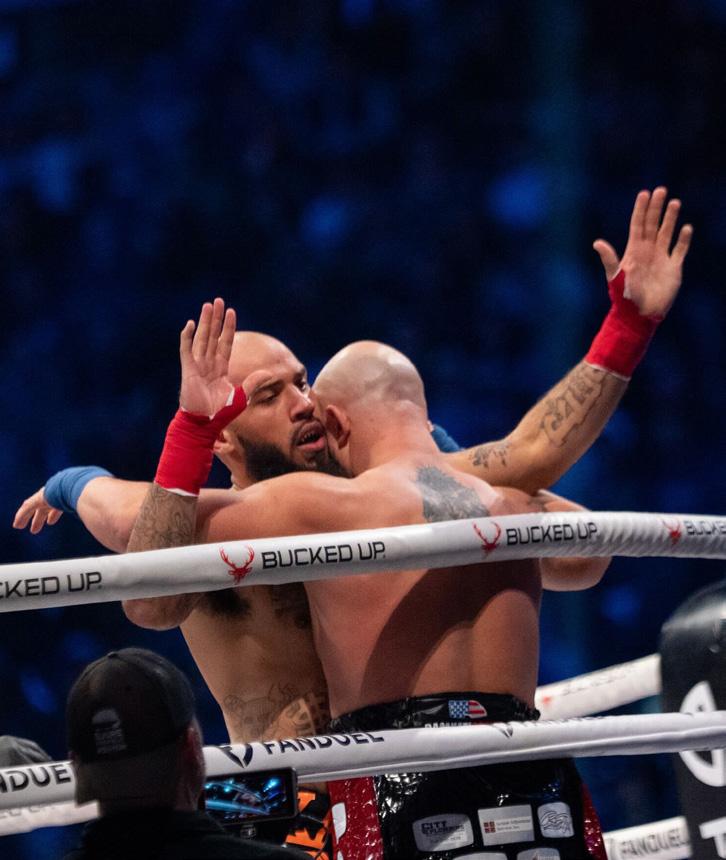
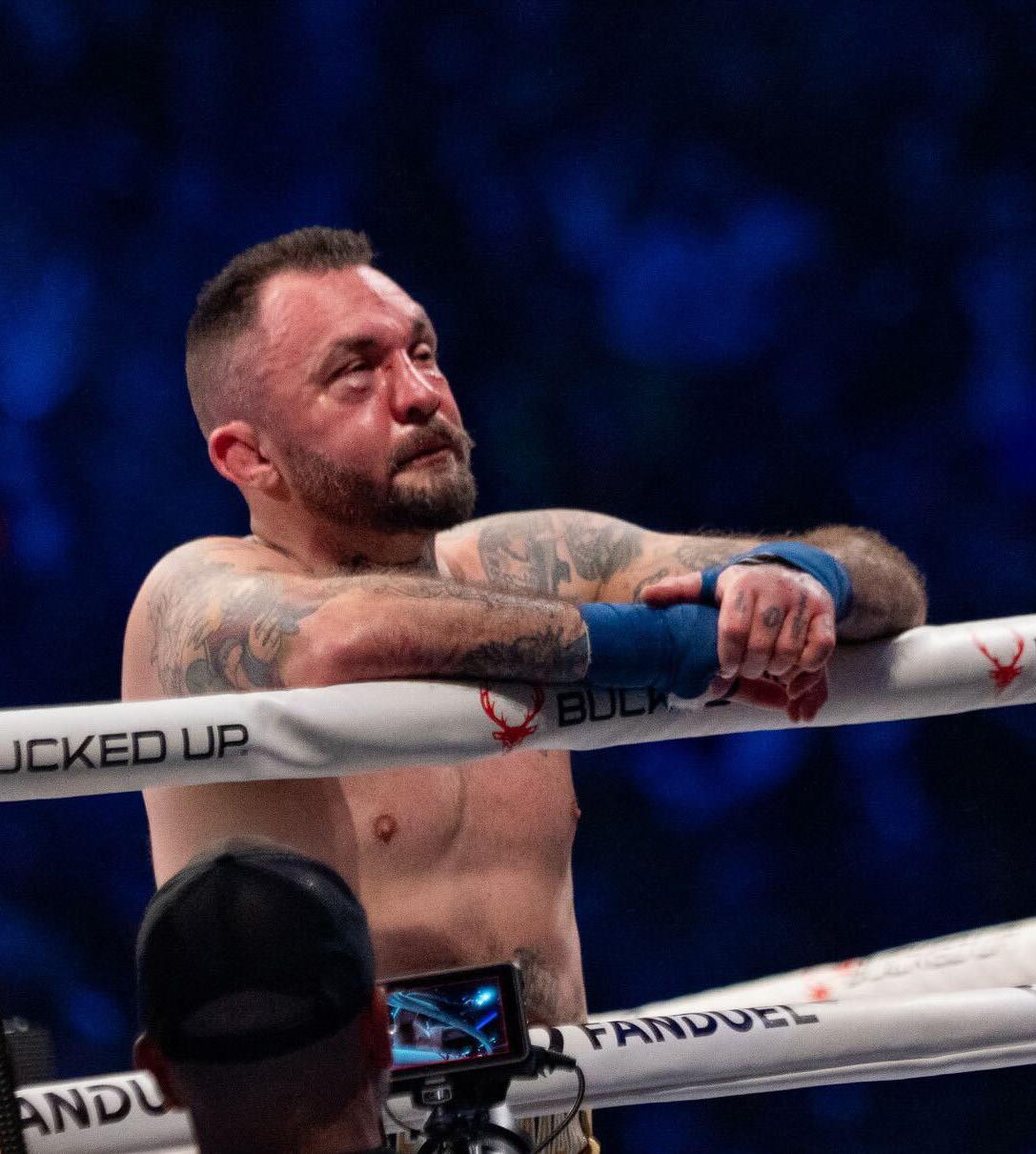
Every time they step into the ring, bare–knuckle boxers put their bodies on the line. What are they fighting for?
Bodies Bodies Bodies Survey
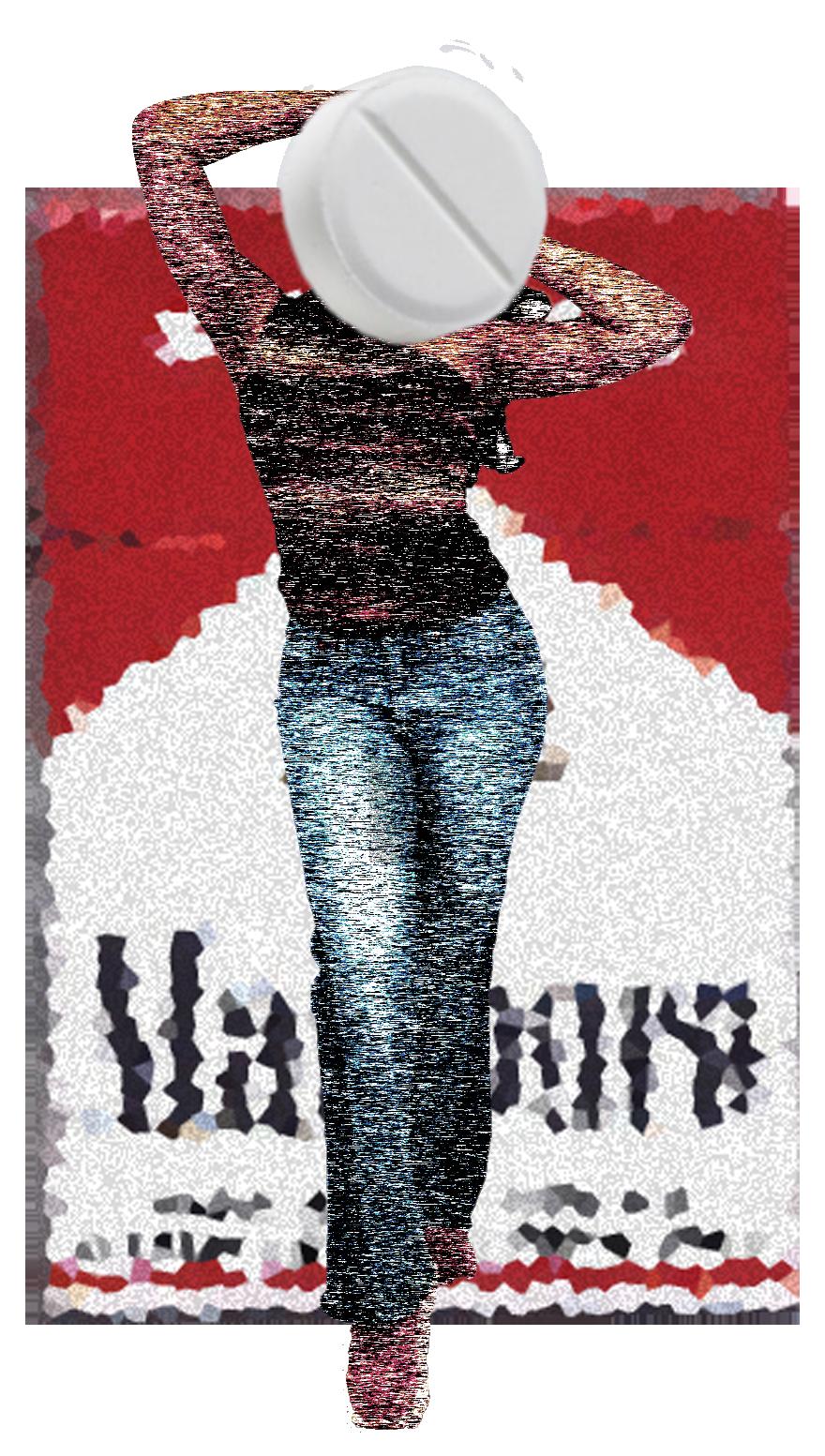
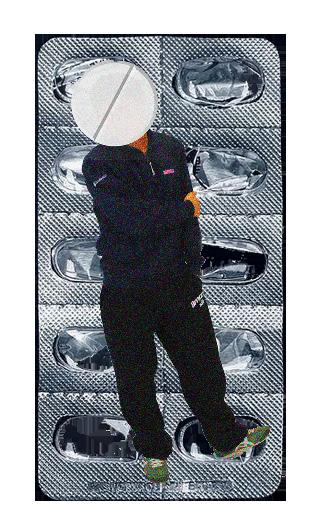
Street asked the question you’ve been too afraid to: What’s your body count?
a
And appreciate your body. I’m trying too.
By Eunice Choi
EXECUTIVE BOARD
Nishanth Bhargava, Editor–in–Chief
Samantha Hsiung, Print Managing Editor
Sophia Mirabal, Digital Managing Editor
Jackson Zuercher, Assignments Editor
Kate Ahn, Design Editor
MEDITATIONS ON A LIFE
LIVED UNCLOTHED
I see my roommates naked pretty often.
It’s not weird. It’s not even intentional. It just sort of happens when our paths cross outside the bathroom, or when one of us is showering and the other is brushing their teeth. The first time was shocking, sure, but it’s slowly become a part of our everyday lives. And although it’s not something that we ever really acknowledge, it is something that’s brought us closer together.
The body is a site of vulnerability, a site that amplifies or dampens one’s deeper insecurities depending on its state. Think about the advice every first–time public speaker recieves: Imagine the audience naked. It’s a way to flip the script—though expressing yourself to an audience might be embarassing, letting someone see you naked, completely un guarded, is several orders of magnitude worse.
Or think about your romantic rela tionships. You’ll try to look your best on a first date, but as you develop in your intimate relationships, your physical appearance comes to matter less and less. The “lack of effort” you put in isn’t because you don’t care—in fact, it’s be cause you do. It’s no coincidence that the people who see us naked are the people we’re closest to, the people we can’t imagine life without.
that the first judgment anyone makes of you is based not on who you are inside, but how you present yourself on the surface.
The Body Issue is an exploration of perhaps the most important part of the human experience—physical existence. By thinking about nude models and “Chinese times in our lives,” Street asks how image and self–image are constructed today. We put our detective caps on to investigate the state of sex and body standards on Penn’s campus. And through interviews with boxers and students struggling with substance addiction, we think about what happens when the human form is pushed to its limits.
It’s often said that “the clothes make the man.” But it’s only by seeing him naked that you know him for who he truly
What makes the body so powerful is the power we have to construct it. Whether it’s through the clothes we wear, the makeup we apply, or the “looksmaxxing” we attempt, our lives are full of attempts to shape the way others perceive us—and, reflexively, the way in which we perceive ourselves. Those efforts to shape the way we’re viewed can be liberating, sometimes. But it can also be deeply frustrating to know that there’s no way to separate yourself from the shell you were born into—to know
SECTION EDITORS
Sadie Daniel, Features
Ethan Sun, Features
Sarah Leonard, Focus
Chloe Norman, Focus
Henry Metz, Film & TV
Mira Agarwal, Music
Laura Gao, Arts & Style
Insia Haque, Arts & Style
Fiona Herzog, Ego
THIS ISSUE’S TEAM
Executive Editor
Jasmine Ni
Copy Editors
Prashant Bhattarai, Jessica Huang
Street Photo Editor
Connie Zhao
Deputy Design Editors
Eunice Choi, Kiki Choi, Chenyao Liu, Amy Luo,
Andy Mei, Julia Wang
Design Associates
Catherine Garcia, Insia Haque, Marcus Hirschman, Mariana Dias Martins, Alex Nagler, Maggie Wang
STAFF
Features writers
Maddy Brunson, Diemmy Dang, Kayley Kang
Focus beats
Melody Cao, Ana Laura Citalan Limon, Vasanna Persaud, Saanvi Ram, Jessica Tobes
Jordan Millar, Alex Nagler, Addison Saji, Adalia Vargas, Jason Zhao
Arts beats
Anjali Kalanidhi, Jack Lamey, Aaron Tokay, Lynn Yi
Ego beats
Rodin Bantawa, Sophie Barkan, Alexis Boland, Jackson Ford, Dedeepya Guthikonda, Jaya Parsa
Staff writers
Emma Katz, Jenny Le, Suhani Mittal, Irene Antón Piolanti, Henry Planet, Namya Raman, Alena Rhoades, Tanvi Shah, Sara Turney, Diamy Wang
LAND ACKNOWLEDGEMENT
The Land on which the office of The Daily Pennsylvanian, Inc. stands is a part of the homeland and territory of the Lenni–Lenape people. We affirm Indigenous sovereignty and will work to hold the DP and the University of Pennsylvania more accountable to the needs of Indigenous people.
CONTACTING 34 th STREET MAGAZINE
If you have questions, comments, complaints, or letters to the editor, email Nishanth Bhargava, editor–in–chief, at streeteic@34st.com. You can also call us at (215) 422–4640.
The trip to visit my grandmother almost didn’t happen. Before we even boarded the plane to Chongqing, China, I came down with an eye infection from my ortho–k contacts and couldn’t be exposed to light for more than five seconds without my eyes watering. Ma and I debated cancelling the trip, but I was firm about wanting to see my grandmother. Eventually, Ma gave in. I don’t remember landing, but I remember the ride to my grandmother’s house—how the light trembled through the taxi window in parallel lines, and how I kept my eyes shut no matter how much I wanted to look. How Ma kept saying, “We’re almost there,” until the car finally stopped, and how I opened my eyes—barely, but just enough—to my grandmother standing in the doorway. Six years since I’d last seen her, and I could only take her in fragments—a hand, a doorway, and her slight hunch. Every time I tried to look, the light punished me for it. But I looked anyway.
6
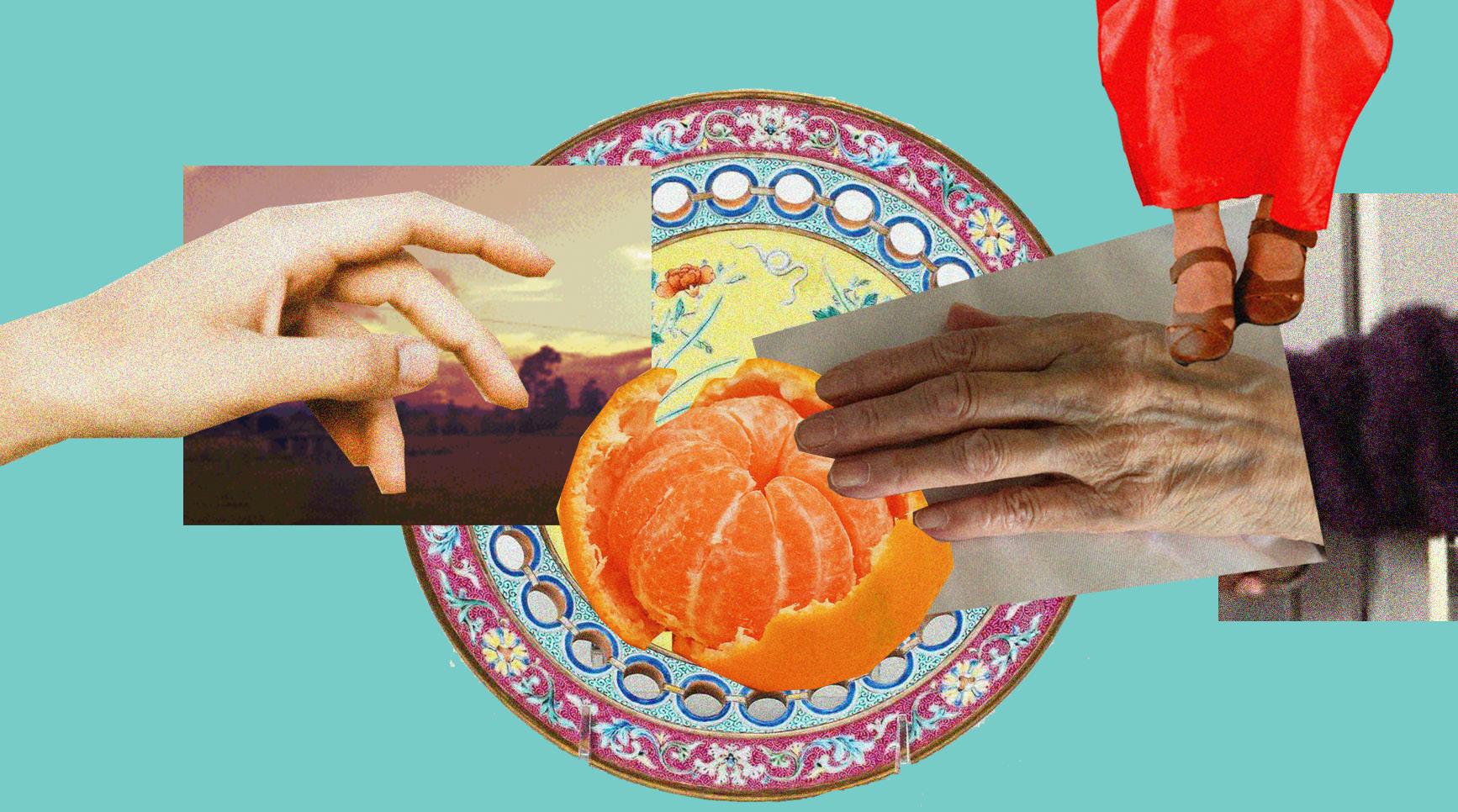
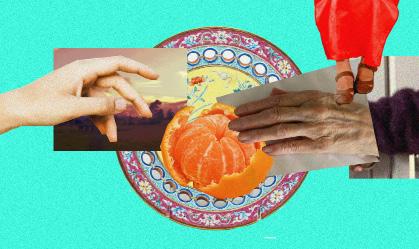
In China, the body is sacred. It is not a machine that you run into the ground and grieve later, nor can you replace it when it breaks. My grandmother, at 92 years old, knows this better than anyone else. The morning after I arrived—my eyes still flushed red—I found her at the kitchen table with a pocketknife in hand, a small hill of orange peels collecting at her elbows. “Here,” she said, pressing the slices into
my palm. “It’s good vitamin C and will help your eyes.”
I hadn’t seen her in six years, but her first instinct was still to tend to me. The last time I saw her, I was still in high school, small enough that she could cup my face with a single hand. But there, in the dining room with light pooling in through the window and falling across her face, I found no signs of aging—her hair no whiter and her skin still smooth, as if six years had only passed for the rest of us.
staircases dissolved into open plazas, and what looked like a street ahead could actually be a rooftop.
6
At the ophthalmologist, a short man with a half–shaven beard told me that I had cysts in my eyes and drew a picture of my eyeball— the cysts labeled and circled—so I could have “better clarity.” He prescribed me antibiotic eye drops and swimming goggles to wear at night so that my eyes would retain more moisture and heal faster. In the morning, I woke to find that the goggles had indented themselves into my face overnight.
“You look like a panda,” Ma laughed. She wasn’t wrong. Both of us were afraid that the goggles would suction my eyeballs out, so I stopped wearing them after two nights.
6
The city of Chongqing is built so deep into the mountains that you lose track of elevation—optimal conditions, as it turns out, for learning that along with weak eyes, I also had
“I grew up walking these hills,” she called towards me as she climbed the Hongyadong, already ten steps ahead on the stairs. I told myself that I was falling behind because we weren’t on an even playing field—I hadn’t grown up here, and my body wasn’t accustomed to the new terrain. But then my right knee started aching, and I ran out of excuses.
At the hospital, the doctors took an MRI of my right leg and told me I had a torn meniscus—“who knows for how long,” they said, which was another way of saying that my body has been cataloguing its losses, and I hadn’t been paying attention. While they were at it, they also checked my scoliosis. A doctor traced my spine the way you trace a river on a map, following every bump and fold as if it were a path.
“It’s definitely curved,” he said.
Ma always says to me, in Mandarin, that “你 是我身上的一塊肉 ” The rough translation: I used to be a part of her body, which is to say that everything that hurts me hurts her too.
Which is also to say that when three parts of my body started failing all at once, she cried. I had not seen her cry in years.
“This is all my fault for not teaching you to take care of yourself,” my mother sobbed to me while we were at lunch with my grandmother. My grandmother, meanwhile, kept peeling oranges and pressing them into my hands.
Ma and my grandmother joined forces and decided that I need to start going to a Chinese chiropractor. During the 17 days I spent in China, Ma forced me to go three times. The chiropractor cracked my neck in a way that unraveled earthquakes throughout my body. He pressed his thumbs along the knots of my spine, as if kneading a flimsy piece of dough. After we finished our sessions, the chiropractor often prescribed me exercises to do at home—chin tucks, standing against the wall with my back flat, and other movements that would make me look stupid. At home, my grandmother watched me practice the exercises in the living room and was inspired to show me the leg–strengthening exercises that she’d been doing every day so that she wouldn’t have to use a wheelchair. We exchanged information and health secrets—a new currency between us that allowed us to know each other, and our bodies, more fully.
6
Every day in China, my grandmother insisted on making me meals that would take her three hours to prepare, using bones and herbs whose names I still don’t know how to translate. She said that she would have accomplished nothing if I weren’t “as fat as a pig” before I left. For the first time since high school, I ate breakfast every morning at a table that was never empty. I let myself be fed, my body giving into sustenance— tomatoes and eggs, black chicken herbal soup, and steamed pork with rice flour. For the first time since college, I strayed away from Panera Bread and Chipotle and started taking care of myself—even if my grandmother was the one making me do it. Every meal was a form of medicine undoing, slowly, what years of carelessness had forged.
Ma, more than ever, verbally piled onto the text reminders that I often ignore when I’m in college and away from her: Always blow dry your hair before you go to sleep, never eat or drink cold things when you’re on your period, and always start your days off with a glass of hot water (but not so hot that it’ll scald your throat and tongue). Here, in China, with my knee wrapped in herbal medicine and skin still indented by swimming goggles, I found that
I didn’t have an excuse to protest. For the first time, I didn't want to either.
6
On our last day in China, Ma and I took a taxi to the airport before sunrise. My grandmother insisted on coming downstairs with us to flag the taxi, even though Ma told her not to. Before I could climb into the backseat, she pressed something into my palm: an orange peeled to its core.
In the taxi, Ma laughed under her breath— half exasperated, half grateful—and I held the orange like a warm stone.
“Are you going to learn to take care of yourself when you’re back in college,” my mother asked, “so that these things don’t happen again?”
I thought about it—actually thought—rather than saying “yes” to make her stop asking.
“Yeah,” I finally responded, tossing an orange slice into my mouth. “I will.”
Ma always tells me that I used to be a part of her body. In Chongqing, I saw where that kind of love came from: my grandmother’s oranges, her cooking, her health secrets—care passed down and practiced until it became instinct. To love them is to love this body that I’ve inherited. To treat myself gently, maybe, is the only way to love them back. 6
Hometown Philadelphia Field of Study
Management and operations, information and decisions
By senior year, time at Penn starts to feel fragile—like something you could misplace if you aren’t careful. Stephanie Skinner (W ’26) handles it differently than most. Every commitment lives inside a meticulously color–coded Google Calendar, each day planned down to the minute. On paper (or a computer screen), her life reads like the kind of LinkedIn bio that makes you wonder if you have been misusing your own 24 hours. As a senior at the Wharton School, she finds a way to juggle Quaker Girls practice, mentorship, community service initiatives, and, most recently, being the titleholder of Miss Philadelphia as part of the Miss America Opportunity program.
But sitting across from her, none of it feels performative. She does not speak in resume bullet points or rehearsed, interview–ready responses. There are no pointless preprofessional clubs that represent prestige rather than real work. Instead, her responses come across as thoughtful, as though she is used to gently translating a very full life into something digestible for others.
Can you start off by telling me about a bit about yourself?
I’m a senior at Wharton. I study OIDD and management. I think one of my favorite parts of Penn is being able to utilize the opportunities that it provides, especially in the sense of international opportunities. Wharton has been able to teach me that the best classroom is really the world. I’ve been able to be a part of the Global Research & Internship Program, do marketing and analyst programs, and study at the London School of Economics and the In-
EOTM
Stephanie Skinner
BY JACKSON FORD
Photos by Jackson Ford Design by Kiki Choi
Stephanie Skinner is no stranger to the weight of the crown.
stitute of Moraine. I think all those experiences have equipped me to succeed personally, but also professionally, and in the atmosphere of pageantry as well.
You obviously do a lot on campus. You’re in Quaker Girls, APhi, and a bunch of other commitments. How do you go about balancing all of your responsibilities?
Prioritization is key. Sometimes you do have to sacrifice things. You want to do it all, but you have to pick and choose what is most important to you. I always say it’s not really a sacrifice when you’re doing something that you love. It’s important to know how to manage time properly. I use my Google Calendar like it’s my Bible, and I don’t know what I would do without it.
You recently won Miss Philadelphia. What does it mean to represent Philly?
For me, it represents a historic opening to show people how they can lead in the highest capacity, especially since Wharton is the first business school and Penn was the first–ever university in the United States. For me, it’s all about showing that women can and will continue to forge those opportunities that haven’t yet been made—those opportunities that are just waiting for someone to make them. And I get to hold this title during this historic year. I was also the first–ever Wharton student to hold this title, even though we’ve had 105 Miss Philadelphias. It’s showing how far we have come, but also how far we still have left to go.
Philadelphia is a place where people really take pride in where they live, whether or not people have grown up here. People have come here from different parts of the world, and they choose to stay, or they’re here for however long. But people really do embrace the city, and I feel like how much you love the city is how much the city will love and embrace you with that same energy back. I’ve tried to go in with that same spirit and give it all of my love and an open heart and open mind.
What are your goals with this new role? What do you plan to do with the title?
A big part of Miss America Opportunity, which many people don’t see, is the community service initiative. My initiative is part of my organization, Hands of Hope, which supports
those who have adverse childhood experiences. I want to partner with the School District of Philadelphia to bring a HOPE curriculum into Philadelphia schools, which would stand for Help, Opportunity, Prevention, and Education. I want to talk about self–efficacy and the importance of confidence and positive relationship building in Philadelphia schools. I also want to partner with our mayor to make “A Day of Hope” in Philadelphia because I was able to do that with Mayor Eric Adams in New York. Philadelphia, as well as Pennsylvania more broadly, does not have a state–recognized day like that.
How has Wharton allowed you to do this?
Specifically for Wharton and Penn, I think something that is nice is having a depth and breadth of opportunities and classroom knowledge. Even within the business fundamentals requirement, you have to take classes in so many different spaces, which forces you to think and adapt in different ways that may take you outside of your comfort zone. For me, it’s given me a willingness and ability to lead in any space, but also a depth and breadth of knowledge. With marketing, for example, that’s similar to how we have to interact with sponsors or market ourselves with our community service initiative. I know how to pitch myself and also how to be confident or adapt my communication skills. I can think of WH 2010—those skills that you practice in a classroom for a grade end up being translated to real life activities. In my role right now, I’m using those skills so much more than I once thought I would.
Going back to the competition process, what’s the training like? How do you prepare both physically and mentally?
It’s a lot. It’s definitely a holistic process. It’s kind of like training for the Olympics—that’s the best way that I can put it. You have to make sure that mentally, physically, and spiritually, you are in the right place and mind. There are many different phases of competition. The interview phase of competition is a big chunk of our scores. We make sure that we are up to date and knowledgeable about what’s going on in our world because at the end of the day, it’s a job interview. The job is to be an ambas-
sador for the city, for the state, and potentially for the country, if you make it to Miss America. You need to be aware, socially, of what’s going on in your environment and also be able to represent different people from different walks of life.
What are some common misconceptions about pageants?
The fact that Miss America Opportunity is a pageant. It’s not. It’s called a scholarship competition.
Unfortunately, we’ve seen sometimes that all the Honey Boo Boos and the Miss Congenialitys have led to the misconception that this competition is completely external, or extrinsically motivated. In the end, it’s really about what you bring to the role and about being a selfless leader. It’s about what you can provide for others.
What’s your favorite memory from competing in pageants?
Even today, I went and I brought my crown to a girls’ center that I’ve been working with since freshman year. They were like, “Are you the queen of the city now?” and “Can I try it on?” I saw this little twinkle of hope in their eyes. I really want to show them, both visually and physically, that this is who you can become. My message is that this is who you can be with hard work and dedication, no matter
where you come from. Over those four years with them, as well as with many other young women in our community, I've shown through my story that your circumstances don’t define you. I think being able to see that message come to fruition and genuinely being living proof for these young women that, “Hey, this can be you in a couple years,” has been my favorite part.
As our conversation winds down, the subject of senior year inevitably arises. Stephanie admits to a persistent fear of missing something, of letting the small, ordinary moments slip away amid the rush of obligations. This awareness fuels her meticulous scheduling and her insistence on being present wherever she is. Penn, she knows, will end soon, and with it, this particular room for freedom and possibility. Rather than lamenting this inevitability, she chooses to meet it head–on, determined to experience as much as possible while it lasts. When we part ways, Stephanie glances at her phone, already preparing for the next commitment. This time, it’s a 6 a.m. wake up to appear on the local news. She moves quickly down Locust Walk and through a city that has shaped her sense of what is possible. Somewhere in her bag, tucked between notebooks and yoga pants, the crown rests—not as an accessory, but as proof that she is not done yet. The crown is waiting for someone to carry it forward. 6
If you had to pick, would you choose pageantry or school?
I’m privileged enough to be in a spot where I can do both.
Favorite class you’ve taken at Penn?
“Grit Lab” with professor Angela Duckworth.
Favorite pageant moment?
Winning Miss Philadelphia and advocating for the New York City mayor to declare a Day of Hope.
There are two types of people at Penn … Those who use Google Calendar religiously and those who don’t.
And you are?
Someone who very much does.
The Internet was once incorporeal. Now, the rise of artificial intelligence is threatening bodily autonomy online.
By Sarah Leonard
Being online used to be a form of escape from the physical body. In chatrooms and early virtual worlds, identities could be flattened into usernames and molded into customizable avatars. For most people, it was a space free from the physical conditions that govern the world and our bodies.
“There was this idea among some of the early internet vanguards that the internet would be a disembodied place … a place where it didn’t matter what your body was,” says Sophie Maddocks, a researcher of cybersexual violence at the Annenberg School for Communication. “Once you were on the internet, you would kind of be able to create a new body or create a new digital representation of yourself, and your physical body didn’t matter.”
Early online worlds, like multi–user dungeons and multi–user shared hallucinations, were mostly text–based, allowing users to interact in real time through words and descriptions without the need for images. The primeval internet was supposed to be a great equalizer, taking
strides to democratize information and act as an incorporeal escape from the physical world.
But in 1993, the first cybersexual assault occurred on one of these multi–user platforms. Described in Julian Dibbell’s article “A Rape in Cyberspace,” it involved one user’s avatar sexually violating others with a hack that forced them to perform disturbing sexual acts on themselves and others. Suddenly, the issue of the body and its autonomy, once thought to be limited to the physical world, arose online.
As technology has advanced, so has the ability to commit acts of violence in cyberspace. The advent of web 2.0, a more interactive, social network–based version of the internet, was quickly followed by a sharp increase in cyberbullying, stalking, and other forms of online harassment and abuse. Revenge porn has existed as long as photography has, but it has become increasingly common with improvements in image sharing. Now, with only a few brief commands, deepfake technology allows users to undress and create pornographic
images of anyone whose photos exist online.
Deepfakes trace their origins back to 2017 on Reddit, when users began using face–swapping technology to create pornographic media of celebrities. They soon infiltrated most spheres of the internet, and in recent years have played significant roles in politics—think, for example, of President Donald Trump’s (W ’68) prolific use of artificial intelligence–generated content on his X feed. Scams, propaganda and data manipulation have been present throughout history, but never before have they been so accurate or accessible.
In 2019, “nudify” apps emerged: Users could simply insert a photograph of a real person, and the software would instantly undress them. Individuals of any gender identity became targets. In fact, sextortion—the generation of pornography for use as blackmail—disproportionately affects teenage boys. But the vast majority of deepfakes are used to undress the female body: A 2023 study found that pornography constitutes 98% of deepfake
Design by Eunice Choi and Andy Mei
videos, 99% of the individuals victimized were women, and 74% of deepfake pornography users reported no guilt about their use. Many of these women are well–known public figures, but many of them are not. Increasingly, the victims of deepfaking are classmates, neighbors, and coworkers.
“It’s not that these things don’t happen to people across the gender spectrum,” says Maddocks. “It’s just that they aren’t driven by the same desire to shame and humiliate, and to profit and to exploit that has always been a factor for feminized bodies.”
In many ways, misogyny and the surveillance of female bodies have been intrinsic to the internet and social media since their conception. One of the first photos used to test digital image processing was Lena, a photo of Swedish model Lena Forsén. The picture was ripped out of the centerfold of a Playboy magazine and put onto a scanner to be immortally digitized. Many are already familiar with Facebook’s beginnings as Facemash, a website Mark
Zuckerberg built in his Harvard dorm that asked users to rank his female classmates by attractiveness. Sites like Reddit and 4chan have facilitated a renaissance of incel culture, which today permeates much of the internet and big tech. Now, that misogyny stands to do even more damage with deepfake technology at its disposal.
“The capacity to strip feminized bodies, without actually filming someone secretly, without actually stealing someone’s nude images … It’s almost just like giving them an extra tool in their arsenal,” says Maddocks. “[It’s] giving them a really easy, really fast, free, simple way to demean and shame and silence women.”
Cybersexual harassment and abuse, while sharing some similarities with their physical counterparts, are separate issues and often require distinct solutions to address. Compared with physical reality, users in cyberspace have a greater ability to remain anonymous—moreover, images and messages online can be widely and rapidly shared, making them almost impossible to remove once posted.
“We know [from] therapists who work with individuals who’ve experienced cybersexual harms [that they] have a different type of ongoing PTSD,” explains Maddocks. “[If] somebody creates a fake nude image of you, it’s impossible to fully scrub that from the internet. There’s always a chance it could be reposted or screenshotted, and so the harm never ends.”
Victims of deepfaking often experience significant psychological symptoms, from anxiety and insomnia to hypervigilance and forms of reality–identity dissonance. The experience of seeing your likeness fabricated and made a victim of sexual exploitation in this way has the potential to rupture your sense of self, reality, and bodily autonomy.
Deepfakes are also a concern for online sex work: Sites like OnlyFans are being inundated by AI “models,” taking business away from real sex workers. Those creating deepfakes, mainly men, are not only exploiting bodies unconsensually, but also monetizing and profiting off of them.
“The internet is a deeply unregulated place. It’s decentralized and rapidly evolving, making it difficult for governance to keep up. That doesn’t mean it’s impossible, though,” says Maddocks. “There’s this dominant idea that the internet’s just this hella toxic place, and like, ‘Good luck surviving online,’” she says. “I just don’t think that’s really realistic. I think if we had the will and if it was incentivized, there would be more done.”
AI is testing our ability to differentiate between what’s real and what’s been generated in a way many are unprepared for. Deepfakes represent a sinister and unregulated threat to safety and reputations, but also yet another dangerous degree of separation from reality. The internet, which used to be a reprieve from the physical world, is now trying to replicate it. What it’s become, however, is a reality completely under the control of those programming it—one in which the bodies of real people are crushed under the power of code. 6
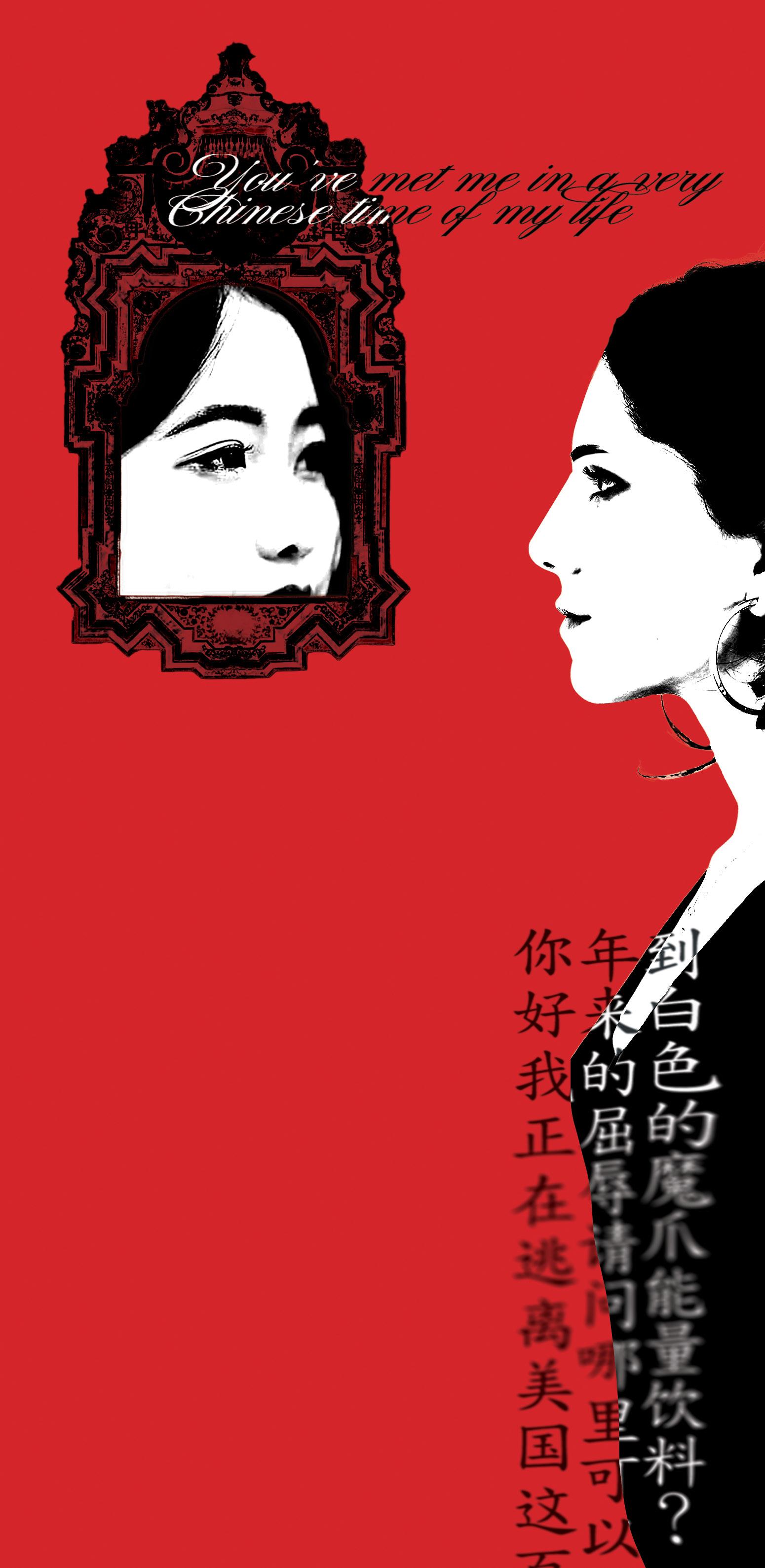
GAZING INTO A VERY CHINESE MIRROR
What happens when The Beautiful Country shows its pores?
By Jason Zhao
by Insia Haque
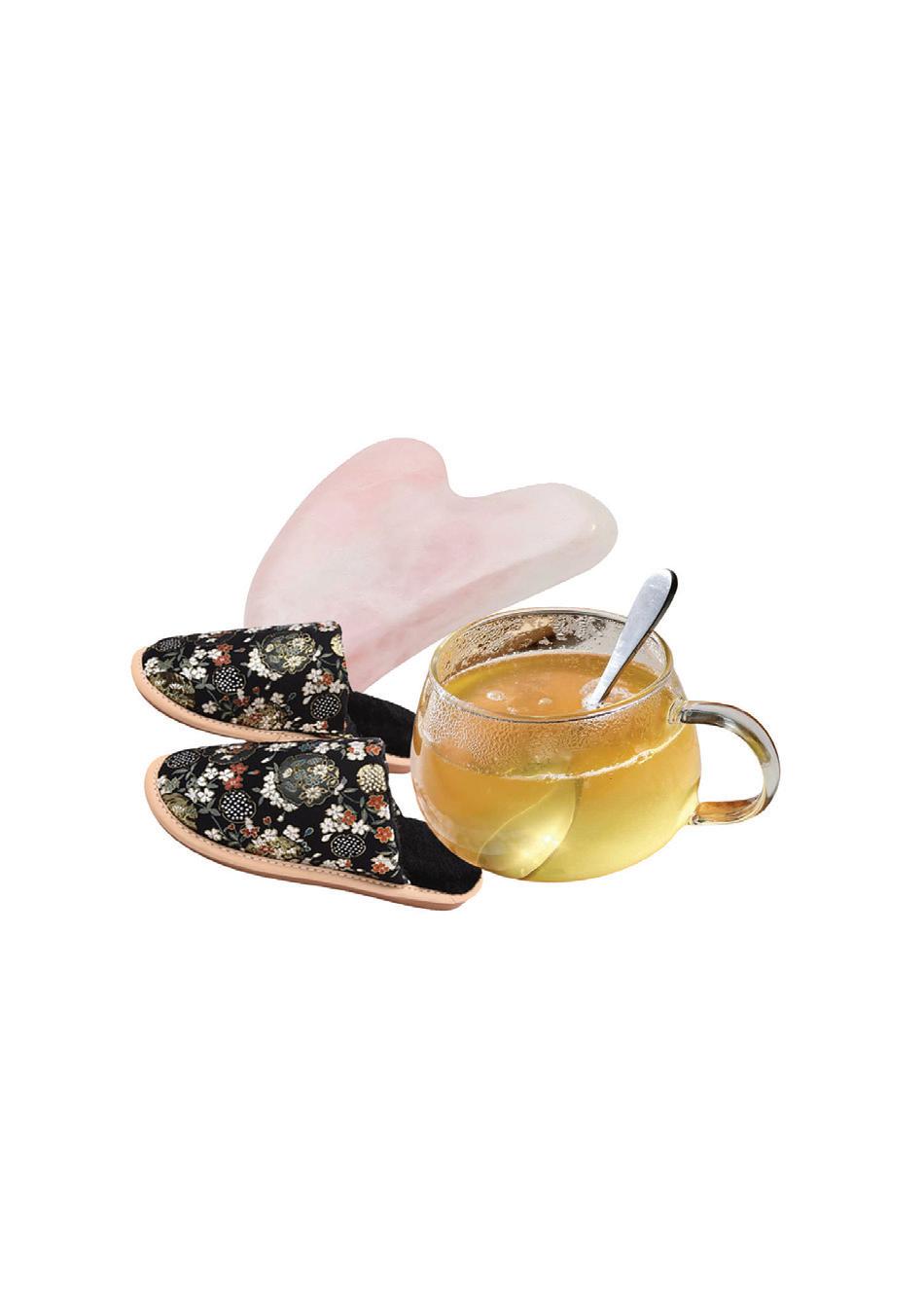
Idon’t think too much about being culturally Chinese. It’s like breathing—it doesn’t require conscious effort, and I only stop when I die. Recently, however, media channels like TikTok have kept China on my mind. Gua sha, qipao, Labubus: As a full–time Chinese person, it’s astonishing to suddenly find millions of people exploring the nation and culture part–time. This surge in interest is especially surprising now, when the United States and China are locked in fierce conflict. The fight for the “real” China—implacable Communist police state or lifestyle brand—is no longer happening in the Taiwan Strait, but on TikTok. After years of Chinese people being attacked as carriers of disease or even being physically assaulted for the crime of being Chinese, any change is welcome. It’s heartwarming to see other Americans, inundated by a daily barrage of fearmongering about China, marvel at the beautiful silhouette of a Tang dynasty robe or the glistening skyline of Shanghai.
I fear, however, that this recent surge in interest in China doesn’t bring us closer to a future of mutual acceptance, but rather the exotic China of the past.
In the late 19th century, as tens of thousands of Chinese people migrated to the United States, American politicians demonized them as “coolies”—disease–ridden slaves as opposed to independent, clean American (i.e., white) workers. As immigration restrictions tightened and many Chinese laborers returned to their home countries, commentators pivoted to lionizing the United States as a nation of Christian pioneers, liberated from the heathen backwardness of the Old World as embodied by China. During the Republican Era, as Chinese cities like Shanghai became centers of commerce and crime, American media portrayed China as a modern Sodom and Gomorrah, a nation of morally bankrupt drug addicts seeking to corrupt upstanding Americans. When China turned from a staunch ally to a sworn enemy of the United States after the Communist victory, longstanding anti–Chinese racism was repackaged into the McCarthyist trope of the “Dirty Reds,” despotic barbarians seeking to infiltrate and destroy American freedom.
At the same time, in a seeming contradiction,
Design
China remained the beautiful and exotic Orient. American homes and gardens overflowed with Chinese porcelain, furniture, and even architecture. This obsession was far–reaching—George Washington, in fact, ordered much of his silverware from China. Department stores were filled with “Chinese” styles, from dragon pendants to “pagoda sleeves.” After San Francisco’s Chinatown was destroyed in a catastrophic earthquake in 1906, it was rebuilt with dragons and glazed tiles, loosely inspired by Song dynasty palaces instead of the original Victorian homes. To put that in perspective, it would be like if Lincoln Financial Field collapsed tomorrow and was rebuilt with a copy of the Statue of Liberty holding a cheesesteak next to the endzone. From the 18th century onward, American consumers adored Chinese goods but disdained the country and people who produced them.
Evidently, Chinese culture has been fascinating for millennia, but it is only recently that Chinese culture has amassed popularity across social media. So why is China back this year, of all years?
In 1903, the Chinese reformer Liang Qichao visited the U.S. after the abortive Hundred Days’ Reform he supported failed to modernize China. Despairing about China’s future, Liang grew curious about our exotic republic. Writing in the shadow of New York skyscrapers, he reflected shockingly harshly upon his people. From his perspective, Westerners spoke calmly and orderly, while “with a group of Chinese, on the other hand, the voices are all disorderly.” They walked better, with “their bodies erect and their heads up,” while “we Chinese bow … stoop … and prostrate ourselves.” Even the way that Westerners thought was superior: “We lack lofty objectives. … This is the fundamental weakness of us Chinese.”
As I scrolled through videos about China on TikTok today, the comment section was filled with American Liangs. Videos about Chinese herbal medicine inspired complaints about the exorbitant costs of American medicine. Vlogs documenting picturesque walks in Shanghai elicit sighs about American urban decay. Content about beautiful Chinese makeup and delicious Chinese meals elicits pitiful accounts of Sephora disappointments and microwaved Hot Pockets, respectively.
We’ve always held up China as our mirror
image, but for the first time, that mirror is showing us our pores.
In 2018, when TikTok launched, Americans could reassure themselves that no matter what China accomplished, it was still a starving Communist backwater. We laughed at knockoff bags that said “Cough” instead of “Coach” and knew China only as a land of sweatshops and intellectual property thieves. Politically, the People’s Republic has been a one–party authoritarian state since its founding in 1949, while the United States has largely remained a representative multi–party democracy embraced by the vast majority of Americans. We dismissed Chinese culture as the output of an inferior civilization.
Fast forward to today, and faith in American democracy and societal progress has collapsed. Masked troops occupy our cities, our economy teeters on the edge of a cliff, and for the first time in our history, we’re not sure if we’re right and China is wrong. Going cupping, getting acupuncture, trying on a qipao—it’s as much about escaping from our world as it is about exploring China’s. The reality is, of course, that life in China has its flaws as well— massive youth unemployment, a collapsed housing market, and brutal competition numbering among them. Three hundred million migrant workers wander the country, living a precarious life providing the near–instant deliveries and cheap eats we gawk at on our phones.
None of this dampens my joy that we are finally engaging with China. My only fear is that we are bouncing between China as heaven or hell. A large part of the recent Chinese wave has been a no–questions–asked embrace of traditional Chinese medicine. But gua sha’s modern use as a facial slimmer strays far from its traditional use. Other traditional Chinese medicinal practices, such as cupping and acupuncture, are based on a belief in “qi,” a “life force” that flows through certain channels in your body and causes physical harm when it is thrown out of balance. “Qi” does not literally exist, and none of these methods are scientifically backed. As for herbal remedies, a nice mugwort tea probably won’t hurt you, but it is neither medicine nor a substitute for medical care. A Western doctor showing up with a bag of leeches to free you of your “black bile” would
send their patient running away screaming. We should be as skeptical of outdated Chinese medical practices as we are of Western ones.
Speaking more broadly, we can appreciate China’s incredible culture and its progress over the past 40 years without sinking into nihilism. Our democracy is worth defending, modern medical science is not a scam, and we can solve problems like homelessness if we try. In our cynical age, these statements are groan–inducing, but that doesn’t make them wrong. Liang Qichao was proven wrong about China’s inferiority, and we can prove the cynics wrong about the United States too. With a more grounded view of both the United States and China, we can move beyond the oppositional framing the two have been locked in for centuries. China doesn’t have to be worse or better than us, it can just be different. Cute clothes and foot baths are a great starting point, but I implore every person who’s “in a very Chinese time of their life” to go a step further and engage with Chinese literature, film, or an actual Chinese person.
From China’s failures, we can also rediscover the value of our inalienable freedoms and rights—above all, the right to oppose our government when it sinks into despotism. Then we can accomplish what our governments cannot, choosing hope in a time of despair and unity in a time of division. The secret to being a Chinese baddie? Believing in a saner world. 6
“We’ve always held up China as our mirror image, but for the first time, that mirror is showing us our pores.”
THE LANGUAGE OF LOOKSMAXXING
Where were you when Clavicular ran into a fraternity leader at Arizona State University and got brutally frame–mogged by him?
If your algorithm is anything like mine, that question was joined by reels on jelqing and whatever–maxxing. Or edits of your favorite celebrities set to Brazilian phonk, lauded for their bone structure and positive canthal tilts. It isn’t unusual to see whatever new slang or Kick streamer clipped and ridiculed for the masses. But, as we laugh at cortisol–spiked Clavicular or the slang surrounding him, there’s something to be said about us.
How did we get here? How did this bizarre language and its current poster boy come to not only take over our speech and feeds, but also the stage of New York Fashion Week?
This isn’t your first exposure to this type of language or rhetoric. You’ve probably seen comments on your friends’ posts about how
We all sound like incels now. Why aren’t we more worried?
By Insia Haque
Design by Alex Nagler
they are so “alpha” or “sigma.” You’ve likely tapped your jawline and mewed, or watched videos comparing botox–filled faces or steroid–powered bodies, debating which one mogs the other. We’re surrounded by content focused on optimizing our looks and putting down those of others, and they’ve, ever so subtly, become embedded in even our most mundane or benevolent interactions.
It’s become maddening to watch yet another trend or term take flight, with everyone oblivious to their sinister origins. Much of this language is derived from words used and developed by incels, or “involuntary celibates,” a term for lonely singles that eventually became the moniker of violent men scorned by women “withholding” sex from them. This ideology is built upon male supremacy and has turned fatal. While “–maxxing,” for instance, is living a new life as a quirky suffix (perhaps you might be “Linked-
Inmaxxing” for a summer internship), it’s derived from a staple of the incel ideology, “looksmaxxing”: the idea that through surgery or other dangerous cosmetic practices, one can become attractive enough. Much of the aforementioned language follows, with mogging reflecting successful looksmaxxing, mewing and bonesmashing as examples of soft and hardmaxxing, respectively, and so forth. This ideology, built upon the premise that social failures are due to unattractiveness, thrives off identifying the minutiae of anatomical “imperfections” in incels and the women who’ve purportedly wronged them, perpetuating bodily insecurity and promoting dangerous body–maximizing techniques.
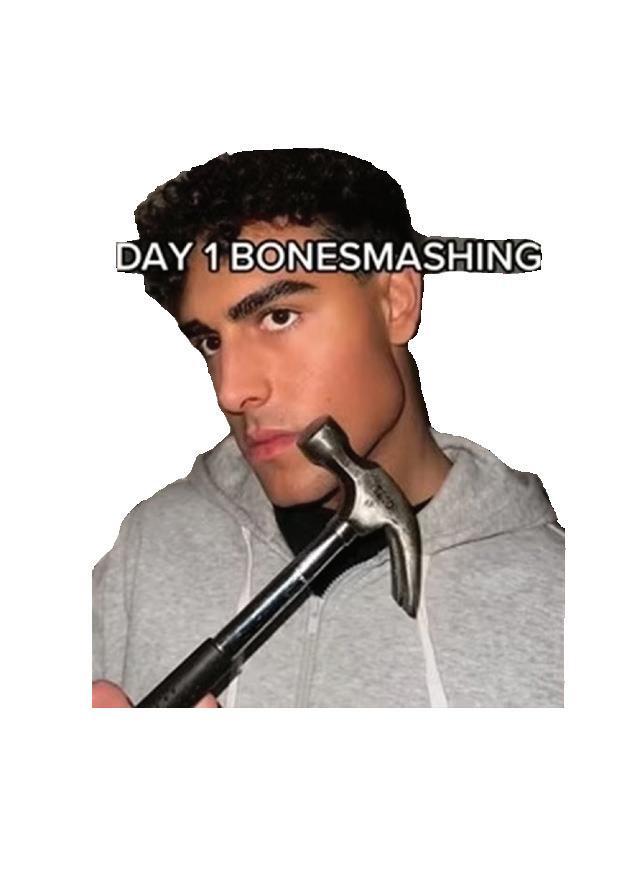
One could claim ignorance or that the terms have no clear connection to incels, and thus that their misogynistic roots are a moot point. But when you have rising star streamer Clavicular hammering his
own face ("bonesmashing",) proselytizing methamphetamine, and offering services to “ascend” his nearly one million TikTok followers’ appearances, it’s clear that the incel origins are hidden in plain sight.
And yet, the most pushback you’ll see is a mocking comment or reel, wielding irony in the face of inceldom or regurgitating the same logic back at them—from pushing these terms to their logical extremes to illustrate their idiocy, to slapping a feminizing filter onto Clavicular, calling him gay, and picking apart his looks just as he does to others.
This is bad for reasons beyond the hypocrisy or the language’s inception. While we’re clued into what’s absurd and can turn it on its head, many aren’t—from young members of Gen Alpha, for whom this content is made, to older, less tech–savvy adults. This rhetoric has killed people, and there’s no reason to believe it’ll stop—whether it takes the lives of denigrated women or those of young men breaking their bones and abusing hard drugs to glow up. The most vulnerable are being fed some of the worst, most violent rhetoric developed by a community that thrives off of keeping its members lonely and desperate, and those of us privy to that information simply act as vectors spreading it further.
What does the widespread use of incel–rooted language say about our culture? Well, probably that we’re subject to its negative effects, too. We pick up slang to fit in and conform. The new normal for many pockets of youth internet culture has become riddled with incel talking points and beliefs, ironic and genuine.
The language we use also shapes our perception of culture. This is true at the most basic level of simple categories like color, as studied by linguists and neuroscientists— the words we employ are anchor points for how we perceive the world around us. Our use of incel language doesn’t only point to how body–informed bigotry and violent misogyny have become culturally normal for many of us; it also makes us more receptive to such ideologies, equipping us with a familiarity and almost reverence for the language that legitimizes looksmaxxing.
Social media has become a catalyst for
this linguistic phenomenon, funneling new language to more and more impressionable people and presenting opportunities to cash in on their sociolinguistic capital through comments and posts. Couple that with its intrinsic ability to shape the way we talk to each other—look at what LinkedIn has done to us—and you have today’s landscape, with regular, well–adjusted people talking like the self–described “ultimate gigachad,” spewing misogynistic and racist language and promoting bodily insecurity and harm.
This isn’t the first time social media has proliferated the use of a particular kind of language. Until recently, nearly all of Gen Z slang was lifted from African American Vernacular English or ballroom culture. Now, through clips shared to enrage or mock, incel terminology has become ingrained in our speech. We've even begun to see the marriage of this and racism and antisemitism, with posts warning against “goyslop” and promotizing racialized looksmaxxing pointers infused with medical terminology (e.g., ways to avoid “spiking your cortisol”). With social media, this natural linguistic process is expedited and continues to rapidly mutate, combining negative body image, self–harm, misogyny, and racism, all medicalized for legitimacy.
Clavicular himself isn’t just the newest face of incel jargon, but also the most prominent product of how language shapes perception. Before the Kick fame, he frequented Looksmax.org, an online forum dedicated to the practice, where he documented his looksmaxxing journey. He’s been injecting himself with testosterone supplements for seven years. Not even one month after matriculating to college, he’d been expelled for doing so.
This doesn’t just happen to young men by chance. Through the proliferation of incel language, largely to mock and ridicule, a child destroyed his body and dedicated his life to perpetuating the same harmful practice. And the cycle continues—we pick up the slang, apply it within our day–to–day interactions, and normalize it, allowing a greater audience to stumble upon the same dogma that trapped Clavicular to begin with. Just as manosphere influencers like Andrew Tate
garnered their massive audiences through engagement–baiting on Twitter and paying people to clip their misogynistic streams, Clavicular and a new generation of influencers are exploiting powerful algorithms, like those of TikTok and Instagram, to draw in more customers. But this time, they're no longer trying to veil their misogyny with dog whistles like “females”—they’ve gone fullmask–off with “foids” (female humanoids), “Stacys” (women who deny incels sex), and “subhumans.”
And now, thanks to our natural encoding as social creatures and the power of the word over our judgments of ourselves and the world, inceldom is no longer limited to forums—it’s now mainstream on Instagram reels and our TikTok feeds. And since we've become so accustomed to being bagelpilled and matchamaxxed, laughing at memes about “chuds” and “an foid,” we've been disarmed: The language has become familiar, rendering its danger invisible. We might know it’s ridiculous, but it’s lost its edge—it doesn’t seem as reprehensible as it truly is.
Then that cycle progresses, platforming its victims to normalize the language of looksmaxxing and the incel ideology. Clavicular—himself radicalized through incel slang and looksmaxxing procedures through irony–laden posts—is the latest agent of this psycholinguistic project, radicalizing a new generation and objectifying of women and girls, shouting the n–word randomly, and destroying your body synonymous with the pursuit of beauty and status.
What exactly can we do about this? Honestly, I’m unsure. All I’ve got is a plea to be vigilant—recognize social media for what it is and see new trends and formats for what they truly are; to be cognizant of how they shape your language, and, through that, your mindset. As long as social media channels are still in the green, these trends and memes will continue to infiltrate our language and our culture, redefining what is normal and acceptable, radicalizing impressionable children into peddlers of bigotry, and turning yesterday’s “lolcow” into the latest New York Times profile. 6
VEEJAY FLORESCA: FASHION IS FOR EVERYBODY
The Project Runway star’s debut New York Fashion Week presentation embodies clothing as freedom, not constraint.
By Liana Seale
figure it out, it becomes impossible to ignore.
After a moment of adjustment to the immense crowd that formed for designer Veejay Floresca’s New York Fashion Week debut, we quickly fell into a natural rhythm. An open–air presentation rather than a heavily structured runway show, there isn’t much to do but wander around and look—and Floresca's designs give you a lot to look at. On display is her fall/winter 2026 collection, a bridal and eveningwear lookbook whose eclectic textures, bold colors, and muted elegance celebrate creativity and wearability alike. Eye–catching sequined ballgowns are right at home next to sleek trench coats and suits. There’s a refreshing diversity—not just of pieces, but of mod-
As a Filipina immigrant and the first Project Runway, Floresca has always been vocal about her commitment to diversity. Her slow fashion, made–to–order brand emphasizes highlighting each
When Street photographer Chenyao Liu and I first walk into the ballroom of the Ritz–Carlton Hotel, NoMad, one thing becomes clear: We are underdressed. Audience members fill the space in evening gowns and designer jackets, posing with models and fitting right in. At first, it’s almost difficult to tell who the models were. But a Floresca piece has a certain magnetism to it, and once we
client’s individual beauty. But it’s one thing to preach and another to practice; Floresca does both. Her debut features models of every race, body type, age, and gender presentation, each wearing a design that flatters them in a different way. One particular standout is a black dress that’s both a suit jacket and a shimmery ball gown, seamlessly blended. It’s eye–catching, but not a spectacle—these garments have always been depicted together, but Flo-
resca takes it a step further by asking why one person can’t wear both.
Her brand lives in this niche: innovative, ambiguous, daring. Known for her win in the unconventional materials challenge on Project Runway, in which she crafted a dress out of scavenged shuttlecocks from a school gym, Floresca has capitalized on her eye for the beauty in the absurd. She takes materials other designers would overlook and turns them into high couture.
“I’m not a very conceptual designer,” Floresca tells me in an interview I had to fight off several other college journalists and adoring fans to score. “I design for real people.” Her F/W ’26 collection embodies this principle: One dress is made up of netting, knots, and tassels, yet offers coverage and structure. Another is constructed from what appears to be pieces of scrap metal, yet it drapes beautifully and moves freely.
Her designs never sacrifice functionality—or balance, for that matter. Chrome shoes complement bright colors. Neutrals are stamped with bold patterns that never make the designs look too busy. Clean silhouettes are paired with bold statement jewelry that isn’t afraid to draw the eye and gently guide it to the subtler features of the garment.
It follows that a designer who doesn’t hold herself to arbitrary rules about materials wouldn’t limit herself based on gender, either.
Photos and design by Chenyao Liu
One suit stands out with a soft, crushed red velvet floral motif and still reads as masculine. Another look is sort of a dress, sort of an oversized suit jacket—almost as if it doesn’t want you to know quite what it is, and that’s the point. Does it matter, as long as you like it? Do you need to explain it, as long as it’s what you feel good in?
I ask Floresca what she wants people to feel when they wear her clothes. “Beautiful and confident,” she replies immediately. “I hope that my models feel that.” If the way they carry themselves is any indication, they certainly do. The more unstructured nature of the show means that some models have friends in the crowd who come up to them for conversations or photos together. When this happens, the model breaks character for a moment—just long enough to laugh, talk, or share a genuine smile—with their companion before clocking a camera and locking back in. The result is a mixture of confidence and real, human joy—something further augmented by the glow afforded by Floresca’s designs. It’s this human joy and connection that in-
spires Floresca’s work. More important than anything else, she feels, is her responsibility to represent and uplift her trans and immigrant communities “not just through words but through actions.” With all eyes on NYFW every year, designers have a unique opportunity to speak up—which many of them don’t take. In a season described as “largely apolitical,” Floresca seizes this opportunity and runs with it. Her collection features a particularly interesting accessory: “ICE OUT” pins adorn the lapels of nearly every suit jacket in the room.
She sports one on her own blouse as well, joining other designers like Patricio Campillo, Maria McManus, and Henry Zankov in proudly including the anti–United States Immigration and Customs Enforcement messaging in her show. “I support my fellow immigrants,” she tells Washington Square News. “I believe America is a community for everybody.”
But not all designers in this year’s lineup felt the same. Elena Velez chose 20–year–old Clavicular—an internet streamer whose plat-
form is built on “looksmaxxing” and pushing dangerous lifestyle choices in the pursuit of a very specific set of beauty standards—to walk in her show. Floresca’s star model? Tracey Norman, the first Black trans model to rise to fame in the fashion industry. Norman closes out the runway portion of the show out in a gorgeous purple gown with a drop shoulder and an open back designed specifically for her. “I wanted it to feel clean and minimalist—so that people see her, not the dress. It’s my tribute to Tracey, who has inspired me deeply as a trans woman,” Floresca wrote on an Instagram story post. The final look is as much a celebration of trans beauty as it is a statement of belonging.
It can be tempting to brush off the fashion industry as removed from the rest of the world entirely, to ignore the power of a world–famous event like NYFW to reflect and influence. But is there anything more present in our lives than what we wear? In a time of such political strife, Floresca’s debut show proves that joy and resistance aren’t antithetical: In fact, in fashion, they go hand in hand. 6
EGO OF THE WEEK
THE BODY NEVER LIES
From “final girls” to forced birth, horror films track America’s shifting anxieties about women, reproduction, and control.
By Chenyao Liu
Design by Amy Luo
How many films are truly timeless?
How many are interesting, perhaps, but trapped in the anxieties of the moment that produced them?
Horror, more than any other genre, almost never achieves that kind of timelessness. Its monsters age, its metaphors calcify, and its fears grow transparent. What once terrified people becomes revealing. And yet, that’s what makes horror so culturally valuable. It’s the genre most willing, most suited, and most efficient at presenting our society in visceral forms.
In the late ’70s and throughout the ’80s, that job became increasingly aligned with a conservative backlash to social liberation movements. As feminism, sexual liberation, and reproductive rights gained visibility and legal traction, mainstream American cinema—aimed at the masses—responded with narratives that quietly reasserted traditional values. Nowhere is this clearer than in the rise of the slasher film.
Despite the sex, violence, and bloodshed, slashers were for the conservatives. The formula is familiar to the point of cliché—sex equals death. The sexually active sluts are punished first, and most graphically. The virginal “final girls” survive by virtue of vigilance, caretaking, and abstinence. Halloween, for example, opens with Judith Myers
(Sandy Johnson), older sister of would–be killer Michael Myers (Nick Castle), making out with her boyfriend. When the couple heads upstairs, Myers stabs his sister to death. She’s not even the only woman in the film to die directly after having sex with her boyfriend. On the other hand, Laurie Strode (Jamie Lee Curtis) is a studious, virginal babysitter. She gets the privilege of being the sole survivor due to her morally superior position of abstinence.
This isn’t an isolated case. In A Nightmare on Elm Street, Tina Gray (Amanda Wyss) dies after sleeping with her boyfriend. But survivor Nancy Thompson (Heather Langenkamp) is wholesome, intellectual, and nurturing, refusing all drugs, alcohol, and sex. The “final girl” does not simply survive; she preserves a social order in which female sexuality is subordinate to protection, reproduction, and moral labor.
Sex is punished not for being sex, but for being sex without consequence. The first deaths are almost always women who openly desire, whose bodies are framed as excessive, available, or unruly. Their punishment reassures the audience that desire must be controlled, and that reproduction belongs to a moral economy overseen by men, institutions, and violence.
The contemporary horror landscape looks
quite different, but the body remains central. Since the 2022 overturning of Roe v. Wade, horror films have begun to explicitly reframe reproduction as a site of violence rather than morality. The anxiety is not about women rejecting motherhood, but about motherhood being forced upon them.
The near–simultaneous release of Immaculate and The First Omen in 2024 was no coincidence. Both films center young, devout women whose bodies are commandeered by religious authority figures. Both depict pregnancy not as a divine miracle but as an institutional violation. Immaculate goes even further in its unexpectedly transgressive ending: main character Cecilia (Sydney Sweeney) gives birth and, without a second thought, picks up a rock to smash the newborn to death. The film inherently rejects the sentimental lie that motherhood redeems violation. The body revolts because it must.
Fellow Euphoria star Hunter Schafer also starred in a reproductive horror film in 2024. In Cuckoo, women staying at an alpine resort are implanted with nonhuman eggs and coerced into carrying and raising offspring that are not theirs. Desire is irrelevant. There is no transgression to punish, no erotic excess to discipline. Instead, the horror emerges from the complete erasure of consent and the expectation that women will comply,
adapt, and nurture regardless. The couples visit the resort for their honeymoons. They leave pregnant—and surely that’s a good thing? Cuckoo presents the idea that motherhood is destiny, then emphatically rejects it.
The Alien franchise also made its return in 2024 with Alien: Romulus. Though the franchise has always been about bodily violation—think of the Xenomorph’s forced impregnation of its host and its violent, chest–bursting birth—Alien: Romulus completes the metaphor by centering female bodies. When the pregnant Kay Harrison (Isabela Merced) is injected with an experimental serum, disastrous consequences arise. Her belly rapidly swells, and, in a painful labor, Kay gives birth to a hybrid abomination called the Offspring. The scene strips childbirth of intimacy or choice, presenting it instead as a grotesque inevitability.
What unites these recent films is not just their fixation on reproduction, but their insistence that the terror lies in systems that override women’s agency. But there is an unresolved tension at the heart of this so–called feminist turn in horror. Who is telling these stories? More often than not, the answer is still men.
This is not to say these films are insincere or cynical. Many are thoughtful, disturbing, and clearly in conversation with contemporary reproductive politics. But when we talk about power, authorship matters just as much as intention. Graphic depictions of female suffering, even when politically motivated, can easily turn into spectacle. Are these films dismantling horror’s historical fixation on punishing women, or simply updating it with better politics?
Fifty years ago, horror imagined the terror of reproductive freedom. Today, it confronts the terror of its absence. Horror may never be timeless, but it doesn’t need to be. Its value lies in its ability to tell us what we’re afraid of. Right now, that fear is clear—we don’t fear sex, nor desire, nor choice, but the loss of control over one’s own body. And if horror continues to listen to that fear rather than exploit it, it might finally become a genre not just of reflection, but of reckoning. 6
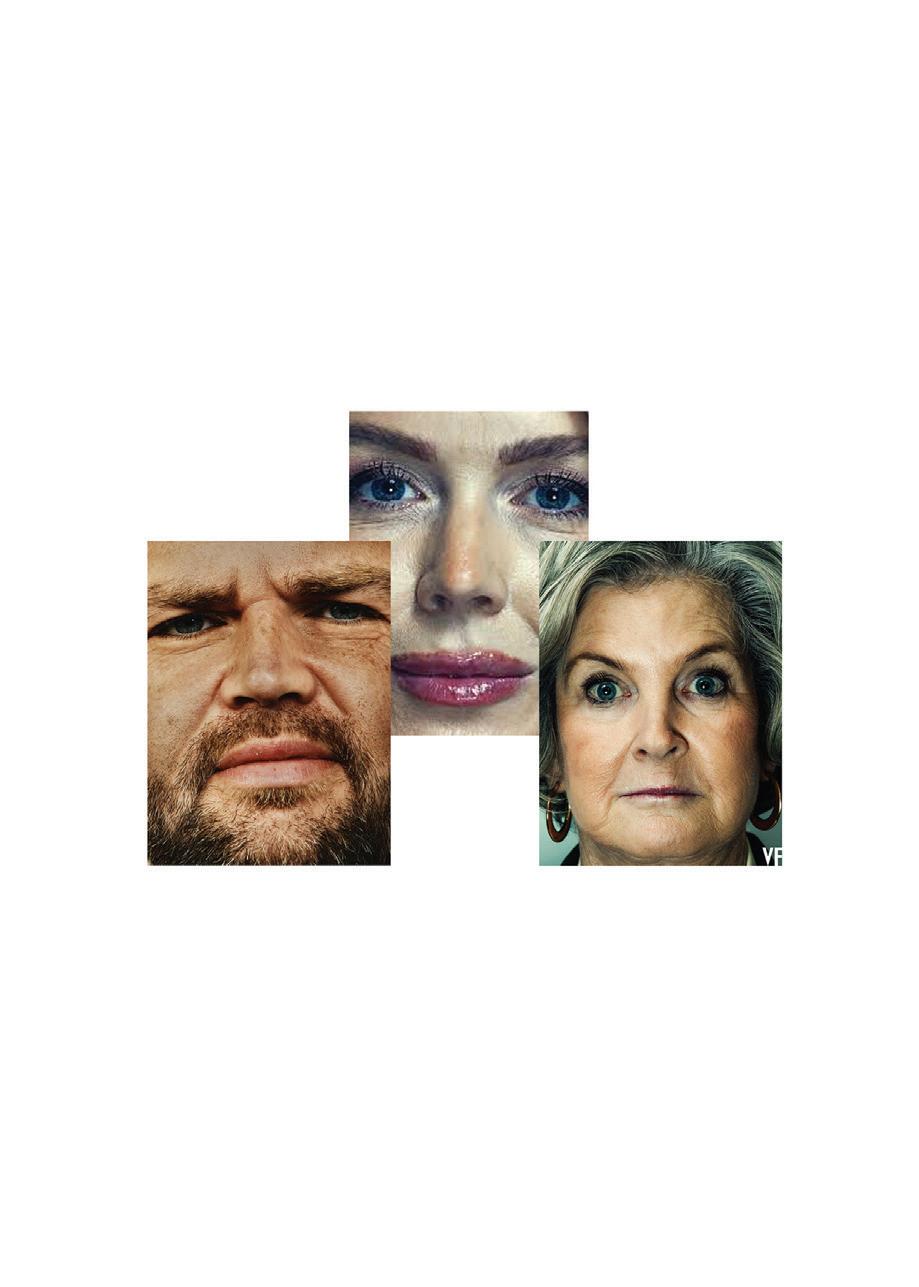
Vanity Fair’s photoshoot of the Trump administration
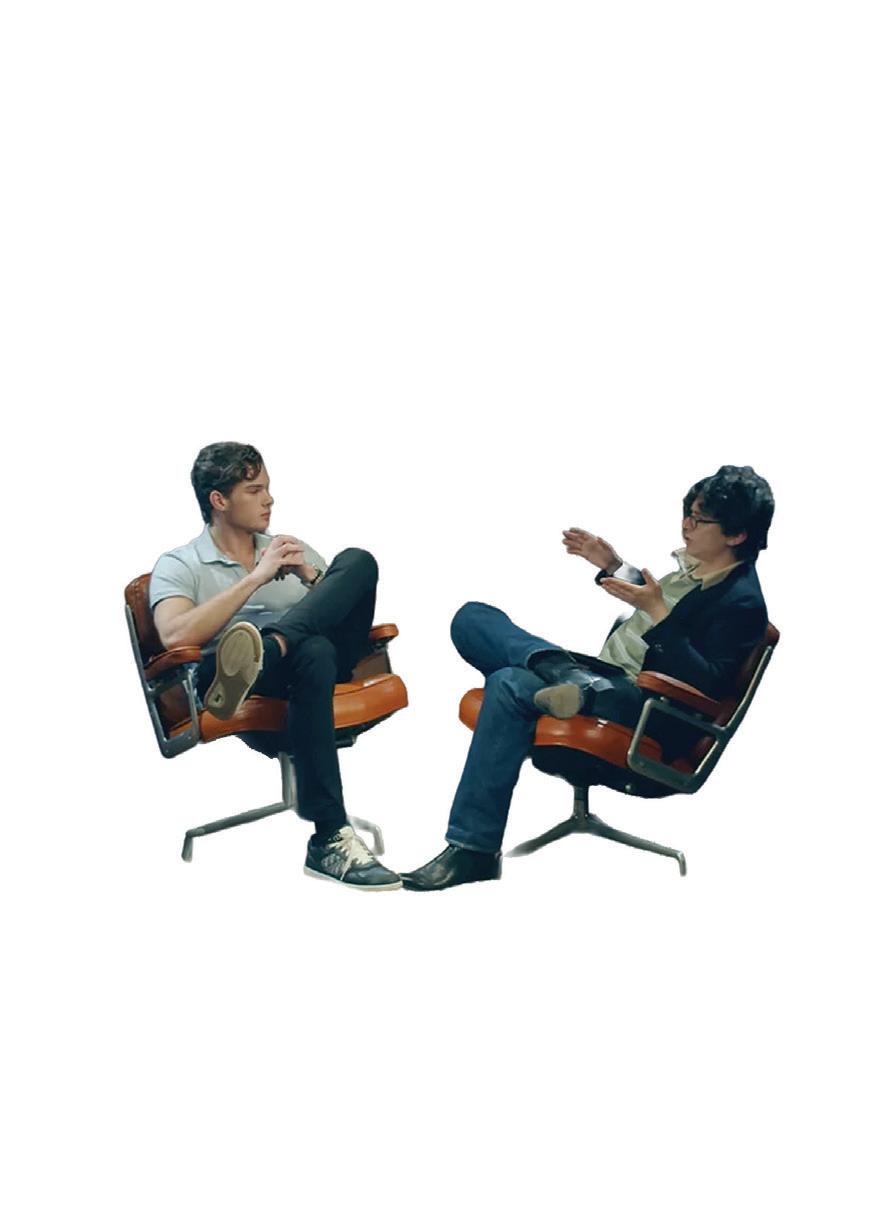
Adam Friedland’s interview with Clavicular
Matrix Street's Approval
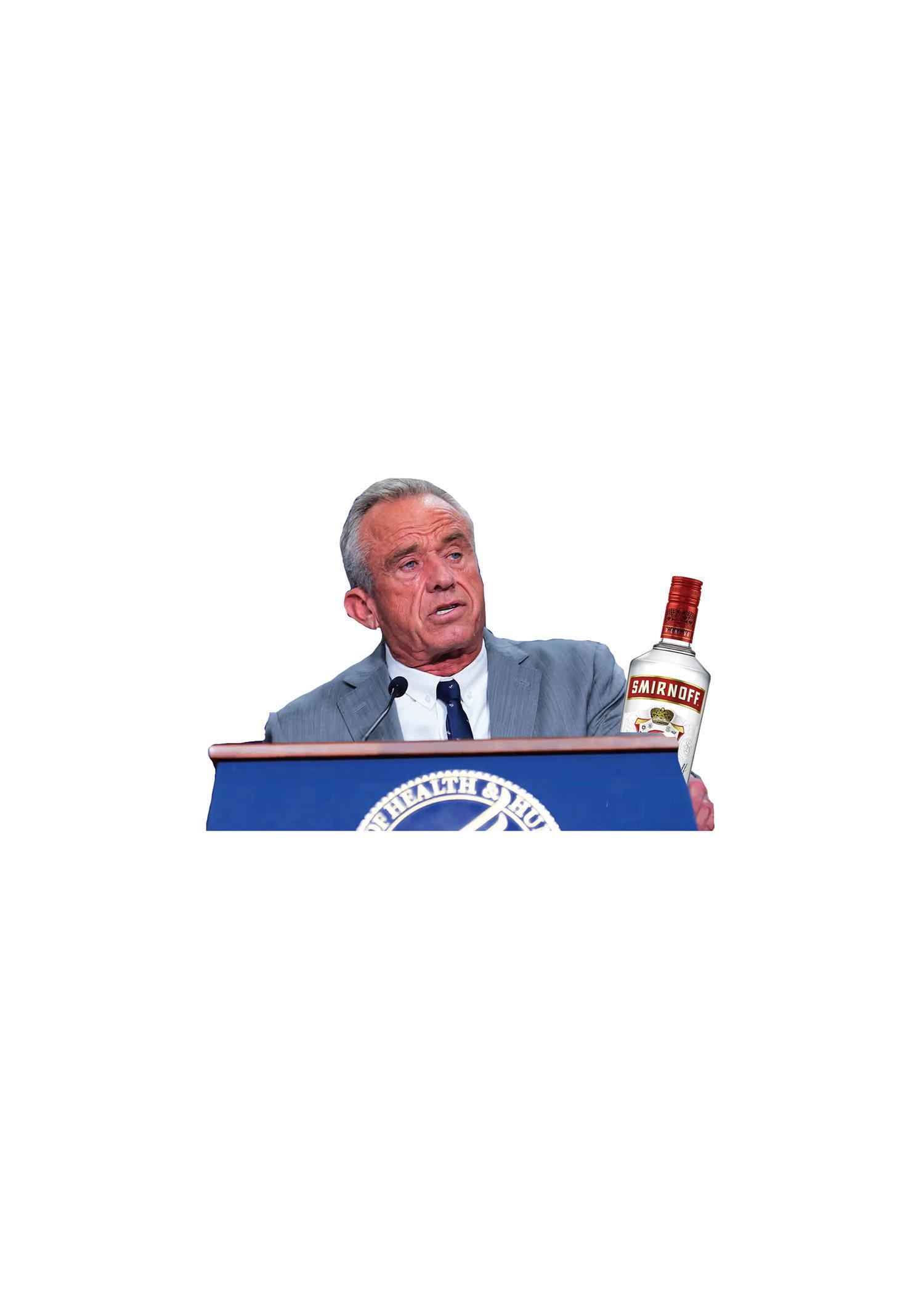
RFK Jr.’s new alcohol guidelines
Chinese baddie tips ASU frat leader
Ashton Hall
mogs Clavicular
Alysa Liu
By Maddy Brunson in plain sight.
Design by Alex Nagler
Content warning: This article contains mentions of suicide, suicidal ideation, and drug usage.
Due to anonymity requests, all names in this article are pseudonyms of real students.
Herds of freshmen walk from frat house to frat house in crop tops, jean shorts, and beat–up Air Force 1s. There’s one goal for the night: start New Student Orientation blackout drunk and maybe get lucky enough to experience a dance floor make–out for the first time. “As all freshmen at Penn do, we’re going fratting and we’re gonna go wander around until we find a party, and we’re gonna take shots of bottom–shelf vodka,” Ally says as they describe their NSO experience. As the first day of class begins, many freshmen march to their 10:15s regretting the seven shots of Crown Russe they took last night. Statistically, out of every 100 people, there’s about 27 students that meet the criteria for a substance use disorder.
For Penn administration and students, substance abuse disorder is much easier to turn your back on than to stand up and ask questions about. In a 2021 report by the National Institute on Alcohol Abuse and Alcoholism, 49.3% of college students reported consuming alcohol in the past month. In a study including 1,253 college students, 20% attested they had opportunities to use cocaine over their past year at college. But despite substance use becoming a growing concern for college stu-
dents, there’s a lack of transparency about the issue from the University. Only a very limited number of University–released reports about campus substance use are publicly available. That lack of transparency also extends to Penn’s programming for new students. Penn Violence Prevention’s NSO consent circles, for example, are critical in educating
freshmen about sexuality and relationships. Students work through scenarios to better understand how to protect themselves and others from potentially dangerous relationships. But there is nothing in the NSO schedule that teaches new students about recognizing the signs of drug abuse, addiction, or alcoholism.
The social fabric of a college campus is soaked in substances. The
normalcy of getting wasted because you’re sad, happy, or anything in between insulates students from questioning their substance use habits. Penn influencer Yash Mahajan (C ‘25, LPS ‘26) posted a video saying that drinking on a Wednesday night can seem casual as a student. Once you graduate, however, that kind of behavior becomes alcoholism. For students like Ally, Penn’s work–hard–play–hard dynamic leads people to “drink hard and use hard,” pushing stressed, vulnerable students down the dark hole of addiction.
Ally came onto campus freshman year with what they describe as pre–existing “addict behaviors,” having used weed, psychedelics, and amphetamines throughout high school. Now, they’re in their final semester; after six months of outpatient alcohol rehab, Ally is nine months sober. When reflecting on their time before getting help, Ally says that they “couldn’t imagine a life without drinking.” They realize now that many of their classmates were also alcoholics. But the fact that other students weren’t willing to reckon with their unhealthy habits led Ally to feel like they were the only one with a problem—that they were “the alcoholic that actually had to get sober.”
In many cases, choosing to abstain from substance use can feel like choosing to miss out on the college experience. “It’s maybe not the crystal clear image of peer pressure that you might see in the media,” Ally says. Penn students love to glamorize their drinking, often posting drunk
selfies from mysterious downtown bars. In this environment, Ally felt an internal pressure to keep nodding their head and knocking more back. They feel the friendships they had before getting help were sustained by nothing more than an infinite line of red Solo cups.
Stephen, another Penn student, defines himself as a drug user, though not one reliant on substances. He recalls being at a crowded house party when his pledgemaster offered him cocaine. He “was definitely peer pressuring me,” Stephen remembers. “He was saying, ‘Come on, you’ll enjoy it. You should try it.’ So I did.” Stephen came to Penn having already tried weed, and Penn’s open drug culture encouraged him to try different substances he may not have interacted with at other campuses. “I think if you are a freshman, and maybe more meek of a person, you are a thousand times more likely to do drugs here,” he says. “I was smoking a lot of weed freshman fall just to interact with people.”
Penn students are told what to do when their friends have pushed themselves too far, but not what to do to prevent them from getting to that point. ”If [students] are blacking out twice a week, that is a problem. That was me for years, and no one said anything,” Ally says. “The whole student body should be trained on recognizing the signs of addiction and what to do about it.”
But just as damaging as the lack of information is the wall of silence that surrounds frank discussion about topics like drug use. When asked
how he feels about discussing substance abuse with friends, Stephen says, “There’s a stigma that keeps you from asking about it.” In large part, that stigma comes from the constant presence of drugs in Penn’s social scene. Clubs, greek organizations, and friend groups at Penn often operate on binding, unspoken social contracts that members sign the moment they take their first shot.
6
“When willpower can’tcravings,overpower then that’s when students have a problem. I was convinced I could handle it all until it spiraled out of control.”
Because of how normalized substance use is in college social settings, substance abuse at Penn often hides in plain sight. “A lot of students probably don’t recognize they have a problem, and that’s a big first step in seeking help,” says Heath Schmidt, a Neuroscience and Pharmacology professor at the School of Nursing and the Perelman School of Medicine.
Penn consistently makes headlines
for being one of the most depressed and stressed campuses in the country. A 2020 census conducted by Penn’s School of Engineering and Applied Science found that 85% of students at Penn feel immense pressure to find internships and job opportunities. As both an intense preprofessional environment and a social scene that puts heavy emphasis on status, Penn’s campus is a pressure cooker. In an environment like this, Schmidt says, drug use can be a way to dampen those stressors, if only for a moment. “Addictive drugs are a way to numb or escape from the stresses and pressures you’re experiencing in life,” he explains.
“The last part of the brain to develop is the frontal cortex, which plays a number of roles in behaviors, attention, and impulse control,” Schmidt says. “So when young adults use [drugs] and their brains are not fully formed, the ‘brakes’ are not able to work in stopping a risky decision.”
The balance of neurochemistry in our brains is similar to our fingerprints, with each individual having unique subsets of chemicals that guide their decision making. “Your brain is constantly trying to maintain a homeostatic balance, and for someone using drugs consistently, part of that balance is continuing to take drugs,” Schmidt says. Drug use shifts the chemical scales that allow us to maintain our baseline functioning. When someone becomes reliant on drugs, it becomes a brick on their mental scale, a weight that is hard to counterbalance or lift off. “If a student lives in a frat house—where
there’s parties Thursday through Sunday—they’re going to have a very difficult time trying to change their behavior,” Schmidt says. If someone is only two doors down from a closet full of Tito’s and a 24/7 mini pharmacy, the temptation to have a shot or take a hit to start the day can be overwhelming.
Another force shaping Penn’s drug landscape is medical amnesty. The policy is outlined on Penn Wellness’s website: “No student seeking medical treatment for an alcohol or other drug–related overdose will be subject to University discipline for the sole violation of using or possessing alcohol or drugs.” Due to this, students often feel comfortable walking down Locust Walk being under the influence of weed, alcohol, and stimulants. Unlike the rest of Philadelphia—where drug laws are enforced more harshly—the amnesty bubble around Penn allows students to silo their drug use behind a shield of legal protection. While medical amnesty is helpful in preventing student overdoses and promoting safer drug use, the open pasture policy on campus can leave some students lost in the abundance of opportunity it gives them.
6
Fourth–year student Francis remembers sitting outside a frat, talking and chain–smoking cigarettes with the brother at the door. The brother took a final drag of his cigarette and offered Francis cocaine. “When in Rome, you try cocaine for the first time,” Francis laughs. Next thing Francis knew, he was visiting
the brother’s apartment every Friday, and then every Friday and Saturday. “I was thinking it would be a one time thing, but then it became an every time thing,” Francis says.
Before long, he was using a mixture of cocaine, ketamine, weed, and psychedelics. He’d tried some of those substances before, but never at the levels he was consuming them now. “When willpower can’t overpower cravings, then that’s when students have a problem,” Francis says. “I was convinced I could handle it all until it spiraled out of control.”
At the height of Francis’ addiction in his sophomore year, he destroyed his dorm room after not being able to get weed. His loved ones witnessed him at his breaking point as Penn cops took him away to the hospital. “This was one of the moments that got me to realize I needed help,” Francis says. “When I got to the psych ward, I realized how insane I was acting over a few ounces of weed.” Francis went to the psych ward three times that year, then went to rehab twice around his junior year.
Francis’ personal battle with addiction took a sharp turn after a close friend of his died in a drug related suicide. The loss struck Francis and his friend group hard. “It was a catalyst in our group to actually start caring about each other,” Francis says. After his friend’s passing, Francis has been persistent in maintaining his mental health and sobriety. It hasn’t always been easy. “There’s been situations where I’ve been so sick that the last thing on my mind was reaching out for help,” Francis says. “How can
we help someone who’s not reaching out at all?”
When Francis was seeking help due to his suicidal thoughts, the first place he tried was the Student Health and Counseling office. “I had to wait hours for help, and so I said ‘Fuck it.’ I can’t wait three hours before I kill myself,” he says. “So, I defaulted to checking myself in at the hospital instead.”
6
For students struggling with substance abuse, Penn’s resources are patchy at best. “It gives this implicit message that there’s not alcoholics or addicts on this campus,” Ally says. The time Ally spent in Penn therapy groups provided them a sense of community, but rarely a sense of healing.
Two recovery groups operate on Penn’s campus: Wellness at Penn’s “Substance Use and You” group and the Substance Use, Prevention, Education, and Recovery program. The Wellness group is run by a trained clinician, and the concerns that participants share are often put into their patient charts. SUPER, on the other hand, does not record group discussions and accepts anyone curious about recovery with open arms.
“We are open to help students in any way, shape, or form,” SUPER’s Substance Use specialist Trainor Macrone—herself a person in recovery—explains. SUPER organizes therapy groups for students seeking guidance, distributes Narcan and fentanyl test strips, and reaches out to students who were hospitalized due to an overdose or have substances
found in their dorm rooms. “It’s not disciplinary or punitive,” Macrone stresses.
SUPER works hard to ensure their approaches to harm reduction and counseling are relevant to what Penn’s campus is experiencing. They collaborate with student groups— like the Medical Emergency Response Team—to ensure students’ perspectives are considered in their programming. In the 2024–25 academic year, SUPER reported 204 student referrals given for one–on–one recovery guidance and 377 students trained in harm reduction. Their efforts have changed many lives, but there are still students who fall through the cracks.
SUPER occupies little space in the campus consciousness, and as a result, it can seem inaccessible. Stephen had never heard of the group; Ally and Francis said that the process of accessing SUPER and other resources took a lot of digging and effort. “Penn doesn’t prepare us for anything related to alcohol or addiction. They don’t mention the resources for addiction,” Ally says. 6
Even after Ally got sober, their reputation as an ex–user stuck. “People stop inviting you to things,” Ally says. “They wanted to go out, they wanted to club or go to bars. I was fine doing those things, but people have this certain idea that addicts can’t be around those settings or have fun.” Recovery for Ally has been difficult. They’ve lost many of their friends since becoming sober, and weekend nights have gotten a lot more lonely
since they stopped drinking.
“Students fear that their peers are going to look at them differently and they aren’t going to be able to attend social functions anymore,” Macrone says. She understands this fear and supports students in making decisions that are right for them. Finding unconditional support and love from others in recovery is essential to healing. “If someone doesn’t stick by you through your recovery,” Mac-
rone says, “maybe they aren’t a true friend.”
“Addiction touches everybody in some way,” Macrone says. She emphasizes the need for campus–wide support of those struggling with addiction. “Recovery allies are just as valuable and important as someone who is in recovery. It builds out student contacts and social circles for people in recovery,” Macrone says. “It’s always heartwarm-
ing when I’m invited to something and people say, ‘There will be alcohol but also La Croix.’ ”
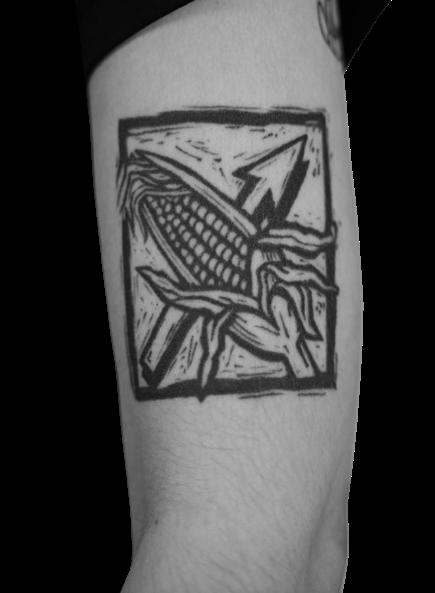
Francis has a tattoo that reminds him every day that the battles he fought throughout his addiction have been against himself. It reads, “Ipsi mihi inimicus pessimus sum”—Latin for “I am my own worst enemy.” Francis knows that only he can reckon with the traumas and losses he has experienced over the years. Like other students in recovery, he has to make the conscious choice every day to be free from his addiction. For many, recovery is a lifelong commitment—a commitment to loving yourself and picking up the broken pieces along the way. 6
For medical emergencies, call PennComm Emergency Communications Center (24/7) at 215–573–3333. Dial 911 if outside of the Penn patrol zone.
Suicide and Crisis Lifeline (24/7): 988
Crisis Counselor (24/7): text HOME to 741741
Trevor Project for LGBTQ+ counseling: 1–866–488–7386
Penn Student Health and Counseling (24/7): 215–746–WELL (9355)
SUPER’s Recovery Group meets on Tuesdays from 4–5 p.m. at the Public Health and Wellbeing office, 3535 Market St. on the Mezzanine, Suite 50.
“Substance Use and You” group meets on Wednesdays from 5–6 p.m. at Counseling, 3624 Market St., 1st floor.
NO PUNCHES PULLED
Bloodlust hangs in the air as Zedekiah Montanez begins his walk into the ring at XFinity Mobile Arena. It’s a homecoming of sorts for him. Last January, in his debut as a bare–knuckle fighter, Montanez squared off against fellow lightweight Brandon Meyer in a fight that would end sooner rather than later. Just 30 seconds into the second round, Montanez took a brutal left hook to the jaw that slammed him down to the canvas, ending the match. But fortune (and the higher–ups at the Bare Knuckle Fighting Championship) had smiled upon him, granting him a rematch with Meyer at Philadelphia’s KnuckleMania VI, the Super Bowl of the bare–knuckle world.
This time, he wouldn’t go down so easily. Bare–knuckle fighting exists in something of
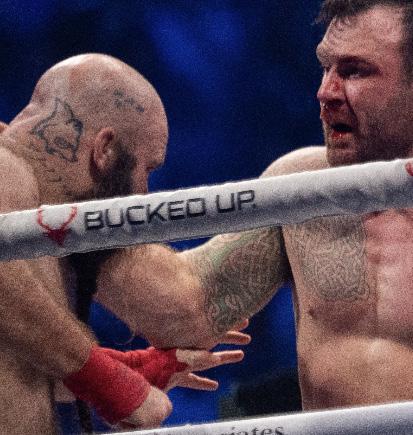
a gray area between violence and theater. From the beginning, the BKFC has built its brand around carnage. “We encourage dirty boxing. We love it here,” announcer Brian Soscia told the crowd before KnuckleMania kicked off in earnest. “You know what else we love? We love violence and bloodshed!” But while their fights are billed as exhibitions of raw, unfiltered savagery, equally as important are the dynamic theatrical personas that fighters construct for themselves. Fueled by costumed combatants and frenzied announcers, bare–knuckle fighting can seem like a practice in contradiction with itself, blurring the lines between real violence and manufactured spectacle.
But in the midst of it all, one central figure disappears from the scene: the fighter themself. It can be hard to distinguish the warriors
Every time they step into the ring, bare–knuckle boxers put their bodies on the line. What are they fighting for?
By Nishanth Bhargava
Photos by Jackson Ford
in action from the personas they carefully construct and all too easy to forget that behind these masks are people with lives outside the ring. For many, fighting is a way of life—but what the boxers are fighting for is something greater than themselves.
Boxing is in Montanez’s blood. The Philadelphia native was born at Temple University’s Episcopal Hospital, just a few streets down from the house of boxing legend Rocky Balboa. From there, he spent much of his early life bouncing around the Philadelphia area, brawling everywhere he went. “Especially in school—elementary school, middle school—[I would] really get into a lot of fights,” he admits. “I [would] get a rush from the crowd.” That drive to fight eventually led him to boxing, which he took up after he moved with his fa
Design by Kiki Choi
-ther to a small town in the Pocono Mountains, Pa. There, Montanez was the only Puerto Rican in a high school that was almost entirely “Caucasian,” a fact that made him feel like he “was kinda an oddball.” “I felt like I was in enemy territory, and I was in my fucking high school,” he says. During this tumultuous time in Montanez’s life, organized fighting taught him discipline and control, giving him a constructive outlet for his passions.
Montanez has grown a lot since his days fighting in the playground, something he attributes to the support system of coaches, friends, and families he’s built up over the years. “I was once someone that used to get bullied, then became the bully, and then became the one that told the bully to chill,” he says. “[I became] the one who gave a voice to the people that didn’t have a voice, because I was one of them as well.” Today, Montanez’s passion for fighting is combined with his passion to support and inspire his own children—to teach them that despite the adversity they may face, hard work can take you anywhere.
Only after years of traditional boxing and mixed martial arts did Montanez turn to bare knuckle fighting. “It’s a raw, dirty game,” he laughs. Montanez’s first BKFC experience was terrifying—feeling the gaze of more than 17,000 fans burning on his back, Montanez tried to drown it all out. But that was futile. “The more I tried not to listen to the crowd, the more I heard the crowd,” he explains. Trying to focus on both fighting and playing to the crowd left him unable to do either, and that first bout was quick and brutal. “I remember my son, after my first bare knuckle fight, he called me and was like ‘Dad, I don’t want you to do that ever again,’” Montanez says. But as he explained to his son, “Shit’s not always going to go your way, bro … this is what I chose.” Montanez had lived his life under punches, trading blows with the best fighters Philadelphia had to offer. One loss, he decided, would hardly push him out of combat sports for good.
It’s all led up to today, where Montanez faces off against the man who took him out a year and a half ago. This time, he embraces the furious energy of the room, letting it fuel him as he focuses not on putting on a performance, but putting on a clinic in clean, technical fighting.
The first round is quick and violent. For
most of it, the two fighters struggle and bounce back and forth, neither able to get a clear upper hand. Despite Meyer’s quick footwork, however, Montanez is able to knock him to the ground with a clean hit to the face. The violence briefly pauses before starting back up—no one is able to force a knockout before the round’s two minutes are up.
Before anyone can catch their breath, the second round begins. The two grapple and trade body hits. Montanez pummels Meyer with a series of hits to the stomach, forcing him down to his knees before he quickly gets back on his feet. But in the round’s final seconds, Montanez finally connects on a brutal uppercut to the jaw.
Meyer hits the ground hard—and stays there.
The violence at KnuckleMania was hardly restricted to the ring itself. At the press conference after the fight, a reporter claimed that a total of nine fights had broken out in the crowd throughout the night. Some of these brawls were visible from the press area, with violence even erupting on the floor section itself. Par for the course, with this crowd.
The total scope of BKFC’s violence is precisely the point. In the breaks between fights, the arena’s screens display clips of competitors trash–talking each other next to videos of the most violent KOs from past events. BKFC’s hype men do their job as well, playing to the audience with flattery, giveaways, and calls for cheers. Throughout the night, Soscia flails a merch bazooka around wildly, shouting into his mic at the formless mass of spectators. “Who wants violence? Who wants blood? Who wants a T–shirt?” This venue is a pressure cooker, the crowd coalescing into a single, white–hot ball of energy that embraces and amplifies the violence on display in the center of the arena.
The purpose of BKFC’s spectacle is, yes, to sustain the crowd’s energy, but equally (if not more) important is the need to expand BKFC’s market share. As a relatively new promotion in the professional fighting circuit, BKFC has been crafty in their attempts to get ahead. Their audience skews young, male, and vaguely conservative—the only moment of the night that silences the crowd is a saxophone rendition
of the national anthem. KnuckleMania’s slate of sponsors is expertly tailored for the crowd present: hanging above the fighter’s heads on the arena’s jumbotron are advertisements for Tucker Carlson’s new line of nicotine pouches; masculine skincare products for athletes; supplements, energy drinks, and alcohol side by side; even a bizarre sound therapy product that claims to “merge advanced scalar energy, plasma fields, and proprietary sound frequencies to support deep restoration and personal evolution.”
But at the center of it all is gambling. When fighters enter the ring, the jumbotron displays their betting lines underneath their physical statistics. Audience members are constantly invited to scan QR codes and redeem their bonus bets. Having viewers put money on the line both helps BKFC grow through sportsbook partnerships and deepens viewers’ engagement with the sport. In the end, every punch feels all the more intense when it’s aimed at your wallet. “Betting is really the most important thing in any sport,” BKFC President David Feldman says at the post–fight press conference. For BKFC’s fighters, each battle is waged for honor, for glory, and for their people. The league as a whole, however, fights for something greater—their bottom line.
Economic pressures are no less present for the fighters themselves. At his lowest, Lex “The Grizzly Bear” Ludlow had $30 to his name and a wife and daughter to feed. It was fighting that had left him there. After losing his first three professional bouts, Ludlow ruptured his ACL and tore his meniscus while training for his fourth, leaving him unable to work. He recalls thinking to himself, “I don’t ever want to struggle for money ever again … I don’t want to fight anymore. I want to just get a job and I want to do things the right way.” His love for the sport, however, ensured that he wouldn’t be out of the game for long.
Growing up, Ludlow dreamed of being a professional wrestler. After training at a local Brazilian Jiu–Jitsu gym in Hatboro, Pa., however, he ended up turning towards the world of MMA. He lost his first fight to future UFC fighter Karl Roberson, who “dropped me five times in the first round,” Ludlow says. And although he won his next two matches, all he could think about was that first match, medi-
tating on what he would do differently if he got the chance to square up with Robeson again. Ludlow lost their eventual rematch by a tight 29–28 decision, but his drive to keep improving himself led him to dedicate his life to the art of combat.
After fighting professionally, however, something changed. He grew exhausted with the fighter’s life. His ACL rupture was the straw that broke the camel’s back, seemingly ending his combat sports career for good. He was just about ready to hang it all up when the sudden death of his grandfather, a key part of his early life, shook him to the core. His passing lit a spark in Ludlow, bringing back his passion to make something meaningful of his life. He made a promise to himself: “I don’t know what I'm going to do, but I’m going to change our lives somehow, or at least try.” After months of watching UFC and getting back into training, Ludlow made the choice to quit his job and re–enter fighting full time.
His re–entry wasn’t easy—he once drove nearly eight and a half hours to a fight in West Virginia for just $1,000 in pay. But now, he says, “I’m doing pretty well for myself.” Ludlow is currently undefeated in BKFC, notching three wins under his belt and earning the title of “The Most Hated Man in Combat Sports” in the process. He talks plenty of trash before and after his fights, he says, “but when that music hits and I gotta make that walk, I’m there to work.”
While Ludlow loves to fight, his approach to violence is calm and professional. “I’m not there to wear a mask and play with the crowd at that point,” Ludlow explains. “My fights speak for themselves.” To him, each bout is like a level in a video game—finish one, on to the next. More than any passing rush of adrenaline, what motivates him to keep going is his family. He dreams of one day being a champion, gaining glory in the ring and financial security for his family outside of it. “I just want my kids, and their kids, and their kids, and their kids to be okay,” Ludlow says. “And I want them all to know who did it.”
At KnuckleMania VI, Ludlow faces off against Zach “Shark Attack” Calmus, who enters the ring in a menacing hockey mask and Boston Bruins jersey. Ludlow, by contrast, throws theatrics out the window. His quick walk–out is as stripped–down as can be, his
focus trained on the fight ahead of him. The crowd hates the interloper Calmus from the jump, practically begging Ludlow to tear him limb for limb.
He delivers. Ludlow’s drive to bring chaos into the ring is palpable in the way he fights, his blows heavy and quick. His domination begins in the first round, where he draws blood early. The fight is more equal in the second, but in the final round, Ludlow forces Calmus to the ground twice before cornering him with a flurry of hits to close out the match. As blood and sweat dribble from Calmus’s face, the panel of judges announces their unanimous decision for Ludlow. It’s not a clean knockout, but it’s a victory nonetheless.
The roar of the crowd is deafening as the referee lifts Ludlow’s arm to the skies. But Ludlow doesn’t share in their jubilation. He’ll feel the rush later in the night, but as he stands there in the ring, his emotions are simple—“Emptiness. I have no nerves, I have no feelings.”
“I have nothing.”
The climax of the night features two old hands in the combat sports world, the Wisconsin–based Ben “Big Ben” Rothwell and the Belarusian Andrei “The Pitbull” Arlovski. The two first squared off 18 years ago, with Arlovski putting an end to Rothwell’s 13–fight long win streak. They’re older now—Rothwell is 44 and Arlovski is 47—and it shows. As the fight drags on through three long rounds, Rothwell begins to break. His footwork slows. His punches drag as if thrown through water. Blood streams across his face, its source unclear. Only when doctors stop the fight and wipe his head down is the extent of the damage laid bare—a massive gash runs from the top of Rothwell’s skull all the way down to his eye socket. Blood still cakes his face and torso as Arlovski is crowned BKFC’s newest heavyweight champion.
Bare–knuckle fighting is a brutal sport. Staring death in the face, fighters have to ask themselves: Are you ready to put your body on the line to do what you love? It’s a difficult choice to make. “Before, I used to be in there, and I used to be like, ‘Yo, I’d die for this shit,’” Montanez says. But now, with a wife and a family? “I don’t want to die for this shit. I want to be able to talk to my grandkids, to talk to my wife and for her to be able to understand me.”
“I got something to live for, bro.” 6
BODIES BODIES BODIES
Street asked the question you’ve been too afraid to: What’s your body count?
By Nishanth Bhargava and Samantha Hsiung
What is your Rice Purity
“People here are kinda chopped so it made me feel better about myself.” —Male, Class of 2029
Design by Chenyao Liu
On a scale of 1 to 5, how satisfied are you with the way your body looks right now?
“[I] listened to mommy dommy ASMR for multiple hours off of an edible :(” —Nonbinary,
THINNESS IS BACK.
The ideal American body is a constant negotiation between class anxiety, youth nihilism, and desire for novelty. But Italy knows something about beauty that America doesn’t.
By Laura Gao
Design by Marcus Hirschman
If you’ve taken a trek through fashion TikTok lately, you’d know all too well that thinness is back again. On my “For You” page, women dance in low–rise jeans, shake in bodycon dresses, and lace up their corsets so tight that their waists look carved into their body. K–pop idols take the stage in micro mini skirts and bolero tops, while fans dissect the suitability of their styling to their body type. Even in high fashion, a Vogue Business report showed that 97.18% of models in spring/summer 2026 fashion weeks were “very small” (size 0–4). Out of 9,038 analyzed looks, only 2.0% featured “regular–sized” models, while 0.9% were “plus–size” (size 14+). The impact is already here: Pro-anorexia content is back on TikTok, and health visits for eating disorders amongst children doubled between 2018 and 2022.
To those familiar with the trend cycle, this feels strangely reminiscent of the 1990s and 2000s, when extreme thinness dominated billboards and magazines. “Truth be told, I thought we were past this,” The Story Exchange journalist Candice Helfand–Rogers says. Samantha Bush echoes the sentiment on X: “Thin is in again and it worries me. My early 2000s PTSD is creeping up.” While body standards have always been cyclic, many had hope that 2010s body positivity would last, or at least last more than a decade. In the same years, however, the ideal beautiful figure in certain other nations have barely budged an inch. Why has
“Our bodies are our homes. Our bodies hold memories, stories.”
thinness had such a resurgence in America? Is America uniquely susceptible to these impossible body standards?
The extreme thinness of the ’90s emerged as a rebellion against the prosperous, disciplined supermodel of the ’80s with visible biceps and toned abs. When GDP was increasing 7% in one year under former President Ronald Reagan, Elle Macpherson’s Olym pic–ready body was aspirational fodder for your evening workout. But a decade later, when the youth of Gen X graduated into a 7% unemployment rate, the same supermod el image became a reminder of the Boomers’ broken promises. Up–and–coming magazines like i–D and The Face began photographing models sitting on the floor with sunken–in cheekbones, wearing ripped fishnet tights, and flicking cigarettes at the camera. This was the heroin chic movement—hollow eyes and visible ribcages hinted at emaciation due to drug addiction. This extreme thinness, a direct revolt against the prosperity and polish of the previous decade, resonated with the increasingly cynical and nihilistic youth. As the ’90s trudged on, heroin chic became all the rage, making its way into Playboy and Calvin Klein perfume campaigns.
come back as a protest against body positivity, which can easily turn toxic by constantly demanding self–love.
These girls are gaunt, depressed–looking, and visibly unwell. And yet they are famous for it, suugesting that markers of poverty and illness have become aspirational.
Wharton School professor Jonah Berger and Columbia Business School professor Silvia Bellezza have a theory: The rich emulate the lower classes “as a costly signal” to distinguish themselves from the middle. In the early 19th century, amid a tuberculosis pandemic in England (which was responsible for 40% of working–class deaths), wealthy women of the early Victorian era drank vinegar, starved themselves, and used cosmetic products to mimic the ghostly skin, thin figures, and hollow eyes of the ill.
Sound familiar? With fascism and new graduate unemployment rates rising in 2026, the desire among youth to rebel against glamour is back. The “femcels” of TikTok are no longer just rotting in piles of unwashed clothes—they’re now hunching over against walls, dressing up in ballet tutus and pointe shoes, showing off their emaciated collarbones, and tweeting, “I’m not ‘glamorizing anorexia,’ … I’m simply glamorous and anorexic.” Frailness and skeletal faces have
The heroin chic aesthetic and the celebrity obsession with Ozempic today can also be read this way: If a poverty–stricken person has bones poking out of tattered clothes, you’d assume their frail figure was due to starvation. But give the same body to Ariana Grande in a $15,000 Glinda dress, and you’d think it’s a deliberate aesthetic choice. When a marker of poverty is paired with a symbol of wealth, the rich further differentiate themselves from the middle class, whose positioning lies too close to the lower class to risk such a presentation. Even at the height of heroin chic, fashion photography of the dirtiest, most vile images always contained an undercurrent of glamor—they maintained photographic distance from the depraved addiction they portrayed. The “waif femcel” girls, too, echoed this trend—by dressing up in elaborate ballet sets, they maintain a sense of glamor to their sickness.
SO WHAT?
Fashion creator Liz Drayna explains that trends die when they become repetitive and, hence, boring. This happens, according to Drayna, “all the quicker” in the social media age: In a single TikTok scroll in 2018, you could see dozens, even hundreds of Kardashian–like bodies shaped with uncannily narrow waists and wide hips. After a decade of BBLs, it’s only natural that Gen Z began to crave something fresh. The Y2K flat tummies and booty shorts— or the ’90s cigarettes and fishnets—increasingly carry an allure of nostalgic fantasy.
The cycle of thin to curvy and back is not new, but the scale at which it’s moving is. In the 18th century, a fuller, rounder figure symbolized health and wealth. This was the ideal body type for 150 years, before the Gibson Girl—a thinner–waisted, hourglass figure—was popularized in the 1890s. When contrasted with the Kim curves, which lasted just a decade, the acceleration of body standards is undeniable.
Across the Atlantic, however, this acceleration never quite took hold. For Gabriela R. Proietti, a Philly–born writer, living in Italy flipped her body image on its head. It started with the common Italian saying, “la bella figura.” It translates to “the beautiful figure” in English— but really, it’s used to describe someone who is healthy, confident, and well–mannered.
Italian style is often characterized by neutral, earth–tone palettes, high–quality fabrics, and well–fitted, refined pieces. It is a “smart–casual” look that remains polished, comfortable for walking, and appropriate for both city and rural settings. In contrast to American style, it emphasizes timeless virtues of elegance, quality, and sophistication. “English has no word or phrase to describe this phenomenon that the Italian language does so eloquently,” Proietti says.
Similarly, Italian health is centered around community, embodied experience, and sourcing of ingredients. “Instead of thinking of pasta as rich in carbs,” Proietti says, “the voice buzzing in an Italian’s mind thinks: How long should it be cooked? Which vegetables are in season to compliment the dish? Or what is the perfect pairing wine?” On top of that, mealtime is sacred, savored, never to be rushed or skipped. A 30–minute coffee break is a ritual that Italians
believe we all deserve.
Cassandra Santoro, a New York City native who moved to Italy for a year, detailed a similar experience. “When you start to understand what’s special to the specific area, you understand what’s in season, that’s when you start to change,” she says. “I just feel more inspired to eat better, to support the local people and keep learning.”
In contrast, American health fads focus on more quantifiable—and arguably more superficial—metrics. In In Defense of Food: An Eater’s Manifesto, UC Berkeley professor Michael Pollan argues that nutritionism, the reduction of food to its carbohydrates and calories, is an ideology that alienates us from the embodied, earned knowledge that comes with paying attention to how we eat. He writes, “regarding food as being about things other than bodily health—like pleasure, say, or sociality or identity—makes people no less healthy; indeed, there’s some reason to believe it may make them more healthy.” The deeply personal experience of inhabiting a body becomes commodified into sellable macronutrients and metrics.
As a relatively new country composed of diverse cultures, America doesn’t benefit from centuries of shared rituals. Consequently, our health and body standards are constantly tugged in opposing directions by hundreds of societal factors, whether it’s the defiance of body positivity in precarious economic times, the desire of the rich to mark themselves as distinct from the middle class, or the overexposure of a hyperspecific body type. The body becomes a vessel onto which we project all our cultural anxieties—hence, our body standards undergo massive shifts every decade.
“La bella figura” isn’t a perfect
solution, but it offers a great starting point—by emphasizing timeless values of elegance and confidence, the ever–shifting ideal bodies of the online nether bear less weight. When your relationship to food and health is built around kneading fresh pasta with your grandpa and buying bread from the local baker who knows your name, it’s harder for a #thinspo TikTok to destabilize it.
“Our bodies are our homes,” Proietti writes. “Our bodies hold memories, stories … My moment of truth was here, amongst complete strangers, who showed me that life is meant to be lived and enjoyed, something I couldn’t fully embrace because of my insecurities.” 6
DRAWING BODIES, MISSING PEOPLE
On being captured vs. being known in the art studio
By Aaron Tokay Design by Kate Ahn and Eunice Choi
Pencils down, robe on. During the break of a life drawing session, Danny Ramirez walks around the studio, looking at versions of themself. They’ve been modeling for seven years—long enough to know what to look for in a drawing.
The premise of life drawing is simple: A model takes off their clothes, stands on a platform, and holds still while artists attempt to capture their form. It is a cornerstone of art training or classic painting, but nothing about bodies, nakedness, or observation is ever actually simple.
Ramirez tells me that when you look at
a drawing of yourself you can tell whether an artist is frustrated with their work or if they enjoyed themselves while making it. And then, of course, you can “get one where you’re like, God, I think that person’s just, like, really into butts.”
The naked body invites projection. That’s what makes nakedness such a vulnerable state. But therein lie the questions: is the artist conscious of what they’re projecting? Do they believe they’re drawing someone or drawing on top of someone?
Ramirez is non–binary and likes to embrace their androgyny even when modeling nude. But they rarely see that reflect-
ed back, instead seeing hyper–feminized versions—curves exaggerated, head round like a baby’s—or angular, masculinized interpretations of their body. Neither feel true. Both are attempts, whether conscious or not, to make Ramirez legible within the gender binary that structures how we see our bodies.
Unfortunately, this experience isn’t unique to Ramirez, nor confined to gender. Ian Pugh, a junior at Massachusetts College of Art and Design, describes watching new artists struggle to represent a plus–size model, drawing her thinner, lighter, and more “floaty” than he was. “Some people
weren’t used to a body type that wasn’t standard anime twink, for lack of a better term,” he explains.
Our digital world has reshaped the way we think about conventional body standards. Each online platform has its own body logic: the slim–thick Instagram body, the petite “anime twink,” or the hyperreal porn body. The phone wasn’t even in the room, but its power of distortion was still palpable in every drawn line. Whether it’s forcing Ramirez into masculinity or femininity, or thinning a plus–size model to match Instagram standards, the impulse is the same: to force conformity onto bodies rather than honor them as they are, in the context of their person.
Ian, even as an animation major, finds the same issue in the classrooms of his art school gen–eds. He remembers his first life drawing session of a nude model with the kind of visceral clarity usually reserved for first kisses or car accidents. “The first time doing it, it was a little awkward,” he tells me. “But after the heebie jeebies wears off in the first ten minutes, you’re just so focused on ‘oh shit, I have to draw this.’”
The trap many students fall into is thinking that anatomical accuracy is the final goal. This is what Ian sees in what he calls “Instagram Reels artwork”—hyper–realistic drawings made purely to showcase technical skills like “that dumbass colored pencil drawing of the snarling lips with the lime in it.” With palpable disdain, he declares that the genre “lacks depth.” When technical skill becomes the end rather than the means, human subjects become simple props for demonstrating mastery. Queer bodies, plus–size bodies, bodies of color get rendered with that same slick, Instagram–ready precision, packaged for easy consumption.
“There have been times where I’ve been like, oh my god, you drew me how I feel like I am,” Ramirez explains. “That’s a really special moment where I feel seen.”
One artist they work with stands out as an example: He talks to Ramirez the whole time while drawing, getting to know Ramirez as a person, not just a form. When he turns the canvas around to show
Ramirez the drawing, it resonates with them differently. “It’s just extra fulfilling,” they tell me, “when you get that person who is putting some of you, that they actually got to know, in their work.”
The artist’s influence is already inherently present—their hand, their eye, their particular way of seeing. But the question is whether the model’s presence makes it onto the page too, or whether they are left replaceable with any other body that could hold that pose. “I feel like [that artist sees] my soul,” Ramirez says. “I feel like I’m looking at me … not just the way that my body is painted.”
This is what collaboration looks like. The drawing doesn’t pretend to be objective— and it can’t be, it never was. It’s instead honest about what it brings: one person’s attempt to see another person clearly and for who they are.
This intimacy is what separates art from documentation—and it’s what the phone destroys.
Heather Phillips, a photography lecturer at Penn, knows this intimately. “A camera is an aggressive tool of violence,” she tells me. In one photo, a million details are packaged into a single composition. But that same comprehensiveness can become a tool of care rather than capture. A photo taken secretly will never be the same as one taken collaboratively, which is why Phillips ensures that “everything about [her] practice is collaboration.”
As an example, she tells me about one project she worked on where she took photos of a trans man over the years to document his transition. In isolation, each photo might just seem like a portrait of a man in his underwear. But in the context of the art, in the project, each pixel of beard hair is laden with personality, trans joy, and self–love.
One photo depicts this model in the bathtub with a phone and tray of nachos. Phillips tells me about the inspiration of this shoot, reenacting her talking to the model on the phone “after his wife served nachos in the bathtub … for his birthday.” The nudity here isn’t about exposure, but instead comfort and domesticity. It’s not
clinical nudity like a documented transition timeline, nor is it like the sexualization of porn. It’s a trans man, near naked, reenacting an authentic, happy memory of nachos and birthdays.
At one outdoor session with the same model, strangers twisted their necks to watch as the two posed in costume. But their vulnerability acted as something offered rather than taken. The model turned to Phillips with what she described as “sheer excitement” and said: “They think we’re acting, but we’re not acting. This is our life!”
It’s not a coincidence that everyone I spoke to for this piece—Ramirez, Phillips, and Ian—is queer. They know what it is like to be read wrong or reduced to what others project onto them. Nakedness for queer people risks documentation instead of being truly seen for oneself. Collaborative visibility isn’t just aesthetically preferable for queer bodies—it’s political. When your naked body has historically been medicalized, criminalized, or fetishized, being drawn or photographed on your own terms is a means of reclamation, survival, and resistance. The queer body is no longer read as a symbol or as a threat—it’s seen as a person.
Pencils sharpened, robe off. Ramirez steps back onto the platform. But between poses, their body has already shifted— weight redistributed, breath deepened, mind moved from the joke they just heard to wondering what’s for dinner. The artists position themselves around the studio, ready to pick up where they left off.
In a world saturated with images—where bodies are constantly captured, catalogued, and commodified—the practice of sitting with someone, seeing them, and choosing what to represent becomes a survival of the soul.
Ramirez settles into the new pose, and the artists begin to draw. Their body doesn’t owe anyone stasis or clarity. The best art respects that, acknowledging the gap between the fixed image and the living body, then honoring it rather than trying to close it. By the time the work is finished, the person who inspired it will already be someone new. 6
TATTOOS ON CAMPUS
What gets under our skin
By Aaron Tokay
Design by Marcus Hirschman
Igot my first tattoo last summer. A simple one, referencing a Walt Whitman poem on the back of my arm, but it’s enough to strike up a conversation anytime it’s hot enough for me to wear short sleeves. And now that conversation will follow me to the ends of the earth, or at least until I get sick of teenage decisions and save up for a coverup.
“There’s something special about getting inked at 18, 20, 22, when you’re in the midst of figuring out who you are and why that matters.”
Tattoos at Penn mean the same things they do anywhere else—memorials, jokes, mistakes—but there’s something special about getting inked at 18, 20, 22, when you’re in the midst of figuring out who you are and why that matters.
That’s why we asked Penn students what their favorite tattoo is and why. Whether for inspiration or as a warning, these tattoos represent what’s most meaningful to our community’s most creative students.
“I wanted a Bad Religion tattoo, but I wanted something personally meaningful and something that wouldn’t come across as abrasive as their logo might (LOL). The reason I went with this Against The Grain one isn’t just because it’s a great album, but because my high school senior yearbook quote was from the titular track. It was by Greg Graffin: ‘I seek a thousand answers; I find but one or two. I maintain no discomfiture, my path again renewed.’
—Marty
I got the tattoo in May so I could graduate with it. So it’s not just to show love for my favorite band (and my mom’s favorite band!) but also a little celebration of graduating high school, starting college, etc. I guess that’s corny. Maybe it’s cooler when I just say it’s because Bad Religion is my favorite band.”
Signes (C ’29), DP staffer
ish. When I was a little girl, my grandfather would take me to school and we would always belt out singing regardless of the time. We would listen to his favorite band, Mana, and I’d show him some of my favorite songs. One day he looked at me and said, ‘We’re so great’ (we definitely were not) and ‘We should start a band together.’ I laughed and asked what our band name would be, and he replied with ‘La Única’ because I was the only girl in his eyes.”
—Kaitlyn Duardo (N ’26)
“[I] only have one, but it’s a tattoo of my parents’ last names! My sister got it when she was 18, and I got it when I was 18! When our kids turn 18, we think it’d be cool if they got it as well.”
—Ethan
Sun (C ’27), Street
Features editor
“A week before I got my bat tattoo, I was the makeup designer for a show in Houston Hall. At one point when I was doing everyone’s makeup for a dress run, the entire cast and crew ran into the green room—there was a bat in the auditorium. I made the mistake of mentioning my tattoo appointment and the subject of it to some of the other people in the show, and it quickly became a bit that I had manifested the bat’s appearance. Sorry to everyone for cursing us with the appearance of a bat—my bad.”
—Cyrus Nininger (C ’29)
ACROSS FROM CLARK PARK
MIND AND B6DY
We made sure this crossword is “maxx” difficulty.
By Emma Bowles, Nira Goyal, Insia Haque, Srikar Venkatesan
Design by Andy Mei
ACROSS
52 Black–and–white animal (no, we will not elaborate)
55 Edna ___, Incredibles stylist
56 The way that different computer programs talk to one another (abbr.) 59 Urge
61 Lana del Rey song topic (which reflects in her choice of men)
63 If you’re a gay man in 1900s New York, you’re probably wearing this 64 Condomless competition, maybe
65 Lil or Bruce 66 Penetrates
Carded, like 44–Across at a bar near ASU, tragically
Yearn (for)
Annoying person
1 British Fortnite YouTuber
2 Marty Mauser’s favorite video game?
3 Paris’ ___–Neuf
4 Randy Orton’s signature move (outta nowhere!)
5 ¯\_(ツ)_/¯
6 Miguel's family's matriarch, in “Coco”
7 Penetrated, in a way
8 They’re the end of some telephone nos.
9 Gronk, former
Patriots player
10 French cheeses
11 Japanese mayonnaise brand
12 “No way, ___!”
13 British director Nicolas of “Don't Look Now” and “Performance”
16 Deadass, in text
22 Most incels
23 Baseball’s highest–paid player, to fans
24 The most powerful drug of them all?
25 “___ bitch,” phrase used to insult some women
Shaq, known for his giant gummies
before stardom
Description for a bird that Maya Angelou wrote about
Penetrates
To ___ their own
What this is? 43 ___bull (Dále!) 45 ___ Fair, magazine responsible for the infamous photoshoot of the Trump administration? 46 Greek god who had a gay romance with Hyacinthus
___ 40, crimson chemical
Appears 52 Possible nickname in the bedroom? 53 Banged, biblically? 54 Feds that regulate some food, abbr.
55 Synthesizer inventor 56 Ugandan dictator Idi 57 Blood ___