

















Cumbria is positioned at the heart of four nationally critical missions – Sellafield’s nuclear decommissioning and waste management, the Nuclear Decommissioning Authority’s Geological Disposal Facility (GDF) programme, Barrow’s submarine shipbuilding at BAE, and the emerging Pioneer Park clean energy development at Moorside. These all promise transformative investment but also present a complex challenge: How can Cumbria’s supply chain deliver on all fronts simultaneously, without compromising on any one mission? And crucially, how do we maximise the local economic benefit, ensuring the “sticky pound” stays within our communities?
This white paper is the result of a roundtable of Cumbrian business leaders, facilitated by Britain’s Energy Coast Business Cluster (BECBC), to identify how our supply chain can rise to this challenge. We asked: what must be in place to ensure Cumbria can deliver these missions successfully? And how do we maximise the local economic benefit of this investment?
The discussion was candid and solutions-focused, yielding five key themes:
1. Growth of Medium-Sized Businesses & Supply Chain Resilience
2. Unified Leadership & Collaboration
3. Aggressive “People Strategy”
4. Infrastructure & Place
5. Innovation & Productivity
Crucially, these themes are interconnected – progress in one enables the others. For instance, better infrastructure and housing make it easier to attract skilled workers; a unified voice helps secure the government support needed for infrastructure investment; and a more innovative supply chain creates the attractive jobs that aid retention of young people. Perhaps most importantly the growth of homegrown medium sized businesses would ensure that ‘sticky pound’ remained within the county.
“Where is the single line of narrative? Currently too many bodies criss cross each other and no voice is heard as the voice of Cumbria.” – Roundtable participant






A recurring theme throughout the roundtable was the urgent need to grow more medium-sized businesses in Cumbria; firms that are large enough to lead major contracts, invest in innovation, and anchor long-term employment, but still rooted in the region.
Participants described a “missing middle” in the supply chain that while Cumbria has many micro and small enterprises and a few large Tier 1 & 2 contractors (often headquartered elsewhere), there are too few home-grown businesses in the medium sized business range. The current SME definition – based on headcount and turnover – penalises success. Crossing 250 employees or £50M turnover strips firms of SME status, even if they remain locally rooted, employ locally and reinvest in the regional economy.
Several barriers were identified:
• A lack of incentive to grow: “We’re penalised for growing – if we cross the 250 mark, we lose SME status perks on bids,” said one managing director. This disincentivises expansion and can lead to stagnation or premature acquisition by larger firms.
• Uncertainty of future work: Medium-sized businesses require long-term visibility of demand to justify investment in people, premises and equipment. Without clear pipelines, they cannot scale sustainably.
• Fragmented procurement: The current system often favours large national contractors or breaks work into packages too small to justify scaling up. This limits the emergence of regional primes.
• Lack of structured support: Unlike countries such as Germany, where the Mittelstand (mid-sized firms) are actively supported through tailored finance, training, and export assistance, Cumbria lacks a dedicated programme to help SMEs make the leap.
Participants agreed that Cumbria could lead the way nationally by piloting a scheme to support the development of medium-sized businesses. This would not only strengthen the local economy but also increase resilience and reduce dependency on a handful of large employers.



• Create a Medium Business Growth Programme
Led by Enterprising Cumbria or the Combined Authority, this initiative would identify 10–15 high-potential SMEs and provide tailored support to help them scale.
• Use collaboration to create scale
As highlighted in the “Resolve” case study, collaboration between SMEs can create the scale and capability of a medium-sized enterprise. BECBC, iSH, and other regional clusters can act as facilitators - helping firms form consortia, joint ventures, or shared delivery models. This approach allows local businesses to bid for larger contracts, share risk, and build capacity together.
• Reform procurement to reward growth
Government and major clients should review how SME definitions are applied in procurement. Potentially allowing scaled businesses to retain benefits if they meet local economic criteria – becoming a ‘regional SME’. Or consider creating a medium sized business category.
• Provide certainty through forward planning
The Combined Authority and major clients (Sellafield Ltd, NDA, BAE, etc.) must publish long-term demand forecasts and reliable procurement pipelines. This transparency gives businesses the confidence to invest in growth. As one participant noted, “More collaboration means a bigger client and this is government money coming in. There should be better planning to support the growth of home-grown medium-sized businesses.”
By taking these steps, Cumbria can build a new generation of regional primes, companies that are large enough to lead, agile enough to innovate, and committed to reinvesting in the local economy. This is not just about economic development, it’s about creating a more balanced, resilient, and future-ready supply chain that can deliver on the UK’s most ambitious national missions. Success should not mean exclusion. If we want resilient supply chains and the “sticky pound” to stay in Cumbria, policy must incentivise growth and not punish it.







• Success in the creation of homegrown medium businesses would see more money stay within the county – creating that “sticky pound”. Currently, it’s estimated only 55% of Sellafield’s spend is in Cumbria. Scotland set a 50% local content target in renewables as a policy – we have no similar requirement for nuclear/defence here, meaning local firms can be bypassed for slightly cheaper non-local bids, losing local multiplier effects.
• Supply chain resilience was also flagged. When one mega-project dips (e.g. Sellafield PPP downsized, releasing 350 people last year), do we have enough diversification that those people/firms find other work or markets? Currently, a downturn at Sellafield would hit West Cumbria extremely hard, an inherent risk of over-concentration.
• Maximising local capture of these investments is essential for long-term community prosperity (jobs, incomes, better public finances). If half the contracts go to big companies who spend elsewhere, Cumbria loses much of the benefit of hosting these potentially disruptive projects (the “who wins from this?” problem was voiced pointedly). Moreover, an unbalanced supply chain with too many micro-SMEs and very few mid-large locals is fragile as small firms struggle to bid for large packages or weather gaps in work, and big external primes have no commitment to stay once projects end. Building up strong local companies would anchor talent and reinvestment here, leaving a robust economy after the missions are done.
The supply chain needs strategic interventions to keep more value local and help our SMEs grow into that missing middle. Key recommendations include:


Procurement reform for local value: The NDA and other major clients should adjust tender criteria to favour local economic impact. This means explicitly weighting bids for social value/local content. Attendees noted this is starting but it could go further – perhaps a target that xxx% of subcontract spend on a project be within 75 miles. The meaning of the word ‘local’ would need to be clearly defined within the contract. Large frameworks could be broken down into region-sized lots the team cited an example of a £500m design contract that local firms couldn’t bid for due to size.
Local content commitments in deals: Cumbria’s leadership should seek formal local content agreements on new programmes. For example, if an SMR contractor is chosen for Moorside, an MoU could stipulate X% of construction labour and Y% of manufacturing come from Cumbria. Similarly, BAE’s contracts could include more local supply chain development (they are recruiting heavily from here already). Scotland’s approach (targeting 50% Scottish content in renewables) was mentioned as a model. Alongside, we should track and publish local content achieved annually to hold big contractors accountable – linked to profit and bonuses of larger contractors to keep them accountable.




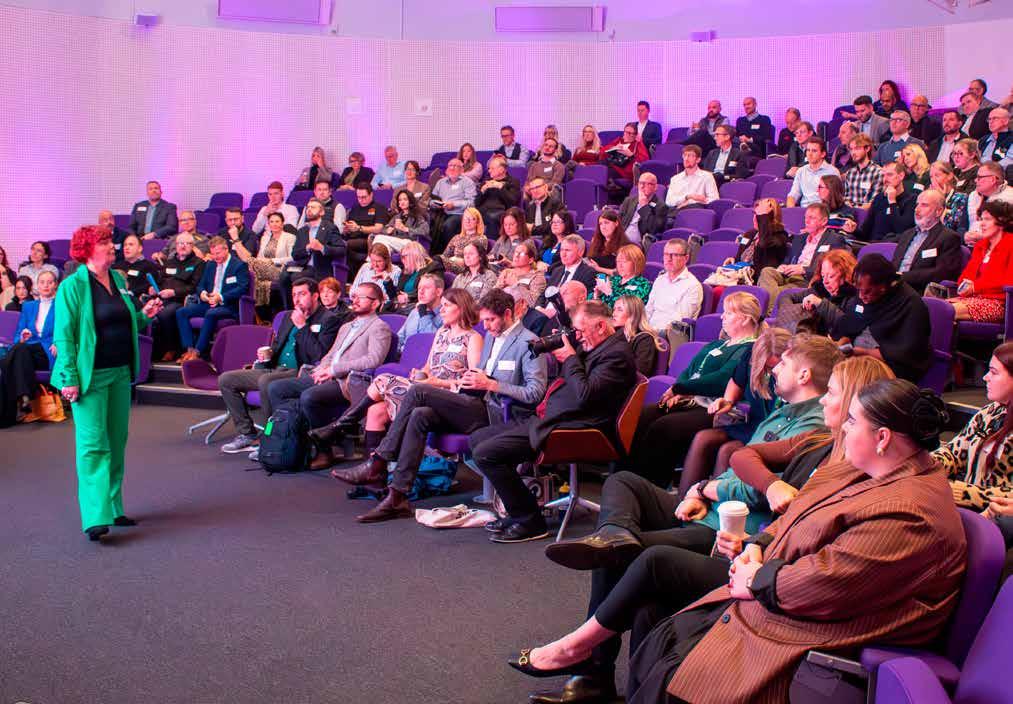



Collaborate to compete: form consortia of local SMEs to bid jointly for larger contracts (both within and outside region). One success cited was the “Resolve” alliance of four West Cumbrian engineering companies which teamed to win a £2m Sellafield R&D contract – none could have secured alone. This model can be replicated (perhaps facilitated by iSH or BECBC). There is an appetite: “we’re stronger together – we just need the legal stuff sorted and trust”, said one director whose firm joined an alliance after years of competing with the same local peers. Support may be needed (template JV agreements, workshops on partnership) to overcome mistrust. However, it allows us to pitch for big opportunities as “Team Cumbria” consortia, keeping the work here. Industrial Solutions Hub (iSH) or Enterprising Cumbria could play a central role by providing neutral facilitation and a physical campus for such collaborations. (Attendees felt iSH’s value will be in enabling innovation-sharing and joint ventures that individual firms might not manage alone.)
Keep the “sticky pound” local: Use initiatives like BECBC’s “Meet the Buyer” events to give local suppliers early visibility of upcoming needs so they can gear up. One roundtable member encapsulated it:

“We’ve got to proactively make sure money stays local – it won’t happen by accident. Let’s require it, track it, and celebrate it.”
By doing so, the national missions won’t just leave concrete and steel monuments.



Cumbria’s supply chain and economic efforts remain fragmented. Historically, major employers such as Sellafield, BAE, and the NDA have operated in silos, with limited cross-talk across projects and sectors. This leads to duplicated efforts, isolated innovation and missed opportunities for shared learning – for example, a remote handling technique developed by the supply chain for use at Sellafield might never reach Dounreay. Similarly, multiple regional bodies (councils, previous LEPs, business clusters) have pursued parallel strategies rather than one unified vision. Companies often compete for scarce skilled labour instead of collaborating, weakening Cumbria’s collective voice when lobbying for resources or investment.

Cumbria must act and speak as one region with a single plan. The new Mayor of Cumbria (election in 2027) should convene a high-level Cumbria Industrial Partnership Board, building on the work of the current Cumbria Economic Growth Board, bringing together councils, BECBC, Enterprising Cumbria, Sellafield Ltd/NDA, BAE, academia, Cumbria Chamber of Commerce, the Industrial Solutions Hub, major contractors and the supply chain. This group should:

• Develop a shared industrial strategy showing how each mission contributes to wider regional growth.
• Ensure transparency by openly sharing long-term demand profiles (building on the 2024 Regeneration Prospectus but with more granular data).
• Coordinate procurement pipelines and bid preparation to avoid boom-and-bust cycles for suppliers.
• Align training, infrastructure bids, and investment under one clear narrative: “Cumbria – delivering Britain’s missions.”
• Present a unified case to government for support, such as transport upgrades and skills funding, as “win-win” enablers of national projects.
A “Team Cumbria” approach – where collaboration replaces competition – will build confidence among government, industry, and investors. The Mayor’s leadership can formalise this.



Cumbria faces an acute and worsening labour shortfall. The working-age population is projected to fall by around 6% by the late 2020s, while nearly a quarter of residents are already over 65 (vs 18% nationally). Unemployment remains low (2.7%), yet hundreds of skilled vacancies remain unfilled across sectors from engineering and nuclear to care and hospitality.
Roundtable participants agreed that even if every unemployed person took a job, “we still wouldn’t have enough people for what’s coming.” Key trades (welders, fabricators, project managers, radiation techs) are in national shortage, and Cumbria’s geography and ageing demographic exacerbate the challenge. Sellafield’s 10,000-strong workforce already draws 80% of local STEM talent, while BAE’s Barrow expansion (2,500+ hires) is actively pulling skilled workers out of West Cumbria.
The talent pipeline is also fragile, local providers produce excellent apprentices, but retention is low, “we train them up but struggle to keep them,” said one SME manager, with many drawn to higher wages or city careers. Overly rigid qualification requirements (e.g. GCSE Grade 4 maths for practical site roles) may also exclude capable local people. Overall, workforce capacity is seen as the number one threat to timely mission delivery. A Cumbria people strategy led by the new Mayor and Combined Authority, this strategy must tackle both attraction and retention.
• Work with Enterprise Cumbria, Combined Authority and both unitary authorities to launch a “Choose Cumbria” campaign showcasing high-tech careers (clean energy, defence, decommissioning) and lifestyle benefits (affordable homes, Lake District outdoors). A wide cross section of people should be involved in the marketing of Cumbria to target their groups e.g. the TikTok generation, or those returning to work.
• Offer relocation incentives – e.g. “Welcome to Cumbria” packages or guaranteed interviews for relocating partners.
• Target ex-Cumbrians and skilled workers from overheated southern job markets, highlighting lower living costs and strong community ties.




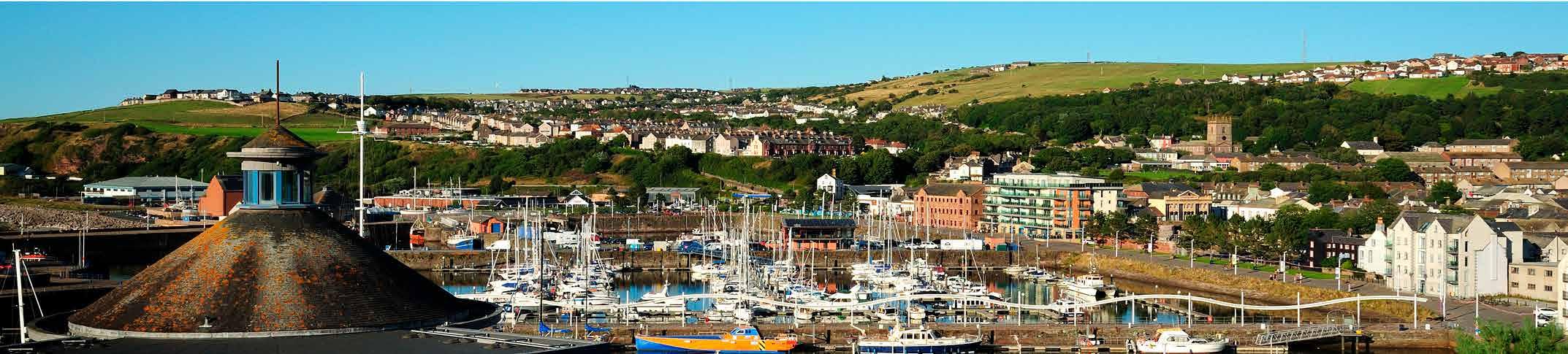


Cumbria’s physical infrastructure – transport, industrial sites, housing – is straining under present needs, let alone future demands. The roundtable painted a frank picture:
Transport: “Public transport is abysmal – the train’s too unreliable” one CEO said. The Cumbrian Coast Line (running Barrow–Workington–Carlisle) is a diesel single-track with infrequent, often delayed, services; it limits commuting and could hamper heavy equipment movement for Moorside (detailed studies have been drawn up previously and could be shared by the NDA or MP). Roads like the A595 are single-carriageway choke-points (accidents regularly shut the main Sellafield route). Many skilled staff drive hours from Carlisle or Kendal to West Cumbria, hurting retention. A consultant noted: “I can reach London in 3 hours by train, but Sellafield is a 4-hour slog”, underscoring connectivity issues.
Sites & premises: West Cumbria has a shortage of modern industrial premises. One manufacturer described a “constant battle for workshop space – planning rules and slow processes meant a 10-year saga to expand our facility”. While supply chain firms have land, getting permission for new builds is seen as onerous. Office space is also tight. This lack of ready sites can deter inward investors who might supply major projects.
Housing and amenities: If Pioneer Park’s potential SMR or the GDF bring an influx of hundreds of workers, where will they live? West Cumbria’s housing stock is limited, especially for short-term rentals or high-quality executive homes. A senior leader noted that persuading a mid-career engineer to relocate hinged on “confidence their family will have good schools, healthcare, and things to do”. Yet parts of Copeland and Allerdale struggle with overstretched GP surgeries, no university campus for dependents, and limited leisure (though our natural environment is a plus). Attendees mentioned that around Sellafield, even contractors on projects sometimes lodge outside the county (Lancaster etc.) and spend wages there – a leakage of the sticky pound due to housing gaps.
In short, infrastructure is the skeleton that will support (or constrain) growth. One voice commented,
“If we don’t sort roads/rail, we physically can’t deliver what Government expects here”
Reflecting concerns that poor connectivity could derail project schedules or push work to other regions.




Make a strong case (unified by stakeholders and the new Mayor who will have this in their remit) for strategic infrastructure investment as a precondition for national mission success. Key priorities:
Upgrade strategic transport by electrifying & improving capacity on the Cumbrian Coast Line (to enable commuter and freight reliability), and further modernise the Port of Workington (to handle heavy module deliveries or waste shipments by sea). These would directly support SMR construction logistics and bulk material movements for the GDF, reducing road strain. The group pointed out that Government’s new Union Connectivity funds and Great British Railways plans present timely opportunities – but Cumbria must shout louder to be included. A lobby group, unified under the CA and working with Cumbria’s MP’s, should push DfT for a funded rail upgrade business case by 2026. Similarly, partner with NDA and private sector to co-invest in port improvements (NDA ships fuel from Workington now, so has an interest). The Prime Minister’s 2025 Moorside land release hinted at rail upgrades as part of the deal – we should hold Westminster to that. Meanwhile, press National Highways for targeted A595 upgrades citing safety and productivity evidence (accident closure data etc.). Even modest road improvements (a few passing lanes) could cut 20 min off Sellafield commutes, expanding labour





Community infrastructure & social value: A strong theme was that local communities must tangibly benefit from hosting these missions (beyond job creation). That means recycling a portion of big project spend into legacy assets our residents use. For example, if an SMR consortium builds at Moorside, part of the contract could fund a new technical college or sports centre in the area – leaving something after construction. Participants referenced Hinkley Point C’s approach, where EDF contributed to college expansions and road improvements in Somerset. Section 106 agreements for Pioneer Park could address known deficits (eg increased investment in our dedicated skills training centres, local GP capacity funding). Similarly, for the GDF (if in Copeland), the Community Partnership must target funds into durable improvements (beyond short-term grants). An example raised was health services – perhaps the NDA could sponsor new healthcare facilities or workforce to support the population growth projects will bring. Lastly, housing - a combined task force (councils, RSLs, industry) should ensure accelerated building of quality homes near employment sites (Whitehaven, Barrow, Egremont, Wigton). The CA could use Mayoral Development Corporations to fast-track crucial housing schemes. The “sticky pound” goal demands we make it easy for workers to live locally rather than cashing wages elsewhere due to lack of options.
Infrastructure must move from being an afterthought to a forethought in major project planning. The upcoming devolution deal and Combined Authority give Cumbria the mechanism to demand this investment. As one attendee summed up: “We can deliver for the UK – but first they need to invest in us.” Our strategy is to clearly articulate the enabling projects (like rail electrification) that unlock national mission delivery, then relentlessly advocate as a united region to secure them ahead of, and not after, those missions.





With finite people and rising costs, improving productivity is not a luxury – it is a necessity if national missions are to be delivered on time and within budget. While some Cumbrian SMEs, particularly in traditional industries, have been slower to adopt new technologies or modern processes, the reasons are varied and interconnected. As discussed during the roundtable, one factor is a degree of resistance to change, often expressed as a “we’ve always done it this way” mindset. While the nuclear industry rightly needs to be risk-averse in matters of safety, this necessary caution can, in some cases, extend into areas where it is not required. This can lead to a broader culture of risk aversion that holds back innovation and the adoption of new approaches unnecessarily.


Alongside this cultural barrier sit very practical commercial realities. Many businesses operate on tight margins in a region where certainty over future work is not always guaranteed. Without clear visibility of long-term demand, project pipelines, procurement models and client expectations, firms are understandably cautious about committing to significant capital or process changes. Smaller companies, in particular, cannot afford to invest speculatively and are therefore more risk-averse when it comes to new technology adoption.
Despite these challenges, there remains substantial untapped potential to improve efficiency through automation of repetitive tasks, smarter use of data and AI, and digital tools that streamline project delivery. For example, some local fabricators still rely heavily on manual welding and inspection where robotics could increase output, consistency and safety. Similarly, many office-based processes –from document control to invoicing – continue to depend on manual input that digital systems or AI-enabled tools could significantly accelerate, freeing up staff time for higher-value work.

The concern is that without a combination of cultural shift, improved understanding of the benefits, and clearer signals and support from clients and government, the supply chain may struggle to meet the scale and pace of upcoming demand with the same workforce. There is also a risk that local firms could lose work to leaner, more digitally enabled competitors elsewhere, particularly as major contractors increasingly expect digitally capable supply chains.

Every improvement in productivity helps offset labour shortages and rising costs. If firms can deliver the same output with even 10% fewer hours, that capacity can be redeployed to take on additional contracts or manage skills shortages. Innovation also delivers wider benefits, enhancing safety, quality and environmental performance – all critical in nuclear and advanced manufacturing. Crucially, a reputation for innovation helps attract both talent, as younger workers want to engage with modern, cutting-edge tools, and investment, as clients place greater trust in efficient, forward-looking suppliers. With the right conditions in place, Cumbrian firms are well positioned to build confidence, embrace change and strengthen their competitiveness in a rapidly evolving industrial landscape.
Building a culture of continuous improvement and innovation across our supply chain is essential.
Promote technology adoption: We recommend a regional programme to help SMEs invest in automation and digital systems. One roundtable member cited installing automated document management to handle thousands of invoices as a game-changer – freeing staff from “drudge work” to focus on clients. Yet many SMEs lack the capital or know-how to implement such solutions. A dedicated grant (similar to the Made Smarter North West pilot) could co-fund equipment or software that improves productivity for clusters of firms. Offering access to specialists (for example, an AI consultant who can audit a business and recommend specific AI tools) would demystify adoption. At our roundtable, one company shared they’d hired an AI specialist and saw tender throughput triple and other firms could benefit from that experience through workshops or a shared advisory service.
Embed skills for innovation: The region’s training providers (like Energy Coast UTC or Lakes College) could introduce modules on automation programming, data analytics, and digital literacy into apprenticeships, ensuring the next generation entering our firms are ready to drive tech adoption. As one participant bluntly put it, “we can’t insist young people aren’t work-ready without fixing the chronic under-supply of work experience and digital skills”. By equipping young Cumbrians with these competencies, we not only help our businesses innovate but also give them attractive careers.
Leverage collaboration for R&D: We think more could be done to connect Cumbrian firms with national innovation programmes. Innovation matchmaking” events could pair local SMEs with university experts or tech startups that have off-the-shelf productivity enhancers – whether it’s a sensor to monitor machine performance or a software tool for project scheduling. Every organisation in the supply chain should assess: “Where can we eliminate waste or automate a task?” – and then act on it with support from the wider ecosystem. If a dozen firms each achieve a 10% productivity gain, the combined capacity released is like finding a whole new contractor’s worth of output – effectively offsetting our labour shortage. An innovation-driven ethos will make Cumbria a magnet for forward-thinking enterprises and talented professionals. It also helps ensure that major projects are delivered cost-effectively, enhancing Cumbria’s reputation for excellence. As one roundtable member emphasised: “We have to keep developing and implementing new approaches…we’re doing some great work, but we must not rest”. West Cumbria can meet the national missions and emerge stronger with a modernised, competitive supply chain ready for whatever comes next.






Aim to scale 10 local SMEs into £20m+ turnover mid-sized companies by 2030 via alliances, mentoring, and pipeline support.
55%

Estimated share of Sellafield’s £1.6bn annual supply chain spend captured by Cumbrian companies. (Goal: raise to 65%+ by 2030.)













Additional trainees needed annually to meet mission demands (on top of - 200 current cohort). Plan: fund via NDA & industry co-investment.
Required for priority upgrades (rail improvements, A595 safety, port) over 5 years. A fraction of mission budgets, but critical for success.




Cumbria stands on the cusp of unprecedented opportunity. Over the coming decades, our region will host projects of national significance, but we must act now to ensure we can deliver them and secure lasting benefits locally. This white paper has identified the following priority actions:
Growth of Medium-Sized Businesses – addressing the “missing middle” in Cumbria’s economy by supporting SMEs to scale, reforming procurement disincentives, and piloting a regional model for developing home-grown mid-sized enterprises capable of leading major contracts.
Building unified leadership and strategy – positioning the new Mayor as “Cumbria’s CEO” and breaking down silos across the region’s institutions.
Investing in our people – attracting new talent while nurturing home-grown skills through a bold, long-term programme focused on training, retention and progression.
Upgrading infrastructure – treating improvements to rail, road, sites,



Office for National Statistics (ONS) (2023). UK Business: Activity, Size and Location. Available at: https://www.ons.gov.uk/businessindustryandtrade/ business/activitysizeandlocation (Accessed: 5 November 2025).
Nomis (ONS) (2023). UK Business Counts – Enterprises by Industry and Employment Size Band. Available at: https://www.nomisweb.co.uk/datasets/idbrent (Accessed: 5 November 2025).
Cumbria Observatory (2023). Economy & Employment Summary. Available at: https://www. cumbriaobservatory.org.uk/economy-employment/ (Accessed: 5 November 2025).
Cumbria County Council (2017). Cumbria’s Economy – Summary Statistics. Available at: https://cumbria. gov.uk/eLibrary/Content/Internet/536/675/4356/41996103739.pdf (Accessed: 5 November 2025).
Department for Business & Trade (2024). Business Population Estimates for the UK and Regions. GOV. UK. Available at: https://www.gov.uk/government/statistics/business-population-estimates-2024 (Accessed: 5 November 2025).
EDF Energy (2022). Hinkley Point C Socio-Economic Impact Report. Available at: https://www. edfenergy.com/energy/nuclear-new-build-projects/hinkley-point-c/socio-economic-impact (Accessed: 5 November 2025).
HM Government (2025). Moorside Land Release Announcement. Department for Energy Security and Net Zero. Available at: https://www.gov.uk/government/news/moorside-land-releaseforclean- (Accessed: 5 November 2025).
Department for Transport (2023). Union Connectivity Review: Final Report. Available at: https://www.gov.uk/government/publications/union-connectivity-review-final-report (Accessed: 5 November 2025).
Great British Railways Transition Team (2024). GBR Strategic Plan. Available at: https://gbrtt.co.uk/strategic-plan (Accessed: 5 November 2025).
Scottish Government (2023). Local Content Policy for Renewable Energy Projects. Available at: https://www.gov.scot/publications/local-content-policy-renewables (Accessed: 5 November 2025).
Sellafield Ltd (2024). Supply Chain Social Impact Multiplied Programme. Available at: https://www.sellafieldsite.co.uk/supply-chain/social-impact (Accessed: 5 November 2025).
Cumbria Local Enterprise Partnership (2023). Now & Next: Skills and Workforce Strategy. Available at: https://cumberland.moderngov.co.uk/ documents/s3325/20230721%20CLEP%20DELIVERY%20PLAN%20202324.pdf (Accessed: 5 November 2025).
What Works Growth (2019) Local multipliers. What Works Growth. Available at: https://whatworksgrowth.org/resource-library/toolkitlocal-multipliers/ (Accessed: 16 December 2025).