Q3 2025

Front Page
Back Page


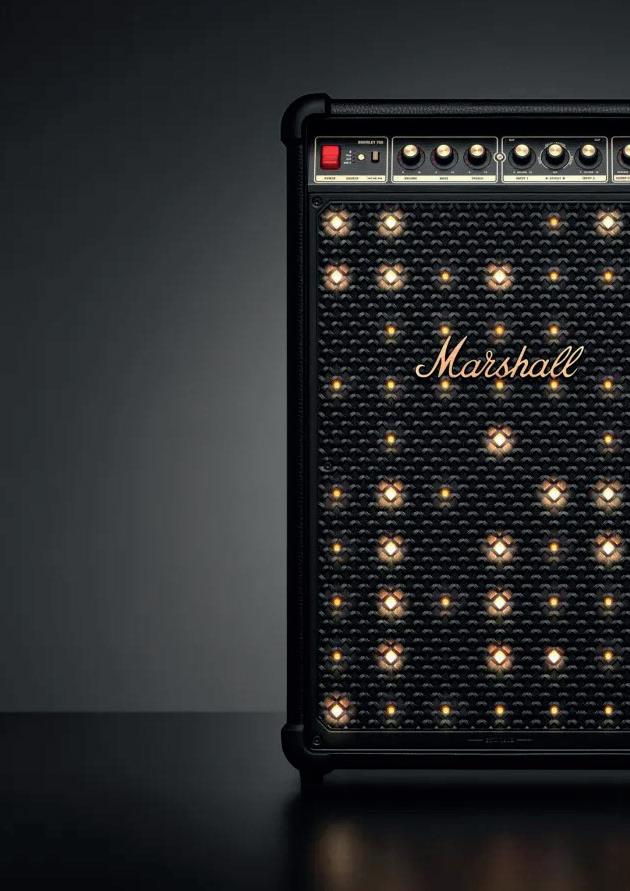
Marshall Bromley 750 Party Speaker
True X Surround 90A Soundbar
Q3 2025
Front Page
Back Page
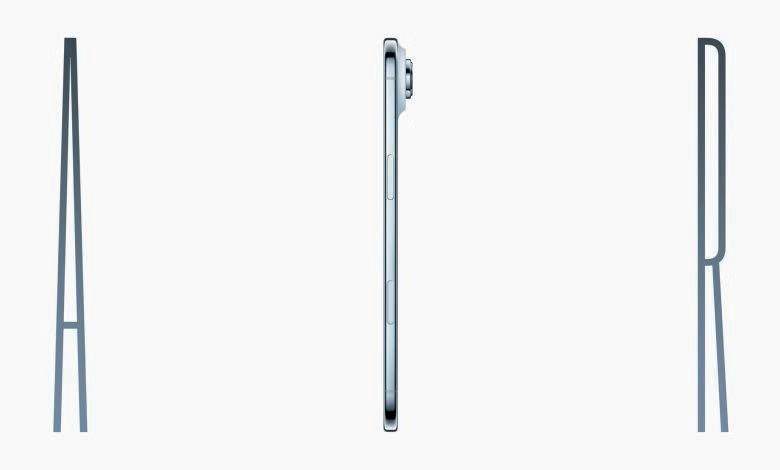
The titanium port on the phone and the watch’s titanium case are additively manufactured to improve the shape while reducing environmental impact
Apple today debuted the all-new iPhone Air, the thinnest iPhone ever made, and the first to officially feature a titanium 3D printed component. Like some of its predecessors, the new Apple Watch 11 also features a fully 3D printed titanium case, demonstrating that the use of AM to mass produce consumer electronics is here to stay and – if anything – will be increasing in the future.
Both elements are part of Apple’s efforts to reduce environmental impact (Apple 2030), as AM can produce the same parts using significantly less material and electricity than other processes. Apple 2030 is the company’s ambitious plan to be carbon neutral across its entire footprint by the end of this decade by reducing product emissions from its three biggest sources: materials, electricity, and transportation.
“The all-new iPhone Air is so powerful, yet impossibly thin and light, that you really have to hold it to believe it’s real. This huge leap in design and engineering is only made possible through Apple innovation, especially Apple silicon,” said John Ternus, Apple’s senior vice president of Hardware Engineering. “iPhone Air is a brand-new member of the iPhone family that delivers advanced features our users will love, like pro performance, a versatile 48MP Fusion camera system, our innovative Center
New iPhone Air and Apple Watch 11 to feature titanium 3D printed parts

Stage front camera, and great all-day battery life — all in a breakthrough design that feels like you’re holding the future.”
Beyond being impossibly thin and this shape is made possible by the new titanium USB-C port, which is 3D printed to be thinner and stronger, fitting into the slim design while using 33 percent less material than a conventional forging process. In addition, iPhone Air is made with 35 percent recycled content, including 80 percent recycled titanium, the highest ever for an iPhone, and 100 percent recycled cobalt in the battery. It is manufactured with 45 percent renewable electricity, like wind and solar, across the supply chain. It is designed to be durable, repairable, and offer industry-leading software support, while meeting Apple’s high standards for energy efficiency and safe chemistry. The paper packaging is 100 percent fiber-based and can be easily recycled.
Likewise, Apple Watch Series 11 is now made with 40 percent recycled content, which includes 100 percent recycled cobalt in the battery, and 100 percent recycled titanium or aluminum in the case. These titanium cases are made using an innovative 3D printing process that uses just half the raw material as previous generations.

It is manufactured with 100 percent renewable electricity, like wind and solar, across the supply chain. Apple Watch Series 11 is designed to be durable and repairable, and also offers industryleading software support, while meeting Apple’s high standards for energy efficiency and safe chemistry. The paper packaging is 100 percent fiber-based and can be easily recycled.
Wireless internet is a constantly changing area of technology. It feels like we were just celebrating the speed and performance offered by Wi-Fi 6 and then Wi-Fi 7 came along. Now, we’re already getting teasers for what Wi-Fi 8 could bring to the table. Surprisingly, it’s not speed that’s the main selling point.
In a press release, Qualcomm detailed Wi-Fi 8 and its key features. “Wi-Fi 8 is being defined to prioritize reliable performance in challenging real-world conditions, enhancing connectivity even in congested, interference-prone and mobile environments,” said Qualcomm’s Rolf De Vegt.

Notice that nowhere in there did they mention anything about how fast it would be, which is typically one of the biggest selling points when a new Wi-Fi standard is teased. Instead, they’re talking about reliable performance and working well in congested areas — all things that could certainly be improved even in today’s high-performing Wi-Fi standards. Wi-Fi 8 is also designed to reduce latency, which is particularly beneficial for gamers.
“Wi-Fi 8 marks a fundamental pivot — moving beyond peak speeds to prioritize reliable performance in challenging real-world conditions. It’s designed to deliver consistent, low-latency and near-lossless connectivity even in highly congested, interference-prone and mobile environments,” De Vegt said.
The Next Era Of Wi-Fi Is ComingWiFi 8 Prioritizes A Rock-Solid Connection Over Raw Speed
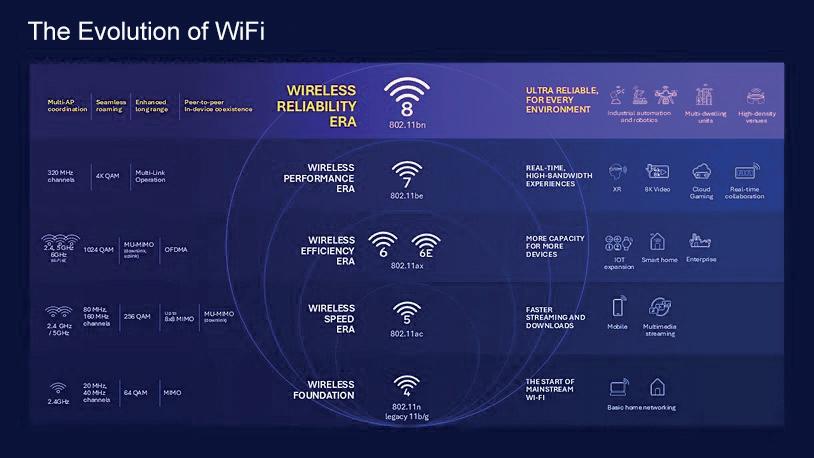
The release highlighted three key benefits of Wi-Fi 8: at least 25% higher throughput in challenging signal conditions, 25% lower latency at the 95th percentile of the latency distribution, and 25% fewer dropped packets, especially when roaming between access points (such as in a mesh network).
Qualcomm said we’ll have to wait until 2028 to experience Wi-Fi 8, but that “Leading technology companies,” including itself, are working on it and being led by “task group IEEE802.11bn under the initiative known as ‘Ultra High Reliability’ (UHR).”
“Going forward, the 802.11bn task group will be busy finalizing a solid and high-quality basis of the future Wi-Fi 8 generation — a generation that is again anticipated to be used in billions of devices in the next decade,” Qualcomm’s Rolf De Vegt said to wrap up the release.
In the meantime, be sure to grab one of the best Wi-Fi 7 routers so you can make the most of the technology available now.
GPMI
Alliance Unveils
GPMI, So Here We Go Again
The back of my entertainment center used to be a plate of spaghetti, minus the plate. It was organized only to the extent that the proper cables were plugged into the proper ports. Besides that, it was a tangled mess of speaker wire, RCA audio cables, component cables, composite cables, coax (for cable and antenna), extra cables, and probably tumbleweeds.
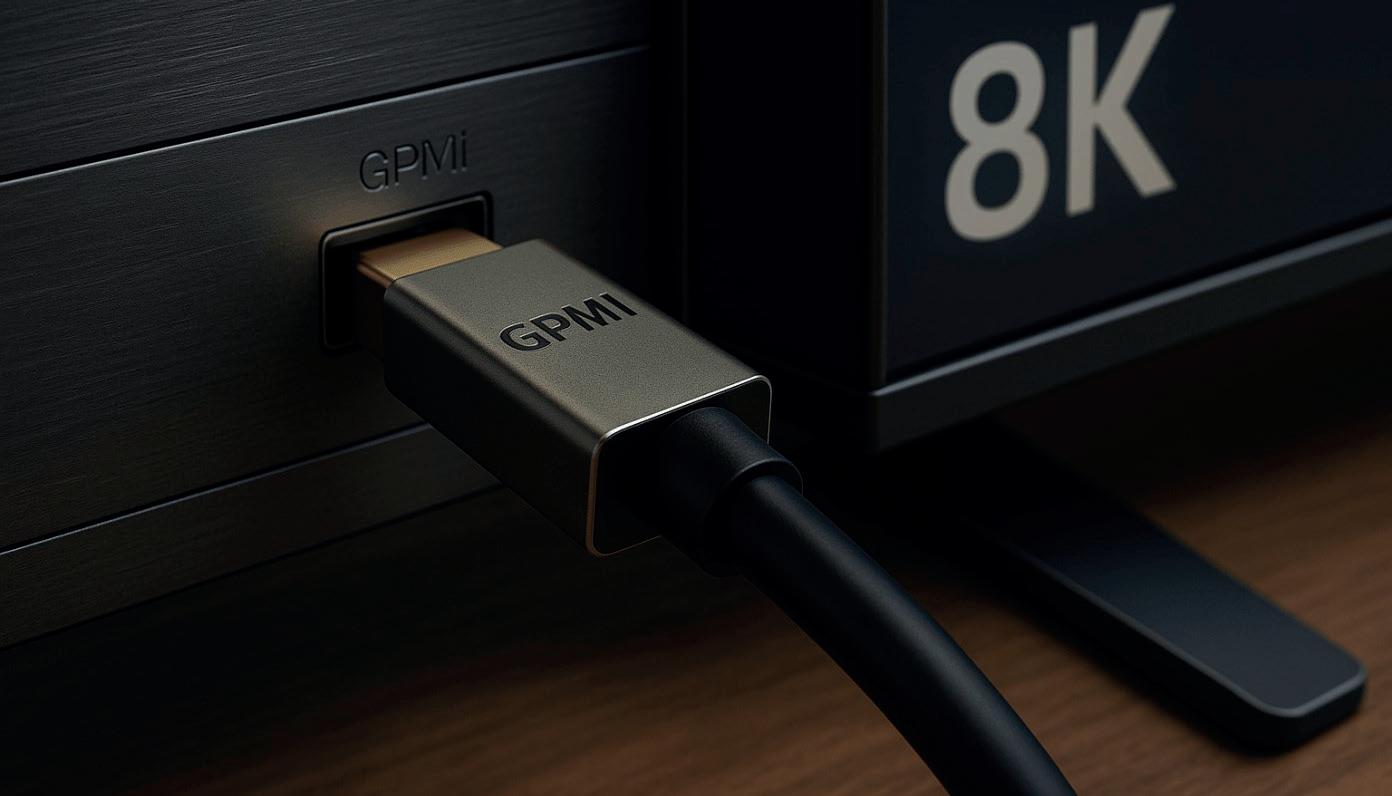
Over the years, the retirement of several components, such as my beloved five-disc CD player, certainly contributed to reducing the chaos behind the scenes. However, nothing really changed the connection game for me quite like HDMI. One cable that could handle audio and video? You could almost hear a choir sing “Ode to Joy” as the clouds parted and a rainbow’s end took root behind my television.
Since then, despite initial opposition, this consumer technology has been embraced at the Pro AV level as well. USB-C is starting to muscle in on its territory, but both connectivity options appear to be thriving. So, I suppose it’s as good a time as any to introduce a new interface and disrupt the industry all over again.
Welcome to the party, GPMI.
Short for General Purpose Media Interface, GPMI was announced in April, and it has the backing of more than 50 Chinese companies, including big consumer brands like Hisense and TCL, through the Shenzhen 8K UHD Video Industry Collaboration Alliance.
What makes GPMI so special? Perhaps the easiest way to explain is to offer a comparison. HDMI 2.2 was introduced earlier this year at CES. The big talking point was its jump to a maximum data rate of 96 Gbps, double the 48 Gbps of HDMI 2.1, which was introduced in 2017. GPMI will offer two cable options: Its USB-C cable also supports 96 Gbps, but its proprietary Type-B cable supports 192 Gbps.
My gut reaction is to take points off for yet another I/O port— I’m still recovering from my relationship with Apple’s Lightning cable—but double the data rate of HDMI’s recent doubling of its data rate gives me pause. Between 4K esports, 8K content, and the next big bandwidth-sucking visual innovation (whatever it is), more data is always appreciated.
And then there is GPMI’s other attractive feature: power. HDMI is certainly not going to charge your phone or power your display. In contrast, GPMI can deliver up to 240W (USB-C) or 480W (Type-B). Throw in some data transfer capabilities, and it’s easy to make a case for GPMI … at least on paper.
Ken Hong, head of corporate communications and public relations for Hisense Americas Region, said the company recognizes the potential of GPMI. “That said, GPMI is still very much in its early stages, with ongoing work on chipset implementation and broader adoption,” he explained. “As a member of the Shenzhen 8K UHD Video Industry Cooperation Alliance, our involvement reflects our commitment to contributing to the advancement of display interface technologies while exploring the possibilities for integrating GPMI into our future products as the standard matures.”
So, GPMI isn’t quite ready to stake its real estate claim on the back panel of your next Black Friday TV purchase. But it might just be ready for the one after that.
The big question is: Will you care?
LG, Samsung, and Sony—three of the biggest names in TVs— are not in the alliance, so universal industry adoption is not a given. Heck, adoption outside of China isn’t a guarantee, either. And don’t discount the ubiquitous nature of HDMI. It’s here, it works, and newer versions already support 8K (which is yet to firmly plant its own flag in the consumer or professional mainstream).
In other words, this could develop into a fascinating format war over the next few years. Or not. I’ll let you know!
Bluetooth 6.0
Whenever Bluetooth SIG announces a new core specification, the nerds all rejoice — but what’s different than a new number? Let’s take a look through the listed features of Bluetooth 6.0 for a more in-depth look at how your wireless devices are going to change over the years. What’s getting added to Bluetooth?
What you need to know about Bluetooth 6.0 and how it changes everything

In the fact sheet sent around last September, Bluetooth SIG outlined the new features added to the 6.0 core specification. Many of these center around improving latency, avoiding duplicate tasks, and being able to judge distances between devices. However, that document is quite dense and tough to read for most. So what does all of this mean in plain English?
The most important update for audiophiles and other music lovers is an upgrade to the Isochronous Adaptation Layer (ISOAL). This feature crams in larger amounts of data into smaller packets and uses attached timing information to help the receiver stitch together everything correctly during signal processing. While this may increase latency in some situations, it will comes with the benefit of higher data transmission rates.
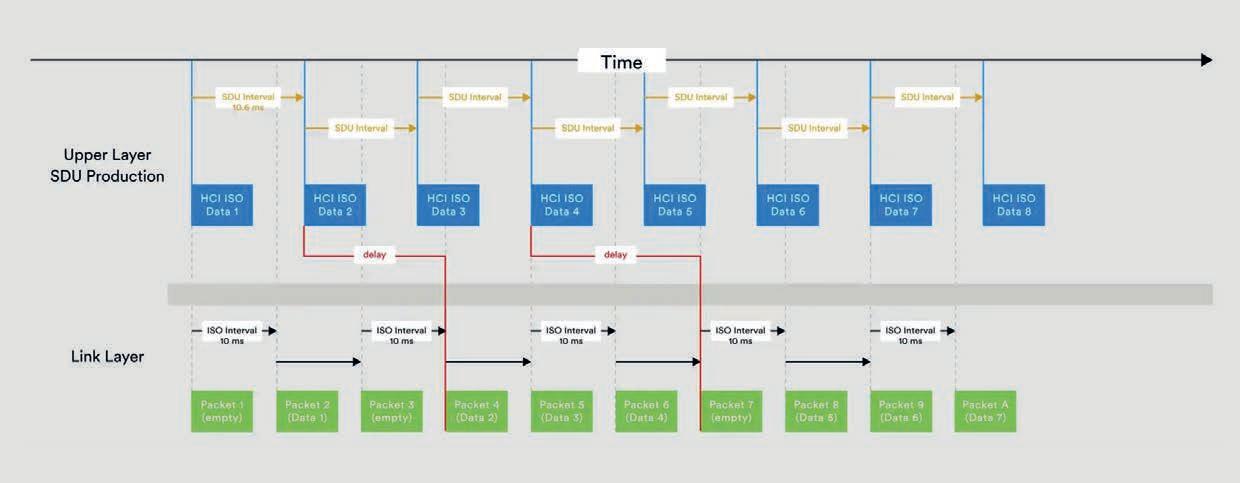
In Bluetooth 6, this feature has been upgraded to avoid the pitfalls of the tradeoff while maintaining the benefits of a shorter frame space for high data throughput. By making this feature more reliable, users benefiting from this feature should have more reliable connections, with better data transfer rates, and the reduction of latency. While it won’t replace XPAN or anything, it’s a cool thing to see that Bluetooth is at least working on raising the performance floor of its wireless protocols for communication applications.
Bluetooth listed the following as benefits of this upgrade:
1. Fitness trackers which have to transfer accrued data… to a connected device such as a smartphone or laptop.
2. Firmware updates.
3. Bluetooth LE Audio. Audio packets sent over a connected isochronous stream can be sent more quickly, in shorter bursts…
4. Devices that use their radio for other purposes such as Wi-Fi have more time for these activities.
Of course, we’ll have to see how well this works in the lab, but it sounds like we’ll be in the market for new transmitters to test this soon.
LC3plus support
Though we were first made aware of LC3plus at the release of the Bluetooth LE audio in 2020, until now, the codec has been mostly absent from headphones. With Bluetooth 6, the codec makes its debut — although it’s a licensed codec and not a mandatory one. That means that it won’t come with all Bluetooth 6 devices, even if the standard can support the codec.
This codec claims to support 96kHz sample rates with a 24-bit depth, while offering noise down to -132dB, with latency as low as 7ms. In 2022, the codec received Hi-res certification by the Japan Audio Society, joining SLCS, LHDC, SHDC, aptX Adaptive, and LDAC as the only Bluetooth codecs to attain this certification.
While we haven’t yet gotten the chance to kick the tires on products with LC3plus, those are some lofty claims. And as we’ve seen with other supposedly hires codecs, there are often tradeoffs. Still, it’s always a welcome sight to see more competition for betterquality audio.
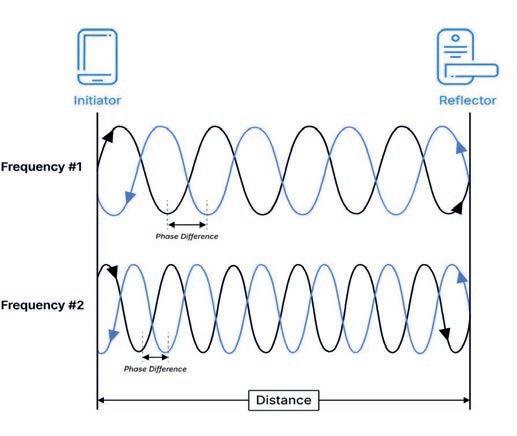
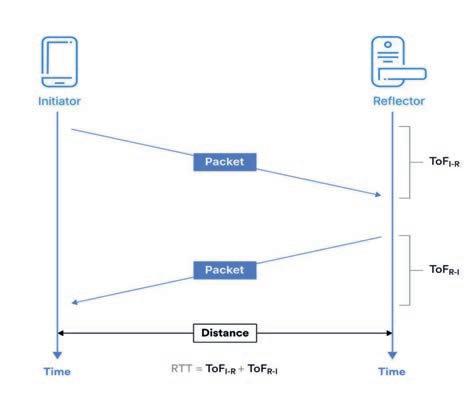
This feature allows devices with the Bluetooth 6.0 spec to figure out where other wireless devices are with a high degree of accuracy. PreBluetooth 6.0 devices would determine distances by calculating the strength of a known signal and quantifying the level of loss. Once that was known, it could be estimated how far away the other transmitter is.
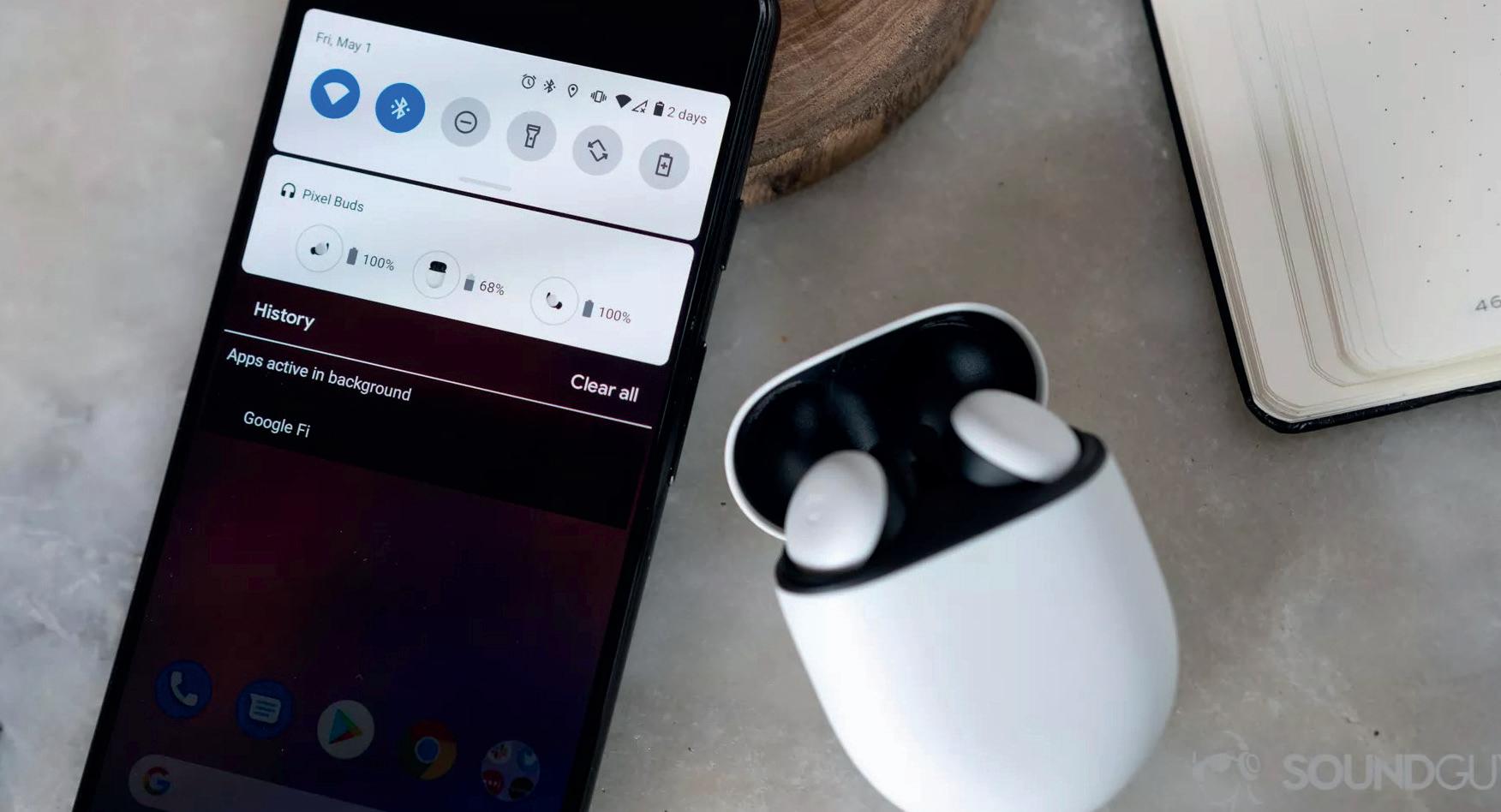
Bluetooth 6.0 devices will instead use a combination of methods called “Phase-based ranging” (PBR) and Round-trip timing (RTT). The first method consists of one device sending out a signal with a given frequency, and the other returning the same signal after. Then, the first device uses a different frequency to the “reflector” device, and it returns the same. By using a math trick with the two wavelengths, the transmitting device can determine the distance between the devices much more accurately.
Round-trip timing is as simple as it sounds: one device sends a packet of information to the other, and waits for a timestamp message to be returned. The total elapsed time is then used to calculate distance. Though a bit more crude, when used in conjunction with the first method, you should be able to get more exacting distance data.
In short, this continues the trend of Bluetooth raising the performance floor of its features. Manufacturers may elect to forgo adding competing Ultra Wideband hardware to their earbuds and headphones, as the benefit to upgrading is a bit diminished. This would reduce cost and development time.
This is a clever way to speed up device scanning. Instead of looking for everything all at once, this feature uses a set of rules to prioritise options and ignore duplicates. Specifically, it will use the content of the first few packets sent to then decide whether or not to keep looking on a secondary channel for like packets. By allowing devices to have an off-ramp to stop scanning, they can spend less time scanning by calling off the task once it has what it needs.
This should prevent your devices from wasting extra seconds on pairing, switching devices via Multipoint, and wasting less battery on pairing — not that it was a huge power suck to begin with. Though most people won’t think much about an upgrade like this, it’s still something worth highlighting, as older Bluetooth devices can take a lot longer to pair with something than when you simply plug in a device wired. With this upgrade, one of the bugbears of wireless listening is addressed directly.
Previously, it was very difficult for Bluetooth devices to know whether or not a device it had connected to in the past is out of range, especially over the low-energy band. If a device tried to connect to another that’s out of range, it would waste battery trying to locate that other device.
Because Bluetooth 6 uses the Host Controller Interface (HCI) to keep tabs on whether or not previously-connected devices are in range, you can avoid draining your battery too much by looking for a device that you know isn’t there. It’s unclear how a device turning off is handled, or what happens if the battery dies unexpectedly, but this is an intelligent approach to preventing unwanted battery draw from attempts to connect to other devices that aren’t there.
At least on paper, headphones that use Bluetooth 6 should operate with better battery life, more accurate device location, and better transfer rates in both classic and low-energy applications. Additionally, some will come with LC3plus support, which adds another Hi-res codec to the wireless mix.
While it will take a while for Bluetooth 6 devices to proliferate, newer phones are already starting to support this standard, and we’re also starting to see headphones and earbuds pop up that have the necessary silicon. Because only the newest of the new phones support this, it may take a while for owners of Bluetooth 6 headphones and earbuds to realize their full benefits — but it’s coming.
Over three-quarters of retail leaders say that innovation requires analytics and AI, but fewer than one-third believe their current capabilities in those technical areas give them a competitive advantage, according to May research from EY.
Over half of retailers say AI, data and analytics are a top priority, according to the survey of 500 consumer products and retail executives, 20,000 consumers and almost 200 CEO’s.
Few retail leaders are confident in their current AI capabilities, EY finds

Three-quarters of consumer product leaders report relying more on AI and analytics to make smarter investment decisions for innovation. Almost half of these leaders are directly investing in these capabilities.
AI investments are the norm for business leaders now, but how much return they’re getting from these investments varies.
Nearly two-thirds of retailers say that integrating AI and automation is one of the top areas where collaboration is essential in their business.
However, leaders are split on their exact objective when deploying AI. Over half (54%) say they’ll use it to reduce labour costs through automation, while the rest (46%) plan to use AI to improve productivity among employees.
Already, retailers are working to incorporate AI. Best Buy, Walmart, Lowe’s and Home Depot are among the companies investing in AI across multiple use cases in consumer-facing formats, from shopping tools to enhancements for search experiences.

Audio Pro has launched a new generation of speakers, and there’s a lot of options. The W-generation range comes with an important app update that brings WiiM to the range, delivering expanded streaming support, advanced EQ and room correction, and enhanced multi-room and grouping capabilities.
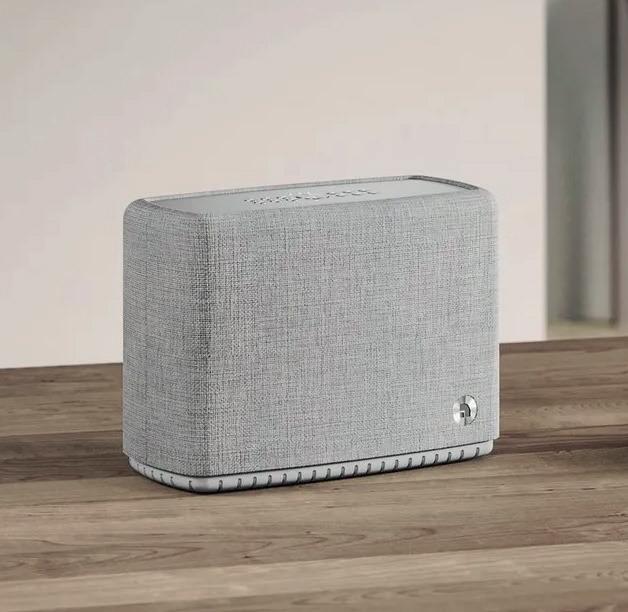
With speakers covering every conceivable option from small cylinders and stand-alone speakers to massively powerful floorstanders, there’s something for everyone – and for every room. That makes the W-Generation a serious rival to Sonos as the best multi-room speakers, and Audio Pro is promising improved sound over previous models, too.
Although the speakers here will look familiar if you know Audio Pro’s range – they’ve been harmonized, but retain their basic design – they sound different. That’s because each model has been optimized for “greater clarity, lower distortion and a huge increase in loudness.”
Audio Pro’s huge new WiiMpowered wireless speaker range might be the biggest threat to Sonos I’ve seen so far
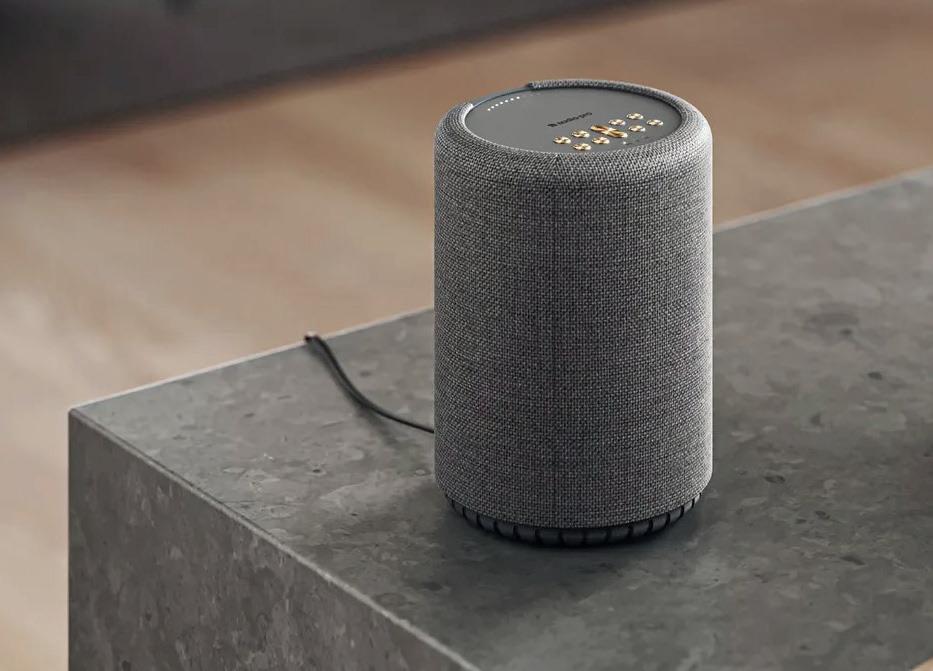
For example, the flagship A48 W delivers a +10-15dB increase in maximum sound pressure and promises improved balanced mode radiator tweeter clarity. And the compact A15 W promises deeper, more compelling bass as well as longer battery life.
Streaming support now includes Spotify, Tidal, Amazon Music, Qobuz, Deezer, iHeartRadio, Napter, TuneIn and more, and there’s enhanced Wi-Fi timing synchronization for more harmonious home audio.
All of the W-Generation models are backward compatible with Audio Pro’s existing products, so your existing speakers aren’t obsolete in a multi-room setup.
The new speakers launching on 5 September, and their UK/US prices, are listed here (US prices ill be announced in October):
The PULSE CINEMA and PULSE CINEMA MINI are all-in-one systems with two form factors to fit any-sized TV
Bluesound has introduced two new streaming soundbars, the PULSE CINEMA and PULSE CINEMA MINI. These all-in-one systems represent a top-to-bottom redesign of Bluesound’s soundbars, combining immersive audio performance, clean lowprofile design, and intuitive setup in two form factors designed to fit perfectly with any-sized TV.
Bluesound
Launches New PULSE CINEMA
Soundbars
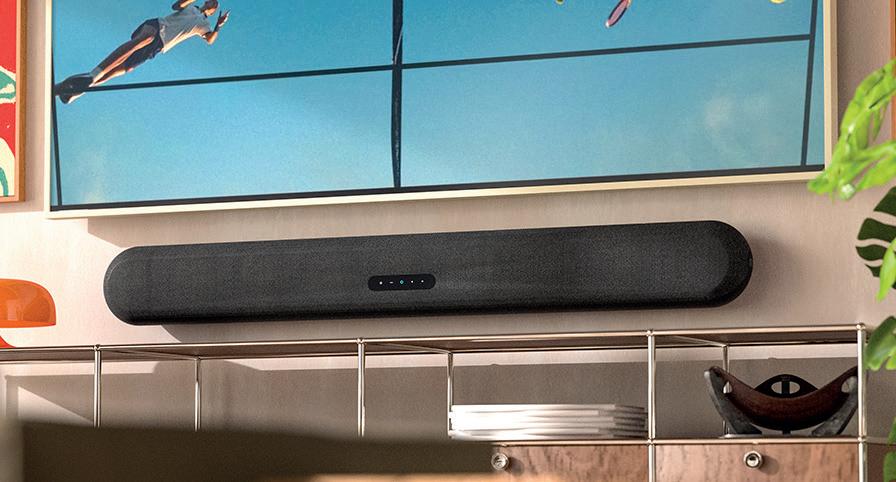
The PULSE CINEMA is a premium 3.2.2 Dolby Atmos soundbar featuring 16 speaker drivers, upfiring speakers, and BluOS multiroom streaming, delivering expansive sound for 55-inch TVs and up. The PULSE CINEMA MINI brings the same thoughtful design and advanced acoustic engineering to smaller spaces and secondary TVs, making it the perfect sound system for bedrooms, dens, or condos.
The new soundbars reflect Bluesound’s dedication to Simple AV — a design philosophy that brings together audiophile-grade performance and everyday usability in one solution. Whether wallmounted in a living room or placed beneath a bedroom TV, both soundbars eliminate the need for bulky receivers, complicated wiring, or multichannel setups.
• PULSE CINEMA: A 47-inch multi-room streaming soundbar built for cinematic performance, featuring 500 watts of total system power and a driver array that includes a dedicated center channel, dual 4-inch woofers, and dedicated upfiring speakers.
• PULSE CINEMA MINI: A compact 33-inch soundbar delivering 280 watts of total system power and an immersive experience with angled drivers and dual 4-inch woofers. Designed for tighter setups and installations, the PULSE CINEMA MINI blends premium sound with subtle, modern design.
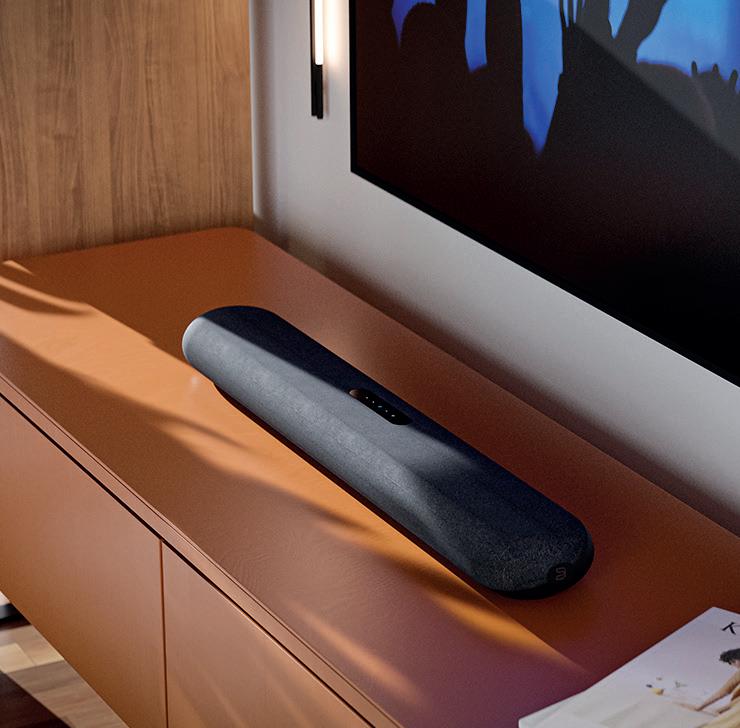
Both models support HDMI eARC, optical, and analog inputs, and offer flexible placement options, including automatic DSP-powered orientation detection that eliminates the need for manual tuning when wall-mounted. They also feature BluOS, Bluesound’s multi-room audio platform that enables wireless surround sound, hi-res music streaming, and integration with smart home control systems like Control4 and Crestron.
The PULSE CINEMA and CINEMA MINI are powered by BluOS. BluOS supports more than 20 streaming services — including TIDAL, Qobuz, Spotify, Amazon Music, Pandora, and Deezer — and playback of highresolution formats up to 24-bit/192 kHz. Users can connect and stream their digital music libraries, enjoy internet radio stations, or sync audio seamlessly across multiple rooms with other Bluesound or BluOSenabled products. The BluOS Controller app, available on iOS, Android,
Bose’s new SoundLink
Home speaker is a minimalist marvel
macOS, and Windows, makes it simple to browse, control, and enjoy music from anywhere in the home.
Users can pair the new PULSE CINEMA and PULSE CINEMA MINI with other Bluesound speakers and create a larger, multichannel surround system with discrete front and rear channels. Pair the soundbars with the PULSE SUB+ subwoofer and one of Bluesound’s stereo solutions as rears to create an immersive wireless surround sound system, without the need for a traditional AV receiver or extensive cabling.
Bose is bringing its retro-styled compact Bluetooth speaker, the SoundLink Home, to the UK. It’s already available in the US with a price tag of $229, and it’ll go on sale in the UK in September 2025 with a price tag of £219. That’s about €254 / AU$455.
The SoundLink speakers are Bose’s portable models, and the SoundLink Home is small – 8.5 inches wide, 2.3 inches deep and 4.4 inches tall. It comes in a choice of three finishes – Light Silver, Cool Grey or Warm Wood. I like its minimalist design. To my eyes it’s much better looking than the similarly sized SoundLink Flex.
The Home is the successor to the Bose SoundLink Mini 2, which I owned for a few years and still really like. Bose excels in getting big sound out of small speakers, so I’d expect the Home to sound bigger than it looks. US reviewers say that the Home is sonically very similar to the Mini 2, delivering surprisingly powerful bass and good sound quality.
The SoundLink Home has a rechargeable battery delivering up to 9 hours of playback and it connects to your audio source via Bluetooth 5.3. Codecs are SBC and AAC but not aptX.
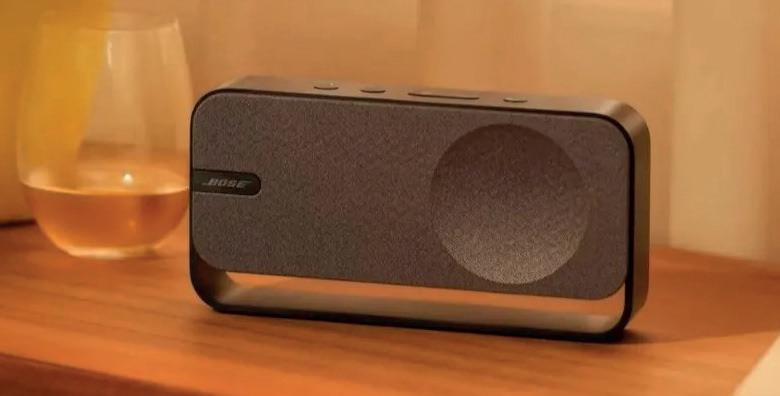
It’s a mono speaker but you can pair it with another SoundLink Home to run the two in stereo mode, and the USB-C port can be used to get high quality audio from your PC or other device. Unlike other Bose speakers – including other SoundLink speakers – it doesn’t connect to the Bose app.
Most of the speakers in the SoundLink range that are designed for partying and day trips, but the Home is designed for – wait for it –home use. That means there’s no water resistance here, so while it’s perfectly portable you might prefer a more rugged option for taking out and about. I’d say speakers like this are best suited to smaller spaces such as bedrooms and kitchens where they don’t have to be driven too hard to fill the room with sound.
The SoundLink Home will be available from Bose and the usual retailers from September 2025.

With 14 hours of battery life and ambient lighting thrown in
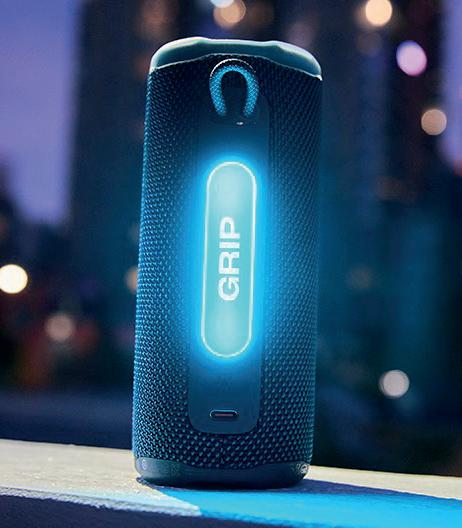
The Grip’s biggest selling point, according to the audio brand, is its compact dimensions and upright positioning, making for easy onehanded use.
Our caffeine-themed eyeball analysis clocks the JBL Grip’s dimensions somewhere between a can of Red Bull and a Monster energy drinks can, and it tips the scales at 385g.
It’s still a fair bit chunkier than something truly miniature like the Tribit Stormbox Micro 2, but it’s considerably smaller and lighter than its popular JBL Flip 7 sibling. In fact, it slots right in between the fivestar Flip 7 and the smaller, circular Clip 5 in JBL’s expanding line-up of Bluetooth speakers.
JBL’s new portable speaker is smaller than the Flip 7 and can be held in one hand
Within the Grip’s cylindrical body, you’ll find a 43 x 80mm full-range transducer, delivering a continuous output of 16W on average, with a claimed frequency response spanning 70Hz to 20kHz.
JBL has also added its AI Sound Boost technology here, which analyses music in real-time using an algorithm to optimise output for increased volume with reduced distortion.
As with the Flip 7, the JBL Grip has a rugged design with a woven fabric covering, a small carry rope, and chunky playback and volume buttons on the top half.
Audio aside, there’s an ambient lighting system on the rear, which offers multiple customisable themes with varied colour options and adjustable brightness levels.
Users can switch between different light themes using a dedicated button, while the accompanying JBL app also unlocks additional lighting tweaks, letting you adjust brightness levels and save preferred configurations.
As with its Flip 7 sibling, an IP68 certification for water and dust resistance is on board.

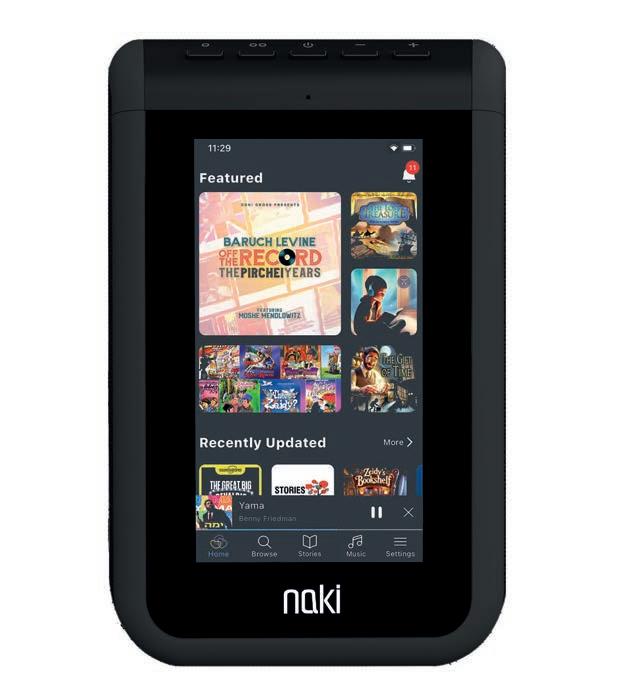
Naki Audio redefines home listening with a new generation of streaming devices offering exclusive, fully kosher content for the modern Jewish household.
The Grip’s battery life clocks in at 12 hours of standard playback, with an additional two hours available through JBL’s Playtime Boost feature, which optimises performance.
Connectivity sees Bluetooth 5.4 with Auracast technology on board, enabling stereo pairing between two Grip units or other compatible JBL speakers (such as the Auracastsporting Flip 7 and Charge 6) for greater sound immersion.
The Grip is available in six colours, from classic black and white to bold purple, red, blue, and camo.
The JBL Grip is available now for pre-sale and costs $99.95, with wide release scheduled for 28th September. UK and Australian pricing and release dates are TBC.
In comparison, the excellent JBL Flip 7 is yours for $150 / £130 / AU$170.
Naki Audio
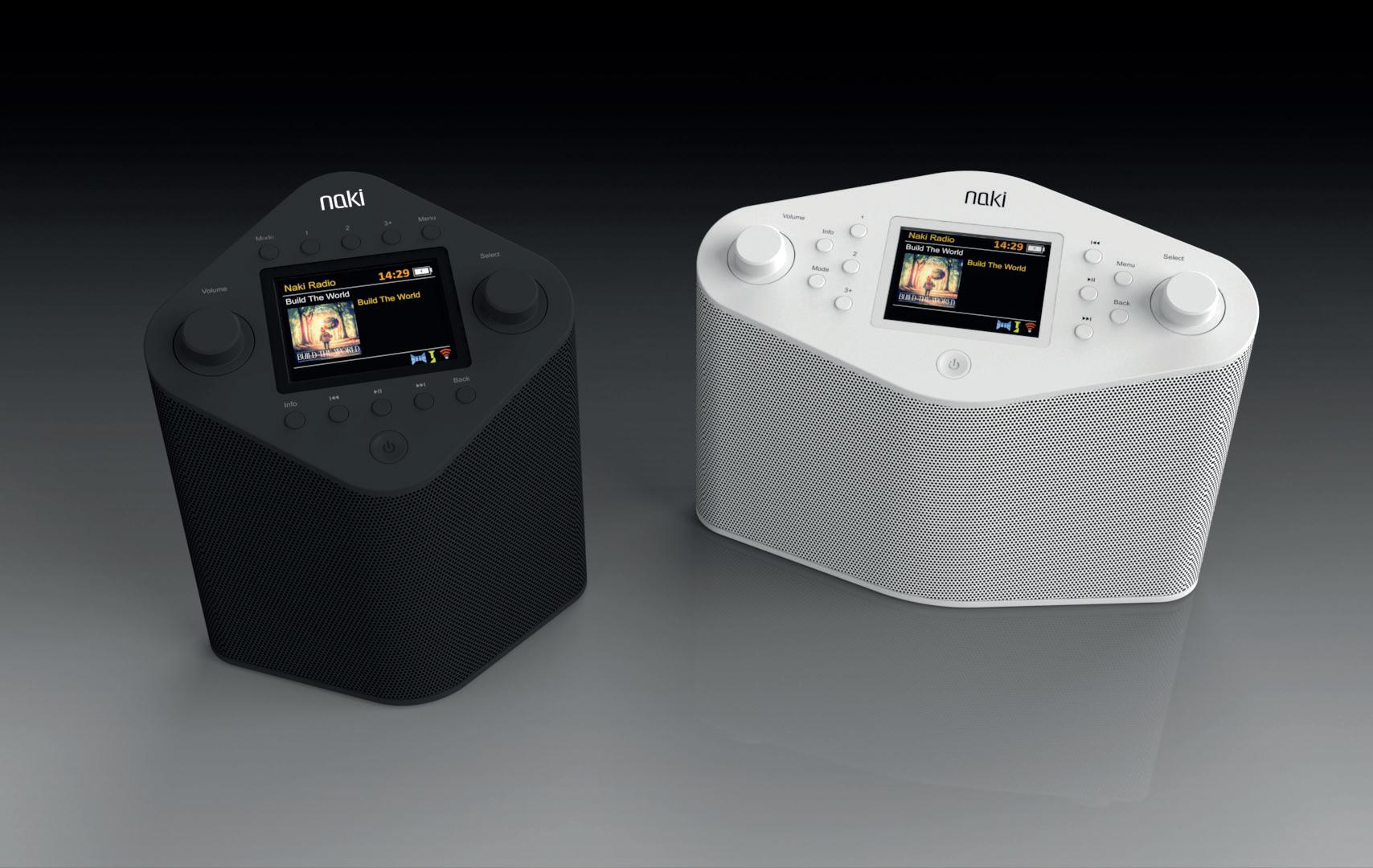
Naki Audio is proud to introduce its latest range of streaming devices - Pulse, Pulse Max, and Bolt - designed to deliver premium audio while offering exclusive, rigorously curated kosher content for families and communities.
AVID launches the EVO TWO: the new EVO flagship!
Key Features Across All Models Each device offers access to a growing library of vetted, screen-free, family-friendly music, stories, shiurim, and podcasts. Built-in features include automatic content updates, parental controls, customizable downtime presets, multi-language support (including Hebrew), and secure, device-based playback without the need for a smartphone.
Naki Pulse
• Single 5W speaker, ideal for bedrooms, kitchens, and home offices
• 3.5” colour display, knob-controlled interface, headphone output
• Portable design with user-friendly grip and non-slip rubber base
• Includes dual alarms, multiple network profiles, and battery power
• Enhanced with dual speakers to fill larger rooms with rich, room-filling sound
• All features of the Pulse, plus expanded audio range
• Retains compact portability with reliable battery performance
Naki Bolt
• Upgraded tabletop model with a powerful audio and touchscreen experience
• Dual 4W speakers, 5” LCD touchscreen with double-tap wake functionality
• Offers five hours of battery life, easy-to-carry handle, and headphone jack
• Features include touch-based content navigation, parental controls, and preset management
All three models are available today through Naki Audio’s official channels.
AVID, the British analogue hi-fi manufacturer, has unveiled the new EVO TWO, an advanced 3.5-way floor standing loudspeaker and the new flagship of its three-strong EVO series.
Hot on the heels of the new Relveo turntable launched in July, AVID’s latest release in its special 30th anniversary year expands the company’s British-made offerings to provide even more opportunities to create an allAVID system, from source to speaker.
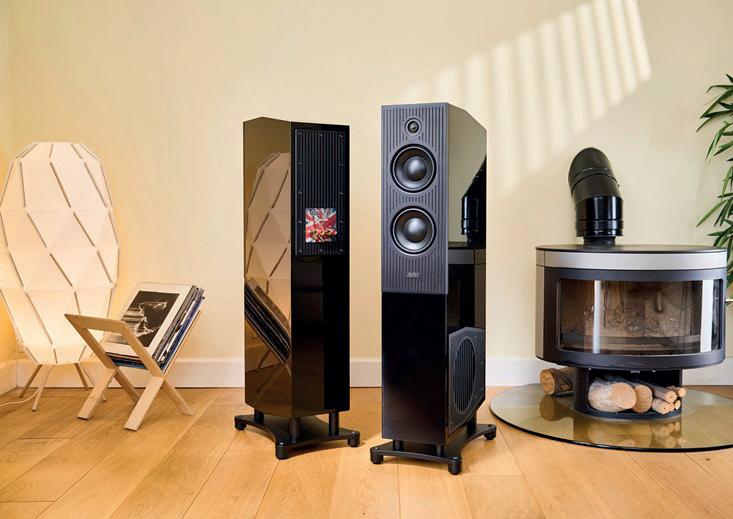
The new EVO TWO is an advancement of the company’s EVO THREE model. It has been engineered by AVID’s founder, Conrad Mas, to provide an enhanced bass response, a broader dynamic range, and a more expansive soundstage than its predecessors.
The new loudspeaker will make its international debut at the Taiwan International TAA Hi-End Audio Show 2025 (7-10 August) and will be available through authorised AVID dealers from September 2025.
Drawing on three decades of British manufacturing, the EVO TWO’s design refines the EVO THREE’s foundation by incorporating a revised cabinet and driver arrangement to improve low-frequency performance and soundstage depth. The result is a speaker designed to perform across a variety of musical genres, with a notable capacity for reproducing powerful dynamics and convincing realism, especially with electronic and orchestral material.
The EVO TWO’s premium driver complement includes a 28 mm Acuflex™ hand-coated soft dome
tweeter, 2x 160mm (75mm titanium voice coil former) midrange drivers, plus a substantial 250mm LF driver.
The drive units are mounted on a rigid brushed anodised aluminium baffle and rear plate, precision-machined to exacting tolerances in the AVID factory. The cabinet finishes are available in a choice of black or gloss white.
Conrad Mas, Managing Director of AVID Hi-Fi, commented: “The EVO TWO was developed in response to customer feedback requesting a speaker with great presence and low-end articulation, whilst maintaining the clarity and openness characteristic of the EVO series.
“It is particularly suitable for larger rooms and properties where wall construction may be less rigid, a common scenario in many North American homes.”
EVO TWO key features
• 3.5-way floorstander
• Extended bass response to 28 Hz (250 mm LF driver)
• Improved dynamic range and soundstage imaging
• Tuned for domestic environments, including those with non-solid wall construction
• Suitable for all genres, including electronic, orchestral, and cinematic material
• Hand made in Cambridgeshire, England, to AVID’s time-proven standards
• Reassuring 42 kg mass
Price and availability – EVO TWO: £27,995/€34,995/$38,995
Marshall
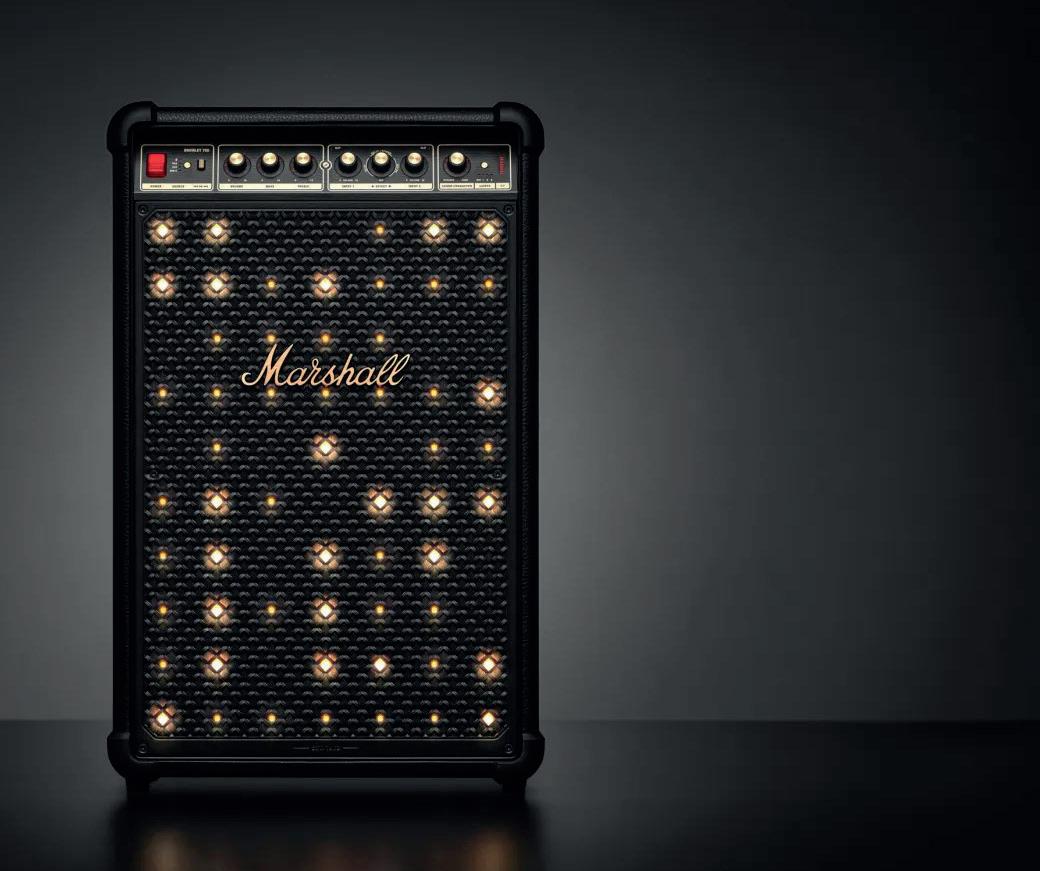
A grid of LEDs hidden behind the Bromley 750’s speaker grill reacts to what you’re playing.
Nothing is certain in life except death, taxes, and companies releasing party speakers with elaborate lighting features.
Marshall’s first party speaker, the new Bromley 750, is no different, but instead of filling a room with a bright-coloured
Marshall’s first Bluetooth party speaker has a hidden light show
Marshall adds a subwoofer and compact soundbar to its Heston TV audio lineup
glow, it features a more subtle array of LEDs hidden behind its front speaker grill.
It’s available for preorder now for $1,299 and will ship in late September.
Front-firing speakers and a pair of tweeters on top work alongside a new sound character dial that can switch between a loud setting for filling larger spaces or a dynamic setting for smaller crowds.
There are three animated presets for the Bromley 750’s LED stage lighting, with two of them reacting in real time to what’s being played.
Marshall says battery life is over 40 hours, but that can be extended with optional backup batteries. There are inputs for connecting microphones and instruments, wheels, and an extending handle for easier transport (it weighs over 52 pounds). The Bluetooth speaker boasts an IP54 rating, so it should be able to shrug off the occasional spilled drink.
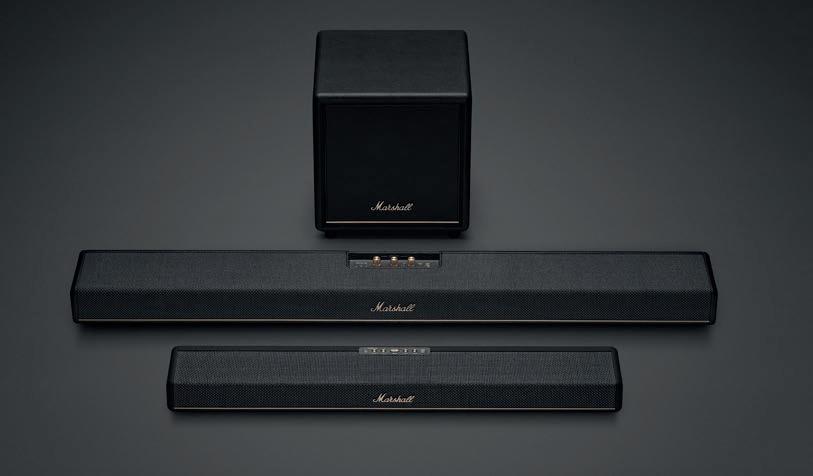
Marshall’s family of TV audio gear is growing. The company has announced the Heston Sub 200 subwoofer and Heston 60 compact soundbar, both of which are now available for pre-order. The $700 Heston 60 is a smaller take on the first soundbar Marshall introduced earlier this year, the Heston 120, offering Dolby Atmos and DTS-X for more intimate spaces. With the Heston Sub 200, a $600 subwoofer that pairs with both soundbars, Marshall touts “a sound that can be truly felt.” Both products come in Cream and Black, and sport Marshall’s classic guitar amp styling. They ship September 23.
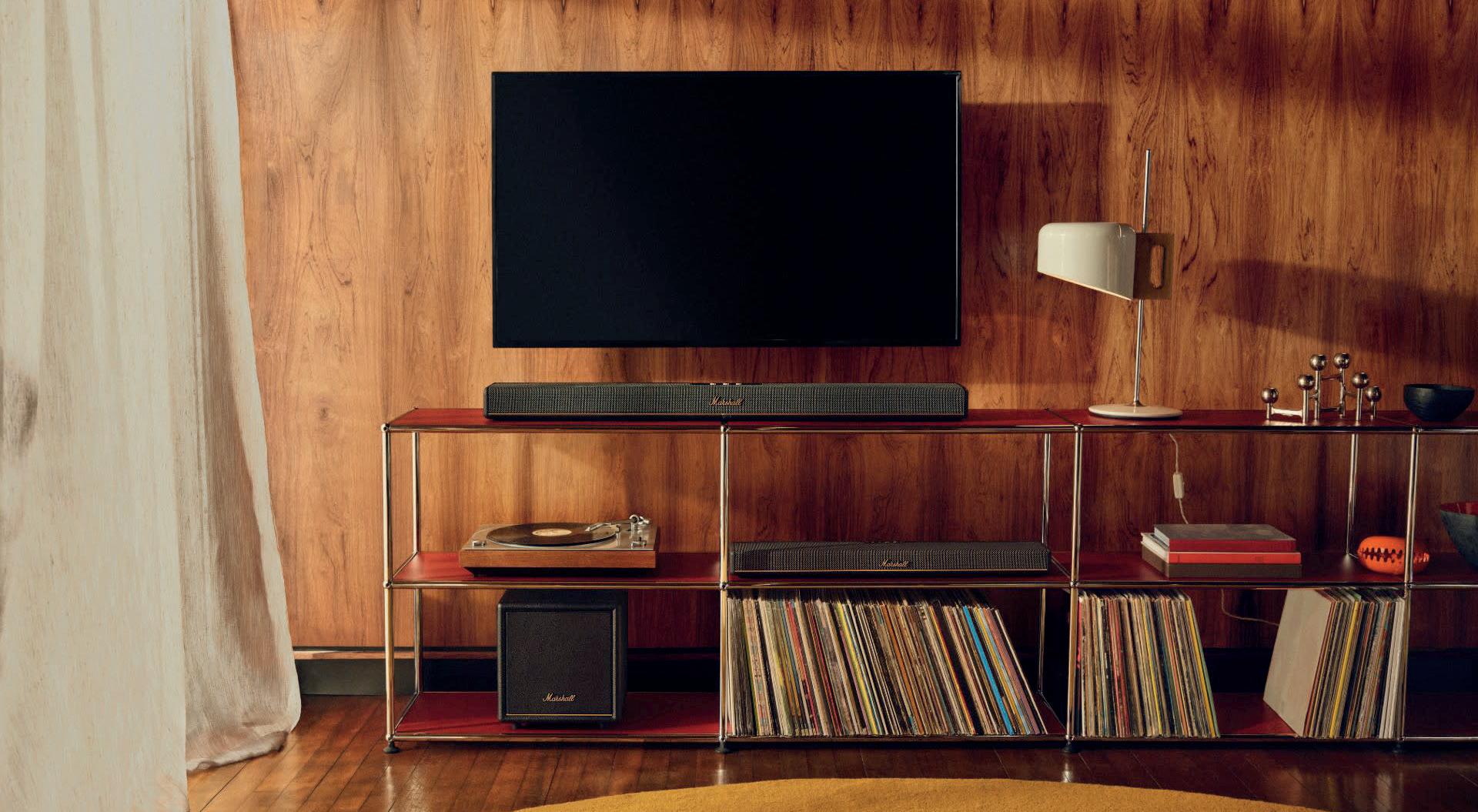
The Heston 60 has 7 Class D amplifiers — two 25W and five 5W — with a total power output of 56W. It has two woofers and five full range drivers. The soundbar offers wireless and wired connectivity, with Bluetooth (5.3) and Wi-Fi, as well as an HDMI 2.1 port (eARC), a 3.5mm aux port, an RCA input and USB-C. It also supports AirPlay 2, Google Cast, Spotify Connect and Tidal Connect.
The Heston Sub 200 packs two 5.25 inch subwoofers and two 120W Class D amplifiers, with a peak total power output of 236W. Marshall says it’ll deliver deep, room-shaking bass. The subwoofer has Bluetooth and wired input (RCA mono).
The Heston 60 and Heston Sub 200 will be available from Marshall starting September 23, and will roll out to select other retailers on September 30.
Sometimes more is better. Case in point: money. I could really use more money, and if you gave me more money, I’d be happy about that—I think most would agree with that sentiment, and if you don’t, I have a favour to ask. Speakers, like money, are also a thing you may want more of, and while they’re not as important as money, they’re important for your ears, and Yamaha is here to take your money in exchange for satisfying your ears in a very maximalist way.
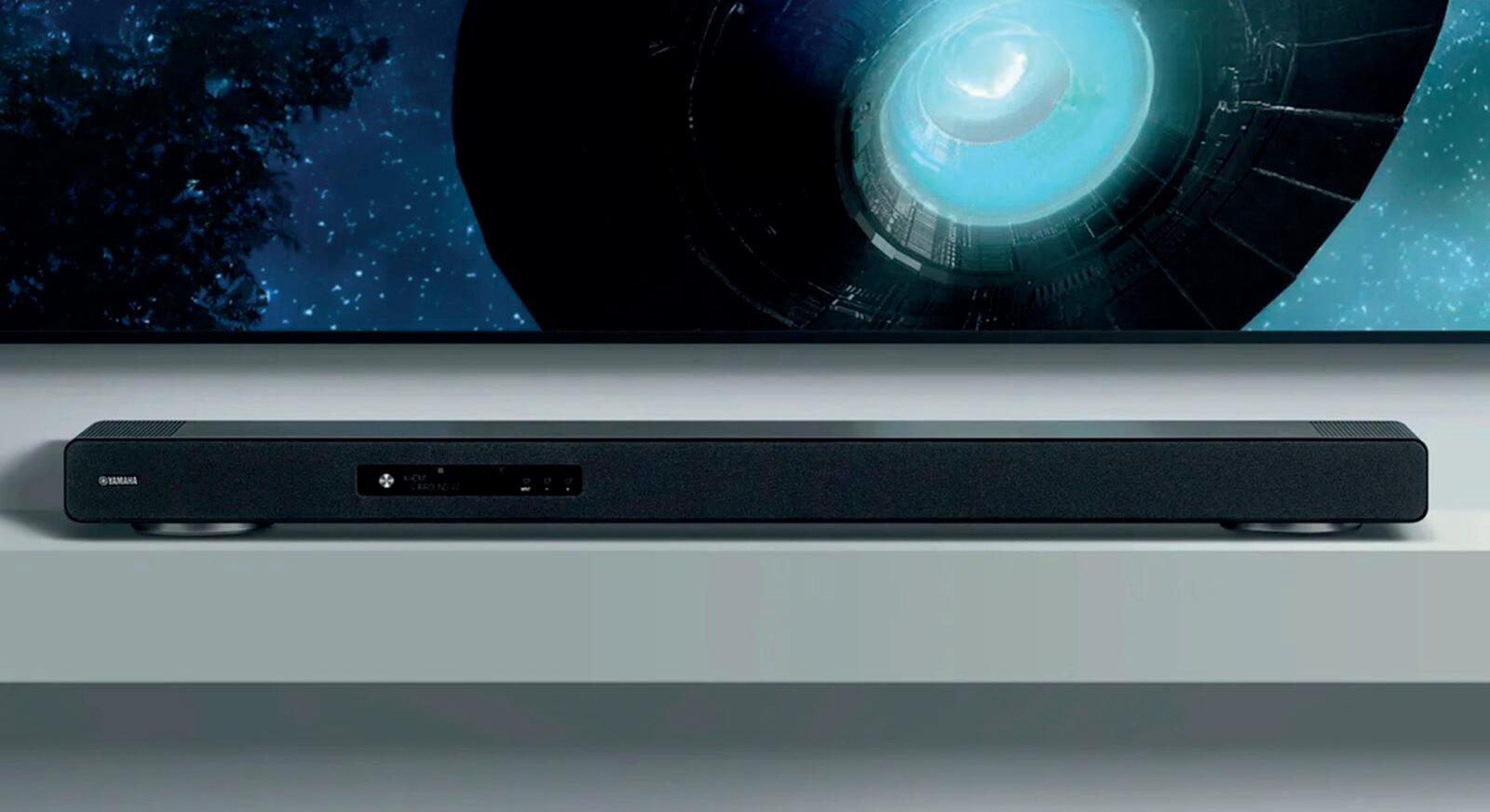
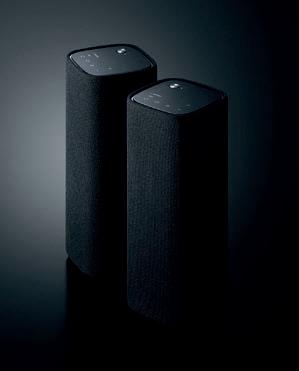
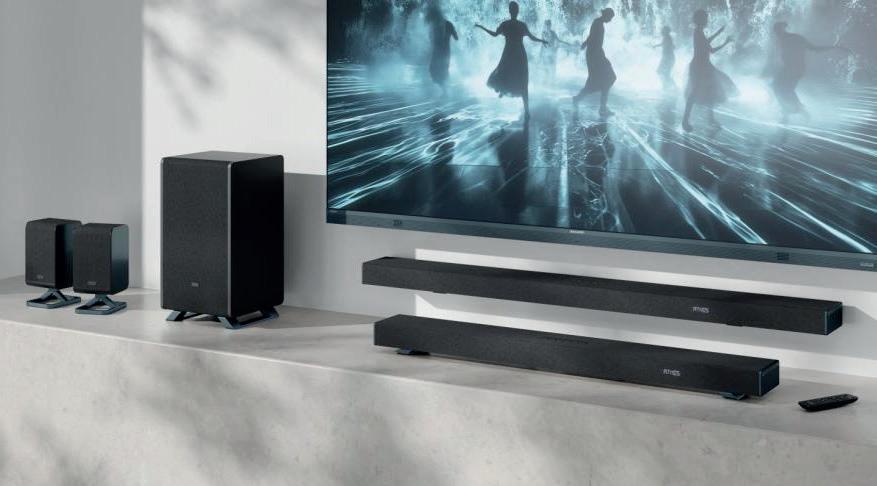
Yamaha’s True X Surround 90A soundbar home theater system, dubbed the SR-X90A, rams in 12 Dolby Atmos speakers that make the backbone of the setup. There are four drivers in the soundbar, too, and three whole tweeters, plus two additional surround speakers, and a standalone Bluetooth woofer to complete the system. Twelve upfiring speakers is a lot by market standards, and most competitors only have a few.
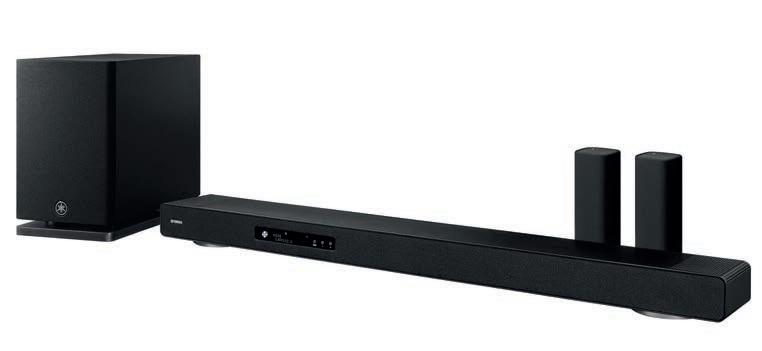
If you’re not familiar with speakers that are beamforming like this, the idea is that the trajectory makes the sound from the soundbar more immersive since it more adeptly fills the room, bouncing audio off of the ceiling in a room to simulate overhead sound and height. I obviously have not yet used Yamaha’s SR-X90A, but the fact that there are so many speakers dedicated to just that gives me reason to believe this soundbar sounds pretty wild. Having just used the Lenovo Tab Plus that crams in a lot of JBL-made Dolby Atmos speakers into one tablet, I can say anecdotally that more speakers definitely equate to more richness—or at least a lot more volume.
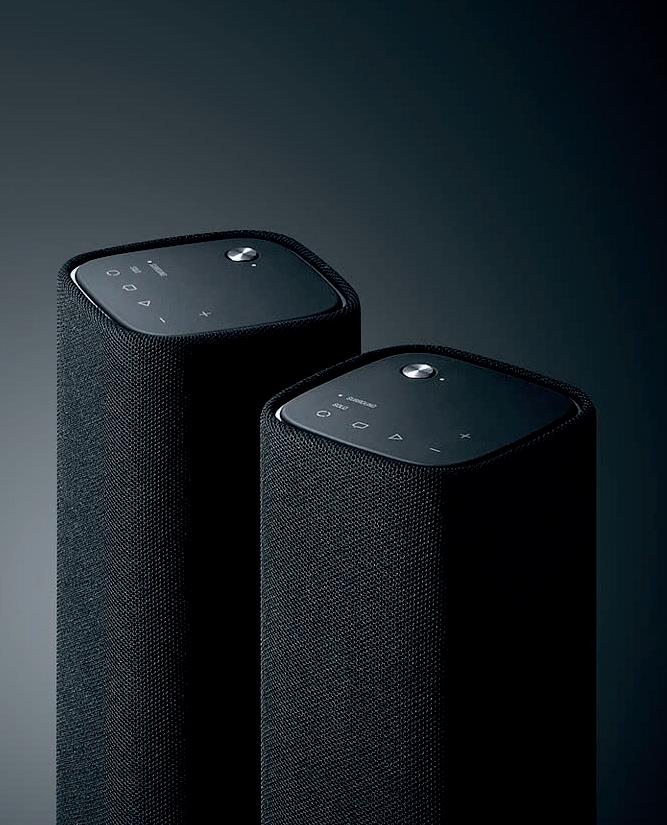
Outside of the glut of beamformed speakers, there are some other cool aspects of Yamaha’s new home theater system, including the fact that the included surround speakers can also be configured as standalone Bluetooth speakers. The system is also outfitted with Surround:AI processing, which uses (yup) AI to optimize surround in your room in real-time. Whether AI makes audio sound better or worse to your specific ears will come down to personal preference, I guess.
As you might imagine, Yamaha’s True X Surround 90A system will not come cheap—beamformed speakers don’t grow on trees, after all. The system will launch in the U.S. this September and will cost $3,500 for the whole setup or $2,800 for just the soundbar (no additional surround speakers). If you want more, it looks like you’re going to have to start saving now.
They’re the start of another huge IKEA smart home push
IKEA has launched a cute Bluetooth speaker in three color options: black, pink and yellow. It’s designed to match your home decor and it’s very small: just 7 inches tall and a little under five inches wide.
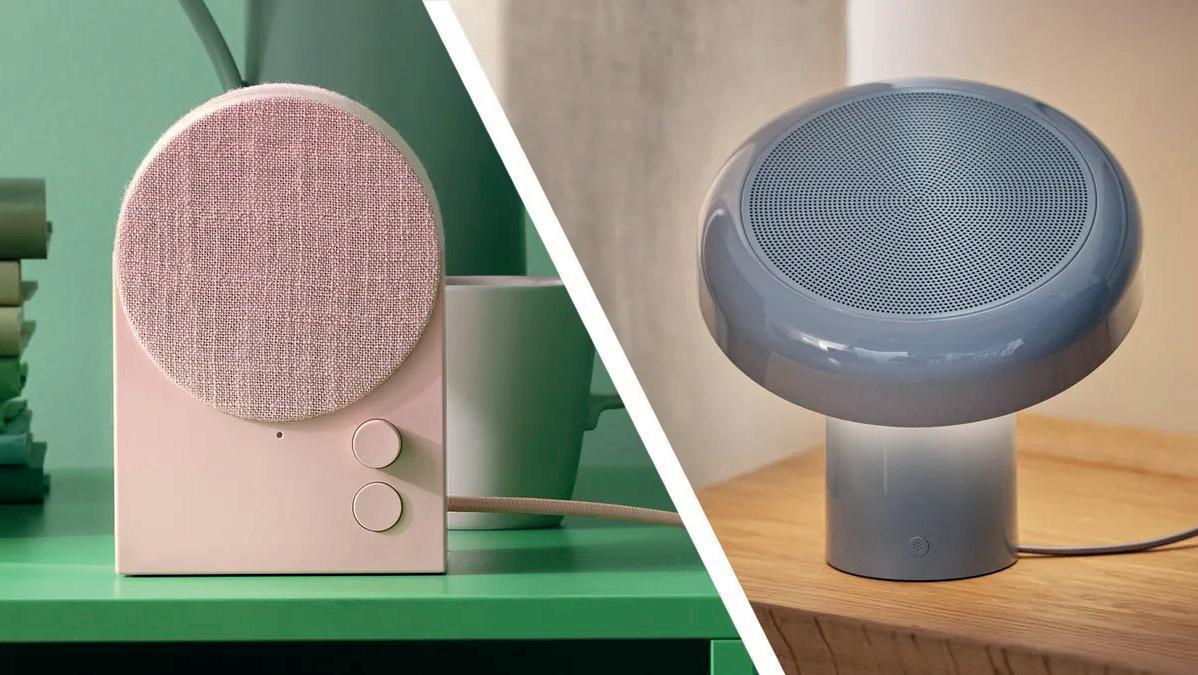
The speaker, called Nattbadd (below), is designed to look like an old radio and has two particularly useful features: Spotify Tap for instant listening, and the ability to pair multiples together to fill your home with sound.
IKEA launches two cheap Bluetooth speakers –including a retro throwback with a handy Spotify trick
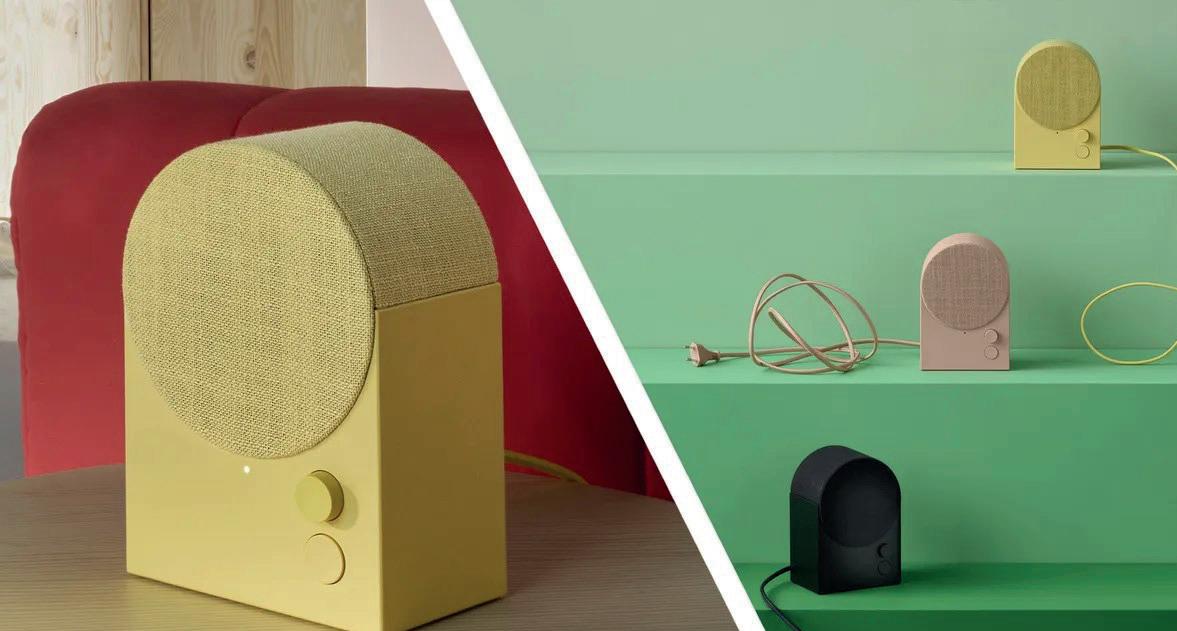
Spotify Tap is a handy shortcut (typically found on headphones) that lets you resume a listening session where you left off, just by tapping the device. Thanks to the Nattbadd’s very low price price tag – $49.99 in the US and £29 in the UK – buying multiple speakers shouldn’t break the bank, either.
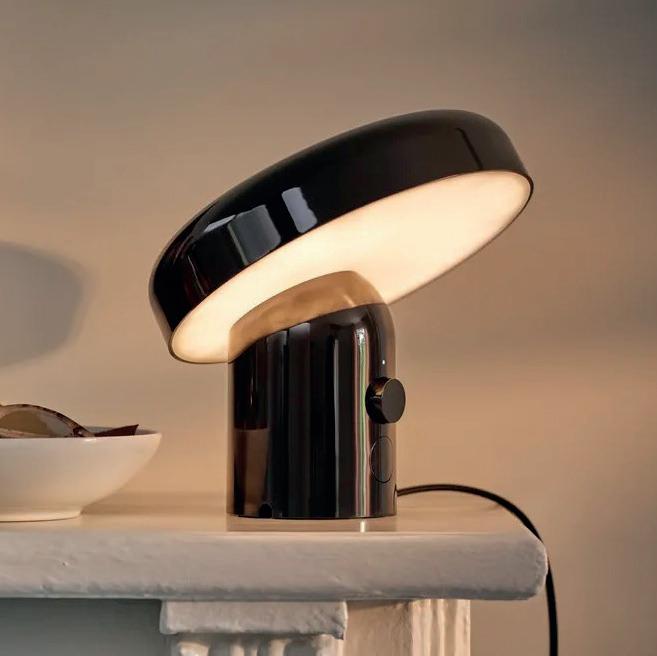
This isn’t the only new speaker from IKEA either. It’s also announced the brilliantly-named Blomprakt (below), a lamp with an integrated speaker and an intriguing design: its top is off-center and tilted to give directional light. That’ll be launching in October 2025, but pricing unfortunately hasn’t been confirmed just yet.
The two new speakers are just the start of a big smart home push from IKEA, with whole bunch of other Mattercompatible products incoming, too.
IKEA goes all-out on Matter
The new speakers are part of a renewed smart home push that IKEA’s making, and in January 2026 the retailer says it will launch over 20 new smart home products.
Significantly, they’ll all be compatible with Matter, the smart home standard – and that means you’ll be able to use them not just with IKEA’s own smart home hubs such as the Matter-compatible Dirigera, but with many other Matter controllers from third parties.
The Evo 150 SE Is Cambridge Audio’s Newest Streaming Amplifier
As Range Manager David Granath explains, “our goal is to make the smart home easy to use, easy to understand and within reach for the many.” Matter’s simplicity and wide compatibility is a key part of that, and IKEA’s whole-hearted support of the standard is likely to help make it much more popular.
IKEA will also launch a collaboration with the Swedish designer Tekla Severin, aka Teklan, in January. The homeware giant previously announced the Teklan seriesin January, but said the full range wouldn’t launch until “early 2026”. Well, it’s now been a bit more specific about that, but it’s a shame they won’t land in time for Christmas stockings.
Still, the Nattbadd is available from IKEA now.
Cambridge Audio is launching the Evo 150 SE, a special edition of its Evo 150 streaming amplifier. As part of a partnership with Hypex, Cambridge Audio has developed the NCOREx “Tuned by Cambridge” Class D amplifier technology featured in the Evo 150 SE. This allows the amplifier to deliver 150W per channel (into 8 Ohms) to all but the most demanding of speakers.
According to Cambridge Audio, improvements have been made throughout the audio signal path to hone this sound yet further. Evo 150 SE is built around the 4thgeneration of StreamMagic, Cambridge Audio’s streaming platform for listening across multiple services and formats.
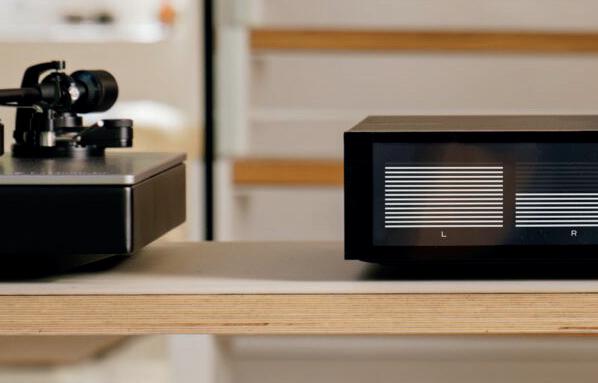
StreamMagic enables direct streaming from Spotify Connect, TIDAL Connect, Amazon Music, Deezer, Qobuz, Roon Ready, UPnP and Internet Radio over Wi-Fi or Ethernet. As Cambridge owns and develops the StreamMagic platform itself, new features and services are regularly added to improve and increase its functionality.
For maximum wireless flexibility, Evo 150 SE gives the options of Bluetooth aptX HD, AirPlay 2 and Google Cast. To share music across devices all around the home, it is fully compatible with Google Home, Apple AirPlay and Roon multiroom systems.
Wired connectivity is equally well served. HDMI ARC means the Evo 150 SE can be connected to a TV, forming the sound foundations of your home entertainment system.
While all of Evo 150 SE’s functionality can be accessed via the StreamMagic app, and the HDMI ARC connection enables simple volume control through a TV remote, a dedicated remote control is supplied to ensure complete ease of use for anyone in the room.
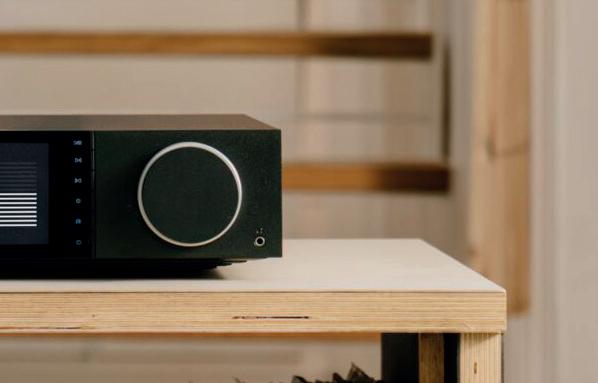
Evo 150 SE’s compact footprint is no accident – 12” x 12”, the same size as a vinyl record sleeve. The amplifier features a 6.8” colour screen, where users can cycle through a clock display, the album artwork and info of the current track, or else enjoy the tick of virtual VU meters.
Cambridge Audio Evo 150 SE is available from July 2025.
HiBy
If like me you miss the days of cute portable music players like the iPod mini, HiBy has just the thing: a super-cute and very small double-DAC audio player called the R3Pro II.
The R3Pro II comes in a choice of orange, silver, black or green; the orange one really reminds me of my much-missed Sony Ericsson Walkman phone with its orange highlights, while the others conjure up memories of multiple iPods.
This cheap Hi-Res Audio music player is like a modern iPod mini, with the funky colours to match
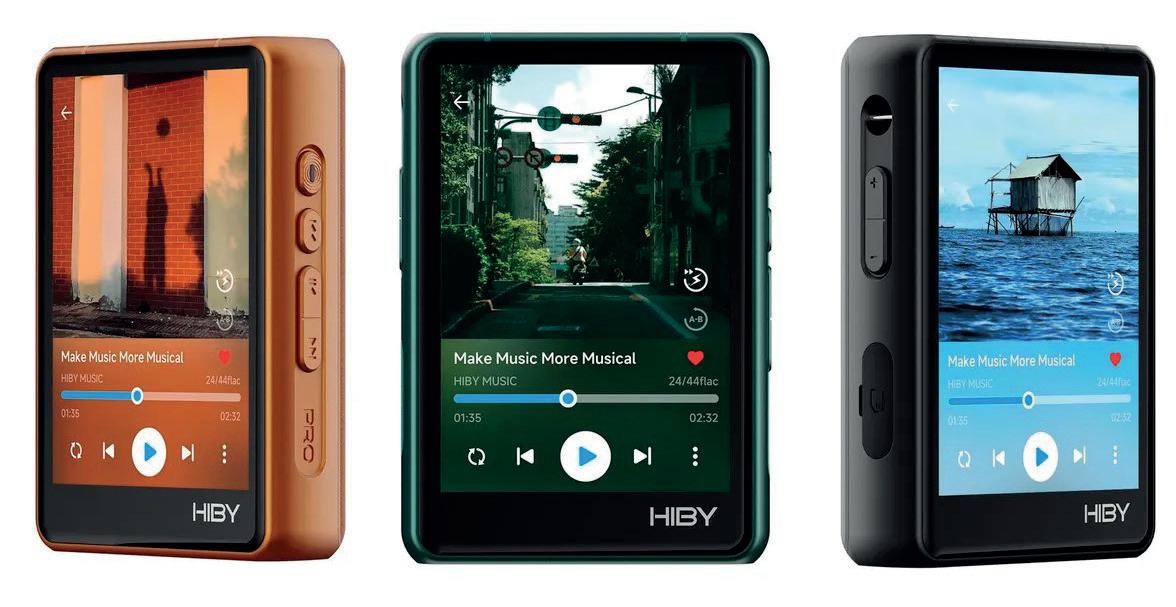
Don’t let the cute design fool you, though: the specs here are serious. According to HiBy you’re looking at a “quality pocket cannon, performance monster”. And the specs back that up.
Inside there are dual Cirrus Logic CS43198 DACs and quad OPA1622 headphone amps capable of driving high-impedance headphones through either the 4.4mm balanced or 3.5mm stereo jacks.
The Mighty Bose Launches New Wireless Earbuds And Bluetooth Speakers In Time For Summer
HiBy R3ProII: key features and pricing
Those amps and DACs are powered by a 4,000mAh battery with PD2.0 fast charging, and put out up to 480mW of power.
You’re not limited to listening on the best wired headphones, though. The player is certified for both wired and wireless HiRes Audio and supports DSD256, PCM at up to 32-bit/384kHz and MQA 8X. Bluetooth is 5.1 and there’s Wi-Fi too; you can have up to 2TB of storage via microSD.
You’ve got aptX and LDAC to beam high-quality sound to the best wireless headphones, and the R3Pro II also works with AirPlay and DLNA for Wi-Fi streaming. It has USB-C audio, USB to S/PDIF, and line outputs for connections to other audio equipment.
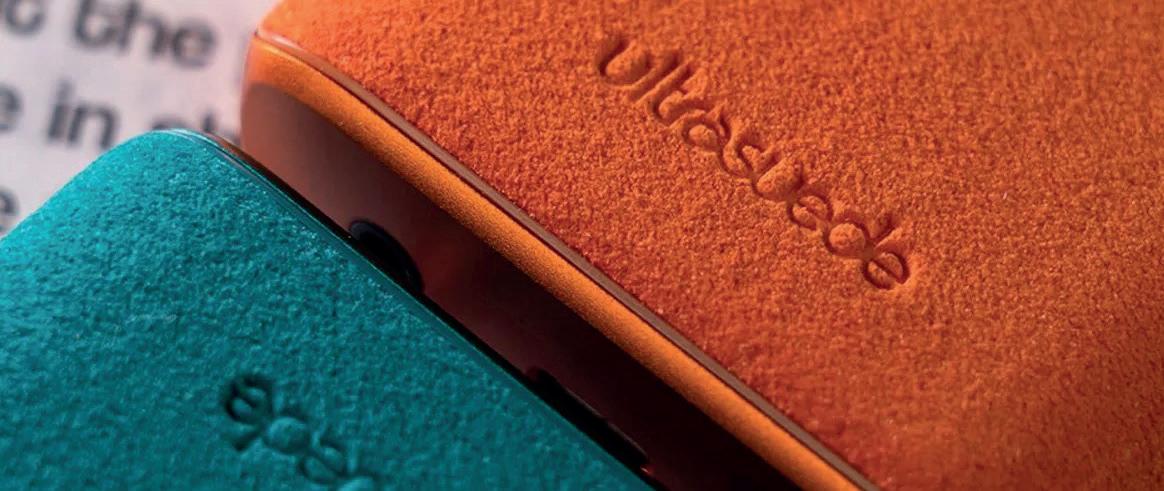
There are slightly different materials depending on your color choice: the green and orange ones have an Ultrasuede back, while silver and black are matte.
The specs suggest a fairly expensive device, but no: the R3Pro II is just $199. I’d expect it to cost around £199 or just under if it comes to the UK, and the US price converts to around AU$300 in Australia – though we don’t have confirmation of an international release yet. Hopefully it’ll come, because we could be looking at a new budget winner for our list of the best hi-res audio players.
The mighty American audio brand Bose has a legendary reputation for creating audio products with “room-filling sound.” Today, Bose is announcing three new products that sound as if they won’t disappoint.

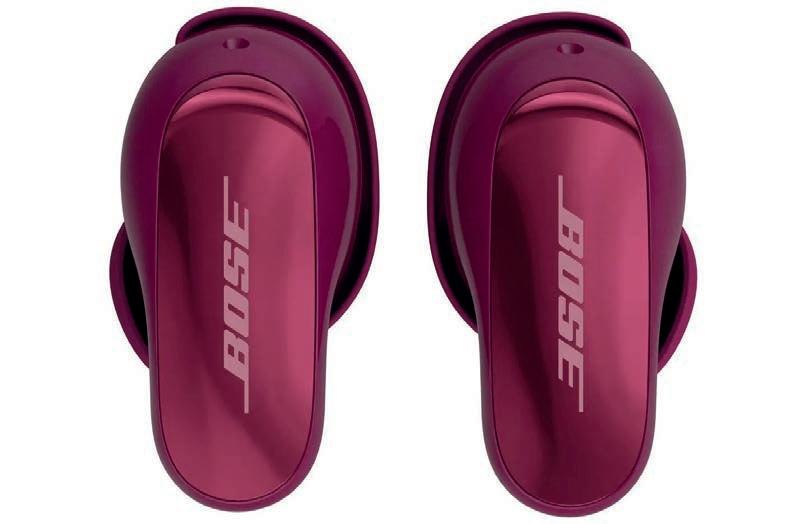
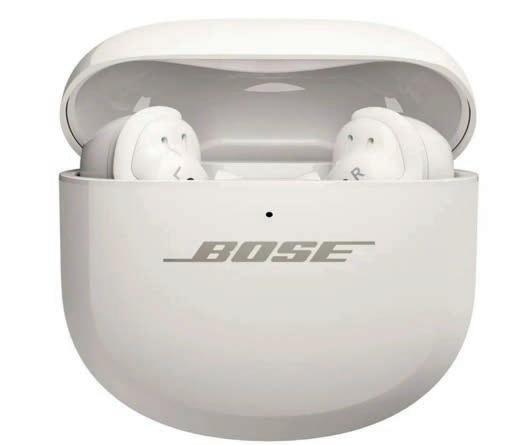
First up from Bose launch is the new QuietComfort Ultra Earbuds. This is the next-gen version of Bose’s flagship wireless and noisecancelling earbuds, the QuietComfort Ultras. This latest version includes a suite of compelling updates that are designed to boost the user’s listening experience.
With new and improved AI algorithms that enhance the ActiveSense function, the new earbuds are now better at filtering out any sudden noise spikes to produce a smoother adaptive noise cancellation.
Most ANC earbuds are pretty good at cutting out unwanted sounds like road noise, aircraft engines or the constant hum of an air conditioner. With these new algorithms, Bose says the QC Ultra will be able to cope with sudden sounds while also offering improved voice pickup and call quality.
These new wireless earphones have an IPX4 rating and can play for up to six hours on a single charge of the earbuds’ batteries, although that figure dips to four hours if the immersive audio feature is turned on. The storage case can now be charged wirelessly as well as via the usual USB-C port.
The Bose QC Ultra support Bluetooth Core 5.4 Multipoint connectivity, which means they can work with two source devices connected at the same time. There is support for both SBC and AAC codecs, making them compatible with most Bluetooth streaming devices including iPhones and Android.
As well as SBC and AAC support, the QC Ultra also support Qualcomm’s Hi-Res aptX Adaptive codec which automatically adapts to streaming lossless audio wirelessly and provides low-latency transmission when used with a device certified for Qualcomm’s Snapdragon Sound platform. Android users can also take advantage of Google’s Fast Pair function.
Pricing and Availability:
The new Bose QuietComfort Ultra wireless earbuds are available to pre-order from June 12, 2025, in Black and White Smoke colorways, plus a delicious-sounding limited-edition Deep Plum finish. The earbuds will begin shipping in Europe on June 26, 2025, while U.S. consumers will have to wait until a little later in the summer. The price of the earbuds will be $299 / £299 / €299.
The second new product announced by Bose today is the all-new SoundLink Plus speaker. This mid-range portable Bluetooth speaker sits neatly between the brand’s SoundLink Flex and SoundLink Max speakers.
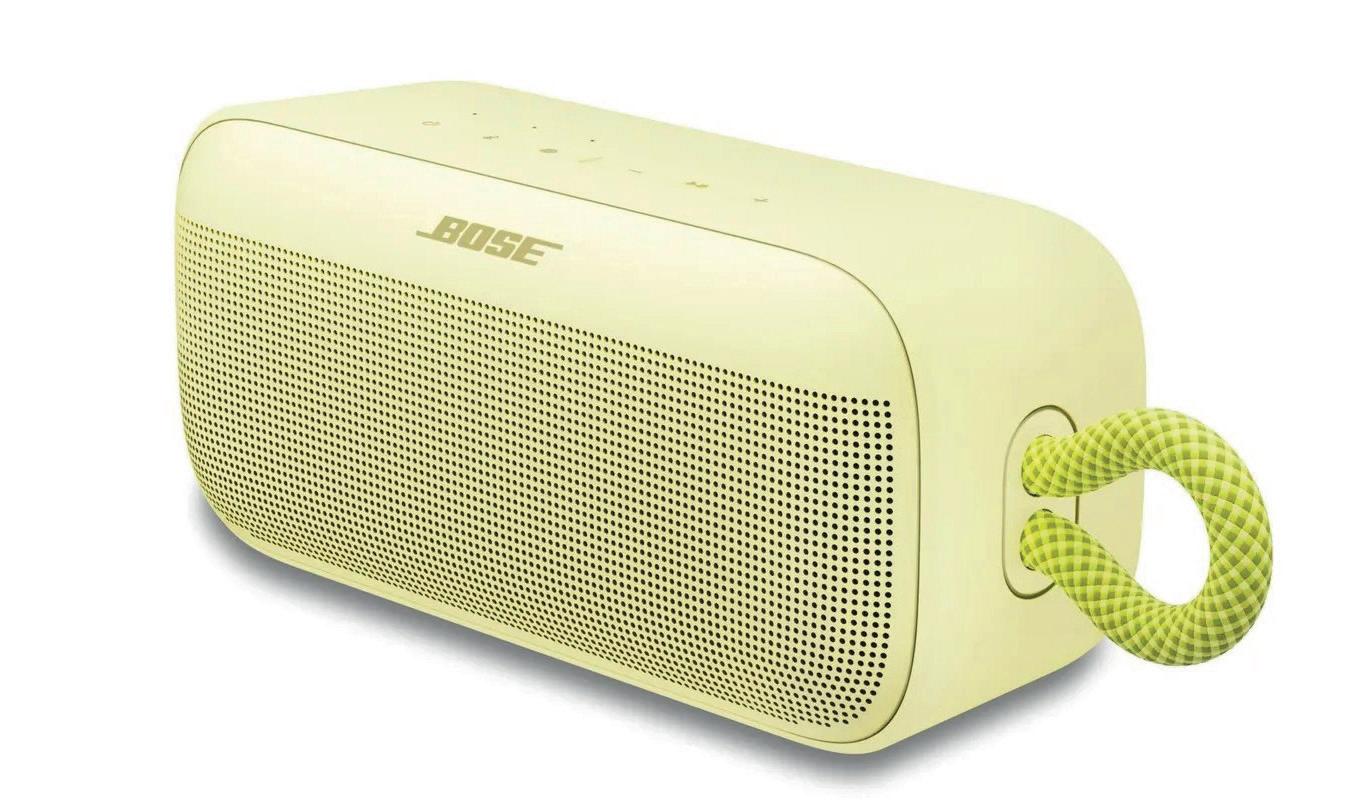
The SoundLink Plus is designed to provide a rich sound and has a build that’s tough enough to be ready for almost anything. The overall size is large enough to create a robust bass response but small enough to go almost anywhere. In fact, the SoundLink Plus is sufficiently compact that it can be stuffed in a backpack, duffle bag or beach tote.
The Bose SoundLink Plus has a single subwoofer, plus a tweeter and four passive radiators to create that big bass sound. Thanks to an IP67 waterproof rating, the it can survive the rough and tumble of outdoor life, making it suitable for hiking.
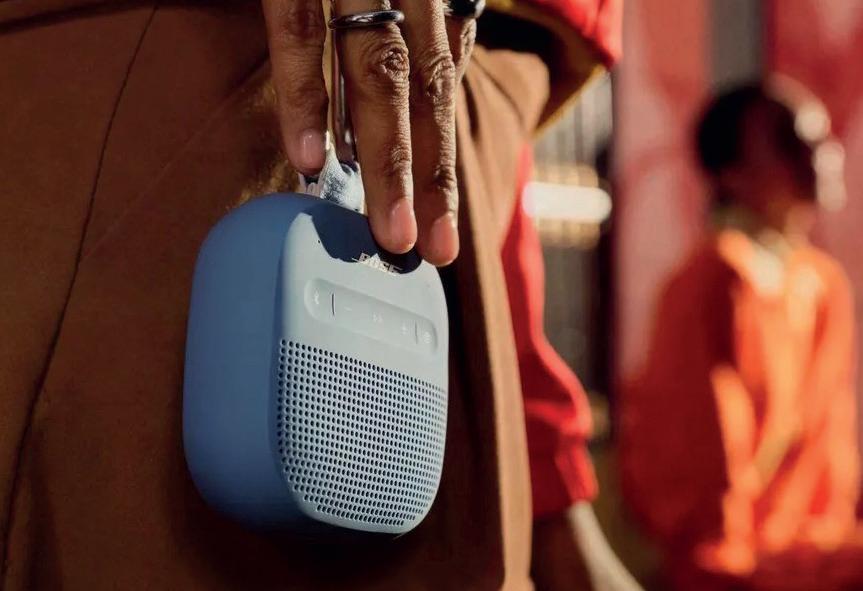
The new speaker can float on water and comes with a rugged utility nylon rope attached to its side. This makes it easy to pick out of the pool or to clip onto something else like a tent pole or the branch of a nearby tree.
The new speaker has a powder-coated steel grille and a coating of soft-touch silicone material that makes it durable and able to take a bit of a beating. The battery can hold enough juice from a single charge to play for up to 20 hours before it needs topping up. The battery has so much capacity that it can function as a power bank for charging devices like smartphones using the speaker’s bi-directional USB-C charging port.

The third and final new product announced by Bose today is the second iteration of the company’s popular and compact SoundLink Micro speaker. Measuring 103mm square and just 39mm deep, this miniature Bluetooth speaker delivers a sound that’s loud enough while still projecting enough bass. The sound comes from a single dynamic driver and two passive radiators.
The Bose SoundLink Micro has a durable construction and an IP67 waterproof rating. Its powder-coated steel speaker grille contrasts with soft-touch silicone that makes the speaker more durable. This is the second version of Bose’s baby speaker and it comes with a removable nylon strap so it can be clipped on to a bag, golf cart, handlebars, shower head or carabiner.
Other features included charging port that’s been upgraded from Micro USB to USB Type C. It has a rechargeable battery that can play continuously for up to 12 hours on a single charge.
Both the Bose SmartLink Micro and the SmartLink Plus are compatible with the Bose smartphone app which means they can automatically receive firmware updates to keep them up to date. Other features that can be accessed using the app include EQ settings and programming of the Bose the shortcut button with another feature, such as Spotify Tap, makes them more versatile.
Both of these new Bose speakers can be paired with compatible Bose soundbars and smart speakers using Bose SimpleSync technology. Each speaker supports Bluetooth Core 5.4, which includes multipoint connectivity and a wireless range that extends up to 10 meters. The speakers also support Google Fast Pair for fast pairing with Android devices.
I expect to bring you a hands-on report on all three of the new Bose launches very soon so please check back to find out more about these new products from one of the biggest U.S. audio brands.
The Bose SoundLink Plus Bluetooth portable speaker is available in Black and Blue Dusk colorways as well as a brand-new summer Citrus Yellow color. The Black and Blue Dusk models are available for pre-ordered from June 12, while the Citrus Yellow model opens for preorders from June 19. Shipping of all three colors begins on June 26 and will be priced at $269 / £249 / €249.
The second-generation Bose SoundLink Micro Bluetooth speaker will initially be available in Black (Henry Ford would be proud) and priced at $129 / £119 / €119. However, the speaker will also be available in new colorways later on in the summer around the same time as the Black model is scheduled to begin shipping.
Focal unveils new Diva Mezza Utopia luxury loudspeakers
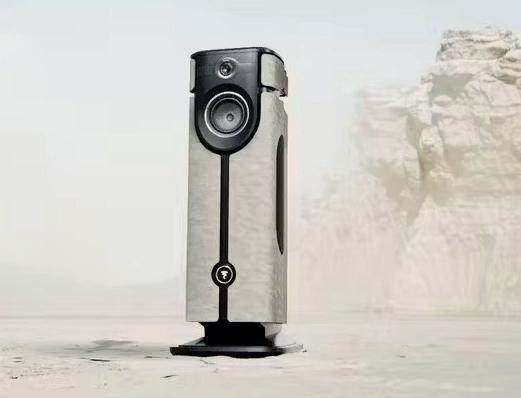
French luxury audio brand Focal has unveiled its new active wireless loudspeaker, Diva Mezza Utopia, further elevating the world of highfidelity and trailblazing in its pursuit of making the high-end audio experience more intuitive and enjoyable than ever, the brand says.
The next evolution in Focal’s Diva Utopia line and maximising the unique expertise of its sister company based in the heart of the UK, Naim, Diva Mezza Utopia draws on over 100 years of sonic and electronic excellence to combine stunning design with unique precision audio engineering, according to the company.
Taking the home listening experience to previously unheard levels, Diva Mezza Utopia promises the acoustic authority of a fully integrated hi-fi system, finished within an elegantly crafted all-in-one pair of tower loudspeakers. Delivering a staggering 500 watts of power per speaker, Diva Mezza Utopia produces effortless audio excellence in rooms up to 100m2, not only for power alone, but exemplifying Focal’s new hi-fi vision where cutting edge acoustic design and stateof-the-art electronics converge in an intelligent experience for music lovers and audiophiles alike.
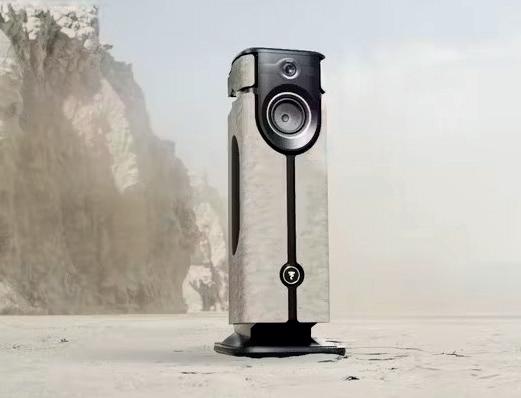
Spotlighting Focal’s authority in speaker craft while being managed by meticulously engineered acoustic electronics from Naim, Diva Mezza Utopia represents years of development from two of the world’s finest audio brands with unique approaches to producing excellence.
Completely unique to the Diva Utopia range, Diva Mezza Utopia includes impressive ultra-wide band connectivity, enabling uncompressed, high resolution signal transmission at 96kHz/24-bit wirelessly. In other words, for audiophiles and passionate hi-fi lovers, that means bidding farewell to untidy cables, while still enjoying a lossless, pure hi-res audio experience. And with support for Bluetooth, AirPlay 2, Google Cast, Spotify Connect, TIDAL, Qobuz Connect and more, Diva Mezza Utopia enables users to seamlessly integrate their preferred way of enjoying music into the usage and functionality of the speakers.
Enjoying truly hi-res music and unmatched audio has never been more intuitive, satisfying or showstopping as Diva Mezza Utopia, Focal adds.Diva Mezza Utopia is priced at £55,000/€65,000.
Headphone (1) is Nothing’s first over-ear audio product and the debut device created through its partnership with KEF under the Sound by KEF initiative
British brands Nothing and KEF have announced the launch of their first collaborative product, the Headphone (1). Headphone (1) is Nothing’s first over-ear audio product and the debut device created through its partnership with KEF under the Sound by KEF initiative.
Nothing,
KEF Launch
Headphone (1)

Acoustically co-engineered with audio pioneer KEF, Headphone (1) combines high-fidelity acoustics with Nothing’s distinctive design language, intuitive tactile controls, and immersive user experience.
The sound of Headphone (1) is acoustically engineered using KEF’s advanced tuning tools and deep acoustic knowledge. The result is
immersive audio that feels detailed, lifelike, and true across every genre. A custom-built 40mm dynamic driver delivers rich, natural sound with deep bass, detailed mids, and crisp treble across all modes, including ANC, Transparency, and Spatial Audio.
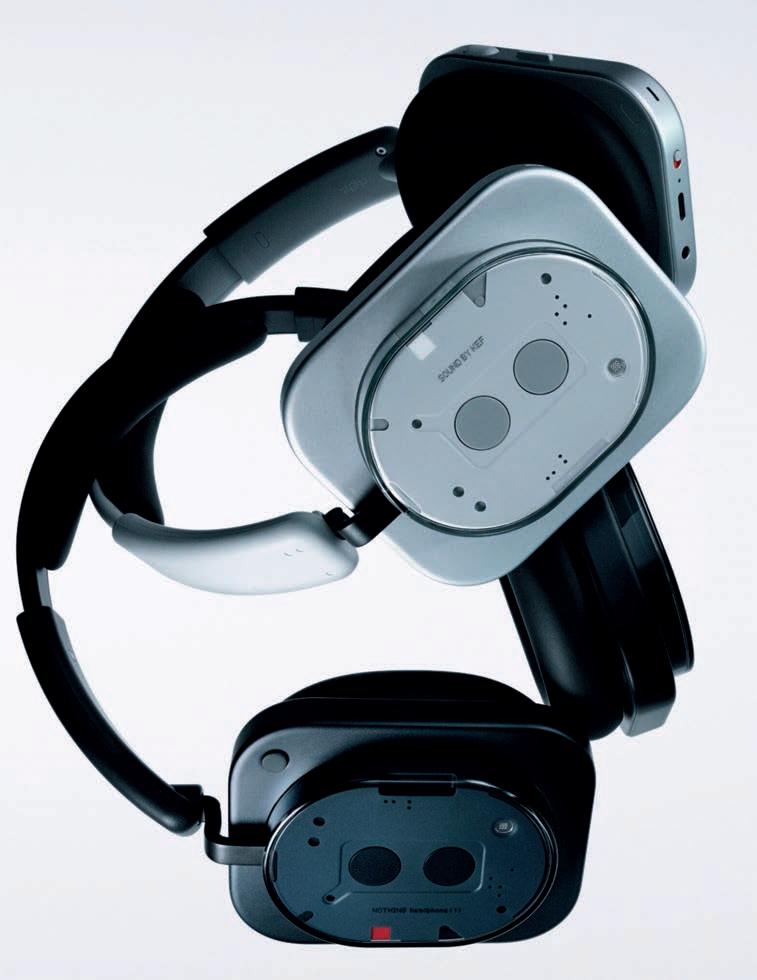
With on-device spatialization and built-in head tracking, Headphone (1) transforms any stereo source into a 360-degree soundstage that adapts in real time to the listener’s movement. With support for Hi-Res Audio, LDAC, USB-C lossless playback, and a 3.5mm jack, Headphone (1) delivers exceptional sound — wired or wireless. A precision damping system and high-linearity suspension further minimize distortion so every track sounds exactly as the artist intended.
Featuring iconic transparent elements and premium materials like formed aluminum and PU memory foam, Headphone (1) is built for comfort and visual impact. The lightweight ear cup combines aluminum and durable plastics for resilience, while the telescopic arms allow smooth
adjustment. Oil-resistant ear cushions mold naturally to the listener’s head, reducing ear pressure and providing a secure, comfortable seal for all-day wear across a wide range of head shapes.
Designed to be remembered, its sleek lines mirror the acoustic precision within – where every curve, cut, and cavity is built to unify form and function.
This launch marks the beginning of a long-term partnership between Nothing and KEF, uniting KEF’s 60+ years of audio innovation with Nothing’s mission to make technology feel more expressive and human.
Headphone (1) takes a deliberate step away from touch sensors, opting instead for tactile controls built into the physical design. The Roller, Paddle, and Button provide a more precise and reliable way to adjust volume, navigate media, and toggle ANC without the guesswork or friction often associated with touch interfaces. By integrating these controls directly into the headphones, Headphone (1) prioritizes usability and responsiveness, offering a more intuitive and satisfying listening experience.
Featuring dual feedforward and feedback microphones, Headphone (1)’s real-time ANC dynamically adapts to changing environments, while Transparency Mode keeps users aware of their surroundings. A best-inclass 4-mic ENC system, powered by AI and trained on more than 28 million noise scenarios, ensures clear voice capture for calls in even the busiest environments.
Headphone (1) delivers up to 35 hours of listening time, and a quick 5-minute charge provides 2.4 hours of playback, all with ANC on. With Bluetooth 5.3, dual device connection, Fast Pair support, and low-latency performance, switching between devices is fast and seamless.
Headphone (1) integrates ChatGPT for seamless, voice-activated access to information, inspiration, and everyday assistance. By customizing the Button actions in the Nothing X app, users can trigger voice assistants, access News Reporter, or open Nothing’s Essential Space — a second memory designed to capture voice notes, reminders, and fleeting thoughts.
The Button also enables a personalized listening experience with Channel Hop, allowing users to cycle seamlessly through recent audio apps and favorite functions without scrolling through libraries or switching apps. It’s a time-saving feature built for convenience, particularly during activities like exercising or commuting.
An 8-band Advanced EQ in the Nothing X app lets users fine-tune audio beyond treble and bass for a customized sound experience.
Headphone (1) will be available in black and white for $299 at nothing.tech, us.KEF.com, all KEF Music Gallery locations and KEF Music Studio. Preorders begin July 4 in selected regions, with open sales starting July 15.
The Bluetooth speaker market has long been dominated by disposable devices that end up in landfills when they inevitably break. A lot of the more affordable ones eventually become disposable because of the cheap materials used. Teufel Audio is challenging this wasteful cycle with their groundbreaking MYND speaker, a device that combines exceptional audio performance with unprecedented repairability and open-source accessibility.
This portable speaker has a revolutionary approach to sustainability and user empowerment. The design files have been open sourced, giving the community the tools to work with and maintain the hardware themselves . This isn’t just marketing speak; Teufel has made the firmware available on GitHub, allowing tech-savvy users to modify and improve their speakers over time. While the speaker is available in the market, if you have the ability to create your own, you can do it using the files that they have shared.
Teufel’s MYND speaker has an open endedsourcesd and sustainable design
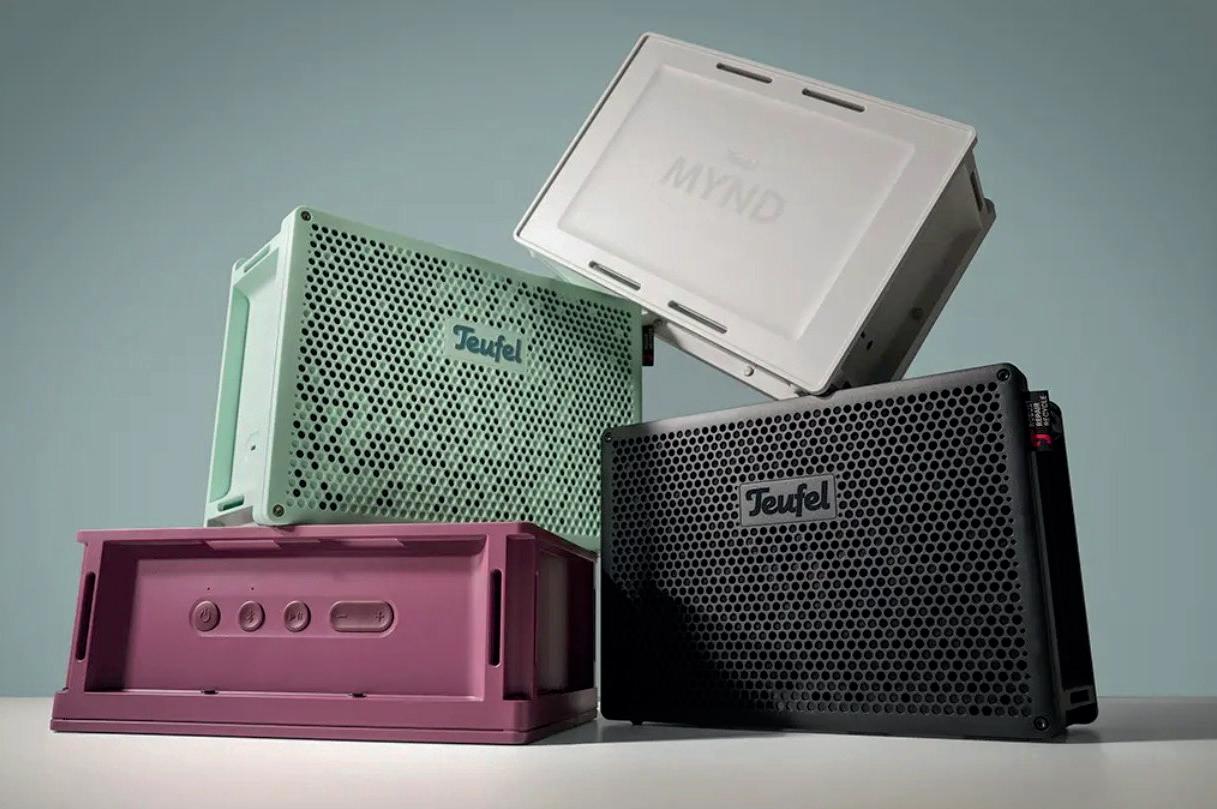
The speaker’s construction reflects a commitment to environmental responsibility. The housing is made from 50% recycled plastic , demonstrating that sustainable materials don’t require compromising on build quality.
The MYND maintains IP67 protection against dust and water while incorporating recycled content, proving that eco-friendly design can coexist with durability. Perhaps most impressively, the MYND features a fully modular design that prioritizes repairability. Unlike traditional Bluetooth speakers that become electronic waste when components fail, every part of the MYND can be replaced or upgraded.
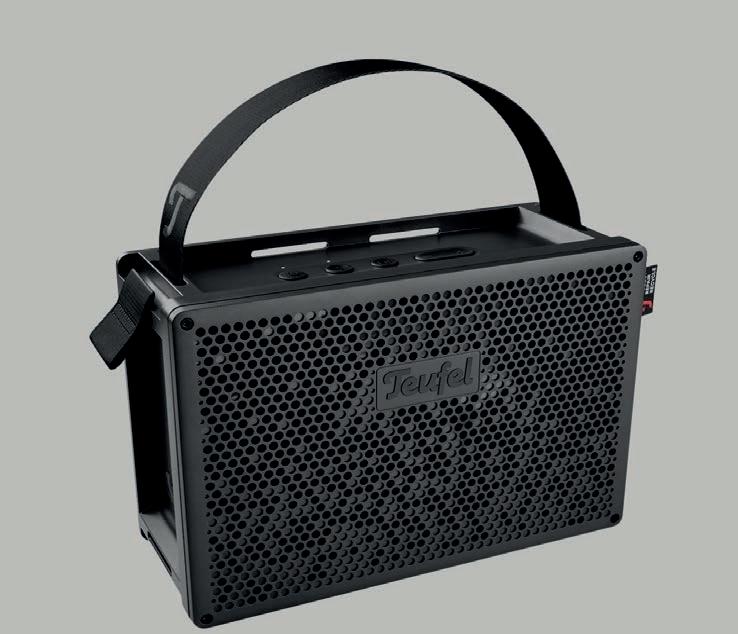
The basic idea was to enable end-user maintenance, because the longer something is functioning and usable, the lower its effective environmental footprint is . This philosophy extends beyond simple battery replacement to encompass all major components.


The open-source nature of the MYND represents a paradigm shift in consumer electronics. By releasing design files under Creative Commons licensing, Teufel is fostering a community-driven ecosystem where users can contribute improvements, create custom modifications, and ensure long-term device support even after official product lifecycles end.
Performance hasn’t been sacrificed for sustainability. The MYND delivers up to 40 hours of battery life and features Bluetooth 5.3 connectivity for high-quality audio streaming. Smart DSP technology ensures powerful sound reproduction even at lower volumes, while efficient Class-D amplifiers maximize battery efficiency.
The speaker’s modular approach extends to customization possibilities. Users can expand their MYND with creative modifications and replace components as needed, transforming what was once a disposable gadget into a long-term audio companion.
This represents a fundamental shift from planned obsolescence toward planned longevity. Teufel’s MYND speaker demonstrates that the audio industry can embrace both innovation and responsibility.
By combining open-source accessibility, sustainable materials, and modular design, it offers consumers a genuine alternative to the throwaway culture that has dominated portable audio.
The MYND isn’t just a speaker; it’s a statement about what consumer electronics could become when companies prioritize repairability and community engagement over short-term profits.
The T1 is is described as “a sleek, gold smartphone engineered for performance and proudly designed and built in the United States for customers who expect the best from their mobile carrier”
On June 16, the Trump Organization, the private business company founded by the president of the United States, announced a new business venture, called T1 Mobile.

The press release promises “a transformational, new cellular service designed to deliver top-tier connectivity, unbeatable value, and allAmerican service for our nation’s hardest-working people.”
To commemorate the tenth anniversary of the launch of Donald Trump’s first presidential campaign in June of 2015, Trump Mobile is available through all three major cellular carriers, at a price point of $47.45 per month, likely because Trump is the 47th and 45th president.
Donald Trump’s name is not listed in the release, although it does feature quotes from his two oldest sons, Donald Jr. and Eric, both of whom are executive vice presidents of the Trump Organization.
As its flagship hardware product, Trump Mobile will also offer the “T1 Phone,” which is set to arrive in August, at a price point of $499, and pre-orders have opened for the device.
The idea is to market the product directly to the percentage of politicians who show unflinching loyalty towards all things Trump, at a time when there are few safeguards in place regarding a sitting president profiting while in office, as seen with his lucrative sale of a meme coin.
“Trump is a strong brand name that over time has moved beyond real estate,” Jeff Kagan, an industry analyst who follows the wireless industry, told TWICE. “Looking at the numbers, even if half the country is a Trump supporter, that’s an enormous market share.”
The T1 is “a sleek, gold smartphone engineered for performance and proudly designed and built in the United States for customers who expect the best from their mobile carrier.”
That last claim drew some attention later in June, when The Verge reported that Trump Mobile had dropped any mention from its website that the T1 would be made in the United States. For one thing, it had removed a large banner from the website stating that “ T1 is ‘MADE IN THE USA.’” Also, the release timing has been updated from “September” to “later this year.”
The preorder site now says the phone is “designed with American values in mind,” while the website also touts “American-proud design,” that the phone is “brought to life right here in the USA,” and that there were “American hands behind every device.”
This is perhaps inspired by Apple’s packaging, stating that its products, designed outside of the U.S., are “designed by Apple in California.”
Indeed, the launch came after Trump spent several weeks publicly pressuring Apple to start manufacturing the iPhone in the United States, even threatening in May to impose a 25 percent tariff on iPhones made outside the country.
“The Trump Mobile T1 smartphone is Android,” Kagan said. “That means since there are two Operating Systems, half the market is a potential buyer. That also means since there are two political sides, half of that market is a potential buyer.”
“Bottom line, roughly 25% of the entire US population is a potential marketplace for the Trump Mobile T1. Twenty-five percent is still a huge market if they can crack the code on marketing in the wireless world.”
The Verge also noted that the screen appeared to have gotten smaller since the original announcement, dropping from 6.78 inches to 6.25, indicating that perhaps the company had switched suppliers.
According to its specs, the T1 Phone also offers something the current iPhones do not: a 3.5mm headphone jack.
“Success is not a guarantee,” Kagan added. “That being said, it doesn’t have to be a top seller. The Trump Watch does not compete with Rolex, but for the right user, they love it. I think it’s the same for the Trump Mobile T1. Right out of the gates, it will likely be a hit.”
While the Trump Organization hosts the announcement, it includes a disclaimer that “Trump Mobile, its products and services are not designed, developed, manufactured, distributed or sold by The Trump Organization or any of their respective affiliates or principals.”
The Trump Phone is not, however, the first-ever conservative alternative to the incumbent smartphone manufacturers. That would be the Freedom Phone, which debuted in early 2001. That was a time of great mistrust of “Big Tech” on the part of the political right, at least before Trump made efforts to bring Silicon Valley into the Republican tent throughout the 2024 campaign.
The Freedom Phone, which was not produced with the direct endorsement or involvement of Donald Trump or his family, was endorsed by conservative influencers like Candace Owens and Roger Stone. It came preloaded with “Some of the most popular banned & unbanned conservative sites & apps,” like Parler, Rumble, and Newsmax.
That phone, however, was merely a re-skinned version of the Chinese-made budget smartphone known as the Umidigi A9, one that typically went for a fraction of the Freedom Phone’s $500 price tag.
By early 2023, the Daily Beast reported at the time, the product had been a “hit,” but the backers of the Freedom Phone had fallen out with one another, although the product’s website still lists it for sale.
Hisense Named World’s Fastest-Growing Soundbar Brand in the Past 5 Years
Hisense
Hisense, a global leader in consumer electronics and home appliances, has been recognised as the world’s fastest-growing soundbar brand over the past five years, according to Futuresource Consulting’s sell-in volume data from 2019 to 2024. This milestone underscores Hisense’s rapid ascent in the home audio space, driven by a commitment to delivering immersive sound, smart innovation, and accessible premium performance.
Building on this momentum, Hisense proudly unveils the HT SATURN, a flagship 4.1.2 channel surround sound system “Tuned by Devialet”, marking a bold leap in acoustic engineering and immersive home entertainment.

Hisense Named World’s FastestGrowing Soundbar Brand in the Past 5 Years
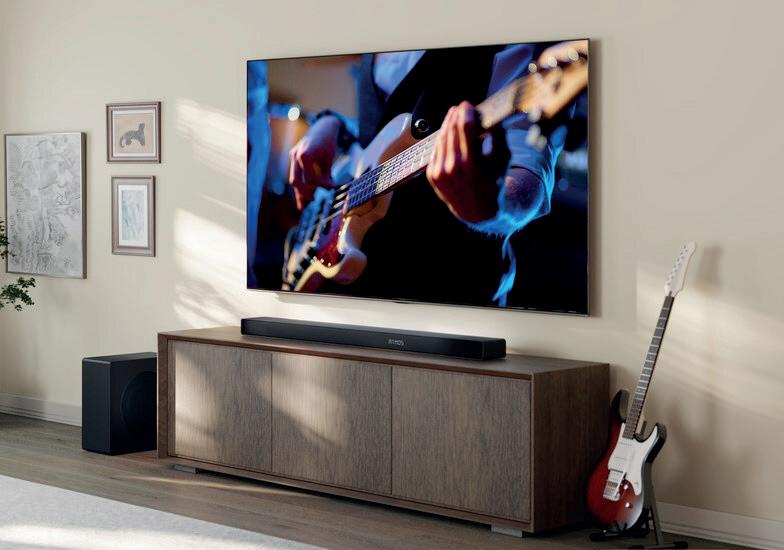
Designed to transform everyday living rooms into cinematic soundscapes, the HT SATURN pairs Devialet’s legendary acoustic tuning with Hisense’s HiConcerto™ architecture for a full-bodied, spatial audio experience. Supporting Dolby Atmos® and DTS:X®, and pushing out 720W of total power through 13 meticulously arranged speakers, the system includes four satellite speakers with up-firing drivers, a 6.5-inch wireless subwoofer, and room acoustic calibration that adapts to any space. From whispered dialogue to floor-rumbling bass, the HT SATURN delivers a refined and resonant performance.
The HT SATURN exemplifies the next chapter in Hisense’s audio evolution. Together with Devialet, Hisense is delivering soundbar technology that doesn’t just support cinematic audio, it defines it.
Hisense continues to champion innovation with soundbar models tailored for diverse entertainment needs:
AX5120G: A powerful Dolby Atmos soundbar delivering immersive surround sound with deep bass and crisp detail, ideal for elevating movie nights, gaming, and everything in between.
Roberts continues its retro vibe with the Reva DAB+ radio and Bluetooth speaker
Party Rocker One: A fun, feature-rich sound system built for celebration. With dynamic lighting, karaoke functionality, and booming sound, it’s the ultimate audio companion for house parties and casual gatherings.
These models, along with the newly introduced HT SATURN, reflect Hisense’s drive to offer something for every listener.
Hisense’s soundbar portfolio has evolved dramatically over the last five years. The brand’s focus on immersive audio, premium accessibility, and TV-soundbar integration has positioned it as a top contender in home entertainment globally. Through its proprietary Hi–Concerto™ technology, select Hisense TVs and soundbars work in unison to expand sound fields, creating a seamless, unified audio experience that rivals dedicated theatre systems.
As Hisense continues to grow globally, and in key markets like the Middle East and Africa, it remains committed to reimagining the audio experience for modern homes
In a market crowded with boxy, look-alike gadgets, Roberts has gone boldly retro with the launch of the Reva — a DAB+ radio with Bluetooth streaming designed to stand out.
Shaped in a distinctive trapezium cabinet softened with rounded corners, Roberts calls the Reva its “most luxurious radio to date,” pairing eye-catching design with the promise of equally impressive sound. It comes in three finishes — Black Leatherette, Pastel Cream Leatherette, and Cherry Wood — each lending its own character.
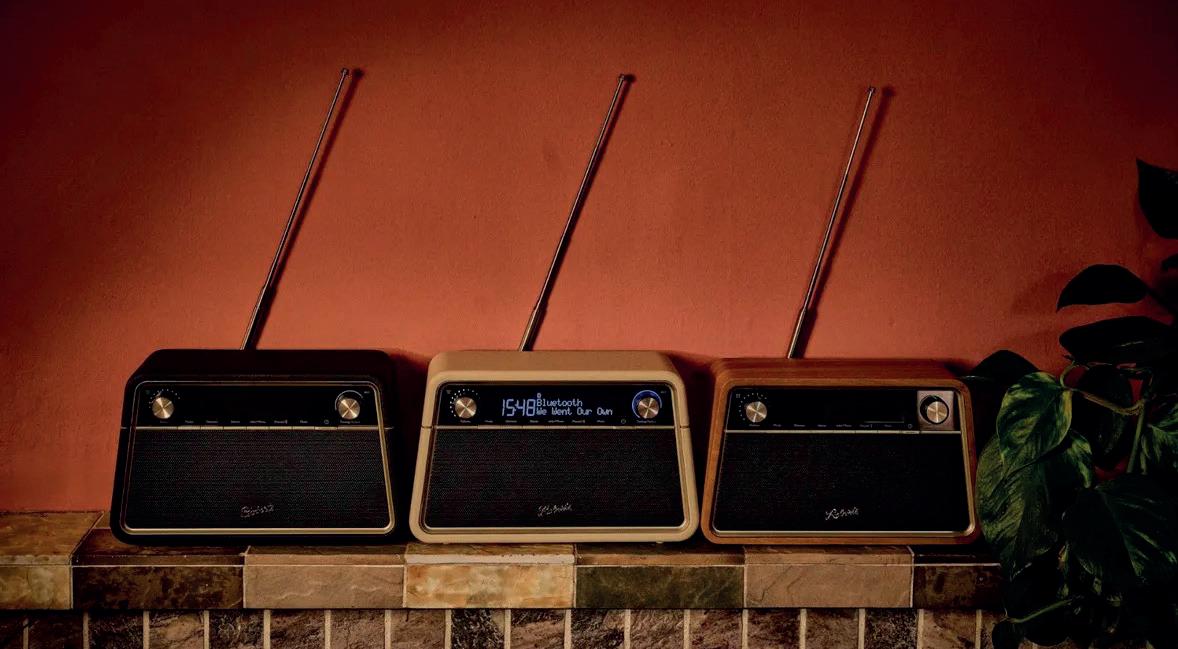
Inside its 2.2kg frame, the Reva packs a 3.5-inch woofer and 1.5-inch tweeter in a ported bass enclosure, tuned to deliver a “rich and vibrant sound.” A full review will confirm whether it delivers on that promise.
Feature-wise, the Reva ticks all the boxes:
• Radio: DAB, DAB+, and FM tuners with 40 presets (20 FM, 20 DAB)
• Display: Dot-matrix LCD with five brightness settings
• Streaming: Bluetooth with SBC and AAC codec support
• Controls: Adjustable EQ, dual alarms with snooze, and a sleep timer Practical touches continue around the back, with a 3.5mm headphone jack, 3.5mm aux-in, and USB-C port for charging your phone.
At £199 in the UK, the Reva sits neatly between Roberts’ compact Revival Petite 2 (£100) and the premium Ruark Audio R1S (£299) — both What Hi-Fi? Award winners.
Most wireless speakers are trash—but this one raises the bar for home audio
Most wireless speakers are sensible but uninspired—lightweight plastic boxes with thin sound, short battery life, or marketing promises of “immersive audio” that don’t live up to the hype. That’s why the Sony Bravia Theater Quad feels like such a revelation.
At first glance it might look like another stylish addition to your living room. Spend ten minutes listening, though, and it becomes clear why people are calling it a wireless system that could reshape the market.
Weak sound: Compact drivers often struggle to deliver full-range audio, with harsh treble and flat bass.
Connectivity issues: Bluetooth latency can make dialogue in films lag behind lip movements.
Marketing fluff: “360° sound” and “room-filling audio” often mean little more than louder background noise.
Convenience usually wins over quality—until now.
Enter the Bravia Theater Quad
Sony has long been a name in entertainment hardware, from Walkmans to PlayStations to Bravia TVs. But the Theater Quad is different: a bold attempt to marry premium cinema sound with true wireless convenience. And it works.
Sony’s Bravia Theater Quad Is the Wireless Speaker Surprise No One Saw Coming
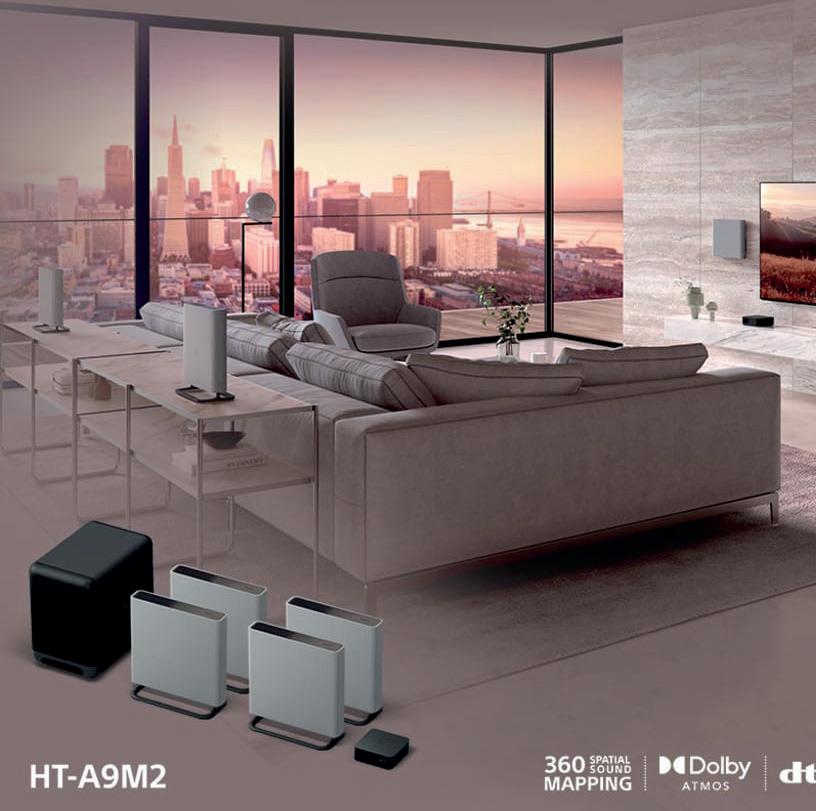
Rather than one speaker, the Quad is a four-unit wireless system. Place them around your room and you get genuine surround sound—without the tangle of cables, bulky receivers, or drilling holes in the wall.
Dialogue remains crisp and clear, even against busy action sequences. Bass hits hard without distortion, thanks to solid low-frequency control.
Balance holds steady even at high volumes, with vocals and instruments staying distinct.

Whether you’re streaming music, gaming, or watching films, the Quad delivers a consistency and immersion rare in wireless audio. It’s the kind of performance that makes you stop and think: “Is this really wireless?”
Setup is refreshingly simple:
• No tangled wires.
• No oversized receiver hogging shelf space.
• No technical expertise required.
Sony’s software walks you through placement and calibration. Rearranging your room? Just move the speakers - they’ll automatically adapt.
The Quad isn’t just for cinema nights. It integrates smoothly with Spotify, Apple Music, and YouTube Music for everyday listening. Gamers will also appreciate the directional accuracy - hearing footsteps or effects exactly where they should be in the room. And for parties, the system doubles as a high-fidelity music setup.
Market Position
The Quad sits in the premium tier, priced at around $2,500 (sometimes closer to $2,300). By comparison:
Sonos Arc - $899
Bose Smart Ultra Soundbar - $999 (bundles with sub + surrounds push beyond $2,200)
Samsung HW-Q990F - ~$1,600
Yes, Sony is more expensive. But unlike competitors, the Quad offers a true four-point wireless surround setup with no hidden complexity.
Skepticism is natural in a market filled with yearly promises of “revolutionary audio.” But the Sony Bravia Theater Quad genuinely shifts expectations. It proves that wireless no longer has to mean compromise.
Is it for everyone? No. It’s not a beach speaker or a backyard gadget. But if you’ve been looking for a wireless system that competes with a full home theater, this could be the upgrade you’ve been waiting for. Sony has managed to pair style with substance—and in a space crowded with underwhelming wireless gear, that’s a rare surprise.
The secret OS isn’t coming to your smartphone or tablet
Bloomberg’s Mark Gurman recently wrote an article about Apple working to enter the smart home space with robots and other AI platforms. The news was heavily reported by nearly every publication at the time, including our piece that broke down Apple’s smart robot plans.
However, few people discussed a key piece of information from Gurman’s reporting: Apple is reportedly working on an entirely new operating system for its smart home devices, which it has codenamed “Charismatic.”
What we know about ‘Charismatic’
Recent years have seen Apple stick with the same operating systems — iOS, iPadOS, watchOS, tvOS and macOS. It’s been a while since Apple has introduced anything new in the operating system space. The company rolling out a new OS for smart home devices is a big deal.
Why? Because it shows that Apple is committed to making its smart home hub stand out — it’s not just adapting its existing large-screen operating systems, it’s allegedly designing something new.
Apple’s new ‘Charismatic’ smart home OS is getting set to take on Alexa and Google
Google and Amazon have established strong footholds in the smart home market, and Apple’s HomePod devices haven’t gained as much traction. If a screen-based hub is introduced in the near future with a brand-new Apple OS, it could draw more attention and allow Apple to establish itself as a major player in the smart home world.
How will ‘Charismatic’ work?
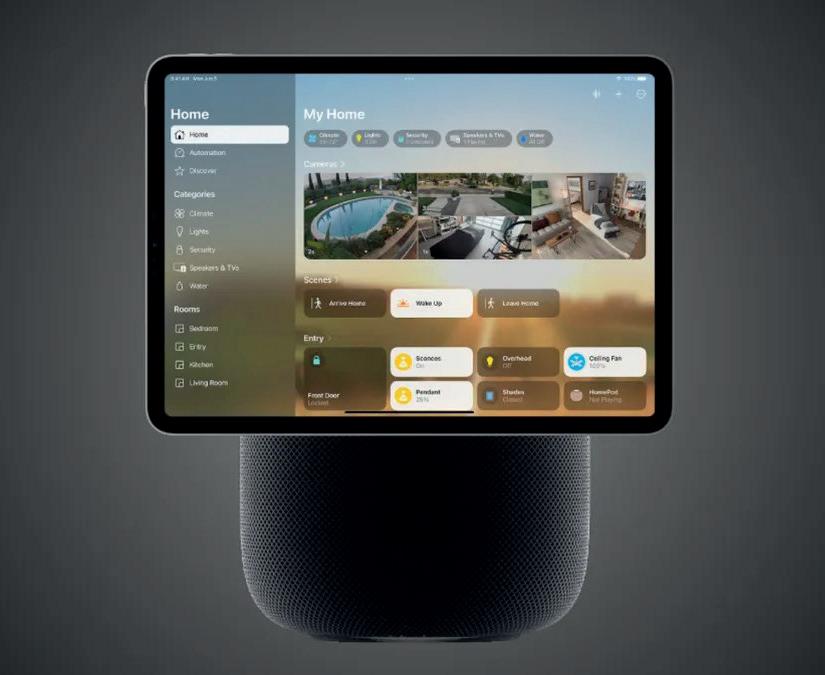
It sounds like Apple’s new smart home operating system is all about support for multiple users with seamless switching.
“The devices are meant to be easily shared: They include a front-facing camera that can scan users’ faces as they walk toward it and then automatically change the layout, features and content to the preferences of that person,” said Gurman in his report.
As far as using Apple’s new OS goes, it sounds like Siri will be a significant part of it, much like Alexa and Google Assistant run smart homes alongside other major players in the space. Gurman also mentions a touchscreen component, which is to be expected if the device is meant to serve as a true hub for all connected devices.
Parks Associates has released a new white paper, Smart Home Evolution: Unlocking Value, in partnership with the Connectivity Standards Alliance (CSA). This new research explores the progress of the smart home, highlighting key milestones, emerging consumer demands, and the increasing role of artificial intelligence (AI). The white paper reveals 38% of buyers now identify as “Early Majority,” up from 20% six years ago. Since 2020, roughly 13 million new US internet households entered the smart home market, expanding the base of households that own a smart home device to 54 million.
New Research Indicates 13M US Internet Households Have Entered Smart Home Market Since 2020

This shift is critical for reaching broader adoption of individual product categories and achieving greater efficiencies of scale, as new households have distinctly different expectations and needs from early smart home adopters.
“As the market has grown, the base of households owning smart home devices has expanded beyond tech enthusiasts to more practical users seeking lasting value and reasonable costs,” said Jennifer Kent, VP, Research, Parks Associates. “As the market moves into this next phase, new layers of value, including integrations/interoperability, intelligence, and the development of services, are needed.”
Other data points include:
• Households with kids are smart home champions – 63% of households with kids own at least one smart home product compared to 37% of those without kids. Households with kids are more likely to recommend the products they own to others.
• 52% of smart home device owners who set up a device themselves had difficulty at setup.
• 55% of consumers in US internet households find disaggregated energy insights appealing – that is, the amount of energy each device and appliance in their home consumes.
• 65% of smart thermostat owners are willing to allow their smart devices and appliances to share data with each other to better optimize energy use.
• 90% of businesses are using AI internally, and 79% are building AI into their consumer-facing products and services.
“The smart home market is entering a new phase, one where trust, simplicity, and real-world value matters,” said Tobin Richardson, President and CEO, Connectivity Standards Alliance. “Consumers expect connected experiences to work effortlessly and intuitively together
Through collaborative standards like Matter and forwardlooking ones like Aliro, the Alliance is helping the industry and our members unlock sustainable growth, enable meaningful experiences, and deliver on the promise of a more connected home.”
“Greater intelligence, ease of integration, adjacent service offerings, and quality of service will shape the market going forward and define the competitive edge,” Kent said.
New Research Indicates 13M US Internet Households Have Entered Smart Home Market Since 2020
As hardware and software advance, general-purpose robots may evolve from a niche curiosity to an integral part of the workplace.
Robots often have a starring role in science fiction, with depictions ranging from the sarcastic Marvin, who claims to be 50,000 times more intelligent than humans in The Hitchhiker’s Guide to the Galaxy, to the heroic R2D2, who battles Imperial troops in the Star Wars movies. Robots are also stars in the workplace, although the tasks they complete—everything from packaging to picking stock—are less colourful than battling Storm Troopers. Over the past five decades, robots have transformed sectors ranging from automotive, where they are used in press, body weld, and paint shops, to retail, where they can roll through store aisles to monitor stock levels.

Byline
While robots have traditionally been highly specialized and designed to complete a single task, a new generation of general-purpose robots is emerging. Equipped with more sophisticated capabilities than their predecessors, these robots can complete diverse, unrelated tasks across different settings.1 Recent technological advances have fueled interest in general-purpose robotics, as noted in our other article, “Will embodied AI create robotic coworkers?” Challenges remain, however, for both robotic hardware and software.
Robots far surpass humans in speed and accuracy when analyzing complex data, but they often struggle to navigate the physical world. This contrast is at the heart of Moravec’s paradox—the observation that computers excel at high-level cognitive tasks, such as arithmetic, but have difficulty with physical tasks that humans find simple, such as picking a blueberry without damaging it.
Traditionally, these physical limitations have challenged programmers and required them to create painstaking step-by-step instructions specifying the movements of each robot actuator in sequence. To understand the workload, imagine having to write a program for blueberry picking that tells each muscle in your arm, wrist, hand, and fingers how far, how fast, and with what force to move (all based on multimodal, real-time feedback from the nervous system). The program would also have to adjust for the myriad ways in which blueberries could differ in shape, softness, and position. Since the picker operates in a constantly changing environment, the program would then need to account for dynamic elements, such as how branches might shift during picking.
Few general-purpose robots have been deployed at scale, partly because of the intensive programming required to direct multiple physical tasks. But advances in software are now making generalpurpose robots viable by enabling them to learn, adapt, and act in real time, without human intervention. Simultaneously, hardware improvements are optimizing robot dexterity, sensing, and power.
AI has helped enable the leap from specialized robots focused on a single function, such as spot welding, to general-purpose robots. This technology is typically referred to as “physical AI” or “embodied AI” when referring to robotic capabilities to distinguish it from the AI programs used to create new content, such as videos, art, and fiction.
Embodied AI complements two other technologies that researchers have long applied to robotics: classic AI and traditional machine learning.2 Embodied AI takes traditional machine learning a step further by allowing robots to analyze input, including data from sensors, and then adjust or refine their physical motion, positioning, and behavior in real time.
Foundation models are the most critical embodied AI tool in the growth of general-purpose robotics. After being trained on vast amounts of data, these models can identify patterns that allow
them to perform multiple tasks. The extent to which foundation models can optimize robot capabilities varies (Exhibit 1). With perception, for instance, they may greatly enhance vision and haptic (that is, touch) capabilities, but they do not greatly improve a robot’s ability to determine its proximity to other objects. Most foundation models already allow robots to analyze and understand visual cues, such as patterns essential for object recognition. Researchers are also developing multimodal foundation models that allow robots to perform actions based on both visual inputs and language inputs, such as spoken commands.
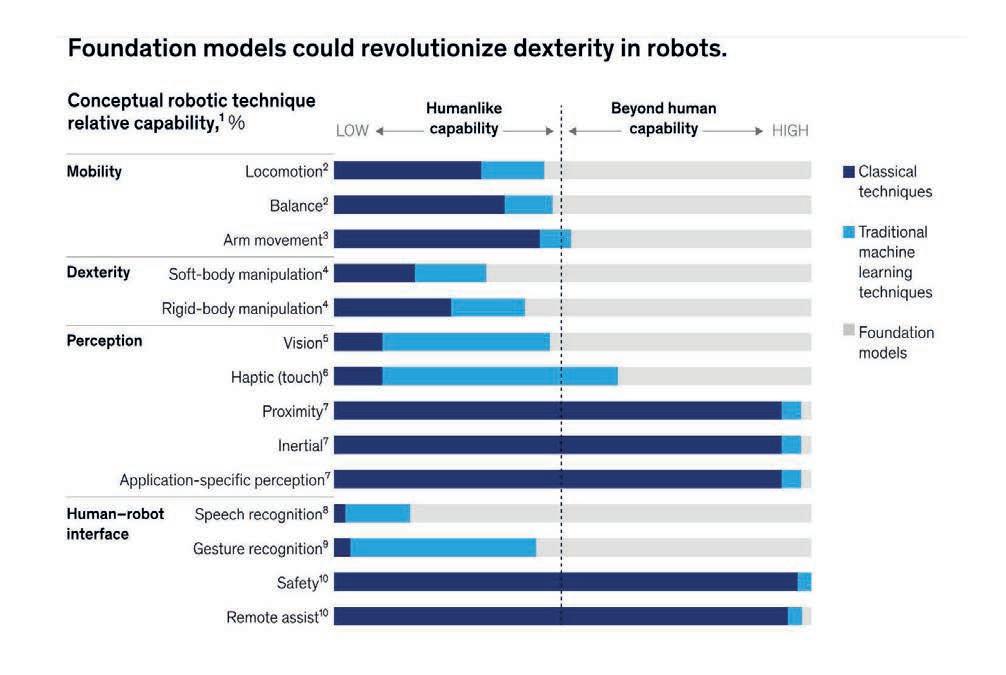
In addition to the growing sophistication of foundation models, other advances have enhanced software for general-purpose robotics:
• Behavioural cloning. Robots can now learn by watching humans—either live or in videos—in different contexts. The visual input is incorporated into models that allow the robots to copy their actions, even in complex, multistep activities. Imitation learning is particularly well suited to training for mobility and dexterity.
• Reasoning models. As their name suggests, these large language models can focus on problem solving, logical inference, and making deductions. (Like foundation models, they are a form of AI). Reasoning models break down problems or questions into parts before considering various solutions and then narrowing them down. Researchers often use foundation models to build new reasoning models.
• Enhanced computer vision and perception. Robots are equipped with multiple sensors, including gyroscopes that detect movement, cameras that analyze light and visual inputs, and tactile sensors that monitor pressure and identify textures. The introduction of additional sensing capabilities, including those that can interpret the amount of force an object exerts, will enable many more robotic functions.
Consider how these advances could make a general-purpose robot more useful in a manufacturing environment. Currently, factories use escapements and fixtures to hold objects in the right orientation during tooling. But if robots have embodied AI capabilities, they can use sensors to “see” the object and immediately adjust its orientation. While today’s multipurpose robots are programmed to make adjustments only within controlled parameters, future general-purpose robots may be capable of self-programming, allowing them to adapt automatically based on experience in multiple settings. Such robots will undertake many actions beyond a narrow set of pre-defined behaviors.
To get a sense of the complexity of the software in a general-purpose robot, consider the range of techniques used in programming one (Exhibit 2). For instance, perception requires reinforcement learning, foundation models, and convolutional neural networks (a type of deep learning algorithm that excels at processing image and video data).
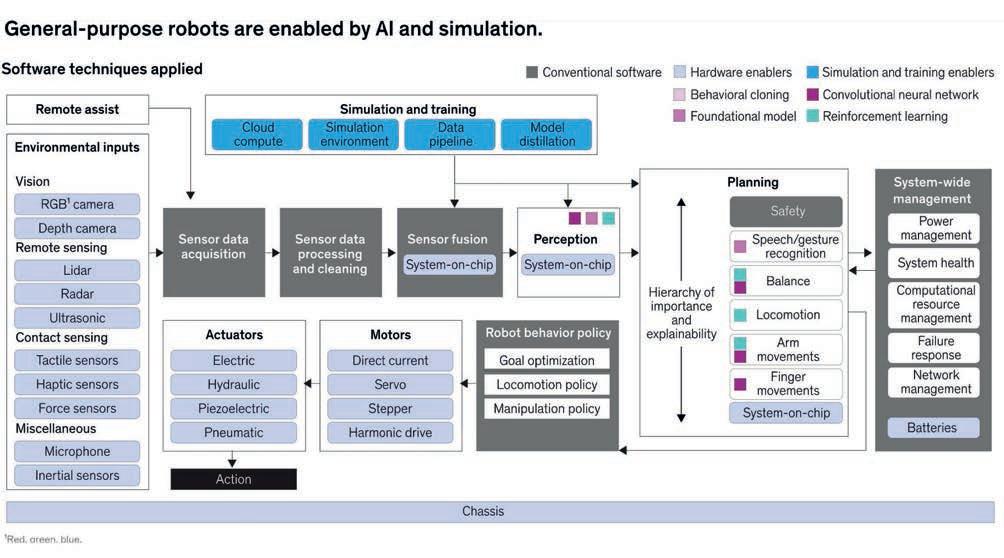
Despite the big leaps in technology, researchers must still overcome some software challenges to optimize how general-purpose robots learn from experience, adapt with minimal latency, and complete multiple
tasks under unpredictable conditions. Many problems arise because the foundation models that govern robot activities require billions of data points, and researchers must build many more simulation environments to collect all the necessary information.
Given the gaps in current foundation models, some generalpurpose robots still struggle to navigate unstructured or changing environments. This deficiency may not become obvious until they move from simulations, where their environment is relatively stable, to the real world, where employees might inadvertently disorient robots by moving worktables, leaving empty boxes on shelves, or mistakenly putting screws in a bin meant for bolts.
For the same reason, performance accuracy may drop if a generalpurpose robot moves from its typical location to a new environment. If researchers can coordinate robot functions more seamlessly—for instance, connecting locomotion to object manipulation—the error rate might decrease.
There is also room for improvement in processing input from sensors, including those that can “see” objects, haptics that analyze input related to touch, and auditory systems that can hear noise and recognize voice commands.
What’s more, robots have difficulty simultaneously analyzing input from multiple sensors and considering the input data as a whole. As one example, robots cannot cook an omelet, since it requires them to consider visual and haptic data simultaneously and handle multiple objects, including frying pans, spatulas, and eggs.
Better software could enhance multi-robot coordination, which may become increasingly common. If numerous general-purpose robots work on the same task or related activities, such as stocking shelves or performing search-and-rescue operations, they must be aware of other robots around them to avoid collisions or other complications.
Ground-breaking advances—but persistent challenges—in hardware
Advances in edge computing, which encompasses both hardware and software, have reduced latency in robots and allowed real-time decision making. Simultaneously, other hardware improvements have enhanced robotic dexterity, sensing, and power. Additional improvements are essential, however. For instance, researchers are still attempting to build a robot hand with flexible fingers and greater dexterity that will make it easier to grip irregularly shaped objects.
Challenges also persist related to power sources. Although batteries allow robots to move without constraint, their lifespan is relatively short (about 3 to 5 hours for humanoid robots). General-purpose robots may require frequent recharging, especially if they engage in
activities that require a lot of power, such as lifting heavy objects or high-torque motion. Slow charging speed—a problem that has taken center stage with the growth of electric vehicles—could also prolong downtime in robots, reducing productivity.
Another improvement opportunity relates to form. Researchers often prefer to use the smallest components possible to minimize robot size, but this approach can increase costs and reduce performance. Finding the right balance between these elements is still proving difficult.
The software and hardware challenges ahead may seem daunting, but recent advances suggest that general-purpose robots could take workplace automation to new heights. The only questions are how quickly progress will occur and whether companies will embrace change rapidly or hesitate. Given the promise of general-purpose robots, companies that act early may be best poised to capture value.
Previously hampered by bulky, legacy coil speaker technology, wearables can now come in more stylish form factors, thanks to advanced MEMS technologies
It can be easy to overlook, but your smart watch (and even your smart glasses) have tiny loudspeakers built into them. As AI assistants become more integrated into our everyday lives, wearables like watches and glasses are poised to become the primary alternative to earbuds, enabling hands-free, ears-free AI on the go.
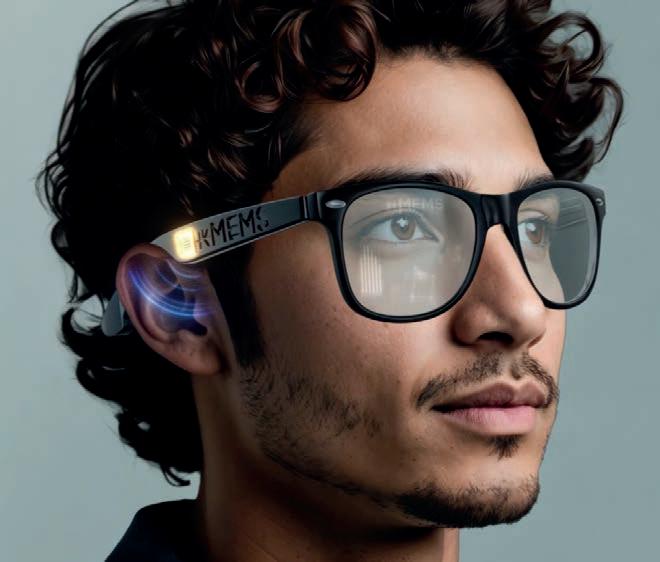
However, today’s smart wearables do not match conventional glasses and watches in terms of style, thinness, design, and weight, which limits broad adoption. A key limitation is that the “micro” speakers in today’s smart electronics must conform to the weight, style, and form factor of their devices, and that’s a tall order.
Conventional speaker designs require some physical space to produce sound beyond simple beeps and tones. At the micro level, that space is minimal, which limits both performance and device design. That’s why many smart glasses tend
Hi-Fi Audio in Smart Glasses and Watches: A New Generation of Slim Silicon Micro Speakers Take Them from TechGeek to Tech-Chic
toward a bulkier, thicker “Wayfarer” style that can accommodate today’s micro speakers and other electronics.
But that’s all starting to change as a new generation of tiny, ultralightweight, all-silicon, micro speakers is beginning to emerge. By fundamentally rethinking how micro speakers are built, manufacturers can unlock new form factors and designs to bring smarter, more comfortable, and stylish options to the market.
Until recently, electronics designers had a dilemma: quality speakers add bulk to product designs, so how can they deliver excellent audio in smartwatches, AR headsets, and other emerging devices without compromising on style and sleekness?
Most existing micro speakers rely on century-old dynamic driver technology using coils and magnets. Slimming them down to around 3 millimeters, the minimum for many wearables, often means sacrificing audio performance, and even at that thickness, they limit design flexibility. What electronics makers need is a micro speaker that is as small as technologically possible yet still delivers rich sound. And that breakthrough is here in the form of silicon-based MEMS speakers.
Unlike conventional designs, these MEMS speakers generate sound using ultrasonic air pulses instead of bulky coils and magnets. At just about 1 millimeter thin, they give designers the freedom to create truly sleek, stylish devices, without compromising audio quality.
Of course, building a speaker this small that still produces enough sound pressure for open-air listening isn’t easy. But that’s the goal: big, immersive sound from the smallest possible form factor, enabling brands to bring to life bold new designs, knowing high-quality audio is already built in.
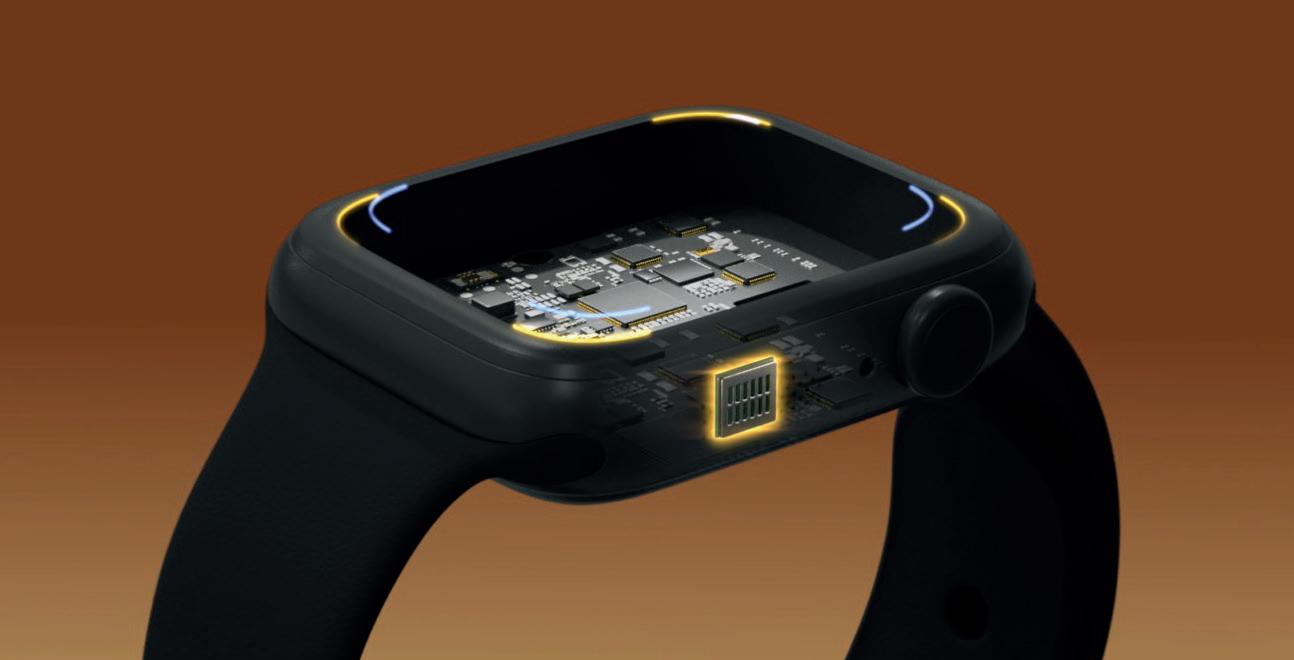
To be clear, silicon-based MEMS speakers already exist today. The highest-performing of these micro-fidelity speakers are silicon chips with thin-film piezo technology that functions as the speaker’s actuator, replacing a coil and magnet. With a silicon diaphragm, it’s a complete, solid-state, full-range speaker ideally suited to today’s popular active noise-cancelling, wireless earbuds (TWS). Such earbuds often fit snugly inside the ear using silicone tips, allowing the best MEMS speakers to deliver the fullest possible audio, including rich bass, at high sound pressure levels.
But smart watches, smart glasses, and even open wireless stereo (OWS) earphones have to create sound in open air. It can be difficult for micro speakers to create enough sound pressure level (SPL) across all frequencies to generate rich audio, but not impossible.
Engineers at xMEMS have figured it out, creating a 1 mm-thin, open-air, near-field MEMS loudspeaker. It’s slightly larger than the company’s TWS version because it must generate more SPL to compete with ambient sound. But it works the same, turning ultrasonic sound waves that are otherwise imperceptible to human ears into full-frequency, high-SPL audio through the generation of air pulses. (As a related aside, this same air pulse generation is used for a 1 mm-thin cooling fan-on-a-chip.)
The open-air MEMS speaker is still one-third the thickness (and one-seventh the overall size) of existing dynamic-driver designs, making it an optimal fit inside a growing number of thin-and-stylish wearable devices. Plus, because it’s a solidstate speaker and has no moving parts, it’s robust and IP58rated against water and dust, which is a key requirement for wearable electronics.
It’s been tested in smart watch and OWS earphone form factors and has proven louder at both high and low frequencies, with significantly better bass performance, an important measure of listener experience. In fact, this unique, open-air MEMS speaker has been shown to deliver 11dB greater SPL at 40Hz and about 15dB more at 5KHz than leading OWS earphones.
What’s more, the solid-state design means a faster response than coil-based speakers and near-zero phase shift, so that the full-range audio it produces is also clear, detailed, and accurate. The part-to-part consistency of this semiconductor speaker creates near-perfect phase coherency between left and right speakers, which should enhance DSP (Digital Signal Processor) features such as privacy mode in smart glasses and OWS earbuds to limit sound leakage to those nearby.

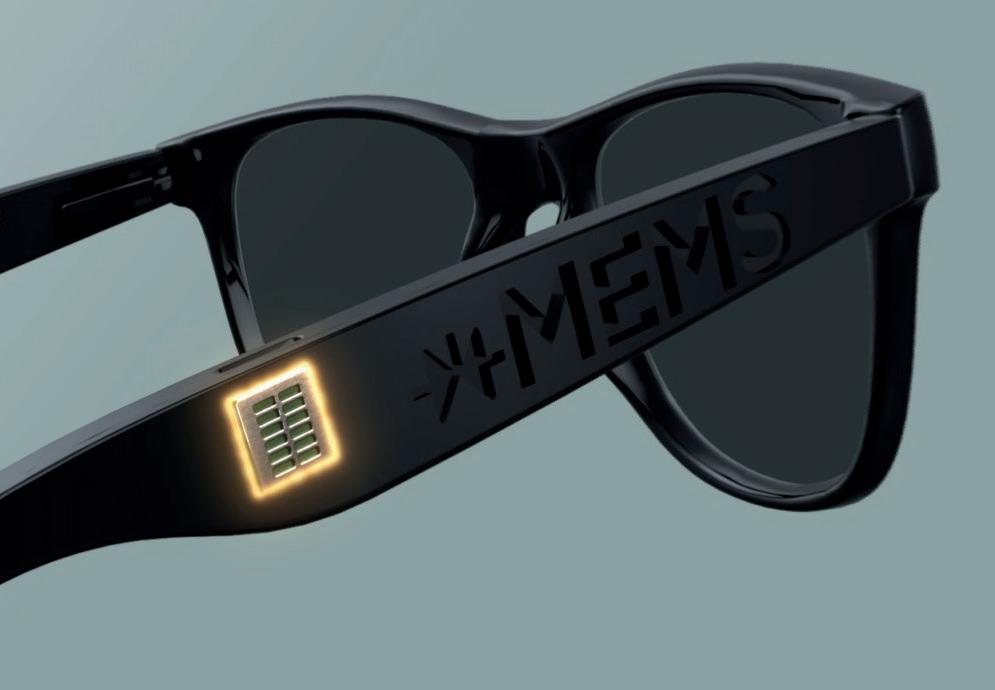
This open-air, solid-state MEMS speaker has additional applications as well. Generating strong, high-frequency sound in a near-field, micro speaker is notoriously difficult, but because this design can deliver at least 90dB at the highest frequencies, it’s ideal for “tweeter”-style roles. One example: a smaller, lighter earpiece speaker for smartphones.
And thanks to its compact size, manufacturers can arrange multiple MEMS speakers in a beamforming array, precisely directing sound toward the user’s ear in order to improve privacy in noisy or crowded environments.
Its open-air capability and ultra-small footprint also make it an excellent standalone tweeter for devices like Bluetooth speakers, laptops, or car interiors. It requires minimal space but still delivers high-impact audio.
No matter how it’s applied, a MEMS near-field micro speaker that works effectively in open air, not just sealed earbuds, represents a breakthrough. It solves real design challenges in building lightweight, wearable smart devices. By shrinking speaker size while amplifying sound performance, manufacturers no longer have to choose between sleek design and great audio. Now, they can offer both.
Samsung has big plans for more wearables: not just in the form of the newly launched Galaxy Watch 8 and the much anticipated Galaxy Ring 2, but also in more innovative products such as smart earrings and smart necklaces.
Speaking to CNN (via Android Authority), Samsung mobile executive Won-joon Choi offered some thoughts on the next wave of wearable devices we might see – and how these devices could differ from what we have today.
“We believe [these devices] should be wearable, something that you shouldn’t carry, [that] you don’t need to carry,” says Choi. “So it could be something that you wear, glasses, earrings, watches, rings, and sometimes [a] necklace.”
This is a long way from confirmation that a Samsung Galaxy Earring or Necklace is on the way, but it’s clear that Samsung is looking into different types of technology, and weighing up what kind of device form factors could be beneficial for users.
Working and exploring
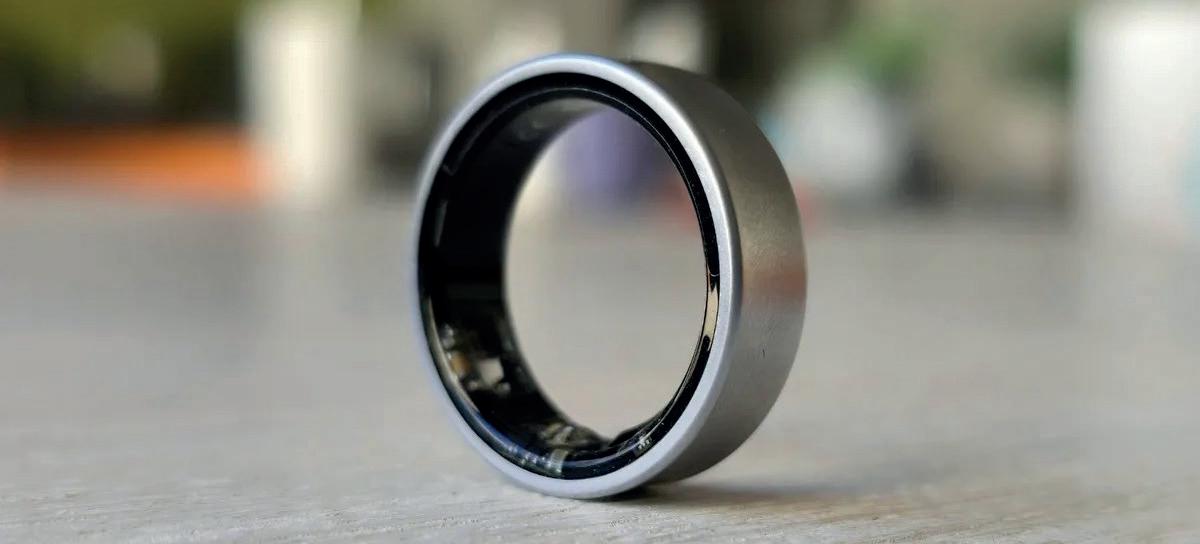
Smart glasses are also mentioned there, and Samsung has been rumored to be working on a pair of smart specs for quite some time now, ready to take on the Ray-Ban Meta Smart Glasses – although nothing has been made official as yet.
Watch this space though: “We are actively working on glasses, but some people do not want to wear glasses because they change their look,” says Choi in the interview. “So we are also exploring other types of devices.”
No doubt, some kind of AI processing will be involved in these future devices. We know that ChatGPT developer OpenAI is busy developing a hardware device that would enable you to carry an AI assistant with you, though several similar previous projects haven’t worked.
Whatever these devices end up looking like, they’re going to need long-lasting batteries, and we know that’s something else Samsung is looking into. In the not-too-distant future, we may have a lot more wearable device types to choose from.
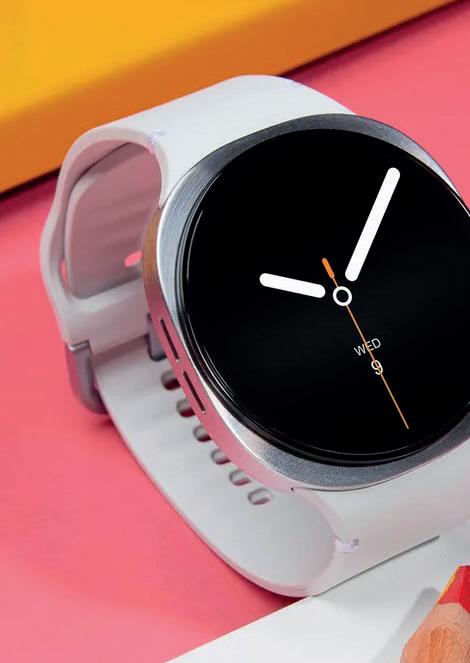
Vinyl
Listening has never been so environmentally friendly
Like most activities, listening to music has an environmental impact. But how you listen can make a huge difference.
Why vinyl is greener than music streaming?

We’ve looked at the numbers, and it’s good news for vinyl fans – listening to physical records is greener than streaming. Or at least it can be, provided you do it right...
A one-off cost
On the face of it, you would think streaming would be far better for the environment than physical records. After all, streaming just involves sending information digitally, which has to be more environmentally friendly than producing, storing and shipping a physical product like vinyl records.
And with each 12-inch piece of polyvinyl chloride (PVC) weighing between 120g and 150g (and some up to 180g), the current vinyl revival surely has a devastating environmental footprint, right?
Not necessarily. Because while it’s true that a physical product like vinyl does come with its fair share of emissions, these are a one-off cost.
Each piece of vinyl only has to be produced, stored and transported once, after all. Whereas a piece of digital music brings the same cost each time it’s listened to, as it has to be streamed all over again.
This cost can be substantial, in the form of server farms and data connections, not to mention the routers and digital devices like phones or computers on which to play it. A streamed track’s carbon footprint is stamped a little bit deeper with each listen.
Swift’s immodest proposal
Because there are so many variables at play, it’s tricky to crunch the numbers for a precise comparison between vinyl and streaming.

The closest we have is an attempt by The Ecologist in 2018. Digital tech has become more carbon-efficient since then, but the explosion in streaming has more than offset this.
In 2023, people streamed over 4 trillion songs, according to Luminate’s Industry Report. Around 120,000 new songs are added to music streaming services worldwide every single day. And with Gen Z being the heaviest users of music streaming services, this trend is only going to continue.
So streaming has a very real environmental cost.
Of course, vinyl isn’t faultless. Critics have singled out Taylor Swift for releasing multiple versions of her 2024 album The Tortured Poets Department. At last count, there were 36 different versions, eight of which were released on vinyl.
When you consider the size of Swift’s fanbase, you can see the environmental cost of releasing multiple versions of the same album. It might be great for sales, but it’s terrible for the planet.
But not all artists are like Swift. Billie Eilish has a whole Sustainabilty section on her website. While she too has released multiple different vinyl versions of the same album, they all contain the same tracks, and all are released on the same day (Swift’s were drip fed over a period of months in an attempt to keep the album riding high in the charts).
Eilish’s releases are made largely with recycled vinyl, and all the packaging is made from recycled materials. All of which will help minimise the impact.
Let’s not forget Tiny Vinyl. This 4-inch vinyl format launched recently, and while it’s currently a niche option (sold only at Target in the US and limited to special collectors’ editions from established artists), its smaller size and lower weight does make it more environmentally friendly than its 12-inch equivalent.
Each Tiny Vinyl weighs 15g (compared to 120-180g for full size vinyl), and is made from 100 per cent bio-attributed vinyl. It might be tiny vinyl, but it’s a big step in the right direction for sustainability.
Changing the relationship
But perhaps the strongest argument in vinyl’s favour is how people listen to it.

Because an album is more expensive on vinyl, you’re likely to listen to it more times. It’s human nature – you’ve spent the money, now you want to get more use out of it. And of course you’ll want to enjoy the tactile feel of the vinyl, the gatefold artwork and all the rest.
The more times you listen to a piece of vinyl, the greater value you’re getting from its environmental cost. And the more time you spend listening to a record, the less time you’re spending listening to other music, creating less demand, which means less production and shipping, less streaming and less harm to the environment.
It’s more considered listening, whereas streaming cheapens music, both figuratively and literally. It changes your relationship to the music – with millions of songs at your fingertips, you’re more likely to skip ‘boring’ parts of songs or even entire tracks, albums or artists in search of something else. Which uses more energy.
The difference is even more stark if you’re buying second-hand vinyl.
Vinyl does have a secondary impact in travel emissions for records being posted out from retailers and people heading to record shops and vinyl fairs. But I would argue that for at least part of these, the social benefit far outweighs any environmental impact. Meeting up with like-minded people to talk about a passion like music is far better for everyone than sitting at home listening to music on your own.
Vinyl might be more expensive, but when it comes to the environmental and social impact, streaming’s cost is much greater.

Spotify
Lossless on Spotify Premium is here.
Lossless audio has been one of the most anticipated features on Spotify and now, finally, it’s started rolling out to Premium listeners in select markets.
Premium subscribers will receive a notification in Spotify once Lossless becomes available to them. Whether you’re diving into a new album or revisiting old favorites, lossless delivers the highest music audio quality on Spotify.
Lossless Listening Arrives on Spotify Premium With a Richer, More Detailed Listening Experience

“The wait is finally over; we’re so excited lossless sound is rolling out to Premium subscribers,” said Gustav Gyllenhammar, VP Subscriptions, Spotify.
“We’ve taken time to build this feature in a way that prioritizes quality, ease of use, and clarity at every step, so you always know what’s happening under the hood. With Lossless, our premium users will now have an even better listening experience.”
Lossless is part of our commitment to continually improve Spotify Premium so fans can discover and enjoy the music they love. This highly requested feature takes your Premium experience to the next level.
Together with popular features like DJ, Jam, AI Playlist, brand-new Mix, and daylist, as well as playlists curated by our leading global music editorial team, the world’s most popular audio streaming subscription service continues to get better.
With Lossless, you can now stream tracks in up to 24-bit/44.1 kHz FLAC, unlocking greater detail across nearly every song available on Spotify. So you can enjoy new releases and your favorite tracks, in the highest quality, while being immersed in the music.
Your device, your music, your listening experience, your choice
We know everyone listens differently, so we’re giving you custom settings for Wi-Fi, cellular, and downloads. Choose between Low, Normal, High, Very High, and now Lossless music quality to provide maximum flexibility and control. You’ll be able to see how much data each of these requires to make choosing easier.
Lossless is available on mobile, desktop, and tablet, as well as on many devices that support Spotify Connect, including Sony, Bose, Samsung, Sennheiser, and more.
Support for additional devices, including those from Sonos and Amazon, arrives next month.
How to enable Lossless
To turn on lossless audio in the Spotify app:
1. Tap your profile icon in the top left.
2. Go to Settings & Privacy → Media Quality.
3. Select where you want to enable lossless audio: Wi-Fi, cellular, downloads.
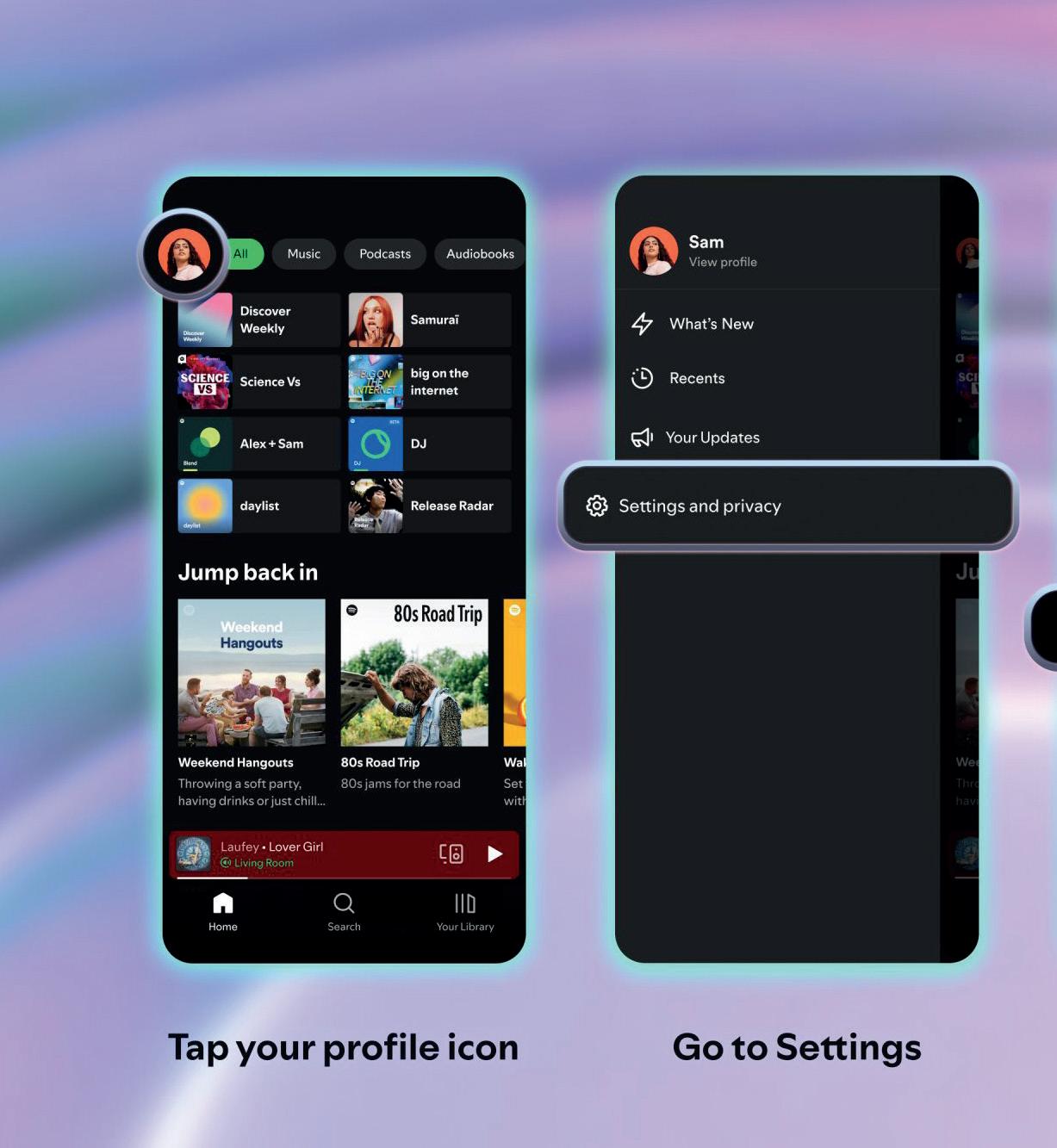
And just to note: You’ll need to enable Lossless manually on each device. You’ll know Lossless is on because the Lossless indicator will appear in the Now Playing view or bar, and via the Connect Picker.
For the smoothest and best listening experience, we recommend streaming lossless music on Wi-Fi using wired headphones or speakers on a non-Bluetooth connection, like Spotify Connect. Currently, Bluetooth doesn’t provide enough bandwidth to transmit lossless audio, so the signal has to be compressed before being sent.
Lossless gives listeners every detail of the music, which means the audio files can be larger. As users enable lossless on their devices, it may take a moment for the track to play. But once it’s cached and loaded, you are ready to listen.
Lossless is rolling out gradually to more than 50 markets through October. Premium subscribers in Australia, Austria, Czechia, Denmark, Germany, Japan, New Zealand, the Netherlands, Portugal, Sweden, the US, and the UK have already started to get access.
New research has revealed which surprise electric car has become the most popular EV over the last three months.
The Omoda E5 has been crowned the most popular electric vehicle for the second quarter of the year among Octopus Electric Vehicles customers.
Omoda launched the E5 model in the UK last September, and has already sold thousands of EVs to motorists and businesses looking to move away from petrol and diesel vehicles.
Chinese car brand Omoda overtakes Ford and Tesla in most popular electric vehicle ranking
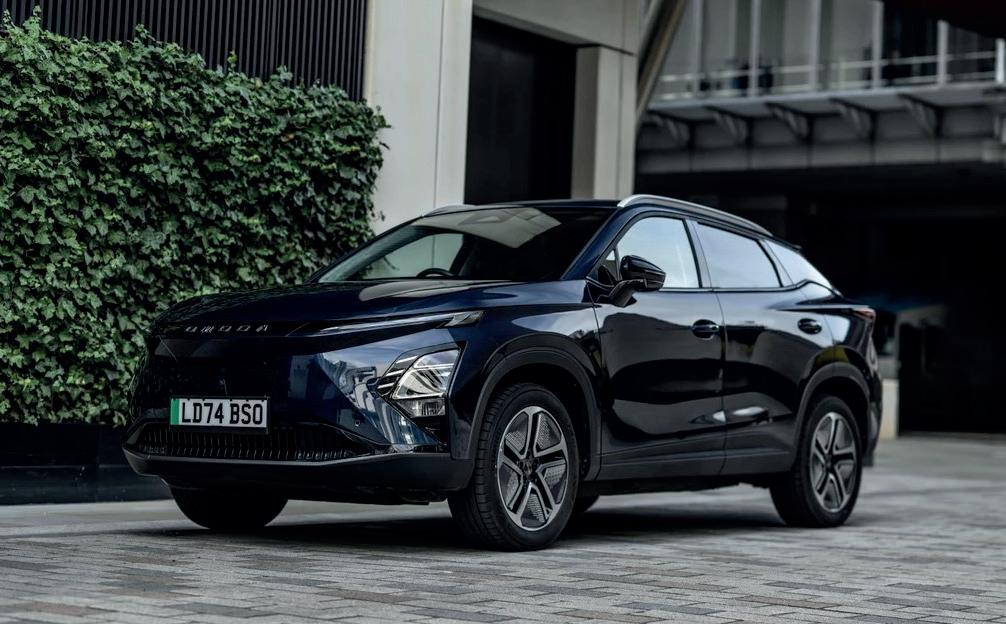
The E5 comes equipped with 257 miles of battery range, fast charging capabilities of 28 minutes (30 to 80 per cent) and a price tag of £33,065.
Omoda offers drivers a £0 downpayment offer and zero per cent APR finance deals, in accordance with its “Value. Every. Thing.” mentality.
Chris Clayton, Head of Fleet for Omoda Jaecoo UK, celebrated the success of the E5 and the development of the brand in the UK.
He said: “Seeing the Omoda E5 become the top-performing EV through Octopus Electric Vehicles is a real milestone for us.
“It proves that UK drivers are ready to embrace something new - and they’re responding to the E5’s combination of bold design, advanced technology and ethos of premium without the price premium.”
So far this year, Omoda has sold 6,941 vehicles, capturing 0.67 per cent of the market, despite being on the market for less than a year.
Partner brand Jaecoo is also performing well with 8,399 new registrations, according to the Society of Motor Manufacturers and Traders (SMMT).
The latest update from the SMMT also shows that more than 47,000 electric cars were sold in June, bringing the market share of EVs to almost 25 per cent.
With more and more drivers switching to electric cars and leaving petrol and diesel vehicles behind, Omoda and other manufacturers could benefit massively.
Alvin Castillo, Procurement Director and EV Guru at Octopus Electric Vehicles, noted that there had been a clear shift in consumer behaviour.
He said: “We’ve hit a tipping point. The early adopters have paved the way, and now we’re seeing everyday drivers make the switch because it just adds up - from cost and convenience to cutting carbon.
“The Omoda E5 topping the charts is proof that if a car delivers on style, spec and savings, drivers are all in.”
He highlighted how early adopters of electric cars gravitated towards brands like Tesla, which was an innovator and set itself apart from legacy manufacturers.
However, with more than 100 different electric cars on the market, motorists now have a much wider selection, allowing them to save more than £1,000 a year on running costs.
Castillo added: “It’s no surprise to see Tesla still in our top five. When we first started leasing EVs in 2021, they were by far the most popular brand, but the market is moving quickly.
“Ford is a household name, as a late developer in the EV space, it’s great to see some amazing cars arriving from them.”
Octopus Electric Vehicles’ top five most popular EVs - April to June 2025
1. Omoda E5
2. Cupra Born
3. Tesla Model Y
4. Ford Puma Gen-E
5. Skoda Elroq
World Leader in EVs
“I drive an electric vehicle because I am poor,” says Lu Yunfeng, a private hire driver, who is at a charging station on the outskirts of Guangzhou in the south of China.
Standing nearby, Sun Jingguo agrees. “The cost of driving a petrol car is too expensive. I save money driving an electric vehicle,” he says.

“Also, it protects the environment,” he adds, leaning against his white Beijing U7 model.
It’s the kind of conversation climate campaigners dream of hearing. In many countries, electric vehicles (EVs) are considered luxury purchases.
How China made electric vehicles mainstream
But here in China - where almost half of all cars sold last year were electric - it’s a banal reality.
‘King of the hill’
At the beginning of the century, China’s leadership laid out plans to dominate the technologies of the future. Once a nation of bicycles China is now the world’s leader in EVs.
For Guangzhou’s more than 18 million people, the roar of the rush hour has become a hum.
“When it comes to EVs, China is 10 years ahead and 10 times better than any other country,” says auto sector analyst Michael Dunne.

China’s BYD now leads the global EV market, after overtaking US rival Tesla earlier this year.
BYD’s sales have been helped by a vast domestic market of more than 1.4 billion people and it is now looking to sell more cars overseas. So too are a raft of other Chinese start-ups that make affordable EVs for the mass market.
So how did China build this lead, and can it be caught?
The master plan
In tracing the origins of China’s EV dominance, analysts often credit Wan
Gang - a German-trained engineer who became China’s minister of trade and science in 2007.
“He looked around and said, ‘Good news: we are now the largest car market in the world. Bad news: on the streets of Beijing, Shanghai, Guangzhou all I see is foreign brands’,” says Mr Dunne.
At the time, Chinese brands simply couldn’t compete with the European, American and Japanese car makers for quality and prestige. These companies had an unassailable head start when it came to producing petrol or diesel-powered cars.
But China did have ample resources, a skilled labour force and an ecosystem of suppliers in the motor industry. So Mr Wan decided to “change the game and flip the script by moving to electrics”, according to Mr Dunne.
This was the master plan.
Even though the Chinese government had included EVs in its five-year economic blueprint as early as 2001, it wasn’t until the 2010s that it started to provide vast amounts of subsidies to grow the industry.
China, unlike Western democracies, has the capacity to mobilise huge swathes of its economy over many years towards its aims.
The country’s mammoth infrastructure projects and dominance in manufacturing are a testament to this.
A US think tank, the Center for Strategic and International Studies (CSIS), estimates that from 2009 to the end of 2023, Beijing spent around $231bn (£172bn) developing the EV industry.
From consumers and carmakers to electricity providers and battery suppliers, everyone in China is entitled to money and assistance when it comes to EVs.
It encouraged BYD, for example, to switch from making smartphone batteries to focusing on producing EVs.
Ningde-based CATL - which supplies firms such as Tesla, Volkswagen and Ford - was founded in 2011 and now produces a third of all the batteries used for EVs worldwide.
This combination of long-term planning and government funding also allowed China to dominate critical supply chains in battery production. It has helped build the world’s largest public charging network with stations concentrated in big cities, which put drivers just minutes away from the nearest charger.
“If you want to manufacture a battery to put into an electric car today,
all roads go through China,” says Mr Dunne.
Some refer to this as “state capitalism”. Western countries call it unfair business practice.
Chinese EV executives insist all companies, domestic or foreign, have access to the same resources.
As a result, they argue, China now has a thriving EV start-up sector, driven by fierce competition and a culture of innovation.
“The Chinese government is doing the same thing you see in Europe and in the US - providing policy support, consumer encouragement and infrastructure,” Brian Gu, president of EV maker XPeng, tells the BBC.
“But I think China has done it consistently and in a way that really fosters the most competitive landscape that there is. There’s no favouritism to anybody,” he adds.
XPeng is one of the “Chinese champions”, as Mr Gu puts it, driving the industry forward. Barely a decade old and yet to turn a profit, the startup is already in the world’s top 10 EV producers.
The company has attracted some of China’s top young graduates to its headquarters in Guangzhou, where casually dressed staff sip flat whites and internet streamers sell cars live in the showroom.
A brightly coloured slide taking employees from the top to the ground floor would seem more at home in Silicon Valley than China’s industrial heartland.
Despite the relaxed atmosphere, Mr Gu says the pressure to offer consumers better cars at lower prices is “immense”.
The BBC was invited on a test drive of XPeng’s Mona Max, which has just gone on sale in China for around $20,000.
For this price you get self-driving capability, voice activation, lie-flat beds, film and music streaming. Young Chinese graduates, we’re told, see all these as standard features for a first car purchase.
“The new generation of EV makers... look at cars as a different animal,” says David Li, the co-founder and chief executive of Hesai, which makes the Lidar sensing technology used in many self-driving cars.
‘An EV makes sense for me’
Young Chinese consumers are certainly attracted to top-of-the-
range technology, but a huge amount of government spending goes towards making EVs financially attractive, according to the CSIS study.
Members of the public receive subsidies for trading in their non-electric car for an EV as well as tax exemptions and subsidised rates at public charging stations.
These perks drove Mr Lu to go electric two years ago. He used to pay 200 yuan ($27.84; £20.72) to fill up his car for 400km (248 miles) of driving. It now costs him a quarter of that.
People in China also normally pay thousands for their vehicle registration plate - sometimes more than the cost of the car itself - as part of government efforts to limit congestion and pollution. Mr Lu now gets his green one for free.
“The rich drive petrol cars because they have unlimited resources,” Mr Lu says. “An EV just makes sense for me.”
Another proud EV owner in Shanghai, who wanted to use her English name Daisy, says that rather than charge her vehicle at a station, she changes her car’s battery at one of the city’s many automated swapping stations provided by EV maker Nio.
In under three minutes, machines replace her flat battery with a fully charged one. It’s state of the art technology for less than the price of a tank of fuel.
The road ahead
The government subsidies at the heart of China’s EV growth are seen as unfair by countries looking to protect their car industries.
The US, Canada and the European Union have all imposed substantial import taxes on Chinese EVs.
However, the UK says it’s not planning to follow suitmaking it an attractive market for firms like XPeng, which started delivering its G6 model to British consumers in March, and BYD, which launched its Dolphin Surf model this month in the UK, and is available for as little as $26,100.
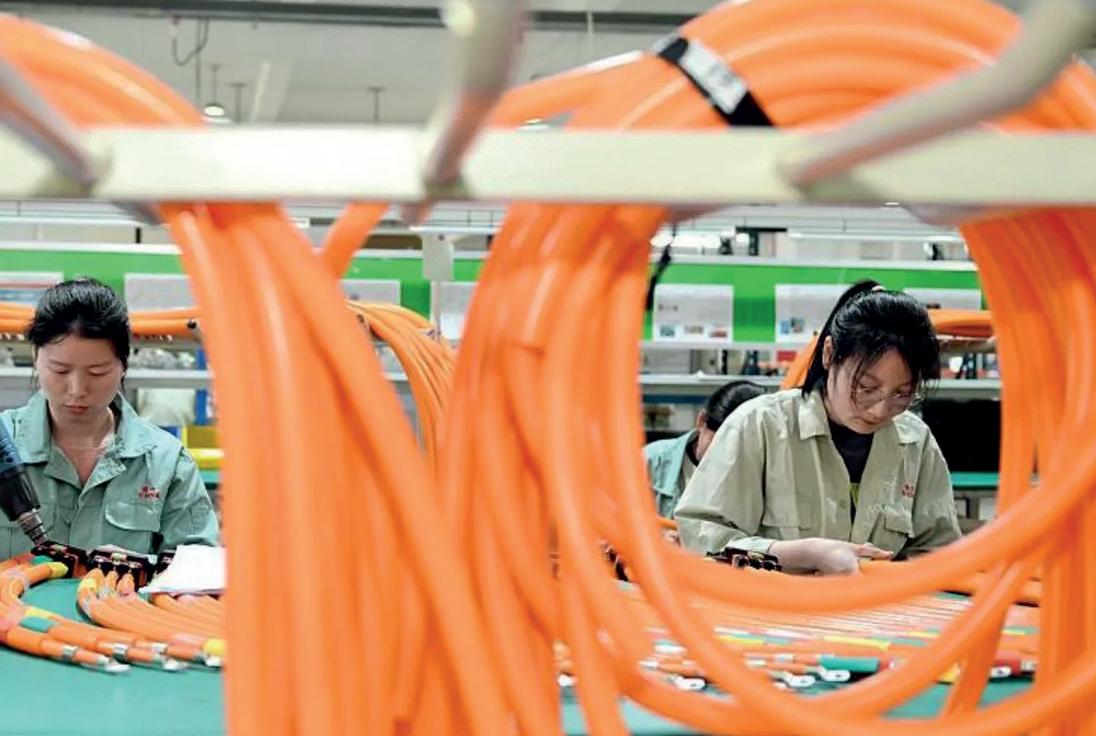
This should be music to the ears of Western governments that enthusiastically back the transition to EVs, which the United Nations calls “pivotal” to avert climate disaster.
Several Western countries, including the UK, say they will ban the sale of petrol and diesel cars by 2030. No country is better placed to help make this a reality than China.
“The Chinese are thinking about a future where they manufacture just about every single car for the world. They’re looking around saying, ‘Can anybody do it better than us?’” says Mr Dunne.
“Leaders in Detroit, Nagoya, Germany, UK, everywhere around the world, are shaking their heads. It’s a new era, and the Chinese are feeling very confident about their prospects right now.”
Despite the environmental benefits, there is still suspicion about what relying on Chinese technology could bring.
Britain’s former head of MI6, Sir Richard Dearlove, recently called Chinese EVs “computers on wheels” that can be “controlled from Beijing”.
His claim that Chinese EVs could one day immobilise British cities was dismissed by BYD’s executive vice-president Stella Li in a recent BBC interview.
“Anyone can claim anything if they lose the game. But so what?” she said.
Swedish car makers, Polestar and Volvo, have collaborated with London’s Abbey Road Studios to enhance and tailor the sound experience of its large electric SUVs.
“BYD pays for a very high standard of data security. We use local carriers for all our data. In fact we do it 10 times better than our competition.”
Nevertheless Sir Richard’s concerns echo previous national security debates surrounding Chinese technology.
This includes telecoms infrastructure maker Huawei, whose equipment was banned in several Western countries, as well as the social media app TikTok, which is prohibited on UK government devices.
But for Sun Jingguo in Guangzhou, the message is simple.
“I think the world should thank China for bringing this technology to the world,” he laughs. “I do.”
Swedish car makers, Polestar and Volvo, have collaborated with London’s Abbey Road Studios to enhance and tailor the sound experience of its large electric SUVs.
Owners of the Polestar 3 and Volvo EX90 electric SUVs equipped with the Bowers & Wilkins sound system can expect an OTA (over-the air) software update rolling out in July, introducing the new Abbey Road Studios Mode.
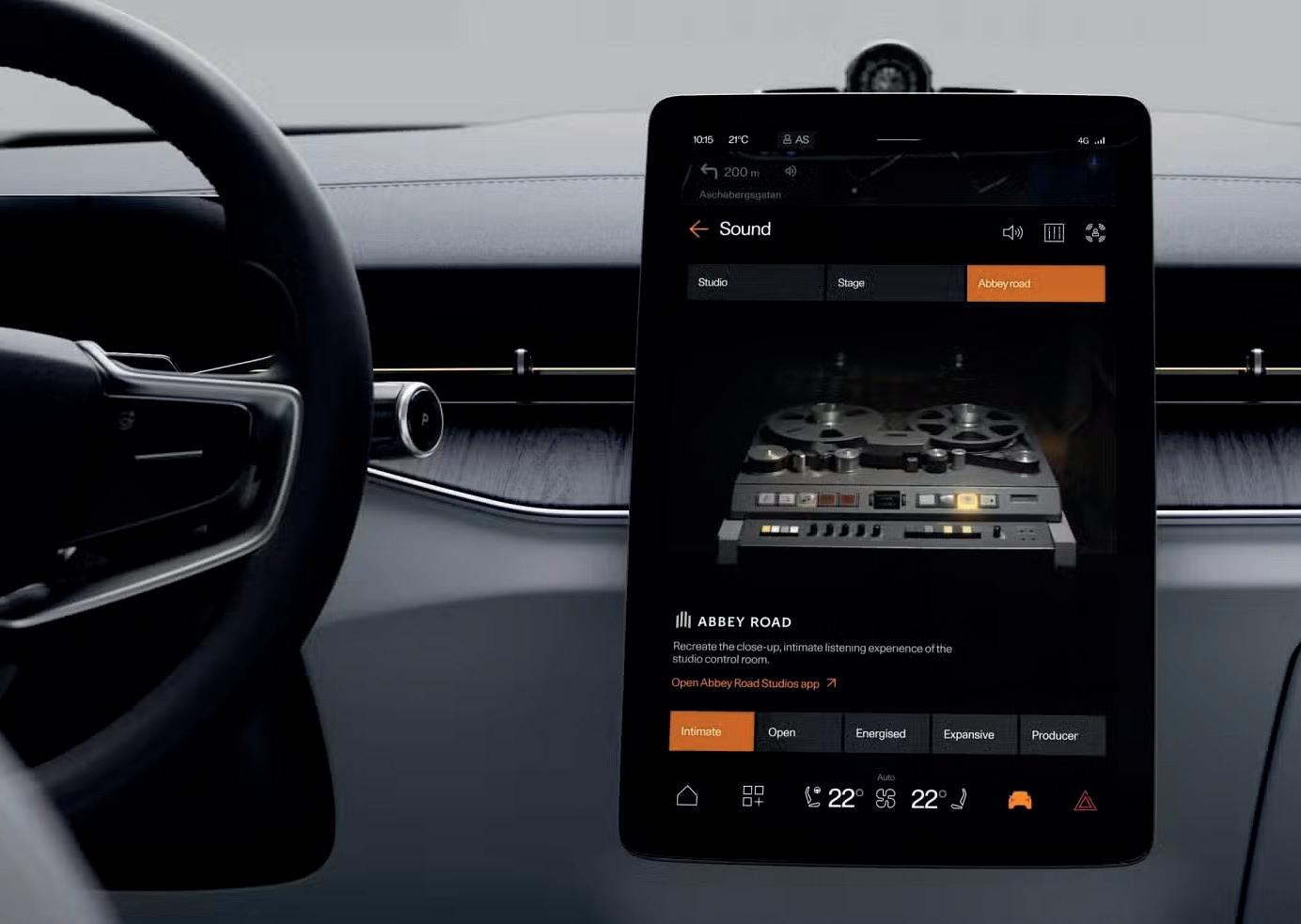
Partnering with the iconic London-based recording studio responsible for albums from The Beatles, Pink Floyd, and Lady Gaga, the new sound modes feature four presets –Intimate, Open, Energised, and Expansive.
Additionally, users can opt for another more personal sound using Producer mode.
Curated by the studios’ audio engineers, each preset emulates the sounds of the control rooms and historical recording, mixing, and mastering processes used back in the UK.
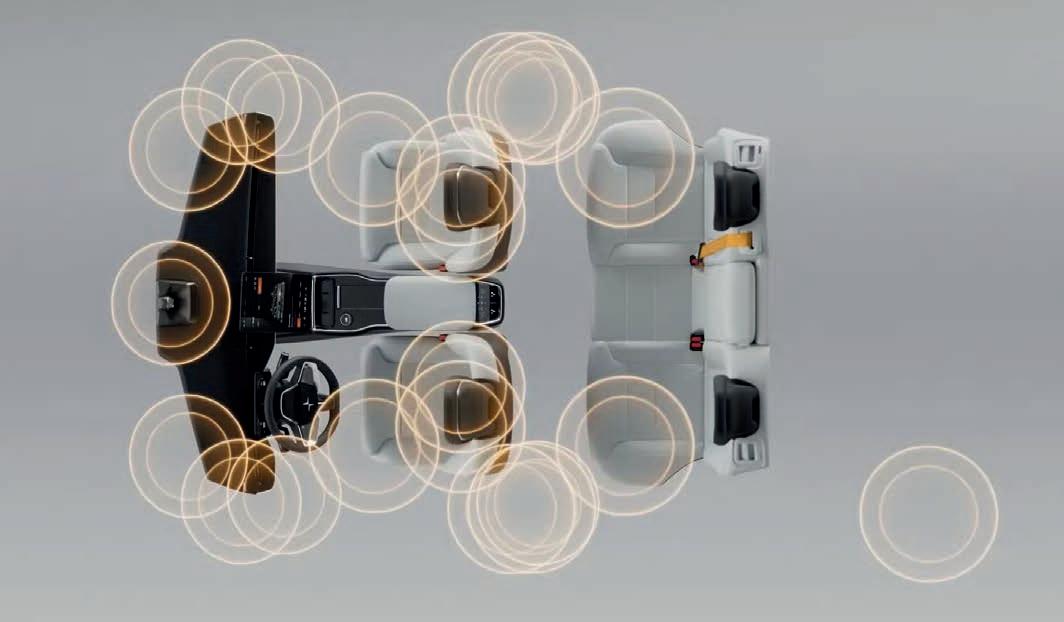
Polestar CEO, Michael Lohscheller stated that the “audio experience [is] so closely inspired by the Abbey Road Studios’... you’d swear you were right there in the legendary London building, not driving a performance SUV”.
Each preset is accompanied by a bespoke image from the studio shown on the car’s high-definition 14.5inch touchscreen, including the iconic instruments and equipment from the Abbey Road collection.
Sally Davies, Abbey Road Managing Director said in a statement that “the partnership continues our collaboration with Bowers & Wilkins to develop products in the consumer audio space, and further extends out
expansion into automotive audio as, for the first time, Abbey Road’s sonic DNA shapes the listening experience in the Polestar 3”.

This update is exclusively featured in the optional Bowers & Wilkins audio system in the Polestar 3 and Volvo EX90, which starts from $118,420 before on-road costs and $124,990 respectively in Australia for the base Long Range Single Motor and Plus Twin Motor variants.
The Bowers & Wilkins sound system is only available in the Polestar 3 as part of the $9000 Plus Pack that also adds a head-up display, heated steering wheel, soft-close doors, and more.

The audio system can be added as a standalone feature in the Volvo EX90 for $3000.
With 25 speakers placed around each vehicle, 3D surround sound, and active road noise cancellation – coupled with the near-silent all-electric powertrain –users can expect a premium audio experience.
Other additional software improvements included in the update are Stolen Vehicle Tracking and Smart Schedule for charging.
The country is racing ahead of the rest of the world in bringing sodium-ion batteries to the mass market. This time, through scooters.
Dozens of glitzy electric mopeds are lined up outside a shopping mall in the city of Hangzhou in eastern China, drawing passersby to test them.

But these Vespa-like scooters, which sell for between £300 and £500 ($400 and $660), are not powered by the mainstream leadacid or lithium-ion cells, commonly used in electric two-wheelers. Instead, their batteries are made from sodium, an abundant element that can be extracted from sea salt.
Next to the scooters stand a few fast-charging pillars, which can replenish the vehicles’ power level from 0% to 80% in 15 minutes, according to Yadea, the major Chinese two-wheeler manufacturer holding this promotional event in January 2025 for its newly launched mopeds and charging system. There is also a batteryswapping station, which enables commuters to drop in their spent cells in exchange for fresh ones with a scan of a QR code. (Read more about China’s battery swap stations for electric vehicles here.)
Yadea is one of many companies in China trying to build a competitive edge in alternative battery technologies, a trend that shows just how fast the country’s clean-technology industry is developing.
Even as the rest of the world tries to close its gap with China in the race to make cheap, safe and efficient lithium-ion batteries, Chinese companies have already taken a head-start towards mass producing sodium-ion batteries, an alternative that could help the industry reduce its dependence on key raw minerals.
Chinese carmakers were the first in the world to launch sodiumpowered cars. But the impact of these models – all of them tiny with short ranges – has been low so far.
In April 2025, the world’s largest battery manufacturer, China’s CATL, announced its plan to mass-produce sodium-ion batteries for heavy-duty trucks and cars this year under a new brand Naxtra.
China’s grid operators have also started to build energy storage stations using sodium-ion batteries to help the grid absorb renewables. This is an area considered by many researchers spoken to by the BBC as the main playground for the emerging technology.

Chinese companies’ multi-pronged strategy in driving sodium-ion batteries will put it in a leading position of a global race – should there be one, says Cory Combs, who researches critical minerals and supply chains at Beijing-based consultancy Trivium China. He says it remains to be seen whether sodium-ion batteries will really take off.
But one segment that is betting big on sodium-ion batteries is the two-wheeler, a fast-growing and highly competitive market in China.
Yadea has brought three sodium-powered models to the market so far and is planning to launch more. It has also established the Hangzhou Huayu New Energy Research Institute to research emerging battery chemistries, particularly sodium-ion.
“We want to bring technology from the lab to customers fast,” Zhou Chao, the company’s senior vice president, said in January during a talk show on China Central Television in January.
Cue the ‘little electric donkey’
Two-wheelers are an extremely popular mode of transport in many Asian countries, including Vietnam and Indonesia. In China, they are ubiquitous, carrying their owners to shops, offices, metro stations and everywhere in between. Because they are practical and versatile, the Chinese have given them an endearing nickname: “little electric donkeys”.
“Two-wheeled vehicles typically operate over shorter distances and at lower speeds [than cars], making them less demanding in terms of energy density and power output,” says Chen Xi, who researches energy storage materials and devices at Xi’an-Jiaotong Liverpool University in China. A sodium-ion battery carries significantly lessenergy than a lithium-ion battery of the same size, which means it has a lower energy density.
For two-wheelers, sodium-ion batteries’ main rivals are lead-acid ones, whose energy density and rechargeable cycles are even lower. Their only advantage is that they are cheaper than both sodium and lithium-ion batteries currently, Xi says.
The sheer number of two-wheelers in Asia paves a promising pathway to achieving economies of scale. In China alone, around 55 million electric two-wheelers were sold in 2023 – nearly six times the number of all pure, hybrid and fuel-cell electric cars combined sold in the country that year – according to Shanghai-based consultancy iResearch.
Scale production was the goal of Yadea. Zhou said at the talk show that the firm was seeking to bring sodium batteries to tens of millions of ordinary commuters by not only fitting them into twowheelers, but also building a charging ecosystem to enable people to use these models without stress.
To test the waters, in 2024 Yadea began a pilot programme with 150,000 food delivery couriers working in Shenzhen, a mega city of 17.8 million people in southern China, reported Shenzhen
News. The goal was to enable them to hand in a spent Yadea sodium-ion batteries at its partners’ battery-swapping stations in exchange for a fully charged one within 30 seconds, Yadea said.
Toyota
You know how the old saying goes: “If you can’t beat them, join them.” Well, Toyota’s new strategy is just that — it’s teaming up with China to lower costs for its upcoming EV models.
Toyota’s new EV strategy will use China to cut costs
The world’s largest automaker will tap into China to gain an edge in the global market. Toyota is already sourcing parts from Chinese suppliers to build EVs overseas.
Toyota’s new EV strategy? If it can’t beat China, it’s teaming up instead
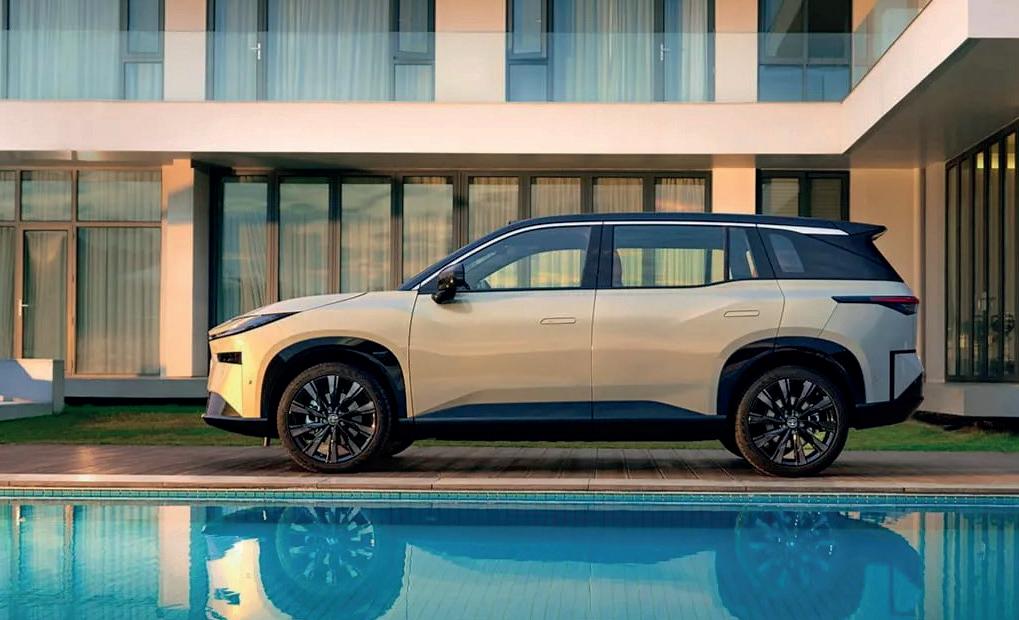
According to Nikkei, Toyota is expanding the use of parts and other EV components from Chinese suppliers for its production base in Thailand.
The facility is Toyota’s largest production hub in Southeast Asia. Japanese brands have historically dominated vehicle sales in the region. However, low-priced EVs from Chinese brands, such as
BYD, are quickly winning over buyers with more advanced tech and features.
In Thailand, Japanese brands have accounted for roughly 90% of new vehicle sales. In the first five months of 2025, Japan’s market share dropped to just 71%. Meanwhile, Chinese brands saw their share rise to 16%.
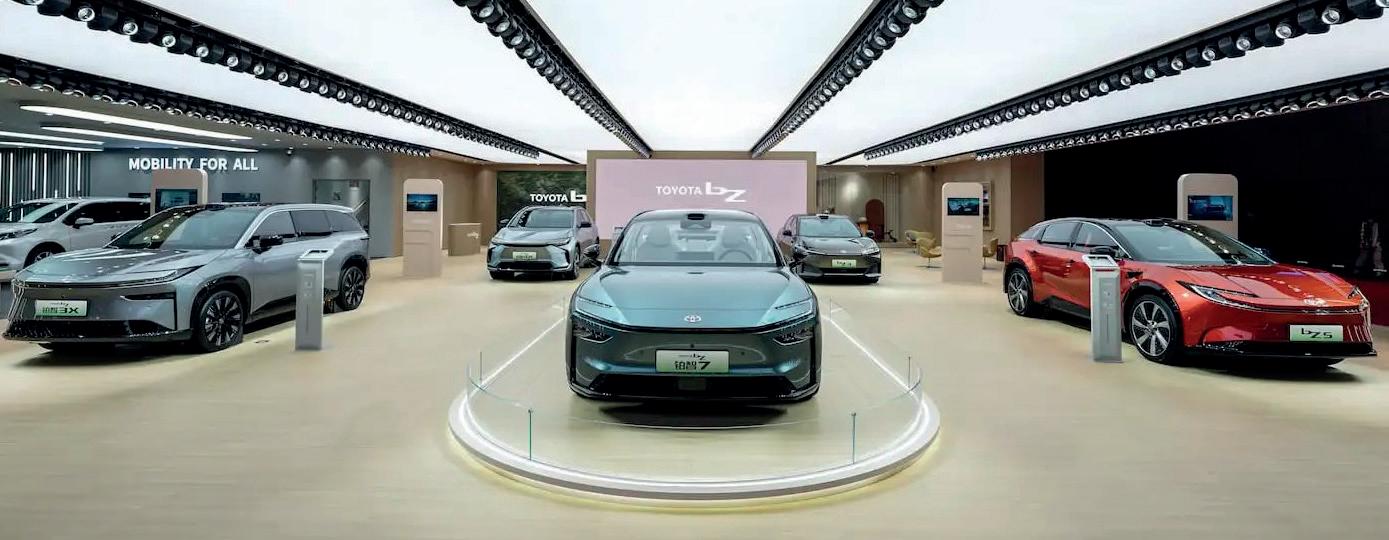
Several sources note that Toyota has already begun sourcing EV components from China to use at its Thailand facility.
Toyota plans to launch more affordable electric vehicles at the hub as early as 2028. According to the company, it plans to reduce costs by about 30% by sourcing parts from China.
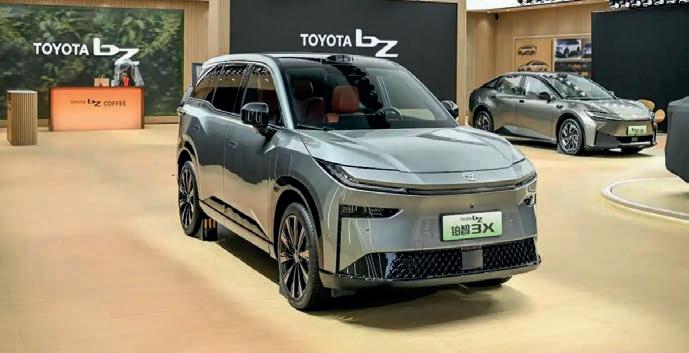
By using local suppliers, Toyota has already sparked hope in China with new EVs, like the bZ3X, seeing strong initial demand. Starting at just 109,800 yuan ($15,000), Toyota’s electric SUV was the best-selling foreign brand EV in China in May, its second month on the market.
A Toyota executive confirmed that “we also plan to develop

electric vehicles with lower costs by making the most of parts from Chinese manufacturers, just like the bZ3X” in Southeast Asia.
The bZ3X is produced by Toyota’s joint venture, GAC-Toyota. It’s about the size of a Tesla Model Y, but half the cost in China.
During its EV Tech Day event in June, the company announced new partnerships with “car industry bigwigs,” like Xiaomi, Momenta, and Huawei.
Toyota also broke ground on a new EV plant in China for its luxury Lexus brand last month. It’s the second wholly owned auto plant in China from a foreign automaker, following Tesla.

Electrek’s Take
Can Toyota compete with China using parts sourced from the country? It will help, as shown with the bZ3X. However, with Chinese brands like BYD producing everything in-house, including the batteries, it will still likely have the advantage.
Toyota is promising to launch a series of lower-cost, more efficient EV batteries, but that could still be a few years out.
With the new US tariffs on imports from Japan, Toyota is doubling down on local production to minimize costs. It also opened its first overseas battery plant in North Carolina earlier this year, which will power Toyota’s EVs, HEVs, and PHEVs in North America.
Japanese brands Toyota, Honda, Kawasaki, Suzuki, and Yamaha have long been pioneers and leaders in the transportation industry. Particularly known for leading the hydrogen fuel-cell engine revolution, these brands have been testaments to forward-thinking technology in pursuit of a carbon-neutral world. These four brands have now decided to team up to form an unlikely alliance in order to ensure that the future of the planet remains their top priority.
Toyota’s new EV strategy? If it can’t beat China, it’s teaming up instead
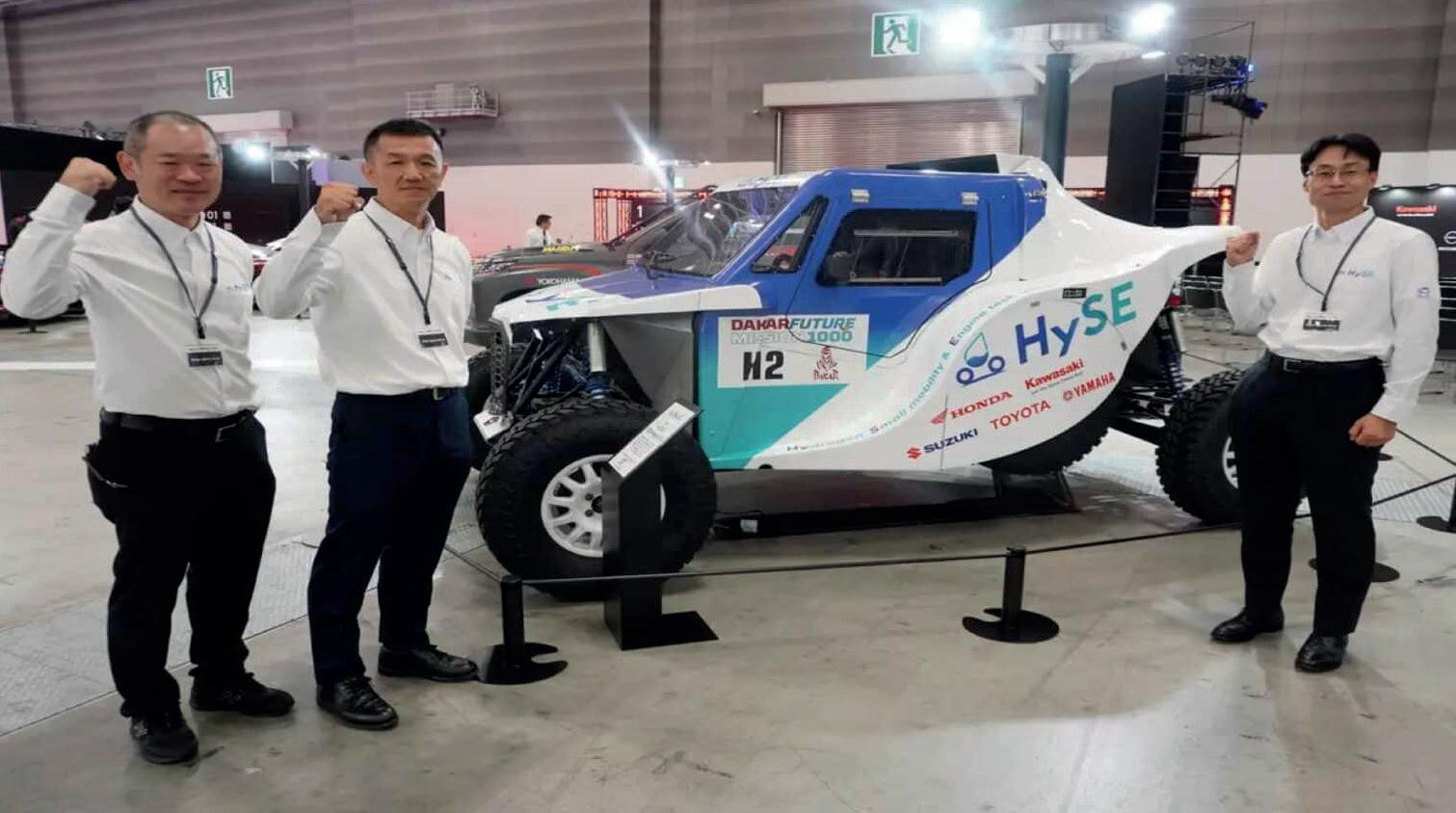
Pushing collaboration to achieve carbon-neutrality
Japanese brands teaming up with competitors has been a slow trend seen in the automobile industry. Toyota in particular has been vocal about their prioritization of collaboration over competition in order to pool resources and expertise to accelerate the world’s adaption to alternative engine solutions. With offerings of both advanced electrical and hydrogen fuel-cell engines, the company is teaming up with others in order to push their models to the next level.
“We are collaborating with companies that would traditionally have been our competition to develop standards for hydrogen fueling connections and protocols, recognizing that an industry standard was of greater benefit than our own competitive advantage,” said Jay Sackett, Toyota’s chief engineer of advanced mobility, according to a Toyota press release.
As part of their collaborative approach, they have not only teamed up with other Japanese automobile developers but have also gone international. It was recently announced that Toyota would be working
together with German automobile developer BMW in order to assist the company with developing their first hydrogen-fuel cell powered vehicle and have it on the road for consumers by 2028.
While many automobile companies, BMW included, have focused on the development of electrical engine solutions, Toyota has continued to provide diverse options for consumers in order to remain competitive and to fill gaps in the transportation industry where the electrical engine falls short and to encourage other developers to embrace multiple avenues to achieve sustainability.
These Japanese brands team up
In addition to Toyota’s collaborations, these other Japanese brands have also been looking at how a more collaborative approach can produce more advanced and carbon-neutral technology than ever seen before. Two years ago, the Japanese so-called ‘Big Four’ of the motorcycle world- Honda, Yamaha, Kawasaki and Suzuki- teamed up in order to produce a hydrogen-powered motorcycle. This technology is carbon-neutral, with its only byproduct being water.
The four brands came together to form a technological research hub, dubbed HySE, in order to design and produce a hydrogen-powered engine for small mobility by combining their R&D power. The unit has three main research objectives, with each engine producer assigned a particular role:
• To research hydrogen-powered engines (Honda, Suzuki, Yamaha, and Kawasaki Motors)
• To study hydrogen refueling system (Yamaha)
• To study fuel supply system (Kawasaki Motors)
While their has been criticism from some in the scientific community regarding the continued push of hydrogen-engine developments over electrical engine solutions, it is to be noted that all these solutions are intended to envision a world where we may no longer see the internal combustion engine on the road. However, with these engines still pulling in the overwhelming majority of vehicle sales, it is difficult to imagine alternative engine solutions becoming the norm.
However, Norway has emerged as offering a beacon of hope towards envisioning a future where we may no longer see the internal combustion engine. Last year, the country saw 89% of their new vehicle sales be fully-electric cars, with the country hoping to push this number to 100% by the end of this year. This feat has been possible not only thanks the advanced technological capabilities of automobile developers but also due to governments providing support to assist with the switch.
The e-commerce sector is experiencing its most disruptive period in more than a decade as a result of President Trump’s trade war and tariffs policy, according to a new survey from Alix Partners. It finds steep declines in online shopping activity, and shipping and return policies being adjusted to cut costs for companies.
Online purchases for home delivery experienced double-digit percentage, year-over-year declines across major categories, including office supplies, down by 13 percentage points; sporting goods, down 12 percentage points; and cosmetics, furniture, home furnishings, and large electronics, each falling by 10 percentage points, according to AlixPartners’ data.

“This marks the first widespread pullback in online category growth in over a decade,” said Chris Considine, partner with the consulting firm’s retail practice.
Grocery was a notable exceptions to the negative trend.
Tariffs have been a catalyst for consumers to change their buying behavior, according to the AlixPartners data, which finds 34% of consumers saying they delayed purchases due to uncertainty over prices, and 66% saying they will seek domestic options if overseas prices increase by 10%. Twentyeight percent of consumer survey respondents said they pulled ahead purchases to avoid extra import costs.
The survey showed a sizeable minority (20%) looking to “Buy American.”
Online shopping sees biggest slowdown in over decade as tariffs disrupt e-commerce: Survey
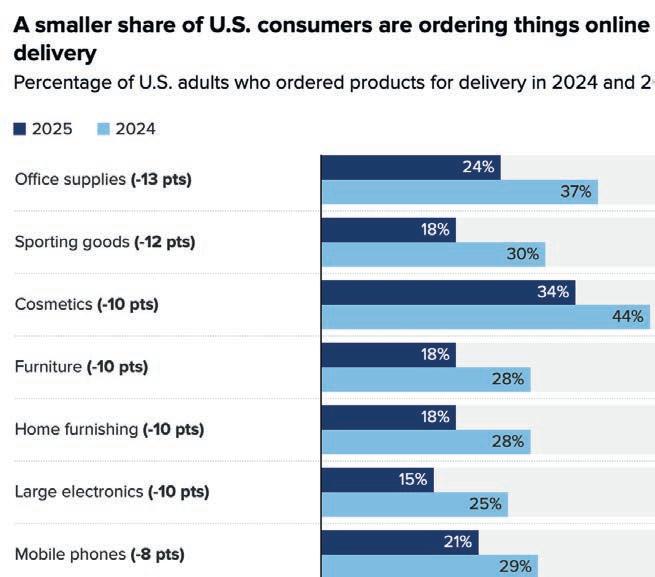
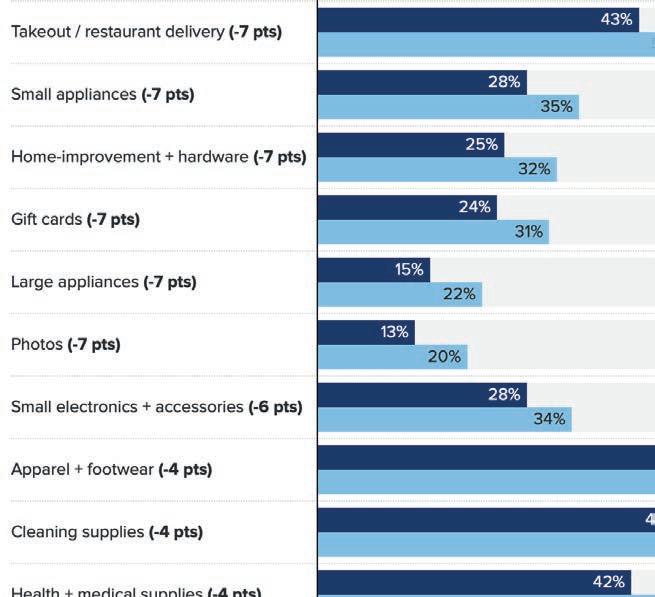



“Tariffs are materially influencing consumer behaviour, leading to both timing shifts and a potential reshoring of demand. Retailers may need to reassess sourcing and pricing strategies to remain competitive,” Considine said.
The online home delivery survey was conducted by AlixPartners between May 31 and June 3 among consumers, retail and transportation companies.
In addition to the tariffs impacting purchases, retailers are battling challenges with the cost of returns and delivery. The survey shows a rise in the proportion of orders being returned, at a time when almost three-quarters of executives said per-package delivery costs have increased.
Delivery and return policies are being tightened across the e-commerce sector, according to the survey, with greater emphasis on in-store pick up and returns. Consumer behavior remains heavily influenced by free shipping and next-day delivery, but almost half of retailers surveyed have increased the minimum order requirement to qualify for free shipping, or now require a membership.
Social commerce is booming and set to hit over $100 billion in 2026. With social commerce set to account for over 8% of total e-commerce sales, some product areas, such as beauty,now account for over 50% of the global sales.

Social commerce is also democratising selling for small business owners, with low barriers to entry and little or no equipment required to start selling, other than a smartphone. Nowhere is this clearer than on TikTok Shop, the fastest-growing online retailer in 2024. According to TikTok, most TikTok Shops are small and mediumsized businesses.
However, AI automation, not influencers alone, gives small businesses the edge. AI-driven tools such as automated messaging are quietly becoming the backbone of this social commerce revolution.
This piece explores how AI and TikTok are reshaping social commerce, what that means for small businesses wanting to maximise their growth today, and why it matters now.
TikTok Shop’s unstoppable growth driving social commerce
With over 1 billion users worldwide and 15 million active sellers, TikTok Shop has quickly become a force to be reckoned with online. According to TikTok’s official figures, US TikTok Shop sales increased by 120% in the last 12 months to June 2025, and UK TikTok shop sales showed triple-digit growth.
Since the end of 2024, TikTok Shop has launched in Spain, Italy, France, Ireland, Germany, Mexico, Brazil, and most recently, Japan. The breadth of the offer has expanded, too, with 70 million products across 750 categories.
One major driver of TikTok Shop’s success is the rise of real-time interaction: LIVE selling.
Social Commerce LIVE selling is the new digital high street
Powering the growth of TikTok Shop has been the rise of LIVE streams. These allow sellers to interact with potential buyers in real time, demonstrate how their products work or look, and answer any questions on sizing, fit, and color, just like you would in a physical store with a shop assistant or owner.
One of the most compelling and engaging parts of social commerce, LIVE shopping is a fast-growing area worldwide and across platforms.
Beauty also continues to dominate in this area, with the products lending themselves to live demonstrations. TikTok’s official figures show that the UK live-stream record is held by P.Louise Cosmetics. The 12-hour LIVE marathon generated $2.2 million in sales with two products selling every second.
Live selling offers small businesses an excellent opportunity to launch directly onto social media without a traditional website.
P. Louise is the perfect example of how a small business, started by makeup artist-turned-entrepreneur Paige Williams and entirely self-funded, has leveraged the exposure generated by social selling to create one of the UK’s fastest-growing companies.
Many “born on TikTok Shop” brands that have found success on the platform also find success off the platform. Businesses in the UK, like Made By Mitchell, Glow For It, and Mallows Beauty, have attracted the attention of high-street retailers, who now stock their products on the UK high street in ‘Trending on TikTok’ aisles.
However, while social commerce makes selling more interactive, scale still requires tech support. That’s where AI and tools like chat marketing platform Manychat step in.
“For small brands, AI is finally closing the gap between social media engagement and real business outcomes,” states Ido Mart, chief marketing officer of Manychat, via email.
AI-powered tools like automated DM responses allow small businesses to have what Mart describes as “an authentic presence at scale.”
These tools allow small businesses to connect and interact with customers in a way that feels tailored and private to that individual customer, without the brand needing to monitor every message at every step.
“We had one creator tell us recently that using Manychat helped her secure over 65,000 leads in a year, which translated into more than $1.5 million in revenue for her business that could be directly attributed to the automations she set up with us,” Mart shares.
Without AI, small businesses would struggle to take advantage of the benefits of social selling unless they had the budget for a team to monitor responses. With AI, monitoring only the reactions that need human interaction is possible, while automating the vast majority.
Avoiding the social commerce AI pitfalls
While tools like DM automation can unlock scale and growth for small businesses, “small retailers often hesitate to adopt AI in DMs, fearing loss of control or authenticity,” according to Mart.
The solution? Don’t be afraid to start slowly and introduce just the level of automation that feels comfortable for you.
“AI doesn’t have to be all or nothing. With the right system, you set levels of
automation that match the context. You can automate routine replies and stay involved where it counts,” explains Mart.
He also highlights an essential factor in automation—that it’s not just about what is said; it’s about the context and whether or not it feels relevant to the audience.
“Automation doesn’t erase your presence. The audience still hears your voice, shaped by your choices. The tone, timing, and content are still yours.” The key here is designing automation that reflects your brand to help deliver conversations that feel human “without having to be in every one.”
Same goals, new tools
Whether it’s a TikTok LIVE or an automated DM conversation, the goal for e-commerce businesses is the same as it’s always been - driving connection and conversation.
TikTok Shop, social commerce, and AI-powered automation tools are giving small businesses what they’ve lacked for some time—the potential for expanded reach and the tools to enable them to handle larger volumes of customers.
These tools allow them to unlock what Mart calls “the real benefits of AI: infinite scale, clear traceability, constant iteration, and smart segmentation.”
To compete in tomorrow’s retail landscape, small businesses must master the social commerce tools already reshaping today’s feeds.
Smart homes are on the rise, with UK householders dramatically increasing the number of smart devices they own. According to the most recent YouGov survey from 2018, 23% of homes have at least one smart device, with 11% having a smart speaker, 5% with smart lighting and 3% having smart security in place.
At these levels of take-up and awareness, homebuyers are likely to be drawn towards the new developments that arrive with smart devices as standard, giving new ways of marketing properties and distinguishing developments from those of competitors.
CEDIA Research shows professional UK smart home market Hits £3.1 Billion

“Specifically for housebuilders, if built into the home as standard, it helps to differentiate the property versus other similar properties without the technology,” says Mark Lufkin, chief commercial officer for smart home company Wondrwall.
“This helps to sell more quickly or to command a higher price. We are getting positive feedback from homeowners who are moving into properties with Wondrwall [an intelligent system automatically controlling heating, lighting and security] installed.”
The number of housebuilders offering smart devices is increasing. Following a trial in Oakthorpe, Peterborough, Google Nest products are now available nationwide for all new Kier Living homes.
In most cases, adding smart devices is as easy as adding traditional nonsmart ones, requiring no additional wiring. As such, it’s possible to offer packages, giving buyers the opportunity to upgrade from standard fittings to smart ones.
In many ways, this is similar to how cars are sold, with higher-spec models adding features to the basic package. It’s also cheaper to install smart products during a build. Focusing on providing options in the largest categories helps, with options for smart heating, smart security and smart assistants.
Here, we are looking at some of the options for each category.
Smart thermostats provide several advantages over their traditional counterparts, but there are two main benefits. They are easier to programme and use, and they give greater energy savings. Average gas bills in the UK are £676 a year, and Tado, the smart-thermostat manufacturer, estimates UK customers can save 19% on heating bills. Nest claims that UK customers can save between 8.4% and 16.5%.
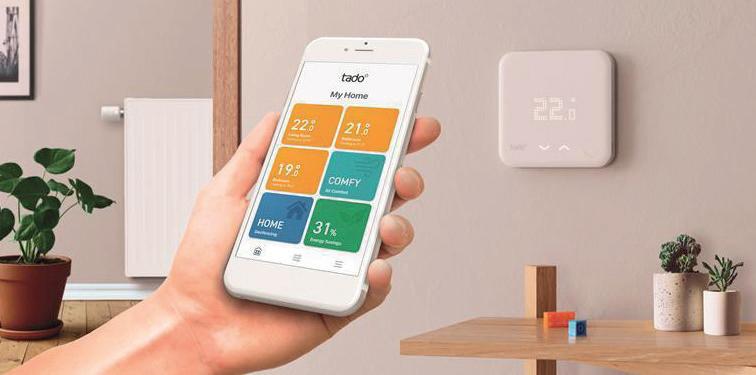
In addition, using a digital interface to the boiler, such as OpenTherm, allows compatible thermostats to modulate the central heating temperature to select the best temperature to warm a house at the most efficient level (load compensation). OpenTherm says an additional 6% saving can be made on fuel costs.
Smart thermostats save energy through more intelligent use of heating. Products such as the Nest Learning Thermostat learn how your home warms up and can switch off the heating early to prevent a home going past the set temperature. Many smart heating systems, including Nest and Tado, also provide geofencing, which utilises a user’s phone to turn the heating off when they go out and turn it back on when they come back.
Some systems, such as the Honeywell Evohome, offer greater savings by placing a smart radiator valve on every radiator, allowing heating to be controlled individually per room. These systems add significantly to the price of the install though, and require users to change the batteries in the valves every 18 months to two years, which may make them too complex to offer. There may be a middle ground. Some systems, such as Tado, work with a single thermostat, but can optionally be expanded with smart radiator valves in the future.
Smart thermostats are a good way to meet the Boiler Plus legislation, which states combi boilers have to have at least one of the following additional energy-saving measures: smart controls, weather compensation, load compensation, and flue gas heat recovery (FGHR). Using smart controls with an OpenTherm connection hits two of these additional measures.
Smart thermostats require no additional wiring at the point of install, although some, such as the Nest Learning Thermostat, need permanent power.
Smart lighting
Smart lighting comes in two forms – light switches and smart bulbs. With replacement switches, standard bulbs are used and the light switch operates as normal. However, when connected to an app or voice assistant, lights can be controlled remotely, and even programmed to simulate occupancy, fooling burglars so they stay away when the owners are out or on holiday.
Smart switches, such as the Wondrwall system, require a neutral cable at the switch. The cheaper Lightwave system does not need the neutral cable and is a dimmer switch (when ”off” it maintains a small amount of power for remote control).
Smart light bulbs, such as the those used with the Philips Hue system, are easier to install, as the intelligence is baked into the bulbs, which plug into standard light fittings. The standard light switch will still work and smart bulbs operate like normal bulbs in this regard; however, the light switch has to be left on for the bulbs to respond to app or voice control. With the Hue system, the user can get additional wireless light switches to give that traditional control aspect.
The main benefit of a system such as Hue is that the high-end bulbs can change colour, giving some amazing lighting effects, completely changing the atmosphere of a room.
Adding security to a system can make owners feel safer and smart doorbells are a good way to start. They provide many of the benefits of security cameras, including the ability to monitor and record the area outside of a front door.
With the ability to answer the door from anywhere, smart doorbells give additional security – people can be fooled into thinking someone is at home and people at home can answer the door without having to open it.
There are many smart doorbells but it makes sense to focus on those that can be wired in, so that homebuyers do not have to worry about replacing batteries. There are two main models: the Nest Hello and Ring Video Doorbell Pro. The Nest Hello gives continuous video recording and has facial recognition (with a Nest Aware subscription), and it works best with Google Home smart speakers. The Ring Video Doorbell Pro has higher-resolution video, can record motionactivated clips to the cloud (subscription required), and works best with Amazon Alexa smart speakers. Both devices can be used without subscriptions but cannot record video.
You can expand both systems with additional indoor and outdoor

cameras for increased security. With Nest, the best cameras are its Nest Cam IQ Indoor and Nest Cam IQ Outdoor. Ring has a slightly more varied range, including the Stick Up Cam, which can be used indoors or outdoors, and the Ring Floodlight Cam, which acts as a security light too. Security cameras typically need a nearby plug, with outdoor models requiring a hole to be drilled through the wall, which slightly complicates installation.
Many smart home systems are addons to additional homes, but there is a growing move to integrated systems that do everything in one neat package, such as Wondrwall. This system is based around smart light switches that can be wired directly into any standard sockets, requiring no additional cabling.
Each light switch gives standard on/off and dimmer control of bulbs, with the option of remote control via an app. However, also built into the switches are Alexa smart speakers for voice control in each room.
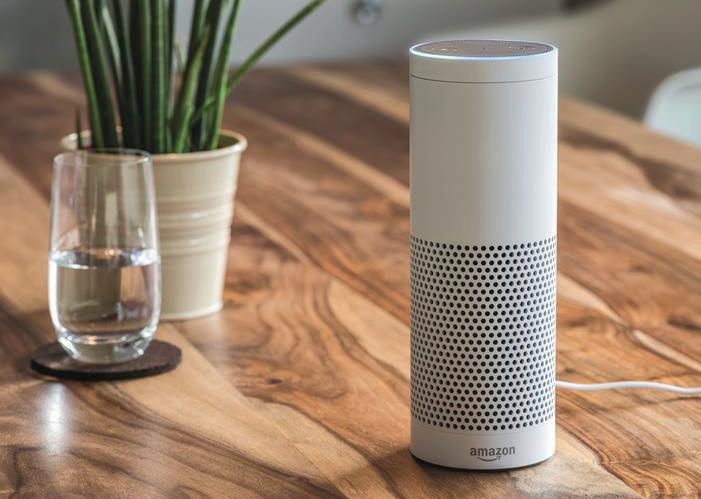
n addition, there are motion and temperature sensors. Motion sensors can be used as part of the smart security system when the occupants are out, but also helps the system learn how a home is used, and which rooms are occupied, say automatically turning off lights or using the information to turn lights on and off automatically when nobody is home to simulate occupancy to put off burglars.
The system can also use the individual motion sensors to work out which rooms are occupied. If one room is used, the temperature sensor of that room is used as the reference point for
Headphones
Market Poised For Recovery
the entire home’s heating. If multiple rooms are occupied, an average of those sensors is used to ensure the entire home is at a comfortable temperature.
Other systems can seamlessly tie other products together. For example, with Nest products, if the Nest Protect smart smoke alarm detects a fire, it can automatically turn on Philips Hue lights.
Building a new home to be smart does not mean that it has to be rewired or that choices have to be made early on. For most of the kit referred to here, installation can take place towards the end of the build, using the wiring that is in place. This gives housebuilders the option to offer a smart package, with buyers able to have a say over the components that they do and don’t want.
With the flexibility on offer, a smart package can increase buyer satisfaction giving them a home that works they way want, saving them money and increasing security and convenience.
New report shows global headphones market recorded a 4.3% year-on-year increase in shipments during Q1 2025
Futuresource Consulting has reported that the global headphones market recorded a 4.3% year-on-year increase in shipments during Q1 2025, pushing past 106 million units. Beneath this headline growth, FutureSource’s latest data reveals sharp contrasts between global regions, shaped by marked differences in economic and policy pressures.

“North America stood out as a major growth engine last quarter,” said Saranraj Mathivanan, senior consultant at Futuresource Consulting. “An 11% year-on-year leap in unit sales was driven largely by tariff-related activity. Retailers and consumers moved early to secure stock ahead of expected U.S.-China import duties, boosting demand for lower-cost and mid-tier headphone models.”
In contrast, both Western and Eastern Europe registered a 3% decline in unit sales. With headphone penetration already high and consumers contending with ongoing economic
uncertainty, fresh demand has slowed, and pricing has come under pressure.
Futuresource notes that the market across Europe is showing clear signs of saturation. Coupled with cost-of-living challenges, this is pushing brands to re-evaluate strategies and focus on affordability and differentiation.
True Wireless Stereo (TWS) headphones continued to dominate in the form factors, with shipments up 1% year-on-year to achieve 66 million units. Over-ear models saw a more substantial 7% increase, driven by renewed interest in premium features like ANC and longer battery life. Meanwhile, open-ear OWS shipments reached 3.6 million units, reflecting niche growth at the higher end of the market.
Globally, the retail value for headphones remained relatively flat, as competitive pricing offset volume gains. Apple, JBL, and Xiaomi retained leading market share positions, with Xiaomi and Huawei continuing to perform strongly in emerging markets due to expanded retail presence and promotional activity.
Despite experiencing a challenging year in 2024, a new report from Futuresource Consulting predicts a more resilient future for the home audio market sector, with recovery prospects emerging from 2026 onward.
“Despite the dark clouds, there’s sunshine ahead,” said Kavish Patel, research analyst at Futuresource Consulting. “We’re seeing an industry recalibrating, where major brands are rethinking feature sets and price points to stay relevant in saturated markets. They’re also battling for a share in emerging regions where first-time buyers are just discovering the joys of home audio.”
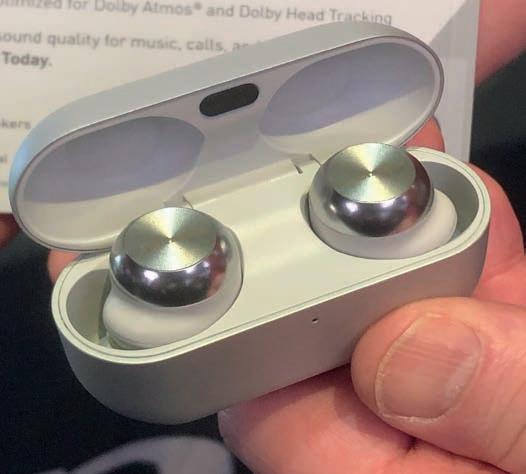
Futuresource Reports Home Audio Trending Up

Wireless speakers remain the overriding force in the market, despite a 7.5% decline in 2024, to 138 million units. Smart speakers, which account for the largest share of wireless speaker shipments, struggled as major tech vendors pulled back on investment. Yet, the segment’s Bluetooth party speakers were the clear bright spot, growing by more than 26% last year as consumers embraced communal and outdoor audio experiences.
Developing regions such as Latin America and META continue to outperform, driven by first-time buyers and growing demand for loud, affordable, high-bass solutions.
Soundbars, the mainstay of home cinema, also saw shipments slip by 7% in 2024, reflecting the hangover from pandemic-era purchases. Yet Futuresource predicts this category will see a resurgence from 2026, driven by replacement demand and innovation in immersive audio formats.
Established brands such as Samsung, LG, and Sony continue to lead the way. Meanwhile, players like Hisense and TCL are rapidly gaining ground through aggressive pricing strategies and strategic
Hi-Fi systems and AV receivers remain under pressure. Hi-Fi systems contracted by nearly 15% in 2024 and are expected to see continued double-digit declines through to 2029, as consumers set their sights on more versatile wireless and smart audio solutions. AV receivers, too, saw volumes fall by more than 13%, with ongoing caution in the
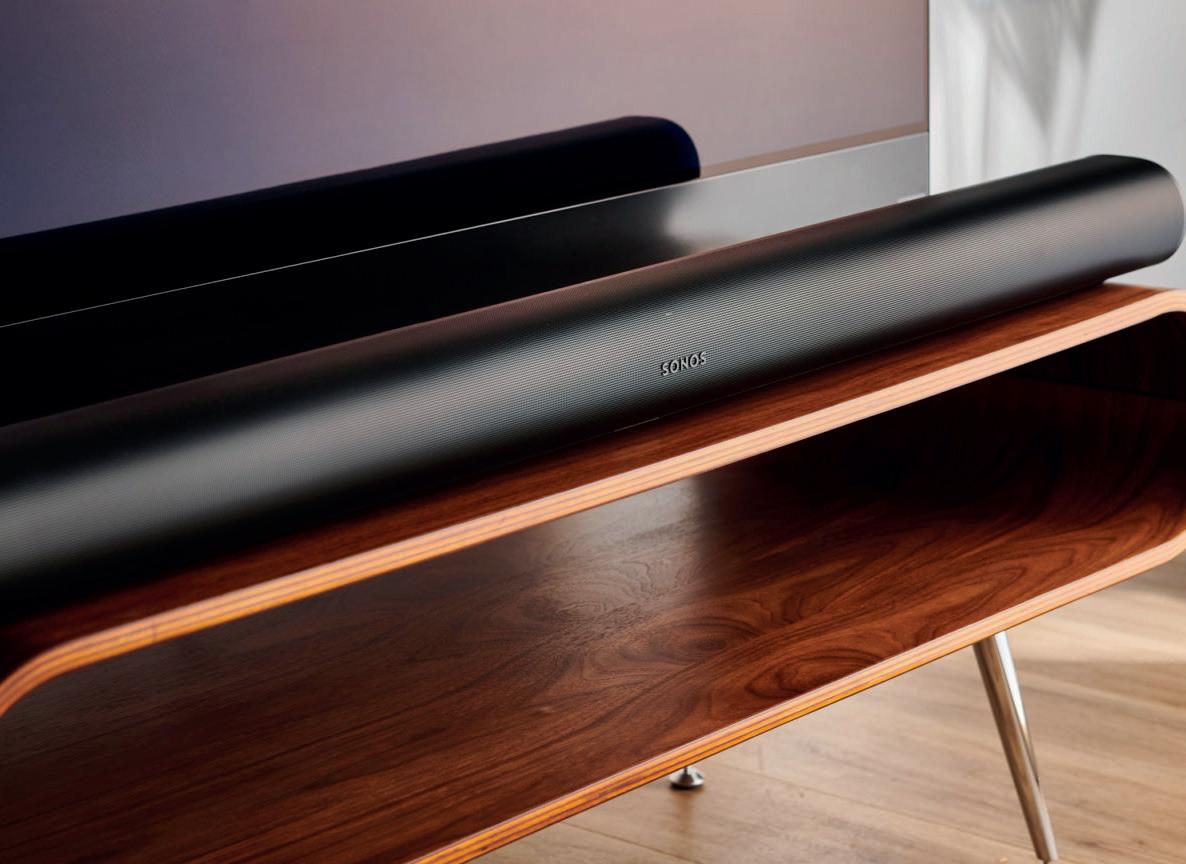
Futuresource forecasts show that global home audio shipments will grow at a modest CAGR of 1.4% between 2025 and 2029, reaching 157 million units by the end of the decade. Retail value is expected to increase slightly faster, at a CAGR of 1.8%, reflecting some stabilization in premium categories. T
his is due to consumers continuing to favor high-quality audio experiences, particularly in emerging regions where first-time ownership is on the rise.
“Looking ahead, the home audio sector is entering a new chapter of cautious optimism,” says Patel. “Nimble brands that balance value and premium innovation, adapt regionally, and prioritize the user experience will be best positioned to thrive in this new and evolving landscape.
The challenge is to combine competitive pricing with premium audio quality while responding to shifting consumer expectations. That is where the growth will come from.”
Imagining tomorrow’s challenges and opportunities—from AI shopping agents to cross-border M&A.
Retailers are inundated with operational challenges today. But as they manage tariff turbulence and other immediate concerns, they can’t afford to lose sight of the long-term evolution of the strategic landscape.
The tectonic movements gradually reshaping the industry haven’t weakened during this period of economic and geopolitical flux. If anything, they’ve gotten more powerful.
Consider “beyond trade” expansion. More and more, retailers are diversifying from traditional buying and selling of goods, gaining access to new profit pools in areas such as retail media, third-party marketplaces, financial services, and logistics.
We calculate that “beyond trade” activities accounted for 15% of sales and 25% of profit for retailers in 2024, up from 10% in both cases in 2021 (see Figure 1). At the same time, AI is giving retailers new tools to reinvent almost every element of their core retailing activities, including cost structure, customer experience, competitive differentiation, and much more.
Bain’s research across retail, consumer behavior, the application of artificial intelligence by retailers, and other fields convinces us that the industry will be comprehensively altered over the next 5 to 10 years by insistent, deep-lying changes such as these.
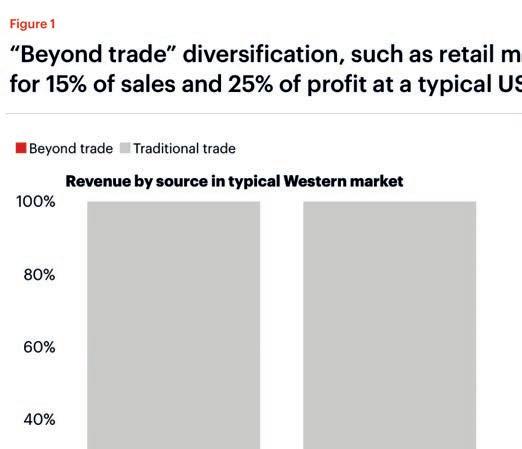
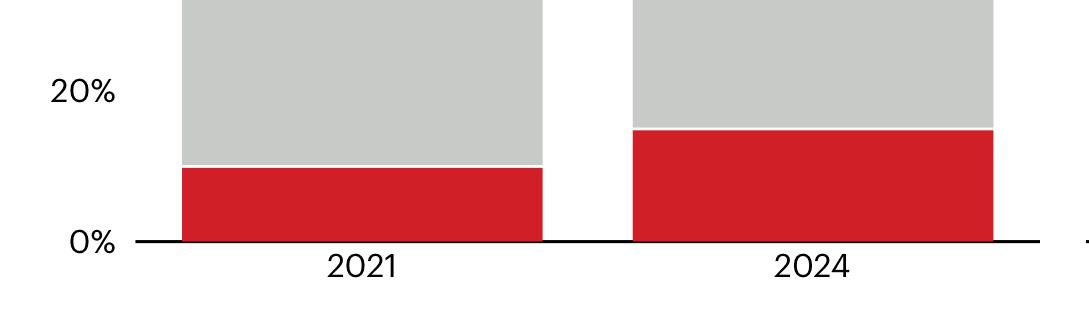


To help retailers prepare for the challenges and opportunities that will accompany this upheaval, we have constructed six provocative visions that could materialize over the next decade:
• Algorithms and robots will run your business.
• Customers will cheat on you with AI shopping agents.
• Value will become more personal and contextual.
• Grocers will become fast-moving consumer goods (FMCG) businesses.
• You might not need as many stores as you think.
• The hunt for scale will cross borders.
No one has a definitive view of the future, of course, and the evolution of the industry will vary by market, sector, format, and channel. The disruption at the heart of these visions, however, is already beginning or underway, setting the stage for what we believe can be a retail renaissance.
Algorithms and robots will run your business
Many retailers are already embracing artificial intelligence within their daily operations through innovations ranging from personalized pricing to digital twins that can simulate and optimize decisions. This is just the beginning for AI, a once-a-generation or maybe once-a-century technological disruption.
Not too far in the future, nearly every core retail process will be taken over by AI and physical forms of automation. Core activities such as
merchandising, category management, pricing, and promotions will be performed by AI models that will make many decisions on autopilot.
This shift will amount to a commoditization of many of the core retail capabilities that have traditionally offered a competitive edge to the retailers that mastered them. With new entrants able to deploy the same expertise through off-the-shelf AI tools, incumbents are unlikely to win by trying to play by the old rules. If they don’t embrace cutting-edge automation, they will miss out on huge efficiencies and speed gains. Some functions might be able to handle their current workload in half the time required today.
Overall, retailers that don’t let algorithms and robots run key parts of their business might give away a few percentage points of profit margin. Bolder rivals will grab those savings and use them to gain new traction with shoppers, through reinvestment in lower prices, for instance.
Yet even as the age of autopilot dawns, human intelligence will still be needed to make the biggest decisions as well as to build, train, and validate AI models, among other things. Tomorrow’s industry leaders will find new ways to build a fresh competitive advantage, using their human talent in areas such as strategy, product design, and customer experience. Crucially, they’ll start helping their workforce acquire the necessary skills to leverage new technology and adapt today.
Customers will cheat on you with AI shopping agents
From a consumer’s perspective, shopping agents are likely to be one of the most exciting applications of AI over the coming years. Such agents will know a consumer’s preferences well enough to research and buy goods on their behalf without having to ask for permission, anticipating what they’ll need and when they’ll need it. For many time-pressed shoppers, the convenience will be compelling, especially for lower-cost items or in areas that need more complex support, such as planning meals in line with healthy eating guidance.
For retailers, however, AI shopping agents’ automated, brand-agnostic purchasing decisions could threaten their long-standing relationships with shoppers, posing one of their biggest strategic challenges of the coming decade.
Executive teams need to start planning today for the likely impact of AI shopping agents going mainstream. How would their sales and profit hold up if 20% to 30% of shoppers regularly devolve their purchasing decisions to AI agents, say? Retailers must also rethink how they go about attracting shoppers—for instance, information about a product will need to be structured in a way that makes it a top pick for AI agents (rather than optimizing such data for conventional search engines alone).
It’s early days, but we see two strategic paths emerging. A retailer could try to ward off the disintermediation threat by building its own AI shopping agent, which would require deep knowledge of the consumer across all
aspects of their lives, including shopping, banking, travel, work, and leisure. Alternatively, retailers (particularly grocers) could position themselves with AI shopping agents as the go-to choice for replenishment shopping by nurturing a formidable compatibility with agents’ automated decision making.
With discount chains set to continue their rise, the pressure to keep prices low isn’t likely to abate in the coming decade. Fortunately for retailers, advances in technology are making new efficiencies possible, giving executive teams more room to cut costs and reinvest savings into winning on price (see the Bain Brief “Retail Efficiency Rewritten: New AI Tools Demand a Second Look at Your Costs”).
Of course, value has always meant more than just price; it can mean convenient delivery, the right product recommendation at exactly the right moment, and a host of other considerations. This broader definition of value is likely to become more personalized and contextually relevant over the coming decade. For example, what a shopper values on a Monday morning when they are rushing to get to work is different than what they value on the weekend when enjoying leisure time with family and friends.
Today’s digital tools are already helping retailers to discern better the different moments and shopping missions that make up a consumer’s life, providing them with much more personalized and relevant offers. Over the next few years, those tools are likely to become ever more powerful, making the challenge of serving a customer’s changing needs in real time as urgent as meeting their expectations on price. The retailers that excel at this will have great data (going well beyond transaction and loyalty data) that can offer a wraparound view of a consumer’s behavior as well as the data strategy and capabilities to harness it (see the Bain article “Data Strategy in Retail: The Gen AI Tipping Point”).
Grocers will become fast-moving consumer goods businesses
According to the latest research by Bain’s Global Consumer Lab, nearly half of grocery shoppers in the US and Europe now seek out private label products, rising to almost 60% in Spain (see Figure 2). Private label’s grocery market share hasn’t fully caught up with that enthusiasm: It varies from 20% in the US to between 30% and 50% in Europe. That share is growing enough, however, to make it worthwhile for executive teams to consider edgier scenarios in their strategic planning. For instance, what if tailwinds propelled private label to as much as 70% share in its strongest markets by 2035?
At that point, the boundary between retailers and FMCG manufacturers would be very blurry, with many grocers depending more on sales of their exclusive private label assortments (spanning categories and price tiers) than traditional third-party goods. But it isn’t just grocers that are set to overlap more with their suppliers. In categories such as apparel and home improvement tools,
retailer-branded items should continue to thrive as consumers seek more value.
Overall, this boundary-blurring should provide opportunities for retailers. In the postglobalization era of supply chain fragility, making more of what you sell ought to improve resilience. Done well, private label will also offer retailers powerful differentiation in the form of must-have, exclusive products that can both pull in human shoppers and command the attention of AI agents.
But one of the challenges of the next 10 years for retailers will be to find a way to exploit the opportunities offered by private label brands without putting undue strain on their relationship with existing suppliers.
You might not need as many stores as you think
Many non-food retailers have closed stores in recent years and are likely to continue to do so. The correction of overcapacity is set to enter a new phase over the next decade, however, with grocers playing a more substantial role as they seek to optimize their capital allocation to serve the most urgent investment priorities.
Consider the US, where grocers have accelerated store openings since the Covid-19 pandemic at the same time as store space productivity went into reverse. That’s not a great platform for further investment in physical expansion. On the contrary, we calculate that the US grocery market would need to trim its retail space by about 10% and its store count by about 15% to return to peak historic productivity levels.
When changes in consumer behavior and other dynamics are also factored in, we suspect the coming wave of store closures will be more extensive than some executive teams expect. There will be exceptions, of course. Closures are likely to be most necessary for middle-market retailers. In grocery, discounters will probably keep adding to their physical store networks.
As closures progress, the role of remaining stores will need to evolve to reflect changing consumer behavior, the growth of e-commerce (with more stores becoming micro-fulfillment hubs, for instance), and the growth opportunities available outside traditional retailing activities.
With all this in mind, today’s executive teams should consider radical what-if scenarios involving substantial reductions in selling space and store numbers. How many stores are really needed to maintain market share? Which would be most worth keeping?
It can take years to close a store in a financially sound way, not least because of the capital expenditure required by such decommissioning. Grappling with extreme scenarios today can help retailers prepare better for this long-term challenge, which will also require executive teams to remain open to alternative uses for space, such as franchising or leasing to third-party traders.
The hunt for scale will cross borders
At Bain, we’ve long said that retailers need a different type of scale to succeed. Retailers (particularly grocers) have traditionally thrived if they possess local scale. But that local heft, while remaining vitally important, isn’t enough to fund the huge digital
and data investments the industry must make nor the price investments also needed to keep up with consumers’ expectations and competitive pressures.
Instead, retailers need to find a way to augment their local market strength with the sort of absolute scale that has propelled the biggest players in the industry. Amazon, Walmart, and Costco have consistently captured 15% to 50% of all retail growth in the US in recent years. That success owes much to their strategic and operational skill, but it’s also a product of their ability to invest more than smaller rivals because of their sheer size. Absolute scale is also allowing some big players to use M&A to turbocharge their capabilities beyond core retailing.
The current environment might seem hostile to retailers that want to build their own absolute scale. Domestic consolidation has been challenged recently by regulators in the US, while the dominant theme in international trade is one of tariff-led fragmentation. We wouldn’t be surprised, however, to see a rise in cross-border mergers and acquisitions in retail to add scale, create a more compelling return on technology investment, and access new markets. Even if procurement synergies were the only scale benefit in crossborder M&A—and they won’t be—such deals could still stack up given how procurement tends to account for 70% of a retailer’s costs.
Retailers will also have the option of building virtual scale through alliances with other players that stop short of a takeover or merger. But whichever form it takes, scale will still rule retail in 2035.
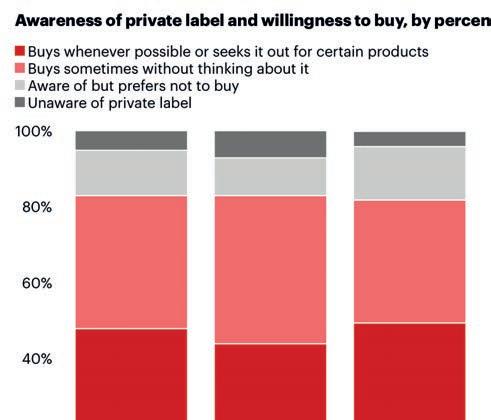
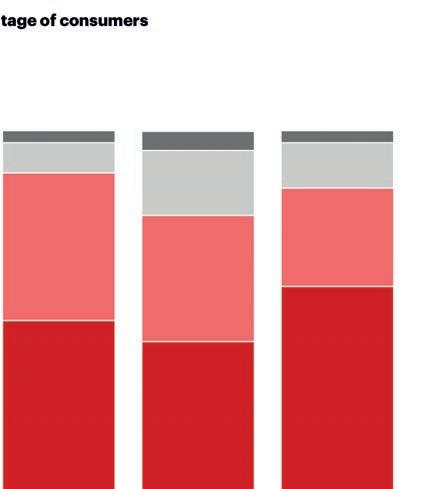

Retail is on the cusp of a profound reinvention that requires bold choices from executive teams over the next decade. Retailers need to embrace AI while retaining human judgment, personalize relevant value at scale, redefine the role of stores and networks, and build for scale beyond borders. The prize will be big for those that act early and reinvest strategically even as they mitigate today’s margin pressure. They won’t just weather the coming change; they’ll help shape a new era of retail excellence.
UK Ecomomics by Medlock & Thames
Market Focus: Q4 2025, Inflation and Rates Take Centre Stage
As 2025 enters its final quarter, investors are weighing the outlook for the world’s three most watched currencies. The dollar remains underpinned by cautious Federal Reserve policy, the euro is edging higher but still shadowed by Europe’s political and economic strains, whilst sterling looks more fragile amid the UK’s stubborn inflation and weak growth.
USD: Steady With A Slight Edge
As we move into the final months of 2025, the US dollar looks set to hold its ground. The Federal Reserve has shown little rush to lower interest rates, against a backdrop of easing inflation and high consumer spend. On top of that, the dollar still benefits when global investors get nervous owed to its standing as the world’s preferred safe place for money. That said, worries over America’s rising debt and the chance of rate cuts next year could limit further gains. Overall, the dollar is more likely to end the year firm than falling but without the strong upward surge we’ve seen in recent years.
EUR: Edging Upward But Facing Hurdles
The euro has a decent chance of rising slightly against the dollar in late 2025. Inflation across the Eurozone is slowly moving toward the European Central Bank’s target, which could help support the currency now the ECB has officially ended its recent rate-cutting cycle. But political tensions in parts of Europe, along with shaky growth and energy worries, could cap those gains. The euro is likely to strengthen moderately, albeit against the backdrop of unrest in Ukraine.
GBP: More Fragile With Limited Upside
The British pound is the weakest of the three major currencies going into year-end. The UK economy is struggling with slow growth and persistent inflation, leaving the Bank of England stuck between keeping rates high and cutting to support activity. Recent bond market pressures due to concerns over government spending and borrowing are also hobbling GBP recovery. Expect a volatile quarter driven by economic data and the winter budget announced on November 26th.


Summary
Several events could quickly shift trends. A surprise jump in US inflation could force the Fed to hold rates higher for longer, giving the dollar another boost. Energy shocks or political turmoil in Europe could weigh heavily on the euro. In the UK, any new spending plans or a credible deficit-reduction push could move sterling sharply in either direction.
Trading ranges are anticipated to remain tight and ensuring a competitive rate when entering the market must be a priority. Medlock & Thames offers a free health-check of your current setup and can quickly qualify how much your foreign exchange transfers really cost.
Asia’s largest electronics marketplace returns with thousands of ODMs and OEMs showcasing the next wave of connected devices. Expect strong focus on Bluetooth LE Audio, Auracast, Matter-compatible smart home products, and AIenabled devices, alongside competitive ODM-ready designs. For Western brands, HKEF remains the gateway to Asia’s supply chain and a launchpad for early product negotiations.

The world’s most influential tech event sets the stage for global launches, strategic partnerships, and categorydefining innovations. CES 2026 will spotlight AI and robotics, automotive technology, sustainable design, and advanced audio ecosystems. For brands, CES offers unparalleled visibility and the chance to secure international distribution deals.
13 -16 October 2025
6 - 9 January 2026
About 2Twelve 12
With more than 20 years of experience in the consumer electronics sector, 2Twelve has successfully managed and developed numerous audio brands.
In recent years, we have concentrated on supporting thirdparty brands with their industrial design, mechanical, electronic, and software engineering needs, creating innovative, industryleading products that drive business growth and delight customers.
• Our Services Include
• Strategic Business Planning
• Product Road-mapping
• New Product Development & Industrial Design
• Proof of Concept Prototyping
• Packaging Design Solutions
• Regulatory Compliance & Certification
• Market Research & Insights
• Product Optimization & Refinement
• Production & Supply Chain Coordination
• RFQ Evaluation & Manufacturer Selection
• User Manual & Quick Start Guide Creation
Our holistic approach steers projects from ideation to production. With a small team in the UK and Hong Kong, we excel at identifying market opportunities and developing distinctive products, all while navigating the challenges of launching in a competitive marketplace.
Developing Products Is Not Easy!
We assist in selecting the right manufacturer for the project and manage the entire development process to ensure the delivery of fully tested and certified products. We help establish robust quality management processes and support the transition from pilot runs to mass production.
Our expertise extends to market analysis and over the years we have published hundreds of market intelligence reports. Insert image 2T report
With expertise across design, technology, and manufacturing, 2Twelve supports partners in bringing new audio products to life.