Ca meroon, M a mbil a
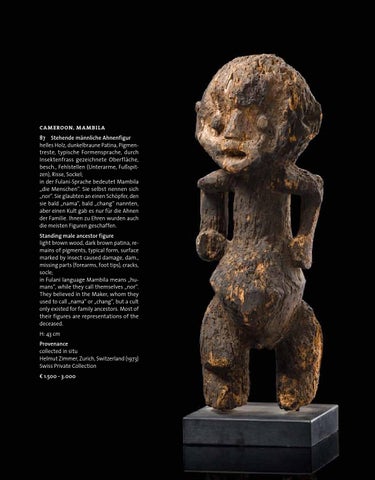
87 Stehende männliche Ahnenfigur helles Holz, dunkelbraune Patina, Pigmentreste, typische Formensprache, durch Insektenfrass gezeichnete Oberfläche, besch., Fehlstellen (Unterarme, Fußspitzen), Risse, Sockel; in der Fulani-Sprache bedeutet Mambila „die Menschen“. Sie selbst nennen sich „nor“. Sie glaubten an einen Schöpfer, den sie bald „nama“, bald „chang“ nannten, aber einen Kult gab es nur für die Ahnen der Familie. Ihnen zu Ehren wurden auch die meisten Figuren geschaffen. Standing male ancestor figure light brown wood, dark brown patina, remains of pigments, typical form, surface marked by insect caused damage, dam., missing parts (forearms, foot tips), cracks, socle; in Fulani language Mambila means „humans“, while they call themselves „nor“. They believed in the Maker, whom they used to call „nama“ or „chang“, but a cult only existed for family ancestors. Most of their figures are representations of the deceased. H: 43 cm Provenance collected in situ Helmut Zimmer, Zurich, Switzerland (1973) Swiss Private Collection € 1.500 - 3.000
– 85 –