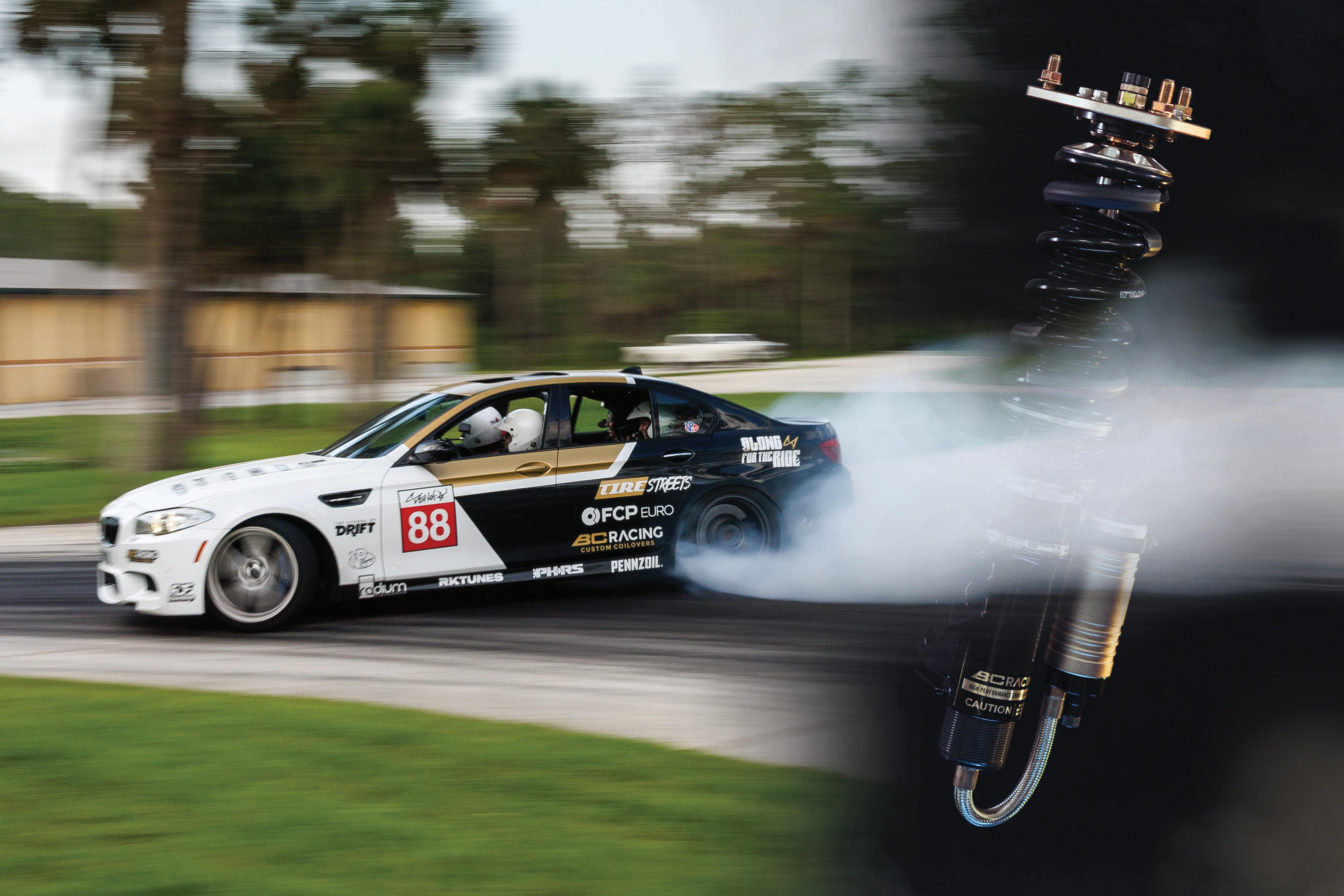
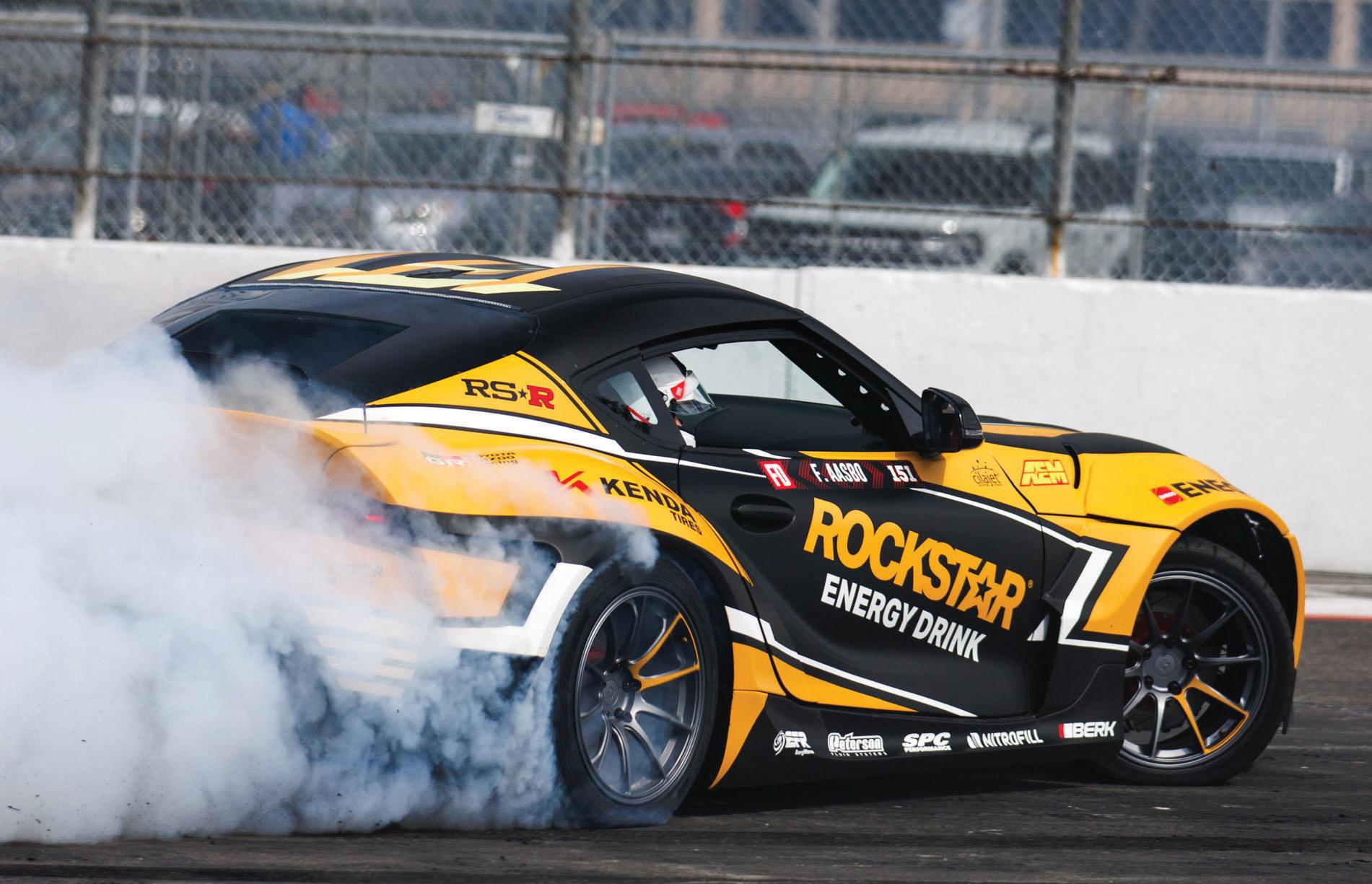
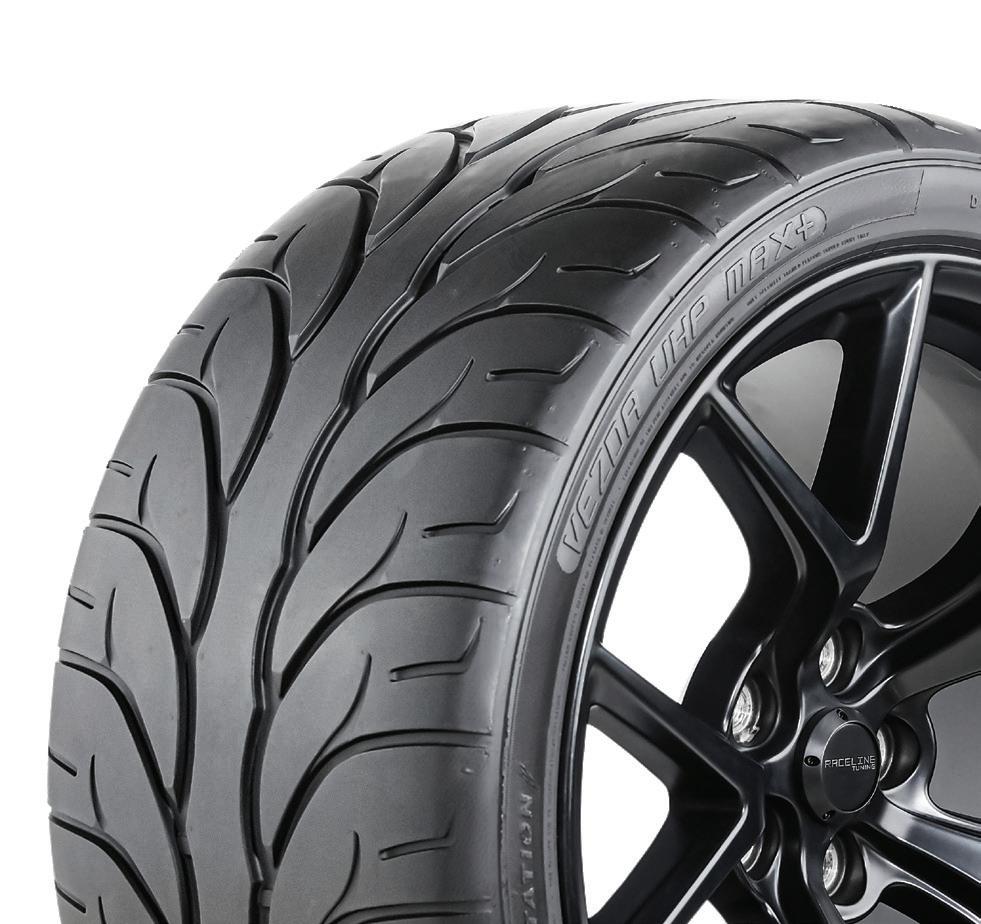
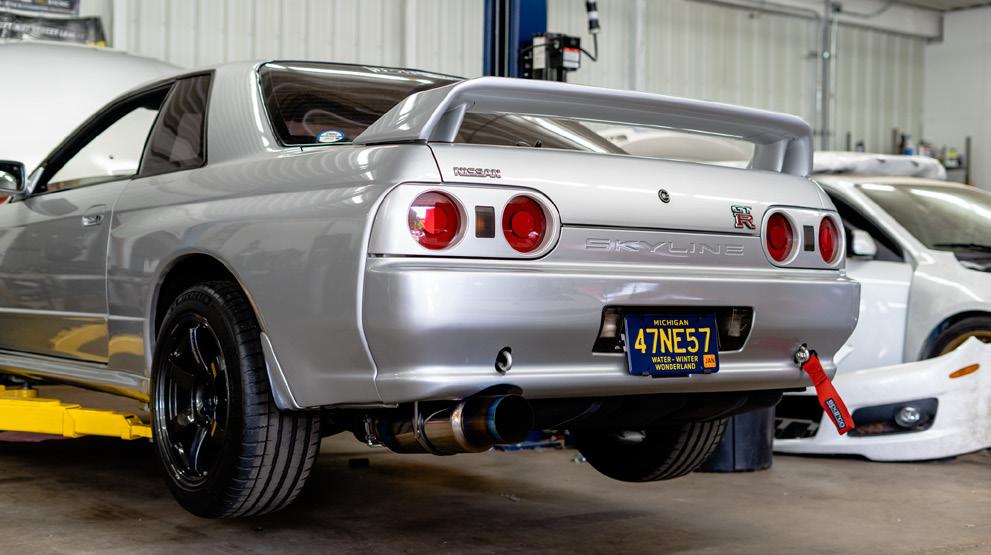
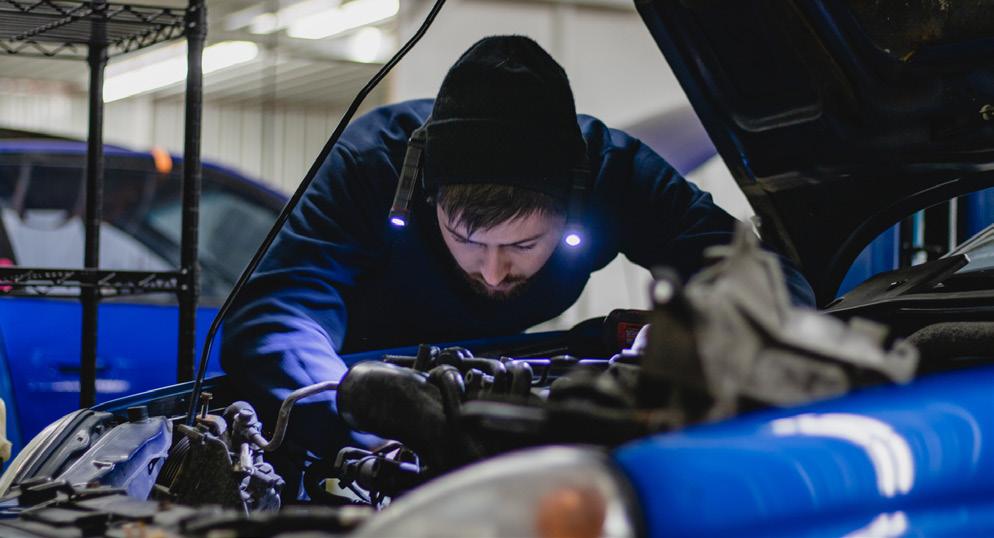
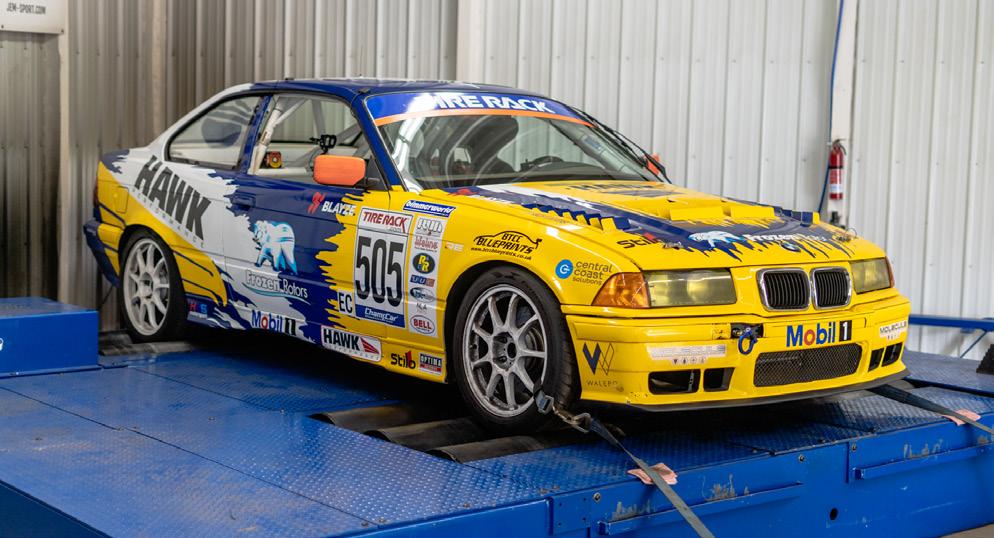
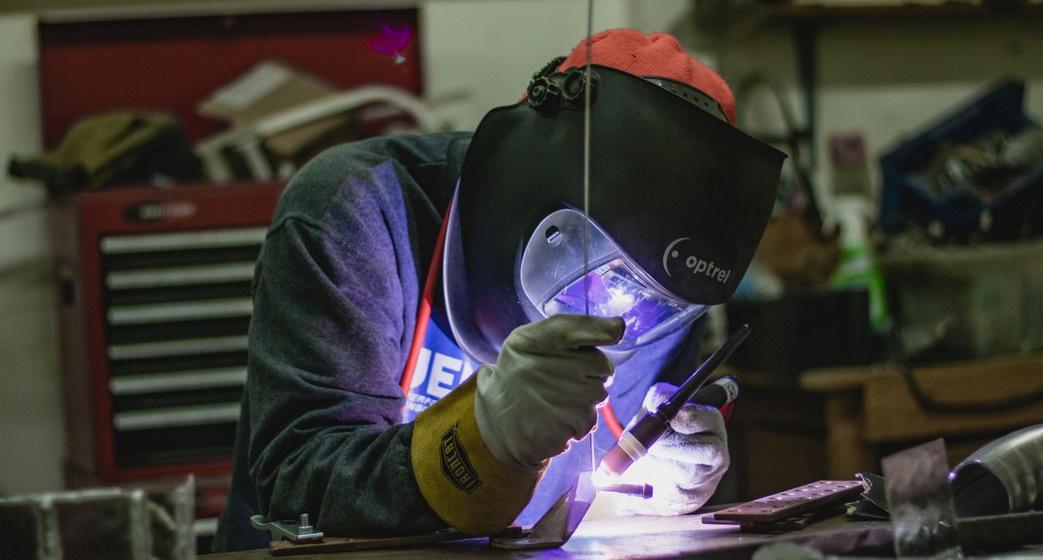
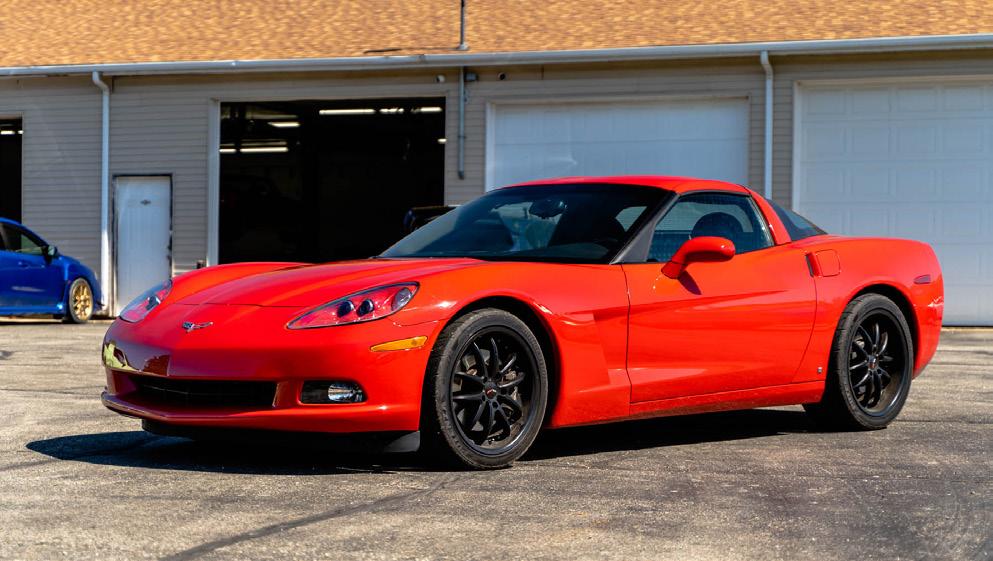
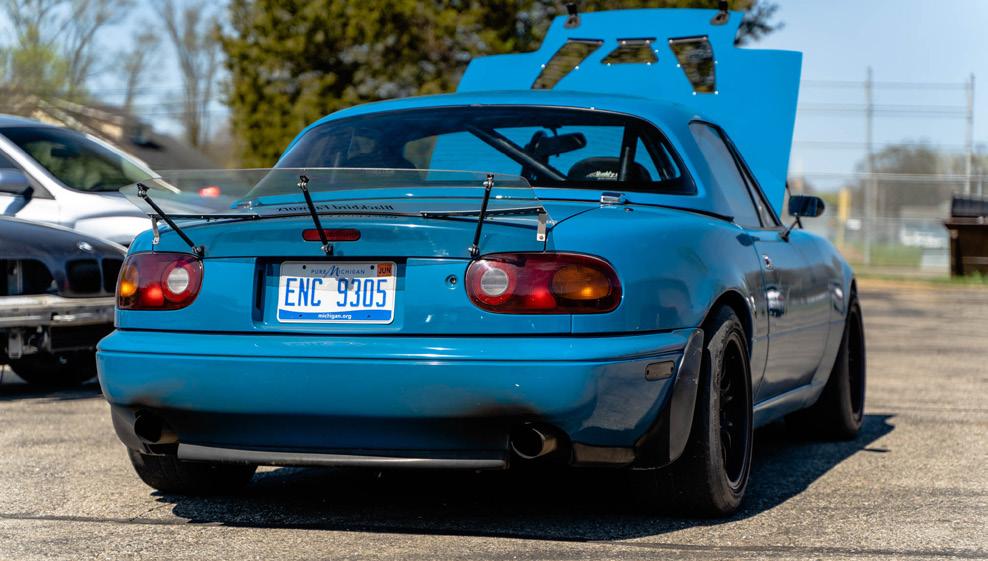
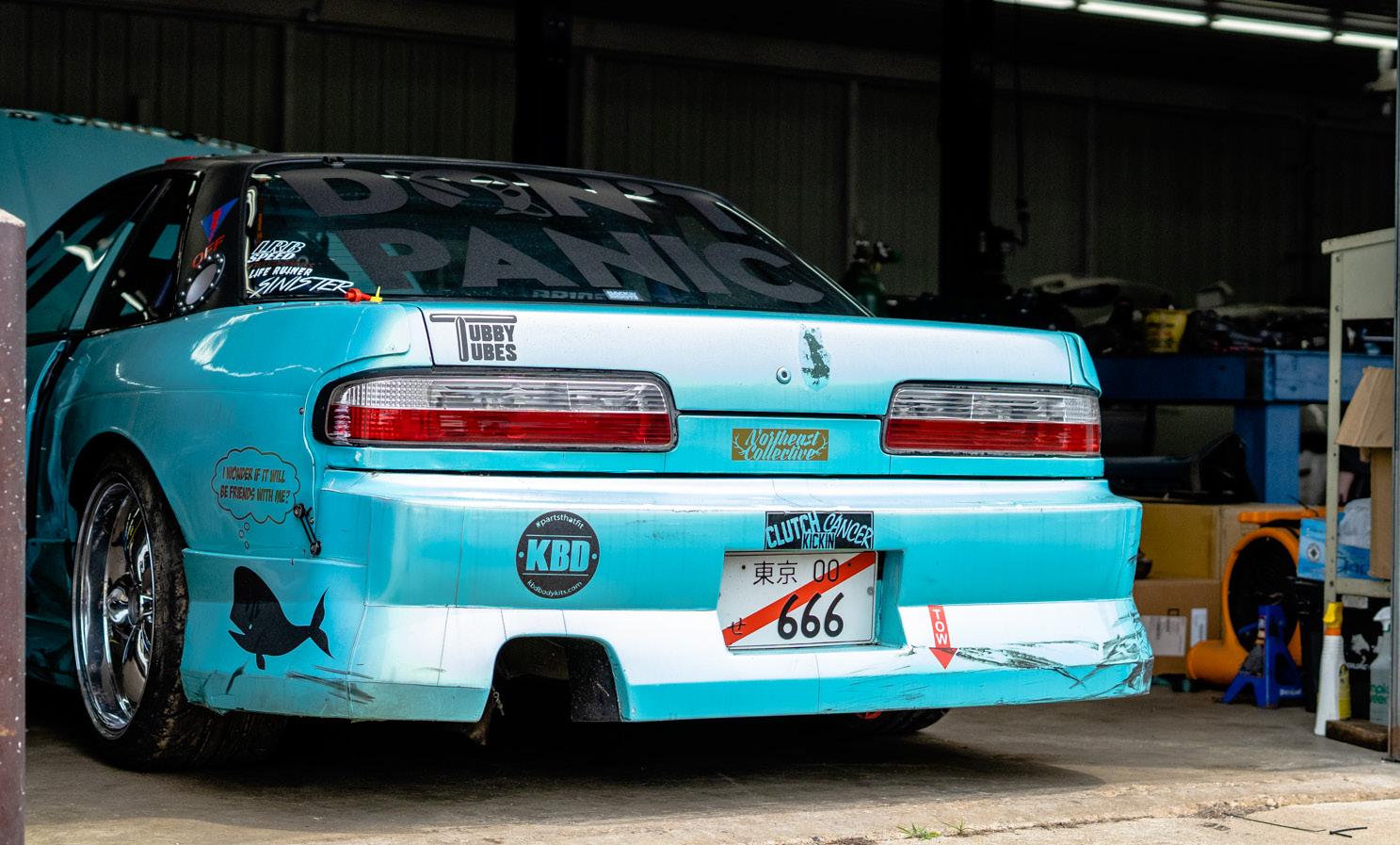
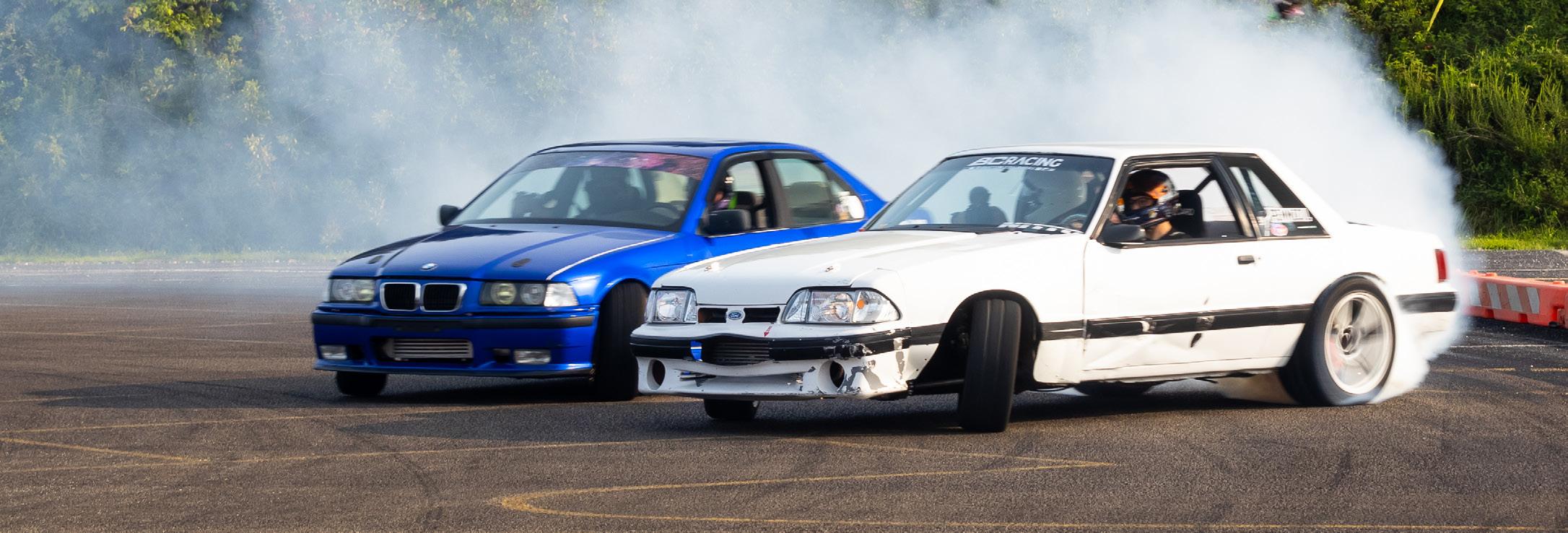
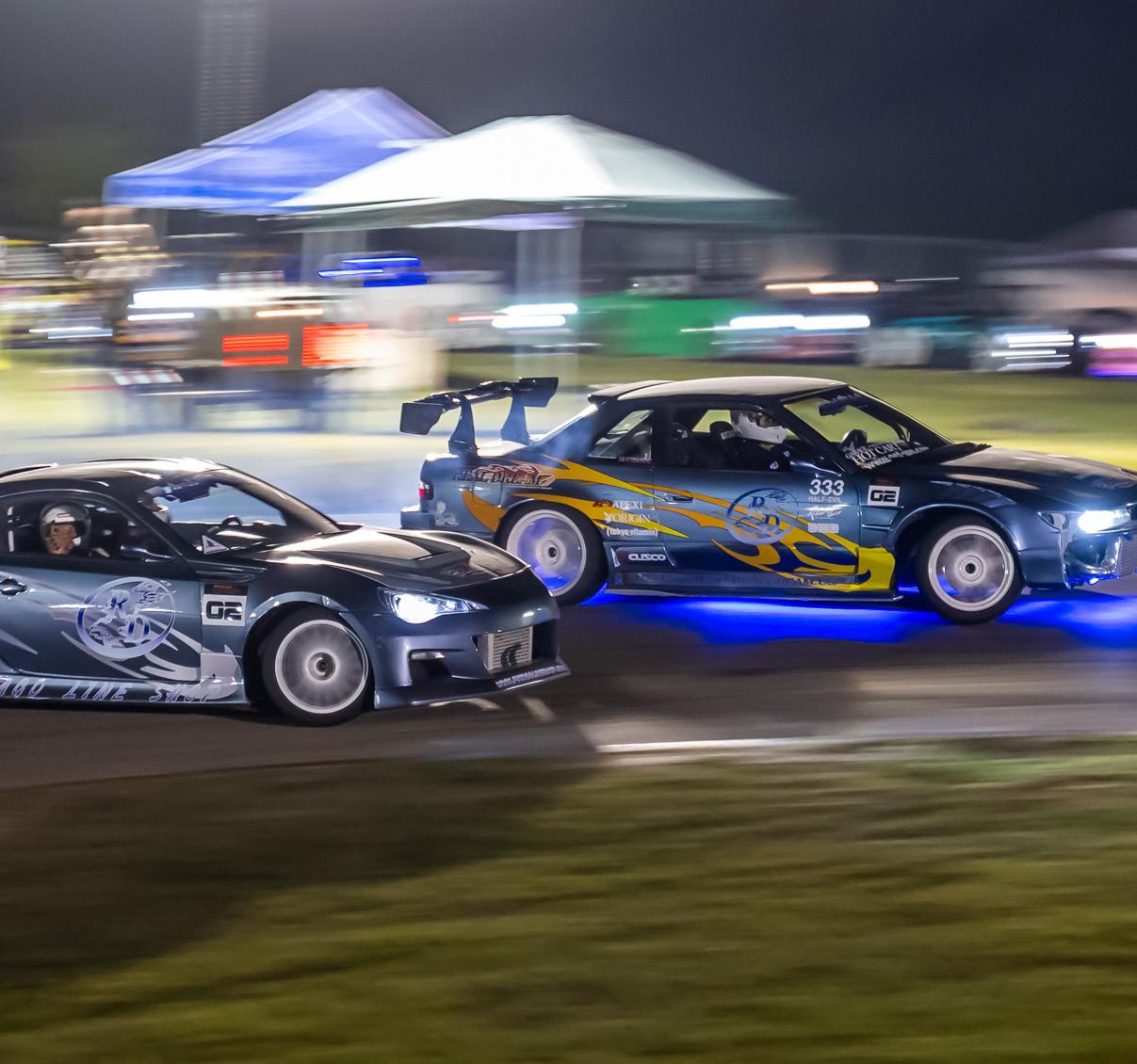
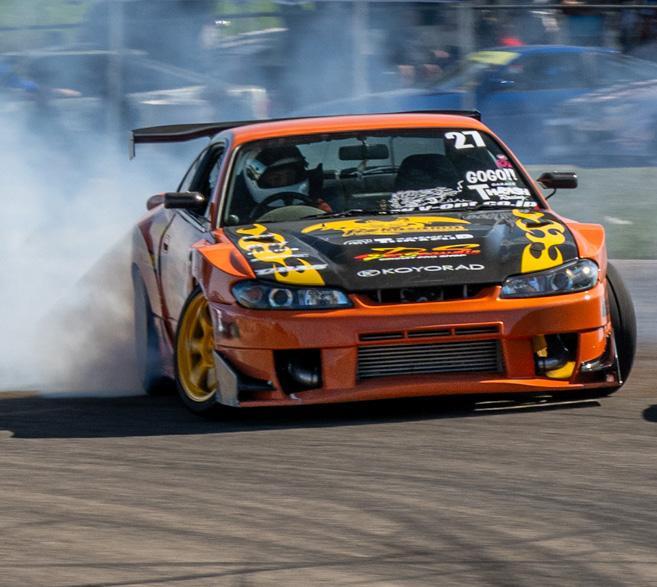
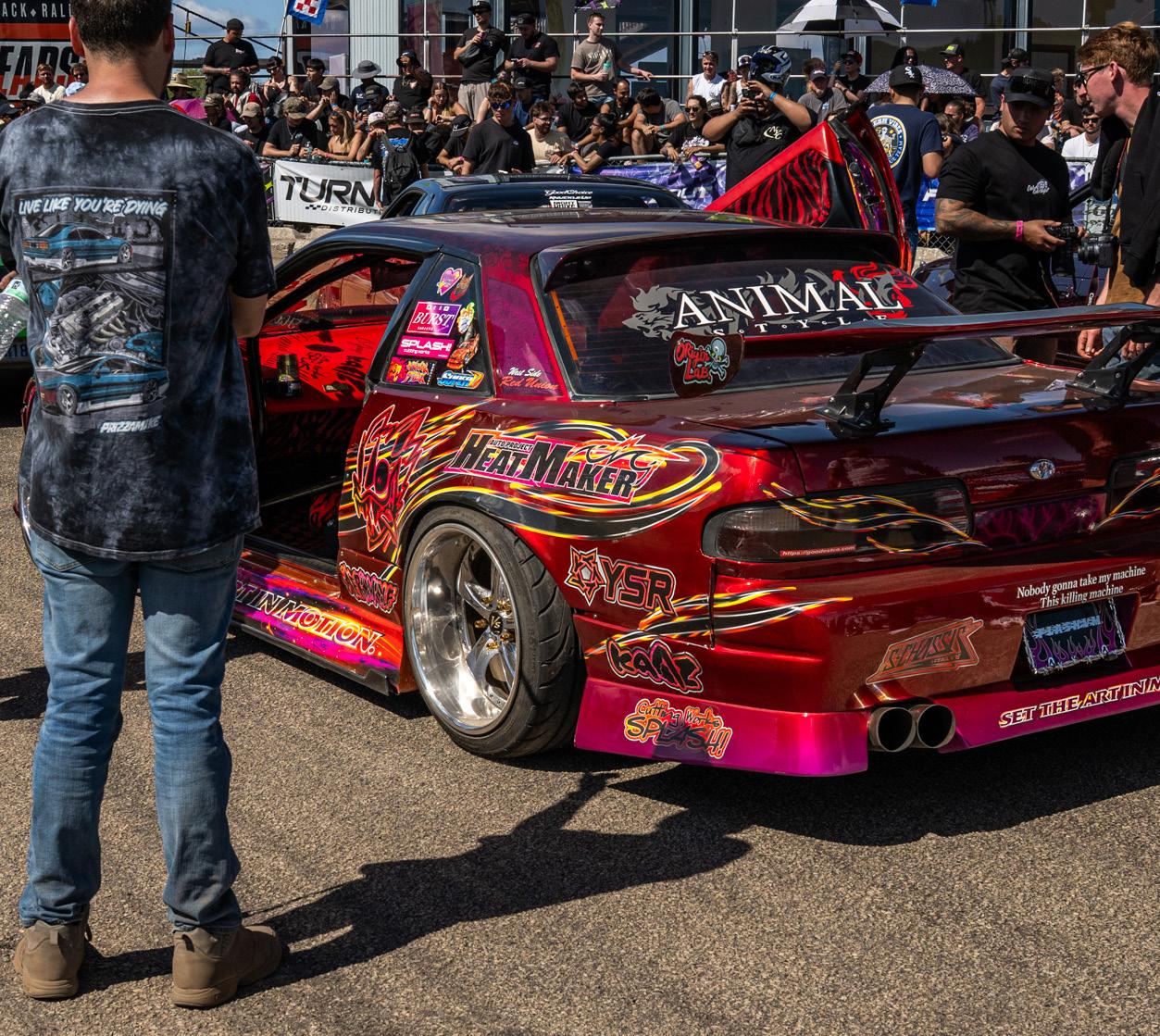
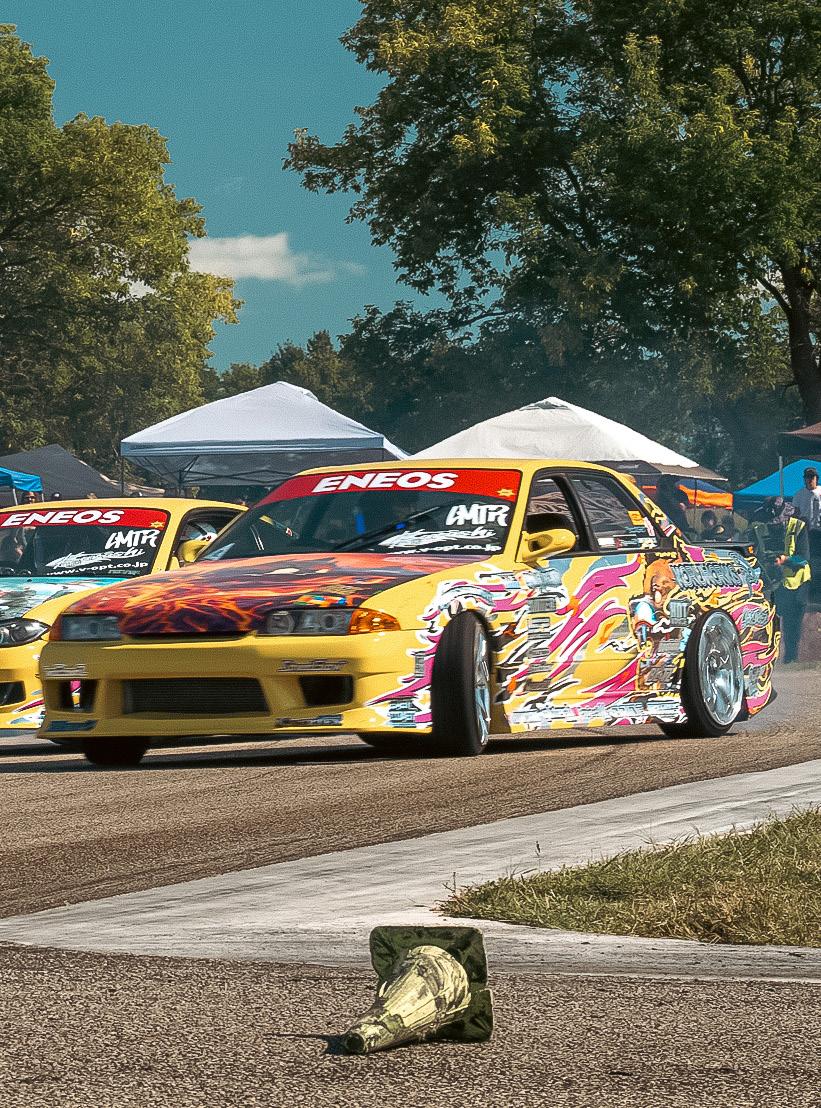
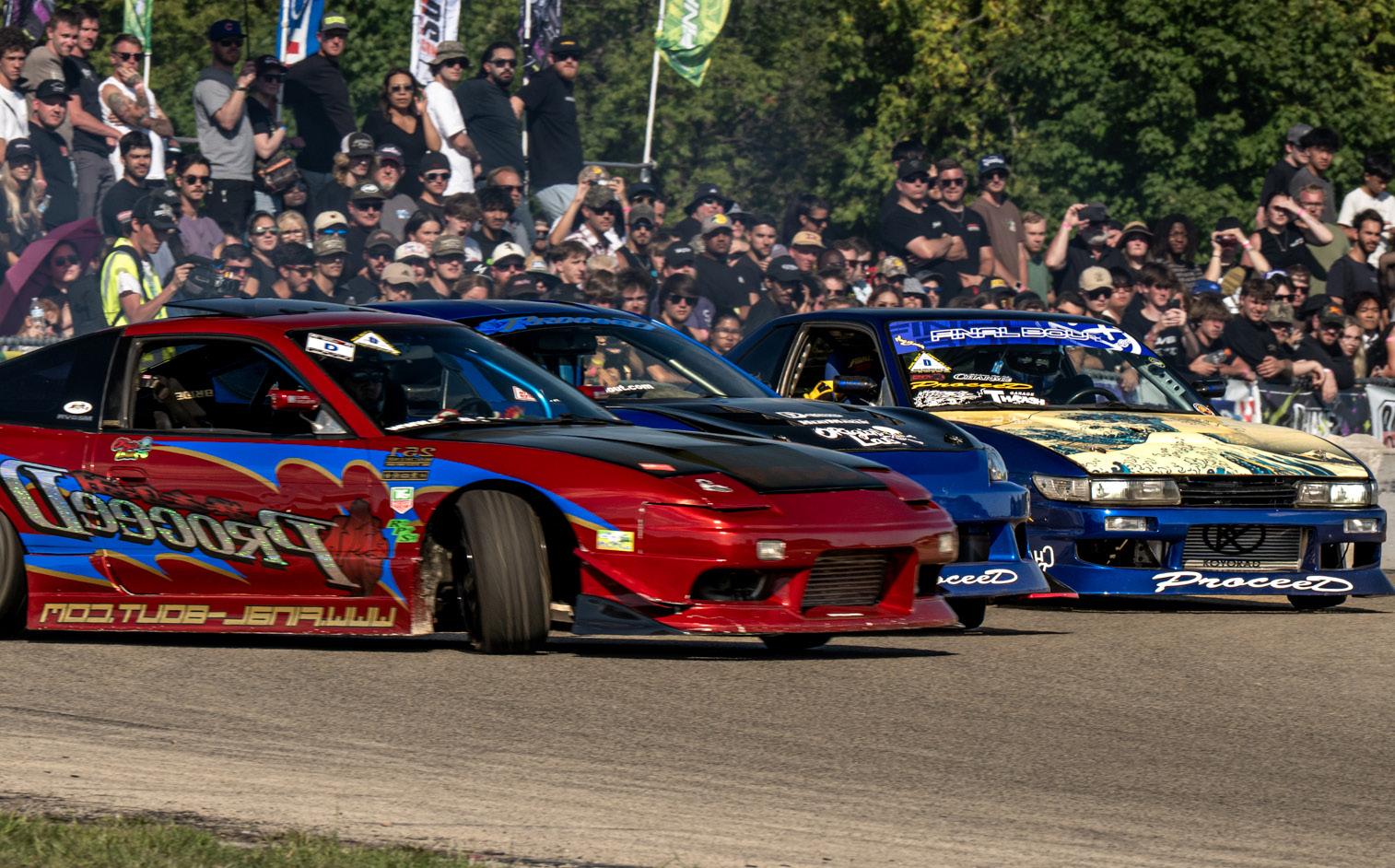
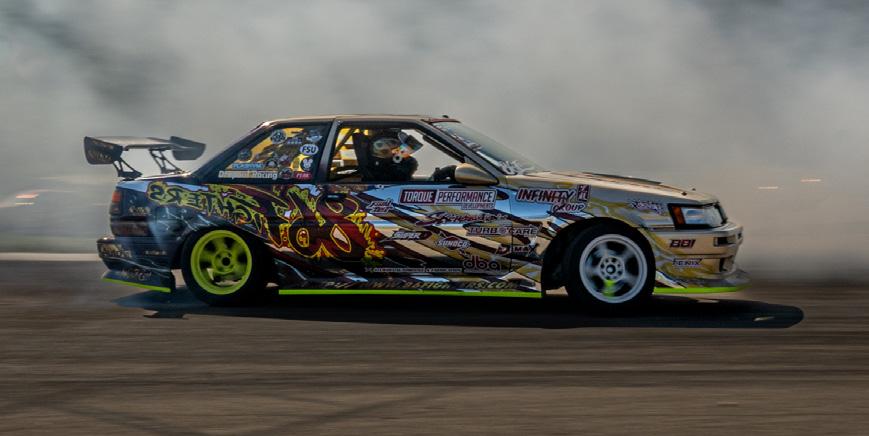
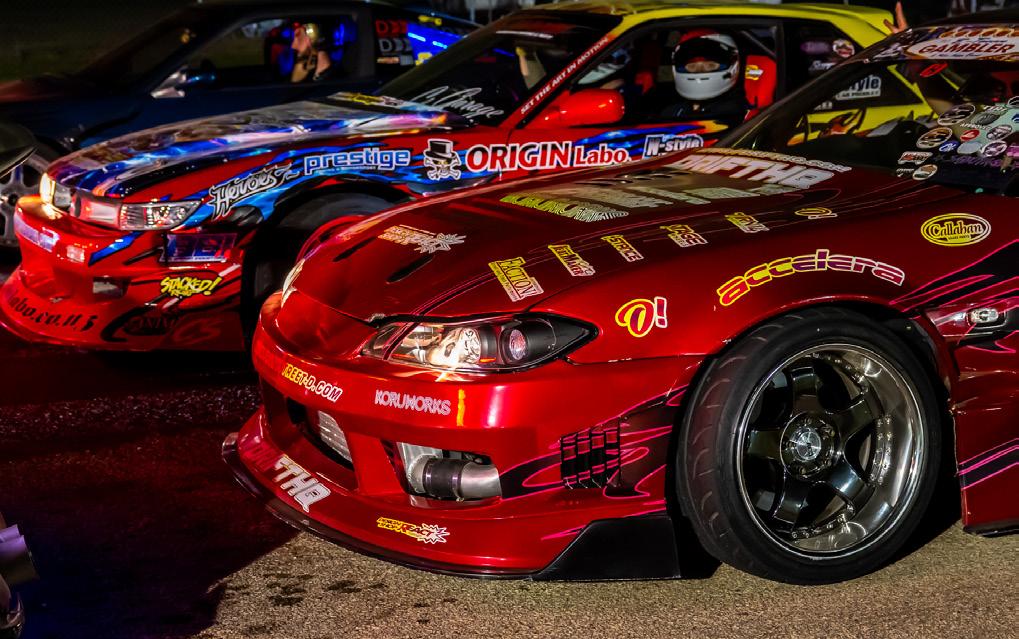
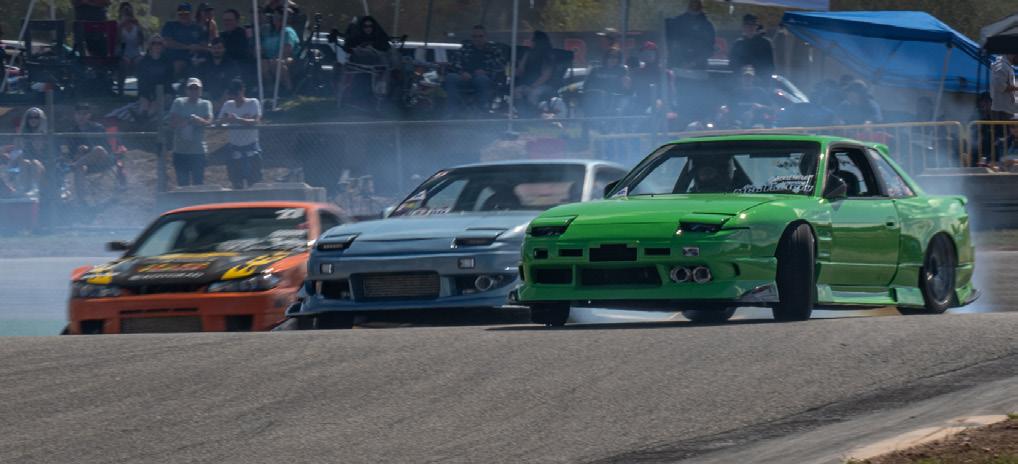
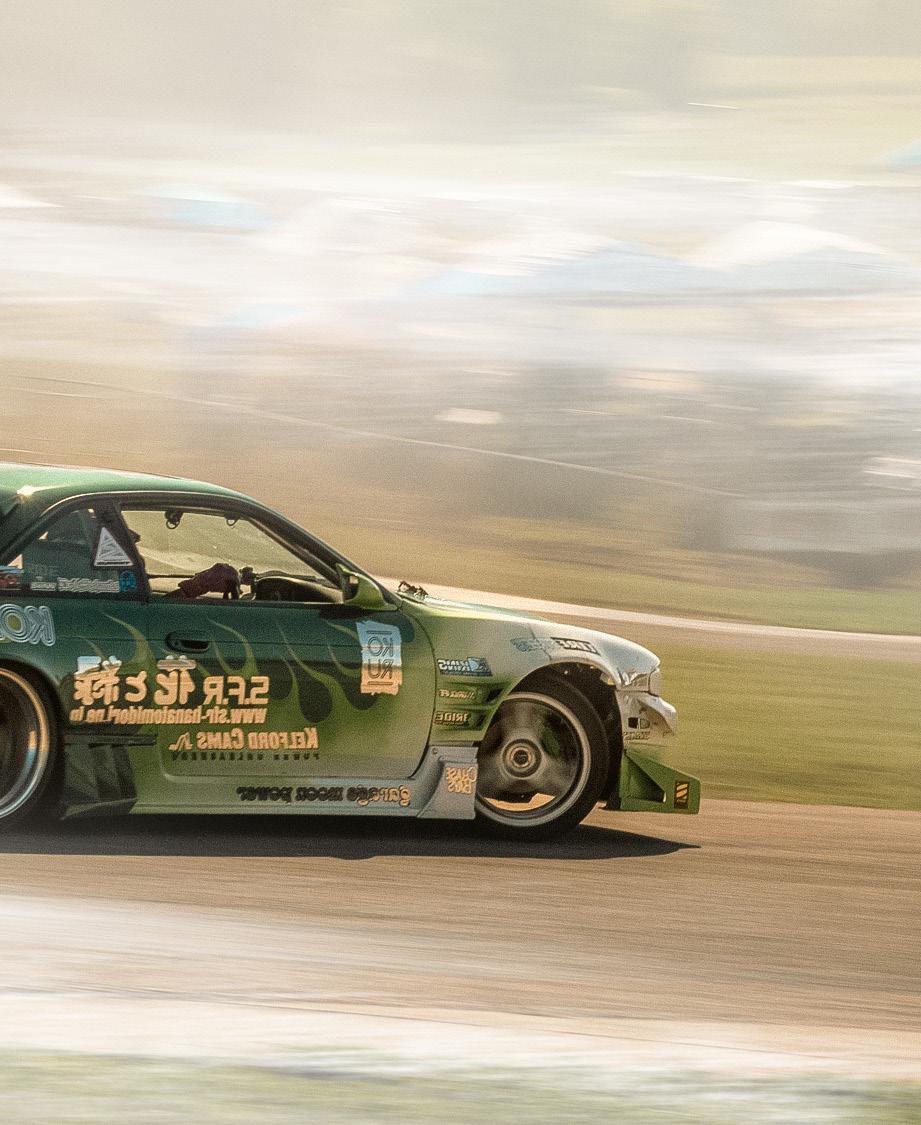
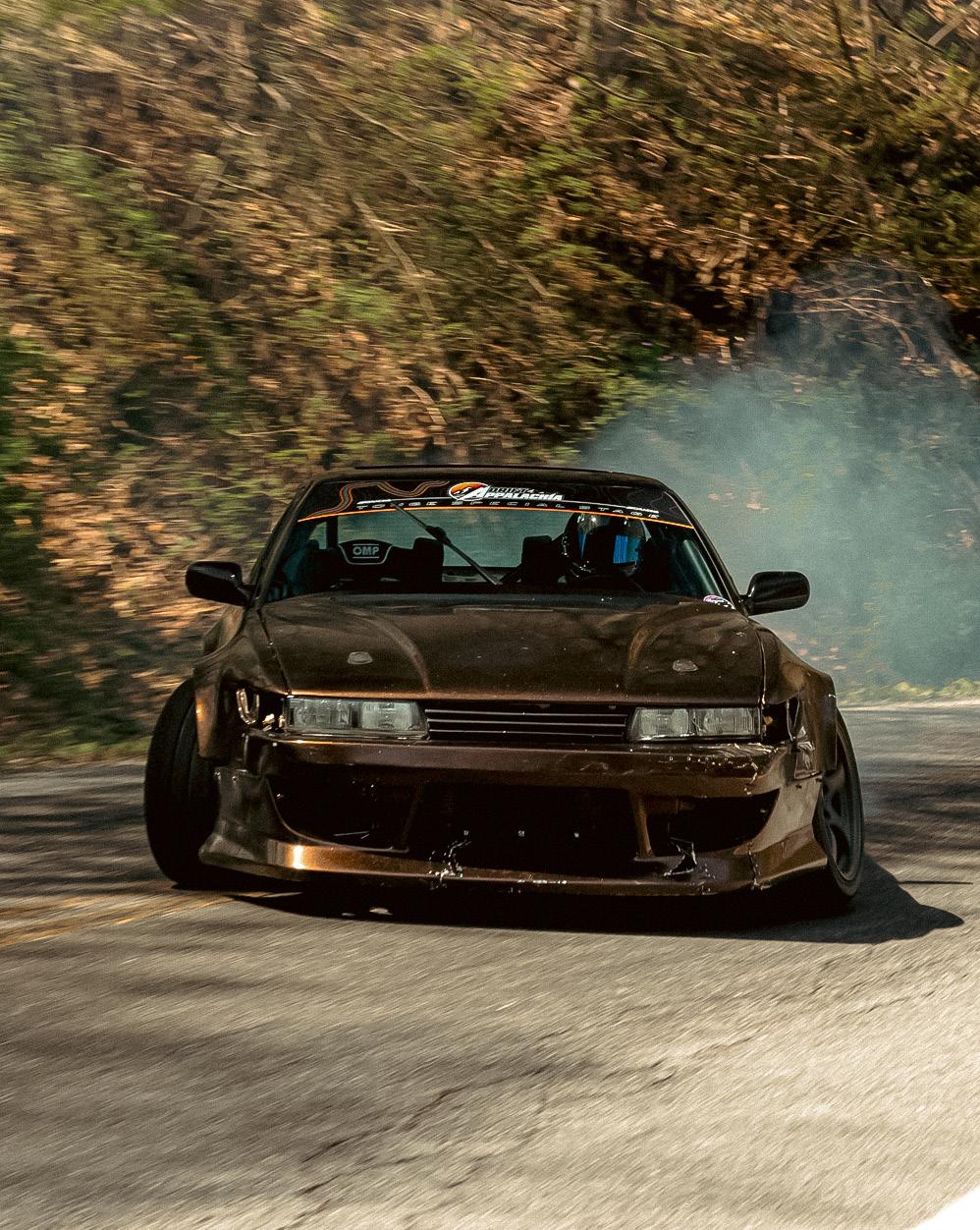
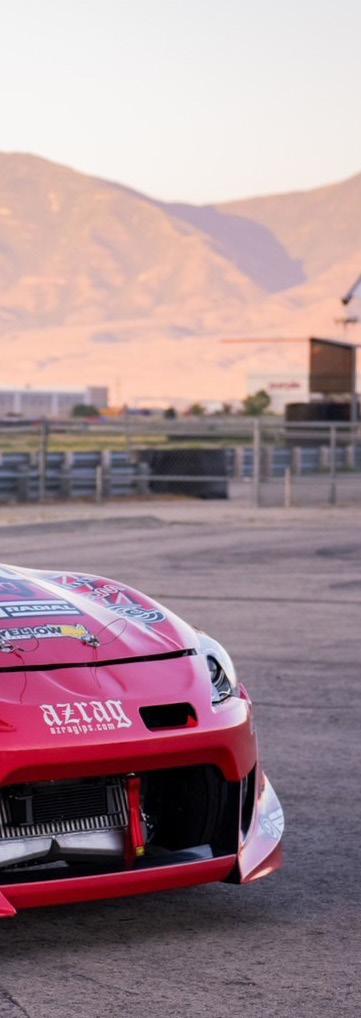
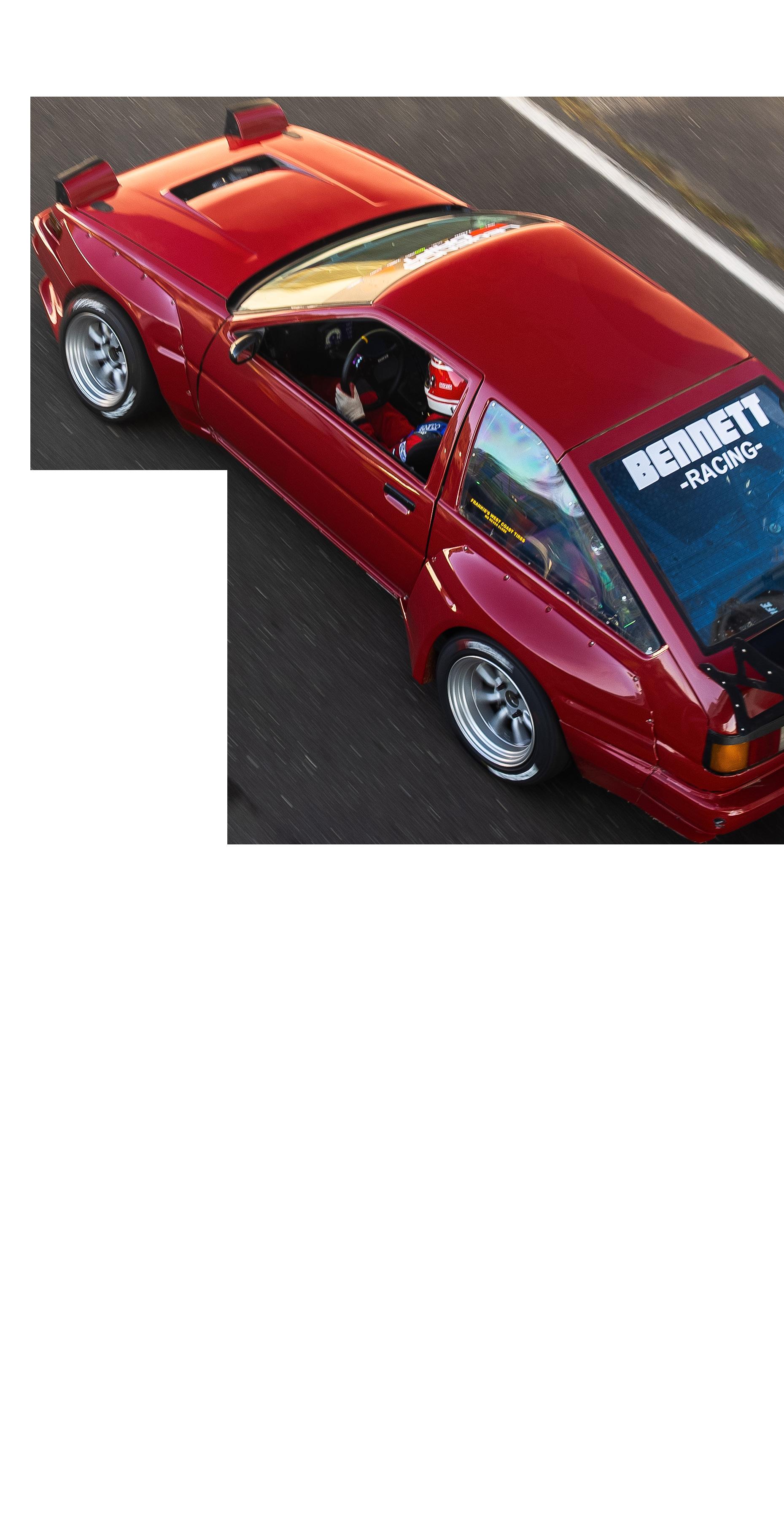
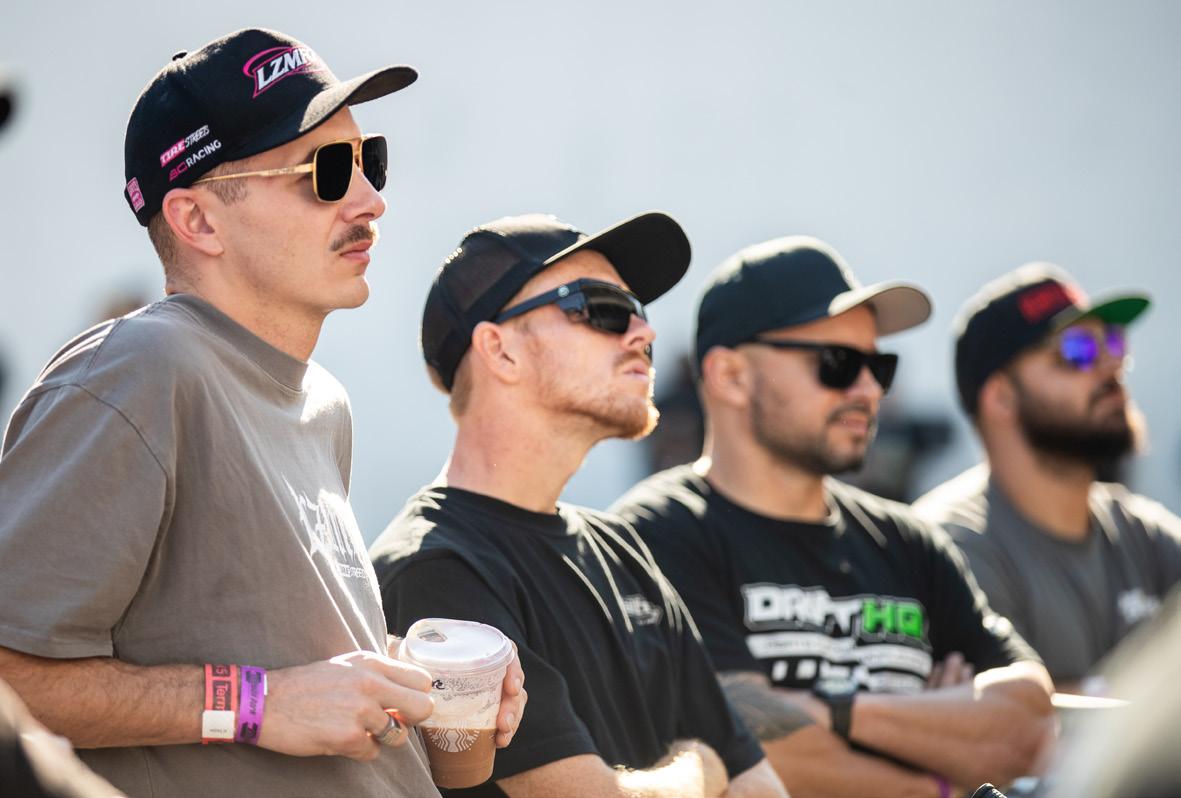
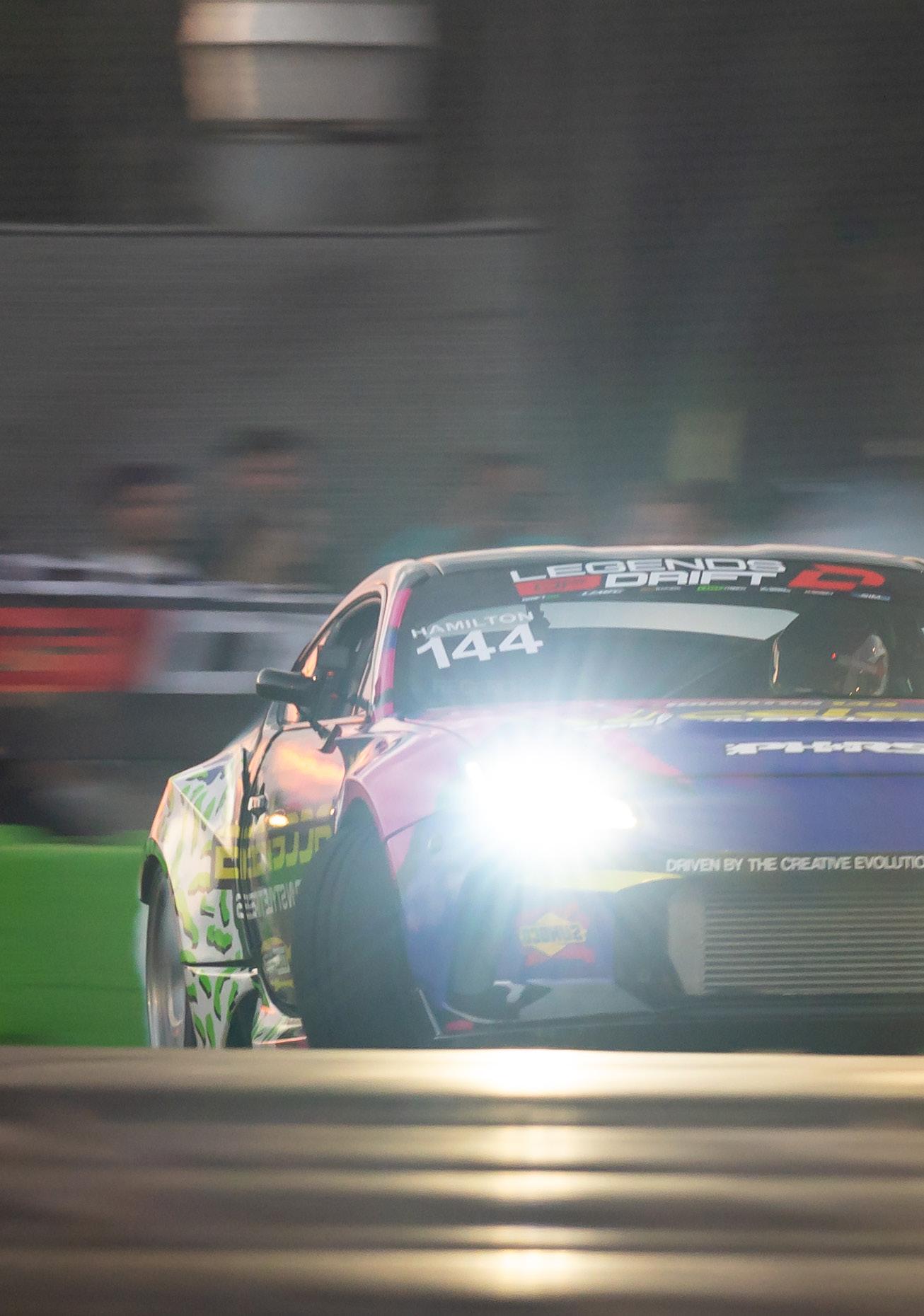
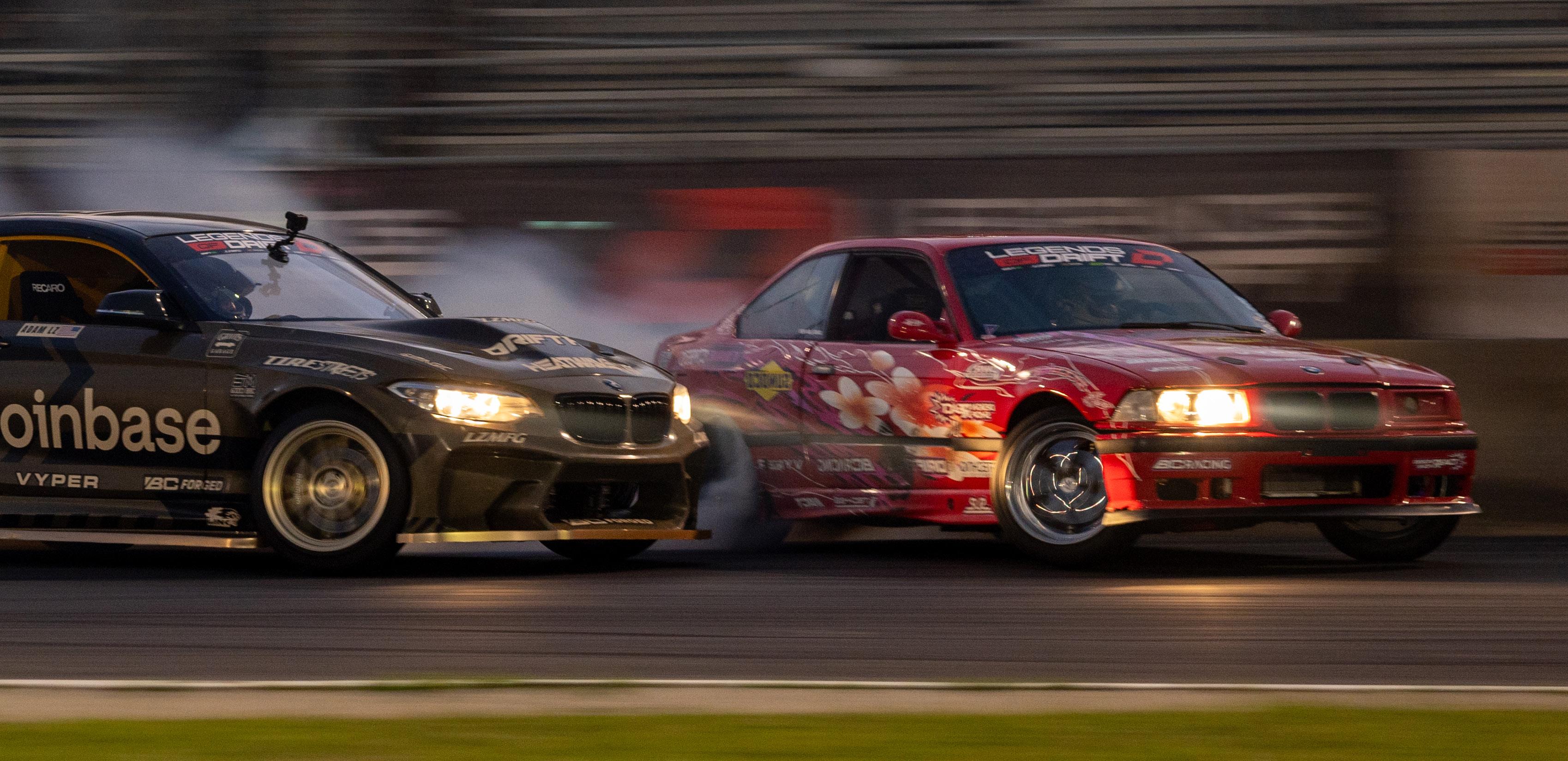
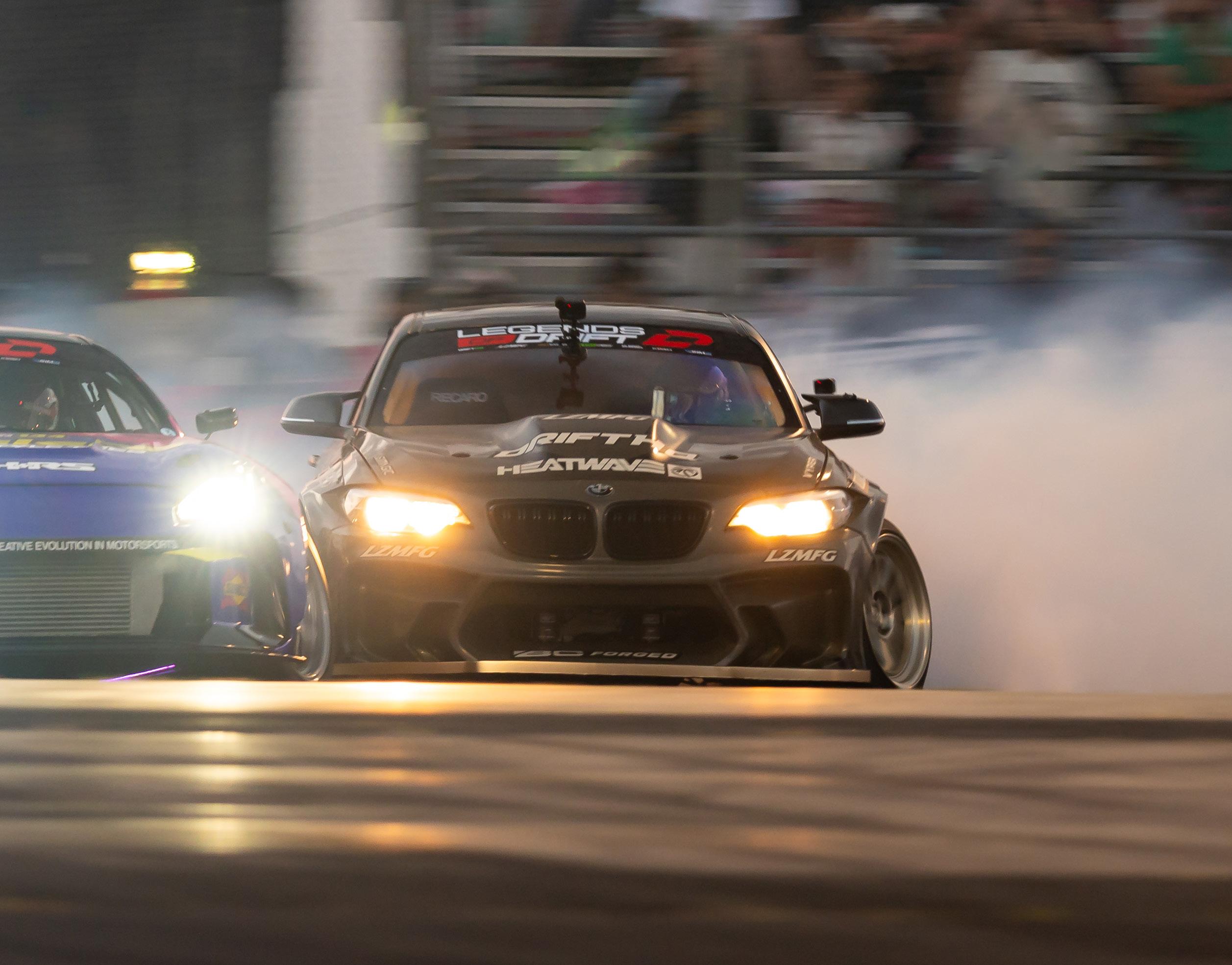
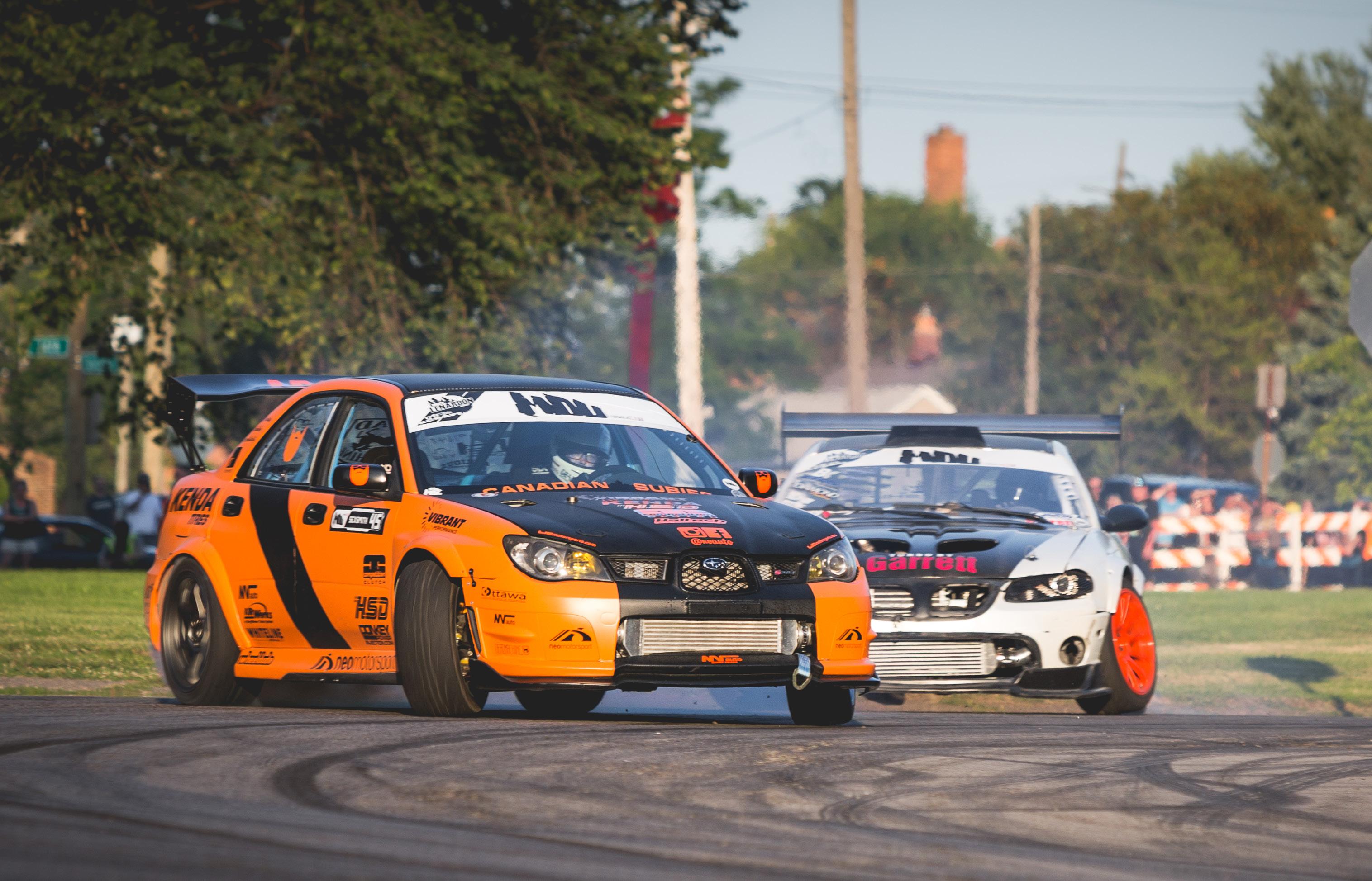
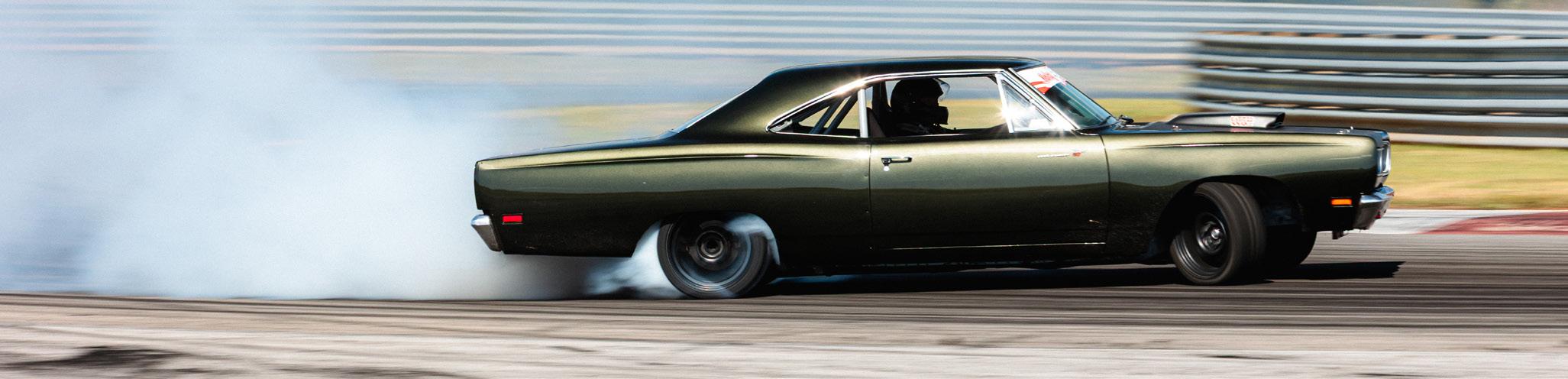
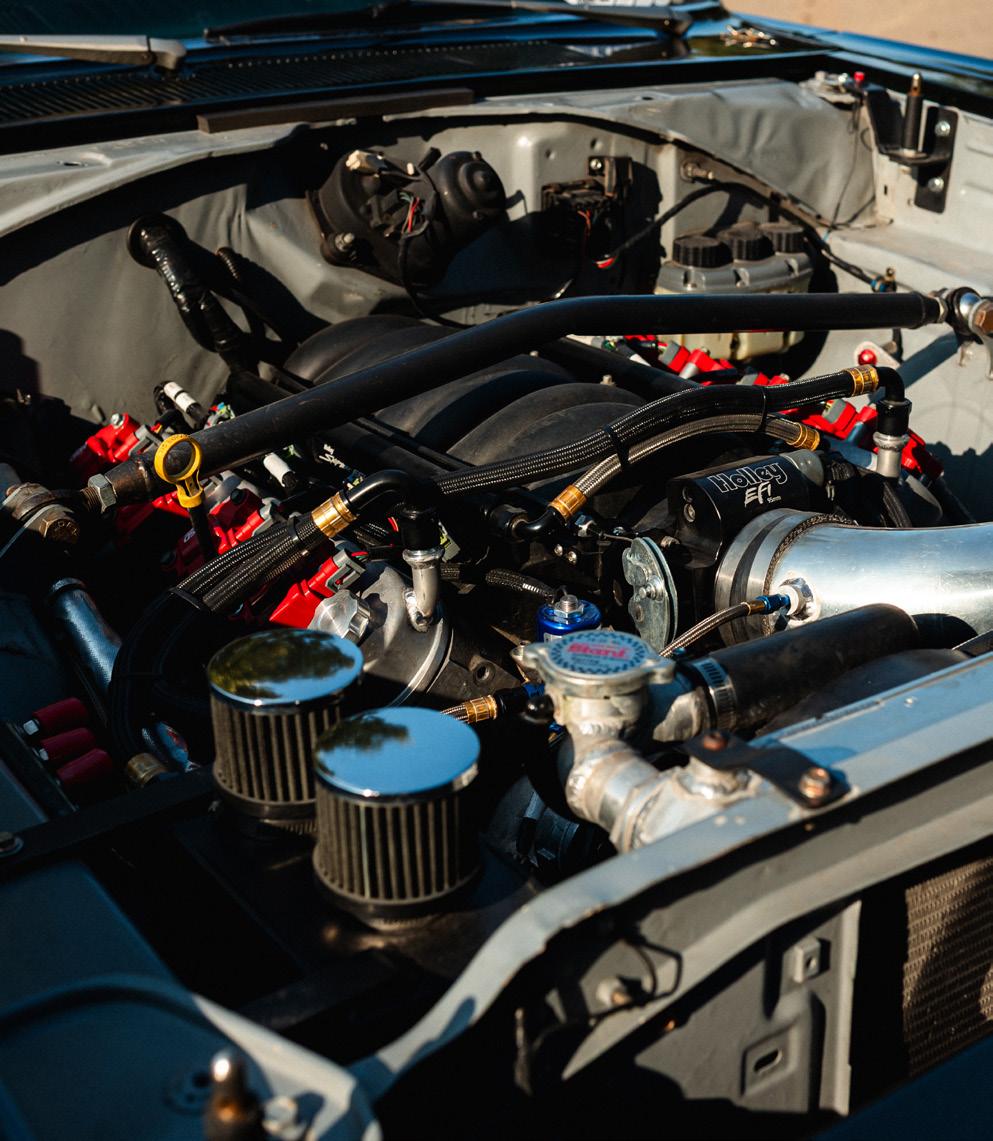
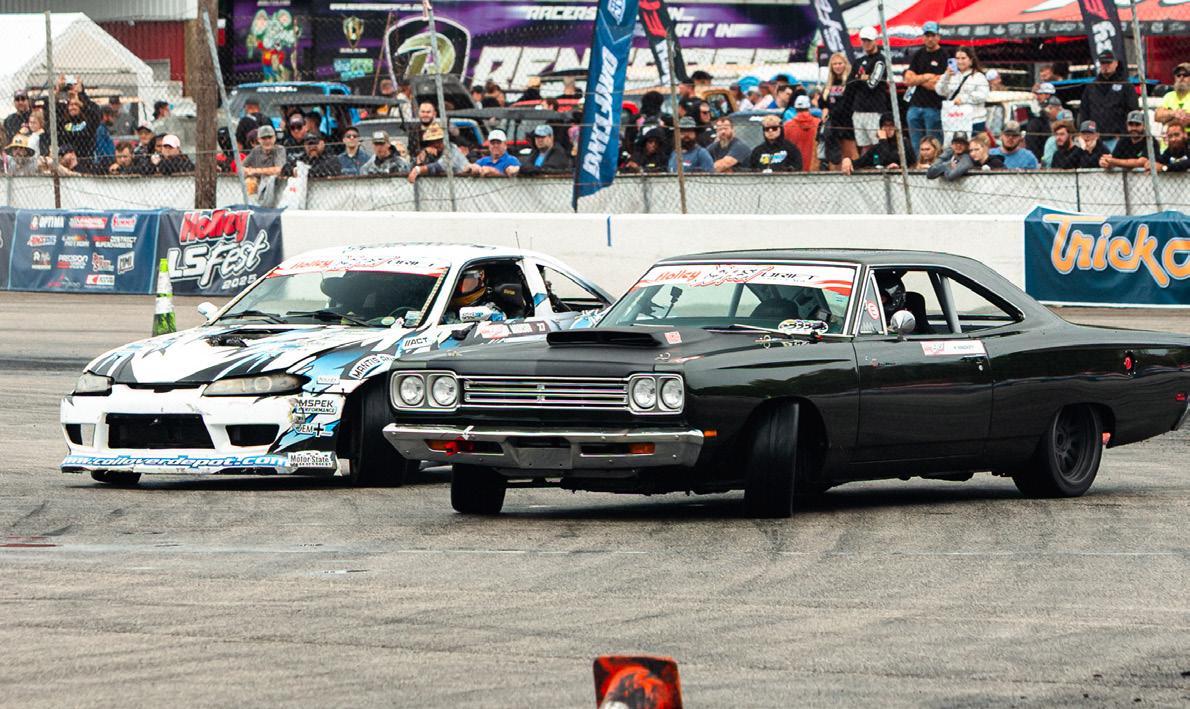
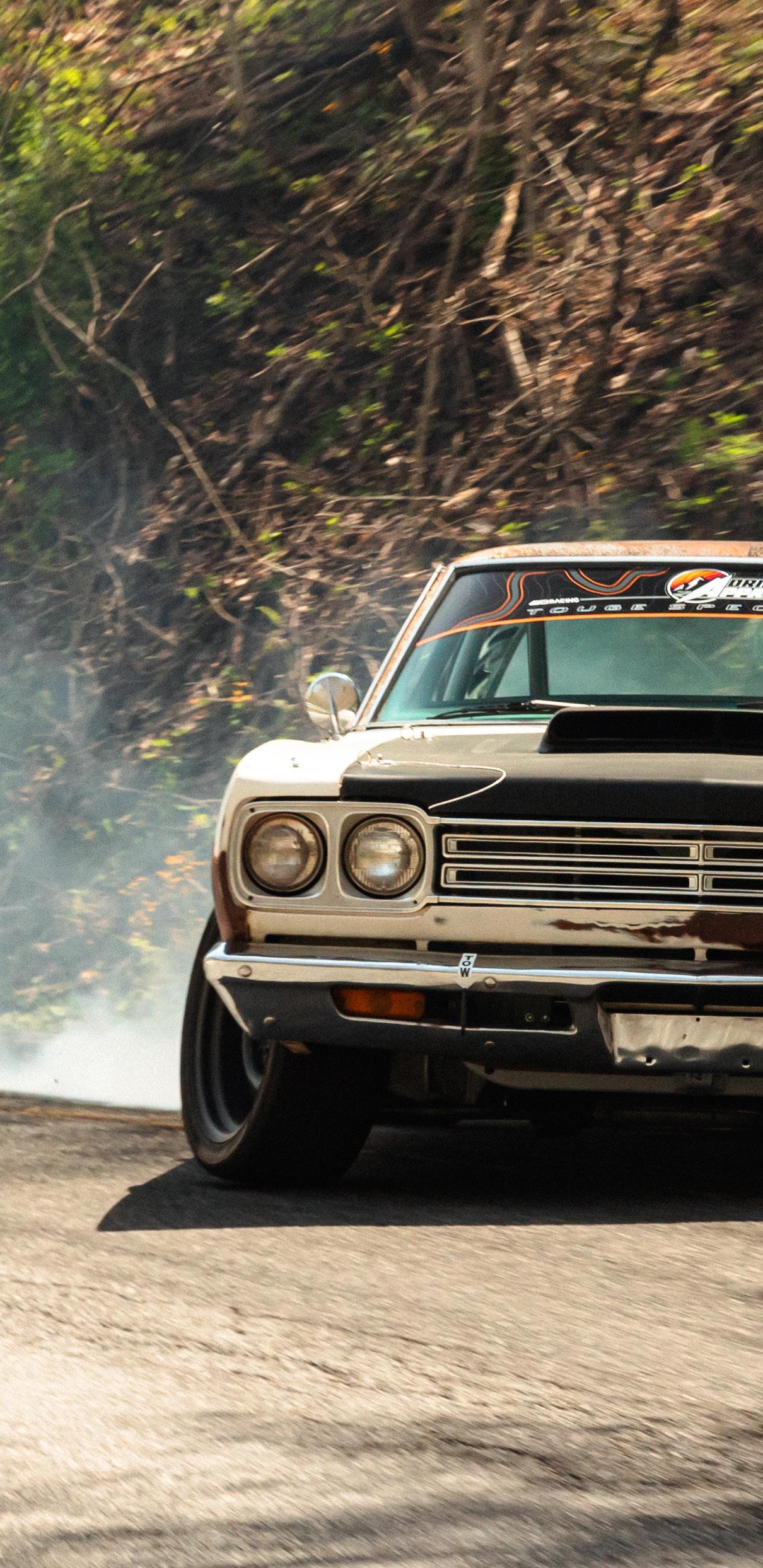
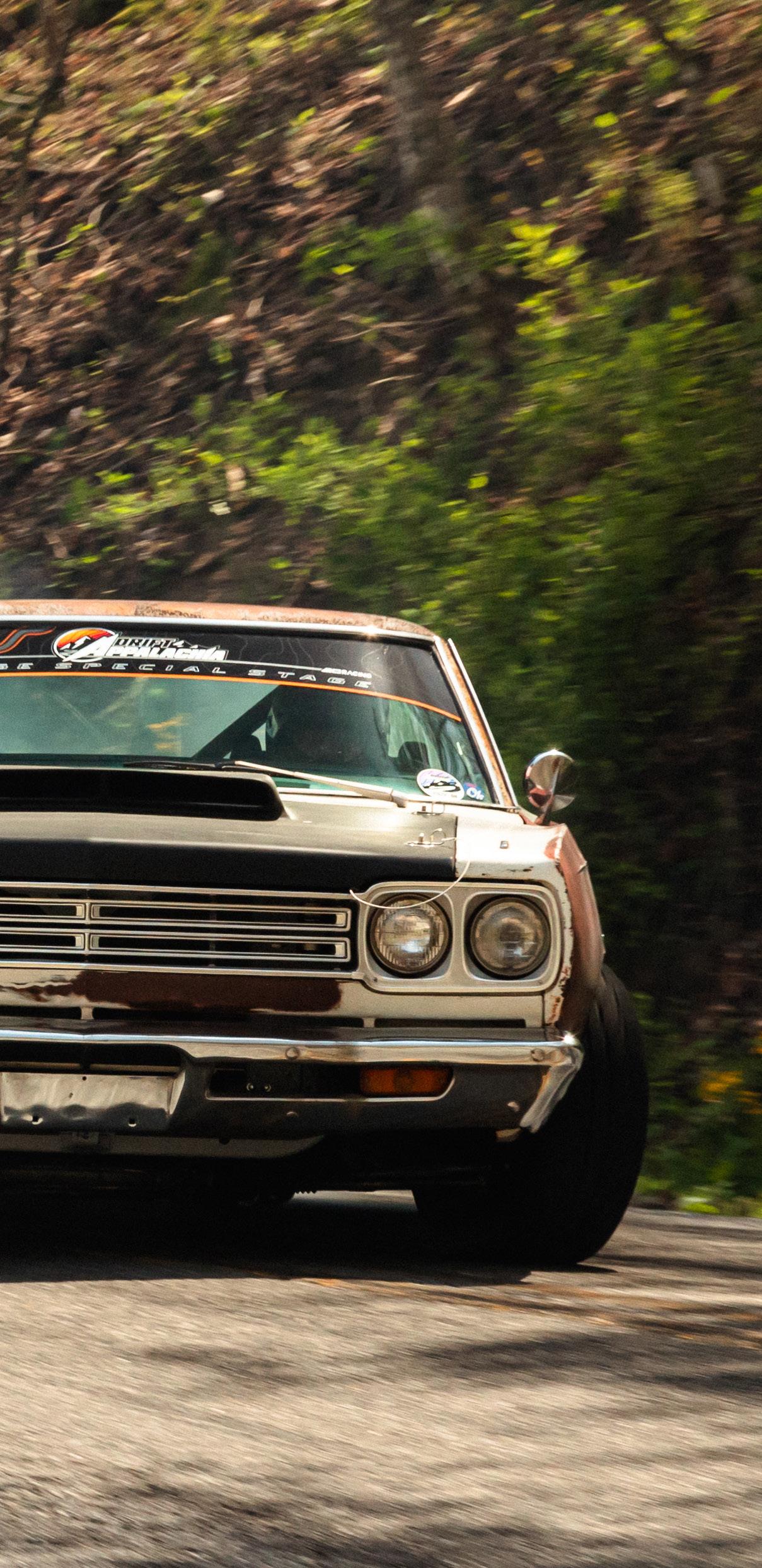
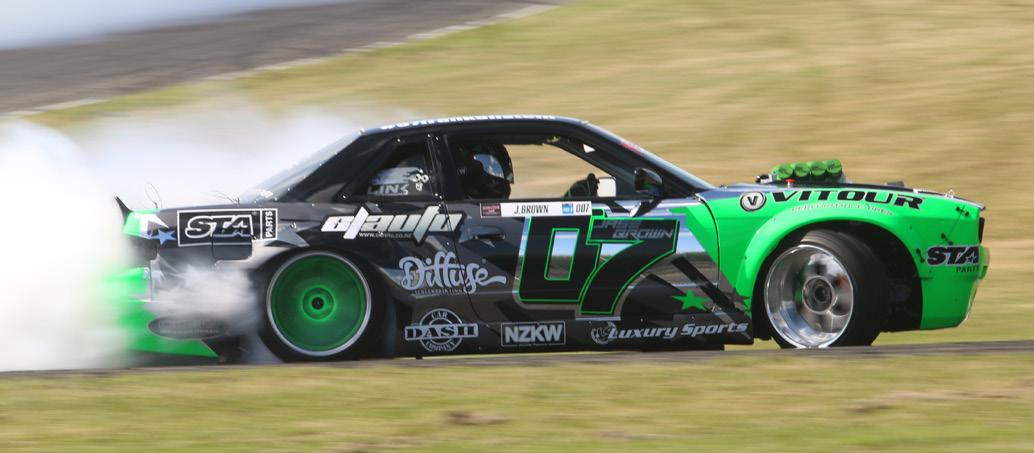
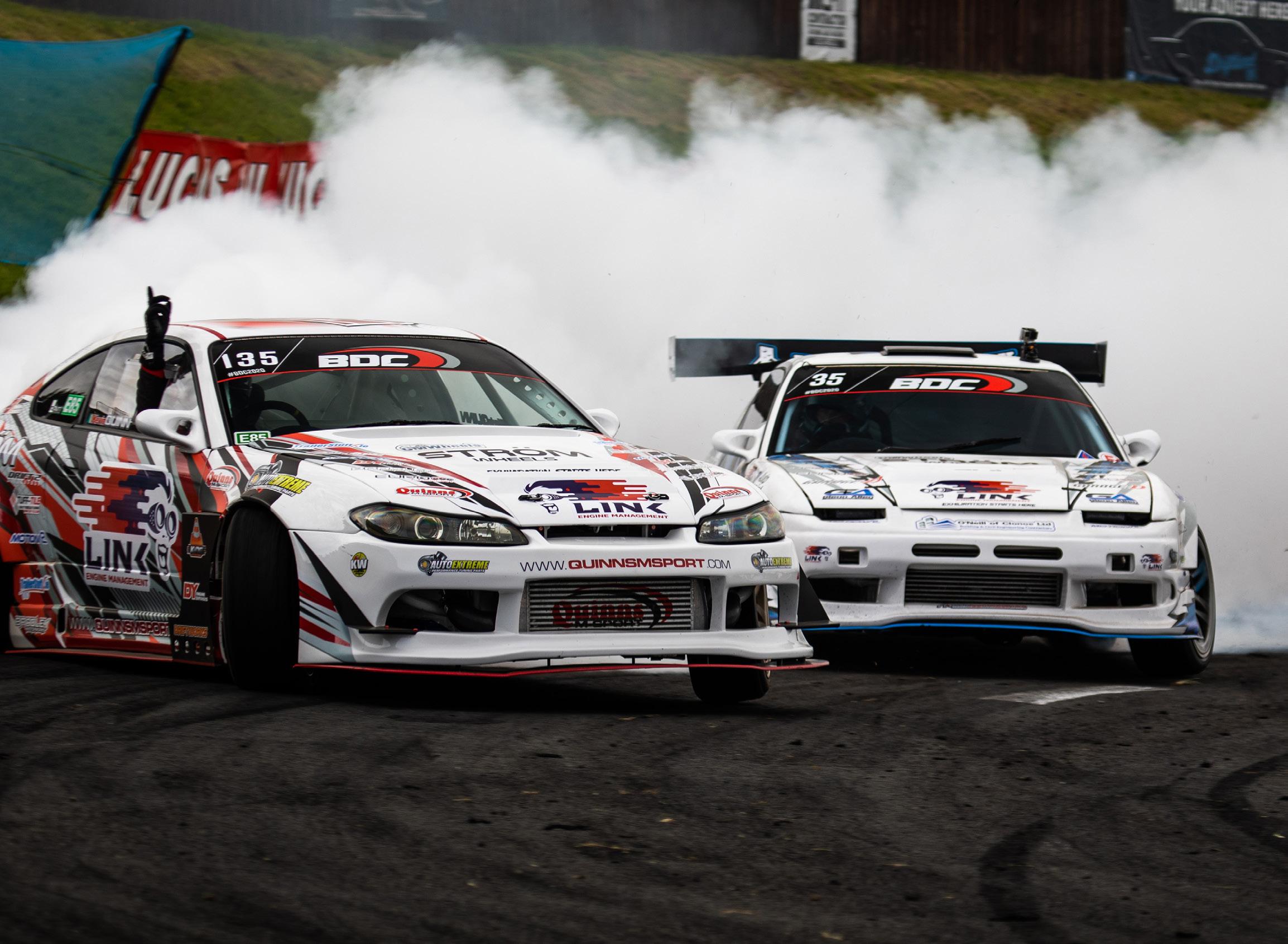
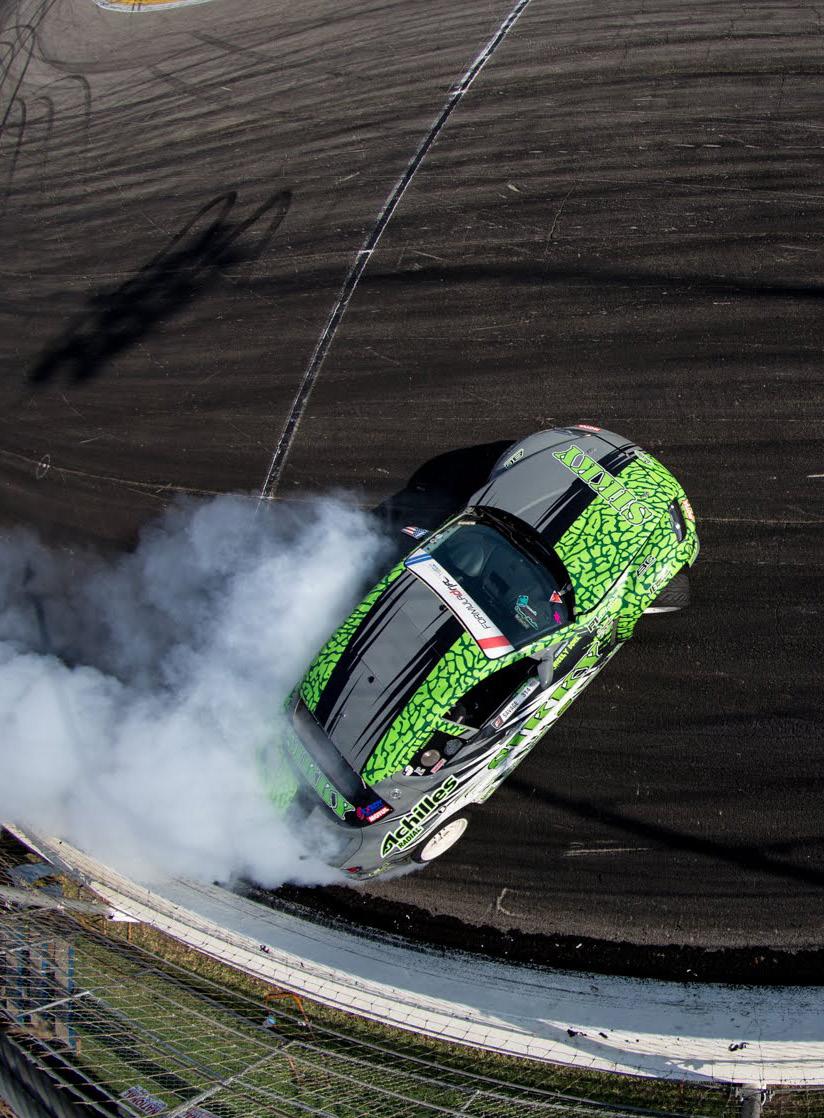
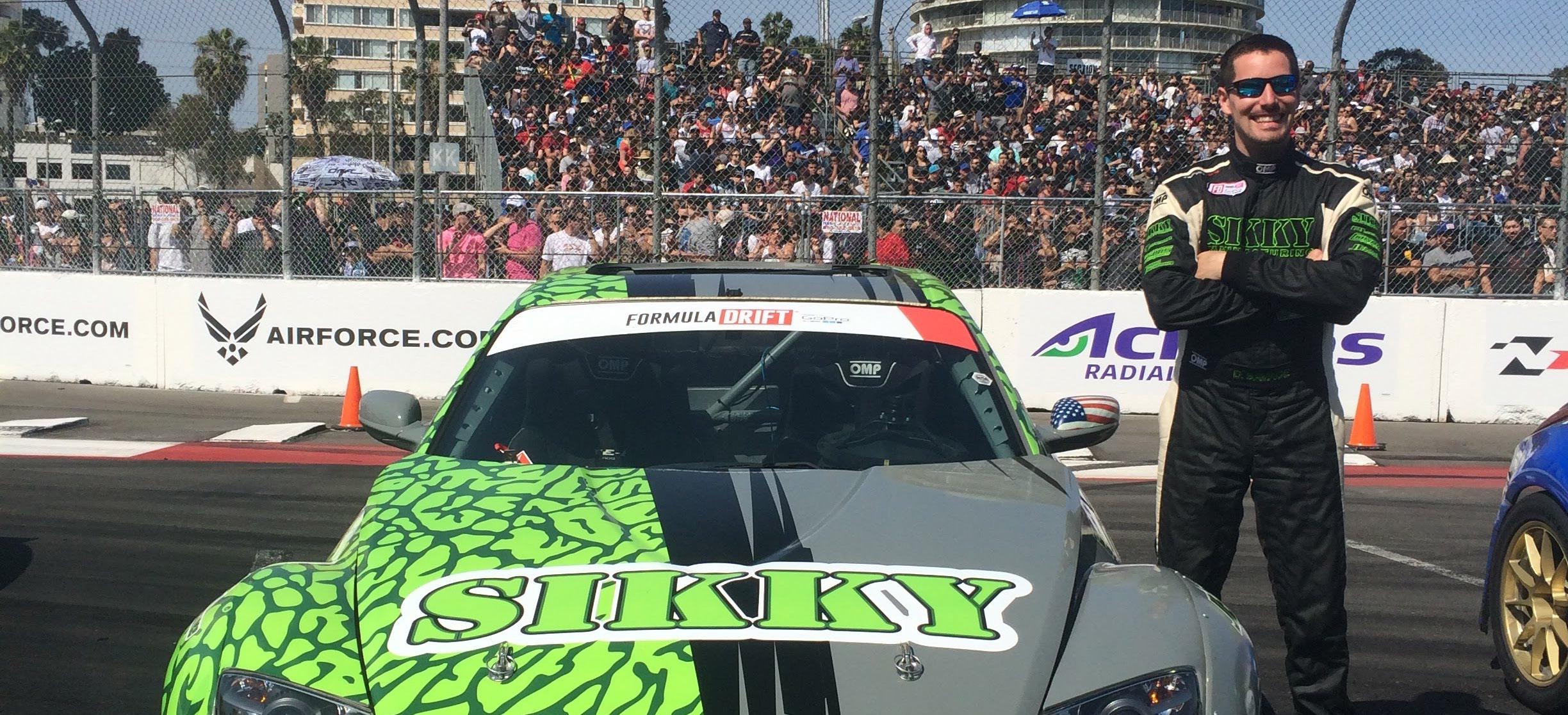
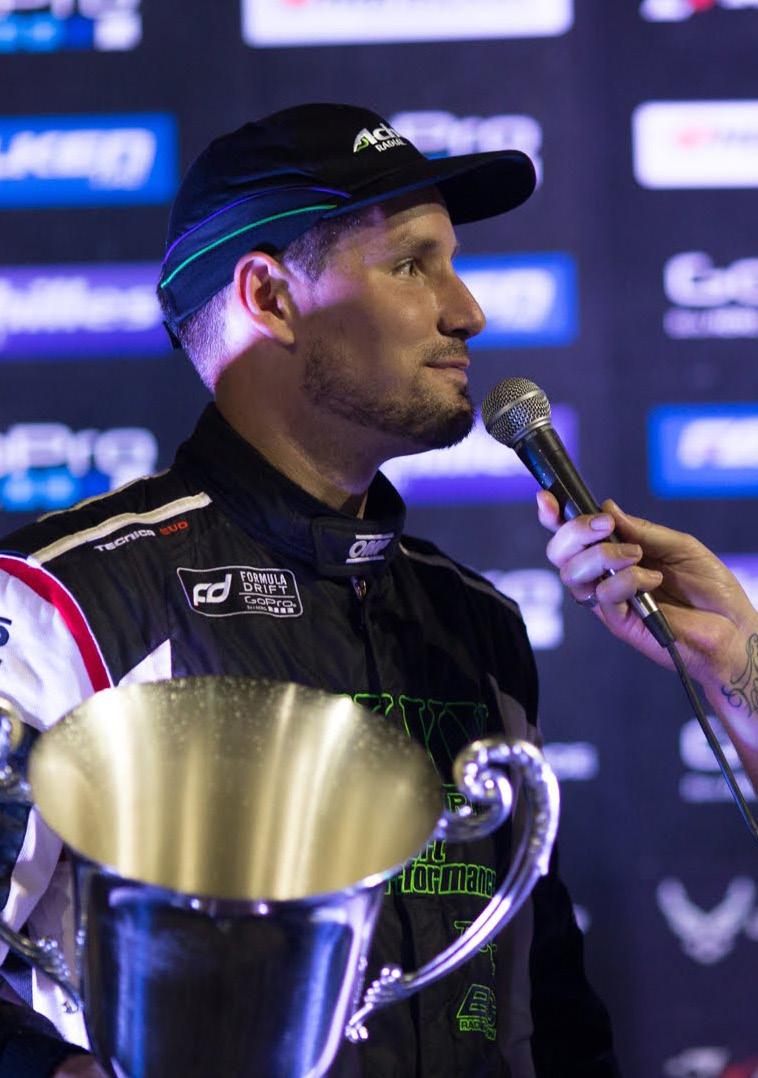
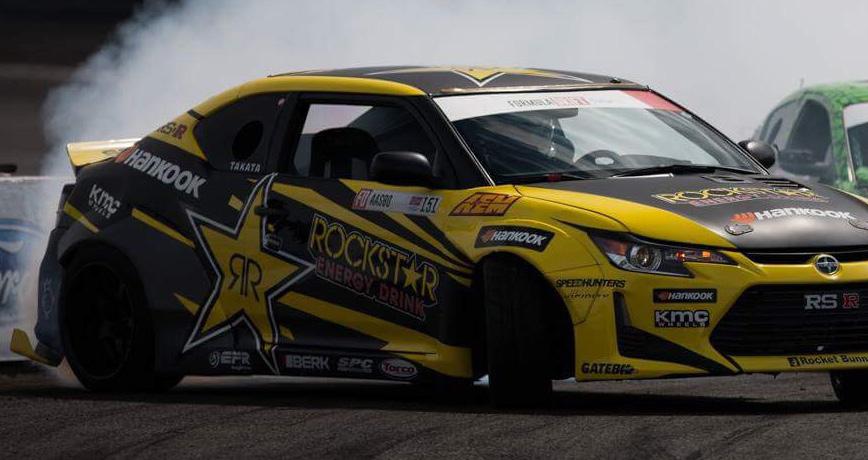
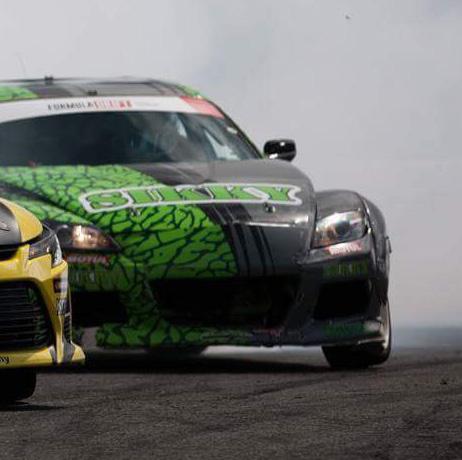
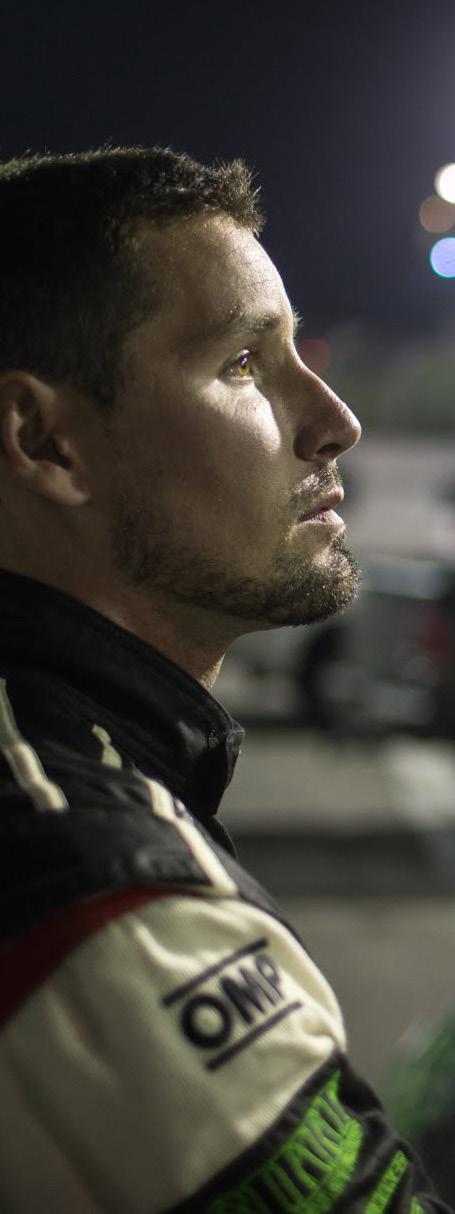
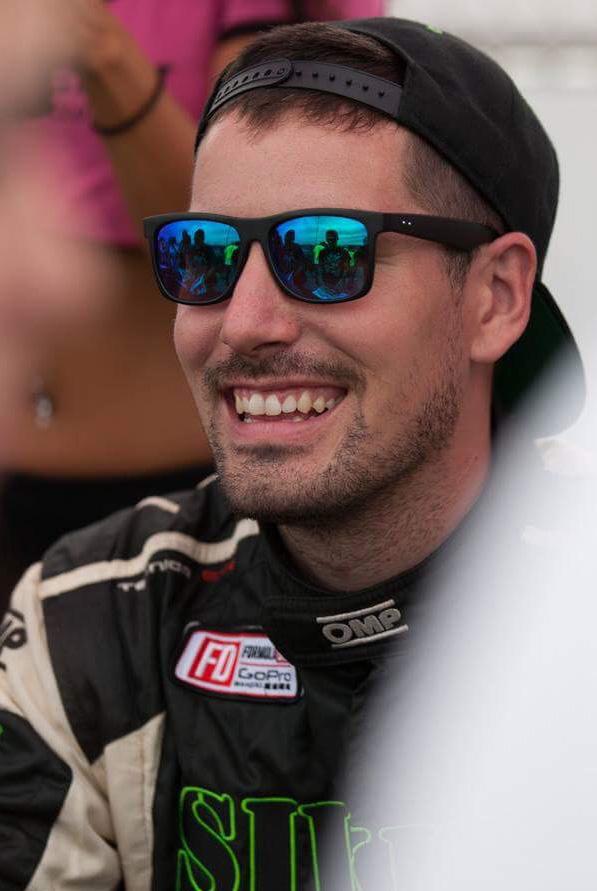
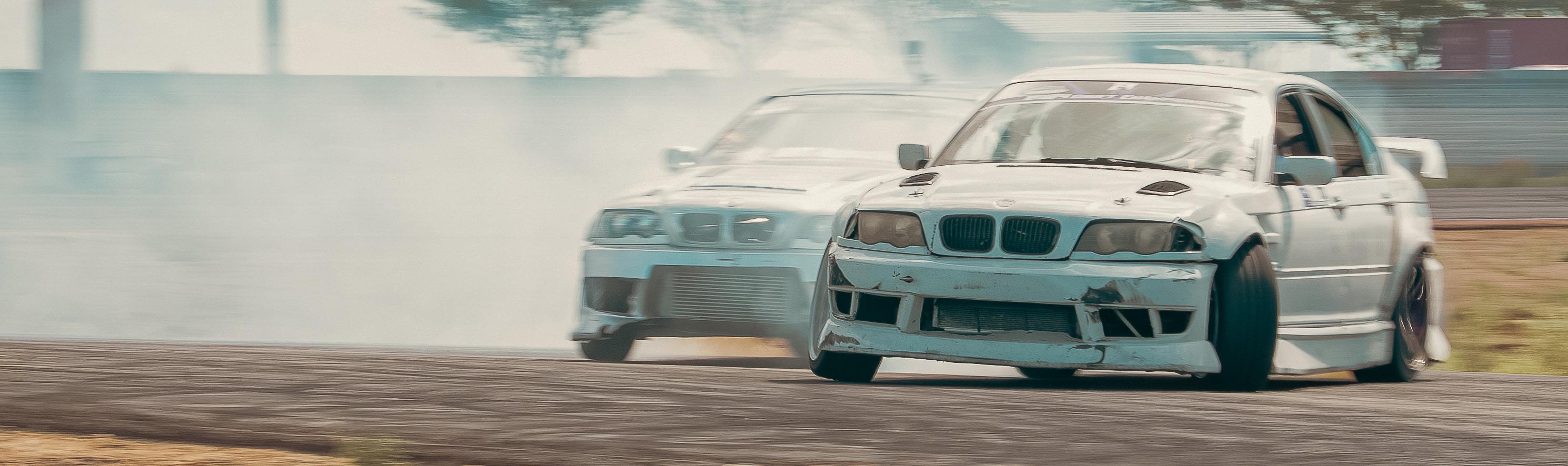
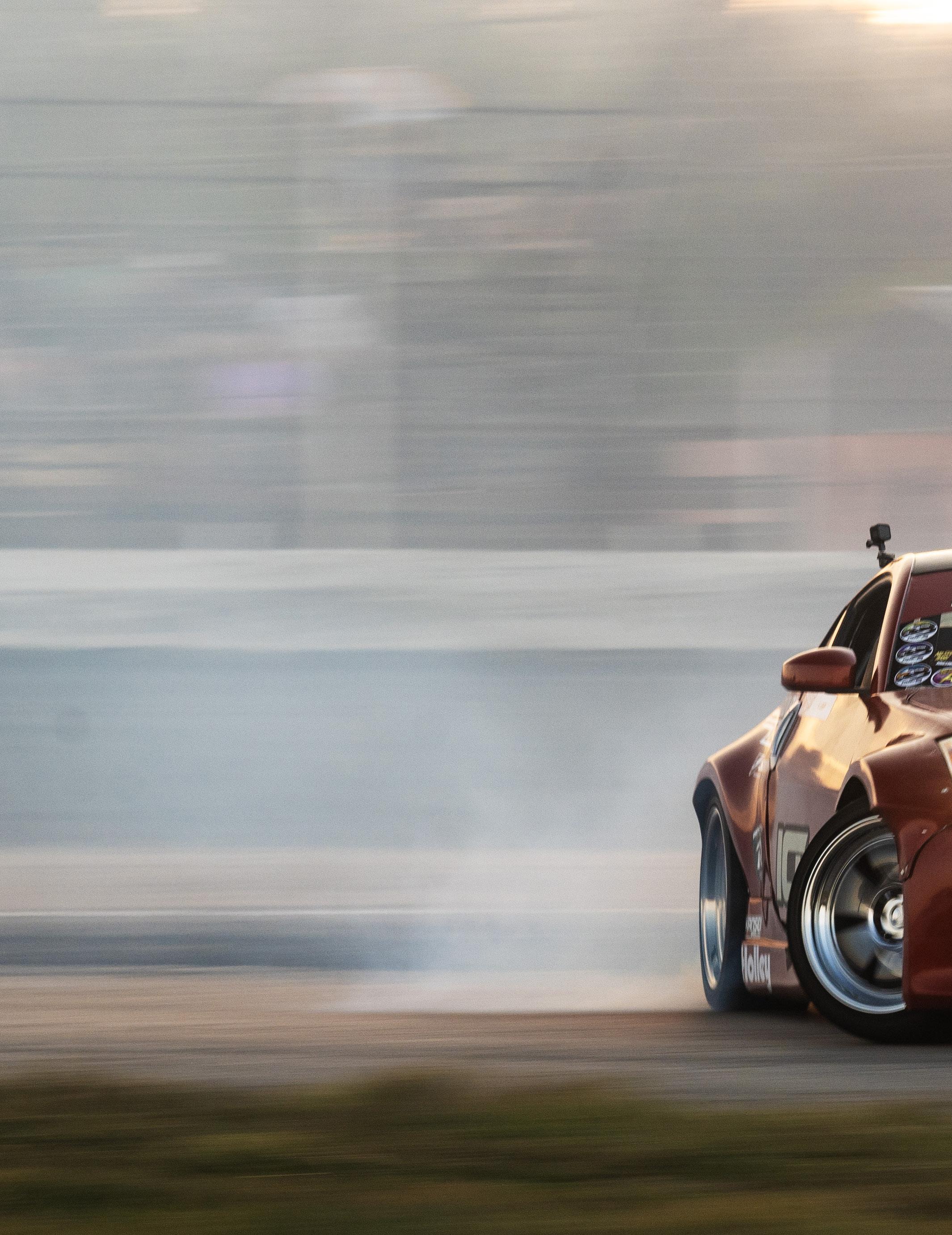
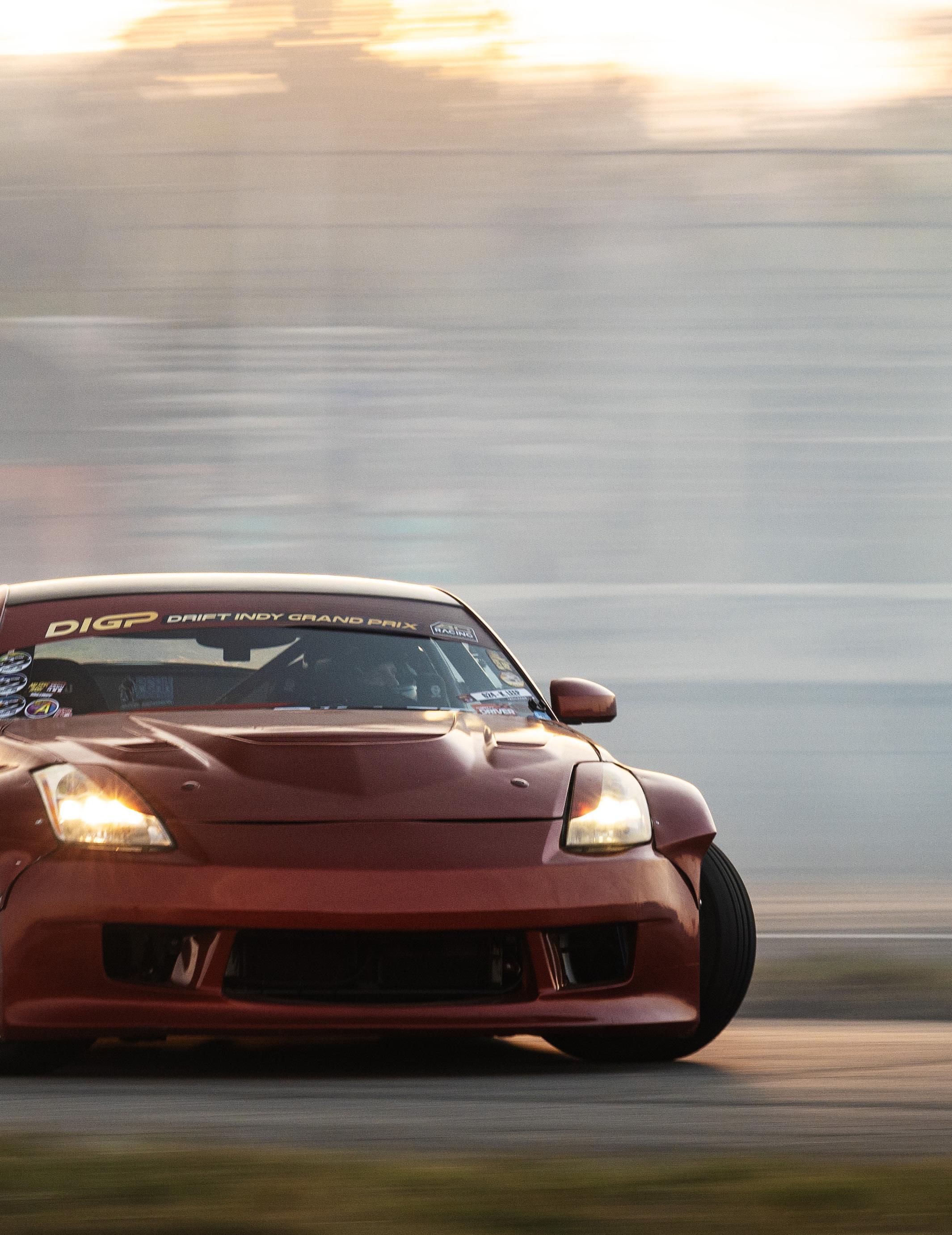
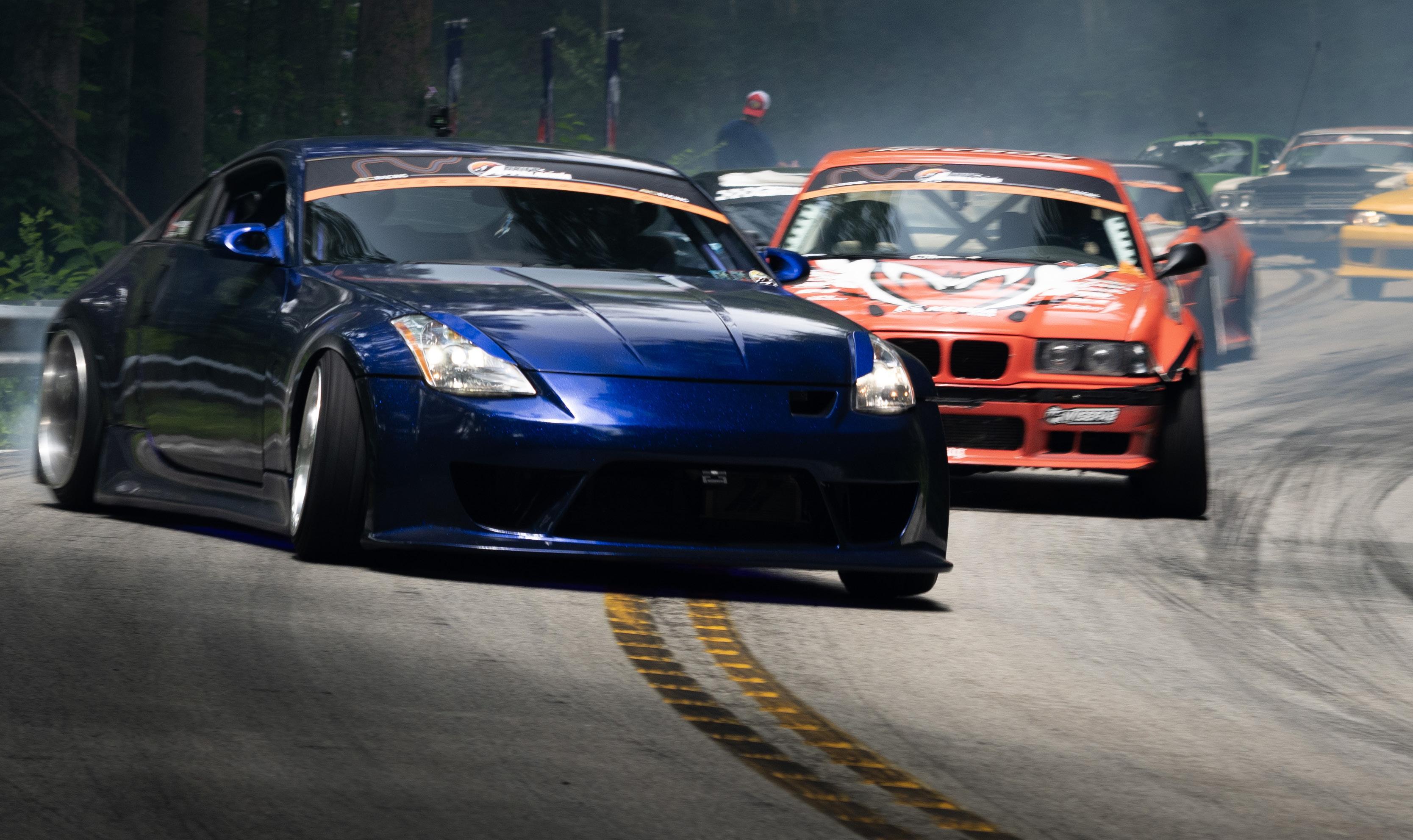
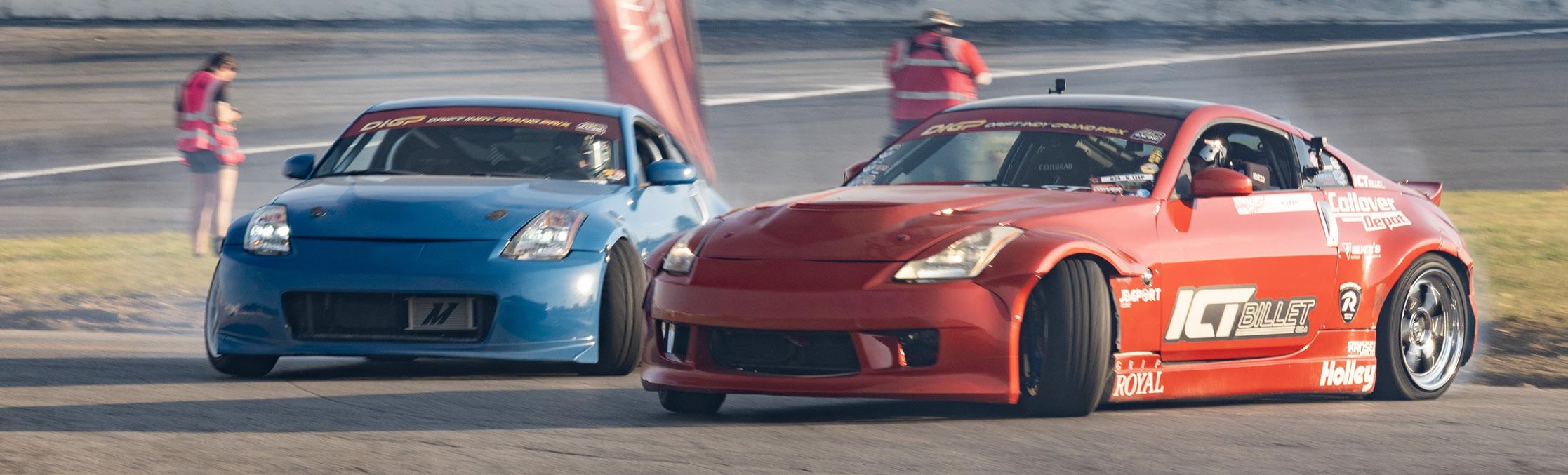
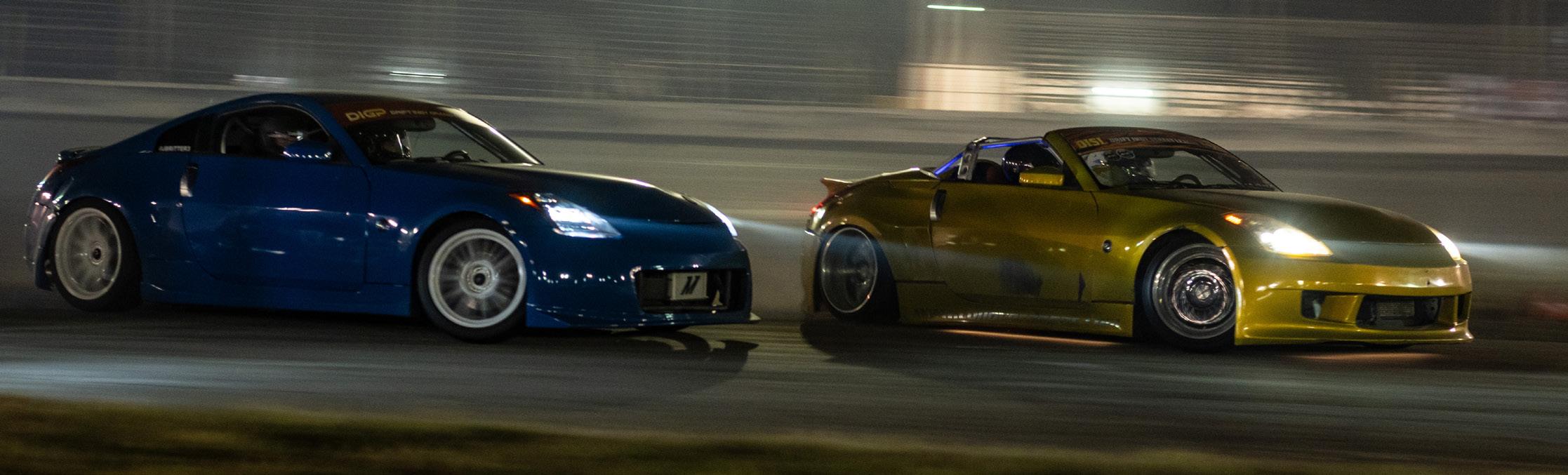
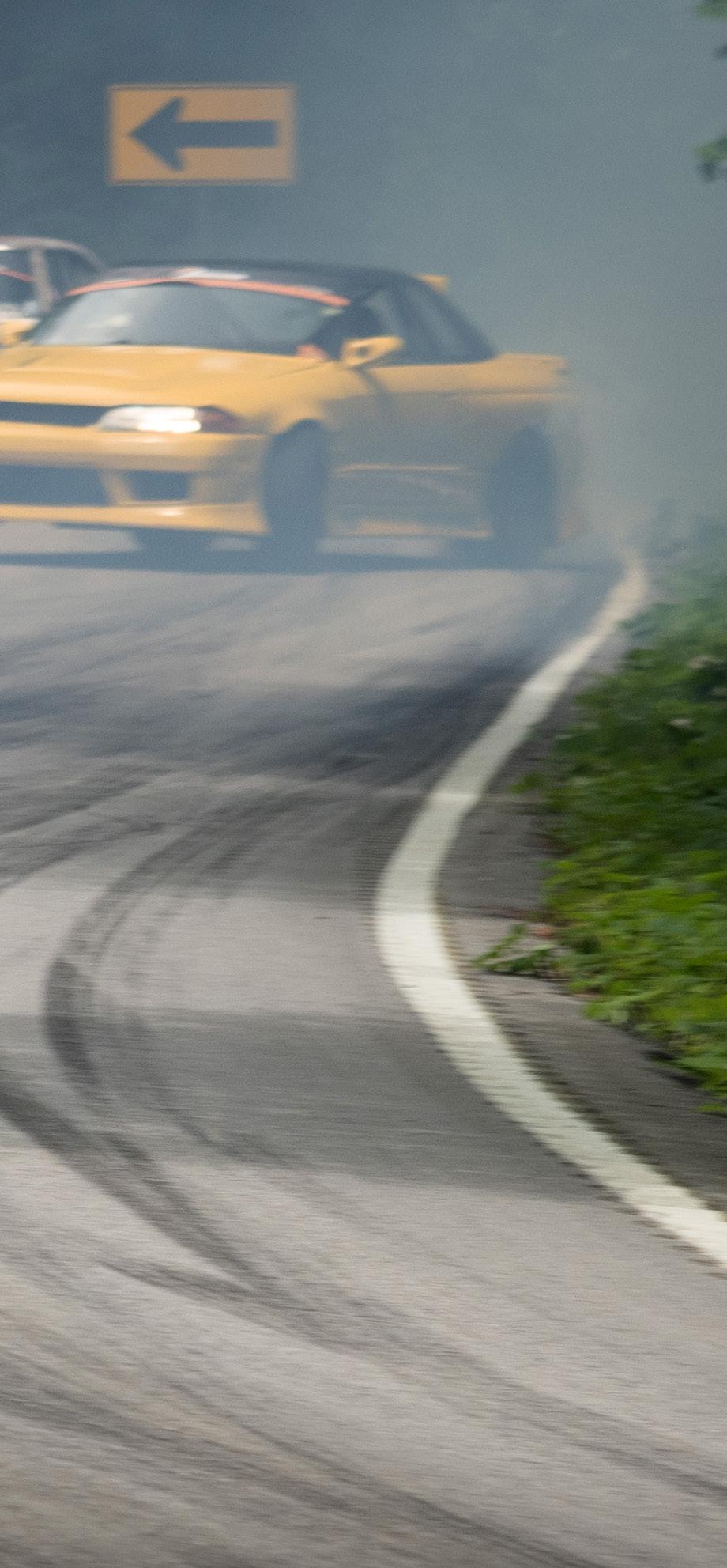
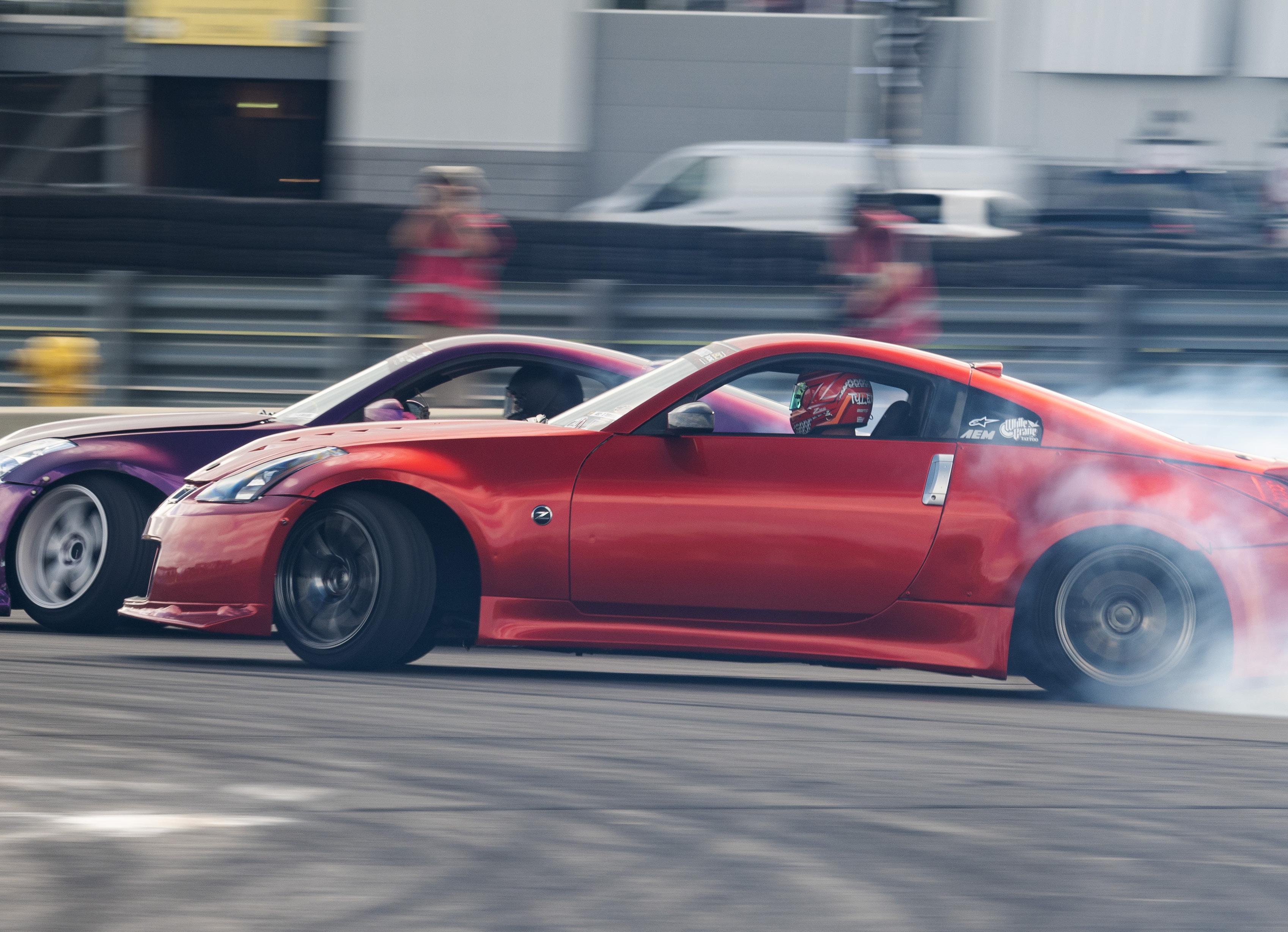
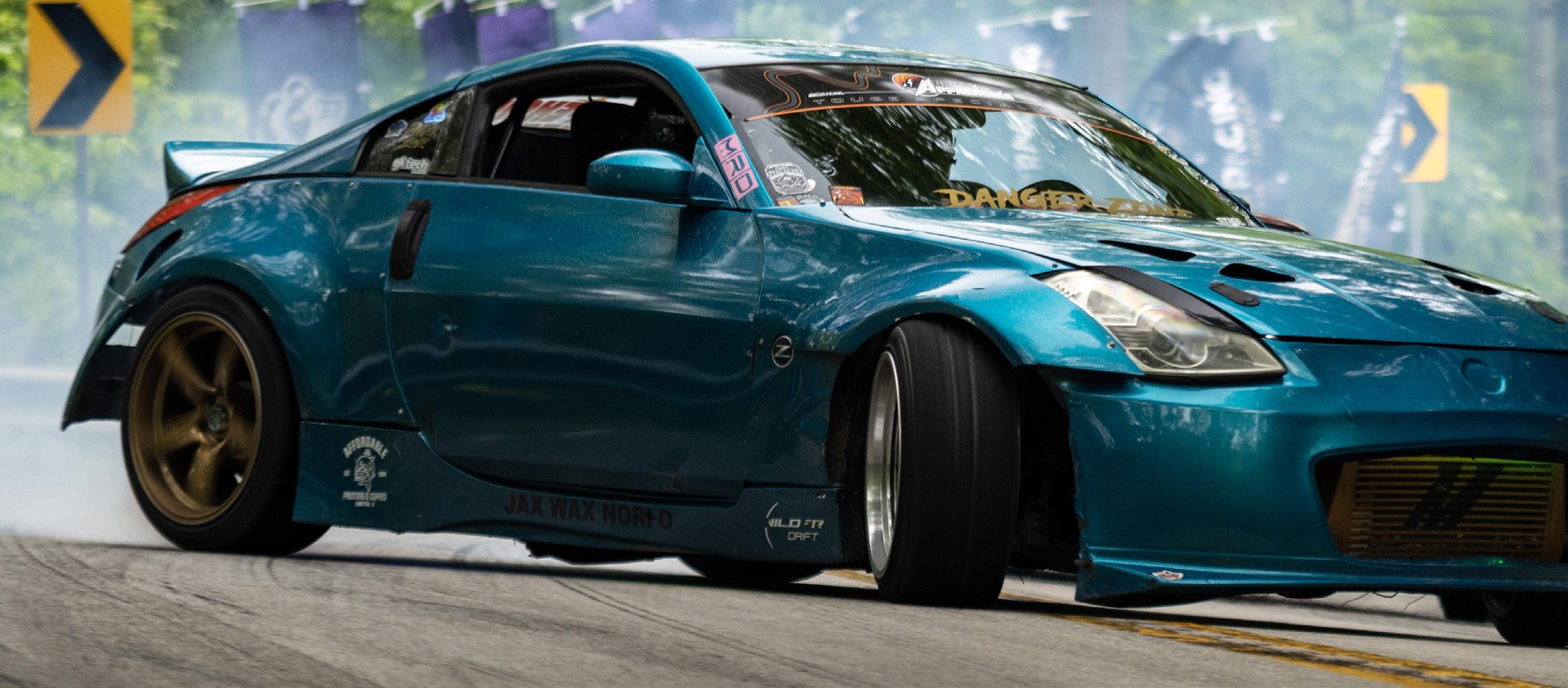
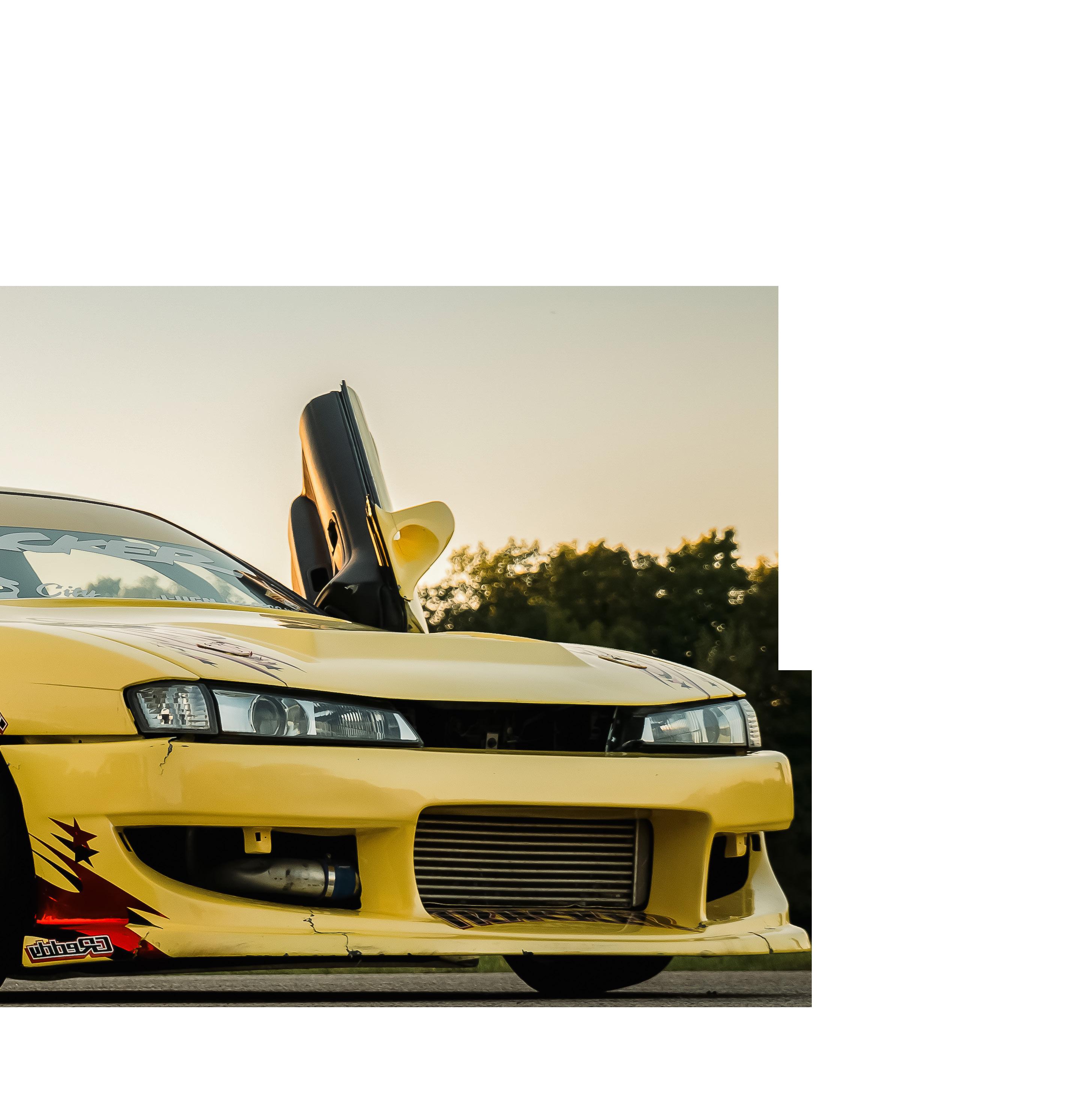
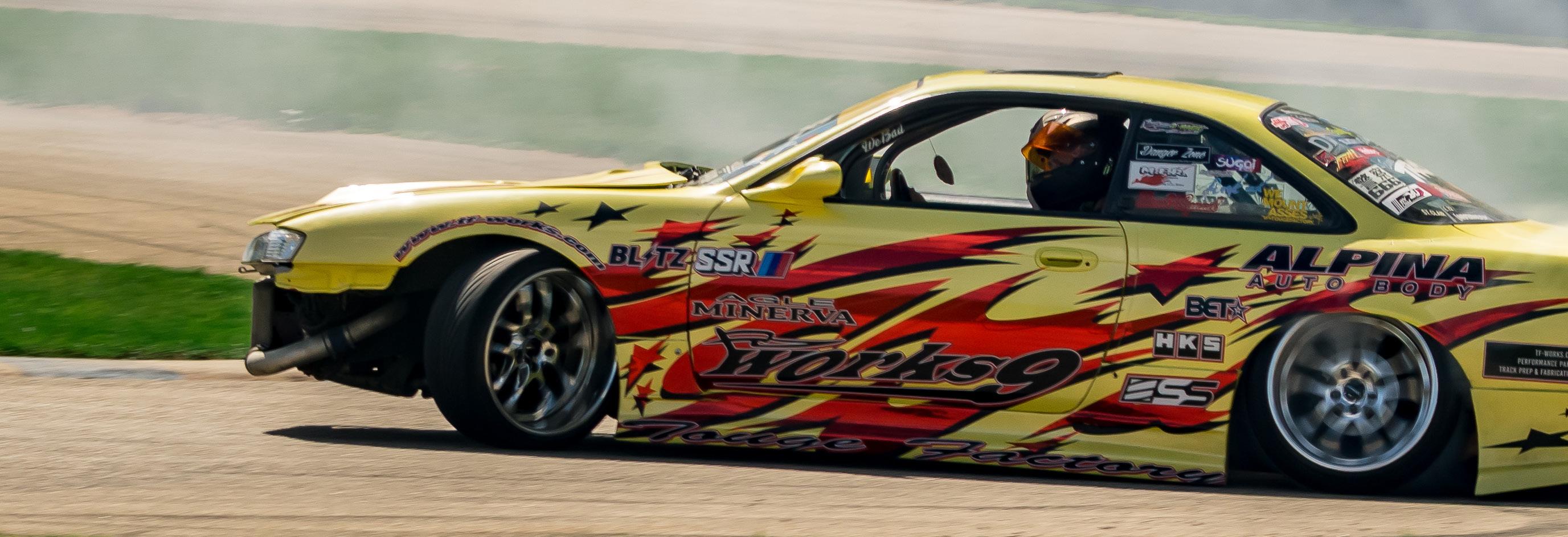
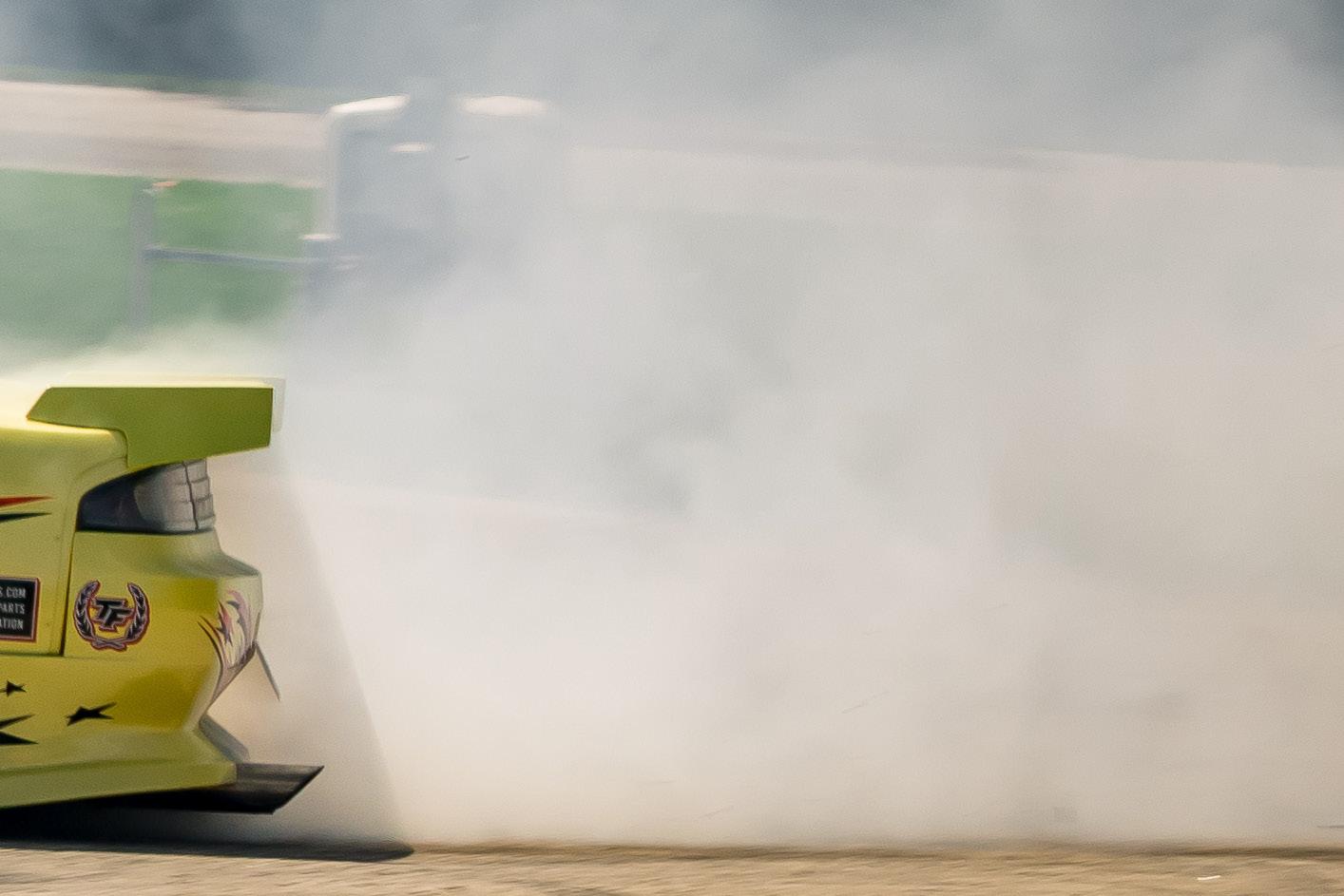
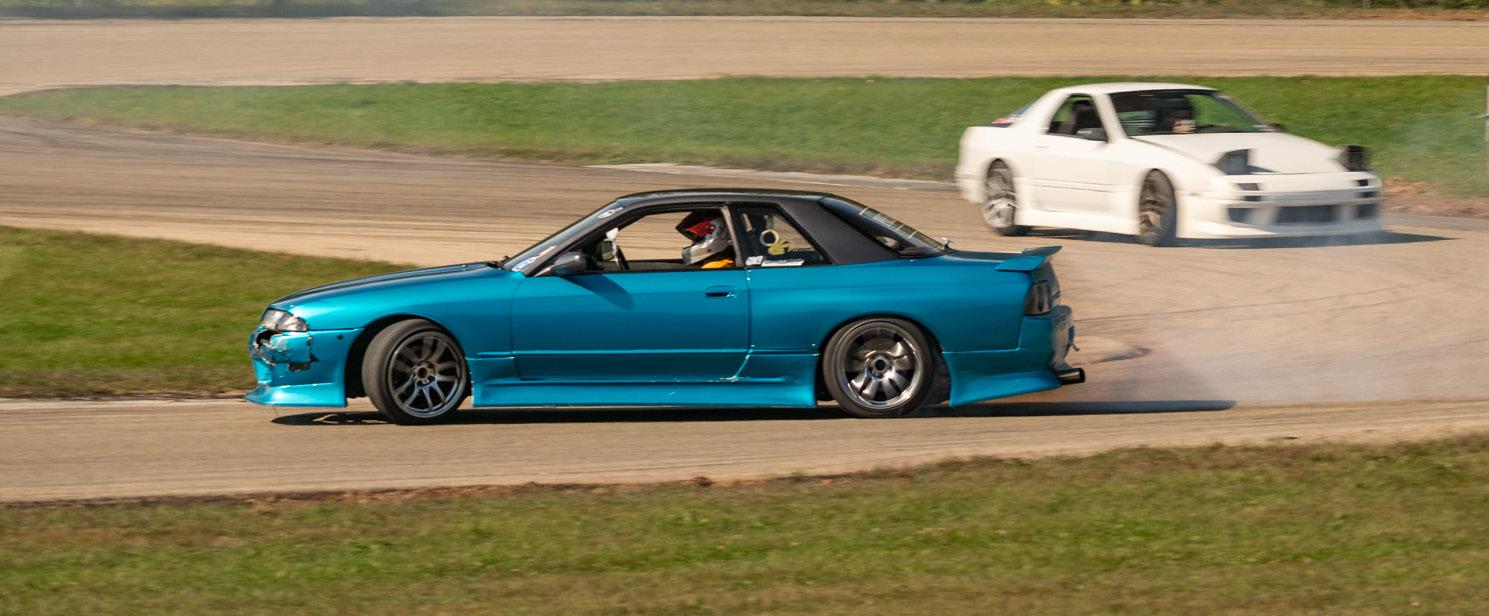
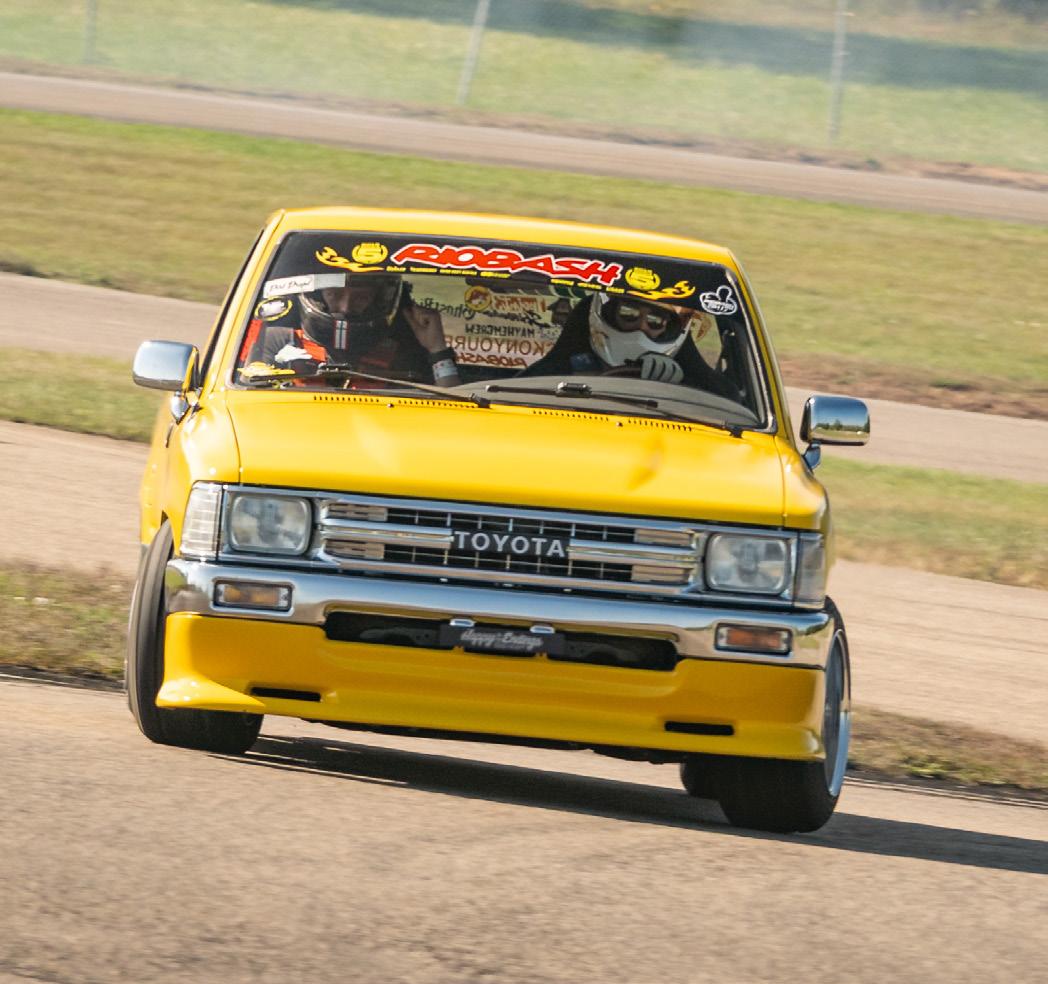
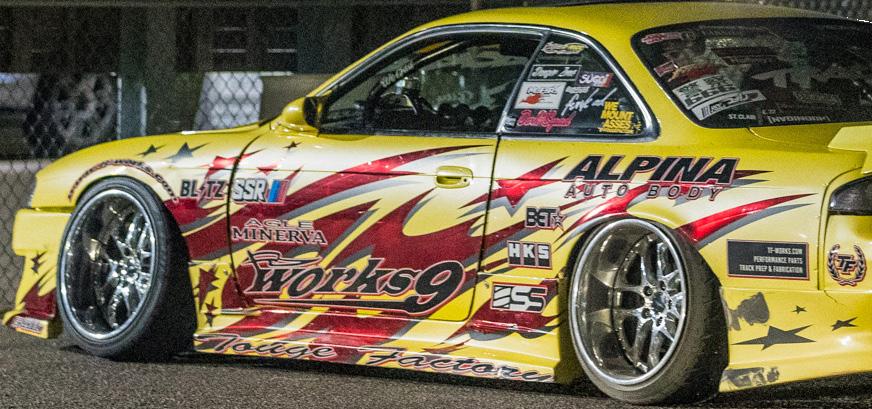
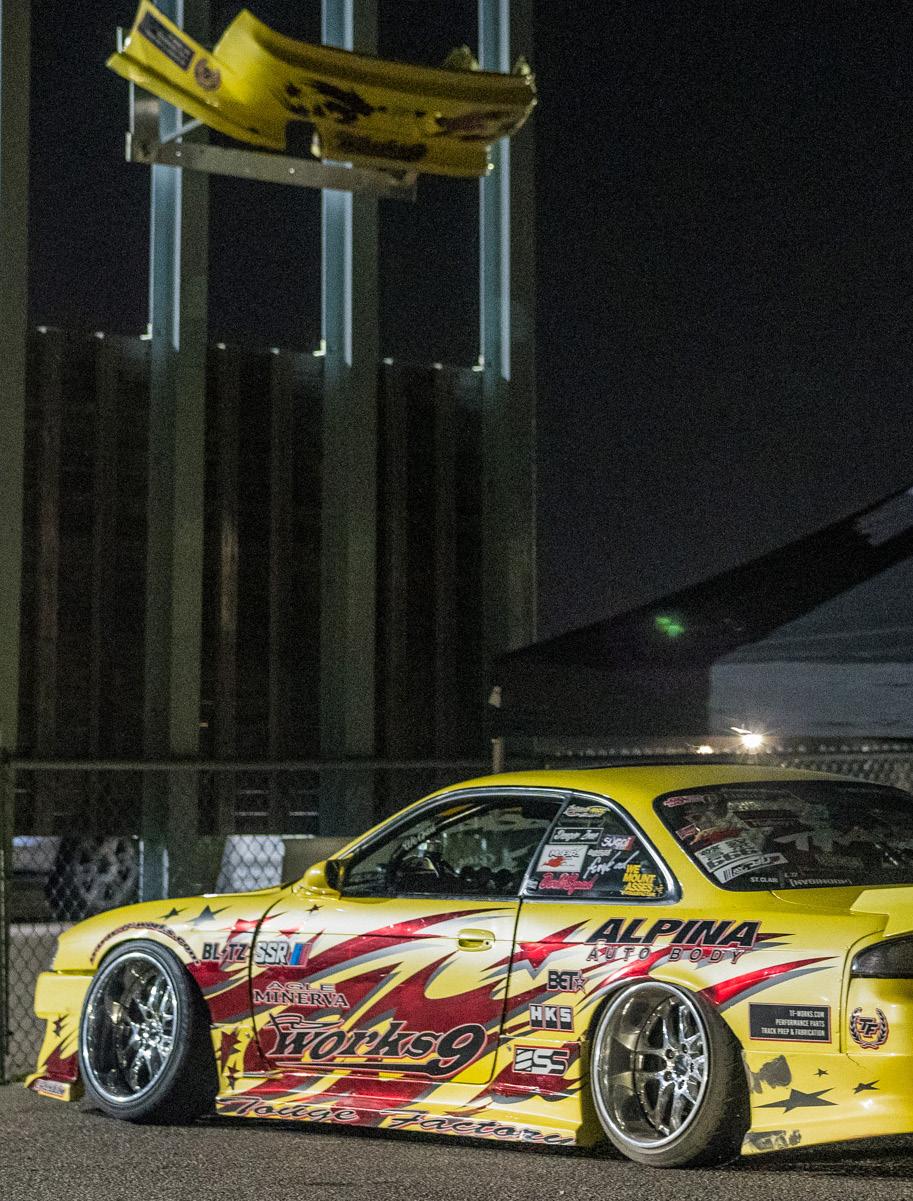
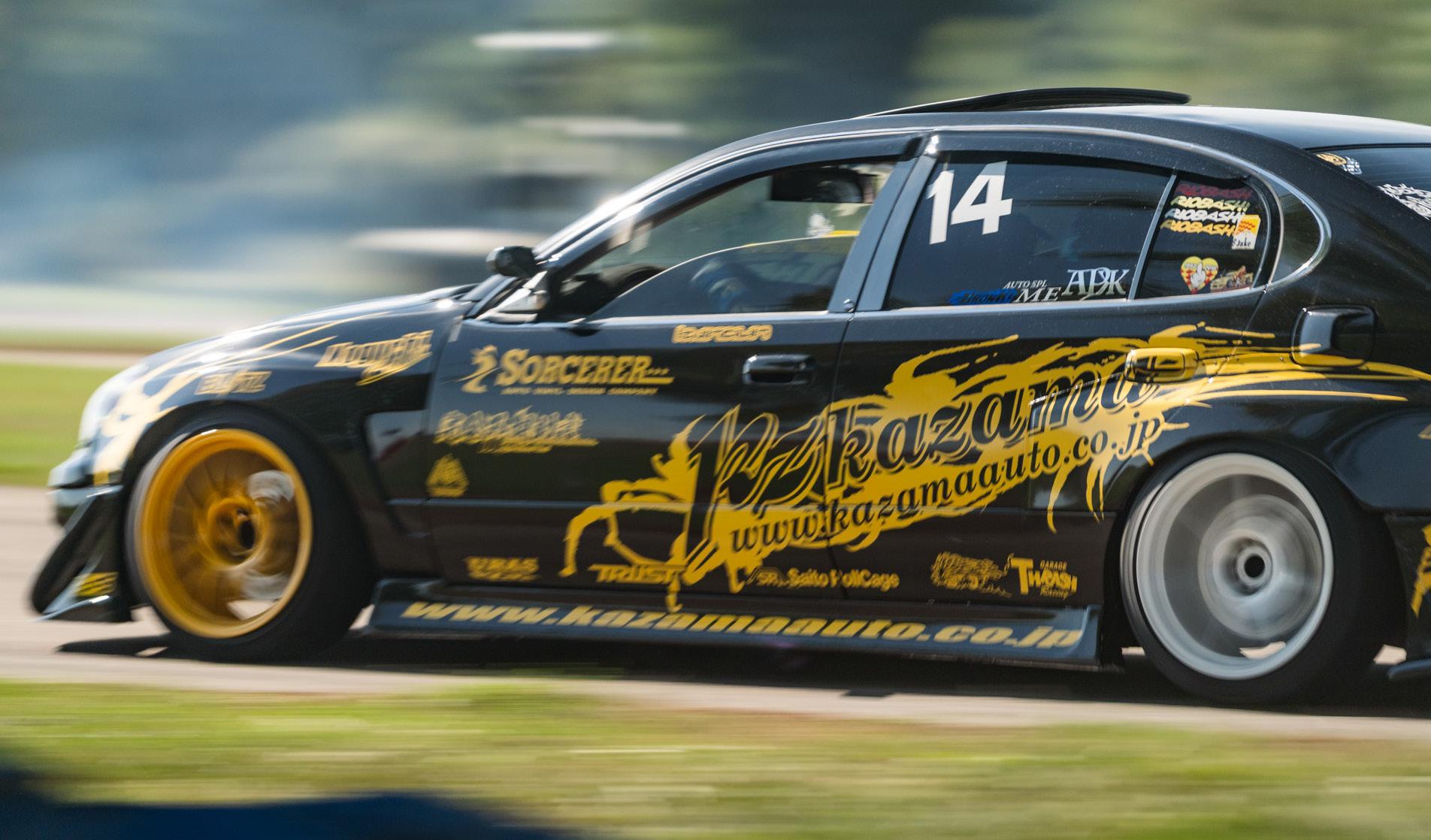
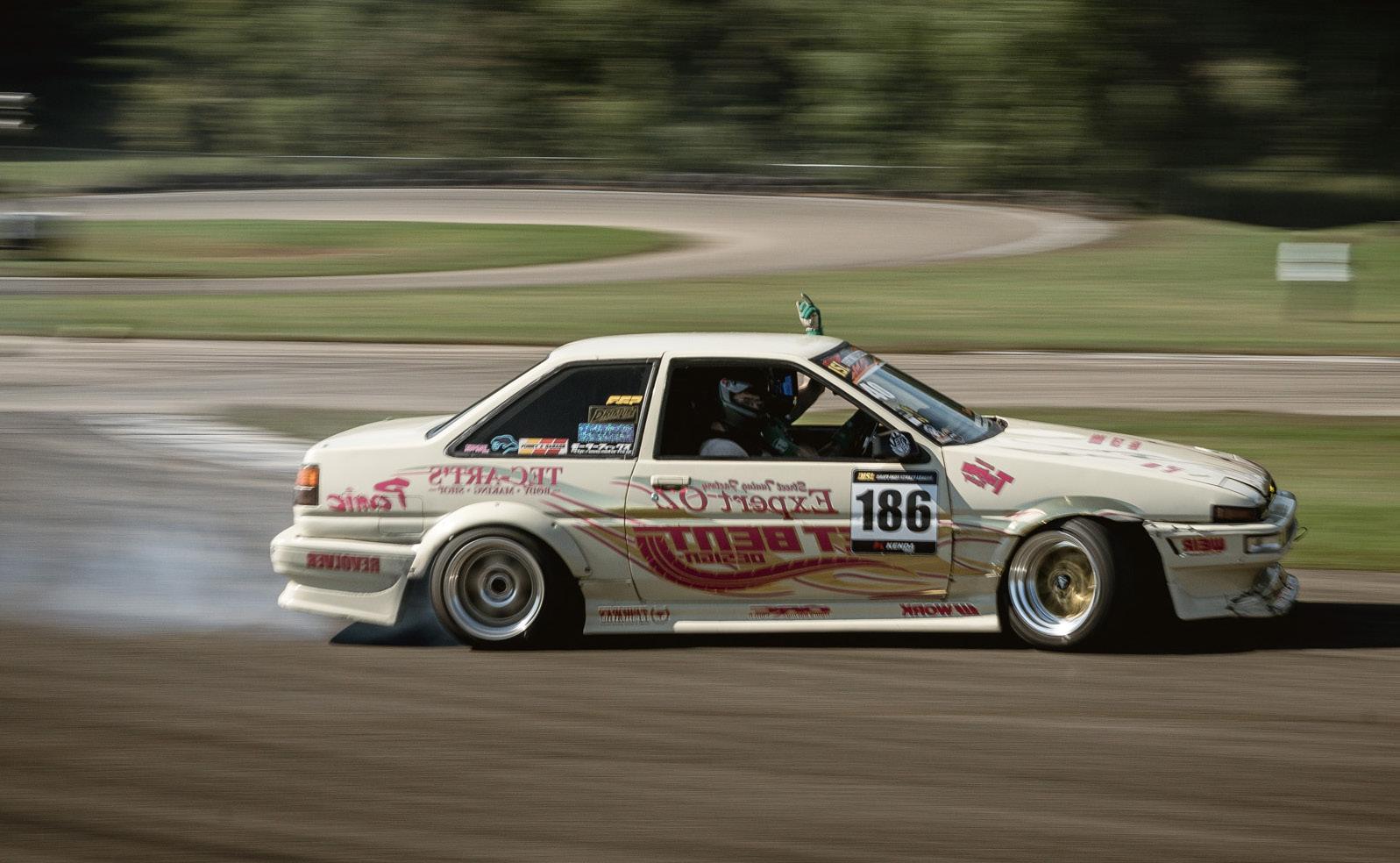
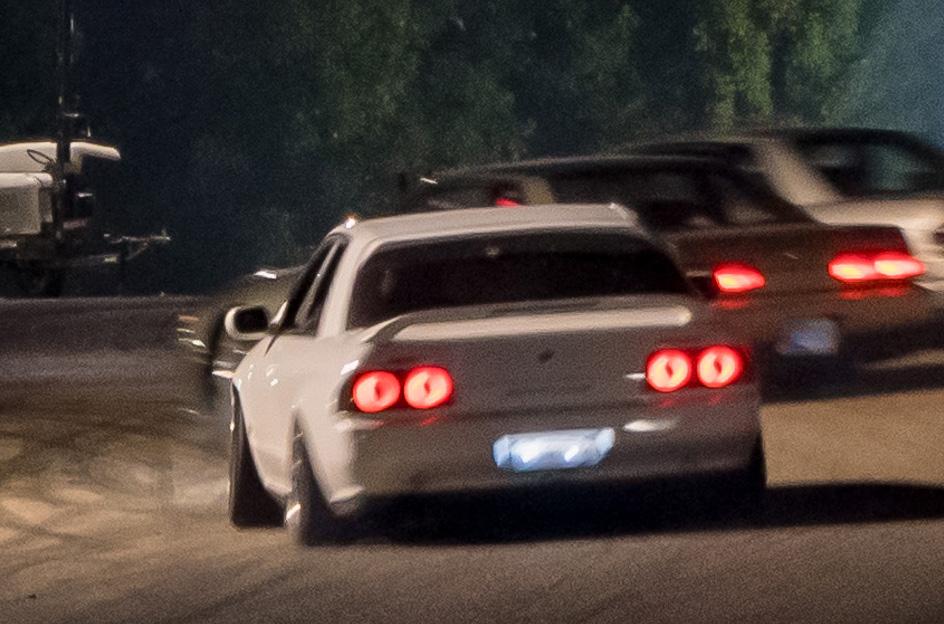
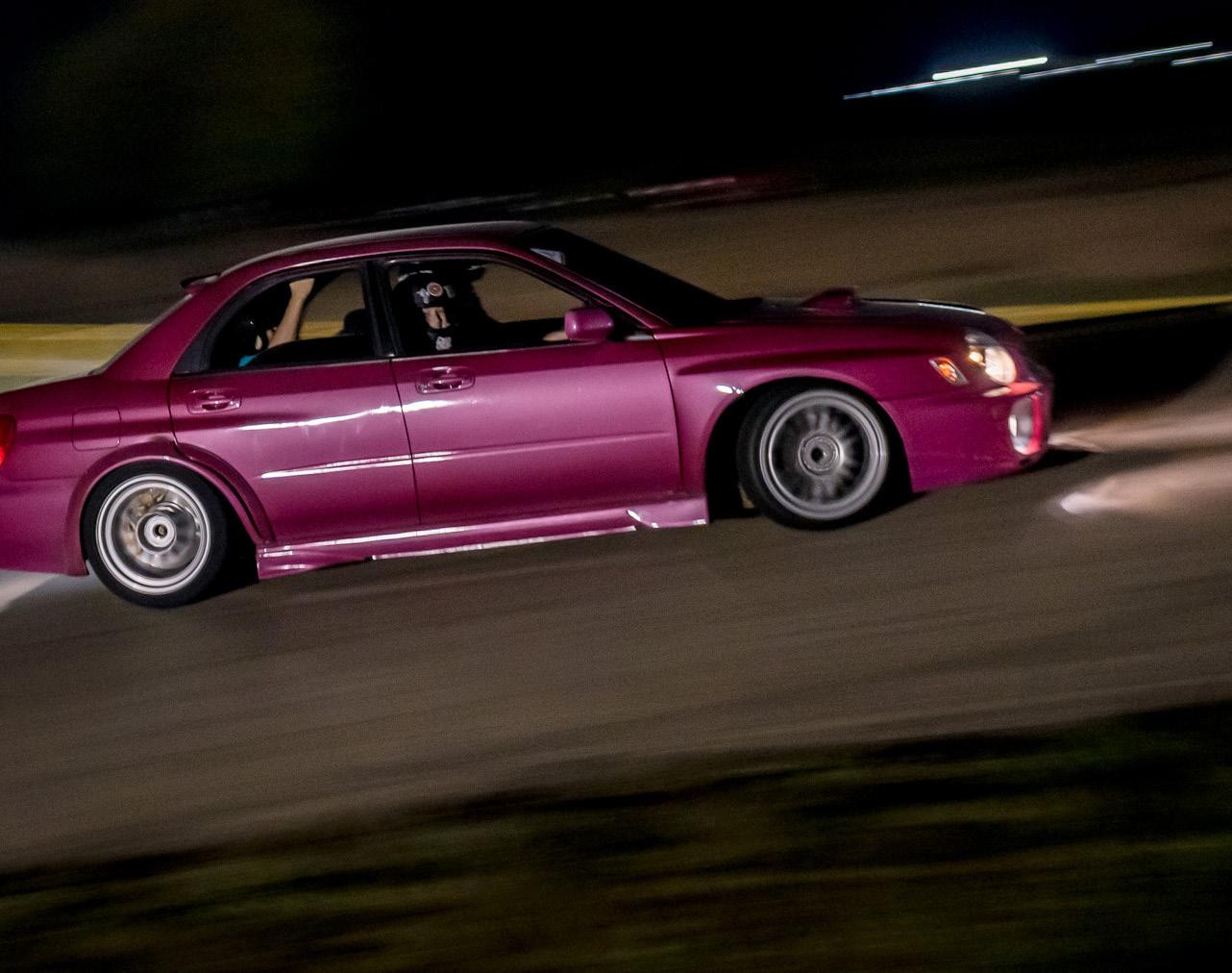
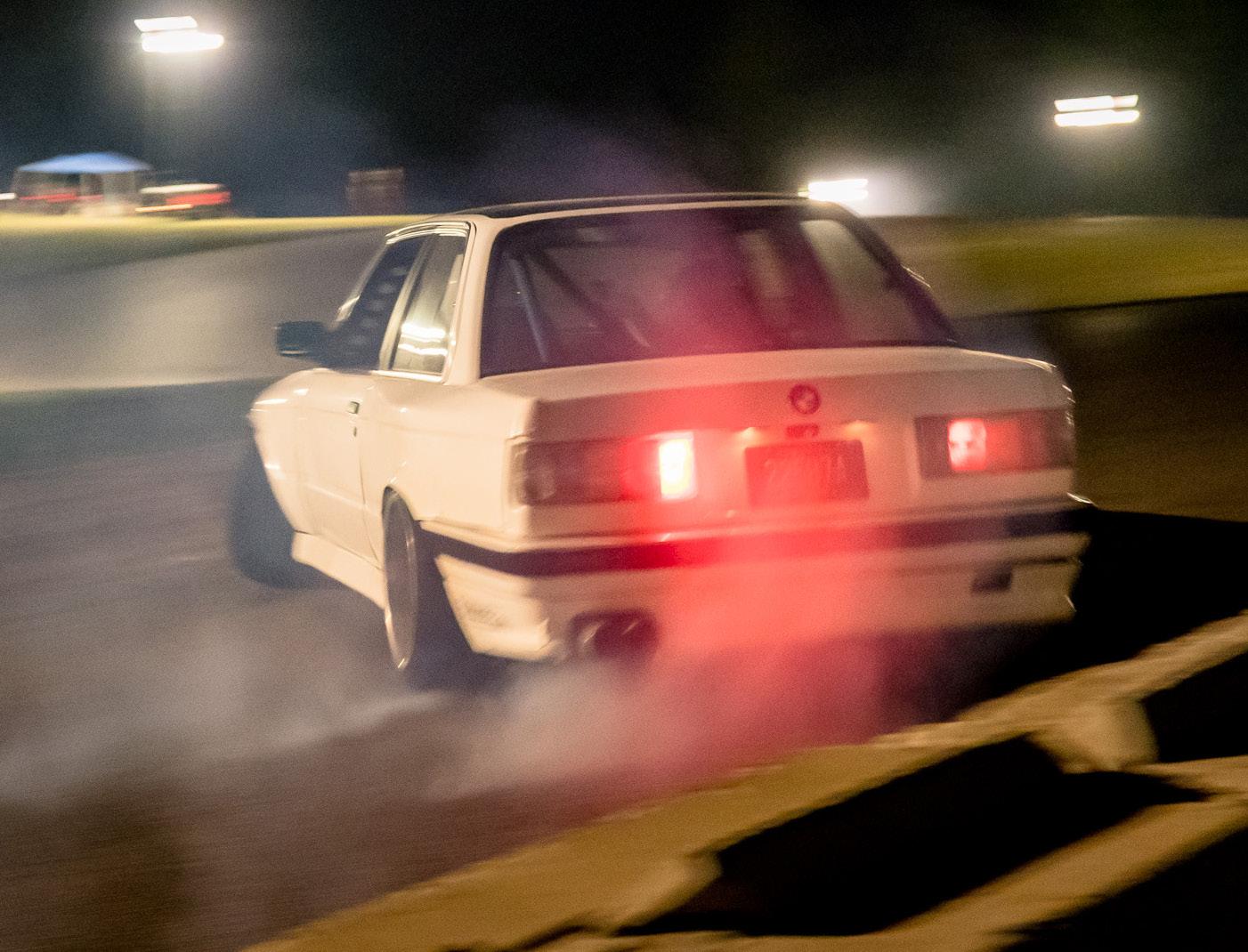
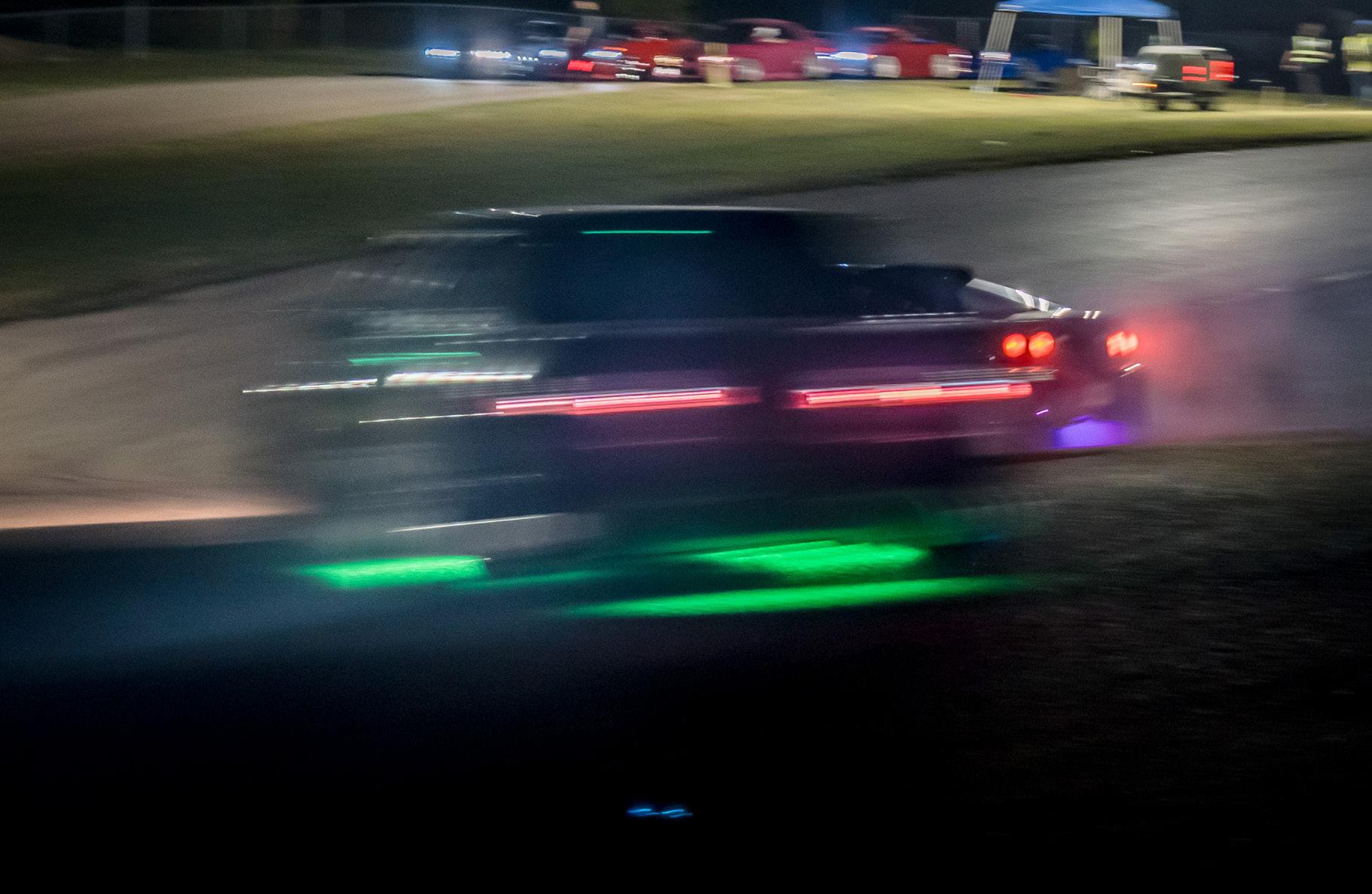
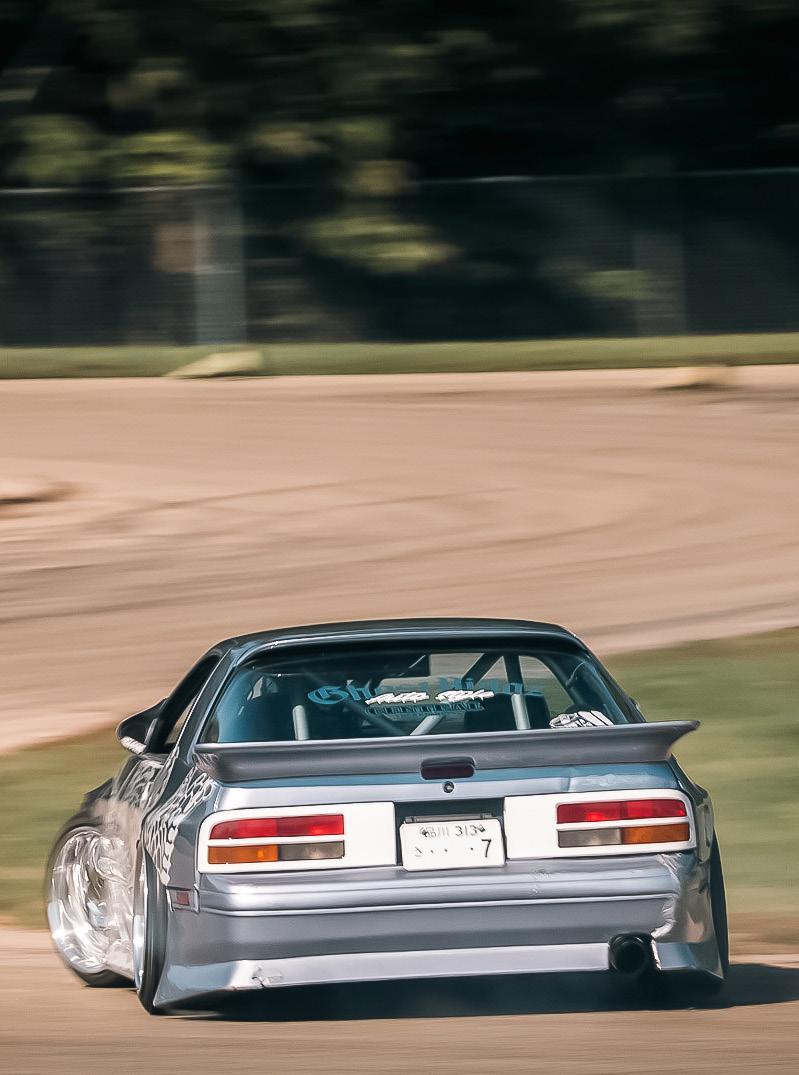
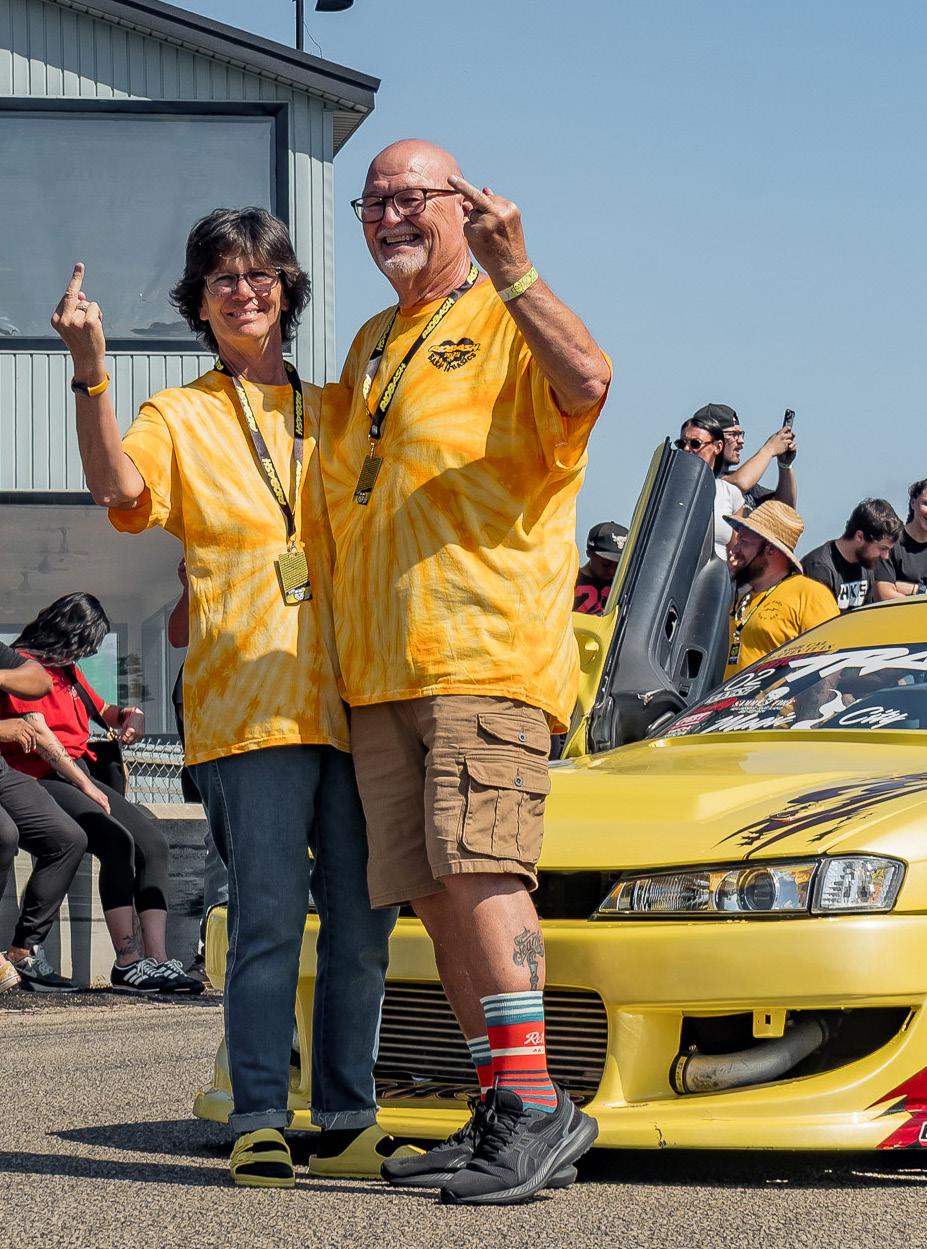
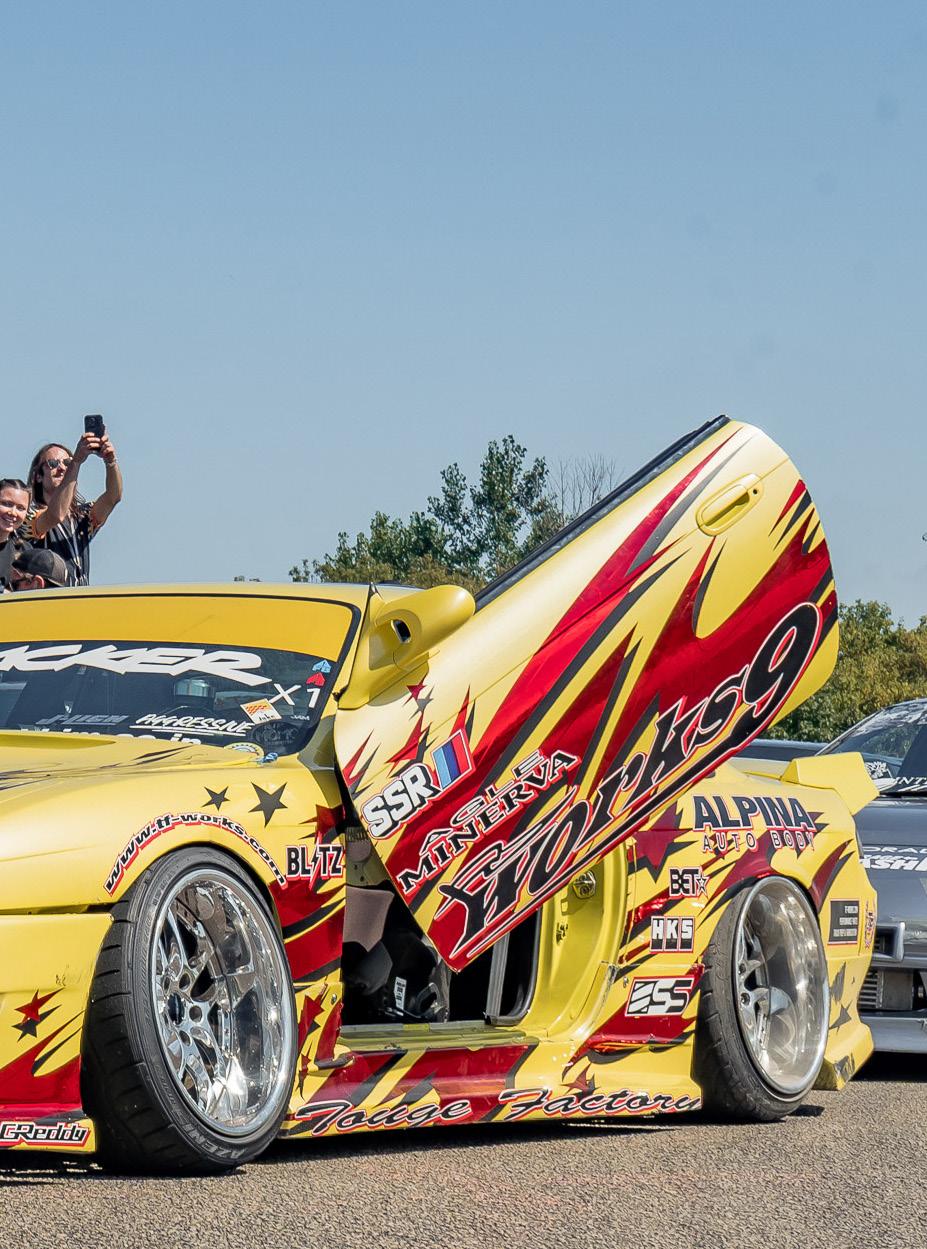
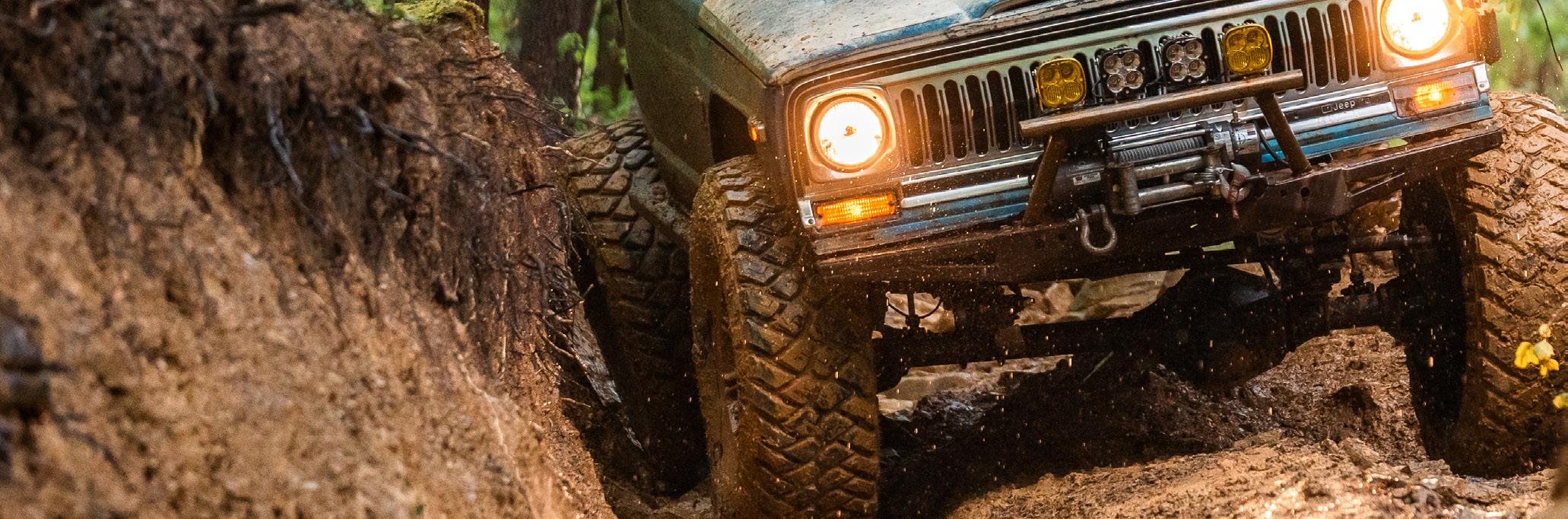
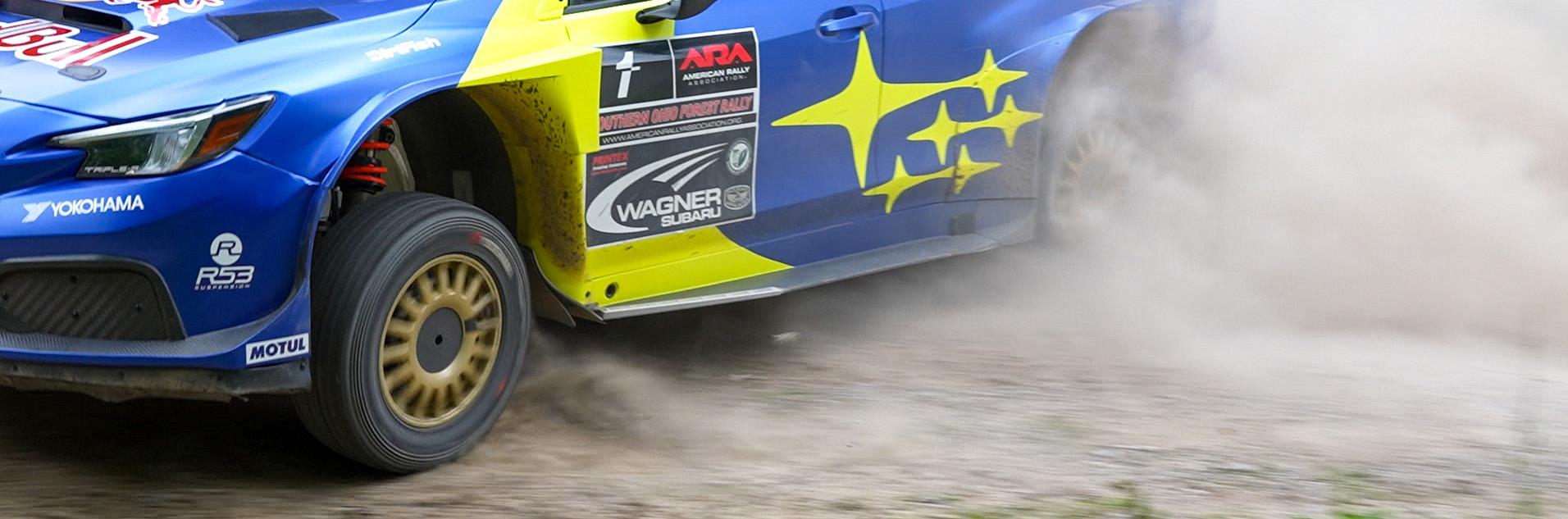
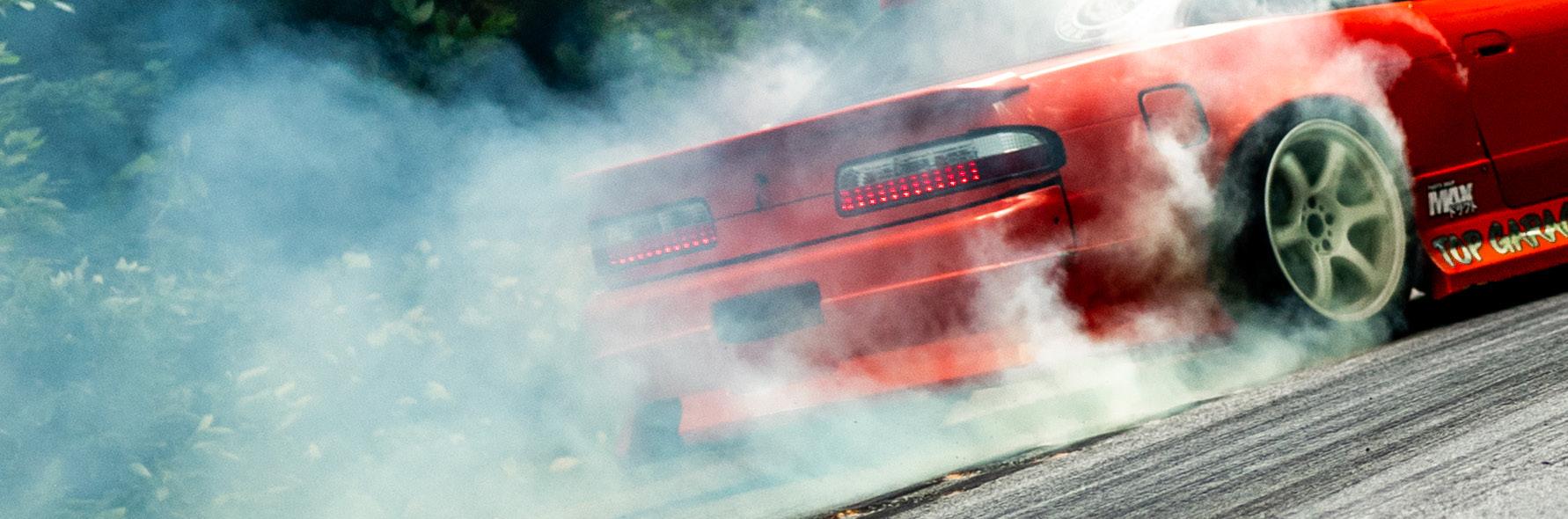
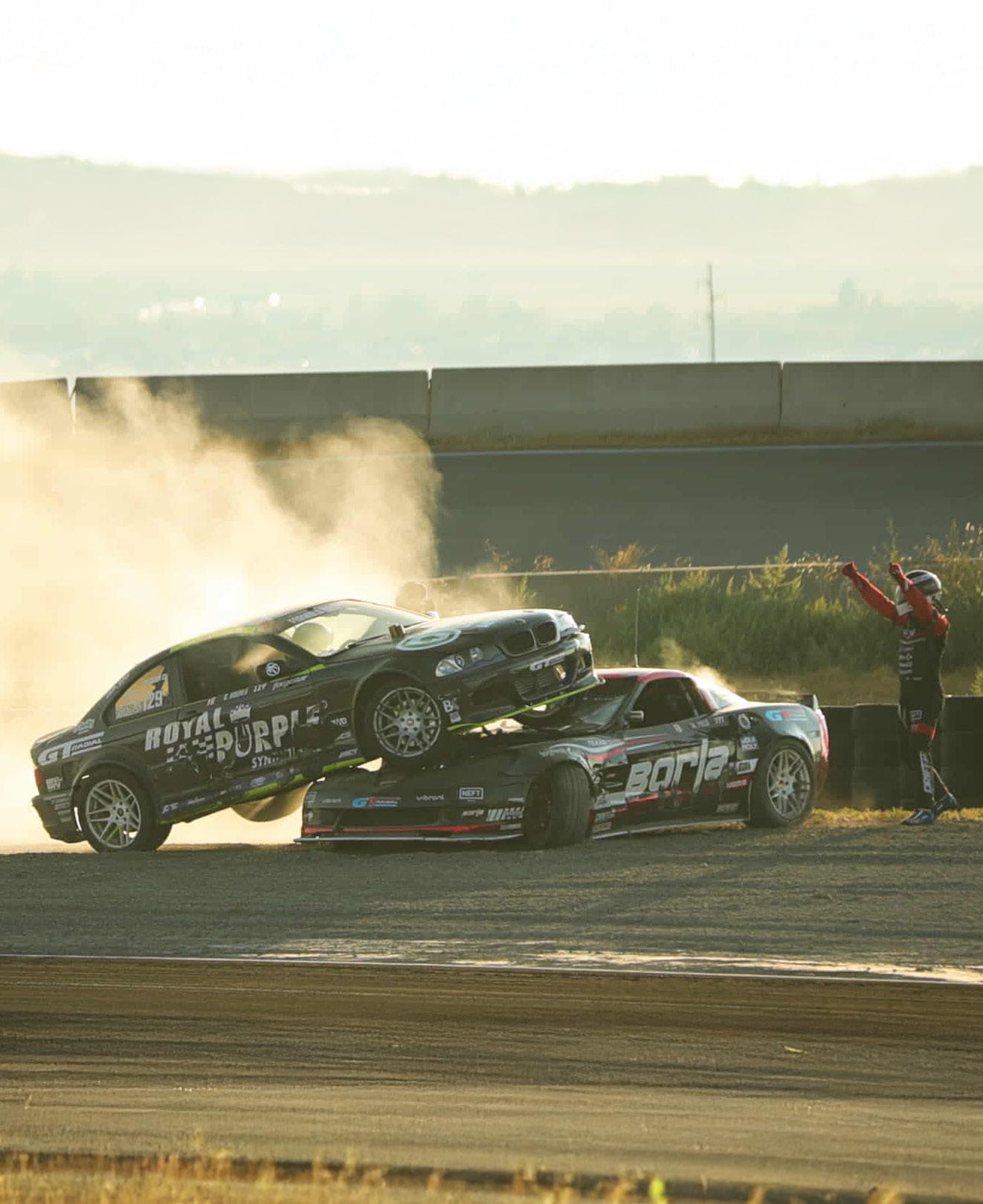
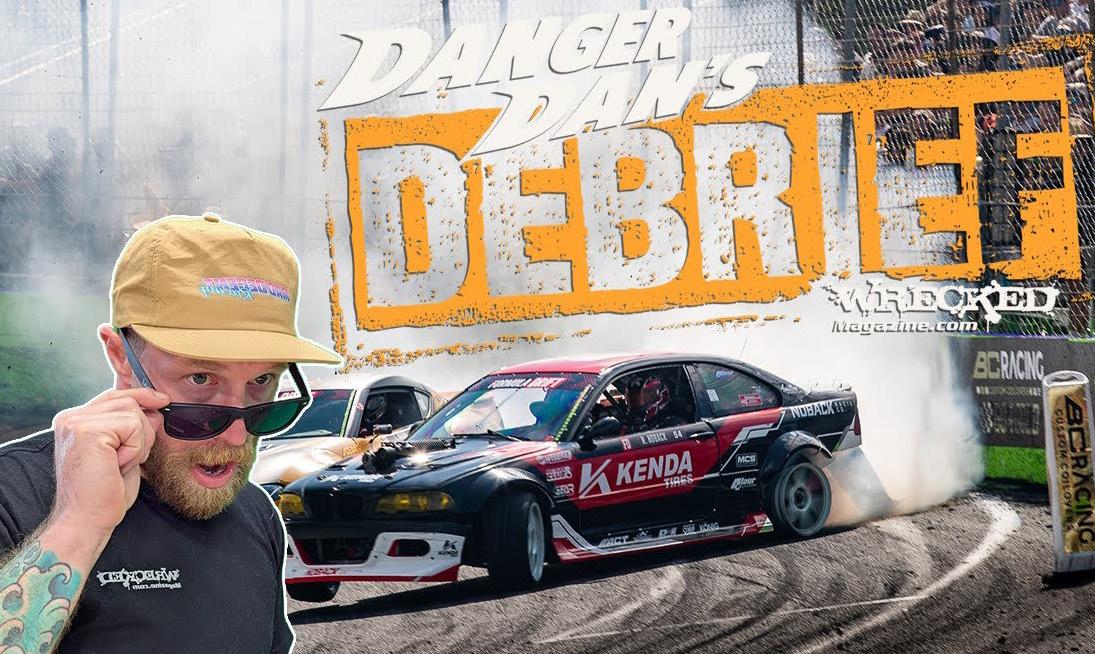
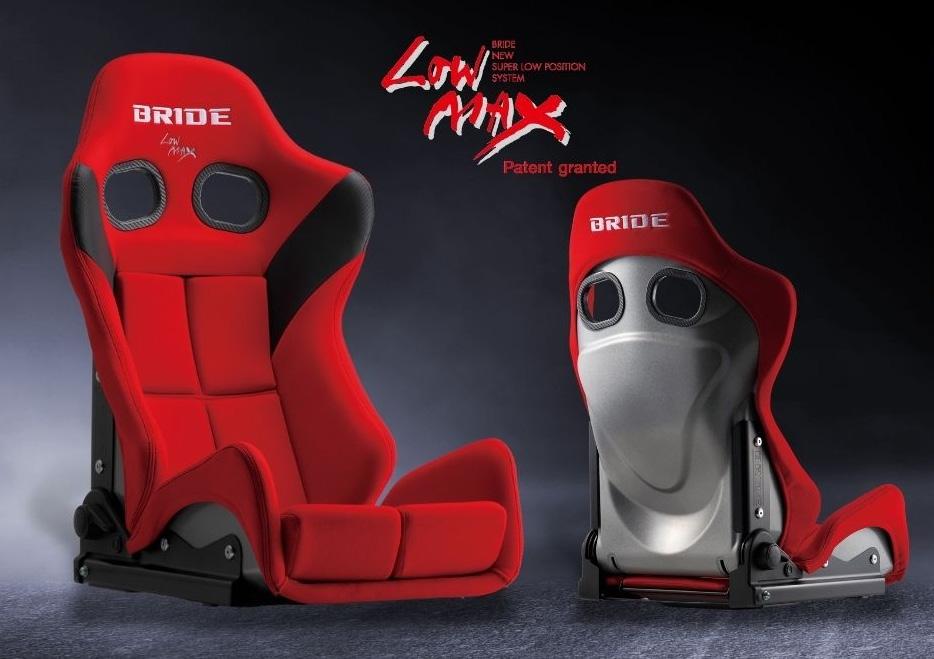
At Kenda, we put our D.O.T. approved tires to the ultimate test—real competition. We don’t run special race compounds or race-only prototypes. We race what we sell—D.O.T. legal VEZDA UHP MAX+ tires, straight off the shelf. If they can survive the heat, speed, and abuse 3 Time Formula Drift Champion, Frederick Aasbo throws at them, they can put you on the podium at your local races and get you to work on Monday morning. Race-proven. Street-ready. Find your local dealer at kendatire.com. kendatire.com
VEZDA UHP MAX+
STAFF DIRECTORY
EDITORS
-Ty Webb - Sam House (editor@wreckedmagazine.com)
CREATIVE DIRECTOR
- Dave Love (dave@wreckedmagazine.com)
DIRECTOR OF PHOTOGRAPHY
- Chuck Murray (chuck@wreckedmagazine.com)
DIGITAL MEDIA COORDINATOR
- Shawn Allgood (shawn@thedriftgrp.com)
ONLINE CONTENT MANAGER
- Shawn Allgood (shawn@thedriftgrp.com)
STAFF WRITERS & PHOTOGRAPHERS
- Shawn Allgood, Sam Igel II, Chuck Murray, Sam House
ADVERTISING DIRECTOR
- Edgar Sarmiento (edgar@thedriftgrp.com)
CONTRIBUTING PHOTOGRAPHERS
Devin Crezee, Robbie Nishida, Jake Minard, Katelyn Brozovich, Andy Eineichner, Clayton Smith, Dale Uborka, David Karey, Mario Johnston, Nick Quigley
CONTRIBUTING WRITERS
Devin Crezee, Robbie Nishida, Jake Minard, Katelyn Brozovich, Andy Eineichner, Clayton Smith
WRECKEDMAGAZINE.COM
TO INNOVATION
THE STORY BEHIND:
Words and Photos By: Shawn Allgood
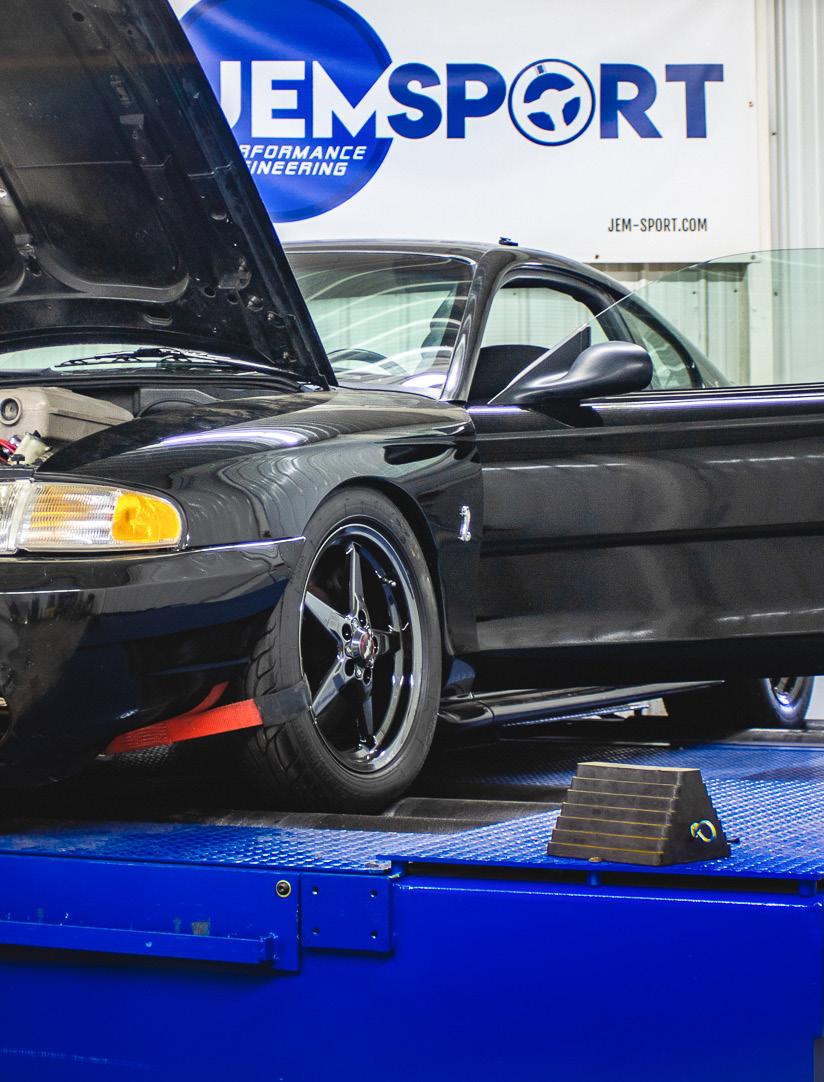
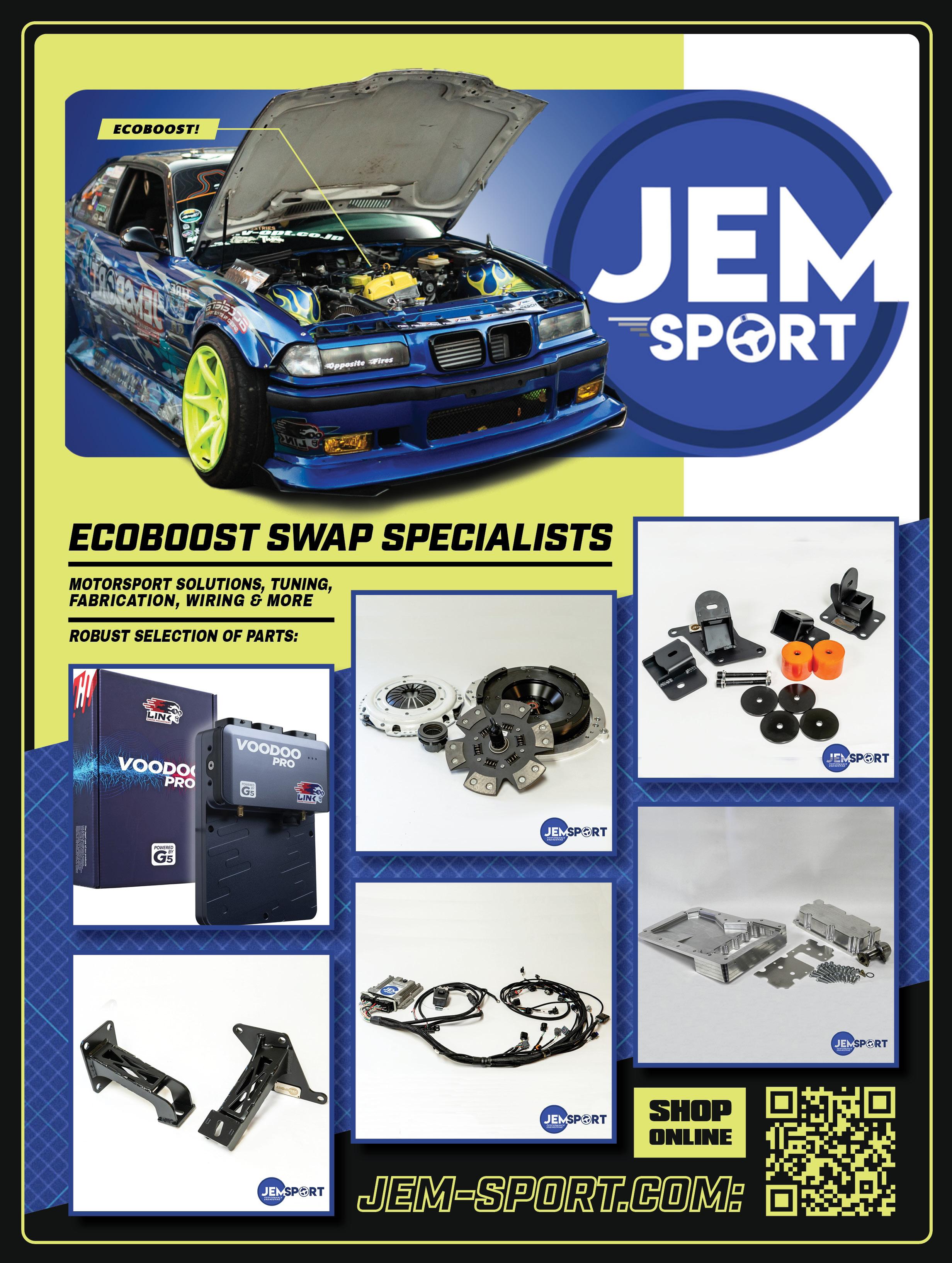
Whenyou walk into JEM Sport, you’re stepping into nearly a decade of hustle, trial by fire, and innovation. What began in a garage with a group of friends has transformed into a business known for its Subaru expertise, race car builds, and now, groundbreaking EcoBoost swap solutions.
THE BEGINNING
“It started as just a couple nerds in a garage,” the founder, Jake Minard, recalls. “We were into rallycross, working on our own cars, and eventually our friends started paying us to do work. That’s when we decided to get a building.” Originally called Import Barn and then Understeer R&D, the shop grew quickly from a passion project to a full-time business.
Shawn Allgood: Did you always know this would become a real business?
Jake Minard: “Not at all. At first, it was just us having fun. But once we had people lining up and paying for work, it became clear that we could make this something bigger.”
EARLY CHALLENGES
The first location in 2015 was small and inefficient but served as a crash course in running a business. By 2017, the shop relocated into its current building after Jake’s uncle’s vending business closed. “It was just me at first, doing Subaru maintenance to stay afloat. Slowly, we rebuilt and started growing again.”
SA: What was the hardest part about those early days?
JM: “Honestly, not knowing what I was doing. I was around 20, 21 with no real business education.
INNOVATION
Everything was trial by fire.” One moment that stands out from those days was a customer who brought in a beat-up Subaru rally car.
“We didn’t have all the tools or resources yet, but we made it work. The customer was thrilled, and that word-of-mouth is what kept us going.”
GROWTH AND RALLY ROOTS
By 2018–2019, the shop had a strong team, working on everything from Subarus to plow trucks, and building full race cars with cages, engine builds, and turbo kits. A dyno purchase and plans to buy the building in 2020 looked like the next big step, until COVID-19 hit.“It was scary. We had payments due and no work coming in. But once stimulus checks rolled out, people started spending again.”
“The dyno stayed busy, and that kept us alive.”
SA: How important was rally racing to your growth?
JM: “Huge. Rallycross and rally kept us connected to customers and gave us the chance to experiment with setups. It kept the dream alive when we were scraping by.”
He recalls one rally event where their customer’s car, freshly tuned at the shop, outperformed expectations. “People came up asking who built it. That was a turning point, we realized our work spoke for itself on the stages.”
Key team members helped shape this era. Josh Estey brought fabrication expertise, building cages and custom parts. “Josh coming on board changed everything,” Jake says. “Suddenly, we could take on full builds instead of just bolt-ons.” Andrew Kouts added wiring and build experience, enabling the shop to handle large, complex projects.
“Andrew’s attention to detail kept us sharp. He was the one pushing us to aim higher.”
THE ECOBOOST IDEA
As the shop stabilized, a new idea took root: modern engine swaps. “We were seeing people spend thousands keeping 30-year-old SR20s alive. That didn’t make sense when newer, more powerful engines were everywhere in junkyards.”
After testing different options, the team landed on Ford’s EcoBoost engines. Affordable, modern, and easy to source, they became the centerpiece of a new R&D push.
The first EcoBoost swap went into a BMW E36 in late 2022. “We didn’t know what we were doing at first,” he laughs. “But the engine ran all day without issues. That proved the concept.”
SA: Why EcoBoost over other modern engines?
JM: “Parts availability & cost. Replacement parts from Ford were cheaper and more accessible than the alternatives. Plus, the engines were just everywhere.”
One of the most rewarding moments came at a drift event. “We rolled up with an EcoBoost-swapped car, and people couldn’t believe it. By the end of the day folks who had been skeptical were asking how they could get one.”
Credit also goes to Dustin Lee, who joined during this period. “Dustin’s design and problem-solving skills pushed the EcoBoost project forward. He spent countless hours refining adapters and mounts. Without him, we wouldn’t have gotten this far.”
ENGINEERING THE FUTURE
Building swap solutions wasn’t easy. “Designing transmission adapters from scratch with no formal engineering background was brutal. Looking back, we should have paid someone, but doing it ourselves taught us a ton.” Trial and error with oil pans, power steering, and wiring harnesses eventually led to refined, market-ready products.
The shop now manufactures its own harnesses and partners with Link ECU for tuning solutions. “If every customer had a Link ECU and one of our harnesses, we could support them anywhere in the world.”
SA: Was there a turning point where you knew this was bigger than just builds?
JM: “Yeah, once we realized other people needed the same solutions we were making for ourselves, we knew we had a product line, not just a shop service.”
A customer from out of state recently called in after completing an EcoBoost swap with their kit. “He told us the car started on the first try. That kind of feedback, that’s when you know the work is paying off.”
Behind the scenes, Andrew spearheaded the inhouse wiring program. “Andrew kicked off our wiring harness manufacturing, which gave us control and consistency. That move elevated us from a shop into a true R&D outfit.”
WHAT’S NEXT
With EcoBoost kits for multiple chassis in production, the team is looking forward to more advanced builds. Upcoming projects include plug-and-play harnesses for the BRZ/FR-S platform, continued R&D on highhorsepower EcoBoost setups, and possibly even dry sump systems.
concepts, you can make it happen. That’s what got us here, just figuring it out, step by step.”
SA: What keeps you motivated after all these years?
JM: “It’s the science of it. Most people see problems as impossible, but if you break it down, it’s just math and physics. That’s what keeps me hooked— the challenge of solving it. And of course, seeing a customer rip around a track in a car we helped build, it doesn’t get better than that. And none of it would be possible without the guys on the team who believed in this vision and put in the hours to make it real.”
At JEM Sport, the story isn’t just about cars. It’s about persistence, teamwork, problem-solving, and building something from nothing, proof that a garage dream can become a motorsport innovation hub.
WORDS AND PHOTOS BY: Andy
Eineichner
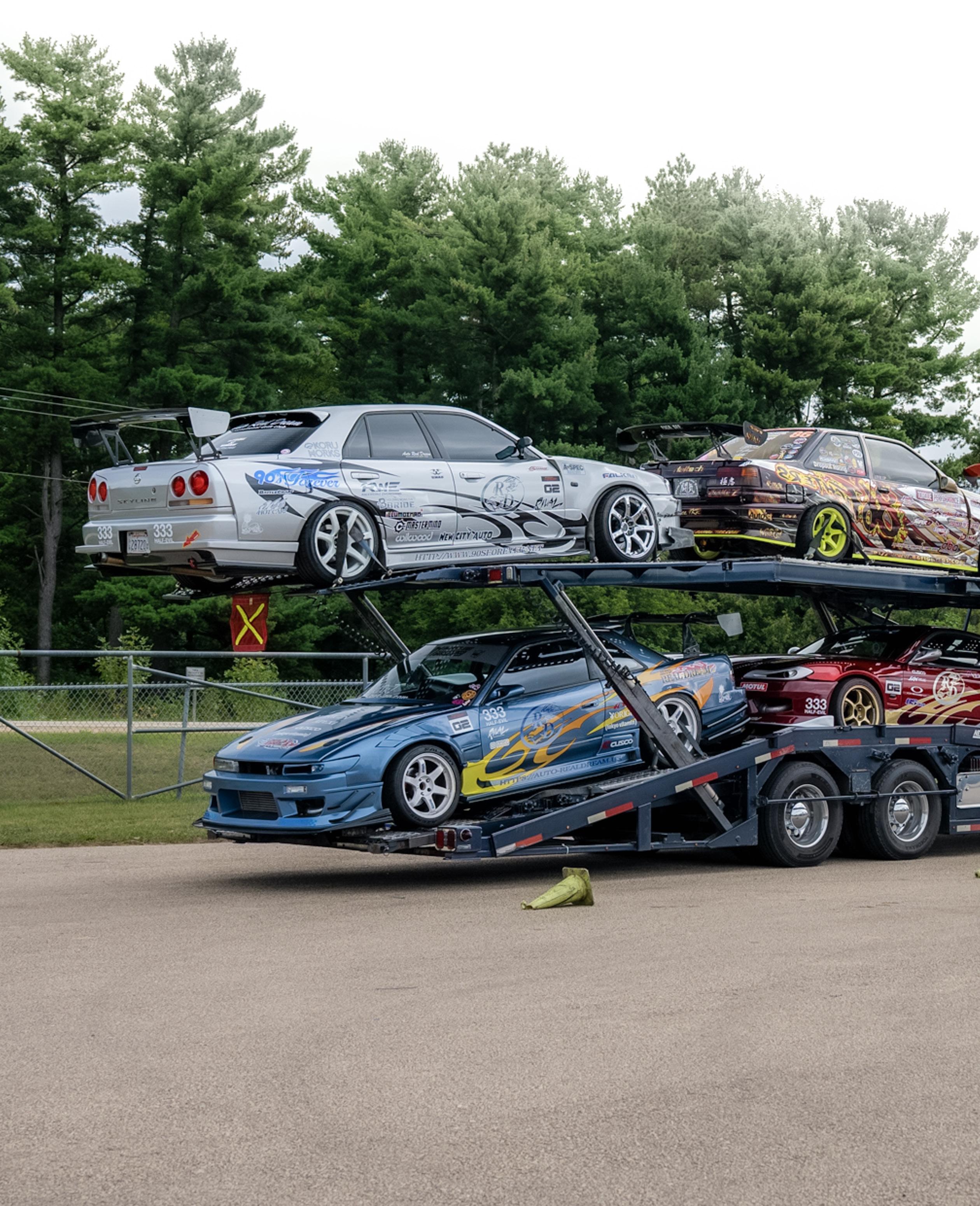
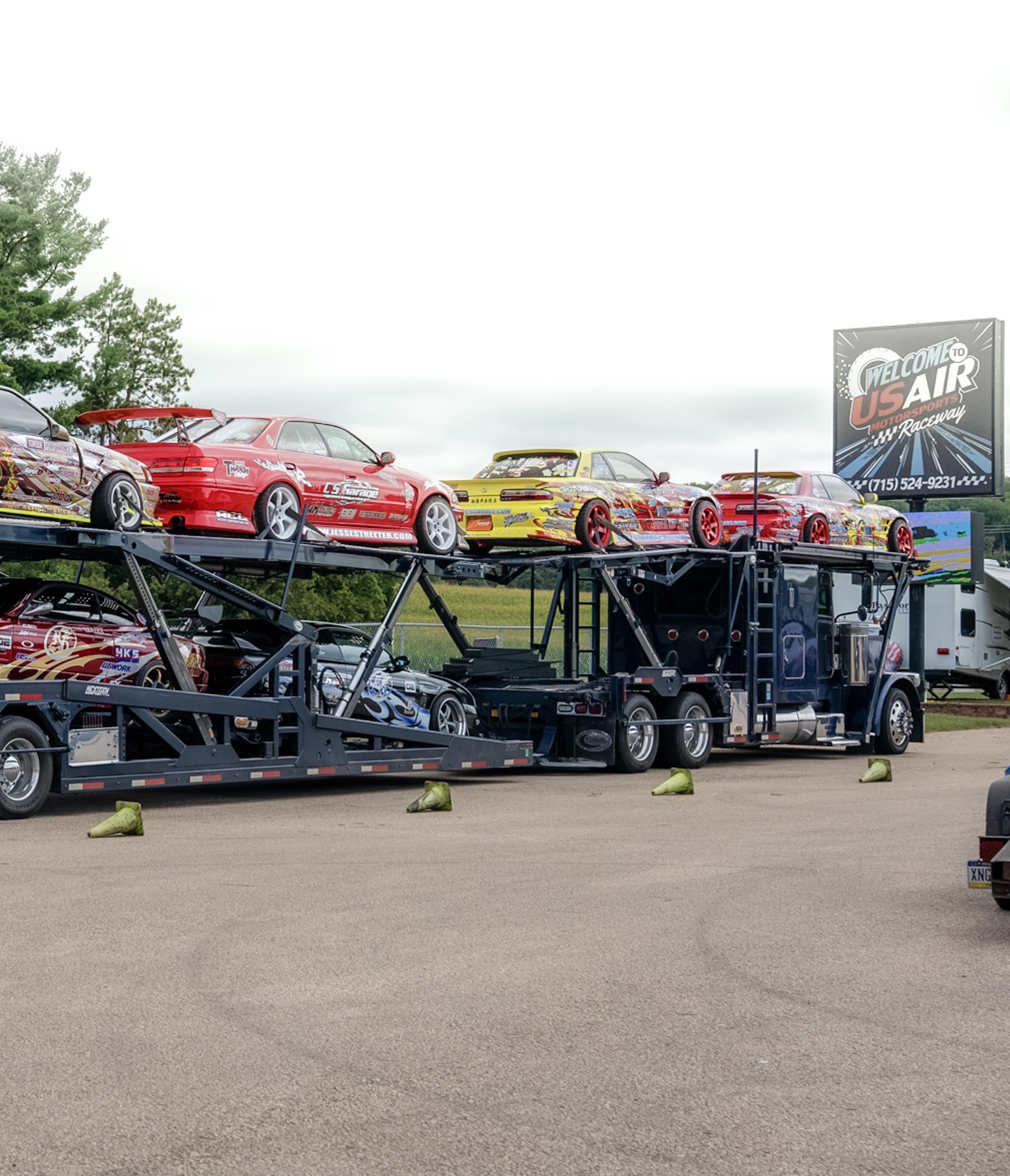
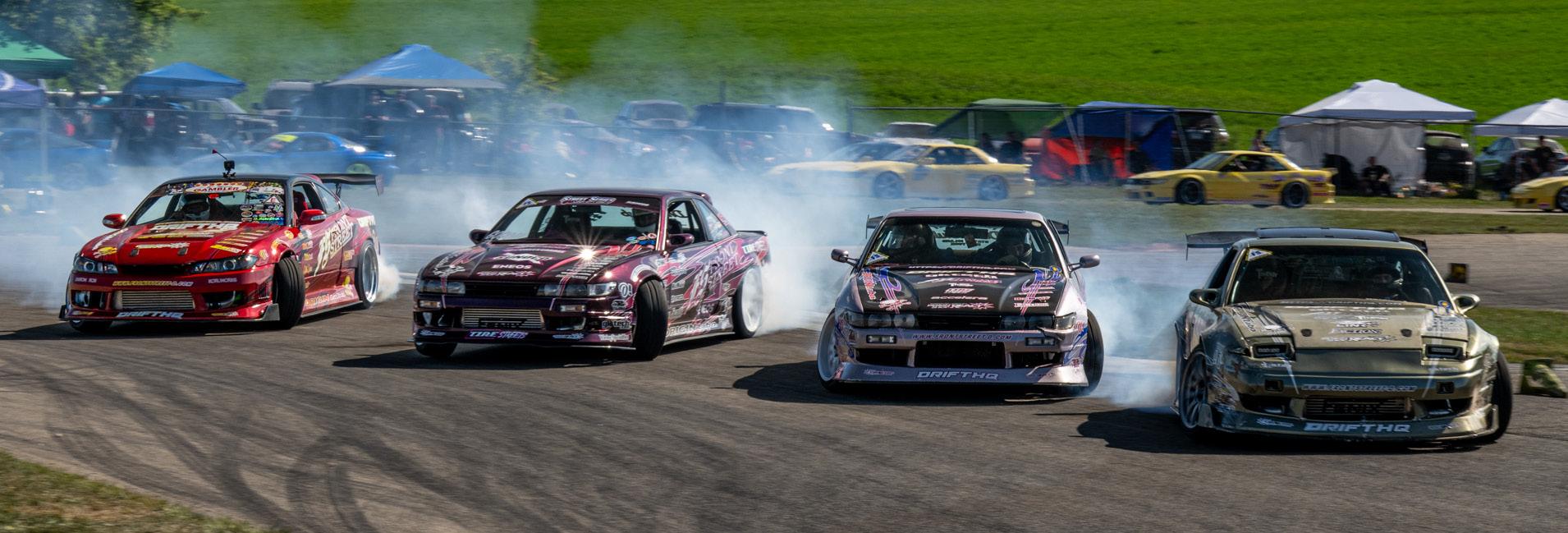
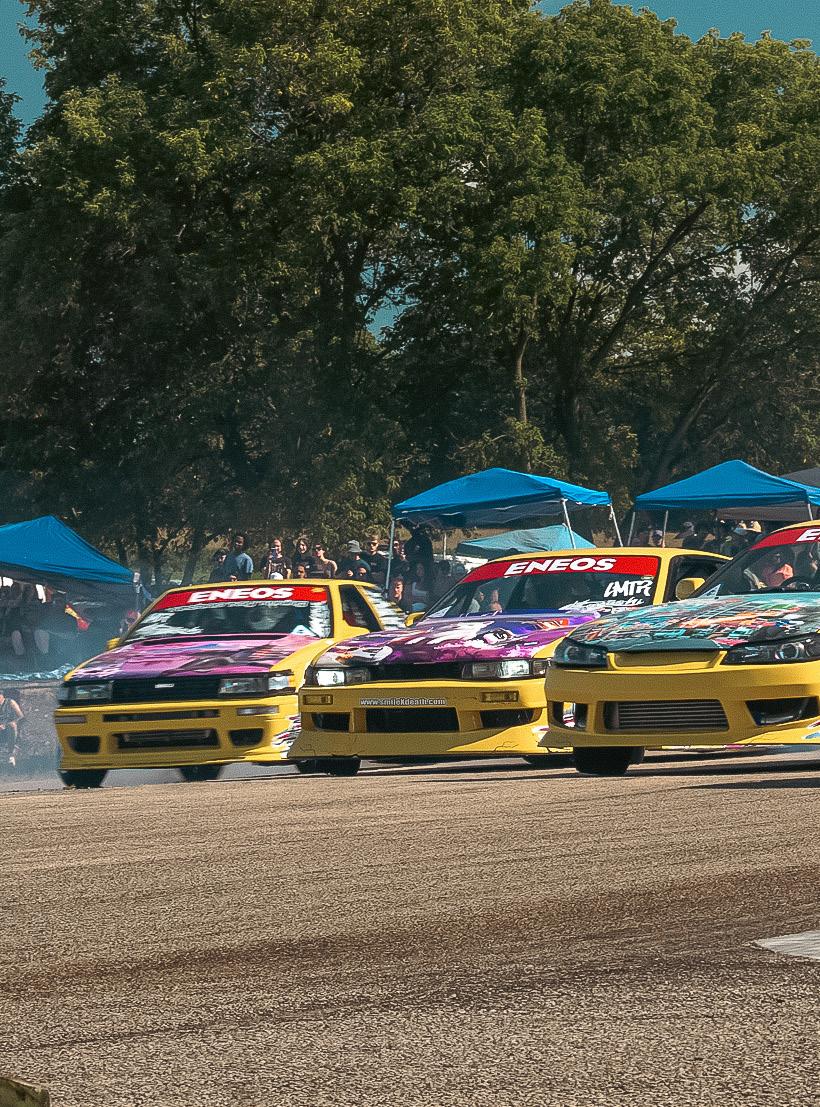
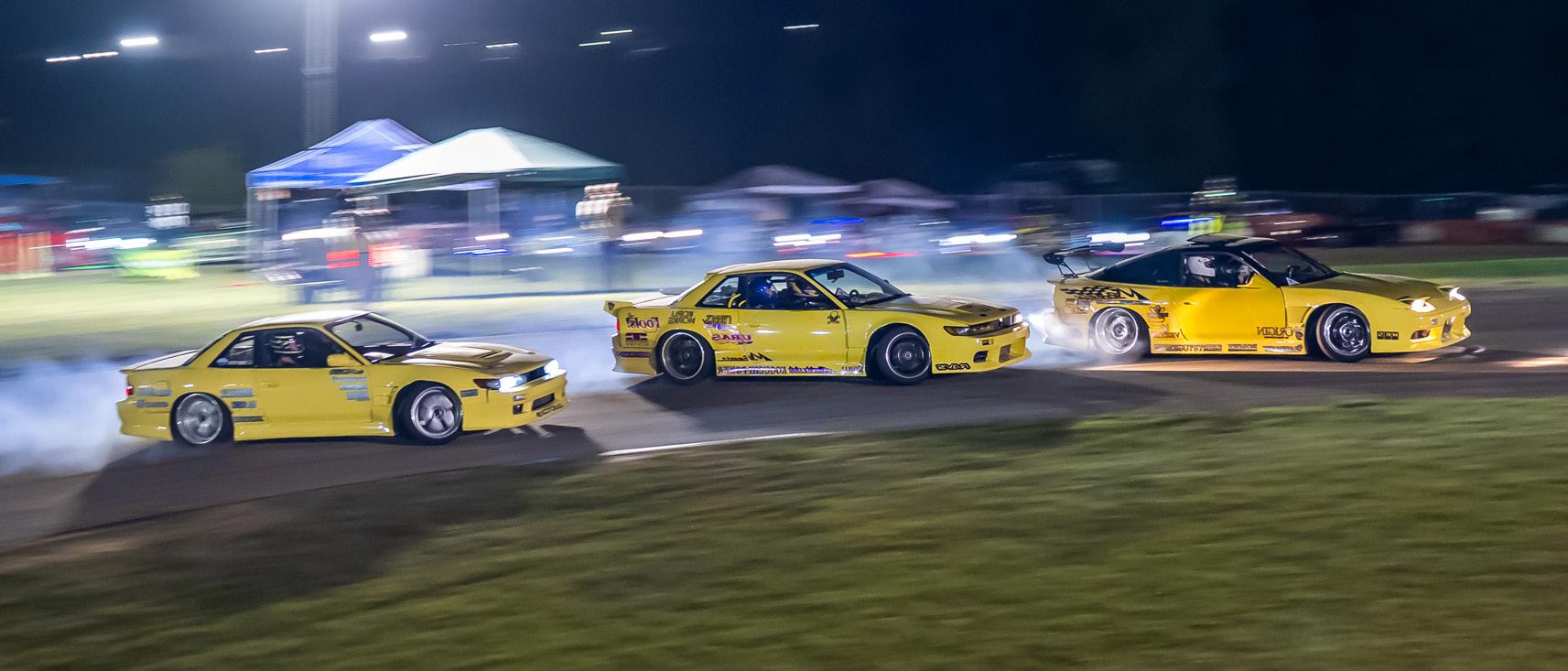
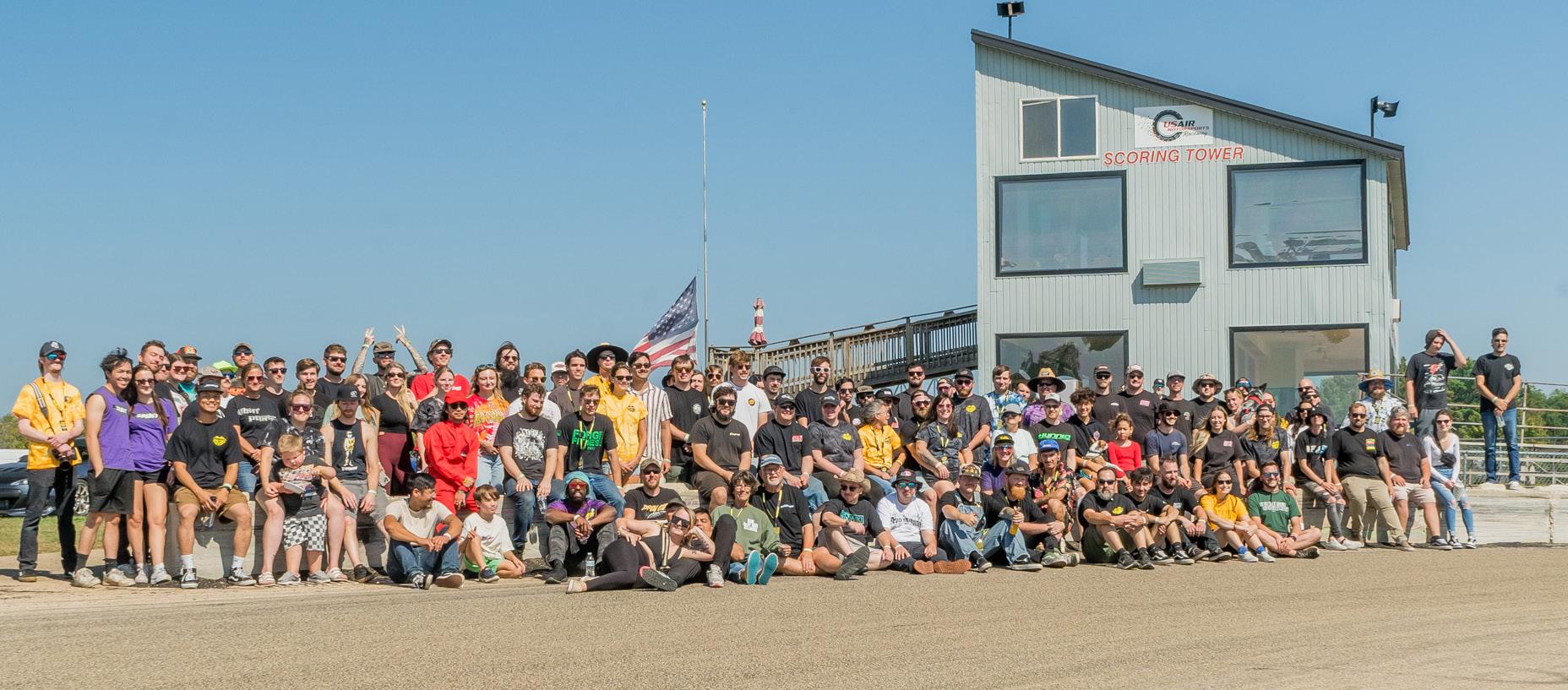
Is Final Bout the pinnacle of team drifting? It sure feels that way to be there, in a random little town in rural Wisconsin, watching the world’s best drift teams compete. But more than compete, they come to share a track known as the Rollercoaster of Love, USAIR Motorsports Raceway, where every lap is a wild ride of quick elevation changes and everchanging turns.
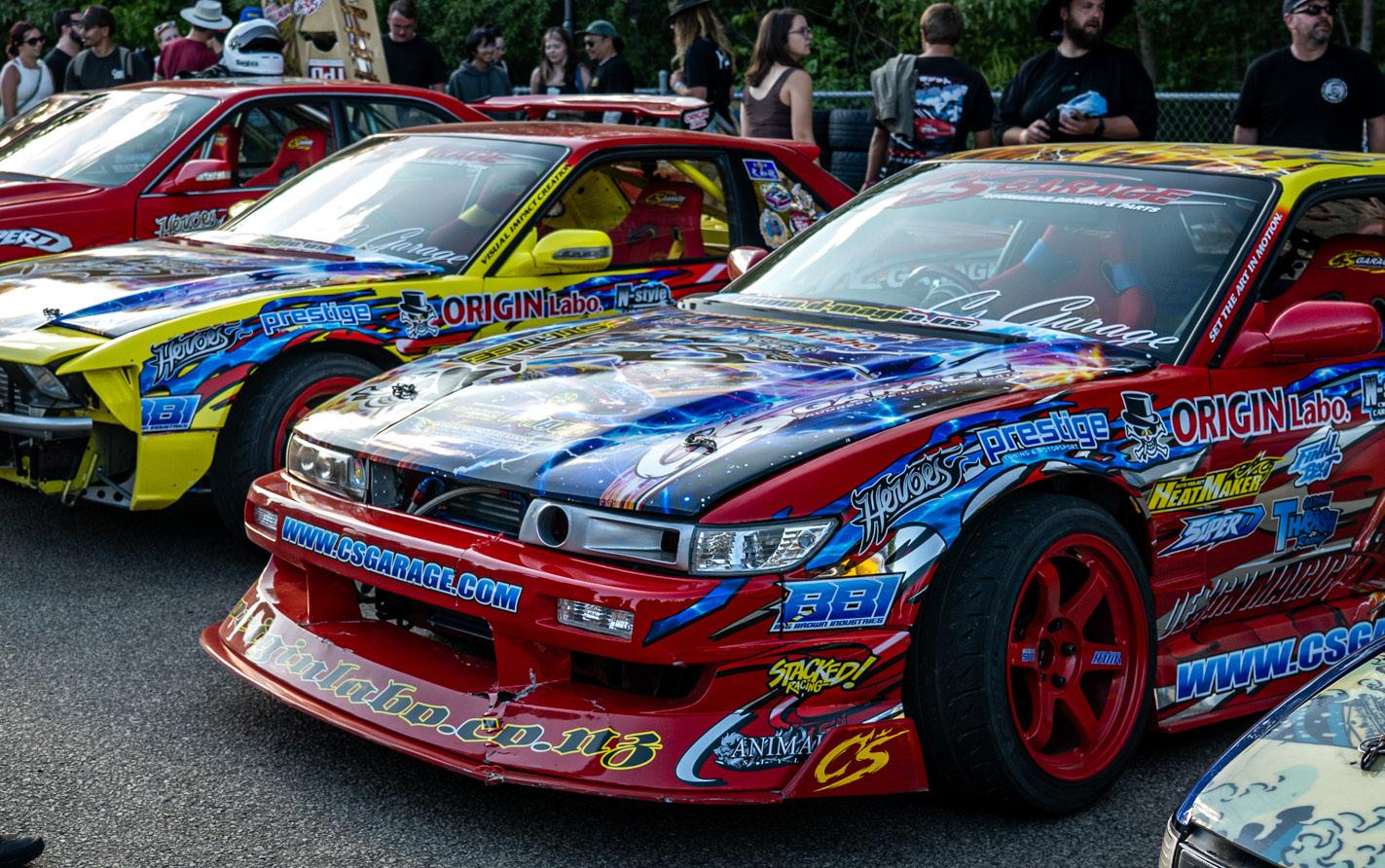
There’s legendary teams like Animal Style, Proceed, and Team Breaking, which have been there since Final Bout 1 all the way back in 2014, and more that are now sharing the track with some of the teams that grew up watching and learning from those guys. In true Final Bout fashion, they brought in some extra special guests from out of the country, that being the C’s Garage team and 86Fighters from New Zealand. Spoiler alert: C’s Garage had a clean sweep of qualifying, team comp, and singles comp.
started around noon and that’s when the excitement that is Final Bout really began. Teams that have been there since the beginning continue to show why they paved the way for team driving in the states.
Seeing these guys driving next to some of the newer teams was the dynamic we love to see at Final Bout.
Team Proceed went into the weekend looking to make it a 3-peat victory but the competition being as good as it’s ever been, that was a tough one to accomplish. C’s Garage immediately became a crowd favorite with their stylish cars and aggressive driving, what more could we even ask for?
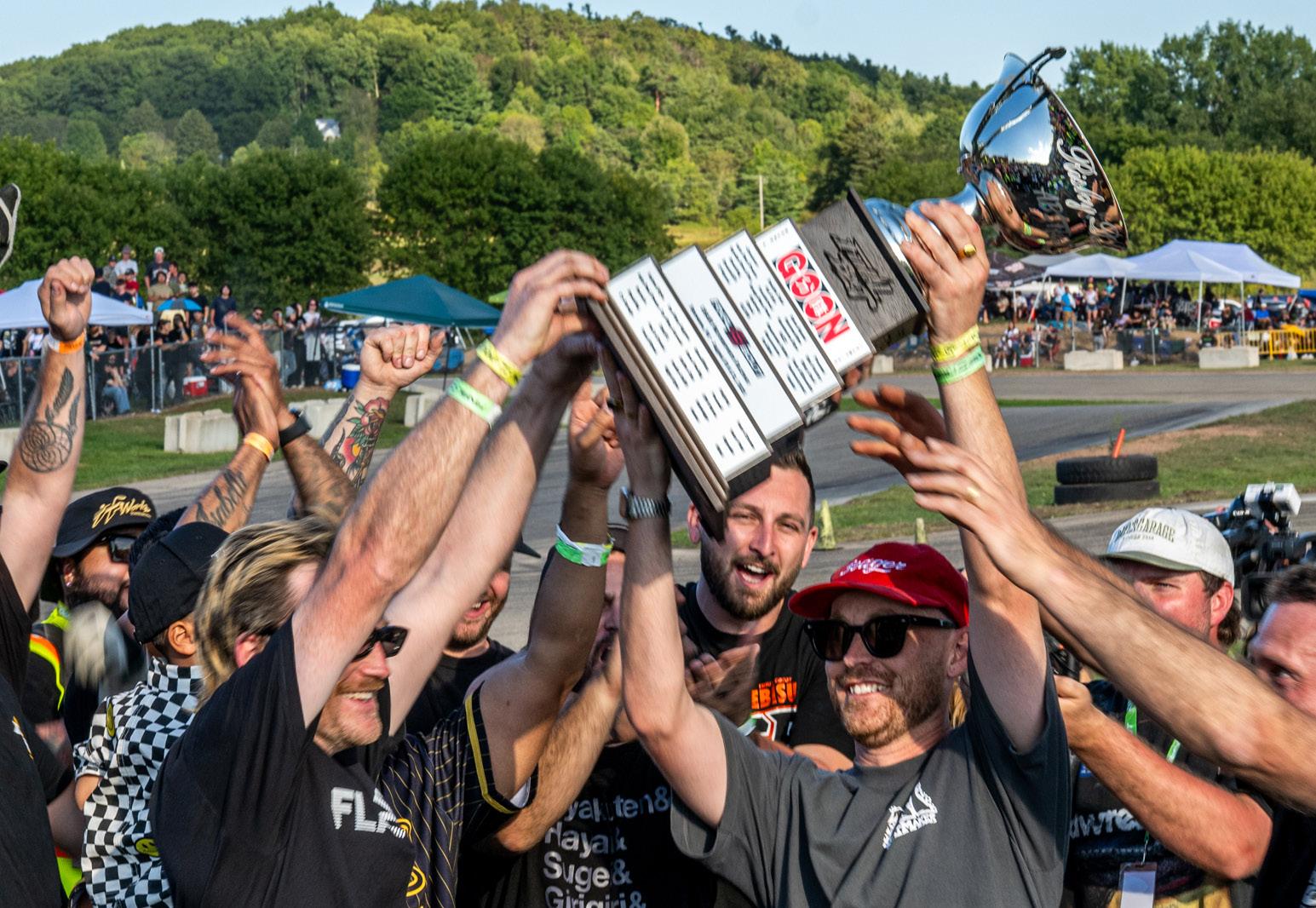
At the end of the competition, Proceed unfortunately did not accomplish their 3-peat, finishing in 4th place. The top 3 absolutely killed it and made it clear why they deserved those top spots:
1ST PLACE - C’S GARAGE
2ND PLACE - FRONT STREET DRIFT CLUB
3RD PLACE - GOOD FEELING
Team Good Feeling had super tight tandems all weekend. Front Street had style, proximity, and made it obvious that they’re a top team. But C’s Garage was unstoppable. Showing off those D1NZ skills on one of the coolest grassroots tracks in the world.
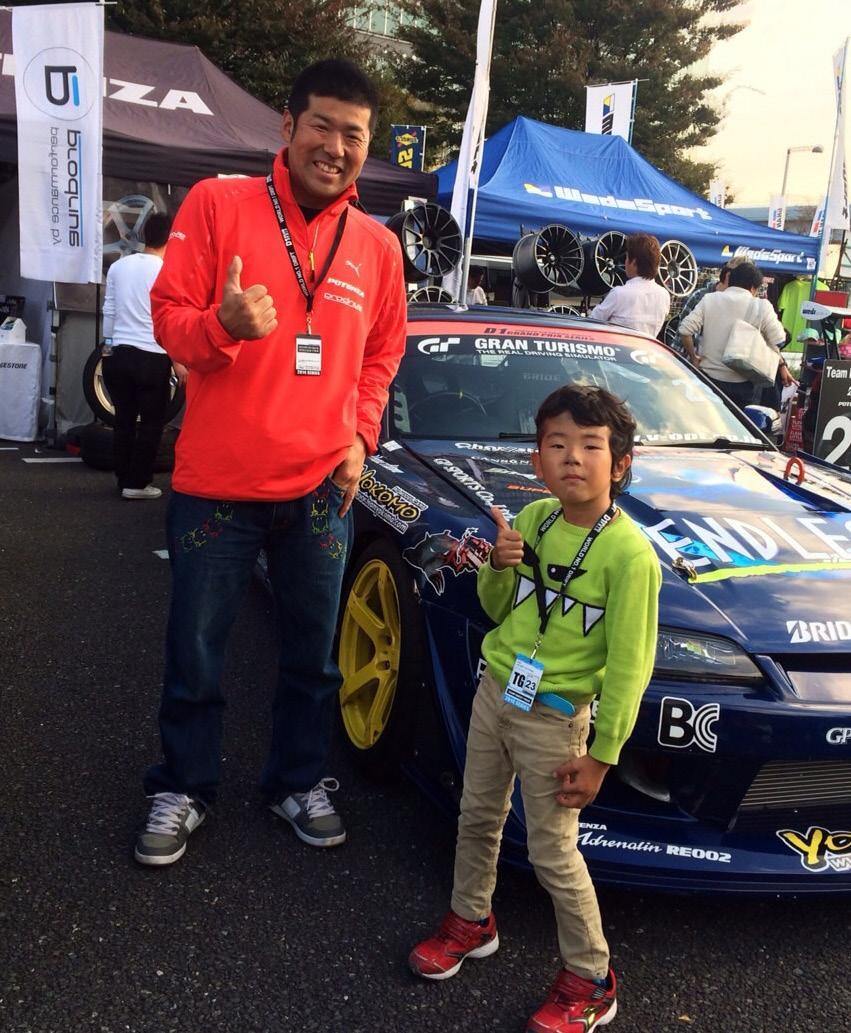
Animal Style brought so many cars it seemed like we got a new group of drivers every time they went out to tandem. Car Shop Kagami had a father and son duo as part of their team and it definitely showed that they drive together quite a bit. Honestly there’s just so many teams and they proved why they deserved their spot at an iconic event like Final Bout.
Due to the record number of spectators showing up, the pits were closed off for the team competition portion of the day to make sure the teams could access their pits quickly and get on grid efficiently.
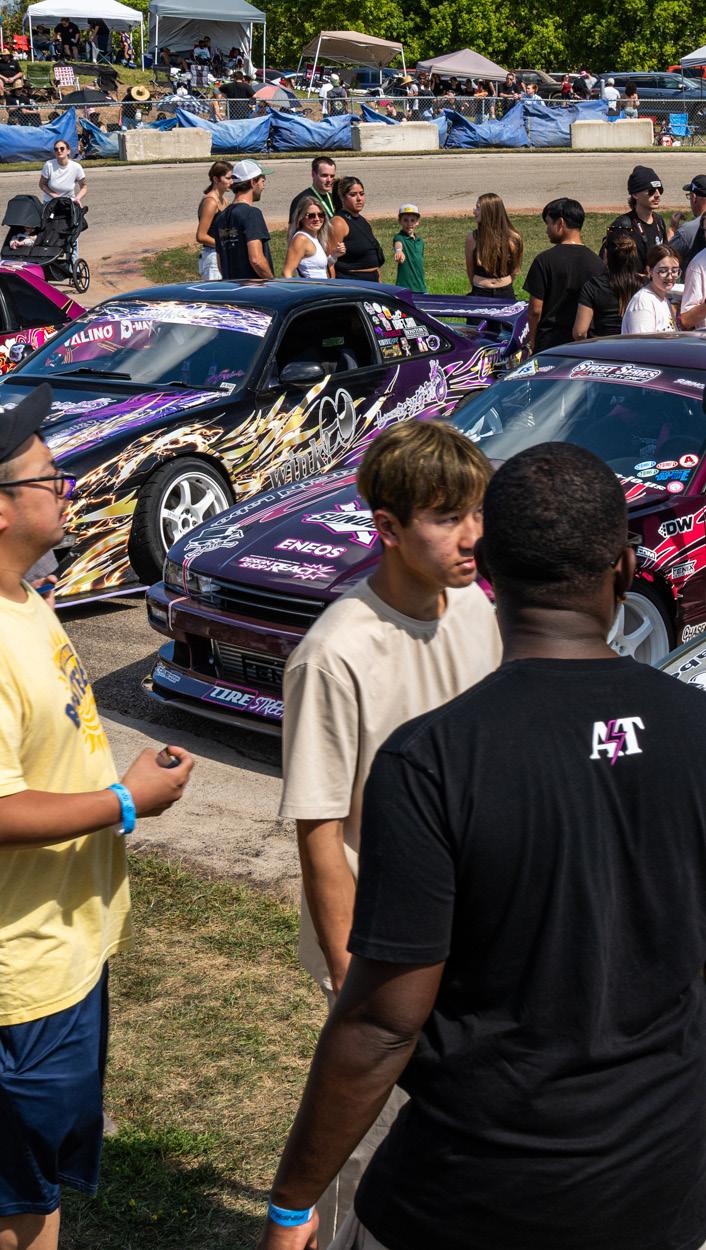
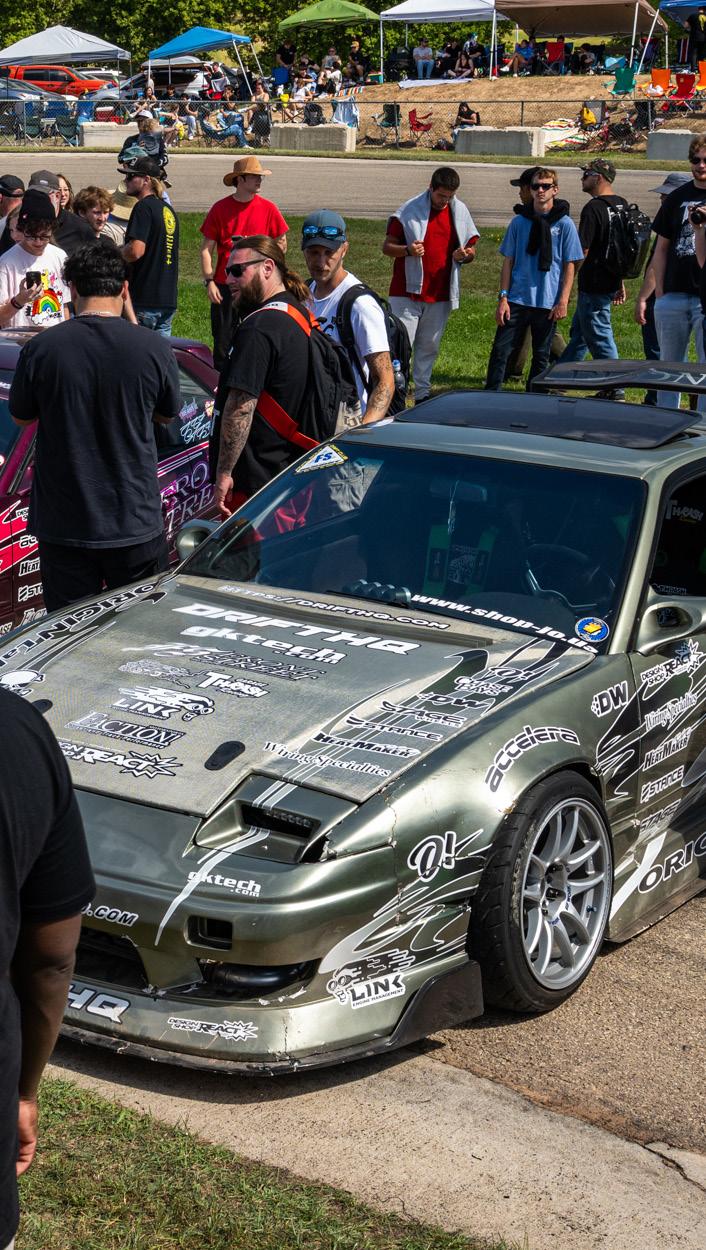
Once the winners were announced the gates were opened up for spectators to get an up close look at all the teams. Walking through the pits was like walking through a car show where these cars then immediately get thrashed around a racetrack.
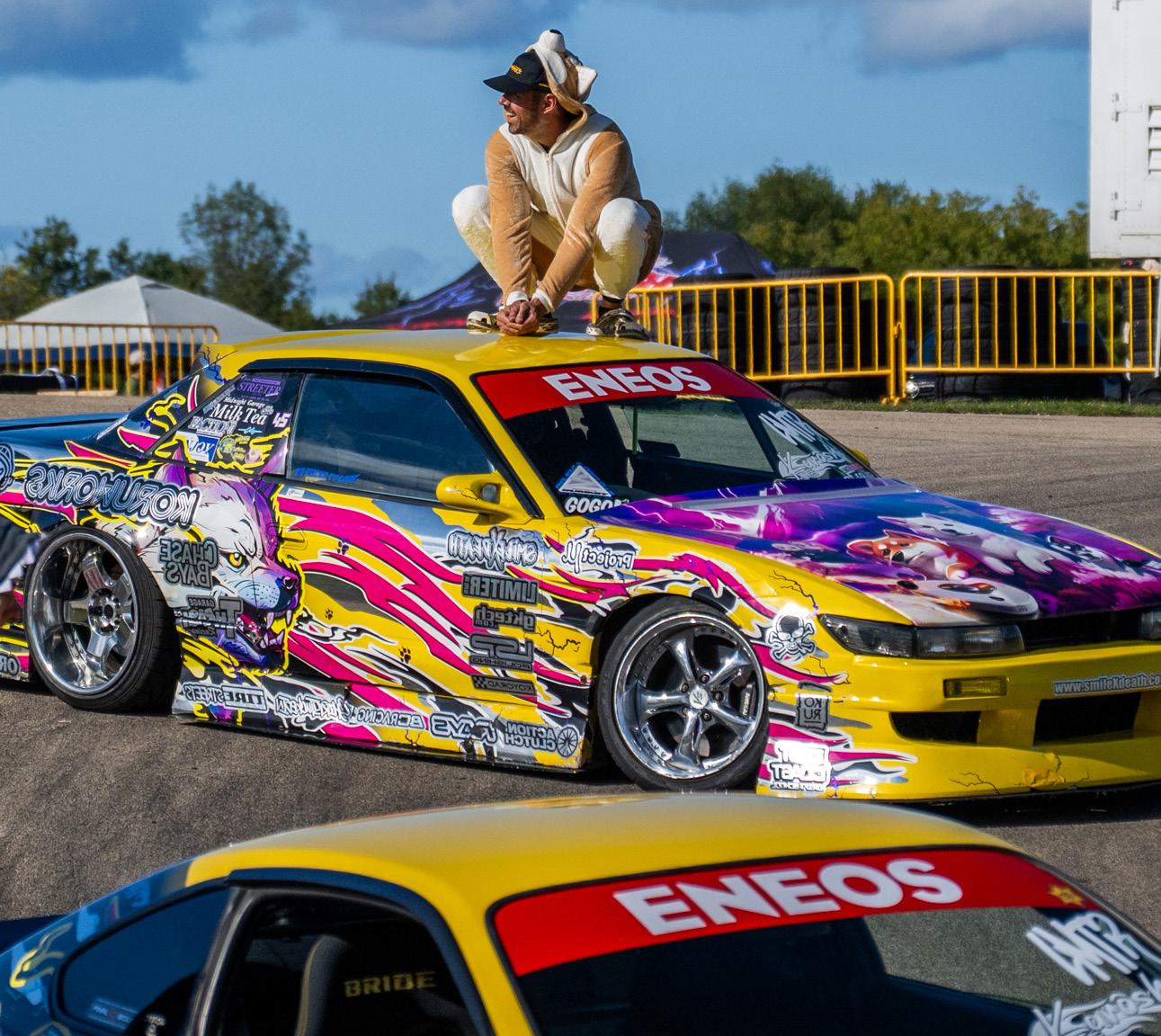
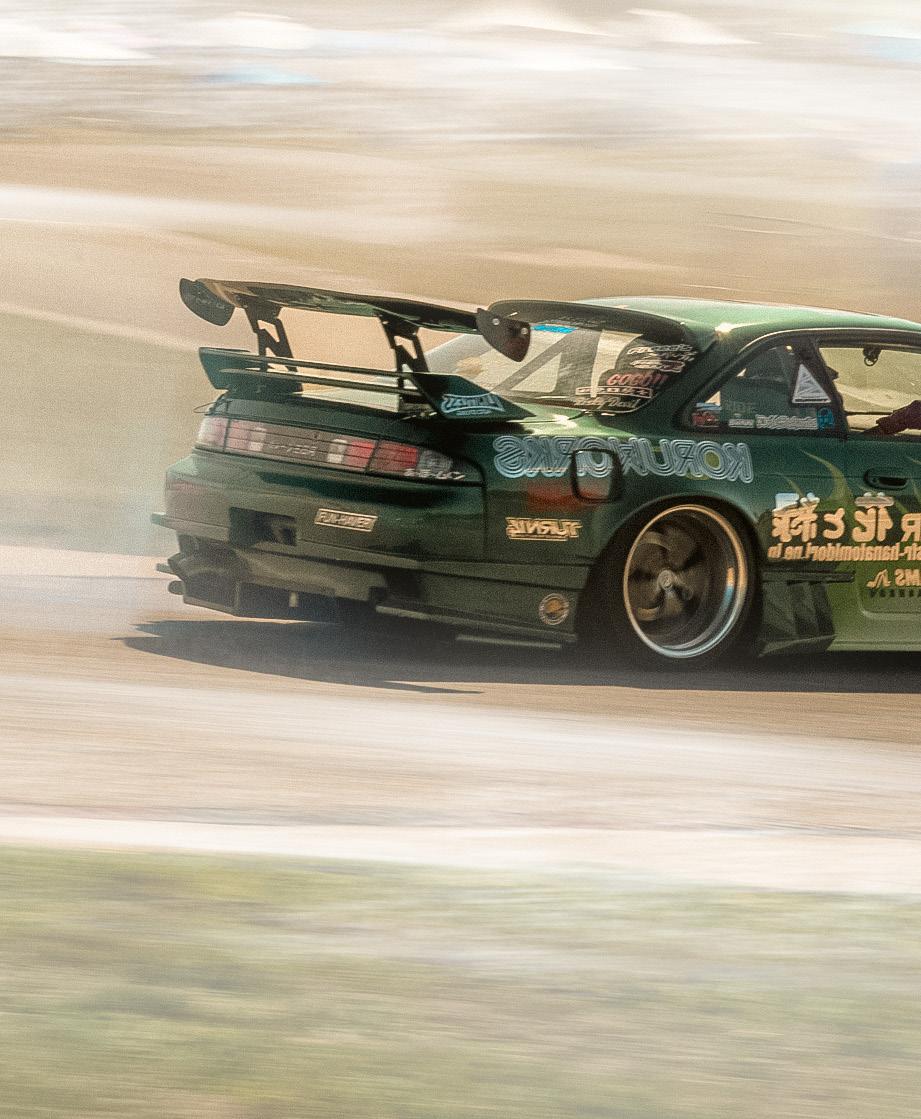
Day 2 of Final Bout had a singles competition as well of everyone’s favorite, open driving between all the teams. Dream tandems like Front Street and C’s Garage, Proceed and Animal Style, and really just about every other combination you could put together. Even Sebastian from Koruworks got in on the action in his S14 for some tandem runs when his judging duties were over.
I can’t think of another event that could almost double the population size of a small city in rural Wisconsin quite like Final Bout does. Bringing in over 6,000 people for a weekend of driving, style, friends, and more tires being burned off than you can imagine, it goes without saying that Final Bout is a mustsee event. It’s the perfect event to showcase why grassroots drifting is only getting better and why USAIR is the perfect track to allow these drivers to let loose.
innovation. timeless
HEYMAN!
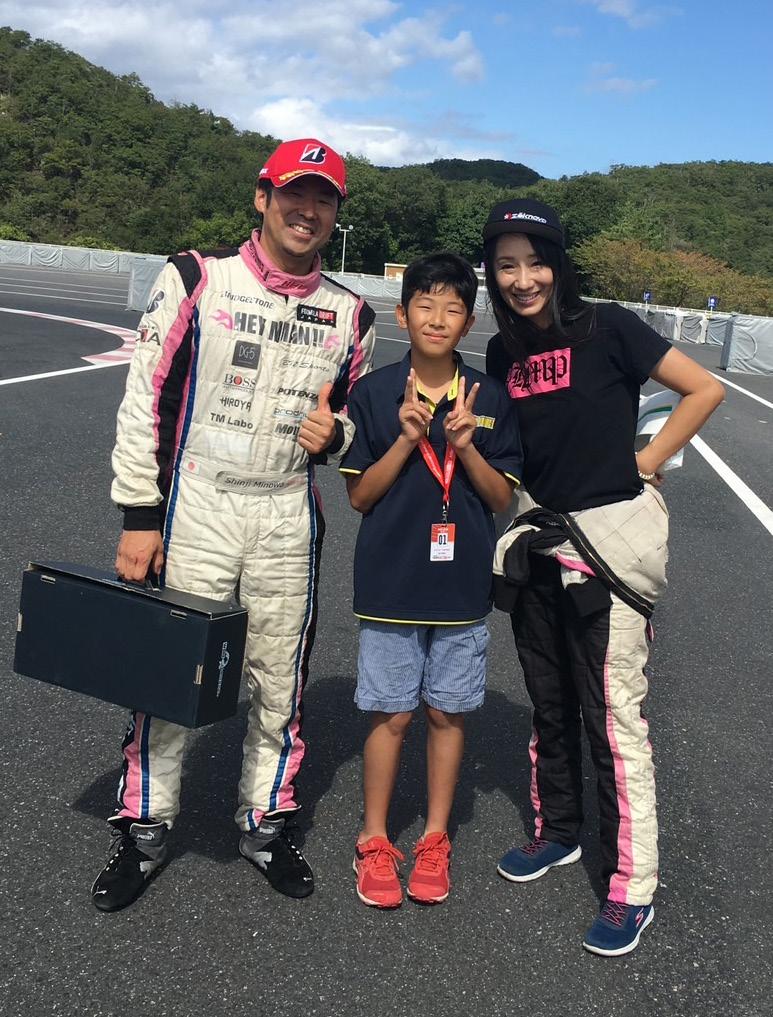
THE DRIFT LIFE OF SHINJI MINOWA
INTERVIEW BY: Robbie Nishida
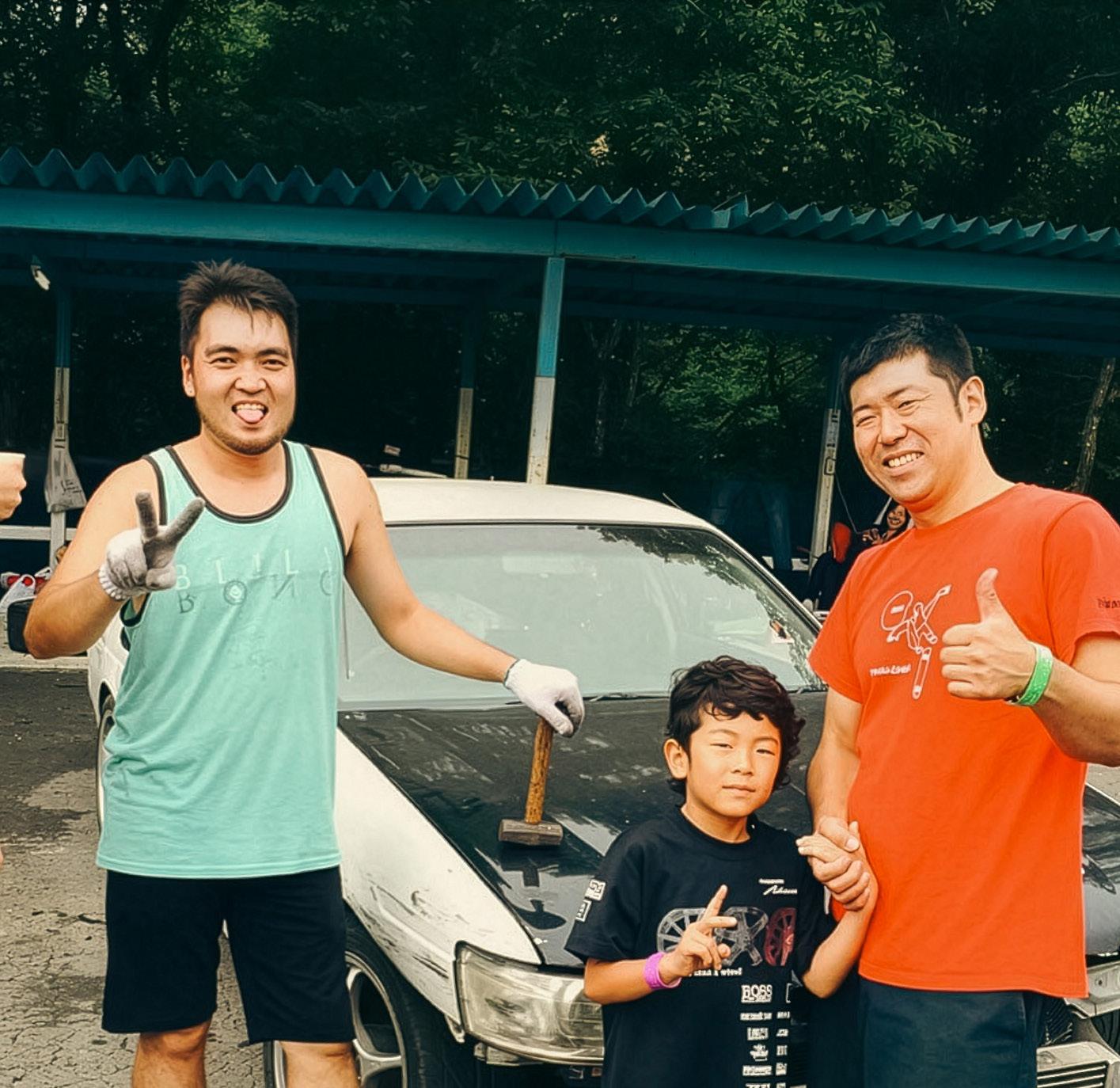
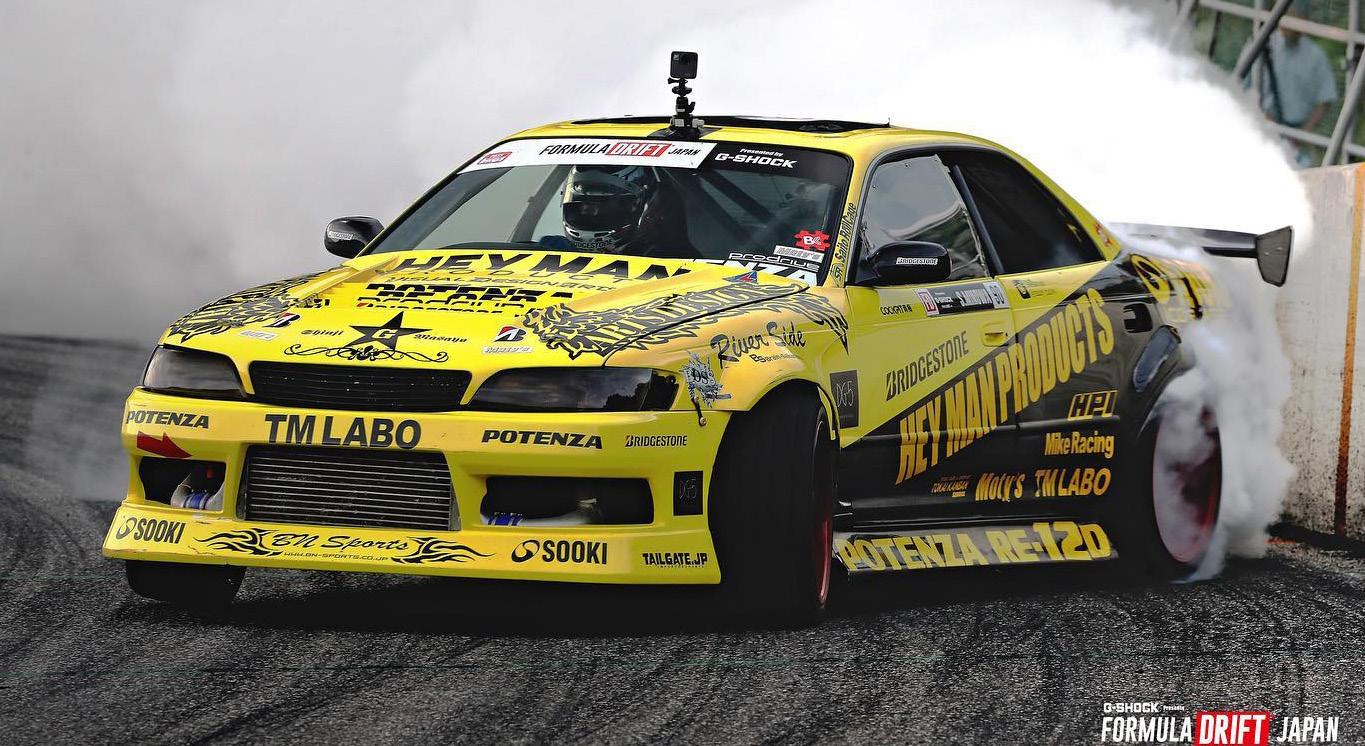
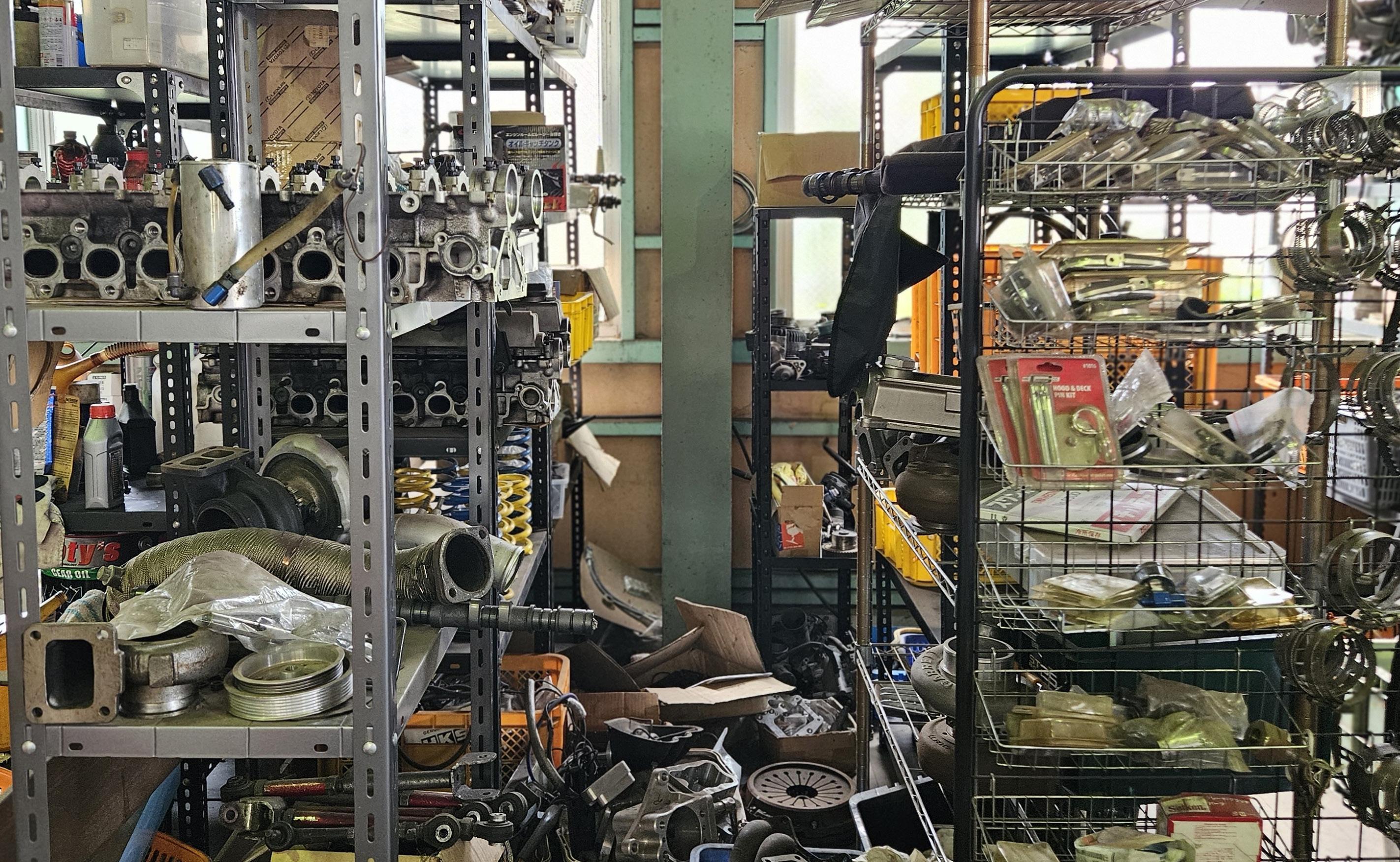
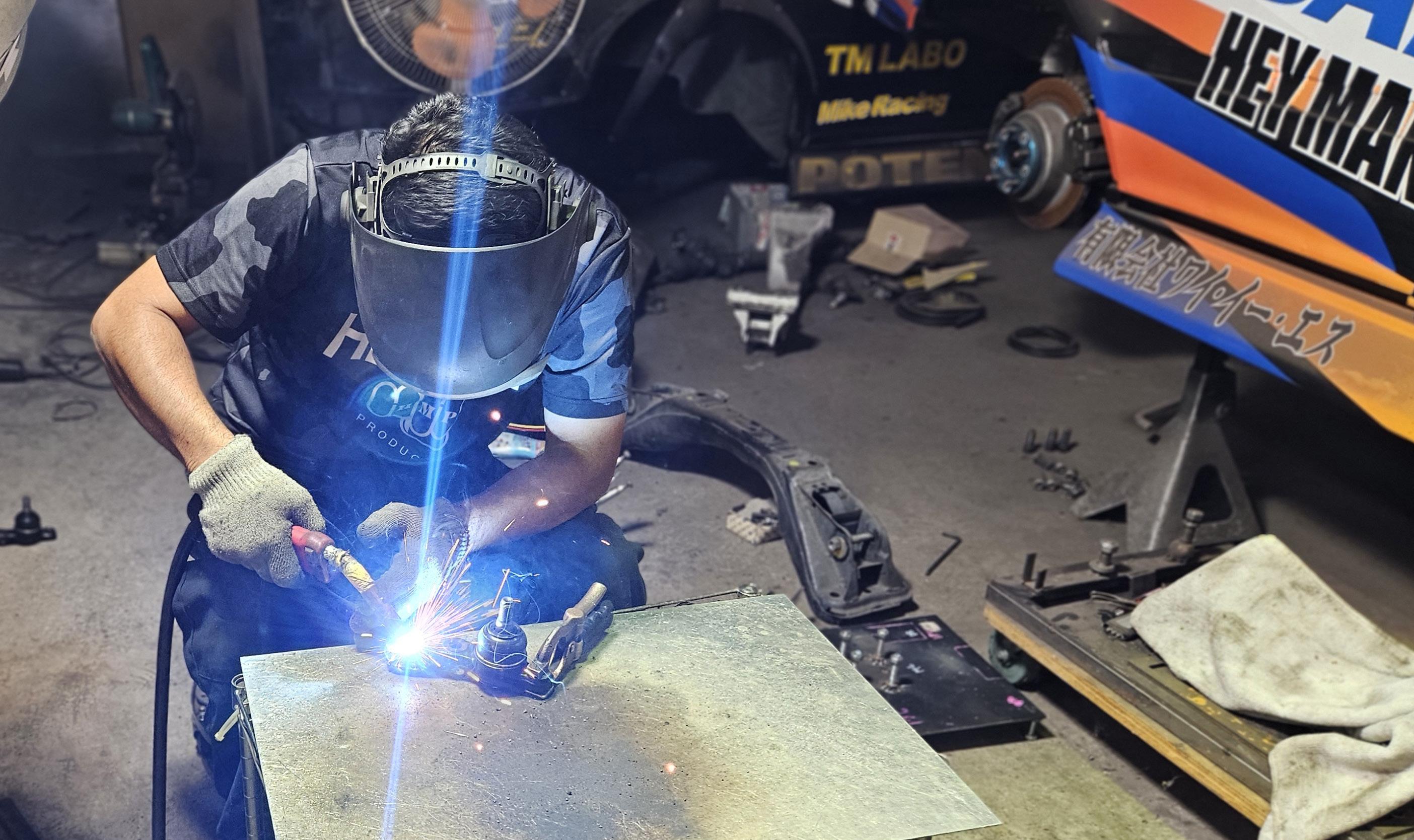
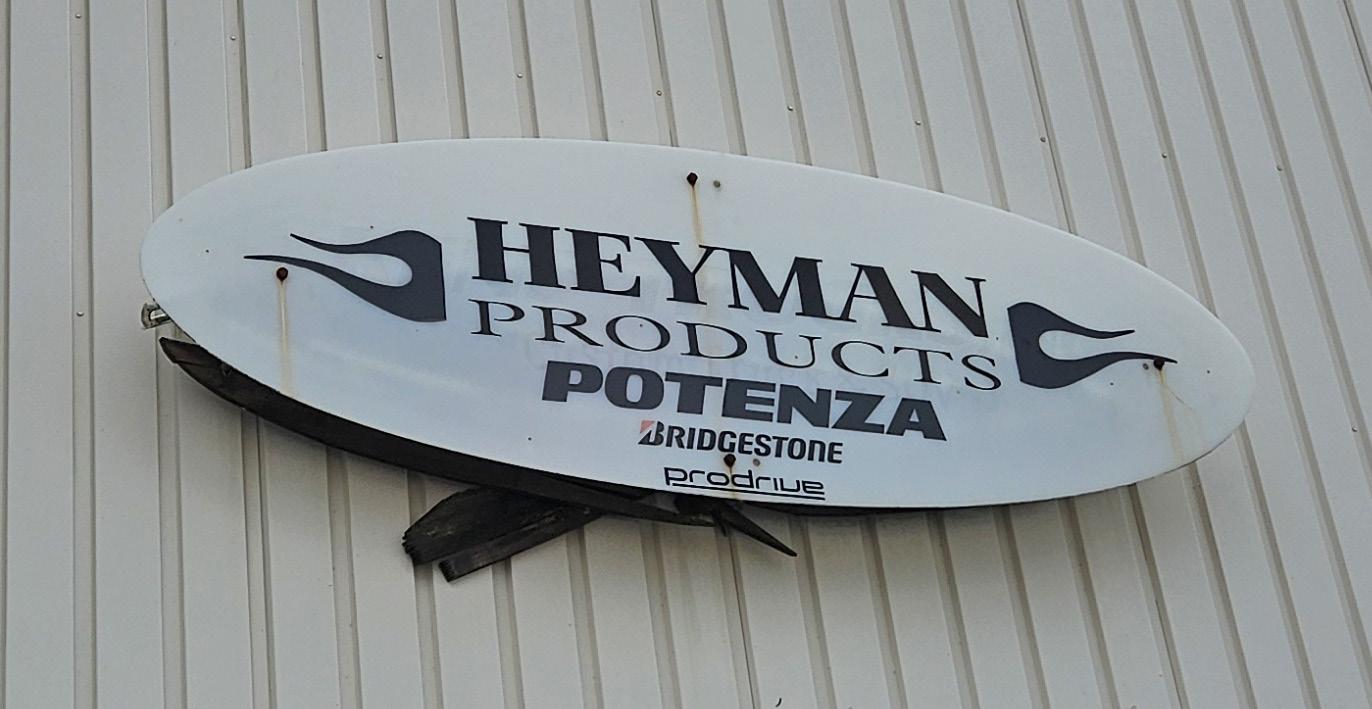
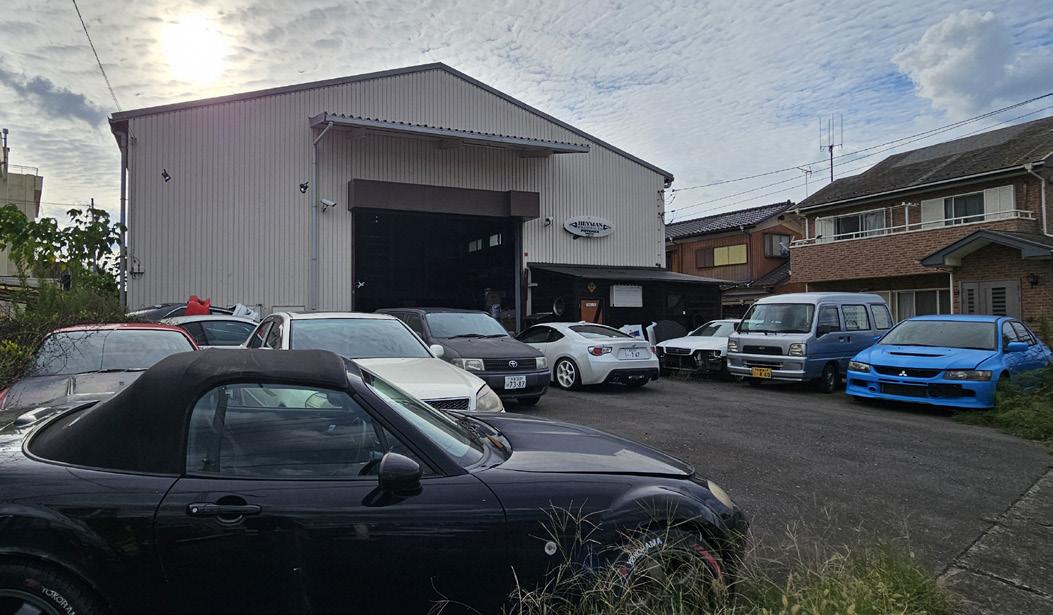
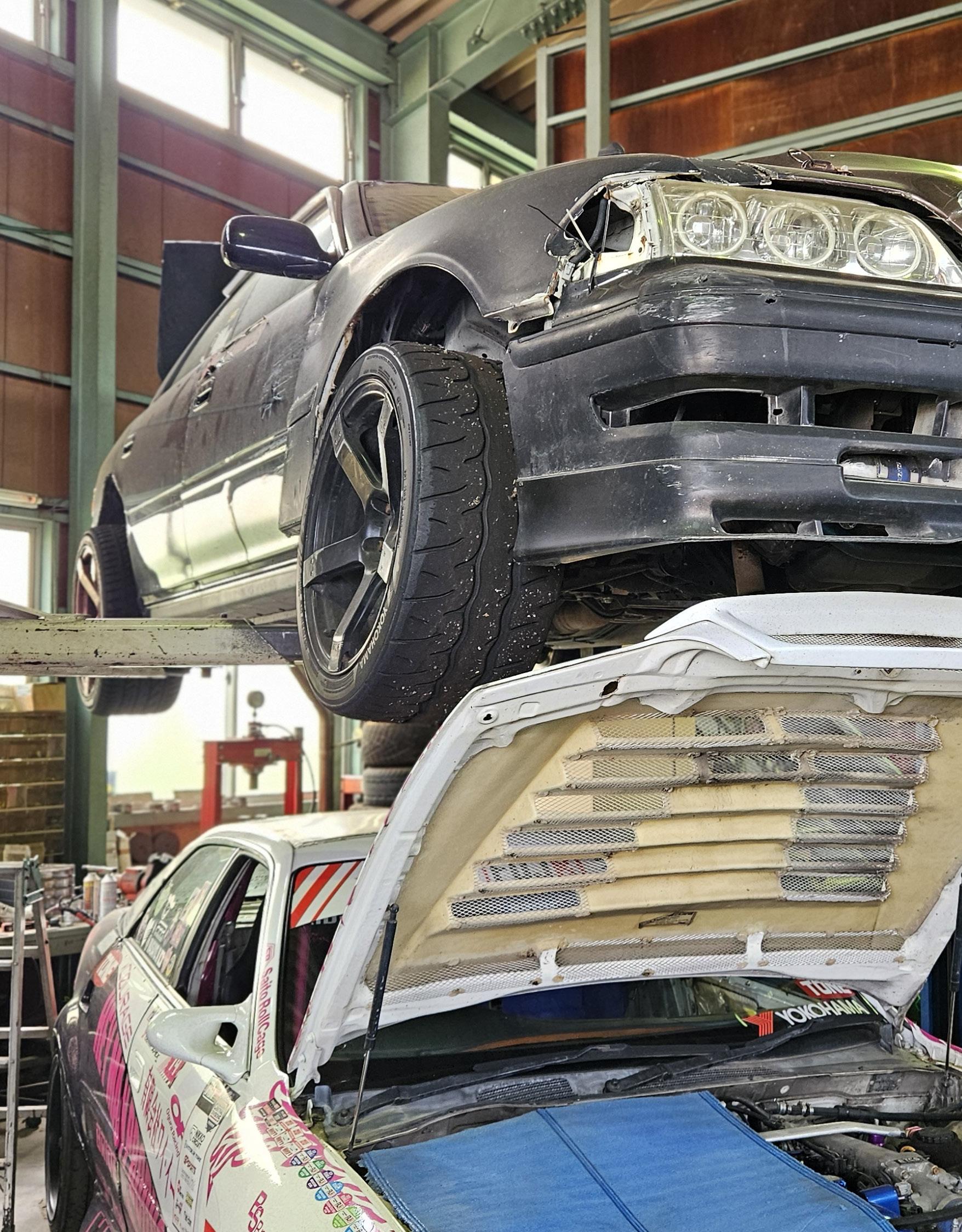
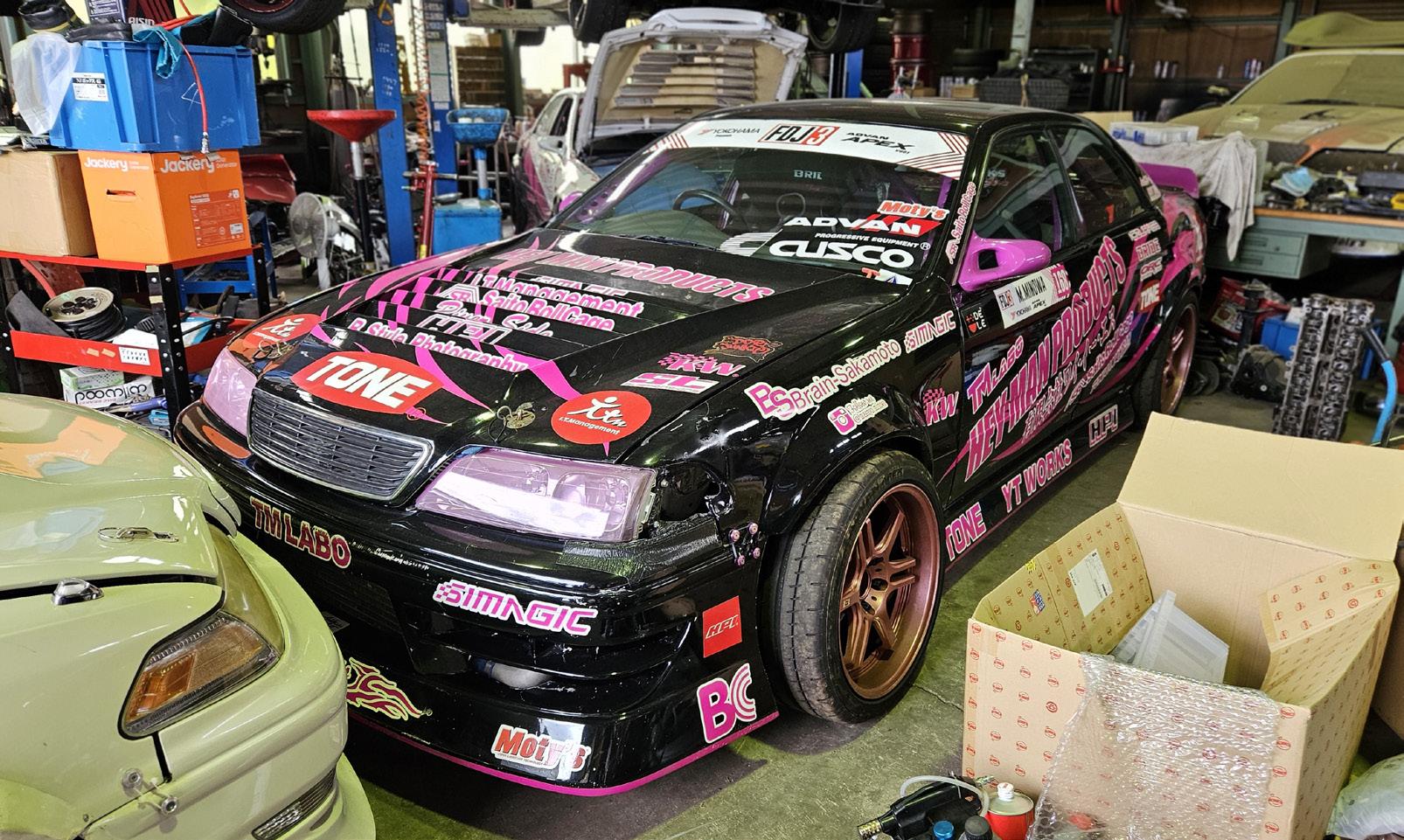
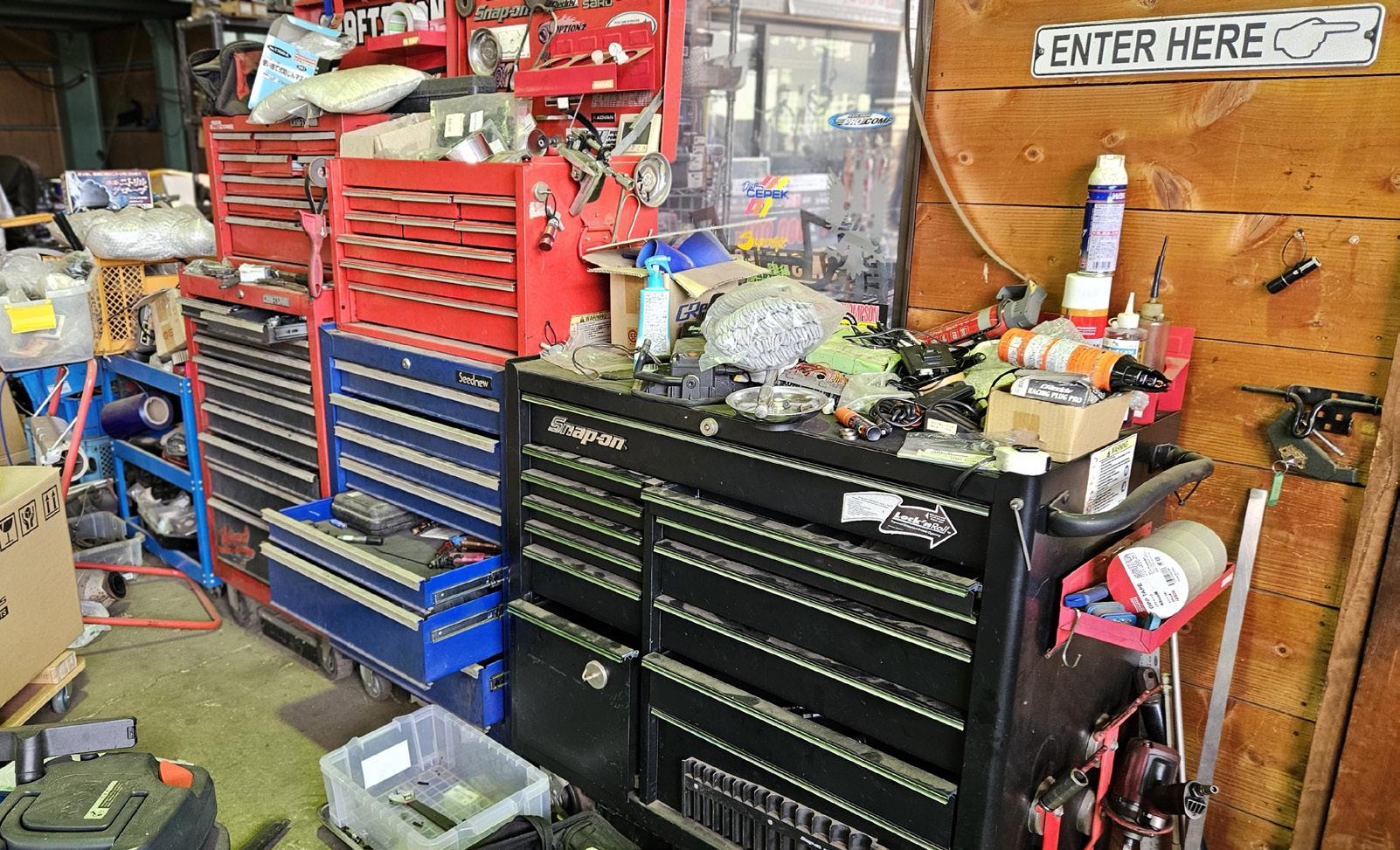
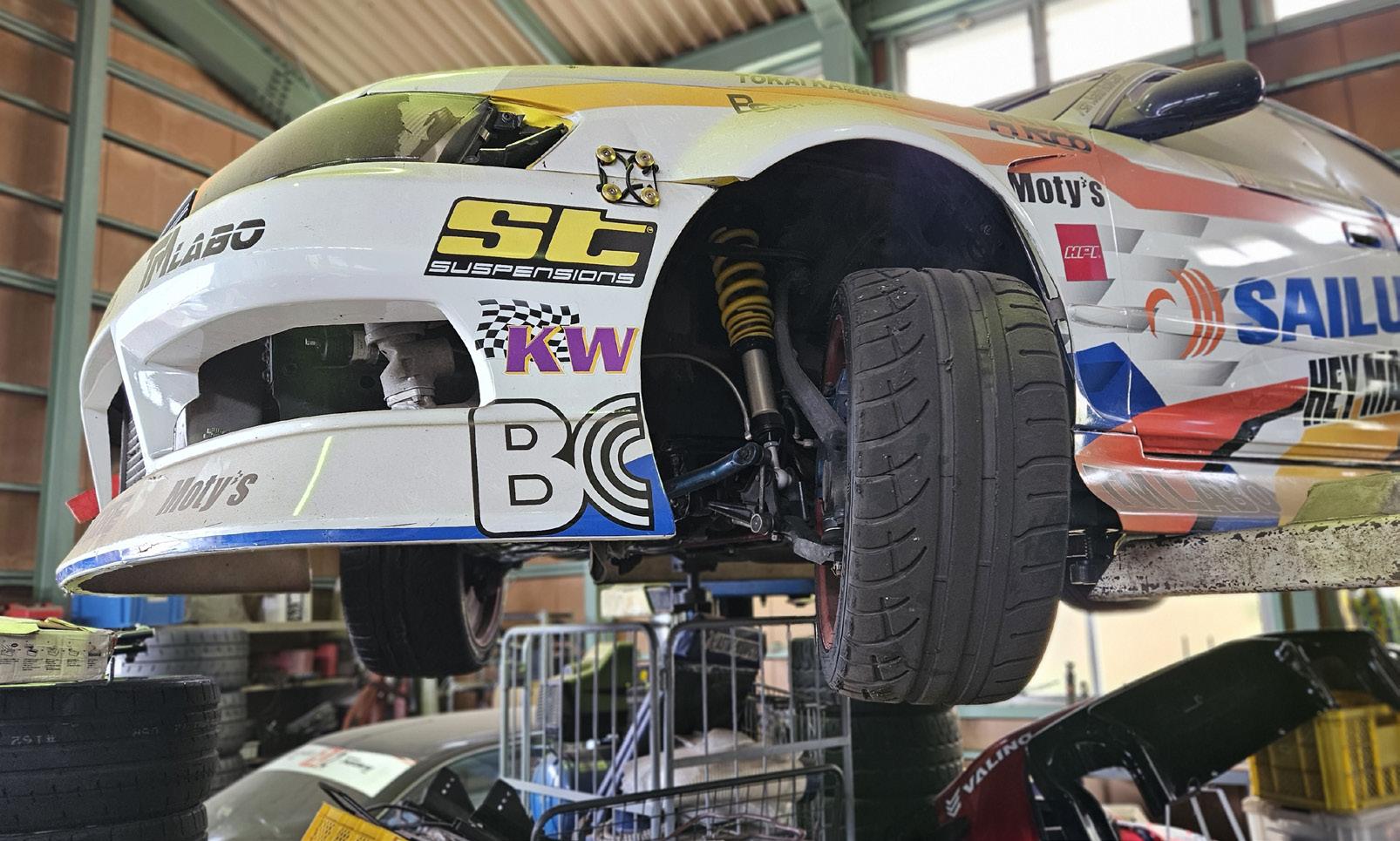
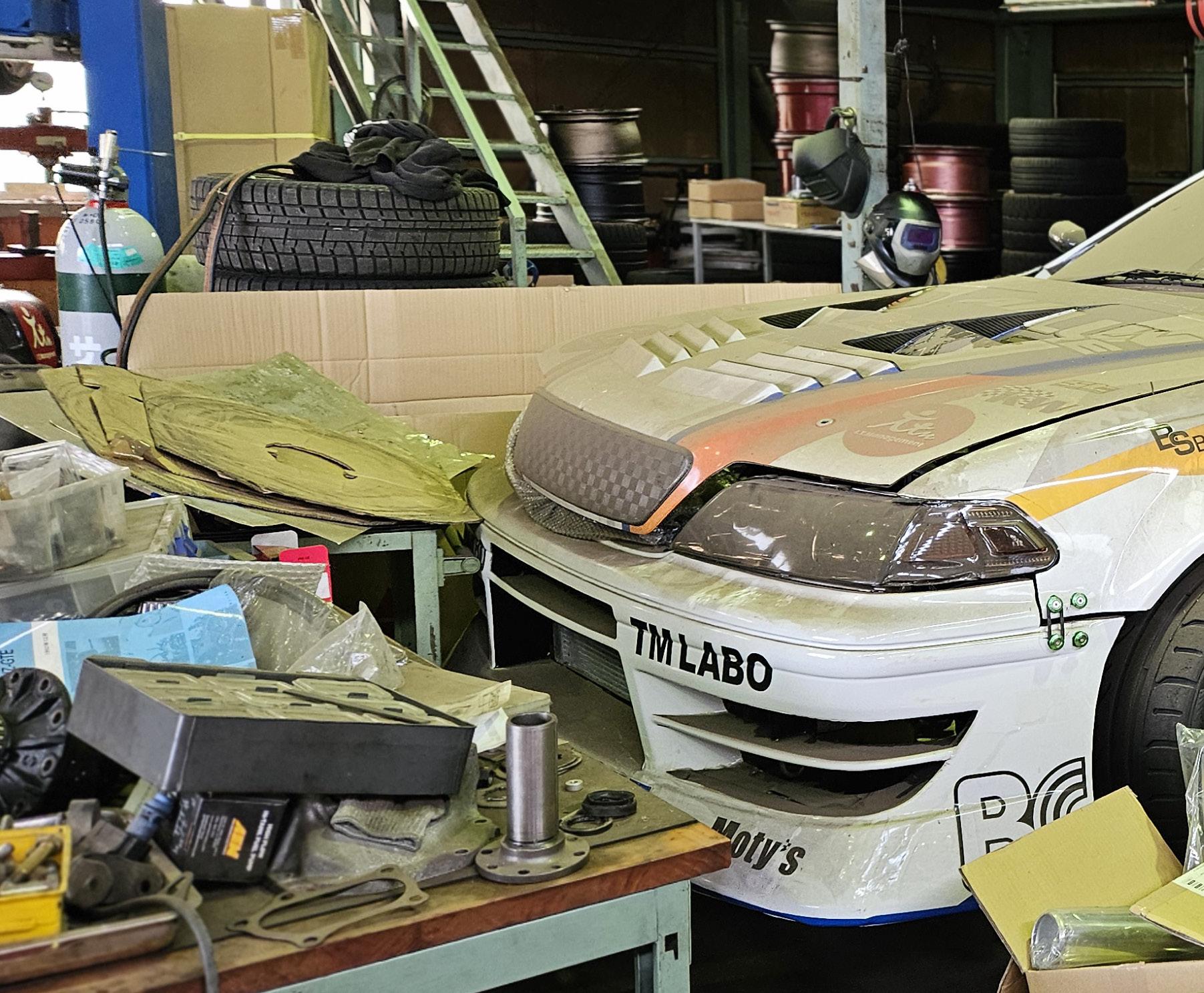
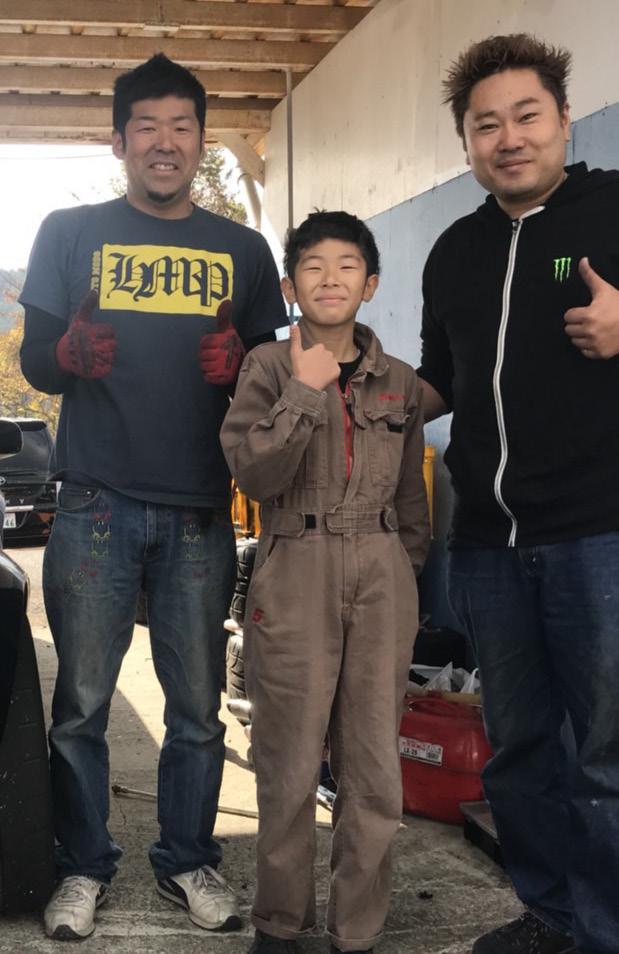
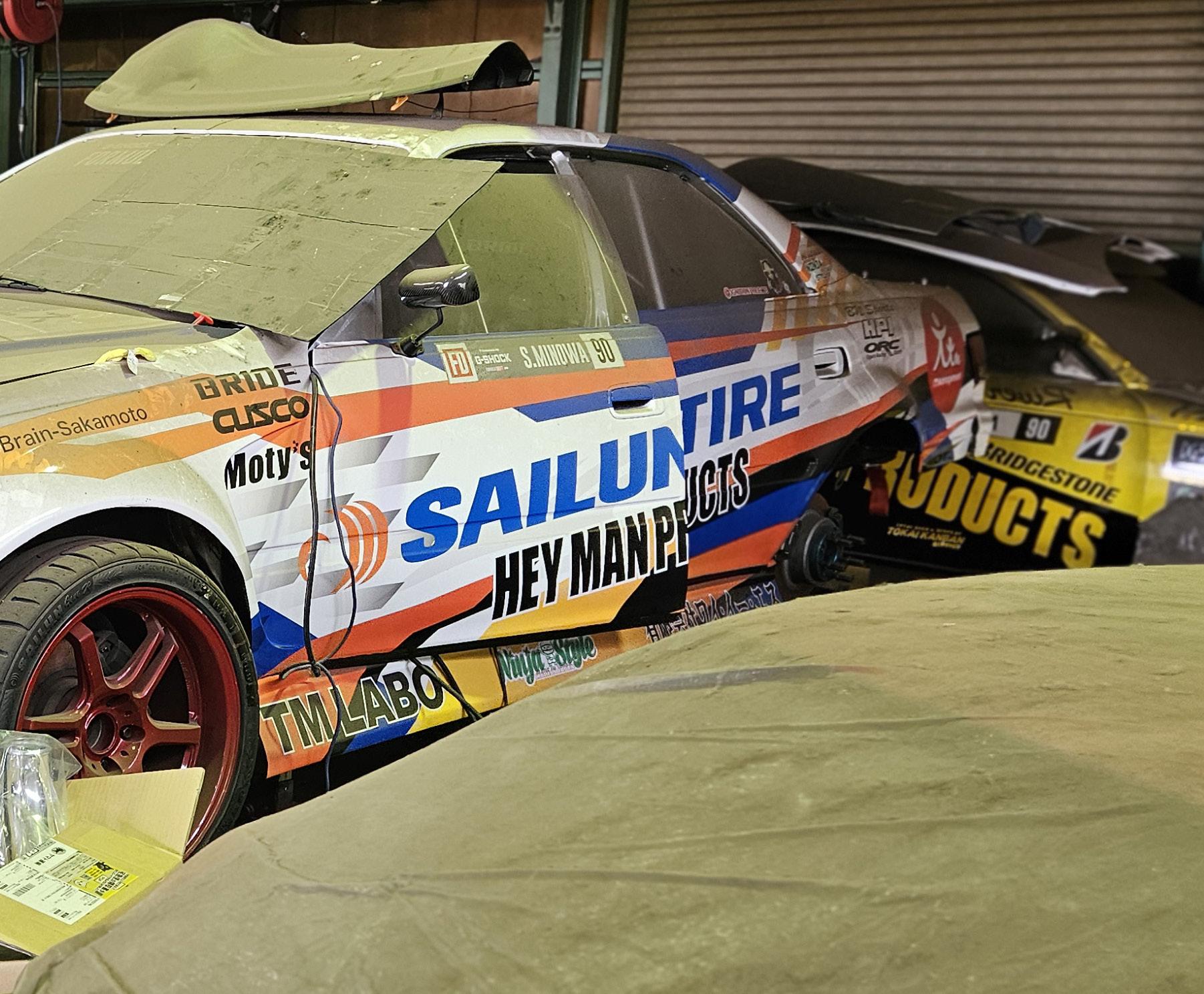
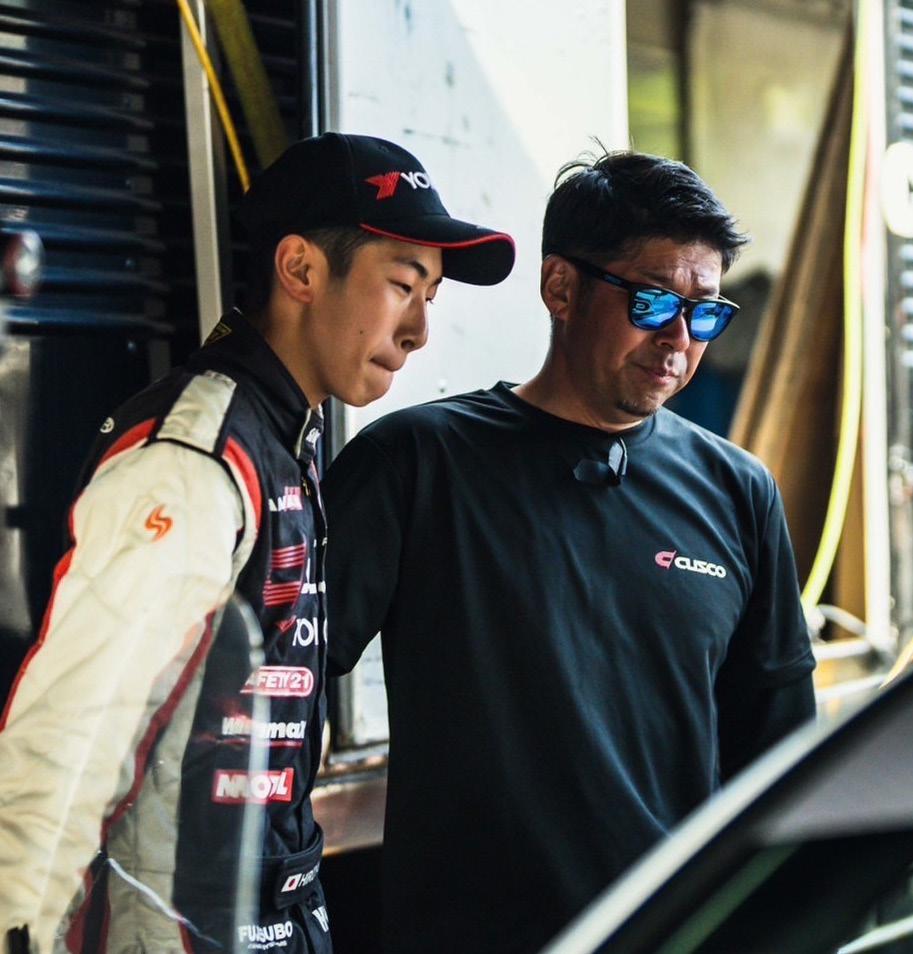
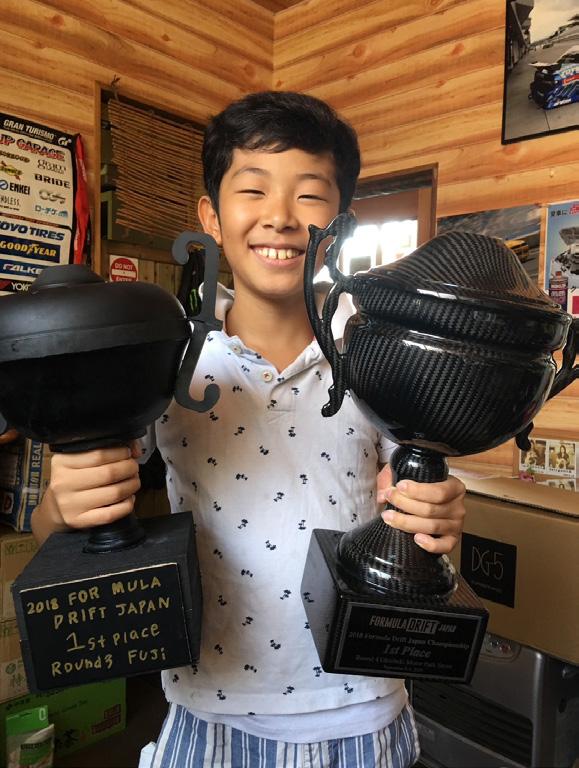
Theclanging of tools, the smell of rubber, and the faint haze of tire smoke are as much a part of Shinji Minowa’s world as the roar of the engines. In Japan’s drift culture, Minowa is more than just a driver, he’s also a fabricator, and a living bridge between the street-born roots of drifting in the late 90s and the massive, global spectacle it has become. From the hand-built suspension arms that are crafted in his HEYMAN Products workshop to his battles in Formula DRIFT Japan and D1GP, Minowa embodies the idea that true drifting is style, engineering, and most importantly having fun.
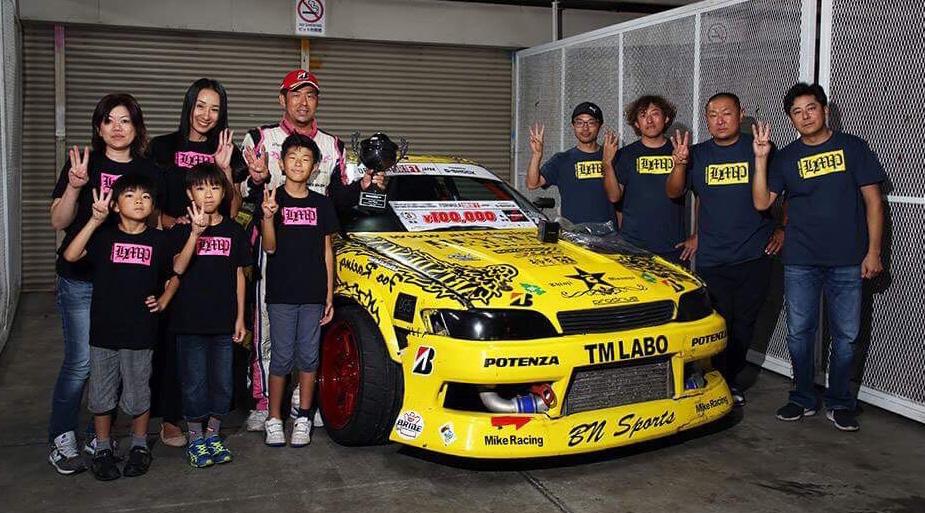
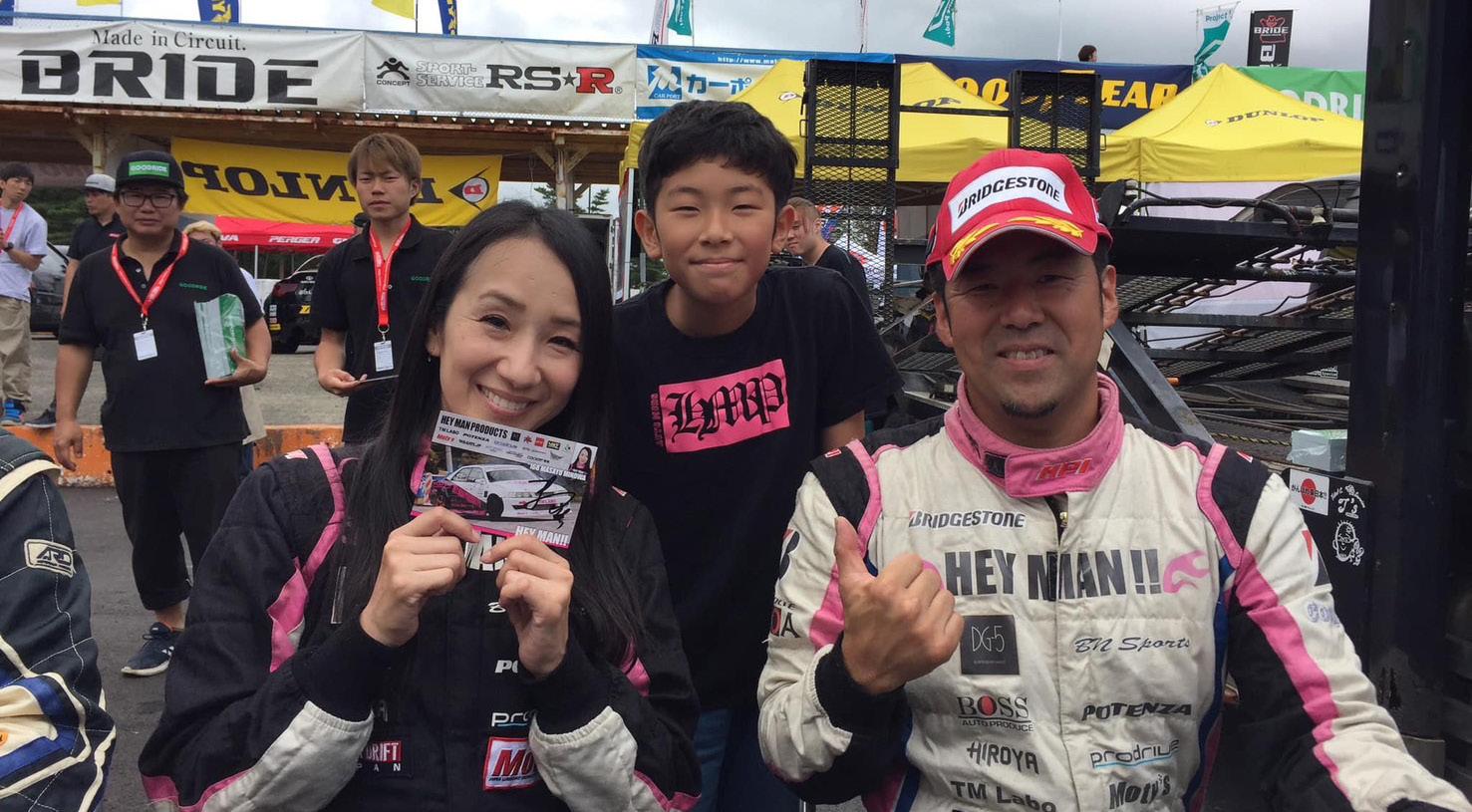
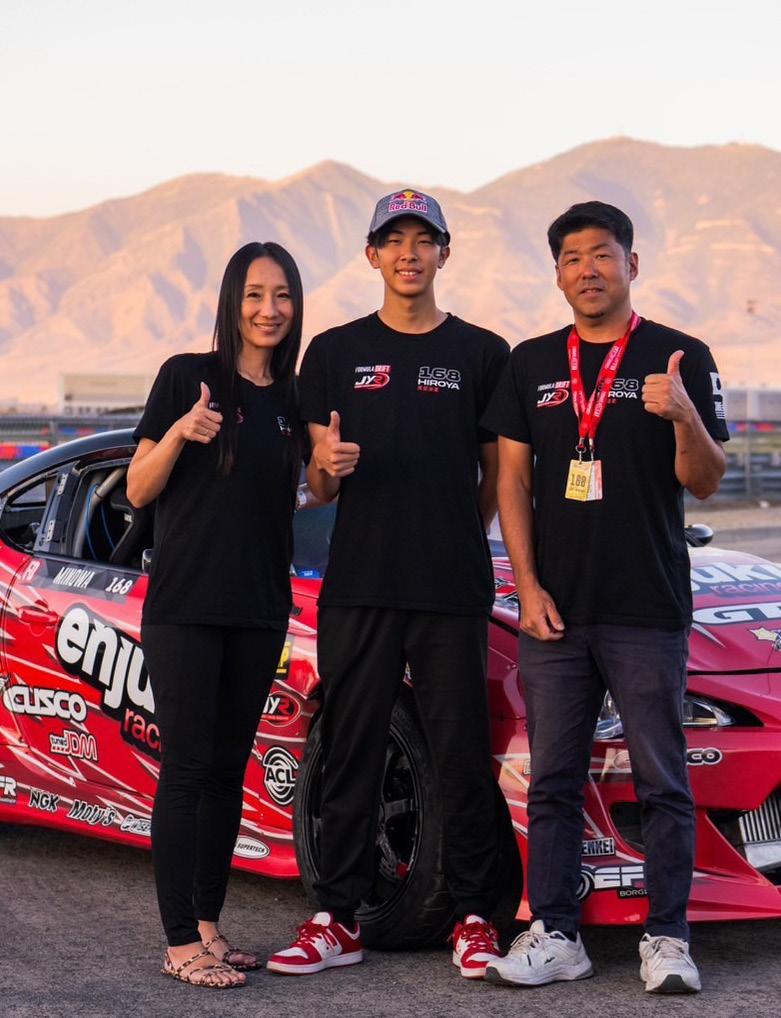
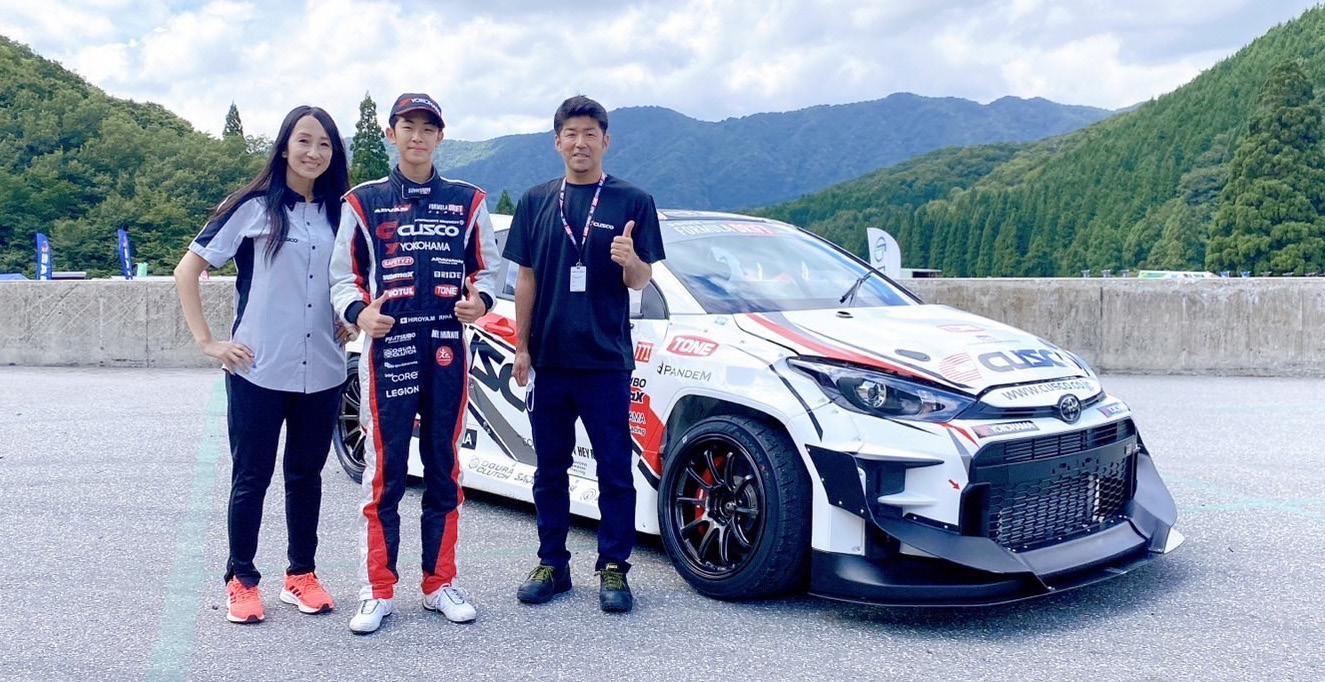
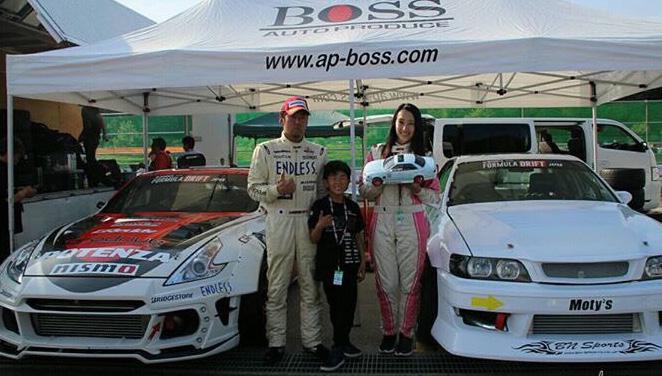
For fans, Minowa represents the soul of drifting; a competitor who doesn’t just show up to the track, but also builds the very machines he drives. Add into the fact that both his wife, Masayo, and son, Hiro, drift as well, and he’s the epitome of the total package when it comes to drifting is life. His garage in Tokyo doubles as a laboratory, where steel and hard work become suspension arms, custom knuckles, and competitionready builds that blur the line between tradition and innovation. He’s as comfortable welding in a t-shirt as he is throwing down against the world’s best drivers. In a sport where sponsorship dollars and marketing often dominate the conversation, Minowa has carved out a reputation built on authenticity, craftsmanship, and an iconic dedication to the culture’s roots.
We sat down with Shinji Minowa to explore the things that drive him, the challenges of balancing fabrication and competition, and his thoughts on the future of drifting and global expansion that reveal the man behind the welder’s mask and the racing helmet.
Robbie Nishida: You’ve been drifting for quite some time, when did you first start drifting?
Shinji Minowa: I’ve been drifting about 30 years, and now my son Hiro is drifting. Also my wife is drifting, so the whole family does drifting. I started when I was 19 years old. Definitely not drifting, you know drifting, drifting like now. So just starting out, I was doing donuts, yea trying out donuts around 19 years old I think. After I could do donuts, it was like how do you say “Oh, man, this is good! The car control. It’s so much fun.” I knew someone who was into drifting in the streets on the mountain. Then I went to watch. “Oh, man, I want to do that!” Then I tried street drifting.
RN: So I know this was a long time ago, but let’s talk about the street drifting when you first started. Did you do street drifting or go to the track?
SM: Street drifting back then. Yeah, it was very difficult for me, because there was no information at all. So I had, if I recall, I had shit tires on the front and semi-slick on the rear of my car. I tried drifting and I started drifting worse. I could not do drifting, at all, the first time.
I talked to older people,and they were like you got to throw it faster. Okay. I heard “do more high speed”, but I could not do it because of the shit tires on front end, so same idea. Man drifting is so difficult, but I try to, try, try, try it. And then one day, we finally decide it’s too difficult.
So I put the shit tires on the back, then I go back again. And “Oh!” It’s like ice driving! That was kind of, you know, my first story about drifting.
RN: So when you started to compete, let’s say before D1 and Formula DRIFT, where did you compete at?
SM: We have BM, Battle Magazine Drift Cup, something like that. That was my first competition I think. There are, you know, the local track day events. They offer the small comps, but the Battle Magazine Drift Cup was my first.
RN: So how did you get into D1 Grand Prix?
SM: I have a friend who entered D1 Grand Prix for the very first time, but he broke his car one day before the event. At the time, I didn’t know what D1 was, and then he told me, “Hey, tomorrow there is a D1 competition, but my car is broken. You should go.” So I said okay and I went there.
Then I qualified, and someone stopped over and realized I’m not the guy that’s supposed to be competing. If I hadn’t qualified, then I don’t think anyone would have known. But since I got past qualifying, then everyone said “Oh no, that’s not that guy. Okay, we have a problem.” And that was how I got into D1 my first time.
RN: So technically you qualified to be in D1, but you weren’t chosen, because you faked it.
SM: Yeah. Back then, D1 was not like it is now.
So I had to apply to D1 Corporation or something like that. It wasn’t an interview, but I showed them that I have this result, and this result, and then I had to send it to them by letter or fax. Then they picked me and told me I could enter.
So after that, because I lied to get in, I had to apply multiple times, but they would not choose me. Then there was an ADVAN Drift Meeting, it was like a D1 licensing event or Shoot-Out. So I entered that and I got first place, and then I got my D1 license. Then they allowed me to compete at D1 Tsukuba or some round like that. I forgot what round exactly, but I went there and then they realized me from what I did before and that I had lied to compete as my friend. They said go away and they kicked me out again.
And then, maybe everyone knows the Option guy? He was like very famous at the time, Daijiro Inada. And he was like you know you are kinda funny, but you know that you have to write an apology letter. So I wrote an apology letter while everyone else was practicing. It basically says “I’m sorry, sorry, sorry”. and they’re like “No. You have to write some more and say what you’re sorry for and apologize.” So I wrote down a lot of stuff apologizing and saying why I was sorry to D1. Then after I wrote all this down, they finally allowed me to enter. But now, practice was over, so I didn’t even get to take one practice lap. Then they started qualifying and I was able to qualify.
RN: You’re not just a competitor, you build the cars you drive. How does being both the fabricator and the driver change the way you approach drifting compared to drivers that just drive?
SM: I have friends like Robbie [Nishida] and Daigo [Saito] and they are very good drivers. If I just drive with them, I cannot beat them, so I had to do something. Modifying cars was an easy way to make more angle and make the car easier to drift. Then I was thinking, “Oh, what should I do? What should I do then?” Luckily I was driving an AE86, right? So, they have like two kinds of rack and pinion and then two kinds of knuckle. So then I was thinking maybe if I modify them, I can make more angle. So I cut and welded them. I think that was around 2002 and no one was doing that back then.
RN: So you were competing and then you became more of a fabricator?
SM: Yeah, because I wanted to advance.
RN: Your shop, HEYMAN Products, is well-known in Japan’s drift scene.
How did you come up with the name “HEYMAN!” and how do you see it shaping the next generation of drifters and builders (including your son)?
SM: When I started working on Yokota Air Base, there were a lot of people saying “Hey man”, “Oh hey man”, “hey man”, ”What’s up? Hey, man”. So I thought it was kind of cool. Then when I started my own business and began making products, I decided to use it. Simple.
RN: You’ve built and driven classics such as the AE86 for decades now, but also developed parts for modern chassis. How do you balance preserving drifting’s old school spirit while embracing today’s technology?
SM: The know-how of old cars is still alive today. Generally, cars that are easy to drive have always had a good setup, and that was back in the day. We do the same with newer cars now.
RN: If you could pick one of your vehicles, whether it’s the AE86, the JZX90 or 100, the Z34, or another as the car that best represents you, which would it be and why?
SM: I want to try drifting a Mustang or a BMW, because you know they say the grass is always greener haha. I haven’t experienced those cars yet, so I would like to try them out.
RN: You’ve had wins, but also tough exits in Formula DRIFT Japan and D1GP. What goes through your head in those key moments, and how do you deal with the pressure of competing against some of the best drivers in Japan?
SM: I build my own car by myself, so then of course I have pressure, but I am having fun driving, especially since I built it.
I’m also thinking what can I do better with the build? I think, maybe try a bigger turbo, more NOS. So I have pressure, but I am also having fun. Oh, I can try this, next time I’ll try this new knuckle, or I might try this suspension set up. So I have fun because I build my own car to drive. It was always more fun than pressure. I was having fun, so I didn’t really care about losing.
RN: What is one of your greatest memories or moments in drifting?
SM: Hiro’s first warm up in the USA, the greatest moment for me.
RN: Drifting has grown so much since you first started, from grassroots to professional series. Do you think Japan still defines the culture, or has it shifted globally?
SM: The drifting culture in Japan, I mean it’s still big. You have tracks like Ebisu, Meihan, Bihoku, and Nikko. But like competition in the States or Europe, it’s like a couple steps ahead of Japan’s scene because of the system. I think the driving system or scoring they use helps getting the drivers skilled more than the Japanese system. So that’s why, for my opinion, there are many good skilled drivers there.
RN: Many young drivers dream of going pro one day, but may lack the resources to do it. However, your son Hiroya has managed to pull this off at an exceptionally young age. If you could give one piece of advice, what would it be?
SM: Of course you know use practice for simulator. It’s very useful. But also, like your car, it’s not a SIM. They don’t have a reset button, so having fun, we say safety is first. Not always. I told him safety first, because no reset button, but, maybe I think now, we have so much information, so simple. Easy. I think it’s easy to become like Hiro. There are more opportunities to become like this now than ever before.
RN: Final question. Who would win in a battle with identical cars, you or Hiroya?
SM: He have a whole lot more experience than me now, because he’s been competing overseas. So he holds both like Japanese skill and then overseas skill.
RN: Thank you for your time and is there anything else you’d like to add?
SM: Have fun!
TUNING
WHAT YOUR TUNER WISHES YOU KNEW
Written By: Jake Minard
Heyeveryone, Jake Minard of JEM-Sport here, your friendly neighborhood professional tuner/ calibrator. I’ve spent countless hours under the hoods and behind the keyboards of some incredible machines, coaxing out every last bit of horsepower and perfecting their street machines. It’s a job I love, a passion born from a lifelong obsession with engines and technology. But after 12 years in this game, I’ve realized there are a few fundamental things that would make the tuning process smoother, safer, and ultimately, more satisfying for everyone involved. So, if you’re thinking about getting your car tuned, or just curious about what goes on behind the scenes, here are a few things I really wish my customers knew before rolling into my shop.
The Importance of Maintenance
This is a big one, folks. Tuning amplifies what’s already there. The dyno is the harshest environment your car will endure. If your car has underlying mechanical issues – old spark plugs, clogged injectors, a failing fuel pump, a leaky exhaust, or worn-out sensors – a tune isn’t going to fix them. In fact, pushing an already compromised engine with more power can lead to catastrophic failure. Before you even think about getting a tune, make sure your car is in tip-top mechanical condition. Get a fresh oil change, check all your fluids, inspect your belts and hoses, and address any fault codes. Think of it like building a house: you wouldn’t start adding a second story before ensuring the foundation is solid, right? The same goes for your engine. A healthy engine provides a reliable canvas for me to work on, allowing me to unlock its true potential safely.
It’s Not Just About the Dyno Number
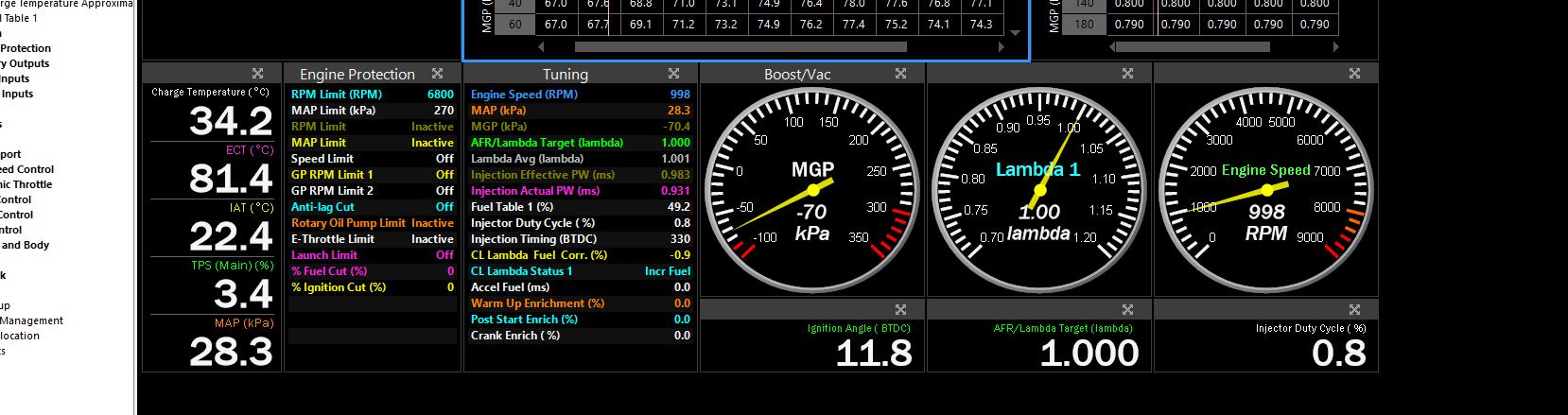
I get it. Everyone wants to see a big, impressive number on the dyno sheet. And don’t get me wrong, I love seeing those numbers too. But the dyno is just one tool in my arsenal. A truly great tune isn’t just about peak horsepower; it’s about drivability, reliability, and how the car feels throughout the entire RPM range. A car that makes massive power at 7000 RPM but stutters and bucks at 2000 RPM isn’t a joy to drive. My goal is to optimize your car for your driving style and your intended use, whether that’s tearing up the drag strip, carving canyons, or just enjoying a spirited daily commute. This means considering fuel economy, idle quality, throttle response, and shift points (if applicable). Don’t come in expecting just a peak number; come in expecting a refined and optimized driving experience.
Be Realistic About Your Goals and Budget
We all dream of having a thousand-horsepower monster, but is that truly what you need or want for your car? And more importantly, is your current setup (and budget) capable of safely reaching that goal?
Tuning isn’t magic. It requires a solid foundation of compatible modifications. If you’re looking for significant power gains, you’ll likely need supporting modifications like a properly designed/sized intake, exhaust, injectors, fuel pump, intercooler, or even a different turbocharger. These things cost money, and
cutting corners on parts often leads to disappointment or, worse, expensive repairs down the line.
Come prepared to discuss your realistic goals, your budget, and what modifications you currently have or plan to install.
If you tell me you want 500 horsepower on stock injectors and a stock fuel pump, I’m probably going to tell you it’s not going to happen safely. My job isn’t just to make your car fast; it’s to make it fast and reliable.
COMMUNICATION IS KEY
I’m not a mind reader. The more information you provide, the better I can tailor the tune to your specific needs. Before you arrive, think about:
• Your car’s history: Has it had any previous modifications? Any known issues?
• Your driving style: Are you a daily commuter, a weekend warrior, or a track enthusiast?
• Your desired outcome: Are you looking for more low-end torque, top-end power, better fuel economy, or a smoother driving experience?
• Any specific concerns: Do you notice any unusual noises, smells, or behaviors from the car?
• AND MOST IMPORTANTLY - DATA: Equipment data is key. All quality products come with data. Give it to me.
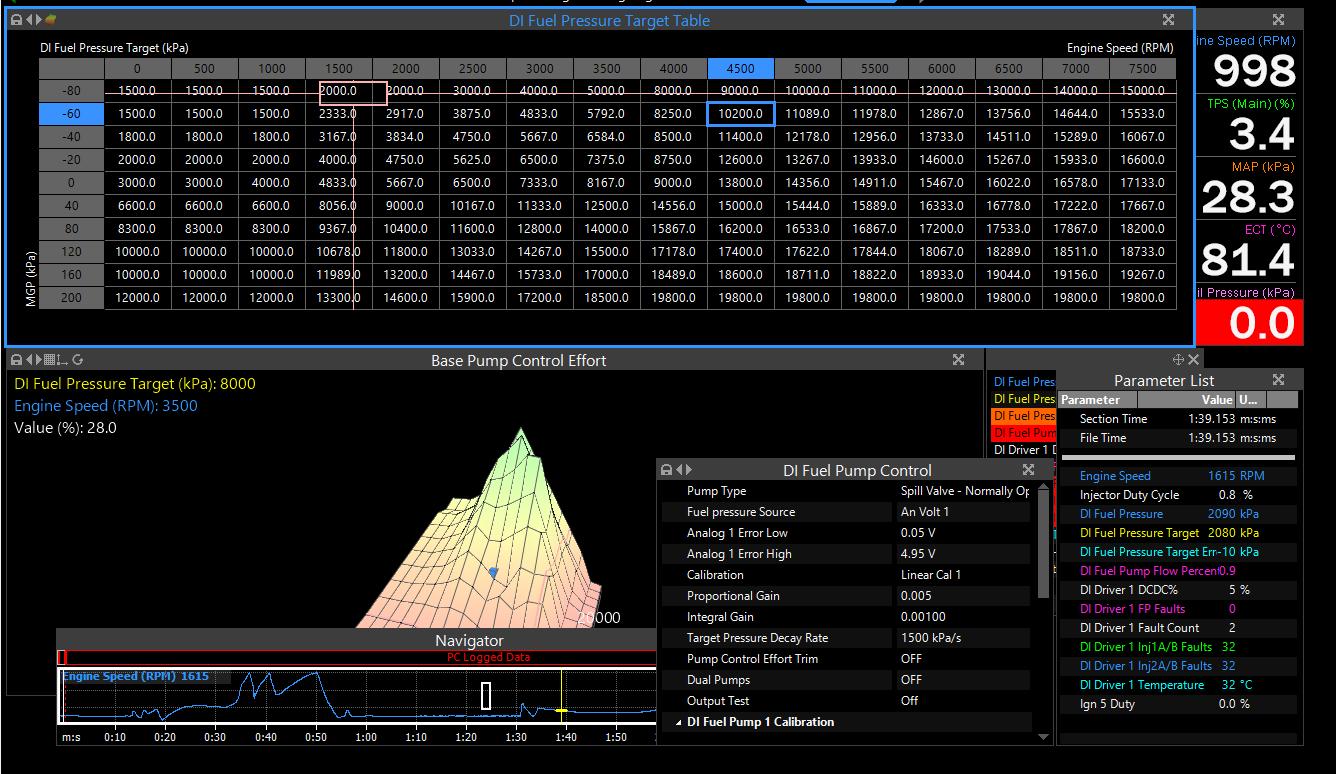
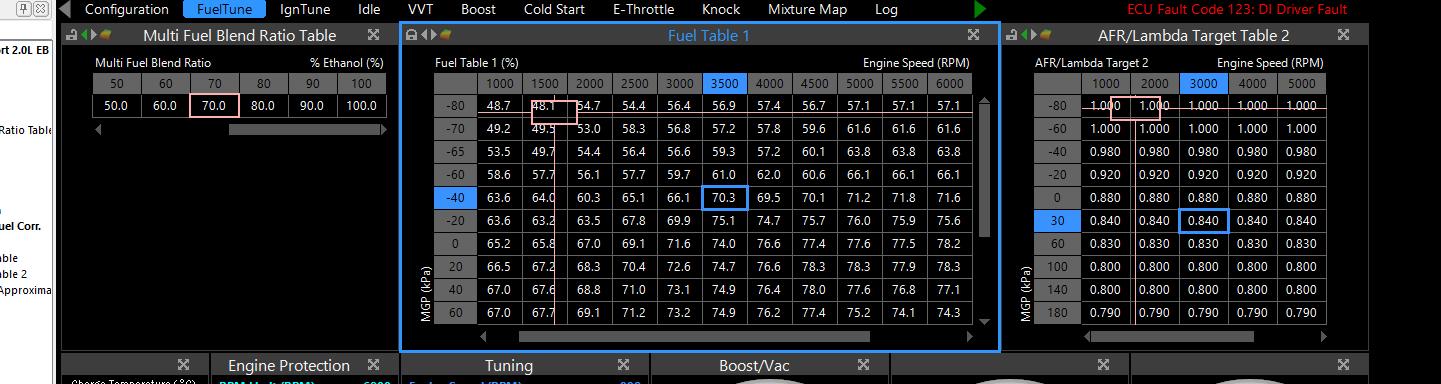
If you don’t know what injectors are in your car, don’t just lie. I get this all the time. Injector characteristics and fuel pressure data is the most important part of a quality calibration. I can’t stress this enough. “Def 750cc injectors bro” is not nearly enough information. Any injector will flow 750cc if you put enough pressure behind it. We need to understand how they react at different voltages and pressures. After all, the majority of the ECU’s job is controlling fuel injection.
We should probably do that accurately, aye? If the injectors you’re looking at don’t have Injector Dead Time and Flow vs Pressure data, don’t buy them. Short Pulse Width Adder data is nice too :)
Don’t be afraid to ask questions, even if you think they’re silly. Myself and most any professional calibrator is here to educate and empower you, not to judge. The more we communicate, the more satisfied you’ll be with the end result.
Don’t be afraid to ask questions, even if you think they’re silly.
Understanding the Risks
While I strive for perfection and reliability, tuning inherently involves pushing an engine closer to its limits. There’s always a degree of risk involved, especially when dealing with high-performance modifications. Components can fail, even wellmaintained ones.
This is why having your car in excellent mechanical condition and using quality parts is so crucial. I take every precaution to ensure the safety and longevity of your engine, but unexpected issues can arise.
Understanding and accepting this inherent risk is part of the performance tuning journey.
Patience, Please!
Tuning isn’t a quick “plug and play” operation. It’s a meticulous process that requires precision, attention to detail, and often, multiple revisions. There are a lot of variables at play: atmospheric conditions, fuel quality, engine temperatures, and the unique characteristics of your specific vehicle. I need time to gather data, analyze it, make adjustments, and then re-test. Sometimes, a “perfect” tune might take a few days; other times, it might require multiple race meetings or even follow-up sessions. Rushing the process can lead to a sub-optimal tune or, worse, damage to your engine. Trust the process, and understand that good things take time.
Don’t Skimp on Fuel
This is a pet peeve of mine. If your car is tuned for 93 octane, use 93 octane. Don’t try to save a few bucks by putting in 87 or even 91. Lower octane fuel can lead to pre-ignition or knocking, which forces the engine’s computer to pull timing and reduce power to prevent damage. This not only negates the benefits of the tune but can also put unnecessary stress on your engine. Your engine’s health is directly tied to the quality of fuel you put in it. Treat it right.
Power Eva lua tion Sheet
Post-Tune Care
The tuning process doesn’t end when you drive off the dyno. How you treat your car after a tune is just as important as the tune itself.
Pay attention to how the car feels. Listen for any unusual noises. Be mindful of warning lights. If something feels off, don’t hesitate to reach out.
I’m invested in the long-term health of your vehicle.
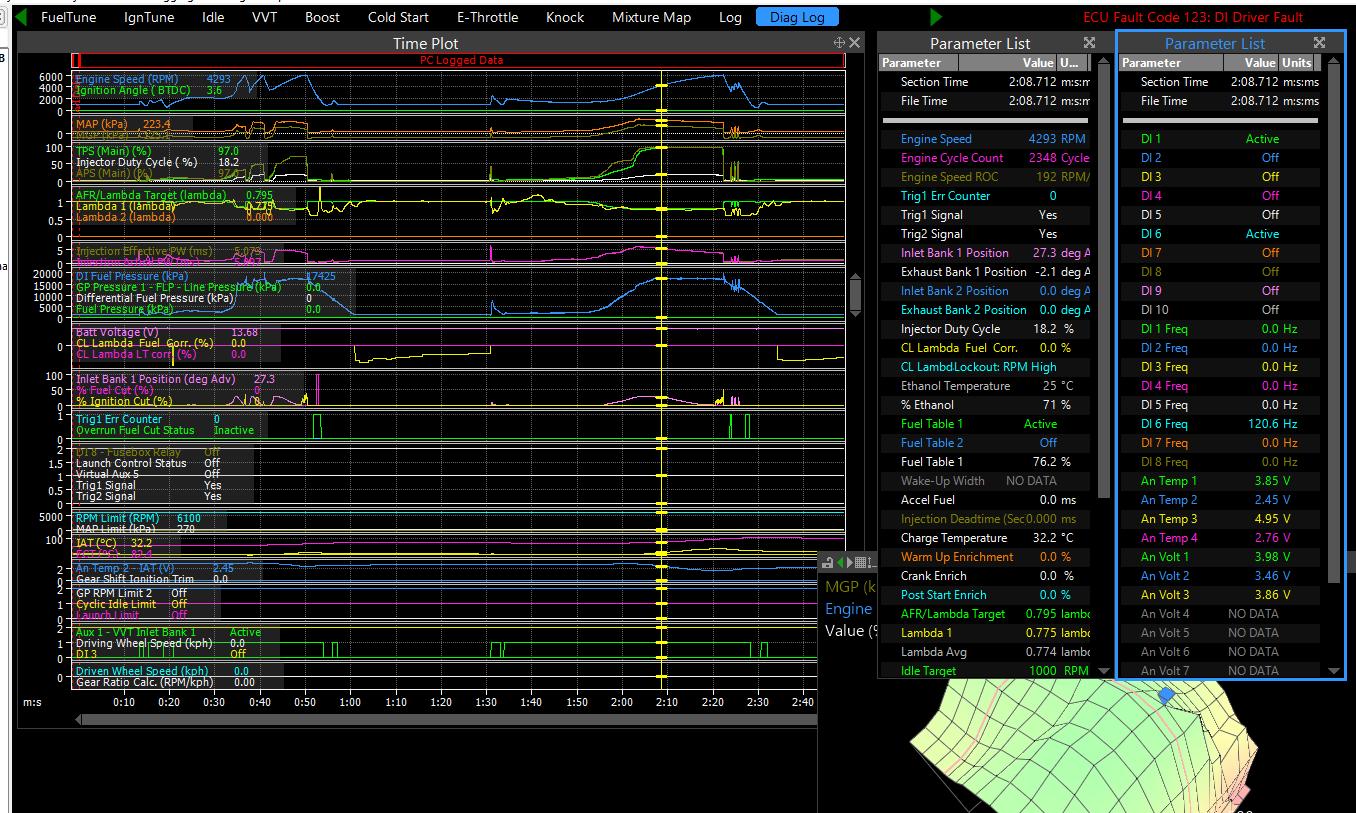
Furthermore, most any tuner would love to see data once your project is in the real world. Things change guys. I’ve had customers tell me they want a “safer tune”, I end up making more power with less boost and ignition timing, and then still run in to knock on the track years after the initial tuning session because we never reviewed data while the car was being used how you like. Reviewing use-case data periodically is key to maintaining a healthy calibration and catching issues before they become expensive.
Ultimately, my goal as a tuner is to help you get the most out of your vehicle, safely and reliably.
By understanding these few key points, you’ll be a more informed customer, and we can work together to achieve the best possible results. When you roll into my shop with a well-maintained car, realistic expectations, and an open line of communication, that’s when the real magic happens. See you on the dyno!
DRIFTER
DRIFTER & THE LEGENDS OF DRIFT
WORDS AND PHOTOS BY: CHUCK MURRAY
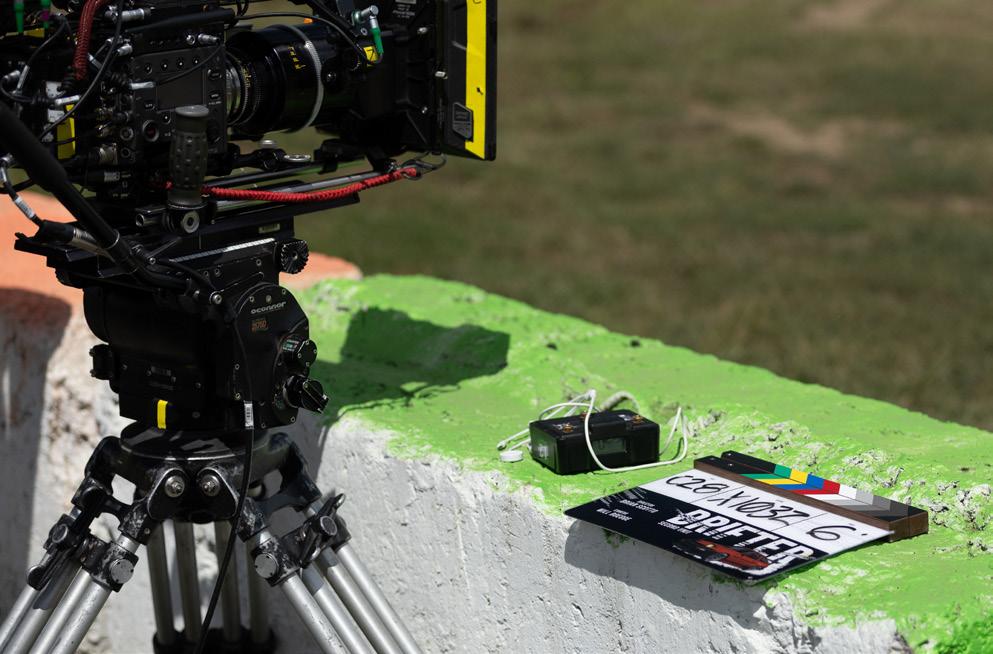
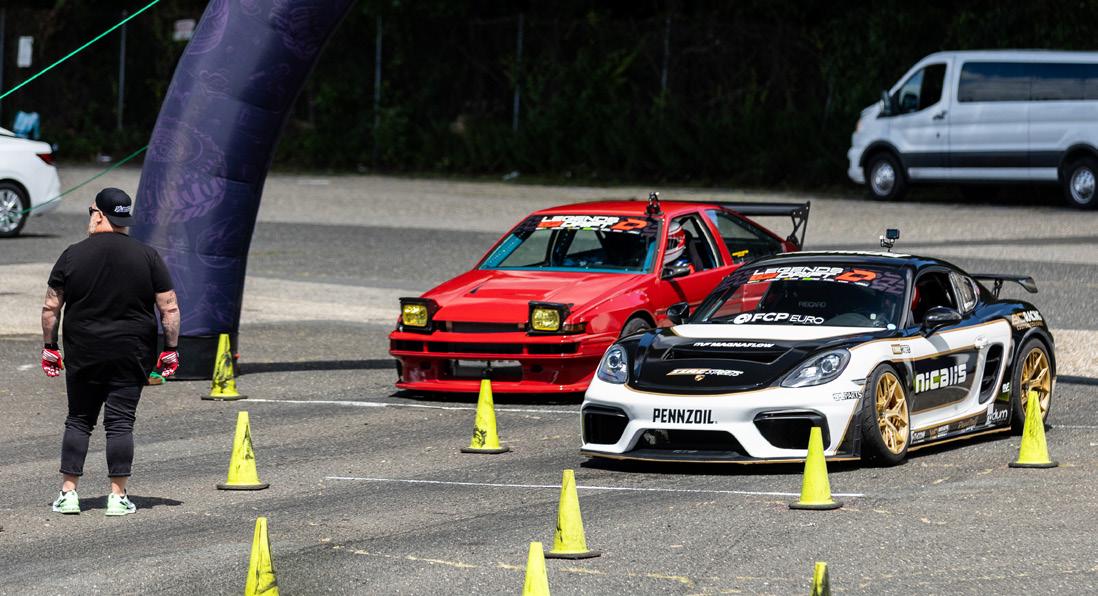
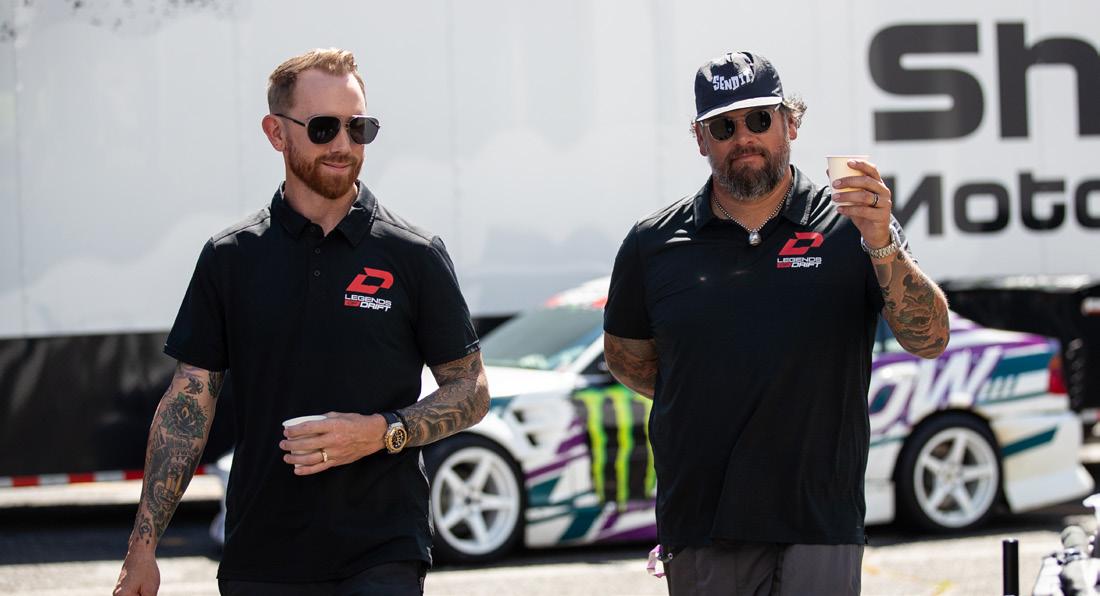
Aconvergence of cinematic magic and real-world racing spectacle, “Drifter” is an independent film set to blur the lines between reality and fiction. The recent Legends of Drift event held at Raceway Park New Jersey felt like and actually was, a movie. An event poised to redefine the intersection of motorsports and entertainment. This isn’t merely about bringing a fictional world to life; it’s about igniting a cultural phenomenon where the roar of engines and the pursuit of legend blur the lines between screen and asphalt.
“Drifter,” is a highly anticipated indie film, written and directed by Sung Kang, better known in the automotive community as “Han” from the Fast and Furious franchise. It’s a tale of ambition, rivalry, and the pursuit of mastery against a backdrop of neon lights and screeching tires. Beyond the adrenalinepumping sequences, “Drifter” delves into the personal struggles and triumphs of its characters, exploring the motivations that drive them to push the limits of both their vehicles and themselves.
The film’s visual spectacle is undeniable, with meticulously choreographed drift scenes that promise to leave audiences on the edge of their seats.
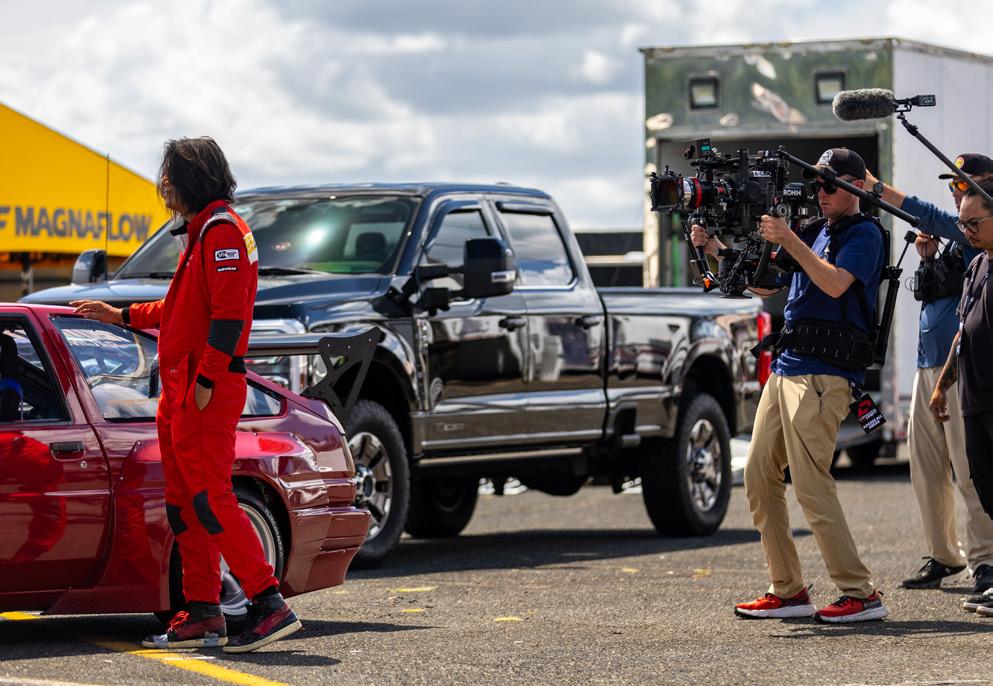
Driving sequences are directed by none other than Hoonigan co-founder Brian Scotto. His experience directing the well-known Gymkhana series was the main reason Kang chose Scotto for this role. Not to mention the visual effects supervisor is Chris Payne, who movie lovers might know worked on feature films such as Jumper and The Day After Tomorrow. But it’s the heart of the story – the dedication, the sacrifice, and the camaraderie – that truly elevates “Drifter” from a mere action flick to a compelling narrative that resonates with anyone who has ever chased a dream.
The overall narrative of “Drifter” isn’t clear yet as the film is still in production but the incorporation of a live event into filming is something that is fairly uncommon in movie production. Films like Days of Thunder and F1: The Movie both feature scenes that were captured during live races. What better way to capture a movie about drifting than doing it at an actual large-scale drift event at a historic drift track.
The Legends of Drift event was one of the largest gatherings of drift and car culture icons. Held at one of America’s most iconic drift locations, Raceway Park New Jersey. Many legends in drifting started in the parking lot of this track, have drifted countless laps on its famous road course and even compete in the purpose built stadium where the old drag strip once was. The track itself is a legend in its own right.
The event was hosted by the very same group that puts on the illustrious LZ World Tour with support from Drift Games. The commentators for the event are prominent figures in the American drift scene. Jarod Deanda, the voice of Formula Drift and countless other motorsports events brought his experience and knowledge to the announcer’s booth alongside three time Formula Drift Champion Chris Forsberg and Formula Drift and Drift Masters technical announcer, Jacob Gettins. The judges for the competition aspect
of the event have years of experience in the drift community. Senior Formula Drift Judge Brian Eggert, was in the booth along with retired Formula Drift Judge Ryan Lanteigne and current Formula Drift Judge Reese Marin.
The driver pool for the event came from all over the world. Dave Egan from Ireland, Luke Fink from Australia, Arios Suzuki from Japan, Josiah Fallaise from Canada, and many other well-known drivers from all over the United States came together to show off their skills behind the wheel.
The whole event was put on as a precise balance between movie production and event. The organizers had to balance between shooting scenes and keeping the spectators happy. Certain scenes required the drivers to take a specific action or follow specific instructions.
The drivers who are piloting the cars for these scenes are some of the best in the world but hitting the perfect mark might take more than one try. Multiple takes of high risk shots cut into the competition side of the event but the schedule was adjusted accordingly and the event continued on. Outside of the driving, a large car show was also held next to the stadium. A collection of the most unique and amazing machines lined up for spectators to walk around and see.
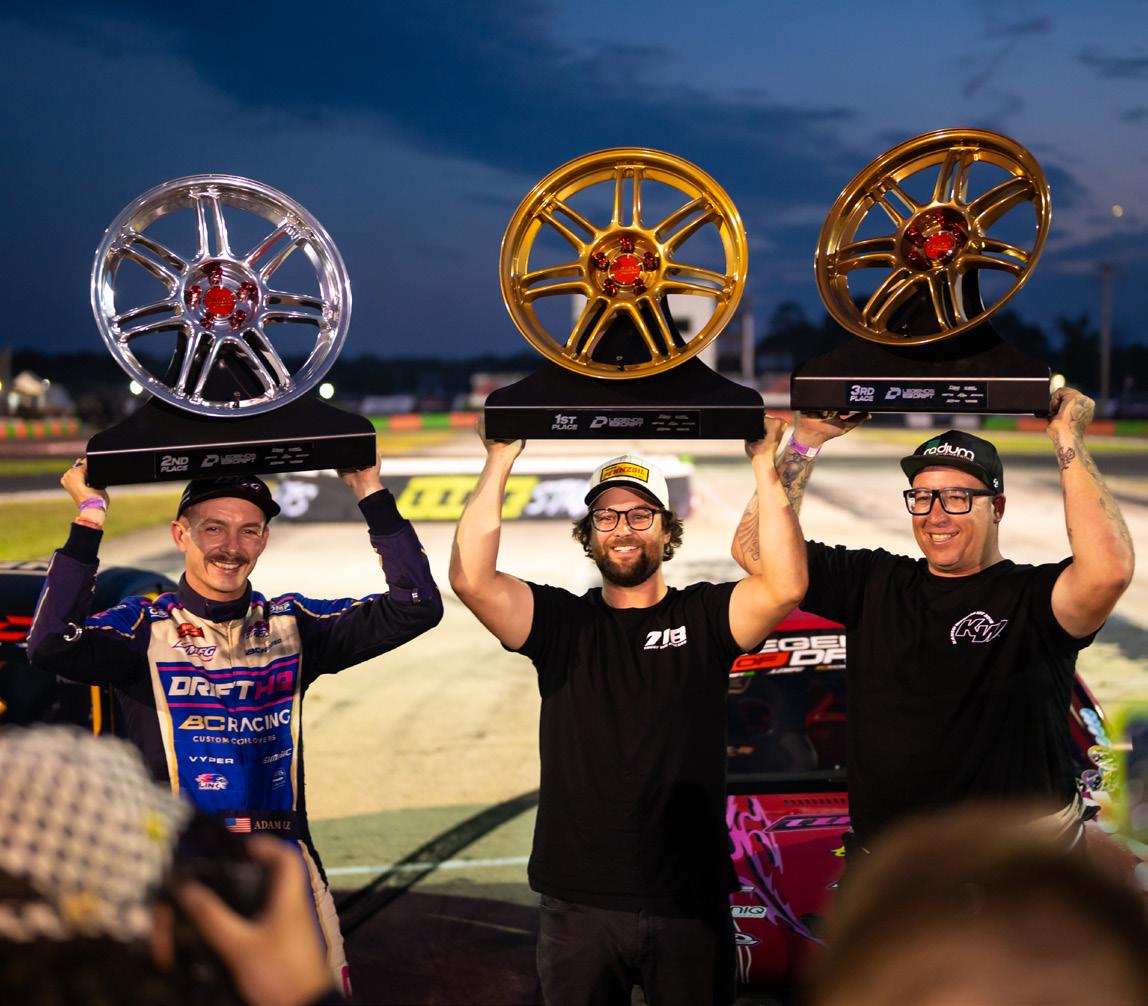
The competition aspect itself was split up in two days worth of driving. A qualifying day and Last Chance Top 16 battles on Saturday saw Rich Whiteman taking 1st place, Chris Napp taking 2nd, and Josiah Fallaise in 3rd. The pinnacle of the competition, the main show Top 16, took place on Sunday and delivered thrilling, high-octane battles. Notably, Formula Drift Champion Chelsea Denofa, a familiar face in
the drifting world, achieved a remarkable 1st place finish. His victory was made even more impressive by the fact that he was piloting Grant Anderson’s E36, having been forced to switch vehicles after his own Foxbody experienced a mechanical failure during the qualifying day. This demonstrated his adaptability and mastery regardless of the car.
Following closely, Adam LZ, a prominent figure in the automotive community, secured 2nd place in his powerful Big Block V8-powered BMW, exhibiting the raw force and handling of his meticulously built machine. The 3rd place position was claimed by Luke Fink, who navigated his C6 Corvette with exceptional finesse and aggressive lines, solidifying his spot among the top contenders. The event was a testament to the drivers’ dedication, the engineering prowess of their vehicles, and the electrifying atmosphere that surrounds competitive drifting.
The symbiotic relationship between “Drifter” and “The Legends of Drift” is a groundbreaking model for entertainment. The movie builds anticipation and introduces a wider audience to the allure of drifting, while the live event provides a direct, visceral connection to that world. This isn’t just passive consumption; it’s an invitation to participate, to witness, and to become part of the legend. This innovative approach recognizes that modern audiences seek more than just passive entertainment; they desire immersive experiences that allow them to connect with the narratives and worlds they admire.
The film acts as the catalyst, sparking interest and providing a rich backstory, while the event serves as the ultimate payoff, transforming cinematic fantasy into tangible reality.
unparalleled marketing platform, extending the film’s reach beyond traditional advertising. The event generates organic buzz, creating a community of engaged fans who are not only eager to see the movie but also to participate in its real-world manifestation.
Conversely, “Drifter” elevates “The Legends of Drift” from a niche motorsport event to a cultural phenomenon. The film’s narrative provides a compelling emotional context for the live action, making the high-speed maneuvers and intense competitions even more meaningful to attendees.
DRIFT INDY : WOODWARD DRIFT / DIGP
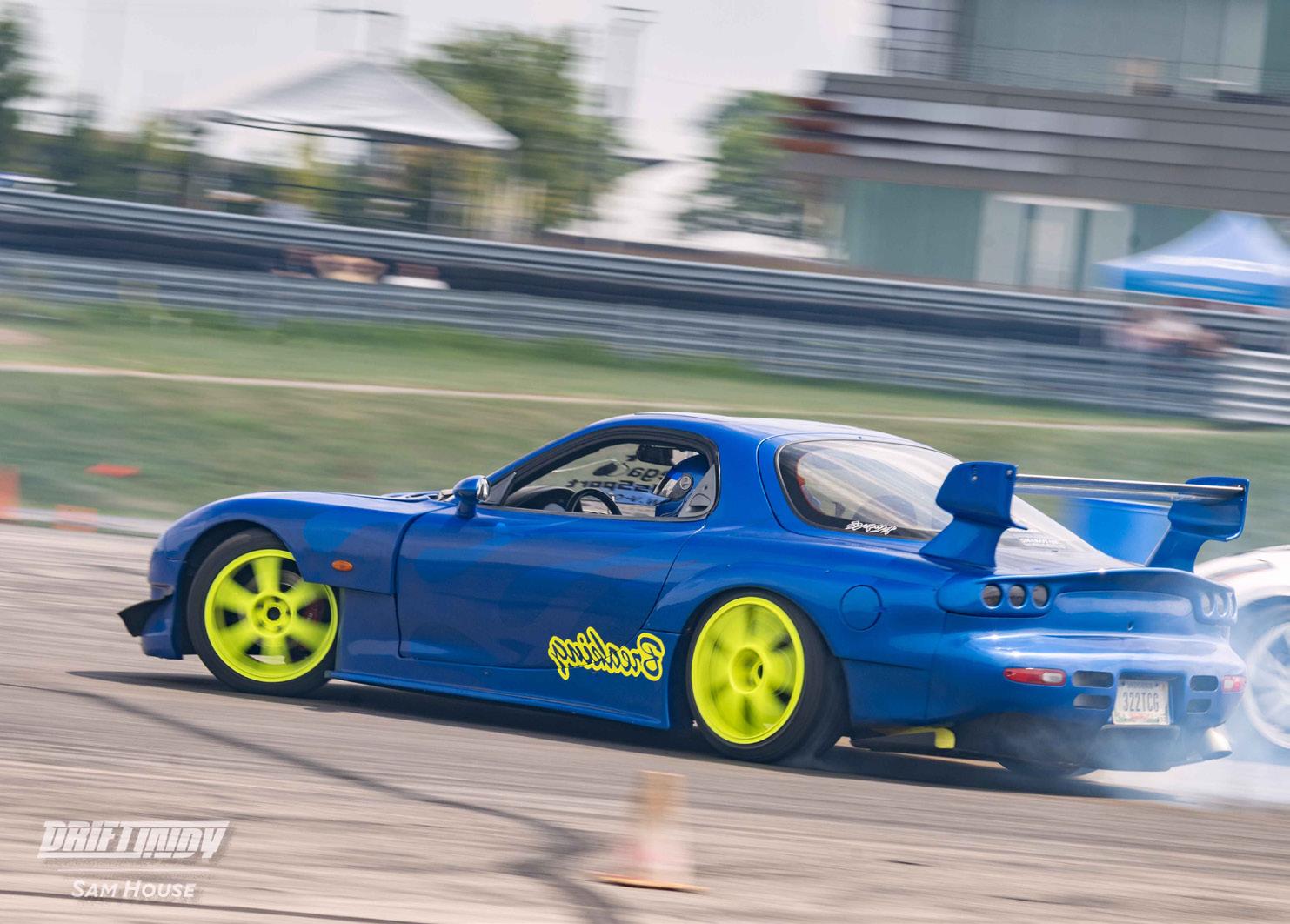
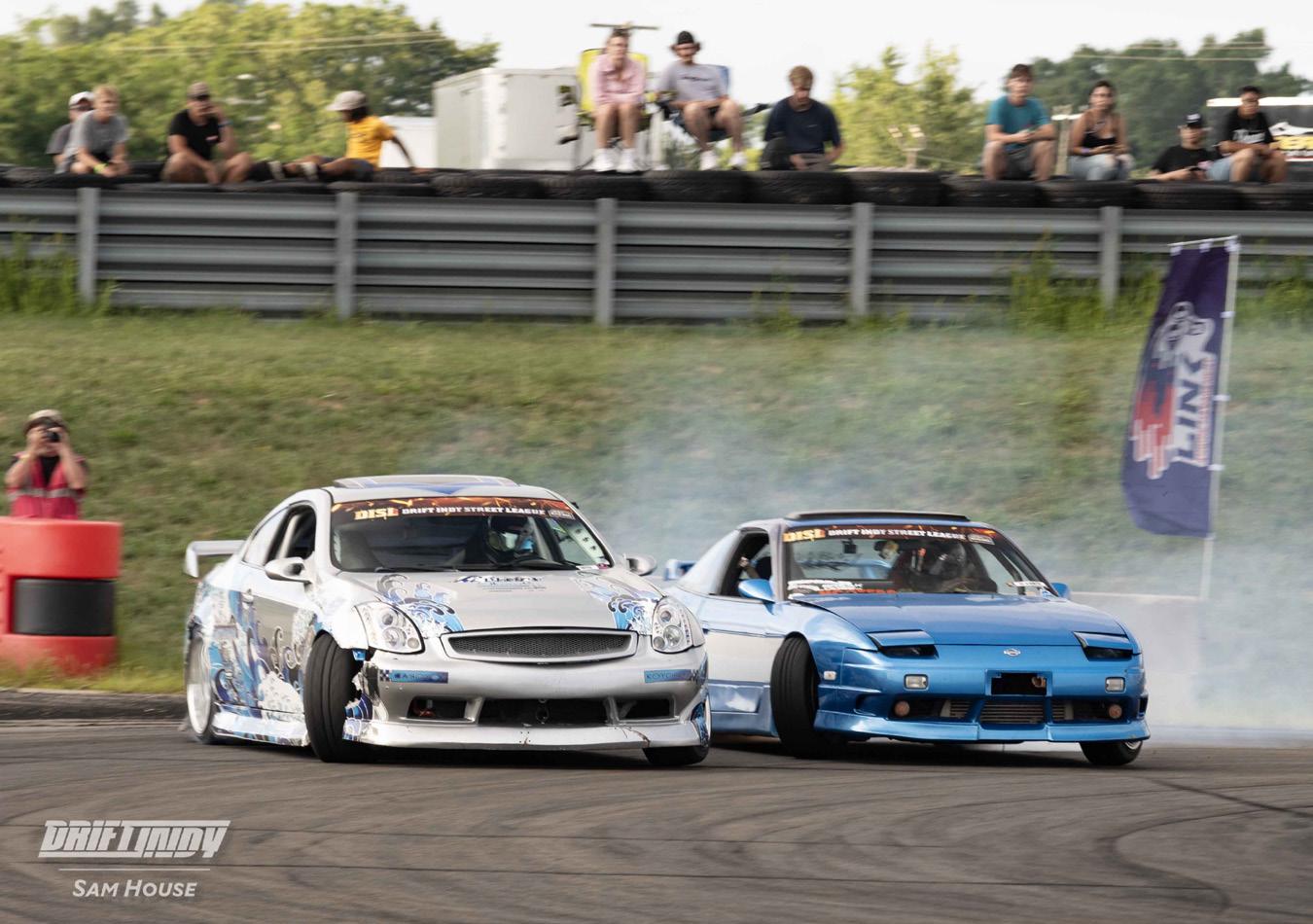
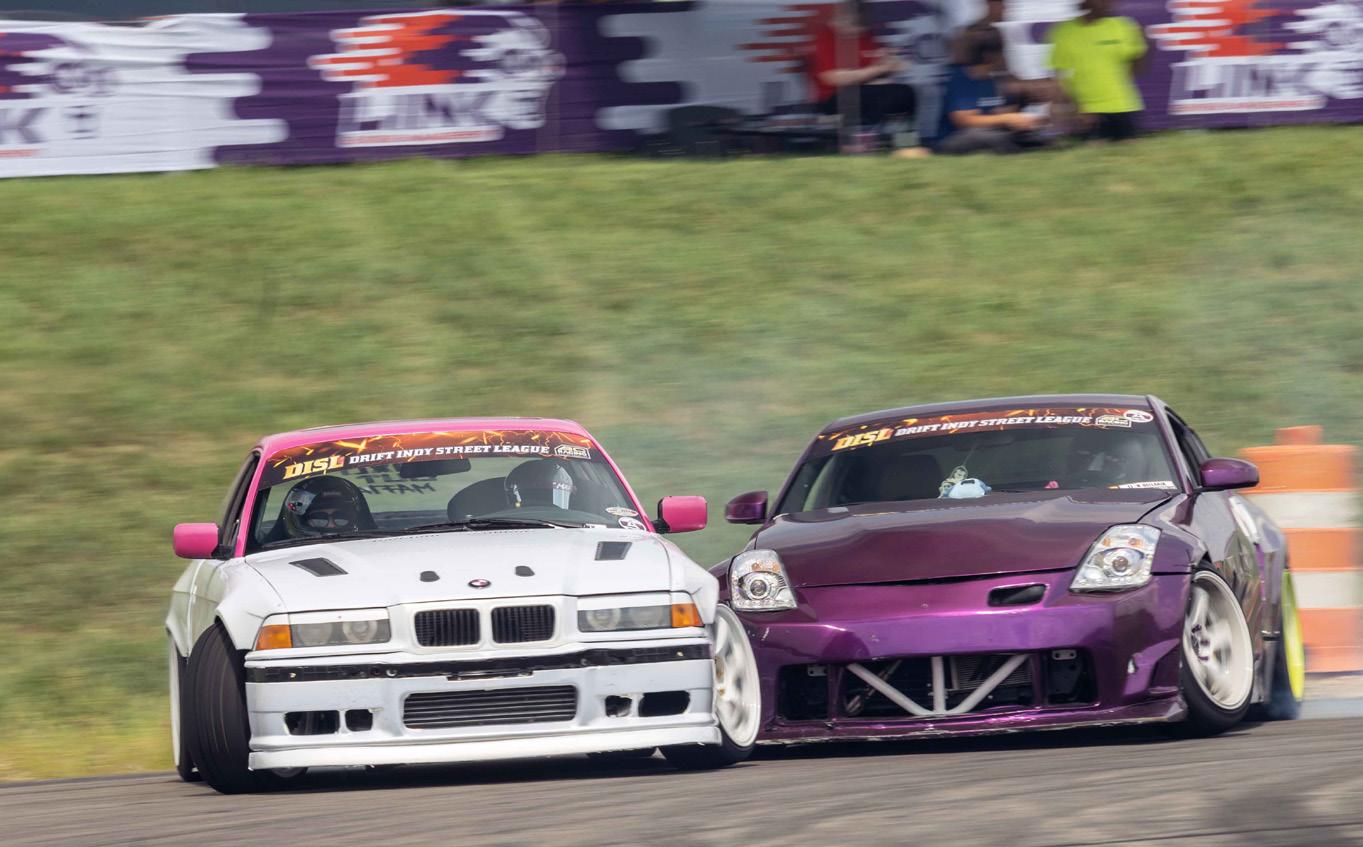
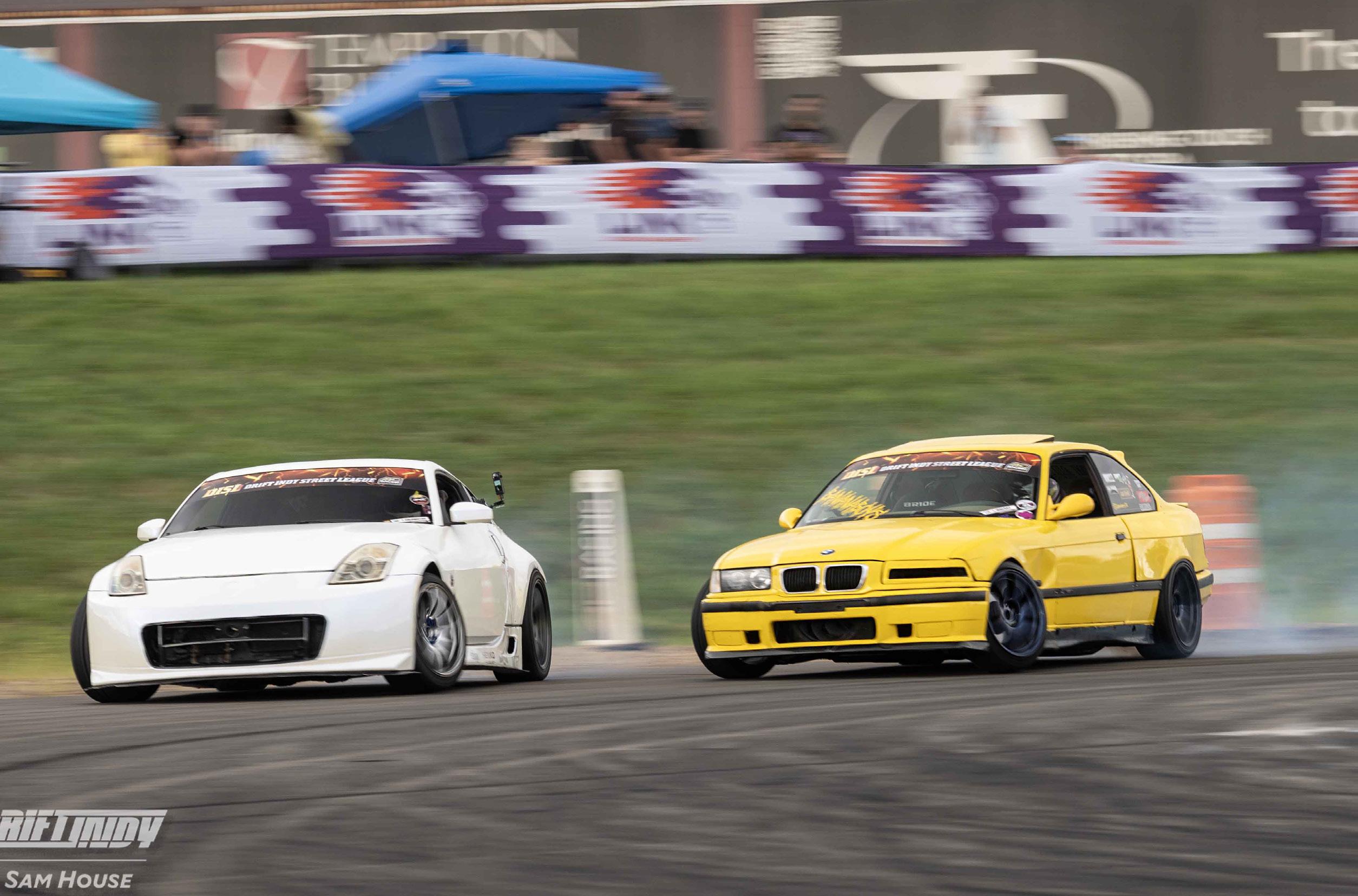
Inan impressive juxtaposition of tuner and muscle car culture, Drift Indy held the second round of their Drift Indy Street League and Grand Prix competition series in the midst of Detroit’s legendary Woodward Dream Cruise. Two rosters chock-full of street-styled cars, piloted by some of the best drifting talent in the midwest, took over part of the excellent facilities at the M1 Concourse August 16 and 17, adding to Drift Indy’s storied history with the Motor City.
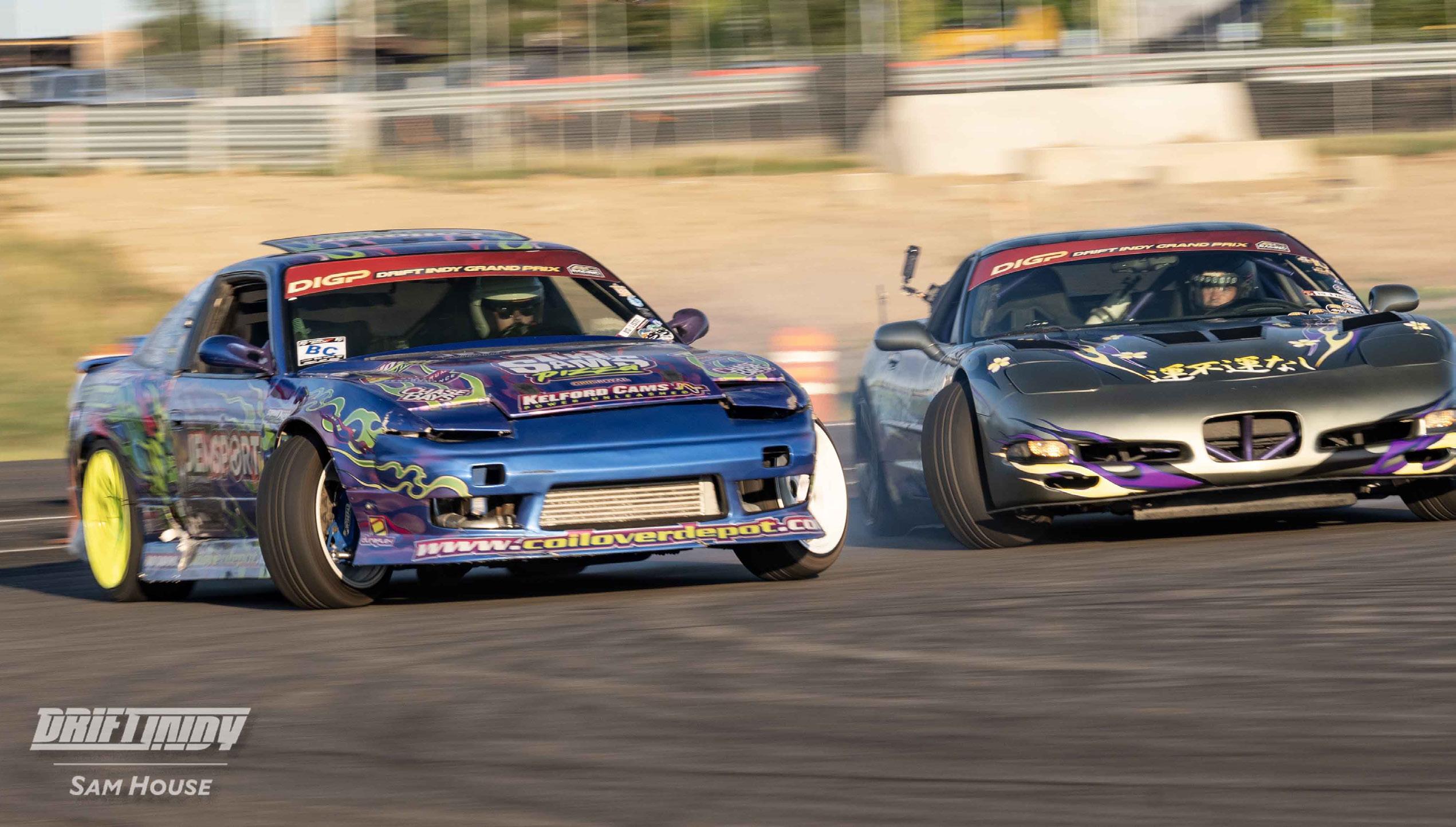
DIGP is in its inaugural season, with its field comprised of hand-picked drivers who’ve made their mark in DISL and whose rides have leveled up to the very limits of a street car, while retaining the same level of style.
It’s become tradition for the DI crew to schedule at least one field trip per season, with 2023’s being to Corbin, KY and 2024’s being to USAir in Wisconsin. This season took their crew and upwards of 70 drivers to the Motor City area. The DISL field drew over 50 drivers, with DIGP bringing a little over 20. For those unfamiliar with the two series, DISL just entered its fifth season. The competition places near-equal emphasis on both style and skill, and has seen over 120 drivers throw their hat in the ring across 15 rounds.
DRIFT INDY GRAND PRIX
Written and Photographed By: Sam House
This was the first time Drift Indy has returned to Detroit since a Midwest Drift Union round back in 2017, also held at M1. Before that, MDU hosted three rounds of the now-infamous, ever-unique Streets of Detroit. The competition layout this time around at M1 was somewhat less technical than past DISL layouts,
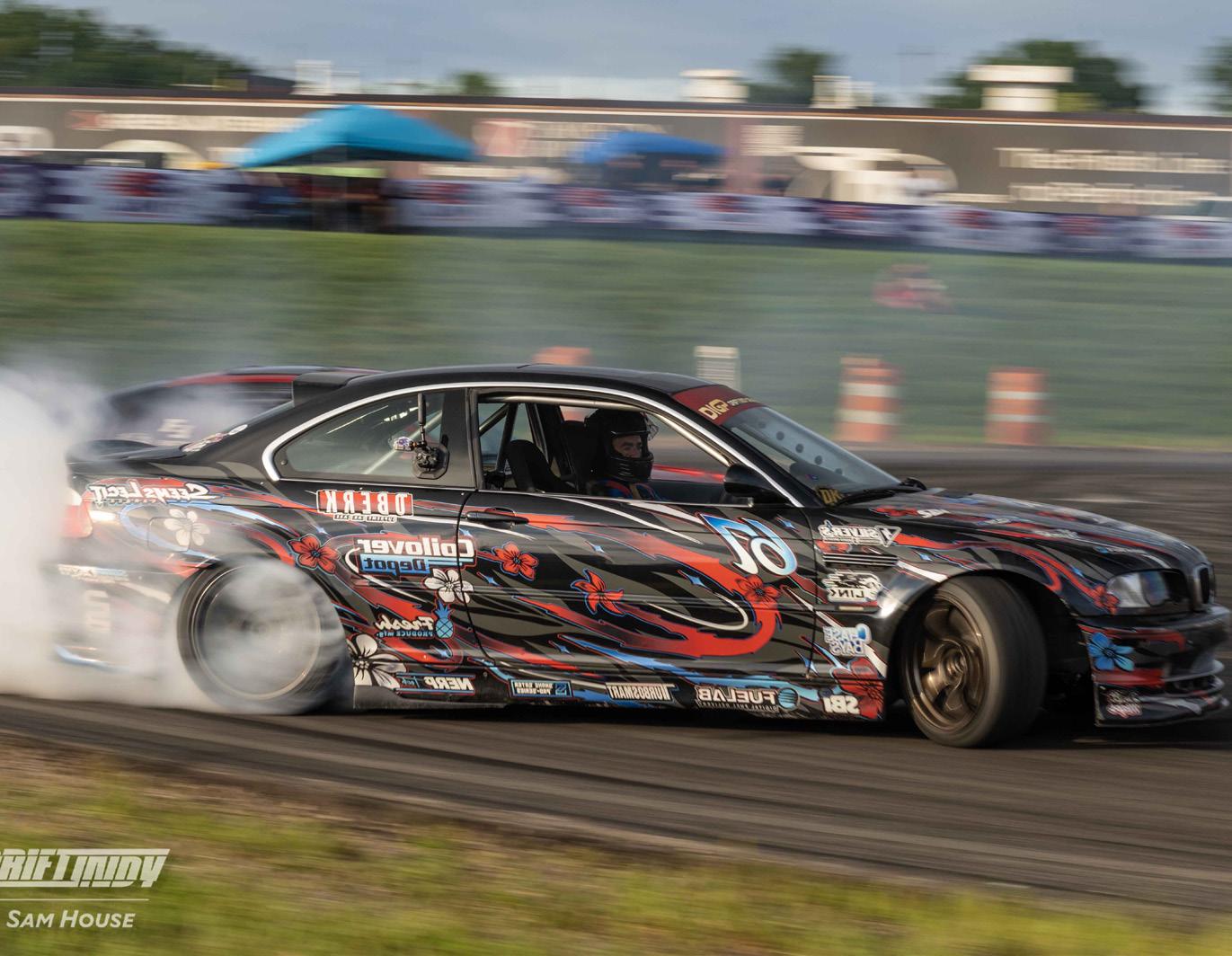
but still managed to be deceptively tricky to nail. On its face, it was a big sweeper into three hairpins. With the zones defined, though, the hairpins worked pretty well to reward skill over power. There was the occasional trip to Gapplebee’s, but usually the chase driver was able to close the distance by the last couple outers.
Roy Outcalt and DISL driver Deidra Drake, and it just so happened to be while Outcalt had a reporter working on a story on car culture riding shotgun. With Outcalt in the chase and Drake putting down a killer lead run, said reporter got some first-hand experience at what it was like to be on somebody’s door the whole way through the course.
There are a few spots within the facilities at M1 with direct views out through the fence to Woodward Ave., but even if you couldn’t see them, the sounds of the Dream Cruise’s constant parade of cars made for a killer backing track for Saturday’s practice. One of the most impressive practice laps came from DIGP driver
That run highlighted something cool about these joint DISL and DIGP rounds: everyone drives with everyone in practice, regardless of which series you’re in. DISL drivers get to learn from the cream of the crop that is the DIGP roster, and the DIGP drivers get to practice leading and following all kinds of different setups.
The DISL formula that spawned DIGP has always been about pushing drivers to level up both their skill behind the wheel and their style, and Round Two was a testament to the efficacy of that ethos.
One of the craziest things about the impressive facilities at M1 is the private garages that line the road course. They range in size and price, from around 550 square feet for $300k to 1,500 square feet for $2.2 million. The cars being stored in those garages were as impressive as their price tags, and ranged from vintage Mercedes to new Ford GTs and encompassed everything in between.
The end of practice on Saturday meant it was time for drivers to head over to Woodward Ave. to take in some gnarly burnouts and appreciate the constant parade of cool rides from all sides of car culture, including the weird side that makes people build giant, road-legal shopping carts.
(None of the Drift Indy drivers got arrested or anything, so everybody must’ve been on their best behavior out in the streets.)
Sunday morning meant more practice ahead of preliminary qualifying for both series. It also revealed a few casualties from Saturday, including 2024 DISL champ and current DIGP competitor Cash Staub, who blew the transmission in his Foxbody Mustang mid-way through the first day.
Any absences in such a competitive field make a difference when it comes to qualifying, especially in a series with only 16 spots available each round and no
seeded spots letting top drivers rest on their laurels. DIGP is designed to be a dogfight every round, and it’s part of why it’s one of the most entertaining competitive series in US drifting today.
DISL qualifying kicked off first, though, and that series does have seeded drivers filling half its bracket. Still, around 40 drivers threw down in prelims to fill the other 16 spots. In his DISL debut, Team Breaking’s Ty Keller took the top qualifying spot.
Jake Clark was something of a wildcard for the round, having started the season in DISL but being bumped up to DIGP after petitioning for the change since the S14 he used in Round One was out of commission. The 240 hatch he’s been building was a better fit with the higher-horsepower field in GP, and he’s a shredder, so the promotion was accepted. The young, Atlanta-based Clark qualified 10th in his DIGP debut.
Taking the top spot in DIGP qualifying was Round One silver medalist Mike Steele, a Michigan dude and member of Bobby’s Crew. His second run was nearperfect, earning him a 98 from the judges, the highest score in either series’ qualifying. Kyle Antonovich, the series leader coming into Round Two, was piloting an S14 with an unhealthy SR20 after tragically losing the S13 he’d driven for years to a trailer fire earlier this year. Antonovich and his team pushed hard to get the S14 ready for the round, but it was breaking up badly throughout practice, and it finally let go mid-way through his first qualifying run.
Finally, with the brackets set for both series, DISL’s Top 32 battles got underway. The bracket produced some really tight, tricky battles, even early on. You got the vibe that all of the drivers knew that they needed to put it all on the line to advance through a field chock-full of shredders, and spectators were treated to some highlevel, competitive driving right off the rip.
DISL
Zaine Wherry, in his first foray into DISL, found himself matched up with Ty Gondek, a young up-andcomer, in the Top 32. Gondek’s Infiniti VH45-swapped 240 hatch makes quite a bit of power, and he used it all to put the pressure on Wherry and his S52-powered E36. Wherry stayed tucked right in Gondek’s pocket in the chase, but when they swapped spots, Gondek got a little greedy and either made contact or forced Wherry wide as they swung out to the final outer zone. The judges ruled in Wherry’s favor, sending him to a Top 16 matchup with his buddy Justin Bailey.
Bailey finished second at DISL’s first round earlier this season, and his LS-swapped E90 sedan is a hell of a machine. He and Wherry have turned a ton of laps together over the years, and that’s often the recipe for some good ‘ol OMTs. Sure enough, their first set of runs were too close to call, but a spin from Bailey when they ran it back saw Wherry advance.
Keller and then-series points leader Rodney Blankenship had a close battle in the Top 16, with Blankenship hoping to make a deep run to extend his single-point lead at the top of the table. In their second run, though, with Keller leading, Blankenship spun. Keller just needed to finish the lap to stamp his ticket to the Top Eight, but he spun just before the final outer zone in an uncharacteristic mistake. Waiting for the OMT call, both drivers had a laugh together about their messy lap. Keller was eventually able to secure his win in their do-over.
Infusing some east coast influence into an otherwise largely-midwestern field, Reese Marin, coming off a win at USDrift’s Street League, made his DISL debut at Round Two. After qualifying in the middle of the pack, he advanced through his first two battles to a matchup with Keller in the Top 8. It was, you guessed it, another tight one. In the end, Marin’s experience won out, putting an end to Keller’s impressively deep debut run.
The semifinals saw Marin matched up with fellow 350Z driver Tommy Coldwaters on one side of the bracket and Wherry going head-to-head with thenoverall second place and Round One champ Paul Tuttle. Tuttle’s path to the semis saw him knock out three tough competitors in Clay Gaiser, Nicki Dimitri and Miles Harrelson, with his battle against Harrelson being a rematch from the first round.
Coldwaters got the nod over Marin, and Wherry overcame Tuttle’s relentless consistency to set up the final matchup and the battle for third. Determined to secure his second straight podium on the season, Tuttle really locked in for his head-to-head with Marin. Both dudes were on one all weekend, but Tuttle did enough to knock Marin off the podium, giving himself enough points to go four-points clear at the top of the season rankings. Coldwaters and Wherry lined it up to close out a killer second round, with Coldwaters leading first.
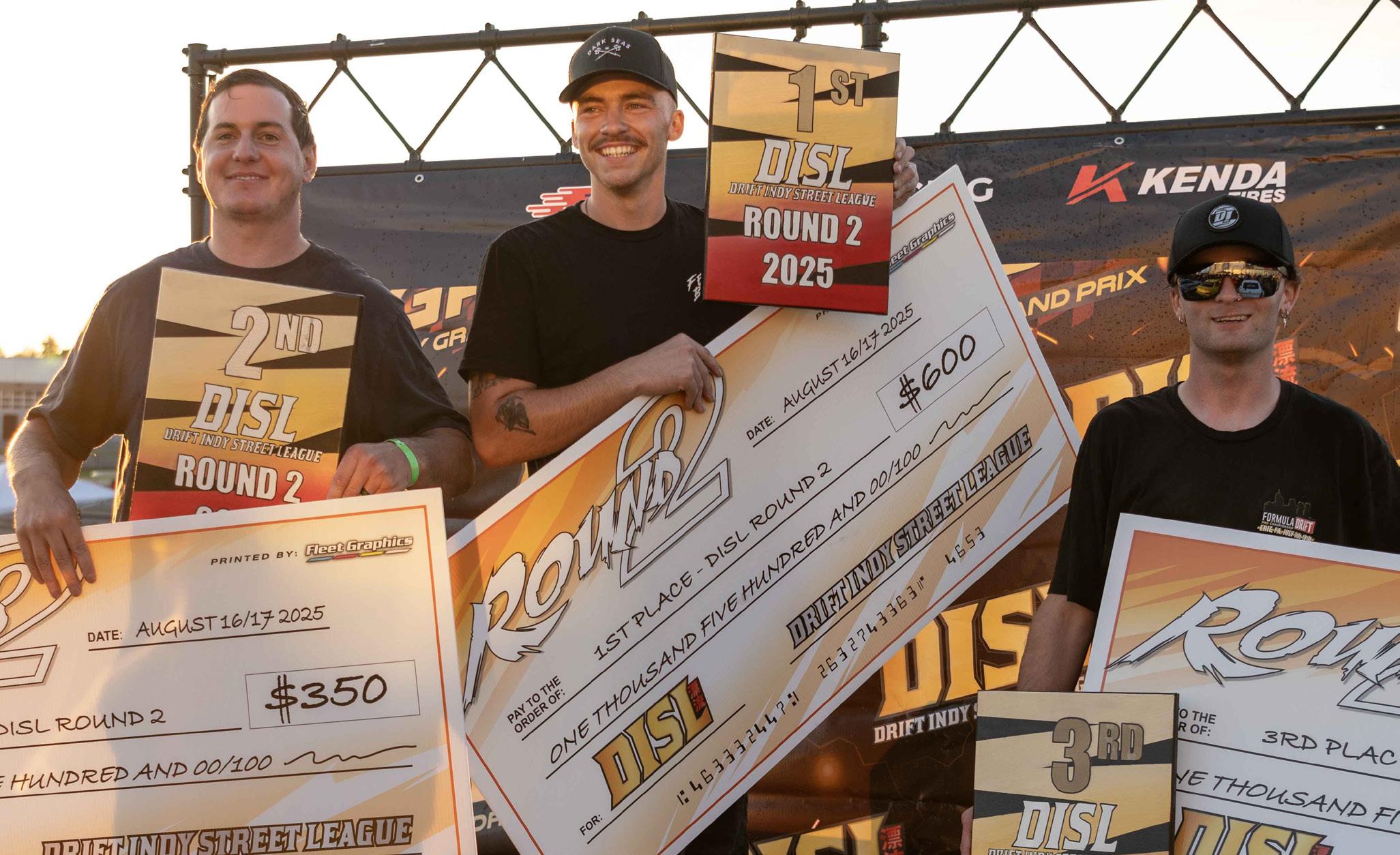
Wherry maintained his trademark proximity, and when they swapped spots for the second run he was able to open up a gap in his lead. It was enough for the judges to give him the nod, and Wherry secured the gold in his first ever run at DISL.
With the first comp of the day wrapped up, the DIGP boys got their Top 16 kicked off with a matchup between Round One second place-finisher Mike Steele and Justin Medina. Medina was piloting a newto-him 2JZ-powered BRZ that he picked up not long before the round, with the S2000 he usually drives out of commission for the time being. The two Michiganbased rippers put on a pretty sweet show, reminding folks that DIGP takes the DISL formula up just a few more notches. Medina missed out on driving the first round, but came into this round and knocked out Steele, the top qualifier, in his first battle.
The rest of the Top 16 saw plenty more examples of the high-level, stylish driving that DIGP is all about. Freshly-promoted Jake Clark had a solid showing against Britt Kaukeinen, but Kaukeinen and his C5 Vette got the nod and Bobby’s Crew teammates Josh Estey and Chad Anderson pitted two very different Ford powerplants against each other, with Estey’s Ecoboost-swapped S13 giving boomers plenty to think about with its win over Anderson’s Coyoteswapped E46.
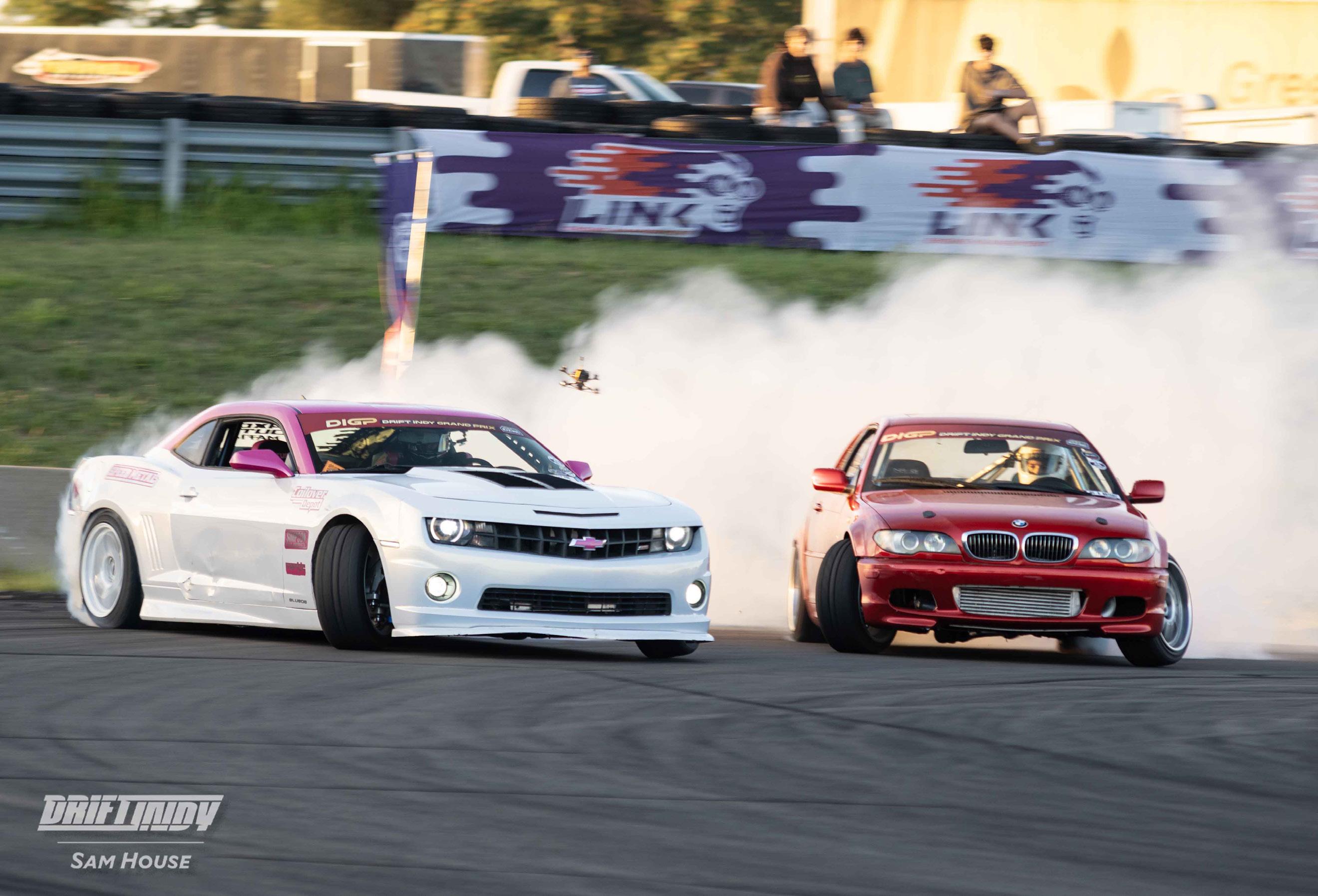
The Miatas had it tough as Dan Sommer and his NB lost out to Adam Day’s boat of a Camaro SS and Cameron Stone and his NA couldn’t overcome Roy Outcalt and his turbo M54 E46. In turn, though, Clint Stotts and his NA knocked out Steve Scherzer.
The Top 8 pitted teammates Colten Terrell and Roy Outcalt against one another in a matchup that saw the younger Outcalt keep it right on Terrell’s door in the chase before opening up a little gap in his lead run, stamping his own ticket to the semifinals. Outcalt looked much more confident by this point in the competition, having rebounded nicely after tapping the wall in his first qualifying lap. That bent something in the suspension, forcing him to run his second lap with what he said was around 5 or 6 degrees of positive camber. He managed to qualify 11th overall, but had to rush to get the car back in shape before the battles got started. Seeing him and Terrell throwing down, you never would have guessed that he wasn’t feeling good about his driving earlier in the day.
Day and his Camaro, still hungry for Miata blood, came up against Stotts in the Top 8. Day had his work cut out for him against an absolutely surgical Stotts, but he managed it without the need for a OMT call. He’s able to make that big hunk of Chevy sheet metal look light on its feet.Joey Ritter and Medina had a close one in what was both of their DIGP debuts. Neither of them is a stranger to the DISL podium, though, and both seemed determined to make up for their absence at the first round. Much like his teammate Stotts, Ritter can put his car wherever he needs to against just about anybody, and he did just that as he faced down Medina and his smoke machine BRZ.
The semifinals came down to matchups between Ritter and Day on one side and Outcalt and Kaukeinen on the other, four hard chargers giving it everything they had to walk away with some hardware. Both battles went to a OMT, with the judges having to dissect every slight imperfection in two sets of killer runs. Eventually, it came down to a final head-to-head between Outcalt and Day, with Ritter and Kaukeinen duking it out for third.
While it may not have occurred to either of them at the time, the two third-place contenders were fighting for the honor of entire states. Kaukeinen was the last Michigan-based driver still in contention for a podium spot in his own home state, while a Ritter win would mean an all-Ohio podium at the only round not being held in Ohio. With Midwest bragging rights on the line, Ritter secured the win for the state
that brought us Skyline Chili and the Wright brothers. Without the fate of entire states resting on their driving, Outcalt and Day just focused on putting on a killer show. With spectators ringing the track and the sun setting behind the boujee garages, Day led first. Outcalt immediately closed in tight, sticking to the Camaro’s door past the inner clip. Day’s lead was solid and he opened up a little gap by the time they swung through the final outer zone, but he had his work cut out for him to match Outcalt’s proximity when they swapped places. Outcalt was able to open things up just a little bit more through the first half of the course, though, and by the time Day closed the proximity toward the end of their lap, it was too late.
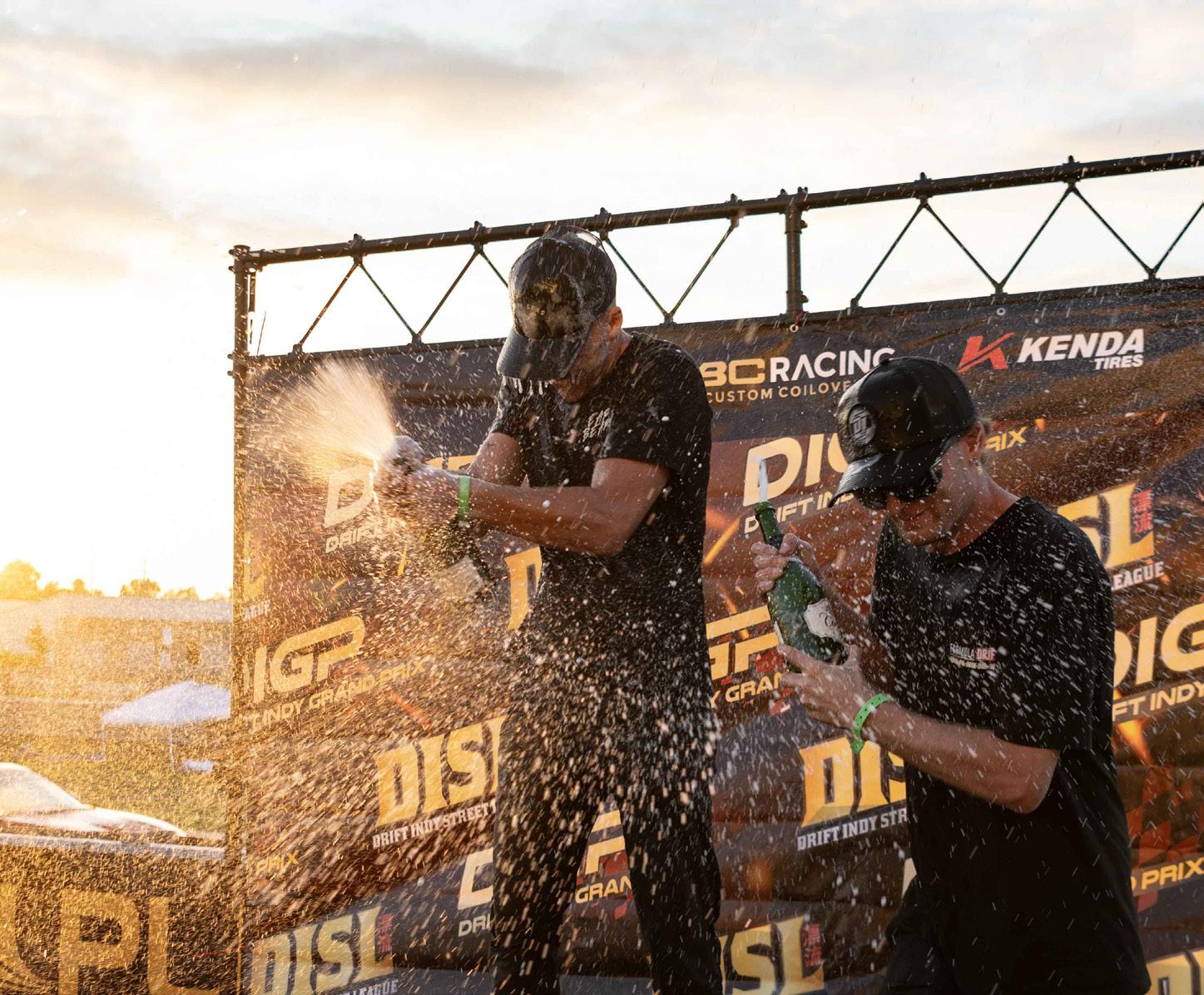
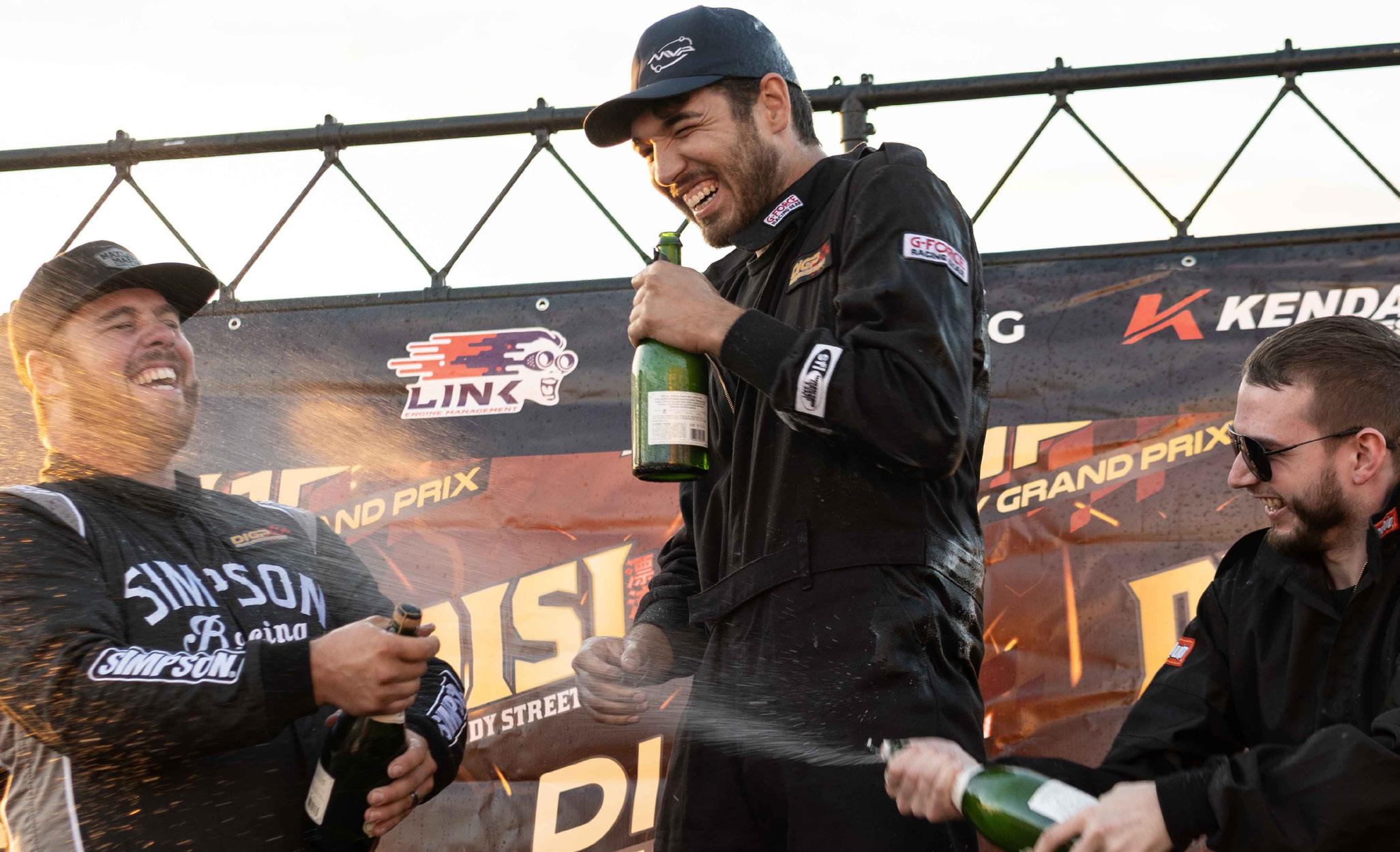
Roy Outcalt took home the gold, Adam Day the silver and Joey Ritter the bronze as the trio of Ohio-based drivers inked their names into the history books of Midwest drifting, alongside drivers from Drift Indy’s past visits to the Motor City. Every single point in DIGP is hard-earned, and these three fought hard to earn their sweet, sweet champagne showers.
“Out here, everybody is on another level… I feel like I shouldn’t be here, but I did what I had to,” Outcalt said after the podium ceremony.
With all the points tallied, he’s in first overall for the season with his teammate Terrell just four points behind him in second. There’s a tie for third place between Kaukeinen and Steele. The inaugural DIGP champ will be crowned at Round Three on September 20 at Xenia, Ohio’s Kil-kare Raceway.
“OUT HERE, EVERYBODY IS ON ANOTHER LEVEL…”
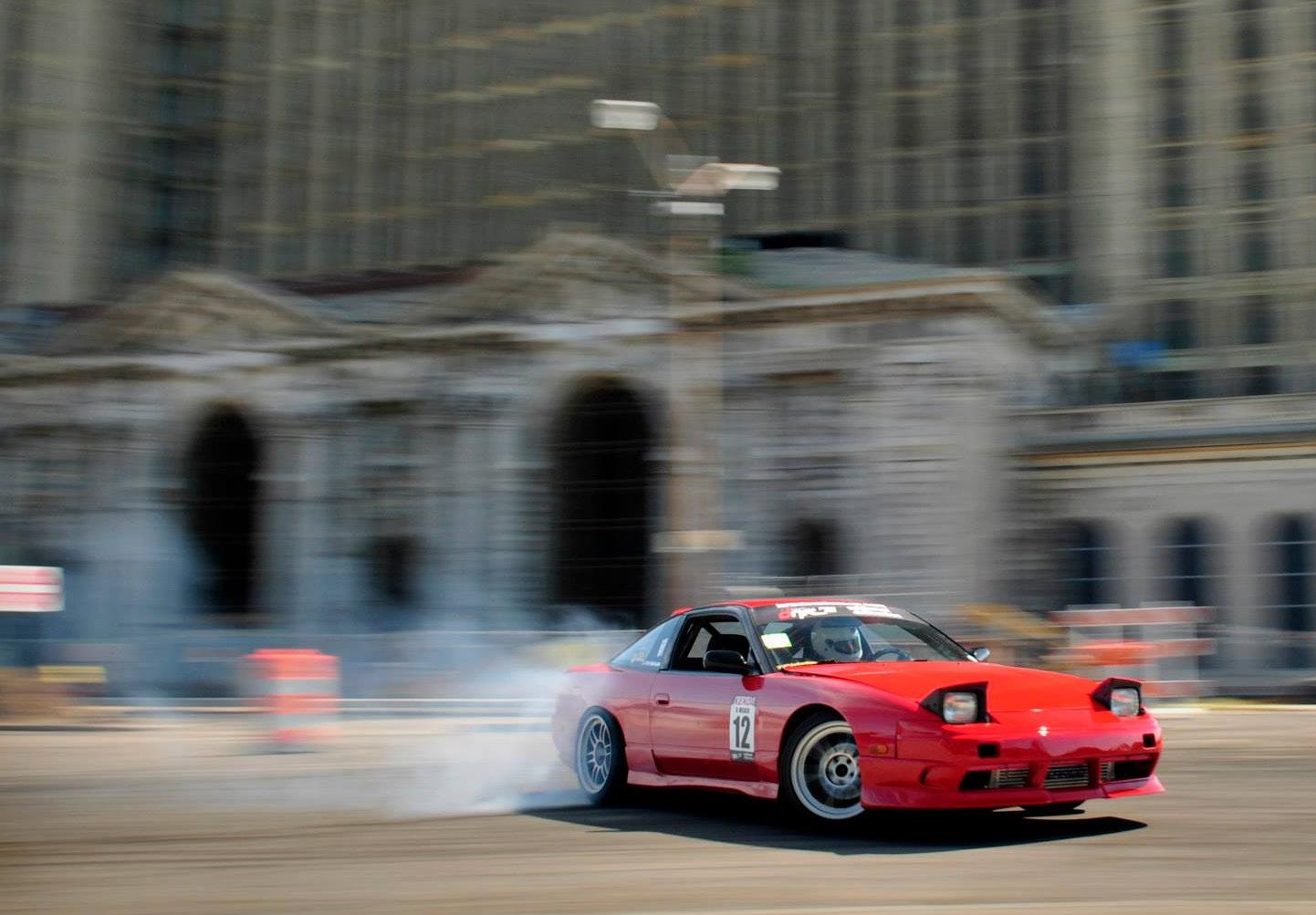
Michigan Central Station provided a dramatic backdrop for the “Streets of Detroit” series.
DRIFT INDY’S LEGACY IN THE MOTOR CITY
Woodward Drift, the overarching title for this event, was the first time in eight years that the Drift Indy crew returned to the Detroit area. The last time was in 2017 when Midwest Drift Union, DI’s pro-am competition series, held a round on M1’s road course. That was the only time the series visited the facility, and that round saw Geoff Donati finish first, with Noah Michaels in second and Dan Nikov in third.
Before that, though, MDU made history with its Streets of Detroit events. Held in front of the thenabandoned Michigan Central Station, those events saw plenty of future FD talent throw down on the unforgiving asphalt of the course. A decade removed from them now, drivers, staff and media alike look back fondly on what were, and still are, uniquely wild events.
“We didn’t realize at the time how just how iconic these weekends would become, and how those of us who worked those rounds would still be here waxing poetic about them a full decade later,” said former Drift Indy Staff Photographer Mario Johnston.
The first edition of Streets of Detroit in 2013 saw Detroit local Mike Skudlarek take home the win, even after hitting one of the streets’ unforgiving curbs. Skudlarek, now the proud owner of Detroit Drifting Co., had already dipped his toes into FD by that point, adding to the number of Pro and Pro 2 level drivers that made their way through MDU over the seasons. Other notable names include Dirk Stratton, Jonathan Hurst and Derek Madison, but the list goes on.
Each visit to Detroit by Drift Indy has infused some of their unique brand of drifting into the storied automotive history of the Motor City, with this season showcasing the style and skill of their DISL and DIGP rosters that they’ve worked hard to cultivate season after season. Bringing drifting culture and slapping it down right alongside the legendary Woodward Dream Cruise was a prospect that not just any organization could pull off, but it paid off for them and laid the groundwork for a return next season.
Photo: Mario Johnston
Despite smacking a curb, Mike Skudlarek perservered and became the inagurual winner for Streets of Detroit 2013 Photos (above and below): Nick Quigley
Riley Sexmith in this 2JZ-powered WRX leads the GTO of Shane Whalley in the finals of the final Streets of Detroit round in 2015. Sexsmith would clench the event with Whalley in second and Nick Thomas with third.
Just a Good Ole’ Boy
Written and Photographed By: Sam Igel
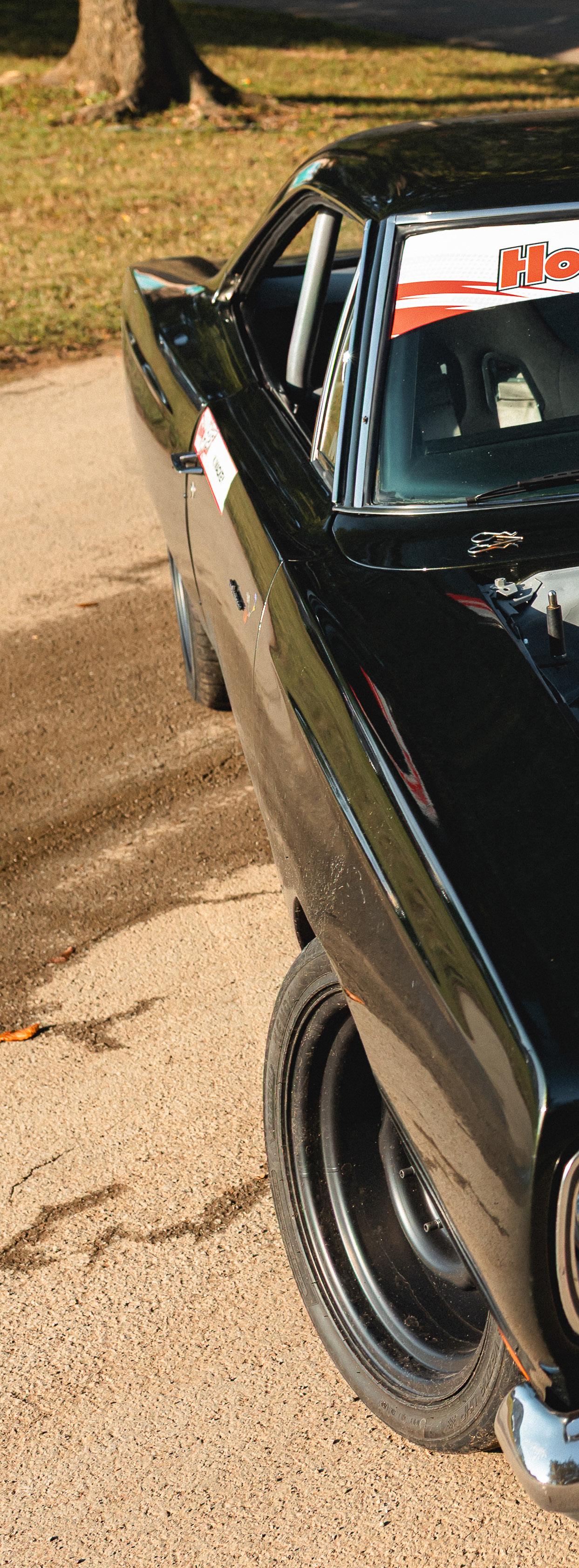
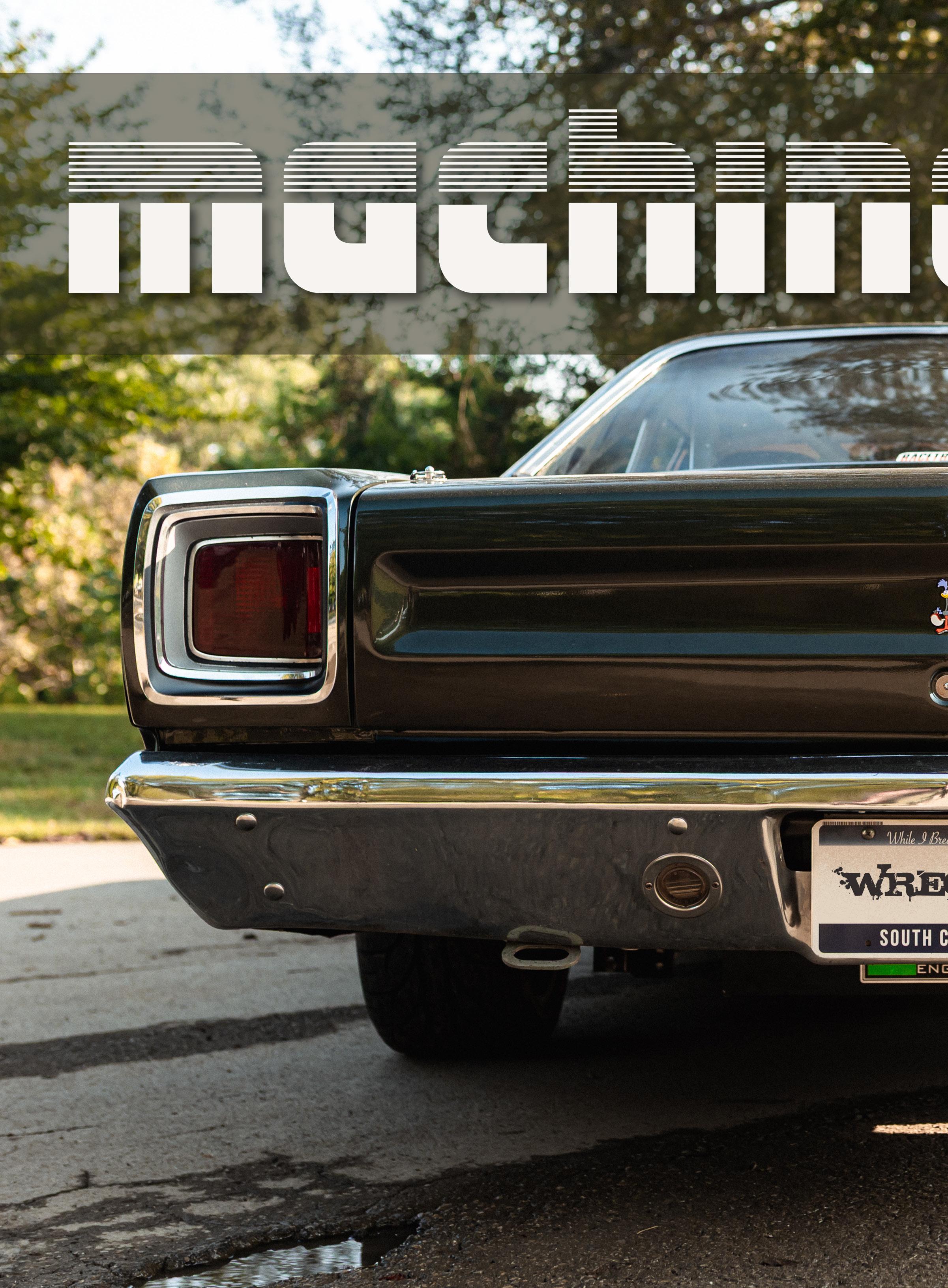
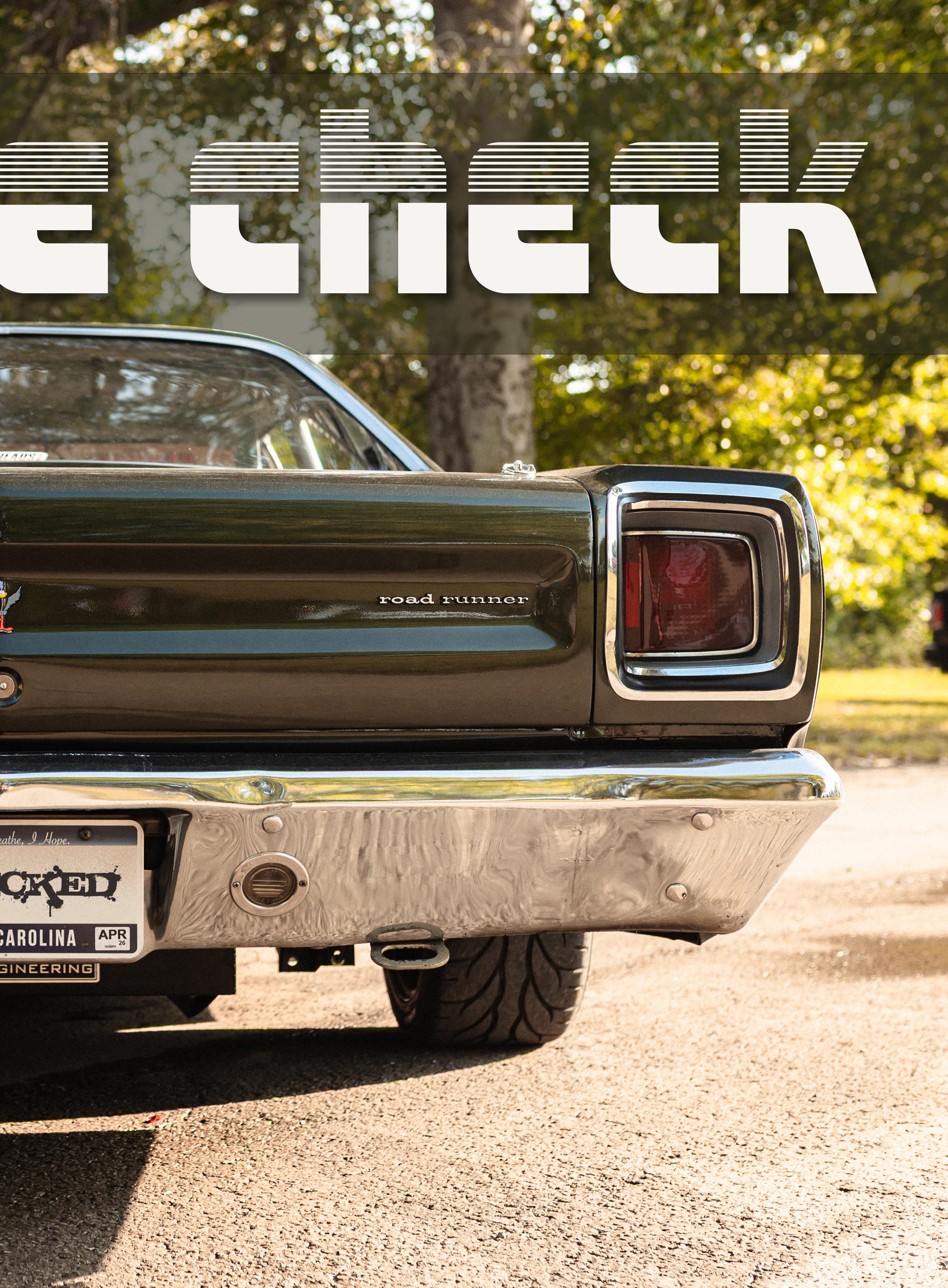
Over the last couple years, Kiely Mackey has turned heads and raised eyebrows in his 1969 Plymouth Satellite, a car that seemingly came out of nowhere, but perfectly encapsulates his current outlook on drifting. If you ask him where this all started, he’ll laugh and tell you about the hell he and his buddies raised in an old Corolla on the backroads of South Carolina. That was over 20 years ago, and he’s still here, chasing the good times.
Back in the late ‘90s, Kiely was running dirt roads in a 1980 TE72 Corolla that was a sort of home-brewed rally car. “The Dirt Road Basher,” he called it, like it was a badge of honor. “We’d go out three nights a week raising absolute stink in this Corolla…we’d put 120 miles a night on dirt roads in this thing. I mean, we had laid it on its side at least twice, we had a good time.” It was reckless, sure, but that’s where he learned car control. Drifting wasn’t even on his radar; in the U.S. it barely existed yet. They were just out there having a blast.
A little later, Kiely moved on to a “pretty stock” 240SX with cut springs and a welded differential. Visiting a buddy’s house out in the countryside he’d often manji up the street, do donuts in the intersections, and rip 360s into the driveway. “One day I showed up and he’s calling what I’m doing drifting. And I’m like ‘brother…what in the crap are you talking about?’” Soon after he was handed a copy of Osaka Midnight, an old DVD that truly glorified street drifting and all the surrounding aspects of the culture. “I don’t wanna say life changing, but at that moment, I was like…I wanna be those dudes.”
Taking over the family business pulled him to Maryland, where he found the local street scene. Loch Raven was their playground: a city water reservoir with a winding access road, just secluded enough that no one really cared to bother them. “The city police would patrol the area about twice a night, and they got so used to seeing us out there that occasionally a buddy would wreck or something and they’d be like ‘All right, get that out of here in like 30 minutes or so, or we’re gonna have to do our job.’” Even if someone put their car into the ditch, they’d be left alone as long as they handled it themselves in a timely manner. Though eventually things got a little too out of hand, as they often do, and the spot died off.
In 2004, friends and the internet started pushing Kiely toward organized drift events in New Jersey. He made his maiden voyage to Englishtown Raceway, dead broke, and with absolutely no idea what he was signing up for. “I was told it would be like 50 bucks to enter. I got there, and they went, ‘It’s $125, it’s more for competition days.’ And I go, ‘I don’t have $125, and I don’t want a competition, I just want to drift.’”
Matt Petty and the other drivers agreed to let him into his first comp for free as they weren’t scared of a first timer, and then Kiely went out and won the damn thing. That win is what truly lit the fuse, he was hooked. It even put him on MA Motorsports’ radar, the shop he now calls home. “That was the moment where I went, ‘oh, this is what I’m gonna do’. And from then on out, by 2005, it wasn’t 240s anymore. I had to
When he blew up his first SR20 in the 240, he switched to an RB20 acquired from his local importer. Over time he became so infatuated with the platform that he was buying them in droves to throw into all his friends’ cars, and the importer suggested that since he liked the engines so much that maybe he should get into a Skyline. Those weren’t exactly legal back then, but who cared? A few months later Kiely took delivery of a black R32 Skyline that wasn’t the prettiest thing ever, but the perfect beginnings of a great drift car. We won’t say exactly how much it cost him, but nowadays you can barely even get a shell for that cheap.
“I ran RB20s for years and years. In 240s, and then eventually in Skylines. Then as I started competing more and more, I realized that little RB20 was not going to keep up.” So he brought the Skyline to MA Motorsports for a 1JZ VVTi swap, which was nearly unheard of back then. Its first event was East Coast Bash in 2007, and by 2008 he’d earned his Formula Drift Pro license with that stock 1JZ. That should have been the dream realized, but the timing was brutal.
“I found out very quickly that just getting into the show was more money than I could ever imagine.” He spent every penny he had LS-swapping the car to go Pro, then the markets crashed. Over the next few years he was just getting by, but petitioned to keep his license all the way up until 2011. Eventually, he gave up on the FD dream, and sold the LS swapped Skyline as a part of getting over it. From there, things shifted. He bought a JZX from Canada to be a street car, but quickly sold that when the itch to build something wild came back. Inspired by old school Trans-Am and NASCAR entries, he picked up a defunct 1969 Camaro drag project, grafted C5 Corvette suspension to the Camaro’s subframe, and made something mean. “Cars need to look right, or they need to look evil. There’s only two things I like in a car.” Kiely says, and this one checked both of those boxes. Eventually, someone offered him a deal too good to be true for that car at the time, so he sold it. Some time and several chassis later, Kiely was invited to Drift Appalachia’s first visit to Beckley, WV. Kiely was there in his JZX, and the mountain’s immaculate vibes brought him all the way back to the early days and the winding roads he grew up driving on. “All I could think about besides how happy I was was: how great would it be to have an old car? I don’t know what it is yet, but a sick old car out in these woods doing the drifting.”
He had just bought and sold an old Road Runner, so they were very fresh in his brain. ”
I came home from that event and within three weeks, I had sold my JZX, bought the Satellite, bought a Camaro to get the drive line from, and gotten all the parts from a car that Brian had for the E36 stuff. And it was two months from there until the first time that car drove. ”
These days, Kiely’s focus is on enjoying drifting without worrying about the competitive aspects. He lives half a mile from MA Motorsports where he’s worked for a few years now, and took a pay cut to have a place to tinker with friends. He’s content when there’s something wicked sitting in the shop, and getting to drive it as much as he can when he’s able. “I figured out I’m happiest when I have at least some of it. When I can go do four events a year, and go tandem with my pals, and go ‘Yep you still got it, at least enough to not embarrass yourself’”
With over 20 years in the scene and just as many different drift cars in his lifetime, Kiely Mackey might not be chasing points anymore, but he’s still out there doing what he’s always done. Building gnarly cars, helping his friends, and raising a little hell.
Just a good ole boy, never meanin’ no harm.
BREAKING LIMITS
Forrest Luster on the Future of Standalone ECUs
By:
When Forrest first started tinkering with cars in high school, he had no idea that his weekend experiments would turn into a career spanning more than two decades. What began with late nights working on Hondas and SR20-powered drift cars has evolved into a professional role at Link ECU, where he wears many hats: technical support, applications development, trackside assistance, and dealer training.
More than just a tuner, Forrest has become a bridge between old-school, hands-on garage wisdom and the rapidly evolving world of digital engine management. We caught up with him to talk about why standalone ECUs matter, how they fit into the broader tuning ecosystem, and where he thinks the future of automotive electronics is headed.
From High School Hobbyist to ECU Specialist
Forrest laughs when he reflects on his beginnings. “It sounds weird even saying it, but I’ve been tuning for over 20 years now,” he says. “Like everyone else, I started tinkering in high school. I was into Hondas at first, then drifting, then SR20s. Where I lived in the South, domestic V8s were popular, so I had to learn those too. Honestly, I just wanted to make money, and that meant learning a bit of everything.”
That adaptability is what eventually led him to Link ECU. After years of building his own reputation as a tuner, he joined the ECU manufacturer four years ago.
Shawn Allgood (Photos provided by LINK ECU)
His role is hard to summarize: part tech support, part applications engineer, part trackside problem-solver.
“It looks like a big company from the outside,” Forrest explains, “but here in the States, we’re a pretty small group. Everyone wears multiple hats. Some days I’m helping dealers figure out custom features, other days I’m supporting teams at the track. And now I’ve transitioned into applications, which means working on plug-ins and figuring out what it takes to support new vehicles.”
Why Choose a Standalone ECU?
Why Choose a Standalone ECU?
The heart of our conversation centers on the question many enthusiasts ask: why go standalone?
“A lot of it depends on the era of car,” Forrest says. “Older ECUs from the ’90s just weren’t capable. They didn’t have data logging or precise fuel and timing control. If you’re modifying the car, you’re basically handicapped by what the OEM gave you. A standalone brings it up to modern standards.”
But even on newer cars, standalone solutions often make sense. “Sometimes you can’t even access the stock ECU. Or you hit limitations. Like with GM stuff, once you add boost the factory ECU can’t recognize airflow over a certain amount. You end up tuning one row of the table, which is dangerous. With a standalone, you can tune high and low boost levels properly, and the ECU will log everything automatically. No laptop dangling in the passenger seat while you’re drifting.”
He chuckles at the thought. “I’ve been in drift cars with laptops strapped in. That’s not the environment you want for a laptop. And in some cases it’s not even allowed by safety crews.”
3 3 REASONS TO GO STANDALONE:
1. FLEXIBILITY BEYOND OEM LIMITS
Factory ECUs often cap airflow, timing, or boost control. Standalones let you safely tune for multiple power levels without hitting a wall.
2.
BUILT-IN DATA LOGGING
Forget dangling a laptop in the passenger seat. A standalone ECU records data onboard, making diagnosis and fine-tuning easier and safer.
3.
FUTURE-PROOFING YOUR BUILD
From drive-by-wire to CAN integration, standalones adapt as your build evolves— without being locked into the limitations of factory hardware.
Standalone ECUs today are about more than just running an engine. Through CAN (Controller Area Network) communication, they integrate with dashboards, power distribution modules (PDMs), and other electronics.“Think of a PDM as a programmable fuse box,” Forrest explains. “But instead of running wires all over the car, from your fuel pump to a relay to a switch, you just connect it over two wires. The ECU and a keypad can both control it. That saves wiring, saves weight, and makes the car easier to service.”He shares one clever use case: teams installing a second keypad under the hood. “Mechanics can bump the starter or prime the fuel pump without climbing into the car. It’s a small thing, but it saves time in the pits.”
Digital dashes do more than replace gauges:
• Custom layouts tailored to the driver
• Real-time warnings from the ECU
• Fewer individual sensors to wire
• Comparable cost to buying multiple gauges
PDM 101:
A Power Distribution Module (PDM) is like a programmable fuse box. Instead of running wires all over the car, everything communicates via two CAN wires.
BENEFITS:
• Simplifies wiring
• Reduces weight
• Improves reliability
• Allows creative setups (like secondary keypads under the hood)
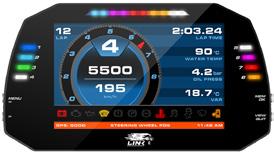
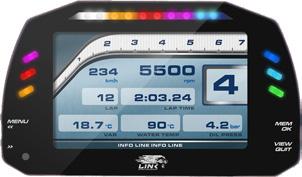
Dashboards: More Than Just Bling
Digital dashboards are another piece of the puzzle. For Forrest, they’re not just about aesthetics, they’re about function.
“Some people ask, ‘Why spend money on a standalone dash when the car already has gauges?’ But once you add it up, the cost of individual gauges can be higher than a dash. And the dash lets you display whatever you want, however you want, with warnings built in.”
He recalls a driver who came off track with a dash error. “The car felt fine, but the dash flagged an issue. We pulled the log and found the problem before it became catastrophic. That’s the point, you don’t need to plug in a laptop to know something’s wrong.
The dash is always watching.”
The Power of CAN and PDMs
The Power of CAN and PDMs
Dashboards: More Than Just Bling
Plug-In ECUs: Underestimated Potential
Grassroots drivers often think plug-in ECUs are “lesser” than wire-in standalones. Forrest pushes back:
“They’re not all the same, sure. But our newer plugins are right on par with wire-ins, limited only by the number of pins in the factory connector. The GT-R plug-in, for example, now supports drive-by-wire. That’s a massive upgrade.”
He adds that plug-ins make swaps easier than most people realize. “Say you’ve got a JZ swap in an S-chassis, wired for a factory Toyota ECU. People think they need a whole new harness for a standalone. They don’t. A Supra plug-in drops right in. If your harness is good, you’re tuning immediately.”
That said, Forrest is quick to caution. “If your harness has been hacked up and repaired five times, don’t fight it. That’s when a fresh wire-in makes sense.”
Looking Ahead: DI, Transmissions, and AI
The tuning world is changing fast. Forrest sees two clear technical hurdles ahead: direct injection and modern transmissions.
“DI has been around since the 2000s in OEM cars, but aftermarket ECUs are only now catching up. It’s still the frontier. And transmissions, automatics are getting faster and smarter. More cars don’t even come with manuals. ECUs are going to need to integrate with them eventually.”
And then there’s the rise of AI. Some DIY tuners have started experimenting with tools like ChatGPT to generate base maps. Forrest is skeptical.
“AI can help a guy get his car started in the garage. That’s cool. But it can’t replace judgment. Tuning is about experience. You learn by breaking things and knowing what not to do. AI doesn’t have that intuition yet. Engines aren’t forgiving, you can’t even be a little bit wrong.”
Plug-In ECUs: Underestimated Potential
Looking Ahead: DI, Transmissions, and AI
Beyond the tech, Forrest has noticed a cultural shift. More enthusiasts are choosing DIY tuning, partly out of financial necessity, partly because modern tools make it easier.
PLUG-IN ECU MYTHS: ! ?
MYTH: Plug-ins are watered-down versions of wire-in standalones.
REALITY: Modern plug-ins often match full-featured ECUs, limited only by pin count.
PRO TIP: If your harness is clean, a plug-in can drop in seamlessly—even for swaps. But if it’s been hacked up, go wire-in.
Final Thoughts
Final Thoughts
Forrest’s career arc, from backyard tinkerer to ECU specialist, mirrors the evolution of tuning itself. What started as trial and error with Honda ECUs has become a world of CAN networks, programmable fuse boxes, digital dashboards, and looming AI tools. But his message is grounded and simple: standalone ECUs aren’t about hype. They’re about freedom.
“At the end of the day, it’s about giving people the tools to do what they want with their cars without limitations.”
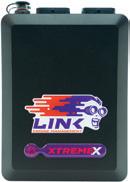
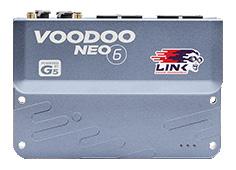
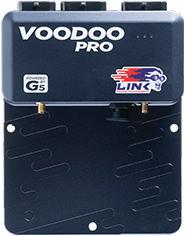
Race-R eady SolutionS
Integrated engine, power and data management, with expert advice and support to give you the winning edge
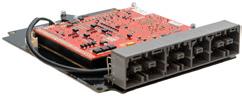
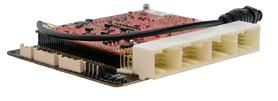
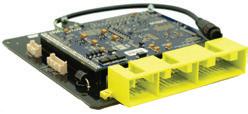
WIRE-IN ECUs
The real deal for custom engine management and maximum performance.
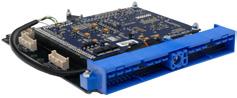
PLUG-IN ECUs
The plug-and-play replacement for your OEM ECU, no additional wiring or adapter harnesses needed.
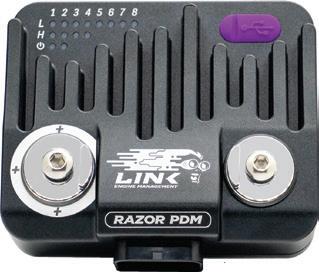
POWER DISTRIBUTION
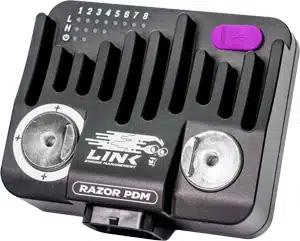
The all new Razor PDM puts you in control, with fully programmable power distribution and data.
Link’s solutions are highly expandable and integrate a wide range of components, data and control for optimal performance.
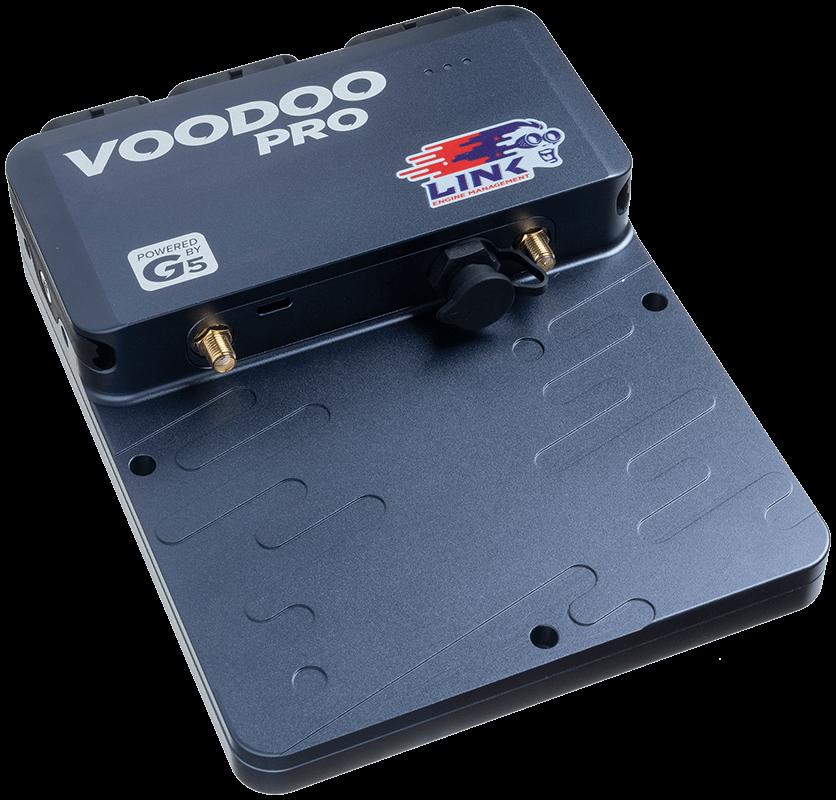
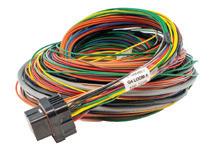
Link have packages for every need from standalone ECUs, to sensors, data, power management, looms and dashes, plus the world’s largest range of plug-in ECUs for major performance engines.
DASHES & CAN GAUGE
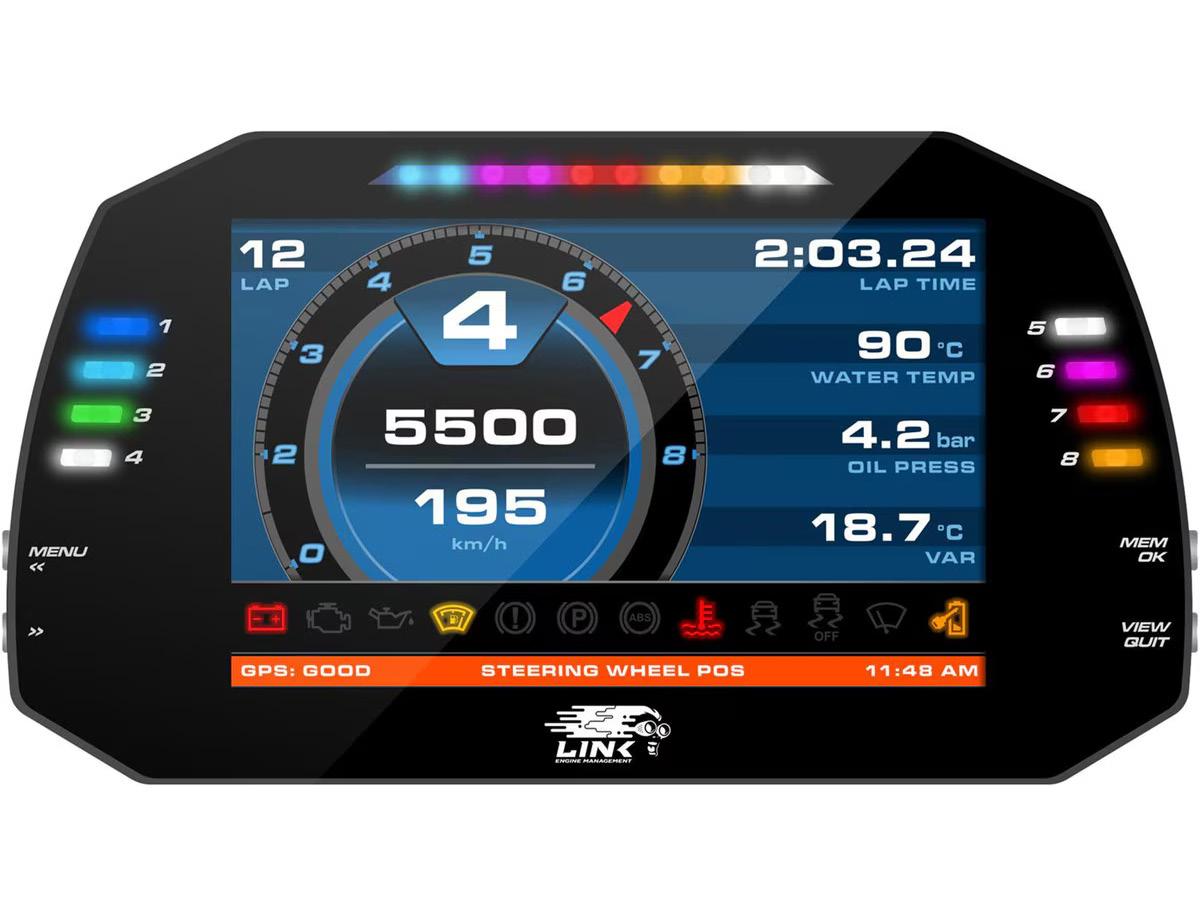
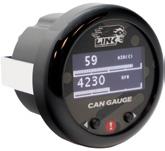
Big or small, for street or track, get all the real-time data you need from high-contrast OLED screens.
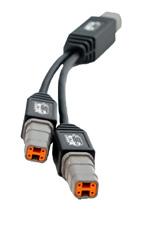
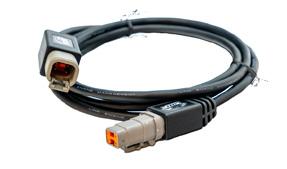
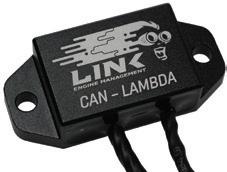
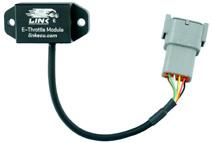
CAN LAMBDA , CABLES & KEYPADS
The ultimate in plug-and-play for flexible, fast and tidy installations.
SENSORS & ACCESSORIES
Extend your package for performance and engine safety.
Our US-based Sales and Tech Support team, and nationwide reseller network ensures you get the best possible results from installation to tuning and performance.
Contact your local Link Reseller or our 24/6 Sales and Tech Support Team to get expert advice on planning your next build.
SAV A G E
THE LEGEND OF RAPPER DAN
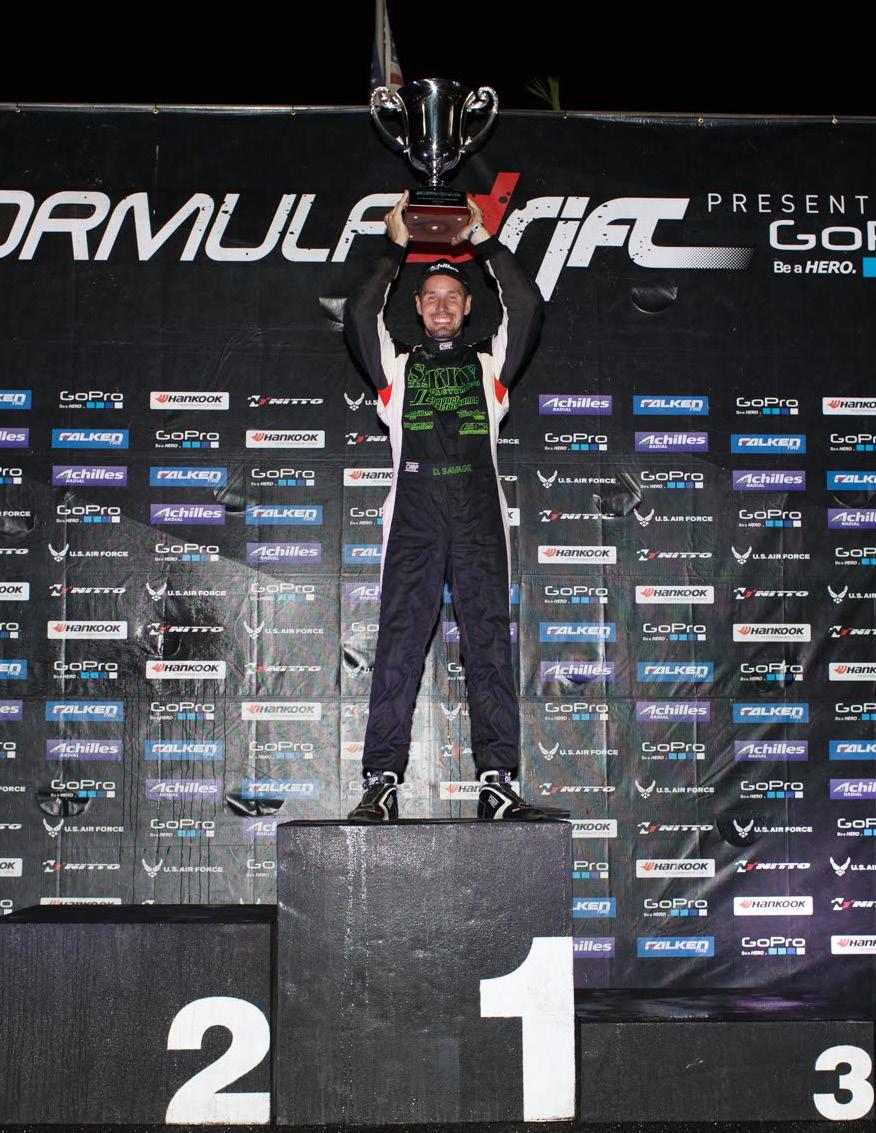
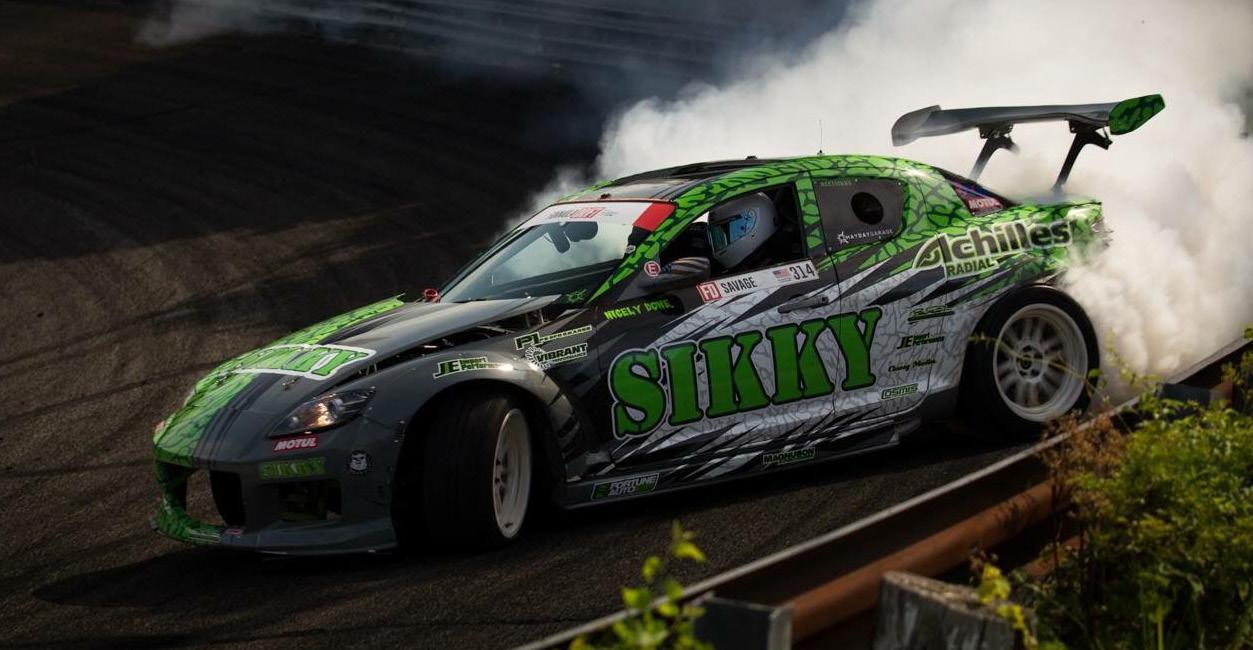
A WRECKED MAGAZINE THROWBACK WITH FORMULA DRIFT ALUM: DAN SAVAGE
Wrecked Staff: Okay, so when did you learn or start drifting?
Dan Savage: My friend Ian had friends in Team Emotion. They were like a car show crew, and there was a spot in Annandale, MD where you would get the Japanese magazines. And then from that, he started watching Initial D. I was always in the room, but not paying attention to a random cartoon drifting thing, until he started getting DVDs of people actually doing it.
Wrecked Staff: Like Option DVDs?
Dan Savage: Yeah, Option.
Wrecked Staff: So what was your first drift car?
Dan Savage: An NA Miata.
Wrecked Staff: Did you compete with that car?
Dan Savage: I wanted a Miata because all my friends in that group had 240s and I was like, “I’m fucking going to be individual.” I had a friend that had a Miata that he and his dad built just as a bonding thing. It had suspension, sway bars, like normal Miata shit. I kind of understood more chassis setup than any of my friends did, so I could make my car keep up with them because they would install an aftermarket arm, but it was at whatever length it came out of the box.
So then I would make deals to do alignments on their cars, and I would get to do the first test drive. And I was like, “Fuck, these 240s are pretty good,” but I had the Miata for a long time. Probably like four years
or something. And it wasn’t until I came to a USDrift event that I was like, “Oh shit, this can go somewhere.” Old Dominion Speedway was the most local thing that I could get to, but their professionalism towards an event was different than other people that would just run events, but USDrift had like actual events.
Wrecked Staff: So that’s what it started off?
Dan Savage: They had actual event stuff. My brother actually worked security as his summer job at Old Dominion Speedway, and that’s when he called me. He said, “Hey, you have to borrow mom’s car. They’re drifting instead of circle track racing this weekend.” So, somehow I got there or something and I rolled up and it was, it might have been Nate Brasz and Jed Fahnestock who owned this car, my current car, drifting, and that was the first car I ever saw drift and that’s my car now.
Wrecked Staff: No way, you bought the first car you saw drift.
Dan Savage: Yeah. On a track. I mean, I bought it in like 2013 and that I first saw it in 2003 or 2004 or something.
Wrecked Staff: So, when did you decide to start competing? Was it something you said “I want to be a pro.”
Dan Savage: When my friend Ian kept saying “Dude, I don’t know, you’re really good, you can do that competition stuff. I have a tow dolly. I’ll take you around.” That’s how he became my spotter in FD, because he would just tell me where to drive.
Wrecked Staff: And then when did you first drive... Where’d you get your license?
Dan Savage: USDrift in 2008. I borrowed my friend’s 240, because I knew my car couldn’t do that stretch down the hill. So it was a S14, SR20 black top, tie rod spacers, Battle Version rear arms, and that’s all I had. I finished fourth place overall and there were people from as far as Texas.
Wrecked Staff: What track was it at?
Dan Savage: Patriot Course at VIR.
Wrecked Staff: So when you got your FD license, did you immediately compete?
Dan Savage: Fuck no. I looked at the rulebook. I was like, not a fucking chance. There’s no fucking way.
Wrecked Staff: Because you still had the Miata, right?
Dan Savage: I still had the Miata. So I put it up for sale or trade on Zilvia, S-Chassis.net or something, then randomly some dude’s like, “Hey, I don’t have any money, but I can trade you my coupe that has an SR20, a 2871 turbo, flash ECU, injectors, fuel pump, but it’s stock. Like the car’s stock. It just has the whole driveline.” I knew of another coupe locally at my buddy Nate Brasz’s house that was caged that had just been sitting there for a couple years and I was like, I can take everything and put it into there. I’m 25 years old, I’ve got time for that. So I trailered my 240 all the way to Murfreesboro, TN and showed up at the dude’s
house at fucking midnight, went whipping around the block, scared as fuck because the car was so fast. I couldn’t load that car fast enough to get it home. So I just stripped it down and parted it out to make the car I wanted. That got me out of the Miata, but it still didn’t get me any closer to FD. That was maybe ‘07 to ‘08. And I went to VIR, driving my car for the first time, and my coilover broke. I’m like, holy shit, where do I get these parts? I’ve never had a 240. And that’s when I met Jerry [McGovern], and he says, “I work with D2. Call me on Monday.” I’m like, okay, so I call him. He’s like, “What year was it again? What’s your address?” And I was like, yeah, but how much? He’s like, “I’m sending them to you.” I said I know, but I have to go get my debit card. He’s like,”it’s fucking free. I’m going to sponsor you.” And I was like, I’ve never had that before. Drifter Jerry. I didn’t know he drove for Team Lexus in FD.
Wrecked Staff: So you were sponsored for your first year in FD?
Dan Savage: No. That was just for me to drive. This is like almost 20 years of driving, 2005 to 2025. So, I competed in my car, doing my thing and that’s where I can say that I met John [Maykrantz], who worked at Sikky or JE Import Performance. We would see each other at the track. They had a rig. They were more professional, but I always did as good, if not better than James with his full crew. I just had my brother and my friend Ian.
Wrecked Staff: James who?
Dan Savage: Evans, the other Sikky driver. I ended up winning a turbo from one of the events through the Turbo by Garrett program at USDrift. Next thing you know, I’m at Sikky to trade parts with one of their guys and when I walked into the shop to trade with the guy that worked in the back, John’s like, “Oh, what the fuck are you doing here?” I was like, “I don’t know, I’m getting this part from this guy,” and he goes, “Oh, yeah, he’s in the back… wait a minute, hold on. We have this car sitting here. Do you just want to drive
it?” And then I started driving their hatch, which was the first ever LS-swapped car they did under the Sikky brand.
Wrecked Staff: So that’s where you got introduced to Sikky.
Dan Savage: Yeah. They said if I put tires on it, we’ll bring it. I was like, okay. Eventually they said, “You’re doing good in our car, what do you want next year?” I said, well, this car actually kind of sucks. I have the Truck40 at home and so that was that. I guess that conversation was in 2011, because in 2012 we ran my Truck40, and in 2013 we got to do the cool wheels, the bright orange wheels on it.
Wrecked Staff: So you said Truck40? Explain that.
Dan Savage: It was a 240 hatch converted into sort of an S10 truck, like the Team Orange one from Japan. The guy that did it was in Front Royal, VA, like in the boonies. He apparently did the Eleanor conversions on the ‘69 Mustangs. He worked at a shop in Florida that had the exclusive rights to doing it. So in his spare time, he cut the hatch off his 240 and made it into a truck.
Wrecked Staff: Did you compete in FD with the truck?
Dan Savage: No. We were just doing PRO/AM because we were representing that brand. I got my license three times before we actually used it. Eventually I went up to James and said “How long do we just keep doing this?” He said “Well, I guess we could do the FD thing now.” So he says, all right, well, we need to sell the Truck40. I posted it on racingjunk.com and someone gave me 20 grand for it. So the dude sent like a $2,000 check and then he came to check out the car. He brought a $18,000 check and filled it out to Sikky.
I was an idiot and I just never asked for the money. James was like “that’ll help fund the program.” I was like, damn, that was my car. He had an engine and a transmission in it, but I’m the reason why that guy came and bought that car for the way I drove it. So maybe I should have... that was my first hint of greed.
Wrecked Staff: Dang.
Dan Savage: So we started building. Sikky as a manufacturing company needed to make swap kits. So they had a warehouse, like 60,000 square feet of bullshit, projects everywhere. So there’s just stock cars everywhere and James says “What would you want to drive?” There was an E30, an E36, an E46, and a RX-8. I go, well, Chelsea drove an RX-8. JTP drove the same RX-8. Seemed like a pretty good car. We’ll just do the RX-8.
Wrecked Staff: Nice. All right. So you’re in the green RX-8 at this point or was it gray?
Dan Savage: Yep. The base was gray and the graphics were half elephant print. It was pretty sick.
Wrecked Staff: And what engine was in that one?
Dan Savage: It was a 6-liter iron block with a Magnuson TVS 2300. So that bitch made 740 foot pounds of torque by like 2800 RPM. It was fucking insane. So in the midst of all that happening, Chelsea called me at the beginning of 2013, he was like, hey, we drove Miatas together. I want you to spot for me. I go “Okay!” That’s sick. So I got to travel with him in 2013, just understanding how FD works. I mean that’s smart, right? See how it goes first.
Wrecked Staff: And did Chelsea do well? What car was he driving? Was it his BMW?
Dan Savage: No, that was his. That was his first year after he got the Bergenholtz deal. So it was his E46. That’s when I met Faruk [Kugay] for the first time. He was the first person I met in the spotters’ stand.
Wrecked Staff: Oh, really?
Dan Savage: Yeah. He was spotting for Kenny Moen. Faruk’s good people.
Wrecked Staff: Yeah. So you spotted for Chelsea. Did he win?
Dan Savage: Uh, I think no, we never got on the podium, but we did really fucking good. He had Nitto. He had Bergenholtz still helping him. That was his first year of putting a lot of effort into his setup from his first year of trying. Chelsea knew that I was going to be driving in 2014, so he got me on with BC Racing through Cody [Slack] because Cody was already doing media and shit and then we started an FD program. It was kind of crazy.
Wrecked Staff: How was it starting a program? Was it tough?
Dan Savage: It was so much fucking work just to get the cars ready because who decides to do that and then doesn’t make it the full-time focus. It was just the after-hours thing. I was like, “Guys, what the fuck? Long Beach is in a month and a half, and we haven’t even finished fab. And it’s cars we’ve never even driven. What the fuck?” So we missed Long Beach. We finally got the cars done. Maybe two weeks before Atlanta. We tested once and I’m like “I have no fucking clue how to drive this car.” There wasn’t Wisefab back then. Other than cutting the knuckles, we didn’t know how else to make a steering angle kit.
Wrecked Staff: Wait, so the RX-8 didn’t even have an angle kit on it then?
Dan Savage: We cut the knuckles and just redrilled the tie rod in, but it’s weird to have an RX-8, that didn’t make sense. So we were on Achilles, because everyone was on Achilles and you didn’t run less than 28 PSI in the Achilles. They were so fucking fast! It was such a good tire.
Wrecked Staff: So you drove the RX-8 the whole time, right?
Dan Savage: Yeah, 2014 and 2015, two years.
Wrecked Staff: And what happened the next year?
Dan Savage: John was very mad a lot of the time. He never had time to have a life and never had time to set up the cars the way he wanted because he didn’t have a budget to get this or get that. I always saw that frustration and I was never involved since it wasn’t my car. So he quit in June of 2015 and started his own business. That’s when I realized that he did so much in between the events. And then all of a sudden, it was on my brother and me to go all the way to the shop to work on my car, work on James’s car, do alignments. So late 2015, I was like, damn, this is so hard to make this work if he’s not even letting the other mechanics or technicians in the shop do the work. We’d show up to an event and nothing was done on the car. It’s like, what the fuck? Like the bumper is still not even fixed.
Wrecked Staff: So they didn’t do anything to the car.
Dan Savage: They would not do anything. If I didn’t go to Baltimore to do it, it wasn’t going to get done. I was so thankful that John was able to do it, but there’s no fucking way this is happening anymore. So, I wrecked at Irwindale, into the inner wall leading Forsberg. I get the car on the trailer, you know, we’ll get ‘em next year.
I remember going up to the shop because I had a friend that had a car there and he was going to sell his car to them, but he wanted his steering wheel. I was like, perfect. I’ll go there, get all my trophies and shit, because all of my trophies were aligned in their showroom. In my head, I was like, I’m fucking quitting this shit.
I had been feeling him out so I sent an email and I was like, if you’re not going to completely cover 100% plus travel costs for my brother, then I’m not going to do this. A long ass email and his response is, come get your shit. I said, I already got it and you didn’t even notice. Like, get fucked, dude.
Wrecked Staff: All right. So, what did you do after that?
Dan Savage: I never stopped driving. I had this car as a practice car. And I just kept driving more. In 2014, I
met my now wife, Nicole. She didn’t know what I was spending on drifting, but it was a lot. Since I wasn’t paying an unknown amount per car or per event, I had a fucking hell of a bank account at the end of the year. We started getting serious and I said we can get a house. I have enough money for a decent down payment. So I just went down that route and still just drifted it for fun, never competed. Then I just started helping out with Brian and his events. He let me help judge. People know who I am. I have credentials to do it. Let me just help judge whatever events, just get me there and whatever. Don’t worry about anything else.
Wrecked Staff: And what about Drift Nirvana?
Dan Savage: Yeah. So that’s 30 minutes from me. I’m the resident Pro. I’ll help out anybody that’s there.
Wrecked Staff: Like the golf pro.
Dan Savage: But that was 15 years ago. I know, but you can’t take it from me. I don’t have to do their socials or anything like that. I’m just the guy that shows up, puts out a couple cones and says, “Hey, you’re not doing this right.” They just like drifting. They like the young people that are attending their events. I think it’s solid. They keep expanding their facilities for their training center stuff and then we get to keep drifting on new places. So it’s completely working out.
Wrecked Staff: All right. So you completely glossed over the fact that you are a champion. Dan Savage: I did win everything.
Wrecked Staff: You won everything. You won it.
Dan Savage: But the hilarious thing was this last year of PROSPEC was the craziest thing that has ever happened in their final round. That was Stoneback and I going in. I won the championship by five and a half points, which is the difference in qualifying. He had car troubles the last two rounds, and he borrowed the Retaks car for the last round. His engine blew up and he went to Vegas from Irwindale to go get the Retaks car because he was talking to Tuerck about all these issues. Tuerck’s like, the Retaks car’s in Vegas if you just go get it. We did the whole event. J-Lo was also really up there. Jeremy Lowe. I beat him in the semis and then I had Jeff Jones in the finals. I crashed in the finals because my water pump was leaking.
We ended up just draining the radiator enough so it wasn’t leaking for Kevin Wells to pass us. And then I initiated, it’s under pressure, it went under the tires, and I just went up into the top wall. It wasn’t even like a thing. I crashed. Then they dragged the car up to the start-finish line. Or maybe I made it to the start-finish line from the wall.I just drove and stopped because I knew I wasn’t going to do a second lap. Jeff Jones was doing donuts and shit. We get out and they announce Dan Savage wins the championship. I never even thought about that.
Wrecked Staff: So, qualifying or seeding bracket? Which is your favorite?
Dan Savage: I think I heard Hooman just say it. You need to have one run of qualifying and if you’re in the bottom whatever, you do a seeding bracket off that. Beause why the fuck should you show up to Long Beach if I’m a new driver and I’m ranked last, I have to go against James Deane. What the fuck? How are you ever going to get out of the seeding bracket from last year’s results? Plus I won the championship off of qualifying.
Wrecked Staff: Why do they call you Rapper?
Dan Savage: Well, the funniest shit is that’s how I can gauge how long you’ve known me if you know Rapper at all. The first shop I ever worked at, somehow there were three Dan Uh, there was a Rockstar Dan. He had a fucking Harley and his tags had rockstar. There’s a guy in the back, his name was Vegan Dan because he was a vegan and drank fucking stinky milk. And then I was the pimply, fucking high schooler that drove a Saturn. I was Rapper Dan because I would install subwoofers every fucking other month.
Wrecked Staff: Car number? Why is it 314?
Dan Savage: I think when I went to VIR to do a comp. I get there and Eggert is like, what’s your car number again? I was like, it should be the only Savage on your list. It’s just Dan Savage. Like, this is my car right here. And he’s like, no, you need a car number because it’s a drift event. We need to call your car number to the grid. My bus driver in elementary school had these high schoolers pull in front of us and slam on the brakes. I flew out of the seat and she had to stop me and I hit her arm. I dislocated her shoulder and she had to have surgery. So I had to go to court because she sued the fucking high schooler in front of us to
pay for her medical fees or whatever. So my school bus number was 314. He goes, what the fuck? And I was like, I know, because you said #1 was taken.
Wrecked Staff: Wisefab or FDF.
Dan Savage: Wisefab.
Wrecked Staff: PRO2 or PROSPEC?
Dan Savage: PROSPEC.
Wrecked Staff: Really?
Dan Savage: It makes more sense. I was on a fucking 285 Achilles. Like that might as well be a 315 Nitto.
Wrecked Staff: GT Radial or Kenda?
Dan Savage: I like the Kendas. I bought GTs before from Frank at Race Treads, knowing they were coming out and I tried them. Not even the FD compound and they were fast, but it’s not what my car needed. It had a lot of drive, so I had to take grip out to slide it. It was fast, but I couldn’t do what I usually do, which is just drive a lot and not do tire maintenance. So the Kendas, I haven’t found anything better than the Kendas for that.
Wrecked Staff: HR or SR?
Dan Savage: HR. I checked my oil yesterday morning and that’s it.
Wrecked Staff: RB or JZ?
Dan Savage: I’ve driven more RB cars than JZ cars.
Just like random Skylines at fucking Drift Nirvana. Not many JZ cars at all actually. Maybe just one.
Wrecked Staff: Who’s your current favorite FD driver?
Dan Savage: I’m going to give that tally based solely on aggressive driving. I watch everybody. If you have a YouTube channel and you’re a FD driver and it gets posted in the fucking Discord, I’m going to click it and judge you based on your how good you are placing the car and your adjustments and there’s no one better than James Deane. Because the way he transitioned behind Field in the finals, already with the advantage into that last zone and like almost took off each bumper for no fucking reason.
Wrecked Staff: Yeah, it was insane.
Dan Savage: For no fucking reason and it was insane.
Dan Savage: Evergreen. My first lap, I was left foot braking and I had no idea of a reference because it’s like if you clip it, it’s 18 seconds of full acceleration on the bank.
It’s like 18 seconds with 800-horsepower. That’s like a quarter mile and a half. That makes no sense why you’re going that fast. The joy that the drivers had for
changing the power alley made sense, but it didn’t really translate that different viewing-wise. Even though they said it drove so much better, my favorite part about that was transitioning against the wall to finish because I could smash the tail light out every lap. It was cool. That was the one event I won. So that was really cool because that’s such a technical track that people don’t understand.
Wrecked Staff: Well I know you have some more driving to do, so I’ll let you get to it. Thanks Dan.
Dan Savage: Thanks!
NO COAST DRIFT PARTY
Keeping Drifting insanely Fun Since 2010
Written and Photographed By: Devin Crezee
Along a barren stretch of desert highway just West of Albuquerque, NM lies a gem for American Drifting. A racetrack formerly known as “Sandia Speedway”, but rebranded to Suika Circuit about 2 years ago.
For 15 years “Officer” Dan Brockett has been bringing drifters to this stretch of the desert on Labor Day Weekend for No Coast Drift Party – one of the largest grassroots drift events in the country. 3 solid days of drifting. It’s known for insane amounts of seat time plus a “Sick Entry Contest”, Team Tandem Competition and Women’s Drift Competition for the drivers; as well as live Metal band performances, bonfires, Pro BMX, and more. No Coast has been a staple in the Southwest region – a phenomenal respite from the competitiveness that has been popular in drifting the last couple of years.
N.C.D.P . N.C.D.P . NCD P 15 15
This year however, Dan wasn’t sure if he could pull it all together. There were issues with getting insurance for the event, a struggle that he has never faced before. Thankfully Adam LZ and a few others stepped in to help him secure a new insurance policy for the event, but it left him with only 30 days to plan his largest event of the year. He was understaffed (regular NCDP staff were set attend FD Utah), he had merch to design, organize some out-of-town attendees, book the bands, and more.
Part of what made this event possible was the regular (non-drift) track staff stepping up to help run the event after Dan gave them a training crash course, Dan delegating media operations to an experienced drift media friend, and even enlisting help from
Over 250 cars showed up for the 3-day drift event over Labor Day Weekend this year – despite other similarly large-scale events like Formula Drift Utah + Bros Before Pros and FinalBout taking place the same weekend. It brought out drivers from New Mexico, Arizona, Colorado, Texas, even some from Canada.
Dan’s experience and outreach to the global drift community showed – I was surprised and pleased to see some absolute legends from the Japanese drifting community in attendance like Rocket Bunny founder Kei Miura, the low-style hero Akinobu “Abo” Satsukawa – creator of drift team A-Bo-Moon, and Hide Nagahama from the infamous N-Style Custom.
Success in the Face of Failure
While talking to Dan, I couldn’t help but feel that the stresses of this No Coast were similar to his very first No Coast event, 15 years ago, when he had just started hosting drift events. For the first season, the drift organization (mostly Dan) was hemorrhaging money. “I didn’t know what I was doing at the time,” Dan explained. The very first No Coast Drift Party was a “Hail Mary” to hopefully turn his drift organization around. Dan didn’t sugar coat it; he was in debt to the racetrack after an extremely low turnout of drivers all season, typically less than 10 per event.
When planning the first No Coast, he called everybody he could get to be there. This was a time before influencers – when car forums were the popular means of communication. There just weren’t many “good” ways to reach out to drivers over a large geographic area. When the event finally rolled around, it brought out ~20 drivers and 300+ spectators – an absolute incredible turnout compared to previous events. This is when Dan could see the light at the end of the tunnel, the way forward for grassroots drifting in the region.
If you’ve never been on the organization side of grassroots drifting, I’ll tell you a secret: there is rarely any profit left over at the end of the day or season to pay the people planning/running the event. I think back to my time as a staff member with MB Drift out of the Carolinas – it was common for me to stress about not knowing how we could afford the next season. Events like No Coast or MB Drift’s “Halloween Havoc” are what can make all the difference – one large event per year with extremely high driver and spectator turnout can absorb the losses of the smaller turnout events throughout the season. Dan was inspired by other events like All Star Bash: an event that celebrated the car styles, fun atmosphere, and camaraderie that Drifting is famous for. It seemed like Dan has done everything he can over the years to
keep those same “old school” vibes at No Coast – and I think he’s done an excellent job. It really reminded me of the days when I first got into the sport.
The first year of No Coast (2010), I had been bouncing from motorsports to motorsport trying to find my place, and fell in love with drifting. Not just because of how much fun it is to go sideways or how cool the cars are, but because of how incredibly welcoming the drift community is. In America, motorsport enthusiasts tend to take things too seriously. Everything is about building the next biggest, baddest, most competitive car and being better than everybody else. But that’s not what Drifting was about back then. It was (and still is) about having fun. What Dan has managed to capture at No Coast is what I believe is the heart and soul of drifting – the fun, the good times, and the overwhelming camaraderie between all who attend.
ExquisiteVibes.
In a day and age when you have people clamoring to drive Gridlife, Hyperfest, and Drift Week – where someone has the potential to become famous and get the attention of major sponsors, No Coast is primarily focused on drivers just having a good time, like the old days of drifting. Given the choice of one or the other, I honestly think I’d pick driving at No Coast. It’s really hard to put in words why this event is so good – the vibes are just so different.
Walking through the pits was like a flashback to 2010ish era of drifting for me. I had people offering me food and drinks or a place to sit and hang out. The cars were incredibly varied, you had Nissan S-chassis, BMW E36 and E46, Toyota AE86s, and a bunch of odd ball cars like Toyota and Datsun Station Wagons and Chevy trucks.
It doesn’t matter what car you drive, what engine is in it, or how much money you’ve spent building it. What matters is that you are there to drive and have fun. With the exception of the Japanese drift guests, nobody really got special treatment. Dan put it eloquently – “No influencers, no bullshit”
He’s found a way to attract enough drivers and spectators that requires no special marketing gimmicks. There was no special treatment, there was no entitlement, we were all there with the same level of respect for each other and the sport. But… I’d be lying if I didn’t have some favorite cars.
Mild to Wild – The Cars were
AWESOME
I find myself attracted to the particularly oddball stuff. Mason Tyler’s Silverado and Gabe Franco’s C10 truck were two of the most ridiculously entertaining to watch on track because of their sheer size. Most of the time I discourage people from building drift trucks because of the insane amounts of work that goes into it. But you could tell that both of these dudes like building stuff, and they’ve managed to do it well.
I also found a couple of cars that were more discreet with their uniqueness, a Lexus GS300 and Fox Body Mustang. The Lexus is driven by Tanner Puckett –who has no hands. He showed me around his car a bit in the pits, and before hopping in the driver’s seat he shrugged off his prosthetics to show me how he uses “his nubs” to drive (his words, not mine). The only thing that appeared out of the ordinary was how close the steering wheel, handbrake, and shifter were. Additionally, he retrofitted the electric steering system from a BRZ to the car – this way he can adjust the steering feedback for him to control the car better than a hydraulic power steering system. It must work
up by Lizzie and Daniel, it’s been RHD converted with an RB25 dropped in it. Lizzie and Daniel joked about making it RHD at first, because Lizzie’s drift sim is RHD. After a few too many laughs, they just did it and it works really well. Daniel explained that they’re using an Infiniti G35 steering rack that has been flipped and converted to a front rack system (steering rack is in front of the control arm), and then they’re just using some modified knuckles.
Why Suika Circuit? What makes this track great for drifting?
Probably one of the raddest things about Suika Circuit is that one of the owners is a drifter, and that’s Dan himself. A good chunk of the track used for drifting has been seal coated to save drivers on tire wear. This has been HUGE for drifting at Suika Circuit, because without the sealcoating the surface is an absolute cheese grater on tires.
From a media perspective, I could see there are enough corners of varying speeds to have fun. But to get the true grasp of the track’s appeal, I needed to get in the driver’s seat. Thankfully my friend John Yim let me take his SR20 powered AE86 for a few laps to experience it. There are walls to tap, banks to ride,
snappy transitions, and minor elevation changes. There are so many small features that it keeps the drive exciting lap after lap, but even if things somehow get stagnant – Dan will change the layout or reverse the flow based on driver feedback. Plus, the track is well-lit which makes night drifting fantastic.
Dan listens to the drivers as an active driver himself, something that has become increasingly rare with event hosts/promoters. If something isn’t good and drivers tell him, he does everything he can to make it better. Part of this comes from Dan being one of the track owners.
A couple years ago, when Sandia Speedway became Suika Circuit, is when Dan stepped in to help purchase the track to keep it and drifting alive in New Mexico.
This is no minor feat – racetracks are commonly operated at a loss on purpose by major corporations as a tax write-off. Talking to Dan however, it seems like the 3 owners want the track to be profitable. Dan explained – “It’s difficult. It’s expensive. It’s stressful.”
He went on to explain some of the headaches – like each owner has to pitch in equal amounts on track repairs and improvements, otherwise it can impact their overall ownership in the track. If other events that Dan maybe isn’t as passionate about damages the track, he still has to pitch in to make repairs. Likewise, if drifting causes damage or they want improvements, the other owners also have to pitch in their fair percentage.
It’s been 15 years… how much longer will it stick around?
In the end, Dan sees it as a positive thing, but he’s not sure how viable it will be long term. He’s going to do it for as long as he can, and I plan to attend every opportunity that I get. Dan has managed to create a time capsule with the feel of a drift event from my early days, and I want to support that. Maybe I’m just getting old and nostalgic for the “good old days”, when 150hp was plenty and we were eating ramen so we could afford to buy scrubs… but this was honestly the most fun I’ve had at a drift event in a very long time. If you’ve never been, you should. To quote Dan,
“Come and have as much fun as you f*cking can.”
THE BRASS SECTION:
A Z33 CHASSIS SPOTLIGHT
Written and Photographed By: Sam House
Onceupon a time, Nissan was really, really good at making sports cars. While other manufacturers, especially American ones, were producing big boats of cars with anemic V8s and motel bed springs for suspension, Nissan spent the 80s and 90s innovating and designing some of the most iconic and sought-after vehicles of the era. Unfortunately for them, though, the end of the decade saw the company in deep financial trouble, trouble that meant that the turn of the century saw them reigning back their focus on “fun” cars.
The early 2000s brought the discontinuation of a number of beloved models, including the fourth generation of their Z-car line, the Z32, in 2000. Luckily for fans of the front-engined, rear-wheel drive platform, the Z33 debuted in 2001 and went on sale the next year. The revamped chassis’ body featured all the bulbous curviness that grew so popular as manufacturers moved away from the angularity of the previous two decades. The VQ35DE V6 engine sat just behind the front wheels, giving the car what Nissan called a front mid-engine layout. Multiple trim levels were available, but all made the same 287 horsepower in the first two model years. Infiniti, Nissan’s luxury branch, fielded the G35 at the same time, built on the same platform as the Z. The 350Z, as it was known outside of Japan, was a sports car through-and-through, focusing much more on performance and driving experience than
it did on things like cargo space. The 2002 Car and Driver review of their track-spec edition compared the performance to that of a Porsche Boxster S, calling it “a very satisfying drive with terrific control feel.” Competitively priced and produced in solid numbers, Nissan’s continuation of the Z family line was destined to become a favorite of enthusiasts.
Racing examples of the chassis appeared in disciplines ranging from touring cars and endurance racing to a NASA Spec-Z series. It didn’t take long for it to get into the hands of drifters, either. Chris Forsberg was ripping in an SR20-swapped example in 2004 in Formula Drift’s inaugural season, and then returning to the chassis in later seasons in the form of a convertible, Nissan Titan V8-swapped machine. Other examples popped up all over in D1 and FD over the coming years.
As is often the case, it took a while for Z33s to depreciate to the point of being affordable for the wider, grassroots-level market. It felt like it was around 8 or 9 years ago when YouTubers got the 350Z bandwagon rolling, rocking all the “Is the 350Z the Best Drift Car Ever??!!?” video title variations they could come up with.
Clickbait be damned, though, they made some good points. They do work great, and out of the box they make plenty of power and torque to get started with.
“Coilovers are a huge help, a bucket seat in any car is really needed for drifting, weld the diff & that’s it,” - Z33 guru and DIGP driver: Joey Ritter.
He picked his ‘03 up in 2019 and has been shredding in it ever since, picking up two Drift Indy Street League podium finishes in seasons past and one DIGP podium earlier this year. He’s kept his car nice and simple, retaining the VQ35DE powerplant, and has been able to compete with cars making hundreds more horsepower.“It’s just the perfect, average car… they’re just very consistent and reliable,” Ritter said.
When he got into the market for a drift machine, he started looking for a 350Z after falling in love with the car playing Need for Speed Underground 2 on the GameCube as a kid. That entry in the NFS series featured a 350Z as the cover car, though it only
Nowadays, in real life, there are tons of aftermarket aero and bodykit options available, ranging from garish and over-the-top to more understated, OEMstyled alternatives. Vertex and Origin both offer exterior styling options that add a much-needed touch of angularity to the soft edges of the Z33. KBD gives fans of wide lines a durable option that doesn’t mean
When it comes to wheels, the Z33 body and its 5x114.3 bolt pattern lends itself well to a variety of options, from RPF-1s to VSKFs. If you do opt to run some heavy, three-piece hot boy johnnies, though, be warned that you might go through axles quickly. Ritter swears by OEM axles, and said that even a used set is better than what you can get at your local autoparts store.
BC Racing offers an excellent set of coilovers that has proven effective for drivers everywhere from grassroots drift days to the mountains of Appalachia and everything in between. There are other coilover options, too, I guess. When it comes to other suspension components, there are a few good options, all offering different pros and cons.
Ritter runs GKTech for his angle kit and adjustable arms.
“I’ve had GKTech on my car for six years, and I’ve never replaced the lower control arm or any of the adjustable arms or the heims or anything, you know, and I’ve been in a few collisions. Not a ton, but definitely a good amount of wheel-to-wheel contact and it’s just been golden,” he said, but added that PBM makes a really solid set, too.
The Z33’s beating heart came in two flavors from the factory: the VQ35DE that early model years got, and the VQ35HR that 2007-2009 models received. The HR made 19 more horsepower and could rev out a little bit further, but with plenty of tuning potential and parts available,
it doesn’t take much to bring the DE to the same level. Ritter’s 350Z is an ‘03, and he’s added a plenum spacer, intake and an exhaust, along with a tune, to give it a little more pep. If your VQ has popped its clogs and you’re looking for an option that sounds less like you’re sitting in the third row of a middle school band class, there are a few popular options.
The ubiquitous LS swap is a reliable hit for a reason, offering tried and true power and torque. With an adapter plate, they’ll even bolt right up to a stock 350Z transmission. If you’re determined to stick with six cylinders, but tired of them being in a silly V shape, you might consider a 1, or
allowed to flow more freely, to acquire a distinctly trombone-ish sound. Certain exhausts sound better than others, but unfortunately one of the most sure-fire ways to help their sound is to add a little bit of restriction back into the system, whether it’s in the form of cats or mufflers.
The Z33’s reputation as an excellent drift platform is wellearned. When the supply of not-beat-to-shit S-chassis cars finally dried up a few years ago, a void opened up for an affordable, drift-ready car, and the 350Z stepped eagerly forward. Between it and its more luxurious sister, the G35, they’ve quickly filled the pits of drift events all over. When they’re done right, they can look super clean with performance to match. A quick glance at Facebook Marketplace shows that there are still some good deals to be had on them, too, at least for the time being.
HtheUS and submerging myself into the culture the last eight years, there is no other event like RioBash.
Taking place at the iconic USair (the home of ClubFR drift club) in Shawano, WI for its seventh year, the event is held in memory of Jake “Rio” Possemato, with the goal of spreading mental health awareness through the theme of #checkonyourfriends. For the entirety of the event the vibes were high, even in those low moments of drift days, and the love and support for one another was undeniably seen as well as heard in the paddock. I had the opportunity at this year’s
(Jake’s mom), Dave Taylor (Jake’s Step Dad) as the sun was setting over the track and there was a break before the much-anticipated night drifting.
Katelyn: Let’s start with, how did RioBash start and who is behind making this event happen?
Jeanie: It truly is a ClubFR event, they host it. However, it has our name on it. The reason for that is because prior to Jake passing away, Jake was all ClubFR, all the time. This is his home track, this is where he started drifting, he wouldn’t miss a ClubFR
Written and Photographed By: Katelyn Brozovich
up with Dave following him in the truck because we didn’t have a trailer. Jake was so involved in ClubFR, he kind of grew his chops with them. When he passed away in September we waited a month to hold his memorial service. It just so happened that we had his memorial service on a Friday and that weekend was a drift day. So we were all like, “Let’s just do a Jake event! Let’s do something in honor of Jake”. So that first one was in honor of Jake in October of 2018. They called it “RioBash”. We thought it was a one and done and that was that. But then people were like, “You’re doing it again, right?” And so then it became a thing.
decide to keep doing it?
Jeanie: The first one was a lot like this year’s People just came and they drove. You met people, you hung out with the people you know and everybody loved it. Now, every year we still ask, can we have it again because it’s up to ClubFR.
It’s really their show, we’re just the pretty faces on the show. And it has waxed and waned, but last year it grew into something much bigger. I mean we still carried out our mission and I think people appreciated the mission, but I think it also got away from us.
We realized that we needed to bring it back down to that grassroots. Just come here, hang out with people you know, make new friends, and just drive.
Katelyn: I mean, it feels very different. I would agree. We’re back to basics.
Jeanie: It feels better. It doesn’t feel as high stress. You know, this is our first year with a three-day event. But I think it went really well. Like yesterday, I think they had 32 drivers. And they held to that on purpose. Then today, I think the number was 89 or 90, which last year was 126, and you can tell the pits are much calmer.
Katelyn: I think that’s part of the stress level. Because you can feel that when the pits are cramped. You can feel how tense everyone is.
Jeanie: Yeah. And last year, there was just a lot of extra stuff. We did some raffles and awards. It adds
a lot and I got a lot of feedback about it. People just weren’t about it. You know, I appreciate that. I need people to speak their mind and speak their truth about how they feel about it so that we can assure that it’s a good event.
Katelyn: How did ”check on your friends” become the slogan? Like, where did that part come from?
Jeanie: So Jake had moved out to the Pacific Northwest and at the end of his life there was just a lot that went on, there were some people who were not the kindest to Jake. I’m not saying that’s why Jake made the decision he did, but it certainly didn’t help his overall well being. After he passed away, we had gone out there to take care of things, and one of the people who was particularly crummy to him really tried hard to convince us that he would check on Jake. “I checked on him all the time. I’m the only one who ever looked after him.” And so in a very kind of snarky, shitty fashion, I was like, “oh, sure”. And
at first, because I was bitter, I said to Dave, ”Oh, the whole check on your friends. I see how it is.” When we first talked about it, it really didn’t come from a positive place in our hearts.
You can meet a million people who will tell you that Jake was a curmudgeon. He was a keyboard warrior. He was not the nicest person online. and he spoke his mind. But people who really knew Jake knew that Jake was the kid who would get up at 2 a.m. to come and tow you. Jake would give you a place to sleep. He would buy you groceries. Jake was the kid that would give you the shirt off his back. Even those people that I talked to you earlier about who were really crappy to him, he still did that for them. Despite the fact that they were not always kind to him, he still gave up himself.
That’s when we were just like, you know what? It has to be #checkonyourfriends. We really decided
to embody that and make that our mission in Jake’s honor. We told him this when we had to say goodbye to him, that we made that promise, And so that’s what we did moving forward, that we would make that our mission to check on the people in this community and the people in the world around us. We knew we couldn’t hang on to that anger. It just wasn’t going to serve anybody.
Dave: So we flipped it. We did. We flipped it around.
Katelyn: Yeah. I feel like that’s what RioBash, as a whole kind of is. It’s flipping the script.
Jeanie: I would agree and we’ve kind of watched it happen. I mean every year was #checkonyourfriends, and then we did some other things, it was to pay it forward. That was the year that we gave every driver an envelope with ten dollars in it, and we said, make a choice about how to pay it forward. You can pay it
forward to yourself, like maybe you need a lunch, or you can pay it forward to someone you know. That was the year we lost Andrew and we said you could put it into a donation for Tonja [Andrew’s mother]. So it was very cool, allowing people to make their decisions about how to pay it forward.
The year after that was “the light you carry”. Because we tried to carry forward, like you’re going to check on each other, but remember, you all have that light inside of you. Maybe all you’re doing is smiling at somebody that you know, whatever it is, but you all carry that light inside you. It’s not just one person who is forwarding that mission or, you know, looking out for other people.
Katelyn: It helped change people’s mindset of like, ok, how can I handle this myself?
Dave: Like I can do this, but I need some help getting started.
people you can’t really say the wrong thing I think people realize that it’s coming from the right place.
Katelyn: Hopefully.
Jeanie: That is true. It doesn’t always get received the right way. But you know, it goes both ways, right?
Katelyn: I think a lot of us here, I mean, obviously RioBash being RioBash, there’s light on mental health that a lot of us here do openly struggle with anxiety and things. So even just saying hi can be difficult. Where sometimes all it can be is a smile or smirk.
Jeanie: That’s all that it needs to be sometimes. There’s no formula or recipe for how it has to be.
Dave: Really we’re all just seed planters. And we plant a
people who will say to me, “Oh, you know what, you’d be so proud of me, I actually was able to reach out” and that’s all we can hope for.
Katelyn: Even though it was seven years ago now, like Jake having to deal with those things online. Now really we’re seeing that more and more. I guess, what would each of you guys have to say to people about posting online and especially within the grassroots drift community?
Jeanie: I would be lying if I told you I didn’t address those kinds of things. I’ve addressed them on my own when I see them. And I’ve also had people bring concerns to me about things that people have said or posted or shared or like put out to somebody in a personal message. I have stepped in and said, “You are part of this community, you’ve been to our events,
but you have sent this message to somebody and it’s really painful. It doesn’t promote our mission.” I try to approach it not like I’m not reprimanding you but like I’m just trying to figure it out. Help me understand where you are with that and why that might’ve come out like that.
Dave: It’s just pervasive over social media, it’s very easy to type something that is hurtful that you wouldn’t normally say to someone’s face. People just need to re-learn that words, no matter how they’re presented, can be hurtful and they’re going to real people. You don’t see the reaction when someone reads it.
Do you ever see RioBash traveling?
Jeanie: I do believe we have the opportunity to travel with RioBash. Not to the Northwest but, we have an opportunity to go to Oklahoma. We’ve had some conversations with some people on the East Coast. Someone said there’s something that’s like five or six tracks all within one locale?
Katelyn: Summit Point in West Virginia.
Jeanie: Yes. Somebody talked about that. And then we’ve also had a little buzz in the air every now and then about going to Road America, because RioBash could be two or three times as big as it is. I mean, it
Katelyn: What exactly is the mission and how do you get the funding to accomplish the mission?
Jeanie: So because it’s a ClubFR event, they set the prices for drivers, etc. USAir sets their prices for spectators. For us, we do not make any money via ClubFR or USAir. Our money comes primarily from the sales of our merchandise. Every year, we have people who donate. Then, once we pay for all of our merchandise, whatever we have left, 100% of that goes back to the community. And then some. There are many years where Dave and I will match whatever we have in our RioBash bucket. And it’s because it’s something we promised Jake, because Jake looked out for everybody else. We feel like that’s a good way for us to carry on the good heart that we all knew he had.
Katelyn: So, if people wanted to donate for this cause, helping the Drift community, how would they do that?
Jeanie: So if someone wants to donate, just contact us. That’s just kind of how it’s been, which is great. It’s mostly people we know, but I have had twice now, since RioBash started, people who I’ve never met, who heard about it, who asked to donate and just said, I feel like this is something I should be behind because someone in my family has struggled with mental health.
Katelyn: This is kind of left field, but what’s the furthest someone’s traveled for the event that you know of?
Jeanie: So Chris Rochey is here from Australia! This is his third year in a row. When he comes to the U.S. he plans his Visa days that he’s allowed to be here and always makes sure that RioBash is on the schedule, which I love. And in that same vein, our merchandise is worldwide. I’ve sent our check on your friends, stickers to; Japan, Poland, Malta, New Zealand, Australia and Russia. They are all over the United States and people I don’t even know will see them and they’ll say, I heard that they’re from you. In seven years we have probably gone through probably over 3,000.
Dave: Easily
# check on your friends
Katelyn: It’s my last question here. Is there anything, any message you’d like to leave with readers?
Jeanie: I would just wish for people to be unashamedly themselves and really be okay loving themselves because I think that it’s hard to do that. And if there’s anything that I could help someone to do or impress upon someone is even the tiniest bit of self-love goes a long way. And like Dave said, it’s a seed that grows.
Dave: It is. And I guess that would be what I would say too, you never know how what you’re going to say will affect someone in a positive way 10, 15, 20 years down the road. You know, I still remember nuggets of things that people have told me that have changed my life. So listen, in a positive way.
If you’ve resonated with any of this interview, which we hope you have, and would like to follow the journey of this mission and for news of RioBash 2026, you can do so below.
Theroars of rally cars can be heard echoing through the woods of Eastern Kentucky for the third year in a row. The Boone Forest Rally is an American Rally Association stage rally that takes place in the towns of McKee, Beattyville, and Livingston Kentucky, on the gravel and paved roads that span between the 3 towns. The roads used the first year were completely different, save for a 2.5 mile stretch of road, and attrition was in the air. Out of the 24 cars that started, only 13 finished the 1 day regional race that first year. A massive change was in order. For the 2024 layout, John Buffum (of WRC and group B fame) helped with the new road selection personally. The roads that were picked were much smoother and flowed better, much to the delight of every competitor. There are 74.3 competition or “stage” miles this year, and the overall footprint of the stages is rather compact,
spanning between Jackson, Lee, Rockcastle, and Owsley Counties. Betsy Nguyen, the co-driver for Ryan Pryzbylkowski in the #797 Subaru Impreza, described the roads as ”....a mix between Southern Ohio Forest Rally and Susquehannock Trail Performance Rally.” So overall, quite the delightful mixture of gravel, tarmac, and dirt, with a few decent jumps sprinkled in the mix.
The rally starts out this year in McKee, Kentucky, with a short block party or “Parc Expose” where you can meet the drivers, get autographs and photos, purchase event merch, and check out the spectacular variety of cars that will be racing in this event up close and personal. McKee has served as rally HQ since the very first time this rally was run back in 2023. It’s a quiet little town, with a population of
around 803 people, and it typically sports a wonderful food truck called Pinoy Kitchen that serves all kinds of tasty Filipino food during rally week. McKee is also home to an excellent sit down joint called El Dorado Mexican Restaurant that serves as the post rally air conditioned watering hole for many of the teams, volunteers, and spectators alike.
The mornings here in Eastern Kentucky during August tend to start out foggy, and crest to nearly 90 degrees by midday with relatively high humidity. I booked myself a quaint little motel in Beattyville, mostly so I could be close to the block party which marks the end of the first day of competition. The fastest driver to complete “White Ash”, Special Stage 4 and 6, receives a trophy at the end of the night. Conner Martell and Alex Gelsomino completed stage 6 with a time of 3:56.7, a massive 20 seconds faster than anyone else.
I shoot as many stage rallies as I can afford to every year and this was my first time driving every single stage in my own personal vehicle to get an idea of the exact locations I planned to film. The results are the best I have ever had and I can’t imagine filming future events without this crucial step in place. My rather tired suspension unfortunately blew out midway through recce and I had to be incredibly cautious as to what line I took to avoid bottoming out my poor 2015 Elantra. Oh, and did I mention that I didn’t have a spare or a jack on hand? Whoever purchased my car new opted to save a few bucks and decided that those items weren’t crucial. Luckily I’ve managed to cross the country shooting rally from the Yoop in Michigan, to Missouri and Tennessee, all without a single flat tire.
AWD entries this year ranged from your typical fleet of Subarus to a Skoda Fabia RS Rally 2, a Ford Fiesta Rally3, a Hyundai i20 Rally2 and an Audi A1 MAXX. Additionally, there’s such a wide array of 2WD rally cars that you’d never even consider. Some prime examples include a Chevy Colorado, a Honda CRX, a Dodge Neon SRT-4 and a MKII VW Golf. All told, 33 cars will start this year, the most this event has ever seen since its conception.
These rally cars are all street legal, and all started life as a stock road going car. They are still equipped with turn signals, headlights, brake lights, and they must have a catalytic converter, as they are driven on the road between each stage. They must comply with all traffic laws and speed limits during these “transit” periods, while they are being actively monitored for speeding via GPS by the event organizers back at rally HQ. The stages themselves are a mixture of public gravel and tarmac roads that have been closed down for a few hours ahead of competition start by the volunteer workforce that run this event, and many others all across the USA.
Backroads of Appalachia has a rather noble mission: Economic development through motorsports, with an emphasis on the community first. That’s why Erik Hubbard, the executive director of Backroads of Appalachia, personally knocks on the doors of every resident that lives on the stage route ahead of the rally, letting them know when their roads will need to be closed down for the few short hours the event takes to run. These towns are all largely
former coal mining towns, and the communities are incredibly tight-knit. Since each team usually consists of a driver, co-driver, and a few service crew at a minimum, the financial impact of the teams staying in these small towns adds up rather quickly and has become rather evident to me after coming here for 3 years. Cell phone coverage is better than ever. There are more places to stay, and the roads near McKee are largely all recently paved.
Watching a Skoda Fabia driving on the road isn’t a normal sight to see in North America, let alone in small town Kentucky, but it’s not uncommon to see all sorts of cool imported cars during a stage rally.
Conner Martell is here competing for the third time and he’s piloting one such import: a 2023 Skoda Fabia RS Rally2, maintained by 2C Competition. Alongside Conner is his co-driver, Alex Gelsomino, who was Ken Block’s main co-driver for 17 years. The pace they’ve picked up in 2 years of competing together has been tremendous and is a massive change from driving his Vermont SportsCar built 2015 Subaru WRX STI at previous events.
The improved commitment that he’s shown behind the wheel has been staggering to watch in person as he comes back to defend his first place status at Boone this year. They’re solidly after that 1st place trophy but they’re also after as much seat time in the new chassis as possible on dirt ahead of their next national rally in just under 2 weeks: The Ojibwe Forest Rally.
Lia Block is driving her mother’s 2021 Ford Fiesta Rally3 this year alongside superstar Co-driver, Rhianon Gelsomino, who ordinarily codrives for Travis Pastrana during his national events. Lia and Rhiannon are the 2023 ARA Open 2WD championship winning duo with Lia being the first woman in the US to win this title at just 16 years old. They’re here to have fun and to go as quickly as possible, while Lia takes a break from driving open wheel single seat cars for Williams Racing in F1 Academy.
The Fiesta Rally3 she is driving this year is a turbo AWD variant of the Fiesta, designed specifically for use on rally stages. Hand built by M-Sport in Poland, it fits nicely into the American Rally Association’s “Limited 4 Wheel Drive” class.
Patrick Gruszka is here alongside Stefan
“a Skoda Fabia driving on the road isn’t a normal sight to see in North America”
Trajkov, driving a 2019 Hyundai i20 RC2. This is a Rally2 variant of a small hatchback only sold overseas. The livery of this Hyundai was designed by none other than Marcus Jurgensen himself, the creative mind behind many of Ken Block’s iconic liveries. This is Pat’s 3rd time at Boone and the team he competes for, Green APU, is opening a facility in Boyd County, Kentucky. The location of the new facility puts it close to where they filmed an award winning Gymkhana-esque short film called “The Appalachian Application”, in which Pat slides an Evo X swapped AWD Mitsubishi Mirage around the town and even hits a jump! (Big fan, worth a watch)
Dave Carpetyan is here competing alongside Keegan Helwig in one of the most unique vehicles present in this line up: a 2005 Chevy Colorado. Donning a green Rally Ready Ranch livery, it has recently received new rear suspension components and is working better than ever before. Rally trucks are rather unique to American rally and it’s very cool to see this one compete in person!
Erik Votipka and his wife Clarissa Votipka of Hot Hatch Racing are competing in their home built 1988 Volkswagen Golf, and they’ve driven in this rally every single year. They were one of the first rally teams that ever talked to me when I started filming stage rally back in 2023, after I noticed their “Manual Elitist Jerks” sticker displayed
prominently on the back window. They hail from Missouri, so this rally is quite a haul for them, but they come back every year. This year they had quite a rough rally as they had to straighten a control arm back out via a concrete parking bollard, a tow strap, and a healthy amount of rearward thrust. They were also forced to traverse 2 stages entirely clutchless after their clutch cable snapped completely midstage. To top it all off, their rear main seal blew out as well by the end of the day. They didn’t get to bed until 1am that night, and they left the transmission out of the car to button it back up in the morning. They pressed on, and had a relatively drama free second day, and were able to finish the race. I hope they’ll have better luck in the future, but it sure makes for an interesting story.
Conner Martell and Alex Gelsomino once again took home the 1st overall trophy, followed by Patrick Gruszka and Stefan Trajkov in 2nd place, with Lia Block and Rhianon Gelsomino in 3rd place. The devotion some of these drivers have to the sport is relatively unmatched, with one driver, Dan Shirley aka “The Bum”, as he’s been affectionately referred to, drove his 2005 Subaru Impreza OBS rally car 11 hours
each way, 1,320 miles in total, from Pennsylvania to Kentucky, all for this race. He swapped over to his rally suspension once he got here, and had to get on to the stages to recce with his co-driver Eric Eisele. As far as I’m aware, they had no service crew for this event, and did all of this work on their own, on top of the already immensely grueling rally weekend. This was also their first time making their own pace notes, which are incredibly important and personalized to suit each driver’s taste and perception of the roads. The ARA national championship competitors travel all across the USA, from Shelton, Washington to Marquette, Michigan, and as far south as Newport, Tennessee. The rally community is incredibly welcoming, and the financial barrier to entry is
much lower than other motorsports series that feature professional drivers and teams. These events are largely free to come and watch, save for a few track-based, easier to spectate “super special” stages that typically kick off events such as Overmountain Rally Tennessee, or Oregon Trail Rally. They’re also incredibly family friendly, and teams more often than not let kids sit in the drivers seats of their rally cars during parc expose.
If you’d like to find a stage rally near you, there’s a great interactive map showing every rally in North America:
LAST RUN OF THE DAY
HERE LIES: DYLAN HUGHES & MATT FIELD
FORMULA DRIFT, UTAH 2025 (NOT TO BE CONFUSED WITH MONSTER JAM)