William Steinberg on STEM Mentorship at the High School Level: Why Early Exposure Matters More Than Ever
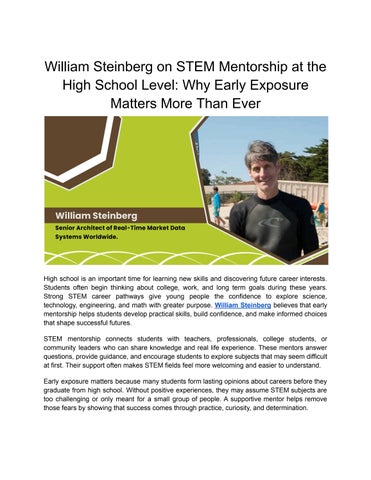
High school is an important time for learning new skills and discovering future career interests. Students often begin thinking about college, work, and long term goals during these years. Strong STEM career pathways give young people the confidence to explore science, technology, engineering, and math with greater purpose. William Steinberg believes that early mentorship helps students develop practical skills, build confidence, and make informed choices that shape successful futures. STEM mentorship connects students with teachers, professionals, college students, or community leaders who can share knowledge and real life experience. These mentors answer questions, provide guidance, and encourage students to explore subjects that may seem difficult at first. Their support often makes STEM fields feel more welcoming and easier to understand. Early exposure matters because many students form lasting opinions about careers before they graduate from high school. Without positive experiences, they may assume STEM subjects are too challenging or only meant for a small group of people. A supportive mentor helps remove those fears by showing that success comes through practice, curiosity, and determination.
Mentorship also gives students the chance to learn beyond the classroom. They may participate in science fairs, coding workshops, robotics competitions, engineering projects, or research programs. These experiences make learning more exciting because students apply classroom knowledge to real situations. Hands on activities often increase interest and improve understanding. Confidence grows when students solve problems with guidance instead of working alone. A mentor encourages questions, celebrates progress, and helps students learn from mistakes. Instead of feeling discouraged by setbacks, students begin to see challenges as opportunities to improve. This positive mindset supports both academic success and personal growth. Another important benefit of mentorship is career awareness. Many students know about doctors or engineers, but they may not understand the wide variety of STEM careers available today. Mentors introduce fields such as cybersecurity, environmental science, biomedical engineering, artificial intelligence, renewable energy, and data science. Learning about these options helps students make better decisions about future education. Mentorship also strengthens important life skills. Students improve communication, teamwork, leadership, and critical thinking while working on projects with others. These abilities are valuable in every profession, not only STEM careers. Learning how to share ideas, solve problems, and work with different people prepares students for future success in college and the workplace. Schools benefit when mentorship programs become part of everyday learning. Partnerships with universities, local businesses, and community organizations create more opportunities for students. Guest speakers, workplace visits, and internship programs help young people see how STEM knowledge solves real problems. These experiences make classroom lessons more meaningful and inspiring. Parents also play an important role. Encouraging curiosity at home, supporting science activities, and celebrating learning achievements help students stay motivated. Even simple conversations about technology or nature can spark lasting interest. When families and mentors work together, students receive stronger support from multiple directions. Communities gain long term value by investing in young learners. Students who receive early guidance often become future innovators, researchers, healthcare professionals, engineers, and technology leaders. Their ideas can improve industries, strengthen local economies, and solve important challenges that affect society. Supporting mentorship today creates benefits that reach far beyond the classroom. Youth STEM programs continue to prove that early guidance can change lives in meaningful ways. When students receive encouragement, practical experience, and positive role models during high school, they become more prepared for future opportunities. Investing in STEM mentorship today helps build confident learners who are ready to solve tomorrow's challenges with knowledge, creativity, and determination.