AUSTRALIA’S BUILDINGS ARE STARTING TO ACT ON THEIR OWN
SOLVING THE CONNECTIVITY PROBLEM
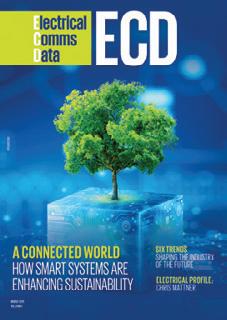
In the first issue of ECD for 2026, we’re looking into the near future.
Traditionally, the March edition focuses on smart cities and the tech that enables them. This time, we’re moving in closer to explore the role of smart tech in our living and working spaces. Our Smart Tech Trends feature, shared between three articles across the magazine, examines developments in smart building design, from the practical to the experimental — such as Murdoch University’s innovative deployment of microalgae bioreactors (page 4). On pages 6 and 11 respectively, Schneider Electric’s Louise Monger and Honeywell’s Lisa Whitehead bring their expertise to bear on a host of factors that are shaping the future of smart buildings. As Whitehead notes, smart tech isn’t new; it’s now expected. And it’s leading to a demand for greater integration across building management systems. This need is further highlighted on page 16, where the Wireless Broadband Alliance shares findings from its report on connectivity strategies for smart multi-dwelling units.
Both Whitehead and Monger observe that sustainability is a key driver of intelligent building requirements, with implications for HVAC systems and the use of energy. With the increasing frequency of extreme heatwaves, this is a particular concern for countries like Australia. We’re now at a point where, in the words of Inger Andersen, Executive Director of the UN Environment Programme, access to cooling must be treated as essential infrastructure alongside water, energy and sanitation. As detailed in the article on page 24, the UN has developed a sustainable cooling pathway that advocates for the adoption of passive and low-energy solutions.
Sustainable systems also entail a major shift towards electrification, transforming the way grids are managed. On page 20, you can learn how a Netherlands consortium is addressing this via a futuristic digital twin that will help design nation-scale energy infrastructure.
CREATING FUTUREPROOF DWELLINGS
FOR A HARSH CLIMATE
What makes a smart, comfortable, sustainable living space in an era of extreme heat? Australian research has a few ideas.
In Tennant Creek, about 500 kilometres north of Alice Springs, CSIRO is collaborating with Aboriginal non-profit consultancy Wilya Janta on the building of a pilot house.
Wilya Janta means “standing strong”. It has been set up by Indigenous leaders to directly involve the local community in the development of culturally sensitive housing that’s specifically designed for them. Given that temperatures here can range from 12 degrees in winter to over 40 in summer, CSIRO is providing advice on energy and thermal efficiency for the fully off-grid house.
The science body’s modelling and design advice will help to ensure that the house remains cool in summer without air conditioning for as long as possible, as well as minimising the power needed if air conditioning is used. With a 7-star energy rating, the house is intended to provide thermal comfort and lower energy costs equivalent to those expected in new homes in major capital cities.1
“One of the main goals is we need to make sure elderly people aren’t dying prematurely from extremes of temperature, and that medicine can be stored,” said Anthony Wright, CSIRO’s Energy Performance group leader.
Original Power, a First Nations-led not-for-profit, supplied, designed and installed the solar and battery system for the project alongside PAB Electrical from Alice Springs.
Once the model in Tennant Creek has proven viable, Wilya Janta intends to seek formal partnerships with the NT Government and Community Housing providers to support broad adoption of the model for delivery of community-directed housing.2
This emphasis on sustainability, energy efficiency and sensitivity to local conditions is a theme that’s driving some innovative and surprising developments in Australian building technology. Take, for example, the work of Amin Mirabbasi, a PhD student at Murdoch
Katerina Sakkas
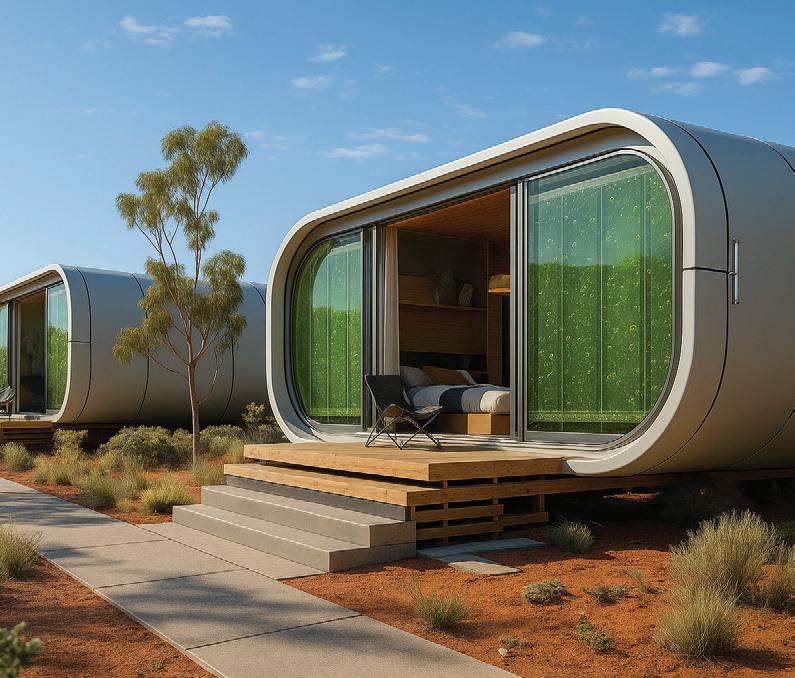
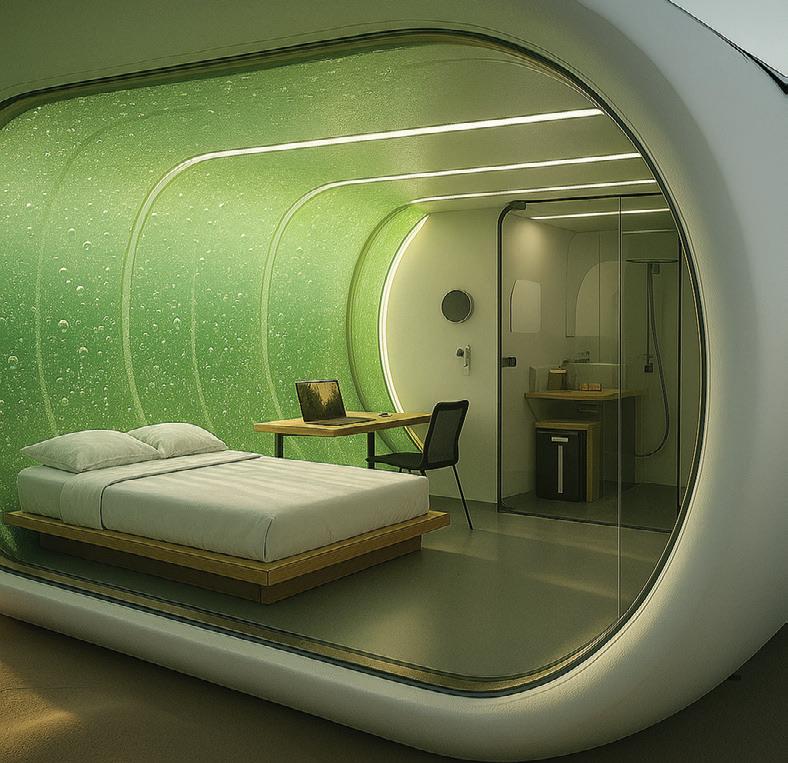
University. At the Algae Innovation Hub he set up, Mirabbasi has spent three years designing microalgae-filled photobioreactors, which can be incorporated into a variety of structures such as houses, apartments, mining dongas and urban designs.
Mirabbasi said WA’s climate offers ideal growing conditions for microalgae.
“Compared with colder European and southern Australian climates, Perth presents negligible freezing risk and high solar availability, which supports microalgae cultivation; however, overheating control is essential,” he said.
The environmental benefits of microalgae include carbon capture and the reduction of greenhouse gas emissions. Microalgae have been reported to exhibit CO2 fixation efficiencies 10–50 times higher than terrestrial plants, together with rapid growth rates and high biomass productivity.
Mirabbasi also believes the ability of microalgae to absorb heat could be a game changer for sustainable architecture. “Because the microalgae culture (water medium) absorbs heat and filters solar radiation, these photobioreactors can significantly reduce indoor overheating, as our tests showed,” he said.
“In WA’s climate, that means less reliance on air conditioning during peak hours, which translates into real energy and cost savings.”
One of Mirabbasi’s research projects has been the design of prefabricated mining accommodation units that are purpose-built for harsh rural environments. The microalgae photobioreactors installed on these mining dongas act as a passive solar control system, shading
the building and absorbing heat, while simultaneously generating oxygen and purifying the air.
Mirabbasi has also incorporated microalgae into designs for the urban environment, including bus stops, shelters, garages and an ‘Urban Algae Tree’, which provides shade from the sun by absorbing heat. It also captures rainwater and operates self-sufficiently using its own harvested solar energy.
Other designs feature tubular photobioreactors positioned along walkways, building exteriors and shopping districts, which can be fitted with LED lighting to illuminate the green culture at night — creating enticing public spaces.
“The beauty of these biodesigns is they combine science and nature in a way people can see and feel. Watching the microalgae grow, bubble and respond to light creates a biophilic experience that draws people in, connects them to nature and quietly reinforces sustainability awareness in everyday spaces,” Mirabbasi said.
Now nearing the end of his PhD, Mirabbasi intends to test his ideas in the real world.
“For me, this research isn’t about staying on the drawing board. It’s about turning ideas into tangible outcomes — designs that can be built, tested and implemented in real settings, where they can genuinely make a difference,” he said.
1. Edwards, A. (2025) Better by design: Culture at the heart of remote housing in the Northern Territory. www.csiro.au/en/news/All/Articles/2025/June/ Aboriginal-Housing 2. www.wilyajanta.org/our-work
Above: Render of mining donga designed by Amin Mirabbasi. Images courtesy of Murdoch University.
EXPLORING THE FUTURE OF BUILDINGS WITH LOUISE MONGER
Schneider Electric’s Vice President, Digital Energy shares her predictions for intelligent buildings.
What’s in store for intelligent building technology in the near future?
Firstly, unified, multi-domain operations platforms will become the norm.
Buildings will shift away from fragmented, siloed systems towards unified platforms that integrate energy, power, HVAC, lighting, security and building management into a single architecture. Intelligence will live at the core of operations rather than being bolted on afterward.
AI will be embedded across the entire lifecycle of building operations, supporting everything from engineering and deployment to diagnostics and predictive maintenance.
Predictive, always-on resilience will be the standard. Intelligent buildings will use unified data and AI-powered analytics to predict failures, triage thousands of alarms and resolve issues before they impact occupants, dramatically improving uptime.
We will see massive scalability across portfolios. Smart building tech will be expected
to scale to millions of connected points and large multi-site operations, enabling organisations to manage global portfolios from a single operational backbone.
Finally, buildings will function as active participants in the energy transition.
With unified energy and power intelligence, buildings will increasingly integrate electrification, demand flexibility, onsite generation and carbon reporting as standard capability.
What factors are driving these trends?
Explosive growth in electrification and energy demand
Electrification, AI adoption and digital services — particularly in sectors like data centres — are driving unprecedented electricity consumption, pushing buildings to operate far more efficiently.
Rising regulatory and sustainability pressures
Thousands of new energy and sustainability regulations in the last five years are
forcing organisations to tighten reporting, reduce emissions and manage energy more intelligently.
Critical workforce and skills shortages
With 63% of employers reporting skills shortages, organisations need technology that reduces dependence on specialised talent and automates routine tasks.
Legacy, siloed systems that no longer meet modern requirements
Traditional building systems are fragmented, manual and lack visibility, creating operational blind spots and making compliance, resilience and scaling far more difficult.
Increased need for uptime, speed and cost efficiency
Downtime is intolerable across industries — from data centres to health care — driving the need for predictive maintenance, rapid root-cause analysis and unified operational intelligence.
New Catalogue out now
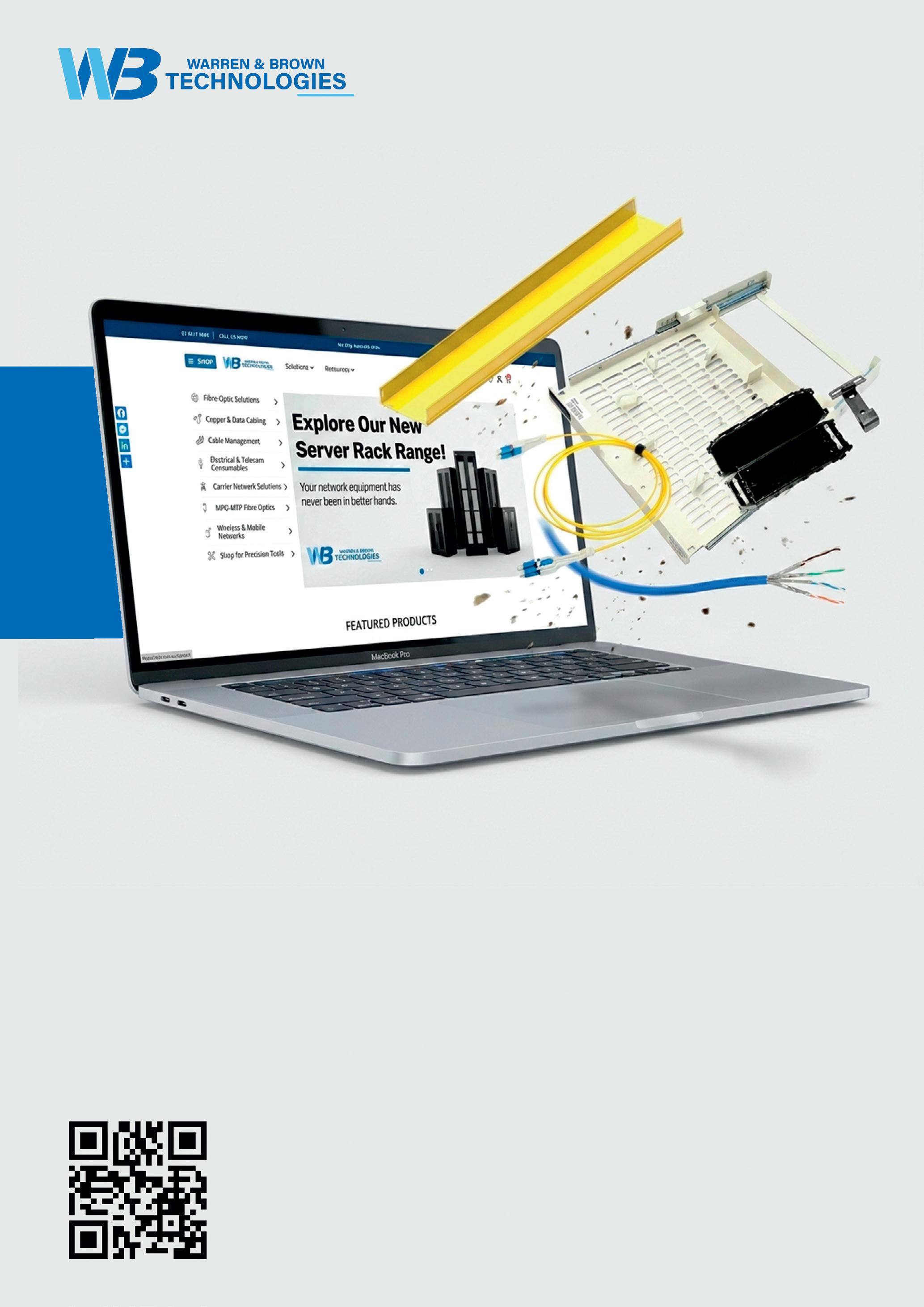
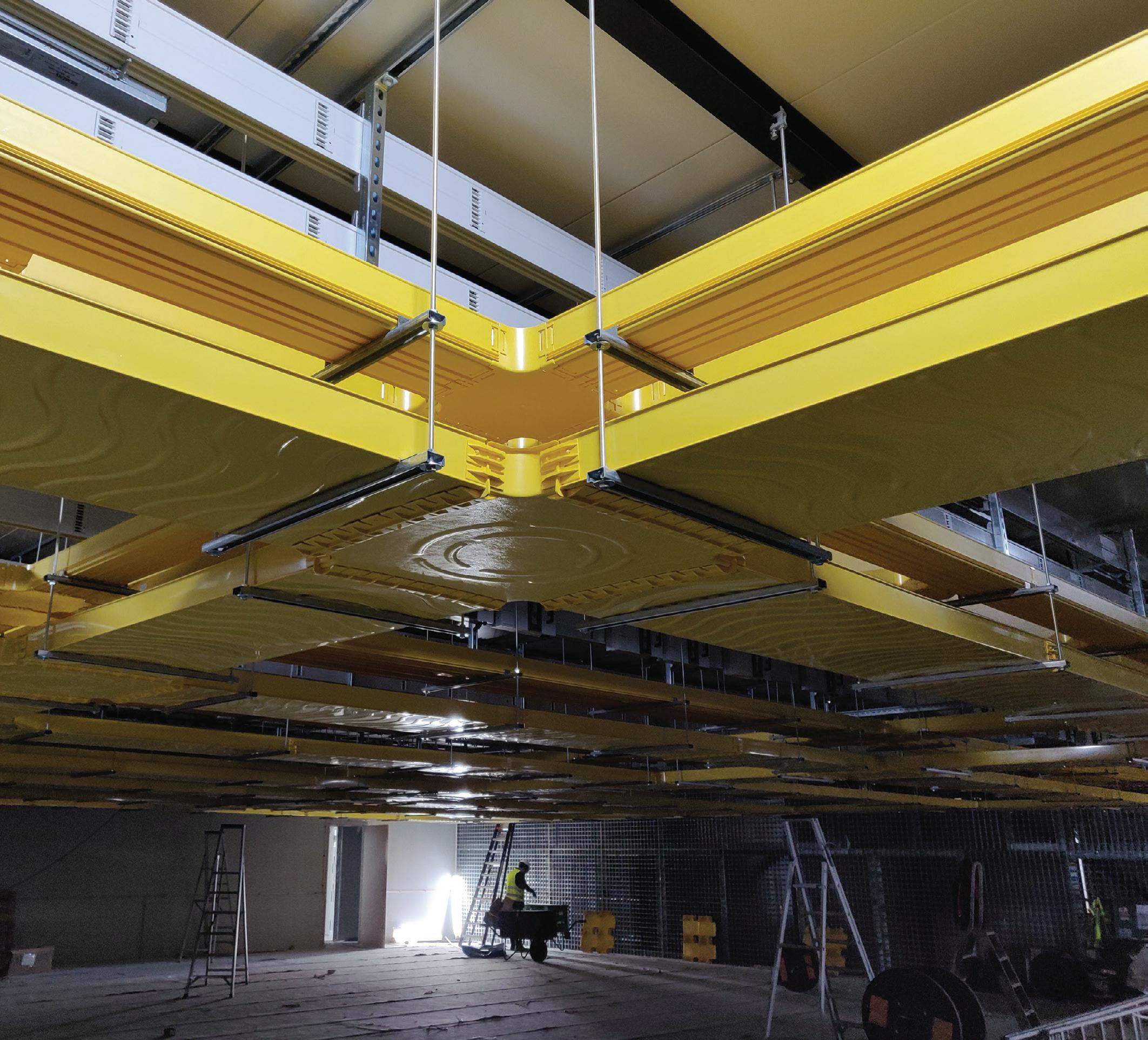
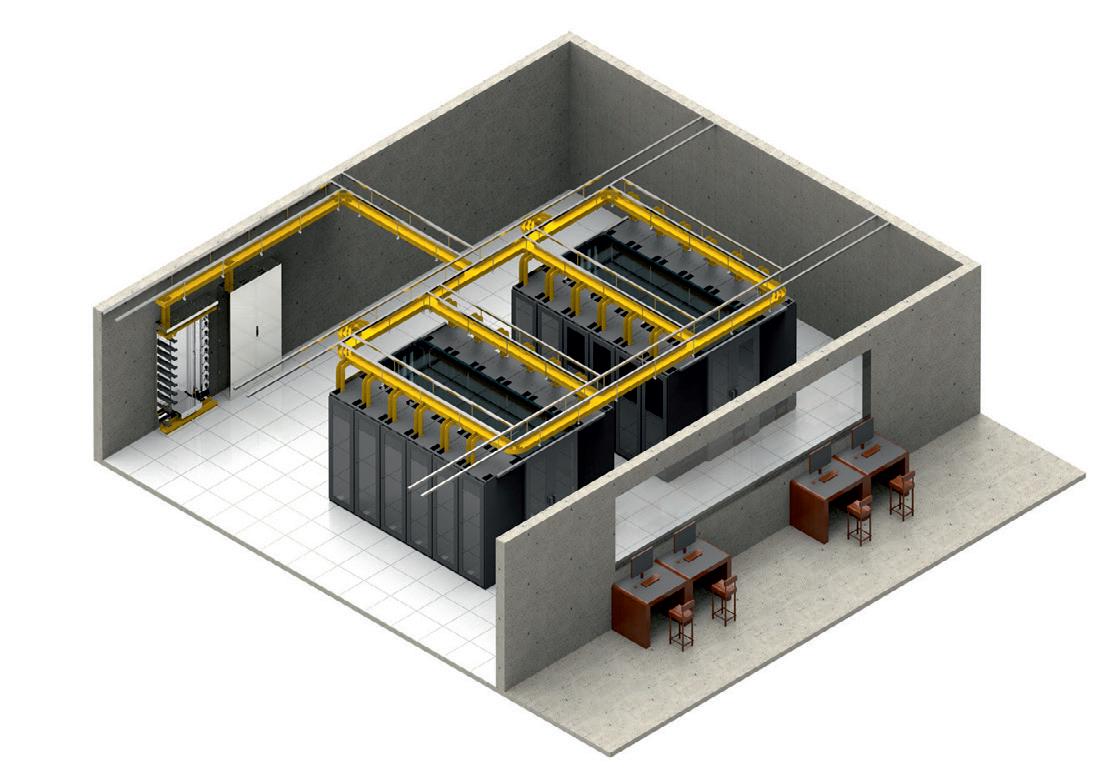
Industry-Leading Optical Fibre Ducting Raceway & Planning Support
WBT provides expert support in planning and designing your ducting layout. Our team can create detailed layout drawings and a complete Bill of Materials (BOM) to ensure a seamless installation.
Providing room layouts and rack positions helps our design team generate precise 2D and 3D visualisations, including recommended mounting methods.
Key Considerations For Your Design:
• Duct Size: Plan for future expansion - consider a larger backbone duct
• Drop-Offs: Type, size, tube requirements, and fibre capacity per drop off.
• Mounting Methods: Ladder rack, steel superstructure, rack-top or underfloor.
• Duct Colour: Yellow or black
• Covers Required or not?
• High-Traffic Areas: Larger ducts may be needed near HDODFs
• Fibre Storage: Does your layout require integrated storage?
For off-the-shelf fibre cable management and ducting solutions, head to wbt.com.au/ofdr
Plan ahead with WBT for an efficient and scalable ducting solution.
Plan Your Ducting Layout with WBT
WBT simplifies your ducting design and installation with detailed layout drawings and a full BOM.
Plan ahead for future needs and avoid retrofitting challenges.
Key considerations include duct size, drop-off requirements, mounting methods, colour options, and storage needs. Provide room or rack drawings to help us create precise layouts and 3D visuals.
1
2
3
4
Customer Supplied Drawing
The WBT Team will produce an initial drawing / Layout for comment
Customer will provide feedback and any modification made as required
WBT Team create a final drawing and Bill of Materials
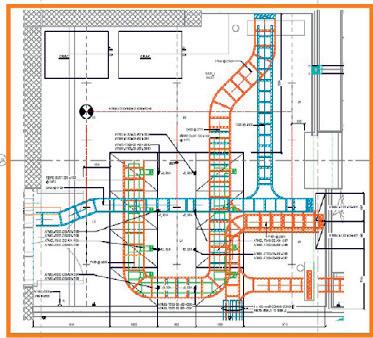
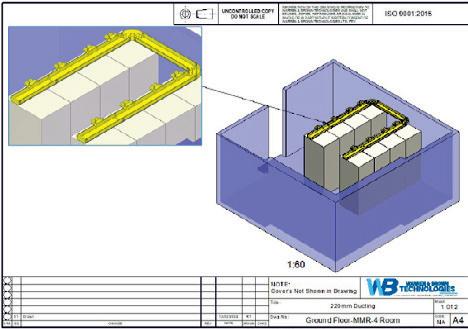
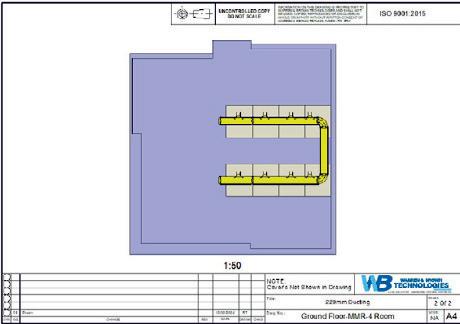
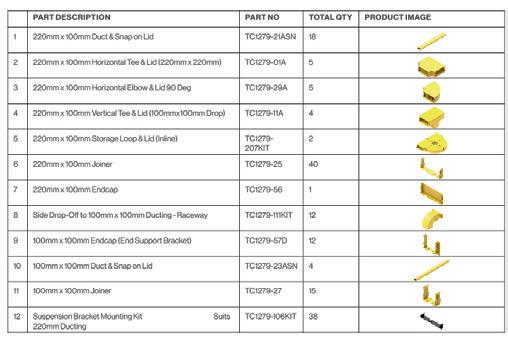
Below is an example of what WBT can produce.
5 Bill of Materials produced Example output shown right
As you can see, there is a Plan View, 3D View and BOM produced.
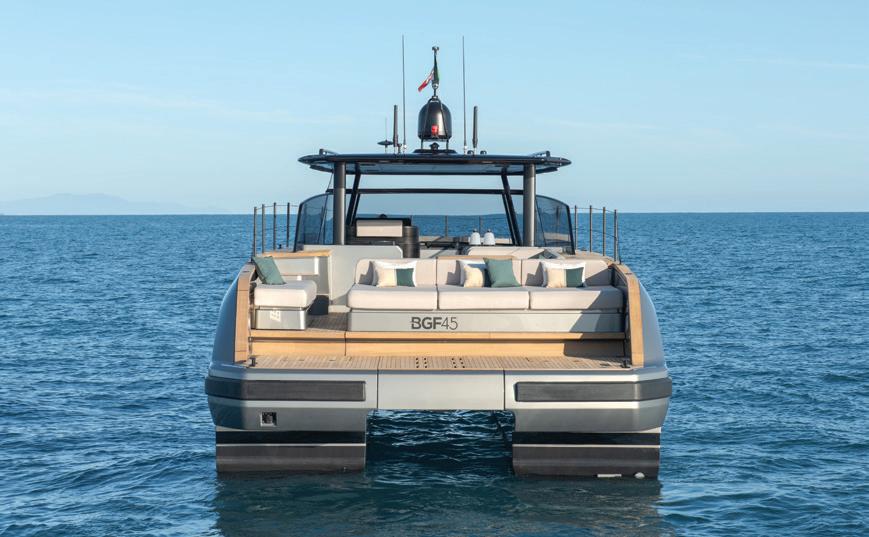
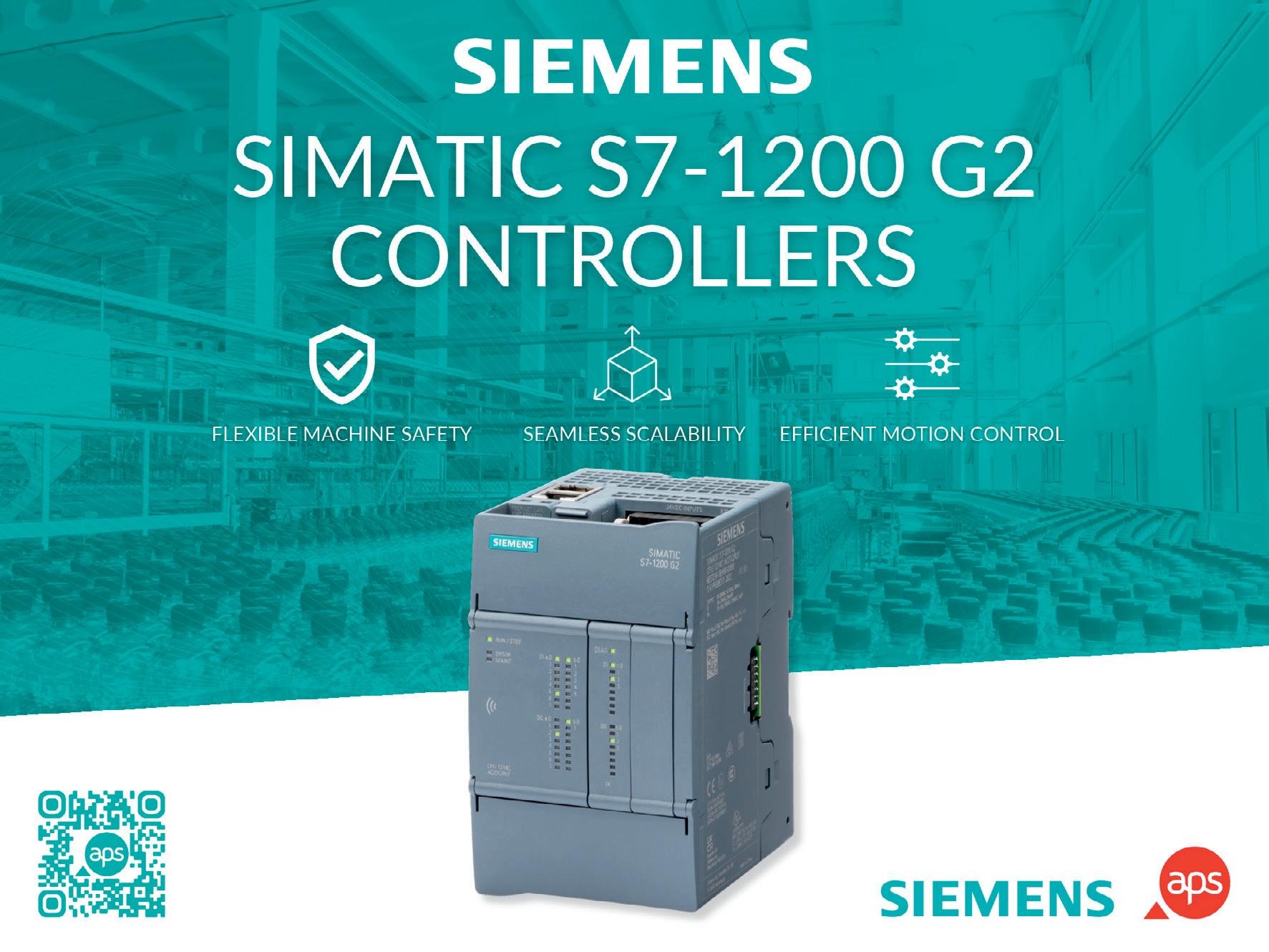
Siemens has collaborated with Bluegame, a brand of the Italian Sanlorenzo Group specialising in the production of luxury yachts.
As an ‘Innovative Technology Partner’, Siemens helped Bluegame to develop its new BGF45 yacht, which premiered at the 2025 Cannes Yachting Festival.
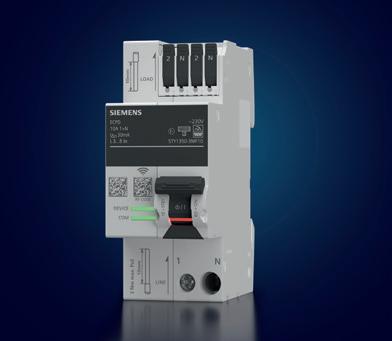
A key part of the collaboration was Siemens’ semiconductor-based SENTRON ECPD (electronic circuit protection device) technology, which, in combination with other SENTRON devices, formed the basis of the BGF45’s electrification system.
Installed in the onboard electrical panels, the ECPD enables intelligent management of energy flows through integrated monitoring functions, contributing to the yacht’s overall efficiency. Moreover, its ultra-fast response in the event of a fault minimises anomalies, reducing maintenance costs and supporting operational continuity in a variety of sailing conditions.
The ECPD is also designed to be versatile, with the technology intelligently adapting to the specific needs of the vessel, adjusting configurations and responses based on different electrical loads and the varying degrees of customisation required.
“With our groundbreaking SENTRON ECPD we provide industry-leading technology to contribute to the highest levels of safety, efficiency and sustainability, even on the world’s oceans,” said Andreas Matthé, CEO Electrical Products at Siemens Smart Infrastructure.
Technological innovation was not the only goal for the companies; they were also driven by a desire for sustainability. Bluegame has stated its commitment to a comprehensive sustainability strategy encompassing environmental, social and economic pillars, while actively contributing to the UN’s 2030 Sustainable Development Goals throughout its daily operations.
The SENTRON ECPD was a good environmental fit for Bluegame, being one of the first Siemens products to earn the Siemens EcoTech label, a certification that introduces new standards of transparency in the industry and demonstrates the company’s commitment to developing environmentally low-impact solutions.
Thanks to its multifunctionality, the Siemens solution replaces numerous conventional devices with a single device, requiring approximately 85% less space in the electrical distribution board. Depending on the application, the ECPD also enables savings of up to 80% on electronics, 90% on metals and 90% on plastics, Siemens said. Siemens Ltd www.siemens.com.au
SCHNEIDER ELECTRIC PARTNERS WITH MCLAREN RACING
Schneider Electric has formed a partnership with McLaren Racing, the British motor racing team that encompasses the McLaren Mastercard Formula 1 Team, the Arrow McLaren IndyCar Team, McLaren F1 Academy and the McLaren United Autosports WEC Hypercar Team. The partnership announcement follows a supplier relationship spanning more than 20 years.
As Official Energy Technology Partner of McLaren Racing, Schneider said it will support the development and deployment of energy technology that enables peak performance in the most demanding environments. This includes delivering power solutions trackside at race circuits around the world, as well as back at base at the McLaren Technology Centre in Woking, UK.
“Racing is one of the most challenging environments to demonstrate the value of advanced energy and digital technology,” said Schneider Electric CEO Olivier Blum.
“McLaren Racing pushes every system to its limits, which is exactly where our expertise in performance, reliability and efficiency makes the difference. We’re proud to become the Official Energy Tech Partner of McLaren, providing energy intelligence they depend on, both on and off the track.”
Together, the two organisations will work on solving energy problems that rely on strong performance and consistent running. This will include optimising existing assets in and around the wind tunnel, manufacturing facilities, IT data centres and beyond with resilient systems to reduce energy consumption. Schneider will use advanced energy technologies to enable electrification; it will also leverage digital twin technology to produce data insights that can enhance efficiency and sustainability.
“We’re proud to welcome Schneider Electric as our Official Energy Technology Partner,” said Zak Brown, CEO of McLaren Racing.
“This partnership builds on a strong foundation and reflects our shared commitment to innovation and energy efficiency. By combining Schneider’s expertise in energy technology with McLaren’s pursuit of performance, we’ll explore new ways to make our operations smarter and more efficient.”
Schneider Electric www.se.com/au
AUSTRALIA’S BUILDINGS ARE STARTING TO ACT ON THEIR OWN
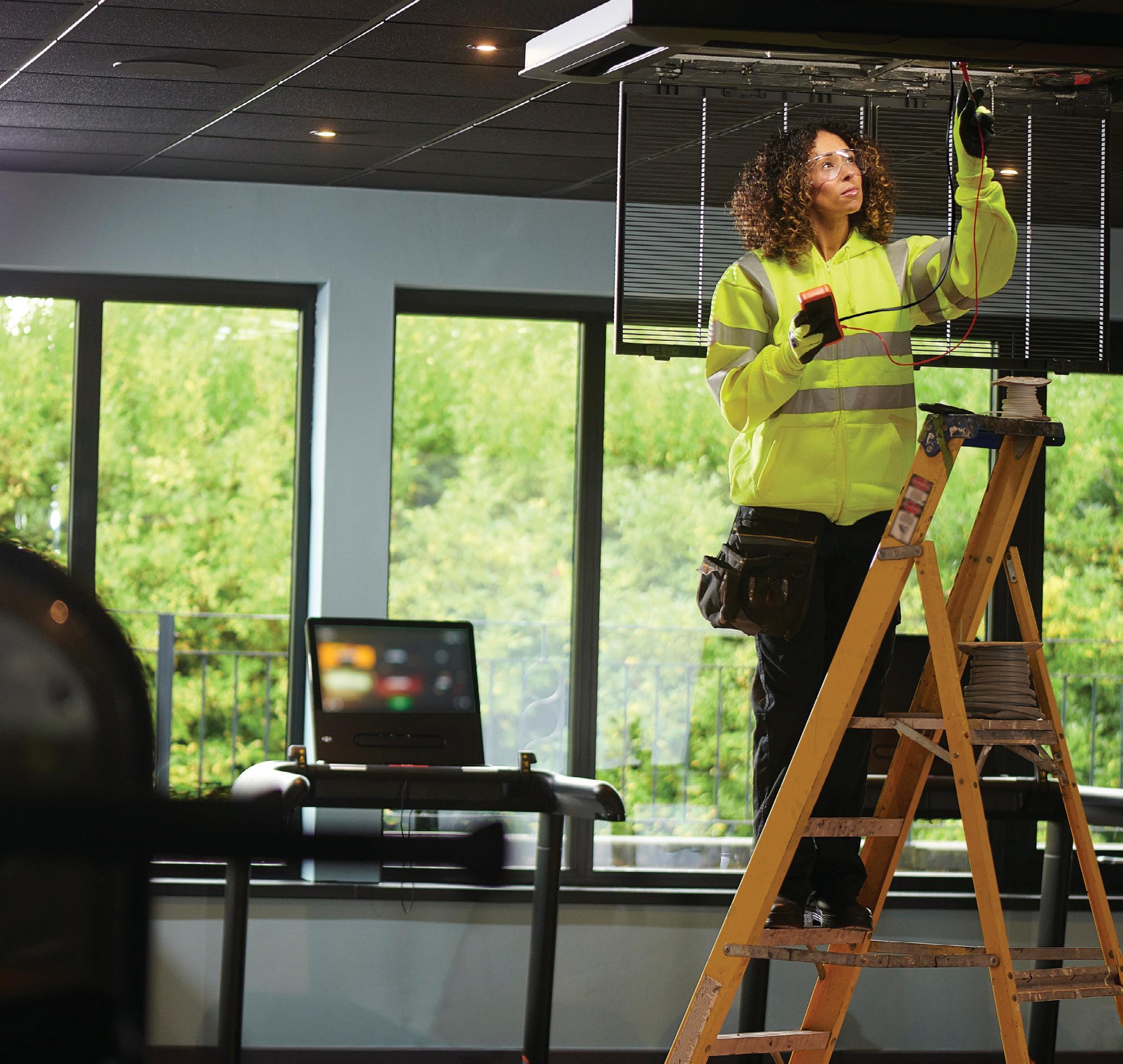
Australia’s buildings are entering a different era of intelligence, one defined less by ‘smart’ devices and more by connecting systems so they work together in a meaningful, scalable way. Intelligent building technology has moved from something trialled and tested to something that’s expected, changing how buildings are run, optimised and experienced every day.
Until now, most building intelligence has come in pieces; smarter HVAC controls, automated lighting schedules or standalone security systems, for example. While these upgrades have delivered benefits, they often operate in isolation. The next evolution is integration, where HVAC, energy, lighting, safety and security systems share data and collectively respond. Australian building owners will increasingly expect a single operational view across HVAC, energy, lighting, safety and security systems. By sharing data and responding together, these systems will give operators real-time insight into how their buildings are performing — rather than relying on static reports after the fact.
Energy is one of the biggest forces driving this shift. With electricity prices rising, the grid becoming less predictable and with Australia committed to net zero by 2050, optimisation is no longer a choice. Alongside frameworks like NABERS, sustainability has become a baseline expectation for commercial buildings. For owners and facility managers,
it is now central to attracting investment, maintaining credibility and protecting longterm asset value.
This is where intelligent HVAC and energy systems really come into play. Systems that automatically respond to occupancy, weather conditions and demand signals are quickly becoming the norm. The conversation is moving beyond simply using less energy to actively managing energy as a strategic asset.
Labour pressures are another key factor. Australia’s facilities sector continues to face skills shortages, particularly as experienced technicians retire. AI-supported platforms can help technicians avoid unnecessary trial and error, shorten repair cycles and reduce operating costs. Intelligent building platforms are stepping in as digital support layers, automating routine tasks, highlighting priority issues and guiding technicians towards faster resolution. Machine learning-powered predictive maintenance is replacing reactive models, helping teams extend asset life and reduce downtime across building portfolios.
Underpinning this is interoperability. As buildings generate more data, the ability to bring information together across different systems and vendors becomes critical. Open standards and shared data models make it easier to deploy, scale and future-proof technology investments.
Security and safety will also evolve alongside intelligence. Rather than operating
as separate systems, access control, video and life-safety technologies will increasingly integrate with building management platforms, supporting faster responses, improved situational awareness and safer environments for occupants.
Ultimately, the near future of intelligent buildings in Australia is about outcomes, not products. By the end of 2026, buildings will be even more autonomous, resilient and responsive. They will quietly optimise comfort, energy and performance in the background. What once felt cutting-edge will soon be business as usual, setting a new standard for how Australians live and work in the built environment.
Honeywell Building Automation https://buildings.honeywell.com/au/en
Lisa Whitehead, Vice President and General Manager of Pacific Building Automation at Honeywell
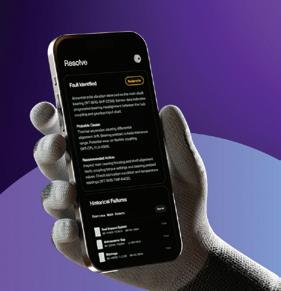
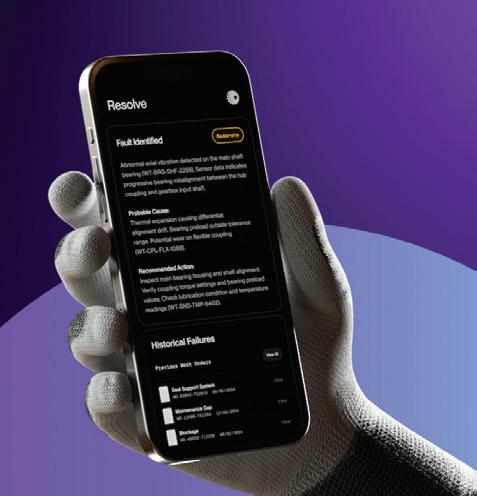
AI platform for field service operations
The IFS Nexus Black Resolve for Utilities is a purpose-built AI platform for field service operations. It is designed to help utilities manage complex challenges such as aging infrastructure, extreme weather, workforce constraints, rising customer expectations and increasing regulatory pressure. Developed by IFS Nexus Black, the solution extends IFS Field Service Management technology with AI. It is designed to deliver rapid results (in weeks, not months), while maintaining the reliability, scalability and security that utilities demand.
The product introduces a suite of capabilities, including intelligent crew callout for rapid response, where AI is used to coordinate crews for essential work — from planned maintenance on aging infrastructure to emergency response during floods, storms or wildfires. The system provides real-time visibility into crew availability, seamlessly communicates with field workers, and manages operations across regions and states, freeing up planners to focus on strategic decisions while AI handles coordination friction.
Another feature is mutual aid technology for large-scale disasters, which enables utilities to rapidly coordinate with neighbouring companies during emergency events. Resolve uses AI to allow smooth communication and resource-sharing across organisational boundaries, protecting communities faster when they need it most.
Finally, the platform’s enhanced mobile capability improves field crew productivity through intelligent guidance based on real-time data, equipment images, and historical patterns. IFS Australia www.ifsworld.com/au
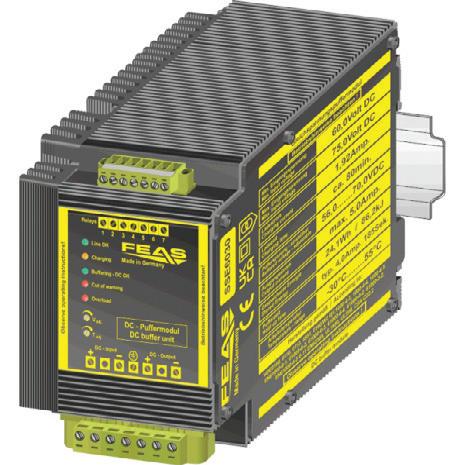
60 V DC UPS module
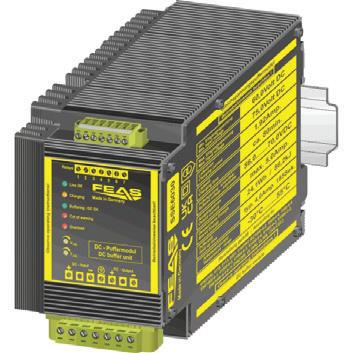
FEAS GmbH is expanding its SSE30 DC UPS series with the addition of the 60 V SSE6030 model, offering a comprehensive supercapacitor solution for industrial 24, 48 and 60 V systems. The new module enables uninterruptible power supply in demanding DC voltage applications — from automation technology to telecommunications infrastructures.
A key feature is the complete elimination of batteries, with supercapacitor technology enabling maintenance-free operation in extreme environmental conditions (-30 to +55°C) and high power density in a compact design. The SSE6030 stores 24.1 Wh (86.2 kJ) and typically offers 158 s of buffer time at 4 A current draw — sufficient for controlled shutdowns or emergency power switching. Due to its aluminium housing and full encapsulation, the SSE series offers a high degree of protection against environmental influences such as moisture, vibrations, etc, making it suitable for harsh industrial environments.
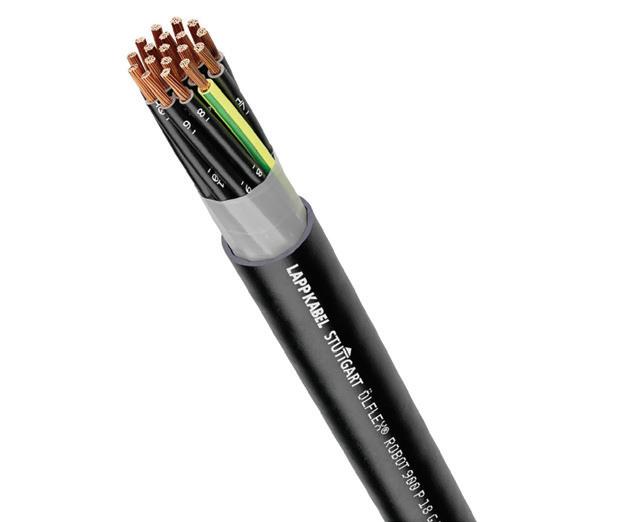
Flexible robotic cable range
LAPP Australia’s ÖLFLEX ROBOT 900 P robotic cables are engineered to deliver reliable power and control in high-movement industrial environments, supporting continuous flexing, bending and torsional loads common in modern automation. Designed for use in multi-axis robots, automated handling systems, industrial machinery and cable chains, these cables are suited to both dry and wet conditions as well as harsh, oily environments.
Each cable’s highly flexible construction enables simultaneous bending and twisting, with torsion capability up to ±360°/m and durability across up to five million torsion cycles. This design helps extend maintenance intervals while supporting efficient machine performance in dynamic production settings.
A robust polyurethane (PUR) outer sheath enhances mechanical strength and resists abrasion, cuts, chemicals and mineral oil-based lubricants, making the cable suitable for demanding industrial and outdoor installations. Its compact outer diameter also supports space-saving installations within tightly integrated automation systems.
The series enables companies to secure all their critical systems with the same technology; parallel switchability of multiple modules also allows for scalable solutions.
The system is designed to reduce life cycle costs, as it does not require battery replacement or maintenance intervals. Additionally, compact DIN rail mounting and high efficiency in mains operation support energy-efficient installations. The series is available in Australia via Automated Control or direct from FEAS GmbH.
FEAS GmbH
www.feas.com
Engineered for flexibility across a wide temperature range, the cable remains operational down to –40°C and withstands continuous motion within power chains and moving machine parts, including horizontal travel distances up to 10 m.
LAPP Australia has extensive local stock of the ÖLFLEX ROBOT 900 P range, which is backed by a nationwide support network. LAPP Australia Pty Ltd lappaustralia.com.au
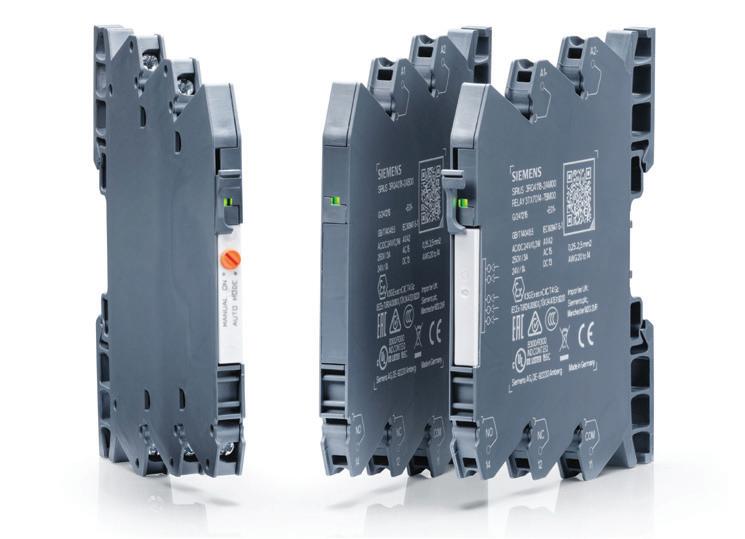
Coupling relay with sustainable plastic housing
Siemens Smart Infrastructure has collaborated with Envalior on a sustainable series of coupling relays, with housing made from Envalior’s Akulon K225-KS B-MB plastic, which consists of 70% material derived from biomass waste.
The plastic’s raw material comes from used cooking oil (UCO), left over after frying in the food industry, restaurants, snack bars and households. As UCO is no longer suitable for human or animal consumption, it does not compete with food or animal feed production. While UCO is mainly used for biodiesel, Envalior uses it for the production of engineering plastics based on a mass balance concept, avoiding incineration.
The new coupling relay comes in three variants to suit a wide range of industrial requirements. The first variant with integral relay output is specially designed for harsh environmental conditions, as well as for areas with specific safety requirements. These relays have safety-ready characteristic values (B10d values) and are approved for use in potentially explosive atmospheres (ATEXcertified). This variant is optionally available with gold-plated contact elements for switching very low currents, or with printed circuit boards with a protective coating, suitable for railway applications.
As a second variant, plug-in coupling relays are available for applications that require quick relay replacement during operation. They are also available as an option with gold-plated contacts.
Thirdly, for applications requiring very fast, soundless and frequent switching, Siemens offers a variant with semiconductor output. As it has a long service life, it can be used in situations where replacing conventional relays is expensive and time-consuming.
Designed to be sustainable throughout their lifecycle, the coupling relays meet the strict criteria of the Siemens EcoTech label. This includes 33% lower energy losses in the semiconductor variant compared to previous versions, as well as eliminating problematic materials such as PFAS. The product can also be easily dismantled and recycled at the end of its life.
As well as being bio-based, Akulon K225-KS B-MB is halogenfree and flame-retardant. The polyamide 6 grade plastic material is characterised by high heat resistance and robust chemical resistance. With a space-saving slimline design for optimised use in control cabinets, the coupling relays have been intensively tested for use in combination with Siemens controllers. Siemens Ltd
www.siemens.com.au
Expansion module for door-locking system
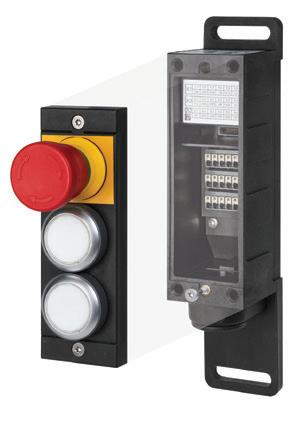
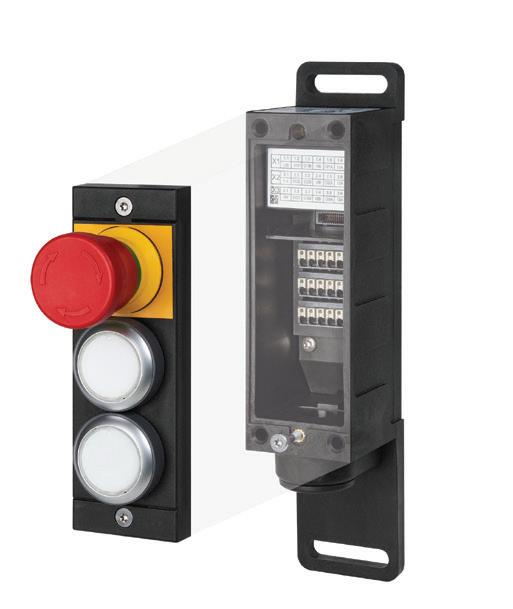
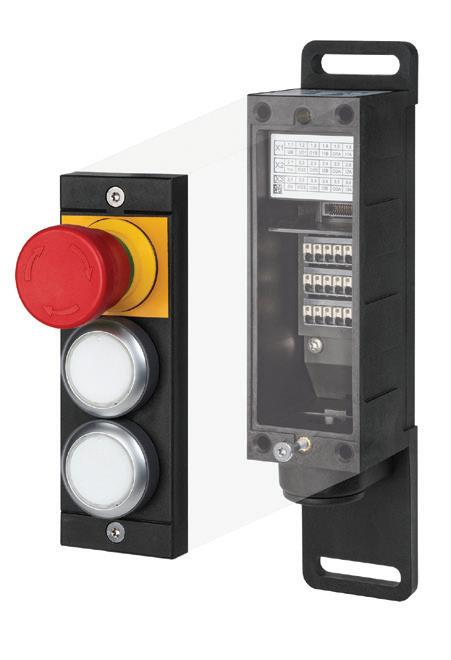
Euchner’s small MCM-X expansion module was developed to supplement the MGB2 Classic product range or the MGBS. It can accommodate a single MSM submodule, and its streamlined design makes it a good choice for mounting on profiles or in other confined spaces. It can also be used completely independently of an MGB.
As is usual for the MGB2 Classic, connections are made through cable entries or using prewired plug connectors.
Treotham Automation Pty Ltd www.treotham.com.au
CAN CATHODIC PROTECTION DESIGN SUPPORT ESG OUTCOMES?
Major infrastructure like wharves, bridges, pipelines and tanks is at constant risk of corrosion. Traditionally, infrastructure was protected using phase control cathodic protection (CP) systems, but these pose several challenges, such as the expense of copper cabling and the associated power loss. This is a bigger problem than ever in the age of environmental, social and governance (ESG) reporting. In this article, David Celine, Managing Director of cathodic protection specialist Omniflex, explains how CP system design can support ESG commitments, while simultaneously lowering costs and improving maintenance capabilities.
All impressed current CP (ICCP) systems use a transformer rectifier unit (T/R) to supply the necessary electrical current for ongoing protection. There are two main types of T/R to choose from for ICCP systems: phase control and switch-mode.
In phase control systems, AC power is passed through a large AC transformer before being rectified to produce a controlled DC output to the anodes. In switch-mode systems, AC power is first rectified to high-voltage DC power, and then much smaller high-frequency transformers and rectifiers are used to create controlled DC outputs. This technique allows smaller and more efficient outputs that can be more easily controlled.
While phase control systems were the historical go-to for CP consultants globally, ESG commitments, which are becoming increasingly important for asset owners, make switch-mode systems more compelling than ever. This is particularly true for concrete structures, where a larger number of small zones need to be protected.
CP system design supports ESG
For asset owners and infrastructure managers, ESG is becoming increasingly crucial for driving sustainable and responsible operations while enhancing long-term value.
Strong ESG practices mitigate environmental risks, such as corrosion and climate change impacts; ensure worker safety; and promote transparent, data-driven decision-making. Furthermore, ESG initiatives align operations with global sustainability goals, reinforcing a commitment to preserving resources and fostering resilience in critical infrastructure.
Reduction of CO2 emissions — and, therefore, increasing electrical power usage efficiency — is a major factor when reporting ESG, and this is an area where switch-mode CP systems excel compared with phase control systems.
A phase control system running at 100% capacity is, at best, 80–85% efficient. However, because of oversizing, systems never run at 100% capacity. In real-world applications, phase control systems generally operate at 60% efficiency at most.
Furthermore, as phase control systems rely on a single large T/R to distribute current across a whole structure, they require extensive copper cabling for use. This is both extremely expensive and causes power loss. In fact, phase control systems often lose around half their voltage in the cabling, further reducing the efficiency.
Alternatively, switch-mode CP systems consistently operate at 90% efficiency, even when running at 50% capacity, meaning overall power consumption is dramatically lower than in phase control systems.
Small, compact switch-mode T/Rs also make the technology ideal for use in distributed CP systems on large structures, where locating T/Rs closer to the anodes significantly reduces installation costs due to reduced cabling. Energy costs are also lowered due to reduced volt drops in the cabling. By placing T/Rs closer to individual anodes in this way, copper losses are largely eliminated and over 80% of the power supplied reaches the anodes.
Beyond the lower installation costs for switch-mode systems, they are also more sustainable, with CO2 emissions often less than half of those generated when installing a phase control system.
Another way to improve ESG criteria for systems is to incorporate remote monitoring. This provides asset owners with access to real-time data on an ongoing basis, including total power consumption, anode current outputs, reference electrode test data and anode health condition.
Using this live data, engineers can quickly identify abnormalities and address any problems before they escalate, ensuring ongoing asset protection. Furthermore, as CP-protected infrastructure is often located in hazardous and difficult-to-access environments, using remote monitoring lessens the need for technicians to physically inspect systems, improving worker safety.
In an increasingly ESG-conscious world, adopting a CP system design philosophy that lowers costs, power consumption and CO2 emissions, while providing more data for owners and managers and improving worker safety, is a no-brainer.
For more information about Omniflex’s cathodic protection offering, read the company’s CP industry overview on its website. Omniflex (Australia) Pty Ltd www.omniflex.com.au
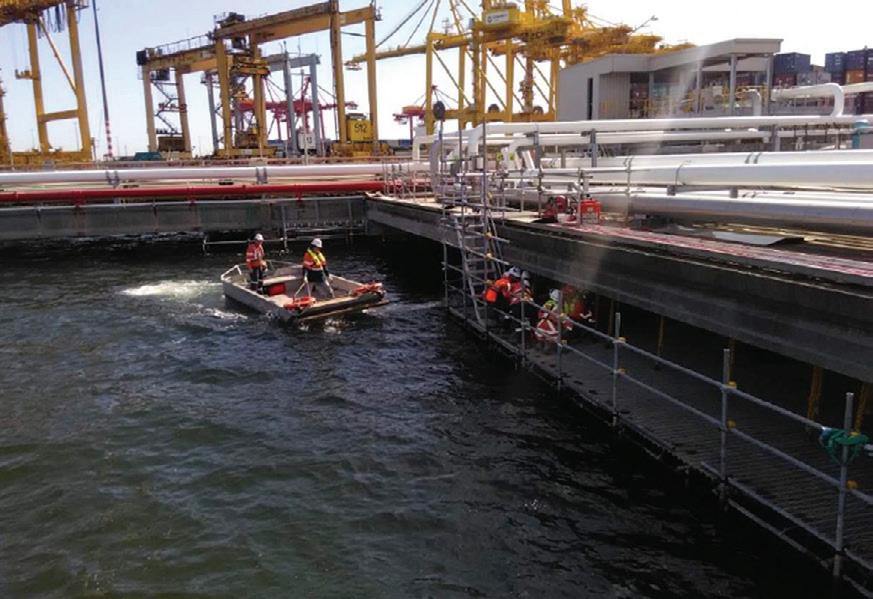
Above left: Engineer working on Omniflex Remote Terminal Unit at Bulk Liquids Berth 1, Port Botany, NSW.
Above: Engineers working on a bridge to install a CP system at Bulk Liquids Berth 1, Port Botany, NSW. Images courtesy Omniflex.
Electrical design software
Siemens has expanded its TIA Selection Tool Cloud with the new ‘Electrical Designer’ feature for electrical planning. The software provides standards-compliant dimensioning of a machine’s electrical equipment — from switchgear to correctly sized cables.
Encompassing basic electrical knowledge and standards expertise, the software is designed to eliminate time-consuming research and complex manual work. It simplifies main circuit design by automatically selecting components, verifying short circuits, sizing cables and creating all necessary documentation in one easy process.
Thanks to cloud technology, users can collaborate on projects from anywhere and always have access to the latest planning data. As a completely browser-based solution, there is no need for installations and updates; the software offers device-independent access at any time and enables easy project transfer.
Other features include complete machine design instead of individual calculations — if the software knows the loads for the machine, the tool automatically selects suitable switchgear, controls and network components, and generates parts lists and complete documentation. It automatically checks the requirements defined in the relevant standards (currently IEC 60204-1) and its flexible calculation logic enables planners to simulate different short-circuit scenarios in order to adapt the electrical system to local grid conditions.
Siemens Digital Industries Software www.siemens.com.sg/en
RS-485 cables
Belden’s EN-IEC-rated, low smoke zero halogen (LSZH) RS485 AWG18 cables are designed to support longer RS-485 runs with less voltage drop and higher current for powered devices. They are suited to a range of standards, including Modbus, BACnet MS/TP, CANopen and DMX512. In industrial applications, the cables offer good data and power delivery along with cross-protocol compatibility.
In harsh conditions — for example, when encountering oil, water, noise, weather or weight — low capacitance and enhanced noise protection help prevent distortion and error over extended distances. The cables are made of flameretardant materials to improve user safety in case of fire.
Belden products are available from APS Industrial in Australia.
APS Industrial www.apsindustrial.com.au
FOR SMART APARTMENTS SOLVING THE CONNECTIVITY PROBLEM
In a new report, the Wireless Broadband Alliance (WBA) has cautioned against the fragmentation of connectivity solutions for multi-dwelling units.
The report, ‘Connectivity Strategies for Smart Multi-Dwelling Units (MDUs): Convergence for Connected Living at Scale’, provides a standardsbased blueprint for transforming residential properties into scalable, secure and fully connected smart communities.
“We conceived of this working group as a result of seeing the proliferation of IoT wireless devices, their various stakeholders and use cases in MDU buildings,” said George Hechtman, Project Leader, and Principal at Hechtman Venture Development.
“This can result in a complex mishmash of technologies at odds with each other. We felt that a comprehensive review of these technologies was a necessary first step towards resolving these issues, while providing property owners, service providers and software/hardware vendors with a valuable reference document.”
MDUs are becoming an increasingly common form of dwelling for individuals and
CONNECTED LIVING AT SCALE REPRESENTS A STRATEGIC OPPORTUNITY FOR THE MDU AND RESIDENTIAL SECTOR, BUT ONLY IF CONNECTIVITY INFRASTRUCTURE IS CENTRALISED IN AN ORCHESTRATED WAY.
families, as evidenced in the 2021 US Census, which recorded that just under 25% of the population lived in complexes consisting of four or more apartments. This expansion, combined with increasing resident expectations and a growing number of managed service providers serving the sector, is driving rapid growth in the MDU connectivity market.
Shipments of Wi-Fi access points to MDUs are forecast to more than double from 1.2 million units in 2025 to 2.6 million by 2030. While Wi-Fi 6 currently dominates deployments, Wi-Fi 7 is expected to overtake it by 2027.1
Given this increasing device density, along with expansion of IoT ecosystems and growing resident expectations, the report recommends fully managed, open-standards-driven architectures as the foundation for delivering scalable, enterprise-grade performance, security and long-term operational value.
Drawing on industry consultation with operators, property owners, technology
vendors and service providers, the report addresses the growing fragmentation in MDU connectivity, where proprietary solutions, inconsistent standards and uncoordinated wireless deployments are limiting scalability and reliability. It outlines how convergence across Wi-Fi, IoT and property management systems can shift connectivity from a cost centre into a strategic, revenue-generating asset supporting premium SLA-based services while reducing operational overheads. For consumers, convergence should improve performance and reliability, and enable features such seamless onboarding and home automation.
The report includes the following recommendations for optimising Wi-Fi, IoT integration and building management systems:
Unified, scalable connectivity is foundational to smart living at scale
Fragmented networks cannot support the density, mobility and automation demands of modern MDUs. Fully managed, standardsbased Wi-Fi architectures are essential to provide the reliability needed in these highdensity environments.
Open standards are critical to interoperability and long-term viability
Standards-based architectures reduce complexity, prevent vendor lock-in and enable ecosystem scale. Open standards such as EasyMesh, USP/TR-369, TR-181, MoCA/G.hn and OpenRoaming play a key role in reducing fragmentation and ensuring long-term network viability.
Fully managed Wi-Fi is required for enterprise-grade performance in MDUs
Unmanaged and quasi-managed models fail to deliver consistent performance, security and tenant isolation for their data and connections.
A fully managed Wi-Fi network, coupled with a bulk-billing ISP arrangement, is the only sustainable approach for dense residential environments, ensuring high performance and seamless connectivity across all units.
IoT convergence transforms MDUs into experience-driven smart communities
Integrated IoT elevates buildings beyond basic connectivity to deliver automation, safety and operational intelligence and enhanced tenant experiences. A seamless integration of IoT,
building systems and connectivity under a unified managed architecture makes this possible.
Multi-Admin is a defining requirement for MDU connectivity
Secure, role-based access is essential to support owners, operators, MSPs, contractors and residents on shared infrastructure. MultiAdmin capabilities are necessary to ensure effective management while maintaining privacy and security across all users and devices. Several critical opportunities and gaps are identified, including the applicability of the Connectivity Standards Alliance’s Matter protocol as potentially a key element.
New technologies and transitional challenges
The report examines the significant new opportunities presented by next-generation technologies such as Wi-Fi 7, 6 GHz spectrum, WPA3 and emerging IoT frameworks — but cautions that these will also introduce realworld deployment and operational challenges at scale, such as WPA3 migration risks in large-scale residential deployments and the operational impact of device compatibility.
It explores the need for unified, scalable connectivity to support connected living; the critical role of open standards in enabling interoperability and avoiding vendor lockin; and the importance of fully managed Wi-Fi, underpinned by wired backhaul, to deliver predictable performance and strong tenant isolation in high-density residential environments.
Tiago Rodrigues, President and CEO of the Wireless Broadband Alliance, said that connected living at scale represented a strategic opportunity for the MDU and residential sector, but only if connectivity infrastructure is centralised in an orchestrated way, rather than as an afterthought.
“For residents, this means reliable, seamless digital experiences across their homes and shared spaces. For owners and operators, it means predictable performance, operational efficiency, investment optimisation and the ability to introduce new, differentiated services with long-term value,” he said.
The ‘Connectivity Strategies for Smart Multi-Dwelling Units (MDUs): Convergence for Connected Living at Scale’ report is available to download at https://wballiance. com/connectivity-strategies-for-smart-mdus. 1. ABI Research: Wi-Fi Access Point Shipments to the MDU Vertical World Markets, Forecast: 2024 to 2030.
iStock.com/onurdongel
Test system for megawatt charging
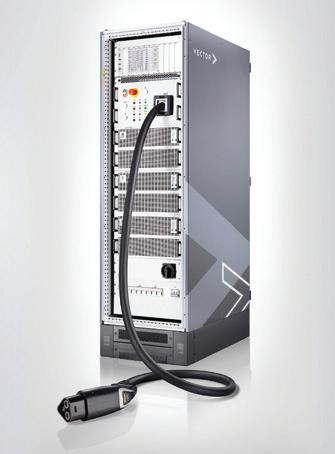
Vector has introduced its hardware-in-the-loop (HIL) test system: vCTS.performance. This powerful, scalable system was developed in collaboration with EA Elektro-Automatik for testing the charging communication between electric vehicles (EVs) and electric vehicle supply equipment (EVSE). It meets the demanding power requirements of the Megawatt Charging System (MCS) while also supporting all major charging standards, including CCS, MCS, NACS, GB/T and CHAdeMO.
The system is designed to ensure conformity and interoperability in charging communication between EVs and EVSEs. With DC charging power of up to 3.84 MW, scalable in 60 kW increments, it supports realistic load and endurance testing under real-world conditions.
The system provides regenerative charging with energy feedback to the grid at an efficiency of over 96%, according to the company. It is optimised for running the CANoe Test Package EV and EVSE, including integration into the vTESTstudio workflow.
The system expands Vector’s existing product portfolio, which already includes a wide range of solutions for electromobility.
Vector www.vector.com/int/en
Rear-mounted heat exchanger
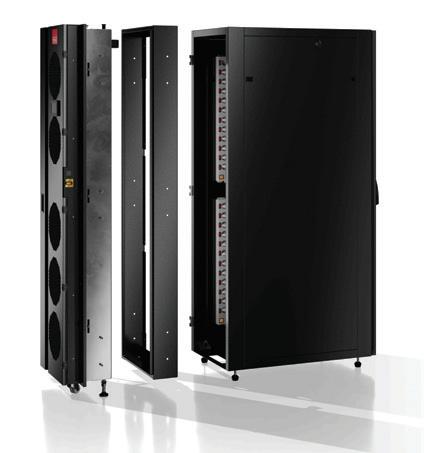
STULZ has updated its CyberRack Active Rear Door. Building on the features of the previous model, the new CyberRack Active Rear Door is a space-saving, rear-mounted heat exchanger with electronically commutated (EC) fans that capture heat directly at the exact point of generation.
The new model can be deployed in both air- and liquid-cooled data centre environments. Integrated sensors continuously monitor both return and supply air temperatures within a server rack to provide optimal cooling performance. As a result, cooling output automatically adapts to server heat load, delivering consistent operation regardless of any workload fluctuations, STULZ says.
With a compact footprint, the model can be deployed without rack repositioning, making it suitable for retrofit projects and environments where floorspace is limited. Custom adaptor frames allow seamless integration with a wide range of rack sizes, supporting standalone operation, supplemental precision air conditioning or hybrid deployments alongside direct-to-chip liquid cooling.
Designed for easy maintenance, the product has a two-step door opening of more than 90°, providing access to fans and coils, while hot swappable axial fans with plug connectors help to simplify servicing and minimise downtime. Alongside low noise emissions, the system’s differential pressure control adjusts fan speed to match the server’s airflow requirements.
Featuring a 4.3-inch touchscreen with unified menu logic, the integrated STULZ E 2 intelligent control system enables advanced functions such as redundancy management, cross-unit parallel operation, standby mode with emergency operation, and smooth integration with building management systems.
STULZ Australia Pty Ltd www.stulz.com.au
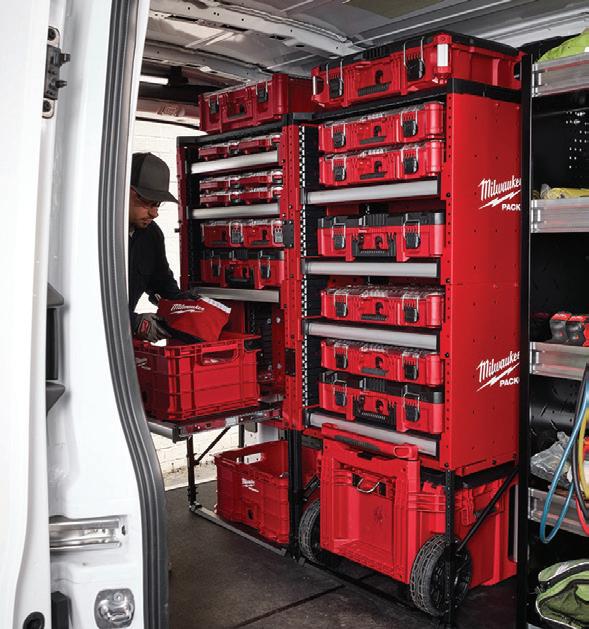
Tool storage solution for vans
Milwaukee’s PACKOUT Rack Kit is designed to create a cleaner, more efficient way to store, access and secure tools in a van while travelling between jobs.
The kit offers easy access on the go, with sliding drawers that help to reduce time spent unstacking and searching through gear, supporting quicker callouts and smoother workdays. It has a customisable set-up, including adjustable drawer heights and compatibility with PACKOUT components, making it easy to build a system tailored to different toolkits and job types.
Adjustable leg heights allow the rack to fit neatly above wheel wells or alongside rolling toolboxes, and the system can stack up to three racks high. The kit is built to be sturdy, with a durable steel body and 22.7 kg drawer capacity in transit to help keep tools secure and stable, even on rougher roads.
Optional compact side plates provide extra storage, allowing electricians to access go-to tools quickly.
Milwaukee Tool Australia www.milwaukeetool.com.au
Cool, Clean and Connected: An Integrated Approach to Data Centre Reliability
As data centres continue to scale in size, power density and complexity, reliability is no longer driven by a single technology. Thermal management, fluid cleanliness and intelligent electrical infrastructure must work together to support uptime, efficiency and long-term asset protection.
Modern data centres are increasingly designed around integrated principles that prioritise thermal performance, uid cleanliness and intelligent connectivity. An approach centred on being cool, clean and connected is shaping how facilities are built, operated and supported across Australia.
Advanced Thermal Management
Thermal management is one of the most critical challenges facing today’s data centres, especially as the rapid adoption of AI workloads drives a growing reliance on liquid cooling technologies. Across the entire facility, effective cooling must extend through both white and grey spaces, from backup power systems through to high-density IT environments.
In grey space applications, backup generator cooling and plantroom thermal management play a critical role in maintaining stable operating temperatures. Reliable thermal performance is essential to protect critical assets during peak loads and emergency events.
In white space environments, liquid cooling solutions such as coolant distribution units, manifolds and cold plates are increasingly used to remove heat at the rack and chip level. ese technologies support higher compute densities while improving energy e ciency and thermal stability.
Fluid Filtration and Protection
Fluid cleanliness plays a vital role in system performance, reliability and service life.
Contamination in diesel fuel, facility cooling water or dielectric coolant circuits can accelerate wear, reduce e ciency and lead to unplanned downtime. For backup generators, diesel fuel filtration is essential to remove water and particulate contamination and ensure reliable performance when power continuity matters most.
For cooling systems, HYDAC delivers water and coolant filtration solutions designed to protect plate heat exchangers, pumps and cold plates from particulate ingress. These systems are well suited to both grey and white space applications, supporting cleaner fluids, reduced maintenance requirements and improved system longevity.
Electrical Panels and Condition Monitoring
Modern data centres demand visibility, control and compliance. HYDAC supports this through accompanying or standalone electrical panels,
engineered and assembled locally to Australian standards (AS 61439). These panels form the electrical backbone for cooling, filtration and auxiliary systems across the site.
Beyond power distribution, HYDAC enables smarter operations through condition monitoring and cloud connectivity. Fuel condition monitoring, asset health monitoring and data integration allow operators to track system performance, identify issues early and support predictive maintenance strategies.
One Partner, End-to-End Capability
HYDAC brings together cooling, filtration and electrical expertise under one roof. The result is a coordinated, technically advanced solution that simplifies integration, reduces risk and supports long-term operational resilience.
From design and manufacturing to commissioning and support, HYDAC works alongside data centre operators, consultants and contractors to deliver systems that are cool, clean and connected.
NEW DIGITAL TWIN WILL PLAN THE
In the Netherlands, a consortium has been set up to develop digital twins for the purposes of studying nation-scale energy systems in real time.
The consortium has been dubbed UTOPYS — ‘UndersTanding large and cOmplex Power sYstemS’. Led by principal investigator Professor Peter Palensky of Delft University of Technology (TU Delft), the project involves eight Dutch research organisations, along with SURF — the IT cooperative of Dutch education and research. It has received a
€16.5 million grant through the Large-Scale Research Infrastructure (LSRI) program of the Dutch Research Council (NWO).
Being able to develop this state-of-the-art research infrastructure will allow scientists to explore new theories and methods for modelling, control, optimisation and design of future complex energy systems and their interactions with society over the next century.
“With this incredible grant, we can work on the safety and resilience of energy systems and make an important contribution to the security of Europe’s future energy networks,” Palensky said.
Futuristic infrastructure breaks new ground
Said to be the first of its kind worldwide, the new digital twin will be capable of dynamically representing complex energy infrastructure, allowing researchers to simulate and study the energy system of the future before building it. The unique platform will enable investigation of crucial phenomena such as cyber-physical dynamics, hidden instability modes, complex controller interactions, swarm behaviour and cyber vulnerabilities — all key challenges that future energy scientists must master.
At TU Delft, research on the energy transition is a key strategic priority, as seen in initiatives such as Delft Energy (DE) and PowerWeb Institute. PowerWeb Institute, which facilitates cross-faculty and crossdisciplinary collaboration in energy systems, coordinated the preparation of the UTOPYS proposal.
Responding to a rapidly changing world
Energy systems worldwide are facing the same challenges. Electrification of transport, heating and industry have the potential to lead to unprecedented loading and congestion. Meanwhile, distributed renewable energy resources such as solar panels, along with a growing number of digital assets, increase complexity and threaten grid stability. At the same time, the need for national autonomy and resilience calls for fundamental rethinking of how energy networks are designed and operated.
“The way we plan and operate energy systems is still based on assumptions that are over 100 years old,” Palensky said.
“Back then, large but simple rotating machines generated electricity that was instantly distributed via the grid. Today, these assumptions no longer hold; we now have
power-electronic converters, distributed functions and intelligent digital actors that create complex, fast-changing behaviours. Existing methods can no longer keep up.”
Security and other issues
Koen Kok, Professor of Intelligent Energy Systems at the Electrical Engineering Department of the Eindhoven University of Technology, said the group would not just be responding to technological changes in energy systems.
“We also care for fairness in the system; how will we distribute and share electricity among citizens, for instance?” Kok said.
“Further, we need to take malicious actors into account, focusing on cybersecurity up to sabotage and physical attacks. We need a grid that is prepared for the unknown, since uncertainty is not only in the weather,” he added.
“The goal is to investigate alternative topologies, controls, market rules and the impact of new technologies. For this we are setting up the most powerful digital twin for electricity system research worldwide.”
Netherlands leads the way
The consortium already has experience in creating and operating smaller versions of such digital twins. The new infrastructure, however, will lift their research to a completely new level: entire countries can be replicated and analysed, as well as technologies and systems that do not yet exist.
“The Netherlands is already a European leader in this field,” Palensky said. “Over the next decade, UTOPYS will advance that position by driving scientific breakthroughs in the understanding and management of complex energy systems. We are developing novel modelling approaches for complex, multiscale and stochastic systems — methods also relevant to urban climate, water and transport infrastructures.
“UTOPYS unites power systems, computer science, mathematics, energy economics and law in a truly interdisciplinary effort, and we are committed to sharing all results through open-source models and data so both experts and non-experts can explore and innovate,” he added.
UTOPYS was ranked number one among all proposals submitted to the NWO LSRI program. Through LSRI, NWO strategically invests in large-scale research facilities across the Netherlands. The organisation aims to ensure these facilities remain state-of-the-art or beyond, extending their operational lifetimes to support future scientific breakthroughs.
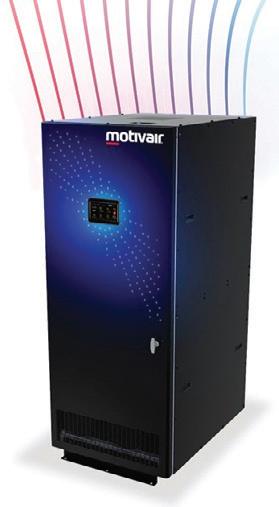
Coolant distribution unit for high-density data centres
Motivair by Schneider Electric’s new 2.5 MW coolant distribution unit (CDU) is designed to cool high-density data centres reliably, at scale.
The MCDU-70 is the highest-capacity CDU available from Motivair. It is a flexible and scalable solution for meeting the rigorous demands of next-generation GPUs and gigawatt-scale AI factories.
The compact unit aligns with the needs of large-scale facilities, such as NVIDIA Omniverse DSX Blueprint, where deployments target 10 MW to reach gigawatt scale. At 2.5 MW each, six MCDU-70s can provide a 4+2 redundancy for these designs, and the unit’s capacity is fit to service NVIDIA’s GPU roadmap for the foreseeable future.
Engineered with dual heat exchangers, the MCDU70 provides proper parallel filtration at minimal system pressure drop, and maintains the industry target of 1.5 LPM per kW while protecting system efficiency from rack to plant. Schneider Electric says every CDU model undergoes rigorous real-world condition testing, enabling digital twin simulations and end-ofline testing where pumps run at full load right at the end of the production line. The company’s global network of experts supports customers from design through to maintenance.
The MCDU-70 is part of a comprehensive CDU range designed with a scalable, building block style, so that operators have greater flexibility to choose the right model for their specific AI deployment goals. Utilising Schneider Electric’s EcoStruxure software, Motivair’s CDUs operate as a centralised system, meeting today’s cooling requirements with the ability to scale to 10 MW+ for next-gen HPC, AI and accelerated computing workloads. The full range of CDUs (MCDU-25 through to MCDU-70 models) supports advanced thermal management strategies with precise flow control, real-time monitoring and adaptive load balancing for optimised plant performance and reduced energy consumption.
The MCDU-70 is available to order globally. Schneider Electric www.se.com/au
Clear sheath VSD cables
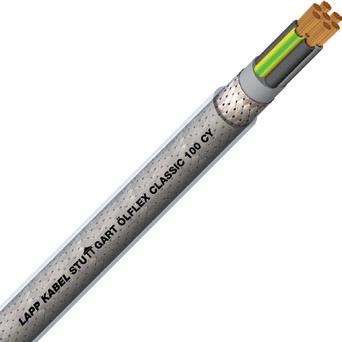
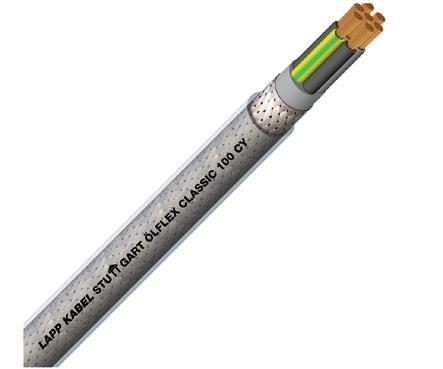
LAPP Australia’s ÖLFLEX Classic 100 CY series of clear sheath variable speed drive (VSD) cables are engineered for flexibility, reliable screening, and clarity in identification across installations.
These ÖLFLEX VSD cables are designed with screened construction to mitigate high-frequency noise and electromagnetic interference — a common issue in VSD and EMC-intensive environments. This shielding supports reliable signal integrity for motor control, automation and data applications. The transparent PVC jacket offers mechanical protection and chemical resistance and also allows technicians to confirm it is a screened CY cable without stripping the outer sheath, simplifying installation and maintenance.
Available in various core counts and conductor sizes, the clear sheath VSD cables are suitable for a wide range of industrial use cases, including conveyor systems, servo drives, plant automation and other machinery where flexibility and EMC performance are essential.
LAPP Australia has extensive local stock, and its Australian team is available to help with specification and fast delivery nationwide.
LAPP Australia Pty Ltd lappaustralia.com.au
Overhead infrastructure system for data centres
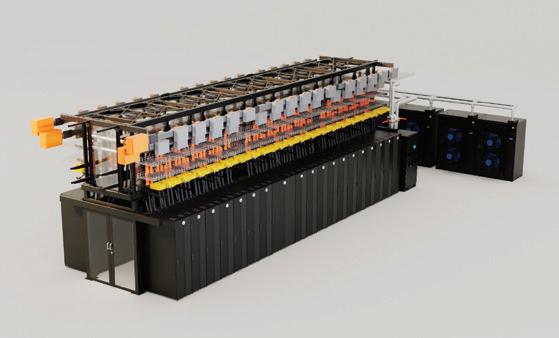
Vertiv SmartRun is a modular, prefabricated overhead infrastructure system designed to integrate power distribution busbar, liquid cooling piping network, hot-aisle containment, and network infrastructure into a single, scalable solution to support an accelerated data centre fit-out. This all-in-one solution reduces complexity and accelerates deployment times of cloud and AI training applications for greenfield and retrofit colocation as well as hyperscale data centres. The system delivers advantages in scalability and efficiency, providing an endto-end partnership in customer solutions while offering adaptable configurations to meet various design requirements. With prefabricated assembly, plug-and-play design, and a simplified one-lift installation process, Vertiv SmartRun is designed to enable data centre installations greater than 1MW per day with just a single crew. The pre-designed system reduces labour needs for engineering review and installation of busway, piping, network cabling, and hot-aisle containment systems, offering a streamlined approach to integrating overhead infrastructure.
The system also addresses the whitespace challenges of incorporating new heat-removal technologies into AI data centres by integrating a secondary fluid network (SFN) into the Vertiv SmartRun design. Prefabricated stainless steel piping systems mitigate the complexities of design, fabrication and start-up, providing a single source for end-to-end data centre liquid-cooling support.
Vertiv Australia Pty Ltd www.vertiv.com/en-asia/
PROTECTING YOUR ENCLOSURES FROM ENVIRONMENTAL HAZARDS
iPhone users can dive to a maximum depth of six metres for up to 30 minutes with the new iPhone 15, rated IP68. Ingress Protection (IP) ratings provide valuable information about the protection level of an electrical enclosure against the intrusion of solid objects and liquids. Here David Strain, Technical Director at systems integration company Technidrive, explores the importance of IP ratings to protect equipment from common environmental hazards in industrial applications.
Ingress Protection ratings were introduced to standardise the performance expectations for electrical enclosures and mechanical casings. It’s essential to understand the IP rating system established by the International Electrotechnical Commission (IEC), as it provides a clear indication of industrial equipment’s ability to withstand environmental factors, particularly water and dust.
IP ratings are composed of two digits, each establishing a specific level of protection. The first refers to protection against solid objects, while the second indicates protection against liquids. Devices with higher IP ratings, like IP65 or IP66, offer better protection against dust, rain and even corrosive substances, safeguarding equipment and ensuring uninterrupted functionality. However, higher IP ratings do not necessarily mean better protection across the board. For example, an IP rating of 68 provides protection against dust and continuous immersion in water, but it might not be suitable for areas with high humidity levels because it may not protect against condensation.
The degree of protection against solid contaminants is indicated with a number from zero to six. A higher number indicates a higher level of protection against finer contaminants. In the case of liquids, the degree of protection against ingress is indicated with a number from zero to nine. However, for liquids, higher numbers do not necessarily indicate the component’s ability to withstand a larger amount of water.
If you are unsure about what IP rating your equipment requires, an expert system integrator can assist you and recommend the most suitable solution tailored to your business needs. Many industrial sectors require components with IP ratings, including marine, food
processing, pharmaceutical manufacturing and the agricultural sector. In fact, almost all industrial settings will experience some risk of ingress — particularly if the environment in which it operates is outdoors or subject to water, heat or dust.
In these cases, electrical components must be able to withstand solid contaminants, water splashes and intensive cleaning. Motors and gears have specific IP ratings because these are also affected by solid and liquid contaminants depending on the environmental conditions. For example, a gear motor with an IP54 rating is dustproof and provides protection against water splashed from all directions.
In the case of the water treatment industry, operators should note that electrical systems will react differently to fresh water than to salt water, leading to more extensive corrosion. Consideration must also be given to how often exposure occurs and where the system may be submerged. In some situations, preliminary testing may even be required to ensure that an IP rating is appropriate for a particular industrial application.
As you wouldn’t take underwater photos with an iPhone without checking its IP rating, similarly, ensuring that your plant equipment can function optimally in its environment is fundamental. Water- and dust-resistant products are essential for ensuring the continued productivity of manufacturing equipment and processes. To prevent component failures and unplanned downtime, manufacturers need to understand IP ratings to choose a suitable device for their business. Technidrive www.technidrive.co.uk
TAKING ACTION ON SUSTAINABLE COOLING
Demand for cooling is set to triple by 2050, due to population increases, more extreme-heat events, and a rising number of lowincome households gaining access to inefficient cooling.
These are the findings of a new UN report, launched at COP30 in Belém, Brazil, which has detailed a strategy to achieve more sustainable cooling — significantly cutting emissions and costs while protecting global populations from rising heat.
The report, ‘Global Cooling Watch 2025’, warns that a business-as-usual approach will result in double the cooling-related greenhouse gas emissions of 2022, pushing cooling emissions to an estimated 7.2 billion tons of CO2e by 2050 and overwhelming power grids during peak load. This is set to happen despite current efforts to improve energy efficiency and phase down climatewarming refrigerants.
To avert this disastrous state of affairs, the report suggests adopting a ‘Sustainable Cooling Pathway’, which could reduce emissions to 64% — 2.6 billion tons of CO2e — below the levels expected in 2050. When combined with rapid decarbonisation of the global power sector, residual cooling emissions could fall to 97% below business-as-usual levels.
“As deadly heatwaves become more regular and extreme, access to cooling must be treated as essential infrastructure alongside water, energy and sanitation,” said Inger Andersen, Executive Director of the UN Environment Programme (UNEP).
“But we cannot air condition our way out of the heat crisis, which would drive greenhouse gas emissions higher and raise
costs. Passive, energy efficient and naturebased solutions can help meet our growing cooling needs and keep people, food chains and economies safe from heat as we pursue global climate goals.
“We have no excuse: it is time we beat the heat.”
What does a sustainable cooling pathway look like?
UNEP’s Sustainable Cooling Pathway suggests a mix of the following: passive cooling strategies; low-energy and hybrid cooling that combines fans and air conditioners; rapid adoption of high-efficiency equipment; and accelerated phase-down of hydrofluorocarbon (HFC) refrigerants under the Kigali Amendment.
Nearly two-thirds of the emissions cuts available would come from passive and lowenergy solutions, reinforcing the urgency of embedding them in national policies and urban planning. UNEP said such solutions are also highly affordable and critical for improving access to cooling for three billion more people by 2050. If adopted, the Pathway could save US$17 trillion in cumulative energy costs through to 2050, and avoid up to US$26 trillion in grid investment through reduced electricity demand.
Joining together to beat the heat
The Pathway underpins the Mutirão Contra o Calor Extremo/Beat the Heat implementation drive — a collective effort led by the Brazil COP30 presidency and UNEP Cool Coalition — to localise COP28’s Global Cooling Pledge and bridge gaps in policy, finance and delivery of heat resilience and urban cooling. Today, over 185 cities and 83 partners have joined Beat the Heat, alongside the 72 Global Cooling Pledge signatories. The Pledge aims to reduce cooling-related emissions by 68% from today by 2050, significantly increase access to sustainable cooling by 2030, and increase the global average efficiency of new air conditioners by 50%. (Australia is not among the 72 signatories.)
H.E. Grace Fu, Singapore’s Minister for Sustainability and the Environment, said that as a Global Cooling Pledge signatory, Singapore was taking concrete steps towards Pledge implementation and was proud to support the Beat the Heat initiative by sharing its technical expertise and experience in sustainable cooling and urban heat resilience.
“Singapore will bring together Global Cooling Pledge focal points, policymakers
and practitioners from around the world for a review of Pledge progress and a deep dive on sustainable cooling and heat resilience solutions,” Fu said.
“Singapore will also share our technical capabilities from our Digital Urban Climate Twin to empower cities globally to better model, predict and mitigate urban heat,” she added.
Progress is patchy
Of the 72 nations to join the Global Cooling Pledge, 29 countries as of mid-2025 had established specific greenhouse gas reduction targets for the cooling sector, with a further five developing such targets, the UN said.
In total, 134 countries have incorporated cooling into their Nationally Determined Contributions (NDCs), National Adaptation Plans (NAPs), Long-term Low Emission Development Strategies (LT-LEDS), energy plans, or other national climate strategies.
However, only 54 countries have comprehensive policies across all three priority areas for cooling: passive cooling in building energy codes, minimum energy performance standards, and refrigerant transition. A further 78 countries cover two of these pillars, 40 cover only one, and 20 have yet to begin. The largest gaps are in African and Asia–Pacific countries, where much of the global rise in demand for cooling can be expected.
H.E. Lt. Gen. Bashir Mohamed Jama, Minister of Environment and Climate Change, Somalia, said that for Somalian cities like Dolow, Biadoa, Galkaio and Bossaso, sustainable cooling is not a luxury — it is a lifeline. “By joining Beat the Heat and working with the UNEP-led Cool Coalition, we aim to protect lives and livelihoods from intensifying heat while advancing climate commitments. Together with other cities, we can turn passive cooling and innovation into resilience for the most vulnerable urban communities,” Jama said.
To increase action, the UNEP report has issued a series of recommendations, including moving from emergency response mode to proactive, multi-level governance on extreme heat and cooling. It urges nations to treat heat protection and cooling as a public good, and to prioritise passive and nature-based solutions — including urban design — to cut cooling loads, mitigate the urban heat island effect and reduce grid stress.
iStock.com/sturti
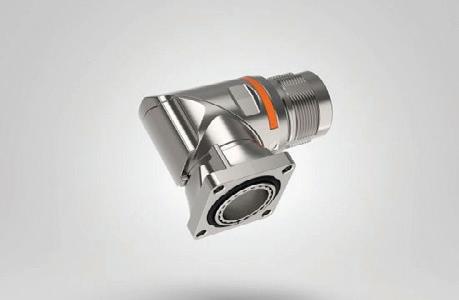
Circular connector
The EPIC M23P A3 Quickflex circular connector is designed for voltages of up to 1000 V and can be used directly on the servomotor.
Servomotors are used wherever high-precision drives are required. As they enable the exact control of angular positions, speed and acceleration, they are particularly useful in industrial automation, eg, controlling axes in CNC machines, robots and conveyor belts — but they are also deployed in production or the automotive industry. Reliable, robust connection solutions are required in these applications to supply motors with energy and withstand demanding industrial environments.
LAPP already has connection and control cables as well as servo assemblies that are specifically suitable for use on servomotors. With the rotatable EPIC M23 Power angle socket, its new connector is designed for direct connection to the servomotor, including signal transmission — especially in harsh environments where electromagnetic compatibility (EMC) is required.
The rotatable and angled M23 motor connector has a Quickflex quick-locking system that makes it easy to connect to the mating part. Locking takes place after one-eighth of a turn and can be plugged in with market standard connectors.
The EPIC M23P A3 Quickflex features the new Clean Design from LAPP and achieves protection class IP 68 when plugged in, making it easy to clean. The rotatable outlet on the motor allows an adjustable, defined outlet angle, offering flexibility when connecting.
The connector can be used at altitudes of up to 5000 m. Its die-cast zinc housing gives it stability, while the reinforced wall thickness makes it more robust mechanically and less sensitive to shock and vibrations — even with constant load changes. Its shorter housing lends it to robot applications where every millimetre counts, while the installation space for assembly remains the same. The connector can also be used with the coloured marking rings of the EPIC M23P series. This colour coding of LAPP connectors helps identify different axes and can act as a CI colour element for motor manufacturers.
Treotham Automation Pty Ltd www.treotham.com.au
Cabinet cable seal platform
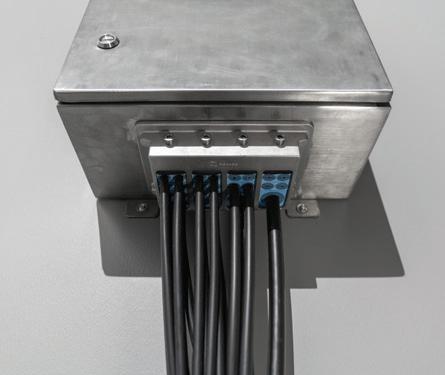
Cable and pipe seal provider Roxtec has launched the Roxtec CSP multi-cable transits, which are designed to be area-efficient, adaptable to cables of different sizes and quick and easy to install in cabinets and enclosures with high cable density.
Roxtec CSP transits are compact sealing solutions that help design engineers and electrical installers manage high cable density in a reduced footprint. They are designed for harsh environments and can either include Roxtec standard sealing modules, which protect against water, dust, sand and dirt; or Roxtec CM BG (bonding and grounding) modules to add an electrical safety feature for sealing of armoured cables.
The transits are quick to install in cabinets and enclosures because they have integrated compression and very few components — only the acid-proof stainlesssteel frame and the sealing modules with Roxtec Multidiameter, based on removable rubber layers and providing a tight fit for cables of many different sizes.
Available in two different sizes, it is possible to seal up to 16 or up to 32 cables in a single cut-out. The design allows installers to pass through pre-terminated cables without cutting the connector.
Built-in spare capacity enables early planning for upgrades or expansion with additional cables, without any need for drilling or punching new holes. It is possible to add cables in the field without making new openings or adding more sealing material.
Roxtec Australia www.roxtec.com
Converged industrial switch and PTP grandmaster
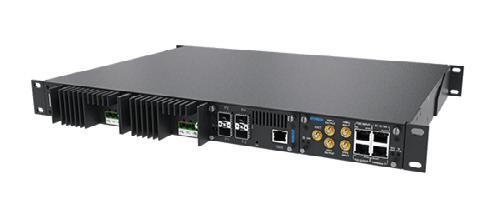
The Bitstream Hyperion-500 is a modular managed Ethernet switch designed for digital substations and 5G telecommunications. Housed in a 1U rack-mount chassis, its flexible 8-slot architecture supports up to 32 ports alongside four high-speed 1/2.5/10G SFP+ uplinks. Built for mission-critical reliability, it operates from -40 to +85°C and features universal high-voltage power inputs (80–350 VDC) for direct connection to substation batteries.
Beyond standard data transmission, the Hyperion-500 transforms into a highprecision PTP grandmaster when equipped with its modular GNSS timing engine. It supports specialised power profiles (IEEE C37.238 and IEC/IEEE 61850-9-3) and telecom profiles (ITU-T G.8275.1 and G.8265.1) for nanosecond-level synchronisation, while its on-board OCXO oscillator helps to ensure Stratum 1 holdover stability during GNSS signal loss.
The series prioritises network resilience through hardware-supported PRP and HSR redundancy protocols, supporting zero-loss failover without network convergence time during a fibre cut. Security is further enhanced with optional MACsec (IEEE 802.1ae) for wire-speed hardware encryption, complemented by IEEE 802.1x, RADIUS and TACACS+ authentication. By converging timing, switching and redundancy into a single hardened unit, the Hyperion-500 delivers a secure, synchronised solution for critical infrastructure.
Step Global is the authorised Australian dealer of BitStream networking solutions, offering local training, after-sales support, and service for each product.
Step Global Pty Ltd www.stepglobal.com
WHAT’S DRIVING APAC POWER AND RENEWABLES IN 2026?
Data centres and shifting energy policies are set to have a massive impact on the Asia–Pacific power industry in 2026.
That’s according to a recent report by Wood Mackenzie, a market insights company specialising in renewables, energy and natural resources.
While record-breaking data centre installations were a feature of 2025, 2026 will be defined by market maturation, regulatory pivots, and an emerging supplychain bottleneck in conventional generation, the company said.
The report, ‘Five trends to look for in Asia Pacific power & renewables’, highlights the following key factors shaping the market this year.
Data centres will drive demand
The global race for AI and data centre capacity is fundamentally changing electricity demand patterns. While the US and Europe are projected to represent 9% and 5% of global demand growth in 2026, respectively, compared to an average of 5% and 1% over the past decade, the Asia–Pacific region remains the global heavyweight.
According to Wood Mackenzie, the region is set to account for a whopping 85% of the 920 TWh in additional power required globally this year. China, the world’s largest power market, continues to expand at a scale twice that of the US, Europe and the rest of the Asia–Pacific combined. Outside of China, the region’s growth is fuelled by India and South-East Asia, which are expected to contribute 50% and 25% of the remaining regional demand growth, respectively.
“Data centres are no longer just a niche load; they are the primary driver of transformational demand across Asia–Pacific,” said Yanqi Cao, Senior Analyst, Asia Pacific Power Research, at Wood Mackenzie.
DATA
CENTRES ARE NO LONGER JUST A NICHE LOAD; THEY ARE THE PRIMARY DRIVER OF TRANSFORMATIONAL DEMAND ACROSS ASIA–PACIFIC. –YANQI CAO, SENIOR ANALYST, WOOD MACKENZIE.
“In Japan, a market that has seen a decade of energy demand decline, data centres are single-handedly reversing the trend. However, this growth is clashing with a global gas turbine supply crunch and a policy-driven reset in renewable markets that will test the region’s energy trilemma in 2026.”
Renewable momentum slowed by policy
After years of unbridled growth, the region’s two largest markets are hitting a ‘policy plateau’.
In China, solar and wind installations may decline for the first time in a decade, dropping to 318 GW in 2026. New merchant-pricing mechanisms (Policy No. 136) are forcing developers to face greater spot-market exposure, dampening near-term investment.
In India, despite a record 2025, tendering activity has slowed as the market rationalises a pipeline plagued by transmission congestion. 2026 will be a year of ‘quality over quantity’, with new tenders increasingly mandating storage and grid-flexibility obligations.
Corporations opt for direct power contracts
With wind-and-battery hybrid systems now costing one-third of utility tariffs in China and 30% less in premium markets like Japan and Taiwan, corporations are bypassing traditional utilities in favour of corporate power purchase agreements (CPPAs). 2026 will see the
full-scale implementation of ‘Green Power Direct Connection’ in China and Direct PPA frameworks in Thailand and Vietnam.
Energy transition threatened by gas turbine supply crunch
A critical infrastructure bottleneck has emerged: the global lead-time for heavy-duty gas turbines has extended to 5–8 years. While 2026 projects are mostly secured, failure to place orders this year will almost certainly result in project slippage for 2030 targets. This is a particular issue in South-East Asia: in Vietnam, for example, where gas is the primary ‘bridge’ away from coal.
Low-carbon fuel generation hindered by cost
For land-constrained markets like Singapore, Japan and South Korea, 2026 is a year where nations must face economic reality. Despite heavy subsidies, including Japan’s US$20 billion hydrogen Contracts for Difference (CfD) scheme, green hydrogen co-firing will maintain a massive premium over conventional LNG throughout 2026. Operators like JERA and Keppel will commission hydrogen-ready plants this year, but the long-term fuel supply remains a high-cost risk that many markets are still struggling to price.
WHY DO A FIFTH OF SOLAR PANELS DEGRADE RAPIDLY?
An Australian study has explored a critical problem for solar energy: the phenomenon of a significant portion of solar panels failing much faster than expected.
Scientists from UNSW Sydney analysed information from nearly 11,000 different photovoltaic samples globally. What they found was a socalled ‘long tail’ in the probability distribution of the performance data. Appearing on graphs showing the degradation rate per year of the panels, this tail indicates that up to 20% of all samples perform 1.5 times worse than the average.
This means that a significant number of panels do not degrade at a constant rate over a long period of time as might be expected, but instead lose energy or fail much sooner.
The discovery should help to raise the standard of solar panels and make solar farms more cost-effective and reliable.
“Most solar systems are designed to last around 25 years, based on their warranty period,” said Yang Tang, one of the authors of a paper on the subject published in IEEE
“For the entire dataset, we observed that system performance typically declines by around 0.9% per year. However, our findings show extreme degradation rates in some of the systems.”
Tang said that at least one in five systems degrade at least 1.5 times faster than this typical rate, and roughly one in 12 degrade twice as fast.
“This means that for some systems, their useful life could be closer to just 11 years. Or, in other words, they could lose about 45% of their output by the 25-year mark.”
Why does this happen?
The UNSW team, including Dr Fiacre Rougieux, Dr Shukla Poddar, Associate Professor Merlinde Kay and Tang, a PhD student from the School of Photovoltaic and Renewable Energy Engineering, analysed information collated previously by Dr Dirk Jordan from the U.S. Department of Energy’s National Renewable Energy Laboratory. This is a collection of the annual production data from tens of thousands of photovoltaic systems produced globally and includes statistics on performance and maintenance.
The long tail of rapidly failing solar panels in the graphed data is not just a statistical anomaly, according to the UNSW team. Their study found three major reasons for panels to be grouped in the long tail:
1. Interconnected failures
In this scenario, different types of problems interact with each other on an individual panel. For example, if the backsheet (a protective layer on the rear of a module) is damaged, moisture can get in, possibly causing a failure of the electrical junction box and other problems such as cell cracks or corrosion.
This domino effect, where the issues don’t just add up but instead multiply, can be seen to make panels degrade much faster than predicted.
2. ‘Infant mortality’
‘Infant mortality’ refers to rapid failure when modules are relatively new. These panels likely have critical manufacturing defects or material
WE NEED TO
START
THINKING ABOUT DIFFERENT
TESTING STANDARDS
WHICH WOULD HELP TO ENSURE WE HAVE MORE RESILIENT TYPES OF MODULES. – DR SHUKLA PODDAR
flaws that are not discovered in quality control or testing and therefore fail rapidly — sometimes within just a few years of installation.
3.
Minor flaws that go unseen
In this case, a minor flaw, such as a tiny hairline crack in a cell or slightly imperfect soldering, may not cause a problem initially, but can result in a sudden severe performance loss at a random point.
Climate variation ruled out
Importantly, the researchers found that the extreme degradation observed in these panels is not related to the climatic conditions they are exposed to. This rules out the possibility that the data was being skewed by samples placed in extreme environmental locations such as very hot deserts.
“A subset of the data shows information specifically related to solar modules in very hot climates which we know causes higher degradation,” Poddar said.
“However, in other climates, when those hot regions are being excluded from the analysis, we see similar long-tail pattern in the probability distribution of performance degradation rate. This suggests that the issue is consistent regardless of where the panels are operating.”
Poddar explained that current testing standards focus primarily on three parameters: the modules’ response to mechanical stress, extreme temperatures, and exposure to ultraviolet radiation. Panels are also tested often for humidity and response to a standardised amount of sunlight (AM1.5 spectrum).
“But when they are actually operating in real-world conditions there are so many different factors coming into play, and those cascading failures can be very significant,” Poddar said.
“So I think we need to start thinking about different testing standards which would help to ensure we have more resilient types of modules.”
Tackling the problem
For solar farms where hundreds of thousands of panels are installed, the long tail phenomenon represents a large financial risk, creating uncertainty in long-term energy yield and operational budgets.
“With this research, we are hoping to make real impact in three ways,” Poddar said.
“We would like to get even more data from large-scale solar farms to analyse realworld failure rates in even more detail, so we can then make recommendations to the manufacturers of these modules.
“Secondly, we aim to understand different factors contributing to module failures in different climate types to develop [an] early detection system and recommend manufacturers to improve design robustness.
“Thirdly, testing authorities should be informed of real-world degradation patterns across diverse climates and consider combining stress tests to better replicate outdoor operating conditions.”
CALLING ALL HVAC&R PROFESSIONALS
ARBS 2026, a major Australian exhibition for the air conditioning, refrigeration and building services industry, is returning to the Melbourne Convention & Exhibition Centre (MCEC) from 5–7 May 2026.
The event is expected to host more than 10,000 industry professionals, 350 exhibitors and over 100 seminars and technical sessions.
“ARBS 2026 is our most ambitious and comprehensive program yet,” said Amanda Searle, CEO, ARBS Exhibitions. “The industry is evolving at a rapid pace, whether through electrification, digitalisation, workforce development or energy innovation, and ARBS 2026 is where every part of our sector comes together to share knowledge to shape its future direction.”
Visitors to ARBS 2026 can expect to see the latest HVAC&R and building services technology, including equipment, components, controls, software, automation, digital engineering and energy-optimisation solutions.
The event will introduce several new dedicated precincts, including the IBTech Pavilion, featuring the latest in intelligent
building technology; the International Pavilion, bringing global manufacturers and innovators to Australian audiences; and the Education Pavilion, connecting apprentices, students, educators and employers with the skills and workforce pathways necessary to shape the sector’s future.
The Presentation Theatre on the show floor will host free live demonstrations, with real-time product testing, system walk-throughs and new product launches.
ARBS 2026 will also feature a contentrich seminar program, industry tours, networking events and the prestigious ARBS Awards. Registration is free for all industry professionals.
ARBS Exhibitions Pty Ltd www.arbs.com.au
What: ARBS 2026 When: 5–7 May 2026
Where: Melbourne Convention & Exhibition Centre Register: arbs.com.au/arbs2026/
Westwick-Farrow Media
A.B.N. 22 152 305 336 www.wfmedia.com.au
Head Office
Unit 5, 6-8 Byfield Street, North Ryde
Locked Bag 2226, North Ryde BC NSW 1670 Ph: +61 2 9168 2500
Editor: Katerina Sakkas ecd@wfmedia.com.au
Publishing Director/MD: Janice Williams
Art Director/Production Manager: Linda Klobusiak
Art/Production: Kate Atkinson
Circulation: Alex Dalland circulation@wfmedia.com.au
Copy Control: Ashna Mehta copy@wfmedia.com.au
Advertising Sales: Tim Thompson Ph: 0421 623 958 tthompson@wfmedia.com.au
Liz Wilson Ph: 0403 528 558 lwilson@wfmedia.com.au
If you have any queries regarding our privacy policy please email privacy@wfmedia.com.au
ECD [ELECTRICAL+COMMS+DATA]: ISSN 2201-2702
Printed and bound by Dynamite Printing
All material published in this magazine is published in good faith and every care is taken to accurately relay information provided to us. Readers are advised by the publishers to ensure that all necessary safety devices and precautions are installed and safe working procedures adopted before the use of any equipment found or purchased through the information we provide. Further, all performance criteria was provided by the representative company concerned and any dispute should be referred to them. Information indicating that products are made in Australia or New Zealand is supplied by the source company. Westwick-Farrow Pty Ltd does not quantify the amount of local content or the accuracy of the statement made by the source.