Information and Communication Technology for the UK’s Inland Waterways ______________________________________________________________________________________
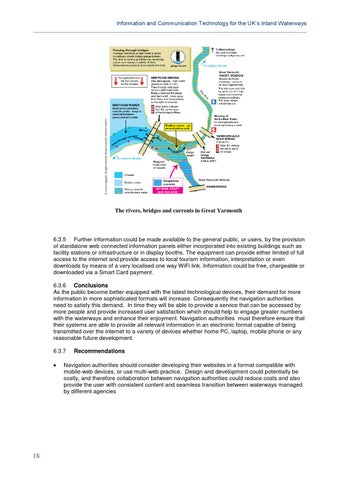
The rivers, bridges and currents in Great Yarmouth
6.3.5 Further information could be made available to the general public, or users, by the provision of standalone web connected information panels either incorporated into existing buildings such as facility stations or infrastructure or in display booths. The equipment can provide either limited of full access to the internet and provide access to local tourism information, interpretation or even downloads by means of a very localised one way WiFi link. Information could be free, chargeable or downloaded via a Smart Card payment. 6.3.6 Conclusions As the public become better-equipped with the latest technological devices, their demand for more information in more sophisticated formats will increase. Consequently the navigation authorities need to satisfy this demand. In time they will be able to provide a service that can be accessed by more people and provide increased user satisfaction which should help to engage greater numbers with the waterways and enhance their enjoyment. Navigation authorities must therefore ensure that their systems are able to provide all relevant information in an electronic format capable of being transmitted over the internet to a variety of devices whether home PC, laptop, mobile phone or any reasonable future development. 6.3.7 
18
Recommendations
Navigation authorities should consider developing their websites in a format compatible with mobile-web devices, or use multi-web practice. Design and development could potentially be costly, and therefore collaboration between navigation authorities could reduce costs and also provide the user with consistent content and seamless transition between waterways managed by different agencies