Sitting with friends in the multiplex cinema as the film began, I had not done my homework, so didn’t realise that the ‘star’ of the film was Mark. As this became apparent, I dissolved into a confusing mixture of emotions: anger at the hollowing out of the politics, nostalgia for the amazing spirit of solidarity that memories of the strike evoked, love and sadness at the memory of so many great people I met, worked with and got to know – some of whom have died in the three decades since. A mate of Jimmy Somerville, singer in Bronski Beat and The Communards, For a Friend, which ends the film, was written for and dedicated to Mark, who died of AIDS in 1987. “Summer comes and I remember how we’d march / We’d march for love and peace, together arm in arm.” Ray again: “Mark died, yes … if you thought the Gay Pride march in ’85 was moving, you should have seen the funeral. There were miners and miners’ wives sobbing. His death was like a stake in the heart, even for people who disagreed with his politics. There was something about his character – it’s portrayed so well in the film.”
Mark would be so pleased at being played by a gorgeous and brilliant actor (Ben Schnetzer). He was so cool he didn’t have to act it. Warm, welcoming, generous – most people automatically warmed to him, even political adversaries like Ray: “I’d have walked to China over red-hot coals for Mark Ashton. I loved him beyond words. The comradeship conquered the political disagreements.” As Peter Frost remembers (Morning Star 11.09.14) Mark “was many things, but he was first and foremost a communist. He never hid that fact … the film doesn’t mention [ apart from a brief heckle “commie” ] what was one of the most important factors that guided and inspired Ashton in all his actions.” Despite its weaknesses, Pride is a great film. Frost concludes: “It will make you laugh a lot and maybe cry a little, but crucially it will inspire you to action – and that is the only legacy Mark Ashton would have wanted.”
now for seven years, wondering how we can once more persuade people that it is worth standing up for each other, supporting causes against the odds and working with people to make good things happen. End
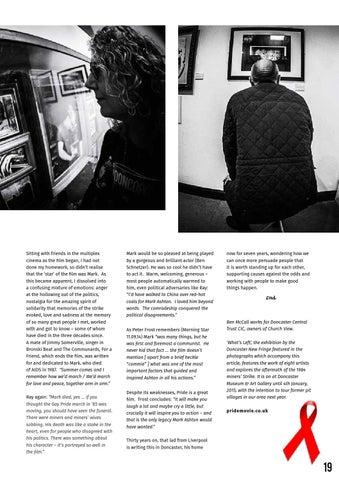
Ben McCall works for Doncaster Central Trust CIC, owners of Church View. ‘What’s Left’, the exhibition by the Doncaster New Fringe featured in the photographs which accompany this article, features the work of eight artists and explores the aftermath of the 1984 miners’ Strike. It is on at Doncaster Museum & Art Gallery until 4th January, 2015, with the intention to tour former pit villages in our area next year. pridemovie.co.uk
Thirty years on, that lad from Liverpool is writing this in Doncaster, his home
19