and direct action. It was really exciting. They were predominantly working class men and women from the North of England who were willing to trespass and say we have a right to roam. They went to jail for six months for having the audacity to walk on the hills and the beautiful countryside that is the Peak District. Yeah, I talk about that quite a lot. I was really curious to click on the Trespass playlist on your website, a great set of strange R&B, novelty records and weird jazz. Does that reflect your musical tastes? It reflects part of it, yeah. What I love is that when people come to the show you want to set the tone before it’s started. So I want to get people thinking in an
24
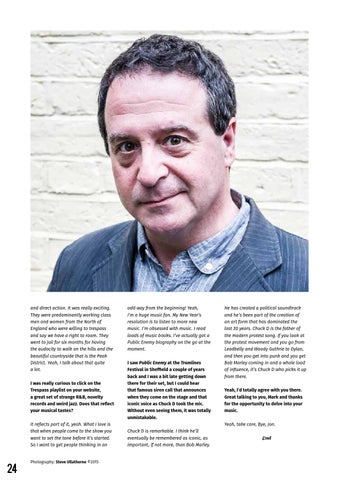
Photography: Steve Ullathorne ©2015
odd way from the beginning! Yeah, I’m a huge music fan. My New Year’s resolution is to listen to more new music. I’m obsessed with music. I read loads of music books. I’ve actually got a Public Enemy biography on the go at the moment. I saw Public Enemy at the Tramlines Festival in Sheffield a couple of years back and I was a bit late getting down there for their set, but I could hear that famous siren call that announces when they come on the stage and that iconic voice as Chuck D took the mic. Without even seeing them, it was totally unmistakable. Chuck D is remarkable. I think he’ll eventually be remembered as iconic, as important, if not more, than Bob Marley.
He has created a political soundtrack and he’s been part of the creation of an art form that has dominated the last 30 years. Chuck D is the father of the modern protest song. If you look at the protest movement and you go from Leadbelly and Woody Guthrie to Dylan, and then you get into punk and you get Bob Marley coming in and a whole load of influence, it’s Chuck D who picks it up from there. Yeah, I’d totally agree with you there. Great talking to you, Mark and thanks for the opportunity to delve into your music. Yeah, take care, Bye, Jon. End