The Visual Artists' News Sheet – Residency Special Issue July August 2026
Lismore Castle Arts
JulyAugust 2026
Exhibitions across 2 locations
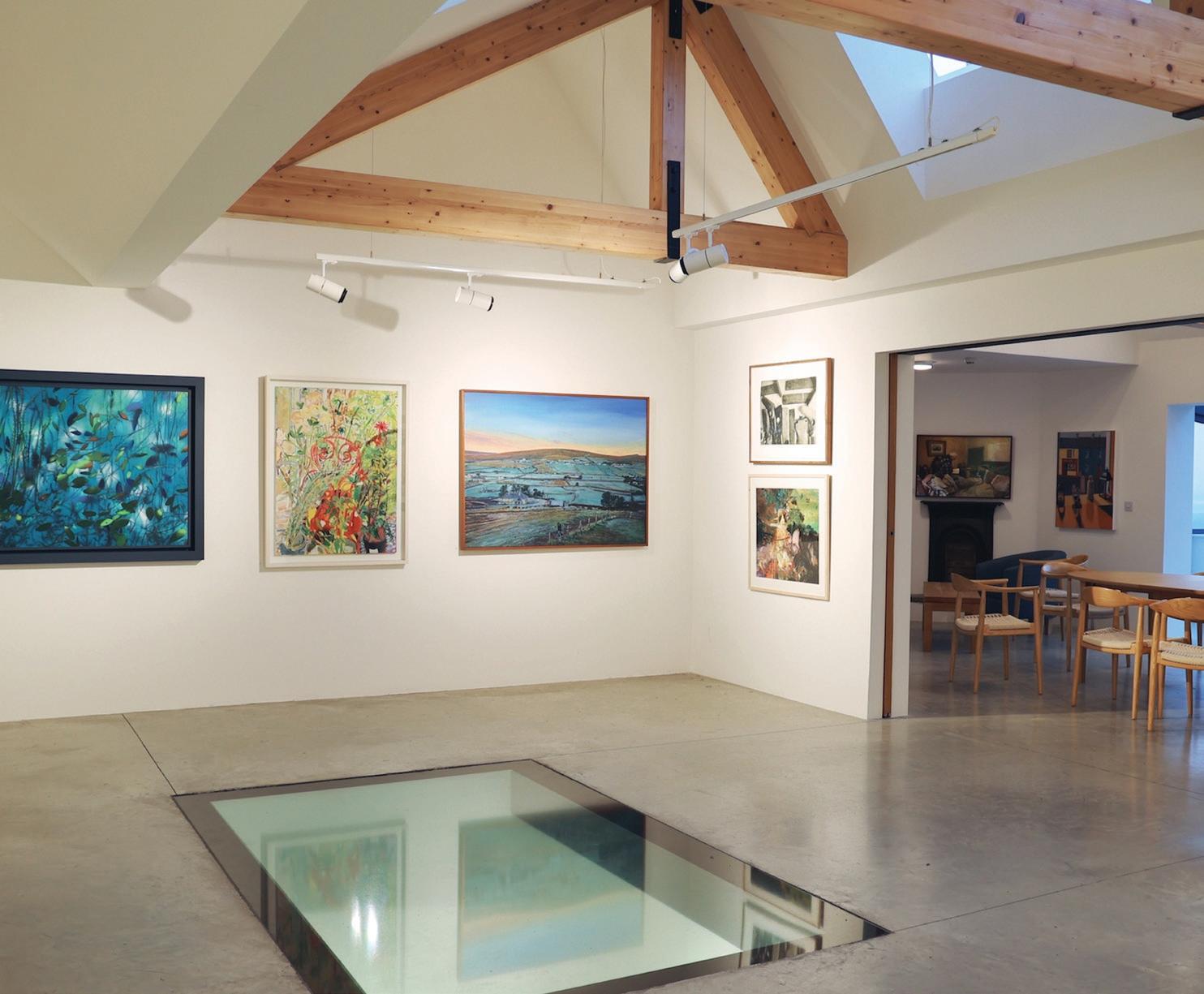
SALON A painting show curated by Matthew Higgs Anthony Banks, Karen Barbour, Margot Bergman, Casey Bolding, Lisa Brice, David Byrd, Gillian Carnegie, Diana Cepleanu, Billy Childish, Caroline Coon, Jane Corrigan, Andrew Cranston, Ann Craven, Verne Dawson, Brian DeGraw, Kaye Donachie, Simone Kennedy Doig, Denzil Forrester, Carole Gibbons, Huddie Hamper, Paul Housley, Brook Hsu, Merlin James, Chantal Joffe, Behrang Karimi, Adam Keay, Florian Krewer, Na Kim, Jennifer J. Lee, Bill Lynch, Alastair MacKinven, John Maclean, Elizabeth Magill, Alissa McKendrick, Noel McKenna, Stephen McKenna, Walter Price, Daisy Sheff, Amy Sheffer, Mike Silva, Pádraig Timoney, Caroline Walker.
25 April26 October 2026 Lismore Castle
Graduate Exhibition Curated by Muine Bheag Arts Curated by Paul McAree 27 June26 July 2026 116 August 2026 St Carthage Hall St Carthage Hall
Carthage Hall Chapel Street, Lismore Co Waterford, P51 WV96
JOSIE KO
+353 (0)58 54061 The Mill Ballyin, Lismore Co Waterford, P51 A2R5 Lismore Castle Lismore Co Waterford, P51 F859
Residency Special Issue: July – August 2026
ON THE COVER
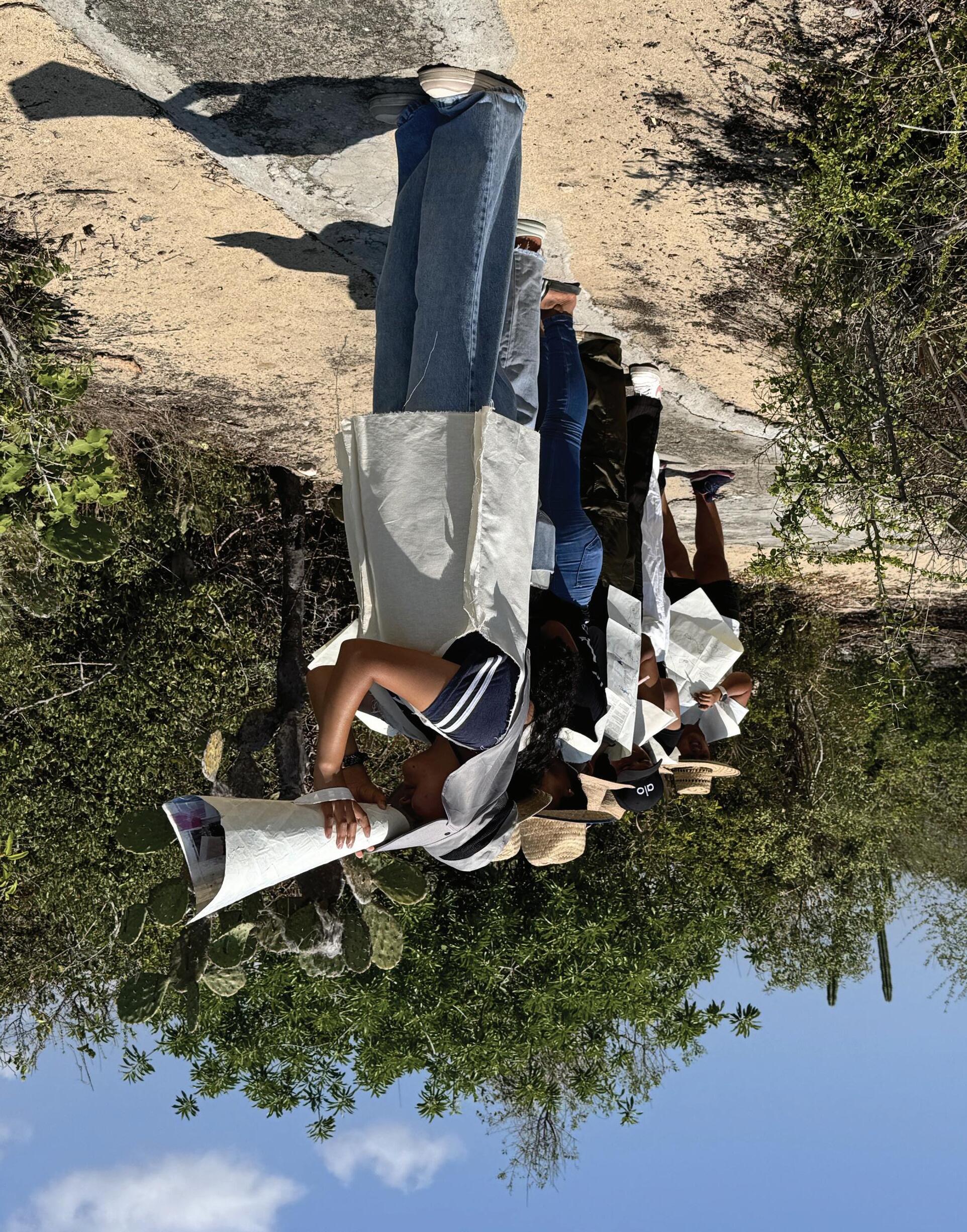
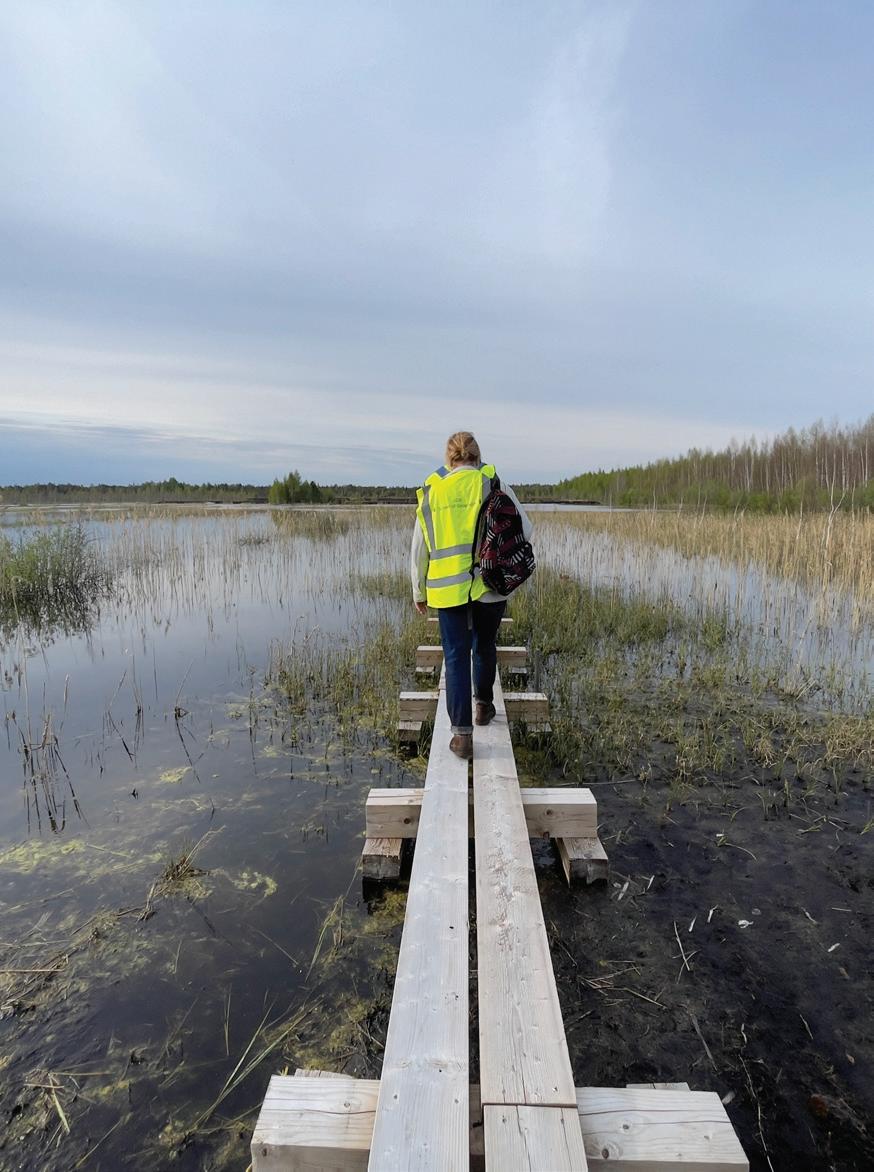
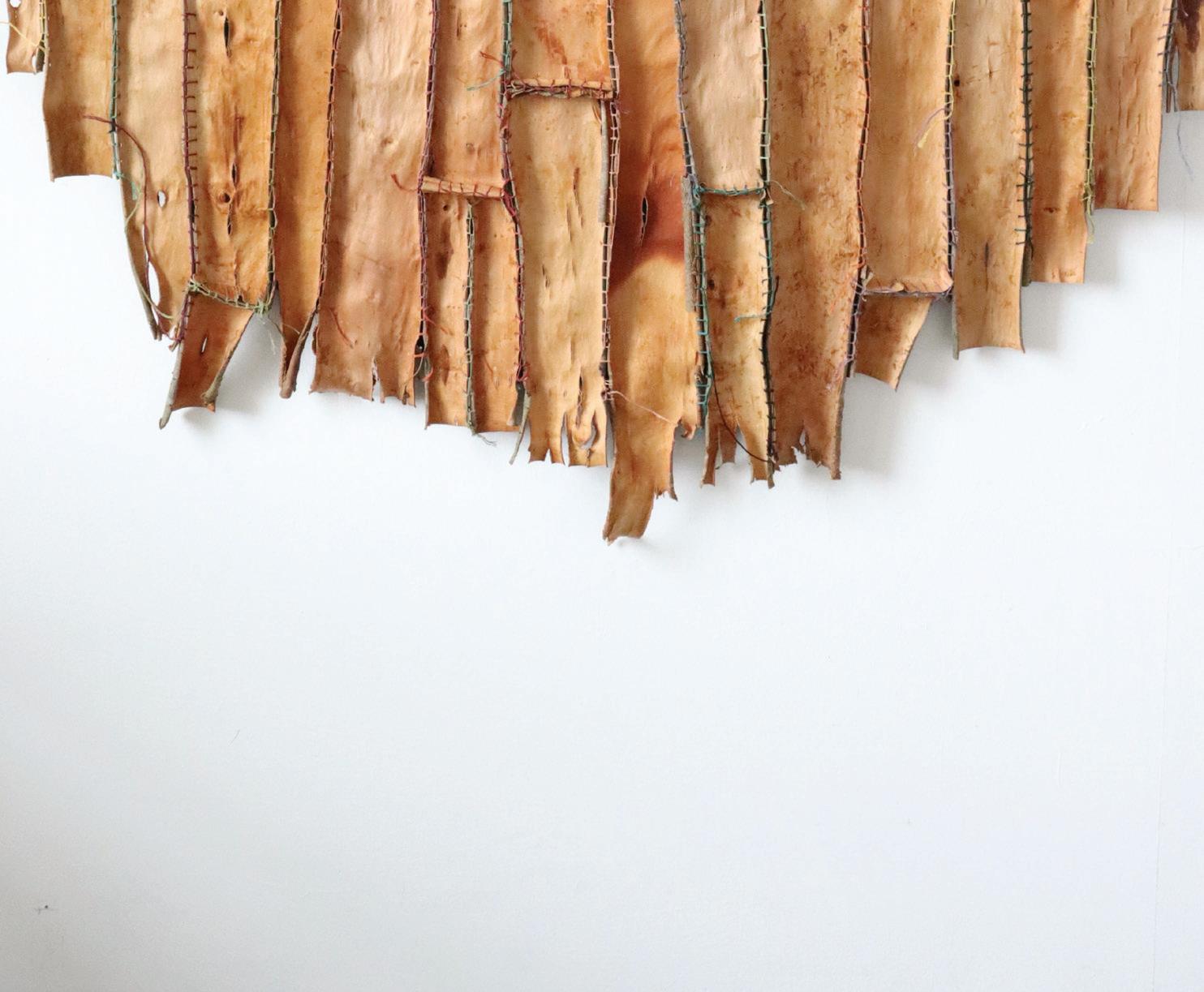
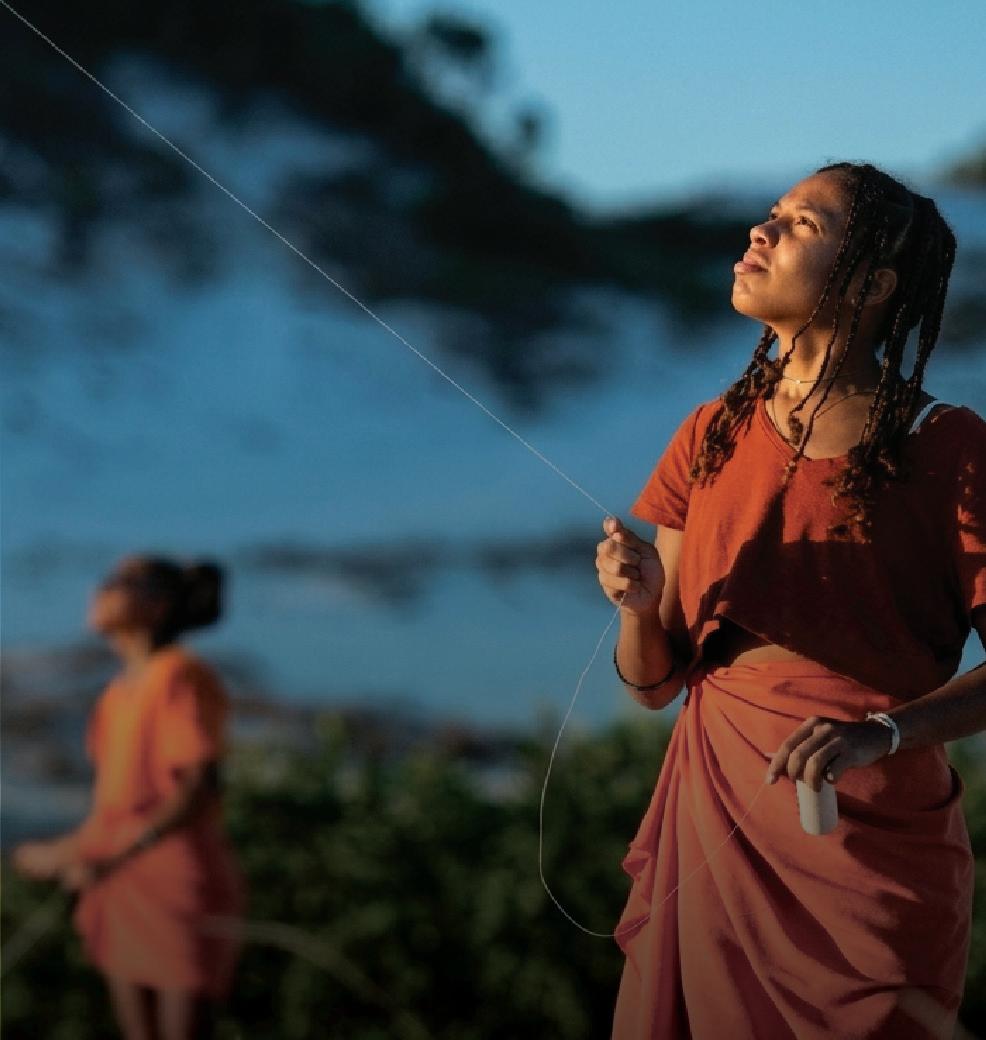
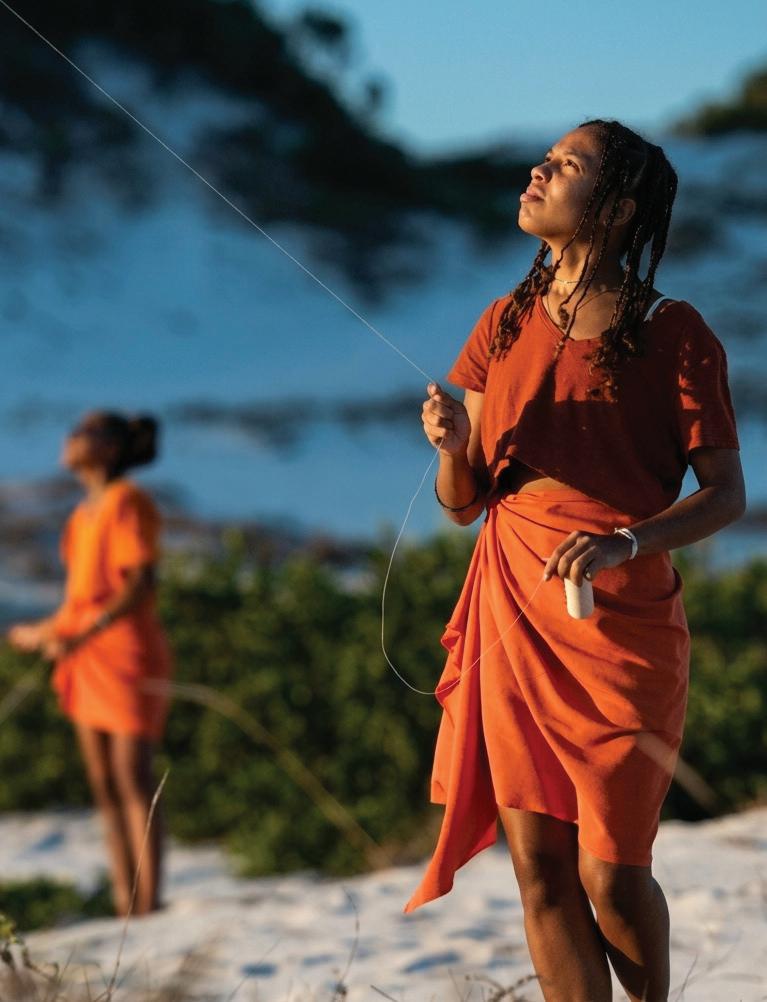
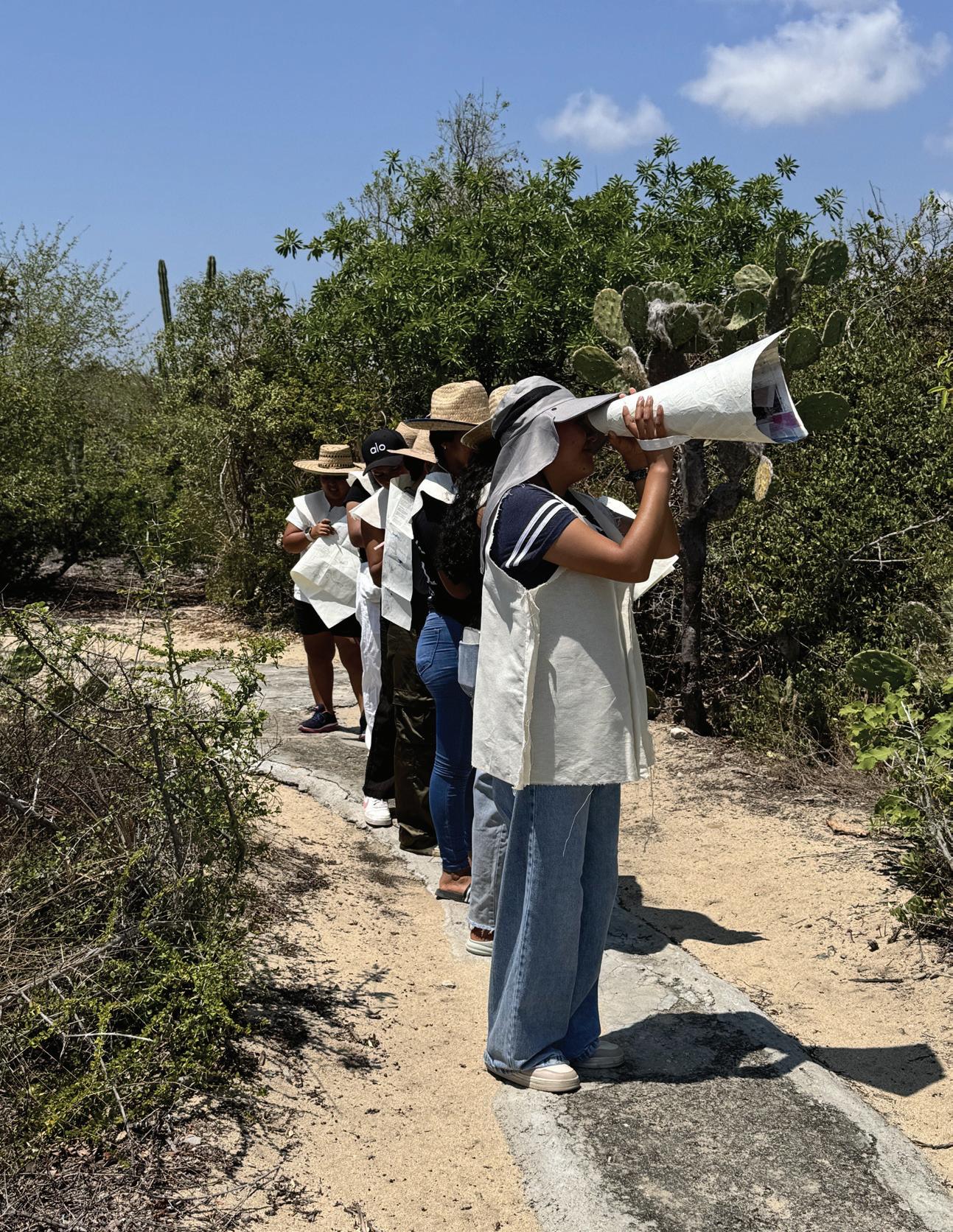
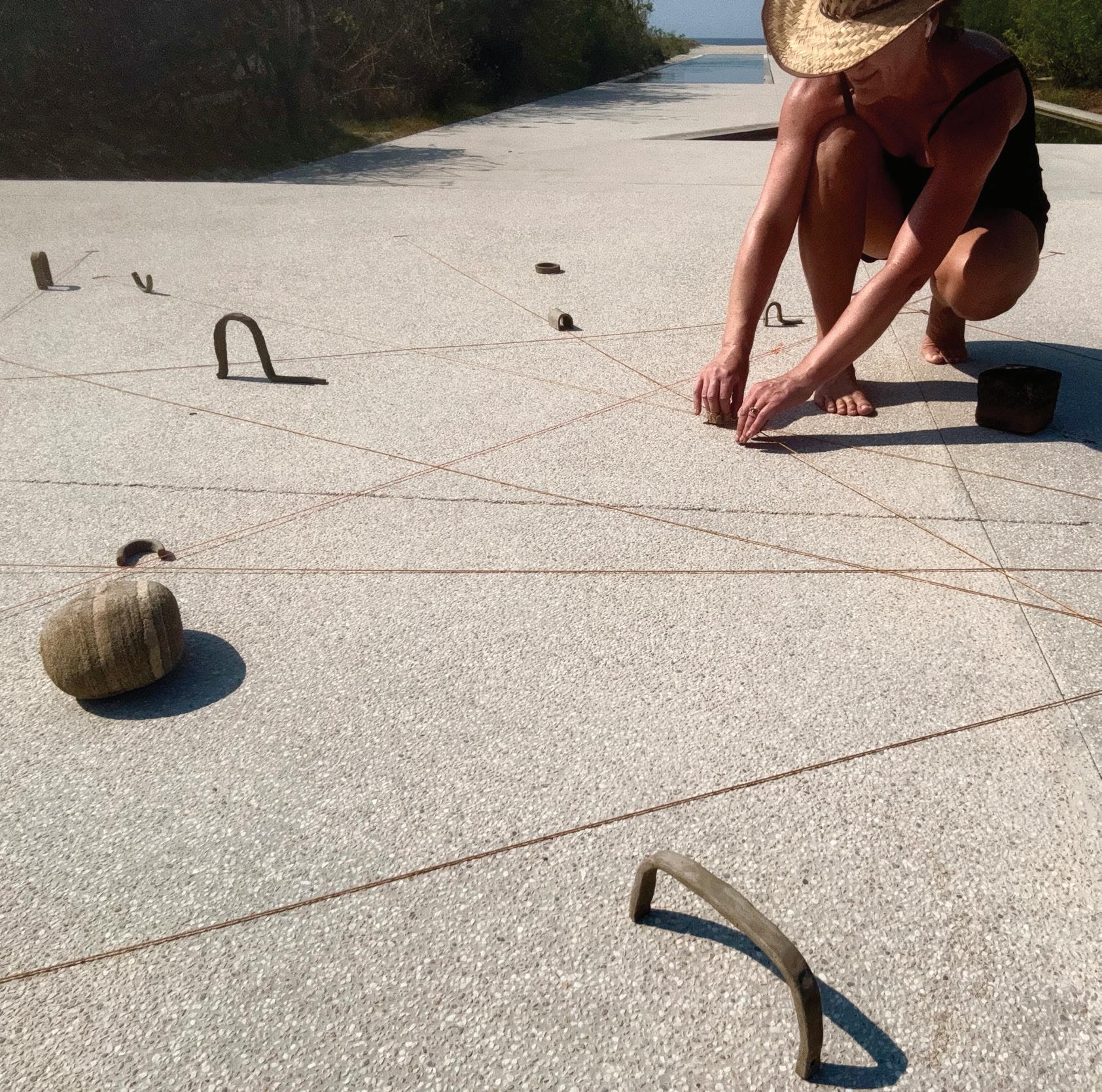
Elaine Grainger, How to Tread Lightly: Leaving Our Mark, 2026, community project at Foundation Casa Wabi, Mexico, April 2026; photograph by Elaine Grainger, courtesy of Foundation Casa Wabi.
COLUMNS
6 Editorial. Joanne Laws introduces the themed issue. Culture Moves Europe. Lucy Tevlin provides an overview of Culture Moves Europe grants for artists undertaking European residencies.
IRELAND RESIDENCIES
8 Residency Roundup: Ireland. Francesca Saracuta outlines funded visual artist residencies across Ireland. 10 Shared Conditions. Eoghan Ryan reports on his participation in the Dwell Here residency at IMMA.
Elemental Sanctuary. Shane Hynan reflects on his recent residency at the Burren College of Art. 12 A Week in Annaghmakerrig. Paul Bokslag reflects on his Age & Opportunity Tyrone Guthrie Residency.
13 The Bridge to Achill. Thomas Brezing reports on his experience of the Heinrich Böll Residency.
14 A Cosmic Spectacle. Louise Beer reflects on her experience as UCD College Of Science Artist-in-Residence with Mayo Dark Sky Park.
15 Dedicated Time. Clare Henderson reflects on the unique importance of residencies within her practice.
UNITED KINGDOM RESIDENCIES
16 Residency Roundup: UK. Laura Harvey Graham provides an overview of funded artist residencies across the UK.
18 Sacred Time. Aideen Barry reports from her interdisciplinary residency in Hospitalfield in Arbroath.
19 Uisce / Flora. Anna Macleod discusses her previous residencies at Edinburgh Sculpture Workshop.
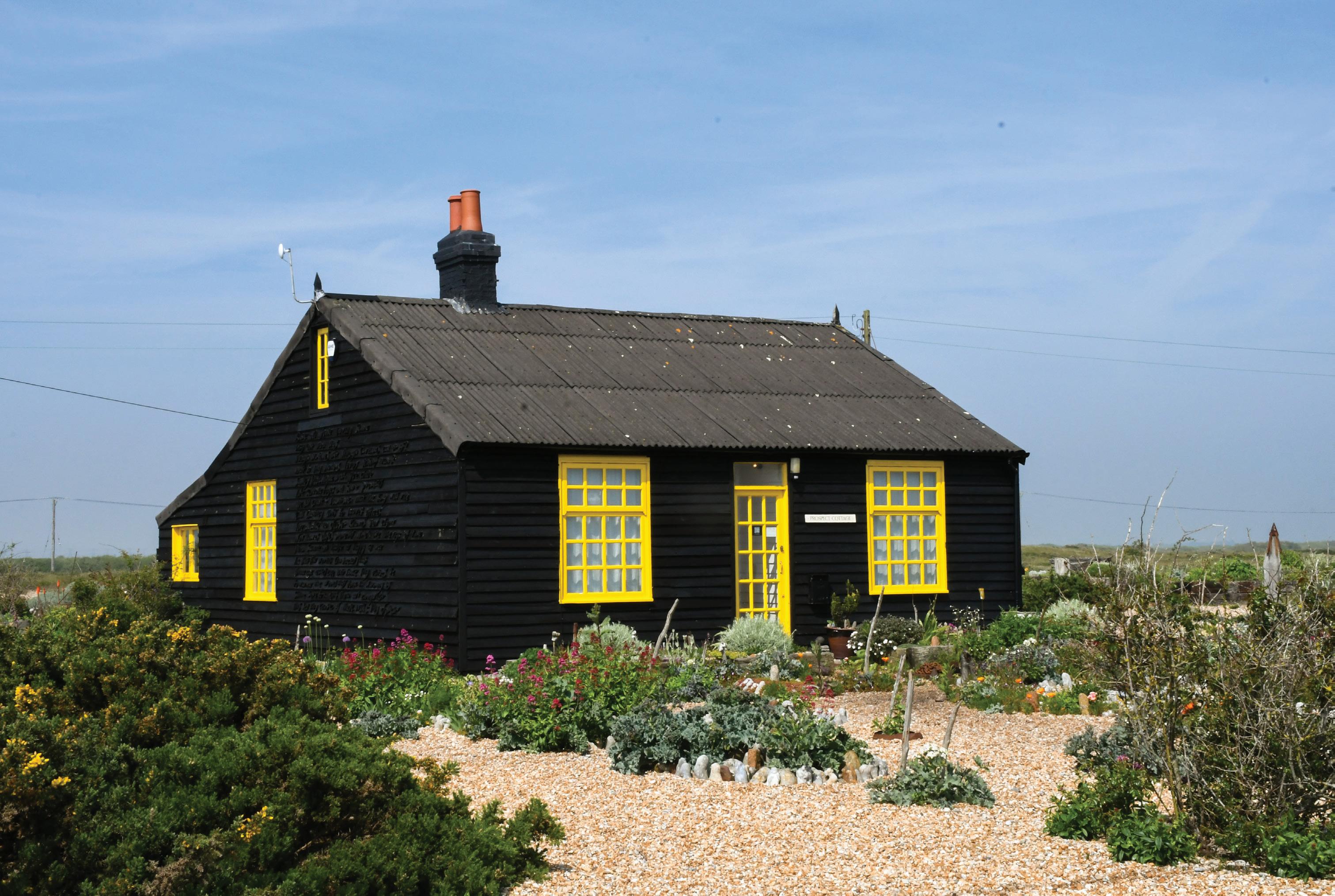
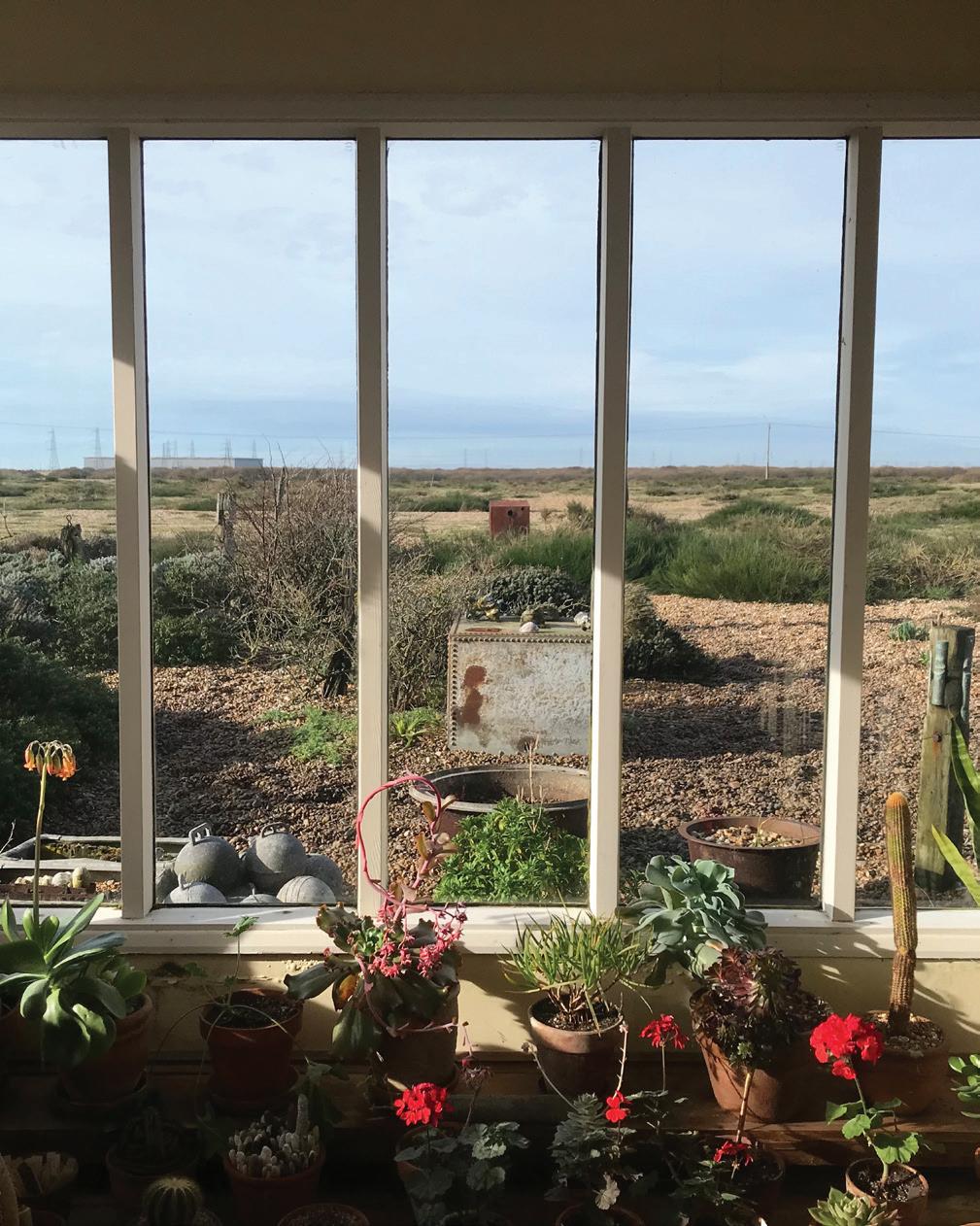
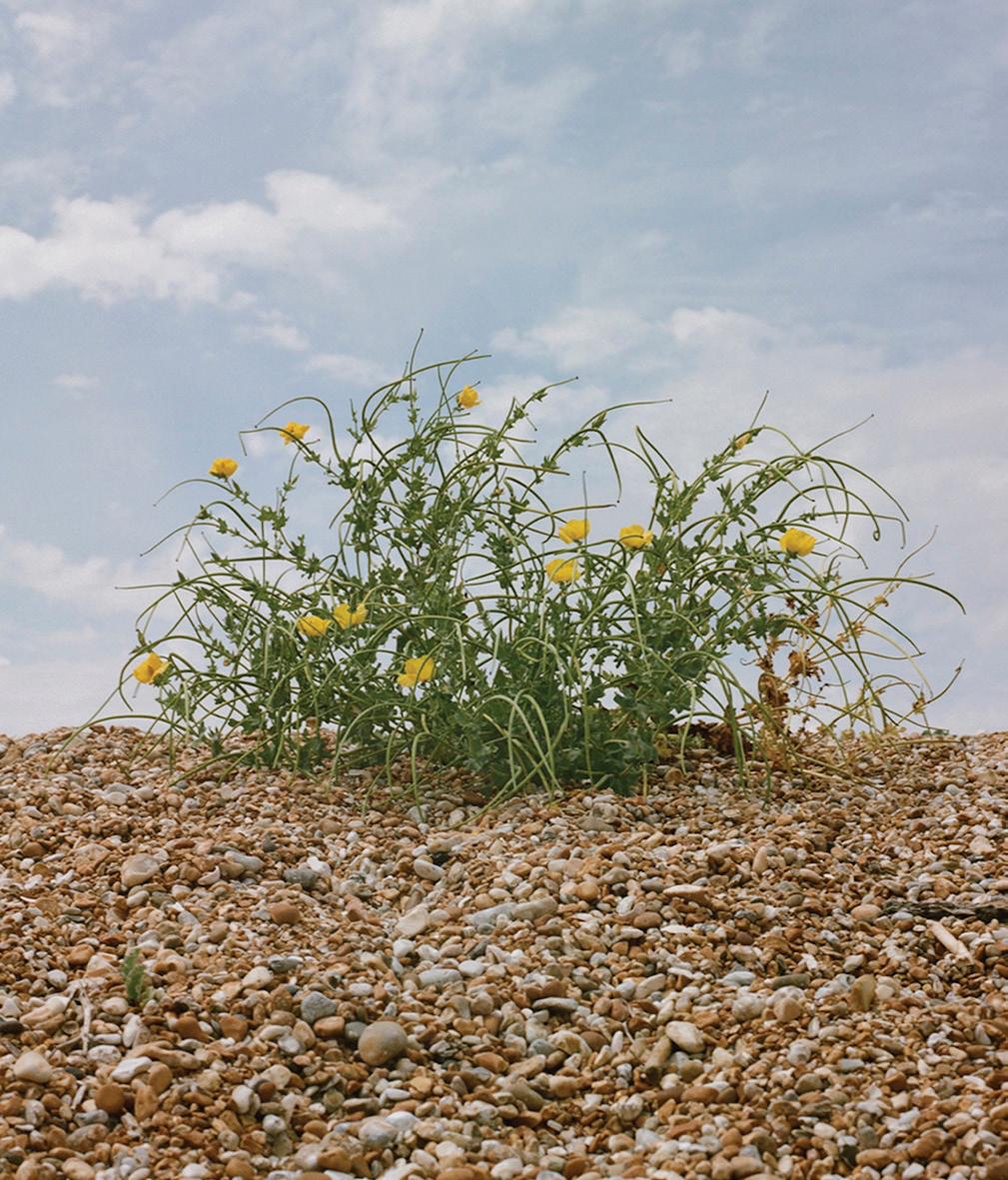
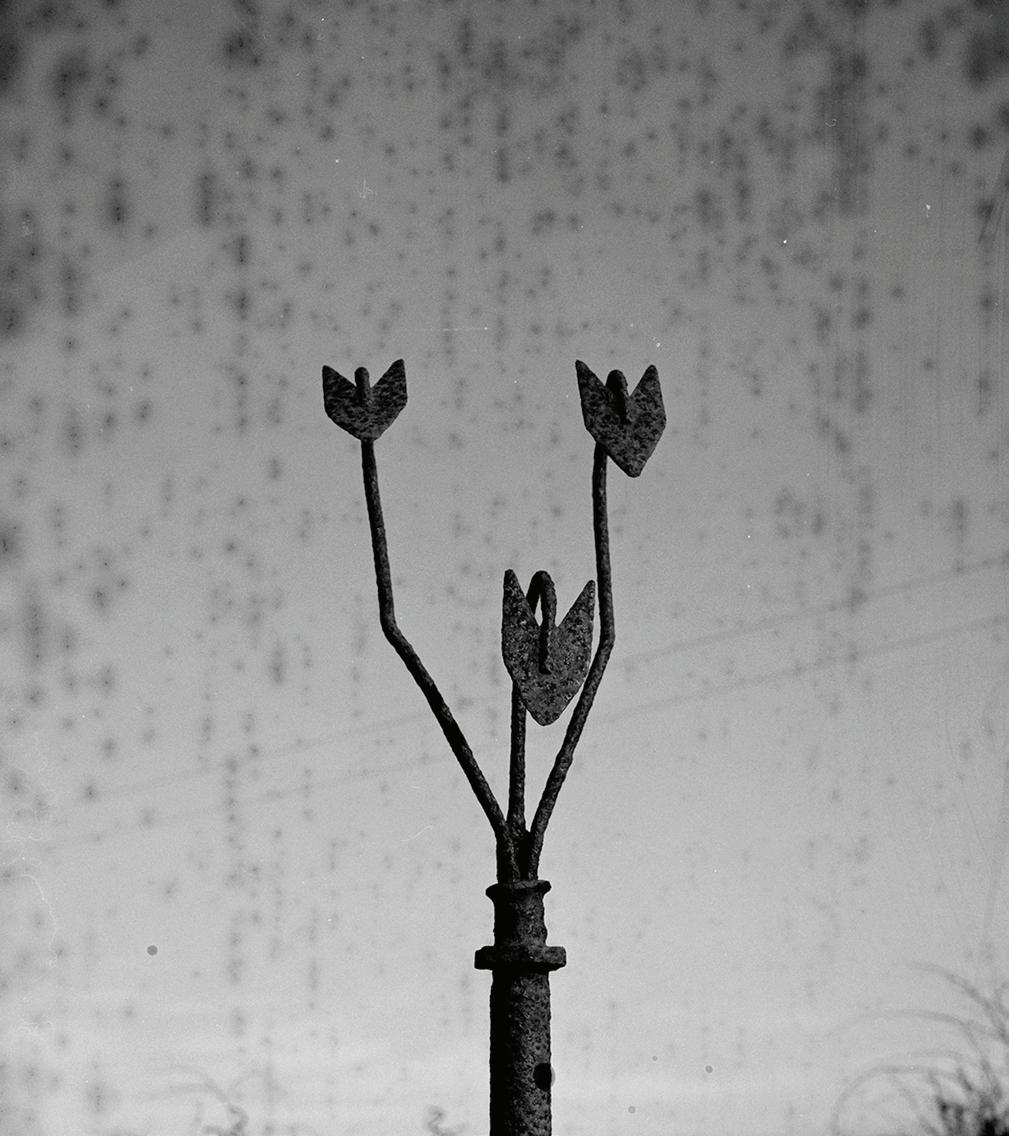
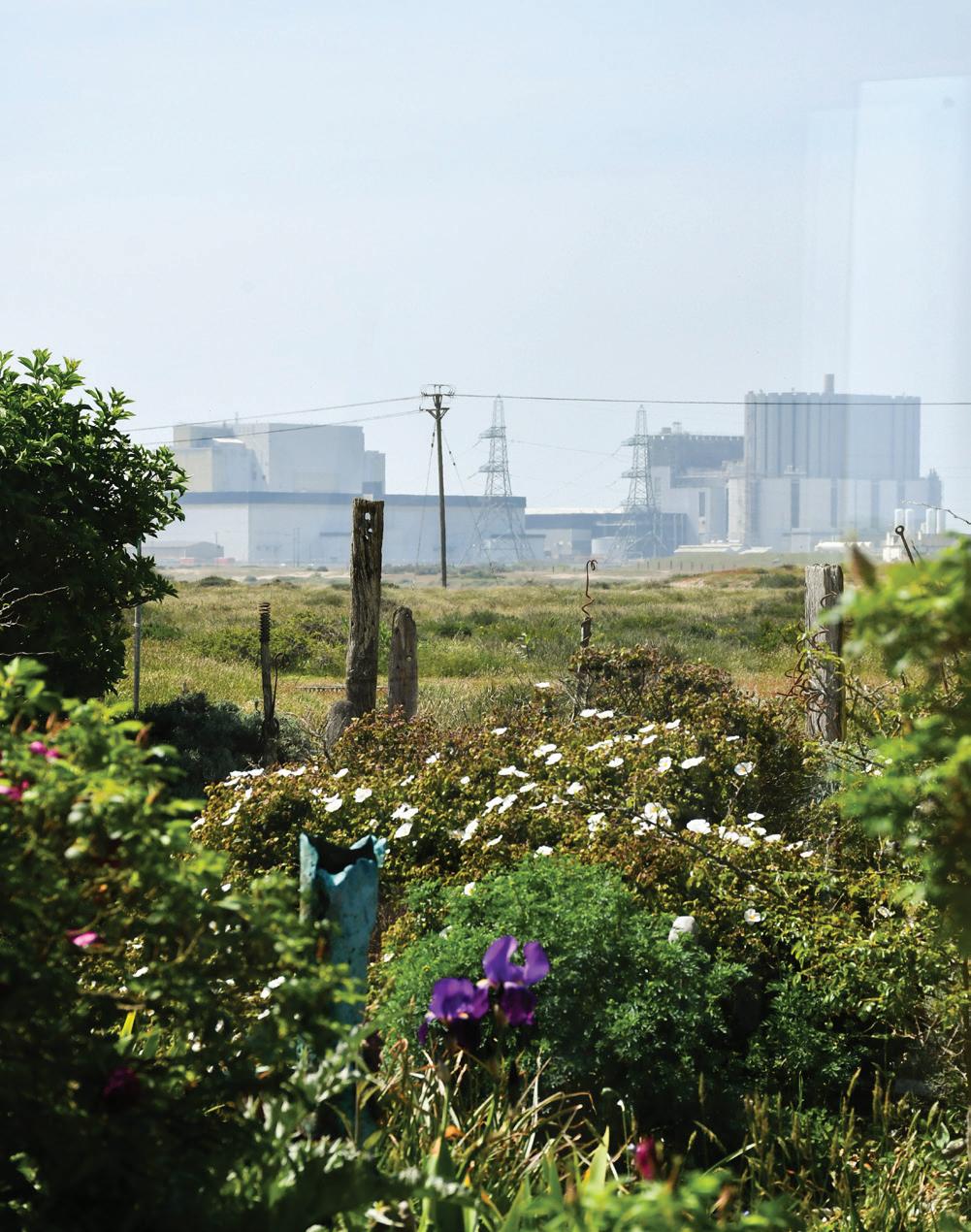
20 Prospect Cottage. Lynda Laird reports from the former home of Derek Jarman in Dungeness in Kent.
EUROPEAN RESIDENCIES
22 Residency Roundup: Europe. Tom Lordan provides an overview of funded artist residencies in Europe.
24 Cultural Hub. Shiro Masuyama reflects on his residency at Centre Culturel Irlandais Paris.
25 Ideas of Truth. Richard Malone reports on their residency experience in the British School at Rome.
26 To Only Not Know. Dorothy Hunter reports on the Magnetic Residency Exchange in Dunkirk.
27 Keys to the Castle. Avril Corroon reports on her ongoing residency at the Rijksakademie.
WORLDWIDE RESIDENCIES
28 Residency Roundup: US/Worldwide. Thomas Pool profiles funded artist residencies around the world.
30 Tropes of Melodrama. Eva Richardson McCrea reflects on her residency at ISCP in New York.
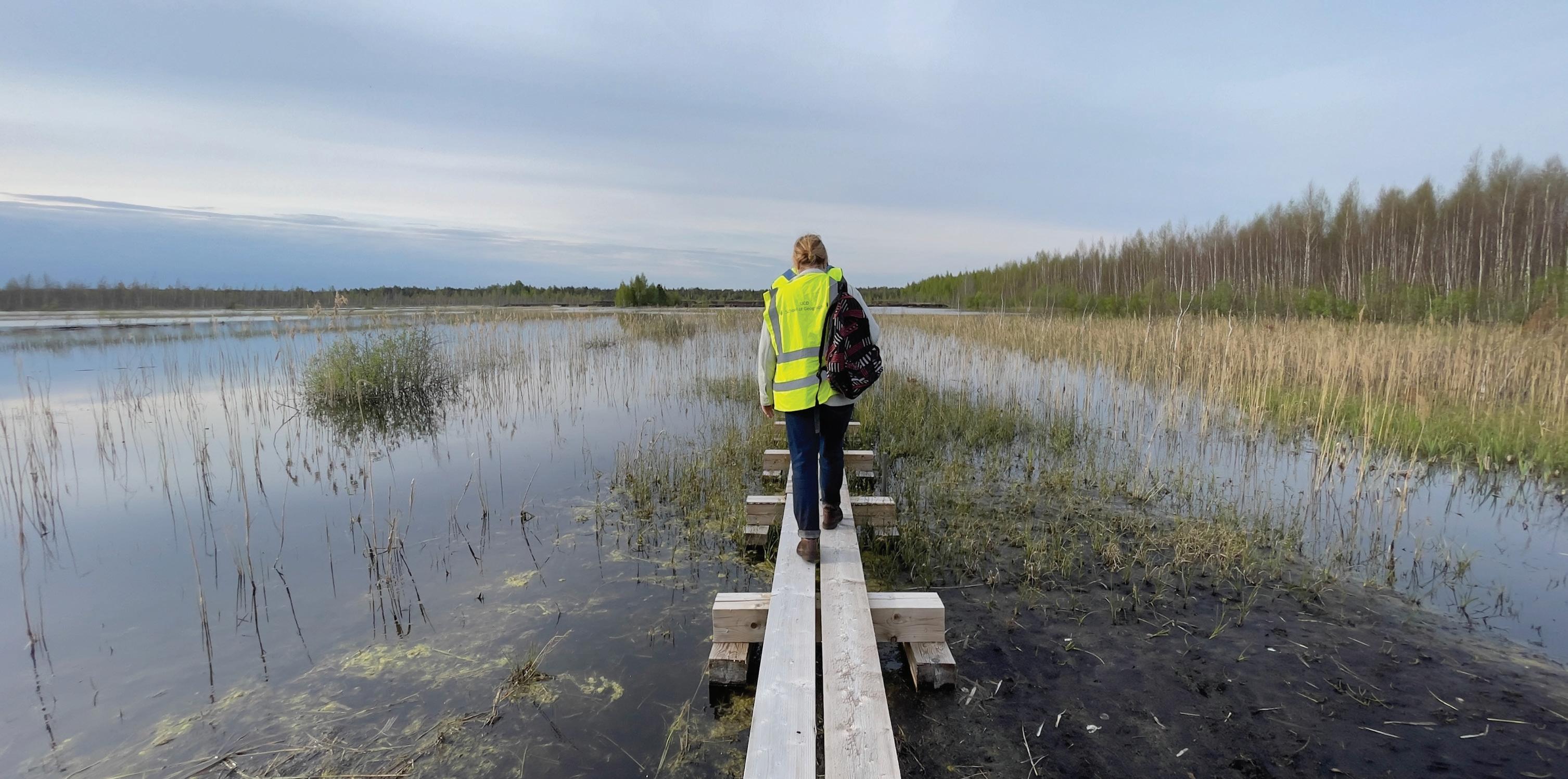
31 How to Tread Lightly. Elaine Grainger reflects on her residency at Casa Wabi in Puerto Escondido, Mexico.
32 Hyde Park Art Center. Léann Herlihy discusses their participation in a transatlantic residency exchange with Hyde Park Arts Center in Chicago.
33 Residency Roundup: Virtual. Joanne Laws profiles some remote residency programmes that visual artists can undertake from home.
PARENTING ARTIST RESIDENCIES
34 Residency Roundup: Parenting Artists. Ella de Búrca out lines some reputable residencies for parenting artists worldwide, both funded and non-funded.
35 Care in Practice. Emma Smith reports on Cow House Studio’s Parenting Artist Residency.
ECOLOGY & SUSTAINABILITY RESIDENCIES
36 Residency Roundup: Ecology. Joanne Laws outlines a selection of funded residencies with a focus on landscape, ecology, and sustainability.
37 WaterLANDS. Christine Mackey reports on her durational residency as part of an EU-funded project.
LAST PAGES
38 Opportunities. Current and forthcoming residencies.
Editor: Joanne Laws
Production/Design: Thomas Pool
News/Opportunities: Thomas Pool, Lucy O’Sullivan
Proofreading: Paul Dunne
CEO/Director: Noel Kelly
Office Manager: Grazyna Rzanek
Membership & Communications: Lucy O’Sullivan
Advocacy & Advice NI: Brian Kielt
Services Design & Delivery: Emer Ferran
News Provision: Thomas Pool
Publications: Joanne Laws
Accounts: Grazyna Rzanek
Special Projects: Robert O’Neill
Impact Measurement: Rob Hilken
Shared Island Advocacy: Brian Kielt
BOARD OF DIRECTORS
Deborah Crowley (Secretary), Michael Fitzpatrick (Chair), Lorelei Harris, Maeve Jennings, Gina O’Kelly, Samir Mahmood, Ben Malcomson.
REPUBLIC OF IRELAND OFFICE
Visual Artists Ireland
First Floor
2 Curved Street
Temple Bar, Dublin 2
T: +353 (0)1 672 9488
E: info@visualartists.ie
W: visualartists.ie
NORTHERN IRELAND OFFICE
Visual Artists Ireland
109 Royal Avenue
Belfast
BT1 1FF
T: +44 (0)28 958 70361
E: info@visualartists-ni.org
W: visualartists-ni.org
Page 37
August Short Film Screenings (on loop)
Tues 11, Wed 12, Thurs 13
Tues 18, Wed 19, Thurs 20
Tues 25, Wed 26, Thurs 27 10:00–15:30 each day
Free, no booking required, walk-in / walk-out in your own time.
Tobin St. Cork. T12 WYY0
Artist in the Community Scheme closing dates
Bursary Awards
Two
This
Closing Date 20th July 2026
Awards
Research and Development and Project Realisation Awards. Max value of €15,000
Closing date 28th September 2026
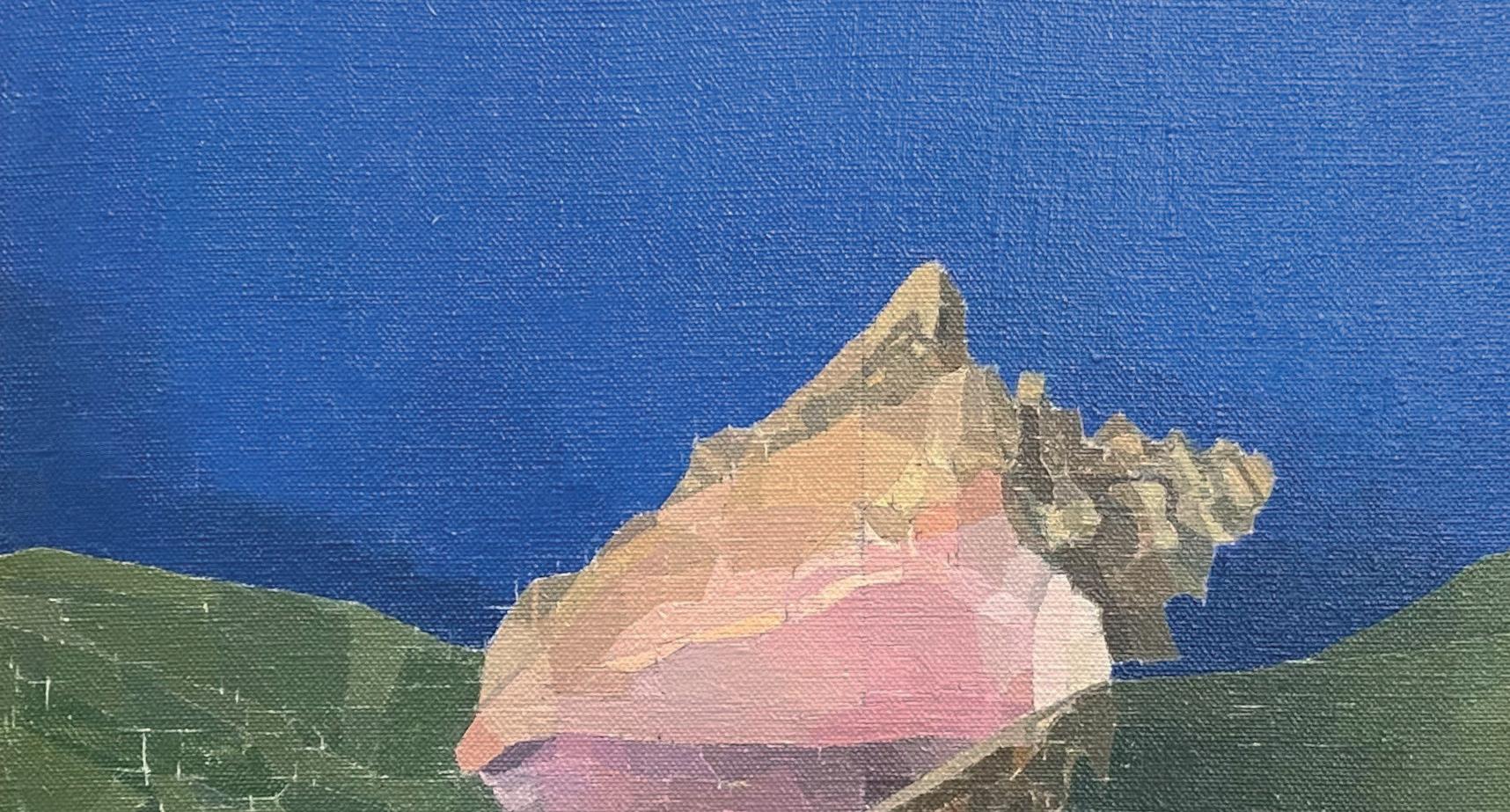
Selected work from the Drogheda Municipal Art Collection with invited artists Joanne Cartwright, Ann Mullen and Richard Moore
8 May – 2 August 2026
Curated by Highlanes Gallery’s Community Curatorial Panel: Robin Barnes, Bairbre English, John English, Eithne Hamill, Martin Kieran, Kay McQuaile, Oisín Ó Maoláin, Máire Uí Mhaoláin.
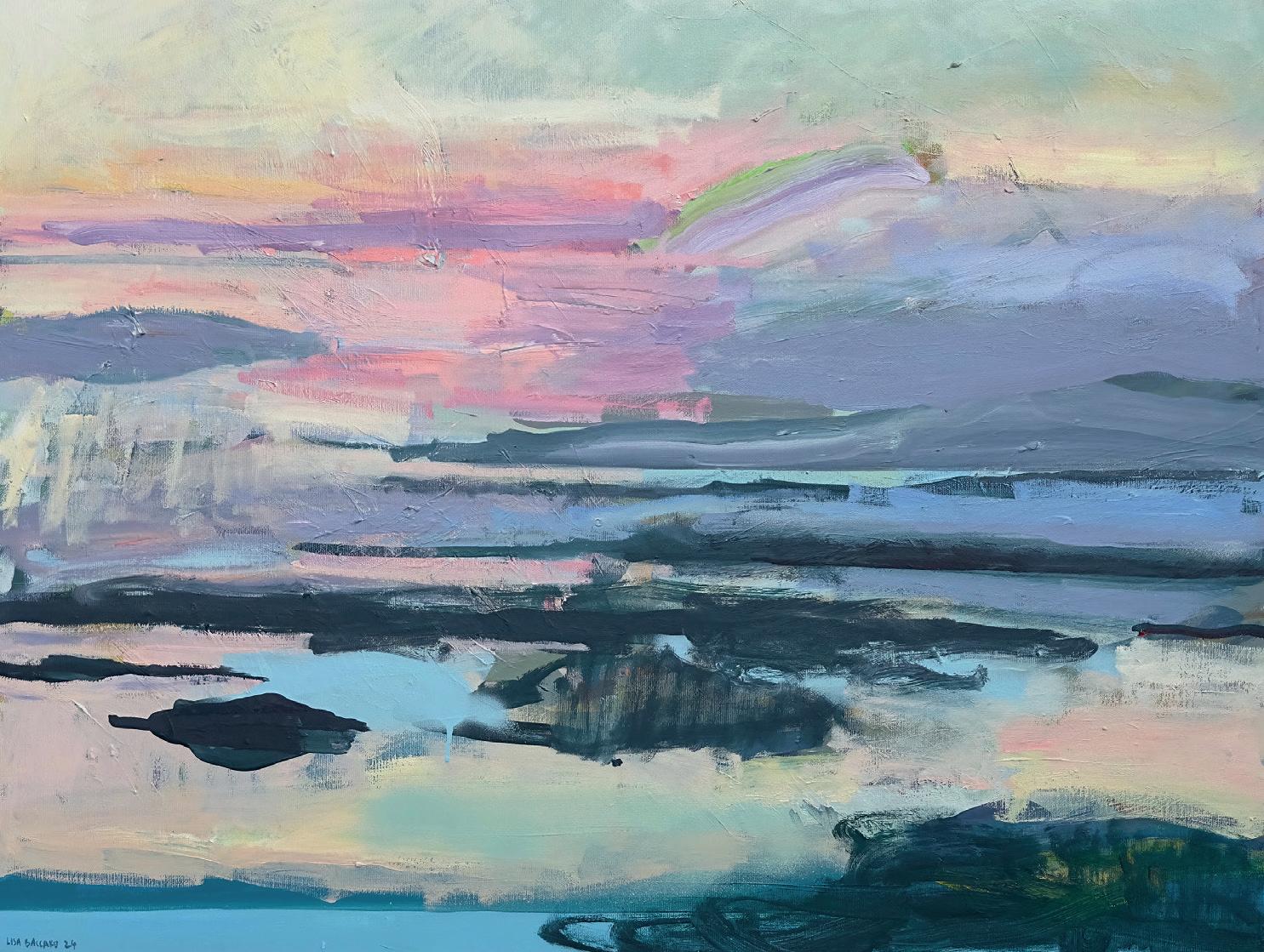
Image: Raphael Hynes, Shell (2010), Oil on canvas, laid on panel, 23 x 31cm. Drogheda Municipal Art Collection.
www.highlanes.ie
Knockree Youth Hostel Co. Wicklow, A98 R2Y9
Editorial Solitude and Inspiration
JOANNE LAWS INTRODUCES THE RESIDENCY THEMED SPECIAL ISSUE OF THE VISUAL ARTISTS’ NEWS SHEET.
RESIDENCY PROGRAMMES, BROADLY speaking, can provide artists with the opportunity to live and work outside of their normal environments. Artist residencies typically offer dedicated time and space in which to create and experiment, with an emphasis on research and reflection, solitude and inspiration.
Most residency providers typically offer studio space, with residential accommodation commonly included (onsite or nearby), and in some cases, additional financial, technical, curatorial, educational, or logistical support is also integrated into the programme. The benefits of undertaking an artist residency include access to specialised facilities and resources, immersion in new cultural settings, and meaningful encounters, such as engagement with professional networks, curators, institutions, and fellow artists, peer to peer working and feedback, as well as exhibition opportunities, or time to think without immediate pressures or production expectations.
Residencies situated in unique settings, such as remote or dramatic landscapes, can be particularly rewarding, since stepping outside of one’s usual environment can generate different rhythms of working and thinking. Another valuable model is the production-based residency, offering access to specialist workshops, technical expertise, practical support, and facilities that are often unavailable within traditional artist studios. For many artists, undertaking medium-specific production residencies can significantly expand technical possibilities or enable new skills and material directions. Other more durational residency models aim to support long-term artistic development through critical feedback, studio visits, and mentorship.
However, when researching artist residencies, it quickly becomes apparent that programmes around the world vary considerably, in terms of their remit, activities, environments, organisational forms, access routes, requirements, and levels of support for participating artists. The duration of residencies can also vary significantly, ranging from a few days to several years. Since most artists need to take a break from paid employment to undertake a residency (depending on the length), it is surprising that less than 20% of international residencies seem to pay artists a reasonable stipend for their time. When application fees, travel costs, living expenses, and production budgets are considered, residencies can quickly become expensive undertakings.
VAN July – August 2026 issue aims to demystify the process of selecting an artist residency. This themed issue contains a range of Residency Reports from artists at different career stages, who have undertaken all kinds of residencies in different parts of the world. Contributors were asked to provide contextual information about the
residency – the setting, facilities, accommodation, when the residency was established, how it is run, and by whom – as well as details of access, such as whether participation is via application, invitation, or award. Other pragmatic details noted by artists include forthcoming application dates, whether stipends or other funding supports are offered, and if Ireland-based artists can apply. Artists also discussed any specific outcomes of their residency experience, such as new bodies of work, community projects, exhibitions, or publications.
In the Irish context, artists report on recent residencies at Burren College of Art, Cow House Studio, Heinrich Böll Cottage, IMMA, the Tyrone Guthrie Residency, and the UCD College Of Science Artist Residency with Mayo Dark Sky Park.
In the UK, there are reports from Hospitalfield, Edinburgh Sculpture Workshop, and Prospect Cottage – the former home of artist, writer, and activist, Derek Jarman, in Dungeness on the Kent coastline. For the European section, artists reflect on their residencies in the British School at Rome, Magnetic Residency in Dunkirk, Centre Culturel Irlandais Paris, the Rijksakademie in Amsterdam, and the WaterLANDS Artist Residency Programme, an EU-funded initiative that embeds artists at six wetland sites across Europe. Residencies profiled beyond Europe include the International Studio & Curatorial Program (ISCP) in New York, Casa Wabi in Mexico, and Hyde Park Arts Center in Chicago.
This special issue also contains several Residency Roundups, providing a non-exhaustive overview of reputable residencies (funded, wherever possible) across Ireland, the UK, Europe, and worldwide. There are also roundups of virtual residencies, profiling noteworthy remote residency programmes (mostly non-funded) that visual artists can undertake from home; prominent residencies for parenting artists worldwide (both funded and non-funded) which allow resident artists to be accompanied by dependent children and partners; and funded residencies worldwide, with a thematic focus on landscape, ecology, and sustainability.
Undertaking residencies can be worthwhile for artists at all career stages, in gaining inspiration for new work, connecting with international networks, or situating one’s practice within broader artistic and institutional contexts. However, given the sheer diversity of residency models worldwide, it is essential to strategically consider your needs, values, and expectations, as well as the conceptual and logistical benefits to your practice, when researching options.
Joanne Laws is Editor of The Visual Artists’ News Sheet. visualartists.ie
Funding Culture Moves Europe
LUCY TEVLIN OUTLINES CULTURE MOVES EUROPE GRANTS FOR ARTISTS UNDERTAKING EUROPEAN RESIDENCIES.
CULTURE MOVES EUROPE is an initiative funded by Creative Europe, the European Commission’s flagship programme that supports culture and media. The Culture Moves Europe mobility scheme offers grants to artists and cultural professionals (such as curators, writers, and art writers) to attend a residency or to work on a project in another Creative Europe country. In Ireland, Creative Europe Desk Ireland is the contact point for Creative Europe funding advice.
You can get funding from Culture Moves Europe in two ways: Call for Individual Mobility; and Call for Residency Hosts. An individual mobility project can be a residency, research trip, learning experience, or professional development in another Creative Europe country. Applications can be from individual artists or groups of up to five artists. In terms of criteria, you need to be over 18, resident in a Creative Europe country, and active in the cultural sector. No specific level of experience is required. Your application should include at least two of the following aims: to learn, create, explore, or connect. You also need to show that you have the support of a European partner organisation. This is a cultural organisation that can help you achieve your artistic goal. For example, you can apply for funding for a residency, a research project, or a professional development opportunity offered by an arts organisation or institution in another Creative Europe country.
From 2023 to 2024, over 30 artists based in Ireland received Culture Moves Europe grants. Volume 6 of Across Borders – Across the Board (2023 – 2024), published by Creative Europe Desk Ireland in 2025, features case studies of Irish artists funded by Culture Moves Europe. A useful resource to help research residencies and European host organisations, the publication is also free to download from the Creative Europe Desk Ireland website (creativeeuropeireland.eu).
Some of the destinations that Irish artists travelled to include: a residency in SÍM, Reykjavík; an artist residency in Ano Asites, Crete; and a collaborative project in Bodø, Norway. The CRUX Collective (comprising artists Lana May Fleming, Luke van Gelderen, and Frances Hennigan) also participated in a collaborative working residency, hosted by Kulturforum Witten in Germany. The collective writes that their Culture Moves Europe experience, “created important professional connections and facilitated an engagement in cross-disciplinary learning and experimentation around shared themes in our individual artistic research. Their Digilab and fully equipped workshop gave us the opportunity to develop our digital and material practices. The outreach and networking in the project provided greater visibility for our emerging practices. This support endorsed
the collective’s first major international project and first residency as a group.” (p 75)
Visual artist, Jan McCullough, writes that she was “delighted to travel to Bodø, Norway, to collaborate with artists Alexander Mourant and Bart Lunenburg in the co-creation and presentation of At the Farthest Edge: Rebuilding Photography (2023), a site-specific sculptural and photographic installation at Atelier NŌUA, an artist-run institution for photography as contemporary art. Culture Moves Europe support enabled me to respond to the historical location, engage in conversations with other artists, and collaborate in building the installation. I also had the opportunity to exchange ideas with the public and curators, developing my work on an international platform and laying groundwork for future collaborations.” (p 87)
The next Culture Moves Europe Individual Mobility funding call opens in autumn, with details available on their website (culture.ec.europa.eu). Creative Europe Desk Ireland will also share the call details via our website and newsletter.
Goethe-Institut manages Culture Moves Europe funding on behalf of Creative Europe. You must create an account on their application portal to apply for funding (goethe.de). Deadlines will be at the end of each month for the duration of the call. The previous grant amounts were:
• Daily allowance: €85.
• Travel allowance: €400 under 5,000 km; €800 over 5,000 km.
• Green mobility top-up: €400.
• Overseas countries / Outermost regions top-up: €175.
• Family top-up: €200 per child.
• Accessibility support: €30 per day; actual cost or fixed allowance for personal assistance or sign language interpretation.
Culture Moves Europe also offers a Residency Host grant for organisations registered as legal entities to host a residency. A residency project should fulfil two of the following objectives: explore, create, learn, connect, transform. We are expecting the next Residency Host call to open in autumn. Applications are via the GoetheInstitut funding portal.
The Culture Office of Creative Europe Desk Ireland offers advice on Creative Europe opportunities and hosts funding information events. We will host a Culture Moves Europe funding webinar in the autumn after the call opens. We recommend that artists sign up for newsletters and funding alerts on the website.
Lucy Tevlin is Joint Head of Creative Europe Desk Ireland – Culture Office, hosted by The Arts Council. creativeeuropeireland.eu
FRANCESCA SARACUTA PROVIDES AN OVERVIEW OF FUNDED VISUAL ARTIST RESIDENCIES ACROSS IRELAND.
Arts & Disability Ireland
Located at Fort Dunree on the Inishowen Peninsula, Artlink has been supporting artist residencies and cultural exchanges since 1992. The organisation works with artists from both Ireland and abroad, who develop projects that frequently respond to the landscape, ecology and social history of the northwest coast. Applications are typically made through open calls, with residency formats changing according to funding partnerships and collaborative projects. Selected international artists are paid a residency fee of €7500, while Ireland-based artists receive a €6000 residency fee, to cover all associated travel, accommodation, transport, materials, and living expenses. A residency open-call is generally launched in December of each year, with a deadline of early January.
Create
As Ireland’s national development agency for collaborative arts, Create supports artists who work directly with communities and public groups. Through the Artist in the Community Scheme and associated residency projects, artists collaborate with organisations, which can range from local authorities to healthcare services and archives. Projects often develop slowly over time through workshops, conversations, and shared research, rather than traditional studio production. Artists receive fees and professional supports while host organisations provide local contexts for engagement. Create facilitate and run cross-sectoral partnerships, international exchanges, and specialised residency projects each year, including the Dr Ailbhe Murphy Research Residency, hosted in Create’s Reading Room and Archive. Forthcoming opportunities and commissioning strands are regularly announced through Create’s website. create-ireland.ie
Arts & Disability Ireland (ADI) develops residency opportunities for disabled artists through partnerships with arts organisations and cultural institutions across Ireland. These programmes are designed to support artists at different career stages through tailored access provision, mentorship, artist fees, and production support. Residency formats can vary depending on the host organisation and project structure with opportunities spanning visual art, performance, and interdisciplinary practice. ADI also plays a central role in advocating for accessibility and equity within the arts sector. Both open calls and residency announcements are published regularly through the organisation’s website and circulated via their mailing list.
adiarts.ie
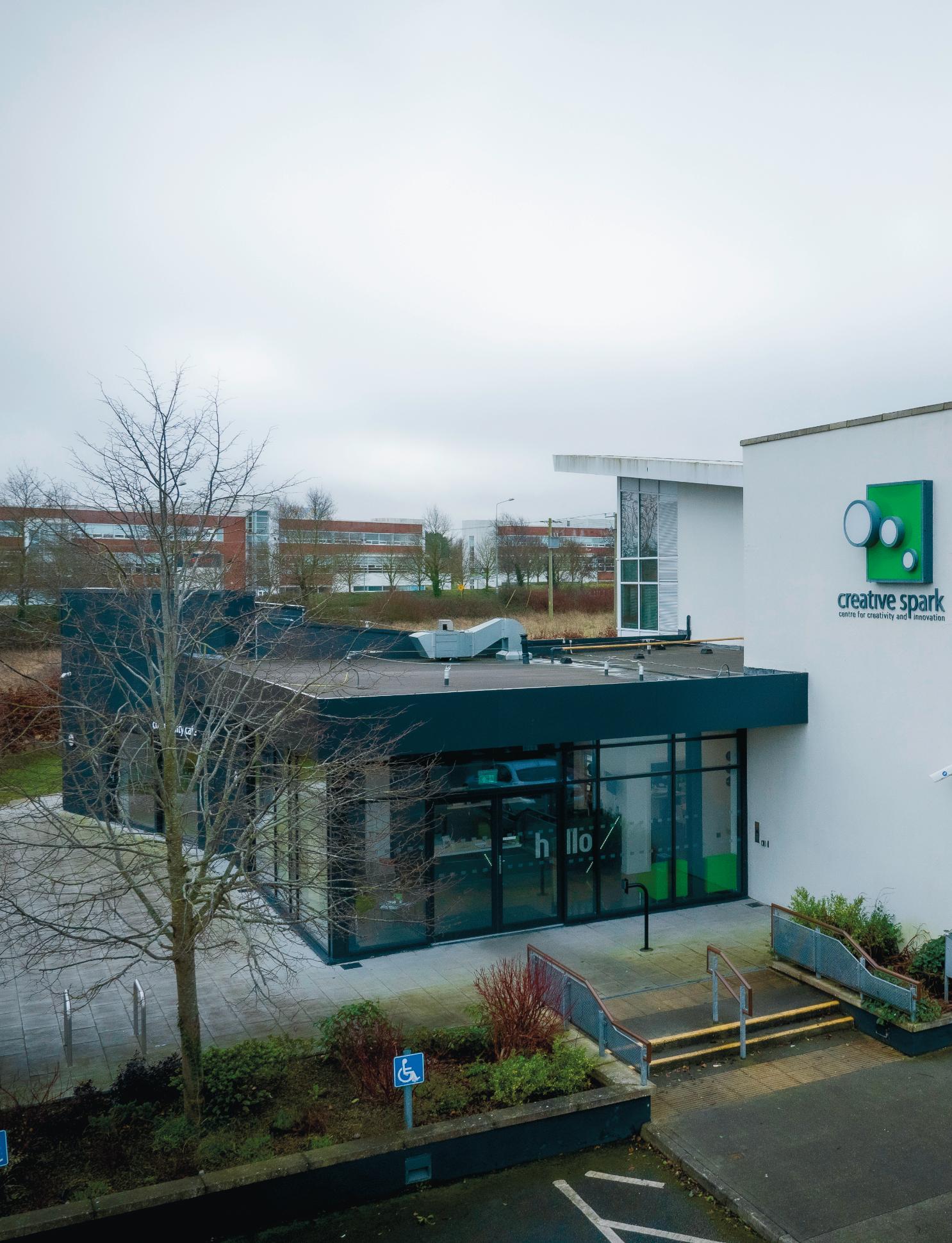
Creative Spark
Based in Dundalk, Creative Spark offers an Artist-inResidence Programme which is funded by the Arts Council of Ireland and Louth County Council. The residency programme is open to both emerging and established visual artists working in any medium, with up to eight residencies awarded annually for periods of two to three months. Facilities include a shared studio, as well as access to a Fine Art Print Studio, Darkroom, FabLab, Textile Lab, and Kiln Room with basic technical support. Residencies are development focused or community engaged and include opportunities to exhibit locally. Artists are asked to donate one piece to the Creative Spark archive. It is important to note that accommodation is not provided, though assistance is offered in sourcing accommodation locally.
creativespark.ie
Cow House Studios
Founded in 2008 by artists Rosie O’Gorman and Frank Abruzzese, Cow House Studios is based on Rosie’s ancestral farm in Rathnure, County Wexford. Their residency programme hosts Irish and international artists through studio residencies focused on visual art and interdisciplinary practice, and has expanded to include writers and musicians. Facilities include shared studios, accommodation, and communal working spaces within the farm setting. Since 2015, Cow House has offered several funded initiatives, which now include the Parenting Artist Residency, designed in partnership with The Mothership Project in 2018 specifically for parenting artists with dependents aged between two and twelve, and partially supported by Wexford County Council. Residency opportunities and open calls are announced in September through the organisation’s website.
cowhousestudios.com
Crespo Foundation, Glenkeen Garden Residencies
Located in West Cork, Glenkeen Garden Residencies are offered by the Crespo Foundation – a charitable trust based in Frankfurt, established by psychologist, photographer, and philanthropist, Ulrike Crespo (1950–2019). The programme invites artist duos or collectives, working across disciplines, to spend two to three months at Glenkeen Garden. Residencies take place twice yearly from March to May, and from August to November. The programme supports artists who are based in Europe, providing onsite accommodation, workspace, and a monthly bursary of €2,500 per person. Artists are encouraged to engage with humanities scholars, scientists, and the local community. It is important to note that at least one group member must hold a valid driving licence. Students enrolled at universities or colleges at the time of residency cannot apply.
crespo-foundation.de
Artlink
artlink.ie
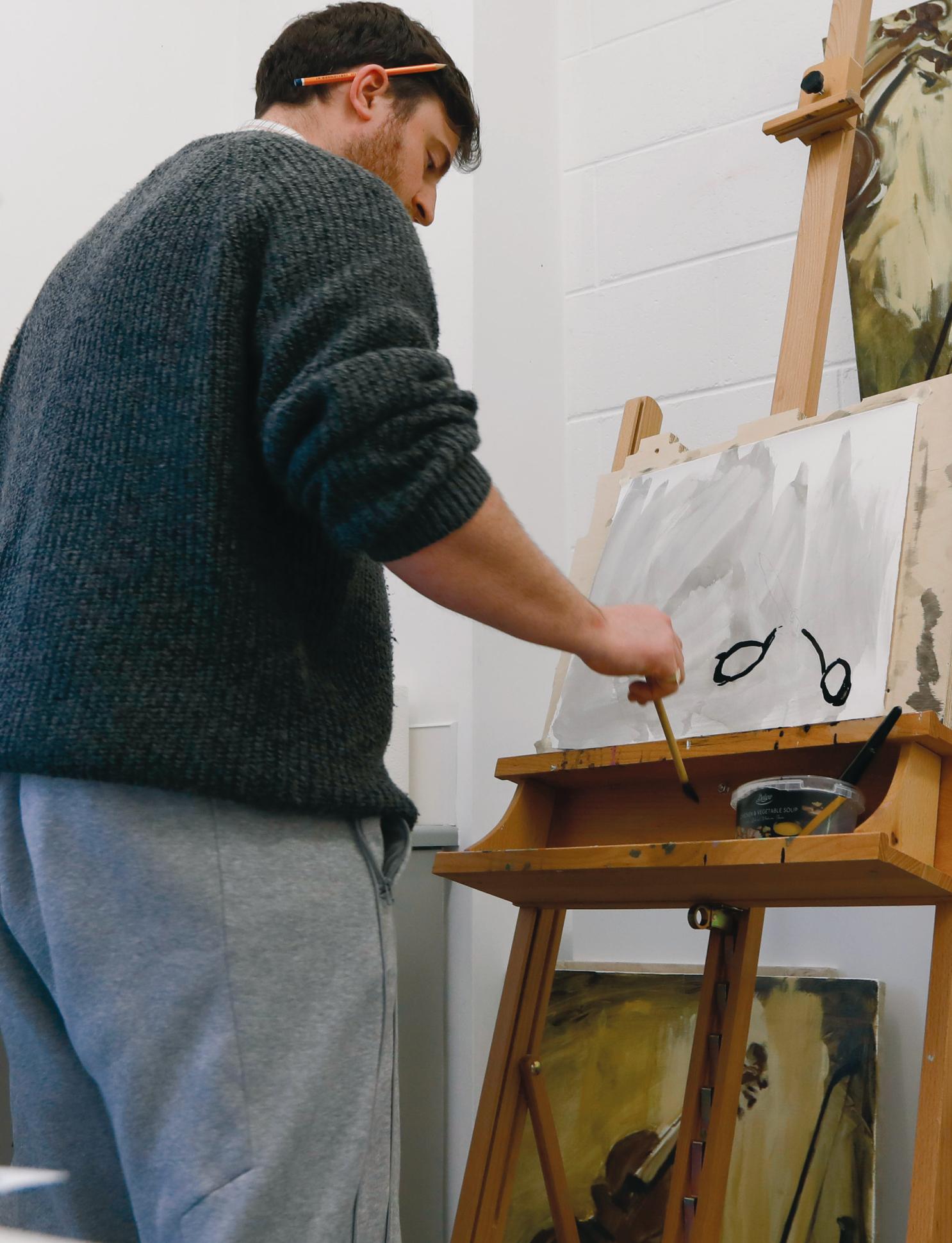
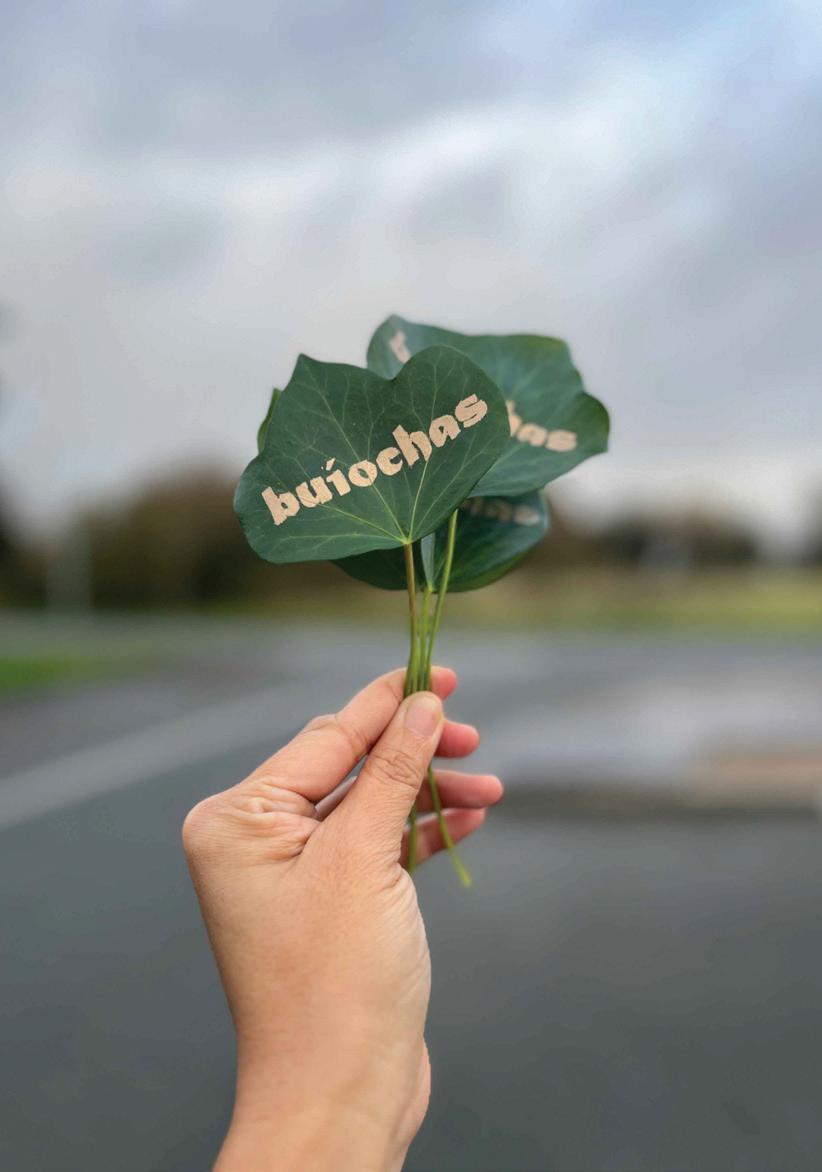
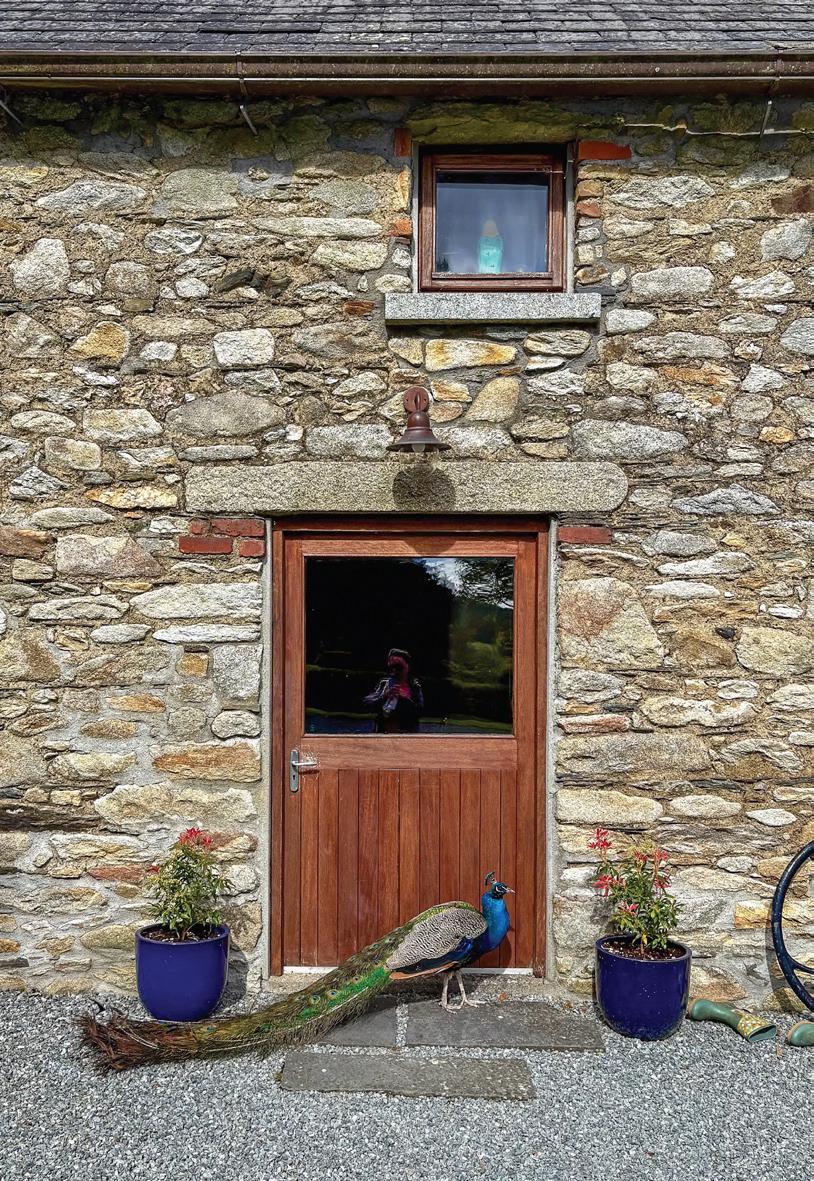
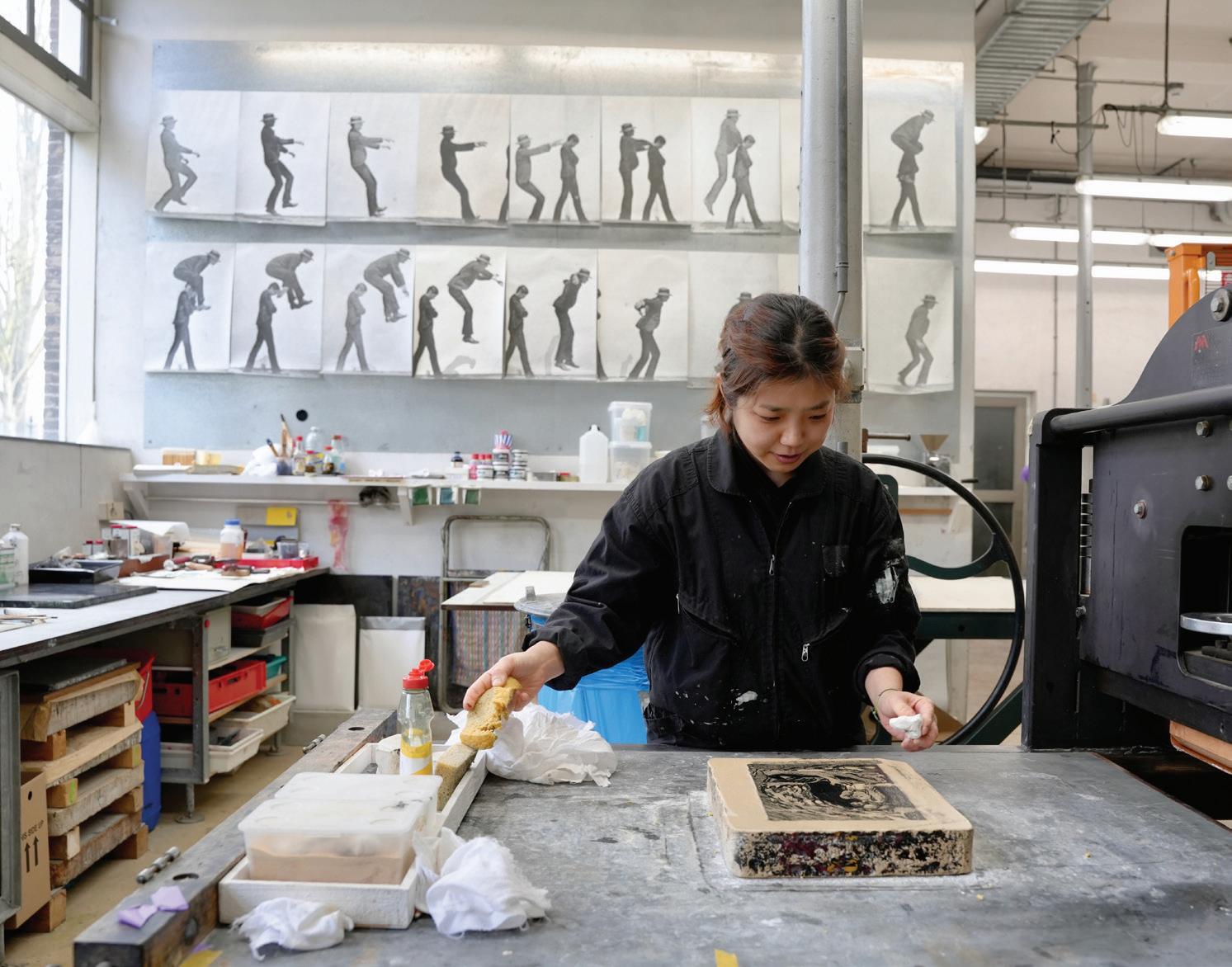
Left: Viola Wang, Kitchen Lithography 2023; photograph by Viola Wang, courtesy of Creative Spark. Middle: Cow House Studios, front door with resident peacock; photograph courtesy of Cow House Studios.
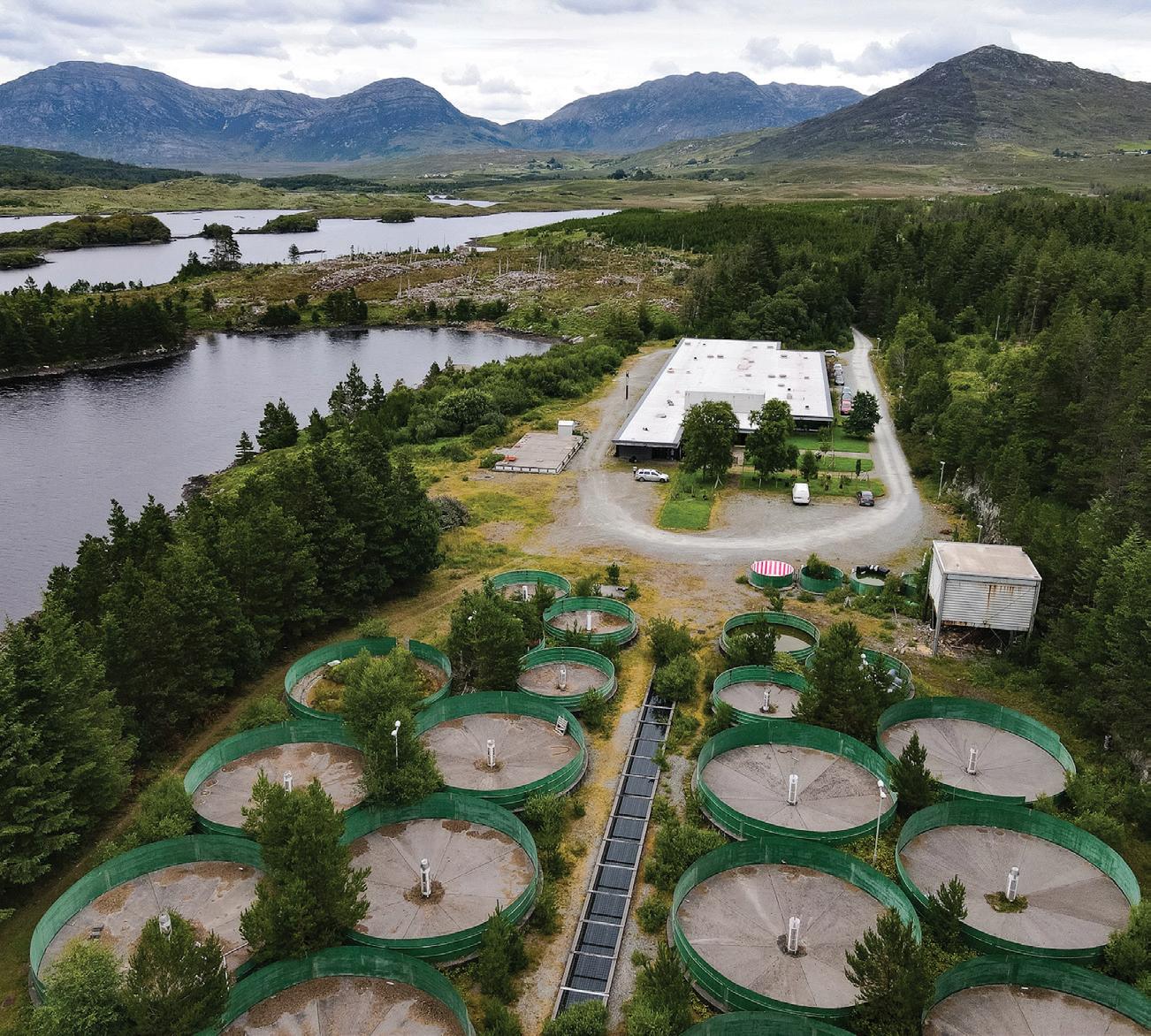
Right: Interface fish tanks, aerial view; photograph by Emilija Jefremova, courtesy of Interface.
Fire Station Artists’ Studio
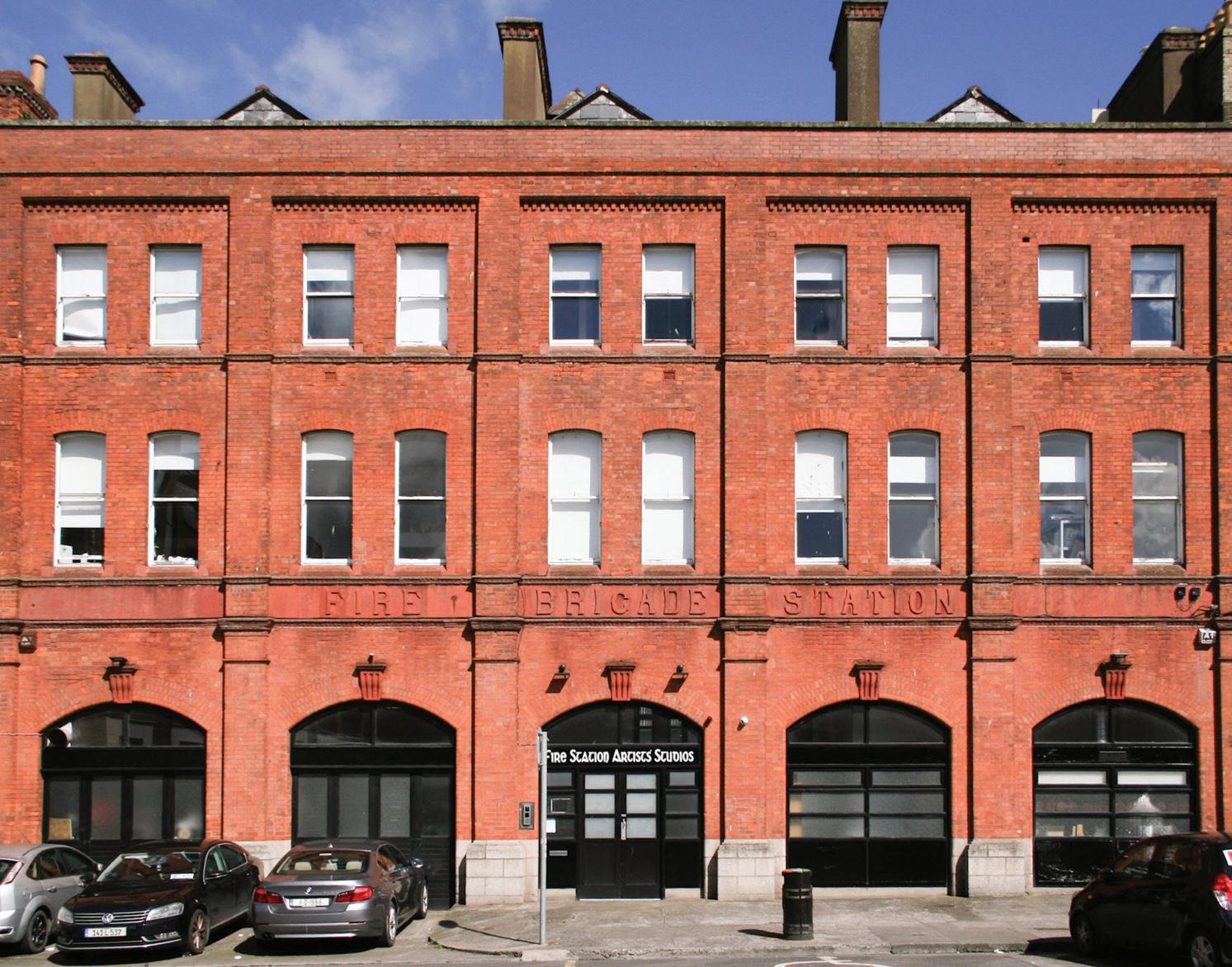
Set in Dublin’s north inner-city, Fire Station Artists’ Studios (FSAS) has spent more than 30 years supporting artists through residencies, studio provision, and international exchanges. The organisation combines private workspaces with residential apartments, allowing artists to live and work onsite for extended periods. While many artists remain long-term studio members, short-term residency opportunities are also offered through partnerships, including funded programmes. FSAS is known for its practical approach to sustaining artistic practice. Facilities include project spaces, communal production areas, and regular professional development initiatives for resident artists. The FSAS residency programme provides highly subsidised live/work studios, sculpture/digital media resources, and curatorial support for professional visual artists in Dublin city centre. firestation.ie
Leitrim Sculpture Centre
Since 1997, Leitrim Sculpture Centre (LSC) has been a key resource for artists interested in making, fabrication, and material-led practice. Based in Manorhamilton, the centre provides workshops, typically for ceramics, metal casting, woodwork, and digital processes, alongside studio accommodation for visiting artists. Residencies are offered throughout the year and often include substantial artist bursaries, project funding, and technical support. The programme attracts artists who work across sculpture, installation and expanded media. LSC’s rural location allows for concentrated periods of work while maintaining strong links to national and international networks. LSC offers up to 28 residencies per year across four funded strands, as well as self-funded Professional Development Residencies.
leitrimsculpturecentre.ie
IMMA
For more than three decades, the Irish Museum of Modern Art has been hosting artists in residence onsite within the grounds of the historical Royal Hospital Kilmainham. The IMMA residency programme supports Ireland-based as well as international practitioners at all career stages. Presenting a symbiotic relationship with the museum programming, site, and activities, the residencies offer time and space for artists to develop new work that engages with exhibitions, archives and collections. Residents are accommodated onsite in shared and independent living spaces with studios located across the campus. Rather than focusing on fixed outcomes, the IMMA residency programme supports long-term research, dialogue, and experimentation. Opportunities are announced regularly through open calls, with different residency formats running throughout the year.
imma.ie
Temple Bar Gallery + Studios
Temple Bar Gallery + Studios (TBG+S) offers an International Residency Programme supporting residencies in New York, Helsinki, Paris, and Tokyo. Through partnerships with HIAP (Helsinki International Artist Programme), ISCP (International Studio & Curatorial Program, New York), and Cité Internationale des Arts, Paris, TBG+S offers three-month residencies with studio and living accommodation. Most of the residencies include an artist stipend to cover living, working, and travel expenses. A residency exchange with Bétonsalon, Paris, supports two-month residencies for Irish or Ireland-based artists, with French artists reciprocally hosted at TBG+S. A further exchange with TOKAS (Tokyo Arts and Space) offers three-month residencies for Irish or Ireland-based artists, with Japanese artists hosted in Dublin. Additionally, a two-month residency is offered at Moly-Sabata, France. templebargallery.com
Interface
Interface Inagh offers residencies for practicing artists, dancers, writers, and musicians whose work explores intersections between scientific research, environmental concerns, and the arts. Situated in the Inagh Valley in Connemara, the organisation provides access to a shared studio space and accommodation. Given the isolated and rural location, a driving licence and car are essential. In 2026, supported by the Arts Offices of Galway County Council and Galway City Council, Interface offered two-week residencies in March, September and October, including an artist stipend of €1,100. The September residency was delivered in partnership with Clifden Arts Festival. Artists cover their own materials, food, and travel costs. In order to apply, artists need to submit a proposal, CV, artist’s statement, and samples of recent work.
interfaceinagh.com
Tyrone Guthrie Centre
Situated at Annaghmakerrig House in County Monaghan, the Tyrone Guthrie Centre has provided residential retreats for artists since 1981. The centre welcomes practitioners across disciplines including visual artists, writers, composers, and performers. Residents are provided with accommodation, workspaces, and communal facilities within a large country estate overlooking woodland and lakes. While many residencies are self-funded, bursary supported opportunities are also available through partnerships with various local authorities and arts organisations including Bealtaine Festival, Age and Opportunity, Poetry Ireland, Irish Writers Centre, and Dance Ireland. The centre is known for offering artists uninterrupted time and space to concentrate on their practices. Current rates are available on the website, and applications are accepted throughout the year via an online booking system. tyroneguthrie.ie
Left: Fire Station Artists’ Studios, street view featuring hand-painted sign by Paddy Critchley, April 2026; photograph by Aoife Ní Dhuinn, courtesy of FSAS.
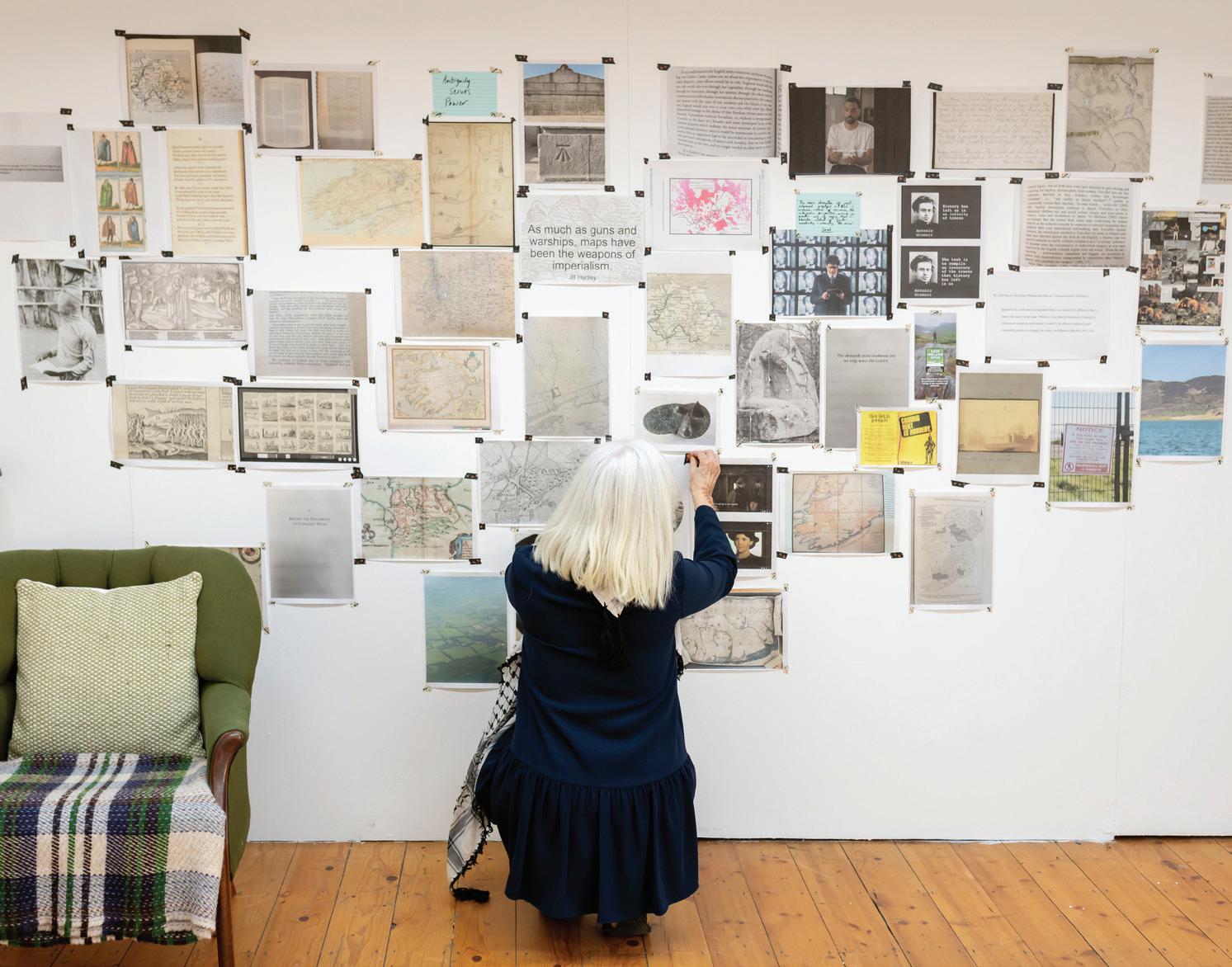
Right: Crystal Bennes, IMMA Dwell Here one-year studio residency, 2025; photograph by Louis Haugh, courtesy of the artist and the Irish Museum of Modern Art.
Shared Conditions
EOGHAN RYAN REPORTS ON HIS PARTICIPATION IN THE DWELL HERE RESIDENCY AT IMMA LAST YEAR.
THINKING BACK ON my time at IMMA, as part of the year-long Dwell Here programme, I returned to a quote that I had included at the end of my original application:
“For us it’s not about possessing the territory. Rather, it’s a matter of increasing the density of communes, of circulation, and of solidarities so that the territory becomes unreadable, opaque to all authority. We don’t want to occupy the territory, we want to be the territory.” 1
What that quote proposed in 2011, utopian and gigantic in its conceit, feels much more specific in retrospect. I applied for the Dwell Here residency with a fairly direct intention: to consolidate a body of research and work that considers Ireland’s immediate ‘state’. At the time, I was attempting to do this remotely from Brussels, largely unsuccessfully. The residency at IMMA offered a different set of conditions entirely, not just time and space, but contextualised proximity through a sustained period of living and working, alongside the additional support of critical frameworks, an international community, finances, and a large art institution that, as an Irish millennial artist, I have grown up alongside.
For my practice, living and working within an institution, and the co-dependencies such a position invites, produces both constructive friction and access. The museum becomes not just a site of presentation, but a shell to live in, think through, and spill out from. The IMMA shell also comes with Victorian gardens and 24-hour on-site security.
The residency programme is organised and curated by Janice Hough, who carefully balances the facilitation of critical inquiry with the social and domestic aspects of care that make a year-long residency not just functional, but liveable. The critical inquiry aspect is focused around ‘intensives’. These take the form of curated weeks of workshops, field trips, and practice sharing, bringing together artists from the monthlong residencies alongside year-long, livein and studio residents, as well as invited practitioners.
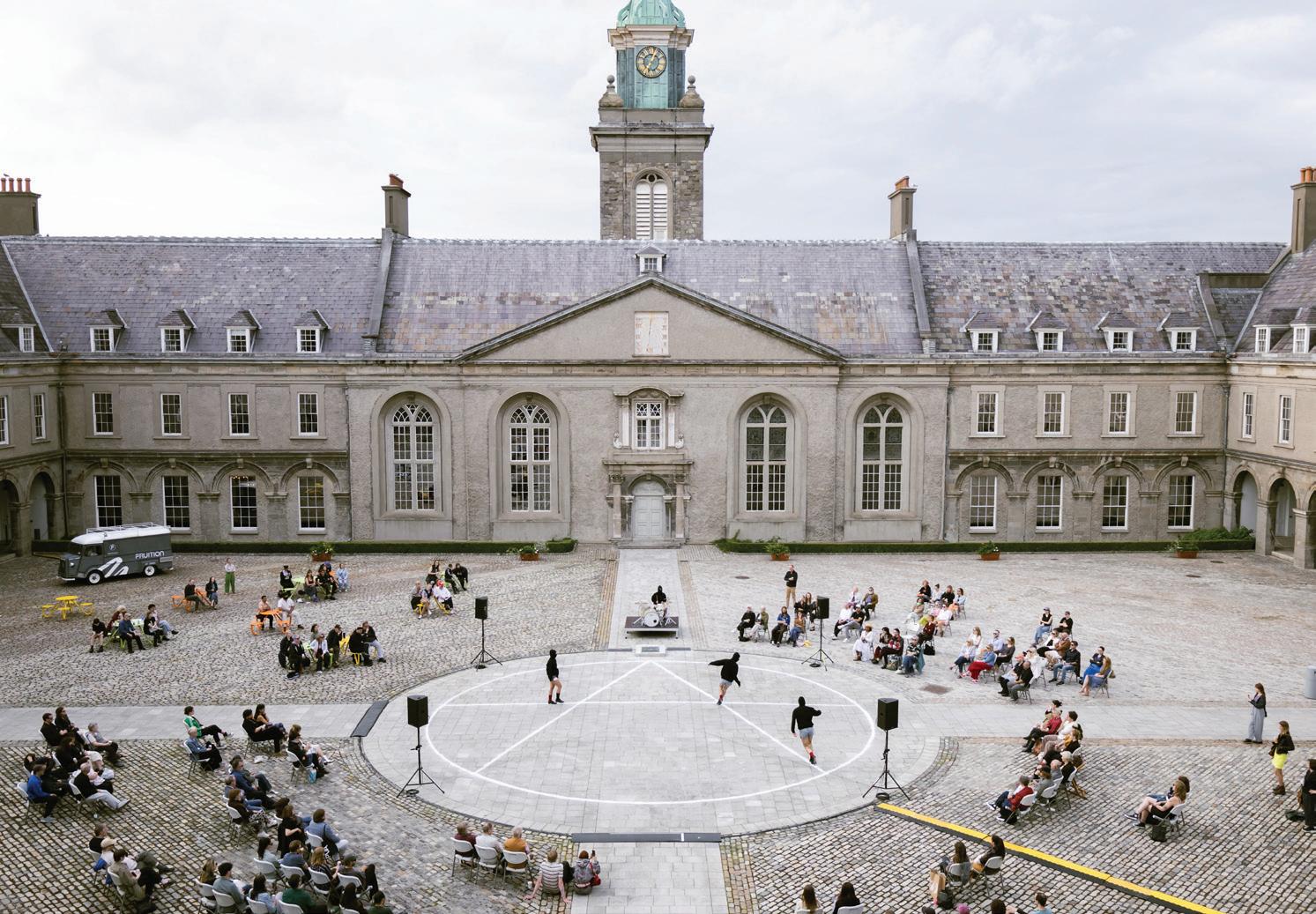
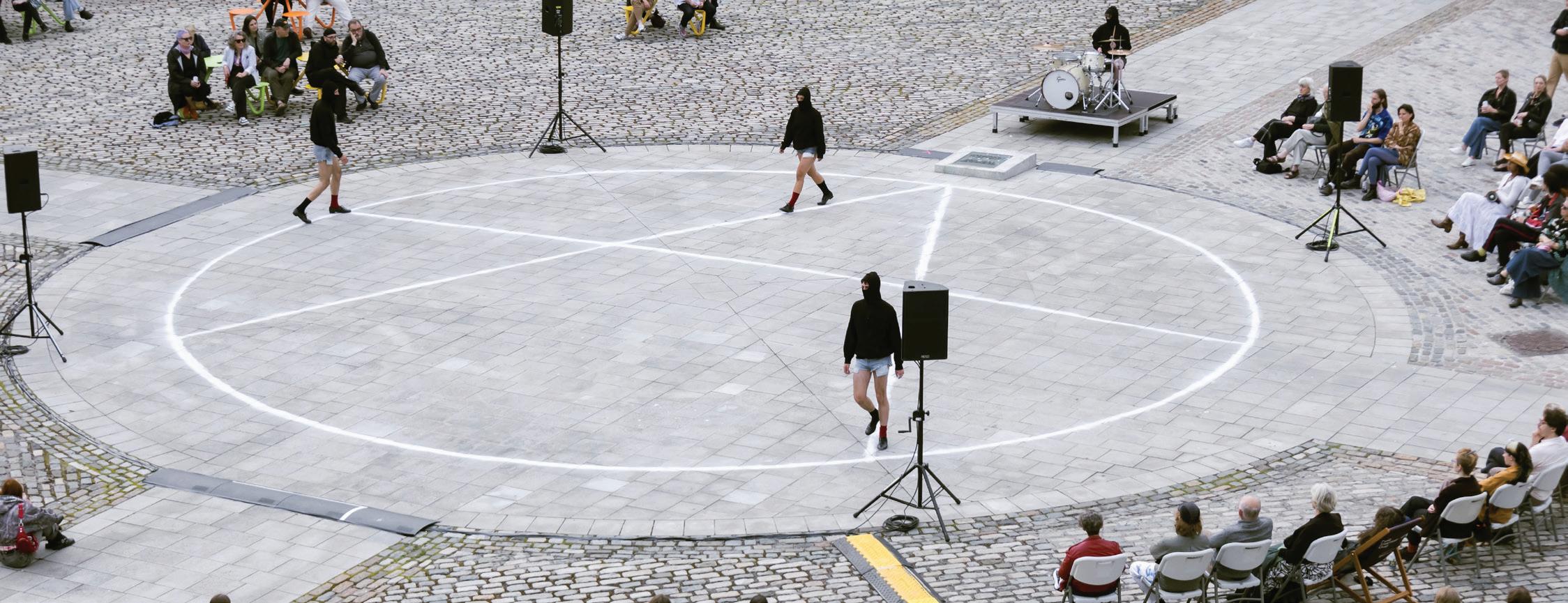
These intensives are loosely framed around thematic strands relating to Technologies of Peace, The Museum as a Site of Vibration, and The Irish Paradigm, which, in practice, function more as points of departure than fixed frameworks. Outside of the intensives, my focus during the residency was directed toward developing Carceral Jigs (2025), a video installation commissioned by EVA International, and adapting my performance work, Circle A (2024), for the IMMA courtyard.
The production and adaptation of these works, interspersed with the intensives and punctuated by continuous exchange across shared meals, studio visits, pints, walks, and so on, meant conversations unfolded without pressure toward resolution or outcome. It created a rhythm between studio work
and collective reflection, both organised and incidental, that retained a particular ambience, a willingness to engage with other practices, to test ideas discursively, and to sit with positions one might not necessarily agree with. I think I was starved of exactly this; thinking together from very different priorities, proximities and formalisms toward common concerns, and having the time to do it properly.
The Circle A performance I developed for the courtyard (with help from Sara Grimes, Boris Charrion, Tomislav Fellner, and Amina Szecsödy) evolved from the strangely fitting particularities of the site – an open quadrangle with a circle in the middle. Although it was independently curated from the residency, its adaptation benefitted greatly from my close proximity, as I was able to look down on it from the staff corridor, whilst picking up my post.
Now that my residency has ended, the rarity of what Dwell Here made possible
lands hard in a city entrenched in crisis. Dwell Here offers a generous space, however temporary, in which individual practice and collective thinking can unfold alongside one another, each sustaining the other across a genuinely non-homogeneous international set of practices, all in dialogue with the institution.
Dwell Here is an exceptionally well-considered residency programme. It provides a rare set of conditions for artists to live, work, and think alongside one another in the city – conditions that still feel, to a degree, open, provisional, and actively shaped by those participating within them. I would strongly encourage others to apply while it continues to exist.
Eoghan Ryan is an Irish artist based between Brussels and Dublin working across moving image, installation, and performance. eoghanryan.ie
1 The Invisible Committee, The Coming Insurrection (California: Semiotext(e), 2011) p108.
Top & Middle: Eoghan Ryan, Circle A, 2024, performance, IMMA Courtyard, 26 July 2025; photograph by Pati Guimarães, courtesy of the artist and IMMA.
SHANE HYNAN REFLECTS ON HIS RECENT RESIDENCY AT THE BURREN COLLEGE OF ART.
LAST SUMMER, I went to London for the Earth Photo 2025 award ceremony and was honoured to take home the Sidney Nolan Trust Residency Prize Award (sidneynolantrust.org). The award afforded me the opportunity to undertake two residencies: one at The Rodd, a 17th-century manor house in Herefordshire, the final residence of Australian artist Sir Sidney Nolan and the current home of the Sidney Nolan Trust; and another at the Burren College of Art in County Clare, the site of Nolan’s ancestral home.
I completed the Sidney Nolan Trust Residency in December 2025, and the Burren College of Art Residency in March 2026. I undertook both residencies during the final stages of resolving my project, ‘Beneath | Beofhód’, and preparing it for a major solo exhibition of the same title at Photo Museum Ireland (30 May – 5 July). This project has occupied the majority of my time and energy over the last decade, so the two residency periods allowed me to take a break and explore new possibilities, ways of working, and ideas that I might pursue, once my commitments to ‘Beneath | Beofhód’ are fulfilled.
Both residencies offered me the opportunity to explore options for future work and to spend time focusing on something different. The early stages of making work, where it’s fresh, playful, and full of experimentation and possibility, is a really beautiful part of
an artist’s practice. I relished the change of scene, new subject matter, and exploring ways of working and seeing.
I recently purchased a large format camera, but have had limited time and use for it, so I wanted to explore the possibilities alongside other experimental analogue techniques. I liked the idea of bringing my practice back to first principles, in terms of subject matter and how I use photography. My ‘Beneath | Beofhód’ work was shot on medium format, and I wanted to draw on this analogue process to uncover a fresh aesthetic, concept, or strategy as a foundation for new work.
The elemental nature of the landscape and everchanging weather were the most significant aspects I noticed during my residency in the Burren. The surroundings felt alive, raw, and omnipresent, like a never-ending painting. I’ve always found sanctuary and peace in wilder places and enjoy the sense of vitality and awareness that underpins our vulnerability and insignificance. During my explorations, I began to contemplate the challenging terrain of the Burren, which makes it difficult for humans to dominate or control it. This influenced the work I made on residency and may be the nucleus of a new line of photographic enquiry into the rural Irish landscape, which I hope to refine and explore more deeply in the future.
Much of the photographic work I made on residency
is analogue and has not yet been processed. With my personal projects, particularly the analogue ones, I tend to work slowly, in order to fully interrogate it and allow ideas and layers to reveal themselves. Following my exhibition at Photo Museum Ireland, I’m looking forward to returning to the photographic research and lines of enquiry I uncovered during my time in the Burren.
The residency provided studio space on campus, located in the protected karst limestone landscape, with full access to college facilities including a 3D lab, digital labs, a darkroom, a print studio, and a library. There is some on campus accommodation, and I was lucky enough to stay there with other artists and creatives in residence. Others stay nearby, in and around Ballyvaughan. Alongside its academic programme, BCA offers a number of different residency opportunities (further information can be found on burrencollege.ie).
Shane Hynan is an Irish artist based in Kildare. His practice centres on photography, incorporating experimental elements in sound, video, collage, and sculpture. shanehynan.ie
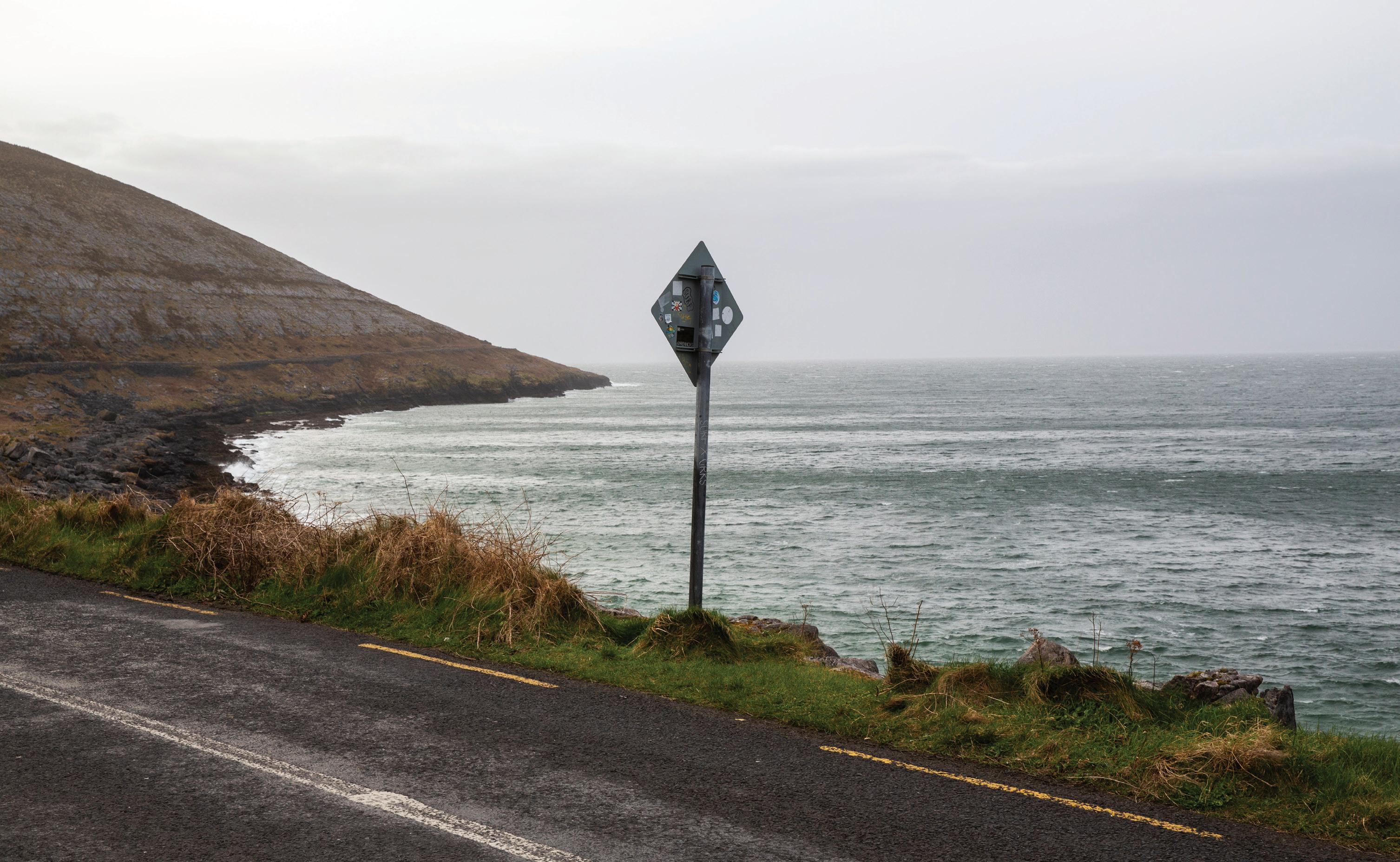
Shane Hynan, Black Head Co. Clare, 2026, digital photograph; image courtesy of the artist.
A Week in Annaghmakerrig
PAUL BOKSLAG REFLECTS
ON BEING AWARDED AN AGE & OPPORTUNITY TYRONE
GUTHRIE RESIDENCY.
IN JULY 2025, I was awarded the Age & Opportunity Tyrone Guthrie Centre Residency in partnership with Kilkenny County Council Arts Office. The open-call application process was straightforward and involved completing a form and sending a short biography, a CV, three examples of work, and the names of two referees. The criteria are that applicants must be recognised, professional, Kilkenny-based artists over the age of 50, working in any artform. Currently, Age & Opportunity is also partnering with Fingal, Meath, and Louth County Councils to offer similar annual residency awards (see ageandopportunity.ie).
The opportunity aims to support artists in developing their practice, by creating time and space to think and reflect on their work and to strengthen their peer network. It offers a fully funded, week-long residency at the Tyrone Guthrie Centre in County Monaghan and a small stipend. This was the second year in which this residency was awarded. The first recipient was artist Caroline Schofield, who took her kayak out on Annaghmakerrig Lake as part of a body of work in which she explores the power of water through contemporary drawing.
The Tyrone Guthrie Centre at Annaghmakerrig, a cross-border organisation based near Newbliss in rural County Monaghan, opened in October 1981. Theatre director, Sir Tyrone Guthrie (1900–1971) bequeathed Annaghmakerrig House to the Irish State “for the purpose of providing a retreat for artists and other like persons.” His only stipulation was that residents would meet for dinner around the large table every night.
The centre encompasses ‘the Big House’ with 15 bedrooms, five self-catering cottages, a music room, a performance studio, and a dance studio. A two-storey studio building at the back of the Big House is equipped with seven studios, including a print studio with two presses. In a wing of the Big House, there is also a wheelchair accessible studio.
I have been on a few residencies in Annaghmakerrig before, and what strikes me every time is how supportive all resident artists, writers, and musicians are of each other’s practice, no matter what career stage they are at. Studio visits have led to constructive, informal peer reviews. But there is also a lot of cross-disciplinary sharing. Highlights have included spontaneous living room gatherings, in which writers read from their work and singers and musicians performed. The staff at the centre are a wonderful group of people who make the stay in the house into something really special. The food is beautiful and the communal dinners at the big table are something to look forward to all day. Daily walks along the lake and through the forests add to the experience.
The residency allowed for focused and productive studio time away from the
busyness of daily life. The large, well-lit studio gave me the opportunity to work on a number of pieces at the same time, placing them on tables and reflecting on them as a unit. With the experience of limited space at home, I enjoyed having a table in the centre of the studio with lots of space to walk around and being able to work on pieces from different angles.
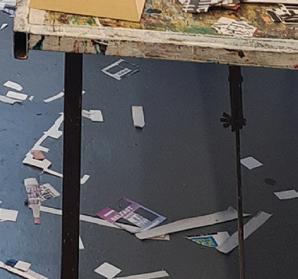
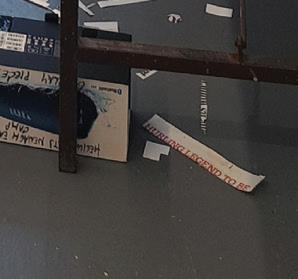
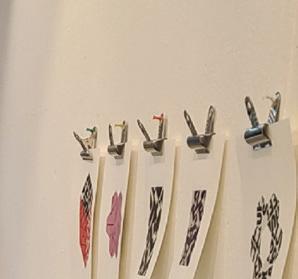
Large papercut installations are an important part of my practice. I experimented with hanging sheets from the ceiling in different constellations. A new development that I focussed on are typographic collages. Just before my residency last November, I walked the Spanish Camino del Norte, from Bilbao to Santiago de Compostela, carrying a pair of scissors and a glue stick as my only art materials. I started making small collages using snippets of paper I found on the way, and in particular the newspapers that I used to dry my shoes overnight in the albergues Returning home, I began gathering Irish newspapers and paper bags. The collages have become a new direction in my work, combining three of my interests in a completely new way: abstraction, letterforms, and working with paper. A next step will be to translate these analogue collages into digital files to be used in layered risograph prints. I am showing some of these new works at Kells Typetrail, K-Visual, and a small solo exhibition in a former typesetting room in Leiden, the Netherlands.
Paul Bokslag is an artist based in County Kilkenny. paulbokslag.com
Top: Annaghmakerrig House, The Tyrone Guthrie Centre, 2025; photograph courtesy of the artist.
Bottom: Studio 2, The Tyrone Guthrie Centre, 2025; photograph courtesy of the artist.
The Bridge to Achill
THOMAS BREZING REPORTS ON HIS EXPERIENCE OF THE HEINRICH BÖLL COTTAGE RESIDENCY IN COUNTY MAYO.
THE HEINRICH BÖLL Residency operates from the Heinrich Böll Cottage, located on the outskirts of Dugort village on Achill Island, County Mayo, which was purchased by the eponymous German writer and Nobel laureate in 1958. The residency programme is run by The Achill Heinrich Böll Association and funded by the Arts Council of Ireland and Mayo County Council. It offers two bedrooms, a kitchen, living room, two study rooms and a studio; each room has underfloor heating and there’s a fireplace, a washing machine, and a bicycle. A telephone is available and the cottage has an internet connection. The residency comes with an artist stipend of €600.
Much of the inspiration for Böll’s famous travelogue, Irisches Tagebuch (Kiepenheuer & Witsch, 1957) (Irish Journal), came from his visits to Achill in the 1950s, and most of the book was written there. I read the book in German when I first came to Ireland in the early 1990s and read it again in English about ten years ago. The Association organises the Böll Memorial Weekend, which takes place annually over the May bank holiday weekend. The threeday programme includes readings, walks, concerts and lectures. I attended one of those weekends about three years ago and thoroughly enjoyed it, meeting Heinrich’s son René Böll (a painter), as well as Irish writers Hugo Hamilton and Claire Keegan, among others.
I had been on a residency at the cottage before, in 2018, as a visual artist, working on the theme of marine pollution, making ink drawings, and collecting washed-up detritus on Keel Beach for sculptural work and bricolage. Earlier this year, I went as a poet/ writer, to further develop my third poetry collection. I enjoy working in remote settings where there are less distractions, and, apart from going on walks, I can fully focus on the work. Actually, walking on the shore, up a mountain, or down a country road is part of what I do; my senses are heightened and I often have unexpected thoughts that later feed into the work.
Most days, I walked along the road past the Achill Mission Colony building and the old schoolhouse, following a narrow dirt road along an algae-filled rivulet, with water trickling down from Slievemore to Silver Strand (also known as Pollawaddy). One day, I took the bike on a cold-fingered cycle to Keel. In the shop, a rugged-looking farmer tells me his life story in a ten minute, one-way conversation. On another day, I take a minibus to the house of Martina O’Connor – an artist who exhibited in Turin with me last year.
My wife Emma and I had driven to Achill together and she stayed for a couple of days. She brought a book she had bought a few years prior but had never got around to reading. On our first day, she opened Claire Keegan’s Walk the Blue Fields and read out loud: “It was three o’clock in the morning when she finally crossed the bridge
to Achill.” It’s from a story called The Long and Painful Death, about a writer, staying in the Böll Cottage! After that the ‘plans’ I had for writing poetry were scrapped; I tried for a day, but poetry can’t be forced.
Something in Claire Keegan’s story made me think of a wedding I attended as an 11-year old boy in 1980, which seemed to be just waiting to come out. Once I approached the memory bank and started writing, the pages filled up with evocations I thought I’d long forgotten. The story occupied me for the next ten days. When I returned from the residency, I sent the story to my friend, writer David O’Neill, who gave me encouraging feedback. He said it’s not a short story, but the beginning of a novel. I have been writing daily ever since.
On the second last day of the residency, I began writing another story, inspired by the Blackfaced Mountain Sheep that roam freely across Achill. Reflecting on my two weeks in February, I had a wonderful and fruitful time at the cottage and felt a sense of innocence and belonging. I would highly recommend the residency to writers and artists who like to spend time away from the busyness and urgency of life elsewhere. Applications are accepted for the cottage until late September each year, for inclusion in the following year’s residency. In terms of the visual side of my art practice, I am working towards an exhibition in October at Wexford Arts Centre, which is curated by London-based poet, critic, and novelist, Cherry Smyth.
Thomas Brezing is an artist who lives and works in County Dublin. thomasbrezing.weebly.com
LOUISE BEER REFLECTS ON HER EXPERIENCE AS UCD COLLEGE OF SCIENCE ARTIST-IN-RESIDENCE WITH MAYO DARK SKY PARK.
I AM AN artist and curator, originally from Aotearoa New Zealand, and currently living in England. I was excited to learn about the open call for the inaugural University College Dublin Parity Studios and Mayo Dark Sky Park SATELLITE Artist-inResidence for two reasons: firstly, that I could apply; and secondly, that there is a growing interest in exploring the climate crisis through an astronomical or dark sky perspective. I applied with my ongoing project, ‘Earth, a Cosmic Spectacle’. This collaboration is the fourth chapter in the project, which I hope to continue expanding throughout my career.
I began my residency at Mayo Dark Sky Festival in October 2025. Since then, I have visited a cottage in Wild Nephin National Park looking out over the bog landscape, in winter and in spring. The residency has also included time at UCD, where I presented my practice and engaged with scientists in the School of Earth Sciences and the Centre for Space Research.
My practice is fundamentally inspired by the philosophical effects of light pollution –and how it may be shaping the way that we understand the significance, and the urgency, of the climate crisis. If we cannot see the context for life on Earth by looking into the cosmos, I believe it becomes harder to place
ourselves within a continuum of time – and understand that these landscapes, this web of life, and this moment was not an inevitability. Through this project, I am exploring how we can better relate to the other forms of life within Earth’s ecosystems, through a more empathetic view, and an understanding that their brief moment of existence is to be revered and protected.
Using installation, photography, sound, writing, and participatory elements, my work explores our changing relationship to Earth’s ecosystems and the cosmos. Within this project, I invited scientists to reflect on how their knowledge of the development of life on Earth, from the first moments of the universe, shapes their perspective of the climate crisis. I also invited members of the community to consider our place in the universe through an astronomical perspective. Participants wrote or drew on postcards whilst looking out into the stars. These reflections later informed photographic, sound and installation works. There is a constant tension in my work between the vast scales of cosmic time and the momentary nature of individual existence. This residency is bringing these temporal registers together through an installation piece that I am developing, combining digitally manipulated photography with sound.
I was delighted to be joined by two scientists from UCD for an immersive weekend at the cottage. Edith Kubik, a UCD researcher, is a cosmochemist whose work focuses on the early Solar System, the formation of terrestrial planets, early differentiation, and the formation of metallic planetary cores. Padraig Dunne is a professor in the School of Physics at UCD, whose work centres on experimental spectroscopy of atoms and ions, mainly for astrophysics. Together, we explored the landscapes of the area, went on a guided walk and visited the Céide Fields. We deeply considered different dimensions of the climate crisis and spent hours beneath the magnificent dark skies of Mayo.
Creating spaces for scientists to come together under dark skies is an exciting new strand of my research. In Mayo, I have had remarkable encounters with bats, swallows, insects, lapwings, cows, and sheep. Witnessing the bond between ewe and lamb has felt both beautiful and profoundly sad, understanding what future awaits them. Everywhere I look, there is life trying to exist in a world made evermore difficult through the many choices of our species. The array of life in these lands, like everywhere on Earth, began with elements forged in dying stars, and the Big Bang.
Cosmic and earthly processes over billions of years, passed moment by moment, have allowed a robin to perch on a branch and sing out into the landscape.
During this residency, I have joined night walks with dark sky experts, listened to poetry recited in the hills, shared in storytelling, and spent time talking about Earth’s place within the cosmos with park rangers, scientists, and community members. I have watched the moon slowly move across an ancient landscape, whilst confronting my own feelings about our changing world.
Louise Beer is an artist and curator originally from New Zealand, now based in Margate, who specialises in art-science collaborations that explore humanity's relationship with the cosmos. louisebeer.com
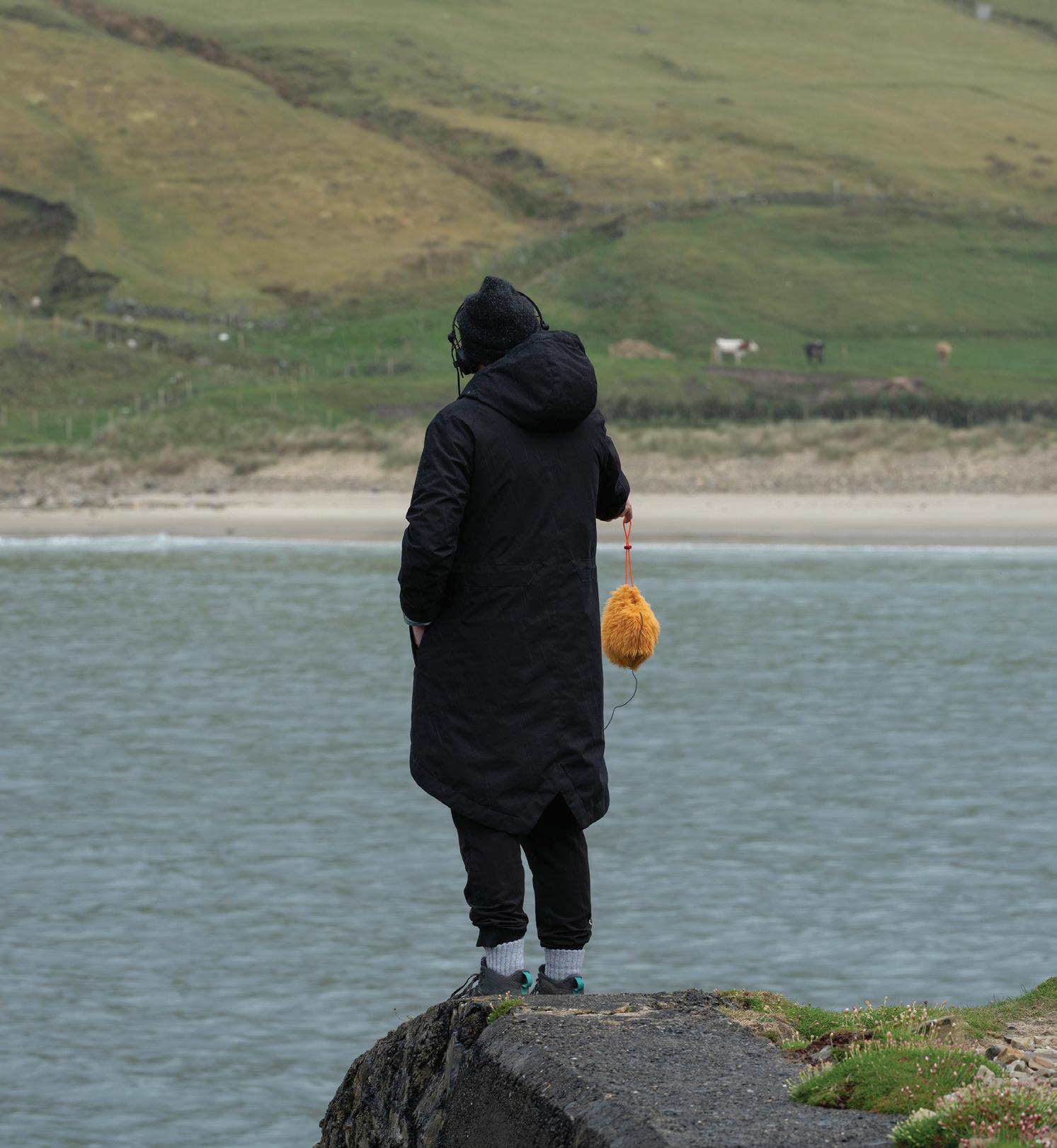
Left: Louise Beer sound recording in Portacloy, Mayo, 2026; photograph by John Hooper, courtesy of the artist.
CLARE HENDERSON REFLECTS ON THE UNIQUE IMPORTANCE OF RESIDENCIES WITHIN HER PRINTMAKING PRACTICE.
I AM A visual artist and printmaker from Dublin, specialising in intaglio printmaking, often with a focus on land and sea themes. Frequently suffused with the presence of ghosts, or at least, ghostly mists, my work aims to evoke ideas surrounding nostalgia and memory. I wrote my master’s thesis on haunting and trauma in art and am currently working towards a series of paintings and prints that explore the ghosts of our land.
Upon graduation from printmaking at NCAD in 2005, I was awarded the Graphic Studio Dublin graduate award and have been a member ever since. The award gave me access to a community of artists and extensive opportunities. Last year, I applied for residencies that were exclusively available to members of Print Network Ireland, and was awarded three, spending over two months on residencies in 2025.
My first residency ran for six weeks, from May to July, at Grafikverkstan Godsmagasinet (GG) Studio, Uttersberg, Sweden (grafikverkstan.se). The residency is a recent collaboration between Graphic Studio Dublin and GG Studio, who provided funding for travel, materials and an artist fee. The print studio and artist accommodation, established by artists Lars Nyberg and Lina Nordenstrom in 2009, is in a restored goods shed, situated within a group of former railway buildings, dating from the late 1890s. The location is calm and beautiful and an idyllic space to develop work.
My original proposal was to “document and investigate the environment” through observational drawing and printmaking that “deeply acknowledge the environment and surroundings.” Uttersberg is surrounded by an enormous forest. I ordinarily make work featuring a horizon line and lots of sky, yet in Uttersberg, all I could see were leaves and branches; there was no distance. Over the course of a few weeks, I got quite granular with my focus, as I sat in various locations around the sculpture park, where the studio is located, drawing small vignettes of the surrounding pine branches, oak leaves and draping birch trees.
Within six weeks, I had developed a series of branch drawings, two drypoints, and a typeset book of drypoints called Grenar (meaning ‘branches’ in Swedish). Lina taught me as much as she could about typesetting, and without her, the book would not exist. In addition to Lars and Lina’s generosity and charm, the other resident artists were so inclusive; I was never lonely or bored and attended many cultural events in the area. A particular highlight was sharing a family meal with Lina, Lars and their friends to celebrate midsummer.
My second residency ran for 12 days, from October to November 2025, at The Burren College of Art (BCA) in Ballyvaughan (burrencollege.ie). BCA is a non-profit private college, founded in 1993
Greene, situated in the UNESCO protected site of The Burren in County Clare. The residency was initiated through Graphic Studio Dublin members Éilís Murphy (a BCA tutor) and Susan Early, who connected with Conor McGrady, the dean of BCA.
The accommodation and print studio are located on the college campus, and I was immediately immersed in the general goings-on of BCA, which runs residencies throughout the year. I had the print studio to myself but was still able to connect with a fantastic group of resident artists, as I was in shared accommodation with six of them. We shared meals together, advice, and stories, and held a group crit at the end of our stay, which was an immensely beneficial activity. I also facilitated a print workshop while on residency, sharing skills with a very receptive group of undergraduate students.
I went to the Burren with the same basic strategy that I had used in Sweden: to record and document elements of my surroundings. I explored the karst landscape and some local forests, bringing oak leaves
and small branches of hazel back into the studio to draw and make drypoints from. At the end of my stay, I added another two drypoints to my growing series and have since returned to deliver a print workshop to students.
My third and final residency of 2025 ran for ten days in November at Cill Rialaig Artist’s Retreat in County Kerry (cillrialaigartscentre.com). Founded by Noelle Campbell Sharp in 1991, Cill Rialaig is a retreat for artists, musicians, filmmakers and writers from Ireland and abroad. Located near the top of Bolus Head at the edge of the Atlantic, Cill Rialaig artist’s village comprises seven refurbished pre-famine cottages with artist studios, a meeting house, and a utility house. I have been to Cill Rialaig many times since my first residency in 2011, and I also ran the print studio for a wonderful summer in 2019, so I am very familiar with the location.
I applied to Cill Rialaig with a group of artists all connected to printmaking in some form. We each had our own cottage but met in the evenings for meals and again
concluded with a group crit, touring from cottage to cottage, ending with one last fireside drink. I did not carry on my branch drawings and drypoints on this residency but instead focused on my more habitual practice of capturing the surrounding land and sea through chalk pastel, ink and pencil. With all artist residencies, I believe it is important to not be too hard on oneself and to go where the focus takes you. I had to battle with pre-conceived notions of success and stop myself from stressing about finishing other projects. I came to accept that artist residencies are designed as dedicated time, and so must be free from guilt, pressure and distractions. It is therefore essential to use your time to play with ideas and materials, to chat with fellow artists, and to allow yourself the peace and space to work through your ideas, knowing that whatever the outcome, it will be worth it.
Clare Henderson is an artist specialising in printmaking, and visual arts coordinator for Clifden Arts Festival. clarehendersontheartist.com
by Michael Greene and Mary Hawkes-
Clare Henderson, lake by GG Studio, Uttersberg, Sweden; image courtesy of the artist.
Residency Roundup: UK
LAURA HARVEY-GRAHAM PROVIDES AN OVERVIEW OF FUNDED VISUAL ARTIST RESIDENCIES ACROSS THE UK.
ENGLAND: Cluster, London
The Cluster Crafts Artist-in-Residency Programme is a four-week, fully funded, and comprehensive residency in East London, offered to one artist each year. Artists receive funding to cover transportation to and in London, food budget, equipment and materials, accommodation, and a private workspace. The residencies are tailored to each artist’s needs, with studios fully equipped for each discipline and with dedicated one-on-one mentorship programmes with industry professionals. Artists can be of any stage in their career and any nationality but must engage with contemporary societal issues and global themes in their work. Completed work is presented as part of Cluster’s exhibition programme at the end of the residency, and following this, at Cluster’s annual art fair.
cluster-london.com
ENGLAND: Gasworks, London
Gasworks is a non-profit contemporary visual art organisation established in 1994 and working at the intersection between UK and international practices and discourse. The Gasworks International Residency Programme provides international artists with the opportunity to live and work in London for a period of up to three months. There are three dedicated studios, and a weekly stipend is generally provided for artists for the duration of residencies. The programme is process-based and allows for experimentation, with no direct mentoring or coaching. Artists are housed in local, shared accommodation and have access to support throughout. Participants are expected to present their practice in an informal evening of talks, and the residency culminates in a four-day open studio. Opportunities are regularly advertised on the Gasworks website.
gasworks.org.uk
ENGLAND: Delfina Foundation, London
Delfina Foundation is an independent, non-profit foundation established in London in 2007. It is dedicated to facilitating artistic exchange, developing creative practice, and forging international collaborations. The Foundation offers different residencies throughout the year to artists from specific countries, as well as some more general international opportunities, and open calls for projects in collaboration with partner institutions. Each residency is for up to three months and open to artists at all levels of their career, from emerging to established. The residencies are thematic in nature and designed for artists to develop their process through exchange and dialogue. Flights, accommodation, living costs and materials are usually covered.
delfinafoundation.com
ENGLAND: Royal Drawing School, London
The Royal Drawing School is the UK’s home of observational drawing and operates a number of residencies, both internationally and within London. While some are only open to alumni of the school, select residencies are open to applicants outside of the UK, including the Don Bachardy Fellowship, offered to international artists who have studied at MA level. The Fellowship takes place each year during the Royal Drawing School summer term (April – July) and sees successful applicants curate their own programme of courses. Fellows spend three days per week for ten weeks, drawing alongside postgraduate students as well as students on Public Programme courses. Artists receive a £5000 bursary to cover transport and accommodation for the duration of their stay.
royaldrawingschool.org
ENGLAND:
FACT Liverpool
Established in 2003 in Liverpool, FACT is one of the leading centres in the UK for video, film and the creative use of technology. While FACT do not offer an annual open-call residency, they do offer project-based residencies that appear throughout the year and offer various levels of funding and support. Residencies focus on support and are available to artists at any stage of their career. As FACT is a centre for art, film and technology these residencies are usually aimed at engaging artists who work digitally or with film and/or sound. Artists have access to the FACT Studio/Lab which includes film and sound studios, a digital library, a project space, and a variety of spaces to work, host events, socialise, and collaborate.
ENGLAND: SPUD, Hampshire
The New Forest National Park Artists Residencies are presented in partnership with Sway-based arts and educational charity, SPUD. The residencies are biannual, taking place in May and October, and offer artists of any discipline an opportunity to engage with any area, idea, or community relating to the National Park. Artists are encouraged to respond to the landscape of the park and produce a site-specific work and/or a gallery show six months later. Artists of any discipline can apply for this four-week, fully funded residency. The funding includes an artist’s fee of £3750, a materials, exhibition and travel budget, accommodation and gallery use. Interested artists can apply by submitting a proposal for work during the biannual open calls (usually in early May).
spud.org.uk
Left: Cubes at Cove Park, Argyll and Bute, Scotland; photograph by Ruth Clark, courtesy of Cove Park.
Right: Alannah Bates, un.earth, 2026, digital video, installation view, ‘BLINK – DAS Annual Review’, PS2 Gallery, Belfast, April 2026; image courtesy of the artist, PS2 Gallery, and Digital Arts Studios.
ENGLAND: Studio Voltaire, London
Founded in 1994 by a collective of artists and creatives, Studio Voltaire is one of the UK’s leading not-for-profit arts and education organisations with a focus on championing emerging and under-represented artists. Studio Voltaire operates a rolling programme of residencies, including those open to international applicants. The residencies are designed to provide important international cultural exchange, professional development and networking opportunities. Fully-funded residencies generally include studio space, stipend, materials, research and production budget, and public event funds – as well as dedicated pastoral care and a bespoke professional development programme. The organisation also offers independently funded residencies, applied for via proposal, which include accommodation.
studiovoltaire.org
SCOTLAND: Bothy Project
Bothy Project has been active since 2011, when it was established as part of the RSA Residencies for Scotland Programme. There have since been over 400 residencies to date. They offer self-funded residencies, while funded residencies are divided into Partnership Residencies and Creative Practitioner Residencies for those working in visual arts, craft and design, music, literature and performance, with at least three years of active practice. The residencies are hosted in a network of bothies across Scotland, which by their nature, are off-grid in rural locations, prompting resident artists to consider their use of energy. The project encompasses a Public Programme which records experiences of residencies through talks, podcasts and posters. Interested artists should subscribe to the newsletter to hear of upcoming funded residencies.
bothyproject.com
ENGLAND: The Art House, Wakefield
This annual open-call residency is based in Wakefield and supports two artists at a time, with a focus on helping develop the practice of artists living and working internationally who have not yet worked or exhibited in the UK and who would like to build their profile there. Travel, visa costs, accommodation, materials, and living costs are covered for successful applicants. Artists have access to a range of discipline specific studios including a darkroom and a ceramics studio and are offered a comprehensive package of support, which includes coaching and mentoring to help with aspects of their career, such as marketing and audience development. They also have access to opportunities like funded trips to London and other cities to visit galleries and other art spaces.
the-arthouse.org.uk
SCOTLAND: Cove Park, Argyll and Bute
Situated in the Scottish countryside overlooking Loch Long, Cove Park was founded in 1999 with the specific aim of offering a year-round programme of residencies focused on interdisciplinary work and cultural exchange. Residencies are classified as Awarded, Open and Partner and are available to international artists at all career stages, working in any discipline. The Awarded Residencies are selected following an open call for applicants; successful applicants benefit from a fully funded residency including coverage of fees in addition to travel, visa, materials, and access allowances. The Open Residencies are non-funded and artists need to self-fund or be funded by an external source (applications are accepted on a rolling basis and prices vary). Cove Park has on-site accommodation and fully equipped, accessible studios.
covepark.org
NORTHERN IRELAND: Digital Art Studios, Belfast
Since 2003, Digital Arts Studios (DAS) has hosted residencies for artists engaging with digital technologies and innovative art practices. Located in Belfast’s Cathedral Quarter, the DAS Home Residency is open to artists based in the UK and Ireland, and is dedicated to fostering a vibrant community of practitioners from all artistic backgrounds. This unique four-month residency requires a monthly £100 fee for a dedicated workstation in a shared studio space, and participants have access to state-ofthe art equipment, professional training, and exhibition opportunities. Artists can participate in the weekly XR Lab sessions and avail of DAS’ bespoke Production Lab for experimentation and showcasing. Occasionally, opportunities arise for project-based funded residencies, often in partnership with other arts organisations and festivals. digitalartsstudios.com
SCOTLAND: The Hugo Burge Foundation
The Hugo Burge Foundation was established in 2022 and is a charitable organisation dedicated to supporting creativity across the UK via residencies, education, programming and commissions. The Foundation is based in Scotland and offers approximately 20 fully funded, multi-disciplinary residencies throughout the year. The Foundation has an annual residency programme, as well as series of residencies in partnership with other organisations. The annual residency is a month-long, fully-funded opportunity that includes private studio space, on-site accommodation, a weekly stipend of £350, and a travel bursary of up to £500. Successful applicants are expected to engage in at least one public activity, such as a talk or workshop, but no specific outcome is expected, in terms of work produced during the residency. hugoburgefoundation.org
Left: Artist Rae-Yen presenting in Studio/Lab at FACT Liverpool; photograph by Kieran Irvine, courtesy of the artist and FACT Liverpool.
Right: Studio/Lab at FACT Liverpool; photograph by Gary W Smith, courtesy of FACT Liverpool.
Sacred Time
AIDEEN BARRY REPORTS FROM HER INTERDISCIPLINARY RESIDENCY
IN HOSPITALFIELD IN ARBROATH.
AS I WRITE this report, my email is currently ping-ponging with ‘out of office’ notifications, alerting anyone seeking my immediate attention that I am investing sacred time and focus on new work and expanded projects during an interdisciplinary residency at Hospitalfield in Arbroath, Scotland. In February, I was graciously awarded this prestigious placement following a highly competitive selection process. The residency represents a pivotal opportunity to advance, and expand, my artistic enquiry within a unique historic setting and a vibrant community of creatives and international peers. I was honoured to be selected for one of the 2026 Interdisciplinary Residencies, after a careful review by the panel, which included poet, critic, and lecturer, Colin Herd, and sound artist, Riah Naief.
Time poverty is one of the greatest challenges I face as a practicing artist, educator, and parent. The demands of maintaining an international practice present the ongoing challenge of carving out dedicated time to daydream, critically reflect, and seek input on my research processes of enquiry, and the ethical frameworks that keep my practice relevant. My work only thrives if I am actively pruning, pollarding, and fertilising for future growth and expansion. International residencies have long been a cornerstone in mediating my work and developing collaborative practices that are not only transnational, but increasingly transgenerational. Being awarded this fellowship is both encouraging and motivating; it reaffirms the direction of my practice and provides a supportive context in which to develop new projects.
Hospitalfield residencies are awarded each year following open calls that welcome applications from artists worldwide, working across various media, disciplines, and approaches. The residency is fully funded or part funded, depending on the open-call cycle, offering accommodation, studio, and access to site resources. This makes it an accessible and sustainable opportunity for practicing artists looking to deepen their inquiry. Managed by an accomplished team, led by Residency Programme Manager Rahel Levine, the residency is rooted in interdisciplinary practice and experimentation. The rigorous selection process culminates in invitations to a small cohort of artists whose proposals resonate deeply with Hospitalfield’s ethos of innovation, collaboration, and critical reflection.
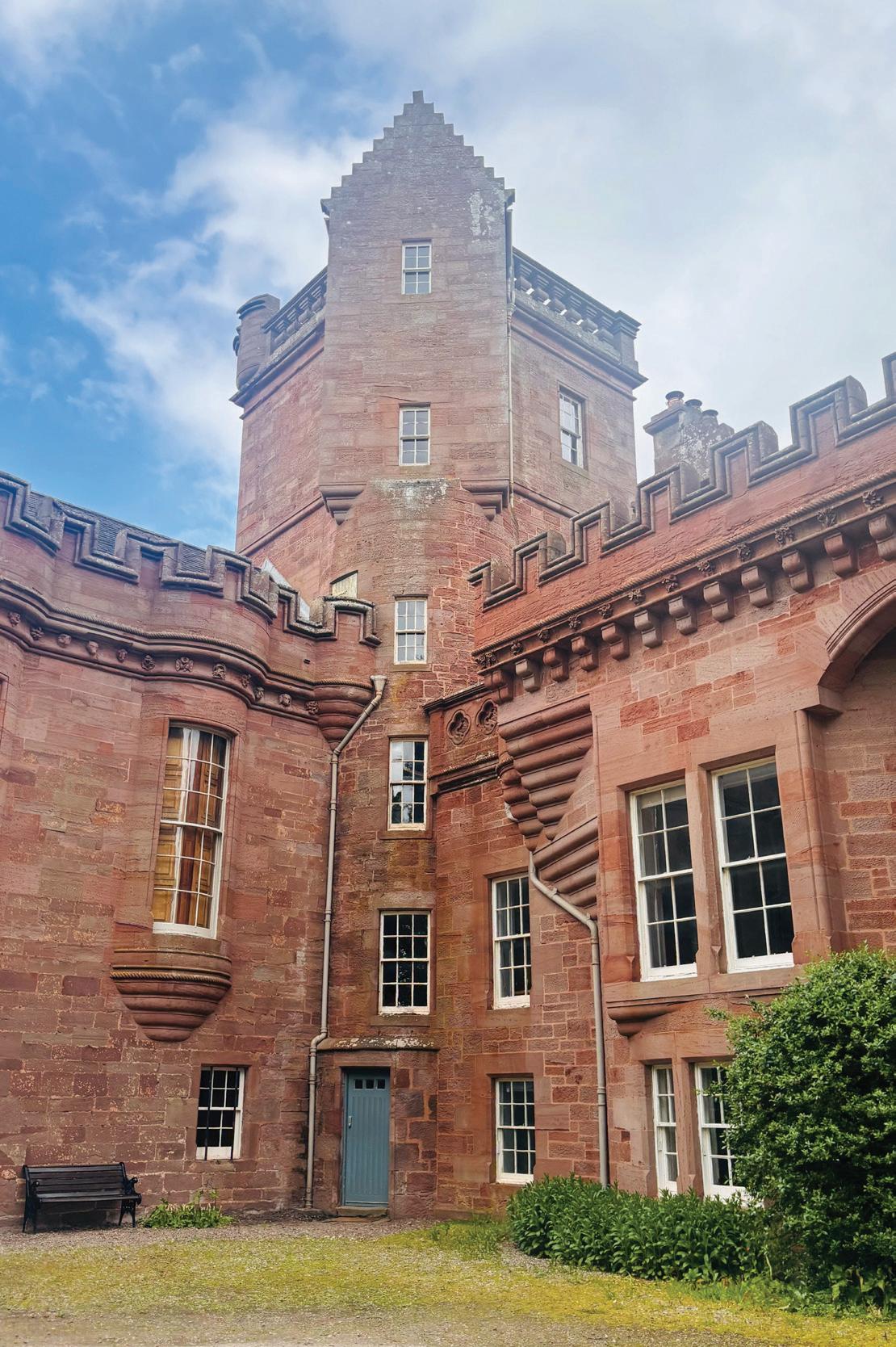
Hospitalfield is a remarkable arts centre housed within a beautiful late 19th-century building, set in extensive grounds overlooking the North Sea, surrounded by a walled garden where pruning has been commonplace since the 12th century. Established in 1882 by Scottish philanthropist, Patrick Allan-Fraser, the institution was intended as a space to support artists’ education and creative development. Today, it continues this mission through its renowned residency programmes, offering studio space, accommodation, and facilities, supported by Creative Scotland and international exchange programmes.
During my stay, I have had access to spacious, lightfilled studios that foster an atmosphere of intense focus and experimentation. The onsite accommodation creates a close-knit community where conversations and exchanges with fellow residents and visiting artists greatly enrich the creative environment. One of the residency’s unique attributes is access to Hospitalfield’s extensive archive – a rich resource of historical artworks, documents, and ephemera that situate contemporary practice within broader cultural and historical narratives. This has been invaluable in contextualising my work and inspiring new directions. Beyond the
physical facilities, the supportive programme includes seminars, artist talks, and informal critiques, facilitating dialogue and feedback that enhance each resident’s practice. Being part of this residency is especially beneficial at this time: as a group, we are planning a field trip to Glasgow International, as well as studio visits from UK-based curators. There are also opportunities to discuss solidarity structures amongst ourselves, in response to the increasingly challenging, and often hostile, environment faced by artists and cultural producers today.
During the residency, my focus has been on a series of embroidered drawings from my new film work, Embroidering the Earth’s Mantle (2025), and the completion of new work in preparation for my solo show at Oakville Galleries in Toronto in the autumn. The space to concentrate deeply on this body of work, while fermenting decision-making processes with input from fellow artists and curators, is essential to the pruning and pollarding process I mentioned earlier. For example, one of my fellow residents, Lyddy Solwyth, made an observation about the use of folklore as an ethical framework during group discussions – an insight that has strongly resonated with and enriched my practice. My latest body of work continues to explore themes of identity, memory, and environmental concerns through materiality and interdisciplinary approaches. The immersive time and space here have allowed me to develop new techniques combining embroidery with filmic narratives, pushing beyond previous boundaries. This residency is already yielding a substantial new body of work that I intend to present in upcoming exhibitions, including my solo shows in Toronto, Pécs in Hungary, and upcoming film screenings in South America. These insights will also inform my future projects, research, and teaching, helping to deepen the impact and reach of my practice. Moreover, the residency has strengthened my commitment to creating work that responds critically and poetically to contemporary issues through a multidisciplinary lens. Hospitalfield offers a truly unique environment that combines historical richness, natural beauty, and a forward-thinking artistic community. I am deeply grateful for the opportunity to contribute to its vibrant creative ecosystem during my residency. For fellow artists interested in applying, Hospitalfield’s residency programmes represent an outstanding chance to focus intensely on your work within an inspiring setting. Calls for applications are usually announced annually, with clear guidelines available on their website (hospitalfield.org.uk). I highly encourage artists working across disciplines to consider this exceptional opportunity.
Aideen Barry is a visual artist, Member of Aosdána, and lecturer at Limerick School of Art & Design. aideenbarry.com
PRODUCTION RESIDENCIES AT EDINBURGH SCULPTURE WORKSHOP.
THE UISCE / FLORA performative community river walks is the latest phase of my ‘Water Conversations’ series that explores water and land through historical, cultural, and ecological lenses. Water is central to all human and more-than-human life on earth. Historically, water has been critical to the development of towns and cities; however, the positioning of dwellings and industry beside water bodies brought gross pollution and biodiversity loss. It is now known that, globally, freshwater life is facing alarming species loss at rates more severe than on land or in the oceans.
In my home city of Edinburgh, the Water of Leith has been rejuvenated over the past 40 years through multi-agency community trust work.1 In witnessing the return of life and biodiversity of the water and riparian corridor of this iconic silver thread running through the city, Edinburgh seemed like the ideal spot to develop a transferable model for performative community walking, to celebrate water’s embodied animacy.
The two-year process of research and development for Uisce / Flora was made possible through two residencies at the Edinburgh Sculpture Workshop (ESW) in the summers of 2023 and 2024 respectively. The Reach Scotland Residency Programme, organised by Edinburgh Sculpture Workshop, is designed for artists working on funded projects that require either the production of final work, or a focused period of research and development (see edinburghsculpture.org). The heavily subsidised residency costs were funded through an Agility Award from the Arts Council of Ireland.
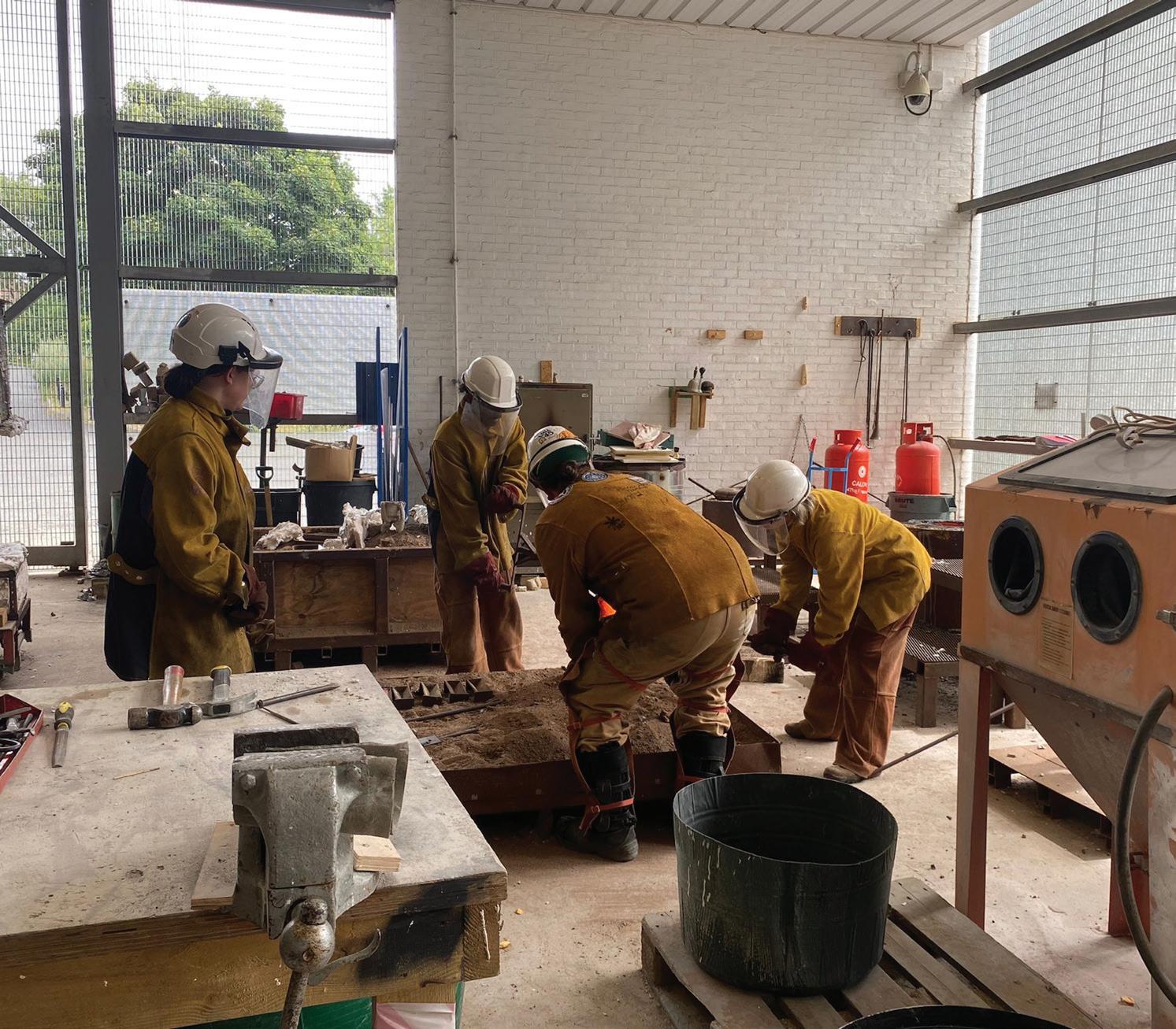
Founded in 1986 by a group of sculpture graduates from Edinburgh College of Art, ESW was an artist-run organisation for many years, before capital funding was secured to build the Bill Scott Sculpture Centre in Newhaven, which opened in 2012. The Reach Scotland programme at ESW is an excellent living, researching and making environment in the heart of the city, where artists are offered curatorial and technical support, an apartment, a dedicated 24-hour access studio, and access to workshop facilities. The facilities in the state-of-the-art building are supported by a dedicated staff and technical support team; artists working in the workshops have specialist technicians on hand to guide them through multiple sculptural processes in the creation of new work.
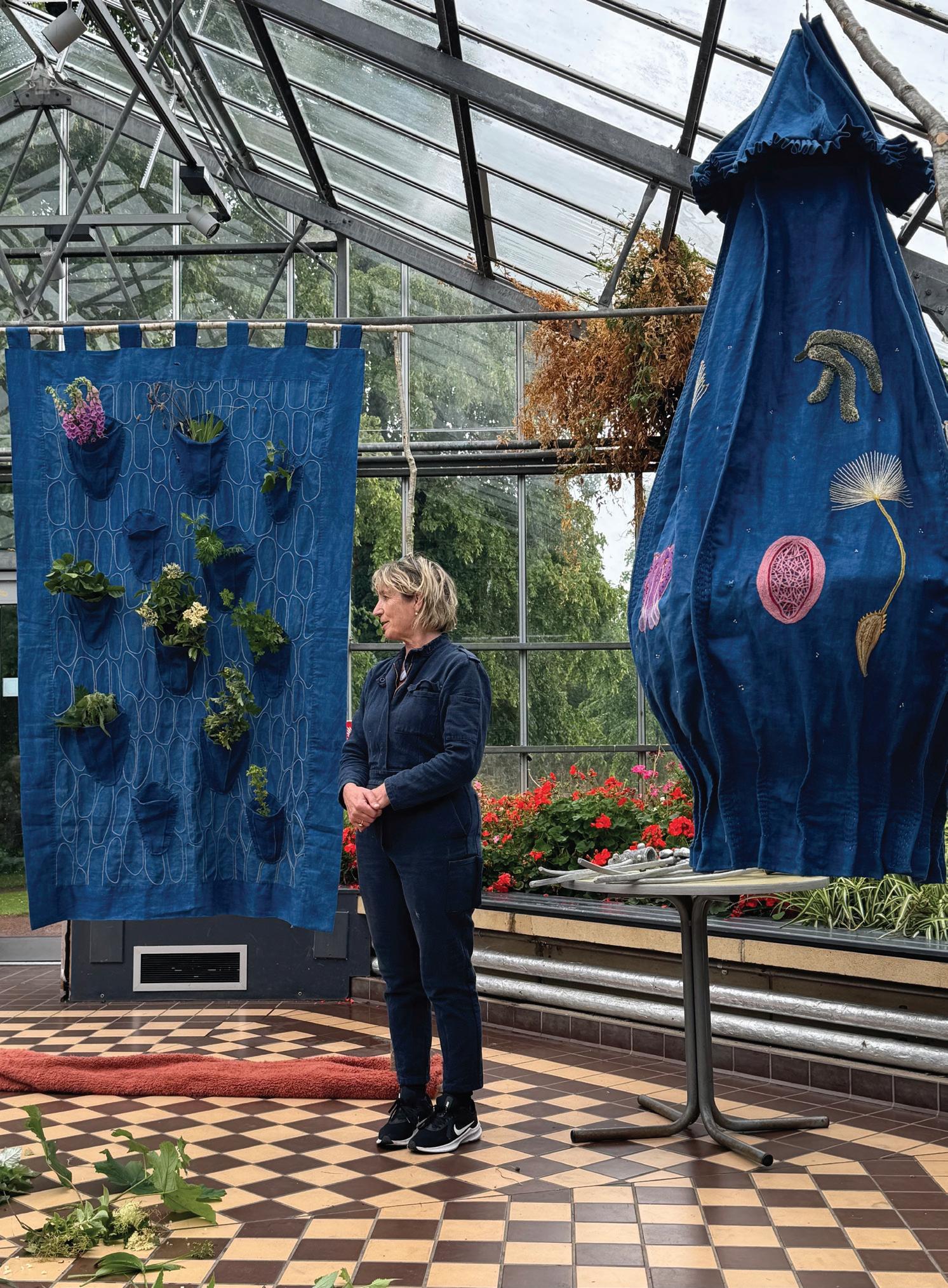
Uisce / Flora was conceived as a ceremonial procession along waterways and riverine paths (with embroidered textile sculptures and cast recycled aluminium staffs), as performative healing of human perceptions towards water, and as an act of interspecies empathy.
Research for the project involved input from multiple individuals and organisations. At the Wemyss School of Needlework in Fife, I learned crewel embroidery and was introduced to textile designer, Katie May
Anderson, who was instrumental in the form of the fabric works, generously sharing her knowledge of plant-based dyeing, pattern cutting, and assembly.2 The design of the embroidered riverine plants was drawn from two collections at the Royal Botanic Garden Edinburgh: the extensive Herbarium collection of more than three million preserved specimens; and the Library and Archives collection, where the nineteenth-century John Hutton Balfour teaching diagrams and Brendel teaching models are held.
At ESW, I was helped by the excellent technical staff through the long and complex processes of ceramic shell, sand casting, and finishing, involved in making the seven cast aluminium staffs, based on Caddisfly cases. Caddisflies (order Trichoptera) are freshwater aquatic invertebrates and indicators of good water quality; they are best known for the portable cases created by their larvae and, as such, are sometimes referred to as ‘underwater architects’.
Uisce Lite / Flora Edinensis was held in Edinburgh during June 2025 at two venues along the route of the Water of Leith – The Physics Garden at Saughton Park and St Bernard’s Well in Stockbridge. Invited speakers contributed to the walks on health-related subjects including ethnobotany, folklore and mythology, herbalism, and river regeneration.
A river walk, titled Uisce Sionainn / Flora Liatromensis, was recently performed on 16 May along the River Shannon, as part of my exhibition ‘Tír Breac / Speckled Land’ at The Dock in Carrick-on-Shannon. I was joined by Katie May Anderson, and a talk was delivered by Niall Mac Coitir, author of Ireland’s Wild Plants: Myths, Legends and Folklore (The Collins Press, 2010). A limited edition zine, designed by Padraig Cunningham of Pure Designs Studio, with an illustrated essay by Dr Phillina Sun, was launched at the event.
Anna Macleod is a Scottish / Irish artist, researcher and educator based in Manorhamilton, County Leitrim. annamacleod.com
1 See: The Water of Leith Conservation Trust (waterofleith.org.uk)
2 Katie May Anderson is a textile maker, researcher, and educator based in Glasgow (@kmacostume)
Top: Anna Macleod, Uisce Lite / Flora Edinensis event, Physics Garden, Saughton Park, Edinburgh, 14 June 2025; photograph by Sarah Clarkson, courtesy of the artist.
Bottom: Anna Macleod, Edinburgh Sculpture Workshop, aluminium casting workshop, 19 July 2024; photograph by Katie May Anderson, courtesy of the artist.
The gardener digs in another time, without past or future, beginning or end. A time that does not cleave the day with rush hours, lunch breaks, the last bus home. As you walk in the garden you pass into this time – the moment of entering can never be remembered. Around you the landscape lies transfigured. Here is the Amen beyond the prayer. – Derek Jarman, Modern Nature (Century, 1991).
Prospect Cottage
I FIRST BECAME interested in Dungeness, a headland on the Kent coast, while researching the Sussex Emerald moth, a rare and endangered species that inhabits the shingle landscape around the decommissioned nuclear power station. Conservationists have attempted to recreate its habitat elsewhere in England to support its declining population, but without success. I was drawn to the paradox of this fragile species surviving within a landscape often described as barren or hostile, its life entangled with the post-industrial and nuclear architecture of the coast.
Although the research had not yet developed into a finished body of work, Dungeness had already become a place I returned to imaginatively. I discovered the Prospect Cottage residency programme by chance while staying in London for a photography commission. My Airbnb host mentioned she was applying for a writing residency at the cottage, and I immediately looked up the opportunity myself. The residency felt like a convergence of interests I was already pursuing.
The residency programme at Prospect Cottage was established following the campaign to save Derek Jarman’s cottage after it was put up for sale in 2020. Managed by Creative Folkestone, it invites artists to live and work in the cottage, preserving Jarman’s legacy through direct engagement with the landscape and creative environment that shaped the latter years of his practice, before his
LYNDA LAIRD REPORTS ON HER RESIDENCY AT THE FORMER HOME OF ARTIST, WRITER, AND ACTIVIST, DEREK JARMAN.
Prospect Cottage, Dungeness, Kent; photograph by George Cory, courtesy of Creative Folkestone.
death from AIDS-related complications in February 1994. The residency is funded, offered through open calls, and open to international applicants, including artists based in Ireland.
I arrived on a Saturday morning in February and was met by the cottage’s custodian, who handed me the key and showed me around. At the kitchen table, he showed me a copy of Derek Jarman’s Garden (Thames & Hudson, 1995), illustrated with Howard Sooley’s photographs. Shortly afterwards, there was a knock at the door. A visitor was standing outside. When the door opened, he introduced himself: “I’m Howard Sooley”. I could hardly believe the serendipity of the moment. It felt like an introduction, not only to the cottage but also to the network of relationships, friendships and chance encounters that orbit Jarman’s legacy.
In those first days, everything felt intensified by proximity: the garden, the shingle, the wind, the slow pressure of the sea, and the power station looming at the edge of the horizon. Prospect Cottage exists outside ordinary time. The rhythms of the garden and the vastness of the landscape invite a different kind of attention.
One of the most liberating aspects of the residency was that there was no prescribed outcome. I spent much of my time working experimentally and playfully. I made emulsions from gorse flowers to create anthotypes, built pinhole cameras from plant pots found in the garden, and developed photographic developers using materials gathered there, including santolina, lichen, rosemary, and valerian.
I made a series of still lifes in Derek Jarman’s study, composed of hag stones collected by Jarman and kept in a box in the cottage, alongside seed heads gathered from the garden. The work extended my ongoing interest in plant-based photographic processes and in the material relationship between landscape and image-making. By making photographic chemistry directly from plants in Jarman’s garden, the work became a form of collaboration with the site itself.
During my time at Prospect Cottage, I repeatedly returned to Modern Nature. I have since read the book several times, and it remains a deep source of reassurance. Jarman’s reflections on gardening, loss and creativity offer a way of thinking about resilience and the possibilities of making work through sustained attention and care.
The residency also extended beyond my stay at the cottage. I continued to visit Dungeness over the following year, pursuing my research into the Sussex Emerald moth. I photographed the wild carrot on which the species depends and joined a local lepidopterist on moth-trapping sessions, where I was fortunate enough to see one of these rare moths. These experiences developed into an ongoing relationship with the landscape and continue to inform my practice.
The residency initiated a body of work that I continue to develop. One image made during my time at Prospect Cottage was selected for the Royal Academy Summer Exhibition in 2025. Since then, I have continued working with the material gathered there, developing negatives in plant-based developers made from species from Jarman’s garden. I have also undertaken further research at Tate Britain, spending time with Derek Jarman’s journals, notebooks and films in the archive – research that is informing plans for a stopframe animation, using the photographs and objects collected during and after the residency.
Laird is a photographic artist, picture editor, and lecturer based in St Leonards on Sea. lyndalaird.com
TOM LORDAN PROVIDES AN OVERVIEW OF FUNDED ARTIST RESIDENCIES IN EUROPE.
FINLAND: Saari Residence, Mynämäki
Situated in Mynämäki, Southwest Finland, the Saari Residence is a multidisciplinary residency programme for international artists, curators, critics, composers, translators, and artistic researchers. Individual residencies last two months and take place four times a year, while group residencies run for two to four weeks during the summer period. Individual residents receive accommodation and monthly grants ranging from €2,700 to €3,800, depending on career stage. Group residents receive weekly grants of €800 to €3,200 per person, depending on residency length. Additionally, successful applicants receive communal meals, mentoring, and access to technical workshops. The residency also provides support for artists arriving from outside Finland if they take ecologically friendly (low emissions) travel options. Applications for 2028 residencies will likely open in March 2027. koneensaatio.fi
FRANCE: Triangle-Astérides, Marseille
Established in 1992, Triangle-Astérides is a contemporary art centre in Marseille. The organisation offers a two-month residency for early and mid-career international visual artists working in any medium. Three residency sessions run annually: January to March; April to June; and September to November. Residents receive a private bedroom in a shared apartment in Marseille, a studio, a monthly stipend of €1,000, and a paid Open Studio presentation. Travel costs to Marseille are not covered, though the organisation may assist artists seeking additional funding. The residency also offers curatorial, administrative, and networking support through the Triangle-Astérides team. The next open call is expected in spring 2027 for 2028 residencies.
triangle-asterides.org
FRANCE: Camargo Foundation, Cassis
The Camargo Foundation offers several residency programmes throughout the year, including its flagship Camargo Fellowship, which is open to international artists and thinkers. Each year, 14 fellows are selected for a ten-week residency in Cassis, a Mediterranean fishing port in southern France. Fellows receive a stipend of €350 per week, travel funding, accommodation, and access to shared facilities including a reference library, open-air theatre, artist studio, darkroom, and composer’s studio. This programme strongly emphasises a focus on arts research. While visual artists can access studio space, the Foundation does not provide art materials, technical equipment, or artwork shipping support. The next call for applications for the 2027–2028 edition of the Camargo Fellowship will be posted online in July 2026 and will remain open until 1 October 2026.
camargofoundation.org
GERMANY:
Akademie Schloss Solitude, Stuttgart
Akademie Schloss Solitude awards 50 to 60 international fellowships every two years, across visual art, film, performance, music, architecture, and select academic disciplines. Fellowships last 6 to 9 months and include a furnished live/work studio in Stuttgart, a monthly stipend of €1,300, travel reimbursement, workshop access, and participation in an interdisciplinary artistic community. Additional project funding may be available depending on budget. The programme is aimed at practitioners with an established practice, generally between two and ten years into their professional careers. Successful applicants are expected to live in Stuttgart for the full fellowship period and participate in Akademie events. The next residency is for autumn 2028, with applications expected to be invited in autumn 2027.
akademie-solitude.de
FRANCE: Providenza, Corsica
Running since 2016, Providenza is a multidisciplinary residency based in the Corsican mountains, open to all nationalities and disciplines through an annual open call. It hosts emerging and established artists, with an emphasis on fostering experimentation. Residencies last three weeks, in June, September, and October. Residents receive accommodation, transport support (within Europe), and a grant of €500 per week, for four weeks. Facilities include a professional sound and image studio with recording, editing, and projection equipment; workshop spaces; shared kitchens; and an open-air amphitheatre overlooking the Mediterranean with capacity for up to 120 people. The programme particularly supports projects engaging with environmental, political, and technological questions. Applications are open in April each year, with announcements shortly thereafter. providenza.cc
GERMANY: Artist Residency Schloss Balmoral, Bad Ems
Located in Bad Ems, the Artist Residency Schloss Balmoral was founded in 1995. It offers six annual fellowships for international visual artists each year: three for four-month residencies and three for eight-month residencies, all beginning in April. Fellows receive €1,400 per month, accommodation, a studio, and travel support of up to €500 (though all costs associated with accommodation, like utilities, are borne by the tenant). Applications are open to artists of any nationality who have completed an MFA or equivalent qualification and have at least three years of professional artistic practice after graduation. Each year’s residency programme is organised around a specific artistic theme – the theme this year is ‘alchemy’ – and a final group exhibition is presented afterwards. The next cycle is expected to open in spring 2027 for 2028 residencies.
balmoral.de
Left: Rijksakademie Paint Workshop; photograph by Roy Taylor, courtesy of Rijksakademie.
Right: Shunsaku Hayashi, current Artist-in-Residence at Kunstlerhaus Bethanien, Berlin; photograph by Galya Feierman, courtesy of the artist and Kunstlerhaus Bethanien.
GERMANY: Bauhaus Earth, Berlin
Bauhaus Earth was founded in 2020 to rethink how urban design can not only better serve people – as per the original twentieth-century Bauhaus movement – but also align with the earth’s natural systems. Bauhaus Earth has been running an international Experimental Fellowship since 2022. This residency supports emerging practitioners and cross-disciplinary teams to work on regenerative building solutions. However, it actively seeks applications from visual artists, along with architects, researchers, and craftspeople, and no institutional affiliation is required. The Fellowship lasts nine to 12 months. Funding includes a monthly €1,500 stipend for individuals or €2,500 for teams, plus up to €30,000 for project and production costs. Applications are open from April to May every year, with announcements in July.
bauhauserde.org
NETHERLANDS: Rijksakademie, Amsterdam
Founded in 1870, the Rijksakademie in Amsterdam seeks applications from research-driven artists. The programme selects approximately 23 artists annually for residencies typically lasting two years, with participants drawn from the Netherlands and an international cohort. The Rijksakademie provides a private studio, technical workshop access, curatorial and critical guidance, and a yearly stipend and work budget of approximately €19,800. The programme places strong emphasis on artistic development and experimentation, supported by an extensive network of visiting critics, curators, and artists. The next residency is for 2028, with applications opening on 1 January 2027. The application fee is €60.
rijksakademie.nl
GERMANY: Künstlerhaus Bethanien, Berlin
Künstlerhaus Bethanien, in Berlin’s Kreuzberg district, is one of Europe’s longest-running international artist residency programmes, operating for more than 50 years. Its International Studio Programme hosts approximately 40 artists annually, typically for residencies lasting six to 12 months. Artists can apply either through partner institutions or directly to the organisation. Direct applications do not include funding; instead, successful applicants receive a Letter of Interest from Bethanien, which they can use to seek external funding. Additionally, successful applicants receive tailored support to build their artistic practice; space to live and work in the Künstlerhaus Bethanien; and a variety of presentation opportunities, including open studios to showcase their own creative processes, coupled with external studio visits to other art practitioners. There is no deadline for direct applications.
bethanien.de
NORWAY: Nordic Artists’ Centre Dale
Founded in 1998, Nordic Artists’ Centre Dale / Nordisk Kunstnarsenter Dale (NKD) is a residency programme on Norway’s west coast for artists, architects, and designers. Residencies last between two and four months. Successful applicants benefit from accommodation, a private studio, access to shared studio facilities and a carpentry workshop (furnished with equipment and heavy machinery). The residency provides a monthly stipend of approximately €950 (NOK 11,000) and travel support of €430 (NOK 5,000). The programme places strong emphasis on interdisciplinary exchange and international dialogue – they only host five artists at a time, keeping the community small, in order to foster a supportive and respectful environment. The application deadline for 2028 residencies is likely to be late April 2027.
nkd.rimbert.fi
NETHERLANDS: Jan van Eyck Academie, Maastricht
Based in Maastricht, the Jan van Eyck Academie hosts 36 to 42 international residents annually. The programme is primarily designed for artists, but it is open to designers, architects, curators, writers, and artistic researchers as well. Participants undertake an 11-month residency and receive a monthly stipend of €1,500, with approximately €825 deducted every month for accommodation (although rental subsidies may apply). In addition to accommodation, the stipend, and full use of the Jan van Eyck Academie’s facilities, the programme provides a working budget of €2,000 to be used over the duration of the residency. The programme is particularly suited to practitioners in socially engaged art. There is an enrolment fee of €2,750 that successful applicants must pay at the outset. The next residency is for 2028, with the applications scheduled to open in October 2026.
janvaneyck.nl
SWITZERLAND: La Becque, La Tour-de-Peilz
La Becque runs an annual open call each March for its Principal Residency Program. International artists can apply directly for a three-month residency taking place during one of three periods: January to March; May to July; and September to November. Successful applicants benefit from an apartment overlooking Lake Geneva, access to studio spaces (including a professional sound studio), craft workshops, and a monthly stipend of approximately €1,600 (CHF 1,500). This residency focuses primarily on ideation and conceptual development rather than output, with particular emphasis on projects that engage with nature and technology. Residents also participate in public events, talks, and open studios during their stay. The next call (for residencies taking place between May 2028 and March 2029) will open in March 2027.
labecque.ch
Left: Future Materials Lab at Jan van Eyck Academie, The Netherlands; photograph courtesy of Jan van Eyck Academie. Right: Rijksakademie Alum Eunsae Lee (RA 23/25) working in the Print Workshop; image courtesy of Rijksakademie.
Cultural Hub
SHIRO MASUYAMA REFLECTS ON HIS RESIDENCY AT CENTRE CULTUREL IRLANDAIS PARIS.
I’M ORIGINALLY FROM Japan and following international residencies at the Irish Museum of Modern Art, Dublin (2006) and Flax Art Studios, Belfast (2009), I subsequently relocated to Belfast, where I’ve been based ever since. My practice – and even my life – has developed through my participation in several dozen residencies worldwide. However, my recent experience at the Centre Culturel Irlandais (CCI) was my first residency in Paris.
For cultural figures based in the island of Ireland, an official invitation to CCI Paris is a career milestone. I noticed a new residence opportunity for socially engaged artists was established as the Tomi Ungerer Residency, named after the French writer, artist, and activist Tomi Ungerer, who spent the latter part of his life in Ireland. As a socially engaged artist based in Belfast for the last 16 years, I’ve played a unique role in questioning how identity can be influenced by the dominant political forces surrounding us. Being selected for a residency at a cultural centre that promotes Irish culture is a significant achievement for a Japanese artist like me.
I scheduled my CCI residency from late January, around the truffle harvest season – an expensive mushroom that is popular in French cuisine. I wanted to shoot a new documentary in Périgord, southern France (famous for truffles) which compares traditional truffle pig hunts with modern dog hunts. CCI offered me €800 toward living expenses for my one-month residency, and travel expenses up to €300. During my stay in Paris, I met four fellow awarded artists: Favour Odusola, a Dublin-based dancer; Doireann Ní Ghlacáin, a musician/RTE presenter; Peadar-Tom Mercier, a musician; and Niamh O’Malley, a visual artist who previously represented Ireland at the 59th Venice Biennale. I also met other residency participants, who either self-funded their stay or received grants, and many of them were writers.
The accommodation consists of hotellike rooms with private bathrooms, and cleaners visit weekly. Most rooms house Irish students studying at Paris universities. Resident artists have a chance to meet with other artists and students at a free simple breakfast offered by CCI and in shared kitchen spaces that all residents use. Paris, the gourmet capital of Europe, overflows with high-quality international cuisine. There are affordable dining options located in the student area near CCI.
Awarded visual artists receive priority at two available studios. Residencies usually expect outputs, so, during my first meeting with Nóra Hickey M’Sichili (CCI Director) and Rosetta Beaugendre (CCI Head of Communications), I proposed editing my truffle-hunting documentary footage, which I had obtained before arriving at CCI, for a final screening event. However, I was overwhelmed by the numerous and massive contemporary art museums in
Paris. Initially, I balanced museum visits with video editing in my room, but halfway through, I proposed to them that video editing could wait until Belfast, and that I should embrace the unique experiences I could only have in Paris. They didn’t really mind.
Soon after my arrival, Rosetta suggested that my open studio coincide with the opening of an exhibition at the CCI gallery, which attracts a large audience. In my studio, I presented a video of my post-Brexit project, Brexit Sausages (2022), which critiques the Irish Sea border and
new logistical controls between Northern Ireland and Great Britain. Nora also asked me to show it to students during one of her weekly lectures at CCI. Before my residency finished, I opened my studio again to show it, inviting people I met in Paris. As socially engaged artists like me rarely stay at CCI, for the upcoming Culture Night (Nuit Blanche) in June, Nora was enthusiastic about representing Brexit Sausages Since CCI attracts large crowds, even for the one-night event, they offered to fund the shipping of my sausage sculptures from Belfast.
CCI’s central location in Paris, a major cultural hub, inspired me every day by making all areas accessible. I wish I could have spent more time than a month there. I’ve been undertaking a new project in France, and I hope to return to Paris, funding permitting.
Shiro Masuyama is a Tokyo-born, Belfast-based artist, known for socially engaged, site-specific art, including installation, performance, film, and photography. shiromasuyama.net
RICHARD MALONE REPORTS ON THEIR RESIDENCY EXPERIENCE IN THE BRITISH SCHOOL AT ROME.
THE DEREK HILL Foundation Scholarship is a residency in the British School at Rome – one of a number of historical research institutes offering residencies around the city. The BSR application opens annually in late November and is open to Ireland and UK-based artists. The scholarship is for painting and drawing, but this can be broad, experimental, and far reaching. Applicants are shortlisted and the final selection is made by a panel of museum directors, curators, and the foundation. The residency award comes with a monthly stipend, a large studio, three meals a day (and afternoon tea), 24-hour library access, and access to libraries and archives in Rome and around Italy.
I was surprised (and excited) to win the scholarship, as I had understood such institutions to be quite formal in how they commission and categorise research, and conservative in their approach to art, often grounded in classical frameworks that, in turn, are heavily intwined with colonial and patriarchal ideals, with Rome historically being the epicentre of these structures. My research is centred on the invisible – markers of gender, class, and queerness, which share commonalities in often being marginalised and overlooked. I’m interested in how we participate in a hierarchy of material values – grounded in principles of patriarchy, patronage, and policing – of taste, class, material culture, the body, and so on. It is a rigid system that persists to this day through education, access, language, and what is deemed valuable. How do we create ideas of truth? How can we trust historical accuracy when women, queer people, and the working class continue to be silenced, censored, and erased?
As well as the artists, there are numerous doctoral, post-doc, and research candidates on residency in BSR, mainly from prestigious universities. It is interesting how much time is spent referencing discoveries and texts written during the Victorian era by privileged white men on grand tours. One example in a museum was Etruscan burial vessels, containing ‘couples of note’. In one urn was two women, which the archaeologists deemed high priestesses or witches, as opposed to a couple, like everyone else. This speaks to Victorian morals imposing meaning based on a limited imagination and experience. When we have a homogenous demographic responsible for the discovery, interpretation, and classification of artefacts, we are left with dogmatic readings and understandings of history.
In the BSR studio, I explored combinations of painted surfaces, creating quilts and stitched cloth to paint on, or found board and detritus drenched in oil paint. I painted on moving blankets, cast cloth with masonry paint, created installations out of samplers, applied pigment directly to the wall. Much of my works were made in conversation with one other. The work sat like questions, as if to challenge understandings
of tasteful art or exclusive histories. I loosely painted patterns, including the striped or harlequin forms used to identify the heretic, the witch, the queer, the jester. I explored ideas and representations of the ‘other’ using forms that challenge the nature of a painted object or value systems applied to the painted surface.
The BSR residency is stimulating, direct, open, inquisitive, and genuine. The studio is fantastic, as are the other artists. It is a credit to the team to select such a diverse range of practices in just seven artists. We arranged studio visits with each other and prepared collectively for open studios. It felt like an art school from another time, in which space, thought, and work were prioritised. Debate was encouraged and not polarising. We worked hard, had drinks on the roof in the sun, took trips to the countryside, or visited sites we wanted to see. We stayed up together before open studios to make sure everyone got over the finish line in time, having ice cold limoncellos while stretching canvasses and prepping studio walls. I can’t recommend this residency enough as a space for creative and inquisitive practices. I urge everyone to apply and to discover Rome as a layered, political, and enriching city that is everchanging, yet never moving. The BSR residency has opened a dialogue and raised questions that will stay with me for a long time.
Richard Malone is an artist based between Wexford and London. richard-malone.com
All: Richard Malone, studio view, British School at Rome, April 2026; photograph by Luana Rigolli, courtesy of the artist and British School at Rome.
To Only Not Know
DOROTHY HUNTER REPORTS ON HER PARTICIPATION IN THE MAGNETIC RESIDENCY EXCHANGE IN DUNKIRK, FRANCE.
‘MAGNETIC’ IS A residency programme organised by Fluxus Art Projects that connects French and UK art scenes; each residency involves a partnership between art organisations across the two states. Partner organisations in the UK include Wysing Arts Centre and Gasworks in England, Aberystwyth Arts Centre in Wales, and Cove Park in Scotland. In the case of the exchange I undertook this spring, one artist from Hauts-de-France is hosted by Flax Art Studios, Belfast, and a Northern Irish artist is hosted at Ecole Supérieure d’Art (ESA) in Dunkirk, via their partnership with Frac Grand Large, the city’s regional art gallery. Each resident artist can build on evolving ties between the localities, as intel, connections, and contacts are shared, and the new cross-channel community grows.
The two-month residencies – for which artists receive a fee, travel reimbursement, access to a communal car, and private accommodation – are intended to be research-focused. Artists are well positioned by having a studio within the art school in Dunkirk. Being able to use equipment and facilities (such as 3D workshops, print studios, and AV equipment) allows research to expand in many possible directions, and I found myself using resources in ways I would never expect. The college is a valuable part of the residency, both in terms of the students (who can help with things like making, logistics, and translation through the Frac’s internship programme) and the energy of the campus. The conversation with students and teaching staff, as well as the support of the director and head of offsite projects at the Frac, offers much more facilitated connection with the locale than many other residencies.
Northern Ireland’s Magnetic exchange with Hauts-de-France is not the straightforward pairing it might at first appear to be. The two northern regions share similarities, such as the impact of conflict and industry (or its loss) on landscape, tourism, and civic life. But with this, there is also a shared experience of plurality and peripheralisation: both are straddling states, where borders are physically enacted upon individuals or opened in the pursuit of global capital, and where values of life, economic production, and sustainability appear to clash.
Given Dunkirk’s backdrop of long shoreline and industrial vistas, ESA and Frac Grand Large have so far sought residency proposals that touch upon relations between ecology and industry, as well as art’s position in the public sphere. During my time there this spring, I proposed exploring the agency of living things in the industry-made wetlands and artificial dunes. Whilst in residence, the complexities of this site became increasingly apparent, and the research spiralled further. The human movement cannot be unpicked from ecological initiatives that mitigate industry: migrants walk along highways
from uprooted camps; gendarmerie roam the dunes and jetties; and crossers (or their saboteurs) sleep in the protected dunes.
At nighttime, I returned to film and photograph clematis in the dunes and returned several times during the day to collect sea buckthorn berries from a liminal strip of land, a reclaimed dyke in front of the original shore, used to house more industry. Working with ESA students on my first workshop, we responded to the mapping of the Sandettie Bank (a large underwater dune that sits across the demarcation of French and UK waters), jumping off from scientific papers, poems, and the historic maps in the city archive. My presentation at the end of the residency, titled To Only Not Know/Pour Seulement Ne Pas Savoir (2026), comprised print, video footage, photography, and small-scale sculpture. These elements were installed against a backdrop that was co-created with the students, using ink made from the berries, collected from the forbidden man-made land.
Dorothy Hunter is a cross disciplinary artist writer and researcher who lives and works in Belfast. dorothyhunter.com
AVRIL CORROON REPORTS FROM AMSTERDAM ON HER ONGOING RESIDENCY AT THE RIJKSAKADEMIE.
I AM CURRENTLY approaching the last six months of my two-year residency at the Rijksakademie in Amsterdam. The programme selects on average 23 to 25 artists from an annual open call. The application process entails a written application, portfolio, and video bio, and if pre-selected, two interviews. There is a €50 application fee. Half of the artists are living internationally, and the others are based in Netherlands prior to the residency. In general, artists are usually out of education and working professionally for a number of years.
Residents are supported with individual studios and workshop facilities in an old calvary barracks in east Amsterdam. The size and style of studios vary and are allocated by practice needs; however, this is not without competition. My studio is in the old stables, located beside a canal. The space has both brick and white walls, high ceilings, and big sliding doors to facilitate scale. For me, it’s a beautiful space to think and make in, with changing natural light throughout the day.
We receive a materials budget and modest but feasible monthly stipend inclusive of rent. Accommodation is provided, with priority given to international artists; these are mostly single flats and some shared apartments around the city. We’re encouraged
to apply for state housing supplement, and health insurance is obligatory in the Netherlands.
The facilities at the Rijksakademie are the driver of the residency, with workshops and technical advisors in wood, metal, print, ceramics, casting, media, chemical, and paint. You can leave your studio with an idea, enter a workshop, and often the materials might already be at hand to get testing straight away. The levels of detail and specificity I’ve been able to achieve has been completely engrossing and exciting.
Lately, I’ve been working predominantly in the metal workshop, forging a series of crowbars, titled Pry (2026), from toolsteel and welding structures, to be lit from within and hanging from a ceiling, holding dehumidifier water in IV bags, titled Sublet Glory (2026). For both works, a number of tools were made specifically by Stephan Kuderna, the workshop technician: a tool to precisely bend bespoke laser-cut brass hooks; a chisel grounded for splitting the crowbar foot; and parts to bend the hot tool steel around for the leverage points. In the Media Lab, with the robotics and electronics technician, Mauricio van der Maesen, we made a lightbulb to the exact length and colour temperature I wanted but couldn’t find commercially. I’ve made multiple
clamps to fit ceiling beams that Sublet Glory will hang from, sprayed the steel in the Paint Lab, and finally made the crates in the Woodshop. It’s been empowering to be so hands-on with every aspect of these works and has given me new practical skills and freedom.
On the theoretical and conceptual sides, residents sign up to receive studio visits from artists called ‘advisors’ who come semiregularly. These advisors develop engagement with studio practices and build upon previous conversations, offering criticality, questions and feedback. It’s invaluable to have artists willing to get into the research hole with you as you dig.
Sharing space with so many artists is naturally quite social. To break the ice, the residency year starts with a group bonding trip. Memorably, my first year trip was to the small Dutch island Schiermonnikoog, where we stayed in a very old traditional hotel and did quicksand walking tours, star gazing, and swam in freezing conditions. Many of us have moved to the Netherlands without existing networks or connections to the city, so community-making begins on residency. Cantina, the unofficial social workshop of the Rijksakademie, is where staff and residents gather to eat, talk, and exchange ideas. We are spoiled
with a subsidised menu, and we eat by the canal in the sunshine at any opportunity. Friendships started here have sparked weekly morning writing groups, a coding club, and a burgeoning football team. Most importantly, we’ve inherited from alumni a weekly evening crit system and we go to plenty of shows and pubs together.
In terms of outcomes, we have three Internal Open Studios during the year. This is a valuable private opportunity to see each other’s work with all staff and advisors and usually a packed performance programme, followed by a celebratory dinner and party. More intensely, the Rijksakademie consolidates each year with a four-day public Open Studios. Despite this innocent sounding premise, it’s a whopping show of 50 solo presentations and events, receiving a footfall of 5000 visitors. This is a real beast; the pressure is high, entailing a lot of hard work and collaboration across the site. This year, Open Studios runs from 19 to 22 November. Then, come December, I hand back the keys to the castle, and see where I go from there.
Avril Corroon is an artist based between Dublin and London. avrilcorroon.com
Avril Corroon, Sublet Glory, 2026, dehumidifier water (collected from London tenancies), IV bags, crowbar, steel, brass, electric components, carpet, installation view, ‘Flare-Up’ (21 May –16 August 2026) at Goldsmiths Centre for Contemporary Art; photograph by Rob Harris, courtesy of the artist and Goldsmiths CCA.
Residency Roundup: United States
THOMAS POOL PROFILES FUNDED ARTIST RESIDENCIES IN THE UNITED STATES.
Albers Foundation Residency, Bethany, Connecticut
Located 80 miles northeast of New York City on 70 acres of wooded property in Bethany, Connecticut, the Josef and Anni Albers Foundation maintains two residential studios for visiting artists. Each studio is in an independent building equipped with a 400 sq/ft (37 sq/m) workspace with 16-ft (5m) ceilings, a kitchen, bath, and bedroom. Residents can walk the forest trails, swim in or paddle on the pond, and visit galleries and museums in nearby New Haven. The residency is designed to provide time, space, and solitude, with the benefit of access to the Foundation’s archives and library. Residencies generally last two months and are free of charge.
albersfoundation.org
Oak Spring Garden Foundation, Upperville, Virginia
The Oak Spring Garden Foundation is situated in rural northern Virginia, about an hour outside of Washington, DC. Their mission is to provide dedicated individuals access to resources and accommodation. All residents are selected based on their ability to demonstrate a current interest in plants, landscapes, and gardens, or more broadly, the natural world and humankind’s place in it. The foundation welcomes and encourages diverse applicants and is excited to receive submissions that convey a unique relationship with, or perspective on, the natural world. Along with three chef-cooked meals a week, residents selected for a five-week session receive a $2,000 (€1700 approx.) individual grant, while residents selected for a two-week session receive an $800 (€690 approx.) individual grant.
osgf.org
Chinati Foundation, Marfa, Texas
The Chinati Foundation hosts four to six artists annually for two-month residencies. Resident artists are provided with an apartment on the museum grounds, a studio in downtown Marfa, and access to Chinati’s collection and archive. A stipend of $4,000 (€3445 approx.) is provided for honorarium, travel, and art materials. Applications for the 2026 and 2027 Artist in Residence Program closed on 30 April 2025. An open call takes place every two years. The next open call will be in January 2027 for the 2028 and 2029 programmes. The Chinati Foundation’s Artists in Residence programme was instituted in 1989 by Donald Judd, with the aim of supporting artists of diverse ages, backgrounds, and disciplines.
chinati.org
Joshua Tree Highlands Artist Residency, California
Situated near Joshua Tree National Park, the residency selects six artists from around the world, at all stages of their careers, working in all media, including drawing, painting, photography, sculpture, film, video, new media, installation, fiction and non-fiction writing, interdisciplinary, social practice and architecture. Each artist participates in a seven-week residency and receives a $1500 (€1290 approx.) stipend; there is a $45 application fee. Artists may choose to work in the JTHAR dedicated studio –a large workspace that can be divided by movable walls, depending on the artist’s needs. Housing accommodations are located in the Highlands near the west entrance of the Joshua Tree National Park.
jthar.org
Headlands Center for the Arts, Sausalito, California
Located in a former army base outside of San Francisco, the Headlands residency programme awards fully sponsored residencies to approximately 60 local, national, and international artists each year. Residencies of four to 10 weeks include studio space, chef-prepared meals, housing, travel and living expenses. Residents become part of a dynamic community of artists participating in Headlands’ other programmes, allowing for exchange and collaborative relationships to develop within the artist community on campus. The programme covers roundtrip airfare from home city, and up to $1,000 (€860 approx.) a month, of either a stipend or reimbursed expenses, but charges an application fee of $45 ($35 for ‘early bird’ submissions).
headlands.org
Sculpture
Space, Utica, New York
This residency for sculptors is located in upstate New York and provides a 5,500 square foot shared studio with specialised equipment in addition to six semi-private studios. Artists are offered a $1000 (€860 approx.) stipend to offset travel and expenses. There is a $35 application fee and selected artists are expected to stay for a full two months. Housing is provided a block away, in a newly renovated residence with private bedrooms, washer/dryer, internet, shared living space, and kitchen. Artists are required to acknowledge Sculpture Space when works made while in residence are subsequently exhibited or published, and to provide high-quality images of works for the website, archives and publications. In addition, they require artists to donate a mutually agreed upon artwork, to be sold at their annual CHAIRity Art Auction, held every September, benefitting Sculpture Space’s programming. sculpturespace.org
Left: Sculpture Space, Utica, New York; image courtesy of Sculpture Space.
THOMAS POOL PROFILES FUNDED ARTIST RESIDENCIES AROUND THE WORLD.
AUSTRALIA: The Farm Margaret River Residency
The Artist in Residence programme at The Farm Margaret River provides a unique opportunity for visual artists to undertake focused, site-responsive artworks. It is located on a rural property in the southwest of Western Australia, known as Wadandi Country. The residency is awarded to artists who demonstrates a strong creative practice, whose work will both enhance their engagement and awareness of the area, and benefit their own professional career. In addition to covering travel costs, the residency supplies an artist fee of AUD$15,000 (€9,130 approx.) and accommodation and studio facilities on site at The Farm Margaret River.
thefarmmargaretriver.com.au
JAPAN: The Kyoto Retreat, Kyoto
Artists are not required to make artwork or complete a project during residencies at the Kyoto Retreat. This is not a studio or production residency. Artists can use the time however they see fit. The residency recommends rest, research, and reflection. If selected for The Kyoto Retreat, artists receive a roundtrip flight to Kansai International Airport (KIX), located in Osaka Bay. Artists are provided with a private bedroom in a shared, private house for four weeks, and will also receive USD$800 (€690 approx.) to supplement meals and local transportation. There is an application fee of USD$95 (€80 approx.).
CANADA: The Grantham Foundation for the Arts and the Environment
The residency programme consists of a four-week research-creation stay at the Grantham Foundation, followed by a final residency presentation of work-in-progress to the general public. This stay offers artists-in-residence time to reflect and write at the Foundation. Meetings with the foundation’s artistic director take place throughout the residency to provide support for the process. Selected artists receive a grant of CAD$5,000 (€3,075 approx.).
A lump sum allowance towards travel expenses of up to CAD$1,000 (€615 approx.) is also available to researchers whose place of residence is more than 500 km from SaintEdmond-de-Grantham. Any work produced as a result of research undertaken at the Grantham Foundation must acknowledge the foundation’s support.
fondationgrantham.org
NEW ZEALAND: Waiheke Community Art Gallery, Auckland
Located on Waiheke Island, a 35-minute ferry ride from Auckland, this 12-week residency provides artists with a weekly stipend, as well as materials, to the value of NZD$1000 (€500 approx.). At the end of the residency, artists showcase their works in an exhibition at the Waiheke Community Art Gallery. Selected artists experience the vibrant island art scene that is home to many creatives working across a range of media and approaches. The island provides access to stunning white sandy beaches, native bush walks, iconic restaurants, and vineyards. Living and working in a unique island environment, resident artists are inspired to develop and expand their practice.
kyotoretreat.com
waihekeartgallery.org.nz
CHINA: A4 Residency Art Center, Chengdu
A4 Residency Art Center is an interdisciplinary, open, and collaborative platform that embraces the residency programme as its method and perspective. The centre is committed to promoting the integration of diverse creative resources among communities, cities, and international partners by tapping into local culture and international cooperation opportunities. Resident artists participate in a unique context, comprised of the art centre, the community, and the characteristics of the city. Residencies last no less than eight weeks, and a stipend of RMB10,000 (€1,275 approx.) is provided for material and production costs. Private workspace and living quarters are provided, as well as round-trip airfare.
a4artmuseum.com
SOUTH KOREA: Asia Culture Center, Gwangju
The National Asian Culture Center (ACC) is an international institution for creative production and cultural exchange, dedicated to fostering the diversity of Asian culture and the arts. It serves as a platform where innovative ideas and convictions converge to generate forward-looking creative outcomes. The ACC CREATORS Residency aims to establish a sustainable creative production platform through the convergence of art and technology. Studio, accommodation, and round trip air fare are provided. Artists also receive a 20,000,000-30,000,000KPW (€11,32016,990) production budget. 2,500,000KPW (€1,410) stipend. Foreign nationals must be eligible to obtain a Korean visa for the full residency period.
acc.go.kr
Left: Albers Foundation Residency, Bethany, Connecticut, 2025; photograph by Enrique Veganzones, courtesy of the Albers Foundation.
MCCREA REFLECTS ON HER RESIDENCY AT ISCP IN NEW YORK.
THE TBG+S / ISCP residency is an annual opportunity for Irish or Ireland-based artists to take part in a three-month residency at the International Studio & Curatorial Program (ISCP) in New York, coordinated by Temple Bar Gallery + Studios in Dublin. Alongside a studio at ISCP in Brooklyn, TBG+S provides financial support for travel, accommodation, and living expenses.
During my time on residency, from September to November 2025, there were many events and opportunities organised by ISCP that I could attend. Studio visits with curators and artists took place once or twice a month, and we visited numerous museums and galleries as a group. While there is no access to production facilities, residents have access to the MFTA (Material for the Arts) reuse centre through ISCP, which has vast amounts of materials that can be taken for free. Twice a year, there is an Open Studios, in which residents present their work and research to the public.
For the residency, I proposed to research the next instalment in a series of video works that engage with the built environment and draw on conventions from cinema, theatre, and television. The prior works were set in the European banking-capital of Frankfurt am Main, and the US multinational hub of Dublin. I was excited to research setting the next instalment in the banking and real estate epicentre of New York City. Frequently in my practice, a specific site or scenario will be the starting point for the work. Through a layering of realism and artifice, I seek to push the existing social, spatial and economic architectures of this space or scenario to excess. I am interested in how an object or place can undergo multiple processes of de- and re-contextualisation, and how things layer themselves over and around objects and places.
I researched the promptbooks, scripts and Theatre on Film and Tape Archive (TOFT) located at the New York Public Library for the Performing Arts. This was a great experience, and I saw many theatre productions and recorded rehearsals that I wouldn’t otherwise have had access to. You can only reserve each tape once; knowing that I wouldn’t be able to watch it again added an extra impetus to pay attention. Alongside the archives, I explored the city on foot, documenting it through photographs, collected ephemera, and audio recordings. New York is such a highly mediated city, and a readymade set for countless film and TV productions. It was through this lens that I wanted to explore the city.
My map of orientation to explore the changing landscape of real estate and the mediated image of the city was Ramsay’s Kitchen Nightmares USA. Perpetually on repeat on Channel 4’s daytime TV roster, the reality show depicts British celebrity chef, Gordan Ramsay, as the saviour of failing restaurants across America. Across seasons, the same dramatic arcs reappear:
familial succession conflict, rising rents and debt, marital breakdowns, and refusals to relinquish power. For the failing restaurants, these problems are then often compounded by poor food hygiene, dated decor, large menus, and a penchant for microwaves in the kitchen. Across nine seasons, Ramsay brings these establishments back from the brink of closure through a combination of menu changes, verbal abuse, and interior redesign.
I compiled a map of these establishments across New York City and used it to orientate my explorations. The vast majority of the businesses were closed, replaced by small plates, soulless cocktail bars, or minimalist, card-only coffee shops. However, one establishment that had survived was the Bel Aire Diner in Astoria, Queens. Clad in chrome and murals of vintage cars, I felt a strange sense of being star struck when I entered the diner and saw the characters from the TV show there, in front of me, working and talking, in real time, in real life. Of all the shuttered restaurants from the TV show, it was the nostalgic, somewhat clichéd image of the American diner that survived. Over numerous trips, coffees, and chicken and waffles, I eavesdropped and observed, wrote character and script ideas, and experimented with the conventions and tropes of melodrama and reality TV.
Eva Richardson McCrea is an artist based between Dublin and Berlin. evarichardsonmccrea.com
GRAINGER REFLECTS ON HER RESIDENCY AT CASA WABI IN PUERTO ESCONDIDO, MEXICO.
WHILE OUT WALKING, I was listening to The Mater Podcast, featuring Mexican artist Bosco Sodi and curator Alberto Ríos de la Rosa discussing Fundación Casa Wabi (casawabi.org). I was captivated by the commitment and energy that Sodi and his team pour into this non-profit organisation. In 2014, after successfully commissioning the Japanese architect Tadao Ando to build a residency site on the pacific coast near Puerto Escondido in Oaxaca, Mexico, Casa Wabi was opened.
Casa Wabi runs six residencies a year, hosting six artists at a time for five-week periods. It also runs a mobile community library, and community film and clay workshops. It has a large gallery space that hosts Mexican and international artists. Its mission is to support artists through residencies and develop relationships between contemporary art and local communities in three locations: Puerto Escondido, Mexico City, and Tokyo.
I went about researching how to get onto the residency programme. Residencies at Casa Wabi Puerto Escondido are through invitation only, except for one international open call per year. The Casa Wabi X ArtReview Magazine Prize offers three international artists a funded residency for
five weeks.
For the application, you have to propose a community project and submit a portfolio of work. I proposed a project that reflects a shared human impulse to align with the stars, and to live in rhythm with the natural world. This was an outline to be further developed onsite. I researched the area and its natural landscape and studied the indigenous communities of Oaxaca. The more I researched, the more I wanted this residency, but wanting and getting are two different things. So, when I won this highly competitive prize, I knew that the stars were aligned and this would have a significant and lasting impact on me and my practice.
Since graduating with an MA from NCAD in 2018, I have undertaken multiple residencies in different parts of the world. My journey started with the RDS Awards, leading to a three-month residency at the Centre Culturel Irlandais in Paris in 2019. This was followed by PADA in Portugal in 2021, SIMS in Iceland in 2022, SaikoNeon in Japan in 2024, and PINK in Manchester last year. My practice thrives on residencies. Navigating somewhere new creates an alertness in me, and I seem to absorb so much more sensory information. It gives me time away from a busy family
life and allows me to fully connect with my surroundings.
Although quite used to residencies, nothing prepared me for Casa Wabi. Situated on the beachfront of the Pacific Ocean, the thunderous sounds were constant and surprisingly comforting. The residency has six independent cabins, and the main house is an open-air communal area where we gathered to eat and connect. We had three meals a day, made by an amazing team of local women. We ate communally and the staff sat down for lunch with us daily. We had large individual studios that sheltered us from the sun but kept us linked to the land and the wildlife. The residency is part of an area that has become internationally known for its architectural pavilions and public artworks. There are daily tours for visitors to experience. I accessed these on my daily walks, sought refuge from the sun in them, and got inspired by them.
My routine started each morning with a run and swim, and then a chat over breakfast with the other residents. After that, I walked the grounds, mapping my movements, gathering sensory information, and making preparations for the community project. My days and weeks held onto this routine and as my connections with the
place grew, a site-specific project formed, as well as the community project. The projects overlapped in parts and reached a point of completion on the last week of the residency. The community project took place over two days, when a group of seven participants took turns to perform short, silent walks on the land, mapping movements, observing in-between spaces, creating physical maps together, and forming an artwork, now held in the Casa Wabi Collection.
Casa Wabi seemed like a dream at times; I feel like it is fading and building in tandem. It is a place to nurture and be nurtured, and I am grateful for the opportunity to have started this conversation with Casa Wabi and Mexico.
Elaine Grainger is an artist based in Dublin. elainegraingerart.com
Left: Elaine Grainger, How to Tread Lightly: Leaving Our Mark 2026, community project at Foundation Casa Wabi, Mexico, April 2026; photograph by Elaine Grainger, courtesy of Foundation Casa Wabi.
Right: Elaine Grainger, site-specific project performance at Foundation Casa Wabi, Mexico, April 2026; photograph by Elaine Grainger, courtesy of Foundation Casa Wabi.
Hyde Park Art Center
LÉANN
HERLIHY DISCUSSES THEIR PARTICIPATION IN A TRANSATLANTIC RESIDENCY EXCHANGE WITH HYDE PARK ARTS CENTER IN CHICAGO.
IN THE FINAL months of 2025, I was invited by the wonderful team at Askeaton Contemporary Arts to undertake their inaugural transatlantic residency exchange with Hyde Park Arts Center in Chicago under the latter’s residency programme, the Jackman Goldwasser Residency. For this, I would join Hyde Park Arts Center for five weeks in the spring of 2026, whilst Jackman Goldwasser Residency alum, Max Guy, would join Askeaton Contemporary Arts for a summer residency during their yearly artistic programme, ‘Welcome to the Neighbourhood’.
Key to my practice is a soft pace, which heavily leans into deliberate decision-making, whether that be within the slower, on-the-ground praxis of ethical material procurement, the longer moments of sitting with a body of work, the measured bursts of physical making, or the nurtured courtship of durational collaborative partnerships. As self-employed artists, we not only have agency to deliberately exist outside the neoliberal modes of timelines; we also have a duty to abolish them. And thus, when an opportunity is offered to you, I urge you to sit with it.
I write this to lightly contextualise the decision-making process in participating in a residency in the United States during the current socio-political climate. The country is run by someone who fully endorses racial capitalism’s carceral system and all its extended forms of policing, militarisation, and the inhumane destruction of lives through the deployment of ICE, whilst further reinstating an essentialist dichotomy of gender and sexual binaries and denouncing bodily autonomy. Yet, to think that these conditions have only existed under the current presidency would further discredit the enduring history of restorative justice, abolition, and self-determination undertaken by Black and Brown communities in the United States dating back to the 19th century.
And now, it’s time to turn inwards. For, during an international residency, it is almost inescapable to disregard the moniker of nationality. In my case, white Irish. The history of white Irish Americans within Chicago is one heavily weighted in the enrolment of the Chicago Police Department – a dogma rarely discussed in the cultural depiction of Irish in the white American psyche. However, this knowledge was felt and known within the Black and Brown communities in Hyde Park, through a history of heavy policing and the mayoral terms of two racist Irish-American mayors, the Daly’s (a father and son, who ran from 1955–1976 and 1989–2011 respectively).
In a socio-political climate where the majority of (art) institutions are relinquishing themselves of accountability when it comes to human rights violations such as genocide, war, racism, transphobia, homophobia, classism, and ableism, we have found that the artist has become the
political stakeholder – the precarious worker undertaking the unpaid work of funded bodies. As the stakeholder, we have been left with the responsibility to hold institutions to the same accountability as we hold ourselves. And thus, before deciding to accept this invitation, I self-audited Hyde Park Arts Center’s funders, their current and previous board members, as well as their archive of current and previous exhibitions and events, to ensure there were no MAGA endorsements, military funding and/or alignment, or documents where I felt the communities that I love and respect were being misrepresented. Thankfully, Hyde Park Art Center came out squeaky clean. Soon after, I had a video call with the wonderful residency programme manager of Hyde Park Art Center, Gabriel ChalfinPiney-González, to discuss my concerns of undertaking a residency and the potential hazard of positively feeding into the cultural economy of the United States.
My transparency was met with commitment and understanding, and Gabriel scheduled a residency programme situated outside of the studio, to connect me with communities and artists who platform those who have been systematically
impacted over the history of the United States. Some of these people and organisations include: Sarah and Mira from Walls Turned Sideways, an arts community that builds bridges to connect people in prison, their families, artists, and other community members using art, exhibitions, and political education with a focus on collective liberation, healing and abolition; artists Dorothy Burge and Damon Locks (Black Monument Ensemble), whose individual practices have seen them working with current and previously incarcerated young people and adults, amplifying the voices of those systemically-impacted; community organisers, performer, Rosé Hernandez; DJ, discjacqui (Jacquelyn Carmen Guerrero), who platform queer and trans* culture within the city; and the wonderful team at Co-Prosperity and Lumpen Radio, who acquired a 3D printer to print ICEcommunity-watch whistles and disseminated them for free amongst the public. I also connected with investigative journalists from the Invisible Institute, who work to enhance the capacity of citizens to hold public institutions accountable, most notably, the Civic Police Data Project, a tool that takes records of police interactions
with the public – records that would otherwise be buried in internal databases – and opens them up to make the data useful to the public, creating a permanent record for every Chicago Police Department police officer.
I also found some much needed respite in the Gerber Hart Archives and the Leather Archives as well as physically participating in a trans-led self-defence workshop, facilitated by Transgender Action Self-Defense Collective. Finally, the team from Askeaton Contemporary Arts came over for the last ten days of my time at Hyde Park, bringing with them a great deal of support and solidifying their ever-growing commitment to community.
Thinking with community, I made the decision to experience Chicago for the first time as part of a ‘No Kings’ protest on 28 March. And let me tell you, the best way to experience a city is to be surrounded by tens of thousands of protesters on the right side of history.
Léann Herlihy is an artist, researcher and educator based in Dublin. leannherlihy.com
Left: Léann Herlihy, ‘Center Day’, installation view, Hyde Park Art Center, April 2026; photograph courtesy of the artist and Hyde Park Art Center. Right: No Kings Protest, Chicago, 28 March 2026; photograph courtesy of the artist.
Residency Roundup: Virtual
JOANNE LAWS PROFILES SOME REMOTE RESIDENCY PROGRAMMES THAT VISUAL ARTISTS CAN UNDERTAKE FROM HOME.
Akademie Schloss Solitude, Stuttgart, Germany
Akademie Schloss Solitude (est. 1990) is an international Artist-in-Residence programme located in Stuttgart. Through their dedicated programme of Web Residencies, the organisation supports artists, designers, cyborgs, hackers and researchers who use digital space. Web Residencies take place exclusively online, and Akademie Schloss Solitude launches several open calls each year. Artists are invited to experiment with digital technologies and new art forms, and reflect on the topics set by invited curators or curatorial collectives. For example, the most recent open call was for Web Residency No. 21: Polymorphic Futures, curated by Barbara Cueto, which invited artists to explore blockchains as engines of collective imagination and social transformation. Six artists were selected to undertake four- to- eight week-residencies, and each received an artist stipend of €1,200. webresidencies.akademie-solitude.de
GlogauAIR Berlin
This residency online programme is for artists based anywhere in the world who can’t travel, allowing them to participate from home while experiencing international exchange and professional support. Delivered in English, the programme includes curatorial support and mentoring sessions, regular group meetings, as well as talks by experts and workshops. Residents are assigned a curator depending on their location and time zone. The programme duration is three months, at a cost of €300 per month; fees can be paid in instalments. Each residency block concludes with a virtual open studio session and the publication of a catalogue featuring the work made by artists during the residency. The selection process is highly competitive, and applications are evaluated based on artistic quality, originality, and suitability to GlogauAIR’s resources. glogauair.net
Artist Residency in Motherhood
Described as “a self-directed, open-source artist residency” designed for artists who are mothers, this residency is customisable and completely flexible, there are no costs, and no application process. The residency also takes place wherever the artist is based. Its aim is simple: the residency seeks to reframe thinking around motherhood and parenthood, situating it as material and a site for creativity, as opposed to as an obstacle to be overcome. To help guide artists who want to do their own Artist Residency in Motherhood, a D.I.Y. kit is available on the website. In the kit, artists find guidance on how to structure their residency, an adaptable manifesto, customisable business cards, and a form to register their residency on the website and join the community.
artistresidencyinmotherhood.com
Turps Correspondence Course
Established in 2012, the Turps Correspondence Course is an online mentoring programme for painters of all levels and abilities, based anywhere in the world, and at any career stage. As part of the course, artists are required to submit images of their work and a short letter to a dedicated mentor – a practising painter selected by Turps – who then provides critical, constructive feedback in a written review. Artists then have time to reflect and experiment before responding with new work and works-in-progress for the next upload deadline. Online artist talks and group sessions are timetabled throughout the year. The course runs from early September to late June. The course fees are £1,750 per year and artists can apply online (£15 application fee). The deadline is generally late June each year, with successful applicants enrolled upon receipt of fees. turpsbanana.com
BONFIRE, Iceland
BONFIRE is an art platform dedicated to accompanying and sustaining contemporary artistic practices. BONFIRE’s Online Residency is a two-month virtual programme to cultivate confidence, coherence and leadership. This residency takes place once a year, bringing together international artists, with contributions from practitioners across disciplines and former residents. Open to artists at all career stages worldwide, the programme features masterclasses, curatorial support, one-to-one mentoring, guest lectures, and weekly group meetings. The next open call will run in December 2026 for the Spring 2027 residency. The programme offers an intimate experience limited to 10-12 participants. There is no application fee, however, the programme costs €900 in total (€450 per month). If selected, the organisation will contact you to finalise the payment and sign a contract.
bonfire-air.com
WOC Online Residency
The WOC Online Artist Residency is hosted by the independent art organisation, World of Co. It offers connections with an international art community, provokes creative exchange, and expands art practice through feedback and mutual support. Participants are able to work on specific projects, improve their portfolios, and receive practice related support. The online programme is open to solo/ duo/collectives of emerging and mid-career visual artists, curators, illustrators, designers, writers, sound artists, multidisciplinary artists, and art researchers from around the world. Applicants can apply for one, two, or three-month residency programmes, which cost €260, €460, or €660 respectively. All programme activities are held via Google Meets. Monthly schedules are sent in advance, which consider the different time zones of participants. worldof.co
BONFIRE online community; image courtesy of BONFIRE, Iceland.
Residency Roundup: Parenting Artists
ELLA DE BÚRCA OUTLINES RESIDENCIES FOR PARENTING ARTISTS WORLDWIDE, BOTH FUNDED AND NON-FUNDED.
IRELAND: The Ballinglen International Fellowship, County Mayo
Ballinglen Arts Foundation has hosted artists from around the world since the 1990s and is known for fostering longterm artistic relationships and alumni networks. The fellowship is internationally unique, in that it is not simply a retreat residency for lone artists. Instead, Ballinglen International Fellows are invited to bring family and/or companions with them, with the local school even welcoming temporary enrolment of the children of artists. Other than that, childcare needs to be organised by the resident artists. Fellows are provided with self-catering cottages for dwelling, and purpose-built studios for working. Applications are submitted annually through an open call reviewed by an international panel. There is no stipend, and Ballinglen Fellows are asked to pay €20 towards internet and laundry fees.
ballinglenartsfoundation.org
GERMANY: The Artist and Others, Munich
The Artist and The Others (TAATO) is a two-week residency specifically for artists with parental responsibilities, with two places offered per year. They provide a large room in a shared apartment, as well as age-related facilities for children. Artists will need to bring another person to look after the children, who benefits from a parental support allowance of €600. Artists receive professional mentoring during the residency, portfolio and artist statement workshops, and sessions to draft professional objectives, as well as support for a public presentation as culmination of time spent there. There is no application fee, and the open call is circulated online each December. Successful applicants receive a travel budget of €350, a production budget of €400, and an artist’s fee of €600.
theartistandtheothers.nl
FRANCE: Camargo Foundation, Cassis
Based in Southern France, the Camargo Foundation offers a contemplative environment, fostering inquiry, creativity, research, experimentation, and collaboration in the arts and humanities. The fellowship is a funded residency programme for artists and scholars, lasting ten weeks in a private, self-contained apartment overlooking the Mediterranean. There is one small studio that would suit an image-based artist. Importantly for parenting artists, partners and dependent children are welcome to accompany residents, though it is necessary to arrange childcare or bring extra help. Applications are submitted annually through an open international call reviewed by an external selection committee. There is a stipend of €350 per week as well as travel support.
camargofoundation.org
SPAIN: Can Serrat, Barcelona
Can Serrat is a live/work space that operates with the idea of community in mind. Housed in a historic Catalan building overlooking Montserrat, the residency combines creative production with communal living and environmental awareness, focusing on exchange, conversations, reading clubs, visits, community dinners, and studio visits. A shared kitchen and studio space welcome artists, writers, researchers, and socially engaged practitioners and their families, though young children must be supervised by an adult at all times. Applications are submitted through open calls, announced throughout the year on the Can Serrat website. There is no stipend, and a private room costs €1600 a month.
canserrat.org
GERMANY: Künstlergut Prösitz, Saxony
Künstlergut Prösitz is one of the few artist residencies in Europe with integrated childcare support. Living spaces, studios and workshops have been embedded in a three-sided farmstead, devoted to offering young female sculptors with children the opportunity to create large work, as well as providing public outreach. Focused primarily on sculpture, installation, and object-based contemporary art, the residency provides accommodation and studio space with on-site childcare forming a central part of the residency structure. Located rurally within a former nineteenth-century estate, the programme encourages concentrated studio work, while supporting family life and artistic sustainability. Applications are submitted through annual open calls. There is a scholarship which provides a €500 stipend for month-long stays.
kuenstlergut-proesitz.de
USA: Interlude Residency, New York
Interlude Residency is an innovative residency programme designed specifically for artists with children. They provide two-bedroom accommodation, studio access, and shared communal spaces, alongside studio visits with notable artists, curators, and arts professionals. Typically, two artists and their families are resident at Interlude at any given time, so it’s a small set up. Artists are matched with vetted childcare providers, who can come on-site to care for children. There is a children’s studio alongside numerous children’s activities. The studio has no sculptural facilities so would suit media or image-based artists best. Application fees are approximately €23, with waivers available for those experiencing financial barriers. The residency is free and there is a €500 stipend to help with travel costs.
interluderesidency.org
Left: Second Floor of The Ballinglen Museum of Art, Ballycastle, County Mayo; Right: View from the rear of Ballinglen Arts Foundation; photographs courtesy of Ballinglen Arts Foundation.
Care in Practice
EMMA SMITH REPORTS ON COW HOUSE STUDIO’S PARENTING ARTIST RESIDENCY.
COW HOUSE STUDIOS run a number of residency programmes for artists at all career stages, but their Parenting Artist Residency is rare and extraordinary. This residency generously offers the support necessary for visual artists with dependants (between the ages of two and 12) to focus on their work.
Artists are selected by open call, and the residency offers a stipend, childcare, accommodation, and meals (some of the best you will ever eat) for you, your children, and partner (optional).
The residency is hosted by artists Rosie O’Gorman and Frank Abruzzese at Cow House Studios on their farm in rural County Wexford. This truly magical site includes accommodation, studios, communal workspaces and facilities, woodland, mountain stream, a wild swimming pond and sauna, and is also home to two alpaca, the family goose, and a peacock.
Accommodation is provided within a renovated 300-year-old barn and includes five private family rooms with ensuite bathrooms and shared living spaces, including a large sitting room and library, dining room and a kitchen, within which exceptionally good food is prepared with love and enthusiasm. Artists are given their own studio space and are also welcome to use the communal spaces available. Childcare provision means artists have uninterrupted work time. With ample communal spaces, any partners who come along are also welcome to work remotely from the site.
The residency addresses a yawning gap in provision to support the difficulties faced by artists in having a family, including isolation and exclusion from art structures that are often inaccessible for those with dependents or caring responsibilities. This inclusive model is rare, since most artist residencies typically involve solo artist provision for a period of extended leave.
The Parenting Artist Residency not only allows you to take your family with you, but provides full-time childcare on weekdays, when your children are supported in amazing activities of their own: having adventures around the farm and woods, making, cooking, dancing, and playing as a group. Living and working alongside one another as families, the residency creates far more than a network for participating artists, but more of an extended family.
The residency allowed me to develop time intensive drawings that have shaped and informed my thinking for new work I’m developing for exhibition. The residency does not require any fixed outcomes; rather, it gives the precious gifts of freedom and time. This enabled me to foreground drawing as a typically unseen element of my social practice, and as something I now want to take forward more visibly.
Artists can work in any medium, with a range of facilities and equipment onsite, including a clay studio and darkroom. Among my cohort of fellow artists, practices included painting, film, and animation.
Support is on hand throughout the residency, and the two weeks culminates with dedicated time to informally share your work with Rosie, Frank, and fellow artists, with the aim of mutual support.
The real artistic freedom, however, comes from the childcare and provision of meals. It is radically liberating to wake up and know that someone will be looking after you and your children all day; all you need to think about is what to do in the studio.
A week into the residency, we clocked that none of us had considered leaving the site. Why would you, when you have entered some kind of artistic heaven?
There is a lot of talk in the art sector lately about care; however, this residency is a genuine example of what care actually looks like in practice. I cannot recommend this residency enough or speak more highly of Rosie and Frank. This residency is exceptional and vital. It is a space in which artists are given the physical and mental freedom to create at a time in life when many have forgotten what doing something for themselves feels like. The only bad thing about this residency is that it comes to an end.
Emma Smith is a UK-based visual artist whose practice explores the hidden forms of connection that hold us and our entangled ecologies together – the tacit, the intimate, the invisible, the remote. emma-smith.com
Top: Woodland at Cow House Studios; Bottom: Wild swimming pond at Cow House Studios, May 2025; photographs by Emma Smith, courtesy of Cow House Studios.
Residency Roundup: Ecology
JOANNE LAWS OUTLINES FUNDED RESIDENCIES WITH A FOCUS ON LANDSCAPE, ECOLOGY, AND SUSTAINABILITY.
BELGIUM: KIKK Galaxy Residency, Namur
KIKK (est. 2011) is a non-profit organisation dedicated to exploring the intersections of art, science, technology, and society. Since 2017, KIKK has collaborated with the CCN/Centre Culturel de Namur to run two annual residencies for visual artists working in new media, art and science, and art and technology. Music, theatre, dance, and other live art forms are not eligible. Each residency hosts two artists or collectives (one international, one local), who receive a €5,000 grant (intended to cover travel expenses, production materials, food, and other day-to-day costs during the residency period), fully equipped live-and-work studio apartment, curatorial/scientific guidance, and access to specialised labs and equipment. Applications are generally accepted until early March each year – see the KIKK website for updates.
galaxy.kikk.be
IRELAND: Landscape, Ecology & Environment Research (LEER), Leitrim
The Landscape, Ecology & Environment Research (LEER) residency is a biannual programme hosted since 2020 at Leitrim Sculpture Centre (LSC). The programme provides artists with supports for new engagements with landscape, ecology and/or environmental contexts and themes, and to develop new directions, approaches and methodologies within their own practice. There is a group exhibition of all artists’ work. LSC offers up to four residency awards each year, offering a research stipend of €2,000, and a €1,000 exhibition fee to each participant. Submissions are in the form of a one-page research proposal that outlines the themes of the proposed research; the sites or socio-environmental settings of interest to the artist, as well as the approaches and methods be explored.
leitrimsculpturecentre.ie
DENMARK: Earthwise Residency, Mols Bjerge National Park
Earthwise Residency hosts two funded, eight-week residencies for artists called Curious Encounters. Each residency is for two collaborating work partners: one artist and one researcher/specialist. The interdisciplinary collaboration between artist and researcher should address themes of multispecies relations and the more-than-human. Earthwise provides a workspace, a private room in a shared house, access to a library and other facilities, mentoring or consultations, a stipend of €5000 for each of the two persons, and a small budget for materials. Earthwise also supplies a green travel budget to support slow travel by road, railway, or sea. The location is physically remote, with bicycles provided to travel to the closest small towns. Subscribe to the organisation’s newsletter for the latest open calls and deadlines.
earthwise.dk
NORWAY: The Field Station, Ingøy
The Field Station is an international artists residency centre located on the remote Arctic island of Ingøy (71° N), off the northern coast of Norway. Residencies support the development of new work by national and international artists, groups and organisations working in all art forms. The Field Station hosts around 200 visiting artists per year across seasonal programmes. This includes both fully funded and independently-funded residencies for artists at all career levels, and from anywhere in the world. Funded residencies are awarded following an open call and application process, and include a generous weekly stipend, accommodation, workspace, and food. Accessible only by snowmobile and ski, only the most adventurous artists will experience the wonders of remote island isolation and the magic of the northern lights. fieldstation.no
FRANCE: Centre International d’Art et du Paysage (CIAPV), Vassivière Island
The Centre International d’Art et du Paysage (CIAPV) / International Centre for Art and Landscape has been working for 40 years at the intersections of art and nature, for both artists and the general public. CIAPV residencies support research, exchange, and production for French and international artists and researchers. Through stays of one to four months, residents are immersed in the landscape, history and culture of Vassivière Island and its surrounding region. Residency participants are selected by invitation and through regular thematic calls for applications. They are offered accommodation and shared studio space in the château, with a stipend and access to a vehicle. Sign up for the CIAPV newsletter to be informed about the next open calls.
ciapvassiviere.org
SWITZERLAND: La Becque, La Tour-de-Peilz
Located on the shores of Lake Geneva, La Becque welcomes artists to develop projects in an exceptional living and working environment. Every year in March, La Becque welcomes applications for its Principal Residency Program. Participants are selected by a transdisciplinary jury of experts, based on their practice and the quality of their proposal. The next call will open in March 2027. The residency welcomes projects exploring the interplay of nature, the environment, and technology. Artists can apply for a three-month residency, which must take place during one of three specified residency periods. Residents are provided with an apartment, studio, and access to workshops, containing a range of machinery, including a 3D printer and kiln. Residents receive a monthly stipend of CHF 1,500 to cover living expenses and production costs. labecque.ch
Left: Marielle MacLeman, ‘OPENINGS (Ends.)’, installation view, LEER Residency Exhibition, Leitrim Sculpture Centre, July 2024; photograph by Louis Haugh, courtesy of the artist and LSC.
Right: Vanya Lambrecht Ward, Research Drawings, installation view, LEER Residency Exhibition, Leitrim Sculpture Centre, July 2024; photograph by Cían Flynn, courtesy of the artist and LSC.
WaterLANDS
CHRISTINE MACKEY REPORTS ON HER DURATIONAL RESIDENCY AS PART OF AN EU-FUNDED PROJECT.
WATERLANDS (WATER-BASED SOLUTIONS for Carbon Storage, People and Wilderness) is an ambitious EU Horizon Europe Green Deal project, with 32 partners from 14 countries, coordinated by University College Dublin (waterlands.eu). Spanning from December 2021 to November 2026, with a budget of €23.6 million, the project’s environmental scope is the active restoration of wetland sites across Europe, generating carbon storage, supporting biodiversity, and creating lasting opportunities for local communities.
WaterLANDS has also embedded artistic practice within a dedicated Artist Residency Programme, recognising restoration as a cultural and social endeavour, as well as an environmental one. Catríona Devery, research manager at the UCD Earth Institute, is the residency coordinator for the AIR programme. The artists were selected through a highly competitive open call that included a written application, a shortlisting stage, and a final interview.
Residency Sites
Rather than operating from a single fixed location, the WaterLANDS residency is deliberately mobile, placing artists directly within the landscapes they are engaging with. Six Artist Engagement Residencies were established across wetland Action Sites in Bulgaria, Estonia, Ireland, Italy, the Netherlands, and the United Kingdom. Each runs part-time over four years, with
artists spending around four weeks per year embedded at their site, working alongside wetland scientists, conservationists, and local communities. This extended model allows for deep, evolving relationships between the artists and their landscapes.
The six selected artists bring a diverse range of practices to their respective sites: Maria Nalbantova at Dragoman Marsh, Bulgaria; Elo Liiv at the Pärnu Catchment, Estonia; Claudio Beorchia at the Venice Lagoon, Italy; Marjolijn Dijkman at the Ems-Dollard Estuary, The Netherlands; and Feral Practice (the creative identity of UK-based artist and researcher, Fiona MacDonald) and Laura Harrington across the Great North Bog, United Kingdom.
In Ireland, I was based at the CuilcaghAnierin Uplands SAC across Counties Leitrim and Cavan, a cluster of sites with strikingly different characters. Bencroy is a transitional habitat shifting from grassland to bog, featuring a disused coal mine that anchors the site’s geological history. Altateskin and Altachullion Upper are lowland blanket bogs, shaped by artificial drainage and conifer plantations, now actively managed and cleared. The most remote site, Sliabh an Iarainn (the ‘Iron Mountain’), east of Lough Allen, is defined by severe erosion and complex water systems.
Accessibility itself became a central discovery for this residency. Each site is a container of distinct physical conditions, unique rock formations, dense heather, and
unstable ground, demanding a different quality of attention. The constant rain, sloping terrain, and risk of sinking knee-deep into exposed peat pools shape not only the landscape, but the way one moves through it, listens, and observes.
Over time, my focus deepened around Bencroy, which is currently undergoing active restoration after years of damage from hydrological erosion and climate change. It presents a striking example of bare peat. These are areas where protective vegetation has been lost, exposing the underlying soil to wind, ice, and water. Bare peat acts as a source of CO₂ emissions and signals serious habitat loss, making its restoration both ecologically and creatively urgent.
Residency Fieldwork & Outcomes
My creative direction grew from sustained fieldwork alongside botanists John Conaghan and Heather Bothwell, who carry out annual plant surveys on site. Walking the bogs with notebook and pencil in hand, I learned to read the landscape through their eyes, tracking which plant communities are there, and which might return as restoration takes hold. This collaboration with scientists has been central to the project, deepening my understanding of how to inhabit and interpret these landscapes through movement, listening, and close observation.
This WaterLANDS residency is not a commission in a conventional sense but
an opportunity for long-term, seasonal research, one that resists the results-driven frameworks of many institutional contexts. The reading material alone, spanning ecological theory, land ownership politics, and restoration law, feeds directly into the visual and conceptual fabric of the work. It is a practice that is difficult to quantify, but unmistakably accumulative.
So far, the six artists have presented their work to the WaterLANDS General Assembly, hosted by the University of Leeds (12–15 May 2025), but this year we also staged our first group exhibition, held at Pärnu City Gallery Artists House in southwestern Estonia. Curated by Elo Liiv, this exhibition was an offshoot of the residency and was funded by the Cultural Endowment of Estonia.
The WaterLANDS residency programme culminates this November in Venice, where the artists will collaborate with curators on a public event and accompanying publication. This will be a collective reflection on four years of work, made in and through wetland restoration, offering audiences a first encounter with the range of artistic responses emerging across all six sites.
Dr Christine Mackey is an independent, research-based artist who lives in Manorhamilton, County Leitrim. studiochristinemackey.com
Boardwalk above the tufa-forming spring fen in Lavassaare, Estonia, May 2026; image courtesy of the artist.
To keep up-to-date with the latest opportunities, visit: visualartists.ie
Residency Open Calls
Áras Éanna Arts Centre
Áras Éanna Ionad Ealaíne is the most westerly arts centre in Europe, located on the small Gaeltacht island of Inis Oírr in County Galway. The centre supports artists through its Artist in Residence programme, offering artists the time and space to develop their practice and to show new work in the unique environment of this island, which has a population of just over 300 people. The centre facilitates up to 40 residencies each year through the open call and partnerships.
Inis Oírr is a spectacular island on the west coast of Ireland’s Atlantic Ocean. It is a place of inspiration, with its patchwork of fields and stone walls, dramatic Atlantic skies and a community steeped in culture and the Irish language. Áras Éanna are inviting applicants to apply for residencies on Inis Oírr for 2027. The successful recipient’s will be offered residencies that will be allocated on dates determined by the selection board. They welcome artists at all stages of their professional life, from emerging to well-established.
The residencies can be from two weeks to one month, and Áras Éanna will provide return ferry to Inis Oírr, accommodation, studio space and a stipend, which will be determined at a later date. The residency tries to accommodate all artforms but there are certain restrictions: for example, there are no large studios for large scale sculpture, or kilns for firing ceramics. Please provide the following in your application:
• Completed Artist Details Form (AE27 Artist Details Form)
• CV & Samples of work: (Maximum of five samples: File format: jpeg, MP3, PDF, Word; Links to videos, online work can be added to a word or PDF document. The maximum size of one file is 6 MB)
• Cover letter: (outline what you propose to work on, while on residency (500 words max.)
Deadline Friday 3 July 2026, 5pm
Web aras-eanna.ie
Email glaochoscailte@aras-eanna.ie
Spearheaded by the Today Art Initiative (TAI) as part of an EU-backed project, Open Art Spaces in Synergy, OASis operates as a multidisciplinary platform spread across multiple spaces in an urban park, combining artistic creation, community engagement, education, and social activation. The residency in Yerevan, Armenia’s capital, will take place between August and September 2026, with each selected artist participating in one residency session of approximately two weeks.
This edition of OASis focuses on air pollution and the broader question of air as a shared environmental condition. They invite artistic approaches that engage with air as a material, condition, atmosphere, or invisible presence. Final artworks developed during the residency will contribute to ongoing public and artistic discussions around environmental awareness and urban ecology.
They are looking for artists working across a wide range of disciplines, including: new media art; installation art; sound art; bio art; textile and material practices; and visual arts
Artists from any other discipline are equally welcome. They highly value multidisciplinarity and are open to any practice capable of generating meaningful impact within the community. Artists are offered:
• Artist fee of up to €1,300 (gross)
• Free accommodation
• Travel support of up to €315
• Full production support and coverage of production costs
Applicants must be based in a Creative Europe participating country. Applicants are encouraged to approach the residency with creative freedom. What matters most is meaningful engagement with the local community and the development of relevant artistic outputs connected to the local context. The specific focus and structure of each residency will be discussed and refined during the selection process.
Deadline Tuesday 7 July 2026
Web todayart.org
Email tai.todayart@gmail.com
Sobremesa
Sobremesa’s three residencies are designed as a cross-cultural parallel programme that brings together three distinct contexts through a shared investigation of food as a practice of life, encompassing not only the material, processual, and art of food, but also how it shapes the ways we negotiate with each other. Rather than approaching food as a purely culinary subject, Sobremesa understands it as a medium through which cultures of migration, care, technology, and social organisation can be read and understood. The three residencies are:
Hangar Residency via Lisbon Art Weekend, Lisbon, Portugal, 10 October – 30 November 2026: Residents engage with urban neighbourhoods, archives, gardens, kitchens, and cultural institutions, developing situated research that connects historical inquiry with lived, sensory experience. The call is open to artists and practitioners across disciplines, particularly social practice, culinary arts, film and media, archival research, and postcolonial studies.
Food Hack Lab Residency, San Sebastián, Spain, 10 October – 10 December 2026: The residency is in Donostia / San Sebastián and in Food Hack Lab’s working culture, which is shaped by food, creativity, technology, and open culture. The call is open to applicants from a wide range of disciplines, including cooking, design, architecture, digital fabrication, programming, publishing, cultural research, documentary practices, crafts, critical technology, and other experimental or transdisciplinary fields.
Echoes residency hosted by Fix in Art, Thessaloniki, Greece, 20 October – 20 December 2026: This residency is in Thessaloniki and the Fix in Art community in Epanomi, a self-organised cultural space functioning as a living environment for collective practice, rural self-sufficiency, and solidarity-based living. The call is open to artists, researchers, curators, activists, makers, chefs, and other cultural practitioners.
Deadline Sunday 5 July 2026
Web sobremesaproject.com
Email info@sobremesaproject.com
CCI Paris
The Centre Culturel Irlandais (CCI) Paris annual residency programme offers great opportunities for artists of all disciplines to tap into the resources of Paris and the CCI, as well as being an important means of showcasing Ireland’s dynamic contemporary culture on an international stage. Since 2015, CCI have partnered with numerous Irish cultural organisations to appoint up to 50 resident artists per year, who form the heart of the centre’s creative community.
Applicants must be Irish citizens or normally resident on the island of Ireland, with professional involvement in creative practice. The next call for applications will open in July 2026 for residencies from January to December 2027.
Applications are made online via the dedicated platform. This will be accessible in July 2026. Applications by post or email cannot be accepted. Please read the terms and conditions for CCI residencies and partner-supported residencies on the CCI website.
A clear indication of the focus of the residency will be required together with a record of professional achievement: details of publications, exhibitions, performances, compositions, prizes, awards, and related aspects of practice, as well as experience of other residencies. Visual artists must have had at least one solo exhibition and writers one published work.
Any familiarity with French culture and language should be indicated. Please suggest how you might participate in CCI’s cultural programme, for example, by sharing your work with the public in the form of an open studio, short performance, reading, discussion, and so on.