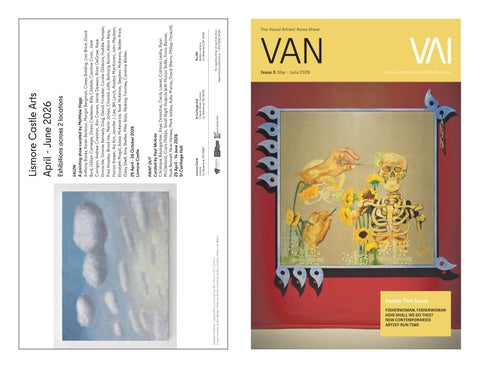
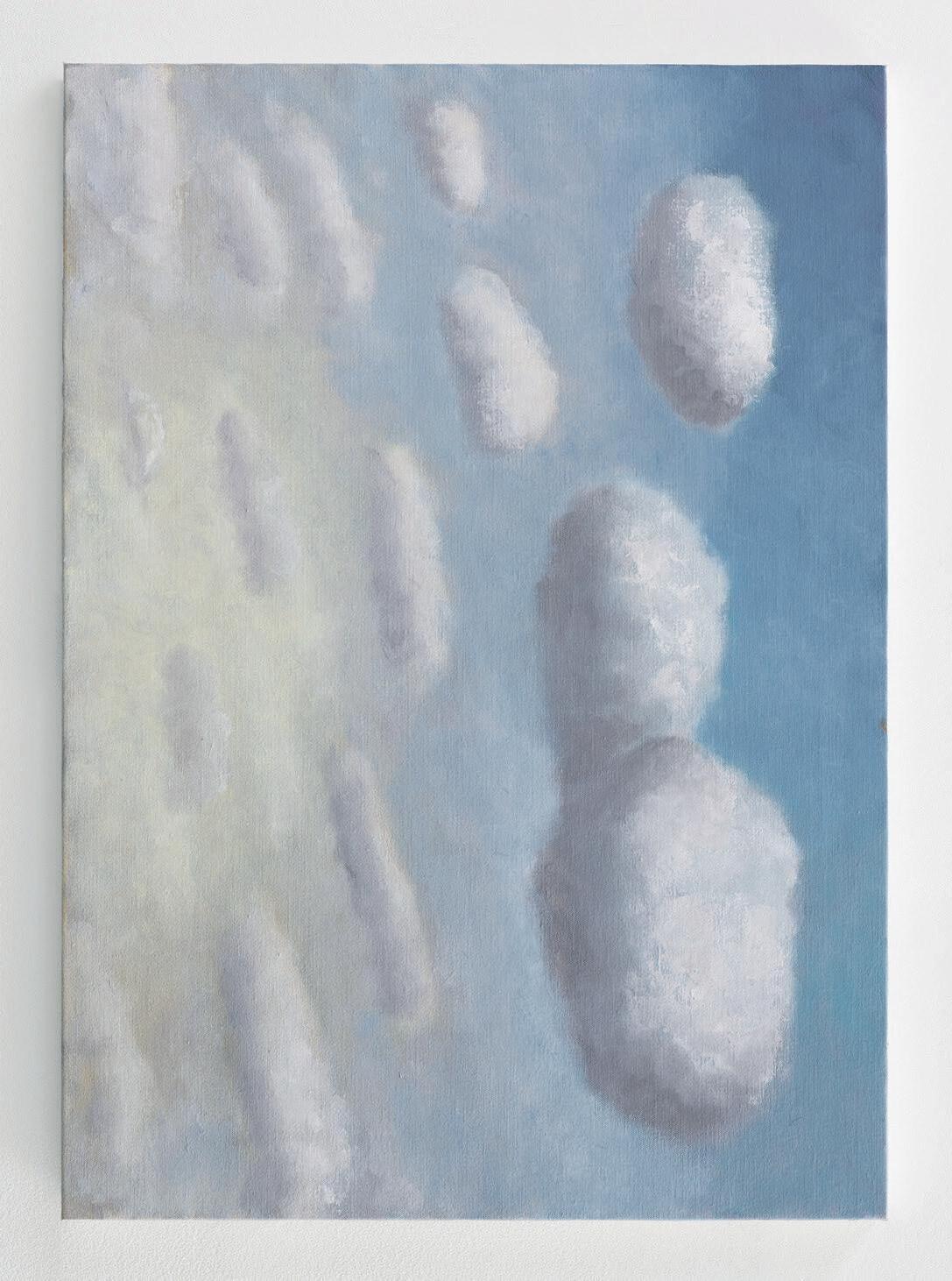
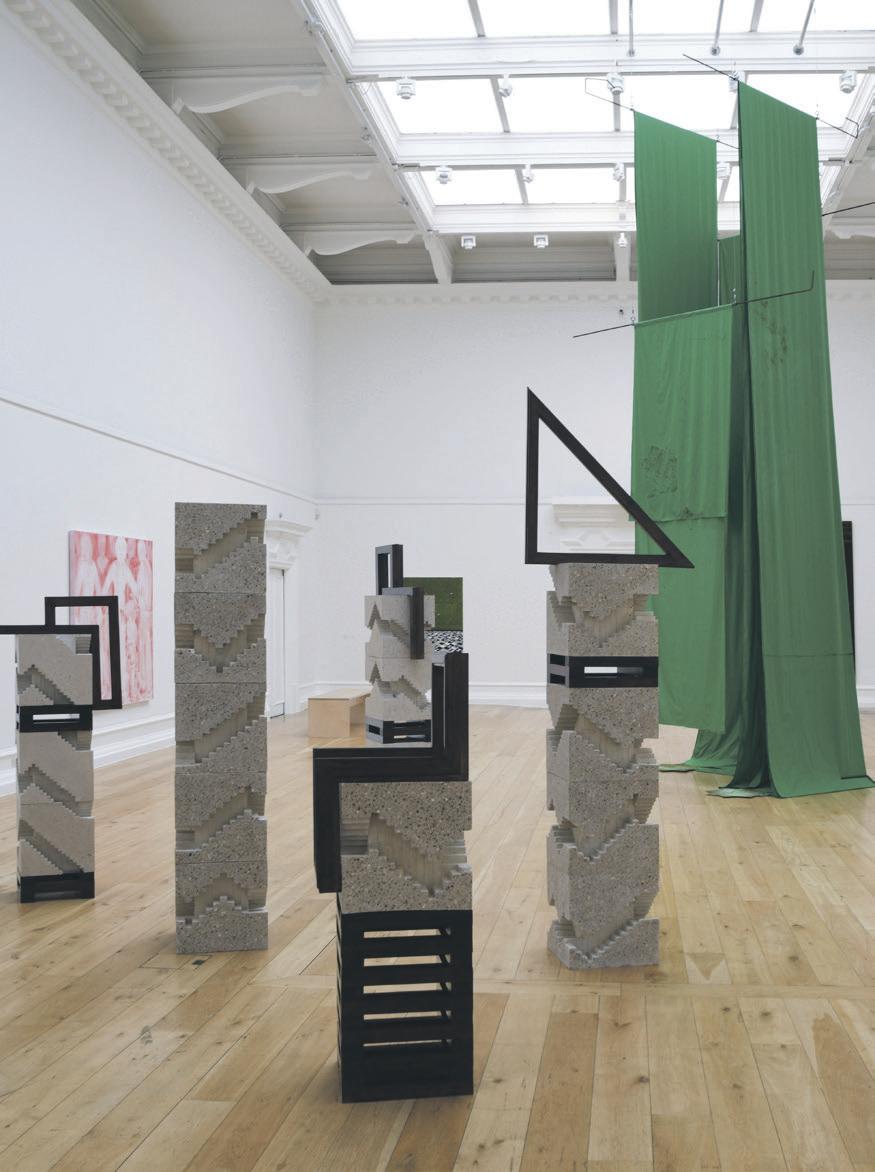
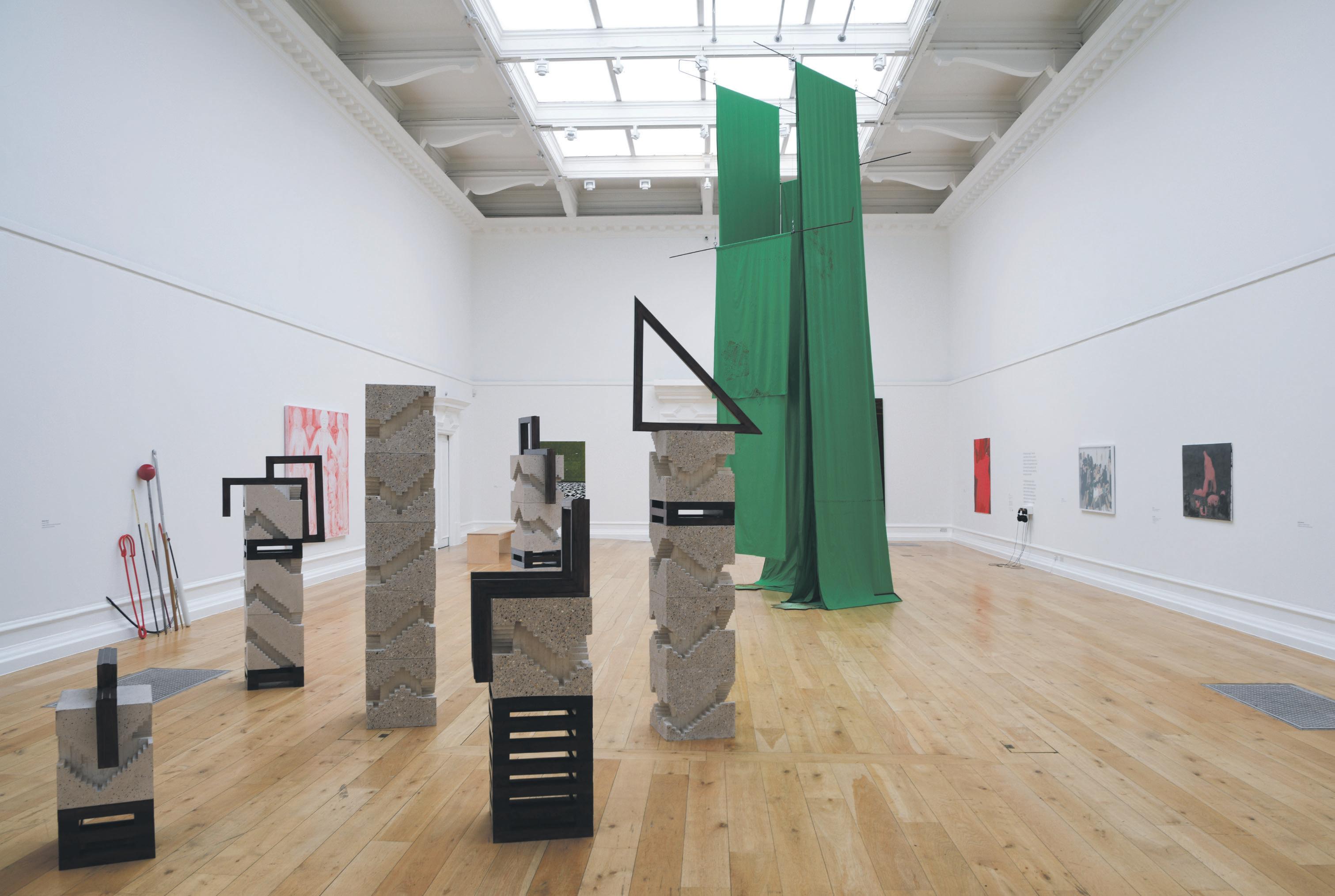
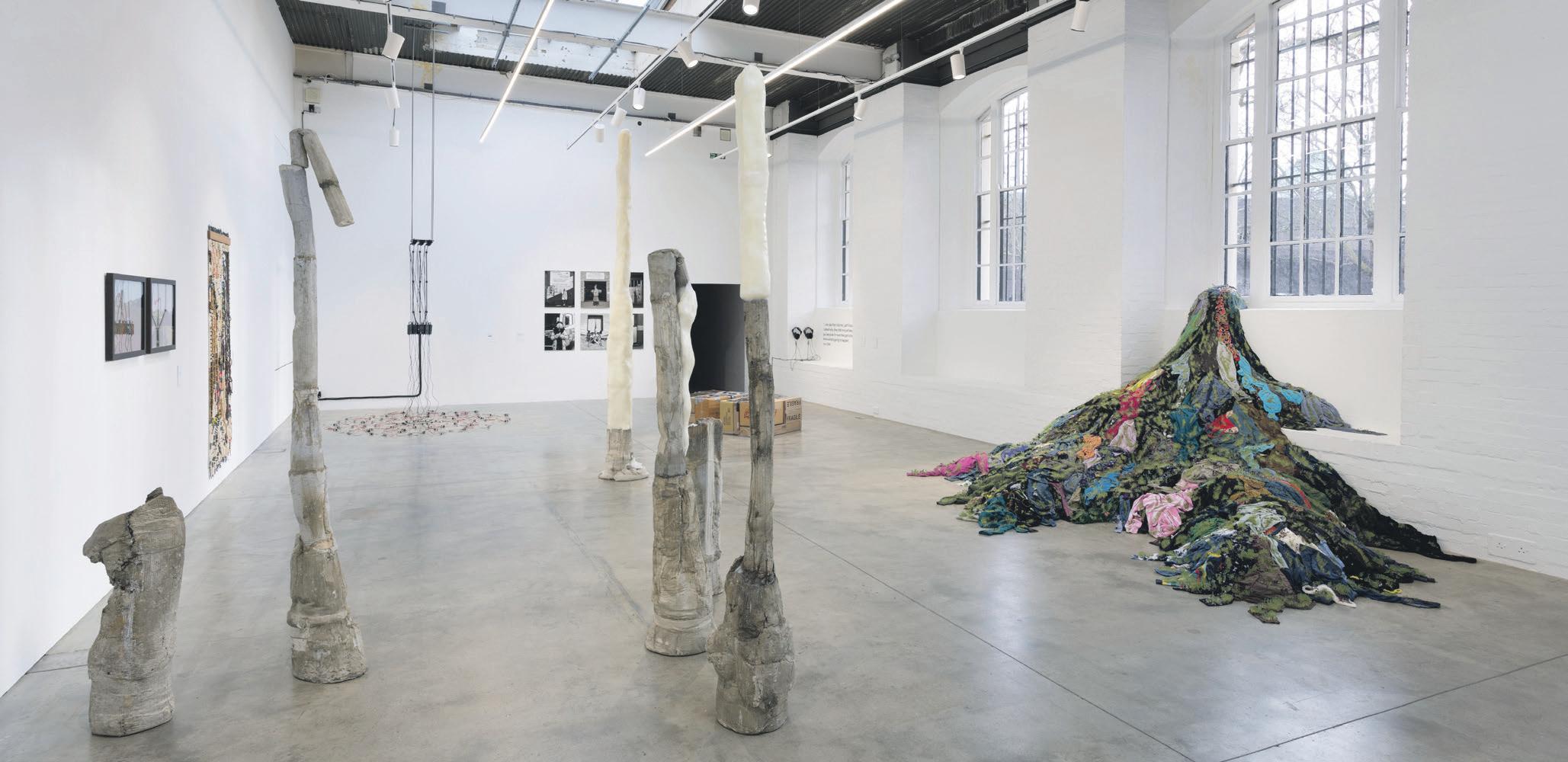
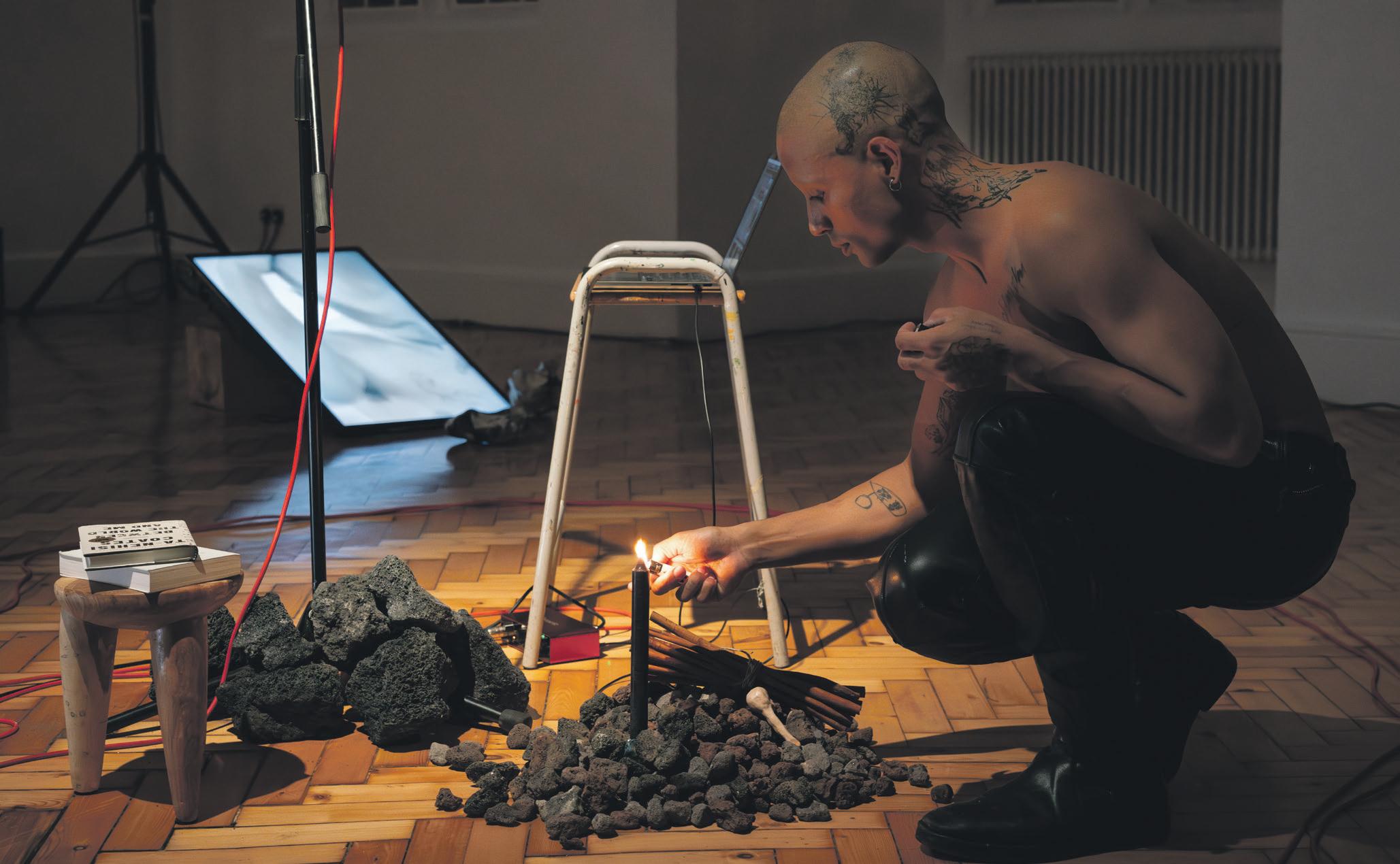
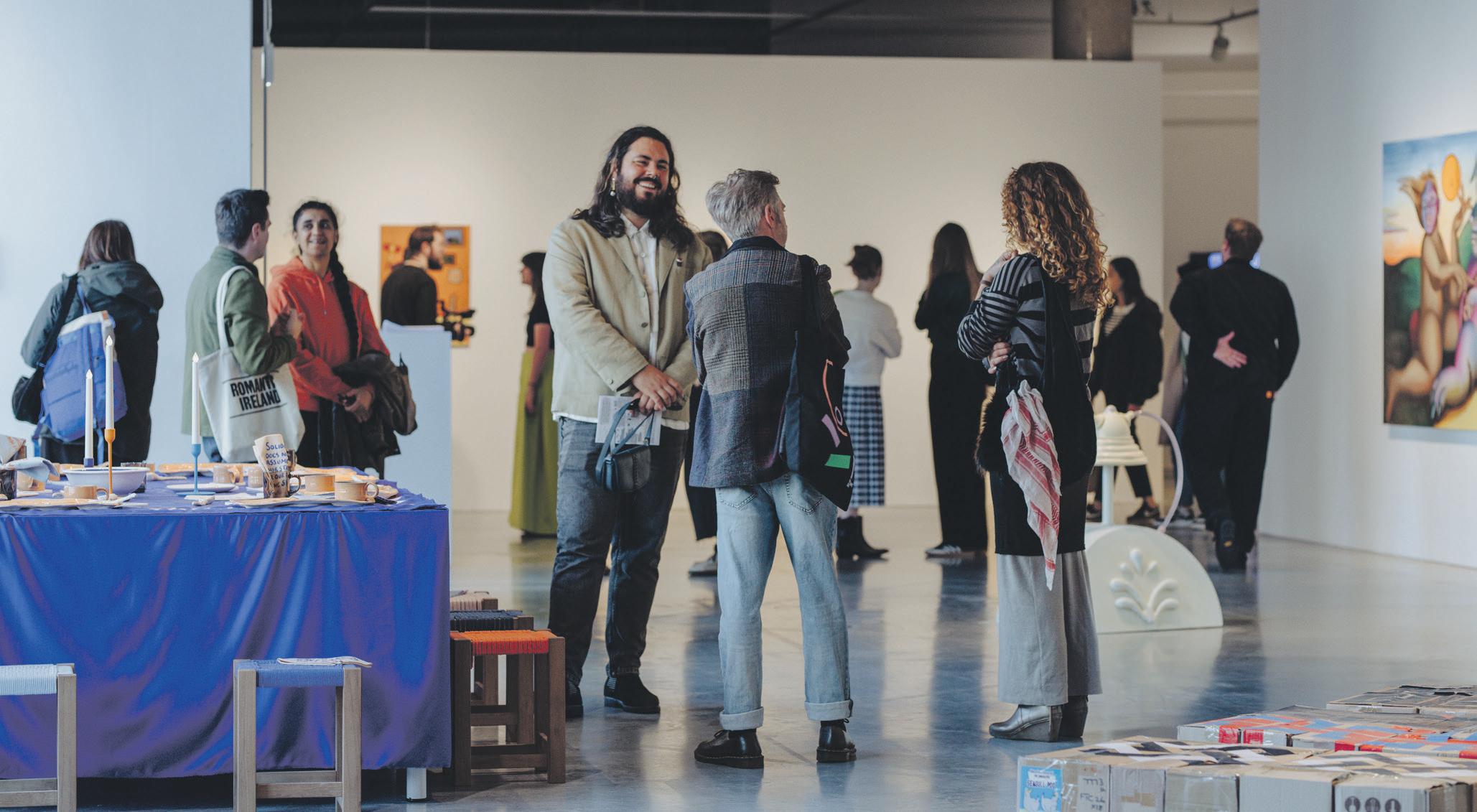
Anthony Banks, Karen Barbour, Margot Bergman, Casey Bolding, Lisa Brice, David Byrd, Gillian Carnegie, Diana Cepleanu, Billy Childish, Caroline Coon, Jane Corrigan, Andrew Cranston, Ann Craven, Verne Dawson, Brian DeGraw, Kaye Donachie, Simone Kennedy Doig, Denzil Forrester, Carole Gibbons, Huddie Hamper, Paul Housley, Brook Hsu, Merlin James, Chantal Joffe, Behrang Karimi, Adam Keay, Florian Krewer, Na Kim, Jennifer J. Lee, Bill Lynch, Alastair MacKinven, John Maclean, Elizabeth Magill, Alissa McKendrick, Noel McKenna, Stephen McKenna, Walter Price, Daisy Sheff, Amy Sheffer, Mike Silva, Pádraig Timoney, Caroline Walker.
25 April26 October 2026 Lismore Castle PRINT OUT Curated by Paul McAree Christiane Baumgartner, Kaye Donachie, Cecily Lasnet, Catriona Leahy, Ryan McClelland, Ciara Phillips, Small Night Projects (with Marian Balfe, Fiona Banner, Husk Bennett, Noel Hensey, Mark Leckey, Asha Murray, David Sherry, Philipp Timischl).
25 April14 June 2026 St Carthage Hall
The Mill Ballyin, Lismore Co Waterford, P51 A2R5 Lismore Castle Lismore Co Waterford, P51 F859
For opening times of each location www.lismorecastlearts.ie +353 (0)58 54061
St Carthage Hall Chapel Street, Lismore Co Waterford, P51 WV96
Issue 3: May – June 2026
ON THE COVER
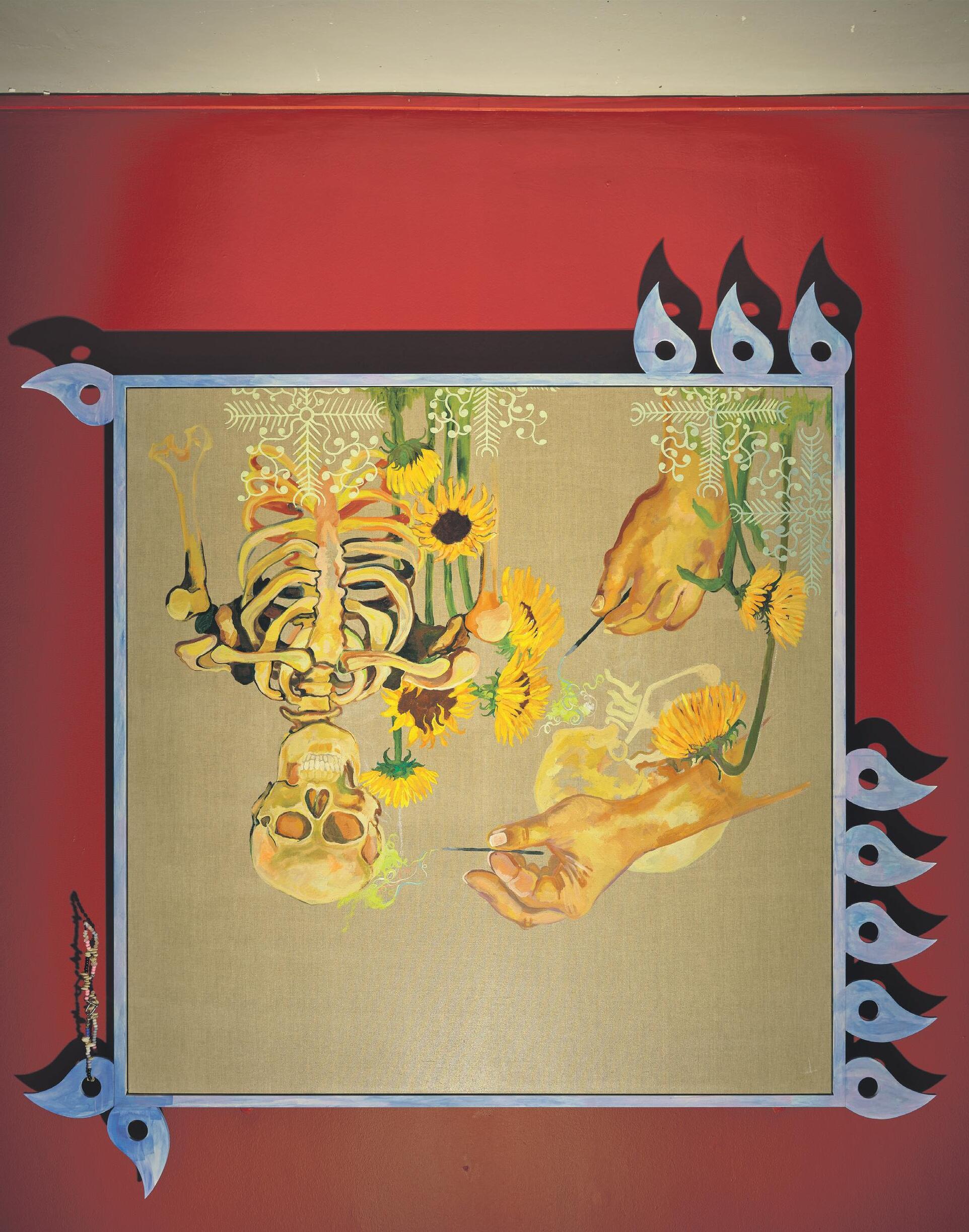
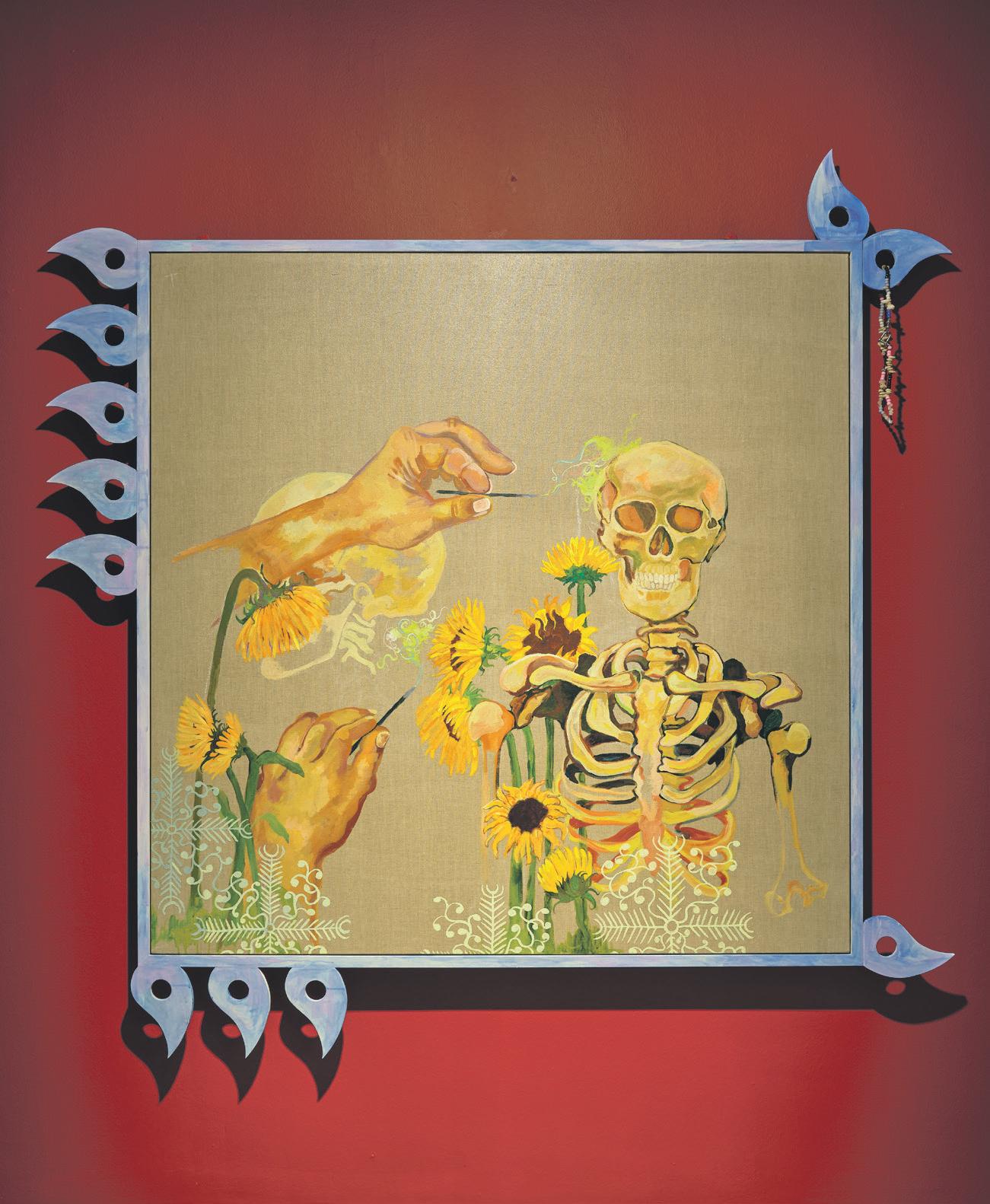
Alberta Whittle, Autumn Equinox – abolition invocation, 2023, acrylic on linen with mixed media, installation view, IMMA, March 2026; photograph by Ros Kavanagh, courtesy of the artist and IMMA.
Exhibitions from the past two months.
News. The latest developments in the arts sector.
COLUMNS
9 Péint Bheo. Cornelius Browne explores environmental themes in the paintings of Sinéad Ní Mhaonaigh.
Theory of the Dot* Artists Andrea Francke and Matthew De Kersaint Giraudeau discuss their podcast.
10 Digital Access. Áine O’Hara outlines the importance of digital access for those managing chronic illness. Inclusive Curating. Miguel Amado highlights the need for enhanced methods to work with disabled artists.
11 The Event Horizon. Matt Packer examines the curatorial rationale for an exhibition at IMMA in 1996.
How Shall We Do This? Lian Bell reports on a recent symposium on shaping a feminist art resource centre.
12 How to Build Your Legacy. Ruth Hallinan discusses NIVAL’s new toolkit for artists’ archiving.
Infrastructure As Armature. Aisling Murray considers some recent creative producer training in cork.
IN FOCUS: ISLAND LANDSCAPES 14 Planetary Archipelagos. Andrew Duggan, Sophie Fetokaki, and Seán Ó Dálaigh report on their project. 15 Mí an Mhárta. Mary Flanagan discusses a residency and exhibition undertaken by Jo Killalea on Inis Meáin. 16 Decentralised Integration. Sinead Mc Cormick discusses the evolution of the BAVA Programme on Sherkin Island.
ARTIST WORKSPACES
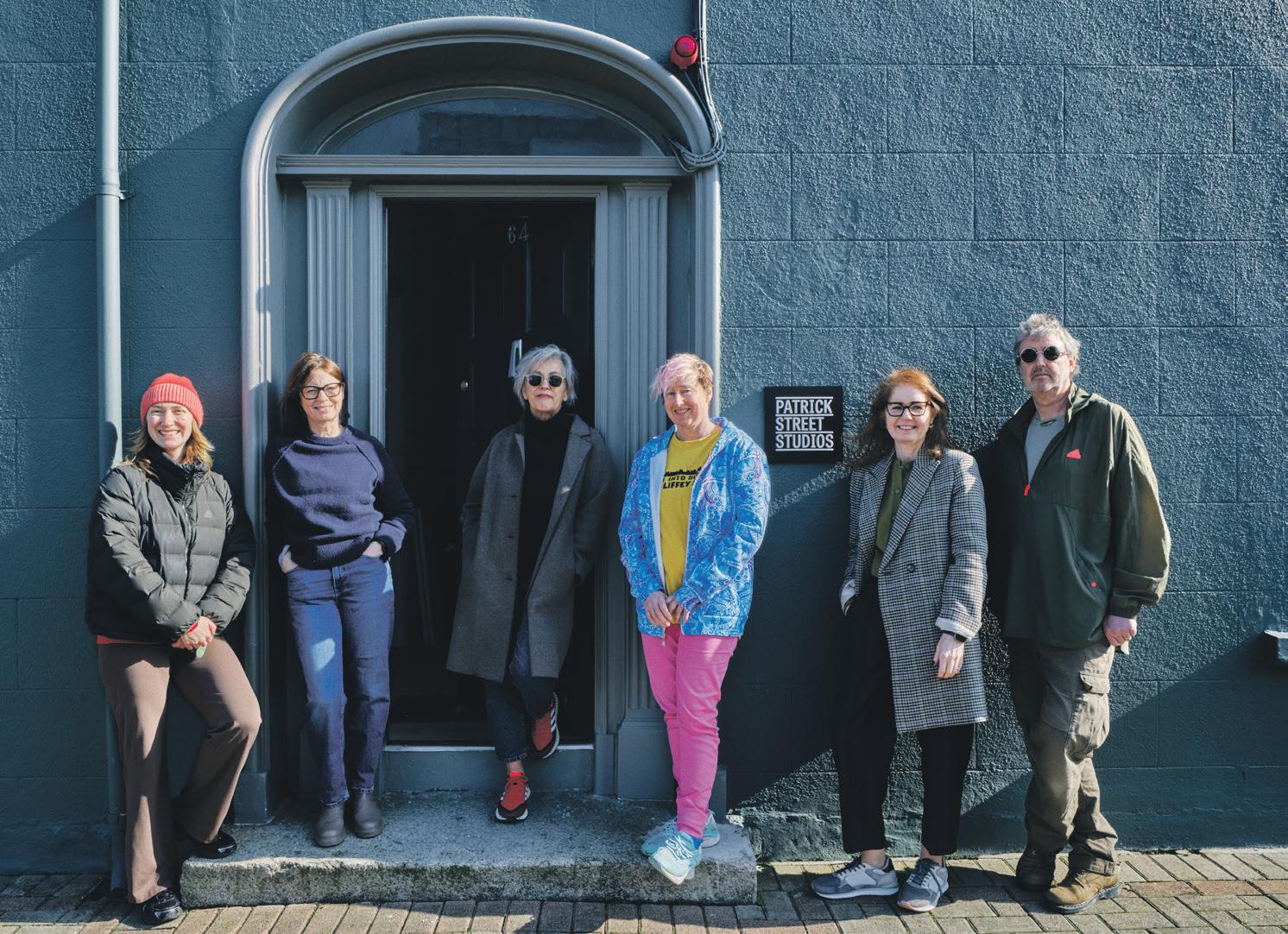
18 Guildhall Taphouse Studios. Cara Donaghey discusses a new artist-run studio space next to Guildhall in Derry. Patrick Street Studios. Clodagh Kenny reflects on a new artist workspace in Dún Laoghaire.
CRITIQUE
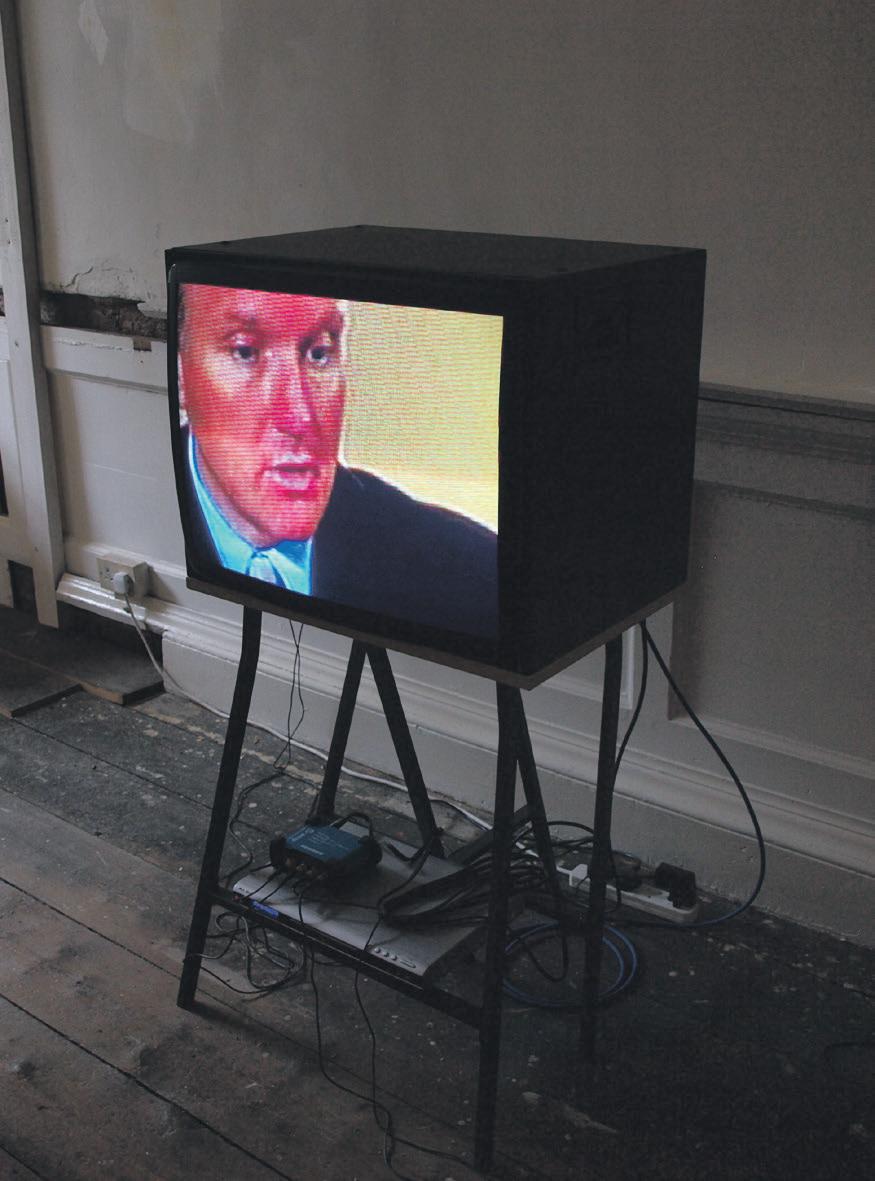
19 Helen O’Leary, ‘Soft Spot’, installation view, The Dock.
Michael Corrigan at SO Fine Art Editions
at
25 Yes, But Do You Care? Clodagh Assata Boyce reports on Marie Brett’s screening event at IMMA.
EXHIBITION
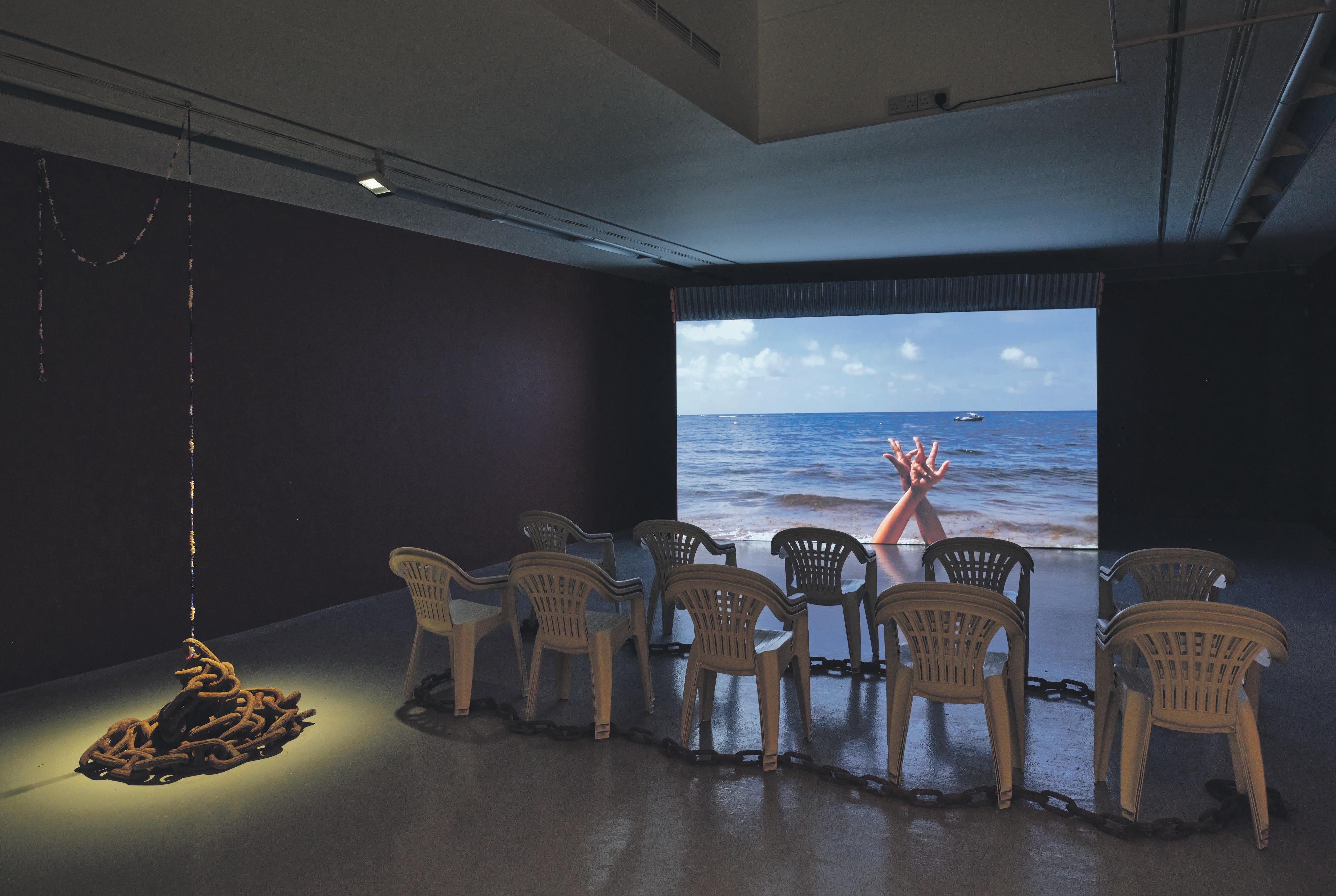
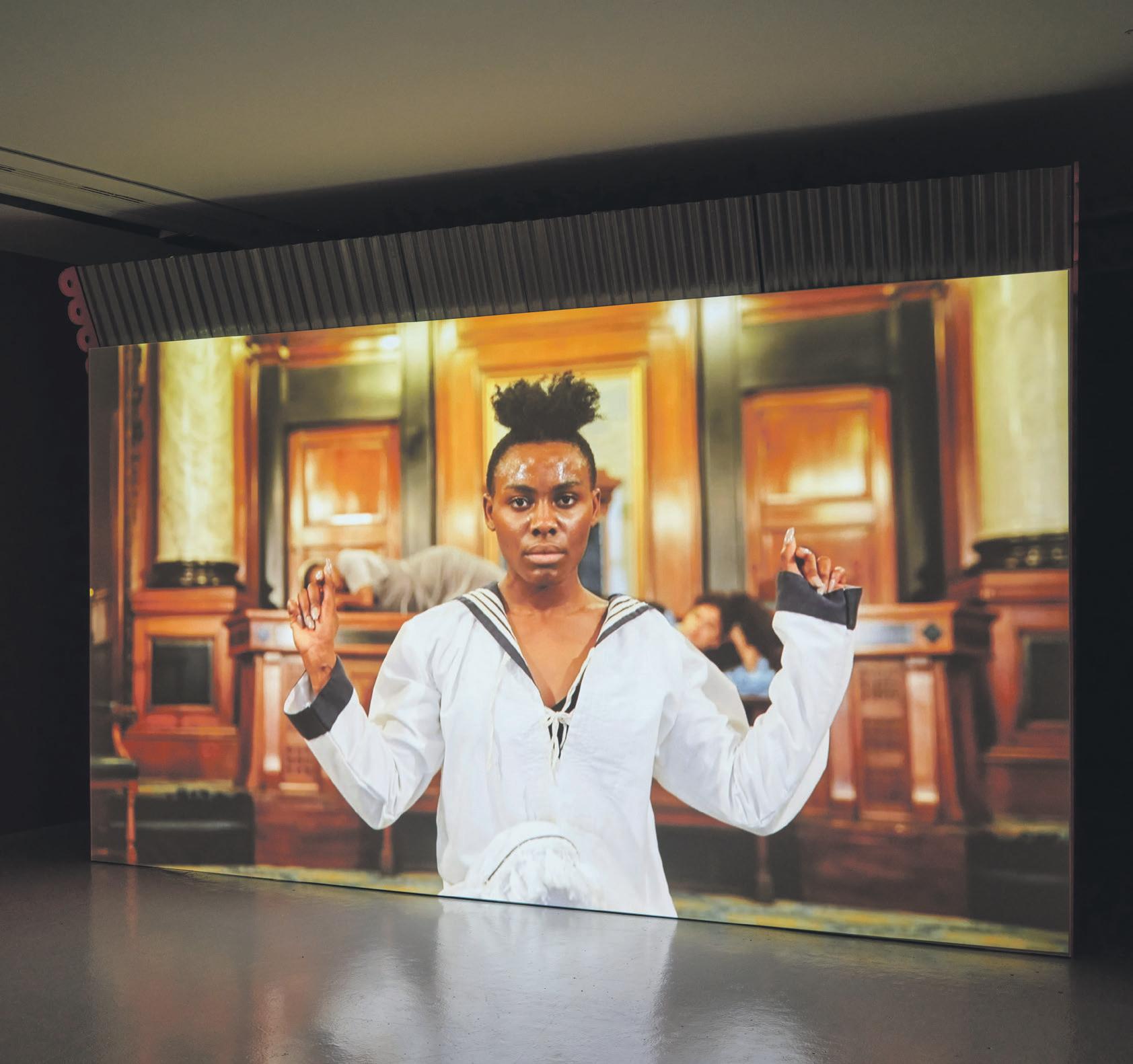
26 Fisherwoman, Fisherwoman. Rachael Gilbourne interviews Glasgow-based artist Alberta Whittle.
28 Adaptation or Extinction? Michael Hill considers connections across two recent exhibitions.
INTERNATIONAL
30 New Contemporaries. Séamus McCormack discusses the UK organisation supporting emerging artists.
ORGANISATION
32 Artist-Run Time. Maeve Connolly considers Pallas Projects/Studios as they celebrate 30 years.
Palimpsest. Joanna Hopkins discusses her art practice and recent project at Nephin National Park
A Brightness at the Edge of Things. Oisín Tozer discusses a recent project and exhibition in Green on Red Gallery.
We Are Her Continuation. Aisling Coughlan discusses her current exhibition at Axis Ballymun.
LAST PAGES
38 VAI Lifelong Learning. Helpdesks, cafés, and webinars. 39 Opportunities. Grants, open calls, and commissions.
Editor: Joanne Laws
Production/Design: Thomas Pool
News/Opportunities: Thomas Pool, Rachael Gunning, Lewis Olivier
Proofreading: Paul Dunne
CEO/Director: Noel Kelly
Office Manager: Grazyna Rzanek
Artists & Members Support: Rachael Gunning Advocacy & Advice NI: Brian Kielt
Services Design & Delivery: Emer Ferran
News Provision: Thomas Pool
Publications: Joanne Laws
Accounts: Grazyna Rzanek
Special Projects: Robert O‘Neill
Impact Measurement: Rob Hilken
Shared Island Advocacy: Brian Kielt
BOARD OF DIRECTORS
Deborah Crowley (Secretary), Michael Fitzpatrick (Chair), Lorelei Harris, Maeve Jennings, Gina O’Kelly, Samir Mahmood, Ben Malcomson.
REPUBLIC OF IRELAND OFFICE
Visual Artists Ireland
First Floor
2 Curved Street
Temple Bar, Dublin 2
T: +353 (0)1 672 9488
E: info@visualartists.ie
W: visualartists.ie
NORTHERN IRELAND OFFICE
Visual Artists Ireland
109 Royal Avenue
Belfast
BT1 1FF
T: +44 (0)28 958 70361
E: info@visualartists-ni.org
W: visualartists-ni.org
South East Technological University
School of Art and Design, Wexford
Treasures of the Boyne Valley
Selected work from the Drogheda Municipal Art Collection with invited artists Joanne Cartwright, Ann Mullen and Richard Moore
BA Hons Art Degree Show
Wexford Arts Centre
Opens 14 May 18:00
Runs to 30 May 2026
8 May – 2 August 2026
Curated by Highlanes Gallery’s Community Curatorial Panel: Robin Barnes, Bairbre English, John English, Eithne Hamill, Martin Kieran, Kay McQuaile, Oisín Ó Maoláin, Máire Uí Mhaoláin.
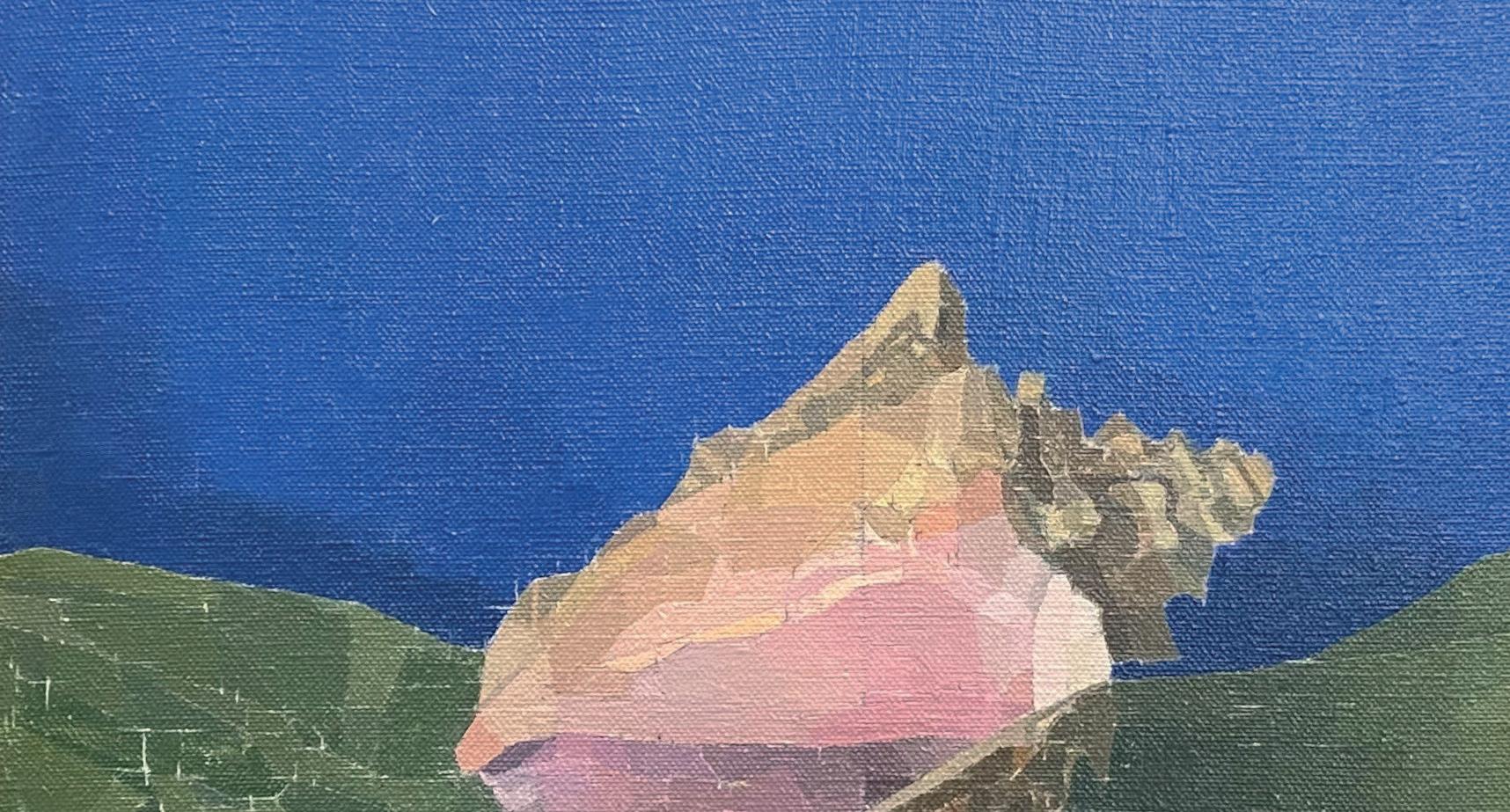
Image: Raphael Hynes, Shell (2010), Oil on canvas, laid on panel, 23 x 31cm. Drogheda Municipal Art Collection.
www.highlanes.ie
–
DUBLIN
College Lane Gallery
College Lane Gallery presents ‘Red Dust’, an exhibition of painting and sculpture by Nick Miller – the artist’s first solo presentation in Dublin since 2018. ‘Red Dust’ brings together the painting and sculptural strands of Miller’s practice, which spans over 40 years. This not-for-profit gallery and studio space occupies a site with medieval roots in the Old College, Howth, County Dublin. The exhibition continues until 27 June.
@college_lane_gallery
‘Stasis Field’ by Kathy Prendergast (24 April – 30 May) features a selection of sculpture, work on paper, and installation, offering an intimate experience that intertwines memory, transformation, and the passage of time. Prendergast uses an array of textile, chalk, stone, fabric, wool and found objects. Included are hand-coloured works reflecting human connections to land, borders, and the histories they carry.
kerlingallery.com
Rathfarnham Castle Gallery
Sylvia Hill’s solo exhibition ‘Vintage Suite’ – a collection of paintings exploring the beauty of the Irish ‘Big House’ and other interiors relating to the past – was on display from 20 March to 4 May at Rathfarnham Castle Gallery. Using a rich and vibrant oil palette, Hill suggests themes such as nostalgia, comfort, loss, and fantasy. These small works offer a plea for the preservation of antiques for the future.
heritageireland.ie
BELFAST
Green on Red Gallery
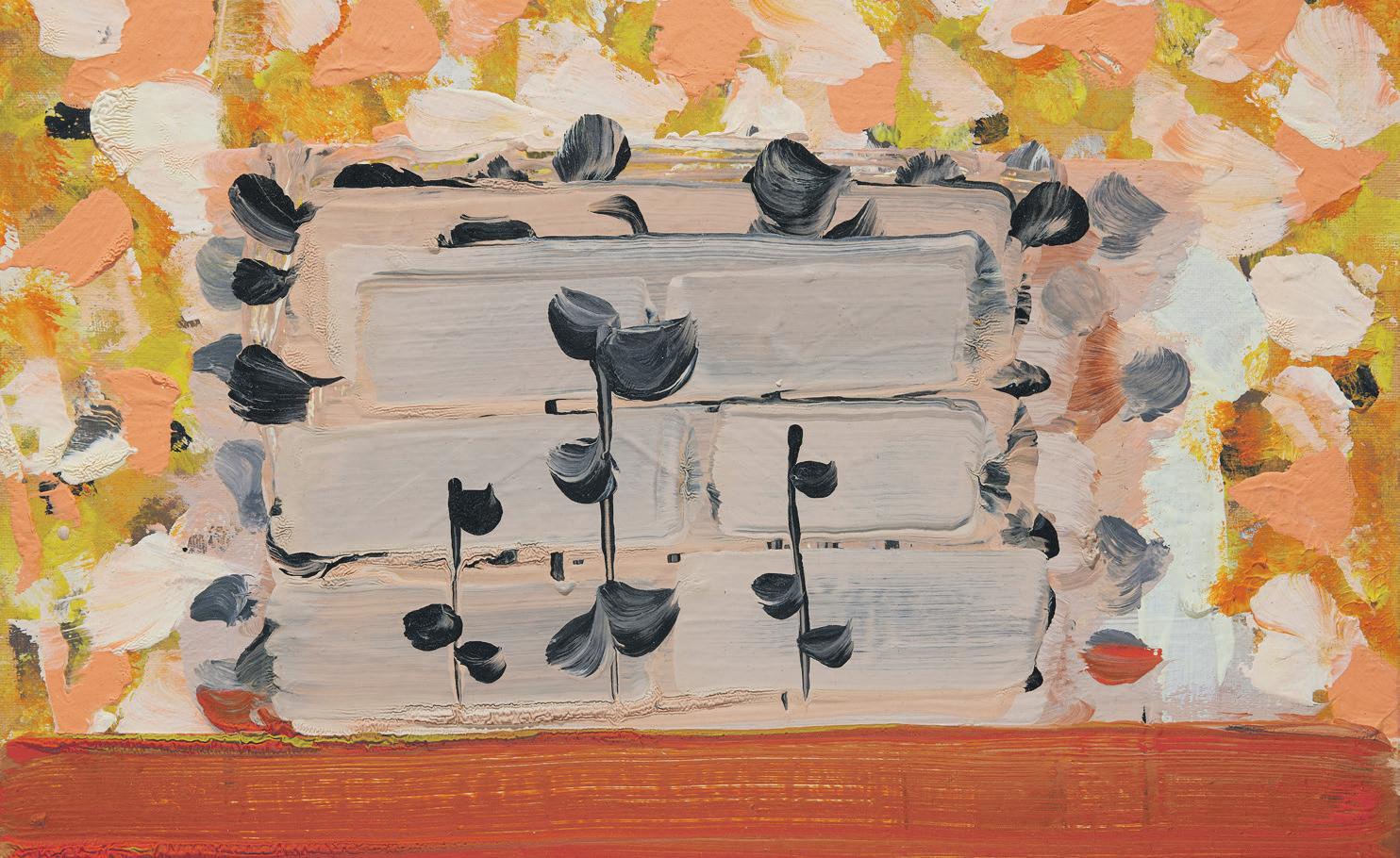
In the title of Mark Joyce’s exhibition, ‘Wandering Star’(11 April – 22 May), wandering is a reference to the physics of light and celestial mechanics, and also to the artist’s artistic journey over the decades through the indeterminacy of painting. Joyce uses an arc motif, an elemental unit of human invention and expression, with oblique reference to early human structures, manuscripts and notations.
greenonredgallery.com
Phoenix Park Visitor Center Gallery
Feltmakers Ireland presented ‘Water and Flow’ (2 – 26 April), a group exhibition featuring over 60 members, exploring water through felt. From gentle streams to powerful oceans, the show reflected water’s energy, stillness, renewal, and emotional depth. Works included sculpture, wall art, and wearable pieces, using traditional and contemporary felting techniques, and diverse fibres, from imported Merino wool to locally sourced Irish fleece.
feltmakersireland.com
Temple Bar Gallery + Studios
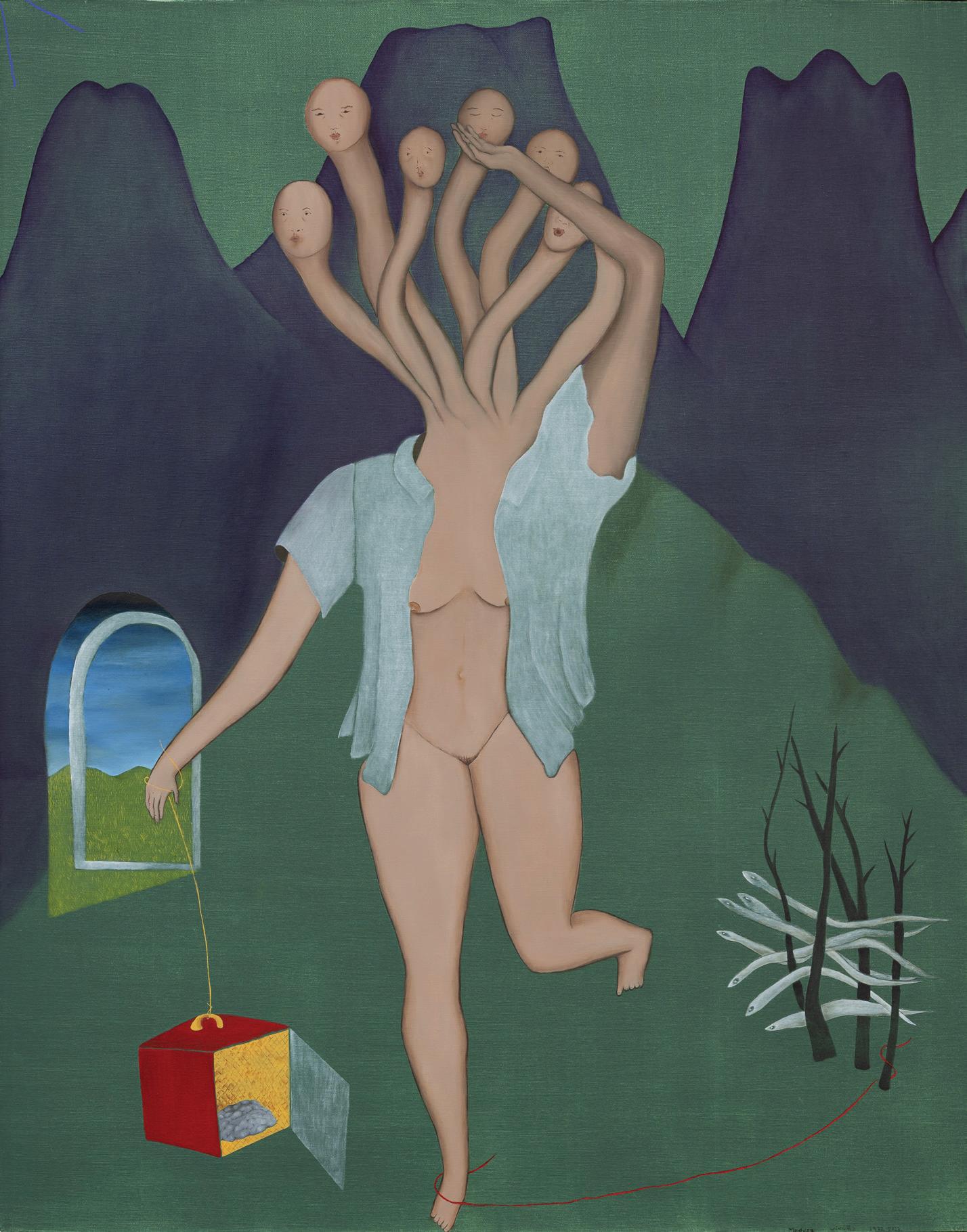
Lucy Stein’s ‘Lunula’ was on display at TBG+S from 13 March to 3 May. Stein’s paintings draw on feminine iconography from a wide range of sources, including ancient Greek mythology, medieval and ecclesiastical illuminations, as well as esoteric mysticism and folkloric imagery. These images are incorporated into expressive and psychologically charged compositions that Stein describes as coming from a “cosmic symbolic feminist headspace.”
templebargallery.com
ArtisAnn Gallery
‘The Colour of Water’ was a joint exhibition of new paintings by artists Tracie Corry and Rosalind McConaghy. Corry’s work explores colour, texture and experimentation across a range of media, including watercolour, while McConaghy’s work reflects a sensitive and intuitive response to the natural world. The exhibition opened as part of late night art and ran from 1 April to 2 May.
artisann.org
Belfast Exposed
‘Abandoned N.I.’, a solo exhibition by Rebecca Brownlie, focuses on Northern Ireland’s built heritage, rural landscapes and everyday environments as sites of memory and cultural continuity. Working in collaboration with Ulster-Scots writers, Brownlie highlights how language, place and storytelling preserve identity across generations, even in the face of decay and seeming dereliction. On display from 2 April to 23 May.
belfastexposed.org
Portview Trade Centre
‘Post No Bills’ by Tracy McMenemy explores the fleeting images that cling to city walls or are glimpsed in passing. The work amplifies tensions between public space and intimate gesture, capturing the collisions of torn and layered imagery, condensed within a single frame. It invites viewers to reconsider the visual noise of urban life and the quiet afterlives of the images that circulate within it.
portviewtradecentre.com
Atypical Gallery
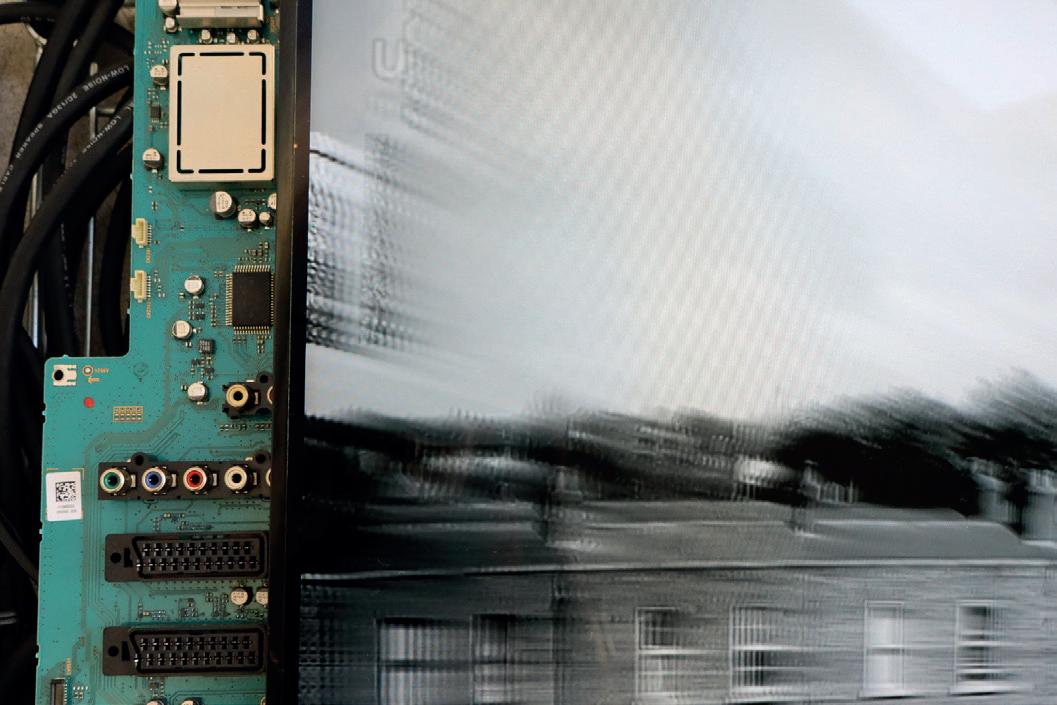
‘Intangible Bodies’, an exhibition by Paul Moore, ran at Atypical Gallery from 5 March until 29 April. Moore utilises digital technology to explore attitudes to disability in a sensory way. Treating the gallery as an interface, ‘Intangible Bodies’ presents a projection mapped audio-visual installation in which perception, attention, and internal sensation are made spatial and shareable, encountered through movement and proximity.
universityofatypical.org
Cultúrlann McAdam Ó Fiaich
‘An Ealaín sa Dúlra’ was an exhibition by Belfast artist, Farhad O’Neill. Best known for his sculptures, drawings, and public monuments, O’Neill presented in this exhibition a series of abstract paintings. These works, based loosely upon nature and culture, represent a new venture, and a revisiting of a genre he has not explored in two decades. The exhibition ran from 12 March to 23 April.
culturlann.ie
Queens Street Studios
The group exhibition, ‘Which One Are You?’, brings together a cohort of first-year MFA students from Belfast School of Art, presenting a dynamic and exploratory body of work that reflects the culmination of creative and academic development they have undertaken thus far. The title acts as both provocation and reflection, asking how we are seen. On display from 30 April to 21 May.
queenstreetstudios.net
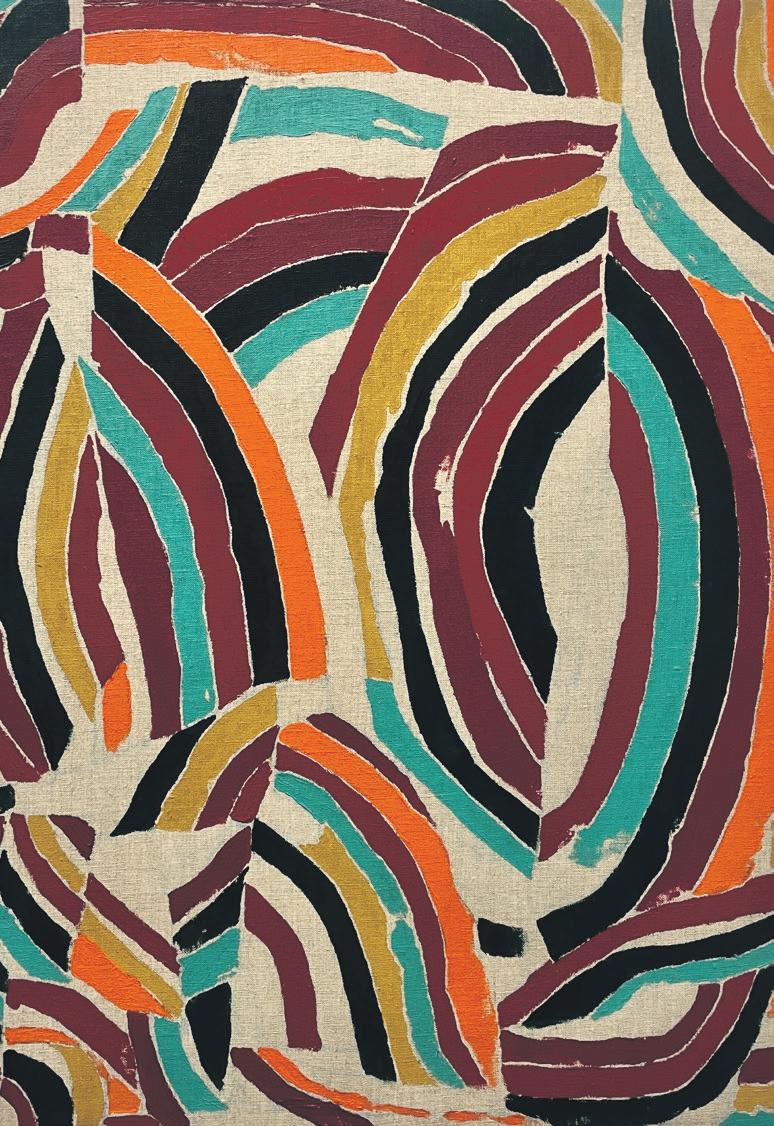
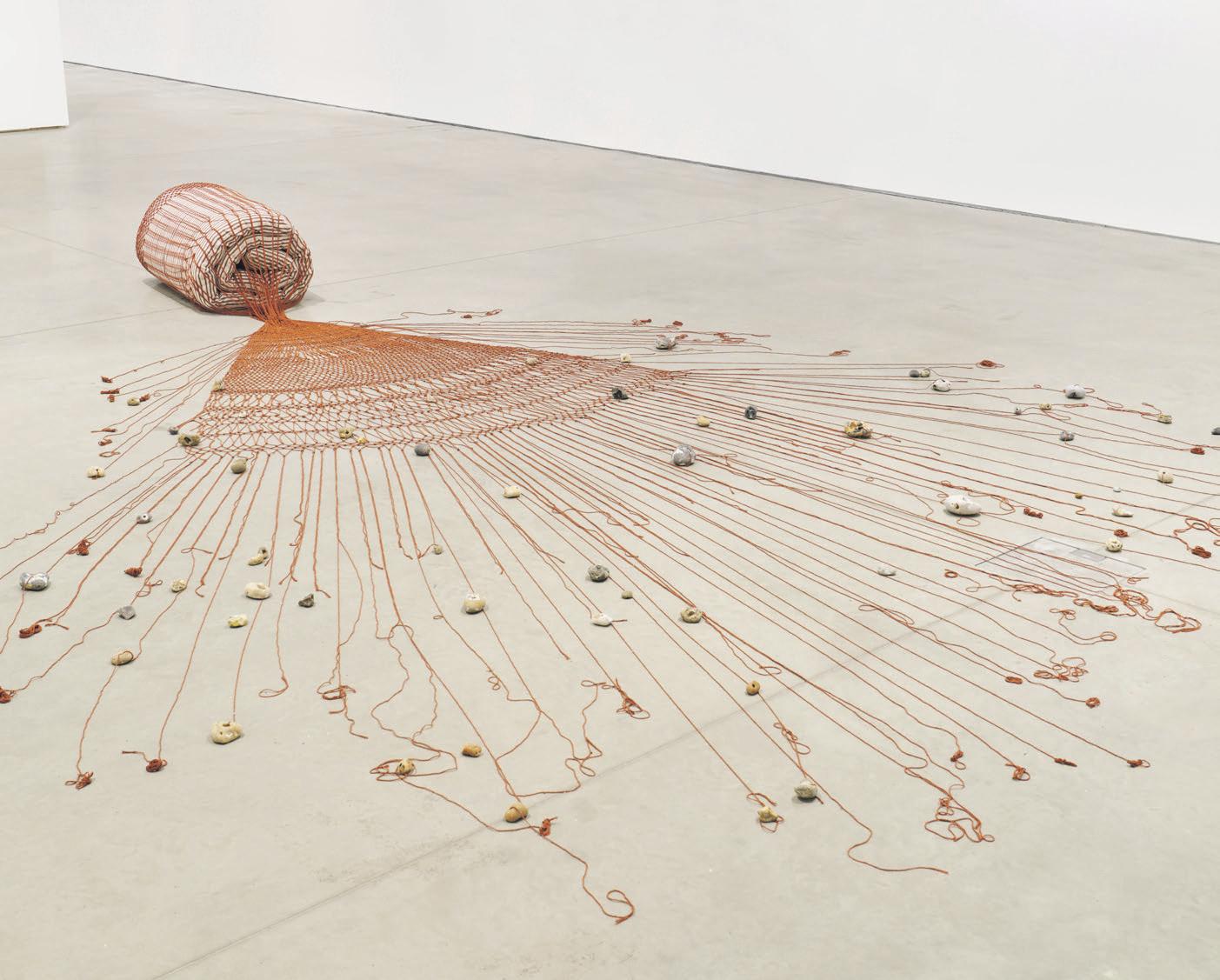
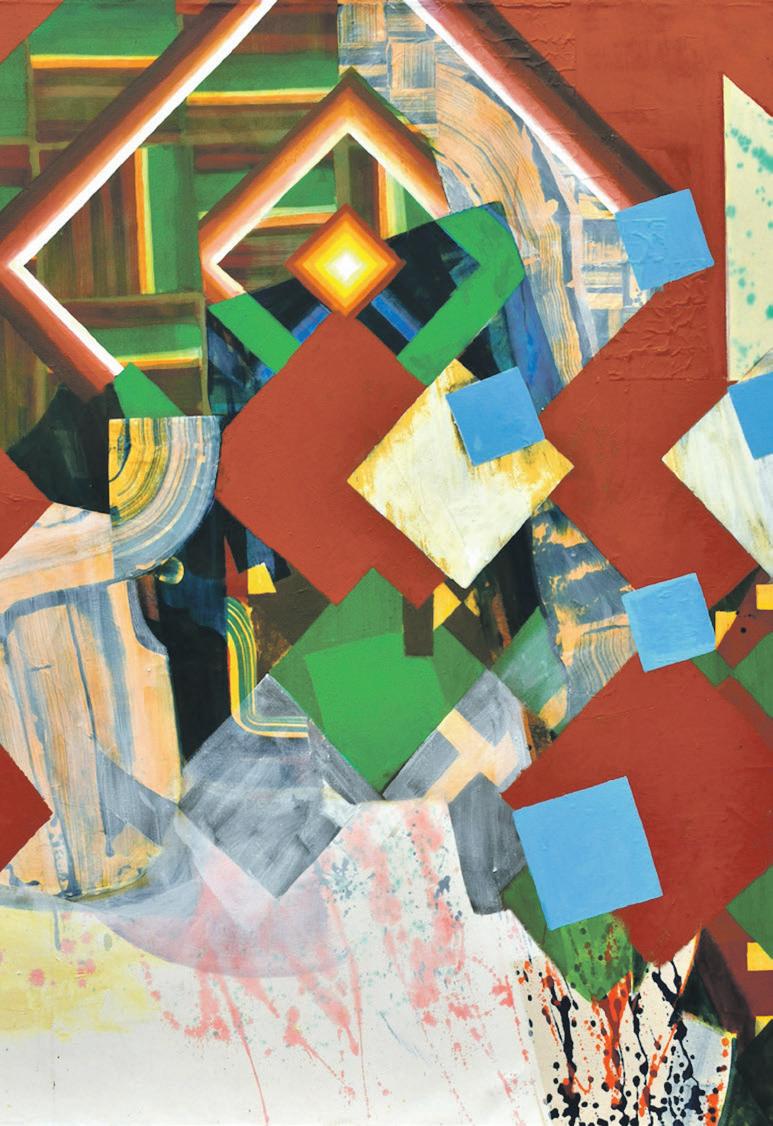
Left: Mark Joyce, Wandering Star, 2026, acrylic on raw linen, 66 x 50 cm; image courtesy of the artist and Green on Red Gallery; Middle: Kathy Prendergast, Comet, 2025, repurposed maps, fabric, wool stuffing, string, and stones, 120 x 95 cm; photograph courtesy of the artist and Kerlin Gallery; Right: Tinka Bechert, Counter Rhythm, 2026, acrylics and monoprint collage on raw canvas, 150cm x 130cm; image courtesy of the artist and The Model.
Kerlin Gallery
REGIONAL & INTERNATIONAL
An Táin Arts Centre
The Dundalk Photographic Society 2026 group exhibition took place from 11 to 25 April. The Dundalk Photographic Society was formed in 1979 and has since been affiliated with the Irish Photographic Federation (IPF), taking part in (and hosting) many regional and national events. They have recently published a limited edition book, entitled Dundalk Photographic Society, Celebrating 40 Years: The Art of Photography (2026). antain.ie
Grilse Gallery
‘Print Works’ foregrounds various printing techniques, including screen-printing, etching, and pin-hole photography, by some of the top printmakers in Ireland. The show brings together works by Dorota Borowa, Lucy and Robert Carter, Eileen Ferguson, Claire Forward, Debbie Godsell, Austin Ivers, Eimearjean McCormack, Niall Naessens, Rachel Parry, Robert Russell, Gerda Teljeur, and Charles Tyrrell. The runs until 24 May.
grilse.ie
Leitrim Sculpture Centre
‘The Long Pause Ecology of Ruins I’ by Lindsay LeBlanc, runs from 24 April to 23 May. LeBlanc works with glass to understand the places she moves through and lives alongside. Engaging with landscapes both visually and materially, LeBlanc works with the atmosphere they carry. Making becomes a way of paying close attention to those ecosystems and to her own evolving relationship with them.
leitrimsculpturecentre.ie
Burren College of Art
‘(UN)EARTHED: through air, tied to each other’, the MFA graduate exhibition at Burren College of Art, explored ideas of nonlinearity and dream spaces in a world marked by environmental change, displacement, and eroding certainties. With disorientation as an underlying theme, the artists suggested that entanglement is found not in fixed roots, but in the shared exposure of continuous (un)earthing. On display from 11 to 24 April.
burrencollege.ie
Highlanes Gallery
‘STATESIDE’ is Jackie Nickerson’s sweeping, fragmented visual diary of a decade living and working across the USA. Nickerson used whatever camera she had at hand to fix raw glimpses of America at this peculiar, precarious time. Chain-link fences, basketball courts, suburban houses and classrooms, gas stations and even battleships become markers of sameness, and of the functionalism that fuel’s America’s economy. On display from 28 March to 9 May.
highlanes.ie
The Model
The Model presents ‘Polyrhythms’ by German-Irish painter, Tinka Bechert. Bringing together painting, sculpture and textile works made since 2018, the exhibition centres on a decisive shift in Bechert’s practice away from narrative imagery toward abstraction. Accompanying this development has been an increased attention to musical thinking, with rhythm, repetition and pacing guiding how the works unfold. On display from 4 April to 21 May.
themodel.ie
Coastguard Cultural Centre
A group of artists awarded mentoring through Big Look and Kilkenny Arts Office were reunited one year later to showcase their work. After three months of weekly sessions, the exhibition ‘Facing New Horizons’ traces each artist’s journey and fresh developments in process and vision. Running from 1 to 24 April, it revealed the endless possibilities that emerge when artistic practices are nurtured.
coastguardculturalcentre.ie
Irish Cultural Centre
The Irish Cultural Centre in London presents ‘Painting Ulysses’ by Aidan Hickey to mark the 100th anniversary of James Joyce’s Ulysses, as part of ICC’s 25th anniversary programme. Hickey’s paintings depict the 18 Episodes in Ulysses (Shakespeare and Company, 1922). As each of Joyce’s episodes was written in a different literary style, Hickey has designed each painting in a different visual style. The exhibition continues until 31 July.
irishculturalcentre.co.uk
Uillinn: West Cork Arts Centre
‘“Forward,” said granny in the snow / “Eteenpäin,” sanoi mummo lumessa’ is an exhibition bringing together the work of artists Jane Hughes and Selma Mäkelä for the first time. The Finnish proverb cited in the exhibition title evokes resilience and determination in the face of adversity, positioning landscape as a site for engaging with deep time. Curated by Paula Barrett, the show continues until 16 May.
westcorkartscentre.com
Culturlann Sweeney
Clare Arts Office, in conjunction with Culturlann Sweeney, presented ‘Into the Wild’ a solo exhibition by Kilkee and Limerick-based artist, Gina O’Connor. This latest presentation marks O’Connor’s second exhibition at the Kilkee venue. ‘Into the Wild’ reflects a newfound confidence in her use of paint and colour, combining her love of movement with painting. On display from 25 April to 29 May.
clarearts.ie
Lavit Gallery
The group exhibition ‘Natura’, curated by Brian Mac Domhnaill, explores the unusual and often strained relationship human beings have with the natural world and how, through the lens of art and other manmade creations, nature is celebrated, analysed, objectified, abstracted or assimilated. Featuring Debbie Godsell, Dee Hurley, Hina Khan, Julia Mitchell, Chloe Nagle, Kate O’Kelly, Deirdre O’Mahony, and Conor O’Brien, ‘Natura’ runs until 16 May. lavitgallery.com
Waterford Gallery of Art
‘How to tell a hawk from a handsaw’ is a group exhibition presenting both historic and newly acquired abstract artworks from the permanent Waterford Art Collection. Also presented is archival information, newspaper cuttings, and descriptions from the artists themselves, as well as critique by invited individuals, interested in demystifying this often divisive visual language. The exhibition continues until 20 June.
waterfordgalleryofart.com
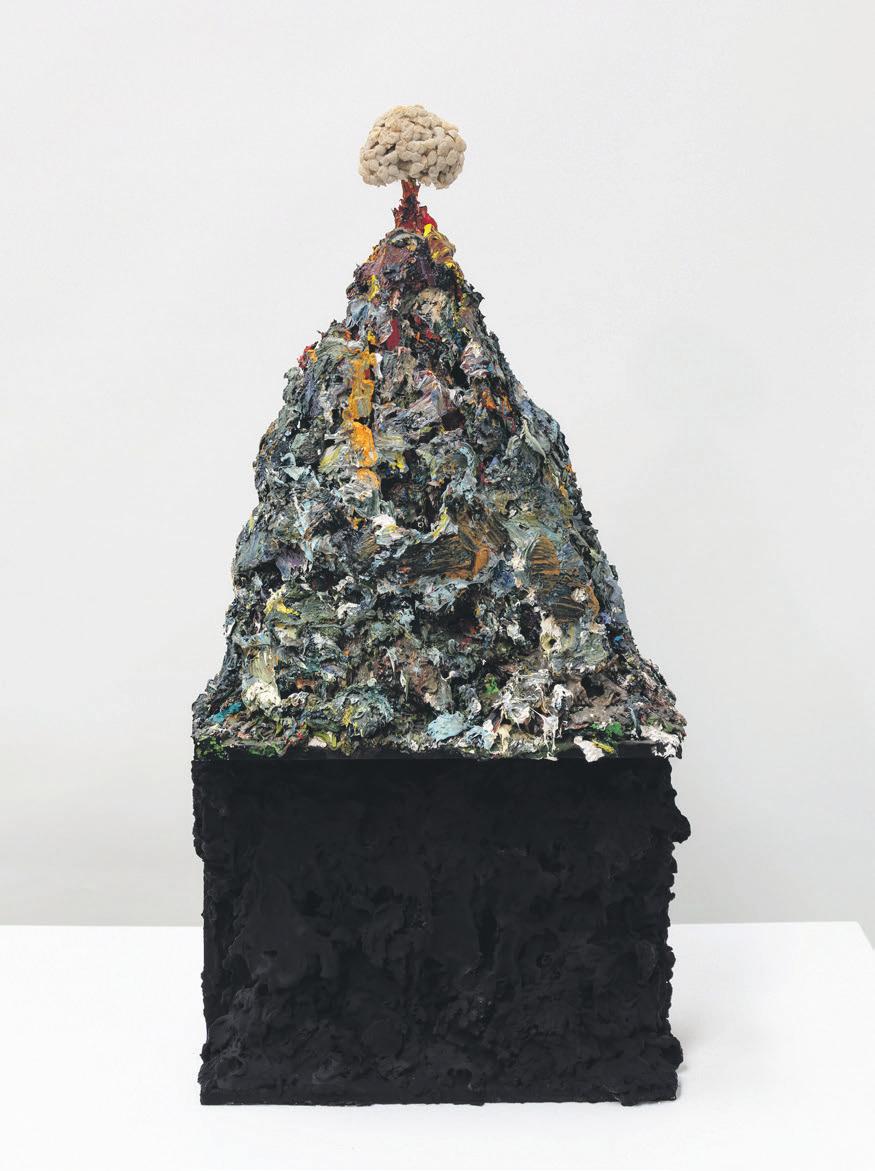
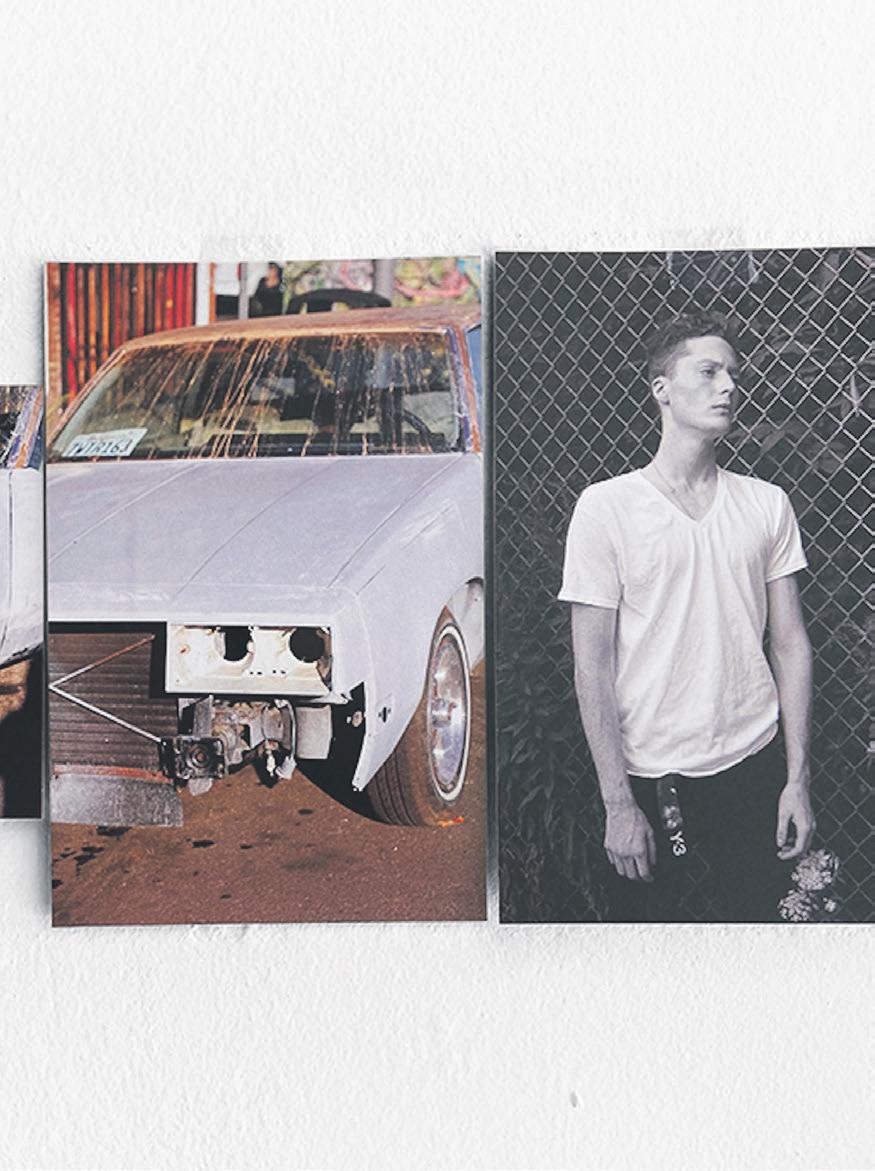
Left: Nick Miller, After the Marriage of Heaven and Earth 2007–25, steel girder, oil paint, Musou Black paint, natural sponge, 70 x 35 x 18 cm; image courtesy of the artist and College Lane Gallery; Middle: Selma Mäkelä, Fragment, 2024, oil on linen, 40 x 50 cm; image courtesy of the artist and Uillinn: West Cork Arts Centre; Right: Jackie Nickerson, STATESIDE, 2026; image courtesy of the artist and Highlanes Gallery.
GOLDEN FLEECE AWARD 2026
The Trustees of the Golden Fleece Award, along with their specialist Advisory Panel, wish to announce the two winners of the Golden Fleece Award 2026: Lisa Freeman (Visual Art) and Adam Frew (Craft + Applied Art). Each will receive a prize of €10,000. The prizes were awarded on April 23, at an intimate ceremony at City Assembly House, South William Street. The two winners were selected from a shortlist of eight, from a total of 241 applications received.
The Golden Fleece Award was established through a bequest by Dublin-born artist, weaver and educator Lillias Mitchell in 2001, to support artists originally from or currently living on the island of Ireland working in all forms of visual, craft and applied arts. It is enacted in accordance with her intentions, as set out in her Letter of Wishes to her Trustees. It is the largest
prize open to artists and makers in Ireland. This year, a fund of €40,000 is shared with two main awards of €10,000, along with two new once-off merit awards of €5,000 and remaining funds shared equally among the other shortlisted applicants, each receiving €2,500.
Lisa Freeman is a Kildare-based visual artist and filmmaker working across moving image, installation and scripted performance. Her practice explores the interdependence of power structures and relations, the body, site specificity and the presentation of the self in the everyday. Her films and performances examine how intimacy emerges, and might be used as a form of resistance, within psychological states shaped by personal interaction, the built environment, the media and imagination. [Cont. below]
Golden Fleece Award 2026 [Cont.]
She is currently developing a new film, Dawn, supported by an Arts Council Project Award, informed by research in the Irish folklore archives at UCD. Lisa applied for a Golden Fleece Award to invest in specialist filmmaking equipment, which would enable a more independent approach to capturing high-quality, site-specific and atmospheric moments within her practice.
Adam Frew is a ceramic artist based in rural Northern Ireland. He creates wheelthrown vessels defined by clean, simple forms that subtly reveal the presence of the maker’s hand, imbuing the work with a sense of life. His practice centres on the physical and expressive possibilities of throwing, embracing the spontaneity, speed and energy of working with large volumes of clay. Adam applied for a Golden Fleece Award to support a dedicated period of studio time focused on producing a new body of large-scale ceramic vessels. The award would enable him to take time away from regular production work, invest in materials, and push the scale, form and surface language of his practice.
All applications received for The Golden Fleece Award are assessed by a specialist Advisory Panel and the Golden Fleece Board of Trustees which, according to Lillias’ wishes, includes members of the Mitchell family, independent consultants, and arts experts.
Category 1: Visual Art
Lisa Freeman (Winner – €10,000)
Conor McFeely (Merit – €5,000)
Róisín O'Sullivan (Shortlist – €2,500)
Marielle MacLeman (Shortlist – €2,500)
Category 2: Craft + Applied Art
Adam Frew (Winner – €10,000)
Róisín Pierce (Merit – €5,000)
Emma Bourke (Shortlist – €2,500)
Pierce Healy (Shortlist – €2,500)
Basic Income for the Arts Opens
The Minister for Culture, Communications and Sport, Patrick O’Donovan TD, invites applications from artists across the country for the Basic Income for the Arts (2026 – 2029) scheme from 15 April, when the application window opened. With a
budget of €18.27m secured by Minister O’Donovan in Budget 2026, 2,000 eligible artists will be selected to receive the payment of €325 per week. The payment will be for three years.
The Basic Income for the Arts (BIA) is for Professional Artists who can demonstrate an active creative practice which is predominantly based in Ireland. Eligibility criteria for application are set out in the Guidelines (see gov.ie).
Minister Patrick O’Donovan said: “I am pleased to be the Minister responsible for making the BIA permanent and I encourage all professional artists to apply for the scheme. This scheme is important for society in general, not just for artists. It has the potential to expand the arts sector and create more opportunities for citizens to engage in the arts. It also recognises the contribution of artists to democracy and to how we see ourselves as a nation.”
Eligible artists are able to apply for the scheme, which closes on 12 May. Applicants are encouraged to familiarise themselves with the eligibility criteria for the new scheme which are available in the Guidelines and accompanied by an FAQ (see gov.ie). Ahead of applying, applicants need to collect proofs of active practice and details for the survey which are required when applying.
Maria Fleming, chair of The National Campaign for the Arts (NCFA) said: “With applications open for Basic Income for Artists, the NCFA encourages all those eligible to apply. We know from the pilot scheme the opportunity this presents to arts workers to support their artistic practice and advance within their profession. Please ensure you allow yourself time to study the guidelines and to complete the application. The NCFA wish to thank all those who campaigned for BIA, in particular the artists from the pilot scheme for completing the surveys that provided the proof of concept. A very special thank you to the control group of the pilot who showed the clear impact of the Basic Income.”
Applications will be assessed over the summer, with payment to selected artists beginning before the end of 2026.
Eligibility criteria and details of how the scheme will operate, including what proofs
of practice are accepted, are outlined in the Guidelines.
Minister O’Donovan continued: “This is a ground-breaking scheme for the arts, and places Ireland as a world-leader in how we support our artists and thereby our culture. I encourage artists from every background and every corner of the country to apply for the Basic Income for the Arts, to ensure that every community can benefit from this scheme and that a broad range of artists are represented.”
61st Venice Biennale
The 61st International Art Exhibition of La Biennale di Venezia – ‘In Minor Keys’ by Koyo Kouoh – will run from 9 May to 22 November 2026 at the Giardini and the Arsenale venues, and in various locations around Venice.
After the premature passing of Koyo Kouoh in May 2025, and with the full support of Koyo Kouoh’s family, La Biennale di Venezia decided to carry out her Exhibition. It will do so by following the project just as she conceived and defined it, with the purpose of preserving, enhancing and disseminating her ideas and the work she pursued.
‘In Minor Keys’ is the title chosen by Koyo Kouoh for the 61st International Art Exhibition. The Exhibition will be realised with the contribution of the team selected by Koyo: Gabe Beckhurst Feijoo, Marie Hélène Pereira, and Rasha Salti (advisors); Siddhartha Mitter (editor-in-chief); and Rory Tsapayi (research assistant).
As described in Koyo’s curatorial statement for ‘In Minor Keys’, the exhibition is an invitation to “shift to a slower gear and tune in to the frequencies of the minor keys. Because, though often lost in the anxious cacophony of the present chaos raging through the world, the music continues. The songs of those producing beauty in spite of tragedy, the tunes of the fugitives recovering from the ruins, the harmonies of those repairing wounds and worlds.”
There are a number of Irish artists participating in the 61st International Art Exhibition. Alan Phelan, Alice Maher, and Rachel Fallon were invited to present works for ‘In Minor Keys’; Isabel Nolan’s commission, Dreamshook, will be presented at the
Irish Pavilion; Mark Francis will represent San Marino with a new body of work, titled Sea of Sound; and Amanda Coogan’s film, Ode to Joy, will be screened as part of The Spirits of Maritime Crossing 2026, by the Bangkok Art Biennale Foundation. On 7 May, EVA International will host an event in Venice, in partnership with the John Hansard Gallery, to commemorate the tenth anniversary of ‘Still (the) Barbarians’ – the edition of EVA International curated by Koyo Kouoh in 2016.
25th Biennale of Sydney
The 25th edition of the Biennale of Sydney runs from 14 March to 14 June 2026. The Artistic Director and Curator of this edition is Hoor Al-Qasimi. As the President and Director of the Sharjah Art Foundation, she is the first Arab curator appointed to this role. According to the press release, the exhibition, titled ‘Rememory’, “celebrates the diverse contexts, understandings, and experience of humanity by inviting artists to reflect on their own roots while engaging with Sydney and its surrounding communities and histories. The edition will feature works that explore migration, exile, and belonging, giving voice to stories from Aboriginal communities and the divergent diasporas that shape Australia today.”
The 25th Biennale of Sydney features a number of Irish and Ireland-based artists, many of whom acknowledge support from Culture Ireland. Niamh McCann presents Hairline Crack (2022/2024), a film exploring the legacy of partition and borders in Ireland; Deirdre O’Mahony presents The Quickening (2024), a sound and moving image work that responds to climate change, farming, and food security, originally commissioned by the Douglas Hyde Gallery; Marianne Keating presents multidisciplinary research focusing on the complex legacies of the Irish diaspora in Jamaica; Frank Sweeney has installed work in Sydney’s White Bay Power Station; Basil Al-Rawi is showing House of Memory, an immersive virtual reality space using an archive of still images from the Iraqi diaspora to create a ‘counter-archive’; while Dorothy Cross’s sculptural installation, Red Road (2021) is presented at the Chau Chak Wing Museum at the University of Sydney.
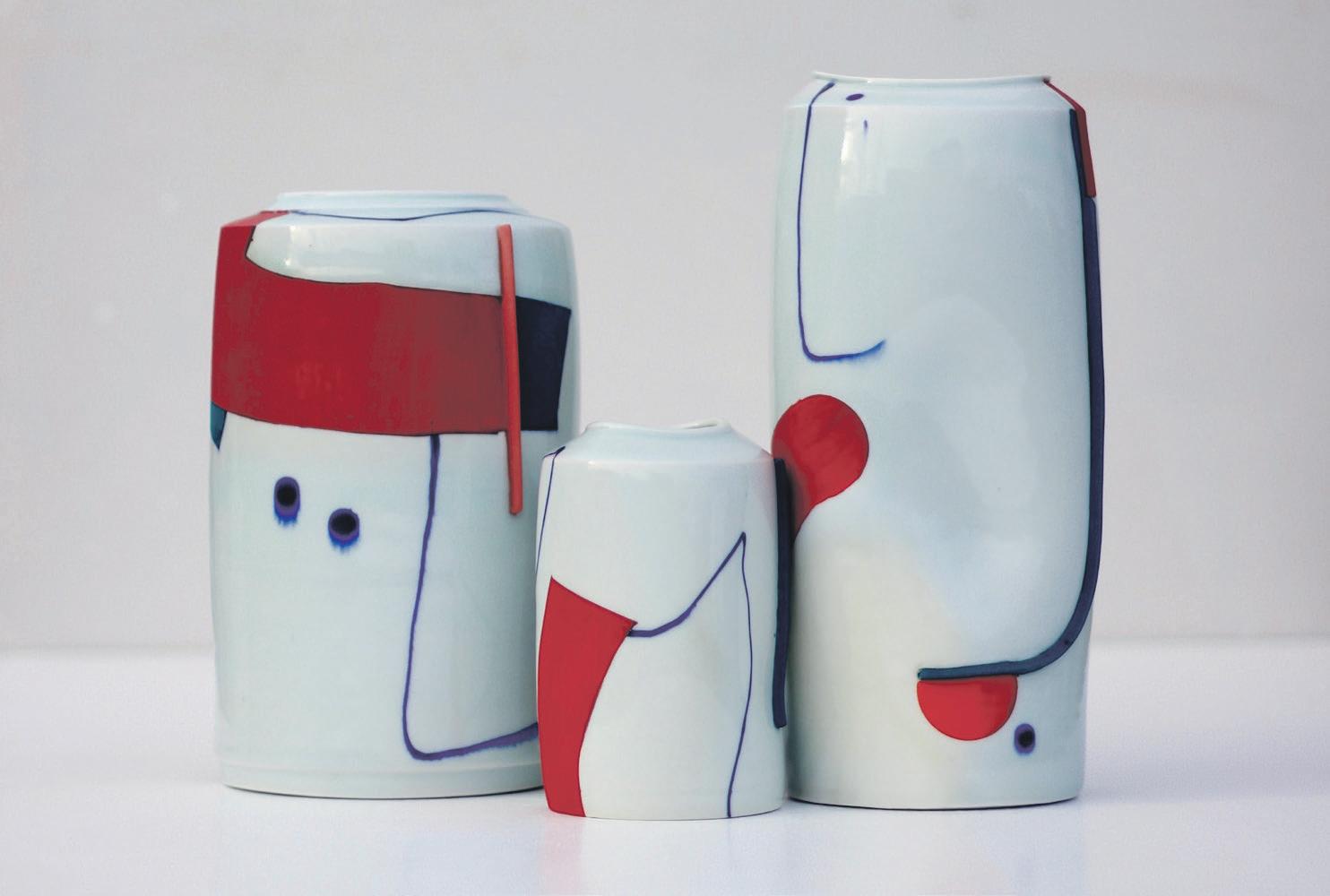
Adam Frew, Squashed Vases with Ridges and Red Shapes, 2025, porcelain, celadon glazed, from 16cm to 26cm tall; image courtesy of the Golfen Fleece Awards.
Plein Air
Péint Bheo
CORNELIUS BROWNE EXPLORES ENVIRONMENTAL THEMES IN THE PAINTINGS OF SINÉAD NÍ MHAONAIGH.
HOURS AFTER SPENDING time with Sinéad Ní Mhaonaigh’s exhibition at An Gailearaí in Gweedore, I was painting cows and boats sinking into late-winter twilight as the tide rose. Rising too was the snow moon, and with a gleaming brush, I found its place in the sky in relation to distant Mount Errigal. Writing and painting, for me, grow from the same root, branches intertwined, leaves brushing. Alone in fields, arched over my palette, words float across the landscape, bathed in the glow of another painter. The wild track of words, slowly weaving into sentences, were for the first time gaelicised: bó, bád, gealach, sliabh, farraige, duairc
The glittering stream of the Irish language flows with poetic vigour through Ní Mhaonaigh’s painterly terrain. Over the past two decades, she has revitalised Irish painting through an expansive series of exhibitions in towns and cities, from Dublin to New York. Her exhibition ‘Sruth’ (19 January – 6 March) brought her paintings to the Donegal Gaeltacht. Even on a grey February morning, this region is beguiled with untrammelled beauty; however, the gallery is located in Gweedore Business Park on Factory Road. This industrial estate, one of the country’s oldest and most remote, was founded in 1966 on 160 acres of cutaway bog, too poor to graze a single sheep. It is an environment within the landscape. On this isolated site, during the quietest months of the year, ‘Sruth’ (the Old Gaelic word for ‘stream’ or ‘flow’) divined ancestral undercurrents.
Echoing the surroundings of the gallery, and the experience of moving through that industrial setting, the paintings themselves build upon a sequence of ambiguous utilitarian buildings: houses, factories, sheds. Behind each edifice, Ní Mhaonaigh opens a world of light, these radiant passages of paint pulsating with the energy of their own making. Counterbalancing the starkness of these man-made structures is a
painterly dynamism that evokes the enigmatic verse of Emily Dickinson: We paused before a House that seemed / A Swelling of the Ground
Many of the Irish words with which Ní Mhaonaigh titles her exhibitions position her as a painter of the lived environment. Where the term ‘landscape’ places an emphasis on form in painting, the use of ‘environment’ emphasises function or utility as an active force. Gaeltacht regions exist somewhere between landscape and environment. They are known for being dramatic, untamed, and remote territories, yet their official function is the preservation of our native language, which linguists predict will disappear over the next century. Ní Mhaonaigh’s conservation of Irish through painting provides a foothold against its long, slow descent.
In the awareness of her panels and canvases of themselves as paintings, a line might be drawn across eras, from Ní Mhaonaigh’s studio to the earliest days of poetic composition on this island. Sixthcentury poets, as they wrote, exalted the act of writing. The predilection of early Irish monks for composing outdoors in broad daylight, bequeathed us luminous medieval examples of plein air writing. Scholars note that the English-language poetry of Ireland rarely expresses such aliveness to its own textural processes.
On the evening of my gallery visit, the light fades, words stream above water, and grass dissolves. Absorbed in painting, I remember Philip Guston, who once voiced his faith that it was possible to ‘‘paint something living’’ and more real than the outside world. As I left Ní Mhaonaigh’s péint bheo (living paint), I found that I wasn’t leaving at all.
Cornelius Browne is an artist and writer based in Donegal.
Painting Theory of the Dot*
ARTISTS ANDREA FRANCKE AND MATTHEW DE KERSAINT GIRAUDEAU DISCUSS AN EPISODE OF THEIR PODCAST.
THIS IS NOT a theory! It’s thinking through a feeling that began with some Philip Guston works from the late 1960s, just before he shifted into his late style of cartoonish figuration. Black ink on paper. They aren’t even dots! But they aren’t flowing lines either. They are hesitant, distinct gestures, indexing his uncertainty about how to make a mark. They were very important for my own work when I first saw them, and I wanted to understand why.
Of course it is a theory! Why do you keep apologising for making theory? Isn’t that the whole point of these podcasts: going through the embarrassing and slightly humiliating process of trying to make meaning from reading and looking, so that art students can feel the pain and joy of trying to understand something? Nothing beats following your intuition and trying to articulate it out loud with someone else. Pure Sianne Ngai vibes: aesthetic judgements are always about starting a chat.
This is not a theory! It’s asking the question, ‘What do dots do?’ and then answering it through looking at the work of artists who use dots. If it is a theory, then it’s an artist’s theory which is entirely interested in Guston, Seurat, Kngwarray and Kusama, and how they use dots. The success of an artist’s theory is how useful it is for the artist
Of course it is a theory! In our first podcast, we read a Helen Molesworth text in which she proposed an alternative genealogy of modern sculpture as the movement from the plinth to the table rather than the plinth to the floor. Which artists are then pulled from the margins to the centre? What artworks? Which critics and art historians? What concepts?
This is not a theory! But maybe you’re right, maybe it is an alternative genealogy. Nochlin says something about it in her text, a counterfactual or thought experiment that asks what twentieth-century painting would have looked like if Georges Seurat, rather than Paul Cézanne, had been thought of as ‘the paradigmatic Modernist.’
Of course it is a theory! I enjoyed that some male critics were quite dismissive of Nochlin’s text, but we chose it anyway. When I said this at the event, lots of people nodded along. Thanks to all the nodders! That’s what making theory is: articulating a position and then discovering that other people can hear what you’re saying.
That’s why it was so important to include Aboriginal Australian artist, Emily Kam Kngwarray. The paintings are incredible, but it is also a political and aesthetic decision about what we choose to place at the centre of a genealogy of painting. Inclusion is always non-performative: it doesn’t do what it says. Inclusion fetishises difference and otherness under the umbrella of respectability, rather than staying with the trouble of taking those inclusions seriously, within discourse itself. The point is not just
to include Kngwarray’s work in a genealogy of painting. The point is that, taking Kngwarray’s work on its own terms, we were forced to destabilise our assumptions about how to talk about painting, and this has affected how we think about painting as a whole.
This is not a theory! Kngwarray’s dots and Seurat’s dots both displace the conventional Modernist notion of mark as a form of individualised expression, but Kngwarray’s marks are fully her own, made with an extended arm and exhibiting an ‘assertive... lack of concern.’ Seurat’s dots on the other hand, are critical, hunched over and precise, a ‘monotonous and patient tapestry’ that makes the artist ‘absent from his stroke.’
Of course, it is a theory! Even though Seurat, Kngwarray, and Kusama have very little in common, there are certain words that writers repeatedly use when discussing their work: labour, boredom, craft, time, authorship, embodiment, attunement, repetition, vibration, accumulation and dissolution. A genealogy of painters who are attentive to alienation and boredom. A theory of painting that refuses fetishising an essentialist expression of individuality, whilst at the same time keeping embodiment at its centre.
* Theory of the Dot was a live recording of episode 6 of our podcast, Ten Texts on Painting, a reading group podcast aimed at artists and art students. The recording was hosted by the painting department at NCAD, at the invitation of Fire Station Artists’ Studios. In this episode, we read the following three texts:
• Jennifer DeVere Brody, ‘Chapter One: Smutty Daubings’ in Punctuation: Art, Politics, and Play (Duke University Press, 2008).
• Margo Neale, ‘Two Worlds: One Vision’ in Alhalkere: Paintings from Utopia (Queensland Art Gallery and Macmillan Publishers Australia Pty Ltd, 1998).
• Linda Nochlin, ‘Seurat’s Grande Jatte: An Anti-Utopian Allegory’, Art Institute of Chicago Museum Studies, Vol. 14, No. 2, 1989, pp.133–242.
Artists Andrea Francke and Matthew de Kersaint Giraudeau host Ten Texts on Painting and Ten Texts on Sculpture as part of The Bad Vibes Club podcast series. Search ‘Bad Vibes Club’ on your podcast app to find us.
@ten_texts
Sinéad Ní Mhaonaigh, Sruth No. 2, 2025, oil on canvas; photograph by Gillian Buckley.
Access Digital Access
ÁINE O’HARA OUTLINES THE IMPORTANCE OF DIGITAL ACCESS FOR THOSE WHO ARE MANAGING CHRONIC
VISUAL ART HAS historically been held in spaces that a lot of people cannot access. Many of the buildings that house museums and galleries are old, protected structures that cannot be modernised, often located in cities that may be far from where you live. It’s obvious that some of these places were built without many of us in mind. There has been some movement over the last decade towards making public spaces like these more physically accessible, but progress is slow and costly. Digital platforms and online access are routes that can invite in many of us who are locked out of these spaces. But is there enough support from Irish institutions and funders to make this happen? Is our access a priority?
I am a visual artist and curator who is housebound, due to severe chronic illness (myalgic encephalomyelitis). I have been at home, and mostly in bed, every minute of every day for the past year and a half. As my condition has improved somewhat, I’m lucky to have found ways to create, and to engage in culture, theatre, cinema, radio, and other media; however, finding access to visual art spaces has been significantly more difficult. There are some opportunities to attend international shows and events digitally, but I want to see art in Ireland. Why is it so difficult to have the same kind of digital access here that is becoming commonplace abroad?
In 2020, at the beginning of the Covid-19 pandemic, I remember being delighted by the ways in which digital access was fore-fronted. Although not fully housebound then, my disability limited how much physical activity I could do. Suddenly I was able to ‘walk’ into virtual gallery spaces, buy tickets to performances from our national theatre, and attend artist talks and events from all over the world. But as things began to open up again after the height of the pandemic, that commitment to access seemed to fall by the wayside once more.
I’m constantly searching for ways to see art, especially visual art, as I continue to be housebound. Last year, I stumbled upon Tangled Art + Disability, a Toronto-based art space which seeks to boldly redefine how the world experiences art and those who create it (tangledarts.org). I found them through a retrospective of Leah Lakshmi Piepzna-Samarasinha’s work. Leah is a prolific writer, creative, and cultural and memory worker from whom many of us in the disability justice space have learned a lot. Their influential publications include non-fiction books such as The Future Is Disabled: Prophecies, Love Notes and Mourning Songs (Arsenal Pulp Press, 2022).
The exhibition at Tangled Art + Disability was called ‘this body keeps me up at night: 30 Years of Leah Lakshmi Piepzna-Samarasinha’ (19 September – 31 October 2025) and presented a collection
Curatorial Inclusive Curating
ILLNESS.
of visual documentation, video works, disabled grief altars, and audio description as art. The access features in place included but weren’t limited to: N95-masked and relaxed events, ASL interpreting and live captioning, attendant care, and HEPA air-filtration. This show was also entirely accessible to someone like me, and many more digitally, through Rosa the Robot. Rosa is essentially a telepresence robot, an iPad on wheels that you, the user, can operate to move around the gallery space and interact with works as well as the curator of the show.
You can choose between having a guided tour or wandering by yourself – I did both. I was amazed by how included and considered I felt throughout this experience. I could move around, tilt my ‘head’ up and down, or linger at any work I wanted. It didn’t feel like a watered-down version of the ‘real’ thing; it felt like true disability intimacy. I, in my bed in Dublin, was thought of as they put together this exhibition. It felt like: “We want you in the room, even if you can’t physically be in the room.”
It was possible for me to spend time at the Disabled Pandemic Grief Portal Altar installation, described as: “an altar table holding fresh flowers, candles, (including candles for visitors to light) tea, honey, candies, salt water, lace and space. To be, and for visitors to bring images and offerings of their own beloved dead.” Installed in a small room at the entrance to the exhibition, it was a dedicated space for disabled grief to be held, individually and collectively, especially that of BIPOC disabled people.
This is the first time since I became housebound that I felt truly present in a space as an audience member. Though there are some virtual exhibitions here in Ireland, I ask curators and organisations to be more creative, to realise that online options are accessible, host virtual tours, provide audio description on websites, and to look into robot options like Rosa. If you want to learn more about these approaches, I recommend looking to organisations like Tangled Art + Disability in Canada, or disability-led arts organisations in the UK, such as DASH (dasharts.org) and CRIPtic Arts (cripticarts.org). And if in doubt, consult with as many disabled people as possible.
Áine O’Hara is a visual artist, curator, and disability advocate based in Ireland. aineohara.com
MIGUEL AMADO HIGHLIGHTS THE NEED FOR ENHANCED METHODS TO WORK WITH DISABLED ARTISTS.
LAST SUMMER, I guided an acclaimed Irish artist and writer through the SIRIUS galleries during a retrospective of Fergus FitzGerald. FitzGerald lives in the Carrick-on-Suir facilities of Camphill Communities of Ireland, and is a member of their affiliate, KCAT Arts Centre. My guest remarked, with surprise and a measure of disdain: “Oh, outsider art.”
The notion of outsider-ism has long served to marginalise art created and exhibited independently of conventional structures of production and presentation, such as schools, studios, museums, and fairs. These institutions are fundamentally elitist, white, normative, and European in character, perpetuating and reinforcing the existing canon. I challenge the view of curation as a tool for sustaining the power of already-privileged classes and identities. For this reason, I focus on uncovering subaltern practices and ideas, advancing a civic role for curation.
By challenging the parameters that define the mainstream art scene, shaped by dominant art historical narratives and network gatekeeping mechanisms, I aim to dismantle the structural barriers to participation in the art sector, encountered by practitioners who do not conform to established categories. FitzGerald’s exhibition exemplifies this approach and situates SIRIUS within a broader process of recognition for the work of disabled, D/deaf, and neurodivergent artists.
The latest manifestation of this trend was the awarding of last year’s Turner Prize to Nnena Kalu, who is connected with ActionSpace in London. A year before, the Museum of Modern Art in New York staged an exhibition by Marlon Mullen, based at NIAD Art Center in Richmond, California. Also in 2024, ‘Creative Growth: The House That Art Built’ was on view at San Francisco Museum of Modern Art, featuring recently acquired works from Creative Growth in Oakland. Similar to KCAT, these organisations function as supported studios that facilitate the professional and artistic development of disabled, D/deaf, and neurodivergent artists.
I consider myself a companion to artists, instituting intellectual and infrastructural frameworks that enable them to produce and present their work. My vision is strong yet adaptable, allowing for artists’ input and responding to their needs. Building these relationships often requires engagement over several years. In FitzGerald’s case, I used an invitation from Arts & Disability Ireland to establish an ongoing dialogue. What began as a single studio visit, evolved into a sustained collaboration that resulted in the most comprehensive presentation of his work to date.
Early in this process, I recognised that my education and experience had not prepared me to interact effectively with
disabled, D/deaf, and neurodivergent artists. My familiarity with research and initiatives in England helped me to address this gap with the sensitivity and thoughtfulness that FitzGerald’s practice required. Nevertheless, I believe that our relationship would have benefited from an approach that was more specifically informed by our circumstances, rather than one guided by intuitions that arose as the project evolved.
With this in mind, I organised a seminar for IKT – an international association of curators – as part of their series of online sessions exploring critical issues in curation, adopting the motto ‘inclusive curating’ in allusion to Jade French’s 2020 book. Consistent with French’s research, my goal was to support the introduction of new voices and perspectives into the art sector. Additionally, I sought to echo Andrew Hunt’s article for The Curatorial, which references the Turner Prize’s reception: “While works by these artists are slowly entering the mainstream, greater efforts must be made to create inclusivity around the critical and curatorial discourse that enlivens and secures the place of this art now and for posterity.” I invited three professionals – Elinor Morgan, Aidan Moesby, and Róisín Power Hackett, active in England and Ireland – to examine gaps in expertise and capacity at both personal and institutional levels, as well as share strategies for narrative advancement.
The speakers highlighted the ongoing need to remedy historic omissions, exclusions, and oppressions in the art sector, emphasising that efforts to include disabled, D/deaf, and neurodivergent artists remain insufficient, as they continue to be underrepresented, even relative to other marginalised groups. They also addressed the prevalent assumption that art created by disabled, D/deaf, and neurodivergent artists is confined to their lived experiences or must be exclusively interpreted through that lens. This issue concerns the distinction between ‘outsider’ art and more conventional forms of art, which has often led to the claim that the former lacks the critical depth attributed to the latter. They contended that disabled, D/deaf, and neurodivergent artists, like all artists, engage with a range of internal and external realities that influence and shape their work, and should not be required to perform their identities in order to attain recognition and status.
Miguel Amado is a curator and critic, and Director of Sirius Arts Centre.
Internationalism
The Event Horizon
MATT PACKER EXAMINES THE CURATORIAL RATIONALE FOR AN EXHIBITION AT THE IRISH MUSEUM OF MODERN ART IN 1996.
IN 2026, IRELAND will assume the Presidency of the European Union for the eighth time since joining the bloc in 1973. While primarily a legislative and procedural role, the presidency serves as a significant marker of Ireland’s diplomatic influence –now pulled into focus by current divisions among member states in response to the antagonisms of Israel, Russia, and the US, among others.
It was exactly 30 years ago, in 1996, that IMMA hosted ‘The Event Horizon’, a major group exhibition curated to coincide with Ireland’s EU Presidency that same year. It addressed the thematic construction of European identity during an equally turbulent era, when the ideological integrity of Europe was being tested by the conflict in the Balkans and the integration of former Soviet states.
In the exhibition publication, IMMA Director Declan McGonagle described its focus on the “speculation, rather than definition of European Identity.” The core exhibition featured 15 artists across two seasons, including artists from Bosnia-Herzegovina, Britain, Egypt, France, Ireland, Israel, Italy, Portugal, Slovenia, Sweden and Switzerland – a list put forward, assumedly, to emphasise the exhibition’s diverse and inclusive internationalism. As a roll call of participating artist nationalities, it afforded a sense of fluidity and contestation to the subject of European identity at the very basis of artistic biography and circumstance.
Many of the featured artists did not strictly identify as European in terms of their ethnicity or place of origin. Atom Egoyan was born in Egypt and living in Canada, while Sigalit Landau was born and based in Israel. Even the biographies of those based within the undisputed geographical boundary of Europe emphasised a sense of inter-European mobility and transnationalism. Artists such as Tim Robinson had emigrated from the UK to Ireland; Seamus Farrell, from Ireland to France; Marie José Burki, from Switzerland to Belgium. In themselves, these biographical details are neither interesting nor particularly remarkable; more significant was the institutional and curatorial emphasis on these details in service of the broader thematic proposition, the suggestion that an address of European identity could be made from any number of places and positions, but also that the hybridity of artistic identity and personal circumstance were co-extensive elements. This was acknowledged by Luke Clancy in an article for the Irish Times, where he noted that many of the artists were “exiles or emigres […] whose biographies represent renegotiations of identity.” Interestingly, 1996 was also the year in which immigration exceeded emigration for the first time, briefly reversing Ireland’s long-standing narrative of diaspora-driven opportunity.
Throughout the artworks in the exhibition, Europe emerged and re-emerged as a subject that was either scarred and traumatised by its own violent history or presented as a kind of ad hoc network of seemingly arbitrary borders that act against the liberties and hybridity of lived experience. ‘The Event Horizon’ was not alone in seeking to address issues of European identity during this period; other large scale exhibitions and programmes in 1996 used a similar propositional language and thematic address. Examples included ‘Parisienn(e)s’ curated by Hou Hanru at Camden Arts Centre and Iniva, London, or the controversial ‘Interpol’ exhibition, curated by Viktor Mission and Jan Äman at Färgfabriken Centre for Contemporary Art and Architecture, Stockholm. But perhaps the most significant example is the inaugural edition of pan-European biennial, Manifesta, curated by a team including Hans Ulrich Obrist, Rosa Martínez, and Andrew Renton across venues in Rotterdam. All of these examples pronounced their thematic claims with a rhapsody of similar words and phrases: “New Europe”, “dialogue and collaboration”, “migration and hybridity.”
Amid the curatorial propositions that sought to respond to the changing shape of Europe during this time, ‘The Event Horizon’ was comparatively traditional in its design and more literary in its tone. The introductory curatorial text, written by Michael Tarantino, opened with a passage drawn from a Kazuo Ishiguro novel, and later referenced Franz Kafka, James Joyce, and writings from the filmmaker Michelangelo Antonioni. Photographic documentation shows artworks sparsely and beautifully poised in IMMA’s haunted old rooms. ‘The Event Horizon’ had none of the conflict and controversy of ‘Interpol’ (where Oleg Kulik famously bit members of the visiting public, and Alexander Brener deliberately destroyed the work of another participating artist). Nor did it have the money or fluid resources of Manifesta.
An important, albeit obvious, point is that ‘The Event Horizon’ addressed the issue of European identity from the place and position of Dublin, and without prioritising or centering Irish experience in the process. From the perspective of the mid1990s Ireland, that did not translate as a disavowal of Irish interests, but moreover a sign that old anxieties about Ireland’s marginalised place in the world were now consigned to the past, replaced by a confidence of its evolving national identity within Europe. This, McGonagle asserted, could in fact “place Ireland at the centre of debate about a fragile and changing European hegemony.”
Matt Packer is Director of EVA International. eva.ie
Art Work How Shall We Do This?
LIAN BELL REPORTS ON A RECENT SYMPOSIUM ON SHAPING A FEMINIST ART RESOURCE CENTRE IN IRELAND.
I HAVE OFTEN wondered why Ireland has no dedicated grassroots space for feminist community gathering and education. Elsewhere, there are long-standing feminist archives, women’s libraries, and radical bookshops, founded and run by women. Did a critical mass of radical women leave Ireland when other countries were consolidating their second waves of feminist organising? Was the soil here too acidic for feminist placemaking to take root?
In February, I attended a three-day symposium, convened by Dr Alessia Cargnelli (postdoctoral Research Ireland Enterprise Fellow) and Sophie Byrne (Curator of Public Talks Programme at IMMA), that I hoped might give some insight. ‘How shall we do this? Shaping a feminist art resource centre’ was a vibrant group conversation, structured with care, and featuring national and international speakers with diverse practical experience of intersectional feminist archiving. The event grew from Dr Cargnelli’s current research (in partnership with IMMA, NCAD, and NIVAL), focused on establishing the first all-island, community-led and feminist-led resource centre.
Honestly, it was wonderful; I can only offer a flavour of its riches. We were introduced to the exceptional work of the West Asian and North African Women’s Art Library (WANAWAL), London; The Feminist Institute, New York; Glasgow Women’s Library; AWARE – Archives of Women Artists Research and Exhibitions, Paris; and Éireann and I, a community archive and memory work platform dedicated to chronicling stories of Black life in Ireland. Dr Cargnelli spoke of the Milan Women’s Bookstore Collective’s working practices. Keynote speaker Alex Martinis Roe, an artist and researcher based in Melbourne, introduced practical and expansive propositions for feminist archiving, based on her research on genealogies of feminist political practices of difference.
My own interest in challenging existing institutional structures by practicing new (feminist) ways of working made two of Martinis Roe’s propositions stand out for me. Firstly, she positioned the archive not only as a collection of stories, but as a collection of methods, stating: “when we study these methods so that we can teach them, they can travel more easily to be used in diverse international contexts.” Secondly, she advocated creating a culture of “committed relationships that support everyone involved to take leadership in ways they feel passionate about.” I often think of JeanLuc Godard’s distinction between making political films and making films politically – and how that ethos might transpose to feminist working practices. For me, working ‘feministly’ means considering the intersectional feminist implications of all
aspects of the work, and designing the work systems themselves to embody feminist values and ethics – not simply to focus on feminist content.
This is exactly what this symposium explored, both thematically and structurally. Not only was the content rich and generative; the methods of working were too. As well as the traditional keynote, presentations, and panels, there was also time to cluster in groups, tasked with addressing how a feminist art resource might be shaped and run, as well as time to eat and talk together informally. On the final day, there was also a discursive workshop, which I found particularly moving. A small group of us shared stories relating to personal archive materials we brought with us, and later carefully sifted through boxes of Patricia Hurl’s archive under the caretaking eye of IMMA curator Johanne Mullan, who worked with Hurl on her retrospective and archival handover.
Some of the many topics surfaced during the symposium included: competing needs between informal engagement with archive material and the rigours of conservation; how to navigate tensions between community-led structures and institutions; archives as a place for welcoming, gathering, collecting, and shared learning in person; working practices of empowerment and responsibility such as developing a coaching culture, soliciting criticism, establishing working clusters within organisations, and affidamento – the pairing of people across lines of difference to inform and strengthen a group, as practiced by the Milan Women’s Bookstore Collective. Through these discussions, the speculative Irish feminist art resource centre emerged as a meeting place of community, genealogy, preservation, liberation, and dreaming.
Coincidentally (providentially?), that same week, it was announced that a women’s museum will open in Limerick as a branch of the National Museum. This follows research by the government-established Advisory Committee on Women’s Stories, focusing on “how the diverse experiences and voices of women are represented within the national cultural institutions and the national collections.” Wouldn’t it be visionary if, as well as showcasing stories of Irish women, this new museum’s organisational structure was built from feminist working principles? That would be truly groundbreaking, potentially creating models that other cultural organisations could learn from. There is a unique, transformative opportunity here; the new museum’s planning team could learn much from Dr Cargnelli’s important work, and her exceptional community of feminist leaders.
Lian Bell is an artist and arts worker based in Dublin
Archives How to Build Your Legacy
RUTH HALLINAN DISCUSSES NIVAL’S NEW TOOLKIT FOR ARTISTS’ ARCHIVING OFFERING PRACTICAL INFORMATION.
THE NATIONAL IRISH Visual Arts Library (NIVAL) at the National College of Art & Design, Dublin, has launched Toolkit for Artists’ Archiving (2026), which is a free, digital resource for artists and others engaged with art and design in Ireland.
NIVAL collects, stores and makes accessible for research an unparalleled collection of material about Irish art in all media, and artists are regularly encouraged to document their own practices and start their own archives. In Archiving Plurality (NIVAL, 2024), Dr Alessia Cargnelli foregrounded the idea that to tackle inequality of representation in archives, it is imperative to give agency to artists and provide them with tools to directly shape how they would like to be remembered.
With this in mind, NIVAL has now developed a toolkit that offers practical information to help artists of any level of experience or background to gather and organise their own documentation at home or in the studio. The Toolkit for Artists’ Archiving provides practical steps, prompts, and templates for those who are unsure where to begin. It covers how to get started, collecting practices, making choices about what to include, organising and preserving materials at home, and tips for organising digital files. The toolkit also addresses the idea of ‘creative archiving’ and the many ways in which that can be interpreted. There are further resources listed to provide information on suppliers, consent, and data protection.
The Toolkit for Artists’ Archiving was developed with the assistance of a focus group of practitioners from all over Ireland who have approached archiving their own documentation in a variety of ways. NIVAL staff, who have decades of combined experience in collecting and organising the stories of Ireland’s artists, have also contributed their top tips and advice.
Many artists do not see their own work as being significant enough to enter into the public record. For NIVAL, all practising visual artists and designers are of interest to us. A great way to understand artists’ archives is to start with curiosity, and to look at what other artists have already done. One way of doing this is to make an appointment to visit NIVAL and take inspiration for the types of documents you might like to include in your own archive. It is possible that NIVAL already holds a file on your work, or you might like to see how the materials of other artists of your discipline have been organised. It’s an invaluable experience to put yourself in the place of a researcher, encountering snippets of an artist’s story in a file, trying to thread these pieces together to create a cohesive picture. This will help you to understand the reasons behind retaining and organising different types of documents.
The act of self-documentation can be
rife with emotional as well as practical concerns. It can pose particular difficulties inherent for people who have found archives historically difficult to access or who believe archives lack inclusivity. The stories of artists who have been omitted or underrepresented in collected histories need to be amplified, but the choice to partake in self-documentation remains a personal one. Artists have expressed a range of emotions when starting to document and organise their own work. Whether you have feelings of guilt for not having started sooner, or feelings of satisfaction to look back at everything you have done, your own feelings towards documenting your career can be the spur or the stopping point when it comes to self-documentation. Acknowledging these feelings can help you understand what level of effort you are able to undertake and what routines might help to allay the sense of being overwhelmed. Some tips on starting out include:
• Be realistic about what is motivating you and what you want to achieve.
• Setting aside a realistic amount of time each week or month, however short, is more satisfying than starting with good intentions that cannot be maintained.
• Give yourself an achievable goal to get started, such as plotting a career timeline.
• Archive as you go, rather than retrospectively. Use a research journal to integrate archival activity into your artistic and studio practice.
• Mark off your achievements with a printed schedule.
• Get in touch with NIVAL or other institutions for examples of other artists’ archives – this could inspire you!
NIVAL’s first template in the toolkit poses some questions to help keep you motivated. How do you normally keep track of your art practice? You are already recording more than you know. What are the obstacles to maintaining or organising your collection of documents? The toolkit suggests solutions to common problems that artists encounter.
The Toolkit for Artists’ Archiving is free to download via the NIVAL website. Workshops based around the toolkit will be rolled out across Ireland later in the year, including events at NIVAL (Dublin), The Glucksman (Cork), 126 Artist-Run Gallery (Galway), Catalyst Arts (Belfast) and Temple Bar Gallery + Studios (Dublin). Sign up to NIVAL’s mailing list for more details. NIVAL gratefully acknowledges funding for this project by the Arts Council of Ireland and NCAD.
Ruth Hallinan is Assistant Manager of NIVAL. nival.ie
Creative Producers Infrastructure As Armature
AISLING MURRAY CONSIDERS SOME RECENT TRAINING IN CORK AS PART OF THE CREATIVE PRODUCER PROGRAMME.
WHEN I STARTED the Creative Producer Programme, I was struck by Kunstverein Aughrim’s Hospitality Policy, which sits front and centre on the organisation’s website. As a group, the concept of hospitality was one of the first things we coalesced around in Aughrim. Jennie Moran guided us through a reflective session, followed by a collective kimchi-making process. There’s nothing like six people who have just met combining microbes and squelching vegetables for fermentation to really form a bond! What continues to strike me is how hospitality extends to every place we visit for training, through the cultural partners who host us.
Our most recent trip took us to Cork for two days, where we enjoyed training workshops on health and safety at the National Sculpture Factory (NSF) and exhibition touring at Sirius Arts Centre. We arrived at NSF and were guided up to a meeting space overlooking the artists’ studios and fabrication areas below. Director Helen Carey greeted us warmly and talked through the vision, mission, and governance of the organisation. She positioned the NSF as one of three resource organisations in Ireland – alongside Leitrim Sculpture Factory (with particular strength in skills) and Fire Station in Dublin (digital and residential offerings). Framing sculpture as a ‘method’ rather than a ‘field’, she prompted us to consider various questions: What goes into the public domain? What is made and how? How do you protect the sculpturalTechnicalprocess?Manager, Rónán Ó Caoimh, then walked us through NSF’s health and safety processes, which are necessarily vast, given the range of materials and fabrication techniques undertaken on site. When artists arrive with an idea, the team looks for bespoke ways to accommodate them, considering duty of care, legislative position, workflow, and insurance. What became apparent, and has been something of a recurring theme throughout the programme, is the invisible, relational labour involved in making art. There is no onesize-fits-all approach. This invisible glue –human understanding, careful negotiation, trust – is, in many ways, the core inquiry of the Creative Producer Programme. Rónán concluded by bringing us onto the factory floor, where we tried on protective gear and used some tools – a kind of hospitality itself, in being trusted with the space.
Clara McSweeney, working on curatorial development, then shared her research, which maps cultural and artistic spaces, festivals, venues, and studios across Cork, producing a city-wide web of relations between artists and the infrastructure required to make art. Helen likened infrastructure to the term ‘armature’, fittingly rooted in the sculptural process, as a framework upon which artists build artworks.
However, certain aspects of this infrastructural armature are often out of reach for small, medium, or even large art spaces. Insurance came up as a pointed example, and the often unreasonable demands placed upon cultural institutions and individual artists, which fail to account for expertise and instead shoehorn creative practice into pre-determined categories. Helen floated a radical idea: what if the government covered insurance for arts organisations? Rather than publicly funded institutions paying a significant portion of that funding to private corporations, those funds could be redirected where they’re actually needed. That evening, we were treated to a spread from genomic experimentalists, The Domestic Godless, who tickled and challenged our tastebuds in The Guesthouse –an ongoing artistic endeavour continuously questioning the notion of organisation. A feast of sour beige soup, jellyfish salad, lamb roadkill, ox tongue, pig face, spicy flypaper, and collagen terrine was served. We ate our way around the building, challenged through taste and texture. Our collective bond was deepened once again, through ingredients known and unknown – more microbial fluidity, and hospitality as a practice of encounter.
Our second day brought us to Sirius Arts Centre in Cobh, with Director Miguel Amado and collaborator Rayne Booth providing a practical and honest overview of touring within the visual arts. For artists, touring can extend the life of work, increase exposure, and generate fees, but it can risk oversaturation in an already small circuit. For producers, touring offers deeper engagement and valuable professional development, but is also logistically complex, financially precarious, and dependent on ongoing venue cooperation. Touring is not simply moving an exhibition from place to place; it is about negotiating relationships, adapting work to each venue, managing expectations, and holding a network of collaborators together over time. Strategically valuable, yes, but the funding and venues available to receive such work can still limit the possibilities.
As I reflected on both days, I felt various terms beginning to coalesce that both enable and limit artistic practice: infrastructure/ armature; hospitality/ relational labour; creative production/ curation. Maybe our challenge is not in defining fixed ways of working, but in a radical reimagining that can deconstruct and rebuild what creative production might look like.
Aisling Murray is a creative producer with extensive production experience across artistic disciplines. She is cofounder and director of Beta Festival, Ireland’s art and technology festival.
In Focus : Island Landscapes
Planetary Archipelagos
SEÁN Ó DÁLAIGH, ANDREW DUGGAN, AND SOPHIE FETOKAKI REPORT ON THEIR CURRENT PROJECT.
‘SWIMMING WITHOUT NEEDING to find a shore’ is how we describe the condition of being preoccupied with ideas, where specific moments of creation occur as islands in the ocean, appearing above the surface, with an enormous depth of thought and engagement below. Fascinated by islands and coastlines, we have swum these waters before, having collaborated on Talamh (2020), a site-specific opera project led by Seán, centred on the Blasket Islands. The Coastal Paradox (2023) was a psychogeographic work led by Andrew, combining sound, image, and a participatory walking performance along the shoreline of Ermoupoli on Syros, Greece.1
Our current inter-island project, Planetary Archipelagos (2026), looks at our own divided islands of Ireland and Cyprus through the lens of Märket (FI/SE), a tiny skerry in the Baltic Sea, and the smallest divided island in the world. At this ruminative juncture, Sophie was invited to speak at Critical Coffee Reading (CCR), an alternative learning group founded in 2024 by London and Cyprus-based artist-researcher, Florenza Deniz Incirli, and Ibrahim Ince, an anthropologist, artist, and PhD researcher at the University of Oxford (see ibrahimince.info). CCR organise monthly online sessions, where they sip fortune coffee and discuss what it means to write and read Cyprus and other coffee-reading geographies. Their third semester is themed on islands, a topic which emerged from the realisation that while the islandness of Cyprus is something that speaks to everyday life there, it is not reflected in academic texts and Cyprus is rarely spoken about in island studies. In questioning why that might be, CCR turned its focus to consideration of its natural and political geography, with the explicit aim to make connections between insular geographies, such as that of Ireland.
CCR is significant, not only for Sophie, who has engaged with the initiative since its inception, but as a space that, rather than reproducing fixed ethnic or national demarcations, is mediated through shared research interests, texts, and references, foregrounding relational modes of engagement. In this sense, it functions as a fluid, discursive field in which identities are negotiated through encounter and ongoing interpretation.
The urge to reframe island connectivity in relation to plural and mediated identities aligns with the brilliance of archipelagic
thought. French writer and poet, Édouard Glissant (1928–2011), saw in the Caribbean “a sea that explodes the scattered lands into an arc”2 – an iterative chain of unique interactions from which he crafted his influential vision of a transforming world. Through creolisation, Glissant rethinks identity not as rooted but as a dynamic, rhizomatic process, shaped by interaction and difference. His notion that “each and every identity is extended through a relationship with the Other”3 expanded across scales later in life, when he argued that “the archipelagos of the Mediterranean must encounter the archipelagos of Asia, and the archipelago of the Antilles.”4 We take our cue from this provocation. Given that islands across the globe share not only spatial characteristics but histories and present realities of colonialism, ecological precarisation, and peripheralisation, what can we learn by engaging with islands – both aesthetically and politically, as Glissant suggested – on a planetary scale?
As part of Planetary Archipelagos, we will present our exhibition, ‘The Island Rises with You’, in which we extend these questions of connection through difference into material and technical forms of transmission. The tiny island of Märket is a highly coveted DXCC entity in amateur radio, with a separate ‘country’ status due to its divided terrain. In our research process, Seán imagines these encounters on the ocean of radio waves – and our own digital coincidence and dispersion across time and space – as ephemeral islands. Rather than concealing this working method, we are pursuing a poetics of infrastructural entanglements, designing modes of live gathering through the amateur radio band, on homemade transmitters and receivers, and through the internet on custom made connections that will bypass colonial networks of data extraction.
The scope of Planetary Archipelagos is both daunting and energising. It seems to generate a perpetual motion of thought powered by the core paradox of islands: what appears as boundary is actually threshold, membrane, intensity; and what appears as isolated is in fact produced through material, historical, and ecological relations. Thinking with islands cracks open the forms through which these relations would be contained, unsettling the concept of “static, statist land mass”5 towards a radically different configuration of the world.
Planetary Archipelagos is a collaborative project led by interdisciplinary artist and researcher Sophie Fetokaki, artist Andrew Duggan, and composer Seán Ó Dálaigh, which is funded by the Nordic Culture Fund’s Globus Opstart + program and Culture Ireland.
‘The Island Rises with You’ will be developed at CAA Contemporary Art Archipelago, Finland, in summer 2026 in association with the Archipelago Research Institute. It will subsequently be presented at the Cyprus University of Technology from 26 #October to 2 November.
‘Éiríonn an t-Oileán leat’ will be developed in the West Kerry Gaeltacht, supported by Ealaín na Gaeltachta and Courthouse Studios | Stiúideo Tigh na Cúirte / Kerry County Council.
1 Research for Talamh (2020) was funded by The Arts Council of Ireland, and The Coastal Paradox (2023) was funded by Culture Ireland.
2 Édouard Glissant, Poetics of Relation, trans. Betsy Wing (Ann Arbor: University of Michigan Press, 1997) p33.
3 Ibid., p11.
4 Édouard Glissant and Hans Ulrich Obrist, The Archipelago Conversations (New York: Isolarii, 2021) p19.
5 Stefano Harney, Fred Moten, Sandra Ruiz, and Hypatia Vourloumis, ‘Resonances: A Conversation on Formless Formation,’ e-flux Journal, Issue #121, October 2021.
Andrew Duggan, Sophie Fetokaki, and Seán Ó Dálaigh, Planetary Archipelago collaborative images #1 and #4, 2026; images courtesy of the artists.
Mí an Mhárta
MARY FLANAGAN DISCUSSES A RESIDENCY AND EXHIBITION UNDERTAKEN BY JO KILLALEA ON INIS MEÁIN, ARAN ISLANDS, COUNTY GALWAY.
VIEWED FROM THE air on a clear day, Inis Meáin is a vivid green expanse, engraved in shades of grey with an intricate lattice of dry stone walls, fields and róidíní, framed by the intense blues of sea and sky.
This is the island landscape closely observed throughout March 2025 by visual artist Jo Killalea. Killalea was the inaugural artist-in-residence on Inis Meáin, courtesy of a new collaboration between the community development company Comhlacht Forbartha Inis Meáin, and Áras Éanna Arts Centre, Inis Oírr.
Killalea’s artistic and ecological concerns are firmly rooted in her own farming background, and she brought this sensibility with her to Inis Meáin, along with a resolve to immerse herself in the culture and language of the island. The work she created in response to the residency is currently on view at her exhibition ‘Inis Meáin: Mí an Mhárta’, which continues at the community centre, Ionad Pobail Inis Meáin until the end of September.
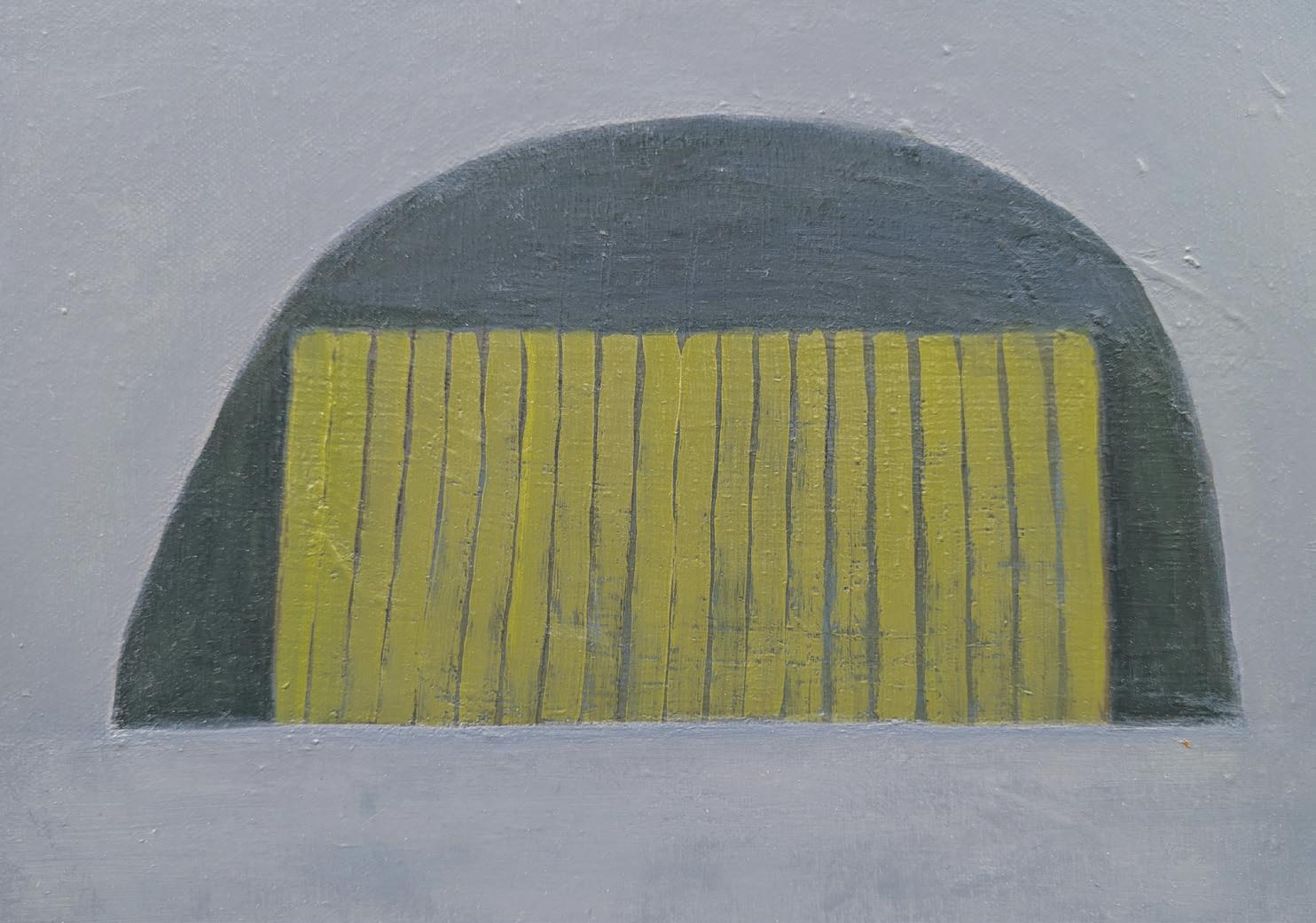
The exhibition is a multi-faceted display of both semi-abstract paintings and documentary-style photographs, a body of work that sensitively captures the richness of the island’s cultural landscape. The visual and conceptual scope of the exhibition is enhanced by the clustering of images based on thematic and formal elements. The meticulously rendered abstracted imagery of the paintings includes the artist’s signature grids, mounds, rows and dots, and powerfully evinces the island’s network of fields and dry stone walls. Titles are in Irish, acknowledging the importance and distinctive quality of the Irish language on Inis Meáin.
Killalea’s paintings and photographs encapsulate the richness and complexity of the island’s farming system, and pay particular attention to events that coincide with
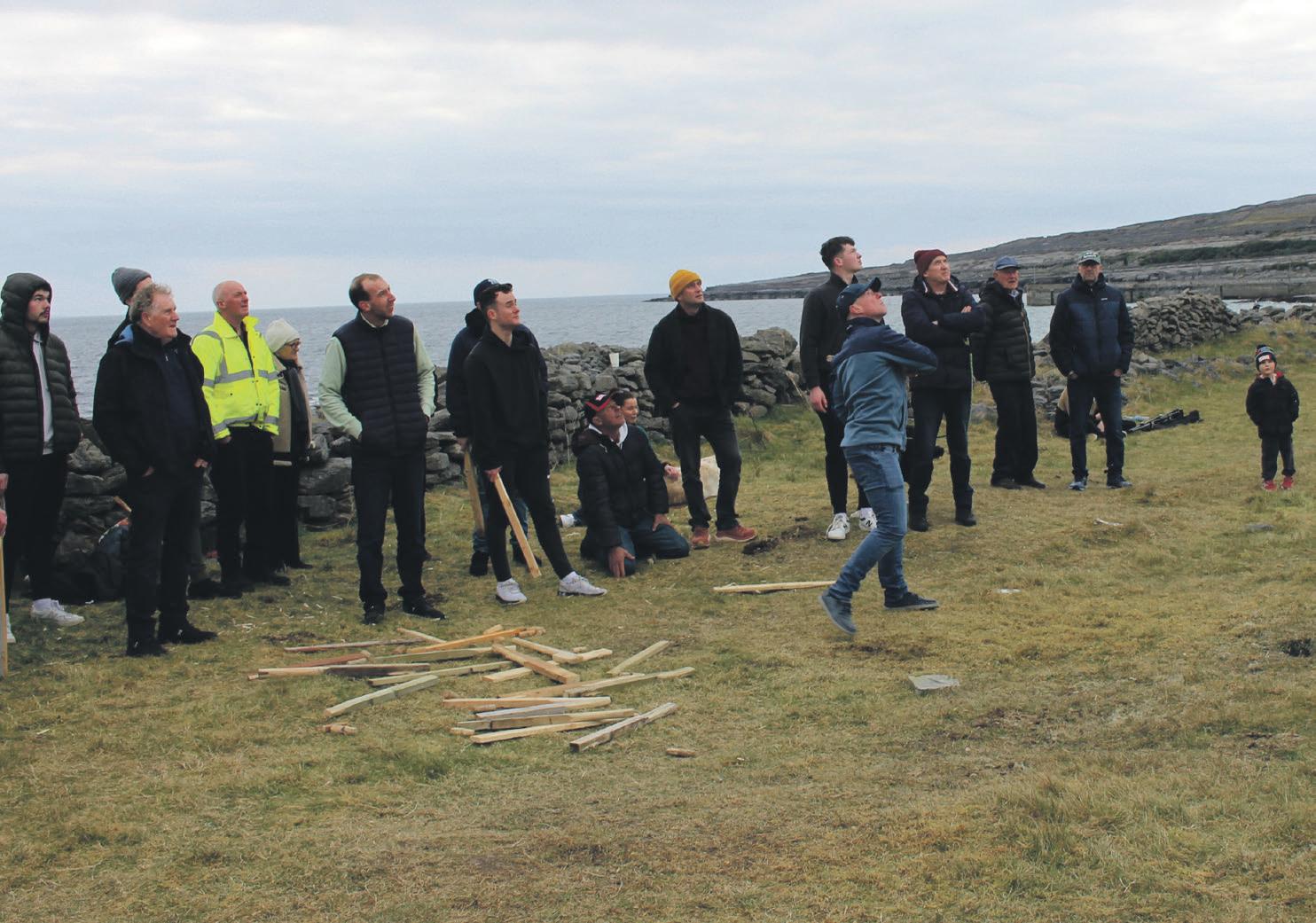
the arrival of spring. Cead, a men’s sport unique to Inis Meáin, and played only on 17th March (St. Patrick’s Day) each year, is documented in a series of photographs and in the beautifully rendered painting Cluiche Cead (2025). In the painting, the distinctive latticed field system is set within an outline of a figure holding a cead baton. Reflecting the interconnection on the island between people and place, season and elements, this work exemplifies the overall theme of the exhibition.
The location of the exhibition at Ionad Pobail on Inis Meáin gives the viewing experience a deeper resonance and depth of meaning. Artworks and exhibition site converge, and the experience goes beyond viewing to becoming a relational and durational interaction, grounded in place and time. The residency enabled the artist to engage in an immersive relationship with the island and its community. It supported her to respond artistically in a specific and considered way to the exceptional cultural and physical landscape of Inis Meáin. This engagement with place and people to produce a rich suite of artworks, and the subsequent exhibition of these works on the island itself, demonstrate the potential of the arts to play an active role in animating and sustaining cultural life.
‘Inis Meáin: Mí an Mhárta’ continues until the end of September 2026 at Ionad Pobail, Inis Meáin, Aran Islands, County Galway. H91 XK40
Mary Flanagan is a writer based in County Roscommon.
PLÉANN MARY FLANAGAN CHÓNAITHEACHT AGUS TAISPEÁNTAS A RINNE JO KILLALEA AR INIS MEÁIN, OILEÁIN ÁRANN, CONTAE NA GAILLIMHE.
AGUS É LE feiceáil ón aer ar lá breá geal, is stráice mór uaine talún é Inis Meáin, atá greanta le dathanna liatha éagsúla, ar a bhfuil laitís chasta de chlaíocha tirime, buaillte agus róidíní, daite le tréanghorma na spéire agus na farraige mar a bheadh fráma thart air.
Ba é seo tírdhreach an oileáin a thug an t-amharc-ealaíontóir, Jo Killalea, faoi deara le linn mhí an Mhárta 2025. Bhí Killalea mar ealaíontóir cónaithe tionscnaimh ar an oileán, le caoinchead ón gcomhpháirtíocht nua idir an eagraíocht forbartha pobail Comhlacht Forbartha Inis Meáin agus Ionad Ealaíona Áras Éanna, Inis Oírr.
Tá baint mhór ag tréithe ealaíonta agus éiceolaíochta Killalea lena cúlra feirmeoireachta féin, agus thug sí léi an chiall seo go hInis Meáin, chomh maith le rún daingean í féin a thumadh i dteanga agus i gcultúr an oileáin. Tá an saothar a chruthaigh sí mar fhreagra ar a cónaitheacht ar taispeáint faoi láthair ar an oileán in Ionad Pobail Inis Meáin go dtí deireadh Mheán Fómhair, ‘Inis Meáin: mí an Mhárta’.
Is taispeántas ilghnéitheach é an taispeántas de phictiúir leath-theibí agus de ghrianghraif de chineál doiciméadach araon, saothar a léiríonn saibhreas thírdhreah cultúrtha an oileáin go híogair. Cuirtear le scóip amhairc agus choincheapúil an taispeántais trí ghrianghraif agus pictiúir araon a chur san áireamh, le braisliú comhlántach íomhánna bunaithe ar théithe téamacha agus foirmiúla. I measc íomhánna mionsonracha teibí na bpictiúr, áirítear greillí, carnáin, sraitheanna agus poncanna – tréithe a bhaineann go dlúth le saothar an ealaíontóra seo – agus léirítear go cumhachtach líonra buailte agus cloiche tirime an oileáin. Tá na teidil as Gaeilge, rud a thugann aitheantas do thábhacht agus do shaibhreas na Gaeilge ar Inis Meáin.
Léiríonn pictiúir agus grianghraif Killalea saibhreas agus castacht chóras feirmeoireachta an oileáin, agus tugtar aird ar leith ar imeachtaí a tharlaíonn le teacht an earraigh. Léirítear spórt na bhfear, Cead, nach mbaineann ach le hInis Meáin amháin, agus nach n-imrítear ach ar an 17 Márta (Lá Fhéile Pádraig) gach bliain, i sraith grianghraf agus sa phéintéireacht álainn, Cluiche Cead. Sa phéintéireacht, tá an córas páirce laitíse ar leith suite laistigh de chruth fir a bhfuil bata Cead aige. Agus machnamh á dhéanamh ar an nasc ar an oileán idir daoine agus áit, an séasúr agus na heilimintí, léiríonn an saothar seo téama foriomlán an taispeántais. Maidir le suíomh an taispeántais ar Inis Meáin, léirítear comhbhá níos doimhne agus léargas domhan don lucht féachana. Tagann saothair ealaíne agus suíomh taispeántais le chéile, agus téann an taithí níos faide ná eispéireas coibhneasta agus fadtréimhseach, bunaithe ar áit agus ar am. Chuir an chónaitheacht ar chumas Killalea a caidreamh a chothú leis an oileán agus le muintir an oileáin. Fuair sí tacaíocht ón oileán freagra ealaíonta a thabhairt ar thírdhreach eisceachtúil cultúrtha agus fisiceach Inis Meáin ar bhealach sainiúil agus machnamhach. Léirítear an rannpháirtíocht seo le háit agus le daoine sa tsraith shaibhir saothar ealaíne, agus an taispeántas ina dhiaidh sin ar an oileán féin cumas na n-ealaíon ról gníomhach a ghlacadh i saol cultúrtha a bheochan agus a chothú.
Beidh ‘Inis Meáin: Mí an Mhárta’ ar taispeáint go dtí Meán Fómhair 2026 in Ionad Pobail Inis Meáin, Árainn, Gaillimh H91 XK 40
Is scríbhneoir í Mary Flanagan atá lonnaithe i gContae Ros Comáin. Aistriúchán le Dréimire.
Jo Killalea, Ag Cur Fátaí, 2025, oil on canvas, 24 x 30 cm; photograph courtesy of the artist. Jo Killalea, Cluiche Cead, 2025, photograph, 20 x 30 cm; photograph courtesy of the artist.
Decentralised Integration
SINEAD MC CORMICK DISCUSSES THE EVOLUTION OF THE BAVA PROGRAMME ON SHERKIN ISLAND.
OVER THE PAST 25 years, the BA in Visual Arts (BAVA) programme on Sherkin Island has become known for its unique, evolving model of art education. The community-based, four-year, honours degree programme is fully accredited, managed, and delivered by the School of Art and Design at TU Dublin in partnership with Sherkin Island Development Society (SIDS), and Uillinn: West Cork Arts Centre. It is part-funded by the Department of Rural and Community Development and Cork County Council. The programme provides an artist-centred, place-responsive education that embraces uncertainty, independence, and lived experience.
Far away from the infrastructures typically associated with art schools, BAVA Sherkin does not really have a specific purpose-built studio, or fixed workshop facilities, and no clear boundary between campus and community. Instead, Sherkin itself becomes both the place and the subject that shapes how students work, and also how they will come to understand what it means to be an artist in the real world. This is a course created in the real world for those who want to leave as fully-fledged, working artists, and is most likely the reason why BAVA graduates have won some major awards over the past number of years.
Spanning just five kilometres, Sherkin’s scale has never been a limitation; instead, the land itself and the islanders who inhabit it become the focal point of the course in so many more ways than could even be imagined. For BAVA, Sherkin is not a backdrop; it is a collaborator with students developing work in kitchens, sheds, fields, and along the shoreline. Student exhibitions have emerged over the years in response to the landscape with installations in domestic spaces, on beaches, or within working environments. The relationship between art and place has always encouraged students to work both practically and conceptually with material choices
MA Art and Environment (MAAE) student, Sinead Mc Cormick, 2022; photograph courtesy of the artist and TU Dublin.
shaped by availability. Ideas and concepts are tested by and against weather, terrain, and time.
While much has been written over the years about the programme, what isn’t always captured is how the students themselves become so embedded in the island that many of them choose to make Sherkin their permanent home after graduation, earning it the title as the Island of the Arts.
BAVA students become part of the wider Sherkin community and there is an understanding that if aid is needed for anyone, it is given. This resonates with how people reminisce about the old days of villages and what community was once built upon.
Because of this, students are not only learning techniques; they are learning how to situate their practice within real conditions, while solving real world problems along the way. Being on an island demands adaptability and forces students to foster artistic resilience that extends far beyond graduation and benefits them in their lives as working artists, says artist and course facilitator, Majella O’Neill Collins.
At the core of BAVA is a model that is entirely different from conventional art education courses. Alongside the curriculum, the programme emphasises mentorship, peer learning, and self-directed practice. Speaking of the course, lecturer Sinead Mc Cormick says: “Tutors are themselves practising artists, actively engaged in exhibition-making and research. This creates a learning environment grounded in lived experience rather than abstraction. The relationship between student and tutor is closer to apprenticeship than instruction, with knowledge shared through dialogue, critique, and example.”
Due to smaller class sizes, peer critique is central to the course. Students are encouraged to articulate their ideas, challenge one another, and develop critical frameworks together. The absence of a large institution is what pushes students to be extra accountable and to engage in more tangible ways with their peers, tutors and the islanders, who they come to rely on during the course of their four-year degree programme. BAVA is a model of how art education is imagined for the future, yet it has been happening on Sherkin for decades.
One of the most unique aspects of BAVA is its integration within the island community. Sherkin is not simply a location for the programme; it is a participant and so too are the people who live there year-round. While students draw from the community, they also contribute to it, bringing new perspectives and creative energy to the island. This has helped to establish Sherkin as a site of ongoing artistic activity, with an international reputation that belies its small size. The result is a model of art education that is not isolated from the world but deeply embedded within it.
As BAVA moves into its next phase, its significance lies not only in its longevity, but in what it suggests about the future of art education in Ireland. Over the course of the programme, participating students have come from Sherkin and other West Cork islands; elsewhere in Ireland, including Dublin; Ukraine, Poland, Germany, and the UK. A number of graduates of the programme now live permanently on Sherkin Island. At a time when rental costs are rising and accommodation is a constant struggle, Sherkin offers an alternative: a
decentralised, community integrated model that prioritises sustainability and community living, both artistic and social. Students rent accommodation on Sherkin for the weekend blocks, staying in shared houses and the island hostel. The programme’s evolution reflects a shift towards recognising the value of diverse educational ecologies that are responsive to place, grounded in practice, and open to experimentation.
The MA Art and Environment (MAAE) is a TU Dublin School of Art and Design master’s programme that combines post-studio art practice, interdisciplinary research, virtual teaching, island studies and community engagement. It is located in the West Cork archipelago and Uillinn: West Cork Arts Centre. Like the BAVA programme, this archipelagic master’s is a significant arts and cultural resource for the region and has extended the range of creative opportunities not only for islanders, but for the broader West Cork community. With its focus on environmental art practice and community art-related knowledge, the students, led by Programme Chair, Dr Glenn Loughran, are actively involved in contemporary culture as organisers, makers, and commentators.
Recruitment for the 2026 intake signals not just the continuation of BAVA, but the renewal of how art education is perceived and received internationally. It is a course that understands learning as something that happens not only in studios or lecture halls, but in landscapes, in communities, and in the spaces in between. On Sherkin Island, art education is not removed from life. It is inseparable from it.
Sinead Mc Cormick is an artist based on Sherkin Island. She is a graduate of BAVA and MAAE and is now lecturing on the BAVA programme.
BA in Visual Arts student, Mary Sullivan, At Home At War, 2018, installation on Sherkin Island for the BAVA graduate exhibition, ‘A Dialogue with the World’; photograph by Jed Niezgoda, courtesy of the artist and TU Dublin.
BA in Visual Arts student, Hammond Journeaux, working on Sherkin Island, 2024; photograph courtesy of the artist and TU Dublin.
Guildhall Taphouse Studios
CARA DONAGHEY DISCUSSES A NEW ARTIST-RUN STUDIO SPACE NEXT TO THE HISTORIC GUILDHALL IN DERRY.
GUILDHALL TAPHOUSE STUDIOS (GTS) is an artist-run studio space which recently opened in Derry. GTS is one of two studio spaces in the city, along with Bishop Street Studios, that were set up under the umbrella charity of Creative Village Arts – a local charity established in 2012 that champions practical supports for artists.
The key issue facing artists in Derry over the years is that the majority simply do not have anywhere to work on a day-today basis. The catalyst for establishing GTS was a public meeting held in St. Columb’s Hall with Vault Studios and Derry City & Strabane District Council to explore the potential for a Vault offshoot outside of Belfast. This meeting brought together a huge number of diverse practitioners from across the district and cross-border region, and it formally highlighted the real need for a workspace for creatives. Following this meeting, local artist, and current GTS studio manager, Stephanie Gaumond, reached out to Sharon Meenan, who connected her with Steve Lewis of Bishop Street Studios, who had prior experience in setting up studios. Together they viewed spaces across the city before finding a space above Guildhall Taphouse Bar, next to the historic Guildhall, once home to a craft shop, but disused in recent years.
Events at GTS are initiated, organised, and run by the studio artists themselves. There is a core management team who launched the studios, but the actual responsibilities within the studio are now shared amongst the members. GTS received a capital grant from Arts Council Northern Ireland to fund the purchase of initial setup equipment as well as basic partitioned walls and a utility sink. However, the studios are largely self-sustaining: artists pay a monthly fee, ranging from £35 to £150 per month for spaces, depending on size
and whether the space is shared. There is one month’s notice required if artists have to vacate their space, allowing a degree of flexibility, which is important when artist’s income can be so precarious.
There was huge demand in the initial round of applications, but we could unfortunately only accommodate a fraction of them. There was priority in selecting a multidisciplinary group of artists with diverse, practical experience (such as project management, communication, and technical skills) that would help the group to navigate the launch. There was also an emphasis on artists who are genuinely interested and enthusiastic about being active within an artist-run space.
The artists are empowered to use the space as a resource for their own activities, such as book launches and critiques, but there has also been a conscious decision not to overload studio members with time-consuming external commitments. We are first and foremost a working space for artists. While still opening the doors through occasional open studios, a public engagement programme is something that will remain secondary while the studio finds its feet.
GTS have already had a busy few months since the launch, holding their first open studio event and hosting their first guest artist, while members have had launches and exhibitions across the country. The aspirations for GTS are very straightforward: to keep the lights on, remain self-sufficient, and provide quality artist workspaces in Derry.
Cara Donaghey is a Donegal-based visual artist and printmaker and the marketing manager of Guildhall Taphouse Studios in Derry. creativevillagearts.com
Patrick Street Studios
CLODAGH KENNY REFLECTS ON A NEW ARTIST WORKSPACE THAT SHE RECENTLY OPENED IN DÚN LAOGHAIRE.
ESTABLISHING PATRICK STREET Studios is the realisation of a long-held personal goal to provide secure, well-managed, affordable workspaces for professional visual artists. Drawing on my 11 years of experience as the director of Fire Station Artists’ Studios, and my experience on a number of boards of arts organisations, I spent a couple of years searching for a building. I ultimately chose 64 Patrick Street in Dún Laoghaire, in my own neighbourhood.
Bought in May 2024, the building at 64 Patrick Street – a nineteenth-century townhouse which, until 2024, functioned as an office – underwent renovation throughout most of 2025. We stripped the space back to its essentials, installing new electrics, lighting, flooring, insulation, and a small kitchen.
The building now houses nine studios –five downstairs and four upstairs – alongside a communal kitchen, meeting/dining room and a large industrial sink upstairs. We also converted a wood cabin at the rear of the building into a tenth studio space. With the signage now installed out front, we are finally making our mark on the streetscape.
Incorporated in August 2025, Patrick Street Studios operates as a not-for-profit arts organisation. We offer three-year license agreements to ten artists, with monthly fees ranging from €250 to €450. The organisation’s goal is to become self-sustaining through studio income. At present, we receive no public funding. I am currently engaging with the Dún Laoghaire-Rathdown County Council to negotiate the commercial rates for this notfor-profit project.
The inaugural open call for studio artists in late-January was highly competitive. To ensure a rigorous selection process, I was joined on the panel by Patrick Murphy (former director of the RHA) and artist/ lecturer Amanda Ralph (IADT). After extensive debate, we selected the following
artists:
• Ala Buisir – Photography and socially engaged practice
• Anita Groener – Drawing, sculpture installation, and film
• Ann Kavanagh – Western and Japanese woodblock print
• Brian Fay – Drawing
• Ciaran Smyth – Visual art / installation and socially engaged practice
• Emily Johnston – Multimedia installation and experimental publishing
• Helen Hughes – Sculpture and installation
• Laura Kelly – Experimental drawing installation and experimental animation
• Róisín Lewis – Drawing and sculpture
• Vanessa Daws – Drawing, painting, film, sound, animation, and swimming Our primary mission remains the provision of secure, well-managed artist workspaces. However, Patrick Street Studios aims to be more than just a place of production. We are committed to maintaining an active presence through curator visits, open studio days, and artist talks. By bridging the gap between professional practice and engaging with the neighbourhood, we hope to ensure that Patrick Street Studios becomes a vital and lasting addition to the vibrant community of Dún Laoghaire.
Clodagh Kenny is Studio Director at Patrick Street Studios. patrickstreetstudios.com
Megan O’Doherty’s studio space in Guildhall Taphouse Studios, 2026; photograph by Cara Donaghey, courtesy of the artist and Guildhall Taphouse Studios.
Patrick Street Studios director and artists from left to right: Emily Johnston, Helen Hughes, Anita Groener, Vanessa Daws, Clodagh Kenny, and Ciaran Smyth; photograph by Marie-Louise Halpenny, courtesy of the artists and Patrick Street Studios.
CRITIQUE
Edition 85: May – June 2026
Helen O’Leary, ‘Soft Spot’, installation view, The Dock, March 2026; photograph by Ros Kavanagh, courtesy of the artist and The Dock.
CRITIQUE
Michael Corrigan, ‘Margins’ SO Fine Art Editions
5 March – 4 April 2026
MICHAEL CORRIGAN, A Dublin-based photographer and former Chair of Visual Artists Ireland, presented his new exhibition, ‘Margins’, at SO Fine Art Editions. ‘Margins’ reflects on the evanescent borders between land, sea, and sky.
On first encounter, the exhibition presents a wide array of black-and-white landscape photography, focusing largely on the shorelines of Sligo, south Dublin, and Wicklow. Coastal photography has an immediate attraction: poised between the organic and the sculptural, the forms of the shoreline blend upper vastness, tidal patterns, and mineral formations shaped by millennia of erosion. It is no wonder that Immanuel Kant, father of modern aesthetics, felt that beauty and sublimity were registered most eloquently in nature – the monumental forms, and raw energy they embody, stirs an ancient fascination.
By chance, I happened to bump into Corrigan during my visit to the gallery, and our conversation turned to method. First, he explained that his instinct is to use a wide-angle lens, drawing background and foreground into a single field, in order to foster a sense of forces held in balance. In some of his work, this balance is fraught –in others, magisterially tranquil.
Take the imagery of Strandhill, Sligo. The elements seem to abide one another tensely, almost in open hostility, as though each are vying for dominance. Skies loom, clouds race, coastlines tilt, and the horizon becomes a metamorphic seam where earth melts, and water evaporates into the air. These monochrome stills convey a sense of turbulence, of struggle, and this effect is amplified by Corrigan’s technique of turning into the light. By defying standard photographic guidance, the artist is able to render clouds as luminous, backlit masses within the frame, thickening their presence with an internal, threatening intensity.
Yet other landscapes seem to convey the opposite – freezing time in a delicate, harmonious composition. The Booterstown, Dublin, imagery may be the zenith of Corrigan’s efforts in this direction: meditations on the co-existence of disparate elements, each component residing peacefully, though forcefully, in its own plane. These photographs, perhaps more than any others in the series, employ signature stark contrast to dramatic effect. To achieve this feat, Corrigan was required to adopt an early morning routine. By working at dawn, the artist could take advantage of that time of day when clouds are haloed by sunlight, and the ground remains in relative shadow.
We should reflect a moment on the title. The word ‘margins’ entered the English language sometime in the 14th century, and names spaces that are at the edge, the periphery. By their nature, such spaces have no fixed location – they are beyond the centre, but lack the definitional clarity of a border. Margins, consequently, blur boundaries: coastline dissolving into ocean, sky into horizon, water into air. As Sarah McAuliffe suggests in her accompanying text, Corrigan’s landscapes are also spaces that are marginalised – pushed aside, treated as unimportant or unglamorous – by our contemporary, image-saturated culture,
which is so attuned to spectacle.
To my mind, the title also productively evokes the borders of a page or text, those blank spaces where notes and personal reflections accumulate – small interventions within an impersonal surface. More specific to analogue photography, print margins allow space for handling without touching the image during the chemical developing process. And, in the popular phrase ‘margin for error,’ the term is associated with a sense of accommodation, or permissible deviation – imperfection without catastrophe. These allusions, nestled within a single word, draw the audience further into the artist’s perspective on his subject matter.
Corrigan’s work sits in dialogue with the photographic tradition, and, in our conversation, he explicitly cited Bill Brandt as an influence. Brandt, a German-born British photographer apprenticed to Man Ray, was deeply shaped by photographic modernism. His work ranged from stark social documentary during the Second World War to later experiments with the female nude. Corrigan’s use of the wide-angle perspective and his sensitivity to tonal contrast echo aspects of this legacy. In ‘Margins’, Corrigan demonstrates that the periphery is not a site of absence but of intensity.
Tom Lordan is a writer and art critic, motivated by contemporary European philosophy and its historical inheritance. tomlordan.com
Michael Corrigan, Brittas Bay, Wicklow V 2026, archival pigment print, 40cm x 50cm; image courtesy of the artist and SO Fine Art Editions.
Michael Corrigan, Booterstown, Dublin II 2026, archival pigment print, 50cm x 40cm; image courtesy of the artist and SO Fine Art Editions.
‘MOTH’
Backwater Artists Group
13 March – 24 April 2026
THE RECENT GROUP exhibition, ‘MOTH’, at Studio 12 in Backwater Artists Group in Cork, uses the adaptive evolution of the moth, following the Industrial Revolution, as a case study to consider the impact of capitalist systems on human identity and behaviours. The exhibition is curated by Emma Quin, the second recipient of the Backwater Artists Emerging Curator Award, whose curatorial framework gathers artists Andrea Newman, Lynn-Marie Dennehy, and Pádraig Spillane, in precise and generative ways.
Architectures of surveillance and imperial power structures are foregrounded in Lynn-Marie Dennehy’s sculptural installation, Eyes and ears are bad witnesses for barbarian souls (2026). Tape and paper combine to create an image of caryatid –an architectural support carved in the shape of a female figure – superimposed over a classical Ionic column. The wall-sized print extends, in part, across the ceiling and floor, its papery ephemerality parodying the idea of the monumental. The patchwork nature of Dennehy’s image making calls to mind Hussein Mitha’s essay ‘The Wretched of the City (An Excerpt)’ for Strange lands still bear common ground, the publication for the 23rd edition of TULCA Festival of Visual Arts, curated by Beulah Ezeugo. They ask if the bodies depicted in caryatids have been ‘anthropomorphised’ or ‘petrified’, highlighting the very real human labour involved in their creation and in the upholding of our contemporary institutions and social structures.
Dennehy’s greyscale caryatid, evoking a sense of a shadowy, even nefarious, influence, is suggestive of the unseen role of colonial artefacts in defining our current value systems. The artist is interested in the overlooked Ionic column as a metaphor for disregarded histories. The pale pink highlights that surround the figure and pillar made me think about the ‘gynaopetican’. This term, coined by theorist Alison Winch, is a gendered, neoliberal variation on Jeremy Bentham’s panopticon, that enacts perpetual surveillance, disciplinary power, and regulation by women upon the bodies of other women. This in turn prompts reflection on the complex behaviours that see women upholding aggressive capitalist power systems while simultaneously being oppressed by them.
Pádraig Spillane’s grid of photographs, Image Notes (2026), is an immediate manifestation of perhaps the greatest panopticon of all: Instagram. Indeed, the images are a selection from the artist’s social media platform over the past ten years. The effect is, at first, mildly disorientating. The reality that 45 images – three rows of 15 – presented against a white wall, could disrupt my senses, seems absurd, considering how easily I scroll past thousands of images on my screen every day. Once I make a concerted effort to engage with each image individually, the rewards are endless: a curious image of a light fixture reflected in a window that frames a pink sky; a surreal image of a child’s toy car washed ashore; the tanning salon I pass daily, presented within a composition of technical excellence. The presentation draws into question modes
of image circulation in a time of intense moral quandary regarding artificial intelligence. Interestingly, in spite of technological advancements, we still think of images in photographic terms – in fixed, framed moments. There is something quite poignant about Spillane’s ‘eye’ creating social and aesthetic connections that resist the ever-changing ratios of online formats.
One and Three Shutters (2024) by Andrea Newman also elicits strong emotion – this time, rage. In a nod to conceptual artist Joseph Kosuth’s One and Three Chairs (1965), Newman arranges a metal shutter alongside a photographic print of the object and its linguistic definition on separate sheets of aluminium. The latter cites a statistic relating to the high-cost Cork City Council have incurred in ‘shuttering’ vacant and derelict properties in recent years. Newman’s three objects combine to resemble a row of headstones – an apt metaphor for the dereliction and socio-economic impact that emerge from the state’s neglect of social housing. The artist also alludes to the role of language in denoting such hierarchies.
In the context of the broader exhibition, it is interesting to consider the shutter more expansively, in relation to the class dynamics of classical architecture referenced in Dennehy’s work, and in the mechanics of photography explored by Spillane. Returning to Quin’s curatorial enquiry, which uses the adaptive behaviours of moths as an analogy for the self-surveillance we reinforce, reproduce and perform under capitalism, ‘MOTH’ is an exhibition that is at times poetic, often polymorphic, and deeply political.
Long is an artist and writer based in Cork.
Sarah
‘MOTH’, installation view, March 2026, Studio 12; photograph by Sean Daly, courtesy of the artists and Backwater Artists Group.
Andrea Newman, One and Three Shutters 2024, metal shutter and photographic prints on aluminium; photograph by Sean Daly, courtesy of the artist and Backwater Artists Group.
Pádraig Spillane, Image Notes, 2026, digital pigment print; photograph by Sean Daly, courtesy of the artist and Backwater Artists Group.
CRITIQUE
Andy Parsons, ‘Watching a sunset, 8.49 pm’
Queen Street Studios + Gallery 12 March – 16 April 2026
‘WATCHING A SUNSET, 8.49 pm’ is an exhibition at QSS in Belfast of new work by Sligo-based artist, Andy Parsons, created over the last two years. This is the first iteration of a touring exhibition that will change and adapt to six different venues around Ireland. The time in the exhibition title will gradually increase with each presentation, culminating early next year at Esker Arts Centre in Tullamore with ‘Watching a sunset, 8.54 pm’. The exhibition comprises nine paintings, mostly acrylic on canvas, all sharing the title Watching a sunset, as well as a large group of objects called Sculptures of watching figures
Watching a sunset (red quartet) shows four figures seated on the ground – striped forms indicating towels or picnic blankets –with knees drawn up or in various states of recline. Facial features are evoked in shades of cobalt blue, mixed wet on wet, with scarlet undertones. One figure smokes; another smiles. The figures seem at ease, all facing in one direction, as if waiting for something to take place – a ceremony, spectacle, or initiation.
Watching a sunset (after Henry Moore) and Watching a sunset (through a phone) act
as a pair; both are acrylic on canvas and are hemmed and fitted with eyelets. Each features a supine figure, with knees raised and legs crossed at the ankles. The Henry Moore reference could denote any of the sculptor’s reclining forms, yet it is the foreshortened body in Mantegna’s Lamentation over the Dead Christ (c.1480) that first springs to mind, despite details like shoelaces that indicate modernity. The figure opposite, painted almost entirely in yellow apart from the white trainers, holds up a smartphone that obscures the face, engrossed in the virtual world or in a mediated version of reality, while a yellow wax sculpture, one of the ‘watching figures’, mirrors the painting in miniature. In total there are 42 figures, striking every conceivable pose, and fabricated in multiple styles, using an impressive array of materials – from clay, plaster, and acrylic, to wire, wood, card, and 3D-printed elements.
Watching a sunset (after Michelangelo) takes the voyeuristic theme of ‘red quartet’ to a monumental scale. Populating the upper half of the five-metre-wide canvas is a group of some ten figures seated on the ground, some only partially visible, alone or
in groups, while several engage with mobile phones. They are delineated in earthy tones, blocked in with yellow, and outlined in darker greens, blues, and mauves. A lot is left to interpretation, the loose brushwork suggesting half remembered things. The lower section is an abstract swathe of washes and broad brushwork indicating a body of water. Again, the group has the air of relaxed expectancy of music festival goers waiting for a performance to begin. The work’s title references Michelangelo, and perhaps specifically his fresco for the Sistine Chapel, The Last Judgement (1536–1541), yet my thoughts also drift to the huddled coven of Goya’s Witches’ Sabbath (1798).
Watching a sunset (Love’s easy tears) (2026) is of a similar scale but employs a very different colour palette and composition. To the right, a large figure in silhouette raises a hand to screen their eyes to view the sunset. The rest of the unstretched canvas is filled with colour fields of orange, red, purple and yellow that conjure up a riverbend or natural amphitheatre. On closer inspection, this section reveals small groupings, reminiscent of the cavorting couples in the desert scene
of Antonioni’s 1970 film, Zabriskie Point In fact, there is something quite nostalgic about people gathering in nature, yet the appearance of smartphones grounds these works in the contemporary era.
Punta Cometa is a headland on Mexico’s Pacific coast where people gather to watch the sunset. I remember a person there beating a drum, the tempo slowly increasing as the sun dipped ever closer to the horizon. Parsons, speaking of the “human need for fellowship and beauty through interactions with the natural world,” sums up this memory for me perfectly. Even if elements of the modern experience of this simple activity might, due to the ubiquitous smartphone, lean towards the performative, or be mediated by screens, surely now, at a time of imminent environmental collapse, the communal act of celebrating a beautiful natural phenomenon, free and open to anyone, is worth commemorating.
Jonathan Brennan is a multi-disciplinary artist based in Belfast. jonathanbrennanart.com
Andy Parsons, ‘Watching a sunset, 8.49 pm’, installation view, QSS; photograph by Simon Mills, courtesy of the artist and Queens Street Studios + Gallery.
Helen O’Leary, ‘Soft Spot’
The Dock 21 March – 30 May 2026
FOR HELEN O’LEARY’S exhibition ‘Soft Spot’, an artist’s studio has been installed. Surfaces are bestrewn with tools, jars, buckets, piled canvas, wood scraps, and balls of yarn, while improvised constructions are laid down by the artist, as if in mid-contemplation. Discrete works are hard to discern. In the accompanying booklet, a list of materials is provided in lieu of artwork titles: soil, iron, linen, wood, charcoal, crushed eggshells, oak galls, oyster shell, spun nettle, reclaimed and recycled objects from the artist’s life, and more. It’s an alchemical inventory. I spot powders and potions, mortars and pestles, pitchers and whittled spoons – elements required for processes known only to the magic-maker.
What’s certain is that these are the materials of a life of making, sometimes obscure in origin, accumulated by accident or curiosity, and driven by peculiar passions. The exhibition emerged from what O’Leary calls ‘studio archaeology’ in which her studio becomes an “archaeological site, a dictionary of the savage of age, a compendium of erasures, renovations, and restorations.” It’s an excavation of process and of the artist’s impulses, recalling Louise Bourgeois’s declaration that “[t]he studio of the artist is really the self-portrait” of the artist.
In The Poetics of Space (Presses Universitaires de France, 1958), Gaston Bachelard wrote that a house is more than an architectural form, it is an abode of the human soul, mediating between the self and its longings. Organic and intimate, it is a space for reverie. Similarly, a studio, much used, is that mediating space between the artist and their dreams. Over time, it becomes a cosmos of objects, attached to memories; from them, a thickness of feeling emerges. O’Leary’s objects proliferate, spreading and accreting across space, like fungi unfurling through a forest’s understory, the mycorrhizal network by which trees communicate with each other. They manifest reverie, that inward rearrangement of materials into forms dreamt by the artist.
At first, the plinth and the frame, mainstays of conventional art display, seem absent. It is up to the viewer to search for meaning within the jumbled gallimaufry of objects, to query the commonplace idea of art as transcendent object, rather than process. There is a sense of provisionality – of forms in the process of transforming into others, caught in the struggle between chaos and possibility, intrinsic to making.
Nevertheless, frames and paintings, nascent and
actual, become evident. O’Leary is also known for her ‘history paintings’. Considered the most prestigious genre in Western art tradition, history painting was a form of narrative art that applied classical and idealised conventions to the dramatisation of subjects drawn from classical Greek and Roman mythology, the Bible, and modern history. O’Leary’s history paintings abandon myth and allegory for the messy reality of paint and canvas. Precariously propped, they are shaggy, sutured together, and plastered in paint, conjuring connotations of wounds and their repair, accomplished with simple materials from the artist’s immediate environment. Nearby staves of wood, bone-like, await rehabilitation. On the floor, a crumpled muslin cloth lies in a plate, soaked in crimson dye, like a post-surgery remnant. If violence is a concern of traditional history painting, then its aftermath is O’Leary’s.
History’s grand events are far from the childhood farm where O’Leary learned of, in the economic precarity following her father’s early death, “staunch practicality, material efficiency, and insistence of self-determination.” O’Leary knits with wood, a practice echoed by the cross-stitch sampler, made circa 1890 by an unknown artist, which hangs above the mantle, emblazoned with the incantation:
MAKE IT DO
WEAR IT OUT
USE IT UP
DO WITHOUT
This is a variation on the American mantra, popularised during the Great Depression and World War II, that promoted extreme frugality and resourcefulness. In the context of this exhibition, the saying complements and foregrounds O’Leary’s ethos of repurposing. A ‘soft spot’ is a strong liking for something or someone, marking a vulnerable point of emotional susceptibility – in this instance, perhaps highlighting the artist’s emotional connection to certain objects and materials that she cannot part with. Soft spots are also fontanelles, those diamond-shaped areas on an infant’s head where the skull bones have not yet fused together. Made of tough membranes, the soft spot can be touched, tenderly. Similarly, a studio could be described as a soft spot, where over time, things are knitted together by a subtle and careful magic.
Phillina Sun is an American writer based in the Northwest of Ireland.
All images: Helen O’Leary, ‘Soft Spot’, installation view, The Dock, March 2026; photograph by Ros Kavanagh, courtesy of the artist and The Dock.
CRITIQUE
Hilary Kinahan, ‘Pause’
Esker Arts Centre
4 April – 27 June 2026
‘PAUSE’ IS AN exhibition of exquisite monoprints and paintings by Hilary Kinahan.
Aptly titled, ‘Pause’, the exhibition is an invitation to take time out for reflection, to engage with artworks that convey the sensory and soothing value of nature, as well as its elemental power to stir strong emotions.
Consisting of 27 artworks, including monoprints and mixed-media paintings, the exhibition unfolds in Esker Arts Centre’s amenable gallery space as an engaging tour of the artist’s aesthetic imagination, chronicling her relationship with the raised bog landscape of the midlands, where she lives and works.
There is a relational dimension to the exhibition, as Kinahan is concerned with the viewer’s experience, and with creating a site of reflection and meditation via her art. She succeeds very well in this objective.
The eponymous Pause (2026), an abstract painting, exemplifies the exhibition’s strong meditative quality. Rendered in acrylic using a predominately blue and green palette, it includes hints of pink and subtle splashes of yellow, suggestive of a pulse of light. In contrast, works such as Quiet Burn (2026), Charred (2025), and Inferno (2025) use a darker, more dramatic palette. These works depict the aftermath of bog fires –the silence, heavy smoke, smouldering, and eerie atmosphere – and evoke the associated human emotions of fear and powerlessness. Created using acrylic, ink and charcoal, these are paintings with extraordinary visual depth, and are wonderfully textured and intense works.
A counterpoint to that visual drama, Birdsong 1, 2, and 3, (2026) are a trio of calming abstractions. These painterly monoprints are made from etchings of sonographs of birdsong, recorded on the artist’s phone. For Kinahan, who is highly attuned to the nuances of the natural world, the sound of birdsong indicates that the fire has ended, the worst has passed, the birds sing, and the light returns.
A grouping of six smaller scale works, Bog Series (2021), demonstrate the artist’s close attention to the minutiae of the environment, and there is a loose pictorial element, with grasses, birch trees, birds, and flowers featuring in the artworks. Here, we find fragility and resilience. Barrier (2018), captures the gentle movement of grasses and is made all the more powerful by the inclusion of a contrasting solid yellow stripe or post. Indeed, yellow, specifically Indian Yellow, is a colour used to good effect, giving a sense of energy and strength. For Kinahan, yellow signifies nature’s resurgence, and the coming of spring.
The magnificent Uisneach Barn (2026) a monoprint incorporating drypoint etching, is an example of the beautiful tonal gradation seen in many of her artworks. This monoprint has a dreamlike quality, and the central positioning of a red barn provides a visual focal point in a gradually transitioning colour field. This work is inspired by a visit to the Hill of Uisneach, in County Westmeath, a place of ancient and mythical resonance.
Kinahan describes her practice as sharing the seasonal and diurnal rhythms of the bog landscape that surrounds her. Specialising
in fine art printmaking, she enjoys the soothing rhythm of the slow and purposeful technical printmaking process. As a painter, the act of painting is, she says, a more immediate process, usually in response to an idea that needs urgent expression. She often layers various media – acrylic, oil, ink, charcoal, even organic material, including grasses – generating rich texture, energy, and light. In all spheres, Kinahan’s creative process is a blend of intention and letting go. She eschews perfection as a goal, preferring to allow the work to emerge, achieving a unique aesthetic quality that is almost impossible to replicate.
With ‘Pause’, Kinahan offers a critical and original addition to the current ecological turn in the visual arts, with artworks that are a deeply personal response to the landscape that surrounds her, and have an understated, yet powerful, ecological conviction. This engaging exhibition recognises the regenerative power of nature, its necessity for human well-being and renewal, and the vital importance of preserving it.
Mary Flanagan is a writer based in County Roscommon.
Hilary Kinahan [top]: Ash, 2022, acrylic and ink on canvas; [Bottom]:The Quiet Burn [detail], 2026, acrylic and ink on canvas; photographs by Maks Bondarenko, courtesy of the artist and Esker Arts Centre.
Yes, But Do You Care?
CLODAGH ASSATA BOYCE REPORTS ON MARIE BRETT’S RECENT SCREENING AND DISCURSIVE EVENT AT IMMA.
IMMA HORIZONS PRESENTED the professional practice event, ‘Yes, But Do You Care?’ on 12 February, which was open to students, arts professionals, and researchers interested in arts and health. This event was a homecoming for Marie Brett’s collaborative audio-visual work, Yes, But Do You Care? (2021). This final stop on Brett’s national tour was activated through a screening, panel, and presentations that offered critical reflection on the landscape of socially engaged practice in Ireland.
We gathered in the Matheson Creativity Hub at IMMA and were greeted by a sensory calmness and gentle provocation, with fresh potted herbs adorning the tables. Attendees were also provided with a card and pen for their thoughts. Sheena Barrett, Head of Research and Learning at IMMA, set the tone for the day, introducing Brett’s work and collaborative practice as integral to IMMA’s programming, and encouraging a spirit of thinking together while moving through the day’s activities.
A screening of Yes, But Do You Care? placed us in the heart of what socially engaged art practice can do. This film explores issues of autonomy, dementia caregiving, and Ireland’s capacity legislation. It was made in collaboration with choreographer and dancer Philip Connaughton, members of the Dementia Carers Campaign Network, and supported by The Alzheimer Society of Ireland and IMMA. Every member of this collaboration helped to carefully shape the stories of carers’ intimate lives.
A Q&A with artist Marie Brett and Ray Cregan followed the screening, moderated by Damien McGlynn, Director of Create. This tender discussion gave insight into their process of collaboration. Beginning with the introduction of the Assisted Decision-Making (Capacity) Act 2015, Brett began to work with Cregan through facilitated sessions with the Dementia Carers Campaign Network. From discussions came poetry, and from poetry came choreography. The audio and visual elements were integral in portraying the legislative voice in contrast to the carers’ voice. Cregan felt the essence of his experience had been captured in the deeply embodied performance by Philip Connaughton. The repetitions and rhythms in Connaughton’s movements pushed the viewer into unsettled and fluctuating states of resonant feeling. Both Brett and Cregan acknowledged that there is a lack of support systems for their occupation and that there is a need to ‘mind yourself’ when taking on a family carer role or indeed a socially engaged practice.
The first presentation, ‘Art, Philosophy and Comedy,’ was by Francis Halsall (Co-Director of MA Art in the Contemporary World at NCAD) discussing how attention, perception, and subtle phenomenological conditions shape how audiences encounter and engage
with the arts. Halsall’s presentation went on to describe how context, situation, and environment transform art using Bertolt Brecht’s ‘chalk circle’ analogy. This is comparable to the white cube, an enabling mechanism or institutional frame for art to happen. To close, Halsall posed two questions to the audience: Firstly, can/do works of art transcend their situation or position? And secondly, what responsibilities, if any, do artists have when making their work?
The next presentation, ‘Socially Engaged Art: Reflections and Realities’ by Helen Carey (Director of the National Sculpture Factory) explored the transformative power of art and the frameworks that support rigorous socially engaged practices. We delved into the boundaries of a field of practice, power and positionality, sustainability, and outcome, learning what transformation does for a society and what the unintended consequences could be. Carey also shared valuable notes on budgets, time, and changing contexts, ending with a discussion on twinning academics with your practice, and the process of professionalisation.
In the final presentation, Catherine Abbott (Art and Health Manager at the Arts Council), shared policy updates and funding criteria, offering insights on how Arts Council funding and policy can support ambitious, participatory projects. To illustrate this, Abbott shared Brett’s Touring Scheme 2025 application as an example of a successful funding proposal. A distinction between art therapy and ‘art and health’ was made, which provoked nuanced and exciting conversation from the audience.
This event highlighted a real sense of tenderness and care within collaborative and socially engaged practice. What felt like a room full of old friends, created passionate discussion, facilitated by Marie Brett’s work and presentations, both theoretical and pragmatic. At the start of the event, Sheena Barrett had provoked all in attendance to “think together!” and what transpired was truly collaborative.
Clodagh Assata Boyce is a Dublinbased independent curator and artist.
Marie Brett, Yes, But Do You Care? 2021, audio-visual work; film stills courtesy of the artist and IMMA Collection.
Rachael Gilbourne: When we first met in 2019, we spoke about our shared experiences of caregiving, and the difference between empathy and compassion. Your work carries this too – a deep sense of healing and hope in a brutal world. How do you speak about trauma and violence through your practice without it sinking into despair?
Fisherwoman, Fisherwoman
RACHAEL GILBOURNE INTERVIEWS ALBERTA WHITTLE ABOUT HER TWO-PERSON EXHIBITION WITH CAMILLE SOUTER CURRENTLY SHOWING AT IMMA.
Alberta Whittle: Thinking of that time reminds me how lonesome being an artist can be, but also how global crises can bring people together in affinity and hope. My heart was sore then, and I was trying to figure out my voice. I was disturbed by the grief and rage of that socio-political landscape, which in hindsight, seems much calmer than today. I am the child of two trade unionists, and I’ve learned that community is what stops me from sinking into despair. Community can come from kith and kin, or from the chosen family I am lucky to work with. Isolation can narrow one’s thinking, and we need people to remind us of what is at stake when we lose touch with our individual softness. Togetherness keeps us intentional.
RG: You’ve previously mentioned that you think of yourself as a self-taught artist. How do you reconcile academic achievement with your authentic, organic, and intuitive approaches to making?
AW: Whilst I think art education is an indispensable place of thinking and community-building, I am a reluctant student. Academia and education in the UK, Europe, and North America is incredibly colonial, and insists on following conservative parameters of judgement and curricula that ignore and obfuscate the global majority’s experience. The systems of education I participated in rarely fit my needs. Coming from a family of excellent teachers and artists, I am aware of their tremendous role as pastoral caregivers, questioners,
‘Fisherwoman, Fisherwoman: Camille Souter & Alberta Whittle’, installation view, Irish Museum of Modern Art, March 2026; photograph by Ros Kavanagh, courtesy of IMMA.
and educators. However, we still need to change the system itself. I look forward to reimagining arts education as a lecturer or teacher myself someday. For me, education has always been a foundational instructive space, but the important work can happen outside of these environments.
RG: How representative is the selection of your works within ‘Fisherwoman, Fisherwoman’, your two-person exhibition at IMMA with Camille Souter (1929–2023)?
AW: I am always curious about what will unfold when working with a new curator and institution. I’m genuinely delighted with how you have brought works into conversation with one another for the first time. For instance, it’s exciting that the RESET installation sits alongside key watercolour suites. I think the exhibition gives a good flavour of my practice, while also speaking to Camille’s work. This is very much a two-person show, and it’s been intriguing to see how the pairings of our works complement and ask different questions. It speaks very clearly on our shared concerns of environmental catastrophe, whilst also thinking about grief, family, and other healing practices.
RG: The works of key thinkers and philosophers have been significant in the development of your practice. Can you share some of those research influences with us?
AW: Studying for my PhD was indispensable in encouraging me to balance my making practice with researching thinkers and philosophers like Edwidge Danticat, Kamau Brathwaite, Christina Sharpe, bell hooks, Maud Sulter, and Saidiya Hartman. Crucially, this taught me that the humanities are indispensable for imagining different futures and opened my eyes to my responsibility as an artist. For instance, reading Maya Goodfellow’s Hostile Environment: How Immigrants Became Scapegoats (Verso Books, 2019), was important in understanding the fundamental structures of racism and anti-blackness that have continued to stoke the
fires of British imperialism and fracture the safety of global majority folk. I see the traces of this book in my Autumn Equinox paintings and in the wateriness of my coil sculptures.
RG: Your beaded works, referred to as ‘coils’, are woven hanging sculptures with cowrie shells, pearls, bells and other materials, streaming vertically from ceiling beams to the handcrafted frames of your paintings. In ‘Fisherwoman, Fisherwoman’, you’ve created your longest coil sculpture to date, at over 11 metres. Can you speak about coils as a recurring form in your practice?
AW: I first began making coils as a response to the collective reading of Audre Lorde’s 1978 essay, ‘Uses of the Erotic: The Erotic as Power’. I was part of a wonderful interdisciplinary group exhibition, ‘Sex Ecologies’ at Kunsthall Trondheim curated by Stefanie Hessler in 2022, and by reading Lorde, I found myself gravitating to the power of pleasure and inter-species love. It still feels like a massive change in direction to remember how this manifested. The coil is a way for me to think about intergenerational connections, but also interspecies relations. It is a naval string; a line from the land to the bottom of the ocean. It is a transmitter of intertidal knowledge as well as memory work. When I string the beads, I count them and order them in particular permutations linked to prime numbers. Threading these beads into a coil becomes an act of meditation and a way to remember.
RG: This is the first time your work has been shown in Ireland. What has become apparent for you, in thinking about audiences here?
AW: Whenever I am invited to show my work in new contexts, I always try to imagine what existing conversations I am entering into, but also what knowledge might be missing for my audiences. I don’t take my audiences’ knowledge or instincts for granted and try to give them clues into my thinking. This is the first time I have been able to work with a curator to develop such
a full-some timeline of my work. Some of these details are intensely personal, such as my parents’ reasoning to return to the Caribbean to raise their children family. Other details reveal the historical, social, and cultural issues I am drawn to in my work. I wonder whether audiences here will be interested in the interlinking colonial histories between the Caribbean and Ireland.
RG: Can you share your experience of working on ‘Fisherwoman, Fisherwoman’?
AW: It has been an honour to get to know Camille’s two children, Tim and Natasha, who have shared time and personal stories with me. In particular, it was so special to visit her studio in Achill with you and Natasha, and to toast her with a wee whiskey. Since returning to my studio in Glasgow, I’ve kept thinking of Camille and her vigorous practice, pushing me on as part of a new generation. But one of the most special times, in preparation for this show, was working with Camille’s son, Tim Morris (and his assistant Gem) in his foundry, on Summoning Spirit – Experiments in Alchemy. There was something so magical about the process. We talked about so many things, from Benin bronzes to memories of Camille, to love and grief – it’s all present in those bronze sculptures. This making process became a bit of a rebirth for my practice, to try something completely different, while emphasising the presence of love, friendship, and labour in this collaborative work. I am forever changed. Thank you.
Alberta Whittle is a Barbadian-Scottish multidisciplinary artist based in Glasgow. albertawhittlestudio.com
Rachael Gilbourne is the curator of ‘Fisherwoman, Fisherwoman’ and Assistant Curator: Exhibitions – Projects & Partnerships at IMMA, where ‘Fisherwoman, Fisherwoman’ continues until 13 September. imma.ie
Left: Alberta Whittle, Memorial for “The Great Carew” aka Neville Denis Blackman (sargassum hues), 2019–2026, plastic stacking chairs, chains, metal, painted wood, HD film projection (featuring between a whisper and a cry, 2019; Video, 41 minutes), installation view, Irish Museum of Modern Art, March 2026; Right: Alberta Whittle, Autumn Equinox – abolition invocation, 2023, acrylic on linen, painted wooden frame with fretwork, beads, cowrie shells and shackle, installation view, Irish Museum of Modern Art, March 2026; photographs by Ros Kavanagh, courtesy of the artist and IMMA.
AMIDST JANUARY’S SEEMINGLY endless torrents of rain, flooding, electricity blackouts, and general despondency across the island of Ireland, two exhibitions momentarily coincided. Belfast-born artist Lauren Gault’s ‘bone stone voice alone’ concluded at Dundee Contemporary Arts (25 October 2025 – 18 January 2026) just as Wicklow-based artist Bryony Dunne’s ‘The trackmaker was a sluggish mover’ opened at the Irish Architectural Archive (IAA) in Dublin (16 January – 27 March 2026).
Adaptation or Extinction?
MICHAEL HILL CONSIDERS EVOLUTIONARY AND TEMPORAL CONNECTIONS ACROSS TWO RECENT EXHIBITIONS.
Each exhibition considered the diverging evolutionary strands of adaptation and extinction through human and animal habitation of natural and built landscapes over millions of years. Visiting these exhibitions in the incessant rainstorms of the demonstrable climate crisis prompted the question: at what point do we collectively realise that we are witnesses to an era of extinction?
Lauren Gault’s exhibition was characterised through the experience of Echo, the tragic mythological figure from the classical poet Ovid’s Metamorphoses. Cursed to repeat the most recent words spoken to her, Echo shelters in a cave, gradually turning to stone and leaving only her endlessly repeating voice. Gault utilises the metaphorical fossilisation of Echo to acknowledge the voices held within the natural landscape as geological matter, paleontological and archaeological artefacts, and the inherited knowledge and embedded experiences of land workers and rural communities. Through the accumulation and interpretation of these sources, Gault asks us to critically examine whose voices are heard within conversations about land rights and the exploitation of resources.
Following visits to Fife’s Wemyss Caves, a coastal site used as shelter throughout human history, Gault produced several large sculptures of local Scottish Achnaba granite and Bluehills sandstone. Each stone is decorated with carvings referencing original
Bryony Dunne, ‘The trackmaker was a sluggish mover’, installation view, Irish Architectural Archive, January 2026; photograph by Ros Kavanagh, courtesy of the artist and the Irish Architectural Archive.
marks from Wemyss, including Bronze Age symbols, Pictish iconography, medieval inscriptions, contemporary romantic graffiti, and Gault’s own technical drawings. Stone slurry, a waste product of the carving process, is recycled by Gault in a large text work, screen-printed directly onto the gallery walls, with the phrase: “Goodbye deinos sauros.” This draws on the etymology of ‘dinosaur’ – derived from the Greek words deinos (terrible) and sauros (lizard) – signalling the proximity and reality of extinction. The dinosaur continues as an allegory in Gault’s exhibition with the inclusion of several industrial bale handlers and hydraulic loading arms that directly reference the scale and form of the prehistoric creatures, while resembling the armatures that hold their reconstructed skeletons in dynamic poses within museum displays.
Bryony Dunne’s exhibition also refers to fossil remains and industrial machinery used to reconfigure the land. The exhibition handout, containing a substantial personal text by the artist, features on its cover a photograph of the highly controversial Wood Quay excavations (1974–1981) when a significant Viking settlement was removed to make way for Dublin Corporation offices. The photograph shows an imposing mechanical digger looming over an embankment and an archaeologist working on drawings below. This threatening depiction highlights the impatient drive for progress at the expense of the comparatively brief time allocated for excavations that would allow detailed understandings of the past. Dunne’s exhibition, however, focuses on adaptation as an elusive and persistent positive force, despite the threat of destruction.
Drawing from a childhood experience visiting Valentia Island in County Kerry, the ‘trackmaker’ in Dunne’s exhibition title is a tetrapod, whose 380-million-year-old footprints are fossilised in the slate shoreline at the island’s edge. Tetrapods are a broad class of ancient amphibious creatures that are among the earliest animals to begin to live on land. Dunne describes the Valentia footprints as “some of the earliest traces of animal life crossing a threshold: a body learning how to inhabit and adapt to a different world.” The preservation of its movement in stone signifies the material memory that directly connects us to the past. Dunne imagines the tetrapod’s form as a surviving, omnipresent species, inhabiting the present day, as her ceramic creatures sojourn and doze among the IAA’s architectural scale models – nestling around buildings designed by Grafton Architects and Eileen Gray.
Like the cave-dwellers referenced in Gault’s exhibition, Dunne also draws from ideas of shelter and placemaking. A sequence of film stills show concrete being poured into the foundation of Dunne’s selfbuild home-in-progress – a form of securing an idea of permanence in the cultural context of complete precarity. Recent moving image works by Yvonne McGuinness (What’s left us then, 2023) and Eimear Walshe (Romantic Ireland, 2024), also show the construction of homesteads in remote landscapes and enquire about the deeper meaning of claiming a portion of land to inhabit, and what legacy this will create. The centrepiece of Dunne’s exhibition is a scaled-down ceramic replica of the digger bucket used to excavate the site of her
future home – a fragile object charged with the symbolism of both construction and destruction.
Dunne’s expansive research is integrated throughout her show with archival material from the IAA, including a selection of photographs by Thomas Johnson Westropp from the early-twentieth century. In these images, Westropp documents ancient architectural structures around Ireland: dolmens, passage tombs, and standing stones, each with an accompanying human figure for scale. Despite the historical settings of the photographs, these people existed during a very brief period in the lifespan of the megaliths, and while we can understand the scale, mass and materiality of the monuments through the photographic image, their original purpose and significance are not entirely understood or relatable from a contemporary perspective.
Gault’s exhibition also displays her active research from museum archives, as a way of bridging the past and present with expressions of faith in natural forms. Her research in Scotland’s National Museum of Rural Life focuses on their collection of charmstones – precious minerals believed to have healing powers and other auspicious properties. Gault used a Photon Counting Detector CT scanner to examine the energy composition of the charmstones, generating visual representation of data derived from materials charged by human belief. Giving credence to scientific analysis as well as folklore and mysticism, both artists search for ways to grasp a deeper understanding of the evolving landscape and how it can be inhabited on more equitable terms.
Michael Hill is Programme Curator at Temple Bar Gallery + Studios.
and Bottom:
Top
Bryony Dunne, ‘The trackmaker was a sluggish mover’, installation view, Irish Architectural Archive, January 2026; photograph by Ros Kavanagh, courtesy of the artist and the Irish Architectural Archive.
Middle: Lauren Gault, ‘bone stone voice alone’, installation view, Dundee Contemporary Arts, October 2025; photograph by Ruth Clark, courtesy of the artist and Dundee Contemporary Arts.
AT NEW CONTEMPORARIES, we believe that creating environments where artists feel supported from their first point of contact with the art world is essential to building a more diverse, inclusive and sustainable system. Founded in 1949, by and for artists, we continue that sprit today to be led by our values that artists change us, and that everything can be reinvented.
New Contemporaries
SÉAMUS MCCORMACK DISCUSSES THE UK-BASED ORGANISATION SUPPORTING EMERGING AND EARLYCAREER ARTISTS FOR OVER SEVEN DECADES.
Over the decades, our programme has included artists such as Ed Atkins, Monster Chetwynd, Phil Collins, Tacita Dean, Antony Gormley, Sophie von Hellermann, Mona Hatoum, David Hockney, John Hoyland, Isaac Julien, Anish Kapoor, Mark Leckey, Rachel Maclean, Haroon Mirza, Richard Mosse, Mike Nelson, Laure Prouvost, Paula Rego and Gillian Wearing, among many others. What connects these artists is not a shared style, but the moment at which they were supported, at a formative point before wider recognition.
During the 1970s and 1980s, our annual exhibition operated as an artist-led initiative, organised and selected by students and artists themselves. In 1988, we re-established as an independent organisation and registered charity, creating a more sustainable structure while retaining a commitment to artist-led selection, strengthening our role between art education, professional practice, and public institutions. We are a small core team of five staff, with a Board of Trustees, and are funded by Arts Council England as a National Portfolio Organisation.
While formats and contexts continue to evolve, our purpose remains the same: to support artists at the point where new work, new thinking and new practices emerge. We co-curate an exhibition and public programme with leading London-based institutions including South London Gallery, ICA, and Camden Arts Centre, and nationally including most recently at Grundy Art
‘New Contemporaries 2026’, installation view, South London Gallery; photography by Oliver Cowling, courtesy of the artists and New Contemporaries.
Gallery (Blackpool), KARST (Plymouth), Humber Street Gallery (Hull), and upcoming at MIMA (Middlesborough) and Focal Point Gallery (Southend). By partnering with each of these institutions, we want to celebrate the particular art ecosystems in that locality. We build programmes to extend from the exhibition with artist-run spaces or other activities in each region. Artists are selected for participation through an annual open call, which is selected by a panel that includes our team and established artists. For 2026, this panel includes Joy Gregory, Florence Peake, and Abbas Zahedi, who represent an exciting cross section of contemporary practice. To apply, artists need to be based in the UK, be over 21 (with no upper age limit), and we actively encourage applications from artists who are underrepresented in the sector, including those who experience barriers linked to ethnicity, class, disability, gender and sexuality.
Over the last few years, we have expanded our eligibility remit, which now is self-defined by artists wanting to participate in our programme as ‘emerging or early-career’ and have removed the need to have graduated from formal art education. This is in recognition of the variety of trajectories for artists to start or even maintain a practice. We have seen an increased growth in pathways for artists, including informal, non-accredited learning programmes such as Open School East, Syllabus, and the Turps Studio Programme, as well as artists returning to practice later in life. In response to this expanding and increasingly diverse landscape, we are keen to support artists who are developing their practice outside of traditional routes of education.
Our work takes place across a year-round programme of artist development. This programme is shaped by the approaches, needs and ambitions of artists working today, and includes mentoring, workshops, talks, residencies, and commissions. Currently, we work with organisations such as FORMA and Hospitalfield to create opportunities for studio residencies, and this is something we are keen to grow, as access to studio provision becomes increasing challenging for artists.
Our remit is to support artists across the four nations of the UK, and we are actively working to create stronger relationships and visibility for artists working in all areas of the country. We have recently received a curatorial grant from Art Fund to undertake some research with practitioners and organisations in both Belfast and Derry/Londonderry, as a way of understanding the needs of artists in the Northern Irish context.
The UK, particularly the city hubs, still attract many Irish or Ireland-based artists to either study or practice. Over the last number of years, we have worked with artists from the island including Christopher Steenson and Aaron Alexander Smyth (2025); Síomha Harrington and Hazel O’Sullivan (2024); Alannah Cyan and Anne McCloy (2023); Aoibheann Greenan (2021); and Cáit and Éiméar McClay (2020). We have seen their individual practices benefit from inclusion, leading to more opportunities, visibility, and connecting with new networks.
Artists can participate in our programme in two ways: either by applying through our annual open-call programme, which opens in the spring of each year; or through attending our online or in-person events, advertised on our website or social media channels, that address topics and issues to support the next generation of artists. What excites me about working at New Contemporaries is the variety of artists we get to collaborate with, along with the range of UK-based partners we programme with. Our programme is agile, adaptive, and able to create meaningful change by responding to artists’ needs, while remaining new and forward-looking.
Séamus McCormack is an Irish born London based curator and Senior Curator at New Contemporaries. newcontemporaries.org.uk
Top: ‘New Contemporaries 2025’, installation view, ICA London; photograph by Rob Harris. Middle: ‘NC Live 2024’, performance by Joshua Woolford, Camden Arts Centre; photograph by Sam Nightingale. Bottom: ‘New Contemporaries 2024’, preview event, The Levinsky Gallery, Plymouth; photograph by Dom Moore; all images courtesy of the artists and New Contemporaries.
Artist-Run Time
MAEVE CONNOLLY CONSIDERS THE VALUE AND ACHIEVEMENTS OF PALLAS PROJECTS/STUDIOS AS THE ORGANISATION CELEBRATES 30 YEARS.
PALLAS PROJECTS/STUDIOS (PP/S) is 30 years old this year. Established by artists Mark Cullen and Brian Duggan in 1996, with Gavin Murphy joining ten years later, its first home was the former Pallas Knitwear factory on Foley Street in Dublin. Since 1996, PP/S has moved many times, occupying 16 different premises around the city, and running off-site projects across multiple locations.1 A long-term lease was finally secured on an old school building in Dublin 8 in 2012, where Cullen and Murphy now lead the organisation, with Eve Woods as curator. In addition to the gallery and studios in The Coombe, PP/S now encompasses studios in The Digital Hub and a community and workshop space in Newmarket Yards, due to open in early summer.
In his introduction to Artist-Run Europe: Practice/Projects/ Spaces, a collection of texts published to coincide with 20 years of Pallas, Gavin Murphy highlights the struggle for space in the counter-cultural movements of the 1960s and 70s. Arts organisations, he notes, “opted to locate themselves as groups in spaces: spaces for production, thought, exhibition, and debate, and spaces which lay outside commercial or cultural zones […] situating themselves in run-down inner-city areas […] largely ignored by commercial, cultural and political interests of the time.”2 This history of run-down spaces repurposed by artists is also a history of profit accrued over time through land ownership, inaccessible to artists and other tenants.
Exposed to the ebb and flow of public funding, artist-run organisations cannot always afford to ignore the temporality of capital investment and return. As observed by UK-based arts consultant Sarah Thelwall in 2011, small-scale visual art spaces often support the early practices of artists who go on to achieve career success, but the “artistic, social and societal value” generated by this investment
Periodical Review #9 selected by Seán Kissane, Workhouse Union, Mark Cullen and Gavin Murphy, exhibition preview, December 2019; photograph by Viktorija Kacanauskaite, courtesy Pallas Projects/Studios.
is not realised until much later.3 Thelwall describes this delayed return as ‘deferred value’, a term used in financial reporting when profits fall outside reporting cycles, and she advocates a shift from annual comparisons to lifecycle assessments.4 While this might be transformative, it would require an ongoing commitment to tracking and reporting, alongside the demands of everyday operations.
Despite modest resources, PP/S excels at its everyday operations, with a programme that maximises the gallery’s potential for events and exhibitions. While larger institutions have extended the duration of their shows, Pallas maintains a brisk pace, especially in the case of the Artist Initiated Project (AIP) programme. But the rhythm of artist-run time at PP/S is more complex than the fortnightly turnover of high quality exhibitions. In fact, Cullen and Murphy work with time in ways that are complex and distinctive. In 2011, when the gallery was briefly housed in Dominick Street, Cullen and Murphy initiated the first instalment of what has become their annual ‘Periodical Review’. Generally selected with invited collaborators, each iteration reflects on the artistic output of the previous year, or an even longer time period, with a decade of practice reviewed in ‘PR X’ (2020).
‘Periodical Review’ is an explicitly future-orientated project, described as a “discursive action, the gallery proposed as a journal, a magazine-like layout of images that speak, the field talking to itself.”5 This annual ‘discursive action’ is documented on the PP/S website, providing a useful resource for exhibition researchers.6 The website also includes details of ‘In the making’ (2015–ongoing) an almost annual presentation of work in progress by IADT BA in Art students. The form of ‘In the making’ has been revised to account both for lengthening commutes and changing patterns of social media use. In recent years, students have become more interested in the experience of being together in time and space, and apparently less interested in performing their sociality for platforms.
In her contribution to Artist-Run Europe, Valerie Connor analyses photographs of artists who appear to be at leisure but are actually at work. An image of Eve Hesse in the 1960s, featuring objects made by artist friends as well as Hesse herself, prefigures the sharing economy and the “instrumental use of down-time […] in adding value to oneself (through the curated consumption of digital media) and monetising of mass
John Smith, Hotel Diaries (2001–2007), Pallas Projects, Dominick Street, March 2011; photograph by Roya Ann Miller, courtesy of the artist and Pallas Projects/Studios.
Will Cruickshank, Wheelbarrow Piano, Pallas Contemporary Projects, Grangegorman Road, February 2008; photograph courtesy of the artist and Pallas Projects/Studios.
Middle: Paddy Critchley, Painter / Painter, Artist-Initiated Projects, July 2021; photograph by Serhii Shapoval courtesy the artist and Pallas Projects/Studios. Bottom: Niamh Hannaford & Tara Carroll, Strike your offended senses, Artist-Initiated Projects, July 2021; photograph by Viktorija Kacanauskaite, courtesy of the artists and Pallas Projects/Studios.
‘browsing’ patterns.”7 Affective labour and the “work of enthusiasm” is performed by groups as well as individuals. This situation requires artist-run organisations to adopt carefully considered strategies of self-representation, and it also requires researchers to expand their analytical paradigms to include visual methodologies.8
How can the value of artist-run organisations be recognised and sustained without resorting to metrics determined by platform media and capital investment?
I have focused here on relations between humans, but PP/S has also explored the ‘more-than-human’ world, most recently through ‘Entangled Life’, a series of events curated over seven months by Cristina Nicotra.9 The more-than-human ‘commons’ describes a complex of relations, emphasising continuities between the material and the immaterial, the natural and the social, which are clearly of relevance to artist-run organisations. But simply categorising the work of artist-run organisations as a kind of ‘commoning’, because this work involves complex relations of care, use and conflict, does not solve the problem of visibility. As noted by Patrick Bresnihan, it is precisely the “practical, situated nature of commoning that makes it hard to see”, to the extent that it might be “recognized and valued only after it has disappeared.”10 Hopefully, in deepening its ongoing engagement with time, through the exploration of what is more-than-human, PP/S can engage others in the shared work of recognising value beyond dominant metrics, and in the process, sustain its own survival.
Dr Maeve Connolly is a Dublin-based researcher, focused on changing cultures and economies of art and media practice. She is a Lecturer in the Faculty of Film, Art & Creative Technologies at IADT. maeveconnolly.net
1 For the full list of previous locations see pallasprojects.org and also Mark Cullen, ‘Zones of Contention – Two Decades in the life of Pallas’, in Artist-Run Europe, Practice/Projects/Spaces, edited by Gavin Murphy and Mark Cullen (Eindhoven: Onomatopee, 2016) pp56–71.
2 Murphy, ‘What makes artist-run spaces different? And why it’s important to have different art spaces’, Artist-Run Europe, p6 [italics in original]
3 Sarah Thelwall, Size Matters: Notes towards a Better Understanding of the Value, Operation and Potential of Small Visual Arts Organisations (London: Common Practice, 2011) p7. [Available at commonpractice.org. uk]
6 PP/S has also supported archive-focused projects. See Megs Morley, ‘The Artist-led Archive: Sustainable Activism and the Embrace of Flux’ in Artist-Run Europe, pp72–77.
9 ‘Entangled Life’, 14 May to 18 December 2025 [See pallasprojects.org]
10 Patrick Bresnihan, ‘The more-than-human commons: From commons to commoning’, in Space, Power and the Commons: The Struggle for Alterative Futures, edited by Samuel Kirwan, Leila Dawney and Julian Brigstocke (Abingdon: Routledge, 2016) p104.
Top: Periodical Review #7 selected by PP/S & RGKSKSRG (Rachael
Discovering Biomaterials
Gilbourne and Kate Strain), installation view, 2017; photograph by Kasia Kaminska, courtesy of Pallas Projects/Studios. Middle: Entangled life, panel talk,
in Art and Society, June 2025; guest speakers left-right: Dr Tanja Narancic, Eileen Hutton, Martina Hynan; photograph by Serhii Shapoval, courtesy of Pallas Projects/ Studios. Bottom: Liliane Puthod, How Long After Best Before Artist-Initiated Projects, July 2019; photograph by Lee Welch, courtesy the artist and Pallas Projects/Studios.
Palimpsest
JOANNA HOPKINS DISCUSSES HER ART PRACTICE AND A RECENT COMMUNITY ECOLOGY PROJECT AT NEPHIN NATIONAL PARK.
I HOLD A BA in Fine Art Painting (2007) and an MA in Social Practice and the Creative Environment (2011) from Limerick School of Art and Design. As part of an Erasmus Exchange programme, I spent time at an art school in France, where the curriculum wasn’t separated by disciplines. Realising I could use new methods and processes encouraged me to work with multiple mediums.
Residencies and small commissions help to support and develop my practice. In 2014, I was part of FIND, a public art project funded by Mayo Arts Office. I created a film work in an old silent cinema, commissioning a musician to create an original piano piece, with mentorship by Aideen Barry and Alice Maher. I was also mentored by Marie Brett – as part of a Residency in a care home in 2017, funded by Age & Opportunity – and by John Conway, for an Artist in the Community R&D award, funded by Create in 2022. Through funding from an Arts Council Bursary Award in 2023, Dr Eileen Hutton mentored me in ecological art approaches. I am inspired by these contemporary Irish artists whose practices are rooted in multiple mediums, with vibrant approaches to care, ecology, collaboration and experimentation. I combine my studio practice with collaborations and participatory projects by growing and making art with plants, such as The Studio at Beaufort House (2023–26) and the Soil Project (2024).
Around 2016, my digital and neuroscience interests began to intersect with plant inspired research. I explored paper making with grass across two commissions and collaborated with Mary Conroy on An Urgent Enquiry (2019). As artist-in-residence at Dublin City University in 2020, I researched native plant folklore and their medicinal qualities. Because of pandemic restrictions, I started to feature myself in my work for the first time. For my solo exhibition, ‘Sympathetic Soup’ at DCU in 2021, I made pink ceramic cabbage leaves, tracked my menstrual diary with self-portraits of blood-related flowers, and documented the collecting of seven native wildflowers on the full moon.
For my solo exhibition ‘Fruity Bodies’ at GOMA Waterford in 2023, I delved further into the folklore of plants, experimenting with plant-based inks, dyes and anthotypes. These processes are slow and seasonal. I hung a hawthorn tree in the gallery, and draped hawthorn trees with blackberry dyed wool and fabrics, to correlate seasons and the natural world with female bodily experience of cycles, decay and re-growth.
In 2025, I was invited to participate in Wilderland, a public art and community ecology project in Mayo connecting people to their local environment through engagement, embedded research, and site-responsive art in the landscape. I researched and gathered plants by walking through Nephin National Park. Dye colours were extracted
in my studio and during two participatory workshops, using a method of dying with lichens, passed on from local woman, Kay Goonan.
Ring forts are rooted in folklore. I’m interested in their shifting uses over time, including how these circular cairns now share space with farms and conservation areas. Lios na Gaoithe (The Windy Fort) is a well-preserved ring fort in Nephin, which has undergone multiple uses as a burial ground and as a dwelling place. It sits gently in the park, a soft space in a gap of planted non-native conifers, holding a quiet energy, with a single hawthorn rooted at its entrance.
On the morning of the winter solstice, I filmed at Lios na Goithe, a slow sequence of movements designed by Colm Hynes Yoga, inspired by trees and sheela na gig
deities. Three bodies move through the space, then remain rooted in place, wearing handmade masks and plant-dyed, embroidered leaf motifs, layered to represent a vulva. They are dyed with lichens, hawthorn, oak, buddleia and invasive rhododendron, all gathered in the National Park. This film work was scored by musicians Irish Lights and will form part of my forthcoming solo show ‘Palimpsest’ at SUIL Gallery, County Clare, in February 2027.
Joanna Hopkins is a visual artist working in video, drawing, photography and installation. joannahopkins.com
OISÍN TOZER DISCUSSES A RECENT PROJECT AND ITS ADAPTATION INTO A SOLO EXHIBITION IN GREEN ON RED GALLERY.
IN MY WORK as an installation artist, I have recently produced a number of exhibitions which consider how we understand and relate to nature. I have recently realised my first solo exhibition in Dublin at The LAB Gallery, titled ‘A Fragile Line’ (26 February – 11 April), which was curated by Margarita Cappock.
I am currently adapting a project, first commissioned by the curatorial studio Apsara Studios in London, for forthcoming exhibitions at Green on Red Gallery in May, and Ballina Arts Centre in August. This project was titled ‘A Brightness at the Edge of Things’ (11 October – 29 November 2025) and was a site-specific exhibition that responded to the gallery’s local ecology and its former history as a fireplace shop.
The material history of the fireplace shop acted as a starting point to consider how light and matter are transformed into one another through the growth, decay, and combustion of organic materials. I used materials such as chlorophyll, sugar and carbon to create a number of visually spare, ephemeral gestures within the space.
The focal point of the exhibition depicted specific weeds from the gallery’s courtyard. This botanical imagery was hand carved out of birch plywood panels that spanned five metres across the back wall of the gallery, with the chippings from the process left on the ground. The title of the exhibition references the growth of these peripheral plants, while also nodding to the sharp edge of the carving tools I used to produce the work.
This project will be adapted into a new exhibition, titled ‘Breathing in the Dark’ at Green on Red Gallery (21 May – 3 July). Similar to the exhibition in London, this project is site specific and responds to a vacant patch of land adjacent to the gallery. Situated between large developments in the Spencer Dock area, the land has been left empty and is overrun with the invasive weed, buddleia.
Several works in the exhibition use measurements and materials sourced directly from the site. This draws from Land Art practices of the 1960s, particularly the ‘Non-site’ works of Robert Smithson. Alongside these pieces, a new carving depicting the buddleia plant will be realised across a variety of wooden panels, painted with a rich, dark ground. In these works, the act of carving functions as a conceptual device to speak about the histories of extraction the plant is bound up with.
Plant species such as buddleia establish monocultures at the expense of biodiversity. This unchecked growth is unsettling, as the invasive behaviour of the plant can be seen as a fascist mode of dominance. The use of invasive plants in my work is derived from my interest in thinkers such as Gilles Deleuze and Félix Guattari. Much of Deleuze and Guattari’s thought surrounds how fascism operates across different scales, species, and times. Although this research frequently influences the subjects
and methodologies I use in my practice, the outcomes of my work are poetic. I draw upon these ways of thinking to deconstruct ideas of nature as something pure, stable or separate from culture.
The exhibition’s title, ‘Breathing in the Dark’, refers to the meticulous and repetitive processes through which the work is realised, drawing a parallel between these artistic methodologies and the unconscious, regulatory nature of breath. The title is taken from the opening lyric of the song, Little Dark Age (2018), by the band MGMT. The song’s lyrical content offers an oblique commentary on the rise of fascist ideology, which runs parallel to the existential questions raised by the invasive behaviour of the plant life featured in the exhibition.
My exhibitions appeal to a sense of beauty, and this, combined with the underlying themes of impermanence and human intervention, is an attempt to come to terms with the realities of our damaged planet, which I see as simultaneously beautiful and terrible.
Oisín Tozer is an artist living and working in Ireland. oisintozer.com
All images: Oisín Tozer, ‘A Brightness at the Edge of Things’, installation view, 2025; photography by Yumin Lee, images courtesy of the artist.
We Are Her Continuation
AISLING COUGHLAN DISCUSSES THE EVOLUTION OF HER PRACTICE AND HER CURRENT EXHIBITION AT AXIS BALLYMUN.
IN LIFE I have tended to take the long way round, to get where I want to be. For example, I first applied to NCAD in 1979, then again in 1980 and 1981, and finally got accepted in 2022. In the intervening decades, I ran a business, completed a degree in psychology, and worked as a primary school teacher. However, throughout that time, making art never stopped.
During those busy years, I sought out courses that would bring me nearer to becoming an artist. Each year, I would enrol in a continuing education course at NCAD, deliberately choosing a medium I had no prior experience of and committing to it. This included bronze casting, jewellery, and printmaking. In 2007, I completed a Diploma in Drawing and Visual Investigation at NCAD, which grounded my research methods and conceptual thinking.
A turning point for me came when, due to the Covid-19 pandemic, I discovered that the RHA School was delivering courses online. I would race home from work for intensive painting tuition delivered by, among others, respected painters including Blaise Smith, Colin Martin, Una Sealy, and Cian McLoughlin. My technical confidence grew.
Like many artists, I apply for open calls that align with my practice, and I had a run
of acceptances, instead of the usual rejections. I was selected for Sky Portrait Artist of the Year 2019 and competed in the second heat. My work was later included in the Royal Ulster Academy Annual Exhibition in 2020, and in the Royal Hibernian Academy Annual Exhibition shortly thereafter. The following year, I was shortlisted for the Zurich Portrait Prize 2022, and this further confirmed my commitment to painting as a full-time practice. Together, these experiences helped me to build the portfolio that led to my acceptance into NCAD.
My practice is mainly concerned with painting. However, in recent years, making artist books has become a recurring form; they are quiet, intimate objects that gather fragments of each project, whether sculptural or collaborative. My current body of work centres on my experience of my mother’s Alzheimer’s disease. Over more than a decade, I have recorded her through drawing, photography, and film. As her memory began to fragment, I sought out other forms of testimony. I posted a callout on social media to former pupils of Our Lady of Victories Senior Girls School, where my mother served as Vice Principal until 1999. They shared their memories, which were then woven into an artist book I created to celebrate her 90th birthday. This project is both a tribute and an inquiry – a way of staying with my mother as she changes, and of attending to my own grief.
My first solo exhibition, ‘We Are Her Continuation’ at Axis Ballymun (30 April – 5 June), brought all of this work together. Across painting, film, and sound, this body of work traces the slow disappearance of my mother through dementia, bearing witness to love, loss, and the subtle erosion of identity over time. Rather than depicting illness directly, the works hold space for slowness, tenderness, and grief. The exhibition title draws on Buddhist understandings of continuation: that we carry forward those who have shaped us, not only biologically, but through care, teaching, humour, and love.
My new work is a much more inward-looking exploration, constructing images drawn from dreams and the subconscious. Dreams live within us but fade upon waking. This work captures fragments from a dream diary, where the strangest linger longest, revealing an unfiltered subconscious beyond judgement or the need to please.
Aisling Coughlan is a Dublin-based painter whose work is mainly autobiographical. aislingcoughlan.com
Cost: €5 (Artists based in Armagh, Carlow, Donegal, Tipperary, Westmeath); €5 (VAI Member); €10 (General Admission)
TAX FOR VISUAL ARTISTS WITH GABY SMYTH
Date: Tuesday 23 June
Time: 11am – 12:30pm
Places: Unlimited
Cost: €5 (VAI Member); €10 (General Admission)
Information and Bookings
ROI Information and Bookings
To register a place or to find information on any of our upcoming Professional Development events in the Republic of Ireland, visit: visualartists. ie/professional-development
Fees
NI Information and Bookings
To contact the NI Helpdesk or to inquire about upcoming Professional Development events in Northern Ireland, visit: visualartists.ie/ni-portal/ help-desk-advice
VAI members receive preferential discount of 50% on fees for all VAI training and professional development events.
GRANTS, AWARDS, JOBS, OPEN CALLS, COMMISSIONS
Funding / Awards / Commissions
Touring of Work Scheme 2027
The objective of the Arts Council Touring of Work Scheme is to make great art available to more people throughout the country by touring an exhibition, performance or other arts experience to at least three venues. When the Arts Council selects tours to fund, they consider artistic excellence in the work itself and clear consideration of public engagement. In many cases the work will have already been produced and well received by audiences and critics (see artform-specific criteria in the appendix to these guidelines for exceptions to this). Successful applicants will also show how their tour will create – or make use of – a network of venues and/or other partners and collaborators. This may include:
• Venues
• Festivals
• Other artists
• Producers
• Promoters
• Arts organisations
• Local authorities
• Funders, etc.
Deadline Thursday 7 May, 5:30pm
Web artscouncil.ie
Email multidisciplinaryarts@artscouncil.ie
Arts and Disability Connect Scheme
The Arts and Disability Connect Scheme is managed by Arts and Disability Ireland, the national development agency for arts and disability, on behalf of the Arts Council.
Application forms, guidelines, Easy Read information and FAQs are available on the Arts and Disability website.
Please make sure to download and read these documents in good time before making an application.
Artists and people supporting them to apply can contact Arts and Disability Ireland to book one-on-one applicant support.
There are four different strands within the scheme:
• Mentoring (€3,000)
• Training (€1,000)
• New Work (€15,000)
• Research and Development (€5,000)
Deadline Tuesday 12 May, 4pm
Web adiarts.ie
Email connect@adiarts.ie
Independent Creative Producer
Through provision of financial support and suite of resources, field:arts will afford the Independent Producer the time to commit to their work between projects and to build a sustainable year-round practice, subsequently positively impacting the portfolio of artists that the Independent Producer collaborates with.
The Independent Creative Producer will receive an agreement for two years for 2026 – 2027. Across this time frame, field:arts will act as an agile support underpinning the Independent Producer’s activity, planning, growth and professional practice. The Independent Producer will be contracted and paid a stipend.
Each field:arts Independent Producer will be asked to identify a portfolio of Artists* (between two and three Artists). The artists are those you plan to commit your time and energy to, and to drive the support of field:arts towards, over the course of your time with field:arts.
Deadline Monday 11 May, 5pm
Web fieldarts.ie
Email info@fieldarts.ie
NCAD Postgrad Futures Scholarships
This year, one postgraduate NCAD applicant on each of the four programmes listed below will receive a scholarship towards fees: MA Design History and Material Culture (part-time) – full EU fee; MA Art in the Contemporary World (part-time or full-time) – full EU fee; MA Service Design (part-time) – €2250; MA Circular by Design – €2250
Specific Criteria: NCAD Postgrad Futures Scholarships are based on merit and applicants to the above programmes should submit a 500 word document outlining why they merit the scholarship by 31 May. The winners’ names will be on NCAD’s digital media platforms. Further details on NCAD website.
Must be an applicant to: MA Design History and Material Culture; MA Art in the Contemporary World; MA Service Design or; MA Circular by Design Mandatory to attend all classes and submit assignments on time.
Deadline Sunday 31 May, 11:59pm
Web ncad.ie
Email postgraduate@ncad.ie
To keep up-to-date with the latest opportunities, visit: visualartists.ie
Digital Arts Commission dlr Arts Office, in partnership with dlr Libraries are inviting proposals from artists to spend a 12-month period engaging with the library, its users and the wider community to explore the creative potential of digital technologies. The budget for the commission is €40,000.
Digital technology has transformed how we communicate, learn, work, connect and create. Today, our libraries offer a range of digital tools and resources that support learning and creativity. Through this commission, the artist will strengthen the library’s role as a cultural and creative hub for the neighbourhood.
The commission is part of dlr’s Public Arts Programme, ‘The Story We Tell Tomorrow’, funded through the Per Cent for Art scheme.
Residencies
Deadline Tuesday 12 May, 2pm
Web dlrcoco.ie
Email arts@dlrcoco.ie
Library HQ Gallery Exhibition Proposal
Cork County Council Library and Arts Service invites proposals for its LHQ Gallery 2027 - 2029 Visual Art Exhibition Programme. This call out is open to professional artists, curators, and arts organisations.
LHQ Gallery is located at the County Library Headquarters building next to County Hall. The gallery delivers a yearround programme of free events for all ages, with access points for various groups and audiences. We aim to present work of a high standard as part of an artistic programme suitable for and accessible to all.
Proposals for solo, two person, or group shows are welcome. A minimum of three exhibitions will be programmed from this call out. While it is not a requirement, priority will be given to applicants who live, work in, or are originally from the administrative area of Cork County Council.
Artist Studio Residency Award Fingal County Council and Draíocht, Blanchardstown are offering a four-month paid Studio Residency in Draíocht’s Artist Studio for the period September to December 2026.
They are seeking applications from Visual Artists from or based in Dublin 15 / Fingal.
The purpose of the residency is primarily to provide time and space for an artist to develop their practice in a comfortable, practical and supportive environment.
This Residency consists of the use of Draíocht’s Visual Artist’s Studio for the period above rent free. A fee of €4000 for the 4 month period together with €1,000 material costs are in addition.
Artists are expected to make full-time use of the space and applications from artists who are from under-represented communities are particularly welcome.
The Studio is available for use 10am to 5.30pm, Monday to Saturday.
Deadline Friday 8 May, 5pm
Web draiocht.ie
Email emer@draiocht.ie
Interface Inagh/Clifden Arts Festival Interface, in partnership with Clifden Arts Festival, are pleased to announce an open call for two artists to take part in a twoweek residency from September 7 to 19 2026.
Applications are invited from visual artists based anywhere in Galway whose practice would benefit by engaging with the surrounding natural environment of Interface.
Residencies take place over periods of between two and four weeks. The resident artist has the use of a studio space and accommodation. The place is equipped with a solid fuel stove for heating, a printing press, a bronze foundry, some basic wood working tools, audio and visual equipment. You can read more about our equipment on the Interface website.
The application should include the following: Your proposal for your residency period (max. A4); CV; Artist’s statement; Eight samples of recent work, either as images or links.
Deadline Friday 5 June, 5pm
Web corkcoco.ie
Email emma.dwyer@corkcoco.ie
Deadline Friday 19 June, 5pm
Web interfaceinagh.com
Email interfaceinagh@gmail.com
MA Design History and Material Culture [Part-time]
MA / MFA Art in the Contemporary World [Part-time / Full-time]
BA Visual Culture [Part-time]
Apply on NCAD website www.ncad.ie Email postgraduate@ncad.ie for details
NCAD Postgrad Futures Scholarships 2026 available for both MA programmes