Variable Load
Linear Blade Movement
Fabric Sample
CPPT–ASTM–F1790 TEST U.S. STANDARD
Conductive Strip
Test Results From Various Tests Are Not Easily Interchangeable
Fixed Load
Variable Load
Rotating & Linear Blade Movement
Linear Blade Movement
Fabric Sample
CPPT–ASTM–F1790 TEST U.S. STANDARD
Conductive Strip
Fabric Sample
EN388–COUP TEST EUROPEAN STANDARD
Conductive Strip
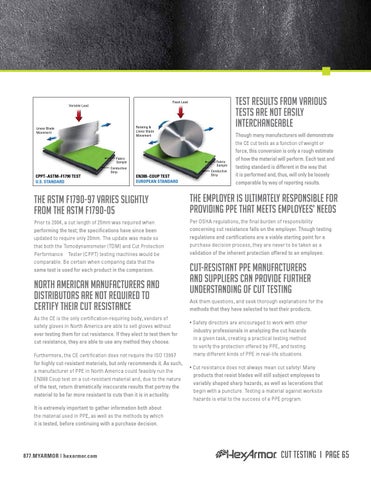
Though many manufacturers will demonstrate the CE cut tests as a function of weight or force, this conversion is only a rough estimate of how the material will perform. Each test and testing standard is different in the way that it is performed and, thus, will only be loosely comparable by way of reporting results.
The Astm F1790-97 Varies Slightly From The Astm F1790-05
The Employer Is Ultimately Responsible For Providing Ppe That Meets Employees’ Needs
Prior to 2004, a cut length of 25mm was required when Rotating & Linear Blade performing the test; the specifications have since been Movement updated to require only 20mm. The update was made so that both the Tomodynamometer (TDM) and Cut Protection Performance Tester (CPPT) testing machines would be Fabric comparable. Be certain when comparing Sampledata that the Conductive same test is used for each productStrip in the comparison.
Per OSHA regulations, the final burden of responsibility concerning cut resistance falls on the employer. Though testing regulations and certifications are a viable starting point for a purchase decision process, they are never to be taken as a validation of the inherent protection offered to an employee.
Fixed Load
EN388–COUP TEST EUROPEAN STANDARD
North American Manufacturers And Distributors Are Not Required To Certify Their Cut resistance As the CE is the only certification-requiring body, vendors of safety gloves in North America are able to sell gloves without ever testing them for cut resistance. If they elect to test them for cut resistance, they are able to use any method they choose. Furthermore, the CE certification does not require the ISO 13997 for highly cut-resistant materials, but only recommends it. As such, a manufacturer of PPE in North America could feasibly run the EN388 Coup test on a cut-resistant material and, due to the nature of the test, return dramatically inaccurate results that portray the material to be far more resistant to cuts than it is in actuality.
Cut-Resistant Ppe Manufacturers And Suppliers Can Provide Further Understanding Of Cut Testing Ask them questions, and seek thorough explanations for the methods that they have selected to test their products. • Safety directors are encouraged to work with other industry professionals in analyzing the cut hazards in a given task, creating a practical testing method to verify the protection offered by PPE, and testing many different kinds of PPE in real-life situations. • Cut resistance does not always mean cut safety! Many products that resist blades will still subject employees to variably shaped sharp hazards, as well as lacerations that begin with a puncture. Testing a material against worksite hazards is vital to the success of a PPE program.
It is extremely important to gather information both about the material used in PPE, as well as the methods by which it is tested, before continuing with a purchase decision.
877.MYARMOR | hexarmor.com
cut testing i Page 65