SUMMER 2020
On Call A MAGAZINE FOR FRIENDS OF THE UNIVERSITY OF WISCONSIN SCHOOL OF VETERINARY MEDICINE
Researchers Respond School of Veterinary Medicine scientists fight COVID-19 crisis
A Whole New World Teaching and clinical care continue amidst the pandemic
Coping Creatively Stories of optimism from the SVM community
Congratulations, Doctors!
Welcome to the most amazing profession Your investiture ceremony may have been virtual, but your dedication and achievements that led to earning your Doctor of Veterinary Medicine degree are very real and truly appreciated by faculty, staff and alumni alike. As a class you came together and found new ways to learn, completing four years together with perseverance, humor, focus and professionalism. Go forward in confidence. You earned it! We are so proud of you.
CLASS OF 2020 Ashley Ainsworth Emmanuelle Asrow Kyle Babich Jaclyn Barrette Collin Briley Laura Bunke Valeria Caceres Emily Calbaum Jessica Carag Megan Cieslewicz Callan Cooper Madeline Cox Alexis Daggett Tara Dedolph Lindsay Dillon Kelly Dulli Richard Dulli
Michael Dupor Jonathan Elissa Elizabeth Endres Jennifer Gander Katherine Garbaciak Shaile Gehrke Katarzyna Gibas Madeline Gluck Kyle L. Granger, Jr. Erica Grier Lisa Grulke Kate Hartzler Katharine Hausmann Margaret Hietpas Haley Highdale Zachary Hofacker Shelby Hoffman
Tricia Hu You Na Jeon Rebecca Johnson Elizabeth Jonas Alyssa Karklus Kyle Karlen Andrea Kerr Kerri Kontny Emily Kriege Michael Krueger Devan Leistikow Diana Lewis Kelly Manion Kayla Marquart Jacob McLeod Rachel McNally Alissa Milonczyk
Molly Miszkiewicz Kameron Montana Mary Montanye Ashleigh Morrow Laurel Myers Priscila Naula Alexandra Palumbo Joseph Pearson Cortney Pelzek Matthew Pfeiffer Lauren Prince Beth Rades Kelsey Rayment Kellyanne Remy Amanda Ritzman Lauren Rodriguez Morgan Rothman
Ryan Ruegsegger Rachel Schambow Rebecca Schneider Danielle Schuld Julia Slezak Chelsea Stecklein Adam Strebe Liana Streckenbach Makenzi Travis Matthew Van Hesteren Nyssa Van Ness Madison VanWorth Kristen Verdoorn Emil Walleser Collin Wimmler Melissa Wright
SUMMER 2020
Features In Each Issue 4 Message from the Dean Many Months of Challenges 5 Menagerie A diverse collection of news and information from the SVM 18 Comparatively Speaking A special section for alumni of the Veterinary Science and Comparative Biomedical Sciences graduate programs
10
Advancing the Fight Against a Global Pandemic
By studying the novel coronavirus from many angles and disciplines, UW–Madison and the School of Veterinary Medicine are at the forefront of fighting COVID-19. SVM researchers are helping to better understand the disease and advance vaccine, treatment, and containment strategies — reinforcing the school’s long history of leadership in infectious disease research to tackle urgent health challenges.
Page 10
20 DVM Badger Den News for and about graduates of the Doctor of Veterinary Medicine program
More 5 Ask a UW Veterinarian 5 Socializing with the SVM 22 Patient Profile
On the Cover
13
16
Adapting to Drastic Change
Coping Creatively with COVID-19
Amid the altered landscape of the COVID-19 crisis, School of Veterinary Medicine faculty, staff, and students have remained devoted to exceptional instruction and clinical care.
As the coronavirus pandemic and the stress surrounding it rages on, moments of goodwill and generosity, including these two stories from the SVM community, offer glimmers of hope.
Page 13
Page 16
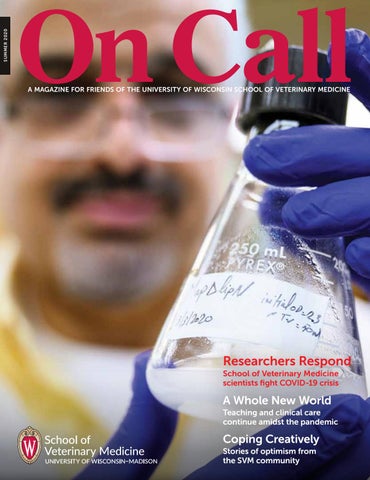
Adel Talaat, professor of pathobiological sciences in the School of Veterinary Medicine, handles a flask of mycobacteria cell culture while working in his lab in a biomedical research facility in March. Talaat is an expert on nanotechnology-based vaccines for human and animal diseases. His lab is currently working on a vaccine against COVID-19, based on technology previously developed to combat another kind of coronavirus that causes disease in poultry. (Photo by Jeff Miller/University of Wisconsin-Madison) ©2020 Board of Regents of the University of Wisconsin System
On Call
3
Many Months of Challenges
BRYCE RICHTER
Message from the Dean
Since March, the UW School of Veterinary Medicine, not too much different than the rest of the world, has faced many significant challenges. With the outbreak of the COVID-19 pandemic, the school had to move to alternative instruction for all students in mid-March. All lectures, labs, and clinical instruction became virtual for the rest of the semester. Our plans for fall and the coming academic year will likely include a hybrid of in-person and virtual experiences, in accordance with UW-Madison campus guidelines. Mark D. Markel Fortunately, at the beginning of July, we were able to bring our fourth-year veterinary medical students back into the hospital to offer their clinical rotations in person. Initially, to reduce density, students are alternating between virtual and in-person experiences for each rotation. Over the coming months, we hope to increase the number of students able to be in our hospital at any one time. I want to welcome Peggy Schmidt, the school’s new associate dean for professional programs, who will be dedicated to our veterinary medical students’ curriculum as we both improve and update how we teach our learners. When we hired Peggy many months ago, before COVID-19, little did we suspect that much of our efforts this spring and summer would focus on providing virtual instruction, working hand-in-hand with Lynn Maki, the school’s associate dean for student academic affairs, and our Curriculum Committee. In response to COVID-19, many of our faculty are pursuing research to better understand, control, and prevent this and future pandemic outbreaks. This has led to the highest annual grant award amount in the school’s history at $28.4 million, a 45 percent increase over the previous fiscal year. Congratulations to all of our researchers for their efforts benefiting both animal and human health. Amid the pandemic, the world faced another major disruption with the murder of George Floyd. I have said in many forums and will say it here: I am steadfastly supportive of the Black Lives Matter movement. Many of us in leadership positions at UW-Madison and in the School of Veterinary Medicine continue to hold listening sessions with our students, faculty, and staff to better understand the pathway forward to make the school and university more inclusive, equitable, diverse, and focused on anti-racism (see more on page 7). This past spring, the school hired Richard Barajas as our first diversity and inclusion manager, who will start Sept. 1. I look forward to Richard’s leadership; he will oversee our diversity and inclusion efforts to benefit all employees and students, including our professional veterinary medical students, graduate students, the undergraduates who work and learn in our spaces, and prospective students considering veterinary medicine and the SVM. This issue of On Call is heavily focused on our COVID-19 response. In addition to research advances and how we met logistical challenges, you’ll find stories of a grateful client whose face mask-making venture became a fundraiser for the school and a faculty member whose daily illustrations helped her and others navigate the pandemic. The school will continue to focus on how best to educate our students to become leaders in advancing the health of both animals and people. I hope each of you stays safe and I wish you all the best during these challenging times.
Mark D. Markel, Dean
4
On Call | Summer 2020
SUMMER 2020
Administration Mark D. Markel, Dean Dale Bjorling, Associate Dean for Research and Graduate Training Ruthanne Chun DVM‘91, Associate Dean for Clinical Affairs and Director, UW Veterinary Care Lynn Maki, Associate Dean for Student Academic Affairs Nancy Parkinson, Assistant Dean for Human Resources Ed Rodriguez, Associate Dean for Budget and Finance Peggy Schmidt, Associate Dean for Professional Programs Kristi V. Thorson, Associate Dean for Advancement and Administration Lauren Trepanier, Assistant Dean for Clinical and Translational Research Ken Waller MS‘07, DVM‘07, Assistant Dean for Clinical Affairs
Editorial Editor/Writer: Meghan Lepisto Contributing Writers: Denise Garlow, Eric Hamilton, Rhiannon McCarthy, Kelly April Tyrrell Photography: Denise Garlow, Kirstin Laroche Photography, Jeff Miller, Bryce Richter Design: Christine Knorr, University Marketing Additional Design: Denise GarlowConnect with Us Please send your feedback and comments to oncall@vetmed.wisc.edu, 608-263-6914, or On Call Editor, 2015 Linden Drive, Madison, WI 53706. vetmed.wisc.edu uwveterinarycare.wisc.edu facebook.com/uwvetmed facebook.com/uwveterinarycare twitter.com/uwvetmed youtube.com/uwvetmed instagram.com/uwvetmed
On Call is also available online at: vetmed.wisc.edu/oncall The printing and distribution of this magazine were funded by donations to the school. To make a gift, contact Pat Bowdish at 608-332-4750 or pat.bowdish@supportuw.org or Heidi Kramer at 608-327-9136 or heidi.kramer@supportuw.org.
Menagerie
Ask a UW Veterinarian IST OC K
PH OT O :J O SS IM D
Friends of the school sharing their thoughts (and pets) on social media...
Concerns Around Pets and COVID-19 This expert response comes from Ruthanne Chun, associate dean for clinical affairs and director of UW Veterinary Care, with additional information from the American Veterinary Medical Association and Centers for Disease Control and Prevention. Question: Can people get COVID-19 from pets? Or can pets get COVID-19 from infected people or other animals? Answer: Recent data has shown that domestic and wild animals can be infected with COVID-19. Preliminary studies suggest that dogs are less likely to become infected with and show signs of COVID-19 than are cats and ferrets. Currently, it appears that people can spread the disease to cats. There are confirmed instances of cats becoming infected with SARS-CoV-2, the virus that causes COVID-19, both in the laboratory and because of close contact with humans infected with the virus (known cases include several large cats at the Bronx Zoo and a small number of cats in private homes). Research from the UW School of Veterinary Medicine indicates that cats may be able to pass the virus to other cats. At this time, no studies or reports have demonstrated that cats (or other species) can transmit the disease back to people. Humans remain the biggest transmission risk to other humans. If your pet lives indoors with you and is not in contact with any COVID-19 positive individual, it is safe to pet, cuddle,
Socializing with the SVM
and interact with your pet. If you are COVID-19 positive or have symptoms, to the extent possible you should limit interactions with your pets to protect them from exposure to the virus, just as you would with other members of your home. Cat owners are also advised to keep their pets indoors, to limit the contact their cats have with other people and animals. The use of alcohol- or hydrogen peroxide-containing cleaning agents, hand sanitizers, or sanitizing wipes to clean your pet’s fur or paws is not recommended and may be harmful. There is currently no reason to remove pets from homes where COVID-19 has been identified in members of the household unless there is risk that the pet is not able to be cared for appropriately. As always, pets and other animals should be included in emergency preparedness planning, including keeping on hand a two-week supply of food and medications. Preparations should also be made for the care of animals should you need to be quarantined or hospitalized due to illness.
Have a question for our veterinary medical experts? Please send it to the On Call editor at oncall@vetmed.wisc.edu. We cannot guarantee responses to all submissions. For any urgent pet health issue, please contact your veterinarian directly.
Last week our female black bear BerryBoo had a visit from the vets! Berry-Boo has been treated for arthritis for a few years, but her mobility seemed to be declining since she woke up from her winter torpor. The good news is that most of her tests came back pretty good for a 22-yearold bear! We now have a treatment plan to help her. –Ochsner Park Zoo Via UW Veterinary Care Facebook (@uwveterinarycare)
We were referred to the UW Cardiology team due to my 9-year-old husky having pulmonary hypertension and his x-rays being the worst that our vet had ever seen. The first time we took him to UW I knew we had a great team taking care of my fur baby. … Today I got this in the mail from Dr. Sirochman. Anyone who takes time out of their busy days to send a grieving family something like this tells a lot about them as a person, let alone a vet! I thank you from the bottom of my heart for you and your team doing absolutely everything for my boy. –Erika Lowery Via UW Veterinary Care Facebook (@uwveterinarycare)
On Call
5
Menagerie
UW SVM
An Advocate for Pet Health and Perpetual Learning paid off and I did a weekly column for years. I loved doing radio. TV was fun except for the makeup! What did you most enjoy about teaching the next generation of your profession?
In this 2008 photo, clinical instructor Sandi Sawchuk and a veterinary medical student conduct an exam of a UW Veterinary Care patient. “I put teaching as my top priority – both pet owners and students,” says Sawchuk.
O
n Nov. 2, 1987, Sandi Sawchuk began her first day with the School of Veterinary Medicine and UW Veterinary Care, helping to establish the hospital’s Primary Care service. This April, she retired after nearly 33 years of loyal service. Below, Sawchuk reflects on her career. On Call: What comes to mind as you think back on all of the patients and clients you’ve served and the relationships you’ve developed? Sawchuk: I put teaching as my top priority – both pet owners and students. My method often involved asking the students questions in the exam room with the owner present. Yes, it put the students on their toes, but it also helped the owners see our thought process as veterinarians. A wise vet early in my career said that it was okay to say “I don’t know” to an owner as long as you then spent the time to either find someone who did (one of the joys of working at the vet school) or find out on your own.
6
On Call | Summer 2020
Primary Care also allows for bonding since it’s a cradle to grave service. Knowing and remembering details about families and their pets and seeing kids grow up (even one who eventually graduated from the SVM!) made their experience personal. I was never afraid to show emotion — I’ve shed lots of tears with owners. I almost always sat on the floor with the pet, and later a short stool. I never wanted to come across as being above someone. Many people also know of you from your local media appearances, answering myriad pet questions. How did you get started in this arena? My first experience with TV was while doing my residency. The local PBS station wanted someone to discuss short topics to fill a five-minute void after “All Creatures Great and Small,” the James Herriot-based show. Dr. Easterday, the founding SVM dean, also encouraged me to try other things such as writing a column for the Madison newspaper. His advice of write like you are talking to someone
I live by the motto to learn something new every day — even now that I am retired! I tried to have that rub off on students. For me, I loved seeing ah-ha moments, whether it be the first time they express anal sacs or being complimented by an owner for doing a good job with their pet. Some of my best learning moments come from students. It gets back to “I don’t know” and giving them a chance to teach me. What advice do you have for future veterinarians? Don’t be afraid to say no. You can’t please everyone and there will be those rare colleagues or clients who eat you alive and spit out your soul. I have seen so many colleagues burn out early in their careers due to not setting limits. I also preached to my students (and hopefully demonstrated) that there is life outside of veterinary medicine. Have friends outside the field, volunteer for non-animal organizations, develop hobbies, and take care of yourself. Put family first — both twoand four-legged — above all else. How are your own animal family members enjoying the extra time with you? Right now I have a relatively small pet family compared to previous times in my life. Just three needy English bulldogs and a 19-year-old cat. My dogs and I have a volunteer job in Janesville to walk along the Rock River parks and encourage the geese to stay in the river. We are all in the best shape we have ever been!
Researchers at the UW School of Veterinary Medicine are studying why certain dogs may be more susceptible than others to developing environmentally associated cancers.
R
esearchers at the UW School of Veterinary Medicine, funded by the Morris Animal Foundation, are studying how exposure to common environmental chemicals, like those found in tobacco smoke and yard products, and individual genetic differences in response to them, put dogs at risk for common cancers. Information gained will help form strategies to prevent cancer in dogs, including possible avoidance and dietary modifications. When dogs or humans are exposed to toxic chemicals in the environment, glutathione-S-transferase (GST) enzymes in the liver help neutralize those chemicals. Due to genetic variations in GST enzymes, people vary in their capacity to deactivate environmental hazards. If these individuals ingest or inhale toxic chemicals, this inability can result in cancer development over repeated exposures. This is why two different people exposed to the same chemical can have a different risk for developing cancer. “We want to know if the same thing is true for dogs and how
they react differently on a genetic level,” says Lauren Trepanier, the Melita Grunow Family Professor of Companion Animal Health at the School of Veterinary Medicine and principal investigator on the study. “If we can better understand what sort of chronic household exposures are important in dogs, then we can do a better job of counteracting them and maybe decreasing the incidence of certain cancers.” For their study, the team is replicating four major forms of GST enzymes and then incubating them with potential carcinogens to see if the enzymes react with those substances. Chemicals of interest include acrolein, found in air pollution, heat-treated foods, and tobacco smoke. Another substance of interest is a form of 2,4-D, an herbicide associated with lymphoma and bladder cancer in both dogs and people. “The study’s findings could eventually allow us to identify dogs in a population that might be susceptible to certain cancers based on their enzyme profile,” says Janet Patterson-Kane, Morris Animal Foundation chief scientific officer. “We may not have complete control over the toxic chemicals we expose our dogs to, but information like this could help us give them the longest, healthiest lives we can.” Trepanier and her team also are comparing toxic chemical levels in the urine of dogs with and without bladder cancer, as well as in urine samples from their owners who share the same households. The goal is to determine if having a dog diagnosed with bladder cancer indicates the owner may be exposed to more chemicals in the environment that are relevant to human health.
BRYCE RICHTER/UNIVERSITY COMMUNICATIONS
ISTOCK/ANDROSOV58
New Canine Study Investigates Cancers and Exposure to Environmental Chemicals
Hundreds of demonstrators from the Madison community gather and speak out against racism and racial injustice as they walk for a Black Lives Matter Solidarity March in June.
Action Toward Racial Equity As the nation contends with the injustices wrought by systemic racism, the School of Veterinary Medicine reiterates its steadfast commitment to creating a culture of diversity, equity, and inclusion, and supporting all students, faculty, staff, clients, and friends of the school. The SVM continues to advance these critical initiatives and recently shared a variety of resources related to understanding and addressing racism while championing diversity, equity, and inclusion (view online: go.wisc. edu/DEIresources). In September, the school will welcome Richard Barajas as diversity and inclusion manager — a new position responsible for diversity and inclusion programs that foster a supportive institutional culture. The school has established the Diversity, Equity, and Inclusion Fund to support the greatest needs in this area: supportuw.org/giveto/ svmDEI. The SVM’s Veterinarians as One Inclusive Community for Empowerment (VOICE) club is also leading several local and national initiatives on this front.
On Call
7
Menagerie Companion Animal Fund Supports 11 New Health Care Studies
Kia, a six-year-old Labrador retriever, demonstrates wearing a Holter heart monitor. Dogs with atrial fibrillation enrolled in a Companion Animal Fundsupported study will wear the 24-hour ambulatory ECG monitoring device to assess their response to treatment with antiarrhythmic drugs.
Thanks to grants from the school’s Companion Animal Fund, faculty and residents at the UW School of Veterinary Medicine (SVM) will launch 11 new research projects aimed at improving animal health care. Over $126,000 in grants are being distributed in 2020. Researchers will explore a variety of subjects including treatments for feline glaucoma; the genetic basis of fibrotic myopathy, a condition that causes gait abnormality; testing of non-invasive trauma splints to repair jaw fractures in dogs; and new surgical techniques for flexor tendon injuries in horses. Sonja Tjostheim, a clinical assistant professor in the Department of Medical Sciences, was awarded her first Companion Animal Fund grant to study atrial fibrillation, or an abnormal heart rhythm, a common complication of structural heart disease in dogs. Veterinarians are currently constrained by limited information in scientific literature about drugs or interventions to best treat the condition, which increases the risk of cardiac-related death in dogs.
8
On Call | Summer 2020
“We know that if we can control the heart rate, we can improve outcomes in dogs, but we don’t know which medicine or combinations of medicines are the best to use,” explains Tjostheim. “Currently we look to human medicine for information. But data and recommendations are not always translatable to veterinary medicine.” Tjostheim will study two antiarrhythmic drugs, diltiazem and amiodarone, in client-owned dogs with atrial fibrillation and examine whether treatment with these medicines achieves a target heart rate of less than 125 beats per minute. The findings are expected to provide much-needed details around treatments to improve patient outcomes. “This study will directly impact the decision-making process of veterinarian cardiologists who are working with this arrhythmia,” says Tjostheim. The Companion Animal Fund is made possible by donations from veterinary medical clinics with strong ties to the school, as well as individual donors, including many whose animals have been patients at UW Veterinary Care. Through an annual competitive process, the school awards funds to faculty to further research that will enhance the care of companion animals. In addition, funds support facility and equipment improvements to provide enhanced diagnostics and treatments at UW Veterinary Care. “We are ever grateful to the donors who support this important program to help advance veterinary medicine and foster academic excellence at the SVM,” says Kristi Thorson, associate dean for advancement and administration. “Companion Animal Fund grants often have a real impact on treatment outcomes — not only at our hospital but across the field of veterinary medicine.” View 2020 study descriptions: go.wisc.edu/CAFresearch Denise Garlow
2020 Companion Animal Fund Principal Investigators and Areas of Study Department of Surgical Sciences Diego De Gasperi Clinical Instructor of Large Animal Surgery Equine surgical technique Grayson Doss Clinical Assistant Professor of Zoological Medicine Avian appetite stimulation Seth Eaton Clinical Assistant Professor of Comparative Ophthalmology Feline glaucoma treatment Robert Hardie Clinical Professor of Small Animal Surgery Canine lymphatic fluid treatment Christoph Mans Clinical Associate Professor of Zoological Medicine Reptile plasma uric acid levels Peter Muir Professor of Small Animal Orthopedic Surgery Genetic basis of fibrotic myopathy Graham Thatcher Clinical Assistant Professor of Dentistry and Oral Surgery Biomechanical testing of trauma splint Mary Thurber Clinical Instructor of Zoological Medicine Snake analgesic efficacy and welfare
Department of Medical Sciences Xuan Pan Associate Professor of Oncology Canine large B-cell lymphoma molecular factors Sonja Tjostheim Clinical Assistant Professor of Cardiology Canine atrial fibrillation medication evaluation Lauren Trepanier Melita Grunow Family Professor of Companion Animal Health Oxidative stress in Greyhound dogs
MIRANDA R. SUN
Miranda Sun, a research specialist in the Department of Comparative Biosciences, was among the winners of the UW–Madison 2020 Cool Science Image Contest. This brightly colored section of a developing mouse embryo was expertly prepared to highlight blood vessels — marked by the green and red of endothelial cells and laminin protein, respectively — in the developing brain (the heart-shaped structure at the center). The vessels are particularly dense at the lower end of the two black slits that will become nostrils, where tissue is fusing together to form the upper lip. If the tissue fails to fuse, the mouse will be left with a cleft lip, a birth defect studied by researchers in the lab of Associate Professor Robert Lipinski, of which Sun is a member.
Little bits of news from around the school At the helm: In March, UW School of Veterinary Medicine Dean Mark Markel became president of the Association of American Veterinary Medical Colleges (AAVMC), which represents the global academic veterinary medical community. In addition, Marie Bucko DVMx’21 was installed as president of the Student American Veterinary Medical Association (SAVMA). “During my time as president-elect and now president, I’m able to represent students from across the world on the AVMA Board of Directors, to ensure the future of our profession has a voice, and it has been one of the highest honors of my life,” said Bucko. Unconditional: A recent two-year, $600,000 grant from PetSmart Charities will support additional staff members, client services, and student training opportunities for Wisconsin Companion Animal Resources, Education, and Social Services (WisCARES), an outreach partnership of the UW–Madison schools of veterinary medicine, pharmacy, and social work. WisCARES provides veterinary medical care, housing support and advocacy, and other services to homeless and low-income pet owners in Dane County. Watch for it: The School of Veterinary Medicine’s involvement in the Vaccination Against Canine Cancer Study — the largest clinical trial conducted to date in veterinary medicine, evaluating a vaccine strategy for the prevention of cancer in dogs — is featured in a new
Big Ten Network LiveBig vignette airing during network programming. To view the segment: go.wisc.edu/BTNcancer Wildlife conservation: In February, before COVID-19 spread globally, Professor Tony Goldberg traveled to Rwanda on the invitation of the Rwanda Development Board, an agency of the Rwandan government, to help conduct a country-wide needs assessment for a new wildlife health program, with potential for future collaborations. Citizen science: The latest iteration of the Tick App is available for download on Google Play and the App Store. Through this free smartphone app (thetickapp.org), users can access expected deer tick activity levels by county in the Northeast and Midwest, learn precautions to avoid tick bites, and submit pictures of ticks for identification. In turn, the app helps researchers, including several School of Veterinary Medicine scientists, learn more about tick exposure and human behavior, to develop better tick bite prevention strategies. Exceptional mentorship: Professor Hannah Carey was recognized in May with a UW–Madison Postdoc Mentoring Award, honoring those who go above and beyond in contributing their time, knowledge, energy, and enthusiasm to advance the next generation of researchers and scholars.
On Call
9
ADVANCING THE FIGHT AGAINST A GLOBAL PANDEMIC
B
y studying the novel coronavirus from many angles and disciplines, UW–Madison is at the forefront of fighting COVID-19. School of Veterinary Medicine researchers are leading several of these studies, helping to address major challenges of the disease and advance vaccine, treatment, and containment strategies. The work highlights the school’s long history of international leadership in infectious disease research and the field of veterinary medicine’s critical contributions to tackling urgent health challenges, be they human or animal. “COVID-19 has obviously had a devastating effect on the health and welfare of people around the world. Our faculty are engaged in fundamental and applied research to better understand this virus 10
On Call | Summer 2020
and speed development of an effective vaccine — the two essential requirements to more effectively manage, and eventually emerge from, the current pandemic,” says Dale Bjorling, the school’s associate dean for research and graduate training.
Vaccine Development An international collaboration of virologists at the School of Veterinary Medicine and the vaccine companies FluGen and Bharat Biotech has begun the development and testing of a unique vaccine against COVID-19 called CoroFlu. CoroFlu will build on the backbone of FluGen’s flu vaccine candidate known as M2SR, based on an invention by SVM virologists and FluGen co-founders Yoshihiro Kawaoka and Gabriele Neumann.
Professor Adel Talaat, left, works with Mostafa Hamed, a graduate student in Comparative Biomedical Sciences, as Hamed weighs mice used for basic animal-model research in Talaat’s lab. His lab is currently working on a vaccine against COVID-19, based on technology previously developed to combat another kind of coronavirus that causes disease in poultry.
Kawaoka’s lab will insert gene sequences from SARS-CoV-2, the novel coronavirus that causes the disease COVID-19, into M2SR so that the new vaccine will also induce immunity against the coronavirus. Following refinement of the CoroFlu vaccine concept and testing in laboratory animal models at UW– Madison, Bharat Biotech in India will then begin production scale-up for safety and efficacy testing in humans. CoroFlu could be in human clinical trials by September. “To confront a global challenge, this is collaborative discovery at its best,” says Erik Iverson, CEO of the Wisconsin Alumni Research Foundation (M2SR includes technology exclusively licensed through the organization). Adel Talaat, a professor of pathobiological sciences in the School
JEFF MILLER/UNIVERSITY COMMUNICATIONS (2)
of Veterinary Medicine, and his lab are also working on a potential vaccine against COVID-19, based on technology previously developed to combat another kind of coronavirus that causes disease in poultry. That vaccine, a benefit to agriculture, is currently in the process of being licensed. Talaat is an expert on nanotechnology-based vaccines for human and animal diseases. View online: In May, Kawaoka participated in a virtual Crossroads of Ideas discussion of COVID-19 themed “Where Do We Go From Here?” youtu.be/T4ffIr4UCrA
Adel Talaat, professor of pathobiological sciences in the School of Veterinary Medicine and an expert on nanotechnology-based vaccines for human and animal diseases, counts mycobacteria cultures while working in his office in March. SVM researchers, including Talaat and Professor Yoshihiro Kawaoka, have advanced two different COVID-19 vaccines under development.
Cats and COVID-19 Professor Yoshihiro Kawaoka led a study published in May in the New England Journal of Medicine reporting that in the laboratory, cats can readily become infected with SARS-CoV-2, the virus that causes COVID-19, and may be able to pass the virus to other cats. Importantly, none of the SARS-CoV-2infected cats showed symptoms of illness. Their findings suggest cats may be capable of becoming infected with the virus when exposed to people or other cats positive for SARSCoV-2. It follows a study published in Science that also showed cats (and ferrets) could become infected with and potentially transmit the virus. The virus is known to be transmitted in humans through contact with respiratory droplets and saliva.
MICHIKO UJ AI AND IE I IM SAK MA
“If [people] are quarantined in their house and are worried about passing COVID-19 to children and spouses, they should also worry about giving it to their animals,” says Peter Halfmann, a research professor who helped lead the study. Sandra Newbury, director of the UW–Madison Shelter Medicine Program, based in the School of Veterinary Medicine, is leading a research study in several states in the U.S. to test animal shelter cats that might have previously been exposed to human COVID-19 cases. Newbury has worked with the CDC and the American Veterinary Medical Association to develop recommendations for shelters housing potentially exposed pets, which they may do while owners are hospitalized or otherwise unable to provide care because of their illness. “Animal welfare organizations are working very hard in this crisis to maintain the human-animal bond and keep pets with their people,” says Newbury. For cats the risk of natural infection from exposure to SARS-CoV-2 seems to be quite low, Newbury says. Of the 22 animals the program has tested, none have had positive polymerase chain reaction tests for the virus. Microscopic image of SARS-COV-2 virus particles. Courtesy of Yoshihiro Kawaoka.
Protective Immunity and Potential Treatments In June, Kawaoka and Clinical Assistant Professor Samantha Loeber also published research in the Proceedings of the National Academy of Sciences showing that in Syrian hamsters, prior infection with the SARS-CoV-2 virus provides protection against reinfection, and treatment with convalescent serum limits virus replication in their lungs. The study demonstrates that hamsters share important features of human COVID-19 disease, and are a useful model for researchers trying to understand SARS-CoV-2 and in evaluating vaccines, treatments, and drugs against the disease it causes. To determine whether hamsters developed antibodies against SARSCoV-2 that protected them from reinfection, the researchers administered another round of the virus to a number of previously infected animals about three weeks following initial infection and were unable to detect virus in their respiratory tracts. “The animals all possessed antibodies and did not get sick again, which suggests they developed protective immunity,” says Halfmann. “But we still can’t say how long this protection lasts.” In early April, researchers across the U.S., including at the UW School of Medicine and Public Health and On Call
11
JEFF MILLER/UNIVERSITY COMMUNICATIONS (3)
Maintaining physical distance* due to COVID-19, researchers David O'Connor, left, and Tom Friedrich are pictured in a UW–Madison lab in March. Longtime collaborators, both are experts on the evolution and emergence of HIV (AIDS), SARS-CoV-2 (COVID-19), influenza, Zika, and other viruses.
UW Health, initiated a clinical trial to examine whether the antibody-bearing component of blood — the plasma or sera — from recovered COVID-19 patients could be given to sick patients to assist in their recovery. While convalescent plasma has been used in other disease outbreaks, it remains poorly understood as a treatment. So, Kawaoka’s team extracted convalescent sera from previously sick hamsters and pooled it together. They infected new hamsters with SARS-CoV-2 and then gave them this antibody-laden sera either one day or two days following infection. Hamsters that received treatment within a day of infection had much lower amounts of infectious virus in their nasal passages and lungs than those given a mock treatment. Those that received sera on day two showed a less appreciable benefit, though they still had lower levels of virus compared to control animals. Finally, the research team also obtained the first images of the internal
Yoshihiro Kawaoka, professor in the School of Veterinary Medicine.
features of the SARS-CoV-2 virus that aid its ability to replicate, or make copies of itself, in host cells. This, Kawaoka says, warrants further study.
Genetic Surveillance of Coronavirus Spread American society may have closed down during the pandemic, but for Thomas Friedrich, the key to beating COVID-19 lies in being open — not open for business but open for discovery. “We want to find ways that scientists across institutions and the world can collaborate to find the best vaccine, the best treatments, the best approaches,” Friedrich says. In a separate line of research, School of Veterinary Medicine Professor Jorge Osorio and collaborators are studying the effectiveness of dogs trained in immediate scent detection of SARS-CoV-2, the virus that causes COVID-19. Initial findings from their work suggest dogs could be useful to diagnose viral infection in humans.
12
On Call | Summer 2020
A virologist in the School of Veterinary Medicine, Friedrich is part of a collection of researchers — 142 of them at more than 30 institutions — calling themselves the CoVen. They’re putting their skills together to study coronavirus and sharing all they find, freely, among the entire group. “It’s all of us in humanity against the virus, so we need to pool our resources,” he says. Friedrich and his team are tracking genetic changes in the novel coronavirus that occur as it spreads from person to person. These changes are like signatures that allow scientists to follow how the coronavirus spreads through the world. They can help determine whether an outbreak is due to community spread or an introduction of coronavirus into a community due to travel. Comparing samples of the virus from people in Wisconsin to a global database, Friedrich and his colleagues see suggestions that the outbreak in the Milwaukee area differs in some ways from the outbreak in and around Madison. From preliminary data in April, it appeared that most infections in Dane County were introduced from Europe, probably from returning travelers, whereas a large proportion of Milwaukee County cases are more closely related to viruses from Asia. The distinct genetic signatures in viruses from the Madison and Milwaukee areas “suggests to us that there’s been some success in the travel restrictions” and social distancing guidelines, said Friedrich, because it means the viruses his team have characterized were not being passed from person-to-person between the two regions. View online: In April, Friedrich spoke about his research in a UW Now Livestream: uwalumni.com/news/uw-now-friedrich *Note: The photos of researchers on these pages were taken in March before public health protocols encouraged or mandated face coverings to reduce the risk of COVID-19 transmission. Currently, all UW–Madison employees are required to wear a face mask while in campus buildings. This is in addition to other mandatory health protocols.
Showing Devotion Through Drastic Change By Meghan Lepisto
Patient, dedicated, flexible, resilient — these are just a few words to describe the commitment shown by SVM faculty, staff, and students while navigating the new territory of COVID-19.
I
n the face of COVID-19, we each had to adapt in unique ways. For Kim Lord Plummer, that meant transporting anatomy specimens from the School of Veterinary Medicine to her home and scouting the best location to demonstrate the anatomical features of a horse’s hind limb. A shift to alternative delivery of instruction meant that lessons typically taught in person would now be delivered online. The senior lecturer zeroed in on her sunroom, drew the curtains, and placed the leg bones on a table. Then her husband hit record on their video camera. Anything for the students of the large animal anatomy course.
“I got permission to go into work and collected a few key specimens so I could demonstrate the most important, and typically the more difficult, concepts,” says Plummer. Her husband’s expertise in video recording and editing was a major asset. The pair “learned in real-time as we went,” she says. There are several unique components to the equine hindlimb that are striking to see in action and clinically important, so Plummer believed that detailed video demonstrations would be valuable. “A picture is worth a thousand words, and in this case, I think the video is worth a thousand pictures. I got very good feedback from students about
these videos — they reported that they made a difference in their understanding of the material,” she notes. Plummer’s resourcefulness is just one example of the dedication and drive demonstrated by faculty, staff, and students as teaching abruptly moved online for the last several weeks of the spring semester. Amid this altered landscape, instructional teams gathered virtually to determine how best to adapt and ensure that students could complete the academic year. Instructors swiftly learned new technologies and modified teaching materials. Lessons that might typically be delivered in a 50-minute lecture On Call
13
As School of Veterinary Medicine students adapted to drastic changes required by COVID-19, school administrators knew that perhaps now more than ever it was critical to maintain counseling services. “Our students faced a number of challenges through the pandemic, like many Americans dealing with social isolation, anxiety, and the vast uncertainty of the entire situation,” says Shelly Wissink, senior counselor with the school’s Personal and Wellness Support Services (PAWSS). In March, PAWSS shifted online to support students virtually. The office has noticed an uptick in anxiety, depression, and general mental health needs. Wissink points out that for students, like many, “quarantine didn’t occur in a vacuum, so there are still interpersonal issues, job searches, and a host of external factors affecting everyday life coupled with an unprecedented time.” Students also experienced loss and grief for canceled life events, including the school’s graduation and awards ceremonies, which had to be held as virtual celebrations. “Sometimes there is a tendency to downplay this reaction when compared to the scope of the pandemic. It is important to acknowledge these feelings, and it’s acceptable to be sad and disappointed when important personal milestones are not able to be celebrated as we had hoped,” notes Wissink. Counselor Christina Frank says she and PAWSS colleagues have encouraged people to be thoughtful about the routines they create for themselves, and how they treat themselves. Among the recommendations: keep regular sleep schedules, go outside, get exercise, focus on healthy eating, and spend positive social time (while physical distancing) with loved ones. “We also encourage self-compassion, and talking to ourselves the way we would talk to a friend,” she adds. Related: View CDC recommendations for coping with stress and attending to mental health amid the pandemic: go.wisc.edu/COVIDstress
14
On Call | Summer 2020
CARRIE SCHROEDER
Show of Support
UW Veterinary Care resident Kyle Bartholomew communicates through Microsoft Teams with fourth-year veterinary medical students on the Anesthesia and Pain Management clinical rotation. He is describing to students the need for oxygen supplementation before anesthesia in a canine patient about to undergo surgery. With COVID-19 restrictions in place, clinicians identified a variety of clinically relevant virtual experiences for students to engage with remotely.
were broken up into short video vignettes, easier to digest in an online format. PowerPoint presentations merged with guided narration. Breakout discussions helped simulate a live classroom. Lab instructors worked adeptly to mimic hands-on experiences. Virtual office hours took the place of faceto-face visits. Exams were delivered through online tools. “Veterinary medical students are highly motivated, very adaptable, and typically very accommodating, so they really did rise to the challenge of online learning as quickly as we did to creating it,” recalls Plummer. Clinical rotations for fourth-year veterinary medical students and externships canceled due to the pandemic presented another challenge. Faculty and staff again worked rapidly to implement clinically relevant virtual experiences. These included online rounds to discuss specific topics and clinical cases. Clinical encounters in the teaching hospital were also streamed to students through live and recorded video. For example, within several service areas, students virtually interacted with cases and clients in real-time. (On July 6, in-person clinical rotations resumed for the Class of 2021.) Challenges did arise — students longed for the camaraderie and inperson support of classmates. Faculty and staff missed the real-time feedback and personal connections of the classroom. There were inevitable technological problems. And many people required time to care for themselves and loved ones due to the COVID-19 crisis. Support for one another was emphasized frequently, with levity mixed in. In a March 19 email to third-year veterinary medical students, Clinical Assistant Professor Grayson Doss wrote, “Because we will not have in-person lab sessions, I will post instructional videos. Make sure to spend some extra time laughing at me talking to the camera — it’s good medicine.” In feedback provided to the school in late March, a fourth-year student shared, “The faculty are doing such a great job. They are being very patient with us and I still feel like I am learning a lot.” Another said, “I love that the doctors ask us every day how we are doing. I really feel cared for and I know that if I needed to talk to anyone, I could reach out.” Yet another added, “I think that everything that the faculty and staff are doing is helpful. They are
CHRIS SNYDER
expressing their empathy, asking how we are, and giving us awesome resources.” Lessons learned from the experience will carry forward to future instruction, whether in-person, virtual, or a hybrid form — the current approach for the fall semester. Faculty and staff have on numerous occasions gathered to debrief on what went well this spring and what could be improved, and to share resources and ideas. Recommendations for the future, no matter the medium, include incorporating more collaborative group work to encourage student engagement; segmenting lectures into shorter portions to create opportunities for interaction; and integrating additional blended learning techniques, combining remote instruction with active in-person learning.
While a root canal procedure is performed on the canine tooth of a dog, a surgery camera feeds video to a flat-screen monitor. Meanwhile, an iPad camera directed at the monitor streams the video onto Microsoft Teams, where Dentistry and Oral Surgery resident Alex Geddes narrates the procedure to observing veterinary medical students. A new live-streaming surgical camera, purchased with gifts to the School of Veterinary Medicine Fund, will improve on this setup and allow users to directly access video online.
“Our faculty and staff have worked tirelessly to creatively find ways to deliver instruction remotely and engage in assessment activities,” says Lynn Maki, associate dean for student academic
affairs. “I am impressed with how they have continued to deliver an amazing education. And I am so proud of our students for their flexibility, commitment, and perseverance.”
Persevering for Patients For Ruthanne Chun DVM’91, operating UW Veterinary Care during a disease outbreak comes down to the following: “We are doing our best to flatten the infection curve, adhering to the portion of the veterinary oath to ‘protect the health of the public and the environment,’ as well as fulfill our jobs as clinical veterinarians with clients and patients whom we care about deeply. It’s a tough balance.” Chun, associate dean for clinical affairs and teaching hospital director, shared that message in an April 10 email to referring veterinarians — just one audience the hospital has been in frequent communication with since the novel coronavirus emerged in Wisconsin and across the world. Initially, in mid-March, the hospital closed temporarily when a School of Veterinary Medicine employee was diagnosed with COVID-19. During the closure, care continued for hospitalized patients and clinicians remained available remotely to consult with other veterinary medical practitioners on cases and questions. The hospital reopened the following week to serve life-threatening emergencies and current patients requiring ongoing treatments or medically necessary appointments. Since then, operations have gradually increased to include additional cases, with strict safety protocols in place to protect the health of clients, staff, and the community. New services have also been introduced to help reach pets and people despite physical distancing, including a Primary Care telemedicine service. Currently, clients are not entering the building for appointments; instead, patient drop-offs and pickups occur in the hospital parking lot. Judy Hughes’ Papillon Shelby (pictured at right), who is battling liver disease, has continued to receive treatments at UW Veterinary Care amid the COVID-19 outbreak. Shelby’s chronic condition requires amino acid infusions every two weeks. Hughes
says she is grateful for the excellent care, and that the safety precautions “in no way take away from my conversations with her doctor. I continue to get all the needed updates on her situation as well as any prescription needs. We feel safe and well cared for.” With information around COVID-19 changing almost daily, Chun has worked tirelessly to keep herself and colleagues apprised. For months she has been in consultation with other veterinary medical teaching hospitals across the nation and world, and since March she has sent daily emails with operational updates to the UW Veterinary Care team. “Adapting to a pandemic has been hard, exhausting work. I know our clinicians want nothing more than to be able to welcome back all of our patients and clients once it is safe to do so,” says Chun. “Until that’s possible, we thank clients for their patience and understanding. And I thank our dedicated hospital staff for all they have been doing, often behind the scenes, to provide care to our patients, teach our students, and keep us running.”
On Call
15
DORTE DOPFER (3)
Coping Creatively
Strokes of Miniature Genius ‘If a tiny mouse can do it, then we can do it as well’ Each morning since March 23, Dorte Dopfer, just after waking, has posted to her Facebook page a picture of a mouse. But not just any mouse — a particularly thoughtful and kind mouse, hand-drawn and dappled in pastels. Dopfer’s “little mouse campaign” is meant to provide at least one smile per day, she says — “a source of strength and confidence to carry on in a decent way.” Some of her drawings share messages of friendship, caring, and kindness. Others encourage safety and courage
16
On Call | Summer 2020
amid COVID-19. Yet others touch on personal moments, for example, “angry mouse,” drawn the day Dopfer learned that her mother, in her native Germany, had tested positive for the disease (she survived, but remains confined). “As long as the mouse stays cool, things are alright,” says Dopfer, an associate professor of food animal production medicine in the School of Veterinary Medicine. “If a tiny mouse can survive a pandemic, then we will all be okay is what I try to convey.” Drawing and painting have been treasured pastimes for Dopfer since childhood. Cows are a frequent subject of both her research and artwork. In January she traveled to Bavaria to begin painting a 36-foot mural of dairy cows to give voice to cattle welfare and farmers’ devotion to their animals. As COVID-19 emerged and Dopfer adapted to remote work, travel restrictions, and the “new normal” of the pandemic, painting provided stress relief. This has resulted in more than 100 mouse campaign drawings. “When I get worried, I make another mouse drawing where I
Dopfer also frequently paints cows. This mural panel was painted for installation in Germany.
‘deposit’ my worries for a while,” she says. “It is a nice routine that helps me cope and connect to friends.” Her process involves a brief pencil sketch followed by water coloring and ink pen tracing. The drawings also include brief written captions — often a play on words. Each drawing takes about five to 10 minutes and serves as a repository of feelings from that day, Dopfer explains. “I recognize the emotions from the pencil and watercolor strokes and can revisit them when I choose to do so.” Dopfer has been humbled and inspired by acquaintances’ reactions and encouragement. The campaign has even become a bit of an inside joke for Dopfer and her students, offering levity as they navigate alternative instruction. “We keep saying ‘I feel a mouse coming’ and laugh and smile together. Those are good moments,” she says. To view more of Dopfer’s drawings, visit vetmed.wisc.edu/dopfer-mouse. Meghan Lepisto Top left: This “stars at night” little mouse drawing — inspired by the story of a 2-year-old-boy sheltered at home away from his father — depicts how by watching the same stars at night we can feel close despite our distance.
CINDY PISCHKE (4)
with COVID-19
Everyone saw the joy and value in Cindy Pischke’s mask-making project. Even her local photo shop, Camera Casino in Oshkosh, donated commemorative posters with a collage of Pischke’s masks. One of these posters now hangs in the small animal surgery ward at UW Veterinary Care.
One-year-old Patience sits at dog mom Cindy Pischke’s sewing machine. Patience was aptly named by Cindy’s husband, Peter, who discovered the pup’s patience when giving her injectable antibiotic shots following surgery.
Sew Grateful A playful project where Patience is a patient and a virtue too It took Cindy Pischke over an hour to sew her first golden retriever-themed face mask. She taught herself the technique after watching a YouTube video. Now, after sewing more than 85 masks for Facebook friends across the country, Pischke can sew a mask in under 20 minutes. The project began in April, at the onset of the COVID-19 pandemic, with a request for a face mask from an immunocompromised friend. It has
since gained momentum as a fundraising project to benefit the UW School of Veterinary Medicine, where Pischke and her husband Peter brought their golden, Patience, for advanced surgical care. Pischke is a social worker, American Kennel Club judge, golden retriever breeder, avid dog photographer, and seamstress — a woman of many talents and treasures. Her house contains a closet full of dog-themed fabric, perfect for this endeavor. After posting a photo of her first mask on Facebook, she began receiving requests from her network of friends. People naturally wanted to pay her for the masks, but Pischke demurred. Instead, she thought of her young pup Patience, who had recently been treated at UW Veterinary Care, the school’s teaching hospital. She reflected
on working closely with small animal internal medicine resident Alexander Saver on a treatment plan and aftercare for Patience’s ectopic ureter, which required two surgeries. “He’s a wonderful man. I think the world of that guy. He’s so caring and knowledgeable,” Pischke says. “Patience would not have survived if they did not do all that they did.” With those memories fresh in her mind, Pischke contacted the school to find out how to direct donations to its building expansion fund. Then she posted the donation link on her Facebook page and was off and sewing, delivering canine cheer to those helping to slow the spread of COVID-19. To date, the recipients of Pischke’s masks have donated more than $1,200. Denise Garlow On Call
17
Comparatively Speaking From Orthopedic Researcher to Advocate for Health Justice Five Questions with Shannon Walsh PhD’20 On Call: What originally brought you to the Comparative Biomedical Sciences (CBMS) graduate program and your area of PhD research? Walsh: My overarching inspiration for pursuing a PhD was the desire to advance public health and wellness through biomedical research. I wanted to join a program that would enable and encourage me to seek out broad biomedical science training across disciplines, and I was looking for a blend of academic rigor with a culture of collaboration rather than competition. CBMS checked all of those boxes. I had gained experience in large animal orthopedics as an undergrad at Cornell University and was looking to continue conducting research relevant to regenerative medicine. Fortuitously, Corinne Henak was wrapping up a postdoc at Cornell and had taken a faculty position at UW–Madison just as I was searching for a CBMS trainer. She took me on as her first student and we’ve worked together to leverage my background in cell biology with her expertise in tissue mechanics to tackle unanswered questions regarding cartilage degeneration. You were the recipient of a Wisconsin Initiative for Science Literacy award for communicating PhD research to the public. Why do you think it’s important to make research accessible to non-scientific audiences? I think as scientists we become really proficient at speaking technically with a high level of precision because that kind of communication is required when reporting research findings to other scientists building off of our work. However, we have an equal responsibility to maintain the cognitive agility to tailor our messaging for a variety of audiences. The future of science depends on it! We need to express the big-picture importance of our work to policymakers in order to maintain support for government-funded research. We need to present our science to kids and adolescents in such a way that they sincerely feel eligible to pursue a career in STEM (science, technology, engineering, and mathematics), regardless of their background or test scores or zip code. And we need to
18
On Call | Summer 2020
engage in an ongoing two-way conversation with the general public, as these are the people whose tax dollars fund much of our work and who we are ultimately aiming to serve with our scientific advancements. You’ll next attend law school as a health law fellow. What inspired that step, and are there ways your training in CBMS will benefit you? During graduate school, I developed an interest in science policy and through extracurricular opportunities became aware of some of the many public health threats disproportionately weighing on various marginalized communities across the country. In realizing that public health so often is bound not by the limitations of our scientific understanding but by inequitable access to care and consumer protection, I decided to enroll in a JD program to gain the skills and credentials to advocate for underserved communities as a health law practitioner. In addition to my technical understanding of how scientific research is conducted and translated into practice, I believe the mindset that CBMS fosters in its students will be immensely beneficial to me as I forge a career in law. The program’s emphasis on One Health enables students to develop a broad, interdisciplinary perspective on how our research can and should affect the population at various levels. Being an impactful health law attorney will certainly require comprehensive consideration of health barriers of many forms, and I am grateful to be entering law school with the broad outlook CBMS has instilled in me. The nation is contending with two simultaneous pandemics and public health crises — the novel coronavirus and systemic racism. Have these tragedies brought renewed urgency to your aspirations?
“Being an impactful health law attorney will certainly require comprehensive consideration of health barriers of many forms, and I am grateful to be entering law school with the broad outlook CBMS has instilled in me.”
The current state of affairs certainly re-affirms my commitment to serving communities our nation has failed to protect and absolutely provides an additional sense of urgency. The COVID-19 pandemic is just one timely, highly publicized example of how public health issues consistently take a heavier toll on communities of color, particularly Black Americans. There are numerous intertwined layers of systemic racism responsible for these disparities, but efforts to identify and address these causes are frequently hindered by misinformation and misconceptions. Living through this moment in history will undoubtedly shape my practice as a health law professional for the duration of my career. This is an incredibly challenging time. But what gives you hope in this moment? For the first time in many of our lifetimes, non-Black Americans have just begun to scratch the surface of
acknowledging and understanding what the Black community has experienced since our nation’s founding. The learning curve is steep, and White America has a lot of catching up to do (myself included) in order to truly equip ourselves to initiate and sustain anti-racist activity. The current emphasis on learning, educating ourselves, and listening is what gives me hope. I am encouraged by the open-mindedness and commitment to self-education that we’re witnessing on a large, perhaps unprecedented scale. The national discussions we are having about law enforcement policies and budgetary spending represent the type of multifaceted discourse needed to address health disparities plaguing racial minorities, low-income households, Indigenous communities, and other underserved populations. I am hopeful that these honest and difficult conversations will extend outward to other inequitable institutions of our society and will aid us in the fight for health justice. Follow Walsh and her work on Twitter at @AuntShanPhD.
From the CBMS Director Celebrations and Accomplishments Amid a Pandemic On March 12, in response to COVID-19, Wisconsin Governor Tony Evers declared a public health emergency. In the following days, the university implemented a range of strategies to limit SARS-CoV-2’s spread as the risk of community transmission continued to grow. So many decisions in rapid succession: extend spring break, pivot to online courses, and implement a Safer at Home order. Our vocabulary quickly expanded to include self-monitor and self-quarantine. Social distancing became the norm (with a more recent semantic shift to physical distancing). Zoom, Teams, Webex, and GoToMeeting replaced face-to-face interactions. Hope that things would return to normal faded as the number of coronavirus cases and deaths rose in Wisconsin and across the globe. The rapidly changing environment related to COVID-19 is uncharted territory for all of us. Remember: You are not alone. We encourage any Comparative Biomedical Sciences students needing assistance to reach out to faculty and staff in our program. We have a long list of resources available through the Graduate School and Dean of Students Office. On March 23, Chancellor Rebecca Blank announced that May Commencement ceremonies were postponed due to the COVID-19 crisis. Our usual traditions capping the end of each year, including the school’s Celebration of Excellence awards banquet and Investiture Ceremony, and UW Commencement, shifted to virtually highlighting student accomplishments.
I’d like to congratulate Lauren Baker (Muir Lab), recipient of the 2020 Richard F. Marsh Outstanding Graduate Student Award for exceptional research accomplishments during CBMS PhD training; Woojong Lee (Suresh Lab), recipient of the inaugural Ronald D. Schultz Excellence in Immunology Award, recognizing an outstanding graduate student working in the field of immunology at the School of Veterinary Medicine; and Shannon Walsh (Henak Lab), who received a Wisconsin Initiative for Science Literacy Award. In other exciting program news, PhD candidate Elsa Cárdenas Canales (Osorio Lab) has received a Morris Animal Foundation grant and Maia Gumnit (Baker/Watters Lab) a National Science Foundation Graduate Research Fellowship. The awarding of these highly competitive national grants and fellowships speaks to the quality of students in our program. In closing, the CBMS program would like to recognize all of our 2020 graduates: Hazem Abdelaal, Andrew Bennett, Ashley Cortes Hernandez, Woojong Lee, Carly Malave, Kazuya Oikawa, Sarah Raabis, Tanvi Tavarna, and Shannon Walsh. We wish you great success as you advance to your next adventure. This fall, we welcome to the program 11 new students (8 PhD and 3 MS). Thank you to everyone for your patience and understanding as we navigate our new normal during these very challenging circumstances. We remain committed to advancing animal and human health with science and compassion.
M. Suresh John E. Butler Professor in Comparative and Mucosal Immunology Director, Comparative Biomedical Sciences Graduate Program
On Call
19
DVM Badger Den
Alumni Respond to COVID-19 Crisis
COURTESY ERICA CARROLL
School of Veterinary Medicine alumni around the globe are working on the frontlines of response to the coronavirus pandemic and we share a few of those stories below. Are you involved in COVID-19 research or response operations, or has your clinical practice or other work been affected by the pandemic? Write to oncall@vetmed.wisc.edu to let us know.
Scoping Out A Home Office
T
he home office of Erica Carroll DVM’95 PhD’03 differs from many others in one distinct way: front and center sits an Olympus BX46 microscope with a mounted camera. While working from home, Carroll, a toxicologic pathologist at a large contract research organization, continues to safety test new drug and vaccine candidates for a variety of conditions, which now includes infection with COVID-19. “I count myself extremely fortunate to be, at least indirectly, able to contribute, ultimately, to people’s health,” Carroll wrote in April. “My spouse and I each have a home office these days, mine with
my microscope and the corporate computer, and I make ‘runs’ to the corporate campus once a week or so to drop off and pick up slides and related data to interpret.” Without a daily commute, Carroll has enjoyed more time reading, practicing piano, and with her 11-yearold yellow Labrador retriever, Eowyn. “Encountering a neighbor while walking Eowyn is a treat and each chat, at a medically safe distance, is more appreciated these days,” she says. “As we all do our part to prevent further spread of COVID-19, it is clear how thinking globally and acting locally are especially effective in this time of extraordinary challenge.”
T
hroughout the COVID-19 pandemic, everything from nose-and-throat swabs to the chemical substances, or reagents, needed to conduct tests for the disease have been in short supply. To keep COVID-19 testing available in Wisconsin, the Wisconsin Veterinary Diagnostic Laboratory (WVDL) and Director Keith Poulsen DVM’04 PhD’12 have stepped up to help by loaning equipment and reagents and providing training to the Wisconsin State Laboratory of Hygiene (WSHL), which has run thousands of tests for COVID-19 in the state. WVDL has also produced the viral transport media that preserves patient samples for testing — a key bottleneck in many places. The lab runs exactly the same 20
On Call | Summer 2020
kinds of tests for diseases in animals and has long made similar test kits for partners around the state. WVDL was able to make its first batches of test kits using materials on hand as soon as WSLH needed them and has shipped in fresh materials to keep producing media for as long as necessary. The lab also continues to fulfill its duties to animal testing. “When human healthcare and veterinary medicine work together, they can be much more effective than when they work apart,” Poulsen told The Badger Herald. “It has been an amazing collaborative effort of people coming in to join together to meet the needs of the state,” says Alana Sterkel, assistant director in WSHL’s communicable disease division.
JOHN MANIACI, UW HEALTH
Pitching in to Keep Testing Available
Erik Reisdorf, lead virologist at the Wisconsin State Laboratory of Hygiene, processes specimens for COVID-19 testing.
A Message to DVM Alumni
I
n 2017, Natalie Mickelsen DVM’11 went to India hoping to help make America’s food industry safer. But when the greatest health crisis of the era hit, she found her efforts turning to something else: helping her fellow citizens find a path back home. In normal times, India is home to tens of thousands of American citizens, working in a wide variety of industries. One of the largest of these is pharmaceuticals: the nation manufactures 20 percent of the world’s generic drugs. Mickelsen works for the U.S. Food and Drug Administration, and her role “People are volunteering and in India is to supervise all of using their knowledge and skills the FDA’s consumer safety to assist other agencies and officers (CSOs) — the people departments in whatever needs who inspect drug plants to be done, at all hours and all and bioresearch facilities days. It is really amazing to see to ensure that the materials everyone coming together.” they produce are safe to be shipped to and sold in the United States. But these are not normal times. When the coronavirus pandemic began to disrupt international travel in late January 2020, thousands of Americans who live or work overseas were caught unprepared. As travel restrictions went up and flights shut down, many of those expatriates found themselves stuck on foreign soil. The numbers overwhelmed the U.S. State Department’s staff in India, and they reached out to other federal employees — including Mickelsen — to help get people home. “My coworkers and I are helping by taking 12- to 24-hour on-call phone shifts to direct calls and answer questions for people seeking to leave,” Mickelsen says. “Some of the CSOs are also helping with airport runs and escorting people to the planes.” As of late April, some 23,000 American citizens had made it back to the U.S. since the pandemic began. The workload can be exhausting, and Mickelsen’s regular work continues. But Mickelsen and her colleagues are making time to help get their compatriots home. “Our office and across the [U.S.] embassy, people are volunteering and using their knowledge and skills to assist other agencies and departments in whatever needs to be done, at all hours and all days,” she says. “It is really amazing to see everyone coming together.”
COURTESY NATALIE MICKELSEN
Roads Home
Silver Linings Since the world as we knew it turned upside down in mid-March due to coronavirus, I have looked to silver linings to help me deal with the uncertainty and stress of the pandemic. That isn’t to say I ignore the tough aspects, but I find that identifying what is good helps me better respond to the challenges. For example, when I am concerned about the impact on my kids’ education, I remind myself that while my boys (ages 13 and 17) are home for this long stretch, they are getting time to develop a stronger relationship than they otherwise would, because their lives are usually going in different directions. The same approach helps as I think about COVID-19’s impact on the School of Veterinary Medicine. Because of the urgent need, we quickly learned innovative ways to teach — methods we can not only use now, but that will improve our teaching when we return to more traditional formats. In the hospital, we’ve moved into telemedicine, which can help us meet the needs of clients in new ways. Critical research by our faculty related to COVID-19 has continued and been shared with an international audience. Many of you are making a difference in your communities to help address the pandemic. Certainly, more people are hearing about the importance of veterinary medicine to both animal and human health in a way that we hope has a lasting impact. The next many months promise to continue to challenge us. Yet I am confident we — like you — will rise to the occasion and emerge stronger, more nimble, and even more relevant than before. In part because we will look for and build on the silver linings – and remind ourselves that they are there even when times are tough.
Kristi V. Thorson Associate Dean for Advancement and Administration
On Call
21
KIRSTIN LAROCHE PHOTOGRAPHY
Patient Profile
Large photo: Jem, prior to operation. Inset: 3D planning bone models with surgical cutting and alignment guides.
A Rare Jem When Jason Bleedorn first met Jem, he saw that the pup’s front legs “curved inward like a banana.” A young rescue dog from Indiana, Jem had a bone deformity in both front legs, likely stemming from improperly developed growth plates. Kristen Jeppeson of All Breeds Rescue Angels (ABRA Inc.) took Jem to many different veterinarians, but hadn’t yet found a clinician who thought the condition could be fixed. That changed when the pair traveled to UW Veterinary Care to see Bleedorn, a clinical associate professor of surgical sciences. While the deformity was complex, he was determined to help. After performing a CT scan of Jem’s legs, Bleedorn took the two-dimensional images, rendered a three-dimensional image, and used advanced computer-assisted design software to virtually design and plan 3D models for each of Jem’s many surgeries. He used 3D printing technology in the Comparative Orthopedic Research Laboratory at the School of Veterinary Medicine to manufacture bone models for each leg. First, he used the models to rehearse various correction options for Jem’s deformity. Then, he 3D-printed custom cutting guides for surgery, which he sterilized and used in the operating room with Jem. 22
On Call | Summer 2020
It was a long road to recovery, with extensive post-surgery care, but the dedication to Jem’s case from Jeppeson, ABRA and Bleedorn proved successful. Ultimately, after several surgeries, the bones healed, Jem started physical therapy, and he was adopted soon after. Bleedorn continues to help animals with orthopedic conditions similar to Jem’s and utilize 3D printing to produce patient-specific bone models for clinician use at UW Veterinary Care and across the country. He’s also conducting research to advance new discoveries and technology in the field, including innovations in fracture repair, joint surgery, bone deformity corrective procedures, and joint replacements. What started as simply printing three-dimensional bone models to plan for and rehearse orthopedic surgeries quickly evolved into printing custom guides for use during those surgeries. Now, Bleedorn is exploring new ways to utilize 3D printing and plans to expand a collaboration with the Alloy Design and Development Laboratories in the College of Engineering. “I am learning more and more with each research project and clinical case that I do,” he says. “It excites me to share these models and our understanding of a pet’s condition and do the best we can to correct it.” By Rhiannon McCarthy, UW–Madison Grainger Institute for Engineering
Thank You For Your Patience And Support We know that COVID-19 has caused sweeping change in your lives. Here at UW Veterinary Care, we’re having to adapt too, implementing new protocols and procedures in line with public health and veterinary medical guidelines. Rest assured that whatever the pandemic requires us to do, we’ll maintain safety and be here for you. Your flexibility in this time of uncertainty and change is deeply appreciated.
CURBSIDE AND TELEMEDICINE APPOINTMENTS We are committed to providing the very best care possible while keeping our clients and staff safe. UW Veterinary Care is continuing with curbside appointments. We recognize that this process adds a layer of complexity and we value your understanding. Our staff will always be wearing a mask and we appreciate our clients doing so as well. NEW: We are pleased to announce a Primary Care Telemedicine Service for current clients. Video or phone appointments can be made with any primary care doctor. Details are on our website. Call or email to make an appointment.
UWVETERINARYCARE.WISC.EDU PRIMARYCARE@VETMED.WISC.EDU @uwveterinarycare 608.263.7600
2015 Linden Drive Madison, WI 53706-1102
Pets Just Know
As part of the School of Veterinary Medicine’s annual celebration of Pet Week in the first week of May, the SVM created a photo gallery, themed Pets Just Know, and asked pet parents to share how their companions show they care during these stressful times. Hundreds of photos and stories poured in demonstrating joy and affection, from an unofficial therapy goose to silly pups smiling ear to ear. To date the gallery has received more than 2,000 views. See the photos: vetmed.wisc.edu/pet-week