FALL 2026
On Call A MAGAZINE FOR FRIENDS OF THE UNIVERSITY OF WISCONSIN SCHOOL OF VETERINARY MEDICINE
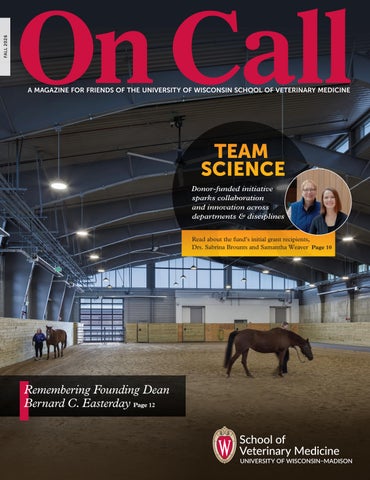
Donor-funded initiative sparks collaboration and innovation across departments & disciplines Read about the fund’s initial grant recipients, Drs. Sabrina Brounts and Samantha Weaver Page 10
Remembering Founding Dean Bernard C. Easterday Page 12
WELCOME
CLASS OF 2030!
The UW Vet Med community, with students at the center, is creating the future of veterinary medicine and proudly training the next generation of trusted veterinarians and biomedical scientists.
FALL 2026
Features Table of Contents 4 Message from the Dean Celebrating UW School of Veterinary Medicine successes
5 Ask a UW Veterinarian 5 Socializing with UW Vet Med 6
News Briefs
10 Features
Collaboration is the core of UW Vet Med’s Team Science initiative
10 10
The new Team Science initiative brings together a clinician who is seeing patients and a foundational researcher to impact both animal and human health. “The Team Science initiative leverages modern, state-of-the-art shared spaces to move clinical innovation and discovery forward,” says Dean Jon Levine.
Page 10
10 Collaboration is the core of the Team Science initiative 12 Remembering Founding Dean Bernard C. Easterday 14 UW Vet Med establishes first Office of Graduate Veterinary Medical Education 16 Companion Animal Fund improves health and wellbeing for pets
18 Comparatively Speaking A special section for alumni of the Veterinary Science and Comparative Biomedical Sciences graduate programs
20 DVM Badger Den News for and about SVM alumni
22 Patient Profile
On the Cover
16 14
UW Vet Med establishes first-of-its-kind Office of Graduate Veterinary Medical Education
To address the increasingly complex and important needs of post-graduate veterinary clinical training, the School of Veterinary Medicine has launched the Office of Graduate Veterinary Medical Education. The office is the first of its kind at a veterinary medical school in the United States.
Horses are led around the large animal arena on-site at UW Veterinary Care. Photo: Cory Klein Studios
©2026 Board of Regents of the University of Wisconsin System
Page 14
On Call
3
Message from the Dean It’s autumn again, a beautiful season here in Madison, Wisconsin. There is palpable excitement as we welcome our community to another academic year. It’s always fantastic to have new people and new energy flowing through our UW Vet Med facilities. A special welcome to our incoming class of future veterinarians, the Class of 2030! Our five-year strategic plan continues to propel us forward. Members of our Office of Academic Affairs (OAA), faculty, curricular and instructional teams, and students all deserve accolades for continuing to navigate the transition to our new OnWard curriculum, now in its second year. It’s absolutely mission-critical, at the heart of our work to educate and train Jonathan Levine the next generation. Leading efforts on the student support and engagement side in OAA is Christina Fielder, our new associate dean for student academic affairs. You can read more about her in our news briefs section of this issue on pages 6-9. We’re thrilled to have Christina on our team! Also elevating our education and training, the new Office of Graduate Veterinary Medical Education (GVME) — the first of its kind at a veterinary medical school — offers permanent, centralized support for our interns and residents. Conversations with colleagues at UW-Madison’s School of Medicine and Public Health helped shape the program, which is modeled after the robust infrastructure found in human medical education. We continue to celebrate tangible advances and process improvements at UW Veterinary Care. During the last fiscal year, we logged a record caseload with 32,477 visits. We continue to grow and expand the reach of such critical services as our comprehensive oncology center; new extracorporeal therapies that offer treatment options for variety of life-threatening conditions; and our state-of-the-art interventional suite (see the profile of Chelsea the shelter pup on page 22). Our commitment to continuous improvement and enhanced internal communication are moving the needle in positive directions, while the use of AI for notetaking and documentation allows our clinicians to focus on the patient and client during visits. Recently released metrics show our strength as an innovative research powerhouse, continually punching above our weight and landing in the top three slots in a variety of measures such as total patents and patents per faculty (#1), articles published, and grant dollars secured per faculty member. The campus RISE (Wisconsin Research, Innovation, and Scholarly Excellence) initiative has helped us bring in new faculty in key areas such as oncology, AI, and healthy lifespan. We continue to build and solidify a leading-edge clinical trials core. Along those lines, we’re excited for you to learn more about Team Science in this issue (page 10), a fully donor-funded effort aimed at sparking cross-team and inter-disciplinary research collaborations.
FALL 2026 Administrative Advisory Committee Jonathan Levine, Dean Nigel Cook, Chair, Department of Medical Sciences Fariba Kiani, Chief Financial Officer Gillian McLellan, Chair, Department of Surgical Sciences Jessica Pritchard, Interim Associate Dean for Professional Programs Suzana Salcedo, Chair, Department of Pathobiological Sciences Christina Fielder, Associate Dean for Student Academic Affairs Chris Snyder, Associate Dean for Clinical Affairs and Director, UW Veterinary Care M. Suresh, Associate Dean for Research and Graduate Training Kristi V. Thorson, Associate Dean for Advancement, Strategy, and Operations and Chief of Staff Chad Vezina, Chair, Department of Comparative Biosciences Editorial Editor and Writer: Maggie Baum Contributing Writers: Katie Ginder-Vogel, Simran Khanuja, Jack Kelly, Catherine Sbeglia Nin Photography: Seth Moffitt, Jack Shannon Design:: Lexi Swain, Design Swain Jack Shannon Connect with Us Please send your feedback and comments to news@vetmed.wisc.edu, 608-263-6914, or On Call Editor, 2015 Linden Drive, Madison, WI 53706. www.vetmed.wisc.edu www.uwveterinarycare.wisc.edu
Alongside everything else, we strive to embody the Wisconsin Idea through our Program for Shelter Medicine and Community Engaged Care, which continues to expand partnerships with Native Nations to deliver local, accessible veterinary care; WisCARES, a community clinic that provides veterinary care for people experiencing financial hardship or homelessness; and the Dairyland Initiative, a key international leader in optimizing dairy cow health, performance, and well-being to create an economically viable and competitive dairy industry.
facebook.com/uwvetmed
There are great things happening in all areas of UW Vet Med and many points of pride. We hope you enjoy reading more in this magazine! Please connect with us on your preferred online channels, as well. You’ll see links and codes to more in-depth coverage throughout these pages.
linkedin.com/school/uwvetmed
Jonathan Levine, Dean @uwvetmeddean @uwvetmeddean.bsky.social On Call | Fall 2026
x.com/uwvetmed x.com/uwvetmeddean youtube.com/uwvetmed instagram.com/uwvetmed
bsky.app/profile/uwvetmed.bsky.social bsky.app/profile/uwvetmeddean.bsky.social
On Call is also available online at: www.vetmed.wisc.edu/on-call
Until next time ... On, Wisconsin!
4
facebook.com/uwveterinarycare
The printing and distribution of this magazine were funded by donations to the school. To make a gift, contact Heidi Kramer at 608-327-9136 or heidi.kramer@supportuw.org.
Ask a UW Veterinarian IST OC K
PH OT O :J O SS IM D
Tips for traveling with pets Sometimes a vacation calls for all members of the family to take part, including your furry friends. However, bringing a pet along requires a few extra steps before and during your trip to ensure a smooth, safe, and comfortable experience for everyone, says Amy Nichelason (Dept. of Medical Sciences), a clinical assistant professor of primary care services at the UW School of Veterinary Medicine. Nichelason shares essential advice on how to prepare pets for travel, what to pack, and how to keep them calm on the go. How can owners tell if their pet would make a good travel companion? Before bringing your pet along for an adventure, you’ll want to make sure that they’re fit for travel. Start by exposing your pet to short day excursions, building up length in small increments. Observe your pet and consider how your pet may respond to other environmental changes or interactions encountered on a trip. If your pet becomes anxious or motion sick during these test trials, they may not be fit for frequent travel. When traveling by air, how should pet owners prepare for takeoff? Check individual airline policies well in advance, locate pet friendly accommodations such as airport pet relief areas, and opt for a spill-proof water bottle rather than a standard bowl to save space and prevent spills. For international travel, start preparations at least six months ahead using resources from the USDA Animal and Plant Health Inspection Service and the American Veterinary Medical Association to meet strict paperwork deadlines and other tasks required during international travel. What should pet owners look for when booking accommodations? Always confirm that where you’re staying is pet-friendly and ask about any pet deposits before booking. If lodging claims to be
amenable to companion animals, check that your species/breed of pet is included under their policy. Also familiarize yourself with your lodging’s policy on leaving pets unattended, as not all places allow this. Follow the same rules of thumb about pet policies when booking day excursions. What should be on a pet’s packing list? Pack essential items including a water bowl (and a separate spill-proof water bottle), food, treats, a leash, a harness or collar with updated contact and rabies tags, waste disposal supplies (poop bags or a portable litter setup), medications, and a pet first aid kit. What are the basic rules for road trips? Pets should always be secured in the car using safety-tested carriers, harnesses, or barriers — never left free-floating in the cabin. Match your pet’s bathroom and stretch break schedule to your own, keeping cats secure on a leash and harness during pit stops to prevent escape. Pets with medical conditions like diabetes or kidney disease will require more frequent stops and increased access to water. How can pet owners help anxious travelers? Gradual environmental exposure helps reduce stress, but for severe anxiety, schedule a visit with your veterinarian to discuss treatment options or prescription anti-anxiety medications. UWVC’s expert clinicians, including our primary care team, are here to help keep your animals happy and healthy. To schedule an appointment, call 608-263-7600.
Do you have a question you’d like to see answered in an upcoming issue? Send it to news@vetmed.wisc.edu. For health issues concerns needing immediate attention, please contact your veterinarian directly.
Socializing with UW Vet Med In September, in honor of National Physical Rehabilitation Week, we shared the story of a very special patient: Iro, a K9 law enforcement officer who was shot and gravely injured in the line of duty. With time, care, and dedication — and help from Dr. Courtney Arnoldy (’94; Dept. of Medical Sciences), UW Veterinary Care’s physical rehabilitation specialist — Iro recovered and got back to the job he loves. The post inspired many other patients to shout out Dr. Arnoldy! Tutty is very thankful for his time spent rehabbing with Courtney Arnoldy and for her dedication! He is enjoying his retirement thanks to her! – Tiffany DP
Gilmore loves his time with Courtney! – Brooke Christine
Mabel would walk through fire for Dr. Arnoldy! We are so lucky to have her and the amazing care available at UW. – Kay Cahill
Good job, Dr. Arnoldy and Iro and Deputy Evans! So thankful to have this service available; my greyhound Libby and I have also benefitted from Dr. Arnoldy’s rehab skill and guidance. – Jey Flick
Dr. Courtney truly is one of the best rehab therapists. She is so passionate and caring about her patients. It’s no wonder Iro made such a remarkable recovery! – Caryn Fraizer
Read the cover story about Iro from our Winter 2024-25 issue at go.wisc.edu/iro
On Call
5
News Briefs
More opportunites for veterinary partners to connect We’re making it easier for referring veterinarians to stay connected with UW Veterinary Care and access the information they need. Our new Partners in Care newsletter, sent every other month, shares updates and resources for referring veterinary medical providers and partners in the veterinary care industry. We’re also rolling out the new rDVM Portal, designed to streamline access to patient records and care information and make it easier to consult with our specialists about cases. If you work in the veterinary medical field and would like to receive the Partners in Care e-newsletter, please send an email to news@vetmed.wisc.edu. For information about the online portal, contact referral@vetmed.wisc.edu.
Preparing for the unthinkable: Animal emergency response training Last spring, School of Veterinary Medicine faculty and students took part in a first-of-itskind animal decontamination training hosted by the Wisconsin National Guard’s CBRNE Enhanced Response Force Package (CERFP). The statewide exercise brought together animal response experts, public health professionals, and emergency responders to prepare for radiological and other hazardous-material incidents involving pets and service animals. UW Vet Med alum Ty Vannieuwenhoven (DVM’89), who has a long-established career in multi-agency emergency response, coordinated the animal decontamination training for the event. Faculty members, including Trina Westerman (Dept. of Pathobiological Sciences), participated alongside members of the school’s Disaster Response Club, including outgoing and incoming presidents Julia Gritzman (DVMx’28) and Jenna Holler (DVMx’28). In all, roughly half of the 21 civilian participants were representatives of, or affiliated with, UW Vet Med. Participants practiced personal protective equipment procedures and worked through animal decontamination scenarios, including hands-on training with five working dogs. The exercise offered an opportunity for UW Vet Med community members to connect with the Wisconsin National Guard, Wisconsin Animal Response Corps, Minnesota Veterinary Medical Reserve Corps, Wisconsin Department of Health Services, and other emergency-response organizations.
6
On Call | Fall 2026
Best wishes to Ruthanne Chun and Chris Eisele In August, members of the UW Vet Med community had a celebratory send-off for Ruthanne Chun, who retired after more than 20 years of service. Ruthanne held many leadership positions within UW Vet Med, including serving as both the director of UW Veterinary Care Ruthanne Chun Chris Eisele from 2010-2021, and as the director of WisCARES. We are incredibly grateful for Ruthanne’s dedication and hard work and wish her all the best in retirement! Chris Eisele is retiring after more than 30 years at UW-Madison. Chris joined UW Vet Med in 1991 and assumed responsibility for coordinating the teaching activities for the Food Animal Production Medicine (FAPM) section in 2000. He has been integral to the success of the FAPM program and has been the bridge between faculty and the farmers, referring DVMs, and other consultants to help facilitate FAPM’s outreach and research programs. He will be missed!
Welcome to our new associate dean of student academic affairs Christina Fielder has joined the SVM as the new associate dean of student academic affairs. She brings a wealth of experience to the role, having spent her career championing undergraduate student success at Ohio State University and, most recently, at the University of Nebraska. Christina will lead the Office of Academic Affairs’ student support functions to ensure all students have the resources needed to thrive and excel as they pursue their DVM degree. Her duties include advising, admissions, student clubs, educational accommodations, job placement, and more. Christina Fielder
UW Vet Med team members assume professional leadership roles
Shelby Williams
Keith Poulsen
Over the summer, UW Veterinary Care Pharmacy Manager Shelby Williams took office as the new Society of Veterinary Hospital Pharmacists (SVHP) president. SVHP facilitates and improves the exchange of educational materials and resources among veterinary pharmacists around the world.
The American College of Veterinary Internal Medicine (ACVIM) is welcoming Keith Poulsen (‘00 DVM’04 PhD’12; Dept. of Medical Sciences) as its next president-elect. Through continuous innovation and education, ACVIM fosters a community of dedicated members, with the goal to improve animal and human lives globally. Poulsen has been active in the organization since 2008.
On Call
7
News Briefs
Celebrating outstanding alumni SVM Alumni Association honors distinguished alumni The School of Veterinary Medicine Alumni Association has recognized three outstanding graduates with 2026 Alumni Achievement Awards for their exceptional contributions to veterinary medicine, biomedical science, and the broader community. Mandi J. Lopez (MS’97 PhD’01) found a home at the intersection of veterinary innovation and human medicine, focusing on translational musculoskeletal and regenerative medicine. She serves as a professor of Veterinary Surgery at Louisiana State University and as director of the Laboratory for Equine and Comparative Orthopedic Research. Since her time at UW-Madison, Linda Kidd (’87 DVM’91) has become internationally recognized for her contributions to the fields of immune-mediated and vector-borne diseases, mechanisms of thrombosis, and teaching clinical reasoning. Kevin Snyder’s (DVM’16 MS’18) veterinary medical practice provides specialized veterinary care across Alaska’s vast frontier. Snyder earned his DVM from the SVM before completing a four-year residency in comparative ophthalmology as well as earning his MS in the Comparative Biomedical Sciences Graduate Program. Read more about the recipients and the key roles that UW-Madison and the SVM community have played in their paths to success. Kathryn Meurs receives WAA Luminary Award SVM graduate Kathryn Meurs (’86, DVM’90) has received the Wisconsin Alumni Association Luminary Award, an honor recognizing alumni who have served as examples for others through their accomplishments in the areas of leadership, discovery, progress, and service. After completing her DVM at UW-Madison, Meurs obtained a Ph.D. in genetics from Texas A&M University. She is a Randall B. Terry Jr. Dean and Distinguished Professor in Comparative Medicine at the North Carolina State University College of Veterinary Medicine. Meurs is widely regarded for identifying key DNA changes responsible for inherited cardiomyopathies (diseases of the heart muscle) in dogs and cats. Her impact, however, has extended far beyond these scientific contributions. Through her faculty and administrative positions at Ohio State University and Washington State University, Meurs helped shape veterinary education and research. Read more about this honor and Kathryn Meurs on the Wisconsin Alumni Association website.
8
On Call | Fall 2026
Top to Bottom: Mandi J. Lopez (MS’97 PhD’01), Linda Kidd (‘87 DVM’91), Kevin Snyder (DVM’16 MS’18), and Kathryn Meurs (‘86 DVM’90)
Advancing cattle health, from Wisconsin to Japan In June, Courtney Halbach (left), outreach specialist for The Dairyland Initiative, was invited by a prominent dairy farm in southern Japan to assess the ventilation and heat abatement systems in their dairy barns. The process involved measuring air speeds in the cows’ microenvironment to quantify cooling and determining proper inlet and outlet openings for sufficient air exchange. Unlike in Madison where we only average about 77 days above 68 degrees farenheit (when cows start to experience heat stress), the farms in Japan need to combat heat stress for about 145 days of the year. Despite different climates, the principles and importance of cow cooling are no different in Japan than they are here in Wisconsin.
Also in 2026, Doerte Doepfer (right) (Dept. of Medical Sciences) visited Hokkaido, Japan to evaluate seven dairy farms for risk factors of lameness and digital dermatitis. She conducted workshops and seminars about epidemiology, herd health, and microbiology of infectious claw diseases to hundreds of veterinarians, hoof trimmers, veterinary students, and producers.
Theresa Ollivett (left) (Dept. of Medical Sciences) delivered a keynote on bovine respiratory disease for the 43rd World Veterinary Association Congress in Tokyo in April. The talk was an important opportunity to engage with top Japanese veterinary researchers including Satoshi Gondaira, who specializes in dairy cattle diseases, veterinary immunology, and immunopathology. Gondaira spent a previous sabbatical at UW-Madison, working closely with Ollivett.
On Call
9
Features
Collaboration is the core of UW Vet Med’s Team Science initiative Donor-funded program brings together clinical research and scientific discovery to benefit animal and human health by Katie Ginder-Vogel
The School of Veterinary Medicine’s (SVM) new Team Science initiative creates faculty collaborations to impact animal and human health, requiring proposals to have two principal investigators — a clinician seeing patients and a foundational researcher. “They could be in the same or different departments, within or outside of the vet school, but they have to be within UW–Madison,” says Starr Cameron (Dept. of Medical Sciences), assistant dean for clinical research. The SVM’s 150,000-square-foot building expansion and renovation project includes state-of-the-art research spaces designed to facilitate initiatives like Team Science. “Team Science leverages our modernized, state-of-the-art shared spaces to move clinical innovation and discovery forward,” says Dean Jon Levine.
Donor-funded research collaboration Team Science is funded by UW–Madison supporter Margo Edl, a 20-year member of the SVM’s Board of Visitors and longtime UW Veterinary Care client. Edl is passionate about supporting research that advances human and animal health, and when she met with Levine and Cameron to brainstorm new research program ideas, they landed on the Team Science concept. “Margo is very forward-thinking, and she got excited about the idea of bridging clinical research with bench-based foundational research,” Cameron says. “Team Science will help us deepen 10
On Call | Fall 2026
our understanding of clinical diseases and processes to improve veterinary and human health.” “We’ve always encouraged and facilitated collaboration among faculty in different departments, but Team Science hasn’t existed in this ‘official’ capacity before now,” says Levine. “We’re incredibly grateful to Margo for bringing it to life.”
Studying osteoarthritis in horses, with implications for human health The Team Science research committee, a group of clinician scientists and foundational scientists representing the SVM’s four primary academic departments, selected Sabrina Brounts’ (Dept. of Surgical Sciences) and Samantha Weaver’s (Dept. of Comparative Biosciences) project, which hopes to make a current treatment for osteoarthritis commercially available. “They want to make a product that is more readily accessible and easier to administer compared to the current standard,” Cameron explains. “It’s a large animal-focused study, and they already have some pilot data. This project is really going to take off.” Osteoarthritis causes pain, lameness, and reduced quality of life in horses, dogs, and people. Some treatments can reduce pain, but none consistently restore damaged cartilage or stop disease progression. Brounts has developed a new equine blood-derived product called Washed Equine Platelet Extract (WEPLEX) and a human counterpart, HUPLEX (with colleagues in the
UW-Madison School of Medicine and Public Health Department of Medicine Jacques Galipeau, associate dean for therapeutics development, and Andrea Pennati, research scientist). Weaver and Brounts, alongside Galipeau, Pennati, and Wan-Ju Li, associate professor in the Department of Cell & Regenerative Biology, plan to explore how these standardized, shelf-stable products could provide consistent treatment options by identifying the relevant proteins and growth factors. They will explore how freezing and freeze-drying affect their composition and stability over time, and test how well they reduce inflammation and support healthy cartilage cells using laboratory models of osteoarthritis.
What’s next for Team Science Cameron says Team Science is already moving the needle on clinical innovation and research. “Exciting new collaborations have now been created, and clinician scientists are asking questions in a deeper way, to understand problems on a pathophysiological level,” says Cameron. “Going forward, we’re hoping to attract more donors in this space and get external funding for collaborations. Team Science will make all our research more robust, helping us deepen our understanding of clinical diseases and processes to improve veterinary and human health.”
Weaver and Brounts hope their research will lead to a new generation of accessible, shelf-stable biologic therapies for osteoarthritis and other musculoskeletal injuries in animals. “In the long term, WEPLEX has the potential to reduce pain, improve mobility, and enhance quality of life for horses and companion animals with chronic joint disease,” Weaver and Brounts wrote in their abstract. “The knowledge gained from this work may also inform the development of regenerative therapies for human patients.” Weaver’s background is in foundational bench research, working with preclinical models like in vitro cell systems or mice.
Team Science research is supported through gifts to the Margo and Jack Edl Research Excellence Fund. Scan here to make a donation in support of future Team Science Projects. Have questions about charitable giving? Please contact Heidi Kramer at heidi.kramer@supportuw.org.
“Having clinicians like Dr. Brounts reach out with the opportunity to apply some of our basic biomedical techniques to an applied problem that she sees every day in her practice is, quite frankly, the dream,” Weaver says. “It is always my goal and intent to be working on clinically relevant issues; this grant allows us to do that.”
Opposite page: Amy Elbe, Starr Cameron, and Amy Lynn Munes lead the clinical trials core. Right: Sabrina Brounts and Samantha Weaver.
Team Science fosters new, promising collaborations In addition to the project selected for initial Team Science funding (see main article), the initiative has spurred several exciting new projects across the school’s clinical and foundational researchers. As one example, Chad Vezina (Chair, Dept. of Comparative Biosciences) and Mike Wood (Dept. of Medical Sciences) are looking at serotonin metabolite as a biomarker of urinary tract infections. “They are leading experts on the urinary tract – both pioneers and pillars in this area – who hadn’t worked together yet,” says Starr Cameron, assistant dean for clinical and translational research. “These new connections are the most exciting part of Team Science.”
Vezina and Wood hope to determine whether dogs with confirmed bladder infections have more urinary 5-HIAA than dogs with harmless bacterial colonization or no bacteria at all. They are exploring the creation of a test to determine whether a dog truly needs antibiotics when bacteria are discovered in urine, to avoid unnecessary antibiotic treatment and improve animal health–potentially helping humans down the road. “We have incredible stuff happening at the vet school,” Vezina says. “The opportunities for collaboration are huge here.”
On Call
11
A life of leadership, a lasting legacy: Honoring Founding Dean Bernard C. Easterday by Maggie Baum
Founding Dean Emeritus Bernard C. Easterday, a dedicated member of the UW School of Veterinary Medicine (SVM) and greater veterinary science community, died on March 17, 2026, at the age of 96. Easterday grew up in Michigan, and upon graduating high school, went on to earn his DVM degree with high honors from Michigan State University in 1952. After graduation, he returned to his hometown and began his dream career as a large animal veterinarian. He was called to active service as an officer in the U.S. Army Veterinary Corps in the early 1950s, including a year in Kenya on a team of veterinarians — marking the start of what would become a lifelong love for, and dedication to, Africa. Returning stateside, Easterday attended UW-Madison, earning his MS in 1958 and his PhD in 1961 from the College of Agricultural & Life Sciences (CALS). He joined the faculty of Veterinary Science in 1961 and eventually was promoted and served as chair of the department from 1968 to 1974.
Shaping an institution The effort to establish the SVM as its own college within the university was a significant undertaking that spanned years of advocacy, organizing, and planning — an effort in which Easterday was a guiding force. The SVM was officially established in 1979, with Easterday named as founding dean, opening its doors to the first class in the fall of 1983. Long-time faculty member Dale Bjorling (Dept. of Surgical Sciences) remembers the early years well. Arriving in the fall of 1985, Bjorling says, “I quickly learned a majority of senior faculty in other schools and colleges were of the opinion that there were far better purposes [for the SVM’s] space on Linden Drive, but Barney had the vision, commitment of purpose, and just plain stubbornness to handle any pushback.”
12
On Call | Fall 2026
Easterday’s tenacity in the establishment of the SVM was foundational in creating what is now a health sciences hub on the UW-Madison campus, and an institution of national prominence that it still maintains today.
Groundbreaking discoveries, critical leadership While most days Dr. Easterday could be found in the halls of the SVM, interacting with faculty, staff, and students, he also spent decades traveling the globe, advancing animal and human health. Best known globally for his research into infectious diseases of animals and humans, Easterday, in collaboration with Ronaldean Pawlisch (’50), was the first to demonstrate conclusively the natural transmission of swine flu from pigs to human beings. His work was documented in more than 150 refereed journal publications, more than 25 book chapters, and via numerous invited lectures around the world.
For 30 years, Easterday contributed to the World Health Organization Coordinated Study on Animal Influenzas, advocating for efforts to better understand animal influenza viruses and their relationship to their human counterparts.
More than a mentor Through all the awards, affiliations, and accomplishments, Easterday stayed dedicated to being a leader and friend to the entire UW Vet Med community. “As I got to know him as an individual, and eventually a friend, what always impressed me — whether he was walking the hallways, or visiting me in my office — is that he was dedicated to being present with people,” says Dean Emeritus Mark D. Markel (Dept. of Surgical Sciences). Upon his retirement in 1994, Easterday was appointed professor emeritus and dean emeritus and his commitment to the UW continued, demonstrated by his service in a variety of university roles. Easterday’s work was his lifelong calling and allowed him the opportunity to pursue his passion for travel and exploration. Along with his wife and best friend, Charlene (by whom he is survived), they enjoyed riding their motorcycle, flying their airplane — with Easterday as pilot — and serving as escorts for travel groups, especially to Africa and, in particular, Kenya. “Dr. Easterday’s leadership was essential to creating the SVM and shaping it into the renowned institution it is today,” says current Dean Jon Levine. “As an internationally recognized educator and virologist, he deepened our understanding of how influenza viruses are transmitted between animals and humans. And, as our school’s founding dean and long-time leader, his legacy was built on an unwavering commitment to education, innovation, leadership, and excellence.”
Scan here for the original version of this story, which includes personal tributes and the opportunity to share memories.
1952
Earns DVM from Michigan State University
1952-54
U.S. Army Veterinary Corps
1958
Earns MS from UW-Madison
1961
PhD and faculty appointment at UW-Madison
1966
Promoted to full professor
1968-74
Appointed Chair, Department of Veterinary Science
1979
Appointed founding dean, UW School of Veterinary Medicine
1979
Wisconsin Veterinarian of the Year
1983
Welcomes first class of students
1994
Retirement
On Call
13
UW VET MED ESTABLISHES FIRST-OF-ITS-KIND
Office of Graduate Veterinary Medical Education by Jack Kelly
To address the increasingly complex and important needs of post-graduate veterinary clinical training, the School of Veterinary Medicine (SVM) has launched the Office of Graduate Veterinary Medical Education (GVME). The first of its kind at a veterinary medical school in the United States, the new office is the result of work done last year by a task force dedicated to enhancing supports for UW Vet Med’s residents and interns, also known as house officers. The establishment of GVME shifts elements of the SVM’s house officer training programs from an internal committee — staffed on a rotating basis by faculty members — to a centralized, permanently staffed office. Conversations with colleagues at UW-Madison’s School of Medicine and Public Health (SMPH) helped shape the program, which is modeled after the robust infrastructure found in human medical education. “Our faculty members work tirelessly to ensure our interns and residents have rewarding and successful training programs,” says Jessica Pritchard (Dept. of Medical Sciences), an SVM faculty member and administrator who leads the Office of GMVE. “Our work will reduce administrative burdens for our faculty and provide additional resources for our house officers, helping ensure we are providing the best possible postgraduate veterinary medical education experience and support.” During the 2025-26 academic year, Pritchard helped lead the task force that recommened the development of the office. After months of work, the panel of school leaders,
14
On Call | Fall 2026
faculty members, and administrative staff, among others, made several key observations and determinations. Chief among them was that the decentralized and sometimes siloed operational aspects of training programs created administrative inefficiencies, potential liabilities, and an unsustainable reliance on the efforts of individual faculty members — many of whom were also teaching DVM students and working in the school’s veterinary medical teaching hospital. The task force also made recommendations to help ensure the success of UW Vet Med’s trainees. Those included establishing standardized, semi-annual evaluations and tiered remediation pathways; upgrading physical workspaces and trainee handbooks; and introducing faculty mentorship training. The panel also recommended the creation of a community-building program for house officers. Additionally, to help ensure training program success, the task force recommended biannual surveys for trainees and confidential, always-available feedback mechanisms for house officer concerns. The panel also suggested building a resource hub for resident program directors and establishing an annual report tracking the success of our house officers. Led by Pritchard, the Office of GVME includes Jody Silva, who has been critical in fostering the school’s collaboration with SMPH, and full-time administrative support specialist Aubrey Starr. The team has already implemented many of the task force recommendations, and first-year interns
Left: Jody Silva, Jessica Pritchard, and Aubrey Starr
and residents will be supported from the start of their time at UW Vet Med. In its first year, the office will focus heavily on streamlining evaluation cycles and serving as a policy resource for faculty navigating complex trainee logistics such as exam accommodations. By reducing institutional silos and looking to peers in human medicine, UW Vet Med is updating administrative workflows while building a sustainable foundation for the future of specialized veterinary medical care. As the Office of GVME continues to solidify its foundation over the
coming months, the team will share successes, best practices, and lessons learned with peers in the veterinary medical education community looking to build or grow similar initiatives. “The work our faculty members and school leadership a doing centers on ensuring that everyone learning here — the next generation of trusted veterinarians and scientists — has meaningful and relevant educational experiences and opportunities on all fronts and all levels,” says SVM’s Dean Jon Levine.
Right: The Office of GVME is dedicated to supporting house officers throughout their time at UW Vet Med.
On Call
15
Companion Animal Fund: Fund: Improving health and wellbeing for the pets we love by Maggie Baum At the heart of the Companion Animal Fund (CAF) family of grant programs at the School of Veterinary Medicine (SVM) is the effort to improve the diagnosis, treatment, and prevention of the diseases that afflict the pets we love. At the same time, this important work has the potential to lead to better outcomes in human medicine, too. Gifts to the CAF and affiliated funds — which come from individuals as well as many of our valued veterinary friends and partners (see sidebar), often in honor or memory of a beloved pet or animal lover — support a range of critical
health care studies. The funds offer a meaningful way to honor and celebrate the special bond between animals and humans while at the same time helping to further important scientific advancements and translational research. As we work to create the future of veterinary medicine, we’re grateful for the generous donors who help advance innova tions and collaborations in research that work toward longer and healthier lives for the pets we love. The following are a selection of projects that CAF grant program funds have supported this year.
EXAMINING THE ROLE OF COLLAGEN IN AGGRESSIVE CANINE MAMMARY TUMORS
Principal Investigator: Lisa Arendt (’98 DVM’02 PhD’07; Dept. of Comparative Biosciences) Canine mammary tumors are the second most common tumor in female dogs, especially in those that haven’t been spayed. About half of these tumors can spread to other parts of the body. These tumors are hard to grade because they vary so much and experts can interpret them differently. One important part of these tumors is collagen, a protein that gives tissues structure. In cancer, collagen can form dense layers that affect how the tumor grows and spreads. In human breast cancer, certain collagen patterns are linked to a higher risk of metastasis. This study examines how collagen is organized in more aggressive canine mammary tumors using a low-cost imaging method that could help veterinarians more accurately identify high-risk tumors and improve treatment decisions.
DO WISCONSIN’S DAIRY CATTLE HOLD THE KEY TO THE TREATMENT OF DEVASTATING DISEASES?
Principal Investigator: Matt Reynolds (’98 PhD’06; Dept. of Pathobiological Sciences) Wisconsin’s dairy cattle may hold the key to treating devastating diseases. Cows produce a unique type of antibody — nature’s smallest — with a mushroom-shaped “knob” that can reach disease targets in a way conventional medicines cannot. These tiny knobs can penetrate deep into infected tissues and tumors, potentially revolutionizing how we treat cancer and infectious diseases in pets. This study uses these cow antibodies to develop treatments for feline infectious peritonitis (FIP), a fatal cat disease with limited treatment options. By isolating these specialized antibodies from cattle, researchers are working to establish new therapies that draw on Wisconsin’s dairy heritage to create innovative medicines. The knobs’ ability to access hidden targets makes them ideal for detecting tumors and delivering targeted therapies, potentially transforming cancer treatment in cats and dogs.
HEART MONITORING MADE EASIER Principal Investigator: Sonja Tjostheim (Dept. of Medical Sciences) Atrial fibrillation (AF) is a common heart rhythm problem in dogs with heart disease. It causes a fast, irregular heartbeat that can worsen congestive heart failure and increase the risk of death. Treatment often focuses on slowing the heart rate with medications like diltiazem. Dogs with AF tend to live longer when their average daily heart rate stays below 125 beats per minute. This average is usually measured with a 24-hour Holter monitor, a specialized test that requires expertise to perform and interpret. The PetPace™ smart collar is a simpler, user-friendly device that can track heart rate and send data remotely to a veterinary cardiologist. This study aims to determine how accurately the PetPace collar measures average
16
On Call | Fall 2026
daily heart rate compared to a Holter monitor. If accurate, it could make monitoring easier and more accessible and lead to improved treatment and outcomes.
COMPANION ANIMAL FUND CLINIC SPONSORS
BETTER UNDERSTANDING AND TREATING PAINFUL AND PROBLEMATIC JAW ALIGNMENT PROBLEMS Principal Investigator: Jason Soukup (PhD’22; Dept. of Surgical Sciences)
Years of clinic participation effective December 31, 2025
Many dogs are born with jaw alignment problems, called malocclusions, that can cause painful tooth contact, injury to the roof of the mouth, abnormal tooth wear, and long-term joint problems. In severe cases, current treatments often focus on managing the symptoms by removing or shortening teeth rather than correcting the underlying jaw mismatch. This study aims to better understand these jaw problems and develop safer treatments by using CT scans from healthy dogs to create the first detailed three-dimensional reference standards. Next, those standards will be compared to dogs with underdeveloped lower jaws to identify the specific skeletal differences causing disease. The final step involves using advanced computer modeling and three-dimensional surgical planning to test potential corrective jaw procedures in virtual models to develop future treatments that improve comfort, function, and quality of life for affected dogs.
Loyal Veterinary Service
USING ADVANCED IMAGING TO IDENTIFY AND TRACK BLASTOMYCOSIS Principal Investigator: Darrel Yap (Dept. of Surgical Sciences) This study assesses whether an advanced PET/CT imaging can help veterinarians better identify and track blastomycosis, a common fungal infection. PET/CT scans are widely used in human medicine to identify areas of inflammation, such as with blastomycosis. An early case performed at UW Veterinary Care identified several affected areas that did not show with conventional testing. The goal of this research is to demonstrate that PET/CT scans are highly sensitive for identifying blastomycosis lesions compared to conventional diagnostics. A secondary aim is to determinewhether PET/CT is more sensitive in identifying residual disease following treatment, which could guide treatment durations and reduce the incidence of disease recurrence.
Scan to learn more about studies supported by the CAF
40-49 Years 30-39 Years
Country View Animal Hospital Dodgeville Veterinary Service Family Pet Clinic Kaukauna Veterinary Clinic Layton Animal Hospital New Berlin Animal Hospital Northside Veterinary Clinic Omro Animal Hospital Oregon Veterinary Clinic Park Pet Hospital Shorewood Animal Hospital Thiensville-Mequon Small Animal Clinic West Salem Veterinary Clinic Wright Veterinary Service
20-29 Years Bark River Animal Hospital Jefferson Veterinary Clinic Muller Veterinary Hospital North County Veterinary Clinic Tecumseh Veterinary Hospital Wittenberg Veterinary Clinic
10-19 Years High Cliff Veterinary Service Lake Country Veterinary Care Metro Animal Hospital Northwoods Animal Hospital, Eagle River
1-9 Years Birch Bark Veterinary Care Brookfield Animal Hospital Southwest Animal Hospital
There are many ways to commemorate and honor a pet or a person with a gift to the Companion Animal Fund: • • • • •
Express sympathy for the loss of a cherished companion Thank a veterinarian for exceptional care Honor a friend or family member who loves and values animals Welcome a new pet to the family Celebrate an animal or human birthday or another milestone
Scan to learn more about making a memorial gift or a donation in honor of a person, pet or special occasion.
On Call
17
Comparatively Speaking
A lifelong interest could lead researcher in development of lifesaving treatments by Katie Ginder-Vogel In hopes that her findings could lead to life-saving therapies for animals and humans, Oluwadamilola Babatunde (Dammy), a Ph.D. candidate in Comparative Biomedical Sciences at the School of Veterinary Medicine (SVM), is studying how the toxic chemical antigens Staphylococcus aureus bacteria release can damage blood vessels. When heart valves become infected by this, the condition — infective endocarditis — can be life-threatening. “Superantigens are best known for their ability to trigger a strong immune response,” Babatunde explains. “My research examines how these toxins interact directly with endothelial cells, which form the inner lining of our blood vessels.” Endothelial cells play a key role in maintaining healthy blood vessels, regulating inflammation, and supporting tissue repair, so if their normal function is disrupted by an infection, the body can struggle to heal. “One of the most rewarding aspects of my work has been discovering that S. aureus superantigens can interact with proteins in endothelial cells and identifying specific regions and amino acid residues that are important for those interactions,” says Babatunde. “By identifying the proteins these toxins interact with, as well as the specific region of the toxin involved in these interactions, we can gain a clearer picture of how these toxins affect endothelial cells and influence the course of infection.” Babatunde hopes her research contributes to a clearer understanding of how Staphylococcus aureus causes disease and how its superantigens affect cells beyond the immune system. “In the long term, I hope these findings can help identify new targets or strategies for preventing or treating complications associated with serious S. aureus infections,” she says. “More broadly, I hope my work contributes to a better understanding of how pathogens interact with our cells and how those interactions influence disease. I would be excited to see the knowledge generated from this research become part of a larger effort to develop better ways to prevent, manage, or treat infectious diseases.”
A lifelong interest in infectious diseases and pathogen-cell interactions Growing up in Nigeria, Babatunde was always interested in science and experienced malaria and typhoid. 18
On Call | Fall 2026
“Those experiences contributed to my interest in biomedical research and my desire to better understand how infections affect the body,” she says. “Through my education and research experiences, I became increasingly interested in infectious diseases and in understanding the interactions between pathogens and the cells they infect.” Babatunde earned her BSc in biochemistry from Ekiti State University in Nigeria and her MSc in experimental biomedical sciences at the University of Fribourg in Switzerland. When she and her husband moved to the United States for his postdoctoral appointment, she decided to apply for a PhD at UW–Madison and joined the research group of Wilmara Salgado-Pabón in the SVM’s Department of Pathobiological Sciences. “Coming to UW–Madison and UW Vet Med has given me the opportunity to grow as a scientist while working on questions that I find both challenging and meaningful,” Babatunde says. “It has also introduced me to a collaborative research community and helped me develop a broader perspective on how basic scientific discoveries can contribute to our understanding of human disease.” Salgado-Pabón credits Babatunde with defining a novel characteristic of superantigens that could lead to new therapeutics for treating staph infections. “This idea that superantigens do more than generate an overstimulated immune response is exciting,” says Salgado-Pabón. “We’re just starting to understand other roles of these toxins in disease. This could have a huge impact on animal and human health.”
Applying research training to the development of new technologies and therapeutics Babatunde plans to transition from academic research into the biotechnology or pharmaceutical industry following completion of her PhD in Spring 2027. “I enjoy asking biological questions, designing experiments, and working through complex problems, so I would like to contin-
ue doing that in an environment where research can ultimately contribute to the development of new technologies, therapeutics, or other products,” she says. “Dammy’s an amazing scientist,” says Salgado-Pabón. “I can see her working in any scientific area.” Babatunde hopes to build a career that combines scientific research, innovation, and collaboration. “I also want to continue mentoring and encouraging young scientists, particularly those from backgrounds where careers in biomedical research may not always seem accessible,” she says. “For me, a successful career would not only be about making scientific discoveries, but also about using my knowledge and experience to help others and contribute to work that has a meaningful impact.” Outside of the laboratory, Babatunde stays busy and active with her husband and two children, and enjoys cooking and swimming — which she says helps her relax and recharge. “Spending time with my family allows me to appreciate the small moments and make time for the people and activities that bring me joy,” she says.
Above and opposite page: Oluwadamilola Babatunde and advisor Wilmara Salgado-Pabón
Did you know?
Our CBMS program graduates are welcome and encouraged to join the School of Veterinary Medicine Alumni Association. Connect. Engage. Serve. Support. go.wisc.edu/svmaa
From the Director of the Comparative Biomedical Sciences Graduate Program
The start of fall semester is always an exciting time for the Comparative Biomedical Sciences (CBMS) Graduate Program as we welcome new students into our community. There are six new students in the program in 2026, listed here by name (left) with the mentor (right) and home department, school, or college. • • • • • •
Justice Lemonds – Monica Neugebauer, Dept. of Biochemistry (CALS) Bruna Fernandes Soares – Laura Solano, Dept. of Medical Sciences (UW Vet Med) Isaac Hanauska – Troy Hornberger, Dept. of Comparative Biosciences (UW Vet Med) Siena Mitman – Lyric Bartholomay / Marulasiddappa Suresh, Dept. of Pathobiological Sciences (UW Vet Med) Kristin Soucek – Kelly Makielski, Dept. of Medical Sciences (UW Vet Med) Elly Scheuerell – Johanna Elfenbein, Dept. of Pathobiological Sciences (UW Vet Med)
We are thrilled to welcome this group and look forward to seeing how each contributes to the growth of their particular specialty area and to our broader mission of advancing animal and human health with science and compassion.
Graduate students are admitted to the CBMS program when they align with a major professor and both parties commit to the long-term partnership that is foundation of the student-mentor relationship. They are supported by research assistantships that provide a stipend, tuition, and health benefits. We celebrate these students for having developed the credentials of excellence that brought them through our selection process. We also celebrate their mentors who work to garner the research funding necessary to support research assistantships! CBMS continues to shine for its metrics at the other end of the graduate school experience. Our median time to degree completion is currently shorter than the UW-Madison overall median. The 2024-2025 CBMS median time to degree completion for PhD students was 4.8 years compared to 5.8 years across the broader UW-Madison campus. This is a testament again to our excellent students and their mentors. Let me also give much-deserved recognition to the graduate program coordinators who are foundational to CBMS student success. Sara Hladilek, like Susan Thideman (Pathobiological Sciences Emeritus Staff) before her, provide regular, individualized supports to each CBMS student on their paths from admission all the way through graduation. Lyric Bartholomay (PhD’04) Professor, Department of Pathobiological Sciences Director, Comparative Biomedical Sciences Graduate Program Dr. Bernard C. Easterday Professor in Infectious Disease
On Call
19
DVM Badger Den
Bridging medicine
by Sim Khanuja
and conservation: Leah Owens’ career at the intersection of research and wildlife care Leah Owens (PhD ’22, DVM ’25) spent the first half of her career in biomedical research before attending the School of Veterinary Medicine (SVM). Owens grew up in St. Louis, Missouri, exploring the woods near her grandmother’s home, becoming fascinated by wildlife, especially amphibians and reptiles. After graduating from Washington University in St. Louis and earning an MS in molecular biology at Princeton, she spent years studying biological processes at a small scale, analyzing single proteins and genes in lab settings. A 2015 research externship at the St. Louis Zoo’s Institute Conservation Medicine under Sharon Deem shifted Owens’ career trajectory. Deem took a multidisciplinary approach to research, linking human communities, native wildlife, and ecosystem health, and Owens realized she wanted to work with animal populations. That revelation drew Owens to UW-Madison for veterinary school. “It’s rare that you find medical, pharmacy, nursing, and veterinary schools, and world-class, internationally recognized, cutting-edge research happening all in the same place, facilitating cross-disciplinary collaborations,” she says.
Interdisciplinary research in wildlife ecology After starting veterinary school, Owens connected with Tony Goldberg (Dept. of Pathobiological Sciences), an expert on the ecology, epidemiology, and evolution of infectious disease, and decided to pursue a DVM/PhD. Her doctoral research in Goldberg’s lab focused on wildlife disease ecology, using next-generation sequencing approaches to investigate disease outbreaks and parasitology. “I learned so much in the lab, because we were all interested in disease ecology and wildlife epidemiology, but in totally different systems,” says Owens. “It was a perfect place to get involved in different types of work, with important conservation implications.”
Owens was the first author of a paper detailing the discovery of a novel Sarcina bacterium linked to a lethal disease in sanctuary chimpanzees in Sierra Leone. Her doctoral research also produced a patented sequencing test for detecting terrestrial and aquatic parasites in complex samples. Owens credits Goldberg with showing her how to combine science and veterinary practice in her career. “Tony evolved over his career to work in many systems and cultivate a large, diverse network of expert collaborators,” says Owens. “I would also like to be able to adapt and apply my knowledge and tools to pressing conservation questions.” After completing her PhD and DVM, Owens joined Verona Veterinary Medical Service in 2025, caring for dogs, cats, small mammals, reptiles, poultry, and livestock.
Working as a conservation veterinarian Owens leverages her broad clinical expertise in her current role as conservation veterinarian at the Tennessee Aquarium in Chattanooga, Tennessee, which bridges medicine and field conservation research. The aquarium campus features two main exhibit buildings, housing 13,000 animals across 700 species; the Tennessee Aquarium Conservation Institute; and the Animal Care Facility. Owens provides veterinary care for all the aquarium’s animals: those on exhibit, those behind the scenes, and the conservation collection, including aquatic species raised on site for reintroduction into the wild. She also develops and conducts interdisciplinary research that investigates how human activities impact the interplay between aquatic animal health and surrounding environments.
Remembering It is with deep sadness that we share the passing of Dr. Ernie Gusman, beloved father, husband, and fellow classmate of the School of Veterinary Medicine Class of 1988. Ernie loved his time at Dr. Ernie the University of Wisconsin and loved sharing stories of the memories made during school. He Gusman
always looked forward to attending the Western Veterinary Conference and class reunions to catch up with classmates and friends. After graduation, Ernie started his ambulatory equine practice in California. He spent 38 years doing what he loved until the day of his passing. Ernie’s dedication and love for veterinary medicine will carry on through his daughter, Dr. Lani Gusman, who will continue his practice in his honor. If you’d like to share a memory of Dr. Gusman, please email kristi.thorson@wisc.edu and we will pass it along to his family.
20
On Call | Fall 2026
2004 Graduation from Washington University in St. Louis B.A. in Biology, Italian Language, and Literature
2010 Graduation from Princeton University M.S. in Molecular Biology
2015 Research Extern St. Louis Zoo Institute for Conservation Medicine
2017-22 Research Assistantship UW–Madison Comparative Biomedical Sciences Program
2020-21 Global Health Institute Research Grantee & Lead Researcher Tacugama Chimpanzee Sanctuary, Sierra Leone
2022
“There are so many ways to get to work with animals,” says Owens. “Here at the aquarium, we have aquarists, academic researchers, water quality experts, people doing conservation work on the ground talking to farmers, and vets. I think it’s amazing to have all these different types of professionals together working on the same problem.”
Advising students to stay open-minded
Graduation from University of Wisconsin–Madison PhD in Comparative Biomedical Sciences (Focus: Wildlife Disease Ecology)
2022-24 Postdoctoral Research Associate University of Wisconsin–Madison Department of Pathobiological Sciences/Medical Microbiology
2024-25
Owens encourages students to stay open-minded and embrace non-linear paths.
Veterinary Medical Externships Dane County Humane Society Wildlife Clinic, National Wildlife Center, Naples Zoo, Wisconsin Department of Natural Resources, Florida Fish and Wildlife Conservation Commission, and Tennessee Aquarium
“Be open to new possibilities and don’t get too stuck on a specific series of steps to get to a goal,” says Owens. “There’s not one route to getting to a cool job that you love.”
2025
Owens also stresses that career pivots are possible at any stage.
Graduation from UW School of Veterinary Medicine DVM, Madison, WI
“I did something different for the first half of my adult life,” says Owens. “I thought it would be harder to go back to school when I did, but honestly, it was exactly what I wanted it to be.”
Associate Veterinarian Verona Veterinary Medical Service, Verona, WI
2025
2025-Present Conservation Veterinarian Tennessee Aquarium, Chattanooga, TN
A Message to DVM Alumni Dear alumni — As I was preparing to write this column, I looked back at the assorted topics I’ve written about through the years. Somehow, it was surprising to realize it’s been 16 years since my first column appeared in On Call in summer of 2010, about three years after I joined the SVM. This got me thinking about what has changed since then. Last year, I cleaned out some files and cabinets when I had to temporarily vacate my office during our remodeling project. I discovered a fun hand-out from campus with tips on “how to Twitter.” There were conference materials that transitioned from printed binders of hand-outs into CD-ROMs, then jump drives, and, now, apps. Thinking back, I remember meeting with alumni to discuss whether or not we should be on “the Facebook,” and being told LinkedIn was just for business school graduates because our alums rarely change jobs once they settle in a practice. Since I have been at the school, I have seen tough economic times when our graduates faced a difficult hiring market and times when our graduates had multiple job offers by year three. I’ve overseen substantial facility changes and, most recently, we’ve undergone a significant curriculum
change with the launch of OnWard. But throughout it all, there have been constants — common themes that connect the columns I have shared. Most prominent among those is pride in the talented and dedicated alumni who are leading the profession and serving their communities and gratitude for the many ways in which alumni support one another and our students. I hope the stories you find among the pages of this issue of On Call fill you with a sense of pride in your alma mater and the work we do each day to create the future of veterinary medicine. And, importantly, that this column demonstrates our ongoing appreciation of you and your valuable role in our UW Vet Med community and the profession. No matter what the future may bring, that will never change.
Kristi V. Thorson Associate Dean for Advancement, Strategy, and Operations and Chief of Staff
On Call
21
Patient Profile Chelsea was treated by the UW Veterinary Care cariology team, including Hannah Lillesand (DVM’26) and former resident Angela Molli.
CHELSEA THE SHELTER PUP: A mended heart, a second chance by Sim Khanuja Chelsea faced an uncertain future when she first arrived at UW Veterinary Care (UWVC). At a time when she should have been peppy and playful, the six-month-old shelter puppy was struggling with two common but serious congenital heart abnormalities: patent ductus arteriosus (PDA) and pulmonary valve stenosis (PS). When these conditions go untreated, a dog’s outlook is often grim. PDA is a heart defect that occurs when a blood vessel doesn’t close at birth and causes a volume overload of the left side of the heart. Without correction, most affected dogs don’t survive more than a year. Meanwhile, PS creates an obstruction that forces the right side of the heart to work dangerously hard. “These abnormalities can cause changes in heart size and function, and, depending upon their severity, can reduce the lifespan of a patient,” says Logan Funk (’10 DVM’15; Dept. of Medical Sciences), a UWVC cardiologist and faculty member at the UW School of Veterinary Medicine (SVM). Chelsea required a sophisticated, multi-faceted approach — including the first use at UWVC of a specific treatment device for PDA. Given her conditions, and to help keep costs down, the cardiology team made the strategic decision to address both conditions during a single anesthetic episode. The hospital’s state-of-the-art interventional suite — designed by section head of cardiology Heidi Kellihan (Dept. of
22
On Call | Fall 2026
Medical Sciences) — and real-time ultrasound imaging by UWVC cardiologist Sonja Tjostheim (Dept. of Medical Sciences) helped ensure the procedure’s success, Funk says. “One of the benefits of our interventional suite is the excellent quality imaging we are able to obtain,” says Angela Molli, who was a cardiology resident at UWVC at the time Chelsea was treated. “The imaging in Chelsea’s case allowed us to select appropriate equipment and devices for her size and to ensure everything was placed properly.” Because of Chelsea’s small size and the specific shape of her PDA, the team selected a less-commonly used vascular plug to occlude the shunt. A high-pressure balloon valvuloplasty was also performed to combat her PS and help her pulmonary valve open wider. These crucial interventions were made possible, in part, by philanthropic support of clinical innovation – which benefits both the patient and the veterinarians in training who get to participate in cases. “Chelsea is a wonderful dog, and following successful intervention, we are certain that she will have no difficulty finding a loving forever family,” Funk says. “Additionally, this type of multi-faceted procedure provides valuable experience for cardiology residents as they develop skills to help more dogs like Chelsea.” Chelsea’s story is a testament to life-saving advances in treatment and care, and a reminder to pet owners that a congenital heart disease diagnosis doesn’t have to be the end of the road.
Read more and see how advanced live imaging was used in Chelsea’s case at go.wisc.edu/chelseashelterpup
Your legacy. Their future. Whether you want to support our areas of greatest need or something more personally meaningful to you, an estate gift to the University of Wisconsin School of Veterinary Medicine is an opportunity to shape the future of animal and human health – from the urban and rural landscapes of Wisconsin to communities across the globe. Planned giving allows you to intentionally cultivate your legacy while ensuring the important work that happens here every day is secured for generations to come: potentially life-saving research and clinical trials; leading edge, compassionate clinical care in our teaching hospital; and an unmatched educational experience for the next generation of trusted veterinarians. What will your legacy be? To learn more about including the School of Veterinary Medicine in your will, via the UW Foundation, or to discuss other planned gift options (charitable gift annuities, real estate gifts, etc.), visit www.vetmed.wisc.edu/planned-giving or scan the QR code above. Or contact: Heidi Kramer, Senior Director of Development 608-327-9136 | heidi.kramer@supportuw.org
2015 Linden Drive Madison, WI 53706-1102
The holiday season is near and the UW School of Veterinary Medicine (SVM) has a unique gift for the animal lovers on your list — one that truly helps those special animal companions in our lives. The SVM is pleased to present original artwork for its holiday card fundraiser each year. This year, “Wisconsin Wonderland” features the work of Wisconsin artist Emily Marie Schroeder. For a suggested $10 donation per card, the SVM will send a holiday card to the recipient of your choice — a thoughtful gift for family, friends, neighbors, veterinarians, or even pets. These heartwarming, full-color cards will include a greeting stating that a donation was made to the school in the recipient’s name and that proceeds will support projects that advance animal health. There are also opportunities to purchase packs of 10 cards for $40.00 with “Happy Holidays” on the inside. They will be sent to you to send out as you please.
You can purchase cards online or download an order form at www.vetmed.wisc.edu/holidaycard. Questions? Contact Sarah Ryan at 608-262-5534 or scryan2@wisc.edu.
Meet the Artist A former Madison public school teacher, Emily Marie Schroeder teaches watercolor classes throughout Dane County. She paints custom watercolor pet portraits and illustrates children’s books. You can find class schedules, online tutorials, and more information online at emilymariewatercolors.com.