



plus+ spring • 2024 Equal Pay and Pay Transparency Laws are Not Going Away: Are You Compliant? p 10 HR Beware: Yesterday’s Agreements are not Today’s AgreementS P 2 A Layperson’s Guide to Medical Records p 14 Final Independent Contractor Rule: Proper Classification is Critical p 18 Prohibiting Geofencing Near Health Care Facilities p 8
We trim away the speculation.

We drill past the conjecture.
We pick apart the maybes.
We cut away the what-ifs.
Using every tool at our disposal to reveal the facts.
Precisely revealing the facts. Then explaining them in the simplest of terms. Doing both at the highest level is what sets us apart. From our superior forensics talent, technology and experience to the visualization expertise of our Imaging Sciences team, we dig past the speculation to find and convey the truth about what happened like no one else.
Forensic
(800)

© 2024
782-6851 SEAlimited.com Since 1970
Know. SUBMIT AN ASSIGNMENT
Engineering, Investigation and Analysis
Partner USLAW NETWORK Inc.
Proud
since 2004.

FEATURES:
HR Beware: Yesterday’s Agreements are not Today’s Agreements
By John C. Krawczyk • Fee, Smith & Sharp, LLP. page 2
The ADA Goes Digital: Accessibility Risk Analysis for Websites and Applications
By Erica Spurlock and Michael Combrink • Jones, Skelton & Hochuli, P.L.C.
New York Joins List of States Prohibiting Geofencing Near Health Care Facilities
By Jeff Ehrhardt and Frank Izzo • Rivkin Radler LLP page 8
How Transparent are You? Equal Pay and Pay Transparency Laws are Not Going Away: Are You Compliant?
By Julie Proscia and Kevin Kleine • Amundsen Davis, LLC. page 10
How Research Misconduct Proceedings
Can Invoke Defamation Claims
By Alexa T. Millinger and Elizabeth J. McEvoy • Hinckley Allen page 12
A Layperson’s Guide to Medical Records:
Deciphering the Hieroglyphics
By Melissa Casey • MehaffyWeber page 14
The Vital Role of Cooperation in Achieving Data Privacy Compliance
By Erin Schachter LL.M. • Therrien Couture Joli-Coeur page 16
The U.S. Department of Labor’s Final Independent Contractor Rule: Proper Classification is Critical
By Melisa C. Zwilling • Carr Allison. page 18
The new EU Pay Transparency Directive –A Glance at Key Elements of the New Rules
By Dr. Jan Tibor Lelley, LL.M. and Dr. Klaus Neumann • BUSE page 20
go sue me: The broken promises of Third-party Litigation funding
By Nick Polavin, Ph.D. and David Metz • IMS Legal Strategies page 22
Dragon’s Decree: Understanding the Impact of China’s Company Law Reforms
By George Wang • Duan & Duan page 24
Beyond the Fraud Triangle:
Navigating Fraud Risks in Today’s Business Landscape
By Stephanie Ceus, CFE • MDD Forensic Accountants page 26 Civil Monetary Penalties & Other Developments
Impacting Strategic Medicare Compliance for Casualty Programs, Claims & Litigation Management
By Thomas S. Thornton, III • Carr Allison page 28
Navigating Surveillance in Insurance Fraud Investigations: Keys to Setting Up a Successful Surveillance
By Jake Marshall • Marshall Investigative Group page 30
Road Hazards: Exploring the Role of Tires
When an Accident Occurs
By Benjamin Iverson, Ph. D. • S-E-A page 32
DEPARTMENTS:
The articles contained herein are for informational purposes only and are not intended to be the basis for decisions in specific situations nor a substitute for legal counsel. Copyright © 2024 USLAW NETWORK, Inc. All rights reserved. From the Chair .......................................................... page 1 faces of uslaw.......................................................... page 34 firms on the move..................................................... page 37 Successful verdicts & transactions ........................ page 39 diversity, equity and inclusion .............................. page 43 pro bono Spotlight ................................................. page 45 About USLAW ............................................................ page 46 USLAW NETWORK SourceBook ..................................... page 48 uslaw member firm listings ..................................... page 51 telfa listings .......................................................... page 61 Spotlight on Corporate Partners............................ page 63
page 6
WINTER 2024
table of contents
www.uslaw.org
Our humanistic approach leads to better settlements for your clients.


At Arcadia, our passion for empowering people is at the heart of everything we do. Our knowledge helps resolve conflicts, reduce litigation expenses and create long-term financial security for people involved in personal injury claims — helping settle over 500,000 claims, and positively impacting the lives of those we serve. Over 1,000 clients rely on Arcadia; we invest significantly in the development of innovative products and security tools that make doing business with us easier, and helping your clients settle more cases, faster.
• Licensed in all 50 states & Canada
• Experienced settlement consultants
• Lifetime payments & tax-advantaged income
• Spendthrift protection using a myriad of settlement tools Visit teamarcadia.com | call 810.376.2097
 Rachel Grant, CSSC Detroit, MI
Rich Regna, CSSC Denver, CO
Iliana Valtchanova Pittsburgh, PA
Len Blonder Los Angeles, CA
Rachel Grant, CSSC Detroit, MI
Rich Regna, CSSC Denver, CO
Iliana Valtchanova Pittsburgh, PA
Len Blonder Los Angeles, CA

from the Chair’s Desk
As we share the Spring 2024 issue of USLAW Magazine, we are reminded of the changing landscape in which we live and work. With the rise of artificial intelligence, the advances in and impact of technology and the legislative updates in various jurisdictions, we all must remain agile and willing to shift gears as situations evolve. This changing landscape also reminds us of the value that USLAW has continued to deliver since our launch in 2001. When legal matters arise, we have members across the U.S. and beyond our borders in Canada, Latin America, Europe and Asia who know and understand their respective jurisdictions, practices and industries that deliver our Home Field Advantage. You can count on the experienced USLAW community to support your legal needs across the geographic landscape.
In this issue of USLAW Magazine, we feature articles that delve into equal pay and pay transparency laws, a Medicare compliance update, the Department of Labor’s new independent contractor rule, third-party litigation funding, web apps and the ADA, deciphering medical records for attorneys, geofencing, privacy legislation and much more. In addition, we shine a light on trial successes, recent transactions and our many members earning honors and giving back through important pro bono work.
Our magazine also includes a member directory. Please keep this bookmarked in your browser or pinned on your desktop or mobile device. Visit uslaw.org for quick access to our latest resources.
We are proud of the support and experience our members deliver to our broad client community, and we thank you for the support and trust you place in our member firms and their attorneys. Please connect with us and let us know how we can help you with your USLAW connection.

Sincerely,
Oscar J. Cabanas
USLAW NETWORK Chair Wicker Smith | Miami, FL
osCaR
Wicker Smith, Miami, FL
KenneTh b. WingaTe, ViCe ChaiR Sweeny, Wingate & Barrow, P.A., Columbia, SC JennifeR d. TRiCKeR, seCReTaRY/TReasuReR Baird Holm LLP, Omaha, NE
douglas W. ClaRKe, assisTanT TReasuReR
Therrien Couture Joli-Coeur, Montreal, Quebec, Canada
KeelY e. duKe, assisTanT PRaCTiCe gRouP diReCToR Duke Evett, PLLC, Boise, ID
TaMaRa b. gooReViTz, MeMbeRshiP ManageMenT diReCToR Franklin & Prokopik, P.C., Baltimore, MD
ThoMas s. ThoRnTon, iii, ClienT liaison diReCToR Carr Allison, Birmingham AL
aManda P. KeTChuM, iMMediaTe PasT ChaiR Dysart Taylor, Kansas City, MO
RodneY l uMbeRgeR, ChaiR eMeRiTus Williams Kastner, Seattle, WA
dan l longo, ChaiR eMeRiTus Murchison & Cumming LLP, Los Angeles, CA
baRbaRa baRRon
MehaffyWeber, Houston, TX
ThoMas W. fee
Fee, Smith, Sharp, L.L.P, Dallas, TX
fRedeRiCK M. heiseR
Klinedinst PC, Irvine, CA
eaRl W. housTon, ii
Martin, Tate, Morrow & Marston, P.C. Memphis, TN
MiChael a ludWig
Jones, Skelton & Hochuli, P.L.C. Phoenix, AZ
RobYn f. MCgRaTh Sweeney & Sheehan, P.C. Philadelphia, PA RiChaRd C. MoReno Murchison & Cumming, LLP Los Angeles, CA
MoiRa h. PieTRoWsKi Roetzel & Andress, Cleveland, OH
Julie a. PRosCia
Amundsen Davis LLC, Chicago, IL
RenaTo MaRTinez Quezada EC Rubio, Mexico City, Mexico International Director
leW R. C. bRiCKeR, Chair eMerituS Amundsen Davis LLC, Chicago, IL
John d. CRoMie, Chair eMerituS
Connell Foley LLP, Roseland, NJ
KeVin l fRiTz, Chair eMerituS Lashly & Baer, P.C., St. Louis, MO
CaTheRine g bRYan, future uSlaW leaderS rePreSentative Connell Foley LLP, Roseland, NJ
MiChael C. TYson, diverSity COunCil rePreSentative Wicker Smith, Orlando, FL
ToM eiVind haug, telfa Advokatfirmaet Berngaard, Oslo, Norway
Paige
Connie
US LAW www.uslaw.org 1
® ® RogeR M. Yaffe, Chief exeCutive OffiCer roger@uslaw.org CheRYl hanleY, PraCtiCe GrOuP, SPeCial PrOjeCtS, and COrPOrate Partner direCtOr cheryl@uslaw.org JennifeR Randall, MeMberShiP ServiCeS ManaGer jennifer@uslaw.org
ThoMPson, MeMberShiP ServiCeS COOrdinatOr paige@uslaw.org
Wilson, COMMuniCatiOnS SPeCialiSt connie@uslaw.org uslaw.org • Phone/Fax 800.231.9110 Publisher RogeR M. Yaffe Editor Connie Wilson Art Director Jeff fReibeRT • Compass Creative BOARD OF DIRECTORS
J. Cabanas, ChaiR
www.uslaw.org
Yesterday’s Agreements are not Today’s Agreements HR Beware
John C. Krawczyk Fee, Smith & Sharp, LLP.

Terminations and reductions in force are inherently nasty. When an employer is forced to separate from its employee there is unavoidable resentment and hostility. Employees often seek revenge against their former employers and spend significant efforts to blemish their reputation on social media and the internet. Unfortunately, this can include sharing confidential or proprietary information obtained during the normal course and scope of their employment.
In the wake of such a termination or reduction in force, it is important for employers to have some protection for their confidential materials as well as their professional reputation. The written agreement is the most common tool for employers to outline rights and responsibilities to protect their reputation from harm from disgruntled employees. Specifically, severance agreements have been the cornerstone of protecting the employer’s rights and preventing the unnecessary cost of future lawsuits involving their staff. These documents can outline what information or materials may not be shared with others and safeguard the employer against fraudulent and disparaging remarks.
NLRB RENDERS MCLAREN MACCOMB DECISION
In Februar y 2023, the National Labor Relations Board (“NLRB”) issued a decision that sought to limit an employer’s ability to draft enforceable confidential and non-disparagement clauses in their severance agreements without narrowing the language of those provisions to avoid any interference with an employee’s “Section 7” rights to organize pursuant to the National Labor Relations Act (“NLRA”). Section 7 of the NLRA guarantees: the right to self-organization, to form, join, or assist labor organizations, to bargain collectively through representatives of their own choosing, and to engage in other concerted activities for the purpose of collective bargaining or other mutual aid or protection, as well as the right to refrain from any or all such activities.
The decision stemmed from a disputed matter before the Board, NLRB v. McLaren Macomb, which involved a challenge of two provisions in McLaren Macomb’s severance agreement offered to several furloughed
2 SPRING 2024 USLAW MAGAZINE US LAW
employees (McLaren Macomb is a hospital and medical services provider). The first provision involved a non-disparagement clause and the second related to a prohibition against the employee disclosing the terms of the severance agreement. In a true reversal of decisions from the prior administration, the Board determined that these provisions limited the employees’ ability to engage in protected activity governed by the NLRA, including the right to participate in unfair labor practice investigations. More broadly, the Board determined it was irrelevant whether the employee knowingly or voluntarily entered into these agreements, so long as the provisions in the severance agreement could hypothetically restrain conduct outlined in the NLRA.
RULING TRIGGERS WIDESPREAD UNCERTAINTY
Many commented that the language of the decision appeared to completely prohibit the use of confidentiality and non-disparagement clauses because limiting any type of speech, whether disparaging comments or otherwise, could, hypothetically, also limit concerted activity. Attorneys complained that the decision was too vague and made it difficult to advise their clients on the specific language that might be deemed acceptable in light of the recent decision. Additionally, McLaren Macomb immediately appealed the NLRB ruling to the United States Court of Appeals for the Sixth Circuit.
A memo was subsequently issued in March 2023 by the general counsel for the NLRB, Jennifer A. Abruzzo, which sought to clarify this concern. Initially, Abruzzo stated that confidentiality clauses and non-disparagement restrictions may still be included in contracts. Yet, Abruzzo noted that any confidentiality clauses must be narrowly tailored and justified by a legitimate business justification in order to be deemed valid. The memo was starkest in its restrictions of non-disparagement clauses, stating that only “statements about the employer that meet the definition of defamation as being maliciously untrue, such that they are made with knowledge of their falsity or with reckless disregard for their truth or falsity,” may be deemed lawful.
For obvious reasons, attorneys and their clients were not satisfied with this clarification. It seemed to only allow employers to protect themselves from non-disparagement in instances of defamation, which is already a protected right independent of any written agreement. The memo fell short of providing the necessary guidance on what terms such an agreement could
lawfully include. It was broad-reaching, and, as a result, many businesses complained to the federal government about their concerns regarding its application.
The United States Chamber of Commerce filed its own brief to the United States Sixth Circuit in support of McLaren Macomb’s appeal, requesting that the court reject the NLRB’s decision citing the overreach of the NLRB and the negative impacts on business as concerns (The U.S. Chamber of Commerce is a business advocacy group and the largest lobbying group in the United States). Conversely, several unions, including the AFL-CIO, have filed briefs in support of the NLRB’s prior decision. Currently, no additional comments have been issued by the NLRB, or its general counsel, and the Sixth Circuit has not yet ruled upon McLaren Macomb’s appeal (as of this article, the docket reflects that both parties had filed their initial briefs and McLaren Macomb has filed its reply brief).
WHAT DO BUSINESSES DO NOW?
In light of the confusing nature of the decision and the lack of any definitive rulings from the Sixth Circuit, what do businesses do now?
Initially, the NLRA only affects non-supervisory employees. Thus, employers may prepare confidentiality and non-disparagement clauses in severance agreements offered to supervisory employees without violating the NLRA. For all others, the answer remains unclear. That being said, there are certain steps that can be taken to increase the chances that a provision will be deemed valid post-McLaren Macomb.
• Specifically articulate a legitimate business interest.
I f you read the NLRB memo carefully, you will notice that the key term used throughout is the NLRB’s concern over the “broad waiver” of rights. In contrast, Abruzzo stated that “narrowly tailored” provisions serving “legitimate business justifications” may be considered in determining the validity of the agreements. As such, future severance agreements should seek to specifically articulate the legitimate business interest that the company has in either protecting certain information or the process of keeping certain information confidential. By adding these provisions, litigants will be able to later argue that these provisions meet even the most restrictive interpretation of the NLRB’s decision.
• Outline a recitation of the facts leading to the termination.
While the memo purports to clarify that the recent NLRB decision is not a complete prohibition of non-disparage -
ment clauses, it notes that these clauses will only be enforceable to combat defamatory statements. These defamatory statements are always difficult to prove after the fact. In particular, it is difficult to maintain the documents and witnesses necessary to demonstrate that the former employee’s offending comments were false. Thus, it behooves employers to add in language to the agreement that lays out the underlying facts leading to the termination so that the employee cannot later argue defamatory statements are, in fact, accurate critiques of the employer’s conduct.
Unfortunately, navigating the landscape post-McLaren Macomb will not be an exact science. While there are reasonable interpretations as to what language would satisfy Abruzzo’s clarification of Board’s decision, the concerns regarding vagueness of the scope of the NLRB’s decision are valid.
CONCLUSION
One thing is certain, under this new regime, employers will need to dramatically alter their current templates for severance agreements and confidentiality and non-disparagement provisions. It will be imperative that both HR departments and employers speak with their local counsel to discuss altering the current language of their existing agreements to comply with the recent decision’s mandates. Failure to adjust could leave employers exposed as they will no longer have any recourse to restrict former employees’ conduct that could be detrimental to their confidential business practices or their general reputation.
The legal field will be patiently waiting for the Sixth Circuit to render its decision in the McLaren Macomb appeal. It is unclear how long the court will take to rule on this matter, but given the relative importance, it is reasonable to expect that a decision will be rendered in the next few months. In the interim, businesses will be forced to be additionally careful in drafting agreements moving forward.

John C. Krawczyk is a Dallas attorney and senior counsel with Fee, Smith & Sharp, LLP. He focuses his practice on labor and employment law and matters involving catastrophic loss, construction litigation and insurance defense.
US LAW SPRING 2024 USLAW MAGAZINE 3

Instantly Visualize Your Mock Trial Data


Nick

Sabrina
With The Advantage, our exclusive jury research technology, you gain immediate insight into juror responses to quickly assess the strength of your case and inform critical decisions.
Consulting snordquist@imslegal.com JURY CONSULTING | PRESENTATION TECHNOLOGY USLAW NETWORK CORPORATE PARTNER IMS Consulting & Expert Services is now: Learn More: imslegal.com
Nordquist Senior Director of Jury
npolavin@imslegal.com
Polavin, PhD Senior Jury Consultant

The ADA Goes Digital Accessibility Risk Analysis for Websites and Apps
Erica Spurlock and Michael Combrink Jones, Skelton & Hochuli, P.L.C.
The Americans with Disabilities Act (ADA) was signed into law nearly 35 years ago. However, in the intervening decades and particularly in the aftermath of the 2020 COVID-19 Pandemic, our economy has moved rapidly away from brick and mortar and into online business. According to e-commerce company DigitalCommerce360, in 2022, total online sales in the United States surpassed $1 trillion. The ADA was created before most of the country was online and is, quite simply, outdated. None of the branches of the federal government have yet to offer straightforward guidance for private companies that rely on online sales and services. This article will examine the current Circuit Split, the guidance issued by the Department of Justice (“DOJ”) and offer suggestions for businesses looking to minimize risk while maximizing customer use
via websites and applications.
The ADA, which applies both to state/ local governments (Title II) and private businesses and companies (Title III), prohibits discrimination against people living with disabilities. The pertinent part of the Act states, “no individual shall be discriminated against on the basis of disability in the full and equal enjoyment of the goods, services, facilities, privileges, advantages, or accommodations of any place of public accommodation by any person who owns, leases (or leases to), or operates a place of public accommodation.” 42 U.S.C. § 12182(a). Title III of the ADA defines places of public accommodation for private entities and groups them into 12 different categories, such as hotels and restaurants. 42 U.S.C.A. § 12181. According to the DOJ, businesses that act as public accommodations, i.e., they are open to and serve the
public, must prevent discrimination in not only their physical buildings and improvements but also in how they communicate and serve their customers. Historically, the public, the courts, and the DOJ considered actions such as building wheelchair friendly access ramps, providing text-phones, materials written in braille, and audio description devices in movie theatres.
Whether or not the ADA applies to a company’s website, however, is the subject of a current Circuit Split. The Third, Sixth, and Ninth Circuits look for a nexus between a physical location and the online service, and if such nexus exists, then the website or app is subject to the ADA’s public accommodation requirements. In Robles v Domino’s Pizza, LLC, for example, the Ninth Circuit found that a nexus existed between the Domino’s delivery app and its physical stores when a blind customer could not
6 SPRING 2024 USLAW MAGAZINE US LAW
order pizza (made in a physical store), the basic service intended and provided to customers through the app or website. (2019). By contrast, in Erasmus v. Chien, a District Court in California decided that the plaintiff had not sufficiently plead there existed enough of a physical nexus between a surgery and dental implant center and its website (E.D. Cal 2023). The District Court explained the ADA requires “some connection between the good or service complained of and an actual physical place.” The District Court focused its examination on how a website facilitates customers access to the services of the business, which was essential in Robles, and found the plaintiff’s inability to access information alone, was insufficient enough to establish a nexus between the surgery center’s online presence and its brick-and-mortar location.
Meanwhile, the First, Fourth, and Seventh Circuits do not require a nexus, and have held repeatedly that websites, by definition, are “places of public accommodation.” Finally, the remaining four Circuits have either not ruled or have not upheld one of their own rulings. District Courts within the Second Circuit ruled contradictory to themselves without Circuit Court guidance, and the Eleventh Circuit decided that a grocery store’s online website did qualify as a public accommodation in 2021, but then by the end of the year had vacated the decision after re-hearing the case. Gil v. Winn-Dixie Stores, Inc., (2021). The Eleventh Circuit focused on how a website was not within one of the 12 enumerated categories and so did not constitute a place of public accommodation. In addition, and unlike ordering pizzas, the Winn-Dixie website did not provide for online transactions, so the court found it was of “limited functionality.” So far, the Fifth and D.C. Circuits have not yet ruled directly on the issue.
Case law aside, in March 2022, the DOJ issued new guidelines for online accessibility under the ADA for both Title II (government) and Title III (private companies), specifically stating that the “Department has consistently taken the position that the ADA’s requirements apply to all the goods, services, privileges, or activities offered by public accommodations, including those offered on the web.”
The guidance provided several examples of accessibility barriers on websites:
• Poor color contrast (ex: light gray text on a light-colored background) and its impact on limited vision or color-blind users;
• Use of color alone to give information or to distinguish information, such that screen readers for the visually impaired would not convey the full amount of information;
• Lack of “alt text” on images or captions on videos, meaning that screen readers for the visually impaired would not provide any context for images, charts, graphs, videos, or other illustrations;
• Online forms that lack text to convey certain cues to filling it out, such as error indicators for missing required fields; and
• Mouse-only navigation, preventing those who are limited to keyboard-only use.
In addition, the DOJ detailed agreements reached to ensure website accessibility with companies for vaccine registration portals, online testing preparation, tax preparation, and online grocery delivery services. Furthermore, in August of 2023, the DOJ issued a Notice of Proposed Rulemaking on Accessibility of Web Information and Services of State and Local Government. Although the Proposed Rule only applies to state and local government (under Title II of the ADA, and not through public accommodation under Title III), it may offer guidance on where the DOJ is prepared to go in the future under Title III. The Proposed Rule includes a technical standard of what is required to be accessible, with limited exceptions for archived, pre-existing, and third-party content, as well as password-protected content. As of the date of this publication, the Proposed Rule has not yet been adopted.
Th is Circuit Split and somewhat conflicting regulatory guidance leaves businesses facing a difficult task when exploring their obligations (and therefore their risk) under the ADA when designing and launching websites or applications for their business. On one side, the Department of Justice, private industry, and digital accessibility advocacy groups within the United States seem to generally agree that Web Content Accessibility Guidelines 2.0 (WCAG) are the gold standard for companies to utilize in making websites more accessible. Published by the Web Accessibility Initiative of the World Wide Web Consortium, the guidelines seek to increase access for people living with color blindness, limited or impaired vision, deafness, hearing loss, learning disabilities, cognitive limitations, limited movement, speech disabilities, photosensitivity, and more. These standards include everything from providing text alternatives like braille or symbols to designing content in a way that eliminates the risk of seizures and ensuring adaptability with keyboards, screen readers, and other assistive devices.
On the side, there are at least three Circuits that do not require ADA accessibility unless the website or application has a
nexus to a physical brick and mortar location, and four Circuits that haven’t ruled. Neither the Supreme Court nor Congress have weighed in, and even the DOJ opted only to apply the newest Proposed Rule to state and local governments. Unlike their guidance in 2022, they declined to include Title III’s public accommodation in the proposed rule.
For companies and businesses operating in the First, Fourth, and Seventh Circuits, the best practice is likely to aim for that gold standard, regardless of whether your website has any relationship to brickand-mortar up to and until the Supreme Court or Congress takes a position. For those in the Third, Sixth, and Ninth, an analysis of the nexus test and how it might apply to your business is crucial. For those in the remaining Circuits, arguments as to the applicability of the ADA could realistically go either way. Consideration of the target and anticipated user should also play a role in determining the importance of web accessibility for a company. For example, websites or apps of convenience, such as grocery delivery or “we-come-to-you” alternatives may target disabled users, and therefore web accessibility may be a higher priority not only for sales and promotion but for risk avoidance.
Ultimately, ecommerce in the United States has grown substantially and will only keep growing. While the applicability of the ADA and the standards upon which the ADA might rely are currently uncertain, when companies take the time and effort to design accessible online services and activities, not only are they opening themselves up to more customers, but they are also avoiding risks from private litigation and public enforcement

Erica Spurlock, Partner, focuses her litigation practice in the areas of automobile, commercial trucking, and other personal injury, wrongful death and general liability defense. Additionally, Erica represents healthcare providers involved in mental health cases, overseeing Court Ordered Treatment Plans, and other Title 36 matters.

Michael Combrink is part of the firm’s Automotive Trial Group, defending auto and transportation insurers, motor carriers, product manufacturers, and retail clients.
US LAW SPRING 2024 USLAW MAGAZINE 7
New York Joins List of States Prohibiting Geofencing Near Health Care Facilities
New York and several other states have recently enacted laws that prohibit “geofencing” near health care facilities in connection with advertising and data collection.
These geofencing laws, enacted partly in response to the Supreme Court Dobbs decision (to prevent advertisers from targeting people receiving reproductive services), have far-reaching implications. Geofencing poses privacy issues when used in a health care context, and a growing number of states have enacted legislation to regulate this activity.
More generally, these laws are part of the emerging patchwork of authority at the state level regarding consumer health data and information. The laws also complement recent developments at the federal level.
Jeff Ehrhardt and Frank Izzo Rivkin Radler LLP
WHAT IS GEOFENCING?
Geofencing involves setting up a virtual perimeter around a specific geographic zone or location. Businesses large and small use geofencing to deliver location-based advertisements. Businesses can do this themselves, through an app, like Snapchat, or through a digital marketing company. Geofencing allows businesses to deliver advertisements to specific zip codes, Wi-Fi or IP addresses, or to an event such as a concert or conference by using GPS. These advertisements may be received by users as social media ads, app notifications, push notifications and text messages.
In the health care industr y, geofencing can be used for a variety of purposes. For example, a telehealth company might run targeted advertisements to the cellphones of patients in a doctor’s office waiting room; a medical equipment supplier could advertise directly to potential buyers (hospitals,
clinics etc.); a pharmaceutical company could advertise its medication to a very specific audience, such as cardiology patients; or a health insurance company could advertise specific products to potential enrollees in an assisted living facility. In addition, geofencing can be used to share targeted job opportunities for recruiting potential employees. Some personal injury law firms have reportedly run advertisements to patients crossing geofences set up around emergency rooms.
THE NEW YORK LAW
Under General Business Law section 394-g, and as detailed below, it is unlawful in New York for any person or entity to set up a geofence around any health care facility except their own. The New York law, which took effect July 2, 2023, defines geofencing as using any technology to establish “a virtual boundary of 1,850 [about 1/3 of a mile] feet radius, or less or ‘geofence’ around a particular location that allows a digital advertiser to track the location of an individual user and electronically deliver targeted digital advertisements directly to such user’s mobile device upon such user’s entry into the geofenced area.” The statute defines “health care facility” broadly as “any governmental or private entity that provides medical care or related services,” including the building

8 SPRING 2024 USLAW MAGAZINE US LAW
or structure in which the facility is located.
Specifically, the law prohibits any person, corporation, partnership, or association from establishing a geofence around a health care facility, except their own, “for the purpose of delivering a digital advertisement, for the purposes of building a consumer profile, or to infer health status, medical condition, or medical treatment of any person at or within a health care facility.” Further, the law prohibits any person, corporation, partnership, or association from delivering digital advertisements to a user at or within a health care facility, except their own, via a geofence. Practically, this also means a geofence can’t be used to acquire consumer health information from a health care facility, such as the patient’s mere presence at a particular facility, for purposes of sending a “delayed advertisement” to a patron once they leave a geofenced area, nor can a geofence be used to acquire and later sell information. Innocent buyers of such information may be unable to readily discern how the underlying data was collected, which poses compliance concerns.
As noted, the law does not prohibit a health care provider from establishing a geofence around their own facility. When implemented in accordance with other relevant privacy and security laws, such as HIPAA, providers and facilities in New York may establish a geofence around their own facility for purposes of automating check-in processes and sending patient experience surveys. It is unclear how regulators will view a geofence established in a densely populated area by a health care facility around its own facility that incidentally includes another facility or provider.
The law does not provide a private cause of action or penalty. Enforcement will be left primarily to the New York State Attorney General, who has not been afraid to use other sections of the General Business Law to pursue allegations against advertisers in the past. Notably, as of this writing, there is no official guidance from New York State, published enforcement activity, or case law regarding the new geofencing law.
DEVELOPMENTS ACROSS THE COUNTRY
Connecticut, Washington and Nevada have enacted similar laws prohibiting geofencing near health care facilities. While the New York law is a standalone geofencing law, the Connecticut, Washington and Nevada laws are part of comprehensive legislation that regulates consumer health information more broadly. In addition, these new state laws come at a time of increased concern and enforcement action by the federal government, including the FTC and the
U.S. Department of Health and Human Services, around HIPAA and non-HIPAA regulated entities that collect and potentially share patient information through various tracking technologies embedded on their websites or apps.
The Connecticut Law
Connecticut’s Data Privacy Act, which took effect October 1, 2023, prohibits the use of a geofence “to establish a virtual boundary that is within 1,750 feet of any mental health facility or reproductive or sexual health facility for the purpose of identifying, tracking, collecting data from or sending any notification to a consumer regarding the consumer’s health data.”
While New York’s law focuses on prohibiting “digital advertisements,” Connecticut’s is arguably broader in that it prohibits sending “any notification” to consumers regarding their health data, as well as prohibiting the sale, tracking or collection of that data. The Connecticut law includes an exception for state regulators, institutions of higher education, and several other groups. In addition, Connecticut’s law is restricted to consumers, which leaves open the possibility of geofence campaigns directed toward employees and management, if implemented appropriately. The law can be enforced only by the Connecticut Attorney General and violations constitute an unfair trade practice, which may result in civil fines and penalties.
The Washington Law
The Washington law was enacted as part of a comprehensive personal health data privacy law known as the My Health My Data Act. The law will be enforceable by the Attorney General as well as a private right of action. The creation of a private right of action is notable and differentiates the Washington law from that of other states. The majority of the comprehensive My Health My Data Act is slated to take effect in March 2024 and for small businesses, as defined in the Act, in June 2024. With respect to geofencing, however, the law has been effective since July 23, 2023.
The geofencing portion of the Washington law prohibits the implementation of a geofence of 2,000 feet or less from the perimeter of any entity providing in-person health care services where the geofence is used to: (1) identify or track consumers seeking health care services; (2) collect consumer health data from consumers; or (3) send notifications, messages, or advertisements to consumers related to their consumer health data or health care services.
There are exceptions for certain data already subject to existing regulatory schemes, such as HIPAA. However, it remains to be seen how these exceptions will apply to the
geofencing provision specifically.
The Nevada Law
The Nevada law, slated to take effect on March 31, 2024, broadly covers how certain “regulated entities” may use and maintain consumer health data. A regulated entity includes: (1) any person who conducts business in Nevada or produces or provides products or services targeted to consumers in Nevada; and (2) any person who determines the purpose and means of processing, sharing or selling consumer health data. The law does not apply to entities subject to certain federal regulatory schemes, such as HIPAA.
The law prohibits any person from implementing a geofence within 1,750 feet of any medical facility, facility for the dependent or any other person or entity that provides in-person health care services or products for the purpose of (1) identifying or tracking consumers seeking in-person health care services or products; (2) collecting consumer health data; or (3) sending notifications, messages or advertisements to consumers related to their consumer health data or health care services or products. The Nevada law explicitly states that it does not create a private right of action; however, violations of the law are deemed deceptive trade practices under Nevada law.
CONCLUSION
Health care industr y stakeholders, particularly those with robust sales and marketing teams, should understand the scope and impact of these new geofencing laws. Entities operating in multiple markets must also consider the most effective way to ensure compliance with the varying requirements of each state’s law. In addition, non-HIPAA-covered entities that deal with consumer health information, digital advertising and analytics, must consider the most efficient way to stay compliant with both national and state developments.


Frank P. Izzo, a partner in Rivkin Radler’s Poughkeepsie office, focuses on litigation, health care law, community association counseling, general corporate representation and creditors’ rights.
Jeffrey Ehrhardt, an associate in the firm’s Albany office, resolves issues for healthcare clients confronting litigation, regulatory, and compliance matters.
US LAW SPRING 2024 USLAW MAGAZINE 9
How Transparent are You?

Equal Pay and Pay Transparency Laws are Not Going Away: Are You Compliant?
Across the countr y, states are increasingly passing pay transparency and equal pay laws which impact how employers advertise their positions, hire and pay their employees. This article examines the trends, traps and tricks to compliance with pay transparency and equal pay laws.
Currently, 10 states have active pay transparency laws, including California, Colorado, Connecticut, Hawaii, Illinois, Maryland, Nevada, New York, Rhode Island and Washington. This is a trend that is only increasing with many other states considering passing similar laws or which already have pending legislation in the works. This trend is not restricted to states and is also increasing on the local level with certain lo-
Julie Proscia and Kevin Kleine Amundsen Davis, LLC
calities and cities, including Jersey City, New Jersey, Cincinnati, Columbus and Toledo, Ohio, to name a few passing or considering the passage of legislation.
State pay transparency laws vary in their application, with some applying only to employers with 50 or more employees working in state, while others apply to employers with one or more employees working in state, or generally to all employers conducting business in state. For example, Maryland’s Equal Pay For Equal Work Act applies to ALL Maryland employers conducting business within the state, whereas Hawaii’s SB 1057 applies only to employers with 50 or more employees in Hawaii.
Pay transparency laws also vary in their
requirements, with some requiring employers to disclose wage ranges on all job postings, including for internal promotions or job transfers, while others only require employers to disclose a wage range upon request by an applicant. Several states’ laws even prohibit employers from requesting an applicant’s wage or salary history.
Employers who operate and have employees working in multiple states must ensure compliance with each states’ respective pay transparency laws for the various states in which their employees are based and work. And, if compliance with these laws wasn’t challenging enough, pay transparency laws are changing the landscape of employment negotiations with respect to compensation,
10 SPRING 2024 USLAW MAGAZINE US LAW
benefits and incentive pay structures.
The most glaring problem pay transparency laws create for employers is managing an applicant’s expectations once an employee knows the range of compensation available for a given position. Clearly, applicants who know the highest pay rate available for a position will demand or expect it and be upset if they aren’t offered or don’t receive it. This can sour the employment relationship from the start. Similarly, state laws requiring employers to disclose available benefits and incentive pay also create expectation issues because applicants may expect payment of a bonus if the possibility of one is disclosed in a job posting.
Though, employers can easily take control of employment negotiations and manage an applicant’s expectations when required to disclose a position’s pay range by taking the following steps.
First, and most importantly, carefully draft job advertisements and related communications. Clearly state on all job postings and in all communications regarding an available position or promotional opportunity that any disclosed pay range is based on a consideration of neutral factors and criteria such as required qualifications, experience, education, skill, training, certifications, seniority, etc.
Second, include a disclaimer on all postings and in all related communications informing applicants that the employer reserves the right to offer the selected candidate or applicant an hourly rate or salary at an appropriate level to be set and determined by the employer that is commensurate with the applicant’s qualifications, experience, education, skill, training, certifications or seniority.
Employers must also be mindful of any applicable notice requirements. The days of posting a job advertisement on an online job board and waiting for applicants to apply are gone. For example, Illinois’ pay transparency law House Bill 3129 (HB 3129) requires employers to notify their current employees of all opportunities for promotion no later than 14 calendar days after the employer makes an external job posting for the promotional opportunity.
Employers also need to consider the type of position they are advertising to ensure compliance with state transparency laws. State transparency laws can apply to all onsite and remote positions, depending on the state. Employers who aren’t physically located in a state because they don’t have a physical office or facility, but who have employees working remotely in state can still be required to comply with an applicable state transparency law. For example, effective January 1, 2024, employers that are only physically located outside of Colorado and
who have fewer than 15 employees working in Colorado, all of whom work only remotely, are only required to provide notice of remote job opportunities through July 1, 2029. As such, it’s important for employers to remember that they may still be required to comply with a state’s pay transparency law even if they don’t have physical operations within a state or even if they only have employees working remotely in a state.
The key to compliance with pay transparency laws, regardless of what state your business operates in or in which you have employees in, is to ask “who, what, and when.”
Who does the applicable state pay transparency law apply to, meaning is your business required to comply with a state’s pay transparency law because you have enough employees working within the state (i.e., 50 or more employees), and if so, to whom, as in which employees, or prospective employees, is your business required to disclose information to—current employees, remote employees, applicants?
What information is required to be disclosed, i.e., the exact wage amount or a wage range, benefits and incentive pay information? What type of employment opportunity does the required disclosure apply to, i.e., only job openings or on promotional opportunities as well?
Lastly, when is the information required to be disclosed, i.e., at the time the job is posted, during the application process, when requested by an applicant or even after the selected candidate has started in the position like in Colorado? For example, Colorado requires employers to notify their Colorado-based employees of every job and promotional opportunity made available by the employer on the same day they are announced or posted and before a candidate is selected for the position.
As if pay transparency laws are not confusing enough, employers must also be cognizant of equal pay laws. Nearly all U.S. states have passed equal pay laws requiring employers to pay employees performing the same or similar work, the same hourly rate or salary regardless of the employee’s sex and gender. While only a handful of states don’t have equal pay laws, virtually all U.S. employers are covered by federal law under the federal Equal Pay Act. Equal pay laws prohibit employers from discriminating against employees in their terms, conditions and payment of compensation based on an employee’s sex and gender.
Employers can easily comply with equal pay laws and manage employee expectations by using neutral factors and criteria in negotiating and paying compensation, regardless of an employee’s sex and gender, by taking the following steps:
First, carefully draft job descriptions so that it clearly identifies the employee’s job duties and responsibilities and any required prerequisites for the role, including any applicable qualifications, experience, education, skill, training, certifications or seniority, etc. Again, ensure that you use neutral criteria and language.
Second, apply the same method of communicating with all employees within a position about their pay, including how and when incentives or bonuses are or will be paid. Clearly and consistently articulate how bonuses will be paid or earned, again using neutral factors and criteria for earning bonuses or other types of incentives such as stock options, profit sharing, etc.
The easiest way to avoid multi-state compliance issues with complex and conflicting state equal pay and pay transparency laws is to have a uniform system and process in place for hiring and compensating employees, regardless of the states where your employees are located and work.
With the increasingly complex requirements involved in multijurisdictional compliance, including hyper localized laws, it is difficult to remain abreast of the latest legislation much less the latest trends. However, when examining equal pay and pay transparency legislation it is safe to say that these are two legislative trends that will only continue to increase and impact the way employers do business. Working with counsel to review your practices and knowing where you are advertising, where your employees are working (even remotely) and being consistent in your hiring practices is more crucial now than ever. A review upfront can save you from a multi-state lawsuit later.

Julie Proscia is a partner at Amundsen Davis, LLC.
Julie focuses her practice in the area of labor and employment and has substantial experience assisting her private and public sector clients with both advice and counsel, as well as, litigation including wage and hour, discrimination claims and union related matters. Contact: jproscia@amundsendavislaw.com

Kevin Kleine is a labor and employment and employee benefits ERISA attorney for the law firm of Amundsen Davis, LLC. Kevin has experience in federal and state legal and regulatory compliance, including ERISA compliance and advising clients on paying and structing employee compensation, retirement and health and welfare benefits and plans. Contact: kkleine@amundsendavislaw.com
US LAW SPRING 2024 USLAW MAGAZINE 11

How Research Misconduct Proceedings Can Invoke Defamation Claims
Alexa T. Millinger and Elizabeth J. McEvoy Hinckley Allen
Research misconduct is a high-stakes concern for all connected to the underlying research. For research institutions committed to detecting and preventing research-based fraud, the discovery of manipulated results – putative research misconduct – initiates an unstoppable wave of decisions and potentially career-ending investigations yielding immortal results shared with co-authors, funders, collaborators, and no doubt the scientific community at large. The stakes are equally high for individual authors/investigators who build their academic careers on the principles of ethical research and for whom even a single intimation of fabricated data may irreparably tarnish their reputation, impact their good standing and employment, and jeopardize future opportunities to continue publishing and conducting research.
While investigators and institutions are aligned in the need for a comprehensive (and confidential) process that ferrets out actual research misconduct from unsubstantiated allegations and unintentional errors, their interests more often than not diverge rather than stay in sync. That is because the harsh reality is that institutions are rarely permitted to keep their probes confidential until an end result is reached. Whether it is the need to inform federal oversight agencies like the Office of Research Integrity, or the public more generally, that the institution is aware and responding to publicly-made concerns (i.e. PubPeer) by one of its faculty – avoiding the appearance of “doing nothing” – or the legal obligation to report an internal decision to move from an inquiry to a full investigation, or alert other third-parties of potential threats to health, safety or welfare of the public, the harsh reality is that individuals charged with misconduct
are often guilty until proven innocent in the eyes of the research community. This is particularly problematic when one considers that a finding of research misconduct may not be made at the end.
AVENUES OF RECOURSE IN RESEARCH MISCONDUCT
How do we avoid irreversible damage to one’s reputation and career in the face of concerns about research integrity?
For the accused, the road to dismantling a formal research misconduct investigation is lengthy, and the immunities that protect institutions carrying out the reviews are strong. For one, final findings of research misconduct typically take years to issue and are subject to an institutional appeal. Thereafter, institutions carrying out the proceeding enjoy qualified protections for their good faith efforts to address misconduct allegations and remit the necessary reports to third parties, presenting an uphill legal battle for disgruntled respondents who wish to challenge the findings made against them.
Perhaps more importantly, accused investigators rarely wish to sit idly and wait for the outcome of a lengthy investigation, informed by the reality that in a large percentage of cases, some finding of misconduct is made at the end of the multi-month or multi-year process. In light of these harsh realities, a second type of legal challenge has become popular among accused investigators wishing to clear their name and rehabilitate damaging characterizations of their research and honesty – a legal claim of defamation. Indeed, a growing number of researchers have turned to the legal doctrine of defamation to hold accountable those who have unfairly spoken
out against them in connection with allegations of research misconduct, whether it be a complainant, an institution, or a colleague.
A prime example is an ongoing lawsuit filed in federal court in Massachusetts in August 2023 in which a tenured professor of business administration at Harvard Business School sued Harvard University and three prominent bloggers behind the blog Data Colada – Uri Simonsohn, Leif Nelson, and Joseph Simmons – for defamation. The plaintiff, Francesca Gino, alleged she was defamed by the bloggers’ and the University’s claims that she manipulated data (in a study about honesty, of all things) when the bloggers urged the University to investigate Gino’s work, prompting a formal investigation by the University that resulted in Gino being put on administrative leave without pay. It also led the University to send retraction notices for the studies in question and the researchers to post about her allegedly manipulated data on their blog.
In her 12-count, 100-page complaint, Gino alleges, among other claims, that the University defamed her by sending retraction notices concerning her published study to her editors, co-authors, and collaborators. She claims the University sent these notices without a full and fair adjudication that she had, in fact, committed research misconduct given that the process and conclusions of its internal review were flawed and, therefore, the statements in the retraction notices were false. She claims the bloggers defamed her in a report they made to Harvard Business School in December 2021 raising claims that Gino had committed data fraud. She also claims they defamed her in a series of four blog posts published on their blog Data Colada in which
12 SPRING 2024 USLAW MAGAZINE US LAW
they discussed how Gino allegedly “faked data” in her published study. The defendants have filed motions to dismiss that are awaiting adjudication.
ELEMENTS OF DEFAMATION
With many following the Gino lawsuit, the possibility of using defamation to attach research misconduct proceedings stands to shake the process through which we oversee scholarly and scientific integrity.
While the First Amendment familiarly protects the right to make certain “free speech” statements, a well-known limitation on that right is the prohibition on defamatory speech. In the context of statements made about data integrity, a claim for defamation poses unique challenges.
To win a claim for defamation, the aggrieved researcher must establish certain basic elements. The same elements must be shown whether you are moving for written (libel) or spoken (slander) statements, both of which are included under the term “defamation.”
• First, the statement must have been published. The “publication” requirement does not mean that it needs to have been printed in a newspaper, posted in a blog, or in a forum such as PubPeer, or, as in the case discussed above, on a scientific publication’s website. Rather, only that it was made available to a wider audience than just the person bringing the lawsuit. An institution’s direct communication to a scientific journal reporting findings of misconduct in a publication would likely meet the publication requirement.
• Second, the statement must identify the person being defamed, either directly by name or in a way that makes it clear who is being discussed (for instance, by job title at a specific organization).
• Third, the statement needs to have negatively impacted the person’s reputation. Accusations of research improprieties, fraud, and dishonesty have a direct and devastating impact on an author.
• Fourth, and lastly, the statement must be false. Truth of a statement is an absolute defense to a defamation claim. And the law does not require absolute truth, only substantial truth. With an allegation of research misconduct, meeting this element requires showing the allegation made is incorrect.
An important exception to the above criteria is that statements of opinion are categorically not subject to challenges of defamation, only statements of “fact.” In that vein, a
2020 Ohio federal court decision dismissed a defamation claim against a cancer researcher at Ohio State University because the judge found the statements that the researcher was “knowingly engaging in scientific misconduct and fraud” was a protected opinion.
While the specter of defending a costly defamation lawsuit may be daunting to a researcher speaking out on valid scientific criticism, the law does provide some relief in the form of anti-SLAPP laws. SLAPP stands for “strategic lawsuit against public participation,” and states that have enacted anti-SLAPP laws provide a special mechanism to seek expedited dismissal of a lawsuit when it concerns an attack on a protected right. Today, about 33 states and the District of Columbia have enacted anti-SLAPP laws, but those laws vary by how much protection they provide. Massachusetts, where the Gino lawsuit was filed, has a relatively narrow anti-SLAPP law that only allows for the expedited dismissal procedure when a lawsuit involves a defendant’s exercise of his or her right to petition the government. Likely because it would not apply, none of the defendants in the Gino case moved to dismiss under the anti-SLAPP law.
DEFAMATION CLAIMS AGAINST A PUBLIC FIGURE
A defamation claim against a public figure, which includes traditionally public figures (i.e., politicians or celebrities) as well as an individual who has gained prominence in a particular field (i.e., a prolific author or a Nobel Prize nominee), must also prove that the allegedly defamatory statement was made with “actual malice.” Actual malice is defined as knowledge by the person making the statement that, at the time made, the statement was false or with reckless disregard as to whether it was true or false. This is a high burden to meet in a case in which an allegation or subsequent communication relating to research misconduct claim is the subject of this analysis. It is rarely the case that a third-party notice or retraction notice made by the investigating institution in connection with a research misconduct proceeding is so untethered to facts as to be known to be false. Similarly, complainants reporting concerns of data manipulation often base their initial accusations on AI-driven reports of similarity among figures, which, even if disproven, purport to prevent this last element from being met in cases where the author is deemed a public figure.
A review of these basic elements underscores the inherent tensions in applying defamation law to a research misconduct proceeding. Particularly with allegations of research misconduct, proving the element of “falsity” would likely prove the most challenging. In the context of research misconduct
claims, a plaintiff is effectively required to prove the ultimate issue: whether his or her research is valid and accurate, as opposed to manipulated or the byproduct of fraud. Thus, to prove the falsity of the negative comment involves a lengthy and costly endeavor and often further forensic and scientific analysis, all to invalidate the original concern. Proving actual malice poses an increased challenge, as many institutional policies require that, as a threshold matter, allegations of research misconduct be brought “in good faith” before the institution will initiate its own process.
Despite the legal obstacles to making a successful defamation claim, investigators subject to research misconduct allegations are still continuing to bring defamation suits against their individuals and institutions involved in adjudicating adverse findings, forcing defendants to re-litigate the original question of whether the data under scrutiny were fabricated, falsified, and/or plagiarized.
What does this mean for institutions and journals balancing legal risks moving forward? We encourage them to stay the course. Institutions navigating allegations of research misconduct must continue to meet the full plethora of disclosure and reporting obligations set by institutional policy and funding agencies. However, they should remain vigilant about honoring strict confidentiality requirements and be cognizant of both the manner and extent to which information is externally reported. Even where defamation claims are not likely to succeed in litigation, lawsuits grounded in defamation may nevertheless have a chilling effect on complainants and those raising and investigating good faith concerns, and at the very least, bring unwanted scrutiny to the research misconduct process, jeopardize the outcomes, and require a substantial investment of time and resources to combat.

Alexa Millinger is a partner in the Litigation Group at Hinckley Allen. Her experience includes complex business and contract disputes, employment and intellectual property cases, internal investigations, and matters involving First Amendment & Media law.

Elizabeth McEvoy is a Litigation partner at Hinckley Allen and Chair of the Research Compliance & Integrity Practice Group. She is a formidable litigator known for her in-depth internal investigations, regulatory compliance expertise, and white-collar criminal defense.
US LAW SPRING 2024 USLAW MAGAZINE 13
A Layperson’s Guide to Medical Records
Deciphering the Hieroglyphics


I just finished a two-week trial defending a claim of traumatic brain injury following a significant crash involving an 18-wheeler. The property damage was enough to convince the jury that injury occurred. Only it didn’t, at least in the immediate aftermath, as the plaintiff was able to walk away literally unscratched.
The plaintiff saw multiple professionals, claiming he suffered a litany of symptoms, including headaches, dizziness, forgetfulness, mood issues, and tinnitus. All of which are technically indicative of traumatic brain injury (TBI). It was the plaintiff’s contention that this purported TBI was sustained as a result of the accident, and he asked for $10 million from the jury.
The plaintiff ’s attorneys showed excerpts of medical records to the jury and went through each symptom, using the word “documented,” as in, “these symptoms were all documented in the medical records.” This was to insinuate that the “documentation” of these symptoms in the medical records was conclusive evidence of the existence of these symptoms and, thus, proof of TBI.
The key to the defense in this case was to distinguish between the subjective symptoms the plaintiff complained of and the objective findings, which were practically
non-existent.
It dawned on me that my background as a medical malpractice defense attorney may put me in a unique position defending catastrophic general liability claims, and I am hopeful that the information imparted here will help adjuster and defense attorney alike.
To that end, medical records are key, yet often avoided or given short shrift. Either they are given to a younger associate to summarize, or they are perused only to ascertain the treatment obtained and bills incurred. Often, they are outsourced to a service, as, unfortunately, insurance clients will not always pay for attorney time to more thoroughly analyze them. Moreover, records are often only sought from the date of the occurrence, and no prior records are obtained.
What if I told you this is a serious mistake? That the difference between a cursory review and an in-depth analysis could easily translate into thousands, or even hundreds of thousands, in savings in damage awards/ settlement values?
Let’s start with a primer on what the seemingly Greek terminology means.
SOAP NOTES
Almost all medical records utilize SOAP notes. SOAP stands for “Subjective, Objective, Assessment and Plan,” which
breaks down to the following:
Subjective: The information documented in this section is also called “symptoms.” Symptoms by definition are the subjective complaints of the patient.
This is where the health care professional (HCP) will take a “history” from the patient and will note what the patient tells them. It is important to realize this section is solely the patient’s narrative. As in, “what, brings you in, Mr. Smith?” “Well, I have a headache.” This does not mean that it’s true. This is what plaintiff’s attorney claimed was “documented” in my TBI trial. This section will include a “histor y of present illness (HPI). In the personal injury realm, this details the occurrence as the date of onset of the symptoms. Think “patient fell on leaking water at the store.” While this is usually self-serving, occasionally you will find a helpful detail. Perhaps the records were obtained to defend a car accident, and the aforementioned HPI was provided. Now you know there was a possible superseding and intervening cause of the claimed injury.
The subjective section can also be helpful when the patient does NOT provide a history of the pain/injury as this can be great evidence they are not suffering as they claim. Always obtain records from the
14 SPRING 2024 USLAW MAGAZINE US LAW
Melissa Casey MehaffyWeber
primary care provider (“PCP”), where the plaintiff went for a physical in addition to the providers seen for the injury.
You may learn that the plaintiff had a prior cervical fusion or suffers from diabetes. A good HCP will take a thorough history noting the patient’s personal history, family history and current medications. Sometimes the medications can be indicative of other relevant conditions or injuries. For example, if the patient is taking Sumatriptan prn, you have the clue that they suffer from migraines, and the current complaints of accident-related headaches can be discounted as pre-existing.
Objective: In contrast to the subjective complaints, objective findings are made by the HCP. These are also called “signs” and can range from an observation, such as “patient is sweating profusely,” to vital signs to findings on physical exam, like range of motion ratings and strength evaluations. While these findings are more reliable than the plaintiff’s subjective complaints, there is still a measure of subjectivity, i.e., a finding of weakness or loss of motion.
Assessment: The HCP provides their differential diagnosis, which is a list of all potential causes for the signs and symptoms. In the headache example (at least at the initial visit), a differential diagnosis would include migraine, stress, hypoglycemia, hypertension, and possibly even tumor, in addition to TBI. When a provider leaps to a conclusion designed to fit the narrative of the lawsuit, you can be assured you are dealing with ADM (Attorney Driven Medicals).
This is useful on cross examination, as you’ll want to question that provider as to why they did not consider all other potential causes.
Plan: The HCP will suggest additional testing to rule out differential diagnosis and set out treatment recommendations.
The key to using this information is to note the date of these recommendations and compare that to the actual treatment sought and obtained by the plaintiff. If he was really suffering from debilitating headaches, why did he not fill the script for headache medication? Why did the claimant - with back pain causing limitations to her range of motion - not go to physical therapy?
APPLYING THE RECORDS TO YOUR DEFENSE OF A CLAIM
How badly was the plaintiff hurt? Even some of the worst injuries, like a fractured pelvis or ruptured organs, can heal remarkably well and quickly. Conversely, some simple herniated discs can result in multiple
surgeries. It is important to actually read the medical records to determine the ratings of pain, the length of hospitalization, and the need for surgery. Obtain the employment records and cross check for dates the plaintiff missed from work.
What are the reasonable treatment modalities? If plaintiff is claiming a sprained ankle but then chiropractic records show back massage, well, you get where I’m going with this. Do not accept all bills submitted without giving them a hard eye. I have seen bills submitted for gynecological exams, glasses, hearing aids, routine blood work, and hypertension medication, none remotely related to the injury.
What is the prognosis for that injuryany permanency or loss of a normal life? Look for indications of ‘treatment goals’ and the records from when and if the patient was discharged from care. Do they say that they anticipate a return to pre-injury status? Think of this when countering plaintiffs who claim they can no longer do yard work when, before the accident, they never did yard work.
On the contrar y, you may need to evaluate the claim for more money if the claimant is left with something permanent. Scarring, loss of range of movement, or a limp can all drive up the cost of a claim.
Taking a treater’s deposition can yield interesting results as the treater will have a self-interest in establishing their treatment as effective and that they were able to bring the patient back to pre-accident level of function. Some well-crafted questions may have that treater giving you helpful testimony to counter the claims of future needs. This is important because the verdict form provides multiple opportunities to award future damages. It’s easy to focus on past damages and forget that claims for future damages can result in big numbers from the jury.
CAN THAT INJURY BE ATTRIBUTED TO A PRE-EXISTING
INJURY OR TO DEGENERATIVE CAUSES?
R ecords should be sought from a few years prior to the accident to look for pre-existing injury. Check the court docket for other lawsuits, do an ISO search, and get employment records for evidence of lost time from work, workers’ compensation claims, and other on-the-job injuries or accommodations made, for say, a bad back. Be wary of states that have an unfavorable jury charge regarding exacerbation of pre-existing injury. This is the “eggshell skull plaintiff,” or someone so fragile they were unreasonably injured by the simplest of incidents. It is important to find evidence
of the problems that injury was causing before the accident, like claims of pain, treatments sought, medications prescribed, and imaging showing the already herniated disc, for example. Otherwise, you will get the counter that while the plaintiff may have had a herniated disc, it was not painful before this accident, and the defendant is then potentially on the hook for all post-occurrence pain and treatment.
Consider if the plaintiff is suffering from a degenerative condition which would have occurred irrespective of the occurrence. This may require expert testimony, but it should be considered when the records have evidence that a degenerative condition is causing the plaintiff’s problems.
As far as degenerative conditions go, there are lots of synonyms. Look for words like arthritis, stenosis, osteoarthritis, degenerative disc disease and bone spurs. A quick Google search will often yield a definition that makes clear the condition is a chronic condition resulting from the normal aging process versus an acute injury.
HOW CONSISTENT ARE THE RECORDS?
Sometimes, a thorough review of the medical records will show that while the patient was treated often, the complaints were wildly different at each visit. At times, the patient complains of shoulder and neck pain, and then at the next visit, it’s the knee that is bothersome. Not to say that the initial stages of an injury can’t result in diffuse body aches, which may present differently on different days, but months of records that show inconsistent complaints can be used to discredit claims of injury. Again, this requires a more concentrated, thorough and comparative analysis of the medical records than we often give.
While medical records can first seem a bit daunting to read and decipher, they really are the key to defending personal injury claims, be it at the claims level for a simple slip and fall on commercial property or at trial in a traumatic brain injury case.

Melissa Casey is a shareholder at MehaffyWeber and a seasoned litigation attorney with an extensive background in personal injury and business litigation. She is a graduate of George Washington University, where she worked as an intern for Congressman John E. Porter, and DePaul University, College of Law.
US LAW SPRING 2024 USLAW MAGAZINE 15
The Vital Role of Cooperation in Achieving Data Privacy Compliance

I n today’s digitally interconnected world, data privacy has emerged as a paramount concern for businesses operating across various sectors. With the proliferation of technology, data flows seamlessly across borders, subjecting businesses to a myriad of privacy laws and regulations. To navigate this complex landscape successfully, organizations must prioritize compliance with data privacy requirements.
The term “compliance” in the realm of privacy encompasses an organization’s commitment to upholding privacy obligations within its jurisdiction and beyond, wherever data is collected. This entails adhering to a range of legal mandates, including notifying authorities of cybersecurity incidents, establishing internal data handling processes, publishing privacy policies, and appointing privacy officers. As legislative frameworks evolve globally, adherence to these standards becomes increasingly crucial.
With the use of so many third-party services, it is nearly impossible to contain the flow of data within one jurisdiction. This means that businesses must be conscious of data privacy obligations within their own jurisdiction and abroad in the event they are collecting data from other states or countries. For example, if a business collects data from individuals in Europe or Canada,
it will be subject to legislation in those jurisdictions. For this reason, it has never been more important to take a mindful approach to data privacy.
While many businesses take initial steps toward compliance, such as appointing a privacy officer or implementing cybersecurity measures, they often encounter challenges in sustaining these efforts. This stagnation underscores the importance of fostering cooperation within organizations as a fundamental precursor to achieving compliance. Regardless of the number of policies in place, effective compliance hinges on seamless communication and collaboration among diverse departments, including human resources, finance, IT, and legal. It’s important to note that while this article primarily focuses on internal cooperation, external collaboration with government entities, suppliers, subcontractors, and business partners is equally vital.
Illustrating the ramifications of departmental silos, consider the following scenarios where a lack of cooperation impedes compliance efforts:
SCENARIO 1: HIRING PROCESS OVERSIGHT
Your organization wants to hire a new resource. It publishes a job advertisement
and collects the CVs of several candidates. The position is filled, and a candidate starts working for the organization. So far, the human resources department and the IT department have not considered issues related to the protection of personal information, and the privacy officer has not been involved in the hiring process. What problems could arise?
1. Data Collection Issues: The human resources department may inadvertently collect data without appropriate consent, violating privacy regulations.
2. Retention Period Violations: Data retention practices may contravene jurisdictional laws, leading to legal liabilities.
3. Inadequate Data Security: Data storage practices may lack necessary security measures, exposing sensitive information to breaches.
4. Lack of Employee Training: Newly hired employees may not be adequately trained in internal privacy policies, increasing the risk of inadvertent data mishandling.
SCENARIO 2: DEPARTURE OVERSIGHT
An employee decides to leave the organization where he worked for four years to join a competitor. He discovers that he
16 SPRING 2024 USLAW MAGAZINE US LAW
Erin Schachter LL.M. Therrien Couture Joli-Coeur
still has access to his former employer’s systems and decides to use old files for the purposes of his new job. In this scenario, human resources and IT did not communicate with the privacy officer, and the organization did not implement appropriate measures to ensure the protection of personal and confidential information held by the organization. Personal information was, therefore, accessed without authorization, potentially constituting a privacy incident under certain laws that should be reported to the appropriate authorities.
SCENARIO 3: INCIDENT RESPONSE OVERSIGHT
Your organization experienced a privacy incident. It believes it should notify the affected individuals due to requirements in that jurisdiction and is considering issuing a press release. A journalist calls your organization, and one of the staff members responds to the information request without consulting the privacy officer. Incorrect information is provided, which must then be retracted, tarnishing the company’s reputation. Communication errors can seriously impact the effectiveness of incident response plans, emphasizing the importance of training staff on proper procedures and involving all relevant stakeholders, including the privacy officer.
To address these challenges effectively, organizations must prioritize three key initiatives:
1. Establishing Clear Roles:
Designate a privacy officer and key personnel within each department responsible for assisting the privacy officer. This ensures accountability and oversight across the organization. We have provided below some suggestions on how to establish these roles.
Establish a list of departments within your organization and the individual who leads that department.
Determine hierarchy: who within the department is best placed to be a member of an internal privacy committee. It may be the head of the department or another individual. However, you will want to choose someone with authority and who will be involved in major decision-making. For example, if you have a human resources department, you may want to involve the head of human resources as they will be aware of every new hire and termination of employment.
· Create a committee with the members of each of these departments and ensure they are trained in internal privacy compliance. They will need to
be aware of all internal policies, have a good basic understanding of privacy law basics and to whom they should address any questions or concerns.
· Train committee members. The reality is that today, many individuals unknowingly use personal data in their day-today work. Training individuals on the basics of privacy and even signing up committee members for a course can be an excellent way to prepare members for their roles. We discuss training in greater detail below.
Check in with the committee. There should be periodic check-ins with the members of any committee to update internal policies, discuss what is working and what is not working, and ensure that any issues are handled. Update roles as needed. If there is any change in leadership, it will be necessary to ensure individuals filling a new role are onboarded appropriately in matters of data privacy and understand their role.
The advantage of creating this team and naming the right individuals is that it both ensures cooperation between departments, which helps with compliance, and it helps relieve some pressure from the privacy officer. There is an enormous amount of work required to maintain security for personal information, and this task becomes much easier if the privacy officer is not chasing down information.
2. Implementing Concrete Checklists & Policies:
Develop comprehensive checklists for key moments such as hiring, termination, data incidents, and technology acquisitions involving personal information. These checklists serve as practical guides to ensure compliance at every stage of operation.
We have provided a guide that serves as an example of a checklist for a human resources department. You can modify the guide to suit the practices of your organization. The idea is that you will create a checklist to ensure that each department understands the steps they must take to protect privacy and at which moment they should involve the privacy officer. If we return to the scenarios we provided above and if human resources has a checklist to onboard any new employee, they will be better placed to confirm:
· That the individual has consented to the use of their personal information.
· The employee is trained on privacy matters and understands their duty towards other employees and clients in protecting data.
The employee will use any device they
are provided, such as a phone or a computer, in a safe manner.
Their access is managed to ensure they only have access to files that are necessary for their work.
In the event that their employment is terminated, another checklist can be used to ensure that any access they were granted is revoked and all devices are returned. Policies can be used to ensure that a structure is in place to govern all privacy matters.
The privacy officer can revisit these checklists annually and make the necessary changes. Privacy is an ever-evolving landscape for every business, and by having clear checklists, internal policies, and cooperation between departments, a business can continue to evolve its privacy practices with its reality.
3. Enforcing Robust Training Programs:
Implement ongoing training programs to keep employees abreast of privacy policies and procedures. Open lines of communication must be maintained to facilitate cross-departmental collaboration and adherence to privacy protocols.
The final step in ensuring cooperation and compliance is proper training. There should be more extensive training for individuals in a situation of authority who will be part of the privacy committee. Employees who are not on the privacy committee should equally be trained. Both existing and new employees should frequently have updates to their data privacy training as new practices emerge.
In conclusion, while achieving compliance with data privacy regulations may seem daunting, collaboration and cooperation among departments are indispensable in navigating this complex landscape. By prioritizing internal cooperation and fostering a culture of proactive compliance, businesses can safeguard the privacy of both customers and employees, thereby mitigating legal risks and upholding trust in an increasingly data-driven world.

Erin Schachter, LL.M., is a lawyer specializing in intellectual property law, technology law, and data privacy, with a focus on international law.
Fluent in both English and French, she frequently attends USLAW conferences and contributes to content on data privacy. Erin excels in advising clients on privacy laws in Canada.
US LAW SPRING 2024 USLAW MAGAZINE 17

The U.S. Department of Labor’s Final Independent Contractor Rule:
Proper Classification is Critical
On Januar y 10, 2024, the U.S. Department of Labor (DOL) issued the highly anticipated Final Rule concerning the classification of workers as independent contractors versus employees. The Rule took effect on March 11, 2024. According to the DOL, the Rule comports more with the purpose and text of the Fair Labor Standards Act (FLSA), which governs, among other things, minimum wages and overtime compensation that must be paid to employees. The Rule will undoubtedly make it more difficult for businesses to classify workers as independent contractors going forward.
As expected, the DOL’s return to a “totality-of-the-circumstances economic realities” test has been met with significant concern from businesses. Understanding the proper classification of workers is crucial to avoid liability under the FLSA.
Damages for violations include:
• unpaid wages
• liq uidated damages in an amount equal to unpaid wages
• civil monetar y penalties, and
• plaintiffs’ attorneys’ fees. Individual lawsuits can be costly, but class action lawsuits filed under the FLSA can be extraordinarily expensive.
STANDARDS FOR DETERMINING WORKER STATUS
The FLSA does not apply to independent contractors. Oddly, the FLSA provides no guidance on how to classify someone as an employee or independent contractor. Left with no guidance, courts fashioned standards for determining a worker’s status which focused on the “economic realities” of the working relationship. In 1947, the U.S. Supreme Court outlined several factors to consider. Those factors, or a variation of them, have been applied by courts and the DOL for many years, though somewhat inconsistently.
The Final Rule explains how six factors of the economic realities test should be applied going forward, with a focus on the “totality of the circumstances.” A great deal of flexibility is incorporated into the Rule, with the DOL’s indication that the non-exhaustive factors may apply, or not, and may
be given less or greater weight depending on the circumstances of each individual case. The ultimate inquiry, according to the DOL, is the “economic dependence” of a worker. The amount of money the worker earns, or whether he or she has multiple sources of income, is not determinative.
THE ECONOMIC REALITIES FACTORS
The DOL offered significant guidance regarding the factors to be considered when determining the status of a worker.
• Oppor tunity for profit or loss depending on managerial skill. Does a worker have managerial skills that can affect their economic success? Considerations can include whether the worker can negotiate the charge or amount of pay for the work provided, accept or decline jobs, and choose the order and time in which work is performed. Whether a worker engages in marketing or advertising to gain more work or expand his or her business, makes decisions to hire others, purchases materials or equipment, and rents space in which to conduct business should also
18 SPRING 2024 USLAW MAGAZINE US LAW
Melisa C. Zwilling Carr Allison
be considered. If a worker has no opportunity for profit or loss, he or she would likely be considered an employee. The fact that a worker can choose to work more hours or perform more fixed-rate work to increase pay does not indicate managerial skill, according to the Rule.
• Investments by the worker and potential employer. Are investments by a worker capital or entrepreneurial in nature? To assist in making that determination, the DOL indicated that the cost of tools for a specific job and costs an employer imposes on a worker are not capital or entrepreneurial such that they would indicate independent contractor status. Instead, relevant investments would typically “support an independent business and serve a business-like function,” including increasing a worker’s ability to perform more or different types of work, reduce costs or extend market reach. The DOL noted that investments considered under this factor need to be viewed relative to an employer’s overall investments in its business. Though the amount of such investments does not have to be the same in terms of dollar value, whether the worker makes similar types of investments that would allow the worker to operate independently in the employer’s field or industry should be evaluated.
• Degree of permanence of the work relationship Is the work relationship “indefinite, continuous, or exclusive of work for other employers”? If a worker performs project-based or sporadic work and markets his or her services to multiple businesses, that will tend to indicate an independent contractor relationship. The DOL noted, however, that if characteristics of a particular industry are such that a worker could not perform work on a permanent basis, that would not necessarily lead to a conclusion that the worker was an independent contractor unless the worker was exercising independent business initiative.
• Nature and degree of control. How much control, including reserved control, does the potential employer exercise over a worker’s performance of work and the economic aspects of the relationship? Issues such as whether the potential employer sets a worker’s schedule, supervises the worker’s performance of work, and limits the ability of the worker to perform work for other businesses should be considered. Additionally, whether a business controls aspects such as rates charged for
services provided by a worker and advertising of a worker’s products or services should be evaluated. The DOL pointed out that actions a potential employer takes for the purpose of complying with a specific law or regulation do not indicate control; however, actions taken by a business to go above mere compliance and serve its own quality control, safety, or customer service standards may indicate control under this factor. The more control a potential employer has, the more likely a worker will be considered an employee.
• Extent to which the work per formed is an integral part of the potential employer’s business. Is the work performed by an individual “critical, necessary, or central to the potential employer’s principal business”? The inquiry should consider the actual work functions performed by a worker, not whether a particular individual performing those functions is critical, necessary, or central to the business.
• Skill and initiative. Does a worker use specialized skills to perform work, and do those skills contribute to a “business-like initiative”? If an employer trains a worker how to do a job or the worker does not use special skills in performing work, this factor weighs in favor of classification as an employee. If a worker is hired for his or her training and skills and uses those skills in connection with a business-like initiative, classification as an independent contractor is likely.
The DOL indicated that other factors may also be used to determine independent contractor status. The mere fact that a worker has additional sources of income, however, is not relevant. It seems clear that the DOL intends for a greater number of workers to be classified as employees under the Rule.
ADDITIONAL CONSIDERATIONS
If a worker would properly be considered an employee under the Rule, he or she may not waive rights under the FLSA by signing an independent contractor agreement. Further, the Rule only applies to the FLSA. Any other applicable federal, state, or local law concerning the classification of workers as employees or independent contractors should still be followed with regard to claims outside of the FLSA.
PRACTICAL EFFECT
The Final Rule could have a significant impact on the gig economy, which includes short-term contracts and freelance work in-
stead of permanent jobs. Many app-based platforms have typically classified gig workers and delivery drivers as independent contractors. Other industries likely to be significantly impacted include transportation and logistics, construction, healthcare, accounting and finance, customer service, consulting, and computer and IT services. Opponents of the Final Rule argue that it reduces the flexibility of individuals to work how and when they want and will negatively impact the economy overall. Critics also believe that the Rule brings substantial uncertainty and confusion for businesses that will struggle to apply the factors as outlined by the DOL. There is also an expectation that the Final Rule will result in tremendous litigation, including class actions.
With regard to litigation, courts have been considering multiple factors in determining whether a worker is an employee under the FLSA or an independent contractor for a number of years. As such, whether the Rule will have the impact the DOL intends is uncertain. Actually, if the Rule will stand at all remains to be seen. Business groups have indicated they will launch legal challenges, and a Republican member of the Senate Health, Education, Labor and Pensions Committee announced he will seek to repeal the Rule.
WHAT SHOULD EMPLOYERS DO?
Employers should act now to prevent lawsuits since the Rule took effect on March 11, 2024. Businesses that currently have workers classified as independent contractors should review workers’ status to determine whether they should be reclassified as employees under the Rule. In addition, managers should be trained to ensure they follow the law concerning, among other things, overtime and minimum wages regarding any reclassified employee. Employers should consult with knowledgeable legal counsel for guidance concerning the Final Rule pending the outcome of legal challenges that are certain to come.

Melisa C. Zwilling is a shareholder with Carr Allison in Birmingham, Alabama. In her 25th year of practice, Melisa focuses on labor and employment and professional liability defense. In addition to litigating cases, Melisa frequently provides training to clients to help them avoid lawsuits. She can be reached at mzwilling@carrallison.com
US LAW SPRING 2024 USLAW MAGAZINE 19

The new EU Pay Transparency Directive
A Glance at Key Elements of the New Rules
BACKGROUND
The gender pay gap continues to persist in the European Union, reaching 13% in 2020, with significant differences between the Member States and a minimal reduction over the last 10 years. In Germany, for example, the gender pay gap in 2022 is even higher than the European average at 18%. Art. 157 TFEU and Directive 2006/54/EC on equal pay enshrine the right of women and men to equal pay for equal work or work of equal value. However, implementing and enforcing this principle has long been challenging.
THE NEW DIRECTIVE
Pay transparency has been included as a key priority in the EU’s gender equality strategy for 2020-2025. On April 24, 2023, the European Council adopted the Pay Transparency Directive. Through pay transparency and enforcement mechanisms,
the Directive marks a turning point in the long-standing effort to ensure equal pay for equal work across the EU. The aim of this EU Directive is to combat discrimination in the area of pay and to contribute to closing the gender pay gap in the EU.
IMPLEMENTATION INTO NATIONAL LAW REQUIRED
The EU Directive, as of now, has no directly binding legal effect in the Member States - at least as long as the implementation period for the Directive has not expired. However, all national legislators in the EU have to implement the contents of the Directive into national law. Since the Directive is already unusually detailed and complete, there is not much room to maneuver for the national legislator to deviate from it. Rather, the core of the regulation has already been determined. The right of every employee to equal pay is to be real-
ized and protected.
To comply with this, employers must determine remuneration structures. These are intended to eliminate gender-specific differences in remuneration. This should primarily depend on four objective criteria, namely:
• competencies,
• burdens,
• responsibility, and
• working conditions.
The determination of so-called “comparison persons” will become important for the question of whether the work can be considered equivalent. Job applicants should receive information regarding the initial salary so that well-founded and transparent negotiations on remuneration are guaranteed. In the future, employers will need information about the average income of other employees who perform the
20 SPRING 2024 USLAW MAGAZINE US LAW
Dr. Jan Tibor Lelley, LL.M. and Dr. Klaus Neumann BUSE
same or equivalent work.
In order to enforce the right to equal pay, class actions are to be made possible in the future and the costs of which can also affect the employer. In the coming years, more violations will likely become the subject of proceedings, especially in disputes concerning dismissals. Employees can claim damages, including full remuneration payments for at least the last three years and additional payments of associated premiums in addition to compensation for lost promotion opportunities and the associated higher earnings. Finally, Member States should provide effective, proportionate, and dissuasive sanctions for violations. These sanctions should be allowed to reach fines up to the amount of the gross annual turnover of the employer or the company’s total payroll.
KEY ELEMENTS IN A NUTSHELL
The following points will take a glance at the key elements of the new rules:
• Gender pay gap reporting obligation
Pursuant to Art. 9 Pay Transparency Directive, employers with 100 or more employees must provide information on the pay gap between male and female employees.
– In the first phase, companies with 250 or more employees will have to report on their pay structure to the competent national authorities for the first time no later than one year after the entry into force of the Directive, and thereafter annually.
– In the next step, companies with 150 to 249 employees will have to report on their pay structure to the competent national authorities no later than one year after the entry into force of the Directive and every three years thereafter.
– The obligation to report on pay transparency will be later extended to companies with between 100 and 149 employees. They will also have to report on their pay structure every three years.
• Joint pay assessment
If the report reveals a pay gap of at least 5%, which cannot be justified on the basis of objective, gender-neutral criteria, the companies will be required to take action in the form of a joint pay assessment carried out in cooperation with the employees’ representatives. The joint pay assessment shall be carried out in order to identify, remedy and prevent differences in pay between female and male workers that are not justified on the basis of objective, gender-neutral criteria. It shall include an analysis of the proportion of
female and male workers in each category of workers, information on average female and male workers’ pay levels and complementary or variable components for each category of workers etc.
• Provide job seekers with pay transparency
Job seekers have the right to obtain information from the prospective employer on the initial pay or its range based on objective, gender-neutral criteria for the position. This information shall be provided in such a way as to enable informed and transparent negotiation on pay, such as in a published vacancy notice, before the job interview or otherwise. Employers should not be allowed to ask prospective employees about their previous salary.
• Right to infor mation for employees
Art. 7 says that employees should be entitled to request information in writing from their employer about their individual and average earnings, broken down by gender and by groups of workers who perform the same or equivalent work.
• Compensation for employees
Under Art. 16, Member States are obliged to ensure that employees who have been disadvantaged receive compensation or reparation. This includes not only the full back payment of arrears of pay and corresponding bonuses or benefits in kind but also compensation for all consequences caused by the discrimination, such as loss of opportunity, non-material damage or other damage that may also result from the overlapping of several grounds of discrimination.
• Shift of burden of proof
Art. 18 of the Pay Transparency Directive reverses the burden of proof. The employer will have to prove in any court proceedings that it has not discriminated against the employee with regard to pay; this applies to all cases mentioned in the Directive. This means that even a breach of the annual information requirement on the right to information could potentially result in a reversal of the burden of proof.
• Penalties
In order to enforce the principle of equal pay for equal work, Member States must lay down sanctions that are effective, proportionate and dissuasive, pursuant to Art. 23 of the Directive. This could also include fines based on the employer’s annual turnover or total remuneration.
• Collective claims
Art. 15 of the Directive also envisaged
that equal treatment bodies and employee representatives will be able to act on behalf of employees in court or administrative proceedings and take the lead in collective claims for equal pay cases.
CURRENT LEGISLATION IN GERMANY
Since 2017, the Pay Transparency Act has been in force in Germany to strengthen the principle of “equal pay for equal or equivalent work” between women and men. This principle has recently been underlined and strengthened by the German Federal Labor Court in several landmark decisions.
WHAT CAN EMPLOYERS DO TO PREPARE?
Even if the Directive still takes time to be enacted into national law, there is a need for action for employers just because of its far-reaching consequences. In the past, it was often former employees who left a company who made claims for alleged violations of equal pay. A significant increase can be expected here, especially from the point of view of new class actions. If such lawsuits are successful, sanctions and a demotivated workforce can be expected. In this respect, HR departments should prepare early for what is sure to come. This involves conducting a so-called “directive-compliance job evaluation” to identify comparable positions, ensuring a flexible and cost-effective approach. Addressing any identified pay gaps with corrective measures is crucial, and seeking external expert support can enhance compliance.
A proactive approach, including awareness and strategic readiness, will position companies to navigate the upcoming regulatory changes effectively.

Dr. Jan Tibor Lelley, LL.M. is a partner at BUSE in Germany and works in the firm’s Essen and Frankfurt am Main offices. Jan works exclusively on labor and employment law cases. He can be reached via lelley@buse.de and @JanTiborLelley.

Dr. Klaus Neumann is a partner at BUSE in Germany and works in the firm’s Munich office. Klaus works nearly exclusively on labor and employment law cases. He can be reached via neumann@buse.de
US LAW SPRING 2024 USLAW MAGAZINE 21
GoSueMe: THE BROKEN PROMISES OF THIRD-PARTY LITIGATION FUNDING

Forget cr yptocurrency—there is another kind of investment making the news in recent years and creating major headaches for corporate defendants: litigation funding.
Third-party litigation funding (TPLF) sees investment firms providing money to cover plaintiffs’ litigation costs. In return, investors get a portion of any damages. How big has it become exactly? As of 2022, litigation funders had more than $13 billion under management in the United States. It has objectively influenced the number of lawsuits filed and the number of settlements and verdicts reached. But does that mean it is advancing justice?
Some tout funding as a means for potential plaintiffs to pursue their claims against wealthier company defendants. Its supporters argue that it helps level the playing field by reducing financial barriers. Others, however, argue that it injects under-regulated interests into lawsuits’ outcomes, increases frivolous claims, drags out litigation, and can even take advantage of the plaintiffs themselves.
While study of the topic is limited, the published research does point to some troubling effects on the judicial system and its ability to deliver a just outcome.
EFFECTS ON THE JUDICIAL SYSTEM
More Lawsuits – One study found that litigation funding increases the number of lawsuits and exacerbates court backlogs. The obvious reason is that funding is designed to help people bring lawsuits. It is unsurprising that a greater volume of cases can inundate courts, especially as the system continues to work through its pandemic surfeit. But, as explained below, litigation funding can also prolong the litigation process by disincentivizing settlements—leaving even more cases clogging the system as new ones flood in.
Slower Resolutions and More Trials
– Because the funder’s interest is strictly financial, one main risk-reduction strategy is for it to diversify, investing in a “portfolio of cases” in the hopes that a few of them return a large payout. To encourage larger returns, plaintiff attorneys make larger demands and agree to settlements less often, resulting in a longer process and more cases going to trial.
An empirical study offers evidence to that effect. By examining statistics on medical malpractice litigation duration and awards, the study demonstrated that funding was associated with a 60.5% increase in claim payment, a 140% increase in resolu-
tion duration, and a 35.7% decrease in the probability of settlement. These numbers are strong evidence that third-party interests disrupt the litigation process and inflate damages requests.
EFFECTS ON JUSTICE
Who Gets Litigation Funding? –Litigation funding proudly claims to give the everyman access to justice. Research, however, found that its support tends to extend only to those who have claims with a high “profitability rate”—a decent shot at a high-damages verdict. This preference is not unique, of course; many law firms also prioritize such cases. Yet this noble “marketing pitch” of litigation funding falls short if people with meritorious claims, but little chance for a large award, do not receive funding due to funders’ profit-based concerns.
Frivolous Lawsuits – The same research reported another problem: litigation funding provides unharmed plaintiffs more incentive to make a claim, increasing the number of frivolous lawsuits. From the perspective of the funding company, the more claims that are made, the more profitability a litigation investment can have. Some settlements here and a large verdict
22 SPRING 2024 USLAW MAGAZINE US LAW
Nick Polavin, Ph.D. and David Metz IMS Legal Strategies (with contributions from Patrick Quallich)
there are enough to justify the endeavor. Defendants in the crosshairs, meanwhile, find themselves scraping their defense reserves to counter fresh waves of lawsuits.
Effects on Jurors – More frequent and well-financed lawsuits can also have indirect effects on jurors. Litigation that assembles a plethora of individual suits (for example, hundreds of suits across the nation over the same product) is sure to attract media attention. Such pretrial publicity—outlining serious, widespread plaintiff claims but offering little in the way of defense responses—can bias potential jurors against that defendant or similar defendants and suggest those claims have merit.
Going beyond this free publicity, litigation funding boosts the signal by supporting paid plaintiff advertisements. Money spent on plaintiff advertising has tripled in the last decade. Far from an accident, blanketing the airwaves is another way third-party funders can fortify their investments. In parading the largest plaintiff wins, advertisements can anchor jurors to higher numbers at trial by providing a point of reference. As jury consultants, we commonly hear jurors cite other verdicts as a factor in their deliberations—e.g., “What’s the going rate of lawsuits these days? $50 million for cancer?” or “That one woman got $80 million from Johnson & Johnson, so this is probably worth somewhere around that.”
Effects on Plaintiffs – Ironically, funding terms can prey on plaintiffs themselves, a concern expressed by some scholars and lawmakers alike. There is good cause to question whether the injured party ends up with a fair share of their own settlement or verdict. As one New York Assemblyman, William Magnarelli, observed, “Some of the fees being charged by the [funding] companies were so high that whatever the verdict was, the victims ended up getting very little or close to nothing.”
Broad data instead suggests that litigation funding serves to redistribute money from those seeking justice into the pockets of wealthy funders. Swiss Re analyst models,
for example, indicate that cases involving third-party funding see a notable decrease in plaintiffs’ ultimate compensation. The analysts estimated that “plaintiff compensation decreases by 21% relative to the same award in a case without TPLF.”
And while lawyers have ethical responsibilities to their clients, funding firms share no such duty. Plaintiffs therefore may be subject to pressure from those paying for their suit. With funders incentivized to hold out for a few large verdicts across a portfolio of cases, it stands to reason that some plaintiffs may be encouraged to pass up terms of resolution that would have been more favorable than the actual outcome.
DEFENDANTS MUST ACT
Given these apparent effects, corporations and the defense bar must coordinate both a long- and short-term response strategy.
Push for Regulation – The cryptocurrency collapse presents merely our most recent example that legislative response to new markets tends to lag—often to ruinous effect. In this case, lawmakers have only sporadically sought to regulate litigation funding; the gates remain wide open to profiteering at the expense of our civil justice system.
Rather than tr ying to battle the problem in the courtroom, when it is mostly too late, defendants’ best strategy will be to preempt its unhindered growth altogether. Businesses must urge legislatures nationwide to impose rules and transparency on litigation funding firms. Among other things, regulations should establish that:
• Settlement decision-making control remains vested with plaintiff(s)
• Funding agreements are conspicuous, in writing, and signed by plaintiff(s)
• Financing amounts are capped
• Fees, charges, and interest rates are capped
• Funding documents are exchanged in discovery
• Guidance is offered on funding’s rele-
1 What You Need to Know About Third Party Litigation Funding. U.S. Chamber of Commerce Institute for Legal Reform (February 7, 2023). https://instituteforlegalreform.com/what-you-need-to-know-about-third-party-litigation-funding
2 Abrams, D. & Chen, D. (2013). A market for justice: A first empirical look at third party litigation funding. University of Pennsylvania Journal of Business Law, 15, 1075-1109.
3 Beisner, J., Miller, J., & Schwartz, J. (January 2020). Selling more lawsuits, buying more trouble: Third party litigation funding a decade later. U.S. Chamber Institute for Legal Reform
4 Xiao, J. (November 7, 2017). Consumer litigation funding and medical malpractice litigation: Examining the effect of Rancman v. Interim Settlement Funding Corporation. Journal of Empirical Legal Studies, 14(4), 886-915.
5 Deffains, B. & Desrieux, C. (2015). To litigate or not to litigate? The impacts of third-party financing on litigation. International Review of Law and Economics, 43, 178-189.
vance to litigation and admissibility into evidence
Counter the “David v. Goliath” PR Narrative – If there were ever a public relations battle to be waged, this is it. While the plaintiff bar continues to create ads with the semblance of news articles and pay for billboards and TV spots to anchor jurors to sky-high dollar figures, the defense bar could work to lift the veil on the influence of litigation funding. A documentary on a streaming service, an episode on a docuseries such as “Dirty Money,” or a TikTok series via legal or journalism influencers could help inform future jurors about the vast potential resources behind plaintiffs going to trial—and those who stand to benefit most from a massive verdict. By countering the perception of “David v. Goliath” in civil lawsuits, jurors may enter the courtroom with a healthier skepticism toward plaintiffs and their well-paid experts.
IN CONCLUSION
It is all too true that high litigation costs are a detriment to one of the founding principles of our civil justice system— that plaintiffs should receive their day in court. But the introduction of third-party interests appears, thus far, to be more curse than cure. What may be a lucrative pursuit for the investors and funding firms stands to be a nuisance to the system, to defendants, and even to the very plaintiffs it purports to help.

Nick Polavin, Ph.D. is a senior jury consultant with IMS Legal Strategies, USLAW’s official jury consultant and courtroom technology partner. He assists clients with focus groups and mock trials, statistical analysis for creating juror profiles, crafting trial themes and voir dire questions, and jury selection. His research focuses on jurors’ information processing styles, biases, and determination of damages.

6 Ibid.
7 Steblay, N. M., Besirevic, J., Fulero, S. M. & Jimenez-Lorente, B. (1999). The Effects of Pretrial Publicity on Juror Verdicts: A Meta-Analytic Review. Law and Human Behavior, 23, 219-235.
https://doi.org/10.1023/A:1022325019080
8 Fogarty, P. (April 12, 2021). Exposing the Litigation Financing, Advertising, and Gaming Techniques That Are Threatening American Health Care. AdvaMed Responsible Advertising for Patient Safety
9 Sams, J. (February 18, 2020). Litigation funding bills crop up in state houses across the country. Claims Journal
10 US litigation funding and social inflation: the rising costs of legal liability Swiss Re. (December 9, 2021). https:// www.swissre.com/institute/research/topics-and-risk-dialogues/casualty-risk/us-litigation-funding-social-inflation.html
David Metz brings a marketing and storytelling perspective to his role as an associate jury consultant at IMS Legal Strategies, helping lawyers understand the juror audience and the messaging required to reach them. Clients benefit from his ability to develop themes and strategic recommendations based on rigorous jury research analysis.
– With contributions from Patrick Quallich, Esq., AGC at P&C Claims Legal, Nationwide.
US LAW SPRING 2024 USLAW MAGAZINE 23
Dragon’s Decree: Understanding the Impact of China’s Company Law Reforms

The recent overhaul of China’s Company Law is a pivotal moment for foreign investors and multinational corporations with stakes in one of the world’s largest and fastest-growing markets. As China tightens its corporate governance, enhances shareholder responsibilities, and amplifies directorial duties, understanding these changes is crucial.
After four rounds of review and public consultation over five years, the National People’s Congress of the People’s Republic of China officially ratified the sixth revision of the Company Law on December 29, 2023. 228 articles have been added or amended, including substantial amendments to 112 articles. This newly amended Company Law (New Company Law) will come into effect on July 1, 2024, with a universal impact on all companies in China, including foreign-invested enterprises.
This article highlights some of the key amendments, including the changes in the capital contribution requirements, corporate governance matters, and shareholder rights protection, and explores how these changes would affect the foreign-invested companies operating in China, and those engaging in business with Chinese companies.
FIVE-YEAR MAXIMUM CAPITAL CONTRIBUTION PERIOD
The New Company Law has introduced a five-year maximum capital contribution
time limit that applies to all limited liability companies. Under the New Company Law, shareholders are required in most cases to make capital contributions within five years following the establishment of the company. Contribution dates should be specified in the company’s articles of association. The same five-year period will apply in cases of capital increase. Existing limited liability companies that are not currently meeting this five-year criterion are expected to modify their capital contribution plans to comply with the five-year requirement, with details remaining to be clarified in the implementation rules to be released by the State Council.
The amendment enforces actual capital contributions and protects the interests of creditors. Since the 2013 shift to a registered-based regime, investors had the flexibility to decide the timing of their capital contributions, a move aimed at fostering investment and entrepreneurship. However, this flexibility has led to instances of delayed capital injections, resulting in companies lacking adequate equity to meet creditor obligations. In addition, certain companies have overstated their actual capital contributions, thereby appearing financially stronger than they are in reality. The amendment addresses these issues by ensuring substantial capital contributions, thereby enhancing the financial stability and reliability of Chinese companies. This
increased protection for creditors could also lower the perceived risk for foreign investors in China.
RECONSTRUCTION OF CORPORATE GOVERNANCE STRUCTURE
The New Company Law introduces notable changes to the rules governing corporate governance, which to some extent reconstructs the organizational structure and reallocates governance powers of companies.
Audit Committee as Alternative to the Board of Supervisors
Under the current Company Law, a company must have a supervisor or a board of supervisors, which has the right to monitor, investigate, and supervise the company’s operation in view of protecting the interests of the company. However, it has been commonly observed in practice that, especially in private companies, this supervisory system often does not function effectively, with many supervisors remaining largely inactive.
To optimize corporate governance, the New Company Law offers the option of establishing an audit committee as an alternative to the traditional supervisory system. This provision allows companies to form an audit committee within the board of directors, composed of directors who can perform the roles and responsibilities typically assigned to a board of supervisors.
24 SPRING 2024 USLAW MAGAZINE US LAW
George Wang Duan & Duan
This shift means that the power to make decisions and the duty to supervise is now more concentrated among the directors.
To simplify the company’s organizational setup, the New Company Law permits smaller limited liability companies or those with fewer shareholders to opt out of having a board of supervisors or an individual supervisor, provided there is unanimous agreement among all shareholders.
Executive Personnel as Legal Representative
The current Company Law allows the chairman, executive director, or general manager of a company to act as the company’s legal representative, regardless of whether this person is actually controlling or executing the company’s business operations.
The New Company Law now requires the legal representative to be a director or the general manager who actually executes the business operations of the company. The New Company Law also provides that the resignation of a director or general manager who serves as the legal representative shall be deemed to be a simultaneous resignation from the position of legal representative. If the legal representative resigns, the company shall have a new legal representative appointed within 30 days from the date of the legal representative’s resignation.
LIABILITIES OF CONTROLLING SHAREHOLDERS, ACTUAL CONTROLLERS, DIRECTORS, SUPERVISORS AND SENIOR EXECUTIVES
Duty of Loyalty and Duty of Care
The New Company Law clarifies the concepts and depicts the general scope of the “duty of loyalty” and “duty of care.” It broadly defines the duty of loyalty as avoiding conflicts between directors’ own interests and the interests of the company, and not using directors’ powers to seek improper interests. The duty of care mandates that directors, supervisors, and senior executives shall exercise reasonable care that managers shall ordinarily exercise in the best interests of the company in executing their duties.
In practice, company directors sometimes cast their votes based on the guidance of the shareholder who appointed them, whether explicit or implicit. Under the New Company Law, these directors could be held accountable for not fulfilling their duty of care if they fail to exercise due diligence and prioritize the company’s interests.
M oreover, the New Company Law imposes statutory penalties on directors, supervisors, and senior executives for
breaching the fiduciary duty of loyalty by providing that the income derived from such acts shall belong to the company.
Regulation on Connected Transactions
To strengthen the regulation of connected transactions, the New Company Law extends the obligations to supervisors, alongside directors and senior executives. These obligations include adhering to procedural requirements such as securing appropriate internal approval before engaging in connected transactions, pursuing business opportunities of the company, and participating in similar business activities. In addition, restrictions on connected transactions are extended to connected persons of directors, supervisors, and senior executives, including their close relatives, enterprises directly or indirectly controlled by directors, supervisors, and senior executives and their close relatives.
Directors’ and Senior Executives’ Liability toward Third Parties
The New Company Law introduces Article 191, which stipulates that directors and senior executives shall be liable for compensation if they have intentionally or grossly negligently carried out their duties, which caused damage to others. This implies that third parties, whose exact scope is not specified, have the right to pursue claims directly against directors and senior executives, in addition to the company itself, if these officials cause damage to third parties while carrying out their duties, provided that their actions are either intentional or grossly negligent. While this new article provides another recourse to third parties, it also raises concern among directors over their personal liability exposure in exercising their duties as directors.
SHAREHOLDERS’ RIGHTS AND PROTECTIONS
The New Company Law extends information rights to shareholders, particularly those in limited liability companies and minority shareholders in joint-stock companies. It allows any shareholder of a limited liability company, or those holding at least 3% of the issued shares of a joint-stock company for 180 consecutive days, the right to inspect the company’s underlying accounting documents. This includes access to documents of wholly-owned subsidiaries, such as the articles of association, shareholders’ register, corporate resolutions, financial audit reports, and accounting books. This amendment aims to safeguard the interests of minority shareholders by granting them enhanced statutory rights to information.
Furthermore, the law bolsters various other rights and protections for share -
holders, especially those holding minority stakes. Key enhancements include the right for shareholders to demand the company buy back their shares at a reasonable price in cases where the controlling shareholder misuses their rights and significantly harms the interests of the company or other shareholders. Shareholders holding over 10% of a joint-stock company’s issued shares can call for extraordinary shareholders’ meetings, and those with more than 1% can submit interim proposals in writing to the board of directors at least 10 days before a meeting. Additionally, shareholders are empowered to sue directors, supervisors, or senior managers of a company’s wholly-owned subsidiaries for violations of laws, administrative regulations, or the company’s articles of association that result in losses to the company.
The New Company Law emerges in the context of China’s rapidly evolving and competitive international market, as the country persists in its efforts to reform and open up to both foreign and domestic investments. The State Council, the People’s Court, and other relevant Chinese authorities are set to release new rules for implementation, practical guidelines, interpretations, and transitional measures in the future. Foreign investors and businesses will be well advised to acquaint themselves with the amendments and seek legal counsel to ensure that their existing and new subsidiaries in China adhere to the New Company Law, both during the transition period and continuously thereafter.

George Wang is managing partner of Duan & Duan Law Firm in Shanghai, China. He holds a Magister of Juris from Oxford University and was awarded Chevening Scholarship from the UK government. He has represented foreign investors (including multiple Fortune 500 companies) to handle over 100 FDI and M&A projects. He serves as a member of the Foreign Affairs Committee of the Shanghai Bar Association and legal counsel of Shanghai Foreign Investment Association. He was also awarded as Foreign Leading Talent, the “A-List” 100 Lawyers of China Business Law Journal, and Chambers “Leading Lawyer” in Corporate & Commercial Practice 2022.
– Amy Wang, the intern at Duan & Duan and candidate of JD class of 2027 of Washington University, also contributed to the article.
US LAW SPRING 2024 USLAW MAGAZINE 25

Beyond the Fraud Triangle: Navigating Fraud Risks in Today’s Business Landscape
INTRODUCTION
FRAUD. A five-letter word with consequential effects on individuals, organizations, and the economy as a whole. Fraud can be defined as an intentional act of deception in order to acquire something of value, whether it be a personal or financial gain. Fraud is a leading concern in our society as technological advancements have revolutionized the ease with which fraud occurs. Most notably, artificial intelligence (AI) has catapulted cyber fraud, especially
Stephanie Ceus, CFE MDD Forensic Accountants
in the areas of imposter scams and identity theft. According to the Federal Trade Commission (FTC), consumers reported losing over $10B in 2023 due to fraud. Furthermore, cryptocurrencies, deepfakes and other digital tools are facilitating financial crimes, causing companies to lose billions. It’s important to note that the true economic impact of fraud most likely exceeds losses reported, as fraud often goes undetected.
In this article, we’ll take a closer look
at why fraud is on the rise, current trends, the impact of fraud, and the role insurance plays in mitigating these economic losses.
INTRODUCTION TO THE FRAUD TRIANGLE AND ITS RELEVANCE
Many people are familiar with the concept of the Fraud Triangle, which was developed by Dr. Donald Cressey in 1953 to understand and explain the driving forces behind fraudulent behavior, namely pressure, opportunity, and rationalization.
26 SPRING 2024 USLAW MAGAZINE USLAW
Since then, the concept of the fraud triangle has been revisited to explore other key elements. In 2018, an article published in the International Journal of Business, Economics and Law discussed two additional factors that have been studied. The first additional factor includes capability, meaning that perpetrators must possess the technical skills and ability to carry out a fraudulent scheme. The second additional factor puts a strong emphasis on the ethical values of employees; one study found that employees with high ethical values were less likely to commit fraud.
Understanding the driving forces behind fraud is key to creating effective internal controls and implementing policies that uphold a positive company culture.
WHY IS FRAUD RISING?
There are many nuances when assessing why fraud is on the rise. First, let’s look at shifts in societal attitudes towards corporations. In the 1950s, the United States experienced rapid economic growth, largely attributed to corporations. Known as the Golden Era, this time was marked by growing wages, income equality and upward mobility. In general, there was a positive societal attitude towards corporations as they were the catalysts driving prosperity, and people felt a great sense of loyalty to work for companies long-term as there were plenty of opportunities.
Since then, the rise of corporate misconduct, unethical business practices and greater income inequality have contributed to a growing mistrust of corporations. In addition, stagnant wages, growing economic pressures and ethical dilemmas have led to changes in social and corporate landscapes. Individuals may rationalize stealing from corporations as they are perceived as victimless crimes or justified retaliation against perceived injustices. There is also a sense of detachment, whereas stealing from individuals can evoke stronger emotions and perceived repercussions due to the direct impact on personal lives and relationships. These factors help explain the pressure and rationalization parts of the fraud triangle. As for opportunity and capability, this is ever more present with the advent of technology and globalization. Not only has technology helped facilitate fraud, but it can also be difficult to detect, given how sophisticated some fraud schemes have become.
CURRENT TRENDS IN FRAUD TACTICS AND STRATEGIES
The FTC received 2.6M fraud reports in 2023. While the number of reports received was similar to 2022, there has been an increase of 14% in losses.
Trends reflect an uptick in fraud involving online activities. Imposter scams were the most reported in 2023, which involves one party posing as a governmental organization, business, or charity in order to obtain your personal information and money. This was most commonly carried out via phishing emails. The biggest losses, however, were due to investment scams, accounting for over $4.6B in consumer losses, usually carried out using cryptocurrency.
There has also been an increase in financial crimes perpetrated by companies targeting individuals through deceptive sales practices and misleading advertising. These crimes, often motivated by profit, highlight the lack of regulations and oversight in certain industries.
ECONOMIC IMPACT OF FRAUD
Fraud has both financial and nonfinancial implications. Companies incur substantial losses as a direct result of fraudulent activities, such as employee theft, embezzlement, misappropriation of assets and financial statement misrepresentation. This diverts funds that could be used for innovation or re-investing into the company for growth. Furthermore, fraud can have a negative effect on the company’s reputation and even undermine investor confidence, especially if the fraud involves collusion amongst high-ranking employees.
MITIGATING FRAUD LOSSES AND THE VITAL ROLE OF INSURANCE CARRIERS
Frau d prevention should always be a multi-layered approach, beginning inhouse. This includes establishing effective internal controls, conducting regular audits and risk assessments, and promoting transparency and ethical conduct in the workplace. Employees should also receive training to increase awareness so that suspicious activities can be appropriately recognized and reported.
Moreover, companies are also responding to the increase in fraud by investing in technology to help identify suspicious activity, increasing their cybersecurity budget and increasing their insurance coverage. Insurance, such as fidelity and commercial crimes coverage, can help mitigate the losses associated with fraud. Policies offer comprehensive coverage for employee theft, cyber fraud and other scams that can affect business operations. While it is difficult to assess what percentage of businesses have fidelity coverage, many insurance carriers are reporting an increase in this type of coverage. Additionally, insurers are reporting an increase in fidelity claims, which further highlights the prevalence of fraud.
While general liability insurance requirements for businesses vary from state to state, fidelity and commercial crimes coverage is typically not required. However, these types of insurance policies can serve as a vital risk management tool. Businesses seeking this type of coverage typically undergo a comprehensive underwriting process. This process usually involves submitting detailed documentation, including financial statements and internal control policies and procedures. Underwriters evaluate various factors to determine the company’s risk profile. Industry, company size, revenue, security measures, financial precautions and historical loss exposure are considered when determining appropriate coverage and premiums. Insurance carriers are continuously adapting their coverage options in anticipation of evolving fraud schemes.
USING AI TO FIGHT FRAUD
Consider AI a double-edged sword. While AI has revolutionized fraud itself, it has also enhanced fraud prevention by identifying patterns indicative of fraudulent activity more accurately and in a timelier manner. Leveraging these advanced technologies can further enhance the effectiveness of fraud prevention measures. AI algorithms can detect anomalies in financial transactions in real time. This comes with its own host of concerns regarding data privacy and built-in biases, so it’s not a replacement for human oversight but can be an extremely useful tool in detecting fraud.
MORAL OF THE STORY
Given the evolving landscape of society, business and technology, it’s reasonable to assume that fraud will continue to increase and become more sophisticated in nature. Understanding the behavior is important, but it is just the first step in protecting your business from fraud. Implementing effective internal controls that are regularly monitored and adjusted is crucial. Education is key in becoming more aware of the complexities surrounding fraud, leading to heightened vigilance and increased security measures.

Stephanie Ceus, CFE, is a manager in the Houston office of MDD Forensic Accountants, USLAW’s official forensic accountant partner. She has over 10 years of experience in calculating economic damages for insurance claims, providing investigative & dispute services, and fraud and forensic investigations.
US LAW SPRING 2024 USLAW MAGAZINE 27

Civil Monetary Penalties & Other Developments Impacting Strategic Medicare Compliance for Casualty Programs, Claims & Litigation Management
OVERVIEW
Dan Millman once wrote in Way of the Peaceful Warrior: A Book that Changes Lives: “The secret of change is to focus all of your energy not on fighting the old, but on building the new!” This article will provide a high-level overview of recent changes in the regulatory, procedural, and judicial framework which will impact the liability and workers’ compensation sides of a Casualty Program.
CIVIL MONETARY PENALTIES (CMPs)
- THE SHOE HAS FINALLY DROPPED
Since the implementation of Section 111 Reporting in 2007, industry has raced to develop and implement proficient methods of data collection and reporting in order to comply with the Medicare Act and avoid the potential civil monetary penalties of $1,000 a day, per file, for non-compliance. The passage of the SCHIP and SMART Act in 2013 addressed certain constitutional concerns with the original statutory language and required Medicare to provide a more rational penalty and appellate process.
On October 11, 2023, CMS published its final rule and regulation in 42 CFR 402, with an effective date of December 11, 2023. It is this author’s opinion that the initial Final Rule is a soft rollout of CMPs to ensure each organization defined by CMS as a Responsible Reporting Entity (RRE) is registered and has a systematic system in place to submit accurate and timely reports.
CMS announced that its initial focus relating to the application of CMPs will be limited to the timeliness of the submission of bodily injury and/or workers’ compensation settlements, and it will not apply an error threshold as relates to individual reports. Further, as opposed to auditing individual RREs, CMS will randomly select up to 250 new records (reports) per quarter. The
auditing will not begin until the first quarter of 2026. October 11, 2024, is the date upon which the 365-day window to submit a Section 111 Report begins to run for ascertaining the timeliness of records submitted. Additional important factors for RREs to know include, but are not limited to:
• CMPs will only be prospective and not retrospective.
• RREs will be apprised of potential forthcoming CMPs and have an opportunity to present evidence to defend and mitigate any CMPs informally and formally.
• There will be a tiered approach to the monetary amount of the penalties based on the length of delinquency vs timely reporting.
• 5-year applicable Statute of Limitation.
Medicare also clarified and provided a formal safe harbor relating to the industry’s efforts to obtain the Big 5 (First and last names, DOB, SSN, gender) from claimants and empowered them to submit a query and, potentially, a subsequent Section 111 Report. Specifically, an RRE should create a system that will document the entity’s attempts to obtain an individual’s Big 5 at least twice in writing, once by email and once by mail, and one additional time by phone or other means in the absence of successful written communication. Documentation of those efforts must be maintained for at least five years. Medicare also provided that if a claimant, or a claimant’s attorney, certifies in writing that they refuse to provide their Big 5/SSN, all further efforts may cease. After that, CMPs against the RRE cannot be assessed for failure to report under Section 111 if the information cannot be otherwise obtained.
• Best Practice - All releases should attempt to require the Releasor(s) to ver-
ify that they are not a past or current Medicare beneficiary as of the date the release is signed.
CHANGES TO SECTION 111 REPORTING
There have been two primar y changes to Section 111 reporting requirements, which will impact the casualty program and litigation industry.
First, pursuant to 42 U.S.C §1395y(b) (8), until recently, an RRE was responsible for submitting a Section 111 Report for any and all claims where:
1) Consideration paid is in excess of $750.
2) Medicals were claimed or released, or the settlement, judgment, award or other payment had the effect of releasing medicals (actual bodily injury and/ or medical treatment paid by Medicare was irrelevant).
3) Releasor is a past or current Medicare Beneficiary.
In cases where the claims asserted would typically require a release of medicals, but the alleged incident did not actually have associated medical care, such claims were still reportable. However, instead of reporting diagnosis codes, the code NOINJ would be reported in Field 18 to indicate that no injury was involved. These claims typically involved loss of consortium, E&O, D&O or other similar claims resulting in wrong action relating to a Releasor employment status. Medicare has now stated that in such situations where a claimant attests that they have no alleged damages involving medical care or a physical or mental injury, then the RRE does not have to submit a Section 111 Report. (Medicare Secondary Payer Mandatory Reporting Liability Insurance, No-Fault Insurance and Workers’ Compensation User Guide
28 SPRING 2024 USLAW MAGAZINE US LAW
Thomas S. Thornton, III Carr Allison
Chapter IV: Technical Information Version 7.2, pp 29-30 Section 6.2.5.2). In general, where a Section 111 Report is not submitted, the risk associated with a conditional payment claim being asserted is significantly diminished.
• Best Practice - Release language should be included in Loss of Consortium or other Professional Liability Claims requiring the Releasor(s) to specifically attest to the lack of any injury requiring medical care in order to document the basis for non-submission of a Section 111 Report.
Second, on Februar y 23, 2024, CMS issued an Alert adding/changing fields to be utilized for a workers’ compensation settlement (TPOC) with a date on or after April 4, 2025. Specifically, Medicare is now requiring that the following additional information be submitted as it relates specifically to WCMSAs:
• MSA Amount
• MSA Period
• Lump Sum or Annuity Payout Indicator
• Initial Deposit Amount
• Anniversary (Annual) Deposit Amount
• Case Control Number
• Professional Administrator EIN
The above must be provided beginning April 4, 2025, regardless of whether an MSA is submitted for approval or not. (February 23, 2024, MSP Mandatory Reporting Section 111 of the Medicare, Medicaid and SCHIP Extension Act (MMSEA) of 2007 ((See 42 U.S.C. 1395y(b)(7) & (8) Technical Alert: Change to Workers’ Compensation Report). It is important for an RRE to remember that a workers’ compensation settlement that closes the right to indemnity and/or medical rights/ benefits prior to the individual becoming a Medicare beneficiary is not reportable.
• Best Practice - See below.
DEVELOPMENTS RELATING TO MEDICARE SET ASIDES FOR LIABILITY AND WORKERS’ COMPENSATION INDUSTRY (LMSA AND WCMSA)
It is important for the industr y to remember that the term “Medicare Set Aside” does not exist in any specific federal statute or regulation, whether in the context of a workers’ compensation or a liability matter. A reasonable interpretation of the law is that Medicare may only recover a conditional payment post-settlement and/or deny a claimant’s rights to future Medicare payments after a reasonably allocated amount of the settlement proceeds and/or the total settlement proceeds have been exhausted
(42 USC 1395 y(b)(2)(B), 42 CFR 411.46). Liability Industry: There have been two published memoranda by CMS relating to the LMSA issue. One, dated May 25, 2011, is commonly referenced as the “Sally Stalcup Memo,” named after the MSP Regional Coordinator of the Dallas Office at the time. The second is a September 29, 2011, memo from CMS directly relating to safe harbors for a then undefined procedural requirement for medical documentation in support of an assertion that no future accident-related care will be necessary. CMS first attempted to address LMSAs from a regulatory perspective in 2012 with the publication and release of proposed rulemaking. This proposal went through several iterations, with the opportunity for industry comments, the expectation being that the final rule would be released in late 2022/early 2023. In a move that surprised the industry, Medicare withdrew its proposed regulations, which it had attempted to finalize over the previous 10 years. No further action has been taken by CMS since that time.
• Best Practice - Whether, when or how to address Medicare’s future interest in a liability matter pursuant to 42 USC 1395y(b) should be a decision made by the RRE/Defendant to a liability settlement, and that position should be conveyed to the claim handler/litigation defense counsel before the initiation of settlement negotiations.
Workers’ Compensation: The Workers’ Compensation Industry experienced confusion in early 2023 following a webinar and release of information related to non-submit WCMSAs. CMS attempted to clarify its position with the release of the WCMSA Reference Guide, Version 3.9, dated May 15, 2023. Specifically, Section 4.3 now clarifies CMS’s position on non-submit WCMSAs as representing a potential attempt to shift financial responsibility to Medicare by not properly providing a reasonable relationship between the amount paid to release an indemnity claim and the amount to release the future medical rights of the claimant. The risk associated with a non-submit would now appear to be:
• CMS will deny coverage for treatment until proof that the proceeds allocated to fund an MSA are properly exhausted, assuming the amount is deemed reasonable either through pre-settlement submission to CMS or by subsequent review of the non-submit terms of settlement.
• If the amount allocated in a non-submit is subsequently deemed unreason-
able, CMS will require the claimant to exhaust their net proceeds from the settlement before again providing coverage for medical care.
Medicare clarified that the above policy does not apply to WCMSAs that do not meet the review threshold. Unfortunately, the financial burden associated with the voluntary submission process, or even the involvement of a vendor to provide a traditional report, remains. This is because Medicare applies a strict liability analysis related to the future care included in the submission, based primarily upon the medical care provided/recommended by treating physicians and the associated payment of medical cost by the employer/RRE, without giving any consideration to liability or medical causation defenses. This could give rise to constitutional defenses but for the voluntary nature of the submission.
• Best Practice - An RRE’s reliance upon a cookie-cutter process relating to WCMSA compliance and whether, when or how to involve a Medicare vendor will continue to have a significant negative impact on casualty programs and associated spending. While changes to the Section 111 WCMSA TPOC process will increase scrutiny, they do not take into account the lack of legal authority or available defenses.
FINAL BEST PRACTICES
The Medicare Act and the associated obligations placed upon the industry and practitioner create a tangled web with various intertwined risks and concerns. The claims and litigation industry appears to continue to move at a faster pace, with numerous parties involved and cases becoming litigated sooner. Without “timely” checks and balances in place with the various involved parties, compliance risks will slip through the proverbial cracks. The one primary constant, considering that over 95% of claims settle, is the Release. If you build it, compliance will come!

Thomas S. Thornton, III is a shareholder with Carr Allison. His litigation practice focuses on the defense of personal injury, premises liability, product liability, transportation, general liability and catastrophic workers’ compensation matters. He also serves as National Medicare Compliance Counsel, advising businesses, carriers and TPAs on the development of claim-handling strategies and associated release language.
US LAW SPRING 2024 USLAW MAGAZINE 29
Navigating Surveillance in Insurance Fraud Investigations Keys to Setting Up a Successful Surveillance in Today’s Business Landscape

With inflation on the rise and the prevalence of individuals seeking an opportunity to pursue nuclear verdicts with plaintiff attorneys, the battle against fraud is an everlasting challenge. As technology advances, so do the tactics of those seeking to exploit the system. Surveillance plays a pivotal role in combating insurance fraud, providing leverage for settlement and the opportunity to detect and prevent more questionable claims. Before pursuing surveillance on your claim, it is important to be aligned strategically with your surveillance partner and ensure they have the tools to support the job.
Although sur veillance can lead to better outcomes monetarily for the defense, it is important that surveillance is conducted in a way that is most helpful for the case. The effectiveness of surveillance greatly depends on the thoroughness of the pre-surveillance investigations, particularly background and activity checks. Activity checks involve the thorough investigation of a claimant’s activities to validate the legitimacy of a claim as well as background
information to see if the lawsuit is a pattern. These checks aim to verify the accuracy of the information such as current address, claimant history, as well as habits and routines. An example would be developing a source who can tell the investigation team about the claimant’s work schedule and extracurricular activities. If those are identified, surveillance can be prioritized around the claimant’s routine. An example of this would be an activity check that unveiled a claimant who recently competed in a classic car race. Once that has been discovered, the surveillance team can focus their attention on finding similar races within the area. As such, their surveillance timeline was changed to when a future race was found near the claimant. Due to their pre-surveillance work, they were able to coordinate with the field surveillance agent to secure successful footage of the claimant competing in a strenuous activity, a race. Similarly, without verifying the address of a claimant, agents would be surveilling the wrong place, yielding a very different result.
Like background and activity checks, a
deep dive into the claimant’s social media and internet presence through an “Internet Presence Review” can be key to preparing for successful surveillance. Searching the claimant’s social media accounts such as Facebook, Instagram, and TikTok are useful tools in gathering evidence to create unique surveillance opportunities. Beyond the standard social media sites, fitness app sites can be incredibly helpful as well. If a search is conducted by a person as opposed to a system, it can often uncover Strava, Garmin, Peloton, or Apple Watch data that showcases the activities of the claimant. An example of this would be where the claimant posted activity on social media referencing his DJing career. Investigators were able to find the claimant’s DJing schedule and coordinate with the surveillance team to get a field agent to their next event. At the DJ event, the investigators were able to capture multiple hours of continuous video of the subject DJing, dancing and interacting with the crowd.
Utilizing preliminary investigations can make a surveillance agent’s job much more
30 SPRING 2024 USLAW MAGAZINE USLAW
Jake Marshall Marshall Investigative Group

efficient and effective and there are many other tools and tactics in the field that help to secure useful footage in fighting questionable claims. Traditional surveillance is consistently the most beneficial way to capture a claimant’s activity and the use of stationery or “drop cams” are becoming more frequent in the investigative industry. However, they may not be the best strategy. Unlike traditional surveillance, these cameras can run on a 24-hour loop and the angle of the camera and set-up can be very limiting in what can be captured. For instance, if the DJ highlighted above was only being surveilled by a stationary camera, the only footage being captured would be him leaving his residence. For this reason, traditional surveillance is always going to yield a better result in capturing a claimant’s activities.
A power ful tool that traditional surveillance agents rely on is the “covert camera,” which was used in the examples of the DJ and the street racer. Covert cameras come in many different shapes and sizes - they can exist in almost anything you might use in your daily life. For example, some of the
most common covert cameras include ballcaps, pens, car key fobs, and eyeglasses/ sunglasses. Covert cameras are an excellent tool that have their place in certain scenarios like uncovering a claimant’s activity without alerting them to the investigator’s presence.
Additionally, a strategy that is beneficial to surveillance is arriving at the claimant’s residence or place of work at an early hour which is crucial to having a successful day out in the field. Surveillance starting after 6 a.m. can often result in a day of no activity. While the use of preliminary investigations establishes a claimant’s routine or schedule, it is still imperative to start surveillance early in the morning. Recent studies have shown that surveillance started at an early hour can capture activity early in the day and lead to covert opportunities at a higher rate.
Sur veillance has become an indispensable tool in the insurance industry’s ongoing battle against fraud. However, it is important to have a clear strategy and solid tools before conducting surveillance. A lack
of preparation or availability of the right tools can dramatically hinder the success of a surveillance investigation. From preliminary investigations like background checks and activity checks to cutting-edge covert cameras and the rightly timed strategy, insurers lean on their investigators to conduct meaningful surveillance techniques to safeguard their businesses and maintain the integrity of the insurance system.

Jake Marshall is a business development manager at Marshall Investigative Group, USLAW’s official investigative partner. He received a Bachelor of Arts in communications as well as a Bachelor of Science degree in information sciences from The University of Alabama. He has 10 years of experience in investigations at Marshall Investigative Group.
US LAW SPRING 2024 USLAW MAGAZINE 31
Road Hazards: Exploring the Role of Tires When an Accident Occurs
Benjamin Iverson, Ph.D. S-E-A

The roots of mobility in our modern day can be traced back to a series of inventions in the mid-1800s, which eventually led to the development of what we now recognize as tires. Tires are so widespread in use and application that the inherent complexity involved in their design and manufacturing is often taken for granted. Tires are a composite of rubber, metal, and fabric which play a key role in transportation as they are often the only part of a vehicle to actually touch the road. Because of this, examination of tires may be needed as part of a vehicle accident reconstruction, especially with respect to vehicle handling and stability when trying to determine causation. Unfortunately, the complexity that goes into the design and manufacturing of a tire can also make the evaluation of a tire in an accident reconstruction challenging. Thankfully, the tire itself tells a story, and an examination may give insight into whether tire performance influenced an accident.
Before discussing the possible role of tires in an accident reconstruction, the expected life and behavior of the tire need to be addressed. The rubber, metal, and fabric which comprise the tire are engineered to deliver a desired performance throughout the tire’s life. A tire is designed in a manner where the end of the tire’s life occurs because of a uniform loss of treadwear
through normal use. A properly designed, manufactured, maintained, and operated tire will be either replaced or retreaded because of a uniform tread loss. A tire failure can, therefore, be defined as the tire being unable to perform its function, which ultimately leads to a loss of performance or early end of life of the tire. The challenge of the tire examiner with respect to accident reconstruction is to define if the tire failed in a manner that would have led to a loss of performance, which in turn influenced the resulting accident.
A tire failure is often typified as the tire no longer being able to maintain pressure. A loss of the ability to maintain pressure means the tire’s performance has been compromised. The composite nature of the tire’s construction unfortunately adds to the number of manners in which a tire might fail. Tires are complicated. The fact that tires contain dissimilar materials, and the individual materials comprising the tire have their own unique failure mechanisms means that examining the components of a failed tire both independently and in context with the other components may be required to answer the question of “what happened”? This also means that there are multiple different manners in which a tire could fail that must be eliminated through a systematic approach to examining the evidence.
To illustrate this point, think of a common fear when driving: the tire runs over a nail. In the simplest case, the nail penetrates through the tread, through whatever internal components are present in the construction (belts, plies, overlays, etc.), and through the inner liner of the tire. The inner liner of the tire is designed to keep the tire inflated, and the introduction of a breach now means a direct path for the internal pressure to reach the environment has occurred. This can cause an immediate development of a flat tire. From an examination perspective, the observation of a puncturing object, which can be tied directly to the loss of pressure in the tire and, therefore, a loss of performance, means there was nothing inherently wrong with the design, manufacturing, maintenance, or operation of the tire.
The presence of a puncturing object in the tire is not by itself enough to determine the cause of failure. As many tires continue to move, even after a loss of pressure has occurred (typically summarized as a runflat condition), the possibility for the tire to pick up road debris after it has been compromised cannot be discounted. A breach that occurs after the tire has lost air pressure will have characteristics that are different from a breach that occurs while the tire is still under pressure.
32 SPRING 2024 USLAW MAGAZINE USLAW

Alternatively, a penetrating object that does not result in immediate loss of air pressure, such as the development of a slow or self-closing leak or a puncture that doesn’t breach the inner liner, can develop localized separations that can grow over time. The depth of the penetrating object can also result in additional damage caused by the now-exposed internal components. While a localized separation may occur, chemical or environmental attack of the internal components has now been given a free path. This can result in early degradation of the rubber components due to ozonation or even rust formation on steel cords due to water accessing the penetration.
In the case described above, a noticeable penetrating or puncturing object was observed. Another type of foreign object damage is associated with impact. For a tire to sustain nonpenetrating impact damage, it needs to be inflated and impacted to the degree that the internal components are fractured or otherwise separated from the surrounding components. The steel belts or fabric plies in a tire are generally calendared with rubber in order to bind the dissimilar components together. When impacted, the steel or fabric can fracture and separate locally from the surrounding components. In other words, the cords in the tire can break without actually breaching the tire. The results of this scenario would
be a growing separation and intra-carcass pressure. At this point, the tire hasn’t technically failed as the internal pressure is still maintained, but the presence of bulges may become noticeable. Regardless, the internal components are now loose and allowed to move internally in a manner for which they were not designed. This can lead to over deflection, accelerated fatigue damage, and other early failures in the tire.
Over deflection of the tire caused by external factors such as punctures or impact can result in accelerated fatigue damage. Two other common occurrences resulting in an over-deflected tire are operating the tire while underinflated (UI) or overloaded (OL). While over deflection is often tied to the installation and alignment of the tire on the vehicle, ultimately resulting in uneven treadwear, over deflection associated with UI and OL is a slightly different variation. Tires are designed and manufactured for a specified speed rating, inflation pressure, and load-carrying capacity. When operated outside of these conditions, over deflection can result. Continued over deflection over a period of time can result in the development and growth of separations internally, which, if given enough time without intervention, can result in belt and tread separations under an accelerated timeframe. These types of failures take time to form, and internal separations leading
to breaches in the tire will often be accompanied by evidence of rubber abrasion, reversion, or “bluing,” which is a form of heat damage. The presence or lack of abrasion-type damage in the tire can, therefore, be used to help identify the timeframe of when separations occurred.
The failures described here are only a few examples of the manners in which a tire could become compromised or fail. Tires are complex. When everything goes right, all of the components behave in unison to move a vehicle. When tires fail, it is up to the tire examiner to not just identify the type of separation that occurred but to see if the cause of failure can be identified. In the case of an accident, examination of the tire can give insight as to whether the tire played a role in the accident or simply went along for the ride.

Benjamin Iverson, Ph.D., is a materials analyst at S-E-A. Prior to joining S-E-A, he worked for 10 years as a chief engineer for an OEM tire manufacturer, working on composite design and forensics evaluation. He earned his Bachelor of Science and Doctor of Philosophy degrees in materials engineering from Purdue University. He is a licensed engineer in the state of Ohio.
of USLAW

MAKING AN IMPACT
Baird Holm’s Community Works Program helped the members of the firm participate in over 250 volunteer hours and five donation drives in collaboration with seven local nonprofit organizations in 2023, including Here for Her, Access Period, Boys and Girls Club of the Midlands, the 21st Annual Diaper Drive, Omaha Welcomes the Stranger, Salvation Army, and the Heart Ministry Center. Attorneys and staff continue to make an impact by supporting many nonprofits during the course of a year, with several BH Community Works initiatives underway in 2024.
SPREADING HAPPINESS
During the 2023 holiday season, Rivkin Radler spread holiday magic once again for the children and families in the care The Safe Center LI – a nonprofit organization whose mission is to protect, assist and empower victims of domestic violence and sexual assault. 13 Project Holiday Happiness teams led by their co-captains fulfilled wish lists from a total of 56 children across 30 families.


CARE PACKAGES FOR ROSIE’S PLACE
Spreading love and creating change with Rubin and Rudman LLP’s DEI Committee. The firm’s sorting party was a success as they gathered, sorted, and assembled nearly 100 care packages for Rosie’s Place, a beacon of hope for women in need. Rubin and Rudman is proud to contribute to their mission of providing emergency shelter, meals, and comprehensive support.
GRATITUDE LUNCHEON
Baird Holm honors the work of Legal Aid of Nebraska with the 2023 Gratitude Award at the Baird Holm Annual Gratitude Luncheon.
LEGAL OFFICE HOURS
Baird Holm attorneys participate in Legal Office Hours, a free question and answer session following the 1 Million Cups event for entrepreneurs every week.


RUBIN AND RUDMAN’S WOMEN’S GROUP CELEBRATES WOMEN’S HISTORY MONTH
Members of Rubin and Rudman LLP’s Women’s Group supported The Wonderfund’s 2nd Annual Period Party - a feminine hygiene drive, giving girls and women involved with the Massachusetts Department of Children and Families (DCF) access to feminine hygiene products. More than 250 women were on hand at Big Night Live on Causeway. The music was blaring, and the energy was flowing. In all, more than 10,000 period kits were sorted and packaged, bringing hope, dignity, and comfort to girls across the Commonwealth this year.

34 SPRING 2024 USLAW MAGAZINE US LAW
TO DELIVER®
DRIVEN

LOCAL CHARITIES
GET A HELPING HAND.
Through the generosity of so many, Hanson Bridgett LLP’s annual Head Start program sponsored twice as many kids in 2023, 60 total over three classrooms. Each child sent the firm a handmade wish list, and Hanson Bridgett enjoyed enthusiastic participation from attorneys and administrative professionals across all Hanson Bridgett locations. Hanson Bridgett also made a donation to Covenant House California in lieu of sending client holiday gifts. Covenant House California is a non-profit youth shelter that provides sanctuary and support for youth experiencing homelessness, ages 18-24.
BACK TO SCHOOL.
Neil Bardack , Samantha Bacon , Briana Jeffery and Rachel Patterson from Hanson Bridgett LLP in San Francisco volunteered at the Tenderloin Community School, where they helped set up for the kids to trick-or-treat after lunch.


BATTER UP!
RUNNING FOR A CAUSE
Jones, Skelton & Hochuli, PLC (JSH) partner John Gregory will be honoring his younger brother, Chris, by running the Boston Marathon in April. His fundraising entry benefits the Brain Aneurysm Foundation, and he has raised over $20,000 already. JSH is a $1000 sponsor of Gregory’s efforts.

Jones, Skelton & Hochuli, PLC sponsored the Arizona Association of Defense Counsel Annual YLD Softball Tournament, benefiting Southwest Human Development/Easter Seals.

HELPING OUR YOUNG LEARNERS
Attorneys and staff from Jones, Skelton & Hochuli, PLC support their local community, including a generous supply of school uniforms, shoes, and toiletries to Mitchell Elementary School in Phoenix.

SPMB PARTICIPATES IN CADY DAY OF SERVICE
Simmons Perrine Moyer Bergman PLC participated in the Cady Day of Service by preparing care packages, sewing pillowcases, and providing dinner to the residents at the Russell and Ann Gerdin American Cancer Society Hope Lodge in Iowa City, Iowa. The Cady Day of Public Service is dedicated to late Iowa Supreme Court Chief Justice Mark Cady. The event brings communities together to honor and celebrate the life and legacy of Justice Cady and his commitment to public service, access to justice, and civil rights. The Russell and Ann Gerdin American Cancer Society Hope Lodge provides 28 rooms for cancer patients and their caregivers, offering free, non-medical lodging and convenient access to the UI Holden Comprehensive Cancer Center.




US LAW 35 of USLAW Faces from around the USLAW circuit... Throughout the year, USLAW members and clients lead facilitated discussions at USLAW events from coast to coast. Here are some of the recent leading voices. Sandra L. Rappaport, Hanson Bridgett LLP San Francisco, CA); Albert B. Randall, Jr., Franklin & Prokopik, P.C. (Baltimore, MD) Peter T. DeMasters, Flaherty Sensabaugh Bonasso PLLC (Morgantown, WV); Jean A. Dalmore, Murchison & Cumming, LLP (Los Angeles, CA); Constantine G. “Dean” Nickas, Wicker Smith (Miami, FL) Thomas L. Oliver, II, Carr Allison (Birmingham, AL); Krista Cammack, Wicker Smith (Orlando, FL); Keely E. Duke, Duke Evett, PLLC (Boise, ID) Mark E. Hardin, Pierce Couch Hendrickson Baysinger & Green, L.L.P. (Tulsa, OK); Thomas G. Williams, Quattlebaum, Grooms & Tull PLLC (Little Rock, AR) Adam C. Grafton, Bovis Kyle Burch & Medlin, LLC (Atlanta, GA); Barbara J. Barron, MehaffyWeber (Houston, TX) Molly Arranz, Amundsen Davis LLC (Chicago, IL); J. Scott Searl, Baird Holm LLP (Omaha, NE)
Kevin L. Fritz, Lashly & Baer, P.C. (St. Louis, MO); Douglas W. Clarke, Therrien Couture Joli-Coeur L.L.P. (Montreal, Quebec, Canada)
Bradley A. Wright, Roetzel & Andress (Cleveland, OH); Nathan Manni, Sr. VP and General Counsel, United Road Services; Alexa Hiley, Associate Jury Consultant, IMS Legal Strategies; Rodney L. Umberger, Williams Kastner (Seattle, WA)
Joseph S. Goode, Laffey, Leitner & Goode LLC (Milwaukee, WI); Karen P. Randall, Connell Foley LLP (Roseland, NJ); Shea Sisk Wellford, Martin, Tate, Morrow & Marston, P.C. (Memphis, TN)
American Legal Records offers many services to assist and simplify the discovery process. ALR is an industry leader in record procurement and duplication services with a personalized customer service staff for all your needs. Our management represents over 200 years of knowledge in our field assisting the legal and insurance communities.
Below are a few types of Records American Legal retrieves
Medical
Insurance
Government (including SSA)
Employment
Scholastic
Military Pharmacy
Our staff is fully HIPAA Compliant
We offer a full range of services for the record retrieval process including Notices to all parties
Customized Billing including direct to Carrier/TPA or Client
Dedicated account reps
Expedited Service
Multi-Party Management
Online Secure Account access with live status updates of requests
Payment of Fee Advances/ Custodial Fees
Many other services customized to your needs
NATIONWIDE LEADERS IN DOCUMENT RETRIEVAL CLIENT SERVICES SECOND TO NONE P# (888)519-8565 F# (877)861-9459 info@americanlegalrecords.com www.americanlegalrecords.com
firms on the move

Angel Taveras of Adler Pollock & Sheehan, P.C. in Rhode Island – and the former mayor of the city of Providence - has been appointed to the Board of Directors of Washington Trust Bancorp, Inc. and its subsidiary bank, The Washington Trust Company, effective March 1, 2024. Founded in 1800, Washington Trust is recognized as the oldest community bank in the nation, the largest state-chartered bank headquartered in Rhode Island and one of the Northeast’s premier financial services companies.
Molly Arranz and Sofia Valdivia of Amundsen Davis in Illinois were named winners of the Law360 Distinguished Legal Writing Award for their article, “’ Pixels’ and ‘Cookies,’ Charming Terms for Tracking Technology, Can Lead to Ugly Data Privacy Headaches,” from the Summer 2023 edition of USLAW Magazine. The honor recognizes exceptional legal writing and is given to just 20 articles from entries submitted by the nation’s 1,000 largest law firms.
Julie Proscia, partner at Amundsen Davis in Illinois, has been named by Crain’s Chicago Business a Notable Woman in Law for 2024.
Baird Holm attorney Sharon Kresha has been elected to serve as the 2023-2024 president of the Nebraska State Bar Foundation. Previously serving as the 2022-2023 vice president, Kresha will take on a two-year term as Foundation president, as elected by fellow members of the Bar Foundation.
Baird Holm Associate Spencer A. Hosch has been accepted to join Special Olympics Nebraska, Inc.’s 2024 Young Professionals Board. As a member of the board, Hosch will help uphold Special Olympics Nebraska’s purpose as “a statewide movement helping to transform the lives of children and adults with intellectual disabilities and build communities of unity and inclusion.”
Baird Holm Associate Carrie Schwab has been appointed to serve on the Board of Directors for Omaha Girls Rock (OGR) – a local 501(c)(3) nonprofit organization that creates opportunities for empowerment, self-discovery, cultural expressions, and equitable access to the arts.
Connell Foley partner Karen Painter Randall is among a select group of prominent lawyers who have been named special advisors to the New Jersey State Bar Association’s (NJSBA) new Task Force on Artificial Intelligence (AI) in the Law. The task force, led by NJSBA President Timothy F. McGoughran, will work with the Supreme Court Committee on AI and the Courts to examine the complex and challenging legal and ethical questions raised by Generative AI and issue guidance to New Jersey attorneys contemplating the use of this new and evolving technology. Randall brings a wealth of experience and knowledge to the task force, having provided guidance on risk management, policymaking, and governance issues related to the cross section of cybersecurity and AI and machine learning tools, particularly with the emergence of Generative AI like Chatbot 4 and Deep fakes. Randall has also been appointed three times by American Bar Association presidents to the Cybersecurity Legal Task Force and named the Private Sector Liaison for the Task Force.
Evan S. Aldridge of Flaherty Sensabaugh Bonasso PLLC was recently selected to join the Leadership West Virginia Class of 2024. Aldridge is a senior associate at the firm’s Charleston office, primarily representing clients in general litigation, construction law, deliberate intent claims, and transactional matters. Leadership West Virginia is a statewide education and leadership development program associated with the West Virginia Chamber of Commerce. The seven-month program cultivates leaders from various industries and regions across West Virginia to enhance their knowledge of the state’s challenges, unique attributes, and diversity.

Idaho Governor Brad Little appoints Keely Duke of Duke Evett PLLC to serve a four-year term on the Idaho Judicial Council. The Idaho Judicial Council interviews judicial applicants and selects three to recommend to the governor for appointment to a vacancy on Idaho’s Supreme Court, Court of Appeals, and District Courts. The Judicial Council is also responsible for handling certain disciplinary matters related to judges, including recommendations to Idaho’s Supreme Court for removal of a judge from office.
US LAW SPRING 2024 USLAW MAGAZINE 37
A TRADITION OF LEGAL EXCELLENCE SINCE 1938
firms on the move
Michael Turner of Hanson Bridgett LLP in San Francisco was named to the Asian Pacific Islander Legal Outreach (APILO) Board of Directors.
Joe Moore of Hanson Bridgett LLP in San Francisco was voted in as an American College of Construction Lawyers Fellow.
Hanson Bridgett LLP partners Batya Forsyth and associate Bob Davis have been named co-presidents of the Bay Area Financial Services Legal Association (BAFSLA). Formerly the San Francisco Bank Attorneys Association, BAFSLA is comprised of in-house lawyers from leading local companies, lawyers from law firms, and local and state regulators and lobbyists.
David Cameron and Claire Collins of Hanson Bridgett LLP have been appointed to the Association of California Water Agencies (ACWA) Legal Affairs Committee.
Hanson Bridgett LLP in San Francisco has been recognized for the seventh consecutive year by World Trademark Review (WTR) in their annual WTR 1000, which identifies the leading firms that are deemed outstanding at obtaining, protecting, managing, enforcing, and monetizing trademarks.
Jones Skelton & Hochuli partner Josh Snell was named the education chair of the Arizona Chapter for Claims Litigation Management (CLM).

Rivkin Radler Partner Brian Bank was recently appointed to the American Red Cross Long Island Board of Directors for his extensive knowledge and steadfast dedication to the community.
Bernadette Kasnicki, a Rivkin Radler partner, has been elected to serve as the general counsel for United Way of Long Island. In addition, she was elected a member of the United Way of Long Island’s Executive Committee and Board of Directors, where she will serve a three-year term.


Christopher J. O’Connell of Sweeney & Sheehan, P.C. in Philadelphia was inducted to the Federation of Defense & Corporate Counsel. FDCC is a professional trade association of vetted and premier defense and corporate counsel and industry executives whose vision is to advance and sustain an equitable civil justice system now and for future generations through a community and network of trusted, leading and innovative industry legal professionals.

The Honorable Jean Charest, 29th Premier of Québec and former deputy prime minister of Canada, has joined Therrien Couture Joli-Coeur LLP as a partner.

Black Marjieh & Sanford LLP joins USLAW NETWORK as New York member firm. Black Marjieh & Sanford LLP is a full-service law firm based in Westchester County, New York, focused on insurance defense, litigation, construction law, retail, professional liability and related practice areas. The firm is led by Lisa J. Black, Dana K. Marjieh and Sheryl A. Sanford and includes an experienced team of 20 attorneys. The firm is nationally certified as a Woman Business Enterprise (WBE).

Larson • King LLP in Fargo, North Dakota, joins USLAW as the NETWORK’s North Dakota member firm. This is an expansion of USLAW coverage by one of USLAW’s longest-serving members; Larson • King LLP has served as USLAW’s Minnesota member since 2002. Click here for more information.
38 SPRING 2024 USLAW MAGAZINE US LAW
(Continued)
successful RECENT USLAW LAW FIRM VERDICTS & transactions
verdicts
Amundsen Davis LLC (Chicago, IL)
Amundsen Davis attorneys Dennis Cotter and Jack Sanker successfully obtained a not-guilty defense jury verdict in FELA case
On Friday, January 19, 2024, Amundsen Davis partners Dennis Cotter and Jack Sanker successfully obtained a not-guilty defense jury verdict in favor of a major Chicago-area rail carrier in a Federal Employers Liability Act (FELA) case. The plaintiff was represented by one of the leading plaintiff FELA firms in Chicago. The case was tried in Cook County (IL) Circuit Court, traditionally considered one of the nation’s most plaintiff-friendly jurisdictions. The plaintiff’s claimed damages included disability, disfigurement, earning loss and past and future pain and suffering. After a week-long trial, and despite the relaxed legal standards for both causation and negligence in FELA cases, the jury only deliberated for just over an hour before returning a unanimous verdict in favor of the defendant rail carrier.
Flaherty Sensabaugh Bonasso PLLC (Charleston, WV) Mark J. McGhee obtained a dismissal of all claims for city of Parkersburg employees
Attorney Mark J. McGhee of Flaherty Sensabaugh Bonasso PLLC obtained a dismissal of all claims against seven current or former employees of the City of Parkersburg, including the mayor, fire chief, and former chief of police. The City of Parkersburg employees were sued for alleged civil rights violations related to the enforcement of zoning ordinances and the arrest of the Plaintiff. Plaintiff claimed that his 1st, 4th, and 14th Amendment rights were violated. The case was pending before the U.S. District Court for the Southern District of West Virginia. Judge Johnston granted a Motion for Summary Judgment based on a legal ruling that Plaintiff had not shown that any of the Defendants had violated his constitutional rights.
Jones, Skelton & Hochuli, P.L.C. (Phoenix, AZ)
JSH Partners Bullington and Tyszka obtain unanimous defense verdict in saddle pulmonary embolus case
Jones, Skelton & Hochuli, PLC partners
Steve Bullington and Cory Tyszka obtained a unanimous defense verdict for a medical malpractice case. This wrongful death case involved allegations of medical malpractice arising from a radiologist’s report of no deep venous thrombosis (“DVT”) on review of a 49-year-old patient’s venous Doppler ultrasound after she presented to the emergency department with calf pain and swelling following a foot fracture. Almost three weeks later, the patient suddenly collapsed and died, and an autopsy confirmed that the death was caused by a massive saddle pulmonary embolus.
Plaintiff alleged that the ultrasound showed extensive DVT throughout the calf veins and, thus, should have been reported as a positive study. Alternatively, Plaintiff alleged that the final report stating “No DVT” was negligent in light of the radiologist’s contention that the calf veins could not be adequately visualized on the imaging. Plaintiff further alleged that had DVT been diagnosed, the patient would have been treated with anticoagulation therapy and would not have suffered the fatal pulmonary embolism. The radiologist maintained that he met the standard of care in all respects. He explained that it is common for the calf veins to be poorly visualized, and therefore, it was not worrisome when he could not see them clearly in this study. The poor visualization of the calf veins was noted in the body of the report, and this was sufficient to convey the limitations of the study to the ordering physician. Additionally, the radiologist argued that the patient’s clinical course did not support Plaintiff’s theory that the DVT continued to propagate until it embolized and caused her death weeks later. Defendants also claimed that the patient was comparatively at fault for failing to follow up with her primary care physician or return to the emergency department upon worsening symptoms. The surviving husband, son, and parents claimed damages from the grief, pain, suffering, and loss of consortium arising out of the patient’s tragic and untimely death.
The case was tried in Maricopa County Superior Court before the Honorable Rodrick Coffey. On January 30, 2024, after a 13-day trial, a 10-person jury returned a unanimous defense verdict after deliberating for about two hours.
US LAW SPRING 2024 USLAW MAGAZINE 39
successful RECENT USLAW LAW FIRM VERDICTS & transactions
Rivkin Radler LLP (Uniondale, NY)
Rust, Cannata and Misiti secure permanent injunction against international counterfeiter

With the help of the client’s industry contacts, the Rivkin Radler team, consisting of Jeffrey Rust, Michael Cannata and Frank Misiti, was able to track down the New York headquarters of an international counterfeiting operation whose reach extended all the way to the shores of Dubai. Specifically, the Rivkin Radler team was able to identify not only the shell corporations behind the illicit scheme but also the individual responsible for spearheading its operation, which sought to knock off the firm’s client’s best-selling product in the U.A.E. With their targets in sight, the team immediately filed suit under the Lanham Act, quickly resulting in both a significant monetary payment to their client and the entry of a permanent injunction against all defendants.
Wicker Smith (Central Florida)
D’Lugo, Crews and Panepinto prevail in appellate matter

Wicker Smith Orlando Partner Michael D’Lugo and Naples Partners Kevin Crews and Heidi Panepinto recently prevailed in an appellate matter heard by the Florida Sixth District Court of Appeal.
The underlying matter involved injuries allegedly sustained in a dog bite incident that occurred on a Naples boat dock in April 2017. Plaintiff claimed that he suffered injuries to his hip, back, and neck as a result of the incident and, over 18 months after the initial injury, added claims of a TBI.
Liability was admitted, but causation and damages were hotly disputed, as the dog in question weighed less than 8 pounds. Efforts to settle the case failed, and the case was tried in Lee County, Florida, in March 2022.
Crews and Panepinto were able to obtain several rulings favorable to the defense prior to trial, including a Motion in Limine that limited eyewitness testimony regarding the fall and a Daubert Motion that precluded Plaintiff’s neuropsychology expert from opining as to the causation of the alleged TBI.
After a four-day trial, the plaintiff’s counsel asked for $3.3 million in closing. The jury returned an award of $65,000 for the
Plaintiff and $25,000 for the consortium claim made by his wife.
Plaintiffs appealed the jury’s verdict, arguing, among other things, that the Motion in Limine and Daubert rulings had been improper. D’Lugo wrote and filed the Answer Brief in February 2023.
On Februar y 27, 2024, the Sixth District Court of Appeal issued a per curiam affirmance of the Final Judgment entered in favor of the firm’s clients pursuant to the jury verdict rendered in 2022 and upheld each of the trial court rulings that had been contested by the Plaintiffs.
Wicker Smith (South Florida)
Wicker Smith’s Jaime Baca and Alina Gonzalez obtained defense verdict in an automobile negligence case
Wicker Smith Miami Partner Jaime Baca and Associate Alina Gonzalez obtained a defense verdict in an automobile negligence case on behalf of United Automobile Insurance Company in Miami-Dade County in February.
This was an admitted liability case resulting from a minor motor vehicle accident. Plaintiff claimed injuries to her neck and back but mostly focused on injuries to her right shoulder, for which she underwent an arthroscopic procedure. The medical bills totaled $123,000. Efforts to resolve this case for a reasonable amount were rejected, and the case was set for trial.
Despite the defense presenting evidence that she had been involved in car accidents both before and after the subject incident, Plaintiff continued to insist that this accident was the cause of her injuries and subsequent surgery. In addition to the medical expenses incurred, the plaintiff asked the jury to award her $369,000 in past and future pain and suffering for a total of $492,000 in damages.
After two hours, the jur y returned a verdict of no legal cause. Due to the rejection of two separate Proposals for Settlement, the firm’s client will be entitled to seek fees and costs dating from June 2023.
40 SPRING 2024 USLAW MAGAZINE US LAW
successful RECENT USLAW LAW FIRM VERDICTS & transactions
transactions
Hanson Bridgett (San Francisco, CA)
Hanson Bridgett represents Column Capital Advisors in acquisition by CAPTRUST Financial Advisors
The registered investment advisory deal team from Hanson Bridgett LLP recently represented client Column Capital Advisors, an Indianapolis, Indiana-based wealth management firm that manages more than $1.4 billion in assets, in its acquisition by CAPTRUST Financial Advisors. Financial details of the deal were not disclosed.
Column Capital Advisors was founded in 2005 and has three core offerings for high-net-worth individuals: investment management, financial planning, and tax services.
The Hanson Bridgett team was led by partners Jessica Karner, Jonathan Storper, and Alison Wright, with assistance from partners Molly Lee Kaban and Daren Shaver. The team also included associates Morgan Gray and Soohuen Ham. David Selig of Advice Dynamics Partners, LLC served as Column Capital’s financial advisor in the transaction.
Rivkin Radler LLP (Uniondale, NY)
Rivkin Radler Real Estate Group closes major refinance and acquisition deals On February 29, 2024, Yaron Kornblum of Rivkin Radler closed a $30.25 million refinance by Freddie Mac for a 148-unit multifamily building known as 430-440 East 138th Street, Bronx, New York.
In a second recent matter, on December 7, 2023, Yaron Kornblum and Marie Landsman, both partners in Rivkin Radler’s Real Estate Practice Group, closed on the $5.2 million acquisition and finance of a 650-acre property located in Sullivan County, New York. The project was a lengthy process beginning in September of 2022, which included the construction of a luxury mansion (requiring the issuance of a new Certificate of Occupancy), resolution of title issues, and financing by JPMorgan Chase Bank.
Finally, on November 29, 2023, Yaron Kornblum closed a $43.3 million refinance for a 330-unit multifamily building known as 5900 Park Hamilton Boulevard in Orlando, Florida.
Simmons Perrine Moyer Bergman PLC (Cedar Rapids, IA)
Simmons Perrine Moyer Bergman PLC assists in major transportation acquisition | CRST Acquires BCB Transport Cedar Rapids, Iowa-based CRST The Transportation Solution, Inc. acquired BCB Transport, located in Mansfield, Texas. The privately held transportation company has successfully grown its operations to more than 300 trucks nationwide since 2011. The team of Simmons Perrine Moyer Bergman PLC attorneys assisting with this transaction were Randy Scholer, Tom DeBoom, Stephen Larson and Zachary Parle. Read more here.
Therrien Couture Joli-Coeur LLP (Montreal, QC, Canada)
Major financing for pioneering project is secured with the help of Therrien Couture Joli-Coeur LLP

Therrien Couture Joli-Coeur LLP assisted Café William, a Canadian organic coffee company, in securing major financing for a pioneering eco-responsible plant construction project in collaboration with the Fond de solidarité des travailleurs du Québec and Fondaction. This initiative will increase Café William’s annual roasting capacity and enable the company to pursue its growth plan in the United States.
US LAW SPRING 2024 USLAW MAGAZINE 41

Diversity, Equity and Inclusion
Leadership Council on Legal Diversity recognizes Hanson Bridgett with Top Performer & Compass Awards
Hanson Bridgett LLP has been recognized with two 2023 awards from the Leadership Council on Legal Diversity (LCLD) : the Top Performer Award and the Compass Award.
“LCLD is an organization focused on actionable change and expanding the legal profession’s horizons,” says Jennifer Martinez, CDEIO at Hanson Bridget. “Their mission aligns with our firm’s values, and it’s an honor to be recognized for our ongoing and highly active participation. Together, we’re not only increasing diversity within the industry, but we’re also creating opportunities and inspiring the up-and-coming leaders to continue advancing our profession.”
The organization’s Top Performer designation is awarded to law firms that are engaged in and actively supporting LCLD’s mission – Hanson Bridgett ranked within the top 20 percent for participation in programs and activities.
The Compass Award recognizes members that fulfill each of the following requirements in a single calendar year: Member (managing partner/general counsel) engagement with LCLD; nominate an LCLD Fellow (professional and personal development); Nominate an LCLD Pathfinder (foundational leadership and relationship building); and participate in an LCLD Pipeline program (1L Scholars Program or Success in Law School Mentoring Program).
Comprised of more than 450 corporate chief legal officers and law firm managing partners, LCLD’s goal is to build a more equitable and diverse legal profession. It recognizes law firms and corporations that are committed to an inclusive environment and helping talent thrive.
Hanson Bridgett receives Innovation in Diversity & Inclusion Award from The Recorder’s 2023 California Legal Awards
Hanson Bridgett LLP won the Innovation in Diversity & Inclusion award at The Recorder’s 2023 California Legal Awards. With more than 350 submissions overall and 11 different award categories, the California Legal Awards celebrate the achievements of lawyers and companies leading technology, innovation, and the profession as a whole.
“This award is particularly meaningful,” said Managing Partner Kristina Lawson, “because we know the criteria for consideration goes well beyond having buzzworthy initiatives in place – this award is about the remarkable impact and concrete results we’ve achieved.”
The first law firm to be B Corp certified, Hanson Bridgett has always
taken an innovative approach to diversity, equity, and inclusion (DEI). As noted by Chief Diversity, Equity, and Inclusion Officer (CDEIO) Jennifer Martinez, Hanson Bridgett’s DEI efforts have existed in some form since the early 1990s. “While those programs and initiatives have changed and grown over the years, we are not new to this work—it’s part of the DNA of our firm,” said Martinez. “We’ve always felt it important to acknowledge the systemic barriers in the legal profession faced by attorneys from underrepresented groups and to invest in initiatives that help to level the playing field, such as mentoring, affinity group support, leadership programs, and career development.”
Hinckley Allen’s DEI commitment and “One Thing” initiative

Hinckley Alle n’s commitment to equal opportunity starts at the top with its Diversity, Equity & Inclusion (DEI) Committee. They are actively making meaningful changes designed to open up opportunities to attract and retain a more diverse group of attorneys and staff. These changes aim to ensure that diversity, equity, and inclusion remain integral aspects of the firm’s culture.
The firm hosts firm-wide educational events and promotes community involvement. One such event is the “One Thing” Initiative, a firmwide effort to encourage its lawyers and staff members to commit to at least one thing each year to promote diversity, equity, and inclusion. Attorneys have shown support for a wide variety of organizations dedicated to diversity, equity, and inclusion: DEI panel participation; mentoring of students and young adults from diverse backgrounds; Women’s Forum engagements; DEI book club; attending affinity events; presenting on DEI matters related to industry, and other diversity-related involvements.
In 2023, Hinckley Allen attorneys and staff generated a total of 1,670 hours towards this initiative. This represented a 6% increase compared to 2022.
Click here to read Hinckley Allen’s comprehensive 2023 Diversity, Equity & Inclusion report.
US LAW SPRING 2024 USLAW MAGAZINE 43
Diversity, Equity and Inclusion
McIntyre moderates Small Shop Efforts for LGBT DEIB

Rivkin Radler celebrates Black History Month

In honor of Black History
Month, Rivkin Radler held an inspiring panel discussion and cocktail reception with engaging guest speakers who led an open discussion to explore how we can foster a better understanding of the black community and their many contributions to society.
Rubin and Rudman celebrates Black History Month at the Museum of African American History
Tracey McIntyre (pictured, left), Rivkin Radler ’s Director of Legal Talent, is a member of the LGBT Network’s Workplace Summit Committee. The LGBT Network held its 3rd annual Workplace Summit to create safer and more inclusive workplaces for LGBT people. The event convened over 100 professionals from over 40 companies representing financial services, retail, government, biotech, healthcare, utilities, science, higher education, and non-profit sectors. McIntyre was a moderator of the Small Shop Efforts for LGBT DEIB (Diversity, Equity, Inclusion and Belonging) session. Panelists included Jose Curevas, JFK International Terminal, Kristal Gonzalez and Patrick McCoy of Dignity Memorial.
Milfort inducted, Hardy honored at Amistad LI Black Bar Induction Ceremony

On January 23, 2024, the Amistad Long Island Black Bar Association (Amistad) held the Installation of its 2024 Officers. The oath was administered by the Honorable Letitia James, Attorney General of New York State. Jamie Milfort, Rivkin Radler associate, was installed as the vice president of programming. Milfort previously served as both the corresponding and recording secretary for Amistad. Tamika Hardy, a Rivkin Radler partner, was honored for her service to Amistad as past president and current board of director member. Numerous judges were present for the occasion and shared their congratulations for the newly installed executive board.
In tribute to Black History Month, nearly 30 employees from Rubin and Rudman attended a special tour at the Museum of African American History. The event included an enlightening presentation on the 70th Anniversary of Brown v. Board of Education. This thoughtful initiative reflects Rubin and Rudman’s commitment to commemorating cultural milestones and fostering an inclusive workplace culture. The event was coordinated by Elaine Anastasia, the executive director of Rubin and Rudman, who also holds a position on the Museum’s board.


44 SPRING 2024 USLAW MAGAZINE US LAW

pro bono spotlight
Pro Bono Week at Hanson Bridgett goes Barbie: “Every Day is Pro Bono Day!”
In Barbie Land, every day is the best day ever. In Hanson Bridgett Land, “Every Day is Pro Bono Day!” Such was the Barbie-inspired theme for the firm’s Pro Bono Week, which ran from October 23-27, 2023. Festivities included announcing the firm’s annual Pro Bono Award winners, a silent auction with fantastic prizes, and lively receptions at several offices.
Most of all, Pro Bono Week is a fun and creative way to raise muchneeded funds for the firm’s nonprofit partner organizations while getting inspired about the important pro bono legal services offered year-round by Hanson Bridgett attorneys and legal professionals. This year, the firm raised more than $35,000 for its partner organizations through its annual silent auction and pledge drive.
“Pro Bono Week is an opportunity for us to celebrate those who led the charge on making this impactful work part of our everyday legal practice,” said partner Samir Abdelnour, director of pro bono and social impact. “And we threw a party where folks could get together and dress up (Barbie theme encouraged!), play trivia, and generally celebrate our collective commitment to using our legal skills to help those in need. It was quite a week!”
And the winners are…
• 2023 Most Impact Pro Bono Project:
Opening Doors, Inc. – Afghan Refugee Clinics
• 2023 Pro Bono Champions:
Nancy Newman, Patrick Burns, and Sara Wright
• Advocate of the Year: Kendall Fisher-Wu
Hanson Bridgett has been a long-time participant in National Pro Bono Week, which started as a local promotion from the Chicago Bar Association in 2005. In 2009, the American Bar Association designated National Pro Bono Week. For the past 15 years, legal organizations across America have participated in this annual celebration.
Nassau County Bar Association recognizes Rivkin Radler as a top pro bono provider


On Tuesday, March 5, Rivkin Radler was recognized by the Nassau County Bar Association as a Top Pro Bono Provider for 2023—primarily for representation at landlord-tenant court, where the firm’s attorneys provided access to justice for indigent clients. Pictured left to right: (Ann Burkowsky, marketing coordinator; Laurie Bloom, marketing director; Bryan Ramdat, associate; Hon. Rowan D. Wilson, Chief Judge of the Court of Appeals of the State of New York; Henry Mascia, partner; and Roberta Scoll, staff attorney and coordinator at Nassau Suffolk Law Services.)
Champion of Justice
Each spring and fall, Rebecca Hinds of Martin, Tate, Morrow & Marston, P.C. in Memphis, Tennessee, helps to organize a community free legal clinic in Memphis called Midtown Legal Clinic. The Memphis Bar Association’s Access to Justice Committee recognized this Clinic as a 2023 Champion of Justice for its commitment to pro bono service and the pursuit of access to justice.

US LAW SPRING 2024 USLAW MAGAZINE 45
about uslaw network
2001. The Start of Something Better.
Mega-firms...big, impersonal bastions of legal tradition, encumbered by bureaucracy and often slow to react. The need for an alternative was obvious. A vision of a network of smaller, regionally based, independent firms with the capability to respond quickly, efficiently and economically to client needs from Atlantic City to Pacific Grove was born. In its infancy, it was little more than a possibility, discussed around a small table and dreamed about by a handful of visionaries. But the idea proved too good to leave on the drawing board. Instead, with the support of some of the country’s brightest legal minds, USLAW NETWORK became a reality.
Fast forward to today.
The commitment remains the same as originally envisioned. To provide the highest quality legal representation and seamless cross-jurisdictional service to major corporations, insurance carriers, and to both large and small businesses alike, through a network of professional, innovative law firms dedicated to their client’s legal success. Now as a diverse network with more than 6,000 attorneys from nearly 100 independent, full practice firms across the U.S., Canada, Latin America and Asia, and with affiliations with TELFA in Europe, USLAW NETWORK remains a responsive, agile legal alternative to the mega-firms.
Home Field Advantage.
USLAW NETWORK offers what it calls The Home Field Advantage which comes from knowing and understanding the venue in a way that allows a competitive advantage – a truism in both sports and business. Jurisdictional awareness is a key ingredient to successfully operating throughout the United States and abroad. Knowing the local rules, the judge, and the local business and legal environment provides our firms’ clients this advantage. The strength and power of an international presence combined with the understanding of a respected local firm makes for a winning line-up.
A Legal Network for
Purchasers of Legal Services. USLAW NETWORK firms go way beyond providing quality legal services to their clients. Unlike other legal networks, USLAW is organized around client expectations, not around the member law firms. Clients receive ongoing educational opportunities, online resources, including webinars, jurisdictional updates, and resource libraries. We also pro-
vide USLAW Magazine, compendia of law, as well as an annual membership directory. To ensure our goals are the same as the clients our member firms serve, our Client Leadership Council and Practice Group Client Advisors are directly involved in the development of our programs and services. This communication pipeline is vital to our success and allows us to better monitor and meet client needs and expectations.
USLAW IN EUROPE.
Just as legal issues seldom follow state borders, they often extend beyond U.S. boundaries as well. In 2007, USLAW established a relationship with the TransEuropean Law Firms Alliance (TELFA), a network of more than 20 independent law firms representing more than 1,000 lawyers through Europe to further our service and reach.
How USLAW NETWORK Membership is Determined.
Firms are admitted to the NETWORK by invitation only and only after they are fully vetted through a rigorous review process. Many firms have been reviewed over the years, but only a small percentage were eventually invited to join. The search for quality member firms is a continuous and ongoing effort. Firms admitted must possess broad commercial legal capabilities and have substantial litigation and trial experience. In addition, USLAW NETWORK members must subscribe to a high level of service standards and are continuously evaluated to ensure these standards of quality and expertise are met.
USLAW in Review.
• All vetted firms with demonstrated, robust practices and specialties
• Organized around client expectations
• Efficient use of legal budgets, providing maximum return on legal services investments
• Seamless, cross-jurisdictional service
• Responsive and flexible
• Multitude of educational opportunities and online resources
• Team approach to legal services
The USLAW Success Story.
The reality of our success is simple: we succeed because our member firms’ clients succeed. Our member firms provide high-quality legal results through the efficient use of legal budgets. We provide cross-jurisdictional services eliminating the time and expense of securing adequate representation in different regions. We provide trusted and experienced specialists quickly.
When a difficult legal matter emerges –whether it’s in a single jurisdiction, nationwide or internationally – USLAW is there.
For more information, please contact Roger M. Yaffe, USLAW CEO, at (800) 231-9110 or roger@uslaw.org
®
46 SPRING 2024 USLAW MAGAZINE US LAW
2024 membership roster
ALABAMA | BIRMINGHAM
Carr Allison
Charles F. Carr (251) 626-9340 ccarr@carrallison.com
ARIZONA | PHOENIX
Jones, Skelton & Hochuli, P.L.C.
Phillip H. Stanfield (602) 263-1745 pstanfield@jshfirm.com
ARKANSAS | LITTLE ROCK
Quattlebaum, Grooms & Tull PLLC
John E. Tull, III (501) 379-1705 jtull@qgtlaw.com
CALIFORNIA | LOS ANGELES
Murchison & Cumming LLP
Dan L. Longo (714) 953-2244 dlongo@murchisonlaw.com
CALIFORNIA | SAN DIEGO
Klinedinst PC
John D. Klinedinst (619) 239-8131 jklinedinst@klinedinstlaw.com
CALIFORNIA | SAN FRANCISCO
Hanson Bridgett LLP
Merton A. Howard (415) 995-5033 mhoward@hansonbridgett.com
CALIFORNIA | SANTA BARBARA
Snyder Burnett Egerer, LLP
Sean R. Burnett (805) 683-7758 sburnett@sbelaw.com
CALIFORNIA | ROSEVILLE
Coleman, Chavez & Associates, LLP
– For Workers’ Compensation Only
Richard Chavez (916) 787-2300 rchavez@cca-law.com
COLORADO | DENVER
Lewis Roca (303) 623-9000 www.lewisroca.com
CONNECTICUT | HARTFORD
Hinckley Allen
Noble F. Allen (860) 725-6237 nallen@hinckleyallen.com
DELAWARE | WILMINGTON
Cooch and Taylor P.A.
C. Scott Reese (302) 984-3811 sreese@coochtaylor.com
FLORIDA | CENTRAL FLORIDA
Wicker Smith
Richards H. Ford (407) 843-3939 rford@wickersmith.com
FLORIDA | SOUTH FLORIDA
Wicker Smith
Nicholas E. Christin (305) 448-3939 nchristin@wickersmith.com
FLORIDA | NORTHWEST FLORIDA
Carr Allison
Christopher Barkas (850) 222-2107 cbarkas@carrallison.com
GEORGIA | ATLANTA
Bovis Kyle Burch & Medlin LLC
Kim M. Jackson (678) 338-3975 kjackson@boviskyle.com
HAWAII | HONOLULU
Goodsill Anderson Quinn & Stifel LLP
Edmund K. Saffery (808) 547-5736 esaffery@goodsill.com
IDAHO | BOISE
Duke Evett, PLLC
Keely E. Duke (208) 342-3310 ked@dukeevett.com
ILLINOIS | CHICAGO
AmundsenDavis LLC
Lew R.C. Bricker (312) 894-3224 lbricker@amundsendavislaw.com
IOWA | CEDAR RAPIDS
Simmons Perrine Moyer Bergman PLC
Kevin J. Visser (319) 366-7641 kvisser@spmblaw.com
KANSAS/WESTERN MISSOURI | KANSAS CITY
Dysart Taylor
Michael Judy (816) 714-3031 mjudy@dysarttaylor.com
MARYLAND | BALTIMORE
Franklin & Prokopik, PC
Albert B. Randall, Jr. (410) 230-3622 arandall@fandpnet.com
MASSACHUSETTS | BOSTON
Rubin and Rudman LLP
John J. McGivney. (617) 330-7000 jmcgivney@rubinrudman.com
MINNESOTA | ST. PAUL
Larson • King, LLP
Mark A. Solheim (651) 312-6503 msolheim@larsonking.com
MISSISSIPPI | SOUTHERN MISSISSIPPI
Carr Allison
Nicole M. Harlan (228) 678-1009 nharlan@carrallison.com
MISSISSIPPI | RIDGELAND
Copeland, Cook, Taylor & Bush, P.A.
James R. Moore, Jr. (601) 427-1301 jmoore@cctb.com
MISSOURI | ST. LOUIS
Lashly & Baer, P.C.
Stephen L. Beimdiek (314) 436-8303 sbeim@lashlybaer.com
MONTANA | GREAT FALLS
Davis, Hatley, Haffeman & Tighe, P.C. Maxon R. Davis (406) 761-5243 max.davis@dhhtlaw.com
NEBRASKA | OMAHA
Baird Holm LLP
Jennifer D. Tricker (402) 636-8348 jtricker@bairdholm.com
NEVADA | LAS VEGAS
Thorndal Armstrong, PC
Brian K. Terry (702) 366-0622 bkt@thorndal.com
NEW JERSEY | ROSELAND
Connell Foley LLP
Kevin R. Gardner (973) 840-2415 kgardner@connellfoley.com
NEW MEXICO | ALBUQUERQUE
Modrall Sperling
Megan T. Muirhead (505) 848-1888 mtm@modrall.com
NEW YORK | UNIONDALE
Rivkin Radler LLP
David S. Wilck (516) 357-3347 David.Wilck@rivkin.com
NEW YORK | WESTCHESTER
Black Marjieh & Sanford LLP
Lisa J. Black (914) 704-4402 lblack@bmslegal.com
NORTH CAROLINA | RALEIGH
Poyner Spruill LLP
Deborah E. Sperati (252) 972-7095 dsperati@poynerspruill.com
NORTH DAKOTA | FARGO
Larson • King, LLP
Jack E. Zuger (877) 373-5501 jzuger@larsonking.com
OHIO | CLEVELAND
Roetzel & Andress
Bradley A. Wright (330) 849-6629 bwright@ralaw.com
OKLAHOMA | OKLAHOMA CITY
Pierce Couch Hendrickson Baysinger & Green, L.L.P.
Gerald P. Green (405) 552-5271 jgreen@piercecouch.com
OREGON | PORTLAND
Williams Kastner
Thomas A. Ped (503) 944-6988 tped@williamskastner.com
PENNSYLVANIA | PHILADELPHIA
Sweeney & Sheehan, P.C.
J. Michael Kunsch (215) 963-2481 michael.kunsch@sweeneyfirm.com
PENNSYLVANIA | PITTSBURGH
Pion, Nerone, Girman & Smith, P.C.
John T. Pion (412) 281-2288 jpion@pionlaw.com
RHODE ISLAND | PROVIDENCE
Adler Pollock & Sheehan P.C.
Richard R. Beretta, Jr. (401) 427-6228 rberetta@apslaw.com
SOUTH CAROLINA | COLUMBIA
Sweeny, Wingate & Barrow, P.A.
Mark S. Barrow (803) 256-2233 msb@swblaw.com
SOUTH DAKOTA | PIERRE
Riter Rogers, LLP
Lindsey L. Riter-Rapp (605) 224-5825 l.riter-rapp@riterlaw.com
TENNESSEE | MEMPHIS
Martin, Tate, Morrow & Marston, P.C.
Lee L. Piovarcy (901) 522-9000 lpiovarcy@martintate.com
TEXAS | DALLAS
Fee, Smith & Sharp, L.L.P.
Michael P. Sharp (972) 980-3255 msharp@feesmith.com
TEXAS | HOUSTON
MehaffyWeber
Barbara J. Barron (713) 655-1200
BarbaraBarron@mehaffyweber.com
UTAH | SALT LAKE CITY
Strong & Hanni, PC
Kristin A. VanOrman (801) 323-2020 kvanorman@strongandhanni.com
VIRGINIA | RICHMOND
Moran Reeves & Conn PC
C. Dewayne Lonas (804) 864-4820 dlonas@moranreevesconn.com
WASHINGTON | SEATTLE
Williams Kastner
Rodney L. Umberger (206) 628-2421 rumberger@williamskastner.com
WEST VIRGINIA | CHARLESTON
Flaherty Sensabaugh Bonasso PLLC
Peter T. DeMasters (304) 225-3058 pdemasters@flahertylegal.com
WISCONSIN | MILWAUKEE
Laffey, Leitner & Goode LLC
Jack Laffey (414) 881-3539 jlaffey@llgmke.com
WYOMING | CASPER
Williams, Porter, Day and Neville PC
Scott E. Ortiz (307) 265-0700 sortiz@wpdn.net
USLAW INTERNATIONAL
ARGENTINA | BUENOS AIRES
Barreiro, Olivas, De Luca, Jaca & Nicastro
Nicolás Jaca Otaño (54 11) 4814-1746 njaca@bodlegal.com
BRAZIL | SÃO PAULO
Mundie e Advogados
Rodolpho Protasio (55 11) 3040-2923 rofp@mundie.com
CANADA | ONTARIO | OTTAWA
Kelly Santini
Lisa Langevin (613) 238-6321 ext 276 llangevin@kellysantini.com
CANADA | QUEBEC | MONTREAL
Therrien Couture Joli-Coeur
Douglas W. Clarke (450) 462-8555 douglas.clarke@groupetcj.ca
CHINA | SHANGHAI
Duan&Duan George Wang 8621 6219 1103 george@duanduan.com
MEXICO | MEXICO CITY
EC Rubio
René Mauricio Alva +52 55 5251 5023 ralva@ecrubio.com
TELFA
AUSTRIA Oberhammer Rechtsanwälte GmbH Christian Pindeus +43 1 5033000 c.pindeus@oberhammer.co.at
BELGIUM
Delsol Avocats
Sébastien Popijn +33 1 53 70 69 69 spopijn@delsolavocats.com
CYPRUS
Demetrios A. Demetriades LLC Demetrios A. Demetriades +357 22 769 000 dadlaw@dadlaw.com.cy
CZECH REPUBLIC
Vyskocil, Kroslak & spol. Advocates and Patent Attorneys
Jiri Spousta (00 420) 224 819 133 spousta@akvk.cz
DENMARK
Lund Elmer Sandager
Jacob Roesen (+45 33 300 268) jro@les.dk
ENGLAND
Wedlake Bell
Edward Craft +44 20 7395 3099 ecraft@wedlakebell.com
ESTONIA
LEXTAL
Urmas Ustav +372 50 48 341 urmas.ustav@lextal.ee
FINLAND
Lexia Attorneys Ltd.
Peter Jaari ++358 (0)10 4244 210 peter.jaari@lexia.fi
FRANCE
Delsol Avocats
Emmanuel Kaeppelin +33(0)4 72 10 20 30 ekaeppelin@delsolavocats.com
GERMANY
Buse
René-Alexander Hirth +49 711 2249825 hirth@buse.de
GREECE
Corina Fassouli-Grafanaki & Associates Law Firm
Korina FassouliGrafanaki (+30) 210-3628512 korina.grafanaki@lawofmf.gr
HUNGARY
Bihary Balassa & Partners
Attorneys at Law Agnes Balassa +36 1 391 44 91 agnes.balassa@biharybalassa.hu
IRELAND
Kane Tuohy Sarah Reynolds +353 1 672 2233 sreynolds@kanetuohy.ie
ITALY
LATVIA
& Wauthier
Wauthier (00352) 251 51 51 avocats@tabery.eu
NETHERLANDS
A. Verkerk +31 26 365 55 57 Verkerk@dirkzwager.nl
NORWAY
Advokatfirmaet Berngaard Tom Eivind Haug +47 906 53 609 haug@berngaard.no
POLAND
GWW
Aldona Leszczyńska -Mikulska..... .. +48 22 212 00 00 warszawa@gww.pl
PORTUGAL
Carvalho, Matias & Associados Antonio Alfaia de Carvalho (351) 21 8855440 acarvalho@cmasa.pt
SERBIA AND WESTERN BALKANS Vukovic & Partners Dejan VukoviĆ (351) 21 8855440 acarvalho@cmasa.pt
SLOVAKIA
Alianciaadvokátov
Gerta Sámelová Flassiková +421 2 57101313 flassikova@aliancia.sk
SPAIN
Adarve Abogados SLP
Juan José García +34 91 591 30 60 Juanjose.garcia@adarve.com
SWEDEN
Wesslau Söderqvist Advokatbyrå Max Bjorkbom +46 8 407 88 00 max.bjorkbom@hsa.se
SWITZERLAND
Meyerlustenberger Lachenal Nadine von Büren-Maier +41 22 737 10 00 nadine.vonburen-maier@mll-legal.com
TURKEY
Baysal & Demir
Pelin Baysal +90 212 813 19 31 pelin@baysaldemir.com
US LAW SPRING 2024 USLAW MAGAZINE 47
RPLT
legalitax Andrea
andrea.rescigno@rplt.it
RP
Rescigno +39 02 45381201
RER
Janis
esenvalds@rer.legal
iLAW Lextal Lina SikSniuteVaitiekuniene
lina.vaitiekuniene@ilaw.legal
Tabery
Lextal
Esenvalds +371 26 458 754
LITHUANIA
+370 652 135 93
LUXEMBOURG
Véronique
Dirkzwager Karen

the complete uslaw sourcebook

EDUCATION
USLAW NETWORK offers legal decision makers a variety of complimentary products and services to assist them with their day-to-day operation and management of legal issues. USLAW Client Resources provide information regarding each resource that is available. We encourage you to review these and take advantage of those that could benefit you and your company. For additional information, contact Roger M. Yaffe, USLAW CEO, at roger@ uslaw.org or (800) 231-9110, ext. 1.
USLAW is continually seeking to ensure that your legal outcomes are successful and seamless. We hope that these resources can assist you. Please don’t hesitate to send us input on your experience with any of the USLAW client resources products or services listed as well as ideas for the future that would benefit you and your colleagues.
VIRTUAL OFFERINGS
USLAW has many ways to help members virtually connect with their clients. From USLAW Panel Counsel Virtual Meetings to exclusive social and networking opportunities to small virtual roundtable events, industry leaders and legal decision-makers have direct access to attorneys across the NETWORK to support their various legal needs.
It’s no secret – USLAW can host a great event. We are very proud of the timely industry-leading interactive roundtable discussions at our semi-annual client conferences, forums and client exchanges. Reaching from national to more localized offerings, USLAW member attorneys and the clients they serve meet throughout the year at USLAW-hosted events and at many legal industry conferences. USLAW also offers industry and practice group-focused virtual programming. CLE accreditation is provided for most USLAW educational offerings.
A TEAM OF EXPERTS


USLAW NETWORK undoubtedly has some of the most knowledgeable attorneys in the world, but did you know that we also have the most valuable corporate partners in the legal profession? Don’t miss out on an opportunity to better your legal game plan by taking advantage of our corporate partners’ expertise. Areas of expertise include forensic engineering, legal visualization services, jury consultation, courtroom technology, forensic accounting, record retrieval, structured settlements, future medical fund management, and investigation.
USLAW NETWORK PARTNERS

LAWMOBILE
We are pleased to offer a completely customizable one-stop educational program that will deliver information on today’s trending topics that are applicable and focused solely on your business. We focus on specific markets where you do business and utilize a team of attorneys to share relevant jurisdictional knowledge important to your business’ success. Whether it is a one-hour lunch and learn, half-day intensive program or simply an informal meeting discussing a specific legal matter, USLAW will structure the opportunity to your requirements – all at no cost to your company.
COMPENDIA OF LAW
USLAW regularly produces new and updates existing Compendia providing multistate resources that permit users to easily access state common and statutory law. Compendia are easily sourced on a state-by-state basis and are developed by the member firms of USLAW. Some of the current compendia include: Retail, Spoliation of Evidence, Transportation, Construction Law, Workers’ Compensation, Surveillance, Offer of Judgment, Employee Rights on Initial Medical Treatment, and a National Compendium addressing issues that arise prior to the commencement of litigation through trial and on to appeal. Visit the Client Toolkit section of uslaw. org for the complete USLAW compendium library.


48 SPRING 2024 USLAW MAGAZINE US LAW
fall 2023 USLAW NETWORK Client Conference SPRING2024 USLAWNETWORK CLIENTCONFERENCE APRIL 18-20, 2024 ARIZONA BILTMORE PHOENIX, ARIZONA
of Law
OF EVIDENCE SUMMER 2021
Compendium
SPOLIATION

STATE JUDICIAL PROFILES BY COUNTY
Jurisdictional awareness of the court and juries on a county-by-county basis is a key ingredient to successfully navigating legal challenges throughout the United States. Knowing the local rules, the judge, and the local business and legal environment provides a unique competitive advantage. In order to best serve clients, USLAW NETWORK offers a judicial profile that identifies counties as Conservative, Moderate or Liberal and thus provides you an important Home Field Advantage.
USLAW MAGAZINE
USLAW Magazine is an in-depth publication produced and designed to address legal and business issues facing today’s corporate leaders and legal decision-makers. Recent topics have covered cybersecurity & data privacy, artificial intelligence, medical marijuana & employer drug policies, management liability issues in the face of a cyberattack, defending motor carriers performing oversized load & heavy haul operations, nuclear verdicts, employee wellness programs, social media & the law, effects of electronic healthcare records, allocating risk by contract and much more.


USLAW CONNECTIVITY


In today’s digital world there are many ways to connect, share, communicate, engage, interact and collaborate. Through any one of our various communication channels, sign on, ask a question, offer insight, share comments, and collaborate with others connected to USLAW. Please connect with us via LinkedIn, Instagram, Facebook and X, formerly known as Twitter.
TELFA CORPORATE PRACTICE GROUP COUNTRY-BY-COUNTRY GUIDE
The Trans European Law Firms Alliance (TELFA) Corporate Practice Group Country-by-Country Guide provides legal decision-makers with relevant info for creating corporate structures in jurisdictions across Europe. The corporate structure guide is intended to:
• Provide an overview of the different corporate structures and requirements in the EU.
• Inform about directors’ liabilities.
• Supplement company law aspects by always considering issues of tax.
To view and download the TELFA Country-by-Country Guide, visit the Client Toolkit section of uslaw.org.

PRACTICE GROUPS
COUNTRY COUNTRY GUIDE BY
USLAW prides itself on variety. Its 6,000+ attorneys excel in all areas of legal practice and participate in USLAW’s 25+ substantive active practice groups and communities, including Appellate Law, Banking and Financial Services, Business Litigation and Class Actions, Business Transactions/Mergers and Acquisitions, Cannabis Law, Complex Tort and Product Liability, Construction Law, Data Privacy and Security, eDiscovery, Energy/Environmental, Insurance Law, International Business and Trade, IP and Technology, Labor and Employment Law, Medical Law, Professional Liability, Real Estate, Retail and Hospitality Law, Tax Law, Transportation and Logistics, Trust and Estates, White Collar Defense, Women’s Connection, and Workers’ Compensation. Don’t see a specific practice area listed? Not a problem. USLAW firms cover the gamut of the legal profession and we will help you find a firm that has significant experience in your area of need.
CLIENT LEADERSHIP COUNCIL AND PRACTICE GROUP CLIENT ADVISORS
Take advantage of the knowledge of your peers. USLAW NETWORK’s Client Leadership Council (CLC) and Practice Group Client Advisors are hand-selected, groups of prestigious USLAW firm clients who provide expertise and advice to ensure the organization and its law firms meet the expectations of the client community. In addition to the valuable insights they provide, CLC members and Practice Group Client Advisors also serve as USLAW ambassadors, utilizing their stature within their various industries to promote the many benefits of USLAW NETWORK.

US LAW SPRING 2024 USLAW MAGAZINE 49
plus+ spring 2024 EqualPay andPay Transparency LawsareNot GoingAway: AreYou Compliant? p10 HRBeware: AgreementsYesterday’sare notToday’s AgreementS P2 GuideALayperson’s pRecordstoMedical 14 FinalIndependentContractor Rule:ProperClassification isCritical p18 ProhibitingGeofencing NearHealthCare Facilitiesp8
BE SOMEONE’S GAME-CHANGER.
The USLAW NETWORK Foundation is pleased to announce it’s Inaugural Class of Scholarship Partners


The USLAW NETWORK Foundation Partners Program provides opportunities for individuals, corporations, and foundations to partner with the USLAW NETWORK Foundation to name a scholarship. By showing your dedication, you have the choice to distribute the funds in a way that benefits all students, or you can outline specific requirements and preferences for individuals that represent you and your organization’s values and goals.
Benefits of USLAW NETWORK Foundation Partner Program Scholarships:
Philanthropic Values: New members and clients may be drawn to organizations that have a strong culture of philanthropy and giving back. Named scholarships exemplify these values and can attract students who share similar principles.
Recruitment and Talent Pipeline: A named scholarship can attract students who are aligned with the company’s values and goals. These students may be more inclined to consider the company as a potential employer after graduation, creating a talent pipeline.
Community Relations: Scholarships strengthen the company’s ties with the local community and educational institutions. It demonstrates a willingness to invest in the community’s future, which can lead to increased goodwill and support.
For more information about partnering with the USLAW NETWORK Foundation, please contact Elizabeth Weiss at Elizabeth@uslaw.org.
Networking and Relationships: Creating a scholarship program can foster relationships with academic institutions, educators, and students. These relationships can lead to partnerships, collaborations, and valuable connections in various sectors.
Enhanced Reputation: Organizations that offer a wide range of named scholarships, especially those with prestigious names, can enhance their reputation and prestige. Scholarship recipients may develop a sense of loyalty to those that supported their education. This can result in long-term brand advocacy and potentially even future business relationships.
A TRADITION OF LEGAL EXCELLENCE SINCE 1938 NETWORK FOUNDATION
USLAW NETWORK MEMBERSHIP ROSTER
ADDRESS
111 Center St., Ste. 1900
Little Rock, AR 72201
PH (501) 379-1700
FAX (501) 379-1701
WEB
www.QGTlaw.com

PRIMARY
John E. Tull, III (501) 379-1705 jtull@qgtlaw.com

ALTERNATE
Thomas G. Williams
(501) 379-1722
twilliams@qgtlaw.com

ALTERNATE
Michael N. Shannon
(501) 379-1716
mshannon@qgtlaw.com
MEMBER SINCE 2004 With offices in Northwest and Central Arkansas, Quattlebaum, Grooms & Tull PLLC is a full-service law firm that can meet virtually any litigation, transactional, regulatory or dispute-resolution need. The firm’s clients include Fortune 500 companies, regional businesses, small entities, governmental bodies, and individuals. Our goal is to provide legal expertise with honesty, integrity, and respect to all clients, always keeping our client’s best interests in the forefront. Whether engaging in business formation, commercial transactions, or complex litigation, clients look to our over 40 attorneys for sound counsel, guidance and dependable advice, which has led to many long-term client relationships founded on mutual trust and respect.
Additional Office: Springdale, AR • (479) 444-5200
AL CARR ALLISON
ADDRESS
100 Vestavia Parkway Birmingham, AL 35216
PH (205) 949-2925
FAX (205) 822-2057
WEB www.carrallison.com

PRIMARY
Charles F. Carr (205) 949-2925 ccarr@carrallison.com

ALTERNATE
Thomas L. Oliver, II (205) 949-2942 toliver@carrallison.com

ALTERNATE
Thomas S. Thornton, III (205) 949-2936 tthornton@carrallison.com
MEMBER SINCE 2001 Carr Allison, one of the fastest growing firms in the Southeast, has offices strategically located throughout Alabama, Mississippi and Florida to provide our clients with sophisticated, effective and efficient legal representation.
We are the largest pure litigation firm in Alabama and have been recognized as a top five law firm by the Alabama Trial Court Review. From complex class actions to the defense of professionals, retailers, transportation companies, manufacturers, builders, employers and insurers, we represent clients of all sizes. Our attorneys include two former USLAW Chairs, the Executive Director of the Alabama Self-Insurers Association, adjunct faculty in Alabama’s law schools and several national speakers and writers on legal subjects ranging from punitive damages in Mississippi to quantifying death verdict values in Alabama and around the country.
Additional Offices:
Daphne, AL • PH (251) 626-9340 | Dothan, AL • PH (334) 712-6459 | Florence, AL • PH (256) 718-6040 Jacksonville, FL • PH (904) 328-6456 | Tallahassee, FL • PH (850) 222-2107 | Gulfport, MS • PH (228) 864-1060
CA Murchison & Cumming, LLP
ADDRESS
801 South Grand Avenue Ninth Floor Los Angeles, CA 90017
PH (213) 623-7400
FAX (213) 623-6336
WEB
www.murchisonlaw.com

PRIMARY
Dan L. Longo (714) 501-2838 dlongo@murchisonlaw.com

ALTERNATE
Richard C. Moreno (213) 630-1085 rmoreno@murchisonlaw.com

ALTERNATE
Jean A. Dalmore (213) 630-1005 jdalmore@murchisonlaw.com
MEMBER SINCE 2001 Founded in 1930, Murchison & Cumming, LLP is an AV-rated AmLaw 500 “Go To” law firm for litigation in California. One third of the firm’s shareholders are from diverse backgrounds. We have the resources of a large firm while ensuring the level of personalized service one would expect to receive from a small firm. We represent domestic and international businesses, insurers, professionals and individuals in litigated, non-litigated and transactional matters.
We value our reputation for excellence and approach our work with enthusiasm and passion. What truly sets us apart is our ability to provide our clients with an early evaluation of liability, damages, settlement value and strategy. Together with our clients we develop an appropriate strategy as we pursue the targeted result in a focused, efficient, and effective manner.
Additional Office: Irvine, CA • PH (714) 972-9977
CA Klinedinst PC
ADDRESS
40 North Central Avenue
Suite 2700 Phoenix, AZ 85004
PH (602) 263-1700
FAX (602) 651-7599
WEB
www.jshfirm.com


ALTERNATE
ALTERNATE
PRIMARY
Phillip H. Stanfield (602) 263-1745 pstanfield@jshfirm.com
Michael A. Ludwig (602) 263-7342 mludwig@jshfirm.com
Clarice A. Spicker (602) 263-1706 cspicker@jshfirm.com
MEMBER SINCE 2001 Jones, Skelton & Hochuli, PLC is the largest and most experienced law firm of trial and appellate lawyers in Arizona practicing in the areas of insurance and insurance coverage defense. The firm’s 100+ attorneys defend insureds, self-insureds, government entities, corporations, and professional liability insureds throughout Arizona, New Mexico, and Utah.
Recognized as highly skilled, aggressive defenders of the legal and business communities, JSH lawyers have extensive trial and appellate experience in both state and federal courts. We present a vigorous defense in settlement negotiations and the deterrence of frivolous claims, as well as cost-effective arbitration and mediation services. With over 75 years of collective experience, our nationally-recognized in-house appellate team has handled over 800 appeals in state and federal courts.
ADDRESS
501 West Broadway
Suite 1100 San Diego, CA 92101
PH (619) 400-8000
FAX (619) 238-8707
WEB
www.Klinedinstlaw.com

PRIMARY Frederick M. Heiser (949) 868-2606 fheiser@klinedinstlaw.com

ALTERNATE
Heather L. Rosing (619) 488-8888
hrosing@klinedinstlaw.com
MEMBER SINCE 2002 Klinedinst PC serves domestic and international clients in a broad range of civil litigation, corporate defense, white collar, and transactional law matters. Klinedinst attorneys are highly skilled and experienced individuals who provide a range of sophisticated legal services to corporations, institutions, and individuals at both the trial and appellate levels in federal and state courts. Each matter is diligently and effectively managed, from simple transactions to complex document-intensive matters requiring attorneys from multiple disciplines across the West. Klinedinst is firmly committed to providing only the highest quality legal services, drawing upon the individual background and collective energies and efforts of each member of the firm. Klinedinst’s overriding goal is to efficiently and effectively achieve optimal results for each client’s legal and business interests.
Additional Office: Irvine, CA • PH (949) 868-2600
AZ Jones, Skelton & Hochuli, PLC
Grooms & Tull PLLC
AR Quattlebaum,
51 | US LAW NETWORK MEMBER FIRMS
PH
FAX
WEB www.hansonbridgett.com


PRIMARY Mert A. Howard (415) 995-5033 MHoward@hansonbridgett.com
ALTERNATE Sandra Rappaport (415) 995-5053 SRappaport@ hansonbridgett.com

ALTERNATE
Jonathan S. Storper (415) 995-5040 JStorper@hansonbridgett.com
MEMBER SINCE 2015 Hanson Bridgett LLP is a full service AmLaw 200 law firm with more than 200 attorneys across California. Creating a diverse workforce by fostering an atmosphere of belonging and intentional support has been a priority at Hanson Bridgett since its founding in 1958. We are dedicated to creating an environment that provides opportunities for people with varied backgrounds, both for attorneys and administrative professionals. We are also committed to the communities where our employees live and work and consider it part of our professional obligation to serve justice by encouraging and supporting pro bono and social impact work.
ADDRESS
1601 19th Street
Suite 1000 Denver, CO 80202
PH (303) 623-9000
FAX (303) 623-9222
WEB
www.lewisroca.com

ALTERNATE
Ben M. Ochoa (303) 628-9574 BOchoa@lewisroca.com

ALTERNATE
Michael D. Plachy (303) 628-9532
MPlachy@lewisroca.com
MEMBER SINCE 2005 Established and emerging companies, across key Colorado industries, consistently look to Lewis Roca Rothgerber Christie for informed and experienced counsel on the issues that matter most to their businesses. Our attorneys serve a diverse base of local, regional, national and international clients, including some of the world’s largest corporations, with transactional and litigation guidance. And from a service perspective, we immerse ourselves in your industry, business, and matter to solve your problems and anticipate the ones that lie ahead. We believe that every client deserves an exceptional experience and we’ve made it our mission to continuously exceed expectations in order to help you meet the unique business challenges of a rapidly evolving global marketplace. What matters to you, matters to us.
Additional Office: Colorado Springs, CO • PH (719) 386-3000
CT HINCKLEY ALLEN
ADDRESS
5383 Hollister Avenue Suite 240 Santa Barbara, CA 93111
PH (805) 692-2800
FAX (805) 692-2801
WEB
www.sbelaw.com

PRIMARY
Sean R. Burnett (805) 683-7758 sburnett@sbelaw.com

ALTERNATE
Ashley Dorris Egerer (805) 683-7746 aegerer@sbelaw.com

ALTERNATE
Christopher M. Cotter (805) 692-2800 ccotter@sbelaw.com
MEMBER SINCE 2001 Snyder Burnett Egerer, LLP is an AV rated firm which concentrates its practice on the defense and prosecution of civil litigation matters. The firm handles matters in state and federal courts throughout Central and Southern California, primarily for self-insured clients. Our very active trial practice includes actions in personal injury, premises liability, professional malpractice, business and complex litigation, employment law, products/drug liability, environmental, toxic tort, property, land use and development. Because the firm is staffed with trial lawyers, discovery does not involve “turning over every rock” and then billing the client for the effort. Rather, we direct discovery and investigation to the issues that will move the case toward resolution. If the case does not settle, we relish protecting our client’s rights at trial. The firm’s trial record is enviable – a winning percentage of over 85% for over 300 jury trials in the past decade.
ADDRESS
20 Church Street, 18th Floor Hartford, CT 06103
PH (860) 331-2610
FAX (860) 278-3802
WEB www.hinckleyallen.com

PRIMARY Noble F. Allen (860) 331-2610 nallen@hinckleyallen.com

ALTERNATE
William S. Fish, Jr. (860) 331-2700 wfish@hinckleyallen.com

ALTERNATE
Peter J. Martin (860) 331-2726 pmartin@hinckleyallen.com
MEMBER SINCE 2009 Hinckley Allen is a client-driven, forward-thinking law firm with one common goal: to provide great value and deliver outstanding results for our clients. We collaborate across practices and continuously pursue operational excellence to deliver cost-effective, exceptional service. Structured to serve our clients based on their industries and how they do business, we offer a rare combination of agility, responsiveness, full-service capabilities, and depth of experience.
Recognized as an AmLaw 200 Firm, Hinckley Allen offers pragmatic legal counsel, strategic thinking, and tireless advocacy to a diverse clientele. Our clients include regional, national, and international privately held and public companies and emerging businesses in a wide range of industries. Leading utilities, financial institutions, manufacturing companies, educational institutions, academic medical centers, health care institutions, hospitals, real estate developers, and construction companies depend on us for counsel. We have been a vital force in businesses, government, and our communities since 1906.
Additional Office: Manchester, NH • PH (603) 225-4334
DE COOCH AND TAYLOR
ADDRESS
1731 E. Roseville Parkway
Suite 200 Roseville CA 95661
PH (916) 787-2312
FAX (916) 787-2301
WEB
www.cca-law.com

PRIMARY
Richard Chavez (916) 607-3300 rchavez@cca-law.com

ALTERNATE
Chad Coleman (916) 300-4323 ccoleman@cca-law.com

ALTERNATE
Noelle Sage (714) 742-0782 nsage@cca-law.com
MEMBER SINCE 2023 Coleman Chavez & Associates, LLP is a 65+ attorney law firm focused on the defense of workers’ compensation claims and related litigation in California. Coleman Chavez & Associates was established in 2008, and we recently celebrated our 15th anniversary.
Coleman Chavez & Associates represents a variety of clients, including employers, insurance carriers and third-party administrators. We take pride in the quality of our work, and we are committed to providing thorough and effective representation to our clients. We believe that we can achieve the best results by staying well informed on the law, being thoroughly prepared, negotiating assertively and effectively, and keeping an open line of communication with our clients.
From our offices throughout the state, we service all Northern California and Southern California WCAB District Offices. The attorneys at Coleman Chavez & Associates look forward to working with you and your team members.
ADDRESS
1000 N. West Street
Suite 1500
Wilmington, DE 19899
PH (302) 984-3800
FAX (302) 984-3939
WEB
www.coochtaylor.com
www.delawarelitigator.com

PRIMARY
C. Scott Reese (302) 984-3811 sreese@coochtaylor.com

ALTERNATE
Blake A. Bennett (302) 984-3889 bbennett@coochtaylor.com

ALTERNATE
R. Grant Dick IV (302) 984-3867 gdick@coochtaylor.com
MEMBER SINCE 2015 Cooch and Taylor, established in 1960, has long been regarded as one of Delaware’s best litigation firms. The firm’s attorneys spend a significant amount of time in the courtroom and have achieved many significant bench and jury verdicts, but recognize that to the vast majority of clients, success is defined by getting the best possible outcome long before a jury is ever seated. Delaware’s judiciary has a reputation as one of the best in the country based on factors such as judicial competence, treatment of litigation and timeliness. As a result, Delaware’s judges have strict expectations for all counsel appearing before them and Cooch and Taylor has over half a century of experience in ensuring its clients and co-counsel meet those expectations.
52 | US LAW NETWORK MEMBER FIRMS Additional Offices: Los Angeles | Encino/Van Nuys | Orange County | Riverside | San Diego | Sacramento | Bay Area/Pleasant Hill | Fresno | San Jose/Salinas | Santa Rosa • PH (916) 787-2312
EGERER,
CA COLEMAN CHAVEZ & ASSOCIATES FOR WORKERS’ COMPENSATION ONLY CO LEWIS ROCA CA Hanson bridgett llp ADDRESS 425 Market Street 26th Floor San Francisco, CA 94105
CA SNYDER BURNETT
LLP
(415) 777-3200
(415) 541-9366
Offices: Sacramento, CA • PH (916) 442-3333 | San Rafael, CA • PH (415) 925-8400 | Walnut Creek, CA • PH (925) 746-8460
Additional
FL WICKER SMITH | CENTRAL FLORIDA
ADDRESS
390 North Orange Street, Suite 1000 Orlando. FL 32801
PH (407) 317-2170
FAX (407) 649-8118
WEB www.wickersmith.com

PRIMARY Richards H. Ford (407) 317-2170 rford@wickersmith.com
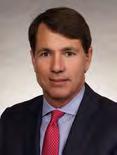
ALTERNATE
Kurt M. Spengler (407) 317-2186 kspengler@wickersmith.com
MEMBER SINCE 2001 Founded in 1952, Wicker Smith O’Hara McCoy & Ford P.A. is a full-service trial firm deeply experienced in handling significant and complex litigation for a broad variety of clients including multinational corporations to individuals. With more than 260 attorneys, Wicker Smith services clients throughout Central and South Florida and beyond. Our Central Florida region serves Melbourne, Orlando, Tampa, and Sarasota. In South Florida, we serve Fort Lauderdale, Key Largo, Miami, Naples, Palmetto Bay, and West Palm Beach. The backbone of our relationship with clients is built upon integrity and stability. We strive to establish long-term relationships with our clients built upon a partnership of communication and trust by listening to our clients, understanding their businesses, and developing legal solutions to best meet their individual needs.
Additional Offices: Fort Lauderdale, FL • PH (954) 847-4800 Jacksonville, FL • PH (904) 355-0225
Key Largo, FL • PH (305) 448-3939 | Melbourne, FL • PH (321) 610-5800 | Naples, FL • PH (239) 552-5300
Orlando, FL • PH (407) 843-3939 | Palmetto Bay, FL • PH (305) 448-3939 | Sarasota, FL • PH (941) 366-4200 Tampa, FL • PH (813) 222-3939 | West Palm Beach, FL • PH (561) 689-3800
PH (305) 461-8718
FAX (305) 441-1745
WEB www.wickersmith.com

PRIMARY Nicholas E. Christin (305) 461-8710 nchristin@wickersmith.com
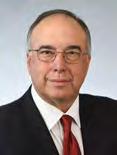
ALTERNATE
Oscar J. Cabanas ((305 )461-8710 ocabanas@wickersmith.com

ALTERNATE
Constantine “Dean” Nickas (305) 461-8703 cnickas@wickersmith.com
MEMBER SINCE 2001 Founded in 1952, Wicker Smith O’Hara McCoy & Ford P.A. is a full-service trial firm deeply experienced in handling significant and complex litigation for a broad variety of clients including multinational corporations to individuals. With more than 260 attorneys, Wicker Smith services clients throughout Central and South Florida and beyond. Our Central Florida region serves Melbourne, Orlando, Tampa, and Sarasota. In South Florida, we serve Fort Lauderdale, Key Largo, Miami, Naples, Palmetto Bay, and West Palm Beach. The backbone of our relationship with clients is built upon integrity and stability. We strive to establish long-term relationships with our clients built upon a partnership of communication and trust by listening to our clients, understanding their businesses, and developing legal solutions to best meet their individual needs.
Additional Offices: Fort Lauderdale, FL • PH (954) 847-4800 Jacksonville, FL • PH (904) 355-0225
Key Largo, FL • PH (305) 448-3939 | Melbourne, FL • PH (321) 610-5800 | Naples, FL • PH (239) 552-5300
Orlando, FL • PH (407) 843-3939 | Palmetto Bay, FL • PH (305) 448-3939 | Sarasota, FL • PH (941) 366-4200
Tampa, FL • PH (813) 222-3939 | West Palm Beach, FL • PH (561) 689-3800
FL CARR ALLISON | NORTHWEST FLORIDA
ADDRESS
305 South Gadsden St. Tallahassee, FL 32301
PH (850) 518-6913
FAX (850) 222-8475
WEB
www.carrallison.com

PRIMARY Christopher Barkas (850) 518-6913 cbarkas@carrallison.com
MEMBER SINCE 2001

ALTERNATE
William B. Graham (850) 518-6917 bgraham@carrallison.com
The Tallahassee office of Carr Allison brings a legacy of more than 40 years of providing quality legal service to north Florida. A member of USLAW since 2001, Carr Allison has increased the scope of services available to its clientele, covering the Gulf Coast from Mississippi through Alabama and across the northern Florida panhandle to Jacksonville on the Atlantic coast.The lawyers handle all insurance issues from licensing to litigation. Firm members have extensive trial experience in the event matters can’t be resolved. Clients of the firm include insurance carriers as well as self-insured companies. Having a unique location in Florida’s Capital gives us the ability to lobby the legislature and influence public policy.With the resources of more than 120 lawyers in Alabama, Florida and Mississippi behind it, Carr Allison’s offices in Tallahassee and Jacksonville stand ready to serve the national and international client faced with legal exposure in Florida.
Additional Offices:
Birmingham, AL • PH (205) 822-2006 | Daphne, AL • PH (251) 626-9340 | Dothan, AL • PH (334) 712-6459
ADDRESS
200 Ashford Center North
Suite 500 Atlanta, GA 30338
PH (770) 391-9100
FAX (770) 668-0878
WEB
www.boviskyle.com

PRIMARY
Kim M. Jackson (678) 338-3975 kjackson@boviskyle.com

ALTERNATE
Christina L. Gulas (678) 338-3982 clg@boviskyle.com

ALTERNATE
William M. Davis (678) 338-3981 wdavis@boviskyle.com
MEMBER SINCE 2023 Bovis, Kyle, Burch & Medlin, LLC was founded over 50 years ago, when John Bovis joined the firm’s predecessor started by federal Senior Judge William C. O’Kelley. Encouraged by our clients’ needs, the firm has grown to include attorneys dedicated to a wide variety of practice areas. In 2008, that growth spurred the firm’s move to a larger main office that includes state-of-the-art mediation space and advanced technology, helping us to better serve our clients’ needs. Bovis, Kyle, Burch & Medlin, LLC is a multi-practice firm with its main office located in the growing Perimeter Center area, north of downtown Atlanta, Georgia.
Additional Offices:
Cumming, GA • PH (770) 391-9100
HI GOODSILL ANDERSON QUINN & STIFEL LLP
ADDRESS
First Hawaiian Center Suite 1600
999 Bishop Street Honolulu, HI 96813
PH (808) 547-5600
FAX (808) 547-5880
WEB
www.goodsill.com

PRIMARY
Edmund K. Saffery (808) 547-5736 esaffery@goodsill.com

ALTERNATE
Johnathan C. Bolton (808) 547-5854 jbolton@goodsill.com
MEMBER SINCE 2004 With more than 50 attorneys located in downtown Honolulu, Goodsill offers knowledge and experience in all aspects of civil law, including business and securities law, banking, real estate, tax, trusts and estates, public utilities, immigration, international transactions and civil litigation. In addition to representing clients in alternative dispute resolution, a number of our trial lawyers are trained mediators and are retained to resolve disputes. Goodsill’s litigation department also handles appeals in both state and federal courts.
Goodsill attorneys provide innovative, solutions-oriented legal and general business counsel to an impressive list of domestic and international clients. We work closely with each client to identify and deploy the right mix of legal and business expertise, talented support staff and technology.
ID DUKE EVETT PLLC
ADDRESS
1087 W River Street
Suite 300 Boise, ID 83702
PH (208) 342-3310
FAX (208) 342-3299
WEB

www.dukeevett.com PRIMARY
Keely E. Duke (208) 342-3310 ked@dukeevett.com

ALTERNATE
Joshua S. Evett (208) 342-3310 jse@dukeevett.com
MEMBER SINCE 2012 Success. Excellence. Experience. Dedication. These values form the foundation of our firm. At Duke Scanlan & Hall, we are dedicated to representing corporate, insurance, and healthcare clients through litigation, trials, and appeals all across Idaho and Eastern Oregon. We offer the experience and dedication of seasoned trial attorneys who insist on excellence in the pursuit of success for our clients. Our clients know that we not only consistently win, but that we keep them informed of case strategy and developments, while helping them manage the costs of litigation. In handling each case, we employ the following key strategies to help us effectively and efficiently fight for our clients: early and continued case evaluation and budgeting; consistent and timely communication with our clients; efficient staffing; and the use of advanced legal technology both in and out of the courtroom. While we bring experience and dedication to each of our cases, we are also proud of our profession and feel strongly that we – and the profession – can positively impact the lives of others. As part of our commitment, we support enhancing diversity in the legal field, working to improve our profession, and helping our community.
Florence, AL • PH (256) 718-6040 | Jacksonville, FL • (904) 328-6456 | Gulfport, MS • PH (228) 864-1060
ADDRESS 2800 Ponce de Leon Blvd. Suite 800 Coral Gables, FL 33134
FL WICKER SMITH | SOUTH FLORIDA
53 | US LAW NETWORK MEMBER FIRMS
GA BOVIS KYLE BURCH & MEDLIN LLC
IL AMUNDSEN DAVIS LLC
ADDRESS
150 North Michigan Ave.
Suite 3300
Chicago, IL 60601
PH (312) 894-3200
FAX (312) 894-3210
WEB
www.amundsendavislaw. com

PRIMARY
Lew R.C. Bricker (312) 894-3224 lbricker@ amundsendavislaw.com

ALTERNATE
Larry A. Schechtman (312) 894-3253 lschechtman@ amundsendavislaw.com

ALTERNATE
Julie A. Proscia (630) 587-7911 jproscia@ amundsendavislaw.com
MEMBER SINCE 2001 Amundsen Davis is a full service business law firm of more than 230 attorneys serving companies of all sizes throughout the U.S. and beyond. Our attorneys are prepared to handle a multitude of diverse legal services from the inception of business, to labor and employment issues, and litigation. We understand the entrepreneurial thinking that drives business decisions for our clients. Amundsen Davis attorneys combine experience with a practical business approach to offer client-centered services efficiently and effectively. The foundation for our success is the integrity, quality and experience of our attorneys and staff, an understanding of the relationship between legal risks and business objectives, and the desire to explore new and innovative ways to solve client problems.
Additional Offices:
Crystal Lake, IL • PH (815) 337-4900 | Rockford, IL • PH (815) 987-0441 | St. Charles, IL • PH (630) 587-7910
IA SIMMONS PERRINE MOYER BERGMAN PLC
ADDRESS
115 Third Street SE Suite 1200 Cedar Rapids, IA 52401
PH (319) 896-4059
FAX (319) 366-1917
WEB www.spmblaw.com

PRIMARY
Kevin J. Visser (319) 366-7641 kvisser@spmblaw.com

ALTERNATE
Lynn W. Hartman (319) 366-7641 lhartman@spmblaw.com

ALTERNATE
Brian J. Fagan (319) 366-7641 bfagan@spmblaw.com
MEMBER SINCE 2005 Simmons Perrine Moyer Bergman PLC is a full-service law firm headquartered in Cedar Rapids, Iowa with an additional office located in Coralville, Iowa. The firm’s deep history dates back to 1916, having more than a century of experience representing national (and international) clients in matters from complex transportation, construction and intellectual property litigation to business transactions of all sizes. We are also home to one of the largest banking practices in Iowa and are known for our long history of serving the needs of families and their businesses, including estate and succession planning. Our attorneys work together to find the most efficient solutions for the best outcomes for our clients.
Additional Office: Coralville, IA • PH (319) 354-1019
KS/MO DYSART TAYLOR
ADDRESS
700 West 47th Street
Suite 410
Kansas City, MO 64112
PH (816) 931-2700
FAX (816) 931-7377
WEB www.dysarttaylor.com

PRIMARY
Amanda Pennington Ketchum (816) 714-3066 aketchum@dysarttaylor.com

ALTERNATE
Michael Judy (816) 714-3031 mjudy@dysarttaylor.com

ALTERNATE
John F. Wilcox, Jr. (816) 714-3046 jwilcox@dysarttaylor.com
MEMBER SINCE 2014 Dysart Taylor was founded in 1934. It is a highly respected Midwestern law firm with broad expertise to support its clients’ growth and success in a myriad of industries. It is also touted as one of the nation’s leading transportation law firms. Six members of the firm have served as Presidents of the Transportation Lawyers Association, the leading bar association for attorneys in the transportation industry.
Our attorneys are active in the community and have held governing positions in local and state bar associations and community organizations. Our AV-rated law firm is proud of its reputation for zealous advocacy, high ethical standards, and outstanding results. We are equally proud of the trust our local and national clients place in us.
ADDRESS
2 North Charles Street, Suite 600 Baltimore, MD 21201
PH (410) 752-8700
FAX (410) 752-6868
WEB
www.fandpnet.com

PRIMARY
Albert B. Randall, Jr. (410) 230-3622 arandall@fandpnet.com

ALTERNATE
Tamara B. Goorevitz (410) 230-3625 tgoorevitz@fandpnet.com

ALTERNATE
Stephen J. Marshall (410) 230-3612 smarshall@fandpnet.com
MEMBER SINCE 2005 Headquartered in Baltimore City, Franklin & Prokopik is a regional law firm comprised of over 70 experienced attorneys. Our mission of providing the highest quality personal service enables us to grow, as we attract and develop other likeminded attorneys to serve our clients. From twenty-four hour emergency services to complex litigation, we listen carefully to our clients and tailor our services to meet their outcome goals. Franklin & Prokopik provides a broad spectrum of legal services and represents corporate and business entities of all sizes, from small “mom and pops” to Fortune 500 companies across a wide range of industries.
Additional Offices: | Easton, MD • PH (410) 820-0600 | Hagerstown, MD • PH (301) 745-3900
MA
ADDRESS 53 State Street Boston, MA 02109
PH (617) 330-7017
FAX (617) 330-7550
WEB www.rubinrudman.com

PRIMARY
John J. McGivney (617) 330-7017 jmcgivney@rubinrudman.com

ALTERNATE
Michael D. Riseberg (617) 330-7180 mriseberg@rubinrudman.com

ALTERNATE
Michael F. Connolly (617) 330-7101 mconnolly@rubinrudman.com
MEMBER SINCE 2020 Founded over a century ago, Rubin and Rudman LLP is a full-service law firm with more than 75 lawyers in Boston, Massachusetts. With a diverse mix of practices, Rubin and Rudman serves national and international companies, including large public companies and closely held businesses; real estate developers; biotechnology, pharmaceutical and medical device makers; regulated industries, public entities and municipalities; insurance companies and their insureds; educational and other institutions; non-profit organizations; families and high net worth individuals. Rubin and Rudman also has a suburban office in Woburn, Massachusetts. Web: www. rubinrudman.com.
Our years of experience and continuing dedication to providing high quality legal advice has earned us client loyalty and respect amongst our peers. Our attorneys thrive on challenging assignments across diverse areas of the law. We offer innovation and responsiveness, with a collaborative team approach to solving problems that get results
Additional Office: | Woburn, MA • PH (781) 933-5505
ADDRESS
30 East Seventh Street Suite 2800
St. Paul, MN 55101
PH (651) 312-6500
FAX (651) 312-6618
WEB
www.larsonking.com

PRIMARY
Mark A. Solheim (651) 312-6503 msolheim@larsonking.com

ALTERNATE
David M. Wilk (651) 312-6521 dwilk@larsonking.com

ALTERNATE
Shawn M. Raiter (651) 312-6518 sraiter@larsonking.com
MEMBER SINCE 2002 As a nationally recognized firm with an enviable track record of success, Larson • King delivers high quality legal services through a nimble and cost-effective team, without strict or overpriced fee structures. Our firm is capable of efficiently managing dispersed litigation resources and our attorneys provide seamless integration and rapid response times. Larson • King partners work directly with clients, and are closely involved with all aspects of a dispute. Whether it is finding the right expert testimony in a construction case, or retaining local counsel in a remote jurisdiction, Larson • King attorneys hand-select the right team to achieve client objectives. With these resources, Larson • King stands ready to take a case to the highest court – there are times when this fact alone can deter the opposition.
MD FRANKLIN & PROKOPIK P.C.
RUBIN AND RUDMAN LLP MN larson•king, LLP
54 | US LAW NETWORK MEMBER FIRMS
MS CARR ALLISON | SOUTHERN MISSISSIPPI
ADDRESS
1319 26th Avenue
Gulfport, MS 39501
PH (228) 678-1005
FAX (228) 864-9160
WEB www.carrallison.com

PRIMARY Nicole M. Harlan (228) 864-1060 nharlan@carrallison.com
MEMBER SINCE 2001 Carr Allison is one of the fastest growing firms in the Southeast. Why? Our clients tell us the fact that we have lawyers with a lifetime of ties in the seven cities in Alabama, Florida and Mississippi where our offices are located is the primary reason they come to us for legal problems in those areas. In Mississippi, we provide litigation services to national clients in the southern part of Mississippi from our office in Gulfport.When clients face litigation exposure in Mississippi they often hear the horror stories involving the imposition of punitive damages. We like to think we “wrote the book” on the subject of punitive damages in Mississippi. With the resources of more than 120 lawyers in Alabama, Florida and Mississippi behind it, the Carr Allison office in Gulfport, Mississippi stands ready to serve the national and international client faced with legal exposure in southern Mississippi.
Additional Offices:
Birmingham, AL • PH (205) 822-2006 | Daphne, AL • PH (251) 626-9340 | Dothan, AL • PH (334) 712-6459
Florence, AL • PH (256) 718-6040 | Jacksonville, FL • PH (904) 328-6456 | Tallahassee, FL • PH (850) 222-2107
MS COPELAND, COOK, TAYLOR AND BUSH, P.A.
ADDRESS
600 Concourse, Suite 200 1076 Highland Colony Pkwy. Ridgeland, MS 39157
PH (601) 856-7200
FAX (601) 856-7626
WEB
www.copelandcook.com

PRIMARY James R. Moore, Jr. (601) 427-1301 jmoore@cctb.com

ALTERNATE J. Ryan Perkins (601) 427-1365 rperkins@cctb.com
MEMBER SINCE 2004 Copeland, Cook, Taylor and Bush, P.A. is a full-service AV-rated law firm based in the Metro Jackson area of Mississippi. Founded in 1985 by the four named shareholders, the firm’s original practice was based principally on Commercial Litigation, Oil and Gas, and Insurance Defense. The firm’s growth has resulted from strategic planning in direct response to the diverse needs of our clients.
CCTB has built a reputation for strong client relationships as a result of its lawyers’ skills in communication and counseling. If litigation cannot be avoided, our seasoned litigation group is prepared to aggressively defend the interests of our clients in state and federal courts. While Mississippi can be a challenging jurisdiction, the record of CCTB clients speaks well for the quality of our representation.
Additional Offices: Gulfport, MS • PH (228) 863-6101 | Hattiesburg, MS • PH (601) 264-6670
MO LASHLY & BAER, P.C.
ADDRESS
714 Locust Street St. Louis, MO 63101
PH (314) 621-2939
FAX (314) 621-6844
WEB www.lashlybaer.com

PRIMARY
Stephen L. Beimdiek (314) 436-8303 sbeim@lashlybaer.com

ALTERNATE
Kevin L. Fritz (314) 436-8309 klfritz@lashlybaer.com

ALTERNATE
Julie Z. Devine (314) 436-8329 jdevine@lashlybaer.com
MEMBER SINCE 2002 Lashly & Baer, P.C. is a mid-size Missouri law firm with deep roots in St. Louis and surrounding areas. As a full-service firm, we have been fortunate to develop a very diverse and extremely loyal base of national, regional and local clients. Our clients have learned to expect a high level of service and a great degree of satisfaction, regardless of their size. Whether it’s a publicly-owned or private business, government institution, hospital or an individual – to each client, there is no more important legal matter than theirs. We know this and work hard to achieve results and help our clients reach their goals. Given the complexities of today’s business environment, lawyers develop experience in specific practice areas, such as: civil litigation, corporate, product liability, retail, transportation, professional liability, labor and employment, education, estate planning, government, health care, medical malpractice defense, personal injury, toxic tort and real estate.
ADDRESS
The Milwaukee Station Third Floor
101 River Drive North Great Falls, MT 59401
PH (406) 761-5243
FAX (406) 761-4126
WEB www.dhhtlaw.com

PRIMARY
Maxon R. Davis (406) 761-5243
max.davis@dhhtlaw.com

ALTERNATE
Paul R. Haffeman (406) 761-5243
paul.haffeman@dhhtlaw.com

ALTERNATE
Stephanie Hollar (406) 761-5243
steph.hollar@dhhtlaw.com
MEMBER SINCE 2007 Davis, Hatley, Haffeman & Tighe, P.C., is a business and litigation law firm located in Great Falls, Montana. It has been in continuous existence since 1912. Originally the firm focused on insurance defense work. While the defense of insureds and insurers remains a primary component of DHHT’s practice, the firm’s work has expanded over the years to include business litigation, representation of national and multi-national corporations in class actions, products liability, employment, environmental, toxic tort and commercial litigation, and the defense of public entities, including the State of Montana and numerous cities and counties, as well as a wide range of transactional work, running the gamut of business formations, farm and ranch sales, commercial leasing, oil and gas, and business consulting. There is also an active estate planning and probate practice. The firm carries on a state-wide trial practice. The lawyers at DHHT are proud of their reputation in the Montana legal community as attorneys who are always willing to go the distance for their clients. Since 2007, DHHT lawyers tried cases to verdict in federal and state courts all over Montana, including Great Falls, Billings, Missoula, Helena, Bozeman, Kalispell, Lewistown, Glasgow, Deer Lodge and Shelby. That reputation assures clients of experienced representation through all phases of litigation and instant creditability with the Montana bench & bar.
ADDRESS
1700 Farnam Street Suite 1500
Omaha, NE 68102
PH (402) 344-0500
WEB
Since 1912 our simple philosophy has never changed: at the core of every case is the client. The client’s goals become our goals, and our firm works tirelessly to find the most efficient and cost-effective solution to each legal issue. MT
FAX (402) 344-0588
www.bairdholm.com

PRIMARY
Jennifer D. Tricker (402) 636-8348 jtricker@bairdholm.com

ALTERNATE
J. Scott Searl (402) 636-8265 ssearl@bairdholm.com

ALTERNATE
Christopher R. Hedican (402) 636-8311 chedican@bairdholm.com
MEMBER SINCE 2007 Baird Holm LLP’s integrated team of 97 attorneys, licensed in 22 states, is committed to connecting each of its valued clients to the positive outcomes they seek. With extensive and diverse expertise, we leverage one another’s skills to respond efficiently to our clients’ local, regional, national and international legal needs. We are proud to represent public and private companies, individuals, private funds and other investors, financial institutions, governmental entities and nonprofit organizations.
Rooted by the promise to constantly evolve in anticipation of our clients’ changing needs, Baird Holm has enjoyed steady and measured growth since its founding in 1873. We are proud of our strong tradition of uncompromising quality, dedication to clients, personal and professional integrity, and service to the profession and the community.
NV THORNDAL ARMSTRONG, PC
ADDRESS
1100 E. Bridger Avenue Las Vegas, NV 89101
PH (702) 366-0622
FAX (702) 366-0327
WEB
www.thorndal.com

PRIMARY
Brian K. Terry (702) 366-0622 bkt@thorndal.com

ALTERNATE
Katherine F. Parks (775) 786-2882 kfp@thorndal.com

ALTERNATE
Michael C. Hetey (702) 366-0622 mch@thorndal.com
MEMBER SINCE 2007 Thorndal Armstrong has enjoyed a strong Nevada presence since 1971. Founded in Las Vegas, the firm has grown from two lawyers to just under thirty. It expanded its statewide services in 1986 with the opening of the northern Nevada office in Reno. An additional office was opened in Elko in 1996 to further satisfy client demand in the northeastern portion of the state.
With a strong emphasis in civil defense litigation for insureds and self-insureds, including expertise in complex litigation, general business, commercial law, and industrial insurance defense, Thorndal, Armstrong, Delk, Balkenbush & Eisinger is committed to providing thorough, efficient and effective legal services to its clients. Its experienced attorneys, combined with a highly capable professional support staff, allow the firm to represent clients on a competitive, cost-efficient basis.
Additional Office: Reno, NV • PH (775) 786-2882
DAVIS, HATLEY, HAFFEMAN & TIGHE, P.C.
baird holm
NE
llp
55 | US LAW NETWORK MEMBER FIRMS
NJ CONNELL FOLEY LLP
ADDRESS
56 Livingston Avenue
Roseland, NJ 07068
PH (973) 535-0500
FAX (973) 535-9217
WEB www.connellfoley.com

PRIMARY
Kevin R. Gardner (973) 840-2415 kgardner@connellfoley.com

ALTERNATE
John D. Cromie (973) 840-2425 jcromie@connellfoley.com

ALTERNATE
Karen P. Randall (973) 840-2423 krandall@connellfoley.com
MEMBER SINCE 2005 A leading full-service regional law firm headquartered in New Jersey, Connell Foley LLP has more than 140 attorneys across seven offices. We take a hands-on approach to provide outstanding legal services while maintaining a firm culture predicated on service and teamwork. Our clients range from Fortune 500 corporations, to government entities, middle market and start-up businesses, and entrepreneurs. With experience in the various industries in which our clients operate, we offer innovative and cost-effective solutions. Connell Foley is recognized as a leader in numerous areas of law, including: banking and finance, bankruptcy and restructuring, commercial litigation, construction, corporate law, cybersecurity, environmental, immigration, insurance, labor and employment, product liability, professional liability, real estate, zoning and land use, transportation, trusts and estates, and white collar criminal defense.
NM MODRALL SPERLING
ADDRESS
500 Fourth Street N.W. Suite 1000 Albuquerque, NM 87102
PH (505) 848-1800
FAX (505) 848-9710
WEB www.modrall.com

PRIMARY
Megan T. Muirhead (505) 848-1888
Megan.Muirhead@modrall.com

ALTERNATE
Timothy L. Fields (505) 848-1841
Timothy.Fields@modrall.com
MEMBER SINCE 2004 Modrall Sperling provides high quality legal services on a range of issues and subjects important to businesses and individuals in New Mexico. Our clients include financial institutions, state and local governmental bodies, insurance companies, small and family businesses, national and multi-national corporations, energy and natural resource companies, educational institutions, private foundations, farmers, ranchers, and other individuals.With offices in Albuquerque and Santa Fe, the firm provides innovative legal solutions and is prepared to meet both the basic and sophisticated demands of business and individual clients in a challenging economy. Since its founding in 1937, Modrall Sperling has been recognized for excellence in a variety of practice areas and many of our lawyers have been consistently ranked among the best and brightest by peer review, as conducted by legal ranking organizations including Best Lawyers in America®, Chambers USA, Southwest Super Lawyers®, Martindale-Hubbell, and Benchmark Litigation. Several of our lawyers have also been recognized on a regional and national level.
Additional
NY RIVKIN RADLER LLP
ADDRESS
926 RXR Plaza Uniondale, NY 11556-0926
PH (516) 357-3000
FAX (516) 357-3333
WEB
www.rivkinradler.com

PRIMARY
David S. Wilck (516) 357-3347
david.wilck@rivkin.com

ALTERNATE
Jacqueline Bushwack (516) 357-3239 jacqueline.bushwack@rivkin.com

ALTERNATE
Stella Lellos (516) 357-3373 stella.lellos@rivkin.com
MEMBER SINCE 2016 Through five offices and 200 lawyers, Rivkin Radler consistently delivers focused and effective legal services. We’re committed to best practices that go beyond professional and ethical standards. Our work product is clear and delivered on time. As a result, our clients proceed with confidence.
We provide strong representation and build even stronger client relationships. Many clients have been placing their trust in us for more than 30 years. Our unwavering commitment to total client satisfaction is the driving force behind our firm. We are the advisor-of-choice to successful individuals, middle-market companies and large corporations.
Additional Office: New York, NY • PH (212) 455-9555
ADDRESS
100 Clearbrook Road Elmsford, NY 10523
PH (914) 704-4400
FAX (914) 704-4450
WEB
www.bmslegal.com

PRIMARY
Lisa
(914) 704-4402 lblack@bmslegal.com

ALTERNATE
Dana K. Marjieh (914) 704-4403
dkmarjieh@bmslegal.com

ALTERNATE
Sheryl A. Sanford (914) 704-4404
ssanford@bmslegal.com
MEMBER SINCE 2024 Teamwork for forward-thinking client solutions. We are a team of seasoned attorneys who act as tireless advocates for our clients. Our decades of combined experience and knowledge inform strategies that drive successful outcomes. With a results-focused, cost-conscious approach, we are dedicated to creating meaningful and long-term client partnerships. At Black Marjieh & Sanford LLP, our guiding principle is to foster an inclusive, rewarding and collaborative work environment that inspires excellence, passion and innovation. It’s our people who drive us forward as a firm and on behalf of our clients. We are nationally certified as a Woman Business Enterprise (WBE). In addition, we are certified as a Great Place to Work for 2022-2023, with 100% of our team reporting they are proud to tell others they work at Black Marjieh. Black Marjieh & Sanford was also selected as the 2019 winner of the WWBA Family Friendly Employer Award and recognized as one of Fortune’s Best 50 Small Workplaces for 2018. We were especially proud to be the only law firm on this list. Seven BM&S attorneys have been recognized by Super Lawyers® for 2023 honors.
ADDRESS
301 Fayetteville St. Ste. 1900
P.O. Box 1801 (27602) Raleigh, NC 27601
PH (919) 783-6400
FAX (919) 783-1075
WEB
www.poynerspruill.com

PRIMARY
Deborah E. Sperati (252) 972-7095 dsperati@poynerspruill.com

ALTERNATE
Randall R. Adams (252) 972-7094 radams@poynerspruill.com

ALTERNATE
Sarah DiFranco (704) 342-5330 sdifranco@poynerspruill.com
MEMBER SINCE 2004 Poyner Spruill LLP is a large, multidisciplinary North Carolina law firm, providing a comprehensive range of business and litigation legal services. The firm has a reputation for professional excellence and client service throughout the Southeast. Poyner Spruill has approximately 100 attorneys with offices in Charlotte, Raleigh, Rocky Mount, Southern Pines and Wilmington, from which we cover all federal and state courts. Approximately one-half of the firm attorneys practice litigation including a broad range of general commercial litigation, bank litigation and defense work in various types of liability cases. Many of our practice groups send up-to-the-minute legal developments on a myriad of issues pertinent to our clients’ business needs. Our periodic mailings are distributed via e-mail and posted to our web site’s publications page. We invite you and your clients to take advantage of this complimentary news service by signing up through our web site.
ND LARSON • KING
ADDRESS 10 Roberts Street North Fargo, ND 58102
PH (877) 373-5501
FAX (651) 312-6618
WEB
www.larsonking.com

PRIMARY
Jack E. Zuger (701) 400-1423 jzuger@larsonking.com

ALTERNATE
Nicholas A. Rauch (701) jnrauch@larsonking.com

ALTERNATE
John A. Markert (701) jmarkert@larsonking.com
MEMBER SINCE 2024 As a nationally recognized firm with an enviable track record of success, Larson • King delivers high quality legal services through a nimble and cost-effective team, without strict or overpriced fee structures. Our firm is capable of efficiently managing dispersed litigation resources and our attorneys provide seamless integration and rapid response times. Larson • King partners work directly with clients, and are closely involved with all aspects of a dispute. Whether it is finding the right expert testimony in a construction case, or retaining local counsel in a remote jurisdiction, Larson • King attorneys hand-select the right team to achieve client objectives. With these resources, Larson • King stands ready to take a case to the highest court – there are times when this fact alone can deter the opposition.
NY BLACK MARJIEH & SANFORD LLP NC POYNER SPRUILL LLP Additional Offices: Charlotte, NC • PH (704) 342-5250 | Rocky Mount, NC • PH (252) 446-2341 | Southern Pines, NC • PH (910) 692-6866
J. Black
Additional Offices: Cherry Hill, NJ • PH (856) 317-7100 | Jersey City, NJ • PH (201) 521-1000 Newark, NJ • PH (973) 436-5800 | New York, NY • PH (212) 307-3700
56 | US LAW NETWORK MEMBER FIRMS
Office: Santa Fe, NM • PH (505) 983-2020
OH ROETZEL & ANDRESS
ADDRESS
1375 East Ninth Street
One Cleveland Center 10th Floor Cleveland, OH 44114
PH (216) 623-0150
FAX (216) 623-0134
WEB www.ralaw.com

PRIMARY
Bradley A. Wright (330) 849-6629 bwright@ralaw.com

ALTERNATE
Moira H. Pietrowski (330) 849-6761 MPietrowski@ralaw.com

ALTERNATE
Chris Cotter (330) 819-1127 ccotter@ralaw.com
MEMBER SINCE 2003 Founded in 1876, Roetzel & Andress is a leading full-service law firm headquartered in Ohio. The firm provides comprehensive legal services to publicly traded and privately held companies, financial services participants, professional and governmental organizations, as well as private investors, industry executives and individuals. With over 160 lawyers in 12 offices, including five regional offices in Ohio, Roetzel & Andress collaborates seamlessly across industries and disciplines to provide sophisticated transactional, employment and litigation guidance to clients across the public and private sectors.
Additional Offices:
Akron, OH • PH (330) 376-2700 | Cincinnati, OH • PH (513) 361-0200 | Columbus, OH • PH (614) 463-9770
Toledo, OH • PH (419) 242-7985 | Wooster, OH • PH (330) 376-2700 | Detroit, MI • PH (313) 309-7033
OK PIERCE COUCH HENDRICKSON BAYSINGER & GREEN, L.L.P.
ADDRESS
1109 North Francis Pierce Memorial Building Oklahoma City, OK 73106
PH (405) 235-1611
FAX (405) 235-2904
WEB www.piercecouch.com
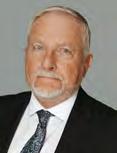
PRIMARY
Gerald P. Green (405) 552-5271 jgreen@piercecouch.com

ALTERNATE
Mark E. Hardin (918) 583-8100 mhardin@piercecouch.com

ALTERNATE
Amy Bradley-Waters (918) 583-8100 abradley-waters@ piercecouch.com
MEMBER SINCE 2002 Pierce Couch Hendrickson Baysinger & Green, L.L.P. was founded in 1923 and is the largest litigation defense firm in the state of Oklahoma. The Firm has offices in Oklahoma City and Tulsa and is engaged in the representation of clients in all 77 Oklahoma Counties and all three federal district courts. Our attorneys have expertise in the areas listed below and prides itself in developing strategies for the defense of its clients, delivering advice and counsel to deal with claims ranging from the defensible to the catastrophic. Our attorneys have tried hundreds of cases to jury verdict and have mediated and/or arbitrated thousands of disputes. We attribute the success and longevity of our firm to our steadfast philosophy of combining the best in cost-efficient legal services with client-tailored strategies.
Additional Office: Tulsa, OK • PH (918) 583-8100
ADDRESS
1515 SW Fifth Avenue
Suite 600 Portland, OR 97201-5449
PH (503) 228-7967
FAX (503) 222-7261
WEB
www.williamskastner.com

PRIMARY
Thomas A. Ped (503) 944-6988 tped@williamskastner.com

ALTERNATE
Heidi L. Mandt (503) 228-7967 hmandt@williamskastner.com
MEMBER SINCE 2002 Williams Kastner has been providing legal and business advice to a broad mix of clients since our Seattle office opened in 1929. With more than 65 lawyers in Washington and Oregon, the firm combines the resources and experience to offer national and regional capabilities with the client service and sensibility a local firm can provide. The firm culture is characterized by hard work, high-performance teamwork, diversity and partnerships with our clients and the local community. Our commitment to our clients is reflected through our quality legal work, personalized approach to servicing our clients and the integrity and pride we devote towards the practice of law.
Additional Office: Seattle, WA • PH (206) 628-6600
ADDRESS
1515 Market Street
Suite 1900 Philadelphia, PA 19102
PH (215) 563-9811
FAX (215) 557-0999
WEB
www.sweeneyfirm.com

PRIMARY
J. Michael Kunsch (215) 963-2481
michael.kunsch@ sweeneyfirm.com

ALTERNATE
Robyn F. McGrath (215) 963-2485
robyn.mcgrath@ sweeneyfirm.com

ALTERNATE
Frank Gattuso (856) 671-6407
frank.gattuso@ sweeneyfirm.com
MEMBER SINCE 2003 Founded in 1971, Sweeney & Sheehan is a litigation firm of experienced and dedicated trial attorneys and other professionals working in partnership with our clients to meet their changing and increasingly sophisticated particular needs. With client satisfaction our primary goal, we are committed to delivering superior legal services and pursuing excellence in all aspects of our practice.
Our success is achieved without compromising the ideals which define the best in our profession: integrity, loyalty and expertise. We constantly enhance our firm to meet the expectations of our clients. Committed to these principles, we have a reputation as skillful and effective litigators in a broad range of practice areas, providing the talent and experience of larger firms while maintaining flexibility to deliver personalized, cost-effective quality service.
ADDRESS
1500 One Gateway Center
420 Ft. Duquesne Blvd. Pittsburgh, PA 15222
PH (412) 281-2288
FAX (412) 281-3388
WEB
OR WILLIAMS KASTNER PA
www.pionlaw.com

PRIMARY
John T. Pion (412) 667-6200 jpion@pionlaw.com

ALTERNATE
Michael F. Nerone (412) 667-6234 mnerone@pionlaw.com

ALTERNATE
Timothy R. Smith (412) 667-6212 tsmith@pionlaw.com
MEMBER SINCE 2011 Pion, Nerone, Girman & Smith, P.C. is a civil litigation firm with offices in Pittsburgh and Harrisburg.
Our practice areas include transportation, railroad, asbestos, premises liability, products liability, family law, estate, Medicare Set-Aside, workers’ compensation, and general liability. In addition to trial representation, catastrophic response and business consulting, the firm has an appellate and complex research group. The Partners of the firm have more than 150 years of collective experience.
Most of our lawyers and staff were born and raised in Pennsylvania and we are proud to be part of the distinguished Pittsburgh and Harrisburg legal communities. The emergency response telephone number (412-600-0217) is answered by a lawyer 24/7 and allows us to provide high quality service to our clients. We urge our clients to utilize this number should the need arise.
ADDRESS
One Citizens Plaza 8th Floor Providence, RI 02903
PH (401) 274-7200
FAX (401) 751-0604
WEB
www.apslaw.com

PRIMARY
Richard R. Beretta, Jr. (401) 427-6228 rberetta@apslaw.com

ALTERNATE
Robert P. Brooks (401) 274-7200 rbrooks@apslaw.com

ALTERNATE
Elizabeth M. Noonan (401) 274-7200 bnoonan@apslaw.com
MEMBER SINCE 2008 Since 1960, Adler Pollock & Sheehan P.C. has delivered client-focused business law services designed to achieve cost-effective solutions for today’s complex challenges. Based in Providence, the firm is a full-service regional law firm, featuring a sophisticated corporate practice and a nationally-renowned litigation practice. The firm successfully combines the depth and breadth of expertise of a large law firm with the advantages of responsive and direct personal service by partners found in smaller firms.
Among the firm’s more than 60 attorneys are several former leaders of the Rhode Island legislature as well as former senior members of state administrations who are able to provide a unique understanding of governmental processes for clients. The firm’s client base includes Fortune 500 and 100 companies, small and medium-sized businesses, individuals, public and quasi-public agencies, and private not for- profit organizations.
Additional Office: Newport, RI • PH (401) 847-1919
& SHEEHAN,
PION, NERONE, GIRMAN & SMITH, P.C.
SWEENEY
P.C. PA
57 | US LAW NETWORK MEMBER FIRMS
RI ADLER POLLOCK & SHEEHAN P.C.
ADDRESS
1515 Lady Street
Columbia, SC 29201
PO Box 12129 (29211)
PH (803) 256-2233
FAX (803) 256-9177
WEB
www.swblaw.com

PRIMARY
Mark S. Barrow (803) 256-2233 msb@swblaw.com

ALTERNATE
Kenneth B. Wingate (803) 256-2233 kbw@swblaw.com

ALTERNATE
Christy E. Mahon (803) 256-2233 cem@swblaw.com
MEMBER SINCE 2002 Sweeny, Wingate & Barrow, P.A. is a litigation and consulting law firm serving the needs of individuals, businesses and insurance companies throughout South Carolina. We are committed to a philosophy of excellence, integrity, and service.
Cooperation, selflessness, and diligence are essential to providing high-quality service to every client. At Sweeny, Wingate and Barrow, we are committed to providing excellent representation to our clients in helping achieve their legal goals. Our relationships with our clients are honest, open, and fair.
Our practice covers many legal issues in two distinct areas. As a business and tort litigation defense firm, we provide defense representation to corporations and individuals in trucking litigation, construction defect litigation, product liability cases, medical malpractice cases, and insurance coverage matters, including opinion letters and defense of accident claims, professional liability, construction defect, and product liability defense.
The other section of our practice includes the transactions and litigation situations that arise in connection with business planning, estate planning, probate administration, and probate litigation. We handle contract drafting, incorporations, startups, wills, trusts, probate matters, and countless other business needs for our clients.
Additional Office: Hartsville, SC • PH (843) 878-0390
PH
FAX
WEB

Lindsey Riter-Rapp l.riter-rapp@riterlaw.com

ALTERNATE
Darla Pollman Rogers dprogers@riterlaw.com

ALTERNATE Jason Rumpca j.rumpca@riterlaw.com.
MEMBER SINCE 2004 The original predecessor firm of Riter Rogers, LLP commenced the practice of law in Pierre, South Dakota over 100 years ago.
The firm has a wide and varied practice, particularly in central South Dakota, but also maintains a statewide litigation practice, regularly appears before State boards and commissions, and serves as legislative counsel for numerous associations and cooperatives.
Firm members have spent considerable time representing insurance companies in defense of casualty suits, products liability claims and similar matters.
The firm handles substantial regulatory law matters, and also does much work relating to banking, contracts, real estate, title work and probate and estate planning.
All members of the firm are active in professional activities and civic and fraternal organizations.
ADDRESS
13155 Noel Road
Suite 1000
Dallas, TX 75240
PH (972) 934-9100
FAX (972) 934-9200
WEB
www.feesmith.com

PRIMARY
Michael P. Sharp (972) 980-3255 msharp@feesmith.com

ALTERNATE
Thomas W. Fee (972) 980-3259 tfee@feesmith.com

ALTERNATE
Jennifer M. Lee (972) 980-3264 jlee@feesmith.com
MEMBER SINCE 2005 Fee, Smith & Sharp, LLP an AV rated firm based in Dallas, Texas, was founded to service the litigation needs of the firm’s individual, corporate and insurance clients. The partners’ combined experience as lead counsel in well over 200 civil jury trials allows the firm to deliver an aggressive, team-oriented approach on behalf of their valued clients. The partnership is supported by a team of talented, experienced, and professional associate attorneys and legal staff who understand the importance of delivering efficient, quality legal services. The attorneys at Fee, Smith & Sharp, LLP are actively involved in representing clients throughout Texas in a variety of commercial, property and casualty cases at the state, federal and appellate levels.
Additional Office: Austin, TX • PH (512) 479-8400
ADDRESS
One Allen Center 500 Dallas, Suite 2800 Houston, Texas 77002
PH (713) 655-1200
FAX
(713) 655-0222
WEB
www.mehaffyweber.com

PRIMARY
Barbara J. Barron (832) 526-9728
BarbaraBarron@ mehaffyweber.com

ALTERNATE
Bernabe G. Sandoval, III (713) 210-8906
TreySandoval@ mehaffyweber.com

ALTERNATE
Michele Y. Smith (409) 951-7736 MicheleSmith@ mehaffyweber.com
MEMBER SINCE 2019 MehaffyWeber was founded in 1946 as a litigation firm. As our clients’ needs expanded, we evolved into a broad-based law firm, still with a strong litigation emphasis. We tailor our approaches to best suit the client’s individual needs. We are proud to have a long record of winning cases in tough jurisdictions, but we know that not all cases need to be tried. We use legal motions and other means to achieve positive results pre-trial, and when appropriate, we work hand in hand with our clients to secure advantageous settlements. Today, we continue to believe that hard work, ethical and innovative approaches are core values that result in success for the firm and our clients.
Additional Offices: Austin, TX • PH (512) 394-3840 | Beaumont, TX • PH (409) 835-5011 | San Antonio, TX • PH (210) 824-0009
UT STRONG & HANNI
PH


MEMBER
regularly deal with matters involving contracts, transportation law, insurance, products liability, and employment rights. Attorneys in the real estate section are involved in transactions regarding construction, development, leasing and operation of shopping centers, office buildings, industrial plants, and warehouse distribution centers. The firm is involved in financing techniques for real estate syndications, issuance of tax-exempt bonds, and equity participations.
Additional
ADDRESS
102 South 200 East, Suite 800 Salt Lake City, UT 84111
PH (801) 532-7080
FAX (801) 596-1508
WEB
www.strongandhanni.com

PRIMARY Kristin A. VanOrman (801) 323-2020 kvanorman@ strongandhanni.com

ALTERNATE
Peter H. Christensen (801) 323-2008 pchristensen@ strongandhanni.com

ALTERNATE
Ryan P. Atkinson (801) 323-2195 ratkinson@ strongandhanni.com
MEMBER SINCE 2005 Strong & Hanni, one of Utah’s most respected and experienced law firms, demonstrates exceptional legal ability and superior quality. For more than one hundred years, the firm has provided effective, efficient, and ethical legal representation to individuals, small businesses, and large corporate clients. The firm’s attorneys have received awards and commendations from many national and state legal organizations. The firm’s practice groups allow attorneys to focus their in-depth knowledge in specific areas of the law. The firm’s organization fosters interaction with attorneys across the firm’s practice groups insuring that even the most complex legal matter is handled in the most effective and efficient manner. The firm’s commitment to up to date technology and case management tools allows matters to be handled with client communication and document security in mind. The firm’s trial attorneys have received commendations and recognition from local, state, and national organizations. Our business is protecting your business.
Additional Office: Sandy, UT • PH (801) 532-708
WINGATE & BARROW,
SC SWEENY,
P.A.
ROGERS, LLP ADDRESS Professional & Executive Building
South Coteau Street Pierre, SD 57501
SD RITER
319
(605) 224-5825
(605) 224-7102
www.riterlaw.com PRIMARY
TX FEE, SMITH & SHARP LLP TX MEHAFFY WEBER PC PRIMARY Lee L. Piovarcy (901)
lpiovarcy@martintate.com ALTERNATE Earl W. Houston, II (901)
ehouston@martintate.com ALTERNATE Shea Sisk Wellford (901) 522-9000 swellford@martintate.com
6410 Poplar Avenue Suite 1000 Memphis, TN 38119
522-9000
522-9000
ADDRESS
(901) 522-9000 FAX (901) 527-3746 WEB www.martintate.com
Office: Nashville, TN • PH (615) 627-0668
SINCE
Martin
was endowed by its founder, Judge John D. Martin, Sr., over 100 years
solid
service
clients,
perspective
legal services
innovative legal
create practical solutions
clients
competitive
firm’s areas of significant practice
business
commercial transactions; litigation
state
federal courts; trusts
estates;
commercial
transactions, bankruptcy
creditor’s rights. Attorneys
2002
Tate
ago, with a
tradition of
to
the profession and the Memphis Community. Because of its long-term commitment to the Memphis community, Martin Tate projects a unique
in delivering legal services for Memphis businesses and national clients. The firm combines quality
with
thinking to
that provide
a
edge. The
are
and
in
and
and
and
real estate. The firm’s attorneys counsel clients in M&As, banking, IPOs, partnership matters, PILOT
reorganizations and
58 | US LAW NETWORK MEMBER FIRMS
TN MARTIN, TATE, MORROW & MARSTON, P.C.
ADDRESS
1211 E. Cary Street
Richmond, VA 23219
PH (804) 421-6250
FAX (804) 421-6251
WEB
www.moranreevesconn.com

PRIMARY A.C.Dewayne Lonas (804) 864-4820 dlonas@moranreevesconn.com

ALTERNATE
Martin A. Conn (804) 864-4804 mconn@moranreevesconn.com

ALTERNATE
Shyrell A. Reed (804) 864-4826 sreed@moranreevesconn.com
MEMBER SINCE 2022 Richmond, Virginia-based Moran Reeves & Conn PC specializes in complex litigation, business transactions, and commercial real estate/finance. Its attorneys and legal professionals operate within a technologically advanced, nimble work environment. Client service is foremost at Moran Reeves Conn. Firm leaders also encourage community involvement and are proponents of a collaborative, inclusive culture.<br><br>The firm’s litigation team handles product liability defense, toxic torts and environmental litigation, construction litigation, premises liability, commercial litigation, and general liability defense. Its award-winning healthcare team works on matters involving medical professional liability, healthcare litigation, and employment disputes. Known as experienced trial attorneys, MRC lawyers also pursue alternative means of dispute resolution when appropriate, including arbitration and mediation.<br><br>The firm’s robust business transactional practice includes representation of corporate clients and developers in large-scale financing and commercial real estate deals. Team attorneys are experienced in entity formation, creditors’ rights, securities offerings, tax-advantaged arrangements such as 1031 exchanges, and other complex transactions.
WA WILLIAMS KASTNER
PH (206) 628-6600
FAX (206) 628-6611
WEB www.williamskastner.com

PRIMARY
Rodney L. Umberger (206) 628-2421 rumberger@williamskastner.com

ALTERNATE
Sheryl J. Willert (206) 628-2408 swillert@williamskastner.com
MEMBER SINCE 2002 Williams Kastner has been providing legal and business advice to a broad mix of clients since our Seattle office opened in 1929. With more than 65 lawyers in Washington and Oregon, the firm combines the resources and experience to offer national and regional capabilities with the client service and sensibility a local firm can provide. The firm culture is characterized by hard work, high-performance teamwork, diversity and partnerships with our clients and the local community. Our commitment to our clients is reflected through our quality legal work, personalized approach to servicing our clients and the integrity and pride we devote towards the practice of law.
Additional Office: Portland, OR • PH (503) 228-7967
WV FLAHERTY SENSABAUGH BONASSO PLLC
ADDRESS
200 Capitol Street
Charleston, WV 25301
PH (304) 345-0200
FAX (304) 345-0260
WEB www.flahertylegal.com

PRIMARY
Peter T. DeMasters (304) 225-3058 pdemasters@flahertylegal.com

ALTERNATE
Tyler Dinsmore (304) 347-4234 tdinsmore@flahertylegal.com

ALTERNATE
Michael Bonasso (304) 347-4259 mbonasso@flahertylegal.com
MEMBER SINCE 2015 Flaherty Sensabaugh Bonasso PLLC serves local, national and international clients in the areas of litigation and transactional law. Founded in 1991, today more than 50 attorneys provide quality counsel to turn clients’ obstacles into opportunities.
At Flaherty, we are deeply committed to partnering with our clients to obtain optimum results. Throughout our history, our prime consideration has been our client’s interests, with a key consideration of the costs associated with litigation.
While avoiding litigation may be desired, when necessary, our attorneys stand prepared to bring their considerable experience to the courtroom. We are experienced in trying matters ranging from simple negligence to complex, multi-party matters involving catastrophic damages.
ADDRESS
325 E. Chicago Street, Suite 200 Milwaukee, WI 53202
PH (414) 312-7003
FAX (414) 755-7089
WEB
www.llgmke.com

PRIMARY
Jack J. Laffey (414) 881-3539 jlaffey@llgmke.com

ALTERNATE
Joseph S. Goode (414) 312-7181 jgoode@llgmke.com

ALTERNATE
Mark M. Leitner (414) 312-7108 mleitner@llgmke.com
MEMBER SINCE 2019 Relentless. Inspired. Committed. Authentic. Our team of professionals share an almost fanatical commitment to practicing Law as a means of balancing the unbalanced, leveling the unleveled, and bringing big-time results to you, our client.
We want the hardest problems you can throw at us. There is nothing we love more than diving deep into complex litigation and disputes. We will solve your problems, no matter how large or how small. This team thrives under pressure, so pile it on. Our team of battle-tested attorneys brings an unmatched drive and determination to every client. We don’t rest on our laurels. We innovate and create new solutions to produce winning results. We bring order and symmetry to chaos and complexity. We love what we do.
Lots of firms talk about being responsive; we live it. Our commitment to serving our clients fundamentally shapes how we view and practice law.
We are human beings. While we thrive under incredible challenges and difficult circumstances, we also care deeply about the people we work with and represent. Being authentic also means that we recognize our clients are people too. We understand them, and we know them.
ADDRESS
159 North Wolcott Suite 400 Casper, WY 82601
PH (307) 265-0700
FAX (307) 266-2306 WEB
www.wpdn.net

PRIMARY
Scott E. Ortiz (307) 265-0700 sortiz@wpdn.net

ALTERNATE
Scott P. Klosterman (307) 265-0700 sklosterman@wpdn.net

ALTERNATE
Keith J. Dodson (307) 265-0700 kdodson@wpdn.net
MEMBER SINCE 2006 Williams, Porter, Day & Neville, P.C. (WPDN) has deep roots in Wyoming, running back over 70 years. WPDN is the pinnacle of representation in Wyoming and has been involved in Wyoming’s most seminal legal decisions, across many practice areas, in state and Federal courts. WPDN represents clients from international, national, and state-based insurance providers, publically-traded to privately-held natural resource companies, national and local trucking operations, local and state governmental entities, ranches, banks and other business entities. With its high standards and integrity, WPDN offers clients a vast knowledge and understanding of the ways of Wyoming and provides the highest quality representation within its practice. WPDN attorneys and staff work as a team to ensure fairness, productive working atmosphere and high-quality representation.
Additional
MORAN
& CONN PC
VA
REEVES
ADDRESS Two Union Square 601 Union Street Suite 4100 Seattle, WA 98101-2380
WI LAFFEY,LEITNER & GOODE LLC WY WILLIAMS, PORTER, DAY & NEVILLE, P.C.
Offices: Clarksburg, WV • PH (304)
| Morgantown, WV • PH (304) 598-0788 | Wheeling, WV • PH (304) 230-6600
624-5687
59 | US LAW NETWORK MEMBER FIRMS
ARGENTINA | BARREIRO, OLIVA, DE LUCA, JACA & NICASTRO
ADDRESS
Av. Córdoba 1309 3° A
Ciudad de Buenos Aires
C1055AAD Argentina
PH +54 11 4814 1746
WEB www.bodlegal.com

PRIMARY
Nicolas Jaca Otano +54 11 4814 1746 njaca@bodlegal.com

ALTERNATE
Gonzalo Oliva-Beltrán +54 11 4814-1746 goliva@bodlegal.com

ALTERNATE Ricardo Barreiro Deymonnaz +54 11 4814-1746 rbarreiro@bodlegal.com
MEMBER SINCE 2019 BARREIRO, OLIVA, DE LUCA, JACA & NICASTRO is a law firm based in Buenos Aires, Argentina. We advise our clients on all business matters including M&A, Banking & Finance, Employment & Labor, Dispute Resolution, Regulatory and Tax. We also have special teams focused on infrastructure and construction, corporate and foreign investments, technology, energy and natural resources. As a boutique firm, we have a high involvement at partner and senior associate level, which allows us to work efficiently and to provide an outstanding level of service to our clients
CANADA | THERRIEN COUTURE JOLI-COEUR L.L.P. | QUEBEC
ADDRESS
1100 Blvd. René-Lévesque
West, Suite 2000
Montreal, Quebec H3B 4N4
PH (514) 871-2800 / (855) 633-6326
FAX
(514) 871-3933
WEB
www.groupetcj.ca

PRIMARY
Douglas W. Clarke (514) 871-2800 douglas.clarke@groupetcj.ca

ALTERNATE
Eric Lazure (450) 462-8555 eric.lazure@groupetcj.ca

ALTERNATE
Yannick Crack (819) 791-3326 yannick.crack@groupetcj.ca
MEMBER SINCE 2013 Therrien Couture Joli-Coeur LLP is a team of more than 350 people including a multidisciplinary team of experienced professionals that consist of lawyers, notaries, tax specialists, trademark agents and human resources specialists working together to create a stimulating, collegial work environment in which to serve their clients with an approach to the law that is simple, dynamic and rigorous.
From our original focus on agri-business, the firm has grown and branched out both in terms of its size and expertise. While we have maintained our industry leadership with respect to our historical roots, we handle a wide range of matters for our clients. Our most significant ingredient for success however continues to be the professionals of our firm who commit themselves every day to serving our clients.
Additional Offices:
Brossard, QC • PH (450) 462-8555 | Laval, QC • PH (450) 682-5514 | Quebec City, QC • PH (418) 681-7007
Saint-Hyacinthe, QC • PH (450) 773-6326 | Sherbrooke, QC • PH (819) 791-3326
BRAZIL | MUNDIE E ADVOGADOS
ADDRESS
Av. Brig. Faria Lima, 3400
CJ. 151 15.º andar
04538-132 São Paulo, SP, Brazil
PH (55 11) 3040-2900
WEB
www.mundie.com.br

PRIMARY Rodolpho Protasio (55 11) 3040-2923 rofp@mundie.com.br

ALTERNATE
Eduardo Zobaran (55 11) 3040-2923 emz@mundie.com.br

ALTERNATE
Cesar Augusto Rodrigues (55 11) 3040-2855 crc@mundie.com.br
MEMBER SINCE 2012 Mundie e Advogados was established with the goal of providing high quality legal services to international and domestic clients. The firm is a full service law firm, with a young and dynamic profile, and it is renowned for its professionalism and its modern and pragmatic approach to the practice of law. Since its inception, in 1996, the firm has been involved in several landmark transactions that helped shape the current Brazilian economic environment and has become a leading provider of legal services in several of its areas of practice, especially in corporate transactions, mergers & acquisitions, finance, tax, litigation, arbitration, governmental contracts and administrative law, regulated markets and antitrust.
Clients of the firm benefit from its knowledge and experience in all areas of corporate life and our commitment to excellence. The firm`s work philosophy, combined with the integration among its offices, practice groups and lawyers, put the firm in a privileged position to assist its clients with the highest quality in legal services.
Additional Offices: Brasilia • PH (55) 61 3321 2105 | Rio de Janeiro - RJ • PH (55) 21 2517 5000
KELLY SANTINI LLP | OTTAWA
ADDRESS
160 Elgin Street
Suite 2401
Ottawa, Ontario K2P 2P7
PH (613) 238-6321
FAX
(613) 233-4553
WEB
www.kellysantini.com


ALTERNATE
PRIMARY
Lisa Langevin (613) 238-6321 ext 276 llangevin@kellysantini.com
Kelly Sample (613) 238-6321, ext 227 ksample@kellysantini.com
CHINA | DUAN&DUAN
ADDRESS
Floor 47, Maxdo Center, 8 Xing Yi Road 200336, Shanghai, China
PH (008621) 6219 1103, ext. 7122
FAX (008621) 6275 2273
WEB
www.duanduan.com

PRIMARY
George Wang (008621) 3223 0722 george@duanduan.com
MEMBER SINCE 2012 In 1992, Duan&Duan Law Firm was one of the first firm to open its doors in Shanghai and in China. From its beginning, Duan&Duan Law Firm has always offered, to selected PRC Lawyers, a unique opportunity to leave their mark on the legal community and to contribute to China’s flourishing economy and developing legal environment. Due to its long history, Duan&Duan can be seen as a window reflecting the multiple changes and the rapid evolution of the legal industry in the PRC during China’s reform and opening-up. Duan&Duan’s success can be understood by examining closely its unique business model: • It is the first private partnership that has been established in the PRC by Chinese nationals returning to China after completing overseas studies and after gaining working experience abroad; and • It is also a small, but a representative example, of the many successful businesses that saw the need for services focusing on PRC related to foreign businesses and transactions. Duan&Duan Law Firm has grown to become a prestigious medium size PRC law firm, with an international profile and practicing law in accordance with international standards, focusing on legal issues involving foreign businesses and PRC laws and regulations.
MEXICO | EC RUBIO
ADDRESS
Ejército Nacional 7695-C
32663 Ciudad Juárez, Chihuahua México
PH +52 656 227 6100
FAX
+52 55 5596-9853
WEB
ALTERNATE J. P. Zubec (613) 238-6321 jpzubec@kellysantini.com
MEMBER SINCE 2011 Kelly Santini LLP is based in the nation’s capital of Ottawa and is ideally placed to advise businesses looking to establish or grow their Canadian operations. We act for many Torontobased financial institutions and insurers and represent clients throughout the province of Ontario. We also regularly advise on procurement matters with the Canadian Federal Government and interface with regulatory bodies at both national and provincial levels on our clients’ behalf. Our Business Group handles cross border transactional files throughout the US.
Our insurance defence team is amongst the largest in the region and is recognized in the Lexpert Legal Directory for Canada as a ‘leading litigation firm in eastern Ontario’ in the area of commercial insurance. The group regularly acts for leading insurers on insurance defence and subrogation.
Additional Office: Ottawa, Ontario • PH (613) 238-6321
www.ecrubio.com

PRIMARY
René Mauricio Alva +1 (915) 217-5673 rene.alva@ecrubio.com

ALTERNATE
Javier Ogarrio +52 (55) 5251-5023 javier.ogarrio@ecrubio.com

ALTERNATE
Fernando Holguín +52 (656) 227-6123 fernando.holguin@ecrubio.com
MEMBER SINCE 2016 Our firm’s attorneys have more than 40 years of experience catering to foreign companies doing business in Mexico. Because of the importance of providing high-quality legal assistance to our clients, we have built one of Mexico’s largest legal firms with a presence in the top income per capita cities in Mexico with specialized attorneys with key practices to fulfill our clients’ needs and satisfy their expectations. Our firm and attorneys have been ranked as leading firm and practitioners in Mexico in M&A, customs and foreign trade, labor & employment, real estate and finance. We have a wide range of clients from all spectrums of industries and businesses, each of our clients has its own particular manner of operating and doing business in Mexico, which requires us to be cognizant of their specialized and peculiar legal needs both for their day-today operations, as well as with their finer and greater projects. For many of our clients, our attorneys act as the in-house counsel in Mexico. EC Legal has become their legal department for their entire operations in Mexico, working closely not only with our peers in our clients’ headquarters but also with their local teams..
Additional Office: México City
CANADA |
Additional Offices: Beijing • PH 010 - 5900 3938 | Chengdu • PH 028 - 8753 1117 | Chongqing • PH 023-60333 969 Dalian • PH 0411 - 8279 9500 | Hefei • PH 0551 - 6353 0713 | Kunming • PH 0871 - 6360 1395 | Shenzhen • PH 07552515 4874 | Sichuan Province • PH 0838-2555997 | Wanchai • PH 00852 - 2973 0668 | Xiamen • PH 0592 - 2388 600
60 | US LAW NETWORK INTERNATIONAL MEMBER FIRMS


AUSTRIA


PRIMARY


PRIMARY Sebastien Popijin (+32) 479 30 84 58 spopijn@delsolavocats. com BELGIUM | BRUSSELS DELSOL AVOCATS Avenue Louise 480, 1050 Brussels +32 479 30 84 58 • delsol-lawyers.com/ Additional Offices: Paris and Lyon, France CZECH REPUBLIC | PRAGUE VYSKOCIL, KROSLAK & PARTNERS, ADVOCATES ALTERNATE Michaela Fuchsova (00 420) 224 819 106 fuchsova@akvk.cz PRIMARY Jiri Spousta (00 420) 224 819 133 spousta@akvk.cz Vorsilska 10 • 110 00 Prague 1 • Czech Republic • +420 224 819 141 • Fax: +420 224 816 366 • Web: www.akvk.cz DENMARK | COPENHAGEN LUND ELMER SANDAGER Kalvebod Brygge 39-41 • DK-1560 Copenhagen V • (+45 33 300 200) • Fax: (+45 33 300 299) • Web: www.les.dk ALTERNATE Sebastian Rungby (+45 33 300 255) sru@les.dk PRIMARY Jacob Roesen (+45 33 300 268) jro@les.dk ALTERNATE Carsten Brink (+45 33 300 203) cb@les.dk ENGLAND | LONDON WEDLAKE BELL LLP 71 Queen Victoria Street • London EC4V 4AY • 44(0)20 7395 3000 • Fax: +44(0)20 7395 3100 Web: www.wedlakebell.com PRIMARY Edward Craft +44 20 7395 3099 ecraft@wedlakebell.com FINLAND | HELSINKI LEXIA ATTORNEYS LTD. Lönnrotinkatu 11 • FI-00120 Helsinki, Finland • +358 104 244 200 • Fax: +358 104 244 21 • Web: www.lexia.fi
Peter Jaari +358 10 4244200 peter.jaari@lexia.fi
Markus Myhrberg +358 10 4244200 markus.myhrberg@lexia.fi
DEMETRIOS A. DEMETRIADES LLC. ALTERNATE Harris D. Demetriades +357 22769000 hdemetriades@dadlaw. com.cy
PRIMARY
ALTERNATE
CYPRUS
Demetrios
Demetriades +357
ddemetriades@dadlaw. com.cy
Thasos Street • Nicosia, 1087 • Cyprus PHONE: (+357) 22 769 000 • FAX (+357) 22 769 004 Web: www.dadlaw.com.cy ALTERNATE Natasa Flourentzou +357 22769000 nflourentzou@dadlaw. com.cy 61 | TELFA MEMBER FIRMS ALTERNATE Ewald Oberhammer +43 1 5033000 e.oberhammer@ oberhammer.co.at
Christian Pindeu +43 1 5033000 c.pindeus@ oberhammer.co.at co.at
A.
22769000
Three
PRIMARY
| VIENNA OBERHAMMER RECHTSANWÄLTE GMBH
3/1, A-1010 Vienna, +43 1 5033000 ● Dragonerstraße 67, A-4600 Wels, +43 7242 309050 100 ● www.oberhammer.co.at ● info@oberhammer.co.at
LEXTAL LEGAL
ave. 7 • LT-09308 Vilnius • Lithuania • (+370) 5 248 76 70 • Web: www.lextal.legal Additional Offices: Estonia • Latvia
Urmas Ustav LEXTAL +372 6400 250 urmas.ustav@lextal.ee
Karlsplatz
ESTONIA
Konstitucijos
PRIMARY
FRANCE | PARIS & LYON DELSOL AVOCATS
4 bis, rue du Colonel Moll • PARIS 75017 France • +33(0) 153706969 • 11, quai André Lassagne • LYON 69001 France • +33(0) 472102030 • Web: www.delsolavocats. com • contact@delsolavocats.com

PRIMARY
Emmanuel Kaeppelin (+33) 472102007 ekaeppelin@ delsolavocats.com
GERMANY | FRANKFURT BUSE
Bockenheimer Landstraße 101 • Frankfurt 60325 Germany • (+49) 69 9897235-0 • Fax: (+49) 69 989 7235-99 • Web: www.buse.de Additional Offices: Berlin, Düsseldorf, Essen, Hamburg, Munich, Stuttgart, Sydney, Brussels, London, Paris, Milan, New York, Zurich, Palma de Mallorca

PRIMARY
René-Alexander Hirth +49 711 2249825 hirth@buse.de
GREECE | ATHENS
CORINA FASSOULI-GRAFANAKI & ASSOCIATES
Panepistimiou 16 • Athens 10672 Greece • +30 210-3628512
• Fax: +30 210-3640342 • Web: www.cfgalaw.com
Additional Offices: New York City

PRIMARY
Korina Fassouli-Grafanaki (+30) 210-3628512 korina.grafanaki@ lawofmf.gr

ALTERNATE Anastasia Aravani (+30) 210-3628512 anastasia.aravani@ lawofmf.gr

ALTERNATE Theodora Vafeiadou (+30) 210-3628512 nora.vafeiadou@ lawofmf.gr
HUNGARY | BUDAPEST BIHARY BALASSA & PARTNERS
Zugligeti út 3 • Budapest 1121 Hungary • +36 1 391 44 91 • Fax: +36 1 200 80 47 • Web: www.biharybalassa.hu

PRIMARY Ágnes Dr. Balassa 0036) 391-44-91 agnes.balassa@bihary balassa.hu
62 | TELFA MEMBER FIRMS
IRELAND | DUBLIN KANE TUOHY LLP SOLICITORS
Hambleden House, 19-26 Pembroke Street Lower, Dublin 2 Ireland • (+353) 1 6722233 • Fax: (+353) 1 6786033 • Web: www.kanetuohy.ie

PRIMARY
Sarah Reynolds +353 1 672 2233 sreynolds@kanetuohy.ie
ITALY | PADUA RPLT RP LEGALITAX
Main offices: Gall. Dei Borromeo, 3 - 35137 Padua • +39 049 877 58 11• Fax: +39 049 877 58 38 • Web: www.rplt. it • 20123 Milano piazza Pio XI no.1 • 00196 Roma via Flaminia no. 135
Additional Office: 37122 Verona via Locatelli no. 3

PRIMARY
Alessandro Polettini +39 049 877 58 11 alessandro.polettini@ legalitax.it

ALTERNATE
Andrea Rescigno +39 02 45381201 andrea.rescigno@ legalitax.it
LATVIA RER LEXTAL
Kr. Valdemara 33-1 • Riga, LV-1010 Latvia• Phone: +371 6728068
Additional Offices: Estonia • Lithuania

PRIMARY
Jãnis Ešenvalds RER LEXTAL +371 67 280 685 esenvalds@rer.legal
LITHUANIA ILAW LEXTAL
Konstitucijos ave. 7 • LT-09308 Vilnius • Lithuania • (+370) 5 248 76 70 • Web: www.lextal.legal
Additional Offices: Estonia • Latvia

ALTERNATE Tibor Dr. Bihary (0036) 391-44-91 tibor.bihary@bihary balassa.hu

PRIMARY
Lina SiksniuteVaitiekuniene
ILAW LEXTAL +370 5 248 76 70 lina.vaitiekuniene@ ilaw.legal
LUXEMBOURG | LUXEMBOURG TABERY & WAUTHIER
BP 619 • Luxembourg L-2016 • Grand-Duchy of Luxembourg • 10 rue Pierre d’Aspelt • Luxembourg L-1142 • +352 25 15 15-1 • Fax: +352 45 94 61 • Web: www.tabery.eu

PRIMARY
Véronique Wauthier (00352) 251 51 51 avocats@tabery.eu

ALTERNATE
Didier Schönberger (00352) 251 51 51 avocats@tabery.eu
NETHERLANDS | ARNHEM DIRKZWAGER
Postbus 111 • 6800 AC Arnhem • The Netherlands • Velperweg 1 • 6824 BZ Arnhem • The Netherlands • +31 88 24 24 100 • Fax: +31 88 24 24 111 • Web: www.dirkzwager.nl
Additional Office: Nijmegen

PRIMARY
Karen A. Verkerk +31 26 365 55 57 Verkerk@dirkzwager.nl

ALTERNATE
Claudia van der Most +31 26 353 83 64 Most@dirkzwager.nl

ALTERNATE
Daan Baas +31 26 353 84 16 Baas@dirkzwager.nl
NORWAY | OSLO
ADVOKATFIRMAET BERNGAARD AS
Beddingen 8, 0250 Oslo, Norway • Telephone: +47 22 94 18 00 • Web: www.berngaard.no

PRIMARY
Tom Eivind Haug +47 906 53 609 haug@berngaard.no

ALTERNATE
Inger Roll-Matthiesen +47 928 81 388 irm@berngaard.no

ALTERNATE
Heidi Grette +47 900 68 954 heidi@berngaard.no
POLAND | WARSAW GWW
Dobra 40, 00-344 Warszawa, Poland • +48 22 212 00 00 • Fax: +48 22 212 00 01 • Web: www.gww.pl

PRIMARY
Aldona Leszczynska-Mikulska +48 22 212 00 00 Aldona.leszczynska-mikulska@gww.pl
PORTUGAL | LISBOA CARVALHO MATIAS & ASSOCIADOS
Rua Júlio de Andrade, 2 • Lisboa 1150-206 Portugal • (+351) 21 8855440 • Fax: (+351) 21 8855459 Web: www.cmasa.pt

PRIMARY
António A. Carvalho (+351) 21 8855448 acarvalho@cmasa.pt

ALTERNATE Rita Matias (+351) 21 8855447 rmatias@cmasa.pt
SERBIA AND WESTERN BALKANS VUKOVIC & PARTNERS
Teodora Drajzera 34 • 11000 Belgrade • Serbia +381.11.2642.257 • website: vp.rs

PRIMARY
Dejan Vukovic (351) 21 8855440 vukovic@vp.rs
SLOVAKIA | BRATISLAVA ALIANCIAADVOKÁTOV
Vlˇckova 8/A • Bratislava 811 05 Slovakia • +421 2 57101313 • Fax: +421 2 52453071 • Web: www.aliancia.sk

PRIMARY
Gerta Sámelová Flassiková +421 903 717431 flassikova@aliancia.sk

ALTERNATE Jan Voloch +421 903 297294 voloch@aliancia.sk
SPAIN | MADRID ADARVE ABOGADOS SLP
Calle Guzmán el Bueno • 133, Edif. Germania • 4ª planta-28003
Madrid, Spain • (0034)91 591 30 60 • Fax: (0034)91 444 53 65 • info@adarve.com • Web: www.adarve.com
Additional Offices: Barcelona • Canary Islands • Malaga • Santiago de Compostela • Seville • Valencia

PRIMARY
Juan José Garcia (0034) 91 591 30 60 Juanjose.garcia@adarve.com
SWEDEN | STOCKHOLM WESSLAU SÖDERQVIST ADVOKATBYRÅ
Kungsgatan 36, PO Box 7836 • SE-103 98 Stockholm
Sweden • (+46) 8 407 88 00 • Fax: (+46) 8 407 88 01•
Web: www.wsa.se Additional Offices: Borås • Gothenburg • Helsingborg • Jönköping • Malmö • Umeå

PRIMARY
Max Björkbom (+46) 8 407 88 00 max.bjorkbom@wsa.se

ALTERNATE
Henrik Nilsson (+46) 8 407 88 00 henrik.nilsson@wsa.se
SWITZERLAND | GENEVA AND ZURICH MLL
65 rue du Rhône | PO Box 3199 • Geneva 1211 • Switzerland • (00 41) 58 552 01 00 Web: www.mll-legal.com
Additional Offices: Zurich • Lausanne • Zug • London • Madrid

PRIMARY
Nadine von Büren-Maier (00 41) 58 552 01 50 nadine.vonburen-maier@ mll-legal.com

ALTERNATE
Wolfgang Müller (00 41) 58 552 05 70 wolfgang.muller@ mll-legal.com
TURKEY BAYSAL & DEMIR

ALTERNATE
Guy-Philippe Rubeli (00 41) 58 552 00 90 guy.philippe.rubeli@ mll-legal.com
Büyükdere Cad. 201/87 34394 Sisli Istanbul Turkey info@baysaldemir.com • +90 212 813 19 31 Website: baysaldemir.com

PRIMARY
Pelin Baysal +90 212 813 19 31 pelin@baysaldemir.com

ALTERNATE Belén Berlanga (0034) 91 591 30 60 belen.berlanga@adarve.com
63 | TELFA MEMBER FIRMS
THANK Y OU PARTNERS
S-E-A
OFFICIAL TECHNICAL FORENSIC ENGINEERING AND LEGAL VISUALIZATION SERVICES PARTNER
www.SEAlimited.com
7001 Buffalo Parkway
Columbus, OH 43229
Phone: (800) 782-6851
Fax: (614) 885-8014
Chris Torrens
Vice President
795 Cromwell Park Drive, Suite N
Glen Burnie, MD 21061
Phone: (410) 766-2390
Email: ctorrens@SEAlimited.com
Ami Dwyer, Esq.
General Counsel
795 Cromwell Park Drive, Suite N
Glen Burnie, MD 12061
Phone: (410) 766-2390
Email: adwyer@SEAlimited.com
Dick Basom
Manager, Regional Business Development
7001 Buffalo Parkway
Columbus, Ohio 43229
Phone: (614) 888-4160
Email: rbasom@SEAlimited.com
S-E-A is proud to be the exclusive partner/sponsor of technical forensic engineering and legal visualization services for USLAW NETWORK.
A powerful resource in litigation for more than 50 years, S-E-A is a multi-disciplined forensic engineering, fire investigation and visualization services company specializing in failure analysis. S-E-A’s full-time staff consists of licensed/registered professionals who are experts in their respective fields. S-E-A offers complete investigative services, including: mechanical, biomechanical, electrical, civil and materials engineering, as well as fire investigation, industrial hygiene, visualization services, and health sciences—along with a fully equipped chemical laboratory. These disciplines interact to provide thorough and independent analysis that will support any subsequent litigation.
S-E-A’s expertise in failure analysis doesn’t end with investigation and research. Should animations, graphics, or medical illustrations be needed, S-E-A’s Imaging Sciences/Animation Practice can prepare accurate demonstrative pieces for litigation support. The company’s on-staff engineers and graphics professionals coordinate their expertise and can make a significant impact in assisting a judge, mediator or juror in understanding the complex principles and nuances of a case. S-E-A can provide technical drawings, camera-matching technology, motion capture for biomechanical analysis and accident simulation, and 3D laser scanning and fly-through technology for scene documentation and preservation. In addition, S-E-A can prepare scale models of products, buildings or scenes made by professional model builders or using 3D printing technology, depending on the application.
You only have one opportunity to present your case at trial. The work being done at S-E-A is incredibly important to us and to our clients – because a case isn’t made until it is understood. Please visit www.SEAlimited.com to see our capabilities and how we can help you effectively communicate your position.
64 SPRING 2024 USLAW MAGAZINE US LAW 2024 USLAW Corporate Partners
HHHHH
PARTNER
USLAW PREMIER
2024 USLAW Corporate Partners

American Legal Records
OFFICIAL RECORD RETRIEVAL PARTNER
www.americanlegalrecords.com
1974 Sproul Road, 4th Floor Broomall, PA 19008
Phone: (888) 519-8565
Michael Funk
Director of Business Development
Phone: (610) 848-4302
Email: mfunk@americanlegalrecords.com
Jeff Bygrave
Account Executive
Phone: (610) 848-4350
Email: jbygrave@americanlegalrecords.com
Kelly McCann
Director of Operations
Phone: (610) 848-4303
Email: kmccann@americanlegalrecords.com
American Legal Records is the fastest-growing record retrieval company in the country. The pandemic has greatly impacted the record retrieval industry and made it increasingly difficult to obtain medical records in a timely fashion. We have streamlined this process to eliminate the monotonous, never-ending time your team/panel counsel is spending on obtaining records. Our team has over 200 years of experience and can provide nationwide coverage for all your record retrieval needs. Our highly trained staff is experienced in all civil rules of procedures and familiar with all state-mandated statutes regarding copying fees. We are approved by more than 80% of the carriers and TPAs.
Arcadia
OFFICIAL STRUCTURED SETTLEMENT PARTNER
www.teamarcadia.com
5613 DTC Parkway, Suite 610 Greenwood Village, CO 80111
Phone: (800) 354-4098
Rachel D. Grant, CSSC
Structured Settlement Consultant
Phone: (810) 376-2097
Email: rgrant@teamarcadia.com
Your USLAW structured settlements consultants are:
Len Blonder • Los Angeles, CA
Rachel Grant, CSSC • Detroit, MI
Richard Regna, CSSC • Denver, CO Iliana Valtchinova • Pittsburgh, PA
Arcadia Settlements Group is honored to be USLAW’s exclusive partner for structured settlement services.
Arcadia Settlements Group (Arcadia) and Structured Financial Associates (SFA) have merged to create the largest provider of structured settlement services, combining the strength of best-inclass consultants, innovative products and services, and deep industry expertise. Our consultants help resolve conflicts, reduce litigation expenses, and create long-term financial security for injured people through our settlement consulting services. Arcadia Consultants also assist in the establishment and funding of other settlement tools, including Special Needs Trusts and Medicare Set-Aside Arrangements, and are strategically partnered to provide innovative market-based, tax-efficient income solutions for injured plaintiffs.
Arcadia is recognized as the first structured settlement firm with more than 45 years in business. Our consultants have used our skill and knowledge, innovative products and unparalleled caring service to help settle more than 325,000 claims involving structured settlement funding of more than $40 billion and have positively impacted hundreds of thousands of lives by providing security and closure.
IMS Legal Strategies
OFFICIAL JURY CONSULTANT AND COURTROOM TECHNOLOGY PARTNER
www.imslegal.com
4400 Bayou Boulevard, Suite 4 Pensacola, FL 32503
Phone: (877) 838-8464
Merrie Jo Pitera, Ph.D.
Sr. Jury Consulting and Strategy Advisor
Phone: 913.339.6468
mjpitera@imslegal.com
Adam Bloomberg
Sr. Client Success Advisor
Phone: 469.437.9448
abloomberg@imslegal.com
Jill Leibold, Ph.D.
Sr. Jury Consulting Advisor
Phone: 310.809.8651
jleibold@imslegal.com
Nick Polavin, Ph.D.
Sr. Jury Consultant
Phone: 616.915.9620
npolavin@imslegal.com
Sabrina Nordquist
Sr. Director of Jury Consulting
Phone: 470.975.2188
snordquist@imslegal.com
Jennifer Cuculich, JD Jury Consultant
Phone: 850.473.2505
jcuculich@imslegal.com
IMS Legal Strategies provides sophisticated advisory services to the most influential global law firms and corporations. Whether our consultants are developing case themes, conducting focus groups and mock trials, guiding jury selection and voir dire, or delivering courtroom presentations, we work collaboratively to strengthen your case and elevate your legal strategies.
IMS offers an international team with decades of practical experience in more than 45,000 cases and 6,500 trials. Our trusted expertise is hard-earned. Together, we win.
Visit imslegal.com for more.
US LAW SPRING 2024 USLAW MAGAZINE 65
2024 USLAW Corporate Partners
Marshall Investigative Group
OFFICIAL INVESTIGATIVE PARTNER
www.mi-pi.com
401 Devon Ave.
Park Ridge, IL 60068
Phone: (855) 350-6474 (MIPI)
Doug Marshall
President
Email: dmarshall@mi-pi.com
Adam M. Kabarec
Vice President
Email: akabarec@mi-pi.com
Matt Mills
Vice President of Business Development
Email: mmills@mi-pi.com
Thom Kramer
Director of Business Development and Marketing
Email: tkramer@mi-pi.com
Amie Norton
Business Development Manager
Email: anorton@mi-pi.com
Jake Marshall
Business Development Manager
Email: jmarshall@mi-pi.com
Shannon Thompson
Business Development Manager
Email: sthompson@mi-pi.com
Kelley Collins
SIU Manager
Email: kcollins@mi-pi.com
Marshall Investigative Group is a national investigative firm providing an array of services that help our clients mediate the validity of questionable cargo, disability, liability and workers’ compensation claims. Our specialists in investigations and surveillance have a variety of backgrounds in law enforcement, criminal justice, military, business and the insurance industry. Our investigators are committed to innovative thinking, formative solutions and detailed diligence.
One of our recent achievements is leading the industry in Internet Presence Investigations. With the increasing popularity of communicating and publishing personal information on the internet, internet presence evidence opens doors in determining the merit of a claim. Without approved methods for collection and authentication this information may be inadmissible and useless as evidence. Our team can preserve conversations, photographs, video recordings, and blogs that include authenticating metadata, and MD5 hash values. Our goal is to exceed your expectations by providing prompt, thorough and accurate information. At Marshall Investigative Group, we value each and every customer and are confident that our extraordinary work, will make a difference in your bottom line. Services include:
MDD Forensic Accountants OFFICIAL FORENSIC ACCOUNTANT PARTNER
www.mdd.com
11600 Sunrise Valley Drive, Suite 450 Reston, VA 20191
Phone: (703) 796-2200
Fax: (703) 796-0729
David Elmore, CPA, CVA, MAFF
11600 Sunrise Valley Drive, Suite 450 Reston, VA 20191
Phone: (703) 796-2200
Fax: (703) 796-0729
Email: delmore@mdd.com
Kevin Flaherty, CPA, CVA
10 High Street, Suite 1000 Boston, MA 02110
Phone: (617) 426-1551
Fax: (617) 830-9197
Email: kflaherty@mdd.com
Matson, Driscoll & Damico is a leading forensic accounting firm that specializes in providing economic damage quantification assessments for our clients. Our professionals regularly deliver expert, consulting and fact witness testimony in courts, arbitrations and mediations around the world.
We have been honored to provide our expertise on cases of every size and scope, and we would be pleased to discuss our involvement on these files while still maintaining our commitment to client confidentiality. Briefly, some of these engagements have involved: lost profit calculations; business disputes or valuations; commercial lending; fraud; product liability and construction damages. However, we have also worked across many other practice areas and, as a result, in virtually every industry.
Founded in Chicago in 1933, MDD is now a global entity with over 40 offices worldwide.
In the United States, MDD’s partners and senior staff are Certified Public Accountants; many are also Certified Valuation Analysts and Certified Fraud Examiners. Our international partners and professionals possess the appropriate designations and are similarly qualified for their respective countries. In addition to these designations, our forensic accountants speak more than 30 languages.
Regardless of where our work may take us around the world, our exceptional dedication, singularly qualified experts and demonstrated results will always be the hallmark of our firm. To learn more about MDD and the services we provide, we invite you to visit us at www.mdd.com
66 SPRING 2024 USLAW MAGAZINE US LAW
Activity/Background Checks
AOE / COE
Asset Checks • Bankruptcies
Contestable Death
Criminal & Civil Records • Decedent Check • Intellectual Property Investigations • Internet Presence Investigations • Pre-Employment
Recorded Statements • Skip Trace • Surveillance
•
•
•
•
•
•
Distracted driving?

Wet roadway?
Driving under the influence?
Excessive speed?
Accident reconstruction revealed that a failed tie rod end caused loss of steering and catastrophic loss of control.
With expertise ranging from personal, commercial, and industrial vehicles to motorcycles, bicycles, and pedestrian accidents, our highly-experienced accident reconstruction team, toxicologists, and visualization specialists meticulously analyze vehicle accidents to dig past the speculation and present the truth like no one else.
© 2024
SEAlimited.com Since 1970 Know. SUBMIT AN ASSIGNMENT Forensic Engineering, Investigation and Analysis Proud Partner USLAW NETWORK Inc. since 2004.
(800) 782-6851


www.uslaw.org 11555 Heron Bay Blvd., Suite 200 Coral Springs, FL 33076 2024 USLAW NETWORK Construction Law Executive Legal Forum Compendium of Law SPOLIATION OF EVIDENCE FALL 2014 Santiago CHINA Shanghai Hong Kong Birmingham, AL 35216 (205) 822-2006 AL CARR ALLISONand efficient legal representation. We are the largest pure litigation firm Alabama and have been recognized top five law firm by the include two former USLAW Chairs, the Executive Director the Alabama Self-Insurers Association, adjunct faculty Alabama’s law schools and several national speakers and writers on legal subjects ranging from punitive Daphne, PH (251) 626-9340 Dothan, AL PH (334) 712-6459 Florence, AL PH (256) 718-6040 Jacksonville, PH (904) 328-6456 Tallahassee, PH (850) 222-2107 Gulfport, MS PH (228) 864-1060 AZ Jones, Skelton & Hochuli, PLC Phillip Stanfield Michael Ludwig mludwig@jshfirm.com Clarice Spicker cspicker@jshfirm.com Jones, Skelton Hochuli, PLC the largest and most experienced law firm liability insureds throughout Arizona, New Mexico, and Utah. Recognized highly skilled, aggressive defenders the legal and business communities, JSH lawyersand mediation services. With over 75 years collective experience, our nationally-recognized in-house appellate team has handled over 800 appeals state and federal courts. AR Quattlebaum, Grooms & Tull PLLC www.QGTlaw.com Springdale, AR (479) 444-5200 With offices in Northwest and Central Arkansas, Quattlebaum, Grooms and respect to all clients, always keeping our client’s best interests the forefront. Whether engaging in CA Murchison & Cumming, LLP CA Klinedinst PC Irvine, CA (714) 972-9977 MEMBER SINCE 2001 Founded in 1930, Murchison Cumming, LLP an AV-rated AmLaw 500 “Go To” law firm for litigation California. One third the firm’s shareholders are from diverse backgrounds. individuals in litigated, non-litigated and transactional matters. We value our reputation for excellence and approach our work with enthusiasm and passion. What truly result in focused, efficient, and effective manner. Heather Rosing hrosing@klinedinstlaw.com 501 West Broadway Klinedinst PC serves domestic and international clients broad range of institutions, and individuals at both the trial and appellate levels federal and state courts. Each matter is diligently and effectively managed, from simple transactions to complex document-intensive matters and efforts of each member the firm. Klinedinst’s overriding goal to efficiently and effectively achieve optimal results for each client’s legal and business interests. Additional Office: Irvine, CA PH (949) 868-2600 CA Hanson bridgett llp (415) 777-3200 Hanson Bridgett LLP full service AmLaw 200 law firm with more than creating an environment that provides opportunities for people with varied backgrounds, both for attorneys and administrative professionals. We are also committed to the communities where our employees live and 1 USLAW NETWORK MEMBER FIRMS SO MUCH MORE THAN JUST A NETWORK OF OVER 6000 ATTORNEYS USLAW MEMBER CLIENTS RECEIVE THESE COMPLIMENTARY SERVICES: EDUCATION A TEAM OF EXPERTS USLAW ON CALL LAWMOBILE COMPENDIA OF LAW STATE JUDICIAL PROFILES BY COUNTY HOME FIELD ADVANTAGE PRACTICE GROUPS USLAW CONNECTIVITY USLAW MAGAZINE VIRTUAL OFFERINGS USLAW MEMBERSHIP DIRECTORY RAPID RESPONSE CLIENT LEADERSHIP COUNCIL AND PRACTICE GROUP CLIENT ADVISORS For more information about these complimentary services, visit uslaw.org today! ®
