Over the course of 2009, the United Nations addressed issues related to development policy and international economic cooperation, including the global financial and economic crisis and its relation to the food crisis; the reform of the international monetary and financial system; and climate change mitigation and development, along with human mobility. In June, the Assembly convened the Conference on the World Financial and Economic Crisis and Its Impact on Development, at which heads of State and Government committed to work on a global response to the crisis. The International Labour Conference of the International Labour Organization, held that same month in Geneva, adopted a global jobs pact endorsed by the Economic and Social Council. The High-level Conference on South-South Cooperation, held in Nairobi at the end of the year, reaffirmed the UN role in supporting and promoting cooperation among developing countries. The situation of vulnerable groups—women, children, youth and persons with disabilities—as well as the provision of humanitarian assistance to those affected by conflict, displacement, disasters or other life-threatening circumstances, such as the severe and prolonged drought in the Horn of Africa, remained of concern. Between January and December, the United Nations protected and assisted 10.4 million refugees and 15.6 million internally displaced persons; delivered food and nutrition assistance to nearly 102 million people through the World Food Programme; and provided over $6.6 billion in technical assistance. In the year that marked the twentieth anniversary of the Convention on the Rights of the Child, the Assembly adopted resolutions on guidelines for the alternative care of children and proclaimed 2010 as the International Year of Youth. The Economic and Social Council endorsed a resolution on child justice reform, while the Secretary-General appointed a Special Representative on violence against children. In August, the Council’s high-level segment adopted a ministerial declaration on implementing the internationally agreed goals with regard to global public health. In 2009, the United Nations observed the International Year of Reconciliation, and convened the second Alliance of Civilizations Forum in Istanbul, Turkey. The Assembly also designated 18 July as Nelson Mandela International Day, acknowledging his contribution to the struggle for democracy internationally and the promotion of a culture of peace throughout the world. During the year, the International Court of Justice delivered three Judgments, and made seven Orders in cases pending before it, while the international tribunals for Rwanda and for the former Yugoslavia worked towards the completion of their mandates. The Special Tribunal for Lebanon established to investigate and prosecute the perpetrators of the 2005 assassination of a former Lebanese Prime Minister began operations in March. Other matters covered in this Yearbook include UN restructuring; piracy off the coast of Somalia; the high-level summit on climate change held in Copenhagen, Denmark; economic fraud and identity-related crime, as well as cybersecurity; the promotion of life in harmony with nature; realizing the Millennium Development Goals for persons with disabilities; and drug control, including the Shanghai Declaration on supply and demand reduction.
With its comprehensive coverage of political and security matters, human rights issues, economic and social questions, legal issues, and institutional, administrative and budgetary matters, the Yearbook of the United Nations stands as the authoritative reference work on the activities and concerns of the Organization. Fully indexed, the Yearbook includes the texts of all major General Assembly, Security Council and Economic and Social Council resolutions and decisions, uniquely placing them in a narrative context of UN consideration and action. This latest volume, the sixty-third, shows how the United Nations responded in 2009 to conflict situations and unconstitutional changes of government in different parts of the world, while supporting peacebuilding, democratic processes and economic development in numerous post-conflict countries. It also relates UN achievements in helping advance human rights, formulating development policy and facilitating international economic cooperation—especially with a view to mitigating the effects of the continuing global financial crisis—as well as in providing humanitarian assistance to those in need.
YEARBOOK
YEARBOOK OF
THE
OF
UNITED NATIONS
9 VOLUME 63
THE
UNITED NATIONS
9 VOLUME 63 T
VOLUME 63
13-21034 ISBN: 978-92-1-101275-0
This volume can be obtained through bookstores worldwide, as well as ordered from: United Nations Publications, Room 927A, 300 East 42nd Street, New York, New York 10017, United States of America, or: unp.un.org. All volumes of the Yearbook of the United Nations from the 1946–47 edition (Vol. 1) to the 2008 edition (Vol. 62) can be accessed in full online at: unyearbook.un.org.
17500
9 789211 012750
2009
his sixty-third volume of the Yearbook of the United Nations provides a record of the work of the Organization during 2009, a year that presented new challenges especially in international peace and security. The United Nations addressed conflict situations and unconstitutional changes of government, particularly in Africa, while supporting post-conflict countries around the world in achieving peace and stability, rebuilding national institutions and restoring economic development. During the year, 16 peacekeeping operations served by some 120,000 uniformed and civilian personnel, along with 12 political and peacebuilding missions and offices, contributed to meeting those challenges. This Yearbook covers the UN response to the crisis in the Gaza Strip at the outset of 2009; renewed hostilities by rebel groups and militias in the Great Lakes region of Africa; violence and political instability in southern Sudan; political assassinations in Guinea-Bissau; the coup d’état in Honduras; the political standoff in Nepal; and terrorist attacks in Baghdad. It also chronicles UN support for democratic processes and the provision of electoral assistance throughout the year in Afghanistan, Haiti, Iraq, Kosovo and Somalia, as well as in the Sudan, which in February, with UN assistance, launched its disarmament, demobilization and reintegration programme. In disarmament matters, the Security Council condemned an underground nuclear test conducted in May by the Democratic People’s Republic of Korea. The Council also convened its first summit on nuclear disarmament, calling on parties to the Treaty on the Non-Proliferation of Nuclear Weapons to comply with their obligations and on countries outside the Treaty to accede to it. The General Assembly designated 29 August as the International Day against Nuclear Tests to raise public awareness of the negative effects of such tests and the need for their cessation. The anti-racism Durban Review Conference, with its resultant declaration adopted by 182 countries, advanced efforts to protect human rights worldwide, as did the establishment by the Human Rights Council of a procedure for an independent expert in the field of cultural rights. During the year, the Council examined the human rights records of 48 Member States through the Universal Periodic Review mechanism. In September, the Assembly convened a four-day debate on one of the cardinal challenges of our time: operationalizing the “responsibility to protect”, and the State’s role in protecting its population against genocide, war crimes, ethnic cleansing and crimes against humanity.
YEARBOOK OF THE UNITED NATIONS 2009 Volume 63
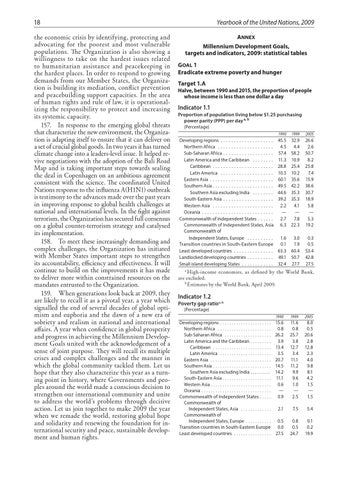
YEARBOOK OF THE UNITED NATIONS, 2009 Volume 63 The United Nations Department of Public Information is dedicated to communicating the ideals and work of the United Nations to the world; to interacting and partnering with diverse audiences; and to building support for peace, development, and human rights for all. Based on official documents, although not an official record, the Yearbook of the United Nations stands as the authoritative reference work on the Organization and an indispensable tool for anyone seeking information on the UN system. The Yearbook of the United Nations is produced by the Yearbook Unit of the Publications and Editorial Section in the Outreach Division of the Department of Public Information. Chief Editor: Orrin F. Summerell Managing Editor: Edoardo Bellando Senior Editors: Lawri Moore, Anthony Paterniti, John R. Sebesta, Vikram Sura Associate Editors: Natalie Alexander, Udy Bell, Meghan Lynn, Shiyun Sang Copy Editor: Sunita Chabra Typesetter: Galina V. Brazhnikova Researcher: Nilton Sperb Administrative Assistant: Sheila Poinesette Copy Coordinator: Melissa Gay Editorial Assistant: Rosario Magno
Yearbook of the United Nations Room S-927 United Nations New York, New York 10017 United States of America e-mail: unyearbook@un.org
All volumes of the Yearbook of the United Nations from the 1946–47 edition (Vol. 1) to the 2008 edition (Vol. 62) can be accessed in full online on the Yearbook website: unyearbook.un.org.
For more information on the United Nations, please visit the website of the Organization: un.org.
YEARBOOK OF THE UNITED NATIONS 2009 Volume 63
Department of Public Information United Nations, New York
Yearbook of the United Nations, 2009 Volume 63 Published by the United Nations Department of Public Information New York, New York 10017, United States of America
Copyright © 2013 United Nations All rights reserved
ISBN: 978-92-1-101275-0 eISBN: 978-92-1-056297-3 ISSN: 0082-8521 United Nations publication Sales No. E.11.I.1 H
Jacket Design: Graphic Design Unit, United Nations, New York Printed in the United States of America
Foreword
F
rom the beginning, the guiding vision of the United Nations has been as broad as it has been profound: maintaining international peace and security; developing friendly relations among nations; and promoting social progress, better living standards and human rights. In 2009, we met significant challenges on all fronts, as we worked to protect lives while safeguarding our planet. During the year, the United Nations addressed numerous conflict situations, mainly in Africa, as well as a major armed crisis in Gaza, while continuing to support post-conflict countries in sustaining peace and stability and rebuilding national institutions, as in Afghanistan and Iraq. Through Security Council resolution 1888(2009), which mandated peacekeeping missions to protect women and children from rampant sexual violence, the Organization deepened its commitment to mitigating the impact of armed conflict on civilians. Throughout the world, the continuing economic and food security crises contributed to unrest and political instability, and threatened the resources required for progress towards the Millennium Development Goals (mdg s), even as substantial advances were made in fighting aids, tuberculosis, malaria and vaccine-preventable diseases. We acted to facilitate more effective international coordination, including reform of the international monetary and financial system, and sought to meet development needs for agreed mdg targets in such lagging areas as primary education, maternal health and basic infrastructure. We also framed these crises as opportunities to make needed changes by encouraging green growth and clean technologies. The United Nations Climate Change Conference produced the Copenhagen Accord, in which Governments converged in defining the long-term goal of limiting the maximum global average temperature increase to no more than 2 degrees Celsius. There was no agreement, however, on how to achieve that goal in practical terms, leaving much work to be done. The coordinated United Nations response to the pandemic influenza A(H1N1) outbreak in 2009 testified to our success in improving national and international response to global health challenges. The commencement of the functioning of the Special Tribunal for Lebanon during the year marked yet another important effort to advance the rule of law. Overall, the United Nations continued its efforts to protect human rights worldwide, as 182 States adopted the outcome document of the anti-racism Durban Review Conference. In a significant development for the United Nations and the peoples it serves, the General Assembly supported the consolidation of four bodies working for the advancement of women into a new organization, UN-Women, and so further empowered the United Nations system to empower women everywhere. As documented in this Yearbook of the United Nations, I called in 2009 for a spirit of renewed multilateralism recognizing the interconnections among the challenges confronting us; privileging the most vulnerable people; establishing multi-stakeholder coalitions; and strengthening the existing global multilateral architecture. These needs remain. Like the volumes that have come before it, this Yearbook represents our work through what we have done, what we advocate, and what we ourselves are called to do. It is our own witness to the history that is shaped by the efforts of the United Nations.
Ban Ki-moon Secretary-General of the United Nations New York, October 2013
Table of contents Foreword
v
Table of contents
vii
About the 2009 edition of the Yearbook
xiv
Abbreviations commonly used in the Yearbook
xv
Explanatory note on documents
xvi
Report of the Secretary-General on the work of the Organization
3
Part One: Political and security questions I. International peace and security
37
Promotion of international peace and security, 37: Maintenance of international peace and security, 37; Conflict prevention, 39; Peacemaking and peacebuilding, 43; Protection issues, 50; Special political missions, 63. Threats to International peace and security, 66: International terrorism, 66. Peacekeeping operations, 71: General aspects of UN peacekeeping, 74; Comprehensive review of peacekeeping, 78; Operations in 2009, 79; Roster of 2009 operations, 80; Financial and administrative aspects of peacekeeping operations, 82.
II. Africa
100
Promotion of peace in Africa, 103. Central Africa and Great Lakes region, 116: Great Lakes region, 116; Democratic Republic of the Congo, 118; Burundi, 137; Central African Republic, 146; Chad and Central African Republic, 153; Uganda, 163; Rwanda, 165. West Africa, 166: Regional issues, 166; Côte d’Ivoire, 170; Liberia, 191; Sierra Leone, 206; Guinea-Bissau, 215; Cameroon–Nigeria, 226; Guinea, 228; Mauritania, 232. Horn of Africa, 232: Sudan, 232; Chad–Sudan, 268; Somalia, 270; Djibouti and Eritrea, 297; Eritrea–Ethiopia, 302. North Africa, 304: Western Sahara, 304. Other issues, 310: Madagascar, 310; Mauritius–United Kingdom/France, 311.
III. Americas
312
Central America, 312: Guatemala, 312; Honduras, 314. Haiti, 318: Political and security situation, 318; Programme of support for Haiti, 325. MINUSTAH, 326. Other issues, 329: Colombia, 329; Cuba–El Salvador, 329; Cuba–United States, 330; Cooperation between the United Nations and regional organizations, 331. vii
Yearbook of the United Nations, 2009
viii
IV. Asia and the Pacific
332
Afghanistan, 334: Situation in Afghanistan, 334; Sanctions, 353. Iraq, 362: Situation in Iraq, 362; UN Assistance Mission for Iraq, 362; International Advisory and Monitoring Board, 372. Iraq–Kuwait, 375: Kuwaiti property and missing persons, 375; UN Compensation Commission and Fund, 376. Timor-Leste, 376: United Nations Integrated Mission in Timor-Leste, 377; Financing of UN operations, 381. Democratic People’s Republic of Korea, 384. Nepal, 388. Iran, 394: IAEA reports, 394. Other issues, 396: Myanmar, 396; Sri Lanka, 397; India–Pakistan, 398; Benazir Bhutto assassination inquiry, 398; The Philippines, 399; United Arab Emirates–Iran, 399.
V. Europe and the Mediterranean
400
Bosnia and Herzegovina, 400: Implementation of Peace Agreement, 401; European Union missions in Bosnia and Herzegovina, 407. Kosovo, 408: Political and security developments, 408; EULEX, 412; UNMIK, 412. The former Yugoslav Republic of Macedonia, 414. Georgia, 414: Situation in Abkhazia, 415; UN Observer Mission in Georgia, 419. Armenia and Azerbaijan, 421. Organization for Democracy and Economic Development-GUAM, 422. Cyprus, 422: Political and security developments, 423. Other issues, 431: Strengthening of security and cooperation in the Mediterranean, 431; Cooperation with the Organization for Security and Cooperation in Europe, 432; Observer status, 432.
VI. Middle East
433
Peace process, 433: Diplomatic efforts, 433; Occupied Palestinian Territory, 434. Issues related to Palestine, 458: General aspects, 458; Assistance to Palestinians, 462; UNRWA, 466. Peacekeeping operations, 476: Lebanon, 476; Syrian Arab Republic, 488.
VII. Disarmament UN machinery, 495. UN role in disarmament, 499. Nuclear disarmament, 502: Comprehensive Nuclear-Test-Ban Treaty, 512; Advisory opinion of the International Court of Justice, 516; Prohibition of the use of nuclear weapons, 517. Nonproliferation issues, 518: Non-proliferation treaty, 518; Non-proliferation of weapons of mass destruction, 520; Multilateralism in disarmament and nonproliferation, 523; International Atomic Energy Agency, 527; Radioactive waste, 532; Nuclear-weapon-free zones, 533. Bacteriological (biological) and chemical weapons, 540: Bacteriological (biological) weapons, 540; Chemical weapons, 542. Conventional weapons, 544: Towards an arms trade treaty, 544; Small arms, 545, Convention on excessively injurious conventional weapons and Protocols, 550; Cluster munitions, 553; Anti-personnel mines, 553; Practical disarmament, 555; Transparency, 555. Other disarmament issues, 560: Prevention of an arms race in outer space, 560; Observance of environmental norms, 562; Science and technology and disarmament, 563. Studies, research and training, 563. Regional disarmament, 564: Central Africa Standing Advisory Committee, 567; Regional centres for peace and disarmament, 568.
495
Table of contents
ix
VIII. Other political and security questions
573
General aspects of international security, 573: Support for democracies, 573. Regional aspects of international peace and security, 575: Indian Ocean, 575. Decolonization, 576: Decade for the Eradication of Colonialism, 576; Puerto Rico, 588; Territories under review, 588. Peaceful uses of outer space, 599: Implementation of UNISPACE III recommendations, 602; Scientific and Technical Subcommittee, 603; Legal Subcommittee, 606. Effects of atomic radiation, 607. Information and telecommunications in international security, 609. Information, 610: UN public information, 610.
Part Two:  Human rights I. Promotion of human rights
623
UN machinery, 623: Human Rights Council, 623; Office of the High Commissioner for Human Rights, 627. Human rights instruments, 630: Convention against racial discrimination, 631; Covenant on Civil and Political Rights and Optional Protocols, 632; Covenant on Economic, Social and Cultural Rights and Optional Protocol, 632; Convention on elimination of discrimination against women and Optional Protocol, 635; Convention against torture, 635; Convention on the Rights of the Child, 636; Convention on migrant workers, 641; Convention on rights of persons with disabilities, 642; International Convention for protection from enforced disappearance, 643; Convention on genocide, 644; General aspects, 645. Other activities, 647: Strengthening action to promote human rights, 647; Human rights education, 653; International Year for People of African Descent, 655; Follow-up to 1993 World Conference, 655.
II. Protection of human rights
656
Special procedures, 656. Civil and political rights, 657: Racism and racial discrimination, 657; Human rights defenders, 666; Reprisals for cooperation with human rights bodies, 668; Protection of migrants, 668; Discrimination against minorities, 672; Religious intolerance, 673; Right to self-determination, 680; Rule of law, democracy and human rights, 685; Other issues, 689. Economic, social and cultural rights, 702: Realizing economic, social and cultural rights, 702; Human Rights Council special session, 702; Right to development, 703; Social Forum, 716; Extreme poverty, 717; Right to food, 718; Right to adequate housing, 723; Cultural rights, 724; Right to education, 726; Environmental and scientific concerns, 727; Right to health, 729; Slavery and related issues, 731; Vulnerable groups, 733.
III. Human rights country situations General aspects, 750. Africa, 751: Burundi, 751; Democratic Republic of the Congo, 752; Liberia, 754; Sierra Leone, 755; Somalia, 756; Sudan, 757. Americas, 758: Bolivia, 758; Colombia, 759; Guatemala, 760; Haiti, 761; Honduras, 761. Asia, 762: Afghanistan, 762; Cambodia, 763; Democratic People’s Republic of Korea, 764; Iran, 768; Myanmar, 771; Nepal, 777; Sri Lanka, 777. Europe and the Mediterranean, 778: Cyprus, 778; Georgia, 778. Middle East, 780: Territories occupied by Israel, 780.
750
Yearbook of the United Nations, 2009
x
Part Three:  Economic and social questions I. Development policy and international economic cooperation
791
International economic relations, 792: Development and international economic cooperation, 792; Sustainable development, 799; Eradication of poverty, 808; Science and technology for development, 813. Economic and social trends, 827. Development policy and public administration, 828: Committee for Development Policy, 828; Public administration, 829. Groups of countries in special situations, 831: Least developed countries, 832; Small island developing States, 837; Landlocked developing countries, 840.
II. Operational activities for development
844
System-wide activities, 844. Technical cooperation through UNDP, 854: UNDP/UNFPA Executive Board, 854; UNDP operational activities, 856; Financial and administrative matters, 862. Other technical cooperation, 867: Development Account, 867; UN activities, 868; UN Office for Partnerships, 868; UN Office for Project Services, 869; UN Volunteers, 873; Economic and technical cooperation among developing countries, 873; UN Capital Development Fund, 880.
III. Humanitarian and special economic assistance
882
Humanitarian assistance, 882: Coordination, 882; Resource mobilization, 888; White Helmets, 890; Mine clearance, 891; Humanitarian activities, 893. Special economic assistance, 899: African economic recovery and development, 899; Other economic assistance, 904. Disaster response, 907: International cooperation, 907; Disaster reduction, 908; Disaster assistance, 912.
IV. International trade, finance and transport
916
International trade, 916: Global trade activity, 916; Multilateral trading system, 917; Trade policy, 922; Trade promotion and facilitation, 923; Commodities, 925. Finance, 929: Financial policy, 929; Financing for development, 939; Other issues, 958. Transport, 959: Maritime transport, 959; Transport of dangerous goods, 960. UNCTAD institutional and organizational questions, 963.
V. Regional economic and social activities
966
Regional cooperation, 966. Africa, 968: Economic trends, 968; Activities in 2009, 969; Programme and organizational questions, 974. Asia and the Pacific, 974: Economic trends, 975; Activities in 2009, 975; Programme and organizational questions, 980. Europe, 980: Economic trends, 981; Activities in 2009, 981; Housing and land management, 983; Programme and organizational questions, 984. Latin America and the Caribbean, 984: Economic trends, 984; Activities in 2009, 985. Western Asia, 989: Economic trends, 989; Activities in 2009, 989.
VI. Energy, natural resources and cartography Energy and natural resources, 993: Natural resources, 998. Cartography, 1000.
993
Table of contents
VII. Environment and human settlements
xi
1002
Environment, 1002: UN Environment Programme, 1002; Global Environment Facility, 1014; International conventions and mechanisms, 1015; Environmental activities, 1025. Human settlements, 1038: Implementation of Habitat Agenda and strengthening of UN-Habitat, 1038; UN Human Settlements Programme, 1042.
VIII. Population
1045
Follow-up to 1994 Conference on Population and Development, 1045: Implementation of Programme of Action, 1045. International migration and development, 1047. United Nations Population Fund, 1048. Other population activities, 1054.
IX. Social policy, crime prevention and human resources development
1057
Social policy and cultural issues, 1057: Social development, 1057; Persons with disabilities, 1067; Cultural development, 1070. Crime prevention and criminal justice, 1080: Preparations for Twelfth (2010) United Nations Crime Congress, 1080; Commission on Crime Prevention and Criminal Justice, 1081; Crime prevention programme, 1083; Transnational organized crime, 1091; Strategies for crime prevention, 1096; UN standards and norms, 1103; Other crime prevention and criminal justice issues; 1106. Human resources development, 1107; UN research and training institutes, 1109; International Year of Languages, 1113.
X. Women
1114
Follow-up to the Fourth World Conference on Women and Beijing+5, 1114: Critical areas of concern, 1119. UN machinery, 1151: Convention on the elimination of discrimination against women, 1151; Commission on the Status of Women, 1154; UN Development Fund for Women (UNIFEM), 1157; International Research and Training Institute (INSTRAW), 1158.
XI. Children, youth and ageing persons
1160
Children, 1160: Follow-up to 2002 General Assembly special session on children, 1160; Guidelines for the Alternative Care of Children, 1161; United Nations Children’s Fund, 1172. Youth, 1184. Ageing persons, 1188: Follow-up to the Second World Assembly on Ageing (2002), 1188.
XII. Refugees and displaced persons Office of the United Nations High Commissioner for Refugees, 1192: Programme policy, 1192; Financial and administrative questions, 1198. Refugee protection and assistance, 1202: Protection issues, 1202; Assistance measures, 1204; Regional activities, 1206.
1191
Yearbook of the United Nations, 2009
xii
XIII. Health, food and nutrition
1216
Health, 1216: AIDS prevention and control, 1216; Non-communicable diseases, 1222; Tobacco, 1222; Malaria, 1222; Global public health, 1226; Road safety, 1229. Food and agriculture, 1230: Food aid, 1230; Food security, 1231. Nutrition, 1235: Standing Committee on Nutrition, 1235; UNU activities, 1235.
XIV. International drug control
1236
Cooperation against the world drug problem, 1236. Conventions, 1240: International Narcotics Control Board, 1241. World drug situation, 1242. UN action to combat drug abuse, 1251: UN Office on Drugs and Crime, 1251; Commission on Narcotic Drugs, 1253.
XV. Statistics
1257
Work of Statistical Commission, 1257: Economic statistics, 1258; Demographic and social statistics, 1261; Other statistical activities, 1263.
Part Four:  Legal questions I. International Court of Justice
1269
Judicial work of the Court, 1269: Contentious proceedings, 1269; Advisory proceedings, 1277. Other questions, 1277: Functioning and organization of the Court, 1277; Trust Fund to Assist States in the Settlement of Disputes, 1278.
II. International tribunals and court
1279
International Tribunal for the Former Yugoslavia, 1279: The Chambers, 1280; Office of the Prosecutor, 1285; The Registry, 1285; Financing, 1286. International Tribunal for Rwanda, 1288: The Chambers, 1288; Office of the Prosecutor, 1293; The Registry, 1294; Financing, 1294. Functioning of the Tribunals, 1296: Implementation of completion strategies, 1296. International Criminal Court, 1298: The Chambers, 1300.
III. International legal questions
1303
Legal aspects of international political relations, 1303: International Law Commission, 1303; International State relations and international law, 1308; Diplomatic relations, 1312; Treaties and agreements, 1312. Other international legal questions, 1314: Rule of law at the national and international levels, 1314; International economic law, 1315; International organizations and international law, 1321; Host country relations, 1327.
IV. Law of the sea UN Convention on the Law of the Sea, 1330: Institutions created by the Convention, 1344; Other developments related to the Convention, 1346; Division for Ocean Affairs and the Law of the Sea, 1363.
1330
Table of contents
xiii
Part Five: Institutional, administrative and budgetary questions I. United Nations restructuring and institutional matters
1367
Restructuring issues, 1367: Programme of reform, 1367. Institutional matters, 1373: Intergovernmental machinery, 1373. Institutional machinery, 1374: General Assembly, 1374; Security Council, 1379; Economic and Social Council, 1380. Coordination, monitoring and cooperation, 1380: Institutional mechanisms, 1380; Other coordination matters, 1382. UN and other organizations, 1383: Cooperation with organizations, 1383; Participation in UN work, 1384.
II. United Nations financing and programming
1388
Financial situation, 1388. UN budget, 1388: Budget for 2008–2009, 1388; Budget for 2010–2011, 1394. Contributions, 1410: Assessments, 1410. Accounts and auditing, 1415: Financial management practices, 1416; Review of UN administrative and financial functioning, 1416. Programme planning, 1417: Programme performance, 1418.
III. Administrative and staff matters
1419
Administrative matters, 1419: Managerial reform and oversight, 1419. Other administrative matters, 1427: Conference management, 1427; UN information systems, 1436; UN premises and property, 1442. Staff matters, 1452: Conditions of service, 1452; Staff safety and security, 1458; Other staff matters, 1463; UN Joint Staff Pension Fund, 1471; Travel-related matters, 1472; Administration of justice, 1472.
Appendices I. Roster of the United Nations
1489
II. Charter of the United Nations and Statute of the International Court of Justice 1492 III. Structure of the United Nations
1510
IV. Agendas of United Nations principal organs in 2009
1523
V. United Nations information centres and services
1534
VI. Intergovernmental organizations related to the United Nations
1537
Indices Subject index
1541
Index of resolutions and decisions
1574
Index of Security Council presidential statements
1577
About the 2009 edition of the Yearbook This sixty-third volume of the Yearbook of the United Nations continues the tradition of providing the most comprehensive coverage available of the annual activities and concerns of the United Nations. The present volume shows how the United Nations responded in 2009 to conflict situations and unconstitutional changes of government in different parts of the world, while supporting peacebuilding, democratic processes and economic development in numerous post-conflict countries. It also relates UN achievements in helping advance human rights, formulating development policy and facilitating international economic cooperation—especially with a view to mitigating the effects of the continuing global financial crisis—as well as in providing humanitarian assistance to those in need. Readers can locate information contained in this volume by using the Table of contents, the Subject index, the Index of resolutions and decisions, and the Index of Security Council presidential statements. The volume also features six appendices: Appendix I comprises a current roster of Member States; Appendix II reproduces the Charter of the United Nations and the Statute of the International Court of Justice; Appendix III presents the structure of the principal organs of the United Nations; Appendix IV provides the agenda for each session of the principal organs in 2009; Appendix V gives the current addresses of United Nations information centres and services worldwide; and Appendix VI lists the current addresses of the specialized agencies and other related organizations of the UN system with their respective heads as of 2009.
dural details giving date of adoption, meeting number and vote totals (in favour–against–abstaining), if any, and an indication of their approval by a sessional or subsidiary body prior to final adoption. The texts are followed by details of any recorded or roll-call vote. Major reports. Most reports of the SecretaryGeneral in 2009, along with selected reports from other UN sources, such as seminars and working groups, are summarized. Secretariat activities. The operational activities of the United Nations for development and humanitarian assistance in 2009 are described under the relevant topics. For major activities financed outside the UN regular budget, selected information is given on contributions and expenditures. Views of States. Written communications sent to the United Nations by Member States and circulated as documents of the principal organs have been summarized, in selected cases, under the relevant topics. Substantive action by the Security Council has been analysed and brief reviews of the Council’s deliberations given, particularly in cases where an issue was taken up but no resolution was adopted. Multilateral treaties. Information on signatories and parties to multilateral treaties and conventions has been taken from the series Multilateral Treaties Deposited with the Secretary-General (st/leg/ser/e) (see treaties.un.org).
Terminology Formal titles of bodies, organizational units, conventions, declarations and officials are given in full on first mention in each main section. They are also used in resolution/decision texts, as well as in the Subject index under the key word of the title. Short titles may be used in subsequent references.
Structure and scope of articles The Yearbook is subject-oriented and divided into five parts covering political and security matters; human rights issues; economic and social questions; legal issues; and institutional, administrative and budgetary matters. Chapters present summaries of pertinent UN activities, including those of intergovernmental and expert bodies, as well as major reports, Secretariat activities and, in selected cases, the views of States in written communications. Activities of UN bodies. All resolutions, decisions and other major activities of the principal organs and, on a selective basis, those of subsidiary bodies are either reproduced or summarized in the appropriate chapter. The texts of all resolutions and decisions of a substantive nature adopted in 2009 by the General Assembly, the Security Council and the Economic and Social Council are reproduced or summarized under the relevant topic. These texts are preceded by proce-
Acknowledgements The Yearbook Unit would like to express its appreciation to the following persons for their contribution to the Yearbook of the United Nations, 2009: Contributing Editors/Writers: Luisa Balacco, Elizabeth Baldwin-Penn, Kathryn Gordon, Peter Jackson, Christine Koerner Copy Editor: Alison M. Koppelman Proofreaders: June Chesney, Judith Goss Interns: Cate Attwood, Kelsey Keech, Janet Mason, Elsa Pietrucci, Yang Shen, Rebecca Wolf, Daniel Zugna Indexer: Maria A. Sullivan xiv
Abbreviations commonly used in the Yearbook ACABQ
Advisory Committee on Administrative and Budgetary Questions
AU
African Union
BINUB
United Nations Integrated Office in Burundi
BONUCA
United Nations Peacebuilding Support Office in the Central African Republic
CARICOM
Caribbean Community
CEB
United Nations System Chief Executives Board for Coordination
OAS
Organization of American States
OCHA
Office for the Coordination of Humanitarian Affairs
ODA
official development assistance
OECD
Organisation for Economic Co-operation and Development
OHCHR
Office of the United Nations High Commissioner for Human Rights
OIOS
Office of Internal Oversight Services
OSCE
Organization for Security and Cooperation in Europe
PA
Palestinian Authority
UNAIDS
Joint United Nations Programme on hiv/aids
CIS
Commonwealth of Independent States
CPC
Committee for Programme and Coordination
DPKO
Department of Peacekeeping Operations
DPRK
Democratic People’s Republic of Korea
DRC
Democratic Republic of the Congo
ECA
Economic Commission for Africa
ECE
Economic Commission for Europe
ECLAC
Economic Commission for Latin America and the Caribbean
ECOWAS
Economic Community of West African States
ESCAP
Economic and Social Commission for Asia and the Pacific
ESCWA
Economic and Social Commission for Western Asia
EU
European Union
FAO
Food and Agriculture Organization of the United Nations
HIV/AIDS
human immunodeficiency virus/ acquired immunodeficiency syndrome
IAEA
UNHCR
International Atomic Energy Agency
Office of the United Nations High Commissioner for Refugees
ICAO
International Civil Aviation Organization
UNICEF
United Nations Children’s Fund
ICC
International Criminal Court
UNIDO
United Nations Industrial Development Organization
ICJ
International Court of Justice
UNIFIL
United Nations Interim Force in Lebanon
ICRC
International Committee of the Red Cross
UNIPSIL
ICSC
International Civil Service Commission
United Nations Integrated Peacebuilding Office in Sierra Leone
ICTR
International Criminal Tribunal for Rwanda
UNMIK
ICTY
International Tribunal for the Former Yugoslavia
United Nations Interim Administration Mission in Kosovo
IDPs
internally displaced persons
UNMIL
United Nations Mission in Liberia
IFAD
International Fund for Agricultural Development
UNMIS
United Nations Mission in the Sudan
IFC
International Finance Corporation
UNMIT
United Nations Integrated Mission in Timor-Leste
ILO
International Labour Organization
UNOCI
United Nations Operation in Côte d’Ivoire
IMF
International Monetary Fund
UNODC
United Nations Office on Drugs and Crime
IMO
International Maritime Organization
UNOGBIS
ITU
International Telecommunication Union
United Nations Peacebuilding Support Office in Guinea-Bissau
JIU
Joint Inspection Unit
UNOMIG
United Nations Observer Mission in Georgia
LDC
least developed country
UNOPS
United Nations Office for Project Services
MDGs
Millennium Development Goals
UNOWA
Office of the Special Representative of the Secretary-General for West Africa
MINURCAT United Nations Mission in the Central African Republic and Chad
UNRWA
United Nations Relief and Works Agency for Palestine Refugees in the Near East
MINURSO
UNTSO
United Nations Truce Supervision Organization
WFP
World Food Programme
WHO
World Health Organization
WIPO
World Intellectual Property Organization
UNAMA
United Nations Assistance Mission in Afghanistan
UNAMI
United Nations Assistance Mission for Iraq
UNAMID
African Union-United Nations Hybrid Operation in Darfur
UNCTAD
United Nations Conference on Trade and Development
UNDOF
United Nations Disengagement Observer Force
UNDP
United Nations Development Programme
UNEP
United Nations Environment Programme
UNESCO
United Nations Educational, Scientific and Cultural Organization
UNFICYP
United Nations Peacekeeping Force in Cyprus
UNFPA
United Nations Population Fund
UN-Habitat United Nations Human Settlements Programme
United Nations Mission for the Referendum in Western Sahara
MINUSTAH United Nations Stabilization Force in Haiti MONUC
United Nations Organization Mission in the Democratic Republic of the Congo
NEPAD
New Partnership for Africa’s Development
WMDs
weapons of mass destruction
NGO
non-governmental organization
WMO
World Meteorological Organization
NPT
Treaty on the Non-Proliferation of Nuclear Weapons
WTO
World Trade Organization
NSGT
Non-Self-Governing Territory
YUN
Yearbook of the United Nations
xv
Explanatory note on documents The following principal United Nations official document symbols appear in this volume: A/- refers to documents of the General Assembly, numbered in separate series by session. Thus, A/64/- refers to documents issued for consideration at the sixtyfourth session, beginning with A/64/1. Documents of special and emergency special sessions are identified as A/S and A/ES-, followed by the session number. A/C.- refers to documents of the Assembly’s Main Committees. For example, A/C.1/- identifies documents of the First Committee, A/C.6/- documents of the Sixth Committee. A/BUR/- refers to documents of the General Committee. A/AC.- documents are those of the Assembly’s ad hoc bodies and A/CN.of its commissions. For example, A/AC.105/- identifies documents of the Assembly’s Committee on the Peaceful Uses of Outer Space, A/CN.4/- of its International Law Commission. Assembly resolutions and decisions since the thirty-first (1976) session have been identified by two Arabic numerals: the first indicates the session of adoption, the second the sequential number in the series. Resolutions are numbered consecutively from 1 at each session. Decisions since the fifty-seventh (2002) session are numbered consecutively from 401 for those concerned with elections and appointments and from 501 for all other decisions. Decisions of special and emergency special sessions are numbered consecutively from 11 for those concerned with elections and appointments and from 21 for all other decisions. E/- refers to documents of the Economic and Social Council, numbered in separate series by year. Thus, E/2009/- refers to documents issued for consideration by the Council at its 2009 sessions, beginning with E/2009/1. E/AC.-, E/C.- and E/CN.-, followed by identifying numbers, refer to documents of the Council’s subsidiary ad hoc bodies, committees and commissions. For example, E/CN.5/- refers to documents of the Council’s Commission for Social Development, E/C.2/- to documents of its Committee on Non-Governmental Organizations. E/ICEF/- documents are those of the United Nations Children’s Fund (UNICEF). Symbols for the Council’s resolutions and decisions, since 1978, consist of two Arabic numerals: the first indicates the year of adoption and the second the sequential number in the series. There are two series: one for resolutions, beginning with 1 (resolution 2009/1), and one for decisions, beginning with 201 (decision 2009/201). S/- refers to documents of the Security Council. Its resolutions are identified by consecutive numbers followed by the year of adoption in parentheses, beginning with resolution 1(1946). ST/-, followed by symbols representing the issuing department or office, refers to documents of the United Nations Secretariat.
Documents of certain bodies bear special symbols, including the following: CD/Conference on Disarmament CERD/Committee on the Elimination of Racial Discrimination DC/Disarmament Commission DP/United Nations Development Programme HSP/United Nations Human Settlements Programme ITC/International Trade Centre TD/United Nations Conference on Trade and Development UNEP/United Nations Environment Programme Many documents of the UN regional commissions bear special symbols, which are sometimes preceded by the following: E/ECA/Economic Commission for Africa E/ECE/Economic Commission for Europe E/ECLAC/- Economic Commission for Latin America and the Caribbean E/ESCAP/- Economic and Social Commission for Asia and the Pacific E/ESCWA/- Economic and Social Commission for Western Asia Various other document symbols include the following: L.- refers to documents of limited distribution, such as draft resolutions. CONF.- refers to conference documents. INF- refers to general information documents. SR.- refers to summary records and is followed by a meeting number. PV.- refers to verbatim records and is followed by a meeting number. United Nations sales publications each carry a sales number with the following components separated by periods: a capital letter indicating the language(s) of the publication; two Arabic numerals indicating the year; a Roman numeral indicating the subject category; a capital letter indicating a subdivision of the category, if any; and an Arabic numeral indicating the number of the publication within the category. Examples: E.06.II.A.2; E/F/R.05.II.E.8; E.08.II.C.2. All documents cited in the text in square brackets may be obtained through the website of the Official Document System of the United Nations: documents. un.org.
xvi
Report of the Secretary-General on the work of the Organization
Report of the Secretary-General on the work of the Organization Following is the Secretary-General’s report on the work of the Organization [A/64/1], dated 4 August 2009, submitted to the sixty-third session of the General Assembly. The Assembly took note of it on 6 October (decision 64/504).
Chapter I
that lie at the core of the United Nations mission. To meet these challenges will require a multilateral effort of immense magnitude—one that draws upon the strengths and contributions of all the countries of the world, as well as their citizens. 5. Twenty-first century multilateralism must build on the multilateral foundations of the previous century, but must also broaden and deepen them in dramatic new ways. There are five essential elements of a new multilateralism that can lead us through the current crisis-ridden landscape to a more bountiful, peaceful and sustainable future. 6. First, the new multilateralism must prioritize the provision of global public goods that counter those threats that are contagious across borders and that most directly link the destinies of all our peoples: we must deal with climate change; ensuring economic stability, food availability and prosperity for all; global health; disarmament and non-proliferation; and the struggle against terrorism. 7. Second, a new twenty-first century multilateralism must recognize the complex interconnections among the challenges that confront us, both the global goods issues and the ongoing challenges of national and regional conflicts, humanitarian disasters and the struggle for truly universal human rights. Solving the problems one by one is neither possible, nor efficient nor effective. An integrated approach must inform our every effort. 8. Third, it must privilege the most vulnerable people around the world and must deliver muchneeded security, development and human rights for them. This is essential both on moral grounds, as solidarity is the glue which will keep our human family together, and on enlightened self-interest grounds. The systematic bias against the poor and most vulnerable in good times and bad is simply not sustainable. Twenty-first century globalization must be for all, and must in the first instance be premised on realization of the Millennium Development Goals.
Introduction 1. Ten years into the new millennium, the scope and magnitude of the tectonic shifts that are shaping the emerging global landscape are coming into sharper relief. The accelerated globalization of recent decades has linked people’s fates together in ways we could only have imagined when the United Nations was created 64 years ago. 2. In recent times, the world has experienced unprecedented prosperity, peace, convergence on an increasingly universal normative framework and, thanks to the expansion of global communication, a heightened sense of community. However, not everyone has benefited from these global developments. Indeed, some have been left behind. 3. Just as over the past few decades, lives around the globe have become increasingly intertwined, so today, as our world is wracked by crisis, globalization is uniting our destinies in unprecedented ways. This past year the shock waves from the economic crisis spread to all corners of the globe with devastating effects on the most vulnerable populations and countries. An ongoing crisis of food insecurity continues to ravage families and communities, with over 1 billion people now going to bed hungry every night. The influenza A(H1N1) pandemic, the first influenza pandemic in over 40 years, has reminded us that our most precious commodity—our health—is linked to that of every other individual on the planet. Looming over all these crises, and potentially dwarfing them, the climate crisis we face continues to unfold, with scientists warning that the changes to our planet and its people are happening faster, and with a more severe impact, than most of our models predicted even a year or two ago. 4. We stand on a precipice. And yet, we cannot lose our nerve, or let the multiple crises turn into a crisis of confidence of our peoples. This is the ultimate multilateral moment. We are seeing the convergence of complex challenges across a spectrum of issues 3
4 9. Fourth, it must bring to bear a much broader and deeper set of forces to address the multiple crises, broadening our collective response to include at its core, not as add-ons, constituencies from the private sector, civil society and academia. Multi-stakeholder coalitions must become the norm and not the exception if we are to successfully address the challenges before us. 10. Fifth, our new multilateralism will need to adapt and strengthen the existing global multilateral architecture to address the challenges of the twenty-first century. This will mean drawing upon the strengths of all nations, particularly those that are rising with the new century. It will mean harnessing both power and principle. A choice between one or the other is a false one. It also means improving the channels and mechanisms that ensure that the voices of the weak and vulnerable are heard in key decisionmaking forums. The United Nations is uniquely positioned to marshal this effort. 11. Strengthening our multilateral institutional architecture will also require adapting our multilateral mechanisms to be significantly more robust, as well as faster, more flexible and responsive than they have ever been. This is due in part to the fact that the accelerated pace of life in our contemporary globalized world has shrunk our time horizons, requiring much faster decision-making, and in part to the fact that the alliances and cooperation necessary to achieve desired goals increasingly vary widely from issue area to issue area and change over time. 12. The United Nations can and should be the hub of the new multilateralism. The Organization must provide the platform to harmonize competing interests and views of how to solve the problems the world faces. The United Nations must also continue to develop its ability to deliver the required services to people all over the world, especially those most in need. Not only is this a natural vocation for a universal organization, it is also the comparative advantage of an organization that has global reach, draws upon the resources and strengths of all nations and is charged by its Member States to address the broad spectrum of security, development, humanitarian and human rights challenges. 13. The Organization is committed to adapting to the new realities of this millennium and as this report reveals, has already taken many proactive steps to do so. However, without the full engagement and support of Member States, the magnitude of the global changes under way will quickly overtake our capacities. But with the help and commitment of our Member States, the Organization can be the agent of transformation that helps the human family adjust and adapt to the tremors and tectonic shifts reshaping our world.
Yearbook of the United Nations, 2009
Chapter II Delivering results for people most in need 14. As the financial and economic crisis threatens to drive nations to look inward, now more than ever, the United Nations has an important role to play in giving voice to the voiceless and meeting the needs of the most vulnerable. 15. There is no question that the economic crisis is affecting us all in developing and developed countries alike. The United Nations report World economic situation and prospects as of mid-2009 (E/2009/73) foresees that the world economy will shrink by 2.6 per cent in 2009, the first negative global growth since the Second World War. 16. Notwithstanding the hardships faced in many parts of the developed world, the scenarios unfolding in many developing countries are grimmer. At least 60 developing countries are expected to face declining per capita income. Weak capacities for crisis mitigation in most developing countries further threaten to undermine efforts to address poverty, hunger and disease. 17. As the guardian of the global development and security agenda, the United Nations must play a key role in addressing these crises. It must use this historical moment to promote progress. A. Development 18. In 2000, with the adoption of the Millennium Development Goals, the United Nations charted out an ambitious course for development. Today, that course is threatened by uncertainty. However, if the global community responds with unity and in a determined and coordinated fashion, we will be able to overcome this difficult period in the world’s history and secure peace and prosperity for all. 1. The Millennium Development Goals and the other internationally agreed development goals
19. With economies contracting, the resources needed to ensure continued progress towards the Millennium Development Goals are in short supply these days. At the same time, the demand has never been greater. The Millennium Development Goals require our redoubled efforts from now till the target date of 2015. As detailed in the 2009 Millennium Development Goals Report, in areas where global investments have been scaled up—such as in efforts on aids, tuberculosis, malaria and vaccine-preventable diseases—we are seeing heartening progress. In areas where Millennium Development Goal investments are still lagging, such as primary education, maternal health, smallholder agriculture and basic infrastructure for the poor, the world is far behind in reaching its agreed targets.
Report of the Secretary-General 20. Current projections suggest that overall poverty rates in the developing world will still fall in 2009, but at a much slower pace than before the downturn. For some countries, this may mean the difference between reaching or not reaching their poverty reduction target. According to the United Nations World economic situation and prospects as of mid-2009, this year 73 million to 103 million more people will remain in extreme poverty because of the current crisis. Without strong action to fight against hunger as outlined by the High-Level Task Force on the Global Food Security Crisis, the targets to reduce the prevalence of undernourished people and underweight children will not be achieved by 2015. 21. The world is getting closer to universal primary education, although too slowly to meet the 2015 target. Major breakthroughs have been achieved in sub-Saharan Africa, where enrolment increased by 15 per cent from 2000 to 2007, and Southern Asia, which gained 11 per cent over the same period. Still, 72 million children worldwide were denied the right to education in 2007. Over the past five years, more girls have been enrolled in all levels of education. But the target of eliminating gender disparities in primary and secondary education by 2005 was missed. By denying education to children today, we are sentencing them to a life of poverty and we are having an irreversible negative impact on the future development of their countries. 22. It is of great concern that the current economic crisis is likely to have a dramatic impact on gender equality and women’s empowerment. In many developing parts of the world, women provide most of the workforce to the agricultural sector. Those who are able to secure paid jobs outside agriculture generally fail to access decent work. They tend to be overrepresented in part-time or seasonal employment where job security and benefits are not provided. In Oceania, Southern Asia and sub-Saharan Africa, this type of work accounts for more than 80 per cent of all women’s jobs. 23. Historically, in many instances these patterns of employment make women most vulnerable to economic downturns. In poor households, particularly those where the main wage-earner is a woman, job loss has a devastating impact on the entire family. In economic downturns, the risk that women will become the victims of domestic violence also increases as unemployed husbands and fathers vent their frustrations at home. In order to accelerate efforts to protect women and reduce violence, the United Nations has initiated a campaign “Unite to End Violence against Women”. The Organization urges Member States to support this effort. 24. Promoting and securing health is an ethical imperative and a foundation for prosperity, stabil-
5 ity and poverty reduction. Health is at the heart of the Millennium Development Goals and a critical precondition for progress towards most other goals. Progress, however, has been mixed. 25. Despite a reduction in child mortality in all regions, deaths of children under five remain unacceptably high. Many countries, particularly in subSaharan Africa and Southern Asia, have made little or no progress at all towards agreed targets. The levels are highest in sub-Saharan Africa, where, in 2007, close to one in seven children died before his or her fifth birthday. Child mortality tends to be highest among rural and poor families where mothers lack a basic education. The leading causes of these deaths— pneumonia, diarrhoea, malaria and measles—are all preventable through cost-effective improvements in neonatal and maternal care and basic health services. With a relatively small investment we can reduce child mortality markedly. 26. Progress on Millennium Development Goal 5 (reducing maternal mortality rates) is abysmal. In 2005, more than half a million women died as a result of pregnancy-related complications. Ninetynine per cent of these deaths occurred in the developing regions, with sub-Saharan Africa and Southern Asia accounting for 85 per cent of all maternal deaths. In order to address this unacceptable situation, we must mobilize a concerted campaign of Governments, international organizations, the private sector, philanthropists, civil society and average citizens. We cannot delay. 27. The gains in the prevention and treatment of hiv/aids, tuberculosis, malaria and other diseases, especially neglected tropical diseases, are encouraging. As a result of improvements in prevention programmes and wider provision of antiretroviral therapies, the number of people newly infected with hiv declined from 3 million in 2001 to 2.7 million in 2007 and the estimated number of aids deaths also appears to be declining (2 million in 2007). 28. Increased attention, coordination and funding are enabling countries to adopt more aggressive strategies against malaria. Evidence suggests that the rapid rise in the distribution of mosquito nets coupled with the large-scale expansion of prevention programmes, improved access to diagnosis and treatment and more effective antimalarial drugs have substantially reduced malaria cases and deaths. 29. Success in eradicating tuberculosis rests on early detection of new cases and effective treatment. To achieve the target of halving the world’s 1990 prevalence and death rates by 2015, regions in Africa and major countries in Asia which are lagging behind will have to improve both the extent and timeliness of the diagnosis of active tuberculosis and increase the rate of successful treatment.
6 30. Reaching the environmental sustainability goals set for 2015 will require concerted effort. The extraordinary accomplishment of reducing consumption of ozone-depleting substances by 97 per cent in the 20 years since the Montreal Protocol was ratified, shows what can be achieved with sustained global cooperation and the integration of sustainable development principles into national policy frameworks. We must now shift the focus to reducing greenhouse gas emissions. The current economic crisis provides an opportunity to make needed changes by encouraging green growth and clean technologies. We must also preserve our forests and wildlife. We should be particularly concerned by the rising reports of species facing extinction in the developing world. 31. We must also address the impending global water shortage crisis. More than 1.2 billion people live under conditions of physical water scarcity. Northern Africa and Western Asia are under serious stress, as are some regions within large countries, especially in Asia. We must promote practices and invest in technologies designed to reduce water wastage and increase water reclamation. 32. At their 2005 Gleneagles summit meeting, leaders of the Group of Eight countries promised to increase annual global official development assistance flows by $50 billion (in 2004 terms) by 2010, and within this envelope, to more than double aid to Africa by increasing annual flows by $25 billion. To date, these pledges have not been met. Nevertheless, meeting earlier this year, the Group of Twenty and Group of Eight reaffirmed previous commitments to increase aid, including the Gleneagles commitments, and to help countries achieve the Millennium Development Goals. These and additional resources will be necessary if world leaders are to address the growing needs of low-income countries. 33. For our part, the United Nations system is developing a comprehensive system-wide crisis response in support of national development strategies and plans to put into place a Global Impact and Vulnerability Alert System that will track the impact of global crises on the poor and most vulnerable people. Concrete measures such as these over the rest of the year will be crucial if we are to weather the current crisis and continue to make timely progress towards the Millennium Development Goals. 2. The special needs of Africa
34. Over the past decade, Africa has achieved impressive rates of economic expansion and growth, reaching an average annual growth in gross domestic product of 5.9 per cent during 2004–2007. However, the global economic crisis could reverse these trends. 35. According to the World economic situation and prospects as of mid-2009, a sharp decline in Africa’s
Yearbook of the United Nations, 2009 average annual growth rate from 6 per cent during 2004–2008 to just 0.9 per cent is expected for 2009. Against this backdrop, unemployment and precarious employment are on the rise as lower export earnings and a decrease in government revenues are affecting all economic activity. In the absence of comprehensive social safety nets, this will severely impact people’s livelihoods and thus endanger the timely achievement of the Millennium Development Goals. 36. Over the past year the United Nations system has been able to strengthen its support for the African development agenda in general and the New Partnership for Africa’s Development in particular. In July 2008, the Millennium Development Goals Africa Steering Group, which brings together the leaders of the African Union Commission, the Africa Development Bank Group, the European Commission, the International Monetary Fund, the Islamic Development Bank Group, the Organization for Economic Cooperation and Development, the World Bank and the United Nations, launched at the eleventh African Union Summit a comprehensive and fully costed set of recommendations on the key actions the international system could take to support Africa’s accelerated achievement of the Millennium Development Goals. The Organization is working steadfastly to see these recommendations financed and implemented. It has also made steady progress in improving the effectiveness and coherence of United Nations programme delivery in Cape Verde, Mozambique, Rwanda and the United Republic of Tanzania, where pilot joint programmes are being adopted. 37. Nevertheless, as the year progresses, there is a danger that deteriorating economic conditions will give rise to political tensions. We have already seen food riots in several African countries and a troubling re-emergence of unconstitutional changes of government. In Chad and Somalia, internal crises are reaching new levels of gravity, threatening to destabilize the region. 38. The international community must help Africa tackle the crisis. World leaders should adhere to the renewed commitments they made at the General Assembly’s high-level meeting on Africa’s development needs, held in September 2008, and through the adoption of the political declaration on Africa’s development needs in Assembly resolution 63/1. 39. As part of Africa’s growing architecture of institutions in peace and security, the African Peer Review Mechanism, the work of the African Union Peace and Security Council, the African Union’s early warning system, the African Standby Force and the Pan-African Parliament are important. The steadily expanding strategic relationship between the United Nations and the African Union, particularly in the area of peacekeeping, is a positive development as is
Report of the Secretary-General the United Nations Security Council’s decision to broaden the scope of its consideration of matters of peace and security to include violence against women and children, with special attention to Africa. B. Peace and security 40. Unfortunately, in too many corners of the world, conflicts continue unabated and both State and non-State actors act with considerable disregard for civilians, often targeting women with particularly heinous crimes. Wherever possible, the United Nations is actively pursuing opportunities for peace. Over the past year the United Nations did have some success in improving the situation of those most-affected and needy populations. The global economic crisis added a new layer of complexity to our work by catalysing social unrest and political instability in many places. 1. Preventive diplomacy and support to peace processes
41. A key role of the United Nations is to assist national actors in resolving conflict at an early stage, and to help build national capacity to sustain peace and protect human rights. Without political settlements, the world will be left with festering conflicts which place a heavy burden on humanitarian delivery systems and on peacekeeping. 42. This past year, the Organization’s engagement in preventive diplomacy and support to peace processes was extensive. Support was provided to the peace processes in the Democratic Republic of the Congo, Somalia, the Central African Republic and the Comoros. Following the elections, intensive diplomatic efforts took place in Zimbabwe under the overall mediation of the Southern African Development Community and South Africa. The Organization was also asked to support political processes in Kenya, Sierra Leone, Guinea-Bissau, Niger, Cameroon, Gabon, Equatorial Guinea and Madagascar. In all these cases, it offered political and technical support, often in cooperation with partners such as the African Union. 43. The Organization continues to support fullfledged negotiations in Cyprus and political dialogue and reconciliation in Iraq. In Nepal, the Organization provided assistance in the implementation of the comprehensive peace agreement. In Central Asia, it worked closely with all countries of the region to facilitate joint approaches to cross-border challenges, including terrorism, drug trafficking and organized crime, and the management of natural resources. 44. As part of recently intensified diplomatic efforts by the international community in the Middle East peace process, the good offices of the SecretaryGeneral have continued. The need for the resumption of direct talks on a two-State solution and comprehensive regional peace was underscored by events such
7 as the major armed crisis in Gaza, discontinuation of Israeli-Palestinian negotiations undertaken in the Annapolis framework and limited progress towards Palestinian unity. In Lebanon, the Secretary-General’s good offices were extended with a view to sustaining the relative calm that has prevailed in the postelection period. 45. The Organization looks forward to working further with Member States on investing in capacities to respond to crises quickly and effectively and to support peace processes more predictably and professionally. 2. Peacekeeping
46. The challenges that peacekeepers face today are unprecedented in scale, complexity, and risk level. Their engagement includes supporting political dialogue between parties, assisting national Governments to extend State authority, strengthening human rights and the rule of law, advising on security sector reform, supporting disarmament, demobilization and reintegration programmes and protecting civilians. The latter, in particular, is challenging the capacity of the Organization’s peacekeeping missions to robustly implement authorized mandates. 47. The Department of Peacekeeping Operations, with the support of the Department of Field Support, currently manages 17 operations deployed across five continents. These operations comprise more than 117,000 deployed military, police and civilian personnel. The budget has risen to nearly $7.8 billion a year, at a time when available resources are in danger of shrinking. 48. On the ground, peacekeepers encounter a full spectrum of environments ranging from those where some form of conflict continues, to those where a fragile stability has been reached, to those where solid peace processes are in place and peacebuilding processes dominate. 49. Over the past year the United Nations peacekeeping presence in Chad, Darfur and the Democratic Republic of the Congo increased. In Chad, a United Nations peacekeeping mission successfully succeeded the military force deployed by the European Union in March. In Darfur, deployments increased allowing the mission to project its presence more effectively. Nevertheless, the mission continued to lack resources, including helicopters, critical to the effective implementation of its mandate. The United Nations Mission in the Sudan has continued to support the resolution of core issues of the Comprehensive Peace Agreement which promise to enhance the prospects for stability in the entire region. 50. In the Democratic Republic of the Congo, renewed fighting erupted at the end of August 2008. The Security Council approved in November the mis-
8 sion’s request to deploy an additional 3,000 military and police to increase the flexibility and reaction capacity of the mission to meet emerging needs. While some of these additional capabilities were expected to begin deploying by July 2009, the deployment of other specialized capabilities remained uncertain. 51. A deteriorating security environment is also a primary concern for the United Nations presence in Afghanistan. The efforts of the United Nations mission have been focused on coordinating the international community’s development assistance and providing support to national institutions, including their preparations for elections in August 2009. 52. In Somalia, the Organization pursued a carefully calibrated set of steps in support of the highly fragile peace process, as endorsed by the Security Council in resolutions 1863(2009) and 1872(2009). Preparedness plans are being drawn up in the event of a future decision by the Security Council to deploy a United Nations peacekeeping mission. 53. The past year saw relative stability and some progress towards a reduction of tensions in Lebanon. The United Nations peacekeeping mission focused its efforts on confidence-building and assisting securing stability. 54. In Burundi, Côte d’Ivoire, Haiti, Sierra Leone and Timor-Leste, peacekeepers are supporting peace consolidation processes, extension of the rule of law, national capacity-building on gender equality issues and the creation of an environment conducive to the development of a sustainable local economy. 55. Despite divergent political views in the Security Council on the situations in Georgia and in Kosovo, the missions carried out their mandates over the past year supported by concerted diplomatic efforts. Following an agreement in the Security Council, the United Nations Mission in Kosovo began the phased handover of the operational responsibility in the rule of law area to the European Union in December 2008. The mission in Georgia came to an end this June due to a lack of consensus among Security Council Members on mandate extension. 56. Over the last year, the Departments of Peacekeeping Operations and Field Support continued to evolve and adapt. Important organizational reforms are under way, including developing a standing police capacity in a strengthened Police Division, increasing capacity in the Office of Rule of Law and Security Institutions and in the Office of Military Affairs in the Department of Peacekeeping Operations, and developing the capacity of the Department of Field Support as a service provider. Notwithstanding these recent reforms, much work still remains to ensure that the United Nations can meet evolving demands. 57. United Nations peacekeeping is at a crossroads. The Organization needs a renewed global part-
Yearbook of the United Nations, 2009 nership with Member States and its partners within and outside the United Nations system to ensure that requests for United Nations peacekeeping are accompanied by active political strategies and political support to implement mandates, support for faster deployment, and adequately calibrated and optimally configured human and capital resources. This is essential if the Organization is to deliver results for a more secure world. 3. Peacebuilding
58. The recent report on peacebuilding in the immediate aftermath of conflict (A/63/881-S/2009/304) emphasized that peacebuilding is first and foremost a national process. In countries emerging from conflict, the needs of a country and its people are enormous. To seize the opportunities presented by the end of conflict, a timely, prioritized and adequately resourced response from national, regional and international actors is essential. 59. The report sets out a number of concrete proposals, including measures to improve not only the Organization’s own response but also its ability to provide leadership to the wider international community during this period. Specifically, the report highlights the need to strengthen and support our leadership teams in the field, to promote strategic coherence from the earliest stage of the international response, to strengthen national capacity from the outset, to improve the international community’s ability to provide rapid and predictable capacities, particularly in recurring priority areas, and to enhance the speed, flexibility and risk tolerance of post-conflict funding. 60. The evolving role of the Peacebuilding Commission, the Peacebuilding Fund and the Peacebuilding Support Office are closely linked to this agenda. Over the last year, Member States working through the Peacebuilding Commission have continued to provide support to nationally driven efforts to achieve sustainable peace in Burundi, the Central African Republic, Guinea-Bissau and Sierra Leone. 61. In the past year, the Peacebuilding Fund has provided funding assistance to a growing number of countries emerging from conflict. As of April 2009, with more than $309 million in deposits, the Fund had already allocated over $131 million to 12 countries for a total of 65 projects. These support national dialogue and conflict reconciliation initiatives, security and justice sector reform and demobilization and disarmament of former combatants. On 17 June 2009, the General Assembly approved revised terms of reference for the Fund which incorporate lessons learned from the operational experiences of the Fund over the last two years. 62. Despite all of this progress, additional efforts are needed to effectively meet the challenges of coun-
Report of the Secretary-General tries recovering from conflict and to close the gap in our institutional response to peacebuilding needs. Ensuring coherence among key national, regional and international actors will be essential for effective action. C. Humanitarian affairs 63. Throughout 2008, the United Nations continued its efforts to improve the timeliness and effectiveness of humanitarian assistance worldwide in response to the devastating effects of several largescale natural disasters, worsening conflict situations and the global food crisis. 64. In collaboration with Governments and other partners, the United Nations supported the humanitarian response to some 55 emergencies. The damage caused by Cyclone Nargis in Myanmar, conflict in Georgia, the repeated hurricanes in Haiti and Cuba, the cholera outbreak in Zimbabwe and drought in Ethiopia were among the crises calling for coordinated efforts. 65. The year 2008 saw significant improvements within the international humanitarian system. The principles and approaches of the 2005–2006 humanitarian reform initiative which aimed to ensure a more rapid, predictable and accountable humanitarian response are now the standard way the United Nations system supports Governments and affected populations. The humanitarian architecture at the country level is now clearer: a Humanitarian Coordinator; a cluster (sector) lead agency for each of the main areas of humanitarian response; and an inclusive humanitarian country team which shapes overall strategic direction for the humanitarian response. The cluster approach—which establishes clear sectorbased partnerships to address gaps and strengthen the effectiveness of humanitarian response—was implemented in 13 new countries, including 5 that experienced sudden-onset emergencies, bringing the total number of countries with Humanitarian or Resident Coordinators using the cluster approach to 33. 66. With almost $12 billion in humanitarian spending registered globally, 2008 was a year of near-record resource mobilization. About half of this global humanitarian funding was provided to projects in United Nations consolidated appeals and flash appeals, covering approximately 70 per cent of the $7 billion in appeal requirements. This represented a 40 per cent increase in total funding over 2007. 67. Thanks to concerted mobilization efforts, $453 million was contributed to the Central Emergency Response Fund and $406 million to countrylevel pooled funds, ensuring better coordination of funding. This represented a 22 per cent increase compared to pooled resources obtained in 2007. The Organization and its partners also worked hard to im-
9 prove relationships on the ground, particularly with non-governmental organizations, in order to improve assistance to those most in need. 68. Major challenges for some humanitarian work include growing humanitarian access problems, increasingly unsafe operating environments and decreasing respect for the basic humanitarian principles of humanity, independence, impartiality and neutrality. The challenges of providing timely and predictable humanitarian assistance will be intensified by the current global financial crisis. On the policy side, work on issues such as needs assessment, better impact evaluation and the transition from emergency relief must be intensified. 69. The year 2008 also brought new insights into how humanitarian work might be shaped in the future. Emerging threats like the global food crisis and climate change placed additional strains on the international humanitarian system, demonstrating how factors other than the traditional triggers of humanitarian crisis can generate acute vulnerability. The degree to which these issues are reflected in the global agenda remains inadequate. These new challenges remind the United Nations system, and the humanitarian community as a whole, of the critical need to remain flexible and adapt constantly to changing circumstances. D. Human rights, rule of law, genocide prevention and the responsibility to protect, and democracy and good governance 70. History shows that economic crises often catalyse unhealthy trends in our societies and polities like chauvinism, racism, human rights violations and abrogation of the rule of law. For this reason and at this time, it is imperative that the United Nations make a special effort to promote respect for human rights and non-discrimination, support the further development of the rule of law globally, embrace genocide prevention and the responsibility to protect and renew its commitment and engagement to foster democracy and good governance. Protecting these rights is central to our mission to deliver to those most in need and is indispensable for our peace and development efforts to be sustainable. 1. Human rights
71. Notwithstanding the enormous progress made in recent years in the field of human rights in developing new legal instruments and strengthening institutions, serious violations of human rights continue to be committed on a daily basis in numerous countries around the world. Celebrations for last year’s sixtieth anniversary of the Universal Declaration of Human Rights revealed enormous popular enthusiasm for the ideals enshrined in the Declaration,
10 but also provided a reminder of the distance still to be covered before we can proclaim the rights of all to be truly protected. 72. The anniversary of the Declaration coincided with growing recognition of the relevance of human rights in crafting responses to a host of global challenges, including climate change, the food and financial crises and the hiv/aids pandemic. 73. Increasing economic hardship, exacerbated by the global economic crisis, has resulted in a rise in xenophobia and discrimination against migrants in many countries of the world. Nonetheless, the Organization’s advocacy contributed to an increased number of Member States ratifying the International Convention on the Protection of the Rights of All Migrants and Members of Their Families and highlighted the human rights dimensions of migration. 74. Marginalization, disempowerment, racial discrimination and intolerance were also addressed at the Durban Review Conference in April 2009. Notwithstanding the tensions around the Conference, the outcome document does provide a basis for addressing racial discrimination globally and constructively addresses the crucial issue of incitement to racial and religious hatred. The Committee that monitors implementation of the International Convention on the Elimination of All Forms of Racial Discrimination has further enhanced and streamlined its early warning and urgent action procedure to address grave and urgent threats to racial groups and ethnic populations in different regions of the world. 75. The universal periodic review of the Human Rights Council, under which the human rights record of 80 countries has been reviewed to date, has put additional emphasis on national implementation by creating a review mechanism with broad participation. A range of recommendations adopted through the process is already being implemented by many reviewed States with the support of the United Nations country teams on the ground. These are important achievements, but the Human Rights Council can and must do more to address the many serious human rights situations around the world. 2. Rule of law
76. The past year was a historic one for the effort to combat impunity for serious international crimes, owing to the renewed commitment by some Member States to the rule of law. Yet, scores of victims of violations of international humanitarian and human rights law in many countries await justice. 77. The Organization continues to be the global centre for the promotion of the rule of law. Over 40 United Nations system entities conduct activities in more than 110 countries. Activities are vast and include the promotion and implementation of norms
Yearbook of the United Nations, 2009 and standards in most fields of international law, supporting transitional justice, strengthening security and justice institutions and providing the rule of law in mediation processes (see A/63/64). The Organization includes judicial mechanisms, such as ad hoc tribunals, and supports other accountability mechanisms. This year marked the commencement of the functioning of the Special Tribunal for Lebanon. The Organization’s rule of law activities also help address global challenges like international piracy; the United Nations Office on Drugs and Crime, for example, has been supporting Kenya and other East African countries in the prosecution of suspects involved in piracy off the coast of Somalia. 78. The arrangements to improve the coherence and quality of United Nations rule of law assistance are producing results. To provide overall policy direction, the Rule of Law Coordination and Resource Group has issued guidance notes on the United Nations approach to rule of law assistance, justice for children and United Nations assistance to constitutionmaking processes. 79. The Organization’s dialogue with Member States to promote rule of law at the international level has borne fruit in terms of both moving the rule of law agenda forward and contributing to an emerging consensus on assistance policies and coordination among key stakeholders. 3. Genocide prevention and the responsibility to protect
80. The Secretary-General takes very seriously the responsibility of the United Nations system as a whole to prevent genocide and other mass atrocities. Over the past year, two Special Advisers to the Secretary-General who address these issues have made significant efforts to achieve greater progress towards the establishment of a system that will prevent and respond to such crimes. Both mandates operate on the basis of three pillars of responsibility: the State’s responsibility for its populations, international support for the State, and timely and decisive response by the international community, in accordance with the Charter, when States manifestly fail to protect their populations from the specified crimes. 81. The office of the Special Adviser on the Prevention of Genocide has put in place a framework of analysis to help in determining situations that if not addressed urgently could result in mass violations of international humanitarian law, including genocide. This framework suggests areas where proactive efforts for early warning and prevention can be undertaken. It has been reviewed by experts from within the United Nations system. Using the framework, the office has analysed a number of country situations in Africa and Asia.
Report of the Secretary-General
11
82. The office has established an information collection system and has instituted collaboration with partners within and outside the United Nations. It has increased its visibility through the creation of a website and other means, as general awareness is one of the tools available for the prevention of genocide. Finally, the Special Adviser has strengthened his outreach activities with regard to Member States, in particular the members of the Security Council, by briefing every incoming President and by holding meetings for the exchange of information. 83. The Special Adviser who focuses on the responsibility to protect has addressed the conceptual, institutional and political dimensions of rendering operational the principles contained in paragraphs 138 and 139 of the 2005 World Summit Outcome (General Assembly resolution 60/1). The report on implementing the responsibility to protect (A/63/677)— based on extensive research and wide consultations with Member States, United Nations departments, agencies and programmes, non-governmental organization representatives and independent experts—outlines an operational strategy for preventing genocide, war crimes, ethnic cleansing and crimes against humanity, as well as their incitement, and for responding in a timely and decisive manner, in accordance with the Charter, when they occur. In late July, the General Assembly held a three-day debate on the SecretaryGeneral’s report that demonstrated both broad support for the Secretary-General’s three-pillared strategy for addressing the responsibility to protect, as well as the need for continuing consultations and deliberation on its various aspects. 84. To improve early warning and assessment capacity, as mandated by paragraph 138 of the World Summit Outcome, the Special Advisers are consolidating appropriate mechanisms for an inclusive process of collaboration within the United Nations system and with Member States.
worldwide. The use of information and communications technology and e-government contributed to enhancing transparency, accountability and public administration. 87. The Organization’s efforts to support democracy worldwide have been strengthened through the grant-making United Nations Democracy Fund. Specifically targeting local non-governmental organizations, the Fund’s projects aim to strengthen the voice of civil society, promote human rights and encourage the participation of all groups in democratic processes. To date, the Fund has received more than $90 million in contributions and supported 204 projects around the world in two funding rounds.
4. Democracy and good governance
A. Climate change 90. In 2009—the year of climate change—Governments will convene in Copenhagen to negotiate and, hopefully, conclude a new global climate agreement. A strong, scientifically sound agreement in Copenhagen is essential for mitigating emissions, bolstering the adaptation potential of vulnerable countries and catalysing the lower-carbon green growth that will power a more sustainable global economy. 91. The Secretary-General has called climate change the defining challenge of our generation. It affects every sphere of activity, from energy and the economy to health, food, development and security. No issue better demonstrates the need for global solidarity. No issue is more fundamental to revitalizing the global economy and ensuring sustainable prosperity.
85. Democratic principles are woven throughout the normative fabric of the Organization and have been continually strengthened by the progressive adoption of international norms, standards and resolutions, as well as by ever greater operational activity in the area of democracy promotion. 86. In the past year, the Organization provided ongoing support to almost 50 Member States in conducting genuine and periodic elections across a range of peacekeeping, peacebuilding and development contexts. Examples included multiparty elections in Nepal, Sierra Leone, Zambia, Bangladesh, Honduras, Maldives and Guinea-Bissau. The Organization continued its extensive efforts to assist in the development of democratic institutions and good governance
Chapter III Securing global goods 88. The world has changed. Ties of commerce, communication and migration are binding us ever closer. At the same time we see the emergence of a set of global threats that are challenging all of our fates. Just as the issues have become more interdependent, so have we. 89. The United Nations is ideally situated for providing the global leadership needed to address these twenty-first-century challenges. As the only universal organization with a comprehensive mandate, it can catalyse action by its entire membership and can build innovative stakeholder partnerships needed for addressing the range and scope of the challenges on the international agenda today. Moreover, the Organization’s Member States expect it to do so. It is for this reason that at the beginning of his tenure the Secretary-General announced that one of his key priorities would be to deliver on global goods. This past year, he has adhered to this commitment, spearheading major policy initiatives in climate change, global health, counter-terrorism, and disarmament and non-proliferation.
12 And no issue is more essential to our survival as a species. From the moment the Secretary-General took office, he sought to mobilize the political will needed to address this increasingly grave global threat. This year, leadership at the highest level, from each and every country, is urgently needed to protect the planet, save lives and build a more sustainable global economy. 92. Last year’s December meeting on climate change in Poznan, Poland, was an important milestone on the road from Bali to Copenhagen. Much remains to be done, however. While there are other forums for climate discussions, only the United Nations Framework Convention on Climate Change enjoys global legitimacy based on the principle of nearuniversal participation. It will continue to facilitate negotiations among all parties. 93. Several elements require resolution to seal a deal in Copenhagen. At present, these include ambitious mitigation targets from industrialized countries; mitigation measures from the developing countries, beyond what they are already doing; increased financing, both for mitigation and adaptation, including incentives for reducing emissions from deforestation and degradation; equitable institutional and governance arrangements; and a framework for adaptation to assist those countries most vulnerable to the impacts of climate change. 94. To further prospects for success in Copenhagen, the Secretary-General is organizing a highlevel event on climate change for all Heads of State and Government at United Nations Headquarters on 22 September 2009. It will be the only international climate meeting before Copenhagen to bring together all the world’s leaders, from the major emitters to the most vulnerable. 95. Going forward, the United Nations system is committed to assisting Governments in the implementation of all existing and future climate change agreements. To that end, the Organization continues to draw upon an increasingly coherent and wellcoordinated response from United Nations agencies, funds and programmes focused on adaptation, capacity-building, climate knowledge, prevention of deforestation and degradation and technology development and transfer, which is coordinated through the Chief Executives Board for Coordination. 96. Numerous examples of inter-agency cooperation exist, including at the country level, where the Organization is delivering results for those most in need. One such initiative supports rainforest countries in reducing emissions caused by deforestation and degradation, while protecting indigenous livelihoods. Another helps developing countries strengthen their involvement in mitigation actions that advance sustainable development through the clean development mechanism of the Kyoto Protocol.
Yearbook of the United Nations, 2009 97. The inter-agency climate change adaptation network supports developing countries with the information and technology needed to bolster communitybased climate resilience measures. Disaster risk reduction efforts, another core element of adaptation policy, are helping create safer communities, both now and under the more extreme weather conditions of the future. 98. Finally, the global green economy initiative, launched last year, provides policymakers with the timely analysis needed to help transform the economy in a lower-carbon direction. If it is fully implemented—and backed by an ambitious climate agreement in Copenhagen—lives and livelihoods can be saved and the world set on a safer, more sustainable course of green growth. 99. Combating climate change is a moral imperative—and an economic opportunity. In addressing the climate challenge, we can help catalyse economic recovery, improve energy access and food security for the poor and strengthen our efforts to achieve the Millennium Development Goals. This year, we must join together to help realize the ultimate global good: protecting lives while protecting our planet, for this and future generations. B. Global health 100. The Secretary-General has made advancing global health a core priority. In this interconnected world, illness and disease in one part of the world affect the well-being of people worldwide, either through direct or indirect channels. The influenza A(H1N1) outbreak reminded us that geography no longer guarantees immunity and that we can only protect ourselves if we come together and join forces. This is true for pandemics as well as the other global health challenges we face today. 101. The United Nations system has been working to prepare and respond to the possibility of a pandemic. Over the past years, the system has initiated advance planning, encouraged transparency in sharing real-time information and intelligence on the progress of diseases, advocated for investment in strong public health systems and sought to forge strong partnerships between the private, public and voluntary sectors. These measures have dramatically improved our response capacity to new outbreaks and emerging diseases. 102. The Organization has looked beyond the influenza outbreak to the more systemic problems underlying global health provision. These are closely linked to progress on development and the achievement of the Millennium Development Goals. A healthier world is a better world, a safer world and a more just world.
Report of the Secretary-General 103. Central to this quest is the need to address maternal health, the Millennium Development Goal which lags behind the rest. Maternal health is a critical indicator of the health and prosperity of a nation. Women are central to building productive and social capital: they provide the labour force and the glue cementing communities together, and they frequently are responsible for caring for extended families which would otherwise be completely destitute. 104. Over the past few years, the Organization has seen important progress in the prevention and treatment of hiv/aids, tuberculosis and malaria. The multi-stakeholder partnerships that have been forged to address these diseases have proven to be effective. Ending malaria deaths, for example, may soon be a reality. 105. We must continue to address a host of diseases primarily affecting the world’s poor in both the South and the North, particularly the neglected tropical diseases. We must also direct our attention to preventing and treating chronic diseases, especially heart disease, stroke, diabetes and cancer, which are the biggest killers worldwide. Without focusing on these threats to health, we will not be able to improve livelihoods and continue to expand healthy lifespans. 106. In the current economic crisis, there may be some temptation to cut budgets for health and reduce services available to the poor. This would be both morally wrong and economically counterproductive. Investment in health has huge positive implications for a country’s economic and social well-being today and decades into the future. 107. Many of these themes have been picked up and further elaborated at the Economic and Social Council’s 2009 Annual Ministerial Review on “Implementing the internationally agreed goals and commitments in regard to global public health”. The Organization looks forward to continuing the dialogue to help fine-tune the strategies it is currently employing for a healthier world. C. Countering terrorism 108. Addressing terrorism is one of the global challenges that must be met if we are to enjoy a future of peace, security and development. The General Assembly adopted resolution 60/288, the United Nations Global Counter-Terrorism Strategy, in September 2006 as a concrete plan to counter terrorism and the conditions conducive to its spread, while maintaining human rights imperatives. In September 2008, the Assembly renewed its commitment to the Strategy. Earnest efforts are needed at the national, regional, international and grass-roots levels to ensure the continued implementation of the Strategy in a comprehensive and integrated manner.
13 109. In September 2008, Member States urged the Secretary-General to make the necessary arrangements to institutionalize the United Nations CounterTerrorism Implementation Task Force, a body established to ensure coordination and coherence in counterterrorism efforts among various entities within the United Nations system (General Assembly resolution 62/272). In response to this request, the SecretaryGeneral has relocated the base of operations of the Task Force to the Department of Political Affairs. A new, full-time Task Force Chair will be appointed who will continue to work in a coordinated fashion with Member States and with the member entities of the Task Force, including the Security Council’s counter-terrorism-related bodies. 110. In assisting implementation of the Global Counter-Terrorism Strategy, the Task Force has identified cross-cutting areas of work where cooperation across Task Force entities can provide added value. At present, eight working groups are organized around these cross-cutting issues: (a) integrated assistance for countering terrorism; (b) preventing and resolving conflicts; (c) supporting and highlighting victims of terrorism; (d) preventing and responding to weapons of mass destruction attacks; (e) tackling the financing of terrorism; (f) countering the use of the Internet for terrorist purposes; (g) strengthening the protection of vulnerable targets; and (h) protecting human rights while countering terrorism. The Task Force briefed Member States on its work most recently in March 2009. 111. As part of this work, last year the SecretaryGeneral convened an international symposium on supporting victims of terrorism that brought together victims, experts and representatives of Member States, regional organizations, civil society and the media. The symposium gave victims of terrorism a human face and provided a forum for sharing best practices and discussing concrete steps to assist them. 112. While the Task Force and United Nations system entities have a role to play, the greater part of Strategy implementation must be undertaken at the national, regional and grass-roots levels. As the Organization looks to the future, it anticipates increased efforts to expand and strengthen partnerships between Member States, the United Nations system, regional and subregional organizations and civil society. D. Disarmament and non-proliferation 113. The world continues to face risks from the existence of weapons of mass destruction, especially nuclear weapons; their geographical spread; and their possible acquisition by non-State actors and terrorists. Moreover, despite certain achievements in the field of conventional arms, the destabilizing accumulation and proliferation of conventional arms still remains a serious security threat.
14 114. There is an encouraging growing momentum towards achieving the goal of a world free from nuclear weapons. This momentum has materialized in a variety of initiatives not just by civil society but by nuclear-weapon States and non-nuclear-weapon States alike. These efforts point the way to move from the divisions and paralysis of the past towards genuine dialogue and progress. The joint understanding for a follow-on agreement to the start Treaty resulting from the talks held in July in Moscow between President Barack Obama and President Dmitry Medvedev is particularly welcome. The new verifiable and legally binding agreement will contain significant reductions in the number of strategic nuclear warheads and delivery systems. 115. There are challenges that require urgent global action. The second nuclear test that the Democratic People’s Republic of Korea conducted on 25 May 2009 was declared a clear and grave violation of relevant Security Council resolutions and the norm established by the Comprehensive Nuclear-Test-Ban Treaty. The event highlighted the urgency of the Treaty’s entry into force. 116. Concerns remain about the nuclear programme of the Islamic Republic of Iran. Efforts to find a peaceful resolution of the outstanding issues must continue. The Islamic Republic of Iran has a responsibility to implement measures to establish confidence in the exclusively peaceful nature of its nuclear programme. 117. Last October, the Secretary-General outlined his five-point plan for disarmament. He encouraged nuclear-weapon States to make further cuts in their nuclear arsenals, underscored the need for new efforts to bring the Comprehensive Nuclear-Test-Ban Treaty into force, and emphasized that the Conference on Disarmament must begin negotiations on a fissile material treaty without preconditions. In May, the Conference on Disarmament was able to reach an agreement on its programme of work, ending the stalemate that has virtually paralysed the world’s single multilateral negotiating body on disarmament for more than a decade. 118. The review process of the Treaty on the NonProliferation of Nuclear Weapons regained part of the ground lost in 2005 and there are expectations that the States parties will continue to build on the positive momentum towards a successful 2010 Review Conference. 119. In the area of conventional weapons, combating the illicit trade in small arms and light weapons remains one of the Organization’s priorities. The Organization calls upon Member States to negotiate and adopt a legally binding treaty on the import, export and transfer of conventional arms on a nondiscriminatory and transparent basis. The United Nations Regional Centres for Peace and Disarmament in Africa, Asia and the Pacific and Latin America and
Yearbook of the United Nations, 2009 the Caribbean will continue to provide expertise and active support to build the capacity of States to fight the scourge of armed violence and eradicate illicit arms trafficking. 120. March 2009 marked the tenth anniversary of the entry into force of the Ottawa Convention on Landmines. The progress thus far has been remarkable in stigmatizing the use and banning the transfer of anti-personnel landmines, although much remains to be done to achieve the goal of a world free of them. The Organization will continue to support the new Convention on Cluster Munitions—opened for signature in Oslo in December 2008—to achieve its early entry into force. It also encourages the conclusion of negotiations on cluster munitions in the context of the Convention on Conventional Weapons as complementary and mutually reinforcing to the process leading to the Convention on Cluster Munitions. 121. The coming year is likely to provide a window of opportunity for tangible progress in the area of disarmament and non-proliferation. We must work together to maintain and reinvigorate effective disarmament and non-proliferation norms, so that stability and security can prevail both nationally and internationally.
Chapter IV Creating a stronger United Nations 122. When the Secretary-General took office, he pledged that he would make reform a key priority. If the United Nations is to be successful in delivering to those most in need and addressing global challenges through the provision of global goods, it must improve and streamline its organizational functioning through improved accountability, transparency and efficiency. While current reforms are designed to optimize the Organization’s performance, the full and active engagement and support of Member States is required to fulfil these expectations. Member States must align their demands on the Organization with a realistic assessment and subsequent provision of resources to attain the stated goals. We have much work ahead of us if we are to make the needed structural and policy improvements. Without these, we will not be able to be fully accountable to each other and to the global citizenry whom we serve. A. The Secretariat, the intergovernmental machinery, system-wide coherence and cooperation with regional organizations 123. In order for the United Nations to function effectively, the Secretariat, the intergovernmental machinery and regional organizations must work seamlessly together. Over the past year, in collaboration with Member States, the Organization has been working hard to strengthen the core and build the connective tissue.
Report of the Secretary-General 1. The Secretariat
124. If the Secretariat is to deliver results for those most in need, it must have a modern, efficient and nimble administration capable of supporting increasingly operational and field-based programmes. As part of proposed reforms, the Secretary-General launched a strategic workforce planning initiative designed to attract new talent and provide more mobility and career development opportunities for existing staff. In December 2008, the General Assembly agreed to replace the Organization’s cumbersome contractual structure with a simplified framework and harmonize conditions of service across the Secretariat (resolution 63/250). The Assembly’s decision to strengthen the development pillar of the Secretariat (resolution 63/260) is very welcome given currently overtaxed capacities. 125. Human resource reforms alone, however, are not enough to ensure timely and efficient delivery of results. The Secretariat’s business processes must be streamlined and firmly rooted in a culture of client orientation. To this end, in December 2008 the General Assembly authorized the Enterprise Resource Planning project named “Umoja” that will redesign and integrate core administrative processes across the Secretariat and peacekeeping operations. A revised service delivery model, based on accepted best practices, will enhance the Organization’s ability to fulfil its mandates more effectively by improving the way it delivers its finance, procurement, supply chain, logistics, central support and human resources services. In the meantime, it has already implemented a number of procurement reforms as well as the Lean Six Sigma capacity-building programme, which will support departments in implementing management reforms. 126. The global economic crisis poses a unique challenge this year to securing the funding required for the Secretariat to carry out its mandates. It has influenced budget proposals for the biennium 2010– 2011 and has made reforming the budget process an even more pressing priority. The Organization is committed to strengthening the budget process. The Organization counts on the support of Member States to assist it in ensuring that there is a more timely discussion of the budget and that decision-making is focused on how resources are best spent to achieve results. 127. The Secretary-General is determined to develop a results-oriented culture at every level of the Organization, starting with senior management and cascading down to individual staff. This year for the first time, the assessment of each senior manager’s performance in 2008 was published to demonstrate that achieving results and strengthening accountability and transparency are central to the Organization’s management reform agenda.
15 128. Accountability was also strengthened through the introduction of a new system of administration of justice to handle internal disputes and disciplinary matters in the United Nations in a more efficient and professional manner. Two new tribunals, the United Nations Dispute Tribunal and the United Nations Appeals Tribunal, will provide a judicial review of cases where informal resolution has not been possible. 129. The capital master plan—the renovation of the Organization’s Headquarters—is now well under way. This five-year project will modernize our facilities and result in a 50 per cent decrease in energy consumption compared to existing conditions. It will create a better work environment and should promote innovation and better performance. 2. Intergovernmental machinery
130. If the Secretariat serves as the heart, the various legislative and other bodies that make up the intergovernmental machinery function as the arteries and nerves, transporting the life blood and energy to the Organization. For the past year, in addition to their usual diverse activities, the General Assembly, the Security Council and the Economic and Social Council have had the additional challenge of responding to the global financial and economic crisis. 131. The General Assembly played an important role in promoting dialogue and raising public awareness through interactive thematic debates on the financial crisis and its impact on development and on energy efficiency and new and renewable energy sources. These debates have helped forge consensus among Member States on policy responses. 132. In order to provide more opportunity for direct exchange between the Secretariat and Member States and enhance transparency and accountability, the Secretary-General continued with the wellestablished practice of periodically briefing the General Assembly on his most recent activities. 133. In December 2008, the General Assembly decided to hold its comprehensive review of the United Nations system’s operational activities for development every four years instead of triennially. This is a welcome development as it will give more time to the United Nations system to focus on implementing recommendations. 134. Intra-State conflicts, threats of terrorism, piracy and nuclear proliferation have dominated the Security Council’s agenda. In an attempt to address these complex challenges, the Security Council has increasingly taken a multidimensional approach which emphasizes prevention, peacemaking, peacekeeping and peacebuilding as interdependent and complementary components.
16 135. Over the past year, the Secretariat has worked to facilitate a number of Security Council missions, engaged with Member States to enhance the effectiveness of the Council’s subsidiary bodies and expert groups and assisted in orienting newly elected Council members. As part of an initiative to increase transparency and information exchange, the Secretariat has also continued to make progress on technical matters, including the wider and more user-friendly dissemination of information vital to Member State implementation of the Security Council’s mandatory sanctions measures, as well as the provision of information on the Security Council’s programme and activities to non-Council members. 136. The Organization is following with interest the efforts of the Security Council to collaborate with the General Assembly and the Economic and Social Council and to streamline its working methods. The Organization trusts that the Security Council will consolidate the gains that have been made and keep moving forward. 137. The Secretary-General views reform of the Security Council as part of the ongoing efforts to make this indispensable organ more broadly representative and efficient. He encourages all Member States to maintain the momentum and engage in a fruitful process of negotiation. 138. The Organization appreciates the contribution of the Economic and Social Council to advancing thinking on the global economic crisis and financing for development. The Council’s high-level meeting with the Bretton Woods institutions, the World Trade Organization and the United Nations Conference on Trade and Development produced important inputs for the United Nations Conference on the World Financial and Economic Crisis and its Impact on Development convened in June 2009. 139. The Economic and Social Council has also provided important support to the global health agenda. In addition to a special event on “Philanthropy and the global health agenda”, the Council has encouraged five country-led regional meetings on financing strategies for health care, promoting health literacy, addressing non-communicable diseases, fighting hiv/aids and promoting e-health. These contributed to the preparation of the 2009 Annual Ministerial Review on the theme of “Implementing the internationally agreed goals and commitments in regard to global public health”. 3. System-wide coherence
140. The 2007 comprehensive policy review, General Assembly resolution 62/277 and ongoing informal consultations with Member States on systemwide coherence continue to guide our efforts to make
Yearbook of the United Nations, 2009 the United Nations more coherent, efficient and effective at country, regional and global levels. 141. A bottom-up approach owned by national Governments is driving the progress that has been made to date in the “Delivering as one” pilot countries. Pilot countries are exhibiting greater Government ownership of United Nations development assistance at the country level; closer alignment of United Nations initiatives with national priorities owing to more coherent and simplified common country programming and joint budgetary frameworks; efficiency gains and cost savings thanks to increasingly streamlined and harmonized business practices; better access to the normative, substantive and technical expertise of non-resident agencies; and empowered leadership in the United Nations country team/resident coordinator system. The pilots clearly present an important achievement for United Nations reform and strengthening efforts. 142. The Chief Executives Board, through its three pillars focusing on policy coherence, management and harmonization of business practices and the provision of operational guidance and tools, is providing more coordinated support to countries. The work of the Co-Chairs for system-wide coherence has advanced the intergovernmental dialogue on funding, governance, gender equality and empowerment of women. These efforts, both within the United Nations family and through the intergovernmental process, provide us with the foundations for the Organization to work more effectively in meeting the complex development needs of Member States. 4. Cooperation with regional organizations
143. The unfolding financial and economic crisis has further emphasized the importance of and opportunities for building partnerships with regional organizations and leveraging joint resources. 144. Strengthening the United Nations partnership with the African Union within the framework of the Ten-Year Capacity-Building Programme is a high priority. The recommendations of the Prodi report (S/2008/813, annex) on practical ways to support African Union peacekeeping operations authorized by the United Nations will assist efforts to meet peace and security challenges on the continent. Desk-to-desk consultations between the Department of Political Affairs of the Secretariat and the African Union and collaboration with the Southern African Development Community and the Economic Community of West African States on building capacities in mediation and conflict prevention provide excellent opportunities for coordinating and strengthening our joint peacemaking and post-conflict peacebuilding efforts.
Report of the Secretary-General 145. The past year’s desk-to-desk dialogue between the United Nations and the Organization of the Islamic Conference, the League of Arab States and the Organization of American States, respectively, allowed valuable information-sharing and is building the basis for more in-depth collaboration. 146. In Asia, the Organization works closely with the Association of Southeast Asian Nations. Coordination and exchange of information with the Commonwealth and the Pacific Islands Forum increased proportionately to our engagement in Fiji during 2008 and early 2009. 147. The Organization has continued to develop cooperative ties with the European Union. This included annual desk-to-desk dialogue and ongoing discussions on capacity-building in mediation and security sector reform. We have continued our cooperation with the Organization for Security and Cooperation in Europe, including through the annual meeting on conflict prevention issues. 148. These examples point to a continuous deepening of our cooperation and partnership with regional bodies along a vast spectrum of activities and the Organization looks forward to continued collaboration. B. Global constituencies 149. Expanding our partnerships with civil society, the business community and academia is of utmost importance if the Organization is to be at the cutting edge of innovation in both policy and operations. Over the past year, there have been a number of important initiatives that have served to deepen the Organization’s engagement with these important global constituencies. 1. Strengthening partnerships with civil society
150. Collaboration between civil society and the United Nations was evident in the preparations for a discussion of financing for development last December. More than 250 civil society organizations and networks participated in the Follow-up International Conference on Financing for Development to Review the Implementation of the Monterrey Consensus in Doha, Qatar. The Doha Declaration on Financing for Development, adopted by the Conference, emphasizes the role of civil society organizations in the implementation of the conference outcome and reaffirms the need for their continued engagement in the follow-up process. 151. The Organization has been working with traditional and new media to reach millions of viewers and listeners around the world and to inform and engage world public opinion, public organizations and civil society groups to help shape public attitudes and
17 expand support for multilateralism. The campaign “Know Your Rights 2008”, developed by the United Nations Regional Information Centre in Brussels, highlighted 425 human rights-related projects from 55 countries in all continents. Over 116 million people participated worldwide in the United Nations campaign to “Stand Up and Take Action against Poverty” in 2008, up from 43 million in 2007. These demonstrations of solidarity are particularly relevant to younger audiences, who can help tip the balance in creating a global movement. 152. This year, the Organization launched a new initiative to engage civil society—the Academic Impact—which seeks to strengthen the links between the United Nations and institutions of higher learning across a number of diverse disciplines ranging from technology and medicine to education and the fine arts. 2. Engaging the business community
153. In the past year notable efforts were made at the institutional and operational levels to enhance engagement with the business community, despite an environment of global economic upheaval. For the first time, the United Nations hosted a private sector forum in conjunction with the annual debate of the General Assembly. At the forum, business leaders made important contributions to intergovernmental discussions on the Millennium Development Goals and food sustainability. The decision to hold this forum annually—with the upcoming meeting focused on climate change—marks a new phase in collaboration. 154. At the operational level, there has been a steady evolution in the capacity of the Organization to work with business. The launch of a new United Nations-business website in September will provide a markedly improved platform for proactive engagement. Additionally, the business community has worked to advance key issues through the United Nations Global Compact, which stands as the world’s largest corporate citizenship initiative with 6,500 participants in more than 130 countries.
Chapter V Conclusion 155. It is clear that, over the past two and a half years, the Organization and its Member States have begun to make structural and policy changes that will be crucial in defining the nature of multilateralism in this new century. The role of the United Nations in this new framework is gradually crystallizing. 156. The United Nations is emerging as a key partner in managing the consequences of
Yearbook of the United Nations, 2009
18 the economic crisis by identifying, protecting and advocating for the poorest and most vulnerable populations. The Organization is also showing a willingness to take on the hardest issues related to humanitarian assistance and peacekeeping in the hardest places. In order to respond to growing demands from our Member States, the Organization is building its mediation, conflict prevention and peacebuilding support capacities. In the area of human rights and rule of law, it is operationalizing the responsibility to protect and increasing its systemic capacity. 157. In response to the emerging global threats that characterize the new environment, the Organization is adapting itself to ensure that it can deliver on a set of crucial global goods. In two years it has turned climate change into a leaders-level issue. It helped revive negotiations with the adoption of the Bali Road Map and is taking important steps towards sealing the deal in Copenhagen on an ambitious agreement consistent with the science. The coordinated United Nations response to the influenza A(H1N1) outbreak is testimony to the advances made over the past years in improving response to global health challenges at national and international levels. In the fight against terrorism, the Organization has secured full consensus on a global counter-terrorism strategy and catalysed its implementation. 158. To meet these increasingly demanding and complex challenges, the Organization has initiated with Member States important steps to strengthen its accountability, efficiency and effectiveness. It will continue to build on the improvements it has made to deliver more within constrained resources on the mandates entrusted to the Organization. 159. When generations look back at 2009, they are likely to recall it as a pivotal year, a year which signalled the end of several decades of global optimism and euphoria and the dawn of a new era of sobriety and realism in national and international affairs. A year when confidence in global prosperity and progress in achieving the Millennium Development Goals united with the acknowledgement of a sense of joint purpose. They will recall its multiple crises and complex challenges and the manner in which the global community tackled them. Let us hope that they also characterize this year as a turning point in history, where Governments and peoples around the world made a conscious decision to strengthen our international community and unite to address the world’s problems through decisive action. Let us join together to make 2009 the year when we remade the world, restoring global hope and solidarity and renewing the foundation for international security and peace, sustainable development and human rights.
Annex Millennium Development Goals, targets and indicators, 2009: statistical tables Goal 1 Eradicate extreme poverty and hunger Target 1.A
Halve, between 1990 and 2015, the proportion of people whose income is less than one dollar a day
Indicator 1.1 Proportion of population living below $1.25 purchasing power parity (PPP) per day a, b (Percentage) Developing regions . . . . . . . . . . . . . . . . . . . Northern Africa . . . . . . . . . . . . . . . . . . . . . Sub-Saharan Africa . . . . . . . . . . . . . . . . . . Latin America and the Caribbean . . . . . . . . Caribbean . . . . . . . . . . . . . . . . . . . . . . Latin America . . . . . . . . . . . . . . . . . . . . Eastern Asia . . . . . . . . . . . . . . . . . . . . . . . Southern Asia . . . . . . . . . . . . . . . . . . . . . . Southern Asia excluding India . . . . . . . . South-Eastern Asia . . . . . . . . . . . . . . . . . . Western Asia . . . . . . . . . . . . . . . . . . . . . . . Oceania . . . . . . . . . . . . . . . . . . . . . . . . . . Commonwealth of Independent States . . . . . Commonwealth of Independent States, Asia Commonwealth of Independent States, Europe . . . . . . . . . . Transition countries in South-Eastern Europe Least developed countries . . . . . . . . . . . . . . . Landlocked developing countries . . . . . . . . . Small island developing States . . . . . . . . . . . .
1990
1999
2005
45.5 4.5 57.4 11.3 28.8 10.5 60.1 49.5 44.6 39.2 2.2 — 2.7 6.3
32.9 4.4 58.2 10.9 25.4 10.2 35.6 42.2 35.3 35.3 4.1 — 7.8 22.3
26.6 2.6 50.7 8.2 25.8 7.4 15.9 38.6 30.7 18.9 5.8 — 5.3 19.2
1.6 0.1 63.3 49.1 32.4
3.0 1.9 60.4 50.7 27.7
0.3 0.5 53.4 42.8 27.5
a High-income economies, as defined by the World Bank, are excluded. b Estimates by the World Bank, April 2009.
Indicator 1.2
Poverty gap ratioa, b (Percentage) 1990
1999
2005
Developing regions . . . . . . . . . . . . . . . . . . . . . 15.6 Northern Africa . . . . . . . . . . . . . . . . . . . . . . . 0.8 Sub-Saharan Africa . . . . . . . . . . . . . . . . . . . . 26.2 Latin America and the Caribbean . . . . . . . . 3.9 Caribbean . . . . . . . . . . . . . . . . . . . . . . . . . 13.4 Latin America . . . . . . . . . . . . . . . . . . . . . . 3.5 Eastern Asia . . . . . . . . . . . . . . . . . . . . . . . . . . 20.7 Southern Asia . . . . . . . . . . . . . . . . . . . . . . . . 14.5 Southern Asia excluding India . . . . . . . . . . 14.2 South-Eastern Asia . . . . . . . . . . . . . . . . . . . . 11.1 Western Asia . . . . . . . . . . . . . . . . . . . . . . . . . 0.6 Oceania . . . . . . . . . . . . . . . . . . . . . . . . . . . . . — Commonwealth of Independent States . . . . 0.9 Commonwealth of Independent States, Asia . . . . . . . . . . . . . 2.1 Commonwealth of Independent States, Europe . . . . . . . . . . 0.5 Transition countries in South-Eastern Europe 0.0 Least developed countries . . . . . . . . . . . . . . . . 27.5
11.6 0.8 25.7 3.8 12.7 3.4 11.1 11.2 9.9 9.6 1.0 — 2.5
8.0 0.5 20.6 2.8 12.8 2.3 4.0 9.8 8.1 4.2 1.5 — 1.5
7.5
5.4
0.8 0.5 24.7
0.1 0.2 19.9
Report of the Secretary-General Landlocked developing countries . . . . . . . . Small island developing States . . . . . . . . . . .
19 1990
1999
2005
21.9 14.4
20.2 12.3
15.5 11.9
a The poverty gap ratio measures the magnitude of poverty. It is the result of multiplying the proportion of people who live below the poverty line (at $1.25 ppp per day) by the difference between the poverty line and the average income of the population living under the poverty line. b High-income economies, as defined by the World Bank, are excluded.
Indicator 1.3
Share of poorest quintile in national consumption (Percentage) 2005a
Northern Africa . . . . . . . . . . . . . . . . . . . . . . . . . . . . . . . . . . . . . . . . . . . . Sub-Saharan Africa . . . . . . . . . . . . . . . . . . . . . . . . . . . . . . . . . . . . . . . . . Latin America and the Caribbean . . . . . . . . . . . . . . . . . . . . . . . . . . . Eastern Asia . . . . . . . . . . . . . . . . . . . . . . . . . . . . . . . . . . . . . . . . . . . . . . . . Southern Asia . . . . . . . . . . . . . . . . . . . . . . . . . . . . . . . . . . . . . . . . . . . . . . South-Eastern Asia . . . . . . . . . . . . . . . . . . . . . . . . . . . . . . . . . . . . . . . . . Western Asia . . . . . . . . . . . . . . . . . . . . . . . . . . . . . . . . . . . . . . . . . . . . . . . Commonwealth of Independent States . . . . . . . . . . . . . . . . . . . . . Transition countries in South-Eastern Europe . . . . . . . . . . . . . . .
6.1 3.6 2.9 4.3 7.4 5.7 6.2 7.0 8.2
a High-income economies, as defined by the World Bank, are excluded.
Target 1.B
Achieve full and productive employment and decent work for all, including women and young people
Indicator 1.4 Growth rate of gross domestic product (GDP) per person employed
(a) Annual growth rate of GDP per person employed (Percentage) World . . . . . . . . . . . . . . . . . . . . . . . . . . . . . . . . . . . . . . . . . . . . . . . . Developing regions . . . . . . . . . . . . . . . . . . . . . . . . . . . . . . . . Northern Africa . . . . . . . . . . . . . . . . . . . . . . . . . . . . . . . . . Sub-Saharan Africa . . . . . . . . . . . . . . . . . . . . . . . . . . . . . Latin America and the Caribbean . . . . . . . . . . . . . . . Eastern Asia . . . . . . . . . . . . . . . . . . . . . . . . . . . . . . . . . . . . Southern Asia . . . . . . . . . . . . . . . . . . . . . . . . . . . . . . . . . . South-Eastern Asia . . . . . . . . . . . . . . . . . . . . . . . . . . . . . Western Asia . . . . . . . . . . . . . . . . . . . . . . . . . . . . . . . . . . . Oceania . . . . . . . . . . . . . . . . . . . . . . . . . . . . . . . . . . . . . . . . Commonwealth of Independent States . . . . . . . . . . . . Commonwealth of Independent States, Asia . . . . Commonwealth of Independent States, Europe . . . . . . . . . . . . . . . . Developed regions . . . . . . . . . . . . . . . . . . . . . . . . . . . . . . . . Transition countries in South-Eastern Europe . . . Least developed countries . . . . . . . . . . . . . . . . . . . . . . . . . Landlocked developing countries . . . . . . . . . . . . . . . . . . Small island developing States . . . . . . . . . . . . . . . . . . . . .
1998
2008
1.0 0.7 1.9 –0.7 –0.3 3.4 3.4 –8.6 –0.4 –5.5 –2.7 0.5
2.1 4.5 3.1 2.3 2.9 7.5 4.3 3.2 2.2 3.4 5.7 4.5
–2.7 1.7 0.5 1.0 –1.1 –2.1
6.1 1.6 7.1 3.7 3.4 0.8
(b) GDP per person employed (2005 United States dollars (PPP)) World . . . . . . . . . . . . . . . . . . . . . . . . . . . . . . . . . . . . . . . . . . . . Developing regions . . . . . . . . . . . . . . . . . . . . . . . . . . . . Northern Africa . . . . . . . . . . . . . . . . . . . . . . . . . . . . . Sub-Saharan Africa . . . . . . . . . . . . . . . . . . . . . . . . . Latin America and the Caribbean . . . . . . . . . . .
1998
2008
17 203 7 597 16 546 4 252 20 063
21 449 11 201 18 977 5 258 21 659
Eastern Asia . . . . . . . . . . . . . . . . . . . . . . . . . . . . . . . . Southern Asia . . . . . . . . . . . . . . . . . . . . . . . . . . . . . . South-Eastern Asia . . . . . . . . . . . . . . . . . . . . . . . . . Western Asia . . . . . . . . . . . . . . . . . . . . . . . . . . . . . . . Oceania . . . . . . . . . . . . . . . . . . . . . . . . . . . . . . . . . . . . Commonwealth of Independent States . . . . . . . . Commonwealth of Independent States, Asia Commonwealth of Independent States, Europe . . . . . . . . . . . . . Developed regions . . . . . . . . . . . . . . . . . . . . . . . . . . . . Transition countries in South-Eastern Europe . . . . . . . . . . . . . . . . . . . Least developed countries . . . . . . . . . . . . . . . . . . . . . Landlocked developing countries . . . . . . . . . . . . . . Small island developing States . . . . . . . . . . . . . . . . .
1998
2008
5 307 4 873 6 835 34 676 5 645 12 547 6 354
11 097 7 427 9 336 43 021 5 434 22 191 11 897
14 264 25 563 60 181 71 301 14 267 24 971 2 065 2 910 3 438 4 973 18 320 23 528
Indicator 1.5
Employment-to-population ratio (a) Total (Percentage) World . . . . . . . . . . . . . . . . . . . . . . . . . . . . . . . . . . . . . . . . . Developing regions . . . . . . . . . . . . . . . . . . . . . . . . . Northern Africa . . . . . . . . . . . . . . . . . . . . . . . . . . Sub-Saharan Africa . . . . . . . . . . . . . . . . . . . . . . Latin America and the Caribbean . . . . . . . . Eastern Asia . . . . . . . . . . . . . . . . . . . . . . . . . . . . . Eastern Asia excluding China . . . . . . . . . . Southern Asia . . . . . . . . . . . . . . . . . . . . . . . . . . . Southern Asia excluding India . . . . . . . . . South-Eastern Asia . . . . . . . . . . . . . . . . . . . . . . Western Asia . . . . . . . . . . . . . . . . . . . . . . . . . . . . Oceania . . . . . . . . . . . . . . . . . . . . . . . . . . . . . . . . . Commonwealth of Independent States . . . . . Commonwealth of Independent States, Asia . . . . . . . . . . . . . Commonwealth of Independent States, Europe . . . . . . . . . . Developed regions . . . . . . . . . . . . . . . . . . . . . . . . . Transition countries in South-Eastern Europe . . . . . . . . . . . . . . . . Least developed countries . . . . . . . . . . . . . . . . . . Landlocked developing countries . . . . . . . . . . . Small island developing States . . . . . . . . . . . . . .
1991
2000
2008
62.5 64.6 42.7 64.4 55.0 74.8 60.1 58.8 58.2 67.8 48.3 67.7 58.0
61.6 63.3 42.3 64.0 58.5 73.7 59.1 56.5 55.9 66.5 46.2 68.3 53.8
61.1 62.5 45.1 64.3 61.3 71.3 60.2 55.9 57.5 65.8 44.5 68.3 57.7
57.1
55.6
58.4
58.3 56.5
53.3 56.6
57.5 56.1
52.4 70.7 65.9 53.5
51.7 69.2 65.8 56.1
47.9 69.1 67.8 57.3
Men Women
Youth
(b) Men, women and youth, 2008 (Percentage) World . . . . . . . . . . . . . . . . . . . . . . . . . . . . . . . . . . . . . . . Developing regions . . . . . . . . . . . . . . . . . . . . . . . Northern Africa . . . . . . . . . . . . . . . . . . . . . . . . Sub-Saharan Africa . . . . . . . . . . . . . . . . . . . . Latin America and the Caribbean . . . . . . Eastern Asia . . . . . . . . . . . . . . . . . . . . . . . . . . . Eastern Asia excluding China . . . . . . . . Southern Asia . . . . . . . . . . . . . . . . . . . . . . . . . Southern Asia excluding India . . . . . . . South-Eastern Asia . . . . . . . . . . . . . . . . . . . . Western Asia . . . . . . . . . . . . . . . . . . . . . . . . . . Oceania . . . . . . . . . . . . . . . . . . . . . . . . . . . . . . . Commonwealth of Independent States . . . Commonwealth of Independent States, Asia . . . . . . . . . . . Commonwealth of Independent States, Europe . . . . . . . .
73.0 75.5 67.9 73.8 74.9 75.5 70.0 77.3 78.4 78.2 66.5 72.8 63.6
49.3 49.2 22.7 55.2 48.3 67.0 50.8 33.3 35.9 53.6 20.8 63.9 52.7
44.4 45.1 26.1 48.6 45.2 53.5 32.6 41.1 46.2 45.9 26.9 53.1 34.6
64.2
53.1
37.4
63.4
52.6
33.1
Yearbook of the United Nations, 2009
20 Men Women
Developed regions . . . . . . . . . . . . . . . . . . . . . . . Transition countries in South-Eastern Europe . . . . . . . . . . . . Least developed countries . . . . . . . . . . . . . . . . Landlocked developing countries . . . . . . . . . Small island developing States . . . . . . . . . . . .
Youth
63.6
48.9
42.9
54.7 79.6 75.7 69.7
41.6 58.8 60.2 45.3
25.3 57.1 54.9 40.7
Indicator 1.6 Proportion of employed people living below $1.25 (PPP) per day World . . . . . . . . . . . . . . . . . . . . . . . . . . . . . . . . . . . . . . . . Developing regions . . . . . . . . . . . . . . . . . . . . . . . . Northern Africa . . . . . . . . . . . . . . . . . . . . . . . . . Sub-Saharan Africa . . . . . . . . . . . . . . . . . . . . . Latin America and the Caribbean . . . . . . . Eastern Asia . . . . . . . . . . . . . . . . . . . . . . . . . . . . Eastern Asia excluding China . . . . . . . . . Southern Asia . . . . . . . . . . . . . . . . . . . . . . . . . . Southern Asia excluding India . . . . . . . . South-Eastern Asia . . . . . . . . . . . . . . . . . . . . . Western Asia . . . . . . . . . . . . . . . . . . . . . . . . . . . Oceania . . . . . . . . . . . . . . . . . . . . . . . . . . . . . . . . Commonwealth of Independent States . . . . Commonwealth of Independent States, Asia . . . . . . . . . . . . Commonwealth of Independent States, Europe . . . . . . . . . Developed regions . . . . . . . . . . . . . . . . . . . . . . . . Transition countries in South-Eastern Europe . . . . . . . . . . . . . Least developed countries . . . . . . . . . . . . . . . . . Landlocked developing countries . . . . . . . . . . Small island developing States . . . . . . . . . . . . .
1991
2000
2008
43.3 56.3 6.8 63.5 12.7 69.5 4.7 62.0 53.9 45.6 8.6 49.1 4.5
31.4 39.5 5.7 63.6 12.3 35.8 2.9 52.6 45.5 33.1 9.6 40.3 7.5
18.0 22.2 2.3 57.0 6.4 9.3 1.3 34.0 30.8 15.2 9.3 33.5 4.8
15.8
25.7
19.2
1.7 0.4
2.2 0.3
0.1 0.2
23.0 59.4 56.0 16.7
16.9 59.8 55.6 18.6
9.8 50.3 44.7 18.5
Indicator 1.7 Proportion of own-account and contributing family workers in total employment
(a) Both sexes (Percentage) World . . . . . . . . . . . . . . . . . . . . . . . . . . . . . . . . . . . . . . . . . Developing regions . . . . . . . . . . . . . . . . . . . . . . . . . Northern Africa . . . . . . . . . . . . . . . . . . . . . . . . . . Sub-Saharan Africa . . . . . . . . . . . . . . . . . . . . . . Latin America and the Caribbean . . . . . . . . Eastern Asia . . . . . . . . . . . . . . . . . . . . . . . . . . . . . Eastern Asia excluding China . . . . . . . . . . Southern Asia . . . . . . . . . . . . . . . . . . . . . . . . . . . Southern Asia excluding India . . . . . . . . . South-Eastern Asia . . . . . . . . . . . . . . . . . . . . . . Western Asia . . . . . . . . . . . . . . . . . . . . . . . . . . . . Oceania . . . . . . . . . . . . . . . . . . . . . . . . . . . . . . . . . Commonwealth of Independent States . . . . . Commonwealth of Independent States, Asia . . . . . . . . . . . Commonwealth of Independent States, Europe . . . . . . . . Developed regions . . . . . . . . . . . . . . . . . . . . . . . . . Transition countries in South-Eastern Europe . . . . . . . . . . . . . . Least developed countries . . . . . . . . . . . . . . . . . . Landlocked developing countries . . . . . . . . . . . Small island developing States . . . . . . . . . . . . . .
1991
2000
2008
55.1 69.0 34.4 81.0 35.4 69.6 36.5 80.1 72.6 69.0 43.5 70.8 6.9
52.5 63.7 32.2 78.7 32.4 59.8 35.7 79.3 71.0 65.0 33.3 67.9 16.1
49.3 59.2 31.5 75.2 31.9 52.9 30.8 74.9 67.7 60.6 28.1 75.9 12.5
21.4
39.1
29.5
3.2 12.2
9.4 11.2
6.9 9.9
20.1 87.3 69.6 36.9
30.6 84.8 74.7 36.8
22.0 81.2 71.0 39.3
(b) Men (Percentage) World . . . . . . . . . . . . . . . . . . . . . . . . . . . . . . . . . . . . . . . . Developing regions . . . . . . . . . . . . . . . . . . . . . . . . Northern Africa . . . . . . . . . . . . . . . . . . . . . . . . . Sub-Saharan Africa . . . . . . . . . . . . . . . . . . . . . Latin America and the Caribbean . . . . . . . Eastern Asia . . . . . . . . . . . . . . . . . . . . . . . . . . . . Eastern Asia excluding China . . . . . . . . . Southern Asia . . . . . . . . . . . . . . . . . . . . . . . . . . Southern Asia excluding India . . . . . . . . South-Eastern Asia . . . . . . . . . . . . . . . . . . . . . Western Asia . . . . . . . . . . . . . . . . . . . . . . . . . . . Oceania . . . . . . . . . . . . . . . . . . . . . . . . . . . . . . . . Commonwealth of Independent States . . . . Commonwealth of Independent States, Asia . . . . . . . . . . . . Commonwealth of Independent States, Europe . . . . . . . . . Developed regions . . . . . . . . . . . . . . . . . . . . . . . . Transition countries in South-Eastern Europe . . . . . . . . . . . . . . . Least developed countries . . . . . . . . . . . . . . . . . Landlocked developing countries . . . . . . . . . . Small island developing States . . . . . . . . . . . . .
1991
2000
2008
52.5 64.4 31.9 76.6 35.4 63.4 33.0 76.3 68.4 64.6 37.5 66.0 7.1
50.8 60.4 28.9 73.4 33.4 55.1 32.8 76.0 66.9 61.3 29.2 62.7 15.7
47.9 56.2 27.7 69.5 32.0 48.4 29.2 71.7 63.9 57.7 25.6 69.4 12.8
19.8
37.0
28.7
3.7 12.1
9.4 11.8
7.4 11.2
17.5 83.5 66.9 36.4
29.4 80.5 71.5 37.9
22.5 77.3 67.2 40.7
(c) Women (Percentage) World . . . . . . . . . . . . . . . . . . . . . . . . . . . . . . . . . . . . . . . . Developing regions . . . . . . . . . . . . . . . . . . . . . . . . Northern Africa . . . . . . . . . . . . . . . . . . . . . . . . . Sub-Saharan Africa . . . . . . . . . . . . . . . . . . . . . Latin America and the Caribbean . . . . . . . Eastern Asia . . . . . . . . . . . . . . . . . . . . . . . . . . . . Eastern Asia excluding China . . . . . . . . . Southern Asia . . . . . . . . . . . . . . . . . . . . . . . . . . Southern Asia excluding India . . . . . . . . South-Eastern Asia . . . . . . . . . . . . . . . . . . . . . Western Asia . . . . . . . . . . . . . . . . . . . . . . . . . . . Oceania . . . . . . . . . . . . . . . . . . . . . . . . . . . . . . . . Commonwealth of Independent States . . . . Commonwealth of Independent States, Asia . . . . . . . . . . . . Commonwealth of Independent States, Europe . . . . . . . . . Developed regions . . . . . . . . . . . . . . . . . . . . . . . . Transition countries in South-Eastern Europe . . . . . . . . . . . . . . . Least developed countries . . . . . . . . . . . . . . . . . Landlocked developing countries . . . . . . . . . . Small island developing States . . . . . . . . . . . . .
1991
2000
2008
59.1 76.7 43.8 87.0 35.3 77.3 41.8 89.7 83.2 75.2 63.5 76.9 6.6
55.0 69.0 43.0 85.8 30.5 65.5 39.8 87.8 81.2 70.1 47.7 74.1 16.5
51.3 63.9 42.7 82.6 31.6 58.2 32.9 82.7 76.3 64.8 37.0 83.4 12.2
23.3
41.5
30.4
2.6 12.4
9.5 10.5
6.5 8.4
23.3 92.6 73.0 37.9
32.1 90.9 78.7 35.0
21.4 86.5 75.6 37.2
Target 1.C
Halve, between 1990 and 2015, the proportion of people who suffer from hunger
Indicator 1.8
Prevalence of underweight children under 5 years of age (a) Total (Percentage)
Developing regions . . . . . . . . . . . . . . . . . . . . . . . . . . . . . . . . . . . Northern Africa . . . . . . . . . . . . . . . . . . . . . . . . . . . . . . . . . . . . . Sub-Saharan Africa . . . . . . . . . . . . . . . . . . . . . . . . . . . . . . . . . Latin America and the Caribbean . . . . . . . . . . . . . . . . . . .
1990
2007
31 11 31 11
26 7 28 6
Report of the Secretary-General
21
Eastern Asia . . . . . . . . . . . . . . . . . . . . . . . . . . . . . . . . . . . . . . . . Eastern Asia excluding China . . . . . . . . . . . . . . . . . . . . Southern Asia . . . . . . . . . . . . . . . . . . . . . . . . . . . . . . . . . . . . . . Southern Asia excluding India . . . . . . . . . . . . . . . . . . . South-Eastern Asia . . . . . . . . . . . . . . . . . . . . . . . . . . . . . . . . . Western Asia . . . . . . . . . . . . . . . . . . . . . . . . . . . . . . . . . . . . . . . Oceania . . . . . . . . . . . . . . . . . . . . . . . . . . . . . . . . . . . . . . . . . . . .
1990
2007
17 12 54 67 37 14 —
7 6 48 48 25 14 —
(b) By sex, 2000–2008 (Percentage)
Developing regions . . . . . . . . . . . . . . . . . . . . . . . . . . . . Northern Africa . . . . . . . . . . . . . . . . . . . . . . . . . . . . . . Sub-Saharan Africa . . . . . . . . . . . . . . . . . . . . . . . . . . Latin America and the Caribbean . . . . . . . . . . . . Eastern Asia . . . . . . . . . . . . . . . . . . . . . . . . . . . . . . . . . Eastern Asia excluding China . . . . . . . . . . . . . Southern Asia . . . . . . . . . . . . . . . . . . . . . . . . . . . . . . . Southern Asia excluding India . . . . . . . . . . . . South-Eastern Asia . . . . . . . . . . . . . . . . . . . . . . . . . . Western Asia . . . . . . . . . . . . . . . . . . . . . . . . . . . . . . . . . Oceania . . . . . . . . . . . . . . . . . . . . . . . . . . . . . . . . . . . . . Commonwealth of Independent States . . . . . . . . . Commonwealth of Independent States, Asia Commonwealth of Independent States, Europe . . . . . . . . . . . . . . . Transition countries of South-Eastern Europe
Boys
Girls
Boyto-girl ratio
34 — 28 — — 22 45 41 25 14 — 5 7
34 — 27 — — 21 47 42 25 14 — 5 7
0.99 — 1.06 — — 1.06 0.95 0.98 0.99 1.00 — 0.97 1.00
— 3
— 3
— 1.02
(c) By residence, 2000–2008 (Percentage)
Rural Urban
Developing regions . . . . . . . . . . . . . . . . . . . . . . . . . . . . . . . . . . Northern Africa . . . . . . . . . . . . . . . . . . . . . . . . . . . . . . . . . . . . Sub-Saharan Africa . . . . . . . . . . . . . . . . . . . . . . . . . . . . . . . . Latin America and the Caribbean . . . . . . . . . . . . . . . . . . Eastern Asia . . . . . . . . . . . . . . . . . . . . . . . . . . . . . . . . . . . . . . . Eastern Asia excluding China . . . . . . . . . . . . . . . . . . . Southern Asia . . . . . . . . . . . . . . . . . . . . . . . . . . . . . . . . . . . . . Southern Asia excluding India . . . . . . . . . . . . . . . . . . South-Eastern Asia . . . . . . . . . . . . . . . . . . . . . . . . . . . . . . . . Western Asia . . . . . . . . . . . . . . . . . . . . . . . . . . . . . . . . . . . . . . . Oceania . . . . . . . . . . . . . . . . . . . . . . . . . . . . . . . . . . . . . . . . . . . Commonwealth of Independent States . . . . . . . . . . . . . . . Commonwealth of Independent States, Asia . . . . . . . Transition countries of South-Eastern Europe . . . . . . . . .
30 8 30 12 9 6 48 37 26 18 — — 8
17 5 19 5 2 7 35 44 21 7 — — 5
3
3
Indicator 1.9
Proportion of population below minimum level of dietary energy consumption 1990– 2004– 1992 2006
World . . . . . . . . . . . . . . . . . . . . . . . . . . . . . . . . . . . . . . . . . . Developing regions . . . . . . . . . . . . . . . . . . . . . . . . . . Northern Africa . . . . . . . . . . . . . . . . . . . . . . . . . . . Sub-Saharan Africa . . . . . . . . . . . . . . . . . . . . . . . Latin America and the Caribbean . . . . . . . . . Eastern Asia . . . . . . . . . . . . . . . . . . . . . . . . . . . . . . Eastern Asia excluding China . . . . . . . . . . . Southern Asia . . . . . . . . . . . . . . . . . . . . . . . . . . . . Southern Asia excluding India . . . . . . . . . . South-Eastern Asia . . . . . . . . . . . . . . . . . . . . . . . Western Asia . . . . . . . . . . . . . . . . . . . . . . . . . . . . . Oceania . . . . . . . . . . . . . . . . . . . . . . . . . . . . . . . . . . Commonwealth of Independent States . . . . . . Commonwealth of Independent States, Asia . . . . . . . . . . . . . .
2008
16 20 <5 32 12 15 8 24 24 24 6 12 6
13 16 <5 28 8 10 12 22 22 15 8 13 <5
14 17 <5 29 8 10 13 21 22 15 8 15 <5
15
11
9
1990– 2004– 1992 2006
Commonwealth of Independent States, Europe . . . . . . . . . . . Developed regions . . . . . . . . . . . . . . . . . . . . . . . . . . Transition countries of South-Eastern Europe . . . . . . . . . . . . . . . . . . . . . . . . . . . . . . . . Least developed countries . . . . . . . . . . . . . . . . . . . Landlocked developing countries . . . . . . . . . . . . Small island developing States . . . . . . . . . . . . . . .
2008
<5 <5
<5 <5
<5 <5
5 39 34
<5 34 27
<5 34 28
23
21
21
Goal 2 Achieve universal primary education Target 2.A
Ensure that, by 2015, children everywhere, boys and girls alike, will be able to complete a full course of primary schooling
Indicator 2.1
Net enrolment ratio in primary education a (a) Total 1991
World . . . . . . . . . . . . . . . . . . . . . . . . . . . . . . . . . . . . . . . . . . Developing regions . . . . . . . . . . . . . . . . . . . . . . . . . Northern Africa . . . . . . . . . . . . . . . . . . . . . . . . . . Sub-Saharan Africa . . . . . . . . . . . . . . . . . . . . . . Latin America and the Caribbean . . . . . . . . Eastern Asia . . . . . . . . . . . . . . . . . . . . . . . . . . . . . Eastern Asia excluding China . . . . . . . . . . Southern Asia . . . . . . . . . . . . . . . . . . . . . . . . . . . . Southern Asia excluding India . . . . . . . . . South-Eastern Asia . . . . . . . . . . . . . . . . . . . . . . Western Asia . . . . . . . . . . . . . . . . . . . . . . . . . . . . . Oceania . . . . . . . . . . . . . . . . . . . . . . . . . . . . . . . . . Commonwealth of Independent States . . . . . Commonwealth of Independent States, Asia . . . . . . . . . . . . . . . Commonwealth of Independent States, Europe . . . . . . . . . . . . Developed regions . . . . . . . . . . . . . . . . . . . . . . . . . Least developed countries . . . . . . . . . . . . . . . . . . Landlocked developing countries . . . . . . . . . . . Small island developing States . . . . . . . . . . . . . .
2000
2007
82.0 84.7 89.0 79.6 83.0 88.1 82.8 91.3 95.6 53.5 58.5 73.5 86.7 94.3 94.9 98.0 99.1 95.2 — 97.3 97.3 71.9 79.1 89.8 — 66.3 79.4 95.6 94.3 94.1 80.4 84.8 88.2 — — — 90.0 90.5 93.6 88.3
93.7
95.1
90.8 88.0 92.5 97.9 97.4 96.4 53.0 58.7 76.0 53.7 63.1 77.4 67.3 81.5 76.0
a Primary- and secondary-level enrolees per 100 children of primary-education enrolment age. Ratios correspond to school years ending in the years for which data are presented. (b) By sexa
1991 2000 2007 Boys Girls Boys Girls Boys Girls
World . . . . . . . . . . . . . . . . . . . . . . . . . 87.2 76.7 87.3 82.3 90.3 Developing regions . . . . . . . . 85.7 73.3 86.2 79.6 89.6 Northern Africa . . . . . . . . . 89.7 75.5 94.0 88.4 97.4 Sub-Saharan Africa . . . . . 57.5 49.5 61.8 55.0 76.1 Latin America and the Caribbean . . . . . . . . 87.5 86.3 95.1 93.5 94.9 Eastern Asia . . . . . . . . . . . . 100.0 97.3 98.6 99.7 94.9 Eastern Asia — — 99.2 95.3 97.9 excluding China . . . . Southern Asia . . . . . . . . . . . 85.7 57.0 85.7 71.9 91.7 Southern Asia — — 71.6 60.7 81.1 excluding India . . . . . South-Eastern Asia . . . . . . 97.8 94.0 95.5 93.0 94.7 Western Asia . . . . . . . . . . . . 87.0 73.3 89.1 80.4 91.5 Oceania . . . . . . . . . . . . . . . . — — — — —
87.7 86.5 93.7 70.9 94.8 95.6 96.7 87.8 77.6 93.4 84.7 —
Yearbook of the United Nations, 2009
22 1991 2000 2007 Boys Girls Boys Girls Boys Girls
Commonwealth of Independent States . . . . . Commonwealth of Independent States, Asia Commonwealth of Independent States, Europe . . . . . . . . . . . . . . . Developed regions . . . . . . . . Least developed countries . Landlocked developing countries . . . . Small island developing States . . . . . . .
90.2 89.8 90.8 90.2 93.8 93.4
Literacy rate of 15–24 year-olds, women and men a (a) Total
(Percentage who can both read and write) 1985– 1994
88.6 88.0 93.7 93.6 96.0 94.2
91.0 90.6 88.5 87.5 92.2 92.9 97.7 98.1 97.5 97.4 96.1 96.8 58.6 47.2 62.3 55.0 78.0 74.0 58.2 49.2 67.6 58.6 80.1 74.7 63.6 71.1 82.8 80.1 77.3 74.6
a
Primary- and secondary-level enrolees per 100 children of primary-education enrolment age. Ratios correspond to school years ending in the years for which data are presented.
Indicator 2.2
Proportion of pupils starting grade 1 who reach last grade of primary schoola
World . . . . . . . . . . . . . . . . . . . Developing regions . . . Northern Africa . . . . Sub-Saharan Africa . . . . . . . . . . . Latin America and the Caribbean . . . Eastern Asia . . . . . . . Eastern Asia excluding China Southern Asia . . . . . . Southern Asia excluding India South-Eastern Asia Western Asia . . . . . . . Oceania . . . . . . . . . . . Commonwealth of Independent States Commonwealth of Independent States, Asia . . . . . . Commonwealth of Independent States, Europe . . . Developed regions . . . Least developed countries . . . . . . . . . . . Landlocked developing countries . . . . . . . . . . . Small island developing States
Indicator 2.3
Total
1999 Boys
Girls
Total
2007 Boys
Girls
81.7 78.9 86.6
84.4 82.2 90.4
78.8 75.5 82.6
87.3 85.8 95.1
89.2 88.0 97.0
85.3 83.4 93.1
49.9
54.2
45.6
63.1
68.5
57.7
96.6 96.1 97.1 100.4 99.7 101.2 101.8 101.5 102.1 100.7 101.2 100.3 97.5 66.9
96.5 73.4
98.6 60.0
97.9 80.6
99.9 83.0
95.9 78.0
60.5 89.2 80.4 —
64.3 89.9 86.8 —
56.4 88.4 73.8 —
69.1 98.1 87.0 —
71.4 98.4 92.3 —
66.7 97.8 81.5 —
95.9
96.3
95.5
96.6
96.9
96.3
95.6
95.9
95.2
98.6
99.5
97.7
96.1 99.2
96.5 98.6
95.6 99.9
95.1 98.6
95.0 97.9
95.3 99.2
44.0
47.9
40.1
59.1
63.0
55.0
53.1
58.3
47.8
64.4
68.9
59.7
73.9
73.9
74.0
74.5
74.8
74.1
a Primary completion rates correspond to school years ending in the years for which data are presented. The primary completion rate is calculated using the gross intake rate at the last grade of primary, which is defined as follows: “Total number of new entrants in the last grade of primary education, regardless of age, expressed as a percentage of the population of the theoretical entrance age to the last grade”. (Global Education Digest 2004: Comparing Education Statistics Across the World (Montreal, Canada, United Nations Educational, Scientific and Cultural Organization (unesco) Institute for Statistics (uis), 2004), annex B, p. 148).
World . . . . . . . . . . . . . . . . . . . . . . . . . . . . . . . . . . . . . . . . Developing regions . . . . . . . . . . . . . . . . . . . . . . . . Northern Africa . . . . . . . . . . . . . . . . . . . . . . . . . Sub-Saharan Africa . . . . . . . . . . . . . . . . . . . . . Latin America and the Caribbean . . . . . . . Eastern Asia . . . . . . . . . . . . . . . . . . . . . . . . . . . . Eastern Asia excluding China . . . . . . . . . Southern Asia . . . . . . . . . . . . . . . . . . . . . . . . . . Southern Asia excluding India . . . . . . . . South-Eastern Asia . . . . . . . . . . . . . . . . . . . . . Western Asia . . . . . . . . . . . . . . . . . . . . . . . . . . . Oceania . . . . . . . . . . . . . . . . . . . . . . . . . . . . . . . . Commonwealth of Independent States . . . . Commonwealth of Independent States, Asia . . . . . . . . . . . . . Commonwealth of Independent States, Europe . . . . . . . . . . Developed regions . . . . . . . . . . . . . . . . . . . . . . . . Least developed countries . . . . . . . . . . . . . . . . . Landlocked developing countries . . . . . . . . . . Small island developing States . . . . . . . . . . . . .
1995– 2005– 2004 2007
76.2 68.0 48.6 53.7 86.6 79.1 99.1 47.5 45.6 85.1 75.8 65.3 98.2
82.1 76.8 60.9 59.5 89.7 91.4 99.0 58.9 52.9 90.2 82.2 65.5 99.2
83.9 79.4 67.8 62.2 91.0 93.6 99.0 64.2 59.3 91.4 83.8 65.4 99.3
97.8
98.4
98.6
98.3 99.1 46.1 55.7 80.2
99.4 99.3 53.4 60.3 82.0
99.6 99.3 56.6 62.9 84.0
a The regional averages presented in this table are calculated using a weighted average of the latest available observed data point for each country or territory for the reference period. Unesco Institute for Statistics estimates have been used for countries with missing data.
(b) By sexa (Percentage who can both read and write)
World . . . . . . . . . . . . . . . . . . . . . . . . Developing regions . . . . . . . Northern Africa . . . . . . . . Sub-Saharan Africa . . . . . Latin America and the Caribbean . . . . . . . . Eastern Asia . . . . . . . . . . . . Eastern Asia excluding China . . . . Southern Asia . . . . . . . . . . Southern Asia excluding India . . . . South-Eastern Asia. . . . . Western Asia . . . . . . . . . . . Oceania . . . . . . . . . . . . . . . . Commonwealth of Independent States . . . . . . Commonwealth of Independent States, Asia . . . . . . . . . . . Commonwealth of Independent States, Europe . . . . . . . . Developed regions . . . . . . . . Least developed countries . . . . . . . . . . . . . . . Landlocked developing countries
1985–1994
1995–2004
2005–2007
Men Women
Men Women
Men Women
82.4 76.6 61.4 63.1
70.0 59.1 35.7 45.0
87.7 87.8
87.1 83.4 72.3 68.9
88.4 85.4 77.3 71.1
79.4 73.4 58.3 53.8
85.6 90.5 70.1 95.4
89.0 91.7 87.3 96.6
90.3 90.5
99.3 60.1
98.8 99.3 34.0 70.3
98.7 99.3 46.7 74.4
98.7 53.3
55.9 90.1 85.4 70.0
34.7 80.4 65.5 60.4
43.8 87.3 73.9 60.7
67.9 94.2 91.1 68.9
50.3 88.7 75.9 61.9
99.4
97.2 99.6
98.9 99.6
99.1
98.8
96.9 99.0
97.8 99.1
98.1
99.5 99.4
97.3 99.7 98.8 99.5
99.2 99.7 99.1 99.5
99.4 99.2
56.1
36.6 63.0
44.2 65.8
47.8
62.4
49.3 68.2
53.0 70.9
55.4
61.7 93.3 90.0 70.1
77.3 70.1 49.5 50.8
Report of the Secretary-General
23
1985–1994
1995–2004
2005–2007
Men Women
Men Women
Men Women
Small island developing States . . . . . . 81.9
78.6 83.5
80.6 84.6
83.4
a
The regional averages presented in this table are calculated using a weighted average of the latest available observed data point for each country or territory for the reference period. Unesco Institute for Statistics estimates have been used for countries with missing data.
Goal 3 Promote gender equality and empower women Target 3.A
Eliminate gender disparity in primary and secondary education, preferably by 2005, and in all levels of education no later than 2015
Indicator 3.1 Ratios of girls to boys in primary, secondary and tertiary education a (a) Primary
World . . . . . . . . . . . . . . . . . . . . . . . . . . . . . . . . . . . . . . . . . Developing regions . . . . . . . . . . . . . . . . . . . . . . . . Northern Africa . . . . . . . . . . . . . . . . . . . . . . . . . . Sub-Saharan Africa . . . . . . . . . . . . . . . . . . . . . . Latin America and the Caribbean . . . . . . . . Eastern Asia . . . . . . . . . . . . . . . . . . . . . . . . . . . . . Eastern Asia excluding China . . . . . . . . . Southern Asia . . . . . . . . . . . . . . . . . . . . . . . . . . . Southern Asia excluding India . . . . . . . . South-Eastern Asia . . . . . . . . . . . . . . . . . . . . . . Western Asia . . . . . . . . . . . . . . . . . . . . . . . . . . . . Oceania . . . . . . . . . . . . . . . . . . . . . . . . . . . . . . . . . Commonwealth of Independent States . . . . . Commonwealth of Independent States, Asia . . . . . . . . . . . . . Commonwealth of Independent States, Europe . . . . . . . . . . Developed regions . . . . . . . . . . . . . . . . . . . . . . . . . Least developed countries . . . . . . . . . . . . . . . . . Landlocked developing countries . . . . . . . . . . Small island developing States . . . . . . . . . . . . .
1991
2000
2007
0.89 0.87 0.82 0.83 0.99 0.94 1.00 0.77 0.77 0.97 0.82 0.90 0.99
0.92 0.91 0.91 0.85 0.97 1.01 0.96 0.84 0.83 0.97 0.88 0.90 0.99
0.96 0.94 0.94 0.90 0.97 0.99 0.98 0.95 0.95 0.98 0.91 0.89 0.99
0.99 0.99 0.98 1.00 0.99 0.79 0.82 0.96
0.99 0.99 0.86 0.83 0.95
1.00 1.00 0.92 0.90 0.95
a
Using gross enrolment ratios.
a (b) Secondary
World . . . . . . . . . . . . . . . . . . . . . . . . . . . . . . . . . . . . . . Developing regions . . . . . . . . . . . . . . . . . . . . . . Northern Africa . . . . . . . . . . . . . . . . . . . . . . . Sub-Saharan Africa . . . . . . . . . . . . . . . . . . . Latin America and the Caribbean . . . . . Eastern Asia . . . . . . . . . . . . . . . . . . . . . . . . . . Eastern Asia excluding China . . . . . . . Southern Asia . . . . . . . . . . . . . . . . . . . . . . . . Southern Asia excluding India . . . . . . South-Eastern Asia . . . . . . . . . . . . . . . . . . . Western Asia . . . . . . . . . . . . . . . . . . . . . . . . . Oceania . . . . . . . . . . . . . . . . . . . . . . . . . . . . . . Commonwealth of Independent States . . Commonwealth of Independent States, Asia . . . . . . . . . . . Commonwealth of Independent States, Europe . . . . . . . . Developed regions . . . . . . . . . . . . . . . . . . . . . .
1991
2000
2007
0.83 0.75 0.79 0.76 1.01 0.78 0.99 0.60 0.63 0.90 0.69 0.82 1.03
0.93 0.90 0.95 0.81 1.06 0.97 1.01 0.77 0.91 0.98 0.80 0.91 1.00
0.95 0.94 0.98 0.79 1.07 1.01 0.97 0.85 0.92 1.03 0.84 0.87 0.98
0.98
0.98
0.97
1.06 1.01
1.02 1.01
0.98 1.00
Least developed countries . . . . . . . . . . . . . . . Landlocked developing countries . . . . . . . . Small island developing States . . . . . . . . . . .
1991
2000
2007
0.58 0.85 1.05
0.82 0.87 1.04
0.81 0.84 1.03
Using gross enrolment ratios.
a
a (c) Tertiary
World . . . . . . . . . . . . . . . . . . . . . . . . . . . . . . . . . . . . . . . . . Developing regions . . . . . . . . . . . . . . . . . . . . . . . . . Northern Africa . . . . . . . . . . . . . . . . . . . . . . . . . . Sub-Saharan Africa . . . . . . . . . . . . . . . . . . . . . . Latin America and the Caribbean . . . . . . . . Eastern Asia . . . . . . . . . . . . . . . . . . . . . . . . . . . . . Eastern Asia excluding China . . . . . . . . . . Southern Asia . . . . . . . . . . . . . . . . . . . . . . . . . . . Southern Asia excluding India . . . . . . . . . South-Eastern Asia . . . . . . . . . . . . . . . . . . . . . . Western Asia . . . . . . . . . . . . . . . . . . . . . . . . . . . . Oceania . . . . . . . . . . . . . . . . . . . . . . . . . . . . . . . . . Commonwealth of Independent States . . . . . Commonwealth of Independent States, Asia . . . . . . . . . . . . . . . Commonwealth of Independent States, Europe . . . . . . . . . . . . Developed regions . . . . . . . . . . . . . . . . . . . . . . . . . Least developed countries . . . . . . . . . . . . . . . . . . Landlocked developing countries . . . . . . . . . . . Small island developing States . . . . . . . . . . . . . .
1991
2000
2007
— — 0.54 — — — — — — 0.83 — — 1.16
0.95 0.77 0.68 0.63 1.13 0.55 0.60 0.67 0.73 0.90 0.82 0.68 1.21
1.08 0.96 1.04 0.67 1.19 0.96 0.68 0.77 0.88 1.11 0.93 0.85 1.29
1.04 0.91 1.07 1.20 1.07 — 0.86 —
1.27 1.20 0.53 0.75 1.21
1.33 1.29 0.58 0.80 1.55
a
Using gross enrolment ratios.
Indicator 3.2
Share of women in wage employment in the non-agricultural sector (Percentage of employees) World . . . . . . . . . . . . . . . . . . . . . . . . . . . . . . . . . Developing regions . . . . . . . . . . . . . . . . . Northern Africa . . . . . . . . . . . . . . . . . . Sub-Saharan Africa . . . . . . . . . . . . . . Latin America and the Caribbean Eastern Asia . . . . . . . . . . . . . . . . . . . . . Eastern Asia excluding China Southern Asia . . . . . . . . . . . . . . . . . . . Southern Asia excluding India South-Eastern Asia . . . . . . . . . . . . . . Western Asia . . . . . . . . . . . . . . . . . . . . Oceania . . . . . . . . . . . . . . . . . . . . . . . . . Commonwealth of Independent States . . . . . . . . . . . . . . . Commonwealth of Independent States, Asia . . . . . . . Commonwealth of Independent States, Europe Developed regions . . . . . . . . . . . . . . . . .
1990
2000
2005
2007
35.3 31.5 21.0 22.8 36.5 38.0 39.3 13.4 15.0 35.6 17.3 32.8
37.6 33.5 19.8 26.2 40.7 39.6 41.9 17.2 18.5 37.4 19.6 35.1
38.6 34.3 19.5 28.0 42.1 40.9 43.8 18.3 18.7 37.0 20.7 35.6
39.0 34.7 20.4 28.9 42.7 41.3 44.2 18.8 18.3 37.4 21.2 35.8
49.5
50.2
51.0
51.1
45.4
45.5
46.2
46.2
50.3 43.4
51.2 45.4
52.1 46.4
52.1 46.5
Indicator 3.3
Proportion of seats held by women in national parliamenta (Percentage) World . . . . . . . . . . . . . . . . . . . . . . . . . . . . . . . . . . . Developing regions . . . . . . . . . . . . . . . . . . . Northern Africa . . . . . . . . . . . . . . . . . . . . Sub-Saharan Africa . . . . . . . . . . . . . . . . Latin America and the Caribbean . . Caribbean . . . . . . . . . . . . . . . . . . . . . . .
1990
2000
2005 2009 b
12.8 10.4 2.6 7.2 11.9 22.1
12.5 10.8 2.1 9.1 14.8 19.9
15.6 13.9 5.4 14.2 19.0 26.0
18.5 17.2 8.3 18.1 22.2 29.4
Yearbook of the United Nations, 2009
24 Latin America . . . . . . . . . . . . . . . . . . . Eastern Asia . . . . . . . . . . . . . . . . . . . . . . . Eastern Asia excluding China . . . . Southern Asia . . . . . . . . . . . . . . . . . . . . . Southern Asia excluding India . . . South-Eastern Asia . . . . . . . . . . . . . . . . . . . Western Asia . . . . . . . . . . . . . . . . . . . . . . . . . Oceania . . . . . . . . . . . . . . . . . . . . . . . . . . . . . . Commonwealth of Independent States . . . . . . . . . . . . . . . . Commonwealth of Independent States, Asia . . . . . . . Commonwealth of Independent States, Europe . . . . Developed regions . . . . . . . . . . . . . . . . . . . . Least developed countries . . . . . . . . . . . . Landlocked developing countries . . . . . Small island developing States . . . . . . . .
1990
2000
2005 2009 b
8.6 20.2 17.8 5.7 5.9 10.4 4.6 1.2
12.9 19.9 14.6 6.7 5.6 9.7 4.7 3.4
16.4 19.4 17.2 8.6 8.8 15.5 5.0 3.0
19.4 20.2 17.2 16.7 18.7 17.3 9.2 2.5
—
7.3
10.2
14.1
—
7.1
9.9
14.0
— 16.3 7.2 14.0 15.2
7.5 17.5 7.3 7.7 13.1
10.5 20.9 12.9 13.4 17.8
14.1 22.9 18.8 21.0 20.9
a
Single or lower house only. b As of 31 January 2009.
Goal 4 Reduce child mortality Target 4.A
Reduce by two thirds, between 1990 and 2015, the under-five mortality rate
Indicator 4.1
Under-five mortality ratea World . . . . . . . . . . . . . . . . . . . . . . . . . . . . . . . . . . . . . . . . . . . Developing regions . . . . . . . . . . . . . . . . . . . . . . . . . . . Northern Africa . . . . . . . . . . . . . . . . . . . . . . . . . . . . Sub-Saharan Africa . . . . . . . . . . . . . . . . . . . . . . . . Latin America and the Caribbean . . . . . . . . . . Eastern Asia . . . . . . . . . . . . . . . . . . . . . . . . . . . . . . . Eastern Asia excluding China . . . . . . . . . . . . Southern Asia . . . . . . . . . . . . . . . . . . . . . . . . . . . . . Southern Asia excluding India . . . . . . . . . . . South-Eastern Asia . . . . . . . . . . . . . . . . . . . . . . . . Western Asia . . . . . . . . . . . . . . . . . . . . . . . . . . . . . . Oceania . . . . . . . . . . . . . . . . . . . . . . . . . . . . . . . . . . . Commonwealth of Independent States . . . . . . . Commonwealth of Independent States, Asia . . . . . . . . . . . . . . . . Commonwealth of Independent States, Europe . . . . . . . . . . . . . Developed regions . . . . . . . . . . . . . . . . . . . . . . . . . . . Transition countries of South-Eastern Europe . . . . . . . . . . . . . . . . . . .
1990 2000
Southern Asia excluding India . . . . . . . . . . . South-Eastern Asia . . . . . . . . . . . . . . . . . . . . . . . . Western Asia . . . . . . . . . . . . . . . . . . . . . . . . . . . . . . Oceania . . . . . . . . . . . . . . . . . . . . . . . . . . . . . . . . . . . Commonwealth of Independent States . . . . . . . Commonwealth of Independent States, Asia Commonwealth of Independent States, Europe . . . . . . . . . . . . . Developed regions . . . . . . . . . . . . . . . . . . . . . . . . . . . Transition countries of South-Eastern Europe . . . . . . . . . . . . . . . . . . .
77 35 36 52 34 52
66 26 28 46 23 36
22 9
19 6
13 5
24
16
11
a
Deaths of children under age 1 per 1,000 live births.
Indicator 4.3 Proportion of 1-year-old children immunized against measlesa (Percentage) 1990 2000 2007
World . . . . . . . . . . . . . . . . . . . . . . . . . . . . . . . . . . . . . . . . . . . . Developing regions . . . . . . . . . . . . . . . . . . . . . . . . . . . . Northern Africa . . . . . . . . . . . . . . . . . . . . . . . . . . . . . Sub-Saharan Africa . . . . . . . . . . . . . . . . . . . . . . . . . Latin America and the Caribbean . . . . . . . . . . . Eastern Asia . . . . . . . . . . . . . . . . . . . . . . . . . . . . . . . . Eastern Asia excluding China . . . . . . . . . . . . . Southern Asia . . . . . . . . . . . . . . . . . . . . . . . . . . . . . . Southern Asia excluding India . . . . . . . . . . . . South-Eastern Asia . . . . . . . . . . . . . . . . . . . . . . . . . Western Asia . . . . . . . . . . . . . . . . . . . . . . . . . . . . . . . Oceania . . . . . . . . . . . . . . . . . . . . . . . . . . . . . . . . . . . . Commonwealth of Independent States . . . . . . . . Commonwealth of Independent States, Asia Commonwealth of Independent States, Europe . . . . . . . . . . . . . . Developed regions . . . . . . . . . . . . . . . . . . . . . . . . . . . . Transition countries of South-Eastern Europe
72 71 84 56 76 98 95 57 60 70 79 70 85 —
72 70 93 55 92 85 88 58 68 80 87 68 97 96
82 80 96 73 93 94 95 72 84 84 87 62 98 97
85 84 91
97 91 93
99 93 96
1990 2000
2007
93 103 83 183 54 45 31 122 134 77 67 85 46
80 88 48 164 33 36 28 95 105 46 46 69 40
67 74 35 145 24 22 27 77 88 34 34 59 26
78
62
42
26 11
23 7
15 6
Indicator 5.1
30
19
13
World . . . . . . . . . . . . . . . . . . . . . . . . . . . . . . . . . . . . . . . . . . . . . . . . . . Developing regions . . . . . . . . . . . . . . . . . . . . . . . . . . . . . . . . . . Northern Africa . . . . . . . . . . . . . . . . . . . . . . . . . . . . . . . . . . . Sub-Saharan Africa . . . . . . . . . . . . . . . . . . . . . . . . . . . . . . . Latin America and the Caribbean . . . . . . . . . . . . . . . . . Eastern Asia . . . . . . . . . . . . . . . . . . . . . . . . . . . . . . . . . . . . . . Eastern Asia excluding China . . . . . . . . . . . . . . . . . . . Southern Asia . . . . . . . . . . . . . . . . . . . . . . . . . . . . . . . . . . . . Southern Asia excluding India . . . . . . . . . . . . . . . . . . South-Eastern Asia . . . . . . . . . . . . . . . . . . . . . . . . . . . . . . . Western Asia . . . . . . . . . . . . . . . . . . . . . . . . . . . . . . . . . . . . . Oceania . . . . . . . . . . . . . . . . . . . . . . . . . . . . . . . . . . . . . . . . . . Commonwealth of Independent States . . . . . . . . . . . . . . Developed regions . . . . . . . . . . . . . . . . . . . . . . . . . . . . . . . . . .
Deaths of children before reaching age 5 per 1,000 live births.
a
Indicator 4.2
Infant mortality ratea 1990 2000
World . . . . . . . . . . . . . . . . . . . . . . . . . . . . . . . . . . . . . . . . . . . 64 Developing regions . . . . . . . . . . . . . . . . . . . . . . . . . . . 71 Northern Africa . . . . . . . . . . . . . . . . . . . . . . . . . . . . 62 Sub-Saharan Africa . . . . . . . . . . . . . . . . . . . . . . . . 107 Latin America and the Caribbean . . . . . . . . . . 43 Eastern Asia . . . . . . . . . . . . . . . . . . . . . . . . . . . . . . . 36 Eastern Asia excluding China . . . . . . . . . . . . 24 Southern Asia . . . . . . . . . . . . . . . . . . . . . . . . . . . . . 87
55 60 39 98 28 29 22 70
2007
47 51 30 88 21 19 21 58
2007
97 53 52 62 39 64
a Children aged 12–23 months who received at least one dose of measles vaccine.
Goal 5 Improve maternal health Target 5.A
Reduce by three quarters, between 1990 and 2015, the maternal mortality ratio Maternal mortality ratioa, b 1990 2005
430 400 480 450 250 160 920 900 180 130 95 50 — 170 620 490 — 570 450 300 190 160 550 430 58 51 11 9
Report of the Secretary-General
25 1990 2005
Least developed countries . . . . . . . . . . . . . . . . . . . . . . . . . . .
900
870
a
Maternal deaths per 100,000 live births. No new global or regional data are available. Data presented are from 2008 report (A/63/1). b
Indicator 5.2
Proportion of births attended by skilled health personnel (Percentage) World . . . . . . . . . . . . . . . . . . . . . . . . . . . . . . . . . . . . . . . . . . . . . . . Developing regions . . . . . . . . . . . . . . . . . . . . . . . . . . . . . . . Northern Africa . . . . . . . . . . . . . . . . . . . . . . . . . . . . . . . . Sub-Saharan Africa . . . . . . . . . . . . . . . . . . . . . . . . . . . . Latin America and the Caribbeana . . . . . . . . . . . . . . Eastern Asia . . . . . . . . . . . . . . . . . . . . . . . . . . . . . . . . . . . Southern Asia . . . . . . . . . . . . . . . . . . . . . . . . . . . . . . . . . Southern Asia excluding India . . . . . . . . . . . . . . . South-Eastern Asia . . . . . . . . . . . . . . . . . . . . . . . . . . . . Western Asia . . . . . . . . . . . . . . . . . . . . . . . . . . . . . . . . . . Oceania . . . . . . . . . . . . . . . . . . . . . . . . . . . . . . . . . . . . . . . Commonwealth of Independent States . . . . . . . . . . . Commonwealth of Independent States, Asia . . . Commonwealth of Independent States, Europe . . . . . . . . . . . . . . . . . Developed regions . . . . . . . . . . . . . . . . . . . . . . . . . . . . . . . Transition countries of South-Eastern Europe
Around 1990
Around 2007
58 53 45 42 70 94 29 15 46 62 — 98 96
64 61 79 44 87 98 42 30 68 77 — 99 99
99 99 99
99 99 98
1990
a
Births per 1,000 women aged 15–19 years.
Indicator 5.5 Antenatal care coverage (at least one visit and at least four visits)
(a) At least one visit a (Percentage)
a
For deliveries in health-care institutions only.
Target 5.B
Achieve, by 2015, universal access to reproductive health
Indicator 5.3
Contraceptive prevalence ratea (Percentage) 1990
World . . . . . . . . . . . . . . . . . . . . . . . . . . . . . . . . . . . . . . . . . . . . . . . Developing regions . . . . . . . . . . . . . . . . . . . . . . . . . . . . . . . Northern Africa . . . . . . . . . . . . . . . . . . . . . . . . . . . . . . . . Sub-Saharan Africa . . . . . . . . . . . . . . . . . . . . . . . . . . . . Latin America and the Caribbean . . . . . . . . . . . . . . Eastern Asia . . . . . . . . . . . . . . . . . . . . . . . . . . . . . . . . . . . Southern Asia . . . . . . . . . . . . . . . . . . . . . . . . . . . . . . . . . South-Eastern Asia . . . . . . . . . . . . . . . . . . . . . . . . . . . . Western Asia . . . . . . . . . . . . . . . . . . . . . . . . . . . . . . . . . . Oceania . . . . . . . . . . . . . . . . . . . . . . . . . . . . . . . . . . . . . . . Commonwealth of Independent States . . . . . . . . . . . Commonwealth of Independent States, Asia . . . Commonwealth of Independent States, Europe Developed regions . . . . . . . . . . . . . . . . . . . . . . . . . . . . . . . Transition countries of South-Eastern Europe . . Least developed countries . . . . . . . . . . . . . . . . . . . . . . . . Landlocked developing countries . . . . . . . . . . . . . . . . . Small island developing States . . . . . . . . . . . . . . . . . . . .
2005
52.8 63.1 50.2 62.3 44.0 60.5 12.0 21.5 62.0 71.8 77.5 86.4 38.5 54.0 47.9 60.7 43.3 54.1 — 28.8b 61.2c 66.6 54.5c 55.5 63.4 71.2 66.5 67.5 56.0 57.4 16.1 30.2 22.6 33.9 46.8 55.2
a
Among women aged 15–49 who are married or in union. Data from 2000. c Data from 1995. b
Indicator 5.4
Adolescent birth ratea World . . . . . . . . . . . . . . . . . . . . . . . . . . . . . . . . . . . . . . . . . . . . . . . Developing regions . . . . . . . . . . . . . . . . . . . . . . . . . . . . . . . Northern Africa . . . . . . . . . . . . . . . . . . . . . . . . . . . . . . . .
1990
2006
61.0 66.5 42.9
48.7 53.0 28.1
2006
Sub-Saharan Africa . . . . . . . . . . . . . . . . . . . . . . . . . . . . 130.6 123.1 Latin America and the Caribbean . . . . . . . . . . . . . . 77.4 71.8 Eastern Asia . . . . . . . . . . . . . . . . . . . . . . . . . . . . . . . . . . . 21.3 4.5 Eastern Asia excluding China . . . . . . . . . . . . . . . . 5.8 3.1 Southern Asia . . . . . . . . . . . . . . . . . . . . . . . . . . . . . . . . . 90.1 52.0 South-Eastern Asia . . . . . . . . . . . . . . . . . . . . . . . . . . . . 50.4 44.4 Western Asia . . . . . . . . . . . . . . . . . . . . . . . . . . . . . . . . . . 63.6 51.1 Oceania . . . . . . . . . . . . . . . . . . . . . . . . . . . . . . . . . . . . . . . 82.3 61.2 Commonwealth of Independent States . . . . . . . . . . . 52.1 28.4 Commonwealth of Independent States, Asia . . . 44.8 28.6 Commonwealth of Independent States, Europe . . . . . . . . . . . . . . . . . 55.2 28.3 Developed regions . . . . . . . . . . . . . . . . . . . . . . . . . . . . . . . 34.7 22.5 Transition countries of South-Eastern Europe . . . . . . . . . . . . . . . . . . . . . . . 48.2 29.5 Least developed countries . . . . . . . . . . . . . . . . . . . . . . . . 129.3 120.5 Landlocked developing countries . . . . . . . . . . . . . . . . . 104.5 105.2 Small island developing States . . . . . . . . . . . . . . . . . . . . 80.4 65.7
World . . . . . . . . . . . . . . . . . . . . . . . . . . . . . . . . . . . . . . . . . . . . . . . Developing regions . . . . . . . . . . . . . . . . . . . . . . . . . . . . . . . Northern Africa . . . . . . . . . . . . . . . . . . . . . . . . . . . . . . . . Sub-Saharan Africa . . . . . . . . . . . . . . . . . . . . . . . . . . . . Latin America and the Caribbean . . . . . . . . . . . . . . Eastern Asia . . . . . . . . . . . . . . . . . . . . . . . . . . . . . . . . . . . Southern Asia . . . . . . . . . . . . . . . . . . . . . . . . . . . . . . . . . Southern Asia excluding India . . . . . . . . . . . . . . . South-Eastern Asia . . . . . . . . . . . . . . . . . . . . . . . . . . . . Western Asia . . . . . . . . . . . . . . . . . . . . . . . . . . . . . . . . . . Oceania . . . . . . . . . . . . . . . . . . . . . . . . . . . . . . . . . . . . . . . Commonwealth of Independent States, Asia . . . . . .
Around 1990
Around 2006
64 64 48 68 79 80 48 22 73 54 — 90
79 79 77 75 95 90 70 57 92 77 — 96
a Proportion of women aged 15–49 years who received antenatal care during pregnancy from skilled health personnel, at least once.
(b) At least four visitsa (Percentage) 2003– 2008 b
World . . . . . . . . . . . . . . . . . . . . . . . . . . . . . . . . . . . . . . . . . . . . . . . . . . . . . . Developing regions . . . . . . . . . . . . . . . . . . . . . . . . . . . . . . . . . . . . . . Northern Africa . . . . . . . . . . . . . . . . . . . . . . . . . . . . . . . . . . . . . . . Sub-Saharan Africa . . . . . . . . . . . . . . . . . . . . . . . . . . . . . . . . . . . Latin America and the Caribbean . . . . . . . . . . . . . . . . . . . . . Eastern Asia . . . . . . . . . . . . . . . . . . . . . . . . . . . . . . . . . . . . . . . . . . Southern Asia . . . . . . . . . . . . . . . . . . . . . . . . . . . . . . . . . . . . . . . . Southern Asia excluding India . . . . . . . . . . . . . . . . . . . . . . South-Eastern Asia . . . . . . . . . . . . . . . . . . . . . . . . . . . . . . . . . . . Western Asia . . . . . . . . . . . . . . . . . . . . . . . . . . . . . . . . . . . . . . . . . Oceania . . . . . . . . . . . . . . . . . . . . . . . . . . . . . . . . . . . . . . . . . . . . . .
47 47 56 42 83 — 36 34 74 — —
a Proportion of women aged 15–49 years who received antenatal care during pregnancy from skilled health personnel, at least four times. b Data refer to the most recent year available during the period specified.
Yearbook of the United Nations, 2009
26 Indicator 5.6
Indicator 6.2
Condom use at last high-risk sexa, 2000–2008b
Unmet need for family planninga (Percentage)
Women
Around Around 1995 2005
Developing regions . . . . . . . . . . . . . . . . . . . . . . . . . . . . . . . . Northern Africa . . . . . . . . . . . . . . . . . . . . . . . . . . . . . . . . . . Sub-Saharan Africa . . . . . . . . . . . . . . . . . . . . . . . . . . . . . . Latin America and the Caribbean . . . . . . . . . . . . . . . . Eastern Asia . . . . . . . . . . . . . . . . . . . . . . . . . . . . . . . . . . . . . Southern Asia . . . . . . . . . . . . . . . . . . . . . . . . . . . . . . . . . . . South-Eastern Asia . . . . . . . . . . . . . . . . . . . . . . . . . . . . . . Western Asia . . . . . . . . . . . . . . . . . . . . . . . . . . . . . . . . . . . . Commonwealth of Independent States, Asia . . . . . . . Transition countries in South-Eastern Europe . . . . . . . Least developed countries . . . . . . . . . . . . . . . . . . . . . . . . . Landlocked developing countries . . . . . . . . . . . . . . . . . .
13.7 16.3 25.2 12.5 3.5 19.1 12.8 16.4 — 14.7 25.9 25.1
11.1 10.4 24.2 10.5 2.3 14.7 10.3 12.3 13.5b 15.0 24.5 24.8
Number of countries covered by surveys
Sub-Saharan Africa . . . . . . . . . . . . . . . . . . Latin America and the Caribbean . . . . Southern Asia . . . . . . . . . . . . . . . . . . . . . . . Commonwealth of Independent States, Asia . . . . . . . .
Men
PercentPercentage age who who used a Number used a condom at of countries condom at covered last highlast highrisk sex risk sex by surveys
36 10 1
30 49 22
29 — 2
45 — 38
—
—
3
49
a
a
Proportion of young women and men aged 15–24 years reporting the use of a condom during sexual intercourse with a non-regular sexual partner in the last 12 months, among those who had such a partner in the last 12 months. b Data refer to the most recent year available during the period specified.
b
Indicator 6.3
Among married women of reproductive age (aged 15–49 years). Latest available data pertain, approximately, to 2000.
Goal 6 Combat HIV/AIDS, malaria and other diseases
Proportion of population aged 15–24 years with comprehensive correct knowledge of HIV/AIDSa, 2000–2008b (Percentage)
Women
Target 6.A
Have halted by 2015 and begun to reverse the spread of HIV/AIDS
Indicator 6.1
HIV prevalence among population aged 15–24 yearsa (Percentage) 1990
2002
2007
Estimated Adults Estimated Adults Estimated Adults adult (15+) adult (15+) adult (15+) (15–49) living (15–49) living (15–49) living HIV with HIV HIV with HIV HIV with HIV preva- who are preva- who are preva- who are lence women lence women lence women
Developing regions Northern Africa Sub-Saharan Africa . . . . . . . . . Latin America and the Caribbean . . . . . Eastern Asia . . . . . Eastern Asia excluding China . . . . . . . Southern Asia . . . Southern Asia excluding India . . . . . . . . South-Eastern Asia . . . . . . . . . . . Western Asia . . . . Oceania . . . . . . . . . Commonwealth of Independent States, Asia. . . . . . . . Commonwealth of Independent States, Europe. . . . . Developed regions . . . a
0.3 <0.1
51 20
1.0 <0.1
57 27
0.9 0.1
58 29
2.1
54
5.4
59
4.9
59
Men
Percentage Number of who have countries covered by comprehensive knowledge surveys
World . . . . . . . . . . . . . . . . . . . . . Developing regions . . . . . . Northern Africa . . . . . . Sub-Saharan Africa . . Southern Asia . . . . . . . Southern Asia excluding India . . South-Eastern Asia . . Commonwealth of Independent States, Europe . . . . . . . . . . . . . . . Commonwealth of Independent States, Asia Transition countries of South-Eastern Europe
Percentage Number of who have countries covered by comprehensive knowledge surveys
85 67 3 38 4
19 19 8 24 18
48 41 — 30 2
31c 31c — 30 36
11 5
3 18
— 4
— 17
11
28
—
—
8
20
3
7
7
18
2
5
a
0.2 <0.1
27 19
0.5 0.1
35 26
0.6 0.1
35 28
<0.1 <0.1
b
35
<0.1 0.3
23 38
<0.1 0.3
27 38
<0.1
14
0.1
24
0.1
27
0.2 <0.1 <0.1
15 41 27
0.4 0.1 0.4
32 46 36
0.4 0.1 1.3
34 47 39
<0.1
10
<0.1
21
0.1
25
<0.1 0.2
b
0.7 0.3
27 21
1.2 0.3
31 23
14
No new global or regional data available. Data presented are from 2008 report (A/63/1). b Data not available: epidemics in this region are recent and no data are available for earlier years.
Proportion of young women and men aged 15–24 who correctly identify the two major ways of preventing the sexual transmission of hiv (using condoms and limiting sex to one faithful, uninfected partner), who reject two common local misconceptions and who know that a healthy-looking person can transmit the aids virus. b Data refer to the most recent year available during the period specified. c Excludes China.
Indicator 6.4
Ratio of school attendance of orphans to school attendance of non-orphans aged 10–14 yearsa, 2000–2008b
Developing regions . . . . . . . . . . . . . . . . . . . . . . . . . . . Sub-Saharan Africa . . . . . . . . . . . . . . . . . . . . . . . . . Southern Asia . . . . . . . . . . . . . . . . . . . . . . . . . . . . . . South-Eastern Asia . . . . . . . . . . . . . . . . . . . . . . . . .
Number of countries with data
School attendance ratio
46 34 2 3
0.76 0.77 0.73 0.84
a Ratio of the current school attendance rate of children aged 10–14 years both of whose biological parents have died, to the current school attendance rate of children aged 10–14 years both of whose parents are still alive and who currently live with at least one biological parent. b Data refer to the most recent year available during the period specified.
Report of the Secretary-General
27
Target 6.B
Achieve, by 2010, universal access to treatment for hiv/aids for all those who need it
Indicator 6.5 Proportion of population with advanced HIV infection with access to antiretroviral drugsa, b (Percentage) Developing regions . . . . . . . . . . . . . . . . . . . . . . . . . . . . . . . . . Northern Africa . . . . . . . . . . . . . . . . . . . . . . . . . . . . . . . . Sub-Saharan Africa . . . . . . . . . . . . . . . . . . . . . . . . . . . . Latin America and the Caribbean . . . . . . . . . . . . . . Eastern Asia . . . . . . . . . . . . . . . . . . . . . . . . . . . . . . . . . . . Eastern Asia excluding China . . . . . . . . . . . . . . . . Southern Asia . . . . . . . . . . . . . . . . . . . . . . . . . . . . . . . . . South-Eastern Asia . . . . . . . . . . . . . . . . . . . . . . . . . . . . Oceania . . . . . . . . . . . . . . . . . . . . . . . . . . . . . . . . . . . . . . . Commonwealth of Independent States . . . . . . . . . . . Commonwealth of Independent States, Asia Commonwealth of Independent States, Europe . . . . . . . . . . . . . . . . Developed regions . . . . . . . . . . . . . . . . . . . . . . . . . . . . . . . . . . Least developed countries . . . . . . . . . . . . . . . . . . . . . . . . . . Landlocked developing countries . . . . . . . . . . . . . . . . . . . Small island developing States . . . . . . . . . . . . . . . . . . . . . .
2006
2007
22 24 21 57 18 <1 10 32 25 9 21
31 32 30 62 18 <1 16 44 38 14 22
9 — 20 23 30
14 — 31 32 44
Latin America . . . . . . . . . . . . . . . . . . . . . . . . . . . . . . . . Eastern Asia . . . . . . . . . . . . . . . . . . . . . . . . . . . . . . . . . . . . Eastern Asia excluding China . . . . . . . . . . . . . . . . Southern Asia . . . . . . . . . . . . . . . . . . . . . . . . . . . . . . . . . . Southern Asia excluding India . . . . . . . . . . . . . . . South-Eastern Asia . . . . . . . . . . . . . . . . . . . . . . . . . . . . . Western Asia . . . . . . . . . . . . . . . . . . . . . . . . . . . . . . . . . . . . Oceania . . . . . . . . . . . . . . . . . . . . . . . . . . . . . . . . . . . . . . . . Commonwealth of Independent States, Asia . . . . Least developed countries . . . . . . . . . . . . . . . . . . . . . . Landlocked developing countries . . . . . . . . . . . . . . . Small island developing States . . . . . . . . . . . . . . . . . .
<0.5 <0.5 0 1 2 3 1 43 <0.5 68 65 26
1 <0.5 0 5 9 7 2 126 <0.5 374 357 113
a Number of deaths per 100,000 population, 2006, in malaria epidemic countries.
Indicator 6.7 Proportion of children under 5 sleeping under insecticide-treated bednetsa (Percentage)
a
Receiving antiretroviral therapy. No new global or regional data available. Data presented are from 2008 report (A/63/1). b
Target 6.C
Have halted by 2015 and begun to reverse the incidence of malaria and other major diseases
Indicator 6.6
World . . . . . . . . . . . . . . . . . . . . . . . . . . . . . . . . . . . . . . . . . . . . . . . . . . . . . . . Northern Africa . . . . . . . . . . . . . . . . . . . . . . . . . . . . . . . . . . . . . . . . . . . Sub-Saharan Africa . . . . . . . . . . . . . . . . . . . . . . . . . . . . . . . . . . . . . . . Latin America and the Caribbean . . . . . . . . . . . . . . . . . . . . . . . . . Caribbean . . . . . . . . . . . . . . . . . . . . . . . . . . . . . . . . . . . . . . . . . . . . . Latin America . . . . . . . . . . . . . . . . . . . . . . . . . . . . . . . . . . . . . . . . . . Eastern Asia . . . . . . . . . . . . . . . . . . . . . . . . . . . . . . . . . . . . . . . . . . . . . . Eastern Asia excluding China . . . . . . . . . . . . . . . . . . . . . . . . Southern Asia . . . . . . . . . . . . . . . . . . . . . . . . . . . . . . . . . . . . . . . . . . . . Southern Asia excluding India . . . . . . . . . . . . . . . . . . . . . . . South-Eastern Asia . . . . . . . . . . . . . . . . . . . . . . . . . . . . . . . . . . . . . . . Western Asia . . . . . . . . . . . . . . . . . . . . . . . . . . . . . . . . . . . . . . . . . . . . . . Oceania . . . . . . . . . . . . . . . . . . . . . . . . . . . . . . . . . . . . . . . . . . . . . . . . . . Commonwealth of Independent States, Asia . . . . . . . . . . . . . . Least developed countries . . . . . . . . . . . . . . . . . . . . . . . . . . . . . . . . Landlocked developing countries . . . . . . . . . . . . . . . . . . . . . . . . . Small island developing States . . . . . . . . . . . . . . . . . . . . . . . . . . . .
a
2006–2008. Data for a subset or 22 countries in sub-Saharan Africa with trend data showed that the use of insecticide-treated bednets among children increased from 2 per cent in 2000 to 20 per cent in 2006. b
Indicator 6.8 Proportion of children under 5 with fever who are treated with appropriate antimalarial drugsa (Percentage) Sub-Saharan Africa (30 countries) . . . . . . . . . . . . . . . . . . . . . . . . . . . Southern Asia (4 countries) . . . . . . . . . . . . . . . . . . . . . . . . . . . . . . . . . .
36 7
2006–2008.
47 0 278 5 9 5 <0.5 1 10 11 14 2 238 <0.5 175 168 102
a Number of new cases per 1,000 population, 2006, in malaria epidemic countries.
(b) Deathsa All Children ages under 5
17 0 107 <0.5 4
20 b
Sub-Saharan Africa (28 countries) . . . . . . . . . . . . . . . . . . . . . . . . . .
a
Incidence and death rates associated with malaria (a) Incidencea
World . . . . . . . . . . . . . . . . . . . . . . . . . . . . . . . . . . . . . . . . . . . . . Northern Africa . . . . . . . . . . . . . . . . . . . . . . . . . . . . . . . . . Sub-Saharan Africa . . . . . . . . . . . . . . . . . . . . . . . . . . . . . Latin America and the Caribbean . . . . . . . . . . . . . . . Caribbean . . . . . . . . . . . . . . . . . . . . . . . . . . . . . . . . . . .
All Children ages under 5
139 0 574 1 10
Indicator 6.9 Incidence, prevalence and death rates associated with tuberculosis
(a) Incidence (Number of new cases per 100,000 population, excluding HIV-infected) World . . . . . . . . . . . . . . . . . . . . . . . . . . . . . . . . . . . . . . . . . . Developing regions . . . . . . . . . . . . . . . . . . . . . . . . Northern Africa . . . . . . . . . . . . . . . . . . . . . . . . . Sub-Saharan Africa . . . . . . . . . . . . . . . . . . . . . Latin America and the Caribbean . . . . . . . Caribbean . . . . . . . . . . . . . . . . . . . . . . . . . . . . Latin America . . . . . . . . . . . . . . . . . . . . . . . . Eastern Asia . . . . . . . . . . . . . . . . . . . . . . . . . . . . . . Southern Asia . . . . . . . . . . . . . . . . . . . . . . . . . . . . South-Eastern Asia . . . . . . . . . . . . . . . . . . . . . . . Western Asia . . . . . . . . . . . . . . . . . . . . . . . . . . . . . Oceania . . . . . . . . . . . . . . . . . . . . . . . . . . . . . . . . . . Commonwealth of Independent States . . . . . . . . . . . . . . . . . . . . . . . Commonwealth of Independent States, Asia . . . . . . . . . . . . . . . Commonwealth of Independent States, Europe . . . . . . . . . . . . Developed regions . . . . . . . . . . . . . . . . . . . . . . . . . . Transition countries of South-Eastern Europe . . . . . . . . . . . . . . . . . .
1990
2000
2007
122 149 60 150 84 90 83 122 172 277 55 202
119 140 48 204 55 76 54 107 161 228 42 188
118 139 42 234 44 74 41 100 160 202 38 158
48
101
96
60
104
114
44 25
100 19
89 14
60
83
69
Yearbook of the United Nations, 2009
28 (b) Prevalence (Number of existing cases per 100,000 population, excluding HIV-infected) World . . . . . . . . . . . . . . . . . . . . . . . . . . . . . . . . . . . . . . . . . . Developing regions . . . . . . . . . . . . . . . . . . . . . . . . . Northern Africa . . . . . . . . . . . . . . . . . . . . . . . . . . Sub-Saharan Africa . . . . . . . . . . . . . . . . . . . . . . Latin America and the Caribbean . . . . . . . . Caribbean . . . . . . . . . . . . . . . . . . . . . . . . . . . . . Latin America . . . . . . . . . . . . . . . . . . . . . . . . . Eastern Asia . . . . . . . . . . . . . . . . . . . . . . . . . . . . . Southern Asia . . . . . . . . . . . . . . . . . . . . . . . . . . . . South-Eastern Asia . . . . . . . . . . . . . . . . . . . . . . . Western Asia . . . . . . . . . . . . . . . . . . . . . . . . . . . . . Oceania . . . . . . . . . . . . . . . . . . . . . . . . . . . . . . . . . Commonwealth of Independent States . . . . . Commonwealth of Independent States, Asia . . . . . . . . . . . . . . . Commonwealth of Independent States, Europe . . . . . . . . . . . . Developed regions . . . . . . . . . . . . . . . . . . . . . . . . . Transition countries of South-Eastern Europe . . . . . . . . . . . . . . . . . .
1990
2000
2007
294 370 65 333 128 151 127 331 543 459 93 395 76
250 303 50 389 77 116 74 270 415 333 61 360 146
195 234 43 421 56 101 53 195 268 265 51 302 112
99
137
138
69 29
150 22
102 14
100
120
78
1990 2000
2007
(c) Deaths (Number of deaths per 100,000 population, excluding HIV-infected) World . . . . . . . . . . . . . . . . . . . . . . . . . . . . . . . . . . . . . . . . . . . Developing regions . . . . . . . . . . . . . . . . . . . . . . . . . . Northern Africa . . . . . . . . . . . . . . . . . . . . . . . . . . . Sub-Saharan Africa . . . . . . . . . . . . . . . . . . . . . . . Latin America and the Caribbean . . . . . . . . . Caribbean . . . . . . . . . . . . . . . . . . . . . . . . . . . . . . Latin America . . . . . . . . . . . . . . . . . . . . . . . . . . Eastern Asia . . . . . . . . . . . . . . . . . . . . . . . . . . . . . . Southern Asia . . . . . . . . . . . . . . . . . . . . . . . . . . . . . South-Eastern Asia . . . . . . . . . . . . . . . . . . . . . . . Western Asia . . . . . . . . . . . . . . . . . . . . . . . . . . . . . . Oceania . . . . . . . . . . . . . . . . . . . . . . . . . . . . . . . . . . Commonwealth of Independent States . . . . . . Commonwealth of Independent States, Asia Commonwealth of Independent States, Europe . . . . . . . . . . . . Developed regions . . . . . . . . . . . . . . . . . . . . . . . . . . Transition countries of South-Eastern Europe . . . . . . . . . . . . . . . . . . .
27 34 6 38 11 20 11 26 44 66 8 52 7 9
24 29 4 44 7 16 7 21 39 45 6 41 16 14
20 23 3 48 6 14 5 15 27 30 6 33 14 17
7 3
17 2
13 2
8
11
10
Indicator 6.10 Proportion of tuberculosis cases detected and cured under directly observed treatment short course
(a) New cases detected under directly observed treatment short course (DOTS) (DOTS smear-positive case detection rate: percentage) World . . . . . . . . . . . . . . . . . . . . . . . . . . . . . . . . . . . . . . . . . . . . . . . . Developing regions . . . . . . . . . . . . . . . . . . . . . . . . . . . . . . . Northern Africa . . . . . . . . . . . . . . . . . . . . . . . . . . . . . . . . Sub-Saharan Africa . . . . . . . . . . . . . . . . . . . . . . . . . . . . Latin America and the Caribbean . . . . . . . . . . . . . . Eastern Asia . . . . . . . . . . . . . . . . . . . . . . . . . . . . . . . . . . . Southern Asia . . . . . . . . . . . . . . . . . . . . . . . . . . . . . . . . . . South-Eastern Asia . . . . . . . . . . . . . . . . . . . . . . . . . . . . Western Asia . . . . . . . . . . . . . . . . . . . . . . . . . . . . . . . . . . . Oceania . . . . . . . . . . . . . . . . . . . . . . . . . . . . . . . . . . . . . . .
2000
2007
28 29 89 36 41 29 14 39 36 12
63 63 90 46 72 77 67 75 54 20
Commonwealth of Independent States . . . . . . . . . . . Commonwealth of Independent States, Asia . . . Commonwealth of Independent States, Europe Developed regions . . . . . . . . . . . . . . . . . . . . . . . . . . . . . . . Transition countries of South-Eastern Europe
2000
2007
12 36 4 22 13
51 53 50 56 83
(b) Patients successfully treated under directly observed treatment short course (Percentage) 2000 2006
World . . . . . . . . . . . . . . . . . . . . . . . . . . . . . . . . . . . . . . . . . . . . . . . . . . Developing regions . . . . . . . . . . . . . . . . . . . . . . . . . . . . . . . . Northern Africa . . . . . . . . . . . . . . . . . . . . . . . . . . . . . . . . . Sub-Saharan Africa . . . . . . . . . . . . . . . . . . . . . . . . . . . . . Latin America and the Caribbean . . . . . . . . . . . . . . . Eastern Asia . . . . . . . . . . . . . . . . . . . . . . . . . . . . . . . . . . . . Southern Asia . . . . . . . . . . . . . . . . . . . . . . . . . . . . . . . . . . . South-Eastern Asia . . . . . . . . . . . . . . . . . . . . . . . . . . . . . . Western Asia . . . . . . . . . . . . . . . . . . . . . . . . . . . . . . . . . . . . Oceania . . . . . . . . . . . . . . . . . . . . . . . . . . . . . . . . . . . . . . . . Commonwealth of Independent States . . . . . . . . . . . . Commonwealth of Independent States, Asia . . . . Commonwealth of Independent States, Europe Developed regions . . . . . . . . . . . . . . . . . . . . . . . . . . . . . . . . Transition countries of South-Eastern Europe . . .
82 82 88 72 81 94 83 86 80 76 76 78 68 76 85
85 85 88 76 76 94 87 89 85 77 64 76 59 70 84
Goal 7 Ensure environmental sustainability Target 7.A
Integrate the principles of sustainable development into country policies and programmes and reverse the loss of environmental resources
Indicator 7.1
Proportion of land area covered by forest (Percentage) 1990
World . . . . . . . . . . . . . . . . . . . . . . . . . . . . . . . . . . . . . . . . . . Northern Africa . . . . . . . . . . . . . . . . . . . . . . . . . . . . . . Sub-Saharan Africa . . . . . . . . . . . . . . . . . . . . . . . . . . Latin America and the Caribbean . . . . . . . . . . . . Caribbean . . . . . . . . . . . . . . . . . . . . . . . . . . . . . . Latin America . . . . . . . . . . . . . . . . . . . . . . . . . . Eastern Asia . . . . . . . . . . . . . . . . . . . . . . . . . . . . . . . . . Eastern Asia excluding China . . . . . . . . . . . . . Southern Asia . . . . . . . . . . . . . . . . . . . . . . . . . . . . . . . Southern Asia excluding India . . . . . . . . . . . . South-Eastern Asia . . . . . . . . . . . . . . . . . . . . . . . . . . Western Asia . . . . . . . . . . . . . . . . . . . . . . . . . . . . . . . . . Oceania . . . . . . . . . . . . . . . . . . . . . . . . . . . . . . . . . . . . . Commonwealth of Independent States . . . . . . Commonwealth of Independent States, Asia . . . . . . . . . . . . . . Commonwealth of Independent States, Europe . . . . . . . . . . . Developed regions . . . . . . . . . . . . . . . . . . . . . . . . . . Transition countries of South-Eastern Europe . . . . . . . . . . . . . . . . . . . Least developed countries . . . . . . . . . . . . . . . . . . . Landlocked developing countries . . . . . . . . . . . . Small island developing States . . . . . . . . . . . . . . .
2000
2005
31.3 30.6 30.3 1.3 1.5 1.5 29.2 27.3 26.5 49.9 47.2 46.0 23.4 24.9 26.1 50.3 47.5 46.3
16.5 18.1 19.8 14.6 14.0 7.5 56.3 3.3 68.3 38.6
13.3 14.3 7.0 49.9 3.4 65.0 38.7
12.7 14.2 6.8 46.8 3.5 63.4 38.6
3.9
3.9
3.9
46.6 46.7 46.7 30.4 30.7 30.8 29.6 29.8 30.4 30.3 28.4 27.4 19.1 17.8 17.2 64.4 36.1 62.5
Report of the Secretary-General
29
Indicator 7.2
(c) Per $1 GDP (PPP) (Kilograms)
Carbon dioxide emissions, total, per capita and per $1 GDP (PPP) a (a) Total
(Millions of metric tons) 2005
2006
World . . . . . . . . . . . . . . . . . . . . . . . . . . . . 21 899 24 055 28 013 Developing regions . . . . . . . . . . . . 6 803 9 731 13 107 Northern Africa . . . . . . . . . . . . 232 362 437 Sub-Saharan Africa . . . . . . . . . 465 555 652 Latin America and the Caribbean . . . . . . . . . . . . 1 078 1 325 1 449 Caribbean . . . . . . . . . . . . . . . . 84 97 103 Latin America . . . . . . . . . . . . 994 1 228 1 346 Eastern Asia . . . . . . . . . . . . . . . . . . . 2 940 3 980 6 235 Eastern Asia excluding China 525 574 610 Southern Asia . . . . . . . . . . . . . . . . . 1 009 1 675 2 051 Southern Asia excluding India . . . . . . . . . . . 319 489 627 South-Eastern Asia . . . . . . . . . 427 778 1 045 Western Asia . . . . . . . . . . . . . . . 646 1 049 1 227 Oceania . . . . . . . . . . . . . . . . . . . . 6 7 11 Commonwealth of Independent States . . . . . . . . . 3 796 2 144 2 303 Commonwealth of Independent States, Asia b 499 330 387 Commonwealth of Independent States, 2 806 1 814 1 915 Europeb . . . . . . . . . . . . . . . . . . Developed regions . . . . . . . . . . . . 11 173 11 961 12 337 Least developed countries . . . . . 62 111 152 Landlocked developing countries . . . . . . . . 51 403 462 Small island developing States 139 161 180 Annex I countriesc, d . . . . . . . . . . . . 11 602 12 561 12 979
1990
2000
28 704 13 817 424 644 1 513 114 1 399 6 714 611 2 179 668 1 046 1 286 11 2 371 410
1 960 12 244 156 487 188 12 881
(b) Per capita (Metric tons) World . . . . . . . . . . . . . . . . . . . . . . . . . . . . . . . . . . . Developing regions . . . . . . . . . . . . . . . . . . . Northern Africa . . . . . . . . . . . . . . . . . . . . Sub-Saharan Africa . . . . . . . . . . . . . . . . Latin America and the Caribbean . . Caribbean . . . . . . . . . . . . . . . . . . . . . . . Latin America . . . . . . . . . . . . . . . . . . . Eastern Asia . . . . . . . . . . . . . . . . . . . . . . . . . . Eastern Asia excluding China . . . . Southern Asia . . . . . . . . . . . . . . . . . . . . . . . . Southern Asia excluding India . . . South-Eastern Asia . . . . . . . . . . . . . . . . Western Asia . . . . . . . . . . . . . . . . . . . . . . Oceania . . . . . . . . . . . . . . . . . . . . . . . . . . . Commonwealth of Independent States Commonwealth of Independent States, Asia b . . . . . . . Commonwealth of Independent States, Europeb . . . . . Developed regions . . . . . . . . . . . . . . . . . . . Least developed countries . . . . . . . . . . . . Landlocked developing countries . . . . . Small island developing States . . . . . . . . Annex I countriesc, d . . . . . . . . . . . . . . . . . . .
1990
2000
2005
2006
4.1 1.7 2.0 0.9 2.4 2.7 2.4 2.4 7.4 0.8 1.0 1.0 4.7 1.0 13.5
3.9 2.0 2.6 0.8 2.6 2.8 2.5 2.9 7.2 1.1 1.2 1.5 5.9 0.9 7.6
4.3 2.5 2.9 0.8 2.6 2.8 2.6 4.5 7.5 1.3 1.4 1.9 6.3 1.3 8.3
4.4 2.6 2.7 0.8 2.7 3.1 2.7 4.8 7.5 1.4 1.4 1.9 6.4 1.2 8.5
7.3
4.6
5.2
5.5
13.0 8.6 9.4 9.6 12.0 12.2 12.2 12.1 0.1 0.2 0.2 0.2 0.2 1.2 1.2 1.3 3.1 3.1 3.2 3.3 11.9 12.2 12.2 12.0
World . . . . . . . . . . . . . . . . . . . . . . . . . . . . . . . . . . . Developing regions . . . . . . . . . . . . . . . . . . . Northern Africa . . . . . . . . . . . . . . . . . . . . Sub-Saharan Africa . . . . . . . . . . . . . . . . Latin America and the Caribbean . . Caribbean . . . . . . . . . . . . . . . . . . . . . . . Latin America . . . . . . . . . . . . . . . . . . . Eastern Asia . . . . . . . . . . . . . . . . . . . . . . . Eastern Asia excluding China . . . . Southern Asia . . . . . . . . . . . . . . . . . . . . . Southern Asia excluding India . . . South-Eastern Asia . . . . . . . . . . . . . . . . Western Asia . . . . . . . . . . . . . . . . . . . . . . Oceania . . . . . . . . . . . . . . . . . . . . . . . . . . . Commonwealth of Independent Statesb . . . . . . . . . . . . . . . . Commonwealth of Independent States, Asia b . . . . . . . Commonwealth of Independent States, Europe b . . . . Developed regions . . . . . . . . . . . . . . . . . . . Least developed countries . . . . . . . . . . . . Landlocked developing countries . . . . . Small island developing States . . . . . . . . Annex I countriesc, d . . . . . . . . . . . . . . . . . . .
1990
2000
2005
2006
0.54 0.64 0.43 0.56 0.34 0.57 0.34 1.46 0.46 0.60 0.49 0.42 0.51 0.30
0.50 0.58 0.54 0.53 0.31 0.64 0.30 0.89 0.48 0.62 0.51 0.46 0.59 0.26
0.49 0.60 0.54 0.49 0.30 0.58 0.29 0.93 0.41 0.55 0.49 0.48 0.55 0.39
0.48 0.59 0.49 0.46 0.29 0.59 0.29 0.91 0.38 0.54 0.50 0.46 0.53 0.38
1.54 1.26 0.98 0.93 2.38
1.71 1.33 1.21
1.45 0.49 0.15 0.20 0.57 0.51
1.20 0.41 0.19 0.87 0.44 0.43
0.93 0.39 0.19 0.74 0.42 0.40
0.89 0.37 0.18 0.67 0.40 0.38
a Total CO2 emissions from fossil fuels include emissions from solid fuel consumption, liquid fuel consumption, gas fuel consumption, cement production and gas flaring (United States Carbon Dioxide Information Analysis Center). b The 1990 column shows 1992 data. c Based on the annual national emission inventories of annex I countries (with the exception of Belarus, the Russian Federation and Ukraine, which are included in the Commonwealth of Independent States) that report to the Conference of the Parties to the United Nations Framework Convention on Climate Change; non-annex I countries do not have annual reporting obligations. d Excluding emissions/removals from land use, land-use change and forestry.
Indicator 7.3
Consumption of ozone-depleting substances (Tons of ozone depletion potential) 1990 a
Developing regions . . . . . . . . . . . . . . . . . . . . Northern Africa . . . . . . . . . . . . . . . . . . . . . . Sub-Saharan Africa . . . . . . . . . . . . . . . . . . Latin America and the Caribbean . . . . Caribbean . . . . . . . . . . . . . . . . . . . . . . . . Latin America . . . . . . . . . . . . . . . . . . . . . Eastern Asia . . . . . . . . . . . . . . . . . . . . . . . . . Eastern Asia excluding China . . . . . Southern Asia . . . . . . . . . . . . . . . . . . . . . . . Southern Asia excluding India . . . . South-Eastern Asia . . . . . . . . . . . . . . . . . . Western Asia . . . . . . . . . . . . . . . . . . . . . . . . Oceania . . . . . . . . . . . . . . . . . . . . . . . . . . . . . Commonwealth of Independent States . . . . . . . . . . . . . . . Commonwealth of Independent States, Asia . . . . . . . . . . Commonwealth of Independent States, Europe . . . . . . .
2000
2006
247 536 212 493 6 203 8 129 23 449 9 561 76 048 31 087 2 177 1 669 73 871 29 418 103 217 105 762 12 904 14 885 3 338 28 161 3 338 9 466 21 108 16 809 11 470 11 882 47 129
55 419 1 972 1 295 7 386 272 7 114 29 870 4 680 4 408 1 437 3 299 6 975 33
139 454
27 585
1 672
2 738
928
175
136 716
26 657
1 497
Yearbook of the United Nations, 2009
30 1990 a
2000
2006
Developed regions . . . . . . . . . . . . . . . . . . . . . 826 801 Transition countries of South-Eastern Europe . . . . . . . . . . . . . 6 239 Least developed countries . . . . . . . . . . . . . 1 461 Landlocked developing countries . . . . . . 3 354 Small island developing States . . . . . . . . . 7 162
24 060
4 793
966 4 764 2 386 2 125
103 1 178 468 483
a For years prior to the entry into force of the reporting requirement for a group of substances, missing country consumption values have been estimated at the base year level. This applies to substances in annexes B, C and E, whose years of entry into force are 1992, 1992 and 1994, respectively.
Indicator 7.4
Proportion of fish stocks within safe biological limits (Percentage) 1990 2000 2006
Total . . . . . . . . . . . . . . . . . . . . . . . . . . . . . . . . . . . . . . . . . . . . . Fully exploited . . . . . . . . . . . . . . . . . . . . . . . . . . . . . . . . . Under- and moderately exploited . . . . . . . . . . . . . .
81 50 31
72 47 25
72 52 20
Excluding undated protected areas 1990
Southern Asia excluding India South-Eastern Asia . . . . . . . . . . . . . . . Western Asia . . . . . . . . . . . . . . . . . . . . . Oceania . . . . . . . . . . . . . . . . . . . . . . . . . . . Commonwealth of Independent States . . . . . . . . . . . . . . . Developed regions . . . . . . . . . . . . . . . . . . . . Least developed countries . . . . . . . . . . . . Landlocked developing countries . . . . . Small island developing States . . . . . . . .
4.6 2.6 3.7 0.4
5.5 5.3 17.8 1.0
6.1 6.0 17.8 7.0
6.5 7.5 17.9 7.2
1.7 7.9 8.7 8.0 3.1
2.8 10.4 9.4 9.4 13.9
2.8 14.0 10.7 10.5 14.1
7.6 16.9 12.0 11.4 14.7
(b) Terrestriala (Percentage) Excluding undated protected areas 2008
Including undated protected areas (total)
5.9 8.4 9.4 7.1 11.0 12.6 2.1 3.1 3.4 9.1 9.5 10.0 8.2 15.5 20.2 7.4 10.5 11.5 4.0 12.6 12.6 4.6 5.3 5.6 4.9 5.9 6.5 5.4 11.0 11.8 4.0 19.1 19.1 1.8 2.9 2.9
12.0 14.6 3.7 12.3 22.7 14.7 12.6 5.9 6.9 15.0 19.2 3.3
1.7 2.6 2.6 8.2 9.7 10.2 9.6 10.4 10.9 8.0 10.5 10.6 5.4 26.5 26.7
7.7 13.5 12.3 11.4 27.4
1990
(Percentage) Developing regions . . . . . . . . . . . . . . . . . . . . . . . . . . . . . . . . . . . . . . . . . . Northern Africa . . . . . . . . . . . . . . . . . . . . . . . . . . . . . . . . . . . . . . . . . . . . . Sub-Saharan Africa . . . . . . . . . . . . . . . . . . . . . . . . . . . . . . . . . . . . . . . . . Latin America and the Caribbean . . . . . . . . . . . . . . . . . . . . . . . . . . . Eastern Asia . . . . . . . . . . . . . . . . . . . . . . . . . . . . . . . . . . . . . . . . . . . . . . . . Eastern Asia excluding China . . . . . . . . . . . . . . . . . . . . . . . . . . . . Southern Asia . . . . . . . . . . . . . . . . . . . . . . . . . . . . . . . . . . . . . . . . . . . . . . Southern Asia excluding India . . . . . . . . . . . . . . . . . . . . . . . . . . . South-Eastern Asia . . . . . . . . . . . . . . . . . . . . . . . . . . . . . . . . . . . . . . . . . Western Asia . . . . . . . . . . . . . . . . . . . . . . . . . . . . . . . . . . . . . . . . . . . . . . . Oceania . . . . . . . . . . . . . . . . . . . . . . . . . . . . . . . . . . . . . . . . . . . . . . . . . . . . Commonwealth of Independent States . . . . . . . . . . . . . . . . . . . . . . . . Developed regions . . . . . . . . . . . . . . . . . . . . . . . . . . . . . . . . . . . . . . . . . . . . Transition countries of South-Eastern Europe . . . . . . . . . . . . . . . Least developed countries . . . . . . . . . . . . . . . . . . . . . . . . . . . . . . . . . . . . Landlocked developing countries . . . . . . . . . . . . . . . . . . . . . . . . . . . . . Small island developing States . . . . . . . . . . . . . . . . . . . . . . . . . . . . . . .
6.7 77.5 2.2 1.4 21.4 15.4 26.6 19.5 4.5 47.5 0.0 5.4 9.3 12.9 3.5 8.2 1.3
a
Surface water and groundwater withdrawal as a proportion of total actual renewable water resources.
Target 7.B
Worldb . . . . . . . . . . . . . . . . . . . . . . . . . . . . . . . . Developing regions . . . . . . . . . . . . . . . . . Northern Africa . . . . . . . . . . . . . . . . . . Sub-Saharan Africa . . . . . . . . . . . . . . Latin America and the Caribbean . . . Eastern Asia . . . . . . . . . . . . . . . . . . . . . . . . Eastern Asia excluding China . . . Southern Asia . . . . . . . . . . . . . . . . . . . . . . Southern Asia excluding India . . South-Eastern Asia . . . . . . . . . . . . . . . . . Western Asia . . . . . . . . . . . . . . . . . . . . . . . . Oceania . . . . . . . . . . . . . . . . . . . . . . . . . . . . Commonwealth of Independent States . . . . . . . . . . . . . . Developed regions . . . . . . . . . . . . . . . . . Least developed countries . . . . . . . . . . Landlocked developing countries . . . Small island developing States . . . . . .
Ratio of terrestrial protected area to total surface area.
a
b
Including territories that are not considered in the calculations of regional aggregates. (c) Marinea Excluding undated protected areas 2000
2008
Including undated protected areas (total)
2.4 5.6 0.6 2.2 0.3 2.6 0.5 1.5 1.5 7.3 0.4 0.6 2.0 2.0 1.2 1.3 1.0 1.2 0.3 0.7 0.6 1.7 0.1 0.5
12.3 3.1 3.4 1.8 10.0 0.6 2.0 1.3 1.2 1.3 1.7 8.0
12.8 3.4 4.9 1.9 10.5 0.6 2.0 1.3 1.2 1.5 1.8 8.1
2.3 5.6 6.6 13.9
5.6 33.1
5.9 34.2
1990
Indicator 7.6
Proportion of terrestrial and marine areas protected (a) Terrestrial and marinea (Percentage) Excluding undated protected areas 1990
5.4 6.1 2.1 8.4 7.3 7.0 3.9 4.4
2000
(Percentage)
Reduce biodiversity loss, achieving, by 2010, a significant reduction in the rate of loss
World b . . . . . . . . . . . . . . . . . . . . . . . . . . . . . . . . Developing regions . . . . . . . . . . . . . . . . . . Northern Africa . . . . . . . . . . . . . . . . . . . Sub-Saharan Africa . . . . . . . . . . . . . . . Latin America and the Caribbean Eastern Asia . . . . . . . . . . . . . . . . . . . . . . Eastern Asia excluding China . . . Southern Asia . . . . . . . . . . . . . . . . . . . .
2008
a Ratio of protected area (terrestrial and marine combined) to total territorial area. b Including territories that are not considered in the calculations of regional aggregates.
Indicator 7.5
Proportion of total water resources used a, around 2000
Including undated protected areas (total)
2000
2000
2008
8.0 9.5 3.1 8.9 14.4 9.9 11.9 5.0
9.8 11.2 3.4 9.4 18.8 10.9 11.9 5.3
Including undated protected areas (total)
12.1 13.0 3.7 11.5 21.0 14.0 11.9 5.6
Worldb . . . . . . . . . . . . . . . . . . . . . . . . . . . . . . . Developing regions . . . . . . . . . . . . . . . . Northern Africa . . . . . . . . . . . . . . . . . . . . Sub-Saharan Africa . . . . . . . . . . . . . . . . Latin America and the Caribbean . . Eastern Asia . . . . . . . . . . . . . . . . . . . . . . . Eastern Asia excluding China . . . Southern Asia . . . . . . . . . . . . . . . . . . . . . Southern Asia excluding India . . South-Eastern Asia . . . . . . . . . . . . . . . . Western Asia . . . . . . . . . . . . . . . . . . . . . . Oceania . . . . . . . . . . . . . . . . . . . . . . . . . . . Commonwealth of Independent States . . . . . . . . . . . . . Developed regions . . . . . . . . . . . . . . . .
Report of the Secretary-General
31 Excluding undated protected areas
Least developed countries . . . . . . . . . Landlocked developing countries c Small island developing States . . . . .
1990
2000
2008
Including undated protected areas (total)
0.4 0.0 0.9
1.0 0.0 1.7
9.0 0.0 1.9
9.0 0.0 2.3
a
1990
Commonwealth of Independent States, Asia Commonwealth of Independent States, Europe . . . . . . . . . . . . . . . Developed regions . . . . . . . .
2006
Total
Urban
Rural
Total
Urban
Rural
87
95
80
88
98
79
95 98
98 100
87 95
97 99
99 100
91 97
Ratio of marine protected area to total territorial waters. Includes territories that are not considered in the calculations of regional aggregates. c Some landlocked developing countries have territorial water claims within inland seas.
a No new global or regional data available. Data presented are from 2008 report (A/63/1).
Indicator 7.7
Proportion of population using an improved sanitation facility a
b
Proportion of species threatened with extinction
(Percentage)
a
1990
(Percentage of species not expected to become extinct in the near future) Birds 1994 2008
World . . . . . . . . . . . . . . . . . . . . . . . . . . . . . . Developing regions . . . . . . . . . . . . . . Northern Africa . . . . . . . . . . . . . . . Sub-Saharan Africa . . . . . . . . . . . Latin America and the Caribbean . . . . . . . . . . . . . Caribbean . . . . . . . . . . . . . . . . . . Latin America . . . . . . . . . . . . . . Eastern Asia . . . . . . . . . . . . . . . . . . Southern Asia . . . . . . . . . . . . . . . . South-Eastern Asia . . . . . . . . . . . Western Asia . . . . . . . . . . . . . . . . . Oceania . . . . . . . . . . . . . . . . . . . . . . Commonwealth of Independent States . . . . . . . . . . . Developed regions . . . . . . . . . . . . . .
Indicator 7.9
Mammals 1996 2008
92.20 92.55 97.60 93.75
91.85 92.19 97.12 93.60
86.03 85.87 90.18 86.76
85.33 85.13 89.82 86.59
93.10 96.01 93.49 96.19 95.99 93.40 97.60 91.86
92.95 95.93 93.35 95.78 95.52 92.66 96.99 91.41
87.09 89.81 87.59 91.42 86.92 84.27 92.95 85.16
86.56 89.94 87.04 90.67 86.21 82.59 92.50 84.39
96.44 93.51
95.71 93.09
92.28 91.04
91.68 90.79
a International Union for Conservation of Nature (iucn) Red List Index values for non-data deficient species.
World . . . . . . . . . . . . . . . . . . . . . . . . . Developing regions . . . . . . . . . Northern Africa . . . . . . . . . Sub-Saharan Africa . . . . . Latin America and the Caribbean . . . . . . . . . Eastern Asia . . . . . . . . . . . . . Southern Asia . . . . . . . . . . . Southern Asia excluding India . . . . . . South-Eastern Asia . . . . . . Western Asia . . . . . . . . . . . . Oceania . . . . . . . . . . . . . . . . . Commonwealth of Independent States . . . . . . Commonwealth of Independent States, Asia Commonwealth of Independent States, Europe . . . . . . . . . . . . . . . . Developed regions . . . . . . . . .
2006
Total
Urban
Rural
Total
Urban
Rural
54 41 62 26
78 66 82 40
36 28 44 20
62 53 76 31
79 71 90 42
45 39 59 24
68 48 21
81 61 53
35 43 10
79 65 33
86 74 57
52 59 23
39 50 79 52
74 74 93 80
25 40 56 44
48 67 84 52
70 78 94 80
37 58 64 43
90
95
81
89
94
81
95
97
93
93
95
92
89 99
94 100
77 96
88 99
94 100
75 96
a No new global or regional data available. Data presented are from 2008 report (A/63/1).
Target 7.C
Halve, by 2015, the proportion of people without sustainable access to safe drinking water and basic sanitation
Target 7.D
Indicator 7.8
By 2020, to have achieved a significant improvement in the lives of at least 100 million slum-dwellers
Proportion of population using an improved drinking water source a
Indicator 7.10
(Percentage) 1990
World . . . . . . . . . . . . . . . . . . . . . . . . Developing regions . . . . . . . . Northern Africa . . . . . . . . . Sub-Saharan Africa . . . . . Latin America and the Caribbean . . . . . . . . Eastern Asia . . . . . . . . . . . . Eastern Asia excluding China . . . . Southern Asia . . . . . . . . . . Southern Asia excluding India . . . . . South-Eastern Asia . . . . . Western Asia . . . . . . . . . . . Oceania . . . . . . . . . . . . . . . . Commonwealth of Independent States . . . . .
Proportion of urban population living in slumsa (Percentage)
2006
Total
Urban
Rural
Total
Urban
Rural
77 71 88 49
95 93 95 82
63 59 82 35
87 84 92 58
96 94 96 81
78 76 87 46
84 68
94 97
61 55
92 88
97 98
73 81
— 74
98 91
— 68
— 87
98 95
— 84
82 73 86 51
95 92 95 92
77 64 70 39
83 86 90 50
91 92 95 91
78 81 80 37
93
97
84
94
99
86
Developing regions . . . . . . . . . . . . . . . . . . . . . . . . . . . Northern Africa . . . . . . . . . . . . . . . . . . . . . . . . . . . . . Sub-Saharan Africa . . . . . . . . . . . . . . . . . . . . . . . . . Latin America and the Caribbean . . . . . . . . . . . Eastern Asia . . . . . . . . . . . . . . . . . . . . . . . . . . . . . . . . Southern Asia . . . . . . . . . . . . . . . . . . . . . . . . . . . . . . South-Eastern Asia . . . . . . . . . . . . . . . . . . . . . . . . . Western Asia . . . . . . . . . . . . . . . . . . . . . . . . . . . . . . . Oceania . . . . . . . . . . . . . . . . . . . . . . . . . . . . . . . . . . . . a
1990
2000
2005
46.3 36.2 71.5 33.7 43.7 57.2 49.5 22.5
39.4 20.3 65.8 29.2 37.4 45.8 39.6 20.6
—
—
35.7 14.5 62.2 27.0 36.5 42.9 34.2 25.8 24.1
Represented by the urban population living in households
with at least one of the four characteristics: lack of access to improved drinking water, lack of access to improved sanitation, overcrowding (three or more persons per room) and dwellings made of non-durable material. Half of pit latrines are considered improved sanitation. These new figures are not comparable to previously published estimates where all households using pit latrine were considered slum households.
Yearbook of the United Nations, 2009
32 Goal 8 Develop a global partnership for development Target 8.A
Develop further an open, rule-based, predictable, non-discriminatory trading and financial system Includes a commitment to good governance, development and poverty reduction—both nationally and internationally
Target 8.B
Address the special needs of the least developed countries Includes: tariff- and quota-free access for the least developed countries’ exports; enhanced programme of debt relief for heavily indebted poor countries (hipc) and cancellation of official bilateral debt; and more generous official development assistance (oda) for countries committed to poverty reduction
Target 8.C
Address the special needs of landlocked developing countries and small island developing States (through the Programme of Action for the Sustainable Development of Small Island Developing States and the outcome of the twenty-second special session of the General Assembly)
Indicator 8.2 Proportion of total bilateral, sector-allocable ODA of OECD/DAC donors to basic social services (basic education, primary health care, nutrition, safe water and sanitation) 1998 2000
Percentage . . . . . . . . . . . . . . . . . . . . . . . . . Billions of United States dollars . . . . .
2002 2004
2007
10.7 14.1 18.0 15.9 19.2 3.0 4.3 5.6 7.7 12.3
Indicator 8.3 Proportion of bilateral official development assistance of OECD/DAC donors that is untieda 1990
2003 2004 2005 2006 2007
Percentage . . . . . . . . . . . . . . . . . . . . 67.6 91.8 91.3 92.3 89.0 84.6 Billions of United States dollars 16.3 30.1 30.8 48.9 62.2 60.2 a
Based on only about 40 per cent of total oda commitments from oecd/dac countries, as it excludes technical cooperation and administrative costs, as well as all oda from Austria, Luxembourg, New Zealand and the United States of America, which do not report the tying status of their oda.
Indicator 8.4 ODA received in landlocked developing countries as a proportion of their gross national incomes 1990 2003 2004 2005 2006 2007
Percentage . . . . . . . . . . . . . . . . . . . . . Billions of United States dollars
6.3 8.1 7.8 7.1 6.3 5.6 7.0 12.0 13.9 14.7 16.5 18.7
Indicator 8.5
Target 8.D
ODA received in small island developing States as a proportion of their gross national incomes
Deal comprehensively with the debt problems of developing countries through national and international measures in order to make debt sustainable in the long term
1990 2003 2004 2005 2006 2007
Percentage . . . . . . . . . . . . . . . . . . . . . Billions of United States dollars
2.7 2.1
2.7 1.8
2.8 2.1
2.7 2.5
2.7 2.6
3.0 3.2
Official development assistance (ODA) Market access
Indicator 8.1 Net ODA, total and to the least developed countries, as a percentage of Organization for Economic Cooperation and Development/Development Assistance Committee donors’ gross national income
(a) Annual total assistancea
Indicator 8.6 Proportion of total developed country imports (by value and excluding arms) from developing countries and least developed countries, admitted free of duty (Percentage)
(Billions of United States dollars) 1990 2002 2003 2004
1996 1998 2000 2003 2007a 2005
2006
2007 2008b
All developing countries . . . . 52.7 58.3 69.1 79.4 107.1 104.4 103.5 119.8 Least developed — countries . . . . 15.1 15.8 22.4 23.4 24.6 30.0 32.0 a
Including non-oda debt forgiveness but excluding forgiveness of debt for military purposes. b Preliminary data. (b) Share of OECD/DAC donors’ gross national income (Percentage) 1990 2002 2003 2004 2005 2006
2007 2008a
All developing countries . . . . . . . 0.33 0.23 0.25 0.26 0.33 0.31 0.28 0.30 Least developed — countries . . . . . . . 0.09 0.06 0.08 0.08 0.08 0.09 0.09 a
Preliminary data.
(a) Excluding arms . . . . . . . . . . . . . . . . . . . Developing countriesa . . . . . . . . . . Least developed countries . . . . . . (b) Excluding arms and oil Developing countriesa . . . . . . . . . . Northern Africa . . . . . . . . . . . . . . Sub-Saharan Africa . . . . . . . . . . . Latin America and the Caribbean . . . . . . . . . . . . . Latin America . . . . . . . . . . . . . Eastern Asia . . . . . . . . . . . . . . . . . . Southern Asia . . . . . . . . . . . . . . . . South-Eastern Asia . . . . . . . . . . . Western Asia . . . . . . . . . . . . . . . . . Oceania . . . . . . . . . . . . . . . . . . . . . . Commonwealth of Independent States . . . . . . . . . . Least developed countries . . . . . .
53 68
54 81
63 75
71 81
83 89
54 20 88 58
54 18 89 58
65 26 83 58
71 63 90 92
79 95 93 95
74 35 41 60 45 82 59
77 35 42 58 46 84 59
82 52 46 76 56 79 59
90 60 54 75 57 81 84
93 68 64 79 94 89 89
78
78
70
78
80
Includes Commonwealth of Independent States countries.
a
Report of the Secretary-General
33
Indicator 8.7
Indicator 8.12
Average tariffs imposed by developed countries on agricultural products and textiles and clothing from developing countries
Debt service as a percentage of exports of goods and servicesa, b 1990 1995 2000 2007
(Percentage) 1996 2000 2003 2005 2007
(a) Agricultural goods Developing countries . . . . . . . . . . . Least developed countries . . . . (b) Textiles Developing countries . . . . . . . . . . . Least developed countries . . . . (c) Clothing Developing countries . . . . . . . . . . . Least developed countries . . . .
10.4 3.9
9.2 3.7
9.4 2.8
8.8 3.1
8.4 2.1
7.3 4.6
6.5 4.1
5.8 3.5
5.3 3.2
5.0 3.1
11.4 10.8 8.1 7.8
9.6 7.0
8.3 6.4
8.2 6.4
Indicator 8.8 Agricultural support estimate for OECD countries as a percentage of their gross domestic product 1990 2003 2004 2005 2006 2007a
Percentage . . . . . . . . . . . . . . . . . . . . . 2.03 1.17 1.13 1.05 0.97 0.89 Billions of United States dollars 322 351 381 376 363 365
Preliminary data.
a
Indicator 8.9 Proportion of ODA provided to help build trade capacitya 2001 2003 2005 2007
Trade policy and regulations and trade-related adjustment b . . . . . . . . . . . . . . 1.0 0.8 0.8 0.8 Economic infrastructure . . . . . . . . . . . . . . . . . . . 21.5 14.8 17.2 13.1 Building productive capacity . . . . . . . . . . . . . . 16.0 13.4 12.8 13.3 a Aid-for-trade proxies as a percentage of bilateral sectorallocable oda. b Reporting of trade-related adjustment data commenced in 2007. Only Canada and the European Community reported.
Debt sustainability
0.6c
6.2
9.7 16.8 14.9 13.7
12.6 4.1 15.4 7.2 9.4 4.2 21.8 8.0 8.0 11.9 22.2 7.9 5.1 0.6 13.7 7.4 11.5 7.4 6.5 3.3 17.6 11.8 5.9 4.1 8.1 2.2 8.4 1.4 8.1
2.3
11.7 11.8
4.2
13.4 11.6 6.8 7.3 8.6 2.0 9.5 8.7 11.2
a Debt service as a proportion of exports of goods and services and net income from abroad. b Including countries reporting to the World Bank Debtor Reporting System. Aggregates are based on available data and, for some years, might exclude countries that do not have data on exports of goods and services and net income from abroad. c Data for 1993.
Target 8.E
In cooperation with pharmaceutical companies, provide access to affordable, essential drugs in developing countries
Target 8.F 2000
a
1 21 13 35
2009
b
24 11 6 41
a
As of December 2000; including only countries that are heavily indebted poor countries (hipc) in 2009. b As of March 2009.
Indicator 8.11 Debt relief committed under HIPC and Multilateral Debt Relief initiativesa (Billions of United States dollars, cumulative) 2000 2009
a
14.4 22.7 10.4 18.7 10.8 19.0 9.0 26.9 22.3 7.9 22.3 7.8 6.1 3.8
Proportion of population with access to affordable essential drugs on a sustainable basis (no global or regional data are available)
Total number of countries that have reached their HIPC decision points and number that have reached their HIPC completion points (cumulative)
To countries that reached decision or completion point . . . . . . . . . . . . . . . . . . . . . . . . . . . . . . . .
19.7 39.9 17.6 20.6 16.8 20.7 10.6 17.7 9.3 16.7 27.8 14.0 0.6c 0.6c
Indicator 8.13
Indicator 8.10
Reached completion point . . . . . . . . . . . . . . . . . . . . . . . . . . . Reached decision point but not completion point . . . . Yet to be considered for decision point . . . . . . . . . . . . . . . Total eligible countries . . . . . . . . . . . . . . . . . . . . . . . . . .
Developing regions . . . . . . . . . . . . . . . . . . . . . . . Northern Africa . . . . . . . . . . . . . . . . . . . . . . . . . Sub-Saharan Africa . . . . . . . . . . . . . . . . . . . . . Latin America and the Caribbean . . . . . . . Caribbean . . . . . . . . . . . . . . . . . . . . . . . . . . . Latin America . . . . . . . . . . . . . . . . . . . . . . . . Eastern Asia . . . . . . . . . . . . . . . . . . . . . . . . . . . . Southern Asia . . . . . . . . . . . . . . . . . . . . . . . . . . Southern Asia excluding India . . . . . . . South-Eastern Asia . . . . . . . . . . . . . . . . . . . . . Western Asia . . . . . . . . . . . . . . . . . . . . . . . . . . . Oceania . . . . . . . . . . . . . . . . . . . . . . . . . . . . . . . . Commonwealth of Independent States . . . . Commonwealth of Independent States, Asia . . . . . . . . . . . . . Commonwealth of Independent States, Europe . . . . . . . . . . Transition countries of South-Eastern Europe . . . . . . . . . . . . . . . . . Least developed countries . . . . . . . . . . . . . . . . Landlocked developing countries . . . . . . . . . Small island developing States . . . . . . . . . . . .
30
77
Expressed in end-2007 net present value terms; commitment status as of March 2009.
In cooperation with the private sector, make available the benefits of new technologies, especially information and communications
Indicator 8.14
Number of fixed telephone lines per 100 population 1990 2000 2007
World . . . . . . . . . . . . . . . . . . . . . . . . . . . . . . . . . . . . . . . . . . . Developing regions . . . . . . . . . . . . . . . . . . . . . . . . . . . Northern Africa . . . . . . . . . . . . . . . . . . . . . . . . . . . . Sub-Saharan Africa . . . . . . . . . . . . . . . . . . . . . . . . Latin America and the Caribbean . . . . . . . . . . Caribbean . . . . . . . . . . . . . . . . . . . . . . . . . . . . . . . Latin America . . . . . . . . . . . . . . . . . . . . . . . . . . . Eastern Asia . . . . . . . . . . . . . . . . . . . . . . . . . . . . . . . Eastern Asia excluding China . . . . . . . . . . . . Southern Asia . . . . . . . . . . . . . . . . . . . . . . . . . . . . . Southern Asia excluding India . . . . . . . . . . . South-Eastern Asia . . . . . . . . . . . . . . . . . . . . . . . .
9.8 2.3 2.8 1.0 6.3 7.1 6.2 2.4 24.9 0.7 1.1 1.3
16.0 8.0 7.2 1.4 14.6 11.6 14.9 13.7 43.0 3.3 3.5 4.8
19.0 13.3 12.1 1.5 17.9 10.9 18.4 28.5 40.2 4.4 7.1 11.3
Yearbook of the United Nations, 2009
34 1990 2000 2007
Western Asia . . . . . . . . . . . . . . . . . . . . . . . . . . . . . . Oceania . . . . . . . . . . . . . . . . . . . . . . . . . . . . . . . . . . . Commonwealth of Independent States . . . . . . . Commonwealth of Independent States, Asia . . . . . . . . . . . . . . . . Commonwealth of Independent States, Europe . . . . . . . . . . . . . Developed regions . . . . . . . . . . . . . . . . . . . . . . . . . . . Transition countries of South-Eastern Europe . . . . . . . . . . . . . . . . . . . Least developed countries . . . . . . . . . . . . . . . . . . . . Landlocked developing countries . . . . . . . . . . . . . Small island developing States . . . . . . . . . . . . . . . .
9.6 17.5 17.6 3.3 5.2 5.0 12.4 18.5 25.4 7.9
8.8 11.6
13.9 21.8 30.6 42.4 55.1 47.6 13.1 21.1 24.1 0.3 0.5 0.9 2.4 2.7 3.6 8.0 13.2 12.1
Indicator 8.15
Cellular subscribers per 100 population World . . . . . . . . . . . . . . . . . . . . . . . . . . . . . . . . . . . . . . . . . Developing regions . . . . . . . . . . . . . . . . . . . . . . . . . Northern Africa . . . . . . . . . . . . . . . . . . . . . . . . . . Sub-Saharan Africa . . . . . . . . . . . . . . . . . . . . . . Latin America and the Caribbean . . . . . . . . Caribbean . . . . . . . . . . . . . . . . . . . . . . . . . . . . . Latin America . . . . . . . . . . . . . . . . . . . . . . . . . Eastern Asia . . . . . . . . . . . . . . . . . . . . . . . . . . . . . Eastern Asia excluding China . . . . . . . . . . Southern Asia . . . . . . . . . . . . . . . . . . . . . . . . . . . Southern Asia excluding India . . . . . . . . . South-Eastern Asia . . . . . . . . . . . . . . . . . . . . . . Western Asia . . . . . . . . . . . . . . . . . . . . . . . . . . . . Oceania . . . . . . . . . . . . . . . . . . . . . . . . . . . . . . . . . Commonwealth of Independent States . . . . . Commonwealth of Independent States, Asia . . . . . . . . . . . . . Commonwealth of Independent States, Europe . . . . . . . . . . . Developed regions . . . . . . . . . . . . . . . . . . . . . . . . .
1995
2000
2007
1.6 0.4 <0.05 0.1 0.8 1.2 0.8 0.5 3.4 <0.05 <0.05 0.7 0.9 0.2 <0.05
12.1 5.5 2.8 1.7 12.2 6.6 12.6 9.9 50.2 0.4 0.5 4.3 14.6 2.4 1.8
50.3 38.6 57.3 22.9 67.0 42.9 68.9 43.8 76.2 23.0 30.6 48.2 71.8 16.2 93.4
<0.05
1.3
42.4
0.1 7.8
2.0 112.5 47.8 100.0
2000
2007
Transition countries of 8.9 South-Eastern Europe . . . . . . . . . . . . . . . . . 0.1 Least developed countriesa . . . . . . . . . . . . . . . . . <0.05 0.3 Landlocked developing countries . . . . . . . . . . . <0.05 1.0 Small island developing States . . . . . . . . . . . . . . 1.5 10.5
1995
94.7 14.5 18.2 44.4
a
The 1995 column shows 1996 data.
Indicator 8.16
Internet users per 100 population World . . . . . . . . . . . . . . . . . . . . . . . . . . . . . . . . . . . . . . . . . Developing regions . . . . . . . . . . . . . . . . . . . . . . . . . Northern Africa . . . . . . . . . . . . . . . . . . . . . . . . . . Sub-Saharan Africa . . . . . . . . . . . . . . . . . . . . . . Latin America and the Caribbean . . . . . . . . Caribbean . . . . . . . . . . . . . . . . . . . . . . . . . . . . . Latin America . . . . . . . . . . . . . . . . . . . . . . . . . Eastern Asia . . . . . . . . . . . . . . . . . . . . . . . . . . . . . Eastern Asia excluding China . . . . . . . . . . Southern Asia . . . . . . . . . . . . . . . . . . . . . . . . . . . Southern Asia excluding Indiaa . . . . . . . . South-Eastern Asia . . . . . . . . . . . . . . . . . . . . . . Western Asia . . . . . . . . . . . . . . . . . . . . . . . . . . . . Oceania . . . . . . . . . . . . . . . . . . . . . . . . . . . . . . . . . Commonwealth of Independent States . . . . . Commonwealth of Independent States, Asia a . . . . . . . . . . . . . Commonwealth of Independent States, Europe . . . . . . . . . . . Developed regions . . . . . . . . . . . . . . . . . . . . . . . . . Transition countries of South-Eastern Europe . . . . . . . . . . . . . . . . . Least developed countriesb . . . . . . . . . . . . . . . . . Landlocked developing countriesa . . . . . . . . . . Small island developing States . . . . . . . . . . . . . .
1995
2000
2007
0.7 0.1 <0.05 0.1 0.1 0.1 0.1 0.1 0.9 <0.05 <0.05 0.1 0.1 <0.05 0.1
6.5 2.1 0.8 0.5 3.9 2.9 4.0 3.6 27.1 0.5 0.3 2.4 3.9 1.9 1.4
20.6 12.7 14.4 3.7 25.7 18.3 26.3 18.7 53.3 6.9 7.0 11.8 15.7 5.7 17.8
<0.05
0.5
7.8
0.1 3.9
1.7 29.9
21.5 63.5
0.1 <0.05 <0.05 0.2
3.4 0.1 0.3 5.0
23.4 1.5 3.5 19.1
a
The 1995 column shows 1996 data. The 1995 column shows 1998 data.
b
Sources: United Nations Inter-Agency and Expert Group on Millennium Development Goals Indicators and mdg Indicators Database (http://mdgs.un.org). Notes: Except where indicated, regional groupings are based on United Nations geographical regions, with some modifications necessary to create, to the extent possible, homogeneous groups of countries for analysis and presentation. The regional composition adopted for 2009 reporting on mdg indicators is available at http://mdgs.un.org, under “Data”. Commonwealth of Independent States (cis) comprises Belarus, Republic of Moldova, Russian Federation and Ukraine in Europe, and Armenia, Azerbaijan, Georgia, Kazakhstan, Kyrgyzstan, Tajikistan, Turkmenistan and Uzbekistan in Asia. Where shown, “Developed regions” comprises Europe (except cis countries), Australia, Canada, Japan, New Zealand and the United States of America. In the tables, developed regions always include transition countries in Europe.
PART ONE Political and security questions
Chapter I
International peace and security The year 2009 brought new challenges for international peace and security, as the United Nations worked to address several conflict situations, mainly in Africa, and further incidents of international terrorism, while supporting the efforts of post-conflict countries to sustain peace and stability, rebuild national institutions and restore economic development. The Security Council took forward the reform of peacekeeping operations and debated ways to strengthen collective security, stressing the role of mediation in settling disputes. It also reviewed measures to ensure the protection of civilians in armed conflict and met regularly with troop-contributing countries with respect to ongoing peacekeeping operations. The Peacebuilding Commission enhanced its efforts in support of countries emerging from conflict, including through its country configurations relating to Burundi, the Central African Republic, GuineaBissau and Sierra Leone. During the year, the United Nations maintained 12 political and peacebuilding missions and offices. The United Nations Observer Mission in Georgia ceased to exist on 15 June, after the Russian Federation vetoed a technical roll-over for the mission. At the end of 2009, there were 15 peacekeeping operations, served by 119,577 uniformed and civilian personnel. The scale and frequency of international terrorist acts continued, resulting in the deaths of hundreds of innocent civilians and injuries to many others. In addition to Afghanistan, Pakistan and Iraq, areas affected included Iran, Indonesia and Somalia. A suicide bomb attack in Islamabad on 5 October killed five World Food Programme staff members, and a Taliban attack in Kabul on 28 October killed five UN staff members. The Council issued statements condemning those attacks as unacceptable and unjustifiable. The General Assembly in December requested that the Secretary-General provide the resources necessary to finalize the institutionalization of the CounterTerrorism Implementation Task Force, in order to ensure coordination and coherence in the counterterrorism efforts of the UN system. During the year, the Council also issued statements on mediation and dispute settlement, post-conflict peacebuilding, civilians in armed conflict and the conduct of peacekeeping operations. In November, it adopted a resolution on the protection of civilians in armed conflict, in which it demanded that parties to a conflict comply with their obligations under
international humanitarian, human rights and refugee law, urging them to take all measures required to respect the civilian population. By a resolution on conflict diamonds, the General Assembly reaffirmed its support for the Kimberley Process Certification Scheme and for the Kimberley Process as a whole. By a resolution on the Peacebuilding Fund, it affirmed the respective roles of the General Assembly, the Peacebuilding Commission and the independent Advisory Group to provide policy guidance on the use of the Fund to maximize its impact and improve its functioning. The Assembly also adopted texts on a comprehensive review of peacekeeping operations in all their aspects, the peacekeeping support account, the scale of assessments for apportioning the expenses of peacekeeping operations, rates of reimbursement to troop-contributing countries, the financing of the United Nations Logistics Base at Brindisi, criminal accountability of UN officials and experts on missions, and the responsibility to protect. Regarding the financial position of UN peacekeeping operations, expenditures rose by 13.6 per cent, from $6,265.8 million to $7,120.6 million for the 2008/09 financial year. The increase was mainly due to the expansion of the African Union-United Nations Hybrid Operation in Darfur, the United Nations Mission in the Central African Republic and Chad and the United Nations Organization Mission in the Democratic Republic of the Congo. Unpaid assessed contributions decreased by 5 per cent to $967.5 million.
Promotion of international peace and security Maintenance of international peace and security Security sector reform Special Committee on Peacekeeping Operations consideration. During its 2009 substantive session (New York, 23 February–20 March) [A/63/19], the Special Committee said that UN assistance for security sector reform through peacekeeping missions should be undertaken at the request of the host country. In post-conflict countries, such reform was normally a long-term process, rooted in the needs 37
38 and conditions of the country concerned. Its sustainability depended on national ownership and the sustained support of the international community, including bilateral donors. The United Nations and the international community should avoid imposing external models of security sector reform and concentrate on strengthening the host country’s capacity to develop, manage and implement such reform through inclusive consultation processes at all stages of the transition from peacekeeping to peacebuilding and sustainable development. The Special Committee stressed that security sector reform must take place within a broad framework of the rule of law and should contribute to the overall strengthening of UN rule of law activities in peacekeeping operations. It recognized the need for a holistic and coherent UN approach, and acknowledged the principal role of the Department of Peacekeeping Operations (dpko) in supporting such reform activities in peacekeeping missions. The establishment of an effective, professional and accountable national security sector was a critical element in the transition from UN peacekeeping to sustainable peace and development, including economic recovery. The Committee encouraged dpko’s continued assistance and advice to UN peacekeeping and special political missions. It reiterated the importance of incorporating gender perspectives in security sector reform programmes, and stressed the need to establish a security sector reform unit in the dpko Office of Rule of Law and Security Institutions. Mediation and settlement of disputes Report of Secretary-General. Pursuant to presidential statement S/PRST/2008/36 [YUN 2008, p. 40], the Secretary-General, in April, submitted a report on enhancing mediation and its support activities [S/2009/189] that examined the challenges faced by the United Nations and its partners in providing professional mediation assistance to parties in conflict. It described the need for experienced and knowledgeable mediators and support teams, with women adequately represented, and sufficient resources to provide assistance at an early stage to help parties design and pursue processes that would address the root causes of their conflicts, overcome obstacles blocking progress, and achieve agreements leading to sustainable peace. It discussed the importance of building local, national and regional capacity for mediation and the need for coherent partnership between the United Nations, regional and subregional organizations, States and nongovernmental organizations (ngos). It stated that the new Mediation Support Unit in the Department of Political Affairs had, by late 2008, supported 18 ongoing or new peace processes. The cost-effectiveness of mediation in the resolution of disputes was highlighted.
Part One: Political and security questions Among its recommendations, the report emphasized the need for early UN engagement to strengthen conflict prevention and resolution; increasing support for mediators; developing the next generation of UN mediators; and integrating mediation support into UN field operations. Security Council consideration. On 21 April [meeting 6108], the Council held an open debate on mediation and settlement of disputes and on the report of the Secretary-General. The Council was briefed by the Under-Secretary-General for Political Affairs, B. Lynn Pascoe, on the establishment of the Mediation Support Unit and a reserve pool of expert mediators; the importance of working with Member States, regional organizations and ngos in efforts to mediate; and support activities for mediators in the planning and management of peace processes. More than 40 speakers addressed the day-long debate. SECURITY COUNCIL ACTION
On 21 April [meeting 6108], following consultations among Security Council members, the President made statement S/PRST/2009/8 on behalf of the Council: The Security Council recalls the statement by its President of 23 September 2008 and takes note of the report of the Secretary-General on enhancing mediation and its support activities, as well as the recommendations contained therein. The Council, in accordance with the Charter of the United Nations and as the organ with the primary responsibility for the maintenance of international peace and security, underscores its intention to remain engaged in all stages of the conflict cycle, including in support of mediation, and expresses its readiness to explore further ways and means to reinforce the promotion of mediation as an important means for the pacific settlement of disputes, wherever possible before they evolve into violence. The Council recognizes the importance of mediation, to be launched in the earliest possible phases of conflicts as well as in the implementation phases of signed peace agreements, and underlines the need to design mediation processes that address the root causes of conflicts and contribute to peacebuilding, in order to ensure sustainable peace. The Council stresses that the principal responsibility for the peaceful settlement of disputes rests with the parties to the conflict and that it is only through their full participation and genuine commitment to resolve the conflict, including its underlying causes, that peace can be achieved and sustained. In this regard, the Council underlines the importance of building national and local capacity for mediation. The Council emphasizes the importance of the actions undertaken by the Secretary-General in promoting mediation and in the pacific settlement of disputes, and welcomes the continued efforts of the Department of Political Affairs of the Secretariat, in particular through the Mediation Support Unit, to respond to emerging and existing crises. It underscores that mediation
Chapter I: International peace and security support efforts should be responsive to the demands of fast-moving peace processes. The Council recalls the important contribution of Member States, regional and subregional organizations, civil society and other stakeholders to the pacific settlement of disputes. The Council welcomes the efforts made by regional and subregional organizations to enhance their mediation role, and appreciates the efforts of the Secretary-General to continue to assist them in this regard. The Council urges the Secretariat to work with all partners to ensure the availability of well-trained, experienced and geographically diverse mediation experts at all levels to ensure the timely and highest quality support to mediation efforts, and it urges those possessing cadres of mediation experts to cooperate with the Secretariat in this endeavour. The Council further requests the Secretary-General to work in partnership with Member States, regional and subregional organizations and other relevant partners in a coordinated and mutually complementary manner when cooperating in a mediation process. The Council notes with concern the very low numbers of women in formal roles in mediation processes, and stresses the need to ensure that women are appropriately appointed at decision-making levels, as highlevel mediators, and within the composition of the mediators’ teams in line with resolutions 1325(2000) and 1820(2008). It reiterates its call to the Secretary-General and the heads of regional and subregional organizations to take the appropriate measures to that end. The Council requests the Secretary-General to keep it informed of the action undertaken by him in promoting and supporting mediation and the pacific settlement of disputes, ensuring coherence with the ongoing efforts to strengthen peacebuilding and peacekeeping.
United Nations and regional organizations Security Council consideration. On 18 March the Security Council held a high-level debate on peace and security in Africa, during which it discussed the report [YUN 2008, p. 111] of the panel led by Romano Prodi containing recommendations on strengthening cooperation between the African Union (au) and the United Nations. In statement S/PRST/2009/3 (see p. 105), the Council emphasized the importance of establishing more effective strategic relationships between the au and the United Nations, and encouraged further efforts in that direction. On 26 October [meeting 6206], after having considered peace and security in Africa, the Council adopted statement S/PRST/2009/26 on cooperation with regional organizations, in particular the au, in maintaining international peace and security (see p. 109). The Council welcomed the intention of the UN Secretariat and the au Commission to set [meeting 6092],
39 up a joint task force on peace and security to review immediate and long-term strategic and operational issues.
Conflict prevention The General Assembly, by decision 63/563 of 14 September, deferred consideration of the item entitled “Prevention of armed conflict” and included it in the draft agenda of its sixty-fourth (2009) session. On 24 December, the Assembly, by decision 64/549, decided that the item “Prevention of armed conflict” would remain for consideration during its resumed sixty-fourth (2010) session. Conflict diamonds Kimberley Process. The Kimberley Process at its seventh annual session (Swakopmund, Namibia, 2–5 November) continued its work relating to the Kimberley Process Certification Scheme (kpcs), which was established in 2003 [YUN 2003, p. 55] to stop the trade in conflict diamonds from fuelling armed conflict, protect the legitimate diamond industry and ensure implementation of UN resolutions on trade in conflict diamonds. As at 5 November, kpcs had 49 members. In accordance with General Assembly resolution 63/134 [YUN 2008, p. 45], Namibia, on 8 December, transmitted to the Secretary-General the 2009 Kimberley Process report [A/64/559] in its capacity as Chair of kpcs. Since the inception of kpcs, there had been a dramatic improvement in the security situation in several diamond-producing countries to which the Process contributed significantly, the report stated. With regard to concerns relating to diamond smuggling, illicit trade activities and human rights violations in the Marange diamond fields in Zimbabwe, a joint workplan was formulated at the 2009 plenary to improve security at access control points and enhance security of processing and storage areas. In accordance with Security Council resolution 1842(2008) [YUN 2008, p. 194], kpcs had maintained close cooperation with the United Nations Group of Experts on Côte d’Ivoire. The kpcs Working Group on Monitoring continued to use satellite monitoring technology to monitor illicit rough diamonds production. In 2008–2009, Belgium funded the footprinting of the Kimberley Process data project, which aimed at improving the quality of the statistical analysis data in order to quickly identify statistical anomalies, and develop an adequate statistical filtering methodology, as well as a regional analysis of statistical data for West Africa, Central Africa and South America so as to enhance implementation of the Kimberley Process in those regions. [YUN 2000, p. 76],
40 A new Kimberley Process rough diamond statistics system was launched as a means of containing the flow of conflict diamonds into the legitimate market and as a regular source of information on kpcs implementation. The system had built-in security measures to implement quality edit checks and controls to ensure data consistency during the data entry phase. Stressing that technical assistance from participants and organizations remained key to enhancing Kimberley Process implementation, the report noted, for example, that the European Community provided technical advisers to Liberia to help that country comply with recommendations made by the Kimberley Process review teams after their visits there in 2008 and 2009. The Working Group of Diamond Experts had been tasked by the Moscow Resolution (2005) and the Brussels Initiative (2007) to calculate the possible diamond production of Côte d’Ivoire on a yearly basis for two diamondiferous regions in the north. It had also been tasked with studying the characteristics of diamonds produced in West Africa, and assisting with their identification by developing footprints for the different diamond productions, in order to stop Côte d’Ivoire diamonds from being mixed with other productions. In follow-up to the Moscow Resolution/Brussels Initiative, the production estimates of Côte d’Ivoire had been partly based on satellite imagery. During 2009, the World Diamond Council trained staff to take digital photographs of all rough diamond exports in order to depict their origin, pending the production of footprints by the Working Group. Although the Kimberley Process had made significant strides, it still faced daunting challenges. Participants had occasionally been confronted with the appearance of fraudulent Kimberley Process certificates, which in itself posed a threat and a challenge for the Process. Increases in Internet sales and postal shipments had become a concern, as it had proved difficult to track and reconcile rough diamond shipments via the Internet or postal service. As for its next session, Israel, the Vice-Chair for 2009, would succeed Namibia as Kimberley Process Chair, with effect from 1 January 2010, and the Democratic Republic of the Congo would serve as Vice-Chair in 2010. (On the Security Council Committee established pursuant to resolution 1572(2004) [YUN 2004, p. 187], which monitored the embargo on the import of rough diamonds from Côte d’Ivoire, and its Expert Group, see p. 184.) GENERAL ASSEMBLY ACTION
On 11 December [meeting 63], the General Assembly adopted resolution 64/109 [draft: A/63/L.26 & Add.1] without vote [agenda item 12].
Part One: Political and security questions The role of diamonds in fuelling conflict: breaking the link between the illicit transaction of rough diamonds and armed conflict as a contribution to prevention and settlement of conflicts The General Assembly, Recognizing that the trade in conflict diamonds continues to be a matter of serious international concern, which can be directly linked to the fuelling of armed conflict, the activities of rebel movements aimed at undermining or overthrowing legitimate Governments and the illicit traffic in and proliferation of armaments, especially small arms and light weapons, Recognizing also the devastating impact of conflicts fuelled by the trade in conflict diamonds on the peace, safety and security of people in affected countries, and the systematic and gross human rights violations that have been perpetrated in such conflicts, Noting the negative impact of such conflicts on regional stability and the obligations placed upon States by the Charter of the United Nations regarding the maintenance of international peace and security, Recognizing that continued action to curb the trade in conflict diamonds is imperative, Noting with appreciation that the Kimberley Process, as an international initiative of the Governments of participant States, has pursued its deliberations on an inclusive basis involving concerned stakeholders, including producing, exporting and importing States, the diamond industry and civil society, as well as applicant States and international organizations, Recalling that the elimination of conflict diamonds from legitimate trade is the primary objective of the Kimberley Process, Calling for the consistent implementation of commitments made by Kimberley Process participant States, Acknowledging that the diamond sector is an important catalyst for achieving poverty reduction and meeting the requirements of the Millennium Development Goals in many producing countries, particularly in developing countries, Bearing in mind the positive benefits of the legitimate diamond trade to producing countries, and underlining the need for continued international action to prevent the problem of conflict diamonds from negatively affecting the trade in legitimate diamonds, which makes a critical contribution to the economies of many of the producing, exporting and importing States, especially developing States, Noting that the vast majority of rough diamonds produced in the world are from legitimate sources, Recalling the Charter and all the relevant resolutions of the Security Council related to conflict diamonds, and determined to contribute to and support the implementation of the measures provided for in those resolutions, Recalling also Security Council resolution 1459(2003) of 28 January 2003, in which the Council strongly supported the Kimberley Process Certification Scheme as a valuable contribution against trafficking in conflict diamonds, Welcoming the important contribution of the Kimberley Process, which was initiated by African diamondproducing countries,
Chapter I: International peace and security Noting with satisfaction that the implementation of the Kimberley Process Certification Scheme continues to have a positive impact in reducing the opportunity for conflict diamonds to play a role in fuelling armed conflict and would help to protect legitimate trade and ensure the effective implementation of the relevant resolutions on trade in conflict diamonds, Acknowledging that lessons learned from the Kimberley Process are useful for the work of the Peacebuilding Commission in its consideration of the countries included in its agenda, as appropriate, Recalling its resolutions 55/56 of 1 December 2000, 56/263 of 13 March 2002, 57/302 of 15 April 2003, 58/290 of 14 April 2004, 59/144 of 15 December 2004, 60/182 of 20 December 2005, 61/28 of 4 December 2006, 62/11 of 26 November 2007 and 63/134 of 11 December 2008, in which it called for the development and implementation as well as a periodic review of proposals for a simple, effective and pragmatic international certification scheme for rough diamonds, Welcoming, in this regard, the implementation of the Kimberley Process Certification Scheme in such a way as not to impede the legitimate trade in diamonds or impose an undue burden on Governments or industry, particularly smaller producers, nor hinder the development of the diamond industry, Welcoming also the decision of forty-nine Kimberley Process Participants, representing seventy-five countries, including the twenty-seven members of the European Union represented by the European Commission, to address the problem of conflict diamonds by participating in the Process and implementing the Kimberley Process Certification Scheme, Noting the consensual outcomes of the plenary meeting of the Kimberley Process, held in Swakopmund, Namibia, from 2 to 5 November 2009, Welcoming the important contribution in fulfilling the purposes of the Kimberley Process that has been made and continues to be made by civil society and the diamond industry, in particular the World Diamond Council which represents all aspects of the diamond industry, to assist international efforts to stop the trade in conflict diamonds, Welcoming also the voluntary self-regulation initiatives for the diamond industry announced by the World Diamond Council, and recognizing that a system of such voluntary self-regulation contributes, as described in the Interlaken Declaration of 5 November 2002 on the Kimberley Process Certification Scheme for Rough Diamonds, to ensuring the effectiveness of national systems of internal control for rough diamonds, Recognizing that State sovereignty should be fully respected and that the principles of equality, mutual benefits and consensus should be adhered to, Recognizing also that the Kimberley Process Certification Scheme, which came into effect on 1 January 2003, will be credible only if all Participants have requisite national legislation coupled with effective and credible internal systems of control designed to eliminate the presence of conflict diamonds in the chain of producing, exporting and importing rough diamonds within their own territories, while taking into account that differences in production methods and trading practices, as well as differences in in-
41 stitutional controls thereof, may require different approaches to meeting minimum standards, Welcoming the efforts of the Kimberley Process to continue elaborating new rules and procedural norms to regulate the activities of its working bodies, Participants and observers, and to enhance the effectiveness of the Kimberley Process Certification Scheme, 1. Reaffirms its strong and continuing support for the Kimberley Process Certification Scheme and the Kimberley Process as a whole; 2. Recognizes that the Kimberley Process Certification Scheme can help to ensure the effective implementation of relevant resolutions of the Security Council containing sanctions on the trade in conflict diamonds and act as a mechanism for the prevention of future conflicts, and calls for the full implementation of existing Council measures targeting the illicit trade in rough diamonds, particularly conflict diamonds which play a role in fuelling conflict; 3. Welcomes the admission of new Participants to the Kimberley Process; 4. Recognizes the important contributions that the international efforts to address the problem of conflict diamonds, including the Kimberley Process Certification Scheme, have made to the settlement of conflicts and the consolidation of peace in Angola, Liberia and Sierra Leone; 5. Notes the efforts, including the creation of a team of technical experts, to strengthen import confirmation requirements and examine the compliance of cross-border Internet sales with Kimberley Process Certification Scheme requirements; 6. Also notes the decision of the General Council of the World Trade Organization of 15 May 2003 granting a waiver with respect to the measures taken to implement the Kimberley Process Certification Scheme, effective from 1 January 2003 to 31 December 2006, and the decision of the General Council of 17 November 2006 granting an extension of the waiver until 31 December 2012; 7. Takes note of the report of the Chair of the Kimberley Process submitted pursuant to General Assembly resolution 63/134, and congratulates the participating Governments, the regional economic integration organization, the diamond industry and civil society organizations involved in the Process for contributing to the development, implementation and monitoring of the Kimberley Process Certification Scheme; 8. Welcomes the efforts of the Kimberley Process Participants to fully implement the Kimberley Process Certification Scheme, and stresses the need to implement the minimum requirements and additional recommended measures established by the Kimberley Process and the intention to increase the efficiency of internal controls; 9. Acknowledges the progress made by Kimberley Process working groups, Participants and observers during 2009 in fulfilling the objectives set by the Chair to strengthen implementation of the peer review system, increase the transparency and accuracy of statistics, promote research into the traceability of diamonds, promote inclusiveness by broadening the level of involvement by Governments, industry and civil society in the Kimberley Process Certification Scheme, foster a sense of ownership by Participants, improve information and communication
42 flows and enhance the capacity of the Certification Scheme to respond to emerging challenges; 10. Stresses that the widest possible participation in the Kimberley Process Certification Scheme is essential, and encourages all Member States to contribute to the work of the Kimberley Process by seeking membership, participating actively in the Certification Scheme and complying with its undertakings, and welcomes the increased involvement of civil society organizations, in particular those from producer countries, in the Process; 11. Recognizes the importance of the Kimberley Process continuing to articulate and improve rules and procedures to further enhance the effectiveness of the Kimberley Process Certification Scheme, and notes with satisfaction the systematization of the work of the Process with respect to developing transparent and uniform rules and procedures and improving the mechanism for consultations and coordination within the Process; 12. Welcomes the adoption of new guidelines pertaining to implementation and enforcement in order to enhance the capacity of the Kimberley Process and provide guidance to national authorities to address specific enforcement issues such as fraudulent certificates, shipments of suspicious origin and the exchange of information in cases of infringement; 13. Notes with appreciation the willingness of the Kimberley Process to support and provide technical assistance to those Participants experiencing temporary difficulties in complying with the requirements of the Kimberley Process Certification Scheme; 14. Notes the adoption by the Swakopmund plenary meeting of the decision on the sharing of information on the Kimberley Process with the United Nations and on the participation of observers in the Process; 15. Welcomes the establishment of a scientific subgroup on characterization and identification of rough diamonds to improve the current footprinting work that is being done by the Kimberley Process on rough diamonds from Côte d’Ivoire; 16. Notes with appreciation the continued cooperation of the Kimberley Process with the United Nations on the issue of diamonds from Côte d’Ivoire and the continued monitoring of the situation in that country on the basis of the reports of the United Nations Group of Experts on Côte d’Ivoire, originally established by the Security Council in its resolution 1584(2005) of 1 February 2005, and through liaison with Côte d’Ivoire, and encourages continued cooperation between the Process and the United Nations in addressing this issue, with the ultimate objective of meeting the preconditions for the lifting of United Nations sanctions on the trade in rough diamonds from Côte d’Ivoire; 17. Acknowledges the adoption by the plenary meeting of the Kimberley Process of a plan to strengthen the internal controls of Guinea and to assess that country’s production capacity, welcomes the commitment of Liberia to host a regional meeting to foster further regional cooperation in rough diamond controls, and appreciates the continued efforts of Ghana to strengthen internal controls and prevent the infiltration of illicit Ivorian diamonds into the legitimate trade;
Part One: Political and security questions 18. Notes with satisfaction the development of a new Kimberley Process rough diamond statistics website with enhanced security measures and controls, welcomes the progress made towards the collection and submission of complete and accurate statistical reports on the production of and trade in rough diamonds, and encourages all the Process Participants to continue to enhance the quality of data and respond promptly to the process of analysis of the data; 19. Also notes with satisfaction the footprint work conducted by the Kimberley Process Working Group of Diamond Experts with respect to Côte d’Ivoire, Ghana, Guinea, Liberia, Togo and the Marange diamond fields in Zimbabwe; 20. Notes with appreciation the progress achieved under the action plan by the artisanal and alluvial diamondproducing countries and the sharing of information on the impact of the global financial crisis, namely the economic and social consequences and their impact on internal controls; 21. Calls upon all Kimberley Process Participants to implement internal controls in diamond trading and manufacturing centres as part of their own internal controls for ensuring adequate Government oversight over the trade in rough diamonds; 22. Notes with appreciation the assistance and capacitybuilding efforts extended by various donors, and encourages other donors to provide financial and technical expertise and organizational support to Kimberley Process Participants, in particular new Participants, to help them to develop tighter monitoring and control measures; 23. Acknowledges with great appreciation the important contribution that Namibia, as Chair of the Kimberley Process in 2009, has made to the efforts to curb the trade in conflict diamonds, and takes note that the Process has selected Israel as Chair and the Democratic Republic of the Congo as Vice-Chair of the Process for 2010; 24. Requests the Chair of the Kimberley Process to submit to the General Assembly at its sixty-fifth session a report on the implementation of the Process; 25. Decides to include in the provisional agenda of its sixty-fifth session the item entitled “The role of diamonds in fuelling conflict”.
Implementation of 1970 Declaration The General Assembly, by decision 64/513 of 2 December, included in the provisional agenda of its sixty-sixth (2011) session the item entitled “Review of the implementation of the Declaration on the Strengthening of International Security” [YUN 1970, p. 105]. Climate change and security General Assembly action. On 3 June, the General Assembly adopted resolution 63/281 on climate change and its possible security implications (see p. 1026). The Assembly invited the relevant UN organs to intensify their efforts in considering and addressing climate change, including its possible security implications.
Chapter I: International peace and security Proliferation of nuclear weapons The Security Council, by resolution 1887(2009) of 24 September (see p. 525), reaffirmed its support for the Treaty on the Non-Proliferation of Nuclear Weapons, calling on States that were not parties to accede to it. The Council demanded that parties involved in major challenges to the nonproliferation regime comply fully with their obligations and find early negotiated solutions to those issues. The Council urged States to curb the export of nuclear-related material to countries that had terminated their compliance with the International Atomic Energy Agency safeguards agreements. It also called upon States to refrain from conducting nuclear test explosions and to ratify the Comprehensive NuclearTest-Ban Treaty in order to bring it into force.
Peacemaking and peacebuilding Post-conflict peacebuilding Post-conflict stabilization Pursuant to presidential statement S/PRST/ 2008/16 [YUN 2008, p. 52], the Secretary-General in June issued a report [A/63/881-S/2009/304] on peacebuilding in the immediate aftermath of conflict, defined as the first two years after the end of a main conflict, which focused on the challenges that postconflict countries and the international community faced in that period. Reflecting on past peacebuilding experience, the report underscored the imperative of national ownership, highlighting the unique challenges arising from early post-conflict situations. The report stated that the threats to peace were often greatest during the early post-conflict phase, but so too were the opportunities to set virtuous cycles in motion. That early phase offered a window of opportunity to provide basic security, deliver peace dividends, shore up confidence in the political process, and strengthen national capacity to lead peacebuilding efforts. If countries developed a vision and strategy that succeeded in addressing those objectives early on, it substantially increased the chances for sustainable peace and reduced the risk of relapse into conflict, but those early opportunities had often been missed. The report identified several recurring priorities that related to those core objectives, and for which international assistance was frequently requested. Seizing the window of opportunity required that international actors were, at a minimum, capable of responding coherently, rapidly and effectively to support those priorities. The report described UN efforts to enhance the efficiency and effectiveness of its post-conflict response. It identified systemic challenges related to differing
43 mandates, governance structures and financing arrangements across diverse UN entities, which prevented the Organization from making deeper reforms. The report set out an agenda to strengthen the UN post-conflict response and to facilitate an earlier, more coherent international response. That agenda included stronger, more effective and better supported UN leadership teams on the ground; early agreement on priorities and alignment of resources behind them; and strengthening UN support for national ownership and capacity development. It also included rationalizing and enhancing the UN system’s capacity to provide knowledge, expertise and personnel to meet the most urgent peacebuilding needs, in concert with partners who had a comparative advantage in particular areas, as well as assisting countries to identify and draw on the most relevant capacities globally. Finally, the report considered the critical role of the Peacebuilding Commission in supporting postconflict countries and made suggestions to Member States on how the Commission could strengthen its advisory role in the early post-conflict period. The General Assembly, by decision 63/571 of 14 September, deferred consideration of the report until its sixty-fourth (2009) session under the items entitled “Report of the Peacebuilding Commission” and “Report of the Secretary-General on the Peacebuilding Fund”. Security Council consideration. On 22 July, the Council held an open debate [meeting 6165] on postconflict peacebuilding, presided over by Uganda’s Minister for Foreign Affairs, Sam K. Kutesa. The Secretary-General presented his report, emphasizing that peacebuilding entailed much more than ending war; it was about putting into place the institutions and trust that would carry people forward into a peaceful future. Chile, as Chairperson of the Peacebuilding Commission, said that the Commission would support Governments in managing the difficult process of establishing clear and attainable peacebuilding priorities, working closely with UN country staff to ensure coordination and avoid duplication. The Director of the Bureau for Crisis Prevention and Recovery of the United Nations Development Programme (undp) said that effective and quick peacebuilding action was essential if countries emerging from conflict were to succeed in meeting the Millennium Development Goals. The Director of the Fragile and ConflictAffected Countries Group of the World Bank stressed the need for financial accountability to maintain longterm predictable financial support, adding that often the highest priority in the aftermath of conflict was personal security, justice and ending impunity. Forty speakers addressed the day-long debate.
44 SECURITY COUNCIL ACTION
On 22 July [meeting 6165], following consultations among Security Council members, the President made statement S/PRST/2009/23 on behalf of the Council:
The Security Council recalls the statement by its President of 20 May 2008, and emphasizes the critical importance of post-conflict peacebuilding as the foundation for building sustainable peace and development in the aftermath of conflict. The Council welcomes the report of the SecretaryGeneral on peacebuilding in the immediate aftermath of conflict as an important contribution towards a more effective and coherent international response to postconflict peacebuilding. The Council also welcomes the strong commitment of the Secretary-General, expressed in the report, to improve the peacebuilding efforts of the United Nations, and urges him to pursue these objectives. The Council emphasizes the importance of national ownership and the need for national authorities to take responsibility as soon as possible for reestablishing the institutions of government, restoring the rule of law, revitalizing the economy, reforming the security sector, providing basic services and other key peacebuilding needs. The Council underscores the vital role of the United Nations in assisting national authorities to develop an early strategy, in close consultation with international partners, to address these priorities, and encourages international partners to align their financial, technical and political support behind this strategy. The Council stresses the need, in countries emerging from conflict, to draw upon and develop existing national capacities at the earliest possible stage, and the importance of rapidly deployable civilian expertise to help to achieve this, including, where appropriate, relevant expertise from the region. The Council welcomes, in this regard, the recommendation of the SecretaryGeneral for a review to be undertaken to analyse how the United Nations and the international community can help to broaden and deepen the pool of civilian experts, giving particular attention to mobilizing capacities from developing countries and especially women. The Council recognizes that post-conflict situations require from the outset experienced and skilled leadership on the ground with effective support teams, and requests the United Nations to increase its efforts in this regard. The Council welcomes the efforts of the SecretaryGeneral to enhance the authority and accountability of senior United Nations representatives in carrying out their duties and responsibilities. The Council emphasizes the need for the United Nations system to strengthen strategic partnerships with the World Bank and other international financial institutions, and to complete by the end of 2009 the clarification of roles and responsibilities for key peacebuilding needs and to keep these under regular review, so that the appropriate expertise is generated to achieve a timely and predictable response. The Council recalls its resolution 1645(2005) and recognizes the important role of the Peacebuilding Commission in promoting and supporting an integrated and
Part One: Political and security questions coherent approach to peacebuilding, welcomes the progress it has achieved, calls upon it to further enhance its advisory role and support for countries on its agenda and looks forward to the recommendations of the 2010 review of the Commission’s founding resolutions on how its role can continue to be enhanced. The Council recognizes the critical importance of rapid, flexible and predictable funding for post-conflict peacebuilding. The Council urges Member States to help to achieve this, building on the recommendations contained in the report of the Secretary-General and, in particular, increasing the impact of the Peacebuilding Fund, improving donor practices to make funding faster and more flexible and making use of in-country multidonor trust funds, which are designed to accommodate the funding requirements of donors. The Council reaffirms that ending impunity is essential if a society recovering from conflict is to come to terms with past abuses committed against civilians affected by armed conflict and to prevent such abuses in the future. The Council notes that justice and reconciliation mechanisms can promote not only individual responsibility for serious crimes, but also peace, truth, reconciliation and the rights of victims. The Council, in accordance with its resolutions 1325(2000) and 1820(2008), underlines the key role that women and young persons can play in re-establishing the fabric of society and stresses the need for their involvement in the development and implementation of post-conflict strategies in order to take account of their perspectives and needs. The Council reaffirms the role of regional and subregional organizations in the prevention, management and resolution of conflicts in accordance with Chapter VIII of the Charter of the United Nations, and the need to strengthen their capacity in post-conflict peacebuilding. The Council recognizes the importance of launching peacebuilding assistance at the earliest possible stage. The Council affirms the importance of early consideration of peacebuilding in its own deliberations and of ensuring coherence between peacemaking, peacekeeping, peacebuilding and development to achieve an early and effective response to post-conflict situations. The Council will strive to apply this integrated approach and requests the Secretary-General to intensify his efforts in this regard. The Council invites the Secretary-General to report within twelve months to the Council and the General Assembly on progress achieved in fulfilling his agenda for action to improve the peacebuilding efforts of the United Nations, taking into consideration the views of the Peacebuilding Commission.
Disarmament, demobilization and reintegration Special Committee on Peacekeeping Operations consideration. The Special Committee on Peacekeeping Operations, at its 2009 substantive session (New York, 23 February–20 March) [A/63/19] stressed that disarmament, demobilization and reintegration programmes were crucial components of peacekeeping operations, and that their success depended upon the political will and concerted effort of all parties.
Chapter I: International peace and security It was crucial, therefore, that disarmament, demobilization and reintegration (ddr) were firmly established within a political process and that all actors were prepared for a multi-year programme. The Special Committee recognized that the ddr process was an evolving field and that its programmes could be tailored to specific contexts. It stressed that the civilian reintegration of ex-combatants posed particular challenges, requiring concerted efforts to help jump-start the economy in order to create employment opportunities for ex-combatants and the wider community. The Special Committee welcomed the support provided to field missions by the dpko Disarmament, Demobilization and Reintegration Section and reiterated the importance of close partnership with Governments, other UN actors, the World Bank, donors, partners, regional arrangements and non-governmental agencies in the design and implementation of ddr programmes. Rule of law Special Committee on Peacekeeping Operations consideration. The Special Committee [A/63/19] recognized that creating and sustaining stability in the aftermath of conflict required that the causes of the conflict be addressed and that rule of law capacities be assessed, restored and enhanced from the beginning of a peacekeeping operation. It reiterated the need for greater clarity and specificity in UN peacekeeping mandates on rule of law issues and requested that dpko continue to ensure that rule of law and transitional justice were integrated into the planning of peacekeeping operations. The Special Committee welcomed the progress made in assessing lessons learned and options for rule of law strategies for ongoing and future peacekeeping operations. It called upon dpko to ensure cooperation and coordination among UN actors in order to ensure a holistic and coherent approach to the rule of law. The Special Committee, following the recent establishment of the dpko Office of Rule of Law and Security Institutions, re`quested that dpko include in its next annual report an assessment on how the creation of that Office had contributed to closer coherence and synergies among its own sections and between other UN actors to deliver rule of law mandates more effectively. It recognized the importance of holistic and integrated rule of law assistance being provided to host countries from the very outset of the establishment of new peacekeeping missions. Other peacebuilding issues Special Committee on Peacekeeping Operations consideration. The Special Committee [A/63/19] reaffirmed the need for dpko to plan and conduct UN peacekeeping activities in such a manner as to facilitate
45 post-conflict peacebuilding, the prevention of recurrence of armed conflicts and progress towards sustainable peace and development. The Special Committee underlined the importance of coordination among dpko, the Department of Political Affairs, the Peacebuilding Support Office, UN funds, programmes and agencies and non-UN partners in peacebuilding efforts. The Special Committee underlined the need to formulate peacebuilding strategies and programmes that were integrated with host-nation strategies and programmes to ensure national ownership, and recommended that dpko explore opportunities for partnerships in post-conflict situations with international financial institutions and regional arrangements. The Special Committee underlined the role of the Peacebuilding Commission in developing integrated peacebuilding strategies and marshalling resources for their implementation, ensuring fulfilment of mutual commitments on the part of stakeholders, enhancing coordination on the ground and promoting dialogue on cross-cutting issues. The Special Committee welcomed the efforts by dpko and the Peacebuilding Support Office to ensure that lessons learned in the transition from UN peacekeeping operations to integrated peacebuilding offices were captured, and noted the importance of those lessons being taken into consideration in other transitional processes. It also recognized the need to support Governments in the delivery of critical recovery and peacebuilding requirements in immediate post-conflict environments. Peacebuilding Commission In accordance with Security Council resolutions 1645(2005) and 1646(2005) [YUN 2005, p. 94] and General Assembly resolution 60/180 [ibid.], the Peacebuilding Commission in September reported [A/64/341-S/2009/444] on its work during its third session, from 23 June 2008 to 30 June 2009. During its first three years, the Commission consolidated its core advisory role and demonstrated increasing support for the countries on its agenda—Burundi, the Central African Republic, Guinea-Bissau and Sierra Leone. It held that the role of its Organizational Committee needed to be reassessed, given the need for overall strategic vision and guidance for the Commission’s work. The Commission had gained valuable experience through engagement with the countries on its agenda, which would continue to inform its work, its interpretation of its advisory role and the implementation of its mandates. The Commission’s continuous engagement with a wide range of partners, within and beyond the United Nations, had helped in maximizing its outreach and fostered a greater understanding of the Commission’s work among its partners. Those partnerships would add to the Commission’s reper-
46 toire of knowledge and expertise, which would facilitate the discharge of its mandate. The Commission’s Working Group on Lessons Learned provided an informal platform for the Peacebuilding Commission to draw on the expertise of practitioners from within and outside the UN system, as well as from countries with experience in post-conflict peacebuilding, on critical peacebuilding priorities in the countries on the Commission’s agenda. In five meetings held between 20 October 2008 and 28 May 2009, it focused on lessons learned and good practices associated with the role of the United Nations in rule of law assistance; regional approaches to disarmament, demobilization and reintegration in the Great Lakes region of Africa; the development of national capacity after conflict; the coordination of the Commission with regional and subregional organizations; and sustainable communitybased reintegration in post-conflict situations. The Commission continued to work towards building and strengthening partnerships, at the Headquarters and country levels, and with bilateral and multilateral partners—including donors, international financial institutions and regional and subregional organizations. The report stated that the Commission would also encourage closer cooperation with regional processes, including the African Peer Review Mechanism of the New Partnership for Africa’s Development. National, regional and international partners needed to be fully engaged in the development, monitoring and implementation of the common strategic framework for peacebuilding at the country level if a country was to have access to and make the most efficient use of the support it needed for peacebuilding. The Commission would continue to work in close collaboration with the international financial institutions, particularly in the areas of strengthening the functions of the State and promoting economic recovery. Discussions in the Commission focused on how it could build on or make use of existing in-country assessments, strategy-setting processes and plans in countries on its agenda, in order to ensure that peacebuilding priorities received attention and support without generating high transaction costs for the national partners. The Commission also began to explore the possibility of diversifying the forms of its engagement with countries on its agenda, including through a multitiered approach. With respect to resource mobilization, the Commission recognized that rapid and flexible funding was critical for successful peacebuilding. It addressed the challenges associated with the mobilization of resources, including through advocacy at Headquarters and in capitals, while also exploring ways of engaging non-traditional partners, the diaspora, private foundations and the private sector in order to supplement the flow of official development assistance and to foster employment creation and economic recovery and growth.
Part One: Political and security questions The Commission noted the limited awareness about its role, the evolving concept of peacebuilding, and how the international community could best support peacebuilding, especially in the countries on its agenda. There was little awareness and much confusion about the Commission’s role and links with the Peacebuilding Fund. The Commission decided to explore outreach initiatives, such as the appointment of goodwill ambassadors, the establishment of a group of friends for peacebuilding, and the convening of an annual high-level peacebuilding forum. It would also encourage outreach activities by its Chairs, members and the senior-most UN representatives in the field in support of peacebuilding priorities. Security Council consideration. On 25 November, during an open debate on post-conflict peacebuilding [meeting 6224], the Council invited the Chair of the Peacebuilding Commission to introduce the report of the Commission on its third session (see above). It welcomed the strengthening of the Commission’s coordination and cooperation with relevant stakeholders within and outside the UN system. Council members extended their support for the strengthening of interaction between the Council and the Commission and underlined their commitment to refining the Commission’s work by constructively contributing to its 2010 review. (For activities of the Peacebuilding Commission in Burundi, the Central African Republic, GuineaBissau and Sierra Leone, see part one, Chapter II.) Organizational Committee At its 7 January meeting [PBC/3/OC/SR.2], the Peacebuilding Commission’s Organizational Committee considered employment and income-generation and private sector development in post-conflict countries. It elected the Chairperson and Vice-Chairperson of the Commission, as well as the Chairpersons of its country-specific configurations on Burundi, the Central African Republic, Guinea-Bissau and Sierra Leone, as well as the Chairperson of its Working Group on Lessons Learned. At its 25 February meeting [PBC/3/OC/SR.3], it elected the Chairperson of its country-specific configuration on Sierra Leone, to replace the newly elected Chairperson, who had relinquished his position. At its fourth meeting, on 29 June [PBC/3/OC/SR.4], the Committee elected the Chairperson of its country-specific configuration on Burundi, to replace the recently elected Chairperson, who was relinquishing his position. At its 13 July meeting [PBC/3/OC/SR.5], the Committee considered the report of the Secretary-General on peacebuilding in the immediate aftermath of conflict [A/63/881-S/2009/304]. It heard a statement by the Secretary-General, who said that the challenges facing countries emerging from conflict were enormous.
Chapter I: International peace and security First, the Secretary-General said, there was a need for national ownership in order to anchor peacebuilding at the country level. Second, Member States expected the United Nations to be poised and ready to lead the international community; the report therefore called for the creation of a senior-level mechanism to ensure that the right leadership and support teams were in place as early as possible. Third, effective peacebuilding required input from all parts of the UN system: peacemaking, peacekeeping, peacebuilding and recovery must happen together. Coordination was therefore crucial to success and fragmentation must be avoided. Fourth, national and international actors needed to align behind and provide financial support for a common strategic vision with realistic priorities. In some cases, such efforts had taken years; in most cases, they had never taken place. He therefore called on the international community to take the swift action required. Fifth, there was a need for predictable and credible delivery. He would therefore be asking Member States to help the United Nations build its capacity to respond rapidly to the most urgent needs in order to protect civilians and strengthen the rule of law, support political processes, help restore basic services and Government functions, and revitalize the economy. At its 4 September meeting [PBC/3/OC/SR.6], the Committee adopted the draft report of the Peacebuilding Commission on its third session, heard remarks by Judy Cheng-Hopkins, the Assistant SecretaryGeneral for Peacebuilding Support, and closed its third session. The Assistant Secretary-General said that peacebuilding consisted of three building blocks, held together by the cement of national ownership: firstly, the essential role of government in such areas as security, political reconciliation, the rule of law and justice; secondly, the provision of basic services, including health care, education and basic infrastructure, to restore a sense of normality to the population following the end of conflict; and, thirdly, the creation of livelihoods, both to give hope to ordinary people—the “peace dividend”—and to enable the demobilization of soldiers, which was an essential but challenging aspect of peacebuilding. The most important component of the new peacebuilding architecture was the Peacebuilding Commission, she said. The functioning of the second component of the new architecture—the Peacebuilding Fund—had been revised so that instead of three funding windows it now had two, consisting of an immediate response facility to prevent flare-ups of conflict and a peacebuilding and recovery facility, which depended on an integrated-plan approach. Lastly, the Peacebuilding Support Office, the third component of the new architecture, would strive to perform an even better support and facilitation role.
47 Organizational Committee membership
Security Council. In a 6 January letter [A/63/799S/2009/168], the Security Council informed the Secretary-
General that, following informal consultations, the Council had selected Burkina Faso and Mexico as the two elected members of the Council to participate in the Organizational Committee for a one-year term, until the end of 2009. In a 31 December letter [S/2009/683], the Council informed the General Assembly President that, following consultations, it had designated Gabon and Mexico, two of its elected members, to serve as members of the Organizational Committee for a one-year term, until the end of 2010. Economic and Social Council. On 15 December [E/2009/99], the Economic and Social Council elected Australia, Brazil and Egypt to the Organizational Committee for a term beginning on 1 January 2010 and expiring on 31 December 2010 to fill vacancies arising from the expiration of the terms of Algeria, El Salvador and Luxembourg (decision 2009/201 F). Peacebuilding Fund In response to General Assembly resolution 63/282 (see p. 49), the Secretary-General in August submitted an annual report [A/64/217-S/2009/419] on the Peacebuilding Fund, established in 2006 [YUN 2006, p. 58] as a mechanism for extending critical support at the early stages of a peace process. The report reviewed the Fund’s operations and activities from 1 July 2008 to 30 June 2009. As at 30 June, the Fund was active in 12 countries, contributing to building the foundations for peace in countries emerging from conflict or helping post-conflict countries to prevent a relapse into conflict. Recent evaluations and performance reports submitted by recipient organizations confirmed that early notable results had been achieved during the Fund’s initial two years and that it had the potential to fill a unique peacebuilding niche. The evaluations also identified management and operational challenges, which were being addressed in part through a revision of the Fund’s terms of reference (see below) and in part through management improvements instituted by the Peacebuilding Support Office. The revised terms of reference were endorsed by the General Assembly on 17 June (see p. 49), and gave impetus for a broad revision of the Fund’s operational and procedural guidelines. The financial situation of the Peacebuilding Fund from its inception to 30 June 2009 reflected robust growth. As at 30 June, the Fund’s portfolio stood at $312.9 million (up $44 million from June 2008), with deposits of $309.6 million (an increase of $71 million from June 2008). With 45 donors, the Fund enjoyed one of the broadest donor bases of any multi-
48 donor trust fund administered by the United Nations, with 18 countries contributing more than once to the Fund. The 10 largest contributors were Sweden, the United Kingdom, Norway, the Netherlands, Japan, Canada, Ireland, Spain, Germany and Denmark. Out of programmable funds of $309.6 million (those received in the trust fund account), $141.3 million was allocated to peacebuilding activities in 12 countries, four of which were on the Peacebuilding Commission’s agenda. Five countries not on its agenda were declared eligible for Fund support by the SecretaryGeneral and had received it, while nine country situations drew on emergency funding, some also receiving support under priority plan funding. While the Fund’s position was solid, the global financial crisis might have an adverse impact on future funding, and that had to be taken into account when Fund allocations were being programmed and when Fundsupported projects were looking for additional funding. Addressing the four countries on the Commission’s agenda (window I), the report stated that 4 of the 18 projects approved in Burundi had been completed and all but one were expected to be closed by year’s end. During the previous 12 months, implementation had improved and the delivery rate against the total budget of $35 million reached 75 per cent at the end of June. The Peacebuilding Support Office had quickly released additional emergency funding for demobilizing and reintegrating Forces Nationales de Libération (fnl) combatants, resulting in the registration of more than 5,000 of the 11,000 adults associated with fnl. They were issued return kits, paid the first instalment of return assistance and transported to their home communities. Support under the Fund complemented other efforts that enabled some 3,500 fnl elements to be assimilated into the military and police. Peacebuilding in the Central African Republic continued to face challenges in building on the momentum created by the national political dialogue in late 2008. Initial funding for demobilization activities of $4 million—40 per cent of the Fund envelope— was used to start up that exercise, while additional appeals were made to the international community for support to disarmament, demobilization and reintegration activities. The priority plan funded 11 projects in the areas of demobilization and reintegration (60 per cent of the envelope); governance and rule of law, primarily to support human rights and women’s networks (14 per cent); and revitalization of communities affected by conflict (26 per cent). In Guinea-Bissau, significant political and military tension caused disruptions in three Fund projects; however, meetings of the Guinea-Bissau configuration, coupled with numerous UN country support visits, enabled continuous engagement and tracking of projects—including a professional training and employment programme for 500 youth; enhancement
Part One: Political and security questions of police capacity and prison security to combat drug trafficking and organized crime; and public tenders for rehabilitating 10 military barracks. In March, Sierra Leone saw the worst political violence since the end of the civil war in 2002. An inter-party dialogue facilitated by the United Nations Integrated Peacebuilding Office in Sierra Leone (unipsil) brought the two main parties to the negotiating table, leading to a joint communiqué. The quick application of contingency funds provided for setting up a commission of inquiry to investigate allegations of sexual violence during the disturbances, as well as for rehabilitating the damaged offices of one of the political parties. Two projects prepared by unipsil and approved by the Peacebuilding Support Office in May in support of the joint communiqué aimed at improving police control and techniques for riot control and fostering national political dialogue and reconciliation. Notable results included improved outreach of the National Human Rights Commission, increased awareness of the recently passed Gender and Child Rights Act, and a sharp reduction in the backlog of detainees awaiting trial, with 90 per cent of 600 cases cleared. The report also reviewed activities in support of countries declared eligible for funding by the SecretaryGeneral under window II—Comoros, Côte d’Ivoire, the Democratic Republic of the Congo, Guinea, Liberia and Nepal. As for emergency funding under window III, assistance was provided for 9 one-off projects of less than $1 million. That facility had proven to be a flexible and responsive instrument that enabled the Secretary-General to respond quickly to imminent threats to peace, while demonstrating the Fund’s risktaking capabilities. Nearly all the emergency projects, however, experienced implementation delays due to local circumstances that affected quick delivery. Requests for extending projects or for additional funding were received from Burundi, the Central African Republic, Côte d’Ivoire, Haiti and Kenya. During the reporting period, two new emergency projects were approved for Sierra Leone, and one each for Burundi and Timor-Leste. Addressing lessons learned, the report found that the start-up phase of activities in a country was one of the most critical and labour-intensive periods for the UN country team and its national partners. It was therefore essential to ensure greater focus on start-up support to address weak planning, programming and implementation capacity. Synergy between the Fund and the Commission had improved, but there was scope for better calibrating that engagement. More attention must be given to the role of the joint steering committees and to ensuring that they were able to play their role to the fullest. Finally, the tensions inherent in the concept underlying the Fund and the competing demands and expectations required
Chapter I: International peace and security a strong strategic communications strategy at both the field and global levels. According to the report, the way ahead included establishment of full fund management capacity within the Peacebuilding Support Office to improve global and country-level support, in particular during the critical start-up phase of Fund activities in each country; the establishment of a robust accountability framework to respond to the information and oversight requirements of the Fund’s donors; improved synergy with the Peacebuilding Commission; using the Fund to improve UN cooperation and collaboration on peacebuilding to strengthen the system’s ability to support countries emerging from conflict; and expanding the Fund’s operations to strategically assist more countries requiring urgent peacebuilding support. Revised terms of reference. In April [A/63/818], the Secretary-General submitted to the General Assembly revised terms of reference for the Peacebuilding Fund, following up on an earlier report [YUN 2006, p. 57] in which he had laid out terms of reference and indicated that they should be reviewed no later than two years after their adoption, following consultations with the Advisory Group and the outcome of an independent evaluation. The revised terms of reference annexed to the report emerged from that process. The revision had been guided by two broad objectives. The first was to enhance the Fund’s capacity to serve as a flexible, responsive and focused resource for peacebuilding support—including through rationalizing and simplifying the Fund’s structure and architecture. The second objective was to maximize the synergy between the Peacebuilding Commission and the Fund through enhanced consultation and dialogue. The Peacebuilding Support Office would review Fund guidance documents in cooperation with the undp Multi-donor Trust Fund Office, as well as with the Advisory Group, donors, recipient UN organizations and country-level stakeholders. The undp Multi-donor Trust Fund Office would continue to serve as the Peacebuilding Fund’s administrative agent, with primary responsibility for maintaining its accounts. The Fund itself would be managed in accordance with undp regulations, rules, directives and procedures. To enhance accountability and clarify roles and responsibilities, arrangements detailing the relationship between the Head of the Peacebuilding Support Office and the undp Multi-donor Trust Fund Office would be reviewed so as to reflect the provisions of the revised terms of reference. As set out in the revised terms of reference, the Peacebuilding Support Office would conduct regular briefings on the Fund’s performance with Member States, the Peacebuilding Commission and donors, while a proposed annual meeting would enable
49 stakeholders to review Fund performance, results and emerging lessons. That event would also provide an opportunity to regularly replenish the Fund. It was the Secretary-General’s view that the revised terms of reference would contribute to improving the Fund’s efficiency and effectiveness in stabilizing countries emerging from conflict, in addressing critical gaps immediately following the signing of peace agreements, and in strengthening national capacities to pursue peacebuilding programmes. Fund resources, combined with the efforts of the Peacebuilding Commission, would help to ensure that post-conflict countries would benefit from sustained international attention and support. Member States were encouraged to continue providing regular voluntary contributions. GENERAL ASSEMBLY ACTION
On 17 June [meeting 90], the General Assembly adopted resolution 63/282 [draft: A/63/L.72 & Add.1] without vote [agenda item 101]. The Peacebuilding Fund The General Assembly, Recalling its resolution 60/180 and Security Council resolution 1645(2005) of 20 December 2005, as well as its resolution 60/287 of 8 September 2006, 1. Takes note of the arrangements for the revision of the terms of reference for the Peacebuilding Fund as contained in the report of the Secretary-General and the revised terms of reference for the Fund contained in the annex thereto; 2. Notes that the broad objectives of the revision of the terms of reference for the Peacebuilding Fund are to enhance the capacity of the Fund to serve as a flexible, responsive and focused resource for peacebuilding support and to enhance and maximize the synergy between the Peacebuilding Commission and the Fund; 3. Affirms the respective roles of the General Assembly, the Peacebuilding Commission and the independent Advisory Group to provide policy guidance on the use of the Fund to maximize its impact and improve its functioning; 4. Welcomes the contributions and financial pledges made to the Fund, and emphasizes the necessity of sustained contributions in order to enhance the capacity of the Fund to provide the predictable and catalytic resources needed to launch post-conflict peacebuilding activities; 5. Urges all Member States to consider making voluntary contributions to the Fund; 6. Requests the Secretary-General to submit an annual report to the General Assembly on the operation and activities of the Fund; 7. Also requests the Secretary-General to include in his annual report on the operation and activities of the Fund to be submitted to the General Assembly at its sixty-sixth session the findings and recommendations from the next comprehensive independent evaluation; 8. Decides to include in the provisional agenda of its sixty-fourth session the item entitled “Report of the SecretaryGeneral on the Peacebuilding Fund”.
Part One: Political and security questions
50
Protection issues Responsibility to protect Report of Secretary-General. Following up on paragraphs 138 and 139 of the 2005 World Summit Outcome [YUN 2005, p. 62], the Secretary-General, in January, submitted a report [A/63/677] on implementing the responsibility to protect. The report responded to a cardinal challenge posed in those paragraphs of the World Summit Outcome: operationalizing the responsibility to protect. The Heads of State and Government had unanimously affirmed at the Summit that “each individual State has the responsibility to protect its populations from genocide, war crimes, ethnic cleansing and crimes against humanity”. They had agreed as well that the international community should assist States in exercising that responsibility and in building their protection capacities. When a State nevertheless was “manifestly failing” to protect its population from genocide, war crimes, ethnic cleansing or crimes against humanity, they had confirmed that the international community was prepared to take collective action in a “timely and decisive manner” through the Security Council and in accordance with the UN Charter. The report underscored that the best way to discourage States or groups of States from misusing the responsibility to protect for inappropriate purposes would be to develop fully the UN strategy, standards, processes, tools and practices for the responsibility to protect. The report outlined a three-pillar strategy for advancing the agenda mandated by the Heads of State and Government. Those pillars were the protection responsibilities of the State, international assistance and capacity-building, and timely and decisive response. The strategy stressed the value of prevention and, when it failed, of early and flexible response tailored to the circumstances of each case. The report provided examples of policies and practices that were contributing, or could contribute, to advancing goals relating to the responsibility to protect under each of the pillars. Addressing the way forward, the report set out points that the General Assembly might wish to consider as part of its “continuing consideration” mandate under paragraph 139 of the Summit Outcome. Some preliminary ideas on early warning and assessment, as called for in paragraph 138 of the Summit Outcome, were set out in an annex. The report also presented policy ideas that might merit further consideration by Member States, although the Secretary-General did not request the Assembly to take action on them. General Assembly debate (July). The General Assembly held a four-day debate (21, 23, 24 and 28 July) on the responsibility to protect and the SecretaryGeneral’s report. The President of the General Assem-
bly, the Secretary-General, the High Commissioner for Human Rights, delegates from 94 States as well as experts addressed the debate and engaged in an informal interactive dialogue [A/63/PV.96-101 & Corr.]. In his closing remarks on 28 July, General Assembly President Miguel d’Escoto Brockmann (Nicaragua) said that the majority of States felt that any action under Chapter VII of the UN Charter must be in conformity with the Charter and international law, considered on a case-by-case basis. Any coercion must take place under the collective security provisions of the Charter, and only in cases posing an immediate threat to international peace and security. Some States had expressed concern that the United Nations should not take the enormous leap to make the responsibility to protect operational as presently formulated, voicing doubts that the global community could respond to massive Government failure to protect populations without falling back on double standards. Recent “disastrous” interventions had given developing countries reason to fear that laudable motives could be misused to justify interventions against weaker States. Keeping those concerns in mind, Member States were unified in their conviction that the international community could no longer remain silent in the face of genocide, ethnic cleansing, war crimes and crimes against humanity. Most States also favoured an approach that focused on finding ways to prevent such crises and on dealing with their root causes. GENERAL ASSEMBLY ACTION
On 14 September [meeting 105], the General Assembly adopted resolution 63/308 [draft: A/63/L.80/Rev.1 & Add.1] without vote [agenda items 44 & 107], as orally revised. The responsibility to protect The General Assembly, Reaffirming its respect for the principles and purposes of the Charter of the United Nations, Recalling the 2005 World Summit Outcome, especially paragraphs 138 and 139 thereof, 1. Takes note of the report of the Secretary-General and of the timely and productive debate organized by the President of the General Assembly on the responsibility to protect, held on 21, 23, 24 and 28 July 2009, with full participation by Member States; 2. Decides to continue its consideration of the responsibility to protect.
Protection of civilians in armed conflict Security Council consideration (January). On 14 January [meeting 6066], the Security Council held a day-long debate on the protection of civilians in armed conflict.
Chapter I: International peace and security John Holmes, Under-Secretary-General for Humanitarian Affairs and Emergency Relief Coordinator, said that the debate was taking place in the shadow of the conflict in the Gaza Strip between Israeli forces and Hamas militants, and the Council’s focus should be on the conduct of hostilities and the need for strict compliance with international humanitarian law. The situation in southern Israel and Gaza was pressing and desperate. Civilians in southern Israel had long lived under the constant threat of rocket and mortar attacks by Palestinian militants. Considering the number of rockets and mortars fired, civilian casualties had been limited, but the frequent and indiscriminate nature of the attacks inflicted severe psychological suffering. While those attacks were contrary to international law and must cease, Israel’s response must itself comply with international humanitarian law. In the conduct of military operations, Mr. Holmes said, constant care must be taken to spare civilian populations from the effects of hostilities. For those launching attacks, that included doing everything feasible to verify that the objectives were neither civilians nor civilian objects and refraining from indiscriminate attacks. For those in defence, it meant removing civilians and civilian objects from the vicinity of military objectives and avoiding locating military objectives within or near densely populated areas. Looking at what had been happening in Gaza in the past three weeks, neither Israel nor Hamas had come close to respecting those rules. Other situations raised profound concerns over the degree of respect for those rules and for international humanitarian law. A catastrophic situation had unfolded in August 2008 around Goma, in the eastern Democratic Republic of the Congo, where civilians had found themselves in the worst of all worlds: subject to attacks, displacement, sexual violence and forced recruitment perpetrated by advancing rebel forces; and to acts of violence, rape and looting carried out by members of the armed forces and rebel militias. Civilians were at risk in southern Sudan, Somalia, Afghanistan and Sri Lanka. If the international community was serious about sparing civilian lives, obtaining access to those in need and ensuring the safety of humanitarian workers, humanitarian actors must have sustained dialogue with all parties to conflict, be it the Taliban, Hamas or Al-Shabaab. It was simply not sufficient to oppose such engagement for fear that it would confer a degree of recognition on those groups. Representatives of 45 Member States addressed the ensuing debate. At the end of the debate, Mr. Holmes gave the latest figures regarding Palestinian casualties and injured in Gaza, as provided by the Palestinian Ministry of Health: 1,013 dead, including 322 children and 76 women.
51 SECURITY COUNCIL ACTION
On 14 January [meeting 6066], following consultations among Security Council members, the President made statement S/PRST/2009/1 on behalf of the Council: The Security Council reaffirms its commitment to the full and effective implementation of its resolutions on the protection of civilians in armed conflict and recalls previous statements on the issue made by its President. The Council remains committed to addressing the impact of armed conflict on civilians. The Council expresses its deepest concern that civilians continue to account for the majority of victims of acts of violence committed by parties to armed conflict, including as a result of deliberate targeting, indiscriminate and excessive use of force, use of civilians as human shields and of sexual and gender-based violence, as well as all other acts that violate applicable international law. The Council condemns all violations of international law, including international humanitarian law, human rights law and refugee law, committed against civilians in situations of armed conflict. The Council demands that all relevant parties immediately put an end to such practices. The Council reaffirms in this regard that parties to armed conflict bear the primary responsibility to take all feasible steps to ensure the protection of affected civilians and to meet their basic needs, including by giving attention to the specific needs of women and children. The Council recalls the obligations of all States to ensure respect for international humanitarian law, including the four Geneva Conventions of 12 August 1949, and once again emphasizes the responsibility of States to comply with their obligations to end impunity and to prosecute those responsible for war crimes, genocide, crimes against humanity or other serious violations of international humanitarian law. The Council recognizes the needs of civilians under foreign occupation and stresses further, in this regard, the responsibilities of the occupying Power. The Council condemns terrorism in all its forms and manifestations, however and by whomever committed. The Council underlines the importance of safe and unhindered access of humanitarian personnel and of the timely, safe and unhindered passage of essential relief goods, to provide assistance to civilians in armed conflict in accordance with applicable international law. The Council stresses the importance of upholding and respecting the humanitarian principles of humanity, neutrality, impartiality and independence. Recalling that on 15 March 2002, the Council first adopted the aide-memoire annexed to the statement by its President as a means to facilitate its consideration of issues pertaining to the protection of civilians and recalling further that in the statements by its President of 20 December 2002 and 15 December 2003, the Council expressed its willingness to update the aide-memoire regularly in order to reflect emerging trends in the protection of civilians in armed conflict, the Council adopts the updated aide-memoire contained in the annex to the present statement by its President.
Part One: Political and security questions
52 The Council reiterates the importance of the aidememoire as a practical tool that provides a basis for improved analysis and diagnosis of key protection issues, particularly during deliberations on peacekeeping mandates, and stresses the need to implement the approaches set out therein on a more regular and consistent basis, taking into account the particular circumstances of each conflict situation, and undertakes to remain actively seized of the matter. A nnex Protection of civilians in armed conflict Aide-memoire For the consideration of issues pertaining to the protection of civilians in armed conflict Enhancing the protection of civilians in armed conflict is at the core of the work of the Security Council for the maintenance of peace and security. In order to facilitate the Council’s consideration of protection of civilians concerns in a given context, including at the time of the establishment or renewal of peacekeeping mandates, in June 2001 members of the Council suggested that an aide-memoire, listing the relevant issues, be drafted in cooperation with the Council. On 15 March 2002, the Council adopted the aide-memoire as a practical guide for its consideration of issues pertaining to the protection of civilians and agreed to review and update its contents periodically. It was subsequently updated and adopted as an annex to the presidential statement of 15 December 2003. This is the third edition of the aide-memoire and is based on the previous deliberations of the Council on the protection of civilians, including resolutions 1265(1999), 1296(2000), 1674(2006) and 1738(2006). It is the result of consultation between the Council and the Office for the Coordination of Humanitarian Affairs, as well as between the Office and concerned United Nations departments and agencies, and other relevant humanitarian organizations. The aide-memoire is intended to facilitate the Council’s consideration of issues relevant to the protection of civilians in armed conflict. To this end, it highlights primary objectives for Council action; offers, on the basis of the Council’s past practice, specific issues for consideration in meeting those objectives; and provides, in the addendum, a selection of agreed language from Council resolutions and presidential statements that refer to such concerns. Bearing in mind that each peacekeeping mandate has to be elaborated on a case-by-case basis, the aide-memoire is not intended as a blueprint for action. The relevance and practicality of the various measures described has to be considered and adapted to the specific conditions in each situation. Most frequently, civilians are caught in circumstances of dire need where a peacekeeping operation has not been established. Such situations may require urgent attention by the Council. The present aide-memoire may, therefore, also provide guidance in circumstances where the Council may wish to consider action outside the scope of a peacekeeping operation.
I. General protection concerns pertaining to the conflict-affected population A. Protection of, and assistance to, the conflict-affected population Parties to armed conflict to take the necessary measures to protect and meet the basic needs of the conflict-affected population Issues for consideration: — Stress the responsibility of parties to armed conflict to respect, protect and meet the basic needs of civilian populations within their effective control. —Condemn, and call for the immediate cessation of, acts of violence or abuses committed against civilians in situations of armed conflict in violation of applicable international humanitarian law and human rights law. —Call for strict compliance by parties to armed conflict with applicable international humanitarian law and human rights law, including with regard to: • The prohibition against violence to life and person, in particular murder, mutilation, cruel treatment and torture; enforced disappearances; outrages upon personal dignity; rape, sexual slavery, enforced prostitution, forced pregnancy, enforced sterilization, and any other form of sexual violence. • The prohibition against arbitrary deprivation of liberty; corporal punishment; collective punishment; and the passing of sentences and the carrying out of executions without previous judgment pronounced by a regularly constituted court, affording all judicial guarantees which are generally recognized as indispensable. • The prohibition against the taking of hostages. • The prohibition against ordering the displacement of the civilian population for reasons related to the conflict, unless the security of the civilians involved or imperative military reasons so demand. • The prohibition against the recruitment or the active use of children in hostilities by parties to armed conflict in violation of applicable international law. • The prohibition against slavery and the slave trade in all their forms and uncompensated or abusive forced labour. • The prohibition against wilfully impeding relief supplies as provided for under international humanitarian law. • The prohibition of persecution on political, religious, racial or gender grounds. • The prohibition of any adverse distinction in the application of international humanitarian law and human rights law based on race, colour, sex, language, religion or belief, political or other opinion, national or social origin, wealth, birth or other status. • The obligation to respect and protect, to whichever party they belong, the wounded and sick, to take all possible measures, particularly after an engagement, to search for and collect the wounded and sick and to provide, to the full-
Chapter I: International peace and security est extent practicable and with the least possible delay, the medical care and attention required by their condition without distinction on any grounds other than medical ones. —Mandate United Nations peacekeeping and other relevant missions authorized by the Security Council, where appropriate and on a case-by-case basis, to contribute to the protection of the civilian population, particularly those under imminent threat of physical danger, within their zones of operation. In doing so, request: • The development of clear guidelines/directives as to what missions can do to protect civilians. • That the protection of civilians is prioritized in decisions about the use of available capacity and resources, including information and intelligence resources, in the implementation of mandates. —Request that reports of the Secretary-General on country-specific situations include the protection of civilians as a specific aspect of the report; and request the development of mission-specific strategies and plans of action, in consultation with United Nations country teams, for enhancing the protection of civilians that take into account the needs of different population groups, including internally displaced persons and refugees, women, children, older persons and persons with disabilities. — Request troop- and police-contributing countries to ensure the provision of appropriate training to heighten the awareness and responsiveness to protection concerns of their personnel participating in United Nations peacekeeping and other relevant missions authorized by the Security Council to protect civilians. — Urge relevant regional and/or subregional bodies to develop and implement policies, activities and advocacy for the benefit of civilians affected by armed conflict. B. Displacement Parties to armed conflict and other relevant actors to refrain from, and take the necessary measures to prevent and respond to, the displacement of the civilian population Issues for consideration: —Condemn, and call for the immediate cessation of, displacement in violation of applicable international humanitarian law and human rights law. —Call for strict compliance by parties to armed conflict with applicable international humanitarian law, human rights law and refugee law, including with regard to: • The prohibition against deportation, forcible transfer or displacement of the civilian population, in whole or in part, unless the security of the civilians concerned or imperative military reasons so demand. • The obligation, in case of displacement, to ensure to the greatest practicable extent that the civilians concerned are received under satisfactory conditions of shelter, hygiene, health, safety and nutrition and that members of the same family are not
53 separated, and that basic needs are met during displacement. • The right to freedom of movement and to leave one’s country and seek asylum. • The right to non-refoulement under the Convention relating to the Status of Refugees, the protection of which does not extend to any person with respect to whom there are serious reasons for considering that she or he has been guilty of acts contrary to the purposes and principles of the United Nations. —Underline the primary responsibility of States to respect and maintain the security and civilian character of camps for refugees and internally displaced persons, including disarming armed elements, separating combatants, curbing the flow of small arms in camps and preventing recruitment by armed groups in and around camps. —Mandate United Nations peacekeeping and other relevant missions authorized by the Security Council to take all feasible measures to ensure security in and around such camps and for their inhabitants. —Request that reports of the Secretary-General on country-specific situations include the protection of displaced persons as a specific aspect of the report. —Urge relevant regional and/or subregional bodies to develop and implement policies, activities and advocacy for the benefit of internally displaced persons and refugees. Safe, voluntary and dignified return and reintegration of refugees and internally displaced persons Issues for consideration: —Call for strict compliance by parties to armed conflict with applicable international humanitarian law, refugee law and human rights law, including with regard to: • Respect for the right of refugees and displaced persons to voluntary return in safety and dignity to their homes. • Respect for the property rights of refugees and displaced persons, without adverse distinction on the basis of gender, age or other status. —Affirm in relevant resolutions the right of refugees and displaced persons to voluntary, safe and dignified return to their homes. — Call upon all parties concerned to create the conditions conducive to allowing voluntary, safe, dignified and sustainable return, inter alia, by concluding agreements and/or adopting measures designed to facilitate return, and by promoting favourable conditions for the reconstruction and economic and social development of areas of return. —Call upon all parties concerned to ensure nondiscriminatory treatment of returning refugees and internally displaced persons. —Call upon all parties concerned to ensure the participation of refugees and internally displaced persons and inclusion of their needs, including their right to voluntary, safe and dignified return and reintegration, in all peace processes, peace agreements and post-conflict recovery and reconstruction planning and programmes. —Encourage United Nations peacekeeping and other relevant missions authorized by the Security Coun-
54 cil, as appropriate and on a case-by-case basis, to support domestic mechanisms for addressing housing, land and property issues or their establishment by national authorities. —Encourage United Nations peacekeeping and other relevant missions authorized by the Security Council, as appropriate and on a case-by-case basis, to prevent the illegal appropriation and confiscation of land and property belonging to refugees and internally displaced persons and to ensure the protection of returning refugees and internally displaced persons. C. Humanitarian access and safety and security of humanitarian workers Parties to armed conflict to agree to and facilitate relief operations that are humanitarian and impartial in character and to allow and facilitate rapid and unimpeded passage of relief consignments, equipment and personnel Issues for consideration: —Condemn, and call for the immediate removal of, impediments to humanitarian access in violation of applicable international humanitarian law. —Call for strict compliance by parties to armed conflict with applicable international humanitarian law, including: • The prohibition against using starvation of civilians as a method of warfare by depriving them of objects indispensable to their survival, including willfully impeding relief supplies as provided for under applicable international humanitarian law. • Agreeing to relief actions which are humanitarian and impartial in character and conducted without any adverse distinction. —Call for strict compliance by parties to armed conflict and third States with their obligations under applicable international humanitarian law to allow and facilitate the rapid and unimpeded passage of relief consignments, equipment and personnel subject to their right to prescribe technical arrangements, including search, under which such passage is permitted. —Mandate United Nations peacekeeping and other relevant missions authorized by the Security Council, where appropriate and as requested, to facilitate the provision of humanitarian assistance. Parties to armed conflict to respect and protect humanitarian workers and facilities Issues for consideration: —Condemn, and call for the immediate cessation of, attacks deliberately targeting humanitarian workers. —Call for strict compliance by parties to armed conflict with applicable international humanitarian law, including the duty to respect and protect relief personnel and installations, material, units and vehicles involved in humanitarian assistance. —Mandate United Nations peacekeeping and other relevant missions authorized by the Security Council to contribute, as requested and within capabilities, to the creation of the necessary security conditions for the provision of humanitarian assistance. —Encourage the Secretary-General to bring to the attention of the Security Council situations in which humanitarian assistance is denied as a consequence
Part One: Political and security questions of violence directed against humanitarian personnel and facilities. —Request that States include key provisions of the Convention on the Safety of United Nations and Associated Personnel and the Optional Protocol thereto, such as those regarding the prevention of attacks against members of United Nations operations, the criminalization of such attacks and the prosecution or extradition of offenders, in future as well as, if necessary, in existing status-of-forces, status-of-mission and host country agreements negotiated with the United Nations. D. Conduct of hostilities Parties to armed conflict to take all feasible precautions to spare civilians from the effects of hostilities Issues for consideration: —Condemn, and call for the immediate cessation of, all acts of violence or abuses committed against civilians in violation of applicable international humanitarian law and human rights law. —Call for strict compliance by parties to armed conflict with applicable international humanitarian law, including the prohibitions against: • Directing attacks against the civilian population or against individual civilians not directly taking part in hostilities. • Directing attacks against civilian objects. • Launching an attack that is indiscriminate, i.e., of a nature to strike military objectives and civilians or civilian objects without distinction. • Launching an attack which may be expected to cause incidental loss of life or injury to civilians or damage to civilian objects or a combination thereof which would be excessive in relation to the concrete and direct military advantage anticipated. • Directing attacks against personnel, installations, material, units or vehicles involved in a humanitarian assistance or peacekeeping mission in accordance with the Charter of the United Nations, as long as they are entitled to the protection given to civilians or civilian objects under international humanitarian law. • Utilizing the presence of a civilian or other protected person to render certain points, areas or military forces immune from military operations. • Rape and other forms of sexual violence. • Directing attacks against buildings dedicated to religion, education, art, science or charitable purposes, historical monuments, hospitals and places where the sick and wounded are collected, provided they are not military objectives. • Directing attacks against buildings, material, medical units and transport, and personnel using the distinctive emblems of the Geneva Conventions in conformity with international law. • Destroying or seizing the property of the adversary unless required by military necessity.
Chapter I: International peace and security • Using starvation of civilians as a method of warfare by depriving them of objects indispensable to their survival, including wilfully impeding relief supplies as provided for under applicable international humanitarian law. —Request regular reporting by United Nations peacekeeping and other relevant missions authorized by the Security Council on concrete steps taken to ensure the protection of the civilian population in the conduct of hostilities and on measures to ensure accountability for violations of applicable international humanitarian law. E. Small arms and light weapons, mines and explosive remnants of war Protection of the civilian population through the control of, and reduction in the availability of, illicit small arms and light weapons Issues for consideration: —Request States and regional and subregional organizations to adopt measures to curb and reduce illicit trafficking in small arms and light weapons, such as voluntary collection and destruction; effective stockpile management; arms embargoes; sanctions; and legal measures against corporate actors, individuals and entities involved in such activities. —Encourage strengthened practical cooperation between United Nations peacekeeping and other relevant missions authorized by the Security Council aimed at monitoring and preventing the cross-border movement of small arms and light weapons. —Mandate United Nations peacekeeping and other relevant missions authorized by the Security Council to collect and dispose of or secure illicit and/or surplus small arms and light weapons as well as surplus ammunition stockpiles. —Consider imposing arms embargoes and other measures aimed at preventing the sale or supply of arms and related materiel of all types to parties to armed conflict that commit violations of applicable international law. —Encourage strengthened practical cooperation among relevant sanctions monitoring groups of the Security Council peacekeeping and other relevant missions authorized by the Council and States. —Request the establishment of a baseline arms inventory as well as arms marking and registration systems in situations where a United Nations arms embargo coincides with disarmament, demobilization and reintegration efforts. Protection of the civilian population through the marking, clearance, removal or destruction of mines and explosive remnants of war, including cluster munition remnants Issues for consideration: —Call upon parties to armed conflict, after the cessation of active hostilities and as soon as feasible, to mark, clear, remove or destroy mines and explosive remnants of war (erw) in affected territories under their control, prioritizing areas affected by mines and
55 erw which are assessed to pose serious humanitarian risk. —Call upon parties to armed conflict to record and retain information on the use of mines and explosive ordnance or the abandonment of explosive ordnance, to facilitate rapid marking and clearance, removal or destruction of mines and erw and risk education, and to provide the relevant information to the party in control of, and civilian populations in, the territory. —Call upon parties to armed conflict to take all feasible precautions in the territory under their control affected by mines and erw to protect the civilian population, in particular children, including issuing warnings, undertaking risk education, marking, fencing and monitoring territory affected by mines and erw. —Call upon parties to armed conflict to protect United Nations peacekeeping and other relevant missions authorized by the Security Council, as well as humanitarian organizations, from the effects of mines and erw and to make available information on the location of mines and erw that they are aware of in the territory where the mission/organizations are or will be operating. —Call upon parties to armed conflict, States and other relevant actors to provide technical, financial, material or human resources assistance to facilitate the marking, clearance, removal or destruction of mines and erw. —Call upon parties to armed conflict, States and other relevant actors to provide assistance for the care, rehabilitation and economic and social reintegration of victims of erw and their families and communities. F. Compliance, accountability and the rule of law Compliance by parties to armed conflict with applicable international humanitarian law and human rights law Issues for consideration: —Call upon parties to armed conflict to take appropriate measures to respect and ensure respect for international humanitarian law and human rights law, including by: • Enforcing appropriate military disciplinary measures and upholding the principle of command responsibility. • Training troops on applicable international humanitarian law and human rights law. • Vetting armed and security forces to ensure that personnel have a reliably attested record of not having been involved in violations of international humanitarian law or human rights law. —Consider applying targeted and graduated measures against parties to armed conflict that commit violations of applicable international humanitarian law and human rights law.
Part One: Political and security questions
56 Accountability for persons suspected of genocide, crimes against humanity, war crimes or serious violations of human rights law Issues for consideration: —Stress the importance of ending impunity for criminal violations of applicable international humanitarian law and human rights law as part of a comprehensive approach to seeking sustainable peace, justice, truth and national reconciliation. —Call upon States to comply with their obligations to investigate, search for, prosecute or extradite persons suspected of committing genocide, war crimes, crimes against humanity or other serious violations of human rights law. —Stress the need for the exclusion of, and reject any form of, or endorsement of, amnesty for genocide, crimes against humanity, war crimes or other serious violations of human rights in conflict resolution processes and ensure that no such amnesty previously granted is a bar to prosecution before any United Nations-created or assisted court. —Mandate United Nations peacekeeping and other relevant missions authorized by the Security Council to promote, in cooperation with relevant States, the establishment of effective arrangements for investigating and prosecuting violations of international humanitarian law or other serious violations of human rights law. —Request the cooperation of States and United Nations peacekeeping and other relevant missions authorized by the Security Council in the apprehension and surrender of alleged perpetrators of genocide, crimes against humanity, war crimes or other serious violations of human rights law. —Consider the establishment, in situations where local judicial mechanisms are overwhelmed, of ad hoc judicial mechanisms at the national or international level to investigate and prosecute war crimes and serious violations of human rights law. —Consider the referral of situations involving genocide, crimes against humanity or war crimes to the International Criminal Court. Protection of civilians through the restoration and enforcement of the rule of law Issues for consideration: —Call upon States to ensure equal protection under the law and equal access to justice for victims of violations of international humanitarian law and human rights law, including women and children, and to take the necessary measures to ensure the protection of victims and witnesses. —Mandate United Nations peacekeeping and other relevant missions authorized by the Security Council to support restoration of the rule of law, including the provision of assistance in monitoring, restructuring and reforming the justice sector. —Request the rapid deployment of qualified and welltrained international civilian police, justice and corrections experts as a component of United Nations
peacekeeping and other relevant missions authorized by the Security Council. —Call upon States and regional and subregional organizations to provide technical assistance for local police, judiciary and penitentiaries (e.g., mentoring, legislative drafting). Build confidence and enhance stability by promoting truth and reconciliation mechanisms Issues for consideration: —Mandate the establishment of appropriate, locally adapted mechanisms for truth and reconciliation (e.g., technical assistance, funding, reintegration of civilians within communities). —Request, where appropriate, the establishment by the Secretary-General of commissions of inquiry and similar measures with regard to situations involving genocide, war crimes, crimes against humanity or serious violations of human rights law. G. Media and information Protection of journalists, other media professionals and associated personnel Issues for consideration: —Condemn, and call for the immediate cessation of, attacks against journalists, media professionals and associated personnel operating in situations of armed conflict. —Call for compliance by parties to armed conflict with applicable international humanitarian law and respect for the civilian status of journalists, media professionals and associated personnel as well as their equipment and installations. —Demand that States take all necessary steps to prosecute those responsible for attacks against journalists, media professionals and associated personnel in violation of applicable international humanitarian law. Counter occurrences of speech used to incite violence Issues for consideration: —Condemn, and call for the immediate cessation of, incitements to violence against civilians in situations of armed conflict. —Demand that States bring to justice individuals who incite or otherwise cause such violence. —Impose targeted and graduated measures in response to media broadcasts inciting genocide, crimes against humanity, war crimes or other serious violations of human rights law. —Mandate United Nations peacekeeping and other relevant missions authorized by the Security Council to promote the establishment of media monitoring mechanisms to ensure effective monitoring, reporting and documenting of any incidents, origins and contents that incite “hate media”.
Chapter I: International peace and security Promote and support accurate management of information on the conflict Issues for consideration: —Urge parties to armed conflict to respect the professional independence of journalists, media professionals and associated personnel. —Encourage United Nations peacekeeping and other relevant missions authorized by the Security Council to include a mass-media component that can disseminate information about international humanitarian law and human rights law while also giving objective information about the activities of the United Nations. —Request relevant actors to provide technical assistance to States in drafting and enforcing anti-hate speech legislation. II. Specific protection concerns arising from Security Council discussions on children affected by armed conflict Parties to armed conflict to take the necessary measures to meet the specific protection, health, education and assistance needs of children Issues for consideration: —Condemn, and call for the immediate cessation of, violations and abuses committed against children in situations of armed conflict, including the recruitment or active use in hostilities of children by parties to armed conflict in violation of applicable international law; the killing or maiming of children; rape and other grave sexual abuse of children; abduction of children; attacks against schools or hospitals; and denial of humanitarian access for children. —Call for strict compliance by parties to armed conflict with applicable international humanitarian law and human rights law relating to children affected by armed conflict. —Call upon relevant parties to develop and implement concrete time-bound action plans to halt recruitment and use of children, in close collaboration with United Nations peacekeeping missions, United Nations country teams and the Special Representative of the Secretary-General for Children and Armed Conflict. —Call upon all parties concerned to implement the recommendations of the Security Council Working Group on Children and Armed Conflict. —Include specific provisions for the protection of children in the mandates of United Nations peacekeeping and other relevant missions authorized by the Security Council. —Request that reports of the Secretary-General on country-specific situations include the protection of children as a specific aspect of the report. —Call upon all parties concerned to ensure that the protection, rights and well-being of children affected by armed conflict are specifically integrated into peace processes, peace agreements and postconflict recovery and reconstruction planning and programmes, including measures for family tracing and reunification, the rehabilitation and reintegration of separated children, and the release and rein-
57 tegration of children associated with armed forces and groups. —Urge States, United Nations entities, regional and subregional organizations and other concerned parties to take appropriate measures to control illicit subregional and cross-border activities harmful to children, as well as other violations and abuses committed against children in situations of armed conflict in violation of applicable international law. —Urge relevant regional and/or subregional bodies to develop and implement policies, activities and advocacy for the benefit of children affected by armed conflict. III. Specific protection concerns arising from Security Council discussions on women affected by armed conflict Parties to armed conflict and other relevant actors to refrain from, and take the necessary measures to prevent and respond to, sexual violence Issues for consideration: —Condemn, and call for the immediate cessation of, acts of sexual violence committed in the context of, and associated with, armed conflict. —Call for strict compliance by parties to armed conflict with the rules of international humanitarian law and human rights law prohibiting rape, sexual slavery, enforced prostitution, forced pregnancy, enforced sterilization or any other form of sexual violence. —Call upon parties to armed conflict to take appropriate measures to refrain from, prevent and protect all persons from all forms of sexual violence, including by: • Enforcing appropriate military disciplinary measures and upholding the principle of command responsibility. • Training troops on the categorical prohibition of all forms of sexual violence. • Debunking myths that fuel sexual violence. • Vetting armed and security forces to ensure that personnel have a reliably attested record of not having been involved in the perpetration of rape and other forms of sexual violence. • Evacuating to safety civilians under imminent threat of sexual violence. —Request that reports of the Secretary-General on country-specific situations include sexual violence as a specific aspect of the report, including, to the extent possible, disaggregated data as to gender and age of victims; and request the development of missionspecific strategies and plans of action for preventing and responding to sexual violence, as part of a broader protection of civilians strategy. —Urge relevant regional and/or subregional bodies to develop and implement policies, activities and advocacy for the benefit of civilians affected by sexual violence. —Request troop- and police-contributing countries to deploy higher numbers of women peacekeepers or police, and to ensure the provision of appropriate train-
Part One: Political and security questions
58 ing to their personnel participating in United Nations peacekeeping and other relevant missions on the protection of civilians, including women and children, and the prevention of sexual violence in conflict and post-conflict situations. Parties to armed conflict to take the necessary measures to meet the specific protection, health and assistance needs of women and girls Issues for consideration: —Condemn, and call for the immediate cessation of, violations and abuses committed against women and girls in situations of armed conflict. —Call for strict compliance by parties to armed conflict with applicable international humanitarian law and human rights law relating to the protection of women and girls affected by armed conflict. —Call upon all parties concerned to ensure that the protection, rights and well-being of women and girls affected by armed conflict are specifically integrated into all peace processes, peace agreements and postconflict recovery and reconstruction planning and programmes. —Include specific provisions for the protection of women and girls in the mandates of United Nations peacekeeping and other relevant missions authorized by the Security Council. —Request that reports of the Secretary-General on country-specific situations include the protection of women and girls as a specific aspect of the report. —Urge relevant regional and/or subregional bodies to develop and implement policies, activities and advocacy for the benefit of women and girls affected by armed conflict. Equal participation and full involvement of women in the prevention and resolution of armed conflict Issues for consideration: —Urge States, United Nations entities, regional and subregional organizations and other concerned parties to ensure increased representation of women at all decision-making levels in national, regional and international institutions and mechanisms for the prevention, management and resolution of conflict. —Call upon all actors involved in negotiating and implementing peace agreements to adopt a gender perspective, including by considering: • The needs of women and girls during repatriation and resettlement and for rehabilitation, reintegration and post-conflict reconstruction. • Measures that support local women’s peace initiatives and indigenous processes for conflict resolution, and that involve women in the implementation mechanisms of peace agreements. • Measures that ensure the protection of, and respect for, the human rights of women and girls, particularly as they relate to the constitution, the electoral system, the police and the judiciary. —Urge the Secretary-General and his Special Envoys to ensure the participation of women in discussions per-
tinent to the prevention and resolution of conflict, the maintenance of peace and security, and post-conflict peacebuilding, and encourage all parties to such talks to facilitate the equal and full participation of women at all decision-making levels. —Ensure that Security Council missions take into account gender considerations and the rights of women and girls, including through consultation with local and international women’s groups. —Urge troop- and police-contributing countries to expand the role, numbers and contribution of women in United Nations operations, and especially among military observers and civilian police. Sexual exploitation and abuse Issues for consideration: —Urge humanitarian and development organizations to take appropriate action to prevent sexual exploitation and abuse by their personnel, including predeployment and in-theatre awareness training and, in the case of United Nations actors, to promote and ensure compliance, including by civilian staff of United Nations peacekeeping and other relevant missions, with the Secretary-General’s bulletin on special measures for protection from sexual exploitation and sexual abuse. —Urge troop- and police-contributing countries to take appropriate action to prevent sexual exploitation and abuse by their personnel, including predeployment and in-theatre awareness training to promote and ensure compliance with the Secretary-General’s bulletin on special measures for protection from sexual exploitation and sexual abuse. —Urge troop- and police-contributing countries to ensure full accountability in cases of sexual exploitation and abuse involving their personnel and to report to the Secretary-General on action taken.
An addendum to the statement provided a selection of agreed language. Report of Secretary-General. In response to presidential statement S/PRST/2008/18 [YUN 2008, p. 795], the Secretary-General, in May, submitted a report [S/2009/277] on the protection of civilians in armed conflict, in which he noted that, since the subject had been placed on the Council’s agenda 10 years earlier [YUN 1999, p. 647], further efforts to strengthen the protection of civilians remained crucial as actions on the ground had not matched the progress in words and the development of international norms and standards. Common to old and new conflicts alike were persistent and sometimes appalling levels of human suffering owing to the fundamental failure of parties to respect their obligations to protect civilians. That failure demanded a reinvigorated commitment by the Security Council, Member States and the United Nations to the protection of civilians and the promotion of respect for the principles of international humanitarian law, human rights law and refugee law on which the concept was founded. That
Chapter I: International peace and security commitment required determined action to meet five core challenges: enhancing compliance with international law by parties to conflict, particularly in the conduct of hostilities; enhancing compliance with the law by non-State armed groups; enhancing protection through more effective and better resourced peacekeeping; enhancing humanitarian access; and enhancing accountability for violations of the law. To promote systematic compliance with the law, the Council should use all available opportunities to condemn violations and demand compliance by parties with their obligations; publicly threaten and, if necessary, apply targeted measures against the leadership of parties that consistently defied those demands and routinely violated their obligations to respect civilians; and systematically request reports on violations and consider mandating commissions of inquiry—including with a view to identifying those responsible and either prosecuting them or referring the situation to the International Criminal Court (icc). Among measures to enhance compliance by nonState armed groups, a first useful step might be to convene an “Arria formula” meeting to discuss the experience of United Nations and non-governmental actors in working with such armed groups, and to identify additional measures that the Council and Member States could take to improve compliance. The inclusion of protection activities within the mandates of UN peacekeeping and other missions had been a significant development in the Council’s efforts to improve protection on the ground. To that end, more missions were beginning to develop mission-specific protection strategies and action plans. With respect to humanitarian access, the Council should consistently call for the immediate removal of impediments to humanitarian access that violated international humanitarian law, requesting strict compliance by all parties with their obligations to allow and facilitate the rapid and unimpeded passage of relief consignments, equipment and personnel. The Council was also urged to address attacks and other violations against humanitarian workers, including the application of targeted measures against individuals responsible for such attacks and the referral of grave instances to the icc. To enhance accountability, Member States should prosecute those suspected of genocide, crimes against humanity and war crimes, provide training to combatants on international humanitarian law and human rights law and adopt legislation to prosecute persons suspected of genocide, crimes against humanity, war crimes and other serious violations of human rights law. The Council was urged to insist that Member States cooperate fully with the icc and enforce such cooperation through targeted measures.
59 The Secretary-General concluded that the last 10 years had provided a tantalizing sense of the potential of the protection of civilians agenda. The task was to take the necessary steps to fully realize that potential and meet the five core challenges identified in the report. The recommendations of the report were premised on the need to enhance compliance and accountability in conflict—compliance by all parties with the applicable law and the demands of the Security Council, and accountability for those individuals and parties that failed to comply. The Council had the tools required to take forward the recommendations of the report. In practice, that entailed consistent application of the aide-memoire on the protection of civilians annexed to presidential statement S/PRST/2009/1; regular meetings of the Security Council Expert Group on the Protection of Civilians prior to establishing or renewing peacekeeping mandates; consistent condemnation of violations of the law by all parties to conflict, without exception; ensuring of compliance through targeted measures, commissions of inquiry and referral of situations to the icc; and timely deployment of peacekeeping missions or additional temporary capacity with robust protection mandates. Security Council consideration (June). On 26 June, the Council held a day-long debate [meeting 6151] to discuss the Secretary-General’s report, hearing a briefing by Mr. Holmes, the Under-Secretary-General for Humanitarian Affairs and Emergency Relief Coordinator, who gave a detailed account of the sufferings of millions of civilians trapped in armed conflict or forced into flight. He said that, despite progress in the past 10 years, particularly with respect to the Council’s involvement, the situation on the ground remained largely unchanged. Civilians continued to bear the brunt of the armed conflicts, and much greater efforts were required to enhance compliance with the applicable laws and accountability on the part of those who failed to do so. During the ensuing debate, in which more than 40 delegations participated, speakers stressed the need for all parties to conflict to respect international humanitarian law and provide safe and unhindered access for humanitarian aid. Security Council consideration (November). On 11 November [meeting 6216], the Security Council held a day-long meeting on the protection of civilians in armed conflict. The Council had before it a concept paper [S/2009/567] submitted by Austria. Opening the discussion, the Secretary-General welcomed the prominent place that the protection of civilians had assumed on the Council’s agenda, noting, however, that much remained to be done to effectively protect civilians in all conflicts. Appalling levels of human suffering pointed to a fundamental failure
60 of the parties to respect their obligations to protect civilians. Such a failure demanded a reinvigorated commitment to the principles of international law on the part of the Security Council, Member States and the United Nations. Under-Secretary-General for Humanitarian Affairs Holmes deplored the gap between the rules of international humanitarian law and their application, as well as the gap between the protection mandates of some peacekeeping missions and the subsequent reality. It was crucial to develop operational guidance for that purpose, based on the understanding that protection involved a broad range of activities, from the return of refugees to strengthening the host State’s ability to protect its own population. The Council needed a consistent approach to accountability issues, encouraging States to give top priority to the protection of civilians and calling them to account when they did not, on the basis of the facts rather than political convenience. Deputy High Commissioner for Human Rights Kyung-wha Kang said that the authority of international law and the obligations of the parties to conflict could not be replaced by more amorphous notions of protection, or by less obligatory notions of charitable action. Where conflict entailed abuse of human rights, the international community must act to identify the facts and apply the law. Law without enforcement was of little moment to would-be perpetrators, and the Council should ensure accountability for perpetrators of war crimes, crimes against humanity and other gross violations. Representatives of 56 Member States addressed the ensuing debate. SECURITY COUNCIL ACTION
On 11 November [meeting 6216], the Security Council unanimously adopted resolution 1894(2009). The draft [S/2009/582] was submitted by Austria, Azerbaijan, Belgium, Benin, Burkina Faso, Canada, Costa Rica, Croatia, Cyprus, the Czech Republic, Estonia, Finland, France, Germany, Greece, Italy, Japan, Liechtenstein, Lithuania, Luxembourg, Mexico, Moldova, the Netherlands, Norway, Slovakia, Slovenia, Sweden, Switzerland, the United Kingdom, the United Republic of Tanzania and the United States. The Security Council, Reaffirming its commitment to the continuing and full implementation, in a mutually reinforcing manner, of resolutions 1265(1999) of 17 September 1999, 1296(2000) of 19 April 2000, 1325(2000) of 31 October 2000, 1612(2005) of 26 July 2005, 1674(2006) of 28 April 2006, 1738(2006) of 23 December 2006, 1820(2008) of 19 June 2008, 1882(2009) of 4 August 2009, 1888(2009) of
Part One: Political and security questions 30 September 2009 and 1889(2009) of 5 October 2009, and all relevant statements by its President, Reaffirming its commitment also to the purposes of the Charter of the United Nations as set out in Article 1, paragraphs 1 to 4, and to the principles of the Charter as set out in Article 2, paragraphs 1 to 7, including its commitment to the principles of the political independence, sovereign equality and territorial integrity of all States, and respect for the sovereignty of all States, Noting that 2009 marks the tenth anniversary of the progressive consideration by the Security Council of the protection of civilians in armed conflict as a thematic issue, and acknowledging the enduring need for the Council and Member States to strengthen further the protection of civilians in armed conflict, Noting also that 2009 also marks the sixtieth anniversary of the Geneva Conventions of 1949, which, together with the Additional Protocols thereto, constitute the basis for the legal framework for the protection of civilians in armed conflict, Recognizing that States bear the primary responsibility to respect and ensure the human rights of their citizens, as well as all individuals within their territory, as provided for by relevant international law, Reaffirming that parties to armed conflict bear the primary responsibility to take all feasible steps to ensure the protection of civilians, Reaffirming also the relevant provisions of the 2005 World Summit Outcome regarding the protection of civilians in armed conflict, including paragraphs 138 and 139 thereof regarding the responsibility to protect populations from genocide, war crimes, ethnic cleansing and crimes against humanity, Reiterating its deep regret that civilians continue to account for the vast majority of casualties in situations of armed conflict, Stressing the particular impact that armed conflict has on women and children, including as refugees and internally displaced persons, as well as on other civilians who may have specific vulnerabilities, including persons with disabilities and older persons, and stressing the protection and assistance needs of all affected civilian populations, Noting the adoption on 23 October 2009 of the African Union Convention for the Protection and Assistance of Internally Displaced Persons in Africa, Noting with grave concern the severity and prevalence of constraints on humanitarian access, as well as the frequency and gravity of attacks against humanitarian personnel and objects and the significant implications of such attacks for humanitarian operations, Recognizing the need for States in or emerging from armed conflict to restore or build accountable security institutions and independent national judicial systems, Recalling the inclusion of war crimes, crimes against humanity and genocide in the statutes of the ad hoc international criminal tribunals and the Rome Statute of the International Criminal Court, and emphasizing in this regard the principle of complementarity, Recognizing the importance of reparations programmes in response to serious violations of international humanitarian law and gross human rights violations,
Chapter I: International peace and security Recognizing also the importance of empowering vulnerable civilians through education and training as a means to support efforts to halt and prevent abuses committed against civilians in situations of armed conflict, Recognizing further the valuable contribution to the protection of children in armed conflict of the Special Representative of the Secretary-General for Children and Armed Conflict and the Security Council Working Group on Children and Armed Conflict, including the conclusions and recommendations of the Working Group issued in line with resolution 1612(2005), and recalling resolution 1882(2009), which aims to strengthen the protection of children in situations of armed conflict, Recalling its decision, in resolution 1888(2009), to address violence against women and children in situations of armed conflict by requesting the Secretary-General to appoint a special representative and to identify and take the appropriate measures to deploy rapidly a team of experts to situations of particular concern with respect to sexual violence in armed conflict, Noting the practice of briefings by the Office for the Coordination of Humanitarian Affairs of the Secretariat to members of the Council on behalf of the United Nations humanitarian community, through both formal and informal channels, Taking note of the report of the Secretary-General of 29 May 2009 on the protection of civilians in armed conflict and the annex thereto, on constraints on humanitarian access, in which the core challenges to the effective protection of civilians are identified, namely, enhancing compliance with international law, enhancing compliance by non-State armed groups with their obligations under international law, enhancing protection through more effective and better resourced United Nations peacekeeping and other relevant missions, enhancing humanitarian access, and enhancing accountability for violations, Welcoming the proposals, conclusions and recommendations on the protection of civilians included in the report of the Special Committee on Peacekeeping Operations and its Working Group and the important work conducted by the Security Council Working Group on Peacekeeping Operations, including its efforts aimed at enhancing the implementation of protection mandates, Recalling the statement by its President of 5 August 2009, and welcoming ongoing efforts to strengthen United Nations peacekeeping, Noting that United Nations peacekeeping missions constitute one of several means at the disposal of the United Nations to protect civilians in situations of armed conflict, 1. Demands that parties to armed conflict comply strictly with the obligations applicable to them under international humanitarian, human rights and refugee law, and implement all relevant decisions of the Security Council, and in this regard urges them to take all measures required to respect and protect the civilian population and meet its basic needs; 2. Reiterates its condemnation in the strongest terms of attacks in situations of armed conflict directed against civilians as such and other protected persons or objects as well as indiscriminate or disproportionate attacks and the utilization of the presence of civilians to render certain
61 points, areas or military forces immune from military operations, as flagrant violations of international humanitarian law, and demands that all parties immediately put an end to such practices; 3. Notes that the deliberate targeting of civilians as such and other protected persons, and the commission of systematic, flagrant and widespread violations of applicable international humanitarian and human rights law in situations of armed conflict may constitute a threat to international peace and security, and reaffirms in this regard its readiness to consider such situations and, where necessary, to adopt appropriate steps; 4. Reiterates its willingness to respond to situations of armed conflict where civilians are being targeted or humanitarian assistance to civilians is being deliberately obstructed, including through the consideration of appropriate measures at the disposal of the Council in accordance with the Charter of the United Nations; 5. Reiterates its call upon States that have not already done so to consider signing, ratifying or acceding to the relevant instruments of international humanitarian, human rights and refugee law, and to take appropriate legislative, judicial and administrative measures to implement their obligations under those instruments; 6. Demands that all States and parties to armed conflict fully implement all relevant decisions of the Council and in this regard cooperate fully with United Nations peacekeeping missions and country teams in the follow-up to and implementation of those decisions; 7. Calls upon all parties concerned: (a) To ensure the widest possible dissemination of information about international humanitarian, human rights and refugee law; (b) To provide training for public officials, members of armed forces and armed groups, personnel associated with armed forces, civilian police and law enforcement personnel, and members of the judicial and legal professions, and to raise awareness among civil society and the civilian population on relevant international humanitarian, human rights and refugee law, as well as on the protection, special needs and human rights of women and children in conflict situations, to achieve full and effective compliance; (c) To ensure that orders and instructions issued to armed forces and other relevant actors are in compliance with applicable international law, and that they are observed, inter alia, by establishing effective disciplinary procedures, central to which must be the strict adherence to the principle of command responsibility to support compliance with international humanitarian law; (d) To seek, where appropriate, support from United Nations peacekeeping and other relevant missions, as well as United Nations country teams and the International Committee of the Red Cross and, where appropriate, other members of the International Red Cross and Red Crescent Movement, on training and awareness-raising on international humanitarian, human rights and refugee law; 8. Emphasizes the importance of addressing in its country-specific deliberations the compliance of parties to armed conflict with international humanitarian, human rights and refugee law, notes the range of existing methods used, on a case-by-case basis, for gathering information on alleged violations of applicable international law relating to
62 the protection of civilians, and underlines the importance in this regard of receiving information that is timely, objective, accurate and reliable; 9. Considers the possibility, to this end, of using the International Humanitarian Fact-Finding Commission established by article 90 of Additional Protocol I to the Geneva Conventions; 10. Affirms its strong opposition to impunity for serious violations of international humanitarian law and human rights law, and emphasizes in this context the responsibility of States to comply with their relevant obligations to end impunity and to thoroughly investigate and prosecute persons responsible for war crimes, genocide, crimes against humanity or other serious violations of international humanitarian law in order to prevent violations, avoid their recurrence and seek sustainable peace, justice, truth and reconciliation; 11. Recalls that accountability for such serious crimes must be ensured by taking measures at the national level and by enhancing international cooperation in support of national mechanisms, draws attention to the full range of justice and reconciliation mechanisms to be considered, including national, international and “mixed” criminal courts and tribunals, and truth and reconciliation commissions, as well as national reparation programmes for victims and institutional reforms, and underlines the role of the Council in ending impunity; 12. Reaffirms the role of the Council in promoting an environment that is conducive to the facilitation of humanitarian access to those in need; 13. Stresses the importance for all, within the framework of humanitarian assistance, of upholding and respecting the humanitarian principles of humanity, neutrality, impartiality and independence; 14. Also stresses the importance for all parties to armed conflict to cooperate with humanitarian personnel in order to allow and facilitate access to civilian populations affected by armed conflict; 15. Expresses its intention: (a) To call upon parties to armed conflict to comply with the obligations applicable to them under international humanitarian law to take all steps required to protect civilians and to facilitate the rapid and unimpeded passage of relief consignments, equipment and personnel; (b) To mandate United Nations peacekeeping and other relevant missions, where appropriate, to assist in creating conditions conducive to safe, timely and unimpeded humanitarian assistance; 16. Also expresses its intention: (a) To consistently condemn and call for the immediate cessation of all acts of violence and other forms of intimidation deliberately directed against humanitarian personnel; (b) To call upon parties to armed conflict to comply with the obligations applicable to them under international humanitarian law to respect and protect humanitarian personnel and consignments used for humanitarian relief operations; (c) To take appropriate steps in response to deliberate attacks against humanitarian personnel;
Part One: Political and security questions 17. Invites the Secretary-General to continue the systematic monitoring and analysis of constraints on humanitarian access, to include, as appropriate, observations and recommendations in his briefings and countryspecific reports to the Council; 18. Recalls its determination to upgrade the strategic oversight of peacekeeping operations, mindful of the important role that peacekeeping operations play for the protection of civilians, reaffirms its support for the efforts made by the Secretary-General to review peacekeeping operations and to provide enhanced planning and support, and renews its encouragement to deepen those efforts, in partnership with troop- and police-contributing countries and other relevant stakeholders; 19. Reaffirms its practice of ensuring that mandates of United Nations peacekeeping and other relevant missions include, where appropriate and on a case-by-case basis, provisions regarding the protection of civilians, stresses that mandated protection activities must be given priority in decisions about the use of available capacity and resources, including information and intelligence resources, in the implementation of mandates, and recognizes that the protection of civilians when and as mandated requires a coordinated response from all relevant mission components; 20. Reaffirms also the importance of entrusting peacekeeping and other relevant missions that are tasked with the protection of civilians with clear, credible and achievable mandates, based on accurate and reliable information on the situation on the ground and a realistic assessment of threats against civilians and missions, made in consultation with all relevant stakeholders, further reaffirms the importance of a greater awareness in the Council of the resource and field support implications of its decisions, and stresses the necessity of ensuring the execution of the aforementioned mandates to protect civilians in the field; 21. Recognizes the necessity of taking into account the protection needs of civilians, in particular women and children, in situations of armed conflict, in the early phase of mandate drafting and throughout the life cycle of United Nations peacekeeping and other relevant missions, and in this regard underlines the importance of engagement with the countries concerned and of close consultation with the Secretariat, troop- and police-contributing countries and other relevant actors; 22. Recognizes also the need for comprehensive operational guidance on the tasks and responsibilities of peacekeeping missions in the implementation of protection of civilians mandates, and requests the Secretary-General to develop, in close consultation with Member States, including troop- and police-contributing countries, and other relevant actors, an operational concept for the protection of civilians and to report back on progress made; 23. Requests the Secretary-General, in consultation with relevant actors, to ensure that peacekeeping missions with protection of civilians mandates, in keeping with the strategic plans that guide their deployment, conduct mission-wide planning, predeployment training and senior leadership training on the protection of civilians, and requests troop- and police-contributing countries to ensure the provision of appropriate training of their personnel
Chapter I: International peace and security participating in United Nations peacekeeping and other relevant missions to heighten the awareness of and responsiveness to protection concerns, including training on hiv/ aids and zero tolerance of sexual exploitation and abuse in United Nations peacekeeping missions; 24. Also requests the Secretary-General to ensure that all relevant peacekeeping missions with protection mandates incorporate comprehensive protection strategies into the overall mission implementation plans and contingency plans which include assessments of potential threats and options for crisis response and risk mitigation and establish priorities, actions and clear roles and responsibilities under the leadership and coordination of the Special Representative of the Secretary-General, with the full involvement of all relevant actors and in consultation with United Nations country teams; 25. Further requests the Secretary-General to ensure that United Nations missions provide local communities with adequate information with regard to the role of the mission and, in this regard, ensure coordination between a United Nations mission and relevant humanitarian agencies; 26. Takes note of practical measures taken by ongoing peacekeeping missions and United Nations country teams to enhance the protection of civilians in the field, and requests the Secretary-General to include best practices in his next report on protection of civilians to the Council; 27. Reaffirms its practice of requiring benchmarks, as and where appropriate, to measure and review progress made in the implementation of peacekeeping mandates, and stresses the importance of including indicators of progress regarding the protection of civilians in such benchmarks for relevant missions; 28. Emphasizes the need for a comprehensive approach to facilitate the implementation of protection mandates by promoting economic growth, good governance, democracy, the rule of law and respect for and protection of human rights, and in this regard urges the cooperation of Member States and underlines the importance of a coherent, comprehensive and coordinated approach by the principal organs of the United Nations, cooperating with one another and within their respective mandates; 29. Notes that the excessive accumulation and destabilizing effect of small arms and light weapons pose a considerable impediment to the provision of humanitarian assistance and have the potential to exacerbate and prolong conflicts, endanger civilians and undermine security and the confidence required for a return to peace and stability, calls upon parties to armed conflict to take all feasible precautions to protect the civilian population, including children, from the effects of landmines and other explosive remnants of war, and in this regard encourages the international community to support country efforts in clearing landmines and other explosive remnants of war and to provide assistance for the care, rehabilitation and economic and social reintegration of victims, including persons with disabilities; 30. Reiterates the importance of the aide-memoire on the protection of civilians in armed conflict as a practical tool that provides a basis for improved analysis and diagnosis of key protection issues, particularly during delibera-
63 tions on peacekeeping mandates, and stresses the need to implement the approaches set out therein on a more regular and consistent basis, taking into account the particular circumstances of each conflict situation; 31. Recognizes the important role of the SecretaryGeneral in providing timely information to the Council on the protection of civilians in armed conflict, in particular through thematic and country-specific reports and through briefings; 32. Requests the Secretary-General to include in his reports to the Council on country-specific situations more comprehensive and detailed information relating to the protection of civilians in armed conflict, including on protection-related incidents and actions taken by parties to armed conflict to implement their obligations to respect and protect the civilian population, including information specific to the protection needs of refugees, internally displaced persons, women, children and other vulnerable groups; 33. Also requests the Secretary-General to develop guidance for United Nations peacekeeping and other relevant missions on reporting on the protection of civilians in armed conflict with a view to streamlining reporting and enhancing monitoring and oversight by the Council of the implementation of protection mandates of United Nations peacekeeping and other missions; 34. Stresses the importance of consultation and cooperation between the United Nations, the International Committee of the Red Cross and other relevant organizations, including regional organizations, to improve the protection of civilians in armed conflict; 35. Requests the Secretary-General to submit his next report on the protection of civilians in armed conflict by November 2010; 36. Decides to remain seized of the matter.
Special political missions OIOS audit of management of special political missions Pursuant to General Assembly resolution 63/261
[YUN 2008, p. 49], the Office of Internal Oversight Ser-
vices (oios) conducted an audit of the management of special political missions by the Department of Political Affairs (dpa) as a follow-up to its previous report [YUN 2006, p. 63]. In its August report [A/64/294], oios noted that the main objective of the audit was to determine whether the recommendations contained in its previous report had been implemented, and to assess mitigating controls in place to address some high-risk areas that were identified by the oios risk assessment, as well as similar assessments conducted by dpa and the Board of Auditors. Those high-risk areas included internal governance and accountability mechanisms; strategic planning and management; and backstopping of special political missions and the Department’s coordination strategy with partners. The audit also considered findings and recommenda-
Part One: Political and security questions
64 tions from other oios audits and evaluations of special political missions. Of the 15 recommendations made in the previous oios audit, six had been implemented, seven were in progress and two had been closed without implementation, as they had been overtaken by the establishment of the Department of Field Support (dfs). The audit found that the revision of dpko’s mandate to reflect its responsibilities for directing the substantive operations of special political missions was nearing completion. The development of a support strategy and service-level agreement between dpa and dfs for providing administrative support to special political missions was still in progress; hence, the Organization was exposed to the risk of unclear responsibilities. The development of policies and standard processes and guidelines as a tool for equipping the dpa desk officers to backstop special political missions was also still in progress, and dpa needed to develop standard operating procedures for the start-up planning for such missions to facilitate the deployment of new missions. The oios recommendations about improving the quality of the budgets of special political missions had been implemented; however, the control of dpa over the preparation of the budgets of such missions could be improved. The audit found that dpa did not have a proper performance management system to measure and monitor how effectively the regional divisions and their staff were managing special political missions, the responsibilities of regional divisions and their staff had not been clearly defined, and the development of accountability mechanisms for heads of dpa-led special political missions had not been finalized. From 1999 to 2009, the budgets of special political missions increased almost tenfold, from $47.5 million to $461.2 million—a threefold increase without the budgets for the United Nations Assistance Mission in Afghanistan (unama) and the United Nations Assistance Mission for Iraq (unami)—but there was no corresponding increase in the overall budget of dpa. Oios also found that the budget of dpa did not distinguish the requirements for managing special political missions from those for other Department activities. As regards large special political missions such as unami, when the Department is, exceptionally, assigned the lead role, it should propose to the General Assembly an appropriate mechanism to use mission posts at Headquarters to ensure that it had stable and adequate capacity for providing backstopping services. Dpa had made some progress in implementing the oios recommendations, the report concluded, but more needed to be done to ensure effective and efficient backstopping of special political missions.
Roster of 2009 political missions and offices On 1 January 2009, 12 UN political missions and offices were in operation: 6 in Africa, 4 in Asia and the Pacific and 2 in the Middle East. On 21 December, the Security Council welcomed the establishment of the United Nations Integrated Peacebuilding Office in the Central African Republic (binuca) on 1 January 2010 for a period of one year, to succeed the United Nations Peacebuilding Office in the Central African Republic (bonuca). On 26 June 2009, the Council extended the mandate of the United Nations Peacebuilding Support Office in Guinea-Bissau (unogbis) until 31 December, and requested that the SecretaryGeneral establish a United Nations Integrated Peacebuilding Office in Guinea-Bissau (uniogbis) to succeed unogbis for an initial 12-month period, beginning on 1 January 2010. Thus, 12 missions and offices were in operation at the end of the year. Also in Africa, the Council, on 16 January, welcomed the Secretary-General’s proposal [YUN 2008, p. 285] to establish within the United Nations Political Office for Somalia (unpos) a dedicated capacity that would include expertise in police and military training, planning for future disarmament, demobilization and reintegration activities and security sector reform activities, as well as rule of law and correction components. The Council extended the mandate of the United Nations Integrated Peacebuilding Office in Sierra Leone (unipsil) until 30 September 2010, and the United Nations Integrated Office in Burundi (binub) until 31 December 2010. With regard to Asia and the Pacific, the Council renewed the mandate of the United Nations Mission in Nepal (unmin) to 23 January 2010, unama until 23 March 2010 and unami until 31 December 2010. In the Democratic People’s Republic of Korea, the United Nations Command continued to implement the maintenance of the 1953 Armistice Agreement [YUN 1953, p. 136]. (For the financing of UN political and peacebuilding missions, see part five, Chapter II.) UNPOS United Nations Political Office for Somalia Established: 15 April 1995. Mandate: To monitor the situation in Somalia and keep the Security Council informed, particularly about developments affecting the humanitarian and security situations, repatriation of refugees and impacts on neighbouring countries. Special Representative of the SecretaryGeneral: Ahmedou Ould-Abdallah (Mauritania). Strength: 43 international civilian staff, 15 local civilian staff.
Chapter I: International peace and security UNOGBIS United Nations Peacebuilding Support Office in Guinea-Bissau Established: 3 March 1999. Ended: December 2009. Succeeded by the United Nations Integrated Peacebuilding Office in GuineaBissau (uniogbis). Mandate: To support efforts to consolidate constitutional rule, enhance political dialogue and promote national reconciliation, respect for the rule of law and human rights; assist in strengthening the capacity of national institutions; and support security sector reform. Representative of the Secretary-General: Joseph Mutaboba (Rwanda). Strength: 12 international civilian staff, 13 local civilian staff, 2 military advisers, 1 police adviser. UNSCO Office of the United Nations Special Coordinator for the Middle East Established: 1 October 1999. Mandate: To act as the focal point for the United Nations contribution to the peace process and to enhance UN humanitarian and development assistance. Special Coordinator for the Middle East Peace Process and Personal Representative of the Secretary-General to the Palestine Liberation Organization and the Palestinian Authority: Robert H. Serry (Netherlands). Strength: 29 international civilian staff, 26 local civilian staff. BONUCA United Nations Peacebuilding Office in the Central African Republic Established: 15 February 2000. Ended: December 2009. Succeeded by the United Nations Integrated Peacebuilding Office in the Central African Republic (binuca). Mandate: To support efforts to consolidate peace and promote national reconstruction and economic recovery. Representative of the Secretary-General: Sahle-Work Zewde (Ethiopia). Strength: 24 international civilian staff, 53 local civilian staff, 5 military advisers, 6 police, 3 UN volunteers. UNSCOL Office of the United Nations Special Coordinator for Lebanon (formerly known as the Office of the
65 Personal Representative of the Secretary-General for Southern Lebanon) Established: 16 February 2007. Mandate: To represent the Secretary-General politically and coordinate UN work in Lebanon. Special Coordinator for Lebanon: Michael C. Williams (United Kingdom). Strength: 20 international civilian staff, 51 local civilian staff. UNOWA Office of the Special Representative of the SecretaryGeneral for West Africa Established: 29 November 2001. Mandate: To enhance the contribution of the United Nations towards the achievement of peace and security priorities in West Africa. Special Representative of the SecretaryGeneral: Said Djinnit (Algeria). Strength: 13 international civilian staff, 10 local civilian staff, 4 military advisers. UNAMA United Nations Assistance Mission in Afghanistan Established: 28 March 2002. Mandate: To fulfil the tasks and responsibilities entrusted to the United Nations in the Bonn Agreement; promote national reconciliation and rapprochement; manage UN humanitarian relief, recovery and reconstruction activities; and assist in the promotion of the political process. Special Representative of the Secretary-General: Kai Eide (Norway). Strength: 339 international civilian staff, 1,298 local civilian staff, 17 military observers, 3 police, 53 UN volunteers. UNAMI United Nations Assistance Mission for Iraq Established: 14 August 2003. Mandate: To advise, support and assist the Government and the Independent High Electoral Commission on the development of processes for holding elections and referenda, as well as to promote political facilitation, regional dialogue, human rights, and reconstruction and development. Special Representative of the Secretary-General: Ad Melkert (Netherlands). Strength (staff based in Iraq, Jordan and Kuwait): 321 international civilian staff, 456 local civilian staff, 221 troops, 11 military observers.
Part One: Political and security questions
66 UNIPSIL
UNRCCA
United Nations Integrated Peacebuilding Office in Sierra Leone Established: 1 October 2008. Mandate: To provide political support for resolving tensions and threats of potential conflict; monitor and promote human rights, democratic institutions and the rule of law, including efforts to counter transnational organized crime and drug trafficking; consolidate good governance reforms, with a focus on anti-corruption instruments; support decentralization, reviewing the 1991 Constitution and the enactment of legislation; and support the work of the Peacebuilding Commission, the implementation of the Sierra Leone Cooperation Framework and projects supported by the Peacebuilding Fund. Executive Representative of the SecretaryGeneral: Michael von der Schulenburg (Germany). Strength: 29 international civilian staff, 29 local civilian staff.
United Nations Regional Centre for Preventive Diplomacy for Central Asia Established: 10 December 2007. Mandate: To liaise with Governments of the region and other parties on preventive diplomacy issues; monitor and analyse the situation on the ground and provide the Secretary-General with information related to conflict prevention; facilitate coordination and information exchange with regional organizations; and support the efforts of regional coordinators and the UN system in promoting an integrated approach to preventive development and humanitarian assistance. Special Representative of the Secretary-General: Miroslav Jenča (Slovakia). Strength: 7 international civilian staff, 13 local civilian staff.
BINUB United Nations Integrated Office in Burundi Established: 1 January 2007. Mandate: To support the Government in its efforts towards long-term peace and stability, focusing on peace consolidation and democratic governance; disarmament, demobilization and reintegration; security sector reform; promotion and protection of human rights and measures to end impunity; and donor and UN agency coordination. Executive Representative of the SecretaryGeneral: Youssef Mahmoud (Tunisia). Strength: 125 international civilian staff, 239 local civilian staff, 5 military observers, 10 police, 50 UN volunteers. UNMIN
Threats to international peace and security International terrorism Global Counter-Terrorism Strategy The Secretary-General in 2005 established the Counter-Terrorism Implementation Task Force [YUN 2005, p. 77] to bring together key UN system actors and their partners dealing with counter-terrorism issues. The General Assembly in 2006, by resolution 60/288 [YUN 2006, p. 66], adopted the Global CounterTerrorism Strategy—a common strategic approach to fight terrorism worldwide. The Strategy welcomed the Secretary-General’s intention to institutionalize the Task Force within the Secretariat in order to ensure overall coordination and coherence in the UN system’s counter-terrorism efforts. On 24 December, by resolution 64/235, the Assembly requested the Secretary-General to provide the resources necessary to institutionalize the Task Force.
United Nations Mission in Nepal Established: 23 January 2007. Mandate: To support the peace process by: monitoring the management of arms and armed personnel of the Nepal Army and the Maoist Army; assisting GENERAL ASSEMBLY ACTION On 24 December [meeting 68], the General Assembly the parties, through a Joint Monitoring Coordinating Committee, in implementing the agreement on the adopted resolution 64/235 [draft: A/64/L.27 & Add.1] management of arms and armed personnel; assisting without vote [agenda item 115]. in the monitoring of ceasefire agreements; and providInstitutionalization of the Counter-Terrorism ing technical assistance to the Election Commission. Implementation Task Force Representative of the Secretary-General: Karin Landgren (Sweden). The General Assembly, Strength: 48 international civilian staff, 119 local Recalling the United Nations Global Counter-Terrorism civilian staff, 72 military observers, 19 UN volunteers. Strategy, contained in its resolution 60/288 of 8 September
Chapter I: International peace and security 2006, and the first review of the Strategy, contained in its resolution 62/272 of 5Â September 2008, Requests the Secretary-General to provide the resources necessary to finalize the institutionalization of the Counter-Terrorism Implementation Task Force without delay in order to ensure overall coordination and coherence in the counterterrorism efforts of the United Nations system.
Terrorist attacks in 2009 In 2009, terrorist attacks continued worldwide, resulting in the deaths of hundreds of innocent civilians and injuries to many others. Those attacks were condemned by the Security Council, Member States and the Secretary-General, who called for increased efforts to combat the threat they posed to international peace and security. Afghanistan On 11 February [SG/SM/12095], the SecretaryGeneral condemned the acts of terrorism that had occurred on the same day against Government buildings in Kabul, which took the lives of at least 20 innocent civilians and injured many more. The Security Council condemned the attacks in a press statement [SC/9593], noting that the Taliban had claimed responsibility and reiterating that no terrorist act could reverse the path towards peace, democracy and reconstruction in Afghanistan. On 1 April [SG/SM/12161], the Secretary-General said that he was appalled and saddened by suicide attacks that had occurred on the same day at the Provincial Office near the United Nations Office in Kandahar City, in which two people were reportedly killed and a large number of civilians injured, including one staff member of unama. On 17 August [SG/SM/12415], the SecretaryGeneral condemned the suicide car bomb attack that had occurred on the same day in a central area of Kabul, in which seven people were reportedly killed and a large number of civilians were injured, including one UN staff member. He expressed concern at the indiscriminate violence days before the presidential and provincial elections scheduled for 20 August. On 26 August [SG/SM/12425], the SecretaryGeneral expressed shock and dismay regarding the attack that took place in Kandahar the previous evening, causing the death of over 40 civilians and injuring more than 80 others. On the same day the Council members condemned the attack in a press statement [SC/9735], underlining the need to bring perpetrators, organizers, financiers and sponsors of those acts of terrorism to justice.
67 On 8 October [SG/SM/12529], the SecretaryGeneral condemned the senseless attack that had occurred on the same day in Kabul in the vicinity of the Indian Embassy and the Afghan Ministry of the Interior, which reportedly killed 17 and injured 80 more. On the same day the Council, in a press statement [SC/9763], condemned the terrorist suicide attack, which caused numerous deaths and injuries, including among Afghan civilians and the Embassy’s security personnel, also noting that the Taliban had claimed responsibility for the attacks. On 28 October [SG/SM/12570], the SecretaryGeneral expressed shock and outrage at the cowardly attack on a guest house in central Kabul that had occurred on the same day, which killed five UN staff members and injured a number of others. He condemned the despicable and brutal killing, for which the Taliban claimed responsibility in an apparent effort to disrupt the second round of the presidential election. The Security Council, in a press statement [SC/9778], condemned the terrorist attack, which caused deaths and injuries among UN staff and members of the Afghan National Security Forces. SECURITY COUNCIL ACTION
On 29 October [meeting 6211], following consultations among Security Council members, the President made statement S/PRST/2009/28 on behalf of the Council: The Security Council expresses its strong condemnation of the terrorist attack in Kabul on 28 October 2009 and offers its condolences to the Secretary-General and the families of the victims. The Council condemns in the strongest terms the Taliban, who claimed responsibility for the attack and continue to attempt to destabilize the country. The Council expresses its strong support for the Secretary-General, his Special Representative for Afghanistan and all United Nations personnel in fulfilling their difficult but important tasks, further expresses solidarity with United Nations staff on the ground, and commends the determination of the United Nations not to be deterred by the tragic incident and to carry on its mission in Afghanistan. The Council stresses the need to ensure the security of United Nations staff and its support to this end. The Council expresses its support for the measures already taken by the Secretary-General in this regard and looks forward to the further detailed proposals from him. The Council expresses its solidarity with the people of Afghanistan and its support for the upcoming runoff presidential elections, which should be carried out as scheduled with the continued support of the United Nations. The Council renews its commitment to assisting Afghanistan on its path towards peace, democracy and reconstruction.
Part One: Political and security questions
68 Indonesia The Secretary-General, in a 17 July press statement condemned the bombings that occurred on the same day in two hotels in Jakarta. [SG/SM /12371] ,
SECURITY COUNCIL ACTION
On 17 July [meeting 6164], following consultations among Security Council members, the President made statement S/PRST/2009/22 on behalf of the Council:
The Security Council condemns in the strongest terms the terrorist attacks that occurred in Jakarta on 17 July 2009, causing numerous deaths and injuries. It expresses its deep sympathy and condolences to the victims of these heinous acts of terrorism and to their families, and to the people and Government of Indonesia. The Council underlines the need to bring the perpetrators, organizers, financers and sponsors of these reprehensible acts of terrorism to justice, and affirms its confidence in the Government of Indonesia, and urges all States, in accordance with their obligations under international law and relevant Council resolutions, to cooperate actively with the Indonesian authorities in this regard. The Council reaffirms that terrorism in all its forms and manifestations constitutes one of the most serious threats to international peace and security, and that any acts of terrorism are criminal and unjustifiable, regardless of their motivation, wherever, whenever and by whomsoever committed. The Council further reaffirms the need to combat by all means, in accordance with the Charter of the United Nations, threats to international peace and security caused by terrorist acts. The Council reminds States that they must ensure that measures taken to combat terrorism comply with all their obligations under international law, in particular international human rights, refugee and humanitarian law. The Council reiterates its determination to combat all forms of terrorism, in accordance with its responsibilities under the Charter.
Iraq On 13 February [SG/SM/12101], the SecretaryGeneral said that he was appalled by the suicide bomb attack that had occurred on the same day against Shia pilgrims near Baghdad and similar attacks targeting innocent civilians in the past days, which left dozens dead and wounded, including many women and children. In a 25 April press statement [SC/9643], the Security Council condemned the terrorist attacks in Baghdad and Diyala on 23 and 24 April, which caused numerous deaths and injuries. On 29 June [SG/SM/12341], the Secretary-General condemned the attacks and assassinations in Bagh-
dad, Kirkuk and Anbar in recent days that killed and wounded a large number of Iraqis. On 31 July [SG/SM/12392], the Secretary-General condemned the bomb attacks on five Shia mosques that had occurred on the same day in Baghdad, which left dozens dead and wounded, stressing that attacks against places of worship could not be justified by any political or religious cause. Noting that those attacks appeared to be aimed at provoking sectarian strife and undermining stability, he appealed to the Iraqi people to remain steadfast in their efforts to resolve differences through dialogue and achieve national reconciliation. In a 19 August press statement [SC/9733], Council members condemned the series of terrorist attacks that occurred on that day in Baghdad, which caused numerous deaths and injuries and damage, including at the Ministry of Foreign of Affairs, other Government ministries and diplomatic missions. On 26 October [SG/SM/12563], the SecretaryGeneral said that he was shocked and saddened at the double car bombing attacks that had occurred on 25 October near the Iraqi Ministry of Justice and the Baghdad Provincial Governorate Building in central Baghdad, in which hundreds were killed and wounded. He condemned those senseless and indiscriminate acts of violence that targeted the innocent and aimed to disrupt Iraq’s recovery. The Security Council condemned the attacks in a 25 October press statement [SC/9775]. On 16 November, by statement S/PRST/2009/30 (see p. 370), the Council underlined its condemnation of the series of terrorist attacks that occurred on 19 August and 25 October 2009 in Baghdad, which caused numerous deaths, injuries and damage, including to Government institutions. On 9 December [SC/9810], the Security Council condemned the series of terrorist attacks that occurred on 8 December in Baghdad, causing numerous deaths and injuries and damage. Iran On 29 May [SG/SM/12281], the SecretaryGeneral condemned the previous day’s bomb attack in a mosque in the city of Zahedan, which reportedly killed at least 20 people and wounded many others. On 19 October [SG/SM/12553], the SecretaryGeneral condemned the previous day’s terrorist attacks in the Sistan-Baluchistan province, which resulted in the death of a large number of people and many injured. On 20 October [SC/9770], in a press statement, the Security Council condemned that deadly terrorist attack in the border city of Pishin, causing at least 57 deaths and 150 injuries.
Chapter I: International peace and security Pakistan On 2 February [SG/SM/12083], the SecretaryGeneral condemned the attack that had occurred on the same day on two workers of the Office of the United Nations High Commissioner for Refugees (unhcr) in Quetta, in which one refugee worker was killed and another abducted. On 5 June [SG/SM/12292], the Secretary-General condemned the bomb attack that had occurred on the same day in a mosque in the Upper Dir district, which reportedly killed at least 30 people; he reiterated his rejection of such indiscriminate and reprehensible acts of violence. On 16 July [SG/SM/12368], the Secretary-General said that he was shocked and saddened by the killing that had occurred on the same day of a senior unhcr national staff member, Zill-e-Usman, in the Katcha Garhi camp for displaced people near Peshawar. He condemned the brutal attack on humanitarian personnel working for the well-being of the Pakistani people, in which, in addition, one camp guard was killed and a UN national staff member and a camp guard were injured. On 18 September [SG/SM/12462], the SecretaryGeneral condemned the suicide car bomb attack that had occurred on the same day at a village market in north-west Pakistan, which reportedly killed more than 30 people and injured dozens. On 5 October [SG/SM/12516], the SecretaryGeneral condemned the unjustifiable attack that had occurred on the same day at the Office of the World Food Programme (wfp) in Islamabad—a terrible tragedy for the United Nations and the whole humanitarian community in Pakistan. Five wfp staff members were killed in that attack. On 28 October [SG/SM/12572], the SecretaryGeneral condemned the bomb attack that had occurred on the same day at a market in Peshawar, reportedly killing more than 80 people, many of them women, and injuring more than 160. No cause could justify such inhuman and indiscriminate violence. Somalia On 17 September [SG/SM/12457], the SecretaryGeneral expressed shock and outrage by the reported suicide attack that had occurred on the same day against the African Union Mission in Somalia (amisom) Force Headquarters in Mogadishu, which reportedly killed or wounded a number of amisom troops, including at the command level. He condemned the attack on those who were there to help foster peace.
69 On 3 December [SG/SM/12653], the SecretaryGeneral condemned the suicide attack that had occurred on the same day at a graduation ceremony of medical students in Mogadishu. Reports indicated that at least 15 Somalis had lost their lives, among them three cabinet ministers of the Transitional Federal Government, graduating students and journalists; another minister was severely wounded. SECURITY COUNCIL ACTION
On 3 December [meeting 6229], following consultations among Security Council members, the President made statement S/PRST/2009/31 on behalf of the Council: The Security Council condemns in the strongest terms the terrorist attack on 3 December 2009 in Mogadishu at a graduation ceremony for Somali medical students at Benadir University, which resulted in the death of innocent civilians and the Somali Ministers of Health, Higher Education and Education. This was a criminal attack on people dedicated to building a peaceful, stable and prosperous future for the people of Somalia. The Council expresses its deepest sympathy and condolences to the families of those killed and to those injured in the attack, as well as to the Transitional Federal Government and the people of Somalia. The Council urges that a thorough investigation be conducted and that the perpetrators of this attack be brought swiftly to justice. The Council underlines its determination to continue to support the people of Somalia in their quest for peace and reconciliation, and the Transitional Federal Government as the legitimate authority in Somalia, and reiterates its full support for the Djibouti peace process, which provides a framework for reaching a lasting political solution in Somalia. The Council reaffirms its demand that all opposition groups immediately end attacks, put down their arms, renounce violence and join reconciliation efforts. The Council further calls upon all parties to abide by their obligations under international humanitarian law, in particular to respect the security of civilians, humanitarian workers and personnel of the African Union Mission in Somalia. The Council welcomes the work of the Mission in supporting the casualties of the attack and their relatives. It reiterates its strong support for the Mission and expresses its continued appreciation for the commitment of troops by the Governments of Uganda and Burundi. The Council reaffirms that Somalia’s long-term security rests with the effective development by the Transitional Federal Government of the National Security Force and the Somali Police Force, within the framework of the Djibouti Agreement and in line with a national security strategy. The Council urges the international community to support the Somali security institutions, in coordination with the Mission, including through training and equipment.
70 Measures to eliminate international terrorism In 2009, the United Nations strengthened its efforts to combat and eliminate international terrorism. The General Assembly, having considered the SecretaryGeneral’s report [A/64/161 & Add.1] on measures to eliminate international terrorism, the report of the Ad Hoc Committee established by General Assembly resolution 51/210 [A/64/37] and the oral report at the Assembly’s sixty-fourth session [A/C.6/64/SR.14] of the Chairperson of the Working Group established by the Sixth (Legal) Committee, requested, by its resolution 64/118 of 16 December (see p. 1309), that the Terrorism Prevention Branch of the United Nations Office on Drugs and Crime (unodc) continue enhancing UN capabilities in preventing terrorism. It recognized, in the context of the United Nations Global Counter-Terrorism Strategy [YUN 2006, p. 66] and Security Council resolution 1373(2001) [YUN 2001, p. 61], the Branch’s role in assisting States in becoming parties to and implementing the international conventions and protocols relating to terrorism and in strengthening international cooperation mechanisms in criminal matters related to terrorism. In resolution 64/38 of 2 December on measures to prevent terrorists from acquiring weapons of mass destruction (see p. 522), the Assembly urged Member States to strengthen measures to prevent terrorists from acquiring such weapons, their means of delivery, and materials and technologies related to their manufacture. In resolution 64/177 of 18 December (see p. 1100), on technical assistance for implementing the international conventions and protocols related to terrorism, the Assembly urged Member States to strengthen international cooperation in order to prevent and combat terrorism, including by entering into bilateral and multilateral treaties on extradition and mutual legal assistance. Communications. During 2009, communications related to terrorism were submitted by Cuba [A /64/534-S/2009/593] , Iran [A /63/695-S/2009/53, A/64/481] and the Republic of Korea [A/63/811S/2009/179]. On 19 February [A/63/739-S/2009/114], New Zealand, on behalf of members of the Pacific Islands Forum based in New York, transmitted the conclusions of the regional consultation workshop on measures for the legislative implementation of the legal regime against terrorism in the Pacific region and related technical assistance delivery (Suva, Fiji, 2–3 June 2008). On 4 May [A/63/844-S/2009/237], Kenya transmitted the outcome document of the subregional workshop on the preparation of responses to the Security Council
Part One: Political and security questions Committees dealing with counter-terrorism (Nairobi, 11–13 November 2008), hosted by Kenya and organized by the Terrorism Prevention Branch of unodc, in cooperation with the experts of the Committees. Counter-Terrorism Committee In 2009, the Committee established pursuant to Council resolution 1373(2001), known as the CounterTerrorism Committee (ctc), held 18 formal meetings and 5 informal meetings. The ctc Chairman submitted on 3 February and 27 July its work programmes for the periods from 1 January to 30 June [S/2009/71] and 1 July to 31 December [S/2009/389]. Ctc was assisted in its work by the Counter-Terrorism Committee Executive Directorate (cted). On 5 October [S/2009/506], the Security Council announced that it had elected Ranko Vilović (Croatia) as Chairman of ctc for the period ending 31 December. On 11 December [S/2009/655], the SecretaryGeneral informed the Security Council of his intention to extend the appointment of Mike Smith (Australia) as cted Executive Director until 31 December 2010. On 16 December [S/2009/656], the Council took note of that intention. Report of CTC Acting Chairman (May). Reporting to the Security Council on 26 May [meeting 6128], the ctc Acting Chairman said that stocktaking had allowed ctc to enhance its regular dialogue with Member States and identify areas where the implementation of resolution 1373(2001) was still inadequate. The Committee had continued to organize visits to Member States as a fundamental component of its activities for the effective monitoring of the implementation of resolution 1373(2001). Along with comprehensive visits, cted’s revised organizational plan envisaged a more flexible approach by allowing shorter visits focused on one or two aspects of the concerned State’s counter-terrorism regime. The plan also laid out the basis for regional visits and for missions that would examine examples of good practice, as well as vulnerabilities. The Executive Directorate had compiled a technical guide to the implementation of resolution 1373(2001), covering such areas as terrorist financing; border security, arms trafficking and law enforcement; general legal issues, including legislation, extradition, and mutual legal assistance; and human rights aspects of counter-terrorism in the context of resolution 1373(2001). Interim review (June). Pursuant to resolution 1805(2008) [YUN 2008, p. 71], by which the Security Council had decided to conduct an interim review of cted, the ctc Acting Chairman, in June, submitted a report [S/2009/289] prepared for that review. The report concluded that the Executive Directorate had
Chapter I: International peace and security provided the Committee with valuable support and fulfilled the tasks assigned to it. The Committee welcomed the achievements of the Executive Directorate over the 14 months since the adoption of resolution 1805(2008), in particular in deepening its dialogue with Member States in all regions, developing a more proactive strategy to facilitate technical assistance and becoming more engaged with its partner organizations. The Committee recognized that the Executive Directorate had become more consistent in its assessments and was working across all regions in a more harmonized and focused way, and encouraged it to strengthen its capacity to deliver on that crucial aspect of its mandate. The Security Council conducted the interim review of the work of cted on 11 June [A/64/2]. It expressed its appreciation for the work undertaken by the Executive Directorate and supported the content of the report of the ctc Acting Chairman. Report of CTC Chairman (November). The Chairman of the Committee briefed the Security Council on 13 November [meeting 6217], informing it about the adoption of the interim review of the Executive Directorate, the finalization of the preliminary implementation assessments and the related stocktaking process, as well as about visits to and dialogue with Member States. As for implementation of resolution 1624(2005) [YUN 2005, p. 102], 104 Member States had submitted reports on their implementation of the resolution. The Committee had encouraged those States that had not yet done so to submit the relevant information; it had also encouraged Member States to become parties to and implement the 16 international counter-terrorism instruments. Implementation of resolution 1373(2001). Resolution 1373(2001) set out a comprehensive agenda of counter-terrorism activities, including steps aimed at bringing to justice perpetrators of terrorist acts as well as those who harboured, aided and supported them. It required States to cooperate on a wide range of counter-terrorism issues and to report to the Committee on their implementation of the resolution. As at 31 July [A/64/2], the Committee had received 711 reports from Member States and other entities. It had also received 100 reports from Member States pursuant to resolution 1624(2005) which called on States to combat terrorism, including prohibiting by law and preventing incitement to commit terrorist acts. On 3 December, the ctc Chairman submitted the second report of ctc on the implementation of resolution 1373(2001) [S/2009/620], focusing on counterterrorism legislation, counter-financing of terrorism, law enforcement, border control and international cooperation. The report assessed the implementation of resolution 1373(2001) in regions and subregions, drew conclusions about progress in its implementa-
71 tion and provided recommendations for future action by the Committee. Reports of States. Between March and December, the ctc Chairman transmitted to the Council President reports submitted by Member States on action they had taken or planned to take to implement resolutions 1373(2001) and 1624(2005) [S/2009/133,
S/2009/134, S/2009/448, S/2009/474, S/2009/498, S/2009/617, S/2009/618].
Nuclear and radiological terrorism The General Conference of the International Atomic Energy Agency, at its fifty-third session (Vienna, 14–18 September), adopted resolution GC(53)/ RES/11 on nuclear security, including measures to protect against nuclear and radiological terrorism, in which it called upon Member States to provide the necessary support to international efforts to enhance nuclear security through bilateral, regional and international arrangements. It called upon States parties to the Convention on the Physical Protection of Nuclear Material to work towards its universal adherence, to accelerate the ratification of the amendment to the Convention expanding its scope and to act for the early entry into force of that amendment. It encouraged them to act in accordance with the object and purpose of the amendment until such time as it entered into force, and encouraged States that had not done so to adhere to the Convention and the amendment as soon as possible. The amendment would make it legally binding for States parties to protect nuclear facilities and material in peaceful domestic use, storage and transport; it provided for expanded State cooperation regarding rapid measures to locate and recover stolen or smuggled nuclear material, mitigate any radiological consequences of sabotage, and prevent and combat related offences.
Peacekeeping operations In 2009, the General Assembly and the Security Council continued to oversee the management and operation of UN peacekeeping missions. The Council addressed key issues pertaining to the overall conduct of those operations and reviewed the individual mandates of several ongoing operations. The Assembly took action on a number of financial and administrative matters. The Department of Peacekeeping Operations (dpko) continued to implement the recommendations of the Special Committee on Peacekeeping Operations, whose mandate was to review the whole question of peacekeeping operations in all their aspects.
72 Security Council consideration (January). On 23 January [meeting 6075], the Council held a debate on peacekeeping operations, following an informal seminar on 22 January organized by France and the United Kingdom. The two countries also issued a non-paper on peacekeeping. The Under-Secretary-General for Peacekeeping Operations, Alain Le Roy, said that peacekeeping operations were more numerous and widely spread than at any time in UN history, with mandates that were both more complex and more robust than ever. UN peacekeeping was clearly overstretched, both operationally and politically. With 18 operations deployed in five continents and with 78,000 military, 11,500 police and 23,500 civilians deployed, the operational challenge of maintaining full support to all missions and mounting new ones was far beyond what the Brahimi reforms had envisaged. At the same time, many missions carried out mandates that represented much more than the deployment of uniformed personnel, being fundamentally political operations supporting complex transitions to peace within deeply divided countries. To ensure that UN peacekeeping remained a viable and indeed a stronger instrument, it was necessary to begin finding new potential contributors to peacekeeping. To deploy at high pace into remote territories, innovative ways should be found to draw on support which only Member States could provide. On-hand capacities were needed to reinforce missions if a crisis erupted. In missions where the United Nations had stabilized the peace process but where lack of peacebuilding investment was threatening gains, critical resources needed to flow to shore up peacekeeping. There was a need for a “political surge”—for intensifying political efforts to support peace processes or to help realize peace where it had not been realized. The Under-Secretary-General for Field Support, Susana Malcorra, said that her Department was supporting 16 peacekeeping missions and 18 special political missions, and administered more than 22,000 staff members. It operated and maintained more than 250 medical facilities, 300 aircraft, 18,000 vehicles and 40,000 computers. The creation of the Department of Field Support (dfs) had led to greater clarity of purpose and improved focus on service delivery in the field, becoming “field-centric”. Among the challenges, she listed finding a more strategic approach to doing its business; exploring new, more efficient ways of working; doing it “right and fast”; partnering with Member States, UN entities, regional organizations and civil society in meeting the support challenge; and finding a regulatory framework that was strong yet agile, prudent yet reasonable. To address those concerns, her Department was developing a support strategy that would include regional support
Part One: Political and security questions hubs rather than attempting to recreate a full support structure in each and every mission. Other speakers included the Head of the United Nations Stabilization Mission in Haiti, Hédi Annabi; representatives of major troop contributors (India, Pakistan, Jordan, Uruguay); and representatives of the European Union (eu), the African Union (au) and the Non-Aligned Movement (nam). Participants welcomed the Franco-British initiative to address the challenges of peacekeeping, and stressed the need to reinforce dialogue among the main actors, particularly with troop-contributing countries, at all stages of the preparation, conduct and evaluation of operations. Communication. On 23 February [S/2009/112], France and the United Kingdom transmitted to the Security Council an updated version of the United Kingdom-France non-paper on peacekeeping, which was revised to take account of the discussion at the informal seminar on 22 January and the Council debate on 23 January. Security Council consideration (June). On 29 June [meeting 6153], the Council held a day-long debate on the reform of peacekeeping operations, with the participation of major troop- and police-contributing countries and including the eu, the au and nam. The Under-Secretaries-General for Peacekeeping Operations and Field Support briefed the Council on their joint review of the UN peacekeeping system and its expected outcome, in the form of a non-paper entitled “A new partnership agenda: charting a new horizon for United Nations peacekeeping”. The Under-Secretary-General for Peacekeeping Operations said that the theme of the meeting—the relationship between the Council and the policeand troop-contributing countries—reflected the fact that UN peacekeeping was a global partnership that brought together the Council, with its legal and political authority, with the Member States. In the current global environment, financial constraints required a review of the basic models of peacekeeping. The costs, troop numbers and capability requirements could not all continue to rise indefinitely. Dpko and dfs were working jointly on New Horizon, an initiative to help form a new partnership agenda for peacekeeping. The initiative focused on critical peacekeeping tasks and functions requiring a renewed consensus on issues such as the role of peacekeepers in civilian protection; measures to improve mission design, resourcing and deployment; proposals on assessing and building the capacities needed for future peacekeeping; and a strategy to create a stronger, more flexible support system. The Under-Secretary-General for Field Support noted that the past decade had seen several useful innovations, including the creation of the Strategic Deployment Stocks that allowed the United Nations
Chapter I: International peace and security to equip and supply missions more quickly, and the establishment of a Peacekeeping Reserve Fund allowing for commitment authority of up to $50 million in advance of a Security Council mandate. There was a need for a lighter mission footprint, faster turnaround and greater use of local staff and local suppliers. One way to build capability and performance was to invest more in technology-driven solutions, such as better information analysis, improved communications and higher-performing equipment. In the debate that followed, in which 35 delegations spoke, many Member States underlined their support for reform initiatives, as well as the need to strengthen coordination and cooperation among the Security Council, the troop- and police-contributing countries and the Secretariat. Security Council consideration (August). The Council on 5 August held a day-long debate on peacekeeping [meeting 6178] attended by some 20 force and police commanders of UN peacekeeping missions. Opening the debate, Council President John Sawers (United Kingdom) said that in January the United Kingdom and France had launched an initiative that sought to ensure that the Council could play its part to best effect. In the early stages, the focus had been on strategic oversight of peacekeeping, seeking to ensure that mandates were credible, measurable and achievable. The Council had also sought ways to improve information-sharing and consultations with countries contributing troops and police. The Under-Secretaries-General for Peacekeeping Operations and for Field Support briefed the Council on the non-paper entitled “A new partnership agenda: charting a new horizon for United Nations peacekeeping”, the result of their joint review of the UN peacekeeping system. The Under-Secretary-General for Peacekeeping Operations outlined the recommendations contained in the non-paper, which was part of the New Horizon process to reinvigorate the peacekeeping partnership. The document highlighted the importance of enhanced information-sharing, consultations and communication and effective planning, which depended upon peacekeeping partners indicating clearly and early on where and how they might be able to assist in establishing an operation. The non-paper also examined ways to improve management and oversight, while highlighting the need to strengthen command-and-control systems at every level, including through more robust accountability frameworks. The Under-Secretary-General for Field Support said that one of the key enablers of the New Horizon initiative would be the support strategy, the overarching goal of which was to provide improved support services with quality, speed and efficiency. Dfs would develop options, outline opportunities to improve and
73 present sound business plans to support the decision process. In the debate that followed, participants stressed the necessity of a comprehensive reform agenda, featuring all aspects of the peacekeeping machinery, including the political-strategic, administrative, financial and operational aspects. SECURITY COUNCIL ACTION
On 5 August [meeting 6178], following consultations among Security Council members, the President made statement S/PRST/2009/24 on behalf of the Council: The Security Council reaffirms the recommendations made in its resolutions 1327(2000) and 1353(2001) and in the statements by its President of 3 May and 4 November 1994, 28 March 1996, 31 January 2001 and 17 May 2004 and the note by its President of 14 January 2002 and confirms its intention to strengthen further efforts to implement fully those recommendations. The Council recalls, in particular, from the statement by its President of 3 May 1994, the appropriate factors that should be taken into account when the establishment of a new peacekeeping operation is under consideration. The Council believes that United Nations peacekeeping is a unique global partnership that draws together the contributions and commitment of the entire United Nations system. The Council is committed to strengthening this partnership. The Council recognizes the important work conducted by the Special Committee on Peacekeeping Operations of the General Assembly, the Security Council Working Group on Peacekeeping Operations, the Fifth Committee of the Assembly and the Secretariat to ensure that peacekeeping efforts provide the best possible results. The Council has endeavoured in the past six months to improve its dialogue with the Secretariat and with troop- and police-contributing countries on the collective oversight of peacekeeping operations and to develop the following practices: (i) Regular dialogue with the Secretariat on the general challenges of peacekeeping; (ii) Efforts to deepen consultations with troop- and police-contributing countries, including through the Working Group on Peacekeeping Operations and the debates organized on 23 January and 29 June 2009; (iii) Organization of political-military meetings on specific operations to improve the shared analysis of operational challenges; (iv) Encouraging regular updating of planning documents by the Secretariat to ensure consistency with mandates; (v) Improved monitoring and evaluation, through the use of benchmarks, as and where appropriate, that enable progress to be charted against a comprehensive and integrated strategy. The Council has identified several areas where further reflection is required to improve the preparation,
74 planning, monitoring and evaluation, and completion of peacekeeping operations: (i) Ensuring that mandates for peacekeeping operations are clear, credible and achievable and matched by appropriate resources. The Council stresses the need regularly to assess, in consultation with other stakeholders, the strength, mandate and composition of peacekeeping operations with a view to making the necessary adjustments where appropriate, according to progress achieved or changing circumstances on the ground; (ii) Better information-sharing, particularly on the military operational challenges, through, inter alia, systematic consultation by the Secretariat with Member States in advance of the deployment of a technical assessment mission on its objectives and broad parameters, and debriefing on its main findings on its return. The Council encourages the practice of holding meetings between Council members and the Secretariat at the political-military expert level prior to discussion of mandate renewals. The Council recognizes the need to improve its access to military advice, and intends to pursue its work on mechanisms to that effect. The Council will continue to review the role of the Military Staff Committee; (iii) The Council intends to increase its interaction with the Secretariat in the early phase of mandate drafting and throughout mission deployment on the military, police, justice, rule of law and peacebuilding dimensions of an operation; (iv) Earlier and more meaningful engagement with troop- and police-contributing countries before the renewal or modification of the mandate of a peacekeeping operation. The Council welcomes practical suggestions to deepen such consultations. It recognizes that, through their experience and expertise, troop- and police-contributing countries can greatly contribute to effective planning, decision-making and deployment of peacekeeping operations. In this regard, the Council welcomes the interim report of its Working Group on Peacekeeping Operations and encourages the Working Group to continue to address the issue of cooperation with troop- and policecontributing countries and other stakeholders. The Council commits to making progress on this issue and to reviewing its progress in 2010; (v) Greater awareness in the Council of the resource and field support implications of its decisions. The Council requests that, where a new peacekeeping mission is proposed, or where significant change to a mandate is envisaged, an estimate of the resource implications for the mission be provided to it; (vi) Enhanced awareness in the Council of the strategic challenges faced across peacekeeping operations. The Council welcomes the briefings to that effect received from the Department of Peacekeeping Operations and the Department of Field Support of the Secretariat since January 2009, which should continue on a regular basis.
Part One: Political and security questions The Council recognizes the need to weigh the full range of responses when addressing a situation which may endanger international peace and security, and to deploy United Nations peacekeeping missions only as an accompaniment, not as an alternative, to a political strategy. The Council recognizes the importance of mobilizing and maintaining the political and operational support of all stakeholders. The Council recognizes the urgent need to increase the pool of available troop and police contributors and welcomes efforts of Member States to coordinate bilateral assistance to them. The Council supports efforts to improve cooperation and coordination throughout the life of a mission with relevant regional and subregional organizations and other partners. The Council recognizes the priority of strengthening the capacity of the African Union, and the role of regional and subregional organizations, in maintaining international peace and security in accordance with Chapter VIII of the Charter of the United Nations. The Council welcomes efforts by the Secretariat to review peacekeeping operations and to provide enhanced planning and support, and encourages the Secretariat to deepen those efforts. In this regard, the Council takes note of the assessments and recommendations provided in the non-paper entitled ‘A new partnership agenda: charting a new horizon for United Nations peacekeeping’ and the support strategy contained therein, and intends to give them careful consideration. The Council recognizes that further debate is required among Member States, including in the Special Committee on Peacekeeping Operations, to develop a wider consensus on a range of issues, including the robust approach to peacekeeping and the implementation of protection of civilians mandates. The Council reaffirms the relevant provisions of its resolution 1674(2006) and in this regard looks forward to reviewing the implementation of protection of civilians mandates later in 2009. The Council recalls the statement by its President of 22 July 2009 on post-conflict peacebuilding and, in particular, re-emphasizes the need for coherence between, and integration of, peacemaking, peacekeeping, peacebuilding and development to achieve an effective response to post-conflict situations from the outset. The Council requests the Secretary-General to provide in his reports on specific missions an indication of progress towards achieving a coordinated United Nations approach in-country and, in particular, on critical gaps to achieving peacebuilding objectives alongside the mission. The Council remains committed to improving further the overall performance of United Nations peacekeeping and will conduct a further review in early 2010.
General aspects of UN peacekeeping Strengthening operational capacity In July, A New Partnership Agenda: Charting a New Horizon for United Nations Peacekeeping, developed by dpko and dfs, was released to UN Member States and peacekeeping partners as part of a process aimed
Chapter I: International peace and security at assessing the major policy dilemmas facing UN peacekeeping, as well as to reinvigorate the dialogue on possible solutions. The Special Committee on Peacekeeping Operations, at its 2009 substantive session [A/63/19], encouraged the two Departments to engage with troopcontributing countries in the development of the New Horizon initiative and looked forward for close interaction between the Secretariat and Member States. Having discussed extensively the concerns about the use of military utility helicopters in peacekeeping missions, the Special Committee requested that the Secretary-General submit to the General Assembly, before the end of 2009, a report on the current status and developments in the area of aviation safety in UN peacekeeping, including administrative and safety arrangements related to the management and use of military utility helicopters in peacekeeping missions. Noting the sustained increase of the police dimension in a number of missions, the Special Committee stressed the importance of maintaining an appropriate support capacity at Headquarters to ensure an adequate level of oversight and guidance to the field. It called upon the Secretariat to continue its efforts in developing standard operating guidelines and procedures and guidelines for UN policing. It also took note of the report of the informal open-ended working group on enhanced rapidly deployable capacities [A/AC.121/2009/1], which agreed that the concept was currently not viable, given the lack of appropriate financial arrangements and support from Member States. The Special Committee invited the Secretariat to explore other possibilities until its next session, in order to make the necessary capacities available for UN peacekeeping missions in crisis. It also reiterated the need for the full implementation of the integrated mission planning process. Strategies for complex peacekeeping operations The Special Committee on Peacekeeping Operations [A/63/19] stressed that peacekeeping operations needed to be complemented with activities aimed at improving the living conditions of the affected populations, including quick implementation of highly effective and visible projects that helped to create jobs and deliver basic social services in the post-conflict phase. The Special Committee gave particular attention to issues relating to peacebuilding and the Peacebuilding Commission; disarmament, demobilization and reintegration; security sector reform; the rule of law; gender and peacekeeping; children and peacekeeping; and hiv/aids and other health-related issues. The Special Committee welcomed the implementation of quick-impact projects by peacekeeping opera-
75 tions, which made an important contribution to the implementation of mandates by addressing the immediate needs of local populations and building support for peacekeeping missions, their mandates and the peace processes. It also stressed the importance of the effective and full implementation of other mandated tasks, such as support to the restoration and extension of State authority, support to political processes and protection of civilians under imminent threat of violence. Safety and security The Special Committee on Peacekeeping Operations [A/63/19] expressed its concern about the precarious security environment prevailing in many peacekeeping missions, calling on the Secretariat to give utmost priority to enhancing the safety and security of UN and associated personnel. Noting that some deployed troop formations were being stretched to cover geographic areas that exceeded their capacities, the Special Committee urged dpko to ensure that peacekeeping personnel were deployed in accordance with agreed concepts of operation and deployment arrangements. It requested that the Secretariat present a thorough screening and verification policy before hiring local security personnel, including background checks on any criminal and human rights violations of the candidates, as well as links to security companies. The Special Committee underlined the importance of adequate measures to ensure the safety and security of military and police officers, especially unarmed military observers. Concerned at the loss of lives as a result of the negligence and incompetence of medical staff, it emphasized the responsibility of the United Nations to ensure that medical personnel assigned in mission areas were qualified to provide immediate and proper medical attention to peacekeepers, and to hold them accountable. The Special Committee welcomed progress made in developing the Joint Operations Centres and Joint Mission Analysis Centres in dpko-led field missions, and looked forward to completion of the draft guidelines on the Joint Mission Analysis Centres before its 2010 session. Conduct and discipline The Special Committee on Peacekeeping Operations [A/63/19] reaffirmed the need to ensure that all peacekeeping personnel function in a manner that preserved the image, credibility, impartiality and integrity of the United Nations. It emphasized that the same standards of conduct must be applied to all categories of UN peacekeeping personnel. Violations of those standards would result in appropriate action within the authority of the
76 Secretary-General, while criminal and disciplinary responsibility in respect of members of national contingents would depend on the national law of the Member State concerned. It reiterated that troopcontributing countries bore the primary responsibility for maintaining discipline among their contingents deployed in peacekeeping missions. The Special Committee took note of the SecretaryGeneral’s 2007 report on strengthening investigations [YUN 2007, p. 1473] and looked forward to the outcome of the General Assembly’s deliberations on it. In June, the Assembly, by resolution 63/287 (see p. 84), endorsed the principle of restructuring the Investigation Division of the Office of Internal Oversight Services (oios). It requested that oios undertake a three-year pilot project involving investigation centres based in New York, Nairobi, and Vienna. Sexual exploitation and abuse in UN peacekeeping operations Report of Secretary-General. Pursuant to General Assembly resolution 57/306 [YUN 2003, p. 1237], the Secretary-General, in February, submitted a report [A/63/720] on special measures for protection from sexual exploitation and sexual abuse, presenting data on allegations of sexual exploitation and abuse in the UN system during 2008. There were 83 allegations of abuse involving personnel of dpko and dfs, marking a decrease from 2006 (357) and 2007 (127). Of that number, 34 were considered “egregious” forms of sexual exploitation and abuse, namely sexual exploitation and abuse of minors, including rape. Eighty out of 83 cases had been investigated. Of those involving military personnel, 58 cases had been substantiated; among civilian personnel, 4 cases; and among police and corrections personnel, 8 cases. Dpko and dfs had communicated the results of those investigations to the relevant troop- or police-contributing countries and the individuals were repatriated and barred from future peacekeeping operations. The decrease in the number of allegations could be attributed to increased training and awareness-raising, but a change in how data was being collected in the past few years might also have contributed to the lower number. Nevertheless, there had been an increase in the number of allegations that had been substantiated, particularly allegations involving minors. That situation would be monitored closely. The report also described progress made in enforcing UN standards of conduct related to sexual exploitation and abuse. On 30 June, the General Assembly deferred consideration of the Secretary-General’s report until its sixty-fourth session (decision 63/550 C). Special Committee on Peacekeeping Operations consideration. The Special Committee [A/63/19] un-
Part One: Political and security questions derlined the gravity of all acts of sexual and genderbased violence, including sexual exploitation and abuse, and stressed the importance of addressing the needs of victims. The Special Committee recognized the work undertaken by gender advisers in the field and by the dpko gender trainer. Underlining the need to finalize and implement the gender training strategy, the Special Committee looked forward to working with the Secretary-General in developing and implementing training programmes for all peacekeeping personnel to help them better prevent, recognize and respond to sexual violence and other forms of violence against women and girls. The Special Committee underlined the importance of implementing the policy of zero tolerance of sexual exploitation and abuse in UN peacekeeping operations, and welcomed progress made towards the elimination and prevention of misconduct, including sexual exploitation and abuse. However, while noting the continuing decline in the number of allegations of sexual exploitation and abuse, the Special Committee regretted that the number of the most egregious allegations had not gone down. It reiterated its suggestion for disaggregating such data according to the type of serious misconduct alleged, to permit a deeper analysis. The Special Committee also welcomed the adoption of General Assembly resolution 62/214 [YUN 2007, p. 1519] containing the United Nations Comprehensive Strategy on Assistance and Support to Victims of Sexual Exploitation and Abuse by United Nations Staff and Related Personnel. Report of Secretary-General. Pursuant to resolution 62/214, the Secretary-General in July reported [A/64/176] on action taken to implement the Comprehensive Strategy, which sought to ensure that victims of sexual exploitation and abuse by UN staff and related personnel received appropriate and timely assistance and support in the form of medical care, legal services, support for psychological and social care and immediate material care, including food, clothing and shelter. He reviewed the approach adopted to implement the Strategy, discussed ongoing activities at country and agency levels, identified challenges and lessons learned and provided recommendations on the way forward. Cooperation with troop-contributing countries The Special Committee on Peacekeeping Operations [A/63/19] stressed the need to enhance the relationship between those who planned, mandated and managed UN peacekeeping operations and those who implemented the operations’ mandates, with troopcontributing countries involved early and fully in all aspects and stages of those operations. To enhance transparency and effectiveness, the Special Committee urged the Secretariat to circulate in a timely man-
Chapter I: International peace and security ner the reports of the Secretary-General on specific UN peacekeeping operations and to organize regular meetings with troop- and police-contributing countries prior to Security Council consultations. It requested that the Secretariat produce predeployment threat assessments and make them available to potential troop-contributing countries, and that the Secretariat call for a meeting of troop- and policecontributing countries in all cases of an emergency situation or in the event of a serious incident. The Special Committee urged the Secretariat to consult with the troop-contributing countries when planning any change in the tasks, mission-specific rules of engagement, operational concepts or command and control structure which would have an impact on the personnel, equipment, training and logistics requirements, so as to enable those countries to give their advice in the planning process and to ensure that their troops had the capacity to meet the new demands. The Secretariat was requested to establish a web-based access for troop- and police-contributing countries to relevant reports, documents, standard operating procedures, directives, guidelines, policies and briefing materials. Cooperation with regional organizations At its 2009 substantive session [A/63/19], the Special Committee on Peacekeeping Operations reaffirmed the important contribution that regional arrangements and agencies could make to peacekeeping, in accordance with Chapter VIII of the UN Charter. It welcomed positive developments in the field of cooperation with regional arrangements or agencies and encouraged the Secretariat to further strengthen those linkages, such as the one with the African Union (au). In that regard, it emphasized the importance of implementing the joint action plan for UN support to the au in peacekeeping in the short, medium and long terms, and the 10-year plan for capacity-building. Women in peacekeeping With respect to gender and peacekeeping, the Special Committee on Peacekeeping Operations [A/63/19] emphasized the importance of full and effective implementation of Security Council resolutions 1325(2000) [YUN 2000, p. 1113] and 1820(2008) [YUN 2008, p. 1265] on women and peace and security and of all General Assembly resolutions on the elimination of all forms of violence against women. It underlined the gravity of acts of sexual and genderbased violence, and looked forward to working with the Secretary-General in developing and implementing training programmes to help UN peacekeeping personnel to better prevent, recognize and respond
77 to sexual violence and other violence against women and girls. The Special Committee acknowledged the important role of women in the prevention and resolution of conflicts and in peacebuilding, and stressed the importance of their equal participation and full involvement in all peace and security efforts. It urged dpko to continue to develop a comprehensive strategy to increase the participation of women in all aspects and at all levels of UN peacekeeping operations, and to continue to support the implementation and promotion of gender perspectives in peacekeeping activities. It reiterated its concern at the low proportion of women among UN peacekeeping staff at Headquarters and in the field, and encouraged Member States to increase the participation of women among uniformed personnel at all levels. On 30 September, the Security Council, in resolution 1888(2009) (see p. 1137), on women and peace and security requested the Secretary-General to continue to implement the policy of zero tolerance of sexual exploitation and abuse in UN peacekeeping operations, also urging troop- and police-contributing countries to provide awareness training and to ensure accountability in cases of such conduct by their personnel. On 5 October, the Council, in resolution 1889(2009) (see p. 1141), called for a wide range of measures to improve the participation of women at all stages of peace processes. Security Council Working Group on Peacekeeping Operations In July, the Chairman of the Security Council Working Group on Peacekeeping Operations submitted to the Council its interim report [S/2009/398], covering its work since the beginning of the year. Since 2002 [YUN 2002, p. 61], the Working Group had been convening joint meetings with troop-contributing countries as a means of promoting closer dialogue among Council members, troop-contributing countries, the Secretariat and significant stakeholders on issues pertaining to peacekeeping operations. In meetings on 25 February, 29 April, 9 and 19 June, and 17 July, the Working Group discussed the formulation of mandates, including protection of civilians; prioritization and streamlining of mandates; resources, including capacity-building; inter-mission cooperation; gaps between mandates and their implementation; and mission planning throughout the whole cycle of the mission. On 17 December, the Working Group Chairman submitted to the Council a report of the Working Group [S/2009/659] on the enhancement of cooperation with troop-contributing countries, policecontributing countries and other stakeholders. The re-
78 port summarized the discussion held at four meetings in November and December, with the participation of 30 countries and organizations. Oversight activities The Office of Internal Oversight Services (oios) reported in February [A/63/302 (Part II)] on its peacekeeping oversight activities in 2008. The Office issued 199 oversight reports related to peace operations, which accounted for 43 per cent of all oios recommendations for the year. They underscored the need for the United Nations to develop a formal internal control framework to ensure that risks were managed consistently and systematically through focused control processes across the Organization. In 2008, 87 out of the 162 audits in the workplan were completed in various focus areas—including financial management; strategic management and governance; safety and security; the management of human resources, information technology, logistics, procurement and contracts, programmes and projects, and properties and facilities. For 14 audits, the field work was completed and the draft reports were being prepared; the field work was in an advanced stage for 22 other audits; 14 audits were in the planning stage; and 10 were carry-overs to 2009. During 2008, the Investigations Division received 336 reports of possible misconduct regarding peace operations, comprising 54 per cent of all reports made to oios that year. Additionally, the then Procurement Task Force received 17 reports of misconduct regarding peacekeeping matters. That reflected a decrease of 133 reports (28 per cent) of possible misconduct in peace operation-related activities from the previous year. Similarly, the intake on matters relating to sexual exploitation and abuse declined by 44 reports (35 per cent). While those numbers underscored the need for stronger efforts to prevent misconduct, particularly sexual exploitation and abuse, the decline in allegations reflected positively on the concerted efforts of the Organization following the report of the adviser to the Secretary-General on a comprehensive strategy to eliminate future sexual exploitation and abuse in UN peacekeeping operations [YUN 2005, p. 119]. Some of those efforts included alternative reporting mechanisms for prohibited conduct and enhanced local outreach programmes. A sampling of oios findings revealed that the United Nations Operation in Côte d’Ivoire had generally been able to ensure a secure and stable environment in the country, with a majority of Ivorians appreciating the role of the peacekeeping force in ending the conflict and contributing to stability and security. In the United Nations Mission in the Sudan (unmis), oios substantiated reports that a national staff member had abducted and sexually assaulted a local minor; the matter was pending with the Office of Human
Part One: Political and security questions Resources Management. In the United Nations Organization Mission in the Democratic Republic of the Congo (monuc), oios substantiated reports that a senior military observer had improperly assisted a licensed civilian diamond prospector and others involved in diamond exploration—a matter in which a high-ranking member of a national military contingent was also implicated but who had been repatriated before the commencement of the investigation. Pursuant to oios recommendations, dfs had referred the case to the concerned Member State for appropriate action, but had received no response. An audit of the management of expendable inventory found that the United Nations Mission in Liberia (unmil) had not established adequate controls over such inventory, valued at $60 million as at 30 June 2008; unmil agreed with the oios recommendations and issued guidelines on inventory management which had been implemented as at December 2008. In an audit of the supply of food rations and combat ration packs in monuc, oios found that the contractor had failed to maintain critical stock levels for some items as required by contract; dfs stated that the contractor had been penalized proportionally for the non-delivery of reserves and lack of the required warehouse space. Oios also found delays in replacing repatriated monuc police officers, thus reducing the operational capacity of the police and posing the risk of programmed activities not being implemented effectively; the Mission accepted the oios recommendation that it coordinate with dpko to ensure timely replacements. In addition, it found that monuc’s information technologyrelated standard operating procedures, administrative instructions and other policies and procedures were largely incomplete or outdated. Monuc accepted the oios recommendation that it update its information technology policies and procedures and ensure their continuous update. On 30 June, the General Assembly deferred consideration of the report until its sixty-fourth session (decision 63/550 C).
Comprehensive review of peacekeeping Special Committee on Peacekeeping Operations As requested by the General Assembly in resolution 62/273 [YUN 2008, p. 82], the Special Committee on Peacekeeping Operations and its Working Group continued their comprehensive review of the whole question of peacekeeping operations in all their aspects. The Special Committee held its 2009 substantive session from 23 February to 20 March [A/63/19]. It discussed guiding principles, definitions and im-
Chapter I: International peace and security plementation of mandates, restructuring of peacekeeping, safety and security, conduct and discipline, strengthening operational capacity, strategies for complex peacekeeping operations, cooperation with troop-contributing countries, cooperation with regional arrangements, enhancement of African peacekeeping capabilities, best practices, training, personnel issues and financial matters. As requested by the Special Committee, the SecretaryGeneral in December reported [A/64/573 & Add.1] on the implementation of the recommendations contained in the report of the Special Committee. He outlined progress made in implementing those recommendations and in restructuring and strengthening UN peacekeeping. He outlined four priority building blocks for future effectiveness: guidance on critical tasks; mobilizing and building the capabilities necessary for high performance in the field; adapting the UN support system to enable performance and the effective use of resources; and stronger planning, management and oversight of missions. GENERAL ASSEMBLY ACTION
On 8 May [meeting 82], the General Assembly, on the recommendation of the Fourth (Special Political and Decolonization) Committee [A/63/402/Add.1], adopted resolution 63/280 without vote [agenda item 31].
79 3. Urges Member States, the Secretariat and relevant organs of the United Nations to take all necessary steps to implement the proposals, recommendations and conclusions of the Special Committee; 4. Reiterates that those Member States that become personnel contributors to the United Nations peacekeeping operations in years to come or participate in the future in the Special Committee for three consecutive years as observers shall, upon request in writing to the Chairman of the Special Committee, become members at the following session of the Special Committee; 5. Decides that the Special Committee, in accordance with its mandate, shall continue its efforts for a comprehensive review of the whole question of peacekeeping operations in all their aspects and shall review the implementation of its previous proposals and consider any new proposals so as to enhance the capacity of the United Nations to fulfil its responsibilities in this field; 6. Requests the Special Committee to submit a report on its work to the General Assembly at its sixty-fourth session; 7. Decides to include in the provisional agenda of its sixty-fourth session the item entitled “Comprehensive review of the whole question of peacekeeping operations in all their aspects”.
On 10 December, the Assembly, by decision 64/519, took note of the report of the Fourth Committee on the comprehensive review of peacekeeping operations [A/64/407].
Comprehensive review of the whole question of peacekeeping operations in all their aspects The General Assembly, Recalling its resolution 2006(XIX) of 18 February 1965 and all other relevant resolutions, Recalling in particular its resolution 62/273 of 11 September 2008, Affirming that the efforts of the United Nations in the peaceful settlement of disputes, including through its peacekeeping operations, are indispensable, Convinced of the need for the United Nations to continue to improve its capabilities in the field of peacekeeping and to enhance the effective and efficient deployment of its peacekeeping operations, Considering the contribution that all States Members of the United Nations make to peacekeeping, Noting the widespread interest in contributing to the work of the Special Committee on Peacekeeping Operations expressed by Member States, in particular troopcontributing countries, Bearing in mind the continuous necessity of preserving the efficiency and strengthening the effectiveness of the work of the Special Committee, 1. Welcomes the report of the Special Committee on Peacekeeping Operations; 2. Endorses the proposals, recommendations and conclusions of the Special Committee, contained in paragraphs 16 to 180 of its report;
Operations in 2009 As at 1 January 2009, there were 16 peacekeeping missions in operation—7 in Africa, 1 in the Americas, 2 in Asia, 3 in Europe and the Mediterranean and 3 in the Middle East. During the year, one mission ended, the United Nations Observer Mission in Georgia, bringing the total number of missions in operation at year’s end to 15. Africa In Africa, the Security Council extended the mandates of the United Nations Mission for the Referendum in Western Sahara (minurso) until 30 April 2010; the United Nations Mission in Liberia (unmil) until 30 September 2010; the United Nations Mission in the Sudan (unmis) until 30 April 2010; the United Nations Organization Mission in the Democratic Republic of the Congo (monuc) until 31 May 2010; the African Union-United Nations Hybrid Operation in Darfur (unamid) until 31 July 2010; and the United Nations Mission in the Central African Republic and Chad (minurcat) until 15 March 2010. By Security Council resolution 1861(2009) of 14 January, the mandate of minurcat was expanded to assume responsibility for the tasks of the European
Part One: Political and security questions
80 Union Force (eufor), whose mandate expired on 15 March, regarding protection of civilians, facilitation of delivery of humanitarian aid and protection of UN personnel and facilities. The Council twice renewed the mandate of the United Nations Operation in Côte d’Ivoire (unoci)—first, until 31 July 2009, and second, until 31 January 2010. Americas In the Americas, the Security Council extended the mandate of the United Nations Stabilization Mission in Haiti (minustah) until 15 October 2010. Asia In Asia, the United Nations Military Observer Group in India and Pakistan (unmogip), established in 1949, continued to monitor the ceasefire in Jammu and Kashmir. The Security Council extended the mandate of the United Nations Integrated Mission in Timor-Leste (unmit) until 26 February 2010. It extended the authorization of the International Security Assistance Force in Afghanistan to 13 October 2010. Europe and the Mediterranean In Europe and the Mediterranean, the Security Council extended the mandate of the United Nations Observer Mission in Georgia (unomig) to 15 June, when a draft resolution that would have extended its mandate for two weeks to allow divergent views to coalesce around a new security regime was vetoed by the Russian Federation. Unomig thus ceased to exist at midnight on the same day. The Council extended the United Nations Peacekeeping Force in Cyprus (unficyp) twice—to 15 December 2009 and to 15 June 2010. The United Nations Interim Administration Mission in Kosovo (unmik), Serbia, remained in place. On 18 November, the Council authorized the Member States acting through or in cooperation with the European Union (eu) to establish, for a further 12 month-period, a multinational stabilization force, eufor, in Bosnia and Herzegovina. Middle East Three long-standing operations continued in the Middle East. The United Nations Truce Supervision Organization (untso) continued to monitor ceasefires, supervise armistice agreements and assist other peacekeeping operations in the region. The Security Council extended the mandate of the United Nations Disengagement Observer Force (undof) to 31 December 2009, and that of the United Nations Interim Force in Lebanon (unifil) to 31 August 2010.
Roster of 2009 operations UNTSO United Nations Truce Supervision Organization Established: May 1948. Mandate: To monitor ceasefires, supervise armistice agreements and assist other peacekeeping operations in the region. Strength: 151 military observers. UNMOGIP United Nations Military Observer Group in India and Pakistan Established: January 1949. Mandate: To supervise the ceasefire between India and Pakistan in Jammu and Kashmir. Strength: 43 military observers. UNFICYP United Nations Peacekeeping Force in Cyprus Established: March 1964. Mandate: To prevent the recurrence of fighting between the two Cypriot communities and to contribute to the maintenance and restoration of law and order and a return to normal conditions. Strength: 855 troops, 66 police. UNDOF United Nations Disengagement Observer Force Established: June 1974. Mandate: To supervise the ceasefire between Israel and the Syrian Arab Republic and the disengagement of Israeli and Syrian forces in the Golan Heights. Strength: 1,043 troops. UNIFIL United Nations Interim Force in Lebanon Established: March 1978. Mandate: To restore peace and security and assist the Lebanese Government in ensuring the return of its effective authority in the area; expanded in 2006 to include monitoring the cessation of hostilities between Hizbullah and Israel [YUN 2006, p. 584], supporting the deployment of the Lebanese Armed Forces throughout southern Lebanon, helping to ensure humanitarian access to civilian populations and the return of displaced persons, and assisting the Government in securing its borders to prevent the entry of unauthorized arms or materiel. Strength: 11,862 troops.
Chapter I: International peace and security MINURSO United Nations Mission for the Referendum in Western Sahara Established: April 1991. Mandate: To monitor and verify the implementation of a settlement plan for Western Sahara and assist in the holding of a referendum in the Territory. Strength: 27 troops, 199 military observers, 6 police. UNOMIG United Nations Observer Mission in Georgia Established: August 1993. Mandate: To verify compliance with a ceasefire agreement between the parties to the conflict in Georgia and investigate ceasefire violations; expanded in 1994 [YUN 1994, p. 584] to include monitoring the implementation of an agreement on a ceasefire and separation of forces and observing the operation of a multinational peacekeeping force. Ended: June 2009. UNMIK United Nations Interim Administration Mission in Kosovo Established: June 1999. Mandate: To promote the establishment of substantial autonomy and self-government in Kosovo, perform basic civilian administrative functions, organize and oversee the development of provisional institutions, facilitate a political process to determine Kosovo’s future status, support reconstruction of key infrastructure, maintain civil law and order, protect human rights and assure the return of refugees and displaced persons. Strength: 9 military observers, 8 police. MONUC United Nations Organization Mission in the Democratic Republic of the Congo Established: November 1999. Mandate: To establish contacts with the signatories to the Ceasefire Agreement, provide technical assistance in the implementation of the Agreement, provide information on security conditions, plan for the observation of the ceasefire, facilitate the delivery of humanitarian assistance and assist in the protection of human rights; expanded in 2007 [YUN 2007, p. 119] to include assisting the Government in establishing a stable security environment and supporting the strengthening of democratic institutions and the rule of law.
81 Strength: 18,646 troops, 705 military observers, 1,158 civilian police. UNMIL United Nations Mission in Liberia Established: September 2003. Mandate: To support the implementation of the ceasefire agreement and the peace process; protect UN staff, facilities and civilians; support humanitarian and human rights activities; and assist in national security reform, including national police training and formation of a new, restructured military. Strength: 9,505 troops, 118 military observers, 1,324 police. UNOCI United Nations Operation in Côte d’Ivoire Established: April 2004. Mandate: To monitor the implementation of the 3 May 2003 comprehensive ceasefire agreement and the movement of armed groups; assist in disarmament, demobilization, reintegration, repatriation and resettlement; protect UN personnel, institutions and civilians; support humanitarian assistance; support implementation of the peace process; assist in the promotion of human rights, public information, and law and order. The mandate was expanded in 2007 [YUN 2007, p. 170] to include assisting in disarming and dismantling militias; identifying the population and organizing elections; reforming the security sector; monitoring the arms embargo; and supporting the redeployment of State administration. Strength: 7,202 troops, 189 military observers, 1,145 police. MINUSTAH United Nations Stabilization Mission in Haiti Established: June 2004. Mandate: To provide support in ensuring a secure and stable environment; support the constitutional and political process; assist in maintaining the rule of law, public safety and public order; promote and protect human rights; and support the political process, promoting an inclusive political dialogue and national reconciliation. Strength: 7,032 troops, 2,025 police. UNMIS United Nations Mission in the Sudan Established: March 2005.
Part One: Political and security questions
82 Mandate: To support the implementation of the 9 January 2005 Comprehensive Peace Agreement between the Government of the Sudan and the Sudan People’s Liberation Movement/Army; facilitate and coordinate humanitarian assistance and the return of refugees and internally displaced persons; assist with demining; and protect and promote human rights. The mandate was expanded in 2006 [YUN 2006, p. 282] to support implementation of the May 2006 Darfur Peace Agreement and the 2004 N’djamena Agreement on Humanitarian Ceasefire on the Conflict in Darfur. Strength: 9,093 troops, 476 military observers, 693 police. UNMIT United Nations Integrated Mission in Timor-Leste Established: August 2006. Mandate: To support the Government of TimorLeste in consolidating stability; enhancing a culture of democratic governance; facilitating political dialogue; conducting the 2007 electoral process; establishing a continuous presence in the three border districts, alongside UN police officers; reviewing the role and needs of the security sector; building the capacity of State and Government institutions and strengthening capacity and mechanisms for monitoring, promoting and protecting human rights; and promoting justice and reconciliation. Strength: 35 military observers, 1,517 police. UNAMID African Union-United Nations Hybrid Operation in Darfur Established: July 2007. Mandate: To contribute to the protection of civilians, contribute to security for humanitarian assistance, monitor and verify implementation of agreements, assist an inclusive political process, contribute to the promotion of human rights and the rule of law, and monitor and report on the situation along the borders with Chad and the Central African Republic. Strength: 15,114 troops, 260 military observers, 4,575 police. MINURCAT United Nations Mission in the Central African Republic and Chad Established: September 2007. Mandate: To select, train, advise and facilitate support to elements of the Police tchadienne pour la protection humanitaire; contribute to the creation of
a more secure environment; exchange information on threats to humanitarian activities in the region; contribute to the monitoring, promotion and protection of human rights; support the strengthening of the capacity of the Governments of Chad and the Central African Republic, and civil society, through training in international human rights standards and efforts to end the recruitment and use of children by armed groups; and assist Chad and the Central African Republic in promoting the rule of law. In 2009, its mandate was expanded to include protection of civilians, facilitation of delivery of humanitarian aid, protection of UN personnel and facilities and creation of conditions for the return of refugees. Strength: 2,489 troops, 24 military observers, 264 police.
Financial and administrative aspects of peacekeeping operations The General Assembly considered a number of issues related to financial and administrative aspects of UN peacekeeping operations, including the financial performance of UN peacekeeping operations, the support account for peacekeeping operations, funds for closed missions, financial reports and audited financial statements, apportionment of costs, reimbursements to Member States for contingent-owned equipment, management and financing of the United Nations Logistics Base at Brindisi, Italy, restructuring, UN police capacities, personnel matters, criminal accountability of UN staff and experts on mission, welfare and recreational needs of peacekeeping staff, death and disability, and training. Financing Expenditures for UN peacekeeping operations from 1 July 2008 to 30 June 2009 [A/64/5 (Vol. II)] rose by 13.6 per cent, from $6,265.8 million in the previous fiscal year to $7,120.6 million. The increase, which was mainly due to the expansion of unamid, minurcat and monuc and support for the American Union Mission in Somalia (amisom), was partially offset by the reduced expenditures for unmil, the closure of the United Nations Mission in Ethiopia and Eritrea (unmee) and the drawdown of unmik. Total assessments rose by 5.0 per cent, from $6,722.5 million to $7,060.5 million, while unpaid assessments pertaining to active peacekeeping missions decreased by 5.0 per cent, from $1,018.9 million to $967.5 million. Unpaid assessments for closed missions decreased marginally, from $557.6 million to $542.6 million. Therefore, the overall level of unpaid assessments decreased from $1,576.5 million to $1,510.1 million.
Chapter I: International peace and security Available cash for active peacekeeping missions as at 30 June totalled $2,096.6 million, while liabilities reached $2,764.9 million. For closed missions, available cash totalled $440.2 million, while liabilities amounted to $395.2 million. Closed missions with cash surpluses remained the only available lending source for active missions. During the reporting period, the United Nations Peace Forces provided loans of $164.0 million, to unficyp ($3.0 million), minurso ($21.0 million), unomig ($6.0 million), unmik ($32.0 million), unmil ($10.0 million), unoci ($46.0 million), minustah ($38.0 million) and unmit ($8.0 million). Total loans outstanding amounted to $28.6 million. Notes of Secretary-General. In January [A/C.5/63/21], the Secretary-General, further to the information provided in 2008 [YUN 2008, p. 86] on approved resources for peacekeeping operations for 1 July 2008 to 30 June 2009, including requirements for the United Nations Logistics Base (unlb) at Brindisi and the support account for peacekeeping operations, provided information on further financing actions taken by the General Assembly at the main part of its sixty-third session in respect of unmee and the support account for peacekeeping operations, for a total of $7,038,517,100. In May [A /C.5/63/23] , the Secretary-General provided information ref lecting financing actions taken by the Assembly during the first part of its resumed sixty-third session in respect of minurcat, unmis and amisom, which brought the total to $7,310,003,400. In May [A/C.5/63/24], in accordance with General Assembly resolution 49/233 A [YUN 1994, p. 1338], the Secretary-General submitted to the Fifth (Administrative and Budgetary) Committee information on the proposed budgetary requirements of each peacekeeping operation, including budget levels for unlb and the support account for peacekeeping operations, for 1 July 2009 to 30 June 2010, by category, with the aggregate total resource requirements amounting to $8,180,297,800. In June [A/C.5/63/25], the Secretary-General submitted to the Fifth Committee a note reflecting the resources to be approved by the Assembly in respect of each peacekeeping mission, including the prorated shares of the support account for peacekeeping operations and unlb. In August [A/C.5/63/26], the Secretary-General submitted information on approved resources for peacekeeping operations for 1 July 2009 to 30 June 2010, including requirements for unlb and the support account for peacekeeping operations, amounting to $7,769,979,100.
83 Financial performance In January [A/63/696], the Secretary-General submitted an overview report on the financing of UN peacekeeping operations: budget performance for the period from 1 July 2007 to 30 June 2008 and the budget for 1 July 2009 to 30 June 2010. During the former period, total expenditure amounted to $6,276.6 million, against an approved budget of $6,770.7 million, exclusive of voluntary contributions in kind. The budget for peacekeeping operations for the latter period was estimated at $8,185.2 million. In March [A/63/784], the Secretary-General provided additional information in response to the recommendations of the Board of Auditors contained in its report [A/63/5 (Vol. II)] on UN peacekeeping operations for the period ended 30 June 2008 [YUN 2008, p. 86]. The Advisory Committee on Administrative and Budgetary Questions (acabq), reporting in April [A/63/746] on administrative and budgetary aspects of the financing of peacekeeping operations, addressed matters arising from the reports of the Secretary-General on peacekeeping operations, including reference to recommendations or observations of the Board of Auditors. It commented on general issues arising from the report of the Board of Auditors on the accounts of the UN peacekeeping operations for the financial period ended 30 June 2008. Acabq also provided its observations and recommendations on reports addressing other peacekeeping matters. On 30 June, the General Assembly deferred consideration of the Secretary-General’s report and the related acabq report until its sixty-fourth session (decision 63/550 C). Peacekeeping support account In February [A/63/698 & Add.1], the SecretaryGeneral submitted the performance report on the budget of the support account for peacekeeping operations for the period from 1 July 2007 to 30 June 2008. Expenditures for the period amounted to $222,450,800, against approved resources of $230,509,900, resulting in unutilized resources totalling $8,059,100. That unencumbered balance was attributable to underexpenditure in respect of post and non-post resources, in particular under facilities and infrastructure, offset by additional requirements under the other supplies, services and equipment class of expenditures. The Secretary-General recommended that the General Assembly apply the unencumbered balance of $8,059,100 and the total amount of $6,997,200— comprising interest income ($3,248,500), other income ($245,900) and cancellation of prior-period
84 obligations ($3,502,800)—to the support account requirements for the period from July 2009 through June 2010. In March [A/63/767 & Corr.1], the Secretary-General submitted the budget for the support account for peacekeeping operations for the period from 1 July 2009 to 30 June 2010, amounting to $324,447,100. It provided for 1,362 posts, comprising 1,180 continuing posts and 182 new posts. The Independent Audit Advisory Committee in February [A/63/703] submitted its comments on the proposed oios budget under the support account for peacekeeping operations for 1 July 2009 to 30 June 2010. In May [A/63/841], acabq provided its observations and recommendations on the Secretary-General’s report on strengthening the capacity of the United Nations to manage and sustain peacekeeping operations (see below), the performance report on the budget of the support account for peacekeeping operations for 1 July 2007 to 30 June 2008 (see above) and the proposed budget for the support account for peacekeeping operations from 1 July 2009 to 30 June 2010 (see above). It recommended approval of 106 of the 182 posts proposed by the Secretary-General in his March report. Its recommendations involved reductions totalling $19,817,800 gross ($17,913,100 net), as detailed in the report. Accordingly, it recommended that the Assembly approve staffing and non-staffing resources of $304,629,300 gross ($276,422,900 net) for the support account from July 2009 through June 2010. With regard to a proposal in the Secretary-General’s February report on the performance report for the period from 1 July 2007 to 30 June 2008 (see above), the Advisory Committee recommended that the Assembly apply the total amount of $15,056,300, comprising the unencumbered balance of $8,059,100 in respect of the financial period from July 2007 through June 2008, and the total amount of $6,997,200, comprising interest income ($3,248,500), other income ($245,900) and cancellation of prior-period obligations ($3,502,800), to the support account requirements for the period from July 2009 to June 2010. General Assembly consideration. On 30 June, the Assembly had before it the reports of the Secretary-General on the financing of the support account for peacekeeping operations [A/63/698 & Add.1 & A/63/767 & Corr.1] and on strengthening the UN capacity to manage and sustain peacekeeping operations [A/63/702 & Corr.1]; the reports of the Independent Audit Advisory Committee on the proposed oios budget under the support account for peacekeeping operations for the period from 1 July 2009 to 30 June 2010 [A/63/703] and on vacant posts in oios
Part One: Political and security questions [A/63/737]; the oios report on the audit of the Secretariat’s structure for managing and sustaining peacekeeping operations [A/63/837]; and the related acabq report [A/63/841]. GENERAL ASSEMBLY ACTION
On 30 June [meeting 93], the General Assembly, on the recommendation of the Fifth Committee [A/63/894], adopted resolution 63/287 without vote [agenda item 132]. Support account for peacekeeping operations The General Assembly, Recalling its resolutions 45/258 of 3 May 1991, 47/218 A of 23 December 1992, 48/226 A of 23 December 1993, 55/238 of 23 December 2000, 56/241 of 24 December 2001, 56/293 of 27 June 2002, 57/318 of 18 June 2003, 58/298 of 18 June 2004, 59/301 of 22 June 2005, 60/268 of 30 June 2006, 61/245 and 61/246 of 22 December 2006, 61/256 of 15 March 2007, 61/279 of 29 June 2007 and 62/ of 20 June 2008, its decisions 48/489 of 8 July 1994, 49/469 of 23 December 1994 and 50/473 of 23 December 1995 and its other relevant resolutions, Having considered the reports of the Secretary-General on the financing of the support account for peacekeeping operations and on strengthening the capacity of the United Nations to manage and sustain peacekeeping operations, the reports of the Independent Audit Advisory Committee on the proposed budget for the Office of Internal Oversight Services under the support account for peacekeeping operations for the period from 1 July 2009 to 30 June 2010 and on vacant posts in the Office, the report of the Office of Internal Oversight Services on the audit of the Secretariat’s structure for managing and sustaining peacekeeping operations and the related report of the Advisory Committee on Administrative and Budgetary Questions, Recognizing the importance of the United Nations being able to respond and deploy rapidly to a peacekeeping operation upon adoption of a relevant resolution of the Security Council, within thirty days for traditional peacekeeping operations and ninety days for complex peacekeeping operations, Recognizing also the need for adequate support during all phases of peacekeeping operations, including the liquidation and termination phases, Mindful that the level of the support account should broadly correspond to the mandate, number, size and complexity of peacekeeping missions, Attaching great importance to the provision of adequate resources for peacekeeping operations and their backstopping as well as for all priority activities of the Organization, in particular activities in the area of development, and underlining the need for genuine and meaningful partnership between the Security Council, the troop-contributing Governments and other Member States, 1. Takes note of the reports of the Secretary-General on the financing of the support account for peacekeeping operations and on strengthening the capacity of the United Nations to manage and sustain peacekeeping operations,
Chapter I: International peace and security the reports of the Independent Audit Advisory Committee on the proposed budget for the Office of Internal Oversight Services under the support account for peacekeeping operations for the period from 1 July 2009 to 30 June 2010 and on vacant posts in the Office and the report of the Office of Internal Oversight Services on the audit of the Secretariat’s structure for managing and sustaining peacekeeping operations; 2. Reaffirms its role in carrying out a thorough analysis and approval of human and financial resources and policies with a view to ensuring the full, effective and efficient implementation of all mandated programmes and activities and the implementation of policies in this regard; 3. Also reaffirms that the Fifth Committee is the appropriate Main Committee of the General Assembly entrusted with responsibility for administrative and budgetary matters; 4. Further reaffirms rule 153 of its rules of procedure; 5. Reaffirms that the support account funds shall be used for the sole purpose of financing human resources and non-human resource requirements for backstopping and supporting peacekeeping operations at Headquarters, and that any changes in this limitation require the prior approval of the General Assembly; 6. Also reaffirms the need for adequate funding for the backstopping of peacekeeping operations, as well as the need for full justification for that funding in support account budget submissions; 7. Further reaffirms the need for effective and efficient administration and financial management of peacekeeping operations, and urges the Secretary-General to continue to identify measures to increase the productivity and efficiency of the support account; 8. Reiterates that the delegation of authority on the part of the Secretary-General should be in order to facilitate the better management of the Organization, but stresses that the overall responsibility for management of the Organization rests with the Secretary-General as the Chief Administrative Officer; 9. Affirms the need for the Secretary-General to ensure that the delegation of authority to the Department of Peacekeeping Operations, the Department of Field Support and field missions is in strict compliance with relevant resolutions and decisions, as well as relevant rules and procedures of the General Assembly on this matter; 10. Stresses that heads of departments report to and are accountable to the Secretary-General; 11. Requests the Secretary-General, when submitting his budget proposals, to include details of the full annual cost of posts for the subsequent budget; 12. Also requests the Secretary-General to ensure the full implementation of the relevant provisions of General Assembly resolutions 59/296 of 22 June 2005, 60/266 of 30 June 2006 and 61/276 of 29 June 2007 and other relevant resolutions; 13. Notes that the overall benefits of the restructuring of the Department of Peacekeeping Operations and the Department of Field Support, remain yet to be fully assessed, and, in this regard, requests the Secretary-General to continue to make every effort to strengthen the capacity of the Organization to manage and sustain peacekeeping operations in the face of their surge in volume and complexity;
85 14. Reiterates that the Secretary-General should address systemic issues that hamper good management of the Organization, including by improving work processes and procedures, and, in that context, stresses that structural change is no substitute for managerial improvement; 15. Stresses the need for the Secretary-General to ensure a strategic and coherent vision when undertaking reform initiatives, and, in this context, emphasizes that any new proposal for reform should fully take into account ongoing and past management reforms; 16. Emphasizes the importance of preserving the unity of command in missions at all levels, as well as a coherence in policy and strategy and clear command structures in the field and up to and including Headquarters; 17. Also emphasizes the importance of interaction and coordination with troop-contributing countries; 18. Further emphasizes the need to ensure the safety and security of United Nations personnel; 19. Takes note of the report of the Office of Internal Oversight Services, and urges the Secretary-General to ensure the full implementation of the recommendations therein; 20. Also takes note of the observations and recommendations contained in the report of the Independent Audit Advisory Committee on vacant posts in the Office of Internal Oversight Services, and requests the SecretaryGeneral to fill the vacancies in the Office, in accordance with the existing relevant provisions governing recruitment in the United Nations and the provisions of the present resolution; 21. Requests the Secretary-General to entrust the Office of Internal Oversight Services to implement the recommendations of the Independent Audit Advisory Committee contained in paragraphs 22 to 29 and 33 to 35 of its report; 22. Stresses, in this regard, the importance for the Office of Internal Oversight Services, in its reports on investigations of fraud and corruption in the Organization, to define and make a clear differentiation between the actual value of financial loss to the Organization, if any, and other findings that may not have direct financial implication and the total number and value of contracts investigated, in order to convey an accurate perception of the value of financial loss; 23. Reiterates the importance of strengthened accountability in the Organization and of ensuring greater accountability of the Secretary-General to Member States, inter alia, for the effective and efficient implementation of legislative mandates and the use of human and financial resources; 24. Reiterates its regret at the delay in the response of the Secretary-General to its outstanding requests in its resolutions 59/288 of 13 April 2005, 61/246 of 22 December 2006, 61/276 of 29 June 2007 and 62/269 of 20 June 2008, and urges him, as a matter of priority, to submit a report on procurement governance and other issues, as requested in resolutions 61/246, 61/276 and 62/269, with full justification of the reasons for the delay; 25. Endorses the conclusions and recommendations contained in the report of the Advisory Committee on
86 Administrative and Budgetary Questions, subject to the provisions of the present resolution; 26. Notes the observation of the Board of Auditors that there is no defined formula to show the relationship between the level and complexity of peacekeeping operations and the level of the support account, and, in this regard, emphasizes the need to develop a sound approach for determining the proposed support account staffing requirements, so that Member States can make fully informed decisions on resources; 27. Requests the Secretary-General to review the level of the support account on a regular basis, taking into consideration the number, size and complexity of peacekeeping operations; 28. Takes note of paragraph 45 of the report of the Advisory Committee, and requests the Secretary-General, taking into account the relevant legislative mandates, to include, in his rejustification of the totality of support account staffing requirements, inter alia, information on and an analysis of the following: (a) The lead agency, entity, department and/or offices for major strands of activity and the scope of their respective responsibilities; (b) Comprehensive assessment of the evolution of the support account; (c) Related human resources funded from the regular budget and other sources of funding, including in other departments of the United Nations Secretariat, resources in field missions and, where relevant, the specialized agencies and funds and programmes; (d) Impact of the requested resources on the improvement to the administrative and financial management of peacekeeping operations; (e) All functions covered by the proposed resources other than that of backstopping peacekeeping operations; (f) The impact of information and communications technology initiatives, including related business process improvements, on the enhancement of productivity and on the level of resources requested; (g) The outcome of business process improvements; (h) Lessons learned from recent experience of operating the support account, including on the conversion of general temporary assistance positions; 29. Recalls section I, paragraph 6, of resolution 55/238, paragraph 11 of resolution 56/241, paragraph 19 of resolution 61/279, and paragraph 22 of resolution 62/250, and requests the Secretary-General to make further concrete efforts to ensure proper representation of troop-contributing countries in the Department of Peacekeeping Operations and the Department of Field Support, taking into account their contribution to United Nations peacekeeping; 30. Reiterates section III, paragraph 10, of resolution 63/250, and invites the Secretary-General, when appointing officials at the D-1 and D-2 levels in the Departments of the Secretariat that provide backstopping and/or policy guidance to field missions, to fully consider the relevant field experience of the candidates, as one of the highly desirable appointment criteria;
Part One: Political and security questions 31. Recalls its resolution 63/280 of 8 May 2009 and decides to establish the Security Sector Reform Unit in the Office of Rule of Law and Security Institutions; 32. Also recalls paragraph 17 of resolution 60/268, and reiterates its request to the Secretary-General to entrust to the Office of Internal Oversight Services the task of refining the methodology for allocating resident auditors, taking also into account the risks and complexity of the operation of individual peacekeeping operations, and to report thereon to the General Assembly; 33. Stresses that the due process rights afforded to staff under investigation have to withstand review by the system of the administration of justice, including in the context of the establishment of the new system; 34. Notes with serious concern the decision to advertise vacancies for positions not approved by the General Assembly, and stresses the need for vacancy announcements to be made in accordance with existing relevant provisions governing recruitment in the United Nations and that any changes involving administrative and financial implications shall be subject to the review and approval of the Assembly in accordance with established procedures; 35. Decides to maintain, for the financial period from 1 July 2009 to 30 June 2010, the funding mechanism for the support account used in the current period, from 1 July 2008 to 30 June 2009, as approved in paragraph 3 of its resolution 50/221 B of 7 June 1996; 36. Takes note of paragraph 175 of the report of the Advisory Committee; 37. Decides not to introduce the proposed structure based on the hub approach at this stage, and decides to designate, as a pilot project, centres of investigation in Nairobi, Vienna and New York from 1 July 2009 to 30 June 2012; 38. Recognizes the value of resident investigators, and decides to maintain resident investigations staff presence in some peacekeeping operations, pending its consideration of the comprehensive report referred to in paragraph 40 below; 39. Requests the Secretary-General to submit a preliminary report on the status of implementation of the pilot project at the second part of its resumed sixty-fifth session; 40. Also requests the Secretary-General to submit to the General Assembly for consideration, in the context of the 2012/13 support account budget, after full consultations with all relevant stakeholders, integrating in particular the comments and observations of field missions, a comprehensive report on the pilot project, with a view to deciding on a restructuring of the Investigations Division of the Office of Internal Oversight Services, including: (a) A complete qualitative analysis of the implementation of the three-year pilot project, including the lessons learned; (b) A clear and transparent presentation of the existing structure and the pilot project structure and their respective coverage of field missions; (c) A comprehensive cost-benefit analysis, including of the effectiveness and efficiency of the structure of the pilot project based on accurate assumptions, including an analysis of the long-term trend of investigations in field missions;
Chapter I: International peace and security (d) Fully justified rationale for all deployments of investigations staff and resources and the ability of the Office of Internal Oversight Services to respond to changing caseload requirements; (e) Complete and updated information on the current staffing, vacancy rate and caseload; 41. Requests the Advisory Committee on Administrative and Budgetary Questions to request the Board of Auditors to conduct an audit of the implementation of the pilot project for the period of 1 July 2009 to 30 June 2012, without prejudice to the role of the Independent Audit Advisory Committee, and to report thereon separately to the General Assembly at the second part of its resumed sixtysixth session; Financial performance report for the period from 1 July 2007 to 30 June 2008 42. Takes note of the report of the Secretary-General on the financial performance of the support account for peacekeeping operations for the period from 1 July 2007 to 30 June 2008; Budget estimates for the financial period from 1 July 2009 to 30 June 2010 43. Approves the support account requirements in the amount of 294,030,900 United States dollars for the financial period from 1 July 2009 to 30 June 2010, including 1,182 continuing posts, and 63 new temporary posts contained in annex I to the present resolution, and 83 continuing and 60 new general temporary assistance positions contained in annex II, as well as their related post and nonpost requirements; Financing of the budget estimates 44. Decides that the requirements for the support account for peacekeeping operations for the financial period from 1 July 2009 to 30 June 2010 shall be financed as follows: (a) The unencumbered balance and other income in the total amount of 15,056,300 dollars in respect of the financial period ended 30 June 2008, to be applied to the resources required for the financial period from 1 July 2009 to 30 June 2010; (b) The amount of 7,322,600 dollars representing the excess of the authorized level of the Peacekeeping Reserve Fund in respect of the financial period ended 30 June 2008, to be applied to the resources required for the financial period from 1 July 2009 to 30 June 2010; (c) The amount of 62,800 dollars representing the excess of the appropriation for the support account requirements in respect of the financial period ended 30 June 2007, to be applied to the resources required for the financial period from 1 July 2009 to 30 June 2010; (d) The balance of 271,589,200 dollars to be prorated among the budgets of the active peacekeeping operations for the financial period from 1 July 2009 to 30 June 2010; (e) The estimated staff assessment income of 28,273,500 dollars, comprising the amount of 27,486,900 dollars for the financial period from 1 July 2009 to 30
87 June 2010 and the increase of 786,600 dollars in respect of the financial period ended 30 June 2008, to be set off against the balance referred to in subparagraph (d) above, to be prorated among the budgets of the individual active peacekeeping operations. A nnex I Support account posts to be established for the period from 1 July 2009 to 30 June 2010 Number of posts
Organizational unit
Post level
Department of Peacekeeping Operations Office of Operations
GTA conversion
Office of Rule of Law and Security Institutions
New GTA conversion Subtotal
1 20 1
1 P-5 1 D-1, 1 P-5, 10 P-4, 6 P-3, 2 GS (OL) P-3
22
Department of Field Support Office of the UnderSecretary-General Field Budget and Finance Division Field Personnel Division Logistics Support Division
New
1
1 gs (pl)
New
2
2 P-4
GTA conversion
2
2 P-3
New
7
3 P-4, 3 P-3, 1 GS (PL) 1 P-3 to P-4
1
1 GS (OL)
Reclassification GTA conversion Subtotal
13
Department of Management Office of Programme Planning, Budget and Accounts
New
2
GTA conversion
4
New GTA conversion
Office New of Central Support Services Subtotal
1 P-4, 3 P-3
3
1 P-3 to P‑4; 1 P-4 to P-5 1 P-4, 5 P-3, 1 P-2, 1 GS (PL), 3 GS (OL) 2 P-4, 1 GS (OL)
3
1 P-4, 2 P-3
Reclassification Office of Human Resources Management
1 P-4, 1 GS (OL)
11
23
Office of Internal Oversight Services Inspection and Evaluation Division Internal Audit Division
Office of Legal Affairs Office of the United Nations Ombudsman
New
1
1 P-4
New
1
1 P-5
Subtotal
2
New
2
Subtotal
2
New
1
Subtotal
1
Total
63
1 P-5, 1 P-4
1 P-5
1D-1, 5 P-5, 23 P-4, 22 P-3, 1 P-2, 3 GS (PL), 8 GS (OL)
Abbreviations: GS (OL), General Service (Other Level); GS (PL), General Service (Principal Level); GTA (General Temporary Assistance).
Part One: Political and security questions
88
Funds for closed missions
A nnex II Support account general temporary assistance positions to be established for the period from 1 July 2009 to 30 June 2010 Number of positions
Organizational unit
Position level
Department of Peacekeeping Operations Office of Operations Office of Rule of Law and Security Institutions Policy, Evaluation and Training Division
Continuation New
2 1
1 P-4, 1 GS (OL) 1 P-3
Continuation
8
1 P-5, 3 P-4, 3 P-3, 1 GS (OL)
Subtotal
11
Department of Field Support Field Personnel Division
Continuation New Continuation
Field Budget and Finance Division Logistics Support Division Continuation New Subtotal
6 13 1
4 P-3, 2 GS (OL) 11 P-3, 2 GS (OL) 1 P-4
2 1 23
2 P-3 1 P-3
Department of Management Office of the UnderSecretary-General Office of Programme Planning, Budget and Accounts Office of Human Resources Management* Office of Central Support Services
New
2
1 P-4, 1 GS (OL)
Continuation
14
5 P-4, 4 P-3, 1 P-2, 4 GS (OL)
New
22
4 P-4, 4 P-3, 2 P-2, 12 GS (OL) 3 GS (OL)
Continuation New Subtotal
3 4 45
3 P-3, 1 P-2
Office of Internal Oversight Services Investigations Division
Continuation
2
New
7
Continuation
New
Office of Legal Affairs Ethics Office Office of Information and Communications Technology
14
6
Continuation
10
Continuation
12
Subtotal
51
New
1
Subtotal Continuation Subtotal Continuation
1 2 2 7
New Subtotal
Total
3 10 143
New York: 1 P-3, 1 GS (OL) New York: 1 P-5, 3 P-4, 1 P-3, 2 GS (OL) Vienna: 1 D-1, 1 P-5, 2 P-4, 7 P-3, 2 GS (OL), 1 GS (PL) Nairobi: 1 D-1, 1 P-5, 1 P-4, 1 P-3, 2 GS (OL) Nairobi: 3 P-4, 5 P-3, 2 GS (OL) MONUC: 1 P-4, 1 P-3, 1 NGS UNMIL: 1 P-4, 2 P-3, 1 NGS UNMIS: 1 P-4, 2 P-3 MINUSTAH: 1 P-4 UNOCI: 1 P-4 1 P-4 1 P-3, 1 GS (OL) 5 P-3, 2 GS (OL)
A Secretary-General’s report [A/63/581] updated the information on the financial position of 21 closed peacekeeping missions as at 30 June 2008. The net cash surplus in the accounts of 16 closed missions available for credit to Member States as at that date amounted to $186,297,000. That amount did not include loans totalling $37,816,000 owed by two closed missions—the United Nations Support Mission in Haiti/United Nations Transition Mission in Haiti/United Nations Civilian Police Mission in Haiti ($7,366,000) and the United Nations Mission in the Central African Republic ($3,450,000)—and by two active peacekeeping missions—minurso ($14,000,000) and unmik ($13,000,000)—which remained unpaid. Five of the 21 closed missions reflected cash deficits totalling $86,712,000, owing to outstanding payments of assessed contributions. The Secretary-General recommended that the General Assembly approve retention of the cash balance of $186,297,000 available in 16 closed peacekeeping missions, in the light of the experience with respect to cash requirements of the Organization during the 2007/08 and 2008/09 financial periods. In May [A/63/856], acabq provided its comments on the Secretary-General’s report. With respect to the disposition of the $186,297,000, it cited regulation 5.3 of the United Nations Financial Regulations and Rules, which provided that appropriations should remain available for 12 months following the end of the financial period to which they related, to the extent that they were required to discharge obligations in respect of goods supplied and services rendered in the financial period, and to liquidate any other outstanding legal obligation of the financial period. The regulation also stated that the balance of the appropriations should be surrendered. The Advisory Committee reiterated its view that it was for the General Assembly to decide on the disposition of such balances. On 30 June, the General Assembly deferred consideration of the Secretary-General’s and acabq reports until its sixty-fourth session (decision 63/550 C). Also on 30 June, by decision 63/557, the Assembly decided to return two thirds of the credits available in the account of the United Nations Iraq-Kuwait Observation Mission to the Government of Kuwait in the amount of $996,800. It also decided to continue to consider the updated financial position of closed peacekeeping missions during its sixty-fourth (2009) session.
1 P-5, 2 P-3
*Note: General temporary assistance positions equivalent to 2,018,900
dollars (before the application of the approved vacancy rates). Abbreviations: GS (OL), General Service (Other Level); GS (PL), General Service (Principal Level); NGS (National General Service).
Accounts and auditing At its resumed sixty-third (2009) session, the General Assembly considered the financial report and audited financial statements for UN peacekeeping operations for the period from 1 July 2007 to 30 June
Chapter I: International peace and security 2008 [A/63/5 (Vol. II)], the Secretary-General’s report on the recommendations of the Board of Auditors [A/63/784] and the related acabq report [A/63/746] (see p. 83). GENERAL ASSEMBLY ACTION
On 30 June [meeting 93], the General Assembly, on the recommendation of the Fifth Committee [A/63/637/Add.1] adopted resolution 63/246 B without vote [agenda item 116]. Financial reports and audited financial statements, and reports of the Board of Auditors The General Assembly, Recalling its resolutions 62/223 B of 20 June 2008 and 63/246 A of 24 December 2008, Having considered the financial report and audited financial statements for the twelve-month period from 1 July 2007 to 30 June 2008 and the report of the Board of Auditors on the United Nations peacekeeping operations, the report of the Advisory Committee on Administrative and Budgetary Questions on the report of the Board of Auditors on the accounts of the United Nations peacekeeping operations for the financial period ended 30 June 2008 and the report of the Secretary-General on the implementation of the recommendations of the Board of Auditors concerning the United Nations peacekeeping operations for the financial period ended 30 June 2008, 1. Accepts the audited financial statements of the United Nations peacekeeping operations for the period from 1 July 2007 to 30 June 2008; 2. Takes note of the observations and endorses the recommendations contained in the report of the Board of Auditors; 3. Reiterates that the issue of outstanding assessed contributions is a policy matter of the General Assembly, and urges all Member States to make every possible effort to ensure the payment of their assessed contributions in full and on time; 4. Takes note of the observations and endorses the recommendations contained in the report of the Advisory Committee on Administrative and Budgetary Questions; 5. Commends the Board of Auditors for the quality of its report and the streamlined format thereof; 6. Takes note of the report of the Secretary-General on the implementation of the recommendations of the Board of Auditors concerning the United Nations peacekeeping operations for the financial period ended 30 June 2008; 7. Requests the Secretary-General to ensure the full implementation of the recommendations of the Board of Auditors, including those relating to expendable and nonexpendable property, and the related recommendations of the Advisory Committee in a prompt and timely manner, subject to the provisions of the present resolution; 8. Also requests the Secretary-General to continue to indicate an expected time frame for the implementation of the recommendations of the Board of Auditors and the priorities for their implementation, including the office holders to be held accountable and measures taken in that regard;
89 9. Further requests the Secretary-General to provide, in the next report on the implementation of the recommendations of the Board of Auditors concerning the United Nations peacekeeping operations, a full explanation for the delays in the implementation of all outstanding recommendations of the Board, the root causes of the recurring issues and the measures to be taken.
Apportionment of costs Report of Secretary-General. The Secretary-General reported in September [A/64/220] on the scale of assessments for the apportionment of the expenses of UN peacekeeping operations. He recalled that in its resolution 55/235 [YUN 2000, p. 102], the General Assembly had adopted a new system of adjustments of the scale of assessments for the regular budget to be used in fixing rates of assessment applicable to peacekeeping operations. That system was based on assigning each Member State to one of 10 levels, using its average per capita gross national product during the period 1993–1998 and other criteria. Also in resolution 55/235, the Assembly requested the Secretary-General to update the composition of the levels on a triennial basis, in conjunction with the reviews of the scale of assessments for the regular budget, and to report thereon to the Assembly. By the same resolution, the Assembly decided that the structure of contribution levels to be implemented from 1 July 2001 would be reviewed after nine years. By its resolution 61/243 [YUN 2006, p. 1629], the Assembly decided to carry out the review at its sixty-fourth session and requested the Secretary-General to report on the updating of the composition of levels of contribution for peacekeeping operations for the period from 2010 to 2012. The report responded to that request and provided information on updating the composition of those levels. It provided information on changes in the peacekeeping levels of Member States based on average per capita gross national income during the 2002–2007 period. Those were based on the data used by the Committee on Contributions in reviewing the scale of assessments for the 2010–2012 period, which would be considered by the Assembly during its sixty-fourth session. Until the General Assembly adopted a new scale, it would not be possible to determine the corresponding rates of assessment for peacekeeping. Further, any adjustments to the structure of contribution levels for peacekeeping operations, as might be decided by the Assembly, would also need to be taken into account in determining the rates of assessment for peacekeeping. For illustrative purposes, however, on the basis of the current structure of contributions levels, an annex showed the peacekeeping rates of assessment corresponding to the scale of assessments for the 2010– 2012 period included in the report of the Committee on Contributions [A/64/11].
Part One: Political and security questions
90 GENERAL ASSEMBLY ACTION
On 24 December [meeting 68], the General Assembly, on the recommendation of the Fifth Committee [A/64/595], adopted resolution 64/249 without vote [agenda item 145]. Scale of assessments for the apportionment of the expenses of United Nations peacekeeping operations The General Assembly, Recalling its resolutions 55/235 and 55/236 of 23 December 2000, 58/256 of 23 December 2003 and 61/243 of 22 December 2006, Recalling also its request to the Secretary-General, in paragraph 15 of resolution 55/235, to update the composition of the levels of contribution of Member States for peacekeeping operations described in the resolution on a triennial basis, in conjunction with the regular budget scale of assessment reviews, in accordance with the criteria established in the resolution, and to report thereon to the General Assembly, Recalling further its decision, in paragraph 16 of resolution 55/235, to review the structure of levels of contribution for peacekeeping operations after nine years, Reaffirming the principles set out in its resolutions 1874(S-IV) of 27 June 1963, 3101(XXVIII) of 11 December 1973 and 55/235, Having considered the report of the Secretary-General on the implementation of resolutions 55/235 and 55/236, 1. Takes note of the report of the Secretary-General and of the updated composition of levels of contribution for peacekeeping operations for the period 2010 to 2012 contained therein; 2. Reaffirms the following general principles underlying the financing of United Nations peacekeeping operations: (a) The financing of such operations is the collective responsibility of all States Members of the United Nations and, accordingly, the costs of peacekeeping operations are expenses of the Organization to be borne by Member States in accordance with Article 17, paragraph 2, of the Charter of the United Nations; (b) In order to meet the expenditures caused by such operations, a different procedure is required from that applied to meet expenditures under the regular budget of the United Nations; (c) Whereas the economically more developed countries are in a position to make relatively larger contributions to peacekeeping operations, the economically less developed countries have a relatively limited capacity to contribute towards peacekeeping operations involving heavy expenditures; (d) The special responsibilities of the permanent members of the Security Council for the maintenance of peace and security should be borne in mind in connection with their contributions to the financing of peace and security operations; (e) Where circumstances warrant, the General Assembly should give special consideration to the situation of any Member States which are victims of, and those which are otherwise involved in, the events or actions leading to a peacekeeping operation;
3. Also reaffirms that assessment rates for the financing of peacekeeping operations should be based on the scale of assessments for the regular budget of the United Nations, with an appropriate and transparent system of adjustments based on the levels of Member States, consistent with the principles outlined above; 4. Further reaffirms that the permanent members of the Security Council should form a separate level and that, consistent with their special responsibilities for the maintenance of peace and security, they should be assessed at a higher rate than for the regular budget; 5. Affirms that all discounts resulting from adjustments to the regular budget assessment rates of Member States in levels C through J shall be borne on a pro rata basis by the permanent members of the Security Council; 6. Reaffirms that the least developed countries should be placed in a separate level and receive the highest rate of discount available under the scale; 7. Also reaffirms that the statistical data used for setting the rates of assessment for peacekeeping should be the same as the data used in preparing the regular budget scale of assessments, subject to the provisions of the present resolution; 8. Further reaffirms the decision to create levels of discount to facilitate automatic, predictable movement between categories on the basis of the per capita gross national income of Member States; 9. Decides that, as from 1 January 2010, the rates of assessment for peacekeeping should be based on the ten levels of contribution and parameters set forth in the table below, subject to the provisions of the present resolution: Level
A
Criteria
Permanent members of the Security Council All Member States, except those covered below and level A As listed in the annex to General Assembly resolution 55/235 Member States with per capita gross national income less than 2 times the average for all Member States (except level A, C and J contributors) Member States with per capita gross national income less than 1.8 times the average for all Member States (except level A, C and J contributors) Member States with per capita gross national income less than 1.6 times the average for all Member States (except level A, C and J contributors) Member States with per capita gross national income less than 1.4 times the average for all Member States (except level A, C and J contributors) Member States with per capita gross national income less than 1.2 times the average for all Member States (except level A, C and J contributors) Member States with per capita gross national income less than the average for all Member States (except level A, C and J contributors) Least developed countries (except level A and C contributors)
B C D
E
F
G
H
I
J
a
Threshold in US dollars (2010–2012)
Discount (per cent)
Not applicable
Premium
Not applicable
0
Not applicable
7.5
Under 13,416
20
Under 12,074
40
Under 10,733
60
Under 9,391
70
Under 8,050
80 (or 70 on a voluntary basis)a
Under 6,708
80
Not applicable
90
Member States in level H have a discount of 70 per cent.
Chapter I: International peace and security 10. Reaffirms that Member States will be assigned to the lowest level of contribution with the highest discount for which they are eligible, unless they indicate a decision to move to a higher level; 11. Also reaffirms that for purposes of determining the eligibility of Member States for contribution in particular levels during the 2010–2012 scale period, the average per capita gross national income of all Member States will be 6,708 United States dollars and the per capita gross national income of Member States will be the average of 2002 to 2007 figures; 12. Further reaffirms that transition periods of two years will apply to countries moving up by two levels, and that transition periods of three years will apply to countries moving up by three or more levels without prejudice to paragraph 10 above; 13. Reaffirms that transitions as specified above will occur in equal increments over the transition period as designated above; 14. Endorses the updated composition of levels to be applied in adjusting regular budget scale rates to establish Member States’ rates of assessment for peacekeeping operations for the period from 2010 to 2012, subject to the provisions of the present resolution; 15. Requests the Secretary-General to continue updating the composition of the levels described above on a triennial basis, in conjunction with the regular budget scale of assessment reviews, in accordance with the criteria established above, and to report thereon to the General Assembly; 16. Recognizes the concerns raised by Member States, including Bahrain and the Bahamas, regarding the structure of the levels of the scale of assessments for the apportionment of the expenses of United Nations peacekeeping operations; 17. Also recognizes the need to review the structure of the levels of the scale of assessments for the apportionment of the expenses of United Nations peacekeeping operations; 18. Desires to address the issues referred to above in an effective and expeditious manner; 19. Decides to review the structure of the levels of the scale of assessments for the apportionment of the expenses of United Nations peacekeeping operations with a view to a decision, if agreed, no later than at its sixty-seventh session.
Also on 24 December, the General Assembly decided that the agenda item on the scale of assessments for the apportionment of the expenses of UN peacekeeping operations would remain for consideration during its resumed sixty-fourth (2010) session (decision 64/549). New rates of assessment. On 31 December [A/64/220/Add.1], following the adoption, by resolution 64/248 (see p. 1412), of a new scale of assessments for the regular budget for the period 2010– 2012 and the endorsement, by resolution 64/249 (see above), of the updated composition of levels for the period 2010–2012, the Secretary-General set out effective rates of assessment for peacekeeping for 2010–2012.
91 Reimbursement issues Reimbursement for contingent-owned equipment During its 2009 substantive session [A/63/19], the Special Committee on Peacekeeping Operations emphasized the importance of effective and transparent inspections of contingent-owned equipment. It acknowledged that troop costs had not been reviewed since 2002 and looked forward to the recommendations the Fifth Committee would make on that matter. Report of Secretary-General. In January, the Secretary-General submitted a report [A/63/697] on the review of the methodology for rates of reimbursement to troop-contributing countries, pursuant to General Assembly resolution 62/252 [YUN 2008, p. 93]. The rate of reimbursement for troop costs, unchanged since 1 January 2002, included $1,028 for basic pay and allowance, a $303 specialists’ allowance (payable for 10 per cent of infantry contingents and formed police units and for 25 per cent of support contingents), and a $73 allowance for personal clothing, gear, equipment and personal weapons and ammunition. The proposed methodology for rates of reimbursement to troop-contributing countries, described in a 2006 report [YUN 2006, p. 101], was resubmitted for consideration and approval by the Assembly. The Secretary-General suggested that data and views on the daily allowance be collected through questionnaires to force commanders and to randomly selected peacekeepers. As for recreational leave allowance, contingent personnel could earn leave at 2.5 days per month, for a total of 15 days during a six-month assignment, but were entitled only to a recreational leave allowance of $10.50 per day for a maximum of seven days. The 2008 Working Group on Contingent-Owned Equipment had recommended [YUN 2008, p. 93] an increase in recreational leave allowance from 7 to 15 days for each six-month tour of duty for members of military contingents/formed police units. The Secretary-General recommended that the Assembly approve the proposed methodology for the rates of reimbursement; the proposed rate of exchange reference date for the conversion of collected cost data from national currencies to United States dollars; the conduct of the first survey in 2009 and proposed periodicity thereafter; the proposed field questionnaires to collect data on the daily allowance for troops; and the increase in the number of days of recreational leave allowance for members of the military contingents and formed police units from 7 to 15. ACABQ report. In April [A/63/746], acabq noted the Secretary-General’s intention to provide valid, reliable and comprehensive data, which would constitute an improved basis for informed decision-making by the General Assembly and would be more trans-
Part One: Political and security questions
92 parent. The Committee further noted that the application of the methodology could lead to a change in the current applicable rates of reimbursement. It did not object to the Secretary-General’s proposals. GENERAL ASSEMBLY ACTION
On 30 June [meeting 93], the General Assembly, on the recommendation of the Fifth Committee [A/63/894], adopted resolution 63/285 without vote [agenda item 132]. Rates of reimbursement to troop-contributing countries The General Assembly, Recalling its resolution 62/252 of 20 June 2008, Recalling also its resolutions 55/274 of 14 June 2001 and 59/298 of 22 June 2005, Having considered the updated report of the SecretaryGeneral on the review of the methodology for rates of reimbursement to troop-contributing countries and the related report of the Advisory Committee on Administrative and Budgetary Questions, 1. Takes note of the updated report of the SecretaryGeneral on the review of the methodology for rates of reimbursement to troop-contributing countries; 2. Endorses the recommendations contained in the report of the Advisory Committee on Administrative and Budgetary Questions, subject to the provisions of the present resolution, and requests the Secretary-General to ensure their full implementation; 3. Decides that the cost of any equipment purchased in a foreign currency by a troop-contributing country as well as the salary of any troop paid in a foreign currency may be reported in that currency; 4. Also decides to approve the increase in the number of days of recreational leave allowance paid to members of the military contingents and formed police units from seven to fifteen.
Management of peacekeeping assets United Nations Logistics Base The General Assembly, at its resumed sixty-third (2009) session, considered the performance report on the budget of the United Nations Logistics Base (unlb) at Brindisi, Italy, for the period from 1 July 2007 to 30 June 2008 [A/63/626]. Expenditure totalled $40,201,500 gross ($37,198,600 net) against an appropriation of $40,379,600 gross ($37,687,200 net), resulting in an unencumbered balance of $178,100. The value of strategic deployment stock activities for the period from 1 July 2007 to 30 June 2008 amounted to $132.4 million, including a $55.2 million rollover from the prior-period fund balance and $77.2 million corresponding to the shipment of strategic deployment stocks at replacement values to peacekeeping and special political missions.
The amount of $81.2 million was rolled over into the 2008/09 fund balance. The Secretary-General requested that the Assembly decide on the treatment of the unencumbered balance, as well as of other income for the period amounting to $3,031,700 from interest income ($2,571,000), other/miscellaneous income ($27,300) and cancellation of prior-period obligations ($433,400). The Assembly also considered the proposed unlb budget for 1 July 2009 to 30 June 2010 [A/63/824 & Corr.1], amounting to $68,240,300 and providing for 151 international staff and 268 national staff. In June [A/63/746/Add.17], acabq evaluated the Secretary-General’s proposed budget. Addressing the Fifth Committee on 4 June [A/C.5/63/SR.52], acabq Chair Susan McLurg recommended against approval of a number of the proposed staffing changes; the related reduction would amount to $9,888,100. GENERAL ASSEMBLY ACTION
On 30 June [meeting 93], the General Assembly, on the recommendation of the Fifth Committee [A/63/894], adopted resolution 63/286 without vote [agenda item 132]. Financing of the United Nations Logistics Base at Brindisi, Italy The General Assembly, Recalling section XIV of its resolution 49/233 A of 23 December 1994 and its resolution 62/231 of 22 December 2007, Recalling also its decision 50/500 of 17 September 1996 on the financing of the United Nations Logistics Base at Brindisi, Italy, and its subsequent resolutions thereon, the latest of which was resolution 62/251 of 20 June 2008, Recalling further its resolution 56/292 of 27 June 2002 concerning the establishment of the strategic deployment stocks and its subsequent resolutions on the status of the implementation of the strategic deployment stocks, the latest of which was resolution 62/251, Having considered the reports of the Secretary-General on the financing of the United Nations Logistics Base, the related report of the Advisory Committee on Administrative and Budgetary Questions, and the oral statement of the Chairman of the Advisory Committee, Reiterating the importance of establishing an accurate inventory of assets, 1. Notes with appreciation the facilities provided by the Government of Italy to the United Nations Logistics Base at Brindisi, Italy; 2. Endorses the conclusions and recommendations contained in the report of the Advisory Committee on Administrative and Budgetary Questions and the oral statement of the Chairman of the Advisory Committee, subject to the provisions of the present resolution, and requests the Secretary-General to ensure their full implementation;
Chapter I: International peace and security 3. Recalls paragraphs 9 and 13 of the report of the Advisory Committee, and requests the Secretary-General to ensure that indicators of achievement reflect more fully the scope of functions and services provided by the United Nations Logistics Base to peacekeeping operations and other field missions; 4. Requests the Secretary-General to take measures to expedite receipt and inspection procedures on strategic deployment stocks shipped from the United Nations Logistics Base and to report thereon in the context of the next budget submission; 5. Welcomes the intention of the Secretary-General to submit proposals to the General Assembly on a global support strategy for United Nations peacekeeping operations as referred to in paragraph 24 of the report of the Advisory Committee, and requests the Secretary-General to ensure that his proposals include a thorough cost-benefit analysis; 6. Recalls paragraph 51 of the report of the Advisory Committee, and decides to relocate the Standing Police Capacity to the United Nations Logistics Base; 7. Requests the Secretary-General to ensure the full implementation of the relevant provisions of its resolutions 59/296 of 22 June 2005, 60/266 of 30 June 2006 and 61/276 of 29 June 2007, as well as other relevant resolutions; Financial performance report for the period from 1 July 2007 to 30 June 2008 8. Takes note of the report of the Secretary-General on the financial performance of the United Nations Logistics Base for the period from 1 July 2007 to 30 June 2008; Budget estimates for the period from 1 July 2009 to 30 June 2010 9. Approves the cost estimates for the United Nations Logistics Base amounting to 57,954,100 United States dollars for the period from 1 July 2009 to 30 June 2010; Financing of the budget estimates 10. Decides that the requirements for the United Nations Logistics Base for the period from 1 July 2009 to 30 June 2010 shall be financed as follows: (a) The unencumbered balance and other income in the total amount of 3,209,800 dollars in respect of the financial period ended 30 June 2008 to be applied against the resources required for the period from 1 July 2009 to 30 June 2010; (b) The balance of 54,744,300 dollars to be prorated among the budgets of the active peacekeeping operations for the period from 1 July 2009 to 30 June 2010; (c) The estimated staff assessment income of 5,404,400 dollars, comprising the amount of 5,093,900 dollars for the period from 1 July 2009 to 30 June 2010 and the increase of 310,500 dollars in respect of the period from 1 July 2007 to 30 June 2008, to be offset against the balance referred to in subparagraph (b) above, to be prorated among the budgets of the individual active peacekeeping operations; 11. Also decides to consider at its sixty-fourth session the question of the financing of the United Nations Logistics Base at Brindisi, Italy.
93 Restructuring issues Special Committee on Peacekeeping Operations consideration. The Special Committee [A/63/19] noted the increase in complex peacekeeping operations, and that the Security Council had mandated peacekeeping operations that included activities beyond the traditional tasks of monitoring and reporting. It therefore stressed the need for dpko and dfs to be efficiently structured and adequately staffed. Noting that a number of senior posts within dfs were unfilled, it recommended action to fill all vacancies in both Departments. The Special Committee reiterated the importance of preserving unity of command in missions at all levels, as well as coherence in policy and strategy and clear command structures—in the field and at Headquarters. It requested that the Secretary-General ensure a clear chain of command, accountability, coordination and maintenance of adequate checks and balances. It stressed that the success of the restructuring hinged upon the principles of unity of command and integration of efforts at all levels, in the field and at Headquarters. Noting that the integrated operational teams had yet to function effectively and efficiently, it requested that attention be given to improving communication with Member States. Report of Secretary-General. In accordance with paragraph 67 of General Assembly resolution 61/279 [YUN 2007, p. 97], which called for a comprehensive review of the impact of the new structure of dpko and dfs in the implementation of mission mandates and on the efficiency and effectiveness of programme delivery, the Secretary-General, in February, submitted a report [A/63/702 & Corr.1] on strengthening the UN capacity to manage peacekeeping operations, which set the context of restructuring, outlined the progress and initial impact of the restructuring effort and described ongoing challenges for UN peacekeeping. The report stated that in the 18 months following the adoption of resolution 61/279 concerning the restructuring, significant strategic and operational benefits had been realized. The most noticeable impact of the restructuring had been the creation of consolidated, dedicated areas of expertise in the areas of rule of law and field support. The establishment of the dpko Office of Rule of Law and Security Institutions had allowed a more balanced, comprehensive support to the related elements within the 18 peacekeeping operations and special political missions under the responsibility of dpko. In forming dfs, the role of mission support had been elevated and was now rightly positioned as a “strategic enabler” in the delivery of peacekeeping and political mandates to those operations, including 16 missions for which the Department of Political Affairs (dpa) had lead responsibility. Overall, unity of command had been preserved,
94 greater integration of effort achieved, guidance to the field enhanced, and improvements to administrative and management processes realized. New, more complex and urgent mandates continued to strain the Organization, the report stated. With the growth in the authorized strength of peacekeeping personnel by over 30 per cent and the establishment of two highly complex operations in Chad and the Central African Republic, as well as in Darfur, the operational demands on the two Departments had continued to grow. As a result, the effort to deliver new, larger and more diverse field operations had often conflicted with the capability of the Departments to engage in strategic planning and to organize in a more effective and efficient manner. A similar situation had occurred in respect of the establishment of the integrated operational teams, which had achieved varying measures of success. Dfs was developing a comprehensive support strategy to pursue innovative ways of working while increasing accountability. Refinements were also being made to the integrated operational team concept. Other areas identified for further reform included an improved division of labour within dpa and strengthened rule of law capacities. Implementation of General Assembly resolution 63/250 [YUN 2008, p. 1616] on human resources management would strengthen the Organization’s capability to attract and retain highly qualified staff for UN field operations. The reform agenda set by Member States to strengthen dpa and dfs was achieving clear benefits. The Departments would conduct a comprehensive analysis of the challenges and opportunities for peacekeeping, with a view to identifying approaches and to articulating strategic and policy goals to minimize risk, optimize partnerships and maximize effectiveness in mounting and sustaining UN operations. In May [A/63/841], acabq submitted its comments on the Secretary-General’s report. OIOS report. Pursuant to Assembly resolution 61/279, oios conducted an audit of the Secretariat’s structure for managing and sustaining peacekeeping operations. Reporting to the Assembly in April [A/63/837], oios stated that the main objective of the audit was to assess whether the organizational roles, responsibilities, reporting lines and other governance and accountability mechanisms in the Secretariat’s new structure for peacekeeping were adequately defined. To that end, it reviewed roles of the heads of missions, dpko, dfs, dpa, the Department of Management and other entities involved in peacekeeping. Among its main findings, oios held that the new structure would allow dpko to focus on substantive peacekeeping issues, but it was too early to determine whether the new structure was operating effectively and efficiently. Similarly, the roles and accountabili-
Part One: Political and security questions ties of dfs and each mission’s support component in providing support to missions were yet to be clearly defined. Oios had made recommendations to address those issues, and the concerned departments had accepted them. UN police capacities Special Committee on Peacekeeping Operations consideration. The Special Committee [A/63/19] noted the sustained increase of the police dimension in a number of missions and stressed the importance of maintaining an appropriate support capacity at Headquarters to ensure an adequate level of oversight and guidance to the field. Noting the review of the dpko Police Division carried out since its previous report, the Committee acknowledged the gaps in the capacities of the Division and stressed the importance of addressing them in a timely manner. The Special Committee called upon the Secretariat to continue developing standard operating guidelines and procedures for UN policing, including for formed police units, in consultation with Member States. It recognized the need to recruit qualified personnel for police components of UN peacekeeping operations, and encouraged the Secretariat to improve procedures and guidance, in cooperation with contributing countries, for timely, effective and transparent evaluation and recruitment of candidates. Personnel matters The Special Committee on Peacekeeping Operations [A/63/19] recognized the efforts made by dpko and dfs with regard to balanced recruiting of staff. It urged the Secretary-General to ensure a fair representation of troop-contributing countries when selecting personnel for such staff positions, and acknowledged the progress made by the Secretariat in ensuring a better representation of troop-contributing countries, in particular developing countries, in regard to senior mission leadership appointments. The Special Committee expressed concern at the continuing low proportion of women in the Secretariat, in particular women from developing countries, especially at the senior levels. It stressed that, in the recruitment process, women from certain countries, in particular developing countries, should be accorded equal opportunities, in conformity with relevant resolutions. The Special Committee requested that the SecretaryGeneral ensure equitable representation of Member States at the senior and policymaking levels of the Secretariat, especially those with inadequate representation at those levels. Concerned about the high number of vacancies in peacekeeping missions, the Special Committee requested that the Secretariat accelerate the recruitment
Chapter I: International peace and security of personnel, including senior mission leadership. It requested that the Secretary-General swiftly implement the decisions on contractual arrangements and harmonization of conditions of service as a means of dealing with the high vacancy issue. It also requested that he continue to ensure greater use of national staff in peacekeeping operations. The Special Committee acknowledged that the interaction of UN military, police and civilian personnel with the local population was necessary for the efficiency and success of peacekeeping operations, and that language skills should constitute an important element of selection and training. It therefore urged dpko and dfs to recruit staff and experts on mission with language skills that were relevant to the mission area where they were to be deployed. Good command of the official language in the country should also be taken into account. Criminal accountability of UN staff and experts on mission Report of Secretary-General. Pursuant to General Assembly resolution 63/119 [YUN 2008, p. 98], the Secretary-General, in July, submitted a report [A/64/183 & Add.1] on the criminal accountability of UN officials and experts on mission that provided information from Governments on the extent to which their laws established jurisdiction over serious crimes committed by their nationals while serving as UN officials or experts on mission, as well as information on cooperation among States and with the United Nations in the exchange of information and the facilitation of investigations and prosecution. The report also detailed recent Secretariat activities, including bringing credible allegations to the attention of the concerned State and providing training on UN standards of conduct before deployment and during a mission. Working Group consideration. On 23 October [A/C.6/64/SR.14], Maria Telalian (Greece), Chairperson of the Working Group on criminal accountability of United Nations officials and experts on mission [YUN 2008, p. 98], briefed the General Assembly Sixth Committee on the activities of the Working Group, which met on 13 and 15 October. Participants had exchanged views mainly on the question of whether it was timely and appropriate to start negotiations on a draft international convention on criminal accountability, as proposed by the Group of Legal Experts [YUN 2006, p. 109]. Some delegations held that a binding legal instrument would constitute a solid legal basis for establishing criminal jurisdiction by the State of nationality of the alleged offender, so as to eliminate potential jurisdictional gaps, and for enhancing cooperation among States and between States and the United
95 Nations. Adoption of a convention would give a strong political signal that criminal conduct by UN officials or experts on mission would not be tolerated. Other delegations considered it premature to discuss a draft convention, as further information and study were needed to understand the nature and extent of the problem—including potential jurisdictional gaps or obstacles to cooperation—and to assess whether a convention would be an appropriate response. Some felt that efforts should focus on implementing the measures adopted in Assembly resolutions 62/63 [YUN 2007, p. 102] and 63/119, in particular the improvement by individual States of their own legislation, as well as enhanced cooperation among States. Others suggested adapting the model status-of-forces agreements and status-of-mission agreements to specific situations, by focusing on the elaboration of jurisdictional clauses and provisions aimed at strengthening cooperation in the prosecution of serious crimes committed by UN officials and experts on mission. Informal consultations had also begun on the elaboration of a draft resolution that would reaffirm the need to implement the short-term measures envisaged in those resolutions. GENERAL ASSEMBLY ACTION
On 16 December [meeting 64], the General Assembly, on the recommendation of the Sixth Committee [A/64/446], adopted resolution 64/110 without vote [agenda item 78]. Criminal accountability of United Nations officials and experts on mission The General Assembly, Recalling its resolution 59/281 of 29 March 2005, in which it endorsed the recommendation of the Special Committee on Peacekeeping Operations that the SecretaryGeneral make available to the United Nations membership a comprehensive report on the issue of sexual exploitation and abuse in United Nations peacekeeping operations, Recalling also that the Secretary-General, on 24 March 2005, transmitted to the President of the General Assembly a report of his Adviser concerning sexual exploitation and abuse by United Nations peacekeeping personnel, Recalling further its resolution 59/300 of 22 June 2005, in which it endorsed the recommendation of the Special Committee on Peacekeeping Operations that a group of legal experts be established to provide advice on the best way to proceed so as to ensure that the original intent of the Charter of the United Nations can be achieved, namely that United Nations staff and experts on mission would never be effectively exempt from the consequences of criminal acts committed at their duty station, nor unjustly penalized without due process, Recognizing the valuable contribution of United Nations officials and experts on mission towards the fulfilment of the principles and purposes of the Charter,
96 Reaffirming the need to promote and ensure respect for the principles and rules of international law, Reaffirming also that the present resolution is without prejudice to the privileges and immunities of United Nations officials and experts on mission and the United Nations under international law, Reaffirming further the obligation of United Nations officials and experts on mission to respect the national laws of the host State, as well as the right of the host State to exercise, where applicable, its criminal jurisdiction, in accordance with the relevant rules of international law and agreements governing operations of United Nations missions, Deeply concerned by reports of criminal conduct, and conscious that such conduct, if not investigated and, as appropriate, prosecuted, would create the negative impression that United Nations officials and experts on mission operate with impunity, Reaffirming the need to ensure that all United Nations officials and experts on mission function in a manner that preserves the image, credibility, impartiality and integrity of the United Nations, Emphasizing that crimes committed by such persons are unacceptable and have a detrimental effect on the fulfilment of the mandate of the United Nations, in particular with respect to the relations between the United Nations and the local population in the host country, Conscious of the importance of protecting the rights of victims of criminal conduct, as well as of ensuring adequate protection for witnesses, and recalling the adoption of its resolution 62/214 of 21 December 2007 on the United Nations Comprehensive Strategy on Assistance and Support to Victims of Sexual Exploitation and Abuse by United Nations Staff and Related Personnel, Emphasizing the need to enhance international cooperation to ensure the criminal accountability of United Nations officials and experts on mission, Recalling its resolution 61/29 of 4 December 2006, by which it established the Ad Hoc Committee on criminal accountability of United Nations officials and experts on mission, Having considered the report of the Group of Legal Experts established by the Secretary-General pursuant to its resolution 59/3006 and the report of the Ad Hoc Committee, as well as the note by the Secretariat and the reports of the Secretary-General on criminal accountability of United Nations officials and experts on mission, Recalling its resolutions 62/63 of 6 December 2007 and 63/119 of 11 December 2008, Convinced of the need for the United Nations and its Member States to urgently take strong and effective steps to ensure criminal accountability of United Nations officials and experts on mission in the interest of justice, 1. Expresses its appreciation for the work done by the Working Group of the Sixth Committee on criminal accountability of United Nations officials and experts on mission; 2. Strongly urges States to take all appropriate measures to ensure that crimes by United Nations officials and experts on mission do not go unpunished and that the perpetrators of such crimes are brought to justice, without prejudice to the privileges and immunities of such persons and the United Nations under international law, and in
Part One: Political and security questions accordance with international human rights standards, including due process; 3. Strongly urges all States to consider establishing to the extent that they have not yet done so jurisdiction, particularly over crimes of a serious nature, as known in their existing domestic criminal laws, committed by their nationals while serving as United Nations officials or experts on mission, at least where the conduct as defined in the law of the State establishing jurisdiction also constitutes a crime under the laws of the host State; 4. Encourages all States to cooperate with each other and with the United Nations in the exchange of information and in facilitating the conduct of investigations and, as appropriate, prosecution of United Nations officials and experts on mission who are alleged to have committed crimes of a serious nature, in accordance with their domestic laws and applicable United Nations rules and regulations, fully respecting due process rights, as well as to consider strengthening the capacities of their national authorities to investigate and prosecute such crimes; 5. Also encourages all States: (a) To afford each other assistance in connection with criminal investigations or criminal or extradition proceedings in respect of crimes of a serious nature committed by United Nations officials and experts on mission, including assistance in obtaining evidence at their disposal, in accordance with their domestic law or any treaties or other arrangements on extradition and mutual legal assistance that may exist between them; (b) In accordance with their domestic law, to explore ways and means of facilitating the possible use of information and material obtained from the United Nations for purposes of criminal proceedings initiated in their territory for the prosecution of crimes of a serious nature committed by United Nations officials and experts on mission, bearing in mind due process considerations; (c) In accordance with their domestic law, to provide effective protection for victims of, witnesses to, and others who provide information in relation to, crimes of a serious nature alleged to have been committed by United Nations officials and experts on mission and to facilitate access by victims to victim assistance programmes, without prejudice to the rights of the alleged offender, including those relating to due process; (d) In accordance with their domestic law, to explore ways and means of responding adequately to requests by host States for support and assistance in order to enhance their capacity to conduct effective investigations in respect of crimes of a serious nature alleged to have been committed by United Nations officials and experts on mission; 6. Requests the Secretariat to continue to ensure that requests to Member States seeking personnel to serve as experts on mission make States aware of the expectation that persons who serve in that capacity should meet high standards in their conduct and behaviour and be aware that certain conduct may amount to a crime for which they may be held accountable; 7. Urges the Secretary-General to continue to take such other practical measures as are within his authority to strengthen existing training on United Nations standards of conduct, including through predeployment and
Chapter I: International peace and security in-mission induction training for United Nations officials and experts on mission; 8. Decides, bearing in mind its resolutions 62/63 and 63/119, that the consideration of the report of the Group of Legal Experts, in particular its legal aspects, taking into account the views of Member States and the information contained in the note by the Secretariat, shall be continued during its sixty-seventh session in the framework of a working group of the Sixth Committee; 9. Requests the Secretary-General to bring credible allegations that reveal that a crime may have been committed by United Nations officials or experts on mission to the attention of the States against whose nationals such allegations are made and to request from those States an indication of the status of their efforts to investigate and, as appropriate, prosecute crimes of a serious nature, as well as the types of appropriate assistance that States may wish to receive from the Secretariat for the purposes of such investigations and prosecutions; 10. Requests the United Nations, when its investigations into allegations suggest that crimes of a serious nature may have been committed by United Nations officials or experts on mission, to consider any appropriate measures that may facilitate the possible use of information and material for purposes of criminal proceedings initiated by States, bearing in mind due process considerations; 11. Encourages the United Nations, when allegations against United Nations officials or experts on mission are determined by a United Nations administrative investigation to be unfounded, to take appropriate measures, in the interests of the Organization, to restore the credibility and reputation of such officials and experts on mission; 12. Urges the United Nations to continue cooperating with States exercising jurisdiction in order to provide them, within the framework of the relevant rules of international law and agreements governing activities of the United Nations, with information and material for purposes of criminal proceedings initiated by States; 13. Emphasizes that the United Nations, in accordance with the applicable rules of the Organization, should take no action that would retaliate against or intimidate United Nations officials and experts on mission who report allegations concerning crimes of a serious nature committed by United Nations officials and experts on mission; 14. Takes note with appreciation of the information provided by Governments in response to its resolutions 62/63 and 63/119, and urges Governments to continue taking the measures necessary for the implementation of those resolutions, including their provisions addressing the establishment of jurisdiction, particularly over crimes of a serious nature, as known in their existing domestic criminal laws, committed by their nationals while serving as United Nations officials or experts on mission, as well as cooperation among States; 15. Reiterates its request to the Secretary-General to report to the General Assembly at its sixty-fifth session on the implementation of the present resolution, in particular with respect to paragraphs 3, 5 and 9 above, as well as any practical problems in its implementation, on the basis of information received from Governments and the Secretariat; 16. Requests the Secretary-General to include in his report information on the number and types of credible
97 allegations and any actions taken by the United Nations and its Member States regarding crimes of a serious nature committed by United Nations officials and experts on mission; 17. Also requests the Secretary-General to include in his report information on how the United Nations might support Member States, at their request, in the development of domestic criminal law relevant to crimes of a serious nature committed by their nationals while serving as United Nations officials or experts on mission; 18. Decides to include in the provisional agenda of its sixty-fifth session the item entitled “Criminal accountability of United Nations officials and experts on mission”.
Welfare and recreational needs The Special Committee [A/63/19] reaffirmed the importance of welfare and recreation for peacekeeping personnel, including non-contingent personnel, bearing in mind that it contributed to strengthening morale and discipline. It believed that the provision of facilities related to welfare and recreation should be prioritized during the establishment of peacekeeping missions. The Special Committee reaffirmed the important role of troop- and police-contributing countries in the welfare and recreation of contingent personnel. Pursuant to the request of the Special Committee at its 2008 session, which was endorsed by the General Assembly in its resolution 62/273 [YUN 2008, p. 82], the Secretary-General, in January, submitted a report on the welfare and recreation needs of all categories of personnel and detailed implications [A/63/675 & Corr.1]. The report reviewed the practices of mission welfare and recreation programmes, and described the status of the measures that were under consideration or under way. Dfs had conducted two surveys to assess the state of welfare and recreation in the field, which identified a variety of issues on the need to improve the quality of the environment in which UN personnel worked and lived. The Secretary-General proposed measures to address those issues, and presented indicative resource projections for establishing minimum welfare and recreation kits. The Secretariat had taken measures to improve the welfare of all categories of peacekeeping personnel, which addressed commissaries and utilities and travel for leave and recreational purposes. Specific measures applicable to UN police officers and military observers included compensatory time-off policy. Measures applicable to military contingents and formed police units addressed annual leave, adequate access to communication, leave centres within or outside the mission area and minimum recreation facilities. The Secretary-General invited the Assembly to take note of those measures and to approve the establishment of minimum welfare and recreation standards.
98 The report concluded that strengthened welfare programmes would add to the well-being of all personnel and enhance the morale and efficiency of peacekeepers. A minimum standard of welfare and recreation throughout missions would promote adherence to codes of conduct and discipline by alleviating adverse conditions. It would also help to reduce the level of staff turnover and foster a shared sense of purpose among the personnel serving the United Nations. On 7 April, the General Assembly deferred consideration of the Secretary-General’s report until its sixty-fourth session (decision 63/550 C). Death and disability The Special Committee [A/63/19] expressed concern that the UN death and disability claims process for peacekeeping personnel was overly cumbersome, lengthy and lacking in transparency. It also noted that discrepancies existed between the compensation benefits provided to experts on mission and those provided to members of contingents. The Special Committee in that context recalled section X of General Assembly resolution 61/276 [YUN 2007, p. 81], on death and disability claims, and requested that the Secretary-General ensure its implementation. Training Report of Secretary-General. Pursuant to General Assembly resolution 60/266 [YUN 2006, p. 89], the Secretary-General, in January, reported [A/63/680] on the progress of training in peacekeeping, reviewing the key findings of a peacekeeping training needs assessment and the training strategy that had been implemented to meet priority needs. The report reviewed the roles and responsibilities of the various offices and sections, both at Headquarters and in the field. It described the training initiatives being undertaken throughout dpko and dfs, and examined the resources required as well as the methods and localities for peacekeeping training. While much work had been done to improve training, further work was needed to finalize and implement a new training strategy, the Secretary-General said. Peacekeeping personnel were increasingly required to operate in complex, changing and challenging conditions, which required that the United Nations deploy personnel able to perform a variety of tasks across different functional areas, often in difficult environments and with limited resources. A strategic training needs assessment undertaken in the first half of 2008 by the Integrated Training Service— a shared resource that supported dpko, dfs, peacekeeping missions and Member States—examined the three main phases of peacekeeping training: prior to
Part One: Political and security questions deployment to a mission; on arrival at a mission or at Headquarters; and throughout a peacekeeping assignment. Accordingly, a new UN peacekeeping training strategy was developed and approved in May 2008, with a view to creating a training system that met the needs of modern, complex peacekeeping operations. The strategy redefined the role that each office should play vis-à-vis field missions, Headquarters and Member States, to maximize comparative advantage, expertise and value. It aimed to enable peacekeeping personnel to meet evolving challenges, perform their specialist functions in an effective, professional and integrated manner, and demonstrate the core UN values and competencies. As UN peacekeeping was an ongoing, long-term effort, effective training must be linked to career development and the establishment of a cadre of peacekeeping professionals, the Secretary-General said. The United Nations had made considerable progress in developing and implementing peacekeeping training. Predeployment, induction and ongoing training were steadily improving and continued progress could be expected. Nevertheless, the Organization must be realistic about what could be achieved. While the new training strategy established clear goals and mechanisms, limited resources meant that not all training needs could be met. Member States and training partners were therefore encouraged to continue to support the two Departments in those efforts. On 7 April, the General Assembly deferred consideration of the Secretary-General’s report until its sixty-fourth session (decision 63/550 C). Special Committee on Peacekeeping Operations consideration. The Special Committee [A/63/19] reaffirmed the need to ensure that all personnel selected for peacekeeping missions had the required professional background, expertise and training, and recalled the shared responsibility of the Member States and the Secretariat concerning the training of personnel to be deployed in UN peacekeeping operations. It took note of the development by dpko of its UN peacekeeping training strategy. It also took note of the ongoing work of the Integrated Training Service concerning the development of a set of minimum training standards and training modules. It welcomed the updating of training material with information on the prevention of sexual exploitation and abuse and on hiv/aids. Acknowledging that the complex and multidimensional nature of peacekeeping demanded expertise and experience that most Member States could not muster on a continuous basis, the Special Committee encouraged cooperation in peacekeeping training among Member States, including through the provision of training opportunities and assistance to
Chapter I: International peace and security new and emerging troop-contributing countries. It expressed support for the efforts of Member States and regional arrangements to enhance the capacity of peacekeeping personnel at peacekeeping training centres. It expressed support for the efforts of dpko in providing those peacekeeping training centres, as well as national training focal points, with guidance on training. Looking forward to further improvement of the standardized training modules for potential senior mission leaders, the Special Committee renewed its call for the finalization of training standards and guidelines for formed police units, as well as the finalization of specialized training modules for police. It welcomed the first standardized UN police predeployment training curriculum and mission-specific training, and noted the recent predeployment missionspecific training that was conducted in partnership
99 with the Secretariat and Member States, which resulted in an increase from 10 to 70Â per cent of newly deployed police personnel receiving predeployment training. It stressed the importance of maintaining an appropriate support and guidance capacity at UN Headquarters to ensure oversight and guidance to the field and to complement the work of the Integrated Training Service. The Special Committee welcomed the integrated distance learning programmes provided to the peacekeeping missions by the Peace Operations Training Institute, and urged dpko and the Institute to work together to promote the e-learning programmes. It underlined that training and awareness-raising in regard to misconduct were among the key elements in ensuring the orderly conduct of UN personnel, a matter in which troop- and police-contributing countries and the Secretariat played important roles.
Appendices
Appendix I
Roster of the United Nations (There were 192 Member States as at 31 December 2009.) Member State
Afghanistan Albania Algeria Andorra Angola Antigua and Barbuda Argentina Armenia Australia Austria Azerbaijan Bahamas Bahrain Bangladesh Barbados Belarus1 Belgium Belize Benin Bhutan Bolivia Bosnia and Herzegovina2 Botswana Brazil Brunei Darussalam Bulgaria Burkina Faso Burundi Cambodia Cameroon Canada Cape Verde Central African Republic Chad Chile China Colombia Comoros Congo Costa Rica Côte d’Ivoire Croatia2 Cuba Cyprus Czech Republic3 Democratic People’s Republic of Korea
Date of admission
19 Nov. 1946 14 Dec. 1955 8 Oct. 1962 28 July 1993 1 Dec. 1976 11 Nov. 1981 24 Oct. 1945 2 Mar. 1992 1 Nov. 1945 14 Dec. 1955 2 Mar. 1992 18 Sep. 1973 21 Sep. 1971 17 Sep. 1974 9 Dec. 1966 24 Oct. 1945 27 Dec. 1945 25 Sep. 1981 20 Sep. 1960 21 Sep. 1971 14 Nov. 1945 22 May 1992 17 Oct. 1966 24 Oct. 1945 21 Sep. 1984 14 Dec. 1955 20 Sep. 1960 18 Sep. 1962 14 Dec. 1955 20 Sep. 1960 9 Nov. 1945 16 Sep. 1975 20 Sep. 1960 20 Sep. 1960 24 Oct. 1945 24 Oct. 1945 5 Nov. 1945 12 Nov. 1975 20 Sep. 1960 2 Nov. 1945 20 Sep. 1960 22 May 1992 24 Oct. 1945 20 Sep. 1960 19 Jan. 1993 17 Sep. 1991
Date of admission
Member State
Democratic Republic of the Congo 4 Denmark Djibouti Dominica Dominican Republic Ecuador Egypt 5 El Salvador Equatorial Guinea Eritrea Estonia Ethiopia Fiji Finland France Gabon Gambia Georgia Germany 6 Ghana Greece Grenada Guatemala Guinea Guinea-Bissau Guyana Haiti Honduras Hungary Iceland India Indonesia7 Iran (Islamic Republic of) Iraq Ireland Israel Italy Jamaica Japan Jordan Kazakhstan Kenya Kiribati Kuwait Kyrgyzstan Lao People’s Democratic Republic
1489
20 Sep. 1960 24 Oct. 1945 20 Sep. 1977 18 Dec. 1978 24 Oct. 1945 21 Dec. 1945 24 Oct. 1945 24 Oct. 1945 12 Nov. 1968 28 May 1993 17 Sep. 1991 13 Nov. 1945 13 Oct. 1970 14 Dec. 1955 24 Oct. 1945 20 Sep. 1960 21 Sep. 1965 31 July 1992 18 Sep. 1973 8 Mar. 1957 25 Oct. 1945 17 Sep. 1974 21 Nov. 1945 12 Dec. 1958 17 Sep. 1974 20 Sep. 1966 24 Oct. 1945 17 Dec. 1945 14 Dec. 1955 19 Nov. 1946 30 Oct. 1945 28 Sep. 1950 24 Oct. 1945 21 Dec. 1945 14 Dec. 1955 11 May 1949 14 Dec. 1955 18 Sep. 1962 18 Dec. 1956 14 Dec. 1955 2 Mar. 1992 16 Dec. 1963 14 Sep. 1999 14 May 1963 2 Mar. 1992 14 Dec. 1955
Member State
Latvia Lebanon Lesotho Liberia Libyan Arab Jamahiriya Liechtenstein Lithuania Luxembourg Madagascar Malawi Malaysia 8 Maldives Mali Malta Marshall Islands Mauritania Mauritius Mexico Micronesia (Federated States of) Monaco Mongolia Montenegro2 Morocco Mozambique Myanmar Namibia Nauru Nepal Netherlands New Zealand Nicaragua Niger Nigeria Norway Oman Pakistan Palau Panama Papua New Guinea Paraguay Peru Philippines Poland Portugal Qatar Republic of Korea
Date of admission
17 Sep. 1991 24 Oct. 1945 17 Oct. 1966 2 Nov. 1945 14 Dec. 1955 18 Sep. 1990 17 Sep. 1991 24 Oct. 1945 20 Sep. 1960 1 Dec. 1964 17 Sep. 1957 21 Sep. 1965 28 Sep. 1960 1 Dec. 1964 17 Sep. 1991 27 Oct. 1961 24 Apr. 1968 7 Nov. 1945 17 Sep. 1991 28 May 1993 27 Oct. 1961 28 June 2006 12 Nov. 1956 16 Sep. 1975 19 Apr. 1948 23 Apr. 1990 14 Sep. 1999 14 Dec. 1955 10 Dec. 1945 24 Oct. 1945 24 Oct. 1945 20 Sep. 1960 7 Oct. 1960 27 Nov. 1945 7 Oct. 1971 30 Sep. 1947 15 Dec. 1994 13 Nov. 1945 10 Oct. 1975 24 Oct. 1945 31 Oct. 1945 24 Oct. 1945 24 Oct. 1945 14 Dec. 1955 21 Sep. 1971 17 Sep. 1991
Appendix I
1490 Member State
Republic of Moldova Romania Russian Federation 9 Rwanda Saint Kitts and Nevis Saint Lucia Saint Vincent and the Grenadines Samoa San Marino Sao Tome and Principe Saudi Arabia Senegal Serbia2 Seychelles Sierra Leone Singapore 8 Slovakia3 Slovenia2 Solomon Islands
Date of admission
2 Mar. 1992 14 Dec. 1955 24 Oct. 1945 18 Sep. 1962 23 Sep. 1983 18 Sep. 1979 16 Sep. 1980 15 Dec. 1976 2 Mar. 1992 16 Sep. 1975 24 Oct. 1945 28 Sep. 1960 1 Nov. 2000 21 Sep. 1976 27 Sep. 1961 21 Sep. 1965 19 Jan. 1993 22 May 1992 19 Sep. 1978
Date of admission
Member State
Somalia South Africa Spain Sri Lanka Sudan Suriname Swaziland Sweden Switzerland Syrian Arab Republic 5 Tajikistan Thailand The former Yugoslav Republic of Macedonia2 Timor-Leste Togo Tonga Trinidad and Tobago Tunisia Turkey
20 Sep. 1960 7 Nov. 1945 14 Dec. 1955 14 Dec. 1955 12 Nov. 1956 4 Dec. 1975 24 Sep. 1968 19 Nov. 1946 10 Sep. 2002 24 Oct. 1945 2 Mar. 1992 16 Dec. 1946 8 Apr. 1993 27 Sep. 2002 20 Sep. 1960 14 Sep. 1999 18 Sep. 1962 12 Nov. 1956 24 Oct. 1945
Member State
Turkmenistan Tuvalu Uganda Ukraine United Arab Emirates United Kingdom of Great Britain and Northern Ireland United Republic of Tanzania10 United States of America Uruguay Uzbekistan Vanuatu Venezuela (Bolivarian Republic of) Viet Nam Yemen11 Zambia Zimbabwe
Date of admission
2 Mar. 1992 5 Sep. 2000 25 Oct. 1962 24 Oct. 1945 9 Dec. 1971 24 Oct. 1945 14 Dec. 1961 24 Oct. 1945 18 Dec. 1945 2 Mar. 1992 15 Sep. 1981 15 Nov. 1945 20 Sep. 1977 30 Sep. 1947 1 Dec. 1964 25 Aug. 1980
Notes 1 On 19 September 1991, the Byelorussian Soviet Socialist Republic informed the United Nations that it had changed its name to Belarus. 2 The Socialist Federal Republic of Yugoslavia was an original Member of the United Nations, the Charter having been signed on its behalf on 26 June 1945 and ratified 19 October 1945, until its dissolution following the establishment and subsequent admission, as new Members, of Bosnia and Herzegovina, the Republic of Croatia, the Republic of Slovenia, The former Yugoslav Republic of Macedonia, and the Federal Republic of Yugoslavia. The Republic of Bosnia and Herzegovina, the Republic of Croatia and the Republic of Slovenia were admitted as Members of the United Nations on 22 May 1992. On 8 April 1993, the General Assembly decided to admit as a Member of the United Nations the state provisionally referred to for all purposes within the United Nations as “The former Yugoslav Republic of Macedonia”, pending settlement of the difference that had arisen over its name. The Federal Republic of Yugoslavia was admitted as a Member of the United Nations on 1 November 2000. On 12 February 2003, it informed the United Nations that it had changed its name to Serbia and Montenegro, effective 4 February 2003. In a letter dated 3 June 2006, the President of the Republic of Serbia informed the Secretary-General that the membership of Serbia and Montenegro was being continued by the Republic of Serbia following Montenegro’s declaration of independence from Serbia on 3 June 2006. On 28 June 2006, Montenegro was accepted as a United Nations Member State by the General Assembly. 3 Czechoslovakia, an original Member of the United Nations from 24 October 1945, changed its name to the Czech and Slovak Federal Republic on 20 April 1990. It was dissolved on 1 January 1993 and succeeded by the Czech Republic and Slovakia, both of which became Members of the United Nations on 19 January 1993. 4 The Republic of Zaire informed the United Nations that, effective 17 May 1997, it had changed its name to the Democratic Republic of the Congo. 5 Egypt and Syria, both of which became Members of the United Nations on 24 October 1945, joined together— following a plebiscite held in those countries on 21 February 1958—to form the United Arab Republic. On 13 October 1961, Syria, having resumed its status as an independent State, also resumed its separate membership in the United Nations; it changed its name to the Syrian Arab Republic on 14 September 1971. The United Arab Republic continued as a Member of the United Nations and reverted to the name Egypt on 2 September 1971. 6 Through accession of the German Democratic Republic to the Federal Republic of Germany on 3 October 1990, the two German States (both of which had become Members of the United Nations on 18 September 1973) united to form one sovereign State. As from that date, the Federal Republic of Germany has acted in the United Nations under the designation Germany.
Roster of the United Nations 7 On 20 January 1965, Indonesia informed the Secretary-General that it had decided to withdraw from the United Nations. On 19 September 1966, it notified the Secretary-General of its decision to resume participation in the activities of the United Nations. On 28 September 1966, the General Assembly took note of that decision, and the President invited the representatives of Indonesia to take their seats in the Assembly. 8 On 16 September 1963, Sabah (North Borneo), Sarawak and Singapore joined with the Federation of Malaya (which became a Member of the United Nations on 17 September 1957) to form Malaysia. On 9 August 1965, Singapore became an independent State; on 21 September 1965, it became a Member of the United Nations. 9 The Union of Soviet Socialist Republics was an original Member of the United Nations from 24 October 1945. On 24 December 1991, the President of the Russian Federation informed the Secretary-General that the membership of the USSR in all United Nations organs was being continued by the Russian Federation. 10 Tanganyika was admitted to the United Nations on 14 December 1961, Zanzibar on 16 December 1963. Following ratification, on 26 April 1964, of the Articles of Union between Tanganyika and Zanzibar, the two States became represented as a single Member: the United Republic of Tanganyika and Zanzibar; it changed its name to the United Republic of Tanzania on 1 November 1964. 11 Yemen was admitted to the United Nations on 30 September 1947, Democratic Yemen on 14 December 1967. On 22 May 1990, the two countries merged and were thereafter represented as one Member of the United Nations under the designation Yemen.
1491
Appendix II
Charter of the United Nations and Statute of the International Court of Justice Charter of the United Nations NOTE: The Charter of the United Nations was signed on 26 June 1945, in San Francisco, at the conclusion of the United Nations Conference on International Organization, and came into force on 24 October 1945. The Statute of the International Court of Justice is an integral part of the Charter. Amendments to Articles 23, 27 and 61 of the Charter were adopted by the General Assembly on 17 December 1963 and came into force on 31 August 1965. A further amendment to Article 61 was adopted by the General Assembly on 20 December 1971 and came into force on 24 September 1973. An amendment to Article 109, adopted by the General Assembly on 20 December 1965, came into force on 12 June 1968. The amendment to Article 23 enlarges the membership of the Security Council from 11 to 15. The amended Article 27 provides that decisions of the Security Council on procedural matters shall be made by an affirmative vote of nine members (formerly seven) and on all other matters by an affirmative vote of nine members (formerly seven), including the concurring votes of the five permanent members of the Security Council.
The amendment to Article 61, which entered into force on 31 August 1965, enlarges the membership of the Economic and Social Council from 18 to 27. The subsequent amendment to that Article, which entered into force on 24 September 1973, further increases the membership of the Council from 27 to 54. The amendment to Article 109, which relates to the first paragraph of that Article, provides that a General Conference of Member States for the purpose of reviewing the Charter may be held at a date and place to be fixed by a two-thirds vote of the members of the General Assembly and by a vote of any nine members (formerly seven) of the Security Council. Paragraph 3 of Article 109, which deals with the consideration of a possible review conference during the tenth regular session of the General Assembly, has been retained in its original form in its reference to a “vote of any seven members of the Security Council”, the paragraph having been acted upon in 1955 by the General Assembly, at its tenth regular session, and by the Security Council.
WE THE PEOPLES OF THE UNITED NATIONS DETERMINED
full powers found to be in good and due form, have agreed to the present Charter of the United Nations and do hereby establish an international organization to be known as the United Nations.
to save succeeding generations from the scourge of war, which twice in our lifetime has brought untold sorrow to mankind, and to reaffirm faith in fundamental human rights, in the dignity and worth of the human person, in the equal rights of men and women and of nations large and small, and to establish conditions under which justice and respect for the obligations arising from treaties and other sources of international law can be maintained, and to promote social progress and better standards of life in larger freedom, AND FOR THESE ENDS to practice tolerance and live together in peace with one another as good neighbours, and to unite our strength to maintain international peace and security, and to ensure, by the acceptance of principles and the institution of methods, that armed force shall not be used, save in the common interest, and to employ international machinery for the promotion of the economic and social advancement of all peoples, HAVE RESOLVED TO COMBINE OUR EFFORTS TO ACCOMPLISH THESE AIMS Accordingly, our respective Governments, through representatives assembled in the city of San Francisco, who have exhibited their
Chapter I PURPOSES AND PRINCIPLES
Article 1 The Purposes of the United Nations are: 1. To maintain international peace and security, and to that end: to take effective collective measures for the prevention and removal of threats to the peace, and for the suppression of acts of aggression or other breaches of the peace, and to bring about by peaceful means, and in conformity with the principles of justice and international law, adjustment or settlement of international disputes or situations which might lead to a breach of the peace; 2. To develop friendly relations among nations based on respect for the principle of equal rights and self-determination of peoples, and to take other appropriate measures to strengthen universal peace; 3. To achieve international co-operation in solving international problems of an economic, social, cultural or humanitarian character, and in promoting and encouraging respect for human rights and for fundamental freedoms for all without distinction as to race, sex, language or religion; and 4. To be a centre for harmonizing the actions of nations in the attainment of these common ends.
1492
Charter of the United Nations
1493
Article 2
expelled from the Organization by the General Assembly upon the recommendation of the Security Council.
The Organization and its Members, in pursuit of the Purposes stated in Article 1, shall act in accordance with the following Principles: 1. The Organization is based on the principle of the sovereign equality of all its Members. 2. All Members, in order to ensure to all of them the rights and benefits resulting from membership, shall fulfil in good faith the obligations assumed by them in accordance with the present Charter. 3. All Members shall settle their international disputes by peaceful means in such a manner that international peace and security, and justice, are not endangered. 4. All Members shall refrain in their international relations from the threat or use of force against the territorial integrity or political independence of any state, or in any other manner inconsistent with the Purposes of the United Nations. 5. All Members shall give the United Nations every assistance in any action it takes in accordance with the present Charter, and shall refrain from giving assistance to any state against which the United Nations is taking preventive or enforcement action. 6. The Organization shall ensure that states which are not Members of the United Nations act in accordance with these Principles so far as may be necessary for the maintenance of international peace and security. 7. Nothing contained in the present Charter shall authorize the United Nations to intervene in matters which are essentially within the domestic jurisdiction of any state or shall require the Members to submit such matters to settlement under the present Charter; but this principle shall not prejudice the application of enforcement measures under Chapter VII.
Chapter III ORGANS
Article 7 1. There are established as the principal organs of the United Nations: a General Assembly, a Security Council, an Economic and Social Council, a Trusteeship Council, an International Court of Justice, and a Secretariat. 2. Such subsidiary organs as may be found necessary may be established in accordance with the present Charter.
Article 8 The United Nations shall place no restrictions on the eligibility of men and women to participate in any capacity and under conditions of equality in its principal and subsidiary organs.
Chapter IV THE GENERAL ASSEMBLY
Composition Article 9 1. The General Assembly shall consist of all the Members of the United Nations. 2. Each Member shall have not more than five representatives in the General Assembly.
Functions and Powers
Chapter II
Article 10
MEMBERSHIP
The General Assembly may discuss any questions or any matters within the scope of the present Charter or relating to the powers and functions of any organs provided for in the present Charter, and, except as provided in Article 12, may make recommendations to the Members of the United Nations or to the Security Council or both on any such questions or matters.
Article 3 The original Members of the United Nations shall be the states which, having participated in the United Nations Conference on International Organization at San Francisco or having previously signed the Declaration by United Nations of 1 January 1942, sign the present Charter and ratify it in accordance with Article 110.
Article 4 1. Membership in the United Nations is open to all other peace-loving states which accept the obligations contained in the present Charter and, in the judgment of the Organization, are able and willing to carry out these obligations. 2. The admission of any such state to membership in the United Nations will be effected by a decision of the General Assembly upon the recommendation of the Security Council.
Article 5 A Member of the United Nations against which preventive or enforcement action has been taken by the Security Council may be suspended from the exercise of the rights and privileges of membership by the General Assembly upon the recommendation of the Security Council. The exercise of these rights and privileges may be restored by the Security Council.
Article 6 A Member of the United Nations which has persistently violated the Principles contained in the present Charter may be
Article 11 1. The General Assembly may consider the general principles of co-operation in the maintenance of international peace and security, including the principles governing disarmament and the regulation of armaments, and may make recommendations with regard to such principles to the Members or to the Security Council or to both. 2. The General Assembly may discuss any questions relating to the maintenance of international peace and security brought before it by any Member of the United Nations, or by the Security Council, or by a state which is not a Member of the United Nations in accordance with Article 35, paragraph 2, and, except as provided in Article 12, may make recommendations with regard to any such questions to the state or states concerned or to the Security Council or to both. Any such question on which action is necessary shall be referred to the Security Council by the General Assembly either before or after discussion. 3. The General Assembly may call the attention of the Security Council to situations which are likely to endanger international peace and security. 4. The powers of the General Assembly set forth in this Article shall not limit the general scope of Article 10.
Appendix II
1494 Article 12 1. While the Security Council is exercising in respect of any dispute or situation the functions assigned to it in the present Charter, the General Assembly shall not make any recommendation with regard to that dispute or situation unless the Security Council so requests. 2. The Secretary-General, with the consent of the Security Council, shall notify the General Assembly at each session of any matters relative to the maintenance of international peace and security which are being dealt with by the Security Council and shall similarly notify the General Assembly, or the Members of the United Nations if the General Assembly is not in session, immediately the Security Council ceases to deal with such matters.
Article 13 1. The General Assembly shall initiate studies and make recommendations for the purpose of: a. promoting international co-operation in the political field and encouraging the progressive development of international law and its codification; b. promoting international co-operation in the economic, social, cultural, educational and health fields, and assisting in the realization of human rights and fundamental freedoms for all without distinction as to race, sex, language or religion. 2. The further responsibilities, functions and powers of the General Assembly with respect to matters mentioned in paragraph 1 (b) above are set forth in Chapters IX and X.
Article 14 Subject to the provisions of Article 12, the General Assembly may recommend measures for the peaceful adjustment of any situation, regardless of origin, which it deems likely to impair the general welfare or friendly relations among nations, including situations resulting from a violation of the provisions of the present Charter setting forth the Purposes and Principles of the United Nations.
Article 15 1. The General Assembly shall receive and consider annual and special reports from the Security Council; these reports shall include an account of the measures that the Security Council has decided upon or taken to maintain international peace and security. 2. The General Assembly shall receive and consider reports from the other organs of the United Nations.
Voting Article 18 1. Each member of the General Assembly shall have one vote. 2. Decisions of the General Assembly on important questions shall be made by a two-thirds majority of the members present and voting. These questions shall include: recommendations with respect to the maintenance of international peace and security, the election of the non-permanent members of the Security Council, the election of the members of the Economic and Social Council, the election of members of the Trusteeship Council in accordance with paragraph 1 (c) of Article 86, the admission of new Members to the United Nations, the suspension of the rights and privileges of membership, the expulsion of Members, questions relating to the operation of the trusteeship system, and budgetary questions. 3. Decisions on other questions, including the determination of additional categories of questions to be decided by a two thirds majority, shall be made by a majority of the members present and voting.
Article 19 A Member of the United Nations which is in arrears in the payment of its financial contributions to the Organization shall have no vote in the General Assembly if the amount of its arrears equals or exceeds the amount of the contributions due from it for the preceding two full years. The General Assembly may, nevertheless, permit such a Member to vote if it is satisfied that the failure to pay is due to conditions beyond the control of the Member.
Procedure Article 20 The General Assembly shall meet in regular annual sessions and in such special sessions as occasion may require. Special sessions shall be convoked by the Secretary-General at the request of the Security Council or of a majority of the Members of the United Nations.
Article 21 The General Assembly shall adopt its own rules of procedure. It shall elect its President for each session.
Article 22 The General Assembly may establish such subsidiary organs as it deems necessary for the performance of its functions.
Chapter V
Article 16 The General Assembly shall perform such functions with respect to the international trusteeship system as are assigned to it under Chapters XII and XIII, including the approval of the trusteeship agreements for areas not designated as strategic.
Article 17 1. The General Assembly shall consider and approve the budget of the Organization. 2. The expenses of the Organization shall be borne by the Members as apportioned by the General Assembly. 3. The General Assembly shall consider and approve any financial and budgetary arrangements with specialized agencies referred to in Article 57 and shall examine the administrative budgets of such specialized agencies with a view to making recommendations to the agencies concerned.
THE SECURITY COUNCIL
Composition Article 23 1 1. The Security Council shall consist of fifteen Members of the United Nations. The Republic of China, France, the Union of Soviet Socialist Republics, the United Kingdom of Great Britain and Northern Ireland and the United States of America shall be permanent members of the Security Council. The General Assembly shall elect ten other Members of the United Nations to be nonpermanent members of the Security Council, due regard being specially paid, in the first instance to the contribution of Members of the United Nations to the maintenance of international peace and security and to the other purposes of the Organization, and also to equitable geographical distribution.
Charter of the United Nations
1495
2. The non-permanent members of the Security Council shall be elected for a term of two years. In the first election of the nonpermanent members after the increase of the membership of the Security Council from eleven to fifteen, two of the four additional members shall be chosen for a term of one year. A retiring member shall not be eligible for immediate re-election. 3. Each member of the Security Council shall have one representative.
3. The Security Council may hold meetings at such places other than the seat of the Organization as in its judgment will best facilitate its work.
Functions and Powers
The Security Council shall adopt its own rules of procedure, including the method of selecting its President.
Article 24 1. In order to ensure prompt and effective action by the United Nations, its Members confer on the Security Council primary responsibility for the maintenance of international peace and security, and agree that in carrying out its duties under this responsibility the Security Council acts on their behalf. 2. In discharging these duties the Security Council shall act in accordance with the Purposes and Principles of the United Nations. The specific powers granted to the Security Council for the discharge of these duties are laid down in Chapters VI, VII, VIII and XII. 3. The Security Council shall submit annual and, when necessary, special reports to the General Assembly for its consideration.
Article 25 The Members of the United Nations agree to accept and carry out the decisions of the Security Council in accordance with the present Charter.
Article 26 In order to promote the establishment and maintenance of international peace and security with the least diversion for armaments of the world’s human and economic resources, the Security Council shall be responsible for formulating, with the assistance of the Military Staff Committee referred to in Article 47, plans to be submitted to the Members of the United Nations for the establishment of a system for the regulation of armaments.
Voting Article 27 2 1. Each member of the Security Council shall have one vote. 2. Decisions of the Security Council on procedural matters shall be made by an affirmative vote of nine members. 3. Decisions of the Security Council on all other matters shall be made by an affirmative vote of nine members including the concurring votes of the permanent members; provided that, in decisions under Chapter VI, and under paragraph 3 of Article 52, a party to a dispute shall abstain from voting.
Procedure Article 28 1. The Security Council shall be so organized as to be able to function continuously. Each member of the Security Council shall for this purpose be represented at all times at the seat of the Organization. 2. The Security Council shall hold periodic meetings at which each of its members may, if it so desires, be represented by a member of the government or by some other specially designated representative.
Article 29 The Security Council may establish such subsidiary organs as it deems necessary for the performance of its functions.
Article 30
Article 31 Any Member of the United Nations which is not a member of the Security Council may participate, without vote, in the discussion of any question brought before the Security Council whenever the latter considers that the interests of that Member are specially affected.
Article 32 Any Member of the United Nations which is not a member of the Security Council or any state which is not a Member of the United Nations, if it is a party to a dispute under consideration by the Security Council, shall be invited to participate, without vote, in the discussion relating to the dispute. The Security Council shall lay down such conditions as it deems just for the participation of a state which is not a Member of the United Nations.
Chapter VI PACIFIC SETTLEMENT OF DISPUTES
Article 33 1. The parties to any dispute, the continuance of which is likely to endanger the maintenance of international peace and security, shall, first of all, seek a solution by negotiation, enquiry, mediation, conciliation, arbitration, judicial settlement, resort to regional agencies or arrangements, or other peaceful means of their own choice. 2. The Security Council shall, when it deems necessary, call upon the parties to settle their dispute by such means.
Article 34 The Security Council may investigate any dispute, or any situation which might lead to international friction or give rise to a dispute, in order to determine whether the continuance of the dispute or situation is likely to endanger the maintenance of international peace and security.
Article 35 1. Any Member of the United Nations may bring any dispute, or any situation of the nature referred to in Article 34, to the attention of the Security Council or of the General Assembly. 2. A state which is not a Member of the United Nations may bring to the attention of the Security Council or of the General Assembly any dispute to which it is a party if it accepts in advance, for the purposes of the dispute, the obligations of pacific settlement provided in the present Charter. 3. The proceedings of the General Assembly in respect of matters brought to its attention under this Article will be subject to the provisions of Articles 11 and 12.
Appendix II
1496 Article 36 1. The Security Council may, at any stage of a dispute of the nature referred to in Article 33 or of a situation of like nature, recommend appropriate procedures or methods of adjustment. 2. The Security Council should take into consideration any procedures for the settlement of the dispute which have already been adopted by the parties. 3. In making recommendations under this Article the Security Council should also take into consideration that legal disputes should as a general rule be referred by the parties to the International Court of Justice in accordance with the provisions of the Statute of the Court.
Article 37 1. Should the parties to a dispute of the nature referred to in Article 33 fail to settle it by the means indicated in that Article, they shall refer it to the Security Council. 2. If the Security Council deems that the continuance of the dispute is in fact likely to endanger the maintenance of international peace and security, it shall decide whether to take action under Article 36 or to recommend such terms of settlement as it may consider appropriate.
Article 38 Without prejudice to the provisions of Articles 33 to 37, the Security Council may, if all the parties to any dispute so request, make recommendations to the parties with a view to a pacific settlement of the dispute.
Chapter VII ACTION WITH RESPECT TO THREATS TO THE PEACE, BREACHES OF THE PEACE, AND ACTS OF AGGRESSION
Article 39 The Security Council shall determine the existence of any threat to the peace, breach of the peace, or act of aggression and shall make recommendations, or decide what measures shall be taken in accordance with Articles 41 and 42, to maintain or restore international peace and security.
Article 40 In order to prevent an aggravation of the situation, the Security Council may, before making the recommendations or deciding upon the measures provided for in Article 39, call upon the parties concerned to comply with such provisional measures as it deems necessary or desirable. Such provisional measures shall be without prejudice to the rights, claims or position of the parties concerned. The Security Council shall duly take account of failure to comply with such provisional measures.
Article 41 The Security Council may decide what measures not involving the use of armed force are to be employed to give effect to its decisions, and it may call upon the Members of the United Nations to apply such measures. These may include complete or partial interruption of economic relations and of rail, sea, air, postal, telegraphic, radio and other means of communication, and the severance of diplomatic relations.
Article 42 Should the Security Council consider that measures provided for in Article 41 would be inadequate or have proved to be
inadequate, it may take such action by air, sea or land forces as may be necessary to maintain or restore international peace and security. Such action may include demonstrations, blockade, and other operations by air, sea, or land forces of Members of the United Nations.
Article 43 1. All Members of the United Nations, in order to contribute to the maintenance of international peace and security, undertake to make available to the Security Council, on its call and in accordance with a special agreement or agreements, armed forces, assistance and facilities, including rights of passage, necessary for the purpose of maintaining international peace and security. 2. Such agreement or agreements shall govern the numbers and types of forces, their degree of readiness and general location, and the nature of the facilities and assistance to be provided. 3. The agreement or agreements shall be negotiated as soon as possible on the initiative of the Security Council. They shall be concluded between the Security Council and Members or between the Security Council and groups of Members and shall be subject to ratification by the signatory states in accordance with their respective constitutional processes.
Article 44 When the Security Council has decided to use force it shall, before calling upon a Member not represented on it to provide armed forces in fulfilment of the obligations assumed under Article 43, invite that Member, if the Member so desires, to participate in the decisions of the Security Council concerning the employment of contingents of that Member’s armed forces.
Article 45 In order to enable the United Nations to take urgent military measures, Members shall hold immediately available national airforce contingents for combined international enforcement action. The strength and degree of readiness of these contingents and plans for their combined action shall be determined, within the limits laid down in the special agreement or agreements referred to in Article 43, by the Security Council with the assistance of the Military Staff Committee.
Article 46 Plans for the application of armed force shall be made by the Security Council with the assistance of the Military Staff Committee.
Article 47 1. There shall be established a Military Staff Committee to advise and assist the Security Council on all questions relating to the Security Council’s military requirements for the maintenance of international peace and security, the employment and command of forces placed at its disposal, the regulation of armaments, and possible disarmament. 2. The Military Staff Committee shall consist of the Chiefs of Staff of the permanent members of the Security Council or their representatives. Any Member of the United Nations not permanently represented on the Committee shall be invited by the Committee to be associated with it when the efficient discharge of the Committee’s responsibilities requires the participation of that Member in its work. 3. The Military Staff Committee shall be responsible under the Security Council for the strategic direction of any armed forces placed at the disposal of the Security Council. Questions relating to the command of such forces shall be worked out subsequently.
Charter of the United Nations 4. The Military Staff Committee, with the authorization of the Security Council and after consultation with appropriate regional agencies, may establish regional sub-committees.
Article 48 1. The action required to carry out the decisions of the Security Council for the maintenance of international peace and security shall be taken by all the Members of the United Nations or by some of them, as the Security Council may determine. 2. Such decisions shall be carried out by the Members of the United Nations directly and through their action in the appropriate international agencies of which they are members.
Article 49 The Members of the United Nations shall join in affording mutual assistance in carrying out the measures decided upon by the Security Council.
Article 50 If preventive or enforcement measures against any state are taken by the Security Council, any other state, whether a Member of the United Nations or not, which finds itself confronted with special economic problems arising from the carrying out of those measures shall have the right to consult the Security Council with regard to a solution of those problems.
Article 51 Nothing in the present Charter shall impair the inherent right of individual or collective self-defence if an armed attack occurs against a Member of the United Nations, until the Security Council has taken measures necessary to maintain international peace and security. Measures taken by Members in the exercise of this right of self-defence shall be immediately reported to the Security Council and shall not in any way affect the authority and responsibility of the Security Council under the present Charter to take at any time such action as it deems necessary in order to maintain or restore international peace and security.
Chapter VIII REGIONAL ARRANGEMENTS
Article 52 1. Nothing in the present Charter precludes the existence of regional arrangements or agencies for dealing with such matters relating to the maintenance of international peace and security as are appropriate for regional action, provided that such arrangements or agencies and their activities are consistent with the Purposes and Principles of the United Nations. 2. The Members of the United Nations entering into such arrangements or constituting such agencies shall make every effort to achieve pacific settlement of local disputes through such regional arrangements or by such regional agencies before referring them to the Security Council. 3. The Security Council shall encourage the development of pacific settlement of local disputes through such regional arrangements or by such regional agencies either on the initiative of the states concerned or by reference from the Security Council. 4. This Article in no way impairs the application of Articles 34 and 35.
Article 53 1. The Security Council shall, where appropriate, utilize such regional arrangements or agencies for enforcement action
1497 under its authority. But no enforcement action shall be taken under regional arrangements or by regional agencies without the authorization of the Security Council, with the exception of measures against any enemy state, as defined in paragraph 2 of this Article, provided for pursuant to Article 107 or in regional arrangements directed against renewal of aggressive policy on the part of any such state, until such time as the Organization may, on request of the Governments concerned, be charged with the responsibility for preventing further aggression by such a state. 2. The term enemy state as used in paragraph 1 of this Article applies to any state which during the Second World War has been an enemy of any signatory of the present Charter.
Article 54 The Security Council shall at all times be kept fully informed of activities undertaken or in contemplation under regional arrangements or by regional agencies for the maintenance of international peace and security.
Chapter IX INTERNATIONAL ECONOMIC AND SOCIAL CO-OPERATION
Article 55 With a view to the creation of conditions of stability and wellbeing which are necessary for peaceful and friendly relations among nations based on respect for the principle of equal rights and selfdetermination of peoples, the United Nations shall promote: a. higher standards of living, full employment, and conditions of economic and social progress and development; b. solutions of international economic, social, health, and related problems; and international cultural and educational co-operation; and c. universal respect for, and observance of, human rights and fundamental freedoms for all without distinction as to race, sex, language, or religion.
Article 56 All Members pledge themselves to take joint and separate action in co-operation with the Organization for the achievement of the purposes set forth in Article 55.
Article 57 1. The various specialized agencies, established by intergovernmental agreement and having wide international responsibilities, as defined in their basic instruments, in economic, social, cultural, educational, health, and related fields, shall be brought into relationship with the United Nations in accordance with the provisions of Article 63. 2. Such agencies thus brought into relationship with the United Nations are hereinafter referred to as specialized agencies.
Article 58 The Organization shall make recommendations for the coordination of the policies and activities of the specialized agencies.
Article 59 The Organization shall, where appropriate, initiate negotiations among the states concerned for the creation of any new specialized agencies required for the accomplishment of the purposes set forth in Article 55.
Appendix II
1498 Article 60
Article 64
Responsibility for the discharge of the functions of the Organization set forth in this Chapter shall be vested in the General Assembly and, under the authority of the General Assembly, in the Economic and Social Council, which shall have for this purpose the powers set forth in Chapter X.
1. The Economic and Social Council may take appropriate steps to obtain regular reports from the specialized agencies. It may make arrangements with the Members of the United Nations and with the specialized agencies to obtain reports on the steps taken to give effect to its own recommendations and to recommendations on matters falling within its competence made by the General Assembly. 2. It may communicate its observations on these reports to the General Assembly.
Chapter X THE ECONOMIC AND SOCIAL COUNCIL
Composition Article 613 1. The Economic and Social Council shall consist of fiftyfour Members of the United Nations elected by the General Assembly. 2. Subject to the provisions of paragraph 3, eighteen members of the Economic and Social Council shall be elected each year for a term of three years. A retiring member shall be eligible for immediate re-election. 3. At the first election after the increase in the membership of the Economic and Social Council from twenty-seven to fiftyfour members, in addition to the members elected in place of the nine members whose term of office expires at the end of that year, twenty-seven additional members shall be elected. Of these twentyseven additional members, the term of office of nine members so elected shall expire at the end of one year, and of nine other members at the end of two years, in accordance with arrangements made by the General Assembly. 4. Each member of the Economic and Social Council shall have one representative.
Functions and Powers Article 62 1. The Economic and Social Council may make or initiate studies and reports with respect to international economic, social, cultural, educational, health, and related matters and may make recommendations with respect to any such matters to the General Assembly, to the Members of the United Nations, and to the specialized agencies concerned. 2. It may make recommendations for the purpose of promoting respect for, and observance of, human rights and fundamental freedoms for all. 3. It may prepare draft conventions for submission to the General Assembly, with respect to matters falling within its competence. 4. It may call, in accordance with the rules prescribed by the United Nations, international conferences on matters falling within its competence.
Article 63 1. The Economic and Social Council may enter into agreements with any of the agencies referred to in Article 57, defining the terms on which the agency concerned shall be brought into relationship with the United Nations. Such agreements shall be subject to approval by the General Assembly. 2. It may co-ordinate the activities of the specialized agencies through consultation with and recommendations to such agencies and through recommendations to the General Assembly and to the Members of the United Nations.
Article 65 The Economic and Social Council may furnish information to the Security Council and shall assist the Security Council upon its request.
Article 66 1. The Economic and Social Council shall perform such functions as fall within its competence in connection with the carrying out of the recommendations of the General Assembly. 2. It may, with the approval of the General Assembly, perform services at the request of Members of the United Nations and at the request of specialized agencies. 3. It shall perform such other functions as are specified elsewhere in the present Charter or as may be assigned to it by the General Assembly.
Voting Article 67 1. Each member of the Economic and Social Council shall have one vote. 2. Decisions of the Economic and Social Council shall be made by a majority of the members present and voting.
Procedure Article 68 The Economic and Social Council shall set up commissions in economic and social fields and for the promotion of human rights, and such other commissions as may be required for the performance of its functions.
Article 69 The Economic and Social Council shall invite any Member of the United Nations to participate, without vote, in its deliberations on any matter of particular concern to that Member.
Article 70 The Economic and Social Council may make arrangements for representatives of the specialized agencies to participate, without vote, in its deliberations and in those of the commissions established by it, and for its representatives to participate in the deliberations of the specialized agencies.
Article 71 The Economic and Social Council may make suitable arrangements for consultation with non-governmental organizations which are concerned with matters within its competence. Such arrangements may be made with international organizations and, where appropriate, with national organizations after consultation with the Member of the United Nations concerned.
Charter of the United Nations
1499
Article 72
Article 76
1. The Economic and Social Council shall adopt its own rules of procedure, including the method of selecting its President. 2. The Economic and Social Council shall meet as required in accordance with its rules, which shall include provision for the convening of meetings on the request of a majority of its members.
The basic objectives of the trusteeship system, in accordance with the Purposes of the United Nations laid down in Article 1 of the present Charter, shall be: a. to further international peace and security; b. to promote the political, economic, social, and educational advancement of the inhabitants of the trust territories, and their progressive development towards self-government or independence as may be appropriate to the particular circumstances of each territory and its peoples and the freely expressed wishes of the peoples concerned, and as may be provided by the terms of each trusteeship agreement; c. to encourage respect for human rights and for fundamental freedoms for all without distinction as to race, sex, language, or religion, and to encourage recognition of the interdependence of the peoples of the world; and d. to ensure equal treatment in social, economic, and commercial matters for all Members of the United Nations and their nationals, and also equal treatment for the latter in the administration of justice, without prejudice to the attainment of the foregoing objectives and subject to the provisions of Article 80.
Chapter XI DECLARATION REGARDING NON-SELF-GOVERNING TERRITORIES
Article 73 Members of the United Nations which have or assume responsibilities for the administration of territories whose peoples have not yet attained a full measure of self-government recognize the principle that the interests of the inhabitants of these territories are paramount, and accept as a sacred trust the obligation to promote to the utmost, within the system of international peace and security established by the present Charter, the well-being of the inhabitants of these territories and, to this end: a. to ensure, with due respect for the culture of the peoples concerned, their political, economic, social, and educational advancement, their just treatment, and their protection against abuses; b. to develop self-government, to take due account of the political aspirations of the peoples, and to assist them in the progressive development of their free political institutions, according to the particular circumstances of each territory and its peoples and their varying stages of advancement; c. to further international peace and security; d. to promote constructive measures of development, to encourage research, and to co-operate with one another and, when and where appropriate, with specialized international bodies with a view to the practical achievement of the social, economic, and scientific purposes set forth in this Article; and e. to transmit regularly to the Secretary-General for information purposes, subject to such limitation as security and constitutional considerations may require, statistical and other information of a technical nature relating to economic, social, and educational conditions in the territories for which they are respectively responsible other than those territories to which Chapters XII and XIII apply.
Article 74 Members of the United Nations also agree that their policy in respect of the territories to which this Chapter applies, no less than in respect of their metropolitan areas, must be based on the general principle of good-neighbourliness, due account being taken of the interests and well-being of the rest of the world, in social, economic, and commercial matters.
Chapter XII INTERNATIONAL TRUSTEESHIP SYSTEM
Article 75 The United Nations shall establish under its authority an international trusteeship system for the administration and supervision of such territories as may be placed thereunder by subsequent individual agreements. These territories are hereinafter referred to as trust territories.
Article 77 1. The trusteeship system shall apply to such territories in the following categories as may be placed thereunder by means of trusteeship agreements: a. territories now held under mandate; b. territories which may be detached from enemy states as a result of the Second World War; and c. territories voluntarily placed under the system by states responsible for their administration. 2. It will be a matter for subsequent agreement as to which territories in the foregoing categories will be brought under the trusteeship system and upon what terms.
Article 78 The trusteeship system shall not apply to territories which have become Members of the United Nations, relationship among which shall be based on respect for the principle of sovereign equality.
Article 79 The terms of trusteeship for each territory to be placed under the trusteeship system, including any alteration or amendment, shall be agreed upon by the states directly concerned, including the mandatory power in the case of territories held under mandate by a Member of the United Nations, and shall be approved as provided for in Articles 83 and 85.
Article 80 1. Except as may be agreed upon in individual trusteeship agreements, made under Articles 77, 79 and 81, placing each territory under the trusteeship system, and until such agreements have been concluded, nothing in this Chapter shall be construed in or of itself to alter in any manner the rights whatsoever of any states or any peoples or the terms of existing international instruments to which Members of the United Nations may respectively be parties. 2. Paragraph 1 of this Article shall not be interpreted as giving grounds for delay or postponement of the negotiation and conclusion of agreements for placing mandated and other territories under the trusteeship system as provided for in Article 77.
Appendix II
1500 Article 81 The trusteeship agreement shall in each case include the terms under which the trust territory will be administered and designate the authority which will exercise the administration of the trust territory. Such authority, hereinafter called the administering authority, may be one or more states or the Organization itself.
Article 82 There may be designated, in any trusteeship agreement, a strategic area or areas which may include part or all of the trust territory to which the agreement applies, without prejudice to any special agreement or agreements made under Article 43.
Article 83 1. All functions of the United Nations relating to strategic areas, including the approval of the terms of the trusteeship agreements and of their alteration or amendment, shall be exercised by the Security Council. 2. The basic objectives set forth in Article 76 shall be applicable to the people of each strategic area. 3. The Security Council shall, subject to the provisions of the trusteeship agreements and without prejudice to security considerations, avail itself of the assistance of the Trusteeship Council to perform those functions of the United Nations under the trusteeship system relating to political, economic, social, and educational matters in the strategic areas.
Article 84 It shall be the duty of the administering authority to ensure that the trust territory shall play its part in the maintenance of international peace and security. To this end the administering authority may make use of volunteer forces, facilities, and assistance from the trust territory in carrying out the obligations towards the Security Council undertaken in this regard by the administering authority, as well as for local defence and the maintenance of law and order within the trust territory.
Article 85 1. The functions of the United Nations with regard to trusteeship agreements for all areas not designated as strategic, including the approval of the terms of the trusteeship agreements and of their alteration or amendment, shall be exercised by the General Assembly. 2. The Trusteeship Council, operating under the authority of the General Assembly, shall assist the General Assembly in carrying out these functions.
Chapter XIII
Functions and Powers Article 87 The General Assembly and, under its authority, the Trusteeship Council, in carrying out their functions, may: a. consider reports submitted by the administering authority; b. accept petitions and examine them in consultation with the administering authority; c. provide for periodic visits to the respective trust territories at times agreed upon with the administering authority; and d. take these and other actions in conformity with the terms of the trusteeship agreements.
Article 88 The Trusteeship Council shall formulate a questionnaire on the political, economic, social, and educational advancement of the inhabitants of each trust territory, and the administering authority for each trust territory within the competence of the General Assembly shall make an annual report to the General Assembly upon the basis of such questionnaire.
Voting Article 89 1. Each member of the Trusteeship Council shall have one vote. 2. Decisions of the Trusteeship Council shall be made by a majority of the members present and voting.
Procedure Article 90 1. The Trusteeship Council shall adopt its own rules of procedure, including the method of selecting its President. 2. The Trusteeship Council shall meet as required in accordance with its rules, which shall include provision for the convening of meetings on the request of a majority of its members.
Article 91 The Trusteeship Council shall, when appropriate, avail itself of the assistance of the Economic and Social Council and of the specialized agencies in regard to matters with which they are respectively concerned.
Chapter XIV
THE TRUSTEESHIP COUNCIL
THE INTERNATIONAL COURT OF JUSTICE
Article 86
The International Court of Justice shall be the principal judicial organ of the United Nations. It shall function in accordance with the annexed Statute, which is based upon the Statute of the Permanent Court of International Justice and forms an integral part of the present Charter.
Composition
Article 92
1. The Trusteeship Council shall consist of the following Members of the United Nations: a. those Members administering trust territories; b. such of those Members mentioned by name in Article 23 as are not administering trust territories; and c. as many other Members elected for three-year terms by the General Assembly as may be necessary to ensure that the total number of members of the Trusteeship Council is equally divided between those Members of the United Nations which administer trust territories and those which do not. 2. Each member of the Trusteeship Council shall designate one specially qualified person to represent it therein.
Article 93 1. All Members of the United Nations are ipso facto parties to the Statute of the International Court of Justice. 2. A state which is not a Member of the United Nations may become a party to the Statute of the International Court of Justice on conditions to be determined in each case by the General Assembly upon the recommendation of the Security Council.
Charter of the United Nations
1501
Article 94
2. Appropriate staffs shall be permanently assigned to the Economic and Social Council, the Trusteeship Council, and, as required, to other organs of the United Nations. These staffs shall form a part of the Secretariat. 3. The paramount consideration in the employment of the staff and in the determination of the conditions of service shall be the necessity of securing the highest standards of efficiency, competence, and integrity. Due regard shall be paid to the importance of recruiting the staff on as wide a geographical basis as possible.
1. Each Member of the United Nations undertakes to comply with the decision of the International Court of Justice in any case to which it is a party. 2. If any party to a case fails to perform the obligations incumbent upon it under a judgment rendered by the Court, the other party may have recourse to the Security Council, which may, if it deems necessary, make recommendations or decide upon measures to be taken to give effect to the judgment.
Article 95
Chapter XVI
Nothing in the present Charter shall prevent Members of the United Nations from entrusting the solution of their differences to other tribunals by virtue of agreements already in existence or which may be concluded in the future.
MISCELLANEOUS PROVISIONS
Article 96 1. The General Assembly or the Security Council may request the International Court of Justice to give an advisory opinion on any legal question. 2. Other organs of the United Nations and specialized agencies, which may at any time be so authorized by the General Assembly, may also request advisory opinions of the Court on legal questions arising within the scope of their activities.
Chapter XV THE SECRETARIAT
Article 97
Article 102 1. Every treaty and every international agreement entered into by any Member of the United Nations after the present Charter comes into force shall as soon as possible be registered with the Secretariat and published by it. 2. No party to any such treaty or international agreement which has not been registered in accordance with the provisions of paragraph 1 of this Article may invoke that treaty or agreement before any organ of the United Nations.
Article 103 In the event of a conflict between the obligations of the Members of the United Nations under the present Charter and their obligations under any other international agreement, their obligations under the present Charter shall prevail.
Article 104
The Secretariat shall comprise a Secretary-General and such staff as the Organization may require. The Secretary-General shall be appointed by the General Assembly upon the recommendation of the Security Council. He shall be the chief administrative officer of the Organization.
The Organization shall enjoy in the territory of each of its Members such legal capacity as may be necessary for the exercise of its functions and the fulfilment of its purposes.
Article 98
1. The Organization shall enjoy in the territory of each of its Members such privileges and immunities as are necessary for the fulfilment of its purposes. 2. Representatives of the Members of the United Nations and officials of the Organization shall similarly enjoy such privileges and immunities as are necessary for the independent exercise of their functions in connection with the Organization. 3. The General Assembly may make recommendations with a view to determining the details of the application of paragraphs 1 and 2 of this Article or may propose conventions to the Members of the United Nations for this purpose.
The Secretary-General shall act in that capacity in all meetings of the General Assembly, of the Security Council, of the Economic and Social Council, and of the Trusteeship Council, and shall perform such other functions as are entrusted to him by these organs. The Secretary-General shall make an annual report to the General Assembly on the work of the Organization.
Article 99 The Secretary-General may bring to the attention of the Security Council any matter which in his opinion may threaten the maintenance of international peace and security.
Article 100 1. In the performance of their duties the Secretary-General and the staff shall not seek or receive instructions from any government or from any other authority external to the Organization. They shall refrain from any action which might reflect on their position as international officials responsible only to the Organization. 2. Each Member of the United Nations undertakes to respect the exclusively international character of the responsibilities of the Secretary-General and the staff and not to seek to influence them in the discharge of their responsibilities.
Article 101 1. The staff shall be appointed by the Secretary-General under regulations established by the General Assembly.
Article 105
Chapter XVII TRANSITIONAL SECURITY ARRANGEMENTS
Article 106 Pending the coming into force of such special agreements referred to in Article 43 as in the opinion of the Security Council enable it to begin the exercise of its responsibilities under Article 42, the parties to the Four-Nation Declaration, signed at Moscow, 30 October 1943, and France, shall, in accordance with the provisions of paragraph 5 of that Declaration, consult with one another and as occasion requires with other Members of the United Nations with a view to such joint action on behalf of the Organization as may be necessary for the purpose of maintaining international peace and security.
Appendix II
1502 Article 107
Chapter XIX
Nothing in the present Charter shall invalidate or preclude action, in relation to any state which during the Second World War has been an enemy of any signatory to the present Charter, taken or authorized as a result of that war by the Governments having responsibility for such action.
RATIFICATION AND SIGNATURE
Chapter XVIII AMENDMENTS
Article 108 Amendments to the present Charter shall come into force for all Members of the United Nations when they have been adopted by a vote of two thirds of the members of the General Assembly and ratified in accordance with their respective constitutional processes by two thirds of the Members of the United Nations, including all the permanent members of the Security Council.
Article 109 4 1. A General Conference of the Members of the United Nations for the purpose of reviewing the present Charter may be held at a date and place to be fixed by a two-thirds vote of the members of the General Assembly and by a vote of any nine members of the Security Council. Each Member of the United Nations shall have one vote in the conference. 2. Any alteration of the present Charter recommended by a two-thirds vote of the conference shall take effect when ratified in accordance with their respective constitutional processes by two thirds of the Members of the United Nations including all the permanent members of the Security Council. 3. If such a conference has not been held before the tenth annual session of the General Assembly following the coming into force of the present Charter, the proposal to call such a conference shall be placed on the agenda of that session of the General Assembly, and the conference shall be held if so decided by a majority vote of the members of the General Assembly and by a vote of any seven members of the Security Council.
Article 110 1. The present Charter shall be ratified by the signatory states in accordance with their respective constitutional processes. 2. The ratifications shall be deposited with the Government of the United States of America, which shall notify all the signatory states of each deposit as well as the Secretary-General of the Organization when he has been appointed. 3. The present Charter shall come into force upon the deposit of ratifications by the Republic of China, France, the Union of Soviet Socialist Republics, the United Kingdom of Great Britain and Northern Ireland and the United States of America, and by a majority of the other signatory states. A protocol of the ratifications deposited shall thereupon be drawn up by the Government of the United States of America which shall communicate copies thereof to all the signatory states. 4. The states signatory to the present Charter which ratify it after it has come into force will become original Members of the United Nations on the date of the deposit of their respective ratifications.
Article 111 The present Charter, of which the Chinese, French, Russian, English, and Spanish texts are equally authentic, shall remain deposited in the archives of the Government of the United States of America. Duly certified copies thereof shall be transmitted by that Government to the Governments of the other signatory states. In faith whereof the representatives of the Governments of the United Nations have signed the present Charter. Done at the city of San Francisco the twenty-sixth day of June, one thousand nine hundred and forty-five.
Notes 1 Amended text of Article 23, which came into force on 31 August 1965. The text of Article 23 before it was amended read as follows: 1. The Security Council shall consist of eleven Members of the United Nations. The Republic of China, France, the Union of Soviet Socialist Republics, the United Kingdom of Great Britain and Northern Ireland and the United States of America shall be permanent members of the Security Council. The General Assembly shall elect six other Members of the United Nations to be non-permanent members of the Security Council, due regard being specially paid in the first instance to the contributions of Members of the United Nations to the maintenance of international peace and security and to the other purposes of the Organization, and also to equitable geographical distribution. 2. The non-permanent members of the Security Council shall be elected for a term of two years. In the first election of the non-permanent members, however, three shall be chosen for a term of one year. A retiring member shall not be eligible for immediate re-election. 3. Each member of the Security Council shall have one representative. 2 Amended text of Article 27, which came into force on 31 August 1965. The text of Article 27 before it was amended read as follows: 1. Each member of the Security Council shall have one vote. 2. Decisions of the Security Council on procedural matters shall be made by an affirmative vote of seven members.
Charter of the United Nations 3. Decisions of the Security Council on all other matters shall be made by an affirmative vote of seven members including the concurring votes of the permanent members; provided that, in decisions under Chapter VI, and under paragraph 3 of Article 52, a party to a dispute shall abstain from voting.  Amended text of Article 61, which came into force on 24 September 1973. The text of Article 61 as previously amended on 31 August 1965 read as follows: 1. The Economic and Social Council shall consist of twenty-seven Members of the United Nations elected by the General Assembly. 2. Subject to the provisions of paragraph 3, nine members of the Economic and Social Council shall be elected each year for a term of three years. A retiring member shall be eligible for immediate re-election. 3. At the first election after the increase in the membership of the Economic and Social Council from eighteen to twenty-seven members, in addition to the members elected in place of the six members whose term of office expires at the end of that year, nine additional members shall be elected. Of these nine additional members, the term of office of three members so elected shall expire at the end of one year, and of three other members at the end of two years, in accordance with arrangements made by the General Assembly. 4. Each member of the Economic and Social Council shall have one representative. 3
4  Amended text of Article 109, which came into force on 12 June 1968. The text of Article 109 before it was amended read as follows: 1. A General Conference of the Members of the United Nations for the purpose of reviewing the present Charter may be held at a date and place to be fixed by a two-thirds vote of the members of the General Assembly and by a vote of any seven members of the Security Council. Each Member of the United Nations shall have one vote in the conference. 2. Any alteration of the present Charter recommended by a two-thirds vote of the conference shall take effect when ratified in accordance with their respective constitutional processes by two thirds of the Members of the United Nations including all the permanent members of the Security Council. 3. If such a conference has not been held before the tenth annual session of the General Assembly following the coming into force of the present Charter, the proposal to call such a conference shall be placed on the agenda of that session of the General Assembly, and the conference shall be held if so decided by a majority vote of the members of the General Assembly and by a vote of any seven members of the Security Council.
1503
Statute of the International Court of Justice Article 1 The International Court of Justice established by the Charter of the United Nations as the principal judicial organ of the United Nations shall be constituted and shall function in accordance with the provisions of the present Statute.
Chapter I ORGANIZATION OF THE COURT
and schools of law, and its national academies and national sections of international academies devoted to the study of law.
Article 7 1. The Secretary-General shall prepare a list in alphabetical order of all the persons thus nominated. Save as provided in Article 12, paragraph 2, these shall be the only persons eligible. 2. The Secretary-General shall submit this list to the General Assembly and to the Security Council.
Article 8
Article 2 The Court shall be composed of a body of independent judges, elected regardless of their nationality from among persons of high moral character, who possess the qualifications required in their respective countries for appointment to the highest judicial offices, or are jurisconsults of recognized competence in international law.
Article 3 1. The Court shall consist of fifteen members, no two of whom may be nationals of the same state. 2. A person who for the purposes of membership in the Court could be regarded as a national of more than one state shall be deemed to be a national of the one in which he ordinarily exercises civil and political rights.
Article 4 1. The members of the Court shall be elected by the General Assembly and by the Security Council from a list of persons nominated by the national groups in the Permanent Court of Arbitration, in accordance with the following provisions. 2. In the case of Members of the United Nations not represented in the Permanent Court of Arbitration, candidates shall be nominated by national groups appointed for this purpose by their governments under the same conditions as those prescribed for members of the Permanent Court of Arbitration by Article 44 of the Convention of The Hague of 1907 for the pacific settlement of international disputes. 3. The conditions under which a state which is a party to the present Statute but is not a Member of the United Nations may participate in electing the members of the Court shall, in the absence of a special agreement, be laid down by the General Assembly upon recommendation of the Security Council.
Article 5 1. At least three months before the date of the election, the Secretary-General of the United Nations shall address a written request to the members of the Permanent Court of Arbitration belonging to the states which are parties to the present Statute, and to the members of the national groups appointed under Article 4, paragraph 2, inviting them to undertake, within a given time, by national groups, the nomination of persons in a position to accept the duties of a member of the Court. 2. No group may nominate more than four persons, not more than two of whom shall be of their own nationality. In no case may the number of candidates nominated by a group be more than double the number of seats to be filled.
Article 6 Before making these nominations, each national group is recommended to consult its highest court of justice, its legal faculties
The General Assembly and the Security Council shall proceed independently of one another to elect the members of the Court.
Article 9 At every election, the electors shall bear in mind not only that the persons to be elected should individually possess the qualifications required, but also that in the body as a whole the representation of the main forms of civilization and of the principal legal systems of the world should be assured.
Article 10 1. Those candidates who obtain an absolute majority of votes in the General Assembly and in the Security Council shall be considered as elected. 2. Any vote of the Security Council, whether for the election of judges or for the appointment of members of the conference envisaged in Article 12, shall be taken without any distinction between permanent and non-permanent members of the Security Council. 3. In the event of more than one national of the same state obtaining an absolute majority of the votes both of the General Assembly and of the Security Council, the eldest of these only shall be considered as elected.
Article 11 If, after the first meeting held for the purpose of the election, one or more seats remain to be filled, a second and, if necessary, a third meeting shall take place.
Article 12 1. If, after the third meeting, one or more seats still remain unfilled, a joint conference consisting of six members, three appointed by the General Assembly and three by the Security Council, may be formed at any time at the request of either the General Assembly or the Security Council, for the purpose of choosing by the vote of an absolute majority one name for each seat still vacant, to submit to the General Assembly and the Security Council for their respective acceptance. 2. If the joint conference is unanimously agreed upon any person who fulfils the required conditions, he may be included in its list, even though he was not included in the list of nominations referred to in Article 7. 3. If the joint conference is satisfied that it will not be successful in procuring an election, those members of the Court who have already been elected shall, within a period to be fixed by the Security Council, proceed to fill the vacant seats by selection from among those candidates who have obtained votes either in the General Assembly or in the Security Council. 4. In the event of an equality of votes among the judges, the eldest judge shall have a casting vote.
1504
Statute of the International Court of Justice
1505
Article 13
Article 21
1. The members of the Court shall be elected for nine years and may be re-elected; provided, however, that of the judges elected at the first election, the terms of five judges shall expire at the end of three years and the terms of five more judges shall expire at the end of six years. 2. The judges whose terms are to expire at the end of the above-mentioned initial periods of three and six years shall be chosen by lot to be drawn by the Secretary-General immediately after the first election has been completed. 3. The members of the Court shall continue to discharge their duties until their places have been filled. Though replaced, they shall finish any cases which they may have begun. 4. In the case of the resignation of a member of the Court, the resignation shall be addressed to the President of the Court for transmission to the Secretary-General. This last notification makes the place vacant.
1. The Court shall elect its President and Vice-President for three years; they may be re-elected. 2. The Court shall appoint its Registrar and may provide for the appointment of such other officers as may be necessary.
Article 14 Vacancies shall be filled by the same method as that laid down for the first election, subject to the following provision: the Secretary-General shall, within one month of the occurrence of the vacancy, proceed to issue the invitations provided for in Article 5, and the date of the election shall be fixed by the Security Council.
Article 15 A member of the Court elected to replace a member whose term of office has not expired shall hold office for the remainder of his predecessor’s term.
Article 16 1. No member of the Court may exercise any political or administrative function, or engage in any other occupation of a professional nature. 2. Any doubt on this point shall be settled by the decision of the Court.
Article 22 1. The seat of the Court shall be established at The Hague. This, however, shall not prevent the Court from sitting and exercising its functions elsewhere whenever the Court considers it desirable. 2. The President and the Registrar shall reside at the seat of the Court.
Article 23 1. The Court shall remain permanently in session, except during the judicial vacations, the dates and duration of which shall be fixed by the Court. 2. Members of the Court are entitled to periodic leave, the dates and duration of which shall be fixed by the Court, having in mind the distance between The Hague and the home of each judge. 3. Members of the Court shall be bound, unless they are on leave or prevented from attending by illness or other serious reasons duly explained to the President, to hold themselves permanently at the disposal of the Court.
Article 24 1. If, for some special reason, a member of the Court considers that he should not take part in the decision of a particular case, he shall so inform the President. 2. If the President considers that for some special reason one of the members of the Court should not sit in a particular case, he shall give him notice accordingly. 3. If in any such case the member of the Court and the President disagree, the matter shall be settled by the decision of the Court.
Article 17
Article 25
1. No member of the Court may act as agent, counsel, or advocate in any case. 2. No member may participate in the decision of any case in which he has previously taken part as agent, counsel, or advocate for one of the parties, or as a member of a national or international court, or of a commission of enquiry, or in any other capacity. 3. Any doubt on this point shall be settled by the decision of the Court.
1. The full Court shall sit except when it is expressly provided otherwise in the present Statute. 2. Subject to the condition that the number of judges available to constitute the Court is not thereby reduced below eleven, the Rules of the Court may provide for allowing one or more judges, according to circumstances and in rotation, to be dispensed from sitting. 3. A quorum of nine judges shall suffice to constitute the Court.
Article 18 1. No member of the Court can be dismissed unless, in the unanimous opinion of the other members, he has ceased to fulfil the required conditions. 2. Formal notification thereof shall be made to the SecretaryGeneral by the Registrar. 3. This notification makes the place vacant.
Article 19 The members of the Court, when engaged on the business of the Court, shall enjoy diplomatic privileges and immunities.
Article 20 Every member of the Court shall, before taking up his duties, make a solemn declaration in open court that he will exercise his powers impartially and conscientiously.
Article 26 1. The Court may from time to time form one or more chambers, composed of three or more judges as the Court may determine, for dealing with particular categories of cases; for example, labour cases and cases relating to transit and communications. 2. The Court may at any time form a chamber for dealing with a particular case. The number of judges to constitute such a chamber shall be determined by the Court with the approval of the parties. 3. Cases shall be heard and determined by the chambers provided for in this Article if the parties so request.
Article 27 A judgment given by any of the chambers provided for in Articles 26 and 29 shall be considered as rendered by the Court.
Appendix II
1506 Article 28 The chambers provided for in Articles 26 and 29 may, with the consent of the parties, sit and exercise their functions elsewhere than at The Hague.
Article 29 With a view to the speedy dispatch of business, the Court shall form annually a chamber composed of five judges which, at the request of the parties, may hear and determine cases by summary procedure. In addition, two judges shall be selected for the purpose of replacing judges who find it impossible to sit.
Article 30 1. The Court shall frame rules for carrying out its functions. In particular, it shall lay down rules of procedure. 2. The Rules of the Court may provide for assessors to sit with the Court or with any of its chambers, without the right to vote.
Article 31 1. Judges of the nationality of each of the parties shall retain their right to sit in the case before the Court. 2. If the Court includes upon the Bench a judge of the nationality of one of the parties, any other party may choose a person to sit as judge. Such person shall be chosen preferably from among those persons who have been nominated as candidates as provided in Articles 4 and 5. 3. If the Court includes upon the Bench no judge of the nationality of the parties, each of these parties may proceed to choose a judge as provided in paragraph 2 of this Article. 4. The provisions of this Article shall apply to the case of Articles 26 and 29. In such cases, the President shall request one or, if necessary, two of the members of the Court forming the chamber to give place to the members of the Court of the nationality of the parties concerned, and, failing such, or if they are unable to be present, to the judges specially chosen by the parties. 5. Should there be several parties in the same interest, they shall, for the purpose of the preceding provisions, be reckoned as one party only. Any doubt upon this point shall be settled by the decision of the Court. 6. Judges chosen as laid down in paragraphs 2, 3 and 4 of this Article shall fulfil the conditions required by Articles 2, 17 (paragraph 2), 20, and 24 of the present Statute. They shall take part in the decision on terms of complete equality with their colleagues.
Article 32 1. Each member of the Court shall receive an annual salary. 2. The President shall receive a special annual allowance. 3. The Vice-President shall receive a special allowance for every day on which he acts as President. 4. The judges chosen under Article 31, other than members of the Court, shall receive compensation for each day on which they exercise their functions. 5. These salaries, allowances, and compensation shall be fixed by the General Assembly. They may not be decreased during the term of office. 6. The salary of the Registrar shall be fixed by the General Assembly on the proposal of the Court. 7. Regulations made by the General Assembly shall fix the conditions under which retirement pensions may be given to members of the Court and to the Registrar, and the conditions under which members of the Court and the Registrar shall have their travelling expenses refunded.
8. The above salaries, allowances, and compensation shall be free of all taxation.
Article 33 The expenses of the Court shall be borne by the United Nations in such a manner as shall be decided by the General Assembly.
Chapter II COMPETENCE OF THE COURT
Article 34 1. Only states may be parties in cases before the Court. 2. The Court, subject to and in conformity with its Rules, may request of public international organizations information relevant to cases before it, and shall receive such information presented by such organizations on their own initiative. 3. Whenever the construction of the constituent instrument of a public international organization or of an international convention adopted thereunder is in question in a case before the Court, the Registrar shall so notify the public international organization concerned and shall communicate to it copies of all the written proceedings.
Article 35 1. The Court shall be open to the states parties to the present Statute. 2. The conditions under which the Court shall be open to other states shall, subject to the special provisions contained in treaties in force, be laid down by the Security Council, but in no case shall such conditions place the parties in a position of inequality before the Court. 3. When a state which is not a Member of the United Nations is a party to a case, the Court shall fix the amount which that party is to contribute towards the expenses of the Court. This provision shall not apply if such state is bearing a share of the expenses of the Court.
Article 36 1. The jurisdiction of the Court comprises all cases which the parties refer to it and all matters specially provided for in the Charter of the United Nations or in treaties and conventions in force. 2. The states parties to the present Statute may at any time declare that they recognize as compulsory ipso facto and without special agreement, in relation to any other state accepting the same obligation, the jurisdiction of the Court in all legal disputes concerning: a. the interpretation of a treaty; b. any question of international law; c. the existence of any fact which, if established, would constitute a breach of an international obligation; d. the nature or extent of the reparation to be made for the breach of an international obligation. 3. The declarations referred to above may be made unconditionally or on condition of reciprocity on the part of several or certain states, or for a certain time. 4. Such declarations shall be deposited with the SecretaryGeneral of the United Nations, who shall transmit copies thereof to the parties to the Statute and to the Registrar of the Court. 5. Declarations made under Article 36 of the Statute of the Permanent Court of International Justice and which are still in force shall be deemed, as between the parties to the present Statute, to be acceptances of the compulsory jurisdiction of the Inter-
Statute of the International Court of Justice national Court of Justice for the period which they still have to run and in accordance with their terms. 6. In the event of a dispute as to whether the Court has jurisdiction, the matter shall be settled by the decision of the Court.
Article 37 Whenever a treaty or convention in force provides for reference of a matter to a tribunal to have been instituted by the League of Nations, or to the Permanent Court of International Justice, the matter shall, as between the parties to the present Statute, be referred to the International Court of Justice.
1507 2. Pending the final decision, notice of the measures suggested shall forthwith be given to the parties and to the Security Council.
Article 42 1. The parties shall be represented by agents. 2. They may have the assistance of counsel or advocates before the Court. 3. The agents, counsel, and advocates of parties before the Court shall enjoy the privileges and immunities necessary to the independent exercise of their duties.
Article 38
Article 43
1. The Court, whose function is to decide in accordance with international law such disputes as are submitted to it, shall apply: a. international conventions, whether general or particular, establishing rules expressly recognized by the contesting states; b. international custom, as evidence of a general practice accepted as law; c. the general principles of law recognized by civilized nations; d. subject to the provisions of Article 59, judicial decisions and the teachings of the most highly qualified publicists of the various nations, as subsidiary means for the determination of rules of law. 2. This provision shall not prejudice the power of the Court to decide a case ex aequo et bono, if the parties agree thereto.
1. The procedure shall consist of two parts: written and oral. 2. The written proceedings shall consist of the communication to the Court and to the parties of memorials, countermemorials and, if necessary, replies; also all papers and documents in support. 3. These communications shall be made through the Registrar, in the order and within the time fixed by the Court. 4. A certified copy of every document produced by one party shall be communicated to the other party. 5. The oral proceedings shall consist of the hearing by the Court of witnesses, experts, agents, counsel, and advocates.
Chapter III PROCEDURE
Article 39 1. The official languages of the Court shall be French and English. If the parties agree that the case shall be conducted in French, the judgment shall be delivered in French. If the parties agree that the case shall be conducted in English, the judgment shall be delivered in English. 2. In the absence of an agreement as to which language shall be employed, each party may, in the pleadings, use the language which it prefers; the decision of the Court shall be given in French and English. In this case the Court shall at the same time determine which of the two texts shall be considered as authoritative. 3. The Court shall, at the request of any party, authorize a language other than French or English to be used by that party.
Article 44 1. For the service of all notices upon persons other than the agents, counsel, and advocates, the Court shall apply direct to the government of the state upon whose territory the notice has to be served. 2. The same provision shall apply whenever steps are to be taken to procure evidence on the spot.
Article 45 The hearing shall be under the control of the President or, if he is unable to preside, of the Vice-President; if neither is able to preside, the senior judge present shall preside.
Article 46 The hearing in Court shall be public, unless the Court shall decide otherwise, or unless the parties demand that the public be not admitted.
Article 47 1. Minutes shall be made at each hearing and signed by the Registrar and the President. 2. These minutes alone shall be authentic.
Article 40
Article 48
1. Cases are brought before the Court, as the case may be, either by the notification of the special agreement or by a written application addressed to the Registrar. In either case the subject of the dispute and the parties shall be indicated. 2. The Registrar shall forthwith communicate the application to all concerned. 3. He shall also notify the Members of the United Nations through the Secretary-General, and also any other states entitled to appear before the Court.
The Court shall make orders for the conduct of the case, shall decide the form and time in which each party must conclude its arguments, and make all arrangements connected with the taking of evidence.
Article 49 The Court may, even before the hearing begins, call upon the agents to produce any document or to supply any explanations. Formal note shall be taken of any refusal.
Article 41
Article 50
1. The Court shall have the power to indicate, if it considers that circumstances so require, any provisional measures which ought to be taken to preserve the respective rights of either party.
The Court may, at any time, entrust any individual, body, bureau, commission, or other organization that it may select, with the task of carrying out an enquiry or giving an expert opinion.
Appendix II
1508 Article 51 During the hearing any relevant questions are to be put to the witnesses and experts under the conditions laid down by the Court in the rules of procedure referred to in Article 30.
Article 52 After the Court has received the proofs and evidence within the time specified for the purpose, it may refuse to accept any further oral or written evidence that one party may desire to present unless the other side consents.
Article 53 1. Whenever one of the parties does not appear before the Court, or fails to defend its case, the other party may call upon the Court to decide in favour of its claim. 2. The Court must, before doing so, satisfy itself, not only that it has jurisdiction in accordance with Articles 36 and 37, but also that the claim is well founded in fact and law.
Article 54 1. When, subject to the control of the Court, the agents, counsel, and advocates have completed their presentation of the case, the President shall declare the hearing closed. 2. The Court shall withdraw to consider the judgment. 3. The deliberations of the Court shall take place in private and remain secret.
Article 55 1. All questions shall be decided by a majority of the judges present. 2. In the event of an equality of votes, the President or the judge who acts in his place shall have a casting vote.
Article 56 1. The judgment shall state the reasons on which it is based. 2. It shall contain the names of the judges who have taken part in the decision.
Article 57 If the judgment does not represent in whole or in part the unanimous opinion of the judges, any judge shall be entitled to deliver a separate opinion.
Article 58 The judgment shall be signed by the President and by the Registrar. It shall be read in open court, due notice having been given to the agents.
Article 59 The decision of the Court has no binding force except between the parties and in respect of that particular case.
Article 60 The judgment is final and without appeal. In the event of dispute as to the meaning or scope of the judgment, the Court shall construe it upon the request of any party.
Article 61 1. An application for revision of a judgment may be made only when it is based upon the discovery of some fact of such a nature as to be a decisive factor, which fact was, when the judgment was given, unknown to the Court and also the party claiming revision, always provided that such ignorance was not due to negligence.
2. The proceedings for revision shall be opened by a judgment of the Court expressly recording the existence of the new fact, recognizing that it has such a character as to lay the case open to revision, and declaring the application admissible on this ground. 3. The Court may require previous compliance with the terms of the judgment before it admits proceedings in revision. 4. The application for revision must be made at latest within six months of the discovery of the new fact. 5. No application for revision may be made after the lapse of ten years from the date of the judgment.
Article 62 1. Should a state consider that it has an interest of a legal nature which may be affected by the decision in the case, it may submit a request to the Court to be permitted to intervene. 2. It shall be for the Court to decide upon this request.
Article 63 1. Whenever the construction of a convention to which states other than those concerned in the case are parties is in question, the Registrar shall notify all such states forthwith. 2. Every state so notified has the right to intervene in the proceedings; but if it uses this right, the construction given by the judgment will be equally binding upon it.
Article 64 Unless otherwise decided by the Court, each party shall bear its own costs.
Chapter IV ADVISORY OPINIONS
Article 65 1. The Court may give an advisory opinion on any legal question at the request of whatever body may be authorized by or in accordance with the Charter of the United Nations to make such a request. 2. Questions upon which the advisory opinion of the Court is asked shall be laid before the Court by means of a written request containing an exact statement of the question upon which an opinion is required, and accompanied by all documents likely to throw light upon the question.
Article 66 1. The Registrar shall forthwith give notice of the request for an advisory opinion to all states entitled to appear before the Court. 2. The Registrar shall also, by means of a special and direct communication, notify any state entitled to appear before the Court or international organization considered by the Court, or, should it not be sitting, by the President, as likely to be able to furnish information on the question, that the Court will be prepared to receive, within a time limit to be fixed by the President, written statements, or to hear, at a public sitting to be held for the purpose, oral statements relating to the question. 3. Should any such state entitled to appear before the Court have failed to receive the special communication referred to in paragraph 2 of this Article, such state may express a desire to submit a written statement or to be heard; and the Court will decide. 4. States and organizations having presented written or oral statements or both shall be permitted to comment on the statements made by other states or organizations in the form, to the extent, and within the time limits which the Court, or, should
Statute of the International Court of Justice it not be sitting, the President, shall decide in each particular case. Accordingly, the Registrar shall in due time communicate any such written statements to states and organizations having submitted similar statements.
Article 67 The Court shall deliver its advisory opinions in open court, notice having been given to the Secretary-General and to the representatives of Members of the United Nations, of other states and of international organizations immediately concerned.
Article 68 In the exercise of its advisory functions the Court shall further be guided by the provisions of the present Statute which apply in contentious cases to the extent to which it recognizes them to be applicable.
1509 Chapter V
AMENDMENT
Article 69 Amendments to the present Statute shall be effected by the same procedure as is provided by the Charter of the United Nations for amendments to that Charter, subject however to any provisions which the General Assembly upon recommendation of the Security Council may adopt concerning the participation of states which are parties to the present Statute but are not Members of the United Nations.
Article 70 The Court shall have power to propose such amendments to the present Statute as it may deem necessary, through written communications to the Secretary-General, for consideration in conformity with the provisions of Article 69.
Appendix III
Structure of the United Nations General Assembly The General Assembly is composed of all the Members of the United Nations. SESSIONS
Resumed sixty-third session: 20 February–14 September 2009 Sixty-fourth session: 15 September–24 December 2009 (suspended) Resumed tenth emergency special session: 15–16 January 2009 OFFICERS
Resumed sixty-third session President: Miguel d’Escoto Brockmann (Nicaragua) Vice-Presidents: Afghanistan, Bolivia, Cameroon, China, Egypt, France, Jamaica, Kyrgyzstan, Moldova, Mongolia, Myanmar, Namibia, Niger, Portugal, Russian Federation, Rwanda, Solomon Islands, Spain, Togo, United Kingdom, United States Sixty-fourth session President: Ali Abdussalam Treki (Libya) 1 Vice-Presidents: 2 Barbados, Belgium, Cameroon, China, El Salvador, Finland, France, Ghana, Guinea-Bissau, India, Kazakhstan, Maldives, Nepal, Russian Federation, Slovenia, South Africa, Sudan, Turkmenistan, Venezuela, United Kingdom, United States The Assembly has four types of committees: (1) Main Committees; (2) procedural committees; (3) standing committees; (4) subsidiary and ad hoc bodies. In addition, it convenes conferences to deal with specific subjects.
Main Committees By resolution 47/233, the General Assembly rationalized its Committee structure as follows: Disarmament and International Security Committee (First Committee); Special Political and Decolonization Committee (Fourth Committee); Economic and Financial Committee (Second Committee); Social, Humanitarian and Cultural Committee (Third Committee); Administrative and Budgetary Committee (Fifth Committee); Legal Committee (Sixth Committee). The General Assembly may constitute other committees, on which all Members of the United Nations have the right to be represented. OFFICERS OF THE MAIN COMMITTEES
Resumed sixty-third session Fourth Committee 3
Chairperson: Jorge Argüello (Argentina) Vice-Chairpersons: Emr Elsherbini (Egypt), Alexandru Cujba (Moldova), Elmer Cato (Philippines) Rapporteur: Paula Parviainen (Finland) Fifth Committee 3
Chairperson: Gabor Brodi (Hungary) Vice-Chairpersons: Olivio Fermin (Dominican Republic), Mohamed Yousif Ibrahim Abdelmannan (Sudan), Henric Rasbrant (Sweden) Rapporteur: Patrick Chuasoto (Philippines) Sixty-fourth session First Committee
Chairperson: José Luis Cancela (Uruguay) 4 Vice-Chairpersons: Hossam Aly (Egypt), Hilario G. Davide, Jr. (Philippines), Florian Laudi (Germany) Rapporteur: Tetyana Pokhval’ona (Ukraine)
Fourth Committee
Chairperson: Nassir Abdulaziz Al-Nasser (Qatar) 4 Vice-Chairpersons: Ridas Petkus (Lithuania), Heidi Schroderus-Fox (Finland), Reniery Valladares (Honduras) Rapporteur: Khalid Mohammed Osman Sidahmed Mohammed Ali (Sudan) Second Committee
Chairperson: In-kook Park (Republic of Korea) 4 Vice-Chairpersons: Mohamed Cherif Diallo (Guinea), Carlos Enrique García González (El Salvador), Dragan Mićić (Serbia) Rapporteur: Denise McQuade (Ireland) Third Committee
Chairperson: Normans Penke (Latvia) 4 Vice-Chairpersons: Fiyola Hoosen (South Africa), Zahid Rastam (Malaysia), Edgard Pérez (Peru) Rapporteur: Nicola Hill (New Zealand) Fifth Committee
Chairperson: Peter Maurer (Switzerland) 4 Vice-Chairpersons: Danilo Rosales Diaz (Nicaragua), Babou Sène (Senegal), Sirithon Wairatpanij (Thailand) Rapporteur: Yuliana Zhivkova Georgieva (Bulgaria) Sixth Committee
Chairperson: Mourad Benmehidi (Algeria) 4 Vice-Chairpersons: Esmaeil Baghaei Hamaneh (Iran), Andris Stastoli (Albania), Marcelo Böhlke (Brazil) Rapporteur: Jean-Cédric Janssens de Bisthoven (Belgium)
Procedural committees General Committee
The General Committee consists of the President of the General Assembly, as Chairperson, the 21 Vice-Presidents and the Chairpersons of the six Main Committees. Credentials Committee
The Credentials Committee consists of nine members appointed by the General Assembly on the proposal of the President. Resumed sixty-third and tenth emergency special sessions 5 Botswana, China, Cyprus, Luxembourg, Mexico, Mozambique, Russian Federation, Saint Kitts and Nevis, United States Sixty-fourth session 6 Brazil, China, Jamaica, Philippines, Russian Federation, Spain, Tanzania, United States, Zambia
Standing committees The two standing committees consist of experts appointed in their individual capacity for three-year terms. Advisory Committee on Administrative and Budgetary Questions (ACABQ)
Chairperson: Susan McLurg (United States) To serve until 31 December 2009: Andrzej T. Abraszewski (Poland), Collen V. Kelapile (Botswana), Stafford Neil (Jamaica), Mohammad Mustafa Tal (Jordan), Nonye Udo (Nigeria) To serve until 31 December 2010: Jorge Flores Callejas (Honduras), Imtiaz Hussain (Pakistan), Misako Kaji (Japan) (until July), Akira Sugiyama (Japan) (from July), Jerry Kramer (Canada), Peter Maddens (Belgium), Nagesh Singh (India)
1510
Structure of the United Nations To serve until 31 December 2011: Aїcha Afifi (Morocco), Renata Archini (Italy), Vladimir A. Iosifov (Russian Federation), Susan M. McLurg (United States), Alejandro Torres Lépori (Argentina) On 19 November 2009 (decision 64/408), the General Assembly appointed the following for a three-year term beginning on 1 January 2010 to fill vacancies occurring on 31 December 2009: Jasminka Dinić (Croatia), Collen V. Kelapile (Botswana), Stafford O. Neil (Jamaica), Mohammad Mustafa Tal (Jordan) and Nonye Udo (Nigeria). Committee on Contributions
To serve until 31 December 2009: Kenshiro Akimoto (Japan), Meshal Al-Mansour (Kuwait), Petru Dumitriu (Romania), Ihor V. Humenny (Ukraine), Gobona Susan Mapitse (Botswana), Lisa P. Spratt (United States) To serve until 31 December 2010: Joseph Acakpo-Satchivi (Benin), Abdelmalek Bouheddou (Algeria), Gordon Eckersley (Australia), Bernardo Greiver del Hoyo (Uruguay), Luis Mariano Hermosillo Sosa (Mexico), Eduardo Manuel da Fonseca Fernandes Ramos (Portugal) To serve until 31 December 2011: Vyacheslav A. Logutov (Russian Federation), Richard Moon (United Kingdom), Hae-yun Park (Republic of Korea), Thomas Thomma (Germany), Courtney H. Williams (Jamaica), Wu Gang (China) On 26 May 2009 (decision 63/408 B), the General Assembly appointed Gönke Roscher (Germany) to serve until 31 December 2011 as a result of the resignation of Thomas Thomma. On 19 November 2009 (decision 64/409), the General Assembly appointed the following for a three-year term beginning on 1 January 2010 to fill the vacancies occurring on 31 December 2009: Andrzej T. Abraszewski (Poland), Meshal Al-Mansour (Kuwait), Elmi Ahmed Dualeh (Somalia), Ihor V. Humenny (Ukraine), Lisa Spratt (United States) and Shigeki Sumi (Japan).
Subsidiary and ad hoc bodies The following is a list of subsidiary and ad hoc bodies functioning in 2009, including the number of members, dates of meetings/ sessions in 2009, document numbers of reports (which generally provide specific information on membership), and relevant decision numbers pertaining to elections. Ad Hoc Committee on the Administration of Justice at the United Nations
Session: Second, New York, 20–24 April Chairperson: Ganeson Sivagurunathan (Malaysia) Membership: Open to all States Members of the United Nations or members of the specialized agencies or of IAEA Report: A/64/55 Ad Hoc Committee on Criminal Accountability of United Nations Officials and Experts on Mission
Session: did not meet in 2009 Membership: Open to all States Members of the United Nations or members of the specialized agencies or of IAEA Ad Hoc Committee established by General Assembly resolution 51/210 of 17 December 1996
Session: Thirteenth, New York, 29 June–2 July Chairperson: Rohan Perera (Sri Lanka) Membership: Open to all States Members of the United Nations or members of the specialized agencies or of IAEA Report: A/64/37 Ad Hoc Committee on the Indian Ocean
Meeting: Four hundred and fifty-third, New York, 24 July Chairperson: H.M.G.S. Palihakkara (Sri Lanka) Membership: 43 Report: A/64/29 Advisory Board on Disarmament Matters
Sessions: Fifty-first, New York, 18–20 February; Fifty-second, Geneva, 1–3 July Chairperson: Carolina Hernandez (Philippines)
1511 Membership: 14 (plus 1 ex-officio member), fifty-first session; 15 (plus 1 ex-officio member), fifty-second session Report: A/64/286 Advisory Committee on the United Nations Programme of Assistance in the Teaching, Study, Dissemination and Wider Appreciation of International Law
Session: Forty-fourth, New York, 16 October Chairperson: Leslie K. Christian (Ghana) Membership: 25 Report: A/64/495 Board of Auditors
Sessions: Sixty-third regular session, New York, 9–10 July; thirty-ninth special session, Bonn, Germany, 9 December Chairperson: Terence Nombembe (South Africa) Membership: 3 Decision: GA 64/411 Committee on Conferences
Sessions: New York, 7 April (organizational), 8–14 September (substantive) Chairperson: Barbara Kaudel (Austria) Membership: 21 Report: A/64/32 Decision: GA 63/405 B, 64/407 Committee on the Exercise of the Inalienable Rights of the Palestinian People
Meetings: Throughout the year Chairperson: Paul Badji (Senegal) Membership: 23 Report: A/64/35 Committee on Information
Session: Thirty-first, New York, 4–15 May Chairperson: Antonio Pedro Monteiro Lima (Cape Verde) Membership: 113 Report: A/64/21 Decision: GA 64/520 Committee on the Peaceful Uses of Outer Space
Session: Fifty-second, Vienna, 3–12 June Chairperson: Ciro Arévalo Yepes (Colombia) Membership: 69 Report: A/64/20 Committee for Programme and Coordination (CPC)
Sessions: Forty-ninth, New York, 30 April (organizational), 8 June– 1 July (substantive) Chairperson: Hendrik Ockert van der Westhuizen (South Africa) Membership: 34 Report: A/64/16 Decisions: ESC 2009/201 C & D; GA 63/414 B, 64/404 Committee on Relations with the Host Country
Meetings: New York, 12 March, 16 June, 2 October and 2 November Chairperson: Minas Hadjimichael (Cyprus) Membership: 19 (including the United States as host country) Report: A/64/26 Committee for the United Nations Population Award
Chairperson: Hamidon Ali (Malaysia) Membership: 10 (plus the Secretary-General and the UNFPA Executive Director as ex-officio members) Report: A/64/207 Decision: 2009/201 C & D Disarmament Commission
Sessions: New York, 15 January (organizational); 13 April–1 May (substantive) Chairperson: Andrzej Towpik (Poland) Membership: All UN Members Report: A/64/42
Appendix III
1512 High-level Committee on South-South Cooperation
Session: Did not meet in 2009 President: Macharia Kamau (Kenya) Membership: All States participating in UNDP Human Rights Council
Sessions: Ninth special, 9 and 12 January; tenth special, 20 and 23 February; eleventh special, 26–27 May; twelfth special, 15–16 October; tenth regular, 2–27 March; eleventh regular, 2–18 June; twelfth regular, 14 September–2 October, all in Geneva President: Martin I. Uhomoibhi (Nigeria) (until June); Alex Van Meeuwen (Belgium) (from June) Membership: 47 Reports: A/64/53, A/64/53/Add.1, A/65/53 Decision: GA 63/420 Independent Audit Advisory Committee
Sessions: Fifth, 20–22 February; sixth, 13–15 April; seventh, 30 June– 2 July, all in New York; eighth, Geneva, 2–4 December Chairperson: David M. Walker (United States) Membership: 5 Reports: A/64/288, A/65/329 International Civil Service Commission (ICSC)
Sessions: Sixty-eighth, New York, 23 March–3 April; sixty-ninth, Montreal, 29 June–10 July Chairperson: Kingston P. Rhodes (Sierra Leone) Membership: 15 Report: A/64/30 Decision: GA 64/412 Advisory Committee on Post Adjustment Questions Session: Thirty-first, Vienna, 26 January–2 February Chairperson: Wolfgang Stöckl (Germany) Membership: 6 International Law Commission
Session: Sixty-first, Geneva, 4 May–5 June; 6 July–7 August Chairperson: Ernest Petrič (Slovenia) Membership: 34 Report: A/64/10 Investments Committee
Chairperson: William J. McDonough (United States) Membership: 9 Decision: GA 64/410 Joint Advisory Group on the International Trade Centre UNCTAD/WTO
Session: Forty-third, Geneva, 14–15 December Chairperson: Dennis Francis (Trinidad and Tobago) Membership: Open to all States members of UNCTAD and all members of WTO Report: ITC/AG(XLIII)/232 Joint Inspection Unit (JIU)
Chairpersons: Even Fontaine Ortiz (Cuba) (January–May); Gérard Biraud (France) (June–December) Membership: 11 Report: A/64/34 Decision: GA 63/416 Office of the United Nations High Commissioner for Refugees (UNHCR)
Executive Committee of the High Commissioner’s Programme Session: Sixtieth, Geneva, 28 September–2 October Chairperson: Alberto J. Dumont (Argentina) Membership: 78 Report: A/64/12/Add.1 Decisions: ESC 2009/201 C, ESC 2009/252 High Commissioner: António Manuel de Oliveira Guterres
Panel of External Auditors
Session: Fiftieth, Bonn, Germany, 7–8 December Membership: Members of the UN Board of Auditors and the appointed external auditors of the specialized agencies and IAEA Special Committee on the Charter of the United Nations and on the Strengthening of the Role of the Organization
Meeting: New York, 17–25 February Chairperson: Emmanuel Bichet (Switzerland) Membership: Open to all States Members of the United Nations Report: A/64/33 Special Committee to Investigate Israeli Practices Affecting the Human Rights of the Palestinian People and Other Arabs of the Occupied Territories
Meetings: Cairo, Egypt, 3–7 August; Amman, Jordan, 7–11 August; Damascus, Syrian Arab Republic, 11–13 August Chairpersons: Samantha Jayasuriya (Sri Lanka), Hamidon Ali (Malaysia) (Acting) Membership: 3 Report: A/64/339 Special Committee on Peacekeeping Operations
Meetings: New York, 23 February–20 March Chairperson: U. Joy Ogwu (Nigeria) Membership: 144 Report: A/63/19 Special Committee on the Situation with regard to the Implementation of the Declaration on the Granting of Independence to Colonial Countries and Peoples
Session: New York, 27 February and 6 April (first part); 8–9, 15–19 and 23 June (second part) Chairperson: R. M. Marty M. Natalegawa (Indonesia) Membership: 28 Report: A/64/23 United Nations Administrative Tribunal
Sessions: Sixtieth plenary, New York, 23 November; regular, Geneva, 29 June–31 July; regular, New York, 26 October–25 November Presidents: Spyridon Flogaitis (Greece), Geneva session; Dayendra Sena Wijewardane (Sri Lanka), New York session Membership: 7 Report: A/INF/64/7 United Nations Capital Development Fund (UNCDF)
Executive Board The UNDP/UNFPA Executive Board acts as the Executive Board of the Fund. Managing Director: Helen Clark (UNDP Administrator) United Nations Commission on International Trade Law (UNCITRAL)
Session: Forty-second, Vienna, 29 June–17 July Chairperson: Soo-Geun Oh (Republic of Korea) Membership: 60 Report: A/64/17 Decision: GA 64/405 United Nations Conciliation Commission for Palestine
Membership: 3 Report: A/64/174 United Nations Conference on Trade and Development (UNCTAD)
Session: Did not meet in 2009 Membership: Open to all States Members of the United Nations or members of the specialized agencies or of IAEA Secretary-General of UNCTAD: Supachai Panitchpakdi
Structure of the United Nations Trade and Development Board Sessions: Fifty-sixth (annual), 14 September–25 September; 12 October; forty-sixth, forty-seventh, forty-eighth (executive), 27 March, 30 June, 25 November, all in Geneva Presidents: Jean Feyder (Luxembourg) (fifty-sixth annual); Debapriya Bhattacharya (Bangladesh) (forty-sixth executive); Dian Triansyah Djani (Indonesia) (forty-seventh executive); Jean Feyder (Luxembourg) (forty-eighth executive) Membership: Open to all States members of UNCTAD Reports: TD/B/56/11, TD/B/EX(46)/1, TD/B/EX(47)/1, TD/B/EX(48)/2 SUBSIDIARY ORGANS OF THE TRADE AND DEVELOPMENT BOARD INVESTMENT, ENTERPRISE AND DEVELOPMENT COMMISSION 7 Session: First, Geneva, 4–8 May Chairperson: Eduardo Ernesto Sperisen-Yurt (Guatemala) Membership: Open to all States members of UNCTAD Report: TD/B/C.II/5 TRADE AND DEVELOPMENT COMMISSION 8 Session: First, Geneva, 11–15 May Chairperson: Muktar Djumaliev (Kyrgyzstan) Membership: Open to all States members of UNCTAD Report: TD/B/C.I/5 Intergovernmental Group of Experts on Competition Law and Policy Session: Tenth, Geneva, 7–9 July Chairperson: Eduardo Jara Miranda (Chile) Membership: Open to all States Members of UNCTAD Report: TD/B/C.I/CLP/6 Intergovernmental Working Group of Experts on International Standards of Accounting and Reporting Session: Twenty-sixth, Geneva, 7–9 October Chairperson: Syed Asad Ali Shah (Pakistan) Membership: 34 Report: TD/B/C.II/ISAR/54 WORKING PARTY ON THE STRATEGIC FRAMEWORK AND THE PROGRAMME BUDGET Sessions: Fifty-second, 26–30 January and 8–12 June; fifty-third, 7–9 September; fifty-fourth, 18–20 November, all in Geneva Chairpersons: Anas Alami-Hamedane (Morocco) (fifty-second); Heli Niemi (Finland) (fifty-third), Hamid Baeidi Nejad (Iran) (fifty-fourth) Membership: Open to all States members of UNCTAD Reports: TD/B/WP/209, TD/B/WP/210, TD/B/WP/215, TD/B/WP/217 United Nations Development Fund for Women (UNIFEM)
Consultative Committee Session: Forty-ninth, New York, 17–18 March Chairperson: Tiina Intelmann (Estonia) Membership: 5 Decision: GA 64/413 Executive Director of UNIFEM: Inés Alberdi United Nations Environment Programme (UNEP)
Governing Council /Global Ministerial Environment Forum Session: Twenty-fifth, Nairobi, 16–20 February President: Oliver Dulić (Serbia) Membership: 58 Report: A/64/25 Decision: GA 64/406 Executive Director of UNEP: Achim Steiner United Nations Human Settlements Programme (UN-Habitat)
Governing Council Session: Twenty-second, Nairobi, 30 March–3 April President: Clifford Everald Warmington (Jamaica) Membership: 58 Report: A/64/8 Decision: ESC 2009/201 B & C Executive Director of UN-Habitat: Anna Kajumulo Tibaijuka
1513 United Nations Institute for Disarmament Research (UNIDIR)
Board of Trustees Sessions: Fifty-first, New York, 18–20 February; fifty-second, Geneva, 1–3 July Chairperson: Carolina Hernandez (Philippines) Membership: 14 (plus 1 ex-officio member), fifty-first session; 15 (plus 1 ex-officio member), fifty second session Reports: A/64/261, A/64/286 Director of UNIDIR: Theresa Hitchens United Nations Institute for Training and Research (UNITAR)
Board of Trustees Sessions: Forty-seventh, Paris, 29–30 January; forty-eighth, Geneva, 12–13 November Chairperson: Tõnis Nirk (Estonia) Membership: 15 (plus 2 ex-officio members) Reports: UNITAR/BT/2009/1, UNITAR/BT/2009/2 Executive Director of UNITAR: Carlos Lopes United Nations Joint Staff Pension Board
Session: Fifty-sixth, Vienna, 13–17 July Chairperson: Pierre Sayour Membership: 33 Report: A/64/291 Chief Executive Officer: Bernard Cochemé United Nations Relief and Works Agency for Palestine Refugees in the Near East (UNRWA)
Advisory Commission of UNRWA Meeting: Amman, Jordan, 9–10 June Chairperson: Tor Wennesland (Norway) Membership: 25 Report: A/64/13 WORKING GROUP ON THE FINANCING OF UNRWA Meetings: 14 September–9 November (regular); 19–25 May and 25 June (exceptional) Chairperson: Ertuğrul Apakan (Turkey) Membership: 9 Report: A/64/519 Commissioner-General of UNRWA: Karen Koning AbuZayd Deputy Commissioner-General: Filippo Grandi United Nations Scientific Committee on the Effects of Atomic Radiation
Session: Did not meet in 2009 Chairperson: Norman Gentner (Canada) Membership: 21 Report: A/64/223 United Nations Staff Pension Committee
Membership: 8 United Nations University (UNU)
Council of the United Nations University Session: Fifty-sixth, Tokyo, Japan, 30 November–2 December Chairperson: Hebe María Cristina Vessuri (Venezuela) Membership: 24 (plus 3 ex-officio members and the UNU Rector) Rector of the University: Konrad Osterwalder Report: E/2009/84 United Nations Voluntary Fund for Indigenous Populations
Board of Trustees Session: Twenty-second, Geneva, 16–20 March Chairperson: Dalee Sambo Dorough (United States) Membership: 5 Report: A/65/163
Appendix III
1514 United Nations Voluntary Fund for Victims of Torture
Board of Trustees Sessions: Thirtieth, Geneva, 4–6 February; thirty-first, Geneva, 19–23 October Chairperson: Krassimir Kanev (Bulgaria) Membership: 5 Reports: A/64/264, A/65/265
United Nations Voluntary Trust Fund on Contemporary Forms of Slavery
Board of Trustees Session: Fourteenth, Geneva, 14–18 September Chairperson: David Weissbrodt (United States) Membership: 5 Reports: A/64/306, A/65/94
Security Council 1540 Committee
The Security Council consists of 15 Member States of the United Nations (five permanent members and ten nonpermanent members), in accordance with the provisions of Article 23 of the United Nations Charter as amended in 1965.
Chairman: Jorge Urbina (Costa Rica) Membership: 15
MEMBERS Permanent members: China, France, Russian Federation, United Kingdom, United States Non-permanent members: Austria, Burkina Faso, Costa Rica, Croatia, Japan, Libya, Mexico, Turkey, Uganda, Viet Nam
President: Judge Patrick Lipton Robinson (Jamaica) Under-Secretary-General, Prosecutor: Serge Brammertz Assistant Secretary-General, Registrar: John Hocking
On 15 October 2009 (decision 64/402), the General Assembly elected Bosnia and Herzegovina, Brazil, Gabon, Lebanon and Nigeria for a two-year term beginning on 1 January 2010, to replace Burkina Faso, Costa Rica, Croatia, Libya and Viet Nam, whose terms of office were to expire on 31 December 2009. PRESIDENT The presidency of the Council rotates monthly, according to the English alphabetical listing of its Member States. The following served as President during 2009: Month January February March April May June July August September October November December
Member France Japan Libya Mexico Russian Federation Turkey Uganda United Kingdom United States Viet Nam Austria Burkina Faso
Representative Jean-Maurice Ripert Yukio Takasu Abdurrahman Mohamed Shalgham Claude Heller Vitaly I. Churkin Baki İlkin Ruhakana Rugunda John Sawers Susan Rice Le Luong Minh Thomas Mayr-Harting Michel Kafando
Military Staff Committee The Military Staff Committee consists of the chiefs of staff of the permanent members of the Security Council or their representatives. It meets fortnightly.
Standing committees Each of the three standing committees of the Security Council is composed of representatives of all Council members: Committee of Experts (to examine the provisional rules of procedure of the Council and any other matters entrusted to it by the Council); Committee on the Admission of New Members; Committee on Council Meetings Away from Headquarters.
Subsidiary bodies Counter-Terrorism Committee (CTC)
Chairperson: Neven Jurica (Croatia) (until September); Ranko Vilović (Croatia) (from September) Membership: 15 United Nations Compensation Commission
Governing Council Sessions: Sixty-seventh and sixty-eigth, Geneva, 28–29 April and 10–12 November President: Christian Strohal (Austria) Membership: 15 Reports: S/2009/226, S/2009/594
International Tribunal for the former Yugoslavia (ICTY)
International Criminal Tribunal for Rwanda (ICTR)
President: Judge Dennis Byron (Saint Kitts and Nevis) Under-Secretary-General, Prosecutor: Hassan Bubacar Jallow
Advisory Subsidiary body United Nations Peacebuilding Commission (PBC) 9
Organizational Committee Session: Third, New York, 7 January–29 June Chairperson: Heraldo Muñoz (Chile) Membership: 31 Report: A/64/341-S/2009/444 Decision: GA 64/414
Peacekeeping operations United Nations Truce Supervision Organization (UNTSO)
Head of Mission, Chief of Staff: Major General Robert Mood United Nations Military Observer Group in India and Pakistan (UNMOGIP)
Chief Military Observer: Major General Kim Moon Hwa United Nations Peacekeeping Force in Cyprus (UNFICYP)
Special Representative of the Secretary-General and Head of Mission: Tayé-Brook Zerihoun Force Commander: Rear Admiral Mario Sánchez Debernardi United Nations Disengagement Observer Force (UNDOF)
Head of Mission and Force Commander: Major General Wolfgang Jilke United Nations Interim Force in Lebanon (UNIFIL)
Force Commander: Major General Claudio Graziano United Nations Mission for the Referendum in Western Sahara (MINURSO)
Special Representative of the Secretary-General and Head of Mission: Julian Harston (until March); Hany Abdel-Aziz (from October) Force Commander: Major General Zhao Jingmin United Nations Observer Mission in Georgia (UNOMIG) 10
Special Representative of the Secretary-General and Head of Mission: Johan Verbeke Deputy Special Representative of the Secretary-General: Ivo Petrov Chief Military Observer: Major General Anwar Hussain United Nations Interim Administration Mission in Kosovo (UNMIK)
Special Representative of the Secretary-General: Lamberto Zannier OSCE Head of Mission in Kosovo: Werner Wnendt
Structure of the United Nations Deputy Special Representative of the Secretary-General: Robert E. Sorenson Police Commissioner: Mustafa Tekinbas United Nations Organization Mission in the Democratic Republic of the Congo (MONUC)
Special Representative of the Secretary-General and Head of Mission: Alan Doss Deputy Special Representative for Recovery and Governance: Ross Mountain Force Commander: Lieutenant-General Babacar Gaye Police Commissioner: Sudesh Kumar United Nations Mission in Liberia (UNMIL)
Special Representative of the Secretary-General and Head of Mission: Ellen Margrethe Løj Deputy Special Representative: Jordan Ryan (until June); Moustapha Soumaré (from June) Deputy Special Representative for Rule of Law: Henrietta Joy Abena Nyarko Mensa-Bonsu Force Commander: Lieutenant General A. T. M. Zahirul Alam (until October); Lieutenant General Sikander Afzal (from October) Police Commissioner: Henrik Stiernblad United Nations Operation in Côte d’Ivoire (UNOCI)
Special Representative of the Secretary-General and Head of Mission: Choi Young-jin Principal Deputy Special Representative: Abou Moussa Deputy Special Representative: Georg Charpentier Force Commander: Major-General Fernand Marcel Amoussou United Nations Stabilization Mission in Haiti (MINUSTAH)
Special Representative of the Secretary-General and Head of Mission: Hédi Annabi Principal Deputy Special Representative: Luiz Carlos da Costa Deputy Special Representative: Joel Boutroue (until November); Kim Bolduc (from November) Force Commander: Major-General Carlos Alberto Dos Santos Cruz (until April); Major General Floriano Peixoto Vieira Neto (from April) Police Commissioner: Mamadou Mountaga Diallo United Nations Mission in Sudan (UNMIS)
Special Representative of the Secretary-General and Head of Mission: Ashraf Jehangir Qazi Deputy Special Representative: Ameerah Haq (until December) Force Commander: Major General Paban Jung Thapa Police Commissioner: Rajesh Dewan United Nations Integrated Mission in Timor-Leste (UNMIT)
Special Representative of the Secretary-General and Head of Mission: Atul Khare Deputy Special Representative for Governance Support, Development and Humanitarian Coordination: Finn Reske-Nielsen Deputy Special Representative for Security Sector Support and Rule of Law: Takahisa Kawakami Police Commissioner: Luis Carrilho (from February) African Union-United Nations Hybrid Operation in Darfur (UNAMID)
AU-UN Joint Special Representative for Darfur and Head of Mission: Rodolphe Adada (until July); Henry K. Anyidodho (a.i., from July) Deputy Joint Special Representative for Operations and Management: Hocine Medili (until September); Mohamed Yonis (from September) Force Commander: General Martin Agwai (until September); Lieutenant General Patrick Nyamvumba (from September) Police Commissioner: Major-General Michael Fryer United Nations Mission in the Central African Republic and Chad (MINURCAT)
Special Representative of the Secretary-General and Head of Mission: Victor da Silva Angelo Deputy Special Representative of the Secretary-General: Rima Salah
1515 Force Commander: Major-General Elhadji Mouhamedou Kandji (from March) Police Commissioners: Major-General Gerardo Christian Chaumont (until December); Mamadou Mountaga Diallo (from December)
Political, peacebuilding and other missions United Nations Political Office for Somalia (UNPOS)
Special Representative of the Secretary-General and Head of UNPOS: Ahmedou Ould-Abdallah Deputy Special Representative of the Secretary-General for Somalia: Charles Petrie United Nations Peacebuilding Support Office in Guinea-Bissau (UNOGBIS)
Special Representative of the Secretary-General and Head of UNOGBIS: Joseph Mutaboba (from February) Office of the United Nations Special Coordinator for the Middle East (UNSCO)
Special Coordinator for the Middle East Peace Process and Personal Representative of the Secretary-General to the Palestine Liberation Organization and the Palestinian Authority: Robert H. Serry Deputy Special Coordinator for the Middle East Peace Process: Maxwell Gaylard United Nations Peacebuilding Office in the Central African Republic (BONUCA) 11
Special Representative of the Secretary-General and Head of BONUCA: François Lonseny Fall (until June); Sahle-Work Zewde (from June) Office of the United Nations Special Coordinator of the Secretary-General for Lebanon (UNSCOL)
Special Coordinator of the Secretary-General for Lebanon: Michael C. Williams Deputy Special Coordinator: Marta Ruedas Office of the Special Representative of the Secretary-General for West Africa (UNOWA)
Special Representative of the Secretary-General: Said Djinnit United Nations Assistance Mission in Afghanistan (UNAMA)
Special Representative of the Secretary-General and Head of Mission: Kai Eide Deputy Special Representative: Christopher Alexander (until March); Peter Galbraith (until September) United Nations Assistance Mission for Iraq (UNAMI)
Special Representative of the Secretary-General for Iraq: Staffan de Mistura (until June); Ad Melkert (from July) Deputy Special Representative for Political, Electoral and Constitutional Support: Andrew Gilmour Deputy Special Representative for Humanitarian, Reconstruction and Development Affairs: David Shearer (until October); Christine McNab (from October) United Nations Integrated Peacebuilding Office in Sierra Leone (UNIPSIL)
Executive Representative of the Secretary-General: Michael von der Schulenburg United Nations Integrated Office in Burundi (BINUB)
Executive Representative of the Secretary-General and Head of BINUB: Youssef Mahmoud
Appendix III
1516 United Nations Mission in Nepal (UNMIN)
Special Representative of the Secretary-General in Nepal and Head of Mission: Ian Martin (until February); Karin Landgren (from February) Deputy Special Representative: Karin Landgren (until February)
United Nations Regional Centre for Preventive Diplomacy for Central Asia (UNRCCA)
Special Representative of the Secretary-General: Miroslav Jenča
Economic and Social Council The Economic and Social Council consists of 54 Member States of the United Nations, elected by the General Assembly, each for a three-year term, in accordance with the provisions of Article 61 of the United Nations Charter as amended in 1965 and 1973. MEMBERS To serve until 31 December 2009: Algeria, Barbados, Belarus, Bolivia, Canada, Cape Verde, El Salvador, Indonesia, Iraq, Kazakhstan, Luxembourg, Malawi, Netherlands, Philippines, Romania, Somalia, Sudan, United States To serve until 31 December 2010: Brazil, Cameroon, China, Congo, Iceland, Malaysia, Moldova, Mozambique, New Zealand, Niger, Pakistan, Poland, Republic of Korea, Russian Federation, Saint Lucia, Sweden, United Kingdom, Uruguay To serve until 31 December 2011: Côte d’Ivoire, Estonia, France, Germany, Greece, Guatemala, Guinea-Bissau, India, Japan, Liechtenstein, Mauritius, Morocco, Namibia, Peru, Portugal, Saint Kitts and Nevis, Saudi Arabia, Venezuela On 26 October 2009 (decision 64/403), the General Assembly elected Australia, Finland, Malta and Turkey for the remaining term of office of New Zealand, Sweden, Greece and Portugal, respectively, beginning on 1 January 2010. At the same meeting, the General Assembly elected the following for a three-year term of office beginning on 1 January 2010 to fill vacancies occurring on 31 December 2009: Argentina, Bahamas, Bangladesh, Belgium, Canada, Chile, Comoros, Egypt, Ghana, Iraq, Italy, Mongolia, Philippines, Rwanda, Slovakia, Ukraine, United States and Zambia. SESSIONS Organizational session: New York, 15 January, 10 February, 26 March and 20 April Resumed organizational session: New York, 18–19 May Special high-level meeting with the Bretton Woods institutions, the World Trade Organization and UNCTAD: New York, 27 April Substantive session: Geneva, 6–31 July OFFICERS President: Sylvie Lucas (Luxembourg) Vice-Presidents: Carmen María Gallardo Hernández (El Salvador), Tiina Intelmann (Estonia), Hamidon Ali (Malaysia), Somduth Soborun (Mauritius)
Subsidiary and other related organs SUBSIDIARY ORGANS The Economic and Social Council may, at each session, set up committees or working groups, of the whole or of limited membership, and refer to them any item on the agenda for study and report. Other subsidiary organs reporting to the Council consist of functional commissions, regional commissions, standing committees, expert bodies and ad hoc bodies. The inter-agency United Nations System Chief Executives Board for Coordination also reports to the Council.
Functional commissions Commission on Crime Prevention and Criminal Justice
Sessions: Eighteenth, Vienna, 16–24 April (regular); 3–4 December (resumed) Chairperson: Cosmin Dinescu (Romania) Membership: 40 Reports: E/2009/30, E/2009/30/Add.1 Decision: ESC 2009/201 C
Commission on Narcotic Drugs
Session: Fifty-second, Vienna, 11–20 March Chairperson: Selma Ashipala-Musavyi (Namibia) Membership: 53 Reports: E/2009/28, E/2009/28/Add.1 Decision: ESC 2009/201 C Commission on Population and Development
Sessions: Forty-second, New York, 30 March–3 April; forty-third, New York, 3 April Chairman: Elena Zúñiga (Mexico) Membership: 47 Reports: E/2009/25, E/2010/25 Decision: ESC 2009/201 C & D Commission on Science and Technology for Development
Session: Twelfth, Geneva, 25–29 May Chairman: Juan Eduardo Eguiguren (Chile) Membership: 43 Report: E/2009/31 Decision: ESC 2009/201 C & D Commission for Social Development
Session: Forty-seventh, New York, 4–13 February Chairperson: Kirsti Lintonen (Finland) Membership: 46 Report: E/2009/26 Decision: ESC 2009/201 C Commission on the Status of Women
Session: Fifty-third, New York, 2–13 March Chairperson: Olivier Belle (Belgium) Membership: 45 Report: E/2009/27 Decision: ESC 2009/201 C Commission on Sustainable Development
Session: Seventeenth, New York, 4–15 May Chairperson: Gerda Verburg (Netherlands) Membership: 53 Report: E/2009/29 Decision: ESC 2009/201 C Statistical Commission
Session: Fortieth, New York, 24–27 February Chairman: Pali Lehohla (South Africa) Membership: 24 Report: E/2009/24 Decision: ESC 2009/201 C United Nations Forum on Forests
Session: Eighth, New York, 20 April–1 May Chairperson: Boen Purnama (Indonesia) Membership: Open to all States Members of the United Nations and members of the specialized agencies Report: E/2009/42
Regional commissions Economic Commission for Africa (ECA)
Session: Forty-second session of the Commission/Second Joint Annual Meetings of the African Union
Structure of the United Nations Conference of Ministers of Economy and Finance and the ECA Conference of African Ministers of Finance, Planning and Economic Development, Cairo, 2–7 June Chairperson: Youssef Boutros-Ghali (Egypt) Membership: 53 Report: E/2009/38 Economic Commission for Europe (ECE)
Session: Sixty-third, Geneva, 30 March–1 April Chairperson: Alex Van Meeuwen (Belgium) Membership: 56 Report: E/2009/37
1517 Committee of Experts on the Transport of Dangerous Goods and on the Globally Harmonized System of Classification and Labelling of Chemicals
Session: Did not meet in 2009 Membership: 37 Decision: ESC 2009/201 C Permanent Forum on Indigenous Issues
Session: Eighth, New York, 18–29 May Chairperson: Victoria Tauli-Corpuz (Philippines) Membership: 16 Report: E/2009/43
Economic Commission for Latin America and the Caribbean (ECLAC)
Session: Did not meet in 2009 Membership: 44 members, 8 associate members Economic and Social Commission for Asia and the Pacific (ESCAP)
Session: Sixty-fifth, Bangkok, Thailand, 23–29 April Chairperson: Kasit Piromya (Thailand) Membership: 53 members, 9 associate members Report: E/2009/39 Economic and Social Commission for Western Asia (ESCWA)
Session: Did not meet in 2009 Membership: 17
Standing committees Committee on Non-Governmental Organizations
Sessions: New York, 19–28 January and 2 February (regular), 18–27 May (resumed) Chairperson: Hassan Hamid Hassan (Sudan) Membership: 19 Reports: E/2009/32 (Part I), E/2009/32 (Part II) Committee for Programme and Coordination (CPC)
Sessions: Forty-ninth, New York, 30 April (organizational), 8 June– 2 July (substantive) Chairman: Hendrik Ockert van der Westhuizen (South Africa) Membership: 34 Report: A/64/16 Decision: ESC 2009/201 C & D
Expert bodies Committee of Experts on International Cooperation in Tax Matters
Session: Fifth, Geneva, 19–23 October Chaiperson: Armando Lara Yaffar (Mexico) Membership: 25 Report: E/2009/45 Decision: ESC 2009/201 D Committee for Development Policy
Session: Eleventh, New York, 9–13 March Chairperson: Ricardo Ffrench-Davis (Chile) Membership: 24 Report: E/2009/33 Decision: ESC 2009/201 A & D Committee on Economic, Social and Cultural Rights
Sessions: Forty-second and forty-third, Geneva, 4–22 May and 2–20 November Chairperson: Jaime Marchan-Romero (Ecuador) Membership: 18 Report: E/2010/22 Committee of Experts on Public Administration
Session: Eighth, New York, 30 March–3 April Chairperson: Jocelyne Bourgon (Canada) Membership: 24 Report: E/2009/44 Decision: ESC 2009/201 C
United Nations Group of Experts on Geographical Names
Session: Twenty-fifth, Nairobi, Kenya, 5–12 May Chairperson: Helen Kerfoot (Canada) Membership: Representatives of the 23 geographical/linguistic divisions of the Group of Experts Report: E/2009/58
Ad hoc body United Nations System Chief Executives Board for Coordination (CEB)
Sessions: First, Paris, 4 April; second, New York, 30 October Chairman: Secretary-General Ban Ki-moon Membership: 28 Reports: CEB/2009/1, CEB/2009/2
Other related bodies International Research and Training Institute for the Advancement of Women (INSTRAW)
Executive Board Sessions: Sixth, New York, 23 April (regular); 18–19 May (resumed) President: Marie Yvette L. Banzon-Abalos (Philippines) (Acting) Membership: 10 (plus 5 ex-officio members) Reports: E/2009/62, E/2009/0/Add.7 Director of INSTRAW: Carmen Moreno Joint United Nations Programme on Human Immunodeficiency Virus/Acquired Immunodeficiency Syndrome (UNAIDS)
Programme Coordinating Board Meetings: Twenty-forth, Geneva, 22–24 June; twenty-fifth, Geneva, 8–10 December Chairperson: Tedros Adhanom Ghebreuesus (Ethiopia) Membership: 22 Reports: UNAIDS/PCB(24)/09.15, UNAIDS/PCB(25)/09.29 Executive Director of UNAIDS: Michel Sidibé United Nations Children’s Fund (UNICEF)
Executive Board Sessions: First and second regular, 4–6 February and 8–11 September; annual, 8–10 June, all in New York President: Oumar Daou (Mali) Membership: 36 Report: E/2009/34/Rev.1 Decision: ESC 2009/201 C Executive Director of UNICEF: Ann M. Veneman United Nations Development Programme (UNDP)/ United Nations Population Fund (UNFPA)
Executive Board Sessions: First and second regular, 19–22 January and 14–16 September; annual, 26 May–3 June, all in New York President: Mohammad Khazaee (Iran) Membership: 36 Report: E/2009/35 Decision: ESC 2009/201 C
Appendix III
1518 Administrators of UNDP: Kemal Dervis (until February), Helen Clark (from April) Associate Administrator: Ad Melkert Executive Director of UNFPA: Thoraya Ahmed Obaid UNITED NATIONS VOLUNTEERS (UNV) Report: DP/2010/28
United Nations Interregional Crime and Justice Research Institute (UNICRI)
Board of Trustees Membership: 7 (plus 4 ex-officio members) Decision: ESC 2009/247 Director of UNICRI: Sandro Calvani World Food Programme (WFP)
United Nations Research Institute for Social Development (UNRISD)
Board Session: Forty-seventh, Geneva, 10–11 November Chairperson: Lourdes Arizpe (Mexico) Membership: 11 Report: Board/09/3 Director of UNRISD: Thandika Mkandawire (until April); Sarah Cook (from November)
Executive Board Sessions: First and second regular, Rome, 9–11 February and 9–12 November; annual, Rome, 8–12 June President: Vladimir V. Kuznetsov (Russian Federation) Membership: 36 Report: E/2010/36 Decision: ESC 2009/201 C & D Executive Director of WFP: Josette Sheeran
Trusteeship Council The Trusteeship Council suspended operation on 1 November 1994 following the independence of Palau, the last remaining United Nations trust territory, on 1 October 1994. The General Assembly, in resolution 60/1 of 16 September 2005,
considering that the Council no longer met and had no remaining functions, decided that Chapter XIII of the United Nations Charter and references to the Council in Chapter XII should be deleted.
International Court of Justice Judges of the Court
The International Court of Justice consists of 15 Judges elected for nine-year terms by the General Assembly and the Security Council. The following were the Judges of the Court serving in 2009, listed in the order of precedence: Judge
Country of nationality
Hisashi Owada, President Peter Tomka, Vice-President Shi Jiuyong Abdul G. Koroma Awn Shawkat Al-Khasawneh Thomas Buergenthal Bruno Simma Ronny Abraham Kenneth Keith Bernardo Sepúlveda Amor Mohamed Bennouna Leonid Skotnikov Antônio Augusto Cançado Trindade Abdulqawi Ahmed Yusuf Christopher Greenwood
Japan Slovakia China Sierra Leone Jordan United States Germany France New Zealand Mexico Morocco Russian Federation Brazil Somalia United Kingdom
End of term 2012 2012 2012 2012 2018 2015 2012 2018 2015 2015 2015 2015 2018 2018 2018
Registrar: Philippe Couvreur Deputy Registrar: Thérèse de Saint Phalle Chamber of Summary Procedure
Members: Hisashi Owada (ex officio), Peter Tomka (ex officio), Abdul G. Koroma, Thomas Buergenthal, Bruno Simma Substitute members: Bernardo Sepúlveda Amor, Leonid Skotnikov Parties to the Court’s Statute
All Members of the United Nations are ipso facto parties to the Statute of the International Court of Justice. States accepting the compulsory jurisdiction of the Court
Declarations made by the following States, several with reservations, accepting the Court’s compulsory jurisdic-
tion (or made under the Statute of the Permanent Court of International Justice and deemed to be an acceptance of the jurisdiction of the International Court), were in force at the end of 2009: Australia, Austria, Barbados, Belgium, Botswana, Bulgaria, Cambodia, Cameroon, Canada, Costa Rica, Côte d’Ivoire, Cyprus, Democratic Republic of the Congo, Denmark, Djibouti, Dominican Republic, Egypt, Estonia, Finland, Gambia, Georgia, Germany, Greece, Guinea, Guinea-Bissau, Haiti, Honduras, Hungary, India, Japan, Kenya, Lesotho, Liberia, Liechtenstein, Luxembourg, Madagascar, Malawi, Malta, Mauritius, Mexico, Nauru, Netherlands, New Zealand, Nicaragua, Nigeria, Norway, Pakistan, Panama, Paraguay, Peru, Philippines, Poland, Portugal, Senegal, Serbia and Montenegro, Slovakia, Somalia, Spain, Sudan, Suriname, Swaziland, Sweden, Switzerland, Togo, Uganda, United Kingdom, and Uruguay. United Nations organs and specialized and related agencies authorized to request advisory opinions from the Court
Authorized by the United Nations Charter to request opinions on any legal question: General Assembly, Security Council Authorized by the General Assembly in accordance with the Charter to request opinions on legal questions arising within the scope of their activities: Economic and Social Council, Trusteeship Council, Interim Committee of the General Assembly, ILO, FAO, UNESCO, ICAO, WHO, World Bank, IFC, IDA, IMF, ITU, WMO, IMO, WIPO, IFAD, UNIDO, IAEA Committees of the Court
BUDGETARY AND ADMINISTRATIVE COMMITTEE Members: Hisashi Owada (Chairperson) (ex officio), Peter Tomka (ex officio), Kenneth Keith, Bernardo Sepúlveda Amor, Mohamed Bennouna, Abdulqawi Ahmed Yusuf, Christopher Greenwood LIBRARY COMMITTEE Members: Thomas Buergenthal (Chairperson), Bruno Simma, Ronny Abraham, Mohamed Bennouna, Antônio Augusto Cançado Trindade RULES COMMITTEE Members: Awn Shawkat Al-Khasawneh (Chairperson), Ronny Abraham, Kenneth Keith, Leonid Skotnikov, Antônio Augusto Cançado Trindade, Christopher Greenwood
Structure of the United Nations
1519 Other United Nations-related bodies
The following bodies are not subsidiary to any principal organ of the United Nations but were established by an international treaty instrument or arrangement sponsored by the United Nations and are thus related to the Organization and its work. Committee on the Elimination of Discrimination against Women (CEDAW)
Sessions: Forty-third, Geneva, 19 January–6 February; forty-fourth, New York, 20 July–7 August Chairperson: Naéla Gabr (Egypt) Membership: 22 Reports: A/64/38, A/65/38 Committee on the Elimination of Racial Discrimination (CERD)
Sessions: Seventy-fourth and seventy-fifth, Geneva, 16 February– 6 March and 3–28 August Chairperson: Fatimata-Binta Victoire Dah (Burkina Faso) Membership: 18 Report: A/64/18 Committee on the Protection of the Rights of All Migrant Workers and Members of Their Families
Sessions: Tenth and eleventh, Geneva, 20 April–1 May and 12–16 October Chairperson: Abdelhamid El Jamri (Morocco) Membership: 10 Reports: A/64/48, A/65/48 Committee on the Rights of the Child
Sessions: Fiftieth, fifty-first, and fifty-second, all in Geneva, 12–30 January, 25 May–12 June, 14 September–2 October Chairperson: Yanghee Lee (Republic of Korea) Membership: 18 Report: A/65/41
These bodies, often referred to as “Treaty organs”, are serviced by the United Nations Secretariat and may be financed in part or wholly from the Organization’s regular budget, as authorized by the General Assembly, to which most of them report annually. Committee against Torture
Sessions: Forty-second and forty-third, Geneva, 27 April–15 May and 2–20 November Chairperson: Claudio Grossman (Chile) Membership: 10 Reports: A/64/44, A/65/44 Conference on Disarmament
Meetings: Geneva, 19 January–27 March, 18 May–3 July, 3 August– 18 September President: Viet Nam, Zimbabwe, Algeria, Argentina, Australia and Austria (successively) Membership: 65 Report: A/64/27 Human Rights Committee
Sessions: Ninety-fifth, New York, 16 March–3 April; ninety-sixth and ninety-seventh, Geneva, 13–31 July and 12–30 October Chairperson: Yuji Iwasawa (Japan) Membership: 18 Reports: A/64/40 (Vol. I), A/65/40 (Vol. I) International Narcotics Control Board (INCB)
Sessions: Ninety-forth, ninety-fifth and ninety-sixth, Vienna, 2–6 February, 11–23 May and 27 October–13 November President: Hamid Ghodse (Iran) Membership: 13 Reports: E/INCB/2008/W.12/Add.2/Rev.1, E/INCB/2009/W.1 Decision: ESC 2009/201 E
Principal members of the United Nations Secretariat 12 Secretariat
Department of Field Support
Secretary-General: Ban Ki-moon Deputy Secretary-General: Asha-Rose Migiro Executive Office of the Secretary-General
Under-Secretary-General, Chef de Cabinet: Vijay Nambiar Assistant Secretary-General, Deputy Chef de Cabinet: Kim Won-soo Assistant Secretary-General for Policy Planning: Robert Orr Office of Internal Oversight Services
Under-Secretary-General: Inga-Britt Ahlenius Office of Legal Affairs
Under-Secretary-General, Legal Counsel: Patricia O’Brien Assistant Secretary-General: Peter Taksøe-Jensen Department of Political Affairs
Under-Secretary-General: B. Lynn Pascoe Assistant Secretary-General: Haile Menkerios; Oscar FernandezTaranco (from July) Office for Disarmament Affairs
Under-Secretary-General, High Representative: Sergio de Queiroz Duarte
Under-Secretary General: Susana Malcorra Assistant Secretary-General: Jane Holl Lute (until April); Anthony Banbury (from April) Office for the Coordination of Humanitarian Affairs
Under-Secretary-General for Humanitarian Affairs, Emergency Relief Coordinator: John Holmes Assistant Secretary-General, Deputy Emergency Relief Coordinator: Catherine Bragg Department of Economic and Social Affairs
Under-Secretary-General: Sha Zukang Assistant Secretary-General, Special Adviser on Gender Issues and Advancement of Women: Rachel Mayanja Assistant Secretary-General for Economic Development: Jomo Kwame Sundaram Assistant Secretary-General for Policy Coordination and Inter-Agency Affairs: Thomas Stelzer Department for General Assembly and Conference Management
Department of Peacekeeping Operations
Under-Secretary-General: Muhammad Shaaban Assistant Secretary-General: Yohannes Mengesha (until May); Franz Baumann (from May)
Under-Secretary-General: Alain Le Roy Assistant Secretaries-General: Edmond Mulet, Dmitry Titov Assistant Secretary-General, Military Adviser: Lieutenant General Chikadibia Obiakor
Under-Secretary-General for Communications and Public Information: Kiyotaka Akasaka
Department of Public Information
Appendix III
1520 Department of Safety and Security
Under-Secretary-General: David Veness (until May), Gregory B. Starr (from May) Department of Management
Under-Secretary-General: Angela Kane OFFICE OF PROGRAMME PLANNING, BUDGET AND ACCOUNTS Assistant Secretary-General, Controller: Jun Yamazaki OFFICE OF HUMAN RESOURCES MANAGEMENT Assistant Secretary-General: Catherine Pollard OFFICE OF CENTRAL SUPPORT SERVICES Assistant Secretary-General: Warren Sach CAPITAL MASTER PLAN PROJECT Assistant Secretary-General, Executive Director: Michael Adlerstein Office of Information and Communications Technology
Assistant Secretary-General, Chief Information Technology Officer: Choi Soon-Hong Office of the United Nations Ombudsman
Assistant Secretary-General, Ombudsman: Johnston Barkat Peacebuilding Support Office
Assistant Secretary-General: Jane Holl Lute (until August); Judy Cheng-Hopkins (from August) United Nations Joint Staff Pension Fund
Assistant Secretary-General, Chief Executive Officer: Bernard G. Cochemé Economic Commission for Africa
Under-Secretary-General, Executive Secretary: Abdoulie Janneh Economic Commission for Europe
Under-Secretary-General, Executive Secretary: Ján Kubiš Economic Commission for Latin America and the Caribbean
Under-Secretary-General, Executive Secretary: Alicia Bárcena Economic and Social Commission for Asia and the Pacific
Under-Secretary-General, Executive Secretary: Noeleen Heyzer Economic and Social Commission for Western Asia
Under-Secretary-General, Executive Secretary: Bader Al-Dafa United Nations Office at Geneva
Under-Secretary-General, Director-General of the United Nations Office at Geneva: Sergei Ordzhonikidze United Nations Office at Vienna
Under-Secretary-General, Director-General of the United Nations Office at Vienna and Executive Director of the United Nations Office on Drugs and Crime: Antonio Maria Costa United Nations Office at Nairobi
Under-Secretary-General and Director-General of the United Nations Office at Nairobi: Anna Tibaijuka International Court of Justice Registry
Assistant Secretary-General, Registrar: Philippe Couvreur
Secretariats of subsidiary organs, special representatives and other related bodies Counter-Terrorism Committee Executive Directorate
Assistant Secretary-General, Executive Director: Michael Smith International Civil Service Commission
Under-Secretary-General, Chairman: Kingston Papie Rhodes Assistant Secretary-General, Vice-Chairman: Wolfgang Stöckl
International Trade Centre UNCTAD/WTO
Executive Director: Patricia Francis Joint United Nations Programme on HIV/AIDS
Under-Secretary-General, Executive Director: Michel Sidibé Assistant Secretary-General, Deputy Executive Director: Paul De Lay Assistant Secretary-General, Deputy Executive Director: Jan Beagle (from September) Assistant Secretary-General, Special Envoy for HIV/AIDS in Africa: Elizabeth Mataka Assistant Secretary-General, Special Envoy for HIV/AIDS in Asia and the Pacific: Nafis Sadik Assistant Secretary-General, Special Envoy for HIV/AIDS in the Caribbean: George Alleyne Office of the Administrations of Justice
Executive Director: Andrei Terekhov Office of the High Representative for the Least Developed Countries, Landlocked Developing Countries and Small Island Developing States
Under-Secretary-General, High Representative: Cheick Sidi Diarra Office of the Secretary-General’s Special Envoy for Malaria
Assistant Secretary-General, Special Envoy: Ray Chambers Office of the Special Adviser to the Secretary-General on Africa
Under-Secretary-General, Special Adviser: Cheick Sidi Diarra Office of the Special Adviser to the Secretary-General on the International Compact with Iraq and Other Issues
Under-Secretary-General, Special Adviser: Ibrahim Gambari Office of the Special Adviser of the Secretary-General for Myanmar
Under-Secretary-General, Special Adviser: Ibrahim Gambari Office of the Special Representative of the Secretary-General for Children and Armed Conflict
Under-Secretary-General, Special Representative: Radhika Coomaraswamy Office of the Special Adviser of the Secretary-General on the Prevention of Genocide
Under-Secretary-General, Special Adviser: Francis Deng Office of the Special Representative of the Secretary-General for West Africa
Under-Secretary-General, Special Representative: Said Djinnit Office of the United Nations High Commissioner for Refugees
Under-Secretary-General, High Commissioner: António Manuel de Oliveira Guterres Assistant Secretary-General, Deputy High Commissioner: L. Craig Johnstone Assistant Secretary-General, Assistant High Commissioner (Protection): Erika Feller Assistant Secretary-General, Assistant High Commissioner (Operations): Janet Lim Office of the United Nations High Commissioner for Human Rights
Under-Secretary-General, High Commissioner: Navanethem Pillay Assistant Secretary-General, Deputy High Commissioner: Kyung-wha Kang
Structure of the United Nations
1521
Office of the United Nations Special Coordinator for the Middle East
Special Representative of the Secretary-General for the Sudan
Under-Secretary-General, Special Coordinator for the Middle East Peace Process and Personal Representative of the Secretary-General to the Palestine Liberation Organization and the Palestinian Authority: Robert H. Serry
Under-Secretary-General, Special Representative: Ashraf Jehangir Qazi Assistant Secretary-General, Principal Deputy Special Representative: Tayé-Brook Zerihoun (until April 2008); Jasbir Singh Lidder (from December)
Office of the Special Representative of the Secretary-General for Violence against Children
Assistant Secretary-General, Special Representative: Marta Santos Pais Personal Envoy of the Secretary-General for the Greece-FYROM Talks
Under-Secretary-General, Personal Envoy: Matthew Nimetz Personal Envoy of the Secretary-General for Western Sahara
Under-Secretary-General, Personal Envoy: Christopher Ross Secretary-General’s High-level Coordinator for compliance by Iraq with its obligations regarding the repatriation or return of all Kuwaiti and third country nationals or their remains, as well as the return of all Kuwaiti property, including archives seized by Iraq
Under-Secretary-General, High-Level Coordinator: Gennady P. Tarasov Senior UN System Coordinator for Avian and Human Influenza
Assistant Secretary-General, Senior UN System Coordinator: David Nabarro Special Advisers to the Secretary-General
Special Advisers: Joseph V. Reed, Iqbal Riza Special Adviser to the Secretary-General on Cyprus
Under-Secretary-General, Special Adviser: Alexander Downer Special Adviser to the Secretary-General on Innovative Financing for Development
Under-Secretary-General, Special Adviser: Philippe Douste-Blazy Special Adviser of the Secretary-General for Internet Governance
Special Adviser: Nitin Desai Special Adviser to the Secretary-General on Latin American Issues
Under-Secretary-General, Special Adviser: Diego Cordovez Special Adviser to the Secretary-General and Mediator in the border dispute between Equatorial Guinea and Gabon
Under-Secretary-General, Special Adviser: Nicolas Michel Special Envoy of the Secretary-General for the implementation of Security Council resolution 1559/2004
Under-Secretary-General, Special Envoy: Terje Roed-Larsen Special Representative of the Secretary-General on Food Security and Nutrition
Special Representative: David Nabarro Special Representative of the Secretary-General on Migration
Under-Secretary-General, Special Representative: Peter Sutherland Special Representative of Secretary-General on the Issue of Human Rights, Transnational Corporations and other Business Enterprises
Special Adviser: John Ruggie
Special Court for Sierra Leone
Assistant Secretary General, Registrar: Herman von Hebel (until June); Binta Mansaray (from June) Special Tribunal for Lebanon
Assistant Secretary General, Registrar: Robin Vincent (until August); David Tolbert (from August) Staff-Management Coordination Committee
Assistant Secretary-General, President: Dieter Goethel United Nations Alliance of Civilizations
Under-Secretary-General, High Representative: Jorge Sampaio United Nations Children’s Fund
Under-Secretary-General, Executive Director: Ann M. Veneman Assistant Secretaries-General, Deputy Executive Directors: Hilde Johnson, Omar Abdi, Saad Houry United Nations Compensation Commission
Assistant Secretary-General, Executive Secretary: Mojtaba Kazazi United Nations Conference on Trade and Development
Under-Secretary-General: Supachai Panitchpakdi Deputy-Secretary-General: Petko Draganov United Nations Convention on Biological Diversity
Assistant Secretary General, Executive Secretary: Ahmed Djoghlaf United Nations Convention to Combat Desertification
Assistant Secretary General, Executive Secretary: Luc Gnacadja United Nations Development Programme
Administrator: Kemal Dervis (until February); Helen Clark (from April) Under-Secretary-General, Associate Administrator: Ad Melkert Assistant Administrator and Director, Bureau for Crisis Prevention and Recovery: Kathleen Cravero (until February); Jordan Ryan (from February) Assistant Administrator and Director, Bureau for Resources and Strategic Partnerships: Bruce Jenks Assistant Administrator and Director, Bureau of Management: Akiko Yuge Assistant Administrator and Director, Bureau for Development Policy: Olav Kjørven Assistant Administrator and Regional Director, UNDP Africa: Tegegnework Gettu (from February) Assistant Administrator and Regional Director, UNDP Arab States: Amat Al Aleem Ali Alsoswa Assistant Administrator and Regional Director, UNDP Asia and the Pacific: Ajay Chhibber Assistant Administrator and Regional Director, UNDP Europe and the Commonwealth of Independent States: Kori Udovicki Assistant Administrator and Regional Director, UNDP Latin America and the Caribbean: Rebeca Grynspan United Nations Environment Programme
Under-Secretary-General, Executive Director: Achim Steiner Assistant Secretary-General, Deputy Executive Director: Angela Cropper Assistant Secretary-General, Executive Secretary United Nations Framework Convention on Climate Change: Yvo de Boer United Nations Global Compact
Executive Director: Georg Kell
Appendix III
1522 United Nations Human Settlements Programme
United Nations Millennium Project
Under-Secretary-General, Executive Director: Anna Kajumulo Tibaijuka Assistant Secretary General, Deputy Executive Director: Inga BjörkKlevby
Under-Secretary-General, Senior Adviser to the Secretary-General on the Millennium Goals, Director UN Millennium Project: Jeffrey Sachs
United Nations Institute for Training and Research
Assistant Secretary-General, Executive Director: Carlos Lopes United Nations International School
Assistant Secretary General, Special Representative: Sylvia Fuhrman
United Nations Population Fund
Under-Secretary-General, Executive Director: Thoraya Ahmed Obaid Assistant Secretary-General, Deputy Executive Director (Management): Mari Simonen Assistant Secretary-General, Deputy Executive Director (Programme): Purnima Mane United Nations Relief and Works Agency for Palestine Refugees in the Near East
United Nations Office for Disaster Risk Reduction
Assistant Secretary-General, Special Representative: Margareta Wahlström United Nations Office for Project Services
Assistant Secretary-General, Executive Director: Jan Mattsson United Nations Office for Partnerships
Executive Director: Amir Dossal
Under-Secretary-General, Commissioner-General: Karen Koning AbuZayd Assistant Secretary-General, Deputy Commissioner-General: Filippo Grandi United Nations University
Under-Secretary-General, Rector: Konrad Osterwalder World Food Programme
United Nations Office of the Special Envoy to Haiti
Special Envoy: William J. Clinton Deputy Special Envoy: Paul Farmer United Nations Office on Sport for Development and Peace
Under-Secretary-General, Special Adviser: Wilfried Lemke
Executive Director: Josette Sheeran Assistant Secretary-General, Deputy Executive Director: Amir Mahmoud Abdulla Assistant Secretary-General, Deputy Executive Director for Hunger Solutions: Sheila Sisulu
Notes Elected on 10 June 2009 (decision 63/421). Elected on 10 June 2009 (decision 63/423). 3 One of the Main Committees that met during the resumed session. 4 Elected by the Committees; announced by the Assembly President on 10 June 2009 (decision 63/422). 5 On 15 January 2009, the General Assembly decided that the Credentials Committee for the resumed tenth emergency special session would have the same composition as that for the sixty-third session (decision ES-10/101 H). 6 Appointed on 15 September 2009 (decision 64/401). 7 Established in 2008 at unctad xii, the Investment, Enterprise and Development Commission combines the mandate of the previous Commission on Investment, Technology and Related Financial Issues with responsibility for enterprise and information and communication technology issues from the previous Commission on Enterprise, Business Facilitation and Development. 8 Established in 2008 at unctad xii, the Trade and Development Commission combines the mandate of the previous Commission on Trade in Goods and Services, and Commodities, with responsibility for transport and trade logistics issues from the previous Commission on Enterprise, Business Facilitation and Development. 9 Also an advisory subsidiary body of the General Assembly. 10 Mandate ended on 15 June 2009. 11 Mandate ended on 31 December 2009, and bonuca was succeeded on 1 Janu ry 2010 by the United Nations Integrated Peacebuilding Office in the Central African Republic (binuca). 12 As at 30 June 2009, staff internationally and locally recruited in the United Nations Secretariat, including staff on an appointment of less than one year, numbered 39,978 under contract with the Secretariat under the 100, 200 or 300 series of the Staff Rules. Of these, 11,554 were in the Professional and higher categories, 28,424 in the General Service and related categories, and 21,746 in field missions administered by the Department of Field Support. 1 2
Appendix IV
Agendas of United Nations principal organs in 2009 This appendix lists the items on the agendas of the General Assembly, the Security Council and the Economic and Social Council during 2009. For the Assembly, the column headed “Allocation” indicates the assignment of each item to plenary meetings or committees.
General Assembly Agenda items considered at the resumed sixty-third session (20 February–14 September 2009) [decision 63/552, A/63/49 (Vol. II)] Item No.
9. 12. 13. 14. 15. 16. 18. 21. 22. 23. 24. 25.
26. 31. 40. 41. 44. 45. 48. 49. 57. 59. 71. 79. 89. 99. 100. 103. 104. 105.
106. 107.
Title
Report of the Security Council. Prevention of armed conflict. Protracted conflicts in the guam area and their implications for international peace, security and development. Zone of peace and cooperation of the South Atlantic. The situation in the Middle East. Question of Palestine. The situation in the occupied territories of Azerbaijan. Question of Cyprus. Armed aggression against the Democratic Republic of the Congo. Question of the Falkland Islands (Malvinas). The situation of democracy and human rights in Haiti. Armed Israeli aggression against the Iraqi nuclear installations and its grave consequences for the established international system concerning the peaceful uses of nuclear energy, the non-proliferation of nuclear weapons and international peace and security. Consequences of the Iraqi occupation of and aggression against Kuwait. Comprehensive review of the whole question of peacekeeping operations in all their aspects. Report of the Economic and Social Council. Implementation of the Declaration of Commitment on hiv/aids and the Political Declaration on hiv/aids. Integrated and coordinated implementation of and follow-up to the outcomes of the major United Nations conferences and summits in the economic, social and related fields. Culture of peace. Follow-up to and implementation of the outcome of the 2002 International Conference on Financing for Development and the preparation of the 2008 Review Conference. Sustainable development: (d) Protection of global climate for present and future generations of mankind. New Partnership for Africa’s Development: progress in implementation and international support. Holocaust remembrance. Request for an advisory opinion of the International Court of Justice on whether the unilateral declaration of independence of Kosovo is in accordance with international law. The rule of law at the national and international levels. General and complete disarmament. Measures to eliminate international terrorism. Report of the Secretary-General on the work of the Organization. Elections to fill vacancies in principal organs: (c) Election of five members of the International Court of Justice. Elections to fill vacancies in subsidiary organs and other elections: (a) Election of twenty members of the Committee for Programme and Coordination; (c) Election of eighteen members of the Human Rights Council. Appointments to fill vacancies in subsidiary organs and other appointments: (d) Appointment of members of the United Nations Administrative Tribunal; (g) Appointment of members of the Committee on Conferences; (h) Appointment of a member of the Joint Inspection Unit; (i) Confirmation of the appointment of the Administrator of the United Nations Development Programme; (j) Confirmation of the appointment of the Secretary-General of the United Nations Conference on Trade and Development; (k) Appointment of the judges of the United Nations Dispute Tribunal; (l) Appointment of the judges of the United Nations Appeals Tribunal. Admission of new Members to the United Nations. Follow-up to the outcome of the Millennium Summit.
1523
Allocation
Plenary Plenary Plenary Plenary Plenary Plenary Plenary Plenary Plenary Plenary Plenary Plenary Plenary Plenary Plenary Plenary Plenary Plenary Plenary Plenary Plenary Plenary Plenary
Plenary Plenary Plenary Plenary Plenary Plenary Plenary
Plenary Plenary
Appendix IV
1524 Item No.
110. 111. 112. 113. 114.
115. 116. 117. 118. 119. 120. 121. 122. 123. 124. 125. 126. 127. 128. 129. 130.
131. 132. 133. 134. 135. 136. 137. 138. 139. 140. 141. 142. 143. 144. 145. 146. 147. 148. 149. 152. 154. 157. 158. 159.
160.
Title
Allocation
Revitalization of the work of the General Assembly. Question of equitable representation on and increase in the membership of the Security Council and related matters. Strengthening of the United Nations system. Multilingualism. Cooperation between the United Nations and regional and other organizations: (a) Cooperation between the United Nations and the African Union; (h) Cooperation between the United Nations and the Economic Community of Central African States; (p) Cooperation between the United Nations and the Organization for Security and Cooperation in Europe; (q) Cooperation between the United Nations and the Organization of American States; (u) Cooperation between the United Nations and the Southern African Development Community. Follow-up to the recommendations on administrative management and internal oversight of the Independent Inquiry Committee into the United Nations Oil-for-Food Programme. Financial reports and audited financial statements, and reports of the Board of Auditors. Review of the efficiency of the administrative and financial functioning of the United Nations. Programme budget for the biennium 2008–2009. Programme planning. Improving the financial situation of the United Nations. Pattern of conferences. Scale of assessments for the apportionment of the expenses of the United Nations. Human resources management. Joint Inspection Unit. United Nations common system. United Nations pension system. Administrative and budgetary coordination of the United Nations with the specialized agencies and the International Atomic Energy Agency. Report on the activities of the Office of Internal Oversight Services. Administration of justice at the United Nations. Financing of the International Criminal Tribunal for the Prosecution of Persons Responsible for Genocide and Other Serious Violations of International Humanitarian Law Committed in the Territory of Rwanda and Rwandan Citizens Responsible for Genocide and Other Such Violations Committed in the Territory of Neighbouring States between 1 January and 31 December 1994. Financing of the International Tribunal for the Prosecution of Persons Responsible for Serious Violations of International Humanitarian Law Committed in the Territory of the Former Yugoslavia since 1991. Administrative and budgetary aspects of the financing of the United Nations peacekeeping operations. Financing of the United Nations Operation in Burundi. Financing of the United Nations Operation in Côte d’Ivoire. Financing of the United Nations Peacekeeping Force in Cyprus. Financing of the United Nations Organization Mission in the Democratic Republic of the Congo. Financing of the United Nations Mission in East Timor. Financing of the United Nations Integrated Mission in Timor-Leste. Financing of the United Nations Mission in Ethiopia and Eritrea. Financing of the United Nations Observer Mission in Georgia. Financing of the United Nations Stabilization Mission in Haiti. Financing of the United Nations Interim Administration Mission in Kosovo. Financing of the United Nations Mission in Liberia. Financing of the United Nations peacekeeping forces in the Middle East. Financing of the United Nations Mission in Sierra Leone. Financing of the United Nations Mission in the Sudan. Financing of the United Nations Mission for the Referendum in Western Sahara. Financing of the African Union-United Nations Hybrid Operation in Darfur. Financing of the United Nations Mission in the Central African Republic and Chad. Observer status for the Agency for International Trade Information and Cooperation in the General Assembly. Judges of the International Tribunal for the Prosecution of Persons Responsible for Serious Violations of International Humanitarian Law Committed in the Territory of the Former Yugoslavia since 1991. Financing of activities arising from Security Council resolution 1863(2009) 1. The scope and application of the principle of universal jurisdiction 1. International Criminal Tribunal for the Prosecution of Persons Responsible for Genocide and Other Serious Violations of International Humanitarian Law Committed in the Territory of Rwanda and Rwandan Citizens Responsible for Genocide and Other Such Violations Committed in the Territory of Neighbouring States between 1 January and 31 December 1994 1. International Tribunal for the Prosecution of Persons Responsible for Serious Violations of International Humanitarian Law Committed in the Territory of the Former Yugoslavia since 1991 1.
Plenary Plenary Plenary Plenary Plenary
Plenary Plenary Plenary Plenary Plenary Plenary Plenary Plenary Plenary Plenary Plenary Plenary Plenary Plenary
Plenary Plenary Plenary Plenary Plenary Plenary Plenary Plenary Plenary Plenary Plenary Plenary Plenary Plenary Plenary Plenary Plenary Plenary Plenary Plenary Plenary 5th Plenary Plenary
Plenary
Agendas of the United Nations principal organs in 2009
1525
Agenda of the sixty-fourth session, first part (15 September–24 December 2009) [A/64/49 (Vol. I), Annex I] Item No.
1. 2. 3.
Title
4. 5.
Opening of the session by the President of the General Assembly. Minute of silent prayer or meditation. Credentials of representatives to the sixty-fourth session of the General Assembly: (a) Appointment of the members of the Credentials Committee; (b) Report of the Credentials Committee. Election of the President of the General Assembly. Election of the officers of the Main Committees.
6. 7. 8.
Election of the Vice-Presidents of the General Assembly. Organization of work, adoption of the agenda and allocation of items: reports of the General Committee. General debate.
Allocation
Plenary Plenary Plenary
Plenary 1st, 4th, 2nd, 3rd, 5th, 6th Plenary Plenary Plenary
A. Maintenance of international peace and security 9. 10. 11.
Report of the Security Council. Report of the Peacebuilding Commission. Support by the United Nations system of the efforts of Governments to promote and consolidate new or restored democracies. 12. The role of diamonds in fuelling conflict. 13. Prevention of armed conflict. 14. Protracted conflicts in the guam area and their implications for international peace, security and development. 15. The situation in the Middle East. 16. Question of Palestine. 17. The situation in Afghanistan. 18. The situation in the occupied territories of Azerbaijan. 19. Necessity of ending the economic, commercial and financial embargo imposed by the United States of America against Cuba. 20. The situation in Central America: progress in fashioning a region of peace, freedom, democracy and development. 21. Question of Cyprus. 22. Armed aggression against the Democratic Republic of the Congo. 23. Question of the Falkland Islands (Malvinas). 24. The situation of democracy and human rights in Haiti. 25. Armed Israeli aggression against the Iraqi nuclear installations and its grave consequences for the established international system concerning the peaceful uses of nuclear energy, the non-proliferation of nuclear weapons and international peace and security. 26. Consequences of the Iraqi occupation of and aggression against Kuwait. 27. University for Peace. 28. Assistance in mine action. 29. Effects of atomic radiation. 30. International cooperation in the peaceful uses of outer space. 31. United Nations Relief and Works Agency for Palestine Refugees in the Near East. 32. Report of the Special Committee to Investigate Israeli Practices Affecting the Human Rights of the Palestinian People and Other Arabs of the Occupied Territories. 33. Comprehensive review of the whole question of peacekeeping operations in all their aspects. 34. Questions relating to information. 35. Information from Non-Self-Governing Territories transmitted under Article 73 e of the Charter of the United Nations. 36. Economic and other activities which affect the interests of the peoples of the Non-Self-Governing Territories. 37. Implementation of the Declaration on the Granting of Independence to Colonial Countries and Peoples by the specialized agencies and the international institutions associated with the United Nations. 38. Offers by Member States of study and training facilities for inhabitants of Non-Self-Governing Territories. 39. Implementation of the Declaration on the Granting of Independence to Colonial Countries and Peoples. 40. Permanent sovereignty of the Palestinian people in the Occupied Palestinian Territory, including East Jerusalem, and of the Arab population in the occupied Syrian Golan over their natural resources. 41. Report of the United Nations High Commissioner for Refugees, questions relating to refugees, returnees and displaced persons and humanitarian questions. 172. Question of the Comorian island of Mayotte.
Plenary Plenary Plenary Plenary Plenary Plenary Plenary Plenary Plenary Plenary Plenary Plenary Plenary Plenary Plenary Plenary Plenary Plenary 4th 4th 4th 4th 4th 4th
4th 4th 4th 4th 4th 4th 2nd 3rd Plenary
Appendix IV
1526 Item No.
Title
Allocation
B. Promotion of sustained economic growth and sustainable development in accordance with the relevant resolutions of the General Assembly and recent United Nations conferences 42. 43. 44. 45. 46. 47. 48. 49. 50. 51.
52. 53.
54. 55.
56.
57.
58.
59. 60. 61.
Report of the Economic and Social Council. Return or restitution of cultural property to the countries of origin. Implementation of the Declaration of Commitment on hiv/aids and the Political Declaration on hiv/aids. Sport for peace and development: building a peaceful and better world through sport and the Olympic ideal. Global road safety crisis. 2001–2010: Decade to Roll Back Malaria in Developing Countries, Particularly in Africa. Integrated and coordinated implementation of and follow-up to the outcomes of the major United Nations conferences and summits in the economic, social and related fields. Culture of peace. Information and communication technologies for development. Macroeconomic policy questions: (a) International trade and development; (b) International financial system and development; (c) External debt and development: towards a durable solution to the debt problems of developing countries; (d) Commodities. Follow-up to and implementation of the outcome of the 2002 International Conference on Financing for Development and the 2008 Review Conference. Sustainable development: (a) Implementation of Agenda 21, the Programme for the Further Implementation of Agenda 21 and the outcomes of the World Summit on Sustainable Development; (b) Follow-up to and implementation of the Mauritius Strategy for the Further Implementation of the Programme of Action for the Sustainable Development of Small Island Developing States; (c) International Strategy for Disaster Reduction; (d) Protection of global climate for present and future generations; (e) Implementation of the United Nations Convention to Combat Desertification in Those Countries Experiencing Serious Drought and/or Desertification, Particularly in Africa; (f) Convention on Biological Diversity; (g) Report of the Governing Council of the United Nations Environment Programme on its twentyfifth session; (h) Sustainable mountain development; (i) Promotion of new and renewable sources of energy. Implementation of the outcome of the United Nations Conference on Human Settlements (Habitat II) and strengthening of the United Nations Human Settlements Programme (UN-Habitat). Globalization and interdependence: (a) Role of the United Nations in promoting development in the context of globalization and interdependence; (b) Preventing and combating corrupt practices and transfer of assets of illicit origin and returning such assets, in particular to the countries of origin, consistent with the United Nations Convention against Corruption; (c) Science and technology for development. Groups of countries in special situations: (a) Third United Nations Conference on the Least Developed Countries; (b) Specific actions related to the particular needs and problems of landlocked developing countries: outcome of the International Ministerial Conference of Landlocked and Transit Developing Countries and Donor Countries and International Financial and Development Institutions on Transit Transport Cooperation. Eradication of poverty and other development issues: (a) Implementation of the second United Nations Decade for the Eradication of Poverty (2008–2017); (b) Women in development; (c) Human resources development. Operational activities for development: (a) Operational activities for development of the United Nations system; (b) South-South cooperation for development. Towards global partnerships. Agriculture development and food security. Social development: (a) Implementation of the outcome of the World Summit for Social Development and of the twentyfourth special session of the General Assembly;
Plenary Plenary Plenary Plenary Plenary Plenary Plenary Plenary 2nd 2nd
Plenary, 2nd 2nd
2nd 2nd
2nd
2nd
2nd
2nd 2nd 3rd
Agendas of the United Nations principal organs in 2009 Item No.
Title
(b) Social development, including questions relating to the world social situation and to youth, ageing, disabled persons and the family; (c) Follow-up to the International Year of Older Persons: Second World Assembly on Ageing. 62. Advancement of women: (a) Advancement of women; (b) Implementation of the outcome of the Fourth World Conference on Women and of the twentythird special session of the General Assembly. 170. United Nations University.
1527 Allocation
3rd
2nd
C. Development of Africa 63.
New Partnership for Africa’s Development: progress in implementation and international support: (a) New Partnership for Africa’s Development: progress in implementation and international support; (b) Causes of conflict and the promotion of durable peace and sustainable development in Africa.
Plenary
D. Promotion of human rights 64. 65.
66.
67.
68. 69.
Report of the Human Rights Council. Promotion and protection of the rights of children: (a) Promotion and protection of the rights of children; (b) Follow-up to the outcome of the special session on children. Indigenous issues: (a) Indigenous issues; (b) Second International Decade of the World’s Indigenous People. Elimination of racism, racial discrimination, xenophobia and related intolerance: (a) Elimination of racism, racial discrimination, xenophobia and related intolerance; (b) Comprehensive implementation of and follow-up to the Durban Declaration and Programme of Action. Right of peoples to self-determination. Promotion and protection of human rights: (a) Implementation of human rights instruments; (b) Human rights questions, including alternative approaches for improving the effective enjoyment of human rights and fundamental freedoms; (c) Human rights situations and reports of special rapporteurs and representatives; (d) Comprehensive implementation of and follow-up to the Vienna Declaration and Programme of Action.
Plenary, 3rd 3rd
3rd
3rd
3rd Plenary, 3rd
E. Effective coordination of humanitarian assistance efforts 70.
71.
Strengthening of the coordination of humanitarian and disaster relief assistance of the United Nations, including special economic assistance: (a) Strengthening of the coordination of emergency humanitarian assistance of the United Nations; (b) Assistance to the Palestinian people. Assistance to survivors of the 1994 genocide in Rwanda, particularly orphans, widows and victims of sexual violence.
Plenary
Plenary
F. Promotion of justice and international law 72. 73.
74. 75. 76.
77. 78. 79. 80.
Report of the International Court of Justice. Report of the International Criminal Tribunal for the Prosecution of Persons Responsible for Genocide and Other Serious Violations of International Humanitarian Law Committed in the Territory of Rwanda and Rwandan Citizens Responsible for Genocide and Other Such Violations Committed in the Territory of Neighbouring States between 1 January and 31 December 1994. Report of the International Tribunal for the Prosecution of Persons Responsible for Serious Violations of International Humanitarian Law Committed in the Territory of the Former Yugoslavia since 1991. Report of the International Criminal Court. Oceans and the law of the sea: (a) Oceans and the law of the sea; (b) Sustainable fisheries, including through the 1995 Agreement for the Implementation of the Provisions of the United Nations Convention on the Law of the Sea of 10 December 1982 relating to the Conservation and Management of Straddling Fish Stocks and Highly Migratory Fish Stocks, and related instruments. Request for an advisory opinion of the International Court of Justice on whether the unilateral declaration of independence of Kosovo is in accordance with international law. Criminal accountability of United Nations officials and experts on mission. Report of the United Nations Commission on International Trade Law on the work of its forty-second session. United Nations Programme of Assistance in the Teaching, Study, Dissemination and Wider Appreciation of International Law.
Plenary Plenary
Plenary Plenary Plenary
Plenary 6th 6th 6th
Appendix IV
1528 Item No.
Title
81. 82.
Report of the International Law Commission on the work of its sixty-first session. Report of the Special Committee on the Charter of the United Nations and on the Strengthening of the Role of the Organization. The rule of law at the national and international levels. The scope and application of the principle of universal jurisdiction.
83. 84.
Allocation
6th 6th 6th 6th
G. Disarmament 85. 86.
87. 88. 89. 90. 91. 92. 93. 94. 95. 96.
97.
Report of the International Atomic Energy Agency. Reduction of military budgets: (a) Reduction of military budgets; (b) Objective information on military matters, including transparency of military expenditures. Implementation of the Declaration of the Indian Ocean as a Zone of Peace. African Nuclear-Weapon-Free Zone Treaty. Verification in all its aspects, including the role of the United Nations in the field of verification. Review of the implementation of the Declaration on the Strengthening of International Security. Developments in the field of information and telecommunications in the context of international security. Establishment of a nuclear-weapon-free zone in the region of the Middle East. Conclusion of effective international arrangements to assure non-nuclear weapon States against the use or threat of use of nuclear weapons. Prevention of an arms race in outer space. Role of science and technology in the context of international security and disarmament. General and complete disarmament: (a) Notification of nuclear tests; (b) Follow-up to nuclear disarmament obligations agreed to at the 1995 and 2000 Review Conferences of the Parties to the Treaty on the Non-Proliferation of Nuclear Weapons; (c) Treaty on the South-East Asia Nuclear-Weapon-Free Zone (Bangkok Treaty); (d) Prohibition of the dumping of radioactive wastes; (e) Preventing the acquisition by terrorists of radioactive materials and sources; (f) Regional disarmament; (g) Conventional arms control at the regional and subregional levels; (h) Confidence-building measures in the regional and subregional context; (i) Nuclear disarmament; (j) Reducing nuclear danger; (k) Implementation of the Convention on the Prohibition of the Development, Production, Stockpiling and Use of Chemical Weapons and on Their Destruction; (l) Follow-up to the advisory opinion of the International Court of Justice on the Legality of the Threat or Use of Nuclear Weapons; (m) Promotion of multilateralism in the area of disarmament and non-proliferation; (n) Observance of environmental norms in the drafting and implementation of agreements on disarmament and arms control; (o) Relationship between disarmament and development; (p) Towards a nuclear-weapon-free world: accelerating the implementation of nuclear disarmament commitments; (q) Measures to prevent terrorists from acquiring weapons of mass destruction; (r) Problems arising from the accumulation of conventional ammunition stockpiles in surplus; (s) The Hague Code of Conduct against Ballistic Missile Proliferation; (t) Nuclear-weapon-free southern hemisphere and adjacent areas; (u) Assistance to States for curbing the illicit traffic in small arms and light weapons and collecting them; (v) Transparency and confidence-building measures in outer space activities; (w) Transparency in armaments; (x) The illicit trade in small arms and light weapons in all its aspects; (y) Renewed determination towards the total elimination of nuclear weapons; (z) Towards an arms trade treaty: establishing common international standards for the import, export and transfer of conventional arms; (aa) Convening of the fourth special session of the General Assembly devoted to disarmament; (bb) United Nations conference to identify appropriate ways of eliminating nuclear dangers in the context of nuclear disarmament. Review and implementation of the Concluding Document of the Twelfth Special Session of the General Assembly: (a) United Nations Regional Centre for Peace, Disarmament and Development in Latin America and the Caribbean; (b) Convention on the Prohibition of the Use of Nuclear Weapons; (c) United Nations regional centres for peace and disarmament;
Plenary 1st
1st 1st 1st 1st 1st 1st 1st 1st 1st 1st
1st
Agendas of the United Nations principal organs in 2009 Item No.
98.
99. 100. 101. 102. 103.
Title
(d) United Nations Regional Centre for Peace and Disarmament in Asia and the Pacific; (e) Regional confidence-building measures: activities of the United Nations Standing Advisory Committee on Security Questions in Central Africa; (f) United Nations Regional Centre for Peace and Disarmament in Africa. Review of the implementation of the recommendations and decisions adopted by the General Assembly at its tenth special session: (a) Report of the Conference on Disarmament; (b) Report of the Disarmament Commission. The risk of nuclear proliferation in the Middle East. Convention on Prohibitions or Restrictions on the Use of Certain Conventional Weapons Which May Be Deemed to Be Excessively Injurious or to Have Indiscriminate Effects. Strengthening of security and cooperation in the Mediterranean region. Comprehensive Nuclear-Test-Ban Treaty. Convention on the Prohibition of the Development, Production and Stockpiling of Bacteriological (Biological) and Toxin Weapons and on Their Destruction.
1529 Allocation
1st
1st 1st 1st 1st 1st
H. Drug control, crime prevention and combating international terrorism in all its forms and manifestations 104. Crime prevention and criminal justice. 105. International drug control. 106. Measures to eliminate international terrorism.
3rd Plenary, 3rd 6th
I. Organizational, administrative and other matters 107. 108. 109. 110.
111.
112.
113. 114. 115. 116. 117. 118. 119.
Report of the Secretary-General on the work of the Organization. Report of the Secretary-General on the Peacebuilding Fund. Notification by the Secretary-General under Article 12, paragraph 2, of the Charter of the United Nations. Elections to fill vacancies in principal organs: (a) Election of five non-permanent members of the Security Council; (b) Election of eighteen members of the Economic and Social Council. Elections to fill vacancies in subsidiary organs and other elections: (a) Election of seven members of the Committee for Programme and Coordination; (b) Election of the United Nations High Commissioner for Refugees; (c) Election of thirty members of the United Nations Commission on International Trade Law; (d) Election of the Executive Director of the United Nations Environment Programme; (e) Election of twenty-nine members of the Governing Council of the United Nations Environment Programme; (f) Election of the Executive Director of the United Nations Human Settlements Programme; (g) Election of two members of the Organizational Committee of the Peacebuilding Commission; (h) Election of fourteen members of the Human Rights Council. Appointments to fill vacancies in subsidiary organs and other appointments: (a) Appointment of members of the Advisory Committee on Administrative and Budgetary Questions; (b) Appointment of members of the Committee on Contributions; (c) Confirmation of the appointment of members of the Investments Committee; (d) Appointment of a member of the Board of Auditors; (e) Appointment of members of the International Civil Service Commission; (i) Appointment of members of the Commission; (ii) Designation of the Vice-Chairman of the Commission; (f) Appointment of members of the Committee on Conferences; (g) Appointment of members of the Joint Inspection Unit; (h) Appointment of members of the Consultative Committee of the United Nations Development Fund for Women; (i) Appointment of the Under-Secretary-General for Internal Oversight Services; (j) Appointment of three ad litem judges of the United Nations Dispute Tribunal. Admission of new Members to the United Nations. Follow-up to the outcome of the Millennium Summit. The United Nations Global Counter-Terrorism Strategy. Follow-up to the commemoration of the two-hundredth anniversary of the abolition of the transatlantic slave trade. Implementation of the resolutions of the United Nations. Revitalization of the work of the General Assembly. Question of equitable representation on and increase in the membership of the Security Council and related matters.
Plenary Plenary Plenary Plenary
Plenary
Plenary, 5th
Plenary Plenary Plenary Plenary Plenary Plenary, 1st, 4th, 2nd, 3rd, 5th, 6th Plenary
Appendix IV
1530 Item No.
Title
120. Strengthening of the United Nations system. 121. United Nations reform: measures and proposals. 122. Follow-up to the recommendations on administrative management and internal oversight of the Independent Inquiry Committee into the United Nations Oil-for-Food Programme. 123. Global health and foreign policy. 124. Cooperation between the United Nations and the Shanghai Cooperation Organization. 125. Cooperation between the United Nations and the Collective Security Treaty Organization. 126. Sixty-fifth anniversary of the end of the Second World War. 127. International Criminal Tribunal for the Prosecution of Persons Responsible for Genocide and Other Serious Violations of International Humanitarian Law Committed in the Territory of Rwanda and Rwandan Citizens Responsible for Genocide and Other Such Violations Committed in the Territory of Neighbouring States between 1 January and 31 December 1994. 128. International Tribunal for the Prosecution of Persons Responsible for Serious Violations of International Humanitarian Law Committed in the Territory of the Former Yugoslavia since 1991. 129. Financial reports and audited financial statements, and reports of the Board of Auditors: (a) United Nations peacekeeping operations; (b) Voluntary funds administered by the United Nations High Commissioner for Refugees; (c) Capital master plan. 130. Review of the efficiency of the administrative and financial functioning of the United Nations. 131. Programme budget for the biennium 2008–2009. 132. Proposed programme budget for the biennium 2010–2011. 133. Programme planning. 134. 135. 136. 137. 138. 139. 140. 141. 142. 143.
144. 145. 146. 147. 148. 149. 150. 151. 152. 153. 154. 155. 156. 157. 158.
159. 160. 161. 162. 163. 164. 165. 166.
Improving the financial situation of the United Nations. Pattern of conferences. Scale of assessments for the apportionment of the expenses of the United Nations. Human resources management. Joint Inspection Unit. United Nations common system. Report on the activities of the Office of Internal Oversight Services. Review of the implementation of General Assembly resolutions 48/218 B, 54/244 and 59/272. Administration of justice at the United Nations. Financing of the International Criminal Tribunal for the Prosecution of Persons Responsible for Genocide and Other Serious Violations of International Humanitarian Law Committed in the Territory of Rwanda and Rwandan Citizens Responsible for Genocide and Other Such Violations Committed in the Territory of Neighbouring States between 1 January and 31 December 1994. Financing of the International Tribunal for the Prosecution of Persons Responsible for Serious Violations of International Humanitarian Law Committed in the Territory of the Former Yugoslavia since 1991. Scale of assessments for the apportionment of the expenses of United Nations peacekeeping operations. Administrative and budgetary aspects of the financing of the United Nations peacekeeping operations. Financing of the United Nations Operation in Burundi. Financing of the United Nations Operation in Côte d’Ivoire. Financing of the United Nations Peacekeeping Force in Cyprus. Financing of the United Nations Organization Mission in the Democratic Republic of the Congo. Financing of the United Nations Mission in East Timor. Financing of the United Nations Integrated Mission in Timor-Leste. Financing of the United Nations Mission in Ethiopia and Eritrea. Financing of the United Nations Observer Mission in Georgia. Financing of the United Nations Stabilization Mission in Haiti. Financing of the United Nations Interim Administration Mission in Kosovo. Financing of the United Nations Mission in Liberia. Financing of the United Nations peacekeeping forces in the Middle East: (a) United Nations Disengagement Observer Force; (b) United Nations Interim Force in Lebanon. Financing of the United Nations Mission in the Sudan. Financing of the United Nations Mission for the Referendum in Western Sahara. Financing of the African Union-United Nations Hybrid Operation in Darfur. Financing of the United Nations Mission in the Central African Republic and Chad. Financing of the activities arising from Security Council resolution 1863(2009). Report of the Committee on Relations with the Host Country. Observer status for the International Humanitarian Fact-Finding Commission in the General Assembly. Observer status for the Global Fund to Fight aids, Tuberculosis and Malaria in the General Assembly.
Allocation
Plenary Plenary Plenary Plenary Plenary Plenary Plenary Plenary
Plenary 5th
5th 5th 5th Plenary, 1st, 4th, 2nd, 3rd, 5th, 6th 5th 5th 5th 5th 5th 5th 5th 5th 5th, 6th 5th
5th 5th 5th 5th 5th 5th 5th 5th 5th 5th 5th 5th 5th 5th 5th
5th 5th 5th 5th 5th 6th 6th 6th
Agendas of the United Nations principal organs in 2009 Item No.
Title
1531 Allocation
167. Observer status for the International Olympic Committee in the General Assembly. 168. Observer status for the International Conference on the Great Lakes Region of Africa in the General Assembly. 169. Observer status for the Parliamentary Assembly of the Mediterranean in the General Assembly. 171. Observer status in the General Assembly for the Council of Presidents of the General Assembly.
6th 6th 6th 6th
Security Council Questions considered during 2009 Title
The situation in the Middle East, including the Palestinian question. The situation in the Middle East. The situation in Cyprus. The situation concerning Western Sahara. The situation in Timor-Leste. United Nations peacekeeping operations. The situation in Liberia. The situation in Somalia. The situation in Bosnia and Herzegovina. Security Council resolutions 1160(1998), 1199(1998), 1203(1998), 1239(1999) and 1244(1999). International Tribunal for the Prosecution of Persons Responsible for Serious Violations of International Humanitarian Law Committed in the Territory of the Former Yugoslavia since 1991. International Criminal Tribunal for the Prosecution of Persons Responsible for Genocide and Other Serious Violations of International Humanitarian Law Committed in the Territory of Rwanda and Rwandan Citizens Responsible for Genocide and Other Such Violations Committed in the Territory of Neighbouring States between 1 January 1994 and 31 December 1994. The situation in Georgia. The question concerning Haiti. The situation in Burundi. The situation in Afghanistan. The situation in Sierra Leone. The situation in the Great Lakes region. The situation concerning the Democratic Republic of the Congo. The situation in the Central African Republic. Children and armed conflict. The situation in Guinea-Bissau. Protection of civilians in armed conflict. Women and peace and security. Briefing by the President of the International Court of Justice. Briefing by the United Nations High Commissioner for Refugees. Briefing by the Chairperson-in-Office of the Organization for Security and Cooperation in Europe. Meeting of the Security Council with the troop-contributing countries [unficyp, undof, unifil , minurso , unomig , monuc , unmil , unoci , minustah , unmis , unmit, unamid, minurcat]. Threats to international peace and security caused by terrorist acts. Briefings by Chairmen of subsidiary bodies of the Security Council. The situation in Côte d’Ivoire. Security Council mission. Non-proliferation of weapons of mass destruction. The promotion and strengthening of the rule of law in the maintenance of international peace and security. Central African region. Reports of the Secretary-General on the Sudan. Post-conflict peacebuilding. The situation concerning Iraq. Non-proliferation. The situation in Chad and the Sudan. Peace consolidation in West Africa: United Nations Office for West Africa and Guinea. The situation in Myanmar. Non-proliferation/Democratic People’s Republic of Korea. Letter dated 22 November 2006 from the Secretary-General addressed to the President of the Security Council.
Appendix IV
1532 Title
Maintenance of international peace and security, including mediation and settlement of disputes; strengthening collective security through general regulation and reduction of armaments; respect for international humanitarian law; nuclear nonproliferation and nuclear disarmament; intercultural dialogue for peace and security; and optimizing the use of preventive diplomacy tools: prospects and challenges in Africa. The situation in Chad, the Central African Republic and the subregion. Peace and security in Africa, [general issues, as well as Djibouti and Eritrea, Zimbabwe, Mauritania, and drug trafficking as a threat to international security]. Cooperation between the United Nations and regional and subregional organizations in maintaining international peace and security. Implementation of the note by the President of the Security Council.
Other matters considered during 2009 Items relating to Security Council documentation and working methods and procedure. Annual report of the Security Council to the General Assembly. International Court of Justice [election of members].
Economic and Social Council Agenda of the organizational and resumed organizational session for 2009 (15 January, 10 February, 26 March, 20 April and 18 May) Item No.
1. 2. 3. 4.
Title
Election of the Bureau. Adoption of the agenda and other organizational matters. Basic programme of work of the Council. Elections, nominations, confirmations and appointments.
Agenda of the substantive and resumed substantive sessions of 2009 (6–31 July, 8 October and 15 December) Item No.
1.
Title
Adoption of the agenda and other organizational matters.
High-level segment 2.
High-level segment: (a) High-level policy dialogue with international financial and trade institutions; (b) Annual ministerial review: Implementing the internationally agreed goals and commitments in regard to global public health; (c) Thematic discussion: Current global and national trends and their impact on social development, including public health.
Operational activities segment 3.
Operational activities of the United Nations for international development cooperation: (a) Follow-up to policy recommendations of the General Assembly and the Council; (b) Reports of the Executive Boards of the United Nations Development Programme/United Nations Population Fund, the United Nations Children’s Fund and the World Food Programme; (c) South-South cooperation for development.
Coordination segment 4.
The role of the United Nations system in implementing the ministerial declaration of the high-level segment of the substantive session of 2008 of the Council.
Humanitarian affairs segment 5.
Special economic, humanitarian and disaster relief assistance.
General segment 6.
Implementation of and follow-up to major United Nations conferences and summits: (a) Follow-up to the International Conference on Financing for Development; (b) Review and coordination of the implementation of the Programme of Action for the Least Developed Countries for the Decade 2001–2010.
Agendas of the United Nations principal organs in 2009 Item No.
1533
Title
7. Coordination, programme and other questions: (a) Reports of coordination bodies; (b) Proposed programme budget for the biennium 2010–2011; (c) International cooperation in the field of informatics; (d) Long-term programme of support for Haiti; (e) Mainstreaming a gender perspective into all policies and programmes in the United Nations system; (f) African countries emerging from conflict; (g) Joint United Nations Programme on hiv/aids (unaids); (h) Calendar of conferences and meetings in the economic, social and related fields. 8. Implementation of General Assembly resolutions 50/227, 52/12 B, 57/270 B and 60/265. 9. Implementation of the Declaration on the Granting of Independence to Colonial Countries and Peoples by the specialized agencies and the international institutions associated with the United Nations. 10. Regional cooperation. 11. Economic and social repercussions of the Israeli occupation on the living conditions of the Palestinian people in the Occupied Palestinian Territory, including East Jerusalem, and the Arab population in the occupied Syrian Golan. 12. Non-governmental organizations. 13. Economic and environmental questions: (a) Sustainable development: (i) Rehabilitation of the marshes in the southern regions of Iraq; (b) Science and technology for development; (c) Statistics; (d) Human settlements; (e) Environment; (f) Population and development; (g) Public administration and development; (h) International cooperation in tax matters; (i) United Nations Forum on Forests; (j) Assistance to third States affected by the application of sanctions; (k) Cartography; (l) Women and development; (m) Transport of dangerous goods. 14. Social and human rights questions: (a) Advancement of women; (b) Social development; (c) Crime prevention and criminal justice; (d) Narcotic drugs; (e) United Nations High Commissioner for Refugees; (f) Comprehensive implementation of the Durban Declaration and Programme of Action; (g) Human rights; (h) Permanent Forum on Indigenous Issues. 15. United Nations research and training institutes.
Note Item added at the resumed session.
1
Appendix V
United Nations information centres and services (as at December 2012) ACCRA. United Nations Information Centre Gamal Abdel Nasser/Liberia Roads (P.O. Box GP 2339) Accra, Ghana Serving: Ghana, Sierra Leone
BOGOTA. United Nations Information Centre Calle 100 No. 8A-55, Piso 10 Edificio World Trade Center—Torre ‘‘C” (Apartado Aereo 058964) Bogota 2, Colombia Serving: Colombia, Ecuador, Venezuela
ALGIERS. United Nations Information Centre 41 Rue Mohamed Khoudi, El Biar El Biar, 16030 El Biar, Alger (Boite postale 444, Hydra-Alger) Algiers, Algeria Serving: Algeria
DAKAR. United Nations Information BRAZZAVILLE. United Nations Information Centre Centre Immeuble Soumex—3ème Etage, Avenue Foch, Case ortf 15 Mamelles-Almadies (Boite postale 13210) (Boite postale 154) Brazzaville, Congo Dakar, Senegal Serving: Congo Serving: Cape Verde, Côte d’Ivoire, Gambia, Guinea-Bissau, Mauritania, Senegal BRUSSELS. Regional United Nations Information Centre Residence Palace DAR ES SALAAM. United Nations Rue de la Loi/Wetstraat 155 Information Centre Quartier Rubens, Block C2 Kings Way/Mafinga Street 1040 Brussels, Belgium Plot 134-140, Kinondoni Serving: Andorra, Belgium, Cyprus, (P.O. Box 9224) Denmark, Finland, France, Dar es Salaam, United Republic of Tanzania Germany, Greece, Holy See, Serving: United Republic of Tanzania Iceland, Ireland, Italy, Luxembourg, Malta, Monaco, Netherlands, Norway, DHAKA. United Nations Information Portugal, San Marino, Spain, Centre Sweden, United Kingdom, IDB Bhaban (8th floor) European Union Sher-e-Banglanagar (G.P.O. Box 3658, Dhaka-1000) BUENOS AIRES. United Nations Information Dhaka-1207, Bangladesh Centre Serving: Bangladesh Junin 1940, 1er piso 1113 Buenos Aires, Argentina Serving: Argentina, Uruguay GENEVA. United Nations Information Service BUJUMBURA. United Nations Information United Nations Office at Geneva Palais des Nations Centre 1211 Geneva 10, Switzerland 117 Avenue de la Revolution (Boite postale 2160) Serving: Switzerland Bujumbura, Burundi Serving: Burundi HARARE. United Nations Information Centre CAIRO. United Nations Information Sanders House (2nd floor) Centre Cnr. First Street/Jason Moyo Avenue 1 Osiris Street, Garden City (P.O. Box 4408) (P.O. Box 262) Harare, Zimbabwe Cairo, Egypt Serving: Zimbabwe Serving: Egypt, Saudi Arabia
ANKARA. United Nations Information Centre Birlik Mahallesi, 415. Cadde No. 11 06610 Cankaya Ankara, Turkey Serving: Turkey ANTANANARIVO. United Nations Information Centre 22 Rue Rainitovo, Antasahavola (Boite postale 1348) Antananarivo, Madagascar Serving: Madagascar ASUNCION. United Nations Information Centre Avda. Mariscal Lopez esq. Guillermo Saravi Edificio Naciones Unidas (Casilla de Correo 1107) Asuncion, Paraguay Serving: Paraguay BANGKOK. United Nations Information Service, Economic and Social Commission for Asia and the Pacific United Nations Building Rajdamnern Nok Avenue Bangkok 10200, Thailand Serving: Cambodia, Lao People’s Democratic Republic, Malaysia, Singapore, Thailand, Viet Nam, ESCAP BEIRUT. United Nations Information Centre/United Nations Information Service, Economic and Social Commission for Western Asia ESCWA UN House, Riad El-Solh Square (P.O. Box 11-8575-4656) Beirut, Lebanon Serving: Jordan, Kuwait, Lebanon, Syrian Arab Republic, ESCWA
CANBERRA. United Nations Information Centre Level 1 Barton, 7 National Circuit (P.O. Box 5366, Kingston, ACT 2604) Canberra ACT 2600, Australia Serving: Australia, Fiji, Kiribati, Nauru, New Zealand, Samoa, Tonga, Tuvalu, Vanuatu
1534
COLOMBO. United Nations Information Centre 202/204 Bauddhaloka Mawatha (P.O. Box 1505, Colombo) Colombo 7, Sri Lanka Serving: Sri Lanka
ISLAMABAD. United Nations Information Centre Level 2, Serena Business Complex Sector G-5/1 Khayaban-e-Suhrawardy (P.O. Box 1107) Islamabad, Pakistan Serving: Pakistan
United Nations information centres and services JAKARTA. United Nations Information Centre Menara Thamrin Building (floor 3A) Jalan MH Thamrin, Kav. 3 Jakarta 10250, Indonesia Serving: Indonesia KATHMANDU. United Nations Information Centre Harihar Bhavan Pulchowk (P.O. Box 107, UN House) Kathmandu, Nepal Serving: Nepal
MANILA. United Nations Information Centre GC Corporate Plaza (ex Jaka II Building) (5th floor) 150 Legaspi Street, Legaspi Village (P.O. Box 7285 ADC (DAPO), 1300 Domestic Road Pasay City) Makati City, 1229 Metro Manila, Philippines Serving: Papua New Guinea, Philippines, Solomon Islands
MASERU. United Nations Information Centre United Nations Road UN House (P.O. Box 301, Maseru 100) Maseru, Lesotho KHARTOUM. United Nations Information Serving: Lesotho Centre United Nations Compound House #7, Blk 5 MEXICO CITY. United Nations Information Gamma’a Avenue Centre (P.O. Box 1992) Montes Urales 440 (3rd floor) Khartoum, Sudan Colonia Lomas de Chapultepec Serving: Somalia, Sudan Mexico City, D.F. 11000, Mexico Serving: Cuba, Dominican Republic, LAGOS. United Nations Information Mexico Centre 17 Alfred Rewane (ex Kingsway) Road, Ikoyi MOSCOW. United Nations Information (P.O. Box 1068) Centre Lagos, Nigeria 4/16 Glazovsky Pereulok Serving: Nigeria Moscow 119002, Russian Federation LA PAZ. United Nations Information Serving: Russian Federation Centre Calle 14 esq. S. Bustamante NAIROBI. United Nations Information Edificio Metrobol II, Calacoto Centre (Apartado Postal 9072) United Nations Office, Gigiri La Paz, Bolivia (P.O. Box 67578-00200) Serving: Bolivia Nairobi, Kenya Serving: Kenya, Seychelles, Uganda LIMA. United Nations Information Centre Lord Cochrane 130 NEW DELHI. United Nations Information San Isidro (L-27) Centre (P.O. Box 14-0199) 55 Lodi Estate Lima, Peru New Delhi 110 003, India Serving: Peru Serving: Bhutan, India LOME. United Nations Information Centre 468, Angle rue Atime Avenue de la Liberation (Boite postale 911) Lome, Togo Serving: Benin, Togo LUSAKA. United Nations Information Centre Revenue House (Ground floor) Cnr. Great North and Kalambo Roads (P.O. Box 32905, Lusaka 10101) Lusaka, Zambia Serving: Botswana, Malawi, Swaziland, Zambia
OUAGADOUGOU. United Nations Information Centre 14 Avenue de la Grande Chancellerie Secteur no. 4 (Boite postale 135 Ouagadougou 01) Ouagadougou, Burkina Faso Serving: Burkina Faso, Chad, Mali, Niger PANAMA CITY. United Nations Information Centre UN House Bldg 128 (1st floor) Ciudad del Saber, Clayton (P.O. Box 0819-01082) Panama City, Panama
Serving: Panama MANAMA. United Nations Information Centre United Nations House PORT OF SPAIN. United Nations Bldg. 69, Road 1901, Block 319 Information Centre (P.O. Box 26004, Manama) Bretton Hall (2nd floor) Manama, Bahrain 16 Victoria Avenue (P.O. Box 130) Serving: Bahrain, Qatar, United Arab Port of Spain, Trinidad and Tobago, W.I. Emirates
1535 Serving: Antigua and Barbuda, Aruba, Bahamas, Barbados, Belize, Dominica, Grenada, Guyana, Jamaica, Netherlands Antilles, Saint Kitts and Nevis, Saint Lucia, Saint Vincent and the Grenadines, Suriname, Trinidad and Tobago PRAGUE. United Nations Information Centre nam. Kinskych 6 15000 Prague 5, Czech Republic Serving: Czech Republic PRETORIA. United Nations Information Centre Metro Park Building 351 Schoeman Street (P.O. Box 12677), Tramshed Pretoria, South Africa 0126 Serving: South Africa RABAT. United Nations Information Centre 6 Angle Avenue Tarik Ibn Ziyad et rue Roudana (Boite postale 601, Casier ONU, RabatChellah) Rabat, Morocco Serving: Morocco RIO DE JANEIRO. United Nations Information Centre Palacio Itamaraty Av. Marechal Floriano 196 20080-002 Rio de Janeiro RJ, Brazil Serving: Brazil SANA’A. United Nations Information Centre Street 5, Off Albawnya Area Handhel Zone, beside Handhal Mosque (P.O. Box 237) Sana’a, Yemen Serving: Yemen SANTIAGO. United Nations Information Service, Economic Commission for Latin America and the Caribbean Edificio Naciones Unidas Avenida Dag Hammarskjold 3477 Vitacura (Casilla 179-D) Santiago, Chile Serving: Chile, ECLAC TEHRAN. United Nations Information Centre No. 8, Shahrzad Blvd. Darrous (P.O. Box 15875-4557, Tehran) Tehran, Iran Serving: Iran TOKYO. United Nations Information Centre UNU Building (8th floor) 53-70 Jingumae 5-Chome, Shibuya-Ku Tokyo 150-0001, Japan Serving: Japan
Appendix V
1536 TRIPOLI. United Nations Information Centre Khair Aldeen Baybers Street Hay El-Andalous (P.O. Box 286, Hay El-Andalous) Tripoli, Libyan Arab Jamahiriya Serving: Libyan Arab Jamahiriya
WARSAW. United Nations Information Centre Al. Niepodleglosci 186 (UN Centre P.O. Box 1, 02-514 Warsaw 12) 00-608 Warszawa, Poland
TUNIS. United Nations Information Centre 41 Bis, Av. Louis Braille, Cite El Khadra (Boite postale 863) 1003 Tunis, Tunisia Serving: Tunisia
WASHINGTON, D.C. United Nations Information Centre 1775 K Street, N.W., Suite 400 Washington, D.C. 20006 United States Serving: United States
VIENNA. United Nations Information Service United Nations Office at Vienna Vienna International Centre Wagramer Strasse 5 (P.O. Box 500, A-1400 Vienna) A-1220 Vienna, Austria Serving: Austria, Hungary, Slovakia, Slovenia
Serving: Poland
WINDHOEK. United Nations Information Centre United Nations House 38–44 Stein Street, Klein (Private Bag 13351) Windhoek, Namibia Serving: Namibia
Note: For the most current information on unics, please visit the website: unic.un.org.
YANGON. United Nations Information Centre 6 Natmauk Road, Tamwe Township (P.O. Box 230) Yangon, Myanmar Serving: Myanmar YAOUNDE. United Nations Information Centre Immeuble Tchinda, Rue 2044, Derriere camp SIC TSINGA (Boite postale 836) Yaounde, Cameroon Serving: Cameroon, Central African Republic, Gabon
Appendix VI
Intergovernmental organizations related to the United Nations International Atomic Energy Agency (IAEA) Vienna International Centre Wagramer Strasse, 5 P.O. Box 100 1400 Vienna, Austria Telephone: (431) 2600-0 Fax: (431) 2600-7 E-mail: official.mail@iaea.org Internet: www.iaea.org Director General: Yukiya Amano (Japan) IAEA Office at the United Nations 1 United Nations Plaza, Room 1155 New York, NY 10017, U.S.A. Telephone: (1) (212) 963-6010/6011 Fax: (1) (917) 367-4046 E-mail: iaeany@un.org
United Nations Educational, Scientific and Cultural Organization (UNESCO) UNESCO House 7 place de Fontenoy 75352 Paris 07-SP, France Telephone: (33) (1) 45-68-10-00 Fax: (33) (1) 45-67-16-90 E-mail: info@unesco.org Internet: www.unesco.org Director General: Irina Bokova (Bulgaria)
International Monetary Fund (IMF) 700 19th Street, NW Washington, D.C. 20431, U.S.A. Telephone: (1) (202) 623-7000 Fax: (1) (202) 623-4661 E-mail: publicaffairs@imf.org Internet: www.imf.org Managing Director: Dominique StraussKahn (France)
UNESCO Office at the United Nations 2 United Nations Plaza, Room 900 New York, NY 10017, U.S.A. Telephone: (1) (212) 963-5995 Fax: (1) (212) 963-8014 E-mail: newyork@unesco.org
IMF Office at the United Nations 1 Dag Hammarskjold Plaza 885 Second Avenue, 26th floor New York, NY 10017, U.S.A. Telephone: (1) (212) 317-4720 Fax: (1) (212) 317-4733
World Health Organization (WHO) International Labour Organization (ILO) Avenue Appia, 20 4 route des Morillons 1211 Geneva 27, Switzerland CH-1211 Geneva 22, Switzerland Telephone: (41) (22) 791-2111 Telephone: (41) (22) 799-6111 Fax: (41) (22) 791-3111 Fax: (41) (22) 798-8685 E-mail: info@who.int E-mail: ilo@ilo.org Internet: www.who.int Internet: www.ilo.org Director General: Dr. Margaret Chan (China) Director General: Juan Somavia (Chile) ILO Office at the United Nations 220 East 42nd Street, Suite 3101 New York, NY 10017, U.S.A. Telephone: (1) (212) 697-0150 Fax: (1) (212) 697-5218 E-mail: newyork@ilo.org Food and Agriculture Organization of the United Nations (FAO) Viale delle Terme di Caracalla 00153 Rome, Italy Telephone: (39) (06) 57051 Fax: (39) (06) 570 53152 E-mail: fao-hq@fao.org Internet: www.fao.org Director General: Jacques Diouf (Senegal) FAO Office at the United Nations 1 United Nations Plaza, Room 1125 New York, NY 10017, U.S.A. Telephone: (1) (212) 963-6036 Fax: (1) (212) 963-5425 E-mail: FAO-LON@fao.org
WHO Office at the United Nations 1 Dag Hammarskjold Plaza, 885 Second Avenue, 26th floor New York, NY 10017, U.S.A. Telephone: (1) (646) 626-6060 Fax: (1) (646) 626-6080 E-mail: wun@whoun.org World Bank Group (IBRD, IDA, IFC, MIGA and ICSID) 1818 H Street, NW Washington, D.C. 20433, U.S.A. Telephone: (1) (202) 473-1000 Fax: (1) (202) 477-6391 Internet: www.worldbank.org President: Robert B. Zoellick (United States) The World Bank Mission to the United Nations 1 Dag Hammarskjold Plaza 885 Second Avenue, 26th floor New York, NY 10017, U.S.A. Telephone: (1) (212) 355-5112 Fax: (1) (212) 355-4523
1537
International Civil Aviation Organization (ICAO) 999 University Street Montreal, Quebec H3C 5H7, Canada Telephone: (1) (514) 954-8219 Fax: (1) (514) 954-6077 E-mail: icaohq@icao.int Internet: www.icao.int Secretary-General: Raymond Benjamin (France) Universal Postal Union (UPU) Weltpost Strasse, 4 Case Postale 3000 3000 Berne 15, Switzerland Telephone: (41) (31) 350-3111 Fax: (41) (31) 350-3110 E-mail: info@upu.int Internet: www.upu.int Director General: Edouard Dayan (France) International Telecommunication Union (ITU) Place des Nations 1211, Geneva 20, Switzerland Telephone: (41) (22) 730-5111 Fax: (41) (22) 733-7256 E-mail: itumail@itu.int Internet: www.itu.int Secretary-General: Hamadoun Toure (Mali)
Appendix VI
1538 World Meteorological Organization (WMO) 7 bis, avenue de la Paix Case postale 2300 CH-1211 Geneva 2, Switzerland Telephone: (41) (22) 730-8111 Fax: (41) (22) 730-8181 E-mail: wmo@wmo.int Internet: www.wmo.int President: Alexander Bedritsky (Russia) Secretary-General: Michel Jarraud (France) WMO Office at the United Nations 866 United Nations Plaza, Room A-302 New York, NY 10017, U.S.A. Telephone: (1) (917) 367-9867 Fax: (1) (917) 367-9868 E-mail: zbatjargal@wmo.int International Maritime Organization (IMO) 4, Albert Embankment London SE1 7SR United Kingdom Telephone: (44) (207) 735-7611 Fax: (44) (207) 587-3210 E-mail: info@imo.org Internet: www.imo.org Director General: Efthimios E. Mitropoulos (Greece)
WIPO Office at the United Nations 2 United Nations Plaza, Room 2525 New York, NY 10017, U.S.A. Telephone: (1) (212) 963-6813 Fax: (1) (212) 963-4801 E-mail: wipo@un.org International Fund for Agricultural Development (IFAD) Via Paolo di Dono, 44 00142 Rome, Italy Telephone: (39) (06) 54591 Fax: (39) (06) 504-3463 E-mail: ifad@ifad.org Internet: www.ifad.org President: Kanayo F. Nwanze (Nigeria) IFAD Office at the United Nations 2 United Nations Plaza, Rooms 1128-29 New York, NY 10017, U.S.A. Telephone: (1) (212) 963-0546 Fax: (1) (212) 963-2787 E-mail: ifad@un.org
United Nations Industrial Development Organization (UNIDO) Vienna International Centre Wagramer Strasse, 5 World Intellectual Property P.O. Box 300 Organization (WIPO) A-1400 Vienna 34, chemin des Colombettes Austria P.O. Box 18 Telephone: (43) (1) 26026-0 CH-1211 Geneva 20, Switzerland Fax: (43) (1) 269-2669 Telephone: (41) (22) 338-9111 E-mail: unido@unido.org Fax: (41) (22) 733-5428 Internet: www.unido.org E-mail: wipo.mail@wipo.int Director General: Kandeh K. Yumkella Internet: www.wipo.int (Sierra Leone) Director General: Francis Gurry (Australia)
UNIDO Office at Geneva Palais des Nations Le Bocage, Pavillion 1 Rooms 77-82 Avenue de la Paix 8-14 CH-1211 Geneva 10 Switzerland Telephone: (41) (22) 917-1423 Fax: (41) (22) 917-0059 E-mail: office.geneva@unido.org UNIDO Office in New York 1 United Nations Plaza, Room 1118 New York, NY 10017, U.S.A. Telephone: (1) (212) 963-6890/6885 Fax: (1) (212) 963-7904 E-mail: office.newyork@unido.org World Trade Organization (WTO) Centre William Rappard Rue de Lausanne, 154 CH-1211 Geneva 21, Switzerland Telephone: (41) (22) 739-5111 Fax: (41) (22) 731-4206 E-mail: enquiries@wto.org Internet: www.wto.org Director General: Pascal Lamy (France) World Tourism Organization (UNWTO) Capitan Haya, 42 28020 Madrid, Spain Telephone: (34) (91) 567-8100 Fax: (34) (91) 571-3733 E-mail: omt@unwto.org Internet: www.unwto.org Secretary-General: Taleb Rifai (Jordan) UNWTO maintains a regional support office for Asia and the Pacific in Osaka, Japan.
Note:  For more information on liaison, regional, subregional and country offices maintained by any of these organizations, please visit their respective websites.
Indices
Subject index BOLD CAPITAL LETTERS are used for main subject entries (e.g. DEVELOPMENT) and chapter topics (e.g. DISARMAMENT), as well as country names (e.g. TIMOR-LESTE), region names (e.g. AFRICA) and principal UN organs (e.g. GENERAL ASSEMBLY). CAPITAL LETTERS are used to highlight major issues (e.g. POVERTY), as well as the names of territories (e.g. MONTSERRAT), subregions (e.g. CENTRAL AMERICA), specialized agencies (e.g. WORLD HEALTH ORGANIZATION) and regional commissions (e.g. ECONOMIC COMMISSION FOR EUROPE). Regular text is used for single and cross-reference entries (e.g. anti-personnel mines, malaria, terrorism). An asterisk (*) preceding a page number or range of page numbers indicates the presence of a text, reproduced in full, of a General Assembly, Security Council or Economic and Social Council resolution or decision, or a Security Council presidential statement. United Nations bodies are listed alphabetically and may also appear under related entries.
A
Abkhazia see Georgia ACABQ see Advisory Committee on Administrative and Budgetary Questions accounts and auditing, UN *1415–1417 administration, UN see institutional, administrative and budgetary questions Advisory Committee on Administrative and Budgetary Questions (ACABQ) capital master plan 1442 conferences 1429 managerial reform and oversight 1421–1422 staff matters *1456–1458, *1463–1468, 1472–1473 advisory proceedings International Court of Justice (ICJ) 1277 AFGHANISTAN Food and Agriculture Organization of the United Nations *339 HIV/AIDS 763 human rights 762–763 political and security questions *334–362 sanctions *353–362 situation in Afghanistan *334–353 terrorism 67 AFRICA African Union *103–106, *109–112 African Union-United Nations Hybrid Operation in Darfur *105 Burundi *137–145 human rights 751–752 Cameroon–Nigeria 226–228 Central Africa and Great Lakes region *116–166 Burundi *137–145 Central African Republic *146–153 Chad and Central African Republic *153–163 Democratic Republic of the Congo *118–137 Great Lakes region *116–118
1541
Rwanda *165–166 Uganda *163–165 Central African Republic *146–153 Chad and Central African Republic *153–163 Chad–Sudan *268–270 Côte d’Ivoire *170–191 Democratic Republic of the Congo *110, 111, *118–137 human rights 752–754 Djibouti and Eritrea *297–302 economic and social questions *968–974 economic trends 968 programme and organizational questions 974 economic recovery and development *899–904 economic trends 968 Eritrea–Ethiopia *302–304 European Union 969 Food and Agriculture Organization of the United Nations 970 Great Lakes region *116–118 see also Central Africa and Great Lakes region Guinea *228–231 Guinea-Bissau *215–226 HIV/AIDS *108, *114, *116, 165, *166, *899–901 Horn of Africa *232–304 Chad–Sudan *268–270 Djibouti and Eritrea *297–302 Eritrea–Ethiopia *302–304 Somalia *270–297 Sudan *232–268 human rights 751–758 Burundi 751–752 Democratic Republic of the Congo 752–754 Liberia 754–755 Office for the Coordination of Humanitarian Affairs 752 Sierra Leone 755–756 Somalia 756–757 Sudan 757–758
1542 International Maritime Organization 103 International Year for People of African Descent *655 Liberia *191–206 human rights 754–755 Madagascar *310–311 Mauritania 232 Mauritius–United Kingdom/France 311 New Partnership for Africa’s Development 103, *112 North Africa *304–310 Western Sahara *304–310 Office for the Coordination of Humanitarian Affairs 752 Office of the Special Adviser on Africa 112 Office of the Special Representative of the SecretaryGeneral for West Africa 168–170 Office of the United Nations High Commissioner for Human Rights 756 political and security questions *100–311 programme and organizational questions 974 promotion of peace in *103–116 African Union *103–106, *109–112 African Union-United Nations Hybrid Operation in Darfur *105 Democratic Republic of the Congo *110, 111 HIV/AIDS *108, *114 International Maritime Organization 103 least developed country *112 New Partnership for Africa’s Development 103, *112 United Nations Mission in Liberia 111, *112 United Nations Mission in the Sudan *105 regional issues, West Africa *166–170 Rwanda *165–166 Sierra Leone *206–215 human rights 755–756 Somalia *270–297 human rights 756–757 special economic assistance *899–904 Sudan *232–268 Chad–Sudan *268–270 human rights 757–758 Uganda *163–165 United Nations Mission in Liberia 111, *112 United Nations Mission in the Sudan *105 United Nations Office on Drugs and Crime *116 West Africa *166–232 Cameroon–Nigeria 226–228 Côte d’Ivoire *170–191 Guinea *228–231 Guinea-Bissau *215–226 Liberia *191–206 Mauritania 232 regional issues *166–170 Sierra Leone *206–215 Western Sahara *304–310 World Trade Organization 969 see also African Union; disarmament; Economic Commission for Africa; Economic Community of West African States; human rights; humanitarian assistance; West Africa; specific country names African Union (AU) Burundi *137–140 Central African Republic 148 Chad–Sudan *269
Yearbook of the United Nations, 2009 Democratic Republic of the Congo 124 Eritrea–Ethiopia *303 Great Lakes region 117 Guinea *228–231 Guinea-Bissau *218–219, 224 Haiti *322, *324, 326 Horn of Africa 297, *299, *302 human rights 756–758 humanitarian and special economic assistance *899 International Criminal Court 1300 international drug control 1243 operational activities for development 866 peacekeeping operations 72, 77, 100 promotion and maintenance of international peace and security *39 promotion of peace in Africa *103–106, *109–112 refugees and displaced persons *1207 regional economic and social activities *968–971, 973–974 Somalia *277, *279–281, 283–284, 286, *293 special economic assistance *900 Sudan 250–253, *255, 259, 261–262, 265, *268 UN Environment Programme 1007 West Africa *167, 169–170, 232 Western Sahara *310 African Union-United Nations Hybrid Operation in Darfur (UNAMID) *79, 82, 102 human rights 757–758 political and security questions *155, *235, 243, 246, *249–260, 262, *264, *266, *268 promotion of peace in Africa *105 AGEING PERSONS economic and social questions *1188–1190 Second World Assembly on Ageing (2002), follow-up to the *1188–1190 agendas of United Nations principal organs in 2009 1523 AGRICULTURE aid see humanitarian assistance International Maritime Organization 1231 Joint Inspection Unit 1231 see also nutrition AIDS see HIV/AIDS AMERICAN SAMOA *594–595 AMERICAS Bolivia, human rights 758–759 Central America *312–318 Guatemala *312–314 Honduras *314–318 Colombia *329 human rights 759–760 cooperation between the UN and regional organizations *331 Cuba–El Salvador *329–330 Cuba–United States *330–331 El Salvador–Cuba *329–330 Guatemala *312–314 human rights 760 Haiti *318–329 human rights 761 MINUSTAH *326–329 political and security situation *318–325 programme of support for Haiti *325–326
Subject index Honduras *314–318 human rights 761–762 human rights 758–762 Bolivia 758–759 Colombia 759–760 Guatemala 760 Haiti 761 Honduras 761–762 Office of the United Nations High Commissioner for Human Rights 758–763 political and security questions *312–331 Central America *312–318 Colombia *329 cooperation between the UN and regional organizations *331 Cuba–El Salvador *329–330 Cuba–United States *330–331 Guatemala *312–314 Haiti *318–329 MINUSTAH *326–329 political and security situation *318–325 programme of support for Haiti *325–326 Honduras *314–318 MINUSTAH *326–329 United States–Cuba *330–331 see also Caribbean; Central America; Economic Commission for Latin America and the Caribbean; specific country names ANGUILLA *595 anti-personnel mines disarmament *553–555 humanitarian assistance, mine clearance *891–893 ARMENIA Organization for Security and Cooperation in Europe 422 political and security questions *421–422 arms trade treaty disarmament *544–545 arms embargo *131–135, *184–188, 191, *199–203, *262–264, *277, *287–291, *296–302, 353–354, 482, 484, 529 see also sanctions ASIA AND THE PACIFIC Afghanistan human rights 762–763 sanctions *353–362 situation in Afghanistan *334–353 Cambodia, human rights 763–764 Democratic People’s Republic of Korea, human rights *764–768 drugs see drug abuse and control economic and social questions 974–980 economic trends 975 programme and organizational questions 980 economic trends 975 human rights 762 Afghanistan 762–763 Cambodia 763–764 Democratic People’s Republic of Korea *764–768 Iran *768–771 Myanmar *771–776 Nepal 777 Sri Lanka 777–778
1543 India, Benazir Bhutto assassination inquiry, with Pakistan 398–399 International Atomic Energy Agency 333 Iran human rights *768–771 IAEA reports 394–396 Iraq International Advisory and Monitoring Board *372–375 situation in Iraq *362 UN Assistance Mission for Iraq *362–372 Iraq–Kuwait Kuwaiti property and missing persons 375–376 UN Compensation Commission and Fund 376 Myanmar, human rights *771–776 Nepal, human rights 777 Office of the United Nations High Commissioner for Human Rights *768, 777–778 Pakistan, Benazir Bhutto assassination inquiry, with India 398–399 political and security questions Afghanistan *334–362 Benazir Bhutto assassination inquiry 398–399 Democratic People’s Republic of Korea *383–387 financing of UN operations, Timor-Leste *381–383 IAEA reports 394–396 India–Pakistan 398–399 International Advisory and Monitoring Board, Iraq *372–375 Iran 394–396 Iraq *362–375 Iraq–Kuwait 375–376 Myanmar 396–397 Nepal *388–393 the Philippines 399 Kuwaiti property and missing persons 375–376 sanctions, Afghanistan *353–362 situation in Afghanistan *334–353 situation in Iraq *362 Sri Lanka 397–398 Timor-Leste *376–383 UN Assistance Mission for Iraq *362–372 UN Compensation Commission and Fund, Iraq–Kuwait 376 UN Integrated Mission in Timor-Leste *377–381 United Arab Emirates–Iran 399 programme and organizational questions 980 Sri Lanka, human rights 777–778 Timor-Leste financing of UN operations *381–383 United Nations Integrated Mission in Timor-Leste *377–381 see also Economic and Social Commission for Asia and the Pacific; Economic and Social Commission for Western Asia; landlocked developing countries; specific country names assassination Benazir Bhutto assassination inquiry 398–399 Guinea-Bissau 102, 216–218, 224 assessments, UN *1410–1415
Yearbook of the United Nations, 2009
1544 assistance African economic recovery and development *899–904 disaster assistance *912–915 refugees and displaced persons 1204–1206 special economic assistance *899–907 see also disasters and disaster response; humanitarian assistance atomic radiation effects of *607–609 AU see African Union aviation 75, 169, *1324 see also International Civil Aviation Organization (ICAO) AZERBAIJAN Organization for Security and Cooperation in Europe 422 political and security questions *421–422
B bacteriological (biological) weapons disarmament *540–541 Food and Agriculture Organization of the United Nations *541 BERMUDA *595 BINUB see United Nations Integrated Office in Burundi biological weapons disarmament *540–541 Food and Agriculture Organization of the United Nations *541 BOLIVIA human rights 758–759 BONUCA see United Nations Peacebuilding Support Office in the Central African Republic BOSNIA AND HERZEGOVINA Brcko District *404–407 European Union *400–402, *407–408 implementation of Peace Agreement *401–404 International Court of Justice 408 International Monetary Fund 403 political and security questions *400–408 Brcko District *404–407 European Union missions in Bosnia and Herzegovina *407–408 implementation of Peace Agreement *401–404 Bretton Woods Institutions see International Monetary Fund BRITISH VIRGIN ISLANDS *596 budget, UN see institutional, administrative and budgetary questions BURUNDI African Union *137–140 human rights 751–752 Office of the United Nations High Commissioner for Human Rights 751 political and security questions *137–145 United Nations Development Programme *138–140
C
CAMBODIA human rights 763–764 CAMEROON CAMEROON–NIGERIA MIXED COMMISSION 226–228 International Court of Justice 227
CARIBBEAN see Caribbean Community; Economic Commission for Latin America and the Caribbean; Latin America and the Caribbean; specific country names Caribbean Community (CARICOM) Cuba *331 Haiti 326 Honduras *315 CARICOM see Caribbean Community CARTOGRAPHY *1000–1001 CAYMAN ISLANDS *596 CDP see Committee for Development Policy CEB see United Nations System Chief Executives Board for Coordination CEDAW see Committee on the Elimination of Discrimination against Women CENTRAL AFRICA AND GREAT LAKES REGION Burundi *137–145 Central African Republic *146–153 Chad and Central African Republic *153–163 Democratic Republic of the Congo *118–137 Great Lakes region *116–118 political and security questions *116–166 Burundi *137–145 Central African Republic *146–153 Chad and Central African Republic *153–163 Democratic Republic of the Congo *118–137 Great Lakes region *116–118 Rwanda *165–166 Uganda *163–165 Rwanda *165–166 Uganda *163–165 United Nations Children’s Fund 153 see also specific country names Central Africa Standing Advisory Committee disarmament *567–568 CENTRAL AFRICAN REPUBLIC African Union 148 Economic Commission for Europe 152 political and security questions *146–153 United Nations Development Programme 149, 152 see also Chad CENTRAL AMERICA Guatemala *312–314 Honduras *314–318 political and security questions *312–318 Guatemala *312–314 Honduras *314–318 see also Economic Commission for Latin America and the Caribbean; specific country names CHAD European Union *157, 159 political and security questions *153–163 and Sudan African Union *269 Department of Peacekeeping Operations *269 political and security questions *268–270 see also Central African Republic Charter of the United Nations 1492 CHEMICALS 728, *960–963 chemical weapons disarmament *542–543 European Union *543 weapons of mass destruction *542–543 see also disarmament
Subject index CHILDREN *1160–1188 2002 General Assembly Special Session on Children, follow-up to *1160–1161 and armed conflict *131, 144, 153, 164, *184, 246, 291, 329, 350, 397–399, *736–742 Commonwealth of Independent States 1176, 1180 Convention on the Rights of the Child *636–641 economic and social questions *1160–1188 Guidelines for Alternative Care of Children *1161–1172 HIV/AIDS *1160–1162 Joint Inspection Unit 1183 Joint United Nations Programme on HIV/AIDS 1178– 1179 Millennium Development Goals 1160, 1176, 1183– 1184 United Nations Development Programme 1173, 1181, 1183 United Nations Human Settlements Programme (UN-Habitat) 1183 World Food Programme 1173, 1183 World Health Organization 1177 see also United Nations Children’s Fund (UNICEF); youth; specific country names CIS see Commonwealth of Independent States CIVIL AND POLITICAL RIGHTS see human rights CLIMATE CHANGE see environment cluster munitions disarmament *553 COLOMBIA human rights 759–760 political and security questions *329 colonies and colonialism see decolonization; Non-Self-Governing Territories (NSGTs) Commission for Social Development see New Partnership for Africa’s Development (NEPAD) Commission on Crime Prevention and Criminal Justice *1081–1083 United Nations Office on Drugs and Crime *1081–1084 Commission on Narcotic Drugs 1253–1256 Commission on the Status of Women *1154–1157 Office of the United Nations High Commissioner for Human Rights *1155 commissions see main part of the title Committee for Development Policy *828–829 Committee on the Elimination of Discrimination against Women *1152–1154 Committee for Programme and Coordination (CPC) administrative and staff matters 1436 coordination, monitoring and cooperation 1381 humanitarian and special economic assistance *899 special economic assistance *900 UN budget 1394 UN financing and programming 1418 committees see main part of the title commodities, international trade *925–929 least developed country *927 United Nations Conference on Trade and Development *926, *928 World Trade Organization *928 Commonwealth of Independent States (CIS) 34 children 1176, 1180 Europe, regional economic and social activities 981
1545 Georgia 415 international drug control 1249–1250 operational activities for development 873 regional economic and social activities 984 UNICEF 1173 Comprehensive Nuclear-Test-Ban Treaty (CTBT) *512–516 and Treaty on the Non-Proliferation of Nuclear Weapons *514–516 conference see specific conferences by main part of title conference management *1427–1436 Advisory Committee on Administrative and Budgetary Questions *1428–1431 Office of Internal Oversight Services 1428–1429, 1431 conflict diamonds *39–42 contentious proceedings International Court of Justice (ICJ) 1269–1277 contributions, UN *1410–1415 Convention on elimination of discrimination against women (CEDAW) *635, *1151–1154 conventional weapons anti-personnel mines *553–555 arms trade treaty, towards an *544–545 cluster munitions *553 Convention on Excessively Injurious Conventional Weapons and Protocols *550–553 disarmament *544–559 anti-personnel mines *553–555 cluster munitions *553 practical disarmament *555 small arms *545–550 towards an arms trade treaty *544–545 transparency *555–559 practical disarmament *555 small arms *545–550 transparency *555–559 see also disarmament Convention on elimination of discrimination against women *635, *1151–1154 environment *1015–1025 Excessively Injurious Conventional Weapons and Protocols *550–553 international drug control *1240–1242 on Migrant Workers *641–642 on the Rights of the Child *636–641 UN Convention on the Law of the Sea *1330–1363 see also human rights conventions see main part of the title cooperation disaster response, international cooperation *907–908 economic see development HIV/AIDS *1384–1385 technical see development UN, cooperation with other organizations *1383–1384 coordination, monitoring and cooperation Committee for Programme and Coordination 1381 International Committee of the Red Cross *883–884, *886–887 New Partnership for Africa’s Development 1381 Office of the United Nations High Commissioner for Refugees *883
1546 United Nations System Chief Executives Board for Coordination 1380 CÔTE D’IVOIRE Department of Peacekeeping Operations *189 Economic Community of West African States *188 HIV/AIDS 174, *176, *181, 184 International Monetary Fund *175 Office of Internal Oversight Services *188–189 Office of the United Nations High Commissioner for Refugees *176 political and security questions *170–191 United Nations Development Programme *176, *180– 181, 184 see also United Nations Operation in Côte d’Ivoire (UNOCI) Counter-Terrorism Committee 70 covenants see human rights CPC see Committee for Programme and Coordination CRIME PREVENTION AND CRIMINAL JUSTICE *1080– 1107 Commission on Crime Prevention and Criminal Justice *1081–1083 crime prevention programme *1083–1091 preparations for Twelfth (2010) United Nations Crime Congress *1080–1081 strategies for crime prevention *1096–1103 United Nations Office on Drugs and Crime *1097, *1099–1100, *1103 transnational organized crime *1091–1096 UN Office on Drugs and Crime *1251–1253 UN standards and norms *1103–1106 United Nations Office on Drugs and Crime *1097, *1099–1100, *1103–1104, 1106, *1107 UNODC see United Nations Office on Drugs and Crime see also international drug control; terrorism crime prevention programme United Nations Office on Drugs and Crime *1089– 1090 CTBT see Comprehensive Nuclear-Test-Ban Treaty (CTBT) CTC see Counter-Terrorism Committee CUBA Caribbean Community *331 El Salvador, political and security questions *329–330 HIV/AIDS *331 political and security questions El Salvador *329–330 United States *330–331 United States, political and security questions *330– 331 cultural development *1070–1080 HIV/AIDS *1076–1077 United Nations Educational, Scientific and Cultural Organization *1072, *1077 cultural issues see social policy and cultural issues cultural rights human rights *724–726 CYPRUS developments *423–431 European Union *423, 424 HIV/AIDS *426, *428 human rights 778 political and security questions *422–431
Yearbook of the United Nations, 2009
D
dangerous goods, transport of *960–962 International Civil Aviation Organization *961 International Maritime Organization *961 Darfur see Sudan Decade for the Eradication of Colonialism *576–58 decolonization *576–599 Decade for the Eradication of Colonialism *576–58 Joint United Nations Programme on HIV/AIDS *585 Non-Self-Governing Territory *576–596 Puerto Rico *588 territories under review *588–599 United Nations Development Programme *579 see also Non-Self-Governing Territories (NSGTs) democracies and democratic procedure and human rights *685–689 Office of the United Nations High Commissioner for Human Rights 685 support for democracies *573–575 Non-Self-Governing Territory 573 DEMOCRATIC PEOPLE’S REPUBLIC OF KOREA (DPRK) disarmament 503, *504, *527, 529–530 human rights 764, *764–768 Office of the United Nations High Commissioner for Human Rights *765 operational activities for development 856 political and security questions *383–387 Treaty on the Non-Proliferation of Nuclear Weapons *384–385 World Food Programme *765 World Health Organization *766 DEMOCRATIC REPUBLIC OF THE CONGO (DRC) African Union 124 Department of Peacekeeping Operations 119, 125 disarmament *567 European Union 124 human rights *739, *742, 752–754 humanitarian activities 894 International Criminal Court 1300 international tribunals and courts 1288, 1297, *1298 Office of Internal Oversight Services *135 Office of the United Nations High Commissioner for Human Rights 753 peacekeeping operations 100 political and security questions *116–137, *163–165 promotion of peace in Africa *110, 111 refugees and displaced persons *1204–1207, *1210, 1211 regional economic and social activities 968 United Nations Children’s Fund 131 United Nations Development Programme 125, 131 vulnerable groups *739, *742 women *1137 see also United Nations Organization Mission in the Democratic Republic of the Congo (MONUC) demographic and social statistics 1261–1262 Department of Peacekeeping Operations (DPKO) 45, 71–72, *74–77 administrative and staff matters *1470, 1471 Chad–Sudan *269 Côte d’Ivoire *189 Democratic Republic of the Congo 119, 125
Subject index financial and administrative aspects *93–95, 98–99 Liberia 192 promotion and maintenance of international peace and security *38 Somalia *274, 281, 284 Sudan 259, 265 women 1130, *1137 DEVELOPING COUNTRIES development, cooperation *873–880 LDCs see least developed countries see also landlocked developing countries; least developed countries (LDCs); small island developing States DEVELOPMENT African Union 866 Committee for Development Policy *828–829 Commonwealth of Independent States 873 cooperation, economic among developing countries *873–880 international economic *792–799 Democratic People’s Republic of Korea 856 developing countries, cooperation among *873–880 Development Account 867–868 Economic and Social Commission for Western Asia 792 eradication of poverty *808–813 Executive Board, UNDP/UNFPA 854–856 financial and administrative matters, technical cooperation 862–867 Food and Agriculture Organization of the United Nations 854 groups of countries in special situations *831–843 HIV/AIDS 854 human rights, right to development *703–716 International Civil Service Commission 846 international economic relations *792–828 international financing for development *939–958 International Fund for Agricultural Development 854 international migration and 1047–1048 Joint Inspection Unit 844, *851–852, 862 Joint United Nations Programme on HIV/AIDS 854 landlocked developing countries *840–843 least developed countries *791–793, 828, *829, *831–838 least developed country 869, 881 Millennium Development Goals 856–858, 868 New Partnership for Africa’s Development *831 Office of Internal Oversight Services *831 official development assistance *847 operational activities for *844–881 African Union 866 Commonwealth of Independent States 873 cooperation among developing countries *873–880 Democratic People’s Republic of Korea 856 developing countries, cooperation among *873–880 Development Account 867–868 economic and technical cooperation among developing countries *873–880 economic cooperation among developing countries *873–880 Executive Board, UNDP/UNFPA 854–856 financial and administrative matters, technical cooperation 862–867
1547 Food and Agriculture Organization of the United Nations 854 HIV/AIDS 854 International Civil Service Commission 846 International Fund for Agricultural Development 854 Joint Inspection Unit 844, *851–852, 862 Joint United Nations Programme on HIV/AIDS 854 Millennium Development Goals 856–858, 868 official development assistance *847 Organisation for Economic Co-operation and Development *847, 863 system-wide activities *844–854 technical cooperation *854–881 UN activities 868 UN Capital Development Fund *880–881 UN Office for Partnerships 868–869 UN Office for Project Services 869–873 UN Volunteers 873 UNDP 854–867 UNDP/UNFPA Executive Board 854–856 United Nations Children’s Fund 854–855, 863–864 United Nations Conference on Trade and Development 854 United Nations Development Programme 844–846, 854–872, *880, 881 United Nations Environment Programme 854–855 United Nations Industrial Development Organization 854 United Nations Office for Project Services 844, 855, 865–866 United Nations Population Fund 844, 854–857, 863–866, 869–872, *880 United Nations System Chief Executives Board for Coordination *847, *851–854 World Health Organization 854 Organisation for Economic Co-operation and Development *847, 863 policy *791–843 Committee for Development Policy *828–829 development and international economic cooperation *792–799 eradication of poverty *808–813 groups of countries in special situations *831–843 international economic relations *792–828 landlocked developing countries *840–843 least developed countries *832–836 public administration and *828–831 science and technology for development *813–827 small island developing States *837–840 sustainable development *799–808 trends, economic and social *827–828 population, international migration and 1047–1048 public administration and *828–831 science and technology for development *813–827 small island developing States *837–840 sustainable development *799–808 system-wide activities *844–854 technical cooperation *854–881 among developing countries *873–880 trends, economic and social *827–828 UN activities 868
1548 UN Capital Development Fund *880–881 UN Office for Partnerships 868–869 UN Office for Project Services 869–873 UN Volunteers 873 UNDP 854–867 see also United Nations Development Programme UNDP/UNFPA Executive Board 854–856 United Nations Children’s Fund 854–855, 863–864 United Nations Conference on Trade and Development 828, 854 United Nations Development Programme 828, 844–846, 854–872, *880, 881 United Nations Environment Programme 854–855 United Nations Industrial Development Organization 854 United Nations Office for Project Services 844, 855, 865–866 United Nations Population Fund 844, 854–857, 863–866, 869–872, *880 United Nations System Chief Executives Board for Coordination *847, *851–854 World Health Organization 854 see also developing countries; least developed countries; sustainable development; United Nations Conference on Trade and Development (UNCTAD); United Nations Development Programme; United Nations Office for Project Services (UNOPS); specific country names Development Account 867–868 diamonds, conflict *39–42 diplomatic relations international legal questions *1312 Middle East peace process *433–434 disabled persons see persons with disabilities disappearance of persons International Convention for protection from enforced disappearance *643–644 DISARMAMENT *495–572 advisory opinion of ICJ, nuclear disarmament *516–517 anti-personnel mines *553–555 arms trade treaty *544–545 bacteriological (biological) weapons *540–541 Central Africa Standing Advisory Committee *567–568 centres for peace and disarmament, regional *568–572 chemical weapons *542–543 cluster munitions *553 Comprehensive Nuclear-Test-Ban Treaty *512–516 Convention on Excessively Injurious Conventional Weapons and Protocols *550–553 conventional weapons *544–559 anti-personnel mines *553–555 arms trade treaty, towards an *544–545 cluster munitions *553 Convention on Excessively Injurious Conventional Weapons and Protocols *550–553 practical disarmament *555 small arms *545–550 transparency *555–559 Democratic People’s Republic of Korea 503, *504, *527, 529–530 Democratic Republic of the Congo *567 European Union 528, *540, *543, *560, *569
Yearbook of the United Nations, 2009 ICJ advisory opinion, nuclear disarmament *516–517 International Atomic Energy Agency 503, *504, *518, *527 International Committee of the Red Cross *540, *552, *555 mines *553–555 multilateralism *523–527 NGO conference, with Department of Public Information 564 non-proliferation issues *518–540 International Atomic Energy Agency *527–532 multilateralism in disarmament and non-proliferation *523–527 nuclear-weapon-free zones *533–540 radioactive waste *532–533 treaty *518–520 weapons of mass destruction *520–523 nuclear disarmament *502–518 advisory opinion of International Court of Justice *516–517 Comprehensive Nuclear-Test-Ban Treaty *512–516 prohibition of use of nuclear weapons *517–518 nuclear-weapon-free zones, non-proliferation *533–540 observance of environmental norms *562–563 practical disarmament *555 prevention of an arms race in outer space *560–562 prohibition of use of nuclear weapons *517–518 radioactive waste, non-proliferation *532–533 regional disarmament *564–572 Central Africa Standing Advisory Committee *567– 568 regional centres for peace and disarmament *568– 572 science and technology and disarmament *563 small arms *545–550 studies, research and training *563–564 transparency *555–559 Treaty on the Non-Proliferation of Nuclear Weapons 495, 503, *505–507, *509–511, *518–520, 529, *531–532, *540 UN machinery *495–499 UN role in disarmament *499–502 weapons of mass destruction 496, 502, *543, *548 non-proliferation *520–523 World Health Organization 528, *540 see also terrorism DISASTERS AND DISASTER RESPONSE *907–915 disaster assistance *912–915 disaster reduction *908–912 International Committee of the Red Cross *910 international cooperation *907–908 Office for the Coordination of Humanitarian Affairs *912 United Nations Development Programme *909 see also earthquakes; hurricanes; Office of the United Nations High Commissioner for Refugees (UNHCR); refugees discrimination see human rights displaced persons see refugees and displaced persons Division for Ocean Affairs and the Law of the Sea 1363 DJIBOUTI political and security questions *297–302 DPKO see Department of Peacekeeping Operations
Subject index
1549
DPRK see Democratic People’s Republic of Korea; Democratic People’s Republic of Korea DRC see Democratic Republic of the Congo DRUG ABUSE AND CONTROL Commission on Narcotic Drugs 1253–1256 conventions, international drug control *1240–1242 cooperation against world drug problem *1236–1240 international drug control *1236–1256 African Union 1243 Commission on Narcotic Drugs 1253–1256 Commonwealth of Independent States 1249–1250 conventions *1240–1242 International Narcotics Control Board 1241–1242 cooperation against world drug problem *1236– 1240 economic and social questions *1236–1256 Economic Community of West African States 1243– 1244 European Union 1241 HIV/AIDS *1238–1239, 1243, 1253 International Narcotics Control Board 1241–1242 Joint United Nations Programme on HIV/AIDS *1238–1239, 1253 UN action to combat drug abuse *1251–1256 Commission on Narcotic Drugs 1253–1256 UN Office on Drugs and Crime *1236–1238, 1242– 1245, 1249, *1251–1256 world drug situation *1242–1251 World Health Organization *1239, 1242 International Narcotics Control Board 1241–1242 UN action to combat drug abuse *1251–1256 UN Office on Drugs and Crime *1236–1238, 1242–1245, 1249, *1251–1256 world drug situation *1242–1251 see also United Nations Office on Drugs and Crime
E
earthquakes *742, *1029 disaster response 907 humanitarian affairs 882 Indonesia *913 EAST TIMOR see Timor-Leste ECA see Economic Commission for Africa ECE see Economic Commission for Europe; Economic Commission For Europe ECLAC see Economic Commission for Latin America and the Caribbean economic, social and cultural rights see human rights ECONOMIC AND SOCIAL COMMISSION FOR ASIA AND THE PACIFIC (ESCAP) 974–980 regional cooperation 966–967 Statistical Commission 1257 statistics 1263 ECONOMIC AND SOCIAL COMMISSION FOR WESTERN ASIA (ESCWA) development policy and international economic cooperation 792 international finance 947 Middle East Peace Process *452 population 1055 regional cooperation 966–967 regional economic and social activities 989–992
ECONOMIC AND SOCIAL COUNCIL institutional, administrative and budgetary questions 1380 see also economic and social questions ECONOMIC AND SOCIAL QUESTIONS *789–1265 1994 Conference on Population and Development, follow-up to 1045–1047 2002 General Assembly Special Session on Children, follow-up to *1160–1161 Africa *968–974 economic trends 968 programme and organizational questions 974 African economic recovery and development *899– 904 ageing persons *1188–1190 Second World Assembly on Ageing (2002), follow-up to the *1188–1190 AIDS prevention and control *1216–1222 Asia and the Pacific 974–980 economic trends 975 programme and organizational questions 980 assistance measures, refugees and displaced persons 1204–1206 cartography *1000–1001 children *1160–1188 2002 General Assembly Special Session on Children, follow-up to *1160–1161 Guidelines for Alternative Care of Children *1161– 1172 United Nations Children’s Fund *1172–1184 Commission on Crime Prevention and Criminal Justice *1081–1083 Commission on Narcotic Drugs 1253–1256 Commission on the Status of Women *1154–1157 Committee for Development Policy *828–829 commodities, international trade *925–929 Convention on elimination of discrimination against women *1151–1154 conventions, international drug control *1240–1242 cooperation among developing countries *873–880 against world drug problem *1236–1240 crime prevention and criminal justice *1080–1107 Commission on Crime Prevention and Criminal Justice *1081–1083 crime prevention programme *1083–1091 preparations for Twelfth (2010) United Nations Crime Congress *1080–1081 strategies for crime prevention *1096–1103 transnational organized crime *1091–1096 UN standards and norms *1103–1106 cultural development *1070–1080 dangerous goods, international transport of *960–962 demographic and social statistics 1261–1262 Department of Economic and Social Affairs 868 developing countries, cooperation among *873–880 Development Account 867–868 development and international economic cooperation *792–799 development policy *791–843 disaster response *907–915 disaster assistance *912–915 disaster reduction *908–912
1550 economic and social trends *827–828 economic and technical cooperation among developing countries *873–880 economic cooperation among developing countries *873–880 economic statistics 1258–1260 economic trends Africa 968 Asia and the Pacific 975 Latin America and the Caribbean 984–985 Western Asia 989 energy and natural resources *993–1000 environment *1002–1038 activities, environmental *1025–1038 Global Environment Facility 1014–1015 international conventions and mechanisms *1015– 1025 United Nations Environment Programme *1002– 1014 eradication of poverty *808–813 Europe 980–984 economic trends 981 housing and land management 983–984 programme and organizational questions 984 Executive Board, UNDP/UNFPA 854–856 financial and administrative matters international finance *929–959 Office of the United Nations High Commissioner for Refugees *1198–1202 technical cooperation 862–867 follow-up to 1994 Conference on Population and Development 1045–1047 food and agriculture *1230–1235 food aid 1230–1231 food security *1231–1235 Fourth World Conference on Women and Beijing+5, follow-up to *1114–1151 Global Environment Facility 1014–1015 global public health *1226–1229 global trade activity, international trade 916–917 groups of countries in special situations, development policy *831–843 Guidelines for Alternative Care of Children *1161–1172 Habitat Agenda, implementation of *1038–1042 health *1216–1230 AIDS prevention and control *1216–1222 global public health *1226–1229 malaria *1222–1226 non-communicable diseases *1222 road safety *1229–1230 tobacco *1222 housing and land management 983–984 human resources development *1107–1113 International Year of Languages *1113 UN research and training institutes *1109–1113 human settlements *1038–1044 implementation of Habitat Agenda and strengthening of UN-Habitat *1038–1042 UN Human Settlements Programme *1042–1044 humanitarian assistance *882–899 coordination *882–888
Yearbook of the United Nations, 2009 mine clearance *891–893 resource mobilization *888–890 White Helmets *890–891 international conventions and mechanisms, environment *1015–1025 international cooperation, disaster response *907–908 international drug control *1236–1256 Commission on Narcotic Drugs 1253–1256 conventions *1240–1242 cooperation against world drug problem *1236– 1240 International Narcotics Control Board 1241–1242 UN action to combat drug abuse *1251–1256 UN Office on Drugs and Crime *1251–1253 world drug situation *1242–1251 international economic relations, development policy *792–828 development and international economic cooperation *792–799 economic and social trends *827–828 eradication of poverty *808–813 science and technology for development *813–827 sustainable development *799–808 international finance *929–959 financial policy *929–939 financing for development *939–958 international migration and development, population 1047–1048 International Narcotics Control Board 1241–1242 International Research and Training Institute for the Advancement of Women (INSTRAW) *1158–1159 international trade *916–929 commodities *925–929 global trade activity 916–917 multilateral trading system *917–922 trade policy *922–923 trade promotion and facilitation 923–925 international transport *959–962 maritime transport *959–960 transport of dangerous goods *960–962 International Year of Languages *1113 land management 983–984 landlocked developing countries, development policy *840–843 Latin America and the Caribbean 984–989 economic trends 984–985 least developed countries *832–836, *875, *878, *880 malaria *1222–1226 maritime transport, international *959–960 Millennium Development Goals *874 mine clearance, humanitarian assistance *891–893 multilateral trading system, international trade *917– 922 natural resources *993–1000 non-communicable diseases *1222 nutrition *1235 Standing Committee on Nutrition *1235 UN University activities *1235 Office of the United Nations High Commissioner for Refugees *1192–1202 operational activities for development *844–881 developing countries, cooperation among *873–880
Subject index Development Account 867–868 Executive Board, UNDP/UNFPA 854–856 financial and administrative matters, technical cooperation 862–867 system-wide activities *844–854 technical cooperation *854–881 UN activities 868 UN Capital Development Fund *880–881 UN Office for Partnerships 868–869 UN Office for Project Services 869–873 UN Volunteers 873 UNDP 854–867 UNDP/UNFPA Executive Board 854–856 persons with disabilities, social policy and cultural issues *1067–1070 policy, international finance *929–939 population *1045–1056 follow-up to 1994 Conference on Population and Development 1045–1047 implementation of Programme of Action 1045– 1047 international migration and development 1047– 1048 United Nations Population Fund *1048–1054 poverty, eradication of *808–813 preparations for Twelfth (2010) United Nations Crime Congress *1080–1081 programme and organizational questions Africa 974 Asia and the Pacific 980 Europe 984 programme policy, Office of the United Nations High Commissioner for Refugees *1192–1198 protection issues, refugees and displaced persons 1202–1203 public administration and development policy *828–831 Committee for Development Policy *828–829 refugees and displaced persons *1191–1215 assistance measures 1204–1206 financial and administrative questions, Office of the United Nations High Commissioner for Refugees *1198–1202 Office of the United Nations High Commissioner for Refugees *1192–1202 programme policy, Office of the United Nations High Commissioner for Refugees *1192–1198 protection issues 1202–1203 regional activities *1206–1215 regional economic and social activities *966–992 Asia and the Pacific 974–980 cooperation, regional 966–967 economic trends 968, 975, 981, 984–985, 989 Europe 980–984 housing and land management 983–984 Latin America and the Caribbean 984–989 programme and organizational questions 974, 980, 984 refugees and displaced persons *1206–1215 Western Asia 989–992 research and training institutes, UN *1109–1113 resource mobilization, humanitarian assistance *888–890
1551 road safety *1229–1230 science and technology for development *813–827 Second World Assembly on Ageing (2002), follow-up to the *1188–1190 small island developing States, development policy *837–840 social policy and cultural issues *1057–1080 cultural development *1070–1080 persons with disabilities *1067–1070 social development *1057–1067 social statistics 1261–1262 special economic assistance *899–907 special situation countries, development policy *831– 843 Standing Committee on Nutrition *1235 statistics 1257–1265 demographic and social statistics 1261–1262 economic statistics 1258–1260 work of Statistical Commission 1257–1265 strategies for crime prevention *1096–1103 sustainable development *799–808 system-wide activities, development *844–854 technical cooperation, development *854–881 among developing countries *873–880 technology for development *813–827 tobacco *1222 trade, international *916–929 trade policy, international trade *922–923 transnational organized crime *1091–1096 transport, international *959–962 Twelfth (2010) United Nations Crime Congress, preparations for *1080–1081 UN action to combat drug abuse *1251–1256 UN activities, development 868 UN Capital Development Fund *880–881 UN Crime Congress, preparations for Twelfth (2010) *1080–1081 UN Development Fund for Women (UNIFEM) *1157– 1158 UN Environment Programme *1002–1014 UN-Habitat, strengthening of *1038–1042 UN Human Settlements Programme *1042–1044 UN machinery, women *1151–1159 UN Office for Partnerships, development 868–869 UN Office for Project Services, development 869–873 UN Office on Drugs and Crime *1251–1253 UN Population Fund *1048–1054 UN research and training institutes *1109–1113 UN Volunteers, development 873 UNCTAD institutional and organizational questions 963–965 UNDP, development 854–867 technical cooperation 856–862 UNDP/UNFPA Executive Board 854–856 United Nations Children’s Fund *1172–1184 UN University activities, nutrition *1235 Western Asia 989–992 economic trends 989 White Helmets *890–891 women *1114–1159 Commission on the Status of Women *1154–1157
1552 Convention on the elimination of discrimination against women *1151–1154 critical areas of concern *1119–1151 follow-up to Fourth World Conference on Women and Beijing+5 *1114–1151 Fourth World Conference on Women and Beijing+5, follow-up to *1114–1151 International Research and Training Institute for the Advancement of Women (INSTRAW) *1158–1159 UN Development Fund for Women (UNIFEM) *1157– 1158 UN machinery *1151–1159 world drug situation *1242–1251 youth *1184–1188 see also development; international economic relations; statistics; specific topics and social issues ECONOMIC COMMISSION FOR AFRICA (ECA) administrative and staff matters 1427–1428, *1451, 1452 regional cooperation 966 regional economic and social activities *968–974 ECONOMIC COMMISSION FOR EUROPE (ECE) administrative and staff matters 1427–1428, *1451 Central African Republic 152 regional cooperation 966 regional economic and social activities *968–974 ECONOMIC COMMISSION FOR LATIN AMERICA AND THE CARIBBEAN (ECLAC) regional cooperation 966 regional economic and social activities 984–989 Economic Community of West African States (ECOWAS) *167–170, 228 Côte d’Ivoire *188 Guinea *229–231 Guinea-Bissau *222, 224 international drug control 1243–1244 Liberia 193, *201 political and security questions Guinea-Bissau *216, *218–219, *221 economic cooperation, international see development economic law international economic law *1315–1321 economic statistics 1258–1260 economic trends Africa 968 Asia and the Pacific 975 Latin America and the Caribbean 984–985 Western Asia 989 ecosystems see environment ECOWAS see Economic Community of West African States EDUCATION human rights education on *653–655 right to education *726–727 Office of the United Nations High Commissioner for Human Rights *654 see also research and training EL SALVADOR Cuba, political and security questions *329–330 political and security questions, Cuba *329–330 elderly persons see ageing persons
Yearbook of the United Nations, 2009 ENERGY economic and social questions *993–1000 European Union *994–996 Millennium Development Goals *999 Treaty on the Non-Proliferation of Nuclear Weapons *995 weapons of mass destruction 994 World Health Organization *999 ENVIRONMENT activities, environmental *1025–1038 economic and social questions *1002–1038 European Union 1015, *1018–1019, *1022, 1033, 1035– 1036 Food and Agriculture Organization of the United Nations *1028, 1033 Global Environment Facility 1014–1015 HIV/AIDS 729 human rights, environmental and scientific concerns 727–729 international conventions and mechanisms *1015–1025 International Fund for Agricultural Development 1015, *1024 Joint Inspection Unit *1022–1023 Office of the United Nations High Commissioner for Human Rights 728 United Nations Development Programme 1014–1015, *1024, 1036 United Nations Educational, Scientific and Cultural Organization 1032 United Nations Environment Programme *1002–1014, *1018–1019, *1023–1024, *1032–1037 United Nations Industrial Development Organization 1014–1015, 1036 World Health Organization 729 World Intellectual Property Organization *1020 see also sustainable development; United Nations Environment Programme ERITREA African Union *303 Djibouti, political and security questions with *297–302 Ethiopia, political and security questions with *302–304 political and security questions with Djibouti *297–302 with Ethiopia *302–304 ESCAP see Economic and Social Commission for Asia and the Pacific ESCWA see Economic and Social Commission for Western Asia ETHIOPIA African Union *303 political and security questions, with Eritrea *302–304 EU see European Union EULEX political and security questions *412 EUROPE AND THE MEDITERRANEAN Armenia and Azerbaijan *421–422 Bosnia and Herzegovina *400–408 Brcko District *404–407 European Union missions in Bosnia and Herzegovina *407–408 Implementation of Peace Agreement *401–404 Brcko District *404–407
Subject index Commonwealth of Independent States 981 cooperation with the Organization for Security and Cooperation in Europe *432 Cyprus *422–431 human rights 778 political and security developments *423–431 developments, political and security Cyprus *423–431 Kosovo *408–412 economic and social questions 980–984 economic trends 981 housing and land management 983–984 land management 983–984 programme and organizational questions 984 economic trends 981 EULEX *412 European Union missions in Bosnia and Herzegovina *407–408 Food and Agriculture Organization of the United Nations 981–982 Georgia *414–421 human rights *778–780 situation in Abkhazia *415–419 UN Observer Mission in Georgia *419–421 housing and land management 983–984 human rights *778–780 Cyprus 778 Georgia *778–780 implementation of Peace Agreement, Bosnia and Herzegovina *401–404 Kosovo *408–414 EULEX *412 Political and security developments *408–412 UNMIK *412–414 Macedonia, the former Yugoslav Republic of *414 observer status *432 Office of the United Nations High Commissioner for Human Rights *780 Organization for Democracy and Economic Development-GUAM 422 Organization for Security and Cooperation in Europe *432 political and security questions *400–432 Armenia and Azerbaijan *421–422 Bosnia and Herzegovina *400–408 Brcko District *404–407 cooperation with the Organization for Security and Cooperation in Europe *432 Cyprus *422–431 developments, Cyprus *423–431 developments, Kosovo *408–412 EULEX *412 European Union missions in Bosnia and Herzegovina *407–408 The former Yugoslav Republic of Macedonia *414 Georgia *414–421 implementation of Peace Agreement, Bosnia and Herzegovina *401–404 Kosovo *408–414 observer status *432 Organization for Democracy and Economic Development-GUAM 422
1553 strengthening of security and cooperation in the Mediterranean *431–432 UN Observer Mission in Georgia *419–421 UNMIK *412–414 programme and organizational questions 984 strengthening of security and cooperation in the Mediterranean *431–432 UN Observer Mission in Georgia *419–421 UNMIK *412–414 weapons of mass destruction *432 see also Economic Commission for Europe; European Union; specific country names EUROPEAN UNION (EU) Abkhazia 417–418 Africa, regional economic and social activities 969 Bosnia and Herzegovina *400–402, 408 Chad and Central African Republic *157, 159 chemical weapons *543 Cyprus *423, 424 Democratic Republic of the Congo 124 disarmament 528, *540, *543, *560, *569 energy and natural resources *994–996 environment 1015 environment, international conventions and mechanisms *1018–1019, *1022 environmental activities 1033, 1035–1036 Georgia 415, 417–418 Guinea 231 Guinea-Bissau *216, *218–219, *222, 224 international drug control 1241 Kosovo *412 missions in Bosnia and Herzegovina *407–408 peacekeeping operations 72, 80 refugees and displaced persons 1214–1215 regional centres for peace and disarmament *569 regional cooperation 967 Somalia 288 UN Convention on the Law of the Sea 1345 West Africa 228 Western Sahara *305
F
FAO see Food and Agriculture Organization of the United Nations financial and administrative matters Department of Peacekeeping Operations *93–95, 98–99 development International Monetary Fund 947, *951, *953–954 technical cooperation 862–867 International Monetary Fund 932, *933, *936, 947, *951, *953–954 management practices, UN *1416 Timor-Leste, financing of UN operations *381–383 UN financial situation 1388 UN financing and programming *1388–1418 United Nations Integrated Mission in Timor-Leste 83 United Nations Interim Administration Mission in Kosovo 83, *88 United Nations Mission for the Referendum in Western Sahara 83, *88 United Nations Mission in Liberia 83, *88
Yearbook of the United Nations, 2009
1554 United Nations Mission in the Central African Republic and Chad 83 United Nations Mission in the Sudan 83, *88 United Nations Observer Mission in Georgia 83 United Nations Operation in Côte d’Ivoire 83, *88 United Nations Organization Mission in the Democratic Republic of the Congo *88, 100 United Nations Peacekeeping Force in Cyprus 83 United Nations Stabilization Force in Haiti 83, *88 see also international finance; international trade; international transport; legal questions FOOD *1230–1235 and agriculture *1230–1235 aid see humanitarian assistance economic and social questions *1230–1235 food aid 1230–1231 food security *1231–1235 human rights, right to food *718–723 International Fund for Agricultural Development *1233 International Maritime Organization 1231 Joint Inspection Unit 1231 see also Food and Agriculture Organization of the United Nations; nutrition; World Food Programme FOOD AND AGRICULTURE ORGANIZATION OF THE UNITED NATIONS (FAO) 1231, *1235 Afghanistan *339 Africa, regional economic and social activities 970 bacteriological (biological) and chemical weapons *541 environmental activities *1028, 1033 Europe, regional economic and social activities 981– 982 food security *1235 health 1216 Iraq 366 Latin America and the Caribbean, regional economic and social activities 985 operational activities for development 854 statistics 1260 UNDP operational activities 859 THE FORMER YUGOSLAVIA International Tribunal for the Former Yugoslavia *1279–1287 Chambers *1280–1285 financing *1286–1287 Office of Prosecutor *1285 Registry *1285–1286 see also International Tribunal for the Former Yugoslavia Fourth World Conference on Women and Beijing+5, follow-up to *1114–1151 FRANCE Mauritius, political and security questions, with United Kingdom 311
G gender issues see women GENERAL ASSEMBLY institutional, administrative and budgetary questions *1374–1379 genocide Convention against genocide *644–645
GEORGIA Commonwealth of Independent States 415 European Union 415, 417–418 human rights *778–780 Organization for Security and Cooperation in Europe 415, 417–418 political and security questions *414–421 situation in Abkhazia *415–419 UN Observer Mission in Georgia *419–421 UN Observer Mission in Georgia *419–421 United Nations Observer Mission in Georgia 418, *419 Global Environment Facility 1014–1015 global public health *1226–1229 HIV/AIDS *1227 global trade activity United Nations Conference on Trade and Development *916–918 World Trade Organization 916 GREAT LAKES REGION African Union 117 political and security questions *116–118 see also Central Africa and Great Lakes region GUAM *596–597 see also Organization for Democracy and Economic Development GUATEMALA human rights 760 political and security questions *312–314 Guidelines for Alternative Care of Children *1161–1172 HIV/AIDS *1168–1169, *1172 United Nations Population Fund *1161 GUINEA African Union *228–231 Economic Community of West African States *229–231 European Union 231 political and security questions *228–231 GUINEA-BISSAU African Union *218–219, 224 Economic Community of West African States *222, 224 European Union *216, *218–219, *222, 224 International Monetary Fund *216, *219, *222, 224–225 political and security questions *215–226 United Nations Development Programme *218, *221 United Nations Office on Drugs and Crime *219, *222
H
HAITI African Union *322, *324, 326 Caribbean Community 326 HIV/AIDS *327 human rights 761 Millennium Development Goals *327 Office of the United Nations High Commissioner for Human Rights 326 Organization of American States 319, *322–323 political and security questions *318–329 MINUSTAH *326–329 programme of support for *325–326 United Nations Children’s Fund 326 United Nations Development Programme 326, *327 World Health Organization *327 see also United Nations Stabilization Force in Haiti
Subject index HEALTH *1216–1230 AIDS prevention and control *1216–1222 economic and social questions *1216–1230 Food and Agriculture Organization of the United Nations 1216 global public health *1226–1229 human rights, right to health 729–731 Joint Inspection Unit 1217 malaria *1222–1226 Millennium Development Goals 1217, *1229 non-communicable diseases *1222 road safety *1229–1230 tobacco *1222 United Nations Children’s Fund 1217–1218 United Nations Development Programme 1217–1219 United Nations Office on Drugs and Crime 1217, 1219, *1221 United Nations Population Fund 1217–1219 United Nations System Chief Executives Board for Coordination 1217, *1226 World Food Programme 1216–1217 see also HIV/AIDS; Joint United Nations Programme on HIV/AIDS (UNAIDS) Herzegovina see Bosnia and Herzegovina highway safety *1229–1230 HIV/AIDS Afghanistan 763 Africa *116, 165, *166 African economic recovery and development *899–901 Brcko District *405 children, youth and ageing persons *1160–1162 Convention on the Rights of the Child *637–638 cooperation, UN and other organizations *1384–1385 Côte d’Ivoire 174, *176, *181, 184 Cuba *331 cultural development *1076–1077 Cyprus *426, *428 economic and social questions *1216–1222 environmental and scientific concerns 729 global public health *1227 Guidelines for the Alternative Care of Children *1168– 1169, *1172 Haiti *327 human resources development *1108 human rights *707, 729–730, 763, *776 humanitarian activities 896 international drug control *1238–1239, 1243, 1253 international economic relations *797, 813 Liberia 199 multilateral trading system *920 Myanmar *776 operational activities for development 854 Palestine 463 peacekeeping operations 75, 98 persons with disabilities *1069 political and security questions 5, 10, 13, 16, 26, 28 population 1045–1047, 1049–1051, *1054 prevention and control *1216–1223 promotion of international peace and security *63 promotion of peace in Africa *108, *114 public information *612, *614
1555 refugees and displaced persons *1196, 1200, 1205, *1207–1208, 1211 regional economic and social activities 974 right to food *722 right to health 730 UNAIDS see Joint United Nations Programme on HIV/AIDS UNDP operational activities 857–858 United Nations Children’s Fund 1174, 1176, 1178–1179 women 1114, *1116, *1121, *1124, *1126–1130, *1143, *1146–1148, *1150–1151, *1154, *1156–1157 youth *1184–1185 HONDURAS Caribbean Community *315 human rights 761–762 Organization of American States *314–318 political and security questions *314–318 HORN OF AFRICA *232–304 African Union 297, *299, *302 Chad–Sudan *268–270 Djibouti and Eritrea *297–302 Eritrea–Ethiopia *302–304 political and security questions *232–304 Chad–Sudan *268–270 Djibouti and Eritrea *297–302 Eritrea–Ethiopia *302–304 Somalia *270–297 Sudan *232–268 Somalia *270–297 Sudan *232–268 see also specific country names host country relations international legal questions *1327–1329 housing human rights, right to adequate housing *723–724 human immunodeficiency virus/acquired immunodeficiency syndrome (HIV/AIDS) see HIV/AIDS HUMAN RESOURCES DEVELOPMENT *1107–1113 HIV/AIDS *1108 International Year of Languages *1113 UN research and training institutes *1109–1113 HUMAN RIGHTS *621–788 1993 World Conference, follow-up to *655 action to promote human rights, strengthening *647– 653 adequate housing, right to *723–724 Afghanistan 762–763 Africa 751–758 Burundi 751–752 Democratic Republic of the Congo 752–754 Liberia 754–755 Sierra Leone 755–756 Somalia 756–757 Sudan 757–758 African Descent, International Year for People of *655 African Union 756–758 African Union-United Nations Hybrid Operation in Darfur 757–758 Americas 758–762 Bolivia 758–759 Colombia 759–760
1556 Guatemala 760 Haiti 761 Honduras 761–762 Asia 762 Afghanistan 762–763 Cambodia 763–764 Democratic People’s Republic of Korea *764–768 Iran *768–771 Myanmar *771–776 Nepal 777 Sri Lanka 777–778 Bolivia 758–759 Burundi 751–752 Cambodia 763–764 the Child, Convention on the Rights of *636–641 civil and political rights *657–702 Covenant on Civil and Political Rights and Optional Protocols 632 democracy and human rights *685–689 discrimination against minorities *672–673 human rights defenders *666–668 migrants, protection of *668–672 minorities, discrimination against *672–673 racism and racial discrimination *657–665 religious intolerance *673–680 reprisals for cooperation with human rights bodies *668 rule of law, democracy and human rights *685–689 self-determination, right to *680–684 Colombia 759–760 conventions on elimination of discrimination against women *635, *1151–1154 against genocide *644–645 International Convention for protection from enforced disappearance *643–644 on migrant workers *641–642 against racial discrimination 631–632 on Rights of Persons with Disabilities *642–643 on the Rights of the Child *636–641 against torture *635–636 country situations *750–788 Covenant on Civil and Political Rights and Optional Protocols 632 Covenant on Economic, Social and Cultural Rights and Optional Protocol *632–635 cultural rights *724–726 Cyprus 778 defenders *666–668 democracy and human rights *685–689 Democratic People’s Republic of Korea *764–768 Democratic Republic of the Congo *739, *742, 752–754 development, right to *703–716 Disabled Persons, Convention on Rights of *642–643 disappearance, enforced, International Convention for protection from *643–644 discrimination against minorities *672–673 discrimination against women and Optional Protocol, Convention on elimination of *635 economic, social and cultural rights *702–749 Covenant on Economic, Social and Cultural Rights and Optional Protocol *632–635 cultural rights *724–726
Yearbook of the United Nations, 2009 development, right to *703–716 education, right to *726–727 environmental and scientific concerns 727–729 extreme poverty 717–718 food, right to *718–723 health, right to 729–731 housing, right to adequate *723–724 Human Rights Council special session 702–703 poverty, extreme 717–718 realizing economic, social and cultural rights 702 scientific concerns 727–729 slavery and related issues *731–733 Social Forum *716–717 vulnerable groups *733–749 education *653–655 education, right to *726–727 elimination of discrimination against women and Optional Protocol, Convention on *635 enforced disappearance, International Convention for protection from *643–644 environmental and scientific concerns 727–729 Europe and the Mediterranean *778–780 Cyprus 778 Georgia *778–780 extreme poverty 717–718 follow-up to 1993 World Conference *655 food, right to *718–723 HIV/AIDS *722 International Labour Organization 719 general aspects *645–647 genocide, Convention against *644–645 Georgia *778–780 Guatemala 760 Haiti 761 health, right to 729–731 HIV/AIDS 730 Office of the United Nations High Commissioner for Human Rights 730 HIV/AIDS *707, *722, 729–730, 763, *776 Honduras 761–762 housing, right to adequate *723–724 Human Rights Council *623–627 special session 702–703 human rights defenders *666–668 human rights education *653–655 human rights instruments *630–647 instruments *630–647 International Committee of the Red Cross *644, *698, *744, *786 International Convention for protection from enforced disappearance *643–644 International Labour Organization 719, *746 International Maritime Organization 728 International Year for People of African Descent *655 Iran *768–771 Israel, territories occupied by *780–788 Liberia 754–755 Middle East *780–788 territories occupied by Israel *780–788 migrant workers, Convention on *641–642 migrants, protection of *668–672 Millennium Development Goals 703
Subject index minorities, discrimination against *672–673 Office of the United Nations High Commissioner for Human Rights *672–674 Myanmar *771–776 Nepal 777 Non-Self-Governing Territory 631 Office of the United Nations High Commissioner for Human Rights *624, 627–631, *642–643, *649–651, 690, 702–703, 727, 730 Organization of American States *746 Palestinian Authority *689, 781, 787 Persons with Disabilities, Convention on Rights of *642–643 poverty, extreme 717–718 promotion of human rights *623–655 general aspects *645–647 human rights education *653–655 human rights instruments *630–647 Office of the United Nations High Commissioner for Human Rights *624, 627–631, *642–643 strengthening action to promote human rights *647–653 UN machinery *623–630 protection of human rights *656–749 adequate housing, right to *723–724 civil and political rights *657–702 cultural rights *724–726 democracy and human rights *685–689 development, right to *703–716 discrimination against minorities *672–673 economic, social and cultural rights *702–749 education, right to *726–727 environmental and scientific concerns 727–729 extreme poverty 717–718 food, right to *718–723 health, right to 729–731 Human Rights Council special session 702–703 human rights defenders *666–668 migrants, protection of *668–672 minorities, discrimination against *672–673 poverty, extreme 717–718 racism and racial discrimination *657–665 realizing economic, social and cultural rights 702 religious intolerance *673–680 reprisals for cooperation with human rights bodies *668 rule of law, democracy and human rights *685–689 scientific concerns 727–729 self-determination, right to *680–684 slavery and related issues *731–733 Social Forum *716–717 special procedures 656–657 vulnerable groups *733–749 racial discrimination, Convention against 631–632 racism and racial discrimination *657–665 realizing economic, social and cultural rights 702 religious intolerance *673–680 reprisals for cooperation with human rights bodies *668 Rights of Persons with Disabilities, Convention on *642–643 Rights of the Child, Convention on the *636–641 rule of law, democracy and human rights *685–689
1557 scientific concerns 727–729 self-determination, right to *680–684 Sierra Leone 755–756 slavery and related issues *731–733 Social Forum *716–717 Somalia 756–757 special procedures 656–657 Sri Lanka 777–778 strengthening action to promote human rights *647–653 Office of the United Nations High Commissioner for Human Rights *649–651 Sudan 757–758 territories occupied by Israel *780–788 torture, Convention against *635–636 UN machinery *623–630 Human Rights Council *623–627 Office of the High Commissioner for Human Rights 627–630 United Nations Children’s Fund 735, *739 United Nations Development Programme 673 United Nations Educational, Scientific and Cultural Organization *724 United Nations Integrated Peacebuilding Office in Sierra Leone 755 United Nations Mission in the Sudan 758 United Nations Organization Mission in the Democratic Republic of the Congo 752–753 United Nations Peacekeeping Force in Cyprus 778 United Nations Relief and Works Agency for Palestine Refugees in the Near East *780, 781, 784 United Nations Stabilization Force in Haiti 761 vulnerable groups *733–749 women, Convention on elimination of discrimination against *635 World Food Programme 764 World Health Organization 729 see also Office of the United Nations High Commissioner for Human Rights (OHCHR); racism and racial discrimination; torture and cruel treatment; specific rights Human Rights Council *623–627 special sessions 702–703, 777–778, 780 human rights defenders Office of the United Nations High Commissioner for Human Rights *668 HUMAN SETTLEMENTS *1038–1044 implementation of Habitat Agenda and strengthening of UN-Habitat *1038–1042 UN Human Settlements Programme *1042–1044 United Nations Development Programme 1014 United Nations Environment Programme 1039 United Nations Industrial Development Organization 1014 HUMANITARIAN ASSISTANCE *882–899 African Union *899 Committee for Programme and Coordination *899 coordination *882–888 Democratic Republic of the Congo 894 HIV/AIDS 896 internally displaced persons 894–895, 897–898 mine clearance *891–893
Yearbook of the United Nations, 2009
1558 New Partnership for Africa’s Development *899 Office of the United Nations High Commissioner for Refugees *893, 897 resource mobilization *888–890 White Helmets *890–891 World Health Organization *891 see also Disasters and disaster response; New Partnership for Africa’s Development (NEPAD); Office for the Coordination of Humanitarian Affairs; refugees and displaced persons hurricanes *907 El Salvador *912 Haiti 318, *320, *323, 326–327, *905 humanitarian affairs 9 Ida *912–913 non-self-governing territories *579, *581–582
I IAEA see International Atomic Energy Agency IAMB see International Advisory and Monitoring Board for Iraq ICAO see International Civil Aviation Organization ICC see International Criminal Court ICJ see International Court of Justice (ICJ) ICRC see International Committee of the Red Cross ICSC see International Civil Service Commission ICTR see International Criminal Tribunal for Rwanda ICTY see International Tribunal for the Former Yugoslavia IDPs see internally displaced persons IFAD see International Fund for Agricultural Development ILO see International Labour Organization IMF see International Monetary Fund IMO see International Maritime Organization INCB see International Narcotics Control Board INDIA political and security questions, with Pakistan 398–399 INDIAN OCEAN political and security questions *575–576 indigenous peoples 746–749 Permanent Forum on Indigenous Issues 749 INDONESIA earthquakes *913 terrorism 69 INFORMATION Department of Public Information activities 617–619 HIV/AIDS, public information *612, *614 international security, political and security questions *609–619 Joint Inspection Unit 1440, *1441 least developed country, public information *614 UN information centres and services 1534 UN information systems *1436–1442 United Nations System Chief Executives Board for Coordination 1440, *1441 INSTITUTIONAL, ADMINISTRATIVE AND BUDGETARY QUESTIONS *1365–1485 2008–2009 budget *1388–1394 2010–2011 budget *1394–1410 accounts and auditing *1415–1417 administration of justice, UN staff *1472–1485
administrative matters *1419–1427 assessments *1410–1415 budget, UN *1388–1410 Committee for Programme and Coordination 1394, 1418, 1436 conditions of service, UN staff *1452–1458 conference management *1427–1436 contributions *1410–1415 cooperation with organizations *1383–1384 coordination, monitoring and cooperation *1380–1383 Department of Peacekeeping Operations *1470, 1471 Economic and Social Council 1380 Economic Commission for Africa 1427–1428, *1451, 1452 Economic Commission for Europe 1427–1428, *1451 financial management practices *1416 financial situation 1388 financing and programming *1388–1418 Committee for Programme and Coordination 1418 Office of Internal Oversight Services *1417, 1418 World Food Programme *1416 General Assembly *1374–1379 information systems, UN *1436–1442 institutional matters *1373–1374 intergovernmental machinery *1373–1374 International Civil Service Commission *1406, *1452– 1456, 1463, *1468 International Criminal Tribunal for Rwanda 1452, *1457 International Fund for Agricultural Development 1454 International Tribunal for the Former Yugoslavia 1452, *1457 Joint Inspection Unit *1371, *1424–1427, 1436 managerial reform and oversight *1419–1427 Joint Inspection Unit *1424–1427 United Nations System Chief Executives Board for Coordination *1425 monitoring *1380–1383 Office of Internal Oversight Services *1371, *1417, 1418, *1421–1424, *1426, 1436 Office of the United Nations High Commissioner for Human Rights 1423 Office of the United Nations High Commissioner for Refugees *1468, *1470, 1473 participation in UN work *1384–1387 premises and property, UN *1442–1452 programme performance 1418 programme planning *1417–1418 restructuring issues *1367–1373 Joint Inspection Unit *1371 Office of Internal Oversight Services *1371 review of UN administrative and financial functioning *1416–1417 Security Council 1379 staff matters *1452–1485 administration of justice *1472–1485 conditions of service *1452–1458 safety and security, UN staff *1458–1463 travel-related matters, UN staff 1472 UN and other organizations *1383–1387 UN information systems *1436–1442 UN Joint Staff Pension Fund 1471–1472 UN machinery *1374–1381
Subject index UN premises and property *1442–1452 United Nations Assistance Mission for Iraq 1452 United Nations Children’s Fund 1472 United Nations Conference on Trade and Development 1380, *1389, *1404–1406 United Nations Development Programme *1470, 1472 United Nations Educational, Scientific and Cultural Organization *1468 United Nations information centres and services 1534 United Nations Organization Mission in the Democratic Republic of the Congo *1470 United Nations Population Fund 1472 United Nations Relief and Works Agency for Palestine Refugees in the Near East *1470 United Nations System Chief Executives Board for Coordination 1380, *1425 World Food Programme *1416, *1470 World Trade Organization 1380, *1389, *1404–1406 INSTRAW see International Research and Training Institute for the Advancement of Women instruments, human rights *630–647 intergovernmental machinery *1373–1374 intergovernmental organizations related to United Nations 1537 internally displaced persons (IDPs) 1199, 1205 humanitarian activities 894–895, 897–898 refugees and displaced persons 1211–1212 Somalia 285, *291 Sudan 240, 243, 245, *249, 250, *252–255, *257, 258 International Advisory and Monitoring Board for Iraq *372–375 INTERNATIONAL ATOMIC ENERGY AGENCY (IAEA) *509, 993–994, *998 Asia and the Pacific 333 disarmament 503, *504, *518, *527 Iran 394–396 non-proliferation 521, *522, 528, *529–532 non-proliferation of weapons *527–532 reports of 394–396 special economic assistance *905 International Civil Aviation Organization (ICAO) dangerous goods, transport of *961 international State relations and international law *1310 International Civil Service Commission (ICSC) administrative and staff matters *1452–1456, 1463, *1468 operational activities for development 846 peacekeeping operations *87 UN budget *1406 International Committee of the Red Cross (ICRC) coordination of humanitarian assistance *883–884, *886–887 disarmament *540, *552, *555 disaster reduction *910 human rights *644, *698, *744, *786 international finance 947 International Law Commission 1307 Middle East Peace Process *440, *444, *452 Myanmar *776 promotion of international peace and security *61, *63 refugees and displaced persons *1195–1196
1559 Syrian Arab Republic *491 territories occupied by Israel *786 vulnerable groups *744 Western Sahara *308 International Convention for protection from enforced disappearance *643–644 INTERNATIONAL COURT OF JUSTICE (ICJ) 1269–1278, 1321 advisory proceedings 1277 Bosnia and Herzegovina 408 Cameroon–Nigeria 227 contentious proceedings 1269–1277 functioning of the Court 1277–1278 judicial work of the Court 1269–1277 Kosovo 410 Middle East Peace Process *447, 448, *458 nuclear disarmament, advisory opinion *516–517 organization of the Court 1277–1278 Palestine 463 Statute of the International Court of Justice 1492 territories occupied by Israel 782, *786, 787 Trust Fund to Assist States in Settlement of Disputes 1278 West Africa 226 INTERNATIONAL CRIMINAL COURT (ICC) 29, *1298–1302 African Union 1300 Chambers 1300–1302 Democratic Republic of the Congo 1300 Sudan 233, *234, 253–254, 261–262 INTERNATIONAL CRIMINAL TRIBUNAL FOR RWANDA (ICTR) *1282 administrative and staff matters 1452, *1457 Chambers *1288–1293 financing *1294–1296 Office of Prosecutor *1293 Registry *1294 INTERNATIONAL ECONOMIC RELATIONS cooperation, development and *792–799 development policy *792–828 economic and social trends *827–828 eradication of poverty *808–813 HIV/AIDS *797, 813 international economic law *1315–1321 Millennium Development Goals 813 science and technology for development *813–827 sustainable development *799–808 United Nations Conference on Trade and Development *827 see also sustainable development INTERNATIONAL FINANCE *929–959 Economic and Social Commission for Western Asia 947 financial policy *929–939 financing for development *939–958 LDCs *939, *944, *948–952 official development assistance 932, 940, 947, *952– 953 United Nations Conference on Trade and Development *931–933, *936, 940, *958 United Nations System Chief Executives Board for Coordination *945–947, *957
1560 World Trade Organization *933, 940, *950, *952 see also development; International Monetary Fund; United Nations Conference on Trade and Development (UNCTAD) INTERNATIONAL FUND FOR AGRICULTURAL DEVELOPMENT (IFAD) *1025 administrative and staff matters 1454 environment 1015 environment, international conventions and mechanisms *1024 food security *1233 operational activities for development 854 sustainable development *808 INTERNATIONAL LABOUR ORGANIZATION (ILO) human rights *746 right to food 719 statistics 1259, 1262 vulnerable groups *746 women 1152 INTERNATIONAL LAW *1303–1329 diplomatic relations *1312 host country relations *1327–1329 international economic law *1315–1321 International Law Commission (ILC) *1303–1308 international organizations and international law *1321–1327 International State relations and international law *1308–1312 legal aspects of international political relations *1303– 1313 rule of law at national and international levels *1314– 1315 treaties and agreements *1312–1313 see also treaties and agreements international legal questions see legal questions International Maritime Organization (IMO) dangerous goods, transport of *961 food and agriculture 1231 human rights 728 international State relations and international law *1310 promotion of peace in Africa 103 Somalia 286, 288, *290–291 UN Convention on the Law of the Sea *1332, *1336, *1350, *1353–1357 International Monetary Fund (IMF) Bosnia and Herzegovina 403 Côte d’Ivoire *175 financial policy 932, *933, *936 financing for development 947, *951, *953–954 Guinea-Bissau *216, *219, *222, 224–225 international trade, finance and transport *929, 930 Sierra Leone 207 statistics 1258–1259 Sudan 239 West Africa *167 International Narcotics Control Board (INCB) 1241–1242 INTERNATIONAL PEACE AND SECURITY *37–99 conflict prevention *39–43 general aspects of *573–575 information and telecommunications in *609–610 international terrorism *66–71 maintenance of 37, *38–39
Yearbook of the United Nations, 2009 Office of the United Nations High Commissioner for Refugees *69 peacemaking and peacebuilding *43–49 promotion of *37–66 Department of Peacekeeping Operations *38 protection issues *50–63 regional aspects of *575–576 special political missions *63–66 telecommunications in *609–610 terrorism *66–71 threats to *66–71 World Food Programme *69 see also peacebuilding; peacekeeping operations; peacekeeping operations; terrorism International Research and Training Institute for the Advancement of Women (INSTRAW) *1158–1159 International State relations International Civil Aviation Organization *1310 and international law *1308–1312 International Maritime Organization *1310 Organization of American States *1310 International Telecommunication Union (ITU) science and technology for development *816, *820–824, *826 statistics 1263 international terrorism see terrorism INTERNATIONAL TRADE *916–929 commodities *925–929 global trade activity 916–917 International Monetary Fund *929, 930 multilateral trading system *917–922 trade policy *922–923 trade promotion and facilitation 923–925 World Trade Organization 924 see also United Nations Conference on Trade and Development (UNCTAD); World Trade Organization (WTO) INTERNATIONAL TRANSPORT *959–962 dangerous goods, transport of *960–962 maritime transport *959–960 United Nations Conference on Trade and Development 959 INTERNATIONAL TRIBUNAL FOR THE FORMER YUGOSLAVIA (ICTY) *1279–1288, *1291, *1296–1298 administrative and staff matters 1452, *1457 Chambers *1280–1285 financing *1286–1287 Office of Prosecutor *1285 Registry *1285–1286 INTERNATIONAL TRIBUNALS AND COURTS *1279–1302 Chambers *1280–1285, *1288–1293, 1300–1302 Democratic Republic of the Congo 1288, 1297, *1298 financing *1286–1287, *1294–1296 functioning of the Tribunals *1296–1298 implementation of completion strategies *1296–1298 International Criminal Court *1298–1302 International Criminal Tribunal for Rwanda *1288–1296 International Tribunal for the Former Yugoslavia *1279–1287 see also International Criminal Court (ICC); International Criminal Tribunal for Rwanda (ICTR); International Tribunal for the Former Yugoslavia (ICTY)
Subject index
1561
International Year for People of African Descent *655 International Year of Languages *1113 United Nations Educational, Scientific and Cultural Organization *1113 IRAN human rights *768–771 International Atomic Energy Agency 394–396 Office of the United Nations High Commissioner for Human Rights *769 political and security questions 394–396 terrorism 69–70 IRAQ Food and Agriculture Organization of the United Nations 366 International Advisory and Monitoring Board *372–375 Kuwait, political and security questions with 375–376 Office of Internal Oversight Services 376 Office of the United Nations High Commissioner for Refugees 363, 366 political and security situation *362–375 terrorism 69 UN Assistance Mission for Iraq *362–372 UN Compensation Commission and Fund 376 United Nations Office on Drugs and Crime 366 World Food Programme *364–365 World Health Organization *365 islands see small island developing states ISRAEL human rights, occupied territories *780–788 International Court of Justice 782, *786, 787 see also Middle East; Palestine ITU see International Telecommunication Union
J
Joint Inspection Unit (JIU) administrative matters 1436 children 1183 environment, international conventions and mechanisms *1022–1023 food and agriculture 1231 health 1217 managerial reform and oversight *1424–1427 Office of the High Commissioner for Human Rights 629–630 operational activities for development 844, *851–852, 862 population 1049, 1053 staff matters 1466–1467 staff matters, conditions of service 1454 UN Environment Programme *1004–1006 UN information systems 1440, *1441 UN restructuring issues *1371 Joint United Nations Programme on HIV/AIDS (UNAIDS) *1216–1222 children 1178–1179 decolonization *585 international drug control *1238–1239, 1253 operational activities for development 854 population 1049, 1051, *1054 refugees and displaced persons 1205 women 1128 justice, administration of *1472–1485
K Kimberley Process *39–42 KOSOVO EULEX *412 European Union *412 International Court of Justice 410 Organization for Security and Cooperation in Europe 408–411 political and security situation *408–412 UNMIK *412–414 KUWAIT Office of Internal Oversight Services 376 political and security questions, with Iraq 375–376 Kuwaiti property and missing persons 375–376 UN Compensation Commission and Fund 376
L LANDLOCKED DEVELOPING COUNTRIES development policy *840–843 official development assistance *840 LATIN AMERICA AND THE CARIBBEAN economic and social questions 984–989 economic trends 984–985 Food and Agriculture Organization of the United Nations 985 see also Americas; Caribbean; Central America; Economic Commission for Latin America and the Caribbean; specific country names LAW OF THE SEA *1330–1363 Division for Ocean Affairs and the Law of the Sea 1363 UN Convention on the Law of the Sea *1330–1363 institutions created by the Convention *1344–1346 see also landlocked developing countries; small island developing States LDCs see Least Developed Countries LEAST DEVELOPED COUNTRIES (LDCs) 832–836 administrative and staff matters 1422 children 1173 commodities, international trade of *927 coordination, monitoring and cooperation 1381 economic and technical cooperation among developing countries *875, *878, *880 eradication of poverty *809–810, *812 global trade activity 916 human rights 631 International Criminal Court *1299 international economic law *1317 landlocked developing countries *842–844 legal questions *1317 MDGS 18–34 multilateral trading system *918–921 official development assistance 832 operational activities for development 869, 881 peacekeeping operations *90 population 1046, 1055 promotion of peace in Africa *112 public information *614 refugees and displaced persons *1195 right to food *720
1562 science and technology for development *819, *822, *824–825 social policy and cultural issues *1061, *1063 UN budget *1389, *1399, *1404 UN Convention on the Law of the Sea *1335, *1343, *1347–1350, *1358, *1361 UN financing and programming *1412, 1418 UNDP operational activities 857 United Nations Conference on Trade and Development 832, *835 women *1116, *1118, *1121–1122 LEBANON Middle East peacekeeping operations *476–488 see also Middle East LEGAL QUESTIONS *1267–1363 diplomatic relations, international legal questions *1312 Division for Ocean Affairs and the Law of the Sea 1363 financing International Criminal Tribunal for Rwanda *1294– 1296 International Tribunal for the Former Yugoslavia *1286–1287 host country relations, international legal questions *1327–1329 International Court of Justice 1269–1278 International Criminal Court *1298–1302 Chambers 1300–1302 international economic law *1315–1321 International Law Commission *1303–1308 international legal questions *1303–1329 international organizations and international law *1321–1327 International State relations and international law *1308–1312 international tribunals and court *1279–1302 Chambers *1280–1285, *1288–1293, 1300–1302 functioning of the Tribunals *1296–1298 implementation of completion strategies *1296–1298 International Criminal Court *1298–1302 Office of the Prosecutor *1285, *1293 Registry *1285–1286, *1294 Law of the Sea *1330–1363 Division for Ocean Affairs and the Law of the Sea 1363 legal aspects of international political relations *1303– 1313 Office of the Prosecutor International Criminal Tribunal for Rwanda *1293 International Tribunal for the Former Yugoslavia *1285 Organization of American States 1302 Registry International Criminal Tribunal for Rwanda *1294 International Tribunal for the Former Yugoslavia *1285–1286 rule of law at national and international levels *1314–1315 treaties and agreements, international legal questions *1312–1313 UN Convention on the Law of the Sea *1330–1363
Yearbook of the United Nations, 2009 Legal Subcommittee peaceful uses of outer space *606–607 LIBERIA Department of Peacekeeping Operations 192 Economic Community of West African States 193, *201 HIV/AIDS 199 human rights 754–755 political and security questions *191–206 United Nations Development Programme 193, 195
M MACEDONIA see the former Yugoslav Republic of Macedonia MADAGASCAR political and security questions *310–311 malaria *1222–1226 management, UN see Institutional, Administrative and Budgetary Questions maritime law see law of the sea maritime transport international *959–960 MAURITANIA political and security situation 232 MAURITIUS political and security questions, with United Kingdom and France 311 MDGs see Millennium Development Goals Mediterranean region see Europe and the Mediterranean MIDDLE EAST diplomatic efforts, peace process *433–434 human rights *780–788 Israel, territories occupied by *780–788 Lebanon, peacekeeping operations *476–488 Occupied Palestinian Territory, peace process *434–458 Office of the United Nations High Commissioner for Human Rights *780 Palestine, political and security issues related to *458–476 assistance to Palestinians *462–466 UNRWA *466–476 peacekeeping operations *476–494 Lebanon *476–488 Syrian Arab Republic *488–494 political and security questions *433–494 diplomatic efforts, peace process *433–434 Lebanon, peacekeeping operations *476–488 Palestine, issues related to *458–476 peace process *433–458 peacekeeping operations *476–494 Syrian Arab Republic, peacekeeping operations *488– 494 United Nations Disengagement Observer Force *476, 488 United Nations Truce Supervision Organization *476 UNRWA *466–476 see also Palestine; specific country names MIDDLE EAST PEACE PROCESS *433–458 diplomatic efforts *433–434 Economic and Social Commission for Western Asia *452
Subject index Gaza, crisis in 434–439 International Committee of the Red Cross *440, *444, *452 International Court of Justice *447, 448, *458 Occupied Palestinian Territory *434–458 Office for the Coordination of Humanitarian Affairs *444, *447 Office of the United Nations High Commissioner for Human Rights *444, *447, *451 Palestinian Authority *435, *437–443, *447, *453–455, *460, *462–465 Special Committee on Israeli Practices 488 Special Committee to Investigate Israeli Practices Affecting Human Rights *447–452 United Nations Disengagement Observer Force 433 United Nations Interim Force in Lebanon 433 migrant workers Convention on migrant workers *641–642 migrants human rights, protection *668–672 Office of the United Nations High Commissioner for Human Rights 669 see also refugees and displaced persons MILLENNIUM DEVELOPMENT GOALS (MDGs) 34 children 1176, 1183–1184 children, youth and ageing persons 1160 economic and technical cooperation among developing countries *874 energy and natural resources *999 Haiti *327 health, food and nutrition 1217, *1229 human rights 703 international economic relations 813 operational activities for development 856–858, 868 peaceful uses of outer space 603–604 persons with disabilities *1068 population 1049, 1055 regional cooperation 968 regional economic and social activities 973–974, 988 statistics 1262, 1264 women 1115, *1120, *1125 youth 1184 mines see anti-personnel mines minorities human rights, discrimination against *672–673 MINURCAT see United Nations Mission in the Central African Republic and Chad MINURSO see United Nations Mission for the Referendum in Western Sahara MINUSTAH see United Nations Stabilization Force in Haiti monitoring institutional, administrative and budgetary questions *1380–1383 MONTSERRAT *597 MONUC see United Nations Organization Mission in the Democratic Republic of the Congo multilateral trading system HIV/AIDS *920 LDCs *918–921 World Intellectual Property Organization *920–921 World Trade Organization *918
1563 multilateralism disarmament *523–527 munitions see disarmament; weapons MYANMAR HIV/AIDS *776 human rights *771–776 International Committee of the Red Cross *776 Office of the United Nations High Commissioner for Refugees 773
N NATO see North Atlantic Treaty Organization NATURAL RESOURCES economic and social questions *998–1000 NEPAD see New Partnership for Africa’s Development NEPAL human rights 777 United Nations Children’s Fund 393 United Nations Development Programme 393 United Nations Mission in Nepal 66, 388–393 United Nations Population Fund 393 World Food Programme 393 New Partnership for Africa’s Development (NEPAD) coordination, monitoring and cooperation 1381 development policy and public administration *831 humanitarian and special economic assistance *899 promotion of peace in Africa 103, *112 regional economic and social activities 969, 973 social policy and cultural issues *1058, *1063, 1064 special economic assistance *900–901, *903 UN Environment Programme 1007 NGO see non-governmental organization NIGERIA Cameroon–Nigeria Mixed Commission 226–228 non-communicable diseases *1222 non-governmental organizations (NGOs) Asia and the Pacific, regional economic and social activities 980 Chad and Central African Republic 158, 160 children 1175, 1179 cooperation, UN and other organizations *1386, 1387 disarmament *564 health, food and nutrition *1226 human rights *647, *666, *724, 731 humanitarian assistance *888, 889 legal questions 1274 population 1045 refugees and displaced persons *1196, 1213 resource mobilization, humanitarian assistance 889 Somalia 283 Sudan 238, 254, 259 Western Sahara *308 women *1116 non-proliferation issues *518–540 International Atomic Energy Agency 521, *522, *527–532 multilateralism in disarmament and non-proliferation *523–527 nuclear-weapon-free zones *533–540 radioactive waste *532–533 treaty *518–520 weapons of mass destruction *520–525, *527
Yearbook of the United Nations, 2009
1564 Non-Proliferation of Nuclear Weapons (NPT), Treaty on the *518–520, *525–527 and Comprehensive Nuclear-Test-Ban Treaty *514–516 Democratic People’s Republic of Korea *384–385 disarmament 495, 503, *505–507, *509–511, 529, *531–532, *540 energy and natural resources *995 non-proliferation treaty *519–520 political and security questions 14, 43 UN role in disarmament *501, 502 Non-Self-Governing Territories (NSGTs) decolonization *576–596 human rights 631 support for democracies 573 territories under review *599 see also decolonization NORTH AFRICA political and security questions *304–310 Western Sahara *304–310 see also specific country names North Atlantic Treaty Organization 286, 332, 400, 1274 NPT see Non-Proliferation of Nuclear Weapons, Treaty on the NSGTs see Non-Self-Governing Territories nuclear and radiological terrorism 71 nuclear disarmament *502–518 advisory opinion of International Court of Justice *516–517 Comprehensive Nuclear-Test-Ban Treaty *512–516 prohibition of use of nuclear weapons *517–518 weapons of mass destruction *504, *506, *508 nuclear-weapon-free zones non-proliferation *533–540 Organization of American States *537 Treaty on the Non-Proliferation of Nuclear Weapons *534–538 weapons of mass destruction *536, *538–539 nutrition *1235 economic and social questions *1235 Standing Committee on Nutrition *1235 UN University (UNU) activities *1235 see also food; humanitarian assistance
O OAS see Organization of American States OCCUPIED PALESTINIAN TERRITORY Middle East peacekeeping operations *434–458 see also Israel, Middle East, Middle East peace process; Palestine oceans and seas see law of the sea OCHA see Office for the Coordination of Humanitarian Affairs ODA see official development assistance OECD see Organisation for Economic Co-operation and Development office see under main part of title Office for the Coordination of Humanitarian Affairs (OCHA) 882, *885 Africa, human rights 752 disaster response *912 Middle East Peace Process *444, *447
Office of Internal Oversight Services (OIOS) 64 administrative matters 1436 conference management 1428–1429, 1431 Côte d’Ivoire *188–189 Democratic Republic of the Congo *135 development policy and public administration *831 Iraq–Kuwait 376 managerial reform and oversight *1421–1424, *1426 Office of the High Commissioner for Human Rights 629 peacekeeping operations 76, 78, *84, 94 promotion of international peace and security *63 refugees and displaced persons *1198 staff matters *1458, 1467, *1468 Sudan *266 UN financing and programming *1417, 1418 UN premises and property *1447 UN restructuring issues *1371 Office of the United Nations High Commissioner for Human Rights (OHCHR) 627–630 administrative and staff matters 1423 Africa 756 Americas 758–763 Asia *768, 777–778 Burundi 751 civil and political rights 690, 702 Commission on the Status of Women *1155 democracy 685 Democratic People’s Republic of Korea *765 discrimination against minorities *672–674 DRC 753 economic, social and cultural rights 703, 727 education *654 environmental and scientific concerns 728 Europe and the Mediterranean *780 Haiti 326 human rights defenders *668 Iran *769 Joint Inspection Unit 629–630 Middle East *780 Middle East Peace Process *444, *447, *451 migrants 669 Office of Internal Oversight Services 629 promotion of human rights *624, 627–631, *642–643 racism and racial discrimination 658, *660 right to health 730 rule of law, democracy and human rights *687, *689 strengthening action to promote human rights *649–651 territories occupied by Israel 781 vulnerable groups 734–735, 748, 750 women 1146 Office of the United Nations High Commissioner for Refugees (UNHCR) *1191–1207, *1210–1215 administrative and staff matters *1468, *1470, 1473 coordination of humanitarian assistance *883 Côte d’Ivoire *176 financial and administrative questions *1198–1202 humanitarian activities 897 humanitarian assistance *893 Iraq 363, 366 Myanmar 773
Subject index
1565
programme policy *1192–1198 threats to international peace and security *69 Western Sahara *305 official development assistance (ODA) 32–33 international finance 932, 940, 947, *952–953 landlocked developing countries *840 least developed countries 832 operational activities for development *847 small island developing states *840 special economic assistance *900 OHCHR see Office of the United Nations High Commissioner for Human Rights ONUB see United Nations Operation in Burundi OIOS see Office of Internal Oversight Services Organisation for Economic Co-operation and Development (OECD) 32–33 operational activities for development *847, 863 statistics 1258–1259, 1263 Organization for Democracy and Economic Development-GUAM 422 Organization for Security and Cooperation in Europe (OSCE) Abkhazia 417–418 Armenia and Azerbaijan 422 Georgia 415, 417–418 Kosovo 408–411 Mediterranean, strengthening of security and cooperation in *432 regional economic and social activities 984 Organization of American States (OAS) 17 Haiti 319, *322–323 Honduras *314–318 human rights *746 international State relations and international law *1310 legal questions 1302 nuclear-weapon-free zones *537 special economic assistance *905 UN Convention on the Law of the Sea *1361 vulnerable groups *746 organized crime, transnational *1091–1096 OSCE see Organization for Security and Cooperation in Europe OUTER SPACE implementation of UNISPACE III recommendations *602–603 Legal Subcommittee *606–607 Millennium Development Goals 603–604 peaceful uses of *599–607 Scientific and Technical Subcommittee 603–606
P
PAKISTAN 398–399 Benazir Bhutto assassination inquiry 398–399 political and security questions, with India 398–399 terrorism 70 PALESTINE assistance to Palestinians *462–466 HIV/AIDS 463 International Court of Justice 463 Occupied Palestinian Territory, peace process *434–458 political and security situation *458–476
refugees, UNRWA *466–476 United Nations Children’s Fund 463 United Nations Conference on Trade and Development 463, *464 United Nations Relief and Works Agency for Palestine Refugees in the Near East (UNRWA) *466–476 World Health Organization 463 see also Israel; Middle East Palestinian Authority human rights *689, 781, 787 Middle East Peace Process *435, *437–443, *447, *453–455, *460, *462–465 promotion of international peace and security 65 peace process see Middle East peace process PEACEBUILDING 43–49 PEACEBUILDING COMMISSION *45–49 Peacebuilding Fund *49 PEACEKEEPING OPERATIONS *71–99 African Union 72, 77, 100 comprehensive review *78–79 Democratic Republic of the Congo 100 European Union 72, 80 financial and administrative aspects of *82–99 general aspects *74–78 HIV/AIDS 75, 98 International Civil Service Commission *87 Lebanon *476–488 Middle East *476–494 Office of Internal Oversight Services 76, 78, *84, 94 operations in 2009 *79–80 roster of 2009 operations 80–82 Syrian Arab Republic *488–494 United Nations Development Programme *49 women in 77 see also specific country names persons with disabilities Convention on Rights of Disabled Persons *642–643 HIV/AIDS *1069 Millennium Development Goals *1068 social policy and cultural issues *1067–1070 piracy 286–291, *289–291 PITCAIRN *597–598 POLITICAL AND SECURITY QUESTIONS *37–619 Africa *100–311 African Union-United Nations Hybrid Operation in Darfur *155, *235, 243, 246, *249–260, 262, *264, *266, *268 Americas *312–331 Asia and the Pacific *332–399 atomic radiation, effects of *607–609 decolonization *576–599 Decade for the Eradication of Colonialism *576–58 Puerto Rico *588 territories under review *588–599 democracies, support for *573–575 Democratic Republic of the Congo *116–120, 122–124, *126, 131, *132, *135, *163–165 disarmament *495–572 Europe and the Mediterranean *400–432 general aspects of international security *573–575 HIV/AIDS 5, 10, 13, 16, 26, 28 Indian Ocean *575–576
1566 information in international security *609–619 international peace and security *37–99 general aspects of *573–575 information and telecommunications in *609–610 regional aspects of *575–576 Middle East *433–494 outer space, peaceful uses of *599–607 implementation of UNISPACE III recommendations *602–603 Legal Subcommittee *606–607 Scientific and Technical Subcommittee 603–606 peacekeeping operations *71–99 political missions, special 63–66 promotion of peace and security Africa *103–116 international *37–66 Puerto Rico, decolonization *588 regional aspects of international peace and security *575–576 support for democracies *573–575 telecommunications in international security *609–610 territories under review for decolonization *588– 599 Treaty on the Non-Proliferation of Nuclear Weapons 14, 43 UN public information *610–619 UNISPACE III recommendations, implementation of *602–603 see also Africa; Americas; Asia and the Pacific; Information; International peace and security; outer space political missions, special 63–66 political missions and offices, roster of 64–66 see also specific mission names pollution see environment POPULATION *1045–1056 development, international migration and 1047–1048 follow-up to 1994 Conference on Population and Development 1045–1047 HIV/AIDS 1045–1047, 1049–1051, *1054 implementation of Programme of Action 1045–1047 international migration and development 1047–1048 Joint Inspection Unit 1049, 1053 Joint United Nations Programme on HIV/AIDS 1049, 1051, *1054 Millennium Development Goals 1049, 1055 United Nations Children’s Fund 1051, 1055 United Nations Development Programme 1048–1049, *1053–1055 United Nations Population Fund 1045, *1048–1054 see also United Nations Population Fund (UNFPA) POVERTY eradication of *808–813 United Nations System Chief Executives Board for Coordination *809 human rights, extreme poverty 717–718 programme and organizational questions Africa 974 Asia and the Pacific 980 Europe 984 programme planning and performance, UN *1417–1418 protection issues refugees and displaced persons 1202–1203
Yearbook of the United Nations, 2009 public administration Committee for Development Policy *828–829 and development policy *828–831 public information see information PUERTO RICO decolonization *588
R
racism and racial discrimination *657–665 Convention against racial discrimination 631–632 Office of the United Nations High Commissioner for Human Rights 658, *660 see also human rights radiation atomic, effects of *607–609 waste, non-proliferation of weapons *532–533 REFUGEES AND DISPLACED PERSONS *1191–1215 African Union *1207 assistance measures 1204–1206 Democratic Republic of the Congo *1204–1207, *1210, 1211 economic and social questions *1191–1215 European Union 1214–1215 HIV/AIDS *1196, 1200, 1205, *1207–1208, 1211 internally displaced persons 1211–1212 International Committee of the Red Cross *1195–1196 Joint United Nations Programme on HIV/AIDS 1205 Office of Internal Oversight Services *1198 Office of the United Nations High Commissioner for Refugees *1192–1202 financial and administrative questions *1198–1202 programme policy *1192–1198 protection issues 1202–1203 regional activities *1206–1215 United Nations Children’s Fund *1196, 1206 United Nations Educational, Scientific and Cultural Organization 1203 World Food Programme *1196 World Health Organization 1205 see also internally displaced persons (IDPs); Office of the United Nations High Commissioner for Refugees (UNHCR) regional centres for peace and disarmament European Union *569 regional disarmament *564–572 Central Africa Standing Advisory Committee *567–568 regional centres for peace and disarmament *568–572 REGIONAL ECONOMIC AND SOCIAL ACTIVITIES *966–992 African Union *968–971, 973–974 Asia and the Pacific 974–980 Commonwealth of Independent States 984 cooperation, regional 966–967 Democratic Republic of the Congo 968 Economic and Social Commission for Asia and the Pacific 966–967 Economic and Social Commission for Western Asia 966–967, 989–992 Economic Commission for Africa 966, *968–974 Economic Commission for Europe 966, *968–974 Economic Commission for Latin America and the Caribbean 966, 984–989 economic trends 968, 975, 981, 984–985, 989 Europe 980–984
Subject index
1567
European Union 967 HIV/AIDS 974 housing and land management 983–984 Latin America and the Caribbean 984–989 Millennium Development Goals 968, 973–974, 988 New Partnership for Africa’s Development 969, 973 Organization for Security and Cooperation in Europe 984 programme and organizational questions 974, 980, 984 refugees and displaced persons *1206–1215 United Nations System Chief Executives Board for Coordination 967 Western Asia 989–992 see also specific regions and regional commissions religious intolerance, human rights *673–680 research and training disarmament studies, research and training *563–564 human resources development, UN research and training institutes *1109–1113 International Research and Training Institute for the Advancement of Women (INSTRAW) *1158–1159 UN research and training institutes *1109–1113 women, International Research and Training Institute for the Advancement of Women (INSTRAW) *1158–1159 restructuring issues United Nations *1367–1373 rights see human rights road safety *1229–1230 Roster of the United Nations 1489 rule of law human rights and *685–689 at national and international levels *1314–1315 Office of the United Nations High Commissioner for Human Rights *687, *689 RWANDA International Criminal Tribunal for Rwanda *1288–1296 Chambers *1288–1293 financing *1294–1296 Office of Prosecutor *1293 Registry *1294 political and security questions *165–166 see also International Criminal Tribunal for Rwanda (ICTR)
S
safety road safety *1229–1230 UN staff, safety and security *1458–1463 SAINT HELENA *598 sanctions Afghanistan *353–362 Côte d’Ivoire *184–188 Democratic People’s Republic of Korea 384, 387 Djibouti and Eritrea *299–302 Iran 395–396 Liberia *199–204 Sierra Leone 212–213 Somalia 296–297 strengthening the role of the United Nations *321–325 Sudan *262–265 extension of Panel of Experts *263–264 report of Panel of Experts 264 report of Sanctions Committee 265 third States affected by 907
science and technology for development *813–827 and disarmament *563 human rights and 727–729 International Telecommunication Union *816, *820– 824, *826 United Nations Conference on Trade and Development *816, *822 World Health Organization *822, *824–825 World Intellectual Property Organization *822 World Meteorological Organization *822 World Trade Organization *822 Scientific and Technical Subcommittee peaceful uses of outer space 603–606 SCN see United Nations System Standing Committee on Nutrition SECRETARIAT, UN see United Nations SECURITY COUNCIL institutional, administrative and budgetary questions 1379 self-determination human rights *680–684 SIERRA LEONE human rights 755–756 International Monetary Fund 207 political and security questions *206–215 United Nations Development Programme 209, *211, 213 World Health Organization 208 slavery and related issues human rights *731–733 transatlantic slave trade 731–733 small arms disarmament *545–550 small island developing States development policy *837–840 official development assistance *840 Social Forum *716–717 SOCIAL POLICY AND CULTURAL ISSUES *1057–1080 Commission for Social Development 1063–1064 cultural development *1070–1080 New Partnership for Africa’s Development *1058, *1063, 1064 persons with disabilities *1067–1070 social development *1057–1067 see also crime prevention and criminal justice; human resources; persons with disabilities social statistics 1261–1262 SOMALIA African Union *277, *279–281, 283–284, 286, *293 Department of Peacekeeping Operations *274, 281, 284 European Union 288 human rights 756–757 internally displaced persons 285, *291 International Maritime Organization 286, 288, *290– 291 political and security questions *270–297 terrorism 70 United Nations Children’s Fund 281 United Nations Development Programme *274, 281 World Food Programme 275, 283, 288
1568 SOUTHERN AFRICA see specific country names space see outer space special economic assistance *899–907 African economic recovery and development *899–904 African Union *900 Committee for Programme and Coordination *900 International Atomic Energy Agency *905 New Partnership for Africa’s Development *900–901, *903 official development assistance *900 Organization of American States *905 SRI LANKA human rights 777–778 staff of United Nations *1452–1485 administration of justice *1472–1485 conditions of service *1452–1458 Joint Inspection Unit 1454 United Nations System Chief Executives Board for Coordination 1454 Joint Inspection Unit 1466–1467 Office of Internal Oversight Services *1458, 1467, *1468 safety and security of staff *1458–1463 United Nations System Chief Executives Board for Coordination *1459 travel-related matters 1472 UN Joint Staff Pension Fund 1471–1472 United Nations System Chief Executives Board for Coordination *1458, 1463, 1467 see also institutional, administrative and budgetary questions Statistical Commission 1257–1265 STATISTICS 1257–1265 demographic and social statistics 1261–1262 Economic and Social Commission for Asia and the Pacific 1263 economic statistics 1258–1260 Food and Agriculture Organization of the United Nations 1260 International Labour Organization 1259, 1262 International Monetary Fund 1258–1259 International Telecommunication Union 1263 Millennium Development Goals 1262, 1264 Organisation for Economic Co-operation and Development 1258–1259, 1263 other statistical activities 1263–1265 Statistical Commission, work of 1257–1265 United Nations Educational, Scientific and Cultural Organization 1261, 1263 United Nations Human Settlements Programme (UN-Habitat) 1262 World Health Organization 1261 Statute of the International Court of Justice 1492 structure of the United Nations 1510 SUDAN African Union 250–253, *255, 259, 261–262, 265, *268 Department of Peacekeeping Operations 259, 265 human rights 757–758 internally displaced persons 240, 243, 245, *249, 250, *252–255, *257, 258 International Criminal Court 233, *234, 253–254, 261–262 International Monetary Fund 239
Yearbook of the United Nations, 2009 Office of Internal Oversight Services *266 political and security questions *232–268 United Nations Children’s Fund 240, 258 United Nations Development Programme 239–240, 243–244 sustainable development *799–808 International Fund for Agricultural Development *808 United Nations System Chief Executives Board for Coordination 801 SYRIAN ARAB REPUBLIC International Committee of the Red Cross *491 peacekeeping operations *488–494 United Nations Children’s Fund *491 United Nations Disengagement Observer Force *491–492 United Nations Truce Supervision Organization *491
T technical cooperation see development technology see science and technology telecommunications international security *609–610 terrorism *609–701 Afghanistan *67 Counter-Terrorism Committee 70 Indonesia 69 Iran 69–70 Iraq 69 measures to eliminate 70 nuclear and radiological terrorism 71 Pakistan 70 Somalia 70 THE FORMER YUGOSLAV REPUBLIC OF MACEDONIA political and security questions *414 TIMOR-LESTE financing of UN operations *381–383 political and security questions *376–383 financing of UN operations *381–383 UN Integrated Mission in Timor-Leste *377–381 United Nations Development Programme 380 tobacco *1222 torture and cruel treatment Convention against torture *635–636 trade see international trade training see research and training transnational organized crime United Nations Office on Drugs and Crime 1092, *1096 transparency disarmament *555–559 weapons of mass destruction *557 transportation road safety *1229–1230 transport of dangerous goods *961–962 travel-related matters, UN staff 1472 TREATIES AND AGREEMENTS international legal questions *1312–1313 non-proliferation of weapons *518–520 see also specific name of treaty or agreement Trust Fund to Assist States in Settlement of Disputes 1278 TURKS AND CAICOS ISLANDS *598–599
Subject index
1569
U
UGANDA political and security questions *163–165 UN-Habitat see United Nations Human Settlements Programme UNAIDS see Joint United Nations Programme on HIV/AIDS UNAMA see United Nations Assistance Mission in Afghanistan UNAMI see United Nations Assistance Mission for Iraq UNAMID see African Union-United Nations Hybrid Operation in Darfur UNCDF see United Nations Capital Development Fund UNCTAD see United Nations Conference on Trade and Development UNDOF see United Nations Disengagement Observer Force UNDP see United Nations Development Programme UNDP/UNFPA Executive Board 854–856 UNEP see United Nations Environment Programme UNESCO see United Nations Educational, Scientific and Cultural Organization UNFICYP see United Nations Peacekeeping Force in Cyprus UNFPA see United Nations Population Fund UNHCR see Office of the United Nations High Commissioner for Refugees UNICEF see United Nations Children’s Fund UNIDO see United Nations Industrial Development Organization UNIFEM see United Nations Development Fund for Women UNIFIL see United Nations Interim Force in Lebanon UNIPSIL see United Nations Integrated Peacebuilding Office in Sierra Leone UNISPACE III recommendations, implementation of *602–603 UNITED KINGDOM and Mauritius 311 UNITED NATIONS action to combat drug abuse *1251–1256 agendas of United Nations principal organs in 2009 1523 budget see institutional, administrative and budgetary questions Charter of the United Nations and Statute of the International Court of Justice 1492 information centres and services 1534 intergovernmental organizations related to 1537 Office of Internal Oversight Services *1447 Population Fund Executive Board (UNDP/UNFPA) see United Nations Development Programme premises and property *1442–1452 Advisory Committee on Administrative and Budgetary Questions *1446, 1452 Office of Internal Oversight Services *1447 public information, political and security questions *610–619 role in disarmament, Treaty on the Non-Proliferation of Nuclear Weapons *501, 502 Roster 1489
Statute of the International Court of Justice 1504 structure 1510 see also Economic and Social Council; General Assembly; Institutional, Administrative and Budgetary Questions; Office of Internal Oversight Services; Security Council; staff of United Nations; United Nations System Chief Executives Board for Coordination United Nations Assistance Mission for Iraq (UNAMI) 64–65, 332, *362–372 administrative and staff matters 1452 United Nations Assistance Mission in Afghanistan (UNAMA) 64–65, *67 political and security questions 332, 334, *335, *339– 342, 350–351 United Nations Capital Development Fund *880–881 United Nations Children’s Fund (UNICEF) 1160, *1161, *1172–1184 administrative and staff matters 1472 Central Africa and Great Lakes region 153 Commonwealth of Independent States 1173 Democratic Republic of the Congo 131 Haiti 326 health 1217–1218 HIV/AIDS 1174, 1176, 1178–1179 human rights 735, *739 Iraq *365, 366, 369 Nepal 393 operational activities for development 854–855, 863–864 Palestine 463 population 1051, 1055 refugees and displaced persons *1196, 1206 Somalia 281 Sudan 240, 258 Syrian Arab Republic *491 United Nations Population Fund 11, *173, *721, 1175, 1179, 1181, 1183 vulnerable groups 735, *739 United Nations Compensation Commission and Fund Iraq–Kuwait 376 United Nations Conference on Trade and Development (UNCTAD) 813, *922 commodities, international trade of *926, *928 development policy and international economic cooperation 828 global trade activity *916–918 institutional and organizational questions 963–965 international economic relations *827 international finance *931–933, *936, 940, *958 international trade, finance and transport 959 least developed countries 832, *835 operational activities for development 854 Palestine 463, *464 science and technology for development *816, *822 UN budget *1389, *1404–1406 UN institutional matters 1380 World Trade Organization 963–965 United Nations Convention on the Law of the Sea *1330–1363 European Union 1345
1570 International Maritime Organization *1332, *1336, *1350, *1353–1357 Organization of American States *1361 United Nations Educational, Scientific and Cultural Organization 1346 United Nations Environment Programme 1346 World Meteorological Organization *1340, *1360 United Nations Crime Congress, Twelfth (2010) *1080– 1081 United Nations Development Fund for Women (UNIFEM) *1157–1158 United Nations Development Programme (UNDP) 854–867, 1043 administrative and staff matters *1470, 1472 Burundi *138–140 Central African Republic 149, 152 children 1173, 1181, 1183 Côte d’Ivoire *176, *180–181, 184 decolonization *579 Democratic Republic of the Congo 125, 131 development policy and international economic cooperation 828 disaster reduction *909 environment 1015, 1036 and human settlements 1014 international conventions and mechanisms *1024 Guinea-Bissau *218, *221 Haiti 326, *327 health 1217–1219 human rights 673 Iraq 366, 369 Liberia 193, 195 Nepal 393 operational activities 844–846, 854–872, *880, 881 peacemaking and peacebuilding *49 population 1048–1049, *1053–1055 promotion of international peace and security 43 Sierra Leone 209, *211, 213 Somalia *274, 281 Sudan 239–240, 243–244 Timor-Leste 380 UN Environment Programme 1008–1010 West Africa 232 women *1157, 1158 United Nations Disengagement Observer Force (UNDOF) 80 Middle East *476, 488 Middle East Peace Process 433 Syrian Arab Republic *491–492 United Nations Educational, Scientific and Cultural Organization (UNESCO) 22–23, *1070 administrative and staff matters *1468 cultural development *1072, *1077 environmental activities 1032 human rights *724 International Year of Languages *1113 refugees and displaced persons 1203 statistics 1261, 1263 UN Convention on the Law of the Sea 1346 United Nations Environment Programme (UNEP) *1002–1015, 1043
Yearbook of the United Nations, 2009 African Union 1007 environment, international conventions and mechanisms *1018–1019, *1023–1024 environmental activities *1032–1037 human settlements 1039 Joint Inspection Unit *1004–1006 New Partnership for Africa’s Development 1007 UN Convention on the Law of the Sea 1346 United Nations Development Programme 1008–1010 United Nations Human Settlements Programme (UN-Habitat) 1002 United Nations System Chief Executives Board for Coordination 1005, 1009 United Nations General Assembly see General Assembly United Nations Human Settlements Programme (UN-Habitat) *1038–1044 children 1183 statistics 1262 strengthening of *1038–1042 UN Environment Programme 1002 United Nations Industrial Development Organization (UNIDO) environment and human settlements 1014 operational activities for development 854 UNDP cooperation agreement 861 United Nations information systems *1436–1442 Joint Inspection Unit 1440, *1441 United Nations System Chief Executives Board for Coordination 1440, *1441 United Nations Institute for Disarmament Research (UNIDIR) 502, 563 United Nations Institute for Training and Research (UNITAR) *1109–1110 United Nations Integrated Mission in Timor-Leste (UNMIT) 80, 82, *377–381 financial and administrative aspects 83 political and security questions 333, 376, *377, *379– 381, *383 United Nations Integrated Office in Burundi (BINUB) 64, *66, *137–140, *142, *145 United Nations Integrated Peacebuilding Office in Sierra Leone (UNIPSIL) 48, 64, *66, *206–213 human rights 755 United Nations Interim Administration Mission in Kosovo (UNMIK) 80–82, *412–414 financial and administrative aspects 83, *88 political and security questions *408–412, *414 United Nations Interim Force in Lebanon (UNIFIL) 80 Middle East peace process 433 political and security questions *476, 477, 479–482, *484–485 United Nations Joint Staff Pension Fund 1471–1472 United Nations machinery agendas of United Nations principal organs in 2009 1523 disarmament *495–499 human rights *623–630 institutional, administrative and budgetary questions *1374–1381 women *1151–1159 United Nations Mission for the Referendum in Western Sahara (MINURSO) *79, 81, 103
Subject index financial and administrative aspects 83, *88 political and security questions *304–305, *308, *310 United Nations Mission in Liberia (UNMIL) 78, *79, 81–82 financial and administrative aspects 83, *88 political and security questions *176, *188, *191–201, *203–204, *206 promotion of peace in Africa 111, *112 United Nations Mission in the Central African Republic and Chad (MINURCAT) *79, 82, 101 financial and administrative aspects 83 political and security questions 153, *157–161, 164, *269 United Nations Mission in the Sudan (UNMIS) 78, *79, 81 financial and administrative aspects 83, *88 human rights 758 political and security questions *232–234, *237–247, *249, 258 promotion of peace in Africa *105 United Nations Observer Mission in Georgia (UNOMIG) 80–81, *414–416, *419–421 Abkhazia 418, *419 financial and administrative aspects 83 United Nations Office for Partnerships 868–869 United Nations Office for Project Services (UNOPS) 869– 873 operational activities for development 844, 855, 865– 866 United Nations Office on Drugs and Crime (UNODC) 70, *1251–1253 Africa *116 Commission on Crime Prevention and Criminal Justice *1081–1084 crime prevention and criminal justice *1104, 1106, *1107 crime prevention programme *1089–1090 Guinea-Bissau *219, *222 health 1217, 1219, *1221 international drug control *1236–1238, 1242–1245, 1249, *1251–1256 Iraq 366 strategies for crime prevention *1097, *1099–1100, *1103 transnational organized crime 1092, *1096 West Africa 169 United Nations Operation in Burundi (ONUB) 145 United Nations Operation in Côte d’Ivoire (UNOCI) 80–81, 101 financial and administrative aspects 83, *88 political and security questions 170, *171, *173–177, *180–181, *183–186, *188–189, *191 United Nations Organization Mission in the Democratic Republic of the Congo (MONUC) 78, *79, 81–82 administrative and staff matters *1470 financial and administrative aspects *88, 100 human rights 752–753 political and security questions *117–126, *130, 131, *135, *137 United Nations Peacebuilding Support Office in GuineaBissau (UNOGBIS) 64–65, 102 political and security questions *221–222, 224–226 United Nations Peacebuilding Support Office in the Central African Republic (BONUCA) 64–65, *146–151 United Nations Peacekeeping Force in Cyprus (UNFICYP) 80 financial and administrative aspects 83
1571 human rights 778 political and security questions *423, *425, *427, *429, *431 United Nations Population Fund (UNFPA) *1048–1055 administrative and staff matters 1472 Guidelines for the Alternative Care of Children *1161 health 1217–1219 Nepal 393 operational activities for development 844, 854–857, 863–866, 869–872, *880 population 1045 UNDP operational activities 859, 861 United Nations Children’s Fund *1172, 1173, 1175, 1179, 1181, 1183 women 1130, *1133, *1157, 1158 United Nations Relief and Works Agency for Palestine Refugees in the Near East (UNRWA) *436, 439, 463, *466–476, 482 administrative and staff matters *1470 human rights *780, 781, 784 United Nations Research Institute for Social Development (UNRISD) 1064 United Nations research and training institutes *1109–1113 United Nations Security Council see Security Council United Nations Stabilization Force in Haiti (MINUSTAH) 80–81, *318–322, *326–329 financial and administrative aspects 83, *88 human rights 761 United Nations Standing Committee on Nutrition (SCN) *1235 United Nations Statistical Commission see statistics United Nations System Chief Executives Board for Coordination (CEB) 12, 16 coordination, monitoring and cooperation 1381 eradication of poverty *809 health 1217, *1226 international finance *945–947, *957 managerial reform and oversight *1425 operational activities for development *847, *851–854 regional economic and social activities 967 staff matters 1454, *1458, 1463, 1467 staff safety and security *1459 sustainable development 801 UN Environment Programme 1005, 1009 UN information systems 1440, *1441 UN institutional matters 1380 United Nations System Staff College *1112–1113 United Nations Truce Supervision Organization (UNTSO) 80 Middle East *476 Syrian Arab Republic *491 United Nations University (UNU) *1110–1111 United Nations Volunteers 873 UNITED STATES and Cuba *330–331 UNITED STATES VIRGIN ISLANDS *599 University for Peace *1111–1112 UNMIK see United Nations Interim Administration Mission in Kosovo UNMIL see United Nations Mission in Liberia UNMIS see United Nations Mission in the Sudan
Yearbook of the United Nations, 2009
1572 UNMIT see United Nations Integrated Mission in TimorLeste UNOCI see United Nations Operation in Côte d’Ivoire (UNOCI) UNODC see United Nations Office on Drugs and Crime UNOGBIS see United Nations Peacebuilding Support Office in Guinea-Bissau UNOMIG see United Nations Observer Mission in Georgia UNOPS see United Nations Office for Project Services UNRWA see United Nations Relief and Works Agency for Palestine Refugees in the Near East (UNRWA) UNTSO see United Nations Truce Supervision Organization
V
vulnerable groups Democratic Republic of the Congo *739, *742 human rights *733–749 International Committee of the Red Cross *744 International Labour Organization *746 Office of the United Nations High Commissioner for Human Rights 734–735, 748, 750 Organization of American States *746 United Nations Children’s Fund 735, *739
W
weapons see disarmament weapons of mass destruction (WMDs) 13, 70 bacteriological (biological) and chemical weapons *542 chemical weapons *543 disarmament 496, 502, *543, *548 energy and natural resources 994 Europe *432 non-proliferation *520–525, *527 nuclear disarmament *504, *506, *508 nuclear-weapon-free zones *536, *538–539 small arms *548 transparency, conventional weapons *557 see also disarmament; terrorism WEST AFRICA African Union *167, 169–170, 232 Cameroon–Nigeria 226–228 Côte d’Ivoire *170–191 European Union 228 Guinea *228–231 Guinea-Bissau *215–226 International Court of Justice 226 International Monetary Fund *167 Liberia *191–206 Mauritania 232 political and security questions *166–232 regional issues *166–170 Sierra Leone *206–215 United Nations Development Programme 232 United Nations Office on Drugs and Crime 169 see also Cameroon; Côte d’Ivoire; Guinea-Bissau; Mauritania; Sierra Leone West African Economic and Monetary Union, Benin and Senegal see Economic Community of West African States; specific country names
WESTERN ASIA economic and social questions 989–992 economic trends 989 economic trends 989 World Trade Organization 991 see also Economic and Social Commission for Western Asia WESTERN SAHARA African Union *310 European Union *305 International Committee of the Red Cross *308 Office of the United Nations High Commissioner for Refugees *305 political and security questions *304–310 WFP see World Food Programme White Helmets *890–891 WHO see World Health Organization; see also health; HIV/AIDS WIPO see World Intellectual Property Organization WMDs see weapons of mass destruction WMO see World Meteorological Organization WOMEN Commission on the Status of Women *1154–1157 Convention on elimination of discrimination against women *635, *1151–1154 critical areas of concern *1119–1151 Democratic Republic of the Congo *1137 Department of Peacekeeping Operations 1130, *1137 economic and social questions *1114–1159 follow-up to Fourth World Conference on Women and Beijing+5 *1114–1151 HIV/AIDS 1114, *1116, *1121, *1124, *1126–1130, *1143, *1146–1148, *1150–1151, *1154, *1156–1157 International Labour Organization 1152 International Research and Training Institute for the Advancement of Women (INSTRAW) *1158–1159 Joint United Nations Programme on HIV/AIDS 1128 Millennium Development Goals 1115, *1120, *1125 Office of the United Nations High Commissioner for Human Rights 1146 peacekeeping 77 UN Development Fund for Women (UNIFEM) *1157– 1158 UN machinery *1151–1159 United Nations Development Programme *1157, 1158 United Nations Population Fund 1130, *1133, *1157, 1158 World Conference on Women and Beijing+5, Fourth follow-up to *1114–1151 World Food Programme (WFP) 1230–1231 administrative and staff matters *1470 children 1173, 1183 Democratic People’s Republic of Korea *765 health 1216–1217 human rights 764 Iraq *364–365 Nepal 393 refugees and displaced persons *1196 resource mobilization 889, *890 Somalia 275, 283, 288 threats to international peace and security *69 UN financing and programming *1416 see also food
Subject index WORLD HEALTH ORGANIZATION (WHO) 1216, *1223–1229 children 1177 Democratic People’s Republic of Korea *766 disarmament 528, *540 energy and natural resources *999 environmental and scientific concerns 729 Haiti *327 human rights 729 humanitarian assistance *891 international drug control *1239, 1242 Iraq *365 operational activities for development 854 Palestine 463 refugees and displaced persons 1205 science and technology for development *822, *824–825 Sierra Leone 208 statistics 1261 transport of dangerous goods *961–962 Western Sahara *305 women *1150 see also HIV/AIDS World Intellectual Property Organization (WIPO) environment, international conventions and mechanisms *1020 multilateral trading system *920–921 science and technology for development *822
1573 World Meteorological Organization (WMO) science and technology for development *822 UN Convention on the Law of the Sea *1340, *1360 World Trade Organization (WTO) 923 Africa, regional economic and social activities 969 commodities, international trade of *928 global trade activity 916 international finance *933, 940, *950, *952 multilateral trading system *918 promotion and facilitation of trade 924 science and technology for development *822 UN budget *1389, *1404–1406 UN institutional matters 1380 UNCTAD institutional and organizational questions 963–965 Western Asia, regional economic and social activities 991 WTO see World Trade Organization
Y YOUTH economic and social questions *1184–1188 HIV/AIDS *1184–1185 Millennium Development Goals 1184 see also children; United Nations Children’s Fund (UNICEF)
Index of resolutions and decisions (For dates of sessions please refer to Appendix III.)
General Assembly
Decision No.
Sixty-third session Resolution No.
Page
63/246 B 63/257 B 63/258 B 63/267 63/268 63/269 63/270 63/271 63/272 63/273 A 63/273 B 63/274 A 63/274 B 63/275 A 63/275 B 63/276 63/277 63/278 63/279 63/280 63/281 63/282 63/283 63/284 63/285 63/286 63/287 63/288 63/289 63/290 63/291 63/292 63/293 63/294 63/295 63/296 63/297 63/298 63/299 63/300 63/301 63/302 63/303 63/304 63/305 63/306 63/307 63/308 63/309 63/310 63/311
89 303 266 899 1391 1438 1442 1464 1425 247 247 161 161 293 294 1371 955 1037 905 79 1026 49 1393 1430 92 92 84 145 189 429 135 382 419 327 412 204 492 485 214 308 315 1375 948 112 956 1468 779 50 1373 106 1368
63/405 B 63/408 B 63/414 B 63/416 63/417 A 63/417 B 63/418 63/419 63/420 63/421 63/422 63/423 63/424 63/425 63/426 63/503 B 63/550 B 63/550 C
63/553 63/554 63/555 63/556 63/557 63/558 63/559 63/560 63/561 63/562 63/563 63/564 63/565 A 63/565 B 63/566 63/567 63/568 63/569 63/570 63/571
Page 1511 1511 1511 1512 1476 1476 1476 855 624, 1512 1522 1522 1522 963 1292 1284 1379 1110, 1379, 1412, 1423, 1456 76, 78, 83, 88, 98, 1379, 1422, 1458, 1463, 1467, 1471 1375 303 956 956 88 467 1379 1217 1292 1284 39 945 1374 1374 1427 381 1311 422 411, 1277 43
Sixty-fourth session Resolution No.
Page
64/1 64/2 64/3 64/4 64/5 64/6 64/7 64/8 64/9 64/10 64/11 64/12
875 1411 1384 1075 1076 330 314 995 1298 785 342 574
Resolution No.
Page
Resolution No.
Page
64/13 64/14 64/15 64/16 64/17 64/18 64/19 64/20 64/21 64/22 64/23 64/24 64/25 64/26 64/27 64/28 64/29 64/30 64/31 64/32 64/33 64/34 64/35 64/36 64/37 64/38 64/39 64/40 64/41 64/42 64/43 64/44 64/45 64/46 64/47 64/48 64/49 64/50 64/51 64/52 64/53 64/54 64/55 64/56 64/57 64/58 64/59 64/60 64/61 64/62 64/63 64/64 64/65 64/66 64/67 64/68
1075 1074 732 459 460 461 440 446 489 558 575 534 609 537 511 560 510 548 519 500 562 523 518 553 504 522 536 558 564 565 566 539 533 542 505 544 562 546 549 535 507 556 516 554 514 568 517 571 567 569 570 498 497 531 552 431
64/69 64/70 64/71 64/72 64/73 64/74 64/75 64/76 64/77 64/78 64/79 64/80 64/81 64/82 64/83 64/84 64/85 64/86 64/87 64/88 64/89 64/90 64/91 64/92 64/93 64/94 64/95 64/96 A 64/96 B 64/97 64/98 64/99 64/100 64/101 64/102 64/103 64/104 A 64/104 B 64/105 64/106 64/107 64/108 64/109 64/110 64/111 64/112 64/113 64/114 64/115 64/116 64/117 64/118 64/119 64/120 64/121 64/122 64/123
513 541 1347 1331 1016 912 890 886 1459 1077 1223 1070 1072 654 1111 891 607 599 468 472 469 475 451 457 444 449 490 610 610 586 583 581 587 307 589 590 592 592 585 577 295 1227 40 95 1315 1319 1326 1304 1322 1314 1312 1309 1476 1328 1385 1385 1385
1574
Index of resolutions and decisions General Assembly Sixty-fourth session (cont.) Resolution No.
Page
64/124 64/125 64/126 64/127 64/128 64/129 64/130 64/131 64/132 64/133 64/134 64/135 64/136 64/137 64/138 64/139 64/140 64/141 64/142 64/143 64/144 64/145 64/146 64/147 64/148 64/149 64/150 64/151 64/152 64/153 64/154 64/155 64/156 64/157 64/158 64/159 64/160 64/161 64/162 64/163 64/164 64/165 64/166 64/167 64/168 64/169 64/170 64/171 64/172 64/173 64/174 64/175 64/176 64/177 64/178 64/179 64/180 64/181 64/182 64/183 64/184
1386 464 1379 1193 1198 1207 1185 1068 1189 1066 1187 1058 1065 1131 1153 1134 1125 1116 1161 623 624 1147 637 663 660 680 681 683 633 693 642 687 674 708 648 720 711 651 743 666 678 650 670 643 698 655 714 647 704 646 724 766 769 1100 1093 1084 1080 1088 1237 1383 1375
1575
Resolution No.
Page
Resolution No.
Page
Decision No.
64/185 64/186 64/187 64/188 64/189 64/190 64/191 64/192 64/193 64/194 64/195 64/196 64/197 64/198 64/199 64/200 64/201 64/202 64/203 64/204 64/205 64/206 64/207 64/208 64/209 64/210 64/211 64/212 64/213 64/214 64/215 64/216 64/217 64/218 64/219 64/220 64/221 64/222 64/223 64/224 64/225 64/226 64/227 64/228 64/229 64/230 64/231 64/232 64/233 64/234 64/235 64/236 64/237 64/238 64/239 64/240 64/241 64/242 A 64/242 B 64/243 64/244 A 64/244 B 64/244 C 64/245
455 818 818 918 921 933 936 926 942 945 1011 1038 807 999 838 909 1025 1023 1019 1003 1028 996 1040 795 794 793 825 816 835 841 811 809 1120 1107 1054 852 874 877 796 1232 1110 166 1415 1447 1417 1432 1455 1424 1474 420 66 802 1097 774 1294 1286 1457 1389 1389 1395 1403 1403 1403 1406
64/246 64/247 64/248 64/249 Decision No.
1409 1410 1412 90 Page
64/540 64/541 64/542 64/543 64/544 64/545 64/546 64/547 64/548 A
64/401 64/402 64/403 64/404 64/405 64/406 64/407 64/408 64/409 64/410 64/411 64/412 64/413 64/414 64/415 64/416 64/501 64/502 64/503 64/504 64/505 64/506 64/507 64/508 64/509 64/510 64/511 64/512 64/513 64/514 64/515 64/516 64/517 64/518 64/519 64/520 64/521 64/522 64/523 64/524 64/525 64/526 64/527 64/528 64/529 64/530 64/531 64/532 64/533 64/534 64/535 64/536
64/537 64/538 64/539
1522 1514 1516 1511 1512 1513 1511 1511 1511 1512 1511 1512 1513 1514 1293 1285 1375, 1427 1375 1379 3 1288 1279 788 1269 1379 1379 945 559 42 563 497 523 1379 1417 79 610, 1511 589 1379 1417 1379 1379 1417 1474 1386 1064 1116 1152, 1158, 1159 735, 1146 747 657 658 628, 636, 645, 647, 669, 686, 691, 693, 698, 713, 714, 717, 724, 727, 729 655 1379 1417
Page
792, 916, 929 793 831 1379 1374 1417 1466 868 1379, 1395, 1422, 1423, 1466, 1467, 1468, 1473 64/549 39, 91, 137, 145, 163, 191, 206, 249, 268, 304, 310, 312, 329, 376, 381, 383, 411, 414, 421, 422, 425, 431, 443, 476, 496, 588, 609, 624, 805, 901, 908, 1072, 1076, 1158, 1217, 1229, 1287, 1296, 1311, 1372, 1374, 1379, 1380, 1383, 1388, 1391, 1405, 1414, 1416, 1417, 1424, 1427, 1435, 1456, 1463, 1476 Tenth emergency special session Resolution No.
Page
ES-10/18 Decision No.
435 Page
ES-10/101 H ES-10/202
1522 435
Security Council Resolution No.
Page
1860(2009) 1861(2009) 1862(2009) 1863(2009) 1864(2009) 1865(2009) 1866(2009) 1867(2009) 1868(2009) 1869(2009) 1870(2009) 1871(2009) 1872(2009) 1873(2009) 1874(2009) 1875(2009) 1876(2009) 1877(2009) 1878(2009) 1879(2009) 1880(2009) 1881(2009) 1882(2009) 1883(2009)
434 154 298 271 388 171 416 377 335 401 234 305 277 425 384 491 219 1282 1291 391 177 255 739 367
Yearbook of the United Nations, 2009
1576 Security Council (cont.) Resolution No. Page 1884(2009) 1885(2009) 1886(2009) 1887(2009) 1888(2009) 1889(2009) 1890(2009) 1891(2009) 1892(2009) 1893(2009) 1894(2009) 1895(2009) 1896(2009) 1897(2009) 1898(2009) 1899(2009) 1900(2009) 1901(2009) 1902(2009) 1903(2009) 1904(2009) 1905(2009) 1906(2009) 1907(2009)
483 197 210 525 1137 1141 352 263 322 186 60 405 132 289 427 492 1284 1293 140 201 355 372 126 299
Economic and Social Council Organizational session, 2009 Decision No.
Page
2009/201 A 2009/201 B 2009/202 2009/203 2009/204 2009/205 2009/206 2009/207 2009/208 2009/209 2009/210 2009/211
1517 1513 940, 1380 1380 1380 1380 844, 1380 882, 1380 966, 1226, 1380 882 1143, 1380 326, 904
Resumed organizational session, 2009 Decision No.
Page
2009/201 C
1511, 1512, 1513, 1516, 1517, 1518 1027, 1380
2009/212
Substantive session, 2009 Resolution No.
Page
2009/1 2009/2 2009/3 2009/4 2009/5 2009/6 2009/7 2009/8 2009/9 2009/10 2009/11 2009/12 2009/13 2009/14 2009/15 2009/16 2009/17 2009/18 2009/19 2009/20 2009/21 2009/22 2009/23 2009/24 2009/25 2009/26 2009/27 2009/28 2009/29 2009/30 2009/31 2009/32 2009/33 2009/34 2009/35
847 1054 883 904 1062 1220 822 814 1441 1112 971 1144 1159 474 1155 1157 837 830 960 901 1100 1101 1251 1095 1090 1104 1109 805 1382 941 833 904 579 453 829
Decision No.
Page
2009/201 D
1511, 1516, 1517, 1518
2009/213
1380
2009/214
847
2009/215
852, 853, 855, 1049, 1173, 1230
Decision No.
Page
2009/245
1064
2009/246
1082
2009/247
1088
2009/248
1253
2009/249
1242
2009/250
1241
2009/251
1082, 1253, 1408
2009/252
1198, 1512
2009/253
749, 1408
2009/254
749, 1408
2009/216
876
2009/217
1381, 1418
2009/218
1380
2009/219
813
2009/220
821
2009/221
1387
2009/222
1387
2009/223
1387
2009/255
749
2009/224
1387
2009/256
2009/225
1387
2009/226
1387
633, 702, 749, 1159, 1185, 1196, 1237
2009/227
1387
2009/257
805, 822
2009/228
1387
2009/229
1387
2009/230
1387
2009/231
980
2009/232
1155
2009/233
1116
2009/234
1116
2009/235
801
2009/236
801
2009/258
957, 958
2009/259
941, 1382
2009/260
1467
2009/261
463
2009/262
967
2009/263
453
2009/264
811, 1005
2009/265
959
2009/266
1110
2009/237
1258
2009/238
1040
2009/239
1047
Decision No.
Page
2009/240
1027
2009/201 E
1519
2009/241
1027
2009/201 F
2009/242
1027
2009/267
2009/243
1001, 1003
2009/268
1028
2009/244
1064
2009/269
1001
Resumed substantive session, 2009
47 326, 904
Index of Security Council presidential statements Number
Subject
Date
Page
S/PRST/2009/1
Protection of civilians in armed conflict
14 January
S/PRST/2009/2
The situation in Guinea-Bissau
3 March
216
S/PRST/2009/3
Peace and security in Africa
18 March
39, 105, 106
S/PRST/2009/4
The question concerning Haiti
6 April
320
S/PRST/2009/5
The situation in the Central African Republic
7 April
146, 148, 151
S/PRST/2009/6
The situation in Guinea-Bissau
9 April
217
S/PRST/2009/7
Non-proliferation/Democratic People’s Republic of Korea
13 April
384, 529
S/PRST/2009/8
Maintenance of international peace and security: mediation and settlement of disputes
21 April
38
S/PRST/2009/9
Children and armed conflict
29 April
131, 144, 153, 737
S/PRST/2009/10
The situation in Cyprus
30 April
423
S/PRST/2009/11
Peace and security in Africa
5 May
104, 167
S/PRST/2009/12
Letter dated 22 November 2006 from the Secretary-General addressed to the President of the Security Council
5 May
390
S/PRST/2009/13
The situation in Chad, the Central African Republic and the subregion
8 May
269
S/PRST/2009/14
The situation in the Middle East, including the Palestinian question
11 May
437
S/PRST/2009/15
The situation in Somalia
15 May
277
S/PRST/2009/16
The situation in Côte d’Ivoire
29 May
175
S/PRST/2009/17
The situation concerning Iraq
18 June
365
51, 59
S/PRST/2009/18
The situation in the Middle East
23 June
492
S/PRST/2009/19
The situation in Somalia
9 July
279
S/PRST/2009/20
Peace consolidation in West Africa
10 July
167
S/PRST/2009/21
The situation in Afghanistan
15 July
340
S/PRST/2009/22
Threats to international peace and security caused by terrorist acts
17 July
68
S/PRST/2009/23
Post-conflict peacebuilding
22 July
44
S/PRST/2009/24
United Nations peacekeeping operations
5 August
73
S/PRST/2009/25
The situation in Côte d’Ivoire
29 September
S/PRST/2009/26
Peace and security in Africa
26 October
39, 109
S/PRST/2009/27
Peace consolidation in West Africa
28 October
229
S/PRST/2009/28
The situation in Afghanistan
29 October
67, 342, 1459
S/PRST/2009/29
The situation in Guinea-Bissau
5 November
S/PRST/2009/30
The situation concerning Iraq
16 November
68, 370
S/PRST/2009/31
The situation in Somalia
3 December
69, 284
S/PRST/2009/32
Peace and security in Africa
8 December
115, 1244
S/PRST/2009/33
The situation in Côte d’Ivoire
8 December
182
181
222
S/PRST/2009/34
The situation in the Middle East
16 December
492
S/PRST/2009/35
The situation in the Central African Republic
21 December
150
1577
Recent volumes of the Yearbook of the United Nations may be obtained through bookstores worldwide, as well as ordered from:
United Nations Publications 300 East 42nd Street 9th Floor New York, New York 10017 United States of America e-mail: publications@un.org website: un.org/publications
All volumes of the Yearbook of the United Nations from the 1946–47 edition (Vol. 1) to the 2008 edition (Vol. 62) can be accessed in full online on the Yearbook website: unyearbook.un.org.
Over the course of 2009, the United Nations addressed issues related to development policy and international economic cooperation, including the global financial and economic crisis and its relation to the food crisis; the reform of the international monetary and financial system; and climate change mitigation and development, along with human mobility. In June, the Assembly convened the Conference on the World Financial and Economic Crisis and Its Impact on Development, at which heads of State and Government committed to work on a global response to the crisis. The International Labour Conference of the International Labour Organization, held that same month in Geneva, adopted a global jobs pact endorsed by the Economic and Social Council. The High-level Conference on South-South Cooperation, held in Nairobi at the end of the year, reaffirmed the UN role in supporting and promoting cooperation among developing countries. The situation of vulnerable groups—women, children, youth and persons with disabilities—as well as the provision of humanitarian assistance to those affected by conflict, displacement, disasters or other life-threatening circumstances, such as the severe and prolonged drought in the Horn of Africa, remained of concern. Between January and December, the United Nations protected and assisted 10.4 million refugees and 15.6 million internally displaced persons; delivered food and nutrition assistance to nearly 102 million people through the World Food Programme; and provided over $6.6 billion in technical assistance. In the year that marked the twentieth anniversary of the Convention on the Rights of the Child, the Assembly adopted resolutions on guidelines for the alternative care of children and proclaimed 2010 as the International Year of Youth. The Economic and Social Council endorsed a resolution on child justice reform, while the Secretary-General appointed a Special Representative on violence against children. In August, the Council’s high-level segment adopted a ministerial declaration on implementing the internationally agreed goals with regard to global public health. In 2009, the United Nations observed the International Year of Reconciliation, and convened the second Alliance of Civilizations Forum in Istanbul, Turkey. The Assembly also designated 18 July as Nelson Mandela International Day, acknowledging his contribution to the struggle for democracy internationally and the promotion of a culture of peace throughout the world. During the year, the International Court of Justice delivered three Judgments, and made seven Orders in cases pending before it, while the international tribunals for Rwanda and for the former Yugoslavia worked towards the completion of their mandates. The Special Tribunal for Lebanon established to investigate and prosecute the perpetrators of the 2005 assassination of a former Lebanese Prime Minister began operations in March. Other matters covered in this Yearbook include UN restructuring; piracy off the coast of Somalia; the high-level summit on climate change held in Copenhagen, Denmark; economic fraud and identity-related crime, as well as cybersecurity; the promotion of life in harmony with nature; realizing the Millennium Development Goals for persons with disabilities; and drug control, including the Shanghai Declaration on supply and demand reduction.
With its comprehensive coverage of political and security matters, human rights issues, economic and social questions, legal issues, and institutional, administrative and budgetary matters, the Yearbook of the United Nations stands as the authoritative reference work on the activities and concerns of the Organization. Fully indexed, the Yearbook includes the texts of all major General Assembly, Security Council and Economic and Social Council resolutions and decisions, uniquely placing them in a narrative context of UN consideration and action. This latest volume, the sixty-third, shows how the United Nations responded in 2009 to conflict situations and unconstitutional changes of government in different parts of the world, while supporting peacebuilding, democratic processes and economic development in numerous post-conflict countries. It also relates UN achievements in helping advance human rights, formulating development policy and facilitating international economic cooperation—especially with a view to mitigating the effects of the continuing global financial crisis—as well as in providing humanitarian assistance to those in need.
YEARBOOK
YEARBOOK OF
THE
OF
UNITED NATIONS
9 VOLUME 63
THE
UNITED NATIONS
9 VOLUME 63 T
VOLUME 63
13-21034 ISBN: 978-92-1-101275-0
This volume can be obtained through bookstores worldwide, as well as ordered from: United Nations Publications, Room 927A, 300 East 42nd Street, New York, New York 10017, United States of America, or: unp.un.org. All volumes of the Yearbook of the United Nations from the 1946–47 edition (Vol. 1) to the 2008 edition (Vol. 62) can be accessed in full online at: unyearbook.un.org.
17500
9 789211 012750
2009
his sixty-third volume of the Yearbook of the United Nations provides a record of the work of the Organization during 2009, a year that presented new challenges especially in international peace and security. The United Nations addressed conflict situations and unconstitutional changes of government, particularly in Africa, while supporting post-conflict countries around the world in achieving peace and stability, rebuilding national institutions and restoring economic development. During the year, 16 peacekeeping operations served by some 120,000 uniformed and civilian personnel, along with 12 political and peacebuilding missions and offices, contributed to meeting those challenges. This Yearbook covers the UN response to the crisis in the Gaza Strip at the outset of 2009; renewed hostilities by rebel groups and militias in the Great Lakes region of Africa; violence and political instability in southern Sudan; political assassinations in Guinea-Bissau; the coup d’état in Honduras; the political standoff in Nepal; and terrorist attacks in Baghdad. It also chronicles UN support for democratic processes and the provision of electoral assistance throughout the year in Afghanistan, Haiti, Iraq, Kosovo and Somalia, as well as in the Sudan, which in February, with UN assistance, launched its disarmament, demobilization and reintegration programme. In disarmament matters, the Security Council condemned an underground nuclear test conducted in May by the Democratic People’s Republic of Korea. The Council also convened its first summit on nuclear disarmament, calling on parties to the Treaty on the Non-Proliferation of Nuclear Weapons to comply with their obligations and on countries outside the Treaty to accede to it. The General Assembly designated 29 August as the International Day against Nuclear Tests to raise public awareness of the negative effects of such tests and the need for their cessation. The anti-racism Durban Review Conference, with its resultant declaration adopted by 182 countries, advanced efforts to protect human rights worldwide, as did the establishment by the Human Rights Council of a procedure for an independent expert in the field of cultural rights. During the year, the Council examined the human rights records of 48 Member States through the Universal Periodic Review mechanism. In September, the Assembly convened a four-day debate on one of the cardinal challenges of our time: operationalizing the “responsibility to protect”, and the State’s role in protecting its population against genocide, war crimes, ethnic cleansing and crimes against humanity.