Delivering in conflict situations – Syria
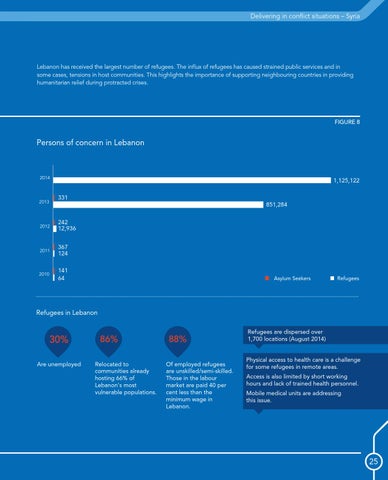
Lebanon has received the largest number of refugees. The influx of refugees has caused strained public services and in some cases, tensions in host communities. This highlights the importance of supporting neighbouring countries in providing humanitarian relief during protracted crises.
FIGURE 8
Persons of concern in Lebanon
2014
2013
1,125,122 331
2012
242 12,936
2011
367 124
2010
141 64
851,284
Asylum Seekers
Refugees
Refugees in Lebanon
30% Are unemployed
86% Relocated to communities already hosting 66% of Lebanon's most vulnerable populations.
88% Of employed refugees are unskilled/semi-skilled. Those in the labour market are paid 40 per cent less than the minimum wage in Lebanon.
Refugees are dispersed over 1,700 locations (August 2014) Physical access to health care is a challenge for some refugees in remote areas. Access is also limited by short working hours and lack of trained health personnel. Mobile medical units are addressing this issue.
25