17
Chapter I. Global economic outlook
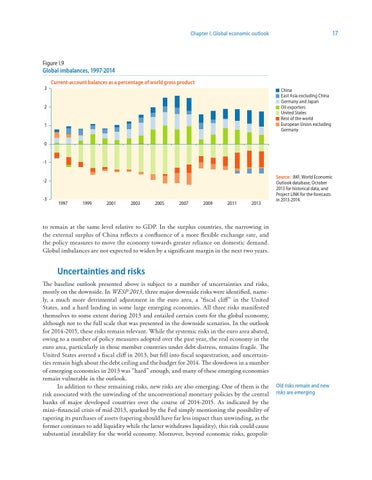
Figure I.9 Global imbalances, 1997-2014 Current-account balances as a percentage of world gross product 3
China East Asia excluding China Germany and Japan Oil exporters United States Rest of the world European Union excluding Germany
2
1
0
-1
-2
-3
1997
1999
2001
2003
2005
2007
2009
2011
2013
Source: IMF, World Economic Outlook database, October 2013 for historical data, and Project LINK for the forecasts in 2013-2014.
to remain at the same level relative to GDP. In the surplus countries, the narrowing in the external surplus of China reflects a confluence of a more flexible exchange rate, and the policy measures to move the economy towards greater reliance on domestic demand. Global imbalances are not expected to widen by a significant margin in the next two years.
Uncertainties and risks The baseline outlook presented above is subject to a number of uncertainties and risks, mostly on the downside. In WESP 2013, three major downside risks were identified, namely, a much more detrimental adjustment in the euro area, a “fiscal cliff” in the United States, and a hard landing in some large emerging economies. All three risks manifested themselves to some extent during 2013 and entailed certain costs for the global economy, although not to the full scale that was presented in the downside scenarios. In the outlook for 2014-2015, these risks remain relevant. While the systemic risks in the euro area abated, owing to a number of policy measures adopted over the past year, the real economy in the euro area, particularly in those member countries under debt distress, remains fragile. The United States averted a fiscal cliff in 2013, but fell into fiscal sequestration, and uncertainties remain high about the debt ceiling and the budget for 2014. The slowdown in a number of emerging economies in 2013 was “hard” enough, and many of these emerging economies remain vulnerable in the outlook. In addition to these remaining risks, new risks are also emerging. One of them is the risk associated with the unwinding of the unconventional monetary policies by the central banks of major developed countries over the course of 2014-2015. As indicated by the mini–financial crisis of mid-2013, sparked by the Fed simply mentioning the possibility of tapering its purchases of assets (tapering should have far less impact than unwinding, as the former continues to add liquidity while the latter withdraws liquidity), this risk could cause substantial instability for the world economy. Moreover, beyond economic risks, geopolit-
Old risks remain and new risks are emerging