Perspectives on risk
315
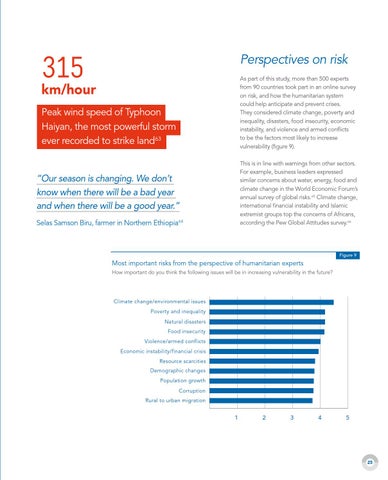
As part of this study, more than 500 experts from 90 countries took part in an online survey on risk, and how the humanitarian system could help anticipate and prevent crises. They considered climate change, poverty and inequality, disasters, food insecurity, economic instability, and violence and armed conflicts to be the factors most likely to increase vulnerability (figure 9).
km/hour Peak wind speed of Typhoon Haiyan, the most powerful storm ever recorded to strike land63
This is in line with warnings from other sectors. For example, business leaders expressed similar concerns about water, energy, food and climate change in the World Economic Forum’s annual survey of global risks.65 Climate change, international financial instability and Islamic extremist groups top the concerns of Africans, according the Pew Global Attitudes survey.66
“Our season is changing. We don’t know when there will be a bad year and when there will be a good year.” Selas Samson Biru, farmer in Northern Ethiopia64
Figure 9
Most important risks from the perspective of humanitarian experts How important do you think the following issues will be in increasing vulnerability in the future?
Climate change/environmental issues Poverty and inequality Natural disasters Food insecurity Violence/armed conflicts Economic instability/financial crisis Resource scarcities Demographic changes Population growth Corruption Rural to urban migration
1
2
3
4
5
25
25