Study methods and report structure
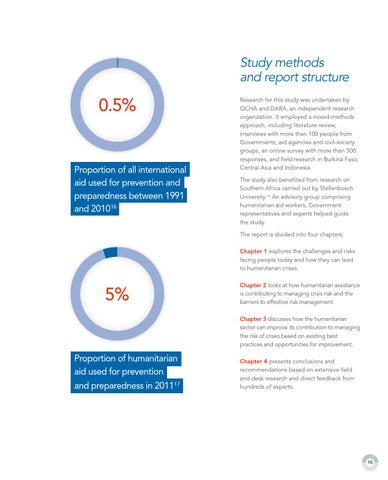
0.5%
Proportion of all international aid used for prevention and preparedness between 1991 and 201016
Research for this study was undertaken by OCHA and DARA, an independent research organization. It employed a mixed-methods approach, including literature review, interviews with more than 100 people from Governments, aid agencies and civil-society groups, an online survey with more than 500 responses, and field research in Burkina Faso, Central Asia and Indonesia. The study also benefited from research on Southern Africa carried out by Stellenbosch University.18 An advisory group comprising humanitarian aid workers, Government representatives and experts helped guide the study. The report is divided into four chapters: Chapter 1 explores the challenges and risks facing people today and how they can lead to humanitarian crises.
5%
Chapter 2 looks at how humanitarian assistance is contributing to managing crisis risk and the barriers to effective risk management. Chapter 3 discusses how the humanitarian sector can improve its contribution to managing the risk of crises based on existing best practices and opportunities for improvement.
Proportion of humanitarian aid used for prevention and preparedness in 201117
Chapter 4 presents conclusions and recommendations based on extensive field and desk research and direct feedback from hundreds of experts.
15
15