The Demography of Adaptation to Climate Change
A needed upgrade in planning for adaptation to climate change A flurry of extreme weather events, together with projections that grow more somber with every new scientific advance, have dramatically highlighted the need to respond more effectively to the threats already upon humankind. In the midst of a rapidly expanding global adaptation agenda, it is of primary importance to get adaptation and its constituent parts right, in order to generate the most appropriate and effective interventions. Reacting to events after they occur is no longer sufficient; we increasingly need to anticipate and reduce the suffering and the enormously damaging impacts coming events will cause. This book addresses a major gap in adaptation efforts to date by pointing to the vital role that an understanding of population dynamics and an extensive use of demographic data have in developing pre-emptive and effective adaptation policies and practices. Politics and an oversimplified understanding of demographic dynamics have long kept population issues out of serious discussions in the framework of climate negotiations. Within adaptation actions, however, this is beginning to change, and this volume is intended to provide a framework for taking that change forward, towards better, more evidence-based adaptation. It provides key concepts linking demography and adaptation, data foundations and techniques for analyzing climate vulnerability, as well as case studies where these concepts and analyses illuminate who is vulnerable and how to help build their resilience.
The Demography of Adaptation to Climate Change
International Institute for Institute for
International
ISBN: 978-0-89714-001-0
Development
Development
Environment and
Environment and
International
Sales no: E.13.III.H.2
Institute for Environment and Development
Demography and Climate Change-Cover.indd 1
1/25/13 2:08 PM
The Demography of Adaptation to Climate Change
Demography and Climate Change-text.indd 1
1/25/13 1:59 PM
Demography and Climate Change-text.indd 2
1/25/13 1:59 PM
The Demography of Adaptation to Climate Change
International Institute for Environment and Development
Demography and Climate Change-text.indd 3
1/25/13 1:59 PM
Editorial team George Martine and Daniel Schensul This book should be cited as: Martine, George and Daniel Schensul (eds.) 2013. The Demography of Adaptation to Climate Change. New York, London and Mexico City: UNFPA, IIED and El Colegio de México. coordination José Miguel Guzmán DISCLAIMER The views expressed in this book do not necessarily represent those of UNFPA, IIED or El Colegio de México.
Cover design by Gisela Martine and Prographics, Inc Cover photo: ©Marlene Bergamo/Folhapress Copyright ©UNFPA, IIED and El Colegio de México, 2013 ISBN: 978-0-89714-001-0 UN Sales Number: E.13.III.H.2
iv
The De mogra ph y of Ada ptation to C l imate Ch ange
Demography and Climate Change-text.indd 4
1/25/13 1:59 PM
Acknowledgements This book emerged from the results of an expert group meeting held in at El Colegio de México in Mexico City, October 2010, entitled “Population Dynamics and Climate Change II: Building for Adaptation.” The meeting was organized by UNFPA, the United Nations Population Fund, IIED, the International Institute for Environment and Development and El Colegio de México. Support and contributions were provided by a wide range of international and national institutions, including UN-HABITAT, IOM, UNDP, ECLAC, UNIFEM, Population Division, UN/DESA, UNITAR, World Bank, Mexico’s Ministry of Environment, Ministry of Foreign Affairs, Consejo Nacional de Población, Instituto Nacional de Ecología, Instituto Nacional de Estadística y Geografía, and the Sociedad Mexicana de Demografía. This book has been realized with the support of the Government of Luxembourg through the project on Demographic Evolutions. We would like to thank Phyllis Brachman for editorial work that significantly improved each of the papers and the book as a whole. Guillermina Herrera of El Colegio de México provided extensive support in the organization of the meeting in 2010, and Madeleine Sacco provided invaluable administrative assistance in the preparation of the book.
acknow le d ge m e n t s
Demography and Climate Change-text.indd 5
v
1/25/13 1:59 PM
Demography and Climate Change-text.indd 6
1/25/13 1:59 PM
Contents Acknowledgements . . . . . . . . . . . . . . . . . . . . . . . . . . . . . . . . . . . . . . . . . . . . . . . . . v Foreword . . . . . . . . . . . . . . . . . . . . . . . . . . . . . . . . . . . . . . . . . . . . . . . . . . . . . . . . . x About the Authors . . . . . . . . . . . . . . . . . . . . . . . . . . . . . . . . . . . . . . . . . . . . . . . . . xii Introduction . . . . . . . . . . . . . . . . . . . . . . . . . . . . . . . . . . . . . . . . . . . . . . . . . . . . . . xv George Martine and Daniel Schensul Section 1: Population Dynamics and Adaptation: Key Concepts and Perspectives 1.
Populating Adaptation: Incorporating Population Dynamics in Climate Change Adaptation Policy and Practice . . . . . . . . . . . . . . . . . . . . . 1 Daniel Schensul and David Dodman
2.
Fair and Effective Responses to Urbanization and Climate Change: Tapping Synergies and Avoiding Exclusionary Policies . . . . . . . . . . . . . . . 24 Gordon McGranahan, Deborah Balk, George Martine and Cecilia Tacoli
3.
Migration as a Response to Local and Global Transformations: A Typology of Mobility in the Context of Climate Change . . . . . . . . . . . . 41 Cecilia Tacoli
Section 2: Population Data for Adaptation: Sources and Methodologies 4.
Understanding Vulnerability and Adaptation Using Census Data . . . . . . . 55 José Miguel Guzmán, Daniel Schensul and Sainan Zhang
5.
Harnessing Census Data for Environment and Climate Change Analysis . 74 Deborah Balk, José Miguel Guzmán and Daniel Schensul
6.
Using Household Surveys in Climate Vulnerability and Adaptation Analysis . . . . . . . . . . . . . . . . . . . . . . . . . . . . . . . . . . . . . . . . . . . 96 Landy Sanchez Peña and Regina Fuchs
Section 3: The Planning and Practice of Adaptation 7.
Adapting Urban Settlements to Climate Change: Local Vulnerability and Adaptive Capacity in the Urban Areas of Malawi . . . . . . . . . . . . . . . . 115 Daniel Schensul, David Mkwambisi, Sainan Zhang, David Dodman, Thomas Munthali and Dunstan Matekenya
co n t e n t s
Demography and Climate Change-text.indd 7
vii
1/25/13 1:59 PM
8. 9.
The Challenges of Adaptation in an Early but Unassisted Urban Transition . . . . . . . . . . . . . . . . . . . . . . . . . . . . . . . . . . . . . . . . . . . . 138 George Martine and Ricardo Ojima Planning for Adaptation in a Megacity: A Case Study of the Mexico City Metropolitan Area . . . . . . . . . . . . . . . . . . . . . . . . . . . . . . . . . . . . . . . . . . . 158 Boris Graizbord
List of Boxes 7.1: Climate Change Impacts in Malawi . . . . . . . . . . . . . . . . . . . . . . . . . . . . . . 121 7.2: The City of Blantyre . . . . . . . . . . . . . . . . . . . . . . . . . . . . . . . . . . . . . . . . . 127 7.3: The City of Mzuzu . . . . . . . . . . . . . . . . . . . . . . . . . . . . . . . . . . . . . . . . . . . 130
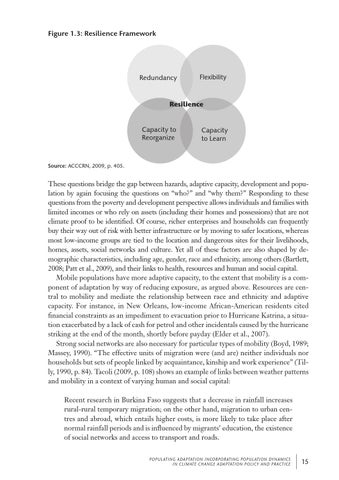
List of Figures 1.1: IPCC Schematic Diagram Linking Drivers, Impacts and Responses to Climate Change . . . . . . . . . . . . . . . . . . . . . . . . . . . . . . . . . . . . . . . . . . . . . . 2 1.2: Bacon Poblacion, Sorsogon, Philippines . . . . . . . . . . . . . . . . . . . . . . . . . . . 12 1.3: Resilience Framework . . . . . . . . . . . . . . . . . . . . . . . . . . . . . . . . . . . . . . . . . 15 4.1: Layers of Vulnerabilities/Adaptive Capacity . . . . . . . . . . . . . . . . . . . . . . . . . 57 5.1: Provincial Boundaries, Overlaid by the 10m Low Elevation Coastal Zone, Viet Nam . . . . . . . . . . . . . . . . . . . . . . . . . . . . . . . . . . . . . . . . 82 5.2: Provincial and Commune Boundaries, Overlaid by the 10m Low Elevation Coastal Zone, Viet Nam . . . . . . . . . . . . . . . . . . . . . . . . . . . 83 5.3: Per Cent Difference in Estimates of Population Exposure to the LECZ:
Province and Commune-level Estimation Compared . . . . . . . . . . . . . . . . 84
6.1: Household Surveys and Vulnerability Analysis . . . . . . . . . . . . . . . . . . . . . . 98 6.2: Education Distribution by Age in India and Mexico . . . . . . . . . . . . . . . . . 102 6.3: Labour and Asset Income by Age and Education in India and Mexico . . 103 6.4: Income Structure in Mexican Rural Households by State . . . . . . . . . . . . 106 6.5: Variation in Budget Shares across Regions and Rural/Urban Residence . . . 108 7.1: Study Sites in Malawi . . . . . . . . . . . . . . . . . . . . . . . . . . . . . . . . . . . . . . . . . 118 7.2: Population Density in Lilongwe . . . . . . . . . . . . . . . . . . . . . . . . . . . . . . . . . 124 7.3: STI in Lilongwe . . . . . . . . . . . . . . . . . . . . . . . . . . . . . . . . . . . . . . . . . . . . . 125 7.4: Proportion of Households with Improved Toilets, Blantyre . . . . . . . . . . . 128 8.1: Number of Urban Inhabitants, Africa, Asia and LAC (in billions) 2010-2050 . . . . . . . . . . . . . . . . . . . . . . . . . . . . . . . . . . . . . . . . . . . . . . . . . . 140 8.2: Flooding and Devastation in Cities near Rio de Janeiro, Brazil:
Photos 1 and 2 . . . . . . . . . . . . . . . . . . . . . . . . . . . . . . . . . . . . . . . . . . . . . . . 144
8.3: Proportion of All Households Having Inadequate Sanitation by Size of Municipalities, Brazil, 1991-2010 . . . . . . . . . . . . . . . . . . . . . . . 146
viii
The De mogra ph y of Ada ptation to C l imate Ch ange
Demography and Climate Change-text.indd 8
1/25/13 1:59 PM
8.4: Distribution of Urban Population by City-Size Class, Brazil, 1950-2010 . . . . . . . . . . . . . . . . . . . . . . . . . . . . . . . . . . . . . . . . . . . . . . . . . . 149 8.5: Proportion of the Metropolitan Population Residing in Peripheral
Municipalities, 15 Brazilian Metropolitan Areas, 1991-2010 . . . . . . . . . . 150
8.6: Percentage of Households Linked to Sewage Networks in
Central and Peripheral Areas of Metropolitan Regions, Brazil, 2010 . . . 151
9.1: Urban Growth in the Valley of Mexico, 1950-2010 . . . . . . . . . . . . . . . . . . 160 9.2: Housing and Population Vulnerability Matrix . . . . . . . . . . . . . . . . . . . . . 166 9.3: MCMA: Spatial Distribution of Vulnerability . . . . . . . . . . . . . . . . . . . . . . 166 9.4: Vulnerable Population and Dwellings in AGEBs Exposed to Heavy Rain . . . . . . . . . . . . . . . . . . . . . . . . . . . . . . . . . . . . . . . 168 9.5: Vulnerable Population and Dwellings in Areas of Hill Slopes 15o or More . . . . . . . . . . . . . . . . . . . . . . . . . . . . . . . . . . . . . . . 169 9.6: Vulnerable Population and Dwellings Affected by Heat Waves . . . . . . . . 170
List of Tables 4.1: Examples of Indicators of Adaptive Capacity by Layer and Type . . . . . . . . 65 5.1: Province-level Summary of Mis-estimation of the Population Living within a Low Elevation Coastal Zone:
A Comparison of Scale-dependent Estimates . . . . . . . . . . . . . . . . . . . . . . . 86
6.1: Common Variables in IEHS and Their Relationship to Vulnerability . . . 105 7.1: Population Projection for Main Urban Centres in Malawi . . . . . . . . . . . 119 7.2: Resident Total Population and Migration . . . . . . . . . . . . . . . . . . . . . . . . . 120 7.3: Selected Socioeconomic and Adaptive Capacity Indicators: Urban and Non-urban . . . . . . . . . . . . . . . . . . . . . . . . . . . . . . . . . . . . . . . . 122 8.1: Rural-urban Migration, Increase in the Number of Cities and in Urban Population, Brazil, 1940-1980 . . . . . . . . . . . . . . . . . . . . . . . . . . . . . 141 8.2: Type and Frequency (%) of Aggravating Factors Encountered in Municipalities Affected by Floods and Overflows between 2003 and 2008 in Brazil . . . . . . . . . . . . . . . . . . . . . . . . . . . . . . . . . . . . . . . . . . . . 147 8.3: Number of Cities and Population Residing in Low Elevation Coastal Zones (LECZ), Brazil, 2000 . . . . . . . . . . . . . . . . . . . . . . . . . . . . . 148 9.1: MCMA: Population Growth, 1950-2010 . . . . . . . . . . . . . . . . . . . . . . . . . . 160 9.2: MCMA: Urban Physical Expansion, 1950-2010 . . . . . . . . . . . . . . . . . . . . 161 9.3: MCMA: AGEBs with Vulnerable Population and Dwellings Exposed to Hydro-meteorological Events . . . . . . . . . . . . . . . . . . . . . . . . . . . . . . . . 169
co n t e n t s
Demography and Climate Change-text.indd 9
ix
1/25/13 1:59 PM
Foreword Adaptation to climate change is urgent. It is something that we must engage in immediately, or risk disaster. Adaptation is also not just about acting, particularly when we do so reactively. It is about planning, about development and about preparing for the world as it will be, not just as it is. Adaptation is about more than infrastructure and ecosystems. It is about people—their characteristics and resources, and how they come together in communities and countries. It is more important than ever that we understand how people, not just places, are vulnerable to climate change, and how they are and can become more resilient. This book represents the continuation of a process to create a foundation for adaptation that has people, now and in the future, at its centre by bringing together population dynamics and data with climate response. The three organizations that have collaborated to release this book—UNFPA, IIED and El Colegio de México—have spent years building programmes of work in this area. In 2010, we all came together to host an Expert Group Meeting in Mexico City on the aspects of population dynamics that focus particularly on adaptation to climate change. This book is intended to bring together the knowledge, methods and practices that emerged out of the 2010 meeting, as well as the projects and advances that have followed, to improve adaptation, particularly for those who are most vulnerable to the impacts of climate change. It is intended to catalyze action in global, national and local communities around a more informed, data driven adaptation process. And it is intended to bring together disparate disciplines, from environment science to planning to social science and beyond, that have been working hard but in silos to address this vital issue. The use of spatial data—growing in leaps and bounds everywhere around the world, in the public and private sectors alike—is at the core of this agenda.
x
The De mogra ph y of Ada ptation to C l imate Ch ange
Demography and Climate Change-text.indd 10
1/25/13 1:59 PM
As the links between population dynamics and adaptation remain a new area of work, a range of different, yet consistent, approaches are presented in this book. However, more than creating new approaches, this book attempts to provide tools and entry points for policy makers, planners and practitioners to make the critical links to population dynamics a reality for effective adaptation on the ground. What it proposes will continue to unfold in the months and years to come, through continued collaboration between our organizations, our partners, and the wide array of stakeholders for whom adaptation is a necessity. We invite you to join us on this journey.
Jose Miguel Guzman
Chief, Population and Development Branch UNFPA
Gordon McGranahan
Principal Researcher Human Settlements Group IIED
Silvia Giorguli
Director, Center for Demographic, Urban and Environmental Studies El Colegio de MĂŠxico
fo re wo rd
Demography and Climate Change-text.indd 11
xi
1/25/13 1:59 PM
About the Authors Deborah Balk is Professor at the City University of New York (CUNY)’s Baruch School of Public Affairs and the CUNY Graduate Center (in the Sociology and Economics Programs) and Associate Director of the CUNY Institute for Demographic Research. Her expertise lies in spatial demography and the integration of earth and social science data and methods to address interdisciplinary policy questions. Her current research focus is on urbanization, population, poverty, and environmental interactions (such as climate change). She has co-authored numerous papers on population and climate change, including a recent one on city population forecasts and water scarcity. David Dodman is a Senior Researcher at the International Institute for Environment and Development (IIED) where he is team leader for institutional objectives on ‘Cities and Climate Change’ and ‘Research Quality’. He is the author of more than thirty journal articles and book chapters, and the co-editor of ‘Global Change and Caribbean Vulnerability: Environment, Economy and Society at Risk’ (Kingston, UWI Press) and ‘Adapting Cities to Climate Change: understanding and addressing the development challenge’ (London, Earthscan). He is a College Teaching Fellow at University College London, and a Lead Author on the Fifth Assessment Report of the Intergovernmental Panel on Climate Change. Regina Fuchs is a research scholar at the International Institute of Applied Systems Analysis (IIASA), as well as a Teaching and Research Associate at the University of Economics and Business (WU) in Vienna, Austria, where she was awarded a doctorate in the fall of 2012. Her research is focused on household demography and the demographic transition in developing countries. Boris Graizbord is National Program Director for LEAD Mexico. Before joining LEAD, he served twice as academic coordinator for the Master’s programme in urban development at El Colegio de México. Since 1979, he has been a research professor at the Center for Demographic, Urban and Environmental Studies at El Colegio de México; lecturer in the post-graduate division in the faculty of architecture at Mexico’s National University (UNAM); and, since 1992, lecturer in the Master’s programme in Regional Studies at Instituto Mora. He also teaches full and short courses in other academic institutions, including the University of Southern California, University of Pennsylvania and the New School University in New York. José Miguel Guzmán is the Chief of the Population and Development Branch of UNFPA. He holds a Ph.D. in Demography from the University of Montreal, Canada. He works on a wide range of issues related to population and development, including climate change, urbanization, ageing, fertility transition, child and maternal mortality and health, gender, international migration, poverty, natural disaster impacts and surveys/ census and information systems. xii
The De mogra ph y of Ada ptation to C l imate Ch ange
Demography and Climate Change-text.indd 12
1/25/13 1:59 PM
George Martine is a Canadian sociologist and demographer who has spent most of his professional life working on social development issues in Latin America, especially in Brazil. He has written extensively on social, demographic and environmental topics. Mr. Martine authored UNFPA’s path-breaking The State of World Population 2007: Unleashing the Potential of Urban Growth. He is currently Technical Director of Dhemos Consulting, an independent firm that provides support mostly to international organizations on socioeconomic, demographic and environmental issues. Mr. Martine previously served as President of the Brazilian Population Association; Director of UNFPA’s Country Support Team for Latin America; Senior Fellow at Harvard University’s Center for Population and Development; Director of a Brazilian NGO on population and environment; and coordinator of several United Nations projects in social development. Dunstan Matekenya is the head of the GIS Section of Malawi’s National Statistical Office. His current work focuses on spatial data for the 2008 census, and he is leading in planning the 2018 census mapping. He is also a part-time consultant in GIS and remote sensing. Mr. Matekenya has an M.Sc. in Geospatial Science. Gordon McGranahan is Principal Researcher in the Human Settlements Group at the International Institute for Environment and Development (IIED). He works on a range of urban environmental issues, with an emphasis on addressing poverty and environmental problems in and around the home, and on understanding how the critical scale of urban environmental burdens changes as cities become wealthier. Publications include: The Citizens at Risk: From Urban Sanitation to Sustainable Cities (Earthscan, 2001); the urban systems chapter of the Millennium Ecosystem Assessment (2005); “The Rising Tide: Assessing the Risks of Climate Change and Human Settlements in Low Elevation Coastal Zones” (Environment and Urbanization, 2007); and “Evolving Urban Health Risks: Housing, Water and Sanitation, and Climate Change” (In: The Urban Transformation: Health, Shelter and Climate Change, Earthscan, 2012). David Mkwambisi is an environment and development expert with a Ph.D. and an M.Sc. in Environment and Development from the Universities of Leeds and East Anglia (United Kingdom), respectively. He is currently working as a Lecturer in Environment and Development Studies at Bunda College, University of Malawi. He is also a regional expert providing technical advice to government negotiators at the United Nations Framework Convention on Climate Change (UNFCCC) on agriculture and climate change within SADC and COMESA countries. Thomas Munthali manages the Population and Development Programme for UNFPAMalawi, where he is the focal point on climate change and natural resource management. He is also the outcome leader for population and sustainable development for the United Nations (Malawi) under the United Nations Development Assistance Framework (20122016). He has a Ph.D. in Economics from the University of Leeds and is the immediate past President of the Economics Association of Malawi (ECAMA). He previously worked with the Government of Malawi as an economist in the Ministry of Economic abo ut t h e aut h o rs
Demography and Climate Change-text.indd 13
xiii
1/25/13 1:59 PM
Planning and Development, where he was part of the team that developed the Malawi Economic Growth Strategy (MEGS). A former World Bank economist, he has written and presented extensively on development economics, including on population dynamics and climate change. Ricardo Ojima is a sociologist and demographer with a Ph.D. from the University of Campinas. He is currently Associate Professor in the graduate programme in demography at the Federal University of Rio Grande do Norte. He also serves as the coordinator (2011-2012) of the working group “Population, Space and Environment” in the Brazilian Association of Population Studies (ABEP). His research has focused on the areas of population and environment, spatial mobility of population and urbanization. Landy Sanchez Peña is a professor in the Center for Demographic, Urban and Environmental Studies at El Colegio de México. She has worked on spatial inequality, as well as demographic change and the environmental implications of household consumption. Her current research focus is on cities and climate change in Mexico. Daniel Schensul is a Technical Specialist with the Population and Development Branch of the Technical Division, UNFPA, where he works on climate change, urbanization and data analysis and dissemination. He co-edited the book, Population Dynamics and Climate Change, and has published research on urbanization, governance and environment. Mr. Schensul has worked extensively on climate change adaptation, with a particular focus on the data foundations of vulnerability assessment and the spatial distribution of vulnerability in a wide range of contexts, including in Malawi and Indonesia. He received his Ph.D. in Sociology from Brown University, with a concentration on urban development and spatial analysis. Cecilia Tacoli is Principal Researcher in the Human Settlements Group at the International Institute for Environment and Development (IIED). Her work explores how the relations between rural and urban areas, people and enterprises are transformed by urbanization processes. Publications include: The Earthscan Reader in Rural-Urban Linkages (Earthscan, 2006); “Crisis or Adaptation? Migration and Climate Change in a Context of High Mobility” (2009) in Environment and Urbanization 21(2); and Urbanization, Gender and Urban Poverty: Paid Work and Unpaid Carework in the City (2012), Urbanization and Emerging Population Issues Working Paper Series, London and New York: IIED and UNFPA. Sainan Zhang has worked for UNFPA on population, urbanization and climate change. She is a Ph.D. Candidate at the School of Sustainability at Arizona State University and studied Urban Environmental Management in Wageningen University in the Netherlands for her MSc. Prior to her studies, she had worked in the Chinese Central Government for three years on UN and European Commission-funded projects in environmental management, climate change, energy efficiency and urban planning. She also worked for The Nature Conservancy in ecosystem protection and climate change projects. Her Ph.D. research focuses on sustainable urban development, especially the interlinked issues of human and environment dynamics. xiv
The De mogra ph y of Ada ptation to C l imate Ch ange
Demography and Climate Change-text.indd 14
1/25/13 1:59 PM
Introduction George Martine and Daniel Schensul
Growing awareness that the impacts of climate change on human populations are imminent, as well as potentially devastating, has prodded some policymakers and most of the scientific community to call for more effective action. Deepening alarm at the scale of the development-environment quandary in the Anthropocene Era (Steffen et al, 2011) is typified in recent compelling statements by the world’s most influential multilateral leader, Ban Ki-Moon, the United Nations Secretary General. In words that would have been viewed as anathema by the development community not long ago, Ban Ki-Moon told a recent gathering of the world’s business and policymaking leaders in no uncertain terms that - “In the 21st century, supplies are running short and the global thermostat is running high. Climate change is showing us that the old model is more than obsolete. It has rendered it extremely dangerous. Over time, that model is a recipe for national disaster. It is a global suicide pact” (Ban Ki-Moon, 2011). A few short years ago, the UN’s Millennium Ecosystem Assessment warned that “human activity is putting such strain on the natural functions of Earth that the ability of the planet’s ecosystems to sustain future generations can no longer be taken for granted” (Millennium Ecosystem Assessment, 2005). The latest scientific evidence and recent extreme climate events now makes this early warning sound bland. It is already obvious that human demands on the planet have outstripped supply, biodiversity has declined globally, and rising levels of atmospheric CO2 are causing increased global temperatures, climate change and ocean acidification. As reflected in the authoritative work published by the Stockholm Resilience Center, the abusive utilization of the Earth’s material, energetic and biotic resources by the global economic system has already overstepped planetary boundaries in three domains (climate change, biological diversity and nitrogen input to the biosphere) and threatens to exceed them in at least six known additional areas (Rockstrom et al, 2009). Although efforts to change our civilization’s patterns of production and consumption in order to reduce the concentration of greenhouse gases in the atmosphere are ever more urgent, a flurry of extreme weather events has dramatically highlighted the need to respond more effectively to the threats already upon humankind. Mitigation is urgent, critical and irreplaceable, but even if known pathways were followed quickly and i n t ro d uct i o n
Demography and Climate Change-text.indd 15
xv
1/25/13 1:59 PM
universally, the impacts of climate change are already upon us and are certain to increase in frequency and magnitude. Adaptation to climate change, already a major front in global climate response, must therefore be considerably improved in order to reduce the human suffering that climate change is causing. Adaptation is particularly essential in relation to the world’s poor, who are universally acknowledged as the social contingent that has made the least contribution to climate change, yet will experience its most deleterious consequences. Understanding and reducing climate vulnerability are at the center of effective adaptation. To this purpose, a broader understanding of the drivers of social change is essential in order to avoid superficial, overly general and deterministic perspectives. This book makes the point that population dynamics play a central role in livelihoods, location, economic vulnerability, environmental vulnerability and resilience. Understanding population dynamics is also critical in avoiding static perceptions of vulnerability: Changes that affect the size, distribution and composition of human populations also affect both the nature of vulnerability and adjustments in natural or human systems in response to actual or expected climatic stimuli. Existing approaches to adaptation have had serious limitations, chief among which have been their reactive nature and the lack of solid data on which to base decisionmaking. Until now, the bulk of measures to reduce the impacts of climate-related hazards have been responsive in nature. Lingering beliefs that the ongoing escalation of the pace and intensification of extreme climate events reflects random occurrences unrelated to human actions, combined with the disinclination of politicians everywhere to undertake projects that will mature only in the long term, have made post-hoc measures the norm rather than the exception. The human and financial costs of such reflexive approaches are incalculable. Continuing the move towards anticipatory adaptation, including more longer-term preparation for climate impacts that will play out on decadal time frames, will be critical for effective and cost-effective climate response, and also for making a strong link to poverty reduction and development. The lack of solid information related to risk and vulnerability often provides a convenient justification for the lack of effective, proactive approaches. This is no longer a valid excuse: The correct use and exploitation of demographic data could provide a wealth of analyses and insights that can orient more effective approaches, particularly when applied to maps and tied to the geography of current and expected climate-related hazards. A focus on demographic dynamics can help address another major issue that many have identified in the global climate change response to date: that is, an inordinate focus on technical and economic challenges, without sufficient consideration of people’s livelihoods and opportunities. The path to adaptation in the decades to come must be more people-centred, with the well-being and rights of the most vulnerable people and communities considered a critical component of success. The benefits of including population dynamics in the design of adaptation strategies are several, as noted in the chapter by Daniel Schensul and David Dodman. First, population projections generally provide the most reliable scenarios concerning the size, location and characteristics of the need for adaptation efforts. Second, population issues are in themselves closely linked to economic and social development. The interactions between fertility, migration, spatial distribution, age structure, household size and composition, xvi
The De mogra ph y of Ada ptation to C l imate Ch ange
Demography and Climate Change-text.indd 16
1/25/13 1:59 PM
race and ethnicity and gender dynamics shape economic growth, as well as access to social safety nets and services which are integral to secure livelihoods. Third, some aspects of population dynamics, such as migration, urbanization and age structure are directly linked to adaptation. Hence, analysis of population characteristics and dynamics can be a powerful tool for adaptation programming and for building adaptive capacity. In the midst of a rapidly expanding global adaptation agenda, it is of primary importance to get adaptation and its constituent parts right, in order to generate the most appropriate and effective interventions. This book addresses a major gap in adaptation efforts to date by pointing to the vital role that an understanding of population dynamics and data has in developing pre-emptive and effective adaptation policies and practices. Politics and an oversimplified understanding of demographic dynamics have long kept population issues out of serious discussions in the framework of climate negotiations. Within adaptation actions, however, this is beginning to change, and this volume is intended to provide a framework for taking that change forward. The remainder of this introduction briefly describes the three sections of this book, and how the information and approaches they contain can contribute to helping vulnerable territories and peoples to adapt to a changing climate.
Population Dynamics and Adaptation – Key Concepts and Perspectives Most public and scientific discussions of what to do about climate change include, as they should, concern about population dynamics. Shifts in population trends do indeed have multiple implications in the climate change context. However, their nature and actual impact are often misunderstood or oversimplified, a fact which tends to have population dynamics ignored both in intergovernmental climate change negotiations, as well as in the practice of adaptation to climate change. As argued by Daniel Schensul and David Dodman in Chapter 1, interest in the topic of adaptation is expanding rapidly, but overlooking population dynamics leaves a significant gap in the development and implementation of adaptation projects. Appropriate consideration of population growth, composition and distribution is critical in understanding how vulnerability is distributed across different groups of people. Vulnerability, exposure and adaptive capacity are shaped by demographic issues in specific ways. Schensul and Dodman propose an initial framework for integrating development, adaptation to climate change and disaster risk reduction that uses a holistic understanding of population dynamics to connect the lives of individuals, households and communities. Within the framework of ongoing demographic changes, the urban transition underway in developing regions, especially of Africa and Asia, is far and away the most impactful for the global social, economic, demographic and environmental future, and it is occurring simultaneously with as yet uncharted, but enormously significant, climate changes. In Chapter 2, Gordon McGranahan and colleagues pose a set of crucial questions inspired by the onset of these simultaneous trends: How will urbanization and climate trends interact? How will cities cope with, respond to and plan for this interaction? How will potentially vulnerable groups be affected? What are the i n t ro d uct i o n
Demography and Climate Change-text.indd 17
xvii
1/25/13 1:59 PM
challenges that these changes pose to political equity and urban governance? The authors note that the issues of urbanization in general, the location of receiving urban centres and population density and distribution within those settlements each relates quite differently to climate change and poses different political and governance challenges. An underlying concern of Chapter 2 is that urban policy regimes already disadvantage those urban and rural dwellers who could be further threatened by climate change. If urban policy regimes become more exclusionary in response to climate change, vulnerable people could end up doubly burdened—by climate change itself and by inequitable responses to it. Moreover, the current tendency to treat urbanization as a driver of climate change—and of mal-adaptation—diverts attention from the diverse forms urbanization can take, and the ways it can become a means of addressing the risks of climate change. McGranahan and colleagues highlight the fact that land issues, already central to the challenge of contemporary urban population growth, are at the core of urban climate challenges. This can be perceived as a recurrent theme throughout much of this book, particularly in the Section 3 chapters. Growing concern about the impacts of climate change has also re-ignited discussions on their implications for population distribution and mobility. Earlier views tended to perceive environmental migration as essentially a failure to adapt to degradation that resulted in huge numbers of impoverished displaced people. The reality, however, is far more complex. An alternative view depicts mobility and migration as key adaptive strategies. In Chapter 3, Cecilia Tacoli argues that a better grasp of these admittedly complex dynamics is necessary to achieve an improved sense of what can be done to support and accommodate migration in a changing climate. More accurate information is also needed to dispel misconceptions that are often at the root of discriminatory policies against migrants. A more correct understanding of the wide range of destinations, duration of movements and composition of migratory flows is a necessary first step towards the formulation of policies relevant to population mobility. Drawing on the findings of recent empirical research in Bolivia, Senegal and the United Republic of Tanzania, Tacoli proposes a typology of mobility that takes into account the interrelations between slow-onset climate change and socioeconomic and cultural transformations and that highlights the diversity of migration and its drivers.
Population Data for Adaptation: Sources and Methodologies Adaptation encompasses a diverse and complex set of interventions and outcomes, yet data inputs to adaptation have been derived mostly from a limited set of sectors focusing on the geography of climate exposure and the kind of large-scale infrastructure necessary to protect exposed areas. To fill the gap in demographic and social data, this section of the book maps out a path to incorporating such data into adaptation analysis and programming. In Chapter 4, José Miguel Guzmán and colleagues situate data derived from the census within the layered schema of climate adaptation, suggesting that census data can fill vital gaps in information on individuals and households, while complementing existing vulnerability assessment methodology that focuses on communities, municipalities and xviii
The De mogra ph y of Ada ptation to C l imate Ch ange
Demography and Climate Change-text.indd 18
1/25/13 1:59 PM
countries. They then proceed to develop a set of indicators of climate vulnerability, both general to climate change and specific to individual climate hazards such as floods, drought, heatwaves and sea level rise. Many of these indicators, which have inputs derived from demographic, human and social capital and built environment information, can be calculated all or in part from census data. As a result, they can be mapped at the neighborhood level and joined with a range of other spatial data. In Chapter 5, Deborah Balk and colleagues take on the process of joining census data with other critical climate information using geographic information systems (GIS). They suggest that the processing of census data in National Statistical Offices (NSOs) has historically been oriented to larger administrative boundaries: the country as a whole, provinces and sometimes municipalities. Climate hazards, however, operate on entirely different scales – sometimes smaller, sometimes larger, always cutting across administrative boundaries. Census data need to be processed in reference to the geography of climate hazards, which is far more widely possible in light of the major advances in GIS infrastructure made in the buildup to and implementation of the 2010 round of censuses. The chapter reviews data types and critical choices that need to be made in the processing of census data for geographic use, as well as with joining these data to information on climate exposure like low elevation coastal zones. Part of broader efforts to develop a guide for NSOs on census data for climate adaptation analysis, this chapter can help NSOs deliver the right data products to other parts of government that are developing climate adaptation solutions. The authors also identify some significant gaps in the capacity of NSOs that need to be addressed in order for countries to maximize use of the data at their disposal. The final chapter in this section, Chapter 6 by Landy Sanchez and Regina Fuchs, makes the case for the integration of survey data into climate adaptation efforts. Survey data provide much more detailed information than censuses, often at much more frequent intervals; however, their major shortcoming relative to census data is that they do not provide direct results for small geographic areas. This chapter examines the Income and Expenditure Household Surveys (IEHS), using data from Brazil, India, Indonesia and Mexico, for information useful in understanding climate vulnerability and adaptive capacity. It then uses the techniques for survey sampling to apply the results of the IEHS and other similar surveys to geographic extents. It concludes by examining modeling processes that allow survey data to be combined with other types of data, including from the census, for a variety of purposes from emissions modeling to improving small area estimation of vulnerability.
The Planning and Practice of Adaptation Adaptation efforts under the threat of global climate change continue to need significant guidance, and the final section of this book demonstrates how bringing population concepts, data and practices together can help to make these efforts more proactive and effective. In Chapter 7, Daniel Schensul and colleagues provide a concrete example of how census data can help to strengthen adaptive capacity and reduce vulnerability even in countries considered as least-developed and most vulnerable. Their case study combines i n t ro d uct i o n
Demography and Climate Change-text.indd 19
xix
1/25/13 1:59 PM
spatial analysis of the Malawi 2008 census with policy and stakeholder analysis, showing results that can be replicated elsewhere using existing in-country GIS capacity developed as part of the 2010 round of censuses. Focusing on five urban extents, Chapter 7 examines vulnerability linked to water, infrastructure, housing, energy and livelihoods expected to be the hardest hit by climate change events. Mapped census data show significant variations in the adaptive capacity of households and communities. The fact that many poor urban areas are far more similar to rural areas in vulnerability indicators is critical since aggregate statistics showing better average outcomes in urban areas tend to lead policy makers to consider vulnerability a rural problem. In addition, growing urban populations increase the spatial concentration of demands of energy, building materials and water. But their use also shapes patterns of urban vulnerability: As low-income residents are more heavily dependent on biomass for energy and natural materials for houses, they will suffer the most as the natural asset base is depleted. Existing efforts to address climate change in Malawi do not yet take into account many of these factors. The fact that most urban growth in Asia and Africa is still to come provides an opportunity to address urban vulnerability as or before it emerges. In Chapter 8, George Martine and Ricardo Ojima suggest that the increasing concentration of population in towns and cities of the developing world presents the most pressing challenge, and the greatest opportunity, for future adaptation efforts globally. Urban areas are, on the whole, more resilient to climate variability due to their economic and social advantages, yet, they are adding growing masses of population groups that are often the most vulnerable to climate change – the urban poor in exposed areas. Rapidly-urbanizing regions have a one-time chance to prepare better for potential risks. To do so, however, they will need better strategies and policies than the ones adopted so far in order to promote positive and forward-looking approaches. The authors present a case study of Brazil, a developing country which has practically completed an early urban transition, but whose urban population suffers unduly from natural disasters. They suggest that today’s vulnerability reflects the negative attitudes of decision-makers to urbanization, and analyze the implications of these attitudes for governance in relation to such issues as urban expansion, land use, sanitation and transportation. The growth in the number and size of megacities is cause for increasing concern in the context of climate change. Boris Graizbord, in Chapter 9, maps the areas at risk from hydro-meteorological hazards within one of the largest megacities – the Mexico City Metropolitan Area (MA) – and identifies vulnerable populations and housing based on socioeconomic indicators derived from the census. The MA has continued to grow in terms of both population and area, but the demographic growth rate reached its peak in the 1960s at 3.6 per cent per year and declined steadily to 1 per cent recently, while the physical expansion of the urban area continued rapidly with decreasing density and, more recently, in a leapfrog pattern of growth. Economic growth and employment have not kept up as urban expansion has resulted both in an increase in the number and proportion of poor residents and an increased demand for public and private goods and services that has put more pressure on ecosystem resources. High vulnerability to natural hazards, based on population attributes and housing characteristics, affects close to xx
The De mogra ph y of Ada ptation to C l imate Ch ange
Demography and Climate Change-text.indd 20
1/25/13 1:59 PM
27 per cent of the MA´s population (4.6 million inhabitants) and close to a million dwellings. Highly vulnerable neighborhoods in areas exposed to intense rain events, landslides and heat waves were identified in the study. Despite the inherent advantages of cities to improve adaptive capacity and to implement risk management strategies, the manner in which Mexico City has evolved, particularly in relation to land use change, has increased the vulnerability of the poor to climate change.
References Ban Ki-Moon. 2011. “Secretary-General’s Remarks to the World Economic Forum Session on Redefining Sustainable Development,” Davos, Switzerland, 28 January 2011. Website: http://www.un.org/sg/statements/?nid=5056, accessed 16 November 2012. Millennium Ecosystem Assessment. 2005. Living Beyond Our Means: Natural Assets and Human Well-Being: Statement from the Board: Millennium Ecosystem Assessment. New York: Millennium Ecosystem Assessment, United Nations. Rockström, J., et al. 2009. “A Safe Operating Space for Humanity.” Nature 461: 472 – 475. Steffen, W., et al. 2011. “The Anthropocene: From Global Change to Planetary Stewardship.” Ambio 40(7): 739-761.
i n t ro d uct i o n
Demography and Climate Change-text.indd 21
xxi
1/25/13 1:59 PM
Demography and Climate Change-text.indd 22
1/25/13 1:59 PM
CHAPTER
1
Populating Adaptation: Incorporating Population Dynamics in Climate Change Adaptation Policy and Practice Daniel Schensul and David Dodman
Introduction Climate change is increasingly recognized as a major challenge facing households and communities, local and national governments and international agencies and organizations. The earth’s climate has already been altered to such an extent that mitigation (efforts to reduce the concentrations of greenhouse gases in the atmosphere) alone will be inadequate. Therefore adaptation (responding to the impacts of climate change) is increasingly necessary. Budgets for adaptation are increasing, programmes are expanding and political infrastructure is being negotiated and implemented. In the meantime, significant advances have been made in the development of adaptation programmes. Yet, to this point, existing approaches have had serious limitations. In the midst of a rapidly expanding global adaptation agenda, it is of primary importance to get adaptation and its constituent parts right, in order to generate the most appropriate and effective interventions. This chapter addresses a major gap in adaptation efforts to date by pointing to the vital role that an understanding of population dynamics has in developing effective adaptation policies and practices. It examines the key components of climate change vulnerability and adaptation and assesses the ways in which these interact with population dynamics. Understanding and reducing climate vulnerability are essential for effective adaptation. The Intergovernmental Panel on Climate Change (IPCC) defines vulnerability as a systemic characteristic associated with a range of factors, including ecosystems, water, food security, human settlements and health (see Figure 1.1). Vulnerability is identified as a function of climate change and development, and development includes changes in population dynamics, along with many other factors. This model illustrates a complex and interwoven system of causes and effects, without identifying or assessing the nature of the relationships between these factors. Partly as a result, current approaches to vulnerability and adaptation are based on a model with hidden gaps in understanding, which results in many key linkages being ignored, assumed or glossed over. Population dynamics are especially ignored, both for substantive reasons that this chapter will elaborate and attempt to ameliorate, but also unquestionably for political reasons. To many, population dynamics suggest size and growth. In the environmental Popul at i ng Adap tat i o n I nco rp o rat i ng P o p ul at i o n Dy nam i c s i n C li m at e Ch ange Adap tat i o n P o li c y an d P ract i c e
Demography and Climate Change-text.indd 1
1
1/25/13 1:59 PM
Figure 1.1: IPCC Schematic Diagram Linking Drivers, Impacts and Responses to Climate Change Temperature change
Precipitation change
Climate Change Sea Level Rise
EARTH SYSTEMS
Climate process drivers Greenhouse gases
Concentrations
Extreme events
Aerosols
Emissions
HUMAN SYSTEMS
Governance
Water resources
Impacts and vulnerability Food Human security health
Health Literacy
Socio-Economic Technology Development Trade
Ecosystems
Equity
Production and Socioconsumption cultural preferences patterns
Mitigation
Adaptation
Source: IPCC, 2007, Figure I.1.
community, there is a long history—from Malthus to Erlich to the recent resurgence of concerns linked to climate change and sustainable development—of blaming population growth for the world’s problems. Consequently, as Michael Zammit Cutajar, who established and headed the United Nations Framework Convention for Climate Change (UNFCCC) until 2002, said at an event attended by one of the authors during the Cancun Climate Change Talks in 2010, demographics have never been brought up within the framework of the climate negotiations. Within adaptation actions, however, this is beginning to change, and this volume is intended to provide a framework for taking that change forward. One of the key gaps is in understanding how vulnerability is distributed across different groups of people, as a particularly important subset or component of system vulnerability. For instance, in Figure 1.1, population and settlements are separated, despite having strong links, and it is not clear where other essential population dynamics like mobility and composition would fit. As this chapter shows, these gaps result in a fundamental misspecification of the continually changing nature of vulnerability and how to decrease it. In addition, the outline for the IPCC Fifth Assessment Report (to be published in 2014) only identifies population issues in the section on “human health, well-being and security” (with the exception of migration, which is also referred to in the chapter on rural areas). The focus for these issues is on identifying “vulnerable” 2
The De mogra ph y of Ada ptation to C l imate Ch ange
Demography and Climate Change-text.indd 2
1/25/13 1:59 PM
or “marginalized� populations, with an emphasis on inequalities, children and gender. Without better consideration of the limitations of current understandings of vulnerability and adaptation, and incorporation of an understanding of population dynamics in addressing these limitations, adaptation policies and programmes will increasingly fall short of their intended outcomes. In particular, this chapter shows how incorporating a range of population dynamics and related demographic issues in adaptation policies and programmes can aid in reducing exposure to the impacts of climate change and in strengthening adaptive capacity to deal with these impacts. Population dynamics is here defined as the change in population size, distribution by age, spatial distribution (including urbanization), density, composition of households and family and the variables that generate these results: fertility, mortality, migration and marriage patterns. The next section reviews the limitations of current approaches to vulnerability and adaptation and argues that many of these can be addressed by an appropriate consideration of population dynamics. The following three sections unpack the concepts of vulnerability, exposure and adaptive capacity and illustrate the specific ways in which these are shaped by demographic issues. The final section of the chapter identifies some initial directions towards a framework for integrating development, adaptation to climate change and disaster risk reduction, based on the importance of connecting with the lives of individuals, households and communities, informed by both population data and a holistic understanding of population dynamics.
Current Limitations in Approaches to Adaptation Since the recognition of adaptation as one of the core pillars of global responses to climate change (along with mitigation, technology transfer and financing), there has been a rapid growth of interest in the topic and a rapid expansion in the development and implementation of adaptation projects. The overwhelming scientific consensus on the causes and likely effects of climate change suggests that much of this adaptation activity has been driven by a sense of urgency to safeguard the lives and livelihoods of people living in particularly vulnerable countries (Huq and Ayers, 2007). However, these expansion efforts have often taken place without a broader understanding of the drivers of social change, with the result that several key limitations can be identified. First, perspectives on vulnerability have often been superficial, overly general and deterministic. Direct translation of vulnerability to climate change solely from economic, social or political factors is common, without full consideration of what that translation may mean.1 Adaptation and poverty reduction are not the same thing, and, while vulnerability associated with poverty is related to climate vulnerability, the two do not overlap perfectly. As a result of this mistranslation, practitioners frequently list vulnerable groups (e.g., women, children, the elderly, indigenous groups or disabled people) rather than specifying the underlying mechanisms that create vulnerability. Members of these groups may indeed have heightened vulnerability to the impacts of climate change, but, specifying a framework for understanding and addressing that vulnerability is essential. One of the purposes of this chapter is to fill this gap. Popul at i ng Adap tat i o n I nco rp o rat i ng P o p ul at i o n Dy nam i c s i n C li m at e Ch ange Adap tat i o n P o li c y an d P ract i c e
Demography and Climate Change-text.indd 3
3
1/25/13 1:59 PM
The second set of limitations has to do with approaches that are “impact-first”. Prevalent in the disaster response and disaster risk reduction communities, which have had growing convergence with climate change adaptation,2 impact-first approaches begin with the identification of a particular hazard, or with historical experiences of post-hazard responses, and work backwards to decrease exposure and increase the resilience to this hazard. While these approaches are becoming broader and showing increased efficacy, they have two problems. The first is a general focus on the impact of hazards on geography and the built environment at the expense of other mechanisms and types of impacts on individuals, households and communities. The relatively simple step forward of adding to this physical focus an analysis of where people are in relation to hazards can significantly improve programming, while representing just the start of what adding population dynamics will achieve. The second problem is an isolated understanding of impacts and resiliency measures, which can vary widely depending on the hazard and can result in overly targeted risk reduction measures. Of course, the narrow, isolated nature of impactfirst approaches can in some ways be a strength, in so far as more targeted risk reduction activities may be more effective in reducing the risk from a particular hazard. However, the impacts of climate change vary widely in scale, time horizon and severity, such that a series of disparate hazard-specific risk reduction activities may not add up to a reduction in vulnerability or increase in resiliency associated with the broad set of hazards expected from climate change. O’Brien et al. (2008, p. 198) argue that because of the breadth of hazards, “[c]limate adaptation is a problem where large groups of individuals have to change their mindsets and behaviour.” The targeted outcomes associated with hazard-specific resilience—for example, targeted preparation for a flood or for a heat wave—may not, and are not intended to, result in widespread changes in mindsets and behaviour. This is at the core of the argument for adaptation based in development and linked to population dynamics. The third set of limitations is associated with a static perspective on the inputs to vulnerability. A very basic inclusion of population issues, particularly in the form of deterministic lists of vulnerable groups, can coincide with a lack of consideration of the future direction and pace of change. Fast-paced urbanization in many countries, the changing migration calculus, declining fertility and the resulting temporary “youth bulge”, the increase in elderly populations over time and other dynamics of population composition and distribution promise significant changes in both individual and systemic vulnerability going forward. Without these perspectives, adaptation plans based on, for instance, the current size of a city or the current age structure of a country will constantly be responding to yesterday’s problems and therefore will undoubtedly be rendered irrelevant. There is some limited recognition of the importance of a dynamic perspective on population within the IPCC, for instance: The assessment of key vulnerabilities involves substantial scientific uncertainties as well as value judgments. It requires consideration of the response of biophysical and socio-economic systems to changes in climatic and non-climatic conditions over time (e.g., changes in population, economy or technology), important non-climatic developments that affect adaptive capacity, the potential for effective adaptation across regions, sectors 4
The De mogra ph y of Ada ptation to C l imate Ch ange
Demography and Climate Change-text.indd 4
1/25/13 1:59 PM
and social groupings, value judgments about the acceptability of potential risks, and potential adaptation and mitigation measures [emphasis added] (Schneider et al., 2007, p. 784). While this type of reference, a carryover from the ubiquitous IPAT formula (emissions as a function of population, affluence and technology), keeps population issues in the discussion, it only further accentuates the need for a stronger framework in which to consider population dynamics over time, particularly as they include more than just population growth. Without this framework, and without significant attention to coming social changes rather than just climatic ones, adaptation will remain in many ways merely reactive.
The case for incorporating population dynamics One of the consistent themes of the literature on the links among disaster risk reduction, development and climate change is the isolation between practitioners of each (Thomalla et al., 2006). Cannon and Müller-Mann (2010, p. 627) argue that “the conceptualisation of climate change and adaptation has so far been largely dominated by natural science perspectives”. In addition, as advances in remote sensing of the impacts of disasters on the built environment have outpaced monitoring of impacts on population (see the discussion below of remote sensing after the Haiti earthquake), the former have driven the understanding of both impact and post-disaster responses. The result is that vulnerability may be defined as something that can be observed remotely—particularly the different types of built environment across varying geographies—by virtue of the available data inputs into the calculus. Incorporation of population dynamics can help to address these limitations, both directly and indirectly, through recognition of the central role population dynamics play in livelihoods, location, economic vulnerability, environmental vulnerability and resilience. The benefits of including population dynamics are several. First, population projections can provide reliable scenarios about the size and composition of the population in the future, with important implications for policy. For instance, rates of national population growth and urbanization and projected changes in age structure can provide a snapshot of the nature of national and local populations decades into the future, matching the timeline of climate impacts. Second, population issues are closely linked to economic and social development. Fertility, migration, spatial distribution, age structure, household size and composition, linked to issues such as race and ethnicity and gender dynamics, affect formal and informal economic development, access to social safety nets and services, provision of education, dependency ratios and other key components of development. These factors, which are integral to secure livelihoods, are essential components of resilience in the face of the broad range of environmental changes projected to occur as the climate changes. This is a pathway to adaptation that O’Brien et al. (2008) call “indirect adaptation”, and describe as necessary for poverty alleviation, climate response and the synergy between the two in the long term. Components of development provide mechanisms linking population dynamics and Popul at i ng Adap tat i o n I nco rp o rat i ng P o p ul at i o n Dy nam i c s i n C li m at e Ch ange Adap tat i o n P o li c y an d P ract i c e
Demography and Climate Change-text.indd 5
5
1/25/13 1:59 PM
vulnerability and can help move analysis and intervention beyond the demographic determinism of lists of vulnerable populations. Third, some aspects of population dynamics provide a direct link to adaptation. For example, migration, whether undertaken as a response to the impacts of climate change or as a driver of changes in people’s location and exposure to hazards, must be considered in adaptation frameworks. When people have more control over their movements and location, including through migration and urbanization, they can decrease their exposure to climate risks. In addition, population ageing has been shown in many instances to affect vulnerability, for instance, with high levels of mortality among elderly individuals during heat waves (Semenza et al., 1996; Fouillet et al., 2006), while young children are particularly at risk from the more frequent and intense extreme weather events anticipated as a result of climate change (Barlett, 2009). The fact that women have less access to economic resources and less influence in decision-making means that gender plays an important role in affecting individual and household vulnerability (Alber, 2009). When the mechanisms linking these groups and their vulnerability are correctly specified, analysis of population characteristics and dynamics can be a powerful tool for adaptation programming and for building adaptive capacity. Including population dynamics in adaptation will help to fill a major gap that many have identified in the global climate change response to date: a focus on technical and economic challenges, without sufficient consideration of people’s livelihoods and opportunities. As we chart a path to adaptation in the decades to come, the result must be people-centred, with the well-being and rights of the most vulnerable people and communities considered a critical component of success. Incorporating population dynamics into adaptation can help in understanding who is most vulnerable, why and how to target policies to decrease that vulnerability.
Understanding Vulnerability An understanding of the nature of vulnerability is a vital first step in responding to the challenges posed by climate change. The way in which the term vulnerability—and its related concepts of exposure and adaptive capacity—is defined is closely related to the types of responses that are proposed. At the most basic level, identifying vulnerability as a function of inadequate infrastructure will lead to a focus on infrastructural responses; in contrast, identifying vulnerability as a function of inadequate social capital or networks will lead to a focus on capacity-strengthening. A more holistic approach will recognize that vulnerability, exposure and adaptive capacity need to engage with broader issues of development. This is one of the advantages of a systems perspective that incorporates population dynamics as important factors shaping all of these processes.
Definitions of vulnerability Specifically in relation to climate change adaptation, the most frequently used definition of vulnerability is that proposed by the Intergovernmental Panel on Climate Change (IPCC) (2007), which states that it is: 6
The De mogra ph y of Ada ptation to C l imate Ch ange
Demography and Climate Change-text.indd 6
1/25/13 1:59 PM
[t]he degree to which a system is susceptible to, and unable to cope with, adverse effects of climate change, including climate variability and extremes. Vulnerability is a function of the character, magnitude, and rate of climate change and variation to which a system is exposed, its sensitivity, and its adaptive capacity. . . . The distribution of impacts and vulnerabilities is still considered to be uneven, and low-latitude, less-developed areas are generally at greatest risk due to both higher sensitivity and lower adaptive capacity. This definition, however, clearly begins with a focus on the effects or impacts of climate change, with no reference to the people that exist within and interact with these systems. A focus on hazards and impacts can lead to vulnerability being seen as the amount of damage caused to a system and often ignores the role of humans and their institutions in mediating the outcomes of events. As Brooks (2003, p. 3) emphasizes, “we can only talk meaningfully about the vulnerability of a specified system to a specified hazard or range of hazards” [emphasis in original]. In contrast, the United Nations International Strategy for Disaster Reduction (UNISDR) focuses less on the nature of the hazard and more on the components of vulnerability itself: “Vulnerability is the condition determined by physical, social, economic, and environmental factors or processes, which increase the susceptibility of a community to the impact of hazards” (cited in: Renaud and Perez, 2010, p. 155). Viewing vulnerability as a state that exists within a system brings much more attention to its social and demographic aspects—including poverty and inequality, marginalization, food entitlements, access to insurance and housing quality (Brooks, 2003).3 However, the UNISDR definition still makes no explicit reference to intentions, strategies, conflicts of interest and institutions. In this chapter, the importance of engaging with the influential definition of vulnerability proposed by the IPCC is recognized, and the relevance of “exposure” and “adaptive capacity” is emphasized, as these represent the key components when engaging with population dynamics, and with human and social systems more broadly. The concept of “sensitivity” is less directly relevant because human systems are not passively “sensitive”, but rather are actively able to shape their own outcomes by drawing on their adaptive capacity. The outcomes of the first UNFPA/International Institute for Environment and Development (IIED) conference on Population Dynamics and Climate Change (Guzmán et al., 2009) clearly show that population dynamics shape vulnerability to climate change impacts, for example, through the distribution of populations both globally and within countries. As the editors concluded: It is impossible to understand and reduce vulnerability without taking population dynamics into account. From acute, climate-related events like storms and floods to long-term shifts in weather patterns and sea level patterns, the impacts only become clear through an understanding of who is at risk, what the risks are to people rather than just to places and how these risks vary within and across populations (Guzmán et al., 2009, p. 5).
Po pul at i ng Adap tat i o n I nco rp o rat i ng P o p ul at i o n Dy nam i c s i n C li m at e Ch ange Adap tat i o n P o li c y an d P ract i c e
Demography and Climate Change-text.indd 7
7
1/25/13 1:59 PM
Assessing vulnerability Understanding vulnerability is a necessary prerequisite of measuring it. The impacts of climate change (and measures to respond to it) obviously cut across geographic, social, political and economic lines. Because of this, vulnerability assessments have tended either to focus within these divisions, resulting in a narrow and splintered approach that fails to recognize the different dimensions of the issue, or to be inclusive and all-encompassing, resulting in an unhelpful broadness that can inhibit concrete action. The way in which vulnerability is measured is closely linked to the types of responses that are proposed. Preconceptions of the most appropriate response strategies can shape the types of data that are collected, whereas a focus on only one set of data can influence the actions that are taken. To date, many international agencies have prioritized remote-sensing, model-based approaches. These top-down approaches obviously have an important role to play, but cannot incorporate the socially and contextually specific factors shaping the vulnerability of individuals, households and communities. They are also subject to a wide range of uncertainties, particularly when climate-model predictions are applied to relatively small spatial areas. In addition, these top-down approaches tend to encourage adaptation responses that rely on engineering and infrastructure only, which is just a small part of the overall framework necessary for dealing with the challenges of climate change. A more comprehensive approach to adaptation (as described, for example, by the United Kingdom Climate Impacts Programme (UKCIP, 2008) sees “delivering adaptation actions”, in this case, conceived of as offsetting losses, preventing effects or bearing losses, as only one component of adaptation, with “building adaptive capacity”, including addressing issues of information, governance and social structures, identified as being equally important. Community-based and non-governmental organizations have developed a range of participatory methods to assess hazards, vulnerabilities and capacities in support of community-based disaster risk reduction (van Aalst et al., 2008). While these risk assessments have the potential to reduce vulnerability to climate change, to be effective they will require a better awareness of the changing risks associated with climate change; this in turn will require better use of climate information at the community level. Broader participation by low-income groups can also increase the efficiency of local development programmes (including those addressing climate change impacts), give value to alternative voices and facilitate meaningful social change (Mohan, 2002). However, it is important to recognize that assessing risk solely at the level of the community neglects the global and regional dimensions of climate change. For example, short-term local observations (which will be affected by a range of different factors) cannot provide an adequate basis for planning for long-term changes in climate. In addition, particularly in densely settled urban areas, there will need to be a balanced set of responses from governments that address both local issues and the provision of large-scale infrastructure (although, of course, decisions made about the location and functioning of infrastructure can and should be shaped by local communities). Local population enumerations have some similarities to household surveys in lowincome areas, but, when used as a tool by effective grassroots organizations, they go 8
The De mogra ph y of Ada ptation to C l imate Ch ange
Demography and Climate Change-text.indd 8
1/25/13 1:59 PM
beyond this role to involve the residents of these settlements in identifying and asking questions, to cover all households (not just a sample) and to return data to households and neighbourhood organizations. These enumerations provide detailed data on existing infrastructure and services—an essential component of planning for urban development or climate change adaptation (Karanja, 2010). They can be used to gather detailed information on the experiences of past adverse climatic events as a means of highlighting appropriate methods for strengthening resilience at the local level. These enumerations can thus have a place in providing data inputs for assessing vulnerability and building adaptation programming. This means designing vulnerability assessments that incorporate bottom-up information and go deeper than the systemic definitions of vulnerability by detailing how vulnerability varies across populations in specific contexts.
The Relevance of Exposure Exposure to climate impacts is often understood as being static: a simple description based on geographical location in relation to the direct impacts of disasters or climate change. In this regard, exposure is frequently seen as an underlying factor that influences vulnerability, rather than itself being shaped through a range of social and demographic processes. In this section of the chapter, perspectives of exposure that are based on the relationship between geography and the built environment are presented first. By this definition, for instance, the global distribution of urban areas in Low Elevation Coastal Zones (LECZs) means high exposure to sea level rise. Next, the ways in which this geographic and built environment exposure are actually shaped by broader issues of poverty and development at a variety of scales, but particularly within urban areas (especially in relation to access to land by different groups), are explored. From this, the specific concerns of population dynamics and demographic change and the ways in which this will alter exposure in the long term are examined. Many assessments of climate risk are based primarily on a limited analysis of exposure to hazards, neglecting the more complex social, political and demographic processes contributing to vulnerability. For example, the World Bank’s “urban hot spots” methodology (World Bank/UNISDR, 2008, p. 41) identifies vulnerable locations as being characterized by: • moderate to high level of one or more natural hazards; • medium or high observed vulnerability in past disasters; • moderate- to high-sectoral vulnerability to climate change; • poor or non-existent urban development plan; • poor compliance with urban development plan; • poor quality of building stock; • high population density; • medium or high slum density; • no comprehensive disaster response system; • economic or political significance to country region.
Po pul at i ng Adap tat i o n I nco rp o rat i ng P o p ul at i o n Dy nam i c s i n C li m at e Ch ange Adap tat i o n P o li c y an d P ract i c e
Demography and Climate Change-text.indd 9
9
1/25/13 1:59 PM
According to this model, increasing “resilience” is primarily seen as identifying and reducing “hot spots” of risk, which are defined based on past hazards, the existing built environment and plans in place to respond to hazards. The hot spots approach isolates vulnerability geographically and fails to take into account the variation in vulnerability associated with the characteristics, capacities and interactions of people living in the hot spots. A study of the vulnerability of port cities by the Organisation for Economic Co-operation and Development (OECD) (Nicholls et al., 2008, p. 9) takes a similar approach and explicitly refers to the importance of protective measures rather than adaptive capacity in mediating impact: “[T]he linkage between exposure and the residual risk of impact depends upon flood (and wind) protection measures.” It is clear, however, that the linkage depends on much more. In contrast, several recent frameworks for assessing climate risk in urban areas have the stated intention of bringing together measures of exposure to hazards with indices of the potential for cities to withstand and respond to these risks, yet appear in many cases to simply list these rather than incorporate them in a meaningful way. The World Wide Fund for Nature’s (WWF) Mega-stress for Mega-cities (WWF, n.d.) lists exposure to hazards (temperature, precipitation, sea level rise), physical and social vulnerability (infrastructure, population, land use, governance) and low levels of adaptive capacity as the key determinants of urban stress as a result of climate change. Similarly, the Climate and Disaster Resilience Initiative (CDRI) of Kyoto University assesses resilience based on five criteria—physical dimension, natural dimension, social dimension, institutional dimension, economic dimension—and combines these into a single measure of resilience (CDRI, 2009). Perhaps the approach that takes the largest number of factors into account is the city climate “risk assessment” proposed by Mehrotra et al. (2009), which incorporates hazards, vulnerabilities and adaptive capacity: • Hazards: temperature (observed trend and projections for 2050s); precipitation (observed trend and projections for 2050s); sea level rise (observed trend and projections for 2050s); extreme events. • Vulnerabilities: population; density; percentage poor/slum dweller; per cent of urban area (or population) susceptible to flooding; city percentage of national GDP. • Adaptive capacity: institutions and governance measures affecting climate change actions; willingness of city leadership to address climate change (e.g., through membership of international groups like C40 Cities Climate Leadership Group); information and resources to provide a comprehensive analysis of climate risks for the city; whether an administrative unit is assigned to address climate change. However, adding more and more measures to an exposure-based index does not result in a better and more actionable understanding of vulnerability, particularly as it applies to the characteristics and capacities of people. These frameworks still present vulnerability as being a characteristic in its own right, rather than seeing it also as an outcome of the interactions between geographical (natural environment), physical (built environment) and social processes. In contrast, it is more useful to ask specific questions that aid in understanding the nature of exposure within countries and communities. These questions high10
The De mogra ph y of Ada ptation to C l imate Ch ange
Demography and Climate Change-text.indd 10
1/25/13 1:59 PM
light the linkages between geography, the built environment and poverty and identify the underlying characteristics that produce vulnerability in a range of different groups. Hardoy and Pandiella (2009, p. 206) propose the following questions to unpack these issues: • Who lives or works in the locations most exposed to hazards related to the direct or indirect impacts of climate change? • Who lives or works in locations lacking the infrastructure that reduces risk? • Whose homes and neighbourhoods face greatest risks when impacts occur? The answer to all of these questions are those who live and work in illegal or informal settlements that lack provision for infrastructure and services—with no sewers, no drains, poor quality housing and no emergency services. They are people without a safe place to move to, who cannot rely on their homes being protected from looting if they do move and who have no certainty that they will be able to move back to their homes because of their lack of security of tenure. Although characteristic of many lowand middle-income countries, these factors also play an important role within wealthier economies: For example, significant numbers of London’s poorest residents live in locations with particularly high levels of flood risk (Mayor of London, 2010).
Assessing exposure: population dynamics to bridge geography, the built environment and the social context Exposure is generally assessed at the intersection of climate projections, geography and the built environment, which, as noted, leaves a clear gap both conceptually and with regard to policies to address exposure. Exposure must incorporate people in the context of both their social and physical environments. The questions presented above help to make this shift in two ways: by focusing attention on the question of “who is exposed?” (as opposed to “what place?”) and on the question of “why them?”, or the mechanisms—livelihoods, work, dwellings, networks—of that exposure. Geography is the literal terrain of climate impacts; the built environment is an essential mediator, with housing stock, infrastructure and access to services determining how hazards will play out in given spaces. Yet, a third component remains: how people live in, operate in and move across geography and the built environment. Population dynamics can create a bridge between these factors, in particular through the spatial distribution and mobility of the population.
Spatial distribution, urbanization and urban population characteristics Urbanization, or the changing proportion of the population living in urban areas, has significant impacts on access to services, dwelling type and distribution of aid during and after crises. While urbanization overall assists in poverty reduction, it can also bring about higher concentrations of poverty (Satterthwaite, 2004; Montgomery, 2009). Urbanization can, therefore, have contradictory consequences for exposure, depending on the nature of the built environment and growth rates in geographically vulnerable areas. The nature of urbanization matters: whether it is unplanned and fast-paced or Po pul at i ng Adap tat i o n I nco rp o rat i ng P o p ul at i o n Dy nam i c s i n C li m at e Ch ange Adap tat i o n P o li c y an d P ract i c e
Demography and Climate Change-text.indd 11
11
1/25/13 1:59 PM
whether projected urbanization is incorporated into urban and environmental policy (UNFPA, 2007). As discussed above, LECZs have a heightened vulnerability that is associated with sea level rise, and, in the developing world, they contain many large- and medium-sized cities. Population growth in urban LECZs is projected to be particularly high. Due to these population changes over the next decades, exposure to hazards from sea level rise will increase significantly (McGranahan et al., 2007; Balk et al., 2009)—an increase that would not be captured without incorporation of population dynamics. Given that some of the population growth in LECZs is driven by migration, this growth makes the “climate migration” discussion more complex in that many people are moving towards, not away from, exposure. In doing so, however, they may be increasing their adaptive capacity through better and more resilient livelihoods. Population density can help to determine how many people are at risk and how access to services is distributed across populations. Density is highly dependent on interactions with the built environment, socioeconomic status, social capital, and prevalence of services and institutions in its relationship with exposure (Dodman, 2009). People in high density areas can be extremely exposed, as is the case in urban slums in LECZs; for instance, significant increases in population density in cities in Bangladesh have resulted in greatly increased flood exposure (Alam and Rabbani, 2007; Dodman, 2009). At the same time, however, clustering people at higher densities in safer locations can reduce exposure to climatic threats or can make the provision of protective infrastructure more cost-effective. Urban slums can bring together each of the dimensions of exposure referred to above, frequently combining geographic risk, poor infrastructure and the built environment, poverty and population factors, including high density, that can exacerbate exposure. For example, the image of an urban slum in Bacon Poblacion, Sorsogon, Philippines (see Figure 1.2), illustrates how these factors can come together in a single location. Hasan et al. (2010) applied innovative design models to case studies of urban slums in
Photo: David Dodman
Figure 1.2: Bacon Poblacion, Sorsogon, Philippines
12
The De mogra ph y of Ada ptation to C l imate Ch ange
Demography and Climate Change-text.indd 12
1/25/13 1:59 PM
Karachi, showing that it is possible to support similar levels of density in existing informal and substandard dwellings, while also providing better housing and economic opportunity to residents. Some urban slums are located in flood plains or other areas of particularly high climate risk, yet these examples show that deterministically linking urbanization or urban slum residence with heightened vulnerability can miss vital internal variation. Factors associated with population dynamics and development can change the nature of urban exposure.
Mobility and migration Defining vulnerability and exposure only in terms of geography and the built environment leads to the cataloguing of those who move due in part to climate change impacts as a vulnerable group. In this model, people’s mobility in the face of climate change is seen as an outcome of their vulnerability and the extent of climate impacts where they are (e.g., Stern 2006, among many). The hazard occurs, and people are displaced. However, although climate migrants have often been classed as a “vulnerable” group, they are frequently people who have engaged in contextually appropriate adaptive behaviour and have used mobility to reduce their vulnerability. In this way, individuals who have stayed behind in the original location may remain exposed to climate-related hazards (Government Office for Science, 2011). Consensus is therefore growing that migration is an adaptation strategy, rather than a response based on a failure of adaptation (Tacoli, 2009). The discourse and scholarship on these areas is more fully explained in Chapters 2 and 3. One additional point remains, however, regarding the relationship between individual behaviour and aggregate population dynamics. To conceive of migration as part of adaptation, population spatial distribution needs to be incorporated into exposure (and adaptive capacity, as described below). First, even using a narrow definition of exposure, if people change their location, for instance through seasonal migration, and therefore their exposure, then spatial distribution and mobility need to be taken into account. Second, migrants are incorporating climate change into their migration calculations (as they have with environmental change since the first people migrated), meaning that people may move in part based on their perceptions of exposure (International Organization for Migration [IOM], 2009). This is the crux of migration as adaptation, and why seeing migration as simply an outcome of climate change hazards is such an oversimplification. If current or future population spatial distribution is based in part on the geography of expected environmental risk, then separating the two into hazard as cause and migration as effect is problematic. Without the shift in spatial distribution of the population from an outcome of exposure to an ingredient in exposure, these linkages remain hidden.
Engaging with Adaptive Capacity The third component of the IPCC’s definition of vulnerability is adaptive capacity, which it defines as “[t]he ability of a system to adjust to climate change (including climate variability and extremes) to moderate potential damages, to take advantages of opportunities, or to cope with the consequences” (Technical Summary, Box 1). A broader definition is proposed by Brooks et al. (2005, p. 168), who suggest that adaptive capacity is: Po pul at i ng Adap tat i o n I nco rp o rat i ng P o p ul at i o n Dy nam i c s i n C li m at e Ch ange Adap tat i o n P o li c y an d P ract i c e
Demography and Climate Change-text.indd 13
13
1/25/13 1:59 PM
[t]he property of a system to adjust its characteristics or behaviour, in order to expand its coping range under existing climate variability, or future climate conditions. In practical terms, adaptive capacity is the ability to design and implement effective adaptation strategies, or to react to evolving hazards and stresses so as to reduce the likelihood of the occurrence and/or the magnitude of harmful outcomes resulting from climate-related hazards. Another concept closely related to adaptive capacity is that of resilience. The IPCC Fourth Assessment Report Glossary defines resilience as “the ability of a social or ecological system to absorb disturbances while retaining the same basic structure and ways of functioning, the capacity for self-organization, and the capacity to adapt to stress and change.” However, when assessing the relationship between climate change adaptation, development and population dynamics, it is obvious that returning to the “same basic structure” is not sufficient. In contrast, Dodman et al. (2009) suggest that it is more appropriate to consider resilience as a process that enables not only the ability to cope with added shocks and stresses but also addresses the myriad challenges that constrain lives and livelihoods and facilitates more general improvements to the quality of human lives. They go on to argue that resilience is shaped by individual, household or community access to a range of rights, resources and assets. This is a more systems-oriented and dynamic approach, with adaptive capacity at its core (Nelson et al., 2007). Community resilience is based on “the capacity to retain critical functions, self-organize, and learn when exposed to change” (World Bank, 2010, p. 105). It is important to build on local and traditional knowledge for managing climate risk: Many communities already have context-relevant knowledge and strategies, and many adaptation strategies need to be undertaken at the local level. At the level of the city, the Asian Cities Climate Change Resilience Network (ACCCRN) suggests that “resilient cities create, enable, and sustain the services and institutions required for basic ongoing survival and are characterized by their ability to generate new opportunities for their residents. They avoid relying on solutions that depend on anticipating specific hazards, and instead take a broader, integrated approach” (ACCCRN. 2009, p. 405). This involves incorporating redundancy, flexibility, the capacity to reorganize and the capacity to learn (see Figure 1.3). Several different types of adaptation measures and processes can be identified: engineering options; social response options; land use planning; economic instruments; natural system management; sectorspecific practices; and traditional responses of communities exposed to natural hazards and climate change (Birkmann et al., 2010).
Linking adaptive capacity to population dynamics Hardoy and Pandiella (2009, p. 206) propose a second set of questions that highlight adaptive capacity at the local level: • Who lacks knowledge, capacity and opportunities to take immediate short-term measures to limit impacts? • Who is least able to cope with impacts? • Who is least able to adapt to avoid impacts? 14
The De mogra ph y of Ada ptation to C l imate Ch ange
Demography and Climate Change-text.indd 14
1/25/13 1:59 PM
Figure 1.3: Resilience Framework
Redundancy
Flexibility
Resilience
Capacity to Reorganize
Capacity to Learn
Source: ACCCRN, 2009, p. 405.
These questions bridge the gap between hazards, adaptive capacity, development and population by again focusing the questions on “who?” and “why them?” Responding to these questions from the poverty and development perspective allows individuals and families with limited incomes or who rely on assets (including their homes and possessions) that are not climate proof to be identified. Of course, richer enterprises and households can frequently buy their way out of risk with better infrastructure or by moving to safer locations, whereas most low-income groups are tied to the location and dangerous sites for their livelihoods, homes, assets, social networks and culture. Yet all of these factors are also shaped by demographic characteristics, including age, gender, race and ethnicity, among others (Bartlett, 2008; Patt et al., 2009), and their links to health, resources and human and social capital. Mobile populations have more adaptive capacity, to the extent that mobility is a component of adaptation by way of reducing exposure, as argued above. Resources are central to mobility and mediate the relationship between race and ethnicity and adaptive capacity. For instance, in New Orleans, low-income African-American residents cited financial constraints as an impediment to evacuation prior to Hurricane Katrina, a situation exacerbated by a lack of cash for petrol and other incidentals caused by the hurricane striking at the end of the month, shortly before payday (Elder et al., 2007). Strong social networks are also necessary for particular types of mobility (Boyd, 1989; Massey, 1990). “The effective units of migration were (and are) neither individuals nor households but sets of people linked by acquaintance, kinship and work experience” (Tilly, 1990, p. 84). Tacoli (2009, p. 108) shows an example of links between weather patterns and mobility in a context of varying human and social capital: Recent research in Burkina Faso suggests that a decrease in rainfall increases rural-rural temporary migration; on the other hand, migration to urban centres and abroad, which entails higher costs, is more likely to take place after normal rainfall periods and is influenced by migrants’ education, the existence of social networks and access to transport and roads. Po pul at i ng Adap tat i o n I nco rp o rat i ng P o p ul at i o n Dy nam i c s i n C li m at e Ch ange Adap tat i o n P o li c y an d P ract i c e
Demography and Climate Change-text.indd 15
15
1/25/13 1:59 PM
The link between migration decisions and climate impacts also goes through human capital formation, particularly knowledge of current changes in climate, expectations of future trends and the potential impacts of these on livelihoods and economic opportunity. Networks that cross rural-urban divides have more access to information and more diversified income sources, creating a foundation for short- and long-term rural-urban migration. In settings, therefore, where rural-urban migration, both short and long term, is prevalent, and where rural-urban linkages are strong, people may have greater adaptive capacity. Wide and geographically diverse social networks are thus at the core of migration as adaptation. The importance of social networks may be overstated for other types of vulnerability, which can be demonstrated by careful analysis of variations across populations. A common claim is that the elderly are more vulnerable due to lack of social ties. Studies of heat waves have pointed to old age, prior morbidity and social isolation as key causes of mortality (e.g., Semenza et al., 1996; Fouillet et al., 2006), which have been used to support the social network link between elderly populations and vulnerability. Yet Browning et al. (2006) examined the distribution of deaths in the 1995 Chicago heat wave and found that African-Americans and Latinos had similarly sized social networks, but much different mortality rates. What appeared to be isolation from lack of social networks was better explained by neighbourhood factors, including safety concerns and poor infrastructure, which kept people from leaving their homes. Kovats and Hajat (2008) add culture as a covariate of subpopulation vulnerability. The importance of the links between population and development for adaptive capacity are underscored in assessing vulnerability across two frequently discussed populations: women and children. Women as a group are often considered highly vulnerable to climate change, yet Alber (2009, p. 149) points out that “if the underlying reasons for women’s (and men’s) specific vulnerabilities are not analysed and addressed properly, the results will be merely rhetorical”. Alber identifies gendered division of labour, income differences between men and women, power differences and cultural patterns and roles as key mechanisms. Access to reproductive health plays a central role in enhancing women’s empowerment and opportunities and to creating a foundation for community-based adaptation (UNFPA, 2009). Children and youthful populations will be disproportionately impacted by climate change, because of a range of social and biological developmental mechanisms (Bartlett, 2009). These include income differences and the prevalence of child poverty, as well as brain and physical developmental delays associated with, for instance, poor health and malnutrition, which stretch impacts for decades beyond isolated crises. Taken together, these mechanisms linking population, development and adaptive capacity go beyond the scope of impact-first programmes and, where they are included in impact-first programmes, would make the programmes themselves oriented towards broader development. They also underscore the importance of specifying and assessing mechanisms of vulnerability and adaptive capacity linking population and development in order to avoid missing the target in programming.
16
The De mogra ph y of Ada ptation to C l imate Ch ange
Demography and Climate Change-text.indd 16
1/25/13 1:59 PM
Improving Adaptation Programming Through Links to Disaster Risk Reduction and Population Data This section reviews two key measures to improve adaptation programming based on the arguments presented above: creating better links between development, adaptation and disaster risk reduction and incorporating population data into assessments and programming. This chapter began by suggesting that “impact-first” responses, which include many disaster risk reduction approaches, fall short of the broader adaptation needed and that this type of broader adaptation must be at least partially situated in the development arena. It reviewed a series of linkages between population dynamics, development and components of vulnerability and adaptation, including exposure and adaptive capacity, which may help to create that kind of broader adaptation linked to development. The remainder of this chapter explores ways in which large groups might change their mindsets and behaviour, a process that necessitates changes in livelihoods and lifestyles that go beyond hazardspecific preparations and instead sets the foundation for preparation for climate change.
Bringing together disaster risk reduction and climate change adaptation There are obviously close synergies between adaptation to climate change, disaster risk reduction and development. Of course, there is no single definition of ‘development’ that can be linked with population issues and climate change, and the risks from climate change must be seen alongside the other risks that people face (and which they often identify as being far more important in their lives). Indirect adaptation measures share three key characteristics that underscore their importance for adaptation and complementarities with impact-first responses (O’Neill et al., 2008, pp. 198-199): 1. Rather than being specific responses to the impacts of climate change, these measures generate prerequisites for reduced risk or help people take care of basic needs, like food, water and shelter. 2. They can be effective in the short term because they more accurately reflect the immediate needs as expressed by poor people and communities (as also suggested by Cannon and Müller-Mahn, 2010). Schipper and Pelling (2006) suggest that climate change affects disaster risk in two ways: Short-term climate variability and its extremes influence the range and frequency of shocks affecting social systems; and longer-term variability can affect the productive base of society. In particular, the impacts of climate change will affect the ability to achieve broader development goals—both by the ways in which these are experienced by different groups within society and through the longer-term effects on productive assets (in both agricultural and non-agricultural systems). There are also a range of linkages between the disaster risk reduction and the climate change adaptation agendas. Most obviously, institutional structures and tools for disaster risk reduction can reduce the exposure of populations to the types of extreme weather Po pul at i ng Adap tat i o n I nco rp o rat i ng P o p ul at i o n Dy nam i c s i n C li m at e Ch ange Adap tat i o n P o li c y an d P ract i c e
Demography and Climate Change-text.indd 17
17
1/25/13 1:59 PM
events that will become more frequent and intense as a result of climate change (Schipper and Pelling, 2006). Efforts to reduce this kind of vulnerability work more effectively when they also meet every day developmental needs. For example, recent projects in the Simon Bolivar and La Cañita communities of Santo Domingo in the Dominican Republic have shown that the longest-lasting interventions have been purpose-built staircases (designed to facilitate evacuation during flood events) that are also used on a daily basis by residents of these communities. There are, however, some key differences. Climate change adaptation and disaster risk reduction operate in distinct time frames: Disaster risk and relief are relatively immediate and concentrated, whereas climate change evolves over longer periods. They also frequently occupy distinct spatial scales, with disaster risk reduction being focused on the local and national scales, and climate change policy often focused on the global scale (although many adaptation activities have taken place at a much more local level). Yet at the same time, existing disaster risks may well be exacerbated by climate change, and existing strategies for reducing disaster risk may contribute to broader adaptation goals (Renaud and Perez, 2010). There is also a distinct need for disaster risk reduction to engage more seriously with issues associated with global political economy; in addition, climate change adaptation needs to focus more deeply on local issues—as has been recognized through the theory and practice of community-based adaptation. There is also potential for greater integration around scales, knowledge and norms (Birkmann and von Teichmann, 2010).
Population data for adaptation analysis Integration of population data into adaptation analysis and intervention is at the heart of this book’s contribution. Better access to information on climate change and its consequences is at the centre of improving adaptation programming and people’s adaptive capacity. Agrawala and van Aalst (2008, p. 190) point to three paths to improved data access and usage: improving the usability of climate data; developing climate screening tools for programming; and identifying appropriate entry points for climate data. The World Bank’s Urban Risk Assessment (Dickson et al., 2012) suggests a methodology at the city level for bringing together a number of different data types and sources and integrating them into policy processes at the local level. These processes also need to be applied to population data for adaptation analysis, and the use of population data can, in turn, help in their achievement. One reason for hastening the integration of population data into vulnerability assessments and adaptation efforts is that, particularly over the past 10 years, technology for remote sensing of hazard impacts has improved in leaps and bounds. Shortly after the 2010 earthquake in Haiti, detailed images and maps of damage to the built environment were generated using pre- and post-data from satellite imagery, LIDAR (light detection and ranging), aerial photography and other technologies that could provide data quickly and efficiently, with limited on-the-ground presence in the midst of what was an extraordinarily difficult humanitarian crisis. Much of these data were aggregated onto Open Street Map, which provides data on streets, buildings and damage, as well as available 18
The De mogra ph y of Ada ptation to C l imate Ch ange
Demography and Climate Change-text.indd 18
1/25/13 1:59 PM
infrastructure and services for support, overlaid with satellite imagery and other sources of visual imaging (http://haiti.openstreetmap.nl/). No such speedy detection of the human toll of the earthquake was possible. Estimates of the numbers of impacted people trickled in slowly. Across large geographic scales, only censuses provide detailed, geo-referenced data that can be layered onto maps displaying geography and the built environment, yet they do not provide pre- and post-crisis information and may be undertaken years after the hazard. Morbidity and mortality data are also extremely difficult to collect, particularly in crisis situations. The 2010 World Development Report raises a key issue in local adaptation planning (World Bank, 2010, p. 89): A compounding set of uncertainties—about demographics, technology, markets, and climate—requires policies and investment decisions to be based on imperfect and incomplete knowledge. Local and national decision makers face even greater uncertainties because projections tend to lose precision at finer scales—an inherent problem of downscaling from coarse, aggregate models. If decision parameters cannot be observed and measured, robust strategies . . . that directly address the reality of a world of shifting baselines and intermittent disturbances are the appropriate framework in a context of unknown probabilities. This highlights the need for spatially targeted population projections at far smaller scales than national level – for instance, for cities. A number of approaches are being developed for these types of projections. The Report also stresses the importance of small scale enumerations for locally-driven data collection and analysis of the type described above. Climate change will not occur in a vacuum, but will take place alongside a range of other social, economic and demographic shifts. Improved knowledge about any of these will help to guide decision-making, particularly as there are significant levels of uncertainty around predictions of future climates at the regional and local scale.
Conclusion This chapter has suggested that current approaches to understanding climate change vulnerability, while valuable, have masked important gaps in the understanding and practice of adaptation. These limitations include superficial assessments of who is vulnerable and why, a focus on the physical environment over the social one as well as a lack of connection between the two and a static perception of vulnerability over time. Population dynamics, and their strong links to issues of development, can help to fill these gaps through better assessment of vulnerability, better targeting of adaptation practices to the actual causes of vulnerability and better monitoring and evaluation of adaptation programming. By delving into the concept of vulnerability, and particularly by focusing on exposure and adaptive capacity, this chapter has shown that the extent of vulnerability depends significantly on key population dynamics, including urbanization and mobility. It has also shown that knowing why people are vulnerable depends on understanding the links between population dynamics, demographic characteristics, Po pul at i ng Adap tat i o n I nco rp o rat i ng P o p ul at i o n Dy nam i c s i n C li m at e Ch ange Adap tat i o n P o li c y an d P ract i c e
Demography and Climate Change-text.indd 19
19
1/25/13 1:59 PM
and developmental mechanisms, such as economic, human and social capital, and is critical to developing policies and programmes to build adaptive capacity. Too often, global adaptation and disaster risk reduction programming targets geography, the built environment and technical solutions, while simultaneously thinking deterministically and superficially about social vulnerability. Incorporation of population dynamics into both exposure and adaptive capacity can help to bridge the persistent programmatic divide between the physical and social dimensions of vulnerability and adaptation. Yet there are a series of additional challenges to bridging physical and social approaches to adaptation. A host of political and institutional challenges stand in the way of better programming, only a very short selection of which can be mentioned here. Policymaking and technical communities are divided both internally and from each other. The politics and priorities of different local, national and international communities in development, economic growth and climate change can result in imbalanced and potentially maladaptive consequences. Short-term thinking is also a critical problem in the context of impacts that extend far into the future and imperatives for action that are immediate and reactive. The answers to these problems are for the most part not technical, and incorporating population dynamics can generate movement in the right direction. A focus on population dynamics can help to push the time horizon of decision-making, focusing attention on the long term. Decisions made now with regard to planning for urbanization, support for migration, reproductive health and other population policies have impacts that will become most apparent in a span of decades. The same is true for climate change, both for mitigation and for creating the foundation for effective and developmental adaptation. Taken together, these two agendas can help lead to better future planning by governments and international agencies.
Notes 1. Alber (2009) and Bartlett (2009), for instance, describe and address these shortcomings with regard to women and children, respectively. This kind of common mistranslation has in some ways been associated with the adoption of climate change within development and humanitarian aid communities as a driving issue, without sufficient consideration of the nature of linkages and the resulting impact on development and humanitarian aid agendas (Inomata, 2008). 2. See, for instance, Mitchell and van Aalst (2008), UNISDR (2008), the coverage of climate change in the Hyogo Framework for Action (United Nations, 2005), and the inclusion of disaster risk reduction in the Bali Action Plan (UNFCCC, 2008). 3. The widespread incorporation of the term ‘vulnerability’ into discussion of climate change has been in large part due to the predominance of natural scientists involved in the initial development of climate change policy and practice. The concept of risk – as used in disaster risk reduction, and as used more frequently by social scientists – often has vulnerability as one of its sub-components, as indicated by the oft-used equation risk = hazards x vulnerability x exposure.
References Agrawala, S., and M. van Aalst. 2008. “Adapting Development Cooperation to Adapt to Climate Change.” Climate Policy 8(2): 183-193. Alam, M., and M. D. G. Rabbani. 2007. “Vulnerabilities and Responses to Climate Change for Dhaka.” Environment and Urbanization 19(1): 81-97. Alber, G, 2009. “Gender and Climate Change Policy” Pp. 149-163 n: Population Dynamics and Climate Change, edited by J. M. Guzmán, et al. 2009. New York and London: UNFPA and IIED.
20
The De mogra ph y of Ada ptation to C l imate Ch ange
Demography and Climate Change-text.indd 20
1/25/13 1:59 PM
Asian Cities Climate Change Resilience Network (ACCCRN). 2009. Responding to the Urban Climate Challenge. Boulder, Colorado: Institute for Social and Environmental Transition. Balk, D., et al. 2009.“Mapping Urban Settlements and the Risks of Climate Change in Africa, Asia and South America” Pp. 80-103 in: Population Dynamics and Climate Change, edited by J. M. Guzmán, et al. 2009. New York and London : UNFPA and IIED. Balk, D., et al. 2009. “Understanding the Impacts of Climate Change: Linking Sattelite and Other Spatial Data with Population Data.” Pp. 206-217 in: Population Dynamics and Climate Change, edited by J. M. Guzmán, et al. 2009. New York and London: UNFPA andIIED. Bartlett, S. 2009. “Children in the Context of Climate Change: A Large and Vulnerable Population.” Pp. 133-148 in: Population Dynamics and Climate Change edited by J. M. Guzmán, et al. 2009. New York and London: UNFPA and IIED. ________. 2008. “Climate Change and Urban Children: Impacts and Implications for Adaptation in Low- and Middle-income Countries.” Environment and Urbanization 20(2): 501-519. Birkmann, J., et al. 2010. “Adaptive Urban Governance: New Challenges for the Second Generation of Urban Adaptation Strategies to Climate Change.” Sustainability Science 5(2): 185-206. Birkmann, J., and K. von Teichma. 2010. “Integrating Disaster Risk Reduction and Climate Change Adaptation: Key Challenges: Scales, Knowledge, and Norms.” Sustainability Science 5(2): 171-184. Boyd, M. 1989. “Family and Personal Networks in International Migration: Recent Developments and New Agendas.’ International Migration Review 23(3): 638-670. Brooks, N. 2003. Vulnerability, Risk and Adaptation: A Conceptual Framework. Tyndall Centre for Climate Change Research. Working Paper No, 38. Norwich, United Kingdom: Tyndall Centre for Climate Change Research. Brooks, N., W. N. Adger, and P. M. Kelly. 2005. “‘The Determinants of Vulnerability and Adaptive Capacity at the National Level and the Implications for Adaptation.” Global Environmental Change 15(2): 151-163. Browning, C. R., et al. 2006. “Neighborhood Social Processes, Physical Conditions, and Disaster-Related Mortality: The Case of the 1995 Chicago Heat Wave.” American Sociological Review 71(4): 661-678. Cannon, T., and D. Müller-Mahn. 2010. :Vulnerability, Resilience and Development Discourses in Context of Climate Change.” Natural Hazards 55(3): 621-635. Climate and Disaster Resilience Initiative (CDRI). 2009. City Profile: Climate and Disaster Resilience. Kyoto: Kyoto University. Website: http://www.unisdr.org/files/8168_cityprofilelowresolution.pdf, last accessed 25 October 2012. Dickson, E., et al. 2012. Understanding Urban Risk: An Approach for Assessing Disaster & Climate Risk in Cities. Washington, D. C.: The World Bank. Dodman, D. 2009. “Urban Form, Greenhouse Gas Emissions and Climate Vulnerability. Pp. 64-79 in: Population Dynamics and Climate Change, edited by J. M Guzmán, et al. 2009. New York and London: UNFPA and IIED. Dodman, D., J. Ayers, and S. Huq. 2009. “Building Resilience.” Pp. 151-168 in: State of the World 2009: Into a Warming World. The World Watch Institute. New York: W. W. Norton and Company. Elder, K., et al. 2007. “African Americans’ Decisions not to Evacuate New Orleans before Hurricane Katrina: a qualitative study.” American Journal of Public Health 97(Supplement 1): S124-S129. Fouillet, A., et al. 2006. “Excess Mortality Related to the August 2003 Heat Wave in France.” International Archives of Occupational and Environmental Health 80(1): 16-24. The Government Office for Science. 2011. Foresight: Migration and Global Environmental Change. 2011: Final Project Report. London: The Government Office for Science. Website: www.bis.gov.uk/assets/foresight/docs/ migration/11-1116-migration-and-global-environmental-change.pdf, last accessed 25 October 2012. Guzmán, J M. 2009. “‘The Use of Population Census Data for Environmental and Climate Change Analysis.” Pp. 192-205 in: Population Dynamics and Climate Change, edited by J. M. Guzmán, et al. 2009. New York and London: UNFPA and IIED. Guzmán J. M., et al. (eds.) 2009. Population Dynamics and Climate Change. New York and London: UNFPA and IIED. Hardoy, J., and G. Pandiella. 2009. “Urban Poverty and Vulnerability to Climate Change in Latin America.” Environment and Urbanization 21(1): 203–224.
Po pul at i ng Adap tat i o n I nco rp o rat i ng P o p ul at i o n Dy nam i c s i n C li m at e Ch ange Adap tat i o n P o li c y an d P ract i c e
Demography and Climate Change-text.indd 21
21
1/25/13 1:59 PM
Hasan, A., A. Sadiq, and S. Ahmed. 2010. Planning for High Density in Low-income Settlements: Four Case Studies from Karachi. Human Settlements Working Paper Series. Urbanization and Emerging Population Issues. No. 3. London and New York: IIED and UNFPA. Henry, S., B. Schoumaker, and C. Beauchemin. 2004. “The Impact of Rainfall on the First Out-Migration: A Multilevel Event-History Analysis in Burkina Faso.” Population and Environment 25(5): 423-460. Huq, S., and J. Ayers. 2007. “Critical List: The 100 Nations Most Vulnerable to Climate Change. IIED Sustainable Development Opinion. London: IIED. Inomata, T. 2008. “Management Review of Environmental Governance within the United Nations System” (JIU/ REP/2008/3). Geneva: Joint Inspection Unit, United Nations. IOM. 2009. Migration, Environment and Climate Change: Assessing the Evidence. Geneva: IOM. IPCC. 2007. Climate Change 2007: The Fourth Assessment Report of the Intergovernmental Panel on Climate Change: Synthesis Report: Summary for Policymakers. Cambridge, United Kingdom: Cambridge University Press. Jensen, E., and D. Ahlburg. 2004. “‘Why Does Migration Decrease Fertility? Evidence from the Philippines.” Population Studies 58(2): 219-231. Karanja, I. 2010. “An Enumeration and Mapping of Informal Settlements in Kisumu, Kenya, Implemented by Their Inhabitants.” Environment and Urbanization 22(1): 217-239. Kovats, R. S., and S. Hajat. 2008. “Heat Stress and Public Health: A Critical Review.” Annual Review of Public Health 29: 41-55. Martine G 2009. “Population Dynamics and Policies in the Context of Global Climate Change.” Pp. 9-30 in: Population Dynamics and Climate Change, edited by J. M. Guzmán, et al. New York and London: UNFPA and IIED.. Massey, D. 1990. “Social Structure, Household Strategies, and the Cumulative Causation of Migration.” Population Index 56(1): 3-26. Mayor of London. 2010. The Draft Climate Change Adaptation Strategy for London: Public Consultation Draft. London: Greater London Authority. Website: http://www.london.gov.uk/climatechange/strategy, last accessed 6 September 2012. McGranahan, G., D. Balk, and B. Anderson. 2007. “The Rising Tide: Assessing the Risks of Climate Change and Human Settlements in Low Elevation Coastal Zones.” Environment and Urbanization 19(1): 17-37. Mehrotra, S., et al. 2009. “Framework for City Climate Risk Assessment.” Concept paper presented at The World Bank’s Fifth Urban Research Symposium, Marseille, France, 28-30 June 2009. Mitchell, T., and M. van Aalst. 2008. “Convergence of Disaster Risk Reduction and Climate Change Adaptation.” Review for the Department for International Development (DFID). London: United Kingdom Mohan, G. 2002. “Participatory Development.” Pp. 49-53 in: The Companion to Development Studies, edited by V. Desai. and R. Potter. 2002. London: Arnold. Montgomery, M. 2009. “Urban Poverty and Health in Developing Countries.” Population Bulletin 64(2). Nelson, D., W. N. Adger, and K. Brown.2007. “Adaptation to Environmental Change: Contributions of a Resilience Framework.” Annual Review of Environmental Resources 32: 395-419. Newell, P 2004. “Climate Change and Development: A Tale of Two Crises.” IDS Bulletin 35(3): 120-126. Nicholls, R. J., et al. 2008. Ranking Port Cities with High Exposure and Vulnerability to Climate Extremes: Exposure Estimates. OECD Environment Working Paper. No. 1. Paris: OECD. O’Brien, G, et al. 2008. “Climate Adaptation from a Poverty Perspective.’ Climate Policy 8(2): 194-201. Patt, A. G., A. Dazé, and P. Suarez. 2009. “Gender and Climate Change Vulnerability: What’s the Problem, What’s the Solution?” Pp. 82-102 in: Distributional Impacts of Climate Change and Disasters: Concepts and Cases, edited by M. Ruth and M. E. Ibarraran, 2009.. Cheltenham, United Kingdom: Edward Elgar Publishing Inc. Renaud, F., and R. Perez. 2010. “Climate Change Vulnerability and Adaptation Assessments.” Sustainability Science 5(2): 155-157.
22
The De mogra ph y of Ada ptation to C l imate Ch ange
Demography and Climate Change-text.indd 22
1/25/13 1:59 PM
Satterthwaite, D. 2004. The Under-estimation of Urban Poverty in Low- and Middle-income Nations. Human Settlements Working Paper, Poverty Reduction in Urban Areas Series. No. 14. London: IIED. Schipper, L., and M. Pelling. 2006. “Disaster Risk, Climate Change and International Development: Scope for, and Challenges to, Integration.” Disasters 30(1): 19-38. Schneider, S., et al. 2007. “Assessing Key Vulnerabilities and the Risk from Climate Change.” Pp. 779-810 in: Climate Change 2007: Impacts, Adaptation and Vulnerability. Contribution of Working Group II to the Fourth Assessment Report of the Intergovernmental Panel on Climate Change, edited by M. Parry et al. 2007. Cambridge: Cambridge University Press. Semenza, J. C., et al. 1996. “Heat-related Deaths during the July 1995 Heat Wave in Chicago.” New England Journal of Medicine 335(2): 84-90. Stern, N. 2006. The Stern Review: the Economics of Climate Change. London: HM Treasury. Tacoli, C. 2009. “Crisis or Adaptation? Migration and Climate Change in a Context of High Mobility.” Pp. 104118 in: Population Dynamics and Climate Change, edited by J. M. Guzmán, et al. 2009. New York and London: UNFPA and IIED. Thomalla F., et al. 2006. “Reducing Hazard Vulnerability: Towards a Common Approach between Disaster Risk Reduction and Climate Adaptation.” Disasters 30(1): 39-48. Tilly, C. 1990. “‘Transplanted Networks.” Ch. 3 in: Immigration Reconsidered: History, Sociology, and Politics, edited by V., Yans-McLaughlin, ed. 1990. Oxford: Oxford University Press. United Nations. 2005. Report of the World Conference on Disaster Reduction, Kobe, Hyogo, Japan, 18-22 January 2005 (A/CONF.206/6). Geneva: United Nations Inter-Agency Secretariat of the International Strategy for Disaster Reduction (UN/ISDR). UKCIP. 2012. The UKCIP Adaptation Wizard v 2.0. Oxford: UKCIP. Website: www.ukcip.org.uk/wizard, last accessed 7 September 2012. UNFCCC. 2008. Report of the Conference of the Parties on its thirteenth session, held in Bali from 3 to 15 December 2007 Addendum Part Two: Action Taken by the Conference of the Parties at its Thirteenth Session (FCCC/CP/2007/6/ Add.1). New York: United Nations. UNFPA. 2009. The State of World Population: Facing a Changing World: Women, Population and Climate. New York: UNFPA. ________. 2007. The State of World Population 2007: Unleashing the Potential of Urban Growth. New York: UNFPA. UNISDR. 2008. “Links between Disaster Risk Reduction, Development and Climate Change.” Paper commissioned by the Commission on Climate Change and Development. Geneva: UNISDR Website: http:// www.ccdcommission.org/Filer/pdf/pb_disaster_risk_reduction.pdf, last accessed 7 September 2012. van Aalst, M. K., T. Cannon, and I. Burton. 2008. “Community Level Adaptation to Climate Change: The Potential Role of Participatory Community Risk Assessment.” Global Environmental Change 18(1): 165-179. The World Bank. 2010.World Development Report 2010: Development and Climate Change. Washington, D. C.: The World Bank. The World Bank /UNISDR. 2008. Climate Resilient Cities: 2008 Primer: Reducing vulnerabilities to Climate Change Impacts and Strengthening Disaster Risk Management in East Asian Cities. Washington, D. C.: The World Bank Global Facility for Disaster Reduction and Recovery and United Nations International Strategy for Disaster Reduction. WWF. n.d. Mega-Stress for Mega-Cities: A Climate Vulnerability Ranking of Major Coastal Cities in Asia. Gland, Switzerland: WWF. Website: http://assets.panda.org/downloads/mega_cities_report.pdf, last accessed 7 September 2012.
Po pul at i ng Adap tat i o n I nco rp o rat i ng P o p ul at i o n Dy nam i c s i n C li m at e Ch ange Adap tat i o n P o li c y an d P ract i c e
Demography and Climate Change-text.indd 23
23
1/25/13 1:59 PM
CHAPTER
2
Fair and Effective Responses to Urbanization and Climate Change: Tapping Synergies and Avoiding Exclusionary Policies Gordon McGranahan, Deborah Balk, George Martine and Cecilia Tacoli
Introduction Over the first half of this century, the urbanization level of Asia is expected to increase from about 37 to 64 per cent, while that of Africa is expected to grow from 36 per cent to 58 per cent (United Nations, 2012). Together with Asia’s overall increase in population from 3.7 to 5.2 billion and Africa’s from 0.8 billion to 2.0 billion, their combined urban population will increase by almost 2.9 billion, and by 2050 half of the people in the world will be living in the cities and urban towns of Africa and Asia–up from about a quarter in 2000. Despite considerable uncertainty in projections, this urban transition is bound to be among the most striking demographic trends of our time. Meanwhile, the effects of climate change are likely to increase. Despite even greater uncertainty as to its exact form and outcomes, climate change must be the most striking environmental trend of our time. The dominant view in scientific circles is that the negative impacts of climate change over the course of the century will be large but unevenly distributed both spatially and socially. The contributors to climate change are likely to remain concentrated in wealthier parts of the world, though some of the largest increases in emissions are apt to be in urbanizing and industrializing Asia. The worst impacts, however, are expected to be in relatively poor countries, including many in Africa and Asia that are experiencing rapid urban growth. The focus of this chapter is on how urbanization and climate trends will interact, how cities will react, how potentially vulnerable groups will be affected and the challenges that these changes pose to political equity and urban governance. Urban policy regimes already disadvantage many urban and rural dwellers, and their prospects could be further threatened by climate change. These groups are likely to be put at risk by physical hazards brought on by climate change, and in principle ought to be the key beneficiaries of climate change mitigation and adaptation. However, particularly if urban policy regimes become more exclusionary in response to climate change, they could end up doubly burdened—by climate change itself and by the inequitable responses to it. This chapter is structured around the shift in population from rural to urban settlements (i.e., urbanization), the location of receiving urban centres and population density 24
The De mogra ph y of Ada ptation to C l imate Ch ange
Demography and Climate Change-text.indd 24
1/25/13 1:59 PM
and distribution within those settlements. Each of these issues relates quite differently to climate change and poses different political and governance challenges. Except in passing, differences between small versus large settlements, mono-centric versus polycentric settlements or cities versus city-regions are not considered. While these differences could well relate to the broader question of how urbanization and climate change trends will combine, and how this will affect the most vulnerable groups, the evidence is too ambiguous to justify the sort of brief summary that could be included in this chapter. Understanding the environmental, economic and social implications of urbanization requires getting its definition straight. The definition of urbanization used in this chapter is the standard demographic one: The level of urbanization is the share of the population living in urban rather than rural settlements, and the rate of urbanization is the annual rate at which this urban population share increases (Poston and Bouvier, 2010). Urbanization is sometimes used loosely to refer to urban population growth or to the conversion of land to urban use. This is statistically incorrect, since urban population growth rates in urbanizing countries are typically about twice the rate of urbanization, the difference being the country or region’s overall population growth rate (United Nations, 2010b). Moreover, with urban population densities declining around the world, urban land areas are expanding far faster than the urban population growth rate (Angel et al., 2010). Defining urbanization in terms of the growth of urban areas or populations is also misleading conceptually in that urbanization is a shift from rural to urban and not a purely urban phenomenon. It involves a relative reduction in the number of people in dispersed rural areas, as well as an increase in comparatively dense urban locations. Increasing the level of urbanization involves a shift towards greater settlement density. The implications of this shift are not at all the same as those of overall population growth and the declining density of urban settlement (or urban sprawl), which together are driving most urban spatial expansion. In particular, the shift has very different implications for greenhouse gas emissions and adaptive capacities.
Rural-urban Migration, Exclusion and Climate Adaptation Some widely cited estimates suggest that climate change will result in hundreds of millions of climate refugees migrating out of the global South, looking for safer places to live (Myers, 2005). This crisis narrative has proved to be an effective means of stirring up press and public concern in the North. Similar estimates could be constructed to stir up fears about climate migrants leaving the countryside and overwhelming the cities of the global South. In both cases, such crisis narratives are in danger of being used to justify tightening controls on migration and diverting attention from the sources of climate change and from the positive role that migration can play in adapting to climate change. The high estimates of international climate migrants have been largely dismissed as unfounded by migration researchers (Black et al., 2008; Piguet, 2010; Tacoli, 2009). It has also been pointed out that this crisis narrative is ideologically rooted and obscures more legitimate concerns about how the burdens of climate change are being distributed (Hartmann, 2010). What is really striking about this narrative, however, is that it takes a Fai r A n d E ffe ct i ve R e s po n s e s to U rban i zat i o n A n d C li m at e Ch a nge : Tap pi ng Sy n e rgi e s an d Avo i d i ng E xc lus i o nary P o li c i e s
Demography and Climate Change-text.indd 25
25
1/25/13 1:59 PM
pathway that relatively disadvantaged groups may need to follow in order to adapt to climate change and presents it as one of the major negative consequences of climate change (Black et al., 2011). This reflects a more general issue: One person’s climate adaptation can be another person’s climate-induced hazard. Indeed, to take the iteration forward one more step, for aspiring “economic” migrants it is possible that one of the negative consequences of climate change will be stricter limits on mobility. While the climate-led migration crisis narrative relates primarily to international migration, it has important parallels in rural-urban migration. Internationally, borders are used to try to control population movements, and the distinction between the authorized and unauthorized migrant is at least rhetorically central and is used to justify various forms of legal and illegal discrimination (Adepoju et al., 2010; Donato and Armenta, 2011). Intra-nationally, border controls are the exception, and regulations explicitly limiting the rights of rural people to move to urban locations—such as the hukou household registration system in China, once used to place strict limits on migration and still used to limit migrants’ rights—are comparatively rare. Nevertheless, concerns about excessive rural-urban migration are widespread and motivate an array of questionable responses by governments. People intuitively perceive the advantages of urban life, but policymakers see only added burdens to urban management. The latest United Nations data show that 72 per cent of developing countries implement policies aimed at lowering rural-to-urban migration. The proportion is highest (81 per cent) in Africa where current urbanization levels are still low, but it is also high in the Latin America and Caribbean region, which is well on its way to completing its urban transition (United Nations, 2010, Table 16). Such policies reflect a failure to accept the rights of poor migrants to settle in the city and a tendency to conflate poverty with rurality. Although they rarely have a significant and lasting impact on the reduction of migration, these policies do strengthen the antiurbanization stances that inhibit pragmatic and pro-active approaches to inevitable urban growth. They also help to explain why an increasingly large share of urban settlement in most low- and many middle-income countries is informal and deficient in public services. Underpinning these negative views is the assumption that rural migrants are responsible for “uncontrolled” urban growth. However, natural increase—the excess of births over deaths in the urban population—is in most cases a more important factor than rural-urban migration (United Nations, 2008). This is especially true in countries where fertility rates in both rural and urban areas remain high and in nations that have reached high levels of urbanization. Economic growth can also be a factor. China, with its rapid economic growth, is among the countries where rural-urban migration dominates urban growth (China ceased to use the hukou system to curb migration severely once it became clear that urbanization was necessary for economic growth). In contrast, the levels of urbanization were stagnating in some sub-Saharan African countries, probably as a result of declining economic opportunities in urban areas (Potts, 2009). Rural migrants are also often held responsible for increasing urban poverty. Indeed, the estimated urban share of poor people living on less than US$1 a day has increased from 19 per cent in 1993 to 25 per cent in 2002 (Chen and Ravallion, 2007). While income-based measurements underestimate the real extent of urban poverty (Satterthwaite, 2004), there is no evidence to suggest that rural migrants are the majority or even a 26
The De mogra ph y of Ada ptation to C l imate Ch ange
Demography and Climate Change-text.indd 26
1/25/13 1:59 PM
substantial proportion of the urban poor, and comparisons of migrant and non-migrant groups in urban centres show mixed results and, perhaps more important, comparatively small differences (United Nations, 2008). Moreover, even where rural migrants are worse off than other urban dwellers, they are usually better off than rural non-migrants.
Will climate change increase rural-urban migration? It is impossible at this time to predict more than roughly what environmental impact climate change will have in different localities, let alone how this impact will influence migratory flows (Kniveton et al., 2008; Tacoli, 2009). Not only will climate change have its effect on migration in combination with a range of other economic and political factors, but actions taken in response to climate change may have just as large an effect on migration as the direct physical impacts of climate change. Thus, for example, rural biofuel plantations promoted to mitigate climate change could accelerate rural-urban migration by displacing rural smallholders. Similarly, the construction of infrastructure to produce renewable energy, such as dams, and infrastructure to protect against floods and other extreme weather events could have significant impacts on local livelihoods and displace large numbers of people (de Sherbinin et al., 2011). Also, urban building regulations promoted to reduce carbon emissions could inhibit rural-urban migration by increasing the cost of urban living, although their effects on carbon emissions may end up being rather minimal. The extent to which such measures, which harm already disadvantaged groups, will dominate over more positive measures will depend on how much influence such groups have in the policy arena. Perhaps a more fruitful way to assess the impacts of climate change on population distribution is to focus on livelihood opportunities rather than mobility per se (see Chapter 3). From this perspective, mobility is a form of diversification of income sources. This, in turn, helps explain mobility’s diversity, especially with regard to destinations, duration of stay and the composition of migrant flows, all of which are central to developing appropriate support policies. Overall, there is a growing consensus among urban economists that urbanization and mobility are integral to economic growth (World Bank, 2009), in clear and increasingly sharp contrast with policymakers’ pessimistic views. This does not mean, of course, that simply increasing urbanization and mobility will increase economic growth or productivity (Bloom, Canning, and Fink, 2008). However, arbitrary attempts to curb urbanization or interfere with mobility are not only likely to reduce economic growth, but are also apt to interfere with people’s attempts to diversify their livelihoods, cope with uncertainty and achieve resilience in the face of climate change.
What can be done? The current focus on migration and displacement in the context of climate change tends to limit the debate to issues of measurement and, perhaps inevitably, to discussions on whether mobility is good or bad. To simplify, mobility is and will be, an increasingly fundamental feature of livelihoods, economies and settlement. Policy discussions should Fai r A n d E ffe ct i ve R e s po n s e s to U rban i zat i o n A n d C li m at e Ch a nge : Tap pi ng Sy n e rgi e s an d Avo i d i ng E xc lus i o nary P o li c i e s
Demography and Climate Change-text.indd 27
27
1/25/13 1:59 PM
more usefully focus on understanding how and when mobility can lead to poverty reduction and adaptation and when it can lead to increased vulnerability. Acting to support positive outcomes and reduce negative ones will then be a logical next step. This involves moving the focus to livelihoods—to income generating opportunities and their locations and to the living conditions and associated risks in places where such economic activities are concentrated. As mentioned earlier, an obvious adaptive response to climate change is to reduce the dependence of livelihoods on natural resources – for example, by expanding non-farm income activities. Income diversification that includes farming as well as non-farming activities and perhaps (but not necessarily) some form of mobility has long been shown to reduce vulnerability to shocks and stresses and to foster farming innovation (Bah et al., 2003; Hoang et al., 2008; Tiffen, 2003). All of these are relevant in the context of climate change. A focus on living conditions brings to the fore the need to locate urban poverty in its context of socioeconomic, cultural, political and environmental transformations. From this perspective, urban poverty is as diverse as the characteristics of each urban centre— e.g., its size, economic base, rate of growth and migration patterns, administrative and political setup and ecological and geographic characteristics.
Urban Location and Climate-related Hazards One of the dangers of urbanizing in a changing climate is that the receiving urban centres may be in locations that are or will be susceptible to climate-related hazards. The location and size of urban centres are path-dependent (Arthur, 1988; Martin and Sunley, 2006). Small differences in infrastructure investment or public policy in the present can, in some cases, result in large differences in the future spatial and size distribution of cities. Urban development is to some degree locked in by the interdependence of locational decisions: Industrial enterprises, services and the residents themselves locate where they do largely because of the other people and enterprises located nearby. Shifting established urban spatial patterns can be costly as well as socially disruptive. But current policies are also establishing the cities of tomorrow under the influence of climate conditions set to change. As such, an obvious adaptive strategy might be to steer new urban development away from locations likely to be prone to future climate hazards. This could be especially important in Africa and Asia, where urban populations are growing rapidly as the result of both urbanization and natural population growth. Unfortunately, it is difficult to predict where and how severe climate-related hazards are apt to occur and difficult to change settlement patterns on the basis of predicted hazards. Moreover, attempts to shift populations away from climate-vulnerable locations could easily be hijacked by less noble-minded attempts to exclude “undesirable” residents. This section focuses on low-elevation coastal cities and water-scarce cities, particularly in Africa and Asia. In both cases, the analysis starts with an overview of the character of the physical burdens and the size of the potentially exposed urban populations and ends by examining how land-based exclusionary practices, potentially aggravated by climate change policies, could create special problems for disadvantaged groups. 28
The De mogra ph y of Ada ptation to C l imate Ch ange
Demography and Climate Change-text.indd 28
1/25/13 1:59 PM
Low-elevation coastal cities Coasts have long provided attractive urban locations, particularly in trading economies, but many coastal areas are periodically threatened by storms and flooding. Climate change is expected to result in sea level rise, more extreme tropical cyclones and more intense episodes of precipitation (Alley et al., 2007; Nicholls and Cazenave, 2010). This will increase longstanding coastal hazards and undermine protective measures designed around historical weather patterns. Local specificities will play a major role in determining the risks people face, but generally those living near the coast at a low elevation will be likely to bear the brunt of these increasing coastal hazards. In 2000, about 630 million people lived in the Low Elevation Coastal Zone (< 10 meters elevation contiguous to the coast), of which about 360 million were urban (McGranahan, Balk, and Anderson, 2007). The average population density in this zone was about five times the world average, and the urban share was about 60 per cent, compared to a world average of less than 50 per cent. While low- and lower-middle income countries generally had less urbanized coastal zones than upper-middle and high-income countries, the share of their urban populations in the zone were actually higher. Most of the countries with large populations in the zone were large countries with heavily populated delta regions, predominantly in Asia, and almost two thirds of the cities with populations over 5 million were located at least partly in the zone. In a more detailed look at the hazards faced by port cities of over 1 million, a study by Nicholls and colleagues for the Organisation for Economic Co-operation and Development (OECD) (2008) estimated that, in 2005, about 40 million inhabitants (about a tenth of the total population in these port cities) were exposed to one-in100 year coastal flood events. They estimated that, by 2070, climate change, subsidence, population growth and urbanization would increase this figure to about 150 million. In 2005, the top 10 cities, in terms of exposed population, were almost evenly split between “developed” and “developing” countries, with most of the latter in Asia. They estimated that, by 2070, nine of the top 10 cities would be in Asia, largely because of rapid urban growth. They also looked at the exposure of assets and found, not surprisingly, that asset exposure was considerably higher in wealthier countries. For any given exposure, however, risks were generally found to be lower for port cities in wealthier countries, as these had more protection. This was not always the case: Shanghai, for example, was found to have a higher level of protection than New York. With coastal risks on the increase and ocean shipping in relative decline, this might seem like a good time to shift urban development away from exposed coastal locations. Indeed, this might seem like a priority, given that some have suggested on the basis of the estimates of low-elevation coastal population summarized above that in the foreseeable future hundreds of millions of people will be forced to migrate from their coastal homes anyway (Brown, 2010). However, while there is good reason to be concerned, such deductions are unfounded and potentially pernicious, in part for the reasons given in the previous section and also because they deflect attention from the adaptive measures that are needed in coastal areas. As of yet, there is little sign of any movement of population away from coastal settlements, except temporarily in the wake of disasters, and there is insufficient evidence to Fai r A n d E ffe ct i ve R e s po n s e s to U rban i zat i o n A n d C li m at e Ch a nge : Tap pi ng Sy n e rgi e s an d Avo i d i ng E xc lus i o nary P o li c i e s
Demography and Climate Change-text.indd 29
29
1/25/13 1:59 PM
justify promoting such a move. Ocean shipping remains vital to the global economy and is far less carbon intensive than air freight (Hoen et al., 2010, Table 6), though it brings its own environmental burdens. In most coastal areas, slight changes in location can reduce flood risks substantially. Protective measures can be taken. There are hazards to be found in non-coastal areas as well. Movement away from the coast should ideally emerge out of a negotiation that takes these and many other considerations into account. Climate change does call into question policies that favour coastal areas, for example, by creating special economic zones in coastal areas, as the Chinese did from the 1970s to the 1990s (Demurger et al., 2002). However, from the perspective of this article, the major concern is how to prevent climate hazards and anti-urbanization policies from combining to place some of the most vulnerable urban dwellers in Africa and Asia at risk. If populations in poorer coastal cities are generally at greater risk because of a lack of protection, poorer groups in these cities are likely to be at still greater risk. The vulnerability of certain racial and economic groups to the flooding brought on by Hurricane Katrina, for instance, and the lack of assistance for them in the wake of the disaster, has been well documented (Craemer, 2010; Logan, 2006). This reflects a broader tendency for disadvantaged groups within cities to be both more exposed and more vulnerable to disasters (Satterthwaite et al., 2009). As Aromar Revi describes in relation to climate risks in Indian cities, risk is often more closely associated with vulnerability than with exposure, making it particularly important to consider the changing landscape of vulnerability, since this will determine how exposure is translated into risk (Revi, 2008). In the urban coastal cities of the global South, a key part of this vulnerability will be the changing political economy of land, informal settlements and “slums”, and how urbanization is handled. Flood plains and other exposed locations are, in a sense, “natural” sites for the informal settlements that characterize so much low-income housing in the global South (UN-HABITAT, 2003a). The land in these locations is comparatively unattractive because of the flood hazards, so prices are low. They can be particularly attractive in coastal cities, which tend to be long established and comparatively densely settled. Construction in flood plains may be formally prohibited, but informal development (instigated by occupiers or by developers) is only loosely controlled. Inhabitants may be well aware that there are flood hazards and, indeed, may have to cope with flooding several times a year, but still be willing to take a risk in return for an affordable and central location. It may not be impossible to estimate how many people live in such conditions, but the character of informal settlement suggests that it could be a major problem to do so. There is a growing literature on adaptation in coastal cities, including case studies in low-income countries (e.g., Awuor, Orindi, and Adwera, 2008; Dossou and GlehouenouDossou,2007). These case studies have begun to document the special difficulties that low-income coastal inhabitants face (for example, Douglas et al., 2008; Revi, 2008). There are also case studies demonstrating considerable scope for shifting people away from the more exposed areas of cities (for example, Kebede et al., 2012). For the most part, it is assumed that adaptation programmes will benefit the poorest groups most, as they are the most vulnerable. Unfortunately, this is not necessarily the case. If programmes for adaptation to climate change focus narrowly on preventing settlement in exposed areas, there is a real danger that they will protect formal housing 30
The De mogra ph y of Ada ptation to C l imate Ch ange
Demography and Climate Change-text.indd 30
1/25/13 1:59 PM
and leave the informal settlements exposed to rising physical hazards or harsh evictions. Moreover, if adaptation programmes generate conflict between the residents of informal settlements and their governments, the local collective action that is likely to be critical to local adaptation efforts could be undermined (Adger, 2003). Indeed, unless the urban land issues that exclude low-income households from formal housing are addressed, it is difficult to see how equitable adaptation efforts can be mounted in coastal cities. The urban land question is, in turn, closely linked to how urbanization and urban population growth are handled.
Water-short cities Climate change is expected to alter precipitation patterns and increase the aridity of many of the world’s drylands. From the perspective of climate adaptation, the question of whether dryland populations should be concentrated in urban areas is quite different from that of whether urban centres should be concentrated in drylands. All other things being equal, it is preferable if urban populations are not located in drylands where they may be exposed to water shortages and be forced to compete for scarce water supplies. On the other hand, there are various water-related reasons why it may make sense for rural dryland populations to move to local urban centres, particularly when population densities are high and agriculture is causing environmental degradation. Especially where there is a risk of desertification, it may also make sense for a government to encourage urban development rather than agricultural intensification in drylands (Portnov and Safriel, 2004). In China, there are large areas where urbanization is being promoted as a response to dryland degradation. The situation in Ordos, a municipality in Inner Mongolia with a population of about 1.6 million, provides an extreme example of some of the issues involved. This water-scarce and energy-rich city-region is urbanizing extremely rapidly, spurred on by both the booming energy-based economy and ambitious efforts to protect rural ecosystems which involve substantial government subsidies for many of those who move from rural to urban locations in the drylands. The rural population in Ordos declined from 935,000 in 2000 to about 500,000 at the end of 2009, with commensurate increases in the urban population (Han and McGranahan, 2011). This governmentpromoted “ecological migration” may indeed reduce pressures on rural environments. However, from a narrow environmental perspective, it would probably make more sense to allow urban investment and rural-urban migration to flow to alternative locations, away from these fragile drylands. This would nevertheless raise very serious political concerns, as it would entail not only pushing local farmers and herders, including many ethnic Mongolians, out of the rural areas, but out of their homelands as well. Most drylands are far less arid than Ordos, and outside of China government-led “ecological urbanization” is rare. All drylands are characterized by low rainfall relative to evaporation, however, which constrains agriculture and biological productivity generally (Safriel et al., 2005) and can make it difficult to secure sufficient water for domestic purposes. Overall, drylands cover 40 per cent of the world’s land area and, in 2000, contained about a third of the world’s urban population and also about a third of its rural population (McGranahan et al., 2005). More recent estimates for the same year suggest Fai r A n d E ffe ct i ve R e s po n s e s to U rban i zat i o n A n d C li m at e Ch a nge : Tap pi ng Sy n e rgi e s an d Avo i d i ng E xc lus i o nary P o li c i e s
Demography and Climate Change-text.indd 31
31
1/25/13 1:59 PM
that, in Asia, about 0.54 billion out of 1.49 billion urban dwellers lived in drylands, while in Africa it is about 0.13 billion out of 0.28 billion (Balk et al., 2009). A recent assessment of water resource shortages in cities in Africa, Asia and Latin America with populations greater than100,000 estimated that, in 2000, 150 million city dwellers faced perennial water resource shortages (less than 100 litres per capita per day) within their urban extents, and this figure is projected to grow to 993 million by 2050 (McDonald et al., 2011, pp. 6312-6313). Most cities divert water from rural sources, however, and even in Africa these distances have been increasing substantially (Showers, 2002). In recognition of this, the assessment also estimated the population that would still face water shortage if the city could obtain water from within 100 kilometres. Under this measure, only 24 million faced water shortage in 2000, rising to 162 million in 2050 (McDonald et al., 2011). In these projections, urban population growth is the main driver, but climate change is a contributing factor and is growing in importance. All such estimates are highly uncertain, but they do point to what could potentially be extremely severe problems. One of the biggest urban dangers, alongside that of severe ecological and agricultural disruptions, is that water scarcity will prevent people from securing adequate water to meet their basic needs. As with coastal settlements, it needs to be recognized that not all groups will be burdened equally and that adaptation efforts that try to prevent people from living in “exposedâ€? cities could make matters worse. The water scarcity estimates above relate to water resource availability, and, in many cities, low-income residents, especially those in informal settlements, cannot secure access to improved water supplies even when local water resources are plentiful (UN-HABITAT, 2003b). Such households often lack access to the urban piped water network and depend on less reliable, less convenient, less healthy and sometimes considerably more expensive supplies. Some informal settlements are far from the piped network, while others may be refused access because they are on land that they do not own or on which residential development is not formally allowed. In some cities, there are fears that if informal settlements are provided with services such as piped water more migration and illicit settlement will be encouraged. In effect, exclusionary policies are actually helping to create the hazards, and using them to shift people away from hazards is likely to be counterproductive. Almost a third of the urban households in Africa and Asia rely on groundwater from wells in or around their homes (GrĂśnwall, Mulenga, and McGranahan, 2010). A disproportionate share of these are low-income households, who are more likely to depend on shallow wells affected by local rainfall patterns and surface water flows and to be unable to draw on distant supplies should local water resources be depleted. At the same time, there are often high levels of water being wasted by a small number of consumers and high shares of unaccounted-for water. Such conditions make it both particularly important and particularly difficult to develop more efficient urban water systems that are more equitable within urban areas, as well as between rural and urban areas. As in relation to coastal hazards, unless urban land issues are addressed, it is difficult to see how an equitable adaptation effort could be mounted. In particular, if discouraging settlement in dryland cities were to become part of an adaptation strategy, the watersupply problems faced by the most vulnerable households could be compounded. As with 32
The De mogra ph y of Ada ptation to C l imate Ch ange
Demography and Climate Change-text.indd 32
1/25/13 1:59 PM
the settlement of flood plains, the use of vulnerable water supplies is already linked to a form of exclusion. An objection could be raised that resolving land issues in exposed cities will attract people to these cities. Moreover, if the measures are funded centrally rather than locally, the cost differentials that might otherwise help to drive people and enterprises away from hazardous cities will be attenuated (see Kahn, 2010 for a simple treatment of this sort of effect). It is true that, like many measures that help cities in hazardous locations adapt to climate change, resolving land issues will also make these cities more attractive to live in. The effect on migration is difficult to predict, however. In any case, with respect to land issues, the obvious response is to fund the measures locally, or, better still, to resolve land issues in less hazardous locations as well, rather than to let them continue to fester in exposed cities.
Climate Regimes, Urban Density and Finding a Safe Place in the City The density and size of urban settlement provide the proximities that are key to the growth of industry, trade, and services. They also provide the basis for many of the environmental and social advantages that well-managed cities can provide (relative to dispersed rural settlements at comparable income levels). Environmentally, density can help people both to reduce carbon emissions and to protect themselves from the effects of climate change, provided it is part of a broader low-carbon strategy (Dodman, 2009). Residential density also reduces land costs and is often central to the struggles of low-income groups to gain a foothold in the city. The effects of settlement size and density are contingent on other factors, however, and there can be conflicts as well as complementarities between economic, environmental, and social improvements. Density lowers carbon emissions from transport if it lowers trip distances and facilitates efficient public transport, but not if it simply concentrates unrelated people and activities. It protects people from climate change if it diverts settlement from unsafe locations and makes use of returns to agglomeration in adaptation, but not if it concentrates people and activities in unsafe locations. Density helps to provide a viable foothold for the urban poor if it creates the basis for healthy and friendly neighbourhoods where people can ply their trades, but not if it forces people into overcrowded and under-serviced squatter settlements or into high-rise apartments.
Advocating compact cities Declining urban density is a longstanding phenomenon in North America, and it has been documented at lower levels in European and Japanese cities. Recent evidence suggests that urban density is declining in most of the world. A study of a global sample of cities found that densities in the built-up urban areas declined at about 2 per cent a year, though with a small but significant decline in urban fragmentation; densities within larger urban agglomerations declined somewhat more slowly (Angel et al. 2011). While cities outside of North America are higher in density (see also Schneider and Woodcock, Fai r A n d E ffe ct i ve R e s po n s e s to U rban i zat i o n A n d C li m at e Ch a nge : Tap pi ng Sy n e rgi e s an d Avo i d i ng E xc lus i o nary P o li c i e s
Demography and Climate Change-text.indd 33
33
1/25/13 1:59 PM
2008), there does appear to be a broad tendency for urban densities to decline in all parts of the world however urban is defined (Angel et al., 2011). This is only in part because urban advantages can now be achieved at lower densities. In recent decades, urban environmentalists as well as public health experts have tended to favour more compact cities (Frumkin, Frank, and Jackson, 2004; Jenks and Burgess, 2000; Van der Waals 2000) pursued through “Smart Growth” (Filion, 2010) or more effective urban planning (Dulal, Brodnig, and Onoriose, 2011). According to their proponents, compact cities build over less land, require shorter trip distances, increase the share of pedestrian, bicycle and public transport trips, and provide a better basis for cogeneration and other low-carbon measures. Compact urban development can also be designed to interweave densely settled urban land with green spaces, enabling urban dwellers to tap local ecosystem services. Neither “compact” nor “sprawl” are well-defined concepts (Frenkel and Ashkenazi, 2008), and environmental burdens take a wide variety of forms, making it difficult to demonstrate empirically that compact cities are environmentally preferable (Batty, 2008; Vella and Morad, 2011). The serious challenge to the compact city concept as a means of mitigating climate change comes from the claim that policies designed to promote more compact cities may nevertheless increase carbon emissions indirectly. Measures designed to increase density in one city may inadvertently—or under pressure from vested interests—have side-effects that increase emissions in that city or increase carbon emissions elsewhere. For example, it has been argued that policies promoting compactness may favour inefficient mono-centric cities, and that, if such measures are to reduce carbon emissions, they may need to be supplemented by others to decentralize jobs and create poly-centric cities (Gaigné, Riou, and Thisse, 2010). It has also been argued that in the United States land use regulations in compact lowcarbon cities have been pushing development to sprawling high-carbon cities (Glaeser and Kahn, 2010). Despite such arguments, it is widely accepted that, at least within the existing range of densities, more densely settled cities are likely to emit less carbon than otherwise comparable low-density cities. Concentrated settlements also create opportunities for increasing resilience to climate change. Even when density is not adaptive in itself, concentrating people and activities in particular locations may be so, particularly if protective area-specific measures are taken. Thinking back to the issues of water-short cities and coastal cities threatened with flooding, the challenges are quite different, but similar patterns emerge. In drylands, as elsewhere, water resources are distributed unevenly, and some locations will be closer than others to more ample water supplies. It is also generally more economical to distribute water to a few concentrations of urban population than to a large number of scattered rural settlements. Similarly, intra-settlement water distribution tends to be less costly in dense rather than in sprawling cities and less costly in urban than rural areas. Of course, if lower costs translate into lower prices, this will also result in higher demand. Thus, urbanization can help reduce the burden of increasing water scarcity, but requires more water resource management, both on the supply and the demand side. 34
The De mogra ph y of Ada ptation to C l imate Ch ange
Demography and Climate Change-text.indd 34
1/25/13 1:59 PM
In low-elevation coastal zones, some locations are less exposed to flooding than others, and some are more easily protected with barriers or other flood prevention measures. Even within a coastal urban centre, it is possible to concentrate urban populations and vulnerable assets in less exposed areas. Alternatively, assuming protection costs are proportional to the area protected, it is more economical to protect people when they are concentrated in small areas. There is a danger that measures to protect flood-prone locations will attract population and assets away from inherently safer locations, and, indeed, this is often an integral part of the means through which such measures are funded—as when private funding for flood protection is secured in return for planning permission to allow dense residential and commercial construction in the protected area. Generally, while urbanization can help reduce the burden of coastal risks, this is not an automatic outcome of urbanization and requires that the risks be addressed explicitly. More generally, successful climate regimes in and for coastal cities could, in principle, create compact settlements both low in carbon emissions and better protected against climate-related hazards. Land values are likely to be high in these settlements with high residential and commercial densities and open land managed to provide ecosystem services. As with highly designed ecological cities, this raises questions about the urban dwellers who now live in informal settlements, with limited rights to the city.
Density, informal settlement and accommodating rapid urban population growth in a changing climate Yet again, the foregoing section places land issues, already central to the challenge of contemporary urban population growth, at the centre of urban climate challenges. Particularly in rapidly urbanizing Africa and Asia, there is a distinct danger that a combination of climate change, climate change policies and reactions to inadequately accommodated urban population growth will reinforce exclusive forms of urban development, leaving the groups that now live in informal settlements exposed to climate-related hazards, compounding the many risks that they already face. Nevertheless, there have been positive experiences, some in relation to accommodating rapid urban population growth and some in relation to upgrading or relocating informal settlements. China, for example, has in recent decades been very positive and pro-active about urbanization and expanding urban construction, which compensates to at least some degree for its authoritarian attitude to informal settlements and evictions. In Thailand the Government’s Community Organizations Development Institute (CODI) has supported hundreds of community-driven upgrading schemes. In many nations, federations of slum dwellers now work with city governments to map and plan needed improvements (Boonyabancha, 2009). For the most part, however, these positive experiences remain the exception, and in most growing cities a disproportionate share of the growth is in poorly served and badly located informal settlements. Moreover, well-located informal settlements are often in need of upgrading, and inhabitants are under growing pressure to move. This is particularly evident in Asia (see the International Institute for Environment and Development Fai r A n d E ffe ct i ve R e s po n s e s to U rban i zat i o n A n d C li m at e Ch a nge : Tap pi ng Sy n e rgi e s an d Avo i d i ng E xc lus i o nary P o li c i e s
Demography and Climate Change-text.indd 35
35
1/25/13 1:59 PM
(IIED) and UNFPA Website: www.urbandensity.org and associated publications). Informal settlements established decades ago in peripheral locations have been surrounded by urban development and are now in valuable central locations. In a market economy, low-income residents can only remain in such locations by achieving very high densities. Unfortunately, conventional upgrading cannot comfortably achieve high densities, and most high density options are ill suited to the lifestyles and livelihoods of the low-income residents of informal settlements. Programmes such as CODI’s Baan Mankong have nevertheless achieved high densities while retaining a high level of community control over both the location and form of the upgrading (Boonyabancha, 2009). The Baan Mankong programme has also found ways of identifying well-located urban land for this low-income residential development. This has required very active and innovative government support for low-income housing. It is difficult to imagine how this sort of approach can succeed where governments are actively trying to discourage urban growth and fear that if low-income housing is readily available undesirable rural migrants will be attracted to it. It is possible to envisage how the low-income settlements now emerging on the periphery of rapidly growing cities could be encouraged to locate in safe sites and to develop incrementally towards high, but livable, densities. Settlement on the urban periphery is attracted by infrastructure development, which can in principle be used to steer greenfield development, including that of low-income housing, provided this is done strategically (for a proposed strategy for intermediate cities in Ecuador, building on such an approach, see Angel, [2008]). In principle, it is also possible to support low-income housing development to achieve high density, applying the lessons of successful urban upgrading, but transferring them to high–density, low-rise developments. It is difficult for residents and their organizations to retain control of upgrading when this involves the construction of multi-story buildings (for an example from Sri Lanka, see D’Cruz, McGranahan, and Sumithre, 2009). However, using examples from Karachi, Arif Hasan and colleagues (2010) have illustrated how it is possible, at least in principle, to achieve densities above what local by-laws allow (1,250 persons per hectare), while meeting the needs and priorities of lowand middle-income residents. Their examples are based on small residential plots that can be developed incrementally by the residents themselves, with technical assistance to ensure that the initial construction is sufficiently solid to add more floors as the families expand. Such construction is not generally favoured by urban authorities aspiring to create “world-class” cities, with “investment friendly architecture and iconic architecture” (Hasan, Sadiq, and Ahmed, 2010, p. 1). Nor is it favoured by developers interested in securing profits from large construction contracts. Nevertheless, such approaches can help overcome uncontrolled low-income settlement, without imposing regulations that make it more difficult for poor groups to secure their place in the city. This will be critical in those parts of the world where urbanization is the dominant demographic trend and climate change a leading environmental trend.
36
The De mogra ph y of Ada ptation to C l imate Ch ange
Demography and Climate Change-text.indd 36
1/25/13 1:59 PM
Conclusion A tendency to treat urbanization as a driver of climate change—and of mal-adaptation— diverts attention from the variety of forms urbanization can take and the ways it can become a means of addressing the risks of climate change. Thus, for example, compact urban settlement, suitable to efficient public transport, can both reduce emissions and prevent development from sprawling over flood prone areas. In addition, a tendency to assume that measures that reduce climate risks are inherently pro-poor diverts attention from the range of different measures and policy regimes that can be justified in terms of climate change, some of whose consequences could greatly increase poverty and inequality. Thus, for example, carbon-related standards could become a means of excluding aspiring low-income residents from formal settlements, while prohibitions on settling flood plains could be used to justify harsh evictions of the residents of informal settlements. While urbanization can contribute to both climate change mitigation and adaptation, it can only achieve this equitably with a far more proactive approach to rural-urban migration and urban expansion than now prevails. This is not an issue of shifting the balance between markets and planning, that obsession of 20th century geo-politics that still plagues us today. Nicholas Stern (2007) has described climate change as “the greatest market failure the world has ever seen”. After the debacle of the Copenhagen Conference of Parties in 2009, it is tempting to predict that it will also become “the greatest government failure the world has ever seen”. Yet, to address the challenges described in this chapter will clearly require better markets, better planning and, just as important, a transformation in the politics of place.
References Adepoju, A., F. van Noorloos, and A. Zoomers. 2010. “Europe’s Migration Agreements with Migrant-sending Countries in the Global South: A Critical Review.” International Migration 48(3): 42-75. Adger, W. N. 2003. “Social Capital, Collective Action, and Adaptation to Climate Change.” Economic Geography79(4): 387-404. Alley, R. B., et al. 2007. “Summary for Policymakers.” Pp. 1-18 in: Climate Change 2007: The Physical Science Basis. Contribution of Working Group I to the Fourth Assessment Report of the Intergovernmental Panel on Climate Change. Cambridge, United Kingdom, and New York, N.Y.: Cambridge University Press. Website: www.ipcc. ch/pdf/assessment-report/ar4/wg1/ar4-wg1-spm.pdf, last accessed 16 August 2012. Angel, S. 2008. “Preparing for Urban Expansion: A Proposed Strategy for Intermediate Cities in Ecuador.” Pp. 115129 in: The New Global Frontier: Urbanization, Poverty and Environment in the 21st Century, edited by G. Martine, et al. London: Earthscan. Angel, S., et al. 2011. Making Room for a Planet of Cities., Policy Focus Report. Cambridge, MA: Lincoln Institute of Land Policy. Angel, S. et al. 2010. A Planet of Cities: Urban Land Cover Estimates and Projections for All Countries, 2000-2050. Working Paper. Cambridge, MA: Lincoln Institute of Land Policy. Arthur, W .B. 1988. Urban Systems and Historical Path-dependence. Paper No. 0012. Stanford, CA: The Stanford Institute for Population and Resource Studies. Awuor, C. B., V. A. Orindi, and A. O. Adwera. 2008. “Climate Change and Coastal Cities: The Case of Mombasa, Kenya.” Environment and Urbanization 20(1): 231–242.
Fai r A n d E ffe ct i ve R e s po n s e s to U rban i zat i o n A n d C li m at e Ch a nge : Tap pi ng Sy n e rgi e s an d Avo i d i ng E xc lus i o nary P o li c i e s
Demography and Climate Change-text.indd 37
37
1/25/13 1:59 PM
Bah, M., et al. 2003. “Changing Rural-urban Linkages in Mali, Nigeria and Tanzania.” Environment and Urbanization 15(1): 13-23. Balk, D., et al. 2009. “Mapping Urban Settlements and the Risks of Climate Change in Africa, Asia and South America.” Pp. 80-103 in: Population Dynamics and Climate Change edited by J. M. Guzmán, et al., New York and London : UNFPA and IIED. Batty, M. 2008. How Tall Can We Go? How Compact Can We Get? The Real Questions of Urban Sustainability.” Environment and Planning B-Planning & Design 35(1): 1-2. Black, R., et al. 2011. “Climate Change: Migration as Adaptation.” Nature 478(7370): 447-449. Black, R., et al. 2008. Demographics and Climate Change: Future Trends and Their Policy Implications for Migration. Working Paper. No. T-27. Brighton, United Kingdom.: Development Research Centre on Migration, Globalisation and Poverty. Bloom, D. E., D. Canning and G. Fink. 2008. “Urbanization and the Wealth of Nations.” Science 319(5864): 772775. Boonyabancha, S. 2009. “Land for Housing the Poor—by the Poor: Experiences from the Baan Mankong Nationwide Slum Upgrading Programme in Thailand.” Environment and Urbanization 21(2): 309-329. Brown, L. R. 2010. World on the Edge: How to Prevent Environmental and Economic Collapse. London: Earthscan. Chen, S., and M. Ravallion. 2007. “Absolute Poverty Measures for the Developing World, 1981–2004.” Proceedings of the National Academy of Sciences 104(43): 16757-16762. Craemer, T. 2010. “Evaluating Racial Disparities in Hurricane Katrina Relief Using Direct Trailer Counts in New Orleans And Fema Records.” Public Administration Review 70:(3): 367-377. D’Cruz, C., G. McGranahan, and U. Sumithre. 2009. “The Efforts of a Federation of Slum and Shanty Dwellers to Secure Land and Improve Housing in Moratuwa: From Savings Groups to Citywide Strategies.” Environment and Urbanization 21(2): 367-388. de Sherbinin, A., et al. 2011. “Preparing for Resettlement Associated with Climate Change.” Science 334(6055): 456-457. Démurger, S., et al. 2002. “The Relative Contributions of Location and Preferential Policies in China’s Regional Development: Being in the Right Place and Having the Right Incentives.” China Economic Review 13(4):, 444465. Dodman, D. 2009., “Urban Form, Greenhouse Gas Emissions and Climate Vulnerability. Pp. 64-79 in: Population Dynamics and Climate Change, edited by J. M Guzmán, et al. New York and London: UNFPA and International Institute for Environment and Development. Donato, K. M., and A. Armenta. 2011. “What We Know about Unauthorized Migration.” Annual Review of Sociology 37(1): 529-543. Douglas, I., et al. 2008. “Unjust Waters: Climate Change, Flooding, and the Urban Poor in Africa.” Environment and Urbanization 20(1): 187–205 Dossou, K. M. R., and B. Glehouenou-Dossou. 2007. “The Vulnerability to Climate Change of Cotonou (Benin): The Rise in Sea Level.” Environment and Urbanization 19(1): 65-79. Dulal, H. B., G. Brodnig, and C. G. Onoriose. 2011. “Climate Change Mitigation in the Transport Sector through Urban Planning: A Review.” Habitat International 35(3): 494-500. Filion, P. 2010. “Reorienting Urban Development? Structural Obstruction to New Urban Forms. International Journal of Urban and Regional Research 34(1): 1-19. Frenkel, A., and M. Ashkenazi. 2008. “Measuring Urban Sprawl: How Can We Deal with It?” Environment and Planning B: Planning and Design 35(1): 56-79. Frumkin, H., L. Frank, and R. Jackson. 2004., Urban Sprawl and Public Health: Designing, Planning and Building for Healthy Communities. Washington D. C.: Island Press. Gaigné, C., et al. 2010. Are Compact Cities Environmentally Friendly? Groupe D’Analyse et de Théorie Èconomique (GATE) Working Paper Series. No. 1001. Lyon, France: GATE
38
The De mogra ph y of Ada ptation to C l imate Ch ange
Demography and Climate Change-text.indd 38
1/25/13 1:59 PM
Glaeser, E. L., and M. E. Kahn. 2010. “The Greenness of Cities: Carbon Dioxide Emissions and Urban Development.” Journal of Urban Economics 67(3): 404-418. Grönwall, J. T., M. Mulenga, and G. McGranahan. 2010., Groundwater, Self-supply and Poor Urban Dwellers: A Review with Case Studies of Bangalore and Lusaka. Human Settlements Working Paper Series. Water and Sanitation. No. 26. London: IIED. Han, G., and G. McGranahan. 2011. “Urbanizing in the Name of the Environment: The Radical Transformation of Ordos, China.” Draft paper. London: IIED. Hartmann, B. 2010. “Rethinking Climate Refugees and Climate Conflict: Rhetoric, Reality and the Politics of Policy Discourse.” Journal of International Development 22(2) 233-246. Hasan, A., A. Sadiq, and S. Ahmed. 2010. Planning for High Density in Low-income Settlements: Four Case Studies from Karachi. Human Settlements Working Paper Series. Urbanization and Emerging Population Issues. No. 3. London and New York: IIED and UNFPA. Hoang, X., et al. 2008. Urbanization and Rural Development in Vietnam’s Mekong Delta: Livelihood Transformations in Three Fruit-growing Settlements. Working Paper Series on Rural-Urban Interactions and Livelihood Strategies. No. 14. London: IIED. Hoen, K. M. R,. et al. 2010. ”Effect of Carbon Emission Regulations on Transport Mode Selection in Supply Chains.” BETA Publicate Working Paper. No. 308. Eindhoven, The Netherlands: Eindhoven University of Technology. Website: http://cms.ieis.tue.nl/Beta/Files/WorkingPapers/Beta_wp308.pdf, last accessed 15 August 2012. IIED and UNFPA. n.d. Website: www.urbandensity.org, last accessed 18 August 2012. Jenks, M., and R. Burgess (eds.). 2000. Compact Cities: Sustainable Urban Forms for Developing Countries. Oxon, United Kingdom: Spon Press. Kahn, M. E. 2010. Climatopolis: How Our Cities Will Thrive in the Hotter Future. New York: Basic Books. Kebede, A. S., et al. 2012. “Impacts of Climate Change and Sea-level Rise: A Preliminary Case Study of Mombasa, Kenya.” Journal of Coastal Research, 28(1A): 8-19. Kniveton, D., et al. 2008. Climate Change and Migration: Improving Methodologies to Estimate Flows. Geneva: International Organization for Migration and University of Sussex. Logan, J. R. 2006.. The Impact of Katrina: Race and Class in Storm-damaged Neighborhoods. Providence, RI: Brown University. Martin, R., and P. Sunley. 2006. “Path Dependence and Regional Economic Evolution.” Journal of Economic Geography 6(4,): 395-437. McDonald, R. I., et al. 2011. “Urban Growth, Climate Change, and Freshwater Availability.” Proceedings of the National Academy of Sciences of the United States of America 108(15): 6312-6317. McGranahan, G., D. Balk, and B. Anderson. 2007. “The Rising Tide: Assessing the Risks of Climate Change and Human Settlements in Low Elevation Coastal Zones.” Environment and Urbanization 19(1)17-37. McGranahan, G. et al. 2005. “Urban Systems.” Pp. 795-825 in: Ecosystems and Human Well-being: Current State and Trends. Vol. 1 of The Millennium Ecosystem Assessment, edited by R. Hassan, R. Scholes, and N. Ash. Washington, D.C.: Island Press Myers, N. 2005. “Environmental Refugees: An Emerging Security Issue.” Paper presented at the 13th Economic Forum, Organization for Security and Co-operation in Europe, Prague, Czech Republic, 23-27 May 2005. Nicholls, R. J., and A. Cazenave. 2010. “Sea-level Rise and Its Impact on Coastal Zones.” Science 328(5985): 15171520. Nicholls, R. J., et al. 2008. Ranking Port Cities with High Exposure and Vulnerability to Climate Extremes: Exposure Estimates. OECD Environment Working Paper. No. 1. Paris: OECD. Piguet, E. 2010., “Linking Climate Change, Environmental Degradation, and Migration: A Methodological Overview.” Wiley Interdisciplinary Reviews: Climate Change 1(4): 517-524. Portnov, B. A., and U. N. Safriel. 2004. “Combating Desertification in the Negev: Dryland Agriculture vs. Dryland Urbanization.” Journal of Arid Environments 56(4): 659-680.
Fai r A n d E ffe ct i ve R e s po n s e s to U rban i zat i o n A n d C li m at e Ch a nge : Tap pi ng Sy n e rgi e s an d Avo i d i ng E xc lus i o nary P o li c i e s
Demography and Climate Change-text.indd 39
39
1/25/13 1:59 PM
Poston, D. L., and L. F. Bouvier. 2010. Population and Society: An Introduction to Demography. Cambridge, United Kingdom: Cambridge University Press. Potts, D. 2009. “The Slowing of Sub-Saharan Africa’s Urbanization: Evidence and Implications for Urban Livelihoods.” Environment and Urbanization 21(1): 253–259. Revi, A. 2008. “Climate Change Risk: An Adaptation and Mitigation Agenda for Indian Cities. Environment and Urbanization 20(1): 207-229. Safriel, U., et al. 2005. “Dryland Systems.” Pp. 623-662 in: Ecosystems and Human Well-being: Current Status and Trends, edited by R. Hassan, R. Scholes, and N. Ash. Washington, D. C.: Island Press. Satterthwaite, D. 2004. The Under-estimation of Urban Poverty in Low- and Middle-income Nations. Human Settlements Working Paper. Poverty Reduction in Urban Areas Series. No. 14. London: (IIED). Satterthwaite, D., et al. 2009. “Adapting to Climate Change in Urban Areas: The Possibilities and Constraints in Low- and Middle-income Nations. Pp. 3-47 in: Adapting Cities to Climate Change: Understanding and Addressing the Development Challenges, edited by J. Bicknell, D. Dodman, and D. Satterthwaite. London: Earthscan. Schneider, A., and C. E. Woodcock. 2008. “Compact, Dispersed, Fragmented, Extensive? A Comparison of Urban Growth in Twenty-five Global Cities Using Remotely Sensed Data, Pattern Metrics and Census Information. Urban Studies 45(3): 659-692. Showers, K. B. 2002. “Water Scarcity and Urban Africa: An Overview of Urban-rural Water Linkages.” World Development 30(4): 621–648 Stern, N. 2007. “Climate Change, Ethics and the Economics of the Global Deal.” Royal Economic Society’s 2007 Annual Public Lecture. Manchester, England, 29 November 2007. Tacoli, C. 2009. ”Crisis or Adaptation? Migration and Climate Change in a Context of High Mobility.” Environment and Urbanization 21(2)” 513-525. Tiffen, M. 2003. “Transitions in Sub-saharan Africa: Agriculture, Urbanization and Income Growth.” World Development 31(8): 1343-1366. UN-HABITAT. 2003a. Slums of the World: The Face of Urban Poverty in the New Millennium? Nairobi: UN-HABITAT. ________. 2003b. Water and Sanitation in the World’s Cities: Local Action for Global Goals. London: Earthscan. United Nations. 2012. World Urbanization Prospects: The 2011 Revision (POP/DB/WUP/Rev.2007). New York: Population Division, Department of Economic and Social Affairs, United Nations. ________. 2010a., World Population Policies 2009 (ST/ESA/SER.A/293). New York: Population Division, Department of Economic and Social Affairs,United Nations. ________. 2010b. World Urbanization Prospects: The 2009 Revision (POP/DB/WUP/Rev.2007). New York: Population Division, Department of Economic and Social Affairs, United Nations. ________ 2008. An Overview of Urbanization, Internal Migration, Population Distribution and Development in the World . New York: Population Division, Department of Economic and Social Affairs, United Nations. Van der Waals, J. F. M. 2000. “The Compact City and the Environment: A Review.” Tijdschrift Voor Economische En Sociale Geografie 91(2): 111-121. Vella, A., and M. Morad. 2011. “Taming the Metropolis: Revisiting the Prospect of Achieving Compact Sustainable Cities.” Local Economy: The Journal of the Local Economy Policy Unit 26(1): 52-59. The World Bank. 2009. World Development Report 2009: Reshaping Economic Geography. Washington, D. C.: International Bank for Reconstruction and Development, The World Bank.
40
The De mogra ph y of Ada ptation to C l imate Change
Demography and Climate Change-text.indd 40
1/25/13 1:59 PM
Conclusion Several authors recognize, and Baker (2012, p. 3) effectively argues, that policies intended to address climate vulnerability and “natural” hazards have links to many sectors and, therefore, “come with important synergies that are best captured through system wide approaches.” Likewise, comprehensive urban planning is critical to integrated approaches that address such vulnerability, but this “can often be challenging, given the many institutions involved in managing cities”. At this local level, urban planning and management involves, among other things, land-use control and public participation. With urban expansion occurring in marginal areas such as flood plains, water catchments and steep hillsides, land-use planning must institute measures to respond to new urban settlements (illegal or inadequate) and establish the necessary channels to institute a continuous dialogue with new settlers and the population that will potentially be affected by climate risks and natural hazards.17 The urban poor are on the front line, and more than 4.6 million individuals have been identified as poor (Figure 9.2). They are particularly vulnerable to climate change and natural hazards because of how and where they live (Figure 9.4) and because of the lack of reliable basic services in their immediate surroundings. As Baker notes (2012, p. 8), when a disaster hits, impacts can include the loss of basic services, damage to or destruction of homes, reduction in or loss of livelihoods, threats to food security and the rapid spread of malnutrition and water- and vector-borne diseases. Urban environmental conditions, as one of many interacting components, remain the responsibility of the city Government. In fact, as mentioned by Baker: . . . city governments are the drivers for addressing risks. Local governments play a vital role in providing basic services that are critical to improving the resilience of the urban poor. . . . City officials build resilience by mainstreaming risk reduction into urban management. Adapting to climate change and reducing disaster risk can be best addressed and sustained over time through integration with existing urban planning and management practices (p. 2). Significant financial support is needed, Baker observed (2012, p. 2), and in response to this need she insists that “local governments need to leverage existing and new resources to meet shortfalls in service delivery and basic infrastructure adaptation”. While urban areas are indeed exposed to the severe impacts of climate change, cities are best prepared to improve the adaptive capacity of the population and to implement adaptation policies and risk management strategies. However, the way in which Mexico City is evolving seems to restrain the capacity to coordinate the many actors and institutions involved in urban management (both public and private) or to strengthen local governments in order to enable them to control land-use changes. These are critical challenges to integrating approaches to address uncertainty, to responding and adapting to more intense and frequent climatic events and to determining where new urban expansion and development should be directed.
172
The De mogra ph y of Ada ptation to C l imate Ch ange
Demography and Climate Change-text.indd 172
1/25/13 1:59 PM
Notes 1. This paper is based on a study prepared by teams at El Colegio de Mexico and the Universidad Nacional Autonoma de Mexico (UNAM). A first version was presented as a power point in “Population Dynamics and Climate Change II: Building for Adaptation”, organized by UNFPA, IIED, CEDUA/El Colegio de México, El Colegio de Mexico, 13-15 2010. Authors of the original study were Boris Graizbord, Jaime Ramirez, Emelina Nava and Raul Lemus of El Colegio de Mexico, Victor Magaña, Luis Galvan and Carolina Neri of UNAM, Rafael Gonzalez Franco, consultant, and Cuauhtemoc León, coordinator. It is the product of the first phase of an international research project examining megacities in Asia and Latin America, including the Mexico City Metropolitan Area (MCMA). The purposes of this project were to model climate variability risk and provide city governments with guidelines for the design and implementation of climate change adaptation strategies. (See: “Annex 6: Mexico City Case Study” in Baker, 2012, pp. 217-233.) 2. The author would like to thank José Luis González, Omar López and Raúl Lemus for their help in updating the maps and tables, Diana Graizbord for reviewing the English version and the editors for suggesting numerous changes and revisions. 3. See: “Prologue” in Galindo, 2009, p. 7. 4. From 2000 to 2006 and 2007 to 2012. 5. In most of the existing literature, a metropolitan zone includes municipalities that are integrated in functionaleconomic terms to the core area (the original city). However, this chapter defines the Mexican metropolis as a physically continuous urbanized area, including the core area (i.e., the Federal District), all 16 delegaciones (i.e., boroughs) of the city and adjacent communities and municipalities in the State of Mexico. 6. Half of the Federal District (the southern part) is considered a “conservation area” and suffers from illegal, piecemeal settlement, which might be negligible in quantitative terms but is very critical qualitatively in environmental health, as well as in terms of mobilizing people for adaptation purposes. 7. An ejido is an area of communal land used for agriculture on which community members (ejidatarios) individually occupy and farm a specific parcel. The ejido system was introduced as an important component of the land reform programme when Lázaro Cárdenas became president in 1934. An ejido would be established and the original petitioners (landless farmers) would be designated as ejidatarios with certain cultivation/use rights. Ejidatarios did not actually own the land, but they were allowed to use their allotted parcels indefinitely as long as they did not fail to use the land for more than two years. They could even pass their rights on to their children. (See website: http://en.wikipedia.org/wiki/Ejido, accessed 10 June 2012.) As a result of the legislative reform in 1992 of Article 27 of the Mexican Constitution, the new mechanisms under which ejido land may be disestablished in order to prevent irregular urban growth (mainly by an informal alienation process) have been unsuccessful (Olivera, 2005). There are two main reasons for these results. According to Olivera, ejidatarios still do not have the complete autonomy to control their own land as federal and state governments still maintain several options to modify the ejidatarios’ decisions, and planning agencies and municipal governments frequently have a limited administrative and financial capacity to exercise effective authority over land development processes. 8. In operational terms relevant to planning, short-term adaptation refers to “behavioral modifications in response to changed or changing conditions”, while long-term involves “changes in structure, morphology (e.g., urban sprawl vs compact city growth), or physiology of populations that enhance their ability to survive and reproduce in the prevailing environmental conditions” (Dunster and Dunster, 1996, p. 6). 9. Área Geo-estadística Básica or AGEB: INEGI’s statistical geographic unit for census data. 10. Variables used in the cluster exercise were: population 18+ with only primary school; women 65+; recent immigrants; female-headed households; workers with less than US$2/day salaries; dwellings with precarious materials in walls and roofs; with no water and sanitation; without refrigerators; and privately owned. 11. Not all hazards are “natural”. Hazards can refer to an “object, condition, or (natural and/or human) process that threatens individuals and society in terms of production or reproduction” (Robbins et al., 2010, p. 81). 12. Gender blindness is the lack of consideration of risk due to gender in climate change analyses and the exclusion of women in decision-making on climate change. Gender blindness exacerbates gender inequality and poverty in general and becomes a barrier to success in response to climate change (Otzelberger 2011, pp. 4-5). 13. The highest numbers of victims from the 2004 tsunami in Asia were women and children. Recurrent flooding in Bangladesh results in women’s death rates that are five times higher than men’s. These results are due to discrepancies in their social roles and are clearly related to women’s limited access to information compared to men, who receive information through their jobs and in public spaces (Neumayer and Plümper, 2007).
P l an n i ng fo r Adap tat i o n i n a M e gac i t y: a C as e St udy o f t h e M e xi co C i t y M e t ro p o li tan A re a
Demography and Climate Change-text.indd 173
173
1/25/13 1:59 PM
14. These events are specified by Magaña (2010) as follows: intense or heavy rain: more than 30 mm in 24 hours; steep slope: 15o and more; heat wave: 3 consecutive days with 30o C and over. 15. The Green Plan’s ten actions (Website: www.sma.df.gob.mx/sma/links/download/archivos/10acciones-enfrentarcambio-climatico.pdf, accessed 17 September 2012), all within the Federal District jurisdiction, are related to mitigation except for the “recovery of rivers”—probably the closest action to adaptation. For a metropolitan environmental action plan, see: Comisión Ambiental Metropolitana, 2010. 16. See: Annex 6 in Baker (2012, p. 227). 17. Hazards (or “risks” in economics literature) are potentially damaging physical events or phenomena that may cause the loss of life or injury, property damage, social and economic disruption or environmental degradation. A distinction made in the disaster literature is the definition of a disaster as the effect of a hazard on society as a result of a combination of exposure and vulnerability. Disasters, not hazards, cause deaths and damage (World Bank and United Nations, 2010).
References Aguilar, A. G., e I. Escamilla. (coords.) 2009. Periferia Urbana. Deterioro ambiental, y reestructuración metropolitana. México: UNAM, Miguel Angel Porrúa. Aragón-Durand, F. 2007. Unpacking the Social Construction of ´Natural´ Disasters through Policy Discourses and Institutional Responses in Mexico: The Case of Chalco Valley´s Floods, State of Mexico. Ph.D. thesis. London: Development Planning Unit, University College London. Arroyo, J. e I. Corvera (comps.). Desarrollo insostenible. Gobernanza, agua y turismo. México: Universidad de Guadalajara, Profmex/World, Juan Pablos. Baker, J. L. (ed.) 2012. Climate Change, Disaster Risk, and the Urban Poor: Cities Building Resilience for a Changing World. Washington, D. C.: The World Bank. Comisión Ambiental Metropolitana. 2010. Agenda de Sustentabilidad Ambiental para la Zona Metropolitana del Valle de México. México: Comisión Ambiental Metropolitana, Secretaría del Medio Ambiente del Gobierno del Distrito Federal, Secretaría de Medio Ambiente del Gobierno del Estado de México, Secretaría de Medio Ambiente y Recursos Naturales (SEMARNAT), Consejo de Ecología del Gobierno del Estado de Hidalgo, El Colegio de México y Embajada Británica CONAPO. 1994. La población de los municipios de México, 1950-1990. México: CONAPO-FNUAP. Diario Oficial de la Federación. 1992. Decreto por el que se reforma el artículo 27 de la Constitución Política de los Estados Unidos Mexicanos. Tomo CDLX, No. 3, 6 de enero. Dunster, J., and K. Dunster. 1996. Dictionary of Natural Resource Management. Vancouver: UBC Press, University of British Columbia. El Universal Estado de México. 2011a. “Vecinos temen por daños en casas tras inundación”, 14 de septiembre, Website: www.eluniversaledomex.mx/busqueda.php?palabra=inundaci%F3n, last accessed 14 October 2012. ________. 2011b. “Lluvia inunda colonias de Neza”, 6 de octubre.” Website: www.eluniversaledomex.mx/ nezahualcoyo/nota22841.html, last accessed 14 October 2012). Gallegos Toussaint, R. (coord.). 2011. Programa Especial de Cambio Climático para el priodo 2013-2020 con acciones adicionales y análisis de potencial. México: Programa de Naciones Unidas para el Medio Ambiente (PNUMA), Agencia Francesa para el Desarrollo (AFD), Secretaría de Medio Ambiente y Recursos Naturales (SEMARNAT). Galindo, L. M. (coord.). 2009. The Economics of Climate Change in Mexico. (Synopsis, Spanish and English versions.), Mexico: SEMARNAT. Giddens, A. 2010. La Política del Cambio Climático. Translated by F. de Bustillo. Madrid: Alianza Editorial SA. Originally published: 2009. The Politics of Climate Change. Cambridge, United Kingdom: Polity Press. Graizbord, B. 1999. “Planeación urbana, participación ciudadana y cambio social.” Economia, Sociedad y Territorio 2(5): 149-161. Graizbord, B., y F. Monteiro (eds.). 2011. Megaciudades y cambio climático. Serie Cuadernos de Trabajo. Número 7. Programa de Estudios Avanzados en Desarrollo Sustentable y Medio Ambiente (Lead-México). México: El Colegio de México.
174
The De mogra ph y of Ada ptation to C l imate Ch ange
Demography and Climate Change-text.indd 174
1/25/13 1:59 PM
Graizbord, B., con la colaboración de J. Ramírez, E. Nava, y R. Lemus. 2010. “Evaluación del riesgo urbano para la adaptación: El caso de la Zona Metropolitana de la Ciudad de México” (mimeo). Contribución para el proyecto coordinado por Cuauhtemoc León, Pobreza y cambio climático. México: Gobierno del Distrito Federal, noviembre. Granados, A. 2012. “Vulnerabilidad de la población al cambio climático por género en México” (mimeo). Paper to be presented at the V Congreso de la Asociación Latinoamericana de Población, Montevideo, Uruguay, 23-26 October. INEGI. 2010. XIII Censo general de Población y Vivienda, México. ________. 2005. II Conteo de Población y Vivienda, México. ________. 2000. XII Censo general de Población y Vivienda, México. Intergovernmental Panel on Climate Change (IPCC). 2007. IPCC Fourth Assessment Report (Working Group II). Cambridge, UK: Cambridge University Press. León, C., et al. 2010. “Pobreza urbana y cambio climático para la Ciudad de México” (mimeo). Magaña Rueda, V. 2010. El Uso de los Escenarios Regionales de Cambio Climático para la Gestión del Riesgo. Powerpoint presented at Reunión Internacional Preparatoria hacia la COP 16 sobre Adaptación al Cambio Climático: Perspectiva Científica, México City, 29 September 2010. Cited in: “Pobreza urbana y cambio climático para la Ciudad de México” (mimeo), by León, C., et al. 2010. Ministry of Public Works. 2012. Atlas of Urban Vulnerability in Spain: Methodology and Contents. Madrid: Ministry of Public Works, Government of Spain. http://siu.vivienda.es/portal/index.php?option=com_content&view=articl e&id=103&Itemid=157&lang=en, last accessed 24 October 2012. Neumayer, E., and T. Plümper. 2007. “The Gendered Nature of Natural Disasters: The Impact of Catastrophic Events on the Gender Gap in Life Expectancy, 1981–2002.” Annals of the Association of American Geographers 97(3): 551–566. Cited in: “Vulnerabilidad de la población al cambio climático por género en México” (mimeo), by A. Granados. 2012. Paper to be presented at the V Congreso de la Asociación Latinoamericana de Población, Montevideo, Uruguay, 23-26 October. Olivera Lozano, G. 2005. “La reforma al Artículo 27 Constitucional y la incorporación de las tierras ejidales al mercado legal de suelo urbano en México.” Scripta Nova 9(194[33]. Revista electrónica de geografía y ciencias sociales. Universidad de Barcelona. Website: http://revistes.ub.edu/index.php/ScriptaNova/article/view/949, last accessed 24 October 2012. Otzelberger, A. 2011. Gender-Responsive Strategies on Climate Change: Recent Progress and Ways Forward for Donors. BRIDGE/Institute of Development Studies. Cited in: “Vulnerabilidad de la población al cambio climático por género en México” (mimeo), by A. Granados. 2012. Paper to be presented at the V Congreso de la Asociación Latinoamericana de Población, Montevideo, Uruguay, 23-26 October. Gobierno del Distrito Federal. 2008. Programa de Acción Climática de la Ciudad de México 2008-2012 (PACCM). México: Secretaría del Medio Ambiente del Distrito Federal. Website: www.sma.df.gob.mx/sma/links/download/ archivos/paccm_documento.pdf, last accessed 24 October 2012. Cited in: La política del cambio climático en la Ciudad de México: Análisis de las estrategias de mitigación y adaptación en el PACCM, by D. E. Quiroz Benítez. 2011. Tesis de Maestría en Estudios Urbanos, El Colegio de México, junio. Poder Ejecutivo Federal. 2009. Programa Especial de Cambio Climático, Diario Oficial de la Federación (DOF 28/08/2009). Website: www.semarnat.gob.mx/programas/Documents/PECC_DOF.pdf, last accessed 28 September 2012. Quiroz Benítez, D. E. 2011. La política del cambio climático en la Ciudad de México: Análisis de las estrategias de mitigación y adaptación en el PACCM. Tesis de Maestría en Estudios Urbanos, El Colegio de México, junio. Robbins, P., J. Hintz, and S. Moore. 2010. Environment and Society: A Critical Introduction. Gloucester, United Kingdom: Wiley-Blackwell. United Nations. 2012. World Urbanization Prospects: The 2011 Revision. New York: Population Division, Department of Economic and Social Affairs, United Nations. UNDP. 2007. Human Development Report 2007/2008: Fighting Climate Change: Human Solidarity in a Divided World. Basingstoke, United Kingdom: Palgrave McMillan. Website: http://hdr.undp.org/en/media/HDR_20072008_ EN_Complete.pdf, last accessed 24 October 2012.
P l an n i ng fo r Adap tat i o n i n a M e gac i t y: a C as e St udy o f t h e M e xi co C i t y M e t ro p o li tan A re a
Demography and Climate Change-text.indd 175
175
1/25/13 1:59 PM
UNFPA. 2010. Population Situation Analysis (PSA): A Conceptual and Methodological Guide, New York: United Nations Population Fund. UN-HABITAT. 2011. Cities and Climate Change: Global Report on Human Settlements 2011. United Nations Human Settlements Programme. London and Washington D. C.: Earthscan. Vincent, K., et al. 2010. Gender and Community-based Adaptation. A Guidebook for Designing and Implementing GenderSensitive Community-Based Adaptation Programmes and Projects. New York: UNDP. Ward, P. 1980. México: una megaciudad, producción y reproducción de un medio-ambiente urbano. México: Alianza Editorial. Winchester, L., and R. Szalachman. 2009. The Urban Poor’s Vulnerability to the Impacts of Climate Change in Latin America and the Caribbean: A Policy Agenda. Paper presented at the Fifth Urban Research Symposium: Cities and Climate Change: Responding to an Urgent Agenda, Marseille, France, 28-30 June 2009. Washington, D. C.: The World Bank. Website: www.unfpa.org/webdav/site/global/users/schensul/public/CCPD/papers/ Winchester%20and%20Szalachman%20Paper.pdf, last accessed 7 October 2012. Wisner, B. 2003. “Disaster Risk Reduction in Megacities. Making the Most of Human and Social Capital”, Pp. 181-196 in: Building Safer Cities: The Future of Disaster Risk, edited by A. Kreimer, M. Arnold, and A. Carlin, Washington, D. C.: The World Bank. The World Bank and United Nations. 2010. Natural Hazards, UnNatural Disasters. Washington, D. C.: The World Bank. Cited in: Climate Change, Disaster Risk, and the Urban Poor: Cities Building Resilience for a Changing World, edited by J. L. Baker. 2012. Washington, D. C.: The World Bank.
176
The De mogra ph y of Ada ptation to C l imate Ch ange
Demography and Climate Change-text.indd 176
1/25/13 1:59 PM
Demography and Climate Change-text.indd 178
1/25/13 1:59 PM
The Demography of Adaptation to Climate Change
A needed upgrade in planning for adaptation to climate change A flurry of extreme weather events, together with projections that grow more somber with every new scientific advance, have dramatically highlighted the need to respond more effectively to the threats already upon humankind. In the midst of a rapidly expanding global adaptation agenda, it is of primary importance to get adaptation and its constituent parts right, in order to generate the most appropriate and effective interventions. Reacting to events after they occur is no longer sufficient; we increasingly need to anticipate and reduce the suffering and the enormously damaging impacts coming events will cause. This book addresses a major gap in adaptation efforts to date by pointing to the vital role that an understanding of population dynamics and an extensive use of demographic data have in developing pre-emptive and effective adaptation policies and practices. Politics and an oversimplified understanding of demographic dynamics have long kept population issues out of serious discussions in the framework of climate negotiations. Within adaptation actions, however, this is beginning to change, and this volume is intended to provide a framework for taking that change forward, towards better, more evidence-based adaptation. It provides key concepts linking demography and adaptation, data foundations and techniques for analyzing climate vulnerability, as well as case studies where these concepts and analyses illuminate who is vulnerable and how to help build their resilience.
The Demography of Adaptation to Climate Change
International Institute for Institute for
International
ISBN: 978-0-89714-001-0
Development
Development
Environment and
Environment and
International
Sales no: E.13.III.H.2
Institute for Environment and Development
Demography and Climate Change-Cover.indd 1
1/25/13 2:08 PM