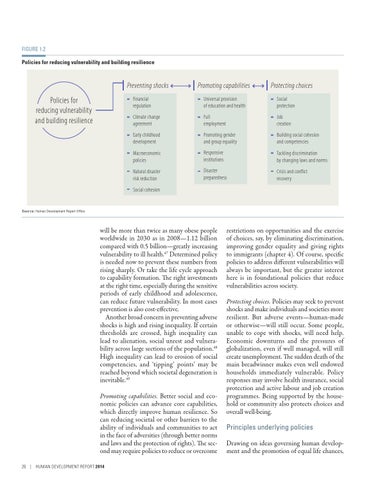
FIGURE 1.2 Policies for reducing vulnerability and building resilience
Preventing shocks
Policies for reducing vulnerability and building resilience
Promoting capabilities
Protecting choices
Financial regulation
Universal provision of education and health
Social protection
Climate change agreement
Full employment
Job creation
Early childhood development
Promoting gender and group equality
Building social cohesion and competencies
Macroeconomic policies
Responsive institutions
Tackling discrimination by changing laws and norms
Natural disaster risk reduction
Disaster preparedness
Crisis and conflict recovery
Social cohesion
Source: Human Development Report Office.
will be more than twice as many obese people worldwide in 2030 as in 2008—1.12 billion compared with 0.5 billion—greatly increasing vulnerability to ill health.47 Determined policy is needed now to prevent these numbers from rising sharply. Or take the life cycle approach to capability formation. The right investments at the right time, especially during the sensitive periods of early childhood and adolescence, can reduce future vulnerability. In most cases prevention is also cost-effective. Another broad concern in preventing adverse shocks is high and rising inequality. If certain thresholds are crossed, high inequality can lead to alienation, social unrest and vulnerability across large sections of the population.48 High inequality can lead to erosion of social competencies, and ‘tipping’ points’ may be reached beyond which societal degeneration is inevitable.49 Promoting capabilities. Better social and economic policies can advance core capabilities, which directly improve human resilience. So can reducing societal or other barriers to the ability of individuals and communities to act in the face of adversities (through better norms and laws and the protection of rights). The second may require policies to reduce or overcome 26 | HUMAN DEVELOPMENT REPORT 2014
restrictions on opportunities and the exercise of choices, say, by eliminating discrimination, improving gender equality and giving rights to immigrants (chapter 4). Of course, specific policies to address different vulnerabilities will always be important, but the greater interest here is in foundational policies that reduce vulnerabilities across society. Protecting choices. Policies may seek to prevent shocks and make individuals and societies more resilient. But adverse events—human-made or otherwise—will still occur. Some people, unable to cope with shocks, will need help. Economic downturns and the pressures of globalization, even if well managed, will still create unemployment. The sudden death of the main breadwinner makes even well endowed households immediately vulnerable. Policy responses may involve health insurance, social protection and active labour and job creation programmes. Being supported by the household or community also protects choices and overall well-being.
Principles underlying policies Drawing on ideas governing human development and the promotion of equal life chances,