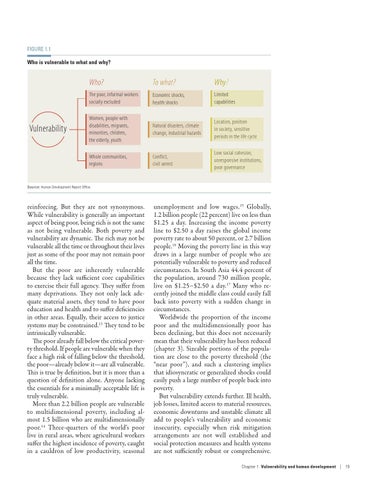
FIGURE 1.1 Who is vulnerable to what and why?
Vulnerability
Who?
To what?
Why? Why
The poor, informal workers socially excluded
Economic shocks, health shocks
Limited capabilities
Women, people with disabilities, migrants, minorities, children, the elderly, youth
Natural disasters, climate change, industrial hazards
Location, position in society, sensitive periods in the life cycle
Whole communities, regions
Conflict, civil unrest
Low social cohesion, unresponsive institutions, poor governance
Source: Human Development Report Office.
reinforcing. But they are not synonymous. While vulnerability is generally an important aspect of being poor, being rich is not the same as not being vulnerable. Both poverty and vulnerability are dynamic. The rich may not be vulnerable all the time or throughout their lives just as some of the poor may not remain poor all the time. But the poor are inherently vulnerable because they lack sufficient core capabilities to exercise their full agency. They suffer from many deprivations. They not only lack adequate material assets, they tend to have poor education and health and to suffer deficiencies in other areas. Equally, their access to justice systems may be constrained.13 They tend to be intrinsically vulnerable. The poor already fall below the critical poverty threshold. If people are vulnerable when they face a high risk of falling below the threshold, the poor—already below it—are all vulnerable. This is true by definition, but it is more than a question of definition alone. Anyone lacking the essentials for a minimally acceptable life is truly vulnerable. More than 2.2 billion people are vulnerable to multidimensional poverty, including almost 1.5 billion who are multidimensionally poor.14 Three-quarters of the world’s poor live in rural areas, where agricultural workers suffer the highest incidence of poverty, caught in a cauldron of low productivity, seasonal
unemployment and low wages.15 Globally, 1.2 billion people (22 percent) live on less than $1.25 a day. Increasing the income poverty line to $2.50 a day raises the global income poverty rate to about 50 percent, or 2.7 billion people.16 Moving the poverty line in this way draws in a large number of people who are potentially vulnerable to poverty and reduced circumstances. In South Asia 44.4 percent of the population, around 730 million people, live on $1.25−$2.50 a day.17 Many who recently joined the middle class could easily fall back into poverty with a sudden change in circumstances. Worldwide the proportion of the income poor and the multidimensionally poor has been declining, but this does not necessarily mean that their vulnerability has been reduced (chapter 3). Sizeable portions of the population are close to the poverty threshold (the “near poor”), and such a clustering implies that idiosyncratic or generalized shocks could easily push a large number of people back into poverty. But vulnerability extends further. Ill health, job losses, limited access to material resources, economic downturns and unstable climate all add to people’s vulnerability and economic insecurity, especially when risk mitigation arrangements are not well established and social protection measures and health systems are not sufficiently robust or comprehensive. Chapter 1 Vulnerability and human development | 19