Chapter 2 – THE HALAL SECTOR
Naturally halal products Many natural products, such as fruit and vegetables, grains, nuts and pulses, are clearly halal. Traditionally, these foods and their derivatives have simply been considered halal, and in the past there have been no issues involving certification or other proof of their halal integrity. In the past decade, however, the expansion and diversification of the halal industries, the complexities of product supply chains and the global nature of trade have led to increased scrutiny of all manufactured and processed foods, and particularly micro-ingredients and additives. Consequently, there are now many non-meat food manufacturers that see halal certification, even for naturally halal products, as a means of opening new markets. For the purposes of this report, these items are considered an integral part of the global halal market and its future potential growth.
Fruit, vegetables and nuts Global trade World trade in fruit, vegetables and nuts, (covering all fresh, frozen and prepared or processed products) was valued at US$ 227 billion in 2014, doubling over the previous decade. Fruits, vegetables and nuts are all halal by nature, and are in principle part of the global trade of halal food and beverages. Leading global exporters are the United States (US$ 24.5 billion), China (US$ 20.1 billion), Spain (US$ 19 billion), the Netherlands (US$ 16.6 billion), Mexico (US$ 10.7 billion), Italy (US$ 9.6 billion), Belgium (US$ 9.6 billion), Turkey (US$ 7.5 billion), France (US$ 6.6 billion) and Chile (US$ 6.6 billion).
Leading global importers are the United States (US$ 30.3 billion), Germany (US$ 21.1 billion), United Kingdom (US$ 14.3 billion), France (US$ 12.9 billion), the Netherlands (US$ 11.6 billion), Russian Federation (US$ 9.9 billion), Canada (US$ 9.8 billion), Japan (US$ 8.9 billion), China (US$ 8.4 billion) and Belgium (US$ 8.3 billion).
Organisation of Islamic Cooperation trade In terms of the Muslim-majority markets, OIC member nations imported fruit, vegetable and nut products valued at US$ 22.4 billion in 2014, showing a 244% increase over the previous decade. Major importers are the United Arab Emirates (US$ 2.9 billion), Saudi Arabia (US$ 2.1 billion), followed by Malaysia (US$ 1.6 billion), Indonesia (US$ 1.5 billion), Egypt (US$ 1.2 billion), Kazakhstan (US$ 1.1 billion), Algeria (US$ 1.05 billion), Iraq (US$ 1.05 billion), Kuwait (US$ 1.03 billion) and Turkey (US$ 980 million). Major exporting countries to the OIC for fruit, vegetables and nuts are China (US$ 3.5 billion), the United States (US$ 1.8 billion), India (US$ 1.4 billion), Egypt (US$ 1.4 billion), Turkey (US$ 1.1 billion), Canada (US$ 890 million), the Netherlands (US$ 870 million), Jordan (US$ 760 million), Australia (US$ 720 million) and South Africa (US$ 700 million). OIC exports in this category to global markets in 2014 totalled US$ 21 billion, more than doubling over the past decade. These exports were led by Turkey (US$ 7.5 billion), Egypt (US$ 2.6 billion), Morocco (US$ 1.6 billion), Islamic Republic of Iran (US$ 1.5 billion), Indonesia (US$ 1 billion), Côte d’Ivoire (US$ 823 million), Jordan (US$ 810 million), Pakistan (US$ 653 million), United Arab Emirates (US$ 563 million) and Uzbekistan (US$ 531 million).
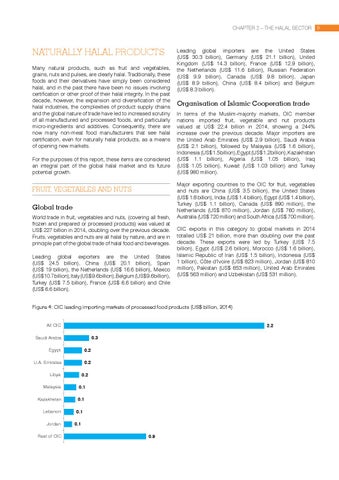
Figure 4: OIC leading importing markets of processed food products (US$ billion, 2014) All OIC
2.2
Saudi Arabia
0.3
Egypt
0.2
U.A. Emirates
0.2
Libya
0.2
Malaysia
0.1
Kazakhstan
0.1
Lebanon Jordan Rest of OIC
0.1 0.1 0.9
9