GLOBAL STUDY on Homicide
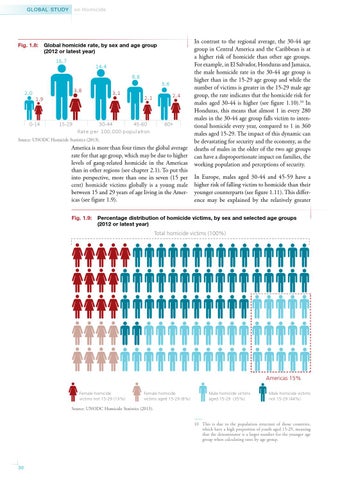
Fig. 1.8: Global homicide rate, by sex and age group (2012 or latest year)
16.7
14.4 8.6
2.0
3.8 1.9
0-14
15-29
5.6 3.1
2.1
30-44 45-60 Rate per 100,000 population
2.4
60+
Source: UNODC Homicide Statistics (2013).
America is more than four times the global average rate for that age group, which may be due to higher levels of gang-related homicide in the Americas than in other regions (see chapter 2.1). To put this into perspective, more than one in seven (15 per cent) homicide victims globally is a young male between 15 and 29 years of age living in the Americas (see figure 1.9).
In contrast to the regional average, the 30-44 age group in Central America and the Caribbean is at a higher risk of homicide than other age groups. For example, in El Salvador, Honduras and Jamaica, the male homicide rate in the 30-44 age group is higher than in the 15-29 age group and while the number of victims is greater in the 15-29 male age group, the rate indicates that the homicide risk for males aged 30-44 is higher (see figure 1.10).10 In Honduras, this means that almost 1 in every 280 males in the 30-44 age group falls victim to intentional homicide every year, compared to 1 in 360 males aged 15-29. The impact of this dynamic can be devastating for security and the economy, as the deaths of males in the older of the two age groups can have a disproportionate impact on families, the working population and perceptions of security. In Europe, males aged 30-44 and 45-59 have a higher risk of falling victim to homicide than their younger counterparts (see figure 1.11). This difference may be explained by the relatively greater
Fig. 1.9: Percentage distribution of homicide victims, by sex and selected age groups (2012 or latest year)
Total homicide victims (100%)
Americas 15% Female homicide victims not 15-29 (13%)
Female homicide victims aged 15-29 (8%)
Male homicide victims aged 15-29 (35%)
Male homicide victims not 15-29 (44%)
Source: UNODC Homicide Statistics (2013). 10 This is due to the population structure of those countries, which have a high proportion of youth aged 15-29, meaning that the denominator is a larger number for the younger age group when calculating rates by age group.
30