THE STATE OF
AFRICAN CITIES 2014
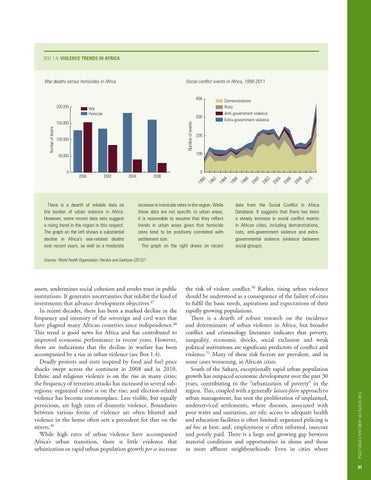
Re-imagining sustainable urban transitions
This report, therefore, argues for a bold re-imagining of prevailing models in order to steer the ongoing transitions towards greater sustainability based on a thorough review of all available options. That is especially the case since the already daunting urban challenges in Africa are now being exacerbated by the new vulnerabilities and threats associated with climate and environmental change.
HS Number: HS/004/14E ISBN Number (Series): 978-92-1-133397-8 ISBN Number (Volume): 978-92-1-132598-0 ISBN 978-92-1-132598-0
United Nations Human Settlements Programme, UN-Habitat P.O. Box 30030, Nairobi 00100, Kenya Tel: +254 20 7623 120 Fax: +254 20 7623 904 habitat.publications@unhabitat.org Printed in Kenya.
9
789211 325980
www.unhabitat.org
THE STATE OF AFRICAN CITIES 2014
The African continent is currently in the midst of simultaneously unfolding and highly significant demographic, economic, technological, environmental, urban and socio-political transitions. Africa’s economic performance is promising, with booming cities supporting growing middle classes and creating sizable consumer markets. But despite significant overall growth, not all of Africa performs well. The continent continues to suffer under very rapid urban growth accompanied by massive urban poverty and many other social problems. These seem to indicate that the development trajectories followed by African nations since post-independence may not be able to deliver on the aspirations of broad based human development and prosperity for all.
THE STATE OF
AFRICAN CITIES 2014
Re-imagining sustainable urban transitions
2
CHAPTER ONE
Foreword by UN-Habitat
I
a particular development direction for decades. Given the comparatively late onset of the urban transition in Africa, however, there exist real opportunities for embracing new urban paradigms that are more conducive to both the present and long-term needs of African cities and nations. Greener solutions, climate change adaptations, vulnerability reduction, technological innovation, urbanization and the economic development of African cities all go hand in hand in this context. Whereas a ‘re-imagined African urbanism’ would undoubtedly embrace some parts of the ‘Western urban model’, Africa now has an opportunity to also seek policy and strategic directions that incorporate long-term sustainability for social, environmental and economic development that will better deliver than the imported urban paradigms have done so far. This report, however, does not give ready-made solutions. Cities are simply too individual and specific in their needs and vulnerabilities for standardized solutions. Rather, the current report analyses the emerging challenges and risks to which urban and rural Africa are being exposed with a view to facilitating discussions at regional, national and local levels on how best to address the challenges ahead and apply solutions that are innovative, location-specific and effective. Not a single African city today is exempted from distinct and often multiple vulnerabilities. Careful consideration of the intervention options available and, indeed, the courage to embark on a ‘re-imagined African urbanism’ is what is called for in this report. One thing is of particular importance in this context. Cities are not stand-alone entities. They are all part and parcel of often shared geographical, social, environmental and political contexts. Given that many of the challenges ahead are of a trans-boundary nature, this report seeks to stimulate local, national and regional cooperation among African cities and nations to re-imagine shared approaches to urban development and capture the most effective interventions to facilitate sustainable urban and other transitions in Africa.
Joan Clos Under-Secretary General, United Nations Executive Director, UN-Habitat
THE STATE OF AFRICAN CITIES 2014
t gives me great pleasure to present The State of African Cities 2014: Re-imagining sustainable urban transitions the third publication on Africa in UN-Habitat’s rapidlyexpanding regional State of the Cities report series. The first African regional report (2008): ‘A framework for addressing urbanization challenges’ provided a general overview of housing and management conditions in African cities and set information benchmarks on city level data and trends. The second publication (2010): ‘Governance, inequalities and urban land markets’, expanded the baseline views of the 2008 report, analyzing urban governance modalities in the light of newly-emerging urban spatial configurations, exposing inequality in African cities and examining how African urban dwellers access land. This third State of African Cities report was realized in close cooperation with ICLEI - Local Governments for Sustainability - Africa and United Cities and Local Governments Africa (UCLGA). It attempts to take analysis to a next level in the context of the globally changing conditions. It seeks to stimulate discussion on the need for radically different, reimagined development visions to guide sustainable urban and other transitions in Africa over the decades to come. African cities are often analyzed from a perspective that sees urbanism and urban living as progressing towards the example set by Western paradigms. But the conditions and circumstances that prevailed in the world’s industrialized societies during the 20th century - and which shaped their cities’ form and function - are no longer the same in today’s world. Global climate and environmental change, as well as increasing awareness of water, food or energy insecurities, for instance, are now starting to shape our understanding of the dire need for new visions on what good urban management for the 21st century entails. The overarching challenge for Africa in the decades to come is massive population growth in a context of wide-spread poverty that, in combination, generate complex and interrelated threats to the human habitat. The main premise of this report is that successfully and effectively addressing the vulnerabilities and risks to which the African populations are increasingly being exposed may, perhaps, require a complete re-thinking of current urban development trajectories if sustainable transitions are to be achieved. Urban development decisions typically involve vast capital layouts and, consequently, can lock cities or even entire countries in a particular development path. In other words: today’s decisions and interventions fix the parameters into
3
Acknowledgements This third report in the UN-Habitat series on the State of African Cities, the State of African Cities Report 2014: Reimagining Sustainable Urban Transitions, was conceptualized during 2011 by a three way partnership comprising the United Nations Human Settlements Programme (UN-Habitat), ICLEI-Africa and the United Cities and Local Governments of Africa (UCLGA), with inputs at various meetings from the Sustainability Institute (Prof Mark Swilling and Blake Robinson), the African Centre for Cities at the University of Cape Town (Ntombini Marrengane), the University of KwaZulu Natal (Catherine Sutherland) and the compilation of a concept and outline by MLA-Sustainability Matters (Marlene Laros). Drafting of the State of African Cities Report 2014: Reimagining Sustainable Urban Transitions was coordinated by Dr. Joseph Maseland, Lusungu Kayani and Katharina Rochell (UN-Habitat) under the supervision of Dr. Alioune Badiane (UN-Habitat), in co-operation with Marlene Laros (MLA-Sustainability Matters); Kobie Brand, Dr. Jenny Clover, Faith Chihumbiri and Lucinda Fairhurst (ICLEI-Africa); and Jean-Pierre Elong Mbassi and Charles Patsika (UCLGA). Lead authors and content editors, for the publication were Marlene Laros (lead author and editor) and Freda Jones (content and technical editor) from MLA-Sustainability Matters. Chapter 1, the overview chapter, was written and coordinated by Marlene Laros (lead author), with contributions from Dr. Camaren Peter (Sustainability Institute), Dr. Joseph Maseland (UN-Habitat), Dr. Sean Fox (London School of Economics) and Freda Jones. The Northern Africa sub-regional chapter was written and coordinated by Richard Cornwell (lead author), with contributions from Dr. Joseph Maseland and Dr. Camaren Peter. The Western Africa sub-regional chapter was written and coordinated by Dr. Camaren Peter (lead author), with contributions from Dr. Joseph Maseland. The Eastern Africa sub-regional chapter was written and coordinated by Richard Cornwell (lead author), with contributions from Dr. Joseph Maseland and Dr. Camaren Peter. The Central Africa sub-regional chapter was written and coordinated by Dr. Guillaume Iyenda (lead author), with contributions from Dr. Joseph Maseland and Dr. Camaren Peter. The Southern Africa sub-regional chapter was written and coordinated by Prof. David Simon (Royal Holloway, University of London; lead author), with contributions from Dr. Camaren Peter and Dr. Hayley Leck (London School of Economics). UN-Habitat is grateful to all external reviewers: Anton Cartwright (African Centre for Cities, University of Cape Town; Chapter 1.2); Dr. David Dodman (IIED; Chapter 1.2); Anna Taylor (African Centre for Cities, University of Cape Town; Chapter 1.3); Ntombini Marrengane (African Centre for Cities, University of Cape Town; Chapter 1.3); Prof. Aly Karam (Associate Professor in the School of Architecture and Planning, University of the Witwatersrand; Chapter 2: Northern Africa); Dr. Ben Page (University College London; Chapter 3: Western Africa); Jason Stearns (Rift Valley Institute; Chapter 4: Eastern Africa); Dr. Edouard Din (Chapter 5: Central Africa); and Dr. Nancy Odendaal (University of Cape Town; Chapter 6: Southern Africa). Pre-final drafts of the peer-reviewed regional chapters were reviewed at the Editorial Board Meeting (EBM) at the UN-Habitat Headquarters at Gigiri, Nairobi, on 5-7 August 2013. The EBM was attended by: Dr. Joseph Maseland and Katharina Rochell, Faith Chihumbiri, Dr. Jenny Clover, Richard Cornwell, Dr. Guillaume Iyenda, Marlene Laros, Jean-Pierre Elong Mbassi and Charles Patsika (UCLGA), Dr. Camaren Peter and Prof. David Simon. Contributors of case studies and text boxes, used for this report, were: Hamidou Baguian (Climate Change Focal Point, Municipality of Bobo Dioulasso), Kate Berrisford (Green Africa Directory), Richard Cornwell, Marielle Dubbeling (RUAF), Lucinda Fairhurst (ICLEI-Africa), Dr. Sean Fox, Afton Halloran (FAO), Dr. Guillaume Iyenda, Freda Jones, Dr. Mary Lawhon (African Centre for Cities, University of Cape Town), Dr. Hayley Leck, Dr. Joseph Maseland, Dr. Immaculata Nwokoro (University of Lagos), Hassan Partow (UNEP), Dr. Camaren Peter, Dr. Deborah Potts (King’s College), Blake Robinson (Sustainability Institute), Katharina Rochell, Prof. David Simon, Catherine Sutherland (University of Kwazulu-Natal), Prof. Mark Swilling (Sustainability Institute), Moussa Sy (IAGU/RUAF) and Anna Taylor (African Centre for Cities, University of Cape Town). Editing for UN-Habitat was undertaken by: Olu Sarr. Layout and design of the publication was undertaken by: Michael Jones Software.
CHAPTER ONE
This report was translated into French by Thierry Naudin.
4
Generous financial support from the Government of Norway, the Cities Alliance and the British High Commission in South Africa was critical to the production of this report. We thank all participants and contributors for their role in the production of the State of African Cities Report 2014: Reimagining Sustainable Urban Transitions.
Contents Foreword by UN-Habitat . . . . . . . . . . . . . . . . . . . . . . . . . . . . . . . . . . . . . . . . . . . . . . . . . . . . . . . . . . . . . . . . . . . . . . . . . . . . . . . . . . . . . . . . 3 Acknowledgements . . . . . . . . . . . . . . . . . . . . . . . . . . . . . . . . . . . . . . . . . . . . . . . . . . . . . . . . . . . . . . . . . . . . . . . . . . . . . . . . . . . . . . . . . . . . 4 Executive Summary. . . . . . . . . . . . . . . . . . . . . . . . . . . . . . . . . . . . . . . . . . . . . . . . . . . . . . . . . . . . . . . . . . . . . . . . . . . . . . . . . . . . . . . . . . . . . 6 Sub-regional Summaries . . . . . . . . . . . . . . . . . . . . . . . . . . . . . . . . . . . . . . . . . . . . . . . . . . . . . . . . . . . . . . . . . . . . . . . . . . . . . . . . . . . . . . . . 8 1. THE STATE OF AFRICAN CITIES . . . . . . . . . . . . . . . . . . . . . . . . . . . . . . . . . . . . . . . . . . . . . . . . . . . . . . . . . . . . . . . . . . . . . . . . . . . . . 1.1 A Continent in Transition. . . . . . . . . . . . . . . . . . . . . . . . . . . . . . . . . . . . . . . . . . . . . . . . . . . . . . . . . . . . . . . . . . . . . . . . . . . . . . . . . . . . . . . . 1.2 Cities at Risk. . . . . . . . . . . . . . . . . . . . . . . . . . . . . . . . . . . . . . . . . . . . . . . . . . . . . . . . . . . . . . . . . . . . . . . . . . . . . . . . . . . . . . . . . . . . . . . . . . 1.3 Re-imagining African Urbanism. . . . . . . . . . . . . . . . . . . . . . . . . . . . . . . . . . . . . . . . . . . . . . . . . . . . . . . . . . . . . . . . . . . . . . . . . . . . . . . . . . .
14 16 28 38
2. THE STATE OF NORTHERN AFRICAN CITIES. . . . . . . . . . . . . . . . . . . . . . . . . . . . . . . . . . . . . . . . . . . . . . . . . . . . . . . . . . . . . . . . 60 2.1 2.2 2.3 2.4 2.5 2.6
Population and Urbanization. . . . . . . . . . . . . . . . . . . . . . . . . . . . . . . . . . . . . . . . . . . . . . . . . . . . . . . . . . . . . . . . . . . . . . . . . . . . . . . . . . . . . . Global Change and Implications for Urban Development. . . . . . . . . . . . . . . . . . . . . . . . . . . . . . . . . . . . . . . . . . . . . . . . . . . . . . . . . . . . . . . . Social and Environmental Challenges. . . . . . . . . . . . . . . . . . . . . . . . . . . . . . . . . . . . . . . . . . . . . . . . . . . . . . . . . . . . . . . . . . . . . . . . . . . . . . . Urban Planning and Resource Management. . . . . . . . . . . . . . . . . . . . . . . . . . . . . . . . . . . . . . . . . . . . . . . . . . . . . . . . . . . . . . . . . . . . . . . . . . Urban Culture and Change Agents. . . . . . . . . . . . . . . . . . . . . . . . . . . . . . . . . . . . . . . . . . . . . . . . . . . . . . . . . . . . . . . . . . . . . . . . . . . . . . . . . Emerging Issues. . . . . . . . . . . . . . . . . . . . . . . . . . . . . . . . . . . . . . . . . . . . . . . . . . . . . . . . . . . . . . . . . . . . . . . . . . . . . . . . . . . . . . . . . . . . . . . .
62 65 71 79 85 88
3. THE STATE OF WESTERN AFRICAN CITIES . . . . . . . . . . . . . . . . . . . . . . . . . . . . . . . . . . . . . . . . . . . . . . . . . . . . . . . . . . . . . . . . . 96 3.1 3.2 3.3 3.4 3.5 3.6
Population and Urbanization. . . . . . . . . . . . . . . . . . . . . . . . . . . . . . . . . . . . . . . . . . . . . . . . . . . . . . . . . . . . . . . . . . . . . . . . . . . . . . . . . . . . . . 98 Global Change and Implications for Urban Development. . . . . . . . . . . . . . . . . . . . . . . . . . . . . . . . . . . . . . . . . . . . . . . . . . . . . . . . . . . . . . . 104 Social and Environmental Vulnerabilities . . . . . . . . . . . . . . . . . . . . . . . . . . . . . . . . . . . . . . . . . . . . . . . . . . . . . . . . . . . . . . . . . . . . . . . . . . . 108 Urban Planning and Resource Management. . . . . . . . . . . . . . . . . . . . . . . . . . . . . . . . . . . . . . . . . . . . . . . . . . . . . . . . . . . . . . . . . . . . . . . . . 115 Western Africa: Urban Culture and Change Agents. . . . . . . . . . . . . . . . . . . . . . . . . . . . . . . . . . . . . . . . . . . . . . . . . . . . . . . . . . . . . . . . . . . . 128 Emerging Issues. . . . . . . . . . . . . . . . . . . . . . . . . . . . . . . . . . . . . . . . . . . . . . . . . . . . . . . . . . . . . . . . . . . . . . . . . . . . . . . . . . . . . . . . . . . . . . . 134
THE STATE OF EASTERN AFRICAN CITIES. . . . . . . . . . . . . . . . . . . . . . . . . . . . . . . . . . . . . . . . . . . . . . . . . . . . . . . . . . . . . . . . . . . . 144 4.1 4.2 4.3 4.4 4.5 4.6
Population and Urbanization. . . . . . . . . . . . . . . . . . . . . . . . . . . . . . . . . . . . . . . . . . . . . . . . . . . . . . . . . . . . . . . . . . . . . . . . . . . . . . . . . . . . . Global Change and Implications for Urban Development. . . . . . . . . . . . . . . . . . . . . . . . . . . . . . . . . . . . . . . . . . . . . . . . . . . . . . . . . . . . . . . Social and Environmental Vulnerabilities . . . . . . . . . . . . . . . . . . . . . . . . . . . . . . . . . . . . . . . . . . . . . . . . . . . . . . . . . . . . . . . . . . . . . . . . . . . Urban Planning and Resource Management. . . . . . . . . . . . . . . . . . . . . . . . . . . . . . . . . . . . . . . . . . . . . . . . . . . . . . . . . . . . . . . . . . . . . . . . . Urban Culture and Change Agents. . . . . . . . . . . . . . . . . . . . . . . . . . . . . . . . . . . . . . . . . . . . . . . . . . . . . . . . . . . . . . . . . . . . . . . . . . . . . . . . Emerging Issues. . . . . . . . . . . . . . . . . . . . . . . . . . . . . . . . . . . . . . . . . . . . . . . . . . . . . . . . . . . . . . . . . . . . . . . . . . . . . . . . . . . . . . . . . . . . . . .
146 152 158 163 173 178
5. THE STATE OF CENTRAL AFRICAN CITIES. . . . . . . . . . . . . . . . . . . . . . . . . . . . . . . . . . . . . . . . . . . . . . . . . . . . . . . . . . . . . . . . . . 188 5.1 Population and Urbanization. . . . . . . . . . . . . . . . . . . . . . . . . . . . . . . . . . . . . . . . . . . . . . . . . . . . . . . . . . . . . . . . . . . . . . . . . . . . . . . . . . . . . 5.2 Global Change and Implications for Urban Development . . . . . . . . . . . . . . . . . . . . . . . . . . . . . . . . . . . . . . . . . . . . . . . . . . . . . . . . . . . . . . . 5.3 Social and Environmental Vulnerabilities. . . . . . . . . . . . . . . . . . . . . . . . . . . . . . . . . . . . . . . . . . . . . . . . . . . . . . . . . . . . . . . . . . . . . . . . . . . . 5.4 Urban Planning and Resource Management. . . . . . . . . . . . . . . . . . . . . . . . . . . . . . . . . . . . . . . . . . . . . . . . . . . . . . . . . . . . . . . . . . . . . . . . . . 5.5 Urban Culture and Change Agents. . . . . . . . . . . . . . . . . . . . . . . . . . . . . . . . . . . . . . . . . . . . . . . . . . . . . . . . . . . . . . . . . . . . . . . . . . . . . . . . . 5.6 Emerging Issues. . . . . . . . . . . . . . . . . . . . . . . . . . . . . . . . . . . . . . . . . . . . . . . . . . . . . . . . . . . . . . . . . . . . . . . . . . . . . . . . . . . . . . . . . . . . . . .
190 193 198 201 207 211
6.1 6.2 6.3 6.4 6.5 6.6
Population and Urbanization. . . . . . . . . . . . . . . . . . . . . . . . . . . . . . . . . . . . . . . . . . . . . . . . . . . . . . . . . . . . . . . . . . . . . . . . . . . . . . . . . . . . . Global Change and Implications for Urban Development. . . . . . . . . . . . . . . . . . . . . . . . . . . . . . . . . . . . . . . . . . . . . . . . . . . . . . . . . . . . . . . Urban Social and Environmental Vulnerabilities. . . . . . . . . . . . . . . . . . . . . . . . . . . . . . . . . . . . . . . . . . . . . . . . . . . . . . . . . . . . . . . . . . . . . . Urban Planning and Resource Management. . . . . . . . . . . . . . . . . . . . . . . . . . . . . . . . . . . . . . . . . . . . . . . . . . . . . . . . . . . . . . . . . . . . . . . . . Urban Culture and Change Agents. . . . . . . . . . . . . . . . . . . . . . . . . . . . . . . . . . . . . . . . . . . . . . . . . . . . . . . . . . . . . . . . . . . . . . . . . . . . . . . . Emerging Issues. . . . . . . . . . . . . . . . . . . . . . . . . . . . . . . . . . . . . . . . . . . . . . . . . . . . . . . . . . . . . . . . . . . . . . . . . . . . . . . . . . . . . . . . . . . . . . .
224 226 232 237 249 254
STATISTICAL ANNEX. . . . . . . . . . . . . . . . . . . . . . . . . . . . . . . . . . . . . . . . . . . . . . . . . . . . . . . . . . . . . . . . . . . . . . . . . . . . . . . . . . . . . . . . 262
THE STATE OF AFRICAN CITIES 2014
6. THE STATE OF SOUTHERN AFRICAN CITIES. . . . . . . . . . . . . . . . . . . . . . . . . . . . . . . . . . . . . . . . . . . . . . . . . . . . . . . . . . . . . . . 222
5
Executive Summary
▲ Nelson Mandela Bridge, Johannesburg, South Africa. ŠEhrman Photographic/Shutterstock.
executive summary
T
6
he current report is the third in The State of African Cities series. The first, The State of African Cities 2008: A framework for addressing urban challenges in Africa, was explorative and analyzed general urban conditions and trends and identified benchmarks. It drew the attention to very rapid future growth of African cities and towns; to the apparent inability of local authorities to deal with present, let alone future urban population increases; and to the need for Africa to prepare for new urban configurations very different from the traditional concepts that see a city as an urban area within a clearly defined boundary and governed by a single municipal authority. The subsequent report: The State of African Cities 2010: Governance, inequality and urban land markets, tried to answer some of the many questions raised by the 2008 report. The 2010 version concluded that inadequate urban governance policies and low urban institutional capacities; high levels of inequality among different socio-economic
population strata; as well as limited options for the poorer Africans to access urban land, all contributed to urban slum proliferation and would continue to do so, unless vigorously tackled. The 2010 report further showed that guiding urban growth in Africa will require the establishment of realistic and sustainable national urban development policies; enhanced urban management capacities within cities and towns of all sizes; better distribution of urban populations over different settlement-size classes; and significant improvements in broad-based access to urban livelihood opportunities. The report also advised that governments should urgently reduce the land, housing, services and mobility-demand pressures on their highly primate capital cities by seeking more balanced national urban hierarchies. Many African governments have since started to promote new urban developments away from their major population concentrations. Satellite cities are being established to guide population pressure away from the capitals, while urban
urban areas envisaged to lead Africa’s economic, social and technological transitions, increased urban insecurity may have deeply negative impacts on the international investment flows required for the sustained economic growth that could produce the much needed urban-based employment generation for Africa’s young population cohorts. Failure to address urban insecurity could create a self-sustaining spiral of violence fed by disenfranchised, unemployed urban youths. Ubiquitous urban poverty and urban slum proliferation, so characteristic of Africa’s large cities, is likely to become an even more widespread phenomenon under current urban development trajectories, especially given the continuing and significant shortfalls in urban institutional capacities. Since the bulk of the urban population increases are now being absorbed by Africa’s secondary and smaller cities, the sheer lack of urban governance capacities in these settlements is likely to cause slum proliferation processes that replicate those of Africa’s larger cities. The new towns and satellite cities now being established to relieve pressures on the largest African urban concentrations will also add to further urban slum proliferation, because these new towns almost exclusively cater for the residential needs of higher-income groups. Consequently, there is near certainty that these new towns will soon be surrounded by the informal accommodations of the low-income labour needed to service these new cities. From all these trends it is increasingly clear that it would be imprudent for Africa to continue applying urban developmental concepts that neither serve its interests nor that can be sustained in economic, social, political and environmental terms. Therefore, this report argues for a radical re-imagination of African approaches to urbanism, both to strengthen the positive impacts of Africa’s current multiple transitions and to improve urban living and working conditions. Africa’s population is still well below the 50 per cent urban threshold. This implies that a major reconceptualization of its approaches to urban development can still be undertaken. Given the rapidly changing global conditions, especially those associated with environmental and climate change, looming resources scarcity and the dire need to move towards greener and more sustainable development options, Africa has the opportunity to take a global lead in innovations towards greener, healthier and more sustainable urban societies. The aim of this third State of the African Cities report, therefore, is to provoke discussion at the highest levels about the desirable redirection of Africa’s ongoing urban transitions. However, this report does not give ready-made solutions. Each region, nation, city and locality is different and sustainability innovations must be tailored to specificities that vary between localities and over time. Urbanization, industrialization, sustained economic growth and broadbased human development feed on each other and, under correct guidance, can become mutually reinforcing. For the latter to happen, Africa has few realistic options other than a profound reimagining of what exactly constitutes the road towards sustainable urban transitions.
executive summary
development corridors are being promoted to geographically disperse both economic activity and populations. These interventions are showing that important notions of urban geography are becoming priority areas in a good number of African nations. This 2014 Africa report attempts to take insights one step further. Whereas the urban and demographic developments of the past decades had already presented African nations with major challenges in their attempts to provide socially just, sustainable and well-serviced living and working environments for its rapidly urbanizing populations; it is now becoming clear that the predicted or already felt impacts of proceeding climate and environmental change profoundly exacerbate the vast complexity of these challenges. As shown in the sub-regional sections of this report, it is not only Africa’s largest urban population concentrations that are becoming more prone to vulnerabilities and risks; these are actually increasing for all African settlements. This will add to the already significant social, economic and political hazards associated with Africa’s still pervasive urban poverty. The combination of demographic pressures, rapid urbanization, environmental and climate change now appear to reinforce a host of negative urban externalities. At the same time, the prevailing development concepts applied to Africa’s rapidly expanding urban areas seem incapable of attaining the postindependence visions of human development and prosperity for all. Upon their independence, African nations embraced a variety of imported development models. It is now evident that all these models have failed to achieve the goals that African nations had set themselves. With hindsight, that is, perhaps, unsurprising, since these development concepts were derived from conditions prevalent outside Africa and were conceived at a time and under conditions that were vastly different from today’s African realities. Likewise, the urban development models of post-independence Africa were based on concepts, philosophies and conditions that prevailed in the advanced economies during the mid-20th century. It is now clear that these approaches are of limited use to Africa, given today’s very rapid urbanization, limited urban-based industries, high fossil fuel costs, rapidly diminishing resource bases, fiercely competitive global economic and financial environments, as well as the increasingly-felt threats and impacts of environmental and climate change. As outlined in Section 1.1 of this report, Africa is in the midst of simultaneously unfolding major transitions in its demography, economy, politics, technological development and environments. These seem to indicate that Africa’s approaches to urbanism need major rethinking if these transitions are to lead to better and more broad-based human development. Section 1.2 of this report argues that, over the past decades, Africa has experienced a shift in the incidence and nature of insecurity, conflict and violence. Inter-state conflict has significantly declined. At the same time, however, urban insecurity and violence have notably increased. With the
7
Sub-regional Summaries
executive summary
Northern Africa
8
Northern Africa is highly urbanized, with most of its cities unevenly spread along its Mediterranean coastline and the Nile Valley and Delta. The estimated 11-million population of Cairo, a megacity, is projected to grow at an annual rate of at least two per cent until at least 2020. Northern Africa’s cities have been the scene of many dramatic events since 2011, characterized as “The Arab Spring”, a period of social and political struggle that is not yet ended. Whatever the political and religious overtones of these upheavals, at their root lay the failure of political leaders to cater adequately for the needs of their large, young and mostly urban-based populations. The imperative for new governments will remain the provision of responsive urban governance and affordable housing alternatives for large numbers of hitherto marginalized urban youth. It is also crucial that Northern African cities deliver gainful urban-based employment opportunities in line with the demands of the young urban masses. This is essential to an economic recovery plan as Northern African economies are slow to recover from the effects of the uprisings in Egypt, Libya and Tunisia and since continued unrest will reduce the chances for resumed economic growth. Recent upheavals have also drawn attention to the needs of secondary cities where much of the Arab Spring was incubated. The renewal of Northern Africa’s historic city centres forms part of the plan to revive tourism revenues, which dropped drastically in the wake of the violent political unrest and the global economic downturn. This does not, however, constitute the type of urban renewal that will contribute to improved living standards for the urban poor. Climate change, projected to exacerbate existing desertification and water stress, constitutes a major threat to Northern Africa’s urban populations. The negative effects on agriculture will increase the need for food imports, with adverse effects on regional balances of payments. This might even restart the rural-urban exodus that seemed to have abated some years ago. Northern Africa’s cities are largely dependent on the recharge of huge aquifers under the Sahara Desert, but these groundwater sources are being depleted. Along the Nile Valley the effects of climate change are expected to be particularly severe and, according to some projections, potentially catastrophic. Urban water infrastructures must be rehabilitated and maintained to eliminate unnecessary wastage and more investment in wastewater treatment and reuse is essential. Climate change will render most of Northern Africa’s cities more vulnerable to disasters associated with extreme weather patterns, especially flooding, while desertification presents a threat to Sudan’s rural economy and food production. Some governments have already responded by framing plans taking these threats into account. Careful monitoring and regional cooperation will help anticipate threats as they emerge and allow for exchange of ideas and information. The Nile
Delta requires special attention as it is especially vulnerable to inundation and saltwater intrusion. On the other hand, Northern Africa’s climate offers immense opportunities for the generation of renewable solar and wind energy, and exploitation of these has commenced. In general, Northern Africa’s systems of urban governance remain too inflexible to respond to popular demands with the necessary speed and agility. Well-established networks of bureaucratic power and privilege have become entrenched to a degree that makes their replacement difficult, even in the face of massive unrest. In this context, the realization of the types of innovation and popular involvement in urban planning that might solve the problems of the region’s city dwellers remain a remote prospect. The financing of urban policy will also be difficult until accurate urban data are available and decentralized tax collection is organized in an equitable manner. Inequality and informality remain rife, despite claims by Northern African governments that social housing projects have significantly reduced the proportion of slum settlements. In part, this reflects a general weakness in formal (and informal) institutions and a need for systems of land management and housing acquisition unencumbered by bureaucracy, nepotism and inefficiency. It is encouraging that public debate is moving towards accepting the permanence of informality, focusing instead on ways in which the marginalized can be involved in decisions affecting their lives and seeking to provide services to all urban dwellers, regardless of socio-economic status. Public transport is receiving increasing attention in Northern African cities, which suffer from congestion and pollution caused by massive numbers of private motor vehicles. Costeffective and energy efficient mass public transport systems are essential to achieve the internal social synergies vital to the health of the urban organism. The almost exclusively urban political pressures that exploded into the Arab Spring may have opened the way for thorough debate about the future of the region’s urban project. Urban youth has made its political presence felt and its demands will be neglected at some peril by whatever governments eventually emerge from the turmoil. Similarly, the Arab Spring and its ideological discourse have placed gender issues at the centre of the discussion on the role of Northern African women in public life. Although networks of political and economic power may have survived the fall of discredited governments, even they must now take into account the changing social face of the region. Employment, food and shelter will not be provided in sufficient measure to the burgeoning numbers of urban youth eager to set up their own households unless there are radical departures from the prevailing approach to urban planning. Nor will prestige “modernizing” projects solve the current crisis, even if they are financially viable, which is doubtful under the current economic climate.
▲ Algiers, Algeria. ©Pichugin Dmitry/Shutterstock.
Western Africa
Western Africa, the most rapidly urbanizing sub-region in Africa after Eastern Africa, has very high, albeit decelerating, city growth rates. Data discrepancies regarding national levels
of urbanization, as well as the dominant scales of urban growth, indicate significant gaps in urban data availability and reliability in the sub-region. Nonetheless, it is clear that urbanization is the central spatial feature in Western Africa’s development pattern. This is especially the case along the Western African coastline, which has been increasing in density of urban settlements and urban interconnectedness. Economic activities conducted by small, informal sector actors, as well as larger formal actors, are mediated through urban agglomerations along corridors, which extend across borders and sub-regions. Sub-regional inter-urban densification, facilitated by urban growth, is hence critical to the growth of the sub-region, not just in primate cities but also in secondary and smaller cities, which connect the rural hinterlands of the sub-region to the economies of its major metropolitan areas. Western Africa is a populous sub-region, and its large commensurate consumption potential has not gone unnoticed by global markets. Emerging urban middle classes in the sub-region are key to sustaining growth and foreign direct investment. At the sub-regional and national scales, economic growth is largely driven by extractive activities in the minerals and energy sectors and agriculture, whereas tertiary sector activities dominate urban economic growth
executive summary
The most obvious path on which planners must embark is one that seeks to merge demands for sustainable urban development with the need for employment among Northern Africa’s relatively well-educated youth. This is the problem that lies at the heart of the urban fragmentation, impoverishment and sense of helplessness that brought the youth onto the streets of the region’s cities in 2011. Given continued unrest in the sub-region, it is likely that increasing pressures upon household budgets will result in further instability and protest. Social stability, food security and economic growth are all dependent upon water. Northern African countries are faced with regional water scarcity challenges, over which conflict and contestation are commonplace. Regional agreements over the use of aquifers, underground and above-ground rivers are critical to ensuring peace, as evident in the case of the Nile’s water resources, which sustain the lives and livelihoods of a wide range of countries. These agreements should include incentives for sustainable water use, especially in countries where unsustainable water use patterns prevail.
9
▲ Recycling in Ouagadougou, Burkina Faso. ŠRoman Bonnefoy. Licensed under the GNU Free
executive summary
Documentation License.
10
profiles. Nonetheless, high proportions of the people living in the sub-region continue to live on less than USD 1.25 per day and a sizeable floating middle class indicates the overall vulnerability of Western African countries. Poverty, informality and inequality are intensified in cities, which consequently host densely populated slums and informal settlements. Informal service provision, trade and employment persist as a central feature of Western African cities. The high proportion of unemployed urban youth is a major cause for concern but also an opportunity for the sub-region. Supporting youth employment, education, entrepreneurship and innovation, skills development, vocational training and apprenticeship programmes can play a major role in stabilizing this demographic as an important labour pool and consumer base in the sub-region. Improving access to, and inclusion in, minerals and energy sector organizations is also necessary in this respect. At broader scales, there is a need for inclusive economic growth strategies that can minimize inequality levels and stimulate cash-flow and economic activities and employment where they are most needed. Lack of institutional capacity manifests in the inadequacy of state systems and bureaucracies to cope with public demand for services in general terms whether infrastructural or services-oriented. Informal and private sector provision fills the vacuum left behind by the lack of service provision. While governance authority and functions have largely been decentralized to local authorities, fiscal decentralization has
been slow to follow suit. With large proportions of the urban population residing in informal settlements and slums, the ability of local authorities to collect and maintain revenues is low. This renders local authorities unable to provide basic services; address needs of urban citizenry; or plan effectively to accommodate present and future urban growth patterns. Lack of regional and local urban infrastructure hampers sub-regional economic growth and development. Key regional infrastructure deficits in logistics and transport, port infrastructure, information and communications technologies (ICT) and energy, persist to the detriment of efficient storage, transportation of goods and people, etc. The scale of investment required to meet infrastructure deficits and future needs provides a challenge that demands regional and international cooperation. The same will also be necessary to successfully tackle urban resource pressures and threats like climate change and associated natural disasters. At sub-regional scales, infrastructure development programmes and projects, such as the West African Power Pool, are attempting to address key challenges in improving flows and efficiencies within and between cities and countries in the sub-region. Regional agencies such as the African Development Bank are playing a key role in funding infrastructure development. China is also playing a key role in road, rail and port infrastructure development projects. At local scales, infrastructure and technology development plans need to cater for context-specific opportunities and requirements such as the need for low-cost, decentralized solutions that can be deployed and maintained with low levels of skills and training. Such approaches are critical to ensure that services reach the majority urban poor. Bulk infrastructure deployments also need to address the needs of informal settlement and slum dwellers. Inter-generational changes signify a departure from traditional modes of identity construction. This is especially the case for the urban youth as increased levels of migration to developed countries, as well as access to global cultural and identity markers, combine with local cultural changes to produce new, more plural conceptions of personal and group identity. Current and projected climate change impacts in Western Africa take on two broad spatial dimensions. Northern parts of the sub-region, which border the Sahel, are experiencing southward migration of the semi-arid Sahel. To the south and south-west of the region, along the coastal belt, the vulnerability of dense urban corridors and agglomerations to climate change-related pressures such as flooding, storm surges, sea-level rise, saline intrusion and coastal erosion is projected to increase. Temperature and precipitation changes (i.e. seasonal changes as well as changes in frequency and intensity of precipitation events) are likely to make food insecurity a real threat to the sub-region. Conflict and instability also characterize the sub-region, with climate and environmental pressures often increasing religious and ethnic conflicts in the Sahel, placing additional pressures on cities to absorb conflict refugees and internally
displaced persons. Within cities conflicts over belonging, indigenous claims to land ownership, trading rights, as well as religious differences, manifest in contestations that can at times turn violent and where foreign refugees and economic migrants are targeted.
Eastern Africa
executive summary
Eastern Africa is the world’s least urbanized but fastest urbanizing sub-region. By the end of the current decade its urban population will have increased by 50 per cent and the total number of urban dwellers in 2040 is expected to be five times that of 2010. It follows, therefore, that Eastern Africa will face huge challenges associated with massive urban population increases; monumental new and additional demands for the provision of adequate and affordable housing and urban services; and, perhaps most importantly, urbanbased income-generation opportunities. Impacts of continued rapid growth of Eastern African primate cities include acute housing shortages, traffic congestion, pollution and uncontrolled peri-urban sprawl. Significant interventions are currently under way to redevelop existing urban areas and/or establish satellite cities at some distance from the capital to geographically disperse urban population and economic growth. Those in Kenya, Tanzania and Uganda, for example, have already sparked fierce public debate around matters of equity. Although Eastern African governments should be commended for their renewed attention and commitment to urban planning to address the unfolding urbanization processes in the region, catering preferentially for the residential and office needs of the wealthier sections of urban populations is likely to backfire. The needs of the poor should be incorporated through equality- and human rights-based urban interventions. In terms of regional economic vulnerabilities the subregion’s mining potential remains unrealized and the agricultural sector is far more important. The latter has not been severely impacted by the global financial crisis, but is extremely vulnerable to climate change impacts. Prospects offered by the recent discoveries of hydrocarbons in Eastern Africa promise a radical change in the macroeconomic fortunes of the countries within whose boundaries, or waters, they fall. One of the most important regional projects has been the resuscitation of the Eastern African Community in 2000. This has subsequently expanded to include Burundi, Kenya, Rwanda, Tanzania, Uganda and South Sudan, while Malawi may be considered for future membership. Comprehensive, sequenced road and rail plans have been advocated to link Eastern Africa’s economic centres, in effect transforming the whole region into a coastal economy and liberating much of it from many of the constraints and expenses associated with being landlocked. The success of these plans could obviously have a transformative effect on the overall shape of Eastern Africa’s urbanization patterns. The region’s cities exhibit high levels of poverty and inequality and fast growth of slums and informal settlements.
Against a background of high levels of literacy and political engagement this may lead to greater contestation with the state in respect of greater political change that goes beyond service delivery concerns. Climate change increases various threats in a sub-region where economies are vulnerable due to their dependence on smallholder agriculture and pastoralism. The countries of the Horn are particularly vulnerable to deteriorating conditions in an already marginal environment. Further consequences of food insecurity and inter-communal violence contribute to internal displacement and refugee flows, many of these towards “emergency” informal settlements, which soon become established as informal urban communities. Coastal cities are particularly vulnerable to the effects of climate change, from rising sea-levels and extreme weather events that threaten fragile physical defenses as well as the eco-systems that draw international tourism. Inland cities too, experience water shortages associated with periods of more prolonged drought, which also have a severe effect on hydropower production upon which the sub-region’s energy supply is heavily dependent. Water and energy are two of the areas in which the most pressing need for regional integration has been felt. The Nile Basin Initiative and Lake Victoria Basin Commission are two of the principal mechanisms through which regional collaboration has been sought, and these have contributed immensely to understanding the cross-border impact of policy decisions on irrigation, power and urban water supply. It is important, on the other hand, not to allow the imperative of regional cooperation to create a planning environment in which an obsession with macro-projects comes to dominate urban thinking. As it is, urban planners in Eastern Africa are heavily influenced by the normative orientations of urban planning in the Global North. Yet the direct transplanting of the master planning approach into Eastern African planning contexts ignores the fact that the majority of growth in Eastern African cities occurs in slums and informal settlements. In such circumstances master planning may directly contribute to further social- and spatial marginalization or exclusion from the urban fabric. Building regional coherence around an environmental agenda for Eastern African cities, while desirable, may prove difficult to realize in the short term. Keeping accurate records is perhaps a first step in quantifying and analyzing the scale of the challenge. Formalizing informal processes, and building in sufficient checks and balances to ensure that exploitation and corruption is minimized, are key priorities. Achieving this may require a radical decentralization of powers at local, municipal levels to enable community level self-organization and appropriate self-regulation of these processes. This needs to be accompanied by a concomitant devolution of controls over revenue collection and expenditure. It is important to reconsider how bottom-up systems of governance might be implemented in the short and medium terms, with a view to assimilating them into larger formal systems of governance in the future. Failing the introduction of such an approach,
11
Eastern Africa’s informal urban areas will detach themselves even further from effective government control, and pass under the influence of local power structures that may come to constitute a threat to the centre of the city and, ultimately, the state itself. A variety of agents for change exist in Eastern African cities, among them the youth who are mobile and to a large degree self-organized within peer and other groups. Harnessing this huge existing potential for social change is the answer, because fighting it will reproduce the same oppressive and stagnant conditions that could lead to widespread, violent protests and all-out insurrections similar to that unfolding in the countries of Northern Africa and the Middle East. Their integration into formal and informal systems of governance, and the right to participate in constructing their own future is crucial to reversing the conditions to which the youth are currently subjected, and restricted by, in Eastern African urban society.
executive summary
Central Africa
12
Although Central Africa is rapidly urbanizing, the subregion is not expected to reach a region-wide urban majority until around 2030. The Central African Republic and Congo (DR) are expected to reach urban majorities just before 2040 and Equatorial Guinea at around 2045. With an estimated present day population of over 9 million, Kinshasa continues to dominate Central Africa as the sub-region’s largest and fastest growing urban system. Kinshasa is projected to become Africa’s third mega city before 2015. Most capital cities in the region function as hubs for complex international financial transactions as well as command posts for the management of multinational organizations. Mass investments in infrastructure building, in the service sector and in the tourism industry, have helped to lower the rate of unemployment in some of the sub-region’s cities. However, despite economic growth that many countries in the sub-region have noticed in the last few years, most urban economies in the sub-region have started to struggle as they depend heavily on the export of mining, especially the exploitation and export of copper, diamond, oil and timbers. Since the deepening of the global financial crisis, exports of copper have slowed down, as China and India have reduced their imports. Despite Central African mineral and oil wealth, the subregion still lacks adequate industry to process minerals and oils locally. Besides considering options to process more of the extractions in the sub-region, its governments need to consider economic diversification strategies to counter negative impacts of future oil price fluctuations. These strategies should be accompanied by improved systems for tax collection from multinational and international corporations that are exploiting the sub-region’s commodities. Globalization and new technologies have significantly changed the way cities and countries in Central Africa trade with the outside world, especially with countries in the West and the Far East, but trade within the sub-region remains low. This is not least due to lack of road and railway infrastructure
and points to the need for more regional integration. The climate of Central Africa is humid-tropical with distinct dry and rainy seasons. Historically, Africa has always faced a variable climate with extreme and severe weather events. It is, however, becoming increasingly clear that Central African cities are being impacted by increasing climate variability, for example floods, sea-level rise, saline water intrusion, heat waves and drought. Climate change is projected to induce agricultural losses, increasing the threat of food insecurity. Deforestation, too, is a major concern for all countries in the sub-region since they are losing large tracts of forest and tons of soil every year and experience declining biodiversity. Central African cities need to invest in establishing, implementing and entrenching green energy and green growth initiatives and policies. In addition to bounteous mineral resources, Central African countries are endowed with significant hydroelectric and solar power potential, as well as other possibilities to produce green energy that could boost development. Although Central Africa is generally rich in oil, minerals, water, forest and biodiversity, cities in the sub-region are characterized by deep poverty and inequality, corruption, as well as a high number of slums and informal settlements. Urban governance in Central Africa is beset by deep institutional failures, which are partly catalyzed by, and result in, informal land- and housing acquisition. Recent decentralization efforts have led to additional urban governance problems with municipal institutions not reaching the poor urban majorities due to inefficiency, over-bureaucratization, corruption and nepotistic practices that directly or indirectly give preference to the wealthy and politically connected. Municipalities are largely unable to collect revenues to finance their services. Private developers cater for the wealthy and lack of formal service provision renders the poor households particularly vulnerable to the increasing costs of water, energy, transport and food. Improving integrated urban service delivery should be key in planning for sustainable development. Urban culture and identity in Central African cities are characterized by religiosity, a significant youth bulge, circular urban-rural migration, and long histories of conflict. Ethnic segregation persists amidst the diversity in people, languages and cultures found in Central African cities. African youth possess discursive power that will likely significantly drive urban social, political and economic trends and dynamics in the future. However, there are few platforms where youth can voice their condition, desires and hopes in Central African cities. Amongst the urban poor, women are perhaps the most significant social actors alongside the youth, yet support for the advancement of women in society is limited. Changing attitudes towards youth and gender interactions, sexual relations and HIV, matrimonial relationships, female education and employment, requires that men become a part of the process of social change in Central African cities. Living conditions in Central African cities have been deteriorating for many years. Increased urban poverty in the region has economic, social and institutional dimensions
and it is the result of dictatorship, corruption and decades of negative growth throughout the region. Rising unemployment has been emerging as one of the most important challenges facing urban dwellers in the sub-region. However, new investments are reaching the region in tandem with revenues from new business opportunities, mineral wealth and other exports. Most Central African countries do have funds and access to technologies to vastly improve on existing deep urban poverty, massive slum proliferation and low quality of life for the majority of the urban dwellers. What they need is the will of their political leaders to invest in the welfare of their citizens.
Southern Africa
executive summary
Southern Africa, the most urbanized region in sub-Saharan Africa, is projected to reach an overall region-wide urban majority around the end of the current decade. Nevertheless, in 2011, only Angola, Botswana and the RSA had urban majorities. The other countries, apart from Swaziland, are expected to reach that point by 2050. Urbanization has progressed unevenly, between and within countries, and only Lesotho recorded a decline in urbanization levels since 2001. To some extent, the buoyancy of global mineral and oil prices due to Chinese and Indian demand, cushioned most of the region’s economies from the worst vagaries of the world recession from 2008, although the current Chinese slowdown is rippling through the minerals sector. Capital cities, such as Maputo and Luanda, have been experiencing construction booms linked to foreign investment and increased trade. Key tourist centres, those with diversified urban economies and those cities, such as Cape Town, with innovative or distinctive niches in the world economy, have even experienced growing prosperity, despite persistent, sharp, intra-urban inequalities. Southern Africa and its cities are extremely vulnerable to climate change impacts. Temperature increases and weather variability threaten to directly or indirectly disrupt systems critical to the survival of its cities. The sub-region is warming and increased droughts are likely in the future. It is helpful to distinguish between coastal and inland cities in terms of existing and expected principal climate change impacts and vulnerabilities and to prioritize the formulation of appropriate local responses. Flooding from sea level rise, coupled with increasingly severe and possibly frequent storm surges, and salinization of coastal aquifers are among the most prominent challenges facing coastal cities, whereas water shortages (especially in western parts of the region, in cities like Bulawayo, Gaborone, Windhoek and Upington), heat island effects and changing disease epidemiologies are key challenges for inland urban areas. As a result, some innovative measures are already evident. With increased prevailing temperatures and changing rainfall patterns, food security is likely to become an increased concern across much of Southern Africa. Encouragement of non-polluting forms of urban and peri-urban agriculture and forestry may contribute to local food security, especially for some of the urban poor, enhance livelihoods and contribute
to urban greening initiatives with climate change mitigation benefits. However, in many of the region’s urban areas, this would require regulatory change, as part of a broader rethinking of inherited urban planning regimes to promote urban sustainability with greater equity and resilience. Such reorientations would also help to reduce social and economic vulnerabilities and promote urban human security. More broadly, effective urban governance is crucial to ensure successful interventions aimed at climate change mitigation and adaptation since key greenhouse gas emission sources and many of the major impacts of environmental change are manifest in urban areas. Nevertheless, effective action requires multilevel governance, with local, regional, national and probably also supra-national authorities playing complementary roles in accordance with their respective powers. Political will and leadership at each of these levels is a prerequisite for appropriate outcomes. Despite the region’s economic success in terms of gross domestic product (GDP) growth, relative to other countries south of the Sahara, widespread inequality characterizes the primary condition of Southern African cities. Growth in the sub-region has typically resulted from urban economies but has failed to raise regional living standards and income levels as expected. Instead, rapid growth in GDP has rendered these urban societies vastly unequal and deeply fragmented. While the percentage of people living in slums and informal settlements in Southern Africa is generally lower than the rest of the continent - except for Angola, Mozambique and Zambia - urban planning efforts in Southern African cities face key challenges in common with other sub-regions: urban sprawl; substantial housing backlogs; poverty and inequality; segregation; slum and informal settlement proliferation within city centres and on the urban peripheries; as well as inadequate infrastructure and service provision. In turn, these have consequences for current urban governance regimes in the sub-region. These revolve around ensuring democratic participation; alleviating poverty and inequality; improving urban service provision; overcoming patterns of urban segregation; mitigating xenophobia and anti-migrant sentiments; coping with local unrest; achieving cohesion between dual formal and informal systems of governance, trade, service provision, e.g. transport; and improving the fiscal autonomy of local governments. To most of these, climate change adds another layer of complexity and vulnerability. One way forward is through multifaceted interventions aimed, for instance, at promoting more rapid and efficient public transport, thereby integrating urban areas more effectively and reducing greenhouse gas emissions by people switching from private vehicles. Agents of change in Southern Africa are diverse, including the private sector and public private partnerships as well as civil society. The large youth bulge and high levels of youth unemployment constitute both a challenge and opportunity for the sub-region; that is a labour pool for growth and a potential base for political transition towards stronger democratic practices.
13
PART ONE
The State of
CHAPTER ONE
AFRICAN CITIES
14
A view over Kenya’s capital Nairobi from a high-rise construction site. ©Sven Torfinn/Panos Pictures
THE STATE OF AFRICAN CITIES 2014
15
1.1
A Continent in Transition
▲ Cairo, Egypt. Despite economic growth, the continent still experiences massive urban poverty. ©Manal ElShahat. Licensed under the Creative Commons Attribution-NonCommercial-ShareAlike 2.0 Generic
License.
CHAPTER ONE
T
16
he 2000-2010 decade was one of major changes in Africa’s developmental outlook - some say a turning point. Various statistical and other indicators appear to support increasingly positive perceptions of the new political and socio-economic opportunities for Africa in the decades to come, although they also indicate vast challenges. Africa is currently in the midst of a number of simultaneously unfolding and highly significant transitions, among them demographic, economic, technological, environmental, urban and socio-political. These transformations invite complete rethinking of current developmental trajectories, so as to further facilitate and sustain Africa’s strategic repositioning in the world. Despite a feeble global economy, Africa’s performance is promising, with an increasing number of nations progressing towards high rankings among the world’s emerging economies. Domestic economic performance has been particularly robust in Angola, Ethiopia and Nigeria; while
Côte d’Ivoire, Ghana, Kenya, South Africa, Tanzania and Uganda are all experiencing sustained growth. However, not all African economies have performed well, especially those affected by continued or renewed social unrest, civil strife or conflict. In demographic terms Africa is growing rapidly and, where economic performance allows, emerging middleclasses are now starting to create sizable consumer markets (see Box 1.1). Booming cities are stimulating many nations’ construction industries - a sector with a high multiplier factor. Despite significant economic growth, Africa still experiences massive urban poverty and other social problems. Therefore, the prevailing worldwide view that cities are engines of growth and human development may very well be challenged by the unfolding realities in Africa, unless this urban economic and general developmental progress is translated into more broadly shared well-being among nations’ socio-economic strata. In political terms, Africa is also in the midst of major
The Demographic Transition
The latest data provided by the Population Division of the United Nations1 reiterate that Africa is experiencing unprecedented population growth. Compared to previous assessments, the projected total population is higher than before, mainly due to new information obtained on fertility levels. In 15 high-fertility sub-Saharan countries, for example, the estimated average number of children per woman has recently been adjusted upwards by more than five per cent.2 The total African population is projected to nearly double from around one billion in 2010 to almost to two billion by 2040 and may well surpass three billion by 2070 (see Figure 1.1). These figures, however, are projections. They could change rapidly under unforeseen circumstances. Consequently, the farther into the future the less reliable projections tend to become. Moreover, there is no global agreement on Africa’s demographic forecasts and some researchers have challenged UNDESA’s data, as in the example of Western Africa (see Box 3.1 in Chapter 3). Therefore, demographic forecasts should be viewed with care. They are used in this report only for the broad policy guidance that can be derived from them with relative confidence. Whether or not the UNDESA projections materialize as predicted, their broad implication holds that Africa - after Asia now the world’s second most populated major region - is facing huge increases over the decades to come. Vast African population growth is a certainty; only the magnitude remains debatable. Africa’s population growth trends do not yet have a foreseeable peak after which numbers will stabilize or decline. Projections indicate that by 2030 Africa’s population will exceed that of Europe, South and North America combined. But Africa is a very large and a still comparatively sparsely populated continent. Therefore, policies towards more even geographical dispersal of future populations and livelihood opportunities shall be critical in the decades to come. The actual realization of such population distributions will depend on the rapidity of Africa’s infrastructure expansion to unlock sparsely-populated areas, and its ability to create livelihood opportunities in these locales. These matters should receive high priority, because population densities are expected to increase quickly. Forecasts for Africa indicate that average densities will increase from 34 to 79 persons per square kilometre between 2010 and 2050.3 The critical question is whether these increased densities will lead to further concentration of people in Africa’s already many large and very large urban areas or whether this growth will be dispersed over a broad range of geographically dispersed settlement-size groups. Policy changes will be required to guide Africa’s rising urbanization levels and the desirable dispersion of population. Current and future demographic structures are also to be taken into consideration, because the population will remain young for decades. The demographic dividend potential (a labour force that
THE STATE OF AFRICAN CITIES 2014
transitions with a growing number of democratically-elected governments. But the road to truly democratic governance systems often provides for a rough ride as in the cases of Egypt, Libya, South Sudan, Tunisia and Zimbabwe. Continued postindependence statehood-formation is part of the ongoing transformations, with some African countries making steady strides forward while others have greater difficulty in shedding the label of a “fragile” or “failed state”. The accelerating urban transition - the shift from rural to urban population majorities - is, perhaps, the most decisive phenomenon since independence in most African nations. That is especially the case for its tropical middle belt where most of Africa’s urban growth now appears to be taking place. Lagos, for instance, has recently joined the ranks of the world’s megacities - Africa’s second after Cairo - while Kinshasa is also rapidly approaching mega city status. Climate and associated environmental change brings multiple and multifaceted impacts to bear on Africa, whether predicted or already experienced. Many aspects of this transition are still not fully understood and uncertainties about their future impacts remain. What is clear, however, is that climate and environment change-related vulnerabilities are on the rise throughout Africa, with higher frequencies and greater severity of cataclysmic events. Not a single African nation, city or village is exempt from the growing vulnerability associated with climate and environmental change. Because of their intense concentration of population, assets and functions, urban areas are particularly at risk from calamitous events. Although these transitions obviously bring additional and new challenges, they should be interpreted as opportunities for deep review of African nations’ policies and strategies. Indeed, the time is ripe for a rethinking of past and present development trajectory choices and for exploring new visions, interventions and adaptations in response to changing contexts. A bold re-imagining of how Africa could best guide these transitions requires careful consideration of all the options. This report seeks to analyze the ongoing transitions, the associated challenges and the new opportunities they offer. It argues for entirely new policy development, suggests rethinking opportunities for integrated urban planning, infrastructure and technologies. The report also seeks to stimulate a review of the options for developing mediumand long-term strategies and the associated shorter-term interventions required at the local, national, regional and continental levels in response to the ongoing transformations. But every African region, nation, city and locality has its own specific contexts. Despite the consequential need for locationspecific and tailored interventions, one of the more important arguments in this report is that there is also increasing need for cooperation - between cities, between countries and between the African sub-regions. Outcomes will be strengthened if African cities and nations plan their sustainable development courses in conjunction with supportive regional and continental perspectives.
17
▲ Soweto township, home to approximately 40% of Johannesburg’s population. ©Travis Lupick. Licensed under the Creative Commons Attribution-NonCommercial-ShareAlike 2.0 Generic License.
6,000 5,400 4,800 4,200 3,600 3,000 2,400 1,800 1,200 600 0
* 00 21
* 90 20
* 80 20
* 70 20
* 60 20
* 50 20
* 40 20
* 30 20
20 20
20
*
Africa Asia + Oceania Europe South America North America
10
Population by Major Region 2010-2100 (in millions, medium variant)
FIGURE 1.1: Population by Major Region 2010-2100 (in millions, medium variant)
Source: World Population Prospects: The 2012 Revision, UNDESA, New York, 2013, http://esa.un.org/wpp/Excel-Data/population.htm, last accessed 16 August 2013. * Projections.
CHAPTER ONE
Projected Population (thousands)
FIGURE 1.2: Projected Population Dynamics of Africa’s Five Most-populous Countries, 2010-2050 (thousands)
18
400,000 360,000 320,000 280,000 240,000 200,000 160,000 120,000 80,000 40,000 0
2010-50* growth (000s) Nigeria
2010
2020*
2030*
Source: World Urbanization Prospects: The 2011 Revision, UNDESA, New York, 2012. * Projections.
2040*
2050*
231,192
DR Congo
82,557
Ethiopia
62,237
Tanzania
93,471
Egypt
42,331
is temporarily growing faster than the population dependent on it) of Africa’s youth bulge is significant. The labour force is projected to reach 1.1 billion by 20404 by which time the continent is predicted to be more than 50 per cent urbanized.5 This youth bulge may work either for or against Africa’s urban societies. Although the potential to harness youths within formal economies exists, the possibility of them becoming impoverished forces of radicalization and conflict is also high. These youth bulges, as can be expected, are particularly numerous in Africa’s more populous countries. Prudent economic, industrialization, labour and social policies will be decisive in determining whether the demographic dividend will become a cornerstone of Africa’s development or a major socio-political risk.
The Economic Transition
THE STATE OF AFRICAN CITIES 2014
In recent years, Africa’s economic growth has seen real gross domestic product (GDP) increasing at a rate twice that of the 1980s and 1990s.6 The spread of growth over economic sectors has been relatively uniform.7 By 2020, 128 million African households are projected to have transited to “middle class” (see also Box 1.1), boosting consumption and spending potentials;8 and by 2030 Africa’s highest-performing 18 cities might reach a combined purchasing power of USD 1.3 trillion.9 Projections over the longer term include growth of the middle class from 355 million people in 2010 (34 per cent of the total population) to 1.1 billion (42 per cent) in 2060,10 exceeding that of China today. However, these projections may be premature because, despite ten years of high economic growth continent-wide, around 50 per cent of Africans today remain at incomes below USD 1.25 per day, while only four per cent receive more than USD 10 per day.15 Using the range of USD 10 to USD 100 per day, Africa constitutes a mere two per cent of the global middle class and has only one per cent of its purchasing power.16 Clearly, far greater effort will be required to provide more and higher income opportunities for households in the lower-income strata, in addition to creating more livelihood options away from the largest cities. This is particularly the case for Africa’s present and emerging “rentier states” whose economic performance hinges on extraction of one or more finite natural resources. In such states, the cities (and the capital in particular) already tend to be mere gatekeepers of financial flows and power. But, given increasing globalization, cities of rentier nations may in future be bypassed as the custodians of financial and decision-making powers. Furthermore, whereas until recently broad consensus existed about the relationship between industrialization, economic growth and urbanization, a far deeper understanding is needed of what exactly drives aggregate urbanization trends in developing and emerging economies. A question being raised is: in such economies, does urbanization cause growth or is it the other way round? Recent research at the Asian Development Bank17, which analyzed the correlations between urbanization and GDP-growth, provides new evidence on the impacts of economic growth, education and industrialization on the
urbanization rates of developing and emerging economies. The study indicates that, although growth and urbanization feed upon each other, the strongest direction of causality is probably from industrialization to urbanization, rather than the reverse.18 This finding could have major implications for African urban and industrialization policy debates. A sustained African economic transition will hinge on achieving three important features. Firstly, given continuing global economic uncertainties, African economic development must become more self-driven by further exploration of existing and new technologies for raising domestic productivity and income generation. Africa must rapidly improve its social services, especially in its mushrooming cities, to create better working and living conditions as well as new economic opportunities for its young people who will have to carry forward the current economic momentum. This includes encouraging the return of Africa’s diaspora brain drain which, in turn, implies the provision of more attractive urban living and working conditions. Secondly, trade and investment flows within Africa, as well as between Africa and the world, will need to be further expanded. These strategic relationships must rise above mere international assistance and natural resource extraction. In the words of African Union Commission Chairperson Nkosazana Dlamini-Zuma: “No country can have donor aid as the mainstay of its development. We cannot wait for the first dollar to come from outside.”19 Investments in road, rail and energy networks will be crucial to boosting Africa’s urban economies; unlocking sparsely-populated areas for settlement and investments in agro-industrial and manufacturing enterprises; facilitating flows of people, commodities and services; connecting its many landlocked nations to the world; and assuring food, water and energy security for development. Thirdly, more robust and sustained African economic development will require further nation- and institutionbuilding; overcoming generally weak institutions and governance modalities; as well as promoting more effective democratic institutions for greater openness, less corruption in the management of public finances and other public interests, particularly in the extractive sector. Africa’s thrust towards industrialization must, however, take into account the roles that the inevitable urban transition will play in structural transformations. With a large, emerging, urban consumer class Africa should actively explore and embrace more diverse growth opportunities, especially where these can be decoupled from resource exploitation and ecological degradation.20 This might include growing services sectors, for example, to establish value chains that cut across city and national economies at all levels. Growth trajectories should not blindly replicate the unsustainable development paths of many advanced countries. The future is characterized by global resource constraints and inevitable higher costs of energy, water and raw materials, as well as variability and uncertainties introduced by environmental and climate change. It would be wise for
19
Box 1.1: Defining the African Middle Class
The African middle class has been broadly defined as those living on between USD 2 and USD 20 per day.11 Currently, however, around 60 per cent of the middle class survive on between USD 2 and USD 4 per day. They are referred to as the “floating class”. Their vulnerability to falling back into poverty due to slight changes in living costs is very high. The definition of lower and uppermiddle classes is those with daily per capita
consumption of USD 4 to USD 10 and USD 10 to USD 20 per day respectively.12 The emerging African middle class is projected to grow from 355 million to 1.1 billion by 2060, constituting more than 50 per cent of households.13 Over the past three decades (i.e. preceding 2010), this class grew by an average of 3.1 per cent (compared to a total average population growth of 2.6 per cent).14 The 60 per cent majority floating class
Africa to seek and embrace strategies that promote decoupling of its economies from over-reliance on natural resources that exacerbates the preponderance of under-diversified economies. The growth in green technologies signals the world’s emerging acknowledgement of global resource constraints and the need for low-carbon growth. Given Africa’s predicted population expansion, the continent’s role in resource efficiency and lowcarbon growth will need to be significant, and is also a critical precondition if sustainable and sustained economic growth is to be achieved.
CHAPTER ONE
The Technology and Infrastructure Transition
20
African countries and cities are burdened by high infrastructure deficits and shortages in access to technologies and services. Poor transport infrastructures are responsible for 40 per cent of the logistics costs in coastal - and 60 per cent in landlocked countries. Road networks are particularly deficient, while rail systems are mostly poorly connected and maintained. Port cities require significant infrastructure upgrades, too. Low electrification persists, with 30 countries experiencing regular power shortages. To maintain their growth momentum, African national and urban economies will require higher levels of economic diversification and, as resource depletion unfolds, more sustainability.21 Such transformations demand careful and urgent reconsideration of all infrastructure and technology options available, including energy technologies, because present and future policy decisions shall lock African cities into investment patterns that will determine production and consumption levels for decades. Future competitiveness, productivity, consumption and sustainability are intimately linked to these technology and infrastructure decisions. This is particularly the case where large-scale infrastructures for commodity transport and population mobility are concerned. Africa’s railways are a prime example of the consequences of past decisions on long-term development. Due to its high upfront investment needs, railway development in Africa has stagnated in favour of road-based commodity transport because trucks require far lower upfront expenditures. Likewise with population movements, private vehicles and other road-based mobility options have often been favoured as
indicates a fragile, yet emerging, phenomenon that requires significant developmental support. The attention of global investors and multinational corporations in the African middle class may be optimistic and consolidating this class as a majority phenomenon, especially in drastically unequal urban contexts, will require significant efforts to ensure socio-political and economic stability, alongside ensuring growth in investment flows.
a way of shedding short-term costs implications for the public coffers. However, road-based logistics have many hidden and recurrent costs, varying from loss of life in road carnage to higher road maintenance requirements due to excessive loads. The choice against developing denser railway networks, whether heavy rail for commodity transport or light rail for public mobility, has brought a host of externalities and costs often not considered when infrastructure policy decisions are being made. Upfront expenditures of railway development may be high, but so are the longer-term benefits. The world’s changing market structures include new roles in global trade for emerging economies; anticipated continued volatility in commodity prices; and growth of African middle classes.22 Newly emerging green technologies should be considered by Africa and its cities, particularly in the large- and small-scale infrastructure policy choices that will be required to meet the growing consumption and spending power of the urban middle classes. Unless confronted and resolved, Africa’s current large infrastructure deficits23 are likely to affect future production capacities and lead to higher costs. Perhaps the most critical observation on the technological and infrastructure transition is that high-tech solutions do not automatically qualify as the best or most appropriate. Lowtech systems that are cheap and easy to maintain often connect better with local conditions and advantages. For example, Africa has plentiful biomass. Bio-digesters (which convert organic and sanitation waste into biogas and fertilizer) can play a critical role in ensuring decentralized energy resilience in locations that, for one reason or another, cannot be costeffectively served by centralized systems. However, this does not discount the parallel use of advanced high-technology options, such as solar panels, because the need for services can override cost considerations as shown, for instance, by mobile technologies in Africa. Finding solutions that fit local, contextual needs and embracing integration between design, planning, infrastructure and technology choices is essential.
The Urban Transition
Africa’s urban transition is proceeding rapidly (see Figure 1.3), with the accumulated relative growth rate of its cities now among the highest in the world (see also Box 1.2).
Transport in Benin. Road-based logistics have many hidden and recurrent costs. ©JBDodane. Licensed under the Creative Commons Attribution 2.0 Generic License.
THE STATE OF AFRICAN CITIES 2014
▲
21
Box 1.2: Urbanization Levels versus Urban Population Growth: Understanding the Trends and Contributory Factors
Urbanization is a multifaceted concept that can refer simply to the growth of population in towns. It may also be used to describe the social and political changes that may occur when people live in large, nucleated settlements. Urbanization can also refer to two important structural changes. The first is the speed at which the urbanization level (the share of the national population in towns) is increasing. The second is the extent to which this is accompanied by structural shifts in the economy and employment. This corresponds to conventional understandings about the role of urbanization in economic growth and development. Distinguishing between these varying aspects helps to explain some seemingly contradictory trends in recent urbanization in sub-Saharan Africa. Perhaps the most obvious of these is that rapid population growth, as experienced in most of the region’s towns, does not necessarily translate into rapid increases in the urbanization level. The reason for this is that rises in the level depend on how fast urban populations are growing relative to national growth rates. As many African countries have high population growth, the gap between national population growth and urban growth is not necessarily large, even if towns are growing rapidly. A focus on the structural aspects of urbanization, rather than on headline city population growth rates alone, provides a
picture of a very variable urban experience across the region within, and between, countries. Latest census data, rather than projections, show that several large mainland sub-Saharan African countries have experienced periods of quite slow urbanization in recent decades, mainly because the gap narrowed between urban and national growth rates. This can occur even if some towns are growing well in excess of the national average, as long as this is counterbalanced by slower growth in other towns within the same country. Thus, rapid urbanization need not occur just because a capital city is growing fast. Table 1 summarises results of urban census data analyses from countries with populations over about 2.5 million, in which the vast majority of sub-Saharan Africans reside. The level of urbanization rose by less than 2 per cent in a dozen countries in their last intercensal period (which in most cases was longer than a decade). A few even counter-urbanized (i.e. the urban population share fell) in the 1980s and 1990s. Despite understandable caution about the reliability of African census data, it is unlikely that so many censuses could reproduce similar trends by mistake. According to their censuses, Burkina Faso, Cameroon and Ghana were, however, urbanizing significantly faster. These data give a rather different picture of Africa’s recent urban experience from the one usually presented of very rapid shifts towards a more urban population, and have important policy implications. If the trends are compared
to recent rises in urbanization levels in many Asian countries, it becomes apparent that although African urban population growth may be higher, the rate at which it has urbanized recently is lower. Analysis of census migration data and surveys shows that a major reason for this slowing urbanization is that the contribution of net in-migration to urban growth diminished. Although there is still much in-migration, urban-rural migration rates rose in response to reductions in the gap between disposable incomes in rural and urban areas as African urban economies informalized under the constraints of structural adjustment programmes in the 1980s and 1990s. In Tanzania, for example, census data indicate that the net contribution of migration to urban growth in 2001-2002 was about 44,000 people: less than 1 per cent of the total urban population at the time. As indicated in Table 1 there are also issues of definition, which can misdirect interpretations of African urbanization. Many countries define small settlements of a few thousand as urban, with no reference to their occupational profiles. This sometimes means that large villages where most people are farmers, or practise other rural or “non-urban” occupations, are classified as urban settlements. It is becoming more important to factor this into the analysis of African urbanization because settlement reclassification, rather than migration, is
Table 1: Large Sub-Saharan African Mainland Countries by Growth Rate in Urbanization Level and Census Period Counter-urbanization (urban share falling)
Slow urbanization (< 2% between censuses)
Rapid urbanization
Uncertain (no census or definitional queries)
Zambia 1980-90, 1990-2000
Benin 1992-2002
Burkina Faso 1996-2006
Angola
Cote d’Ivoire 1988-98
Ethiopia 1994-2007
Cameroon 1987-2005
Congo (DRC)
Mali 1987-98
Malawi 1998-2008
Ghana 2000-2010
CAR 1988-2003
Mauritania 1988-2000
Kenya 1989-2009 Tanzania 1998-2002
Mozambique 1997-2007 Niger 1988-2001 Senegal 1988-2002 Sudan 1993-2008 Togo 1981-2010 Uganda 1991-2002 Zambia 2000-2010 CHAPTER ONE
Nigeria 1991-2006 1
22
1
Nigeria’s censuses are particularly complicated. Nonetheless there is significant evidence now that its urbanization level has been exaggerated as the populations of many large towns have not been growing much, if any, faster than the national population.
Box 1.2 (contd): Urbanization Levels versus Urban Population Growth: Understanding the Trends and Contributory Factors
increasingly contributing to “urbanization”. It appears to have been important in Ghana’s recent surge of urbanization although some large towns - like Kumasi, Tema and SekondiTakoradi - have clearly also attracted many migrants. In Kenya and Tanzania, complex issues with definitions have definitely led to overestimations of their urbanization levels. If either country included “occupational criteria”, as used in India, to distinguish
between small rural and urban settlements, they would “become” much less urbanized. Thus, the extent to which their people have shifted away from primarily agricultural occupations could be more realistically assessed. The significant improvements in GDP growth in so many countries recently may be generating stronger urbanization, particularly in towns influenced by the surge in mining and
energy investments. If so, it will be reflected in new censuses in due course. However, the true role of migration in urbanization, with its associated policy implications about patterns of economic opportunity, can only be understood when analyses are careful to evaluate the geographical variability occurring in urbanization within and between countries, and are careful to indicate how the process has fluctuated over time.
Compiled by Deborah Potts, Cities Research Group, King’s College London Sources: Beauchemin and Bocquier (2004); Bryceson and Potts. (eds) (2006); Bryceson.and Jønsson (2010); Jones and Corbridge (2010); Mezzini and Lindeboom (2008); Potts (2005); Potts (2010); Potts (2012a); Potts (2012b); Potts (2012c); Potts (2013); Satterthwaite (2003).24
Africa’s cities to cope with continued rapid growth will be in question given the ubiquitous weakness of urban institutional and infrastructural capacities. These constraints would be particularly acute for intermediate-sized and smaller cities. This is because, first, these are set to receive the vast majority of the total urban growth and, second, because they tend to lag further in urban institutional and capacity development than their larger counterparts. It is, therefore, likely that the urban slum proliferation, characteristic of so many large subSaharan African cities may also become a distinct feature of its intermediate-size and smaller ones, unless radically different urban-spatial, urban-economic, urban-social and urbanfunction development policies are implemented. As shown in Table 1.1, it is projected that by 2025 Africa’s ten largest cities will include three megacities: Lagos (18.9 million), Cairo (14.7 million) and Kinshasa (14.5 million). Dar es Salaam, Khartoum and Abidjan are likely to reach megacity status within a generation from now if current growth trends persist. Nairobi and Kano could also be moving in that direction. However, due to the manner in which megacities are defined, this does not entirely reflect the full picture of Africa’s largest urban population concentrations. As explained in the 2008 and 2010 issues of The State of African Cities report,27 new spatial urban configurations have emerged and continue to come about in Africa (as elsewhere in the world) through the increasing physical and functional interconnection of metropolitan cores and settlements in their proximity. As these two join, new continuous urban forms emerge. The spatial outcome of this first stage of continued urban development is usually referred to as the metropolitan area. In nations with high urbanization rates, further physical growth and functional interaction among metropolitan areas and their contiguous municipalities can lead to a next phase in the urban-spatial evolution. As metropolitan areas continue embracing towns and villages in their orbit, they create an urban system significantly larger than itself - the extended
THE STATE OF AFRICAN CITIES 2014
Although in absolute terms Asian cities still remain the world’s fastest growing, the global share of African urban dwellers is projected to rise from 11.3 per cent in 2010 to a 20.2 per cent by 2050 (see Figure 1.4). That is not surprising, since over a quarter of the 100 fastest-growing cities in the world are now in Africa which, by 2011, already hosted 52 cities exceeding one million inhabitants. Africa’s largest cities are not absorbing, and are not predicted to absorb, the bulk of current and future urban population growth. As indicated in The State of African Cities 2010 report, the “million+” cities typically absorb only some 25 per cent of countries’ urban growth, on average; intermediate-size and smaller cities attract the significant balance of about 75 per cent. Although recent data appear to indicate renewed growth strength among Africa’s million+ cities, the vast majority of the additional urban dwellers will continue to add to the intermediate and small cities. Consequently, the need for urban management, institution-building and system development is greatest in these city-size categories. Although Figure 1.3 shows that growth rates for Africa’s total and urban population are declining, these decelerating rates apply to ever larger national and urban populations. Therefore, in absolute terms, the increases in Africa’s total and urban populations will remain vast and will continue for decades. Since urban populations grow faster relative to total national ones, strong increases in urbanization levels of continental and of individual countries should be anticipated. More specifically, between 2010 and 2050, the number of Africa’s urban dwellers is projected to increase from 400 million to 1.26 billion.25 The Africa-wide urbanization level is projected to reach 50 per cent around 2035 and may rise further to almost 58 per cent by 205026 (see Figure 1.5), if “moderate” growth-rate projections materialize. It should be acknowledged, however, that actual growth may differ from the “moderate variant” projections and could either be higher or lower. Still, regardless of whether or not any lower growth scenario may materialize, the ability of
23
Population (thousands, decade intervals)
FIGURE 1.3: Projected AFRICAN Relative Total and Urban Population Growth Rates (per cent, thousands, decade intervals) 350,000 300,000 250,000 200,000 150,000 100,000 50,000 0
2010-2020*
2020-2030*
2030-2040*
2040-2050*
100 90 80 70 60 50 % 40 30 20 10 0
Total Population Growth Rate (%) Urban Population Growth Rate (%) Total Population Growth (Thousands) Urban Population Growth (Thousands)
Source: Calculated on the basis of World Urbanization Prospects: The 2011 Revision, UNDESA, New York, 2012 * Projections.
FIGURE 1.4: Urban Population by Major Region 2010-2050 (in thousands)
Urban Population (thousands)
3,500,000 3,000,000 2,500,000
Africa Asia + Oceania Europe South America North America
2,000,000 1,500,000 1,000,000 500,000 0
2010
2020*
2030*
2040*
2050*
Source: World Urbanization Prospects: The 2011 Revision, UNDESA, New York, 2012. * Projections.
FIGURE 1.5: Urbanization Level by Major Region 2010-2050 (percentage of total population)
Urbanization Level (%)
100 80
Africa Asia Europe South America North America Oceania
60 40 20 0
2010
2020*
2030*
2040*
2050*
CHAPTER ONE
Source: World Urbanization Prospects: The 2011 Revision, UNDESA, New York, 2012 * Projections.
24
metropolitan region (EMR): a large to very large regional urban system comprising multiple towns and other settlements, centred on a single metropolitan core and which functions as a de facto single urban entity. In recent years, EMR-formation has become increasingly evident in many African capitals and other large cities. Moreover, the deliberate creation of EMRs is now being pursued by some nations - especially for their capitals - through the establishment of satellite towns at distance from the metropolitan area. Aiming at reducing the housing, services and traffic congestion pressures on the metropolitan area,
satellite cities can indeed serve that purpose. They play a role in relieving population pressures and, if simultaneously creating local employment opportunities rather than establishing mere “dormitory towns”, they can offer real solutions towards the dispersal of economic opportunities away from the primate city. Promotional campaigns for such satellite cities increasingly mention “escaping the urban informality of the metropolitan core” as among their attractions. However, even though at a distance from the metropolis and while recognized as administratively separate entities, these satellite cities become inevitably an integral and functional part of the
Table 1.1: Projected Population Dynamics of Africa’s Ten Most-populous Cities (in 2015), 1985-2025 (in thousands) Urban Agglomeration
1985
1990
1995
Lagos
3,500
4,764
5,983
Cairo
8,328
9,061
9,707
Kinshasa
2,722
3,520
4,493
Khartoum
1,611
2,360
Abidjan
1,716
Dar es Salaam
2000
2005
2010
2015*
2020*
2025*
7,281
8,859
10,788
13,121
15,825
18,857
10,170
10,565
11,031
11,944
13,254
14,740
5,414
6,766
8,415
10,312
12,322
14,535
3,088
3,505
3,979
4,516
5,161
6,028
7,090
2,102
2,535
3,028
3,545
4,151
4,923
5,896
6,971
1,046
1,316
1,668
2,116
2,683
3,415
4,395
5,677
7,276
Johannesburg
1,773
1,898
2,265
2,732
3,272
3,763
4,114
4,421
4,732
Nairobi
1,090
1,380
1,755
2,214
2,677
3,237
3,958
4,939
6,143
Kano
1,861
2,095
2,339
2,602
2,895
3,271
3,902
4,748
5,724
Cape Town
1,925
2,155
2,394
2,715
3,100
3,492
3,810
4,096
4,388
Source: World Urbanization Prospects: The 2011 Revision, UNDESA, New York, 2012 * Projections.
trajectories that can be sustained in social, economic and political terms.28 Achieving that objective is indeed critical, since there simply cannot be sustainable development without sustainable urbanization. Urban competitiveness and the need to build adaptive capacity and resilience29 in a future of steadily more-restricted access to resources and increased frequency as well as severity of calamitous events, will dictate the continent’s success or failure in the 21st century. There can be a global leadership role for Africa in developing truly sustainable urban concepts and models that can subsequently spread from Africa to other parts of the world.
The Sustainability Transition
More than a quarter of the 100 fastest-growing cities in the world are in Africa. In absolute terms, these growth rates are surpassed only by Asia’s. By 2050, Africa’s urban dwellers are projected to have increased from 400 million to 1.2 billion.30 The urbanization level (40 per cent in 2010) is projected to rise to 50 per cent by around 2035 and just under 58 per cent by 2050.31 The ability of African cities to cope with these numbers is questionable since they generally lack the institutional and infrastructural capacity to absorb the additional urban dwellers. It is, therefore, likely that the majority of these new urban dwellers will reside in slums and/ or informal settlements.32 Resource depletion levels in African economies are high, whether in mining for minerals and oil (reducing energy and raw materials), or agricultural practices (lessening soil quality and water availability). At the heart of this lie the vulnerabilities of undiversified economic growth and the inability to adapt to new global challenges. The Republic of South Africa is particularly vulnerable to resource depletion. By 2060 it might be a resource scarce economy, which might necessitate a spatial transition to a predominantly coastal economy.33 Presently, most of its infrastructure is built around inland mining operations such as those in Gauteng, an urban province which hosts around 70 per cent of the country’s workforce and produces around 33 per cent of national GDP.34
THE STATE OF AFRICAN CITIES 2014
regional urban system of the metropolis, especially when the requisite infrastructure linkages are in place. Likewise, the clustering of people and economic activities, along major logistical arteries (especially roads) radiating from and connecting separate metropolitan areas, leads to the gradual building-up of the urban fabric along these infrastructure connections. Where the metropolitan cores are arranged in a linear fashion, as along coastal or pan-African or other major highways, the outcome will be a ribbon-shaped urban growth pattern (referred to an urban development corridor) that can stretch over long distances. Over time, such urban development corridors will typically also grow in perpendicular directions. Significant new urban nodes can thus come into being, especially where major infrastructure branches off the highway. If multiple metropolitan areas are not positioned in a linear format, as in the case of Gauteng Province in South Africa, the urban fabric will expand and join in multiple directions to form a dense cluster of settlements of all size categories, from metropolises to villages, in a mega urban region (MUR): a vast regional urban system with large to very large population counts. Invariably composed of multiple municipalities, townships and settlements, all these newly emerging concentrations establish urban configurations at regional scales and may have population numbers equivalent to megacities without being referred to as such. The mega-urban region of Gauteng with its aggregate population of well over 12 million is, therefore, a de facto megacity. Likewise, the EMRs of Addis Ababa, Alexandria, Dar es Salaam, Kenitra-El Jadid and Tangier, as well as the transboundary urban system of Kinshasa-Brazzaville, could soon qualify as de facto “megacities” if a wider concept than that dictated by somewhat artificial administrative municipal boundaries is taken into account. Due to their rapidly increasing population and spatial sizes, as well as their large economic significance, agglomerated and regional urban systems are key entry points for the critical directing of Africa’s urban transition towards growth
25
lead must start and the solutions to urban sustainability be spread to other parts of the world. Cities can lead the transition to social, economic, ecological, physical and political sustainability.37 However, in such a context, the thrust towards industrialization cannot ignore the role that urbanization must play in structural transformation. The exception to this remains where the large, emerging urban consumer class is concerned, because it may contribute to creating strong domestic demand which, in turn, can stimulate urban economies and job creation. African cities should actively explore and embrace diverse growth opportunities, decoupled where possible from unnecessary resource exploitation and ecological degradation.38 This would enable them to implement a sustainable development trajectory.
The Political Transition
▲
CHAPTER ONE
Lagos, Nigeria. ©Nick M. Licensed under the Creative Commons Attribution 2.0 Generic License.
26
The changing structure of global markets includes the growth of the middle class worldwide,35 a dominance of future global trade by developing countries and continued price volatility of commodities. New technologies emerging in the green technology sector will likely benefit Africa and its cities in particular. Large- and small-scale infrastructure choices will have to be made to meet growing demand and resource constraints. Physical drivers of change, including those of a climatic nature, large infrastructure deficits,36 as well as land and water shortages are likely to reduce production capacities and increase the costs of land and water supply. Because of their rapidly increasing populations, spatial sizes and huge economic significance, African cities are key channels for leading the world in the transition to sustainable economic growth trajectories. It is in Africa’s cities that this
In the late 1950s, Ghanaian President Kwame Nkrumah and the “radical” Casablanca Group of African countries proposed a far-sighted plan for rapid pan-African unification under a federal government, a single market and a common foreign policy.39 Perhaps these goals were premature, as even the far more advanced political, economic, industrial and social systems of Europe would take another 30 years to accomplish anything near such a feat.40 Today, some 50 years later, this unfulfilled pan-African vision continues to feed political debate across the continent. PanAfricanism is now more important than ever, because a block of more than one billion people must have more negotiating power than individual nations or their comparatively small sub-regional cooperative groupings. Nevertheless the realization of pan-Africanism remains elusive, among other reasons because many nations continue to struggle with building their post-independence statehood. Although the number of democratically-elected African governments is now steadily increasing, many countries experience institutional and governance fragilities. In some even state legitimacy is contested, evidence of which are the “growing pains” that appear to accompany political and social transformations. Expectations were high in newly-independent Africa. The continent saw itself as destined for an era of unprecedented economic growth, development and prosperity.41 It was thought that only strong state power and planning could provide the rapid changes required to achieve these aims. This perspective not only justified greater government control, it was also considered critical to building true nation states from immensely diverse sociocultural systems. However, under the subsequent military and strong-man regimes of post-independence Africa, further statehoodbuilding efforts were often left unattended because institutional and governance shortfalls could be ignored or simply overruled. Consequently, nation- and statehoodbuilding; modernization; the envisaged rapid shift from lowproductivity agriculture to high-productivity manufacturing; and the creation of significantly increased urban employment
intermediate-size cities and small towns. Africa’s populations are concentrating in urban contexts that define themselves as political constituencies in their own right. In other words, not only the African peoples but also African polities are now urbanizing. Rising political awareness; demands for more participatory governance; local self-determination, as well as transparency and accountability in the use of domestic financial and other resources are all indications that Africa’s political values and cultures are rapidly transforming. The promotion of change in political cultures is implicitly embedded in the global drive for more decentralized governance. Although “every ship needs a captain”, the effective deconcentration of decision-making powers according to the subsidiarity principle is required. That would go a long way in providing the engaged governance modalities, the delivery on election promises, and the responsiveness to popular needs increasingly demanded by African populations. However, as in so many countries around the world, the International Guidelines on Decentralization and Strengthening of Local Authorities45 have been interpreted by many African central governments as an excuse simply to “decentralize” the problem-resolution responsibility. The fiscal resources required (or the authority to raise the funds locally) have typically not been decentralized. In such contexts decentralization becomes ineffectual, if not meaningless. At the other end of the power spectrum, Africa needs to unite and pan-Africanism should be far more vigorously pursued, despite inherent political obstacles. Today’s world is a globalized one in the political, economic and financial sense. While advanced and emerging economies around the world increasingly operate in the unison of shared-interest blocks, Africa continues to deal bilaterally in its strategic international relations. If continued, such practice will reduce Africa’s chances for achieving the political, economic and social transformations to which it aspires. Strategic repositioning in the world can no longer be effectively pursued from parochial national perspectives; it requires the numbers and powers found only in cooperative unity. This third issue in The State of African Cities report series attempts to explain why Africa is at a critical junction in its political, economic and social development. The unfolding major transformations offer Africa opportunities to jettison the development trajectories that have failed to deliver its postindependence visions of human development and prosperity. Given the present economic momentum, there are options to reflect on the desirable urban development trajectories in the light of looming resources scarcity and other vulnerabilities. Given the political changes widely demanded by its peoples, Africa has the opportunity to reconsider the adaptations required in its political cultures. Inaction in these areas would imply perpetuation of the development models that have proven unable to deliver prosperity for all, and which are more likely to deliver significant socio-political risks. A deep re-imagining of African urbanism may be critical, because there cannot be political, economic, social and environmental sustainability without sustainable urbanization.
THE STATE OF AFRICAN CITIES 2014
for rapidly growing cities all remained elusive. Instead, public institutions became bloated with employees who weakened state coffers rather than delivering the policies required for economic and social transformation. The political transitions that emerged in Africa during the 1980s and 1990s occurred alongside (some say, because of ) the Bretton Woods institutions-induced economic liberalization and structural adjustment programmes. The interventions that followed from these programmes mostly concerned change in politico-economic systems per se yet largely failed to transform the underlying economic structures and political cultures. Indigenous, pre-colonial Africa had distinct political cultures: they were largely feudal, albeit with democratic aspects, and based on bonds of kinship, language and religion. The new, post-independence African leaders - many derived from small, urban and westernized elites - mostly embraced political models inherited from Europe. They ignored the notion that these models had evolved under different conditions and were alien to, if not incompatible with, Africa’s often culturally and locally-defined political identities.42 The western political philosophies which were introduced in Africa had one thing in common: they all failed to deliver the post-independence visions of development and prosperity for all. Although the global political and economic terrain was tilted against the interests of emerging Africa, tardiness in introducing true political change and the lack of attention to needed reform in political culture, especially over the past few decades, is also to blame for non-delivery on Africa’s developmental aspirations. Asian nations, for instance, were more astute in this respect. Despite their post-independence transitional problems, on the whole they performed better than African nations. It is telling that 12 Asian and 27 African nations are considered to be among the world’s 40 least-performing, with the five worst rankings all occupied by Africa.43 Admittedly, there is much criticism of this assessment but it cannot be completely ignored as a broad indicator of different levels of state fragility around the world. The African peoples and their authorities live in separate worlds, whether economically, politically, culturally or all of these combined. In several countries, statehood mostly exists in the capitals and other large cities, while the remainder of the domestic territory is a kind of hybrid nation; a geographic amalgamation of local territories defined by kinship, language and cultural bonds rather than identifying with the nation state. Furthermore, the rural bias – once judged necessary to capture the essence of African sociocultural systems – has, until very recently, almost systematically ignored the realities of urbanizing societies. This bias has also neglected to recognize how African peoples – modernizing faster than the political cultures in their nation states – seek to access power and control resources.44 Mobile technology and increasing population mobility are now enforcing demands for rapid change in the political, economic and social relationships between Africa’s financial and governance power centres and the outlying
27
1.2
Cities at Risk
▲ Abidjan, Ivory Coast. ŠAxe. Licensed under the Creative Commons Attribution-Share Alike 3.0 Unported license.
Urbanization for Development?
CHAPTER ONE
A
28
frica’s urban transition has the potential to transform the development prospects of countries across the region. The defining characteristics of urban settlements (demographic size, density and socio-economic diversity) render them particularly dynamic spaces. Economies of scale in production, large markets for labour and goods, and the ease of information flows in urban environments enhance productivity and innovation. As the primary spatial interface between citizens and government, cities can stimulate vibrant political engagement. Moreover, the density and diversity of cities can encourage the emergence of progressive values and institutions that promote social cohesion. However, for cities to fulfil their developmental potential, a range of inherent vulnerabilities associated with urbanism must be continuously monitored and mitigated through public policy, planning and investment. These vulnerabilities can be roughly divided into environmental (associated with the relationship between humans and the environment) and
social (associated with the interactions between humans). The same characteristics that make cities socially and economically progressive spaces also generate complex environmental and social challenges that can only be met by active public interventions at multiple scales, at the household (e.g. housing subsidies), city (e.g. planning) and national levels (e.g. trade and employment policies). If these challenges are not dealt with effectively, the welfare of individuals, communities and entire nations can suffer. Currently, African cities are not fulfilling their development potential, which is underscored by evidence of increasing environmental strains and social conflict in urban areas. These are no inevitable consequences of rapid urban population growth; rather, they are a consequence of political and institutional failure that inhibits effective urban planning, policymaking, investment and regulation. Urban authorities across Africa struggle to fulfil their mandates due to financial and human capital constraints, the detrimental effects of which are compounded by the intensely
Box 1.3: The Politics of Urban Governance in Kampala and Kigali
▲ Kisenyi, Kampala. ©Shack Dwellers International. Licensed under the Creative Commons Attribution 2.0 Generic license.
▲ Kigali, Rwanda. ©Dylan Walters. Licensed under the Creative Commons Attribution 2.0 Generic license.
This political manoeuvring has impeded effective urban planning and management in Kampala. By contrast, development has proceeded swiftly in Kigali in recent years in line with the city’s ambitious master plan. Tough zoning and permit laws are followed to the letter, with poor and rich held to equal standards, while city authorities are easily able to clear squatters off public land slated for approved projects. While the somewhat authoritarian nature of governance in Kigali has generated some controversy - and may ultimately prove unsustainable - the pace of urban development has been impressive, earning the city a UNHabitat Scroll of Honour Award in 2008. These different development trajectories
Sources: Green (2012); Goodfellow and Titeca (2012); Goodfellow (2012)46
are arguably the result of divergent political priorities. In Kampala, the government perceives itself to be politically vulnerable; thus catering to the interests of voting blocs is paramount. In Kigali, memory of Rwanda’s past violence and instability remains strong, and the government prioritizes the provision of stability and order. Its approach to urban planning is a natural outgrowth of this view. The lesson is clear: where the political interests of national governments are at odds with the objectives and efforts of city authorities, urban development is retarded. Where national governments offer support and autonomy to local authorities, rapid and significant change is possible.
THE STATE OF AFRICAN CITIES 2014
The significance of national political dynamics in shaping urban development outcomes is illustrated by an analysis of the divergent trajectories of Kampala, Uganda, and Kigali, Rwanda, in recent years. In Kampala, the planning and regulatory efforts of city authorities have been routinely thwarted by political intervention from above. It is widely recognized by the populace that the president is willing to interfere in the city’s affairs to secure political support. Projects have often been delayed or cancelled at the behest of groups who promise to deliver votes in return, and efforts to regulate the informal transport sector have consistently been thwarted by presidential interference.
29
CHAPTER ONE
political nature of urban spaces. Decentralization initiatives designed to empower local governments have often been derailed by the unwillingness of central governments to cede power to lower tiers of government - particularly where these are controlled by opposition parties (see also Box 1.3). Within cities, the proliferation of underserviced informal settlements has led to, and been perpetuated by, the emergence of powerful political and economic entrepreneurs who profit from urban underdevelopment and hence seek to perpetuate the status quo. Poorly governed cities have increasingly also been “colonized” by criminal networks that exploit the services and infrastructure of weakly regulated urban settlements to further their own financial objectives. These local, national and international political-economy dynamics of urban underdevelopment have been further exacerbated by an anti-urban bias in international development discourse and policy, since the late 1970s. Instead of embracing the developmental potential of cities, African governments and international development agencies have focused their efforts primarily on improving rural livelihoods, often with the hope of stemming migration to the cities. These strategies have been largely ineffective. While there is no single blueprint for developmental urban governance, it has become clear in recent decades that existing theories and policy paradigms are not working. New visions and strategies are required that are in tune with contemporary African realities and that reflect the needs and aspirations of African citizens. Realizing these
30
visions will require significantly more support from national governments and the international community to build a sound evidence base for urban policy, to ensure that local governments have the skills and resources to manage towns and cities effectively, and to promote inclusive, progressive and productive dialogue among urban stakeholders. There are also likely to be significant roles for the private sector and civil society in successful implementation of sustainable urban development visions. At present, African cities are at risk. But the very concept of risk also implies choice. If African governments and international development agencies change course and recognize the potential of cities to spearhead a productive, inclusive and sustainable development path in the coming decades, Africa will prosper. If not, growing environmental and social strains may exacerbate urban poverty and conflict in the region.
Socio-Economic Conditions and the Spectre of Urban Violence
Socio-economic development fundamentally depends upon successfully managing the conflicts that inevitably arise in societies. Challenges are particularly acute in cities where the needs, interests or grievances of individuals or groups are not always effectively addressed. The spectre of violence looms large and may become a critical obstacle to social and economic progress. Violence destroys valuable
▲ Violence erupted in the Ngor area of Dakar after a power failure during televised transmission of an African Cup of Nations qualifier match between Senegal and Cameroon. Local youth took to the streets to vent their anger. ©Jeff Attaway. Licensed under the Creative Commons Attribution 2.0 Generic License.
Box 1.4: Violence Trends in Africa
Social conflict events in Africa, 1990-2011 400
War Homicide
300
Number of events
There is a dearth of reliable data on the burden of urban violence in Africa. However, some recent data sets suggest a rising trend in the region in this respect. The graph on the left shows a substantial decline in Africa’s war-related deaths over recent years, as well as a moderate
increase in homicide rates in the region. While these data are not specific to urban areas, it is reasonable to assume that they reflect trends in urban areas given that homicide rates tend to be positively correlated with settlement size. The graph on the right draws on recent
10
08
20
06
20
04
20
02
20
20
00 20
98
0
96
2008
19
2004
94
2002
19
2000
100
92
50,000
200
19
100,000
90
Number of deaths
150,000
0
Demonstrations Riots Anti-government violence Extra-government violence
19
200,000
19
War deaths versus homicides in Africa
data from the Social Conflict in Africa Database. It suggests that there has been a steady increase in social conflict events in African cities, including demonstrations, riots, anti-government violence and extragovernmental violence (violence between social groups).
Sources: World Health Organisation; Hendrix and Salehyan (2012)52
the risk of violent conflict.50 Rather, rising urban violence should be understood as a consequence of the failure of cities to fulfil the basic needs, aspirations and expectations of their rapidly growing populations. There is a dearth of robust research on the incidence and determinants of urban violence in Africa, but broader conflict and criminology literature indicates that poverty, inequality, economic shocks, social exclusion and weak political institutions are significant predictors of conflict and violence.51 Many of these risk factors are prevalent, and in some cases worsening, in African cities. South of the Sahara, exceptionally rapid urban population growth has outpaced economic development over the past 30 years, contributing to the “urbanization of poverty” in the region. This, coupled with a generally laissez-faire approach to urban management, has seen the proliferation of unplanned, underserviced settlements, where diseases, associated with poor water and sanitation, are rife; access to adequate health and education facilities is often limited; organized policing is ad hoc at best; and, employment is often informal, insecure and poorly paid. There is a large and growing gap between material conditions and opportunities in slums and those in more affluent neighbourhoods. Even in cities where
THE STATE OF AFRICAN CITIES 2014
assets, undermines social cohesion and erodes trust in public institutions. It generates uncertainties that inhibit the kind of investments that advance development objectives.47 In recent decades, there has been a marked decline in the frequency and intensity of the sovereign and civil wars that have plagued many African countries since independence.48 This trend is good news for Africa and has contributed to improved economic performance in recent years. However, there are indications that the decline in warfare has been accompanied by a rise in urban violence (see Box 1.4). Deadly protests and riots inspired by food and fuel price shocks swept across the continent in 2008 and in 2010. Ethnic and religious violence is on the rise in many cities; the frequency of terrorists attacks has increased in several subregions; organized crime is on the rise; and election-related violence has become commonplace. Less visible, but equally pernicious, are high rates of domestic violence. Boundaries between various forms of violence are often blurred and violence in the home often sets a precedent for that on the streets.49 While high rates of urban violence have accompanied Africa’s urban transition, there is little evidence that urbanization or rapid urban population growth per se increase
31
Box 1.5: Urban Discontent and the Arab Spring in Northern Africa
▲ A protester gestures in front of the headquarters of the Constitutional Democratic Rally (RCD) party of ousted president Zine al-Abidine Ben Ali during a demonstration in downtown Tunis, January, 2011. ŠNasser Nouri. Licensed under the Creative Commons Attribution-NonCommercial-ShareAlike 2.0 Generic License.
CHAPTER ONE
In late 2010, protests and riots stimulated by rising fuel and food prices broke out in cities across Africa. In the North these protests quickly transformed into widespread social unrest, with citizens taking to the streets and demanding political reform. This spasm of unrest was long in the making. Demographic trends in the sub-region had generated a large youth bulge. Despite a significant expansion in access to education in preceding years, unemployment remained stubbornly high - particularly among the youth - resulting in a yawning gap between capabilities and expectations on the one hand and opportunity on the other. Although levels of inequality are, perhaps, not as severe in the North as in the rest of Africa, the statist model of economic development dominant in the sub-region has served to suppress the emergence of a dynamic private sector. It has also concentrated extreme wealth and political power in the hands of a narrow elite. Government efforts to redistribute the national wealth generated by oil and foreign
32
aid through infrastructure projects, food aid and public employment schemes, ultimately proved insufficient to quell simmering discontent, which rarely found public expression in a context of political repression. It is generally less known or understood that the anger of Northern African youths also had a basis in the fact that governments throughout the sub-region had not adequately prepared for the latent urban household formation rates associated with the demographic youth bulge. A severe shortage of affordable urban rental units prevented many youngsters from marrying and starting a family of their own, simply because they did not have access to affordable independent housing. Rather, youths typically continue living with their parents until comparatively advanced ages. Given Northern African societies’ views on premarital interpersonal relations, the Arab Spring resulted not only from lack of political participation, but was also embedded in sheer social frustration. Combined, these conditions made the region vulnerable to violent conflict. In an already volatile
Sources: Anderson (2011); Joffe (2011); Campante and Chor (2012); Malik and Awadallah (2011) 54
atmosphere of public protest associated with inflation, the self-immolation of a Tunisian street vendor fed up with police harassment catalysed a region-wide movement. In Algeria, an immediate reduction in food and cooking oil import tariffs helped end rioting, while Morocco defused discontent by reforming its constitution and raising wages. In Tunisia and Egypt, which traditionally have permitted a degree of civic associational life, stubborn regimes confronted massive social mobilizations in their respective capital cities, ultimately resulting in regime change. In Libya, where civic associations of any kind were banned, wholesale civil war broke out, ultimately resulting in the collapse of the regime of Muammar al-Qadhafi. Cities were at the centre of the storm in Northern Africa, and the Arab Spring offers a salutary lesson to governments across the world: if the needs, aspirations and grievances of the urban masses are not addressed, civic unrest is surely on the horizon.
income-based measures of inequality show a relatively narrow differential, fortified enclaves of wealth can be found in the midst of sprawling slums. Such conditions create the perfect storm of real and perceived uncertainty, insecurity and injustice that motivates individuals and groups to engage in violence.53 Although physical conditions are generally better in Northern African cities, the events of the Arab Spring revealed a powerful, simmering discontent among urban masses frustrated with limited opportunities; persistent socioeconomic vulnerability; and restricted voice in public affairs (see Box 1.5). For African cities to prosper and drive national development, they must be safe. Widespread insecurity is often cited as a key obstacle to investment in the region needed to expand secure employment opportunities and improve the quality of housing and infrastructure. If the situation is to improve, the political economy of urban underdevelopment must be reversed.
Managing Urban Environmental Vulnerabilities
Ensuring Sustainable Resource Flows
Food Security Agricultural productivity in many parts of Africa has been hard hit by economic recession. Conflict,66 drought67 and flooding68 have also contributed to burgeoning urban populations and the reduction of rural livelihoods. Land degradation69 is highly significant in 32 countries in Africa.70 There is a strong correlation between population density (where land is continuously cultivated) and soil erosion, which also causes river and dam siltation. Erosion, as well as chemical and physical damage, has degraded some 65 per cent of the continent’s farmlands,71 reducing urban food security. Urban dwellers in most of Africa presently rely predominantly on rural areas for food security72 rather than imported foodstuffs. While this might be self-evident, the implications are manifold. Secure water supply as well as transport are critical to sustainable rural agriculture and continued food supply. Appropriate infrastructure for supply and distribution linkages is essential, since even surplus crops are useless unless delivered in time to consumers. Urban and peri-urban agriculture, most noticeably small mixed crop-livestock ventures, is providing a much needed mechanism within the supply chain for urban dwellers. Reducing transport requirements and affording households the capacity to access fresh produce, closes some of the gaps where they are most needed. The conundrum is, however, that urban farmers tend to be higher income households than non-farmers. This appears to be a complex function of access to land (crop and livestock area); water resources; and markets (their neighbours or suburbs, leading to reduced or absent transport costs). Further, by producing for household consumption, families are able to reduce spending on foodstuffs from external sources, thereby improving their overall income.73 Water Security Ten of the world’s twelve most drought-vulnerable countries are in Africa.74 Water scarcity and drought presently affect millions of people in at least 25 African countries,75 and more than 13 million were affected in the Horn of Africa alone during the 2010/2011 drought.76 Settlement in areas adjacent to water is characteristically a fundamental feature
THE STATE OF AFRICAN CITIES 2014
The effects of global climate change on Africa are extremely varied, given the diversity of environments across this vast continent. The drier subtropical regions are projected to warm more than the moister tropics while northern and southern Africa will become much hotter and drier in summer, with increased drought risks.55 Average rainfall in Eastern Africa and parts of Central and Western Africa will increase (with added risks of increased vector borne diseases - malaria, dengue and Rift Valley fever).56 Droughts and resulting water quality declines will also lead to increased health and sanitation challenges.57 Increased storm flooding will fuel landslides and erosion with concomitant risks to life and livelihoods. Conflict over water resources is also likely to increase.58 Urban areas are often the localities most vulnerable to disasters, due to dense populations, accumulation of assets and variety of activities within comparatively small geographical areas. Given the critical political, social and economic roles of cities, these risk factors bear on urban localities and often become national in outreach when disasters occur. The secondary impacts - including damage to infrastructure, disruption of services, food scarcity and an increasing prevalence of vector and water-borne diseases - are likely to worsen the condition of the most vulnerable. Unguided urbanization, degradation of freshwater resources and failure of climate change adaptation strategies are among the most significant global environmental risks.59 At the local level, environmental risk needs to be understood as a coincidence of physical risk and human vulnerability. For Africa’s burgeoning cities and urban centres the nexus between the environmental crisis, the global economy, and the second urbanization wave60 exacerbates the exposure of poor urban populations to increased physical risk. Analysis of the political ecology of urban poverty in Africa may lead to a polarized and luxurious debate of whether, for example, solid
waste is a health hazard or a livelihood resource.61 However, it is known that responses to the conditions of urban poverty, through unplanned and informal mechanisms of accessing land, water, food and sanitation services, puts poor urban residents further at risk. There is a direct correlation between poverty and vulnerability to environmental risks.62 Low-income groups in African cities are relatively disenfranchised from decision-making, having the least resources at their disposal to meet lifestyle challenges, even less during times of change or disaster. The urban poor, especially women and the very young are shown to be most at risk from disease, pollution63 and disasters,64 which might all be exacerbated by climate change.65
33
contributing to the economic and demographic growth of a city. Since cities are dependent on biodiversity, for a variety of ecosystem services such as water provision, strategic planning for sustainability is vital to protect existing ecosystems or “ecozones” within or surrounding cities (such as wetlands, rivers and coastal areas), which an increasing city footprint might jeopardize. Global environmental change will affect rainfall patterns. What is relatively certain is that rainfall is already less predictable, leading to uncertainty in timing for crop planting as well as crop failures and insecurity of water supplies. Changing seasonality, that is the earlier onset of summer and altered rainfall patterns, may indeed have the same effect as droughts. Water supply to urban areas will be severely tested in the future, since this is largely linked to rainfall, basic infrastructures and the capacity to use water resources sustainably. In cities where water volume is not climatically or seasonally limited – along large rivers, for example – the primary concerns might be water quality rather than quantity. Rising sea level is not only likely to cause flooding; fresh groundwater may become saline as rising sea levels penetrate low-lying aquifers as experienced in Beira, Mozambique.77
CHAPTER ONE
Energy Supply Throughout Africa, poverty is caused or exacerbated by lack of access and/or inequitable access to energy resources, with scant household resources (including time) being spent on energy provision.78 More than half of informal settlements in Africa rely on bottled gas, paraffin, diesel, coal and wood fuel. In some countries, biomass accounts for 80 per cent of energy use.79 Some countries are providing incentives for reduced energy consumption (distribution of low energy light-bulbs; promoting low current appliances or subsidized domestic solar water heating). For example, the Kuyasa Project in the city of Cape Town, South Africa, is a project harnessing Clean Development Mechanism (CDM) support (see also Box 1.7).
34
Waste Management Although African cities generate only between 0.3 kg and 0.8 kg of solid waste per capita/day compared to the global average of 1.39 kg/capita/day,80 poor solid-waste management poses extreme hazards to health and water quality through pollution. In many African cities, waste management systems appear to be absent, with solid waste disposed of directly adjacent to informal settlements in mounds, trenches and near watercourses. There is a relatively large proportion of organics in waste generated in African cities, typically well over 50 per cent.81 The potential for “green economy” projects in waste separation and management is thus high and might reduce the waste disposed through reuse of organics for animal feed, such as in Kampala, Uganda, or the generation of biogas from waste. The capability for trading in the carbon market through the CDM, demonstrated for Matadi in the Democratic Republic of Congo,82 can significantly offset the costs of collection and safe waste disposal. eThekwini Municipality (Durban)
in South Africa has already implemented a waste-to-energy project at its Mariannhill Landfill. Almost invariably, informal settlements and communities of waste pickers arise near formal solid waste landfills. Waste recycling can be lucrative where waste emanates from middle to upper income settlements. But waste-pickers live dangerously, with a high incidence of injuries and infection from sharp objects, medical waste and other hazardous substances in uncontrolled disposal sites. “External” Threats and Shocks There have been predictions of 200 million climate refugees (eco-migrants), with global environmental change viewed as a major driver of renewed rural-urban migrations.83 However, natural growth of urban populations appears to be a far more significant driver of change and vulnerability in Africa than migration, including climate change induced migration.84 Understanding the nature of urban demographics is essential to predicting trends and addressing urban environmental challenges and risks. Health and Sanitation Although recent trends indicate progress and even acceleration towards a healthier Africa, of concern are apparent inequities in the access to basic services which are skewed towards high-income groups and urban areas. Although 42 per cent of the urban population of SubSaharan Africa has access to improved sanitation, low access levels in urban informal settlements can lead to higher risks of diseases. Lack of drainage and piped sewage do increase urban habitats for the anopheles mosquito, thereby increasing vector risk and spread of malaria even during dry seasons.85 Rising temperatures and flooding through global climate change will increase, or certainly shift, the range and spread of the malaria-carrying mosquito potentially threatening previously unaffected highland cities such as Nairobi and Harare.86 Human health contributes to the indices used to determine least developed countries. Existing health and sanitation challenges (particularly those in urban areas) might be further exacerbated by climate change and variability.87 South of the Sahara, only Madagascar and Malawi are on track to reach the Millennium Development Goal (MDG) target (see also Box 1.10) to reduce child mortality by two-thirds in 2015.88 The lack of equitable access to resources and services across the board in African countries89 provides an on-going challenge to health provision. This is particularly significant as urban populations increase. Adaptation versus Mitigation African countries are generally low-level contributors to greenhouse gases, with the Republic of South Africa being the only African country among the world’s top 25 emitters of carbon dioxide over the past several decades.90 Cities generate more than 80 per cent of carbon emissions globally.91 Countries are largely governed from their cities, which also
Non-state Actors Rebel groups target cities because control of these gives significant leverage in negotiation with central governments. Transboundary95 cities, such as Goma on the Congo and Rwanda border, are especially vulnerable to conflict. In 1994, Goma received one million refugees who fled conflict in Rwanda.96 A takeover of Goma by militants known as the Movement of 23 March in November 2012 required the response of regional and global actors. The fragility of the city is in part due to this vulnerability, despite the resilience of its residents in negotiating the duality of border existence. Religious radicalization also plays a key role in generating conflict in African cities and regions alike. The Somali capital, Mogadishu, has endured the ravages of conflict, and the armed Islamic radical group Al-Shabaab occupied territories within the city until it was forced out in August 2011. The northern districts of Mogadishu are run by militias and vigilante groups, with murder and other forms of violence continuing
Financial Capacity Local authority governance in urban Africa often suffers under decentralization of responsibilities without adequate fiscal decentralization.101 However, even when finances are available, mismanagement of funds, lack of service delivery and implementation of projects are commonplace. This is generally due to skills shortages within urban governance institutions. At the same time, the prevalence of informal systems of land settlement, housing acquisition, vast unplanned slums and informal settlements further compound the challenges of municipalities unable to collect adequate taxes. The consequence of municipal financial insecurity is weak institutional capacity to act, adapt and react to circumstances, particularly where service provision is concerned. With 300 million Africans projected to suffer from sanitation shortages and 225 million lacking access to potable water by 2020, service delivery protests are key urban
Institutional Fragility
THE STATE OF AFRICAN CITIES 2014
Key outcomes of institutional fragility in Africa include fragmentation between different spheres and levels of governance; tedious bureaucracy; lack of fiscal decentralization; corruption; political cronyism and nepotism; and private sector coercion, coupled with a severe lack of skills, technologies and organizational cohesion that are typically required to deliver successfully at scale. African institutional fragility can combine in various ways resulting in significant variance in local behaviour and conditions from one city to the next. In Eastern Africa resource scarcity threatens to exacerbate ethnic conflicts, while in Western Africa narcotics and child-trafficking exist in large measure.94 Evictions and segregation are commonplace in Cape Town, Nairobi, Kinshasa and Harare.
to plague the city.97 In response to the Kenyan army moving into Somalia, Al-Shabaab has undertaken further attacks in Kenyan cities such as Mombasa and Nairobi, with the September 2013 attack on the Westgate Shopping Mall receiving global media attention. Boko Haram, a radical Islamist group in northern Nigeria has killed no fewer than 2,800 people. On 20 January 2012, over 180 people died in a series of state building bombings and armed attacks on civilians and government officials in the city of Kano, for which Boko Haram claimed responsibility. Religious conflicts in informal settlements in Lagos and Kano are likely to increase as a result of increased residential segregation, as well as lack of accountable, local governance structures.98 Mali, which recently underwent a coup d’État, has also experienced city invasions from secular and Islamic rebel groups, which are also in conflict with one another. During their brief occupation of Timbuktu, the Islamic rebels, known as Ansar Eddine (“defenders of the faith”), destroyed World Heritage sites and artefacts in this ancient town. State and local institutions are ill-equipped to deal with conflict, whether emerging from forces external or internal to the city. Grenade attacks occurred in Kigali in December 2008 and January 2009, as well as February, March and May of 2010,99 despite the modernization thrust of the state and city governments. These attacks threatened to destabilize the progress that had been made towards reconciliation and reconstruction in Rwanda. Autonomous and “no-go” zones exist within city slums and informal settlements that effectively lie outside local and central government control. These include Bonaberi (Douala), Camp Luka (Kinshasa), Kanu (Abuja), Kibera (Nairobi), Soweto (Johannesburg) and also the “Jesus our Saviour” settlement in Lagos; all fall outside of the control of formal authorities and exercise a high level of self-governance. However, urban fragility is merely a reflection of state fragility and constitutes a security and developmental problem.100
house most industrial activities. Cities provide and fulfil nationwide activities and roles, which are often expressed as solely urban outputs. In general, African countries and cities need to ensure that they are resilient to the impacts of climate change through technologies that are appropriate in economy and scale to suit each city’s specific needs. The relevance of adaptation in African cities is underscored by the number of mayors who committed their local government to implementing the Durban Adaptation Charter which was adopted by the Conference of Parties to the United Nations Framework Convention on Climate Change (UNFCCC) in 2011. Lessons learned in pioneering local adaptation planning programmes (e.g. the Sub-Saharan Africa Five City Adaptation Network92) indicate that the integration of adaptation planning and strategies for disaster risk reduction must be geared to achieving development priorities. Initial cost-benefit analyses show that ecosystem-based adaptation strategies and community-based and institutional responses might have advantages in enabling sustainable responses over capital intensive infrastructural solutions.93
35
threats. In 2007 and 2008 riots occurred in Burkina Faso, Cameroon, Senegal, Mauritania and other African countries in response to rising prices of food, clothing, and fuel.102 Protests in South African cities have become commonplace, as failure to deliver housing, services and infrastructure has impacted communities who, in turn, vent their frustrations at corruption, nepotism, non-delivery and under-spending in local governments. Lack of security is a critical issue in African cities. In Cape Town, spiralling gang violence has prompted communities to request deployment of the South African National Defence Force. High levels of vigilante killings (often for petty crimes such as mobile telephone theft) in Cape Town’s informal settlements, such as Khayelitsha, have compelled the city government to adopt community-level participative approaches to resolve the crisis. Some African institutions are hampered by outmoded leadership styles and display a reluctance to engage with innovative ideas. Yet this is what is required of all African institutions to respond successfully to multiple present and future challenges. In most sub-regions, cities will likely provide the opportunity to take a lead in development. As such, government, business and civil society leadership within African cities must embrace new, progressive ideas about how to engage with the key urban challenges that they face in the twenty-first century. Tendencies to replicate planning approaches that were conceived for cities in developed countries often result in piecemeal applications that fail to integrate into the local socio-economic and cultural context, despite grand master plans that emulate Western-style urban development planning.103 What is clear is that “more of the same” strategy will not yield the required changes, and strong leadership at local, national and regional scales is required to shift the focus of African urban development onto newer, locally customized trajectories. Institutions also suffer from lack of integration and coordination between sectors, different agencies, and within government departments and municipalities. Their efforts are mostly piecemeal and interventions in one sector can often be at odds with the intentions of other government departments. For example, the choices that are made in respect of transportation systems affect all sectors within a city, either increasing or decreasing reliance on petroleum and diesel (energy sector); improving or stifling access and
mobility within the city; increasing or decreasing the cost of goods; and increasing or decreasing air pollution and emissions of greenhouse gases. There are also vast gaps in available urban data in Africa and many cities remain without analyses of spatial change, material flow changes, service provision or public satisfaction levels etc. There is a dearth of information from which to make intelligent governance decisions and from which to pre-empt escalation of emerging or existing problems. Instead, short-term priorities prevail, hindering more sustainable developmental trajectories. As a result of a lack of information, and institutional and financial capacity, many African cities are unable to respond adequately to disasters. To achieve greater urban stability and resilience, it is critical to: (1) recognize national and local fragility as a development and security challenge; (2) improve the capacity and accountability of local governance; (3) boost livelihoods and incomes; and (4) improve security of land tenure, especially for those living in slums and informal settlements with insecure land tenure where any.104
The Political Economy of Urban Underdevelopment
Maintaining order and promoting inclusive, sustainable development in cities requires concerted public action to mediate conflicts, minimize negative externalities and maximize the benefits associated with size, density and diversity. While rapid urban population growth has often overwhelmed the human and fiscal resources of urban authorities, the scope of public action is not only determined by resources; it is also a function of politics. Indeed, one of the most common explanations for urban underdevelopment is that there is a fundamental lack of political will to establish the institutions, implement the policies and make the investments necessary for cities to thrive. However, this explanation is insufficient. In cities across the region it is often vested interests that are to blame for public inaction. Under-regulation and underinvestment in urban areas create profitable opportunities for political and economic entrepreneurs. Squatters on public land often acquire a degree of tenure security by offering money or political support to local power brokers (such as traditional authorities, politicians, police personnel or bureaucrats)
Table 1.2: Projected Population Dynamics of Africa’s Ten Most-populous Cities (in 2015), 1985-2025 Percentage of countries
CHAPTER ONE
Raise
36
Maintain
Lower
No intervention
1976
0
0
49
51
1986
0
0
48
52
1996
0
2
54
44
2007
0
0
77
23
Source: United Nations (2010) World Population Policies 2009, New York: United Nations, Department of Economic & Social Affairs.
in return for protection against eviction. In areas where water infrastructure is deficient, informal providers make handsome profits selling water - often untreated - at inflated prices. Deficiencies in public transport systems have given rise to a multibillion-dollar informal transport industry, often controlled by politicians. In other words, informality and inadequate infrastructures allow powerful groups to benefit from the status quo. Effective urban governance can also be corrupted by international influences. The globalized nature of food, energy and financial markets renders cities vulnerable to politically destabilizing economic shocks. Organized criminal and terrorist networks depend upon the logistics, finance and communications infrastructure that cities provide. Where law and order is weak, these organizations can gain a foothold and influence policy, investments and regulations to their advantage and at the expense of citizen welfare. This has become a particular concern in West Africa and the Sahel, where a combination of chronic poverty, fragile political institutions and proximity to European markets has given rise to organized crime in recent years.105 There is, however, a more subtle but highly significant international influence that has contributed to apathy and neglect in the face of rapid urban population growth: the discourse of international development.
The Need for a New Urban Development Paradigm
THE STATE OF AFRICAN CITIES 2014
Up to the 1960s, urbanization was largely associated with human progress and “modernization”, with urban and regional planning at the heart of development strategies and development aid. However, in the late 1970s there was a profound shift in the ideas of development scholars and aid agencies. Cities were increasingly portrayed as parasitic islands of privilege, and urbanization in many developing regions - particularly Africa - came to be seen as socially destructive and an obstacle to economic development.106 As a result, international support for urban development initiatives waned in the 1980s and 1990s, while governments increasingly adopted policies to restrict rural-urban migration (Table 1.2). In many cases, increased investment in rural areas was justified on the grounds that it would reduce urban poverty by encouraging people to stay in the countryside. These strategies have had little discernible impact on urbanization in the region because they were based on flawed theories of urbanization and development.107 The anti-urban turn in development theory coincided with the emergence of a neoliberal paradigm in the international development community that emphasized the primacy of markets (as opposed to states) in stimulating and sustaining economic development. Across the global South, governments were actively encouraged - and in many cases coerced through structural adjustment programmes - to cut public expenditure, privatize state assets and services, and scale back public regulation. In this atmosphere, urban and regional planning was generally sidelined despite the
unprecedented growth rates of Africa’s urban population. Africa and the world community need to rethink what constitutes a “city” since the Western concept is no longer the sole legitimate template for its application in Africa. There is need to “re-imagine the African city” by creating new paradigms for modern African urbanism. Urban economic growth in Africa has, so far, been mirrored by varying and increasing levels of urban poverty, inequality, inefficiency and concomitant impacts on vital renewable and non-renewable natural resources. Planning and financing for sustainable urban growth are therefore priorities that can generate opportunities towards higher employment elasticity, secure ecosystem services and affordable public services. African cities may have a competitive advantage because their development could leapfrog conventional urban development paths to greener urban economies. All approaches to “Greener Cities” and the “Green Urban Economy” should focus on climate change adaptation opportunities through understanding the value of ecosystem services and improving energy- and material flows and loops. Caution is required, however, to avoid the often unintended consequences of the application of “expensive green technofixes”, as there are concerns that budgets are being diverted from needful communities to provide elite green enclaves that entrench inequalities.108 There exists a real opportunity to cultivate an inclusive vision through identifying and embracing a new suite of paradigms that is appropriate to address the present day and future needs of African cities. These may incorporate aspects of “Western models” of engaging the challenges of increasing poverty and the urban poor. Since urban poverty is not a passing phase, alternative growth paths and scenarios need to be identified, analysed and interpreted to improve resilience and adaptation of African urban populations within the narrative of sustainable development. Numerous programmes and models exist for assisting the initiation and implementation of such visions. These programmes include those of Cities Alliance, Slum/Shack Dwellers International and the Urban Poor Fund International, as well as opportunities to review and renew governance through locally appropriate adoption and adaptation of the Lagos Model and the Kigali Plan of Action (and Kigali Declaration). Planning theory in past African urban studies had been focused on removing informal development rather than identifying, and rectifying, existing segregatory practices. The rate and scale of urbanization in Africa requires a balance between embracing informality while planning for sustainable services delivery. The systemic drivers of dysfunctionality need to be rectified, which requires focus on urban reform, accountability and effective data analysis. Sustainable urban planning is necessary to eliminate the causes of segregation and exclusion. Urban planning needs to review how investment is made in African cities to enable adaptive planning and management that is risk averse, propoor and sustainable.
37
1.3
Re-imagining African Urbanism
▲ Cape Town, South Africa, is often referred to as ‘Africa’s most liveable city’. © /Shutterstock
Harnessing Trends
CHAPTER ONE
P
38
rofound sociocultural, economic and political changes accompany urbanization in Africa which, around 2035, for the first time will cause the larger share of political constituency to reside in cities. Broad themes identified on African urbanism relate to aspects of colonial aftermath; increasing informality; socio-political exclusion; urban governance and service provision; warfare, violence and disease; connectivity; and urban culture.109 Africa is transitioning towards a whole new socio-economic and political landscape through urbanization. But African urban residents are amongst the poorest in the world and lack opportunities for improvement. Urban infrastructures, services and land markets cannot absorb newcomers at present rates of urbanization. Urban unemployment levels are dangerously high, especially amongst youth. Improving the capacity of African cities to absorb population growth is one of the key challenges. Multiple considerations can be made in this regard, including:
• • • • • • • •
How should African cities negotiate the technological and infrastructure choices required to improve urban sustainability and liveability? What spatial patterns are most suitable for African cities in different regional contexts? How should resources and material flows be managed in and through African cities? How can liveable, safe and prosperous urban locales be developed within Africa? How can city development programmes alleviate urban youth poverty? How can African cities embrace social-, cultural- and economic pluralism and benefit from diversity and diversification? How can landlocked African cities improve their access to trade routes and the sea? How can migration be leveraged to improve the skills and labour bases of African cities?
•
How can African cities and their poor households be made more resilient to exogenous shocks, especially in the costs of food, goods and services? In the following sub-sections, key global, regional and local trends that are emerging in respect of African cities are explored with discussion on how the considerations listed above can be met by harnessing emerging trends.
Economic Growth Trends Africa’s GDP in 2008 was USD 1.6 trillion with a total consumer spending of USD 869 billion.112 Continental GDP is projected to rise to USD 2.6 trillion, and consumer spending to USD 1.4 trillion by 2020.113 Africa’s GDP growth between 2000 and 2008 was evenly spread across a range of sectors, with resources in the lead at 24 per cent, followed by wholesale and retail at 13 per cent, transport and communications at 10 per cent and manufacturing at 9 per cent (Table 1.3). The compound average annual growth rates of these sectors were also high, ranging between around 4 per cent and 9 per cent for all sectors (see Table 1.3). These high rates of growth are attributed to improvements in political and macroeconomic stability and microeconomic reforms,
THE STATE OF AFRICAN CITIES 2014
The Demographic Dividend African cities generally feature high rates of growth and relatively youthful populations. The two most desirable outcomes of the youth bulge are that it should constitute a large labour force, which can drive development, as well as provide a large emerging urban consumer market with global and regional relevance. The key challenges regarding Africa’s youthful labour force include: • Putting in place policies and mechanisms for greater inclusion of the youth in formal sector activities, as well as recognizing and supporting the potential for informal sector operators to semi-formalize their activities over time • Improving education, skills development, literacy and vocational training opportunities for urban youth at local scales. Positive yields from the currently lagging African demographic dividend will likely only be possible if literacy and skills levels are significantly improved and match the growth trajectories of African national and local economies • Improving mobility for African urban youth to access urban opportunities and operate beyond their immediate neighbourhoods. Spatial integration of youth constitutes a major challenge in Africa, where poor and low-income youth are marginalized or excluded from employment opportunities and are often “trapped” within their neighbourhoods by virtue of ethnic, class, religious and other types of segregation. Public transit systems should, for example, lower charges for youth • Increasing access to information and communications technologies (ICT) which can improve access, mobility and situational awareness. This is evidenced by the “Map Kibera”110 project, which draws on youth ingenuity and participation to influence development planning and encourage broader social inclusion in the daily affairs of Kibera (Nairobi), as well as providing more accurate population data and information for urban planning and management • Providing diverse arenas for expression of popular youth culture and identity construction through sport, creative and other participation-oriented channels to ensure social change is shared, understood, and appreciated as part of the broader urban culture and identity of African cities. For example, the colloquial Swahili adopted by Tanzanian youth, especially in Dar es Salaam, should be drawn into the culture of the city rather than disparaged. Closing the generational gap
requires sociocultural bridging mechanisms, so that a broader dialogue ensues within cities about rights and identity • Developing youth citizenship is a necessary step in improving youth inclusion in African cities111 by increasing the membership of youth into grassroots, civil society organizations as well as facilitating their involvement in urban development planning and management. To foster youth inclusion in communities and urban society, prepare and implement policies which stimulate youth-oriented civil society mobilization as well as youth inclusion in public, private, and especially joint public-private development initiatives in cities • Stimulating youth involvement in urban agriculture, perhaps one of the most neglected opportunities in African cities, largely practised by the informal sector without the explicit support of city governments and the state. Despite their critical role in African urban food security, informal urban agriculturalists are mostly tolerated rather than supported. In this respect, the protection of valuable urban agricultural lands from encroachment is a linked challenge, one which requires a response to the broader challenges of unplanned informal settlement growth. Youth-driven protests that sparked the onset of the Arab Spring (see Box 1.5 and Chapter 2) in highly urbanized Northern Africa have the potential to move into south of Sahara, where similar youth bulges and unequal social conditions persist. Marginalization and exclusion of youth from broader society and opportunities within the urban socio-economic fabric threaten to bring about even more severe reactions in sub-Saharan Africa. The youth are pivotal to sociocultural and economic change in Africa. Direct and inclusive measures are necessary to harness this role to realize the most beneficial outcomes to society, including the manner in which the future of urban African societies unfolds. This has potential to contribute positively if guided appropriately. If not, the consequences for stability in African cities may be dire.
39
Table 1.3: Sector Share of Change in Real GDP between 2002 and 2007 Share of Change in Real GDP (Per Cent)
Compound Average Annual Growth Rate (Per Cent)
Resources
24
7.1
Wholesale and Retail
13
6.8
Agriculture
12
5.5
Transport and Telecommunications
10
7.8
Manufacturing
9
4.6
Financial Intermediation
6
8.0
Public Administration
6
3.9
Construction
5
7.5
Real Estate and Business Services
5
5.9
Tourism
2
8.7
Utilities
2
7.3
Other Services
6
6.9
Sector
Source: Global Insight; Arab Monetary Fund; McKinsey Global Institute: in McKinsey 2010, 2 Exhibit A.
CHAPTER ONE
and to adopting policies that energize markets, including the privatization of state-owned enterprises, reduced trade barriers, lower corporate taxes and boosted regulatory and legal systems.114 Despite these measures poverty persists and inequality has worsened, especially in countries that have experienced high growth rates such as Mozambique and South Africa. Bloemfontein, Buffalo City Metropolitan Municipality and Johannesburg (South Africa) have some of the highest Gini coefficients115 in the world.116
40
Global Flows of Investment into Africa The resources sector has traditionally played a key role in African economic performance and growth. The long-term implications are that resource depletion will likely take effect in African economies by 2060. Consequently, strategies for diversifying economies, particularly city economies, are of paramount importance in negotiating a more resourcescarce future in previously resource-abundant areas. Africa’s most diverse economies are Egypt, Morocco, South Africa and Tunisia. In these countries, sectors like banking, construction, retail and telecommunications contributed to more than 70 per cent of GDP growth over the past decade. The least diverse economies in Africa are oil and gas exporting countries. Algeria, Angola and Nigeria alone earned revenues of USD 1 trillion between 2000 and 2008 from petroleum exports.117 In these countries manufacturing and services account for only one-third of GDP growth on average. Investment flows into Africa and its cities are projected to rise in the medium term. Returns on investment into Africa between 2004 and 2008 were higher than anywhere else on the globe.118 In addition, labour productivity has risen by 2.7 per cent per annum between 2000 and 2010.119 By 2040, Africa’s youth is projected to constitute the largest labour force in the world at 1.1 billion, surpassing China and India. By 2020, growth in Africa is projected to create consumer markets of sufficient size and spending power to
attract multinational companies. It is projected that four opportunity categories (Table 1.4) could be worth USD 2.6 trillion by 2020. These include consumer facing, resource driven, agriculture and infrastructure sectors. The consumerfacing sector constitutes just over half of the revenue, with a compound growth rate of 4 per cent per annum (Table 1.4). Indeed, many multinationals have already entered Africa in expectation of this boom, and more are expected to follow. The key attraction for multinationals looking to forge new customer bases is the global significance of the large consumer markets. Cities play a key role in producing this consumer base. By 2020 Alexandria, Cairo, Cape Town, Johannesburg and Lagos will individually have household spending powers exceeding USD 25 billion per annum, while a dozen other cities will have consumer markets with spending powers of USD 10 billion per annum.121 These constitute key opportunities for global investors and speculators, and as the world’s economically third fastest-growing region,122 Africa will undoubtedly attract their attention as a prospect for investment, if political and economic stability levels can be guaranteed and cities hold significant power in determining the future trajectories of economic growth on the continent. Infrastructure investment and sector growth in Africa is significant, especially as infrastructure development will occur largely around service provision in cities and towns as well as improving connections between them (particularly inlandcoastal connectors). Infrastructure is projected to grow at the highest level – by 9 per cent per annum – between 2008 and 2020 (see Table 1.4). Currently, Africa’s infrastructure services are twice as expensive as elsewhere around the world,123 indicating demand pressure. An estimated USD 93 billion per annum is required to meet infrastructure needs, of which a third is for maintenance alone.124 Currently, infrastructure spending in Africa is around USD 72 billion, and private investment in it grew from 7 per cent in 2000 to 13 per cent by 2010.125 Nonetheless, the scale of investment
Table 1.4: Industry Opportunity Groups Projected to Reach USD 2.6 Trillion in Africa
Industry Groups Consumer (goods, telecoms, banking etc.)
Estimated Annual Revenue in 2020 (in USD Billions)
Growth Between 2008 and 2020 (in USD Billions)
Compound Annual Growth Rate Between 2008 and 2020 (Per Cent)
1 380
520
4
Resources
540
110
2
Agriculture
500
220
5
Infrastructure Total
200
130
9
2 620
~980
4
Source: McKinsey Global Institute.120
required to meet power, water and transportation needs is around USD 46 billion per annum,126 and power is the greatest challenge.127 Infrastructure investments represent a significant area of future development in African cities, precisely because many of them lack basic infrastructure or, where they exist, are struggling to keep up with demand. How these investments are made would determine how multiscale and multilevel the economic activities that proceed from these large investments will ultimately become. The cities that adopt new spatial planning trajectories that depend on particular infrastructure choices will lock themselves into patterns of growth. This is especially the case where centralized bulk infrastructure offerings are compared with semi-decentralized and decentralized infrastructure and technology offerings. Different solutions may fit different local contexts more appropriately, but in the African urban context decentralized and semi-decentralized offerings have significantly more traction, precisely because they are able to operate independently of large centralized infrastructures, which city and national governments generally struggle to maintain due to lack of finances and skills.
Developing and Financing Paths to Green Growth A green economy may be defined as one that “results in improved human well-being and social equity, while significantly reducing environmental risks and ecological scarcities”.132 Any green development strategies undertaken in African cities must primarily recognize that development is a key priority for the urban citizenry, the majority of whom
THE STATE OF AFRICAN CITIES 2014
Regional Linkages and Investment Flows Investment flows into Africa are often intimately tied to former colonial relations, but intra-African city linkages can also be important. Mogadishu, for example, is heavily dependent on the decisions made by Somali traders in Nairobi. The mayor of Mogadishu has complained that Nairobi exerts too much control over his city, referring to the Somalis who have settled in Nairobi to escape war in their country. Regionalism is vital to introducing change in Africa and developing new linkages among its cities as well as with global markets and emerging world economic powers. Motorists in landlocked Johannesburg, for instance, take just four hours to drive to the Mozambican port city of Maputo. This regional linkage between South Africa and Mozambique, once dictated only by a shared river catchment and water supply, has expanded into a transboundary trade region. Since the closest South African harbour town to Johannesburg is eThekwini Municipality (Durban), a six-hour drive, Maputo is likely to
attract port business from Johannesburg provided Maputo’s capacity and support for trade, industry and port activity improves. In the near future, it is conceivable that tourism between Johannesburg and Maputo might be restored to, or even surpass, its former level. Through mobile phone use, Internet connectivity has increased.128 The mobile revolution has played a role in governing urban slums such as Kibera (Nairobi)129 and may eventually spread to a range of other sectors including health, agriculture, energy and education. Identified trends, which are predicted to fuel new business growth, include geolocation and mobile money; for example, money transfers and microcredit schemes. These allow for better monitoring and securitization of assets at lower data costs and improved reliability.130 The growth of Africa’s energy sector is a prerequisite for sustained expansion in all others. Large energy projects have included the development of the Inga hydroelectric dam on the Congo River; the Desertec consortium-led establishment of 100 large concentrated solar power plants in the Sahara; wind farms in South Africa, Namibia and the Rift Valley; and the continued development of the fossil fuel sectors in Central and Western Africa, and the Republic of South Africa. Investment in renewable energies and green technologies globally has surpassed all other conventional and emerging technology sectors (see also Chapter 1.1). The green technology revolution is likely to be the next global industrial transition.131 Africa and Asia constitute the largest clients for these new services, as demand for energy- and resourceefficient technologies will be huge in their rapidly growing and expanding cities. Yet the question of whether all new technologies can successfully take root in developing African cities remains open since affordability and appropriateness have not been adequately assessed.
41
CHAPTER ONE 42
often reside in slums and informal settlements that lack infrastructures, services, urban planning and management (see also Box 1.6). The dual goals of green urban development in Africa must be to meet these compelling needs through appropriate urban design, planning and management, as well as through the deployment of sustainable, low ecological footprint, infrastructure and technology. Green development in African cities must thus engage with these dual goals as mutually inclusive priorities. Global funds can play a key role in facilitating sustainable urban development in Africa. It may be worth establishing a fund for African green urban development that can be accessed and leveraged by African central and local governments. The African Development Bank issued clean energy bonds in 2010.133 Municipal bonds can play a key role in attracting finance for the introduction of clean energies, transportation, waste and other systems at local scales, but lack of skills among local authorities may be a major obstacle. Microfinance that targets the urban poor can also play a key role in this respect.134 Africa’s central governments must also reorient urban development trajectories and can play a key enabling role by prioritizing programmes aimed at green and sustainable growth. At local, city and national scales, the public sector has the potential to catalyse the private sector financial flows, and expertise needed to deploy to service green development.135 Local funds, although limited, can be leveraged and decentralized development (city to city) cooperation might be able to play a strong role in ensuring funding and expert support for local urban development in Africa. City-scale carbon banks (e.g. the Gwangju Carbon Bank in South Korea) may become viable should the price of carbon stabilize. Post-2012 carbon finance seems guaranteed in the short and medium terms; five leading European public financing institutions have established a EUR 125-million post-2012 Carbon Credit Fund.136 While carbon markets have showed signs of instability, there are no indications that the establishment of a carbon economy will be halted. It is viewed by some as a necessary instrument for large-scale conversion to low-carbon activities and by others as an “unstable financial risk” management instrument. Although carbon funding is difficult to access, it is one of many mechanisms that can be harnessed to catalyse much-needed scaling up of urban infrastructure projects in African cities. Significant private sector interest has also emerged in response to Africa’s high potential for the application of renewable energy technologies. Smaller systems for households include solar water geysers, smart grids, closedloop sanitation, and biowaste-to-biogas systems. The sector can attract private investment, and participate alongside regional, national and local governments in diversifying energy markets. The African Development Bank is well-positioned to facilitate this convergence and is already involved in many continent-wide non-renewable and renewable energy
programmes. Given renewable energy’s global significance, African cities and national governments must apply these technologies and develop the skills base required to be innovative and competitive. Renewable energy is especially relevant for African cities, since they have the greatest need for local, decentralized energy capacity. These technologies can best be deployed, tested and improved within African urban environments, where the skill- and labour bases to implement decentralized systems are greatest. Given the projected demand for decentralized energy in African cities, the market for these technologies will ensure the growth to make these operations viable. Good governance is essential to the successful development and growth of inclusive and well-managed cities. It is inadequate to depend on finance, technology and/or expertise alone.137 UN-Habitat supports enabling approaches which rely on decentralizing authority, functions and fiscal responsibilities to local levels to ensure subsidiarity and accountability; to promote the inclusion and participation of civil society in the design, implementation and monitoring of local governance; encourage wide ranging partnerships and supportive networking across multiple levels of governance; as well as adoption of modern technologies to help improve efficiency and reduce cost.138
The Politics of Inequality
Urban politics will begin to dictate overall African politics in the medium and long-term as the level of urbanization increases. Participatory governance in urban Africa, or lack thereof, will likely determine the quality of politics and political action in the future. Cities are the engines of political and sociocultural change that will transform the polity of every African country with a high level of urbanization. Discovering and developing new modes of cooperation in urban political constituencies may well turn out to be a “politics of daily issues”, where these coalesce around local problems with which they are particularly concerned. Perhaps the greatest challenge to urban politics in Africa is the inequality that characterizes the “urban divide”,139 with urban dwellers highly segregated by class and ethnicity. Typically, African cities are economically controlled by small political or economic elites, while the vast majority of dwellers eke out a mere survival. Spatially, the urban divide in Africa is reflected in the high slum and informal settlement incidence. Inappropriate or deficient urban infrastructure and spatial planning choices can increase costs of municipal transportation, water, sanitation, waste removal and electricity services, and hamper the quest for more sustainability and liveable cities. Basic urban service and infrastructure provision may dominate urban politics to the detriment of greater political visions. The politics of the “here and now” is more immediate where the struggle for survival is a daily reality for millions of urban Africans, and where public protests over lack of service delivery or exploitative prices take priority over grander political goals. Cultivating inclusive visions of African urbanism requires
Box 1.6: Examples of Urban Greening Strategies in Africa
▲ A Bus-Rapid-Transit stop on Market St, Johannesburg. ©Jeppestown. Licensed under the Creative Commons Attribution ShareAlike 2.0 Generic License.
An example of a nationally driven greening strategy is the solar water heater geyser rollout programme that is being undertaken by the South African government. City examples include the establishment of bus-rapid-transit systems in Cape Town and Johannesburg in South Africa, and Lagos in Nigeria. With the support of national governments, a light rail
system has been introduced in Johannesburg, while others are under construction in Addis Ababa, Ethiopia, as well as Lagos and Abuja. Ecosystem-based development priorities have been adopted by some African cities. Cape Town and Addis Ababa have turned their focus to managing the mountain and river ecosystems that play an integral part in the provision of key ecosystem services to these
constituencies in urban Africa. All too often, however, participation is weakly employed as a coercive mechanism to consolidate political power. Politicians make promises they fail to keep, thereby risking urban political disengagement and potentially inviting community power exercised in alternative ways, including public disobedience, social unrest or violent conflict. Enabling participatory models of governance will require some incremental learning and revision. Realizing participatory governance may require a transition period, when models are tested and refined in different urban contexts. It will be important to promote peer learning by making analyses available and evaluating progress. Professional and expert
THE STATE OF AFRICAN CITIES 2014
bridging the politics of inequality to tackle and improve the operations of formal and informal urban institutions. African urbanism needs to be rethought “from the slums”, as that is where the majority of urban dwellers live - and will continue to live as long as the capacity of cities and the political will to accommodate them are absent.140 Engaging formal and informal systems to bring about more sensitively regulated and monitored economies that are fair and supportive raises a particular challenge; it requires that new modes of governance be negotiated with the greater social majority over whom they govern. The participation of communities in their own development choices is an increasingly attractive option for those seeking to bring about more active political
cities (e.g. clean water and fuel wood). Accra (Ghana), Addis Ababa, Cape Town, eThekwini and Johannesburg (South Africa), Kampala (Uganda) and Nairobi (Kenya) have established priorities for green growth, but are grappling with the challenge of how to prioritize pressing development needs and challenges with making choices that ensure medium- and long-term sustainability.
43
networks may be required to build the information, data and knowledge base from which the trajectories of different urban locales can be assessed and evaluated. These networks should be extended to include stakeholders. Participatory processes require strong feedback mechanisms between communities and institutions. Top-down strategies for urban change require grounding in grassroots realities, which is the primary role of participatory processes. A secondary, but equally beneficial, role is the engenderment of political constituency at the grassroots level. Organizations such as Slum/Shack Dwellers International141 and African affiliates such as the Ghana Federation for the Urban Poor142 have implemented participatory-based development planning that employs peer-to-peer learning and exchange as a vehicle for replication and scaling up. These projects are usually focussed on specific local settlements and their needs. They engage directly with the urban poor in mobilizing savings, establishing skills and management capacity within communities, and facilitating partnerships between poor communities and municipalities wherein community-led development agendas take precedence. In Kitale (Kenya), the “Building in Partnership: Participatory Urban Planning� project worked with government agencies, civil society and the private sector, demonstrating that neighbourhood level participatory processes can be scaled up to municipal levels.143 In Accra (Ghana) participatory water governance has been facilitated through establishing Local Water Boards to help overcome disproportionate access and exclusionary practices at local levels, as well as resolving difficult, conflicting demands over access to water.144 Mainstreaming these community-led approaches more broadly, however, still requires concerted effort from funding agencies, local authorities and city governments that use the learning and momentum of such projects to broaden the scope of participatory governance in African cities.
CHAPTER ONE
Planning for Human Security
44
Planning for human security in African cities involves engaging with a wide range of destabilizing factors such as socio-spatial segregation, religious and youth radicalization, war, as well as transnational trafficking and crime. Functional diversification (e.g. separation of residential and industrial zones) as well as history, class and ethnicity can play roles in urban segregation. With high rates of urban growth, however, segregation along class divisions will increasingly impose undesirable spatial segregation patterns and urban fragmentation. Overcoming this in African cities requires rethinking urban systems such as formal and informal public transport and putting in place systems that enhance mobility. This is particularly important for the urban poor who are generally those who must travel farthest to places of work, as well as to access services such as healthcare. Overcoming spatial segregation requires engaging with all sectors of society, promoting inclusion in urban governance and development decisions, especially at local scales. It requires sharing the diverse opinions without fear or favour
on matters critical to the citizenry and which requires inclusion to be resolved. Segregation is fed by particular perceptions of otherness, including fear, which can only be overcome through dialogue and inclusion, even if that may be difficult at first. Climate Change and Disaster Risk Vulnerability Mapping Africa is projected to be the world’s region worst-affected by climate change due to pre-existing vulnerabilities and dependence on rain-fed agriculture.145 Drying and desertification due to climate change constitutes one of the significant threats, since over 40 per cent of the continent receives less than 400 mm of rainfall per year. Understanding regional variation in vulnerability to climate change impacts is critical to informed decision-making at city scales. Accurate city-regional-scale modelling of climate change variations is necessary to plan for climatic extremes that may affect a city within the modelled region or sub-region, as specific contextual factors differ significantly from one city to another depending on location and other factors. In general, however, climate change introduces greater levels of variability and uncertainty into urban planning and development. Climate change impacts can also combine with other global or local change effects to produce unexpected outcomes. Planning for climate change thus requires greater appreciation of how this phenomenon integrates with other factors (e.g. changes in the global economy, or specific local factors) to impact at local scales. It also requires that urban planning and development are focussed on producing urban systems that have greater capacity to absorb shocks and adapt to impacts. Detailed discussion of the sub-regional impacts of climate change in Africa is included in the respective sub-regional chapters of this report. Mitigation requires improving efficiencies in existing systems for reducing greenhouse gas emission;146 for example through recapture (sequestration), recycling and reuse. Improving energy efficiency would constitute a key byproduct of emission strategies. Climate change adaptation focuses on how societies and economies may moderate the impacts of climate change, thus building adaptive capacity is a logical and appropriate response. Decentralization, whether of technology or governance, is essentially an adaptation. Its purpose is to build and reinforce adaptive capacity at local scales. It is critical to engender local resilience with supportive conditions. However, since the climate change threat is simultaneously global, regional and local, responses must be implemented at all levels. Regional and national cooperation is critical147 for appropriately framing and funding local responses, combining top-down and bottom-up responses. Cities need multilevel governance strategies, including strong national policies; more experimentation at local scales; close cooperation between local and national authorities; and crosssector regional and urban strategies to respond adequately to threats. In urban Africa, climate change presents a very real and
MAP 1.1: AFRICAN CITIES AT RISK DUE TO SEA LEVEL RISE
Mogadishu
N
THE STATE OF AFRICAN CITIES 2014
Source: UN-Habitat Global Urban Observatory 2008.
45
immediate threat, not least because many large cities lie along the coast and are especially vulnerable to sea level rise, saline penetration, storm surges, flooding and coastal erosion. Additionally, cities in more remote areas are prone to climate change impacts such as failed crops and rising energy costs that can cause price hikes and food scarcity. Building adaptive capacity at all scales is essential for ensuring future urban climate resilience. Participation and inclusivity are key elements of boosting adaptive capacity at local levels, to aid identification of the key existing and potential vulnerabilities in specific locales, and to link shortterm priorities to long-term plans. Critically, climate change needs to be factored into all areas of development planning and not treated as a separate development issue. This requires building of the institutional capacity to identify and act upon the critical linkages that enable adaptation. For example, greater socio-political cohesion and stability will be achieved by harnessing cooperative and competitive linkages for greater economic cohesion and by strengthening inclusive processes of governance. Urban risk reduction policies can yield mutual benefits148 including in-situ upgrading of informal settlements; zoning to protect areas at risk; development of new, less risk-prone land with efficient transport systems; and promotion of densification in urban areas.
impacts of disasters. Some disasters can be prevented, for example, urban flooding can be exacerbated by ecological degradation of upstream catchment areas. Thus, reducing degradation and improving catchment function can reduce risk. Likewise, citizen drills for post-disaster situations can enhance the chances of survival of communities and individuals, thereby reducing vulnerability. Increasing adaptive capacity and internal resilience depends on the ability of urban systems to respond to sudden loss of capacity in one area of the system (e.g. energy supply failures, water supply shortages, food price increases, energy price increases). Some of the key areas that can improve internal resilience to disaster events in African cities include: • Improving response times through establishing early warning systems – this requires monitoring and measuring (e.g. of upstream river flows and rainfall patterns) • Compilation of simple, yet effective maps and databases that highlight, for example, areas of exposure, hazard and vulnerability, indicating probability, magnitude and frequency of possible events, as well as the population and localities most likely to be affected • Clearly designated lines of authority in times of disaster where institutions (e.g. military, police and aid agencies) have a clear, predetermined framework of cooperation and action • Building adaptive capacity with greater flexibility, to defend against unforeseen threats, including by establishing functional network groupings, linkages and clusters • Adaptation strategies that directly focus on the key vulnerabilities of the urban poor.
Disaster Risk Reduction Disaster records for Africa between 1974 and 2003 (Table 1.5) indicated that the East was worst hit while the central sub-region had the lowest incidence. The data further showed that the frequency of disasters in Africa was increasing.149 Large-scale climatic phenomena, such as the El-Niño Southern Oscillation, introduce uncertainty into forecasts of weather variability for the region. As a result, climate change impacts are difficult to project reliably. Yet natural drivers of disaster are only part of the reason for Africa’s particular vulnerability. Weak institutional capacity, low infrastructure provision and deep poverty incidence render Africa less able to prepare for, or adequately respond to, climate change and natural disasters. It is important to differentiate between disaster risk and disaster vulnerability. Disaster readiness or preparedness does not reduce risk but can reduce vulnerabilities and actual
Re-imagining African Development Trajectories
Towards Local Scale African Urban Sustainability Sustainable development in general and development of cities in particular depend on whether economic growth trajectories are able to decouple, significantly, from wasteful resource utilization and ecological degradation.150 This requires strategy, policy and regulatory instruments including bodies to monitor and influence the development patterns of cities. Yet decoupling alone is not enough. Development
Table 1.5: Empirical Records for Disaster Incidences in Africa from 1974-2003 Region/Disaster Type
CHAPTER ONE
Natural disasters
46
Northern
Western
Central
Eastern
Southern
14
24
10
41
11
Hydro-meteorological disasters
13
25
10
41
11
Geological disasters
38
7
17
31
7
Drought hazards
45
28
101
31
128
Flood Hazards
7
9
4
16
3
Volcanic disasters
0
1
6
4
0
26
43
8
58
16
Disasters that caused economic damage Source: Adapted from Lukamba 2010 pp. 485-489.
water, food, waste and transport are all key thematic areas for greening and sustainability in African cities. Energy Local renewable energy sources such as biomass, solar radiation, hydropower and wind are all abundant in Africa. Decentralizing and diversifying energy markets, and improving off-grid resilience, are likely avenues through which energy transitions in African cities can take place. For example, especially Central Africa has immense hydropower potential, which if developed, can provide in excess of 40,000 MW of energy, enough to power Africa and much of Europe. Moreover, Africa’s current main source of energy is biomass, which represents an opportunity to harness renewable energy biomass technologies that convert waste to energy, as well as to compost nutrient-rich material to close nutrient loops to improve soil fertility. Decentralized renewable energy security technologies (e.g. biogas digesters, solar water heater geysers, solar photovoltaic panels), energy retrofits (e.g. energy-efficient wood-fuel and solar cookers, green and white roofs, home insulation and appliance energy-saving technologies), wind turbines and smart design principles (e.g. densification strategies) can help ensure local resilience to the cost and availability of energy from centralized systems (see Box 1.7). Boosting efficiency is the key to achieving urban electrical energy security.152 It has been estimated that a 29 per cent reduction in baseline emissions can be achieved at zero cost in the building energy efficiency sector.153 Hence, the chance to engage funding opportunities in the low-carbon development sector can also be seized to catalyse the transition of African cities to higher levels of building energy efficiency. However, centralized systems are also required to improve energy efficiency, especially where mobility is concerned (see Box 1.8). Mass transit systems typically make a huge difference to urban energy efficiency and are large employers. Indian Railways, for instance, is the largest employer in the world. How cities make large-scale transport infrastructure design and planning choices over roads for vehicles, cycling routes, pedestrian access and mass public transport has obvious consequences for the energy efficiency footprint of the city. A critical element to energy transition in Africa is to convince centralized urban energy suppliers to embrace semidecentralization and decentralization by their continued participation in future energy markets. The growth of the information and communications technology sector in Africa, for example, is restricted mainly by access to electricity.159 African cities have the opportunity to lead their national economies towards greater levels of energy sustainability and resilience, while at the same time developing the competences required to participate in and compete in the global renewable energy sector. Africa’s renewable energy resource potential is impressive on almost all fronts160 and cities can take the lead in developing this potential and, at the same time, improve their material sustainability in the long term.
THE STATE OF AFRICAN CITIES 2014
trajectories in Africa need to be rethought and recast so that the economic, social, ecological and infrastructural dimensions of sustainability are mutually ensured in development planning, with political stability acting as the source of integration and coordination.151 Urban development planning and governance regimes that focus only on guaranteeing material sustainability may run aground by widening inequalities, deepening poverty and political instability. Material sustainability is ultimately contingent on maintaining consumption profiles that remain within ecological, economic and social thresholds, while at the same time seeking to maintain sociocultural and economic stability. Cities can influence footprints due to high densities and potential for maximizing efficiencies through design and management of urban material flows such as goods, data, nutrients, people and money. To achieve urban material sustainability, it is critical to consider large- and small-scale infrastructure choices. Many African cities lack adequate formal infrastructure and service provision. Therefore they are best placed to adopt new options, whereas cities in developed countries are typically locked into existing infrastructures which they must retrofit. African cities thus need to seize opportunities to leapfrog to sustainable and resource-efficient urban designs, infrastructure, technology and service provision. How can Africa embrace a kind of urbanization that produces competitive cities that take advantage of the demographic dividend and ensure green growth? Green urban growth trajectories, if adopted now, can help enhancing the competitiveness of cities and their residents in the medium and long term. Such growth paths could be attained by reducing material use and ecological impact footprints; lowering short-term material costs and medium-to-long-term ecological ones. This can be achieved through investments and partnerships with regional and global agencies, as well as with local actors, civil society and non-governmental organizations, especially those which engage closely with youth development. The opportunities for green growth are numerous in African urban contexts, not least because of the large infrastructure deficits of many African cities. Infrastructure choices made today in African cities will lock them into patterns of behaviour for the medium to long term. Therefore, engaging with the infrastructure requirement of African cities in a global context of resource constraint and increased global economic and climate-related uncertainties will likely prove critical to the future sustainability and equitability of African cities. There is great potential to formulate localscale solutions that can improve living conditions in African cities through improved access to services and infrastructure, enhanced urban mobility and access to opportunities. Insitu development in slums and informal settlements can stimulate a transition to lower material use and to high efficiency standards. However, this requires that decentralized in-situ developments are coordinated for broader transition to sustainability by scaling up these developments. Energy,
47
Box 1.7: The Kuyasa Project and National Solar Water Heater Rollout Plan
▲ Solar water heating in Potchefstroom, in South Africa’s north-west. ©Abri le Roux. Licensed under the Creative Commons Attribution 2.0 Generic License.
CHAPTER ONE
The Kuyasa Project in Cape Town’s informal settlement of Khayelitsha - the first gold standard clean development mechanism project in the world - undertook a participatory approach to introducing solar water heater geysers, energy-efficient lighting and insulated ceilings in 2,309 homes. At the same time the city developed skills and created 87 jobs in the community. Project costs were low, at around ZAR
48
36 million (USD 4.87 million). Kuyasa, a non-government organization, assisted in accessing carbon credits to enable a secondary funding stream for the project (i.e. its longevity and continuity) and the community.154 The project was successfully piloted but faced challenges in attempting to scale up. The South African government has since decided to support the rollout of one million
Water Future water shortages are projected for many African cities. Many are already engaged in upstream water catchment logging that can significantly endanger urban water security in this century. Moreover, many cities in Eastern and Central Africa also depend heavily on hydropower for their electricity supply. Water and rainfall shortages are further projected to impact heavily on rain-fed agriculture. Hence, water is a critical connector in ensuring food and energy security. Guaranteeing water security will require regional agreements and actions, especially for transboundary catchment areas (e.g. the Congo, Zambezi and Nile rivers), and the land-use activities and changes that occur therein.
solar water heaters by 2014, with a 40 per cent subsidy.155 Although this programme has been slow to actualize a national strategy for a large-scale rollout of the geysers, the effort has recently gained momentum and the rollout has reached 330,000.156 The South African government is supporting skills development and employment of youth in solar water heater assembly, installation and maintenance.157
Ensuring urban resilience to flooding and water supply depends critically on upstream catchment management practices and integration strategies and systems. In the Republic of South Africa, catchment management agencies have been established to increase coordination and integration in water catchments. The Inkomati catchment, for example, is a shared water resource critical to water-based services in South Africa’s and Mozambique’s major cities such as Johannesburg and Maputo. It is run by the Inkomati Catchment Management Agency. Johannesburg’s coal-fired electrical plants require large amounts of water and Maputo’s prawn fisheries industry depends on freshwater supply to Maputo Bay. Other African cities along the coast at the end
Box 1.8: Mobility
Formal and informal transportation in Africa is often fragmented, disorganized, unsafe and irregular, offering urban residents few options. Private motor vehicle ownership is desirable because it absolves urban residents of the need to engage with low-quality public transportation. However, urban congestion can be debilitating to local economic production, efficiency and competitiveness. In cities such as Cairo, Lagos and Nairobi congestion has become a fact of life. There is immense potential for the revision of African urban transportation systems. Yet there is a fundamental contention between formal and informal transport providers, as the latter are not subject to taxation and effective regulation. Negotiating changes in transport systems in African cities is complicated by existing informal and private service providers who are understandably reluctant to relinquish their market shares. However, improved transport systems between cities can offer significant
opportunities for corridor development along inter-linking city routes through road and rail. This may include local and trans-local city linkages, as well as international connections between cities along regional corridors. In the long term, the development of these corridors offers the opportunity to leverage the functions of secondary cities and towns, to open up spatial development and link rural hinterlands more closely to large metropolitan areas as well as linking to secondary and smaller cities. The United Nations Environment Programme’s Transport Unit prescribes an “avoid, shift and improve” strategy. This consists of reducing demand for transport and emissions through improved urban planning and transport systems design; shifting modes of transport and fuel use towards mass public transit systems - and biodiesel and cleaner energy, respectively; and, improving vehicles and fuel that are used in cities for transport. Negotiating the large informal transport
sectors in African cities presents a critical challenge to “avoiding, shifting and improving”. Hence, negotiating the socioeconomic dimension is paramount, and inclusive participatory-based processes are necessary to achieve socially sustainable transitions towards improved transport systems in African cities. Lagos and Johannesburg have adopted Bus Rapid Transit (BRT) systems and Lagos has already identified that light rail systems will be required to meet demand in the city. Yet many questions exist about the eventual affordability of these systems, and private vehicle owners often contest the allocation of BRT-only lanes on which they are prohibited to drive. It remains critically important that Lagos is thinking about how to improve transportation within the city, as improvements in public transport help bring about improvements in competitiveness in service provision, efficiency and the cost of goods.
Source: Peter, C. and Swilling, M. (2012).158
water recycling and reuse (e.g. grey water recycling), as well as biotechnologies for processing wastewater at the neighbourhood and municipal scales can play a key role in improving African urban water and wastewater resilience. At the same time, pathogen-free nutrient-rich outputs can be harnessed for improving soil fertility and extending urban agriculture to improve food security and household budgets, especially among the poor. Such technologies are available and further innovation is likely, but the key challenge is to engage urban communities in the technological transition. Simply deploying these technologies without adequate consultation and engagement can defeat the purpose by reinforcing the perception that inferior service provision is being forced upon the poor (see also Box 1.9). Waste African urban wastes provide many recycling and reuse opportunities and are a key area for development. Informal waste recycling already exists but jobs are often unsafe, poorly paid and taken up by the most marginalized among the urban poor. Waste removal and processing policies and other supportive instruments (e.g. regulations and strategies) for moving waste recycling towards safer, more profitable and socially valued occupations are needed. Biomass and organic wastes, which comprise the bulk of solid waste from African cities, can produce compost, biogas and biodiesel. Linkages between waste and energy sectors offer opportunities for
THE STATE OF AFRICAN CITIES 2014
of rivers, such as Alexandria in Egypt, require continued freshwater flows to mitigate saline intrusion into groundwater and aquifers. Centralized wastewater systems need to be reviewed as an option for urban sanitation development. In an energyand resource-scarce future, large centralized sewage and wastewater abstraction systems using potable water to transport sewage to treatment plants far away are likely to be crippling in the future as water and energy costs rise. Whereas developed countries are locked into high energy and water costs, African cities have the opportunity to avoid these, ironically as a result of its current large infrastructure deficits. However, changing values, beliefs and norms is the most critical factor in enabling a transition towards greater decentralized water resilience in African cities. Closing wastewater loops at micro-scales amongst the middle class would be an important step. However, common perceptions that human dry waste facilities are inferior to flush toilet systems need to be eradicated. In vastly unequal African cities, perceptions of social status play a critical role in fostering identity and belonging. Therefore, mediating against such perceptions is required and can be achieved through participatory processes that work closely with society and communities. The technologies for improving local scale water and wastewater adaptation for resilience are numerous. Rainwater collection, water efficiency systems and technologies,
49
▲
CHAPTER ONE
The Marianhill Landfill Conservancy is a unique initiative by the eThekwini Municipal Area (EMA) that is both a waste disposal site and an area of natural beauty. Top: Photo courtesy of Landfillconservancies.com Bottom: ©BBC World Service. Licensed under the Creative Commons Attribution-NonCommercial 2.0 Generic License.
50
migrating informal recycling and re-use to formalized operations, creating niches and employment along value chains that can be created by increasing integration between the urban waste sector and others. The global market for waste-to-energy was valued at USD 19.9 billion (2008) and sector growth of 30 per cent was projected for 2014.161 Composting facilities in cities such as Johannesburg are already overloaded. Building capacity to recycle solid urban waste in Africa requires measures that go beyond centralized composting. Diversifying to local, mediumscale waste markets can help migration towards (close to) zero-waste urban footprints if solid waste is reused. High energy costs may, however, prove prohibitive to small and medium operators and such operations must be coupled to lower-cost energy provision. Improved waste collection can also be achieved in sites that are difficult to access. In Curitiba (Brazil), for instance, the “green swap programme” exchanges recyclable wastes (glass and plastics) for food in informal settlements.162 Socially-sensitive approaches to waste management may be necessary locally in African cities to complement larger-scale waste infrastructure. African urban landfill practices also require serious attention as these are critical to human health and reliable
ecosystem functioning. The Mariannhill Landfill, near eThekwini (South Africa), was registered as a national conservancy in 2002.163 The facility receives over 450 tons of urban waste daily from which it produces electricity, treats and reuses leachates164 as well as extracting toxic substances through artificial wetlands. In Kampala (Uganda) the Kasubi-Kawala neighbourhood entered into a partnership to recycle neighbourhood waste, of which 75 per cent was organic, into animal feed, compost and alternative fuel.165 The Coptic Christian Zabbaleen in Cairo have traditionally collected the city’s waste and now operate at scales large enough to bridge international price variations of recycled glass and plastic. The social value of focused waste management projects, such as these examples above, is critical to catalysing behavioural change necessary for Africa to move towards future urban zero-waste profiles. Policies, governance structures, infrastructures and technologies adopted at the city scale play key roles in stimulating the transition and influence behaviour at large as well as at local scales. African city governments may be required to enter into partnerships, for example, with the private sector or with regional and international donors to achieve the largescale actions necessary to speed up the transition.
Box 1.9: Improving Local Food Resilience
Local food resilience is critical as African cities are heavily dependent on imported food (from rural areas or abroad) and therefore susceptible to exogenous shocks. Urban agriculture in Africa is largely informal and unplanned, while cities expand on the valuable agricultural land that feed them. African cities can support and encourage urban agricultural practices that draw on the vast amounts of local organic waste and biomass in cities to improve soil quality and nutritional content of produce. Urban governance is critical to improving
Opportunities
food security in African cities. Zoning of agricultural lands; formalizing informal urban agriculture; improving irrigation for urban farmers (including support for women farmers and youth); skills development and training; agricultural credit support for urban farmers; funding local advice and support agencies; as well as support for “upstream” (compost and fertilizer production) and “downstream” activities (markets, cold chain storage, solar fish drying systems) can all help improve critical
•
Improve integration in leadership and institutions through thematic and iconic programmes and projects. These might include large public transit system projects, which capture citizens’ collective imagination about the possible futures that the city holds, and radically transform access and the urban spatial fabric. In cities where tourism is critical (e.g. Cape Town, Dar es Salaam and Mombasa), and is largely dependent on ecological features and eco-tourism attractions, thematic programmes which focus on urban ecosystem management can play a large role in integrating sectors such as urban waste and agriculture.
•
Ensure the existence of strategic sectorial, institutional, local community, and other intermediaries for innovation and integration through partnerships, participatory mechanisms and processes. Sustainable development requires cooperation between urban governance, the private sector and civil society in order to actualize sustainability. Typically, intermediaries should focus on broad-level, interstitial or niche activities. These include participatory governance programmes, urban laboratories and observatories, as well as thematic and iconic projects that facilitate integration between sectors and arms of governance. They would typically innovate at all levels of society, from discursive and policy niches to process, system and technology innovations, as well as innovations in business models (e.g. microcredit innovations), cooperative (non-profit) models, as well as innovations in non-governmental and community organizations and their operation.
•
Improved monitoring and evaluation of urban sustainability. Understanding resource flows and changes in demand for services, materials, goods and so forth that unfold in African cities is critical, especially because there are high levels of unplanned development
THE STATE OF AFRICAN CITIES 2014
Integration There are interactions between food, energy, water, waste and transport systems that can be exploited for green growth. Material and waste flows from each sector can be taken up in other sectors, closing material flow loops and engendering closer cooperation and “clustering” between different sectors of the city. The key requirement in respect of achieving sustainability in African cities is integration.166 In order for whole systems to be sustainable, there needs to be integration between the different subsystems and functions, controls and processes. The integrated approach is in keeping with the post-2015 development agenda (see Box 1.10). Achieving this integration is critical for urban sustainability, in particular where a variety of often conflicting development actions can emerge. There are a number of success factors that can play a vital role in developing world city transitions to resource efficiency (decoupled urban growth) and sustainability at whole system scale. These success factors include and depend on: • integration between different sectors and scales of governance (especially between formal and informal systems) • focusing on tackling the “urban divide”; • improved governance systems and decision-making; • identifying and implementing smart growth and smart urban design; • reliable logistics and spatial planning; • adequate finance and funding; • appropriate technology transfers and skills development; • and the capacity to innovate and implement solutions that fit local contexts.168 Integration between these objectives is hence critical for urban sustainability in Africa. The following elements are proposed to aid decisionmakers, urban planners, developers and communities to achieve this integration:169
urban food and nutrition security. At the same time, they would create new services and employment, especially through recycling and reuse linkages between different sectors. All this will require knowledge transfer and training to improve agricultural methods for small scale and urban farmers, and partnerships between farmers, civil society and NGOs as well as government agencies, to create and ensure supportive measures for urban agriculture.
51
Box 1.10: African Cities and the Millennium Development Goals post- 2015
Since 2000, the Millennium Development Goals (MDGs) have served as a shared framework for global action and cooperation on development. Deliberation has begun on how to advance the global development agenda beyond 2015, the target date for achieving the MDGs. The United Nations Secretary-General has established a System Task Team on the Post2015 United Nations Development Agenda to coordinate system-wide preparations and to propose a unified vision of the future global development framework that will succeed the MDGs. The post-2015 process is running alongside that of the Sustainable Development Goals, which is meant to envision a more holistic and integrated agenda achieving universal human development while respecting the Earth’s ecosystems and critical life support systems. Both processes are a follow-up to the Rio+20 Conference and aim to lead to a single set of goals. In 2013, African countries convened in a series of regional and sub-regional consultations, initiated by the United
Nations Economic Commission for Africa, to develop a common understanding and identify an African position on the post2015 development agenda. Agreement was reached that this agenda should focus on three broad development outcomes as priorities: structural economic transformation and inclusive growth, innovation and technology transfer, and human development. The last of these also aims to strengthen capacity to implement disaster risk reduction and climate adaption initiatives. UN-Habitat has joined forces with various United Nations agencies engaging in the post-2015 process to promote cities that are “environmentally safe, socially inclusive, economically productive and resilient”, acknowledging that urbanization can be a driver for sustainable development as the future of mankind is one that is urban and cities consume more than half of the Earth’s resources. Targets that could be considered by African countries and cities to promote these goals include:
•
• •
• •
•
• • •
increasing the number of countries implementing inclusive national urban policies reducing the proportion of people living in slums increasing the proportion of towns and cities using participatory approaches in public affairs reducing the rate of urban violent crime increasing the number of cities implementing inclusive policies to facilitate urban job creation reducing the average time and expenditure of urban dwellers on travel within urban areas increasing the share of renewable energy sources in cities improving access to safe drinking water supply and adequate sanitation in cities increasing the number of cities implementing policies or plans that integrate comprehensive and multisectoral measures to strengthen resilience.
Sources: Rippin (2012); UN-Habitat (2012).167
CHAPTER ONE
in these cities. Improved liveability, skills development, employment creation and innovation are also critical in order to ensure that broad-level urban sustainability can be achieved across multiple dimensions, from the material to the social, economic and ecological. Other considerations can be taken into account in respect of green economic and sustainable development in African cities, including clustering and partnerships.
52
Clustering Diversification can be achieved through clustering, which facilitates information exchange and shared resource use. Clustering seeks collective efficiency and cooperation. It improves supplier and market access as well as increasing niche specialization and output.170 Green economic clustering can also increase competition171 and clustering172 can help improve urban adaptive capacity at local scales through harnessing diverse but complementary interdependencies in the urban sociocultural and economic fabric. It may potentially play a role in bringing about “bioregional economic diversification” and decoupling.173 Working with nature,174 leveraging density175 and also optimizing infrastructure176 are critical for the future sustainability of African and global cities.
Partnerships for Growth Infrastructure choices that African cities make will determine whether this kind of sustainability is achieved, not least because they determine how functional specialization unfolds across the city. This is especially the case where large-scale infrastructure and development choices are made, especially bulk infrastructures, which are often deployed in the name of boosting economic competitiveness of cities and focus on areas where private sector and government activities are highest. Slums and informal settlements are neglected as a result. Infrastructure choices need to be sensitively formulated in partnership with all stakeholders. Community-level partnerships and forums can also help to catalyse democratic participation and build local political constituency in cities. Broader engagement across different sectors is required between governance, business, civil society and institutions of higher learning. In addition, networks of actors, operating in niches, are critical to producing local, context sensitive innovations which can boost local capacity for sustainable development. Partnerships with local communities and engagement at the city level hold potential for envisioning and negotiating
more equitable ways of engendering benefits from large-scale infrastructure, service provision and development choices. Organizations such as the African Development Bank are typically involved in making investments in large-scale, often regional infrastructures such as roads, rail, energy and water systems. However, these initiatives, while necessary, could be better complemented by linking them to national and local level strategies. Linking top-down driven initiatives to bottom-up priorities requires additional concerted attention, so that regional scale interventions link to local initiatives more cohesively. This necessitates the establishment of partnerships between regional, national and local actors, and decision-makers who manage these efforts.
Sustainable Livelihoods Ensuring sustainable livelihoods is a cornerstone of sustainability, as it is a key component of maintaining social stability. Perhaps the greatest pressure on them is reflected at the household level, where global exogenous changes in the prices of food, water and energy combine with the effects of climate change to render poor African urban households extremely vulnerable. Sustainable, integrated service provision is necessary to ensure that urban household resilience is boosted and that liveability is seen as pivotal to the success of urban transitions to sustainability.177A diversity of local-scale economic activities, which draws on existing modes of formal and informal occupations in a supportive and coordinated manner, is required to improve local level resilience to exogenous factors such as climate change impacts, changes in the global economy, global resource scarcities, or natural and man-made disasters. Realizing development at this scale in Africa has been historically ignored as many development policies were formulated and imposed from outside the continent. Reorientating the support of external institutions will be required to actualize partnerships that bring about local scale diversification of African urban and national economies. Ironically, though perhaps fortunately, the turmoil in the global financial system has increased the willingness of global financial institutions to consider, develop and accept new frameworks for economic growth. A critical opportunity has now emerged in which new, or previously ignored, directions can be considered. There has been a significant change of stance in the International Monetary Fund, in particular, with acknowledgement of the inadequacy of earlier developmental models to maintain global economic sustainability and in ushering lasting development in poor countries. Pluralism in economic growth and the provision of livelihoods are needed if African urban development is to be reoriented towards greater local-scale diversity. It will be
THE STATE OF AFRICAN CITIES 2014
Fostering Innovation Africa is rich in renewable and non-renewable resources, with vast consumer potential emerging from the growth of national economies and cities. Africa also has the potential to produce large amounts of food, as evidenced by the large scale foreign purchasers of agricultural land. The necessary preconditions exist to stimulate new agro-ecological economies of scale, but these potentials have not yet been adequately realized. Boosting the innovation capacity of African cities may open up new avenues of development practice, technological design and implementation. Due to the severity and immediacy of urban challenges, innovative responses are required. Linkages between key knowledge and innovation activities need to be fostered. For example, regional cooperation among African institutions of higher learning, innovation hubs, the private sector and civil society has the potential to unleash bold and relevant innovations. Fostering links between activities in different regions enriches the quality of professionals and graduates. It also stimulates the formation of knowledge networks that can evolve and adopt new configurations. Innovation occurs in networked niches of activities and operations where actors can form varied interrelationships to explore new ideas, opportunities, policymaking and frameworks for business and governance. Innovation requires catalysts and some degree of protection from direct market forces if it is to incubate with some degree of success. This incubation, in different milieus of innovation, supported by networks of actors probing different opportunity spaces and experimenting with different combinations of relationships, is critical for African cities. Firstly, it can play a large role in reorienting often underdiversified economies. Moreover, due to the special nature of African urban challenges, solutions developed on the continent may find markets in other developing world contexts. Lastly, local innovations that lead to the development of new local chains of production are desperately needed to boost employment and incomes in African cities, especially amongst the youth and semi-skilled. Innovations for African cities must be customized to their context of implementation because local contexts are governed by complex realities and interacting interests that can undermine the application of new technologies and
infrastructures, which are not sensitively oriented to these realities and interests. Local scale innovations that can boost small to medium-scale activities in African cities may well be more appropriate than the “grand” innovation models of developed countries that are too expensive and require scarce high skills levels. The possible exceptions are in cities where there is a proliferation of underemployed, or unemployed, skilled workers and professionals such as in Southern and Northern Africa. “Innovation hubs” - such as Konza Techno City, some 60 kilometres southeast of Nairobi in Kenya (see Box 4.1), constitute attempts to establish secondary milieus of innovation that do not develop entirely new or innovative ideas, but link to innovation centres across the globe, and require outsourced assistance with activities. Typically, such developments are not integrated into the fabric of African cities, but are developed as stand-alone add-ons to existing cities. Access to these areas will be tightly controlled, and informality will likely be deterred from taking hold.
53
CHAPTER ONE 54
necessary to rethink the social role of development on more equitable terms and engage with local actors in development to formulate more people-centred approaches that engender “new forms of local community�.178 Existing regional economic and political bodies and programmes include: the African Union (AU), the Arab Maghreb Union (AMU), the East African Community (EAC), the Economic Community of Central African States (ECCAS), the Economic Community of West African States (ECOWAS), the New Partnership for African Development (NEPAD) and the Southern African Development Community (SADC). These can also help reformulate bi- and multi-lateral trade agreements that presently undermine local trade linkages. There is also a need to reformulate visions for regional development and redefine the role of African cities in these visions. In more immediate economic terms, however, the role of large-scale public-private enterprises created to provide infrastructure and services needs closer scrutiny. Such enterprises put together to provide water and sanitation infrastructure and services do not create competitive markets at multiple scales in African cities and economies.179 Yet this multi-scalar development is necessary to absorb the large workforce and reduce inequality in income and consumption profiles. Africa is urbanizing rapidly and many cities are expanding unplanned. Demand for services, which most urban slum dwellers find unaffordable, is growing. Large-scale developments, which are co-funded by governments and the private sector, should be implemented in ways that create employment and incorporate existing, often informal and private small-scale operators. The opportunity exists to create more diverse partnerships, which will promote activities at different scales. Early independence-era African governments had a philosophical orientation that gave priority to hauling their people out of poverty and thrusting them into modernity. In the desire to provide services and security, the supply of energy, water and sanitation became the responsibility of central governments. Today, governments, cities and municipalities are constrained by the control of central government, which allocates city-wide responsibility to a single large provider. The result of this is that often only middle- and high-income households can afford services. Informal and small-scale private sector providers are left to service slums. Therefore, in sub-Saharan cities, infrastructure and service provision often fails to reach the places where they are most needed. Decentralizing infrastructure and service delivery options at multiple scales is necessary in order to create a more competitive market. This does not prevent the formation of large public-private partnerships. However, it disagrees with the centralized modes of implementation, as they do not create the outcomes desired in African cities and countries. Building local scale capacity for governance, and hence a decentralization of governance, may also be necessary to facilitate effective local scale function and efficiency. This
would require skills development, the establishment of local institutions and partnerships that involve communities, civil society, small- to medium-scale enterprises, informal sector providers and innovative youth entrepreneurs. Viewing infrastructure development as a chance to create lasting institutions within society that provide employment, enhance skills and create new scope for business and small operators, throws a different light on how public-private partnerships should be constructed to meet the developmental needs of African cities. The heavy reliance of governments on single providers of essential services in cities is an obstacle to creating urban societies engaged in all the major internal economic opportunities that exist within them in order to increase local scale resilience. Viewing waste, energy, water, sanitation, food and transport as vehicles for transforming African urban economies towards more distributed growth, income generation and consumption power is a significant departure from viewing large public-private partnerships as being solely service delivery engines. Yet new ways of conceptualizing how unequal growth and accumulation of benefits can be reversed are necessary in Africa. The same is true of decentralization, which must be accompanied by strategies to create different opportunities at varying scales along the value chain of infrastructure and service delivery. Municipalities need to get closer to their local economies; they also need to find ways to generate revenue for their budgets, and create business prospects for their residents and outside investors. Rethinking public-private partnerships and centralized service delivery in these terms may help conceptualize new ways of empowering African municipalities, diversifying local urban economies and increasing their competitiveness and levels of participation in the economy at the same time. Establishing opportunities for sustainable livelihoods in African cities requires the formulation of new innovative development and economic growth pathways inclusive of the broader urban citizenry and their majority needs. This is especially the case because African urbanism has not been accompanied by the large-scale industrial transitions that accompanied urbanization in the cities of the developed world. Instead, Africa is characterized by a reliance on extractive or agricultural economies, as well as dual formal and informal economies and systems of governance. Identifying urban development opportunities that build on this understanding is of paramount importance to the future of African cities, since they will likely shape and lead the macro-economic transitions of African countries and sub-regions. Lastly, careful consideration is required of how functional diversification of smaller cities and towns that spring up or expand rapidly along transport routes and development corridors takes shape; as this functional diversity (whether mining, tourism, storage, or agriculture-based) will likely determine how regional rural-urban linkages operate in future. This diversity will also determine the levels of success that are achieved in respect of spreading the benefits of urban development in Africa beyond city boundaries to the rural hinterlands.
Endnotes UNDESA (2013), World Population Prospects: The 2012 Revision, United Nations Department for Economic and Social Affairs, New York. 2 www.un.org/en/development/desa/publications/ world-population-prospects-the-2012-revision. html, Last viewed 19/08/2013. 3 UNDESA (2012), World Urbanization Prospects: The 2011 Revision, United Nations Department for Economic and Social Affairs, New York. 4 McKinsey (2010). Lions on the Move: The Progress and Potential of African Economies, McKinsey Global Institute, McKinsey and Company. Page 4. 5 AfDB (2011). Africa in 50 Years Time. The Road Towards Inclusive Growth, African Development Bank (ADB) (Tunisia, Tunis), September 2011. Page 13. 6 Ibid, Page 1; Swilling, M. and Annecke, E. (2012). Rethinking Urbanism, in – Just Transitions: Explorations of Sustainability in an Unfair World (Cape Town, Juta).
1
Urban economies, urban livelihoods and natural resource-based economic growth in sub-Saharan Africa: the constraints of a liberalized world economy, Local Economy, 28, 2:168 – 185; Satterthwaite, D. (2003). The Millennium Development Goals and urban poverty reduction: great expectations and nonsense statistics. Environment and Urbanization 15(2): 181-90. UN-Habitat (2008). State of the African Cities Report 2008: A Framework for Addressing Urban Challenges in Africa, UN-Habitat, Nairobi. Page 5. In: Swilling, M. (2010). “Africa 2050: Growth, resource productivity and decoupling”, Policy Brief for the 7th meeting of the International Panel for Sustainable Resource Management of the United Nations Environment Programme. 26 AfDB (2011). Africa in 50 Years Time. The Road Towards Inclusive Growth, African Development Bank (AfDB) (Tunisia, Tunis), September 2011. 27 www.unhabitat.org/pmss/ 28 Pieterse, E. (2011). “Recasting urban sustainability in the south”, Development, 54, 3, 309-316. (RAUS). 29 In this approach resilience encompasses capacity to withstand exogenous shocks e.g. due to climate change, global economic uncertainty, global ecosystem degradation, etc. 30 UN-Habitat (2008). State of the African Cities Report 2008: A Framework for Addressing Urban Challenges in Africa, UN-Habitat, Nairobi. Page 5. In: Swilling, M. (2010). “Africa 2050: Growth, resource productivity and decoupling”, Policy Brief for the 7th meeting of the International Panel for Sustainable Resource Management of the United Nations Environment Programme. 31 ADB (2011). Africa in 50 Years Time. The Road Towards Inclusive Growth, African Development Bank (ADB) (Tunisia, Tunis), September 2011. 32 Slums can occur in formal settlements (e.g. in inner cities that have fallen into decay), and are hence not always strictly ‘informal’. However, these terms are used interchangeably in this report, and refer broadly to both phenomena. 33 ADB (2011). Africa in 50 Years Time. The Road Towards Inclusive Growth, African Development Bank (ADB) (Tunisia, Tunis), September 2011. Page 37. 34 City of Johannesburg (2008). State of Environment Report for the City of Johannesburg, City of Johannesburg. 35 ADB (2011). Africa in 50 Years Time. The Road Towards Inclusive Growth, African Development Bank (ADB) (Tunisia, Tunis), September 2011. Page 20. 36 ADB (2011). Africa in 50 Years Time. The Road Towards Inclusive Growth, African Development Bank (ADB) (Tunisia, Tunis), September 2011. Page 27. 37 Pieterse, E. (2011). “Recasting urban sustainability in the south”, Development, 54, 3, 309-316. (RAUS). 38 Swilling, M. (2010). “Africa 2050: Growth, 25
THE STATE OF AFRICAN CITIES 2014
McKinsey (2010). Lions on the Move: The Progress and Potential of African Economies, McKinsey Global Institute, McKinsey and Company. Page 2. 8 Swilling, M. (2010). “Africa 2050: Growth, resource productivity and decoupling”, Policy Brief for the 7th meeting of the International Panel for Sustainable Resource Management of the United Nations Environment Programme. 9 Ibid, Page 3. 10 AfDB (2011). Africa in 50 Years Time. The Road Towards Inclusive Growth, African Development Bank (ADB) (Tunisia, Tunis), September 2011. Page 13. 11 The African Development Bank (2011) Market Brief specifies that this is “an absolute definition of per capita daily consumption of $2-$20 in 2005 PPP US dollars to characterize the middle class in Africa.” 12 AfDB (African Development Bank). (2011). “The middle of the pyramid: dynamics of the middle class in Africa.”’ Market Brief, April 20, 2011. p. 2. 13 McKinsey (2010). Lions on the Move: The Progress and Potential of African Economies, McKinsey Global Institute, McKinsey and Company. Page 4. 14 AfDB (African Development Bank). (2011). “The middle of the pyramid: dynamics of the middle class in Africa.”’ Market Brief, April 20, 2011. p. 1. 15 Africa Progress Report (APR) (2012). Africa Progress Report. Jobs, Justice and Equity. Seizing Opportunities in Times of Global Change, Africa Progress Panel. Page 17. 16 Ibid. 17 Hofmann, A. and Wan, G. (2013) Determinants of Urbanization, ADB Economics Working Paper Series No. 355, Asian Development Bank (ADB), July 2013. 18 Ibid, p.21. 19 Pan-Africanism is more important than ever, in The Africa Report, No. 50, May 2013, p.27. 7
Swilling, M. (2010). “Africa 2050: Growth, resource productivity and decoupling”, Policy Brief for the 7th meeting of the International Panel for Sustainable Resource Management of the United Nations Environment Programme; UNCTAD (2012). Economic Development in Africa Report 2012. Structural Transformation and Sustainable Development in Africa, United Nations Conference on Trade and Development (UNCTAD), United Nations. 21 McKinsey (2010). Lions on the Move: The Progress and Potential of African Economies, McKinsey Global Institute, McKinsey and Company. Page 4; AfDB (2011). Africa in 50 Years Time. The Road Towards Inclusive Growth, African Development Bank (ADB) (Tunisia, Tunis), September 2011; UNCTAD (2012). Economic Development in Africa Report 2012. Structural Transformation and Sustainable Development in Africa, United Nations Conference on Trade and Development (UNCTAD), United Nations. 22 AfDB (2011). Africa in 50 Years Time. The Road Towards Inclusive Growth, African Development Bank (AfDB) (Tunisia, Tunis), September 2011. Page 20. 23 AfDB (2011). Africa in 50 Years Time. The Road Towards Inclusive Growth, African Development Bank (AfDB) (Tunisia, Tunis), September 2011. Page 27. 24 Beauchemin, C. and Bocquier, P. (2004). ‘Migration and urbanization in Francophone West Africa: a review of the recent empirical evidence’, Urban Studies, 41, 11: 2245-2272; Bryceson, D. and Potts, D. (eds) (2006). African Urban Economies: Viability, Vitality or Vitiation? (Houndmills, Basingstoke: Palgrave Macmillan); Bryceson, D.F. and Jønsson, J. (2010). “Gold Digging Careers in Rural Africa: Small-Scale Miners’ Livelihood Choices” World Development 38(3) 379-392; Jones, G., & Corbridge, S. (2010). The continuing debate about urban bias: the thesis, its critics, its influence and its implications for povertyreduction strategies. Progress in Development Studies, 10(1), 1-18; Mezzini, E. and Lindeboom, W. 2008. The urban transition in Tanzania: building the empirical base for policy dialogue. Washington DC, World Bank; Potts, D. (2005) Counter-urbanization on the Zambian Copperbelt? Interpretations and Implications, Urban Studies. 42 4, 583–609; Potts, D. (2010). Circular migration in Zimbabwe and contemporary sub-Saharan Africa (James Currey, Oxford; Cape Town, University of Cape Town Press); Potts, D. (2012a). “Challenging the Myths of Urban Dynamics in Sub-Saharan Africa: The Evidence from Nigeria.” World Development, 40 (7): 1382–1393; Potts, D. (2012b). Whatever happened to Africa’s rapid urbanisation? London, Africa Research Institute, Counterpoints Series; Potts, D. (2012c). What do we know about urbanization in sub-Saharan Africa and does it matter? International Development Planning Review, 34 (1): v-xxi; Potts, D. (2013). 20
55
Endnotes
39
40
resource productivity and decoupling”, Policy Brief for the 7th meeting of the International Panel for Sustainable Resource Management of the United Nations Environment Programme; UNCTAD (2012). Economic Development in Africa Report 2012. Structural Transformation and Sustainable Development in Africa, United Nations Conference on Trade and Development (UNCTAD), United Nations. Smith, P. & Jobson, E. (2013). African Union at 50, in The Africa Report, No. 50, may 2013, p. 23. There is an important distinction here. The European Union (EU) emerged gradually from actual operational agreements between strong states. The Organization of African Unity (OAU) and the African Union (AU) have tried to create the superstructure of the continental organization before filling it with content. Africa is still a continent of relatively weak states, jealous of their meager claims to sovereignty.
Meredith, M. (2006). The State of Africa: A History of Fifty Years of Independence, London 2006, p. 141. 42 Skinner, AE. (1998). “African Political Cultures and the Problems of Government”. African Studies Quarterly, Vol 2(3) 17-25. www.africa.ufl.edu/asq/ v2/v2i3a3.htm. 43 http://ffp.statesindex.org/rankings. 44 Skinner, AE. (1998). “African Political Cultures and the Problems of Government”. African Studies Quarterly, Vol 2(3) 17-25. www.africa.ufl.edu/asq/ v2/v2i3a3.htm. 45 UN-Habitat (2007). “International Guidelines on Decentralisation and the Strengthening of Local Authorities”. Nairobi 46 Green, E. (2010). ‘Patronage, District Creation, and Reform in Uganda’, Studies in Comparative International Development, Vol. 45: 83-103; Goodfellow, T. and Titeca K. (2012). ‘Presidential intervention and the changing ‘politics of survival’ in Kampala’s informal economy’, Cities, Vol. 29 (4): 264-270; Goodfellow, T. (2012). ‘Urban planning in Africa and the politics of implementation: contrasting patterns of state intervention in Kampala and Kigali’, in: Arlt, V. and Macamo, E. and Obrist, B., (eds.) Living the City. Zurich: Lit Verlag. 47 Fox, S. and Beall, J. (2012). ‘Mitigating conflict and violence in African cities’, Environment and Planning C: Government and Policy, Vol. 30, No 6, pp. 968-981. 48 Beall, J., Goodfellow, T. and Rodgers, D. (2011). ‘Cities, conflict and state fragility’, Crisis States Research Centre Working Paper No. 85, Series 2, London School of Economics and Political Science, Department of International Development, London, UK. 49 World Bank. (2010). Violence in the City: Understanding and Supporting Community Responses to Urban Violence, Washington DC: The International Bank for Reconstruction and Development/The World Bank; Geneva Declaration
50
51
CHAPTER ONE
41
56
52
53
54
55
56
57
Secretariat. 2011. Global Burden of Armed Violence 2011: Lethal Encounters, Cambridge: Cambridge University Press. Rodgers, D. (2010). ‘Urban Violence Is Not (Necessarily) a Way of Life: Towards a Political Economy of Conflict in Cities’ in Urbanization and Development: Multidisciplinary Perspectives, Beall, J., Basudeb, G.K. and R. Kanbur (eds.), Oxford: Oxford University Press; Muggah, R. 2012. Researching the Urban Dilemma: Urbanization, Poverty and Violence, IDRC and Department for International Development, UK. Geneva Declaration Secretariat. (2011). Global Burden of Armed Violence 2011: Lethal Encounters, Cambridge: Cambridge University Press; Fox, S. and J. Beall. 2012. ‘Mitigating conflict and violence in African cities’, Environment and Planning C: Government and Policy, Vol. 30, No 6, pp. 968-981; Fox, S. and K. Hoelscher. 2012. ‘Political order, development and social violence’, Journal of Peace Research, Vol. 49 (3): 431-444. Muggah, R. 2012. Researching the Urban Dilemma: Urbanization, Poverty and Violence, IDRC and Department for International Development, UK. World Health Organization (2012). “Global burden of disease database.” www.who.int/healthinfo/ global_burden_disease/en/; Hendrix, C.S. and Salehyan, I. “Social Conflict in Africa Database (SCAD).” Available at: www.scaddata.org, accessed on 1 March 2013. Barnett, J. and W.N. Adger. (2007). ‘Climate change, human security and violent conflict’, Political Geography, Vol. 26: 639-655. Anderson, L. (2011). ‘Demystifying the Arab Spring: Parsing the Differences Between Tunisia, Egypt, and Libya’, Foreign Affairs, Vol. 90 (3): 2-7; Joffe, G. 2011. ‘The Arab Spring in North Africa: origins and prospects’, The Journal of North African Studies, Vol. 16 (4): 507-532; Campante, F.R. and D. Chor. 2012. ‘Why Was the Arab World Poised for Revolution? Schooling, Economic Opportunities, and the Arab Spring’, Journal of Economic Perspectives, Vol. 26 (2): 167-188; Malik, A. and B. Awadallah. 2011. ‘The economics of the Arab Spring’, CSAE Working Paper WPS/2011-23, Centre for the Study of African Economies, Oxford. Conway D. (2009). “The science of climate change in Africa: impacts and adaptation.” Grantham Institute for Climate Change, Discussion Paper 1. Imperial College, London, p. 24. Nyong, A. (2005). “Key vulnerabilities to climate change in Africa. Global Warming: Looking Beyond Kyoto.” Yale Centre for the Study of Globalization; Myers J, Young T, Galloway M, Manyike P, Tucker T. (2011). “A public health approach to the impact of climate change on health in southern Africa; identifying priority modifiable risks.” South African Medical Journal; 101:817-820. Nyong A. (2005). “Key vulnerabilities to climate change in Africa. Global Warming: Looking Beyond
Kyoto.” Yale Centre for the Study of Globalization. Nyong A. (2005). “Key vulnerabilities to climate change in Africa. Global Warming: Looking Beyond Kyoto.” Yale Centre for the Study of Globalization; Brown O, Hammill A, & McLeman R. (2007). “Climate change as the ‘new’ security threat: implications for Africa,” International Affairs, 83:6 (1141–1154). 59 World Economic Forum. (2012). “Global Risks 2012.” Available at: www3.weforum.org/docs/ WEF_GlobalRisks_Report_2012.pdf. Accessed 8 December 2012. 60 Robinson, B, Swilling, M, Hodson, M & Marvin, S. (2011). “Growing greener cities.” Paper presented at UN-Habitat EGM on the green economy and sustainable urban development. 17-18 February, Nairobi, Kenya. Excerpt: “In the 200 years starting in 1750, just over 400 million people around the world migrated to cities in what is often referred to as the ‘first wave’ of urbanisation. If UN Population forecasts are correct, the global population will grow from 6 to 9 billion people by 2050. The ‘second wave’ of urbanisation started in the mid-20th Century, and is expected to result in an additional 3 billion people entering the world’s cities within 80 years.” 61 Pelling, M. (2003). “Toward a political ecology of environmental risk: the case of Guyana.” In: Political Ecology: an integrative approach to geography and environment-development studies. Karl Zimmerer and Thomas Bassett (Eds.). The Guildford Press. 62 Pelling, M. (2003). “Toward a political ecology of environmental risk: the case of Guyana.” In: Political Ecology: an integrative approach to geography and environment-development studies. Karl Zimmerer and Thomas Bassett (Eds.). The Guildford Press; McGranahan, G, Mitlin, D, Satterthwaite, D, Tacoli, C. and Turok, I. (2009). “Africa’s Urban Transition and the Role of Regional Collaboration,” Human Settlements Working Paper Series Theme: Urban Change-5, IIED, London, p. 58. 63 Schwela, D. (2007). “Review of urban air quality in Sub-Saharan Africa.” Clean Air Initiative in SubSaharan African cities, Washington DC: The World Bank. 64 World Bank. (2012). “Climate Change, Disaster Risk, and the Urban Poor.” World Bank, Washington. 65 Bartlett, S. (2008). “Climate change and children: Impacts and implications for adaptation in lowto middle income countries”, Environment and Urbanization 20(2): 501–519. 66 UNEP (2011). “Livelihood Security: Climate Change, Conflict and Migration in the Sahel.” Geneva. 67 UNISDR (2012). “Disaster Reduction in Africa. UNISDR informs: Special issue on drought risk reduction 2012.” UNISDR. Geneva. 68 UNEP (2012). “21 Issues for the 21st Century: Result of the UNEP Foresight Process on 58
Endnotes Emerging Environmental Issues.” United Nations Environment Programme, Nairobi. 69 Land degradation includes water and wind erosion, desertification, soil compaction and salinization as well as chemical pollution. 70 UNEP (2008), “Africa: Atlas of Our Changing Environment.” Division of Early Warning and Assessment (DEWA). United Nations Environment Programme (UNEP). 71 UNEP (2008), “Africa: Atlas of Our Changing Environment.” Division of Early Warning and Assessment (DEWA). United Nations Environment Programme (UNEP). 72 AFSUN. (2010). “Pathways to insecurity: Urban food supply and access in Southern African cities”, Crush J., & Frayne, B. eds., Urban Food Security Series No.3., African Food Security and Urban Network (AFSUN). 73 Lee-Smith D. (2010). “Cities feeding people: an update on urban agriculture in equatorial Africa.” Environment and Urbanization, 22: 483 DOI: 10.1177/0956247810377383 – Available online at: http://eau.sagepub.com/content/22/2/483.
php?id=africa-adaptation. Cartwright, A., Blignaut, J, De Wit, B., Goldberg, K., Mander, M., O’Donoghue, S., and Roberts, D. (2013). Economics of climate change adaptation at the local scale under conditions of uncertainty and resource constraints: the case of Durban, South Africa. Environment and Urbanization 0956247813477814, doi: 10.1177/0956247813477814. 94 Commins, S. (2011). “Urban fragility and security in Africa”, Africa Security Brief No. 12, Africa Centre for Strategic Studies, 95 Beall, J., Goodfellow, T. and D. Rodgers. (2011). ‘Cities, conflict and state fragility’, Crisis States Research Centre Working Paper No. 85, Series 2, London School of Economics and Political Science, Department of International Development, London, UK. 96 Mumpasi, B.L. (2007). “Migrations in Central Africa: characteristics, issues and roles in the integration and development of the countries of the region”, paper presented at the African Migration Workshop, 18-21 September (Ghana: Accra). 93
Saferworld (2012). “Mogadishu rising? Conflict and governance dynamics in the Somali Capital”, Saferworld, August 2012. Page 11. 98 Best, S.G., & Rakodi, C. (2011). “Violence, conflict and its aftermath in Jos and Kano, Nigeria: What is the role of religion?” Religion and Development Research Programme (RaD), Working Paper No. 69, website: http://epapers.bham.ac.uk/1653/1/ BestRakodiViolence.pdf. Page 2. 99 Beall, J., Goodfellow, T. and Rodgers, D. (2011). “Cities, conflict and state fragility”, Working Paper No. 85 – Cities and Fragile States – Crisis States Working Paper Series No. 2, Crisis States Research Centre, London School of Economics Development Studies Institute (DESTIN). Page 16. 100 Commins, S. (2011). “Urban fragility and security in Africa”, Africa Security Brief No. 12, Africa Centre for Strategic Studies, April 2011. Page 1. 101 Olowu, D. (2007). “Decentralization and urban governance in West Africa”, in Eyoh, D. and Stren, R. (eds.) Decentralization and the Politics of Urban Development in West Africa, Comparative Urban Studies Project, Woodrow Wilson International Center for Scholars, pp. 23-52. Page 28. 102 Commins, S. (2011). “Urban fragility and security in Africa”, Africa Security Brief No. 12, Africa Centre for Strategic Studies, April 2011. Pages 2-3. 103 Watson, V. (2009). “The planned city sweeps the poor away: Urban planning and 21st century urbanisation”, Progress in Planning, vol. 72, pp. 151–193. 104 Commins, S. (2011). “Urban fragility and security in Africa”, Africa Security Brief No. 12, Africa Centre for Strategic Studies, Page 7. 105 Ammour, L. (2009). An Assessment if Crime Related Risks in the Sahel, NATO Research Paper No. 53, NATO Defense College, Rome; Ellis, S. 97
THE STATE OF AFRICAN CITIES 2014
World Bank. (2008). Biodiversity, Climate Change and Adaptation. Washington. 75 UNECA. (2008). “Sustainable development report on Africa. Five-year review of the implementation of the World Summit on Sustainable Development outcomes in Africa (WSSD+5).” Economic Community of Africa Report, Addis Ababa: UNECA. 76 UNISDR. (2012). “Disaster Reduction in Africa. UNISDR informs: Special issue on drought risk reduction 2012.” UNISDR. Geneva. 77 INGC (2009). “Main report: INGC Climate Change Report: Study on the impact of climate change on disaster risk in Mozambique.” [Asante, K., Brito, R., Brundrit, G., Epstein, P., Fernandes, A., Marques, M.R., Mavume, A , Metzger, M., Patt, A., Queface, A., Sanchez del Valle, R., Tadross, M., Brito, R. (eds.)]. 78 United Nations Economic Commission for Africa. (2009). “Africa review report on sustainable consumption and production.” United Nations. Economic and Social Council, ECA/FSSD/ CFSSD/6/16, New York. 79 United Nations Economic Commission for Africa. (2009). “Africa review report on sustainable consumption and production.” United Nations. Economic and Social Council, ECA/FSSD/ CFSSD/6/16, New York. 80 Yom Din, G. and Cohen, E. (2012). “Planning Municipal Solid Waste Management in Africa: Case Study of Matadi - The DRC (April 7, 2012).” Available at SSRN: http://ssrn.com/ abstract=2035845 or http://dx.doi.org/10.2139/ ssrn.2035845. 81 United Nations Economic Commission for Africa. (2009). “Africa review report on waste management.” Main Report. Available at www. uneca.org/csd/csd6/AfricanReviewReport. (18 July 2012). 74
Yom Din, G. and Cohen, E. (2012). “Planning Municipal Solid Waste Management in Africa: Case Study of Matadi - The DRC (April 7, 2012).” Available at SSRN: http://ssrn.com/ abstract=2035845 or http://dx.doi.org/10.2139/ ssrn.2035845. 83 Myers, N. (2005): Environmental Refugees: An emergent security issue. 13th Economic Forum, May 2005, Prague. 84 Parnell, S and Walawege, R. (2011). “SubSaharan African urbanisation and global environmental change.” Global Environmental Change, doi:10.1016/j.gloenvcha.2011.09.014. 85 De Silva, PM and Marshall, JM. (2012). “Factors Contributing to Urban Malaria Transmission in Sub-Saharan Africa: A Systematic Review,” Journal of Tropical Medicine, vol. 2012, Article ID 819563, 10 pages, 2012. doi:10.1155/2012/819563. 86 Haines, A., R.S. Kovats, D. Campbell-Lendrum, and Corvalan, C. (2006). “Climate change and human health: impacts, vulnerability, and public health.” Lancet 367: 1-9; Confalonieri U, Menne B, Akhtar R, Ebi KL, Hauengue M, Kovats RS, Revich, B. and Woodward, A. (2007). “Human Health.” In: Climate Change 2007: Impacts, Adaptation and Vulnerability. Contribution of Working Group II to the Fourth Assessment Report of the Intergovernmental Panel on Climate Change (Parry ML, Canziani OF, Palutikof JP, van der Linden PJ, Hanson CE, eds). Cambridge: Cambridge University Press, 391–431; Boko, M., I. Niang, A. Nyong, C. Vogel, A. Githeko, M. Medany, B. Osman-Elasha, R. Tabo and P. Yanda. (2007). “Africa.” In: Climate Change 2007: Impacts, Adaptation and Vulnerability, Contribution of Working Group II to the Fourth Assessment Report of the Intergovernmental Panel on Climate Change, Parry, M.L., Canziani, O.F., Palutikof, J.P., van der Linden, P.J., and Hanson, C.E. (eds.), Cambridge University Press, (UK: Cambridge), 433-467. 87 UN-OHRLLS (2009). The impact of climate change on the development prospects of the Least Developed Countries and Small Island Developing States, UN-OHRLLS, New York. 88 World Bank. (2012). “Climate Change, Disaster Risk, and the Urban Poor.” World Bank, Washington. 89 World Health Organisation. (2011). “Closing the gap: policy into practice on social determinants of health.” Discussion paper of the World Conference on Social Determinants of Health, 19–21 October 2011. Geneva. 90 Olivier, J.G.J., Janssens-Maenhout, G., Peters, J.A.H.W. & J. Wilson. (2011). “Long-term trend in global CO2 emissions.” 2011 report, The Hague: PBL/JRC. 91 UN-Habitat (2012). “State of World’s Cities.” EarthScan. London. 92 ICLEI (2012). “Cities and Climate Adaptation in Africa.” Available at: www.iclei.org/index.
82
57
Endnotes
106
107
108
109
This Kenyan programme may be viewed online at www.mapkibera.org/. 111 Shaw, M. and Tschiwula, L. (2002). “Developing citizenship among urban youth in conflict with the law”, Environment and Urbanization, vol. 14, No. 2, pp. 59-70. 111 McKinsey (2010). “Lions on the Move: The Progress and Potential of African Economies.” McKinsey Global Institute, McKinsey and Company. Page 1. 113 McKinsey (2010). “Lions on the Move: The Progress and Potential of African Economies.” McKinsey Global Institute, McKinsey and Company. Page vi-vii. 114 McKinsey (2010). “Lions on the Move: The Progress and Potential of African Economies.” McKinsey Global Institute, McKinsey and Company. Page 2. 115 The Gini coefficient, or Gini index, is “the most widely used summary measure of inequality.” For a basic introduction to the Gini index refer to: UN-Habitat(2010/11). State of the World’s Cities 2010/11: Bridging the Urban Divide, United Nations Human Settlements Programme, UN Habitat, London, Sterling, VA. Box 2.2.1, Page .62. 116 UN-Habitat(2010/11). State of the World’s Cities 2010/11: Bridging the Urban Divide, United Nations Human Settlements Programme, UN Habitat, London, Sterling, VA. 117 McKinsey (2010). “Lions on the Move: The Progress and Potential of African Economies.” McKinsey Global Institute, McKinsey and Company. Page 2. Page 5. 118 Pieterse, E. (2011). “Recasting urban sustainability in the south”, Development, 54, 3, 309-316. (RAUS). Page 309. 119 McKinsey (2010). “Lions on the Move: The Progress and Potential of African Economies.” McKinsey Global Institute, McKinsey and Company. Page 3. 120 McKinsey (2010). “Lions on the Move: The
CHAPTER ONE
110
58
(2009). ‘West Africa’s International Drug Trade’, African Affairs, 108 (431): 171-196. Beall, J. and S. Fox. (2009). Cities and Development, London: Routledge; Jones, G. and S. Corbridge. 2010. ‘The continuing debate about urban bias: the thesis, its critics, its influence and its implications for poverty-reduction strategies’, Progress in Development Studies, Vol. 10 (1): 1-18. Fox, S. (2012). ‘Urbanization as a global historical process: Theory and evidence from sub-Saharan Africa’, Population and Development Review, Vol. 38 (2): 285-310. Robinson, B, Swilling, M, Hodson, M & Marvin, S. (2011). “Growing greener cities.” Paper presented at UN-Habitat EGM on the green economy and sustainable urban development. 17-18 February, Nairobi, Kenya. Myers, G.A. (2010). “Seven themes in African urban dynamics”, Nordiska Afrikainstitutet, Discussion Paper 50. Page 1.
Progress and Potential of African Economies.” McKinsey Global Institute, McKinsey and Company. Adapted from Exhibit D. Page 7. 121 McKinsey (2010). “Lions on the Move: The Progress and Potential of African Economies.” McKinsey Global Institute, McKinsey and Company. Page 7. 122 McKinsey (2010). “Lions on the Move: The Progress and Potential of African Economies.” McKinsey Global Institute, McKinsey and Company. Page 9. 123 ADB (2011). Africa in 50 Years Time. The Road Towards Inclusive Growth, African Development Bank (ADB) (Tunisia, Tunis), September 2011. Page 28. 124 ADB (2011). Africa in 50 Years Time. The Road Towards Inclusive Growth, African Development Bank (ADB) (Tunisia, Tunis), September 2011. Page 28. 125 McKinsey (2010). Lions on the Move: The Progress and Potential of African Economies, McKinsey Global Institute, McKinsey and Company. Page 8. 126 Ibid 127 ADB (2011). Africa in 50 Years Time. The Road Towards Inclusive Growth, African Development Bank (ADB) (Tunisia, Tunis), September 2011. Page 28. 128 Grosskurth, J. (2010). “Futures of technology in Africa”, Study Centre for Technology Trends (Netherlands: The Hague). Page 49. 129 Through the Map Kibera project: www.mapkibera. org/. 130 Grosskurth, J. (2010). “Futures of technology in Africa”, Study Centre for Technology Trends (Netherlands: The Hague). Page 56. 131 Swilling, M. and Annecke, E. (2012). Rethinking Urbanism, in – Just Transitions: Explorations of Sustainability in an Unfair World (Cape Town, Juta). 132 UNEP (2011). Towards a Green Economy: Pathways to Sustainable Development and Poverty Eradication – A Synthesis for Policy Makers, United Nations Environment Programme (UNEP), Available at: www.unep.org/greeneconomy. Last accessed 26 August 2013. 133 UNEP (2011). Towards a Green Economy: Finance: Supporting the Transition to a Global Green Economy, United Nations Environment Programme (UNEP), Page 598. 134 UNEP (2011). Towards a Green Economy: Finance: Supporting the Transition to a Global Green Economy, United Nations Environment Programme (UNEP), Page 588. 135 UNEP (2011). Towards a Green Economy: Finance: Supporting the Transition to a Global Green Economy, United Nations Environment Programme (UNEP), Page 589. 136 These are the European Investment Bank (EUR 50 million); Caisse des Depots (EUR 25 million); Instituto de Credito Oficial (EUR 10 million); KfW Bankengruppe (EUR 25 million); and, the Nordic
Investment Bank (EUR 15 million). AMCHUD/UN-Habitat (2005). Urban Governance in Africa: Experiences and Challenges, African Ministers Conference on Housing and Urban Development (AMCHUD), 31 January to 4 February 2005, Durban, South Africa, Extract from background paper on urban governance prepared by UN-Habitat. 138 AMCHUD/UN-Habitat (2005). Urban Governance in Africa: Experiences and Challenges, African Ministers Conference on Housing and Urban Development (AMCHUD), 31 January to 4 February 2005, Durban, South Africa, Extract from background paper on urban governance prepared by UN-Habitat. 139 UN-Habitat (2010/11). State of the World’s Cities 2010/11: Bridging the Urban Divide, United Nations Human Settlements Programme, UN Habitat, London, Sterling, VA. 140 Pieterse, E. (2011). “Recasting urban sustainability in the south”, Development, 54, 3, 309-316. (RAUS). 137
www.sdinet.org/ www.pdfghana.org/ 143 Chege, P. (2006). “Participatory urban planning and partnerships building: Supporting provision of access to basic services for the urban poor: A case study based on Practical Action’s (ITDG) experiences in Kitale, a secondary town in Kenya”, paper presented at 5th FIG Regional Conference on Promoting Land Administration and Good Governance, Accra, Ghana, March 8-11, 2006. 144 Harris, L.M., and Morinville, C. (2013). Improving participatory water governance in Accra, Ghana, CIGI - Africa Initiative Policy Brief Series, Policy Brief, No. 7. 145 APFSU (2007). “Climate change and Africa”, Africa Partnership Forum Support Unit (APFSU), Briefing Paper No. 1, September 2007, paper presented at 8th Meeting of the Africa Partnership Forum in Berlin, Germany, 22-23 May 2007, website: www.africapartnershipforum.org. 146 APFSU (2007). “Climate change and Africa”, Africa Partnership Forum Support Unit (APFSU), Briefing Paper No. 1, September 2007, paper presented at 8th Meeting of the Africa Partnership Forum in Berlin, Germany, 22-23 May 2007, website: www.africapartnershipforum.org. 147 APFSU (2007). “Climate change and Africa”, Africa Partnership Forum Support Unit (APFSU), Briefing Paper No. 1, September 2007, paper presented at 8th Meeting of the Africa Partnership Forum in Berlin, Germany, 22-23 May 2007, website: www.africapartnershipforum.org. 148 World Bank (2011). “Summary. Climate Change, Disaster Risk and the Urban Poor. Cities Building Resilience for a Changing World”, The World Bank/ The International Bank for Reconstruction and Development (USA, Washington). Page 14. 149 Lukamba, M.T. (2010). “Natural disasters in African countries: what can we learn about them? The Journal for Transdisciplinary Research in 141 142
Endnotes
150
151
152
153
154
155
156
157
158
Southern Africa, No. 6, vol. 2., pp. 478-495. Page 478. Swilling, M. and Fischer-Kowalski, M. (2010) ‘ Decoupling and Sustainable Resource Management: Towards a Conceptual Framework’. Paris: International Panel for Sustainable Resource Management, United Nations Environment Programme Pieterse, E. (2011). “Recasting urban sustainability in the south.” Development, 54, 3, 309-316. (RAUS). GER Buildings, (2011). Towards a Green Economy: Pathways to Sustainable Development and Poverty Eradication, www.unep.org/greeneconomy, 328371, United Nations Environment Programme. In: Peter, C. and Swilling, M. (2012). “Sustainable, resource efficient cities – making it happen!” United Nations Environment Programme (UNEP). Page 30. IPCC (Intergovernmental Panel on Climate Change). (2007a). “Climate Change 2007: Mitigation of Climate Change”, Contribution of Working Group III to the Fourth Assessment Report of the Intergovernmental Panel on Climate Change, Cambridge University Press, Cambridge, New York. In: Peter, C. and Swilling, M. (2012). “Sustainable, resource efficient cities – making it happen!” United Nations Environment Programme (UNEP). Peter, C. and Swilling, M. (2012). “Sustainable, resource efficient cities – making it happen!” United Nations Environment Programme (UNEP). OECD (2013). OECD Economic Surveys: South Africa 2013, Organization for Economic Cooperation and Development (OECD). OECD Publishing, website (last accessed 27 August 2013): http://dx.doi.org/10.1787/eco_surveys-zaf2013-en. Minster Ebrahim Patel (2013). Infrastructure Development and job creation media briefing, Issued by Government Communication and Information System (GCIS), 7 Mar 2013. Available at: www.info.gov.za/speech/DynamicAction?pag eid=461&tid=100770. Last accessed 27 August 2013. Government of South Africa (undated). Green Economy Accord, Website (last accessed 28 August 2013): www.nedlac.org.za/media/17514/ finalgreeneconomyaccord.pdf. Peter, C. and Swilling, M. (2012). “Sustainable, resource efficient cities – making it happen!”
159
160
161
162
163
164
165
166
167
United Nations Environment Programme (UNEP). Page 36. ADB (2011). Africa in 50 Years Time. The Road Towards Inclusive Growth, African Development Bank (ADB) (Tunisia, Tunis), September 2011. Page 28. Kauffman, C. (2005). Energy and poverty in Africa, OECD Development Centre and African Development Bank, Policy Insights, No. 8, website: www.oecd.org/dev/africanoutlook. GER Waste, (2011). Towards a Green Economy: Pathways to Sustainable Development and Poverty Eradication, www.unep.org/greeneconomy, 284327, United Nations Environment Programme. In: Peter, C. and Swilling, M. (2012). “Sustainable, resource efficient cities – making it happen!” United Nations Environment Programme (UNEP). Page 32, Peter, C. and Swilling, M. (2012). “Sustainable, resource efficient cities – making it happen!” United Nations Environment Programme (UNEP). Page 32. Peter, C. and Swilling, M. (2012). “Sustainable, resource efficient cities – making it happen!” United Nations Environment Programme (UNEP). Page 33. Strachan, L. (2007). Mariannhill Landfill Conservancy – A ‘Closed Loop’ Design, Available at: http://landfillconservancies.com/docs/mlc_ closed_loop_paper.pdf. In: Peter, C. and Swilling, M. (2012). “Sustainable, resource efficient cities – making it happen!” United Nations Environment Programme (UNEP). Page 33. Peter, C. and Swilling, M. (2012). “Sustainable, resource efficient cities – making it happen!” United Nations Environment Programme (UNEP). Page 34. Peter, C. and Swilling, M. (2012). “Sustainable, resource efficient cities – making it happen!” United Nations Environment Programme (UNEP). UN-Habitat (2012). “UN System Task Team to support the preparation of the Post-2015 UN Development Agenda: Draft Concept Note” 6 January 2012. Available at: www.un.org/en/ development/desa/policy/untaskteam_undf/ concept_note.pdf; Rippin, N. (2012). “Progress, Prospects and Lessons from the MDGs.” Background Research Paper. Submitted to the High Level Panel on the Post-2015 Development Agenda. German Development Institute. University of Göttingen. Available at: www.
post2015hlp.org/wp-content/uploads/2013/05/ Rippin_Progress-Prospects-and-Lessons-fromthe-MDGs.pdf; UN-Habitat (2012). “Proposed Sustainable Development Goal: Sustainable Cities & Human Settlements.” Available at: www. unhabitat.org/downloads/docs/11858_1_594728. pdf. 168
169
170
171
172
173
174
175
176
177
178
179
Peter, C. and Swilling, M. (2012). “Sustainable, resource efficient cities – making it happen!” United Nations Environment Programme (UNEP). Page 49. Peter, C. and Swilling, M. (2012). “Sustainable, resource efficient cities – making it happen!” United Nations Environment Programme (UNEP). Simone, A. (2002). “Principles and realities of urban governance in Africa”, UN-Habitat Global Campaign on Urban Governance. UN Habitat (2012a). Urban Patterns for a Green Economy. Clustering for Competitiveness, UNHabitat, Nairobi. For a more detailed study on clustering for competitiveness in service of green urban economic growth see UN-Habitat (2012). Urban Patterns for a Green Economy. Clustering for Competitiveness, UN-Habitat (Kenya, Nairobi) Swilling, M. and Annecke, E. (2012). Rethinking Urbanism, in – Just Transitions: Explorations of Sustainability in an Unfair World (Cape Town, Juta). UN Habitat (2012b). Urban Patterns for a Green Economy. Working with Nature, UN-Habitat, Nairobi. UN Habitat (2012c). Urban Patterns for a Green Economy. Leveraging Density, UN-Habitat, Nairobi. UN Habitat (2012d). Urban Patterns for a Green Economy. Optimizing Infrastructure, UN-Habitat, Nairobi. Swilling, M. and Annecke, E. (2012). Rethinking Urbanism, in – Just Transitions: Explorations of Sustainability in an Unfair World (Cape Town, Juta). Pieterse, E. (2011). “Recasting urban sustainability in the south”, Development, 54, 3, 309-316. (RAUS). Page 313. WSB & WBI (2000). Independent Water and Sanitation Providers in African cities: Full Report of a Ten-Country Study, World Sanitation Programme (WSP) and World Bank Institute (WBI), Bernard Collignon and Marc Vezina.
THE STATE OF AFRICAN CITIES 2014 59
Endnotes In this report, Angola is primarily covered in the Central Africa chapter but where required for functional review it is also discussed in the present chapter. For population data, however, Angola remains in Central Africa as per the UNDESA classification and is not included in the data for the Southern African sub-region. 2 However, oscillating and other forms of ruralurban mobility remain strong, so that the place of residence recorded in censuses does not accurately reflect many people’s life worlds. 3 African Development Bank. (2012). Africa Economic Outlook. Gabon: Overview, Accessed from www.africaneconomicoutlook.org/en/ countries/central-africa/gabon/ on 02 September 2012 4. World Urbanization Prospects: The 2011 Revision, UNDESA, (New York, 2012). 5 WESGRO (2012). BPO: Outsourcing support and connecting the global economy, Available at: http://wesgro.co.za/investor/sectors/bpo, accessed 25 July 2012. 1
IPCC. (2012). Managing the Risks of Extreme Events and Disasters to Advance Climate Change Adaptation. Special Report of the Intergovernmental Panel on Climate Change (Cambridge, CUP). 17 Jenkins, P. (2011) Maputo and Luanda, in Bekker S. and Therborn G. eds., Capital Cities in Africa; power and powerlessness, Pretoria and Dakar, Human Science Research Council and CODESRIA), pp. 141-166; Junior, P. and Oballa, B. (2011). Cities in Climate Change Initiative: Maptuo, Mozambique, Box 6.3, in Rosenzweig C., Solecki W., Hammer S. and Mehrotra S. eds., Climate Change and Cities: First Assessment Report of the Urban Climate Change Research Network (Cambridge, CUP), p. 156. 18 Kemp, L., Fairhurst, L., Rowswell, P., and Quayle, T. (2011) Sub-Saharan African Cities: A five-City Network to Pioneer Climate Adaptation through Participatory Research & Local Action: Maputo Baseline Study, Cape Town: ICLEI, p. 30 19 Hilia Hitula, Walvis Bay Town Planner, pers. comm., 27 June 2012. 20 UN-Habitat (2010). State of African Cities 2010: Governance, inequality and urban land markets. (Nairobi,2010). P. 229. 21 ICLEI (2011). Summary of Sub-Saharan African Cities: A Five-City Network to Pioneer Climate Adaptation through Participatory Research and Local Action (Cape Town: ICLEI), Available at: www.iclei.org/index.php?id=africa-adaptation, accessed 30 July 2012. 22 Brundrit, G. and Cartwright, A. (2012). Understanding the risks to Cape Town of inundation from the sea, in Cartwright A., Parnell S., Oelofse G. and Ward S. eds., Climate Change at the City Scale: Impacts, mitigation and adaptation in Cape Town (London, Earthscan/ Routledge), pp. 21-37. 16
Colenbrander, D., Sutherland, C., Oelofse, G., Gold, H. and Tsotsobe, S. (2012). Reducing the pathology of risk: Developing an integrated municipal coastal protection zone for the City of
23
Cape Town, in Cartwright A., Parnell S., Oelofse G. and Ward S. eds., Climate Change at the City Scale: Impacts, mitigation and adaptation in Cape Town (London, Earthscan/Routledge), pp. 182201. IPCC. (2007).Climate Change 2007: Impacts, adaptation and vulnerability; Working Group II contribution to the Fourth Assessment Report of the Intergovernmental Panel on Climate Change (Cambridge, CUP). 25 GSDRC (2009). Climate change and Zimbabwe, Governance and Social Development Resource Centre, 2 October 2009. 26 Rosenzweig, C, Solecki, W., Hammer, S., and Mehrotra, S. eds. (2011). Climate Change and Cities: First Assessment Report of the Urban Climate Change Research Network (Cambridge, CUP). pp. 56-57. 27 De Wit, M., Stankiewicz, J. (2006). Changes in surface water supply across Africa with predicted climate change, in Science, vol. 311, 31 March 2006. 28 Heath, T., Parker, A., Weatherhead, K. (2010). How to Climate Proof Water and Sanitation Services in the Peri-Urban Areas in Lusaka, Water and Sanitation for the Urban Poor (WSUP), Cranfield University. 29 City of Johannesburg (2012). Climate change affects health, Available at: www.joburg.org.za/ index.php?option=com_content&view=article& id=7972&catid=88&Itemid=266, accessed 28 July 2012. 30 Ibid. 31 Turton, A. 2008. Three Strategic Water Quality Challenges that Decision-Makers Need to Know About and How the CSIR Should Respond. CSIR Report CSIR/NRE/WR/EXP/2008/0160/A. Keynote address, A Clean South Africa, presented at the CSIR Conference “Science Real and Relevant”, 18 November 2008. Pretoria: Council for Scientific and Industrial Research (CSIR). Available at: www.bosparra.com/wp-content/ uploads/2008/11/banned_csir2008.pdf. 32 Battersby, J. (2012) Urban food security and climate change: a system of flows, in Frayne B, Moser C. and Ziervogel G. eds., Climate Change, Assets and Food Security in Southern African Cities (London, Earthscan/Routledge), pp. 35-56. 33 Kisner, C. (2008). Green Roofs for Urban Food Security and Environmental Sustainability: Urban agriculture case study: Harare, Zimbabwe. Available at: www.climate.org/topics/ international-action/urban-agriculture/harare.htm accessed 28 July 2012. 34 Ibid.; City of Johannesburg (2011a). Gauteng looks at climate issues, Available at: www.joburg. org.za/index.php?option=com_content&view =article&id=7519:gauteng-looks-at-climateissues&catid=88:news-update&Itemid=266, accessed 28 July 2012; eThekwini Municipality. (2012). Green roof, Available at: www.durban. gov.za/City_Services/development_planning_ 24
THE STATE OF SOUTHERN AFRICAN CITIES 2014
UN-Habitat (2010). State of African Cities 2010; Governance, inequality and urban land markets. (Nairobi, 2010), Pp. 234-6. 7 World Bank (2007) IDA At Work: Private sector development – Encouraging investments and economic growth in Mozambique, http://web. worldbank.org/wbsite/external/extaboutus/ida /0,,contentMDK:21321646~menuPK:326687 7~pagePK:51236175~piPK:437394~theSite PK:73154,00.html, accessed 7 July 2012. 8 Jenkins, P. and Wilkinson, P. (2002). Assessing the growing impact of the global economy on urban development in southern African cities, in Cities, vol. 19, no. 1, 33-47. 9 Cornelissen, S. (2011). More than a Sporting Chance? Appraising the sport for development legacy of the 2010 FIFA World Cup, in Third World Quarterly, vol. 32, no. 3, 503-529; Olivier, S. (2011). FIFA 2010 – Economic impact one year later, Communicate Blog, 3 October. www. communicate.co.za/_blog/Communicate_Blog/ post/FIFA_2010_%E2%80%93_Economic_ impact_one_year_later/, accessed 26 July 2012. 10 Bond, P. (2010). A Political Economy of the South African World Cup, 2010, PowerPoint presentation. Available at: www. amandlapublishers.co.za/home-page/304-apolitical-economy-of-the-soccer-world-cup-2010, accessed 25 July 2012; Bond, P. (2011). Politics of Climate Justice: Paralysis above, movement below, (Durban, UKZN Press). 11 UN-Habitat (2010). State of African Cities 2010; Governance, inequality and urban land markets. (Nairobi, 2010). 12 SADC/UNEP. (2010). Southern Africa sub-regional framework on climate change programmes report, First Draft – Working Document, February, 2010. P. 7. 13 NCAR. (2005). A continent split by climate change: new study projects in Southern Africa, 6
Rain in Sahel, National Centre for Atmospheric Research Press Release, May 24 2005 (Boulder, CO). In: SADC/UNEP. (2010). Southern Africa sub-regional framework on climate change programmes report, First Draft – Working Document, February, 2010. 14 Satterthwaite, D, Huq, S, Reid, H, Pelling, M. and Romero Lankao, P. (2009). Adapting to climate change in urban areas: the possibilities and constraints in low- and middle-income nations, in J. Bicknell, D. Dodman and D. Satterthwaite, eds., Adapting Cities to Climate Change: Understanding and addressing the development challenges (London, Earthscan), pp. 3-47. 15 IPCC. (2007). Climate Change 2007: Impacts, adaptation and vulnerability; Working Group II contribution to the Fourth Assessment Report of the Intergovernmental Panel on Climate Change (Cambridge, CUP).
257
Endnotes management/environmental_planning_climate_ protection/Projects/Pages/Green-Roof.aspx, accessed 28 July 2012. 35 Raimundo, I. and Frayne, B. (2012). Impacts of climate change on migration and food security in Maputo, Mozambique, in Frayne B., Moser C. and Ziervogel G. eds., Climate Change, Assets and Food Security in Southern African Cities (London, Earthscan/Routledge, pp. 96-109). 36 Simatele, D. (2012). Asset adaptation and urban food security in a changing climate; a case study of Kalingalinga and Linda compounds in Lusaka, Zambia, in Frayne B., Moser C. and Ziervogel G. eds., Climate Change, Assets and Food Security in Southern African Cities (London, Earthscan/ Routledge, pp. 110-131). 37 Du Pisani, P. (2012). Water supply as essential building block for the planning of cities: the Windhoek experience; Heyns, P. (2012). Strategic water resources development to meet urban and industrial demand in Namibia, Papers presented to the First National Conference on Strategic Spatial Planning for Urbanisation, Namibian Institute of Town and Regional Planners and University of Namibia, Windhoek, 26-28 June. Gwebu, T. (2002). Urban water scarcity management: civic v state response in Bulawayo, in Habitat International, vol. 26, no.3, pp. 417-431; Musemwa, M. (2006). Disciplining a ‘dissident’ city: hydropolitics in the city of Bulawayo, Matabeleland, Zimbabwe, 1980-1994,in Journal of Southern African Studies, vol. 32 no. 2, pp. 239-254. 39 Academy of Science of South Africa. (2011). Towards a low carbon city, focus on Durban (Pretoria, ASSAf). Page 63. 40 Joubert, L. (2008). Boiling Point: People in a Changing Climate, (Johannesburg, Wits University Press). 41 Simon, D, and Leck, H. (2010). Urbanizing the global environmental change and human security agendas, in Climate and Development, vol. 2, pp. 263-275. 42 Barnett, J. (2006). Climate Change, Insecurity and Injustice, in Adger W., Paavola, J., Huq S. and Mace M. eds., Fairness in Adaptation to Climate Change (Cambridge, MA and London, MIT Press), pp. 115-130. 43 Roberts, D. (2008). Thinking globally, acting locally-institutionalizing climate change at the local government level in Durban, South Africa, in Environment and Urbanization, vol. 20, no. 2, pp. 521-537; Scott, D. and Oelofse, C. (2009). The politics of waiting: environmental governance in South Africa, paper presented at the Association of American Geographers’ Annual Conference, Las Vegas, 22 – 27 March; Leck, H. and Simon, D. (2013) Fostering multi-scalar collaboration and co-operation for effective governance of climate change adaptation in Urban Studies 50(6), pp. 1221-1238. Available at: http://usj.sagepub.com/ content/early/2012/10/26/0042098012461675.
CHAPTER SIX
38
258
full.pdf+html, Online First 26 October 2012. Leck, H. and Simon, D. (2013) Fostering multiscalar collaboration and co-operation for effective governance of climate change adaptation, in Urban Studies 50(6), pp. 1221-1238. 45 UN-Habitat (2010). State of African Cities 2010; Governance, inequality and urban land markets. (Nairobi, 2010). 46 Angola National Adaptation Programme of Action under the UNFCC Framework Convention on Climate Change (UNFCCC) 2011. Available at http://unfccc.int/resource/docs/napa/ago01.pdf. 47 Rosenzweig, C, Solecki, W., Hammer, S., and Mehrotra, S. eds. (2011). Climate Change and Cities: First Assessment Report of the Urban Climate Change Research Network (Cambridge, CUP). 48 Cameron, R. (2005). Metropolitan restructuring (and more restructuring) in South Africa, in Public Administration and Development, vol. 25, no. 4, pp. 329-339; Rosenzweig C, Solecki W., Hammer S., and Mehrotra, S. eds. (2011). Climate Change and Cities: First Assessment Report of the Urban Climate Change Research Network (Cambridge, CUP). Page 255. 49 Hove, H., Echeverría, D. and Parry, E. (2011). Review of Current and Planned Adaptation Action: Southern Africa. Available at www.preventionweb. net/english/professional/publications/v. php?id=25313; Simon, D. (2012) Climate change challenges in Saunders, S., Dzinesa, G.A. and Nagar, D., eds. Region-Building in Southern Africa: Progress, problems and prospects (London, Zed Books), pp.230-248. 50 Roberts, D. (2008). Thinking globally, acting locally-institutionalizing climate change at the local government level in Durban, South Africa, in Environment & Urbanization, vol. 20, no. 2, pp. 521-537. 51 Ibid., pp. 521-537; Carmin, J, Anguelovski, I. and Roberts, D. (2012). Urban Climate Adaptation in the Global South: Planning in an Emerging Policy Domain, in Journal of Planning Education and Research, vol. 32, no. 1, pp. 18-32. 52 Durban Climate Change Strategy. Website: http:// www.dccs.org.za/. 53 Roberts, D. (2010). Prioritizing climate change adaptation and local level resilience in Durban, South Africa, in Environment and Urbanization, vol. 22, no. 2, pp. 397-413. 54 Ibid. pp. 397-413; Academy of Science of South Africa. (ASSAf). (2011). Towards a low carbon city, focus on Durban (Pretoria, ASSAf); Carmin, J, Anguelovski, I. and Roberts, D. (2012). Urban Climate Adaptation in the Global South: Planning in an Emerging Policy Domain, in Journal of Planning Education and Research, vol. 32, no. 1, pp. 18-32.
based adaptation in Durban, South Africa : ‘Learning-by-doing’ at the local government coal face, in Environment & Urbanisation, 24(1), 167195. DOI: 10.1177/0956247811431412.
44
Durban Adaptation Charter. Website: www. durbanadaptationcharter.org/. 56 Roberts D., Boon R., Diederichs N., Douwes E., Govender N., Mcinnes A., Mclean C., O’Donoghue S. and Spires M. (2012). Exploring ecosystem55
Roberts, R. and Diederichs, N. (2002). Durban’s Local Agenda 21 programme: tackling sustainable development in a post-apartheid city, in Environment and Urbanization, vol. 14, no. 2, pp.189-201. 58 Cartwright, A., Parnell, S., Oelofse, G. and Ward, S., eds., (2012). Climate Change at the City Scale: Impacts, mitigation and adaptation in Cape Town” (London, Earthscan/Routledge). 59 Leck, H.J. (2012). Rising to the Adaptation Challenge? Responding to global environmental change in eThekwini and Ugu Municipalities, South Africa, unpublished PhD thesis, Dept. of Geography, Royal Holloway, University of London; Scott, D., Sutherland, C., Schiermeyer, E. and Leck, H. (2012). A critical analysis of the contribution of municipal low carbon lifestyle innovations to sustainable development: Durban, South Africa, in Pelfini A., Fulquet G. and Beling A. eds., La Energía de los Emergentes. Innovación y cooperación para la promoción de energías renovables en el Sur global (Buenos Aires, FLACSO Argentina) 60 Nel, E., Hill, T. and Maharaj, B. (2003). Durban’s pursuit of economic development in the postapartheid era, in Urban Forum, vol. 14, no. 2-3, pp. 223-243. 61 Hart, G. (2002). Disabling Globalization: Places of Power in Post-Apartheid South Africa. Pietermaritzburg, University of Natal Press; Huchzermeyer, M. (2004). Unlawful Occupation: Informal Settlements and Urban Policy in South Africa and Brazil (Asmara, Africa World Press). 62 Robinson, J. (2008). Continuities and discontinuities in South African local government, in Van Donk and others, eds., Consolidating Developmental Local Government: Lessons from the South African Experience (Cape Town, UCT Press), pp. 27-50. 63 SACN (2011). State of the Cities Report (Cape Town, South African Cities Network). 64 Reid, P. and Vogel, C. (2006). Living and responding to multiple stressors in South Africa-Glimpses from KwaZulu-Natal, in Global Environmental Change, vol. 16, no. 2, pp. 195206; Ziervogel, G., Bharwani, S., Downing, T. (2006). Adapting to climate variability: Pumpkins, people, policy, in Natural Resources Forum, vol. 30, no. 4, pp. 294-305; Drimie, S. and Quinlan, T. (2009). Taking Stock of the Southern African Vulnerability Initiative, International Human dimensions Programme on Global Environmental Change (IHDP), IHDP Update, Issue 2, June. 65 Bartlett, S. (2009). Children in the Context of Climate Change: A Large and Vulnerable Population, in G. M. Guzman, G. Martine, G. McGranahan, D. Schensul and C. Tacoli, (eds.). Population Dynamics and Climate Change 57
Endnotes
66
67
68
69
(London and New York, International Institute for Environment and Development (IIED) and United Nations Population Fund (UNFPA)) , pp. 133-148. WFP (2012). Lesotho Overview, World Food Programme, Available at: www.wfp.org/countries/ Lesotho/Overview, 27 July 2012. Hove, H., Echeverría, D. and Parry, E. (2011). Review of Current and Planned Adaptation Action: Southern Africa, available at www.preventionweb. net/english/professional/publications/v. php?id=25313. Schiermeyer, E. (2011). Addressing Barriers to Environmental Citizenship: a comparative socio-ecological study on urban environmental education, unpublished M.Soc.Science Thesis, School of Development Studies, University of KwaZulu-Natal, Durban. Alber, G. (2009). Gender and climate change policy, in G. Guzman, G. Martine, G. McGranahan, D. Schensul and C. Tacoli, eds., Population Dynamics and Climate Change (London and New York, International Institute for Environment and Development (IIED) and United Nations Population Fund, pp. 149-163.
71
the Millennium Development Goals, Global Urban Observatory, November 2009. Table 12.
SACNET (2010/11). The financing of city services in Southern Africa, South African Cities Network (Johannesburg). p 10. 98 Ibid, p 16. 99 GUI (2009). Global Urban Indicators – Selected Statistics: Monitoring the Habitat Agenda and 97
SACNET (2010/11). The financing of city services in Southern Africa, South African Cities Network (Johannesburg). p 44. 101 Ibid, Page 16. 102 Ibid, Page 39. 103 Ibid, Page 30. 104 SACNET (2011). State of the city finances report 2011, South African Cities Network (Johannesburg). Page 42. 105 Hendrix, C. and Glaser, S. (2005). Trends and Triggers: Climate Change and Civil Conflict in SubSaharan Africa. Paper presented at workshop on ‘Human Security and Climate Change’, Oslo, 21-23 June 2005; Turton, A. 2008. Three Strategic Water Quality Challenges that DecisionMakers Need to Know About and How the CSIR Should Respond. CSIR Report CSIR/NRE/WR/ EXP/2008/0160/A. Keynote address, A Clean South Africa, presented at the CSIR Conference “Science Real and Relevant”, 18 November 2008. Pretoria: Council for Scientific and Industrial Research (CSIR). Available at www.bosparra.com/ wp-content/uploads/2008/11/banned_csir2008. pdf. 106 SACNET (2010/11). The financing of city services in Southern Africa, South African Cities Network (, Johannesburg). p 20. 107 This is as per the JMP definition of improved access to drinking water coverage and sanitation. For a more detailed definition of the distinction between improved and unimproved drinking water and sanitation coverage refer to the following online publication; WHO/UNICEF (2006). Meeting the MDG drinking water and sanitation target. The urban and rural challenge of the decade; Available at: www.who.int/water_sanitation_health/ monitoring/jmpfinal.pdf. 108 GUI (2009). Global Urban Indicators – Selected Statistics: Monitoring the Habitat Agenda and the Millennium Development Goals, Global Urban Observatory, November 2009. Table 11. 109 Movik, S. (2012). Fluid Rights: Water Allocation Reform in South Africa. (Cape Town, HSRC Press). 110 Marais, H. (2011). South Africa - Limits to Change: The Political Economy of Transition. Revised Edition (London, Zed Books). 111 UN-Habitat (2010). State of African Cities 2010; Governance, inequality and urban land markets. (Nairobi, 2010). p 213. 112 Marais, H. (2011). South Africa - Limits to Change: The Political Economy of Transition. –Revised Edition (London, Zed Books). 113 Yende, S. (2012). Protests are spiralling, study finds, News 24 website, 17 June 2012. Available at: www.news24.com/SouthAfrica/News/Studyfinds-protests-are-spiralling-20120617. 114 News 24. 2012. Articles relating to protests, News 24 Website, 27 July 2012. Available at: www. news24.com/Tags/Topics/protests. 115 Mukosa, C., Mwiinga, P.C. (2008). Transboundary 100
THE STATE OF SOUTHERN AFRICAN CITIES 2014
Ibid. O’Brien, K., Sygna, L., Leichenko, R., Adger, W.N., Barnett, J., Mitchell, T., Schipper, L., Tanner, T., Vogel, C., and Mortreux, C. (2008). Disaster Risk Reduction, Climate Change Adaptation and Human Security, Report prepared for the Norwegian Ministry of Foreign Affairs by the Global Environmental Change and Human Security (GECHS) Project, GECHS Report 2008: 3. 72 Pelling, M. (2003). The Vulnerability of Cities: Natural disasters and Social Resilience. (London, Earthscan), p 61. 73 Ibid. 74 Mamdani, M. (1996). “Citizen and subject: contemporary Africa and the legacy of late colonialism.” (Princeton Academic Press). p 60. 75 UNDESA (2011). World Urbanisation Prospects: the 2011 revision, UNDESA, Population Division, April 2011. 76 Cain, A. (2012). Post-war urban land markets in Luanda, Angola, presented by Development Workshop Angola to the World Bank Conference on Land and Poverty, Washington, 23-26 April 2012. 77 Foley, F. (2007). Land rights in Angola: poverty and plenty, Humanitarian Policy Group (HPG) Working Paper, November 2007. 78 Cain, A. (2012). Post-war urban land markets in Luanda, Angola, presented by Development Workshop Angola to the World Bank Conference on Land and Poverty, Washington, 23-26 April 2012. 79 Ibid. 80 Negráo, J. (2004). Urban land markets in Mozambique, Cruzeiro do Sul, Research Institute for Development, Maputo, University Eduardo Mondlane / UN-Habitat, accessed 9 November, 2011, Available at: www.unhabitat.org/ 70
downloads/docs/10787_1_594342.pdf. Rakodi, C. (2007). Land for housing in African cities: are informal delivery systems institutionally robust and pro-poor?, in Global Urban Development, vol. 3, Issue 1, November, 2007. 82 African Development Bank. (2012). African Statistical Yearbook 2012, Addis Ababa, Economic Commission for Africa. 83 Rakodi, C. (2007). Land for housing in African cities: are informal delivery systems institutionally robust and pro-poor?, in Global Urban Development, vol. 3, Issue 1, November, 2007. 84 Ibid. 85 Ibid 86 UN-Habitat (2010/2011). State of the World’s Cities: Bridging the Urban Divide, Nairobi, 2011. 87 UN-Habitat. (2010). State of African Cities 2010; Governance, inequality and urban land markets. (Nairobi,2010), p. 226. 88 Watson, V. (2009). The planned city sweeps the poor away …: urban planning and 21st Century urbanisation, in Progress in Planning, vol 72, p.151-193. 89 Landman, K. (2000). Gated communities and urban sustainability: taking a closer look at the future, paper presented at 2nd Southern African Conference on Sustainable Development in the Built Environment – Strategies for a Sustainable Built Environment, Pretoria, South Africa, 23-25 August 2000. 90 Spinks, C. (2001). A new Apartheid? urban spatiality, (fear of) crime, and segregation in Cape Town, South Africa, Development Studies Institute, London School of Economics, September 2001. 91 SACNET (2008). Securing municipal finances in Southern Africa. Southern African Cities Network/ Cities Alliance, website (last accessed 13 August 2013): Available at:www.citiesalliance.org/sites/ citiesalliance.org/files/sacn%20final.pdf. 92 UN-Habitat (2007). Lusaka urban profile. UNHabitat, Page 14 (Source: Lusaka City Council July 2006). (2007). 93 Lindell, I. (2008). Multiple sites of urban governance: insights from an African city, in Urban Stud; 45; 1879, website (last accessed 15 August 2013): Available at: http://usj.sagepub.com/cgi/ content/abstract/45/1879. 94 GUI (2009). Global Urban Indicators – Selected Statistics: Monitoring the Habitat Agenda and the Millennium Development Goals, Global Urban Observatory, November 2009. Table 7. 95 Ibid. Tables 26 &27. 96 African Development Bank. (2009). African Statistical Yearbook 2009. Addis Ababa, Economic Commission for Africa, p 65.
81
259
CHAPTER SIX
Endnotes
260
issues on sustainable hydropower development in the Zambezi river basin in the eyes of the Zambezi River Authority, A ZRA Presentation at the Ministry of Energy and Water Development, Zambia Hydropower Sustainability Assessment Forum Meeting: 4 September 2008, Kafue Gorge Regional Training Centre. 116 AFSUN (2010). Pathways to insecurity: Urban food supply and access in Southern African cities, Crush J., & Frayne, B. eds., in Urban Food Security Series No.3., African Food Security and Urban Network (AFSUN). 117 Ibid, Table 7. 118 Frayne, B., Battersby-Lennard, J., Fincham, R. and Haysom, G. (2009). Urban Food Security in South Africa: Case study of Cape Town, Msunduzi and Johannesburg, Development Planning Division Working Paper Series No.15 , DBSA: Midrand. 119 Naylor, R. (2008). The global food crisis exposes the fragility of sub-Saharan economic progress, Science, 323, 239-240. In: McLachlan, M., Thorne, J. (2009). Seeding change: a proposal for renewal of the South African food system, Working Paper Series No 16, Development Planning Division, Development Bank of South Africa. 120 AFSUN (2010). Pathways to insecurity: Urban food supply and access in Southern African cities, Crush J., & Frayne, B. eds., in Urban Food Security Series No.3., African Food Security and Urban Network (AFSUN). p 29; fig. 4. 121 Kutiwe, S., Boon, E., & Devuyst, D. (2010). Urban agriculture in low income households of Harare: an adaptive response to economic crisis, in Journal of Human Ecology, vol. 32, No. 2, pp. 85-96. 122 Crush, J., Hovorka, A. and Tevera, D. (2010). Food security in Southern African cities: The place of urban agriculture, in Progress in Development Studies, 11 (4): 285-305. Available at: http://pdj. sagepub.com/content/11/4/285. 123 AFSUN (2010). Pathways to insecurity: Urban food supply and access in Southern African cities, Crush J., & Frayne, B. eds., in Urban Food Security Series No.3., African Food Security and Urban Network (AFSUN). 124 Crush, J., Hovorka, A. and Tevera, D. (2010). Food security in Southern African cities: The place of urban agriculture, in Progress in Development Studies, 11 (4): 285-305. Available at: http://pdj. sagepub.com/content/11/4/285. 125 Kutiwe, S., Boon, E., & Devuyst, D. (2010). Urban agriculture in low income households of Harare: an adaptive response to economic crisis, in Journal of Human Ecology, vol. 32, No. 2, pp. 85-96; Tshuma, D., and Mashoko, D. (2010). Urban farming, it’s relevance, sustainability and policy implications: a case study of Gweru and Masvingo urban areas, in Journal of Sustainable Development in Africa, vol. 12, No. 3. 126 Tshuma, D., and Mashoko, D. (2010). Urban farming, its relevance, sustainability and policy implications: a case study of Gweru and Masvingo urban areas, in Journal of Sustainable
Development in Africa, vol. 12, No. 3. DGE (2010). A Strategy for a Developmental Green Economy for Gauteng, Report Prepared for the Gauteng Province Department of Economic Development, Gauteng Provincial Government, South Africa. 128 IEA (2002). Energy and Poverty in: World Energy Outlook 2002, IEA. International Energy Agency, Paris, France, In: MEA (2004); Ecosystem services in: Southern Africa: a regional assessment, Scholes, R. & Biggs, R. eds, The Regional-Scale Component of the Southern African Millennium Ecosystem Assessment, Millenium Ecosystem Assessment (MEA). 129 Ibid. 130 Peter, C., Swilling, M., du Plooy, P., de Wit, M., Wakeford, J., Lanz, J., Haysom, G., Kelly, C., Turton, A., Brent, A., Mason-Jones, K., Hansen, Y. and Cohen, B. (2011). Greening the South African growth path: transitioning to sustainability, Briefing Paper for Development Bank of South Africa (DBSA).
African Keywords (Auckland Park, South Africa, Jacana Media).
127
Urbach, J. (2013). Medupi’s hidden costs to our woes, in IOL news, 2 August 2013, website (last accessed 15 August 2013): Available at: www.iol. co.za/news/medupi-s-hidden-costs-add-to-ourwoes-1.1556961. 132 Muller, M. (2007). Adapting to climate change: water management for urban resilience, in Environment & Urbanization, vol. 19, No. 1, pp. 99-113, International Institute for Environment and Development. 133 Ibid. 134 Ramoeli, (2011). Water for cities: responding to the urban challenge, Terraviva, World Water Day Cape Town, Southern African Development Community (SADC), Inter-Press Services (IPS) Africa , South Africa 20 - 22 March 2011. 135 Friedman, T. (2009). Hot flat and crowded – why the world needs a green revolution and how we can renew our global future (Great Britain, Penguin). 136 Taylor, M., Ravilious, C. and Green, E. (2003) Mangroves of East Africa UNEP-WCMC Biodiversity Series No. 13. Banson, Cambridge. 137 Wong, C., Roy, M, Duraiappah, A.K. (2005). Linkages between poverty and ecosystem services in Mozambique. Connecting Poverty and Ecosystem Services: Focus on Mozambique. UNEP / IISD. 138 Gastrow, V. and Amit, R. (2012). Elusive Justice: Somali traders’ access to formal and informal justice mechanisms in the Western Cape. ACMS Research Report. African Centre for Migration & Society, University of the Witwatersrand, Johannesburg 139 Sinclair, M., (1998). Community, Identity, and Gender in Migrant Societies of Southern Africa: Emerging Epistemological Challenges, in International Affairs, vol. 74, No. 2, pp. 339-353. 140 Comaroff, J. and Comaroff, J.L (2008). Faith, in Shepherd, N. and Robins, S. eds., New South 131
Akindele, S., Gidado, T., and Olaopo, O. (2002). Globalisation, its impact and consequences for Africa, in Globalisation, vol. 2, No. 1, pp. 3-22. 142 Sumich, J. (2010). Nationalism, Urban Poverty and Identity in Maputo, Working Paper no 68, Crisis States Working Papers Series No. 2, Crisis States Research Centre, LSE, DESTIN Development Studies Institute, February, 2010. London, London School of Economics. 143 Ibid. 144 Crush, J., Hovorka, A. and Tevera, D. (2010). Food security in Southern African cities: The place of urban agriculture, in Progress in Development Studies, 11 (4): 285-305. Available at: http://pdj. sagepub.com/content/11/4/285. 145 Mbeki, M. (2012), South Africa: only a matter of time before the bomb explodes, in Business Day, 2011/02/10. 146 Bayat, A. (2000a). From ‘Dangerous Classes’ to ‘Quiet Rebels’: Politics of the Urban Sub-Altern in the Global South, in International Sociology, SAGE. 147 Swilling, M., Annecke, E. (2012). Rethinking Urbanism, in Just Transitions: Explorations of Sustainability in an Unfair World, Cape Town, Juta. 148 Sekhonyane, M., and Dugard, J. (2004). A violent legacy: The taxi industry and government at loggerheads, in SA Crime Quarterly no 10, December 2004. 149 Dobson, R. (2001). Warwick Junction Urban Renewal Project in KZN-NIA Journal, Issue 3, No. 26, p. 6. 150 Aitchison, J. (2012). Youth and adult learning and education in Southern Africa: overview of a five nation study, Open Society Initiative for Southern Africa (OSISA) International. 151 UN-Habitat (2010). State of African Cities 2010; Governance, inequality and urban land markets. (Nairobi, 2010). p 208: Table 6.1. 152 United Nations Youth, (2010-2011). Regional Overview: Youth in Africa, Website: www.social. un.org/youthyear. 153 Ibid. 154 Paratian, R., Bonnet, F., Romagny, P. (2006). Socio-Economic Integration of Mozambican Youth into the Urban Labour Market: The Case of Maputo, Ambassade France au Mozambique et au Swaziland, May 2006. 155 Wessels, M., Monteiro, C. (2006). Psychosocial assistance for youth: toward reconstruction for peace in Angola, in Journal of Social Issues, Vol. 62, No. 1, 2006, pp. 121-139. 156 Graham, L., Bruce, D., Perold, H. (2010). Ending the Age of the Marginal Majority: An Exploration of Strategies to Overcome Youth Exclusion, Vulnerability and Violence in Southern Africa, Southern Africa Trust. Page 21: Table 1. 157 Sommers, M. (2010). Urban youth in Africa, in Environment & Urbanisation, vol. 22, No. 2, pp. 317-332. 158 Graham, L., Bruce, D., Perold, H. (2010). Ending 141
Endnotes the Age of the Marginal Majority: An Exploration of Strategies to Overcome Youth Exclusion, Vulnerability and Violence in Southern Africa, Southern Africa Trust. Table 1; Page 21. 159 Ibid. 160 Leclerc-Madlala, S. (2008). Age-disparate and intergenerational sex in southern Africa: the dynamics of hypervulnerability, in AIDS, vol. 22, Suppl. 4, pp. 517-525. 161 Sommers, M. (2010). Urban youth in Africa, in Environment & Urbanisation, vol. 22, No. 2, pp. 317-332. 162 Website (last accessed 15 August 2013): www. abahlali.org. 163 Website (last accessed 15 August 2013): www. sdine.org/country/south-africa/. 164 Lindell, I. (2008). Multiple sites of urban governance: insights from an African city, in Urban Studies; 45; 1879, website (last accessed 15 August 2013): Available at: http://usj.sagepub. com/cgi/content/abstract/45/1879. 165 Website (last accessed 15 August 2013): Available at: http://africancentreforcities.net/ 166 Hodson, M. and Marvin, S. (2009). Cities mediating technological transitions: understanding visions, intermediation and consequences, in Technology Analysis and Strategic Management, vol. 21, No. 4, pp. 515–534. 167 ActionAid. (2006). Unjust waters: Climate change, flooding and the protection of poor urban communities: experiences from six African cities, Action Aid International. Available at: www. actionaid.org.uk/doc_lib/unjust_waters.pdf, Last accessed November 2010. 168 UN-Habitat. (2011). Cities and climate change: Global report on human settlements. Nairobi, 2011. 168 Satterthwaite, D, Huq, S, Reid, H, Pelling, M. and Romero Lankao, P. (2009). Adapting to climate change in urban areas: the possibilities and constraints in low- and middle-income nations, in J. Bicknell, D. Dodman and D. Satterthwaite, eds., Adapting Cities to Climate Change: Understanding and addressing the development challenges (London and Sterling, VA, Earthscan), pp. 3-47.
Pelling, M. (2003), The Vulnerability of Cities: Natural Disasters and Social Resilience, Earthscan, London, 256 pages; Pelling, M, and Wisner, B. (2009). Disaster Risk Reduction: cases from urban Africa. (London and Sterling, VA, Earthscan); Bacon, C. M. (2012). Disaster risk and sustainable development, in B. Wisner, J.C. Gaillard and I. Kelman, eds., The Routledge Handbook of Hazards and Disaster Risk Reduction (London and New York, Routledge), pp. 145-167. 171 Benouar, D., Diagne, K., Kiunsi, R., Sonsore, J., Pelling, M., Pharoah, R., Wisner, B., Ndiaye, A. and Yitambe, A. (2009). Towards a safer urban future: Conclusions and recommendations, in M. Pelling and B.Wisner, eds., Disaster Risk Reduction: Cases from Urban Africa (London, Earthscan), pp. 195–210. 172 Simon, D, and Leck, H. (2010). Urbanizing the global environmental change and human security agendas, in Climate and Development, vol. 2, pp. 263-275. 173 Mitchell, T. and Van Aalst, M. (2008). Convergence of Disaster Risk Reduction and Adaptation, Paper produced for a study commissioned by the UK Department for International Development (DFID), October 2008. 174 ActionAid. (2006). Unjust waters: Climate change, flooding and the protection of poor urban communities: experiences from six African cities, Action Aid International. Available at: www.actionaid.org.uk/doc_lib/ unjust_waters.pdf, accessed November 2010. 175 Pelling, M, and Holloway, A. (2006). Legislation for mainstreaming disaster risk reduction, Tearfund. 176 Carmin, J, Anguelovski, I. and Roberts, D. (2012). Urban Climate Adaptation in the Global South: Planning in an Emerging Policy Domain, in Journal of Planning Education and Research, vol. 32, no. 1, pp. 18-32. 177 Leck, H.J. (2012). Rising to the Adaptation Challenge? Responding to global environmental change in eThekwini and Ugu Municipalities,
South Africa, unpublished PhD thesis, Department of Geography, Royal Holloway, University of London.
170
Academy of Science of South Africa. (2011). Towards a low carbon city, focus on Durban (Pretoria, ASSAf). 179 Simon, D. (1999) Rethinking Cities, Sustainability and Development in Africa, in Kalipeni, E. and Zeleza, P.T., eds, Sacred Spaces and Public Quarrels: African economic and cultural landscapes (Trenton, NJ and Asmara, Africa World Press), pp. 17-41; Simon, D. (2001) Equitable and Sustainable Urban Futures in PostApartheid Southern Africa, in De Wet, C. and Fox, R., eds, Transforming Settlement in Southern Africa (Edinburgh, EUP), pp. 280-303. 180 Simon, D. (2013). Climate and environmental change and the potential for greening African cities, in Local Economy special issue on ‘Resurgent African Cities?’ vol. 28 no. 2, pp. 203217. 181 Simon, D., Fragkias, M., Leichenko, R., SánchezRodríguez, R., Seto, K.C. and Solecki, W. (2011) The Green Economy and the Prosperity of Cities, background paper for UN-HABITAT’s State of the World’s Cities 2012/3 report. 182 Ibid. 183 Available at: www.gbcsa.org.za/rating-tools/ green-star-sa-rating-system/ 184 Available at: www.gbcsa.org.za/initiatives/energy/ 185 City of Johannesburg (2011b). Jozi stands up for the climate, www.joburg.org.za/index. php?option=com_content&view=article&id=7 526&catid=88&Itemid=266, accessed 28 July 2012. 186 Rosenzweig, C, Solecki, W., Hammer, S., and Mehrotra, S. eds. (2011). Climate Change and Cities: First Assessment Report of the Urban Climate Change Research Network (Cambridge, CUP). Page 253. 187 Simon, D. (2013). Climate and environmental change and the potential for greening African cities, in Local Economy special issue on Resurgent African Cities? vol. 28 no. 2, pp. 203217. 178
THE STATE OF SOUTHERN AFRICAN CITIES 2014 261
262
3,530
Tunisia
Mali
1,395
Togo
2,456 156
Burundi
Comoros
67,611
1,895
Sierra Leone
Eastern Africa
2,416
Senegal
5
Nigeria
Saint Helena
2,462 37,860
Niger
657
911 4,638
Liberia
Mauritania
518
3,094
Guinea-Bissau
4,981
Guinea
Côte d’Ivoire
Ghana
178 2,630
Cape Verde
271
4,284
Burkina Faso
Gambia
2,255
Benin
70,451
6,336
Sudan
Western Africa
8,953
Morocco
14
1,029
Libya
Western Sahara
21,514
Egypt
50,129
Northern Africa 8,753
229,895
Algeria
179,766
Africa
1950
Sub-Saharan Africa
Major area, region, country or area
193
2,940
85,130
1,578
2,187
3,048
5
45,926
3,250
854
5,248
1,116
593
3,541
6,742
373
3,638
211
4,882
2,420
85,611
33
4,221
8,319
11,626
1,349
27,903
10,800
64,251
286,729
222,478
1960
238
3,513
111,486
2,097
2,593
4,096
5
57,357
4,373
1,134
6,034
1,440
603
4,154
8,682
459
5,416
274
5,807
2,850
107,374
77
5,127
10,908
15,310
1,994
35,923
13,746
83,085
368,148
285,063
1970
329
4,130
148,549
2,667
3,162
5,414
5
75,543
5,871
1,518
7,246
1,923
835
4,407
10,923
630
8,501
300
7,212
3,611
139,766
150
6,457
15,097
19,567
3,063
44,952
18,811
108,098
482,803
374,705
1980
Table 1: Total Population by Major Area, Region and Country, 1950-2050 (thousands)
Statistical Annex
Statistical Annex
438
5,602
198,838
3,666
3,982
7,242
6
97,552
7,788
1,996
8,673
2,127
1,017
5,759
14,793
966
12,518
348
9,324
4,773
182,529
221
8,215
20,457
24,781
4,334
56,843
25,299
140,151
635,287
495,136
1990
562
6,374
258,215
4,794
4,143
9,506
5
123,689
10,922
2,643
11,295
2,847
1,241
8,344
19,165
1,297
16,582
437
12,294
6,518
235,722
315
9,456
27,556
28,793
5,231
67,648
30,534
169,535
811,101
641,566
2000
735
8,383
333,993
6,028
5,868
12,434
4
158,423
15,512
3,460
15,370
3,994
1,515
9,982
24,392
1,728
19,738
496
16,469
8,850
304,261
531
10,481
33,604
31,951
6,355
81,121
35,468
199,511
1,022,234
822,724
2010
933
10,057
431,733
7,343
7,178
15,998
4
203,869
22,071
4,298
20,537
5,166
1,863
12,765
30,325
2,242
24,503
544
22,150
11,523
392,379
718
11,518
41,823
35,078
7,083
94,810
40,180
231,210
1,278,199
1,046,989
2020*
1,160
11,441
542,799
8,684
8,532
19,963
4
257,815
30,841
5,200
26,784
6,533
2,263
15,946
36,537
2,818
29,823
588
29,112
14,630
496,071
805
12,212
50,755
37,502
7,783
106,498
43,475
259,029
1,562,047
1,303,018
2030*
1,426
12,651
667,287
9,970
9,872
24,269
4
320,341
41,968
6,146
34,100
8,065
2,706
19,414
42,941
3,427
35,301
618
37,361
18,091
614,595
863
12,533
59,740
38,806
8,360
116,232
45,490
282,024
1,869,561
1,587,538
2040*
1,700
13,703
802,184
11,130
11,088
28,607
4
389,615
55,435
7,085
42,130
9,660
3,185
23,006
49,107
4,036
40,674
632
46,721
21,734
743,850
901
12,649
68,391
39,200
8,773
123,452
46,522
299,888
2,191,599
1,891,711
2050*
5,158 7,650
Uganda
United Republic of Tanzania
1,327 2,429 808
Central African Republic
Chad
Congo
60
Sao Tome and Principe
734
2,340 2,747
Zambia
Zimbabwe
3,752
3,045
349
17,396
603
7,647
852
524
19,724
64
486
252
15,368
1,014
2,954
1,504
5,409
4,963
32,013
10,074
6,788
3,242
2,819
41
2,771
335
24
659
3,525
5,104
8,105
22,553
1,424
85
5,206
4,139
446
22,502
780
9,453
1,033
693
25,454
74
530
291
20,267
1,335
3,656
1,829
6,842
5,926
40,749
13,605
9,446
3,857
3,601
52
3,749
462
37
827
4,531
6,549
11,252
28,959
1,847
162
7,860 10,469
7,289
863
36,794
1,415
13,547
1,639
1,382
42,093
116
929
374
36,406
2,389
6,011
2,935
12,181
10,335
71,676
25,479
17,700
6,037
6,599
71
7,110
612
92
1,060
9,381
11,281
23,447
48,333
3,158
562
5,775
603
29,077
1,013
12,146
1,310
996
33,000
95
683
221
27,019
1,798
4,554
2,274
9,110
7,638
53,391
18,686
12,662
4,974
6,436
63
5,179
510
55
964
6,240
8,609
16,268
35,426
2,469
340
*Projections
273
13,683
485
Swaziland
South Africa
Namibia
6,442
Lesotho
Mozambique
413
Botswana
15,588
469
Gabon
Southern Africa
226
Equatorial Guinea
12,184
4,466
Cameroon
Democratic Republic of the Congo
4,148
Angola
26,116
2,854
South Sudan
Central Africa
2,264
36
Somalia
Seychelles
2,072
Mauritius
Rwanda
493
Malawi
15
2,881
Madagascar
248
4,084
Kenya
RĂŠunion
6,077
Ethiopia
Mayotte
1,141 18,434
Eritrea
62
Djibouti
THE STATE OF AFRICAN CITIES 2014
263
13,089 12,571
12,509
1,186
50,133
2,283
23,391
2,171
2,007
57,780
165
1,505
700
65,966
4,043
11,227
4,401
19,599
19,082
126,689
44,841
33,425
9,948
9,331
87
10,624
846
204
1,299
14,901
20,714
40,513
82,950
5,254
889
10,202
1,064
44,760
1,896
18,201
1,964
1,758
51,442
141
1,235
520
49,626
3,136
8,222
3,702
15,678
13,926
96,187
34,038
24,213
6,631
7,399
79
8,098
739
149
1,196
11,229
15,364
31,254
65,578
3,668
732
15,543
17,918
1,341
52,573
2,672
29,177
2,395
2,206
61,187
200
1,818
905
85,054
5,003
14,469
5,343
24,117
24,780
161,689
61,081
45,424
13,096
12,237
90
14,042
936
271
1,361
20,677
27,366
52,564
101,046
6,848
1,066
17,627
24,482
1,462
54,711
3,042
35,907
2,566
2,344
64,126
235
2,146
1,102
105,956
6,169
18,437
6,365
28,811
30,801
200,021
81,852
59,846
16,102
16,360
92
17,579
1,006
342
1,394
28,174
35,333
65,928
118,515
8,394
1,263
19,243
33,355
1,573
56,040
3,354
43,021
2,692
2,436
66,095
269
2,468
1,298
127,441
7,462
22,783
7,394
33,694
36,753
239,561
107,737
76,438
19,315
21,669
93
21,616
1,056
420
1,395
37,798
44,132
80,975
133,466
10,033
1,447
20,614
45,037
1,679
56,757
3,599
50,192
2,788
2,503
67,327
299
2,784
1,493
148,523
8,801
27,252
8,392
38,472
42,334
278,350
138,312
94,259
22,571
28,217
91
26,003
1,083
493
1,367
49,719
53,561
96,887
145,187
11,568
1,620
264
208 581
28 769 208 52 118 393 20 120 3,867
Ghana
Guinea
Guinea-Bissau
Liberia
Mali
Mauritania
Niger
Nigeria
61
Togo
42 10
Burundi
Comoros
3,685
240
Sierra Leone
Eastern Africa
416
Senegal
3
371
262
Côte d’Ivoire
Gambia
Saint Helena
1,568
25
Cape Verde
24
60
6,328
159
380
701
2
7,422
188
59
81
45
643
35
229
164
Burkina Faso
224
12,897
112
6,857
Western Africa
10
Benin
4
Western Sahara
894 1,583
432 1,140
Sudan
Tunisia
369
10,565
3,413
201
3,295
20,129
53,310
33,180
1960
2,344
6,869
Egypt
Libya
Morocco
1,944
12,935
Northern Africa
Algeria
20,069 33,004
Sub-Saharan Africa
1950
Africa
Major area, region, country or area
46
84
11,548
446
607
1,229
2
13,024
385
165
865
375
91
664
2,515
89
1,525
54
334
476
22,845
32
2,229
1,802
5,278
990
15,163
5,430
30,925
86,568
55,643
1970
76
179
21,553
658
920
1,937
2
21,592
789
415
1,339
676
147
1,041
3,404
179
3,131
71
635
987
37,923
116
3,265
3,013
8,064
2,147
19,715
8,191
44,511
134,220
89,709
1980
Table 2: Urban Population by Major Area, Region and Country, 1950-2050 (thousands)
Statistical Annex
122
351
35,104
1,048
1,315
2,817
2
34,418
1,197
792
2,023
1,258
286
1,614
5,391
370
4,925
154
1,288
1,646
60,544
190
4,760
5,853
11,992
3,282
24,714
13,177
63,969
203,383
139,414
1990
158
526
53,124
1,577
1,484
3,835
2
52,383
1,768
1,057
3,172
1,262
445
2,589
8,424
633
7,220
234
2,194
2,498
90,777
264
5,998
8,954
15,357
3,993
28,951
18,561
82,079
288,402
206,322
2000
206
892
77,954
2,262
2,281
5,253
2
77,629
2,733
1,426
5,268
1,909
655
3,490
12,492
979
9,979
307
4,227
3,917
134,810
434
6,928
11,117
18,109
4,929
35,186
25,546
102,249
400,651
298,402
2010
274
1,377
117,761
3,122
3,084
7,318
2
112,159
4,540
1,915
8,372
2,675
925
5,128
17,428
1,381
14,085
374
7,532
5,836
195,879
602
7,879
14,681
21,200
5,626
43,145
31,899
125,030
551,552
426,522
2020*
376
2,008
175,620
4,163
4,115
10,144
2
156,697
7,800
2,587
12,618
3,686
1,237
7,368
22,937
1,853
18,829
432
12,086
8,265
274,819
690
8,699
19,919
24,219
6,340
52,864
36,210
148,941
744,485
595,544
2030*
516
2,823
255,749
5,347
5,323
13,640
2
212,249
12,954
3,390
18,143
4,948
1,595
10,165
29,088
2,388
23,930
474
18,059
11,168
372,864
755
9,313
26,845
26,656
6,967
63,764
38,876
173,175
983,327
810,152
2040*
682
3,829
358,974
6,597
6,599
17,579
2
277,916
20,546
4,282
24,937
6,384
2,010
13,443
35,520
2,960
29,319
502
25,801
14,490
488,886
802
9,762
34,731
28,430
7,462
74,040
40,649
195,877
1,264,629
1,068,752
2050*
8
Sao Tome and Principe
292
Zimbabwe
*Projections
269
5
5,778
Zambia
Swaziland
South Africa
65
Namibia
473
552
14
8,110
108
280
29
10 153
Lesotho
16
8,277
10
85
64
3,427
320
198
302
754
518
5,678
528
300
284
488
11
4
219
11
Mozambique
Botswana
5,869
53
Gabon
Southern Africa
35
Equatorial Guinea
2,327
201
Congo
Democratic Republic of the Congo
191 109
Central African Republic
417
Cameroon
Chad
314
Angola
3,657
267
United Republic of Tanzania
Central Africa
253 145
South Sudan
Uganda
288
Somalia
67
37 10
58
RĂŠunion
Rwanda
1
Seychelles
110
145
Mauritius
Mayotte
543 155
319 101
Madagascar
597
Malawi
340
Kenya
1,451
139
81 848
Eritrea
43
25
Ethiopia
Djibouti
THE STATE OF AFRICAN CITIES 2014
265
904
1,256
43
10,758
174
546
89
54
11,119
22
169
78
6,141
522
423
500
1,389
886
10,131
1,068
629
333
817
20
120
193
9
348
274
923
1,158
2,487
233
100
3,097 3,035
1,631
198
19,146
391
2,858
229
580
20,544
51
642
130
10,100
1,298
1,251
1,081
4,831
3,839
23,222
4,811
1,960
801
1,957
35
385
497
33
465
1,084
2,658
3,927
6,100
499
425
2,299
108
14,081
254
1,592
150
164
14,756
32
373
61
7,759
861
856
770
2,908
1,856
15,476
2,720
954
424
1,722
31
244
273
17
408
565
1,595
2,535
3,688
355
245
4,223
3,550
241
25,464
614
5,296
392
936
27,647
75
990
202
14,542
1,841
1,771
1,393
7,140
6,822
34,775
7,594
2,925
1,094
2,460
40
1,115
664
71
510
1,641
4,167
6,217
9,666
646
560
4,793
5,069
253
30,855
863
7,241
583
1,224
33,778
103
1,292
276
22,248
2,556
2,441
1,710
10,096
11,140
51,861
11,784
5,067
1,777
3,479
46
1,998
795
102
543
2,316
6,614
9,549
13,900
1,098
684
6,717
7,755
287
34,627
1,165
9,898
817
1,476
38,372
136
1,607
376
33,459
3,371
3,344
2,236
13,775
16,207
74,510
19,030
8,882
2,641
5,168
51
3,119
895
138
578
3,600
10,493
14,675
19,872
1,766
832
8,630
11,857
340
38,199
1,510
13,844
1,051
1,670
42,770
169
1,932
498
47,941
4,387
4,890
2,979
17,915
21,625
102,336
30,281
14,762
3,871
7,853
56
4,748
969
184
631
5,874
15,802
21,868
28,355
2,643
1,008
10,553
18,016
415
41,179
1,866
19,113
1,283
1,827
46,570
202
2,257
640
65,365
5,558
7,257
3,872
22,520
27,298
134,969
46,714
23,282
5,678
11,687
60
7,093
1,023
242
687
9,758
22,499
31,788
39,238
3,791
1,188
12,490
26,816
499
43,616
2,214
25,335
1,517
1,964
49,810
234
2,582
796
85,100
6,828
10,295
4,856
27,387
33,004
171,082
69,089
34,815
7,991
16,862
62
10,192
1,055
302
727
15,670
30,640
44,302
51,601
5,151
1,363
266
4.7 16.7
26.2 6.8 32.3 31.0 9.7 5.0 3.8
Morocco
Sudan
Tunisia
Western Sahara
Western Africa
Benin
Burkina Faso
37.9
12.6 4.4 14.0 7.6 9.3
Sierra Leone
Central Africa
Angola
Cameroon
4.9
Niger
Togo
3.1
Mauritania
17.2
8.5
Senegal
16.2
13.0
Liberia
Mali
10.2
10.0
Guinea-Bissau
51.4
5.8
6.7
Nigeria
23.3
15.4
Ghana
Guinea
Saint Helena
12.1
10.3
Gambia
13.9
20.3
15.0
24.9
17.7 10.4
21.3
23.4
30.0
46.4
22.7
8.8
14.6
14.3
26.0
15.1
16.0
29.0
19.5
28.2
19.6
5.7
16.7
21.3
42.1
43.5
16.5
34.5
49.7
42.2
39.5
37.2
23.5
19.5
1970
10.1
17.4
23.0
49.2
6.9
11.1
18.6
13.6
10.5
17.7
14.2 10.0
Cape Verde
Côte d’Ivoire
9.3
15.1
31.2
37.5
10.7
29.4
27.3
31.9
30.5
19.5
22.2
Algeria
31.3
Egypt
25.8
Northern Africa
18.6
14.9
1960
Libya
11.2 14.4
Sub-Saharan Africa
Africa
1950
Major area, region, country or area
31.9
24.3
29.0
24.7
29.1
35.8
43.8
28.6
13.4
27.4
18.5
35.2
17.6
23.6
31.2
28.4
36.8
23.5
8.8
27.3
27.1
77.4
50.6
20.0
41.2
70.1
43.9
43.5
41.2
27.8
23.9
1980
39.7
37.1
32.4
28.6
33.0
38.9
42.6
35.3
15.4
39.7
23.3
40.9
28.1
28.0
36.4
38.3
39.3
44.1
13.8
34.5
33.2
86.2
57.9
28.6
48.4
75.7
43.5
52.1
45.6
32.0
28.2
1990
45.5
49.0
36.2
32.9
35.8
40.3
40.4
42.4
16.2
40.0
28.1
44.3
35.9
31.0
44.0
48.8
43.5
53.4
17.8
38.3
38.5
83.9
63.4
32.5
53.3
76.3
42.8
60.8
48.4
35.6
32.2
2000
Table 3: Percentage of Population Residing in Urban Areas by Major Area, Region and Country, 1950-2050
Statistical Annex
51.5
58.4
40.9
37.5
38.9
42.3
39.5
49.0
17.6
41.2
34.3
47.8
43.2
35.0
51.2
56.7
50.6
61.8
25.7
44.3
44.3
81.8
66.1
33.1
56.7
77.6
43.4
72.0
51.2
39.2
36.3
2010
57.1
65.4
46.1
42.5
43.0
45.7
40.1
55.0
20.6
44.6
40.8
51.8
49.7
40.2
57.5
61.6
57.5
68.7
34.0
50.7
49.9
83.8
68.4
35.1
60.4
79.4
45.5
79.4
54.1
43.2
40.7
2020*
62.2
70.2
51.2
47.9
48.2
50.8
42.7
60.8
25.3
49.8
47.1
56.4
54.7
46.2
62.8
65.8
63.1
73.4
41.5
56.5
55.4
85.7
71.2
39.2
64.6
81.5
49.6
83.3
57.5
47.7
45.7
2030*
66.8
74.3
56.3
53.6
53.9
56.2
46.6
66.3
30.9
55.2
53.2
61.4
58.9
52.4
67.7
69.7
67.8
76.6
48.3
61.7
60.7
87.5
74.3
44.9
68.7
83.3
54.9
85.5
61.4
52.6
51.0
2040*
71.2
78.0
61.5
59.3
59.5
61.4
50.6
71.3
37.1
60.4
59.2
66.1
63.1
58.4
72.3
73.3
72.1
79.5
55.2
66.7
65.7
89.0
77.2
50.8
72.5
85.1
60.0
87.4
65.3
57.7
56.5
2050*
6.4 7.4 10.6 4.4
13.5 5.5 1.7 6.6 39.8 7.1 4.6 5.6 7.8
Sao Tome and Principe
Eastern Africa
Burundi
Comoros
Djibouti
Eritrea
Ethiopia
Kenya
Madagascar
25.5
11.5 10.6
Zambia
Zimbabwe
*Projections
1.8
2.7
42.2
37.7
Southern Africa
Botswana
South Africa
3.5
United Republic of Tanzania
Swaziland
2.8
Uganda
13.4
3.4
8.9
Namibia
3.1
12.7
Somalia
South Sudan
1.4
17.3
27.4
Seychelles
2.4
27.7
1.8
Lesotho
32.8
23.5
RĂŠunion
Rwanda
Mozambique
16.3
8.5
Mayotte
12.6
18.1
3.9
46.6
17.9
3.7
43.7
42.0
17.4
30.4
9.7
47.8
22.3
5.8
8.6
7.8
7.9
6.7
8.6
22.7
39.1
3.2
41.7
25.1
42.0
6.1
14.1
10.3
8.6
12.6
61.8
19.4
2.4
10.4
29.5
32.0
27.0
30.3
39.1
11.6
27.3
5.2
4.4
8.7
2.4
33.2
3.5 29.3
Malawi
Mauritius
9.8
50.3
12.6
2.0
7.4
16.1
17.4
15.5 11.4
Equatorial Guinea
22.3
Gabon
19.1
Democratic Republic of the Congo
31.6
6.7
4.5 24.9
Chad
20.1
14.4
Congo
Central African Republic
THE STATE OF AFRICAN CITIES 2014
267
22.4
39.8
17.8
48.4
25.1
13.1
11.5
16.5
44.7
14.6
7.5
8.5
26.8
49.4
4.7
53.5
30.1
42.4
9.1
18.5
15.6
10.4
14.4
72.1
23.2
4.3
14.5
33.5
54.7
27.9
28.7
47.9
18.8
33.9
29.0
39.4
22.9
52.0
27.7
21.1
14.0
41.9
48.8
18.9
11.1
13.3
29.7
49.3
5.4
81.2
36.1
43.9
11.6
23.6
16.7
12.6
15.8
75.7
27.9
6.3
17.7
43.6
69.1
34.7
27.7
54.3
20.8
36.8
33.8
34.8
22.6
56.9
32.4
29.1
20.0
53.2
53.7
22.3
12.1
16.5
33.2
50.4
13.8
89.9
47.7
42.7
14.6
27.1
19.9
14.7
17.6
76.5
28.1
8.2
20.6
53.4
80.1
38.8
29.3
58.7
21.5
37.6
38.1
38.7
21.3
61.5
37.8
31.0
26.8
61.0
58.5
26.3
15.2
17.9
37.3
53.2
18.8
94.0
50.1
41.8
15.5
31.9
23.6
16.8
20.9
77.0
28.0
10.6
23.3
62.0
85.8
39.3
33.7
63.2
21.7
38.8
43.2
43.3
21.4
65.9
43.6
33.9
34.1
66.9
62.7
31.2
19.6
20.2
42.2
57.1
22.2
95.7
51.0
42.5
17.4
38.3
27.9
19.7
25.8
78.0
29.4
13.7
27.3
68.0
88.4
41.5
39.3
67.4
23.1
41.9
49.0
48.4
23.3
69.8
49.6
38.6
41.0
71.2
66.7
37.0
24.7
24.0
48.0
60.9
27.0
96.4
53.7
45.3
20.8
44.7
33.2
23.9
31.5
79.8
32.4
17.5
32.4
71.9
90.0
45.2
45.2
71.1
26.5
46.8
54.8
54.0
26.4
73.5
55.7
44.4
47.6
75.0
70.5
43.4
30.5
29.4
53.9
64.6
32.8
96.9
57.5
49.2
25.8
51.0
39.3
29.4
37.8
82.1
36.2
22.3
38.3
75.2
91.5
49.3
51.3
74.5
31.9
52.4
60.6
59.5
29.7
76.8
61.5
50.5
54.4
78.5
74.0
50.0
36.9
35.4
59.8
68.2
39.2
97.4
61.3
53.2
31.5
57.2
45.7
35.5
44.5
84.2
40.1
27.9
44.7
78.2
92.7
53.3
57.3
77.6
37.8
57.9
268
4.73 5.82
7.12
5.89 3.98
5.65
Liberia
3.45 8.54
Burundi
Comoros
10.30
4.61
Sierra Leone 9.57
5.21
5.41
-0.91
Saint Helena
Senegal
Togo
6.52
Nigeria
Eastern Africa
4.68
4.54
Niger
6.44
3.34
6.02
5.61
-0.18
5.62
7.14
10.33
3.91 10.59
Mali
Mauritania
1.23
5.80 4.41
Guinea
Guinea-Bissau
6.82
8.64
4.22
Ghana
3.30
Cape Verde
3.74
8.98
3.33
Burkina Faso
7.51
5.72
4.84
6.97
Côte d’Ivoire
6.32
Western Africa
Benin
11.49
3.42
Gambia
8.75
Western Sahara
7.01
7.26 3.29
Sudan
Tunisia
4.36
3.76
Morocco
3.61 9.88
4.31
4.99
6.06
5.28
Algeria
4.29
Egypt
4.42
Northern Africa
4.85
5.17
1960-1970
Libya
5.03 4.79
Sub-Saharan Africa
1950-1960
Africa
Major area, region and country
5.03
7.61
6.24
3.88
4.16
4.55
0.32
5.06
7.19
9.23
4.38
5.90
4.77
4.50
3.03
6.94
7.19
2.74
6.44
7.30
5.07
12.83
3.82
5.14
4.24
7.74
2.63
4.11
3.64
4.39
4.78
1970-1980
4.69
6.73
4.88
4.66
3.57
3.75
-0.03
4.66
4.16
6.45
4.12
6.21
6.66
4.39
4.60
7.27
4.53
7.78
7.07
5.11
4.68
4.91
3.77
6.64
3.97
4.24
2.26
4.75
3.63
4.16
4.41
1980-1990
2.58
4.03
4.14
4.09
1.21
3.09
-1.43
4.20
3.90
2.89
4.50
0.03
4.42
4.72
4.46
5.37
3.82
4.19
5.32
4.17
4.05
3.29
2.31
4.25
2.47
1.96
1.58
3.43
2.49
3.49
3.92
1990-2000
2.63
5.29
3.83
3.61
4.30
3.15
-2.27
3.93
4.35
3.00
5.07
4.14
3.87
2.99
3.94
4.36
3.24
2.72
6.56
4.50
3.95
4.96
1.44
2.16
1.65
2.11
1.95
3.19
2.20
3.29
3.69
2000-2010
2.88
4.34
4.13
3.22
3.02
3.31
-0.04
3.68
5.08
2.95
4.63
3.37
3.46
3.85
3.33
3.44
3.45
1.99
5.78
3.99
3.74
3.27
1.29
2.78
1.58
1.32
2.04
2.22
2.01
3.20
3.57
2010-2020
Table 4: Average Annual Rate of Change of the Urban Population by Major Area, Region and Country, 1950-2050 (per cent)
Statistical Annex
3.17
3.77
4.00
2.88
2.88
3.27
0.92
3.34
5.41
3.01
4.10
3.20
2.90
3.62
2.75
2.94
2.90
1.44
4.73
3.48
3.39
1.37
0.99
3.05
1.33
1.20
2.03
1.27
1.75
3.00
3.34
2020-2030*
3.15
3.41
3.76
2.50
2.57
2.96
0.90
3.03
5.07
2.70
3.63
2.95
2.54
3.22
2.38
2.54
2.40
0.92
4.02
3.01
3.05
0.90
0.68
2.98
0.96
0.94
1.87
0.71
1.51
2.78
3.08
2030-2040*
2.79
3.05
3.39
2.10
2.15
2.54
0.65
2.70
4.61
2.34
3.18
2.55
2.31
2.80
2.00
2.15
2.03
0.59
3.57
2.60
2.71
0.61
0.47
2.58
0.64
0.69
1.49
0.45
1.23
2.52
2.77
2040-2050*
7.19
Zambia
8.21
11.52
2.83
4.78
6.67
Zimbabwe 4.81 6.47 *Projections
3.39
5.06
Namibia
10.51
6.05
South Africa
11.18
10.77
Lesotho
Mozambique
Swaziland
12.19
3.58
Botswana
7.44 2.95
2.44 3.44
Sao Tome and Principe
6.96
1.97
Southern Africa
4.58
Gabon
5.83
3.87 6.13
Democratic Republic of the Congo
Equatorial Guinea
4.89
4.64
7.60
5.03
6.11
Congo
5.92
Cameroon
5.37
5.79
4.57
5.00
5.93
4.40
Central Africa
Angola
7.04
Central African Republic
6.83
United Republic of Tanzania
7.42
1.60
5.15
5.65
Chad
1.14 7.23
South Sudan
Uganda
5.27
Somalia
5.87
5.78 1.42
Rwanda
Seychelles
5.59
6.36
RĂŠunion
4.63 8.55
4.14 11.14
Mauritius
5.72
Mayotte
4.27
Malawi
5.31
6.63
5.64 5.34
Kenya
5.16 5.39
5.38 5.37
Eritrea
Ethiopia
Madagascar
8.49
5.48
Djibouti
THE STATE OF AFRICAN CITIES 2014
269
5.90
6.05
9.12
2.69
3.78
10.70
5.23
11.07
2.83
3.78
7.90
-2.43
2.34
4.99
7.05
4.32
7.39
7.39
4.24
9.34
4.16
2.41
7.46
4.29
7.14
3.48
5.83
1.61
7.22
5.46
7.83
3.94
4.22
8.99
6.21
2.98
6.07
3.07
4.33
5.85
4.23
12.62
3.31
4.69
5.43
7.48
2.64
4.11
3.80
3.39
5.08
7.27
4.06
5.71
7.20
6.37
1.28
1.21
4.54
6.01
7.00
1.30
6.52
5.11
4.38
5.03
3.42
5.51
3.30
1.36
1.97
2.85
4.50
6.17
5.38
4.79
2.97
3.96
4.32
4.41
3.64
3.49
3.47
2.54
3.91
5.75
4.04
4.56
4.00
3.11
2.29
1.25
10.64
2.90
7.57
0.93
4.14
4.49
4.59
4.60
2.59
2.75
1.27
3.56
0.49
1.92
3.41
3.13
3.96
2.69
2.00
3.08
2.67
3.11
4.25
3.28
3.21
2.05
3.46
4.90
4.00
4.39
5.49
4.84
3.47
1.50
5.83
1.80
3.64
0.62
3.45
4.62
4.29
3.63
5.30
2.00
3.37
4.25
1.27
1.15
3.00
3.13
3.37
1.87
1.28
2.81
2.18
3.10
4.08
2.77
3.15
2.68
3.11
3.75
3.62
4.79
5.61
3.96
3.96
1.08
4.45
1.18
3.00
0.63
4.41
4.61
4.30
3.57
4.75
1.95
2.51
4.25
1.71
0.98
2.59
3.35
2.53
1.23
1.09
2.16
1.84
2.83
3.60
2.63
3.80
2.87
2.63
2.88
3.17
4.64
5.08
3.82
4.18
0.93
4.20
0.80
2.87
0.87
4.90
4.09
3.99
3.56
4.03
1.93
2.01
4.18
1.98
0.75
2.12
3.23
1.99
0.90
0.85
1.81
1.56
2.50
3.10
2.37
3.95
2.62
2.29
2.33
2.77
4.34
4.56
3.83
3.98
0.68
4.01
0.54
2.75
0.84
5.08
3.53
3.74
3.25
3.61
1.64
1.69
3.98
1.85
0.57
1.71
2.82
1.68
0.72
0.67
1.46
1.34
2.18
2.64
2.06
3.50
2.27
1.96
1.90
2.37
3.91
4.02
3.42
3.67
0.32
3.62
0.31
2.23
0.58
4.74
3.09
3.32
2.74
3.07
1.37
270
384
Tunis
Maiduguri
Ogbomosho
Onitsha
Nigeria
Nigeria
Nigeria
Kano
Lagos
Nigeria
Nigeria
Jos
Kaduna
Nigeria
Nigeria
Ibadan
Ilorin
Nigeria
Nigeria
Benin City
Enugu
Nigeria
Nigeria
Aba
Abuja
Nigeria
Nigeria
Nouakchott
Niamey
Mauritania
Bamako
Mali
Niger
Conakry
Monrovia
Guinea
Liberia
Abidjan
Yamoussoukro
Côte d’Ivoire
Côte d’Ivoire
Cotonou
Ouagadougou
Benin
Burkina Faso
Western Africa
Tunisia
183
Tanger
Al-Khartum (Khartoum)
Morocco
Sudan
209
74
132
50
325
123
35
31
114
450
60
49
19
48
24
2
89
15
31
1
65
33
20
100
145
Marrakech
Rabat
Morocco
165
625
11
106
2,494
1,037
269
516
1950
Morocco
Dar-el-Beida (Casablanca)
Fès
Morocco
Agadir
Morocco
Morocco
Al-Qahirah (Cairo)
Tarabulus (Tripoli)
Egypt
Libya
Wahran (Oran)
Al-Iskandariyah (Alexandria)
Algeria
Egypt
El Djazaïr (Algiers)
Urban Agglomeration
Algeria
Northern Africa
Country
129
247
105
762
229
99
69
179
570
108
83
23
102
58
5
130
75
112
4
192
59
73
434
347
142
233
243
280
967
17
174
3,680
1,504
305
872
1960
195
378
216
1,414
542
266
152
268
809
163
163
48
193
129
38
222
164
388
17
548
115
163
505
657
183
494
323
369
1,505
54
398
5,585
1,987
385
1,281
1970
257
485
416
2,572
1,350
628
331
389
1,186
281
335
125
344
274
192
489
325
658
58
1,384
265
337
577
1,164
283
808
416
510
2,109
187
662
7,349
2,519
537
1,621
1980
337
622
598
4,764
2,095
961
493
515
1,739
394
689
330
484
432
419
746
1,042
895
136
2,102
537
504
644
2,360
423
1,174
578
685
2,682
403
862
9,061
3,063
647
1,819
1990
Table 5: Population of Urban Agglomerations with 750,000 Inhabitants or More in 2011, by Country, 1950-2025 (thousands)
Statistical Annex
533
798
700
7,281
2,602
1,184
604
633
2,236
547
975
833
630
680
553
1,142
836
1,221
348
3,028
921
642
711
3,505
591
1,507
751
868
2,937
610
1,022
10,170
3,592
706
2,278
2000
867
1,039
827
10,788
3,271
1,476
748
788
2,855
776
1,311
2,010
836
1,222
759
1,932
812
1,715
885
4,151
1,911
882
777
4,516
790
1,807
919
1,065
3,009
786
1,111
11,031
4,400
776
2,851
2010
1,346
1,545
1,213
15,825
4,748
2,167
1,108
1,169
4,165
1,178
1,955
3,306
1,252
2,183
1,085
2,998
621
2,632
1,633
5,896
3,662
1,292
935
6,028
995
2,213
1,142
1,319
3,580
985
1,324
13,254
5,517
920
3,608
2020*
1,642
1,884
1,482
18,857
5,724
2,633
1,355
1,428
5,028
1,439
2,377
4,000
1,529
2,924
1,271
3,632
751
3,195
1,960
6,971
4,795
1,517
1,018
7,090
1,101
2,429
1,262
1,455
3,911
1,090
1,456
14,740
6,189
1,026
3,977
2025*
Freetown
Lomé
Sierra Leone
Togo
60
16
Lubumbashi
Mbuji-Mayi
Democratic Republic of the Congo
Democratic Republic of the Congo
137
Nairobi
Antananarivo
Kenya
Madagascar
95
Kampala
Dar es Salaam
Uganda
United Republic of Tanzania
31
Pretoria
Vereeniging
Lusaka
Harare
South Africa
South Africa
Zambia
Zimbabwe
*Projections
117
Port Elizabeth
South Africa
546
143
275
192
900
Ekurhuleni (East Rand)
Johannesburg
South Africa
484
618
52
92
67
South Africa
Cape Town
Durban
South Africa
South Africa
Maputo
Matola
Mozambique
Mozambique
Southern Africa
69
Muqdisho (Mogadishu)
Somalia
2 17
Lilongwe
Kigali
Malawi
Rwanda
177
94
Addis Ababa
Mombasa
Ethiopia
392
70
96
38
202
24
95
Kenya
Eastern Africa
Kinshasa
Kisangani
Democratic Republic of the Congo
Democratic Republic of the Congo
Pointe-Noire
Kananga
Congo
22 83
N’Djaména
Brazzaville
Chad
Congo
Democratic Republic of the Congo
32
Douala
Yaoundé
Cameroon
Cameroon
138
Huambo
Luanda
Angola
15
33
92
201
Angola
Central Africa
Port Harcourt
Dakar
Nigeria
Senegal
THE STATE OF AFRICAN CITIES 2014
271
135
248
91
187
419
289
1,147
682
677
803
81
181
162
137
94
33
8
252
290
159
519
136
194
134
443
136
62
124
70
75
153
219
37
95
119
349
266
417
278
306
565
477
1,444
898
856
1,114
128
371
357
340
272
59
34
363
531
254
729
262
325
235
1,070
424
116
238
155
183
298
459
61
192
206
610
482
616
533
451
688
590
1,656
1,107
1,214
1,609
203
550
836
469
551
128
124
580
862
350
1,175
407
482
291
2,053
330
217
446
324
415
571
962
153
344
361
957
680
1,047
757
743
911
828
1,898
1,531
1,723
2,155
319
776
1,316
755
1,035
219
266
948
1,380
476
1,791
573
647
358
3,520
348
363
704
477
777
940
1,568
326
562
529
1,405
1,091
1,379
1,073
897
1,084
958
2,732
2,326
2,370
2,715
498
1,019
2,116
1,097
1,201
497
477
1,361
2,214
683
2,377
891
960
516
5,414
533
539
1,022
703
1,351
1,490
2,591
578
904
688
2,029
1,807
1,526
1,719
1,174
1,468
1,097
3,763
3,284
2,954
3,492
759
1,132
3,415
1,594
1,426
961
738
1,900
3,237
940
2,919
1,433
1,486
783
8,415
846
807
1,557
1,038
2,320
2,348
4,790
1,039
1,453
910
2,926
2,782
1,990
2,764
1,406
1,753
1,309
4,421
3,872
3,471
4,096
1,120
1,507
5,677
2,669
2,693
1,499
1,195
3,091
4,939
1,411
3,881
2,172
2,242
1,192
12,322
1,293
1,081
2,074
1,522
3,420
3,408
7,555
1,666
2,151
1,294
4,227
3,371
2,337
3,496
1,522
1,894
1,418
4,732
4,150
3,724
4,388
1,360
1,823
7,276
3,540
3,309
1,835
1,538
3,898
6,143
1,775
4,705
2,606
2,689
1,439
14,535
1,559
1,240
2,364
1,870
3,997
3,983
8,924
1,997
2,472
1,540
5,064
272
3.89
1.23
Tunis
8.59
Maiduguri Ogbomosho Onitsha
Nigeria
Nigeria
Nigeria
Kano Lagos
Nigeria
Nigeria
Jos Kaduna
Nigeria
Ilorin
Nigeria
Nigeria
Enugu Ibadan
Nigeria
Nigeria
Abuja Benin City
Nigeria
Nigeria
Niamey Aba
Niger
3.83 8.51
Bamako Nouakchott
Mali
Mauritania
Nigeria
16.00
Conakry Monrovia
Guinea
Liberia
10.82
5.51
6.28
7.43
8.52
6.22
10.44
7.90
4.55
2.35
5.97
5.23
2.07
7.40
12.75
15.65
Abidjan Yamoussoukro
Côte d’Ivoire
5.82
12.87
Côte d’Ivoire
Cotonou Ouagadougou
Benin
Burkina Faso
Western Africa
Tunisia
6.40
Al-Khartum (Khartoum)
Sudan
4.73 3.54
Rabat Tanger
Morocco
1.53
5.32
4.36
4.51
4.98
Morocco
Fès Marrakech
Morocco
Morocco
Agadir Dar-el-Beida (Casablanca)
Morocco
Morocco
Al-Qahirah (Cairo) Tarabulus (Tripoli)
Egypt
Libya
Al-Iskandariyah (Alexandria)
Egypt
3.71
5.23 1.26
El Djazaïr (Algiers) Wahran (Oran)
1950-1960
Algeria
Urban agglomeration
Algeria
Northern Africa
Country
4.14
4.23
7.27
6.17
8.61
9.91
7.82
4.02
3.51
4.10
6.74
7.13
6.39
8.09
19.71
5.33
7.82
12.40
15.65
10.50
6.69
8.04
1.50
6.40
2.54
7.51
2.83
2.75
4.43
11.71
8.27
4.17
2.79
2.34
3.85
1960-1970
2.73
2.49
6.54
5.99
9.12
8.60
7.79
3.75
3.83
5.41
7.22
9.69
5.80
7.51
16.25
7.91
6.83
5.29
11.91
9.26
8.32
7.24
1.33
5.72
4.35
4.93
2.54
3.24
3.37
12.42
5.08
2.75
2.37
3.31
2.36
1970-1980
2.73
2.49
3.62
6.16
4.40
4.25
4.01
2.79
3.83
3.40
7.22
9.69
3.40
4.56
7.82
4.23
11.66
3.07
8.63
4.18
7.06
4.01
1.10
7.07
4.03
3.74
3.28
2.95
2.40
7.66
2.64
2.09
1.96
1.86
1.15
1980-1990
4.58
2.49
1.57
4.24
2.17
2.09
2.02
2.07
2.51
3.27
3.47
9.24
2.65
4.55
2.78
4.25
-2.21
3.11
9.37
3.65
5.38
2.43
1.00
3.96
3.35
2.49
2.62
2.37
0.91
4.14
1.70
1.15
1.59
0.88
2.25
1990-2000
4.86
2.64
1.66
3.93
2.29
2.21
2.14
2.20
2.44
3.50
2.97
8.82
2.82
5.86
3.16
5.26
-0.29
3.40
9.34
3.16
7.30
3.17
0.89
2.53
2.89
1.81
2.02
2.04
0.24
2.54
0.84
0.81
2.03
0.94
2.25
2000-2010
Table 6: Average Annual Rate of Change of Urban Agglomerations with 750,000 Inhabitants or More in 2011, by Country, 1950-2025 (per cent)
Statistical Annex
4.40
3.97
3.83
3.83
3.73
3.84
3.94
3.94
3.78
4.17
3.99
4.97
4.04
5.80
3.57
4.39
-2.68
4.28
6.12
3.51
6.50
3.82
1.85
2.89
2.31
2.03
2.17
2.15
1.74
2.26
1.75
1.84
2.26
1.71
2.35
2010-2020*
3.99
3.96
4.00
3.51
3.74
3.89
4.02
4.01
3.76
4.01
3.91
3.81
4.00
5.85
3.16
3.83
3.80
3.88
3.65
3.35
5.39
3.21
1.71
3.25
2.02
1.86
1.99
1.97
1.77
2.02
1.90
2.13
2.30
2.17
1.95
2020-2025*
Freetown Lomé
Sierra Leone
Togo
8.16
6.79
13.30
Lubumbashi Mbuji-Mayi
Democratic Republic of the Congo
Democratic Republic of the Congo
3.66
Kampala Dar es Salaam
Uganda
United Republic of Tanzania
10.71
Pretoria Vereeniging Lusaka Harare
South Africa
South Africa
Zambia
Zimbabwe
*Projections
4.71
Port Elizabeth
South Africa
2.23
5.53
4.21
4.05
2.43
Ekurhuleni (East Rand) Johannesburg
South Africa
3.36
2.62
4.55
6.80
8.79
South Africa
Cape Town Durban
South Africa
South Africa
Maputo Matola
Mozambique
Mozambique
Southern Africa
3.09
Muqdisho (Mogadishu)
6.67
Somalia
14.63
Lilongwe Kigali
Malawi
7.47 3.51
Nairobi Antananarivo
Kenya
Madagascar
Rwanda
5.26
Addis Ababa Mombasa
Ethiopia
2.81
6.63
7.02
12.54
7.85
17.33
Kenya
Eastern Africa
Kinshasa Kisangani
Democratic Republic of the Congo
Democratic Republic of the Congo
Pointe-Noire Kananga
3.94
Congo
11.46
N’Djaména Brazzaville
Chad
Congo
Democratic Republic of the Congo
6.68 8.88
4.76 8.69
Douala Yaoundé
Cameroon
5.19
11.16
4.94
2.98
5.04
2.30
2.76
2.34
3.27
4.55
7.17
7.89
9.05
10.65
5.74
14.62
3.64
6.04
4.69
3.40
6.52
5.16
5.61
8.82
11.33
6.32
6.57
7.91
7.39
Cameroon
4.61
Huambo Luanda
4.91
7.03
5.50
5.59
Angola
8.85
10.50
2.62
5.53
Angola
Central Africa
Port Harcourt Dakar
Nigeria
Senegal
THE STATE OF AFRICAN CITIES 2014
273
5.93
3.92
6.52
3.87
1.97
2.12
1.37
2.09
3.50
3.68
4.55
3.93
8.51
3.21
7.04
7.70
12.84
4.70
4.85
3.21
4.77
4.42
3.95
2.15
6.52
-2.50
6.26
6.27
7.33
8.17
6.51
7.39
9.25
5.85
5.60
4.50
3.44
5.30
3.52
4.99
2.81
3.38
1.37
3.24
3.50
2.92
4.55
3.44
4.53
4.77
6.31
5.36
7.63
4.91
4.71
3.08
4.21
3.41
2.94
2.05
5.39
0.54
5.15
4.55
3.88
6.27
4.99
4.89
7.59
4.91
3.82
3.83
4.72
2.75
3.49
1.89
1.73
1.46
3.64
4.19
3.19
2.31
4.45
2.73
4.75
3.74
1.48
8.20
5.84
3.62
4.73
3.61
2.83
4.42
3.95
3.67
4.31
4.24
3.95
3.73
3.89
5.53
4.60
5.02
5.71
4.75
2.62
3.67
5.05
1.01
4.71
2.69
3.03
1.36
3.20
3.45
2.20
2.52
4.20
1.05
4.79
3.74
1.72
6.58
4.36
3.33
3.80
3.19
2.05
4.75
4.36
4.16
4.41
4.63
4.04
4.21
3.89
5.41
4.55
6.14
5.87
4.75
2.79
3.66
4.32
2.66
4.75
1.81
1.78
1.76
1.61
1.65
1.61
1.60
3.89
2.86
5.08
5.16
6.36
4.45
4.82
4.86
4.23
4.06
2.85
4.16
4.12
4.21
3.81
4.24
2.92
2.86
3.83
3.88
3.72
4.56
4.72
3.92
3.53
3.68
3.84
3.21
4.69
1.59
1.54
1.60
1.36
1.39
1.41
1.38
3.88
3.81
4.96
5.65
4.12
4.05
5.04
4.64
4.36
4.59
3.85
3.64
3.64
3.76
3.30
3.74
2.75
2.62
4.12
3.12
3.12
3.33
3.62
2.78
3.47
3.61