14
Chapter 2 Policies shaping forest products markets
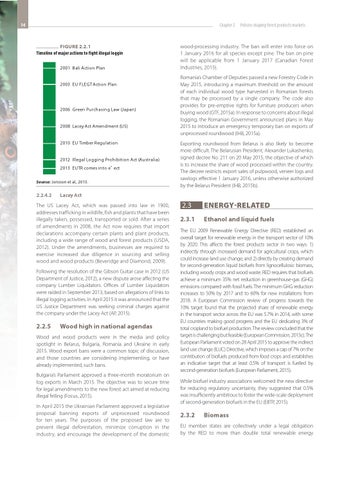
FIGURE 2.2.1 Timeline of major actions to fight illegal loggin 2001 Bali Action Plan 2003 EU FLEGT Action Plan
2006 Green Purchasing Law (Japan) 2008 Lacey Act Amendment (US) 2010 EU Timber Regulation 2012 Illegal Logging Prohibition Act (Australia) 2013 EUTR comes into e˜ ect Source: Jonsson et al., 2015.
2.2.4.2
Romania’s Chamber of Deputies passed a new Forestry Code in May 2015, introducing a maximum threshold on the amount of each individual wood type harvested in Romanian forests that may be processed by a single company. The code also provides for pre-emptive rights for furniture producers when buying wood (GTF, 2015a). In response to concerns about illegal logging, the Romanian Government announced plans in May 2015 to introduce an emergency temporary ban on exports of unprocessed roundwood (IHB, 2015a). Exporting roundwood from Belarus is also likely to become more difficult. The Belarusian President, Alexander Lukashenko, signed decree No. 211 on 20 May 2015, the objective of which is to increase the share of wood processed within the country. The decree restricts export sales of pulpwood, veneer logs and sawlogs effective 1 January 2016, unless otherwise authorized by the Belarus President (IHB, 2015b).
Lacey Act
The US Lacey Act, which was passed into law in 1900, addresses trafficking in wildlife, fish and plants that have been illegally taken, possessed, transported or sold. After a series of amendments in 2008, the Act now requires that import declarations accompany certain plants and plant products, including a wide range of wood and forest products (USDA, 2012). Under the amendments, businesses are required to exercise increased due diligence in sourcing and selling wood and wood products (Beveridge and Diamond, 2009). Following the resolution of the Gibson Guitar case in 2012 (US Department of Justice, 2012), a new dispute arose affecting the company Lumber Liquidators. Offices of Lumber Liquidators were raided in September 2013, based on allegations of links to illegal logging activities. In April 2015 it was announced that the US Justice Department was seeking criminal charges against the company under the Lacey Act (AP, 2015).
2.2.5
wood-processing industry. The ban will enter into force on 1 January 2016 for all species except pine. The ban on pine will be applicable from 1 January 2017 (Canadian Forest Industries, 2015).
Wood high in national agendas
Wood and wood products were in the media and policy spotlight in Belarus, Bulgaria, Romania and Ukraine in early 2015. Wood export bans were a common topic of discussion, and those countries are considering implementing, or have already implemented, such bans. Bulgaria’s Parliament approved a three-month moratorium on log exports in March 2015. The objective was to secure time for legal amendments to the new forest act aimed at reducing illegal felling (Focus, 2015). In April 2015 the Ukrainian Parliament approved a legislative proposal banning exports of unprocessed roundwood for ten years. The purposes of the proposed law are to prevent illegal deforestation, minimize corruption in the industry, and encourage the development of the domestic
2.3
ENERGY-RELATED
2.3.1
Ethanol and liquid fuels
The EU 2009 Renewable Energy Directive (RED) established an overall target for renewable energy in the transport sector of 10% by 2020. This affects the forest products sector in two ways: 1) indirectly through increased demand for agricultural crops, which could increase land use change; and 2) directly by creating demand for second-generation liquid biofuels from lignocellulosic biomass, including woody crops and wood waste. RED requires that biofuels achieve a minimum 35% net reduction in greenhouse-gas (GHG) emissions compared with fossil fuels. The minimum GHG reduction increases to 50% by 2017 and to 60% for new installations from 2018. A European Commission review of progress towards the 10% target found that the projected share of renewable energy in the transport sector across the EU was 5.7% in 2014, with some EU countries making good progress and the EU dedicating 3% of total cropland to biofuel production. The review concluded that the target is challenging but feasible (European Commission, 2015c). The European Parliament voted on 28 April 2015 to approve the indirect land use change (ILUC) Directive, which imposes a cap of 7% on the contribution of biofuels produced from food crops and establishes an indicative target that at least 0.5% of transport is fuelled by second-generation biofuels (European Parliament, 2015). While biofuel industry associations welcomed the new directive for reducing regulatory uncertainty, they suggested that 0.5% was insufficiently ambitious to foster the wide-scale deployment of second-generation biofuels in the EU (EBTP, 2015).
2.3.2
Biomass
EU member states are collectively under a legal obligation by the RED to more than double total renewable energy