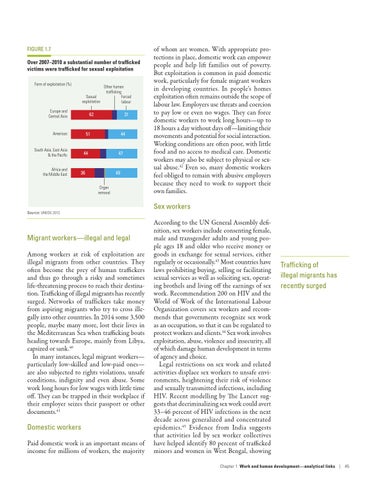
FIGURE 1.7 Over 2007–2010 a substantial number of trafficked victims were trafficked for sexual exploitation Form of exploitation (%)
Other human trafficking Sexual Forced exploitation labour
Europe and Central Asia
62
51
Americas
South Asia, East Asia & the Pacific Africa and the Middle East
31
44
44
47
36
49 Organ removal
Source: UNODC 2012.
Migrant workers— illegal and legal Among workers at risk of exploitation are illegal migrants from other countries. They often become the prey of human traffickers and thus go through a risky and sometimes life-threatening process to reach their destination. Trafficking of illegal migrants has recently surged. Networks of traffickers take money from aspiring migrants who try to cross illegally into other countries. In 2014 some 3,500 people, maybe many more, lost their lives in the Mediterranean Sea when trafficking boats heading towards Europe, mainly from Libya, capsized or sank.40 In many instances, legal migrant workers— particularly low-skilled and low-paid ones— are also subjected to rights violations, unsafe conditions, indignity and even abuse. Some work long hours for low wages with little time off. They can be trapped in their workplace if their employer seizes their passport or other documents.41
Domestic workers Paid domestic work is an important means of income for millions of workers, the majority
of whom are women. With appropriate protections in place, domestic work can empower people and help lift families out of poverty. But exploitation is common in paid domestic work, particularly for female migrant workers in developing countries. In people’s homes exploitation often remains outside the scope of labour law. Employers use threats and coercion to pay low or even no wages. They can force domestic workers to work long hours—up to 18 hours a day without days off—limiting their movements and potential for social interaction. Working conditions are often poor, with little food and no access to medical care. Domestic workers may also be subject to physical or sexual abuse.42 Even so, many domestic workers feel obliged to remain with abusive employers because they need to work to support their own families.
Sex workers According to the UN General Assembly definition, sex workers include consenting female, male and transgender adults and young people ages 18 and older who receive money or goods in exchange for sexual services, either regularly or occasionally.43 Most countries have laws prohibiting buying, selling or facilitating sexual services as well as soliciting sex, operating brothels and living off the earnings of sex work. Recommendation 200 on HIV and the World of Work of the International Labour Organization covers sex workers and recommends that governments recognize sex work as an occupation, so that it can be regulated to protect workers and clients.44 Sex work involves exploitation, abuse, violence and insecurity, all of which damage human development in terms of agency and choice. Legal restrictions on sex work and related activities displace sex workers to unsafe environments, heightening their risk of violence and sexually transmitted infections, including HIV. Recent modelling by The Lancet suggests that decriminalizing sex work could avert 33–46 percent of HIV infections in the next decade across generalized and concentrated epidemics. 45 Evidence from India suggests that activities led by sex worker collectives have helped identify 80 percent of trafficked minors and women in West Bengal, showing
Trafficking of illegal migrants has recently surged
Chapter 1 Work and human development—analytical links | 45