SPECIAL CONTRIBUTION most marginalized children on the planet. This is a prize for them; it just went through me. That is why, personally, I feel much more morally responsible now. This is a recognition that “peace” cannot be restored without the safety of children and the protection of children. The prize has connected peace and child rights at the highest levels of morality, peace and society. Within three hours of the prize, the issue got more attention than in past three decades! Now, we are able to interact and influence the political
debate, a little bit, at the highest level. I have been meeting a number of prime ministers and presidents and have had very good meeting with the UN Secretary-General and also with other UN agencies. The whole discourse, the whole debate has gone to the highest level, and it cannot be put aside now. It is at a stage where the government and intergovernmental agencies have to prioritize children because every single minute matters, every single child matters, every single childhood matters. Kailash Satyarthi Activist and 2014 Nobel Peace Prize Laureate
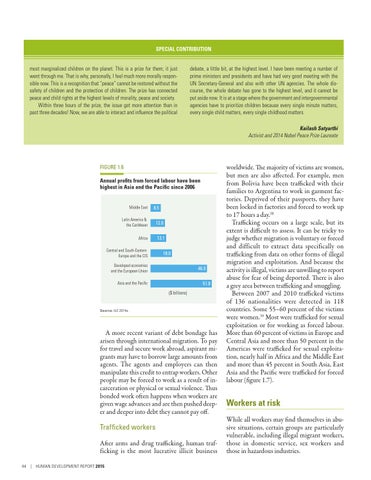
FIGURE 1.6 Annual profits from forced labour have been highest in Asia and the Pacific since 2006
Middle East
8.5
Latin America & the Caribbean Africa Central and South-Eastern Europe and the CIS
12.0 13.1 18.0
Developed economies and the European Union
46.9 51.8
Asia and the Pacific
($ billions)
Source: ILO 2014e.
A more recent variant of debt bondage has arisen through international migration. To pay for travel and secure work abroad, aspirant migrants may have to borrow large amounts from agents. The agents and employers can then manipulate this credit to entrap workers. Other people may be forced to work as a result of incarceration or physical or sexual violence. Thus bonded work often happens when workers are given wage advances and are then pushed deeper and deeper into debt they cannot pay off.
Trafficked workers After arms and drug trafficking, human trafficking is the most lucrative illicit business 44 | HUMAN DEVELOPMENT REPORT 2015
worldwide. The majority of victims are women, but men are also affected. For example, men from Bolivia have been trafficked with their families to Argentina to work in garment factories. Deprived of their passports, they have been locked in factories and forced to work up to 17 hours a day.38 Trafficking occurs on a large scale, but its extent is difficult to assess. It can be tricky to judge whether migration is voluntary or forced and difficult to extract data specifically on trafficking from data on other forms of illegal migration and exploitation. And because the activity is illegal, victims are unwilling to report abuse for fear of being deported. There is also a grey area between trafficking and smuggling. Between 2007 and 2010 trafficked victims of 136 nationalities were detected in 118 countries. Some 55–60 percent of the victims were women.39 Most were trafficked for sexual exploitation or for working as forced labour. More than 60 percent of victims in Europe and Central Asia and more than 50 percent in the Americas were trafficked for sexual exploitation, nearly half in Africa and the Middle East and more than 45 percent in South Asia, East Asia and the Pacific were trafficked for forced labour (figure 1.7).
Workers at risk While all workers may find themselves in abusive situations, certain groups are particularly vulnerable, including illegal migrant workers, those in domestic service, sex workers and those in hazardous industries.