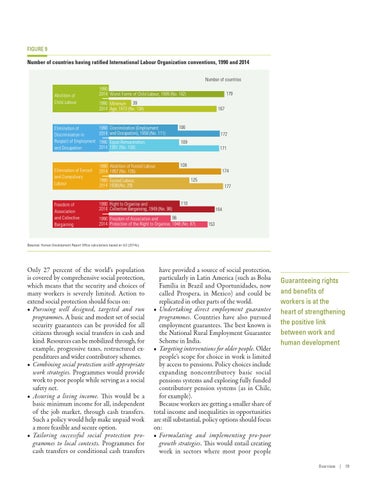
FIGURE 9 Number of countries having ratified International Labour Organization conventions, 1990 and 2014 Number of countries Abolition of Child Labour
Elimination of Discrimination in Respect of Employment and Occupation
Elimination of Forced and Compulsory Labour
Freedom of Association and Collective Bargaining
1990 2014 Worst Forms of Child Labour, 1999 (No. 182)
179
1990 Minimum 39 2014 Age, 1973 (No. 138)
167
1990 Discrimination (Employment 2014 and Occupation), 1958 (No. 111)
106 172
1990 Equal Remuneration, 2014 1951 (No. 100)
109
1990 Abolition of Forced Labour, 2014 1957 (No. 105)
109
171
174 125
1990 Forced Labour, 2014 1930 (No. 29)
177
1990 Right to Organise and 2014 Collective Bargaining, 1949 (No. 98)
110
96 1990 Freedom of Association and 2014 Protection of the Right to Organise, 1948 (No. 87)
164 153
Source: Human Development Report Office calculations based on ILO (2014c).
Only 27 percent of the world’s population is covered by comprehensive social protection, which means that the security and choices of many workers is severely limited. Action to extend social protection should focus on: • Pursuing well designed, targeted and run programmes. A basic and modest set of social security guarantees can be provided for all citizens through social transfers in cash and kind. Resources can be mobilized through, for example, progressive taxes, restructured expenditures and wider contributory schemes. • Combining social protection with appropriate work strategies. Programmes would provide work to poor people while serving as a social safety net. • Assuring a living income. This would be a basic minimum income for all, independent of the job market, through cash transfers. Such a policy would help make unpaid work a more feasible and secure option. • Tailoring successful social protection programmes to local contexts. Programmes for cash transfers or conditional cash transfers
have provided a source of social protection, particularly in Latin America (such as Bolsa Família in Brazil and Oportunidades, now called Prospera, in Mexico) and could be replicated in other parts of the world. • Undertaking direct employment guarantee programmes. Countries have also pursued employment guarantees. The best known is the National Rural Employment Guarantee Scheme in India. • Targeting interventions for older people. Older people’s scope for choice in work is limited by access to pensions. Policy choices include expanding noncontributory basic social pensions systems and exploring fully funded contributory pension systems (as in Chile, for example). Because workers are getting a smaller share of total income and inequalities in opportunities are still substantial, policy options should focus on: • Formulating and implementing pro-poor growth strategies. This would entail creating work in sectors where most poor people
Guaranteeing rights and benefits of workers is at the heart of strengthening the positive link between work and human development
Overview | 19