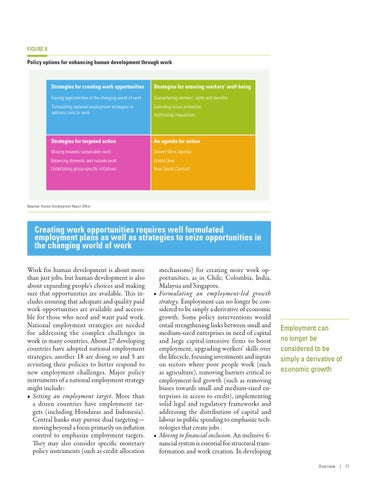
FIGURE 8 Policy options for enhancing human development through work
Strategies for creating work opportunities
Strategies for ensuring workers’ well-being
Seizing opportunities of the changing world of work
Guaranteeing workers’ rights and benefits
Formulating national employment strategies to address crisis in work
Extending social protection
Strategies for targeted action
An agenda for action
Moving towards sustainable work
Decent Work Agenda
Balancing domestic and outside work
Global Deal
Undertaking group-specific initiatives
New Social Contract
Addressing inequalities
Source: Human Development Report Office.
Creating work opportunities requires well formulated employment plans as well as strategies to seize opportunities in the changing world of work Work for human development is about more than just jobs, but human development is also about expanding people’s choices and making sure that opportunities are available. This includes ensuring that adequate and quality paid work opportunities are available and accessible for those who need and want paid work. National employment strategies are needed for addressing the complex challenges in work in many countries. About 27 developing countries have adopted national employment strategies, another 18 are doing so and 5 are revisiting their policies to better respond to new employment challenges. Major policy instruments of a national employment strategy might include: • Setting an employment target. More than a dozen countries have employment targets (including Honduras and Indonesia). Central banks may pursue dual targeting— moving beyond a focus primarily on inflation control to emphasize employment targets. They may also consider specific monetary policy instruments (such as credit allocation
mechanisms) for creating more work opportunities, as in Chile, Colombia, India, Malaysia and Singapore. • Formulating an employment-led growth strategy. Employment can no longer be considered to be simply a derivative of economic growth. Some policy interventions would entail strengthening links between small and medium-sized enterprises in need of capital and large capital-intensive firms to boost employment, upgrading workers’ skills over the lifecycle, focusing investments and inputs on sectors where poor people work (such as agriculture), removing barriers critical to employment-led growth (such as removing biases towards small and medium-sized enterprises in access to credit), implementing solid legal and regulatory frameworks and addressing the distribution of capital and labour in public spending to emphasize technologies that create jobs . • Moving to financial inclusion. An inclusive financial system is essential for structural transformation and work creation. In developing
Employment can no longer be considered to be simply a derivative of economic growth
Overview | 17