The link between work and human development is not automatic
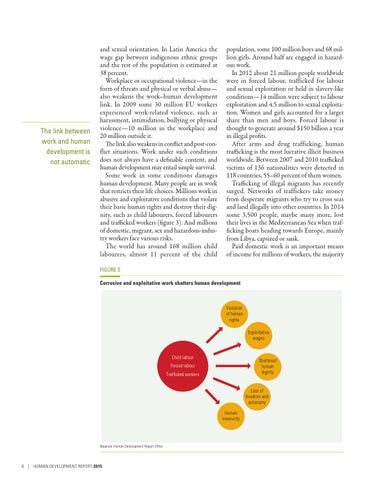
and sexual orientation. In Latin America the wage gap between indigenous ethnic groups and the rest of the population is estimated at 38 percent. Workplace or occupational violence—in the form of threats and physical or verbal abuse— also weakens the work–human development link. In 2009 some 30 million EU workers experienced work-related violence, such as harassment, intimidation, bullying or physical violence—10 million in the workplace and 20 million outside it. The link also weakens in conflict and post-conflict situations. Work under such conditions does not always have a definable content, and human development may entail simple survival. Some work in some conditions damages human development. Many people are in work that restricts their life choices. Millions work in abusive and exploitative conditions that violate their basic human rights and destroy their dignity, such as child labourers, forced labourers and trafficked workers (figure 3). And millions of domestic, migrant, sex and hazardous-industry workers face various risks. The world has around 168 million child labourers, almost 11 percent of the child
population, some 100 million boys and 68 million girls. Around half are engaged in hazardous work. In 2012 about 21 million people worldwide were in forced labour, trafficked for labour and sexual exploitation or held in slavery-like conditions—14 million were subject to labour exploitation and 4.5 million to sexual exploitation. Women and girls accounted for a larger share than men and boys. Forced labour is thought to generate around $150 billion a year in illegal profits. After arms and drug trafficking, human trafficking is the most lucrative illicit business worldwide. Between 2007 and 2010 trafficked victims of 136 nationalities were detected in 118 countries, 55–60 percent of them women. Trafficking of illegal migrants has recently surged. Networks of traffickers take money from desperate migrants who try to cross seas and land illegally into other countries. In 2014 some 3,500 people, maybe many more, lost their lives in the Mediterranean Sea when trafficking boats heading towards Europe, mainly from Libya, capsized or sank. Paid domestic work is an important means of income for millions of workers, the majority
FIGURE 3 Corrosive and exploitative work shatters human development
Violation of human rights Exploitative wages
Child labour
Shattered human dignity
Forced labour Trafficked workers
Loss of freedom and autonomy Human insecurity
Source: Human Development Report Office.
6 | HUMAN DEVELOPMENT REPORT 2015