Carolina Scientific as Hubbert’s Peak: an approximation of oil production on a worldwide scale (Figure 1).2 While the approximation has not always been accurate, its data does represent a hard truth. Hubbert’s peak predicts that, while petroleum reserves will last longer than many activists suggest, they will eventually decline until wells dry up.2 Therefore, the next 100-200 years of remaining supply give researchers, including a new research partnership headed by Dr. Meyer, vital time to discover and employ innovative research methods to develop new renewable energy technology. While growing in public favor and implementation, current renewable technology is far from dominating the energy marketplace. Many avenues exist, including hydroelectric dams, generating power from the tides and ocean currents, digging geothermal wells, and the vast breadth of wind power, especially across the flat Midwest and coastlines of the United States. Still, none come close in possible energy production to meet the world’s needs other than solar energy. A simple walk outside during the hot months of the Carolina summer makes it clear that the problem is not a lack of abundance of solar energy striking the Earth; the problem is the storage of the power.1 The question of storage is where Dr. Meyer’s passion for research and development in renewable energy comes in. The newly formed Center for Hybrid Approaches in Solar Energy to Liquid Fuels, or CHASE, is an exciting, collaborative effort between UNC-CH, North Carolina State University, Yale University, the University of Pennsylvania, Emory University, and the United States Department of Energy’s Brookhaven National Laboratory on Long Island. Their goal, while complex and beyond the scope of many undergraduate chemistry classes, is to use the power of the sun to create liquid fuels to store solar energy in a more efficient way than traditional battery technology. Chemical bonds can “store” solar energy through transferring that radiation into Gibbs free energy, which can be transformed through various chemical reactions. By the principles of thermodynamics, everything wants to be at the lowest energy state, including atoms that bond together to form molecules. When creating a bond, atoms lower their individual energies and – through reactions completed later on with that molecule – that energy in the bond can be expressed in a variety of ways. CHASE hopes to use simple and abundant molecules, like CO2 and H2O, to achieve its goals. The concepts of energy storage may sound simple enough, but CHASE and Dr. Meyer are heading quickly into uncharted territory. “Storage” in chemical bonds pro-
environmental science
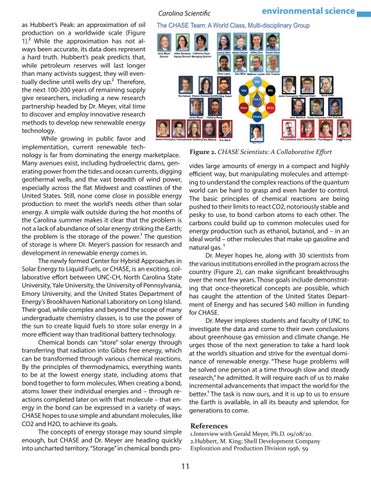
Figure 2. CHASE Scientists: A Collaborative Effort
vides large amounts of energy in a compact and highly efficient way, but manipulating molecules and attempting to understand the complex reactions of the quantum world can be hard to grasp and even harder to control. The basic principles of chemical reactions are being pushed to their limits to react CO2, notoriously stable and pesky to use, to bond carbon atoms to each other. The carbons could build up to common molecules used for energy production such as ethanol, butanol, and – in an ideal world – other molecules that make up gasoline and natural gas. 1 Dr. Meyer hopes he, along with 30 scientists from the various institutions enrolled in the program across the country (Figure 2), can make significant breakthroughs over the next few years. Those goals include demonstrating that once-theoretical concepts are possible, which has caught the attention of the United States Department of Energy and has secured $40 million in funding for CHASE. Dr. Meyer implores students and faculty of UNC to investigate the data and come to their own conclusions about greenhouse gas emission and climate change. He urges those of the next generation to take a hard look at the world’s situation and strive for the eventual dominance of renewable energy. “These huge problems will be solved one person at a time through slow and steady research,” he admitted. It will require each of us to make incremental advancements that impact the world for the better.1 The task is now ours, and it is up to us to ensure the Earth is available, in all its beauty and splendor, for generations to come.
11
References
1.Interview with Gerald Meyer, Ph.D. 09/08/20. 2.Hubbert, M. King; Shell Development Company Exploration and Production Division 1956, 59