82
WILLARDHALL BUILDING NUMBER 28 FAST FACTS:
Adding additional roof insulation in the attic would increase energy efficiency. Interior finishes and fixtures, including ACT, VCT, carpeting, light fixtures, wood flooring, ceramic tile, drinking fountains, painted wall finishes (including painted epoxy masonry walls), painted plaster ceilings, interior doors, kitchen cabinets, counters and sinks, restroom fixtures, fittings and accessories, and furniture, are aged, worn, or in poor condition. Upgrading these items could enhance the interior aesthetic of the building.
C O N ST R U C T E D : 1911 R E N OVAT E D : 19 79 G R O SS SQ UA R E FOOTAG E : 56,560 N E T A SSI G N A B L E S QUAR E FEET: 51,670 N E T TO G R O SS R ATIO : 91%
BUILDING USE:
C OED UC ATIONAL , UP P ER- C LAS S R ES ID ENC E H ALL
W I T H H A LL A N D IN- S UITE B ATH S
Although the HVAC equipment is aged in general, the exhaust systems in the restrooms within Willard are in particularly poor condition. Insufficient ventilation is causing mold growth within the building. Sufficient ventilation should also be provided in the laundry, janitorial, and electric rooms. The compressor and condensate pump system are aged and should be replaced to maintain the integrity of the system. The heat exchanger is in need of a shell and tube renewal and the heating and cooling pumps are aged and corroded. The domestic water distribution and sanitary waste systems are due for high end renewal and the perimeter hot and chilled water distribution units and system are beyond their useful lives. The wet sprinkler system and pumps should be tested in order to maintain integrity of the fire protection system.
OVERALL BUILDING RATING
.49
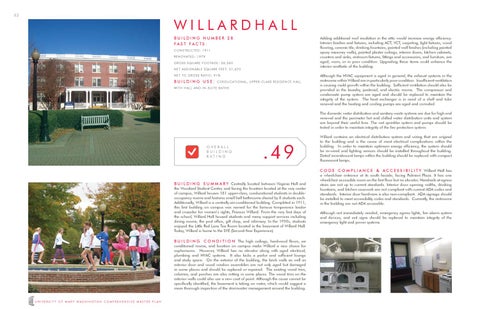
B U I L D I N G S U M M A R Y Centrally located between Virginia Hall and the Woodard Student Center, and facing the fountain located at the very center of campus, Willard houses 181 upper-class, coeducational students in doubleoccupancy rooms and features small hall bathrooms shared by 8 students each. Additionally, Willard is a centrally air-conditioned building. Completed in 1911, this first building on campus was named for the famous temperance leader and crusader for women’s rights, Frances Willard. From the very first days of the school, Willard Hall housed students and many support services including dining rooms, the post office, gift shop, and infirmary. In the 1920s, students enjoyed the Little Red Lane Tea Room located in the basement of Willard Hall. Today, Willard is home to the SYE (Second-Year Experience). B U I L D I N G C O N D I T I O N The high ceilings, hardwood floors, air conditioned rooms, and location on campus make Willard a nice choice for sophomores. However, Willard has no elevator along with aged electrical, plumbing and HVAC systems. It also lacks a parlor and sufficient lounge and study space. On the exterior of the building, the brick walls as well as exterior door and wood window assemblies are not only aged but damaged in some places and should be replaced or repaired. The existing wood trim, columns, and porches are also rotting in some places. The wood trim on the exterior walls could also use a new coat of paint. Although the cause cannot be specifically identified, the basement is taking on water, which would suggest a more thorough inspection of the stormwater management around the building. UNIVERSITY OF MARY WASHINGTON COMPREHENSIVE MASTER PLAN
Willard contains an electrical distribution system and wiring that are original to the building and is the cause of most electrical complications within the building. In order to maintain optimum energy efficiency, the system should be re-wired and lighting sensors should be installed throughout the building. Dated incandescent lamps within the building should be replaced with compact fluorescent lamps.
C O D E C O M P L I A N C E & A C C E S S I B I L I T Y Willard Hall has a wheelchair entrance at its south facade, facing Palmieri Plaza. It has one wheelchair accessible room on the first floor but no elevator. Handrails at egress stairs are not up to current standards. Interior door opening widths, drinking fountains, and kitchen casework are not compliant with current ADA codes and standards. Interior door hardware is also non-compliant. ADA signage should be installed to meet accessibility codes and standards. Currently, the restrooms in the building are not ADA accessible. Although not immediately needed, emergency egress lights, fire alarm system and devices, and exit signs should be replaced to maintain integrity of the emergency light and power systems.