3. Smart Indicators 3.2 Smart People E‐Learning Implementation of e‐learning programmes.
New technologies contribute to improving people's skills, whether for work or for their personal lives. Virtual education offers a number of benefits, such as lower costs, which makes it possible to offer courses to more people than traditional in‐classroom courses, fewer seminars and required skills, flexibility regarding timetables, and the interaction these courses generate, arousing the interest of participants and helping people who are timid to take part in group work through discussion forums and other ways of participation.
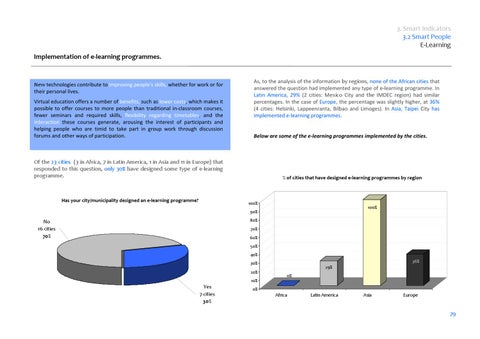
As, to the analysis of the information by regions, none of the African cities that answered the question had implemented any type of e‐learning programme. In Latin America, 29% (2 cities: Mexico City and the IMDEC region) had similar percentages. In the case of Europe, the percentage was slightly higher, at 36% (4 cities: Helsinki, Lappeenranta, Bilbao and Limoges). In Asia, Taipei City has implemented e‐learning programmes.
Below are some of the e‐learning programmes implemented by the cities.
Of the 23 cities (3 in Africa, 7 in Latin America, 1 in Asia and 11 in Europe) that responded to this question, only 30% have designed some type of e‐learning programme.
Has your city/municipality designed an e‐learning programme?
% of cities that have designed e‐learning programmes by region
100%
100%
90% 80%
No 16 cities 70%
70% 60% 50% 40% 36%
30% 20%
29% 0%
10%
Yes 7 cities 30%
0%
Africa
Latin America
Asia
Europe
79