EXECUTIVE SUMMARY
t足hreaten both basic service infrastructure and human life, particularly for the poor. These developments present both local and national governments with a complex financing challenge. In many sectors, current investments must be multiplied must be tripled or quadrupled over the coming years. To reduce these gaps, further national investment in these sectors will be required, as well as public, private and international financing. Once again, the role of local government is vital at all levels: to drive social policies and target subsidies so that they reach the most vulnerable; to improve the efficiency of departments or municipal utilities to reduce costs (e.g. loss reduction, improved productivity, new management methods and technologies); to mobilize more resources by improving payment collection and local taxation; to promote closer cooperation, not only with the private sector, but with small service providers and the informal sector. Policies to strengthen local management of ser-
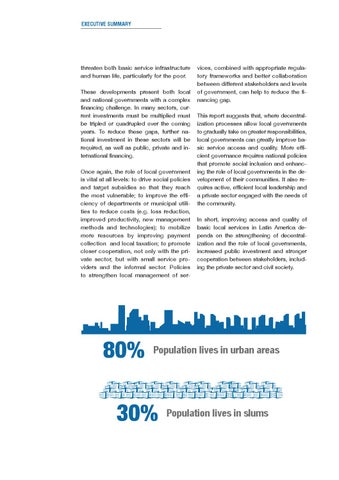
80%
vices, combined with appropriate regulatory frameworks and better collaboration between different stakeholders and levels of government, can help to reduce the financing gap. This report suggests that, where decentralization processes allow local governments to gradually take on greater responsibilities, local governments can greatly improve basic service access and quality. More efficient governance requires national policies that promote social inclusion and enhancing the role of local governments in the development of their communities. It also requires active, efficient local leadership and a private sector engaged with the needs of the community. In short, improving access and quality of basic local services in Latin America depends on the strengthening of decentralization and the role of local governments, increased public investment and stronger cooperation between stakeholders, including the private sector and civil society.
Population lives in urban areas
30%
Population lives in slums