101
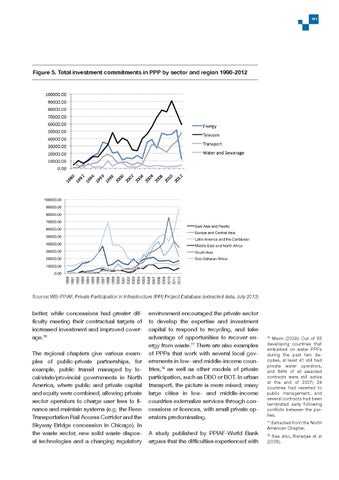
Figure 5. Total investment commitments in PPP by sector and region 1990-2012
Source: WB-PPIAF, Private Participation in Infrastructure (PPI) Project Database (extracted data, July 2013)
better, while concessions had greater difficulty meeting their contractual targets of increased investment and improved coverage.76 The regional chapters give various examples of public-private partnerships, for example, public transit managed by local/state/provincial governments in North America, where public and private capital and equity were combined, allowing private sector operators to charge user fees to finance and maintain systems (e.g. the Reno Transportation Rail Access Corridor and the Skyway Bridge concession in Chicago). In the waste sector, new solid waste disposal technologies and a changing regulatory
environment encouraged the private sector to develop the expertise and investment capital to respond to recycling, and take advantage of opportunities to recover energy from waste.77 There are also examples of PPPs that work with several local governments in low- and middle-income countries,78 as well as other models of private participation, such as DBO or BOT. In urban transport, the picture is more mixed; many large cities in low- and middle-income countries externalize services through concessions or licences, with small private operators predominating.
Marin (2009): Out of 65 developing countries that embarked on water PPPs during the past two decades, at least 41 still had private water operators, and 84% of all awarded contracts were still active at the end of 2007; 24 countries had reverted to public management, and several contracts had been terminated early following conicts between the parties. 76
Extracted from the North American Chapter. 77
A study published by PPIAF-World Bank argues that the difficulties experienced with
See also, Banerjee et al (2008). 78