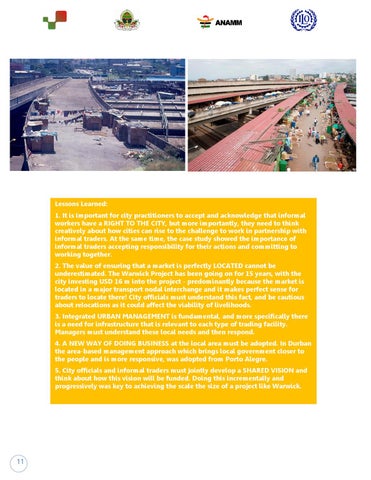
Lessons Learned: 1. It is important for city practitioners to accept and acknowledge that informal workers have a RIGHT TO THE CITY, but more importantly, they need to think creatively about how cities can rise to the challenge to work in partnership with informal traders. At the same time, the case study showed the importance of informal traders accepting responsibility for their actions and committing to working together. 2. The value of ensuring that a market is perfectly LOCATED cannot be underestimated. The Warwick Project has been going on for 15 years, with the city investing USD 16 m into the project - predominantly because the market is located in a major transport nodal interchange and it makes perfect sense for traders to locate there! City officials must understand this fact, and be cautious about relocations as it could affect the viability of livelihoods. 3. Integrated URBAN MANAGEMENT is fundamental, and more specifically there is a need for infrastructure that is relevant to each type of trading facility. Managers must understand these local needs and then respond. 4. A NEW WAY OF DOING BUSINESS at the local area must be adopted. In Durban the area-based management approach which brings local government closer to the people and is more responsive, was adopted from Porto Alegre. 5. City officials and informal traders must jointly develop a SHARED VISION and think about how this vision will be funded. Doing this incrementally and progressively was key to achieving the scale the size of a project like Warwick.
11