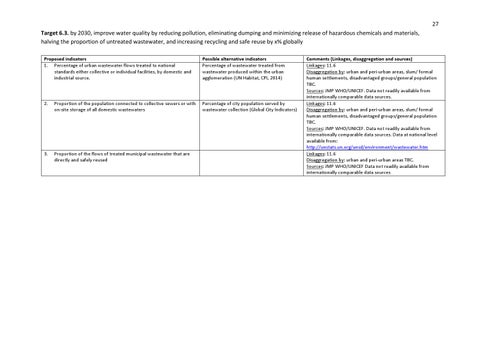
27 Target 6.3. by 2030, improve water quality by reducing pollution, eliminating dumping and minimizing release of hazardous chemicals and materials, halving the proportion of untreated wastewater, and increasing recycling and safe reuse by x% globally Proposed indicators 1. Percentage of urban wastewater flows treated to national standards either collective or individual facilities, by domestic and industrial source.
Possible alternative indicators Percentage of wastewater treated from wastewater produced within the urban agglomeration (UN Habitat, CPI, 2014)
2.
Proportion of the population connected to collective sewers or with on-site storage of all domestic wastewaters
Percentage of city population served by wastewater collection (Global City Indicators)
3.
Proportion of the flows of treated municipal wastewater that are directly and safely reused
Comments (Linkages, disaggregation and sources) Linkages: 11.6 Disaggregation by: urban and peri-urban areas, slum/ formal human settlements, disadvantaged groups/general population TBC. Sources: JMP WHO/UNICEF. Data not readily available from internationally comparable data sources. Linkages: 11.6 Disaggregation by: urban and peri-urban areas, slum/ formal human settlements, disadvantaged groups/general population TBC. Sources: JMP WHO/UNICEF. Data not readily available from internationally comparable data sources. Data at national level available from: http://unstats.un.org/unsd/environment/wastewater.htm Linkages: 11.6 Disaggregation by: urban and peri-urban areas TBC. Sources: JMP WHO/UNICEF Data not readily available from internationally comparable data sources