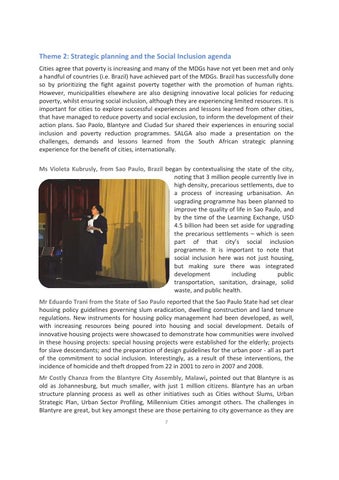
Theme 2: Strategic planning and the Social Inclusion agenda Cities agree that poverty is increasing and many of the MDGs have not yet been met and only a handful of countries (i.e. Brazil) have achieved part of the MDGs. Brazil has successfully done so by prioritizing the fight against poverty together with the promotion of human rights. However, municipalities elsewhere are also designing innovative local policies for reducing poverty, whilst ensuring social inclusion, although they are experiencing limited resources. It is important for cities to explore successful experiences and lessons learned from other cities, that have managed to reduce poverty and social exclusion, to inform the development of their action plans. Sao Paolo, Blantyre and Ciudad Sur shared their experiences in ensuring social inclusion and poverty reduction programmes. SALGA also made a presentation on the challenges, demands and lessons learned from the South African strategic planning experience for the benefit of cities, internationally. Ms Violeta Kubrusly, from Sao Paulo, Brazil began by contextualising the state of the city, noting that 3 million people currently live in high density, precarious settlements, due to a process of increasing urbanisation. An upgrading programme has been planned to improve the quality of life in Sao Paulo, and by the time of the Learning Exchange, USD 4.5 billion had been set aside for upgrading the precarious settlements – which is seen part of that city’s social inclusion programme. It is important to note that social inclusion here was not just housing, but making sure there was integrated development including public transportation, sanitation, drainage, solid waste, and public health. Mr Eduardo Trani from the State of Sao Paulo reported that the Sao Paulo State had set clear housing policy guidelines governing slum eradication, dwelling construction and land tenure regulations. New instruments for housing policy management had been developed, as well, with increasing resources being poured into housing and social development. Details of innovative housing projects were showcased to demonstrate how communities were involved in these housing projects: special housing projects were established for the elderly; projects for slave descendants; and the preparation of design guidelines for the urban poor - all as part of the commitment to social inclusion. Interestingly, as a result of these interventions, the incidence of homicide and theft dropped from 22 in 2001 to zero in 2007 and 2008. Mr Costly Chanza from the Blantyre City Assembly, Malawi, pointed out that Blantyre is as old as Johannesburg, but much smaller, with just 1 million citizens. Blantyre has an urban structure planning process as well as other initiatives such as Cities without Slums, Urban Strategic Plan, Urban Sector Profiling, Millennium Cities amongst others. The challenges in Blantyre are great, but key amongst these are those pertaining to city governance as they are 7
Issuu converts static files into: and more. Sign up and create your flipbook.