ing Challeng from es narrativ
centraelnts govercnampital and ies cit
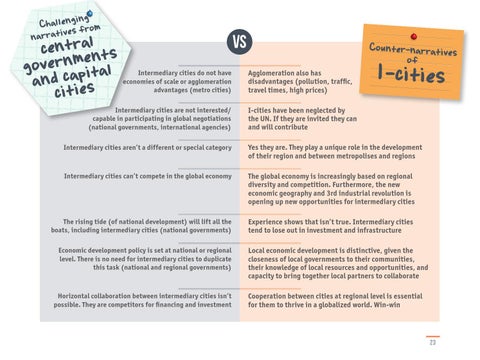
VS Intermediary cities do not have economies of scale or agglomeration advantages (metro cities)
Intermediary cities are not interested/ capable in participating in global negotiations (national governments, international agencies)
Counter-narratives of Agglomeration also has disadvantages (pollution, traffic, travel times, high prices)
I-cities
I-cities have been neglected by the UN. If they are invited they can and will contribute
Intermediary cities aren’t a different or special category
Yes they are. They play a unique role in the development of their region and between metropolises and regions
Intermediary cities can’t compete in the global economy
The global economy is increasingly based on regional diversity and competition. Furthermore, the new economic geography and 3rd industrial revolution is opening up new opportunities for intermediary cities
The rising tide (of national development) will lift all the boats, including intermediary cities (national governments)
Experience shows that isn’t true. Intermediary cities tend to lose out in investment and infrastructure
Economic development policy is set at national or regional level. There is no need for intermediary cities to duplicate this task (national and regional governments)
Horizontal collaboration between intermediary cities isn’t possible. They are competitors for financing and investment
Local economic development is distinctive, given the closeness of local governments to their communities, their knowledge of local resources and opportunities, and capacity to bring together local partners to collaborate Cooperation between cities at regional level is essential for them to thrive in a globalized world. Win-win
23