
Image: Salma Hamza works on a plaster cast sculpture titled “Wanting” as she prepares for Tenth Thursday, an undergraduate exhibition featuring works from students across the Department of Art.
 Will Tee Yang
Photo:
Will Tee Yang
Photo:
Happy New Year to all of our CONNECT community!
Reflecting on the first half of my inaugural year at UCI, I think of the many opportunities our faculty and students create for the community to witness stellar work fueled by vision and voice, which distinguishes the Claire Trevor School of the Arts as UCI’s creative engine. Our spaces –over 22, to be exact – are much more than performance or presentation venues alone; they are artistic laboratories where we create research designed to transform and inspire. Behind the scenes is the alchemy taking place in our theaters, galleries and studios, where you’ll find a tremendous breadth of research activity that includes inquiry, experimentation, feedback and critique. CTSA is leading the arts at UCI by pushing the boundaries of cultural expression and exploration of the human experience.
Our various upcoming productions and exhibitions illustrate how UCI artists boldly engage in work to fuel innovation. In this issue of CONNECT, you will meet some of our incredible students and faculty members who are making an impact through their creative research and presentations. Associate Professor of Directing Juliette Carrillo and M.F.A. costume design student D Larsson prepare to transform the Department of Drama’s Men on Boats with an all-female cast, while Assistant Professor of Dance Cyrian Reed works as the co-artistic director for Dance Visions 2023 to present its first live production since 2019, with heightened energy from all learned since then. New Assistant Professor of Music and director for choral activities Irene Messoloras enthralls audiences in a choral concert with a social impact message. And through a group exhibition, we’ll gain insights into the mid-journey explorations of our second-year M.F.A. art students.
You will hear from Professor Joel Veenstra about his teaching experiences at CTSA, the importance of professional pathways, and the value of giving back. You will meet visiting music scholar Joe Davies who is hosting the Women at the Piano 1848–1970 international conference, bringing together musicologists and musicians to celebrate female composers. You will read about a proud UCI homecoming for two dance alumni, Justin Keats and Amy Quanbeck, who are currently touring with the production of Moulin Rouge! The Musical. And finally, you will meet Blake Elliott, who has an incredible story of how they leveraged their Medici scholarship into a professional opportunity to work off-Broadway in New York City.
We are so excited about all that’s ahead and invite you to spend time with our CTSA community in 2023. It will be a brilliant year, and we look forward to connecting with you soon!
Tiffany Ana López, Ph.D. Dean


Message
Dean’s
UCI's Creative Engine
Music’s Hidden Figures
Visiting scholar Joe Davies sheds new light on female musicians throughout history


Broadway Visions Come True
UCI Dance alumni Justin Keats and Amy Quanbeck share their skills during a masterclass homecoming

Inspirational Improvisor
Professor Joel Veenstra,

CONNECT
Vol. 4, Issue 2
Produced by the University of California, Irvine, Claire Trevor School of the Arts
Dean’s Arts Board
Dean Tiffany López, Ph.D. Joan Beall
Matt Bailey, ’12
Rachel Fine, ’94
Shazad Ghanbari, Ph.D. Susan Hori
Reza Jahangiri, ’00 Jerry Mandel
Tom Nielsen
Sheila Peterson
Ellen Ruskin-Gillman, Ph.D. Cheryll Ruszat
Richard Ruszat
Richard Stein
Mary Watson-Bruce, Ph.D., ’81 Ivan Williams, ’96
Editorial Advisory Committee
Megan Belmonte (Outreach) Charlotte Griffin (Dance) Amanda Ross-Ho (Art)
Sarah Strozza (Development) Philip Thompson (Drama)

Kojiro Umezaki (Music)
David Walker-Doyle (Box Office) Briana Watson (Alumni) Jennifer Wong (Student Affairs)
Editorial Writers
Christine Byrd, Isabella Ganqvist, Mia Hammett
Managing Editor and Director of Marketing and Communications
Jaime DeJong
Graphic Design Emily Zheng
Visuals
Paul R. Kennedy, Will Tee Yang, Emily Zheng, Steve Zylius
Copy Editor
Stephen Elders
Cover Image
"Together, We fly" by Jianqiao Sun. Plaster with steel rod and wire, 34x34x34 inches.
Photo by Will Tee Yang
More information and electronic copy available at www.arts.uci.edu. Email questions or comments to artsmarketing@uci.edu.
CONNECT 6 16 22 28 30 35
CONNECTIONS
2023 WINTER
FACULTY RESEARCH ANTEATERS IN THE ARTS ARTS ADVOCATES STUDENT RESEARCH
SEASON
Through art, dance, music and drama, UCI artists push boundaries and fuel innovation
Winter 2023 4
a member of the Theatre Guild and Claire Trevor Society, shares an insider's point of view Living the Dream M.F.A. student Blake Elliott returns to UCI after following career aspirations in New York City Creative Research at UCI Winter 2023 brings an array of new collaborative works in all four departments
Uncovering an Unsung Hero
The Department of Drama presented the world premiere of The Story of Biddy Mason, which introduced audiences to a hidden figure from the formation of the Pueblo of Los Angeles in the mid-1800s. Inspired by a short story written by Dana Johnson, Professor of Acting Annie Loui devised a multimedia production rooted in movement. “The performers and designers are an integral part of the creative process,” said Loui. “It is a positive story about the origins of Los Angeles, where a formerly enslaved Black woman was a significant player and a positive influence on many people.”
Image: M.F.A. acting student Mary Hill played the title role of Biddy Mason, bringing this multi-faceted woman to light.

IN RETROSPECT
Photo: Paul R. Kennedy


6 6
UCI's Creative Engine

 By Christine Byrd
This winter, the Claire Trevor School of the Arts will treat audiences to riveting performances and thoughtprovoking exhibitions, all of which are the result of a thriving creative engine that thrums day in and day out, fueled by creativity, innovations and the boundary-pushing energy of its students and faculty.

“As an arts school within a research university, CTSA creates and presents new ways to explore the human experience through dance, music, drama and fine art,” says Dean Tiffany Ana López. “The Claire Trevor School of the Arts is UCI’s creative engine, and our goal is for our students to have total confidence in their vision and voice – to make the work they want to make, and tell stories they need to tell.”
From selecting the perfect fabric for a costume to finding the right light to illuminate a sculpture, each creative choice CTSA artists make on any given day is a piece of a larger puzzle – the results of which will be on display for the community to enjoy. Here’s a look at a few of the boundarypushing projects CTSA’s artists are creating.
Image: A dance student performs in A Difficult Conversation , choreographed for Dance Visions 2022 by Charlotte Griffin and Ariyan Johnson.
Rose Eichenbaum
“Party Boat!”
The drama department is preparing to take audiences on a joyride down the Colorado River in February, with the production of Men on Boats. Billed as a true(ish) story, the play by Jaclyn Backhaus depicts the antics of 10 explorers – none of whom are played by men – as they make a Survivor-style journey to the Grand Canyon in 1869.
“Party boat!” shouts one of the characters, making clear this is not exactly a reenactment.
“We’re not trying to hide that it’s not men on stage or that it’s not actually boats,” explains D Larsson, an M.F.A. student in costume design. Larsson’s wardrobe uses silhouettes inspired by historical menswear, but with modern touches such as neoprene fabric and painted denim. These aim to amplify the pretend nature of the show, and the potential inaccuracies of explorer John
7 CONNECTIONS
Photo:
Through art, dance, music and drama, UCI artists push boundaries and fuel innovation
“Arts gives us a platform to connect with one another.”
Wesley Powell’s journal, on which the play is based.
“The casting choices of this play being all non-men really gestures back to the voices we don’t often see and the history – Black people, indigenous people, women,” says Larsson.
Associate professor Juliette Carrillo, the play’s director, says the performance invites guests to both engage with the characters and to question them.
“We have the perspective of a contemporary audience looking back on these events, seeing these white dudes who have this illusion they are discovering and naming various monuments for the first time, when of course they’re not,” Carrillo says.
The dueling perspectives are part of

8
Image: Costume sketches for Men on Boats by designer D Larsson, M.F.A. student in the Department of Drama's design program.
what drew Carrillo to select this play, a means for exploring her own artistic interests while also providing a rich learning experience for the drama students like Larsson, for whom this production is a master’s thesis project. “It’s not history with a capital H,” explains Larsson. “It’s history as a story, an acknowledgement – a journey together – and this journey has been really fun to take with my peers because it is so unconventional.”
Voices in Harmony

While many of the Claire Trevor School of the Arts’ programs are primarily driven by arts students, the choral program provides a musical education and a creative outlet for those from any major, even alumni and community members. The program’s three choirs bring together 150 diverse voices, from novice singers to those preparing to launch professional music careers.
“It’s been incredible to watch the choral program flourish over the past few years,” said Irene Messoloras, assistant professor of music and director of the choral program since 2019. “The energy, focus and passion the students bring is indescribable.”
The choral program offers vocalists opportunities to learn and perform a variety of masterworks, from Baroque composers such as Johann Sebastian Bach to contemporary Shawn Kirchner, who works extensively with the Los Angeles Master Chorale. In addition to their busy local performance schedule, the 40-member Chamber Singers, which selects members through an extensive audition process, will travel to Derry, Northern Ireland, in June to perform in The Festival of Song along with church concerts, in recital halls and with other universities.
“I absolutely see the choral program as a creative engine for campus,” says Abigail Mesel, a fourth-year student double majoring in music and chemistry. “Our ensembles are full of so many passionate and dedicated musicians because for many of them, our rehearsals are the only opportunities they have to make music with others.”
Messoloras encourages choir members to explore and share how social issues affect their lives, through song. For their fall concert, Letters to My Future Self, students wrote letters reflecting on gun violence, racism, refugees, and various
9
forms of oppression. That music will be included among the classical pieces they will perform abroad this summer.

“We’re using art as a catalyst for change. By offering students an opportunity to present challenging topics through choral music, they are encouraged to advocate for the change they hope to see for themselves, their families, and the global community they are part of,” Messoloras says. “Arts gives us a platform to connect with one another. I truly believe music can be part of this creative engine and can promote beauty in the world along with social justice.”
Dance Visions
For the first time since 2019, the dance department’s annual showcase of students performing faculty choreography will be presented to a live theater audience. Dance Visions 2023 will feature 60 students showcasing the department’s diversity of artistic styles, from ballet to contemporary dance and hip hop to modern.
Co-artistic director and associate professor Tong Wang will present a portion of Paquita, a cornerstone work for many ballet companies that displays the rigor of their dancers’ training and technique, he says, and will help student dancers challenge themselves to reach higher technical levels.
Co-artistic director and assistant professor Cyrian Reed will present a hip-hop piece fusing house, funk and jazz styles.
“As dancers, we are getting a glimpse into the styles of our professors that we work with on a daily basis,” says Anisa Johnson, a second-year dance major who is cast in Reed’s piece. “As a performer, I find Dance Visions unique because the individual dances can be longer and often involve the faculty’s research, which gives us the opportunity to become part of this research and delve into real-world experiences.”
UCI students will also be performing a work choreographed by assistant professor Ariyan Johnson, based on dances in the Black church, aligned with her ongoing artistic research project funded by UCI’s Hellman Fellowship.
10
“The school really creates a community for us, with diverse perspectives and a culture in which we can work cross departmentally.”
Vitor Luiz, assistant professor of dance, will present a ballet with a contemporary twist, “Luna E’motions,” to music by Brazilian composer Heitor Villa-Lobos. And world-renowned choreographer Lar Lubovitch, a distinguished professor of dance, will premiere a colorful and upbeat piece, “Cryptoglyph,” set to “Double Fiesta” by American composer Meredith Monk.
This annual collaboration between the students and masters fuels faculty members’ artistic process, Wang says. UCI dance students are so eager and open-minded that he’s inspired to constantly want to learn more to pass
Image: The 2022-23 UCI concert choirs stand in front of the entrance to the Claire Trevor School of the Arts campus.

on to them. And that creative energy helps emerging dancers discover their own artistic voice through dance as well.
“The dance department provides me a safe space for my inner desires, allowing my creativity to flow through my movement,” says Anisa Johnson, who aspires to a professional career in a dance company. “I find myself absorbing constant encouragement to
11
Photo: Jeanine Hill Photography
release a raw version of my inner world and show my individuality.”
Pushing Boundaries
This winter, the art department’s second-year M.F.A. students will work collaboratively on an exhibition showcasing their work in the University Art Gallery and Room Gallery. An annual tradition before students move on to their individual thesis projects, the exhibition allows them to work together to manage every aspect of a gallery show, from installing the art to developing the publicity materials.
“This is a really important aspect of our careers,” says second-year M.F.A. student Devin Wilson. “Whatever path we take, we may be putting on our own shows, working at museums or curating.”
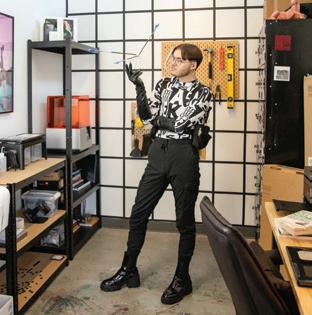
For over a year, Wilson has been working on their installation, which explores the intersection of queerness and technology, critiquing capitalist technology businesses like Apple, Google and Meta. Wilson’s contribution to the second-year’s exhibition is a large-scale installation that includes a giant fiberglass sculpture, oversized cordstechnological devices, and 3-D printed fairies, a piece they describe as “queer industrial satire with a cyber punk fantasy aesthetic.”
Part of what attracted Wilson to UCI was the art department’s commitment to cross-departmental collaborations. Already, they have learned from art faculty including Amanda Ross-Ho,

Daniel Martinez, Jesse Colin Jackson, and Monica Majoli – drawing inspiration from wide-ranging expertise in sculpture, electronic media and design, and critical theory.
“The school really creates a community for us, with diverse perspectives and a culture in which we can work cross departmentally, and even beyond UCI to create culturally significant projects,” Wilson says.
Wilson’s artistic collaborations extend beyond CTSA as well. For their thesis, they plan to continue collaborating with graduate students from the Donald Bren
12
“...we’re given the opportunities and resources to be innovative with no fear of failure.”
School of Information and Computer Sciences on a project titled NIVA, which stands for Nonhuman Intelligent Virtual Assistant. Willson describes this project as “a software program that attempts to defy capitalist notions of gender and speciesism by disrupting default settings in artificial intelligence.”
“CTSA is one of the most forwardthinking arts programs currently running,” Wilson says. “There’s the forward momentum and idea that we strive to create things that push societal boundaries – not only thematically but conceptually, theoretically.”
Image: Second-year M.F.A. student Devin Wilson in their Contemporary Arts Center graduate studio at CTSA.

“I think about UCI as an educational incubator – a startup where we’re given the opportunities and resources to be innovative with no fear of failure,” Wilson adds. “It’s a collaborative effort to create something entirely new and innovative.”
To learn more about these and other shows at UCI this winter, visit arts.uci.edu.
13
Photo: Emily Zheng
Welcome, New Arteaters!
UCI offers hundreds of student-run campus organizations that provide opportunities for students to pursue personal and professional goals through involvement. Each year, the Claire Trevor School of the Arts student affairs team hosts a special event highlighting the arts-affiliated clubs, creating an opportunity for new arts students to get involved with their peers and communities once they arrive on campus. During Welcome Week, new CTSA students gathered at the Arts Plaza for an annual tradition, the “Arts Involvement Fair.” Here, Michael Diaz, a fourth-year drama student and member of the Brown Bag Theater Company (BBTC), shares more about the organization with a prospective member. BBTC is an ensemble of artists and scholars who aim to produce engaging artistic work that reflects and empowers the Latinx communities and is one of several affinity theatet organizations on campus.

14

15
Photo: Emily Zheng
Music’s Hidden Figures: Women at the Piano
Visiting scholar Joe Davies sheds new light on female musicians throughout history
By Christine Byrd
Clara Schumann was a 19th century piano virtuoso – a performer, composer, teacher and arranger. Yet for nearly a century after her death, she was recognized as little more than the wife of fellow composer Robert Schumann.
For the last 40 years of her life, Schumann not only raised her children as a single mother, earning a living by giving concerts and teaching piano, but she also dedicated herself to fortifying her late husband’s musical legacy.
Pianists such as Schumann are the hidden figures Davies aims to bring attention to with his research, which combines music history, theory and performance.
“I aim to challenge some of the ideas around the great male composer and think about musical creativity in various facets – teaching, composing, performing,” says Davies. “Clara Schumann invites us to think openly and creatively about musicianship in the 19th century and beyond.”
Rarely Heard Music
“I see Clara Schumann as a role model, not only in terms of what she was doing musically, but in terms of her depth of understanding of the human condition,” says Joe Davies, who is visiting UCI for two years as a Marie Skłodowska-Curie Global Fellow, funded by the European Commission.
This spring, Davies is organizing a conference, Women at the Piano 1848–1970, drawing scholars and pianists from around the world to UCI. Shedding light on women’s often obscured contributions to the art of piano, the event will focus on women piano teachers, composers, performers and even piano manufacturers, from a global perspective, including where the instrument was introduced by colonizers.
Background Image: Sheet music from a composition written by Clara Schumann.

16
“We will hear stories that have been untold and see figures being revealed.”
“The conference will invite you to reassess the history of the piano and pianism,” says Davies. “We’re thinking broadly about what it means to be creative, not just in terms of works but the traces of creativity that are not always visible or audible — through teaching or performing music, and thinking about agency and authorship through the lens of history.”
The four-day event, beginning Thursday, March 16, 2023, aims to offer something for every piano lover, from nearly every perspective. A recital by London-based pianist Antonio Oyarzabal will feature music by women composers, and a recital by UCI students will introduce the audience to even more female composers.
“This is music that’s rarely heard in a concert hall,” says Davies. “Throughout the conference, we will hear stories that have been untold and see figures being revealed.”
In addition to performances, the conference will bring scholars to talk about piano history, theory, pedagogy, performance and composition. Jann Pasler, distinguished professor at UC San Diego, will present a keynote lecture.
UCI music professor and concert pianist Nina Scolnik will illuminate the life and legacy of her most influential piano teacher, Dorothy Taubman. Scolnik will give a talk about the impactful and often controversial Taubman, who pioneered an approach to prevent and repair injuries that tend to afflict pianists.

“My own teaching approach stems from the work that she developed over many years,” says Scolnik. “My talk will try to look at her contributions through some of the themes of the conference,
Image: Professor of Teaching Nina Scolnik will present at the Women at the Piano 1848–1970 conference in March.
Photo: Ted Jack
specifically those relating to gender and the shaping of pianistic values.”

The conference is supported by the UCI Department of Music, Claire Trevor School of the Arts, UCI Illuminations, the European Commission and the Women in Global Music Network.
During his time here, Davies has already hosted two events drawing international scholars and performers. First, when he launched the Women in Global Music Network with cofounder Yvonne Liao, and again when he published Clara Schumann Studies (Cambridge University Press, 2021) –
FACULTY RESEARCH

18
the first volume in the series to focus on a woman composer.
UCI is the ideal host for a conference on women at the piano, Davies says, because of its rich confluence of performers, contemporary composers, and music theory and history scholars – bolstered by the recently established Ph.D. program in music history and music theory.
A Wide Range of Creativity
UCI’s Department of Music launched its doctorate in music history and music theory in 2020, with the first cohort expected to graduate as early as 2025, ready for careers in music history, music theory, musicology, curation, journalism or academia. Students in the program have the option to take courses outside the Department of Music, including UCI’s renowned critical theory program and even other UC campuses.
“The music history and music theory program embraces all of these facets of music whilst also allowing critical theory to come into conversation with music history, theory and performance,” says Nicole Grimes, chair of the music department. “The program speaks to a wide range of creativity and provides a wonderful interaction between humanities scholarship and the artistic activity of the Claire Trevor School of the Arts – resulting in scholarship that reflects historical, sociopolitical and cultural aspects of music.
“We’re challenging and defying the sometimes artificial boundaries that exist between areas of musical knowledge, facets of music that are not necessarily easily extricated from one another,” adds Grimes. “We’re pioneering in saying the approach to the musical works can be holistic.”
Continuing Vibrations
The new doctorate program represents a third pillar in the music department’s offerings, which already included performance studies and the Integrated Composition, Improvisation, and Technology doctoral program. Together, these three programs enable students to consider music from many angles: the the sounding notes, the historical and cultural influences on the composer, and the sensual experience of playing and hearing the music.
Image: Visiting Scholar Joe Davies stands on the stage of the Claire Trevor Theatre at UCI Claire Trevor School of the Arts.
Photo: Will Tee Yang
Davies came to UCI the year after the music history and music theory program launched, bringing a global perspective. Trained as a pianist with the inspiration of cherished mentors Matthew Head and Susan Wollenberg, Davies pursued his passion for thinking and writing by earning a masters and doctorate at the University of Oxford. He is currently writing a book about gothic influences in Franz Schubert’s music (Boydell & Brewer, 2023). He’s also co-writing a chapter with Natasha Loges, professor of music at the Hochschule für Musik Freiburg, for an interdisciplinary book titled Women in Power.
Davies’ intersecting interest in piano performance and theory is unusual, Grimes says, yet Davies has found UCI an ideal home for the combination.
“There’s a sense in which scholarship and performance thrive in equal measure and I’ve really found that enriching since being here,” says Davies. “The opportunity to work across
19
“We’re pioneering in saying the approach to the musical works can be holistic.”
interdisciplinary divides exists at UCI in a way that doesn’t happen everywhere.”
Colleagues say Davies has a knack for inviting diverse perspectives and approaches to the study and performance of music.
“Joe’s research is quite public facing, but it’s also intricately bound up with performance studies,” says Grimes.
“He has a capacious mind and he’s been wonderful at bringing together people from UCI and all over the world, sparking the most fascinating and stimulating conversations and then capturing that through his writing, videos and events.
“We’re really lucky he’s here,” she adds.
In winter 2023, Davies will teach two courses at UCI, an undergraduate class on Women at the Piano and a graduate seminar on public musicology. Per the
structure of the European Commission’s program, he will complete the third and final year of the fellowship in Europe, at Ireland’s Maynooth University.
Yet Davies’ collaborations with UCI faculty and students will continue indefinitely, as he also leaves an indelible mark on the music department.

“Joe has created a vibration here that I don’t think is going away any time soon,” says Scolnik. “There’s a great interest now not only in women at the piano but in women in music in general. We’re trying to pull from obscurity those who have been overlooked or pushed to the margins and to evaluate them through more nuanced narratives, and that’s exciting.”
Women at the Piano 1848-1970 will be held at UCI March 16–19, 2023, with options for both in-person and virtual attendance. For more information, visit music.arts.uci.edu
20
Image: London-based pianist Antonio Oyarzabal will perform the keynote recital on March 18 at 6 p.m. in Winifred Smith Hall.
Photo: Romain Thiery
Claire Trevor Society
Join as a Charter Member today!
The Claire Trevor Society provides a front door to the arts at UCI for alumni, parents and friends to participate in exclusive experiences and network with fellow art enthusiasts, while receiving special recognition and opportunities to engage in the school’s growth.

With your support the Claire Trevor Society enhances the academic and creative excellence at the Claire Trevor School of the Arts. Contributions to the Claire Trevor Society enable the Dean to provide essential support for:
● Student scholarships and fellowships
● Cutting-edge arts research ● Innovative exhibitions and productions


Each Claire Trevor Society member has a direct impact on the lives of our students and helps ensure a brilliant future in the arts at UCI. We invite you to engage with the Claire Trevor School of the Arts in a meaningful way by joining the Claire Trevor Society today. For more information, visit us at: www.arts.uci.edu/claire-trevor-society
Or contact us at clairetrevorsociety@uci.edu (949) 824-0629
Photo: Skye Schmidt
Photo: Jeanine Hill
Anteaters in the Arts Broadway Visions Come True
UCI Dance alumni Justin Keats and Amy Quanbeck share their skills during a masterclass homecoming
By Isabella Granqvist and Mia Hammett
At UCI, the Claire Trevor School of the Arts (CTSA) Department of Dance does one thing exceptionally well: turn talented, eager undergraduate dance majors into full-time professional dancers. While UCI alumni fill the ranks of choreographers, stage managers, set designers, and dance instructors across the country, the CTSA Department of Dance, too, has most notably supported lifelong careers on Broadway.
On Nov. 18, UCI-students-turnedBroadway-stars Justin Keats (B.F.A. '11) and Amy Quanbeck (B.F.A. '12) dazzled an undergraduate dance studio with their take on Sonya Tayeh’s original choreography from Moulin Rouge! The Musical. On the national tour of Moulin Rouge, Quanbeck and Keats perform as swing and dance captain and swing and assistant dance captain, respectively. As a “swing,” both Keats and Quanbeck must be prepared to perform as any
Image: Amy Quanbeck and Justin Keats on tour for Moulin Rouge! The Musical.
given member (or members) of the cast at all times. They are duly responsible for memorizing and applying the precise, ordered movements and stage positions, or “blocking,” of any and all cast members.

Masterclass
In the largely informal, tightly occupied Dance Studio 1100, you can hear the padding and clicking of socks, tap shoes, and bare feet against the wood-paneled floor. Here, Keats and Quanbeck are not teaching from the distant, disproportionate height of a stage; both of them stand within feet from the students. Keats and Quanbeck are made physically equal— and visually indistinguishable from the student dancers. In what looks like an intentional breaking-down of boundaries, this may instead be the first lesson taught by a pair of seasoned dancers: that each dancer is one part of a cohesive whole; that no single dancer is more or less important than another; and that learning may be more conducive when teachers and students meet as equals.
22
Photo: Courtesy of Justin Keats and Amy Quanbeck
What must be noted is the highly tactile, descriptive language of dance Keats and Quanbeck have developed over the course of their professional dance careers. Words like “click,” “drip,” “lick,” “peel,” “slap” and “swipe” are all used to describe different dance movements or the intended visual message of a particular dance movement. They move their bodies accordingly: Keats will crook his knee out in a “flair” effect, while Quanbeck may glide her arms in wide, expansive stretches.
Memory Lane
While taking classes and performing at UCI, Keats worked for the Walt Disney Company, dancing in parades and the nighttime show Fantasmic! at Disneyland. Initially intending to pursue a career in concert dance, Keats ended up falling in love with theater after moving to New York.

Keats also found success in both regional theater—performing at places like The MUNY and the La Jolla Playhouse—and on Broadway, performing in Cirque du Soleil’s Paramour and Jimmy Buffett’s Escape to Margaritaville, both as an assistant dance captain and swing.

ALUMNI
“Understanding the power of storytelling through dance was also a huge milestone in my journey to musical theater.”
Quanbeck, too, recalls her time at UCI and work with Professor Emeritus Donald McKayle — who passed in 2018 — as influential in broadening her perception of dance, all the while setting out on a long-term career: “I had my mind opened to new ideas and new ways of thinking while at CTSA.” said Quanbeck. “Working with Mr. McKayle and understanding the power of storytelling through dance was also a huge milestone in my journey to musical theater.”
In just weeks after graduating from UCI, Quanbeck joined Wicked on Broadway. “It was a pretty crazy transition. I went right into tour life—my stuff in a few suitcases and a trunk,” said Quanbeck. “I had new things to do and learn, new places to explore on tour, and I loved the show.”
Quanbeck has also performed in the national tour of Dirty Dancing as the dance captain, assistant choreographer
and swing. On Broadway, she has performed
Homecoming
With such vibrant and varied careers in the dance world, the significance of both Keats and Quanbeck returning to teach in the same dance studio they once learned in seems self-evident (if not, serendipitous: Keats mentioned how he used to stand in the same square of sun that shone through one of the studio’s
windows that very morning): “returning feels like an opportunity to give back and meet the next group of alumni and, hopefully, future colleagues,” said Keats. “Alumni that came back and taught me when I was at school became resources for me as I made the transition to New York, and I would love to be a continuation of that tradition.”
Both Keats and Quanbeck emphasized the importance of building relationships with fellow students, alumni, faculty or outside professional contacts in the dance community.
“I loved my professors and time at UCI. I learned so much being exposed to new styles, teachers and ideas, and I am excited to be a part of that. It is even more special to go back with Keats — a best friend that I met in college and someone that I haven’t worked with professionally until this job,” said Quanbeck.

24
“Everyone’s journey is different, and everyone’s idea of success is different. Find what makes you feel successful and go for it.”
in Charlie and the Chocolate Factory and The Cher Show.
Image: Amy Quanbeck and Justin Keats
Photo: Emily Zheng
Learning New Skills
In the studio, the pair led the class through warm-up exercises set to Lady Gaga’s “Bad Romance” and Eurythmics’ “Sweet Dreams (Are Made of This).” Students were challenged to sing and dance at the same time — a new feat for some, but crucial to performing in musical theater. When the song reappeared in the choreography, dancers had to focus on maintaining the lyrical “rah, rah, rah-ah-ah” cadence of “Bad Romance” while performing Tayeh’s dynamic, bold choreography.
While teaching Tayeh’s choreography, Quanbeck and Keats explained how they approach the movement while performing it onstage. Quanbeck emphasized how important it is to apply different dance techniques — ballet, jazz, modern, hip-hop — to one’s own individual dance style when approaching choreography, while Keats described how he will make physical
accommodations to account for smaller or larger dance spaces. He often asks himself, “How big or small can I learn this?”
In learning the choreography for Moulin Rouge, dancers were asked to reverse certain sections of the choreography to perform it in the opposite direction—a testament to the unique struggle that Keats and Quanbeck both experience as swing captains of national dance tours. After the class, Keats and Quanbeck answered questions and advised students on how to make the most of their time at UCI — and how to best navigate the transition out of university and into professional dance life. Their combined advice felt both practical and professional.

“Be observant as you watch and learn from other people,” said Quanbeck.
ALUMNI
Photo: Emily Zheng
Image: Justin Keats and Amy Quanbeck lead a class of UCI students through dance choreography in the William J. Gillespie dance studios at the Claire Trevor School of the Arts.
“Challenge and trust yourself.” Specifically, the two suggested that students try “being curious” about the directional qualities of the dancers around them — in what, for some, may be a perceptual shift in how dancers consider themselves as occupying physical space.
Additionally, students were prompted to consider their bodies as made up of three distinct but connected parts: one dancing body; one professional body; and one historical body, each aware of its own capabilities and contributions to the larger project of dance.
“Everyone’s journey is different, and everyone’s idea of success is different. Find what makes you feel successful and go for it,” said Keats. “If you are at all interested in musical theater, start taking voice lessons now and stick with them — gone are the days where you only have to dance.”
To this day, Keats and Quanbeck dedicate much of their time teaching and continue to offer dance master classes, virtual dance lessons, and workshops.

In hosting the return of Keats and Quanbeck, CTSA’s Department of Dance has successfully inspired and prepared the next generation of dance professionals.
Learn more about upcoming performances and more dance alumni on our website at dance. arts.uci.edu.

26
Image: (Left) Justin Keats and (right) Amy Quanbeck in costume for their roles in Moulin Rouge! The Musical.
Photos: Courtesy of Justin Keats and Amy Quanbeck
Emmy Winners!
Darcy Prevost (M.F.A. ’09) and Jeanine Ringer (M.F.A. ’09), alumni from the scenic design program in the Department of Drama, each won an Emmy Award for Outstanding Art Direction/Set Decoration/Scenic Design at the National Academy of Television Arts & Sciences (NATAS) inaugural Children’s & Family Emmy Awards ceremony. This was the first win in this category at the foundational ceremony. Prevost won for her work as the production designer on Disney’s Muppets Haunted Mansion, while Ringer won as the set decorator for the same production.
“It was incredible to work on such a fun theatrical project. As far as we were concerned, getting to work with the Muppets was reward enough,” said Prevost and Ringer. “It was even more amazing to win an award for getting to do what we love.”
The gala event took place on Dec. 10 at the Wilshire Ebell Theatre in Los Angeles, hosted by performer JoJo Siwa, to award the best in kidfriendly programming. The night focused on the creative arts, with trophies doled out for achievements in writing, directing, voice direction, cinematography, editing and more. The expansion of the awards was a result of recent growth in scope and reach among the programming genre.

Prevost is known for her production design work on Disney+’s Earth to Ned, Waffles + Mochi: Restaurant, and The Curious Creations of Christine
McConnell. Ringer is known for her work on HBO’s Westworld and CBS’ Scorpion.
“It’s a privilege and an honor to get to do this job with someone who understands everything we’ve been through because we’ve gone through it all together: from UCI classmates, to LA roommates, to collaborators and now Emmy winners. We’ve come a long way from our Anteater days.”
For UCI Alumni resources, visit engage.alumni.uci.edu
Are you an Arts Alum? Learn ways to stay connected at www.arts.uci.edu/alumni. Questions or stories? Contact artsalumni@uci.edu.
27
Image: (from left to right) Jeanine Ringer (Set Decorator), Darcy Prevost (Production Designer) and their colleague from Muppets Haunted Mansion Kathryn Molenaar (Art Director) at the awards gala.
Photo: Courtesy of Darcy Prevost
INSPIRATIONAL IMPROVISOR
Q&Awith
JOEL
VEENSTRA
Professor Joel Veenstra, M.F.A. ’11, is a professional stage manager whose production credits span Los Angeles to London, and who co-leads the Department of Drama’s stage management program as a professor of teaching in the Claire Trevor School of the Arts. As co-founder of the Global Improvisation Initiative and a member of the Applied Improvisation Network, Veenstra also teaches improvisation skills to business executives and healthcare professionals to spur their creativity, connection and innovation. Additionally, he is a longtime supporter of CTSA’s Theatre Guild and a charter member of the Claire Trevor Society.
Q. As an alum and now a faculty member, what are the biggest changes you’ve seen at CTSA over the years?

JS: I’ve been amazed at how far CTSA alumni have gone in the field of entertainment – Broadway, regional theater, Blue Man Group, Cirque du Soleil as examples. There’s been this explosion of UCI alumni infiltrating the entertainment industry and creating a network that supports one another, which seemed like it was just in its infancy when I was a grad student.
To learn more about ways to support CTSA, contact Sarah Strozza, Director of Development, at 949-824-0629 or sstrozza@uci.edu.
28
Q. Providing professional pathways in the arts is a key priority for CTSA. What are some of the ways the Department of Drama supports these opportunities?
JS: One of the most amazing and unique things about our department is how well connected our faculty are to industry and how dynamic and diverse those connections are – from Broadway to Disney. Each of us has a professional network and, since we are actively working, we’re building more relationships all the time. These connections open professional pathways for our students into internships and jobs that put them in the national and international arena.
Q. What words of wisdom do you offer the CTSA students who aspire to theater or film careers like yours?
JS: I tell my students to constantly be looking for the open door. If you’re excited about a particular path, and a door opens, then walk through it and keep going. But if it seems like a closed door, that’s time and space telling you that’s not your opportunity right now. But that doesn’t mean you can’t be utilizing your skills, your interest, your passion, and your artistic voice and vision in another path right now.
Q. With a new dean, CTSA is embarking on a new chapter. What are you most excited about?
JS: I’m excited about Dean [Tiffany] López’s fresh perspective and her strong vision for building partnerships and collaborations, and integrating arts across UCI. She has really exciting ideas for supporting our student artists in a way that benefits the artistic world while also realizing arts can be integrated in many areas.
Q. What inspires you to provide philanthropic support to CTSA, in addition to dedicating your time and talent as a professor?
JS: The Theatre Guild and Claire Trevor Society are important to me because supporting the arts is a communal effort and has been throughout history. In ancient Greece, entire cities would gather their resources to create theater and celebrate together. Today, there’s not a nonprofit performing arts institution in the world that doesn’t need additional funding to make their art possible – ticket sales rarely cover more than 50% of expenses. Art is good for our community, our connectedness, culture, empathy and creative thinking. It’s hard to quantify, but art helps us build a better society.
Q. In this issue of CONNECT, we’re reflecting on CTSA’s role as a creative engine. How does your work in the Department of Drama help power that creative engine?
JS: The arts help us to tap into creativity and, at CTSA, we provide a structured way to build those creative muscles. We’re crafting a framework through the arts that helps access the new or unknown. We have the potential to unlock creativity in other fields and industries by harnessing the imagination through the collaborative process. We’re like gasoline with combustible potential to ignite nonlinear ideas driving humanity to innovation.
ARTS ADVOCATES
Living the Dream
M.F.A. student Blake Elliott returns to UCI after following career aspirations in New York City
 By Christine Byrd
30
For students dreaming of a career in theater, nothing beats working on a New York City stage. Just ask second-year M.F.A. student Blake Elliott, who returns to UCI this winter after a whirlwind six months gaining professional experience in the Big Apple.
“I’m literally living the dream,” said Elliott, who had just finished rehearsals for an off-Broadway show in a building overlooking Times Square. “Not only am I working exactly where I wanted to but doing exactly what I wanted to do.”
That’s a stark contrast from just a couple of years ago, when Elliott finished an undergraduate degree in stage management at the University of Evansville during the height of the COVID-19 pandemic. With no hope of finding work in theater at that time, Elliott returned home to Texas to teach middle school math and reevaluate the future.
Theater Machine
Elliott, who uses the pronouns xe, xym and xyr, grew up a shy, reserved kid in Houston, Texas – until a life-changing trip to San Antonio’s historic Majestic Theatre to see Wicked.
“It’s pure magic,” Elliott remembers thinking while sitting in the audience, binoculars in hand. “This is the thing I want to do.”
Soon, Elliott was taking musical theater classes and performing, eventually discovering the behind-the-scenes joy of stage management.
“The stage manager brings together all the cogs of the theater machine, greasing them to make sure nothing is
Image: Blake Elliott stands in front of the Harold and Miriam Steinberg Center for Theatre, home of the Roundabout Theatre Company.
grinding the gears,” Elliott says. “We support the sustainable movement of that machine and we orchestrate artful storytelling.”
While stuck in pandemic-limbo, teaching math after finishing college, Elliott started looking more seriously at M.F.A. programs and was drawn to UCI’s Claire Trevor School of the Arts
for a number of reasons, including the graduate student funding package and the campus’ commitment to fostering an anti-racist environment. But what stood out the most was the Department of Drama’s overall approach to training stage managers as unique individuals rather than requiring them all to conform to a certain style of American theater.
“UCI doesn’t produce cookie-cutter stage managers,” Elliott says. “They meet you where you are and encourage you to explore your practice in whatever way is useful to you, so you can become the best stage manager you can be.”
Initially, this newfound freedom presented a challenge for Elliott. “The first year of an M.F.A. program is so unlike any other schooling you’ve done,” Elliott says. “Having the institutional support that enables you to take risks and learn is really exciting.
STUDENTS
"It’s pure magic, This is the thing I want to do."
Photo: Courtesy of Blake Elliott

32
Photo: Courtesy of Blake Elliott
Image: Elliott sits on the set for the bandaged place, where xe worked as a production assistant.
But it’s very do-it-yourself, so you have to self-motivate and take initiative in ways you’ve never done in the past.”
Ultimately, that self-empowerment was exactly what Elliott needed to make the series of decisions that led to working on productions in New York.
Medici Support
For the summer after Elliott’s first year at UCI, xe was invited to serve as the production stage manager for a project with iTheatrics and Disney Theatrical Group, where xe had interned as an undergrad. Elliott was able to seize that opportunity thanks to a Claire Trevor School of the Arts Medici Scholarship, in which donors fund art student projects to help them reach their creative and professional goals.
“It would have been really challenging – borderline impossible – to fly to New York, pay for housing all summer, and do this project without the Medici Scholarship,” Elliott says. “It opened this huge door, allowing me to do the thing I was most interested in, which was to be a production stage manager.”
Elliott worked on four Disney and Music Theatre International musicals that summer, with a cast of children and teens being filmed for “show kits” to be distributed to thousands of schools and community theater troupes across the country. For Elliott, it was gratifying to work on a tool that will help small theaters across the country put on popular titles like Mean Girls
talented aspiring actors was one of the highlights of the project.

“So many of these kids have the same dream I do. They were coming to New York City for the first time, singing and dancing on a Broadway stage, being recorded and immortalized in these show kits that will go out and inspire hundreds of thousands of more kids,” Elliott says.
Before the summer came to an end, Elliott was invited by a friend to sit in the booth with the stage manager calling cues during a Broadway show.
“It would have been really challenging – borderline impossible – to fly to New York, pay for housing all summer, and do this project without the Medici Scholarship.”
Of course, Elliott said yes. The stage manager and Elliott hit it off instantly, and by the end of the show, she had offered Elliott a job as a production assistant at the Roundabout Theatre Company.
Elliott stayed in New York for fall 2022, working on the off-Broadway show the bandaged place, for Roundabout, a nonprofit theater company that
33
Image: Elliott's credit on a playbill for the bandaged place.
Image: Elliott on opening night.
the city. The work experience and the connections forged here will likely prove fruitful for years to come.
“The theater world is microscopic, and it feels impossible to break into it, until you’re actually here doing it,” Elliott says.
Elliott says the experience of working with professionals who are successful and creative but “not precious” about their work, will influence the remainder of xyr time at UCI.
“I truly believe we can change the world with great stories, but it’s refreshing to
be reminded that, at the end of the day, we’re playing pretend,” Elliott says. “I’m going to try to hold on to that back at UCI: always be grounded in the fun and the love of theater.”
Back at UCI, Elliott also aims to refocus on anti-oppressive and anti-racist theater practices.
“The most important thing to me in my creative work and professional life right now is trying to cultivate an anti-racist artistic ethos,” Elliott says. “I think UCI is a good place to do that because of how much power you’re given as an individual artist.”
That individual freedom, along with Elliott’s passionate artistry and, now, real-world experience working in New York City, will be an unstoppable combination.
“Blake Elliott is truly a Renaissance person. With unending curiosity, Blake can look at any project and make the rest of us see it in so many different levels and possibilities,” says Don Hill, chair of the drama department. “I see Blake having a major impact on American theater.”
To learn more about the various programs and student opportunities, visit drama.arts.uci.edu.

34
"Always be grounded in the fun and the love of theater."
Photo: Courtesy of Blake Elliott
WINTER 2023

SEASON EVENTS S
Photo: Rose Eichenbaum
Season-At-A-Glance
Winter 2023
Jan. 14*
King Britt: talk and solo performance xMPL
Jan. 20 Music Faculty Artist Series: Matt Hare, double bass WSH
Jan. 21–March 25* DreamtimeTM: Jane and Louise Wilson CAC
Jan. 27* Listen to the Motion xMPL
Jan. 28–April 29* Difference Machines: Technology and Identity in Contemporary Art BEALL
Feb. 4–12 UCI Drama: Airness CTT
Feb. 18 Music Faculty Artist Series: Lorna Griffitt, piano WSH
Feb. 19–March 11* 2nd Year M.F.A. Exhibition UAG/R
Feb. 22* Small Jazz Groups WSH
Feb. 23–25 UCI Dance: Dance Visions 2023 IBT
March 1* UCI Jazz Orchestra WSH March 10 UCI Symphony Orchestra IBT
March 11* Yvette Janine Jackson | Radio Opera Workshop WSH
March 11–19 UCI Drama: Men on Boats CTT March 13* UCI Wind Ensemble WSH
March 15* Guitar Ensemble AAT
March 15* UCI Chamber Singers: Annelies: The Voice of Anne Frank △
March 16* Tenth Thursday: An Undergrad Exhibition AC March 16–19 International Conference: Women at the Piano 1848-1970 WSH/CAC
March 20* UCI Chamber Music Concert WSH March 30-April 2 UCI Dance: 2023 ACDA Baja Conference AC
Spring 2023
April 6–15* Juried Undergraduate Exhibition UAG
April 14–15 Music Faculty Artist: Kei Akagi and Friends WSH April 19* Gassmann Electronic Music: Matthew Schumaker & Eric Huebner Concert and Workshop WSH
April 20–22 UCI Dance: Dance Escape CTT April 21* Pointercounts. A French-Belgian Trio for a World Tour of Classical, Jazz, and Electroacoustic Collaborative Music! WSH
April 22–May 6* 3rd Year M.F.A. Thesis Exhibition I
CAC/R/UAG
April 29–May 7 UCI Drama: The Sweetheart Deal RCT
May 4–6 UCI Dance: Physical Graffiti CTT
May 10-13* Coup de Comedy Festival AC
May 13–14 UCI Opera: Gianni Schicchi IBT
May 13–27* 3rd Year M.F.A. Thesis Exhibition II CAC/R/ UAG/BEALL

2022-23
36
TBA
Venues
AMP

CTT

△ Venue not on CTSA campus. Consult CTSA website maps: www.arts.uci.edu/directions Dates, venues, titles are subject to change. Please check our online events calendar (www.arts.uci.edu/calendar) for the most current information. * indicates free event / indicates tentative shuttle availability.
Arts Plaza Amphitheatre
Arts Campus
Beall Center for Art + Technology
Contemporary Arts Center
AC
BC
CAC
Claire Trevor Theatre
△ Irvine Barclay Theatre
△ Little Theatre/ Humanities Hall
Music and Media Building
New Swan
Theatre
Room Gallery ONLINE Live or recorded event presented online SC△ UCI Student Center
University Art Gallery
Winifred Smith Hall
Experimental Media Performance Lab
Multiple venues. Check
for specifics.
IBT
LT
MM
NS
Theater RCT Robert Cohen
R
UAG
WSH
xMPL
VARIOUS
website
37
17* Small Jazz Groups WSH
24* UCI Jazz Orchestra WSH May 26 UCI Symphony Orchestra IBT May 31* Music: Honors Concert WSH
2* ICIT Showcase Concert WSH
3–10 UCI Drama: RENT CTT June 5* UCI Wind Ensemble WSH
7* Guitar Ensemble AAT
8–18* Undergraduate Honors Thesis Exhibition UAG
9* UCI Chamber Singers WSH June 12* Chamber Music Concert WSH
May
May
June
June
June
June
June
Summer 2023
Summer
the Arts
9 New
Academies in
AC July 15-Sept.
Swan Shakespeare Festival NS As You Like It, directed by Beth Lopes Julius Caesar, directed by Andrew Borba The Complete Works of William Shakespeare (abridged) [revised], directed by Eli Simon
Winter Quarter 2023 Events
Creative Research at UCI
The Departments of Art, Dance, Drama and Music are back at full capacity for the winter quarter. Support creative research by attending one of the many presentations available to the public! Learn more about tickets at the back of this issue of CONNECT.
MUSIC
Saturday, Jan. 14, 2023, 4 p.m. (talk) and 8 p.m. (concert)
Gassmann Electronic Music Series: King Britt: talk and solo performance

Philadelphia-born K ing James Britt is a producer, composer and performer in the global advancement of electronic music. He has collaborated with De La Soul, Alarm Will Sound Orchestra, Saul Williams, director Michael Mann (Miami Vice), and others, and for remixes, including Meredith Monk, Solange and Calvin Harris. He is a professor at UCSD in the computer music department and the creator of “Blacktronika: Afrofuturism In Electronic Music.”
Experimental Media Performance Lab (xMPL) Free admission Jan. 21-March 25, 2023
Opening Reception: Saturday, Jan. 21, 2-5 p.m.
DreamtimeTM: Jane and Louise Wilson
Curated by Juli Carson and Bruce Yonemoto
Jane and Louise Wilson’s large-scale installation DreamtimeTM returns to history as an “aesthetic proposition” within the political and post-political eras, from the 1960s to the present. DreamtimeTM also examines how the political and technological power that underscores the international space program is manifested through architecture.
Contemporary Arts Center Gallery Gallery Hours | Tuesday-Saturday | Noon-6 p.m.
Image: Jane and Louise Wilson, 'Paternoster' Stasi City, 1997. Detail of C-type print mounted on aluminum. © Jane and Louise Wilson, courtesy Maureen Paley, London

ART 38 $ / $ / $ / $ General / Seniors, Groups 10+, UCI Faculty & Staff / Arts Packages / UCI Students & Children under 17 Please note: Tickets purchased at the Barclay Box
will incur
fee per ticket. Tickets
Office
a $3-$5
MUSIC: FACULTY ARTIST SERIES
Friday, Jan. 20, 2023, 8 p.m.
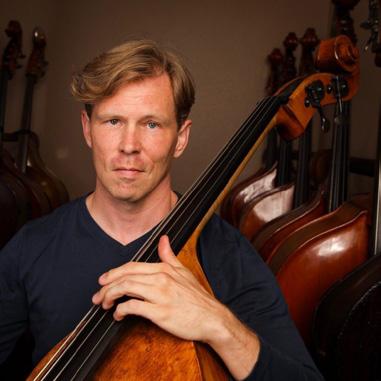
Matt Hare, double bass
Join us for the third faculty artist series concert featuring Dr. Matt Hare, a double bassist, composer and educator. He is the principal bass of the Mozart Classical Orchestra and the Long Beach Ballet. Dr. Hare is also the director of Bass Forward, a non-profit organization that supports students and hosts bass events throughout Southern California.
Winifred Smith Hall $20 / $17 / $15 / $7
MUSIC
Friday, Jan. 27, 2023, 8 p.m.
Listen to the Motion
Organized by Mari Kimura
Listen to the Motion features a motion sensor system created by Professor Mari Kimura called MUGIC®, which captures expressive gestures. The concert features students from the Integrated Composition, Improvisation, and Technology (ICIT) program in the Claire Trevor School of the Arts (CTSA) who have been working with MUGIC® Experimental Media Performance Lab (xMPL)
Free admission
BEALL CENTER FOR ART + TECHNOLOGY
Jan. 28-April 29, 2023
Opening Reception: Saturday, Jan. 28, 2-5 p.m.
Difference Machines: Technology and Identity in Contemporary Art


Organized by the Buffalo AKG Art Museum
Curated by Tina Rivers Ryan and Paul Vanouse
Difference Machines: Technology and Identity in Contemporary Art addresses the complex relationship between the technologies we use and the identities we inhabit. The exhibition asks: How is technology changing the way we see ourselves, and each other? In what ways does it contribute to — or allow us to resist — prejudice and systemic forms of oppression? Dynamic and interactive, the gallery transforms into a laboratory for experimenting with our increasingly powerful “difference machines” as we strive to invent a more equitable future.
Beall Center for Art + Technology
Gallery Hours | Monday-Saturday | Noon-6 p.m.
Image: Danielle Brathwaite-Shirley, WE ARE HERE BECAUSE OF THOSE THAT ARE NOT, 2020. © Danielle Brathwaite-Shirley. Courtesy of the artist.
39
Feb. 4-12, 2023
Airness

Written by Chelsea Marcantel
Directed by Eli Simon
Stephanie Bernardini, scenic design
Ashley Duncan, costume design Rin Mizumoto, lighting design Jeremiah Turner, sound design Bri Westad, stage management
When Nina enters her first air guitar competition, she thinks winning will be easy. But as she befriends a group of charismatic nerds all committed to becoming the next champion, she discovers that there's more to this art form than playing pretend; it's about finding yourself in your favorite songs and performing with raw joy. Will Nina be able to let go and set herself free onstage? Whether you shred or are shredded, Airness is an exuberant comedy about competition, completion, building community and finding the “airness" inside yourself in order to heal your inner demons.
Presented with generous support from the Robert and Lorna Cohen Endowment for Excellence in Drama, the Theatre Guild, and the Claire Trevor Society.
Claire Trevor Theatre Evenings: Feb. 4, 9, 10, 11 8 p.m. Evening: Feb. 8 7:30 p.m. Matinees: Feb. 5*, 12 2 p.m.
*Ticketholders: Please join us for a post-performance TalkBack with the creative team and cast.
$19 / $16 / $15 / $12
MUSIC: FACULTY ARTIST SERIES

Saturday, Feb. 18, 2023, 8 p.m. Lorna Griffitt, piano
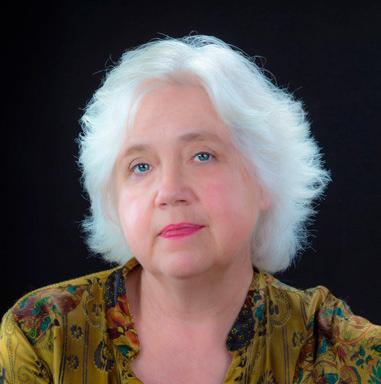
Professor Lorna Griffitt performs a piano recital featuring the fantastical Gaspard de la Nuit (Treasurer of the Night) by Maurice Ravel, one of the most challenging pieces written for the piano. Also on the program is the dramatic and tragic A minor sonata, written by Mozart, along with the Chopin Ballade in F minor and Clara Schumann’s sumptuous Romance in G minor
Winifred Smith Hall
$20 / $17 / $15 / $7
DRAMA
40 $ / $ / $ / $ General / Seniors, Groups 10+, UCI Faculty & Staff / Arts Packages / UCI Students & Children under 17 Please note: Tickets purchased at the Barclay Box Office will incur a $3-$5 fee per ticket. Tickets
MUSIC
Feb. 19-March 11, 2023
Opening Reception: Sunday, Feb. 19, 2-5 p.m.
M.F.A. 2nd Year Exhibition
View an exhibition by emerging artists in the various galleries as nine M.F.A. students in the Department of Art display works for their second year review.
University Art Gallery and Room Gallery Free admission Gallery Hours | Tuesday-Saturday | Noon-6 p.m.

Wednesday, Feb. 22, 2023, 8 p.m.
UCI Jazz Small Groups
Organized by Kei Akagi
The UCI undergraduate jazz program presents its quarterly concert to showcase the small-group student ensembles. There will be several groups under the direction of the jazz faculty. Join us for an evening of exciting music and improvisation.

Winifred Smith Hall
Free admission
DANCE
Feb. 23-25, 2023
Dance Visions 2023
Tong Wang and Cyrian Reed, artistic directors
UCI Dance presents original works choreographed by the Department of Dance faculty for Dance Visions 2023. This annual showcase offers a variety of dance styles, from classical ballet to modern jazz and hip hop, and draws on the fusion of dance, music and theatrical elements to captivate and entertain. Choreographers include Professors Ariyan Johnson, Vitor Luiz, Cyrian Reed, Tong Wang, and UCI Distinguished Professor Lar Lubovitch, who will present his original choreography, Cryptoglyph, set to “Double Fiesta” by Meredith Monk. Performed by undergraduate and graduate students in the dance department, this high-energy showcase will inspire and delight.
Irvine Barclay Theatre
Evenings: Feb. 23, 24, 25 8 p.m.
Matinee: Feb. 25* 2 p.m.
*Streaming Feb. 25 at 2 p.m. | Access Code $15
$26 / $22 / $20 / $13
For more information and updates, visit dance.arts.uci.edu

ART
41
MUSIC
Wednesday, March 1, 2023, 8 p.m.
UCI Jazz Orchestra
Dr. Bobby Rodriguez, conductor
Join the UCI Jazz Orchestra for an evening of the warm and exciting sounds of large-ensemble jazz music, including the classic repertoire of the big band era.

Winifred Smith Hall Free admission
Friday, March 10, 2023, 8 p.m.
UCI Symphony Orchestra
Dr. Geoffrey Pope, conductor
Join the UCI S ymphony Orchestra, under the direction of conductor Dr. Geoffrey Pope, for an evening of orchestral classics from your favorite composers and also featuring the winner of the 2023 UCI Concerto Competition. The annual competition offers UCI music and non-majors the opportunity to perform a solo in the annual winter concert. The detailed program will be announced in February

Join Maestro Geoffrey Pope for a Pre-Concert Conversation before the performance at 7 p.m.
Irvine Barclay Theatre $21 / $18 / $16 / $8
Saturday, March 11, 2023, 8 p.m.
Gassmann Electronic Music Series: Yvette Janine Jackson | Radio Opera Workshop

Tommy Babin, bass; Amy Cimini, viola; Judith Hamann, cello; Dawn Norfleet, flute, voice; Jonathan Piper, tuba; Yvette Janine Jackson, composer, electronics
Radio Opera Workshop is a scalable intermedia chamber ensemble established to perform the radio operas of Yvette Janine Jackson. The 60-minute concert features the U.S. premiere of Left Behind, part of a series of radio operas themed around the environmental and socioeconomic impact of space tourism on local communities near launch sites. Pre-Concert Talk at 7:15 p.m.
Presented with generous support from UCI Illuminations.
Winifred Smith Hall
Free admission
42
MUSIC MUSIC
MUSIC
March 11-19, 2023
Men on Boats

Written by Jaclyn Backhaus
Directed by Juliette Carrillo
Melissa Tobar, scenic design
Denise Larsson, costume design
Jimmy Balistreri, lighting design
Aerik Harbert, sound design
Nicole Cortese, stage management
Ten explorers. Four boats. One Grand Canyon. Men on Boats is the true(ish) history of an 1869 expedition when a one-armed captain and a crew of insane yet loyal volunteers set out to chart the course of the Colorado River. Cast with female and trans-identifying actors, this exciting contemporary play points out the ironies of “discovery” in our history. Can we heal our past by investigating it through the lens of our present?
Presented with generous support from the Robert and Lorna Cohen Endowment for Excellence in Drama, the Theatre Guild, and the Claire Trevor Society.
Claire Trevor Theatre (seating on-stage)
Evenings: March 11, 16, 17, 18 8 p.m. Evening: March 15 7:30 p.m. Matinees: March 12*, 19 2 p.m.
*Ticketholders: Please join us for a post-performance TalkBack with the creative team and cast.
$19 / $16 / $15 / $12
Monday, March 13, 2023, 8 p.m.
UCI Wind Ensemble
Kevin
McKeown, conductor
The UCI Wind Ensemble, under the direction of Kevin McKeown, performs traditional and contemporary works written specifically for the wind band genre.

Winifred Smith Hall Free admission
MUSIC
Wednesday, March 15, 2023, Noon
Guitar
Ensemble
Organized By Alexander Dunn
UCI guitar students present a program of solos, duos, trios and quartets selected from six centuries of repertoire by composers from around the world.
Arts Amphitheatre Free admission

DRAMA
43
MUSIC
Wednesday, March 15, 2023, 8 p.m.
UCI Chamber Singers

Annelies: The Voice of Anne Frank
Dr. Irene Messoloras, director
Annelies is the first adaptation of the diary of Anne Frank into a large-scale choral work. Performed by the UCI Chamber Singers, Voces Chamber Ensemble, and Concert Choir, this work brings to life the diary written by Annelies Marie Frank between 1942 and 1944 when she and her family went into hiding.
Shepherd's Grove Church, 4445 Alton Parkway, Irvine (off-campus) Free admission
For more information and updates, visit music..arts.uci.edu
ART
MUSIC
Thursday, March 16, 2023, 6-8 p.m.
Tenth Thursday: An Undergrad Exhibition
Presented by the Department of Art
Undergrad students come together to exhibit their work in a group show with painting, drawing, photography, performance, sculpture, video projections and installations.

Arts Campus - Department of Art Courtyard Free admission
March 16-19, 2023
International Conference: Women at the Piano 1848-1970
Organized by Dr. Joe Davies and Professor Natasha Loges (Hochschule für Musik Freiburg)
Keynote Speaker: Professor Jann Pasler, UC San Diego Keynote Recitalist: Antonio Oyarzabal
Join the Department of Music for a conference that seeks to broaden out – historically and geographically – the discourse surrounding professional women pianists between 1848 and 1970.
Saturday, March 18, 6 p.m.
Performance: Antonio Oyarzabal, pianist

Presented with generous support by the University of California, Irvine, UCI Illuminations, the European Commission, and the Women in Global Music Network (WIGM).
Winifred Smith Hall Learn more about the International Conference: Women at the Piano 1848-1970 on our website at music.arts.uci.edu
44
MUSIC
Monday, March 20, 2023, 8 p.m.
Chamber Music Concert
Organized By Sarah Koo
A program featuring talented students from UCI’s Department of Music performing chamber music masterworks.

Winifred Smith Hall Free admission
DANCE
March 30-April 2, 2023
2023 American College Dance Association's Baja Conference (ACDA)

Organized by Chad Michael Hall
The American College Dance Association's Baja Conference (ACDA) is an exciting celebration of dance in higher education. CTSA welcomes all ACDA members to come together to move, learn and rejoice in dance through classes, conversations and performances during ACDA's jubilee celebrating 50 years of supporting dance in higher education.
Arts Campus Learn more about the American College Dance Association's Baja Conference on our website at dance.arts.uci.edu
Please note: Tickets purchased at the Barclay Box Office will incur a $3-$5 fee per ticket.
Service is available for guests with disabilities or those with mobility issues, from the Mesa Parking Structure to select shows throughout the season. Shuttle service will begin one hour before showtime and will meet patrons on level two near the elevator. Advance notice is appreciated, but not required. For additional information, please call the Arts Box Office at (949) 824-2787, email artstix@uci.edu, or visit www.arts.uci.edu/shuttle Due to COVID-19 restrictions, the schedule is subject to change.
45 $ / $ / $ / $
General / Seniors, Groups 10+, UCI Faculty & Staff / Arts Packages / UCI Students & Children under 17
Complimentary
Shuttle Service Tickets
Thank You!
Visionaries $1 million and above
William J. Gillespie Foundation
Ambassadors
$100,000–$250,000
Beall Family Foundation Michael R. Oppenheim
Partners $50,000–$99,999
Thomas Nielsen *+
Investors $25,000–$49,999
Leo Freedman Foundation
Tonnie Katz Beth Koehler Estate James and Sheila Peterson *+ Cheryll and Richard Ruszat *+ Richard B. Siegel Foundation Andy Warhol Foundation for Visual Arts Charles and Ling Zhang
Patrons $10,000–$24,999
Dennis and Diane Baker Amer and Magdalena Boukai + Mary Gilly and John Graham + Cloud Hsueh and Fang Hsu James and Katie Loss Orange County Community Foundation
Benefactors $5,000–$9,999
Mary Watson-Bruce *+ Gill Causey Anthony Chen, M.D. Yali Chen Jacki and Gilbert Cisneros Valerie Glass Kay Becknell Jones +
Fellows
$2,500–$4,999
Talal Abdo
Michael and Linda Arias + Rachel Fine and Christopher Hawthorne *+ Susan Hori *+ Patricia and Kenneth Janda
Pacific Life Foundation Jackie Pirkle + Schubert Foundation Diane Silber + Ivan and Erika Williams *+
Pamela and Carl Lagoni James and Gail Lopes Julia Lupton and Kenneth Reinhard + Robert Peirson + Steven Sorenson + Eugene and Susan Spiritus Timothy and Jean Weiss
Moon and Yong Kim Eden Phair and Michael Manning Randa Phair + Ted and Jillyn Verdon + Hemantha Wickramasinghe +
This list represents generous gifts, pledge, and pledge payments made between July 1, 2021, and June 30, 2022. Multiyear pledges are recognized for their full amount in the fiscal year they are made, and subsequent payments are recognized for their cash value. Please accept our apologies for any errors or omissions in this list. For questions, please contact ctsadevelopment@uci.edu.
46
The Claire Trevor School of the Arts would like to recognize those donors who gave $1,000 or more during the 2021-22 fiscal year.
Advocates $1,000 –$2,499
Elaine and Daniel Aldrich + Stephen and Michelle Barker + Haroutune and Lorna Bedelian Donald Bradley
Brien Amspoker and Ellen Breitman + Greg and Lauren Brooks + Edward and Janis Carpenter Gary and Mindy Chanan Allison and Clinton Chao Gerald and Veronica DeVries Molly and Christopher Dillon Albert and Anne Encinias Vivian Folkenflik
Paul Multari and Lynn Gardner Arnnon and Rebecca Geshuri Jeff Lefkoff and Mary Gholson Stuart and Marilyn Goldberg Robert and Audrey Greenfield
Carol Greenwald
Gillian Hayes and Steve Hosaflook + Bobi Keenan Susan and Lynn Lasswell
Vanessa Lee Louis and Christy Marlin Jared and Kate Mathis + Goran Matijasevic + Anthony and Rachel Maus
Legacy and Endowment Donors
Kathleen Mellon William and Lane Minton Howard and Ellen Mirowitz + Jay Myers and Joni Segal
James Nelson Betty and Harold Olson Thea Palencia Ross Peters and Linda White-Peters + Linda Rogers + Ryna Rothberg Sharon Salinger Carolyn Scheer Nina Scolnik Robert and Jo Anne Simon Kate Rosloff and M. Craig Singer Janice and Ted Smith + Richard and Alison Stein *+ Deborah Sunday
Mitchell Sussman and Joan Ravenna Sussman + Erica and C. Taylor John and Mary Thorne + Janice Veenstra + Joel Veenstra and Family + Irwin and Michele Walot Shirley Zanton and Michael Whalen Garrett Sanderson and Laura Woodman
We are grateful for the trust and foresight of those who have ensured the Claire Trevor School of the Arts’ brilliant future by establishing an endowed fund or have included us in their estate plans.
Anonymous donors
Diane and Dennis Baker Edna Beach ‡ The Donald Bren Foundation Ann Cullen ‡
Robert and Lorna Cohen Frank D'Accone
William Daughaday Kris and Linda Elftmann Leo Freedman Foundation
William J. Gillespie ‡ Henry W. Bull Foundation
Gunther Holland ‡ Bobi Keenan
Victor Klein ‡
Walter Koehler ‡ Beth Koehler ‡ Michael and Stacy Koehn
Elaine Koshimizu ‡
Lucille Kuehn ‡ Betty C. Leidal ‡ Alice S. Lowell ‡
* Dean’s Arts Board Members
+ Claire Trevor Society Members ‡ Deceased
Fariborz and Azam Maseeh Meyer Sound Thomas Nielsen *+ Virginia and Norman Nixon ‡ Ronald C. Offen ‡ Michael R. Oppenheim Lois J. Osborne ‡ Marjorie and Robert Rawlins ‡ Sylvia and Frederick Reines ‡ Ryna H. Rothberg Cheryll and Richard Ruszat *+ Nancy Ruyter Helene Santley ‡ Audrey M. Schneiderman ‡ H. Colin Slim ‡ Winifred Smith ‡ Thomas and Elizabeth Tierney + Claire Trevor ‡ Andrew Vacca Bette Warner ‡ Hal B. Yolen ‡
WITH GRATITUDE
2022-23 Box Office Information

Hours (beginning Jan. 11)
Wednesday & Thursday, 11 a.m. - 4 p.m. 1 hour before performances at venue box office with seasonal/intermittent closures; check www.arts.uci.edu/boxoffice
Contact (949) 824-2787 | artstix@uci.edu
Tickets www.arts.uci.edu/tickets (24/7) | Phone | CTSA Box Office Window
Ways to Save
Ticket Packages
www.arts.uci.edu/package
FAStER Arts Pass for UCI Faculty, Alumni, Staff, Emeriti & Retirees www.arts.uci.edu/faster
Student Arts Pass for Current, Full-Time UCI Students www.arts.uci.edu/sap
Group Sales
Discounts for 10+ tickets are available for most of our shows, including online. Contact the box office for more specific info.
ADA Access CTSA strives to maintain compliance with the Americans with Disabilities Act (ADA) policies. www.arts.uci.edu/ada
Complimentary Shuttle Service Service is available for our guests with disabilities or those with mobility issues, for select events throughout the season. www.arts.uci.edu/shuttle
General and Disabled Parking Parking is available in the Student Center Parking Structure (SCPS) for the Irvine Barclay Theatre and the New Swan Theater; and Mesa Parking Structure (MPS) for all other venues. www.arts.uci.edu/directions
Stay abreast to ongoing campus updates related to COVID-19, including visitor access policies, at uci.edu/coronavirus.
48
Map and Directions
Venues
AMP Arts Plaza Amphitheatre
AC Arts Campus
BC Beall Center for Art + Technology
CAC Contemporary Arts Center & Gallery
CTT Claire Trevor Theatre
IBTp Irvine Barclay Theatre
LTp Little Theatre/ Humanities Hall
RCT Robert Cohen Theatre
R Room Gallery
UAG University Art Gallery
WSH Winifred Smith Hall
WG William J. Gillespie Performance Studios
xMPL Experimental Media Performance Lab
pVenue not on CTSA campus www.arts.uci.edu/venues
UAG University Art Gallery (949) 824 9854 gallery@uci.edu uag.arts.uci.edu
Maps www.arts.uci.edu/directions
Patrons
Please use the pedestrian bridge to get to CTSA galleries and theatres. Take elevator or stairs to Level 3 of Mesa Parking Structure (MPS) to access bridge, which is to your left as you exit elevator or stairs.

UCI Parking $13 www.parking.uci.edu Check for parking discounts at www.arts.uci.edu/parking

BOX OFFICE / MAPS
“The Jazz Treatment”
New Slate 2022 brought together original choreography from eight candidates in the Department of Dance’s Master of Fine Arts program. Here, we see “The Jazz Treatment,” choreographed by Lisa Allin (M.F.A. ’23 candidate).

Inspiration for her piece came from
the methodologies of Dr. S. Ama Wray, professor of dance, and Allin’s research of the origins of jazz dance, which revealed to Allin that there is an audiosomatic dialogue between African American dancers and musicians in the jazz era of the 1920s: a tradition that roots back to West Africa.
“During my dance career, I enjoyed live music while performing. However, the musicians were always in the pit
50
Dancers: Kelby Fisher, Alexa Guerrero, Violeta Lemoh, Gabriella Padilla, Kaylia Pham, Ruby Rachman Musicians: Matthew Nelson (Sax & Composer), Belle Pepke (Cello), Alejandro Paredes (Keyboard), Brennan Sakata (Bass), Maddox Eckert (Drums)
(underneath the stage). I often dreamt of creating choreography that featured dancers and musicians sharing the stage,” said Allin. “I devised the piece from structured improvisations between dancers and musicians.

“I was thrilled to be a part of New Slate. It is a wonderful opportunity to highlight collaborative work between talented students from the Claire Trevor School of the Arts, including the
dancers, musicians, lighting designer and stage manager.”
“The Jazz Treatment” was Allin’s second CTSA piece involving live music. She plans on diving deeper into improvisational work for her next composition in Dance Escape 2023, which will feature a 15-minute piece as part of her final thesis presentation.
51
Lighting Design: Jacqueline Malenke
Costume Design: Kaylynn Sutton
Photo: Sam Zauscher
University of California, Irvine Claire Trevor School of the Arts 200 Mesa Arts Building Irvine, CA 92697-2775

18 Non-Profit Org. U.S. Postage PAID Santa
Permit No. 1106 #UCIArts #UCIArtsAnywhere #BrilliantFutureUCI @ctsa.ucirvine @ctsa_ucirvine CTSAUCI @ctsa_ucirvine clairetschoolofthearts Purchase tickets Arts Box Office: (949) 824-2787 Online: www.arts.uci.edu/tickets www.arts.uci.edu
Ana, CA.
