Fision fiber-powered communities. Board tested. Resident approved.

Hotwire Communications partners with HOAs to deliver futureproof technology, transparent contracts, and concierge-level customer service that keeps residents connected and boards confident.
Choosing a telecom provider is one of the most important decisions a board can make. With a 99% renewal rate nationwide, communities trust Hotwire to deliver unmatched performance and white-glove support year after year.

Our 100% fiber-to-the-home network ensures symmetrical speeds, guaranteed reliability, and no data caps—while our dedicated account managers provide the concierge-level customer service boards and residents deserve. Independent rankings by PCMag and Consumer Reports confirm what our partners already know: Hotwire is the fastest and most trusted ISP in the market.
Let’s Build Something Better, Together.


at your service

BECKER’S COMMUNITY

classroom

At Becker, your success is our number one priority. Our Community Association Practice offers a variety of benefits to help your community thrive. From educational classes, to video series, podcasts, and more, we’re here to help make your job as a board member or community manager as easy as possible. Make sure to take advantage of these resources and please reach out should you have any questions.
VIDEO SERIES
Becker’s video series, tackles some of the unique problems that homeowners and renters face today. We answer questions, no matter how far-fetched they may seem. From service animals to nudists in your community, we get to the bottom of it and let you know – “Can They Do That?”
BECKERLAWYERS.COM/CTDT
LEGAL INSIGHTS
The Florida Condo & HOA Law Blog provides readers with up-to-date analysis of issues affecting associations in Florida. With many years of cumulative experience, our blog authors are community association attorneys who help to keep you apprised of important issues affecting your community.
FLORIDACONDOHOALAWBLOG.COM
ONLINE CLASSES
Did you know Becker provides over 200 educational classes per year throughout Florida on a variety of topics ranging from board member certification to compliance, and everything in between? Our most popular classes are available online!
BECKERLAWYERS.COM/CLASSES
PODCAST
Leading community association attorney Donna DiMaggio Berger acknowledges the balancing act without losing her sense of humor as she talks with a variety of association leaders, experts, and vendors about the challenges and benefits of the community association lifestyle.
TAKEITTOTHEBOARD.COM
LEGISLATIVE UPDATES
The Community Association Leadership Lobby (“CALL”) provides an avenue for community leaders to become engaged in the legislative process. Stay informed on key issues and help influence new legislation in Florida’s Capitol.
CALlBP.COM






Journal Notes
In J.R.R. Tolkien’s The Fellowship of the Ring, there is a scene where Gandalf and Frodo discuss the danger of the one ring that was made to rule over all the other rings of power. “I wish it need not have happened in my time,” said Frodo.
“So do I,” said Gandalf, “and so do all who live to see such times. But that is not for them to decide. All we have to decide is what to do with the time that is given us.”
Perhaps you feel somewhat like Frodo when it comes to the digital revolution and the leaps and bounds that have been made in advancements like artificial intelligence (AI) and wish it hadn’t happened in your time. It is a strange new world—yes, even a more dangerous world in some regards—but it is the age in which we live in 2026.
This issue takes a look at how AI is playing out in community association management and community associations. The reality is that there are many helpful uses of AI that are going to benefit CAMs and the communities they serve. AI can be used to draft letters, compare vendor proposals, answer questions on the phone, and enable many more additional benefits. AI has the potential to save time so that managers can spend more time walking the community and talking with board members and residents.
Like any technology there will need to be limits placed on AI and where it can be used appropriately. AI will not replace a board’s fiduciary responsibility to their community, nor will it make obsolete the community association manager who is vital to maintain human connection.
It is also true that we are living in times where the world is in conflict, and I suspect most of us don’t want to see this conflict. Russia is in the fourth year of aggressively pursuing war against Ukraine. The leaders of the United States and Israel have decided that in order to protect their citizens it has become necessary to wage war against Iran. Regardless of what you think about these conflicts, we are living in a dangerous world. But my greater point is to remind us that Memorial Day is this month, and we should honor the ultimate sacrifice that at least 13 men and women of our Armed Forces have given this year.
How will you decide what to do with the time given to you?

Editor
Publishers Richard Johns Dana Johns
Editor Michael Hamline
Art Director Nick Walker
Advertising Sales Phone: (800) 425-1314 Email: info@fcapgroup.com
Circulation/Accounting Tammy Hanner
Phone: (800) 443-3433 Fax: (501) 280-9233
Editorial Phone: (800) 443-3433 Fax: (501) 280-9233
Florida Community Association Journal is published monthly by True Source Publishing LLC 1000 Nix Road Little Rock, AR 72211-3235
Email: info@fcapgroup.com Website: FCAPgroup.com
Copyrighted by Florida Community Association Journal. Reproductions of any part of this publication without written permission of the publisher are prohibited.
Subscription Rates
$24 for one year, $48 for three years. Back issues are $5 each plus postage. Group rates for 3 or more people are available at $12 per person.
The publisher and editor(s) of this magazine do not accept responsibility for the content of any advertisement, including statements made by advertisers herein, or for the opinions expressed by authors of by-lined articles. The publisher and editor(s) also reserve the right to reject any ad or article for objectionable content in verbiage or images. The intent of this publication is to provide general information only and is not intended to provide specific advice or recommendations. Appropriate legal, financial, or engineering advice or other expert assistance should always be sought from professionals.
Postage paid at Little Rock, AR and additional offices (permit #1085).
Postmaster
Send address changes to: Florida Community Association Journal 1000 Nix Road Little Rock, AR 72211-3235 or email info@fcapgroup.com




CORAL GABLES!


Ansbacher Law, with board certified partners, 12 attorneys and over 0 professionals, is available to serve your community throughout
•Full service law firm for your Condominium or Homeowners Association.
•Florida’s leading construction defect team - Full contingency available, no fees or costs unless you win.
•Collections handled on deferred and contingency fee arrangement.

Hannah Rullo
Zach Roth
Barry Ansbacher
Emily Dominguez
Alejandra Gonzales

2026 Management Company Showcase
Editor’s Note: The May FLCAJ magazine is the Management Company Special Issue. The management company profiles below are a great introduction to several management companies that would love an opportunity to lead your community with excellence.
AKAM Property Management


Leading property management company
AKAM has a deep history and strong presence in Florida, with headquarters in Dania Beach and dedicated teams serving communities throughout the region. Combining local market knowledge with AKAM’s full suite of services, including financial management, capital project oversight, and risk management, the company is committed to enhancing property value and supporting strong, well-managed communities. Powered by its ResIQ business philosophy, which
Top Tip—Maintain strong reserves and realistic operating budgets to prepare for future capital projects, avoid unexpected assessments, and protect long-term financial health.
places customers at the heart of every decision, AKAM sets the standard in property management. With more than 40 years of experience in Florida and New York, AKAM continues to cultivate thriving communities through its hospitality-driven team, operational expertise, and comprehensive service offerings.
ResIQ, short for Residential Intelligence, is a framework that guides every customer interaction and business decision. Built on five key principles—financial expertise, technological intelligence, practical sensibility, creativity, and emotional awareness—ResIQ ensures that every solution is strategic, efficient, and people-focused.
For more information, please visit www.akam.com.
Photo by iStockphoto.com/FabrikaCr
Allied Property Group
Founded in 2003, Allied Property Group has grown into one of South Florida’s most trusted condominium and homeowners’ association management companies. Today the firm manages more than 120 associations representing over 20,000 units across six counties throughout both the southeast and southwest regions of Florida. With a team of
The company is especially proud that its expansion has occurred organically, largely through referrals and word of mouth from satisfied boards and residents. That growth reflects the dedication, professionalism, and reliability of the Allied team.
Allied Property Group is large enough to manage complex communities, yet intentionally structured to provide the personalized attention every association deserves.
For more information on Allied Property Group, visit www.alliedpropertygroup.net
America’s Community Management Inc.
Since its founding in 2004, America’s

Top Tip—It is recommended to address every violation uniformly and send a letter to the violator. If the violator is a tenant or occupant, address the letter to the owner and copy the tenant or occupant. It is advisable not to address violations by speaking with the violator while on the property. Similarly, it is best not to send violation notices via email or place notices on or under doors. The association should maintain a written record showing that the violator was given notice and an opportunity to cure the violation.
At the core of their ethos lies the commitment to tailor their services to meet the unique needs of each association. Its goal is simple yet profound—to assist their association clients in achieving their desired outcomes while upholding the highest standards of service excellence. By providing top-tier financial, administrative, and operational management services, ACM aims to not only meet but exceed your expectations. ACM believes that transparency is key to fostering strong relationships, and ACM is dedicated to ensuring clear and open communication
every step of the way. Through collaborative efforts, ACM strives to preserve property values, enhance community health, and promote resident harmony within your association. In choosing ACM as your community association management company, you are not just gaining a service provider; you are welcoming a team of passionate professionals who are committed to your success. Your vision is our mission.
For more information on America’s Community Management, call toll free 833-628-8288, email info@americascommunitymgmt.com, or visit us at www.americascommunitymgmt.com
Artemis Lifestyles
Artemis Lifestyles is a full-service association management company that specializes in managing Florida homeowners’ associations, condominiums, onsite and resort communities. We are one of the first companies in Central Florida to specialize in build-to-rent community management. Our mission is to deliver innovative and efficient management services to community associations throughout Florida.
At Artemis we pride ourselves on personalized care for every community. We take the time to get to
Attention board members:

Your residents are overpaying for outdated internet and TV

By o ering your residents internet and TV as an amenity, they receive a premium, ultra reliable experience, at half the cost of buying it alone.
A switch to Blue Stream Fiber means more of what you want...
Savings for residents (up to 50% over retail)
Community revenue
Satisfied residents
Enhanced network security
Transparent pricing
Increased home values (by 3% or more)
…and less of what you don’t
Delinquent association dues
Service interruptions and outages
Hidden fees and charges
Surprise rate hikes
Why communities like yours choose Blue Stream Fiber:
• Tailored plans and dedicated account managers
• U.S.-based phone support that picks up in less than 1 minute
• Watch TV anywhere at no extra cost (ideal for seasonal residents)
• 45+ years of serving communities like yours

know our residents and provide the highest quality of service to perfectly fit the needs of each association. Our customer experience team is trained to provide excellent customer service to our homeowners, and our lifestyle services aim to increase community involvement so that every resident loves where they live. We have a strong focus on using the industry’s most innovative technology and training methods. The Artemis team is passionate about building long-lasting relationships and helping others by leveraging decades of industry experience to benefit our managed communities.
With Artemis Lifestyles, you’ll love where you live!
To learn more, please call us at 407-705-2190 or visit www.ArtemisLifestyles.com.
Campbell Property Management
Founded in 1953, Campbell Property Management is Florida’s highest-rated community association management company and one of the largest and most experienced, locally owned property management companies in Florida. With eight fully staffed offices and more than 1,300
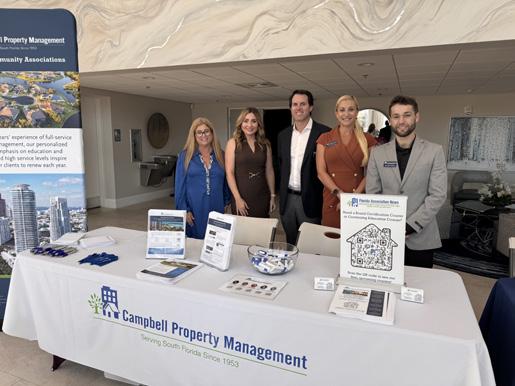
full-time employees, Campbell serves more than 500 associations from Miami to Central Florida. Their management services include administration, finances, accounting, maintenance and janitorial, valet and concierge, lifestyle director, gate access, human resources development, community websites, information technology, and landscape maintenance.
Although very similar in purpose, every board has its own unique goals and objectives, so there is no one-size-fits-all solution. Campbell’s experienced team invests the time and energy necessary to truly understand the needs of the community and board. They pride themselves on being responsive and providing customized solutions for their clients. They make a promise to the boards they serve: that Campbell will help them accomplish their goals and achieve the peace of mind they are seeking.
For more information on Campbell Property Management, call 954-427-8770, email sales@campbellprop erty.com, or visit www.CampbellPropertyManagement.com

YOUR PROPERTY WELLNESS EXPERTS
We help associations maintain physical and financial health through education, ongoing support, and reserve studies tailored to your community’s unique priorities. Contact us at reserveadvisors.com or (800) 980-9881. Planning for the future is complicated. Your reserve study shouldn’t be.

A People-First Approach to Property Management in Florida
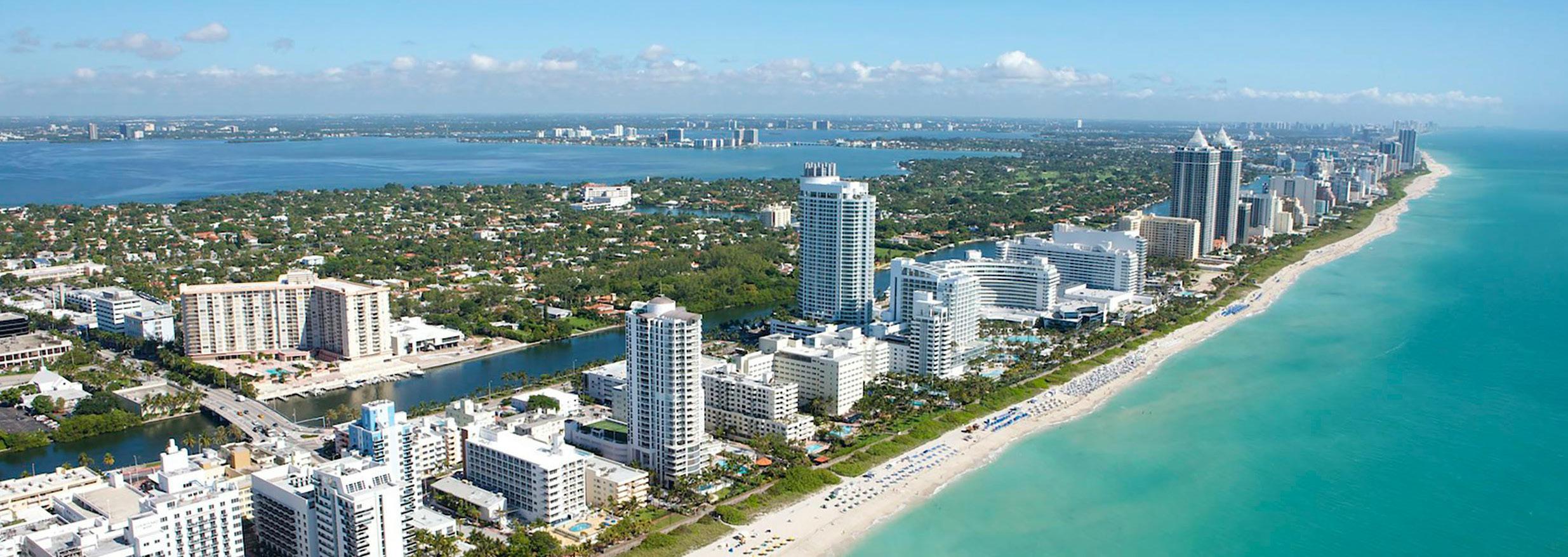
At AKAM, we’re in your neighborhood and fully invested in your goals and challenges. By blending top-notch service and innovative tools with our unique ResIQ business philosophy, we have raised the bar on what it means to create long-lasting and thriving communities in the buildings we serve.
Castle Group
Castle Group is the premier choice for property management; we specialize in serving the finest residential communities. With 3,000plus dedicated team members, we are the preferred service provider for more than 600 associations. Our philosophy stays the same no matter where we are—putting the resident first. At Castle, we call it Royal Service®.
Our focus is to provide our clients with a powerful combination of incredible people, streamlined systems, and advanced technology to deliver the best service to our communities. Since no two properties are identical, we’ve created a menu of services that allows our customers to tailor a solution that fits their needs.
At Castle Group we believe informed boards lead to successful communities. That’s why we offer a



robust library of resources designed to support board members in every aspect of governance, budgeting, and more. Explore our expert-led webinars for best practices that make decision-making simpler and more effective. Browse our latest resources at www.castlegroup.com/webinars.
To learn more about how Castle Group can serve your community, request a proposal at www.castlegroup.com/request-a-proposal
CCMC

A People-First Partner for Confident HOA Board Leadership
Founded in 1973, CCMC is a national leader in community management, specializing in large-scale, masterplanned communities. With more than five decades of experience, CCMC partners with developers and HOA boards to deliver fullservice management solutions that protect long-term value while enhancing the resident experience.

THIS MAY, BALANCE THE FORCE IN YOUR COMMUNITY
Top Tip—Proactive reserve planning that is part of long-term maintenance scheduling helps associations reduce emergency repairs, stabilize budgets, and protect community assets and homeowner investment.
CCMC’s people-first approach blends operational excellence with lifestyle-driven community operations, offering expertise in financial oversight, governance guidance, asset maintenance, and resident engagement. Unlike one-size-fitsall providers, CCMC tailors its services to each community’s unique vision, culture, and goals—whether a masterplanned development, active adult community, singlefamily neighborhood, or mixed-use environment.
CCMC is built on core values of integrity, respect, service, and community. By prioritizing meaningful connections, transparent communication, and proactive leadership, CCMC helps transform neighborhoods into thriving communities where residents feel connected and boards can lead with confidence.
For more information about CCMC, call 480-921-7500, email contact@ccmcnet.com, or visit www.ccmcnet.com
Edison Association Management
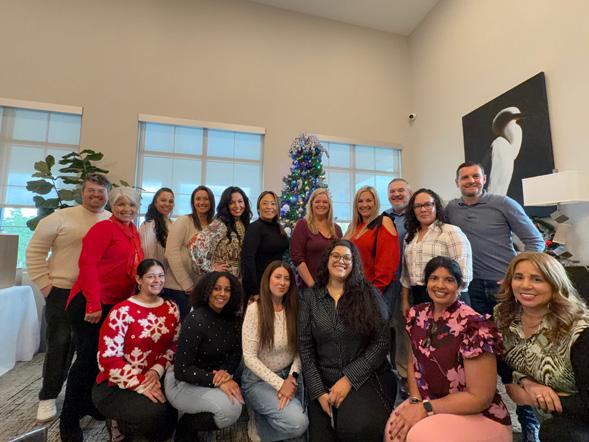
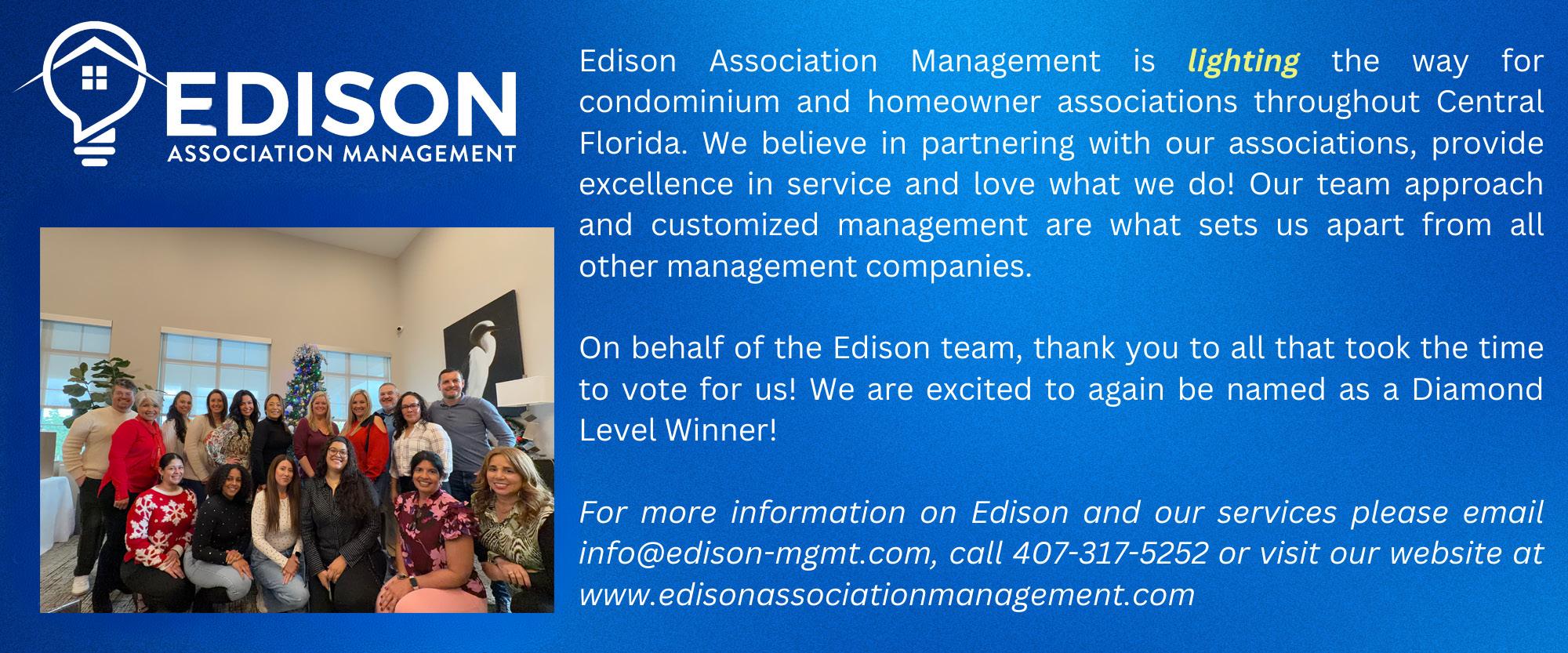
Edison Association Management is lighting the way for condominium and homeowner associations throughout Central Florida. We believe in partnering with our associations, provide excellence in service, and love what we do! Our team approach and customized management are what set us apart from all other management companies.
On behalf of the Edison team, thank you to all who took the time to vote for us! We are excited to again be named as a Diamond Level Readers’ Choice Award winner.
For more information on Edison and our services, please email info@edison-mgmt.com, call 407-317-5252, or visit our website at www.edisonassociationmanagement.com
FirstService Residential
Property management is a balancing act. With competing priorities, juggling it all as a community

leader can seem complex. But it doesn’t have to be.
At FirstService Residential, we’re simplifying property management. Our hospitality-minded teams serve residential communities across the United States and Canada. We partner with boards, owners, and developers to enhance the value of every property and the life of every resident.
We have the expertise and depth of resources to anticipate needs and respond. Residents can count on 24/7 customer care and tailored lifestyle programming, amenity activation, and technology for their community’s specific needs. Market-leading programs with FirstService Financial, FirstService Energy, and special districts teams deliver additional levels of support.
Top Tip—From creating budgets and managing vendors to finding insurance solutions, running an association can be challenging. Hiring a property management company can help make life, simplified.
Boards and developers select FirstService Residential to realize their vision and drive positive change in the communities in their trusted care. With our professional scale, we’re big enough to make your budget go further. And our service-first philosophy means we don’t stop until what’s complicated becomes uncomplicated. To make life, simplified.
For more information about FirstService Residential, visit LifeSimplified.com today!
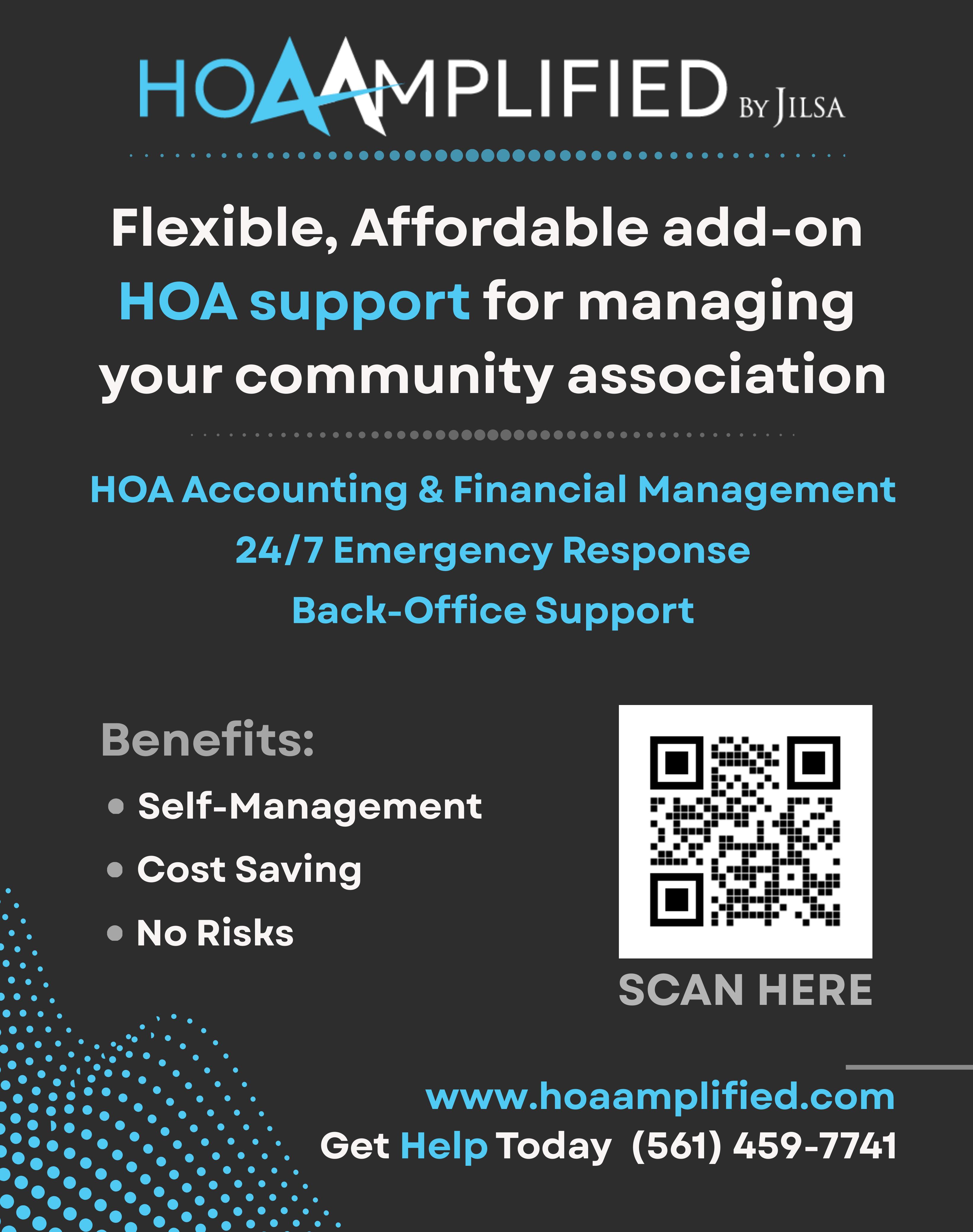
HOA Amplified by Jilsa

“A Better Approach to Community Management, One Client at a Time!”
HOA Amplified by Jilsa revolutionizes property management in Palm Beach County and beyond with decades of expertise. Specializing in HOA/condominium association management, self-managed association backend support, and solo PM back-end support. We prioritize community support at every step. Our approach emphasizes engagement, fostering connections through
neighborhood events and open dialogue and transparency. Utilizing cutting-edge technologies, we enhance efficiency and convenience for residents, offering streamlined communication platforms and smart home solutions. We are committed to exceeding expectations and offering custom tailored solutions to support the changing needs of our clients. Join us at HOA Amplified by Jilsa as we redefine the living experience, nurturing vibrant communities every day.
For more information about HOA Amplified by Jilsa, call 561-459-7741 or visit www.hoaamplified.com
KW PROPERTY MANAGEMENT & CONSULTING
As the leading property management company in Florida, KW PROPERTY MANAGEMENT & CONSULTING (KWPMC) offers more than just services; we provide an experience that elevates the quality of life for your community. Serving about 300 homeowner associations and condominium boards across the state, we support nearly 100,000 residences with best-in-class property management, food-andbeverage service, lifestyle management, preventative and predictive maintenance solutions, project management, water restoration, and developer consulting.
With a dedicated team of more than 3,000 employees, KWPMC is driven by a mission to make every resident feel at home. Through a blend of hospitality and personal care supported by technology-driven solutions, your
LOVE WHERE YOU LIVE

Top Tip—Don’t wait for things to break. Implementing a predictive maintenance plan catches small issues before they become costly mistakes, protecting your community’s assets and residents’ trust.
community will experience seamless operations, outstanding financial reporting, and the highest standards of service. Our focus on operational precision, financial controls, and flexible solutions ensures your needs are met efficiently and effectively.
By partnering with KWPMC, you are not just another client; you are a valued partner. Our lasting relationships with associations and boards are built on a shared commitment to excellence and transparency. In 2025 KWPMC earned numerous awards and recognitions, including as the Daily Business Review’s Best Property Management Firm in its annual “Best of” honor, the South Florida Business Journal’s Largest HOA Management Companies and Largest Private Employers in South Florida recognitions, and Florida Trend’s Top Private Companies in Florida.
We Don’t Just Manage, We Enhance
For more information on KW PROPERTY MANAGEMENT & CONSULTING, call 305-476-9188 or visit kwpmc.com.
Leland Management

For the past 28 years Leland Management has been delivering a customized approach to community association management, built on a strong foundation of service, integrity, and expertise. The company has remained committed to excellence in every aspect of its


Being the best in community management starts with having the best managers.
Sentry attracts top talent with a people-first culture focused on competitive wages, paid time off, health insurance, advancement opportunities, and more. We empower our community managers with robust training, technology, and support teams. That’s why we’ve been named a 2026 National Top Workplace by USA Today, based on employee feedback. Visit sentrymgt.com/careers or scan the QR code to view current openings.


14 Offices serving Central and Coastal Florida

operations—from corporate leadership to each individual team member. This dedication is reflected not only in the services provided but also in the meaningful relationships built with boards, residents, and business partners.
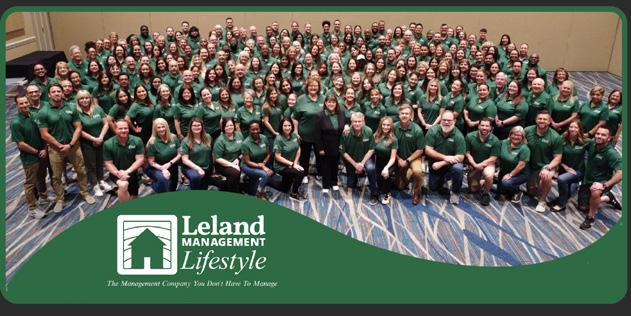
What began as a small, familyowned company with just one employee and eight communities has grown into one of Florida’s premier association management firms. Under the leadership of president and CEO Rebecca Furlow, Leland Management now supports more than 350 communities with a team of over 600 professionals across multiple offices statewide. This steady growth has been driven largely by referrals from satisfied clients who value the company’s responsiveness, professionalism, and consistently high level of service.
Leland Management is distinguished by its singular focus on association management, allowing the company to provide specialized expertise and tailored solutions. With a CPA-led accounting department, more than 100 licensed community association managers, and decades of experience managing largescale communities, Leland delivers comprehensive and dependable support. The organization also prioritizes ongoing education, professional development, and the use of innovative technology to enhance efficiency and client experience.
In addition to its operational strengths, Leland Management has earned widespread recognition within the industry. Team members have also received numerous individual accolades, including CFO of the Year, Women Who Mean Business, 40 Under 40, Women of Distinction, Manager of the Year, and CEO of the Year awards.
Furthermore, Leland Management’s commit ment to its employees has cultivated a strong, positive workplace culture. The company has been recognized as one of the Best Places to Work by the Orlando Business Journal for fourteen consecu tive years and has earned additional honors from the Orlando Sentinel as a Top Workplace, as well as national recognition through Top Workplaces USA and FLCAJ Reader’s Choice Diamond Awards.
For more information about Leland Management, call 888-255-8577 or visit www.LelandManagement.com
RealManage
RealManage is a trusted leader in community association management, delivering personalized solutions that help boards operate with confidence and drive long-term success for their communities.

As a tech-enabled service delivery leader, RealManage combines best-in-class technology with more than 20 years of responsive, relationshipdriven service to bring clarity and consistency to community management. Today, RealManage

The future is a seamlessly connected community.
At Fibernow, we deliver 100% fiber connectivity right to your community. And with our full range of fiber services, we have what it takes to bring you customized bulk packages tailored to the unique needs of your residents.
Part of the largest fiber company in the world.
We’re backed by DigitalBridge, a world-class digital infrastructure network that allows us to ensure the highest levels of network performance.
Doubling up on fiber to double down on reliability. By running two fiber lines to your property for added redundancy, we’re able to provide guaranteed network uptime for your residents.
Personalized support is less than a minute away. Our 100% U.S.-based customer service team answers calls in less than 60 seconds on average.

Talk
us
partners with more than 3,500 communities and supports over 950,000 homes across nearly 20 states, helping protect property values and strengthen community operations.
To learn more, call 866-403-1588 or visit www.RealManage.com
Sentry Management
At Sentry Management our purpose is to nurture communities
we are all proud to call home. Our reliable services and team-based approach put our communities first, consistently enhancing property values by supporting the board’s endeavors and improving residents’ lifestyles.
Over the last five decades, we have grown to become one of the nation’s largest full-service management companies, but we’ve never forgotten that our roots are always local and that our community always comes first.
In every community we serve, Sentry Management makes six clear promises to ensure we deliver on what matters most to board members: providing reliable
communication, facilitating great meetings, being present in the community, delivering on-time and accurate financial reports, offering streamlined vendor coordination, and providing simplified technology solutions.
Headquartered in Florida with 14 offices in the Sunshine State alone, Sentry Management’s team of over 1,100 experienced professionals embraces the honor of serving our communities every day. We empower our community managers with comprehensive training, dedicated support teams, and constantly evolving technology. Sentry even boasts a robust learning and development program, Communities College, which provides high-quality in-house onboarding and ongoing training for Sentry employees and our board members.
Underscoring our commitment to company culture and employee engagement, USA Today named Sentry Management a National Top Workplace in 2024 and 2025, and the Orlando Sentinel has named Sentry Management a Central Florida Top Workplace for the past three years running.
We care deeply for the communities we serve and inspire our Sentry team members to further support them through our philanthropic program, “Giving
Florida’s Roofing Partner for Communities and HOAs
•









Property management is a balancing act.
We don’t do it because we love budgets and bylaws. We do it for our communities.
We believe property management goes beyond properties. It’s about peace of mind.
No matter the property type, from high-rise buildings and condos to townhouses and single-family homes, we have the expertise and solutions to anticipate your community’s needs and respond.
Discover how we’re making life, simplified.
Smiles.” Sentry also donates to local charitable organizations, raising over $100,000 per year through fundraising events. Sentry Management has also been named one of Central Florida’s Top 25 Most Philanthropic companies by the Orlando Business Journal for the past six years.
For more information on community association management services, locations, and careers at Sentry Management, call 407-788-6700 or visit www.sentrymgt.com.
Vesta Property Services
Your Community. Our Commitment.
For over 30 years Vesta Property Services has been more than a management company; we’ve been a neighbor. Our team of 1,200 dedicated professionals serves over 300,000 residents across homeowners’, condominium, and property associations statewide.
Top Tip—Prioritize preventive maintenance to avoid costly emergency repairs. Regularly audit vendor contracts and energy usage to ensure competitive rates and long-term community financial health.
managers bring local knowledge, experienced leadership, and ongoing board education. From free webinars and timely legislative updates to expert fiscal management, every neighborhood gets the attention it deserves.
A Richer Community Life
From pool and spa care to wellness programs, signature events to food and beverage operations, we create experiences that make coming home feel special.
Your community shapes everything we do. That’s not a promise, it’s 30 years of proof.
For more information about Vesta Property Services, call 877-988-3782 or visit www.VestaPropertyServices.com n
Built Around You
No two communities are alike. Vesta’s licensed

Our local, Naples-based team provides comprehensive legal services to boards and property managers, including:
■ Practical answers to both everyday and complex association questions.
■ Certification and continuing education programs.
■ Ongoing guidance on changing Florida laws and regulations.
■ Additional legal support from our full-service, 190-attorney law firm.
Photo by iStockphoto.com/Panya7
Your Legal Resource for Florida COAs and HOAs.
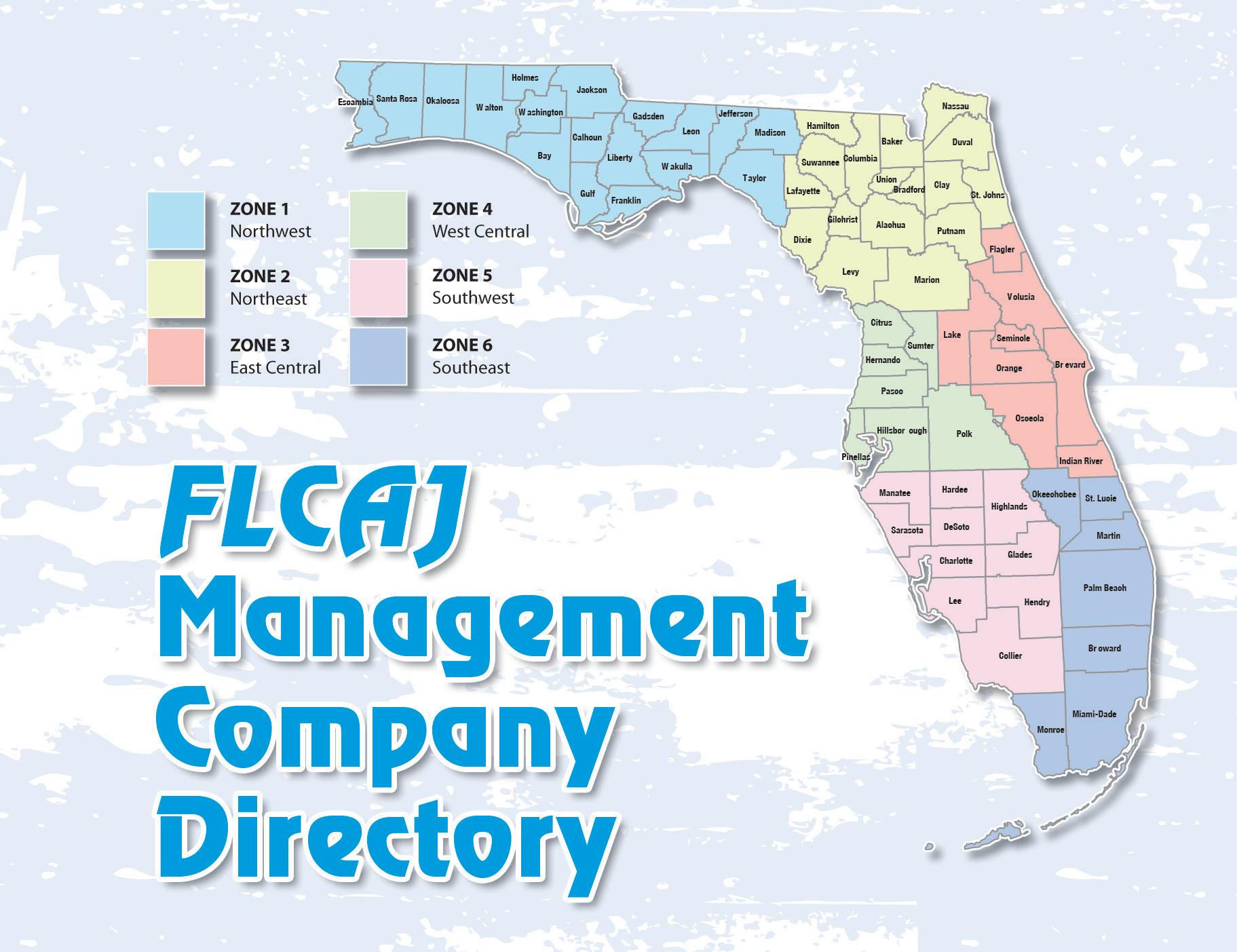
Allied Property Group Inc.
12350 SW 132 Court, Suite 114 Miami, Florida 33186
305-232-1579; 239-241-6499
www.alliedpropertygroup.net
Providing service to South Florida since 2003.



America's Community Management
4733 W. Atlantic Avenue, Suite C-22
Delray Beach, Florida 33445
833-628-8288 americascommunitymgmt.com
Artemis Lifestyles
1631 E. Vine Street, Suite 300 Kissimmee, Florida 34744 407-705-2190
customerservice@artemislife styles.com www.artemislifestyles.com Love Where You Live

844-815-5321
www.castlegroup.com
Edison Association Management 619 E. Colonial Drive Orlando, Florida 32803 407-317-5252
info@edison-mgmt.com www.edisonassociationmanage ment.com
HOA Amplified by Jilsa; www.hoaamplified.com
KW PROPERTY MANAGEMENT & CONSULTING, LLC 8200 NW 33rd Street, Suite 300 Miami, Florida 33122 305-476-9188 www.kwproperty management.com
A Professional and Independent Approach to Management.


MAY Management
Services, Inc.
5455 A1A South St. Augustine, Florida 32080
904-461-9708
www.maymgt.com
Over 20 years in Northeast Florida!

Miami-Dade, Broward and Palm Beach Counties
Contact Kristin Dumornay at 954-845-6102 or kdumornay@miamimanagement.com www.miamimanagement.com
Qualified Property Management 5901 US Highway 19, Suite 7 New Port Richey, Florida 34652 877-869-9700
www.QualifiedProperty.com
Proudly Serving HOA, COA, Co-ops, Master Planned Comm. Assoc.
Towers Property Management 1320 N. Semoran Blvd., Suite 100 Orlando, FL 32807 407-730-9872
www.towerspropertymgmt.com

5523 W. Cypress Street, Suite 102 Tampa, Florida 33607 866-403-1588
www.RealManage.com Serving Orlando and Tampa Communities.




The Digital Renaissance: How AI is Redefining Association Management
BY ASHLEY DIETZ
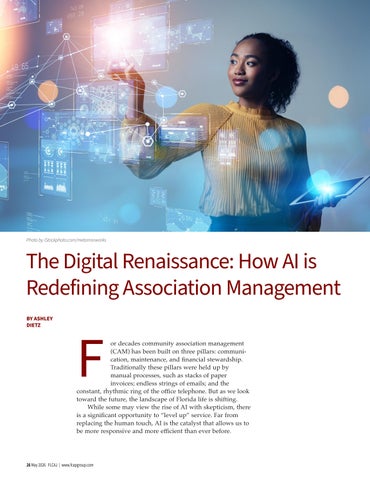
For decades community association management (CAM) has been built on three pillars: communication, maintenance, and financial stewardship. Traditionally these pillars were held up by manual processes, such as stacks of paper invoices; endless strings of emails; and the constant, rhythmic ring of the office telephone. But as we look toward the future, the landscape of Florida life is shifting. While some may view the rise of AI with skepticism, there is a significant opportunity to “level up” service. Far from replacing the human touch, AI is the catalyst that allows us to be more responsive and more efficient than ever before.
Photo by iStockphoto.com/metamorworks
THE POWER OF THE “FIRST DRAFT”
One of the most significant hurdles in community management is the sheer volume of written communication. On any given day, a manager may need to draft a violation notice, a community-wide newsletter, a new parking policy, and a formal request for proposal (RFP).
By utilizing AI tools as a drafting partner, managers can overcome “blank page syndrome.” Instead of spending an hour crafting the perfect tone for a sensitive community letter, a manager can input the key facts into an AI tool and receive a professional draft in seconds. This allows the manager to move into the role of editor-inchief rather than just a writer. It facilitates communications that are clear, professional, and consistent, leaving more time for the face-to-face interactions that truly build community.
TURNING DATA INTO DECISIONS
Tools like ChatGPT can be
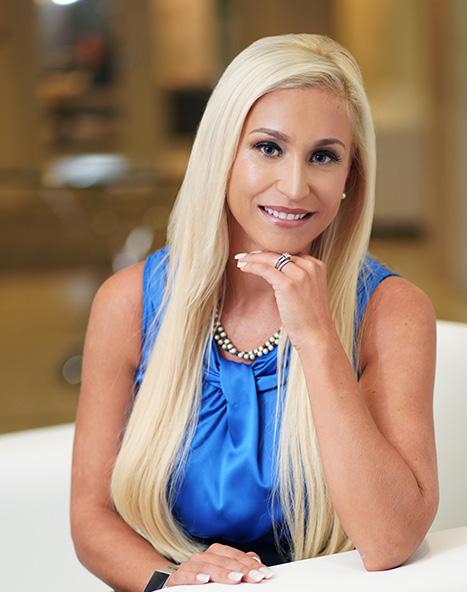
ASHLEY DIETZ, VP MARKETING, CAMPBELL PROPERTY MANAGEMENT
Ashley Dietz has been handling the marketing at Campbell Property Management since 2013. She is a native Floridian who shines at building relationships and getting things done with a positive attitude. Ashley graduated summa cum laude from Florida Atlantic University with her bachelor’s in communications. She has always believed “knowledge is power” and has made it Campbell’s mission to offer free education through in-person events, webinars, and their blog, Florida Association News (FAN), to board members and property managers of condominiums and HOAs throughout Florida. Ashley has worked hard to spread the word about FAN, which currently has over 47,000 subscribers. To check out FAN and access all of Campbell’s past and upcoming webinars, visit ReadFAN.org. For more information, call 954-4278770, email contact@CampbellPropertyManagement.com, or visit www.campbellpropertymanagement.com.
used to generate a comprehensive table comparison of two extensive vendor proposals for potential community projects. By uploading the documents, AI can identify the differences in scope, warranty terms, and pricing structures.
This doesn’t just save time; it provides the board with a level of clarity that makes decision-making faster and more confident.
Whether it’s summarizing a technical engineering report or identifying the key changes in a new legislative bill, AI acts as a “tech-help” bridge that simplifies the complex.
By automating some of these “heavy lifting” administrative tasks, managers are freed from their desks more often, allowing them to spend more time on site, walking the property, and engaging with the board and residents.
ESTABLISHING THE GUARDRAILS: DOS AND DON’TS
As we embrace these tools, it should be done with a “safety-first”
mindset. AI is a tool, not a crystal ball, and it requires human oversight to be effective. To ensure you are using this technology responsibly, we have established a few suggestions that everyone should follow:
THE “DOS”
Drafting & Reviewing—
Encourage the use of AI for emails, policy drafts, and RFPs. It is an excellent tool for “tonal checks,” ensuring a letter sounds firm yet neighborly.
Summarization—AI excels at distilling long documents or tech manuals into summaries for quick internal briefings.
Governing Document Research—You can use AI to help navigate lengthy bylaws or CC&Rs to find specific clauses. However, we suggest you do this with extreme caution, always double-checking the AI’s findings against the physical document.
Technical Assistance—From Excel formulas to troubleshooting software issues, AI serves as an on-demand IT desk.
THE “DON’TS”
No Legal Advice—AI is not an attorney. Never use AI to interpret law or provide legal opinions to your boards.
Data Privacy—Never share information of proprietary contracts, confidential resident financial data, or sensitive personal information in public AI models (ChatGPT, Gemini, Copilot, Grok, etc.)
Blind Trust—Never send an AI-generated document without your thorough human review. AI can state incorrect facts; the manager’s expertise remains the final filter.
THE HUMAN ELEMENT IN AN AI WORLD
It is important to address the elephant in the room: Will AI replace the community association manager? The answer is a resounding “no.” Management is, at its heart, a relationship business. AI cannot navigate the nuances of a heated board debate, it cannot offer empathy to a resident experiencing a personal crisis, and it cannot replace the strategic vision of a dedicated board of directors.
Instead, AI serves as a “force multiplier.” It takes the routine, the repetitive, and the mundane off the manager’s plate. When we embrace these tools, we aren’t just becoming more tech-savvy; we are reclaiming our time to focus on the things that matter most: building vibrant, harmonious, and financially sound communities.
LOOKING AHEAD: THE FLORIDA ADVANTAGE
Florida is a unique state. Florida associations face specific challenges from hurricane preparedness to complex statutory requirements. Embracing AI gives Florida managers the edge they need to navigate these complexities with precision.
The use of AI is not a luxury but a responsibility. By using this tool you are leveling up your commitment to every homeowner you serve. The future of community management isn’t just coming; it’s already here, and it looks brighter and more efficient than ever. n








AI Can Inform but Not Replace Fiduciary Responsibility in Community Associations
BY SEAN FRIEND, SVP COMMERCIAL RELATIONSHIP MANAGER AT COGENT BANK’S NAPLES BANKING CENTER
A
rtificial intelligence is quickly becoming part of the operational tool kit for community association managers (CAMs) and boards of directors. From financial analysis to administrative efficiencies, AI offers the ability to process information faster and identify patterns that may otherwise go unnoticed. But for community associations in Florida, the adoption of AI must be approached with discipline and clarity. Fiduciary duty remains the standard that governs every decision. AI may enhance how information is reviewed, but it does not and cannot replace the responsibility of boards and managers to act in the best interest of the association. The most
Photo by iStockphoto.com/AndreyPopov
effective use of AI is not as a decision-maker but as a decision-support tool.
FIDUCIARY DUTY STILL GOVERNS EVERY DECISION
Board members in Florida community associations serve as fiduciaries, meaning they are legally obligated to act with care, loyalty, and obedience to the governing documents and applicable law. These obligations require more than simply reviewing information; they require thoughtful evaluation, human judgment, and accountability for outcomes.
The duty of care requires board members to make informed decisions based on reliable information. The duty of loyalty ensures that decisions are made in the best interests of
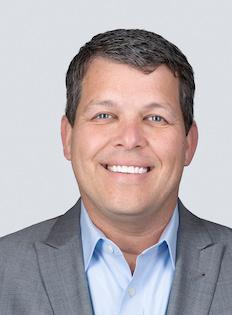
SEAN FRIEND, SVP COMMERCIAL RELATIONSHIP MANAGER, COGENT BANK
Sean Friend is SVP commercial relationship manager at Cogent Bank’s Naples banking center. For more information, call 239-766-8936, email sfriend@ cogentbank.com, or visit cogentbank.com
the association free from conflicts of interest. The duty of obedience requires adherence to state statutes and governing documents. None of these duties can be delegated to technology. Even as AI becomes more prevalent, the expectation remains that board members and CAMs actively engage in the decision-making process. Technology may inform the discussion, but it cannot fulfill the legal obligation.
AI HAS LIMITS, AND HUMAN OVERSIGHT REMAINS ESSENTIAL
Despite its advantages there are clear boundaries where AI should not be relied upon. Boards cannot delegate decision-making authority to technology. Every AI-generated recommendation must be evaluated, questioned, and ultimately approved or rejected by the board.

This is especially true in financial matters. While AI can assist in analyzing budgets, expenditures, and trends, the authority to approve financial actions rests solely with the board or qualified professionals. Associations must also be cautious with sensitive data, ensuring that financial and personal information is not exposed through unsecured AI platforms. At the same time, AI should never replace the role of accountants, legal counsel, reserve specialists, or banking partners.
Ultimately, decisions must be both informed and defensible. AI can support analysis, but it cannot fully explain its reasoning or demonstrate good faith. That responsibility belongs to the managers and the board. Maintaining clear documentation of how decisions are made, including any use of AI, helps reinforce transparency, accountability, and compliance with fiduciary obligations.
A BALANCED APPROACH TO AI ADOPTION
The conversation around AI in community associations should not be about whether to use it, but how to use it responsibly. The most effective approach is one that maintains a clear boundary: AI supports the process, but people remain in control.
Boards and CAMs should view AI as a tool that enhances their ability to gather and interpret information, not as a substitute for leadership. Establishing internal guidelines for AI use, ensuring secure handling of financial data, and maintaining strong relationships with trusted financial institutions like Cogent Bank can help associations integrate technology without compromising their obligations.
THE MOST EFFECTIVE APPROACH IS ONE THAT MAINTAINS A CLEAR BOUNDARY: AI SUPPORTS THE PROCESS, BUT PEOPLE REMAIN IN CONTROL.
In the end, technology will continue to evolve but fiduciary duty will not. The associations that succeed will be those that embrace innovation while remaining grounded in governance, accountability, and informed decision-making. n

LEAD WITH CONFIDENCE. GOVERN WITH CLARITY.
E d u c a t i o n D e s i g n e d f o r H O A B o a r d M e m b e r s
S

STAY INFORMED

The Future of the CAM
BY RAD DIAZ
The future of the community association manager (CAM) profession is exceptionally promising. At Miami Management we believe this field offers longterm stability and meaningful career growth. The role already carries many advantages, and one of the most significant is its resilience. Because communities always require knowledgeable leadership, the profession remains steady even during economic highs and lows. In that sense it is as close to recession-proof as a career can be.
Success as a CAM, however, requires far more than simply earning a CAM certificate. A true professional must be highly educated, well-versed in State statutes, and committed to continuous learning. Strong communication skills, financial literacy, and the ability to work effectively with a multigenerational community are essential. Equally important is knowing where to find accurate
Photo by iStockphoto.com/peterschreiber.media
information, having a clear vision for the communities you manage, and collaborating seamlessly with your board and the organization supporting you.
As laws and regulations continue to evolve, staying current is critical. Ongoing education ensures that CAMs can adapt to new requirements and maintain high standards of service.
A strong organizational infrastructure and a seasoned support team are also key to long-term success—for both the CAM and the communities they serve. Finally, with so many moving parts involved in community management, relying solely on the CAM role is no longer enough. The demands of modern communities make it essential to adopt the right technology quickly and effectively. Embracing these tools ensures efficiency, sustainability, and the ability to meet the growing expectations of residents.
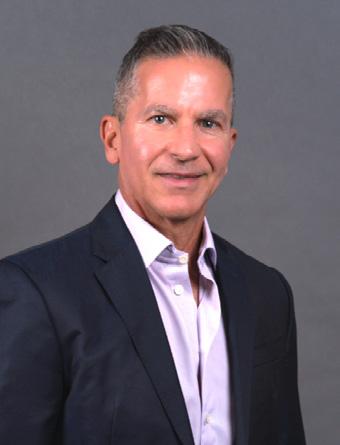
RAD DIAZ, BROWARD DIVISION VICE PRESIDENT, MIAMI MANAGEMENT
THE ROLE OF AI IN COMMUNITY ASSOCIATION MANAGEMENT
The role of AI in community association management is rapidly evolving, and its impact will only deepen in the years ahead. We are already seeing a significant increase in AI-assisted communication, particularly in email responses. Many messages in this industry require careful thought, precise wording, and a deep understanding of community operations. Tasks that once took hours to craft can now be drafted in seconds. As AI continues to learn from each individual interaction, it becomes more accurate, intuitive, and aligned with the user’s communication style. At the same time, the CAM still reviews and refines the content, which elevates their own writing and communication skills over time.
Looking ahead, AI will increasingly be capable of handling a wide range of phone calls and emails on behalf of management companies. As

HEALTHY LAKES EQUAL HAPPY COMMUNITIES
Keeping your lake clean and healthy can feel like a never-ending challenge. We know how discouraging it is when algae and weeds keep coming back. That’s why our team uncovers the root of the problem and delivers lasting solutions that keep your water and community beautiful, so your residents can enjoy it with pride.
these systems learn from every conversation, they will be able to respond with accuracy, consistency, and speed. We are already seeing AI-powered call-handling solutions become more common across industries, and this trend will continue to grow.
However, at Miami Management, we recognize that we serve a diverse, multigenerational community. While we embrace advanced technology, we also understand the irreplaceable value of human connection. We remain committed to maintaining person-to-person communication, ensuring that a real voice is always available on the other end of the line, and preserving the face-to-face interactions that have helped make us one of the most successful privately held companies in Miami-Dade, Broward, and Palm Beach Counties.
Beyond communication, AI offers powerful operational capabilities. It can generate charts and data analysis, locate documents instantly, provide accurate recommendations on unfamiliar topics, and produce professional-quality reports, newsletters, and board communications. These tools allow leadership to quickly understand the community’s operational status and make informed decisions.
By dramatically reducing the time required for administrative and analytical tasks, AI frees the CAM to focus on higher-value responsibilities—strategic planning, long-term vision, and proactive community development. The result is a more efficient manager, a more responsive organization, and a community that benefits exponentially from improved service.
THE RESULT IS A MORE EFFICIENT MANAGER, A MORE RESPONSIVE ORGANIZATION, AND A COMMUNITY THAT BENEFITS EXPONENTIALLY FROM IMPROVED SERVICE.
At Miami Management, we will continue to integrate AI thoughtfully and strategically, adopting new tools as the market and future generations demand them. Our commitment to innovation— combined with our dedication to personal service—ensures that we remain at the forefront of our industry while preserving the human touch that defines who we are. n

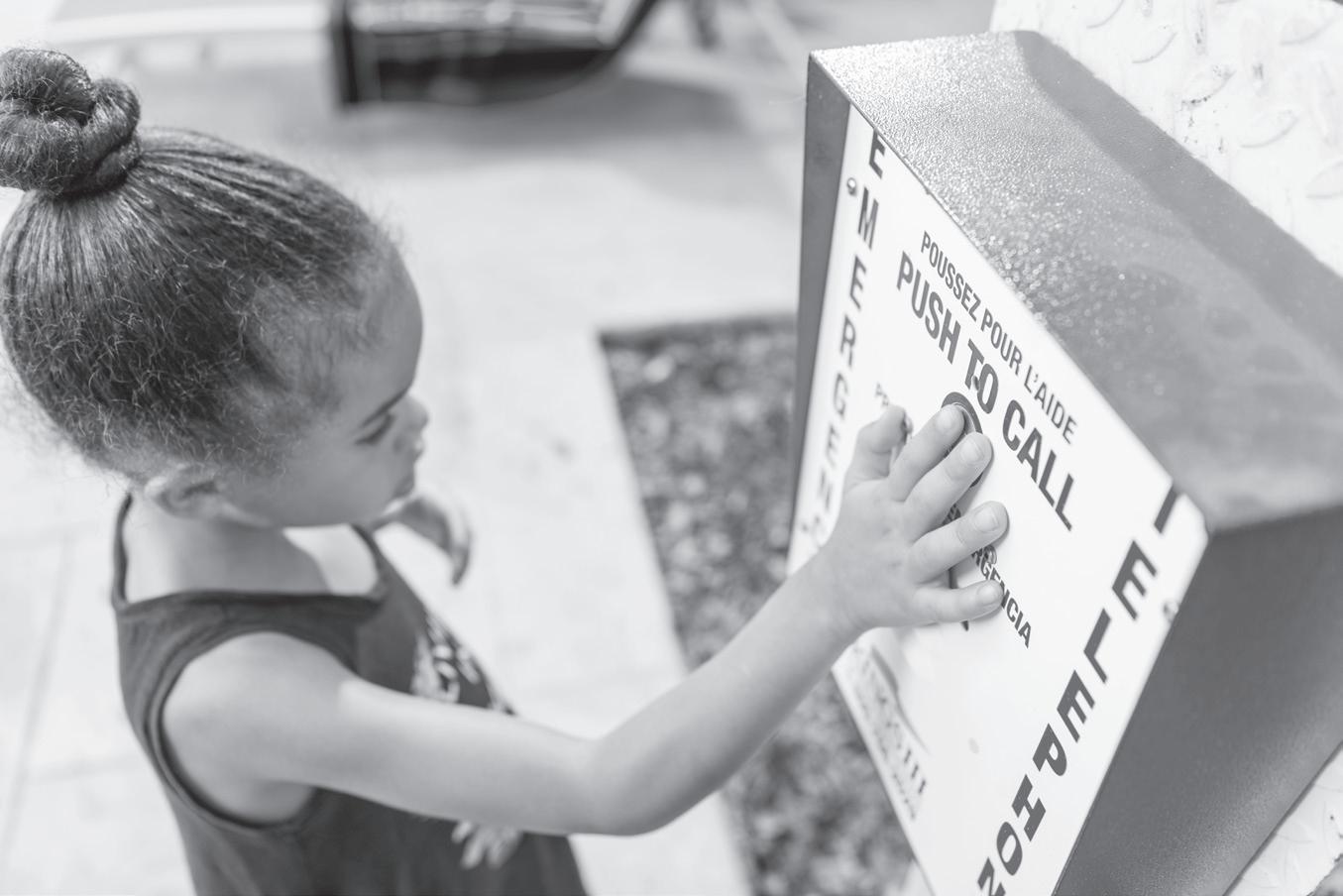
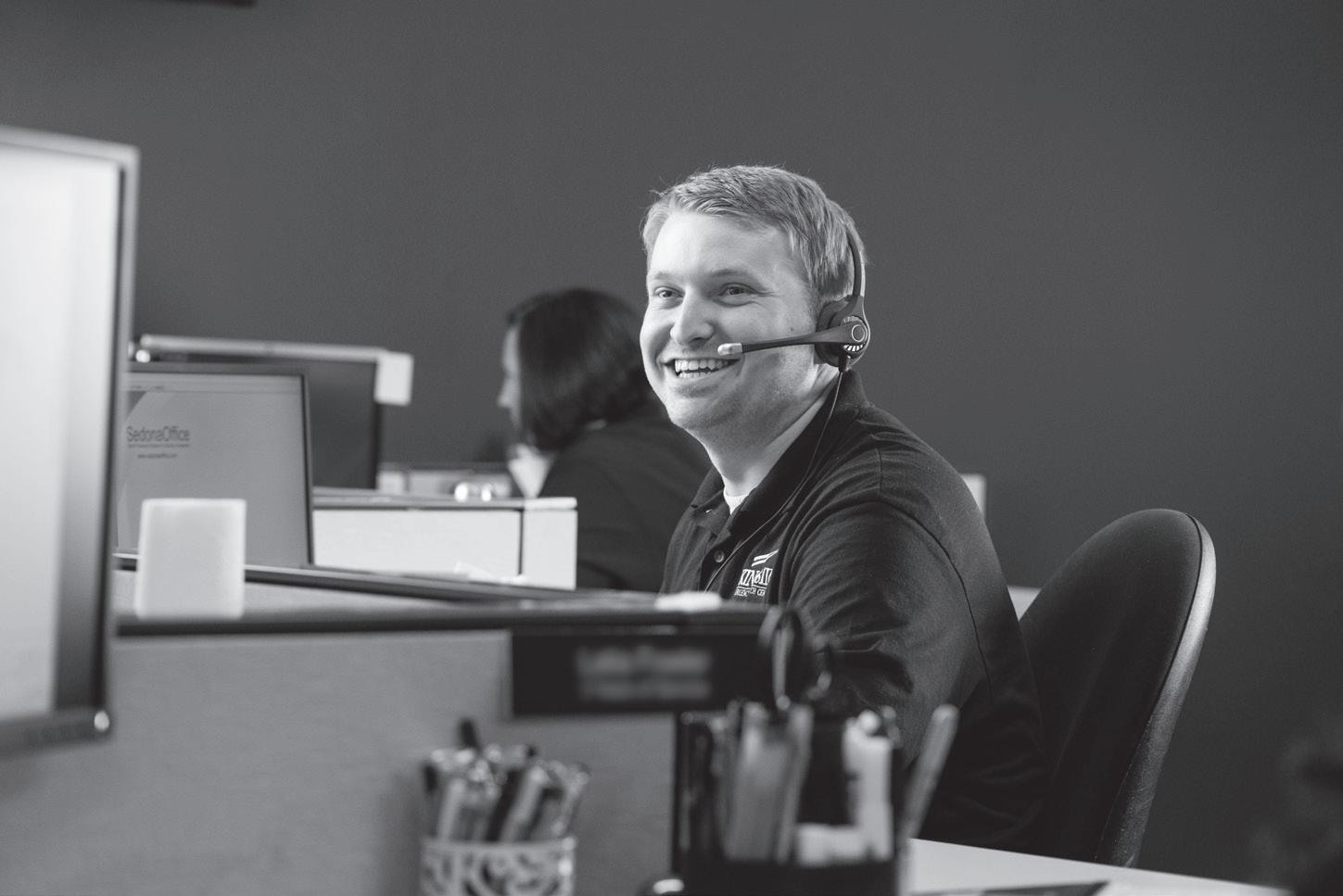
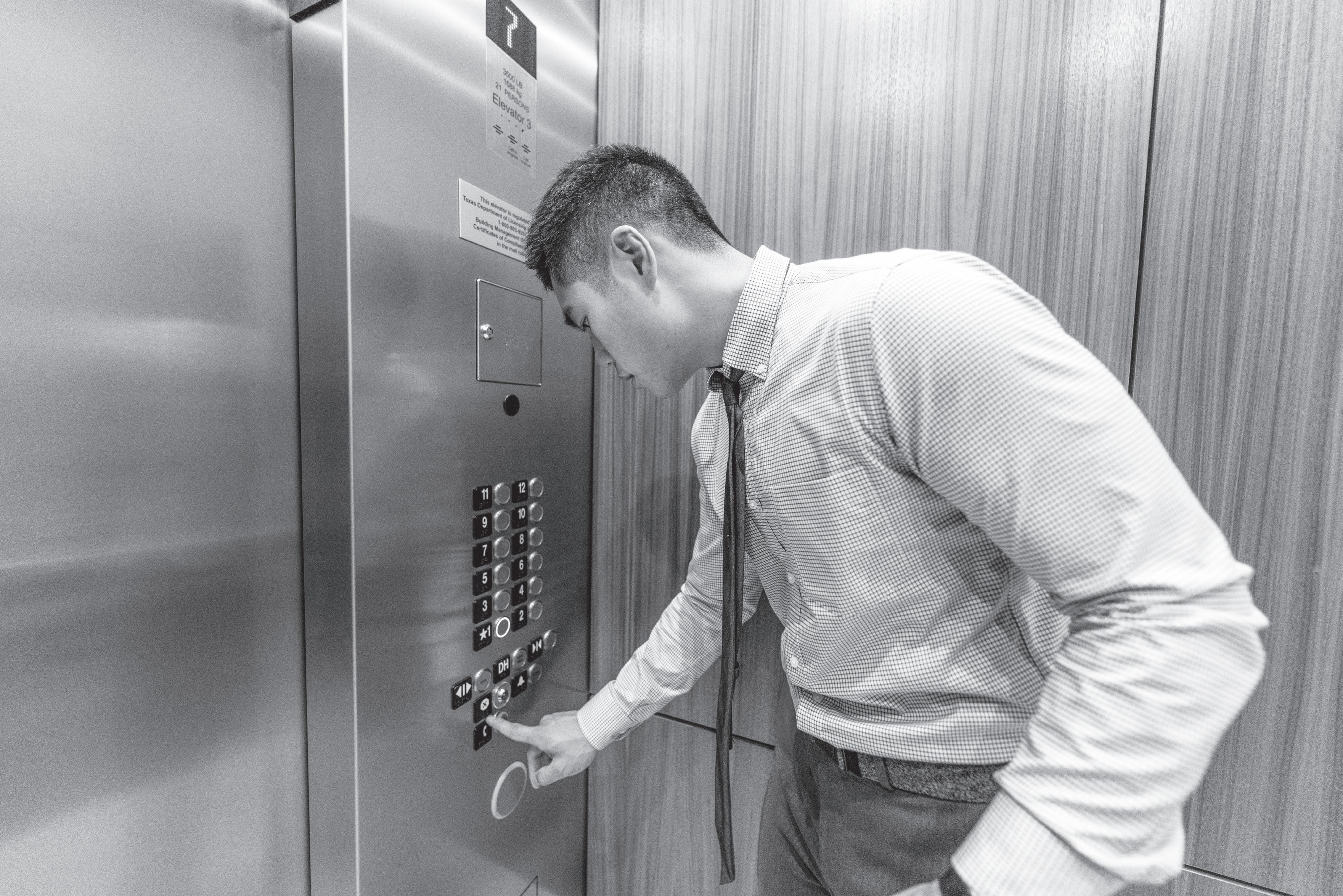
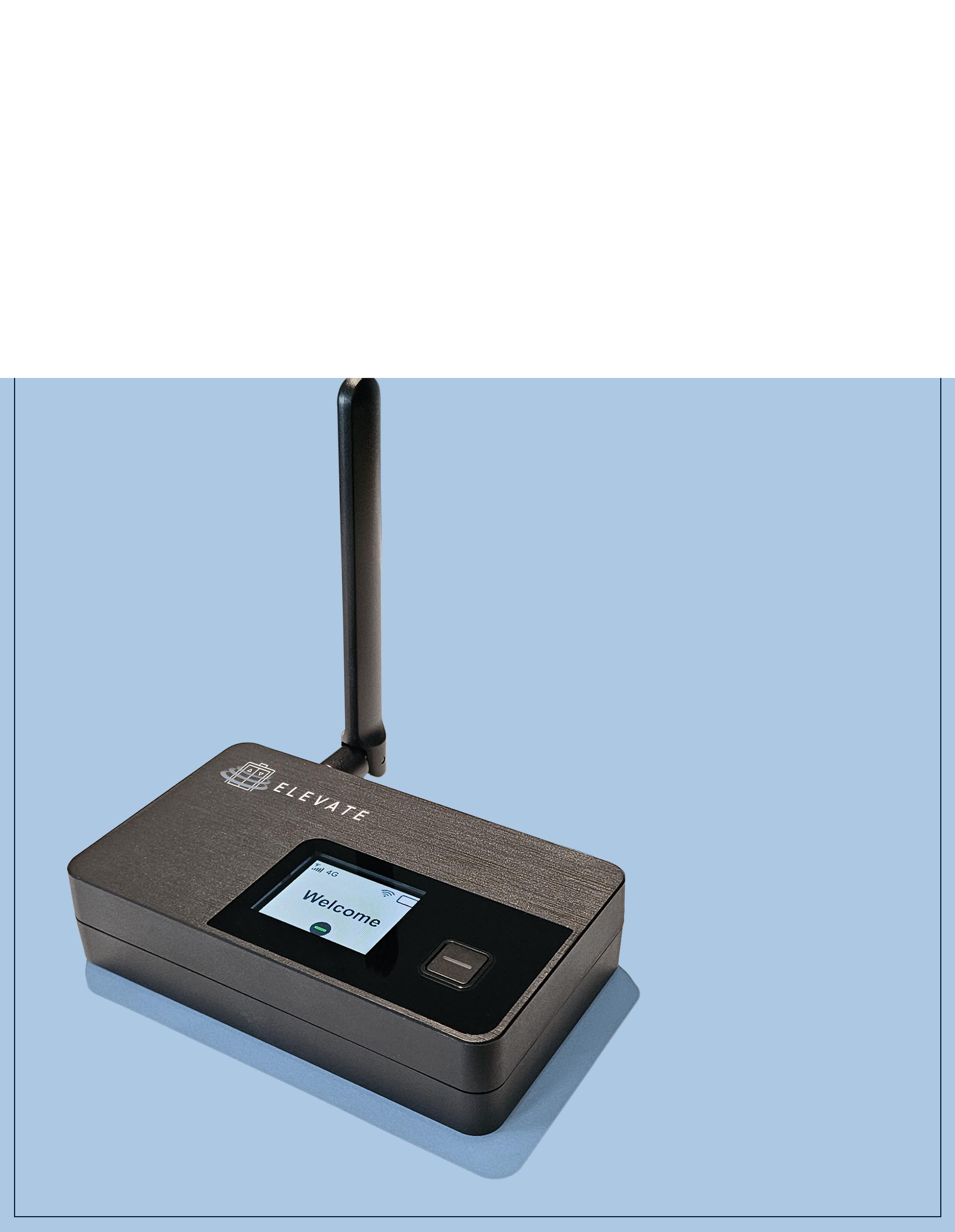
Outdated emergency systems leave your community vulnerable—we're here with solutions. Kings III delivers cutting-edge technology with options that meets evolving elevator codes with two-way messaging and video capabilities. Our turnkey cellular technology eliminates unreliable landlines and simplifies compliance. Beyond equipment, we provide 24/7 monitoring by trained professionals who ensure every resident feels secure. Reduce risk, minimize liability, and enhance safety with emergency communications designed for today's challenges—and tomorrow's.

AI as a Community Asset: What Board Members Need to Know
BY RAJ BATERINA
Artificial intelligence is no longer something reserved for tech companies or research labs. It has become a practical, accessible tool that community organizations can use every day. Nonprofits, homeowners’ associations, housing cooperatives, community development corporations, and neighborhood groups are already finding ways to use AI to work more efficiently, communicate more clearly, and stretch limited resources further.
If you serve on a board, you do not need to understand the technical mechanics behind AI. What matters is knowing what it can realistically do for your organization, where its limitations lie, and how to use it responsibly.
Photo by iStockphoto.com/Tippapatt
WHAT AI CAN DO FOR YOUR COMMUNITY
Streamline Administrative Work
• Board members and staff often spend hours on tasks that are necessary but time consuming. Drafting meeting agendas, summarizing reports, writing newsletter content, preparing board minutes, and responding to routine emails can quickly consume valuable time.
• AI tools such as ChatGPT, Claude, and Microsoft Copilot can generate strong first drafts in seconds. That does not replace human judgment, but it can significantly reduce the time spent starting from scratch. The real benefit is that your team gains more time for strategic thinking, relationshipbuilding, and serving residents directly.
Improve Communication and Accessibility
• Clear communication is one of the biggest challenges for many community organiza-
RAJ BATERINA, MARKETING ASSISTANT, VESTA PROPERTY SERVICES
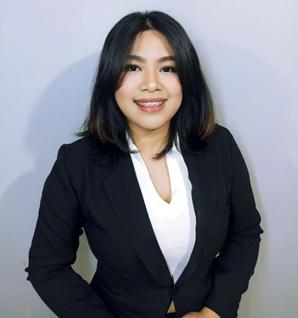
Rajika “Raj” Baterina serves as a marketing assistant at Vesta Property Services, supporting both the marketing and business development teams. She manages social media content, performs data entry, and provides administrative support to ensure smooth and efficient operations. Raj brings creativity, curiosity, and a proactive mindset to her role. She enjoys contributing innovative ideas and values and being part of a collaborative, supportive team. Outside of work Raj spends her time exploring the outdoors, practicing photography, and enjoying meaningful moments with her family and friends. For more information, call 877-988-3782 or visit www.VestaPropertyServices.com.
tions. Residents may speak different languages or have varying levels of familiarity with formal documents.
• Modern AI translation tools are far more accurate than earlier versions. They can help produce multilingual communications quickly and affordably. AI can also simplify complex language in bylaws, policies, or grant applications so they are easier to understand. When residents truly understand what is happening in their community, engagement improves.
Support Grant Writing and Fundraising
• Grant writing is often one of the most demanding responsibilities in the nonprofit and community world. Researching funders, outlining proposals, drafting narratives, and tailoring applications to specific guidelines takes time and focus.
• AI can assist with researching potential funding sources, organizing proposal structures, and drafting sections of applications. Human review is still essential, especially when it comes to accuracy and voice. However, AI can dramatically reduce the number of hours required to prepare a competitive proposal.







Analyze Community Data
• If your organization collects survey responses, tracks program outcomes, gathers resident feedback, or monitors service usage, you are likely to have more data than you realize.
• AI tools can help identify trends, reveal patterns, and generate plain-language summaries of what the data shows. This can support stronger, more informed decision-making without requiring a dedicated data analyst on staff.
Enhance Resident Services
• Some communities are beginning to use AI-powered chatbots on their websites or through text messaging systems to answer common questions around the clock. These might include meeting schedules, payment instructions, maintenance procedures, or program details.
• When implemented thoughtfully, this approach can improve the resident experience while reducing pres-
sure on staff. It allows people to get answers quickly while freeing your team to focus on more complex or sensitive issues.
PRINCIPLES FOR RESPONSIBLE USE
AI is a powerful tool, but it requires thoughtful oversight.
First, humans remain accountable. AI can draft and suggest, but your board and staff are responsible for reviewing, approving, and standing behind all communications and decisions. Nothing should be published or acted upon without human review.
Second, protect resident privacy. Avoid entering personally identifiable information such as names, addresses, or case notes into general AI platforms unless you have carefully reviewed their data policies.
Third, watch for errors and bias. AI systems can generate incorrect or outdated information. They can also reflect biases present in the data they were trained on. Treat AI output as a starting point. Apply the same careful review you would to any draft document.
Finally, consider transparency. As AI becomes more common, residents may appreciate knowing how it is used within your organization. Including a brief statement in your communications policy can help build trust.
GETTING STARTED
You do not need a large budget or a technical team to begin exploring AI. Many tools are available at little or no cost.
Start small. Identify two or three repetitive tasks such as drafting newsletters, summarizing meeting notes, or creating frequently asked questions. Test AI support in those areas, gather feedback, and evaluate the results.
The communities that benefit most from AI will not necessarily be those with the largest budgets. They will be the ones led by thoughtful board members who are willing to explore new tools carefully and intentionally, always with the goal of better serving their neighbors. n


BY BETSY BARBIEUX, CAM, CFCAM, CMCA
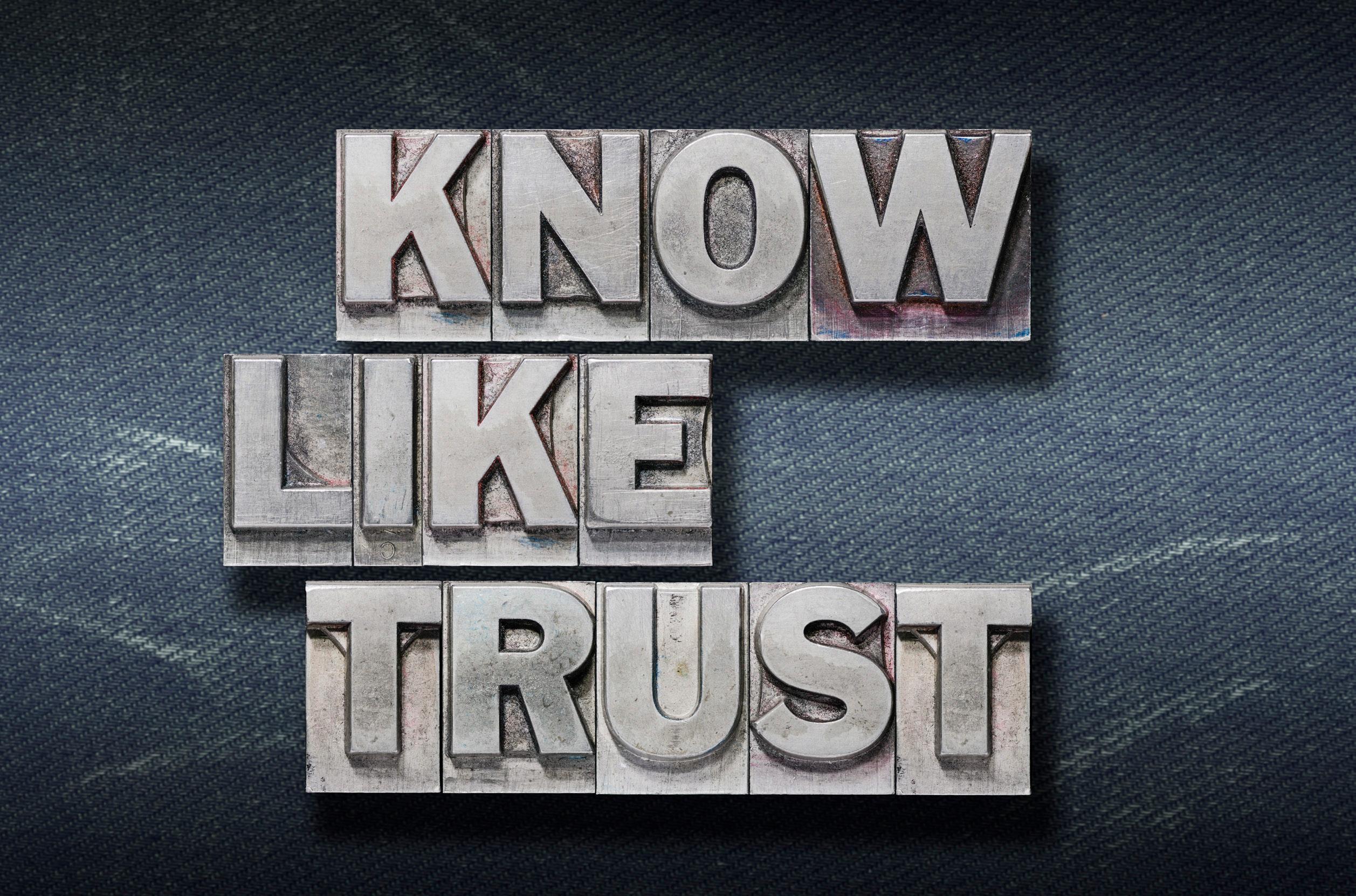
C Know, Like, and Trust
ommunity association management seems to be increasingly marked by conflict and deep divisions within boardrooms. This pattern is becoming a significant issue, affecting everything from property values to the simple enjoyment of living in these communities.
Imagine this scenario: a board meeting for a cooperative is underway. The topic of conversation is a necessary clubhouse roof replacement. One side of the table insists on a full, top-of-theline replacement, citing the long-term benefits and increased resale value. The other half of the board, equally passionate, argues for a more budgetconscious patch repair, expressing concern about immediate financial strain on the owners. The debate is heated, with accusatory language and a palpable tension filling the air.
Photo by iStockphoto.com/ALLVISIONN
This is a familiar story for many in the industry, and it illustrates a fundamental shift in the dynamic of board-owner relationships. The traditional model, based on a shared goal of maintaining and enhancing the community, is giving way to a more adversarial environment where differences in opinion and priorities often translate into personal attacks and a lack of trust.
The consequences of this pervasive division are farreaching and detrimental to all involved. When a board is deadlocked, crucial decisions are delayed, often indefinitely. Maintenance and repair projects, like the roof replacement mentioned earlier, fall by the way, leading to further deterioration and potentially more costly repairs down the road. The property’s aesthetic appeal

BETSY BARBIEUX, CAM, CFCAM, CMCA, FLORIDA CAM SCHOOLS
Betsy Barbieux, CAM, CFCAM, CMCA, guides managers, board members, and service providers in handling daily operations of their communities while dealing with different communication styles, difficult personalities, and conflict. Effective communication and efficient management are her goals. Since 1999 Betsy has educated thousands of managers, directors, and service providers. She is your trainer for life! Betsy is the author of Boardmanship, a columnist in the Florida Community Association Journal, and a former member of the Regulatory Council for Community Association Managers. Subscribe to CAM MattersTM at www.youtube.com/c/cammatters. For more information, contact Betsy@ FloridaCAMSchools.com, call 352-326-8365, or visit www.FloridaCAMSchools.com.
suffers, and owners might experience issues like leaks or electrical problems.
This indecisiveness is not just an internal problem. Vendors and contractors are less likely to want to work with a community where decisions take months, or where the board is known to be in a constant state of turmoil. This can lead to a reduced pool of qualified vendors, fewer competitive bids, and ultimately higher costs for the community.
The impact extends beyond financial and operational issues. The tension from the boardroom spills over into the broader community. Owners, who rely on the board to make decisions in their best interest, find themselves caught in the middle of these conflicts. They begin to
take sides, forming factions, and creating a polarized and often unpleasant living environment.
In some cases this leads to the development of “warring camps,” with owners actively campaigning against each other, filing grievances, and even resulting in legal action. This hostile environment takes a toll on the overall sense of community, with neighbors who once were friends becoming adversaries.
Management, too, is caught in the crossfire. They are tasked with implementing decisions made by a divided board, often having to navigate the conflicting demands of different factions. This can lead to increased stress, burnout, and a decline in the quality of service provided to the community.
THE “KNOW, LIKE, AND TRUST” FACTOR
The root of this systemic problem lies in the erosion of a fundamental business and human relationship concept: know, like, and trust.
Know—Boards must genuinely know their fellow members, understanding their backgrounds, priorities, and motivations. They also need to know the community, including its unique needs, its financial situation, and the general sentiment of the owners. This knowledge is crucial for making informed and responsible decisions.
Like—Board members don’t have to be best friends, but they do need to respect each other. This means acknowledging different viewpoints even when they disagree. A level of professional liking and mutual respect is essential for productive dialogue and collaborative decision-making.
Trust—Perhaps the most crucial element, trust, has become the most significantly compromised. Owners need to trust that their board is acting in the best interest of the entire community, not just a particular faction. Board members need to trust that their fellow members are operating with integrity and a commitment to the common good. Management needs to be able to trust that the board is a cohesive unit, capable of providing clear and consistent direction.
So, how can we repair this fractured system and restore harmony to
Innovative and comprehensive security solutions for condominiums and HOA properties
As a leading security provider for residential properties across South Florida, Orlando and Tampa, GardaWorld Security goes beyond everyday security services by delivering innovative and integrated solutions.
Concierge services
Security guards
Mobile patrols
AI video surveillance
Remote monitoring
Security risk and threat assessments

TALK TO AN EXPERT
David Fambrini Business Development Manager
David.Fambrini@garda.com | (561) 698-1014
these communities? There are several key steps that can be taken, such as the following:
Open and Transparent Communication—It’s critical for boards to communicate effectively and consistently with both each other and the community. This includes providing regular updates on board meetings, decisions, and financial reports. Open communication helps to build trust and reduce misunderstandings.
Education and Training—Board members need to be educated on their roles and responsibilities. This includes understanding the governing documents, financial management principles, and conflict resolution techniques. Providing board members with the necessary tools and knowledge can empower them to make sound and informed decisions.
Intervention—In cases where conflicts cannot be resolved internally, boards could consider seeking a mediator or consultant who can encourage objectivity and assist in finding common ground to develop solutions that work for everyone.
Community Engagement—Boards and management can engage with the community by hosting town hall or informational gatherings and encouraging owners to participate in committees. Committee involvement is a great way for owners to have their voices heard. Community engagement helps owners feel like they have been heard.
Building a Culture of Respect—Boards need to foster a culture of respect where all members are encouraged to voice their opinions and


Geotechnical Engineering
Piles and Ground
Improvement
Environmental Services
Facility Improvement
Reserves, Turnovers, and PCAs
Forensics and Building
Sciences
SIRS and Milestone (Phase I and Phase II)
where dissenting views are treated with courtesy. This requires a commitment to active listening and a willingness to find common ground.
The current state of affairs in many communities is unsustainable. The relentless divisiveness within boards, the resulting delays in maintenance, and the fractured relationships between neighbors are all clear indicators that the “Know, Like, and Trust” factor has been severely compromised. By prioritizing communication, education, and mutual respect, boards can begin to rebuild these essential elements of community. The journey won’t be easy, but it’s crucial for ensuring the long-term health and vitality of these unique living environments. n



The Future of Community Association Management: AI and the Evolving Role of the Community Manager
BY JESSICA COX, CMCA, AMS
Community association management (CAM) is at a pivotal moment. For decades, the profession has relied on human expertise, relationship management, and operational oversight to serve homeowners’ associations (HOAs), condominium associations, and master-planned communities. Today, however, technological innovation—particularly artificial intelligence (AI)—is beginning to reshape how community management functions.
Rather than replacing the profession, AI is poised to transform it. The community manager of the future will likely spend less time on administrative tasks and more time acting as a strategic advisor, communicator, and problemsolver for boards and residents.
Photo by iStockphoto.com/FabrikaCR
THE CURRENT LANDSCAPE OF COMMUNITY MANAGEMENT
Community association managers operate in one of the most complex service professions in real estate. They balance regulatory compliance, financial oversight, vendor management, board governance, and resident relations across multiple communities simultaneously.
A significant portion of a manager’s workload consists of routine administrative tasks: responding to homeowner emails, processing invoices, coordinating maintenance requests, compiling board meeting materials, and maintaining records. Surveys indicate that responding to homeowner inquiries alone can consume a large share of a manager’s day.
The industry is also growing

JESSICA COX, CMCA, AMS, VICE PRESIDENT, LELAND MANAGEMENT
Jessica Cox, on the Leland Management team since 2015, has extensive experience and has spent over 14 years managing a variety of homeowner, condominium, and commercial condominium associations. Jessica is an active member of the board of directors for the Central Florida Chapter of the Community Associations Institute. She also serves as the chair of the Education Committee and co-chair of the Membership and Welcoming Committee for the Chapter. She has volunteered her time in various aspects of the Chapter’s committees, events, tradeshows, and luncheons since 2007 when she first became involved after serving on her own board of directors. She has earned the industry accreditation for Association Management Specialist (AMS) and Certified Manager of Community Associations (CMCA), all of which signify and demonstrate the highest levels of professional knowledge, understanding, and education in the field of association management. Jessica is currently pursuing her Professional Community Association Manager (PCAM) designation. For more information, call 386-310-2853, email jcox@lelandmanagement.com, or visit www.lelandmanagement.com
rapidly. The United States has hundreds of thousands of community associations, with thousands more forming each year. As these communities become larger and more complex, the demands placed on community managers continue to increase.
This environment has created both opportunity and strain. Managers are
expected to deliver faster communication, more transparency, and stronger operational performance while managing increasingly large portfolios. Technology—and specifically AI—has emerged as a potential solution.
WHERE ARTIFICIAL INTELLIGENCE IS ALREADY MAKING AN IMPACT
AI is already beginning to influence community association management in several key areas.
1. Administrative Automation
One of the most immediate applications of AI in the industry is the automation of routine administrative work. AI-powered tools can draft responses to homeowner inquiries, sort emails, categorize documents, and assist with reporting and financial processing.
Organizations using AI-driven accounting and management tools have reported significant operational efficiencies, including thousands of hours saved annually in areas such as accounts payable and budget preparation.
These improvements allow management companies to scale their operations without proportionally increasing staffing levels.
2. Enhanced Communication with Residents
Communication is often cited as the most challenging part of community management. Residents expect timely responses, while managers must balance dozens—or even hundreds—of inquiries across multiple communities.
AI-powered communication tools, such as chatbots and automated response systems, can provide immediate answers to common questions, deliver updates on work orders, and offer after-hours assistance.
By handling routine inquiries, AI systems allow managers to focus on more complex issues that require judgment, negotiation, and empathy.
3. Predictive Maintenance and Data Insights
Another major advantage of AI is its ability to analyze large sets of operational data. AI-driven systems can examine maintenance histories, financial trends, and vendor performance to predict potential issues before they become emergencies.
For example, predictive analytics can identify when equipment such as HVAC systems or pool pumps may require maintenance, enabling communities to address issues proactively and reduce repair costs.



C elebr ating 2 5
Ye a rs!

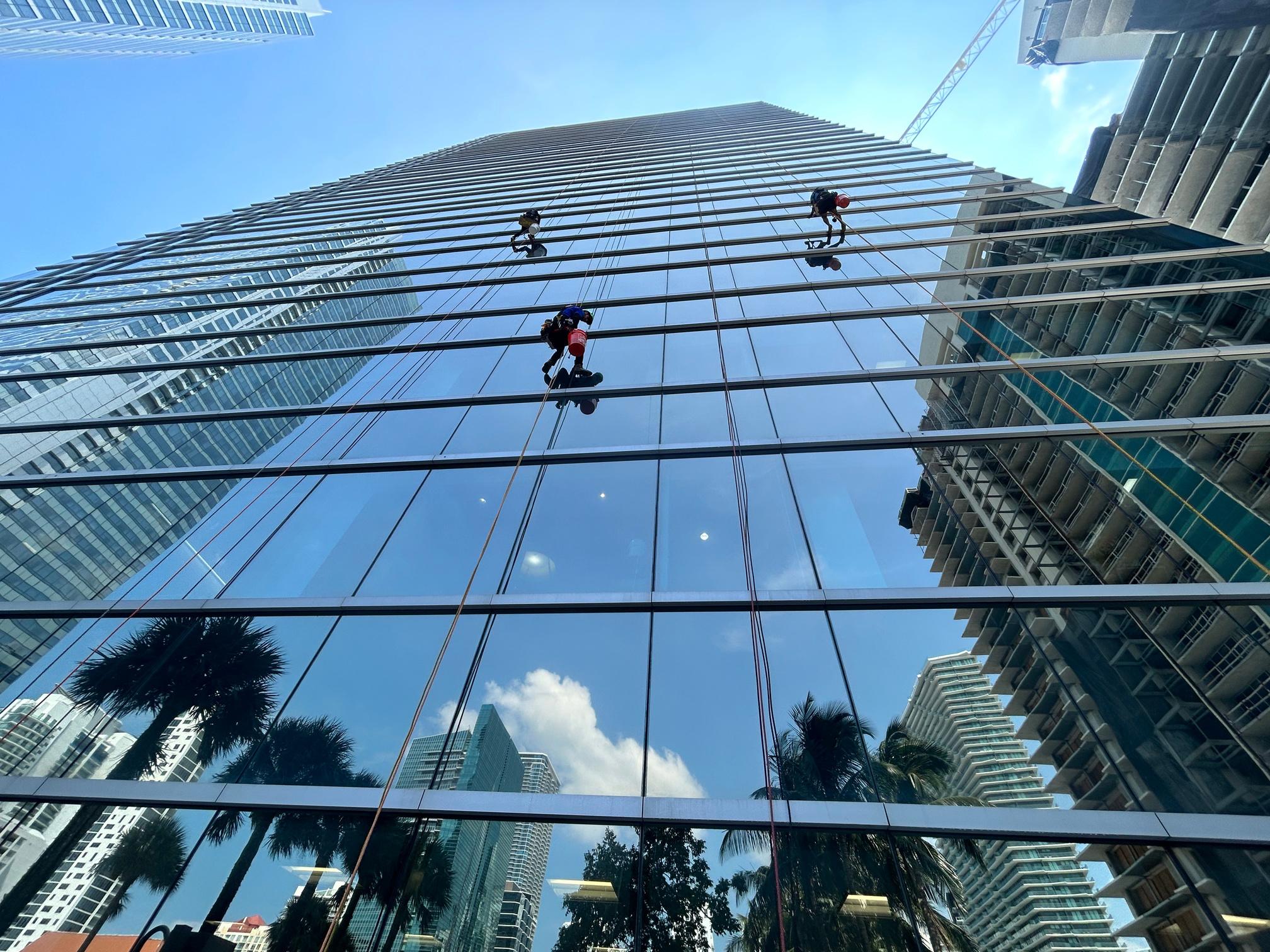
W i n d o w C l e a n i n g
S Q U E E G E E S Q U A D . C O M
H O A ' s A r e O u r S p e c i a l t y !
C o m m e r c i a l H i g h r i s e
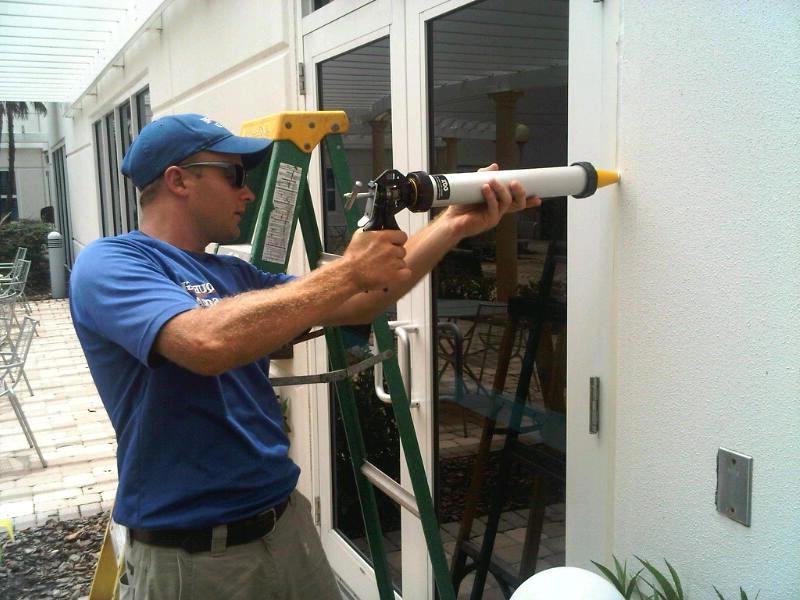
B u i l d i n g R e s t o r a t i o n / C a u l k i n g
C O M M E R C I A L
,
W i n d o w C l e a n i n g - P r e s
B u i l d i n g R e s t o r a t i
C O N T A C T
S Q U E E G E E S Q U A D T O D A Y !
P r o u d l y S e r v i n g A l l o f
G r e a t e r F l o r i d a
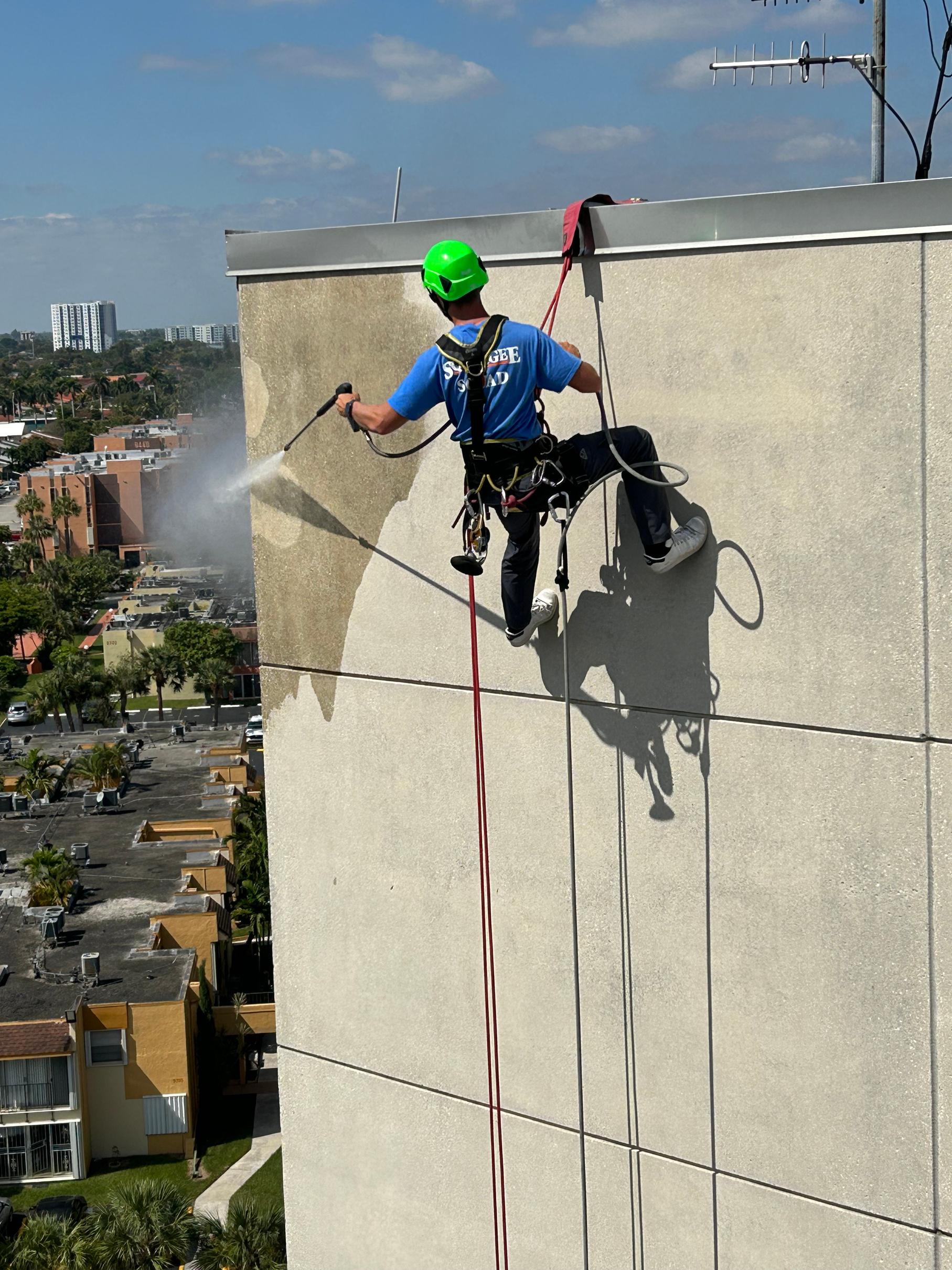
P r e s s u r e W a s h / S o f t W a s h
M o r e t h a n 1 1 5 , 0 0 0
c u s t o m e r s s e r v e d !

S Q U E E G E E S Q U A D
8 0 0 - 7 8 3 - 5 8 1 2
F l o r i d a @ S q u e e g e e S q u a d . c o m
This capability shifts management from reactive problem-solving to proactive asset management.
4. Financial Management and Collections
AI is also being used to streamline financial processes within associations, including delinquency management and payment tracking.
Some platforms have demonstrated the ability to significantly improve collections efficiency through automated communication and data-driven workflows, resolving delinquency cases more quickly than traditional processes.
For associations this can mean stronger financial stability and more predictable cash flow.
THE COMMUNITY MANAGER OF THE FUTURE
As AI takes over repetitive and data-heavy tasks, the role of the community manager is likely to evolve rather than disappear.
STRATEGIC ADVISOR TO THE BOARD
Managers will increasingly act as strategic advisors to boards of directors. Instead of spending hours compiling reports or processing paperwork, they will be able to focus on interpreting data and guiding boards through complex decisions involving budgeting, reserves, capital improvements, and long-term planning.
AI will generate insights, but human expertise will remain essential for applying those insights within the legal and social context of a community.
RELATIONSHIP BUILDER AND CONFLICT RESOLVER
Community associations are inherently social environments. Disputes between neighbors, architectural disagreements, enforcement challenges, and governance conflicts require emotional intelligence and diplomacy.
No algorithm can replace the ability of a skilled community manager to mediate disputes, build trust with residents, and maintain productive relationships with volunteer board members.
In fact, as administrative burdens decrease, managers may have more time to focus on these critical interpersonal aspects of the profession.
TECHNOLOGY INTEGRATOR
Future community managers will also need to become technology integrators. Rather than simply overseeing operations, they will evaluate and manage the digital tools that support their communities—from AI communication platforms to predictive maintenance systems and smart building technologies.
Managers who understand both community governance and technological systems will be uniquely positioned to deliver higher levels of service.
CHALLENGES AND CONSIDERATIONS
Despite its promise, the integration of AI into community association management is not without challenges.
TRUST AND TRANSPARENCY
Associations must ensure that AI-driven tools operate transparently and fairly. Boards
We are a boutique firm that specializes in providing accounting services for Community Associations including: Audits • Reviews • Compilations • Tax Preparation


Julie Jaram, MBA
360 Central Avenue, Suite 800
St. Petersburg, FL 33701
727.290.2578
jjaram@devinandco.com • www.devinandco.com




and residents need confidence that automated decisions— particularly those related to finances, violations, or collections—are accurate and unbiased.
MAINTAINING THE HUMAN TOUCH
There is also the risk of overautomation. Residents may become frustrated if every interaction with their association is routed through automated systems. Community associations are fundamentally human organizations, and technology must enhance—not replace— the human experience.
WORKFORCE ADAPTATION
As automation increases, some administrative roles within management companies may decline, particularly those focused on repetitive data entry or routine communication tasks.
However, new roles will likely emerge around data analysis, technology management, and strategic advisory services.
A COLLABORATIVE FUTURE: HUMAN + AI
The most realistic vision of the future is not AI replacing community managers but AI augmenting them.
Artificial intelligence excels at speed, pattern recognition, and data processing. Community managers excel at judgment, communication, and leadership. When these capabilities are combined, the result is a more effective and sustainable management model.
AI can handle the routine
tasks that contribute to burnout and workload overload while managers focus on higher-value responsibilities that strengthen communities.
In this sense, the future of community association management is not about technology taking over—it is about technology enabling managers to do what they do best: build, guide, and support thriving communities.
CONCLUSION
Community association management is entering a period of transformation. Artificial intelligence is reshaping operational processes, improving communication, and enabling data-driven decision-making across the industry.
Yet the heart of community management remains unchanged. Associations are governed by people, lived in by people, and managed most effectively by professionals who understand both the technical and human dimensions of community life.
The managers who embrace AI as a partner— rather than viewing it as a threat—will likely define the next generation of the profession. By combining technological tools with human leadership, the future community manager will be more strategic, more responsive, and more impactful than ever before.
In the years ahead, the role may look different—but its importance to the health and success of community associations will only continue to grow. n




Why the Future of HOA Management Is More Human—Not Less
BY JESSE URIBE
In an era defined by automation, artificial intelligence, and digital transformation, it is easy to assume that the future of HOA management will become increasingly impersonal. Online portals replace phone calls, chatbots handle resident questions, and data dashboards guide decision-making. But the reality is more nuanced and more optimistic.
The future of HOA management is not about removing the human element. It is about elevating it.
As communities grow more complex and resident expectations continue to rise, the most successful HOA management companies will be those that combine advanced technology with genuine human expertise. Efficiency matters, but empathy, communication, and trust matter more.
Photo by iStockphoto.com/Anton Vierietin
TECHNOLOGY IS A TOOL, NOT A REPLACEMENT
There is no question that technology has transformed HOA management for the better. Automated payment systems, digital architectural review processes, and real-time maintenance tracking have made operations faster and more transparent. Residents can access information instantly, board members can make more informed decisions, and managers can oversee communities more efficiently.
However, technology alone cannot resolve disputes between neighbors, navigate sensitive financial conversations, or build a sense of community. These are inherently human responsibilities that require judgment, emotional intelligence, and experience.
As technology takes over repetitive and administrative tasks, it creates space for industry professionals to focus on what matters most. That means supporting residents, advising boards, and strengthening the overall community experience.
THE RISING DEMAND FOR PERSONALIZED SERVICE
Today’s homeowners expect more than basic administrative support. They want responsive, personalized service. They want to feel heard when they raise concerns, confident when making decisions, and connected to where they live.
This shift is raising the bar for community association management. Boards are no longer just looking for compa -
REALMANAGE—A STRATEGIC PARTNERSHIP FOR YOUR COMMUNITY
Jesse Uribe is regional president, Florida, with RealManage. RealManage is a leading community association management company providing personaliized solutions that empower boards and support long-term success. With 20-plus years of service, it partners with 3,500-plus communities across nearly 20 states, supporting 950,000 homes through secure technology, real-time visibility, transparent communication, and streamlinend operations that protect property values. Contact RealManage today at www.realmanage. com/lp/proposal-request and discover what’s possible for your community.
nies that can complete tasks. They are seeking partners who can provide guidance, anticipate challenges, and help create positive community experiences.
That level of service cannot be automated. It requires skilled professionals who understand both the operational side of management and the human dynamics within a community. From balancing different viewpoints to managing expectations, strong management depends on people who can build trust and communicate effectively.
STRONG COMMUNITIES ARE BUILT ON RELATIONSHIPS
At its core, community association management is about relationships: between residents and boards, between boards and managers, and between neighbors. Technology can support these connections, but it cannot replace them.
Consider conflict resolution. A digital platform can log complaints or track violations, but resolving those issues in a way that maintains harmony requires thoughtful communication. Similarly, guiding a board through decisions such as budgeting, capital improvements, or policy changes requires more than data. It requires context, experience, and collaboration.
The future of HOA management will belong to companies that understand this clearly. Technology enhances relationships, but people sustain them.
DATA-DRIVEN, PEOPLE-FOCUSED
The most effective HOA management strategies combine datadriven insights with a people-focused approach. Technology can identify trends, highlight risks, and streamline workflows, but human expertise turns that information into meaningful action.
For example, predictive maintenance tools can flag potential issues early. An experienced manager ensures that vendors are coordinated, residents are informed, and work is completed smoothly. Financial platforms can provide real-time reporting, but helping a board interpret that data and plan for the future requires professional insight.
This balance of efficiency and understanding defines modern HOA management. It is not about choosing between technology and people. It is about using both in the right way.

Maximize Your Community’s Value
HOA board members, discover how RealManage can simplify your role. Our best-in-class technology delivers the transparency and tools you need for effective decision-making. Backed by innovation and exceptional service, we’re here to help you navigate challenges, exceed expectations, and create lasting value for your community.

• Professional Engineering & Special Inspections
• Threshold & Milestone Inspections
• Recertification Reports
• Construction Administration & Restoration Inspections

THE REAL COMPETITIVE ADVANTAGE IS PEOPLE
As more companies adopt similar technology platforms, the true differentiator becomes how those tools are used. The strongest organizations invest in their people. They train managers to be advisors, not just administrators. They empower teams to deliver proactive service. They create a culture built on communication and accountability.
Serving Associations in the Treasure Coast & Southeast Florida Call (561) 392-2326 or visit www.HowardJMiller.net
Schedule a Consultation Today Your Concrete & Structural Experts for High-Rise Condominiums Since 1978

This is where real value is created. Technology supports consistency and speed, but people shape the experience.
HOW REALMANAGE BRINGS IT TOGETHER
At RealManage, we believe the future of community association management lies in combining the best technology with the best people. Our tools are designed to simplify operations, provide transparency, and give boards clear insight into their communities. At the same time, our experienced professionals focus on delivering responsive service, practical guidance, and a strong sense of partnership.
If you are exploring ways to enhance your community’s management approach, RealManage offers a thoughtful balance of innovation and human support that is built for today’s expectations. Contact us at realmanage. com/proposal-request/ today to learn more. n





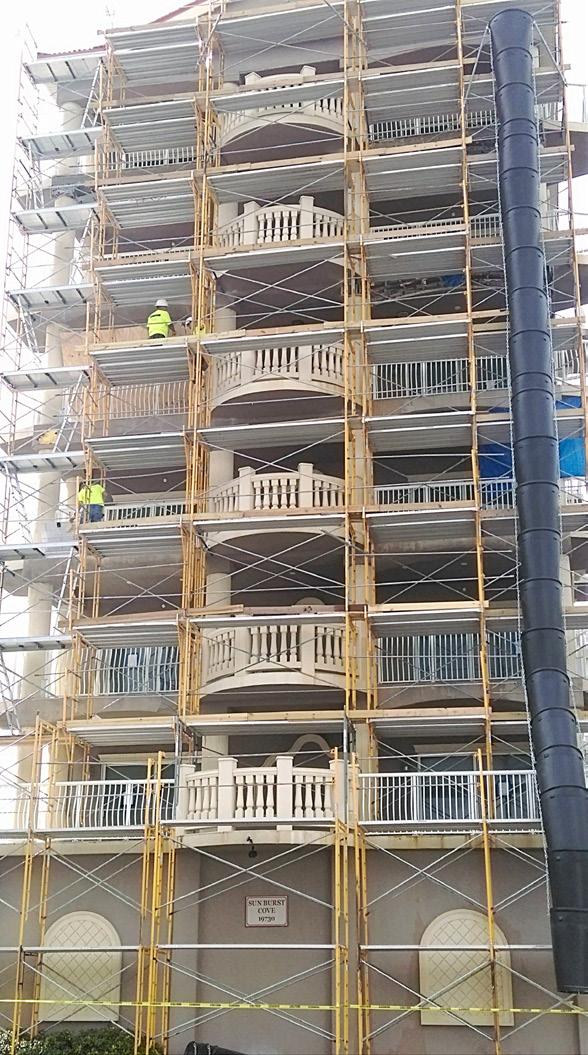




Key AI Tools for Community Association Managers (CAMs): Working Smarter, Not Harder
BY JOSE EGUEZ
A
rtificial Intelligence (AI) is no longer a futuristic concept reserved for research labs. Today, it is a practical tool for community association managers (CAMs) navigating growing operational complexity, higher-resident expectations, and increased pressure to operate efficiently. As communities expand and regulations evolve, CAMs are expected to make informed decisions quickly while maintaining strong communication and oversight. When adopted responsibly, AI can reduce administrative burdens, improve accuracy, and free up time for strategic leadership.
Photo by iStockphoto.com/Anderson Piza
UNDERSTANDING AI’S ROLE IN COMMUNITY MANAGEMENT
Artificial intelligence refers to machines designed to simulate human intelligence, including learning, problemsolving, and decision-making. While traditional AI focuses on analyzing existing data to detect patterns—such as fraud detection or predictive analytics— generative AI goes a step further by creating new content. For a CAM this means AI can draft text, summarize long documents, generate reports, or even produce images based on learned data.
Generative AI works by being trained on massive datasets, learning patterns, and then generating new content based on what it has learned. Crucially, it does not simply copy existing information; it creates something new.
JOSE EGUEZ, SR SALES ENGINEER, FIBERNOW
Jose has over 15 years of experience in telecom sales engineering, combining deep technical expertise with a strong focus on customer education and engagement. His career includes senior roles at leading providers such as Comcast, Claro Enterprise Solutions, and Hotwire Communications, where he most recently served as National Director of Sales Engineering. Now part of the Fibernow team, Jose joined during a pivotal time of growth and rebranding, supported by a strategic partnership with DigitalBridge. As Sales Engineer for the Bulk Services division, he plays a key role in delivering technical guidance and strategic support to community associations and industry partners. Passionate about making complex technology accessible, Jose is now stepping into the role of certified CEU instructor to further educate and empower industry professionals. For more information, call Jose at 645-240-5102 or email him at jeguez@fibernow.com.
KEY AREAS OF AI APPLICATION FOR CAMS
The adoption of AI can transform several core areas of a CAM’s daily operations as follows:
1. Administrative Efficiency
Meeting Minutes & Summaries—AI can transcribe board meetings and summarize key action items, drastically reducing manual effort and enhancing accuracy.




COMMUNITY ASSOCIATION LAW SERVICES:
Covenant enforcement
Covenant amendments
Contract review/negotiation
Collection of assessments
Meeting package preparation
Attendance at meetings
Legal counsel on all day-to-day operational decisions
Review and negotiation of loan/line of credit documents
General litigation
And more!
TURNOVER & CONSTRUCTION DEFECT SERVICES:
Turnover meetings
Review of turnover documents
Assisting in the selection and hiring of turnover auditors, engineers and other consultants
Chapter 558 inspections and procedures
Negotiating repair protocols
All aspects of state/federal litigation for construction warranty claims, from settlement negotiations through trial
7 board certified attorneys in condominium & planned development law
5 board certified attorneys in construction law
Recognized by Chambers & Partners, Super Lawyers, Best Lawyers
Document Categorization— Managers can use AI to auto-categorize bylaws and quickly retrieve past meeting minutes or governing documents.
Communication Generation—AI helps in drafting community newsletters and social media posts, leading to faster response times and a reduced workload.
2. Resident Communication 24/7 Support—AI-powered chatbots can provide instant assistance by answering common resident FAQs.
Consistent Information—This technology ensures residents receive consistent information at any time of day, enhancing overall satisfaction.
3. Maintenance and Operations Predictive Maintenance— AI can analyze data to predict failures in critical systems, such as HVAC, and recommend preventive upkeep.
Resource Optimization—Tools can optimize energy use in common areas like clubhouses, identifying potential savings and improving resource efficiency.
4. Financial Management and Compliance Budget Forecasting—AI can model project costs and forecast reserve fund needs, supporting more informed and strategic planning.
Fraud Detection—By flagging unusual expense patterns and automating financial reports, AI enhances oversight and mitigates financial risks.
Compliance Tracking—AI tools can track annual filing deadlines and insurance renewals, preventing penalties through timely reminders. Legal Document Analysis—Managers can use AI to review vendor contracts or translate complex legal texts,
reducing legal risks and improving understanding.
ESSENTIAL AI TOOLS FOR CAMS
Several versatile AI platforms can serve as “digital assistants” for community managers.
ChatGPT (OpenAI)—A versatile conversational assistant excellent for writing messages, brainstorming community ideas, and general content creation.
Gemini (Google)—A multimodal AI integrated with Google Workspace and capable of handling diverse tasks across different media types.
Claude (Anthropic)—Often viewed as a “thinking partner,” Claude is particularly strong at complex analysis, organizing large files, and managing detailed projects.
Meta AI—Offers seamless integration for social and creative applications and useful for community engagement on social platforms.
RESPONSIBLE AI ADOPTION: ETHICS AND BEST PRACTICES
While the benefits are significant, CAMs must approach AI with a clear understanding of the following risks:
Bias and Accuracy— AI can reflect biases present in its training data or produce factual errors. It is essential to always verify AI-generated outputs.
Privacy and Security— Protecting resident data is paramount. Managers must ensure that any data shared with AI tools complies with privacy standards and the NIST AI Risk Management Framework. Copyright Issues—There is ongoing legal uncertainty regarding the ownership of


YOUR ASSOCIATION BANKING LENDER



Rick Alfonso SVP/Director of Specialty Products


AI-generated content. Consult legal counsel when using AI for formal documentation.
Human Oversight—AI is intended to support, not replace, professional judgment. CAMs maintain the ultimate fiduciary responsibility for the decisions made using these tools.
PRACTICAL STEPS TO GET STARTED
Successful implementation does not require an immediate, total overhaul of operations. Instead, CAMs can follow these steps:
Identify Use Cases—Pinpoint specific, repetitive tasks where AI could improve efficiency or accuracy.
Assess Community Needs— Understand the unique pain points of your specific association to find the right AI opportunities.
Start Small—Launch pilot projects with low-risk, high-impact potential to test the technology.
Train Your Team—Ensure that staff and board members are equipped with the knowledge to use AI ethically and responsibly.
Continuing education is critical as this field evolves rapidly.
Programs such as Fibernow’s CEU course, “AI 101: Introduction to AI Generative Tools for CAMs and HOA Board Members,” provide practical, industry-specific guidance on applying these tools effectively.
CONCLUSION
AI offers immense promise for the future of community management. By automating routine tasks and providing deeper insights, it allows CAMs to focus on what matters most—strategic leadership and building stronger communities. However, responsible use and constant human oversight remain the keys to longterm success.
For making us the Reader’s Choice for the 4th year in a row!
At Blue Stream Fiber, we’re honored to bring you—our local friends and neighbors—the very best internet, phone, and TV available. With 45+ years partnering with Florida communities, we have developed a personalized approach worthy of your highest ratings and a 100% renewal rate from our communities last year.
Thank you again for your support— it’s our honor to be Florida’s highest-rated provider.


Community Community
Florida Community Association Professionals (FCAP) primarily publishes the Florida Community Association Journal, the leading resource for Florida community association managers, service providers, and board members. Through our publication, we provide education, industry insights, and resources to support the professionals who serve Florida's community associations.
Contact us at 800-443-3422, info@fcapgroup.com , or www.fcapgroup.com for more information.
“Leadership is not about being in charge. It is about taking care of those in your charge.” — Simon Sinek
THE SCENE OF DISORDER
It was 7:00 p.m. on a humid Tuesday in Florida. The club -
house smelled faintly of coffee and damp concrete as folding chairs scraped across the floor. Dozens of homeowners filled the room, their conversations buzzing, fueled by frustration. On the agenda: landscaping contracts and roof repairs. On the surface these appeared to be routine business items, but beneath them lay something more volatile.
The meeting began politely enough. The president read the agenda. The secretary clicked her pen, ready to take notes. But by the second item, tension spilled over.
“We already approved this
vendor last month,” one director declared, slapping a stack of papers onto the table.
“No, we didn’t,” another shot back. “That vote was tabled. You can’t just push this through!”
From the back rows, residents raised their voices. “You’re wasting our money!” one shouted. “Why aren’t we being consulted?” another demanded.
The manager, seated between the directors and the crowd, shuffled nervously through binders, trying to find the record. Who was right? Whose instruction should she follow? By the third item, two directors had stormed out, homeowners were talking over one another, and the meeting collapsed without a single resolution. The roof repairs contract remained unsigned, the landscapers unpaid, and the trust in leadership fractured even further.
This was not about landscaping. It was not about roofs. It was about governance—or rather the absence of it.
THE HUMAN COST OF DISORDER
Scenes like this aren’t rare. Across the country, community association meetings often descend into confusion and conflict, not because people are malicious but because roles are unclear and processes are undefined.
The following results are predictable:
• Managers are caught between conflicting instructions.
• Residents are convinced decisions are being made secretly.
• Boards are paralyzed by mistrust and resentment.
In every case the issue is not the subject at hand—it’s the missing structure that should have made decision-making orderly, fair, and transparent. Associations don’t collapse overnight; they unravel meeting by meeting and conflict by conflict. And once trust erodes, it is far harder to rebuild than it would have been to safeguard it in the first place.
THE REAL COST OF MISSING GOVERNANCE
The chaos of that Florida meeting is not unique. Across the country associations face similar breakdowns. The surface issues differ—sometimes it’s landscaping, other times budget fights, enforcement controversies, or architectural disputes—but the root is the same: when roles aren’t defined and processes aren’t consistent, conflict multiplies.
The Community Associations Institute (CAI) has tracked homeowner satisfaction for decades. In its 2022 Homeowner Satisfaction
Marcy L. Kravit
Report, CAI found that while a majority of residents report overall satisfaction with their communities, the single most common source of dissatisfaction was a lack of transparency and consistency in board governance. In plain terms: most people will tolerate a dues increase, but they will not tolerate a decision-making process that feels secretive or unfair.
THE FINANCIAL TOLL
When governance is unclear, the money follows the confusion.
Legal Costs—Ambiguous board authority leads to lawsuits. Disputes over contracts, enforcement, or elections often escalate into costly litigation. A Deloitte global governance survey found that boards without clear role definitions were significantly more likely to spend resources on legal disputes than on proactive planning.
Vendor Disputes— Without a “one-voice” policy, vendors may receive conflicting instructions. This creates inefficiencies, duplicate billing, or even contract breaches, draining both money and trust.
Delayed Projects— When decisions stall, projects such as roof replacements or infrastructure repairs are often postponed. In one Midwest case, a board’s inability to finalize a contractor led to $300,000 in additional costs when material prices spiked during the delay.
THE EMOTIONAL AND CULTURAL TOLL
Money is not the only cost of poor governance. The human cost is often worse.
Fractured Trust— Once resi -
dents believe decisions are arbitrary, they disengage or, worse, organize opposition campaigns that divide the community.
Burnout in Leadership— Managers caught between conflicting instructions often burn out or resign. Directors themselves lose morale when meetings devolve into fights instead of progress.
Reputational Damage— A community with frequent recalls, lawsuits, or newsworthy disputes quickly becomes “that neighborhood” in the real estate market, reducing property values and deterring potential buyers.
The damage of governance gaps lingers long after the meeting adjourns. A single poorly handled conflict can echo for years, shaping how residents view every subsequent decision. One board president described it this way: “It’s like breaking a bone. Even when it heals, you’re never quite as strong in that spot again. The mistrust stays in the room.”
GOVERNANCE WITHOUT GUESSWORK
Governance, then, is not simply about efficiency. It is about creating a framework that safeguards fairness and builds resilience, ensuring communities don’t just survive conflict but emerge stronger from it.
So what does governance without guesswork look like?
DEFINED ROLES AND RESPONSIBILITIES
Every director must know their lane. Presidents lead meetings, treasurers oversee finances, and secretaries maintain records. When roles blur, accountability vanishes.
CLEAR DECISION-MAKING PROCESSES
Boards should adopt written policies for how motions are introduced, debated, and voted upon. Transparency in process prevents disputes over “what was decided” and ensures residents feel included.
ONE VOICE TO VENDORS
Vendors should receive instructions from a single designated contact—usually the manager. This prevents conflicting directives and builds professional trust.
DOCUMENT EVERYTHING
Minutes, contracts, and policies must be recorded and accessible. Documentation is the antidote to memory lapses and disputes.
TRAINING AND ORIENTATION
New directors should receive orientation on governance basics. Managers should be supported with continuing education. Knowledge is the best defense against chaos.
THE BLUEPRINT FOR HARMONY
When boards align around structure, the following benefits ripple outward:
• Meetings become productive instead of combative.
• Managers gain clarity and confidence in executing decisions.
• Residents trust that their voices are heard and their money is
managed responsibly.
• Communities build resilience and are able to withstand conflict without fracturing. Governance is not glamorous. It rarely makes headlines when it works well, but it is the invisible scaffolding that holds communities together. Without it even the most wellintentioned leaders falter. With it ordinary boards can achieve extraordinary outcomes.
CONCLUSION
The story of that chaotic Tuesday night in Florida is a cautionary tale. It reminds us that leadership is not about being in charge; it is about taking care of those in your charge. And taking care begins with governance: clear roles, transparent processes, and accountability that builds trust. Community associations don’t collapse because of landscaping contracts or roof repairs. They collapse because governance is missing. The good news is that governance can be built, strengthened, and safeguarded. When boards commit to clarity and structure, they don’t just prevent conflict—they create communities where trust, resilience, and harmony thrive.
BECAUSE YOU ASKED
By Betsy Barbieux, CAM, CFCAM, CMCA
Betsy Barbieux
Virginia,
Betsy,
Our new president wants to spend money on things that aren’t as important as some of the major necessary repairs. He told people he has the right to make all these decisions because he is the president. I was under the impression that since there are five board members, we should all have a say. He has given raises to two employees without having a board meeting, no notice and agenda or minutes. Our budget will not support these raises. Does the president have the right to single handedly decide on everything?
—Virginia
The board should vote on all nonbudgeted expenses at a properly noticed board meeting with a specifically identified agenda.
No board member has more power or authority than another unless the other board members vote at a proper board meeting to delegate such authority to one of them. In our communities, neither does the president have the tiebreaking vote. All board members are required by law to vote, and how they voted is specifically written into the minutes.
Be sure all your board members have attended a board certification training. Those who have not been certified and signed the affirmation of understanding form are suspended from serving until they comply.
Be sure you are watching my YouTube channel, CAM Matters™. You’ll find answers to many of your meeting and operational questions at www.youtube. com/c/cammatters
—Betsy
Betsy,
We basically have a nonfunctioning board. The only one who responds is the treasurer. The president never responds. I was told elections come up in March or April, and I would like to run for president. Can you please tell me how I can and what I need to do? We need our HOA to have an active board or this community is going to continue to go downhill. There are many of us who are very concerned.
—Sharon
Sharon,
Yes, I’ve talked to several of your residents. I would suggest those of you who wish to move forward schedule a membership meeting and election based on the procedures in your bylaws. Be sure all interested parties have thoroughly read your declaration of covenants, articles of incorporation, and bylaws.
Board members are required by state law to attend a basic certification course followed by an annual 4-hour HOA CE class. I offer those classes as well as the Condo CE course.
Thirty years from the date of your declaration of covenants your covenants will expire. You have two years before your covenants expire. I suggest you elect a board of directors and vote to preserve your covenants.
—Betsy
Betsy,
I was elected to be on the board of directors again. I took your course in December 2025. How long is this course good for? Do I have to take it again? And what is this I hear about taking a CE course?
—Gail
Gail,
I don’t know if congratulations are in order or not! Your course certificate is good for one year BEFORE election or appointment. So, you are okay and don’t need to take anything else until December 2026. Then you’ll be required to take a 4-hour CE course, which I offer.
We have learned together through the years that whoever created your original documents did not understand the corporate laws or the operation of corporations. They seemed to have set you up with two different leadership groups— board members—officers.
Board members are elected by the membership at the annual membership meeting. The number of board seats is established in your bylaws or articles of incorporation.
Once the annual member-
ship meeting is adjourned, the newly elected board members hold their organizational meeting to elect their officers from among themselves. Members do not elect officers.
I’m already hearing from some of the confusion about the different roles of officers and directors and who must be certified or recertified for what.
The new HOA laws also require you to create two new documents: hurricane protection specifications for owners (useless for a mobile home park) and a recordkeeping retention policy.
—Betsy
Betsy,
My understanding is that if a board member misses three consecutive board meetings, he or she can be removed from the board under Florida condominium regulations. Is that correct? If so, what specific Florida regulation covers that? I also understand a current board member must refresh their training every year within 90 days of the beginning of the year. Is that correct, and if so, what specific Florida regulation covers that?
—Skip
Skip,
No, that is not a Florida law. Missing meetings may be in your bylaws, but it is not in the statute.
Condominium board members are required to take an initial 4-hour approved course within 90 days of election or appointment or up to one year before per Section 718.112(2)(d)(b).
Condominium board members are required to sign the affirmation statement of understanding of their fiduciary duty per Section 718.112(2)(d)(b).
Condominium board members are required to take a 1-hour CE approved course annually per Section 718.112(2)(d)(b).
Board members who fail to certify are suspended (not removed) from service until they comply. Failure to certify does not affect the validity of any board action, per Section 718.112(2)(d)(b). This means that if they show up at a board meeting, they do not count toward the quorum nor can they vote.
—Betsy n





Audio and Video Recording in Community Associations
BY JEFFREY A. REMBAUM, ESQ.
Community associations increasingly rely on surveillance technology to enhance safety and protect property. Cameras with imbedded microphones are everywhere these days. As systems become more sophisticated, many boards are considering or are already using audio-enabled cameras in common areas. However, in Florida, recording spoken conversations raises significant legal considerations. This is especially true in areas where a reasonable person would think their conversations are private. Associations must navigate stringent consent laws, privacy expectations, and specific notification requirements to remain compliant and avoid liability. This article summarizes Florida’s legal framework governing audio recordings and outlines best practices for boards seeking to implement or update their surveillance programs.
Florida is a two-party consent state, meaning that all parties to a private conversation must consent before they can legally be recorded. This rule applies to in-person, telephone, and electronic communications. Florida Statute §934.03(1)(d) is explicit and specifically states: “It is
Photo courtesy of Kaye Bender Rembaum
REMBAUM'S ASSOCIATION ROUNDUP
lawful…for a person to intercept a wire, oral, or electronic communication when all of the parties to the communication have given prior consent.” Because audio recording captures oral communication, compliance with this statute is essential. Failure to obtain proper consent can expose the association to civil and criminal liability.
EXPECTATION OF PRIVACY
A person’s “consent” depends on whether an individual has a reasonable expectation of privacy in the area where the audio recording takes place. Florida law generally holds the following:
There is no expectation of privacy in public settings where conversations can reasonably be overheard.
A reasonable expectation of privacy does exists in the following places:
• Private residences
• Owners’ backyards
• Restrooms or changing areas
JEFFREY REMBAUM, PARTNER, KAYE BENDER REMBAUM
Attorney Jeffrey Rembaum has considerable experience representing countless community associations that include condominium, homeowner, commercial, and cooperative associations throughout Florida. He is a board-certified specialist in condominium and planned development law and is a Florida Supreme Court circuit civil mediator. Every year since 2012 Mr. Rembaum has been inducted into the Florida Super Lawyers. He was twice awarded as a member of Florida Trend’s Legal Elite. Kaye Bender Rembaum P.L. is devoted to the representation of community and commercial associations throughout Florida with offices in Palm Beach, Broward, Hillsborough, and Orange Counties (and Miami-Dade by appointment). For more information, visit kbrlegal.com
• Any non-common-area spaces
• Common area spaces such as in the manager’s office
Thus, common areas such as fitness centers, social rooms, and pool decks may be recorded but only if proper consent is secured. However, associations should exercise caution. Even within common areas, certain locations (e.g., tot rooms or pool changing areas) may introduce heightened privacy or liability concerns, most especially when involving minors.
In a 1996 case, Stevenson v. State of Florida, 667 So.2d 410 (1st DCA 1996), the court found that a defendant had no reasonable expectation of privacy during a

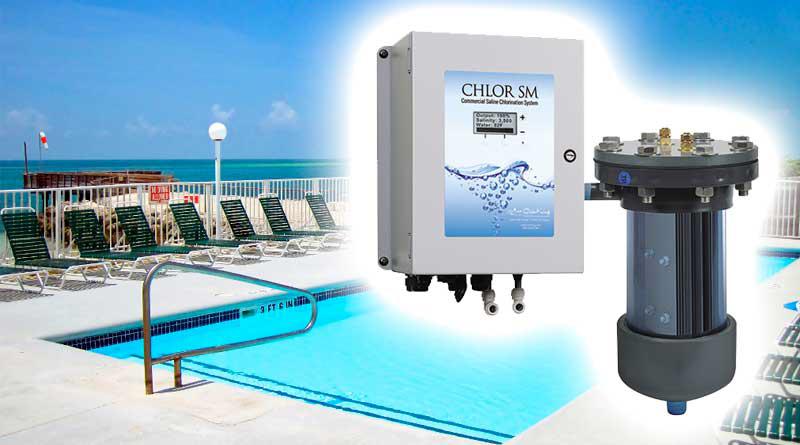

• Master Distributor & Factory Service Center for over 10,000 parts & accessories.
• Leaders in Proven Green Technologies saving electricity, gas, water, and chemicals.
• Low cost monthly water quality programs starting at $89 a month.
conversation held outside a van parked on a public roadway in a known drug-trafficking area. Because the exchange occurred in plain view and under circumstances strongly indicative of a drug transaction, the intercepted remarks suggesting criminal activity did not qualify as protected “oral communication” under state laws governing the security of communications. Under those statutes, a conversation is protected only when the speaker both subjectively expects privacy and that expectation is one society is prepared to recognize as reasonable. The court concluded that neither condition was met, noting that the individuals took no steps to shield their discussion from public exposure.
IMPLIED CONSENT THROUGH CLEAR SIGNAGE
Associations should rely on Florida law, which recognizes “implied consent” when recording devices are installed in a manner that is “clearly and immediately obvious.” Under Florida Statute §810.145(5)(c), obvious placement of recording equipment, coupled with clear written and posted notices, reduces privacy expectations. To rely on implied consent, associations should use large, conspicuous signage at every amenity, every interior location, and every area where audio recording occurs, such as the following:
• The entrance to any area with audio recording such as the clubhouse entrance
• Inside the area itself, such as in the manager’s office and the club rooms
• Place the signage at eye-level locations where visibility is guaranteed.
Suggested language of the posted signs would be something on the lines of: “This area is under video and audio surveillance. Your presence constitutes implied consent to being recorded.” A single sign at the community entrance is most likely not sufficient.
While signage may be adequate for implied consent, written consent provides the strongest legal protection. Associations may want to offer the following:
• Provide acknowledgment forms to all residents, tenants, employees, and vendors. However, the association cannot force an owner to execute it.
• Incorporate consent forms into onboarding packets for new members.
• Update governing documents such as the declaration to include a provision that audio and video recording is taking place or include such a provision into the rules and regulations. (Remember, too, provisions within the declaration have a higher presumptive degree of validity).
However, obtaining 100 percent participation may be difficult, which is why signage remains essential.
Be advised, Florida law prohibits recording in areas where privacy expectations are inherent. Associations must not use audio-enabled cameras in the following areas:
• bathrooms or restrooms
• locker rooms or changing rooms
• private staff areas
• any non-common areas
Failure to follow these restrictions may result in significant liability.
BEST PRACTICES
Best practices to minimize risk and ensure compliance require associations to consider a conservative approach that includes the following:
1. Visible cameras should be installed in obvious and open areas.
2. Conspicuous signage should be placed at entrances and inside each recorded area.
3. The association might try to obtain written consent where feasible.
4. The association should avoid audio recordings (and possibly video recording pending the situation) in any area with heightened privacy expectations.
This combination reduces the likelihood of disputes and legal exposure.
AUDIO AND VIDEO RECORDINGS AS OFFICIAL RECORDS
The Florida Statutes do not expressly state that audio and video recordings (excluding board and membership meetings) constitute a part of the official records of the association which must be produced in response to a member's official record production request. Furthermore, while the statutes reference that all “written” records of the association that relate to the operation of an association are part of the official records, in our view, video/audio recordings are not "written" records as contemplated by this statutory reference. However, other attorneys may have a difference of opinion.
Until the Florida legislature amends the "official records" legislation to expressly include that all audio and video recordings are part of the association's official records that must be provided to a requesting member upon their making of an official record request, the board has the discretion whether to provide access, and if a request is received, we recommend reaching out to the association's lawyer for a discussion and an opinion whether access to such audio and video recordings should be provided to a member requesting them.
Notwithstanding, associations would be wise to retain and store the audio and


video which memorialize any incidents that take place such as, for example, a fight on the pickleball court, a slip and fall on the sidewalk and a screaming match at a board meeting. In addition, as a part of the associations rules and regulations governing official records, the association should have clear policies on audio video storage retention so that the community is on notice that these recordings will only be available for a limited window of time.
RECORDINGS OF ELECTRONIC BOARD AND MEMBER MEETINGS
Pursuant to §718.112 Fla. Stat., a Florida condominium board meeting which takes place via video conference must be recorded, and the recording is a part of the official records of the association, where the notice of meeting must provide that the video option is available, and such notice must include a link to
as well as a physical location for in-person attendance. The relevant legislation requires that this recording be maintained as an official record for at least one year and that such meeting video must be posted on the association’s website, or at least a link to the meeting is required. If the meeting is held only in person, then there is no requirement for recording of such meeting; however, members are free to record at member and board meetings, though the association is certainly able to promulgate reasonable rules and regulations governing such activity.
A homeowners’ association subject to chapter 720 Florida Statutes does not, at least at this time, mirror Chapter 718 when it comes to recording of electronic meetings. There are no requirements that the electronic board or member meeting must be recorded, and there is no requirement that a meetings’ recording must be posted to the association’s website. Rather, the homeowners’ association is required to keep minutes of all board and membership meetings and maintain them for seven years. Once again, members have the right to record such board and member meetings, and the association can promulgate reasonable rules and regulations governing such recording activity.
CONCLUSION
Audio-enabled surveillance can enhance security in community associations, but it also carries legal responsibilities. By understanding Florida’s consent requirements, adopting thorough signage practices, and avoiding recording in private areas, associations can make informed decisions that balance safety, privacy, and compliance. If your board is considering activating audio recording, these guidelines provide a solid foundation. As always, consult with your association’s
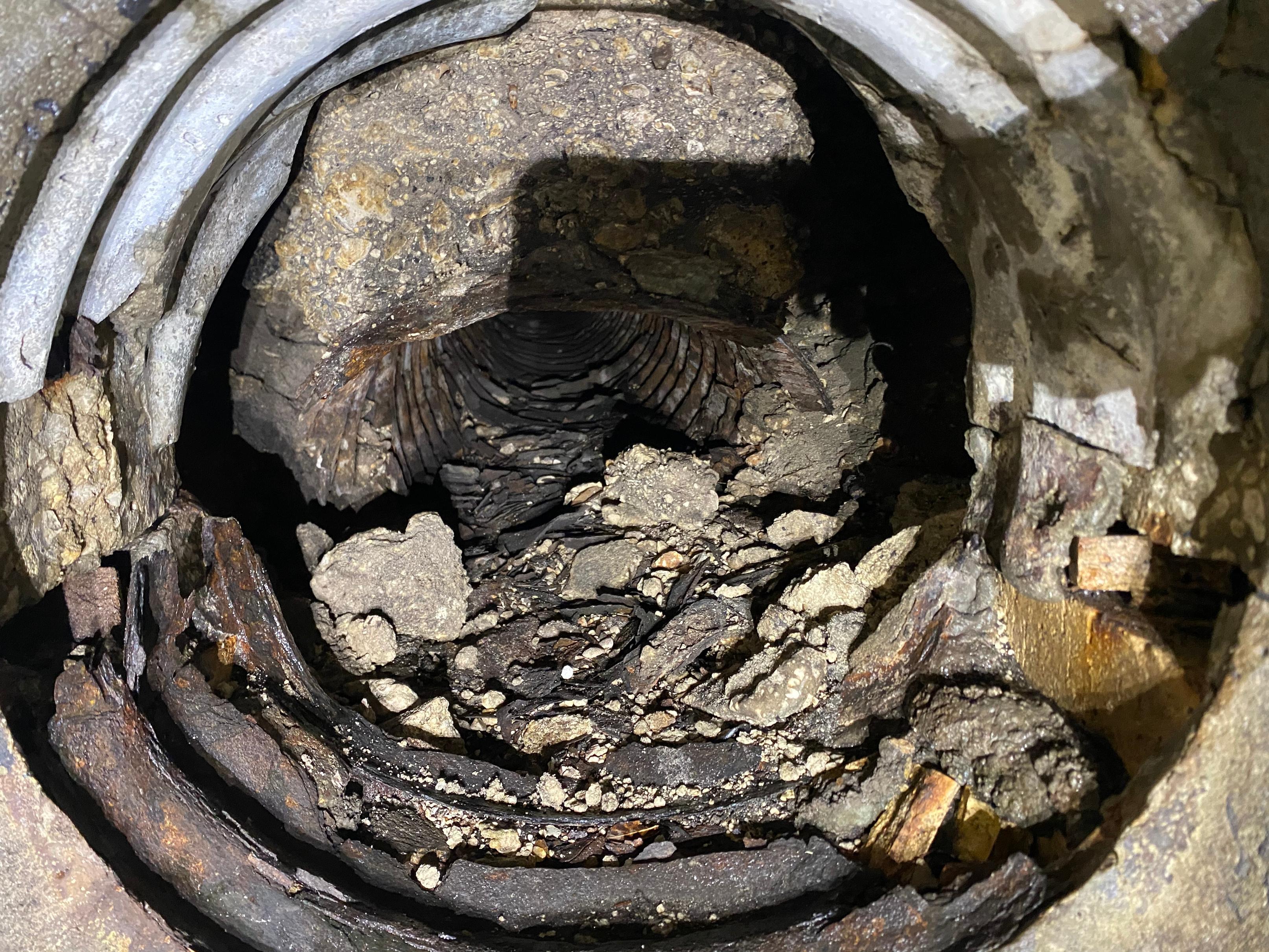


Invisible Problems lead to Visible Disasters
Protect your community's investment with our non-disruptive trenchless solutions that cost less than traditional repairs, extend inf rastructure lifespan, and prevent the catastrophic failures that lead to emergency assessments and resident complaints.

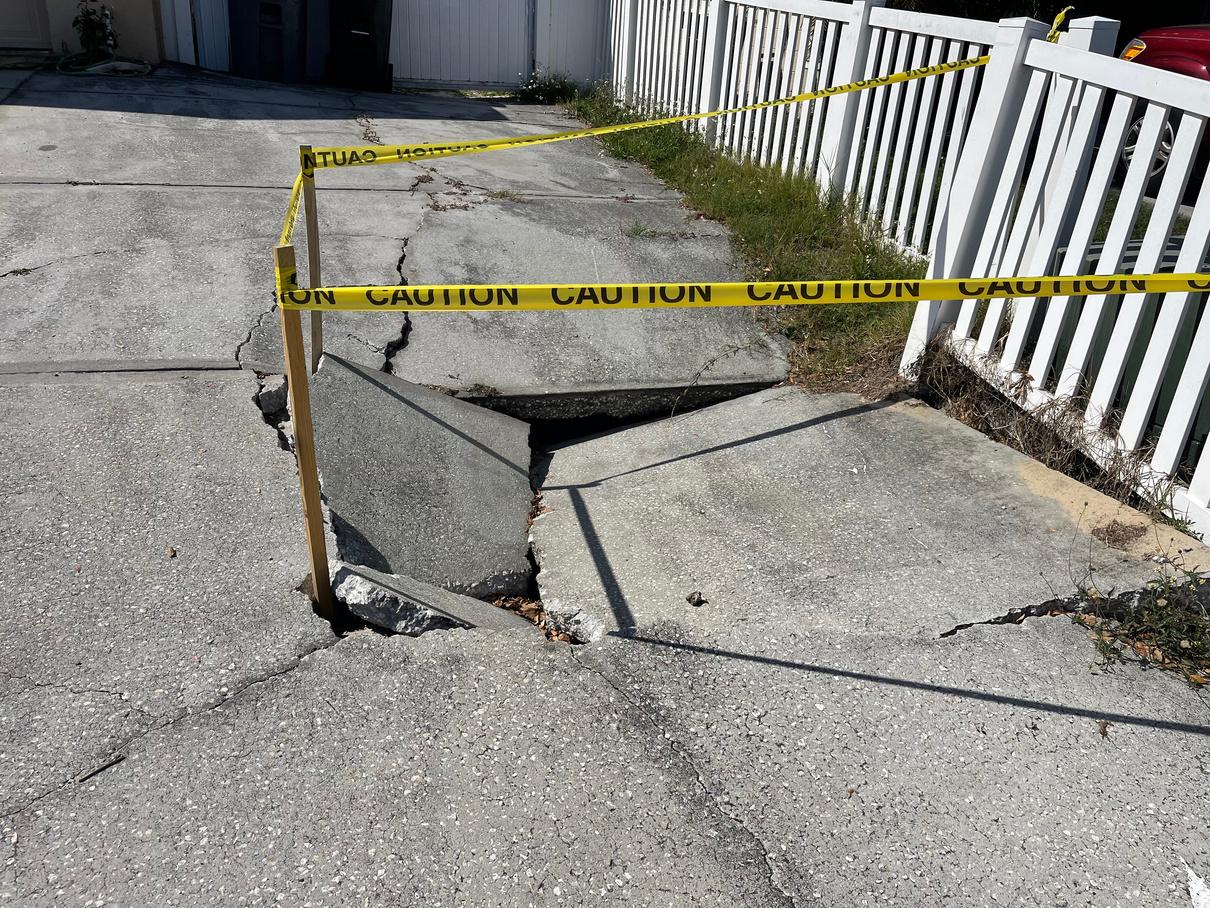

Maintaining Order—Managing Conflict in Community Associations
BY JENNIFER L. BILETNIKOFF, ESQ.
Living in a community association sounds simple—you have shared amenities (without the maintenance headaches that go along with it), professionally maintained properties, and social connections and offerings without having to leave your community. However, living in a community association also means shared personalities with differing opinions… and not all personalities are easy to manage. From the chronic rulebreaker and the resident who challenges every decision or questions every act of the board to the director who believes that screaming or belittling is an effective form of communication, difficult people can quickly turn routine governance into daily conflict and chaos. In Florida condominium and homeowners’ associations, where laws, rules, and personalities constantly intersect, having tools to address these situations is not just helpful—it’s essential. The fine line between calm and chaos often comes down to how effectively you manage the people who test the system the most.
The focus of this article is to provide a few “tools” for dealing with “difficult” people for those who manage, administer, or reside in community associations.
Photo by iStockphoto.com/Mauricio Graiki
ESTABLISH CLEAR RULES AND POLICIES (AND UNIFORMLY ENFORCE THE SAME)
The most effective way to handle difficult people is to eliminate ambiguity by adopting written rules and regulations that are specific, enforceable, and consistent with Florida law and your association’s governing documents. In working with all types of communities, I frequently hear board members say, “We are a close-knit community, and we all get along. We don’t need rules and policies.” This may be true for now. All it takes is one person who challenges every decision to create turbulence in your community. Written rules and regulations will help set guidelines and procedures (and, sometimes boundaries) for communicating with the board, addressing owner requests or communications, and addressing violations. Having

JENNIFER BILETNIKOFF, ATTORNEY, BECKER
Jennifer Biletnikoff concentrates her legal practice on the law of community associations, primarily representing condominium, cooperative, mobile home, and homeowners’ associations. She represents community associations located throughout Southwest Florida, including Collier, Lee, Sarasota, and Charlotte Counties. Ms. Biletnikoff is also one of only 190 attorneys statewide who is a Florida Bar board-certified specialist in condominium and planned development law. In addition to her experience as a community association lawyer, Ms. Biletnikoff has litigation experience in covenant enforcement and foreclosure law. For more information, visit www. beckerlawyers.com
clear and specific rules and regulations avoids potential conflicts that may arise because expectations are unclear or inconsistently enforced. Having a clear and concise communication policy can help avoid misunderstandings or misinformation. Adopting a communication policy that uses “official” channels of communication (e.g., directing communications to the association’s “official” email, the community association manager’s email, or the mailing address of the association) ensures that all communications are directed to one location, which eliminates the possibility of the association missing an important communication, reduces the chance of a ”he said, she said” dispute, and decreases the odds of
communicating mixed messages to owners. As an added benefit, having a structured communication policy helps create a record that will be helpful if a matter escalates into a dispute; it may promote more professional communication; and it may serve to eliminate late night calls or texts to board members.
Once written rules and policies are put in place, enforce the rules consistently. Nothing escalates conflict in a community faster than selective enforcement. Residents will notice if certain residents seem to get a “pass” when other residents are being penalized. Consistent application and enforcement of rules and policies eliminates arguments about fairness and also protects the association legally. If you are not going to enforce a rule or policy, or if you are not going to enforce it evenhandedly, do not adopt it.
DOCUMENT EVERYTHING
When dealing with difficult individuals, documentation can be your best defense. If you find yourself dealing with a difficult person or with someone who repeatedly violates the written rules and regulations, keep records of any complaints that are received, communications that are received concerning the complaint or violation, and documentation regarding the violation (including any photos, violation notices, or other documentation regarding the “problem”). If complaints or violations are discussed at board meetings, ensure that the minutes reflect enforcement actions taken by the board. Having proper documentation will be beneficial if the dispute evolves into legal proceedings and will help support enforcement actions.
MEETING PREPARATIONS AND EXPECTATIONS— PREPARE FOR ANYTHING AND EVERYTHING
Preparation is key. When it comes to board or membership
meetings, be prepared and on time. Review the meeting agenda in advance to determine if there are any potentially contentious items on the agenda. If anyone is necessary for the meeting, plan to have them present. Develop a code of conduct for the meeting that includes a board member code of conduct, and consistently enforce the rules. Use meetings as an opportunity to advise owners and residents what is happening in the community; hard feelings and distrust can arise when owners feel like they are kept in the dark regarding community happenings. Remember that owners have the right to speak, even at board meetings. However, be prepared to enforce rules regarding owner comments, and be willing to end a meeting (either via a temporary recess or an adjournment) if an owner or director gets out of control and refuses to adhere to meeting or conduct rules
AVOID EMOTIONAL REACTIONS
Difficult people often thrive on conflict. If you find yourself embroiled with a difficult person, remember not to take things personally, and avoid reacting out of emotion. Rely heavily on the association’s governing documents, rules and regulations, and Florida law; and discuss facts and procedures, not emotions or opinions. Stay calm and professional. Avoid raising your voice, arguing, or responding to a difficult person in an impulsive or defensive manner. Choose your words wisely. Using “neutral” language can help defuse a potentially explosive response. For example, rather than saying, “You are always violating the rules; you refuse to comply,” consider the following: “According to our rules, all animals must be leashed. We have received three documented complaints that your dog is outside without a leash.” One of the best pieces of advice I can give to anyone who lives in a community, serves on the board, or manages a community is to have rhinoceros skin—don’t take things personally. This can be extremely difficult, especially when complaints include personal attacks. However, difficult people often seek attention, resist authority, and have frustrations that are unrelated to the association. Difficult people will look to get a rise out of you and will be secretly (or not so secretly) thrilled if you react with a counterattack. If you change your mindset and remind yourself that you are not really dealing with a personal attack, you are managing processes and operations, it will help put the situation into perspective and will allow you to respond with a detached professionalism. For directors, particularly, remember that the tone of your community starts with the board; set a good example, especially in difficult situations.
KNOW WHEN TO CALL IN THE PROFESSIONALS
There are some situations that require outside help. If disagreements arise regarding the laws or the association’s governing documents, call the association’s attorney. If there is a difficult person who is making threats to other owners, board members, or the manager, call law enforcement. Be proactive, not reactive.
Difficult people and situations are inevitable in community association living—but chaos is not. With clear rules and policies, consistent enforcement, proper documentation, and professional communication, you can turn even the most challenging situation into a manageable one. Remember, the goal is not to “win” an argument with a difficult person; the goal is to operate and administer the association in a manner that helps protect and preserve the peaceful enjoyment of the community. n

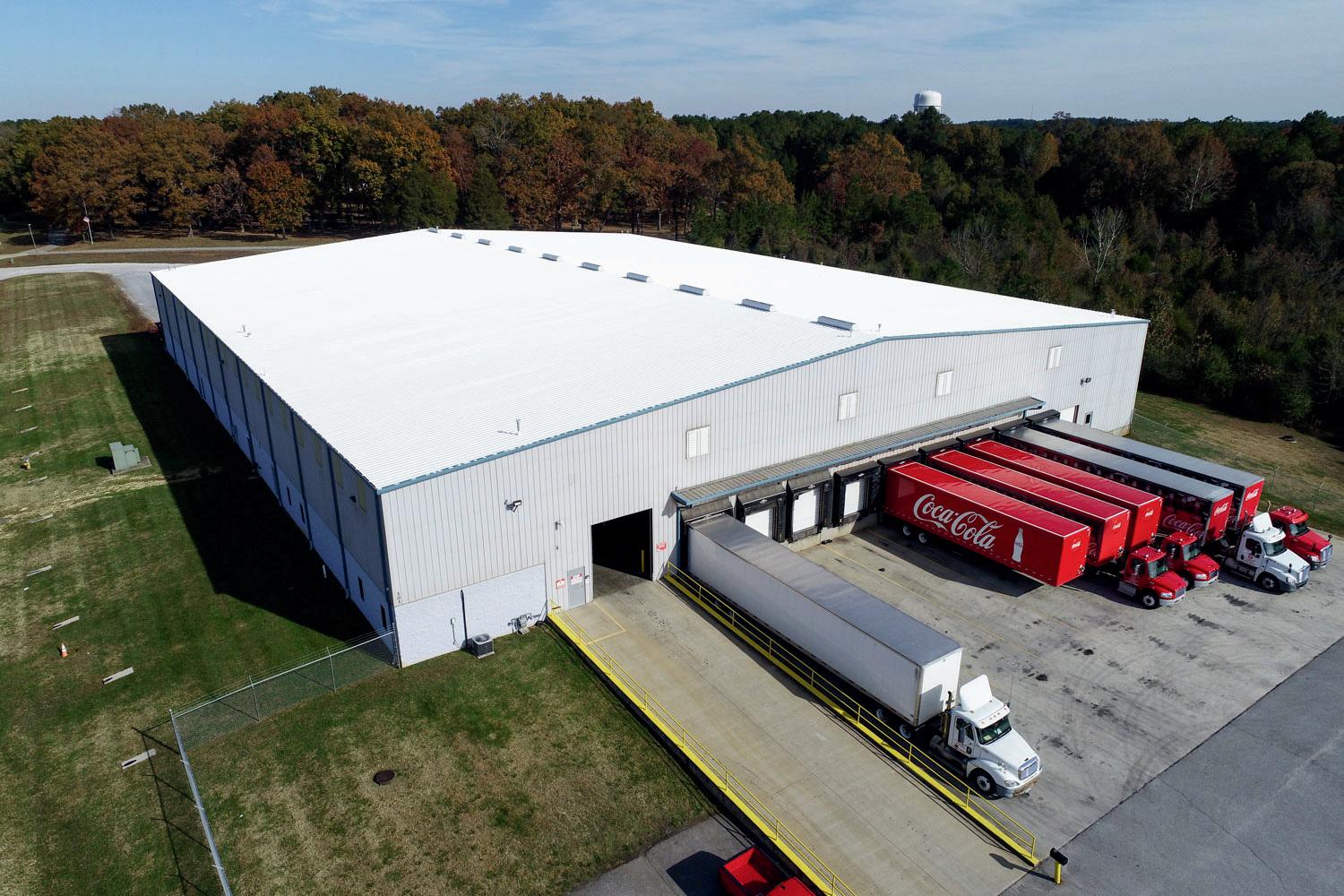





Florida’s House Bill 797 Could Impact Community Associations
BY EVONNE ANDRIS, ESQ.
A
t first glance, House Bill 797 may not seem like a community association bill as it was not aimed specifically at condominiums, homeowners’ associations, or cooperatives. Instead, the bill that was passed this year by the Florida lawmakers presents a major revision to Florida’s nonprofit corporation statute, Chapter 617, designed to align Florida law with the Model Nonprofit Corporation Act.
Because most community associations in Florida are organized as nonprofit corporations, any significant changes to Chapter 617 could have a meaningful impact on how associations govern themselves, make decisions, conduct elections, and handle internal disputes. In that sense this bill is better understood as a broad corporate governance reform that could reshape the internal operations of many associations across the state.
Photo by iStockphoto.com/klyaksun
One of the most notable changes is the bill’s emphasis on the duties of officers and directors. It expressly requires officers to act in good faith, with reasonable care and in the best interests of the corporation. For community associations this would reinforce fiduciary standards already in practice while potentially providing stronger grounds for claims involving the unilateral acts of directors, inadequate reserve planning, inconsistent rules enforcement, or failures in management oversight. Boards may need to become even more deliberate in documenting the basis for their decisions.
The bill also creates clearer statutory procedures for the judicial removal of directors. In the association context, that could be significant. Owners in contentious communities may have a clearer path to seek court intervention for the removal of a director, and courts could become more involved in governance disputes involving dysfunctional boards, developer transitions, or allegations of financial mismanagement. While these provisions may be helpful
law firm of
is
shareholder with the
is
at the firm’s Broward office and focuses on community association law. She is a regular contributor to the firm’s Newsroom blog at www.SiegfriedRivera.com/blog. The firm also maintains offices in Miami-Dade and Palm Beach Counties, and its 48 attorneys focus on real estate, construction, community association, and insurance law. For more information, visit www.SiegfriedRivera.com, email EAndris@SiegfriedRivera. com, or call 305-442-3334.
in extreme cases, they could also increase litigation risk in already volatile communities.
Another important feature of the bill is its expansion of certain corporate powers. The legislation would allow nonprofit corporations to impose fines or penalties if authorized by their governing documents, establish payment terms, admit members for consideration, and terminate membership in accordance with contractual terms. For associations this could provide stronger statutory support for enforcement and collection practices. At the same time some communities may need to revisit their governing documents to determine whether those documents are broad enough to take advantage of the new authority.
The bill’s treatment of membership rights is also worth watching. It provides that members will have equal rights and obligations unless the governing documents state otherwise. That language could have important implications for associations with weighted voting, multiple membership classes, special developer rights, or mixed-use structures involving residential and commercial interests. Communities with more complex governance arrangements may need legal review to ensure their governing documents remain consistent with the revised statute.
The legislation also modernizes rules relating to meetings, notices, proxy voting, remote participation, board composition, and election

Evonne Andris
a
South Florida
Siegfried Rivera. She
based
EVONNE ANDRIS, SHAREHOLDER, SIEGFRIED RIVERA
procedures. These updates generally track the growing use of virtual meetings and electronic processes in association governance. Even so, associations should not assume their current bylaws automatically fit within the new framework. In many cases amendments may be needed to avoid inconsistencies between the statute and an association’s governing documents.
In addition, the bill expands liability protections for officers and directors in certain circumstances. That may make board service more appealing by reducing personal exposure and strengthening available safe-harbor protections. Still, those protections would not shield misconduct involving bad faith, criminal acts, or other serious wrongdoing. Associations should view these provisions as helpful but not as a substitute for sound governance practices. Most associations have indemnification provisions in their articles; therefore, associations may want to review their current liability protections compared to the new protections and consider whether an amendment to bolster liability protection is warranted.
enforcement practices, limitations of liability, elections, and board decision-making.
If signed into law by the governor, the communities most likely to feel the effects would be large condominium associations, master associations, associations in developer transition, communities with a history of litigation, and associations operating under outdated governing documents.
The bill also contains a range of technical and procedural updates, including revisions to merger authority, distributions, terminology and administrative filing requirements. While these changes may not attract as much attention, they could still affect associations in meaningful ways over time, particularly those involved in restructuring, consolidation, or more complex ownership and governance arrangements.
Taken together, these changes reflect a broader trend in Florida law and spotlight that lawmakers continue to place greater emphasis on accountability, transparency, and professionalization in the association space. Other proposed legislation, including bills addressing management requirements for larger associations, reinforce the same general direction: Florida is increasingly treating community associations as sophisticated governance entities that require clearer standards and stronger oversight.
So, how significant is this bill for community associations? The answer is that its impact would likely be moderate but foundational. This is not the kind of measure that immediately grabs headlines like reserve requirements, structural inspection mandates, or CAM licensing reforms. However, it could quietly and materially influence governance disputes, fiduciary duty claims,
Associations would be well advised not to wait until a dispute arises to react. Upon the legislation taking effect, boards and managers should consider conducting a governance audit of their bylaws and articles, updating fiduciary duty training for board members, reviewing enforcement authority and fine procedures, evaluating indemnification provisions, and preparing for the possibility of increased owner challenges or litigation.
In short, while this bill is not written specifically for community associations, it could have a real and lasting effect on how many Florida associations operate. n

We’ve Got You – And Your Car –COVERED.
Protect your vehicles from Florida’s harsh environment with Mullet’s Aluminum’s award-winning carports. Ideal for condominium, apartment and commercial properties, our structurally superior, site-specific systems are engineered for long-term performance, reducing vehicle heat and enhancing interior comfort.
With over 45 years of experience in manufacturing and installation, Mullet’s Aluminum is one of the largest architectural aluminum manufacturers in Florida - so don’t worry, we’ve got you covered. .
Call for a free quote or visit our website.
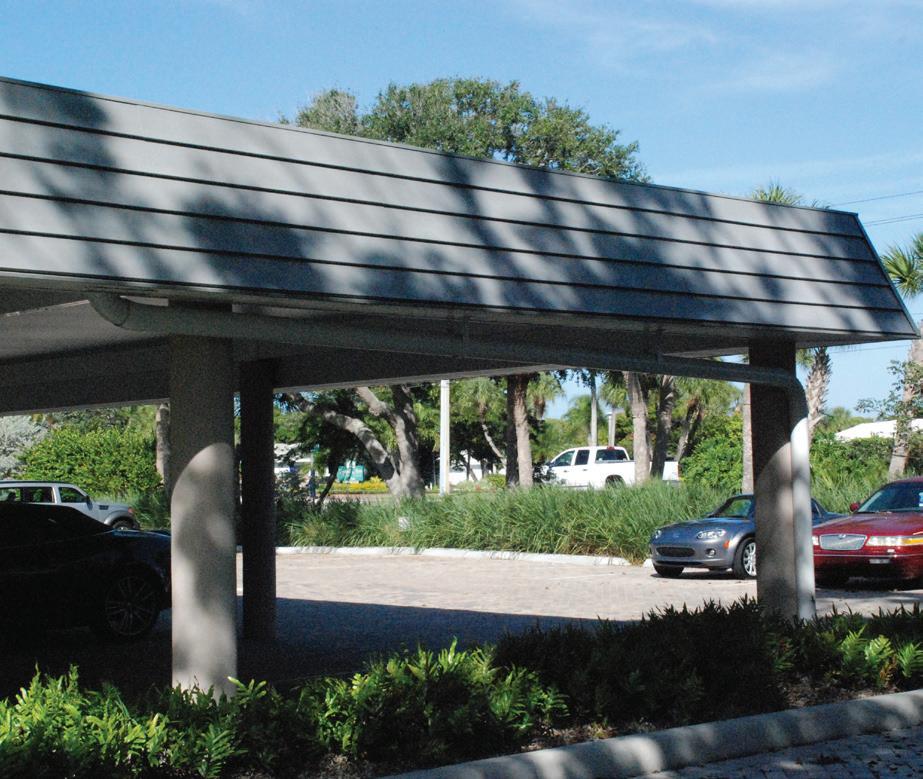
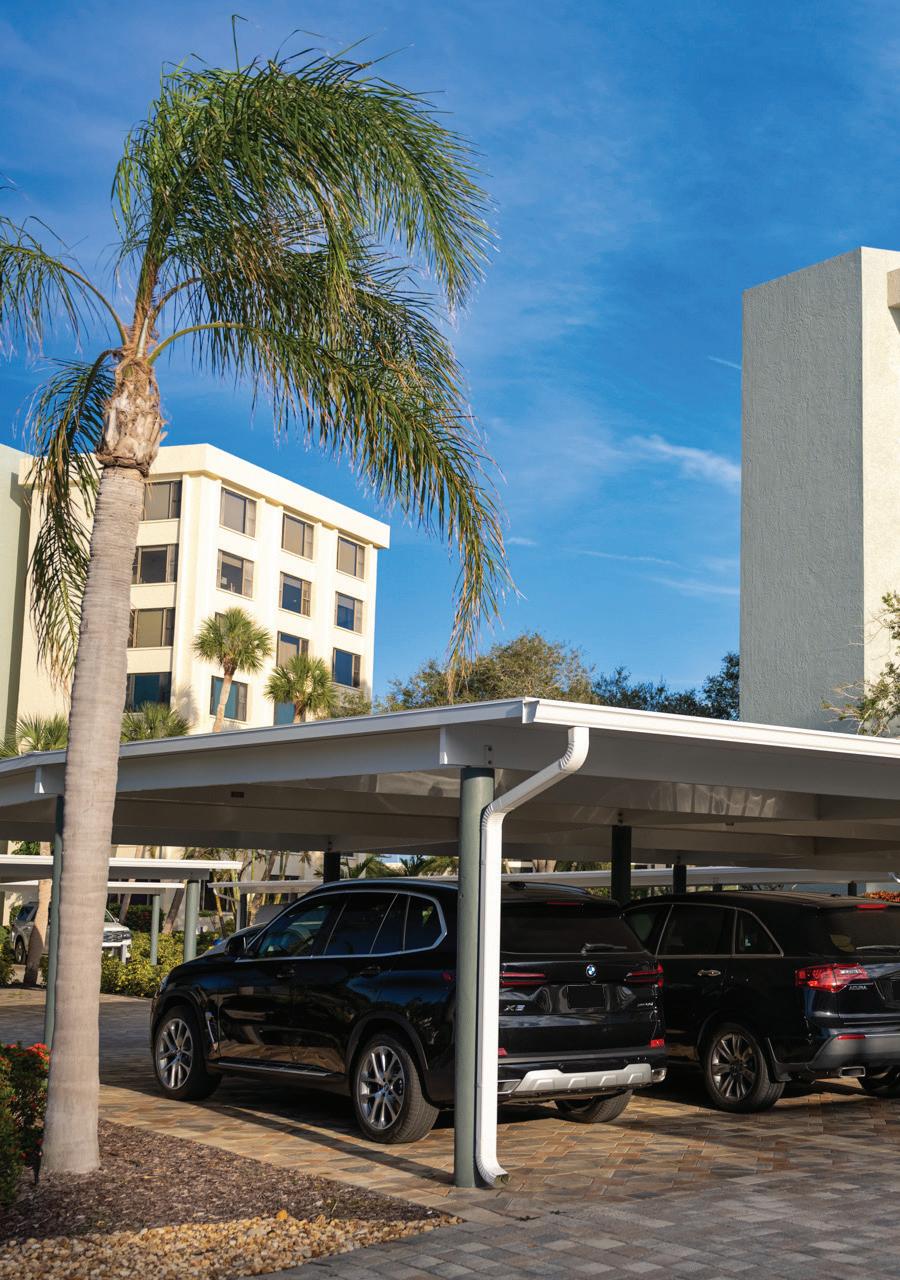

The Changing Landscape of Litigation
BY ROGER SLADE, ESQ.
Throughout the course of a 30-plus-year career, there was at least one thing that lawyers and clients could count on, which is that litigation would be time-consuming. It was not unheard for a case to plod on, endlessly grinding through the court system for more than 10 years. This has been one reason why, historically, litigation has been a less-thanattractive option for many business owners and individuals. The 10-year-old case most often caused costs to multiply, clients and judges to become frustrated and unhappy, and, in the end, justice to be denied since during the pendency of a lawsuit that lasts that long, witnesses tend to disappear or die; and, perhaps not surprisingly, key documents and other evidence can no longer be found. Now someone or perhaps some committee affiliated with the Florida Supreme Court decided that it was a bad idea to allow cases to fester for that long. So,
Photo by iStockphoto.com/Hang Tran
the Florida Supreme Court decided it was time to clamp down on the Bar and the Judiciary to make things move faster. Like everything else in life, this idea has both positives and negatives.
Let’s review how these changes can affect you, the client, in a positive way should you choose to pursue litigation as either a business or personal objective in the Florida state courts.
1. Cases Are Likely to Get Resolved Faster. The age of the 10-year-old case has all but been abolished. Yes, there are still cases that you can find in the court system that are that old. Nonetheless, when a lawyer advocating in a 10-year-old case appears before a Florida judge now, you can almost see the look on the judge’s face (whether it’s in person or by Zoom)—
“Are you kidding me?” There are a lot of things that a lawyer may want a judge to say to them, but “Are you kidding me” is not one of them.
2. Improved Efficiency and
ROGER SLADE, EQUITY PARTNER, CO-CHAIR OF THE LITIGATION GROUP, HABER LAW
Roger Slade is an equity partner with the Miami law firm of Haber Law and is the co-chairmen of the Firm’s litigation department. Mr. Slade has been AV -rated by Martindale Hubbell and has been named as a Florida Super Lawyer for fourteen consecutive years. Mr. Slade started his career at two large New York City law firms but has been practicing law in Florida since 1994. He has handled all types of litigation matters with a particular emphasis on family business disputes (domestic and international), business partnership disputes, business fraud cases, and litigation involving real estate, including condominium litigation, landlord-tenant litigation, and commercial foreclosure litigation. For more information, email rslade@haber.law or visit www.haber.law.
Predictability. Florida state court lawsuits now have scheduled events and deadlines decreed by court order. There are deadlines for the close of discovery, for dispositive motions, and for trial, among other things. This should provide business owners and individuals with a better sense of the progress of a case in addition to gaining an understanding as to how much it is likely to cost.
3. Cooperation and Reducing Gamesmanship. The Florida courts now require lawyers to talk to one another. The old “I’ll see you in court” mentality is slowly being rolled back. Now, the new mantra is: “I will see you at the meet and confer” because the judge and the Florida Supreme Court are literally forcing lawyers to resolve discovery and other minor disputes directly with opposing counsel without involving the court. If it works, and it does not always work, this can be a time saver and a cost saver.
4. Case Schedules Tailored to Complexity. The question of what makes a case “complex” is always a thorny one for Florida lawyers. Ask two lawyers this question, and you will often get two different

FLORIDA COMMUNITY ASSOCIATION JOURNAL

As a community association manager or board member, you make crucial decisions for your community. Don't miss out on the insights and updates that can help you make informed choices. Subscribe now to the Florida Community Association Journal and receive every issue delivered directly to your mailbox.
Visit www.fcapgroup.com/flcaj/subscribe/ to secure your subscription and never miss an issue.
answers. And, while the courts do not always get this right, by and large designating a case as “complex” will ensure that the court will be more involved in supervising it. The MiamiDade Court system has a division, staffed by two of its best judges, known as the “Complex Business Division.” An assignment to that division is both a blessing and a curse depending on your objectives. This is because a lawyer’s conduct in a case is more closely scrutinized, deadlines are more carefully observed, and the complex business division rules, in
And now, for the downsides.
1. Increased Workload and Time Pressure for Lawyers. Yes, we must work hard, faster, and more efficiently to meet court deadlines. Compliance with the rules is going to require more attention from both counsel and their clients.
2. Motion for Continuance Denied. The list of excuses that lawyers have historically proffered for failing to meet deadlines or for not being ready for trial has evaporated under the new rules. Just attend any calendar call and listen to the judge. If you want a continuance, you better have a real medical emergency or a death in the family. The courts are no longer listening to the time-worn litany of excuses that lawyers have historically invoked for not being ready.
3. The Courts Sometimes Cannot Keep Up with the Schedule. The new system sometimes results in unfairness because the court system simply cannot keep pace. For example, we have cases that are set for trial, but the court does not have availability to hear preliminary motions or discovery motions. This is not necessarily fair, but it does require some flexibility by the judiciary.
The above is just a random sample of how the changes will affect, and have affected, Florida state court litigation. The message is that the


President & Founder


Leslie Alvarez, CMCA, AMS, LSM, PCAM
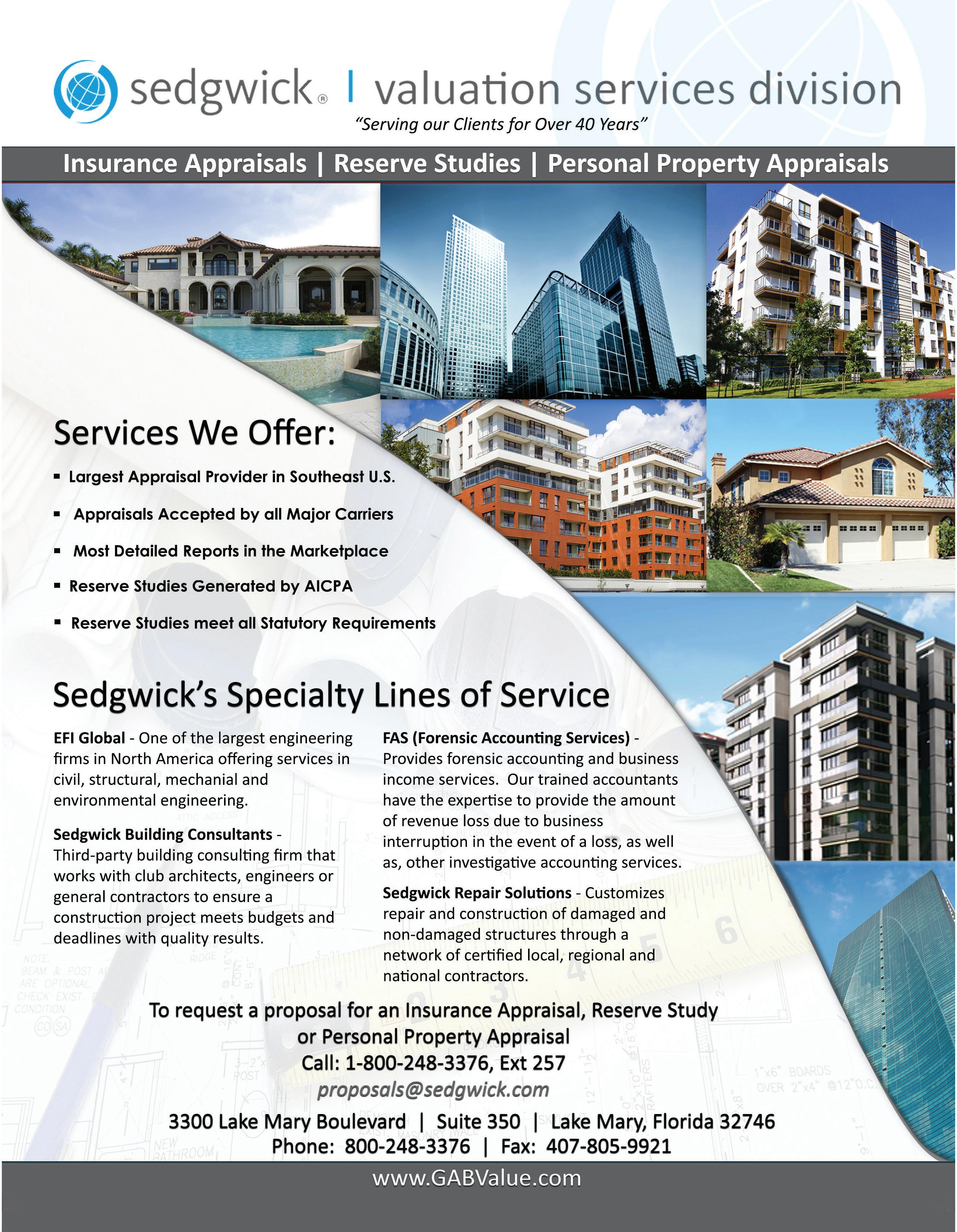

Slipped on a Banana Peel
BY MICHAEL J. GELFAND, ESQ.
LEGISLATIVE UPDATE 2026
Florida communities may have dodged a bullet! As we are closing this memo for the publication deadline, the Florida legislature is adjourning, at least for most items except the budget and taxes.
What does this mean for Florida condominium and homeowners’ associations? It appears that the session ended without great damage, though problems created in 2024 and 2025 continue to haunt. Most bills targeting Florida’s Condominium Act and the Homeowners’ Association Act failed to clear the legislature. Warning: There is always next year!
Thus, there does not appear to be a reason to become greatly disturbed, at least from the perspective of a community association or an owner in an
Photo by iStockphoto.com/hatman12
association community. Once the smoke settles, we expect to provide an update as to the tangential bills that may have some impact. Of course, bills do not become law without the governor’s signature, and the Florida Department of State’s website shows that the governor has not signed any bill this year.
A SLIP IN TIME: THE BANANA PEEL SLIP AND FALL
Is this a joke? A lawsuit over a slip on a banana peel and damages from the resulting fall?
Bringing the issue home, can a condominium or homeowners’ association really prevent being sued for a slip and fall on common elements or common area? Are there steps that might reduce the chance? How about considerations that “enhance” (to use a euphemism) the chance of a lawsuit?
MICHAEL J. GELFAND, ESQ., SENIOR PARTNER, GELFAND & ARPE, P.A.
Michael J. Gelfand, Esq., the senior partner of Gelfand & Arpe, P.A., emphasizes a community association law practice, counseling associations and owners how to set legitimate goals and effectively achieve those goals. Gelfand is a dual Florida Bar board-certified lawyer in condominium and planned development law and in real estate law, a certified circuit and county civil court mediator, a homeowners’ association mediator, an arbitrator, and parliamentarian. He is a past chair of the Real Property Division of the Florida Bar’s Real Property, Probate & Trust Law Section, and a Fellow of the American College of Real Estate Lawyers. Contact him at ga@gelfandarpe.com or 561-655-6224.
What lessons may be learned from a real-life slip on a banana peel? The lessons may be found in a recent Florida appellate court decision reversing a summary judgment. Following an incident at a Walmart, the original trial court’s judgment was in favor of Walmart, apparently finding that a jury could not reasonably determine that Walmart was negligent for the banana peel on the floor. The appellate court ruled that the claimant was entitled to a trial and that a jury may decide whether Walmart had “constructive knowledge” of a banana peel which was on the entrance floor for eight minutes.
Community Management Made Easier
Thank you FLCAJ readers for making us a top-rated provider of Financial Services and Technology & Communications.
Managing associations is hard work. Enumerate's accounting software and payments solutions can reduce the time and cost of running your HOAs, so you can focus on what matters most–the community. Contact us: (954) 526-5540 hello@goenumerate.com Scan to request demo









The facts in Ouedraogo v. Walmart Stores East , LP, 51 Fla. L. Weekly D 293 (Fla. 1st DCA, February 18, 2026), indicate that after slipping and falling on a banana peel inside the entrance of a Walmart store, the claimant sued Walmart for injuries he sustained.
The claimant submitted surveillance footage and photographs showing that the banana peel was on the floor for almost eight minutes before the fall. A Walmart employee testified that she and another employee had been working as hosts that day and that she was in the area when the fall occurred. The trial court granted summary judgment for Walmart, finding the following:
Though employees were arguably near the banana peel, it would be unreasonable to assume the employees would be able to observe and notice the banana peel, as doing so would have required them to turn their heads at least 90 degrees. The fact that the banana peel was on the floor for just under 8 minutes is irrelevant.
The Florida appellate court disagreed and reversed the summary judgment for Walmart. The appellate court explained that Florida law provides that the property owner owes a duty to its invitees to exercise reasonable care to maintain the premises in a safe condition. A banana peel on the floor is not a safe condition!
The appellate court explained that a claimant who sues a property owner for negligence must prove that the business had an actual or “constructive knowledge” of the dangerous condition (i.e., banana peel on the floor) and did not rectify the situation.
What proves this “constructive knowledge”? Constructive knowledge can be proven by evidence showing two elements. First, that the dangerous condition existed for such a length of time; and, second, that the business should have known of the condition. In this case the claimant showed that there were several employees in the area where the banana peel was located and that one employee walked past it.
The appellate court stated: “a trial judge cannot conclude as a matter of law whether the duration of which an object was on the floor is sufficient to create an issue of fact because that is a question within the jury’s province.” The case was returned for a jury trial to determine whether or not Walmart had constructive knowledge of the banana peel on the floor.
Tick, Tick, Tick: Six minutes, five, four, three, or two? Anticipating the reader’s next question, no, the appellate court was not asked to determine how long is too long for a banana peel to stay on the floor. Thus, the appellate court did not venture when is too long.
For Florida communities, the answer to what is too long likely is found in the circumstances. The entrance to a busy store with staff stationed adjacent to the entrance might require a shorter response time than the corner of a room behind a door that is rarely traversed.
The lesson for staff in Florida communities may be simple: If you see it, report it! If it does not belong on the floor, remove it!
THROWING GRANDMA FROM THE BALCONY
Is it the new rage in Florida? Perhaps a modern twist on the ancient phrase “Tear Down the Old and Build Up the New” has returned to Florida communities with a vengeance!
In a word, the concept is “termination.” In a question, when can a
FOR
FLORIDA COMMUNITIES,
THE ANSWER TO WHAT IS TOO LONG LIKELY IS FOUND IN THE
CIRCUMSTANCES.
THE ENTRANCE TO A BUSY STORE WITH STAFF STATIONED ADJACENT TO THE ENTRANCE MIGHT REQUIRE A SHORTER RESPONSE TIME THAN THE CORNER OF A ROOM BEHIND A DOOR THAT IS RARELY TRAVERSED.
Florida condominium association just call it quits?
Fed up with, or in fear of, aging properties and skyrocketing assessments, many Florida condominium properties are being bought up by developers—not just a unit here or there and not just a few at a time but entire condominium projects and all of the units! The buildings are to be knocked down. In their place high-rise luxury properties are frequently planned.
Sometimes change is good. A number of communities have
found that years, if not decades, of deferring maintenance and waiving reserves left their physical structures woefully deteriorated and dangerous to their occupants. Facing huge repair expenses, some of these communities have opted to recognize the increased value of the land under their buildings and not spend more on deteriorating buildings.
How have they avoided the repair costs and sold out? The answer is that word, again: termination.
The process is not necessarily easy, and though thought of to protect all unit owners, the desire for unanimity can allow one holdout to frustrate the logical decision of all the other owners in a condominium project.
So, what happens when the condominium documents require every unit owner to agree to sell? Recognizing that unanimity in a condominium can be nearly impossible, even for self-interest, what can be done?
Recently a trial court held a hearing on what to do with a failed termination attempt after a Florida Supreme Court decision not to disturb an earlier opinion addressing whether a condominium association may amend its declaration of condominium to reduce the termination unanimity requirement from 100 percent to 80 percent, in Avila v. Biscayne 21 Condominium, Inc. , 417 So.3d 434 (2025).
The situation began in 2022 as with many condominium termination efforts. TRD Biscayne, a Florida real estate developer, began buying units in the Biscayne 21
Condominium located on the waterfront in Miami, intending to demolish the condominium and erect in its place a luxury condominium.
When ten unit owners refused to sell, the developer did not stand down. Though termination required a 100 percent vote, the declaration stated that the declaration could be amended by only a 51 percent vote. With this relatively low threshold for amendments, as the majority unit owner the developer voted to amend the declaration to reduce the termination 100 percent requirement to the current statutory amount of 80 percent of the unit owners.
The ten holdouts proceeded to court seeking to stop the termination. The trial court denied their motion for a temporary injunction. Their next step was an appeal!
The Florida appellate court questioned the amendment effort, reversing and sending the case back to the trial court for the entry of a temporary injunction. The appellate court held that an amendment changing the voting threshold for termination from 100 percent to 80 percent impacted the voting rights of the unit owners. The court continued that the declaration also required 100 percent of the unit owners to approve a change in voting rights.
Without the vote of all owners for the voting amendment, the court would not allow less than all votes to reduce voting rights. As a result of disallowing the amendment to the amendment requirement, the amendment to the termination threshold was similarly invalid. The court also commented that the declaration did not contain the so-called magical words to incorporate automatically changes to the Condominium Act to the declaration. The developer and the association it controlled lost on two critical issues to the holdouts.
The Florida Supreme Court declined to take up this case. Thus, just after the start of the year, the trial court issued an injunction enjoining TRD from terminating the condominium without obtaining 100 percent consent of all owners.
Perhaps proverbially breaking new ground, the trial court ordered the developer and the association to restore the condominium to the condition the condominium was in at the time the lawsuit was filed at no expense to the holdouts! At this time, the developer had ripped out the condominium’s flooring, finishes and pipes, cut off the electricity, and removed many of the windows.
The corrective work was ordered to commence “forthwith,” including maintenance and repairs and reestablishing the governance and administration of the condominium.
At first read this case will slow many Florida condominium terminations. Developers and associations will need to ensure that they have the votes to move forward without amending the declaration. It is yet to be seen whether the repairs at this stage would constitute waste and what type of compensation must be provided to the holdouts.
As to the longer term, the appellate court decision raises an issue as to how far amendments may reach before they are considered interfering with voting rights. n
Readers' Choice Award Spotlight

Editor’s Note: FLCAJ would like to congratulate these five outstanding 2026 Readers’ Choice Awards winners! (For a full list of 2026 RCA winners, please read the March 2026 issue or visit www.fcapgroup.com/flcaj/readers-choice/
Acrisure
Diamond Level Winner—Insurance and Insurance Adjusters (Winner 2026)
Acrisure supports community associations throughout Florida, bringing industry experience and a commitment to helping protect what matters to communities. Florida’s community associations face a unique set of challenges, from navigating complex regulatory environments and managing coastal weather risks to addressing aging infrastructure and evolving construction defect exposures. Acrisure provides access to insurance and risk management solutions tailored to align with these needs, helping boards, property managers, and associations evaluate coverage options and receive guidance that supports long-term resilience.
Our team combines global resources with local market insight, understanding that each association throughout Florida requires individualized strategy and attention. We focus on proactive risk assessment,
policy placement, and ongoing advocacy to help associations be positioned to respond to property damage, liability issues, and emerging exposures.
Beyond insurance placement, Acrisure provides education and support to help boards make informed decisions, communicate effectively with members, and implement loss-control measures that may help reduce the likelihood of certain claims and support financial stability. With a strong focus on Florida community association risk, Acrisure is a resource that associations turn to for assistance navigating risk today and over time.
IMPORTANT NOTICE: This information is for general informational purposes only and is not a substitute for legal, regulatory, or professional advice. Consult a professional before purchasing any insurance product or service. Do not rely on this material as a full explanation of coverage or product terms. No warranty or representation, express or implied, is made regarding the correctness or adequacy of the information. © 2026 Acrisure, LLC. All rights reserved.
For more information about Acrisure or to find a location near you, visit Acrisure.com
Alfresco Air
Diamond Level Winner—Property Services (Winner 2026)
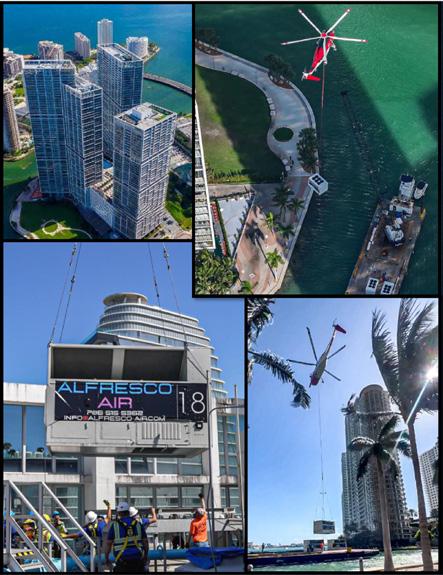
Alfresco Air LLC is honored to receive the Diamond Level Award in the property services category of the 2026 FLCAJ Readers’ Choice Awards, marking a historic first as the only HVAC and mechanical contracting company to earn Diamond recognition in this category.
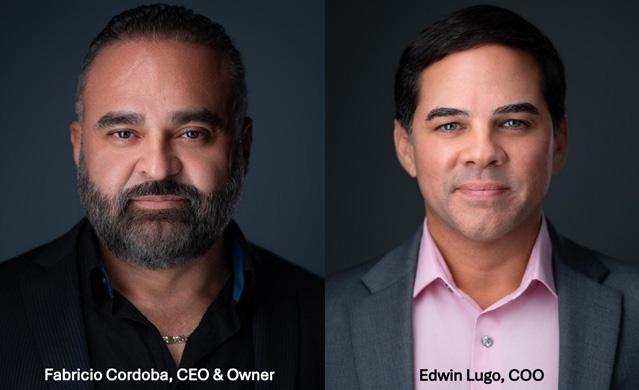
This highest distinction reflects exceptional performance across essential property services and signifies the trust Alfresco Air has earned while supporting some of Florida’s most complex residential properties. The recognition places Alfresco Air among the most respected service providers in the community association industry and highlights the critical role mechanical expertise plays in long-term building reliability and resident comfort.
Founded and led by Fabricio Cordoba, CEO and owner, Alfresco Air has grown from a single-truck operation into one of South Florida’s most respected HVAC and mechanical contractors. With more than 20 years of industry experience, Cordoba is known for hands-on leadership, deep technical expertise, and disciplined execution in occupied high-rise environments. Under his direction the company has delivered major mechanical retrofits, central plant upgrades, cooling tower replacements, rooftop system modernizations, and disaster recovery projects for high-profile properties throughout the region.
In 2025 Alfresco Air strengthened its executive leadership team with the addition of Edwin Lugo as chief operating officer. Lugo brings over 25 years of leadership experience in luxury high-rise operations and community association management, leading operations, client engagement, and strategic growth initiatives.
Today Alfresco Air serves properties across four counties, from West Palm Beach throughout Broward and Miami-Dade Counties to Monroe County. The company maintains an A+ rating with the Better Business Bureau, reflecting its longstanding commit-
ment to client satisfaction and ethical service.
Alfresco Air extends sincere gratitude to its field technicians, project teams, and office staff, whose dedication made this recognition possible. The company also thanks the FLCAJ readership, its clients, and industry partners for their trust and support. This Diamond Level award reinforces Alfresco Air’s commitment to accountability, reliability, and raising service standards across Florida’s property services industry.
For more information about Alfresco Air, call 786-5155362, email info@alresco-air.com, or visit www.alfresco-air.com
Aware Buildings
Diamond Level Winner—Technology and Communications (Winner 2026 and one previous RCA win)

Water can be a big problem. Don’t let it be yours!

Water Leaks Don’t Have to Be Inevitable
Water damage remains one of the most disruptive and costly challenges facing residential buildings today. If your property has experienced leaks or you’re trying to prevent the next one, you’re not alone. Many buildings explore solutions only to find systems that are too expensive, too complex, or unreliable in realworld conditions.
Aware Buildings was created to change that!
We provide a wireless, real-time detection and alerting platform designed specifically for residential high-rises and other complex building environments. Our intelligent sensors monitor water leaks while also providing visibility into mechanical issues, temperature and humidity fluctuations, amenity equipment utilization, door access activity, shut-off valves, and much more!
Whether you are looking to monitor a handful of areas in your mechanical rooms or your entire building, Aware Buildings scales to meet your needs without disruption.
Yes, it’s true! Our CEO launched BuildingLink. Our team brings more than 25 years of experience supporting over 8,000 high-rise and multi-family communities, helping shape modern property management. We pioneered high-rise management software, and today we are pioneering intelligent, wireless leak detection and building awareness.
Awareness isn’t about reacting faster—it’s about preventing problems before they escalate.
We catch leaks 24/7
Why Aware Buildings?
Our solutions are affordable, wireless, and simple to deploy, supported by responsive customer service and daily network health reports. These insights help boards and managers demonstrate risk mitigation to insurance carriers while proactively managing building operations. For more information, email beatriz@awarebuildings.com.
Keystone Engineering & Consulting Inc.
Diamond Level Winner—Concrete (including Balconies & Railings); Construction, Engineering, and Building Services (Winner 2026 and six previous RCA Wins)
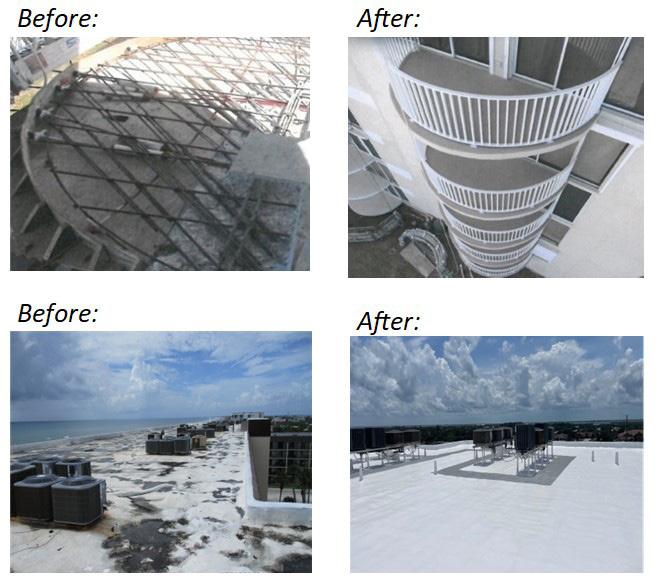

Keystone Engineering, founded in 2003, has offices in Cocoa Beach and Daytona Beach. The team of experienced engineers and project inspectors serves coastal communities from Saint Augustine to Fort Pierce, with the Roofing Division covering the same area and beyond into Central Florida. With over 150 years of combined experience, they guide clients through informed decisions on exterior building and roofing maintenance. Keystone provides cost-effective solutions for identifying structural repair needs associated with long-term chloride exposure and offering preventive measures and aesthetic improvements to enhance property value while preserving the original character. Services
• Independent Owner Representation
• Structural Condition and Milestone Inspections
• Roof Evaluations
• Specifications for Competitive Bidding
• Contractor Vetting
• Project/Construction Oversight
Structural Expertise
• Reinforced Concrete Structures
• Conventional Cast-in-Place Concrete Structures
• Post-Tensioned Structures
• Precast/Prestressed Concrete Structures
• Protective Coatings for Balconies and Walkways
• Exterior Painting/Waterproofing
• Windows and Sliding Glass Doors
• Railings
Roofing Expertise
• Low Slope
◦ Modified Bitumen
◦ Single Ply
◦ Polyurethane Foam
◦ Mechanical Equipment Support
Steep Slope
• Shingles
• Corrosion Resistant Metal
Florida Registered Professional Engineer and Special Inspector # 60965. Post Tensioning Institute Certified Level 2 Unbonded PT Inspector and Repair Specialist # 00022426. For more information about Keystone Engineering & Consulting Inc., scan the QR code to the left or call 321-454-7300
Varnum LLP
Diamond Level Winner—Legal Services (Winner 2026)

Varnum LLP is a market-leading law firm for condominium and homeowners’ associations across Southwest Florida, anchored by our rapidly growing Naples office. We counsel scores of COAs and HOAs throughout the region on the full spectrum of issues that boards and property managers face, including corporate governance, covenant drafting and amendments, insurance, risk management, reserves, collections, covenant enforcement, vendor contracts, and dispute resolution.
Our team is deeply attuned to the nuances of Florida law, especially the frequent shifts in legislation and the complexity of existing statutes affecting community associations. We help boards understand what has changed, what changes mean for their fiduciary duties, and how to implement practical solutions for their communities. In addition to day-to-day counseling, we regularly provide seminars and training for board members and property managers on emerging topics, changing laws, and certification requirements.
Backed by more than 190 attorneys in six offices, Varnum offers the depth of a full-service business law firm with the accessibility of a local, Naples-based team. In addition to community association law, our firm’s capabilities span corporate law, data privacy, estate planning, immigration, labor and employment, litigation, real estate, and more, enabling us to support associations and their owners on a wide range of legal needs.
To learn more or discuss your association’s needs, please contact Steven Adamczyk, Chair, COA/HOA Practice, by email at sjadamczyk@varnumlaw.com or call 239-241-7384. n
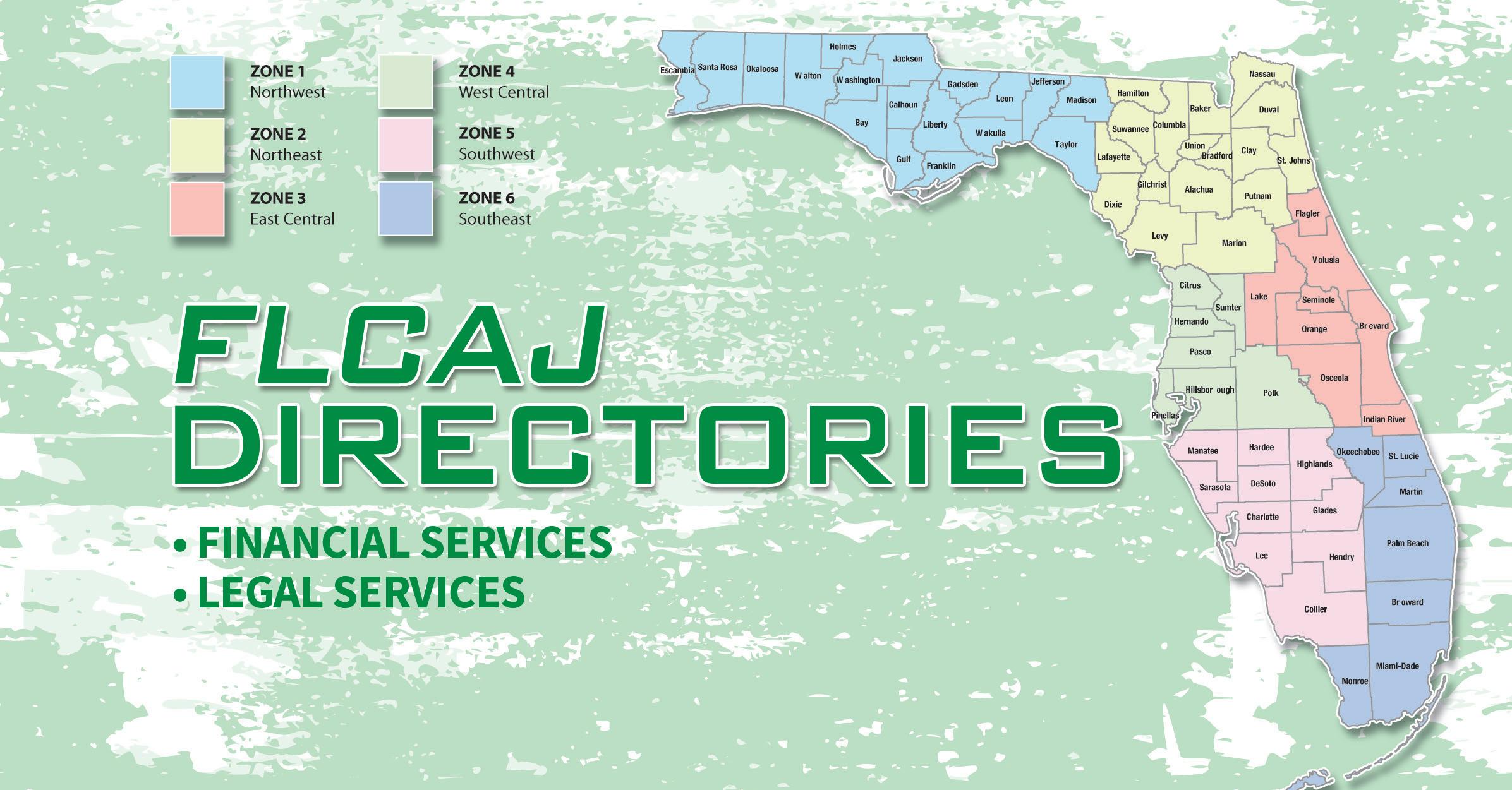

Devin & Associates 360 Central Avenue, Suite 800 Saint Petersburg, Florida 33701 727-290-2578
jjaram@devinandco.com devinandco.com



Cash Management and Lending Solutions for HOAs 305-577-6000 ext. 888 flcashmanagement@firstbankfla. com 1firstbank.com/fl
Popular Association Banking 7920 Miami Lakes Drive W. Miami Lakes, Florida 33016 800-233-7164 www.popularassociation banking.com Serving the community association industry exclusively. Truist Association
12485 28th Street N St. Petersburg, FL 33716 727-549-1202 or 888-722-6669 www.Truist.com/ AssociationServices


Advisor
2121 NE Coachman Road Clearwater, Florida 33765 www.turnergroupfl.com

Hunter Claims LLC 4613 N. Clark Avenue Tampa, Florida 33614 813-774-7634 www.hunterclaims.com
Landfall Public Adjusters 4 Cedar Falls Drive Ormond Beach, FL 32173 386-301-0868 insuredclaimhelp@gmail.com landfallpublicadjusters.com

LEGAL SERVICES


Gelfand & Arpe, P.A. 1555 Palm Beach Lakes Boulevard, Suite 1220 West Palm Beach, Florida 33401 561-655-6224 www.gelfandarpe.com



Siegfried Rivera 201 Alhambra Circle, 11th Floor Coral Gables, Florida 33134 800-737-1390 www.siegfriedrivera.com Experience Personalized Professionalism.
Tripp Scott Law Firm 110 SE 6 Street Fort Lauderdale, Florida 33301 954-525-7500 www.trippscott.com
For over 50 years, Tripp Scott has served our community. Varnum LLP 4501 Tamiami Trail North Suite 350 Naples, Florida 34103 239-241-7380 varnumlaw.com
Products and Services Directory
ACCESS CONTROL, SECURITY AND CUSTOM GATE AUTOMATION
Smart Entry Systems: 626-2137557; www.SmartEntrySystems. com; sales@SmartEntrySystems. com
AIR DUCT CLEANING
Air Duct Aseptics
Certified Air Duct Cleaning, Dryer Exhaust Cleaning repair & replacement. Mold testing 888-707-7763 www.adaflorida.com
ALARM MONITORING

ALUMINUM RAILING
Mullets Aluminum: 941-371-3502; nate@mulletsaluminum.com; www.mulletsaluminum.com
ASPHALT REPAIR/ REJUVENATION
Asphalt Restoration Technology: 800-254-4PDC (4732); www.asphaltnews.com.
BALCONY INSPECTIONS
Howard J. Miller Consulting Engineers: 561-392-2326; www.HowardJMiller.net


Promar Building Services LLC: Alfredo Amador; 561-598-4549; info@promarbuilding.com
CONCRETE RESTORATION PROJECT MANAGEMENT
Daniello Companies: 888-370-4333; www.concreterepairing.net.
ELEVATOR SERVICE/REPAIRS
Connections Elevator: Elevator maintenance agreements, repairs and modernizations; 954-792-1234; www.ConnectionsElevator.com.
ELEVATOR SERVICES
Elevate Monitoring: 877-990-9191; elevatemonitoring.com
ELEVATOR/POOL EMERGENCY COMMUNICATIONS
Kings III Emergency Communications: 844-357-3849; www.kingsiii.com
ENGINEERS
Consult Engineering, Inc: 941-206-3000; www.consultengineering.com.
Howard J. Miller Consulting Engineers: 561-392-2326; www.HowardJMiller.net
NV5: 954-495-2112; nv5.com
PEGroup Consulting Engineers, Inc.: 800-698-2818; 305-655-1115; www.pegroup.com.

Swaysland Professional Engineering Consultants (SPEC): 954-473-0043; 888-264-7732.
FENCING AND GATES

FIRE ALARM SYSTEMS
Bass United Fire & Security Systems, Inc.: 954-785-7800; www.bassunited.com.
GENERAL CONTRACTORS
Hartman & Sons Construction, Inc.: 407-699-4549; fax: 407-6990919; Serving Central FL
INTERNET/TELEVISION/ VOICE SERVICES
Blue Stream Fiber 888-960-2855 www.bluestreamfiber.com
www.hypowerinc.com



AND WETLAND
Lake Management: 855-908-5828; solitudelakemanagement.com
JANITORIAL SUPPLIES

PAINTING AND WATERPROOFING



Restore. Repaint. Renew.
HOA Repainting, Repairs, & Restoration
www.MunyanPaintingcom
Call 877-442-5062 for a FREE quote! www.MunyanRestoration.com
Promar Building Services LLC: Alfredo Amador; 561-598-4549; info@promarbuilding.com
PATIO FURNITURE REPAIR
Sarasota Patio Furniture Repair: 941-586-6917; saraso tapatiofurniturerepair.com
PEST/ANIMAL CONTROL

PIPELINING SOLUTIONS
Trenchless Sewer Line Repairs: 786-322-4600; trench less-repairs.com
ROOF COATINGS
Polo International: 954-7825851; www.polo14.com
ROOF MANAGEMENT & CONSULTING

ROOFING
All Area Roofing and Construction: 772-464-6800; allarearoofinginc.com
SPF Systems, Inc.: (866) 5613626; HurricaneProofRoof.com.
Sutter Roofing: 800-741-0090 or 941-377-1000; sutterroofing.com

Sign up for our Newsletter fcapgroup.com/nl-sd
SEALANT
Pecora Corporation: 800-5236688; freemana@pecora.com
SECURITY
Security solutions for condominiums and HOA properties
David.Fambrini@garda.com (561) 698-1014 | garda.com
Ramco Protective: 888-3989700; www.ramcoprotective.com.
SIRS REPORT
Howard J. Miller Consulting Engineers: 561-392-2326; www.HowardJMiller.net
SWIMMING POOLS

Sign up for our Newsletter fcapgroup.com/nl-sd

TRASH CHUTE CLEANING AND REPAIR
WATER, SEWER AND DRAINAGE—INSPECTION AND REPAIRS
Hinterland Group: 561-6403503; hinterlandgroup.com
WINDOW CLEANING
Squeegee Squad: 305-897-1310; marcellomagno@squeegeesquad. com; squeegeesquad.com
Sign up for our Newsletter fcapgroup.com/nl-sd


DISPLAY ADVERTISERS INDEX