�����������������������������������
�������������������������
���
����
���
����
��� ��� ��� ��� ��� ��� ��� ��� ��� ���
������
���
�����������
�����
������������������������
���
����
��� ���������������������
���
����
��� ��� ��� ��� ��� ��� ��� ��� ���
������
���
�����������
�����
���
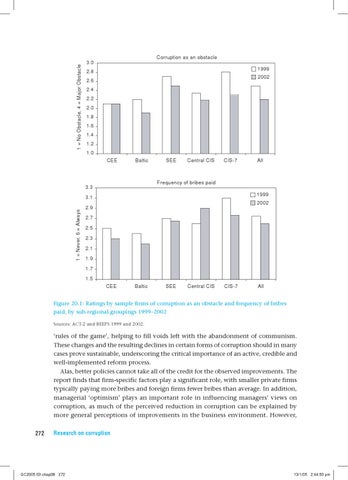
Figure 20.1: Ratings by sample firms of corruption as an obstacle and frequency of bribes paid, by sub-regional groupings 1999–2002 Sources: ACT-2 and BEEPS 1999 and 2002.
‘rules of the game’, helping to fill voids left with the abandonment of communism. These changes and the resulting declines in certain forms of corruption should in many cases prove sustainable, underscoring the critical importance of an active, credible and well-implemented reform process. Alas, better policies cannot take all of the credit for the observed improvements. The report finds that firm-specific factors play a significant role, with smaller private firms typically paying more bribes and foreign firms fewer bribes than average. In addition, managerial ‘optimism’ plays an important role in influencing managers’ views on corruption, as much of the perceived reduction in corruption can be explained by more general perceptions of improvements in the business environment. However, 272
Research on corruption
GC2005 03 chap08 272
13/1/05 2:44:50 pm