
20 minute read
Arts & Culture

South Pas’ Katopodis hosts the Greek Film Festival
By Christina Fuoco-Karasinski Pasadena Weekly Executive Editor
Aristotle Katopodis is passionate about his position as director of the Los Angeles Greek Film Festival.
Born in Greece and living in South Pasadena, Katopodis is keeping his festival alive by hosting it virtually for the second year.
“Even though we are looking forward to returning to the silver screen and our Egyptian Theatre experience, we are taking full advantage of the virtual platform to showcase exciting and curated Greek films,” Katopodis said.
The 15th annual event is showing more than 60 films through May 30.
The festival’s virtual edition offers New Greek cinema with curated features, shorts, documentaries and animation films on a secure platform accompanied by a host of webinars and Q & As.
Katopodis said his audience is split, as some are ready to experience the silver screen once again.
Here is a list of the Los Angeles Greek Film Festival movies:
“Digger,” by Georgis Grigorakis. A slow-burning contemporary Western about a native farmer who lives and works alone in a farmhouse in the heart of a mountain forest in Northern Greece.
“Green Sea,” by Angeliki Antoniou. Anna has lost her memory, but she hasn’t forgotten how to cook.
“Pari,” by Siamak Etemadi. Pari, an Iranian mother in her 40s, lands in Athens to visit her son, but quickly discovers he is nowhere to be found.
“The Man with the Answers,” by Stelios Kammitsis. Victor is a twenty-something ex-diving champion now working in a furniture factory and living with his sick grandmother in a seaside town in Greece. Distraught after her death, he decides to dust off her old car and travel to Germany to visit his estranged mother.
“Daniel ‘16,” by Dimitris Koutsiabasakos. Daniel, a German teenager, is sent to Greece in a juvenile offender community to serve his sentence. There, in an abandoned village of Evros river area, near the border with Turkey, he experiences unprecedented emotions and must solve difficult dilemmas.
“Being Present,” by Yorgos Avgeropoulos. While still healing from the wounds caused by the 10-year economic disaster, Greece must confront the biggest public health crisis of recent history.
“The Unknown Athenians,” by Angeliki Antoniou. During six exhausting years of austerity, the documentary follows the daily routine of stray dogs struggling in the center of Athens and the people who take care of them.
“Vasy’s Odyssey,” by Vasileios Papatheocharis. Two lives, two different worlds and two unalike places. Vasi and Alexandra, two strangers, travel from Alicante to Greece, through France, Italy and Albania, on a trip where they will learn to face their mistakes and delve into their personal and family relationships.
“This is right; Zak Life and After,” by Gevi Dimitrakopoulou. A short narrative documentary about the aftermath of Zak’s murder from her community’s perspective.
“Sow the Wind,” by Danilo Caputo. Nica, 21, drops out of her university course in agronomics and returns home to Apulia in southern Italy after three years away. She finds her father deep in debt, a polluted, devastated region, and olive trees destroyed by a parasite.
Paintings 17 Years Later,” by Rinio Dragasaki and Araceli Lemos. A documentation of three years of contemporary Greek painter Stefanos Rokos’ work on the making of his exhibition “Stefanos Rokos: Nick Cave & The Bad Seeds’ No More Shall We Part, 14 paintings 17 years later.” His daily routines, artistic process, spontaneous inspirations, and his creative dialogue with musician Nick Cave.
“KALA AZAR,” by Janis Rafa. A young couple’s ritualistic job routine of collecting and cremating animal bodies from their owners and the roadkills that they come across is challenged when they cause an accident themselves.
“Sarmako—A Tale of the North,” by Marco Papadopoulos. Thessaloniki, October 1949. The Greek Civil War is supposedly over, but its impact is still felt by the people and a great divide exists between them.
“Persephone,” by Costas Athousakis. A Greek Japanese Cine-Operetta, where the ancient Greek myth of the Abduction of Persephone comes alive before the eyes of a Japanese group, as the arrival of a stranger man forces the family members of the hostel Persephone to identify themselves with the fate of the mythological heroes
“Once Upon a River,” by Haroula Rose. It’s 1978 and Margo Crane, a 15-year-old part Native teen, must take to the Stark River on an odyssey. Akin to Huck Finn, this is a heroine like no other. Based on the best-selling novel “Once Upon A River” by Bonnie Jo Campbell.
“Heroes of Salonika,” by Tom Barkay. A film that sheds light on the practically unknown destruction that befell Jews in the Greek city of Thessaloniki during the Holocaust.
“Seven Minutes of Soul,” by Panos Vlahos. The documentary follows Panos Vlahos’ journey to investigate the conditions under which the first modern Olympic games in Athens (1896) took place and debunk the myth of the very first marathon winner in history.
“Kε•ha•’jas – Man of the Land,” by Giorgos Komakis. The documentary was filmed in Lemnos, the most lowland of the Aegean islands. Memories, oblivions, silences and identities help to illuminate the rural, economic and social history of the island.
“The Journey of Askavlos,” by Yorgos Arvanitis. The film looks at the instrument’s origins within the concrete jungles of modern towns and cities. The bagpipe is being assimilated by the contemporary music scene and is integrating with modern sounds, beyond the realm of traditional festivals, thereby gaining a younger audience and enjoying great resonance around Greece and worldwide.
“Spiros and the Circle of Death,” by Lino Kafidas and Dimitris Kafidas. Spiros is the last remaining motorcycle acrobat performing in the Circle of Death. He lives a nomadic life with his family, his caravan, and a team of riders who often abandon him.
“The Unlost Homeland,” by Eftychia Fragou. This documentary follows the story of 12 Greeks from Istanbul who lived through the pogrom of 1955.
“Amalgamation,” by Sylvia Nicolaides and Nicolas Iordanou. The film is a soulful portrait of a female choir revisiting traditional songs in a contemporary way, bridging past and present, with a strong voice and a deep sense of community and friendship.
“Prespa Lakes Two Drops in a Waterworld,” by Androniki Christaki. The municipality Prespa is geographically located in the northwest of Greece and borders Albania and North Macedonia.
“Passage to Europe,” by Dimitra Kouzi. For 30 years now, Fotis Psycharis has been a primary teacher at a state elementary school in the heart of Athens. Reflecting the diversity of the neighborhood population, most of his pupils are refugee and immigrant children from Africa, the former USSR, the Balkans, the Middle East, and Asia, who often regard Greece as an unavoidable but also convenient stop on their journey across Europe.
“Markos,” by Nikos Skarentzos. Musicians travel to the Greek island of Syros, the birthplace of legendary folk musician Markos Vamvakaris, where they are invited to perform in an homage to his work.
“The Weavers,” by Dimitris Koutsiabasakos. In 1963, IM, a Swedish charity, established in Vlasti, a mountainous village in Greece, a model weaving center. For 25 years this intercultural venture will support the women of the village which was a charismatic place, severely affected by wars, poverty, and abandonment.
“Draw with Me,” by Constantine Venetopoulos. The coming out journey of Brendon Scholl, a youth who identifies as trans, and about how their art became their outlet for self-expression, while on the complex journey of having to be yourself in a world that at times struggles with diversity.
“My Rembetika Blues,” by Mary Zournazi. The documentary covers the power of music and what makes us human.
“2 Miles from Home,” by Julia Speropoulos. This documentary recounts events of the 1914-1923 period in Turkey, and the arrival of Mustafa Kemal Ataturk at Samsun in May 1919, which marked the climax of the genocide that killed more than 353,000 Pontic Greeks of the Black Sea.
“Bucket Hat!” by Demetrios Tzamaras. Brothers Tot and Meech try desperately to persuade their jokester grandfather to buy them ice cream while on a trip to the beach.
“Lazy Dragon,” by Fokion Xenos and Joan Zhonga. The tale of a Lazy Dragon encountering tiny humans for the first time.
“The Parrot Lady,” by Michalis Kalopaidis. Inspired by a true story, the film works as an artistic interpretation of a woman’s life who chose to live on the streets with her parrots, afraid of dying alone in her home.
“The Two Singles,” by Marios Ioannidis. Two single characters begin a journey together.
“Cast-Outs,” by Alexandros Romanos Lizardos and Akis Melachris. Through faulty handling that leads to the collapse of a penitentiary and mass escapes, newly appointed Jail-R suffers multiple fractures and loses his job. While convalescing, he is hired as a bank security guard.
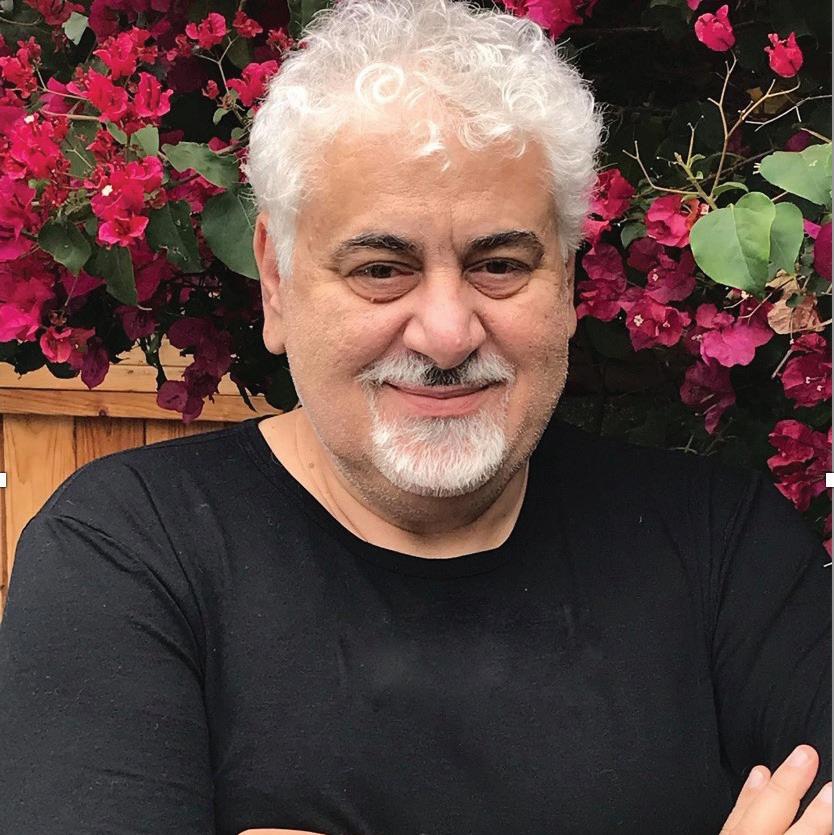
Creator of the Los Angeles Greek Film Festival, Aristole “Ari” Katopodis.
Los Angeles Greek Film Festival group along with Ari Katopodis during the red carpet at the first festival.

CONTINUED FROM PAGE 25
about the true inner strength that can transform anger, jealousy, arrogance into understanding, serenity and harmony.
“Cabo da Roca,” by Maria Livana and Alexis Lagkaditis. This is a music video for Circus Caravan’s song “Cabo Da Roca” and was created during the quarantine days. It started as a creative way to get through the quarantine days and ended up being a meaningful way to depict the feelings the song evokes. The fast-paced, restraining big city lifestyle and the need to escape from it.
“ALS, Our Own Sea,” by Babis Alexiadis. An animated short dedicated to the sea. Triggered by the Homeric word ALS, the film tells the personal story of its creators, members of the Alternative Community “Paremvasis,” that is connected with the sea environment
“Great Expectations,” by Mariza Litina. A man and a woman meet on a dating website. The website watches and assists them through a small bird called “lovebird”. They transform making their bodies curvier and when they meet in person, they fall in love.
“Sevarambes,” by George Kontos. In the city of Sevarambes, where giant machine hands impose the law, any artistic expression by the human workers is pursued and terminated.
“All You Can Eat,” by Dimitris Armenakis. A tribe of cartoons are being taken by force from their natural habitat, only to fulfill the voracious intentions of humans.
“59 Days,” by Zina Papadopoulou. Three children can’t see their grandparents. They don’t go to school. A diary. A small documentary. A short animation.
“The Ticket Maker,” by Mario Kkounnous. “The Ticket Maker” is a short story about a man who finds himself overcome with the fear of being alone.
“1000mods—Lucid,” by Yannis Ntousiopoulos. Animated lyric video for the band 1000mods.
“Elevator Alone,” by Anastasia Papadopoulou. “Elevator Alone,” is a comedic short film using stop-motion animation. Inspired by everyday life behavior when a person is alone versus the socially acceptable behavior when in a public space.
“Upside Town,” by Sofia Avramidou. “Upside Town” is a music video made for Twinsanity, a hip-hop group from Greece.
“Man of God,” by Yelena Popovic. Exiled unjustly, convicted without trial, slandered without cause, “Man of God” depicts the trials and tribulations of St. Nektarios of Aegina, as he bears the unjust hatred of his enemies while preaching the word of God.
“Tailor,” by Sonia Liza Kenterman. When the bank threatens to repossess the family shop and his father falls ill, Nikos takes action. With a wondrously strange tailor shop on wheels, he reinvents himself while bringing style and confidence to the women of Athens.
“Ballad for a Pierced Heart,” by Yannis Economides. Lost in their conniving planning and scheming, three families in a small Greek town forget the strongest motive of all: love.
“Bella,” by Thelyia Petraki. Greece 1986-1987, a little before the fall of state socialism and just at the end of the Cold War. In front of Anthi’s eyes, the country is changing, the world is changing and with them Christos seems to be changing, too.
“Antivirus,” by Anastasia Sima. Athens, Greece 2020. Quarantine days. Daphne, a female young jazz singer of a foreign origin who lives in Greece, decides to break down the wall that separates her from her annoying neighbor.
“The End of Suffering (a Proposal), by Jacqueline Lentzou. Sofia is panicky, again. The universe decides to contact her. An other-wordly dialogue. A planet symphony for Mars, where people dream awake and fight for love.
“Escaping the Fragile Planet,” by Thanasis Tsimpinis. A boy-meets-boy tale, a few hours before the world ends.
“Madonna F6.40,” by Stavros Markoulakis. After an important surgery, Maria returns to her family home to recover. Living with her mother, her sister and a newborn baby. While Maria’s body starts healing, a deeply hidden desire of hers surfaces. Maria wants to come close to the baby, and this creates a serious threat to the “safety” of the family home.
“Melatonin,” by Nikos Pastras. A small love story about electronic music and sleep disorders.
“Vouta,” by Dimitris Zahos. “Vouta” is a pigeon breed that flies all the way up to the clouds, then dives at 230 km/h and slows down just before reaching the ground.
“Witchin’” by Christina Diamantara. A young witch’s dream of making the best potion in her class takes her to the mysterious world of human males.
“Guide Me Home,” by Stefan Georgiou. David arrives in London with dreams of becoming a somebody, but when things don’t go to plan, he starts to slip between the cracks of the city he loves so much.
“Harmonica Man,” by Alexandros Skouras. A father has kidnapped his daughter. Running out of money, they are on a road trip, trying to reach as far as possible.
“Iskioma,” by Kostas Gerampinis. A veterinarian is called in to treat a mysterious disease on a remote farm in Greece. He examines the first victim of this disease, a ram, but the precise nature of the affliction eludes him.
“As If Underwater,” by Anthi Daoutaki. The film tells the story of Hera, who fills her loneliness with objects.
“Goads,” by Iris Baglanea. Ira lives with her family in a remote location within Greece. She will face one of the strongest experiences of her childhood during a “training” session with her father, who has a very specific view for life.
“54 / The Blind Turtle and the Endless Sea,” by Isabella Margara. A woman who cannot stop running. A mysterious man who knows everything about her life. A turtle pin.
“The Jar,” by Kyriakos Rontsis. Staring at a butterfly trapped in a jar, a boy ponders over the balance between protection and freedom.
“Dakar,” by Stelios Moraitidis. In 1978, on his birthday, Stavros was set to get engaged to Matula. Instead, he was forced to embark on his first big journey.
Info: lagff.org Photo courtesy of Los Angeles Greek Film Festival
Art exhibit grows out of local protest work
By Bridgette M. Redman Pasadena Weekly Contributing Writer
For Elana Mann, her artwork and civic duties cannot be separated.
Last summer, she co-founded — with Phung Huynh, Will Hoadley-Brill and Stefani Williams — the Anti-Racism Committee (ARC) of South Pasadena.
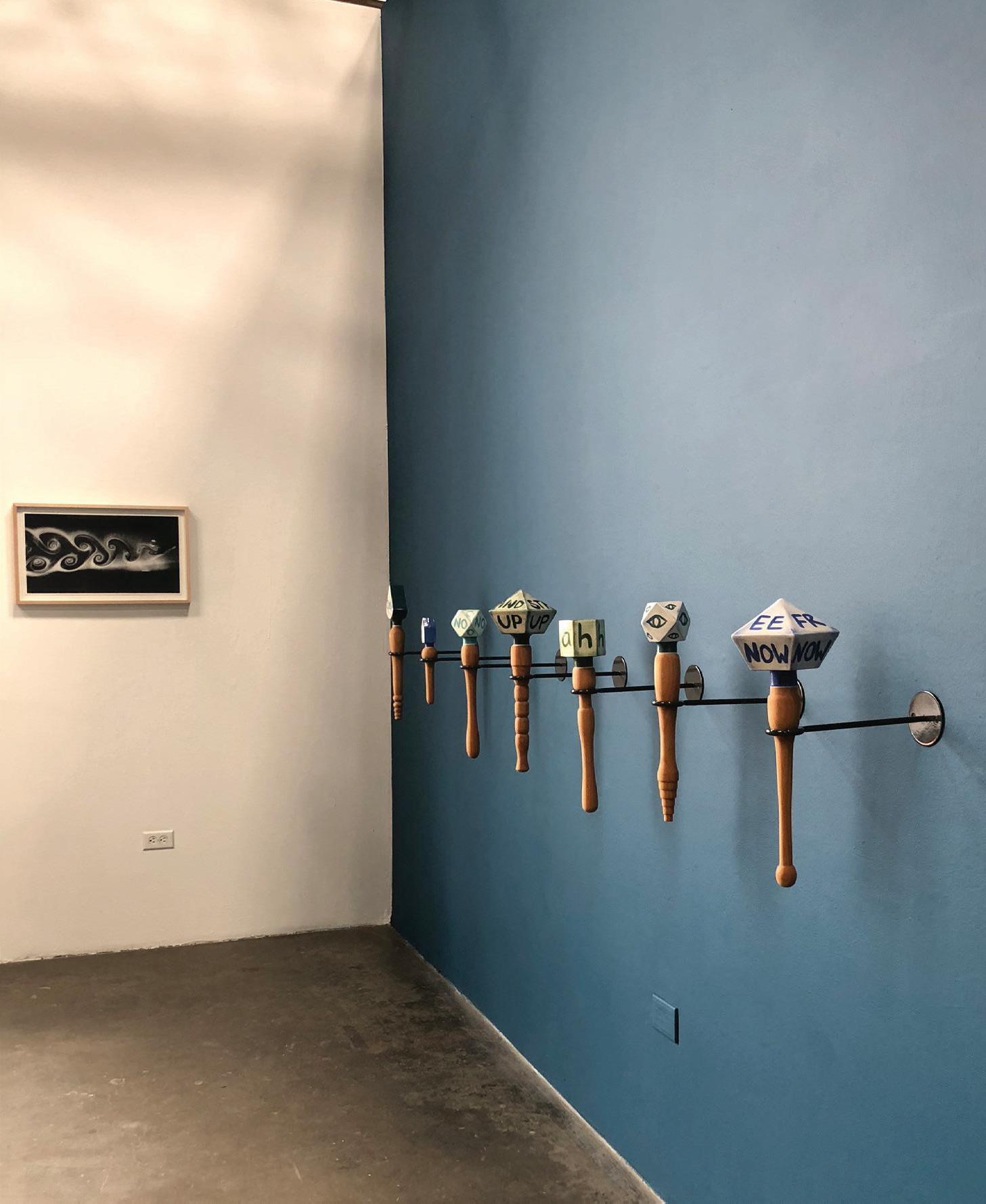
She also continues to make folk instruments of protest, some of which are on display through July 2 at Santa Monica’s 18th Street Arts Center in an exhibition called “A Year of Wonders, Redux.” It features sonic sculptures, a video and works on paper. They have commonalities — they connect people and amplify voices of protest.
“My artwork and my community organizing are intrinsically linked,” Mann said.
Mann began creating sono-sculptures in 2014, delving into works related to the time period in which they are made. For this production, Mann focused on politics, the pandemic and passionate social movements.
“The body of work that is at 18th Street really comes out of the past year of the rise in protest movements, BLM and getting involved in anti-racism work locally in my hometown of Pasadena,” Mann said.
Activism in South Pasadena
The grassroots ARC tries to heal the deep wounds of systemic racism in Pasadena. The 70-some members work toward racial justice in government policy, public safety, education, housing, art and community services.
Last year, their activities included hosting a community listening session with the South Pasadena Police Department, supporting local anti-racist arts initiatives — including a Black Lives Matter mural to be painted on city hall and successfully pushing for an investigation of the police chief.
This year, the group worked on multiple citywide projects, including anti-racist lawn signs, a city council acknowledgement of South Pasadena’s racist past through a “Sundown Town” resolution, pressuring the city to hire a new anti-racist city manager and police chief, and sponsoring volunteer events that assist the homeless.
ARC is planning a vigil to commemorate the one-year anniversary of George Floyd’s murder. They’ll continue their call for greater racial equity in the schools.
Developing an artistic persona
Mann said her work began with the act of listening, a theme that is infused in her pieces. It started with a deep immersion in oral traditions as a Jew.
As she developed her skills as a young artist, she mixed performance ideas into her work. Through natural evolution, she incorporated her background and interests.
Her sculptures about the art of listening led her to antique listening objects and oldschool cheerleader megaphones.
“They are also listening devices,” Mann said. “You can receive sound through them. They amplify sound and before there were electronic hearing devices, there were ear horns that were megaphone shaped. I was researching that and making art about that. Then I realized these can also amplify sound if I speak through them. I started making these modified megaphones and then just branching out to other kinds of instruments that could be used. It was a many-year evolution.”
Her instruments have been used in operas and by nationally and internationally recognized musicians. However, she ensures they are simple enough that anyone can use them even if they are not a trained musician.
“I’m not going to make something that I can’t play myself,” Mann said. “They’re all very easy to use, but a musician can use them in a different way than say I could use them. Just like a trained singer could use the megaphone in a way that I could never do, but I can bring my instruments to a street protest or a demonstration and use them and they’re really effective in that way.”
Her works are shown in museums, galleries and public spaces around the world. In 2020, she was a city of Los Angeles Individual Artist Fellow and in the fall, she was a 2020 International Artist-in-Residence at Artspace San Antonio.
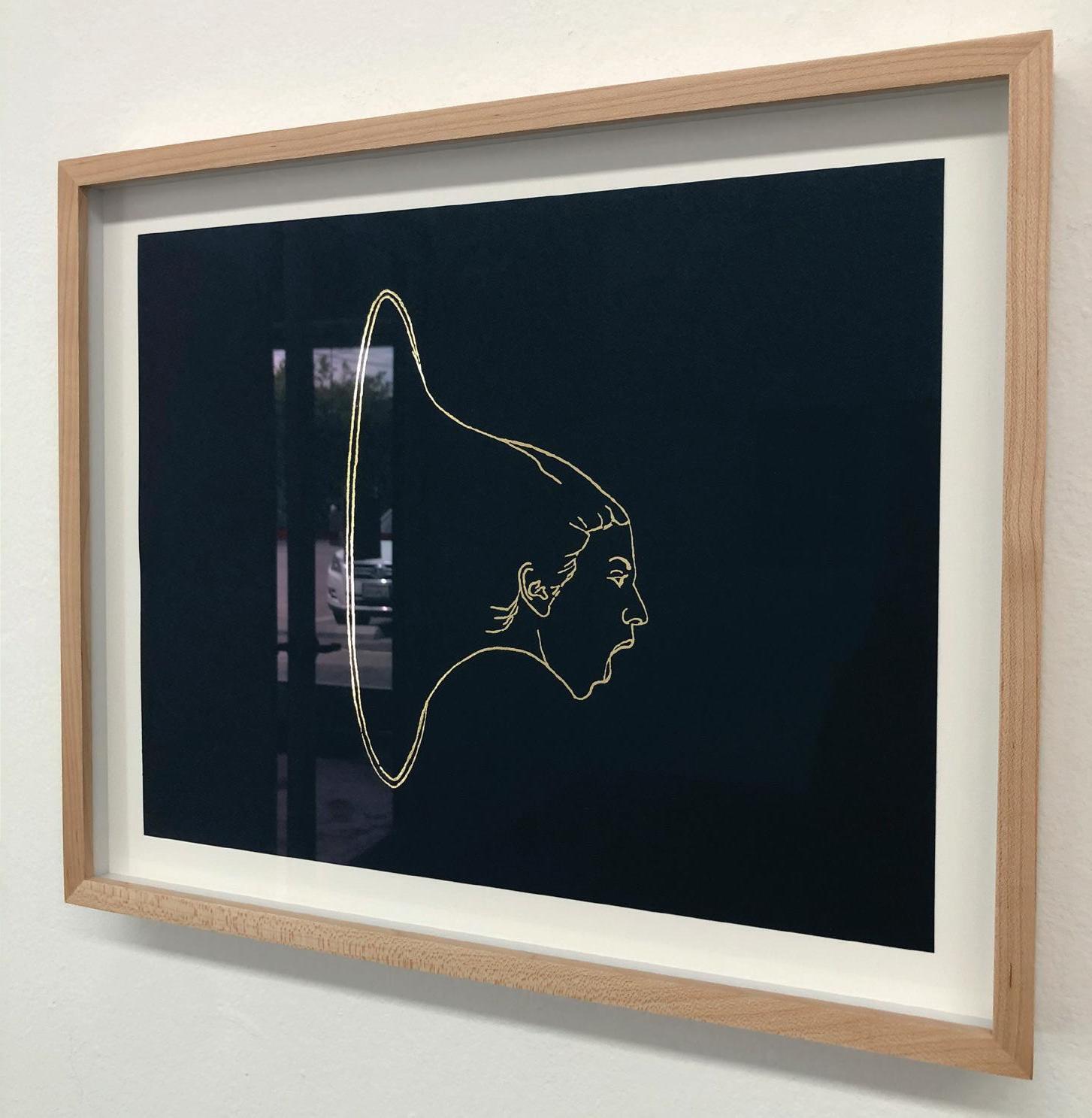
Photo courtesy of the 18th Street Gallery
Each maraca has a unique message and sound. Elana Mann designed them to be used at protests.
Photo courtesy of Elana Mann
Photo courtesy of the 18th Street Gallery
The six-person sculpture is a playable instrument based on Charles Chase’s Mega-kazoo-horn from Claremont, California.
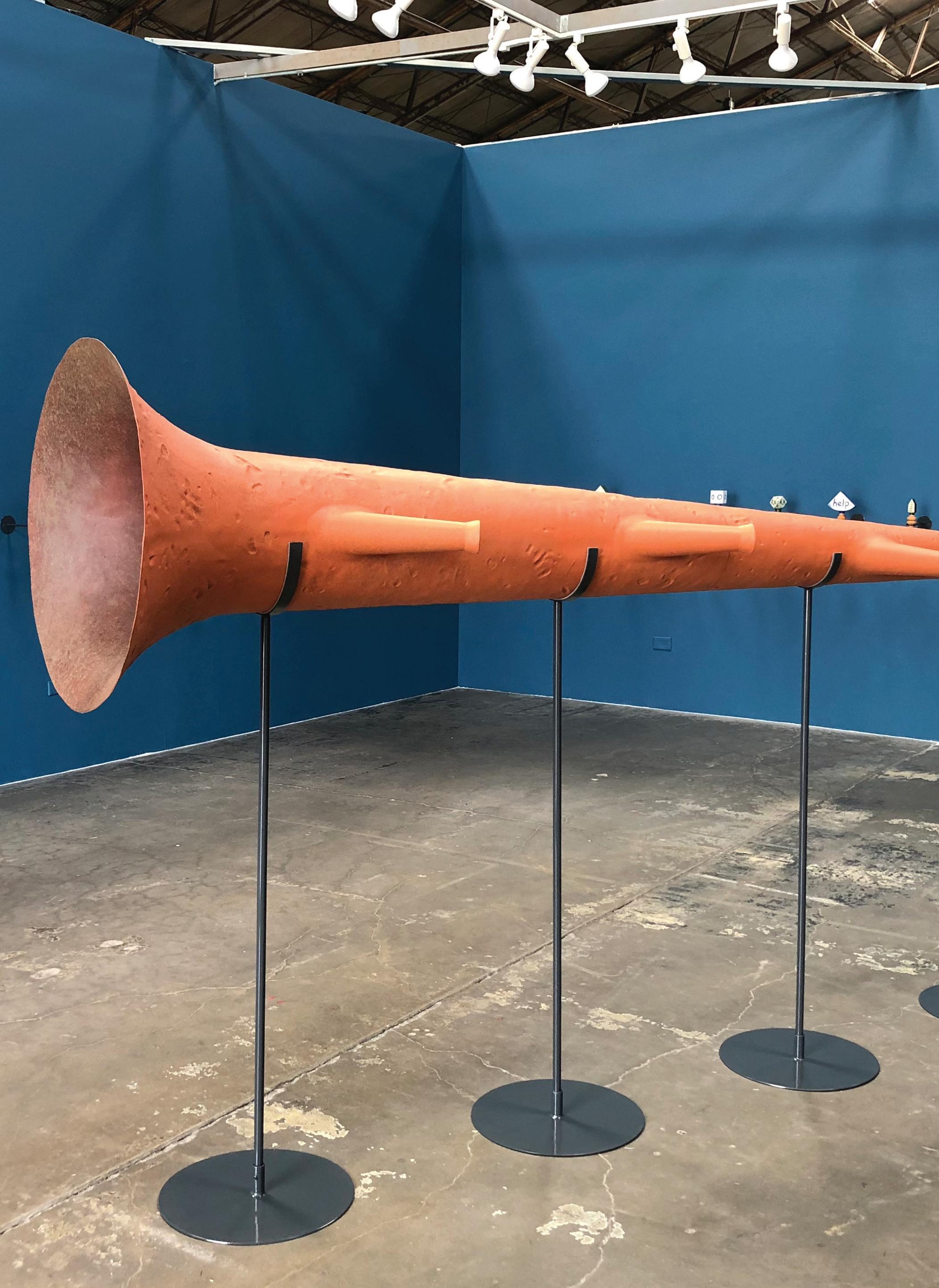
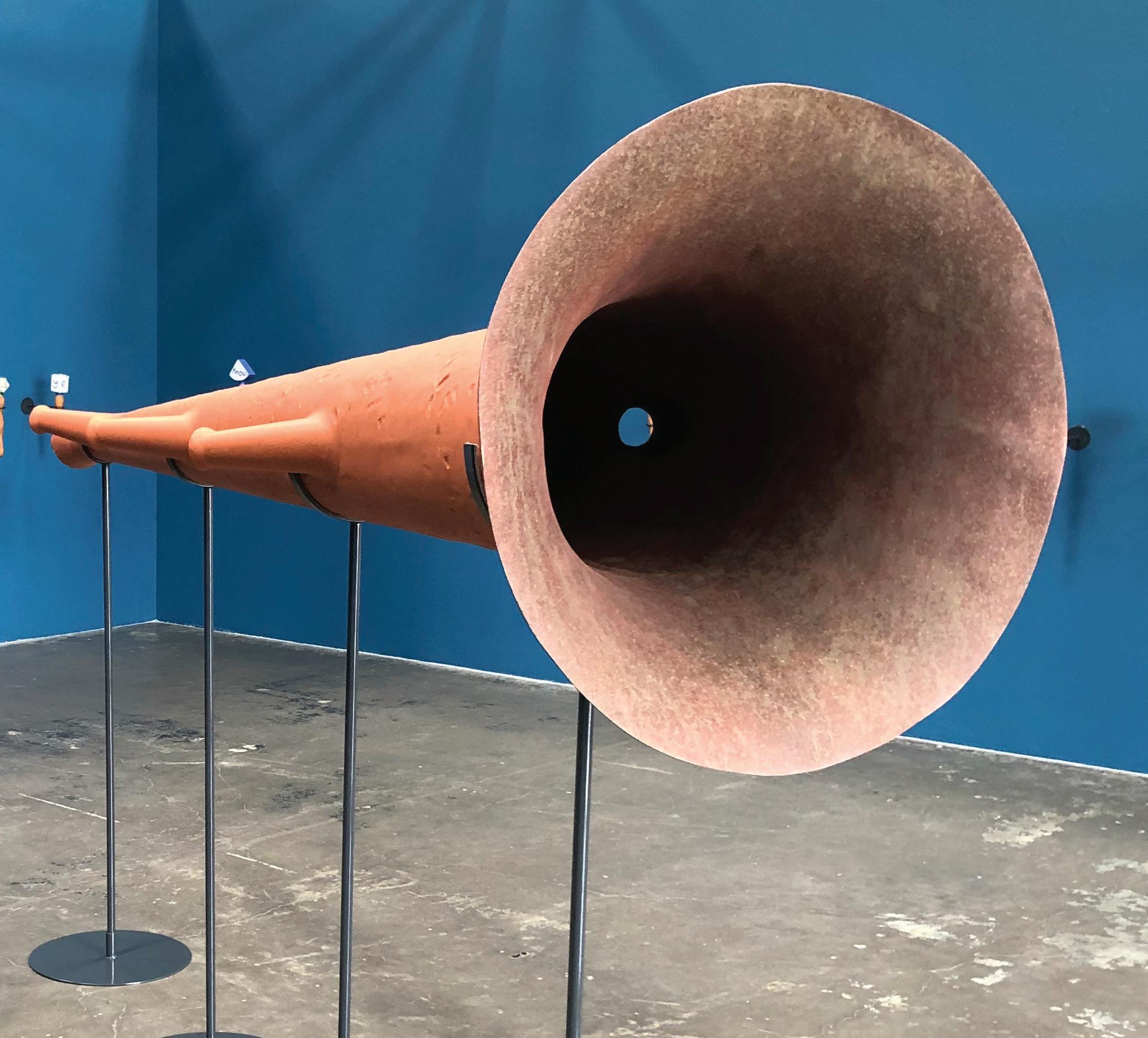
Photo courtesy of the 18th Street Gallery CONTINUED FROM PAGE 27
Pairing folk music traditions with protest
Since the exhibit’s opening, Mann has been working on a new project called “Let Suffering Speak.” It is derived from folk music traditions that are tied to histories of resistance and liberation.
“In 2018, I began to research folk instruments along with folk music traditions and their connections to political struggles,” Mann said.
She plans to further develop this line of inquiry, all a part of encouraging the act of radical listening and emboldening voices to speak up and speak out against injustice.
This work is not new for her. In 2017, in connection with the Women’s March, she began a street performance troupe called Take a Stand Marching Band.
“The project involves a revolving coalition of people who play my sculptural instruments, bringing creativity to the intense and often draining work of street demonstrations,” Mann said.
The project’s sculptures have been shown in multiple solo and group exhibitions. Musicians have used them on stage.
Huge horn stresses communal speech
Dominating the sonic sculpture exhibition at 18th Street are the sculptural folk instruments. They include “Our Work is Never Done (Unfinished Business)” which is modeled on the “Mega-kazoo-horn” that legendary folk music figure Charles Chase made based on an instrument his grandfather, a folk musician and communist, took to Claremont protests in the ’70s.
“I was inspired and made this six-person protest horn that amplifies six different voices,” Mann said. “It’s in two parts so it is easy to transport, it is very light, made of fiberglass. It could be brought very easily to a protest space and six people have to agree on what they’re going to say and what their message is going to be — or if they’re all going to be shouting at the same time and not be heard.”
Maracas fill protest spaces with sound
Surrounding the horn on the walls are rattles or maracas, titled “Unidentified Bright Object 11-60.” They are part of Mann’s ongoing series. The display carries 49 of the 60- to 70-piece collection.
With individually turned wood handles and heads made of cast ceramic, she finds different things to fill the hollow tops including glass, metal, wood and plastic.
Each rattle carries verbiage, such as “Truth,” “Say His Name,” “Say Her Name,” “Stop,” “Rage,” “Justice” or “Equity.” Because they are so lightweight, they are designed to be used at protests. They are also COVID-19-friendly.
They create a diverse sound at protests and encourage attendees.
“I’m a mom with two kids. If I’m going to a protest, I don’t have time to make a custom sign, so I can just stick these in my bag and they’re really loud,” Mann said. “They create another kind of sound and space in a protest arena, where sometimes the sounds are people wanting to be louder to make their voice heard, sometimes they’re trying to drown out sounds — sometimes there are oppressive noises of helicopters or police. This is supposed to bring celebration and joy to the protest space. People really respond. It adds play and pleasure to these kinds of spaces. Also, if you don’t want to shout or you don’t know what to say, you can shake the maraca.”
